



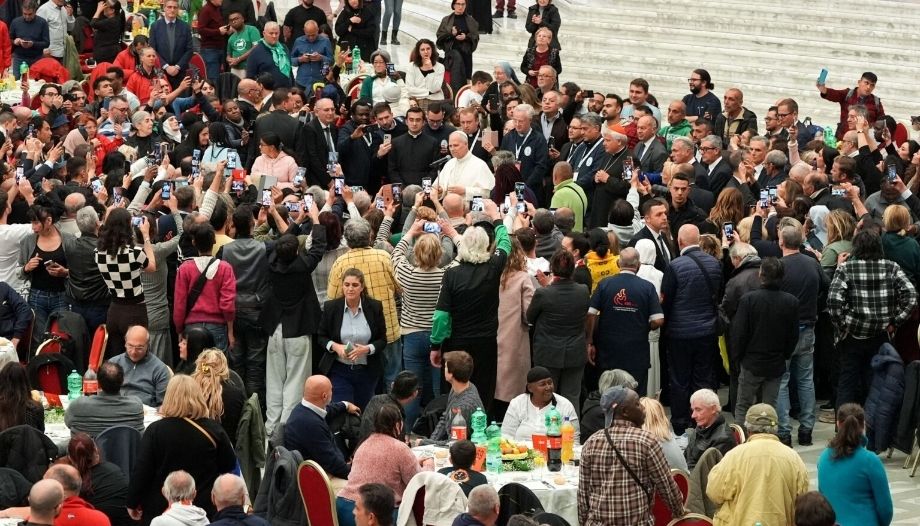
In his message for the upcoming World Day of the Poor on November 15, entitled ‘The Lord is the refuge of the poor’ (cf. Ps. 14:6), the Pontiff invites Christians to seriously examine their relationship with those who suffer poverty, exclusion and abandonment.
The questions posed in the fourth paragraph of the Message Perhaps they constitute one of the most challenging nuclei of the text: “Are we aware of our poverty and do we prefer it to unjust wealth? Do we go to where the poor are, experiencing their marginality? Do we listen to their thoughts and share their hopes? Do we pronounce their names with divine tenderness? Does our charity reactivate and sustain in them the desire for justice and redemption?.
For Leo XIV, These questions are not mere exercises in reflection, but a requirement of faith that obliges us to examine the extent to which the Church and each Christian really become a refuge for the poor.
Five sections based on the psalm. Absence of God and social injustice
The message, signed and dated June 13, 2026, the memorial of St. Anthony of Padua, is divided into five main sections.
In the first, Pope Leo starts from the words of the psalm: “The Lord is the refuge of the poor”. The biblical reference serves to denounce a reality that he considers very current: social injustice born of corruption, arrogance and the loss of a sense of God.
According to the Pontiff, “the first to suffer its consequences are the poor, who not by chance are increasing in many societies”.
The absence of God places people no longer side by side in mutual respect, but one above the other under the sign of domination and submission, the Pontiff explains.
“Thus a desacralizing logic of prevarication and discarding that marginalizes and humiliates is exhibited. In this condition are found not only individual persons, but entire peoples.”.
The cry of the poor is silenced, and the digital environment increases the indifference.
The second section focuses on the cry of the poor. The Pope observes that today this cry runs the risk of being silenced by ever more sophisticated mechanisms. Even the digital environment, he notes, can contribute to reinforcing prejudices and spreading a curtain of indifference over those who suffer.
However, “the poor know how to recognize what is essential more than others, because they live on what is essential,” he says. Precisely because he lives with what is indispensable, he discovers more clearly what really matters and learns to trust in God as a safe refuge. Leo XIV emphasizes that many people who are humiliated, lonely or deprived of meaning find in this trust a source of dignity, hope and strength to move forward.
The poor, deprived even of voice and face
In the third point, the message presents Jesus Christ as the concrete fulfillment of the divine promise. God does not limit himself to offering protection from a distance, but draws near to humanity in the incarnation of his Son. Jesus thus becomes the true refuge of the poor because he shares the human condition to its ultimate consequences, including the cross.
The Pope recalls that today's poor are often people “forgotten and marginalized: deprived of a word and a face, as well as bread”. For this reason, he asks them to encounter Christ especially in the Church. In the Church, his Body, it is Jesus who offers bread and friendship; he brings light and a horizon of hope”. In the face of the selfish accumulation of wealth, he proposes sharing as a concrete expression of the Kingdom of God.
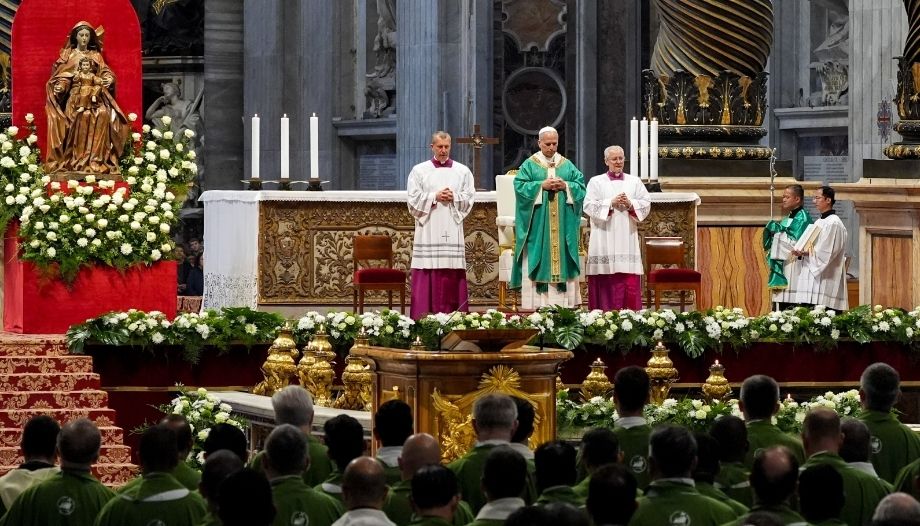
Examination questions for believers
The fourth section constitutes a central core of the document. If Christ is a refuge for the poor, Christians are called to become a refuge for those who suffer. The Pope insists that the ecclesial community cannot remain closed in on itself or ignore those who knock at its door. Recalling a famous reflection of St. Augustine on the parable of the rich man and Lazarus, he stresses that God knows and speaks the name of the poor, while wealth can lead to forgetting what is essential.
In this context he introduces the questions addressed to the conscience of believers, cited above, one by one.
Leo XIV insists that the Church must overcome any division between those who help and those who receive help. All are poor before God and all have something to offer. Each person is a gift to others and the bearer of a unique word from God.
St. Francis of Assisi: an illustrative anecdote
The fifth and last section is dedicated to St. Francis of Assisi, whose death marks the eighth centenary of his death. The Pope recalls an episode in the life of the saint: during a pilgrimage to Rome, Francis was deeply moved by the plight of beggars. To truly understand their suffering, he exchanged his clothes with one of them and spent the day begging for alms among the poor.
Through this episode, the Pope proposes a very topical teaching: “it is possible, even today, to experience the same joy by putting oneself in the place of the poor and listening to them, instead of just talking about them,” he writes.
Conclusion: rediscovering the concrete face of so many men and women
The message concludes with an invitation that this 10th World Day of the Poor will help “to rediscover the concrete face of so many men and women who seek refuge in God and wish to feel welcomed in the communities”.
“Let us keep alive our obedience to the Word of God, which calls for conversion of heart. May the Virgin Mary, who in the crucified flesh of her Son contemplated the love of God who fills the hungry with good things and sends the rich away empty-handed (cf. Lk 1:53), intercede for us,” the Pope concluded.






 Español
  English
  Italiano