


Francisco de Vitoria began his career as a professor in the Faculty of Theology at the University of Salamanca in 1526 and, with this, he initiated what has been called the School of Salamanca. In other words, a new style of approaching humanistic, literary and scientific work; in fact, many international congresses on the subject are being held this year.
In fact, the School of Salamanca has gone down in history as the passage from Renaissance humanism to Christian humanism and, furthermore, thanks to Grotius, a faithful disciple of Vitoria, the human rights that had been emphasized by the School of Salamanca were internationalized.
The Enlightenment was able to spread very quickly because Christian humanism was based on man and, in particular, on everything that concerned the dignity of the human person and the balance between faith and reason.
Roots of liberal revolutions
Let us remember that in the face of extremes, the tendency of the human being always lies in the balance of the middle ground: thus, Lutheranism would be pure fideism and, at the other extreme, Voltaire would show a scientific and profoundly anticlerical Enlightenment, distrustful of God and the Church.
Certainly, the Christian humanism of the School of Salamanca managed to impose its love of freedom and human rights in order to offer theoretical coverage to both the Independence of the United States and the French Revolution and, finally, it would lead to a liberal humanism that crystallized in the Cortes of Cadiz of 1812 and in the Constitutions of other countries in Europe and America.
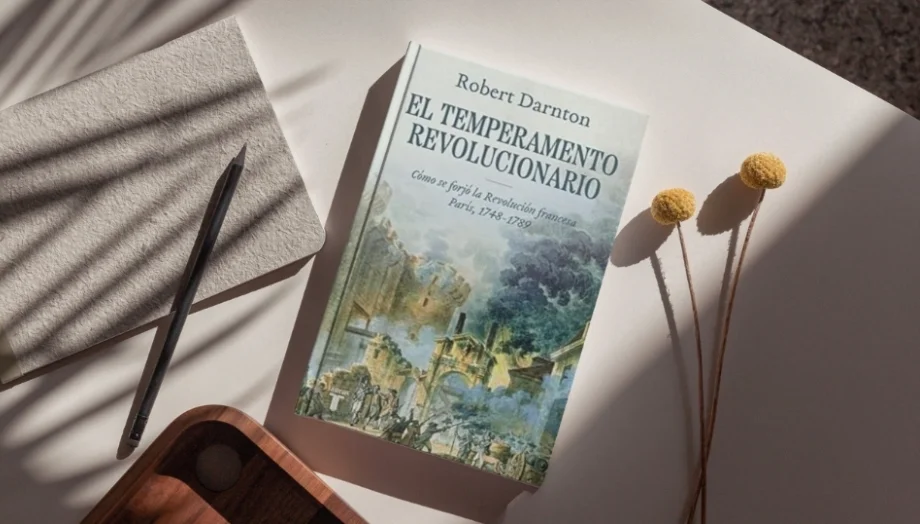
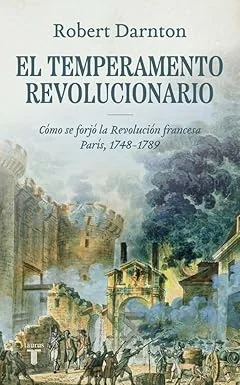
Precisely, the extensive work of Robert Darnton (New York, 1939), professor at Princeton and Harvard, will help us to discover Vitoria's ideas on freedom in the background and at the time of the French Revolution (1748-1789).
The «revolutionary temperament»
In fact, our author will begin by discussing the “collective conscience” that will be produced in Paris from the beginning of the war of succession in Austria in 1740 and in the successive events that will converge in 1789 with the beginning of the French Revolution. This is what our author will call “the revolutionary temperament” (17). Logically, the revolutionary temperament that will act in 1789 will be nourished by the ideas of freedom that Francisco de Vitoria set in motion in Europe when he confronted Emperor Charles V with his defense of freedom and the dominion of the Indians of America. The support for the independence of America in France was total and complete (245).
The power of public opinion
It is interesting the relation of the means of information used by the thinkers in the salons of Paris to create public opinion and to magnify or silence the news and rumors in operative ideas destined to change the course of events. The origin of the public opinions that had to be held should also be pointed out, for they forced Christian humanism to give accurate conclusions and criteria to the people who were to govern the country or important houses. We cannot fail to emphasize that music and literature were also means of information and formation of public opinion (22).
The exacerbated criticisms of the nobility and the life of the Court that ran through Paris, both from literary works, such as those of Voltaire, as well as those of other playwrights, operas or minor genres that, logically, made the Parisians exaggerate, who distorted the facts that arrived from the Court. Envy immediately appeared, mixed with fierce criticism against the Jesuits, who were the confessors of the kings and their court chaplains, and were accused of allowing such ravings of luxury and bad manners (51, 151). Much of the blame for the hatred of the monarchy comes from literary works and, above all, from Voltaire's theater (137).
Religious tensions and social unrest
We must also add the infighting within the French Church between the Jesuits, who persecuted to the death the “Jansenist saints” to the point of preventing them from being buried in cemeteries and sacred places as heretics, and, on the other hand, the Christian people, who saw the Jansenist “saints” as more consistent with the faith and more faithful to morals than the Jesuits, who were always in favor of probabilism and other moral entanglements (61). The hatred of the Jesuits among the people was in crescendo (124).
Interesting is the description of the seizure of the city of Paris by the people in 1750 in the face of rumors that the police were capturing lonely, abandoned and beggar children of 10 to 12 years of age from the streets of Paris to take them in ships to America (Mississippi) to work in a false silk business, as a way to clean the streets of needy and petty thieves (73). There is talk of masses of 15,000 people (75). It seemed like a rehearsal for the storming of the Bastille (485).
Tax justice and the impact of the Encyclopedia
With respect to fiscal policy, we must remember the wise recommendations of Francisco de Vitoria in his relections on civil power regarding the excessive taxes that the monarchs imposed not only on the nobles of the kingdom but also on the sovereign people. One of the causes for which Vitoria admitted civil revolution was when taxes were excessive and redounded not to the common good, but to the particular good of the kings and the Court: this is precisely the case of France (80, 111).
With respect to the Encyclopédie and the sharing of new scientific and geographical knowledge during those years of the Enlightenment, there was an anticlerical mentality that accused the Church of having kept the people in ignorance with false dogmas and erroneous beliefs. As Blom has shown, the success of the Encyclopedia is not the science it describes, but the mentality it conveys (97).
It is worthwhile to read carefully the final chapters of this documented work, which narrates the beginning of the government of the people manipulated by heartless people who only sought their personal enrichment and to save their lives.
The revolutionary temperament






 Español
  English
  Italiano
  Français
  Deutsch
  Polski