Integral ecology

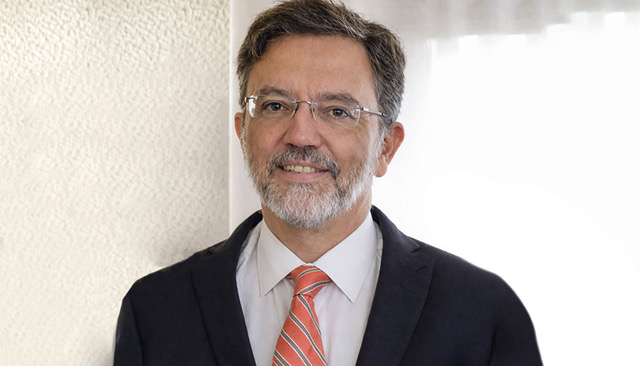
David Rodríguez-Rabadán: “Laguna wants to extend the care of the most fragile”.”

Diseases such as Alzheimer's, Parkinson's, ALS, COPD, cancer, etc., and the total dependence and fragility they create, are a bombshell for society and families. Omnes talked about this with David Rodríguez-Rabadán, CEO of Hospital de Cuidados Laguna, which wants to extend its model of care for the weakest and most fragile.

Francisco Otamendi-November 1, 2025-Reading time: 8 minutes

The Laguna Care Hospital is one of the largest palliative care hospitals in Europe in terms of number of beds, and one of the first in Spain. It is specifically dedicated to the care and attention of elderly people in a situation of special fragility, or suffering from diseases with no hope of cure, and to the support of their families.

The Vianorte-Laguna Foundation, a non-profit organization, promoted the social and healthcare center in 2002. The general director of the Laguna Care Hospital, David Rodríguez-Rabadán, talked to Omnes about the social impact of advanced diseases such as Alzheimer's, Parkinson's, ALS, COPD, cancer, etc., on the hospital and families.

In Laguna, the waiting list is large, and they are thinking of “extending” their “care model”, reveals the general manager, “due to the great demand that exists”.

The concert: spreading the value of life at the end of life

At the moment, the Laguna Care Hospital has organized the benefit concert ‘Journey to the Center of Life’, in favor of Laguna Palliative Care, on November 28, in the Auditorium of Mutua Madrileña, with the help of Musical Thinkers. 

The concert has two equally important motivations, David Rodríguez-Rabadán told Omnes. The first is “to spread the value of life at the end of life. And the second is ”to raise resources to help care for the weakest and most fragile. That is where we started the conversation.

@hospitalcuidadoslaguna.

Why this benefit concert of the Laguna Care Hospital on November 28th?

- They are two motivations, both equally important, at the same level. And when I say this, it is not an appeal. They are really two equally important motivations.

I would almost go so far as to say that the first is to spread the value of life at the end of life. Laguna has become a reference in the care of people for whom many would throw in the towel.

Because we may end up thinking that one life is more useful than others, that one life is worth more than others depending on what your body or mind can do. Or how long a doctor has estimated that you have left to live.

The value of the individual is immeasurable

At Laguna, the raison d'être of Laguna, based on the intrinsic value of the person, which is incalculable, everyone is cared for with all available means so that they may have a quality of life until the natural end of their days.

This commitment to life at the end of life is very beautiful, and it should fill our hearts and heads. To create a crusade of people, to make society in general aware of this wonderful mission, which is to care for the most fragile and for them to continue to feel valued.

It is an informative task that the concert also unites. Those who go to the concert know what they are going to, it is to support Laguna in its mission.

And the second motivation?

- And as a second motivation, there is indeed the attraction of resources, because a patient with these characteristics, as you can imagine, private insurers have no interest whatsoever. And the public hospitals, there is not much to do either, because we are talking about chronic patients, or palliative patients. 

Then, when they come to Laguna, we do not skimp on means to take care of them. This sparing of means requires finding resources -personnel, means, investment- to be able to take good care of them. 

We are a non-profit foundation, and everything that is raised is for the care of the weakest and most fragile.

But the one without the other would not be understood, and the other without the one, either.

@hospitaldecuidadoslaguna.

I guess this connects with the founding idea of Laguna, with its genesis. Are you there from the beginning?

- No. I've been here for six years, and Laguna has been in existence for twenty years now. As a result of the centenary of St. Josemaría in 2002, there was a push to create an institution that would help people to die well, so that no one would feel a burden. To alleviate the burden on the families, to use all the professionalism that exists in chemical and healthcare advances to help those people who seem to be outside the system, so to speak, or who the system is not able to attend to them as they deserve. Because of their pluripathologies, or diseases, or because of the degree of advancement of their diseases.

You talk about care, when it is no longer possible to cure.

- Indeed, Laguna was created twenty-something years ago to care for those who cannot be cured. Laguna was created twenty-something years ago to care for those who cannot be cured. Curing is a wonderful job, but when medicine can no longer cure, then care must be provided. That is why Laguna is called Laguna Care Center, Laguna Care Hospital. 

We can say that palliative care is the palliative care of the last days. The average length of stay at Laguna Hospital is 12 days. That is to say, Laguna is the last home for 200 people that we treat daily on an inpatient basis, right now 103 or 104 people. And we have another 90 in ambulatory home care. What they all have in common is that they are at a very critical stage of their lives, where medicine can no longer cure them, and what we have to do is to take care of them.

That was the genesis of Laguna. During these years, it is true that Laguna has been adapting. As a result, right now we have a very powerful cognitive care unit, complex geriatric patients with great weakness, great frailty, with quite complex clinical pictures, as I have said. And who also have Alzheimer's disease, cognitive impairment, in any of its stages. 

¿How they are affected or impacted by diseases such as Alzheimer's disease?

- It's a bomb in today's society, and it's getting worse, Alzheimer's and cognitive impairment, Parkinson's, and others along these lines. It's also a bombshell for families. As in palliative care, attending to pre-bereavement and bereavement is fundamental, helping the patient and family to accept and make sense of this situation transcends clinical care, and is in Laguna's foundational DNA.

Well, in the Alzheimer's part, which may not have such an immediate end of life, it is an irreversible disease, and the family has a very important emotional imbalance when they have to face a loved one with Alzheimer's disease. Here we have such wonderful stories that leave you with a very heavy heart.

Integrating the family in care

There, Laguna has come to assist fragility and these complex situations, as part of its founding vision. It is true that he was not there at the beginning. We can call it long-term palliative care, prolonged palliative care, technically speaking. It is an attempt to provide quality of life in the clinical conditions of each person, attending to his or her conflictive situation.

And of course, integrating the family in all the care we do. Laguna in this case becomes one more member of the family. Our aspiration is to be one more in the family of each person we treat.

This is nice.

- Yes, it is. 

@hospitaldecuidadoslaguna.

Tell us about coping with cognitive decline. And what they call life history.

- I am going to tell you an anecdote. The other day we had an internal meeting, and the palliative team was talking about the life history of each patient.

We make a little book of each patient, based on what they have been, where they are from, their likes and hobbies. And we use this life history for three things: first, when they have behavioral disorders, we know what they can respond to, for example, to calm them down. If he likes to speak in French, we play him an audio in French, and suddenly he calms down and his aggressive behavior decreases. Or talk about his hometown, or anything in his life that he likes.

Second, because reminiscence (the process of remembering and recounting the past) activates neurons and parts of the brain, and helps that person have conversations, interact, and be happy remembering what he or she likes.

Let's go with the third one.

- And the third is because behind that person, who sometimes does not even know his name, there is a dignity, there is a history, and he continues to be that person who has done everything during his life. Here we have patients who are writers, doctors, a professor of Exact Sciences, who continues to be, and has been that.

The people who take care of them here, in a proactive way, when they address the patients, they don't just address a patient, they address the greatness that person has had in his life, and they enhance all his potential, even though he is now with Alzheimer's and with very limited cognitive abilities. I thought it was very nice to break the rules and look beyond, to fill us with the life of each person.

Earlier you spoke of an average stay of twelve days. Could it be the case that the care could result in a lengthening of the stay, or even a reversal, or a slower deterioration?

- I will answer with data. One can understand life from three dimensions, one is explainable and the other two are not explainable. The explicable one is everything that reason can explain, some clinical treatments, etc. Then there is an affective dimension, falling in love, to give an example, and then a transcendent, spiritual one.

Explainable. I have not seen Laguna's level of professionalism anywhere. As for the other factors. Within the critical conditions of each patient, care translates into quality of life. The relatives of the patients we have are the first to be surprised by the evolution in the sense that you are talking about in the question.

The reality is that between what medicine explains and what that inexplicable, affective dimension explains, complex chronic patients have a quality of life that can only be explained by affection, by feeling cared for. That they are not a hindrance to anyone, that they are cared for because of their value. This does not happen in an isolated case, it is the generality in Laguna.

Can you meet all requests?

- Who was Laguna created for? Let's imagine three circles stepping on each other. The first circle is advanced diseases, such as Parkinson's or Alzheimer's, cancer, ALS, COPD, and so on.

The second circle is dependency, for example, a person who is totally dependent for his or her day-to-day life. 

The third circle is frailty. A patient with pulmonary fibrosis, for example, for whom constipation can be severe.

Laguna was created in the first instance for patients with the confluence of the three factors. And from there we begin to graduate the conjunctions of the three circles, the severity of each patient... We say no to many patients, because the beds are limited. The waiting list is long. Earlier we talked about beds and outpatients or home patients.

@hospitaldecuidasdoslaguna.

Perhaps they have an expansion on the horizon, although it is not the subject of this conversation....

I would not mind saying that we are eager to open another center because of the great demand, and because of our mission to bring this care to everyone, perhaps in the north of Madrid, supporting other initiatives. Laguna is eager to extend our model of care.

One last comment on the Concert.

- I would encourage people to go to the concert for the reasons we have discussed initially. It is going to be wonderful. I would love for there to be a full house, we have already sold half of the tickets, people will enjoy in communion with other attendees, with the public, in something so beautiful, and they will have a great time. In addition, there will be a cocktail.

The Auditorium of Mutua Madrileña (P.º de Eduardo Dato, 20, Madrid, 19.00 h.), is the venue chosen for the Concert of the Laguna Care Hospital. To get tickets and to support, you can click on here

The authorFrancisco Otamendi

Evangelization

Álvaro del Portillo: «What the man of today expects is that the priest speaks to him about God».»

In January 1966, Alberto García Ruiz interviewed Alvaro del Portillo, then secretary of the Conciliar Commission “De Presbyteris,” for the magazine Palabra (no. 5). We publish the interview on the occasion of the 60th anniversary of Omnes.

Alberto García Ruiz-November 1, 2025-Reading time: 7 minutes

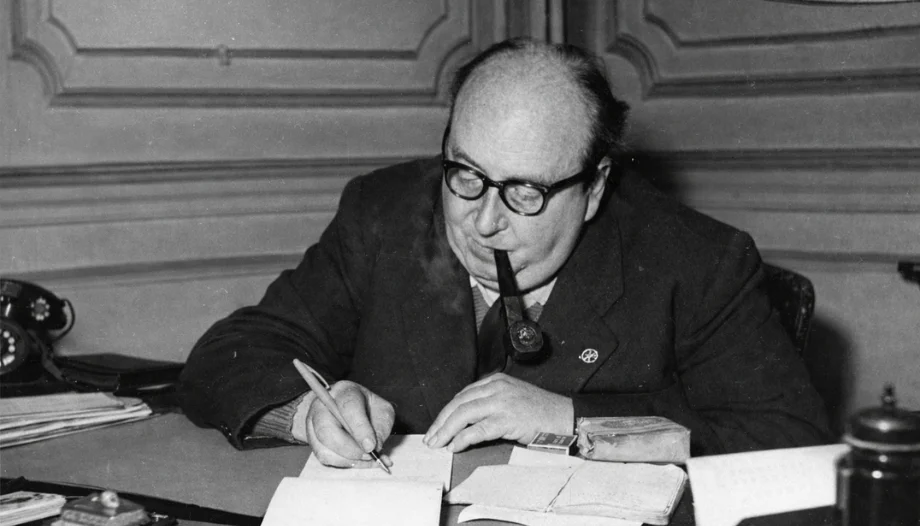
It was enough to look at the media of Vatican II to know that one of the personalities who dedicated the best of his efforts to drafting the documents of the Great Assembly was Don Alvaro del Portillo, secretary of the Conciliar Commission in charge of preparing the Decree «De Presbyteris».

John XXIII had appointed Dr. Del Portillo president of the Antepreparatory Commission on the Laity and, later, secretary of the Conciliar Commission on the Discipline of the Clergy, in charge, as I said before, of the schema «De presbyterorum ministerio et vita». Both positions are like a symbol of the life of this illustrious Spanish priest. Don Álvaro del Portillo holds a doctorate in Philosophy and Letters and a doctorate in Civil Engineering. A member of Opus Dei since the beginnings of this Association, he worked intensely as an engineer. Ordained a priest in 1944, he holds a doctorate in Canon Law and has always been in responsible service to the Church, with exemplary effort and fidelity. He resides in Rome and is the Secretary General of Opus Dei.

This is roughly the man I was looking for to explain to the readers of PALABRA the figure of the priest who was outlining the Council. Few points of greater interest - and by such an authoritative person - could indeed be raised in a priestly magazine. The enormous task that weighed on the Commission From Presbyteris - The work day and night made it practically impossible to approach Don Álvaro. I sent him a questionnaire. The Council ended. Three days later I had the answers in my possession.

-As you well know, the definitive vote on the Decree «Presbyterorum Ordinis» and its promulgation by the Holy Father took place on December 7, the eve of the solemn closing of the Ecumenical Council. If before those dates I did not want to accept the interview, it was for reasons that are easy to understand, which basically boil down to one: being the secretary of the same Conciliar Commission that prepared the Decree, it did not seem delicate to me to give my opinion publicly on problems that were still under study. And even less so in the case of a problem - the ministry and life of priests - on which recent literature has placed so much passionate polemical emphasis....

«L'Osservatore Romano», echoing the opinion of the Council Fathers, has described the Decree «Presbyterorum Ordinis» as one of the best and most complete documents of the Second Vatican Council. Do you think that this teaching of the Council will make up the ends of the controversy to which you alluded before?

-I think so. And not only because of the moral force of its authority, since it is a document of the solemn Magisterium, but also because of the doctrinal structure of its content. The different conceptions and particular opinions on the forms in which the life and apostolic task of priests should be manifested today can only be easily reconciled by placing the problem on a plane that is not exclusively disciplinary, nor only pastoral, nor only moral or ascetical. It was precisely the one-sidedness of points of view that led to the diversity of conclusions, sometimes strongly and polemically opposed. The Ecumenical Council, on the other hand, considered and studied the problem in a global way, starting from the theology of the priesthood and then progressively descending to the common pastoral, ascetical and disciplinary consequences that the particular consecration and the specific mission they have received have on the ministry and life of priests.

This is the first time in the history of the Church that a conciliar document has dealt specifically with the presbyterate. What were the reasons that made this advisable?

-In the face of the considerable development of the doctrine on the episcopate and on the common priesthood of the faithful, many priests were rightly asking themselves about the exact value and meaning of their priesthood, of their own apostolic task within the unique mission of the Church. On the other hand, in a world in continuous social and cultural evolution, it was necessary to specify the fundamental terms of the necessary accommodation of the ministry and priestly life. But above all, how could one think of a missionary renewal of the Church that did not have as its main foundation the holiness of life and the pastoral solicitude of its priests?

What do you consider to be the main notes that delineate the theological figure of the presbyter?

-Consecration and mission. The double reality signified in the well-known passage of the Epistle to the Hebrews, chapter five, verse one, where it is said that the priest «ex hominibus assumptus, pro hominibus constituitur”. Chosen from among the members of the Priestly People of God, the priest participates, by a new and special consecration, in the ministerial priesthood of Christ himself. A greater elevation of the creature, a greater intimacy with God in his redemptive work, is inconceivable. Human weakness is taken up, assumed, not only to cooperate with Christ, but to represent him before men, to act in his very name and person. Because, as a consequence of this participation in the ministerial priesthood of Christ, the priest is destined to the mission of evangelizing, sanctifying and governing, in hierarchical communion with the bishops, the People of God. Therein is contained all the mysterious greatness of priestly life: a special consecration (added to the baptismal consecration) that separates man from other men and a mission that destines this same man to the pastoral service of his brothers. Two dimensions - one vertical, of adoration; the other horizontal, of service - of the same life, both consecrated and sent; a life «in dialogue» at the same time with God and with men.

In today's world, given the new social and cultural circumstances to which you alluded earlier, how should priests orient this dialogue with the world and with people? What fundamental characteristics should the missionary and pastoral task of priests - bishops and priests - have in order for it to be truly a ministry, a service?

-I think that the concrete forms will vary with the different environments and cultural levels. But in any case, it is evident that the man in the street - in the university, in the office, in the country - is only willing to listen to the priest, the «priest», who knows how to address him with simplicity of human treatment (as a man, I would say, «within reach») and at the same time with a sincere and profound supernatural sense (as a man of God). Simplicity of human treatment - the eximia humanitas necessary for the conversatio cum hominibus, as it says in the Decree - means, in the first place, the exercise of a series of qualities or basic natural virtues (sincerity, loyalty, love of justice, hardiness, capacity for understanding, respect for the just freedom and autonomy of the laity in temporal matters, etc.). Then, it also means the capacity to esteem and properly value all noble human realities: professional work (like Christ in Nazareth), human love (like Christ in Cana or Naim), friendship (like Christ in Bethany), and so on. It is in this way that people discover in the priest the availability and understanding that facilitates dialogue, and with dialogue, teaching. This is how they become accustomed to consider the priest as a close, familiar, friendly figure, and not as a distant, singular and strange being.

In other words, it is required of us ecclesiastics a way of being - if you will pardon the expression - less clerical than at other times, a less clerical How should we behave in civil society and in dealing with the laity?

-If you write your article with clerical in italics, I answer yes. Less clerical and more priestly. Because those manners and that clerical mentality to which you refer - frequent in not a few clerics of past times - were the fruit of a false concept of power (which put the accent more on coercion than on moral authority) and of a false «supernaturalism», not very supernatural. I think that many of the people who declared themselves or declare themselves «anticlerical», as it is often said, did so in reaction to those manners and to that mentality, which certainly has nothing to do - as the example of many other magnificent priests has never ceased to testify - with a sincerely priestly soul, nor with the true demands of the pastoral ministry. But you see that it is a problem of «mentality», of interior context and, therefore, of intellectual formation, of doctrinal and ascetic deepening. In other words, it is something that cannot be addressed with superficial and external solutions, which, besides being simplistic, would be unfortunately counterproductive. For example, the abolition of the priestly garb (cassock, clergyman or habit), the indiscriminate and foolish admiration of everything «lay», the «temporalization» of the priestly ministry, reducing it to the sole tasks of social or economic assistance, etcetera.

It is precisely for this reason that the Decree. «Presbyterorum Ordinis» insists that the priest's exalted humanitas must always be closely accompanied by a deep supernatural sense of earthly realities, of his own priestly condition and of his own duty of state. Nothing, in fact, would make dialogue with the men and women of our time more difficult than a kind of «naturalistic» attitude on the part of the priest.

For what reasons exactly?

-Because - and this is one of the great moral and cultural values of our time - people today passionately love the authenticity of attitudes, the sincerity of persons, and automatically reject anything that tastes false, fake, false or lacking in responsibility: and a «naturalistic» attitude in the priest would be all this at the same time. But, above all, because what people want, what they expect - even if they often do not know or do not realize that they want and expect it - is that the priest, with his witness of life and with his word, speaks to them about God. And if the priest does not do so, if he does not seek them out, if he does not help them to listen, to discover or understand the religious dimension of their lives, then the priest lets them down, just as a fireman without water, a tavern keeper - forgive the simile - who dispenses milk, or a doctor who does not dare to diagnose and prescribe, would let them down. Today, people certainly demand to be spoken to in a very specific way-positive, vital, adhering to their concrete spiritual and human problems, encouraging and full of that Christian optimism called «Easter spirit»-but they want and expect to be spoken to about God, and to be spoken to openly, because there are already too many things in their social life that hide it. They realize that they need God. Even the most demanding person in the rush of their thousand daily occupations, even the most distant or the one who seems most indifferent: all, in one way or another, with greater or lesser awareness or lucidity, carry this existential problem of God on their shoulders. And the priest -homo fidei, Evangelii minister, educator in fide- has this as the first duty of his ministry: to awaken that light or to enliven it, to bring it to the plane of personal conscience.

In short, sincere humanity in form and a profound supernatural spirit in content. The same Conciliar Decree teaches that the Eucharist is the source and summit of the priestly ministry. And in the Eucharist Christ egregiously manifests at the same time the ineffable proximity to man of the Son of Man and the infinite saving love of the Son of God.

We realize-thinking about the presbyterate, the reaffirmation of ecclesiastical celibacy, the reform of incardination and benefices, etc.-that we have barely had time to outline some of the many questions we wanted to ask Don Alvaro del Portillo, one of the experts who contributed most to the laborious work of the Council.

As they say, there are many other topics that remain unresolved. Who knows if Don Alvaro's kindness will not allow us to resume this dialogue at a later date?

The authorAlberto García Ruiz

Priest, with a degree in Journalism from the University of Navarra, and a Doctorate in Canon Law.

The Church as defender of truth: Newman, Plank, Spaemann and Ratzinger

From Newman to Ratzinger, via Planck and Spaemann, different views show how conscience, science and philosophy find their fullness in faith.

November 1, 2025-Reading time: 4 minutes

In his “Letter to the Duke of Norfolk”, the next Doctor of the Church saint John Henry Newman understands conscience as a light that invites to obedience to the divine Voice that speaks in us and that the good exercise of this conscience consists in the fact of directing itself immediately to conduct, to something that must be done or not done. He also says that Jesus wanted the Gospel to be a recognized and authentic Revelation, public, fixed and permanent. Consequently, he constituted a society of people to be the guarantor of his Revelation. When he was about to leave the earth, he gave the Apostles the task of teaching those who were converted to keep all the things he had taught them. And He manifested to them that He would be with His followers until the end of the world and of history.

Newman adds that this promise of supernatural help did not expire with the disappearance of the Apostles, since Christ said “until the end of the world,” taking for granted that they would have successors and committing himself to be with those successors as he was with the Apostles. Revelation, Newman goes on to say, was given to the Twelve in its entirety and the Church only transmits it. He believes that the Church has the mission to teach faithfully the doctrine that the Apostles left us as an inheritance. By the teaching of the Church he understands not the teaching of this or that bishop but its unanimous voices and the Council is the form that the Church can adopt so that all recognize what she is teaching. In the same way, the Pope must present himself to us in a special way or with a special gesture, so that we understand that he is exercising his teaching office, that is, ex cathedra.

In his work on “The Development of Dogma” he affirms that the supremacy of conscience is the essence of natural religion and that supremacy in the conscience of the Christian is what is revealed to us in the New Testament and confirmed to us by the Church. He considers that the Catholic Church is the only one of all the Churches that dares to claim infallibility, as if a secret instinct and an involuntary suspicion restrained the other confessions.

In his book “Apologia pro vita sua” he says that he is compelled to speak of the infallibility of the Church as a disposition willed by the mercy of the Creator to preserve religion in the world and to restrain that freedom of thought - which is undoubtedly in itself one of our greatest natural gifts - in order to rescue it from its own self-destructive excesses.

In his book “Religious Assent” he states that he who believes in the depositum of Revelation, believes in all the doctrines of that depositum and, since he cannot know them all at once, he knows some doctrines and does not know others... but whether he knows little or much, he intends, if he truly believes in Revelation, to believe all that is to be believed whenever and as soon as it is presented to him.

He says that there is only one religion in the world that tends to satisfy the aspirations and prefigurations of natural faith and devotion, Christianity, and that it alone has a precise message addressed to all mankind.

Plank, Spaemann and Ratzinger

For his part, the German Nobel Prize winner Max Plank, author of quantum theory, said in a conference: «Wherever we look, as far as we look, we do not find anywhere the slightest contradiction between religion and natural science, on the contrary, we find perfect agreement on the decisive points. Religion and natural science do not exclude each other, as some fear or believe today, but complete and condition each other. The most immediate proof of the compatibility of religion and the science of nature, also of that built on critical observation, is offered by the historical fact that precisely the greatest natural scientists of all times, Kepler, Newton, Lebnitz, were men penetrated by deep religiosity».

And that same lecture by Plank ended with the following words: «It is the ever-sustained, never flagging struggle which religion and natural science lead together against unbelief and superstition, and in which the slogan which marks the direction, which marked it in the past and will mark it in the future, says: Towards God!» (“Christ and the Religions of the Earth”, Franz Köning).

It is true that there are intelligent people dedicated to philosophy and science and unbelievers. But I prefer to remember, once again, someone who has been able to reconcile reason and faith: Robert Spaemann.

The German philosopher was once asked whether he, an internationally renowned scientist, really believed that Jesus was born of a virgin and worked miracles, that he rose from the dead and that, with him, one receives eternal life. Such a faith, they told him, is typically childish.

The 83-year-old philosopher replied: “Well, if you like, that's the way it is. By the way, I believe more or less the same as I did when I was a child, only that I have reflected on it more in the meantime. In the end, reflection has always confirmed me in the faith.”. 

To this anecdote Benedict XVI added: «Why should God not be able to give birth to a virgin as well? Why should he not be able to resurrect Christ? Of course, if I myself establish what is allowed to be and what is not, if I and no one else determine the limits of what is possible, then such phenomena must be excluded... God wanted to enter this world. God wanted us not to be limited to sensing it only from afar through physics and mathematics. He wanted to show himself to us...» (“The Light of the World,” a conversation of Benedict XVI with journalist Peter Seewald).

The Vatican

November, month for the dead: How to gain indulgences?

In this month of November, the Church invites us to pray especially for the deceased and to gain plenary indulgences.

Teresa Aguado Peña-November 1, 2025-Reading time: 3 minutes

The Catholic Church dedicates the month of November, in a special way, to prayer for the faithful departed. This time invites believers to offer masses, prayers and works of mercy for the souls in Purgatory.

Throughout the month of November there is the possibility of gaining plenary indulgences for the deceased, as was done during the years of the pandemic. Cardinal Mauro Piacenza, Major Penitentiary, explained that this practice “is a deeply felt form of devotion, which is expressed by participating in Mass and visiting cemeteries,” recalling that the indulgence “is a sign of God's tenderness and of the communion between the pilgrim Church and the purgative Church.”.

How do I obtain a plenary indulgence for the deceased?

According to the Indulgences Manual, The faithful can obtain plenary indulgences - applicable only to the souls in Purgatory - by fulfilling the following conditions:

  1. Visiting a cemetery and praying, even mentally, for the deceased.
  2. Visit a church or oratory on November 2 (Commemoration of All the Faithful Departed) and recite the Our Father and the Credo.
  3. Go to sacramental confession, receive Holy Communion and pray for the Pope's intentions (an Our Father and a Hail Mary are enough).
  4. To be free from all affection for sin, even venial sin.

Those who are unable to leave home for serious or health reasons may also obtain the indulgence by spiritually joining in the prayers of the Church, praying for the deceased before an image of the Lord or of the Virgin Mary.

The Mass, the greatest help for the souls in Purgatory

The Church teaches that the Holy Mass is the most powerful offering that can be made for the deceased, since it is the same sacrifice of Christ renewed in an unbloody manner on the altar.
This is what Pope Benedict XV recalled in his Apostolic Constitution Incruentum Altaris (1915), in which he granted all the priests of the world the faculty to celebrate three Masses on November 2, one for the intention of their choice, another for all the faithful departed and a third for the intentions of the Holy Father.
The Pope stressed that “the sacrifice of the altar has the greatest power to atone for the souls that rest in Christ,” and invited the faithful to attend these Masses with devotion, so that “an immense wave of relief” may reach the souls in Purgatory.

The spiritual meaning of indulgences

The Catechism of the Catholic Church teaches that the indulgence is "the remission before God of the temporal punishment for sins, already forgiven, as far as guilt is concerned, which a faithful person willing and fulfilling certain conditions obtains through the mediation of the Church, which, as the administrator of redemption, distributes and applies with authority the treasure of the satisfactions of Christ and the saints.".

God forgives their sins to those who, after having committed a sin, repent through the sacrament of confession. However, there remains a "pending responsibility" for the consequences that the sin has had for the same person or for others, or even for society in general. This consequence is called "temporal punishment" and is a debt that persists and must be paid either in this life or in Purgatory.

It is then that the Church, the administrator of redemption, can grant indulgences that can fully or partially suppress (depending on whether it is a plenary or partial indulgence) this temporal punishment for sins committed and confessed up to that moment.

During this month, the Church invites the faithful to pray for their deceased loved ones, to participate in the Eucharist, and to offer works of mercy as a sign of love and communion with the Purging Church.
Every indulgence gained is an act of spiritual charity that opens heaven to souls awaiting purification.

Read more
Newsroom

The Board of Social Action of the CARF Foundation organizes the 29th edition of the charity flea market

Through the charity market, the Patronato de Acción Social seeks to raise funds to pay for the scholarships of the seminarians.

Editorial Staff Omnes-October 31, 2025-Reading time: < 1 minute

From November 11 to 15, in the parish halls of San Luis de los Franceses, the Social Action Board The CARF Foundation will hold a charity market to raise funds to help priests.

– Supernatural CARF Foundation encourages and promotes priestly vocations, supporting the formation of seminarians, priests or religious, in Rome or Pamplona: "We work to bring God's smile to every corner of the world through priests and helping in their formation".

Associated with this foundation and for the same purpose, the Patronato de Acción Social coordinates volunteers to sew and embroider the albs or liturgical linens that are given, together with the cases of sacred vessels, to each seminarian who completes his formation and returns to his diocese to be ordained.

The first action of the Patronato is to pray for priestly vocations. "Praying and helping priests motivates many people. In addition, they also pray for us, so, in reality, we win," says its president, Carmen Ortega.

In addition to this work, the flea market is an essential part of the Patronage. To help vocations, various volunteers are mobilized to make knitted clothing, collect donated furniture and decorative items, and organize the necessary arrangements to make all the donations available to the public.

In this edition the 29th biannual flea market will be held from November 11 to 15 from 11 am to 9 pm in the parish halls of San Luis de los franceses (Calle Padilla, 9. 28006 Madrid).

Focus

Pornography comes to ChatGPT

The irruption of artificial intelligence in the sexual sphere reopens the debate on the limits between freedom and public health. While OpenAI prepares access to erotic content on ChatGPT, Spain intensifies its alert on the effects of pornography on society.

Javier García Herrería-October 31, 2025-Reading time: 2 minutes

OpenAI, the company responsible for ChatGPT, has announced that as of December 2025 it will allow access to erotic content for adult users who verify their age. The move, initiated by CEO Sam Altman, is a major shift in the company's moderation policy.

Altman justified the change by pointing out that, so far, ChatGPT had been “quite restrictive” in order to “make sure we were careful about mental health issues.” However, he acknowledged that this caution made it “less palatable and helpful to many users who did not have mental health issues.” The new approach, he said, seeks to “treat adult users as adults.”.

The decision has generated controversy among specialists in technological ethics, therapists and social networks. Critics warn that, under the argument of freedom of choice, it hides a strategy to monetize loneliness and digital hypersexualization, with potential consequences on mental health and the normalization of addictive behaviors.

Some analysts point out that the new features that could be incorporated - customizable avatars, couple simulations, erotic conversations or custom-generated bodies - could mark a turning point in the expansion of digital pornography. The risk, they argue, is not just ease of access, but the creation of virtual environments that replace human contact and foster affective ties with machines.

The campaign of the Ministry of Equality

In Spain, meanwhile, the Ministry of Equality has launched the campaign “For not talking.”, focused on warning about the consequences of pornography consumption. With messages such as “Porn generates unrealistic expectations.”, “contains high violent content”, “eroticizes violence” o “establishes relationship models based on male domination”.”, The initiative seeks to promote sexual education to counteract the influence of pornographic content on the construction of identity and desire.

The contrast is striking: while the Spanish government is trying to discourage pornography consumption and encourage reflection on its effects, one of the world's most influential technology companies is opening the door to a new form of automated and depersonalized erotic consumption. So far, no government has criticized or announced specific measures to assess the ethical and psychological impact of this decision.

The television paradox

Given the general context, the decision of the Spanish public television to take the decision to bring to its prime time the program The Revolt (formerly called The Resistance). For years, the original program described itself as «porn". friendly«, openly defending pornography and including widely broadcast interviews with Spain's leading porn stars. 

The irruption of artificial intelligence in the field of sexuality opens a fundamental debate on the boundaries between individual freedom, technological ethics and public health. In a world where AI is increasingly present, the question remains unavoidable: should we promote pornography, tolerate it or ban it? Is pornography harmless?

Integral ecology

Leire Navaridas: “I had an abortion believing it was freedom, but the wound appears sooner or later”.”

To deny postabortion pain is to deny the reality of thousands of women who suffer in silence, trapped between guilt and a system that calls their wound freedom.

Teresa Aguado Peña-October 31, 2025-Reading time: 7 minutes

Leire Navaridas' experience illustrates the trauma of an abortion. She understood that a pregnant woman is already a mother, and inspired by her own experience and accompaniment, today she works with AMASUVE, an organization that supports women and men affected by the aftermath of abortion, recognizing it as a traumatic event with profound consequences for individuals and their relationships, as well as for society. For Leire, abortion never solves a problem, but unconditional love for a child, even a lost one, can be an engine capable of rebuilding the disorder in a woman's life. Leire will talk about it in the XII St. Josemaría Symposium, which will be held under the slogan «voices of hope» on November 14 and 15. Following the current debate on postabortion syndrome, Leire explains her point of view in this interview.

From your personal experience and from AMASUVE, how would you define what many women go through after an abortion?

-If we understand reality at a deep level, because we approach it without ideological filters, I believe that there would be little room for debate. As soon as we understand that abortion is the violent intervention of a pregnancy by which the child is removed lifeless from the uterus of the pregnant mother, how can we deny that it is a traumatic event, and what mother would not feel deeply damaged after losing a child like this? In my experience the answer is that we all feel traumatized. Another thing is when and how that trauma will be expressed.

In my case, I went for an abortion in 2008 as if I were going to have my nipples waxed. I was pro-abortionist and I believed that motherhood is the worst possible condemnation for a woman who wants to be free, because I also believed that men are sexual predators you can't trust. And the man who got me pregnant was my husband. A wedding that we performed by papers, because a “feminist” like me, could not fall into romanticism and marry for love and commitment. 

What were the key factors that influenced your recovery from postabortion syndrome and the abortion process in general.

-The initial and fundamental steps are two. The first is to accept the reality of being the mother of two dead children -because in my case, as a consequence of the abortion, I also spontaneously lost the next child-, and the second is to connect to the pain that this generates. Here the most common thing is to feel super guilty because we mothers take full responsibility for these violent deaths. Without understanding that we have also been victims of a social, political, industrial and health system that justifies, denies and promotes such violence. Because they dress it up and sell it very well in the concept of rights and freedom. And women who are broken inside, we are easily and quickly poisoned by these ideologies that deny and destroy biology.  

After the controversy over whether or not postabortion syndrome exists and everything that is happening in politics around this issue, how does AMASUVE respond? 

-To deny the damage that an abortion causes to a woman's overall health is as offensive to me as denying that a woman who has been raped is traumatized. To deny the pain of women, which I have witnessed after 7 years of accompanying them through post-abortion trauma, in order to reduce it to a far-right hoax or an invention of the pro-life movements is a sign that the Spanish Government and its Ministries of Health and Equality care much more about maintaining their political and ideological position than about truly knowing the profound reality of a pregnant woman who is condemned to abortion due to manipulation or lack of resources.

If they were really interested in promoting women's health and freedom, they would offer complete and transparent information before referring them to an abortion and, on the other hand, they would invest the 34 million they invest in abortion in support for pregnant women in vulnerable situations. Because it is a deception to think that women go to an abortion clinic free and empowered. It would only be necessary to talk to 10 women who have undergone an abortion to understand that there is no freedom, due to lack of information and sufficient support for not having an abortion when the pregnancy poses a threat to the pregnant mother. On a physical level alone, it is worth noting that many women in Spain are left sterile or without the capacity to bring more children into the world after an induced abortion performed in a clinic.

Psychiatrist Juan Carlos Pascual affirms that most women who undergo what he calls “voluntary termination” of pregnancy do not present after-effects after having an abortion. What do you think?

-Reality is manipulated with language. I cannot resume the pregnancy that I “voluntarily interrupted” in 2008. The violent intervention that takes away a lifeless child is traumatic and ends up manifesting itself over time. In my case it was years of believing that it had been a liberation and that there was no wound. I was fortunate not to be bleeding day after day for months as is the case with many women after an abortion and who cannot deny the damage no matter how much they want to turn the page and bury it in the depths of their being.

Then there is the reality that women are rarely clear about it. I did. But if someone approached the waiting room of an abortion center what they would find would be very nervous women, others crying, some desperate, others coerced by the sexual partners who accompany them to make sure that it ends without a living child, and other types of examples where you see anything but freedom, tranquility or security in the pregnant woman.

And the common thing is that sooner or later, if you have not had physical sequelae, at some point the emotional ones arrive, such as guilt or grief, or psychological ones such as recurrent nightmares, depression or suicidal thoughts. I see it every day in the women I accompany. Another thing is that psychiatrists don't understand that the woman who comes to the emergency room with an anxiety attack does so because of an induced abortion. Because, as a rule, they do not record this information in their records. And the woman may not associate it either, or she may simply be too embarrassed to say that at some point in her life she has undergone an abortion, or more. I estimate the average to be between 1.5 and 3 abortions per woman. 

How do you treat someone who has had an abortion and does not feel bad? Do you have to «convince» her that she has been harmed so that she can heal?

-In my opinion, we cannot place ourselves as a moral authority, nor as a therapeutic authority, in front of someone who does not want to heal. However, we can encourage her and offer her an opportunity to connect with her pain, which comes long before the abortion. In this sense, it is very important to understand that abortion is not the origin of a woman's discomfort, but a consequence, it is the straw that breaks the camel's back in a trajectory that was not right. After an induced abortion we find abandoned, abused or mistreated women. Therefore, one way to open the way to her wounds is to treat her with a lot of affection, love and respect. This can have a much greater impact on her than placing a reality on her that she is not capable of assuming or facing.   

When someone close to us gives us the news that they have had an abortion, what is the modus operandi?

-As one would accompany any mother in a mortuary. With much love, much respect, listening to her, serving her, accompanying her in her pain. Letting her feel with a few words or, sometimes, simply with a look that she is loved and accepted with all that she has gone through. Without judgment or condescension. From there, a bond of affection and trust can be established that allows her to open up to what she carries in her heart. And as she is getting out the pain, adding to it the understanding of what have been the factors that have led her to submit to such a violent act. Surely if you open your intimacy, a lot of loneliness, vulnerability, fear, etc. will appear. 

At a therapeutic and strategic level, it is important not to focus the discourse and the issue on the abortion, which after all is a violent event that has already happened, and to focus on the reality of the present: we are dealing with a mother whose child has been killed before birth. When in a situation like this you empathize and connect with the pain inside her, it is easy for the mother to break down in tears and begin, in a process that takes time and commitment, to free herself from pain and guilt. It is advisable to refer her to specialists, of which there are not many. AMASUVE is a free referral point available worldwide.  

Within the framework of St. Josemaría's symposium, Is there hope in the fight against abortion?

Of course. Human beings, although many think otherwise, are innately called to love. He longs for love and is moved by love. And every act of love always brings its fruits. That is why any act that brings together people attracted by the impulse to promote a Common Good is an act that not only gives hope, but is already building a good in the present. So it is to unite, reinforce and motivate the attendees. In addition to bringing the issue to the forefront.

How can we “ordinary” Christians (or non-Christians) do our bit to help “win the battle”?

-There is a very accessible way to contribute to the cause: spreading messages that convey awareness, support and motivation. And it is also very necessary and within the reach of every adult, to be an example. If I, as a woman, enjoy my femininity and my motherhood, I will be able to influence my son and the children around me to have a reference that being a woman and a mother is wonderful. It makes us shine and enjoy, as long as we have a man by our side supporting our creativity.

And if you are a man, give yourself to making those around you happy, so that the girls around you will have a real record, not a fictional one, that the man loves. This will allow them when they grow up not to give their sexuality to a man who does not make them feel equally valued and special, because they will know that there is a man who respects and loves women. And if they know they are super valuable, they will not settle for less. And the man who loves will celebrate getting his wife pregnant and that will result in a united and happy family. This can transform the human trajectory. 

Read more
Spain

Why has Spain become de-Christianized so quickly?

The rapid de-Christianization of Spain is not only explained by the political transition and the profound changes in lifestyles since the 1960s. The acceptance of contraception also marked a decisive turn in mentality, generating an individualism that weakened the Catholic fabric of society. 

Pablo Perez Lopez-October 31, 2025-Reading time: 4 minutes

In November 2016, I participated in Wroclaw, Wroclaw (Poland), in a congress whose theme was. The value of culture - the culture of value. My intervention was to present the process of secularization experienced by Spain in recent years. I was part of a panel that also included the Irish writer and music critic John Waters and the Dutch psychologist Gerard van der Aardweg. All three of us had in common that we were citizens of countries with a long Catholic tradition that had undergone a process of secularization that was as rapid as it was intense. Understandably, the problem was of concern to Polish Catholics who saw how the end of communism had ushered in a process of de-Christianization in their country, unexpected for some, unwanted for all. I had the impression that our hosts wanted to learn from the experience of others and try to avoid it. They were clearly surprised by the process of social change, especially secularization, experienced by countries like ours.

Democracy and de-Christianization

I found the presentations of my colleagues at the table very interesting, they revealed aspects that I did not know about the history of Catholicism in their countries, and allowed a discussion that I still remember. In my intervention, which was the first, I explained what I thought about the Spanish process, how people tend to think that the de-Christianization was almost a direct consequence of the end of Franco's regime and, therefore, something directly linked to political democratization and the experience of public freedoms. I explained that this interpretation of the facts seemed to me to be a simplification that led to a falsehood. To begin with, comparing the Spanish case with the Italian or French cases was enough to dismiss the idea that the growing de-Christianization of the seventies, accelerated in the eighties, was a consequence of democratization, since it also affected countries in which the civic freedoms of democracies had been experienced for many years. 

In Spain, democratization and secularization coincided in time, overlapped, and in some aspects may have strengthened each other, but one was not the cause of the other, except in certain aspects that affect more the behavior of the Catholic hierarchy than that of the politicians.

The new sexual morality

My thesis was that the decline in the knowledge and practice of the Christian faith responded above all to a change in lifestyles that had accelerated in the late 1960s and 1970s. It was a mutation that first affected the place where people lived: Spaniards emigrated massively to the cities in those years. This move had to do with the work that was being done, which was less and less linked to the primary sector, and led to a growth in family incomes that transformed lifestyles, making them more consumerist and materialistic as well. 

The role played by television, cinema, music and advertising in the cultural change experienced was of an importance that is difficult to exaggerate. But this change in the way of life had an ally, which boosted social change in an impressive way, and this ally was precisely related to religion. The great transformation had been driven by the change of moral horizon brought about by the post-conciliar Catholic crisis. The gale that it brought to the consciences of many people produced an unprecedented change of mentality. The collapse manifested itself in an impressive way in the defections of priests, religious men and women who abandoned their spiritual commitment to give themselves to a new and temporary one. It was not something forced from the outside, but a process lived from within the Church, a sort of implosion.

However, it seemed clear that this affected a minority sector of the population: as important as it was for the Catholic world, it was not enough to explain a social change. There was something else that had led to the transformation of the lives of millions of Spanish Catholics. I argued that this had been the change in sexual morality and the practical acceptance of contraception as a matter of course by Christian married couples, an acceptance contrary to the teachings of Pope Paul VI in his encyclical Humanae Vitae, but spread by not a few clergymen and some bishops as something reasonable and even desirable. 

Contraception

The widespread use of contraceptives seemed to me to be the main cause of the spread of an individualistic mentality that reinforced consumerism in an impressive way and changed people's way of thinking, also in religious matters. It was such an important change in lifestyles that it had a very strong effect on society as a whole within a few years. From my point of view, this was the key to understanding the cascading transformations that followed: the change in the way of life is much more transcendent than a mere political change.

My Dutch colleague, both in his intervention and in the colloquium, underlined his agreement with this thesis. In the 1950s, the Netherlands had been the European country that, in absolute numbers, sent the most missionaries outside its borders. Almost at the same time, in the midst of a doctrinal crisis that affected its episcopate and its theologians, the spread of contraceptive methods almost destroyed the Catholic fabric of Dutch society to the point of annihilation. John Waters, our Irishman, agreed with the thesis, but underlined, in his case, a harmful clericalism that had led in Ireland to fathers abdicating their duties and being almost replaced by clerics in their family responsibilities, with the connivance of mothers, in a process that proved fatal for the family institution.
Historical origins

I came back from Wroclaw convinced that we should better explain to our students the profound change that had taken place in the 1960s and 1970s throughout Europe. Well, not all of it. Catholics on the other side of the Iron Curtain had been spared this process, which put me on the track of the media coverage of Vatican II and the importance of publicity as determining factors in these changes, or lack thereof.

When I went deeper into the question, I discovered that the root of this transformation was in previous years, in the crisis of the beginning of the century in Europe and, especially, in the crisis of the late fifties and early sixties in the United States of America, in its counterculture and in the acceptance of contraception, and also of abortion, as a way of life of their families and, therefore, of their society. That great change landed in Europe in the late sixties, exploded in May '68, spread and brought about the greatest social change of the twentieth century, the separation of marital love and sexuality, which still shapes our time. Much more has happened around it, and its roots go even further than mentioned here, but that is another (exciting) story. 


Content provided by the faculty of the Master's Degree in Christianity and Contemporary Culture of the University of Navarra.

The authorPablo Perez Lopez

Professor of Contemporary History at the University of Navarre.

The Vatican

Pope to visit Summer Cemetery in commemoration of the faithful departed

The so-called "Summer Cemetery" in Rome will be the place where Pope Leo will celebrate Mass for the Faithful Departed on November 2 at 4:00 pm.

Maria José Atienza-October 30, 2025-Reading time: < 1 minute

On Sunday, November 2, the Feast of the Commemoration of All the Faithful Departed, Pope Leo XIV
will preside the Eucharistic celebration at the Campo Verano Monumental Communal Cemetery, popularly known as the «Summer Cemetery».

This celebration, presided by the Bishop of Rome, is usually held in one of the cemeteries that exist in the Italian capital. In recent years, the French Military Cemetery of Rome, the Teutonic Cemetery or the Laurentine Cemetery have hosted this celebration of the Holy Mass.

The following day, the Pope will preside at Holy Mass in suffrage for the late Roman Pontiff Francis and for the cardinals and bishops who have died during the year in the papal chapel of St. Peter's Basilica at 11 a.m.

Evangelization

Saint Marcellus, centurion, and Blessed Ukrainian Zaryckyj, martyrs

The Catholic liturgy celebrates on October 30 St. Marcellus, Roman centurion, venerated martyr by the Catholic and Orthodox Churches, patron saint of Leon (Spain). And the Ukrainian blessed presbyter Alexander Zaryckyj. The Church commemorates St. Marcellus I, Pope, on January 16.    

Francisco Otamendi-October 30, 2025-Reading time: 2 minutes

Saint Marcellus was a centurion who was born and lived in Leon during the second half of the third century. He is venerated as a saint and patron saint of the city of León. The other local saint, Saint Froilán, is the patron saint of the diocese.

While serving as a centurion, he was required to participate in official pagan events. In particular, the celebration of the birthday of Emperor Maximianus Herculeus (or of the emperors under the diarchy) in the year 298. Tradition narrates that Marcellus, seeing that the celebration was contrary to his Christian conscience, stood up, threw down his centurion insignia (belt, sword), and declared: “I serve Jesus Christ, eternal King”.

Family man

He was immediately arrested. According to the Roman Martyrology, he was first tried in Spain on July 21, 298, although his final trial and beheading in Tangier is set for October 29 or 30, 298. The prefect Aurelius Agricolanus passed sentence of death by beheading, considering that Marcellus had abandoned his military post and disowned the imperial cult.

St. Marcellus is presented married to St. Nonia (or Nona) and father of twelve children. Among them Claudius, Lupertius and Victoricus, also martyrs. His relics were transferred to the city of León, in Spain, of which he is patron saint.

Blessed Alexander Zaryckyj, dead in Dolinka

Among other saints, the Ukrainian Blessed Alexander Zaryckyj, born in 1912, is also celebrated today. He was ordained a priest in 1936, served as a parish priest, and in 1948 was arrested by the authorities during World War II. After being arrested and then exiled in Karaganda (Kazakhstan), he was released from prison in 1956 thanks to a general amnesty, and later appointed apostolic administrator of Kazakhstan and Siberia. But in 1962 he was arrested again and died. martyr of faith a year later in the Dolinka concentration camp (Kazakhstan).

The authorFrancisco Otamendi

Read more

Is it so «innocent» to dress up our children on Halloween?

In times where evil masquerades as entertainment, the Christian conscience is called to wake up and choose light over darkness.

October 30, 2025-Reading time: 3 minutes

In a culture that has learned to laugh at evil, Halloween is another symptom of the progressive numbing of moral conscience. What was once feared is now celebrated; what was once considered dark is now celebrated. Under orange lights and innocent masks, the world has learned to play with the terrifying, believing that nothing happens because of «a simple gesture».

Many live October 31 as a harmless tradition. However, before introducing it into our culture, we should ask ourselves: What are we really celebrating? Is what we are celebrating in accordance with what we believe? The Gospel calls us to be “salt of the earth and light of the world”. Participating in celebrations that exalt the opposite, even superficially, does not glorify God. And if something does not glorify God, we should sincerely examine whether it is appropriate to do so.

Trivializing evil: when everything “does not matter”.”

The greatest triumph of the devil, said the poet Baudelaire, is to make us think that he does not exist or that he has no power. Halloween fits perfectly into that deception. Under the guise of fun, the dark and the evil are trivialized, turning into a game what in reality represents evil.

When we laugh at the devil and make him a cause for celebration, we cease to recognize his real presence and his capacity to tempt. Little by little, our conscience becomes numb: what used to shock us, now seems like a joke. This is how evil creeps in - not all at once, but drop by drop - and gains ground.

«It's just a disguise.»

Some will say: “it's just a disguise, it's just decoration”. However, every human act has meaning, even when we don't perceive it. History is full of examples: symbols, words and celebrations shape entire cultures.
That is why it is not the same to disguise oneself as a saint or a demon, as a martyr or a monster. Each sign communicates something, and educates the heart of the one who lives it. What image of life and death is offered to children when the ugly, the violent or the demonic is confused with something that can be celebrated? If we accustom our children to celebrate a day where «the bad guys» reign, we run the risk that they will perceive evil in the wrong way. We must teach them to recognize its seriousness and not to give in to it, even in the guise of fun, because «he who plays with fire, gets burned».

In the face of this, educating in light, hope and holiness is infinitely more fruitful. A child who celebrates the lives of the saints learns that true courage is not in scaring, but in loving; not in provoking fear, but in being a witness of goodness. Thus, we Christians must highlight the beauty of God in the face of the ugliness of sin and the macabre. The devil does not deserve a party. The saints, on the other hand, do. They are the true heroes.

Holywins: when holiness conquers

Thus, the Church proposes a luminous alternative: Holywins, which means “holiness wins”. This initiative was born in Paris in 2002 and is now spreading to parishes and schools all over the world.

Holywins recaptures the true Christian meaning of November 1: honoring all the saints, known and unknown, who are already living in the presence of God. Children are encouraged to dress up as their favorite saints, learn their stories, pray and celebrate eternal life with joy.

In many communities, Holywins includes processions, games, singing, and times of adoration or mass. The children hand out holy cards and testify that true joy is not in fear, but in the love of Christ.

While Halloween glorifies darkness, Holywins exalts light. While Halloween mocks evil, Holywins teaches to overcome it with good. While Halloween trivializes death, Holywins proclaims the victory of eternal life. Because, in the end, there is no possible comparison between horror and holiness. The Christian is not called to «flirt» with evil, but to be a witness to the victory of Christ.

Books

Ubi Sunt? Christian intellectuals

A necessary debate on the role of Christianity in public life is reborn in this collective work coordinated by Ricardo Calleja, which brings together established and new voices to reflect on how Christian ideas can influence and dialogue in an increasingly post-Christian society.

Javier García Herrería-October 30, 2025-Reading time: 2 minutes

In 2020, an article written by Diego Garrocho and published in the press triggered a debate on the role of intellectuals in public life that lasted more than two years. This text served as a catalyst for a conversation that involved multiple thinkers, voices and perspectives. 

Now, this collective work, directed and coordinated by Ricardo Calleja, seeks to reactivate and enrich this relevant discussion. Many of the authors who contributed to the debate, as well as some new faces, write in its pages. 

The discussion remains fully open, raising essential questions: Where are Christian voices in the public sphere today? Where should these voices emerge from? What issues should they address? Does Christianity have something specific and unique to contribute to contemporary public dialogue? Is there a need for a culture war to defend certain values? And, above all, how should these voices and their ideas be presented in the current context?

The chapters are diverse in length, tone and provenance, but all share a clear common thread: a common concern for the role of Christianity in contemporary culture and in shaping public opinion. 

In an increasingly post-Christian global context, where traditional values are challenged and certainties are diluted, this work becomes a space for collective reflection that aims to find ways to make Christian ideas and principles more visible and relevant.

Ricardo Calleja, as editor, provides a well-articulated introduction that frames the context and the main concerns addressed in the book. In addition, he makes his own contributions, enriching the debate with personal analysis and approaches. 

For those who followed the initial polemic originated by Garrocho's article, this book provides a unique opportunity to take stock, to calmly examine the different positions and to form a more rigorous opinion on the matter. 

At the same time, the book has the potential to inspire those readers who have not yet engaged in such debates. In an increasingly secularized world, this presence is not only necessary, but urgent, and the book acts as an invitation to reflect and act.

Ubi Sunt? Christian intellectuals

AuthorRicardo Calleja
EditorialChristianity : Christianity
Number of pages: 321
Read more
Gospel

The existence of purgatory. Feast of the Faithful Departed (C)

Joseph Evans comments on the readings for the Feast of the Faithful Departed (c) corresponding to November 2, 2025.

Joseph Evans-October 30, 2025-Reading time: 2 minutes

In Catholic countries, many people today go to the cemetery to pray for their deceased loved ones. We have the feeling of being in communion with them beyond death. This feeling has also been present in non-Christian cultures throughout the centuries, and different civilizations have expressed their union with the dead in various ways.

But what was only an intuition for pagan peoples has been explicitly revealed to us in the Church. The Old Testament itself already showed awareness of life after death. The Second Book of Maccabees speaks of “atonement for the dead, that they might be freed from sin.” (2 Macc 12:46). And the Book of Wisdom is aware that the destiny of the righteous and sinners after death is not the same. “The life of the righteous is in the hand of God, and no torment shall overtake them (...) They are at peace (...) The wicked, on the other hand, shall be punished for their thoughts, for they despised the righteous and turned away from the Lord.” (Wis 3, 1. 3. 10).

Our Protestant brethren do not usually accept these books, because neither did Luther. This is partly because he did not accept the doctrine of Purgatory, both because of the many abuses associated with this belief in his day (such as the sale of indulgences) and because of his exaggerated sense of faith. He thought that faith in God was all we needed and that it alone was our salvation and purification. 

However, several passages in the New Testament also suggest the reality of Purgatory. St. Paul speaks of a purifying fire. On the “day” of judgment (private at death, public at the end of time), “Each man's work shall be made manifest, the day shall show it; for it shall be revealed by fire. And the fire shall prove the quality of every man's work.” (1 Cor 3:13). If we have built on Christ (only works done for Christ, explicitly or implicitly, will get us to heaven), Paul says, this fire will reveal the quality of the works we have done. He uses the metaphors of the “gold, silver, precious stones, wood, grass, straw.” (v. 12). Works that are mere chaff, of little substance, will be burned. Works of gold will survive the fire.

He concludes: “If the work that one has built endures, he shall receive wages. But if one's work is burned up, he shall suffer punishment; but he shall be saved, though as one who escapes the fire.” (vv. 14-15). Thus, Paul has in mind a saving fire that tests the works we have done, burning the bad and purifying the good to prepare us for Heaven. This is Purgatory and, as 2 Maccabees teaches, our prayers have the power to help free the souls there from sin. This is the reason for today's commemoration and why the Church dedicates this entire month to the souls among whom we hope to find ourselves one day.

The Vatican

Pope invites religions to “act together” and condemns anti-Semitism

In a very large audience, Pope Leo XIV invited religious traditions to “act together” in order to “transmit the spirit of friendship and collaboration among religions to the future generation, the true pillar of dialogue”. It is now the 60th anniversary of the Second Vatican Council's Declaration ‘Nostra Aetate”.  

Editorial Staff Omnes-October 29, 2025-Reading time: 3 minutes

On the 60th anniversary of the declaration ‘Nostra Aetate’ (In Our Time), a declaration of the Second Vatican Council of just two pages, signed by St. Paul VI, Pope Leo XIV has invited all religions to work “together”. 

Sixty years ago, on October 28, 1965, the Second Vatican Council, with the promulgation of the Statement ‘Nostra aetate’, “opened a new horizon of encounter, respect and spiritual hospitality,” the Pontiff said, referring to interreligious dialogue.

“This luminous document teaches us to encounter the followers of other religions not as strangers, but as fellow travelers on the path of truth. To honor differences by affirming our common humanity. And to discern, in every sincere religious quest, a reflection of the one divine Mystery that embraces all creation.”.

Jesus' dialogue with the Samaritan woman

The Pope had begun the reflection of his catechesis, dedicated to interreligious dialogue, with «the dialogue of the Lord Jesus with the Samaritan woman: ‘God is spirit, and those who worship him must worship him in spirit and in truth’”. 

“The essence of authentic interreligious dialogue is people opening up and listening to each other with sincerity. This dialogue is born of God's thirst for the human heart and humanity's thirst for God.»

Spirit of friendship and collaboration

“Dear brothers and sisters, sixty years after Nostra Aetate, let us act together! Let us pass on the spirit of friendship and collaboration among religions to the future generation, because it is the true pillar of dialogue,” the Pope added. 

A message which he has been transmitting to pilgrims of different languages, as he usually does.

Alleviating human suffering and caring for creation

For example, to Spanish-speaking people, he said: “Let us pray to the Lord that all religious traditions may contribute to alleviating human suffering and caring for creation. We know that prayer has the power to transform our attitudes, our thoughts, our words and our actions”.

Shortly after, recalling that «the first orientation of ‘Nostra aetate’ was towards the Jewish world, with which St. John XXIII wanted to re-establish the original relationship,” he addressed the English-speaking pilgrims.

A new world without divisions

“The world needs more than ever the powerful witness of men and women of all religions living together in unity, friendship and cooperation.”.

“In this way, we can work together to achieve the peace, justice and reconciliation that are so urgently needed today. May we therefore never lose hope that a new world without divisions is possible.”.

The Church does not tolerate anti-Semitism and fights it.

In deepening relations with the Jewish people, the Holy Father stressed that the Church, “conscious of the heritage she has in common with the Jews, and moved not by political motives but by evangelical religious charity, deplores hatred, persecution and all manifestations of anti-Semitism of any time and person against the Jews.”. 

Since then, he continued, “all my predecessors have condemned anti-Semitism with clear words. And, therefore, I also confirm that the Church does not tolerate anti-Semitism and fights it, by virtue of the Gospel itself”. 

“Today we can look with gratitude at all that has been achieved in the Jewish-Catholic dialogue in these six decades. This is due not only to human effort, but to the assistance of our God who, according to Christian conviction, is himself dialogue.”. 

There have been misunderstandings and difficulties, but always dialogue.

The Pontiff acknowledged that in this period there have also been “misunderstandings, difficulties and conflicts”, but these have never prevented the continuation of the dialogue. 

“Nor today should we allow political circumstances and the injustices of some to keep us away from friendship, especially since we have achieved so much so far.”.

Hope to the world

In concluding, the Successor of Peter said that “sixty years ago, ‘Nostra Aetate’ brought hope to the world emerging from the Second World War.

Today, we are called to rebuild that hope in our war-torn world and in our degraded natural environment. Let us work together, because if we are united, everything is possible. Let us ensure that nothing divides us,” he reaffirmed.

In German, recitation of the Holy Rosary

To the German-speaking pilgrims, and to a St. Peter's Square and adjacent streets filled with the faithful, the Pope said: “Dear German-speaking pilgrims, at the end of this month dedicated to Our Lady of the Rosary, I invite you to remain faithful to this beautiful prayer to the Mother of God, who is also our Mother: ‘May we, with her divine Son, bless the Virgin Mary’”.

The authorEditorial Staff Omnes

Read more
Education

13 proposals of Leo XIV for Catholic education

The end of educational commercialism? Pope Leo XIV launches a Global Manifesto for the Catholic school to be a "Laboratory of Hope" and to prioritize dignity over efficiency.  

Javier García Herrería-October 29, 2025-Reading time: 3 minutes

The Apostolic Letter «Drawing New Maps of Hope» of Pope Leo XIV, on the occasion of the 60th anniversary of the Conciliar Declaration Gravissimum educationis, reaffirms the proposals of Catholic education. The Holy Father proposes an integral model that opposes commercialism, emphasizing the centrality of the person and the learning of virtues.

Among its main proposals are: ensuring quality and access to the poorest, linking social and environmental justice, promoting the collaboration of the entire «educational constellation», and forming with mind, heart and hands to be «choreographers of hope». This document exhorts institutions to be laboratories of discernment and prophetic witness, always putting the person before the program. To achieve all this, it emphasizes the need for teacher training. 

We quote some of the Pope's proposals contained in the document:

1. Educational charisms are not rigid formulas.

2. Christian education is a choral work: no one educates alone. The educational community is a «we» in which the teacher, the student, the family, the administrative and service personnel, the pastors and the civil society converge to generate life.

3. The question of the relationship between faith and reason is not an optional chapterReligious truth is not only a part but a condition of general knowledge“. These words of St. John Henry Newman - whom, in the context of this Jubilee of the Educational World, I have the great joy of declaring co-patron of the educational mission of the Church along with St. Thomas Aquinas - are the words of St. John Henry Newman.

4. The university and the Catholic school are places where questions are not silenced, and doubt is not forbidden, but accompanied. There, the heart dialogues with the heart, and the method is that of listening that recognizes the other as an asset, not as a threat. 

5. The educational action is that work, as mysterious as it is real, of “.“to make the being blossom... is to take care of the soul”, as we read in Plato's Apology of Socrates (30a-b).

6. Christian formation does not oppose the manual and the theoretical, science and humanism, technique and conscience; instead, it demands that professionalism be imbued with ethics, and that ethics not be an abstract word, but a daily practice. Education does not measure its value only in terms of efficiency: measures it in terms of dignity, justice and the ability to serve the common good. 

7. Educators are called to a responsibility that goes from beyond the employment contractTheir witness is as valuable as their teaching. For this reason, the formation of teachers - scientific, pedagogical, cultural and spiritual - is decisive. 

8. The family continues to be the first place of education. Catholic schools collaborate with parents, not replace them., because “the duty of education, especially religious education, is incumbent upon them before any other person”.”

9. Forgetting our common humanity has generated fractures and violence; and when the earth suffers, the poor suffer more. Catholic education cannot remain silent: it must unite the social justice and environmental justice, promote sobriety and sustainable lifestyles, forming consciences capable of choosing not only what is convenient, but also what is just. Every small gesture - avoiding waste, choosing responsibly, defending the common good - is cultural and moral literacy. 

10. History teaches, moreover, that our institutions welcome students and families who are non-believers or of other religions,but desirous of a truly human education. For this reason, as is already the case, we must continue to promote participatory educational communities, in which lay people, religious, families and students share responsibility for the educational mission together with public and private institutions. 

11. But it requires discernment in instructional design, assessment, platforms, data protection and equitable access. In any case, no algorithm can replace what makes education human: poetry, irony, love, art, imagination, the joy of discovery, and even education in error. as a growth opportunity. 

12. Among the stars that guide the way is the Global Education Pact. We gratefully accept this prophetic inheritance entrusted to us by Pope Francis. It is an invitation to form an alliance and a network to educate in universal fraternity. His seven paths remain our foundation: putting the person at the center; listening to children and young people; promoting the dignity and full participation of women; recognizing the family as the primary educator; being open to welcome and inclusion; renewing the economy and politics at the service of mankind; guarding the common home. 

13. To the seven ways I add three priorities. The first refers to the inner lifeThe first is that young people are looking for depth; they need spaces for silence, discernment, dialogue with their conscience and with God. The second refers to the digital humanWe train in the wise use of technologies and AI, putting the person before the algorithm and harmonizing technical, emotional, social, spiritual and ecological intelligence. The third concerns the unarmed peace and disarming: we educate in non-violent languages, reconciliation, bridges and not walls; «Blessed are the peacemakers» (Mt 5:9) becomes the method and content of learning. 

Education

How does Leo XIV view the contributions of the various Catholic institutions?

The Pope summarizes the Church's contributions to education, showing a continuous and visionary tradition, focused on integral development and social justice.

Javier García Herrería-October 29, 2025-Reading time: 2 minutes

Sixty years after the conciliar declaration Gravissimum educationis, Pope Leo XIV has issued the apostolic letter for «Drawing new maps of hope»The book "The Church's Contribution to Education" provides a historical summary of the church's contributions to education:

In the first centuries, the Desert Fathers they taught wisdom with parables; they rediscovered the way of guardianship of the heart. 

St. Augustine, by grafting biblical wisdom onto the Greco-Roman tradition, understood that the authentic teacher awakens the desire for truth, educates the freedom to read the signs and listen to the inner voice. 

Monasticism has carried on this tradition in the most inaccessible places, where for decades classical works have been studied, commented on and taught, so that without this silent work in the service of culture, many masterpieces would not have reached our days. 

“From the heart of the Church” emerged the leading universities, The company has always been “an incomparable center of creativity and knowledge for the good of mankind”. 

In their classrooms, speculative thinking found in the mediation of the mendicant orders the possibility of structuring itself solidly and reaching the frontiers of science. 

Not a few religious congregations took their first steps in these fields of knowledge, enriching education in a pedagogically innovative and socially visionary way. .

In the Ratio Studiorum, the richness of the scholastic tradition merges with the Ignatian spirituality, adapting a curriculum that is as articulated as it is interdisciplinary and open to experimentation. 

In 17th century Rome, St. Joseph Calasanz opened free schools for the poor, realizing that literacy and numeracy are dignity rather than competition. 

In France, St. John Baptist de La Salle, realizing the injustice caused by the exclusion of the children of workers and peasants from the educational system, he founded the Brothers of the Christian Schools. 

At the beginning of the 19th century, also in France, Saint Marcellin Champagnat dedicated himself “with all his heart, at a time when access to education was still the privilege of a few, to the mission of educating and evangelizing children and young people”. 

Similarly, St. John Bosco, with its “preventive method”, transformed discipline into reasonableness and proximity. 

Courageous women, such as Vicenta María López y Vicuña, Francesca Cabrini, Josefina Bakhita, María Montessori, Katharine Drexel, or Elizabeth Ann Seton, opened paths for girls, migrants and the most disadvantaged. I reiterate what I clearly stated in “Dilexi te”: “The education of the poor, for the Christian faith, is not a favor, but a duty”. This genealogy of concreteness testifies that, in the Church, pedagogy is never disembodied theory, but flesh, passion and history.

The subtle eugenics proposed by our society

Although our society has achieved great technical and scientific progress, its moral and ethical progress remains questionable.

October 29, 2025-Reading time: 2 minutes

When a child is born into a family with an incurable disease, the world stops. Suddenly, the life you imagined becomes a succession of unanswered questions. But there comes a moment when you realize that there is no more humane alternative than to learn to live with it, because, in these cases, life and illness become a single reality.

In so-called “advanced” societies, there are resources to help families: treatment, psychological support, research, etc. And yet, behind this progress, there is something disturbing: a silent trend toward eugenics, an idea disguised as welfare that suggests that only some lives are worth living.

I have experienced it firsthand. The same doctor who carefully cares for my son Álvaro -who suffers from cystic fibrosis, a rare genetic disease- unhesitatingly offered me the possibility of selecting healthy embryos in case I wanted to have more children. He did it with good intentions, as a way of avoiding suffering. But at the heart of this proposal was a brutal idea: that my child should not have been born.

Thanks to medical research, Alvaro can have a full life, play, laugh, grow up like any other child. But that same science that gives him hope also suggests to me that his existence is a mistake that could have been avoided. And that, as a mother, hurts me more than the disease.

Because it goes against something elementary: the conviction that every life is worthwhile in itself, without conditions, without filters, without previous diagnoses to measure it. There is no rational, ethical or affective argument that can justify that a life, because it is imperfect, should be discarded.

Society calls embryo selection “progress,” and it may seem a logical solution. But when they proposed using it, I felt that they were telling me - without saying it - that if we had known earlier, we could have prevented Alvaro. And that is the closest I have ever felt to the moral abyss: to imagine that, in the name of health, we could deny the life of the one we love.

There are diseases that are overcome, and others that are incorporated into life until they become part of one's identity. Alvaro will have a wonderful life, with his brown eyes and with his cystic fibrosis. They are not separate things: they are part of the same story.

Today science has achieved treatments that do not cure, but allow us to live. And that, far from making us gods, should remind us of something essential: life is not discarded, it is accompanied. There is no technology capable of measuring the value of a human being. And there is no argument that can explain to a child that the world would have been better without him.

The authorAlmudena Rivadulla Durán

Married, mother of three children and Doctor of Philosophy.

The World

More than half of the planet has no access to palliative care

October has been a month of troubling data for palliative care. More than half the world lacks access to basic services. And 3.2 million people in the 22 Eastern Mediterranean countries are in need of palliative care, while only 10-20 percent have access to adequate services.  

Francisco Otamendi-October 29, 2025-Reading time: 3 minutes

More than half of the world's countries do not have access to basic palliative care services. This is all the more relevant when you consider that health-related suffering will grow by almost 90 percent between now and 2060 if palliative care is not expanded. The problem will be much greater if no action is taken.

This has been revealed by the World Map of Palliative Care promoted by the Global Palliative Care Observatory ‘Atlantes’ of the Institute for Culture and Society (ICS) of the University of Navarra. The study, led by Drs. Carlos Centeno and Vilma Tripodoro, includes the first global ranking in this field, with information from 201 countries and territories. 

The result shows a worrying map marked by inequality. The countries with the highest levels of socioeconomic development account for the majority of the world's palliative care systems. 

Germany, the Netherlands and Taiwan in the lead

The ranking, unpublished at the time of publication, is headed by Germany, followed by the Netherlands and Taiwan. At the bottom of the table, ten countries share the last position: Antigua and Barbuda, Mali, Mauritania, Nauru, Niger, St. Kitts and Nevis, St. Vincent and the Grenadines, Suriname, Tuvalu and Yemen. 

“This is an unprecedented ranking: for the first time there is a worldwide ranking of palliative care with comparative data. And it is not just a static map. It makes it possible to see which country is at the top, who is making progress and who is lagging behind,” the researchers explain.

Spain, located at the advanced level, ranks 28th, behind Uganda (26th).

This year's theme, universal access to palliative care.

The report was published by the scientific journal ‘Journal of Pain and Symptom Management’, elaborated with a rigorous methodology that follows the parameters of the World Health Organization (WHO), of which ‘Atlantes’ is a collaborating center. 

It was supported by the Worldwide Hospice Palliative Care Alliance (WHPCA). Its launch coincided with the celebration of World Hospice Palliative Care Day (October 11). This year's theme was “Keeping the Promise: universal access to palliative care.

Six dimensions

The world map has assessed 14 indicators that allow palliative care to be analyzed in the light of six dimensions: empowerment of society, health policies, research, education, use of essential medicines and provision of palliative care for adults and children. The result allows countries to be classified into four levels of development: emerging (40%), progressing (28%), established (17%) and advanced (14%).

In general, most countries with a higher human development index (HDI) have the majority of palliative care systems at advanced level 6, and those classified as lower income countries are at the emerging level. However, the cases of Uganda and Thailand, with significant economic constraints, “indicate that political will, local strategies and targeted investment can partially break the structural correlation,” Centeno and Tripodoro note.

More than 3 million people in the Eastern Mediterranean suffer from

On the other hand, the Atlas of Advances in Palliative Care in Eastern Mediterranean Countries 2025, prepared by Atlantes, has analyzed the 22 countries that comprise the region. From Afghanistan or Bahrain, Egypt, Iran, Iraq, Jordan, Kuwait, Lebanon or Libya, to Morocco, Oman, Pakistan, Qatar, Saudi Arabia, Sudan, Syria, Tunisia, United Arab Emirates or Yemen.

In this vast Eastern Mediterranean region, 3.2 million people experience health-related suffering requiring palliative care each year, including around 300,000 children. 

Main causes of suffering serious

In the so-called Eastern Mediterranean, the main causes of serious health-related suffering are cancer, cerebrovascular diseases, premature births, severe injuries and liver problems. To alleviate these ailments, a total of 258 specialized palliative care services are available in the region. Only in Kuwait and Saudi Arabia are these services offered systematically. 

On average, there are 0.04 services per 100,000 inhabitants, well below international standards. The World Health Organization recommends 2 services per 100,000 inhabitants.

On the other hand, access to essential medicines remains unequal. Seven countries offer essential medicines in urban primary care centers. Of these, only Saudi Arabia, the United Arab Emirates and Tunisia have immediate-release oral morphine available on a regular basis.

The authorFrancisco Otamendi

Gospel

“Curriculum” for holiness. All Saints (C)

Joseph Evans comments on the readings for All Saints' Day (C) corresponding to November 1, 2025.

Joseph Evans-October 29, 2025-Reading time: 2 minutes

In his Sermon on the Mount, the Gospel of the Solemnity of All Saints which we celebrate today, Jesus gives us the “curriculum” for holiness. To climb the mountain of holiness we need the encouragement, the action of the Holy Spirit. Without his grace we would quickly tire and give up. It is the Holy Spirit who inspires in us both the desire for holiness and the effective will to work toward it. But Jesus outlines for us the way of life that the Spirit inspires in those who truly follow his movements. And since holiness is like climbing a mountain, Jesus climbs one to tell us how we must live to attain it.

“He sat down and his disciples came to him.”. Jesus speaks to us from his “cathedra”, as a teacher. He alone knows the way to holiness, because he alone is the mediator, the ladder, the way between earth and heaven (cf. 1 Tim 2:5; Jn 1:51; 14:6). He alone knows the way to the Father's house (Jn 14:2). Therefore, instead of exhausting ourselves trying to devise our own way to Heaven, the best we can do is to “draw near” to Jesus, through whom we come to the Father (Jn 14:6).

The first four beatitudes are related to humility, to the recognition of our own spiritual poverty. If we are poor in spirit, empty of ourselves, we let God fill us. We weep because nothing on this earth can satisfy us and we are well aware of our own sinfulness and the evil that surrounds us, which alone we cannot overcome. We are meek in peacefully accepting our limitations and the imperfect situation in which we find ourselves, but always trusting in God. And we hunger and thirst for justice, to live as God wants us to live and for society to function as God wants it to, always knowing that only He can satisfy our hunger and thirst and bring about positive change.

But this awareness of our own need leads us to see the needs of others. It leads us to a merciful and pure heart that seeks to give to others and not just seek their selfish pleasure. We strive to build peace in society, the peace that Christ himself has given us (see Jn 14:27; 16:33; 19-21:26). And we courageously offer Christ to others, even at the cost of persecution.

It is by living the beatitudes that we too will be among this multitude“.“that no one could count”unknown perhaps to the world, but known to God, who, as we read in today's first reading, cries out praises to God in Heaven, thanking him for the salvation that comes only through his Son Jesus Christ.

Vocations

Daniel Callejo: “To follow one's vocation means to throw oneself into the unknown”.”

A Navarre native and engineer by training, Daniel Callejo, who grew up in a family of 12 siblings, left his profession to follow his priestly vocation. Daniel shares how growing up in a large family has marked his life of faith and guided him towards his vocation.

Teresa Aguado Peña-October 29, 2025-Reading time: 3 minutes

Daniel Callejo is from Pamplona. He grew up in a family of 12 siblings and trained as an engineer in Barcelona. After working and making his way in the professional world, he left everything to follow God's call. He is now pursuing a doctorate in Philosophy at the Pontifical University of the Holy Cross in Rome.

Daniel assures that faith has always been present in his life, first at home and then at school. “My older siblings have always been a reference point for me as I watched them live such simple things as going to Mass together or entering a church during a trip to greet Jesus in the tabernacle. In that way, I naturally understood what it meant to live the faith.”.

From engineer to priest

One of his older brothers has also been a priest for eight years, a close example that influenced his own vocational path. “At home they have lived it with great joy and support, both in prayer and in affection. They have accompanied us with sincerity and enthusiasm. It has been a shared joy.”.

Even before entering the seminary, he was a numerary member of Opus Dei. “What attracted me most to the Work was finding God in everyday things and the idea of sanctifying work. Then, little by little, I discovered through prayer and the example of others that perhaps God was asking me to put aside this professional development and serve as a priest, above all through the sacraments.”. Daniel emphasizes that it was a progressive process in which God gradually showed him His will.

A faith without ruptures

Daniel says that, thanks to God, he has always lived in faith, with varying degrees of intensity, but always keeping him in mind: “since I was a child I knew that God is Father and that He is with me.”. It also recognizes the importance of training at school: “The atmosphere of trust, the friends, the teachers..., everything helped. In addition, religion classes, talks by priests and being able to go to Mass or confession completed what I was already experiencing in my family.”.

“In my experience, faith was not an imposition. Adolescence is a time when one seeks independence and one has to accompany without forcing. The important thing is that the doors are open so that, if someone moves away, they know they can come back and be welcomed.”.

In Rome, in addition to his priestly formation, he is completing a doctorate in philosophy: “Studying is an exercise that, although arduous and time-consuming, is very valuable. In a fast-paced world, it is good to stop and think and ask oneself about the underlying reasons for things. Moreover, it encourages dialogue: by looking for those underlying reasons in oneself, one can also help others to discover the deeper motivations behind their lives, their actions and what happens to them.”.

A confident yes

When speaking of the fear that many feel before God's call and the renunciations that it entails, Daniel has a clear answer. For him, the essential thing is to go to the heart of the Christian message: God is our Father and no one loves us more than He does. That certainty underpins everything.

“It is true that God may ask for things that seem very demanding or uncertain, but he always does it with love. And he gives us, step by step, the motivations, the feelings and the strength to carry it out. In my case, I also experience uncertainty about the future: I don't know what will come or if I will be up to it. But at the same time I have the certainty that giving my life to God is the firmest and truest thing to do.”.

Looking back, Daniel sees that God has always been with him, in difficulties and in moments of light. “Of course, following a vocation involves throwing oneself into the unknown, just as in married life: no one can know in advance whether he or she will be strong enough or overcome all the obstacles.”. For him, the important thing is love, and the decision to renew it every day.

“If we think of Peter, when he was fishing, what would he have felt if he had been told everything he would experience later? Surely he would have felt incapable, as would the other apostles. But what was clear to them was that Jesus, looking at them with infinite love, was calling them to follow him. And the only possible answer was: ‘yes, I want to go with you,’ even if they did not know what the future would be like.”.

Read more
The Vatican

Cardinal Burke celebrates traditional Latin mass in St. Peter's Basilica

The Vatican authorizes a traditional Latin Mass at St. Peter's, in a pastoral gesture by Pope Leo XIV towards the faithful of the ancient rite, despite the restrictions established by the "Traditionis Custodes.".

CNS / Omnes-October 28, 2025-Reading time: < 1 minute

In the presence of hundreds of priests and lay faithful crowded in the pews and standing along the walls, U.S. Cardinal Raymond L. Burke celebrated the traditional Latin Mass at the Altar of the Chair in St. Peter's Basilica.

The Vatican said Pope Leo XIV had authorized the cardinal to celebrate the pre-Vatican II liturgy on Oct. 25 with people attending the annual Ad Petri Sedem “Summorum Pontificum” pilgrimage to Rome.

“Summorum Pontificum” was Pope Benedict XVI's 2007 document that expanded access to the ancient liturgy, giving priests discretion over whether to celebrate it and affirming that the faithful had the right to ask for it.

But, citing concerns about the unity of the church and about the lack of acceptance of the Second Vatican Council, Pope Francis issued “Traditionis Custodes” (“Guardians of Tradition”) in 2021, which significantly limited celebrations of the traditional Latin Mass using the 1962 Roman Missal.

Even so, the Ad Petri Sedem “Summorum Pontificum” pilgrimages of October 2021 and 2022 - after “Traditionis Custodes” - could celebrate the ancient Mass in St. Peter's Basilica. Pope Francis gave the permission, according to Andrea Tornielli, editorial director of the Dicastery for Communication.

When the 2025 Pilgrimage Mass was announced, Joseph Shaw, president of Una Voce International, a federation of Catholic groups faithful to the pre-Vatican II liturgy, stated, «We thank Pope Leo for his pastoral response to the request for a Traditional Mass at St. Peter's. We are grateful to Pope Leo for his pastoral response to the request for a Traditional Mass at St. Peter's. This celebration symbolizes the unity with the Holy Father so longed for by Catholics faithful to the ancient rite of the Mass.».

The authorCNS / Omnes

Evangelization

Saints Simon and Jude Thaddeus, Apostles

The liturgy of the Church celebrates on October 28 two of the Twelve Apostles whom Jesus called after spending a night in prayer. They are Saints Simon and Jude Thaddeus, who died martyrs for the Gospel in Mesopotamia.  

Francisco Otamendi-October 28, 2025-Reading time: 2 minutes

Saints Simon and Jude Thaddaeus are two of the least known Apostles, although they are among the closest to the Master, since they are two of his cousins, says the vatican saints' calendar. The tradition is quite true in the case of Jude Thaddaeus, since it is deduced from the Scriptures that his father, Alphaeus, was the brother of St. Joseph, according to Vatican News. While his mother, Mary of Cleophas, was a cousin of the Virgin. As for Simon, there are no certainties. 

St. Fortunatus of Poitiers affirms that Simon and Judas Thaddeus were buried in Suanir, the Persian city where they suffered martyrdom. According to tradition, it is almost certain that in this part of the world Simon, called “the Zealot” or “the Canaanite”, set out on the road with his companion of mission and destiny.

There were two Judas who followed Jesus, of whom Thaddaeus is the least known, being named after the one who betrayed him, Iscariot. When the Eleven left Jerusalem to announce the Kingdom of God in other lands, Judas Thaddaeus passed through Galilee and Samaria to go, over the years, to Syria, Armenia and ancient Persia. In this area he met Simon. The preaching of both led to the baptism of thousands of Babylonians and people from other cities, the Vatican agency adds.

Martyrology

The Martyrology Romano writes: “Feast of St. Simon and St. Jude, apostles, the first called Canaanite or Zelotas, and the second, son of James or Thaddaeus. Who, at the Last Supper asked the Lord about his manifestation, receiving this answer. ‘He who loves me will observe my word, and my Father will love him, and we will come to him and make our abode in him.’” Both were martyred.

St. Jude wrote little. Only one letter of his is found in the Bible. It was a severe criticism against the Gnostics, heresy that separates the corporeal from the spiritual. The physical or corporal is bad, and the spiritual is good. His Letter ends thus: “Eternal glory be to our Lord Jesus Christ, who is able to keep us free from sin, and without spot in the soul and with great joy”.

The authorFrancisco Otamendi

Evangelization

The world of music thirsts for God...

Music is spiritually hungry, thirsty for God. Lauren Jackson, editor of ‘The Morning’ of the New York Times, talked about it in her project ‘Believing’. Famous singers and songwriters tell about it in interviews and concerts: Daddy Yankee, Paris Jackson, Michael Jackson's daughter, Rosalía, Mónica Naranjo, the Congolese Yal Le Kochbar, etc.  

Francisco Otamendi-October 28, 2025-Reading time: 5 minutes

He was not referring only to the world of music. But also to him. The editor of the newsletter ‘The Morning’, of the New York Times, Lauren Jackson, has developed over the past year a project on religion and spirituality now, Believing. Her conclusion was stark: ‘America wants a God’.

And in these months, but also before, some well-known singers, and they too, have revealed that they pray and seek God. They are probably not a manual of orthodoxy, or yes, but they are a sample of the thirst for God and how current it is to publicly manifest the faith. 

«My super power is sobriety. The only ‘vice’ I have left is prayer,» Paris Jackson, daughter of Michael Jackson told ‘Elle’ (Oct. 22), after confessing that she also goes to «therapy twice a week,» and that «I'm very involved in my mental health.».

Rosalía: «God is the only one who fills».»

The Catalan singer Rosalía has sold millions of copies worldwide, has won numerous Grammys, Latin Grammys... And I don't know if she had ever spoken so clearly before about spiritual matters.

October 16, 2009 explained in a conversation in Catalan, in Radio noia, with Mar Vallverdú, that «it is the first time I have made an album without fear of failure», referring to what will be his fourth album, to be released soon.

In a relaxed and informal conversation, says Xavier Cervantes, «Rosalía has also shown a spiritual side, as when she assured that ‘the more space you make inside you, the better receptacle you are’». «Sometimes I have a desire that I know this world will not be able to satisfy, because it will not be able to fill that emptiness. Perhaps this space can only be filled by God, if you have the necessary predisposition,» he argued. And then he said: «I admire the nuns very much, they are like celestial citizens».

Rosalía has had certain nods in her career towards religion and faith. One of them may be the beautiful song ‘Although it is night’, in which he sings verses of the mystic St. John of the Cross, reveals ‘Religion in freedom’. 

«I like the idea of living in cloistered living, creating and finding peace.»

‘La Vanguardia’ also includes an interview with Rosalía, who admits that her next project is born from the need to empty herself spiritually: «As an artist, there is a connection between emptiness and divinity. If you make space, maybe someone above you can come and pass through you. I have a desire that I know this world can't fulfill.».

«God is the only one who can fill the spaces if you have the predisposition, the attitude and the way to open yourself so that it can happen». She defines herself as a kind of contemporary nun: «I like the idea of living in a cloister, like a nun». She compares herself to them because she would like to be focused on creating and finding peace. 

Daddy Yankee: first Christian themed album

On the other hand, the legendary Puerto Rican reguetonero Daddy Yankee released last week his first album with a Christian touch, ‘Lamento en baile’ (Lament in dance). It is also his first after retiring from popular music, and reflects, reported Efe, on the fact that music «has the power to heal, inspire and celebrate».

Famous reggaeton singer Daddy Yankee has reappeared «reborn» in his Christian faith, and with a new mission to «preach the Gospel,» during the closing of Billboard's Latin Music Week 2025 talks, according to ‘El Universal’.

The artist, whose real name is Ramón Luis Ayala Rodríguez, is inspired by a biblical psalm. He assured that he maintains «the same power, the same flavor and the same flow», but now with a spiritual purpose, combining reggaeton, salsa, cast and hip hop with Christian lyrics.

DaddyYankee.
Daddy Yankee. @Wikimedia Commons

«I feel reborn.»

«I feel reborn, with new energy, joyful, happy, with all that I am living and the personal, spiritual change in my faith,» said the Puerto Rican, who wore a brown suit that contrasted with his traditional urban attire.

This was his first public appearance since December 2023, when he closed his La última vuelta tour in Puerto Rico, declaring to his audience: «I recognize that Jesus lives in me».

The new album includes 19 tracks, among them DTB (God Bless You), I will praise YOU (Ps 27) and Jezebel and Judas. «We have everything on the album, and people are saying, ‘Wow, we didn't know you could do urban Christian music,’» he commented.

Mónica Naranjo: «I trust a lot in God».»

«I have a lot of faith in God. Faith is more important than you think because it is not easy to be 18 years old and live in a foreign country like Mexico, but I did it». Thus reveals the singer and producer Mónica Naranjo reflections on her career, faith and intimate decisions, in an interview in La Vanguardia, also this October.

His vision of faith occupies a good part of the interview. Naranjo reminds the journalist that she grew up «under the religious guidance of missionaries», who helped her to develop as a person. Now, he maintains an intimate relationship with God: «I am a great believer and I like going to church a lot. I like to put my head and my heart in order».

«If He is with you, who can be against you? No one.»

In the interview she reveals that what she does to avoid being nervous before going on stage is to «trust in God»: «If He is with you, who can be against you? No one. Faith is more important than you think and it helps us in the most difficult moments. It is not easy to be 18 years old and live in a foreign country like Mexico. I did it and I was very happy.

Her first album, she explains, did not end up working in Spain, so Naranjo went to live in Mexico, where she sold almost a million copies. For her, religion is not only a spiritual issue, but also a moral one. «Religion gives values. And values are very important in the life of human beings,» she defends. Moreover, if there were «more schools that taught religion, there would be more values in society today,» she adds.

D.R. Congo rapper Yal Le Kochbar.

Yal Le Kochbar: «need for unity and universal love».»

The rapper from the Democratic Republic of Congo, Yal Le Kochbar, wants to bring hope to the youth of his country through music. Born in Goma, in eastern DRC, on June 10, 1997, he lived through the war with his mother and siblings, and finally returned to Kinshasa in 1999. 

Yal is the head of a family of six siblings, two boys and three girls, marked by the trauma of war. Years ago he took a professional turn and entered the world of music and began composing and singing songs, Omnes reported in this year's June issue.

Music of Light, crossing borders

Through his music, he wants to transmit «light, self-awareness, the truth about life and the need for unity and universal love», and his inspiration is Fally Ipupa.

Yal Le Kochbar converted to Catholicism after a long spiritual quest following a serious illness. «I asked God, and Jesus in particular, to manifest Himself if He really existed, and He answered me. It was the beginning of a new relationship.».

«I am making myself known little by little, thanks to my music, which is available on all platforms. I am also developing my presence on social networks. My Music of Light project is designed to cross borders: it is based on the universal.».

The authorFrancisco Otamendi

Read more

Leave me alone... I want to be free! The abortion debate

The polarization of the abortion debate makes dialogue difficult and underscores the need to understand women's circumstances and offer support.

October 28, 2025-Reading time: 3 minutes

The polarization that we live in much of Western society seeks to divide, to make us think that to disagree with what someone else says is to discriminate. We have experienced something like this in Spain, in recent weeks, with the revival of the debate (never closed) on abortion as a result of a campaign, promoted by the state government and some local governments, in which abortion is promoted and is even working to include it as a “constitutional right”. 

On this board, any opinion against the elimination of the unborn, against helping mothers..., has been labeled as “discriminatory”, “retrograde” or “anti-feminist”. When having a different opinion and defending it is not to be polarized but to have polarity (opinion, ideas, own sense of life). And the beautiful thing, and this is to be envied, is to be able to dialogue, to have different positions, and to be able to defend them, without feeling attacked or falling into victimhood.

In this line of seeking understanding, videos and articles have appeared that lead the debate to show that abortion is something unwanted, that many times it is carried out because of the precarious situation in which a pregnant woman may be, either for economic reasons, because of vital anguish, lack of information or because there is not enough help offered when she wants to carry a pregnancy to term. All this is very much influenced by the economic interests behind it, since abortion is a very profitable business. But the argumentation to defend the “right to abortion” does not show these circumstances, since the pro-abortion narrative is different. It goes along the line of making visible that there is little help to exercise freedom and be able to terminate the pregnancy, so they have developed a tool to inform through the web “abortion rights".“quieroabortar.org”This is supported by the Ministry of Health and Equality, in order to be able to have an abortion depending on the autonomous community where you live. They imply that it is an impossible task to carry out this practice in Spain, when 106,172 abortions are performed every year. Or that 80 % are carried out in private centers, without saying that these centers are subsidized with public money. And to consolidate the argument they propose to make this practice a constitutional right.

To understand this biased stance, lacking in dialogue and far from reality, it is worth watching some videos such as the one by Juan Soto Ivars, the one by Chapu Apaolaza or reading the article by Ana Iris Simón, in which she quotes Leire Navaridas, who has jumped into the news. She is “mother of three wonderful children and founder of AMASUVE, a non-political and non-denominational association for the Support and Visibilization of post-abortion trauma”, as she explains in her article. web. This feminist had an abortion in 2008, as she testifies in multiple videos (as in this interview with Vozpópuli ). Her decision to interrupt her daughter's life, because she was overwhelmed by the situation of not wanting to accept motherhood, because she was badly advised and because in her situation she did not see any other solution, did not affect her at first, she came out as if she had done “the English”. But when she realized that she had not emptied herself of a “jumble of cells”, but of a living being, the result of having received therapy for vertigo. Years later, in addition to founding the association for the accompaniment of pregnant women, she became a volunteer for Red Madre. This is a “solidarity network of support, advice and accompaniment for women to overcome any conflict arising from an unexpected pregnancy”.

The message is clear, the abortion debate is not closed. We must be open to dialogue and build bridges to understand the circumstances in which many pregnant women live. Faced with this delicate situation, we must offer alternatives of all kinds to help women who want to carry out their pregnancy. As the recently created website explains quierosermadre.org, which tries to facilitate the desire to carry out motherhood. In this way, when an unexpected pregnancy comes, there will be more chances of not being forced to undergo the most violent obstetric operation that can be for the woman and lethal for the new human being that is on the way.

The authorÁlvaro Gil Ruiz

Professor and regular contributor to Vozpópuli.

Read more
Photo Gallery

Charles III and Pope Leo lead historic joint prayer

King Charles III and Pope Leo XIV are the first British monarch and the first Catholic Pontiff to pray together in a religious service since the 16th century Reformation.

Editorial Staff Omnes-October 27, 2025-Reading time: < 1 minute
Evangelization

George Gänswein speaks of relativism as a threat to faith and freedom

The archbishop warned in Šiluva (Lithuania) about the dangers of relativism, which he described as “a poison that poisons the faith”.

Bryan Lawrence Gonsalves-October 27, 2025-Reading time: 3 minutes

Apostolic Nuncio to Lithuania, Latvia, and Estonia, Archbishop Georg Gänswein, reminded Christians of the dangers of relativism in today’s society during a recent conference in Šiluva, Lithuania. Remarking that it “leads to the erosion and ultimately the destruction of a faith based on the confession of truth. And this leads to a poisoning of faith”.

The conference, organized jointly by the Lithuanian civic group Laisvos visuomenės institutas (Institute of a Free Society), the Lithuanian Christian Workers’ Trade Union, and the Faculty of Catholic Theology at Vytautas Magnus University, brought together academics, civic leaders, public intellectuals and clergy to discuss the principles of the Šiluva Declaration. 

Building positively

This is the third such conference dedicated to reflecting on the Šiluva Declaration, published on September 12, 2021, during the town’s annual Marian festival. The public document advocates the defence of fundamental human rights, the fostering of virtue and the promotion of societal common good. It recognises the importance of a society built upon the pillars of truth, family values, human dignity and faith in God. It has since become a moral reference point for Catholic social thinkers in Lithuania.

The former Prefect of the Papal Household and longtime personal secretary to Pope Benedict XVI, Archbishop Georg Gänswein, delivered the keynote address, drawing deeply on the late Pontiff’s philosophy. His lecture offered a rich philosophical and theological reflection on faith, reason, and relativism, aspects that he described as a “constant theme in Ratzinger’s work”. Archbishop Gänswein warned that when either faith or reason is diminished, it inevitably leads to “pathologies and the disintegration of the human person".

The conference opened with remarks from Archbishop Kęstutis Kėvalas of Kaunas and Archbishop Gintaras Grušas of Vilnius, who both stressed the Christian duty to defend the truth in public life.

In his opening remarks, Archbishop K. Kėvalas urged vigilance against temptations to experiment with human nature and dignity. He also reminded attendees that Šiluva, a Marian shrine known for one of Europe’s earliest approved apparitions, symbolizes fidelity to God’s order in creation. “The holy place of Šiluva invites respect for the order that the Creator has given to this world”, he said.

Archbishop G. Grušas recalled Pope Leo XIV’s words that the Church “can never be exempted from the duty to speak the truth about man and the world, using, when necessary, even harsh language that may initially cause misunderstandings”. He stressed that all Christians, including those in public life, have a duty to defend the truth, which he described as “not an abstract idea, but a path along which a person discovers true freedom”.

Recovering reason

Archbishop Georg Gänswein urged participants that in the face of today’s great challenges, such as technical thinking and globalization, the first step must be to recover the full scope of reason. He described true reason as inherently truthful, contrasting it with relativism, which he called “an expression of weak and narrow-minded thinking… based on the false pride of believing humans cannot recognize the truth and the false humility of refusing to accept it”. “The truth sets us free”, he added, referencing John 8:32, noting that it serves as the standard by which humans must measure themselves and that embracing it requires humility.

The conference also featured a range of thought-provoking talks on Lithuania’s moral and political identity, the challenges of liberal democracy, post-Soviet societal changes and the role of faith and family in public life. It concluded with a panel discussion on Europe’s moral direction, freedom of speech, and the renewal of Christian values in society.

Archbishop Gänswein concluded by warning that relativism, the defining mindset of modernity, which he described as “a creeping poison”, ultimately undermines human freedom. Driven by self-sufficiency and amplified by social media, it blinds people to truth and their ultimate purpose. Humanity’s true goal, he affirmed, is “to come to the knowledge of the truth, which is God, and thus to attain eternal life”. His address was met with sustained applause.

The authorBryan Lawrence Gonsalves

Founder of "Catholicism Coffee".

Books

«The subdued earth»: the history of thinking about science and faith.

Philipp Blom, in his book "The Subdued Earth" traces the history of thinking about nature, reason and the relationship between God, science and humanity.

José Carlos Martín de la Hoz-October 27, 2025-Reading time: 4 minutes

Man's relationship with the world has had different interpretations throughout history and, above all, today we have a clear feeling of having arrived late in the despotic domination of nature, as if it were beyond repair and we had caused an almost irremediable deterioration. It is within this framework that this extraordinary work by historian Philipp Blom, always intelligent and with ideas to contribute to the intellectual debate and to historical science, moves.

Of course, he will always speak from the history of ideas, with depth and rigor, in spite of being diverse and dispersed themes. Blom's visit to Sacred Scripture and classical antiquity is very important to prove the sin of idolatry of the Jewish people (p. 63) together with the command to “subdue the earth” (p. 93).

Reason at the service of the mastery of nature

Regarding St. Augustine and his famous contribution in the treatise “de bono matrimonii”, about concupiscence, Blom reminds us of its origin in Manichaeism and neo-Platonism, which would explain “the obsession with Greek systematics, the Platonic opposition to carnal pleasures and Manichaean paranoia” (p. 112).

Particularly interesting is Blom's study of one of the fathers of modern science, Francis Bacon (1561-1626), a contemporary of Montaigne (1533-1592), but much more incisive than him in subduing the earth with instrumental reason (p. 186). For example, in his “Novum Organum” he will tell us: “Man, servant and interpreter of nature, neither works nor understands except in proportion to his experimental and rational discoveries about the laws of that nature: outside of that, he knows nothing and can do nothing” (p. 187). 

The parliamentary Bacon ended badly but the “jurist and political Bacon was a productive thinker in his conversations or in correspondence with other scholars” (p. 188). That is why Blom will assert: “Bacon's ambition went further: he not only wanted to be a servant of nature: he also aspired like Telesius, to master it by learning, to know it from the inside out” (p. 192).

Blom will end this short synthesis of Bacon's thought with a quotation from Descartes to close a chapter that began with the rationalist's view of the animal soul (p. 178): “Descartes recognized that his image of nature also rested on the opinion and interests of the masses, but in his books he defended it until he ran out of ink: only man alone has a soul; the rest of nature is composed of non-sentient automatons that are to serve man, with the help of reason, to carry out - by mastering it - his divine mission” (p. 193).

He then turned to Baruc Spinoza (1632-1677), an author so vilified in his time that he could hardly be mentioned in the intellectual debate because he was considered “subversive and scandalous” (p. 194), for he claimed that “God is matter and the laws of nature, and the world, in Spinoza's legendary formulation, is deus sive natura, God or nature, two interchangeable terms” (p. 196).

And more: “As an attentive reader of Montaigne and Bacon, of Telesius and Descartes, Spinoza knew the models of his predecessors and developed his argument with unsurpassed elegance, as if Montaigne had moved Descartes” pen. Nature is an infinitely complex system whose laws are circumvented and distorted through ignorance or greed“ (p. 198). Finally Spinoza was buried in the index of banned books, ”however, his work sank under the general movement towards the new gospel of scientific and rational domination of nature, engine of new prophets..."(p. 199).

The Enlightenment was never a school of thought with binding dogmas, apart from the emphasis on reason, a basic optimism and a certain elitist tendency which, however, already had very different faces“ (p. 208). In addition, various trends began to differentiate themselves: ”The rationalist and moderate enlightenment of Immanuel Kant or Voltaire, Thomas Hobbes or Leibniz was, for many of its opponents, an attack on the traditional order of the world, although in reality it also played the opposite role, because in a secular world it breathed new life into many central ideas of the Christian theological tradition“ (p. 209).

Blom then reminds us: “Most of the enlightened had received a Christian education and these ideas were so familiar to them and their societies that they seemed to them the only possible structure of thought. Although the Enlightenment authors attacked Christian dogmas, they also used arguments and conceptual images from the Christian tradition to rewrite them in their own way” (p. 211).

Logically, Philipp Blom had to dedicate a chapter to the Lisbon earthquake of November 1, 1755, which caused thousands of victims in that city and in others nearby and, in addition, the tsunami that took thousands more people and, above all, a broad and heated philosophical, scientific and theological debate about physical evil and moral evil (p. 219). The conclusion, for Blom, after exposing the Kantian, Voltairean or Herderian arguments is the following: “Lisbon became synonymous with the analytical weakness of rational religion. At least for the educated elite, the earthquake of 1755 was an intellectual tremor” (p. 223).

Moreover, he will add: “After all, both the aristocracy and the Church derived their legitimacy from a divine mandate and the grace of God (even the rich Calvinists had learned to consider their prosperity as proof of God's favor, which at the same time allowed them not to feel responsible for the poor). Therefore, any reasoning that questioned the divine order and removed the authority of knowledge and morality from the throne and the Church was in itself a revolutionary act” (p. 224).

Having arrived at the substance of the Enlightenment Blom will tell us: “On the one hand Kant drove his contemporaries to despair insofar as his philosophy affirmed that with the sensory experience of the essence of the world it was impossible ever to perceive anything and therefore nothing either of an expected spiritual truth, i.e. of God, but, on the other hand, like Descartes with his res cogitans, created a space that made room for mystery and the Creator, a place that would never be touched by science” (p. 226). 

The subdued land

AuthorPhilipp Blom
Editorial: Anagrama
Pages: 432
Year: 2025
Read more
Culture

Dana Gioia, a sacramental poet

Although Dana Gioia does not write in a confessional tone, his poetry reflects a deep Catholic root. Tyler Cowen, who interviewed him in his podcast Conversations with Tyler, William Oxley, author of the prologue to his only poetry anthology in Spanish, considers him the most relevant poet in his country since the eighties.

Carmelo Guillén-October 27, 2025-Reading time: 4 minutes

Whoever approaches Dana Gioia's poetic work -with a metaphysical background and based on a genuine visionary realism- discovers that there are two fundamental keys. The first is her link with the New Formalism, a U.S. movement that emerged in reaction to the predominant avant-garde trends of the 1980s and 1990s, and which found in Gioia not only its most prominent representative but also its most lucid theorist. Far from promoting a simple return to traditional metrics, New Formalism sought to renew attention to form and to rescue the musicality of language, both in rhymed verse and in versolibrism. For Gioia, poetry is an art form deeply linked to song. As he himself affirms: “Uses sound and rhythm to create a physical connection with the listener and evoke meaning beyond words".

The second key is his spiritual dimension, especially his Catholic roots, even though his work does not contain explicit religious references to traditional themes. Gioia himself has responded to this question, posed as to why his identity as a Catholic poet has gone unnoticed for so long. His answer was clear: “Most readers are very literal and focus mostly on the subject matter. Since I didn't write poems about the crucifixion or the Virgin Mary, it never occurred to them that I was a Catholic poet. What makes my poetry Catholic is the worldview, the sacramental use of symbols, the redemptive role of suffering, the interpenetration of the sacred and the mundane and, perhaps crucially, the conviction that truth and beauty are interdependent. (...) I write from the everyday details of real life. It should not be necessary to visit the Vatican to perceive the divine. It is everywhere if you know how to look.”.

Indeed, Gioia does not preach from her poems nor does she take refuge in liturgical gestures. Her gaze seeks the transcendent in the commonplace, the eternal in the everyday. It is, perhaps, there where her voice reaches one of its greatest singularities: in that ability to create beauty with depth, without solemnity or fuss, but with absolute fidelity to the inner music of language.

Beatitudes

Precisely, his most catholic poem -in the author's own expression- is Winter solstice prayer, a title that alludes to the shortest and darkest day of the year, an ancestral symbol of recollection, waiting and hope for the resurrection. The poem in question reads as follows: “Blessed is the road that keeps us wandering / Blessed is the mountain that blocks our way / Blessed is hunger and thirst, loneliness and desire / Blessed is the toil that consumes us without end / Blessed is the night and the darkness that blinds us / Blessed is the cold that teaches us to feel / Blessed is the cat, the cricket and the raven / Blessed is the hawk that devours the hare / Blessed is the saint and the sinner, redeemed from each other / Blessed is the dead, peaceful in their perfection / Blessed is the dead, peaceful in their perfection / Blessed is the saint and the sinner, redeemed from each other / Blessed is the dead, peaceful in their perfection / Blessed the hawk that devours the hare / Blessed the saint and the sinner, redeemed one from another / Blessed the dead, peaceful in their perfection / Blessed the pain that humbles us / Blessed the distance that impedes our joy / Blessed the brief day that makes us long for the light / Blessed the love that we discover in losing it / Blessed the love that we discover in losing it / Blessed the love that we find in losing it / Blessed the love that we find in losing it / Blessed the love that we find in losing it / Blessed the love that we find in losing it / Blessed the love that we find in losing it / Blessed the love that we find in losing it / Blessed the love that we find in losing it.". 

The poet himself has described this text as “...".“a set of beatitudes praising the suffering and renunciation necessary to alert us spiritually, from which it celebrates the transformative and redemptive nature of suffering, one of the central spiritual truths of Christianity, as well as one that is easily forgotten in our materialistic consumerist culture. It is also a poem about facing the harsh realities of our existence. Our welfare society tries to deny suffering, unless it can sell you a pill or a product to banish it.". 

Thus, without solemnity or doctrinal positions, Gioia offers a prayer born from the darkness, a voice that seeks meaning in the midst of pain and that affirms, with the strength of poetic language, that even there -in the most inhospitable- the divine can dwell.

Intimate, existential and cultural issues

Many of his other poems are of the same style, in which he deals with intimate themes such as betrothal love -in Marriage of many years, for example, he defends his marital fidelity-; the mourning for the death of his son-; the mourning for the death of his son-.Pentecost is a heartbreaking text that serves as a showcase, in which guilt, impotence and a broken but persistent faith intertwine, and where death is presented as a radical transformation, a dark “pentecost”; or family memory and personal roots, as in Return home, The background of many of his poems is the usual background of many of his poems.

Likewise, he explores existential dimensions through symbolic or phantasmagoric forms, in which objects, places or souls dialogue with the poetic character, generating an atmosphere of estrangement charged with metaphysical resonances. To this is added a reflection on the very nature of language, which in his poetic work is not only an expressive tool, but also the very substance of reality and a vehicle towards the transcendent. In this respect, his most eloquent poem is Words, The term “language" suggests that existence exceeds what words can encompass, although language is still essential: "...".“To name is to know and remember”He affirms, suggesting the need for faith to penetrate the very entity of the real. 

Presence of the sacred 

Thus, Dana Gioia's poetic work must be understood in the light of the two keys already exposed: the formal renewal - inherited from the New Formalism- and a deeply incarnated spiritual vision, sustained by a Catholic sensibility that is not formulated, but constitutive. From this double perspective, it is legitimate to understand him as a sacramental poet, and not because he employs, as I say, a conventional religious imagery, but because his poetry expresses an essential -and often countercultural- conviction that the divine dwells in the real, in the specific, in the ordinary.

In an age dominated by cultural frivolity, aesthetic superficiality and the neglect of the spiritual, Gioia's work stands as a silent but firm affirmation of human dignity. In her verses -musical, profound, illuminating- resounds the certainty that beauty, when it is authentic, is not mere ornamentation, but a revealing path towards a more sublime truth.

Read more
The Vatican

Catholics must build a more humble Church, seeking truth together, Pope says

Pope Leo XIV calls for the building of a humble, synodal Church, guided by love, where no one imposes his ideas or dominates others, but where all listen, serve and seek the truth together in a spirit of fraternity and humility.

CNS / Omnes-October 26, 2025-Reading time: 4 minutes

- Carol Glatz (Vatican City, CNS).

The supreme rule in the Catholic Church is love, which impels all the faithful to serve, not to judge, exclude or dominate others, Pope Leo XIV affirmed. «No one must impose his own ideas; we must all listen to one another. No one is excluded; we are all called to participate,» he said in his homily during a Mass in St. Peter's Basilica on Oct. 26. «No one possesses the whole truth; we must all humbly seek it and search for it together,» he said.

A Church that listens and walks together

The Mass marked the closing of the Jubilee of Synodal Teams and Participation Bodies, held October 24-26. Nearly 2,000 members of synodal teams and bodies, such as presbyteral councils, pastoral councils and finance councils at diocesan, eparchial, national and regional levels, registered for the Jubilee events.

The Jubilee included workshops and other meetings to further strengthen the implementation phase of the final document of the Synod of Bishops 2021-2024 on synodality. «We must dream and build a more humble Church,» Pope Leo stated in his homily.

It must be a Church that does not rise up «triumphant and inflated with pride, but bends down to wash the feet of humanity,» he said. It must be a Church that does not judge, he said, «but becomes a place of welcome for all; a Church that does not close in on itself, but remains attentive to God so that it can listen equally to all.».

By «clothing ourselves with the sentiments of Christ, we expand the ecclesial space to be collegial and welcoming,» he said. This will enable us to live with confidence and a renewed spirit in the midst of the tensions that permeate the life of the Church.

«We must let the Spirit transform» the current tensions in the Church «between unity and diversity, tradition and newness, authority and participation,» he said. «It is not a matter of resolving them by reducing one to the other, but of letting them be purified by the Spirit, so that they can be harmonized and oriented toward a common discernment,» he said.

Humility as the path of love

“Being a synodal Church means recognizing that truth is not possessed, but sought together, allowing ourselves to be guided by a restless heart in love with love,” he said. Synodal teams and participatory bodies, he said, must «express what happens within the Church, where relationships do not respond to the logic of power but to that of love.».

Instead of following a «worldly» logic, the Christian community focuses on «the spiritual life, which reveals to us that we are all children of God, brothers and sisters, called to serve one another,» he said.

«The supreme rule in the Church is love. No one is called to dominate; all are called to serve,» he said.

He said that Jesus showed how he belongs “to the humble” and condemns the moralists in the parable of the Pharisee and the publican, which was the Gospel reading of the day (Lk 18:9-14).

The Pharisee and the publican enter the temple to pray, the Pope said, but they are divided above all by the attitude of the Pharisee, who is «obsessed with his own ego and, in this way, ends up centered on himself without having a relationship with either God or others.» «This can also happen in the Christian community,» he said. «It happens when the ego prevails over the collective, causing an individualism that prevents authentic and fraternal relationships.».

“It also happens when the claim to be better than others... creates division and turns the community into a place of judgment and exclusion; and when one uses one's role to exercise power, rather than to serve,” the Pope said. The publican, on the other hand, recognized his sin, asked God for mercy and «returned home justified,» that is, forgiven and renewed by the encounter with God, according to the reading.

Called to conversion and forgiveness

All in the Church must show the same humility, he said, recognizing that «we all need God and one another, which leads us to practice reciprocal love, listen to one another and enjoy walking together.» This is the nature and praxis of synodal teams and participatory bodies, he said, calling them «an image of this Church that lives in communion.».

“Let us commit ourselves to building a Church that is totally synodal, ministerial and attracted to Christ and, therefore, committed to serving the world,” he said.

Pope Leo quoted the words of the late Italian Bishop Antonio Bello, who prayed for Mary's intercession to help the Church «overcome internal divisions. Intervene when the demon of discord infiltrates its bosom. Extinguish the fire of factionalism. Reconcile mutual disputes. Calm their rivalries. To stop them when they decide to go their own way, neglecting the convergence in common projects».

The Church catholic , It is the visible sign of the union between God and humanity,« he said, »where God wants to gather us all into a single family of brothers and sisters and make us his people: a people made up of beloved children, all united in the one embrace of his love.

Later, before praying the Angelus At noon with those gathered in St. Peter's Square, Pope Leo continued his reflection on the Gospel of the day, saying: «It is not by boasting of our merits that we save ourselves, nor by hiding our errors, but by presenting ourselves honestly, just as we are, before God, before ourselves and before others, asking forgiveness and entrusting ourselves to the grace of the Lord».

Just as a sick person does not try to hide - out of shame or pride - his wounds from the doctor, neither should a Christian try to hide his pain if he wants to be healed, he said.

«Let us not be afraid to recognize our mistakes, to expose them, to take responsibility and entrust them to God's mercy,» he said. «In this way, his kingdom - which does not belong to the proud, but to the humble, and is built through prayer and action, practicing honesty, forgiveness and gratitude - will be able to grow in us and around us.».

The authorCNS / Omnes

Read more
Spain

St. Josemaría Escrivá: «It is a time of hope, and I live from this treasure.»

On November 14 and 15, the XII International Symposium on St. Josemaría will be held in Jaén, Spain, this year under the theme 'Voices of Hope.

Editorial Staff Omnes-October 26, 2025-Reading time: 2 minutes

The St. Josemaría International Symposium is celebrating its twelfth edition this year, on November 14 and 15, at the Palacio de Congresos in Jaén. This annual meeting brings together experts, academics and interested members of the public to examine in depth the teachings and message of St. Josemaría Escrivá, founder of Opus Dei, in different aspects of society and our lives.

The central theme of the symposium, “Voices of Hope,” invites us to reflect on how hope in Christ can inspire and sustain all human values, from friendship and culture to science and spirituality. As St. Josemaría said: «It is a time of hope, and I live from this treasure. It is not a phrase, Father,” you tell me, »it is a reality. So..., the whole world, all the human values that attract you with enormous force-friendship, art, science, philosophy, theology, sports, nature, culture, souls..., all of that, place it in hope: in the hope of Christ.

The symposium will begin on Friday, November 14, with the reception of participants and the inaugural conference “De dos en Dios. A proposal for marriage spirituality according to the teachings of St. Josemaría,” given by Javier Vidal-Quadras, president of the FERT Association. In addition, the St. Josemaría International Symposium Award will be presented.

Saturday, November 15, will feature various presentations and panel discussions, beginning with the conference “The Hope of the Christian. A reading from the encyclical Spe salvi of Benedict XVI”, by Pablo Blanco, priest and professor of Systematic Theology at the University of Navarra, and several panels that will address hope from perspectives such as social action, human reality and professional life. Speakers will include Almudena Calvo, Leire Navaridas, Ignacio Morón Henche, Aniceto Masferrer and more.

The symposium will conclude with a conference entitled “St. Josemaría, the Sick and Hope,” given by Professor Miguel Angel Martinez, and the official farewell by Luis Alberto Prados, Vicar of the Opus Dei Prelature in Eastern Andalusia.

Entrance to all activities requires prior registration and access will be via QR code, available on the official website.

Evangelization

Abel de Jesús: “Artists, carry beauty and bring it to the camp of men”.”

Theologian Abel de Jesús inaugurated the first course of Arteology promoted by the Fundación Vía del Arte, a formative space that seeks to build a bridge between artistic creation and spiritual experience.

Sonia Losada-October 25, 2025-Reading time: 4 minutes

Under the motto “Artists, carry beauty and bring it to the camp of men”, Abel de Jesús invited the attendees to contemplate art as a path of revelation, where beauty becomes a path to the divine.

The course, structured in four modules - Ars Credendi (faith), Ars Celebrandi (liturgy), Ars Vivendi (morals) and Ars Orandi (prayer) - proposes to rediscover the fundamental arts of the Christian through aesthetic language. The first trimester, led by Abel de Jesús, addresses themes such as creation and tribulation, expectation and revelation, the figure of Christ as the eternal man, charity as love, and the tree of life in the middle of the square.

Heralds of God

During the first session, held in the workshop of sculptor Javier Viver, Abel de Jesús reflected on the role of the artist in the contemporary world. For him, the artist is a herald of God: someone capable of perceiving the depth of the real and transmitting it to men through beauty. “The artist is the man carrying Beauty and bringing it to the camp of men,” he affirmed.

The theologian explained this idea by resorting to a powerful image taken from the “Iliad”: the scene in which Achilles rescues the lifeless body of his friend Patroclus, killed by Hector. Achilles, overcome by grief and love, carries the body of his companion back to the Greek camp. For Abel, this scene symbolizes the task of the artist: to carry the wounded beauty of the world, rescue it from the battlefield of pain and chaos, and bring it back to the heart of humanity. Art, then, is not an ornament, but an act of redemption.

The artist, he added, is the one who overcomes the temptation of materialism and manages to connect with the divine life. His work, then, is not only the fruit of talent, but an echo of a transcendent experience. “One listens to Tchaikovsky's «The Nutcracker» - said Abel - and says: here is God”.

Wounded by Beauty

The experience of beauty, according to the theologian, is not without suffering. “Man is wounded by the eternal,” he said, recalling that every human being carries within him a nostalgia for the absolute. That wound pushes us toward the search for the divine, but it also confronts us with our finitude. The experience of God is painful,“ he added, ”St. Teresa said: I die because I do not die. That mystical longing is finally reconciled with the everyday".

Mysticism, Abel said, is what God puts in the soul; asceticism, what man offers to dispose himself to God. However, he warned that the experience of the divine is not manipulable: “Beauty is unavailable. You don't know when you're going to experience a Stendhal syndrome. And when it happens, you are left breathless. It opens a wound: the wound of original sin.”.

The search for the ultimate

In one of the most profound reflections of the session, Abel de Jesús asked, “Who is God?” His answer pointed to the human desire for wholeness: “We believe in one God because our longing projects us toward an ultimate reality. We do not console ourselves with the penultimate, but with the ultimate.”.

He quoted Ortega y Gasset: “If the beloved leaves, the city is empty.” Thus he explained that authentic love seeks unity with the beloved. When that love is oriented toward God, the soul rises; when it remains in the earthly, it sinks. “It is not that God is insufficient,” he clarified, "but that our experiences of Him are ideological or superficial.

Abel urged artists to detach themselves from the human structures that often replace God, to live their own “dark night of the soul,” in the words of St. John of the Cross, and to search “deeper, in the thicket.” Only there, he said, are the joys and sorrows that do not come from God purified.

Creation as an act of love

“Creation is an act of love for another,” Abel explained. Love, like art, involves a tension between unity and otherness. “To be different, but to tend toward unity: that is the drama of love.” The theologian related this dynamic to the Trinity: the Father who loves, the Son who is loved, and the Holy Spirit who is the movement of love. “Love is realized in otherness and only in this way can it create.”.

From this point of view, the creation of the world is an expression of an overflowing love. In paradise, man lived reconciled with his body and with nature. Everything was in harmony. Sin, however, introduced the rupture: the beautiful creature became perishable, wounded. Even so, beauty retains its power of attraction, although it always refers us to something that transcends it. “Everything that is not rooted in God becomes insufficient,” the theologian reminded us.

Without God, beauty becomes hell

Abel also warned about the danger of a beauty detached from the divine. “Without God, beauty becomes hell,” he said, recalling 20th century attempts to replace religion with totalitarian ideologies. “Hitler had a fascist idea of beauty, and anything that did not conform to it was intolerable to him. When God is eliminated, beauty ceases to enlighten and becomes devouring.”.

He cited the cases of Nietzsche and Freud as examples of modern despair. “When one turns away from God,” he said, “one needs to fill the void with other things.” Today, that emptiness is disguised as hyperconnectedness, social networks or consumerism, when what the soul needs are "lamps of Truth that give light and warmth to the caverns of meaning.".

The artist as a juggler of desire

“The artist,” Abel concluded, "must be a juggler of desire that leads man toward the eternal, toward the unconditioned love of God the Creator." That mission, he insisted, is not optional: it demands total surrender, risk and fidelity to inner truth. His task is not to entertain, but to awaken.


The training continues. If you would like to join the next session of the course -Expectation and Disclosure, by Abel de Jesús - you can see the information here

The authorSonia Losada

Journalist and poet.

The Vatican

Pope gives green light to beatification of 11 martyrs of Nazism and communism

The Pope will officially recognize the martyrdom of those who upheld their faith in the midst of Nazi barbarism and Communist persecution.

Javier García Herrería-October 24, 2025-Reading time: 3 minutes

In a solemn gesture of remembrance, Pope Leo XIV has approved the martyrdom - for hatred of the faith - of eleven Catholic priests who were victims of ideological persecution during the 1940s and 1950s. Among them are the Servants of God Jan Świerc and eight companions, professed religious of the Salesian Society of St. John Bosco who were murdered in the concentration camps of Auschwitz (Poland) and Dachau (Germany) between 1941 and 1942, and diocesan priests Jan Bula and Václav Drbola, who suffered martyrdom between 1951 and 1952 in Jihlava (then Czechoslovakia).

Salesian martyrs

The nine were arrested and murdered «in odium fidei» because they were priests. On June 27, 1941, in the Auschwitz concentration camp, priests Jan Świerc, Ignacy Dobiasz, Franciszek Harazim and Kazimierz Wojciechowski were executed. Ignacy Antonowicz died on July 21, 1941 as a result of the ill-treatment he suffered that day.

On January 5, 1942, priest Ludwik Mroczek died after torture and multiple surgeries. On May 14, 1942 Karol Golda was shot in Auschwitz, after accusations of administering the sacrament of confession to German soldiers. On September 7, 1942, Włodzimierz Szembek died of ill-treatment in Auschwitz.

Finally, on May 30, 1942, the priest Franciszek Miśka was murdered in the Dachau concentration camp (Germany) after suffering torture and ill-treatment.

The martyrs of communism

At the same time, the pontiff gave the green light to the recognition of the martyrdom of Jan Bula and Václav Drbola, diocesan priests who were victims of the Czechoslovak communist regime between 1951 and 1952.

Václav Drbola was executed on August 3, 1951 in Jihlava as a result of a political trial. Jan Bula was convicted and hanged on May 20, 1952, also in Jihlava. Both priests had been baselessly accused of conspiracy, linked to the so-called “Babice trial”, a state set-up to criminalize religious activity and Catholic fidelity.

Religiosity in the fields

Auschwitz-Birkenau, symbol of the National Socialist genocide where 1.1 million people died (one million of them Jews), was also a place of confinement for thousands of Catholics, mainly Poles, Gypsies and homosexuals. Between 1940 and 1945, at least 464 clergy and 35 nuns were deported to the complex.

Although the SS - a particularly anti-Christian organization - had strictly forbidden all religious activity and the possession of objects of worship, the faith survived in hiding. The Auschwitz-Birkenau Museum documents numerous testimonies that reveal how the inmates, risking severe punishments (such as 25 lashes), managed to keep their sacramental life alive.

Clandestine Masses were held (especially in Dachau, with secretly brought in hosts and wine). In Auschwitz, discreet confessions were held, often next to the walls of the blocks, providing «profound relief and consolation» to the inmates.

The midwives in the camp, with the mothers' permission, baptized newborns who had little chance of survival. A marriage was even celebrated with a prisoner priest blessing the couple through the barbed wire that separated the camps.

The inmates also formed groups to pray the rosary in October or performed May devotions in praise of the Virgin Mary.

This life of faith, driven by figures such as Father Maximilian Kolbe (who confessed Władysław Lewkowicz) and midwife Stanisława Leszczyńska (who baptized Adam and many other children), not only offered comfort to the dying, but demonstrated the strength of the human spirit in the face of barbarism. Faith, in the heart of the extermination camp, was a testimony to the inseparability of a person's spiritual life.

Spain

You can be a saint too!

The Spanish Episcopal Conference chooses the slogan "You too can be a saint" for the Diocesan Church Day campaign.

Teresa Aguado Peña-October 24, 2025-Reading time: 3 minutes

The Spanish Episcopal Conference presented today, October 24, the Diocesan Church Day Campaign, to be held on November 9, under the slogan «.«You too can be a saint«. Thus, the Secretariat for the Support of the Church invites us to connect holiness with our daily lives.

Vicente Rebollo, bishop in charge of the Secretariat for the Support of the Church; José María Albalad, director of the Secretariat; and Lourdes Grosso, director of the Office for the Causes of Saints.

Bishop Rebollo explained that this year's campaign focuses on celebrating holiness: «It is something essential in the life of a Christian, a vocation that every baptized person has. He also stressed the beauty of the Diocesan Church Day, which invites us to be an active part of the Church, to understand and discover that we are an important part of the universal Church. »It is important that each one of us feels like a church, that we know that our common home is our diocese«.

Holiness, more relevant than ever

«Holiness is conceived as something of the past, as a black and white picture,» says José María Albalad, explaining that, in the face of a world in which a utilitarian god prevails, it is countercultural to speak of holiness and «that is why this call is transforming. The desire for holiness of each one, he said, is the best way to contribute to the support of the diocesan Church. He thus emphasized Pope Leo's call at Tor Vergata to »aspire to great things and not to settle for less.

The campaign cover shows a ‘gamer’ with the image of Carlo Acutis in his room, being a direct invitation to find inspiration to lead a life of holiness in the «friends of God». This campaign has found special inspiration in this saint, who has been a great impetus for young people to approach the Church. His surprising and rapid arrival at the altars is seen as a clear work of the Holy Spirit, manifested especially through the medical miracles attributed to his intercession. «Providence wanted this young man to be recognized as a saint with a special force, and his example has inspired many young people to contemplate holiness as a possible and near goal in everyday life» comments Lourdes Grosso.

«Holiness is the most beautiful face of the church,» says José María Albalad. Thus, on the campaign's web page, saints and blessed have been selected and made known through a brief biography and a prayer. Albalad comments that in this selection there are saints that few people know: «in this world where success is measured by ‘likes’ and followers, there are very fruitful lives in the shadows, without opening the front pages of newspapers».

Lourdes Grosso has pointed out that November 9, the date that coincides with the dedication of the Basilica of St. John of Beltran, has a profound providential meaning. In her words, sustenance and holiness can go hand in hand, for it is clear that what really sustains the Church is the Holy Spirit together with the life of the saints. Pope Francis expressed his wish that, on this date, the Church would make present all those who have lived saintly lives in every territory - saints, blessed, venerable and servants of God - even if not all of them enjoy public worship, so that they may be known and remembered. This gesture seeks to highlight the importance of holiness in the particular Church and to remind us that we ourselves are called to be the future saints who will continue to sustain the Church.

Evangelization

St. Anthony Mary Claret, archbishop in Cuba and founder of the Claretians

The liturgy celebrates St. Anthony Mary Claret (Sallent, Barcelona, 1807) on October 24. He founded the Congregation of the Missionary Sons of the Immaculate Heart of Mary (Claretians). He was ordained a priest, was archbishop of Santiago de Cuba and confessor to Queen Isabel II. Penitent, he faced trials and died in exile in 1870.

Francisco Otamendi-October 24, 2025-Reading time: 2 minutes

Antonio Claret was born into a large family. Two days later, on the feast of the Nativity of the Lord, his parents, Juan and Josefa, baptized him in the parish church of Santa Maria, in Sallent. Antonio is the fifth of eleven siblings, five of whom die before their fifth birthday. He lives in a home dedicated to textile manufacturing. A few months later, the sound of the looms is disturbed by the French invasion, recounted the claretian web.

He was educated as a Christian and was immediately distinguished by his devotion to the Virgin and the Eucharist. He had to help support the family, and dedicated himself to weaving with his father. However, Antonio already knew that his place was elsewhere.

At the age of 22 he entered the seminary of Vic. He had not yet completed his theological studies, and on June 13, 1835 he was ordained to the priesthood. His ideal was to leave for the mission, he went to Rome and came into contact with the Jesuits. But due to an illness he had to return to Spain, and preached throughout Catalonia and the Canary Islands. The vatican saints' calendar says that “he was very convincing because of his consistent witness and his limpid ascetic life: he always walked on foot, like a pilgrim, with a Bible and a breviary in hand”.

Archbishop of Santiago de Cuba, and return to Spain.

On July 16, 1849, in a cell of the seminary of Vic, he founded the Congregation of Missionaries Sons of the Immaculate Heart of Mary. “The great work of Claret begins humbly with five priests endowed with the same spirit as the Founder”. And a few days later, on August 11, Mgr. Anton was informed of his appointment as Archbishop of Santiago de Cuba. 

In spite of his resistance and his concern not to leave the Religious Bookstore and the recently founded Congregation of Missionaries orphaned, he accepted the position out of obedience. But in 1957, Queen Elizabeth II chose him personally as his confessor and he was forced to move to Madrid. He would later participate in the First Vatican Council.

The Roman Martyrology says: “St. Anthony Mary Claret, bishop, who, ordained as a priest, for several years devoted himself to preach to the people in the regions of Catalonia, in Spain. He founded the Society of Missionaries Sons of the Immaculate Heart of the Virgin Mary and, ordained bishop of Santiago de Cuba, worked admirably for the good of souls. Having returned to Spain, he had to endure many trials for the Church, dying banished in the monastery of Cistercian monks of Fontfroide, near Narbonne, in the south of France († 1870)”.

The authorFrancisco Otamendi

ColumnistsAlberto Sánchez León

The person is free, the universe is not

The person is distinguished from the universe because not only does he exist, but he is free, capable of loving, of living with others and of transforming the world with his conscious action.

October 24, 2025-Reading time: 4 minutes

Of all that exists, we could say - in a somewhat radical but true way - that there are two beings: persons and all that is not a person, which I would call the universe. There are three ways of being persons: divine, angelic and human. And it is evident that the universe is not a person, however much the human person dwells in it, the angelic persons act in the universe, and the divine person creates and cares for the universe. And what differentiates the person and the universe is freedom. The person is free, the universe is not. And this difference is so abysmal that these modes of being cannot be equated. The universe's mode of being is far inferior to the personal. Moreover, one of the most current mistakes we are beginning to get used to is to treat the world better than people (or the same), and it is a mistake because the personal being is much more valuable than the universe, no matter how badly the human being behaves.

The universe is, it has its intrinsic, unchangeable rules, its modus operandi, We learn from the world what we know, from the world we admire its beauty. From the world we learn what we know, from the world we admire its beauty, in the world we live, in the world we are, in it we grow and we grow as people. Culture, true culture is to make the world more livable, more human, more beautiful. This means that culture consists in perfecting what we have been given: the world. And, on the contrary, to make it worse, to destroy it, is not culture, it is anti-culture. The cult, the care, the improvement of the world is what is proper to culture. There is also a cult of God, which would properly be religion, which is the way of relating to the creator. But the world does not love, it is not free, it exists but does not coexist, it is not a universe, it does not understand... that is to say, it is not a person.

The distinction between universe and person is key to understanding ourselves. What does it mean to be a person? Person means not only to be a creature because the universe is also created, but also to be a child. And to be a child does not only consist in being born, also the animal universe is born (to be born comes from nascor, (hence the word nature). Man is born feeling need, being dependent. The world, the universe is born being practically independent. To be a person means to be born in a dependent, needy way. co-being, co-it exists... it is not uni-verse, the person is the co from co-exist. As long as the universe exists, the human being co-exists and his or her condition of co is radical, because man alone is not possible.

The modern and postmodern pretension does not accept this dependence. And that is why there is much talk of autonomy and of a freedom that is not the freedom of a son, but the freedom of a god... deep down the modern pretension is that man is not a son but a god... And since he sees himself as a god, then he is accountable to no one, and in this goes their conception of freedom. It is the pretension of having no origin, of being creators, of manipulating nature at will, of not improving the world but of controlling and dominating it (power). And so ideologies are born. For example, gender ideology does not accept the laws of nature. And if it does not accept them then it cannot improve them. And if it does not improve them, it can no longer speak of culture. This ideology is anti-cultural, because it does not improve nature but changes it at will. It is a “social construct” they say when they define themselves as what they are. They decide who they want to be as if they could... but that is up to the creator, not to the creatures. They have dispensed with nature and everything is culture. But that culture that manipulates and controls but does not improve is, at bottom, anti-culture.

As an admirer of Leonardo Polo's philosophy, I propose that both modernity and post-modernity have not reached to the person. They have remained in the self. They have not glimpsed the person as intellect, gift-love, freedom and co-existence, but rather as reason, will and feelings. The self is important, the world of faculties, of potentialities is important, but they have not reached the act: love, intellect, freedom, co-existence, which is precisely what update those faculties of the self. A self, like Freud's, in which the key to his philosophy is the ego, A self like Nietzsche's superman, which is pure will to power, that is, faculty, potency, but not act, a self like Sartre's, where the self is not in the consciousness but outside of it, in the world, such a self is poor, very poor. And they have made a philosophy of man where instead of growing he has become smaller: a self that can and does not know what it can, with the pretension of wanting everything, without knowing what that everything is. A poor self that wants to be God, a power without knowing the act of personal being, which is what makes it grow. 

To these philosophies that do not go beyond, do not transcend the self, no matter how hard they try - let us not forget the work of Sartre The transcendence of the Ego-, these philosophies lack the hope of being a person. The person is a created gift that accepts its creaturely condition of dependence. To accept is not less than to give. To accept oneself is a challenge and a condition for growing as a person. And giving is properly what man can contribute. In both cases the person is a novum, The person is a novelty, probably the only novelty in the world: each person. And it is so insofar as it is accepted and is accepted by the creator and by itself, and insofar as it gives, and its contribution is acting, the proper of ethics. In such a way that acting follows being, that ethics follows the person, that the self follows the personal being, but a self that follows nothing but itself is a tragedy. Discovering the person, the act of personal being, is a way of discovering the key to human hope.

The authorAlberto Sánchez León

Read more
The Vatican

Pope and Charles III share a historic prayer in the Sistine Chapel

According to Buckingham Palace, it is the first time since the Reformation in the early 16th century that the Pope and a British monarch have prayed together in an ecumenical service at the Vatican.

OSV / Omnes-October 23, 2025-Reading time: 3 minutes

By Cindy Wooden, OSV.

Pope Leo XIV received King Charles III of Great Britain and Queen Camilla at the Vatican for a unique visit that combined solemn ceremonies and a historic moment of prayer in the Sistine Chapel.

From the moment the royal couple arrived Oct. 23 in the St. Damasus Courtyard of the Apostolic Palace, the high formality of the official visit was evident as a larger-than-usual contingent of Swiss Guards welcomed the king and queen, and the Vatican police band played the Vatican anthem and «God Save the King,» which is the British national anthem.

Gift exchange

After a private meeting, Pope Leo XIV and King Charles III exchanged gifts: a mosaic of Christ for the king and an icon of St. Edward the Confessor for the pope. They also gave each other framed and autographed photos.

But the two also exchanged the highest honors. Charles III conferred on the pope the «Grand Cross of Knight of the Order of the Bath», which is traditionally awarded to heads of state, and the pope conferred on the king the «Grand Cross of Knight with Collar of the Vatican Order of Pope Pius IX». Pope Leo XIV named Queen Camilla a Dame of the same order.

Their Majesties had originally planned to make the visit in April, coinciding with a state visit to Italy. While the Italian part of their trip went ahead as planned, they only briefly visited the Vatican to greet Pope Francis, who passed away a few weeks later.

Prayer in the Sistine

After the private meeting and exchange of gifts, Pope Leo XIV and Anglican Archbishop Stephen Cottrell of York, the highest-ranking prelate of the Church of England, led the midday prayer in the Sistine Chapel with a focus on «care for creation.».

Pope Leo XIV and Archbishop Cottrell sat in front of the altar, under Michelangelo's Last Judgment, during the prayer service, while the king and queen sat slightly to one side.

The singers from the Sistine Chapel choir were joined by adults from the choir of St. George's Chapel at Windsor Castle and children from the choir of the Chapel Royal at St. James's Palace in London.

Cardinal Vincent Nichols of Westminster, president of the Catholic Bishops' Conference of England and Wales, and Archbishop Leo Cushley of St. Andrews and Edinburgh, representing the Catholic bishops of Scotland, and the Rev. Rosie Frew, moderator of the Presbyterian Church of Scotland, joined the king and queen for the prayer service.

Briefing reporters on the visit, Archbishop Flavio Pace, secretary of the Dicastery for Promoting Christian Unity, said the moments of prayer and the exchange of honors were clear signs of the progress made in Catholic-Anglican relations since the 1960s.

Pope Leo XIV and King Charles III left the Sistine Chapel together and headed to the adjoining Sala Regia to meet with business leaders and activists committed to fighting climate change and promoting sustainability.

The Pope personally accompanied the King back to the courtyard of St. Damasus, where his «Bentley State Limousine,» an armored vehicle used for formal visits, awaited him and the Queen.

Issues addressed

As usual, the Vatican press office did not provide any information about the private conversation between the Pope and the King.

However, in a meeting with Cardinal Pietro Parolin, Vatican Secretary of State, and Archbishop Paul R. Gallagher, Minister of Foreign Affairs, the press office indicated that «issues of common interest were discussed, such as the protection of the environment and the fight against poverty.».

Particular attention was given to the shared commitment to promote peace and security in the face of global challenges, according to the statement. And, recalling the history of the Church in the United Kingdom, it reflected on the need to continue to promote ecumenical dialogue.

Visit to St. Paul Outside the Walls

After leaving the Vatican, King Charles III and Queen Camilla went to the Basilica of St. Paul Outside the Walls in Rome and went through the Holy Door, prayed at the tomb of St. Paul and attended another prayer service.

With the approval of Pope Leo XIV, King Charles III was recognized as a «royal confrere» of the basilica, a decision made by the American Cardinal James M. Harvey, archpriest of the basilica, and the Benedictine Abbot Donato Ogliari, in charge of the monastery of St. Paul Outside the Walls.

In return, Buckingham Palace said, «with the King's approval, the Dean and Canons of St. George's College Windsor have offered that Pope Leo XIV become a ‘papal confrere’ of St. George's Chapel at Windsor Castle and the Pope has accepted.».

«These mutual gifts of ‘fellowship’ are acknowledgements of spiritual companionship and are a profound symbol of the path that the Church of England - of which His Majesty is Supreme Governor - and the Roman Catholic Church have traveled over the past 500 years,» the palace said in a statement.

The authorOSV / Omnes

STIs soar and evidence of sex education failure

The Instituto de Salud Carlos III confirms a steady increase in STIs (chlamydia, gonorrhea and syphilis), which continue to worsen.

October 23, 2025-Reading time: 2 minutes

The Sexually Transmitted Infection (STI) Epidemiological Surveillance Report 2024, The report, prepared by the Carlos III Health Institute in collaboration with the Ministry of Health, confirms a trend that worries experts: STIs continue to grow steadily in Spain.

During 2024, 41,918 cases of Chlamydiaa 10 % more than in 2023. The gonococcal infection reached 37,257 cases (an increase of 7 %), the syphilis reached 11,930 (6 % more) and the lymphogranuloma venereum 1,996 people were reported, an increase also of 10 %.

The most affected group is the young people under 25 years of age. The report reflects not only a bad year, but also a sustained trendbetween 2020 and 2024, gonococcal infection rates have increased by 28.9% per year, while those for syphilis and chlamydia have grown by nearly 20% each year.

The failure of sex education

Despite more than two decades of investment in sex education programs in schools and institutes, the results are not encouraging. The numbers show that abortions and unwanted pregnancies are also growing year after year.

This situation reflects a crisis of political and health responsibility: access to free abortion is celebrated while sexual health indicators worsen. No one assumes failure.

The big lie of “safe sex”

The debate centers on the dominant model of sexuality education, which revolves almost exclusively around the condom use. Public campaigns, such as the historic “Put it on, put it on.”, promised “safe sex” that has not translated into better results.

According to data cited by the World Health Organization, Planned Parenthood, and Durex, the condom efficacy against pregnancy is 98% only with perfect use, but down to 85% in actual conditions. This means that 18 out of every 100 women who rely solely on this method become pregnant within the first year.

In addition, psychologists and epidemiologists warn about the phenomenon of “risk compensation”The young people, feeling more protected, feel that they are start their sex life earlier and increase their number of partners, This increases the total number of infections even though the individual risk per relationship is lower.

The cancellation of the truth

As early as the 1990s, several physicians proposed the use of the ABC model (Abstinence, Be faithful, Condom use), which prioritizes abstinence and fidelity over the simple use of condoms. In 2004, an article published in The Lancet called for a courageous reorientation of AIDS prevention policies, stressing the need to delay the onset of sexual relations and reduce the number of partners.

The approach, however, was harshly criticized in the media and by international organizations when in 2009 Benedict XVI defended this same line when talking about AIDS in Africa, generating intense controversy. Even so, the Dr. Edward C. Green, then director of Harvard University's HIV Prevention Project, backed the Pope, explaining that the data showed that fidelity and partner reduction are more effective than mass condom distribution.

A challenge for public health

The report of the Instituto de Salud Carlos III highlights a challenge that goes beyond healthcare: how to educate in affective and sexual responsibility in a society that promotes freedom without limits.

As infections rise and the age of sexual debut falls, perhaps there should be a growing consensus that only a profound change in sexual culture can reverse the trend.

The authorJavier García Herrería

Editor of Omnes. Previously, he has been a contributor to various media and a high school philosophy teacher for 18 years.

Integral ecology

Miguel Delibes and Ana Iris Simón: Is abortion progressive?

On April 21 of this year, Pope Francis died in the Vatican. Three days later, the writer Ana Iris Simón said that some people had “one problem: abortion. But is abortion progressive?” continued Simón. “The great Miguel Delibes wrote this.” And he put us in luck with Delibes, who recalled the parameters of progressivism: support the weak.

Francisco Otamendi-October 23, 2025-Reading time: 3 minutes

Last Saturday, the writer Ana Iris Simón, from La Mancha, published a article in the media in which he collaborates, ‘El País’, entitled ‘A pain that does not fit the slogan’. He said that he had never heard a testimony like that of Leire Navaridas, “much less in a major media outlet”. Leire, who had voluntarily aborted in 2008, happily attended the 8M demonstration in 2018. But the posters claiming abortion as a feminist right stirred something in her, and she decided to make her testimony public, writes Ana Iris.

“According to her, she spent several years undergoing psychological treatment for the after-effects of that voluntary abortion, which was followed by another spontaneous one”. And “Leire became certain that to abort is to end a life. With the life of a child. According to what she told me off camera,” the columnist continued, “for her the sacredness of life has nothing to do with theological arguments but with human ones.

Eugenic society

Ana Iris Simón has been thinking about this issue for some time. For example, in June 2024 she told in the same media the story of a three-year-old girl with Down syndrome. Her parents decided to go ahead with the pregnancy, and left a letter in the school locker, where they explained that for them it was a gift to have brought her into the world, and so they told it. In her opinion, the fact that most children with Down syndrome are aborted reflects the fact that we live in “a eugenic society”.

Progressivism, according to Delibes

These days I have rummaged in my computer a little tweet from Simon, dated April 24 of this year, three days after the death of Pope Francis. Ana Iris said: “These days, those who want to sell Pope Francis as a progressive and not as what he was (a Catholic) put a but: abortion. But, is abortion progressive? In ABC, in the 80s, the great Miguel Delibes wrote this”.

And it refers to a photograph of Miguel Delibes (Valladolid, 1920 - Valladolid, 2010), where, when clicked, some paragraphs of an article by the Castilian writer appear, but not all of them. The full text was published by Delibes in ABC, under the title ‘Aborto libre y progresismo”’, on December 14, 1986. The same newspaper republished on December 20, 2007.

“Progressive anti-abortionist, almost inconceivable?”

In the paragraphs selected by the writer from La Mancha, the central theme is progressivism, what is progressive. The author of ‘Cinco horas con Mario’, or ‘Los santos inocentes’ says:

“And the fact is that abortionism has come to be included among the postulates of modern ‘progressivism’. In our time it is almost inconceivable to have an anti-abortionist progressive. For them, anyone who opposes free abortion is a retrograde, a position that, as they say, leaves many people, socially advanced, with their asses in the air”.

“In the past, progressivism responded to a very simple scheme: support for the weak, pacifism and non-violence,” the writer continued. “Years later, progressivism added to this creed the defense of Nature. But the problem of abortion arose and, faced with it, progressivism hesitated. For the progressive, the weak were the worker against the employer, the child against the adult, the black against the white. It was necessary to take sides with them. For the progressive, war, nuclear energy, the death penalty, any form of violence, were recusable”. (...).

The embryo, helpless, defenseless, defenseless life

“But the problem of abortion arose, of chain abortion, free abortion... (...) The embryo, a helpless and defenseless life, could be attacked with impunity. Its weakness mattered nothing if its elimination was carried out by means of painless, scientific and sterilized violence”, denounced Delibes. Because, following his line of argument, the logical thing for progressivism would have been to support the weak, in this case the embryo. 

Miguel Delibes concluded: “Because if progressivism is not defending life, the smallest and most needy, against social aggression... what am I doing here? Because for these progressives who still defend the defenseless and reject any form of violence, that is, they still abide by the old principles, nausea is equally produced before an atomic explosion, a gas chamber or a sterilized operating room”.

The arguments can be multiplied. Here we have limited ourselves to follow the thread, the ball pass from Simon to Delibes, with the testimony of Navaridas. And to reflect in part arguments, which seem honest and give food for thought, along the lines that I suggested a couple of years ago Javier García Herrería.

The authorFrancisco Otamendi

Read more

How to regain enthusiasm for the teacher's vocation?

In many countries, getting good teachers for schools is a challenge. How can we encourage our best graduates to feel the desire to venture into the profession of schoolteacher? How can we ignite in them the desire to passionately train the new generations of Chileans?

October 23, 2025-Reading time: 2 minutes

Whoever aspires to teach, at least at the beginning, feels the beat of generosity, the love for knowledge and the desire to share it, the audacity of wanting to participate in the formation of the young promises of the Nation. The person who discerns this vocational path imagines the fruits of his work, such as the growth of the students, the sowing of hope in their families, the promotion of a better country. All this, however, has been covered by a fog of doubts.

In this haze, one hears, as if in whispers, sentences that form a structure of political correctness, but that wear down the desire to teach. These sentences do not usually come from teachers who know the dynamics of the classroom, but from “experts” who comment from outside and influence legislation. For example: “It's better for students to learn on their own, don't go imposing your knowledge”. Or “Beware of meddling too much in the lives of young people: that could be invasive and authoritarian”. In short, it is a reproach that taints the legitimate aspiration for enthusiasm that any educator has, for what is the point of going out of your way to enter a classroom where no one needs you? In other words, how can you want to be a teacher if you are not allowed to practice the profession?

Daniel Mansuy explains that the origin of these misunderstandings lies in Rousseau's thinking. He explains in his book Educating among equals (IES, 2023): “Education had been understood as that instance that seeks to transmit an inheritance; and the teacher, as the depositary of something that deserved to be handed over. In Rousseau's scaffolding, the place of the teacher undergoes more than one modification. The teacher ceases to be someone who delivers something relevant, ceases to be someone who embodies a world that the student receives and appropriates, and becomes a facilitator of the learner's self-development”.

Facilitating the learner's self-development“ has a nice ring to it. And it has some truth to it. But in the extreme it is quite similar to the abandonment of homework. Thus, we leave the students so free in their ”self-learning“ that, in practice, we disregard them. They are born and grow up on their own, scattered in the fantasy of telephones, innocent before the dangers of the street, ignorant of history, fragile before dangers for which they have not been prepared. They advance in their curricula, but very few teachers stop to invite them to dream, to create, to project a display of virtues and talents.

It is time to react. Young people who feel a call to teaching do not wish to become bureaucrats of “thinking routines”, but rather think of a genuine vocation as teachers. That is, someone who shows horizons, who recognizes and enhances talents, corrects deviations and guides on the road to excellence. As the literary critic George Steiner said, with a vision that now serves as a conclusive summary: “A teacher invades, bursts in, can raze in order to clean and rebuild. Poor teaching, a pedagogical routine, a style of instruction that, consciously or not, is cynical in its merely utilitarian goals, are destructive. They uproot hope. Bad teaching is, almost literally, murderous and, metaphorically, a sin. It diminishes the pupil, it reduces to gray inanity the motive that is presented. It instills in the sensibility of the child or adult the most corrosive of acids, boredom, the methane gas of weariness” (Lecciones de los maestros, Siruela: 2020).

The teacher's vocation is fascinating. Let's see how we can recover it.

The authorJuan Ignacio Izquierdo Hübner

Lawyer from the Pontifical Catholic University of Chile, Licentiate in Theology from the Pontifical University of the Holy Cross (Rome) and Doctorate in Theology from the University of Navarra (Spain).

Books

Pius XII did not remain silent in the face of Nazism

Historian Vicente Cárcel Ortí publishes the first volume with unpublished documents from the Vatican Archive on Pius XII, which reveal his opposition to Nazism and his complex relationship with the Franco regime.

José Carlos Martín de la Hoz-October 23, 2025-Reading time: 4 minutes

The veteran Church historian Vicente Cárcel Ortí (Manises Valencia 1940), specialist in contemporary Church history, has worked on the preparation of the Vatican archives in order to give access to the funds about the pontificate of the venerable servant of God Pius XII.

That is to say, when the Holy Father decides to open the doors of the Vatican Apostolic Archives, the oldest and most complete government archives in the world, the documentation is read and arranged in the general and reserved collections. In this way, historians can publish serious and reliable works while at the same time avoiding putting in the hands of anyone, questions of conscience or especially delicate matters about which the necessary reserve and delicacy in their treatment must always be maintained.

A key work on Pius XII and Spain

After many years working and teaching in the pontifical universities and writing works of great importance, Dr. Cárcel Ortí provides us with the first and most important document on the relations between Pius XII and Spain.

Once again, as he did with the pontiff Pius XI, Cárcel Ortí has published in the BAC the first volume on Pius XII's collections, with first-hand documentation from the Vatican Apostolic Archives and with updated and recent bibliography. A real first that historians have at hand from now on and that will be expanded with more documentation and successive works.

The first thing we have to thank the Valencian historian for is the magnificent documented biography of the Roman Pontiff with which he begins this magnificent volume that we now present. Certainly, he has placed in our hands, documents of great value thanks to which we have been able to know in greater detail the human and supernatural profile of Pius XII, as well as more obscure moments of his biography, almost unknown to date. For example, here it is specified how Pope Pius XI was preparing his Secretary of State to succeed him after being elected by the Holy Spirit in the conclave of 1939. In this way one can understand the trips and delegations of the last years (p. 141).

Pius XII in the face of Nazism and Francoism

As is well known, the opening of the Vatican Apostolic Archives concerning the pontificate of Pius XII was brought forward to 2020, and has been brought forward from its usual date by a wish of Pope Francis, especially motivated to put an end to the false interpretations and accusations of collusion of Pope Pius XII with the Hitler regime.

Undoubtedly, the documentation provided is devastating and definitively frees the Roman Pontiff from any “cover-up” and, of course, from the accusation of guilty silence. The documents provided are clear that Pius XII, first as nuncio in Germany (p. 40), as Secretary of State and as Roman Pontiff, unmasked Hitler before public opinion, condemned his doctrine and ideology and fought strenuously to save the Jews and all humanity from the racism underlying Nazism and, therefore, the vast destructive capacity of humanity that it contained (p. 148-199).

It is also very interesting, the Roman Pontiff's dedication to Spain, both from his time as Secretary of State when he was able to closely follow the evolution of the civil war and encouraged Pius XI to receive 500 survivors of the war in Rome on September 14, 1936. Many times throughout his pontificate, the phrase that appears on the cover of this book resounded in his ears: to the cries of the Spaniards “Spain for the Pope”, he replied: “The Pope for Spain”.

The documentation provided by Vicente Cárcel Ortí confirms the distrust of Pius XII towards the Franco regime due to its totalitarian character and, therefore, subject to a diplomatic blockade by the United Nations (p. 297). He then goes on to say: “Pius XII recommended moderation, love and forgiveness to Franco, but he was not always listened to, and with regard to the Regime, he was concerned about its immobility and agreed on the need for an opening, without the slightest doubt, but carried out at the appropriate speed to avoid traumas and tears. The hierarchy also demanded an opening of the Regime, as slowly as necessary, but never its closure” (p. 298).

It is very interesting to note the intense process of negotiation of the 1953 Concordat in the Vatican documentary sources, where they were fully aware of the fragility of the dictatorship and how it would lose strength and internal support over the years precisely because of the strength of the nascent European Community, which would end up imposing itself both politically and economically. 

At the same time, the Holy See was aware of Franco's immobility and his inability to allow political freedoms in an increasingly personal and autarchic regime. Hence the effort to reach a Concordat of long duration like those being drawn up with other Western countries (p. 337).

About Opus Dei

Another interesting chapter of this work is about the juridical itinerary of Opus Dei. This is precisely the title of an extraordinary work carried out some years ago by three eminent persons: José Luis Illanes, Amadeo de Fuenmayor and Valentín Gómez Iglesias, who contributed the documents they had at their disposal to study how Opus Dei had been adopting the juridical clothing necessary to safeguard its charism and enable it to work throughout the world in unity with the Holy Father, the bishops and the entire Church, safeguarding the lay and secular charism of the majority of its ordinary faithful of every class and condition. Likewise, these authors studied juridically the various formulas that the Holy See was providing for the unity in the work of priests and laity until, in 1982, they finally arrived at the Prelature of Opus Dei united to the Priestly Society of the Holy Cross. Logically, after the opening of the Vatican Archives, this work will have to be revised (pp. 450-470).

As is well known, and as Professor Vicente Cárcel Ortí recognizes, since the juridical configuration of the prelatures has changed in the Code and following Francis“ own Motu proprio ”Ad charisma tuendum", a process of adaptation of the Statutes has begun and is currently underway (p. 439).

Pius XII. The Pope for Spain

AuthorVicente Cárcel Orti
EditorialBiblioteca de Autores Cristianos
Pages: 920
Year: 2025
Read more
Gospel

Mercy and justification. Thirtieth Sunday in Ordinary Time (C)

Joseph Evans comments on the readings for the XXX Sunday in Ordinary Time (C) corresponding to October 26, 2025.

Joseph Evans-October 23, 2025-Reading time: 2 minutes

Jesus “he spoke this parable also to some who trusted in themselves because they considered themselves righteous and despised others.”. Our Lord speaks to us of pride, a sin that leads us to exaggerate our own worth and belittle others. The Pharisee was full of his own accomplishments, as he saw them. In fact, Christ gives us the detail that the Pharisee's prayer was really “to himself” and not to God. His pride manifests itself in three ways: in the exaltation of his own works (while being completely blind to his shortcomings, mainly pride, which is the worst sin of all); in contempt for others in general (“the other men”); and in the contempt for the particular man in his presence, in this case the tax collector.

The tax collector was wiser and went home to God, “justified”because he accepted his own weakness and unworthiness. But what does it mean “justified”? Justification is a key theme for St. Paul, especially in his letters to the Romans and to the Galatians. It has also become a topic of controversy between Catholics and Protestants. To be justified is to regain a right relationship with God, and this fundamentally requires grace and faith. As St. Paul writes: “For we hold that a man is justified by faith without works of the Law.” (Rom 3:28). Paul points out here precisely the error of the Pharisee: he thought that he could be justified, one with God, by his own works. But the tax collector, knowing how bad his works had been, trusts only in divine mercy.

We will never be able to offer God any work worthy of Him. Still less can we earn our own salvation. We can learn this lesson in two ways: like the repentant publican, through a deep awareness of our sins; or like children who, though totally innocent, understand that they must depend on their parents for everything and that they can do nothing to “deserve” their attention. This is why our Lord insists so much that we must be like children.

And that is why true prayer should always be an appeal to God for mercy and never an attempt to convince him of our own virtue. Even our good works are gifts of grace that God inspires us to perform. As St. Teresa of Calcutta once said: “We are always too poor to help the poor! Think about it: I am just a poor woman who prays. When I pray, God puts his love in my heart and only then can I love the poor, because I pray!”.

Culture

Catholic Scientists: Andresa Casamayor, Mathematician and Writer

On October 23, 1780, Andresa Casamayor, a mathematician and writer who excelled in the handling of numbers and arithmetic, died. This series of short biographies of Catholic scientists is published thanks to the collaboration of the Society of Catholic Scientists of Spain.

Inmaculada Lizasoáin-October 23, 2025-Reading time: 2 minutes

Andresa Casamayor (November 30, 1720 - October 23, 1780) was born in Zaragoza, in a wealthy merchant family. At the age of 17 she wrote the first scientific manual written by a woman in Spain, Tyrocinio aritmético. This work is dedicated to the Piarist Fathers of the College of Zaragoza, so it is easy to think that it may have been a Piarist father who educated her. The work is written with a clear didactic intention, to facilitate the instruction to many who cannot achieve it in any other way. It begins by presenting the figures in a simple way, as letters of an alphabet with which we can write all the numbers, as big as we want. Along with the numbers, the book explains our number system, completely positional, which makes it much simpler than Roman numerals and allows us to perform the four arithmetic operations in a systematic way. This way of working is what today can be programmed in a computer and is known as an algorithm. Maria Andresa does not limit herself to presenting the rules of the algorithms in a progressive way in terms of difficulty, but wants her readers to understand why it is done this way; why these algorithms “work”. In addition, he seeks to achieve accuracy and speed in the calculation. Thus, no sooner does he teach a rule than he goes on to apply it to problems in the world of commerce, with coins or weights, preparing his readers for the trades and mercantile calculus.

Father Latassa gives news of a second manuscript by Andresa, “El Parasi solo”, on more advanced arithmetic, with tables for calculating square and cube roots, although it is not known if the manuscript was ever published.

On the other hand, contrary to what was customary in Spain at the time, Maria Andresa did not marry or take the habits of a religious order. Her father died when she was only 18 years old and, shortly after, her friend and collaborator, Fray Pedro Martínez, also died. María Andresa then dedicated herself to her vocation as an educator, working as a teacher of girls in the Public Schools of Zaragoza until her death in 1780.

The authorInmaculada Lizasoáin

Public University of Navarra. SCS-Spain

The Vatican

Leo XIV: openness to Christ, antidote to sadness and despair

In this morning's Audience, Pope Leo XIV announced the antidote to sadness and despair, one of the illnesses of our time. And that is to look to the Risen Jesus Christ. Forty-seven years ago, in St. Peter's Square, St. John Paul II exhorted the world to open itself to Christ, he said. And "this appeal is still valid".  

Editorial Staff Omnes-October 22, 2025-Reading time: 3 minutes

"Today we celebrate the liturgical memorial of St. John Paul II. Exactly 47 years ago, in this square, he exhorted the world to open itself to Christ. This appeal is still valid today: we are all called to make it our own." This is what Pope Leo XIV said in the Audience today, as he addressed the Polish-speaking pilgrims and the entire St. Peter's Square. 

In his words, has encouraged to look to "the resurrection of Jesus Christ. This central event of our faith, the Pontiff stressed, "can cure one of the illnesses of our time, which is sadness. It is a feeling of sorrow and emptiness that leads us to lose the meaning and strength of life, causing desolation and hopelessness in our hearts". 

How Jesus heals: story of the disciples of Emmaus

But we have "an example of how Jesus heals our sadness. We can find it in the story of the disciples of Emmaus. After Jesus' death, they leave Jerusalem. On the way, the Lord comes to meet them, listens to their affliction and, since sadness does not allow them to recognize him, he explains the Scriptures to them, so that they may understand the mystery of the cross and their hearts may be opened to hope". 

For this reason, despite the fact that night is falling, the disciples ask him to stay with them and, recognizing him in the breaking of the Bread, joy is reborn. "Jesus is risen and that changes everything," Pope Leo recounted in his catechesis. "He has saved us and saves us, instilling a new hope in our lives."

"Let us ask to know how to recognize their presence".

Then, in his greetings to pilgrims of different languages - the catechesis is in 9 languages, including Arabic and Chinese, for example - he has taken up the idea in different ways.

For example, to the Spanish-speaking people, he said: "Let us ask the Lord that we may know how to recognize his presence on our life's journey, especially in moments of sadness and darkness, and that the joy of Easter may be the hallmark of our missionary commitment".

In English: "Sadness and despair overwhelm countless people". 

But perhaps it was when he addressed the many English-speaking faithful and pilgrims that his message was most extensive. The Pope read these words in English, as he usually does.

In our catechesis on the Jubilee theme 'Jesus Christ, Our Hope,' "today we will consider the transforming power of the Resurrection," he said. 

"In our society, sadness and despair overwhelm countless people struggling to find meaning in their lives. On the road to Emmaus, we see that the disciples were also discouraged, for they had just witnessed the apparent destruction of their hope. 

After breaking bread with them, the Lord disappeared from their sight, which flooded their souls with an unexpected and joyful realization: Christ is truly risen!" 

The Lord desires to do the same for us, dispelling any sadness and despair we may feel, he encouraged. "Let us therefore contemplate the glorious wounds of Jesus that bear witness to his merciful love for us and let us allow ourselves to be renewed by the joy of the Resurrection."

Friends of the Holy Father' from Great Britain donate a portable studio

He then thanked the group 'Friends of the Holy Father' from Great Britain, who donated the portable studio for use by the Vatican News Services. 

I hope that the Jubilee will continue to be for all of you," he said, "a time of spiritual renewal and growth in the joy of the Gospel. On you and your families I joyfully invoke God's blessings of wisdom, strength and peace".

"He alone makes the impossible possible!"

In conclusion, the Successor of Peter said: "Sisters and brothers, let us remain vigilant every day in the wonder of the Easter of the Risen Jesus, who alone makes the impossible possible! It is an idea that he had launched to the French-speaking pilgrims, along with this advice: "Let us pray often to Our Lady of the Rosary in this month of October dedicated to Her".

Before the Blessing, Pope Leo said that the month of October invites us to renew our active cooperation in the mission of the Church. "With the strength of prayer, with the potential of married life and with the fresh energies of youth, know how to be missionaries of the Gospel, offering your concrete support to those who dedicate their existence to the evangelization of peoples. To all my blessing!".

The authorEditorial Staff Omnes

Read more
Evangelization

Why does the liturgy celebrate St. John Paul II on October 22?

The Church celebrates the memory of St. John Paul II on October 22 because that day was the solemn Mass for the beginning of his pontificate (1978-2005). Pope Wojtyla was the third longest-serving Pastor in history (26 years and five months), traveled to 129 countries, wrote 14 encyclicals, and accompanied the Church into the third millennium.

Francisco Otamendi-October 22, 2025-Reading time: 2 minutes

The Polish Pope celebrated the Mass of inauguration of his pontificate on October 22, after being elected Successor of Peter on the 16th of the same month. That is why the liturgy celebrates him on this day. He immediately pronounced a phrase that became emblematic: "Do not be afraid! Open wide the doors to Christ".

He was canonized on April 27, 2014 by Pope Francis along with St. John XXIII, and that same year his memorial was officially included in the General Roman Calendar for October 22. 

The day of the four Popes

The joint canonization was an unprecedented symbolic act that some called "the day of the four popes." John XXIII and John Paul II were being canonized by Pope Francis, and Pope Emeritus Benedict XVI, who had beatified John Paul II, attended.

According to Vatican analysts, the joint canonization of both popes was a gesture of unity of symbolic value, both popes already enjoyed great popular veneration before they were canonized. Many of the faithful called for "Sudden saint!" after John Paul II's death in 2005, and John XXIII was referred to as 'the good pope'.

Saint John Paul II was the first non-Italian pope in 455 years, since the time of Hadrian VI, the first Polish pope in history and also the first pontiff from a Slavic-speaking country. 

Some central themes

Among the central themes of his pontificate and its legacy Christ as the center of man and of history (Redemptor hominis, 1979). The defense of the dignity of the human person, from conception to natural death, and the fight against reductive ideologies of the human being, Human Rights. Teaching on human love and sexuality (Theology of the body). Dialogue with the world and other religions. Youth and hope, with the World Youth Days (WYD) to bring young people closer to Christ and the Church. Mary, model of faith, Totus tuus. Reasonable and coherent faith (Fides et Ratio).

The authorFrancisco Otamendi

The Vatican

Charles III, first British monarch to pray with a Pope in 500 years

King Charles III and Pope Leo XIV will become the first British monarch and the first Catholic Pontiff to pray together in a religious service since the Reformation of the 16th century. This has not happened for at least 500 years, the British BBC noted when commenting on the state visit of King Charles and Queen Camilla to the Vatican on October 23.  

Francisco Otamendi-October 22, 2025-Reading time: 3 minutes

This historic moment of the visit of British King Charles III and Queen Camilla will take place in the Sistine Chapel of the Vatican on Thursday, October 23. It will be an ecumenical prayer for the Care of Creation, to be presided over by Pope Leo XIV.

Quoting Buckingham Palace and the Church of England, the BBC has highlighted that King Charles will be the first British monarch to pray with a Pope since the separation from Rome of King Henry VIII. In addition, the Pope is American-born.

The service will bring together clergy and choirs from both the Roman Catholic Church and the Church of England (Anglican), of which King Charles III is supreme governor. The visit is seen as an important symbol of reconciliation.

Strong ecumenical value and attention to integral ecology

The Vatican has reported that the state visit of King Charles and Queen Camilla is a meeting that will have a strong ecumenical value. And also with a special focus on integral ecology, given the British King's commitment to environmental causes.

The arrival of the sovereigns in Rome is scheduled for the 22nd. The King and Queen will be received on the 23rd in the Courtyard of San Damaso, and at 11:00 a.m. the audience with the Pope will take place. Then, Queen Camilla will visit the Pauline Chapel, and King Charles will meet with Cardinal Pietro Parolin at the Secretariat of State. They will then go to the Sistine Chapel for ecumenical prayer.

King Charles, 'Royal Confrater' of São Paulo 

On Thursday afternoon, the King and Queen will visit the Basilica of St. Paul Outside the Walls, which, together with the Benedictine abbey annexed to it, maintains a strong bond with the Crown of England. The secretary of the Dicastery for Promoting Christian Unity, Monsignor Flavio Pace, pointed out that the coat of arms of the abbey bears the emblem of the Order of the Garter. This is one of the highest English distinctions.

Afterwards, Cardinal James Michael Harvey, and Abbot Dom Donato Ogliari, will confer on King Charles III the title of 'Royal Confrater' of St. Paul. The main reason is the historical ties and the progress made in the path of reconciliation between the Church of Rome and the Church of England.

The hymn of St. Ambrose

In the ecumenical prayer at noon, the psalms and readings will be centered on praise to God the Creator. Msgr. Pace stressed that the ecumenical character will also be reflected at the beginning in the hymn. The text is by St. Ambrose of Milan, but it will be interpreted in an English translation by St. John Henry Newman, an Anglican for half of his life and a Catholic for the other half.

Next November 1, an important delegation of the Anglican Church will arrive for the proclamation of St. John Henry Newman as Doctor of the Church by Pope Leo XIV. King Charles was present at the cardinal's canonization in 2019. Subsequently, the British royalty held a private meeting with Pope Francis before his passing on April 21.

Coronation "profoundly Christian" in the wake of Queen Elizabeth II

The coronation The ceremony, which was presided over by King Charles III, and Queen Camilla by the then Archbishop of Canterbury, Justin Welby, was "profoundly Christian", with participation from "the full spectrum of Christian denominations".

The impression is that Charles III is following in the wake of his mother, Queen Elizabeth II, who died on September 8, 2022. In her later years, Elizabeth II was increasingly explicit in her profession of religious faith, mainly through her annual Christmas messages, a tradition begun by her grandfather, George V, in 1932, and continued by her father, George VI. 

Thus Elizabeth II spoke of her faith: "For me, the teachings of Christ and my own personal responsibility before God provide a framework within which I try to conduct my life. I, like many of you, have drawn great comfort in difficult times from the words and example of Christ."

The authorFrancisco Otamendi

Read more
Evangelization

6 reasons to read St. Peter of Alcantara's Meditation Manual

How can the fire of faith be ignited in a world of likes y scrolls? The San Pedro de Alcantara manual is a "user's guide" that can work very well.

Alfonso Martija de la Llama-October 22, 2025-Reading time: 2 minutes

Mental prayer often lacks a clear methodology, as many books merely provide ideas and theory. St. Peter of Alcantara's Meditation Manual offers the concrete discipline that is lacking: a rigorous guide detailing the process for initiating and sustaining devotion. It is an essential resource for those seeking practical instruction in their spiritual life.

1. It is a firm handhold for the one who sets out to learn to pray.

When we buy a cell phone, a television or a computer, we simply turn it on and use it without ever consulting the manual. This same attitude, that of ignoring the instructions, is what many adopt when approaching mental prayer. For this reason the manual of St. Peter of Alcantara is useful to have a good instruction manual, because it describes step by step the exercise of prayer. Not an easy task; many books provide fuel for mental prayer, this one details how to light and dose that fire. 

2. Your message is current. 

Six centuries are a long time, we live in a different society, but human nature is the same. This manual rescues the saint's wise advice about meditation, adapting its language to modern Spanish so that today's young people can put it into practice. Alcántara, in simple pages, explains the benefits obtained from this exercise so that we can give ourselves to it with joy. 

3. It has a lot to contribute to the one that has been in this exercise for years.

Experience teaches that the person who makes an effort to pray ends up acquiring the desire to please and love God. It advises, first of all, to dispose the heart, as one who tunes an instrument preparing it to play the melody well.

4. A simple and luminous book. 

The saint considers important the distinction between meditation and contemplation. The former is a stepping stone leading to the latter. "The office of meditation consists in considering divine things with attention, reflecting on them, moving the heart to spiritual sentiments. It is something similar to what we do with flint: we strike it to draw out the spark that will start the fire. After meditation comes contemplation. The soul remains in peace, in silence, enjoying the feeling received".

5. Explain how to overcome the difficulties we encounter when praying. 

"I don't know what to say, I'm bored, I'm lazy..." The greatest obstacle is the lack of devotion that the one who prays often experiences. Because, when you find it, praying becomes easy and sweet. The saint details the most frequent temptations faced by those who have decided to pray daily, and the way to overcome them. He gives many useful tips for this exercise.

6. With great simplicity, he emphasizes the importance of union with God.

"Devotion is a very special grace, a heavenly dew that brings relief and freshness to the soul. The Holy Spirit visits the person who strives to pray, makes him light and joyful to do good, fills his heart with good desires. He enkindles him in divine love, dissipates his lukewarmness, extinguishes his evil desires, strengthens his will. He who tries it, wants nothing else".


The author of the article has published an adaptation of the Meditation Manual to make it more accessible to today's readers.

Meditation Manual. St. Peter of Alcantara

AuthorAlfonso Martija de la Llama
Year: 2025
No. of pages: 114
The authorAlfonso Martija de la Llama

Photo Gallery

Red for persecuted Christians

This week the World Religious Freedom Report 2025 of the Pontifical Foundation Aid to the Church in Need was presented in Rome and other capitals. Wars, authoritarian regimes and jihadism are some of the main causes of this persecution.

Maria José Atienza-October 21, 2025-Reading time: < 1 minute
The World

Religious freedom in "free fall": nearly two-thirds of humanity lives in repression

Aid to the Church in Need (ACN) releases its report on religious freedom in the world, which reveals a decline in religious freedom: more than 5.4 billion people live under persecution or discrimination.

Teresa Aguado Peña-October 21, 2025-Reading time: 4 minutes

"Religious freedom is not improving, it is in free fall" assures José María Gallardo, director of ACN Spain. According to the report on religious freedom issued by Aid to the Church in Need (ACN), which analyzes the period from January 2023 to December 2024, almost two-thirds of humanity (more than 5.4 billion people) live in countries without religious freedom. In 62 of the 196 countries analyzed, religious freedom suffers serious violations and only two - Kazakhstan and Sri Lanka - showed some improvement.

24 countries are in the most serious category, persecution..  Restrictions are systematic and violent: they include repression, arrests, mass surveillance and direct attacks, affecting more than 4.1 billion people in countries such as China, India, Nigeria and North Korea. In 75 % of these countries (in 18 out of 24), the situation has worsened.

Religious discrimination, although less extreme, continues to affect more than 1.3 billion people in 38 countries. In these contexts, religious minorities face systematic restrictions on their spiritual and social life, suffering legal inequality, harassment and marginalization. Although they are not victims of overt violence, discrimination often paves the way for more serious situations. In addition, 24 countries have been flagged as "under observation" for showing alarming signs of deterioration, such as rising religious extremism, weakening legal protections and state interference in religious affairs.

Threats to religious freedom

Among the main threats identified in the report, authoritarianism stands out as the most widespread cause. In at least 19 countries, authoritarian regimes use restrictive laws, digital surveillance and institutional repression to suppress religious life, and foster patterns of discrimination in 33 others. China, Iran, Eritrea and Nicaragua are among the most worrying cases. In parallel, jihadist violence has spread through decentralized networks that operate with brutality in regions such as the Sahel, Mozambique and the Democratic Republic of Congo. Groups such as Jama'at Nusrat al-Islam, the Islamic State of the Sahel Province or the Allied Democratic Forces have turned religious persecution into a tool to consolidate their power and impose extremist ideologies.

The rise of religious nationalism also increases and fuels the repression of minorities. In India and Myanmar, it is the main cause of persecution, while in other countries such as Israel, Palestine or Nepal, it fuels systematic discrimination. In these contexts, the majority religion becomes the defining element of national identity, relegating other faiths to a position of legal and social inferiority. This situation is compounded by the effects of war and organized crime. In regions such as Sudan, Gaza and Ukraine, conflicts have destroyed temples, displaced entire communities and turned religious minorities into strategic targets. In countries such as Mexico, Nigeria and Haiti, criminal groups directly attack religious leaders and institutions to exert territorial control or silence critical voices.

The report also points to an alarming increase in anti-Semitic and anti-Muslim hate crimes, especially following the outbreak of the Gaza conflict in October 2023. In countries such as France and Germany, religious hate crimes have increased tenfold, while Latin America has also seen a worrying escalation. On the other hand, incidents against Christians in Europe and North America have increased markedly. In 2023, nearly 1,000 attacks against churches and Christian symbols were documented, ranging from arson in Canada to desecration and physical attacks in Greece, Spain and the United States.

Another alarming phenomenon is the increasing use of digital tools and artificial intelligence to repress religious life. In regimes such as China, North Korea or Pakistan, technology is used to monitor, profile and punish believers, making faith a motive for criminalization. Likewise, the right to conscientious objection faces increasing restrictions, even in democratic countries, where religious institutions are pressured to act against their principles, for example, on issues such as abortion or euthanasia.

The report also highlights one of the cruelest realities: the double vulnerability of women and girls belonging to religious minorities. In countries such as Pakistan, Egypt and Mozambique, hundreds of cases of kidnappings, forced conversions and forced marriages have been recorded, sometimes involving girls as young as ten years old. Impunity for these crimes is almost absolute.

Despite this bleak picture, Aid to the Church in Need highlights the resilience of religious communities, which continue to offer hope, humanitarian aid and peace mediation in deeply hostile contexts. In places such as Burkina Faso and Mozambique, religious leaders continue to promote unity, dialogue and human dignity through interfaith initiatives. The report stresses that religious freedom is not just an individual right, but an essential pillar of any pluralistic and peaceful society. This report is a clear warning: in the midst of global instability, religious freedom has become one of the major casualties of the 21st century. Its deterioration is not an isolated phenomenon, but the symptom of an increasingly intolerant, unequal and violent world order. The defense of this basic right - the right to believe, practice and live according to one's faith - is more urgent than ever.

Thus, for the first time, ACN is launching an international signature campaign in a global appeal for religious freedom. They invite you to join this initiative to protect the right to believe around the world, which they want to present to the United Nations, the European Union and various diplomatic representatives. You can sign at manifiestolibertadreligiosa.es.

ColumnistsMiriam García López

Gaza and the strikes: the paradox of empathy 4,000 kilometers away

Concern for Gaza provokes strikes and fills the walls with messages, but when the pain is closer to home we may not act as consistently.

October 21, 2025-Reading time: 4 minutes

This morning I looked at a group of WhatsApp I came across a striking piece of news - at least for me - given by my sister-in-law: "Today, Wednesday, October 15, 2025, my nieces have no school because their teachers have decided to go on strike in protest against the events taking place in Palestine". 

Recently, as a consequence of my father's death, I have had to go to different public administration centers to request and present documents related to inheritance and succession procedures. In all the offices, I have found pamphlets and images that call the attention of citizens and taxpayers to the great catastrophe caused by the war between Hamas and Israel. Likewise, in the "states of WhatsApp"From neighbors, friends and acquaintances I have read slogans, phrases, speeches, photos and other propaganda in support of Palestine. I have allowed myself to use the word propaganda.  

According to the RAE propaganda is:  

1. "Action and effect of making something known in order to attract followers or buyers. 

2. "f. Texts, works, and means used for propaganda. 3. f. Association whose purpose is to propagate doctrines, opinions, etc.". 

It is clear that our society is very concerned about the situation in Palestine, especially for its women and children. 

It is 12 o'clock in the morning on an ordinary Wednesday. My father, who was closer to me than I had imagined, died suddenly on the morning of May 24, 2025. The event greatly shocked my entire family: my mother, a 65-year-old widow; my children, who adored their grandfather; my siblings and me.

Broken with grief, I set out to help my mother with the bureaucracy that one must go through after the death of a parent. The fact is that the State -specifically, the autonomous administration- "considers" that it should receive part of the deceased's assets by the mere fact of his or her death. With that dejection I presented myself to different administrations served by specific individuals, with a name and surname, a family, a history and a very deep concern: Gaza and the State of Palestine.  

- Good morning. I am here to present this documentation and the form 650 to fill in the inheritance tax related to my father's inheritance. 

The good official, concerned - let's remember - about the situation of women in Gaza, without saying good morning to me, tells me: 

- This must be submitted online. 

- Yes, I know, but since the site is giving me problems I decided to bring it in person. 

- But all this that you bring me is a lot of papers and even if the telematic form gives an error, you can try again. 

- You see, the deadline for filing the document has expired and I cannot waste any more time to file it telematically. Last night I tried to do it and, finally, after two hours, I could not. 

- Look, the law encourages telematic filing and I insist that you do so. 

At that moment my eyes were on the verge of tears. I had just come from other procedures that cost me sweat and tears to complete and even some hand contact. 

At that moment my mind was thinking: "don't get angry, surely he has some bad situation, or maybe he is going through a marital crisis" (according to statistics a 50% of Spaniards get divorced). So I decide to continue being nice and ask for help: 

- Look, I just want to present this and get it stamped. My kids get out of school at 2:00 p.m. and I have to pick them up. can you help me? 

- I'm telling you, the best thing to do is to do it telematically. 

At that moment my mind and my strength could not take it anymore, so I answered this good woman concerned about Gaza: - Look, I am a magistrate by profession and I know my rights and my rights are that you pick up this request.

It seems that the word "magistrate" provoked some strange sensation in her head, perhaps the same one that the news about Gaza provokes in her. She immediately called her superior, whom she informed without any discretion about my condition. Everything was great from then on, they even offered me water. 

I believe that the reader has sufficient intelligence to reach the conclusion as to the motive that led this official to suddenly help me. She felt that my working and social condition was worthy of assistance. We can also always think well and come to the conclusion that my watery eyes made this official reconsider and she finally decided to help me and put the stamp I needed on the papers presented. 

Whether we think one way or the other, the truth is that for a moment I thought I would like to be treated like that woman in Gaza who, thanks to the propaganda hanging on the wall of the public buildings, awakens in the civil servant feelings so strong that they lead to a strike to join her in her pain. However, I live 4,000 kilometers away from Gaza and only a few meters away from this official; I live just below the neighbor who publishes "states of  WhatsApp"I have been in Gaza for hours and hours asking for help for the women and children of Gaza, I live with friends who talk for hours and hours about the Gaza problem, and I work with civil servants who decide to strike for the people of Gaza.  

Søren Kierkegaard, Danish philosopher, said that life is not a problem to be solved, but a reality to be experienced. That is to say, it is not right to live a problem so far away that we can do nothing about it as if our life depended on it, and yet neglect the nearby problem that other people may suffer every day, looking the other way. The world can only change when we undertake and attempt change in our environment.

The authorMiriam García López

Magistrate

Read more
The World

Archbishop of Homs, John Paul II Award: "Things have not changed in Syria".

Syrian Archbishop Jacques Mourad of Homs, a prisoner of the Islamic State group for five months in 2015, has received the St. John Paul II Award from the Vatican Foundation of the same name. The award has been for him a hopeful reminder of the late pontiff's efforts to promote peace and dialogue. But "things have not changed in Syria," he assures.  

OSV / Omnes-October 21, 2025-Reading time: 3 minutes

- Junno Arocho Esteves, Malmoe (Sweden), OSV News

Archbishop Mourad of Homs, Syria, has noted that things have not changed for the better in Syria, not only for Christians, but for the entire population. "It's the same, nothing has changed," the Syrian archbishop told OSV News. "We should not listen to the official speeches of the current government, because they do not reflect the reality we live in on a daily basis." 

In a telephone interview with OSV News, the Archbishop Mourad said that St. John Paul II's experience of living through World War II meant that he knew "well what war means, the evil and suffering it causes."

"For all of us, who live in a time of war that has not ended for 14 years, the teaching of the holy Pope John Paul II is, above all, a very important point of reference," he said. 

Committed to interreligious dialogue

According to Msgr. Paweł Ptasznik, president According to the administrative council of the John Paul II Vatican Foundation, "the award was created to promote those persons and communities that carry out their activity inspired by the teaching and work" of the Polish pontiff.

Archbishop Mourad was chosen by the foundation's jury, "almost unanimously, even though we had about 20 candidates," Archbishop Ptasznik told OSV News Oct. 17.

"The situation in the Middle East in general, and the suffering that people have had to endure, made us think of Archbishop Mourad, who, on the one hand, is very committed to interreligious dialogue. And on the other, he does so inspired by the teachings and work of St. John Paul II," said Archbishop Ptasznik.

'He continues in this work'

"We chose Archbishop Mourad, who suffered for the dialogue between Christianity and Islam, and did not stop," he added. "He continues this work, which is not easy."

Prior to serving as Archbishop of Homs, Monsignor Mourad was a member of Deir Mar Musa, a monastic community restored in the 1990s by Jesuit Father Paolo Dall'Oglio.

Father Dall'Oglio was kidnapped in 2013 by Islamic State militants in Raqqa and allegedly killed. 

Calling the late Italian Jesuit a "champion of dialogue in Syria," Archbishop Mourad told OSV News that the charism of the monastic community "was always to work through hospitality, to build the path of dialogue of peace and coexistence."

He dedicated his life "to this charisma".

"I have dedicated practically my entire monastic life to this charism, to this path," he said, noting the strong ties between Christians and Muslims, when he served as rector of the Mar Elian Church in Qaryatain, Syria. 

Many Muslims who lived near the church, he recalled, came to pray before the relics of St. Elian (Julian), a Syrian martyr of the third century, "because for them this saint is also a saint, a wali (holy person). So they come to pray and ask for a blessing."

Those encounters, he continued, were an opportunity to get to know each other and build friendships, especially during the war, as he tried to help the wounded and those fleeing the conflict. 

Recalling his three-month captivity, Archbishop Mourad said that during that time he "truly understood that the path of dialogue sustained by prayer is the only way, the only way...to achieve this peace." 

A man of faith is "a man of peace".

"If I say I'm a man of faith, it means I'm a man of peace because we can't turn things against each other," he told OSV News. 

"This point is very important because today, with the way fanatical Muslims who practice violence in the name of God act, they do not understand that this is not the God they worship. It is another God that they have constructed, that they have founded," he explained.

Because God - "the Merciful, the Clement," as we say in Arabic - is not a God who kills or tortures. In fact, during my kidnapping experience, I confronted him because they really changed their position just because I tried, in a simple way, to understand their violence, not to judge them. This is very important: not to judge each other.

Initial hopes for peace after Assad's overthrow

After former Syrian ruler Bashar Assad was overthrown, ending his family's 53-year rule, there were initial hopes for peace. Especially after Syria's interim president, Ahmend al-Sharaa, met with Catholic, Orthodox and Anglican leaders in the country in December 2024. 

However, according to Archbishop Mourad, things have not changed for the better in Syria, not only for Christians, but for the entire population.

"It's the same, nothing has changed, it's like this," the Syrian archbishop told OSV News. "We should not listen to the official speeches of the current government, because they do not reflect the reality we live in on a daily basis." 

"The violence, the corruption, the evil continues," he lamented.

—————————-

Junno Arocho Esteves writes for OSV News from Malmö, Sweden.

This information was originally published in OSV News, and can be found at here.

————————

The authorOSV / Omnes