51 reasons to pray the rosary

Why pray the rosary? A simple and powerful prayer that conquers battles, strengthens faith and unites families. So much so that Pope Leo XIV invites us to pray it for peace in this month of October.

October 1, 2025-Reading time: 3 minutes

Leo XIV has made an appeal to pray the rosary for peace throughout the month of October, which begins today. This Pope's request alone, in the midst of the warlike atmosphere that the world is breathing in this 2025, should be enough for us to join the call, but there are many more reasons. 

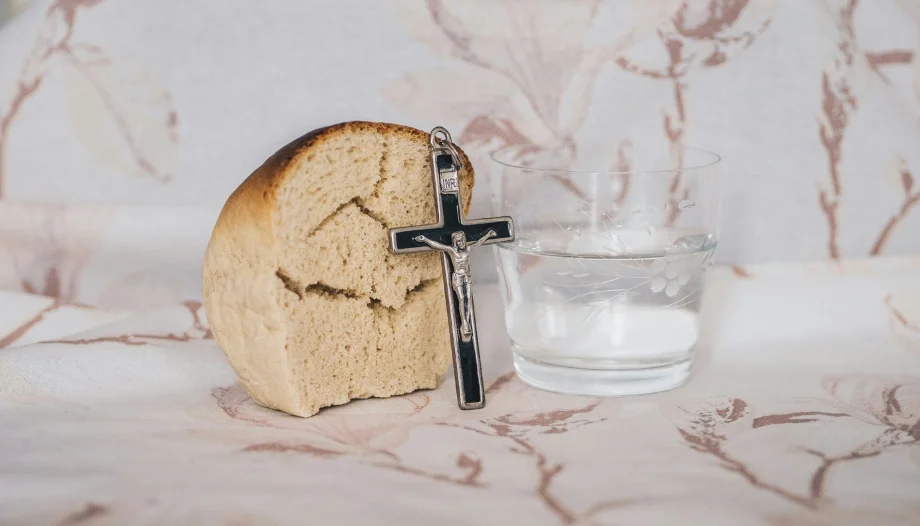
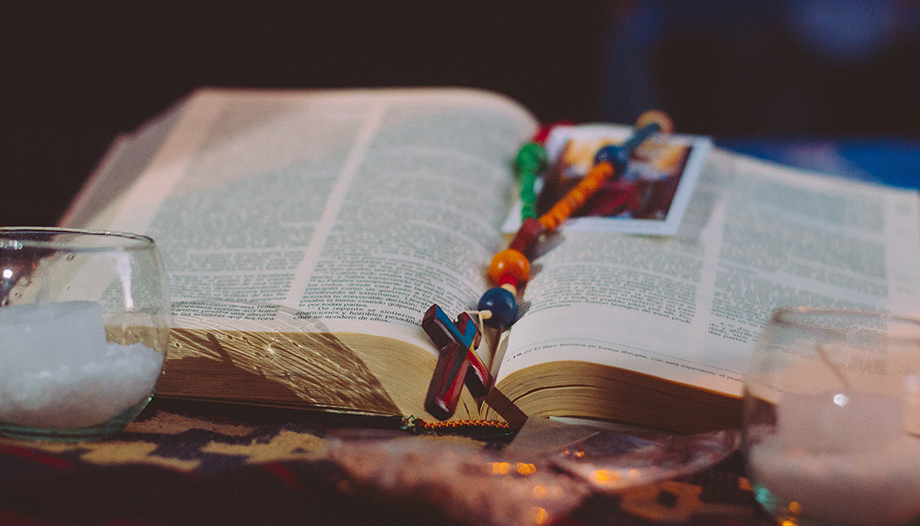
The main one is that of its effectiveness. How many battles has the prayer of the Rosary won! Not only that of Lepanto, on October 7, 1571, for which the Virgin of the Rosary is commemorated on that day and, by extension, the month of the idem; but because anyone who has clung to the 50 beads in moments of danger, trial or special need, can surely count several victories achieved by this simple prayer. And here is another of its greatest virtues: that of simplicity. Also known as "the psalter of the poor", the rosary was in its beginnings a tool to facilitate prayer for the unlettered people. While monks and nuns recited the 150 psalms that make up the Liturgy of the Hours, simple people repeated by heart 50 Hail Marys for the three groups of mysteries (joyful, sorrowful and glorious - the luminous ones were not added until this century), meditating on different moments in the life of Christ and the Virgin. The rosary can be prayed anywhere; it is cheap and, if you do not have one, you can use your 10 fingers as beads; there are models for all tastes and all sizes; it is discreet if you want to go unnoticed while praying it, but striking at times when it may be interesting to show it, it adapts very well to the time you have; the structure is easy to memorize and, for the more clumsy, there are apps and videos at Youtube to guide us.

Along with these first ten practical reasons, we also find powerful spiritual reasons, such as the fact that its exercise helps us to enter into the presence of God, immerses us in the contemplation of the life of Jesus, invites us to imitate the virtues of Mary, increases our faith, leads us to peace of spirit, strengthens our hope, accompanies us in discerning the will of God, brings us closer to the sacraments, moves us to charity and urges us to walk on the right path. 

By praying the rosary we fulfill the Lord's command to "Watch and pray that you may not enter into temptation, for the spirit is willing, but the flesh is weak" (Mt 26:41); also that of "Pray like this..." (Mt 6:9) because we recite the Our Father several times; and, by its daily repetition, that of St. Paul to "Be constant in prayer" (1 Thess 5:17). It is also an approach to Sacred Scripture because each mystery is a little Gospel; and it even helps us to meditate on Marian dogmas such as the Assumption.

There are many spiritual and even physical benefits of praying the rosary. It is a weapon against temptations, it keeps away the influence of evil, it is a defense in moments of spiritual crisis, Mary promises protection and graces to those who pray it and, in several apparitions -as in Lourdes and Fatima-, Our Lady recommends it to overcome divisions and discord. Stopping to pray the rosary in our world where everything is urgent, helps us to overcome stress, trains us for patience and perseverance, is a remedy against sadness, unites the family that prays it in common and puts in tune the community, parish or movement that gathers to recite it together.

But repeating the 50 Hail Marys while meditating on the Word of God is not a selfish act; on the contrary, it leads us to love our brothers and sisters. By praying the rosary we remember those who suffer, we pray for those who do not know God, we pray for the conversion of sinners, we unite ourselves spiritually to the praying Church in heaven and on earth, and it helps us to recognize our faults when we have failed our neighbor. 

If we pray it with children, it is a habit that helps them grow in faith and gives them confidence, knowing that their parents are supported by someone even older. The little ones discover that it is possible to be calm and without screens for a while a day, it gives them biblical culture and makes them feel that they can participate, as one more, in the community prayer and they can even lead their own prayer.

Finally, praying the rosary is like praying for heaven where we will be, together with all our loved ones and in the company of Jesus and Mary, in the presence of God. It can also be offered for the souls in purgatory and for those loved ones or friends who have asked us to pray for a specific cause. Introducing its prayer in our daily routine allows us a moment of contemplation and rest in the middle of the tasks to focus on what is important and, for me, one of the most rewarding things is that it fills you with joy and inner calm. 

If to these 50 ideas we add, once again, that it is a special petition with which the Pope wanted to continue the tradition of his predecessors asking for the intercession of Our Lady to obtain the gift of peace, we make the inexcusable 51 reasons to pray the rosary, do you think it is not enough? Hail Mary Most Pure!

The authorAntonio Moreno

Journalist. Graduate in Communication Sciences and Bachelor in Religious Sciences. He works in the Diocesan Delegation of Media in Malaga. His numerous "threads" on Twitter about faith and daily life have a great popularity.

Read more
Evangelization

Karl Rahner explains the meaning of the Visit to the Blessed Sacrament

In July 1966, the German Karl Rahner (1904-1984), one of the most important theologians of the 20th century, collaborated with the magazine Palabra (No. 11) publishing an article on the "visit" to the Blessed Sacrament. We published the article on the occasion of the 60th anniversary of Omnes.

Karl Rahner-October 1, 2025-Reading time: 12 minutes

It would be necessary to begin with a set of generalities about meditation, recollection, silence, prayer and private piety. We cannot do anything else here but assume that they are already known. But it is probable that the questions and difficulties raised concerning the "visit" to the Blessed Sacrament - that is, prayer before the sacrament of the Eucharist kept in the tabernacle - often have in fact a more general object: private contemplative prayer of a certain duration. Are they not often a kind of intellectual motivations, suddenly alleged in order to avoid the demands of the contemplative attitude? On the other hand, do you know many people who give themselves generously to meditation and who, at the same time, experience difficulties in the face of the "visit"? In any case, those who declare themselves against the "visitation" should be invited to examine their attitude better and to ask themselves if their objections do not in reality reflect the reaction of a person who, eaten up by his occupations, constantly tries to withdraw from the gaze of God, fleeing from recollection because he is incapable of bearing this peace of God who judges and purifies. 

The "visitation" in the tradition of the Church

Those who attack the meaning of the "visitation" should be aware of the extreme fragility of the theories that are usually put forward in this regard, based on the history of dogmas and piety. In fact, these theories often make the mistake of giving an erroneous interpretation to exact facts. Let them not, therefore, be invoked in order to reject the doctrine of the Council of Trent, or simply to disregard it in practice. 

1. The doctrine of the Council of Trent 

According to this Council, it is a true heresy, a declared heresy, to deny, in theory or in practice, the duty to surround Jesus Christ, in the Sacrament of the Altar, with a cult of adoration that has an external form; or to deny the legitimacy of a special feast in honor of Jesus in the Sacrament, of the Eucharistic processions, of the "expositions", of the Holy Reserve (Cfr. Denz, 878, 878, 888, 884). of the holy reservation (cf. Denz, 878, 879, 888, 889). Such dogmatic texts obviously leave many questions in the shadows: what is the intrinsic significance of all these things, how is this Eucharistic worship of adoration and the practice of the Holy Reservation articulated in the whole of Christian life and liturgical action? It is clear that in the course of the Church's history there have been times and expressions of Christian piety which, as has been said with biting humor, have given the impression that the morning Mass served only to consecrate the host destined for the evening exposition of the Blessed Sacrament. For its part, the official Church has not intervened with sufficient energy, which has resulted in real distortions in the Eucharistic sense. But this does not touch the heart of the matter. 

2. A millenary tradition 

The main reason for the holy reservation is the communion of the sick. The definition of the Council of Trent, as well as a practice that has been repeated several times, secular, unanimous, fruitful, participated in by the most enlightened saints, leaves no doubt about the specific and global value of devotion to the Holy Sacrament outside (if one can speak in this way) the Sacrifice, whether it is a matter of exercises of personal piety or of certain public and common forms, such as "visits" and "expositions". These exercises are the manifestation of an authentically Christian faith. In saying this, we do not claim to be the defenders of any initiative in this field: neither of the exposition of the Blessed Sacrament during Mass, nor of the taste for expositions "for the pleasure of seeing the host", which lead to the indiscreet multiplication of this practice, etc. 

3. The ideal of the return to antiquity 

I would also like to underline the vanity of an argument often advanced against Eucharistic devotion outside Mass: the fact that such devotion has not always existed in the Church.

This would be to significantly impoverish the patrimony of Catholic piety, to give in to a false romanticism, constantly turning back to the practice of the Church of the first ages and denying the evolutionary character of piety in the course of history. For Christianity develops in history. And a millenarian practice that does not have to its credit the history of the first thousand years has, nevertheless, its perfect right of citizenship in the Church. If one wants to erect the practice of the first centuries as an absolute rule of piety, then let one be logical and apply it to all sorts of things: to fasting, to the universal esteem with which virginity was surrounded to the point of scorning marriage, to the duration (which we today consider excessive) of the Offices, to the heavy apparatus of practices of the monastic life, and so on. But the criteria of Christian authenticity should not be sought elsewhere, but in the Spirit of the Church, of the Church of all times, in a humble reflection on the fundamental structures of Christian reality.

The characteristic of these structures is that they are always there, and the Church is there to bear witness to them. This does not mean that the consequences to which these fundamental structures lead do not themselves have a history, and that on the theoretical level, as well as on the practical level, they reach the same degree of explicitness in all epochs; which does not prevent them from constituting an essential aspect of the Church's existence from the moment when these consequences clearly emerge in her consciousness. It is to demonstrate a remarkable lack of historical sense (as if one could turn back the course of history!) to claim, in the name of a certain "purity," that ecclesial realities return to their primitive forms when they have reached a certain degree of development. It is necessary to say rather that, in the Church, as in the life of the individual, there is a becoming and that this becoming enjoys a right of possession. And this does not apply only to truths of a theoretical nature.

If one agrees on these general principles of appreciation with regard to the development and use of the "things of the Church," and if one takes into account the universal, powerful, lasting and clearly manifested character of the approbations and the pressing encouragements which unofficial Eucharistic piety has received from the Church, the refusal of the latter to abandon the practice of the Holy Reserve, the doctrine which the Church professes on the latreutic character of devotion to the Holy Sacrament, etc., it would be foolish to predict the disappearance of the devotion to the Holy Sacrament, the refusal of the latter to abandon the practice of the Holy Reservation, the doctrine which the Church professes on the latreutic character of devotion to the Holy Sacrament, etc., it would be foolish to predict the disappearance of such a cult; This is not to say that it may not experience certain vicissitudes in the future. In this sense, the encyclical Mediator Dei, not content with advocating adoration of the Eucharist, is a promoter of "pious and daily visits to the Tabernacle". Canon Law also recommends the "visit to the Blessed Sacrament" (Canon 125,2; canon 1.273) and wants the "visit" to be part of the religious instruction given to all the faithful (cf. also canons 1.265-1.275, which deal with the reservation and worship of the Holy Eucharist: it is even a duty for many churches to preserve the Blessed Sacrament).

Legitimacy of the "visit

But let us now come to the intrinsic arguments. What is the meaning and what should be the content of the "visits"? It seems to us that one should not, as has been done ordinarily, link them exclusively to the real presence of Christ and to the adoration that she deserves as such. One can wonder, in fact, if this traditional foundation, fair in itself, but somewhat formal, is psychologically strong enough to eliminate the resistances that are opposed today to the practice in question. It becomes necessary to develop the real implications. 

1. An objection: The Eucharist is essentially food 

Here is the fundamental difficulty that is alleged in the name of theology. It is true that Christ is really present in the Blessed Sacrament. But why such a presence, for the pleasure of being among us, to be adored and honored because of this presence, to sit on a throne and grant audiences? Whether one answers in the affirmative or whether, as dogmatic theology indicates, one is content to say that there is only one valid motivation among others, it would be best to turn first of all to the teaching of the Council of Trent (Denzinger 878): the Sacrament of the Eucharist was instituted by Christ, we are told, "ut sumatur" (to be taken as food). The fundamental structure of the Eucharist consists in its character as food, in its relationship to the use to which it is destined. This is the basic truth of our whole reflection.

Let us not forget this. Let us not, therefore, by our Eucharistic practice or our Eucharistic "sensibility," raise between us and the Protestants (who always start from this truth in their theory and practice of the Supper) an obstacle devoid of any foundation. For the theologian, the alpha and omega of all dogmatic theology is the word of the Gospel: "Take and eat, this is my Body," and not a proposition of this style: "Christ is here present." Betz is therefore right in saying that the tripartite division of the treatise on the Eucharist, which begins with the question of the Real Presence and only then addresses the theme of communion and sacrifice, creates a discomfort and constitutes a blurring of focus.

Theological reflection aimed at clarifying the problem of the "visitation" must also be based on the fundamental principle enunciated by the Council of Trent: "The Eucharist was instituted to be taken as food" (Denzinger, 878). This principle certainly implies the real presence of Christ, because the food offered is none other than his Body and Blood. But it goes beyond this simple affirmation, because it presents the gift that is given to us as being destined to be taken as food. It is necessary, therefore, to use it here with all the breadth of its content.

This being so, it will be seen at once what gives rise to the objection. It is evident, it will be said, that Christ deserves worship when "He is made use of," because He is present when He gives Himself to us as the food of eternal life. But how, from this basic principle, to justify a worship outside of such a presence, a worship that is not confused with the adoration of the Lord necessarily concomitant with the reception of His Body, a worship that stands outside of such a reception and independently of it? This is the Protestant position: they are reluctant to make formal use of logic here, and do not believe themselves authorized by Scripture to extend Eucharistic worship to this point.

Let us emphasize that the Council of Trent justifies the Holy Reservation by the need to be able to give communion to the sick. It does not invoke any other reason, and on this point it takes up the data of history: it is, in fact, the need (or the legitimacy) of receiving communion outside Mass that motivated Holy Reservation above all, and not the need to have Jesus, "the sweet solitary One of the Tabernacle", near us. The Council thus considers Holy Reservation in essential relation to the reception of the sacrament and, in doing so, explains the practice of Holy Reservation along the lines of the fundamental principle evoked above (Denzinger, 879, 889). 

2. Scriptural Response 

We rely here solely on the Bible, on the most original biblical data.

We will begin by saying that a rigorous exegesis sees in the Body and Blood the whole Person of the Lord. The Body and Blood designate here the Person of Jesus as incarnate, his "I" in his physical constitution, this living being who has "bound himself" to the blood in order to fulfill his role as servant of God by establishing the New Covenant in his Blood. It is, therefore, He Himself who gives Himself in nourishment. But then it is not only a question, in the language of the New Testament, of the Body and Blood of Jesus in the sense that modern language attributes to these words (although theological speculation and the notion of "concomitance" (Denzinger, 876) allow us to legitimately extend the meaning of the concrete words of Jesus and to designate with them the presence of his entire Person in the sacrament). The truth is quite different. What Christ gives us, if one keeps to his express words interpreted directly according to the meaning they have in the Aramaic language, is Himself: do we not see, moreover, that St. John (6:57) uses the first person personal pronoun in the place of flesh and blood? It is, therefore, the whole of Himself that is truly given to us in food. Here too, adoration is fully legitimate, because it is He to whom it is addressed, and not to a food that would be composed of "elements". Ancient Christians may have had a "cosist" attitude toward the Eucharist. But such an attitude could in no way be presented as the exact and exhaustive interpretation of the biblical data. On the contrary, the feeling in the Middle Ages of finding in the Eucharist the incarnate Person of Jesus is completely in the spirit of the Bible. This is why it is completely legitimate to invoke Sacred Scripture to legitimize all acts by which one wishes to testify to someone the consideration due to his nature; and it is a question here of the Person of Jesus! 

Let us now go a step further. The language of Scripture is as clear as it is simple: if the Lord, with his bodily reality and his creative power of salvation and of the New Covenant, is there as food, he is there as food "offered for our use," and not as food that has already been taken. A phrase like this: "Christ is there as food" cannot mean, in the language of the Bible, that he would be present at the moment when he is taken as food, but rather present to be taken as food. The use of the sacrament presupposes the realism of its content; the latter is not the consequence of the former: on this point the Lutherans agree with the Catholics; the Reformed Protestants are against it.

If this is understood, there is no insuperable difficulty in admitting the following proposition: inasmuch as the food is there destined to be taken, the Lord is there to be received by us; and inasmuch as He is there, how could we not and should we come to Him as to the Lord who has given Himself for us and who wants to give Himself to us?

It is necessary to say here without fear that Christianity, from the most ancient times, has peacefully developed the idea that sacramental food, like ordinary meals, does not lose its character as food by the fact that the interval of time separating the consecrating words from the moment when it is to be received grows. Do we not see this in the Mass itself? For in the Mass, too, a certain space of time elapses between the consecration of the Eucharistic species and their reception. The same thing happened at the Supper, between the moment when Jesus pronounces the sacred words presenting the bread and wine to his apostles and the moment when they opened their mouths to receive it. While, according to the common estimation of men, bread remains bread, that is, something made to be eaten (we are in the presence of an essentially human concept and not before a simple chemical object), Christ is present there, Christ who offers himself as food, with all that this implies as a corresponding attitude on the part of the man called to receive him. And this is what legitimizes the cult of adoration of the Eucharist.

But the converse is equally true: the adoration of Christ in the Eucharist does not fully attain the object of worship unless the Lord is there adored as the one who offers himself to us in food, as the "servant of God" who has taken a body and is there bodily present, who has founded in his Blood the new and eternal Covenant and who wishes, by giving us this bread in food, to give himself to us and to give us, so that it may become ours, the salvation that is himself, with all its weight of reality and its definitive character. Understood in this way, the presence of Christ, wherever it is realized, is, under the sensible species, the very presence of our salvation: a presence that recalls the sacrificial and sacramental act to which it owes its origin, a presence that is a prelude to the reception of the Eucharist, that act by which this salvation will become fully and sacramentally our own good.

It is superfluous, we think, to raise the question of knowing which host I adore here or there. Theology has nothing to do with it. The essential thing is that Christ is there and that I have been invited to receive him every time I open my mouth to take a consecrated host, whatever it may be in particular.

3. Two aspects of the Holy Sacrament

Thus we come to determine, along with its content, the exact meaning of the "visitation. The "visitation" - it too - places man in the presence of the objective and sacramental sign of the death offered by Jesus in sacrifice for our salvation; it is the continuation of the Mass on the interior and personal level and "engages", so to speak, the next communion. It is necessary, therefore, to say of the "visitation" all that should be said about thanksgiving and all that is, in the proper sense of the word, preparation for communion. Both practices are, in fact, perfectly legitimate, because we find ourselves before the objective sign of what is simultaneously the foundation of our salvation and the means of appropriating it to ourselves: before the Body and Blood of the Lord, before the Lord present with the concrete reality of his Body that he wants to give us as sacrificial food in a way that is proper to each one of us.

The Lord "preserved" in the sacramental species is so under a double title: as the Lord who offered himself in sacrifice in the Holy Mass and as the Lord who wants to give himself to us as food. Otherwise, it would lose its meaning in the eyes of man, it would be like a strange substitute for the adoration due to God for his universal presence, it would be nothing but a way, whose meaning remains uncertain, of actualizing our supernatural union with Christ, which, moreover, is always and everywhere possible. Indeed, if God has given us the Eucharistic presence and has guaranteed us its importance, if that presence is not an unnecessary duplicity of the universal presence and of our union with Christ, it is because it gives us the Lord insofar as he offers himself in the sacrifice of the cross and who, in the Mass (and in the food we have as a consequence), makes himself present as such and as such offers himself to become our nourishment.

4. The Eucharist, sacramental sign of the union of the Church

We could also remember, when we stand before the Blessed Sacrament, that it also represents the sacramental sign of the unity of the Church. As the Council of Trent says, it is "a symbol of the unity and charity by which Christ willed that all his faithful should be united among themselves" (Denz. 873a); it is the "symbol of this one Body of which he himself is the head" (Denz. 875).

In the visit to the Blessed Sacrament, then, we are before Christ as the unity of the Church, before the very mystery of the Church, before the holiest manifestation of this Church which is, under its visible aspect, the historical and sensible form of the salvation that God works in us. It can thus be understood to what extent the most personal "devotion to the Tabernacle," far from being the sign of a religious individualism, constitutes, if it adopts a suitable expression, a means of manifesting belonging to the Church and the consequent sense of responsibility, as well as the occasion to pray for the Church. It is here that one could speak, in a very authentic and very profound sense, of an apostolate of prayer....

The authorKarl Rahner

German Jesuit priest and theologian (1904-1984), considered one of the most influential of the 20th century.

Latin America

María Inés Castellaro (CLAR): "Our objective is to return to living with meaning from what is essential".

María Inés Castellaro is an Argentinean nun who holds a leadership position in the Latin American Confederation of Religious (CLAR). From there she promotes the reflection and action of religious communities on social, educational and spiritual issues in Latin America and the Caribbean.

Javier García Herrería-October 1, 2025-Reading time: 3 minutes

In May 2025, Sister Maria Ines Castellaro, of the Sisters of the Virgin Child (HVN), was elected Secretary General of the Latin American Confederation of Religious (CLAR) during the XXII General Assembly held in Quito, Ecuador. Her mission: to strengthen Consecrated Life in Latin America and the Caribbean in a context marked by multiple social and ecclesial challenges. We talked with her about the priorities of CLAR in this new triennium and the challenges facing religious life in the region.

Sister María Inés, what are CLAR's priorities for this triennium?

We have approached this triennium inspired by the biblical scene of Nicodemus' encounter with Jesus, because it is a call to transformation. It is about being "born again": to return to our first love with Christ, to rediscover our vocation in order to re-appreciate ourselves for our brothers and sisters.

From there we want to renew bonds, communities and structures that sometimes say little today. It is also about recognizing and embracing our fragilities and vulnerabilities as a space where the Spirit can open a new dawn for consecrated life.

And what are the particularities of religious life in Latin America compared to other regions?

I would say that here there is a great strength around the charismatic families, that is, the laity who, without substituting for us, share our spirituality and charism. The mission is not to make up for the absence of religious, but to accompany the laity in the journey of discovering the richness of their baptismal vocation.

In Latin America, we have been walking together for many years, and we continue today, marked by the Ecclesial Assembly, the Ecclesial Conference of the Amazon (CEAMA) and relations with CELAM (Latin American and Caribbean Episcopal Council) and other institutions.

Specifically, what role do women play in Latin American religious life?

In many communities it is the women who sustain the ministry of the word, the service, the listening, sometimes traveling long distances, navigating rivers, reaching places where no one else reaches. The challenge is to continue giving a real place to that voice and that feminine presence, which is already a protagonist in many ecclesial realities.

The region faces inequality, violence and, in some places, siege of the Church. How does this impact on religious life?

Consecrated life is called to be on the peripheries, on the margins, where difficult situations, even persecution, are suffered. The martyrs in some regions remind us that we are called to give a radical witness, to announce, denounce and renounce what is not evangelical in hostile contexts. Our place is always at the side of the poorest and most vulnerable, accompanying and seeking paths of reconciliation and justice.

What role does religious life play in immigration?

We are there with the migrants, accompanying them in their pain and helping them to be born again in new lands. We want them to be recognized in their dignity, especially in the workplace, where they so often suffer exploitation. In this field we work in inter-congregational networks: the mission is done by joining forces.

I am particularly struck by the networking that CLAR is doing: with the Pan-Amazonian Ecclesial Network, with the Ecclesial Conference of the Amazon, with networks against human trafficking, with inter-congregational initiatives. We are not a confederation closed in itself, but part of a living fabric of the Church that seeks to transform itself and walk in synodality. This collaboration is a sign of hope for the future.

Vocations are decreasing. How does CLAR view this panorama?

We do not see it only in numerical terms. What is important is the witness and the quality of fraternal life, of the bonds woven in the communities. Yes, there are fewer of us and we are aging as communities, but the Lord continues to call. We need to go out to meet young people where they are, open our homes and accompany them in their search. This is also where the richness of charismatic families comes in: lay people who share our spirituality and mission.

Young people are thirsty for meaning, but often do not find in the Church a welcoming space. We need to renew our community structures to make them more fraternal, open and hospitable.

A consecrated life that offers home and community can be very meaningful for them and making it a reality is our challenge. We are all called to be "born again", to embark on paths of renewal, transformation and change. To overcome fears, to unlearn old and anti-evangelical forms and to open ourselves to the newness of what generates life, authenticity, hope, joy, with the certainty that the divine "Ruah" impels us along these paths.

Read more
Pope's teachings

The Passover of Jesus, alive with hope

Within the catechesis that is taking place during the Jubilee Year 2025, the title of which is Jesus Christ our hope, Leo XIV has dedicated the last few weeks to the Passover of Jesus. That is, to the events that took place around his passion, death and resurrection.

Ramiro Pellitero-October 1, 2025-Reading time: 7 minutes

What place does Jesus' self-giving for us occupy in our lives? Do we consider it as an event of the past, with no connection to our present and our future? Christian faith assures us that it is something central, full of implications for our personal, social and ecclesial life. 

Preparing for the encounter with God and with others

The first of these Wednesdays(cfr. General Audience, 6-VIII-2025)the pope focused on the word prepare. "Where do you want us to go to prepare your Easter meal?"(Mk 14:12). In fact, everything had been prepared beforehand by Jesus: "..." (Mk 14:12).The Passover, which the disciples must prepare, is in fact already prepared in the heart of Jesus.". 

At the same time, he asks his friends to do their part: "Grace does not eliminate our freedom, but awakens it. God's gift does not annul our responsibility, but makes it fruitful.".

We too, therefore, have to prepare this meal. It is not only a question, warns Peter's successor, of the liturgy or the Eucharist (which means "thanksgiving"), but also of"....our willingness to enter into a gesture that is beyond us". 

"The Eucharist -Leo XIV observes is not only celebrated at the altar, but also in daily life, where it is possible to live everything as an offering and thanksgiving.". 

Hence the question: "We can then ask ourselves: what spaces in my life do I need to rearrange so that they are ready to welcome the Lord? What does it mean for me today to 'prepare'??".

Some suggestions: "Perhaps give up a pretense, stop waiting for the other to change, take the first step. Perhaps listen more, act less, or learn to trust what you are already willing to trust.".

Recognizing our vulnerability

In the midst of Jesus' most intimate meal with his own, the greatest betrayal is also revealed:"Truly I tell you, one of you will betray me: one who is eating with me." (Mk 14:18). "These are forceful words. Jesus does not pronounce them to condemn, but to show that love, when it is true, cannot do without truth.". 

Surprisingly, Jesus does not raise his voice or his finger to accuse the traitor. He leaves each one to question himself:"They began to get sad and asked him one after another, 'Will it be me?'" (Mk 14:19). On Wednesday, August 13, the Pope dwelt on this question, because, he pointed out, "is perhaps one of the most sincere questionswe can do to ourselves". And here's why: "The Gospel does not teach us to deny evil, but to recognize it as a painful occasion for rebirth.".

What follows may sound like a threat:"Woe to that man by whom the Son of man shall be betrayed; it would be better for that man if he had not been born!" (Mk 14:21). But it is rather a cry of pain, of sincere and profound compassion. For God knows that, if we deny his love, we will be unfaithful to ourselves, we will lose the meaning of our life and we will exclude ourselves from salvation. But on the other hand, "if we recognize our limit, if we allow ourselves to be touched by the pain of Christ, then we can finally be born again.". 

Love that does not give up and forgives

During the Last Supper, Jesus offers the morsel to the one who is about to betray him. "It is not only a gesture of sharing, it is much more: it is the last attempt of love not to give up."(cf. General Audience August 20, 2025) Jesus continues to love: he washes the feet, wets the bread and offers it even to the one who will betray him.

The forgiveness that Jesus offers - the Bishop of Rome points out - is revealed here in all its power and manifests the face of hope: "...".It is not forgetfulness, it is not weakness. It is the capacity to let the other go free, loving him to the end. The love of Jesus does not deny the truth of pain, but does not allow evil to be the last word.". 

The Pope insists: "To forgive does not mean to deny evil, but to prevent it from generating more evil. It is not to say that nothing happened, but to do everything possible so that resentment does not decide the future.".

And he turns to us: "We also live through painful and exhausting nights. Nights of the soul, nights of disappointment, nights when someone has hurt or betrayed us. At such times, the temptation is to close ourselves off, to protect ourselves, to strike back. But the Lord shows us that there is hope, that there is always another way. (...) Today we ask for the grace to know how to forgive, even when we do not feel understood, even when we feel abandoned.". Thus we open ourselves to a greater love. 

Surrender for love

Then, Jesus freely and courageously faces his arrest in the Garden of Olives: "Who are you looking for?" (Jn 18:4). His love is full and mature, he does not fear rejection, but allows himself to be captured. "He is not the victim of an arrest, but the author of a gift. In this gesture is embodied a hope of salvation for our humanity: to know that, even in the darkest hour, one can remain free to love to the end." (General Audience, 27-VIII-2025).

The sacrifice of Jesus is a true act of love: "The sacrifice of Jesus is a true act of love.Jesus allows himself to be captured and imprisoned by the guards just so that he can set his disciples free."He knows well that to lose one's life for love is not a failure, but brings with it a mysterious fruitfulness (cf. Jn 12:24).

Thus he teaches us. "This is what true hope consists in: not in trying to avoid pain, but in believing that, even in the heart of the most unjust sufferings, the seed of a new life is hidden.".

Learning to receive

The Pope's catechesis on the words of Jesus at his crucifixion was particularly powerful: "I'm thirsty." (Jn 19:28), just before these others: "All things are accomplished" (19:30).

"The thirst of the Crucified -Leo XIV observes- is not only the physiological need of a broken body. It is also, and above all, the expression of a deep desire: that of love, of relationship, of communion." (General Audience, 3-IX-2025).

Hence a surprising teaching: "Love, to be true, must also learn to ask and not only to give. I thirst', says Jesus, and in this way he manifests his humanity and ours as well. None of us can be enough for ourselves. No one can save himself. Life is 'fulfilled' not when we are strong, but when we learn how to receive.". And it is then, precisely when everything is fulfilled. "Love has become needy, and that is precisely why it has carried out its work.".

Such is, the Bishop of Rome points out, the Christian paradox: "God saves not by doing, but by letting himself be done. Not by overcoming evil with force, but by accepting to the end the weakness of love.". 

From the cross, Jesus teaches that each of us is not fulfilled in power, but in trusting openness to others, if they were enemies. "Salvation does not lie in autonomy, but in humbly recognizing one's own needs and knowing how to express them freely.".

Attention, it seems to say Leo XIV also for educators and trainers, because this "feeling and recognizing our need" it cannot be imposed, but must be discovered freely each person (one can be gently helped to discover it), as a way of liberation of oneself towards God and others. "We are creatures made to give and receive love".

The cry of hope 

It is worth contemplating the fact that Jesus does not die in silence. "It does not go out slowly, like a light that is consumed, but leaves life with a cry: 'Jesus, giving a loud cry, expired'. (Mk 15:37). This cry contains everything: pain, abandonment, faith, offering. It is not only the voice of a body that gives up, but the last sign of a life that surrenders itself." (General Audience, 10-IX-2025).

His cry is preceded by these words: "My God, my God, why have you forsaken me?"The words, which correspond to Psalm 22, express the silence, absence and abyss experienced by the Lord. "It is not -Leo XIV specifies of a crisis of faith, but of the last stage of a love that gives itself to the very depths. The cry of Jesus is not despair, but sincerity, truth taken to the limit, trust that resists even when everything is silent.".

In this Jubilee year, the cry of Jesus speaks to us of hope, not resignation. "You shout when you think someone can still hear you. You scream not out of desperation, but out of desire.". Specifically: "Jesus did not cry out 'against' the Father, but 'to' Him. Even in the silence, he was convinced that the Father was there. And so he showed us that our hope can cry out, even when all seems lost.".

We cry out when we are born (we arrive crying), when we suffer and also when we love, when we call out and invoke: "To shout is to say that we are here, that we do not want to go out in silence, that we still have something to offer.".

And this is the teaching of Jesus' cry for life's journey, instead of keeping everything inside and slowly wasting away (or falling into skepticism or cynicism).

The wisdom of waiting 

This is followed by the silence of Jesus in the tomb (cf. Jn 19:40-41): "A silence pregnant with meaning, like a mother's womb guarding her unborn child, but already alive."(General Audience17-IX-2025). 

He was buried in a garden, in a new tomb. As it happened at the beginning of the world, in paradise: God had planted a garden, now the door of this new garden is the closed tomb of Jesus. 

God had "rested"The book of Genesis (2:2) says, after creation. Not because he was tired, but because he had finished his work. Now the love of God has been shown again, fulfilled "to the end". 

Jesus rests at last

We find it hard to rest. But "knowing how to stop is a gesture of trust that we have to learn to fulfill". We have to discover that "life does not always depend on what we do, but also on how we know how to give up what we could have done.".

Jesus is silent in the tomb, like the seed awaiting its dawn. "Every time stopped can become a time of grace, if we offer it to God.".

Jesus, buried in the ground: "It is the God who lets us do, who waits, who withdraws to leave us freedom. He is the God who trusts us, even when everything seems to be finished.". 

We have to learn to let ourselves be embraced by the limit: "...".Sometimes we look for quick answers, immediate solutions. But God works in the depths, in the slow time of trust.". 

And all of this speaks to us again in this Jubilee of Hope: "The Jubilee of Hope is the Jubilee of Hope.True joy is born out of a lived expectation, out of patient faith, out of the hope that what has been lived in love will certainly rise to eternal life.".

Descends to announce light and life

Also on Wednesday, September 24, the Pope dwelt on Holy Saturday. Christ not only died for us, but also descended into the realm of the "hells" to bring the proclamation of the resurrection to all those who were under the dominion of death. Those "hells" do not refer only to the dead, but also to the one who lives under darkness (pain, loneliness, guilt) and above all, sin. "Christ -The Pope points out. He enters into all these dark realities to bear witness to the love of the Father. (...) He does so without clamor, on tiptoe, like someone who enters a hospital room to offer comfort and help.".

The Church Fathers describe it as an encounter between Christ and Adam to bring him back into the light, with authority, but also with gentleness. Not even our darkest nights or our deepest sins are obstacles for Christ. Descending for God is not a failure but the way to victory. No grave is too sealed for his love. God can always make, out of forgiveness, a new creation. 

The Vatican

Pope's October Intention: "May religions be a leaven of unity".

On the 60th anniversary of the Council document 'Nostra Aetate', which falls in the month of October, Pope Leo XIV dedicates his prayer intention for this month to collaboration among the different religious traditions, so that they may be "a leaven of unity in a fragmented world".  

Editorial Staff Omnes-September 30, 2025-Reading time: 2 minutes

"Let us pray that believers of different religious traditions may work together to defend and promote peace, justice and human fraternity." This is Pope Leo XIV's prayer intention for the month of October, released through The Pope's Video. 

Leo XIV prays that "in a world full of beauty, but also wounded by deep divisions, religions "may not be used as weapons or walls, but may be lived as bridges and prophecy". 

Defending and promoting peace, human brotherhood

In a time marked by conflicts, the Pope invites all believers to seek what unites, to "defend and promote peace, justice and human brotherhood".

His intention, which the Pontiff entrusts to the Pope's World Network of Prayer, invites, in a time marked by conflicts and polarization, to rediscover in religion a bridge of fraternity and a reconciling force.

Not weapons or walls, but bridges and prophecy.

The profound meaning of Pope Leo XIV's prayer is that collaboration among believers be nourished by a concrete and daily commitment that involves each one of us. In fact, the Pope prays that we learn to "recognize ourselves as brothers, called to live, pray, work and dream together". He also invokes the Spirit to "recognize what unites us" and "collaborate without destroying". 

The different religious traditions are called to be "leaven of unity in a fragmented world". And he continues, recalling that often the opposite happens: "instead of uniting us, it becomes a cause of confrontation".

The video recounts historical milestones of the interreligious journey, such as the historic meeting organized by Pope St. John Paul II in Assisi in 1986. The visit of Pope Benedict XVI to the Synagogue of Rome in 2010. The signing of the Document on Human Fraternity in Abu Dhabi in 2019, under the pontificate of Pope Francis. And the most recent ecumenical meetings of Pope Leo XIV at the Vatican.

Pope Leo XIV's October prayer

For collaboration between different religious traditions.

Let us pray that believers of different religious traditions will work together to defend and promote peace, justice and human fraternity.

Lord Jesus, You who in diversity are one and look with love on each person, help us to recognize ourselves as brothers and sisters, called to live, pray, work and dream together.

We live in a world full of beauty, but also wounded by deep divisions. Sometimes, religions, instead of uniting us, become a source of confrontation.

Give us your Spirit to purify our hearts, so that we may know how to recognize what unites us and, from there, relearn to listen and collaborate without destroying.

May the concrete examples of peace, justice and fraternity in religions encourage us to believe that it is possible to live and work together, beyond differences.

May religions not be used as a weapon or a wall, but lived as bridges and prophecy. Making credible the dream of the common good, accompanying life, sustaining hope and being the leaven of unity in a fragmented world.

Amen

The authorEditorial Staff Omnes

Read more
Latin America

Teresa Flores: "Cuba and Nicaragua limit religious freedom with legal frameworks".

The director of the Observatory of Religious Freedom in Latin America, lawyer Teresa Flores, has exposed at the symposium "Faith Under Fire: Religious Freedom and Resistance in Cuba and Nicaragua", in Florida (United States), how these governments use laws as instruments of control over "faith communities" and religious entities.  

Francisco Otamendi-September 30, 2025-Reading time: 4 minutes

The title says it all: "Legal Tools of Repression - Comparative Analysis Cuba-Nicaragua". Teresa Flores, lawyer and director of the Observatory for Religious Freedom in Latin America (Olire), detailed how "the governments of Cuba and Nicaragua limit religious and civil liberties". Both control the public and digital space, he said at Florida International University (FIU),

At the symposium, held in early September, Nicaraguan lawyer Yader Valdivia stated that "human rights violations continue to be committed in Nicaragua. The faith has been persecutedchurches under siege, pastors and priests attacked and arbitrarily detained, or disappeared and prosecuted, banished". 

"Religious persecution"

"In Nicaragua religion is not a doctrinal issue, nor a theological dispute, but rather it is a thermometer of democracy. I want to make it clear that the religious persecution exists in the country," Valdivia added. The event was co-organized by Outreach Aid to the Americas (OAA), the Cuban Research Institute (CRI) and the Kimberly Green Latin American and Caribbean Center (LACC).

Teresa Flores synthesized his intervention for Omnes. Obviously, although we do not talk about it, the banishment of the Bishop Rolando Álvarez at the Vatican, as of January 2024. The persecution and banishment of other bishops and priests, or the exile of more than half a million Nicaraguans since 2018.

@Teresa Flores.

Cuba and Nicaragua have used the laws as a mechanism of control over society and, in particular, over "faith communities," you pointed out.

- In both Cuba and Nicaragua, the authorities have created a legal framework that appears to be legitimate, but in practice limits religious and civil liberties. During the presentation I pointed out that in both Cuba and Nicaragua a legal framework has been constructed. Although, on paper, it recognizes religious freedom, in practice it conditions it to ambiguous concepts such as "public order", "social interest" or "national security". This allows the authorities to restrict the exercise of rights at any time.

In Cuba, the 2019 Constitution enshrines the supremacy of the Communist Party, which empties of content and conditions recognized freedoms. In Nicaragua, the most recent constitutional reforms have broadened the grounds for loss of nationality and political exclusion, reinforcing their punitive nature.

These regulations allow for censorship, surveillance and punishment of religious leaders and organizations, he adds.

- Both countries have passed laws that give them the power to control the public and digital space. In Cuba, decrees such as 35 and 370 force all communication to be subordinated to the "socialist constitution", sanctioning critical content with heavy fines or even criminal charges. 

In Nicaragua, the Cybercrime Law penalizes with imprisonment the dissemination of what the government considers "false news" and enables real-time surveillance of users.

This regulatory framework makes freedom of expression and religious freedom vulnerable rights. For faith leaders and communities can be accused of spreading "disinformation" or "subversive propaganda" for merely expressing critical opinions.

How do levels of control and ways of applying pressure on churches and communities work?

- The Communist Party's Office of Religious Affairs directly controls the registration and operation of churches in Cuba, and any unrecognized association risks criminalization. In Nicaragua, laws on non-profit organizations, foreign agents and financing have allowed for the cancellation of legal personhood, confiscation of assets and suspension of religious activities.

In Nicaragua and Cuba, sanctions are of a criminal nature and also through administrative channels, which allows for a massive and systematic dismantling of religious communities considered opponents of the regime.

You say that understanding legal tools is key to making abuses visible and seeking ways to defend fundamental rights.

- To understand the impact of the legal tools in Cuba and Nicaragua, I emphasized that it is first necessary to understand the breadth of religious freedom. This right is not limited to private worship. It encompasses education, association, public participation and transmission of beliefs, to mention just a few freedoms. Without this comprehensive vision, it is impossible to fully identify how laws can become restrictive instruments.

In both countries, it is precisely these broader dimensions that are limited: the legal framework does not guarantee rights, but rather empties them of content. Hence the importance of analyzing these norms, because they show how repression is also channeled through rules, regulations and laws beyond physical repression, which give the appearance of legality to arbitrary measures.

What about the international route?

Both Cuba and Nicaragua have withdrawn from regional human rights mechanisms, reducing avenues for international protection. However, monitoring by UN agencies and international pressure remain critical to document abuses. And also to offer support to faith communities facing a high degree of repression.

Aggressions

OSV News has reported a month ago that attacks on the Catholic Church in Nicaragua have declined in 2025. But a report on persecution of the Church in the Central American country attributes the decline to few priests and religious denouncing harassment persecution against them and Church property, wrote David Agren.

A total of 1,010 attacks have been committed against the Nicaraguan Church since 2018, according to Martha Patricia Molina, a Nicaraguan lawyer in exile who tracks this persecution. That number dropped to just 32 so far in 2025, down from a high of 321 attacks in 2023, according to Molina in the seventh edition of her report, "Nicaragua, a Persecuted Church."

"Decimated church"

"The drop in numbers seen in 2025 does not mean that a cordial relationship is being established between the (Nicaraguan) dictatorship and the Catholic Church, but rather that in this stage of repression the church is decimated," Molina said. Under no circumstances can the clergy denounce the abuses and daily surveillance to which they are subjected. They do not publicly express their suffering because of the threats they receive from members of the National Police," she said in the report.

The authorFrancisco Otamendi

Evangelization

Stella Maris: a lighthouse for the forgotten of the sea

Stella Maris opens a delegation in Algeciras, the first port of Spain. Filipino priest Jovannie Postrano attends to the seafarers who arrive in the city; many have not set foot on land for months and suffer the hardships of a job that is as hard as it is necessary.

José Ángel Cadelo-September 30, 2025-Reading time: 4 minutes

Early in the morning, thanks to a safe-conduct that allows him to move around the docks of Algeciras, the young priest Jovannie Postrano climbs up the ladder of one of the largest container ships of the Maersk shipping company. No one on board has been alerted to his visit, but the Stella Maris emblem on his hull and his yellow vest open the doors and cause the warmest of welcomes. The sailor on watch alerts his companions and the crew goes out to meet Postrano; they do not know him but greet him in Tagalog or Cebuano, the main languages of the Philippines.

Everyone knows what Stella Maris is, and everyone wants a selfish with the priest. Postrano is interested in each of their hometowns, their families and their children, how long they have been on board and the trade route they are heading for. Sometimes it happens that the ship's officers also come from the same far-off Asian country; then he is likely to be invited to the bridge, to spend the day with them, to have lunch together with the whole crew and even to celebrate Mass in the most dignified and spacious saloon of the cabin. No problem: Postrano always carries with him everything he needs for this.

This pioneer priest in the recently opened delegation of Stella Maris in Algeciras is a native of the island of Cebu and, in addition to Cebuano, his mother tongue, he speaks Tagalog, English and is already making progress with Spanish. Until a few months ago he lived in London, where he worked with migrants. Although he is now incardinated in a local parish, his main mission is not on land, but on board the huge oil tankers or container ships that call at the first port of Spain and the Mediterranean. Its ecclesiastical organization, directed from Rome, is present in more than sixty countries on all continents and in three hundred different ports. The port of Algeciras, paradoxically, has been the last to join the list.

Life on the high seas

Twenty-five % of the seafarers on all crews worldwide are Filipino nationals. "Many times they have been months and months without touching land, without setting foot on a dock, and they are very grateful for the visit of a compatriot who speaks to them in their language, who offers them information and help in everything that is in our hands, who listens to their problems, accompanies them for a while, solves some material or logistical issue and, of course, provides spiritual care if they require it," Jovannie explains to Omnes. 

"The atmosphere inside a cargo ship is not at all easy," says the Cebuano priest: "the sailors have to live together twenty-four hours a day with companions who are not always friendly, of different nationalities, cultures and confessions, with whom sometimes they cannot even have a conversation because of the difference in languages," he continues. The crewmembers' families, moreover, are far away and that sometimes makes daily life very complicated, he says. He also says that many seafarers give up the weeks of rest at home to which they are entitled after each voyage and continue on board so as not to miss out on what they need to live and provide for their families; the vast majority of them are on a thousand-mile salary and, in almost all cases, their wages go directly to their homes in Manila, Cebu or Davao.

The big shipping companies almost always resort to local crew recruitment agencies. Wages are ridiculous considering the hard work on the high seas, the 24 hours on board, the months and months away from the family and without setting foot on land, the problems in communicating with their homes, the impossibility of intervening in the solution of small domestic problems... There are many who complain about labor exploitation, although they never complain to their superiors for fear of dismissal or being fired. deleted of the waiting lists for the next contracts. When Stella Maris priests, deacons or volunteers become aware of a serious labor irregularity on a ship, they bring the case to the attention of the International Transport Workers' Federation (ITF), with whom they maintain close communication.

It is clinically documented that seafarers on cargo ships suffer, with a much higher incidence than any other work group, from stress, anxiety and, above all, depression and mood disorders. The causes, in addition to frequent work overload, are social isolation and exposure to adverse environmental conditions, in addition to remoteness from their families and lack of adequate rest. These factors sometimes lead to more serious problems such as suicidal tendencies and addictions. Last year's worldwide figures show a terrifying 403 deaths of seafarers on board, of which 26 were suicides and 91 were people who mysteriously disappeared overboard.

The support of Stella Maris

Stella Maris is an ecclesiastical service that has been in operation since 1920 and depends on the bishops' conferences of each country. Its objective is to provide seafarers, through its centers, with the human and spiritual assistance they may need for their well-being during their stay in port, as well as support for their families. It is aimed at all seafarers of any race, nationality and sex, always respecting their culture, religion or ideology. "There are occasions when we provide Muslim crew members with the contact they ask for with mosques and imams; our aim is to help everyone as much as we can," says the Stella Maris delegate in Algeciras. 

In many Spanish ports Stella Maris has premises or lounges where sailors can relax and meet with people outside their daily lives, break their routine, have a coffee or play table soccer. They also have vans to take crew members to places outside the dock, to a dentist, a dermatologist or a lawyer. In some centers outside Spain, the priests, deacons and volunteers of this organization even have small boats to be able to visit ships at anchor that do not dock at piers. "Ships spend less and less time in port; I often meet sailors who have not set foot on land for more than six months," laments Postrano. And he adds, in conclusion: "We have just arrived in Algeciras: it seems incredible but in the first port of the Mediterranean there was still no one from Stella Maris".

The authorJosé Ángel Cadelo

Read more

My experience in prison

I have lived a unique experience: meeting the inmates of the Estremera prison. They have taught me how they see freedom and the Invictus Foundation has helped me to dismantle prejudices.

September 30, 2025-Reading time: 3 minutes

I recently went to Estremera prison. A place I never imagined I would go. One enters with a lot of fear, but above all prejudices. I imagined it would be just as scary as in the movies, but nothing could be further from the truth.

We went through about four security checks. They took our car keys and gave us a badge that said "visitor" on it. "If you lose this card in prison you will not get out of here" we were told. We all joked that the prisoners would make us the changebut I had some real fear.

A female officer took us to a sandy soccer field and there we waited for the protagonists of this story to arrive. Suddenly a huge metal door opened and about 40 prisoners suddenly appeared. From then on, everything went very smoothly and I can say that I spent one of the most interesting mornings of my life, thanks to the Invictus Foundationwhich tries to transmit values through sports. We chatted for a while and then they played rugby.

What does it mean to be free for a prisoner?

We made a corro and had a nice get-together about freedom. "Nobody is really free, neither here nor in the street. The things outside tie you down and don't let you think clearly" said Carlos. "Out there they cry for nonsense, because they are tied to the things of the world." Carlos commented on his regret for his crimes, but stressed how much prison has helped him because, by having time to think, he has been able to reflect and "realize many things. That has made me freer. 

Many said that when they relate to each other, they feel freer: "We calm down. We love each other. It was clear that many of them had a good relationship and a great sense of humor. While some played rugby, others told me the funniest anecdotes.

But the idea that resonated the most was the following: freedom is in the mind. "Freedom is something to be valued, but we take it away from ourselves and we don't realize it" said Adonái Guerra, a Canary Islander who had one month left in prison. 

Dismantling prejudices

I could only think that, indirectly, they were conveying the idea that sin takes away our freedom and makes us more and more slaves. How often this is repeated to us in the Church, and how little we realize it. These prisoners were able to experience this physically. I liked to see that this is what they have internalized the most and I thought "I wish I was as aware of it". It helped me a lot to be in front of such a real repentance and an experience of awareness of sin.

This visit also made me reflect on prejudices. "We are only one mistake away from each other," they said. "Out there they think very negatively of those of us inside" they repeated. They all said that they never thought they would end up there but that their mistakes led them there: "no matter what we have done, we are people". All these statements touched my heart. I thought of all the times I had judged all those people whose sin is exposed. And how easy it is to judge them. I wish I could always keep in mind that I could be in that same situation.

I could tell a thousand more anecdotes, but I will conclude with another lesson I learned from what I will call the repentant ones. "Prison is not hard. What is hard is the time lost with your family, with the people you love," said Jesús, who had his two daughters tattooed, one on each side of his face. Inside, they know how to value time. And they make the most of every vis a vis with their families. They are looking forward to Saturday to enjoy their long awaited weekly visit. "We appreciate things when we lose them" said Adonái. How true this phrase is!

Read more
The World

History, faith and culture in Algeria and Tunisia

With this article, historian Gerardo Ferrara concludes a series of two articles on the Christian presence in the Maghreb, from the time of St. Augustine to the current challenges in Algeria and Tunisia.

Gerardo Ferrara-September 30, 2025-Reading time: 5 minutes

From the Ottomans to independence

From the 16th century, Algeria and Tunisia entered the Ottoman orbit, although they maintained a wide autonomy. From this period dates the development of the phenomenon of the Barbary corsairs, who terrorized the Mediterranean from their bases in the ports of Tunis and, above all, Algiers, a stronghold of the corsairs and governed for a certain period by law in Constantinople, but de facto autonomous. Also in Tunisia, since 1574, the dynasty of the Husaynid beys (founded by a convert to Islam) maintained a relative independence.

This long period of relative autonomy of the two countries ended in the 19th century, when France occupied Algeria in 1830, turning it into a settlement colony: European settlers settled en masse, especially on the coast, while the local population was expropriated of its land and deprived of its rights. In Tunisia, in 1881, Paris imposed a protectorate.
Nationalist struggles led to the independence of both countries: Tunisia in 1956, led by Habib Bourguiba, and Algeria in 1962, after the bloody war waged by the National Liberation Front (FLN).

From independence to the present day

After independence, the two countries took different paths.
Tunisia, or rather Bourguiba, opted for a secular and modernizing model: the 1956 Personal Status Code abolished polygamy, introduced regulated divorce and enshrined unprecedented rights for women in the Arab-Islamic world. Although Islam was the official state religion, legislation (and customs) were based on secularism. Still in 2000, when I spent a month in Tunisia, I remember breathing an atmosphere decidedly different from that of other Muslim countries.

After Bourguiba, Tunisia experienced the long dictatorship of Ben Ali (1987-2011), which formally maintained secularism and stability, but repressed the opposition, especially the Islamist one. Precisely here, in December 2010, with the self-immolation of the young Mohamed Bouazizi, the Jasmine Revolution broke out, overthrowing the regime and triggering the phenomenon of the Arab Springs, which then spread throughout the Middle East. The country then began a democratic transition: the 2014 Constitution remains one of the most advanced in the Arab world, but tensions between secularists and Islamists of the Ennahda party, the economic crisis and jihadist attacks have undermined stability. In 2021, President Kaïs Saïed suspended Parliament and concentrated powers in his hands, effectively initiating a return to authoritarianism.

Algeria, for its part, continued to be dominated by the FLN, which established a single-party regime with strong links between the army and political power. The 1963 Constitution also proclaimed Islam as the state religion, and in the 1970s the government implemented a policy of nationalization of energy resources. However, corruption, authoritarianism and demographic growth fueled large protests which, in 1989, led to the adoption of a new multi-party constitution: the Islamic Salvation Front (FIS) was thus free to run in municipal elections and was so overwhelmingly successful that it was expected to win in politics as well.
Consequently, fearing an Islamist drift, the army annulled the 1991 elections, triggering a civil war that, in almost 10 years, caused more than 100,000 victims.

Arabs and Berbers, but almost all of them Muslims.

While ethnically Algeria and Tunisia have two main components of the population, the Arabic-speaking and the Arabic-speaking. Berber-speaking (in Algeria, where the Tamazight Berber language is official along with Arabic, Berber speakers represent about 25 %, especially in Kabylia, the homeland of French footballer Zineddine Zidane; in Tunisia, on the other hand, less than 2 %, concentrated mainly in small communities such as the island of Djerba), from the religious point of view there is an impressive uniformity: no less than 99 % of the population of both countries professes the Islamic religion, in its Maliki branch (legal school).

In 2025, Tunisia continues to live in a state of emergency, renewed due to the persistent jihadist threat following the 2015 attacks and the dangers of ISIS infiltration. However, the influence of Islam remains less pressing than in Algeria, where it remains the fundamental axis of public life and severe restrictions on freedom of worship persist for Christians and non-Sunni communities. Motives of tension and concern for the few local Christian communities are also the requests for conversion by Muslims, which, however, are "rejected" or severely examined by the clergy and the Christian religious authorities for fear of infiltration by the Algerian secret services in what can be considered a subversive activity on the part of the Church (proselytizing). At the same time, Algeria preserves a rich Sufi mystical heritage, with widespread confraternities which, as in LibyaThe Islam of the Muslims, for centuries, has embodied a popular Islam that is less rigid than the official one.

The Jews

In Algeria, after the French conquest in 1830, the Jews obtained privileged conditions with the Crémieux decree of 1870, which made them French citizens, but caused them to lose the old community structures. Despite French cultural integration, relations with local Muslims remained good until the Vichy regime (1940-42), when the decree was suspended and citizenship revoked. Once rights were restored in 1943, the community lived in peace until independence in 1962, when some 115,000 Jews emigrated to France. Today only a few hundred remain.

In Tunisia, the "Fundamental Pact" of 1857 guaranteed equality to the Israelites, reinforced under the French protectorate (1881). In the 1950s, the community numbered 105 000 people, with centers in Tunis and Djerba, home of the Ġrībah synagogue, which I had the opportunity to visit and which, unfortunately, suffered two serious Islamist attacks in 2002 and 2003. Here, too, Vichy introduced discriminatory laws. After independence (1956), Jews gained full rights and even political representation, but emigration reduced the community to fewer than 1500 members.

Christians

Unlike the Mashreq, where Christian communities of millenary tradition survive, albeit with dramatic difficulties, in the Maghreb Christianity has almost completely disappeared. In Roman and late Roman times, North Africa was the cradle of the Church, but the Arab conquest of the 7th century led to a rapid Islamization, also due to the tribal context and the greater rigidity of Sunni Maliki Islam. In the 19th century, French colonialism built churches and "imported" faithful from Europe, but with independence almost all Europeans left the region.
As in an article on JapanIn this land too, both in antiquity and in contemporary times, especially in Algeria, Christians have nevertheless represented the "soul of the world".

We cannot fail to mention the incredible testimony of faith of Charles de Foucauld, a French officer converted to Christianity who chose a hermit life among the Tuaregs of the Algerian Sahara. He did not try to proselytize, preferring to bear witness to his faith by a simple and fraternal life, defining himself as a "universal brother". He studied the local language and culture and left a valuable Tuareg dictionary. Assassinated in 1916, he was canonized by Pope Francis in 2022 and is a symbol of dialogue and silent fraternity at the heart of Islam.

Following in Foucauld's footsteps, in the midst of the Algerian civil war, the seven Trappists of Tibhirine also remained close to the Muslim population of their village, sharing their lives and sufferings. Kidnapped and killed in 1996 by an Islamist group, they were witnesses of radical fidelity to the Gospel and a sign of the fraternity possible between Christians and Muslims. Beatified in 2018, their story is also told in the film Men of God.

In conclusion, Algeria and Tunisia, "peripheral" regions for Christianity (only numerically), are no less important than others, for what they have contributed (a bit like Bethlehem for the birth of the Messiah), from St. Augustine to the present day, with an Augustinian pope, Leo XIV, who follows the spirituality of the founder, based on interiority, the search for truth, community life and love for the Church, all with intense pastoral activity, dialogue and listening.
It is rumored in Rome that the first trip of Pope Leo XIV could be precisely to Tagaste (Souk Ahras) and Hippo (Annaba), in Algeria. Even if this were not the case, Carthage, Tagaste, Hippo and ancient Proconsular Africa, that is, Algeria and Tunisia, continue to be protagonists in the spiritual life of the Church.

Read more
Education

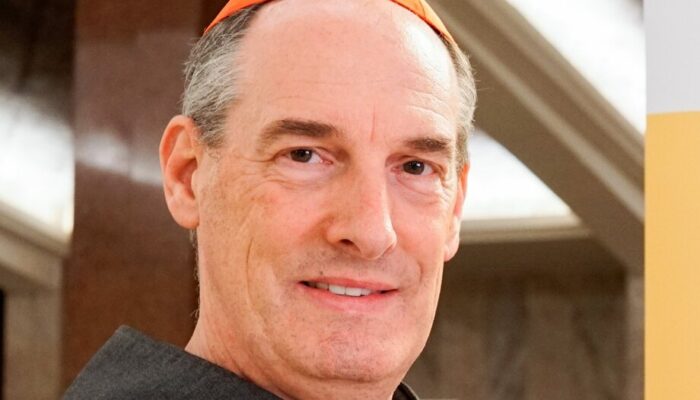
Cardinal Koch and three other intellectuals, honorary doctorates by the Holy Cross

Cardinal Kurt Koch, Prefect of the Holy See's Dicastery for Promoting Christian Unity, and Professors Helmuth Pree (Munich), Pierpaolo Donati, and Anne Gregory, Huddersfield (UK), will receive honorary doctorates from the University of the Holy Cross on October 7.

Editorial Staff Omnes-September 29, 2025-Reading time: 3 minutes

On October 7, the opening ceremony of the new academic year 2025/26 will be held at the University of California, Berkeley. University of the Holy Crossin Rome. On its 40th anniversary, the ceremony takes on a special meaning: the awarding of four doctorates. Honoris Causa to outstanding personalities from the academic and ecclesiastical world. This is not just a celebratory gesture, but the choice of figures who embody, each in his own way, decisive dimensions for the life of the Church and contemporary society: unity, relationships, communication and justice. If we think about it, it is on these four axes where a large part of the cultural and spiritual challenge of our time is concentrated today, also recalled by the last pontiffs.

Unity as the horizon: Cardinal Kurt Koch

The degree in Theology is awarded to Cardinal Kurt Koch, Prefect of the Dicastery for Promoting Christian Unity. A theologian of solid formation and pastor with long experience, he has dedicated his life to promoting ecumenical dialogue. Former bishop of Basel and president of the Swiss Bishops' Conference, in 2010 he was called by Benedict XVI to head the Pontifical Council for Christian Unity, a position that Francis subsequently confirmed in the new Dicastery. In this context, his commitment to ecumenism is tireless and unquestionable. Therefore, at a time when divisions, even within the Christian world, risk becoming permanent fractures, the figure of Cardinal Koch becomes a sign of a theological service that is not limited to academic classrooms, but becomes a concrete gesture of reconciliation.

Society as a relationship: Pierpaolo Donati

The recognition of the Faculty of Philosophy goes, for its part, to sociologist Pierpaolo Donati, who has dedicated his research to radically rethinking the social sciences. A professor at the University of Bologna until 2016, Donati is known internationally as the founder of "relational sociology". With his proposal, he has overcome the reductionist categories of functionalism and individualism, placing the relationship at the center of social analysis. At the heart of his thinking are concepts such as relational reason and relational goods, which have found application in the most diverse fields: from citizenship to social policy, from welfare to the dynamics of multiculturalism.

Communication as a vocation: Anne Gregory

Also significant is the choice of the Faculty of Communication, with Anne Gregory, Emeritus Professor at the University of Huddersfield and one of the world's leading figures in strategic and ethical communication. A former president of the Chartered Institute of Public Relations in the United Kingdom and president of the Global Alliancehas led the international project that has defined the global competencies of the profession. Author of more than 150 publications, she has combined academic research and consultancy to governments, NGOs and companies, offering tools for a communication understood as social responsibility. In her thinking, communication is not a simple transmission of information, but a constitutive condition of human and social life. It can destroy and poison, as evidenced by the spread of fake news and hate speech, but it can also build peace, generate trust and foster collaboration. 

Justice as a service: Helmuth Pree

Finally, the Faculty of Canon Law awards recognition to Professor Helmuth Pree, Austrian, professor at Linz, Passau and Munich, and collaborator for many years of Santa Croce. An ecclesiastical judge and consultant to the Dicastery for Legislative Texts, he has contributed with his more than 400 publications to the development of contemporary canon law. His work, which ranges from the fundamentals of law to concrete applications in ecclesiastical tribunals, shows how canon law is not a mere juridical construct, but a service rendered to justice and, ultimately, to the salvation of souls. 

Four figures different in their backgrounds, disciplines and trajectories, but united by a common tension: that of thinking and serving the truth within the real dynamics of human life. A mission that the Pontifical University of the Holy Cross feels as its own and continues to project into the future.

The authorEditorial Staff Omnes

What I learned about faith and life from Dominga

Dominga has found, in her simplicity and naturalness, the way that perhaps great intellectuals and metaphysicians never reached, but thanks to her many people have discovered the face of Christ.

September 29, 2025-Reading time: 2 minutes

Before writing these lines I asked the protagonist if she would authorize me and she said yes. She thought about it for a short time and thought it was fine. Her name is Dominga, she is 16 years old and loves to do choreographies in Tik Tok, something that her mother saw very far away, because when her daughter was born, this social network did not exist and because Dominga had to do a lot of therapy to walk. "Domi," as her four siblings call her, is the only female child. Her mother's pregnancy was normal, and when Dominga was born, she looked at her parents in a sustained way, almost intimidating them. "We'll get work out of this girl!" they said jokingly as the family celebrated her arrival, although they didn't know that sentence would be entirely true. By her first birthday Domi was a healthy child, but she had already been to more than six specialists. What apparently seemed to be synonymous with a "quiet daughter" began to worry her family doctor. She ate little, slept poorly and was not meeting developmental milestones. The story is long and I must summarize it. I'll give you a spoilerDominga has an intellectual disability that makes her see the world differently from her siblings and some things are harder for her to understand. There are also other aspects of daily life that are not easy for her, such as buttoning a shirt around her neck or calculating the change for bread when shopping in a grocery store. 

Her mother, who is me, has also had a hard time with some things. Having a different daughter makes you explore very unsuspected places and also reformulate the movie you had armed for your life. The "accomplishments" that didn't come, the pictures you won't hang on your wall (because they are simply things that won't happen) and the questions about the future that we have had to ask ourselves in advance. There is grief, it is very healthy and even liberating to take it on. Dominga has also taught me things that are as profound as they are fun. She has a great faith and, after communion, she collects herself in a way that impresses me. She is an Olympian at asking God for things; she wanted another addition to the family and there I was having my fifth child at age 42 when I had already forgotten that Peppa Pig and life jackets for swimming existed. When I see her praying I think "What will be what he is asking for, how scary!". Her requests are also sometimes unusual, such as an iPhone 13 or that we let her have an piercing. But if we think about it, Dominga is the wisest... she treats God like a father with affection and closeness. And I hope that, as until now, holding my hand, I can continue to guide her in a world with obstacles, even if she is the one who shows me the way to see the face of Jesus with such clarity and peace.

The authorMane Cárcamo

Evangelization

Prayer: opening oneself to God's presence

In February 2024, the priest Alex Muñoz gave a talk in a parish on how to pray. Despite being recorded with poor quality, the video on youtube has more than 170,000 views. This is the proposal he offers.

Miguel Janer-September 29, 2025-Reading time: 6 minutes

Álex Muñoz has achieved something uncommon in today's spiritual literature: transmitting theological depth with a warm and approachable simplicity. His book How to hear God? A way to find His voicepublished this year, breaks with traditional and structured methods of prayer. As opposed to closed schemes or repetitive formulas, Muñoz proposes a liberating path, based on silence, surrender and the contemplation of love.

The center of his proposal is not to do much, but to be available: to stop controlling, to open oneself to the presence of God and to listen from the depths. "Don't treat God as your crutch or your magician; He is a Father who loves you more than anyone else."warns the author. With everyday examples - such as comparing the presence of God with the fat of the Iberian ham that permeates everything - he unites the transcendent with the ordinary, and demonstrates that the divine dwells in the most ordinary things.

His method is articulated in four clear, accessible and profoundly transforming steps: decentering, surrendering, writing and believing. These steps are not techniques or exercises, but interior attitudes that allow us to live an authentic, silent and fruitful prayer.

Decentering: to stop revolving around to oneself

The first step Muñoz proposes is to decenter oneself. It consists in getting out of the center of oneself. Many obstacles to a living and deep prayer come from being too busy with our own thoughts, fears, desires or problems. The soul, when it turns in on itself, becomes noisy and self-referential.

Decentering is not denying oneself or fleeing from oneself, but opening oneself to the Other. It is to recognize that the real center is not me, but God. It is an act of humility that transforms the starting point of prayer. Muñoz puts it this way: to move from "I have to pray" at "Sir, here I am.".

This step invites us to stop, breathe, be silent and become aware that God is already present. We do not need to fabricate or force him. Just be. Just to make ourselves available. To disengage is to empty ourselves gently, without effort, in order to be able to receive.

Surrender: to place all that we are in God's hands.

The second step is to surrender. If decentering empties us of the IIn this way, surrender makes us available to God. Here, prayer becomes an act of trust. 

To surrender is to offer to God what one is and lives at that moment, without filters: joys, tiredness, wounds, confusion, desires, loved ones.

It is not a matter of explaining anything in detail, nor of resolving inner issues beforehand. To deliver is to present everything as it is, with simplicity, with truth, with an open heart. In other words: "Lord, this is me. Take me as I come today.".

Muñoz insists that prayer often stagnates because we do not let go of what weighs us down. We continue to control, to retain, to watch. To surrender is to let go. It is to abandon one's own schemes so that God can act in freedom.

This gesture can be expressed with words, with a symbol (such as opening the hands), or simply with a silence full of intention and trust.

Writing: recognizing what has been heard and committing it to memory

The third step consists of writing, which adds a very particular nuance to Muñoz's proposal. In his method, writing is an active part of prayer. After silence and listening, the author proposes to write down what has been felt, understood or intuited in the presence of God.

It is not a question of writing long reflections or theology. It is enough to write down the essentials: a word of the Gospel that resonated, an interior image, a movement of the heart, a question, a gratitude. Sometimes, the annotation can be as simple as: "I didn't hear anything today, but I was with you.".

Writing has a double value. On the one hand, it orders and fixes internally what we have lived; on the other hand, it allows us to recognize over time the thread of God's passage in our life. It becomes a spiritual memory, like a notebook where God leaves his footprints.

This writing is not for others. It is intimate, sincere, and does not seek style or correction. It is an extension of listening, a way of saying: "This thing that happened with you, Lord, is real and I want to keep it.".

Believing: trusting in what is not seen

The fourth and final step is to believe. Here, the author touches the core of many contemporary difficulties in prayer: the tendency to measure everything by results or sensations. If we feel nothing, we believe that prayer has not worked. If there are no emotions, we think we have wasted our time.

Muñoz responds with an essential affirmation: God acts in the occult, although we do not see him. 

Often the fruits of prayer are manifested later. Sometimes without our realizing it. Therefore, believing means trusting that what we experience in prayer is true, even if it seems small or invisible.

To believe is a humble act. It is to come out of prayer without noisy certainties, but with the peace of having been with God. It is to trust that the Word has acted, even if we do not notice it. It is to go out into the day with the desire to live with more attention, with more openness, with more love.

This step turns prayer into life. Because, as the author rightly states, prayer does not end when the silence ends. It continues in everyday life.

The footprints of the saints

One of the most solid aspects of the book is how Alex Muñoz anchors his proposal in the experience of great spiritual masters, whom he presents not as idealized figures, but as real witnesses of an incarnated, living and concrete prayer.

St. Teresa of Jesus appears as a model of radical trust and intimate dialogue with God. Her affirmation -"to pray is to try to be friends, being many times alone with the one we know loves us".- becomes the affective framework of Muñoz's entire proposal. Prayer is relationship, not technique. It is a link, not an activity.

St. Therese of Lisieux, for her part, brings to the author tenderness and littleness as a spiritual path. Therese teaches that it is not necessary to know how to pray well in order to pray. It is enough to offer one's desire, even with poor words. Her childhood spirituality -"it is trust and nothing but trust that should lead us to love."- illuminates the entire itinerary.

St. John of the Cross brings the experience of silence and stripping. For Muñoz, John is key to understanding that many times God communicates without words, without light, without consolation, and that this apparent darkness is not absence, but mystery. The soul, says St. John, learns in not-knowing. Prayer can be dry, but no less true for that.

St. Josemaría Escrivá appears as the witness of a persevering prayer in the midst of daily life. In him, Muñoz recognizes a spirituality that unites work, interior silence and the presence of God. Prayer is not reduced to a moment, but is prolonged in concrete life, from the most simple and habitual.

The "useless" sentence

One of the most powerful ideas in the book is the one the author calls "useless prayer". This expression, far from having a negative sense, is a denunciation of the utilitarian spirituality that measures prayer by what it "produces". In contrast, Muñoz proposes a prayer that does not seek results, consolations or clarity. A prayer that is simply shared presence.

To pray without expecting anything. To be with God just because. That is, for Muñoz, the highest form of prayer: the one that does not demand, that does not manipulate, that does not instrumentalize God.

This "uselessness" is, paradoxically, the most fruitful. Because it frees from spiritual anxiety and opens the heart to an experience of God that does not depend on personal effort, but on grace. It is a prayer that is stripped, humble, silent. But it is also firm, faithful, trusting.

To practice it, this is enough:

-Sit in silence, with the certainty that God is.

-Do not seek to feel anything.

-Do not try to "get the sentence right".

-Just be. Just stay.

-And to go out with the confidence that being with God is enough.

A free and true spirituality

Alex Muñoz does not present just another method, but a different way of being before God. His book is not taught with formulas, but is transmitted as a testimony. The itinerary that he proposes - to concentrate, to surrender, to write, to believe - is in reality a pedagogy of the heart: silent, patient, humble.

At a time when spirituality runs the risk of becoming technical or emotional, this book reminds us that true prayer needs no embellishment, only truth. It does not require sophisticated words, only availability. And that God is not found in the spectacular, but in the small, the hidden, the faithful.

Because, in the end, hearing God is not a skill. It is a gift. And we only need to learn to listen to him in the only place where he always speaks: the heart.

The gospel, the key

The conclusion of the book emphasizes that praying and reading the Gospel is not a useful means or a manual of rules, but a personal encounter with God. Prayer, like love or beauty, is "useless" in the sense that it does not seek to achieve things, but has value in itself: God is the end, not the means.

The Gospel should not be reduced to moralizing or practical advice, but to the search for the face of Christ. The author invites us to enter into the Gospel scenes with our imagination, as one more character, following the example of St. Josemaría, who recommended treating Jesus, Mary and Joseph with trust and affection.

Even the most intense scenes - such as taking Christ down from the Cross - help to live the faith with realism and tenderness, making prayer and the reading of the Gospel an intimate, loving and transforming encounter with God.

The authorMiguel Janer

Read more
The Vatican

St. John Henry Newman to be Doctor of the Church on November 1

Leo XIV announced at the Angelus today that he will proclaim St. John Henry Newman Doctor of the Church on November 1, during the Jubilee of the World of Education. This is what the Pope said after the Jubilee Mass for Catechists, in which he told them that their love and witness can change lives.

CNS / Omnes-September 28, 2025-Reading time: 6 minutes

- Cindy Wooden, Vatican City (CNS)

Pope Leo XIV said this Sunday in his address on the occasion of the Angeluswhich will proclaim St. John Henry Newman Doctor of the Church on November 1 on the occasion of the Jubilee of the World of Education.

The announcement took place after the September 28th Mass, at the Jubilee of Catechists. The Pope said that St. Newman "contributed decisively to the renewal of theology and to the understanding of the development of Christian doctrine."

Leo XIV confirms the opinions of cardinals and bishops

Dicastery for the Causes of Saints had announced July 31 that Pope Leo "confirmed the affirmative opinion" of the cardinals and bishops members of the dicastery on St. John Henry Newman. Theologian and cardinal of the Holy Roman Church, founder of the Oratory of St. Philip Neri in England. Now Leo XIV has set a date for his proclamation: November 1.

Numerous requests

St. John Henry Newman was born in London on February 21, 1801, was ordained an Anglican priest. He converted to Catholicism in 1845, was made a cardinal in 1879 by Pope Leo XIII, and died in Edgbaston, near Birmingham, England, in 1890.

Even before St. Newman was canonized by Pope Francis on October 13, 2019, there were petitions for him to be named one of the three dozen Doctors of the Church. Holy men and women from both the Christian East and West who are honored for particularly important contributions to theology and spirituality.

The 37 saints currently recognized as Doctors of the Church include the early Church Fathers, such as St. Jerome, St. John Chrysostom and St. Augustine. And theologians such as Saints Thomas Aquinas, St. Bonaventure and St. John of the Cross. But also St. Therese of Lisieux, who was honored by St. John Paul II in 1997, despite her lack of academic achievement.

St. John Henry Newman, British philosopher, theologian and cardinal, will be proclaimed Doctor of the Church by Pope Leo XIV on November 1.

20 bishops' conferences

The Dicastery for the Causes of Saints said that 20 bishops' conferences had requested that St. Newman be declared a doctor of the Church. Including the bishops of England and Wales, Scotland, Ireland, the United States, Canada and Australia.

"Your thinking has had a significant impact on the theology of the 20th century, especially at the Second Vatican Council," the dicastery stated. "Several popes, from Leo XIII to Francis, have drawn inspiration from him in their pontifical magisterium."

Pope Francis authorized the dicastery to begin the process for the declaration in May 2024. In September, the Dicastery for the Doctrine of the Faith affirmed that "there was no doubt about the excellence and quality of the saint's writings. And it expressed a completely positive judgment on his 'eminens doctrina' (eminent teaching)."

The dicastery's consultors unanimously supported the petition, the dicastery said, as did the cardinals and bishops who are members of the dicastery.

Closeness and prayer for typhoon victims in Asia

Also before praying the Angelus, the Pope shared with the faithful and pilgrims his proximity to AsiaThe report said that "a typhoon of exceptional strength has hit several Asian territories, in particular the Philippines, the island of Taiwan, Hong Kong City, the Guangdong region and Hainan".

"I am close to the affected populations, especially the poorest. And I pray for the victims, the missing, the many displaced families, the very many people who have suffered hardship and also for the rescue teams and the civil authorities. I invite everyone to trust in God and in solidarity. May the Lord give them strength and courage to overcome all adversities," he added.

Catechists: putting the word of life in hearts

In his homily at the Mass for the Jubilee of Catechists, Pope Leo XIV said that "when catechists teach, their aim is not simply to transmit information about the faith". But "to deposit the word of life in hearts, so that it may bear the fruits of a good life," said Pope Leo XIV. 

"The Gospel announces to us that everyone's life can change because Christ is risen. This event is the truth that saves us. Therefore, it must be known and proclaimed," the Pope told some 20,000 catechists from more than 115 countries attending the Jubilee of Catechists.

But proclaiming the Good News is not enough, the Pope said in his homily at Mass on September 28 in St. Peter's Square. "It must be loved. It is love that leads us to understand the Gospel!".

Pope Leo XIV delivers his homily during the Mass for the Jubilee of Catechists in St. Peter's Square at the Vatican on September 28, 2025. (CNS Photo/Lola Gomez).

39 men and women from 16 countries

During the liturgy, Pope Leo formally installed 39 women and men from 16 countries into the ministry of catechists. Among them were David Spesia, executive director of the U.S. bishops' Secretariat for Evangelization and Catechesis, and Marilyn Santos, associate director of the secretariat.

Before the Pope delivered his homily, a deacon named each of the 39, who responded in Italian: "Eccomi", or "present". After the homily, Pope Leo gave them each a crucifix.

"May your ministry always be grounded in a deep life of prayer, grounded in sound doctrine and animated by genuine apostolic zeal," the Pope told them. "As stewards of the mission entrusted to the Church by Christ, you must always be ready to give an answer to anyone who asks you for a reason for the hope that is in you."

The rich man and Lazarus 

The Gospel reading at Mass was the parable of the rich man and Lazarus from Luke 16:19-31. In the parable, the Pope said, Lazarus is ignored by the rich man, "and yet God is close to him and remembers his name."

But the rich man has no name in the parable, "because he has lost himself by forgetting his neighbor," the Pope said. "He is lost in the thoughts of his heart: full of things and empty of love. His possessions do not make him a good person."

Current history: opulence and misery

"The story that Christ tells us is, unfortunately, very relevant today," Pope Leo said. "At the gates of today's opulence stands the misery of entire peoples, devastated by war and exploitation."

"Throughout the centuries, nothing seems to have changed: how many Lazaruses die before greed that forgets justice, before profits that trample on charity and before riches blind to the pain of the poor," he said.

In the parable, the rich man dies and is cast into the underworld. He asks Abraham to send a messenger to his brothers to warn them and call them to repentance.

The Gospel story and the words of Scripture that catechists are called to share are not meant to "disappoint or discourage" people, but to awaken their consciences, the Pope said.

The heart of catechesis

Echoing the words of Pope Francis, Pope Leo said that the heart of the catechesis is this announcement. That "the Lord Jesus is risen, the Lord Jesus loves you and has given his life for you; risen and alive, he is close to you and awaits you every day."

That truth, he said, should drive people to love God and love others in return.

God's love, he said, "transforms us by opening our hearts to the Word of God and to the face of our neighbor".

Parents, the first to teach their children about God

Pope Leo reminded parents that they are the first to teach their children about God, his promises and his commandments.

And he thanked all those who have been witnesses to others of faith, hope and charity, cooperating in the pastoral work of the Church by "listening to the questions, sharing the struggles and serving the desire for justice and truth that dwells in the human conscience."

Teaching the faith is a communitarian effort, he said, and the Catechism of the Catholic Church "is the 'travel guide' that protects us from individualism and discord, because it bears witness to the faith of the entire Catholic Church."

The authorCNS / Omnes

Read more
Resources

Georges Lemaître: when the universe is born between science and faith

Georges Lemaître, a Belgian priest and physicist, revolutionized cosmology by proposing that the universe is expanding and that it had its origin in the "primitive atom", today known as the Big Bang.

Eduardo Riaza-September 28, 2025-Reading time: 3 minutes

Can a priest also be a great scientist? The story of Georges Lemaître proves that he can. This Belgian physicist, who was also a Catholic priest, not only naturally combined science and faith, but revolutionized our understanding of the universe. In fact, he was the first to propose what we know today as the Big Bang theory.

A priest with a scientific vocation

From a young age, Lemaître dreamed of two things: being a scientist and being a priest. He studied engineering, philosophy, physics and mathematics, and served as a volunteer in the First World War. He then entered the seminary and was ordained a priest. But his passion for knowledge did not stop there.

He discovered Einstein's theory of general relativity through the texts of astronomer Arthur Eddington, with whom he would later study at Cambridge. Fascinated by the new ideas about space and time, Lemaître began to explore how they could be applied to the entire universe.

An expanding universe

Until then, most scientists believed in a static universe. Lemaître thought otherwise: if the universe was full of galaxies moving away from each other - as some observations indicated - then it must be expanding.

With that idea in mind, in 1927 he proposed a mathematical model in which the universe expanded over time. This expansion explained a phenomenon known as "redshift": more distant galaxies move away faster. Years later, Edwin Hubble observed exactly that, giving strong empirical support to Lemaître's hypothesis.

The origin: the "primitive atom".

But Lemaître went further. In 1931 he presented an even bolder idea: the universe had started from an extremely dense and hot point that he called the "primitive atom". That was the first scientific formulation of the origin of the universe, known today as the Big Bang theory.

Instead of imagining an eternal universe, he proposed one with a beginning, where space and time emerged from an initial cosmic explosion. Although at first the scientific community received this idea with skepticism - and some even thought that Lemaître was seeking to introduce biblical creation into science - he was always clear: his model was a scientific, not a religious, proposal.

Faith and science: two paths to truth

Far from using science to "prove" the existence of God, Lemaître insisted on maintaining a healthy separation between faith and science. For him, both sought truth, but from different planes: science explains the "how" of the universe; faith, the ultimate "why" of existence.

Lemaître believed that God does not replace natural laws, but is the foundation of all that exists. In his own words, "God must not be reduced to a scientific hypothesis." He asserted that Revelation was not intended to teach science, and that a believing scientist could investigate as freely as anyone else.

The legacy of the "father of the Big Bang

Throughout his life, Lemaître was recognized for both his scientific brilliance and his profound humility. His ideas were the foundation of modern cosmology. Shortly before his death, he learned of the discovery of the cosmic background radiation, an "echo" of the Big Bang that confirmed his theory. It was a symbolic moment: science had finally confirmed what he had glimpsed decades earlier.

Today, his figure inspires many as an example that science and faith need not be at odds. Georges Lemaître lived convinced that the universe is rational, beautiful and accessible to human intelligence, precisely because it is the work of a Creator.

And perhaps for that reason, he was able to see farther than many: to the very origin of the cosmos.

The authorEduardo Riaza

Physicist and author of "The story of the beginning: Georges Lemaître, father of the big bang".

Evangelization

8 ideas of what people expect from their catechists

What does it mean to be a catechist? Can anyone be a catechist? What do catechists expect? This article presents two visions that define what it means to be a good catechist.

Teresa Aguado Peña-September 28, 2025-Reading time: 4 minutes

On the occasion of the Jubilee of Catechists, on September 28, Pope Leo XIV presided at Holy Mass in St. Peter's Square with the institution of new catechists, a gesture that underlines the importance of their mission in the life of the Church. In this context, we have asked catechists and catechized students what are, from their experience, the keys to exercise this task with fruitfulness and joy. This article is the result: eight concrete keys to being a good catechist, gathered from those who transmit and receive the faith.

Many people think that being a catechist is the result of a collection of merits, as if it were a mere post assigned to you when you climb a great ladder of tests of faith. Nothing could be further from the truth. The first "requirement" to be a catechist is to recognize oneself as a sinner, because only those who experience God's mercy can proclaim it with authenticity. From this humility comes the readiness to serve, to accompany others on their journey of faith and to allow the Holy Spirit to act through oneself. The catechist does not speak from personal perfection, but from the living experience of a God who transforms and sustains, sharing with simplicity the treasure received. On this basis, what do catechists say and what do the catechized say?

What do catechists say?

Witnessing God's love

The catechist does not transmit a theory or a list of norms: he communicates a living experience. To be a witness to God's love means to have experienced it in oneself and to allow this love to transform one's words, gestures and attitudes. The catechist is someone who, having encountered Christ, can say with sincerity "come and see", because he or she shares from his or her own experience and not from abstract concepts.

2. The Church as mother

Catechists do not walk alone or act on their own. They live their mission from within the Church, the mother who engenders and nurtures the faith. This implies feeling an active part of the Christian community, learning from it, receiving formation and support, and at the same time accompanying others in their spiritual growth. From this awareness, the catechist is a sign of welcome and closeness, showing his catechists that the Church is home and family.

3. Prayer as a source

The catechist's heart is nourished by personal and community prayer. One cannot give what one does not have: those who accompany others in the faith need to drink daily from the living fountain of their relationship with God. Prayer sustains in moments of fatigue, enlightens in decisions and turns catechesis into something more than a class: it is an encounter that can lead to a personal encounter with God.

4. Parresia to proclaim the Gospel

Parresia is the audacity of the Holy Spirit: to proclaim the Gospel with courage, joy and inner freedom. A good catechist is not held back by fear, shyness or "what people will say", but trusts the Spirit and adapts to the language and reality of those in front of him. Like Jesus, he or she seeks to make the Good News understandable, without watering down its content, but making it relevant and relevant.

What do catechists ask of their catechists?

1.No to beatings

A catechist defines well what it means to have this vocation: "to be a witness and not to beat people up". Catechesis cannot be a bombardment of content or a moralizing discourse. Faith is not imposed, it is proposed; it is not transmitted from the coldness of a manual, but from the closeness of a real experience that inspires to believe in Him. A good catechist knows how to accompany, listen and adapt to the rhythm and reality of his or her catechized students, so that catechesis becomes a space of encounter, dialogue and growth, not of boredom or imposition.

2. Consistency

Nothing has more impact than example. A catechist can have many didactic resources, but if his or her life is at variance with what he or she teaches, the message is devoid of force. To live coherently does not mean to be perfect, but to strive to align one's daily life with what is announced: prayer, participation in the community, charity, forgiveness. This authenticity, even if imperfect, is what awakens confidence in the catechists and shows them that the Gospel is possible in real life. As one of them said: "I don't expect my catechist to be a saint, but I do expect him to believe in what he says".

3. Empathy

Each person who comes to catechesis has his or her own story, doubts, rhythm and wounds. A good catechist needs, in addition to training, emotional intelligence to put himself in the shoes of his catechizees, to welcome their questions without being shocked, to listen without judging and to find a way to accompany their process. This empathy creates a climate of trust in which they can open themselves to the Gospel message. The catechists express it this way: "We feel listened to when we are not treated as a number, but as persons with a name and a life of their own".

4. Discernment

Not all advice is opportune, nor is every path the same for everyone. Therefore, in addition to empathy, a catechist needs discernment: to know how to read the signs of God in the life of each person, to pray for those he or she accompanies and to let the Holy Spirit inspire his or her words and actions. Discernment helps to guide without imposing, to suggest without pressuring, to indicate paths that lead to an encounter with Christ and not just simple prescriptions. Thus the catechist becomes a true companion on the way, helping each person to discover what God wants for his or her life.

The Vatican

Pope to catechists: "there is a 'sixth sense' for the things of God".

Pope Leo XIV defended in this morning's Audience, on the Jubilee of Catechists, the existence of the 'sensus fidei', a 'sixth sense' of simple people for the things of God. It is the "infallibility of the people of God in the faith". That which led a child in Milan to cry out: "Ambrose, Bishop!", and he was a catechumen.

OSV / Omnes-September 27, 2025-Reading time: 2 minutes

- Francisco Otamendi

In the fourth century, in Milan, the Church was divided by great conflicts and the election of a new bishop was turning into a tumult, Pope Leo XIV described in the Audience of the Jubilee of Catechists. 

"The story goes that then the voice of a child was raised and he shouted: "Ambrosio bishop!". And all the people cried out, "Ambrosius bishop!". And Ambrose, who was not even baptized, he was a catechumen preparing for baptism, was "one of your greatest bishops and doctor of the Church," said the Pope.

Intuitions in the people of God

The Jubilee makes us pilgrims of hope, "because we sense a great need for renewal that concerns us and the whole earth," said Leo XIV in a sunny St. Peter's Square, at the Jubilee of Catechists, before more than 35,000 pilgrims.

"I just said "we intuit": this verb - to intuit - describes a movement of the spirit, an intelligence of the heart that Jesus found above all in the little ones, that is, in people of humble soul. 

Often, in fact, educated people intuit little, because they presume to know everything. "It is beautiful, instead, to still have room in the mind and in the heart, so that God can reveal himself. How much hope when new intuitions arise in the people of God!"

Infallibility of the people of God in the faith

Jesus rejoices because of this, he is full of joy, the Pontiff continued, because he realizes that the little ones sense. They have the 'sensus fidei', which is like a 'sixth sense' of simple people for the things of God. God is simple and reveals himself to the simple. 

"For this reason," he stressed, "there is an infallibility of the people of God in the faith, of which the infallibility of the Pope is an expression and service" (cf. Conc. Ecum. Ecum. Vat. II, Lumen gentium, 12; International Theological Commission, The sensus fidei in the life of the Church, 30-40)".

"Ambrose, bishop!"

He then recalled that moment in the history of the Church that shows how hope can come from the people's capacity for intuition. How the name Ambrose, St. Ambrose, was born in the fourth century in Milan from the cry of a child.

Ambrose at first did not want to, he even ran away. Then he understood that it was a call from God, so he allowed himself to be baptized and ordained bishop. "And he becomes a Christian by becoming a bishop!" the Pope recalled. 

Gift of the little ones to the Church

"Do you see what a great gift the little ones gave to the Church? Even today it is a grace to ask for: to become Christians while living the call you have received! Are you a mother, are you a father? Become a Christian as a mother and father. Are you a businessman, a worker, a teacher, a priest, a nun? Become a Christian on your way. The people have this 'sense of smell': they understand if we are becoming Christians or not. And it can correct us, it can show us the way of Jesus".

St. Ambrose, over the years, gave much back to his people, Leo XIV noted. For example, "he invented new ways of singing psalms and hymns, of celebrating, of preaching. He himself knew how to intuit, and so hope multiplied. Agustin was converted thanks to his preaching and was baptized by him. Intuiting is a form of waiting, let us not forget that!"

May the Jubilee help us to become small according to the Gospel in order to intuit and serve God's dreams," he concluded his catechesis.

The authorOSV / Omnes

The Vatican

Mercy that remakes man

Pope Leo XIV emphasizes that God's mercy not only forgives, but recreates: where man destroys, God recreates.

Diego Blázquez Bernaldo de Quirós-September 27, 2025-Reading time: 2 minutes

The recent catechesis of Pope Leo XIV on Wednesday, September 24, places us at the heart of Christianity: the mercy of God as an inexhaustible source of new life. This is not a secondary devotional idea, but the very core of Revelation.

St. John Paul II forcefully affirmed: "mercy is the greatest attribute of God" (Dives in misericordia, 13). And Benedict XVI recalled that "the Christian faith is not above all an idea, but an encounter with an event, with a Person" (Deus Caritas Est, 1): this encounter is with Christ who, on the Cross, makes his forgiveness the visible face of divine love.

The proposal of Leo XIV

The novelty of Pope Leo XIV's catechesis lies in emphasizing that divine forgiveness is not a simple "forgetting" of sin, but a creative act. Where man destroys, God re-creates. Forgiveness not only absolves: it re-creates. Hence God's mercy is always a source of hope. The believer is not defined by his falls, but by the love that lifts him up.

However, this experience requires a spiritual path: humility and repentance. Pride closes access to grace, while sincere confession opens wide the door to forgiveness. The prodigal Son could only experience the Father's embrace when he acknowledged his misery and said: "Father, I have sinned against heaven and against you" (Lk 15:21). Mercy does not humiliate: it dignifies. But it demands the courage to recognize that we are in need.

Forgiving oneself

Another decisive aspect opens up here: God's forgiveness also demands that
let us learn to forgive ourselves. Many times the Christian lives as a
if sacramental absolution would be ineffective, burdening us with faults that have already been
redeemed. But faith teaches us that the definitive judgment on our life is not
our faults, but the blood of Christ shed for us. To forgive ourselves is, ultimately, to accept God's gaze on our history.

From this certainty is born the joy of the Gospel. Forgiveness is not only psychological rest, it is ontological peace: it restores us to the state of reconciled children, brought back into communion. As the Catechism teaches, "there is no limit or measure to this essentially divine forgiveness" (CCC 2845). For this reason, the experience of mercy does not lead to resignation, but to mission: the forgiven person becomes a witness and minister of forgiveness in a world wounded by harshness and resentment.

Pope Leo XIV's catechesis invites us, in short, to contemplate forgiveness as a gift that demands humility and gives hope, humility: because recognizing one's own guilt is a condition for opening oneself to grace, hope: because every fall can become a place of encounter with the God who "makes all things new" (Rev 21:5). And above all, gratitude: because everything in the Christian life is born of grateful amazement before a God who never tires of remaking us with his mercy.

Read more
United States

Bishop Paprocki: "It is not against unity to tell the truth".

The Archdiocese of Chicago, and Cardinal Blase J.Cupich, plan to present Senator Dick Durbin with a "Lifetime Achievement Award" for his work on immigration. The senator has maintained "a very strong and consistent abortion policy," says Bishop Thomas J. Paprocki in this OSV News interview, and the archdiocese should revoke the award. Durbin officially resides in his diocese.

OSV / Omnes-September 27, 2025-Reading time: 8 minutes

- Gretchen R. Crowe (OSV News)

The Archdiocese of Chicago's Office of Human Dignity and Solidarity Immigration Ministry and Cardinal Blase J. Cupich plan to present Senator Dick Durbin, a Catholic, with a "Lifetime Achievement Award" for his work on immigration issues in November. This despite the senator's longstanding public stance on abortion. Bishop Thomas J. Paprocji of Springfield, Illinois, in whose diocese Durbin officially resides, has issued a fraternal correction to Cardinal Cupich, asking the archdiocese to change its plans.

"Because this decision threatens to scandalize the faithful and damage the bonds of ecclesial communion, it must be reversed," Bishop Paprocki wrote Sept. 23 in First Things.

In an interview with OSV News on Sept. 24, Bishop Paprocki asserted that, regardless of Senator Durbin's record on other issues, his public stance in favor of policies protecting legal abortion disqualifies him from receiving any award, according to the policies of both the U.S. Conference of Catholic Bishops and the Archdiocese of Chicago. He argued that the award is not consistent with Church doctrine on life issues and that defending the truth does not imply breaking unity within the Church.

Below is the full interview, edited for clarity and length.

OSV News: Earlier this week, you issued a formal fraternal correction to Cardinal Cupich for the decision to give Senator Dick Durbin of Illinois a 'Lifetime Achievement Award'. What do you think is the best outcome at this point? 

- Bishop Thomas J. Paprocki: I think the best outcome at this point would be for Cardinal Cupich and the Archdiocese of Chicago to rescind their lifetime achievement award to Senator Durbin. 

I think it's clear that he has maintained a very strong and consistent abortion policy as a U.S. senator. And despite his other good actions, we are talking about a consistent life ethic. 

That was a big problem with Cardinal Joseph Bernardin, Archbishop of Chicago in the 1990s, when I was his chancellor. It seems to Senator Durbin, who has been in this position for several years, that all his other good deeds outweigh his being an abortionist politician, and it just doesn't work that way. It would be like saying someone is a good Catholic because he follows nine of the Ten Commandments, "The fifth commandment, 'thou shalt not kill,' we don't follow, but the other nine, I follow perfectly." Therefore, it is very incoherent to say that we are going to give a lifetime achievement award to someone who promotes the murder of fetuses. 

OSV News: Cardinal Cupich referred to the "coherent ethics of life" in his statement, coined, as you mentioned, by Cardinal Bernardin. Could you explain what you meant by that concept?

- Bishop Paprocki: Cardinal Bernardin himself was very forceful about it. He was asked about it many times. This was when he was promoting the consistent ethic of life in the 1980s. Even then there were politicians and others who used this ethic to say, well, like Senator Durbin, that as long as I adhere to Catholic doctrine on most issues, there's no problem, and that abortion is not that important. 

There's a very telling quote from Cardinal Bernardin - he was interviewed in the National Catholic Register in 1988 - and I have this quote that I like to use often, because I think it's his. He said, "I know that some people on the left, if I may use that label, have used consistent ethics to give the impression that the abortion issue is no longer so important. That they should be against abortion in general, but that there are more important issues, so don't hold anybody accountable just for abortion. That's a consistent misuse of ethics, and I deplore it." That's a very telling quote, and I think it's very applicable to what's happening here with Senator Durbin. 

U.S. Sen. Dick Durbin, D-Illinois, in 2019, and Cardinal Blase J. Cupich of Chicago, in 2018 at the Vatican. (Photo by OSV News/Jim Bourg, photo by Reuters/CNS/Paul Haring).

OSV News: With fraternal correction, do you think any response you might get will be made public, since your fraternal correction was public? 

- Bishop Paprocki: I think Cardinal Cupich has already stated publicly that he plans to go ahead with the tribute to Senator Durbin. So, if he were to revoke it, I think it would be very public. But for now, it doesn't look like he's going to do that. In fact, he issued his statement on Monday after I pointed these things out to him. So, basically, it's pretty clear that he's redoubling his efforts and tends to go ahead with giving this award. 

OSV News: It doesn't seem ideal for bishops to disagree in the media. It is certainly not ideal for the unity of the Church. What is it about this issue that you have decided to step forward in this way? 

- Bishop Paprocki: The reason I decided to take this step was in response to something that Cardinal Cupich and the Archdiocese of Chicago are doing. I didn't start this. They are doing something that contradicts the statement of the United States Conference of Catholic Bishops on "Catholics in Political Life." A statement that we, as bishops of the United States, issued in 2004. 

The text states very clearly: "The Catholic community and Catholic institutions should not honor those who act contrary to our fundamental moral principles. They should not be given awards, honors or platforms that suggest support for their actions." That much is quite clear. And, in fact, the Archdiocese of Chicago has a policy of its own very similar to that of not granting honors or speaking opportunities to people whose public stance opposes the fundamental moral principles of the Catholic Church. 

Therefore, when a situation like this arises, or when someone fails to comply with that policy, I don't think it breaks unity to point it out and ask that our policies and the teachings of the Catholic Church be complied with.

In fact, I think we have to tell the truth, and Pope Leo recently gave a talk in which he said that telling the truth does not harm unity, that we must tell the truth. And I think that's what we are doing here. 

Because otherwise, what's the point of having these policies? We spend a lot of time discussing them, we adopt them, and then when someone breaks them, is there any consequence, at least a public statement, that says this is a breach of our bishops' conference policies? 

Other bishops have already weighed in. I saw that Archbishop Cordileone of San Francisco issued a statement, as did Bishop James Conley of Lincoln, Nebraska. I am grateful for their support and anticipate that other bishops will also make their views known. 

OSV News: Is it normal for a bishop to ignore USCCB and his own diocese's guidelines and policies on these matters?

- Bishop Paprocki: I don't think so. I mean, I'm not aware of such a public, high-profile recognition of such a prominent U.S. senator. I haven't seen anything like it. There's the issue of receiving Holy Communion. That's another issue. And, as you know, I know that Archbishop Cordileone of San Francisco similarly told Nancy Pelosi that she should not receive Holy Communion either. So there are other cases like this where bishops have applied canon law. Which basically says that when someone obstinately persists in promoting manifest grave sin, they should not receive Holy Communion.

OSV News: In his Sept. 22 statement, Cardinal Cupich justified his actions in part, saying it was a way to remain faithful to the May 2021 CDF instruction. How would you respond to that? 

- Bishop Paprocki: Well, you know, the instruction is to dialogue with politicians, and that's fine. I do that. I've dialogued with Senator Durbin. But when a bishop tries to do that and the politician ignores him, then you have to take action. And this is something that precedes me here in the diocese. 

This dates back to 2004, when the pastor of his parish, Blessed Sacrament Parish in Springfield, was Monsignor Kevin Vann. He is now Bishop Kevin Vann, bishop of Orange, California. At that time, he told Senator Durbin that he should not take communion, and that was confirmed by my predecessor, Bishop George Lucas, who is now Archbishop Emeritus of Omaha.

And that is what has been observed here. Senator Durbin told me personally that he doesn't take communion in our diocese. Well, apparently he takes communion in a church in Chicago. He has an apartment in Chicago, but he still has his home here in Springfield. I would say that, as far as that goes, I'm still his bishop. It's very interesting that Cardinal Cupich was asked about this in 2018. 

And on the subject of Senator Durbin not being able to receive Holy Communion, in an article that appeared in the State Journal Register, the Springfield newspaper, Cardinal Cupich had this to say. 

"I leave it to each bishop, who has an obligation to dialogue with his elected officials on this issue as it relates to his own practice of the Catholic faith, to decide on this." I was not involved in the conversation between the bishop and Senator Durbin on this issue, so I cannot comment on it, but I respect any bishop who needs to take action within his own diocese, and I also believe that conversation should remain between the two of them." 

Well, these two, as Cardinal Cupich himself said, would be Senator Durbin and myself, Bishop Paprocki. And, so, at this point, that hasn't changed. He continues to have his home here, what in canon law is called domicile. He has his domicile here in this diocese. And, in that sense, I find myself in a position where I think I have to say something. It's not just a question of whether I should say something. I believe I have an obligation to do so. 

OSV News: And your domicile is in the Diocese of Springfield?

- Bishop Paprocki: He still uses it as his official registration. His voting record indicates that he votes from here, and even if you visit Senator Durbin's official website, it shows that he resides in Springfield. So it's pretty clear. 

OSV News: Is there a way for a diocese to reward or honor a politician for his work in one particular area, even if he publicly disagrees with the Church in another? Would there perhaps have been a more appropriate way for the Archdiocese of Chicago to recognize Senator Durbin's work on immigration? Or is there no avenue for that at all? 

- Bishop Paprocki: Well, I guess you could argue in that regard that if you were very limited and just said we want to recognize all that you've done to help immigrants, that could possibly work. But I would point out two things.

One is that the policy of the USCCB, the United States Conference of Catholic Bishops, simply says that we should not honor those who act contrary to our fundamental moral principles and that they should not be given awards. So, if someone does not follow the teachings of the Church, it would seem that even to highlight an area to honor, we should not. 

The other thing, as I would like to point out in this case, is that they call it a "lifetime achievement award." So he's not being honored just for that particular item.

OSV News : Is there anything else you would like to add? 

- Bishop Paprocki: I just ask for prayers. I think it is very important. We always pray for a change of heart and we believe in the power of God's grace and conversion. So, I ask for prayers for Senator Durbin, for Cardinal Cupich and also for all those involved in the pro-life movement.

—————-

Gretchen R. Crowe is editor-in-chief of OSV News.

This interview was originally published in OSV News. You can consult it here

—————-

The authorOSV / Omnes

Evangelization

Rosa Pich: "Heaven on Earth is possible, with sacrifice, humor and chaos".

The mother of 18 children, Rosa Pich, transforms the pain of her losses into teaching and joy in her new book 'There is also heaven'.

Teresa Aguado Peña-September 27, 2025-Reading time: 4 minutes

Rosa Pich, mother of 18 children - three of them already in heaven - and widow, is a whirlwind of joy, faith and contagious energy. In her new book "También hay cielo", she demonstrates that one can laugh in the midst of pain, and that this can be transformed into teaching. With her famous "organized chaos", Rosa turns each day into a spectacle of family life, showing it in her networks with the objective of bringing "a little grain of hope" to all those who need it.

Since their first years of marriage, Rosa and her husband decided to leave their family in the hands of providence. "We didn't decide whether to have one, two, three... We did talk about wanting a large family, but in the end it's what God gives you," she recalls.

Their personal experience has not been easy: when their third child was born, he died after ten days, and four months later the second one died, both with heart problems. The doctors advised them not to have any more children, assuring them that they could all die, and even that the eldest would only live to be three years old. Even so, Rosa and Chema decided to go ahead: "Nobody gets into your bed, we are going to do what we really want to do", says Rosa, and so they took the risk and trusted.

Rosa and her children in a family photo ©Image from her social networks.

For Rosa, each child is an undeserved gift from God, a temporary gift that parents receive to educate and accompany, knowing that soon they will follow their own path. She emphasizes the enormous responsibility that comes with having the freedom to decide to form a family: "God gives us the freedom..., if mom and dad say no, they will not be born", she points out, stressing that the decision to bring a child into the world belongs to the parents alone, and that this responsibility transcends earthly life. Each child demands dedication, sacrifice and service: although sometimes the small details of raising a child seem overwhelming, Rosa reminds us that it is an act of adoration and love, a constant giving that strengthens the family bond.

Educating in faith

Rosa explains that in her home there is a life of piety: "We go to Mass on Sundays, and on the days we can during the week, too. At home we pray the Rosary", without the children deciding whether to participate or not, just as "you don't let them decide if they want to go to school". Rosa shows her children how to integrate the spiritual into their daily lives. "The children have to see the parents pray," she says, stressing that spirituality is learned above all by example.

However, as children grow up, they make their own decisions: "we have to let them make mistakes". Each child has his or her own identity, and although education in the faith is constant, she respects that, when the time comes, the children will decide for themselves. "You educate at home a faith lived from the cradle, but in the end you have to respect," she explains.

The loss

In spite of having lived through the death of three children and that of her husband, Rosa, in her new book 'There is also Heaven', affirms that she has been "very pampered by the Lord". She sees pain as an opportunity to transform it into something more fertile, into a teaching. For this reason, she stresses the importance of facing reality and not running away from it. When she sees that she is overwhelmed, she knows who to turn to: "Lord, help me. Give me strength because I cannot do it alone. She comments that we have been created to be happy here on Earth, "even though sometimes we forget".

There is also Heaven

AuthorRosa Pich
Editorial: Praise
Year: December 2024
Number of pages: 90

Influencer by chance

Sharing her testimony and the way God has worked in her life comes naturally to her. She says that she started on Instagram almost by chance, following the suggestion of a son, and that she never sought fame or followers. For her, the key is to show life as it is, with its joys, its falls and its challenges, like when her son Rafa faced cancer: "the Lord has wanted to show through my account... another way of seeing the disease... to bring out a more human side and give a grain of hope". Rosa believes that, through her example and testimony, she can transmit consolation, hope and motivation, helping others to face daily difficulties and to value family life as a space where faith and dedication are lived with authenticity.

With more than 123,000 followers in its account @comoserfelizconunodostreshijosher publications show both the chaos and the fun of living with 15 children. It is what she calls "organized chaos": a balance between the inevitable disorder of a large family and its overflowing joy. Rosa Pich believes that people follow her because she reflects real life, without filters, showing both the challenges and the laughter, the improvised games and anecdotes that fill her home. That chaos, far from being negative, generates optimism, creativity and closeness, and transmits that, although life is not perfect, family life can be fun, enriching and deeply human.

Read more
The World

Obituary: Tatiana Goritchéva, a brave woman

The Russian philosopher and dissident Tatiana Goritchéva (1947-2025) died recently with hardly any media coverage. A pioneer of Christian feminism and critic of the Soviet regime, her death has gone unnoticed despite the relevance of her work.

Santiago Leyra Curiá-September 27, 2025-Reading time: 5 minutes

Tatiana Goritchéva was born in St. Petersburg (then Leningrad) in 1947 and died in her hometown on September 23, 2025. There she studied philosophy and radio engineering and was for some time head of the Komsomol (Communist Youth).

At the age of 26 she converted to Christianity. Later she founded with some friends the first feminist movement in the Soviet Union, MARIA, from which she organized religious seminars and published two underground magazines. After several interrogations and imprisonments she was expelled from her country in 1980. For years she lived in exile in Paris. In her day she was able to meet personalities such as Heidegger, Sloterdijk and St. John Paul II.

In his books "Talking about God is dangerous. My experiences in Russia and in the West." (Herder, 1987); "The power of Christian madness. My experiences." (Herder, 1988) and "The strength of the weak". (Encounter, 1989), Dr. Goritchéva narrates how, as a communist youth leader and philosophy professor, she took refuge in a life of excess, enthusiasm for Western and Eastern philosophies and dedication to yoga. Until she meditated on the Lord's Prayer and found the faith that transformed her life.

Conversion

He understood "with all his being that God exists... a God who out of love became man.". He then rediscovered the Church in Russia, in spite of the persecution and gave a great testimony about the Russian people, about the sense of pain and persecution that, in spite of everything, cannot uproot the religious. This led him to make an appeal also to the people of the West to believe from the heart.

Goritchéva, in those now somewhat distant years, was convinced that only faith brings freedom: neither materialism nor communism nor even Eastern or Western-style cynicism provides it, but only what she called the "holy madness".

She was able to discover these madmen and fools in the midst of the uniformed masses of Russia and also in the consumer societies of the West. In these men and women Tatiana Goritchéva sees an opportunity for renewal for a Christianity that has adapted to the environment and seems to have lost its original strength. The Christian madmen are a sign of attention because they have the courage to live on the margins of society, at the very edge of existence.

Great humanity

Almost 30 years after those enlightening words, last year I had the good fortune to speak briefly with Tatiana Goritchéva again and I would have liked to talk with her about what it meant for a Russian emigrant to have to live in Europe. The longing for the warmth provided by human closeness and an intense spiritual life, as well as the difficult attempt to put down roots in the cold atmosphere of the West, revealed to her our shortcomings, which have become more acute in recent decades.

She told me that she did not want to diagnose or polemicize, but to move in the sphere of cordial conversation, in the sphere of God and Christian fraternity, that she tried to live intensely and daily from her hope. She was tired and ill and we could not exchange more than a few messages that I am transmitting here so that they are not lost in oblivion.

Three years ago, I wrote to her in Russian through social networks (advantages of modernity because I don't speak or write this beautiful language) showing interest in her and she replied: "Dear Santiago! Thank you for your interest in my personality. Now I am in St. Petersburg, but I am ill and will leave for Paris in a week. But I hope to return to St. Petersburg in one or two months. Then everything will be possible." And he gave me his telephone number. 

A month later I wrote to him again and he wrote back: "Dear friend! I am very glad of your interest in my modest person - and your love for Russia! But I am still undergoing treatment. And again they put me in the hospital (in Paris), where it is impossible to write, to give interviews... All my energy is spent on painful exercises and patient work on my body. Pray for me. I could give interviews in German, Russian, French... but everything has to happen in an atmosphere of creative openness and friendly understanding. Unfortunately, I won't be able to do that for a couple of months. In the hospital, I hope to be able to establish contact."

Love for animals

Already by whatsapp, to a photo I sent him of a student of mine making a presentation on Tatiana Goritchéva, he replied: Christ is risen! As I noticed that in his social networks he shared abundant photos of cats and other animals, including a nice picture of Benedict XVI already retired from the pontificate smiling at a kitten that grabbed him by his white cassock, it occurred to me to send him a video where you see a multitude of birds of all colors with the phrase "not even Solomon in all his glory could dress like that".

The next day he answered me: "Christ points directly to the supreme Beauty of birds and beasts. They have transmitted to us the harmony of heaven. They have preserved both Goodness and Truth".

One day she phoned me to tell me that we could not have the interview until she had recovered. She spoke Russian, French and German and I spoke Spanish and I was fluent in English. I thanked her for her call and assured her of my prayers. I would have liked to ask her how she is doing and what her life has been like since the 1990s when she was well known in Europe for her books. I would also like to know what Christianity brings her today.

Faith and today's society

Dostoevsky says in "The Idiot" that beauty will save the world and some people think that he was referring to moral beauty, to Jesus Christ, to the Good and to good people, in short. I would like to have asked him what Dostoevsky is still saying to people today. Also about his opinion on the role of Spain in history, his work in America, etc.

I was curious to know your opinion on how Christianity (itself humanly divided) can contribute to unity in our increasingly polarized societies, and how, if possible, Christianity can assume a leading role in the dialogue with a secularized society. And how it seemed to you that Christianity can assume - if possible - a leading role in the dialogue with a secularized society. Is this dialogue possible?

I remained without asking her what the Roman Church can contribute today to the Eastern "lung" of the Church; what authors had she read or was reading lately; what current Russian and foreign authors did she find of interest and why; did she read the novel "Laurus" by Evgenii Vodolazkin which was well received in Spain; how did Dr. Goritchéva see the role of intellectuals in building bridges between cultures and between people?How did Dr. Goritchéva see the role of intellectuals in building bridges between cultures and between people; and how did she see the situation of women in Europe and Russia today; how to avoid that a possible return to "traditional values" in Russia would result in a return to some of the sufferings endured by women in Soviet times?

I would have ended the possible interview by asking him about the current concern about the environmental issue and the role of a "integral ecology". (to be jointly concerned about the planet and people without seeing them as a dangerous threat). And I would also have asked him for his opinion on the role of the University today and how we can transmit hope to the new generations who seem to see only dark clouds on the horizon.

I was left wanting to hear her answers, but with the satisfaction of knowing that, despite the years and the difficulties, Tatiana Goritchéva has trusted to the end in Christ as Savior of the world and of each one of us.

The Vatican

Filippo Iannone appointed Prefect of the Dicastery for Bishops

The Carmelite takes command of the dicastery responsible for the world's bishops, vacant since the election of Robert Prevost as pontiff of the Catholic Church.

Maria José Atienza-September 26, 2025-Reading time: 2 minutes

The Holy See made public this midday the first "great" appointment of Pope Leo XIV within the Vatican structure: the Prefect of the Dicastery for Bishops.

Filippo Iannone, O. Carm., until now Prefect of the Dicastery for Legislative Texts, has been chosen by the Pontiff to succeed him in his task of electing and dealing with matters concerning pastors of local churches throughout the world and has also been appointed President of the Pontifical Commission for Latin America.

This is the first important appointment within the Vatican structure of Pope Leo XIV, although the Prefecture of the Dicastery for Legislative Texts will now become vacant. The new Prefect of the Dicastery for Bishops will take office on October 15.

Both the secretary of the Dicastery for Bishops, Bishop Ilson de Jesus Montanari and the undersecretary of the same Dicastery, Bishop Ivan Kovač have been confirmed for another five years.

Msgr. Filippo Iannone

Filippo Iannone was born on December 13, 1957 in Naples, Italy. In 1976 he entered the Carmelite Order and was ordained a priest on June 26, 1982, at the age of 24. The new Prefect for Bishops studied at the Pontifical Faculty of Theology of Southern Italy and worked as a lawyer at the Tribunal of the Rota.

In his order, Iannone served as commissioner, national treasurer, commissary councilor and president of the Commission for the revision of the Constitutions. In addition, in the Diocese of Naples, he held various positions of responsibility such as defender of the Regional Court of Campania (1987-1990), assistant judicial vicar of the Diocesan Court of Naples (1990-1994), episcopal vicar of the IV Pastoral Zone (1994-1996) and provicar general (1996-2001).

On April 12, 2001, he was appointed Auxiliary Bishop of Naples by St. John Paul II. Eight years later, he was appointed Titular Bishop of Sora-Aquino-Pontecorvo.

In January 2012, he was appointed Vice-Regent of Rome and then moved to the Pontifical Council for Legislative Texts in November 2017, as assistant secretary. A few months later, he was appointed President of this same Council.

He has also been part of, ad quinquenniumThe following are the members of various dicasteries and agencies of the Holy See, such as the Dicastery for the Clergy, the Congregation for the Causes of Saints, the Tribunal of the Apostolic Signatura and the Congregation for Divine Worship and the Discipline of the Sacraments.

On June 5, 2022, with the entry into force of the Apostolic Constitution Praedicate Evangelium, he became Prefect of the Dicastery for Legislative Texts and is also part of the Dicastery for the Oriental Churches.

Cinema

A journey through your traumas. Not meant for perfect people

The film "Un gran viaje atrevido y maravilloso" dares to be different: a visually dazzling journey that mixes the intimate with the fantastic, where two strangers explore their past to learn to love in the present.

Patricio Sánchez-Jáuregui-September 26, 2025-Reading time: 2 minutes

Film

Address: Kogonada
ScriptSeth Reiss
DistributionMargot Robbie, Colin Farrell, Phoebe Waller-Bridge, Kevin Kline, Lily Rabe, among others.

At a time when romantic comedies tend to repeat themselves, "A Big, Bold and Wonderful Journey" takes the risk of proposing something different. 

Directed by Kogonada, a filmmaker renowned for his visual sensitivity, the film combines the intimate with the fantastic, offering a story that dazzles aesthetically and reflects on memory and love. The story follows Sarah (Margot Robbie) and David (Colin Farrell), two strangers who coincide at a wedding and, by chance - or providence - end up linked by a mysterious GPS. The device does not lead them along roads, but through the passages of their own past. Each stop is an encounter with wounds, memories and unresolved affections. What appears to be an accidental journey becomes an inner mirror where both must decide whether to remain trapped in what was or dare to walk towards the new. 

The film's great virtue lies in its visual approach (careful framing, silences charged with meaning, moments that seem suspended in time), and Robbie and Farrell bring an understated chemistry, conveying tenderness and melancholy with gestures rather than words, that appeals to a "backpack" audience, who can and should identify the parts of the script that seem terrible as intentional. As two people trying to pretend, not as a script lacking in truth. When the masks of the protagonists fall, the film begins to become an intimate experience about childhood and adolescent traumas that do not allow us to love. The formula to solve them is amusing, at the same time tender and captivating in many occasions. The result is uneven: fascinating in some parts, somewhat cold in others.

Beyond its limitations (sometimes the script suffers a little and leaves the glimpses of truth to be used in set phrases) the film reminds us that no one can run away from his story, but it does not determine us. The fantastic GPS symbolizes that guide that, like God's grace, leads us along unexpected paths towards the essential. Sometimes you just have to take the first step. The first yes. That small leap of faith. 

Thus, "A great, bold and wonderful journey" invites us to look at our "traumas", examine our backpack and move forward trusting that even the most painful things can be transformed and that we can all love. Life can always be a bold and wonderful journey. It is up to us.

Read more
Evangelization

Saints Cosmas and Damian, martyrs, doctors of Syria

On September 26, the liturgy celebrates Saints Cosmas and Damian, twin brothers of the third century, and two of the most venerated martyrs of Christian antiquity. They practiced medicine in Cyrus, today Syria, and were martyred at the end of the century near Aleppo.  

Francisco Otamendi-September 26, 2025-Reading time: 2 minutes

Cosme and Damian were christian doctors famous for their professions and for the care for the sick. The two brothers were tortured, burned alive and, after surviving, beheaded by order of Diocletian around the year 300. Devotion to the two brothers spread in the second half of the fourth century.

The Martyrology Romano says: "Saints Cosimo and Damian, martyrs, who, according to tradition, practiced medicine in Ciro, of Augusta Eufratense (today Syria). Never asking for a reward and healing many with his free services (c. 3rd century)". Theodoret, bishop of Cyro in the 5th century, alludes to the basilica that both saints owned there.

Since the first half of the fifth century there were two churches in their honor in Constantinople, and two more were dedicated to them in the time of Justinian. This same emperor built them another in Pamphylia.

His devotion spread

In Cappadocia, in Matalasca, St. Sabas transformed the house of his parents into a basilica of St. Cosmas and St. Damian. In Jerusalem and Mesopotamia they also had temples. They were patrons of a hospital erected in Edessa in 457. The Oxyrhyrdic calendar of 535 reflects in Egypt that St. Cosmas had his own temple, and that the Coptic devotion to both saints always had a temple in Egypt. was fervent. In St. George of Thessalonica they appear in a mosaic with the qualification of martyrs and doctors. The most famous of the oriental sanctuaries was that of Aegea, in Cilicia.

In the West, they also began to have a great devotion to them. Besides the testimony of St. Gregory of Tours, there are others. In Rome they had more than ten churches dedicated to them. Saints Cosmas and Damian appear in the Roman Canon, in the Eucharistic Prayer I used in the Mass. The mosaics of Ravenna that celebrate them are famous. Physicians, pharmacists and health organizations have them as patrons.

The authorFrancisco Otamendi

Twentieth Century Theology

10 great books on Theology recommended by Juan Luis Lorda

The twentieth century has been fertile in theological works. Professor and theologian Juan Luis Lorda has selected the ten most important ones, although he mentions some more. Romano Guardini, one of the authors, summarizes them with this phrase: "the essence of Christianity is Jesus Christ". See the sample here.

Francisco Otamendi-September 26, 2025-Reading time: 5 minutes

The following are the ten books of Theology that the theologian Juan Luis Lorda considers most important in the 19th and especially in the 20th centuries. In his opinion, it is worth reading them, or at least getting to know them. 

"Sometimes you can't read a book in its entirety," he says, "but you can at least have a relationship with it, have it located, know what it's about, have read something, that helps a lot," says the professor from the University of Navarra. The comments are taken from Professor Lorda's video. This is their relationship.

1) 'Grammar of Assent', John Henry Newman (1801-1890)

Newman has many important books, but the most important is perhaps 'Grammar of Assent'. It is important because "it is a wonderful book, and a very difficult one, about faith, the motives of faith". It may not be easy to read at first, but it is worth knowing. The book had a great influence on Chesterton (1874-1936). When Chesterton explains why he was converted, he points to "a convergence of reasons", which "is exactly what 'Grammar of Assent' is talking about".

It's easier 'Apologia pro Vita SuaThis is basically a defense of his life and his approach to the Catholic Church, his incorporation into it. "Faced with an objection - that he had been disloyal, self-serving - Newman recounts his life, which is a life of faith, where the Lord shows himself to him". Perhaps it is a similar biography, of importance, in the 19th century, "to the one that has been that of saint Augustine, 'The Confessions', older, precious, worth reading, of course." 

2) 'Introduction to Christianity', Joseph Ratzinger (Benedict XVI) (1927-2022)

The figure of Joseph Ratzinger has had historical importance, and is gaining importance. Fifty years ago, if one were to ask which was the most important and significant theologian of the twentieth century, the answer is Joseph Ratzinger. Because he has a very complete work, although there are others who have worked more academically.

But when it comes down to it, Joseph Ratzinger, with the stages of his life, as a professor, as a bishop, as prefect of the Congregation for the Doctrine of the Faith, with a series of very important conferences, and then as Pope, has a very singular career. He has always been a theologian, everything he has done has been interesting. The book, from 1967 but very current, has an introductory character, for those who want to situate themselves. 

3) 'The Essence of Christianity', Romano Guardini

The author reflects on the essence of Christianity, which has a doctrine, a morality, a cult. But what is the most important thing? "The center, the essence of Christianity is a person, a living person, who is Jesus Christ our Lord," Juan Luis Lorda picks up on Guardini's words. "In Him is what Christianity is. He says it: 'I am the Way, the Truth and the Life'".

Another central book by Guardini is 'World and personwhich reads very well. Juan Luis Lorda also mentions two books on liturgy. 'The spirit of the liturgy', by the same author, Guardini, and 'Theology of the liturgy'.by Joseph Ratzinger, now included in his Collected Works.

4) 'God and us', Jean Danièlou

He says a lot in very few pages. "Jean Daniélou had a great capacity to synthesize, and he knew a lot," says theologian Lorda. To speak of the Christian God, he explains the God of religions, the God of philosophers, the God of the Old Testament, who made himself present to Abraham, the God of Jesus Christ, manifested in Christ, the God of the Church - how the Christian doctrine of God was constructed - the God of the mystics, the experience of God lived by Christians....

5) 'Catholicism', Henri de Lubac

Historically, it has had a lot of importance, emphasizes Juan Luis Lorda. De Lubac only wanted to emphasize that Christianity has a social aspect, it is lived within a society, the Church. A society that is the Body of Christ. And he emphasizes this by taking quotes from the Fathers. With this, he was doing, without realizing it, an ecclesiology, a treatise on the Theology of the Fathers, which had not been done, and in those years, was not very well known. For many, the book was the discovery of how the ancient Fathers of the Church thought about the Church.

Then, he ordered and published 'Meditations on the Church', also very nice, he points out.

6) 'Disunited Christians', Yves M. Congar (1904-1995)

Congar is a pioneer in ecumenism. The book gathers the principles of a Catholic ecumenism. "The position of the Church in this aspect has changed a little. It has gone from 'guarding borders' against others, to an attempt at dialogue, thinking about what the Lord wants." "This is summarized in the Second Vatican Council, and he owes a lot to Congar because he has studied it".

The Holy Spirit is also a very important book by Congar. He compiles in the book all the important questions about the Holy Spirit. Although it is not systematic and orderly, everything he says is interesting, with a historical flavor.

7) 'Glory', Hans Urs von Balthasar (1905-1988)

Von Balthasar has bequeathed to 20th century Theology above all his trilogy, although it has much more. It is centered on a great argument. Which is, in short, the following: 'Glory', the glory of God, the beauty of God, which has been manifested in the self-giving of the Son, who has gone so far as to die. That manifests the beauty of God's love, which is capable of that. That abasement and that surrender.

"Balthasar is a very German author, although he was Swiss, who wants to put 'everything in everything', I usually say that about him, which has a reading difficulty, everything is huge," Lorda explains.

8) 'Orthodoxy', and 'The Eternal Man', G.K. Chesterton (1874-1936)

Chesterton is, like C.S. Lewis, a great apologist for the faith. There are two books by Chesterton from the point of view of Theology. One is 'Orthodoxy', which describes the reasons for his conversion, using the same argument as Newman: "many converging reasons". For the testimony, the verisimilitude, the reasonableness he puts on many things in the world, etc. 

The first part of 'The Eternal Man' deals with the great contribution of Christianity to the world, in the face of rationalist, agnostic criticism. The second part deals with salvation through Jesus Christ. A few months later, C.S. Lewis read it, and it was very important for his conversion, as he himself says.

9) 'Mere Christianity', C.S. Lewis (1898-1963)

He has helped many converts, especially in the Anglo-Saxon area. Many quote him. Lewis was concerned with "retelling" things well. That is, to translate them into a language that is understood, without altering them. With the literary talent he had, the book has done a lot of good. Personally, says Lorda, I have been more impressed by other books, such as 'The Abolition of Man', which conveys the experience of natural law.

10) 'Mary in Scripture and in the Church', Cándido Pozo (1925-2011)

Perhaps it does not have the universal impact of others to which the author has referred. But Juan Luis Lorda assures that this book by Jesuit professor Candido Pozo explains Marian theology very well. In addition, it completes well, in the list he has made, the answer to the question of who Mary is in the life of the Church.

To conclude, it may be useful to listen to the last minute of the video, where Professor Lorda refers to a Theology of the Bible.

The authorFrancisco Otamendi

Books

10 films and books to learn about the history of the 20th century

Onésimo Díaz, in his book "Historia, cultura y cristianismo" (History, culture and Christianity) proposes different resources to learn about the history of the 20th century. In this article we propose a list of 10 books, films and biographies that offer a closer look at the historical facts.

Editorial Staff Omnes-September 26, 2025-Reading time: 3 minutes

The 20th century was marked by wars, revolutions, cultural changes and political transformations that still influence our world. Knowing about it requires more than dates and facts: we need stories that bring us closer to the experiences of those who lived through it. Inspired by the book "Historia, cultura y cristianismo (1870-2020)" by Onésimo Díaz, in this article we recommend a selection of novels and their film adaptations, history books and biographies that allow us to understand the main events of the 20th century in a pleasant and profound way.

From "The Leopard" to "Kites in the Sky", these works offer different perspectives on themes such as freedom and oppression, war and peace, religion and secularization, as well as major historical milestones: the world wars, the Cold War, decolonization or the threat of global terrorism.

10 movies based on novels to learn about recent history

  1. "The Gatopardo" (1963). Luchino Visconti: representative of the turn of the century.
  2. "Doctor Zhivago" (1965). David Lean: representative of World War I and the Russian Revolution.
  3. "The Cardinal" (1963). Otto Preminger: representative of the interwar period.
  4. "Return to Brideshead." (1981). BBC series: representative of the interwar period.
  5. "The Grapes of Wrath." (1940). John Ford: representative of the Great Depression.
  6. "What's left of the day." (1993). James Ivory: representative of totalitarianism.
  7. "The twenty-fifth hour." (1949). Henri Verneuil: representative of the Second World War.
  8. "The third man" (1949). Carol Reed: representative of the Cold War.
  9. "Live!" (1994). Zhang Yimou: representative of Mao's China.
  10. "Kites in the sky". (2007). Marc Forster: representative of Islamic fundamentalism.

10 history books of the 20th century

  1. "Earthly Power. Religion and Politics in Europe from the French Revolution to World War I."(2005). Michael Burleigh: a good analysis of the world before the Great War.
  2. "World War I." (2002). Michael Howard: synthesis of the Great War.
  3. "Fracture. Life and Culture in the West, 1918-1938." (2015). Philipp Blom: overview on the culture of the interwar period.
  4. "Europe at War, 1939-1945 - Who really won World War II?" (2008). Norman Davies: a readable and insightful account of World War II.
  5. "Fear and Freedom. How World War II Changed Us." (2017). Keith Lowe: original worldview around World War II.
  6. "Postwar. A History of Europe since 1945." (2005). Tony Judt: Europe critically and originally analyzed.
  7. "The Cold War. A Brief Introduction." (2003). Robert J. McMahon: synthesis of half a century of world history.
  8. "Civilization. The West and the Rest." (2011). Niall Ferguson: suggestive analysis on the rise and fall of Western civilization.
  9. "The past of an illusion". (1995). François Furet: explanation of the fall of communism.
  10. "Blood and Rage. A cultural history of terrorism." (2008). Michael Burleigh: origin and evolution of terrorism.

10 biographies and memoirs to learn about recent history

  1. "Yesterday's World. Memoirs of a European". (1944). Stefan Zweig: representative work of the turn of the century.
  2. "A Look Back. Autobiography." (1934). Edith Wharton: autobiography representative of the turn of the century and the First World War.
  3. "Confessions." (1958). Boris Pasternak: representative thoughts of the tenth and twenties.
  4. "Confessions of a bourgeois". (1934). Sándor Márai: representative book of the interwar period.
  5. "Story of a German. Memoirs 1914-1933." (1939). Sebastian Haffner: representative work of the interwar period and totalitarianism.
  6. "My life" (1968). Oswald Mosley: a work on totalitarianism.
  7. "Memories" (1969). Albert Speer: a memoir of World War II.
  8. "Memoirs. Coces al aguijón". (1975). Alexandr Solzhenitsin: representative text of the communist world during the Cold War.
  9. "Towards infinity" (2015). Jane Hawking: a realist view of the Western world during the Cold War.
  10. "A personal story." (1997). Katharine Graham: representative work of the end of the Cold War.
Read more
Cinema

"Encyclopedia of Istanbul": a thought-provoking series.

Netflix premieres Turkish director Selman Nacar's series, a delicate tale of identity, tradition and the choices that mark the lives of two women in Istanbul.

Yolanda Cagigas-September 26, 2025-Reading time: 2 minutes

This year, Netflix has released the series "Encyclopedia of Istanbul" by screenwriter and director Selman Nacar (1990, Turkey).

Nacar's first two productions - "Entre dos amaneceres" (2021) and "Herida de vacilación" (2023) - have in common that their protagonists must make a moral decision. For both, the young director has accumulated awards. For the first, he won the award for Best Feature Film at the Turin Film Festival and was nominated for the New Directors Award at the San Sebastian Film Festival and the Horizon Award at the Venice Film Festival. For the second, it won Best International Feature Film at the Zurich Film Festival and Best Director at the Arras Film Festival.

"Encyclopaedia of Istanbul" is a Turkish series that moves away from clichés, that is completely different. It tells the story of two women, a young woman - Zehra - who, full of illusion and vitality, moves from her province to Istanbul to begin her university studies. The other, Nesrin, is a mature woman who oozes sadness and wants to leave Istanbul.

The series raises issues such as identity, life choices, tensions between tradition and modernity, the desire for integration and the need for emancipation, among others. Perhaps the success that, according to Begoña Alonso (ELLE), it has had among Turkish women is due to the fact that it deals with latent issues in contemporary Turkish society.

Leaving home and arriving in Istanbul, an environment so different from her childhood, Zehra questions her own beliefs and values, experiences moments of doubt, rebellion and faith, and these are narrated with great delicacy. 

On the other hand, despite the generational difference, and a stormy beginning in the relationship between Zehra and Nesrin, as the series progresses both women grow in knowledge, understanding and mutual enrichment.in 2024, in an interview to "The circular Group" Nacar stated: "stories must be told from the heart". It may be that in the face of the rational predominance that - as cultural heirs of Descartes - is predominant in our Western way of thinking, we are facing a different - more Eastern - way of telling stories. The protagonists of this series pose a multitude of dilemmas, but all of them are left open, perhaps an invitation to each viewer to make their own reflections. Yes, it is a series that makes you think, and for this alone it is worth watching.

The authorYolanda Cagigas

Read more
Spain

Hope, the focus of the next Congress of Catholics and Public Life 

José Masip and María San Gil, co-directors of the Congress, have announced the main novelties of this meeting, which this year celebrates its 27th edition under the slogan "You, hope".

Maria José Atienza-September 25, 2025-Reading time: < 1 minute

The Jubilee Year of Hope that the Catholic Church is experiencing this year is present in the XXVII Conference Catholics and Public Life 2025. It is this virtue that will be the focus of a conference in which will participate, among other speakers Kevin Roberts, president of The Heritage Foundation, Sophia Kuby, director of Strategic Relations and Training of ADF International, the Venezuelan activist and founder of the NGO Operation Freedom, Laurent Saleh or the disseminator of family issues, Pep Borrell. 

This was announced by the coordinators of the Conference, José Masip and María San Gil, in a meeting with the media at the Colegio Mayor San Pablo in Madrid. José Masip emphasized the commitment of Catholics, especially the media, in the field of "giving hope". "The Catholic by his very being can never give up hope," said Masip. 

Reading of the manifesto

For her part, Maria San Gil was in charge of reading the manifesto of this congress, which emphasizes that "without absolute truths, with our backs turned to God and normalizing his abandonment in public life, we will continue in free fall towards the abyss. Therefore, Catholics have the obligation to identify the Truth in each and every one of the facts that we live". 

With 27 national editions behind it and many others in other parts of Spain such as Valencia, Bilbao or Cadiz, Catholics and Public Life has established itself as one of the key events in the thought and action of Spanish Catholics in civil, social, political and cultural life.

Evangelization

'The Bible, search the scriptures' as "the living word of God for us."

In the presentation of 'The Bible, scrutinize the Scriptures' by the BAC and Editorial San Paolo, the new features of this new edition were explained and we were encouraged to understand that the Bible "contains more than what it contains," in the words of Francesco G. Voltaggio.

Teresa Aguado Peña-September 25, 2025-Reading time: 2 minutes

The Francisco de Vitoria University was today the scene of the official presentation of the Spanish edition of 'La Biblia. Escrutad las Escrituras', an ambitious publishing project that is the result of years of work by more than 50 specialists and internationally coordinated by Ezechiele Pasotti, Giacomo Perego, Fabrizio Fico and Francesco G. Voltaggio.

The event, organized jointly by the Biblioteca de Autores Cristianos (BAC) and Editorial San Pablo, was attended by the Auxiliary Bishop of Madrid, Juan Antonio Martínez Camino; the Vice-Secretary for Economic Affairs of the Episcopate, Fernando Giménez Barriocanal; and the Secretary General of the Spanish Episcopal Conference, César García Magán. Also present were Juan Carlos García Domene, director of the BAC; Rafael Espino Guzmán, director of San Pablo España; Pedro Ignacio Fraile Yécora, technical coordinator of the Spanish edition; and the editors of the original work, Giacomo Perego and Francesco G. Voltaggio.

During his speech, García Domene emphasized that "the publication of a new edition of the Bible is always a celebration" because it means offering the Church and the whole of society an authentic library that enriches culture, language, faith and life. He also recalled the trajectory of the BAC in the diffusion of biblical texts since 1944, underlining that this is already the eighth edition of the Bible in its catalog. He thus celebrated that "little by little we are achieving, little by little, the unification for liturgical texts, catechetical materials, magisterial documentation, etc."

For his part, Espino Guzman expressed his gratitude for the collective effort and evoked Blessed James Alberione, founder of the Society of St. Paul: "Today, the pulpit is not enough in the Church; we need all the means to communicate the Gospel. He stressed that Sacred Scripture, "God's letter to mankind," must always occupy first place in the Pauline apostolate.

The Spanish edition of 'La Biblia. Escrutad las Escrituras' -published after its success in Italian, Portuguese and Arabic- includes introductions to each biblical book, abundant thematic notes, parallel quotations, an updated atlas and chronology, a theological index and a vocabulary of biblical terminology with more than 350 terms. Its method proposes three stages: "scrutatio, meditatio and oratio", to favor not only the study, but also the personal encounter with the Word of God.

Pedro Ignacio Fraile stressed the importance of recognizing the unity of meaning between the Old and New Testaments. He pointed out that, although a rupture is often perceived between the two, this new edition highlights and facilitates the continuity and coherence that exists between them. Thus, he encouraged us to savor the Bible "as the living word of God for us".

In his concluding remarks, Francesco G. Voltaggio recalled the eight hermeneutical principles that inspired this edition and encouraged those present to proclaim the word: "The Bible was not meant to be enjoyed individually but to be proclaimed and shared in community. He also commented on the multiple meanings of the Bible: "To limit oneself to literalism is to go astray". He concluded by pointing out that at a time when language is full of hatred, it is necessary to incorporate and bring to the world the language of love found in the Bible.

With 3,024 pages printed on cream bible paper and available in hard cover or with slipcase, this edition is a decisive step in bringing Holy Scripture closer to the Spanish-speaking community. "May this Bible be a lamp to our feet and a light to our path," concluded the speakers, alluding to Psalm 118.

Read more
Evangelization

St. Cleophas, one of the disciples of Emmaus

On September 25, the Church commemorates St. Cleophas, one of the disciples of Emmaus. On Easter evening, Cleopas and another disciple of Jesus were on their way to Emmaus. On the way Jesus Christ appeared to them and explained the Scriptures to them, and their hearts burned.

Francisco Otamendi-September 25, 2025-Reading time: 2 minutes

But St. Cleopas and the other disciple, when they were near Emmaus, stopped him and said to him, "Stay with us, for it is getting dark. (...) And when they were at table together," the Lord "took bread, blessed it, broke it, and gave it to them. Then their eyes were opened and they recognized him, but he disappeared from their presence. (...)".  

They returned to Jerusalem and told the Apostles what had happened to them on the road, "and how they had recognized him in the breaking of the bread" (Lk 24:13-35).

St. Luke the Evangelist, immediately after this, writes: "While they were talking about these things, Jesus stood in the midst, and said to them, 'Peace be with you.'"

They met the Savior

The Roman Martyrology thus records. "Commemoration of St. Cleophas, disciple of the Lord. He and the other itinerant companion, whose heart was burning when Christ, on Easter evening, appeared to them on the road, explaining the Scriptures to them. Later, in the house of Cleophas, in Emmaus, they met the Savior in the breaking of the bread".

The name of Cleophas appears twice in the Gospels. Once in St. Luke, as we have seen. And the other in St. John. "There stood by the cross of Jesus his mother, and his mother's sister Mary of Clopas, and Mary Magdalene," recounts the Gospel (Jn, 19-25).

St. Sergius of Radonez, Russian master hermit

The liturgy also celebrates the master of Russian monastic life and protector of Russia, St. Sergius of Radonez. Born of a noble family in Rostov around the year 1314. At the age of twenty he began his eremitical life in a forest near Radonez, not far from Moscow. 

Soon he was joined by many followers, and in 1354 he began monastic life in community with them. Thus was born the monastery of the Holy Trinity, a point of reference for monasticism in northern Russia. St. John Paul II commented on it in the Angelus of October 4, 1992, referring to an analogy with St. Francis of Assisi.

The authorFrancisco Otamendi

Read more
The Vatican

Borgo Laudato Si': the Pope's summer residence and the dream of caring for creation

Visit the "natural cathedral" at Castel Gandolfo, near Rome, and the integral ecology training center inaugurated by Pope Leo XIV.

Luísa Laval-September 25, 2025-Reading time: 3 minutes

"Where beauty took root". This is the motto that opens the tour of the Pontifical Villa of Castel Gandolfo, where Pope Leo XIV spends a good part of the month of July and goes every week (on Tuesdays, the usual day of rest for pontiffs). In early September he inaugurated Borgo Laudato Si', an initiative promoted by his predecessor Francis that houses a center for development and training in integral ecology.

Visitors find a true hidden oasis about 40 minutes by train from Rome. It is a good option to escape the crowded streets of the Eternal City and contemplate the combination of the beauty of nature and Roman architecture. The place was opened to the public in 2014, a time when Pope Francis was no longer using the pontifical residence, as he was not in the habit of taking vacations.

The villa has a grandiose past: the site where Castel Gandolfo stands today was in the ancient city of Alba Longa, legendary birthplace of Romulus and Remus. It served as a resting place for the Roman nobility. Emperor Domitian (81-96 AD) had an immense country villa here, with pavilions, gardens and aqueducts, the remains of which can still be seen today on the guided tour. Emperor Hadrian (117-138 A.D.) also used the villa until he inaugurated Villa Adriana in Tivoli, another retreat in the outskirts of Rome.

It was Pope Urban VIII Barberini (1623-1644) who transformed the castle into a papal summer residence, entrusting the project to Gian Lorenzo Bernini. From then on, it became the "summer palace of the popes". During World War II, the property welcomed refugees of all origins, including Jews. Today, the papal complex covers 55 hectares.

The visit

The guided tour (on foot or by electric minibus) goes through the Barberini Gardens, built on the ancient villa of Domitian. They are huge (30 hectares) and of great historical and botanical value, as they contain Roman ruins, such as the remains of the theater, cryptoporticos and imperial structures. It highlights a corridor that served as the "winter garden" of the emperor, 300 meters long: today 120 meters are preserved, and the structure can still be seen.

The visitor is introduced to the story behind the planted trees, with biblical references: tall cypress trees, symbolizing the struggle toward Heaven and immortality; olive trees, which in the New Testament is the royal plant for Christ entering Jerusalem, symbolizing Christ himself and the Church; and even an 800-year-old oak tree, evoking the same type of tree from which Jesus' cross was made. Most trees have evergreen leaves, representing stability and eternity.

During the tour, it is also possible to see baroque fountains, geometric paths typical of the Italian Renaissance garden and agricultural areas (orchards, fruit trees, vineyards) that still today produce oil and wine used in Vatican ceremonies.

In this place, it is easy to apply the words of Pope Leo, who defined the garden as a "natural cathedral". "Almost implicitly taking up the Genesis account, Jesus emphasizes the special place reserved, in the creative act, for the human being: the most beautiful creature, made in the image and likeness of God. But with this privilege is associated a great responsibility: that of caring for all other creatures, respecting the Creator's plan".

Borgo Laudato Si': the seed of change

Pope Francis, in creating Borgo Laudato Si' at his residence in Castel Gandolfo, wanted to ensure that it was guided by the principles of the encyclical. Laudato Si'published in May 2015. The project is developed around three axes: education in integral ecology, circular and generative economy, and environmental sustainability.

The Borgo unites two souls: the Laudato Si' High Formation Center, the educational heart of the project, and an agricultural system based on the same principles.

Now, in addition to its natural beauty, the village has become a large training center for training activities for students, professionals and vulnerable communities. Each year, the complex will receive up to 2,000 students from all over the world, including young people with disabilities, sent by the dioceses.

At the inauguration of the space on the 5th, Pope Leo toured the entire property in an electric golf cart and greeted those responsible for the administration of the Borgo and the families of the employees and students. The meeting left images that conquered the world, such as the moment when he stopped to feed some fish or when he was presented with a calf.

The Pope recalled that Christ invited the disciples to look at "the birds of the air" and to observe "how the lilies of the field grow". The Pontiff remarked how flora and fauna are often the protagonists of the Gospel parables, but, in this case, the invitation serves to "understand the original design of the Creator".

"Everything was wisely ordered, from the beginning, so that all creatures would contribute to the realization of the Kingdom of God. Each creature has an important and specific role in his plan, and each one is a 'good thing,' as the Book of Genesis emphasizes," he added.

Education

Rebeca Barba: "Our wounds come from not having been loved and not knowing how to love".
The speech of Rebeca Barba, a Mexican specialized in the Theology of the Body, Love and Sexuality, deserves a reflection. She is coming out of a malignant carcinoma, and is a speaker at the Congress of Catholic Educators held by the Francisco de Vitoria University (UFV). The event is 100 % online and free, and focuses on mental health and sexuality.

Francisco Otamendi-September 25, 2025-Reading time: 4 minutes

"My life changed a year ago when I discovered I had a malignant carcinoma in my left breast. I had already been talking about the Theology of the Body and inner healing for a few years. But again I confirmed that God wanted my preaching to come from my own experience," Professor Rebeca Barba told Omnes before the start of the UFV Congress.

"You can know a lot about pain and read about it, but living it is something else. I thank God for the gift of my faith and the certainty that He wants us safe and sound," he adds from Mexico.

God's love has manifested itself in a thousand ways, she explains. She feels "very blessed. And "at the end of the worst part of my treatment (chemotherapy and radiation), I realize I still have the gift of life to try to continue learning to love in order to heal".

Mental health and sexuality 

The VI edition of the Congress of Catholic Educators takes place until October 5 and is organized by the Instituto Desarrollo y Persona. It is aimed especially at trainers, educators, parents, teachers, psychologists and pastoral agents. The opening ceremony, also online, was attended by the rector of the UFV, Daniel Sada, and by Monsignor Ginés García Beltrán, bishop of Getafe, with the title "Mental health and the human heart".

Rebeca Barba was educated at the Universidad Anáhuac (Mexico), at the Ateneo Regina Apostolorum in Rome, in the Master's program in Marriage and Family at the University of Navarra, and in the United States. She is a consecrated member of Regnum Christi and a passionate promoter, she says, of the Theology of the Body of St. John Paul II. Here is the brief conversation.

Rebeca Barba feels "very blessed" by God.

Cases of mental health conditions are on the rise in recent years. What is causing this incidence? How do you assess it?

- I have not studied the subject in depth but I can give you my personal opinion. I believe that we live in a society where marriage and the family have been harshly attacked. This leads to insecure or difficult terrain from the very beginning in order to grow up with a healthy psychology. The security that unconditional love from home gives, is key to be able to enjoy mental health. 

On the other hand, we cannot hide the fact that the lack of God and the weakening of faith make people face many vicissitudes and carry heavy burdens, abandoned to their own strength. The human being has a limit and we must recognize it, ask for the right help, strengthen loving relationships, in order to live with greater hope. 

What would you recommend in terms of mental health prevention? Especially to young people.

- Almost all my life I have worked with young people, and together with St. John Paul II, I believe that they are the hope of the future. There are many of them confused by the ideologies in vogue or the lack of affective roots, but many more -disappointed by what the world offers them-, renew their search to quench their thirst for love and fulfillment. 

A young person, in order to maintain his mental health, must be a young person with ideals and dreams, with opportunities to love and be loved, with opportunities to do good and make a difference. And above all, he needs a living experience of God's love, a God who is close, merciful, who for the same reason, will not let him sink into mediocrity or disorder. A life in the order of true love, a friend who knows how to listen and support, a gaze that often looks up to heaven, a music that touches the deepest fibers of the heart..., that's what he needs.

And once a process has been unleashed, what is your advice? 

- The psycho-spiritual therapy that is beginning to open its field in our days, if it cannot be all in one combo, I believe that we should at least make sure that you have the help of a health professional. In addition to a spiritual companion, and find people who really love him to accompany him with patience in his process. 

Rebeca Barba teaches the course 'Amar más, sana'.

On the other hand, you are a regular lecturer on Theology of the Body, love and sexuality. Tell me a couple of concepts that can help people the most.

- We Catholics need to learn about Affectivity and Sexuality from a positive and affirming point of view, as explained by John Paul II. What we have lacked is instruction in the beauty of creation, in the perfection of what God has created, in understanding why in the best way to live true love. 

Finally, I believe that as we recover an understanding of the dignity of the human person and the meaning of his or her high vocation to love, we will achieve greater happiness and harmony with God, with others and with ourselves. 

Loving more, heals' is the title of one of your courses. Can I explain? What do you mean when you talk about a path of healing, or learning to love to heal yourself?

- There are many Catholics who are not familiar with the subject of healing or may be suspicious or skeptical. The important thing here is to understand what this means: it is an unceasing process of love and transformation in God, which implies consciously embracing what has been experienced so that pain does not have the last word. 

My course is called 'Loving more, heals', because I firmly believe that all our wounds come from not having been loved and not knowing how to love correctly. One begins to heal when one has the experience of being loved there at one's worst, and that capacity is in Christ, the one who has loved us first and continues to love us to enable us again to love through his healing or salvation. 

The authorFrancisco Otamendi

Gospel

What we need to save ourselves. 26th Sunday in Ordinary Time (C)

Joseph Evans comments on the readings for the 23rd Sunday in Ordinary Time (C) corresponding to September 28, 2025.

Joseph Evans-September 25, 2025-Reading time: 2 minutes

Jesus tells a parable about what happens when you love money and riches. It is about a rich man who lived surrounded by luxury, completely ignoring the poor man who lived at his doorstep. The poor man dies and finds comfort in the afterlife. The rich man dies and goes to hell.

The key message of the parable is that we cannot be indifferent to the poor and their needs. We cannot live selfishly in comfort while exploiting the poor or living at their expense. We will be punished for it in the next life. The poor and the wretched will be consoled; those who exploit them will be punished. But in addition, we will be punished not only for abusing or exploiting the poor, but even for ignoring them. We will be punished for the evil we did and for the good we did not do.

The rich man in the parable did not treat the poor man badly: he did not throw him out, he simply ignored him, while he lived surrounded by luxuries, "he dressed in purple and linen and feasted every day.". The purple dye could be afforded only by the rich. The rich man would not even give him his leftovers. The man was full of wounds, but he was too weak to chase away the dogs that came to lick them. Or maybe the dogs were trying to show him a little compassion when the humans would not.

The desire for wealth and comfort, always wanting more, makes us insensitive and hard-hearted. The first reading offers ancient examples of luxurious living that are actually very modern. It is a hedonistic lifestyle based on expensive possessions, pampering of the body, and overindulgence in food and drink. The conclusion is that the rich have received their reward on earth and can only expect torment in eternity.

But the Gospel also conveys another message. When the rich man sees that there is no way to escape Hell, he asks Abraham to send Lazarus to warn his brothers, so that they do not also go to Hell. Note that the text speaks clearly about the reality of Hell. The quid of Abraham's answer is that God has already given us all the teachings we need to avoid Hell and get to Heaven, and that we should not expect extraordinary revelations. God gives us this teaching through the Bible, the teaching of the Church and its priests, and through our conscience.

Today's Gospel makes it clear that God gives us everything we need to save ourselves: this includes all the teaching and guidance we need, but also opportunities to do good to those in need, since, as our Lord clearly teaches elsewhere (Mt 25:31-46), we must also perform works of mercy to be welcomed in Heaven.

The Vatican

Pope invites Church to pray rosary for peace in October

During today's Audience, Pope Leo XIV invited everyone to pray the Rosary for peace, especially in the family, in community, during the month of October. Every day, at 7:00 p.m., a Rosary will take place in St. Peter's Basilica. On Saturday, October 11, during the vigil of the Jubilee of Marian Spirituality, there will be a Rosary for peace and the opening of the Second Vatican Council will be remembered.

Francisco Otamendi-September 24, 2025-Reading time: 3 minutes

Pope Leo XIV has summoned everyone, in the Audience The Pope said that the Pope will be calling on everyone to pray a rosary for peace every day of the month of October, especially as a family, in community. In addition, on the 11th there will be a special Rosary for peace in San Pedro.

On a rainy day in Rome, with many umbrellas, the Pontiff made the announcement taking into account that "the month of October is dedicated by the Church to the Holy Rosary".

The invitation is to everyone, with special words for those who serve in Vatican City. Vatican employees and workers have been invited to pray this Marian prayer in St. Peter's Basilica every day at 7:00 p.m.

October 11, anniversary of the inauguration of Vatican II

In addition, Leo XIV said that on the evening of Saturday the 11th, at 6:00 p.m., in St. Peter's Square, the anniversary of the opening of the Vatican Council II.

St. John XXIII officially inaugurated the Second Vatican Council on October 11, 1962, during a solemn ceremony in St. Peter's Basilica, a council that would last 4 years, until its closure on December 8, 1965. At the inauguration, St. John XXIII, Pope Roncalli, delivered his speech 'Gaudet Mater Ecclesiae'.

The deepest and most radical gesture of God's love

In his catechesis, the Pope continued to contemplate the mystery of Holy Saturday, and focused on the descent of Jesus into hell, to which the First Letter of St. Peter refers.

What is happening is a salvific action, he pointed out. "Christ descends into the depths of death to bring the proclamation of the Resurrection to all those who lay in darkness. This event represents the most profound and radical gesture of God's love for humanity. He wanted to look for us there in the hells, that is, in that existential condition where pain, loneliness, guilt and separation from God and from others reign". 

"Christ descends there to liberate even today those who live in death because of evil and sin, those who live the daily hell of loneliness, shame, abandonment or weariness of life," he stressed.

If we have "hit rock bottom", God is merciful

Christ enters "into all these dark realities not to judge, but to liberate. Not to blame, but to save. Christ descends among the dead to manifest the love of the Father. Therefore, there is no past so damaged or history so irreparable that it cannot be touched by his mercy. 

If at times it seems to us that "we have hit rock bottom, let us remember that this is the place from which God is able to begin a new creation made of forgiven hearts," Leo XIV pointed out.

Also in Romanian

The Audience today inaugurated the reading in the Romanian and Slovak languages, in addition to the usual languages.

To the Romanian- and Hungarian-speaking pilgrims, the Pope said: "I address my cordial greetings to the Romanian- and Hungarian-speaking people, in particular to the faithful of the Greek-Catholic Eparchy of Maramures, Braşov, as well as to the delegation of Romanian senators, lawyers, professors and representatives of civil society. May this visit to the city of the Apostles Peter and Paul strengthen your faith, so that you may be ever more credible witnesses of the Gospel in the family and in society. To all my blessing!"

And in Slovako

"I address a cordial greeting to the Slovak-speaking faithful," he then added. "In particular, to the participants in the 19th pilgrimage of the Ordinariate of the Armed Forces and Armed Corps of the Slovak Republic, together with the parish groups."

"Dear brothers and sisters, you have come here in the Jubilee Year to pass through the Holy Doors. I wish you to be courageous witnesses to the Gospel of hope in the environment in which you live and work. With joy I impart the Apostolic Blessing to you, to your service and to your loved ones in the homeland. May Jesus Christ be praised!".

At the end, after the words in Italian, and before giving the Blessing, the Pope addressed his "thoughts to the young, the sick and the newlyweds. May friendship with Jesus be for you a source of joy, an inspiring motive for every choice, a consolation in moments of suffering and trial. To all my blessing!"

The authorFrancisco Otamendi

Read more
Evangelization

Saint Mary, Mother of Mercy

The Church celebrates the Virgen de la Merced on September 24. The friars who followed the founder of the Order of the Mercedarians, St. Peter Nolasco, were persuaded that the Virgin Mary intervened in its foundation. For this reason, in the Constitutions of 1272, they called it the Order of the Virgin Mary of Mercy for the redemption of captives.

Francisco Otamendi-September 24, 2025-Reading time: 2 minutes

When the Mercedarians built their first church in 1249, they dedicated it to Saint Mary, whose image began to be known as Santa María de la Merced, and from there their worship would spread to all the churches where the Mercedarians established themselves.

In the evangelization of America, from 1493, the second voyage of Columbus, with the mercedarians Mary of Mercy always went there. Popular devotion modified her name, calling her Our Lady of Mercy. That is to say, she is the distributor of all the gifts that her Redeemer Son has deposited in her hands.

As devotion to Mary, in her invocation of Mercy, acquired great diffusion, the Church in 1616, with Pius V, in 1684 and in 1696, extended her cult to all of Christendom. The current Constitutions of the Order of Mercy proclaim the following. "For his intervention in the beginning and life of the Order that bears his name, we Mercedarians call upon Mary, Mother of Mercy. And we venerate her as the inspirer of his work of redemption".

Patron Saint of Barcelona

September 24 is the feast of the Mother of God of La Mercèpatron saint of Barcelona. You can see the history and the celebration in the city of Barcelona in the mercedarian web. Only a few features are shown here.

Already in 1255 there was a Confraternity dedicated to the Virgin of Mercy. The convent enjoyed great prestige in the city, as it was customary for the freed captives to walk through some of the streets of Barcelona in procession. The city thanked the Mare de Deu de la Mercé for her help during the plagues of 1651 and the drought of 1680. At the end of the locust plague of the same year, Maria de la Merced was declared Patron Saint of Barcelona.

On October 21, 1888 the image of the Mare de Déu de la Mercé was crowned in the cathedral by the bishop of Barcelona, with the approval of Pope Leo XIII on May 31.

Some saints have turned to Our Lady of Mercy at various times, for example St. Josemaría Escrivá. All the invocations of the Virgin Mary that he knew found a place in his heart. And some of them took on special relevance at specific moments: the Virgen de la Merced, patron saint of Barcelona, was one of them.

The authorFrancisco Otamendi

Evangelization

Breaking the mold: Jesus' view of women

If we ask AI about the most relevant revolutions in history, we find scientific, glorious, industrial, French, US independence, Russian, Chinese... But there are not two transcendental revolutions for the history of humanity, although they are the same. That of love, the nuclear message of Jesus, and in parallel, his view of women, which breaks the mold.

Francisco Otamendi-September 24, 2025-Reading time: 5 minutes

In Jesus' time, two thousand years ago, women had no role to play. Neither then nor in all pre-Christian societies. But "in the history of God's friends, the role of women is the same as that of men," says lawyer Benigno Blanco in a podcast entitled 'The Role of Women'.The new influencers IIIcentered on Mary Magdalene, Jesus' disciple. 

A similar thesis is formulated by María Blanco, professor of State Ecclesiastical Law at the University of Navarra, with an academic prism. In her work Women in the Church (2020), the jurist emphasizes that Jesus Christ "was the authentic generator and promoter of their dignity". 

In a brief historical overview, Maria Blanco assures us that "the actions of Jesus Christ towards women were characterized by "an extraordinary transparency and depth". And she adds: "the strength of his behavior distills "the respect and honor due to women".

In his opinion, "the humanization brought about by Christianity is shown, among other things, in this appreciation of woman as what she is: a daughter of God, exactly the same as man".

God seeks friends 

Benigno Blanco's exposition delves into details that allow us to observe why Jesus' behavior and view of women is truly revolutionary. 

Throughout history, God has been looking for friends, to whom he has transmitted his message. He takes care of them, has a personalized relationship with them, and asks them to transmit the old Revelation of God to humanity.

Before Christ, it was Abraham, David, Moses..., who received and transmitted God's plans for humanity. This intensified when Christ became Man and came to earth. What God did on earth was to seek out a series of friends with whom He established a very special relationship, to whom He told His plans for mankind in a more intimate way. And He asked them, when He left this world, to continue transmitting, generation after generation, this message of God. 

In the Old Testament tradition, unlike the Greek and Roman cultures, there are women who are protagonists. Mary, Moses' sister, Ruth, who gives her name to a Book, and some others. 

Status of women in Greece, Rome and the Jewish world.

After talking about St. Peter in another podcast, Blanco focuses on Mary Magdalene, and launches some elementary ideas about the status of women in that society.

"In all pre-Christian societies, women did not play a role". We know quite a bit about Greece and Rome. Discrimination. Women had no role in public life, they were at home, except for being 'wife of', for example, wife of the emperor, and mother of his children. 

A Greek writer of that time summarized the role of women in Athens as follows: "women are prostitutes for pleasure, and women to give us children". "Woman had no legal personality, and belonged to her father, and then to her husband", in Roman law. "In Jewish culture it was more or less the same". 


Women had no role in public life, no culture, no politics, no such thing. Their role was reduced to the home. They could not trade and could not be witnesses in a trial. Benigno Blanco, a lawyer, refers to these details: it was necessary to obtain the coincident testimony of two or more women to know if they were telling the truth.

How Jesus acted with women 

Jesus did not act with women like pre-Christian societies, Greece or Rome. "He was very rupturist," says Blanco. It is interesting to underline what we know about Jesus' dealings with women:

- He had female disciples, something that no Jewish rabbi had. It is known by the Torah, book of the law of the Jews. The Gospels narrate that Jesus was accompanied by his disciples, and also by a group of women, among whom was Mary Magdalene. "This was a novelty that must have scandalized the Jews of the time," says Benigno Blanco. 

For example, the disciples were surprised to see him talking to a woman, the Samaritan woman, at the beginning of his public life, according to the Gospel. Jesus did not have the prejudices of the people of his time with regard to women.

Witnesses of the Resurrection

On the other hand, Jesus Christ performed numerous miracles in favor of women. The Gospel mentions the presence of Magdalene at the foot of the Cross, together with Mary, the Mother of Jesus, his mother's sister, Mary of Clopas, and St. John himself. And shortly after, it describes in detail the dialogue of the risen Jesus with her, which begins: "Woman, why are you weeping? And Jesus says: "Mary". And she: "Rabbuni, which means Master" (Jn 20).

She is the first witness to the Redemption of Jesus, although Benigno Blanco points out that, in his opinion, Jesus "had already appeared to his Mother Mary, according to an old tradition", although the Gospel does not mention it.

"Jesus was a breaker with the customs, the legal norms, the way women were treated in his time". The jurist Blanco cites examples, and highlights "the leading role of women in the origin of Christianity and of the Church, of women".

Synthesis of Jesus' revolution in 4 concepts

Jesus' ideas about women were revolutionary in giving them dignity, moral authority, and freedom by breaking with the cultural and religious norms of his time, which considered them inferior. 

Jesus related to them in a direct and respectful way, included them in his circle of disciples, defended them before society (as in the episode of the adulterous woman) and made them important witnesses of his message and resurrection, as we have seen.

A. Dignity of women

Jesus demonstrated that women were not inferior, but persons created in the image of God with equal dignity and value to men.

Justice and compassion: Before the adulterous woman, Jesus defended her from condemnation and showed compassion, declaring that only he who was without sin cast the first stone. And they all went away. This restored her dignity and freed her from marginalization. 

B. Place in society. Freedom 

Women were direct interlocutors with Jesus. Breaking with custom, Jesus addressed women directly and publicly, something that scandalized his time.

Society of Jesus: Women formed part of his group of followers, traveling with him and playing a fundamental role in his ministry, which was unprecedented in his historical context.  

C. Role in the Christian community. Privileged witnesses

Dignity and citizenship: Women recovered their dignity and moral authority, ceasing to be considered mere passive subjects and becoming active members. 

The Samaritan woman: Jesus dialogued directly with her, and she became an evangelizer by sharing the message about the Messiah. 

The hemorrhoid: Jesus healed her, showing her acceptance and peace. 

Marta announces the divinity of Jesus Christ. After the death of Lazarus, Martha, sister of Mary and Lazarus, confesses the divinity of the Lord, as would St. Peter. Martha tells Jesus that if she had been present, her brother would not have died. Jesus replies, "I am the resurrection and the life: he who believes in me, though he has died, yet shall he live; and he who is alive and believes in me shall never die. Do you believe this?" She answered him, "Yes, Lord: I believe that you are the Christ, the Son of God, the one who was to come into the world."

Women by the cross of Jesus: With St. Mary, the Mother of Jesus, they were present from the final moments of Jesus on the Cross, until his death and resurrection, showing their loyalty.

Privileged witnesses: They were the first to announce the resurrection of Jesus, especially Mary Magdalene, as seen above.

D. Early protagonists and expansion of the Church.

There are frequent mentions of women in the Acts of the Apostles. Maria Blanco writes: "Contemplating the first century - when Christianity burst into history, in the context of Jewish and Roman domination - allows us to observe that the horizon of Christian women was, from its beginnings, very hopeful. It is enough to see how the Apostle of the Gentiles addresses husbands exhorting them to treat their wives as their own bodies".

The authorFrancisco Otamendi

Evangelization

Boethius, 1500 years of legacy: philosopher, politician and martyr to truth

The last great Roman intellectual and Christian martyr, Boethius, continues to illuminate with his work the relationship between divine providence and human suffering.

David Torrijos-Castrillejo-September 24, 2025-Reading time: 3 minutes

On April 22, 2007, Benedict XVI visited the Basilica of San Pietro in Ciel d'Oro in Pavia, accompanied by the then Prior General of the Augustinians, Father Robert Prevost. On that occasion the pontiff was able to venerate the relics of the great St. Augustine of Hippo, preserved there, but also those of another eminent Christian intellectual who is venerated in that basilica as a martyr every 23rd of October: Anicius Manlius Torquatus Severinus Boethius. It so happens that Prevost has reached the papal throne in 2025, on the 15th centenary of his martyrdom, which must have taken place between 524 and 526, since the date is doubtful.

His name betrays Boethius' patrician origin, a trait that led him to become involved in politics during the reign of Tedoricus. He came to have great importance at court. He nurtured the dream of making the political and intellectual heritage of the Greeks and Romans survive in the new order created by the Germanic peoples. Among the treasures inherited from the already defeated Roman Empire, Christianity, which had already conquered the hearts of the victors, stood out. Thus, Boethius combined his political concerns with a first-rate cultural enterprise that was limited due to his many occupations and his premature death.

He had been formed not only in the most distinguished Latin culture, but also in Greek philosophy, mastering the Hellenic language much better than the aforementioned St. Augustine, an important reference for Boethius. One of the aspirations of this secular Christian and father of a family was to facilitate access to Greek wisdom for the Latins. He could not have imagined that, although he did not manage to complete his project, he would become one of the great masters of medieval intellectuals. He aspired to translate and comment on all the works of Plato and Aristotle for those who were unable to read their books in their original language. In reality, he was only able to translate and comment on a few books by Cicero, Porphyry and Aristotle. However, this was enough to exert a lasting influence.

This dedication to secular thought did not prevent him from also making several valuable contributions in theology with his influential theological opuscules, which have just been translated into our language again this year (published by Sígueme). Those were years in which the great Trinitarian and Christological disputes that had occupied the minds of the Fathers of the Church were still burning.

Consolation and its spiritual legacy

Thus, Boethius, being one of the last Roman intellectuals, is to a large extent the father of medieval science. However, Boethius also regained his prestige in the Renaissance, when his best known work, the "Consolation of Philosophy", was translated into various Romance languages.

His political commitment was the occasion of this last work, the most outstanding from the literary point of view. At the end of the reign of Theodoric, he fell into disgrace and spent the end of his life imprisoned because of an intrigue against him, which ultimately led to his death. During this captivity he wrote his "Consolation", alternating verse with prose and suggesting such well-known metaphors as the "wheel of Fortune". Certainly he had been visited by an unfortunate fortune, but this allowed him to offer us a remarkable reflection on divine providence and human suffering.

Although Boethius uses the language of the pagans, fortune no longer obeys in him a blind destiny, but everything is governed by the providence of God. No harm comes to those who take refuge in his hands, whose only misfortune lies in separating themselves from him. Often, when we have a bad time and someone encourages us to trust in God's plan, we tend to think that it is easy to make this argument to those who do not suffer. Instead, in Boethius' masterful "Consolation" we find the vibrant protest of the consolation found in the contemplation of providence on the part of the one who suffered for being faithful to God, loyal to his king, to the truth and to his conscience.

The authorDavid Torrijos-Castrillejo

Assistant Professor, Faculty of Philosophy, San Daámaso Ecclesiastical University

Read more

The Decline of Europe and the future Doctor of the Church, John Henry Newman

A tour of France and Belgium becomes a reflection on the secularization of Europe and the incipient spiritual rebirth of the continent.

September 24, 2025-Reading time: 4 minutes

Crossing the Pyrenees at Jaca you arrive in France on a very narrow road full of curves. The continuous oncoming traffic is of drivers speeding along this dangerous stretch. Commenting on the reckless driving of the French with my friends and companions of the feat - to cross France by car, on the way to Belgium -, we confirmed a few minutes later that it was not our impression, but a fact. Because we encountered a serious accident, after making sure that the injured were well cared for, we continued on our way. 

After a few kilometers we began to observe another curious phenomenon, the signs indicating the entrance to a town... They are all turned upside down, 180º! After the four of us asked ourselves why they were turned upside down? And not knowing how to answer this enigmatic question, the co-pilot read an internet article the AI had found, which says that young French farmers decided to start turning the signs upside down as "... a wake-up call about the difficult situation facing young farmers in France". This way of proceeding has permeated and is already being used in some places in Spain to claim the same thing.  

After two days touring Gaul from South to North, with stops in Lourdes and Tours, we arrived in Gaul Belgium, and we were impressed by Brussels, Ghent, Antwerp, Leuven, Liège,... Where their buildings, streets and squares stand out... Like the town hall of Leuven, the Grand Place of Brussels or Antwerp... But perhaps the most majestic are the Gothic cathedrals, which now seem more like a well-preserved museum than a place for worship. 

How did the churches of Belgium end up like this? Where is Christianity in this multicultural Europe? Where is goodness, beauty and truth? For not only has faith in God disappeared, but also the good taste and sensitivity that divinity bestows.

 France, it seems to be the same, but recently there has been a religious revival. In 2025, around Easter, there were 10,000 adult baptisms and 7,000 adolescent baptisms. This spiritual spring is not punctual, it seems that there has been a turning point and is growing, as confirmed by Fernando Diaz Villanueva in a recent video of his channel, giving data confirming a slight boom in all west.

But how did this crisis begin?

We can place the remote origin in modernism, in the 19th century, when the Catholic Church agreed to the separation of powers between church and state in many Western nations, which caused a problem for Catholics, largely because they were very clerical and failed to understand how natural this separation was. This anomaly led to the disappearance of certain religious orders, and brought about the nationalization of church property and the secularization of universities. 

This situation, aggravated by many other facts, has only undermined the faith of many, to the point of making it disappear in them. But when one door closes, another opens. Because at the same time new Christian thinkers appeared, who have contributed to the subsequent rebirth from an anthropological perspective to the regeneration of thought and faith. According to Professor Juan Luis Lorda, priest and doctor of theology, we can classify these intellectuals into four groups. 

These thinkers who knew how to "read" what was happening were Newman, Rosmini, Balmes and Kierkegaard. Also others of a more political and social nature such as Ozaman and Lord Acton. Or founders of congregations dedicated to education such as St. John Bosco, St. Anthony Mary Claret,... And finally, the Romantics who defended the Christian tradition against rationalist secularism, such as Chateaubriand, the Schlegel brothers, Novalis,...

From the first group stands out, as Lorda tells us, Antonio Rosmini, because he wrote Antropologia Soprannaturale. Jaime Balmes for analyzing many philosophical questions. And the Lutheran thinker Soren Kierkegaard, because he defended the unique value of each individual, who is only understood before God, and knowing that he is a relational being by nature through the word and love with his own, as opposed to the totalitarianism of Hegel. And St. John Henry Newman, because he opposed the de-Christianization of liberal society. 

It is not anecdotal, therefore, in these times of the end of decadence, with a slight upturn in the belief in transcendence, that the new Pope is looking for moral and intellectual references seeking to return to other better times. For this reason, on July 31, 2025, Leo XIV confirmed the affirmative opinion of the Plenary of Cardinals and Bishops, members of the Dicastery for the Causes of Saints, to confer in the near future the title of Doctor of the Universal Church on St. John Henry Newman, Cardinal of the Holy Roman Church. 

Casimiro Jiménez, priest, PhD in Ecology and Theology, and author of the book "John Henry Newman: Conversion and Providence", published by Digital Reasons, highlights two aspects of Newman. On the one hand, his love for the truth, which led to his conversion to the Catholic Church from Anglicanism at the age of 44 and the scorn of many for this decision, which brought him the derogatory nickname of the "English Judas". On the other hand, he saw the hand of God in the different setbacks he had in his life, what he called "kindly light", the kindly light of God, which he expressed in a brilliant poem with this title. It was clear to him that providence would guide him and would not abandon him, as it did.

In any case, this papal decision may be one more sign of the rebound of faith or perhaps a path or guide for this growth following in the footsteps of this convert.

The authorÁlvaro Gil Ruiz

Professor and regular contributor to Vozpópuli.

Spain

Madrid vibrates: the Church gathers thousands of young people with unstoppable force

The event, which is expected to draw thousands of participants, will offer everything from workshops on faith and relationships to a large concert featuring Catholic music artists.

Javier García Herrería-September 23, 2025-Reading time: 2 minutes

The three dioceses of Madrid -Alcalá de Henares, Getafe and the Archdiocese of Madrid- are consolidating themselves as a reference in the organization of activities for adolescents and young people. In addition to the growing vitality of many ecclesial realities, there is an increasingly dynamic youth ministry in parishes throughout the community.

After the momentum of WYD Lisbon 2023, Madrid premiered the Life Meeting, a festive day that brought together 2,000 young people in prayer, catechesis, a Eucharist presided over by Cardinal José Cobo and a concert with Hakuna and other groups. In 2024, the second edition was held, with an increase in participation to 2,700 young people, a growth of 35 %. More recently, more than 30,000 young Spaniards participated in the Jubilee in Rome last July.

It is in this context that the WOW FestThe first Interdiocesan Jubilee of Adolescents and Youth, organized jointly by the three dioceses of Madrid. The event is expected to bring together between 1,000 and 2,000 adolescents in the morning, and 3,000 to 4,000 young people in the afternoon, confirming the consolidation of an expanding youth ministry.

Planned activities

Although the program includes recreational activities -such as gymkhanas or the performance of the magician Numis-, the proposal goes much further. There will be workshops and lectures on topics such as courtship, emotional wounds, doubts of faith, art and theology, as well as a Eucharist in the Almudena Cathedral, a Jubilee pilgrimage, a live podcast and a great final concert with Aisha Ruah, Paola Pablo, Javi Portela and Hakuna Group Music.

The event was presented to the press by three young representatives from each diocese: David (Alcalá), Rossy (Getafe) and Álvaro (Madrid). David encouraged other young people to join in with a direct message: "If you don't get out of the house, you're not going to find answers to your questions.".

The WOW Fest is being prepared by the delegations of Child and Youth Pastoral, University Pastoral and Vocational Pastoral, together with different movements and ecclesial realities, which work together to show young people the beauty of faith and the strength of communion.

The organization recommends free pre-registration, although it is also possible to register at the event itself.

WOW Fest organizers at the presentation of the event.

Schedule

🕙 10:00 - Teenage Jubilee (12 to 15 years)

  • 10:00 → Reception in the courtyard of the cathedral.
  • 10:30 → Start-up show
  • 11:00 → Gymkhana through the city center.
  • 12:30 → Meeting with our bishops.

🕧 12:30 - Jubilee moment

  • Pilgrimage to the cathedral in groups from each diocese to gain the Jubilee grace.
    • Getafe: Church of San Ginés
    • AlcaláCarmelitas Plaza España
    • Madrid: Vistillas Gardens
  • 13:30 → Eucharist at the Almudena Cathedral.
    • There will be a special gift for those confirmed for this course.
  • 14:30 → Lunch together in the square

🕓 16:00 - Youth Jubilee (from 16 years old).

  • 16:00 → Start-up show
  • 17:00 → Presentations (one of your choice).
  • 18:50 → Live Podcast
  • 19:50 → Verbena
  • 20:30 → Concert (Aisha Ruah, Paola Pablo, Javi Portela and Hakuna Group Music).
  • 22:00 → DJ Set
  • 23:00 → Closing
Culture

Arteology: "another way of observing the invisible".

The First Course of Arteology offers an aesthetic and spiritual journey inspired by the Catechism of the Church and the great works of universal art.

Editorial Staff Omnes-September 23, 2025-Reading time: 2 minutes

On October 7, the First Course on Arteology will begin in Madrid, an innovative educational proposal that seeks to bring the revealed mystery of the Christian faith closer through art and beauty. Under the slogan "another way of observing the invisible", the aim is to offer participants an aesthetic and spiritual experience that, through masterpieces and shared reflection, will allow them to discover the depth of the deposit of the Christian faith in an attractive, dynamic and contemporary way.

"We had a demand among many young people: the revealed mystery is not so much accessed by reason as by aesthetic contemplation," Viver explains. "Art offers the experience of a sublime and true Presence that is not always understood but always claims our adherence of the heart. It is cathartic. Our society does not so much seek dogmas or ideologies as the experience of the true. Only then does theological reflection appear, as far as it is capable of reaching. This is the objective of the First Course on Arteology," he adds.

Promoted by artist and photographer Javier Viver, "Arteología" will be held at his studio (C/Doña Berenguela 7, local, 28011 Madrid) on the first and third Tuesdays of each month, from 8:00 pm to 10:00 pm, until June 2026. The registration fee is 250 euros -with a scholarship of 200 euros for alumni of the Observatorio de lo Invisible or Amigos de la Vía del Arte- and can be followed in person or online, live or recorded.

A program inspired by the Catechism and the Second Vatican Council

The course proposes an aesthetic experience through the Deposit of the Christian Faith, inspired by the Catechism of the Catholic Church and the richness emanating from the Second Vatican Council. It is structured around the four great "arts" of Christian life:

  • Ars Credendi (believe)
  • Ars Celebrandi (celebrate)
  • Ars Orandi (pray)
  • Ars Vivendi (living)

Each session combines education, contemplation and commentary on works of art - from classics such as Vermeer, Caravaggio and Canova to contemporaries such as Bill Viola - to show how beauty illuminates faith and daily life.

Target audience and content

Especially aimed at artists and people with an aesthetic sensibility, the course seeks to "offer men and women of the 21st century the beauty and harmony of the faith" through the study of Sacred Scripture, the living Tradition of the Church and its Magisterium.

The program opens on October 7 with the session "Creation and tribulation. The beauty of a created and wounded world" by Abel de Jesús, within the Ars Credendi block, and will be developed in 17 meetings until June, addressing topics such as prayer, the sacraments, Christian morality and vocation, always in dialogue with works of art.

For more information you can write to [email protected] and call 614 128 152. 

Read more
Cinema

"Hasta la cumbre": a film produced by a school comes to theaters

Virtual production, Christian values and teamwork: this is how the Alpamayo School turns cinema into a school of virtues with "Hasta la Cumbre", a film that will be released on September 27.

Teresa Aguado Peña-September 23, 2025-Reading time: 3 minutes

The Alpamayo School in Lima premieres on September 27 on the big screen with "Hasta la Cumbre", its first feature film, which is not only a film made by students and teachers, but also a pioneering educational project in Latin America. Directed by Emilio Campoverde -a former student of the school and trained in cinematography in Orlando-, the film marks the beginning of a permanent school film studio with state-of-the-art technology and Christian values in its narrative.

Campoverde recalls that "it all started when director Renzo Forlín called me as soon as I finished my degree in Orlando to tell me about the idea of making films in Peru. I had graduated from Alpamayo in 2020 and, because of my love for the school, I accepted without thinking much about it".

With cameras, lenses and professional equipment brought from the U.S., he set up a small after-school workshop in the afternoons. "At the beginning we were a handful of kids and I taught them the basics: writing stories, using cameras and microphones, editing... while at the same time I wrote the script for the school's first film," he explains. From that workshop the "Alpamayo School Film Studio" was born.

Cinema as training in virtues

The film tells how two students set out to climb the snow-capped Alpamayo and face physical and mental challenges. "The mountain is a metaphor for personal challenges. Everyone has their own summit to conquer," says Campoverde. The story reflects deeply Christian values such as fraternity, forgiveness and self-improvement. "More than evangelizing in a direct way, the film inspires by example and narrative, showing how faith is lived in everyday life," he explains.

To recreate the journey, they opted for cutting-edge technical solutions: "We used Virtual Production, a technology that allows us to record almost anywhere without leaving the school studio," he says. "Alpamayo School is possibly the only one in Latin America that teaches and produces with Virtual Production. It is a pioneer and, therefore, a milestone," says Campoverde. For him, this tool opens up creative horizons for students, allowing them to tell any story they can imagine.

Beyond the technical aspects, Campoverde stresses that "filmmaking is a phenomenal way to build character: you have to be orderly, punctual, handle frustrations. During the shoot they created a human and supportive environment. "We set out to make it a team experience. We filmed under demanding conditions and that forced us to support each other, practice active listening and patience," he says.

A project that unites the entire community

One of the main objectives was to "unite the entire Alpamayo community," says Campoverde. Actors from the theater workshop, music composed by a former student, models from the art workshop, production by the film workshop... "Even the youngest had an active participation, either as an actor or behind the scenes," he adds.

The production also had an important social factor: collaboration with the NGOs Proyecta Perú and Operación Mato Grosso in Yungay. This made it possible to shoot scenes in facilities where the students lived with young people with intellectual disabilities. "That experience will stay with them as something formative," says the director.

The teaching they hope to leave behind is clear: "Although life is full of obstacles, it is always possible to get ahead if you have the courage to face your fears and the heart to help others. If he had to sum up the core value in one word, Campoverde does not hesitate: "Perseverance".

For Emilio, the premiere of "Hasta la Cumbre" opens the door to new projects: "We have discovered the power of film as an educational and formative tool. We want to continue exploring stories that convey positive and relevant messages. "Hasta la Cumbre" is just the first step", he concludes.

Read more

The neo-Malthusians are wrong: there are not too many of us on the planet.

While the new Malthusians fear too many people, the data show that the real problem is that fewer and fewer are being born.

September 23, 2025-Reading time: 3 minutes

The prediction of economist Thomas Malthus, in his 1798 essay, was based on a simple but powerful idea: human population grows geometrically, while food production grows arithmetically, which would inevitably lead to mass starvation, poverty and death to "balance" the excess of people.

The industrial revolution, technology and the development of global trade drastically improved agricultural productivity and redistributed resources, breaking the cycle of poverty and famine he described. It was the classic error of the half-baked economist who makes predictions without taking into account the innovative capacity of human ingenuity.

Despite Malthus' clamorous error, in the last forty years there has been a surprising increase in the number of neo-Malthusians who continue to say that the number of people on the planet is unsustainable. But since they cannot now argue that it is due to a lack of food (there is more and more food globally every year), this time they rely on a concept that is, once again, debatable and disputed: anthropogenic climate change.

The reality is that we are not too many human beings on the planet.

  1. Our biomass is minimalThe following is an example: man represents only 0.01% of the total biomass of the biosphere (almost any type of bacterium, fungus, protist or archaea exceeds us in biomass by tens or hundreds of times). Organic molecules differ from inorganic molecules because they are basically composed of carbon chains. That is why biomass (the mass of living things) is generally measured in tons of carbon. This is the biomass of about 9 million known species, measured in gigatons of carbon (Gt C):
  1. Our CO2 emissions are minimalemissions: only ~3% of the planet's annual natural CO2 emissions are human (the rest of the natural emissions come from respiration of organisms, organic decomposition, ocean outgassing, volcanic eruptions, etc.). So man contributes only ~3% of the ~2 parts per million by which atmospheric CO2 has been increasing annually for the past 60 years. Therefore, we contribute 0.000006% (0.06 parts per million) of the annual increase.
  1. The area occupied by human development is also minimal.The total land area is only 1.56% of the total continental surface. Someone may counter-argue that if we include areas devoted to agriculture and livestock, human occupation amounts to ~32% of the total. But countless species cohabit agricultural land, so the correct figure to show "human occupation" is the aforementioned 1,56% of area occupied by cities, towns, houses and all roads; or 2,93% if we radically eliminate from the calculation base all deserts, frozen areas, mountains, rivers, lakes, marshes and mangroves. And in both cases without taking into account the enormous surface of the oceans.

There are not too many of us, but nevertheless Western societies have bought into this neo-Malthusian and pessimistic vision and the birth rate continues to fall. The global fertility rate, excluding sub-Saharan Africa, is already lower than the replacement rate of 2.1 children per woman. In many Western countries it is much lower. In Spain, the latest figure for 2023 is 1.12 children per woman (including the children of women not born in Spain).

In addition to the infinite (divine) value of children, if we do not want to disappear in the long term as a species, we must have more children. And without waiting for the long term, if we do not want many Western countries to disappear culturally in the medium term, we must have more children.

The authorJoseph Gefaell

Analyst. Science, economics and religion. Five children. Investment banker. Profile on X: @ChGefaell.

Read more
The World

Charlie Kirk's widow Erika forgives her husband's alleged killer

The wife of slain conservative activist Charlie Kirk has told a memorial service for her husband that she forgives the alleged killer. "That man I forgive," Erika said. "The answer to hate is not hate. The answer, as we know from the Gospel, is love. It is always love."

OSV / Omnes-September 22, 2025-Reading time: 3 minutes

- Kate Scanlon (OSV News)

Among those attending the funeral of her slain husband, Charlie Kirk, were U.S. President Donald Trump, Vice President JD Vance, Marco Rubio and Robert F. Kennedy Jr. His wife, Erika, in front of thousands of people, said she forgave the alleged killer. "The answer, as we know from the Gospel, is love." 

According to recent reports, Erika was raised in a Catholic family, and Charlie, her husband, was an evangelical Christian.

Erika Kirk, who was named executive director of Turning Point USA after her husband's Sept. 10 murder, said she felt "a level of anguish I didn't even know existed," but that "God's love continued to reveal itself to me in the days that followed."

"After Charlie's murder, we saw no violence, no riots, no revolution," she said. "Instead, we saw what my husband always longed to see in this country. We saw a revival."

Erika Kirk urged attendees to embrace what she called a Christian understanding of "true manhood" because she said her husband, an evangelical Christian, had a passion for reaching "lost children."

'Be a leader worth following'.

"Please be a leader worthy of being followed," he said. "Your wife is not your servant, your wife is not your employee. Your wife is not your slave. She is your helper. You are not rivals. You are one flesh, working together for the glory of God."

She also urged women to "be virtuous." Her husband, she said, "died with an incomplete work, but not with unfinished business." "He wanted to save young people, like the one whose life he took," Erika said.

He added: "To that man, I forgive him." "The answer to hatred is not hatred," he said. "The answer, as we know from the Gospel, is love. It is always love."

Kirk "did not hate his opponents."

In his remarks, Donald Trump appeared to refer to Erika Kirk's comments, saying that Kirk "didn't hate her opponents. He wanted what was best for them. That's where I disagreed with Charlie: I hate my opponent and I don't want what's best for him."

"I'm sorry, I'm sorry, Erika, but now, Erika, you can talk to me and the whole group, and maybe they can convince me that that's not right," he said.

Vance said, "Our entire administration is here, but not just because we loved Charlie as a friend - although we did - but because we know we wouldn't be here without him. He built an organization that transformed the balance of our politics."

Links to the president 

Charlie Kirk was an "influential figure" in his own election. So revealed President Donald Trump at a memorial service for the Turning Point USA founder and conservative activist on Sept. 21 at State Farm Stadium in Arizona. "None of us will ever forget Charlie Kirk, and neither will history," Trump stated.

"Charlie used to call me the night before a major event on the other side of the country and ask me, 'Do you think you could come speak at the event the next day?" said Trump. "I'd say, 'Charlie ... I'm the president of the U.S. Do you want me to fly four hours?' And, you know, sometimes I did.'"

Trump also joked at one point that Kirk "was one of the first people to tell me about a man from Ohio named JD Vance, have you ever heard of him?" Vance called Kirk "a hero to the United States of America and a martyr for the Christian faith."

Lone shooter

Authorities identified and arrested a suspect in the Kirk shooting. Vance and other Trump administration officials previously suggested they would seek to target what the vice president called "left-wing extremism" after Kirk's killing. Although law enforcement officials have said they believe the shooter acted alone.

———————

Kate Scanlon is a national reporter for OSV News covering Washington. Follow her at @kgscanlon.

This information was originally published in OSV News. You can consult it here.

—————–

The authorOSV / Omnes

Read more
Evangelization

Saint Maurice and companions of the Thebean Legion, and martyrs of the 20th century

The liturgy commemorates on September 22 St. Maurice and companions of the Theban Legion of the Roman army, Christians who in the early fourth century refused to make sacrifices to the gods, and were martyred. Martyrs of the religious persecution of the 20th century in Spain are also celebrated. Yesterday was St. Matthew, apostle and evangelist.

Francisco Otamendi-September 22, 2025-Reading time: 2 minutes

The Church commemorates today the Christian soldiers who, coming from Thebes (Egypt), were called to fight with the Theban Legion, or Theban, and ordered to make a sacrifice to the gods. They refused and, in the times of the emperors Diocletian and Maximian, were martyred. The oldest documentary evidence is a letter of St. Eucherius, bishop of Lyon, to Salvius, about 150 years after the events.

The Roman Martyrology wrote: "In Agauno (today Saint Maurice d'Agaune), in the region of Valais, in the country of the Helvetii. Holy martyrs Maurice, Exuperius, Candide, who being soldiers, according to St. Eucherius of Lyon, were sacrificed for their faith in Christ, in the time of Emperor Maximian (c. 302)". Saint Basil and Saint Emerita, Roman martyrs, are also remembered today. 

On the other hand, on this date the liturgy remembers the so-called "martyrs of Valencia" and the "martyrs of Granada," victims of the persecution religious of the 20th century in Spain. Those of Valencia are headed by Blessed José Aparicio Sanz, and there are 233 of them, beatified in March 2001 by St. John Paul II in Rome. They were priests, religious and lay people, young and old. On the other hand, in 2007, Benedict XVI beatified also in Rome to 498 martyrs of the twentieth century.

Yesterday, St. Matthew, Apostle and Evangelist

Localities such as Logroño, Oviedo or Salerno (Italy), celebrated yesterday, September 21, St. Matthew, apostle and evangelist. Matthew was a tax collector in Capernaum, recalls the vatican saints' calendar. One day, as he was sitting at his place of work, he heard a different voice. Jesus said to him, "Follow me". He got up and followed him (Matthew 9:9-13). St. Matthew's life was never the same as before.

In addition to the Gospel, St. Matthew is also mentioned in the Acts of the Apostles. The proclamation of the Good News of Christ constituted his mission. His relics are in the crypt of the cathedral of Salerno (Italy), where he is celebrated on September 21 with a solemn procession.

St. Matthew wrote the Gospel that bears his name with Christians of Jewish origin in mind, according to Vatican News. In the text he emphasizes that Jesus is the Messiah who fulfills the promises of the Old Testament.

The authorFrancisco Otamendi

Read more
Evangelization

What the Church really teaches about evolution

Understanding evolution from a Catholic perspective involves looking beyond science: considering the human being, morality and God's action in creation.

OSV / Omnes-September 22, 2025-Reading time: 9 minutes

By Benjamin Wiker, OSV News

When people ask me, "What does the Catholic Church think about evolution?" they are rarely prepared for my answer, "Let's sit down for a few months and talk about it."

The problem is this: the Catholic Church does not only think about evolution. It conceives the theory of human evolution in the much broader context of its understanding of human beings, reason, science, sin, morality and the redemption of humanity by God incarnate. The Church cannot think about anything without thinking about almost everything, because everything is the work of God.

I want to point this out directly, because the tendency of our catch phrase culture is to fall upon some brief quote made by a Pope in a speech or encyclical, or by a Vatican official, or a Catholic scientist , or a Catholic theologian , and treat it in isolation as if all we needed to know about evolution as Catholics we could write it on an index card and carry it in our wallet or purse to keep handy as a reference.

But that is not how the Catholic Church conceives evolution, or anything in general. The Church does not think in clever phrases for the impatient. It thinks like a cathedral where everything is connected, stone upon carefully balanced stone, complex and intimately interdependent, built over centuries to endure yet more centuries according to the eternal plan, all harmoniously crafted to worship God, Father, Son and Holy Spirit, so that all that is human is redeemed, nature transformed by grace as it reaches toward heaven.

Perhaps the best place to begin to understand what this might mean with respect to evolution is the Catechism of the Catholic Church. You will find some isolated statements specifically about evolution, but these statements are an integral part of the entire catechism, the vast and cathedral-like presentation of the faith. Like the individual stones of a cathedral, you cannot pull out the isolated affirmations without the whole edifice collapsing. More directly, we might say that the Catholic consideration of evolution is framed by the Catholic catechesis on creation and redemption. Within this catechesis there are certain assumptions, both natural and supernatural, that set definite limits to the consideration of evolution.

Let me offer two examples from the Catechism that have not appeared in the popular press coverage of the Catholic Church and evolution. "By natural reason, man can know God with certainty, based on his works" (no. 50). This is, in fact, a dogmatic statement based on the marvelous capacities of natural human reason and on the fact that nature itself, including its biological aspects, manifests the glory and wisdom of its Creator, and every creature reflects "in its own way a ray of God's infinite wisdom and goodness" (no. 339).

What does this mean for our consideration of evolution? That any view of evolution that assumes, as a matter of principle, that biological nature is completely governed by chance and blind laws is erroneous. According to that view of evolution - advocated today by such prominent atheists as Richard Dawkins - nature reveals the total absence of wisdom, i.e., the absence of a wise Creator. In the face of this, the Catechism firmly maintains: "We believe that God created the world according to his wisdom. It is not the product of necessity, blind fate or chance" (no. 295).

Aha! That must mean that the Catholic Church rejects evolution! No, I'm sorry. There are no such quick and easy answers. The Catholic Church does not reject evolution, because it does not reject, but, in fact, welcomes any legitimate scientific inquiry. Science studies nature, and the truth of creation can never contradict the truth of the Creator.

Thus (citing Vatican Council I's "Dei Filius"), the Catechism informs us that "methodical research in all branches of knowledge, provided it is carried out in a truly scientific manner and does not override moral laws, can never be in conflict with faith, because the things of the world and the things of faith come from the same God" (n. 159).

What does this mean, in particular, for evolution? Read on. "Creation possesses its own goodness and perfection, but it did not emerge complete from the hands of the Creator. The universe was created in transit (in statu viae) toward an ultimate perfection yet to be attained, to which God has destined it" (no. 310). "In God's plan, this process of becoming involves the appearance of certain beings and the disappearance of others, the existence of the more perfect alongside the less perfect, both constructive and destructive forces of nature" (no. 310).

From this perspective, as Cardinal Christoph Schönborn pointed out, evolution is understood as creation "prolonged in time".

Aha! That must mean that the Catholic Church accepts evolution! No, I'm sorry.

There are no such easy and quick answers. The church cannot simply accept the theory of evolution, because there is no single evolutionary theory that it can accept. There are, instead, different theories, different approaches to evolution.

As St. John Paul II rightly pointed out, "instead of speaking of the theory of evolution, it is more accurate to speak of the theories of evolution. The use of the plural is necessary here, partly because of the diversity of explanations of the mechanism of evolution, and partly because of the diversity of philosophies involved."

The truth is this. The Church cannot affirm evolution with total conviction, since evolution, as a science in itself, is not entirely sound. We must distinguish between evolution itself and our knowledge of it (what current scientists think they know about evolution).

We have every reason to believe that evolution is something that happened, but what really happened in it is something to be discovered on the long and difficult road of scientific discovery, of which we have only traveled a part. That is why the Church is rightly cautious.

What, then, is the truly Catholic position?

The recent controversies over evolution, intelligent design and creationism have generated so much confusion that it is no wonder Catholics are almost completely baffled as to what to think. Setting the record straight will be no easy task, but here's a start, point by point.

First of all, Catholics must hold that our study of nature confirms the existence of God. The Catechism clearly states: "The existence of God the Creator can be known with certainty by his works, in the light of human reason, even though this knowledge is often obscured and disfigured by error" (no. 286).

The catechism is based on the definitive affirmation of the dogmatic constitution "Dei Filius" of the First Vatican Council: "Holy Mother Church holds and teaches that God, the beginning and end of everything, can be known with certainty from the consideration of created things, by the natural virtue of human reason, since from the creation of the world, his invisible nature is clearly perceived in created things."

And this statement is firmly rooted in Scripture, as St. Paul affirms in Romans: "For what can be known about God is manifest to them, for God has made it manifest to them. For since the creation of the world, his invisible nature, that is, his eternal power and deity, has been clearly perceived in created things" (1:19-20).

It is not surprising, then, that the catechism affirms: "Created in the image of God and called to know and love him, those who seek God discover certain ways to come to know him. These are also called proofs of God's existence, not in the sense of proofs proper to the natural sciences, but as convergent and convincing arguments that make it possible to attain certainty of the truth" (n. 31).

Indeed, we can prove the existence of God by some kind of philosophical argument. But to say that it is a philosophical argument does not mean that it is, therefore, unscientific or, worse, an unscientific argument. If we can reason from nature to arrive at the existence of God, it must surely be from a very well-grounded understanding of nature; that is, one that takes full account of the latest scientific developments related to the area or aspect of nature being considered when using reason.

What about creationism and intelligent design? Unfortunately, the term "creationism" is associated with denying evolution altogether and trying to prove a literal interpretation of the Bible against modern science. But the Church does not completely reject the possibility of evolution, and the Catholic approach to the Bible is not that of a fundamentalist.

At the same time, the church adopts a critical stance toward evolution rather than simply affirming whatever contemporary evolutionists of any kind are saying, and the church also believes wholeheartedly that the Bible is true and fully inspired and without error.

What about intelligent design theory? It should be noted at the outset that "intelligent design theory," as it is known for short, is not really a single thing, but a complex combination of competing approaches. In general, however, proponents of intelligent design tend to claim that some scientifically verifiable fact-for example, that this particular molecular biological structure is too complex to have been generated solely by natural selection-directly demonstrates the existence of an intelligent designer.

Such arguments have considerable merit, more than Catholics have been inclined to grant, precisely because they focus on very particular trouble spots for a purely materialistic and reductionist explanation of evolution.

But as noted above, the Catholic approach is to consider the scientific evidence only as part of a larger philosophical argument that must be presented if we are to demonstrate the existence of God from nature.

The point is this: particular scientific evidence alone could never be sufficient to prove the existence of God and, moreover, much more attention must be paid to philosophy in order to adequately assemble all the "convergent and convincing arguments" necessary to do so.

Historically, the most important starting point for a discussion of the Catholic Church and evolution is Pope Pius XII's encyclical "Humani Generis" (1950), which stated that evolution was worthy of scientific study within certain limits.

To many it has seemed that the Church is saying something like this: You can believe whatever you want about evolution as long as (1) you hold that all human souls are immediately created by God, (2) you hold some form of monogenism rather than polygenism-that is, you hold that all human beings have a common evolutionary ancestor rather than arising from a disordered multitude-and (3) you do not manifestly hold a purely materialistic theory of evolution that in any way undermines the dignity of the human person.

Can it really be that easy? No, it can't, precisely because these seemingly simple boundaries, upon closer examination, are anything but simple.

Take the first: that all human souls are immediately created by God. This statement does not represent a retreat of the church to a minimalist stance: "Say what you will about the evolution of the human body, but let us still have souls!". Rather, it signifies a resounding "No!" to all forms of materialism, since it reduces human beings to mere physical beings.

This poses a great obstacle for many prominent evolutionists, because, as a rule, they have tended towards complete materialism.

Charles Darwin himself deliberately defined his evolutionary explanation of human beings in "The Origin of Man" (1871) to show that he could explain everything about human beings - from their morals to their intellectual capacities, from their artistic abilities to their belief in God - according to an entirely materialistic and reductionist scheme.

Today, the most prominent evolutionists have no place for the human soul. They and most evolutionists assume that purely material causes - causes subject to natural selection - fully explain human capacities.

And the second? Here, again, the church says a lot. It says, in effect, that whatever today's scientists may think, however well established their theories of human origin may seem to be, in the end, when all the evidence is in, science will not contradict the fact that human beings have a single progenitor.

It should be noted that I am not saying that science will eventually prove the existence of Adam and Eve. The point is much more surprising.

I say that, try as it may and deviate wherever it will, science will find that all its attempts to investigate the possibility of human polygenism are ultimately fruitless, and that all its attempts to investigate the possibility of monogenism will prove wonderfully fruitful. The church declares that faith cannot be contradicted because the God of Revelation is the Creator God.

And the last one? This is perhaps the broadest limit of all, and the least understood. In asserting that no evolutionary theory can be true if it denies or distorts the dignity of the human person, the Church demands much. Indeed, it directly opposes the founder of modern evolution, Charles Darwin himself.

Darwin, in his work "The Origin of Man," put forward an evolutionary explanation of human nature, specifically designed to demonstrate that our moral nature was the direct result of natural selection. Several things followed from this.

First, morality is replaced by moralities, the singular by the plural. For Darwin, moral traits developed in specific peoples, during specific times and under specific circumstances. They were as variable and transitory as, for example, the plumage of birds or the shape of turtle shells. A large number of our contemporary evolutionists agree.

Second, there are no intrinsically evil actions. In fact, good and evil boil down to what contributes to survival and what harms the chances of survival. Everything that contributes to the survival of an individual, a group, a race, or a nation must be good; nothing that contributes to the survival of an individual, a group, a race, or a nation can be evil.

Most contemporary Darwinists have had difficulty digesting this truth, and that gives them a lot of credit; I think their doubts show that they are indeed made in the image of God. But others have no qualms about infanticide and morally ranking human children below adult apes.

Third, if natural selection really is the basis of morality, then we should try to base our social policies on it. If human beings evolved through fierce competition between individuals, tribes and tribes, races and races, where the unfit became extinct and the fit lived to reproduce more often, then our social policies should be adjusted accordingly: we should not allow the "unfit," the weak, the sick, the morally and intellectually inferior, to outbreed the fit, the strong, the healthy, the morally and intellectually superior. In stating this, Darwin has the honor of being the father of the modern eugenics movement, a movement that is gaining more and more momentum.

It should be clear, even with this brief analysis, how great are these seemingly small limits that the Church imposes on those who legitimately want to investigate evolution, especially human evolution.

The authorOSV / Omnes

Read more
ColumnistsAlberto J. Castillo

Examination of the senseless young man

Alberto J. Castillo has published "Examen al joven sin sentido", a book that tries to encourage young people to know themselves in order to be able to give themselves. In this article he tells his experience in the search for The Truth and the reason for this book.

September 22, 2025-Reading time: 6 minutes

Let me make a confession. You see, I have always wanted to be a good person. You know, to help others, to fulfill my obligations, to live committed to the noblest causes of our time. I have wanted it so much that I almost became the worst of them all. It only takes a glance to see how a feeling of laziness and idleness in the face of things seems to have settled in our days, infecting us like a virus that does not stop spreading and whose diagnosis is none other than that of a mediocrity that prides itself on being mediocre. This was not my case. I sincerely wanted to make my life something important and original. Unlike what I saw around me, I could not settle for the comfort of the herd, but longed to go my own way. I felt I was called to be a hero, to do something special. I wanted to change the world to leave it a better place than it had been given to me. That desire to do good consumed me, driving me from one front to another in a battle from which, for some reason, I always marched in retreat.

I made a great effort to fulfill my purpose, only to realize that behind that desire for goodness, there was only that: desire... I began to analyze my whole life and I quickly understood that there was nothing good in it that could stand out, nothing to be proud of, but quite the opposite. It was true that I traveled a lot, but it was even more true that I left places just as I had entered them. I read as much as I could, but never to change my mind but to reaffirm my prejudices about things. I met great people, but I escaped the demands of true friendship. I fell in love as often as I quickly tired of love, for it was not love that guided me, but self-interest. Thus, believing myself to be a hero, I passed for the greatest of cowards. No matter how hard I tried, I was unable to materialize my good intentions into palpable and indisputable deeds and actions. When the moment of truth came, I would run away, retreating again, some excuse knocking at my door at the last moment to free me from the commitment I had got myself into and from which, deep down, I feared I would not be able to get out. A perverse logic kept me blind, mute and deaf to my true pathology. I struggled to achieve the impossible just to be able to ignore what I could really do, I was worried but never busy, I proclaimed what I rejected so much, and I did not hesitate to criticize the speck in someone else's eye, ignoring the log in my own. And it is that, in reality, I did not really want to do the well, but my well, a small detail that keeps us anesthetized to the real disease of our time: emptiness and inner anguish.

As you can understand, admitting something like this is not easy. And rather than get angry with myself, I decided to get angry with the world. At that time, the scream of my pride drowned out the numb voice of my conscience, thinking that it was only a matter of time before reality would eventually come around to my way of thinking. The frustration I felt inside me could never be my responsibility, but that cruel reality that prevented me again and again to reach what was finally within my reach: happiness. I was the victim here, no one seemed to understand me, because in spite of the sweat and tears donated with every effort to be "good", nothing profitable came out of it all. The more I wanted it, the farther I felt from reaching my goal. I felt like a madman imprisoned in his straitjacket: the more I resisted to escape from the meaninglessness and banality of the world, the tighter I was squeezed by its suffocating straps. 

Who would have thought that this was my problem: wanting to be happy at all costs, putting my happiness above everything else. Without realizing it, I let myself be captivated by the mantra that our world has elevated to the category of "summum bonum". At last we have the "right to be happy", there is nothing left to prevent us from achieving the longed-for happiness, at last all our problems will be solved. And yet, it is curious to see how a world that never stops talking about happiness, at the same time laments its unhappiness as never before. The paradox is as obvious as it is elusive. Modern man has forgotten that any right that is not accompanied like a coin by its corresponding duty is a fraud, which leaves the person completely sold out and at the service of the corresponding authority. To Caesar we must give only what is Caesar's, nothing more. Now I realize that what I believed to be authentic happiness, in reality was nothing more than that filtered, lukewarm and dirty water that is detached from the true substance. I took for happiness what were mere excuses to justify my behavior, so I wouldn't have to do anything about it. I made the world a place to protect myself from the world. I judged things not by how they were, but by how I would like them to be. It was a perfect trap, whose deception was perfected the more I was convinced that I had overcome it.

It is curious how man is capable of sabotaging himself without even realizing it. This is exactly what happens to his happiness. C. S. Lewis reminded us that "if our aim is heaven, earth will be given to us in addition, but if we focus only on earth, we will lose both". It took me a long time to understand that in order to be happy I had to forget about happiness itself. First I had to earn it and then put it at risk again and again, in order to achieve that which is greater than happiness itself, and with it the fullest happiness. But back then, I was more afraid of losing than wanting to win. I lived a relaxed and distracted life, it is true, but in my heart I felt more and more the feeling that my life was slipping away. I started to look for evidence to support my poor convictions and I ran into another problem: everything I could prove by my own means was totally irrelevant and meaningless; on the other hand, everything that could give meaning to my life lacked any proof to hold on to and, therefore, I had to give it up. In time I came to understand that this dilemma was nothing more than the difference between certainty and truth. The former requires no effort on our part and therefore, like everything that is free, always leaves us unsatisfied; Truth, on the other hand, asks us to change, to the point of separating us from ourselves, to the point of demanding a "leap of faith". That is why the world has renounced Truth in order to conform, once again, to something very inferior. Let us take as an example the most real and essential of our existence, that which no one can question, but which no one can prove either: love. Only when we trust it, it becomes the most certain and indestructible thing we have, as soon as we try to confirm it, it disappears. For it is not the knowledge that holds the truth, but the love that comes from it that makes it worthwhile. Therefore, to know oneself and to surrender oneself are, in the end, the same thing, because Truth does not exist to be known, but to be lived.

I, on the other hand, have lived many years believing that to find meaning in my life I could only believe in myself, paying for it the highest price, the same price paid by the modern young man today, a young man who has everything but who is absolutely nothing; a young man distracted by how much he possesses on the outside, and eaten away by the anguish of his inner emptiness; a young man who seeks to cash in on his fortune by selling the noblest values of his youth. But happiness cannot be bought, for it is "the consequence of giving the best of ourselves for the truth". For the truth! Any other ambition is nothing but the triumph of the ego and the failure of man's real freedom, for he who lives for himself does not live, but agonizes.

This is the test to which I have subjected myself and which I now propose to you in this bookA review of these good intentions lacking in goodness; a journey from our truth and its terrible consequences, to the Truth and the Love that can only be born from it; an awakening from nonsense to the reason of our lives, from reason to the heart and its reasons, from the transient to the eternal, from the contingent to the absolute, from this life to the only Life. So let all these mistakes that I have been making and that you will find in these pages serve to make us realize that it is not good intentions that save us, no matter how good they may be. With this manuscript I only aspire that you, young man with no senseI am afraid that none of this is possible without a first confession, the one that I bring you and that changed my life forever, as it may well change yours. But I am afraid that none of this is possible without a first confession, just the one I bring you and that changed my life forever, as it may well change yours: For Truth is of no use if I am not the one who serves Her. Let us set out, then, to serve Her in whatever way we can. Let us love that which surpasses us in order, at last, to surpass ourselves..... 

Examination of the senseless young man

AuthorAlberto J. Castillo
EditorialAchilles' heel
Pages: 92
Year: 2024
The authorAlberto J. Castillo

Evangelization

Manu Garcia. Connecting young people in the digital age

Manu García is a contributor to Young Catholicsa platform that connects thousands of young people to the faith through creative content that is faithful to the Christian message.

Juan Carlos Vasconez-September 22, 2025-Reading time: 3 minutes

Manu Garcia's story with the faith is not that of a late conversion, but that of a heritage lived and cultivated since childhood. "I have always been raised in a practicing Christian family." Garcia explains. Growing up in a Christian home laid the foundation for a deep and organic relationship with the Church. This experience of faith is what allows Manu today, with authenticity and conviction, to reach out to others.

Despite his immersion in the digital world, Manu's path to God remains deeply rooted in the everyday and the personal. "It is quite simple, through my ordinary work and my encounter with God in every rule of piety or in every event with others."he says. He is a graphic designer and teacher, but he is mainly dedicated to his work in an audiovisual production company that becomes the fertile ground for the encounter with the divine.

PrayToday y Young Catholics

Manu collaborates with a youth association helping in the formation of young people and their families, thus demonstrating his commitment to the transmission of the faith in an integral way.

Manu's most significant impact on digital evangelization is his role in PrayToday y Young Catholicstwo initiatives that were born as a creative and timely response to the needs of young people. These projects emerged in the pandemic, a period when physical distance drove the search for spiritual connections and resources in the digital realm.

"A few years ago, we started the podcasts of PrayToday in the middle of the pandemic with the aim of helping and facilitating the young people who were at home to pray with these short audios of 6/7 minutes dealing with different topics of Christian spirituality", Manu reports. These podcasts, designed as a "complement for your prayer times".They offered an accessible dose of spiritual nourishment, adapted to the rhythms of young people's lives.

"And these podcasts soon after became part of the platform. Young Catholics with more than 500,000 followers on all social networks and a website with a multitude of resources for young people to live their faith."García emphasizes. This half a million followers represents a vast and active community that seeks to nurture its faith in the digital environment, finding in Young Catholics a lighthouse and a meeting point.

The power of prayer

The fruits of this digital evangelization are manifested in stories of personal transformation that demonstrate the power of faith transmitted through new media. 

One of the most impressive anecdotes is that of "a girl with anorexia who, after years of suffering and all kinds of treatments, he found in the daily audios of PrayToday a road to recovery".Garcia says with astonishment.

"Another girl who wanted to have an abortion at the age of 16 found through the audios and meditations the strength she needed to go ahead."he shares. The providence worked in such a way that "his mother contacted us and, on the occasion of a pro-life demonstration, part of the team met the whole family, including the newborn baby."

Behind the success of Young Catholics y PrayToday there is a large and committed team. "We count on the selfless help of more than 200 priests, seminarians and brothers (from Spain, part of Europe and all of Latin America) who collaborate to accompany young people in their faith."

This network of ecclesial collaborators enriches the content by integrating it with Catholic doctrine and adapting it to young people from diverse contexts. The participation of priests and seminarians strengthens the link between the Church and the new generations, broadening their voices and building bridges with the institution.

The work of Young Catholics demonstrates that social networks can be a place of encounter with Christ. With creativity and fidelity, they have managed to translate the Gospel message into digital language without losing depth. Their work is an urgent call to the Church: we must leave our virtual sacristies and dare to speak of God in the networks, where young people live today. Time is short, and souls are waiting.

The Vatican

Pope: "there is no future in violence, in forced exile, in revenge".

Pope Leo XIV said at the Angelus today that "there is no future based on violence, on forced exile, on revenge". Earlier, in the Mass celebrated in the parish of St. Anne of the Vatican, which the Augustinians have been running since 1929, he stressed that "one cannot serve God and wealth", and that "everything is a gift of God".

Francisco Otamendi-September 21, 2025-Reading time: 3 minutes

Leo XIV reflected this Sunday on the use of material goods and the administration of goods, "the most precious of all, our own life". He did so in line with the Gospel parable of the steward who is called to "give an account". With regard to the Gaza conflict, he forcefully pointed out that "there is no future based on violence, on forced exile, on revenge".

"I am addressing first of all the representatives of various Catholic associations, committed to solidarity with the people of the Gaza Strip," he said after praying the Angelus. "I appreciate your initiative and many others that throughout the Church express closeness to the brothers and sisters suffering in that martyred land."

"With you and with the pastors of the Churches of the Holy Land I repeat: there is no future based on violence, on forced exile, on revenge. The peoples need peace: those who truly love them work for peace".

"You cannot serve God and wealth."

Before the Angelus prayer, the Pontiff reflected on the use of material goods and the administration of goods. It was a continuation of his words at the homily of the Mass he celebrated in the parish of St. Anne in the Vatican, which has been run by the Augustinians for almost a century.

There, he warned that "one cannot serve God and wealth," and invited the faithful to opt for a lifestyle centered on trust, fraternity and the common good.

Commenting on the Gospel of St. Luke, the Pope pointed out that wealth can become a false savior, capable of enslaving the human heart. "He who serves God becomes free from wealth, but he who serves wealth remains enslaved by it". At the same time, he pointed out that God's Providence reaches out to the materially poor as well as to those who suffer spiritual or moral misery.

At the end, the Pontiff thanked the parish community for their service and encouraged them to be witnesses of hope and charity in a world wounded by war and indifference. "In the face of today's dramas we do not want to be passive but to proclaim by word and deed that Jesus is the Savior of the world."

Pope Leo XIV with Augustinian Father Gioele Schiavella, former pastor of St. Anne's Church in the Vatican, who celebrated his 103rd birthday on Sept. 9 (Photo CNS/Vatican Media).

With Augustinian Father Schiavella, 103 years of age

At St. Anne's, the new prior of the Augustinians, Father Joseph Farrell, and the parish priest Mario Millardi concelebrated with Pope Leo XIV. Among those present was Augustinian Father Gioele Schiavella, whom the Pope mentioned in his homily for his 103rd birthday. Schiavella was pastor of Sant'Anna from 1991 to 2006, and currently lives in the parish.

Before the Angelus, the Pope said that "one day we will be called to give an account of how we have managed our lives, our goods and the resources of the earth, to God and to mankind, to society and above all to those who will come after us".

How do we administer the goods that God has given us?

The parable invites us to ask ourselves, "How are we stewarding the material goods, the earth's resources and the life God has given us?" 

We can follow the criterion of selfishness, the Pope continued, putting wealth first and thinking only of ourselves; but this isolates us from others and spreads the poison of a competition that often provokes conflicts.

"Or we can recognize that we must administer all that we have as a gift from God. And use it as an instrument for sharing, for creating networks of friendship and solidarity, for building up the good, for building a more just, more equitable and more fraternal world".

In concluding his reflection, he encouraged us to ask "the Blessed Virgin to intercede for us and help us to administer well all that the Lord entrusts to us, with justice and responsibility".

————–

You can also consult here the full text in English of Pope Leo XIV's reflection at the Angelus.

----

The authorFrancisco Otamendi

Read more
Family

The influence of ideologies on a healthy pronatalism 

Ideological forces seek to dominate the pronatalist debate, which arises in the face of low fertility globally, except in Africa. Economic pronatalism, communitarian or individual, and racist or eugenicist, are close to healthy pronatalism, based on the family. Note some arguments.

OSV / Omnes-September 21, 2025-Reading time: 7 minutes

 Kimberley Heatherington (OSV News).

Depending on the context, the concept of pronatalism - encouraging people to have children or promoting motherhood - can be a reason to celebrate the fundamental role of the family in society. A techno-elitist vision of a future populated by humans designed to have specific traits. Or a shameful expression of anti-immigrant nativism.

What is the difference?

The definition found in the Cambridge Dictionary illustrates the complexity of arriving at a universal understanding. It states flatly that pronatalism is "the idea that it is important to have children in order to increase the number of people in a country, especially the number of people who are not immigrants."

Well, no, not always.

"Fundamentally, when we talk about pronatalism, we mean people who think it's not good that fertility is so low. So, if you think it would be good if we had more babies, you're pronatalist," explained Lyman Stone, principal investigator and director of the Institute for Family Studies' Pronatalist Initiative.

"Now," he continued, "you may find yourself saying, 'But that doesn't seem to be what most people who describe themselves as pronatalists in the media think; they seem a little weird.' 

This is because people think there should be more babies for many different reasons, and they see the problem of low fertility as a problem for many different reasons."

Why low fertility is a problem. First, economic pronatalism

What are some of the reasons people might consider low fertility to be a problem? Stone identified three.

"The first set of reasons could be called structural or economic," he noted. ""We need babies because, if we don't have them, who will pay for Social Security?"" Or, "If we don't have babies, who will be the workforce to drive economic growth or innovation? Who will serve in the military and defend us?"

"Basically, this perspective says we need babies because they are useful to other people," Stone said. "I call it economic or structural pronatalism."

Second, pronatalism by the community

"The second type of pronatalism," he continued, "I would say that low fertility is a problem because there is a community that is intrinsically valuable and worth perpetuating."

But Stone said the reasons behind "communitarian pronatalism" can vary widely. On the one hand, it can have "totally reasonable and innocuous motives, like, 'I want the community of my family lineage to continue, so I'm going to have children.' But it can also include, for example, people calling for more white babies out of an ideology of white superiority. 

"That's not innocuous," he said. "Just as there are many varieties of economic structural pronatalism, there are many varieties of communitarian structural pronatalism."

Third type, "individualistic pronatalism".

He said that the third type of pronatalism is "individualistic pronatalism".

"Basically, he says that the reason it's a problem that fertility is low is because people want to have more children than they have, and clearly there are barriers that prevent them from doing so. And, Stone concluded, "it's really strange that we live in a society where people consistently don't have the families they want to have. That's inherently bad...".

Declining fertility rates, a worldwide phenomenon

In July, the U.S. Centers for Disease Control and Prevention reported that the U.S. fertility rate fell to its lowest level in 2024, at 1.62 children per woman. In the early 1960s, the rate was 3.5; in 1976, it was 1.7. In 2007, the United States still had a birth rate that ensured that each generation would have enough children-about 2.1 babies per woman-to replace itself.

Birth rates in Europe are comparable to those in the United States, with France at 1.64 babies per woman; the United Kingdom at 1.54; Germany at 1.46; Spain at 1.21; and Italy at 1.2.

But the decline in fertility rates is a global phenomenon. In Asia, India's birth rate is 1.94 babies per woman; the Philippines, 1.88; and South Korea, 0.75. 

In the Americas, Guatemala's birth rate is 2.26 babies per woman, while Mexico's is 1.87 and Argentina's is 1.51.

Except in Africa 

The five countries that, according to the United Nations, have the highest rates of number of children per woman are on the African continent. They are Chad (5.94), Somalia (5.91), the Democratic Republic of Congo (5.90), the Central African Republic (5.81) and Niger (5.79). 

A family prays during Mass at the Cathedral of St. Matthew the Apostle in Washington, Sept. 24, 2023. (Photo by OSV News/Mihoko Owada, Catholic Standard).

Cultural views and pronatalism

"I believe that the legacy of the population bomb - the myth of the overpopulation- is still in the debate," says Patrick Brown, a research fellow at the Ethics and Public Policy Center in Washington. "If you look at public opinion polls, almost as many Americans think our problem is having too many babies globally, versus a future where we won't have enough."

The other side of the coin, according to Brown, "is the idea that if we talk too openly about the birth rate, we will end up forcing women to have children, i.e., forced pregnancies. We'll take away their rights, something akin to what you see in 'The Handmaid's Tale,' which is what you hear the left saying."

The six seasons of 'The Handmaid's Tale' on Hulu and Margaret Atwood's novel of the same name depict a totalitarian, theocratic state that stands in for the United States of America. The maids are a caste of women forced into sexual servitude in an attempt to repopulate the world.

Simple apathy: nothing happens either... 

However, simple apathy can be another challenge to pronatalism.

I think a lot of it is just a cultural shift that says, "If you want to have a child, great; if you don't want to have a child, that's fine. There's nothing really right or wrong. There's no social value to it. It's simply a matter of consumption, of individual preferences, and who are we to say that having children is better than not having children?" explained Brown. 

"I think that's probably the dominant trend that pronatalism, in all its varied forms, is trying to fight against to say, 'No, there's actually something valuable and necessary in the hard work of having children.'"

Elon Musk attends the Viva Technology conference dedicated to innovation and startups at the Porte de Versailles exhibition center in Paris, June 16, 2023. (Photo by OSV News/Gonzalo Fuentes, Reuters).

Ideological forces seek to dominate the pro-natalist debate

The Catechism of the Catholic Church declares that the family is "the original cell of social life. It is the natural society in which husband and wife are called to give themselves in love and in the gift of life. Authority, stability and the life of relationships within the family constitute the foundations of freedom, security and fraternity within society".

"We are trying to use the family as the cornerstone of a healthy society," Brown said, referring to a healthy pronatalism in line with the Church's vision of the human person.

At the same time, however, he warned that pronatalism is also beset by ideological forces seeking to co-opt the movement. 

"Pronatalism, the kind of official pronatalist movement, has quickly become colonized by racists on the one hand and eugenicists on the other," Brown said. 

"Silicon Valley money is manipulating reproduction in a way that is not only really morally troubling. But it's also pushing us ethically, socially and culturally towards a kind of eugenics that consists of optimizing what your child should look like and selecting the embryo with the highest IQ."

Alerts

Perhaps the world's most famous pronatalist, tech industrialist Elon Musk - father of at least 14 children by several different women - declared in a March 2025 interview with Fox News. "The birth rate is very low in almost every country, and unless that changes, civilization will disappear. ... Humanity is dying." 

However, Musk is selective. In his 2015 biography, he is quoted as saying,""If each successive generation of smart people has fewer children, that's probably a bad thing." 

Influential pronatalists Simone and Malcolm Collins, founders of Pronatalist.org, came to public attention after admitting that they used genetic testing and selection to optimize the mental health traits of their unborn children.

"That kind of thing, which is part of the current pronatalist movement, gives people the creeps, and rightly so, doesn't it?" asked Brown. "It's not about helping people start a family and being able to afford to have children. It's about turning children into commodities."

Pope Leo XIV greets a baby from the popemobile as he rides through St. Peter's Square at the Vatican before his general audience on June 25, 2025. (CNS Photo/Lola Gomez).

The challenge of faith formation: "Most Catholics do not live pronatalistically".

Kody W. Cooper is an associate professor in the Institute for American Civic Education at the Baker School of Public Policy and Public Affairs at the University of Tennessee-Knoxville. And he has suggested that Catholics could do more to improve the declining birth rate.

Georgetown University's Center for Applied Research in the Apostolate noted in 2011 that the average size of a U.S. Catholic household was the same as the national average, 2.6 persons per household. 

"Catholics need to be honest with themselves," Cooper said. "If we go by survey data, most Catholics do not live pronatally. By some estimates, as many as 90 % of Catholics who regularly attend Mass use artificial contraception, contrary to the teachings of Humanae Vitae."

He understands the common objections, but still insists on this point.

"Perhaps the project could be advanced if Catholics would put their own house in order," Cooper said. "And by that I mean bishops and priests courageously exercising their roles preaching pronatalism, and the laity seeking to cultivate the virtues necessary to live pronatalistically."

———————

Kimberley Heatherington is a correspondent for OSV News. She writes from Virginia (USA).

This report was originally published in OSV News. You can consult it here.

———————

The authorOSV / Omnes

Aixa de la Cruz and our idolatries

Aixa de la Cruz defines her generation as 'godless', seeking in work, consumption and relationships that which only the divine can fill, and revealing how the lack of a spiritual horizon leads us to confuse false altars with true transcendence.

September 21, 2025-Reading time: 2 minutes

"It is true that we are a generation without God, and we have been given no other alternatives than consumption and work". These are the words of Aixa de la Cruz, a writer born in Bilbao in 1988, who points out that she has never had contact with any religion for most of her life. She went on to say: "What do you have to satiate yourself with? With jobs that have to become identitarian for you to be able to bear them or with giving your time to something you can't bear to do in exchange for money for consumption. That's why we are desperately looking for therapies and retreats, to find some kind of transcendence that reminds us that we are here for something more." It was a conversation for El País with June Fernandez, director of a feminist magazine, who, for her part, had just confessed to being an "agnostic, a spiritual orphan". 

In another interview, De la Cruz argues that his parents' generation in Spain broke with Catholicism mainly because of bad experiences with educational institutions or for opposing Francoism, which, in a more or less confessional society, meant breaking with the spiritual in general. And then, their children -we- were left out in the open, at the mercy of any flute player who would intone a minimally spiritual melody, or at the mercy of any pseudo-religious discourse that appealed to that thirst of ours. Pope Francis referred to this community of wanderers, who are a little bit all of us, as those who "secretly seek God, moved by a longing for his face" (Evangelii Gaudium, n. 14).

Going back to the beginning, what the writer intuits is that, with all spiritual horizons gone, we tend to put in the place of God anything we have at hand that promises us happiness: money, work, consumption; we can add sex or social status. And this process would end up drying us up spiritually. In a way, all the preaching of Jesus - and, if we want to exaggerate, the whole Judeo-Christian tradition - is aimed precisely at putting us on our guard against idolatry, to put us on our guard against this instinctive movement to replace the authentically religious with anything. 

We can recall those words of Jesus about the impossibility of serving God and money (Mt 6:24), or those others about not treasuring anything earthly, but rather working for that which does not corrode (Jn 6:27). However, that same week that I was reading Aixa de la Cruz, the Church in its liturgy had us read other more surprising words from the Gospel: a person cannot be a disciple of Christ if he does not love God more than his father, mother, wife, husband, son or daughter (Mt 10:37). And what initially seems exaggerated to us, in a second moment begins to make sense: because in the "generation without God" we also tend to idolize those relationships that, of course, shelter us, but we have experienced that we cannot burden them with the responsibility that only God has. We all experience so many cases of affective dependencies that arise precisely because we cling to any buoy that floats, even if it is another human being.

Perhaps because of all of the above, the posture we use to pray is often that of joining our hands together: so as not to hold ourselves where it is not meant to be. Although many times in the Bible it may seem that God capriciously claims for himself the first place, in reality he does it out of pure generosity towards us: to avoid us the anxiety of confusing the altar; to avoid us the disappointment of believing that we had reached port, but soon find ourselves, once again, adrift.