Evangelization

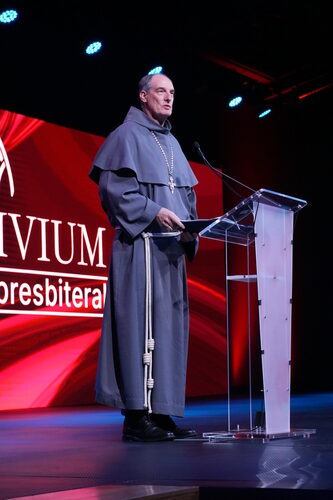
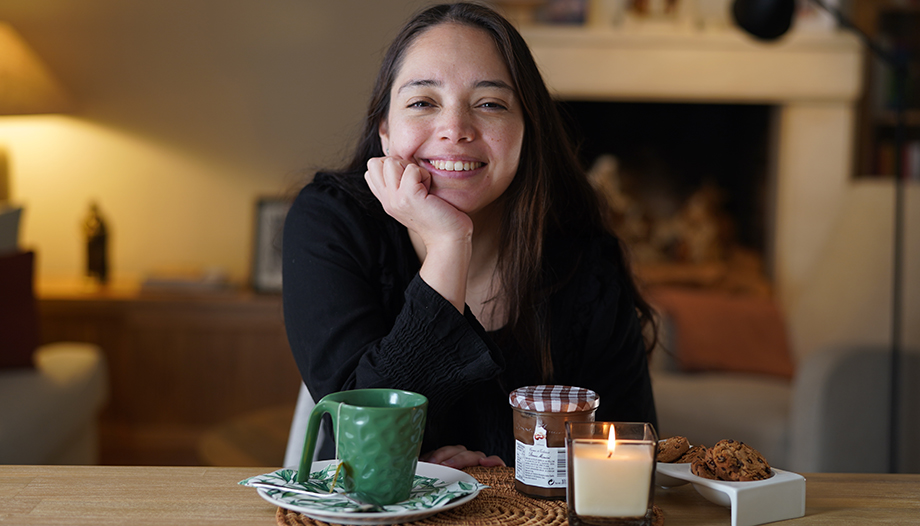
Manu Garcia. Connecting young people in the digital age

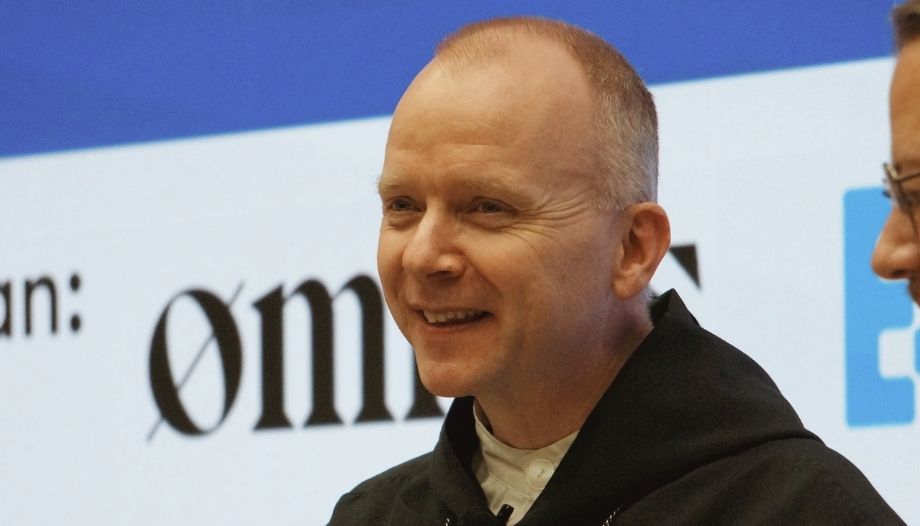
Manu García is a contributor to Young Catholicsa platform that connects thousands of young people to the faith through creative content that is faithful to the Christian message.

Juan Carlos Vasconez-September 22, 2025-Reading time: 3 minutes

Manu Garcia's story with the faith is not that of a late conversion, but that of a heritage lived and cultivated since childhood. "I have always been raised in a practicing Christian family." Garcia explains. Growing up in a Christian home laid the foundation for a deep and organic relationship with the Church. This experience of faith is what allows Manu today, with authenticity and conviction, to reach out to others.

Despite his immersion in the digital world, Manu's path to God remains deeply rooted in the everyday and the personal. "It is quite simple, through my ordinary work and my encounter with God in every rule of piety or in every event with others."he says. He is a graphic designer and teacher, but he is mainly dedicated to his work in an audiovisual production company that becomes the fertile ground for the encounter with the divine.

PrayToday y Young Catholics

Manu collaborates with a youth association helping in the formation of young people and their families, thus demonstrating his commitment to the transmission of the faith in an integral way.

Manu's most significant impact on digital evangelization is his role in PrayToday y Young Catholicstwo initiatives that were born as a creative and timely response to the needs of young people. These projects emerged in the pandemic, a period when physical distance drove the search for spiritual connections and resources in the digital realm.

"A few years ago, we started the podcasts of PrayToday in the middle of the pandemic with the aim of helping and facilitating the young people who were at home to pray with these short audios of 6/7 minutes dealing with different topics of Christian spirituality", Manu reports. These podcasts, designed as a "complement for your prayer times".They offered an accessible dose of spiritual nourishment, adapted to the rhythms of young people's lives.

"And these podcasts soon after became part of the platform. Young Catholics with more than 500,000 followers on all social networks and a website with a multitude of resources for young people to live their faith."García emphasizes. This half a million followers represents a vast and active community that seeks to nurture its faith in the digital environment, finding in Young Catholics a lighthouse and a meeting point.

The power of prayer

The fruits of this digital evangelization are manifested in stories of personal transformation that demonstrate the power of faith transmitted through new media. 

One of the most impressive anecdotes is that of "a girl with anorexia who, after years of suffering and all kinds of treatments, he found in the daily audios of PrayToday a road to recovery".Garcia says with astonishment.

"Another girl who wanted to have an abortion at the age of 16 found through the audios and meditations the strength she needed to go ahead."he shares. The providence worked in such a way that "his mother contacted us and, on the occasion of a pro-life demonstration, part of the team met the whole family, including the newborn baby."

Behind the success of Young Catholics y PrayToday there is a large and committed team. "We count on the selfless help of more than 200 priests, seminarians and brothers (from Spain, part of Europe and all of Latin America) who collaborate to accompany young people in their faith."

This network of ecclesial collaborators enriches the content by integrating it with Catholic doctrine and adapting it to young people from diverse contexts. The participation of priests and seminarians strengthens the link between the Church and the new generations, broadening their voices and building bridges with the institution.

The work of Young Catholics demonstrates that social networks can be a place of encounter with Christ. With creativity and fidelity, they have managed to translate the Gospel message into digital language without losing depth. Their work is an urgent call to the Church: we must leave our virtual sacristies and dare to speak of God in the networks, where young people live today. Time is short, and souls are waiting.

The Vatican

Pope: "there is no future in violence, in forced exile, in revenge".

Pope Leo XIV said at the Angelus today that "there is no future based on violence, on forced exile, on revenge". Earlier, in the Mass celebrated in the parish of St. Anne of the Vatican, which the Augustinians have been running since 1929, he stressed that "one cannot serve God and wealth", and that "everything is a gift of God".

Francisco Otamendi-September 21, 2025-Reading time: 3 minutes

Leo XIV reflected this Sunday on the use of material goods and the administration of goods, "the most precious of all, our own life". He did so in line with the Gospel parable of the steward who is called to "give an account". With regard to the Gaza conflict, he forcefully pointed out that "there is no future based on violence, on forced exile, on revenge".

"I am addressing first of all the representatives of various Catholic associations, committed to solidarity with the people of the Gaza Strip," he said after praying the Angelus. "I appreciate your initiative and many others that throughout the Church express closeness to the brothers and sisters suffering in that martyred land."

"With you and with the pastors of the Churches of the Holy Land I repeat: there is no future based on violence, on forced exile, on revenge. The peoples need peace: those who truly love them work for peace".

"You cannot serve God and wealth."

Before the Angelus prayer, the Pontiff reflected on the use of material goods and the administration of goods. It was a continuation of his words at the homily of the Mass he celebrated in the parish of St. Anne in the Vatican, which has been run by the Augustinians for almost a century.

There, he warned that "one cannot serve God and wealth," and invited the faithful to opt for a lifestyle centered on trust, fraternity and the common good.

Commenting on the Gospel of St. Luke, the Pope pointed out that wealth can become a false savior, capable of enslaving the human heart. "He who serves God becomes free from wealth, but he who serves wealth remains enslaved by it". At the same time, he pointed out that God's Providence reaches out to the materially poor as well as to those who suffer spiritual or moral misery.

At the end, the Pontiff thanked the parish community for their service and encouraged them to be witnesses of hope and charity in a world wounded by war and indifference. "In the face of today's dramas we do not want to be passive but to proclaim by word and deed that Jesus is the Savior of the world."

Pope Leo XIV with Augustinian Father Gioele Schiavella, former pastor of St. Anne's Church in the Vatican, who celebrated his 103rd birthday on Sept. 9 (Photo CNS/Vatican Media).

With Augustinian Father Schiavella, 103 years of age

At St. Anne's, the new prior of the Augustinians, Father Joseph Farrell, and the parish priest Mario Millardi concelebrated with Pope Leo XIV. Among those present was Augustinian Father Gioele Schiavella, whom the Pope mentioned in his homily for his 103rd birthday. Schiavella was pastor of Sant'Anna from 1991 to 2006, and currently lives in the parish.

Before the Angelus, the Pope said that "one day we will be called to give an account of how we have managed our lives, our goods and the resources of the earth, to God and to mankind, to society and above all to those who will come after us".

How do we administer the goods that God has given us?

The parable invites us to ask ourselves, "How are we stewarding the material goods, the earth's resources and the life God has given us?" 

We can follow the criterion of selfishness, the Pope continued, putting wealth first and thinking only of ourselves; but this isolates us from others and spreads the poison of a competition that often provokes conflicts.

"Or we can recognize that we must administer all that we have as a gift from God. And use it as an instrument for sharing, for creating networks of friendship and solidarity, for building up the good, for building a more just, more equitable and more fraternal world".

In concluding his reflection, he encouraged us to ask "the Blessed Virgin to intercede for us and help us to administer well all that the Lord entrusts to us, with justice and responsibility".

————–

You can also consult here the full text in English of Pope Leo XIV's reflection at the Angelus.

----

The authorFrancisco Otamendi

Read more
Family

The influence of ideologies on a healthy pronatalism 

Ideological forces seek to dominate the pronatalist debate, which arises in the face of low fertility globally, except in Africa. Economic pronatalism, communitarian or individual, and racist or eugenicist, are close to healthy pronatalism, based on the family. Note some arguments.

OSV / Omnes-September 21, 2025-Reading time: 7 minutes

 Kimberley Heatherington (OSV News).

Depending on the context, the concept of pronatalism - encouraging people to have children or promoting motherhood - can be a reason to celebrate the fundamental role of the family in society. A techno-elitist vision of a future populated by humans designed to have specific traits. Or a shameful expression of anti-immigrant nativism.

What is the difference?

The definition found in the Cambridge Dictionary illustrates the complexity of arriving at a universal understanding. It states flatly that pronatalism is "the idea that it is important to have children in order to increase the number of people in a country, especially the number of people who are not immigrants."

Well, no, not always.

"Fundamentally, when we talk about pronatalism, we mean people who think it's not good that fertility is so low. So, if you think it would be good if we had more babies, you're pronatalist," explained Lyman Stone, principal investigator and director of the Institute for Family Studies' Pronatalist Initiative.

"Now," he continued, "you may find yourself saying, 'But that doesn't seem to be what most people who describe themselves as pronatalists in the media think; they seem a little weird.' 

This is because people think there should be more babies for many different reasons, and they see the problem of low fertility as a problem for many different reasons."

Why low fertility is a problem. First, economic pronatalism

What are some of the reasons people might consider low fertility to be a problem? Stone identified three.

"The first set of reasons could be called structural or economic," he noted. ""We need babies because, if we don't have them, who will pay for Social Security?"" Or, "If we don't have babies, who will be the workforce to drive economic growth or innovation? Who will serve in the military and defend us?"

"Basically, this perspective says we need babies because they are useful to other people," Stone said. "I call it economic or structural pronatalism."

Second, pronatalism by the community

"The second type of pronatalism," he continued, "I would say that low fertility is a problem because there is a community that is intrinsically valuable and worth perpetuating."

But Stone said the reasons behind "communitarian pronatalism" can vary widely. On the one hand, it can have "totally reasonable and innocuous motives, like, 'I want the community of my family lineage to continue, so I'm going to have children.' But it can also include, for example, people calling for more white babies out of an ideology of white superiority. 

"That's not innocuous," he said. "Just as there are many varieties of economic structural pronatalism, there are many varieties of communitarian structural pronatalism."

Third type, "individualistic pronatalism".

He said that the third type of pronatalism is "individualistic pronatalism".

"Basically, he says that the reason it's a problem that fertility is low is because people want to have more children than they have, and clearly there are barriers that prevent them from doing so. And, Stone concluded, "it's really strange that we live in a society where people consistently don't have the families they want to have. That's inherently bad...".

Declining fertility rates, a worldwide phenomenon

In July, the U.S. Centers for Disease Control and Prevention reported that the U.S. fertility rate fell to its lowest level in 2024, at 1.62 children per woman. In the early 1960s, the rate was 3.5; in 1976, it was 1.7. In 2007, the United States still had a birth rate that ensured that each generation would have enough children-about 2.1 babies per woman-to replace itself.

Birth rates in Europe are comparable to those in the United States, with France at 1.64 babies per woman; the United Kingdom at 1.54; Germany at 1.46; Spain at 1.21; and Italy at 1.2.

But the decline in fertility rates is a global phenomenon. In Asia, India's birth rate is 1.94 babies per woman; the Philippines, 1.88; and South Korea, 0.75. 

In the Americas, Guatemala's birth rate is 2.26 babies per woman, while Mexico's is 1.87 and Argentina's is 1.51.

Except in Africa 

The five countries that, according to the United Nations, have the highest rates of number of children per woman are on the African continent. They are Chad (5.94), Somalia (5.91), the Democratic Republic of Congo (5.90), the Central African Republic (5.81) and Niger (5.79). 

A family prays during Mass at the Cathedral of St. Matthew the Apostle in Washington, Sept. 24, 2023. (Photo by OSV News/Mihoko Owada, Catholic Standard).

Cultural views and pronatalism

"I believe that the legacy of the population bomb - the myth of the overpopulation- is still in the debate," says Patrick Brown, a research fellow at the Ethics and Public Policy Center in Washington. "If you look at public opinion polls, almost as many Americans think our problem is having too many babies globally, versus a future where we won't have enough."

The other side of the coin, according to Brown, "is the idea that if we talk too openly about the birth rate, we will end up forcing women to have children, i.e., forced pregnancies. We'll take away their rights, something akin to what you see in 'The Handmaid's Tale,' which is what you hear the left saying."

The six seasons of 'The Handmaid's Tale' on Hulu and Margaret Atwood's novel of the same name depict a totalitarian, theocratic state that stands in for the United States of America. The maids are a caste of women forced into sexual servitude in an attempt to repopulate the world.

Simple apathy: nothing happens either... 

However, simple apathy can be another challenge to pronatalism.

I think a lot of it is just a cultural shift that says, "If you want to have a child, great; if you don't want to have a child, that's fine. There's nothing really right or wrong. There's no social value to it. It's simply a matter of consumption, of individual preferences, and who are we to say that having children is better than not having children?" explained Brown. 

"I think that's probably the dominant trend that pronatalism, in all its varied forms, is trying to fight against to say, 'No, there's actually something valuable and necessary in the hard work of having children.'"

Elon Musk attends the Viva Technology conference dedicated to innovation and startups at the Porte de Versailles exhibition center in Paris, June 16, 2023. (Photo by OSV News/Gonzalo Fuentes, Reuters).

Ideological forces seek to dominate the pro-natalist debate

The Catechism of the Catholic Church declares that the family is "the original cell of social life. It is the natural society in which husband and wife are called to give themselves in love and in the gift of life. Authority, stability and the life of relationships within the family constitute the foundations of freedom, security and fraternity within society".

"We are trying to use the family as the cornerstone of a healthy society," Brown said, referring to a healthy pronatalism in line with the Church's vision of the human person.

At the same time, however, he warned that pronatalism is also beset by ideological forces seeking to co-opt the movement. 

"Pronatalism, the kind of official pronatalist movement, has quickly become colonized by racists on the one hand and eugenicists on the other," Brown said. 

"Silicon Valley money is manipulating reproduction in a way that is not only really morally troubling. But it's also pushing us ethically, socially and culturally towards a kind of eugenics that consists of optimizing what your child should look like and selecting the embryo with the highest IQ."

Alerts

Perhaps the world's most famous pronatalist, tech industrialist Elon Musk - father of at least 14 children by several different women - declared in a March 2025 interview with Fox News. "The birth rate is very low in almost every country, and unless that changes, civilization will disappear. ... Humanity is dying." 

However, Musk is selective. In his 2015 biography, he is quoted as saying,""If each successive generation of smart people has fewer children, that's probably a bad thing." 

Influential pronatalists Simone and Malcolm Collins, founders of Pronatalist.org, came to public attention after admitting that they used genetic testing and selection to optimize the mental health traits of their unborn children.

"That kind of thing, which is part of the current pronatalist movement, gives people the creeps, and rightly so, doesn't it?" asked Brown. "It's not about helping people start a family and being able to afford to have children. It's about turning children into commodities."

Pope Leo XIV greets a baby from the popemobile as he rides through St. Peter's Square at the Vatican before his general audience on June 25, 2025. (CNS Photo/Lola Gomez).

The challenge of faith formation: "Most Catholics do not live pronatalistically".

Kody W. Cooper is an associate professor in the Institute for American Civic Education at the Baker School of Public Policy and Public Affairs at the University of Tennessee-Knoxville. And he has suggested that Catholics could do more to improve the declining birth rate.

Georgetown University's Center for Applied Research in the Apostolate noted in 2011 that the average size of a U.S. Catholic household was the same as the national average, 2.6 persons per household. 

"Catholics need to be honest with themselves," Cooper said. "If we go by survey data, most Catholics do not live pronatally. By some estimates, as many as 90 % of Catholics who regularly attend Mass use artificial contraception, contrary to the teachings of Humanae Vitae."

He understands the common objections, but still insists on this point.

"Perhaps the project could be advanced if Catholics would put their own house in order," Cooper said. "And by that I mean bishops and priests courageously exercising their roles preaching pronatalism, and the laity seeking to cultivate the virtues necessary to live pronatalistically."

———————

Kimberley Heatherington is a correspondent for OSV News. She writes from Virginia (USA).

This report was originally published in OSV News. You can consult it here.

———————

The authorOSV / Omnes

Aixa de la Cruz and our idolatries

Aixa de la Cruz defines her generation as 'godless', seeking in work, consumption and relationships that which only the divine can fill, and revealing how the lack of a spiritual horizon leads us to confuse false altars with true transcendence.

September 21, 2025-Reading time: 2 minutes

"It is true that we are a generation without God, and we have been given no other alternatives than consumption and work". These are the words of Aixa de la Cruz, a writer born in Bilbao in 1988, who points out that she has never had contact with any religion for most of her life. She went on to say: "What do you have to satiate yourself with? With jobs that have to become identitarian for you to be able to bear them or with giving your time to something you can't bear to do in exchange for money for consumption. That's why we are desperately looking for therapies and retreats, to find some kind of transcendence that reminds us that we are here for something more." It was a conversation for El País with June Fernandez, director of a feminist magazine, who, for her part, had just confessed to being an "agnostic, a spiritual orphan". 

In another interview, De la Cruz argues that his parents' generation in Spain broke with Catholicism mainly because of bad experiences with educational institutions or for opposing Francoism, which, in a more or less confessional society, meant breaking with the spiritual in general. And then, their children -we- were left out in the open, at the mercy of any flute player who would intone a minimally spiritual melody, or at the mercy of any pseudo-religious discourse that appealed to that thirst of ours. Pope Francis referred to this community of wanderers, who are a little bit all of us, as those who "secretly seek God, moved by a longing for his face" (Evangelii Gaudium, n. 14).

Going back to the beginning, what the writer intuits is that, with all spiritual horizons gone, we tend to put in the place of God anything we have at hand that promises us happiness: money, work, consumption; we can add sex or social status. And this process would end up drying us up spiritually. In a way, all the preaching of Jesus - and, if we want to exaggerate, the whole Judeo-Christian tradition - is aimed precisely at putting us on our guard against idolatry, to put us on our guard against this instinctive movement to replace the authentically religious with anything. 

We can recall those words of Jesus about the impossibility of serving God and money (Mt 6:24), or those others about not treasuring anything earthly, but rather working for that which does not corrode (Jn 6:27). However, that same week that I was reading Aixa de la Cruz, the Church in its liturgy had us read other more surprising words from the Gospel: a person cannot be a disciple of Christ if he does not love God more than his father, mother, wife, husband, son or daughter (Mt 10:37). And what initially seems exaggerated to us, in a second moment begins to make sense: because in the "generation without God" we also tend to idolize those relationships that, of course, shelter us, but we have experienced that we cannot burden them with the responsibility that only God has. We all experience so many cases of affective dependencies that arise precisely because we cling to any buoy that floats, even if it is another human being.

Perhaps because of all of the above, the posture we use to pray is often that of joining our hands together: so as not to hold ourselves where it is not meant to be. Although many times in the Bible it may seem that God capriciously claims for himself the first place, in reality he does it out of pure generosity towards us: to avoid us the anxiety of confusing the altar; to avoid us the disappointment of believing that we had reached port, but soon find ourselves, once again, adrift.  

Evangelization

St. Andrew Kim, first Korean priest, and companions martyrs

Nearly two hundred years ago, the Korean land was the scene of a fierce persecution of the Christian faith, and thousands of Koreans were martyred. St. Andrew Kim Taegon, a priest, was one of 103 Koreans canonized by St. John Paul II in 1984. In 2014, Pope Francis canonized 124, also in Seoul.

Francisco Otamendi-September 20, 2025-Reading time: < 1 minute

"In this Audience I want to present to you another witness of apostolic zeal. This time it comes to us from distant lands," Pope Francis said. "Indeed, St. Andrew Kim Taegon was the first priest martyred in Korea. Two hundred years ago, there was a strong persecution in that country, and it was not possible to confess the faith openly. Before that, it was the laity who evangelized Korea," he added.

"His life was and continues to be an eloquent witness of zeal for the proclamation of the Gospel." "I highlight two scenes that give us proof of this zeal," he continued. "In the first, we see St. Andrew faced with the difficulty of having no choice but to meet the faithful in public. And managing to recognize himself without anyone noticing." He summed up his identity in two words: 'disciples of Jesus'."

The blood of the martyrs

On May 16, 1984, on his return from his apostolic journey to various Asian countries, St. John Paul II estimated that around ten thousand people were Korean martyrs. And he said: "When reading the "Acta martyrum" of the 19th century in the Korean land, a close analogy with the "Martyrologium romanum" comes to mind. The "great works of God" per martyrres are repeated at different times in history and in different parts of the world".

In two centuries of existence, the Church in Korea, Pope John Paul II added, "growing on the soil made so deeply fertile by the blood of the martyrs, has developed greatly. It now has about 1,600,000 faithful," he said, and "this development continues. The numerous conversions and baptisms (...), the great number of priestly and religious vocations, the deep Catholic conscience of the laity and their lively apostolic commitment bear witness to this".

The authorFrancisco Otamendi

Cervantes, according to Amenábar  

Although Amenábar takes historical license, the film shows a Cervantes who survives captivity thanks to his talent for storytelling, transforming adversity into narrative and anticipating his immortal work.

September 20, 2025-Reading time: 4 minutes

Alejandro Amenábar has the gift of stirring up controversy with every release. The latest, "El cautivo" (The Captive), arrives with that imprint of scandal served on a platter, but before raising flags of enthusiasm or crusade, one can dwell on the essentials: does the film work as a fictional story -resulting in fiction- inspired by real events? Yes, and comfortably so. 

The film recreates with remarkable success the atmosphere of captivity in Algiers, that microcosm of trade, barter, renegades and chains. It is worth remembering that religious tension was the main score throughout the Mediterranean, with two opposing empires that made the "Mare nostrum" their frontier and kept watch on every coast; in Algiers, however, what set the pace was not so much faith or politics as pure and simple profit: everything there was ransom, the privateering business, trade in stolen merchandise and accumulated wealth. That is why its port did not stop even in times of truce: while the chancelleries signed armistices, the Barbary galleys continued to sail the sea in search of Christians who could be converted into hard currency. The spectator breathes the harshness of the prison and, at the same time, the intensity of the disputes between faith and apostasy. In this scenario, Amenábar draws a plausible and magnetic Cervantes: the one-armed prisoner is presented as a born storyteller, capable of transforming misery into narrative and of captivating enemies and companions with the force of his words. It is no small virtue that, after leaving the theater, the viewer understands better why, even in his confinement, Cervantes was known and respected. 

There are also filigree findings: the wink to the barber's shop or the shadows that foreshadow Don Quixote and Sancho are subtle resources that link the biography with the literary imaginary, but also the construction in real time of the novel of the captive captain -which would later be inserted in Don Quixote- as a short story by episodes that Cervantes himself told to his fellow prisoners and in which he literary refined everything he witnessed. This transposition between life and work is, perhaps, the most successful part of the script: the fact that Cervantes was already inventing, without knowing it, remnants of his immortal novel while he was dealing with the chain and torture. 

The question of the homosexual relationship between Cervantes and his captor deserves a separate mention. It is nothing new -it has been conjectured since ancient times-, but Amenábar dusts it off with the astuteness of someone who knows that few things sell more than putting the myth in carnal predicaments. The film even tries to shore up this supposed inclination in a prehistory that should be disproved: Cervantes' duel with Antonio de Sigura was not caused by libels against López de Hoyos nor, much less, by equivocal wanderings between the two. The motive was never known with certainty, although the most solid hypothesis is that it was a fight of honor in defense of his sister. The viewer should know this, so as not to confuse what he sees on the screen with a reliable source: both the duel and the alleged homosexual relationship are variations on reality, not historical notes. All in all, in the film the matter is tangential, little more than a cell rumor, and should not overshadow the real key: to show how storytelling becomes a handle in the face of oppression. That Cervantes and his master shared more than words is, in the film, more provocation than well-founded thesis. And even granting the license - however licentious it may be - that is due to all creators, it should not be forgotten that no such encounter, in that context, could be free or symmetrical: the captive is always under threat of death, stripped of his will and subject, in any case, to the law of domination. 

Perhaps, where the film is most out of place is not in the suggested homosexual inclination, but in the ideological bias that leads the viewer's gaze in the desired direction. From the representation of Algiers, not as the "purgatory in life, hell in the world" that the author himself sang, but as a city of pleasures and liberties, in clear contrast with a gloomy, inquisitorial and ashen Castile; to the way in which Cervantes' spirituality is portrayed. That is where it errs completely. That the captive mutters "i piccoli piaceri" when he is about to be hanged, or that he dialogues with the Bajá about the absence 

The fact that the words "God and love", as if they were a pair of existentialists "avant la lettre", are licenses that betray rather than enlighten. In all categoricalness: those lines would never come from a Miguel de Cervantes who knew he was a child of his time, marked by the religiosity of the Spain of Philip II and whose faith was, to a greater or lesser degree, the ultimate support of his resistance. To accept a homosexual relationship in the middle of a prison can be understood as a dramatic resource; to attribute to it such a modern disbelief is, on the other hand, an anachronism that distorts the essential. But don't let the puritans tremble too much. "The Captive" was never intended to be a treatise on history or another volume of the "Topographia", but a fiction, another of many that revisit the Cervantine myth from one place or another. In this field, what Amenábar ultimately wants to achieve -and achieves- is to convince us that Cervantes survived largely thanks to his gift of narration, that his word won where his body was subdued. What does it matter, therefore, the historical rigor and scrupulous attention to detail in the face of such a powerful thesis. The film, in short, with all its excesses and biases, ends up reinforcing a fundamental aspect, and we are left with it: that the one-armed man of Lepanto, the "such-and-such of Saavedra" was, above all and above all, the freest and most brilliant of all storytellers.

The authorJuan Cerezo

Read more
Evangelization

"La Plena": a way to evangelize by listening to young people

At St. Josemaría Rectory Church, a podcast and an "After" have become the bridge to bring young people closer to God.

Editorial Staff Omnes-September 20, 2025-Reading time: < 1 minute

Traditional forms of evangelization can be unattractive to many young people. At St. Josemaría Church in Samborondón they realized this and, instead of creating a youth group "from above", they decided to ask them what they would like to do.

After a couple of meetings with the young people, an idea emerged: to create a live podcast: "It would not be a directly religious program, but a dialogue between two hosts - a young woman and myself, as priest - and a guest, looking for that 'supernatural' vision that would challenge the listeners," explains Juan Carlos Vascónez, rector of the church.

In addition, after each chapter, they would organize a "After". A space for people to talk, meet and share, thus generating a real community. The goal? That restless young people, with wide-ranging interests, would find a meeting place.

©Milton Torres

This week they reach their eighth episode and the number of young people attending continues to grow. The podcast is recorded every two weeks, and in the weeks when there is no program, they organize training and social aid activities. "The work has been intense, but seeing the commitment of these kids, and how the podcast becomes a means for people to get closer to God, is an immense joy," says Juan Carlos.

Read more
The Vatican

Leo XIV vindicates the vow of obedience despite the risk of abuses

During an audience with several religious orders, he warned that, although today it is seen as a renunciation of freedom, well lived it strengthens faith, fidelity and community maturity.

Javier García Herrería-September 20, 2025-Reading time: 2 minutes

In a context in which the Church faces the challenge of maintaining the balance between Christian obedience to the superior and the prevention of abuses of power and conscience, Pope Leo XIV courageously emphasized the profound value of the vow of obedience during an audience with members of various religious orders.

"Obedience, in its deepest meaning of active and generous listening to others, is a great act of love by which we accept to die to ourselves so that our brothers and sisters may grow and live," the Pontiff said Sept. 18, addressing the leaders of the Ursuline Sisters of Mary Immaculate, the Missionaries of the Precious Blood, the Marists and the Franciscan Friars of the Immaculate.

The Pope expressed his desire to reflect on "the vital importance of obedience as an act of love in religious consecration. Jesus gave us an example of this in his relationship with the Father: 'I seek not my own will, but the will of him who sent me.

Going against the current

Recalling St. Augustine, the Pope pointed out that this great Father of the Church defined obedience as "the daughter of charity". He also stressed that, although today it may be unpopular to speak of obedience because it is interpreted as a renunciation of freedom, this perception is erroneous.

"To speak of obedience is not very fashionable today because it is considered a renunciation of freedom," the Pope said. But this is not so. When professed and lived in faith, obedience reveals a luminous path of self-giving that can help the world rediscover the value of sacrifice, the capacity for lasting relationships and maturity in community that goes beyond the feelings of the moment, establishing itself in fidelity."

He concluded by affirming that "Obedience is a school of freedom in love," encouraging the orders present to rediscover the spiritual richness of this commitment in community and ecclesial life.

Read more
The World

Armed group kills 22 people at christening in Niger

Gunmen linked to jihadist groups massacred dozens of villagers gathered for a baptism in Niger.

Editorial Staff Omnes-September 19, 2025-Reading time: 2 minutes

At least 22 people were killed on Monday, September 15, in an attack by gunmen on motorcycles on a christening ceremony in western Niger, residents and international media reported. The assault took place in the village of Takoubat in the Tillabéri region, an area bordering Burkina Faso and Mali where jihadist groups linked to Al Qaeda and the Islamic State operate.

According to witnesses quoted by AFP and EFE, the attackers opened fire on the baptism attendees, killing 15 people, and then killed seven others in the vicinity of the village. "While people were celebrating a baptism ceremony, armed men opened fire, sowing death and terror," Maikoul Zodi, a local civil rights activist, denounced on social networks.

The Nigerian Defense and Security Forces (FDS) deployed in the area launched a manhunt operation to try to capture those responsible. The authorities have confirmed the attack, but have not yet published an official death toll.

The assault comes just six days after an ambush in which fourteen Nigerian soldiers were killed in the same region while pursuing a group of armed men stealing cattle. Human rights organizations such as Human Rights Watch have denounced that since March armed groups have intensified their attacks, killing at least 127 villagers and Muslim worshippers; in addition, homes have been looted and burned.

Niger, ruled since July 2023 by a military junta following the overthrow of President Mohamed Bazoum, is experiencing spiraling violence in the Sahel. Despite the junta's promise to restore security, attacks against civilians and security forces continue to increase.

A pro-democracy coalition launched this month in Niamey criticized the "failure" of the military authorities to curb insecurity and demanded free elections and an end to restrictions on political parties and trade unions.

The Tillabéri region has become one of the epicenters of this violence, with indiscriminate attacks that have left rural communities in fear, displacement and loss of livelihoods.

Evangelization

St. Gennaro, venerated in Naples for his blood, and protector before Vesuvius

Bishop and martyr of the third century, the blood of St. Gennaro is liquefied three times a year in Naples. On the first Saturday of May; on September 19 (liturgical memory of the saint and date of his martyrdom) and on December 16, when the eruption of Vesuvius is commemorated, blocked after the invocation to St. Gennaro.

Francisco Otamendi-September 19, 2025-Reading time: 2 minutes

Born in Naples, or perhaps in Benevento, in the second half of the third century, Gennaro was bishop of the city at the age of thirty. There he was loved and respected by all, including the pagans, for his charitable works. But in 303 the Christians became the enemy, and his martyrdom took place, along with six other Christians, in Pozzuoli. It was the time of Emperor Diocletian.

At the death of Gennaro (with G or with J), as was the custom during the execution of the martyrs, a woman, Eusebia, collected in two ampoules the blood shed by the bishop, already in the odor of sanctity. She gave them to the bishop of Naples, who had two chapels built in honor of the relics, according to the Vatican agency. The veneration of the saint spread and he was canonized by Sixtus V in 1586. In the newsits feast day is celebrated in Naples, in New York (Little Italy)and many other places.

Blood liquefies three times a year

As for the blood relic, it was first exposed in 1305. But the miracle of it acquiring the liquid state and appearing to be boiling, occurred for the first time on August 17, 1389, after a severe famine. 

Today the miracle is repeated three times a year. On the first Saturday of May, in memory of the first transfer. On September 19, in liturgical memory of the saint and the date of his martyrdom. And on December 16, in commemoration of the terrible eruption of Vesuvius in 1631, blocked after the invocation of the saint.

The two vials are kept in a case in the Chapel of St. Gennaro in the Cathedral of Naples. The Neapolitan archbishop said that "every drop of this blood speaks to us of God's love".

The liturgy today also celebrates Saints Francisco María de Camporosso, Alonso de Orozco, Carlos Hyon Song-mun, María de Cervelló and Teodoro de Canterbury, among others.

The authorFrancisco Otamendi

Read more
Education

5 tips to survive the beginning of the school year

At the beginning of the school year it is often difficult to get into the routine, but it is the ideal time to get organized and strengthen family life. Javier Segura gives 5 tips for this purpose.

Javier Segura-September 19, 2025-Reading time: 2 minutes

Now that we have landed in the new school year and we start again with the routine, it may be a good time to consider some educational lines that we can address this year. They go along the lines of good planning and not letting events decide for us.

1. It helps to plan well your children's activities and study. A good schedule helps to organize life. Check with them that it is a balanced schedule, in which are also included their times for sports, expansion, cultivation of skills, spiritual life, initiatives of dedication to others...  

2. Don't fill everything with extracurricular activities. Leave space for your children to play freely. This is also educational. It generates bonds with other peers, facilitates new experiences, develops their creativity. Children need free spaces to grow and mature.

3. Make a resolution as a family on how you are going to use your cell phone less. We need to reclaim our space! And this, as you know, is not just a matter for teenagers. We adults are also hooked and need some offline time. Plan it and don't leave it alone in the drawer of good intentions.

4. Propose to go on excursions as a family to interesting places, mainly in nature. I assure you that it is better than spending a weekend afternoon in a big shopping mall, there are so many beautiful places to discover! It is a bath of culture, nature, knowledge of our land... as well as a time of great quality family togetherness.

5. Dine whenever you can with your children as a family to be able to tell you (and listen) what happened to them during the day. I'm sure you learn a lot of things and it facilitates communication for the future. It should be a sacred time for everyone in the family.

As you can see, these are simple tips, but I assure you that if you put them into practice and plan them now that the school year is starting, wonderful things will happen in your family.

Read more
Cinema

The fictional work "The Cardinal" and parallels with Pope Leo XIV

The novel and film 'The Cardinal' depicts the life of an American priest whose story resonates with that of the current Pope Leo XIV.

Onésimo Díaz-September 19, 2025-Reading time: 3 minutes

In the last few months we have all heard about Cardinal Robert Prevost, a high church hierarchy of American origin, recently elected pontiff who chose the name Leo XIV. What many people do not know is that before Cardinal Prevost there was a movie, based on a novel, which had as its protagonist a cardinal who was also American. 

In my book History, Culture and Christianity (1870-2020). An account through ten novels and their film adaptations.I dedicate a space to reflect on the relationship between religion, literature and cinema, highlighting some examples where Christianity becomes the narrative axis of modern works. Within this analysis, the novel The Cardinal (1950) by the American Henry Morton Robinson and the subsequent film adaptation directed by the Jewish Otto Preminger in 1963 occupy an important place.

The novel

The novel The Cardinalpublished in 1950, focuses on the life and spiritual trajectory of Stephen Fermoyle, a Catholic priest who progressively rises through the ecclesiastical career to the cardinalate. Robinson, who extensively documented the lives of ecclesiastical figures of his time (according to some authors it seems that he was partially inspired by the life of the Archbishop of New York, Francis Joseph Spellman), presents a story that intertwines personal dilemmas, political tensions and the pastoral mission of the Church in a context marked by wars, totalitarianism and social crises. The work had a great editorial impact because it brought the reading public closer to the interior and exterior life of a priest in dialogue with the problems of the 20th century.

This novel, which the magazine Time chosen as "the most popular book of the year", must be understood within the literary tradition of Catholicism in the Anglo-Saxon sphere, where authors such as Graham Greene or Evelyn Waugh also explored the tension between faith and the modern world. In this case, Robinson opts for a more institutional approach, showing the priest as a public figure facing decisions of enormous historical repercussion. In doing so, the work becomes a testimony of how the Catholic Church sought to maintain its relevance in a convulsive era.

The movie

The film directed by Otto Preminger in 1963, inspired by the novel, takes up much of this content, but presents it in Hollywood's own cinematic language. The film, starring Tom Tryon (Stephen Fermoyle), narrates his priestly training, his personal conflicts and his responsibilities in a world shaken by Nazism, racism and social transformations. Preminger, known for tackling controversial issues, uses the story to raise questions of justice, moral conscience and religious commitment.

The film has a double cultural value. On the one hand, it reflects how the American film industry of the mid-twentieth century could approach Catholic themes with seriousness, showing the priest as a complex protagonist, far from stereotypes. On the other hand, it functions as a window to understand how the Church was perceived in a context marked by the Cold War and the Second Vatican Council, which began precisely at the time of the film's release, with Pope John XXIII and later with Paul VI. 

Parallelisms

The pedagogical dimension of these works is noteworthy. Both the novel and the film give the general public a glimpse of the challenges a priest faces in trying to live his vocation coherently amid external pressures. The protagonist must constantly discern between ecclesial obedience, fidelity to his conscience and social commitment, a theme that connects directly to the reflection on the role of cardinals in the history of the Church. There is a hard moment in the story when the protagonist meets a young, intelligent and beautiful woman (played by Romy Schneider), and considers leaving the priesthood, giving himself a few months of trial in which he teaches English in a Viennese educational institution, when the Nazis were about to control Austria. But he reacts and decides to go ahead with his priestly vocation. Preminger portrays these vicissitudes, in which the clergyman came out of it well.

In conclusion, The Cardinal -both in its literary version and in its film adaptation- is a clear example of how modern culture has represented the ecclesiastical figure as a mediator between faith and the world. By addressing issues of power, morality and spirituality, these works show the relevance of Christianity as a cultural and narrative theme in the twentieth century. In addition, The Cardinal presents some parallels with the life of the current pope: coming from a deeply Catholic American family, of modest social origin, and with European roots; ecclesiastical career started in the United States and culminated in Rome... I do not want to make "spoilers", but it is worth watching Preminger's outstanding film; and for those who like voluminous and remarkable books, you can read Robinson's novel. In this case the film is better than the novel: Preminger's work surpasses it in beauty and pace. And, last but not least, for those interested in understanding these works in their historical context can see my book, in which I discuss nine other great works of film and literature to understand the last 150 years of world history. Almost nothing.

The authorOnésimo Díaz

Researcher at the University of Navarra and author of the book History of the Popes in the 20th century

Saving young people from screens: the mission of people who read

The inescapable mission of true readers: to awaken in young people a passion for books and rescue them from the absorbing dominance of screens.

September 19, 2025-Reading time: 3 minutes

In the schools where I work I have seen teenagers who read. They exist. They pull out the novel during reading time, they move on when they are injured and can't do physical education. In the best of cases, they finish it off in the afternoon, while they wait to be picked up. In the tutorials I have with students, I usually break the ice with this topic (Literature is my weakness). In this way I have gotten to know their reading habits and with more than one of them we have become friends.

Faced with the question: "Do you like reading?", some say yes, very much, and even mention outstanding titles. But they are few. Most answer something like: "I can't stand the mandatory books in the reading plan, so I look for summaries on the Internet... but sometimes I read other things on my own". There we connect, and as soon as they mention titles or literary characters they smile, breathe and a good conversation begins.

Well, following the teenagers' lead, I have been reading some of the novels they choose as a hobby (perhaps as part of those 5.5 books that a Chilean reads per year, according to the recent report of the Ministry of Cultures and INE). My intention was to get an idea of their world and I ended up enjoying more than them: Maze Runner, The Hunger Games, Percy Jackson. They are entertaining novels, full of magic, fantasy or science fiction that, indeed, accelerate the heart and have enough strength to initiate someone in the reading habit. However, they leave with a taste of little and sometimes tend to an unedifying brutality.

"Would you like to read more?", I ask them later. "Yes, but social media takes up too much of my time." We always end up there. It's inescapable. Whatever I do, tutoring flows towards complaining against screens, the difficulties to free oneself from their tentacles, the desire to walk nimbly, without the weight of that pocket anchor. The cell phone is the elephant in the glassware of education. Because of it, children's minds are losing the ability to digest longer or less adrenalin-pumping stories that illustrate essential areas of life. As Gabriela Mistral complained in 1925, Chile is a "people that seeks the violent chronicle of crime, to receive the electric sensation, because it ignores the delicate thrill of other emotions". Indeed, today young people drink plenty of violence in best sellers: characters who offer themselves to compete in macabre life and death competitions, others who fight for their skin while trying to escape from an absurd labyrinth. That may qualify as a start, I do not deny it, but I am afraid to warn of the possibility that it may also constitute a ceiling.

What would our poet say if she were among us? She would probably outline a discreet question to adults: On what scale of priorities do you place the education of children? How do you help them rise from the rawness of The Hunger Games to the elegance of a Verne, a Stevenson, a Tolstoy? Next, perhaps he would give us this advice that he wielded in 1935: "The task in favor of the book that corresponds to teachers and parents is to awaken the appetite for the book, to pass from there to the pleasure of it and to finish off the enterprise by leaving a simple pleasure promoted to passion". In fact, in the same writing he added that the educator's challenge consists in: "To make one read, as one eats, every day, until reading becomes, like looking, a natural exercise, but always a joyful one. The habit cannot be acquired if it does not promise and fulfill pleasure". Here is the key for our Nobel Prize winner: reading is learned through enjoyment, and the child needs the adult to guide him.

The task of educators, therefore, is not to demand a certain number of books read from their students, or to aspire to surpass the average of 5.5 books per year with any title, but to invoke their own experience as readers, to radiate desire, to share the enormous happiness we receive from literary creation. However, motivating is an arduous challenge, due to the number of brambles that cover the earth. The main enemy, we were saying, is the telephone: children have a device that decimates their attention, during the day and at night, without giving them respite, without letting them delve into anything, keeping them away from the classics of Literature.

In this sense, the work of parents and teachers is more meritorious than before: it is up to them to convince by attraction, magnetism, irresistible enthusiasm. The normal teacher is no longer enough; now we need the hero. We urgently need men and women with the vocation to encourage children to savor the riches of folklore, stories, novels and good essays. Doing this, without a doubt, is much more difficult than meeting a goal of a certain number of books read per year. For only those who, one, love good books and, two, accompany young people in their struggle against distractions, can instill affection for books. Ultimately, they want to read more, but they need our help to do so.

The authorJuan Ignacio Izquierdo Hübner

Lawyer from the Pontifical Catholic University of Chile, Licentiate in Theology from the Pontifical University of the Holy Cross (Rome) and Doctorate in Theology from the University of Navarra (Spain).

Read more
Father S.O.S

European DNS: shielding against digital threats

The theft of computer data or fraud is a reality that parishes and priests also live with every day. To avoid them, it is very useful to know how DNS works and avoid problems when surfing the Internet.

José Luis Pascual-September 19, 2025-Reading time: 2 minutes

On the Internet, almost everything starts with a query to the Domain Name System (DNS). This system translates names such as www.vatican.va into numeric IP addresses that computers need to communicate. 

The risk of a vulnerable entry point

The malware (malicious software) and the spam (spam) are not mere nuisances: they can steal data, hijack files or compromise the privacy of religious communities. As all network traffic starts with a DNS query, if an attacker controls this point, he can redirect the user to fake pages, install viruses or facilitate the sending of fraudulent mass mailings.

What is the European Union doing? DNS4EU"

The European Commission and the European Union Agency for Cybersecurity (ENISA) have launched DNS4EUa solver that:

-Increases security: blocks domains with malware, phishing o spam.

-Protects privacy: does not market or store queries unnecessarily.

-Ensures resilience: keeps the service active even in the face of massive attacks.

The blacklists of DNS4EU are updated in seconds. If a domain starts distributing malwarecan be blocked in the entire network DNS4EU in a matter of seconds.

How filtering works

When a device in a parish queries an address, the DNS resolver:

-Receive the request (What is the IP of mail.parish.net?).

-Check if the domain is listed in threat databases.

-Responds with the legitimate IP if it is safe, or blocks/redirects if it is dangerous.

This filtering occurs in microseconds and does not slow down navigation.

Benefits for the Church

Parishes, dioceses and religious communities are also targeted by cybercriminals. Some actual attacks include:

-Phishing to priests to steal passwords.

-Ransomware who encrypts diocesan documents and demands a ransom.

Spam sent from legitimate addresses to deceive the faithful.

Using secure DNS resolvers can prevent the parish secretariat's computer or a priest's personal laptop from even connecting to the servers hosting the malware. It is a proactive defense: the attack is cut off before it reaches the device.

Privacy and sensitive data

The free DNS of large corporations can record browsing habits. Although they do not collect content, they do show patterns of activity.

European resolvers such as DNS4EU are governed by the General Data Protection Regulation (GDPR), ensuring that queries are not used for commercial purposes or stored unnecessarily. This provides a particularly valuable layer of privacy protection for religious entities that handle sensitive data on worshippers and pastoral activities.

How to implement it in a parish or community

Device: the IP addresses of the resolver can be entered in the network settings of a computer or telephone. DNS4EU (published on its official website).

Router: simply change the configuration so that the entire parish network uses the secure DNS. This automatically protects all connected devices.

In addition, the use of encrypted protocols such as DNS over HTTPS (DoH) o DNS over TLS (DoT) prevents DNS queries from traveling "in the clear" over the network, making it difficult for an attacker to eavesdrop or manipulate them.

A pastoral defense also

In the 21st century, caring for the flock also includes protecting its data and communications. Just as church doors are locked at night or locks are installed in the sacristy, today it is prudent to erect "digital locks". Having a system that detects and blocks threats before they come into contact with our devices is a work of prudence... and of pastoral charity.

The Vatican

A glimpse of Pope Leo XIV's first interview: clues to his pontificate 

Elise Ann Allen, a Crux journalist, publishes today, September 18, a book containing the first interview with Leo XIV. In it, the Pope shares his views on the challenges of the papacy and numerous current issues facing the Church.

Paola Arriaza-Flynn-September 18, 2025-Reading time: 9 minutes

In his first interview as Pontiff contained in the book "Leo XIV: Citizen of the World, Missionary of the 21st Century," the Pope laid out a possible map for navigating his pontificate. Just four months after his election, the Pope decided to sit down with journalist Elise Ann Allen, a Crux correspondent, and offer his perspective on the most pressing issues of the current work of the successor of St. Peter: on the role of Supreme Pontiff, his task as mediator or moral voice in a world crowded with armed conflicts, his relationship with the leadership of the Church in his country of origin, his position on controversial issues of the Synod of Synodality such as "the demand for the recognition of same-sex marriage" - the question of the celebration of the Tridentine mass and the financial position of the Holy See. Among other topics, the Pontiff confirmed with his words that his ecumenical zeal will lead him to Nicea at the end of November.  

From the beginning of his pontificate, Leo XIV has warned of the great tool and the great challenge that is the Artificial Intelligence In our times, one of the motivations for choosing the name Leo XIV, alluding to Leo XIII's response to the industrial revolution.

In the interview, the Pope expressed his opinion on the danger of artificial intelligence replacing truth and commented on an anecdote in which he himself was a victim of an artificial intelligence. deepfake. After answering the journalist's questions without much hesitation, the Pontiff himself added a unique touch by concluding: "I sleep well, I feel the presence of the Lord very much, the Holy Spirit is with me".  

The Role of the Supreme Pontiff, Bilateral and Multilateral Relations of the Holy See

"How was I chosen for this office, for this ministry? Because of my faith, because of what I have lived, because of my understanding of Jesus Christ and of the Gospel", with these words the Holy Father explained what more than 250,000 people witnessed in St. Peter's Square, where, from via della Conciliazione, I was reporting live for EWTN during the habemus papam that made our skin crawl. Among reporters from major networks such as Fox News, CNN and ABC News, Catholic media correspondents shared the weight of those words: the weight that the Fisherman's ring would have on the former Cardinal Prevost.

"I said yes, I am here. I hope to be able to confirm others in their faith, because that is the fundamental role of the successor of Peter," the Pontiff explained in his first interview. In doing so, he established the priorities of his pontificate: to bring the Gospel to the ends of the earth.

When asked if the Vatican would be a mediator in the conflict in Ukraine he explained that the Vatican had already offered on several occasions to host negotiations, however - and very importantly - he added: "I would make a distinction between the voice of the Holy See advocating peace and a role as a mediator, which I think is very different and not as realistic as the former."

He clarified that, according to his understanding of the pontificate, the role of the Pope today, in this time, is mainly that of "announcing the Good News, preaching the Gospel". From this it is understood that the Pope raises his voice for peace, since the values that the Church promotes when it comes to world crises "do not come out of nowhere, they come from the Gospel. They come from a place that makes it very clear how we understand the relationships between God and us, and among ourselves." The Pontiff stated decisively, "I do not see my primary role as trying to be the solver of the world's problems."

Regarding the conflict in the Middle East, when asked about what space there is for dialogue at the moment between Gaza and Israel, the Holy Father admitted the difficulty of this question and stressed the role that the United States is very big when it comes to "putting pressure on Israel". Although he admitted not knowing the answer, he assured that one thing is certain: in addition to solving the urgent problem of famine, there is the challenge of bringing medical assistance to a situation that has been described by various international organizations as "genocide." However, he confirmed that the Holy See does not believe they can make an official statement on the matter at this time.

The Pope stressed that President Donald Trump has already made an approach to possible solutions, however, he expressed concern at the lack of "a clear response in terms of finding effective ways to alleviate the suffering of the people in Gaza." The journalist asked the Pope if he has a meeting planned with the U.S. president, to which he replied, "I think it would be much more appropriate for the leadership of the Church in the United States to engage with him, very seriously."

With these words he underlined an essential aspect about the way in which he will possibly manage some of the conversations with the heads of state, detailing that the work of the Apostolic Nuncio and the Episcopal Conference will be very strong in each country when it comes to these issues. Local agents with local knowledge, this seems to be his approach to the debates that are held within the country, as is the case of immigration, to which he made reference when quoting the letter that Pope Francis sent to the U.S. Bishops' Conference at the end of his pontificate.  

It is impossible to ignore the power of the fact that Pope Leo XIV is the first American Pope, so during the interview he was asked if this might make a difference or amplify his voice when he addresses the country. The Pontiff immediately made reference to the U.S. Conference of Catholic Bishops when he said, "I hope in the long run it will make a difference to the bishops of the United States...The fact that I am an American means, among other things, that people can't say, as they did with Francis, 'he doesn't understand America, he just doesn't see what's going on.'"

Declaring himself to be a full North American, a White Sox fan, he said that he felt "fully American" but that he loved the people of Peru very much and that this love is a very big part of his identity. In doing so, he admitted an understanding of the life of the Church in Latin America, which I interpret as an aspect that will have great weight in the way he addresses international audiences.

A definition of synodality, the question of women's ordination, LGBTIQ+ pastoral care, etc. 

During the interview the Pontiff offered a definition of synodality. He explained that it is an "attitude, an openness, a willingness to understand" through dialogue, which constitutes an important method of how to live the mission of the Church.

The Pope admitted that some bishops or priests had felt threatened by the development of this listening: "Synodality is going to take away my authority," he quoted. A stinging response: "That's not what synodality is about, and maybe their idea of what their authority is is a little bit unfocused, wrong. I think synodality is a way of describing how we can come together and be a community and seek communion as a Church."

However, the most important clarification about synodality, in my opinion, that he made during this interview, is the following: "It is not about trying to transform the Church into a kind of democratic government". A statement that, undoubtedly, recalls his respect for the hierarchy of the Church, tradition and doctrine, which is the basis and sustenance of the Church. In other words, it seems that the Pontiff was trying to say that the synodal methodology is nothing more than a process of listening to the needs of the Church in different parts of the world and that there is still much to be done in this regard.

Some of the issues that were brought up during the Synod of Synodality were the management of LGBTIQ+ pastoral care. When asked how he would address the issue he said, "I don't have a plan at this time" and stressed that it is a highly polarizing issue within the Church, to which he added "at this moment in history, I am trying not to further promote polarization in the Church."

However, he was very clear when he said, "It seems to me very unlikely, certainly in the near future, that the Church's doctrine will change in terms of what it teaches about sexuality and marriage."

It was here that the Pontiff made an apology for marriage: "the family is a man and a woman in a solemn commitment, blessed in the sacrament of marriage". The Pontiff expressed his concern for the support of the "traditional family". Father, mother and children, he detailed. He explained that this is the basic building block that has been under attack in recent decades.

He confessed that in his own life the influence of his family has been key in molding the person he is: "I am who I am because I had a wonderful relationship with my father and mother. They had a very happy married life for over forty years."

He also added that he is aware of the panorama in which there is pressure for the approval of homosexual marriage or the "recognition of trans people", to which he responded that people will be "accepted and received" in the Church, that priests will hear confessions "from all kinds of people", but that "the teaching of the Church will continue as it is". 

On the ordination of women deaconesses, he explained that he has no intention of changing the Church's doctrine on this issue, but that he is willing to continue to listen to the conclusions of study groups, such as the Dicastery for the Doctrine of the Faith.

A few words about the Tridentine Mass  

In response to the question of the "many letters" that have reached the Vatican regarding the "Latin Mass," the Pontiff replied matter-of-factly: "Well, you can say Mass in Latin right now. If it is the rite of Vatican II, there is no problem. Obviously, between the Tridentine Mass and the Vatican II Mass, the Mass of Paul VI, I'm not sure where that's going to go. It's obviously very complicated."  

He added that the complication arises from the fact that, in his opinion, the issue has become a political tool. He admitted that he hopes to be able to converse with a group of people who advocate the Tridentine rite in order to sit down and talk without the conversation becoming one about ideologies. Because, as he has expressed since the beginning of his pontificate, unity and communion in the Church is for him a priority.  

The reforms following Praedicate Evangelium and the financial situation of the Holy See 

The Pontiff explained that the purpose of Praedicate Evangelium was to place the Holy See at the service of the ministry of the Pope and the local bishops and to find a way to organize the Holy See so that it is at the service of the people of God. However, he admitted that the Holy See is a human organization and therefore has "aspects to improve". Aspects that we have seen accentuated in financial scandals, such as that of the purchase and sale of a property on Sloane Avenue, which resulted in a loss of more than 100 million euros for the Holy See.

The Pontiff himself made reference to this case: "We have to avoid the bad decisions that were made in recent years. Great publicity was given to the purchase of this building in London, in Sloane Avenue, and how many millions were lost because of that".

On the financial situation of the Holy See, the Pope explained that "various financial units of the Holy See are functioning well" and cited the 2024 report of the Administration of the Patrimony of the Apostolic See. He optimistically admitted that he does not believe that the financial crisis is over, but that it is an issue that does not "keep him awake at night," and invited the Vatican itself to change the narrative so that the Holy See is once again attractive to those who want to make donations. That is, to offer them the assurance that the money granted will be well managed.

He explained that by saying that "the Vatican has often given the wrong message" he is not inviting to change the message just for the sake of changing it, but to show more strongly that there is a certain stability.

For the time being, he concluded that his reform, now, will focus on another issue: it will consist of improving communication between dicasteries, so that they do not work in isolation but in cooperation, something he already considered important from his time as head of the dicastery for bishops.  

Ecumenism: a trip to Nicaea, Turkey 

"One of the deepest wounds in the life of the Church today is the fact that as Christians we are divided", with these words, the Pope repeated that one of the objectives of the Church today must be unity. To materialize this proposal, he assured that one of his projects is the celebration of the 1700th anniversary of the Council of Nicaea: "I am very interested in this and, hopefully, I will go to Nicaea at the end of November". What, according to Francis' proposal, would be a meeting with the Patriarch of Constantinople, Bartholomew, has become a request by Leo XIV to extend the invitation to "leaders of many different religions or Christian communities".

Next on his agenda: "finding a common date for Easter." The Pontiff admitted that some steps have been taken towards this, without saying whether progress has been made or not. It will definitely be a topic under study at the Vatican.  

Artificial intelligence: deepfakes  

"It's going to be very difficult to discover the presence of God in AI," Pope Leo admitted in his interview. Without presenting a pessimistic tone, he celebrated the great advances of this technology and the impact it could have on the field of medicine. However, he admitted that he is concerned about the issue of truth and the impact that the creation of a "false world" would have on the world's population.

Finding God in Artificial Intelligence? The Pope explained that "in human relationships, we can find at least signs of God's presence", in mutual respect, in working for peace, which, according to the Pope, are values that arise "from a real understanding of the wonderful gift that God gave us as human beings". Leon added that, in this case, it is the task of the Church to raise her voice, because if she does not do so, she herself will become "just another pawn".

The Pope related an anecdote about what he calls that false world and the danger of the deepfakesOne day, talking to someone, they asked me: "Are you all right? And I said, "Yes, I'm fine, why?". "Well, you fell down a flight of stairs." I said, "No, I didn't fall," but there was a video somewhere where they had created an artificial Pope, me, falling down a flight of stairs while walking, and apparently it was so good that they thought it was me."  

About your identity 

The interview revealed fascinating features about his identity. Pope Leo XIV presented himself as a man who values privacy and admitted that this was one of the aspects that caused him the most suffering at the time of his election: "Frankly, it's not at all easy to give up everything you were and had in the past and take on a role that is twenty-four hours a day, basically, and so public. Everything is known about me, past, present, et cetera, and the responsibilities and the mission itself," he said. He admitted that assuming the papacy has been for him a pilgrimage between "death and life", a typical image of this Jubilee year.

After citing his predecessor, Pope Francis, on many occasions, Pope Leo XIV recalled a moment that was lived very intensely here in Rome: the last appearance of Francis in the central loggia of St. Peter's Basilica on the day of Easter. His difficulty in speaking, which is why he did not read his own speech, in which he decisively expressed that we are not made for death but for eternal life and that the Resurrection of Christ is proof of this. Words that many of us journalists heard on that occasion and that I keep in my mind with great affection....

In short, his message has had a great impact on the current Pontiff, but the reforms and initiatives that Leo XIV will carry out as the new successor of St. Peter will be very much his own. He will decide them, with the freedom and responsibility that such an office gives him. We will see the imprint of his faith, of what he has lived, his understanding of Jesus Christ and the Gospel.

The authorPaola Arriaza-Flynn

Vatican correspondent for EWTN Spanish "Noticias" program. He recently anchored live coverage of the conclave and election of Pope Leo XIV. Prior to joining EWTN, he was Vatican correspondent for NBC Telemundo News. He holds degrees in journalism and philosophy from the University of Navarra, Spain.

The Vatican

Pope rejects idea of a "virtual pope" and explains his vision of AI

Pope Leo XIV has declared that a proposal to create an artificial intelligence-based version of him, so that people could have a virtual audience with the Pope, practically horrified him. He said so in an interview with Elise Ann Allen, a journalist and writer, for Crux.

CNS / Omnes-September 18, 2025-Reading time: 2 minutes

- Cindy Wooden, CNS

Leo XIV has indicated that he is appalled by a proposal to create an artificial intelligence-based version of him, a "virtual pope." "If there is anyone who should not be represented by an avatar, I would say the Pope is at the top of the list." So he has expressed himself in an interview with Elise Allen, talking about AI (Artificial Intelligence), among other things.

– Supernatural interview Allen's July 30 interview with Pope Leo is the last chapter of his biography, "Leo XIV: Citizen of the World, Missionary of the 21st Century". It has been published in Spanish by Penguin Peru on September 18. The text, in English and Spanish, was given to journalists.

Pope Leo made clear his concern about the potential dangers of artificial intelligence (AI) after his election in early May. And he has given some concrete examples of why.

An artificial self: "I am not going to authorize it".

"Recently, someone asked for authorization to create an artificial self so that anyone could access this website and have a personal audience with 'the Pope,'" he told Allen. "This artificially intelligent pope would give them answers to their questions, and I said, 'I'm not going to authorize it.'"

It is true that human creativity can be amazing and artificial intelligence has already proven its usefulness in some fields. But "there is a danger in this, because you end up creating a fake world and then you ask yourself, what is the truth?".

Impact on human dignity and employment.

At the heart of his concern, the Pope said, is the impact of AI on human dignity and employment.

"Our human life has meaning not thanks to artificial intelligence," he said. "But thanks to human beings and to encounter, to be with one another, to create relationships and to discover in those human relationships also the presence of God."

"The danger is that the digital world will go its own way and we will either become pawns or be left by the wayside," especially when it comes to employment, he said.

Human dignity has a very important relationship with the work we do," the Pope said. "The fact that we can, thanks to the gifts we have received, produce, offer something to the world and earn a living" is a sign of human dignity.

Pope Leo said he believes there is a looming crisis because of the lack of enough decent jobs for people due to technology and artificial intelligence.

There may be a huge problem in the future

"If we automate the whole world and only a few people have the means to not just survive, but to live well, to have meaningful lives, there will be a big problem. A huge problem in the future," he said.

"That was one of the questions on my mind when I chose the name Leo," the Pope said. His choice paid homage to Pope Leo XIII, author of the encyclical 'Rerum Novarum'. In it he addressed labor issues and workers' rights during the Industrial Revolution.

Relationship between science and faith

"The Church is not against advances in technology, not at all," he said, but also insists on maintaining a relationship between faith and reason, and science and faith.

"I believe that losing that relationship will leave science as an empty, cold shell that will seriously damage the essence of humanity," Pope Leo said. "And the human heart will be lost in the midst of technological development, as it is today."

The authorCNS / Omnes

Read more
Spain

Pope receives pontifical commissioner for Torreciudad

A few days after the bishop of Barbastro Monzón once again brought the situation of the church and its surroundings into the media spotlight, Leo XIV received in audience Msgr. Alejandro Arellano Cedillo in audience.

Maria José Atienza-September 18, 2025-Reading time: 2 minutes

This morning Leo XIV received in audience Bishop Alejandro Arellano Cedillo, dean of the Tribunal of the Roman Rota, who, as of October 2024, will serve as pontifical commissary plenipotentiary to settle the open question between the Prelature of Opus Dei and the Bishop of Barbastro Monzón on the issue of Torreciudad.

This is the second audience in little more than three months, since on June 3, Bishop Alejandro Arellano was also received by the Pontiff in audience. Alejandro Arellano was also received by the pontiff in audience.

In addition, at the end of August 2025, this Spaniard was appointed by Pope Leo XIV as a member of the Dicastery for the ClergyOpus Dei, the organization in charge of accompanying, forming and supervising priests and deacons worldwide and an organism of the Holy See under which the Prelature of Opus Dei is placed following the change made by Pope Francis with the Motu Proprio Ad charisma tuendum.

Torreciudad, last days in the media spotlight

The scope of this meeting has not been made public, although a few days ago, on September 8, Bishop Ángel Pérez Pueyo, diocesan bishop of Barbastro Monzón, led a meeting with the bishop of Barbastro Monzón. Ángel Pérez Pueyo, diocesan bishop of Barbastro Monzón, led a new chapter in the development of the process, initiated in July 2023, when, in the homily of the patron saint festivities of Barbastro, he focused his words on the state of Torreciudad, implying his refusal to a possible decision of the Holy See that did not contemplate the main demands of the bishop.

Five days later, the esplanade of Torreciudad hosted the 33rd Marian Family Conference The central Mass was presided over by Ignacio Barrera, Regional Vicar of Opus Dei.

Decision in the hands of the Holy See

Since the appointment of the rector of Torreciudad in July 2023, unilaterally by the bishop of the diocese of Barbastro Monzón, the situation of Torreciudad and the whole complex has been immersed in a complicated process.

In October 2024, Pope Francis appointed Alejandro Arellano Cedillo, dean of the Tribunal of the Roman Rota, as plenipotentiary commissary with the objective that this jurist would be in charge of resolving a solution to an issue, which has been joined by different requests from the bishop of Barbastro as well as differences of criteria with respect to the agreement between the Opus Dei prelature and the Aragonese diocese.

The last press release of Opus Dei dates back to June 2025 when he denied rumors of an alleged agreement between the Prelature of Opus Dei and the Diocese of Barbastro-Monzón in relation to Torreciudad and said he was awaiting the Vatican's decision.

Read more
Evangelization

Saints Stanislaus Kostka, Joseph of Cupertino, and martyrs of Uganda

Pope Leo XIV yesterday entrusted "Poland and world peace" to St. Stanislaus Kostka. He also asked in the Audience that this young man of 18 years be "an example and inspiration in the search for God's will and in the courageous fulfillment of his vocation". On September 18, St. Joseph of Cupertino and two Ugandan martyrs are also celebrated.

Francisco Otamendi-September 18, 2025-Reading time: 2 minutes

The Pope addressed in particular the Polish-speaking faithful, and "the new generations of believers," but the message was for everyone yesterday at St. Peter's. May St. Stanislaus Kostka be "example and inspiration" in seeking God's will. 

The liturgy today celebrates this young novice, "patron of his homeland and of young people," who had not even been a Jesuit for a year when he died. Although his universal feast day is August 15, it is also celebrated on September 18 in some places, especially in Poland, where he is patron. 

Premonition that I would die on August 15

Stanislaus of Kostka (Stanislaw Kostka, 1550-1568) "is known for his youthful holiness and his steadfast decision to follow God's call despite the obstacles placed by his family", according to the Jesuit websitewhere you can read about his life. 

At the beginning of August 1568, he had a premonition that he would die soon. On August 14, he told the nurse that he would die the next day. No one believed him, but at three o'clock in the morning on the feast of the Assumption, August 15, he announced that Mary was coming to him surrounded by angels to take him to heaven and he died immediately.

Neapolitan friar 

St. Joseph of Cupertino, or Copertino, (1603-1663), born Joseph Marie Desa, was Neapolitan friar. From a young age he showed little intellectual talent. Overcoming many difficulties entered in the Order of the Conventual Franciscans and was able to reach the priesthood. It is said of him that mystical phenomena of corporal order reached a notorious character, in particular levitation. 

The Martyrology Romano highlights his humility and charity. "In Osimo, in the Picena region of Italy, St. Joseph of Cupertino, a priest of the Order of Friars Minor Conventual, famous, in difficult circumstances, for his poverty, humility and charity for those in need of God (1663)". He manifested great devotion to Christ in the Eucharist and to the Mother of God.

Young Christians in Uganda

The young Ugandans David Okelo and Gildo Irwa were sons of pagan parents, but were converted and baptized in the same year, 1916. Both of them were catechists and were very active in their evangelizing work. In 1918 they were killed with spears in the village of Paimol, near the mission of Kalongi (Uganda). They were beatified in 2002.

The authorFrancisco Otamendi

Evangelization

Tunisia and Algeria: the land of St. Augustine

The historian Gerardo Ferrara introduces us to the history of Carthage which, being the cradle of St. Augustine, reveals from Tunisia and Algeria the historical, cultural and spiritual richness of North Africa.

Gerardo Ferrara-September 18, 2025-Reading time: 5 minutes

Carthage from above

I am writing this article on August 28, the liturgical memorial of St. Augustine (and the day of the saint's death) in a Jubilee year in which a pope belonging to the Augustinian Order has been elected.

I could not help remembering 25 years ago, when, during another Jubilee, I was in Tunisia to study Arabic for a month at a local university. Tunis: next to ancient Carthage, where Augustine was trained as a student and orator.

I still remember the thrill of crossing the Mediterranean for the first time by plane and flying over the coast of Africa right over the ruins of the ancient city of Dido (Tunis airport is precisely in Carthage).

It was an intense period, very hot, in class from 7:30 in the morning and then on the beach of Sidi Bou Said, visiting the medina of Tunis, the ruins of Carthage, walking along the wide avenues of the new city built by the French and Italians. And on weekends, excursions to wonderful places like Sousse, Kairouan, Hammamet or the island of Djerba.

Where Africa is born

Precisely this area of the Maghrebaround ancient Carthage, was first called Africa. The name, in fact, was coined by the Romans (like that of Palestine for another province, after another war) after the final defeat of Carthage (146 B.C.), by the Afri, a Berber tribe established there. Originally, Africa only designated the Roman province corresponding to present-day Tunisia and part of Algeria and Libya (Africa Proconsularis). The etymology is uncertain: from the Berber ifri ("cave"), from the Phoenician ʿafar ("dust") or from the Latin aprica ("sunny"). It was not until the Middle Ages that the term came to designate the entire continent.

Some data

Algeria and Tunisia are today two states of Mediterranean Africa (also called Maghreb), close not only geographically but also culturally. However, while Algeria, with more than 2.38 million km², is the largest country in Africa and has about 45 million inhabitants, Tunisia is one of the smallest (163,000 km² with a population of 12 million inhabitants). Algeria has a less diversified and less developed economy, although it is very rich in gas and oil, making it one of the world's leading exporters. Tunisia, on the other hand, has made agriculture, tourism and services its main economic sources and also has one of the highest literacy rates in the region.

Much of the territory of both countries is occupied by the Sahara, but the northern coastal areas are home to fertile plains (in Algeria also mountain ranges).

From Numidia to Carthage: the "new city".

Even before Carthage, and before being called Africa, the coast of Algeria and Tunisia, like the rest of the Maghreb, was (and is) inhabited by indigenous populations: the Berbers, or Amazigh (in Berber: "free men"), settled for millennia in the mountains, plains and deserts of the region. Their tribal organization and languages gave rise to a culture that resisted the waves of peoples and empires that invaded and dominated the territory (including the Arabs). In Algeria, Numidia represented the strongest political expression of this world: a Berber kingdom that became a protagonist in the wars between Carthage and Rome, allying itself either with one or the other. Figures such as Masinissa, Numidian king, marked the history of the Mediterranean, demonstrating that the local peoples were actors and not just spectators.

However, Carthage was the true protagonist of the cultural flowering of North Africa. The city was founded in the 9th century B.C. by the Phoenicians of Tyre, on the coast of what is now modern-day Carthage. B.C. by the Phoenicians from Tyre, on the coast of the present-day Lebanon (the same name Qart Hadash, in Phoenician, means "new city" or New Tyre).

From the beginning, Carthage maintained strong ties with the Phoenician motherland, inheriting the cult of the deities Baal Hammon and Tanit, nautical techniques and, above all, the Punic language, a western variant of Phoenician (a Semitic language very close to Hebrew) that continued to be spoken for centuries throughout North Africa, even after the fall of Carthage (proof of this is the Poenulus, "The Little Carthaginian", a comedy by Plautus from the 3rd-2nd century BC, in which a passage appears in Punic. St. Augustine himself, bishop of Hippo, later recalled that Punic was still spoken in North Africa).

Carthage must be destroyed

Carthage became the most powerful Phoenician colony (founding in turn other colonies, among them Cartagena, in Spain), but soon had to face a Rome also in full expansion. The three Punic Wars (3rd-2nd centuries BC) were fought precisely between the two dominant powers of the Mediterranean (and the Second War was fought by Hannibal Barca, with his famous crossing of the Alps with elephants) and led to the definitive defeat of Carthage and its end in 146 BC, at the hands of Scipio Africanus. However, on the ruins of the ancient city, Julius Caesar and then Augustus re-founded Colonia Iulia Carthago, which became one of the most splendid cities of the Empire, to which we owe rhetoricians, Fathers of the Church (not only Augustine, but also Tertullian and Cyprian of Carthage), saints and martyrs such as Perpetua and Felicitas.

Rome's victory transformed Tunisia and Algeria into flourishing African provinces (the first, later divided, was Africa Proconsularis), with the construction of famous cities and monuments (such as the amphitheater of El Jem, in Tunis, and the mosaics preserved in the Bardo museum, in Tunis: the largest collection in the world).

Homeland of St. Augustine

Augustine of Hippo (354-430) was born in this province, in Tagaste (today Souk Ahras, in Algeria, not far from the border with Tunisia), to a pagan father and a Christian mother. At a very young age, Augustine moved to Carthage, a vibrant and cosmopolitan Mediterranean metropolis full of leisures, vices, virtues, cultures and religions, to study rhetoric and spend the turbulent years of his youth there, between the theater, various passions and adherence to Manichaeism, which he himself mentions in the Confessions:

"Late I loved you, beauty so old and so new, late I loved you. Yes, because you were inside me and I was outside. There I was looking for you. Deformed, I threw myself upon the beautiful forms of your creatures."

Augustine then left for Rome and Milan, from where, after his conversion to Christianity, he returned to his homeland, this time to Hippo Regius (Hippo Regius, today Annaba, on the Algerian coast near the Tunisian border), where he was ordained priest in 391 and then bishop in 395. Hippo was the scene of his 30 years of tireless pastoral and intellectual activity, until his death in 430, during the siege of the Vandals of Genseric, of Arian faith, in a fatal moment for Roman Africa. In Annaba today stands the basilica-sanctuary of St. Augustine, built in 1900 on the hill overlooking the city.

Berbers, Arabs, Ottomans, pirates, etc.

The Vandals conquered Carthage in 439 and reigned there for a century, but in 534 the Byzantines reconquered it with the exarchate, losing it a few years later. In fact, the 7th century saw the arrival of Islam, with the foundation of Kairouan (670), the first Islamic city of the Maghreb and still today a religious center of primary importance (Tunis, instead, was born as a Punic-Roman settlement and became an Arab capital in the 9th century, while Algiers, already a Roman city, was renamed with this name in the 10th century, for the islets off its coast, in Arabic al-Jazāʾir, "the islands").

Here too, as in Libya, an interesting combination of Arab-Berber culture and Islamic mysticism (Sufism) was created, which has left important traces in local traditions. Tunisia and Algeria were also gateways for Andalusian influences: after the Reconquest in Spain, many Muslims and Jews found refuge in Tunis, Algiers and other coastal cities, bringing with them knowledge, music, culinary and architectural traditions.

Read more

What does it mean today to be a missionary church in a secularized world?

The mission of the Church in times of secularization is not strategy or marketing, but closeness, compassion and the certainty that Christ is at work in every heart.

September 18, 2025-Reading time: 2 minutes

We live in a time of paradoxes. The faith that transformed continents and gave identity to entire peoples now seems to be relegated to the margins of public life. Europe, and also a good part of America, shows clear signs of secularization: empty churches, young people who no longer identify with any religion, and a growing distrust of institutions.

Faced with this panorama, many ask themselves: what is the point of talking about mission?

The temptation is to respond with nostalgia or lamentation. To recall past times when the Church marked social life, or to complain that the world no longer listens to us. But mission is not born of nostalgia, but of certainty: Christ is still alive and active. The missionary Church is not a memory, it is the very identity of the people of God. There is no other possible Church.

Today the mission is played out on a different terrain: not in the conquest of spaces, but in personal and community witness. The secularized world does not need long speeches, it needs men and women who live the faith they profess in a coherent way. To be a missionary today means to have the courage to be different without falling into arrogance, to live the joy of the Gospel in the midst of indifference.

The mission is not religious marketing either. It is not about designing expansion strategies like someone launching a new product. The mission is to go out to the encounter, like Jesus on the roads of Galilee: with compassion, closeness and truth. It is about opening spaces for listening, building bridges, showing that faith illuminates the deepest questions of the human heart.

In schools, parishes and religious communities, the mission is concretized in simple gestures: an education that forms people who are free and in solidarity; a pastoral ministry that is not limited to rites, but accompanies processes; a community that welcomes, forgives and walks with the most fragile. Mission is not measured by numbers, but by the capacity to sow hope.

The missionary Church in a secularized world is not the one that shouts the loudest, but the one that loves the most. It is the one that is not ashamed of being a minority, because it knows that the small yeast leavens the whole dough. It is not about conquering, but about serving. Not to impose, but to propose.

In short, being a missionary Church today means returning to what is essential: to proclaim with one's life that Christ is risen. And if the secularized world seems closed, all the more reason to show that the Gospel continues to be the good news capable of transforming every human heart.

The authorDiego Blázquez Bernaldo de Quirós

Lawyer. Consultant to religious congregations in wealth management, fundraising and abuse prevention protocols. Director of Custodec.

Gospel

True wealth. 25th Sunday in Ordinary Time (C)

Joseph Evans comments on the readings for Sunday 25th Sunday in Ordinary Time (C) corresponding to September 21, 2025.

Joseph Evans-September 18, 2025-Reading time: 2 minutes

Today's readings show us how much corruption destroys people and society. In the Gospel, Jesus tells us a curious parable about a man who cheats. Accused of "squandering" his master's goods and facing dismissal, he thinks of a trick so that, in his own words, "when I get kicked out of the administration, find someone to take me in".. He calls his master's debtors and, using the authority he has as administrator - he has not yet been dismissed - he halves or considerably reduces what the debtors owe his master.

The attitude of the debtors shows that they are complicit in the corruption of the servant. Corruption is based on corruptors and those willing to benefit from their malpractices. But those debtors would have been really stupid to hire this man after he was dismissed, because they should have realized that he would practice with them the same dishonesty that he practices with his present master. This shows us the foolishness of the "economy" that creates corruption, generating a system in which people waste time and talent. Corruption and deceit are a great waste of both.

Another form of corruption appears in the first reading: those wicked men, impatient for the religious feasts to end so they can go back to cheating the poor, who are always victims of corruption. But God knows everything. We may get away with corruption on earth (though often we don't), but we will never get away with it before God. The Gospel shows us clearly that the Master (i.e. God) is aware of his servant's swindles, and even recognizes a small part of goodness in them (his cunning).

Our Lord's words are then mysterious. He could be speaking ironically, as if to say: "You think that friends who are made with money will get you to Heaven. But they can't and won't.". But they could also have the sense that money well spent, for the sake of others, will make us friends who, if they die before us, will welcome us to Heaven.

"If you were not faithful in unrighteous wealth, who will entrust to you the true wealth?". Whatever wealth we receive comes from God. It is a tainted thing, but it can be put to good use if we use it for the good of others. True riches are eternal life. God will not give us the treasures of Heaven if we do not use well - for the good of others and honestly - the tainted treasures of earth.

Jesus concludes that we cannot "serve two masters... You cannot serve God and money."Who are we going to serve: God or money? That is the fundamental question.

The Vatican

Pope shows closeness to Palestinian people, invokes human dignity

Leo XIV today expressed his "profound closeness to the Palestinian people in Gaza, who continue to live in fear and in unacceptable conditions, forcibly displaced in their own land". In a solemn tone, "before the Almighty Lord, who has commanded not to kill," he recalled the "inviolable dignity" of every person.

Francisco Otamendi-September 17, 2025-Reading time: 3 minutes

Pope Leo made this morning in St. Peter's Square, before tens of thousands of faithful, a strong appeal for a cease-fire in Gaza and the release of the hostages. At the end of the Audiencein Italian language, on the day of his onomastics, the Pontiff showed his "profound closeness to the Palestinian people, who continue to live in fear and in unacceptable conditions, forcibly displaced in their own land". 

In a solemn tone, "before the Almighty Lord, who commanded not to kill", the Holy Father recalled, along with the whole of human history, that "every person has an inviolable dignity that must be respected and cared for".

In addition, Pope Leo renewed his "appeal for a cease-fire and the release of the hostages. To a negotiated diplomatic solution, to the full respect of the humanitarian law international. I invite everyone to join me in my prayer, so that a dawn of peace and justice may emerge as soon as possible".

"Look for another solution."

Yesterday, at the end of his stay of a few hours in Castel Gandolfo, the Pope attended to some journalists. When asked about the Gaza exodus, he confirmed that he had listened on the phone to the Gaza community and the parish priest, and explained his concern.

"Many - he said - have nowhere to go and that is why it is a concern, I also spoke with our people there, with the parish priest, for now they want to stay, they are still resisting but we really have to look for another solution."

Silence, protagonist of the catechesis

In his catechesis, Leo XIV said that "Christian hope is born of the silence of loving expectation and trusting abandonment to the will of God". In this sense, he encouraged us to discover the meaning of silence and contemplation. The word "silence" was the backbone of the catechesis.

The Pope began his meditation on the mystery of Holy Saturday and the "absence" of Christ in the tomb. It is a "waiting, it is a silence charged with meaning, like that of a mother who guards her unborn but already living child in her womb". In the Jubilee year, the series of catecheses is on 'Jesus Christ, our hope'. Today's theme was "A new tomb, in which no one had yet been laid" (John 19:40-41). 

The sense of silence and contemplation

In his words to the faithful and pilgrims of different languages, the Pontiff encouraged that "in the midst of the noise and haste in which we sometimes find ourselves, we ask the intercession of the Virgin Mary. May she teach us, as she did, to live Holy Saturday discovering the meaning of silence and contemplation".

He invited the Arabic-speaking faithful to "remember that Christian hope is born of the silence of loving expectation and trusting abandonment to the will of God. May the Lord bless you all and always protect you from all evil!"

In the same vein, he encouraged the German-speaking pilgrims to "dedicate some time each day to silence and prayer. To meet Jesus Christ, our Lord and God, and to remain always united to him".

A break full

Holy Saturday is also a day of rest, the Pope said at another time. "According to Jewish law, on the seventh day one should not work: in fact, after six days of creation, God rested (cf. Gen 2:2)." 

Now the Son, having completed his work of salvation, also rests, he has continued. "Not because he is weary, but because he has finished his work. Not because he has given up, but because he has loved to the end. There is nothing more to add. This rest is the seal of the work accomplished, it is the confirmation that what was to be done has really been accomplished. It is a rest filled with the hidden presence of the Lord".

The teaching of the Gospel: "to know how to stop".

"We find it hard to stop and rest. We live as if life is never enough. We run to produce, to demonstrate, not to lose ground. But the Gospel teaches us that knowing how to stop is a gesture of trust that we must learn to have." 

"Holy Saturday invites us to discover that life does not always depend on what we do, but also on how we say goodbye to what we have been able to do."

Christian hope "is not the fruit of euphoria, but of trusting abandonment," the Holy Father concluded. "The Virgin Mary teaches us this: she embodies this waiting, this trust, this hope. When it seems that everything stops, that life is an interrupted journey, let us remember Holy Saturday."

Intercession of St. Stanislaus of Kostka

He mentioned to the Polish language their patron saint, St. Stanislaus Kostka. "Tomorrow you will remember St. Stanislaus Kostka. May this young man of eighteen, patron of his homeland and of young people, be an example and inspiration for the new generations of believers in the search for God's will and in the courageous fulfillment of their vocation. To his intercession I entrust Poland and world peace. I bless you with all my heart".

The authorFrancisco Otamendi

Read more
Evangelization

Saints Robert Bellarmine and Hildegard of Bingen, and stigmata of St. Francis

The Jesuit Cardinal St. Robert Bellarmine and the German Benedictine mystic St. Hildegard of Bingen, doctors of the Church, are among the saints of September 17. Today the Franciscan family celebrates the imprinting of the stigmata, signs of the Passion, of St. Francis of Assisi.

Francisco Otamendi-September 17, 2025-Reading time: 2 minutes

Four hundred years after his death in 1621, the saintliness of St. Robert Bellarmine "continues to illuminate history by speaking of Christ and his love for the Church." Canonized in 1930, he became a Doctor of the Church the following year, the Vatican agency writes. The Church also celebrates the saint and Doctor of the Church on September 17. Hildegard of BingenBenedictine abbess and mystic, advisor to princes, popes and emperors.

St. Robert Bellarmine (1542-1621), with two "l "s according to the Jesuit website (Bellarmine) was an intellectual, theologian and fearless defender of the faith during the controversies of the Reformation. As a cardinal he served three popes, who appreciated his wisdom and sage advice. 

Cardinal Bellarmine took advantage of the annual exercises, which he extended for up to 30 days each year, to write books on spirituality. When the new Pope Paul V was elected on May 16, 1605, he asked the cardinal to reside in Rome, where he worked for various Vatican dicasteries. After his death and funeral, his body was transferred in 1823 to the Church of St. Ignatius.

Hildegard of Bingen, mystic and all-rounder 

The Benedictine Abbess Hildegard of Bingen was born in Bermesheim, Germany, in 1098. She was the last of ten children, and a woman of great intelligence. In spite of her delicate health, she reached the age of 81 with a life full of work. She had excellent biblical and liturgical training, in philosophy, natural sciences and music.

Her visions, transcribed in notes and later in books, made her famous. On the mountain of St. Rupert, near Bingen, on the banks of the Rhine, Hildegard founded the first monastery. And in 1165, the second, on the opposite bank of the river. In 2012 she was declared Doctor of the Universal Church by Benedict XVI, who dedicated to her a Apostolic letter.

Stigmata of St. Francis of Assisi

"From the month of September 1224 to the present day, eight centuries have passed, as the celebration of this centennial memorial reminds us." noted the Franciscans. In fact, the Franciscan family, and the whole Church, then celebrated the eight centuries of the reception of the Franciscans by St. Francis of Assisi of the "signs of the Passion" of the crucified Christ. 

With them he was marked on the holy mountain of La Verna (Province of Arezzo in Italy). When St. Francis came down from the mountain, he carried on his body the effigy of the Crucified One engraved in his flesh. Not by an artist, but by the hand of the living God (St. Bonaventure).

The authorFrancisco Otamendi

Evangelization

10 ideas for praying in adoration of the Blessed Sacrament

From Mantita y Fe Podcast, a project of the Gospa Arts Foundation, they share the release of the first episode of the fourth season. Here are 10 ideas for praying before the Blessed Sacrament.

Francisco Otamendi-September 17, 2025-Reading time: 6 minutes

The transforming power of a visit to the Blessed Sacrament. This is the theme of the new episode of the Mantita y Fe Podcast, conceived as a practical and spiritual guide to Eucharistic Adoration. On this occasion, Barbara Bustamante talks about the subject with Father Pablo Fernandez-Martos, from the Diocese of Getafe (Spain). For our part, we have selected 10 ideas for praying in Adoration.

The full episode is now available on YouTube and major audio platforms. It is 54' long, and only a few ideas are summarized here.

The authors of this episode of Mantita y Fe Podcast highlight in the presentation of the video, entitled 'How to make a good visit to the Blessed Sacrament', a phrase of the priest Pablo Fernández-Martos. For example, "we do not go to the Blessed Sacrament to show that we are very good, but to recognize that God is very good". 
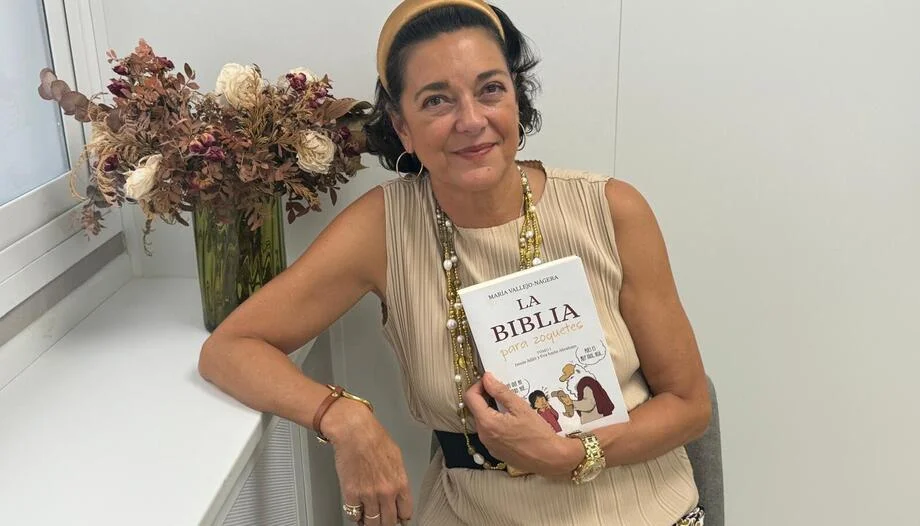
Bustamante, a mother, stresses that the message is "hopeful". "Jesus is always waiting for us, even in the midst of our falls".

The podcast questions are asked by Bárbara Bustamante and the answers are by Pablo Fernández-Martos. The selection of the 10 ideas for prayer, reduced to short pills or non-textual phrases, is personal.

1) "I don't have time."

- We must understand that the devil is not interested in us paying visits to Jesus. A Sometimes we think that this is going to take a long time. But making a visit can last 15 seconds or so, you don't need more, I hope it lasts 15 minutes. If you are in a hurry and you don't have time to stop, when you pass in front of a church where you know that the Blessed Sacrament is, you can make a gesture of adoration....

St. Francis, when he was walking along the roads and saw a church tower, would prostrate himself on the ground and say a prayer that is still said today. Even if you are in a bit of a hurry on the road, if you see a church on the horizon, you can always make a gesture of adoration, a greeting to Jesus who is there.

Then, obviously, you can enter the church when it is open, approach the Tabernacle, prostrate yourself humbly, usually on your knees if your physique allows it, and say a little prayer as one who is going to try to be friends with the one we know loves us (St. Teresa), knowing that he is really present in the tabernacle, with his Body, Blood, Soul and Divinity.

2) What is the prayer of supplication to God?

- The prayer of supplication is not to inform God, but in the end it is like when you open a bag to get something inside, a child who opens the bag to get the candy inside. 

It is to dispose the heart to welcome the graces that God wants to give me in my need. It will be the one that is adequate to my need, not the one I ask for. God always answers our prayers, what happens is that he does not always answer what we want.

3) What is the difference between going to Mass and adoring the Blessed Sacrament?

- Let us see. The Eucharist celebrated and communicated is the maximum intimacy that we can have with Christ and with his Church. Because the Church is the Mystical Body of Christ, and therefore when we live intimacy in the Eucharist we do so not only by ourselves. We are not snipers of the faith.

The Church is a community, it is a family, and therefore the Eucharist gathers us as a family, it gathers us as a community. Adoration prepares our heart to be able to live the Eucharist better. It would make no sense for you to go to Eucharistic adoration and not go to Mass.

Pope Leo XVI during the blessing after the Corpus Christi procession on June 22, 2025 through the streets of Rome (Photo CNS/Lola Gomez).

4) Adoration, enlivening love

- The first thing is to go to Mass on Sundays and holy days. Adoration enlivens our love for the Eucharist and prepares our hearts, allowing us to enter more deeply into intimacy with the Lord by being in his presence, and by contemplating with surprise and admiration the presence of the God who wanted to remain close to us, imprisoned in the tabernacle, so that we too can prostrate ourselves, and in this way gain intimacy with the Lord.

This is like when your husband met you and fell in love with you, it was all about preparing you to live your encounter in marriage and live that intimacy. But once you are married, you take care of your relationship, so you don't get married and neglect it. You have to continue to live that preparation that allows for that intimacy, and that is done in Eucharistic visitation and adoration.

5)  Can you sing and read?  

- You can sing, of course. You can read the Scripture, some passage to meditate on it, try to see what God is saying to you there, in that Word, either because it is the Gospel that is playing that day, or because you open the Scripture at random, or because you are reading a passage of a chapter .

Spiritual reading is very good, it is something virtuous, it is very advisable and it is great to read something pious, something written by a saint, a biography?

Then there is trying to listen interiorly, with that silence that we try to do, what the Lord is saying to me and how he is moving my heart.

6) Eucharistic life

- It usually ends with the Lord's Prayer or Spiritual Communion. Through this spiritual union the Lord pours spiritual graces on our heart preparing our heart to be able to receive communion, because we are already gaining in that intimacy with the Lord in that desire to be with him, in that desire to share with him, that he may be my life, our life.

What a Christian does when he adores the Eucharist or receives communion is that his life becomes Eucharistic. I go to meet Him, but also to approach others, and with a similar attitude, I go to meet my brother, an acquaintance, a relative, a friend. Or in my job, I go to meet Christ in my work, that work well lived, offered to Christ, also prepares my way to be with the Lord.

7) Obstacles. I don't feel anything, I get very distracted.

- Sometimes we get very complicated inside. God is glad that you go and give Him that little while, when you could be doing something else. And even if you are distracted, you are with Him, just like any of us. How many times we like to have our children and family come home, even if they are not doing anything special. Or at home, you sit in that armchair and your husband sits in that other armchair, and you are both there without doing anything special.

It is very important to be in the presence of God, to be aware of where I am, it helps to focus our attention because we are a little scattered. But we have to accept the way we are, the one who has a problem of attention deficit will have it in the chapel or at home, anywhere. 

The problem we have with prayer, in my opinion, is that we are very egocentric and selfish. That is to say, we go to adoration to see what I feel. It is as if we say: I am not going to go to the hospital to visit a sick person who is in coma, because he doesn't tell me anything and I get bored.

A lot of the problems we have in prayer come from the fact that I'm going to pray to see what I get, but I'm not at all concerned about how Jesus is doing. And Jesus is glad that I'm there with Him.

8) An example: where has your husband loved you the most?

- I always give this example. Imagine you have a wedding on Saturday. And on Friday you realize that you are missing some shoes for the dress you have for the wedding. You ask your husband if he can take you to the mall at 6:00. He tells you: the Champions League final between Madrid and Barcelona is on, I can't miss the game. I can't go, put on other shoes.

In the end, he goes with you to the mall, and waits patiently for an hour, he's grumpy, but he goes, and you try on and buy the shoes for the wedding and the dance.

The question is where has he loved you more, at the mall angry, or at the wedding dancing (Bárbara Bustamante tells him: at the mall, and Pablo Fernández Martos continues). Clearly. We have to vindicate the "boredom' of knowing how to be with Him. 

9) Draw near to the Lord, especially when you are a sinner.

- Especially when you are a sinner. A little one runs into your arms because he was more frightened when he broke something. On the other hand, when we grow up, we hide. With God it is just the opposite. When I have fallen, what I have to do is to take out a Christ, kiss Him, look at Him and tell Him: Lord, from the mud of my sin, I only know that You love me, and that is where the change begins. With the certainty that the love of God is much more important, I approach Eucharistic Adoration to be close to God, who is mercy.

10) The habit of silence

- Silence is opening a space for God to speak. Because we come in from the street with so much noise, with shopping, work, children, family... We don't give him a chance to give us an answer, but sometimes we only go to inform him of what he has to do. 

They tell of the priest of Ars who was in the parish, and a peasant who was going to pray in the church came in. The priest asked him what prayer he was praying. The peasant answered: "Look, many times I don't know how to pray. Then I look at him, he looks at me, and we understand each other. We have to ask the Lord for his light to be able to live this, for the strength of the Holy Spirit to be able to be attentive to what the Lord wants to tell me.

The authorFrancisco Otamendi

Evangelization

Pier Giorgio Frassati's love for the mountains

Excerpt from "Fascinated by the summits", by Pedro Estaún: the passion of Pier Giorgio Frassati for the mountains, lived as a school of virtues and a way of encountering God.

Pedro Estaún-September 17, 2025-Reading time: 9 minutes

Last September 7, Pope Leo canonized two young men in Rome: Carlo Acutis, 15, and Pier Giorgio Frassati, 24. In a square filled to overflowing, Leo XIV recalled the virtues of these two young men who can be an example for so many others. I will focus on recalling just one of the aspects of one of them: the love of the mountains in Fassati. 

 Pier Giorgio was born in 1901 into a wealthy family in Turin. He attended primary school at a Jesuit school and then engineering school. He loved sports. He often cycled the 87 kilometers that separated Turin from Pollone. He was also attracted to the sea. He savored the joy of fighting the water by swimming, rowing or sailing. He practiced horseback riding on Parsifal, a rather difficult horse. But his great passion was the mountains. It was a hobby that - like any good mountaineer - grew on him as time went by.

From a very young age he began to have a passion for the mountains. This passion grew out of his summer stays in Pollone, near Biella, in the province of Vercelli, in the Alps, where he used to hike with his family and friends. In some notes that his mother took in 1909, on returning from the Col du Teodulo, 3,317 meters above Zermatt, which in the guidebooks is listed as a ten-hour hike, we find: "We were climbing towards the White Peaks. The whole landscape was, as almost always at that hour, without shadows, without relief (...). Crossing the Teodulo with Pier Giorgio tied to me by the rope went very smoothly - the boy was often hungry - and also in this I agreed with his mother. We would stop, eat and continue. We stopped for two days at the Schwarzsee. Everyone was interested in the handsome little mountaineer." That fondness for the mountains, which was then dawning on him, he would maintain throughout his life. It was a passion that he would later justify for two reasons. Firstly, because mountaineering offered him a magnificent opportunity to exercise human virtues such as fortitude, companionship,...; and secondly, because the summits revealed to him the magnificence of the Creator.

Pier Giorgio loved sports. Even at a very young age he used to go on bicycle excursions. He often cycled the 87 kilometers from Turin to Pollone. He was also attracted to the sea, especially in his early youth. He savored the joy of fighting the water by swimming, rowing or sailing. He practiced horseback riding on Parsifal, a rather difficult horse with which he often rode to and from Turin to Pollone. But his great passion was the mountains. It was a hobby that - like any good mountaineer - grew on him as time went by.

"Every day I get more excited about the mountain," he wrote to a friend. "It is something that fascinates me. I like more and more to climb the summits, to reach the most daring peaks, to experience that pure joy that only the mountain can give. I would like to give up mountaineering, but how can I give up the fascinating appeal of the snow?". 

Shortly afterwards he wrote to another: "I have left my heart on the summits and I hope to find it when I climb Mont Blanc". And even more: "If my studies would allow me, I would like to spend whole days on the mountain and admire, in such a pure atmosphere, the magnificence of the Creator".  

It is understandable that he would take every opportunity to climb the Alps that were so close to him. During her university years it was customary for her to use the Christmas vacations to spend a few days in the Little St. Bernard. She would go skiing with a group of friends. They stayed in the guesthouse, using rooms where it was so cold at night that the water in the basins froze; it was one of those places where it is necessary to wrap up extra warm at bedtime.

One morning a friend and I started downhill on skis in the direction of Switzerland. The descent was beautiful, the weather unbeatable: snow in good conditions, favorable wind, signposts... And down they went, down they went. How far? They can't say for sure, but the descent was very long. When they resumed the ascent, the wind that had favored them on the way down was now a serious obstacle: gusts of sleet and whirlwinds whipped in their faces; the track had been erased, the signposts had become invisible. The friend began to pant and begged Pier Giorgio to slow down. After a long time and with considerable effort, they reached the refuge. Pier Giorgio had hardly tired; his companion, however, took a long time to recover. 

After supper they had a very pleasant time together: they would sing, recall the day's events or play a game. Late at night they would retire to their rooms, which were large and could accommodate several people. Pier Giorgio would invite his companions to pray the rosary, which, in general, they all accepted, although many followed him from bed. He would pray it on his knees on the hard floor. In the morning he was the first to get up. He would call the others and remind them that the night before they had pledged to accompany him to mass. He usually helped the priest and always received communion.  

Another time he went with a friend to the Adolfo Kind refuge and they stopped longer than necessary without realizing that the weather was changing. The place they had to return to was far away. They had to climb a mountain and then descend it on skis. The journey was becoming more and more difficult, especially as they were pressed for time. Suddenly Pier Giorgio realized that he had lost his watch. His companion wanted to stop to look for it, which Pier Giorgio had to oppose energetically, realizing that a delay in these circumstances could be dangerous. Around seven o'clock they reached the summit of Fraiteve. It was dark and the storm was raging. They began the descent together and carefully. At one point Pier Giorgio made a turn to stop and a ski came loose and flew off through the icy snow. Let's take a look at his partner's account: 

 "Frassati, at that time, was a mountaineer and a man. In my long wanderings in the Alps, I have learned to know the psychology of man at altitude, to judge him and to understand him. I am familiar with the moments of confusion that suddenly affect even the most courageous climbers at altitude, when they are overcome by an incident that can have consequences. Pier Giorgio was aware of the mishap, although I, more practical, would have tried to lessen its seriousness, in order to avoid the dejection that could have had bad consequences for his spirits. He understood this and remained serene at the time; I was perfectly convinced that I was in the presence of a type of mountain race: brave and cool in the face of danger". They descended as best they could through a heavy snowfall with the hostility of the mountain when it becomes an enemy. At last they discovered a light that was their destiny. When days later he told his mother about it, trying to play it down, he told her:

"Look, I've lost a ski. But when the snow melts we'll go look for it and we're sure to find it. I've lost my watch, too. Nothing else?" his mother asked with a wry smile. Immediately Pier Giorgio answered: "But when the snow melts... A plant will be born", his mother replied, increasing her smile. The ski appeared and today it is preserved as a memory of the man who had enjoyed so much on the snow.

But Pier Giorgio's mountaineering activity was above all climbing. He climbed at all times of the year. In the ve-ranos he had climbed many times the Col Mucrone on which there was a large cross. Winds, rain and snow had caused it to fall in the winter of 1920. When the good weather arrived, the parish priest of Pollone, at the suggestion of others in the village, decided to put up a new one, install it properly and rebuild it. Frassati joined the initiative.

During the climb, which took place at night, the priest had a serious fall which, although it did not have serious consequences, meant that he had to continue with the help of others. Pier Giorgio lent himself to help him and also helped to carry up part of what was needed to celebrate mass on the summit.

In November 1924, two companions proposed an excursion to the Bessanesse, 3,622 meters high. On their way from Bal-me to the refuge, they were surprised by the night and were unable to make their way up again. They were forced to stop in a small space, with the prospect of spending the night there. Pier Giorgio himself tells us about it: 

"Our intention on leaving was to climb the summit of Bessanesse via the Zsigsmondi route. When we saw the state of the snow, it seemed imprudent and we decided to change our plans and headed for the Albarón de Saboya (3,392 meters). On the way back, the non-night was upon us and we had no choice but to improvise a bivouac at an altitude of 2,500 meters. We were lucky and found a rock, on which hung a very thick layer of snow on a slope, as a roof; we dug under it a shelter of 2.50 meters long, by 0.50 wide and no more than 0.40 high, which was very well ventilated. Once the space was prepared, we had something to eat and we had to spend the whole night devising entertainments because sleeping in those circumstances would have been dangerous". 

One of the companions recalls that they prayed the rosary and, as soon as dawn broke, they prayed the Angelus to the Virgin.

His last mountain ascent was on June 7, 1925. He made it to the Lunelle peaks. He arrived at the station at the last moment, which earned him a protest from his companions. He answered them:

"What did you want, that I should miss Mass? I woke up late and could not attend with you the one we had arranged." 

 One of them remembers that climb, which was on the most difficult face, the Santi Plate, where a climber had fallen. "Pier Giorgio was the second in our team and he would belay me on the most difficult points. Climbing gave him real joy and he especially enjoyed some of the descents using the double rope (...) As soon as we reached the top he asked us to say a prayer for Cesarino Rovere, who had killed himself on that wall only a year before". On his return, Pier Giorgio wrote to his sister telling her about a climb and saying that he hoped to return with more material to open a new route. That one was no longer possible. Within a month, on July 4, Pier Giorgio gave his soul to God after a rapid illness that no one had been able to foresee.  

For John Paul II, Frassati was a model. As Cardinal of Krakow, he recalled the figure of this young man who for a few days was unable to finish his engineering studies. "He was a model for those who climbed mountains to go climbing or skiing: he thought that he too did the same, that this was for him the path of sanctification, because in everything he discovered God. He was also aware of his responsibility in society. Responsibility for the life of the nation to which he belonged; responsibility for its authentic spiritual and Christian tradition. He faced this responsibility without sparing any effort. At the same time, his sensitivity towards the poor, the needy and the sick was striking. Undoubtedly, this is a call of particular significance and a challenge to our generation and to our time, which runs the risk of falling into insensitivity. All of us must break a lance - all of us, including myself - to discover the face of man and become aware of his situation, his sufferings and his difficulties. All this we find in Pier Giorgio.

When he was already Roman Pontiff, in one of the summers that the Pope spent a few days in the Alps, he celebrated a Mass in Cogne, in an immense green meadow called San Urso or valley of the Gran d'Eyvia (Great Water), located 30 kilometers from Aosta. He arrived by helicopter and after being welcomed by the local bishop, he moved to the altar built in wood by artisans of the region, and celebrated the Eucharist before more than 20,000 local faithful. In his homily he referred to the majesty of those mountains and said: "This enchanting place also preserves the memory of a young believer of our century, Pier Giorgio Frassati, whom I had the joy of proclaiming blessed on May 20, 1990. He used to frequent the town of Cogne. He explored with ardor the peaks that crown it; he had made of every climb to the mountains an itinerary that accompanied the ascetic and spiritual one, a school of prayer and adoration, an effort of discipline and elevation. He said to his friends: 'Every day that passes I fall more madly in love with the mountain'. And he continued: 'I desire more and more to climb mountains, to conquer the steepest peaks, to feel the pure joy that can only be experienced in the mountains'". (...) "Beloved brothers," the Pope concluded, "like St. Besso and St. Urso, Blessed Pier Giorgio knew how to combine admiration for the harmony of creation with generous service to the Lord and to his brothers. This admiration of creation, admiration of God's work, is extremely necessary. Through this admiration of creation, we admire God himself; through admiration of the visible, we admire the invisible. May Pier Giorgio, almost a contemporary of ours, be an example especially for young people, for those who come here and for those who go to the mountains to spend a period of well-deserved rest. Before such an extraordinary spectacle of nature, we spontaneously raise our hearts to heaven, as the young Frassati often used to do".

The young Frassati is not forgotten over the years. Since 1996, the Italian Alpine Club has been putting his name on a network of mountain trails throughout the country. In 2001, the year of the centenary of his birth, those of Le Marche, Veneto and Lazio were inaugurated. An association, "L'Assotiazione Internazionale Sentieri Pier Giorgio Frassati", was also created for the occasion. In this way, the figure of this young Italian is kept alive among the mountaineers of this century in which there are so many people who live their mountain experiences through hiking both on old rehabilitated paths and on others of recent creation. And now, as a saint, he will be a model for the many of us who love the mountains and go to its slopes whenever possible. 

Chapter from the book "Fascinated by the summits" published with the author's permission.

The authorPedro Estaún

Culture

Jesuit app uses AI to care for your spiritual life

Created by the Loyola Communication Group (Society of Jesus), AMDG is a free app that suggests personalized prayers, readings and music every day thanks to AI.

Editorial Staff Omnes-September 16, 2025-Reading time: < 1 minute

The Loyola Communication Group has presented AMDGa free application that combines cutting-edge technology and interiority. It is the first mobile platform that, with the help of artificial intelligence, accompanies the spiritual life of each user in a personalized way.

With the slogan "For God to be noticed," the new tool offers daily prayers, readings and music selected according to the person's interests and searches. "We wanted to put
the enormous amount of spiritual and reflective resources available to the people of the world.
Society of Jesus. It can also be offered in depth through cell phones," explains Jesuit Carlos Maza, content director of AMDG.

The application, developed by SJDigital, brings together and organizes thousands of pastoral and spiritual resources developed by Jesuit projects such as Rezandovoy, PastoralSJ, SerJesuita, IGNIS, VocesSJ, Evangelio Diario, Sal Terrae, Mensajero, TSNC, La Biblia de Nuestro Pueblo, Jesuitas Acústico, Manresa or MAG+S. One of the most outstanding elements of AMDG.app is its integration of the daily review, a
classical spiritual practice that, thanks to this application, offers a new perspective.

AMDG can be downloaded free of charge. Those looking for more extensive support can opt for the AMDG PLUS version, which for €6.90 per month or €69 per year offers full access to an extensive catalog of reference books and magazines - with authors such as José María Rodríguez Olaizola or José Carlos Bermejo - as well as exclusive content without advertising.

With this initiative, the Jesuits aim to demonstrate that spiritual depth and technology are not only not incompatible, but can complement each other to bring prayer and reflection closer to everyday life.

Read more
Evangelization

Saints Cornelius, pope, Cyprian, bishop, and Ludmila, mother of noble family

Saints Cornelius and Cyprian, pope and bishop respectively, whom the liturgy celebrates on September 16, are mentioned in the Roman Canon of the Mass. They were martyrs and important figures in the Church in the 3rd century. St. Ludmila was a mother of a noble family in the 9th century, and grandmother of St. Wenceslaus.

Francisco Otamendi-September 16, 2025-Reading time: 2 minutes

The commemoration of these two events on the same day martyr saints of the third century, Cornelius, Pope, and Cyprian, bishop of Carthage, whom the Jeronimian Martyrology recalls together, is very old. A few centuries later lived St. Ludmila, who married the Duke of Bohemia, had six children, and educated her grandchild St. Wesceslao in the 9th century.

Saints Cornelius and Cyprian were victims of Valerian's persecution in June 253 and September 14, 258. Their memoirs appear together in the ancient liturgical books of Rome from the middle of the fourth century. Their history is intertwined, although the African bishop stands out more with his writings.

The Roman Martyrology He quotes them as follows. "Memory of Saints Cornelius, pope, and Cyprian, bishop, martyrs, about whom on the fourteenth of September the burial of the first and the passion of the second are recounted. Together they are celebrated in this memory by the Christian world. For both bore witness, in days of persecution, to their love for the unfailing truth before God and the world (252, 258)".

Pope Cornelius, a Roman, had to see how his election was not accepted by the heretic Novatian, who consecrated himself antipope and promoted a schism in Rome. He died in exile, but was buried in Rome in the catacombs of St. Callixtus.

Saint Ludmila, Christian mother and grandmother

Saint Ludmila (Mielnik, present-day Poland, around 860), was the daughter of the Duke of Milsko and married the Duke of Bohemia, with whom she had six children. In 874, her husband converted to Christianity, and was baptized by St. Methodius. 

Ludmila also embraced the Christian faith, and spread it among her people, who were not yet Christian. When her husband and son died, the nobles of Bohemia entrusted her to educate their grandson, St. Wenceslaus, to whom she taught the Christian faith. She died in Prague, strangled in a conspiracy.

The authorFrancisco Otamendi

ColumnistsBryan Lawrence Gonsalves

Reducing the Abortion Debate to Religion Misses the Point

Labeling the pro-life cause as "religious" is a way of evading the real ethical debate: the defense of life is based on reason, ethics and justice, not only on religion.

September 16, 2025-Reading time: 4 minutes

Considering the recent debates within the Lithuanian Parliament over abortion legislation, I’ve observed a recurring assertion that strikes me as both intellectually lazy and morally evasive: that abortion should be banned because it conflicts with religious beliefs.

This framing is not only reductive but also dishonest. It implies that the pro-life position is inherently religious, a relic of dogma rather than a conclusion drawn from reason, ethics, or a consistent philosophy of human value. What is worse, this assumption is often weaponized by those on the opposing side, who paint anyone with pro-life convictions as a religious fanatic or a zealot waging war on women.

Religious beliefs are not the foundation

To argue that a belief must be dismissed because it is shared by a religion is a fallacy of the highest order. Atheists exist who reject abortion not because of divine command, but because they hold, through reason, that life has intrinsic value. Are they to be accused of secret piety? Are we to discard their arguments because they do not fit neatly into a religious narrative?

Reducing the pro-life argument to a matter of faith alone is not only a disservice to the debate, but also an abdication of moral responsibility. It is easier to dismiss a conviction as “religious dogma” than to confront the logic, the ethics, and the uncomfortable questions it may raise.

To call the defence of life a “religious issue” is to attempt to discredit a moral stance without engaging its substance. It is not only weak labelling; in my view it is intellectual cowardice.

Are the Foundations of being Pro Life Religious?

The foundational pro-life argument is grounded in biology (when human life begins), ethics (the value of human life) and the virtue of justice (the moral and innate obligation to protect the innocent and powerless). None of these aspects require a belief in God to be accepted.

Yes, it is true that many in the pro-life movement are religious. So what? That’s not the point. When did a movement’s demographics start determining the truth or legitimacy of its principles? We don’t dismiss the civil rights movement as a religious crusade, even though many of its leaders such as Dr Martin Luther King foremost among them, were pastors. We don’t write off environmentalism because many its adherents speak of nature in emotional and personal terms. Why then is the pro-life cause uniquely singled out by having its moral seriousness reduced to mere religious sentiment?

Did the Pro-Life movement start for religious reasons?

Even if the early pro-life movement had strong roots in religious communities (which is a complex and contested historical point), that still tells us nothing about the merit of its arguments. The truth of an idea does not depend on who said it first, or why.

If Einstein had been a priest, would the theory of relativity be theological? If a religious person says stealing is wrong, is the moral weight of that position nullified by their faith?

This line of reasoning, tracing the origin of an argument to discredit it, is known as the “genetic fallacy”. It’s the same type of reasoning used by those who say “democracy is a Western idea” to reject it in non-Western societies. It’s lazy, shallow, and irrelevant to the content of the argument itself.

Why This Mislabelling Matters

Words shape perception, and perception shapes discourse. Classifying the pro-life position as a 'religious issue' is not just a matter of classification; it is a way of distorting the nature of the discussion before it begins. Labeling pro-life convictions as 'religious' marginalizes the argument from the outset. It removes it from the realm of public ethics and places it in the private realm of faith, as if it has no more relevance to policy than a personal dietary preference. It teaches people to see a very moral social issue as the personal opinion of "a pious few" and thus suggests that this conversation only makes sense in churches, not in courts or parliaments.

My concern is that this mischaracterization teaches people, especially the young and those outside religious circles, that unless you belong to a specific faith, you have no reason or right to hold a pro-life view. It suggests that caring about the unborn life is only for the religious, shutting out thoughtful individuals who might reach the same conclusion through reason, ethics, or personal conviction. It turns a universal moral issue into a tribal badge. And in doing so, it shuts the door on thousands of thoughtful individuals who might otherwise engage the issue seriously.

Worse still, it leads to a kind of argumental apartheid, where certain perspectives are excluded from legitimate public debate not because they are false or harmful, but because they are perceived to belong to “the wrong kind of people”. In a certain sense it can also lead to intellectual segregation since it may promote the moral view that certain beliefs are less worthy of engagement simply because of who holds them.

This mislabelling also impoverishes the pro-choice side of the debate. Since by refusing to engage seriously with the strongest pro-life arguments, which is rooted in biology, ethics, and justice, many who call themselves pro-choice end up arguing against a strawman. They debate an imagined theocracy instead of a real philosophy. They ridicule their idea of cartoonish villains instead of grappling with rigorous reasoning. And as a result, the entire conversation stagnates.

A functioning society cannot afford to treat fundamental moral questions as niche theological squabbles. We do not relegate questions of war, racism, or poverty to the religious domain simply because many religious people have strong views about them. We don’t say opposition to racism is a "religious issue" just because churches supported the 1965 Selma marches to secure voting rights for African Americans. We don’t claim that caring for the poor is invalid because it echoes Biblical principles. We understand, rightly, that these are not sectarian concerns, they are public, civic, and deeply human issues.

So why not life?

 Why is the question of abortion, arguably one of the most profound moral issues of our time, singled out and cordoned off by being dismissed as the territory of “the religious”? If human dignity matters, if justice for the vulnerable matters, if ethics and compassion and reason are values, we hold dear, then we owe it to ourselves, and to one another, to engage this question with honesty, not with labels.

The value of human life is not a denominational concern. It is not Catholic or Protestant, Muslim or Jewish, spiritual or secular. It is universal. And any society that hopes to be just must treat it that way. This is not a “religious issue”. This is a human one. And it deserves to be treated with the seriousness and moral clarity that all human issues do.

The authorBryan Lawrence Gonsalves

Founder of "Catholicism Coffee".

Read more
Integral ecology

Why does the Pope criticize the "high salaries" of some managers?

The statements have been published in Crux, the newspaper where Elise Allen works, which has conducted the first major interview granted by Leo XIV.

Javier García Herrería-September 16, 2025-Reading time: 3 minutes

The exorbitant salaries of managers and elite athletes have been a recurring theme in public debate. The recent declarations of Pope Leo XIV, in his first official interview, reactivate interest in this issue.

Asked about the polarization in our societies, Leo XIV stated: "I consider the growing gap between the income levels of the working class and the money received by the richest to be very significant. For example, CEOs who 60 years ago might have earned four to six times more than what workers receive, the latest figure I saw is 600 times more than what the average worker receives. Yesterday it came out that Elon Musk will be the world's first billionaire - what does that mean and what's it all about? If that's the only thing that still has value, then we're in serious trouble....".  

Leo XIV does not make an explicit condemnation of capitalism or liberalism, but he does underline how gigantic inequalities are problematic. It does not seem that the Pope intends to criticize personal success, but he does question the values that society prioritizes.

Why is the Church meddling in the salary debate?

The Catholic Church has a say on disproportionate wages not because of an intrusion into purely economic matters, but as a matter of moral principle. The Social Doctrine of the Church holds that capitalism and liberalism cannot be systems without limits. One of the fundamental principles of this doctrine is the universal destination of human goods.

This principle, which goes back to the Fathers of the Church, states that the earth and its resources are meant to be used by all humanity. Therefore, as long as a large number of human beings are in serious material need, the excessive accumulation of wealth by others is problematic.

Although the Church recognizes and defends the right to private property as a means of guaranteeing autonomy and personal development, this right is not absolute. In a world where inequality has skyrocketed, the Church considers the excessive accumulation of wealth by a minority to be contrary to the universal destination of goods.

Global inequality: data that validate the criticism

The Church's criticism is supported by data showing growing economic inequality. As the reports of numerous organizations unanimously point out (UNESCO, OSXFAM, Credit Suisse), the world's richest 1% possess an amount of wealth that exceeds that of the majority of the world's population. For example, the richest 10% of the world's population hold 76% of the total wealth, while the poorest 50% hold only 2% of the global wealth.

This disparity is not just a statistical problem, but a moral injustice that has serious social and civic consequences. The problem with our economic system is not that it allows people to be very rich, but that this happens while millions of people struggle to access the basics of a dignified life. The Church does not seek the abolition of private property or economic equality among all human beings, but an economy that provides a minimum of material dignity for all people.

The echo of Michael Sandel's critique

The Pope's words resonate with the ideas of the American philosopher Michael Sandel, Princess of Asturias Award winner and famous former Harvard professor, who has been one of the most famous critics of wage inequality. If the only indicator of value is the accumulation of wealth, the importance of solidarity and the common good is dismissed. By decoupling the value of work from its real contribution to society, it erodes the dignity of those jobs that, although essential, are poorly paid.

Sandel argues that the idea that success is based solely on individual effort is a fallacy. Luck, social environment and circumstances of birth play a crucial role, yet meritocratic society tends to ignore these factors. The data show that the social elevator does not work and, therefore, one is not as responsible for one's success (or failure) as the American dream would have us believe. 

For Sandel, the astronomical salaries of managers and athletes are the product of a society that confuses market value with moral value. This distinction is crucial: an investment fund manager may generate a fortune, but is his or her contribution really more valuable to society than that of a teacher or a nurse? Sandel's critique, like that which the Pope seems to make in his statements, does not seek to nullify success, but to redefine what should be valued by society.

In a world where inequality is growing and social polarization is increasing, Leo XIV's words invite a review of our values. By questioning wage disproportionality, Leo XIV raises the debate about what society we are building and who is really being rewarded.

Read more
Spain

Pope appoints Msgr. Piero Pioppo as Nuncio to Spain

The Italian archbishop, with a long career in the diplomatic service of the Holy See, now assumes the representation in Spain.

Editorial Staff Omnes-September 15, 2025-Reading time: < 1 minute

Pope Leo XIV has appointed Archbishop Piero Pioppo, titular archbishop of Torcello, as the new Apostolic Nuncio to Spain. The appointment, made public today at 12:00 noon, was communicated to the Spanish Episcopal Conference by the Apostolic Nunciature.

Born in Savona (Italy) on September 29, 1960, Pioppo was ordained a priest in 1985 in the Diocese of Acqui Terme and incardinated there. He holds a doctorate in Dogmatic Theology and, since 1993, has been a member of the Diplomatic Service of the Holy See, where he has worked in the nunciatures of Korea and Chile, as well as in the Secretariat of State. He is fluent in Italian, French, English and Spanish.

In 2006 he was appointed Prelate of the Institute for Works of Religion (IOR) and, four years later, Apostolic Nuncio to Cameroon and Equatorial Guinea, a post to which he was ordained bishop on March 18, 2010. Since 2017 he served as Nuncio to Indonesia and, since 2018, to ASEAN.

Delay in appointment

The appointment of Bishop Piero Pioppo as apostolic nuncio to Spain was accompanied by a striking diplomatic detail: the granting of the Spanish government's approval was delayed for several months.

In diplomatic circles, this type of delay is usually interpreted as a sign of disagreement or protest towards the party presenting the candidate. Although no official explanation has been offered from Moncloa, many analysts have interpreted it as a sign of protest.

The World

60 adults baptized in Shanghai on the feast of the Holy Cross

Sixty adults were baptized in a celebration presided over by the Bishop of Shanghai, Msgr. Joseph Shen, in the Cathedral of St. Ignatius (Xujiahui).

Editorial Staff Omnes-September 15, 2025-Reading time: 2 minutes

In an atmosphere of deep faith and joy, the Cathedral of St. Ignatius in the historic Xujiahui neighborhood of Shanghai was the scene of an extraordinary event: sixty adults received the sacrament of Baptism during the celebration of the Feast of the Exaltation of the Holy Cross. The solemn Eucharist was presided over by Monsignor Joseph Shen, Bishop of Shanghai, and was attended by hundreds of faithful who wanted to accompany the new members of the Church.

The testimonies of those present testify to the emotion of the moment, one of the witnesses said: "It was impressive to see that large group of catechumens approaching the fountain of grace to be baptized".
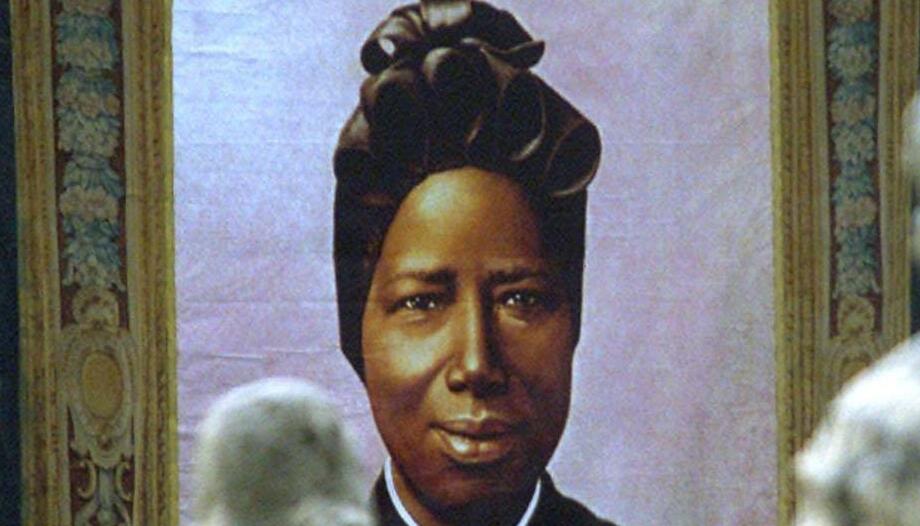
In the midst of the rite, the words of the Apocalypse came spontaneously to mind: "Then one of the elders spoke, saying to me, 'Who are these who are clothed in white robes, and where have they come from? And I said unto him, Lord, thou knowest. And he said to me, 'These are they who have come out of the great tribulation, and have washed their robes and made them white in the blood of the Lamb'" (Rev 7:13-14).

A sign of hope

The white vestments of the neophytes evoked this passage, reminding everyone that Baptism is new birth in Christ and participation in his victory over sin and death. In a context where faith is often lived in silence and discretion, this event is perceived as a true sign of hope and a reason to thank God for the vitality of his Church.

The sacrament of Baptism is the gateway to Christian life and, for these sixty adults, it signifies the beginning of a journey of faith that, supported by the community. The Catholic community in Shanghai, with the support of their pastors and catechists, patiently accompanied their preparation in a catechumenal journey that now flourishes in this celebration, in which they also received Confirmation and Eucharist.

On the feast of the Exaltation of the Holy Cross, where it is remembered that the salvation of the world was given in the Cross of Christ, the Church in Shanghai renews its commitment to be a witness to the faith in the midst of contemporary society.

Read more
Evangelization

Our Lady of Sorrows

In the month of September, which contains so many advocations of the Virgin Mary, the Church celebrates Our Lady of Sorrows on the 15th, a memorial linked to the Exaltation of the Holy Cross on Sunday the 14th.

Francisco Otamendi-September 15, 2025-Reading time: 2 minutes

Devotion to the Mater Dolorosa, Our Lady of Sorrows, particularly widespread in Mediterranean countries, developed from the end of the 11th century. Pope Pius VII introduced the celebration into the Roman liturgical calendar in 1814. And St. Pius X fixed the date definitively on September 15, passing from the 'Seven Sorrows' to 'Our Lady of Sorrows', he points out. Vatican News.

Testimony to the antiquity of this devotion is the Stabat Mater, attributed to Blessed Jacopone da Todi (1230-1306). The first liturgical celebrations of Mary Sorrowful at the foot of the Cross date back to the 15th century, the Vatican agency explains. It should not be forgotten that in 1233 the Order of the friars 'Servants of Mary' was founded. The Serbites contributed to the spread of devotion to Our Lady of Sorrows.

The feast commemorates the suffering and fortitude of Mary during the Passion and Death of Jesus. The invocation is also known by other names such as La Dolorosa, Virgen de la Amargura and Virgen de la Piedad. In union with the redemptive work of the Son, Mary becomes the Mother who gives birth to every Christian, every disciple of Jesus.

Mary, at the foot of the cross

Referring to this celebration, wrote St. Paul VI: it is "a propitious occasion to relive a decisive moment in the history of salvation. And to venerate, together with the Son exalted on the Cross, the Mother who shares his sorrow. In union with the redemptive work of the Son, Mary becomes the Mother who gives birth to every Christian, to every disciple of Jesus.

Benedict XIV noted in his encyclical 'Deus caritas est' that our Mother "is humble," and a woman of faith, of hope. "A woman who loves," as the book 'Maria'. "The hour of the Mother will come only at the moment of the cross, which will be the true hour of Jesus. Then, when the disciples have fled, she will remain at the foot of the cross".
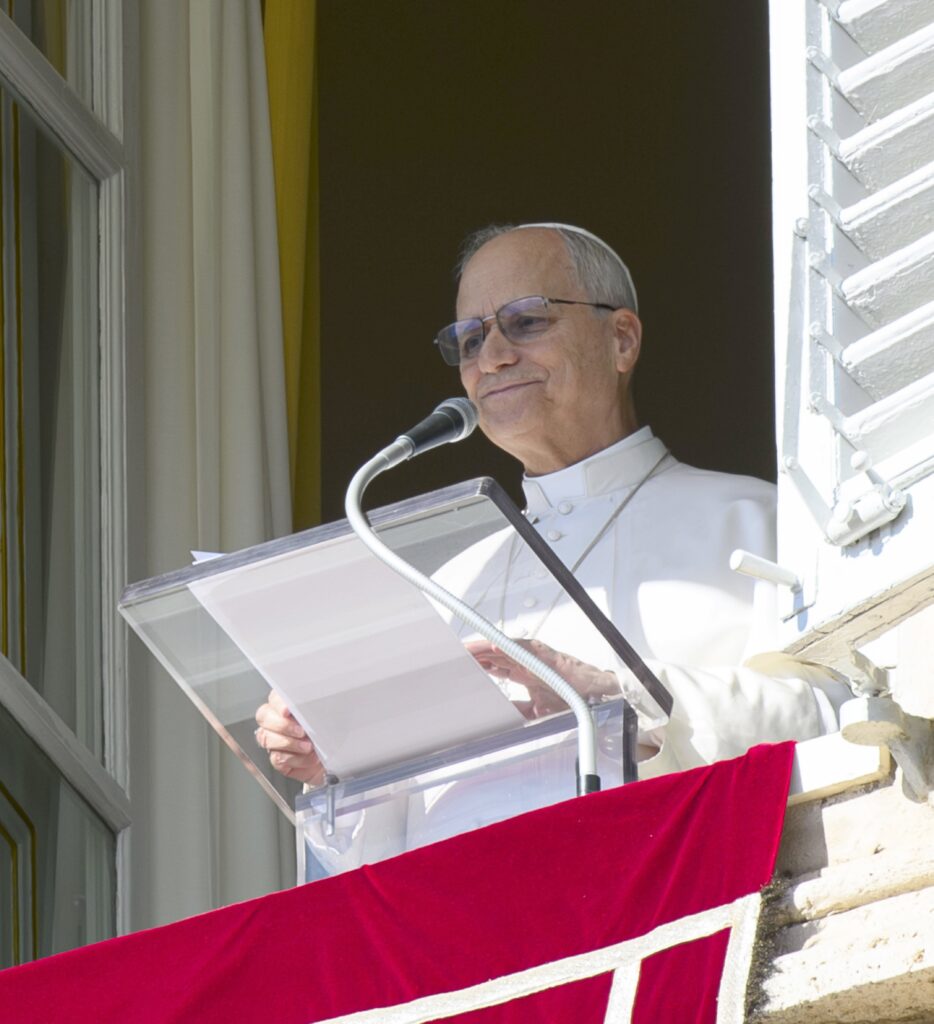
The authorFrancisco Otamendi

Photo Gallery

Charlie Kirk moments before he was killed

The event took place on September 10 at the University of Utah.
Editorial Staff Omnes-September 15, 2025-Reading time: < 1 minute

The spotless lamb

On September 15, the feast of Our Lady of Sorrows, this story was born: the story of a mother torn and redeemed, who in her own pain found the echo of Mary's at the foot of the cross.

September 15, 2025-Reading time: 5 minutes

The child that had just emerged from her womb was the most beautiful creature she had ever seen. Although she had been taught not to get attached to him, Alina's heart broke when he was quickly carried out of the delivery room wrapped in a towel.

The medical team was also trained to avoid as much as possible the contact of the laboring woman with the baby, so they had placed a sheet in front of them as a screen. But providence arranged that, in the movement of the baby's extraction, the midwife also unintentionally pulled the sheet allowing that fleeting glance thanks to which, still exhausted, the mother was able to admire the beauty of that little brown miracle. 

Her other two daughters, who were waiting for her at home, were as blonde as the sun. They were born bald, although they soon grew long manes that Alina took great pains to brush every morning before going to school. How she loved to caress those silky golden strands while she listened to them tell those things that only a mother tells a mother in a family hairdressing session! By the way, how would they be? After two weeks in the clinic for risk of pre-eclampsia, she had forgotten their voices and their smell. 

The agency managing the surrogacy was very concerned about the health of its "associates" and had forced her to go into hospital, so the girls had to stay with their paternal grandmother, the only family they had left in Kiev. The mother-in-law had happily overcome the depression caused by the loss of her only son, Dmytro, on the Donbas front. Her granddaughters and daughter-in-law had been her ladder out of the pit of mental illness. Her meager pension barely gets her to the 7th of every month and now, after the news that Russia recently bombed a queue of pensioners waiting to collect it, she doesn't even dare to go.   

As she was being prepared for the episiotomy, Alina began to have horrible thoughts about the child's future. She knew that the parents who had commissioned him were well off. The 14,000 euros she would receive, equivalent to three times the average annual salary, was only a portion of the total amount of expenses involved in renting their services. With so much money, she was sure that the child would lack nothing materially, but she could not help imagining him being mistreated, abused or unwanted. 

The sharp pain of the first stitch of the suture (anesthesia is rationed in hospitals in times of war) forced her to throw her head back in a reflex action that caused her gaze to cross with that of a Madonna at the head of the bed. It was an icon of Perpetual Help, that image in which the child Jesus, frightened at the sight of the nails and other instruments of the passion carried by angels, runs to seek the protection of his mother. 

-Oh, another stitch, another nail. Help, mother! -Alina cried inside, gritting her teeth and wishing she could hide, like the child, under Mary's mantle. What kind of mother gives birth to a child to give it to others? -she blamed herself. That fat, beautiful child, who only knows me, how can you give him to someone you don't know how he will be cared for? 

But he justified himself by thinking of his two blondes who would not be without a glass of milk for breakfast for years to come.

-Besides, the brown one is not mine," he continued, excusing himself, "it doesn't carry my genes. 

But he was so beautiful! She was so proud to have brought him into the world, and the pain of the separation, which had only lasted a few minutes, kept growing. 

-And how many more times will he be looking for me and I won't be there to help him! Oh, my baby! Oh, my brown one! she cried aloud.

-Calm down, Alina, he is fine," an assistant calmed her down. He is with his parents who are going to love him very much and you are going to see your daughters again tomorrow and take them out for ice cream as you told me yesterday.

Words of consolation were useless, he no longer wanted that ice cream with his blondes. He no longer wanted the "compensation for the inconvenience" as they euphemistically called in the agency the humiliating exploitation of poor women, which is what they really do. His daughters and his mother-in-law? they would get ahead, he thought. 

Looking again at the Byzantine icon, he prayed wholeheartedly: "Mary, you know the pain of losing a son. You too had to give up your son for others. You who saw your spotless lamb led to the slaughter, do not let anything bad happen to mine, give him a mother, the best mother, be his mother. Take care of him wherever he goes and tell your son to forgive my bad head. I am sorry, very sorry". 

She had not finished saying the sentence when the door of the delivery room opened again and the head of the agency appeared, looking as if something was wrong. 

-Hello Alina," the businesswoman approached sweetly, "How are you? They told me it was a very good delivery in the end, despite the high blood pressure and the stitches.... 

-Yes, thank you, this one was quicker than the previous ones," he replied. How is the child, have his parents seen him yet?

-You see, Alina, there's a problem....

-Problem, what problem? Tell me he's okay, please tell me nothing has happened to him.

-It's okay, it's okay, it's okay, it's okay, it's okay. She just... She has a small defect, something that could not be detected in the ultrasound, a hemangioma on her arm. It's no health problem just a spot on the skin that... Well, it's not perfect and the parents have rejected him because they're embarrassed that the kids are going to mess with him when he goes to school. Besides, they are instagramers and wanted to take a lot of pictures of him and that was not going to be possible. Since they don't have a money problem, they will try again. 

-It's the most beautiful thing I've ever seen!

-Yes, it is, Alina, I think like you," he dramatized. The child is a cutie. You see... It is foreseen in these cases that, when the child has to be offered in a new adoption, the surrogate mother will be asked first. You will receive, of course, the compensation we had agreed upon, with a small bonus that will be charged separately to the parents for the return. Do you agree?

-Do I agree? -she answered with a smile from ear to ear and sitting up as if she hadn't just given birth. Bring me the child right now, he is mine and mine alone and no one has ever wanted him and no one will ever want him more than me. 

With a gesture of relief, the businesswoman quickly left the room, returning immediately with the child in her arms.

As the mother held him to her breast, the baby seemed to recognize her at once and began to shake his head, trying to squeeze out the first colostrum. Alina couldn't stop looking at every crease of his skin and stroking that clump of black hair on his head. And the spot on his arm? On closer inspection, it is in the shape of a star, like the one Our Lady is wearing on her head in the icon up there. 

-This will be your sign, Dmytro," she whispered to her newborn, stroking his spot as she nursed him, "the sign of the mother of another brown child; a little lamb without a spot, whom she had to give up with much pain to save many, but who was then returned to her to live with her forever.

The authorAntonio Moreno

Journalist. Graduate in Communication Sciences and Bachelor in Religious Sciences. He works in the Diocesan Delegation of Media in Malaga. His numerous "threads" on Twitter about faith and daily life have a great popularity.

Education

José María La Porte: "Openness of thought is an attraction of Catholic universities".

Prof. José María La Porte is one of the driving forces behind the International Congress Purpose of the UniversityThe purpose of the meeting was to reflect on the identity and mission of Catholic universities.

Alina Maria Balaj-September 15, 2025-Reading time: 4 minutes

On the occasion of the International Congress Purpose of the University on the purpose of the university in the Catholic sphere, to be held October 29-31, 2025, Omnes has interviewed one of the promoters of the event, Professor José María La Porte (professor at the Faculty of Communication of the Pontifical University of the Holy Cross), who is part of the international group of researchers University and Catholic Identity

This team is part of the Research Laboratory of the University of the Holy Cross and aims to create an international forum of experts and an interdisciplinary platform that delves into key issues related to the culture and mission of Catholic universities.

The interview is also published on the occasion of the launching of the book Universities, Purpose and Catholic Identity. Examining Governance, Communication, and Core Curriculumpublished by Routledge. This work addresses the contemporary challenges and aspirations of Catholic universities through a historical, philosophical and practical lens.

This conversation addresses the reasons that inspired the organization of this first congress, the role of Catholic universities in a polarized world, their model of governance, and the challenges they face in terms of teaching, research and social outreach. An in-depth look that explores how these institutions can offer a truly meaningful educational proposal, open to diversity, committed to the person in all its dimensions and attentive to the needs of today's society.

Why have you organized a conference on the purpose of the university in the Catholic sphere?

-This congress is part of a broader project. It is promoted by a research group on the Christian identity of the university: what it consists of, how it is manifested, how it is cultivated or diffused. 

The group is made up of professors from nine universities in different countries, who intend to conduct research on these topics over the next few years. This congress is the first one promoted by the group. The purpose of the university seemed to us to be a good theme to start with, as it is something essential, since it inspires all activities and motivates people.

How is the "governance" of a Catholic university defined, and how does it differ from that of a secular university?

-Governance is a fundamental element in a university: it determines the direction, establishes the strategy, distributes resources. In that sense, all universities are similar: they must have clear objectives, they must aspire to quality, they need to be well managed. 

Perhaps the governance of a Catholic university could be characterized by a special attention to people. I say "special" because I understand that it is something that interests everyone. And also an awareness of one's own evangelizing mission. 

What would be the purpose of a Catholic university in today's polarized context?

-I think that, at this time, Catholic universities can make a great contribution by promoting certain Christian values: respect for the person, love of freedom, the culture of dialogue and encounter, the desire to serve one's own community.

The universal Catholic mentality is accustomed to the coexistence of people from different countries and cultures. This can be seen very well in the pontifical universities, which are a real mosaic. All this, in my opinion, is an antidote that avoids single thinking and polarization.

Teaching, research and social engagement are the pillars on which any university is based. How are they deployed in a Catholic context?

It is a very broad question, and it would take more than one congress to answer it. To say something common to the three missions, I think that a Catholic university has to offer the possibility of studying the great themes of anthropology, the great questions that every human being asks: life, death, the meaning of existence, the vocation to service. Faith sheds much light on these questions, which are present in research, teaching and outreach.

What business management models can be applied in Catholic universities, maintaining a vision of service and care for the person?

-I'm not sure there is one best business management model for Catholic universities. Models depend on the culture of the country in which the university is located. But if there is one thing common to all, in my opinion, it is that they have to be excellent at managing scarce resources. This implies a lot of professionalism and a lot of ingenuity.  

What impact can the culture of a Catholic university have on today's society? Can it induce changes in the collective mentality?

-The influence of a Catholic university on society is similar to the influence of any other university. Above all, it is noticeable in the formation that its students have received. They are the ones who, when they finish their studies and enter the workplace and social life, bring with them behaviors, values, ideas and projects that have an incalculable impact. 

I think that keeping that personal, concrete perspective helps a lot to work with serenity.

What challenges must Catholic universities face to remain relevant through research?

-The best universities transmit knowledge and also generate it. I think that research in Catholic universities can be very relevant because of the topics it deals with and the approaches it adopts. 

For example, I know of a research project being carried out by several universities that is focused on the study of the values that inspire young people, what attracts and moves them. The possibilities for developing impactful research are endless.

Why do young people continue to choose a Catholic university and how can new students be attracted in a secularized society?

-Catholic universities encounter the same difficulties as all the others: demographic and economic problems, etc. I think students are very attracted to two things about our universities: the close-knit atmosphere and the openness of thought.

A few months ago, an atheist student who came from a theoretically neutral but ideologically very biased university was telling the professor at a Catholic university: "In your course I felt much freer than in the courses I attended at my previous university. Here I was able to talk about everything, to discuss ideas without fear. There were some topics that could not be touched upon or could only be approached in a certain way.".

The authorAlina Maria Balaj

D. student in Communication at the PUSC.

Cinema

Big theft, small thief

The Sticky Mixing humor, drama and crime: Three misfits, a million-dollar heist and a lot of syrup: the sweetest comedy of crime.

Pablo Úrbez-September 15, 2025-Reading time: 2 minutes

Series

AddressBrian Donovan and Ed Herro
DistributionMargo Martindale, Guillaume Cyr
Platform: Prime Video
Country: Canada, 2024

The Sticky - Prime VideoIn a small town in French-speaking Canada, almost all of the world's maple syrup production is concentrated. Ruth Clarke, who lives by selling syrup and whose husband is in a coma, suffers from the corrupt and despotic management of the Federation of Syrup Producers. Remy Bouchard, on the other hand, is a forty-something who still lives in his father's house and works as a security guard at the Federation's warehouse. Finally, Mike Byrne belongs to a family of gangsters, but no one gives him serious jobs because of his ineptitude, so he acts as an errand boy. These three characters decide to undertake together the theft of hundreds of barrels of syrup, worth millions of dollars.

The term sticky which gives the title to this series would come to mean stickyin reference to maple syrup. This is a series of local character, of Canadian production and geographical and cultural references fully ascribable to the French-speaking region of Canada, but which is universal in its development of the story, in the characterization of its characters and in its way of narrating. The Sticky is a tragicomedy, which alternates comedy due to the tragic situations suffered by its characters, with suspense and drama in the background. One of its greatest virtues is its restraint in knowing how to ridicule at every moment, expose the absurdity of the situations and use wit, as well as giving credibility to the drama of the protagonists and encouraging the viewer to empathize with them.

The series, consisting of six episodes (and awaiting a second season), is inspired by a real event: between 2011 and 2012, thieves stole almost 10,000 barrels of syrup over several months. A label informs at the beginning of each chapter of this circumstance, but to indicate, precisely, that it is not intended to reconstruct that episode. It is not, therefore, a historical series, but is based on a juicy anecdote to design three endearing characters and mold this work to the patterns of grand theft stories: designing the plan, arming the material and executing it, with the corresponding subplots. It is a story starring society's outcasts, whose worth runs parallel to the achievement or failure of their ambitious plan.

The authorPablo Úrbez

Read more
Culture

Catholic Scientists: Amalia Heredia, Researcher and Philanthropist

On October 16, 1902, Amalia Heredia, researcher, philanthropist, collector and patron of the arts, died; she was also the Marquise of Casa Loring. This series of short biographies of Catholic scientists is published thanks to the collaboration of the Society of Catholic Scientists of Spain.

Society of Catholic Scientists-September 15, 2025-Reading time: 2 minutes

Amalia Heredia Livermore (March 3, 1830 - October 16, 1902) was the youngest of ten siblings in a family in which, in addition to a Catholic education, they were taught a love for the fine arts.

At the age of twenty she married Jorge Loring Oyarzábal, an influential engineer, businessman and politician, who would later become a marquis, with whom she had nine children. After her marriage, she transformed her residence in Malaga into a botanical garden, like the ones she had known in her travels through Europe. This is the La Concepción Botanical Garden, which can still be visited today in Malaga. Also interested in collecting, she acquired with her husband the tables of the Lex Flavia Malacitana, a piece composed of two copper plates of the first century AD, which contains part of the legislative articles of the Roman Malaga. That acquisition was the germ of what is known as the Loringiano Museum, which Amalia and Jorge built in their residence by collecting archaeological pieces from many different places.

She also financed the Hospital de San Julián, the Civil Hospital of Málaga, and the Colegio de La Asunción, with which she brought to Málaga the nuns of the French congregation that had founded Santa María Eugenia de Jesús. The first students of the school were Amalia's own daughters, although the school also welcomed girls who otherwise would not have had access to education.

Being a woman who had received in her house illustrious personalities such as King Alfonso XII or the Empress Sissi, it is said that when she was visiting with her husband in the Alhambra in Granada, a fire broke out. She, without hesitation, began to carry buckets of water to put it out, working as a laborer without any fear that her dress would be ruined.

In addition, when the couple moved to Madrid, Amalia Heredia was a founding member of the Royal Spanish Society of Natural History and a member of the Order of Noble Ladies of Maria Luisa, an order created by Charles IV in 1792 to distinguish noblewomen who stood out for their services or qualities.

The authorSociety of Catholic Scientists

The Vatican

Today's martyrs show power of love over hate, says Pope

Pope Leo XIV said in an ecumenical prayer on Sunday, September 14, the Feast of the Exaltation of the Holy Cross, that today's martyrs and witnesses to the faith show the power of love in the face of hatred. In the morning, more than 30,000 faithful in St. Peter's Square warmly congratulated Leo XIV on his 70th birthday.

CNS / Omnes-September 14, 2025-Reading time: 7 minutes

- Cindy Wooden / Carol Glatz (CNS).

In situations where "hatred seemed to have permeated every aspect of life," modern Christian martyrs demonstrated that love is stronger than death. This is how has stated Pope Leo XIV at an ecumenical prayer service, held on the evening of the feast of the Exaltation of the Holy Cross, the Sunday on which he celebrated his 70th birthday.

The Sept. 14 prayer service commemorated 1,624 Catholics, Orthodox, Anglicans and Protestants who died for their faith between 2000 and 2025. During the Holy Year 2000, St. John Paul II led a similar commemoration of Christians killed in the 20th century, mainly by communist and fascist regimes.

Pope Leo met with 28 representatives of other churches and Christian communities for the prayer service in the Basilica of St. Paul Outside the Walls in Rome.

With Anglicans, Orthodox and Protestants 

Anglican Bishop Anthony Ball, representative of the Archbishop of Canterbury to the Holy See, and Orthodox Archbishop Elia of Helsinki and All Finland, representative of the Ecumenical Patriarchate of Constantinople, were on either side of the Pope. Russian Orthodox Metropolitan Antony of Volokolamsk, chairman of the Moscow Patriarchate's department for external relations, also attended.

The Vatican did not publish the names of the 1,624 new members martyrswhose stories were submitted over the past two years by Catholic bishops' conferences, religious orders and nunciatures around the world.

Dorothy Stang, Father Ragheed Ganni, Brother Francis Tofi...

But Pope Leo mentioned some of them in his homily, including Sister Dorothy Stang, a U.S. member of the Sisters of Notre Dame de Namur. She was shot and killed in the Brazilian Amazon in 2005 for defending the land rights of indigenous and poor farmers.

"When those who were about to kill her asked her for a weapon, she showed them her Bible and replied: 'This is my only weapon,'" Pope Leo said.

He also spoke of Chaldean Father Ragheed Ganni of Mosul, Iraq, "who refused to fight to witness to true Christian behavior." He and three subdeacons were shot dead in front of their church in 2007.

The Pope also mentioned Brother Francis Tofi, an Anglican and member of the Melanesian Brotherhood, who gave his life for peace in the Solomon Islands. Tofi and six other members of the religious order were killed by militiamen on Guadalcanal in 2003.

Persecution increases and "we do not want to forget".

"Unfortunately, despite the end of the great dictatorships of the 20th century, the persecution of Christians has not ceased to this day," the pope said. "On the contrary, in some parts of the world it has increased."

"We cannot and do not want to forget," the Pope said. And "we want to keep this memory alive together with our brothers and sisters of other churches and Christian communities. For this reason, I wish to reaffirm the Catholic Church's commitment to safeguard the memory of witnesses to the faith of all Christian traditions."

The new martyrs and witnesses to the faith were not killed because of the denomination to which they belonged, but because they were Christians, he said, and lived the Gospel of loving service to their brothers and sisters.

Ecumenism of the blood

"As we recognized during the recent synod, the ecumenism of blood unites Christians from different backgrounds who together give their lives for the faith in Jesus Christ," he continued. "The witness of their martyrdom is more eloquent than any words: unity comes from the Cross of the Lord," he said, citing the final document of the synod.

"Their martyrdom continues to spread the Gospel in a world marked by hatred, violence and war," Pope Leo said. "It is a hope full of immortality because, although they have been physically killed, no one can silence their voice or erase the love they have shown."

A group of people from the Peruvian city of Monsefu (Chiclayo), holds a 70th birthday greeting card addressed to Pope Leo XIV in St. Peter's Square (Photo CNS/Vatican Media).

In the morning in San Pedro, congratulations 

'Auguri Papa Leone', said a large pilgrims' banner in St. Peter's Square this morning during the prayer of the AngelusAnd another, Happy Birthday, Pope Leo! The faithful congratulated the Pope on his 70th birthday, on the feast of the Exaltation of the Holy Cross. 

The largest banner, red and white, was held by a group from the Peruvian town of Monsefu, in the province of Chiclayo, where the Pope had served as bishop for eight years.

"Dear friends, it seems you already know that today I am 70 years old," the Pope said amid loud cheers and shouts of "auguri"" which in Italian means "congratulations" and "happy birthday."

Acknowledgments

"I thank the Lord and my parents; and I thank all those who have remembered me in their prayers" he said after praying the Angelus with the faithful in St. Peter's Square.

The musicians and bands in the plaza played the melody of "Happy Birthday" and the people sang and applauded.

Thank you all very much," he said, and someone shouted: "Long live the Pope!

"Thank you, have a good Sunday!" he said.

The Vatican also released the trailer for a new documentary celebrating the American roots of Pope Leo XIII. The first American-born pope, Robert F. Prevost was born on September 14, 1955 in Chicago and grew up in Dolton, a nearby suburb.

 "Leo from Chicago"

Titled Leo from ChicagoThe documentary "will be released soon on Vatican Media channels" and "will offer viewers an intimate portrait of Pope Leo XIV's early life in the United States. It begins with the testimonies of his brothers Louis and John, along with numerous voices, images and stories" told by those close to him, according to the Sept. 13 press release.

Leo from Chicago' follows Lion of Perua documentary about the Pope's years of mission in Peru.

Meanwhile, children at the Vatican-owned pediatric hospital sent the Pope hand-drawn cards and letters. And church leaders from around the world also wished the pope a happy birthday, according to Vatican News.

Prayers

Cardinal Pietro Parolin, Vatican Secretary of State, issued a message on behalf of the Roman Curia. He expressed "deep gratitude for your tireless witness to the Gospel and your constant encouragement to the faithful."

"We assure you of our prayers for your health and strength, so that you may continue to lead God's people in unity and peace," the message said.

Greetings from celebrities 

Italian President Sergio Mattarella praised the Pope and wrote: "His words have always reminded the international community of the dignity of every human person and the need for peace. On behalf of the Italian people, I wish him the best of health and serenity."

UN Secretary-General António Guterres wrote to thank the Pope for his "steadfast advocacy for dialogue and care for our common home. His moral leadership continues to inspire the global community."

Ecumenical Orthodox Patriarch Bartholomew of Constantinople wrote: "We rejoice with our Catholic brothers and sisters on this day, giving thanks for their fraternal spirit and dedication to Christian unity. May the Lord grant them many more years of health and peace."

Italian Bishops

The Italian Episcopal Conference wrote: "We thank the Lord for the gift of Pope Leo XIV, who reminds us daily that hope and fraternity are at the heart of Christian life. We join the whole Church in wishing him serenity and the joy of the Spirit."

Writing on behalf of the Pope's Diocese of Rome , Cardinal Baldassare Reina, papal vicar for Rome, noted. "Please accept our prayers and affection for all that you do every day, with tireless dedication, in the service of the universal Church, beginning with the Church of Rome."

"In sharing your concerns, especially about the many scenes of war that blood the world, we hope that you can achieve what your heart desires and continue to sow hope for the men and women of today," the cardinal said.

More congratulations

Jesuit Father Arturo Sosa, Superior General of the Society of Jesus, sent greetings on behalf of all Jesuits worldwide, writing, "Your encouragement to 'go to the peripheries' continues to inspire our mission and our apostolic work."

Caritas Internationalis, the Vatican-based umbrella organization for national Catholic charities, wrote: "Your voice on behalf of the poor and displaced strengthens our charitable mission. We celebrate your birthday by renewing our service to those most in need."

60th Anniversary of the Synod of Bishops

At the end of the Angelus, the Holy Father recalled that "tomorrow (Monday), we celebrate the 60th anniversary of the establishment of the Synod of Bishops, a prophetic institution of St. Paul VI, so that the bishops could exercise more and better communion with the Successor of Peter". "I hope that this celebration," he added, "will renew the commitment to unity, to synodality and to the mission of the Church."

Exaltation of the Holy Cross

The Pope began his address by referring to the feast of the day. "Today the Church celebrates the Feast of the Exaltation of the Holy Cross, which commemorates the finding of the wood of the Cross by St. Helena in Jerusalem in the fourth century and the restitution of the precious relic to the Holy City by Emperor Heraclius.

Then, after commenting on Jesus' conversation with Nicodemus, which is recorded in the Gospel of the day, the Pope underlined the depth of Jesus' self-giving.

"God saved us by showing himself to us, offering himself as our companion, teacher, doctor, friend, to the point of becoming for us Bread broken in the Eucharist. And to accomplish this work he made use of one of the cruelest instruments of death that man has ever invented: the cross," he said.

The immense love of Jesus

For this reason, "today we celebrate her "exaltation". We do so because of the immense love with which God, embracing her for our salvation, transformed her from a means of death into an instrument of life. In this way she teaches us that "nothing can separate us from him (cf. Rm 8:35-39) and that his charity is greater than our sin itself (cf. Francis, Catechesis, 30 March 2016)."

In conclusion, Pope Leo invited us to ask, "through the intercession of Mary, the Mother present on Calvary with her Son, that her saving love may also take root and grow in us". "And may we too know how to give ourselves to one another, just as he gave himself entirely to all.

The authorCNS / Omnes

Read more
The Vatican

Historic concert in San Pedro: music for universal fraternity

Last night, St. Peter's Square hosted the macro-concert Grace for the Worldwhich brought together international artists such as Andrea Bocelli, Karol G and Pharrell Williams.

Editorial Staff Omnes-September 14, 2025-Reading time: 2 minutes

Yesterday evening, St. Peter's Square was transformed into a festive and symbolic stage for the macro-concert "Grace for the World".The third edition of the World Meeting on Human Fraternity culminated.

What was the point of the concert?

The event, promoted by the Vatican and the Foundation Fratelli TuttiThe objective of the event was to spread a global message of peace, unity, fraternity and reconciliation, in the face of the conflicts and divisions that affect the world today. It was conceived as a festive closing of the World Meeting on Human Fraternity, which gathered experts and leaders from various fields.

Who acted?

The line-up included internationally renowned artists of diverse styles:

  • Karol G, the Colombian artist, who performed While my heart heals at the beginning, and later he joined the tenor to sing I live for her.
  • Andrea Bocelli, central figure of the event, inaugurated the event with a Ave Maria and participated in several duets.
  • Pharrell Williams, who energized the audience with Happy and asked that cell phones be turned on to illuminate the square as a symbolic gesture of unity.
  • John Legend, who contributed songs such as Glory o Bridge Over Troubled Water.
  • Also participating were Angélique Kidjo, Jennifer Hudson, rapper Jelly Roll, K-pop artists such as BamBam, and other guests who brought their musical diversity to the repertoire.

Visual and special elements

One of the most impressive moments was the spectacle of the droneswith more than 3,500 devices that drew emblematic images of Christianity in the sky, such as fragments of Adam's Creation from the Sistine Chapel and the smiling face of the late Pope Francis.

Institutional presence

Although Pope Leo XIV did not attend the concert, his role was present through the Vatican's institutional message. Cardinal Mauro Gambetti, representing the Vatican, reiterated the condemnation of war and the call for universal brotherhood.

Spain

Pep Borrell, Gregorio Luri or Sara Pérez Tomé among the speakers at the First Conference of the Family Forum

The I Jornada Foro de la Familia will take place on October 18 from 10:00 to 14:00 at the Colegio Mayor Universitario de San Pablo in Madrid.

Editorial Staff Omnes-September 14, 2025-Reading time: 2 minutes

On October 18, the auditorium of the Colegio Mayor Universitario de San Pablo in Madrid will be the venue of the I Family Forum Conference, a meeting that seeks to reflect on the role of the family in today's society as a privileged space for human, emotional and educational growth.

The event will bring together renowned specialists in the fields of philosophy, education, psychology and family counseling.

Families and economy

Gregorio Lurione of the most influential Spanish thinkers in the field of contemporary education will be in charge of opening the conference with a paper entitled: In Praise of Sensibly Imperfect Families with which Luri will address the importance of the home as the original place where the truth about goodness, love and identity is learned.

One of the most original and attractive topics of the day focuses on financial education, a subject that will be addressed by Marta Cuevas, Training Director of the Institute of Family Financial Planning (IPFF). Cuevas will stress the importance of the family as the first school of financial habits to prevent crises, encourage responsibility and give children tools for serenity and freedom in the management of their resources.

Emotional education and family stability

The second part of the day will feature Pep Borrell, one of the authors in vogue for his interesting proposals in defense of the joy and beauty of marriage. Borrell will address how married love becomes a real emotional school for children.

Following this presentation, three experts: Fernando Muñoz, psychologist specialized in affectivity and sexuality; Sara Pérez-Tomé, family counselor and couples therapist; and Fernando Sánchez, psychologist expert in childhood disorders, will address the need for emotional stability and daily effort based on listening, example and the construction of healthy limits to allow children to develop with strength, balance and empathy.

The day will conclude with an institutional closing ceremony that will reaffirm the commitment of the Family Forum to place the family at the center of social life, highlighting its value as the nucleus of education, stability and cultural transmission.

Spain

"How much beauty and joy can be transmitted by a family that prays," said Ignacio Barrera in Torreciudad.

The 33rd Marian Family Day gathered more than six thousand pilgrims in an atmosphere of faith, joy and commitment to family values.

Editorial Staff Omnes-September 13, 2025-Reading time: 3 minutes

Torreciudad celebrated today the 33rd Marian Family Day, which brought together more than six thousand pilgrims from all over Spain. Ángel Lasheras welcomed the attendees, as part of the celebration of the 50th anniversary of the opening for worship of the new temple dedicated to the Virgin of Torreciudad.

After the Angelus prayer, there was a varied presentation of offerings by the participating associations, parishes, schools and groups, such as flowers, local products, children's handicrafts, images of the Virgin and decorative objects.

Families as "bright and cheerful homes".

The Eucharist celebrated on the esplanade was the main act of the event, and was presided over by Ignacio Barrera, Vicar of Opus Dei in Spain. In his homily he encouraged people to collaborate so that "society will learn to love without calculation, to serve, to forgive, to give joy and peace. With words of St. Josemaría, he referred to families as "luminous and joyful homes," "sowers of peace and joy. And he asked: "Don't you think that there is a great need for this in our time, in social life, in political life, in the workplace?

Barrera also said that, starting from the personal light, "the Lord will take care of the rest and will kindle many other lights. Give light in your homes, in your schools, in elevators, when you play sports, in the workplace, in parks, in bars, in transportation, at parties, in stadiums and concerts... How much beauty and joy can be transmitted by a family that prays, loves one another, serves one another, forgives one another and is united.

"Laugh with others, don't laugh at others."

At the end of the ceremony, the parents made the traditional offering of their children to the Virgin of Torreciudad inside the church. At 15:00 h. the Alborada School Choirfrom Alcalá de Henares (Madrid), offered a recital on the esplanade, followed by a colloquium with the well-known couple Nachter and Roseanne (he has 27 million followers on social networks) on "How to improve our family relationships with a lot of humor".

Roseanne pointed out that, in order not to hurt anyone, it is very important "to laugh with others, not to laugh at others. Nachter recalled that, "just as mothers can do everything and do everything at the same time, so can the Virgin Mary, and for this reason we can ask her for a lot of help". Both agreed in their experience that "in the face of pain, it is essential that our life is not defined by suffering, but by the help we give each other. And above all God, who is our father and we can fully trust in Him even if sometimes we do not understand Him".

Volunteers and collaborators

The events concluded with the prayer of the rosary through the arcades of the esplanade and the blessing with the Blessed Sacrament from the outdoor altar. During the day, basic hygiene products were collected for needy families in the area, which will be distributed in collaboration with Caritas Diocesana de Barbastro-Monzón.

More than 200 volunteers have helped the participants in the services of parking, information, placement of chairs and signs, childcare, playground and cleaning. The Civil Guard, Aragon Tourism, the Huesca regions of Somontano de Barbastro, Ribagorza and Cinca Medio, the town councils of Secastilla and El Grado, the CARF Foundation and the Mahou San Miguel Group collaborated in the event.

Valuation of authorities

Javier Betorz, delegate of the Government of Aragon in Huesca, stressed that "Torreciudad is an undoubted focus of attraction, therefore has our full support in promoting religious and cultural tourism".

Mari Carmen Obis, mayor of El Grado, has pointed out the importance of the festival "in these calls to share our heritage and our joy, so that they reach new visitors".

José Luis Arasanz, deputy mayor of Secastilla, and Ana María Rabal, councilor, trust in the road axis project with El Grado and Graus through the municipality. Antonio Comps, mayor of Castejón del Puente, thinks that "the day is a very important event for Alto Aragón, with a deep positive meaning for the family and as an element of promotion".

Fernando Torres, mayor of Barbastro, said he was "very happy to repeat another edition, and to have shared the concern of the sanctuary for the damage caused by last night's storm", while for José Pedro Sierra, mayor of Peraltilla, "the best thing is that I have seen many people, with families that we hope will repeat and make our environment known".

José María Civiac, president of the Cinca Medio region and mayor of Alfántega, commented that "I have seen many people, willing to travel a long way sometimes, and of course, we must all work together to increase the number of visitors".

Lola Ibort, councilor in Almudévar and provincial deputy, said in her second attendance to this day, that "I am very happy to return because I share so many values that promote the family, which is so important. And these young families are, at the same time, the best ambassadors of our territory".

Evangelization

St. John Chrysostom and St. Marcellin of Carthage

St. John Chrysostom, bishop, Father and doctor of the Church, is known by the nickname of "golden mouth", for his eloquent ability to speak about the faith. Born in the 4th century, he was Patriarch of Constantinople, and died in exile. St. Marcellin of Carthage was a lay martyr, friend of St. Augustine and St. Jerome.

Francisco Otamendi-September 13, 2025-Reading time: 2 minutes

The liturgy celebrates St. John Chrysostom and St. Marcellin of Carthage, among other saints, on September 13. The former was a native of Antioch, present-day Turkey (year 349), where the followers of Jesus began to call themselves Christians. He was the son of an imperial official, received an excellent education and was ordained a priest. 

As bishop of Constantinople, he undertook a profound reform of the customs of the clergy and the faithful. Opposition from the imperial court, whose excesses he denounced, and from envious people, led him to exile on several occasions.

St. John Chrysostom, a pillar of faith

He is considered one of the great Parents He was a pillar of the faith, and remembered for his defense of truth and justice. And also for the writings that enriched the Catholic doctrine, to the point of deserving the nickname of Chrysostom, that is to say, 'golden mouth' (in Greek).

Bishop John "golden mouth" died in 407, in Comana Pontica, during one of the many transfers he had to make. His wisdom has remained intact throughout the centuries, notes the saint's day Vatican. Hundreds of writings by a man and a priest convinced that "in all things" "glory must be given to God" corroborate this.

Saint Marcellin, lay martyr

Saint Marcellinus of Carthage (there are other Marcellins in the saints' calendar), born in Toledo in the 4th century, became a tribune and notary of the emperor Honorius, a Spanish-Roman diplomat. Friend of St. Augustinewho dedicated some of his works to him, and St. Jerome. From the year 411 he was involved in controversies of the Donatists, who denied forgiveness Christians who apostatized during the persecutions.

Marcellinus was sent to Carthage (Tunis) to mediate in the dialogue between the Catholic bishops and the Donatists, and he was assassinated in 413. Emperor Honorius recognized the arbitrariness of the execution by a general and annulled it, but he was too late. You can see the story here. The Catholic Church proclaimed him a martyr. St. Augustine and St. Jerome wrote his funeral eulogy. 

The Roman Martyrology says: Lay martyr. "In Carthage, in Africa, St. Marcellinus, martyr, who being a high imperial official closely related to Saints Augustine and Jerome. He was accused of being a supporter of the usurper Heraclión and, although innocent, for defending the Catholic faith was killed by heretics Donatists (413)".

The authorFrancisco Otamendi

Education

Braval: from dialogue to real integration

Josep Masabeu, president of Braval, explains how the 'Conversations' - monthly meetings with diverse profiles - have become a key tool for the integration of young immigrants in the Raval.

Teresa Aguado Peña-September 13, 2025-Reading time: 3 minutes

In 2005, Braval had already been working for seven years to improve the integration of young immigrants through sports, educational support and intercultural coexistence. Josep Masabeu, its president, wanted to go further: "We asked ourselves: 'What's happening in other entities? What's happening with the administration? What are the trends?" 

Thus, in search of a deep and practical understanding of the reality, 'Conversations on Immigration' were born, in the form of monthly lunches with people from different fields: journalists, businessmen, educators, civil servants... always with varied profiles to avoid unilateral visions: "The contrast of opinions and experiences is very enriching", emphasizes Josep.

20 years and 142 conversations later, Braval has created a network of connections that allows them to have direct and effective contact with entities that help solve concrete problems of young people. In addition, many people share experiences that work elsewhere. "Sometimes they even invite their leaders to the next meal, and in this way a network of mutual learning is generated," says Josep.

The impact has also been on the labor market. Through the conversations, opportunities have arisen to place young people in sectors in urgent need of personnel. And thanks to the trust generated, it is often the guests themselves who open doors to new collaborations.

The key: mix to integrate

Masabeu stresses cultural mixing as the key to integration: "If you don't mix, you are basically maintaining the ghetto".

At Braval, mixing is achieved especially through sports: "Our soccer and basketball teams are mixed. Because if you make a team of Filipinos against a team of Moroccans, or Ecuadorians against Spaniards, you haven't broken anything."

Through shared play, the children break down prejudices. Soccer and basketball are just the starting point. From there, Braval structures a series of supports: school reinforcement, weekly team meetings, personalized accompaniment... and training in values.

But the focus is clear: no "immigrant" activities. "We are not in a league for immigrants. We are in the normal Barcelona league, with 120 teams from all neighborhoods. That allows our kids to get out of the neighborhood and for others to come and learn about our reality."

In contrast to the stereotypical image of the passive or dependent immigrant, Masabeu stresses a very different reality: "They have a brutal fighting capacity, which the kids here don't have.

Interreligious dialogue based on Christian identity

One of the most striking dimensions of Braval is the natural coexistence between religions. The center has a Christian identity - it is an initiative of Opus Dei - and does not hide it.

"We have an oratory with the Blessed Sacrament, a priest comes once a week, and we offer catechesis to whoever wants it. But we have never had a problem with anyone," says Masabeu.

Living together is part of the daily experience. There are volunteers and participants from nine religions: Catholics, Evangelicals, Orthodox, Muslims, Buddhists, Hindus, Jehovah's Witnesses, Jews and atheists. The result is a rich coexistence, where religion, far from dividing, unites through mutual respect.

"The kids ask a lot of questions. What party are you having today? Why are you eating this? Why aren't you eating that? If you invite me to your party, I come. And when it's mine, you come". At confirmations, for example, the kids invite their friends from the team - of any religion - and everyone participates with joy.

Love and transcendence

At bottom, Braval's success is not explained only by a good organization or an educational model. What makes the difference is something deeper: "What you are transmitting is love. And they notice that. Sometimes you have to tell them off, of course, but they feel welcome.

Because in the end, more than a strategy, Braval is a community of people who care about each other. From prayer, from dedication, from faith. And so, integration is not a program, but a concrete experience of friendship, service and shared hope.

The authorTeresa Aguado Peña

The World

Pope's calls to Gaza bring "great joy," says parish priest

Receiving phone calls from the Pope continues to provide "great joy" to the hundreds of people who receive shelter and support from the only Latin Rite Catholic Church in Gaza, said the pastor.  

CNS / Omnes-September 12, 2025-Reading time: 3 minutes

- Carol Glatz, Vatican City (CNS)

Some 450 people forced to flee their homes, mostly elderly, sick and children, are housed in the compound of the Holy Family Church in Gaza. Argentine parish priest Gabriel Romanelli has reported what is happening to Vatican Media. And he has said that the Pope's phone calls give "great joy." "He follows the situation very closely."

Pope Francis, an Argentine compatriot, called the parish priest almost every day for more than a year and a half since the start of the war in Gaza in October 2023. He also called just two days before his death in April.

Father Romanelli told Vatican Media that Pope Leo XIV has also called them, but did not specify how often.

The situation remains very difficult

After Israel launched an attack on Hamas leaders in Qatar on September 9, Pope Leo XIV told reporters that he had just tried to call the parish in Gaza City.

"I just tried to call the pastor, but I have no news," the Pope commented, expressing concern about a new evacuation order from Israel. Israeli planes had dropped leaflets over Gaza City in the morning. They warned of a new attack on the city and encouraged civilians to evacuate.

Father Romanelli shared a video with Vatican media on Sept. 10, in which he claimed that he and other residents had been able to speak with the pope after his attempt to call. "We told him that we are fine, that the situation is still difficult."

"The majority of the population does not want to leave," he said, stressing that "we are still close to them." "We are fine, despite the terrible situation in the entire Gaza Strip," he told Vatican Media in his video.

"He follows the situation closely and is very committed."

In a video shared on his Instagram feed on Sept. 10, Father Romanelli said it was not the first time Pope Leo had called.

"He always follows the situation closely and is very committed to the end of this war, working and praying for peace," the priest said in Spanish. The Pope "sends his blessings to everyone, to the entire Gaza Strip, to the entire parish community."

"It is a great joy to be in communication with the Holy Father, with Pope Leo," he said.

The priest explained that he could not answer the phone when the Pope called because they were in the middle of a long and beautiful liturgical celebration.

Father Romanelli told Vatican Media that they were celebrating Mass and the sacrament of marriage for a Catholic couple, "a great joy." Other joyful news, "in the midst of so much pain," he said, was the birth of a baby boy named Mark. The mother is one of the many internally displaced people they house.

Priests have refused to leave

Priests from the compounds of Holy Family Church and St. Porphyrios Greek Orthodox Church have refused to evacuate as they were providing shelter to hundreds of civilians who have nowhere else to go.

Israeli forces damaged both church compounds: St. Porphyry in October 2023 and the Holy Family in December 2023 and in July of this year. The Israeli military claimed that the attacks were unintentional.

"We are still in the parish."

Father Romanelli addressed the aftermath of those attacks in his video to Vatican Media. "We are still here in the parish with the people we care for." This includes families and "a considerable number" of elderly, sick and children.

"In other parts of Gaza City, there are people moving south," he said, emphasizing that "most of the population does not want to leave."

"Many say the same thing we have heard since the beginning of the war: everywhere there is danger, there is bombing, real danger, there is death, wounded, destruction," he said.

However, since many want to continue living in the city, he said, "we continue with our daily activities, which is what we can do. We have been able to help many families.

The authorCNS / Omnes

Evangelization

The Most Holy Name of Mary

On an apostolic journey to Munich, Alttöting and Regensburg (2006), Benedict XVI celebrated Holy Mass on September 12. He said: "Today we celebrate the feast of the 'Name of Mary. To those who bear this name - my mother and my sister did - I would like to express my heartfelt congratulations on their feast day".

Francisco Otamendi-September 12, 2025-Reading time: 2 minutes

On the feast of the Sweet Name of Mary, which originated in Cuenca (Spain), and which Pope Innocent XI extended to the Church in the West, Benedict XVI referred to the Word of God. "Today we have heard in the Gospel how the Lord gives her as Mother to the beloved disciple and, in him, to all of us." 

"In every age Christians have gratefully welcomed this testament of Jesus," he added. "And together with the Mother they have always found the security and confident hope that fill us with joy in God and in our faith in him."

Benedict XVI: "Mary, Mother of the Lord and mirror of all holiness".

On December 25, 2005, a few months after he was elected Pope, Benedict XVI signed his encyclical 'Deus caritas est'. For the feast that concerns us, see nn. 40 to 42. 

Pope Benedict wrote: "The saints are the true bearers of light in history, because they are men and women of faith, hope and love. Among the saints, Mary, Mother of the Lord and mirror of all holiness, stands out".

"Luke's Gospel shows her engaged in a charitable service to her cousin Elizabeth, with whom she stayed "about three months" (1:56) to care for her during her pregnancy," he continues.

The figure of Mary

This fragment of the encyclical, towards the end, and others, are collected in the last chapter of the book 'Mary', a selection of homilies and speeches of Benedict XVI, edited by Cristiandad. The introduction is by Pablo Blanco SartoThe brief preface is by Cardinal Angelo Comastri, Vicar General Emeritus of His Holiness for Vatican City.

"'Mariais a careful anthology of Benedict XVI's texts on the Virgin Mary, selected for their depth, beauty and doctrinal coherence. Far from being a secondary devotion, the figure of Mary appears here as the living nucleus of the Christian faith: where Mary is, there is the Church; where Mary is, the human face of God shines forth," describes Christianity editions. On Monday the 15th, Our Lady of Sorrows, we will return to it.

The authorFrancisco Otamendi

Evangelization

Duchess of Kent, royalty who chose the Catholic faith

Remembered for her passion for charity, teaching music and unwavering humility, the Duchess of Kent, a high-ranking Catholic member of the British royal family, died Sept. 4 at age 92. The funeral will take place on September 16 at Westminster Cathedral.

OSV / Omnes-September 12, 2025-Reading time: 5 minutes

- Simon Caldwell (OSV News).

Cardinal Vincent Nichols of Westminster, in a Sept. 5 statement, said he remembered "fondly" the memory of the Duchess of Kent, born Katharine Lucy Mary Worsley, who converted to Catholicism in 1994.

"I received with sadness the news today of the death of Her Royal Highness, Catherine, Duchess of Kent," said Cardinal Nichols, president of the Bishops' Conference of England and Wales.

"I fondly remember his presence in our community, especially his participation in the pilgrimage to Lourdes, as well as his life of public service," Cardinal Nichols said.

'Prayers of the Catholic Community'.

"I have written to His Royal Highness the Duke of Kent and assured him of the prayers of the Catholic community in England and Wales," the cardinal continued. "We pray that God will receive her soul into heaven, as promised to us by our Lord Jesus Christ. May Catherine rest in peace and rise in glory."

The Duchess was received into the faith by Cardinal Basil Hume in 1994 in a private ceremony at Westminster Cathedral. And as early as the 1980s she discussed the possibility of converting to Catholicism. She was the first British royal to join the Catholic faith since 1685.

The Duchess of Kent attends the 1995 Childline Awards (Photo by OSV News/Reuters).

An active and committed Catholic

From then on, the Duchess of Kent became an active and committed Catholic, often helping the sick and elderly on pilgrimages to the Marian shrine of Lourdes in France, for example.

She became a patron of the Samaritans, a charity whose aim is to provide emotional support to anyone in emotional distress. And struggling to cope or at risk of suicide throughout the UK and Ireland. 

He also completed a 10-week training course to enable him to work four-hour shifts counseling people on the verge of suicide. He also supported 'The Passage', a charity run by the Catholic Church for homeless people.

The Duchess rarely used her title of Royal Highness and increasingly preferred anonymity to royal duties. Eventually, she disappeared from public life and opted to teach at an elementary school in Hull, northern England, from 1996 to 2004.

'Driven by the love of music and children'.

"She made weekly 400-mile round-trips to teach, driven by a love of music and children," her own charity, Future Talent, said in her obituary.

"Deliberately inconspicuous, she was known simply as 'Mrs. Kent,' and her students and their parents were unaware of who she really was," the charity stated.

The death of the duchess was announced "with deep regret" by Buckingham Palace in a statement to the media on September 5.

The statement said the duchess "passed away peacefully" at Kensington Palace, her London residence, "surrounded by her family."

The note added that King Charles III and Queen Camilla, and "all members of the Royal Family, join the Duke of Kent, his children and grandchildren in mourning her loss. And to remember with affection the Duchess's lifelong devotion to all the organizations with which she was associated, her passion for music and her empathy for young people."

President Nelson Mandela walks hand in hand with Britain's Duchess of Kent during a press conference at the Union Buildings in Pretoria, in this file photo (OSV News/Reuters photo).

Burial on September 16 in Windsor

On Sept. 6, Buckingham Palace said the duchess will be buried at Windsor after a requiem mass on Sept. 16 at Westminster Cathedral in London.

The statement said that initially the Duchess's coffin "will rest in the private chapel at Kensington Palace," before being moved by hearse to the cathedral on Sept. 15, where "the Rite of Reception and Vespers will take place."

The coffin will rest overnight in the Chapel of the Virgin and the King, Queen and other members of the Royal Family will join mourners for the funeral the following day.

Cardinal Nichols to preside at the funeral

According to British media reports, Cardinal Nichols will preside at the funeral, which will also be attended by the Anglican Dean of Windsor.

The duchess came from a wealthy, but not aristocratic, family and became the first untitled person to marry a member of the British royal family since the Tudor period. She married Edward, Duke of Kent and cousin of Queen Elizabeth II, in 1961.

Her first child, George, was born in 1962, followed by Helen in 1964 and Nicholas in 1970. In 1975, she contracted measles during pregnancy and aborted her fourth child on medical advice and after consultation with Anglican religious authorities.

Human life, a gift from God

The experience had a profound impact on her life, and in 1977 she was unable to deliver a speech to the British Congress of Obstetricians. Instead, it (the text) was read on her behalf, the Telegraph said in its massive obituary of the duchess.

In his speech, he expressed the view that human life was a gift from God and praised the pro-life movement.

Two years later, she lost her fifth child, baby Patrick, when he was stillborn. "It had a most devastating effect on me," she later said, the BBC reported. 

 "I suffered from acute depression for a while. I think I'd be a pretty rare person if I didn't succumb under those circumstances," he said.

For decades it was considered a beacon of empathy.

However, for decades, the Duchess was considered a true beacon of empathy and associated with the annual international tennis tournament at Wimbledon, London. She presented the Women's Singles Trophy from 1976 to 2001 on all but three occasions.

One example became iconic when in 1993, the Duchess of Kent comforted a devastated Jana Novotna, a Czech tennis player who lost the final, by simply hugging her. 

She is survived by her husband and three sons, the youngest of whom, Nicholas, followed her to the Catholic faith in 2001.

———————

Simon Caldwell writes for OSV News from Liverpool, England. 

This information was originally published in OSV News. You can consult it here.

-------

The authorOSV / Omnes

The more planes filled, the more cradles emptied

Since 1964, international tourism has continued to grow while the world's birth rate has halved.

September 12, 2025-Reading time: 2 minutes

International tourism has a high inverse correlation with birth rates. Correlation does not imply causation, but a plausible hypothesis is that the massification of tourism is largely due to the fact that people have stopped having children and have fewer fixed expenses.

According to the World Tourism Organization, in 2024 international tourist arrivals reached 1.465 billion, the same level as in 2019 in absolute numbers, with a compound annual growth of 4.5% between 1964 and 2024, much higher than what the world GDP has grown in constant dollars and per capita, which since 1964 has grown at a compound annual rate of about 2.0%.

As a percentage of the population, tourists traveling internationally represented 3.20 % of the global population in 1964, while in 2024 they represent 17.95 % (still slightly below 2019).

Therefore, neither per capita wealth growth nor population growth can explain the enormous growth of tourism in the last 60 years. There must be other factors. My hypothesis is that one of the most important, if not the most important, is the falling birth rate.

According to the World Bank, the world fertility rate in 1964 was 5.13 children per woman. Since then it has plummeted to 2.2 children per woman in 2023, and is less than 2 children per woman if we exclude sub-Saharan Africa, where women still have, thank God, 4.4 children on average. In Spain, the rate is 1.12 children per woman, in Italy 1.18, in the USA 1.62, in Japan 1.20 and in South Korea 0.72.

We have to do something to reverse the downward trend in the birth rate, especially in the developed world. Otherwise, sectors such as tourism will continue to grow, but increasingly in "Imserso mode", and then decline and disappear rapidly.

Prepared by José Gefaell
The authorJoseph Gefaell

Analyst. Science, economics and religion. Five children. Investment banker. Profile on X: @ChGefaell.

Read more
Cinema

"Light of the World": a Gospel film to watch with your children.

"Light of the World" is an animated Gospel film that combines catechetical storytelling and evangelical overtones and is intended for pre-teens and their families.

OSV / Omnes-September 12, 2025-Reading time: 3 minutes

By John Mulderig, OSV News

"Light of the World" (Salvation Poem Project), an animated Gospel story, provides an excellent vehicle for conveying its fundamental message in an easily assimilated form. Although the film includes material that would be too frightening for younger children, its ideal target audience is older children.

Narrated from the perspective of a young John the Evangelist (voice of Benjamin Jacobson), this generally light-hearted journey through salvation history necessarily has its serious moments. Among them are a brief flashback to the fall of Adam and Eve, as well as scenes establishing the oppressive nature of Roman rule in the Holy Land in the first century.

In this historical context, John - a well-meaning but impulsive and irascible boy - undergoes a conversion when he comes under the influence of Jesus (voice of Ian Hanlin). Becoming one of the Twelve, he witnesses the miracles of the promised Messiah and takes seriously his teachings, some of which are conveyed through parables.

From the beginning, John's parents and brother James (voice of Dylan Leonard), Salome (voice of Erin Mathews) and Zebedee (voice of Dave Pettitt), represent the polar opposites of steadfast faith and skepticism, respectively, with John unsure, at times, which of their examples to follow. (Spoiler alert: Mom wins).

The theology behind directors John J. Schafer and Tom Bancroft's endearing, humor-tinged drama is fragmentary from a Catholic perspective. Peter (voice of Sam Darkoh) is presented, albeit in passing, as the rock on which Jesus will lean. And his reconciliation with the Savior after the Resurrection, healing the wound of his denial of Jesus, is portrayed quietly but effectively.

The Virgin Mary (voiced by Rebekah Schafer) also takes center stage, endowed with greater insight than those around her and braver than others in the face of Jesus' condemnation to the cross. A poignant painting reminiscent of Michelangelo's Pieta follows his death.

However, according to David and Drew Armstrong's script, the film shows a strong evangelical character. As a result, the sacraments receive little attention. The institution of the Eucharist at the Last Supper, for example, is almost informal, as the Apostles do not share the bread and chalice given to them by Jesus, but consume portions of bread and wine already in their places.

As for baptism, the situation is more complex. John the Baptist (voice of Jesse Inocalla) is an important character in the narrative (in a recurring joke, his eccentric fondness for eating insects disgusts both young John and Jesus). And the purification ritual he practices is accurately described as symbolic, not sacramental.

But the fact that Jesus ultimately elevated baptism to the status of a sacrament and established it as the gateway to the new covenant in his blood is ignored. Instead, the recitation of the poetic prayer from which the film's production company takes its name is shown, in a climactic scene, as the closing of a character's desire to convert to Christianity.

Parents might consider these gaps as a basis for a family conversation. It is also worth keeping in mind, in advance, that the Passion is described too graphically for younger children. However, the bottom line is that, as a whole, "Light of the World" can serve as a valuable catechetical tool, as well as an enjoyable viewing experience, for tweens and their elders.

The film contains scenes of suffering and death, and characters in peril. OSV News rating is A-II (for adults and teenagers). The Motion Picture Association rating is PG (PG-II); parental supervision is recommended. Some material may be inappropriate for children.

The authorOSV / Omnes

Read more
Books

Israel and Palestine. The history of a never-ending conflict

Eduardo Baura's book on Israel and Palestine explains in a clear and non-partisan way the historical, religious and political roots of the confrontation, from the biblical origins to the present day.

Álvaro Gil Ruiz-September 12, 2025-Reading time: 3 minutes

Rare is the day that does not bring news of the endless conflict between Israel and Palestine. Reality entangled by the branches of this "dense forest" in the Middle East, which generates confusion, rejection and compassion. And that inevitably precipitates many to one side or another -few are those who are saved-, by the biased and unconnected knowledge that we have of this reality. Since the "chapters" of this "series" without a final season, do not follow the expected order to achieve peace, but the one dictated by hatred and revenge, and the desire to achieve their goals.

It is also rare, perhaps not as rare as the "endless history" of this armed struggle, to find a person who is knowledgeable about this complex reality, and who knows how to explain it in a synthetic and, to top it all, non-partisan way. That is why the book "Israel and Palestine. La historia de un conflicto interminable" by Eduardo Baura García in ediciones Ciudadela, is a wonderful novelty, very valuable. How to summarize in such a fortunate way such a complex reality? What is the key to clarify the most fundamental facts that have caused this "Semitic hornet's nest"? It lies in the author's knowledge and communicative skills.

Baura (Madrid, 1986) holds a degree in Humanities, a PhD in Medieval History from CEU San Pablo and is also an adjunct professor of contemporary history at the same university. He has three master's degrees in different subjects from various universities and is the author of multiple publications. In this book he shows his deep knowledge of this topical subject and his pedagogical skills to explain it in a clear and direct way. His pen is light, which makes the book an agile, pleasant and essential reading, ideal for any moment.

Structure of the work

It begins with the biblical accounts that allow us to understand the origin of the Semitic peoples, specifically the Jews and the Arabs. And the legitimacy argued by both to claim this territory as theirs since ancient times.

Later he explains how, curiously, the monotheistic religions are intimately linked to the legendary Holy City (Jerusalem), threefold. For Christians, it is the place where Jesus Christ, the Son of God, was tortured and killed on the cross. It is also holy for the Jews, because it is the land promised by God to Abraham, and because it is where the rock is where he almost sacrificed his son Isaac, on Mount Moriah. And it is also for Muslims, because next to this rock, which is inside the Dome of the Rock (in the esplanade of the mosques, where the famous Al-Aqsa is also located), is the place where, according to Islamic tradition, Muhammad ascended to Heaven on a winged horse, Buraq. 

But most of the book focuses on the beginning of the interminable conflict, when the Ottomans lost Palestine to the British, after the conflict of World War I. It also pays attention to the development, after many political, military and all kinds of actions, of the Zionist movement. And it also pays attention to the development, after many political, military and other actions, of the Zionist movement. This lobby demanded a nation for the Jews, after the anti-Jewish movements that had taken place mainly in Europe, during the last decades of the 19th century and the first decades of the 20th century.

Zionist movement

This political-cultural movement succeeded in getting Palestine to welcome this people, under the name of Israel. It was on May 15, 1948, under the impulse of its first president, David Ben-Gurion. With the passage of time, this Middle Eastern nation has managed to have access to the Mediterranean Sea and the Red Sea, almost 10 million inhabitants, 22,000 square kilometers, where Muslim Arabs, Christians, Druze and Samaritans live. They consider Jerusalem to be their capital, although the financial center is in Tel Aviv-Yafo and the largest industrial center is in Haifa. The country's main sources of financing are the production of cut and polished diamonds, the manufacture of chips, as well as other products. It is also noted for its tourism. 

Israel's dispute for the same territory with Palestine (mostly Arab), whose dominion is reduced to the West Bank (including East Jerusalem) and the Gaza Strip (it is not known for how long), makes this place a "hornet's nest", since the dispute has international dimensions, due to the support received from countries defending the interests of each side. 

The author's conclusion is clear, this conflict has a difficult or impossible solution in a fair way and therefore makes it endless. At the end of the book he provides a list of essays, novels, films, documentaries and series that facilitate a deeper understanding of this reality. 

Israel and Palestine. The history of a never-ending conflict

AuthorEduardo Baura García
Editorial: Citadel
Year: 2025
Number of pages: 208
Spain

A Silent Faith: Chinese Catholics in Spain

Although invisible to many, Chinese Catholics in Spain live a vibrant faith, with young, active and committed communities. Their discreet witness, forged in persecution and now lived in freedom, is a seed of hope for the Church.

Javier García Herrería-September 12, 2025-Reading time: 5 minutes

Although many hardly notice it, the Chinese Catholic community in Spain represents a surprisingly active and deeply committed to their faith. In the midst of a diaspora characterized by hard work and discretion, there are an estimated 2,000 Chinese Catholics in the country, of whom about 1,500 are regular practitioners, according to several of the priests who accompany these communities.

Far from the public eye, this Church flourishes from within: catechesis, retreats and Eucharistic celebrations weave a network of faith that unites different generations, many of them already born in Spain.

Jubilee Celebration at the Almudena

On Sunday, May 25, 2025, a multitudinous Eucharist was celebrated in Madrid's Almudena Cathedral on the occasion of the Jubilee of Hope of the Chinese Catholic communities in Spain. Presided over by Bishop Vicente Marin, Auxiliary Bishop of Madrid, and concelebrated by several Chinese priests, it was a moment of deep communion.

From 11:00 a.m., the faithful arrived from all parts of the country: Valencia, Barcelona, Bilbao, Mallorca, Zaragoza, as well as the communities of Madrid. The liturgy, lived with great recollection, was an expression of unity and diversity.

The Chinese choir dazzled those present. "I'm not a music specialist, but that choir was the Chinese translation of Gregorian."commented one of the attendees. The precision, harmony and spirituality created an unparalleled atmosphere. And the reverent silence of the faithful - especially the children - impressed everyone.

Stories of faith and courage

Among those present were Ana and Maria, accompanied by their mother, Teresa. Their family, marked by faith in times of persecution, lived a moving story. Their grandfather, a former communist official, converted after a spiritual experience linked to his illness. His sister, moved by an inner message attributed to the Virgin Mary, promised to convert her people if her brother was healed. And so it happened.

Teresa, the sick man's daughter, lived in hiding for months in order to have a second child in the midst of the one-child policy. Later, they emigrated to Spain, where the family has continued to live and transmit their faith freely.

Growing presence: nine communities 

There are currently nine active Chinese Catholic centers in Spain, in Valencia, Mallorca, Bilbao, Zaragoza, Tenerife and Barcelona. In Madrid there are three other communities: in Usera, Santa Rita and Parla, the latter in the diocese of Getafe.

The specific pastoral work in Madrid began in 2007, when the growing number of Chinese faithful led to the initiation of activities in Santa Rita, a parish run by the Augustinian Recollects. The first leaders were Father Jose Yan Tao and later Father Juan Maria Guo Kun Peng. Since then, Mass in Chinese is celebrated weekly and a constant schedule of activities is maintained.

In the diocese of Getafe, more than a hundred faithful are part of this reality. In the parish of Saints Justo and Pastor in Parla, between forty and fifty people attend the 8:00 p.m. Mass every Saturday. Catechesis in Chinese is also given there for children, young people and adults, supported by two Sisters of the Guardian Angels, a key part of the pastoral care. However, many will be surprised to know that in Mallorca and Valencia are present the two parishes with more faithful and activities. 

The parish of Usera

The Chinese pastoral work in the Usera neighborhood of Madrid was consolidated thanks to the vision of the then parish priest, Daniel Rodriguez. He first counted on the help of the religious Pablo Liu, who for a few years helped to set up the celebrations and activities.

As time went by, the need for a more stable dedication became evident, and so the priest Pedro Liu (no relation to Pablo), trained at the Redemptoris Mater Seminary in Madrid, arrived. He was parochial vicar for several years, and under his guidance the community grew remarkably. Although he is now in another parish, the work he left behind has borne lasting fruit in a community that is alive and continually developing.

From secrecy to religious freedom

Many of the Chinese Catholics in Spain come from the underground Church, not recognized by their country's regime. Two priests in Getafe, for example, were trained in hidden seminaries before being sent to Spain. One of them recalls how his family embraced the faith after the miraculous healing of his father. Baptized in 1987, he lived a vocation that led him from his diocese in China to serve compatriots on Spanish soil today. 

Most Chinese families in Spain are young. Many children were born here or arrived as children. While the young children are fluent in Spanish, their parents sometimes barely speak it, creating a linguistic and cultural challenge in daily life and in pastoral care.

In fact, it is not uncommon for priests to act as a bridge, accompanying parents to school meetings, translating, arranging aid and supporting health issues. They are pastors and cultural mediators at the same time.

Faith lived in community

In addition to Mass and catechesis, the communities organize activities that strengthen the bonds among their members: monthly excursions, youth meetings and spiritual retreats. In Parla, for example, there are 18 fully integrated teenagers. Many study in Catholic schools such as John Paul II or St. James the Apostle.

After the age of 16, many young people start working in the summer, which makes it difficult for them to participate. Even so, they remain connected to the community and attend catechesis when they can.

Last summer, more than 40 children from Madrid and Zaragoza participated in a week-long camp. For this year, one of the priests has planned an urban camp for the whole of July, from Monday to Friday, with extended hours until five in the afternoon. This is a valuable alternative for children whose parents cannot take vacations.

Evangelizing through friendship

Evangelizing among the Chinese, especially those from Fujian, is not easy. They are culturally reserved and not very open to religion. "First you have to make friends and have trust with them."explains a priest. However, despite the difficulties, every year there are conversions. In Valencia, for example, about twenty adults are baptized annually. In other communities, the numbers are more modest but constant.

Word-of-mouth is fundamental: newcomers arrive at the invitation of a friend, and many stay because of the warmth of the community.

Firm and close commitment

Unlike many Spanish parishes, where attendance decreases, in these communities up to 80 % of the faithful attend Mass regularly. Those who are absent are contacted and encouraged to return. This pastoral closeness strengthens commitment.

One of the big problems in attending Sunday Mass is work on weekends. In fact, in the large distribution complex of products coming from China in Madrid, the famous Cobo Calleja industrial park, every Sunday there is a Eucharist in a room of the warehouse. Some workers attend it during a break at work. 

A Church between cultures

Chinese Catholics in Spain live between two languages, two cultures and two worlds. But in the parish everything comes together: children who barely speak Chinese, parents who barely understand Spanish..., and the Gospel as a meeting place.

These communities are a silent witness of fidelity, sacrifice and hope. A Church that, although small, is great in faith. A Church that grows. Many have known the faith in contexts of persecution and their testimony is profound. Moreover, the absence of elders - who often stay in China - means that these communities are composed mainly of young families.

Ecclesial diversity at the service of mission

The Chinese communities count on the help of various charisms. In addition to Chinese priests, they are assisted by Dominican nuns, nuns of the Institute of the Incarnate Word and Augustinian Recollects, who contribute to catechesis, formation and liturgy.

The Jubilee Mass was not just a celebration, but a visible reminder of the catholicity of the Church. A living body, diverse and united in faith. A witness that challenges. And a call to look with hope to the future of the Church in Spain.