


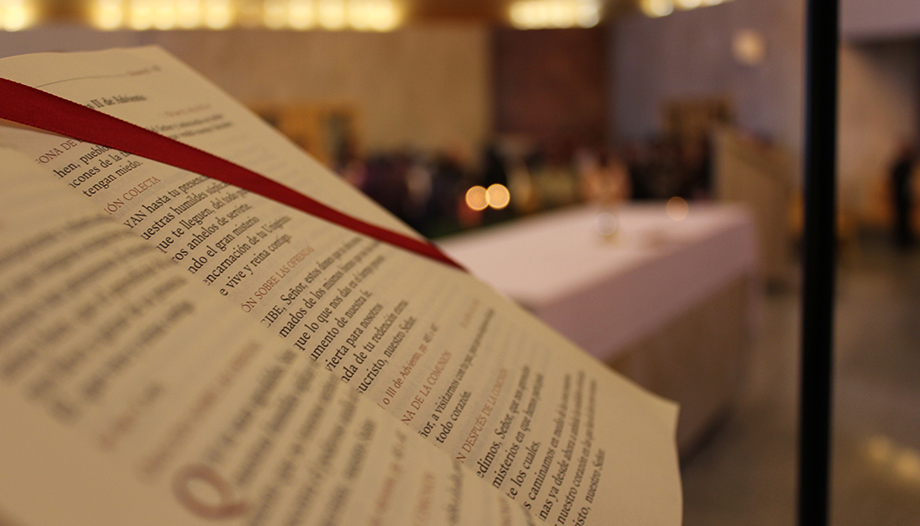
The second reading provides the key to understanding both the first reading and the Gospel. It is like the spine of a book, holding together the various pages of today’s liturgy into a single message. St. Paul writes: “Owe no one anything, except to love one another; for whoever loves has fulfilled the rest of the law".
We all have a duty to love one another. Love takes many forms, and today’s readings invite us to embrace one of its most demanding and beautiful expressions: fraternal correction. We love others not only by encouraging and serving them, but also by helping them grow in holiness, overcome their faults, and leave behind everything that separates them from God.
The Christian life is not meant to be lived in isolation. God has made us responsible for one another. Each of us has weaknesses and blind spots that we often find difficult to recognize on our own. Out of true love, God places other people in our lives to help us persevere on the path of virtue.
This is the message of the prophet Ezekiel in the first reading: “"To you, son of man, I have appointed you as a watchman for the house of Israel; when you hear a word from my mouth, you shall warn them on my behalf."”. A sentinel who sees danger approaching and remains silent is not fulfilling his mission. In the same way, Christian love sometimes requires us to speak a difficult truth.
The Gospel reveals to us the purpose of that correction. Jesus says, “If your brother sins against you, rebuke him when the two of you are alone. If he listens to you, you have saved your brother.”. The goal is not to prove that we are right, to display a supposed moral superiority, or to humiliate another person. The goal is to save a brother or sister. True fraternal correction always seeks the genuine good of the other person.
But the duty to correct others also implies the duty to allow ourselves to be corrected. Anyone who is willing to practice fraternal correction must be equally willing to receive it. In fact, our reluctance to correct others may sometimes stem from our own unwillingness to accept correction. We hesitate to point out others’ faults because we ourselves resist having our own pointed out to us.






 Español
  English
  Italiano
  Français
  Deutsch
  Polski