


—By Michael O'Neill, miracle investigator, author and host of the weekly radio show «The Miracle Hunter» on Relevant Radio.
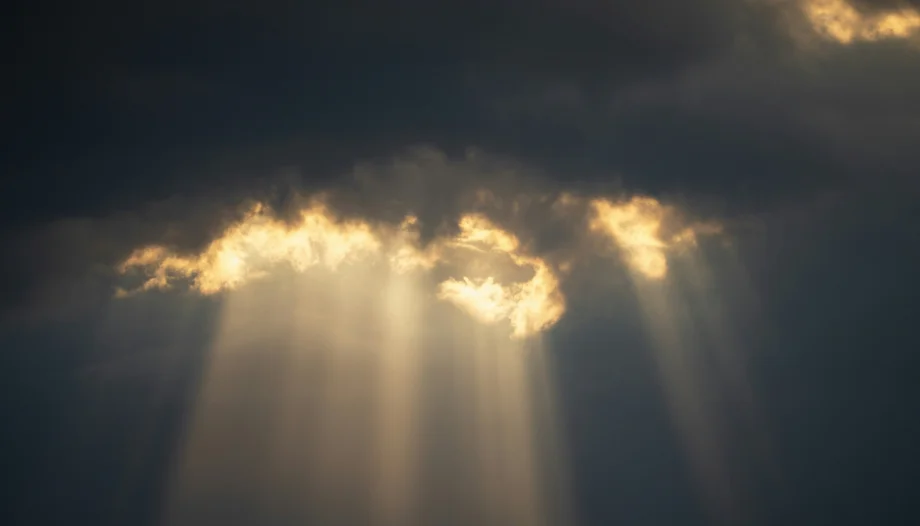
What is a miracle? From the very etymology of the word—«mirari,» to marvel—it seems to be a rare and inexplicable blessing, an occasion of God's benevolent intervention in our lives. These special moments go beyond exceeding our expectations or mere wonders, and are common to us all, at least in our search for them.
We all pray for miracles of one kind or another. Perhaps a sports fan prays for a miraculous pass at the end of a football game, or a student begs God to help them pass an exam they expect to fail. Someone desperate to find their lost wallet might implore Saint Anthony for help. We long for our dream job or pray for divine intervention to free us from financial hardship.
In times of serious illness for our loved ones, we turn to God with great faith, desperately pleading with Him to grant them life. Sometimes, the small coincidences of daily life seem to be miraculous signs that we are always under the care, protection, and watchful eye of a loving Father.
Miracles are part of our life of faith
As Catholics, our own stories of miracles, both large and small, are woven into the vast tapestry of a faith tradition that embraces supernatural events and celebrates them in ways we may not even perceive. Those of us who wear a Miraculous Medal or a scapular of any color are indirectly reminded of the ancient apparitions of the Virgin Mary from which these sacramentals originated. Even the most famous of all sacramentals, the rosary, comes from a pivotal miraculous account: Saint Dominic received it in a vision in 1208.
Our faith is founded on the reality of two great supernatural events: the Incarnation and the Resurrection. Throughout the world, Catholics experience a miracle every hour during Mass, when the bread and wine are truly transformed into the body and blood of Jesus Christ. Even skeptics who outright reject supernatural events, like the famous atheist David Hume, who maintained that «miracles are impossible because they cannot happen,» still need an explanation for the inexplicable.
The Church's criteria
However, when it comes to validating miracles of healing used in the canonization of saints or those that pass the scrutiny of the Medical Commission of Lourdes at the famous site of the 1858 apparitions to Saint Bernadette Soubirous, the criteria used by the Catholic Church to determine that they are medically inexplicable are extremely strict.
For a cure, for example, to be considered miraculous, the illness must be serious and impossible (or at least very difficult) to cure by human means, and not in a stage where it could disappear spontaneously in a short time. No medical treatment should have been administered, or it must be certain that the treatment administered is unrelated to the cure. The cure must be spontaneous, complete, and permanent.
Because of these nearly impossible standards, the Lourdes Medical Commission, while documenting more than 8,000 extraordinary healings, has only validated 71 of them. The same rules are applied when the Vatican investigates a miracle attributed to the intercession of a saint candidate as part of its assessment of whether that person has lived a life of heroic virtue and is with God interceding for us.
Medical miracles, on their own, are difficult to validate with so many strict guidelines, but in canonization causes, the added difficulty lies in the fact that prayers to a potential saint must be directed exclusively to that person (not to other saints). It almost seems like a miracle that they find any miracle suitable for use in canonizations. The Congregation for the Causes of Saints' medical commission has more than 60 doctors from various specialties, and at the local level, the investigation is led by an independent physician appointed by the bishop.
Miracles have marked the history of Christianity
The Church has always been enriched by the fruits of miracles. The wonders performed by Christ confirmed his divinity and attracted disciples. The apostles were commanded to perform miracles to establish the Church. The Roman Emperor Constantine was the first to feel inspired to legalize Christianity in the year 312, after witnessing a vision of the Christogram IHS in the sky.
Throughout the centuries, religious orders such as the Servites and the Mercedarians arose from the mystical experiences of their founders. In addition to commemorating miracle-working saints on feast days throughout the year, we celebrate the supernatural throughout the Roman calendar with the commemorations of Divine Mercy, Our Lady of Lourdes, Our Lady of Mount Carmel, Our Lady of Fatima, and Our Lady of Guadalupe.
Some of the world's most impressive churches have a supernatural foundation; four of the twelve largest churches in Christendom (by area) trace their origins to an apparition of the Virgin Mary. Countless people make pilgrimages each year to sites of miracles around the world, including the millions of sick people seeking healing in the waters of Lourdes and the faithful who, on occasion, kneel to venerate the miraculous image of Our Lady of Guadalupe in Mexico City. Furthermore, millions of conversions are attributed to this vision on Tepeyac Hill, as well as to the Miraculous Medal and other devotions with miraculous origins.
Do not turn faith into a search for miracles
Despite the emotion that miracles can evoke, Pope Francis has encouraged us not to think of God as «a magician with a magic wand.» Miracles can be a source of inspiration for a deeper relationship with Christ, but it is important not to be led astray by the excessive pursuit of the latest supposed supernatural phenomena or to fall into a modern Gnosticism, seeking secret knowledge at the expense of an authentic practice of faith based on Christ. The Church safeguards the faithful through rigorous investigations into credible alleged miracles and by offering judgments and recommendations on how to approach these specific cases of the seemingly miraculous.
For skeptics who suggest the church has something to gain by promoting every supposedly dubious event to lure people back to churches or entice them to spend money on religious items at a new shrine, the reality is that the implicit goal of these investigations is precisely to eliminate the distraction and demonstrate that nothing miraculous is happening, so that people will return to a more deeply rooted faith. Furthermore, the investigations are so rigorous that very few claims even have the possibility of being considered supernatural events.
What is most interesting is that, even in cases of meticulously investigated and approved miracles, such as the famous apparitions of Lourdes and Fatima, the Church does not require Catholics to believe in these events or to incorporate these devotions into their life of faith.





 Español
 English
 Italiano
 Français
 Deutsch
 Polski