




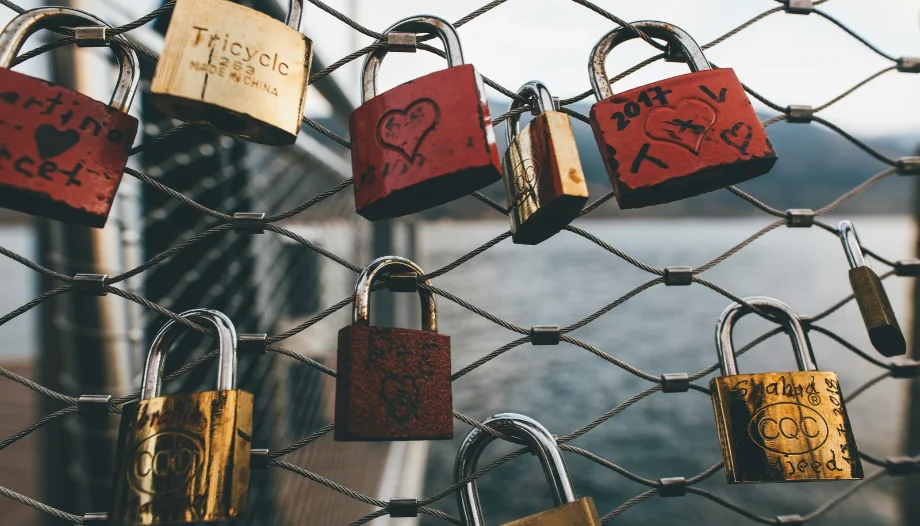
 From Torrelodones to Vallecas: A Journey to the Essence Red alert: routine threatens your marriage
I've heard my whole life that human love isn't just a feeling, and that intelligence and will must intervene for love to be true love and not degenerate into mere sentimentality. However, I've never been able to fully understand how intelligence and will operate from within, what dynamics these faculties introduce into love, how they make it “more love.”.
In this regard, I'd like to share an anecdote. During a work trip to Chicago, at a get-together with friends, we started talking about our experiences with love, and I mentioned that my boyfriend was coming to visit and that we hadn't been dating very long. We talked about lasting relationships, about each of us wanting someone to truly love us. It was a wonderful conversation, where we each spoke about falling in love, heartbreak, hurts, dreams, and hopes. I mentioned that I felt ready to marry Luis. Then, we talked about what each of us thought about love, about getting married or not, until one of us said firmly: I don't want to get married because I couldn't give up passion.
I understood what she meant. I didn't aspire to a boring marriage either, one without passion, without the spark of falling in love. If marriage were a passionless relationship, I wouldn't get married either. I was sure that wouldn't happen to me if I married Luis, but at the time I couldn't explain it well. Now I think I can.
The first clear idea that comes to mind is that infatuation simply happens; it's an attraction that occurs like springtime; you have no control over that phenomenon. But how does love happen? I don't buy the theory that we have to go from be lovers want to someone as if to reach love we had to put aside that first feeling that dominates us and give way to the will.
Being in love is both a feeling and a process. As such, it can mature well and give rise to lasting love, or it can become entrenched and degenerate into dependency. It's important to understand that moving from infatuation to love isn't about abandoning one phase to start another from scratch. Human beings don't advance to the next phase by erasing the previous one, but rather by integrating everything they've experienced. In this way, the previous feelings remain, but they evolve and acquire greater depth. And thus, in a very natural way, the dynamics of intelligence and will come into play.
It's true that being in love is initially experienced as a vague feeling. You don't know why, but you like someone. You might say they're handsome/beautiful, and little else. That initial feeling deepens, becomes clearer, and matures, depending, at the same time, on your own maturity. Falling in love at 14 is not the same as falling in love at 20, or 25, or 30. Falling in love in school is not the same as falling in love in college, or when you're already part of the workforce.
When we are in love, everything feels different, we experience things differently; even our perception of time changes, time with the other person passes faster than normal, you don't want to separate, you want to keep talking and for time to keep passing without anything else mattering so much.
That initial feeling matures and integrates other, deeper feelings, shaped by the knowledge the other person offers you about themselves and by everything you observe in their interactions with friends and family. You begin to notice more specific aspects of the other person and become increasingly able to articulate what you like about them, what qualities you admire, and even what you don't like so much about their appearance or behavior. These are all dynamics set in motion by a mature person, someone who knows how to feel, observe, value, and continue feeling.
On the contrary, that initial feeling of love can give way to dependency. In this case, the attraction felt for the other person becomes entrenched in another very human feeling: need. Dependency often manifests itself as: “I need you to be okay.” In contrast, a well-managed infatuation leads to something like, “I could live without you, but I don't want to.” Again, these are not pure ways of feeling: in a healthy marriage, husband and wife can be fine without each other and, at the same time, need each other with the kind of need that love brings—that is, having shared many forgivenesses, many tears, many laughs, a whole life.
Indeed, the separation between love and dependence is once again too simplistic a typology to correspond to life itself. Intellectually, we explain it this way. But in the sometimes capricious course of life, everything is intertwined and dynamic. I can have a loving, fairly free relationship with my husband, and at the same time, exhibit dependent behaviors that will mature as I myself seek that maturity, already within the context of marriage.
Now, after having fallen in love several times and having been married only once, I could answer that friend of mine and say: I haven't given up on the passion I felt for the man who was then my boyfriend and is now my husband. I could live without him, but I don't want to. And I'm more in love with him every day. That depth comes not from sheer willpower, but from the willingness I have toward him and he toward me, to integrate into our lives all the good and all the bad that we do and that happens to us. I could leave him and look for new loves elsewhere, but I would be missing out on one that began six years ago and that still holds the promise of the love I've always been searching for, a love that Luis has been fulfilling day by day.



 Español
 English
 Italiano
 Français
 Deutsch
 Polski