


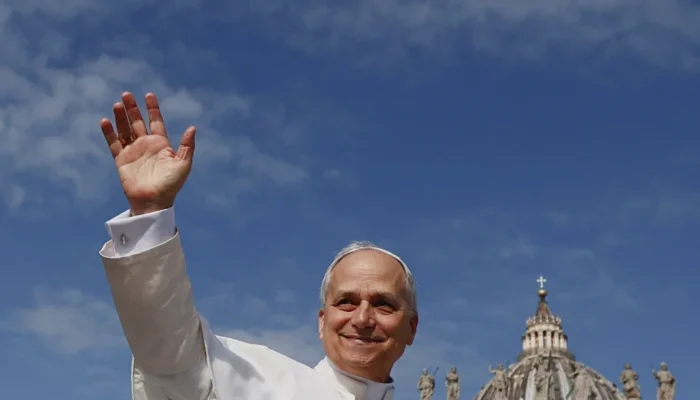
 Pope praises Christian martyrs in Algeria to local CatholicsAlgeria's complicated religious situationLeo XIV invites Christians to remain in Algeria, like St. Augustine.
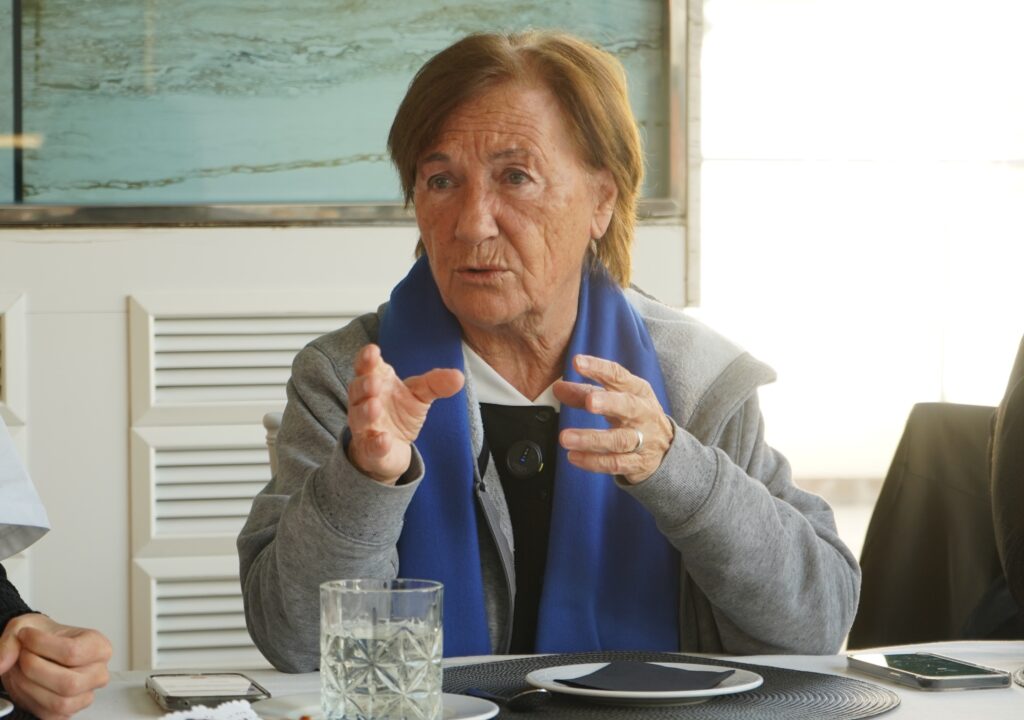
Sister Lourdes Miguélez is one of the Augustinian missionary nuns who survived a jihadist attack in Algeria in 1994. Two of her companions, Sisters Caridad Álvarez and Ester Paniagua, lost their lives in that terrorist attack. Both are among the 19 North African martyrs beatified in Oran on December 8, 2018. Sister Lourdes, along with Sister María Jesús Rodríguez, has shared her testimony in the context of Encuentro Madrid 2026, (the annual culture and faith event of Communion and Liberation in Spain). It was one of the most impactful that anyone could hear.
Sister Lourdes Miguélez exudes peace in her conversation with journalists. And faith, and hope, and charity. She recounts her experiences in Algeria and the meaning of her mission, with a supernatural perspective. After the Islamist attack, she had to return to Spain. But nine years later, she was able to come back to the same place where she continues to work as a nurse and run a center for the Augustinian nuns.
“I lived with Cari and Ester for many years,” says Sister Lourdes. The three of them lived together in the community. There were more of them, but in the summer, since they were so threatened, two sisters stayed in Spain so that not all of them would be in danger.
“With them I experienced very intense moments of reflection, questioning why we wanted to stay there at that time, knowing we were in danger. It was a matter of faith, of following Christ and not letting him down, not abandoning the mission, and helping the Church, because Algeria was being emptied of Christians. In 1993 there were 222 nuns in the country; three years later there were only 70 of us left.”.
The people from the embassies, people from all over the world who worked there, who were afraid, left. “We decided to stay because we felt that evangelical calling and the need to follow Jesus. We had to be with the people to support them. If they had welcomed us when things were good, how could we abandon them in their time of need, when they themselves needed us?” he explains. “As long as you are here, there is hope for us. But if you leave, it’s as if we no longer have any way out and our future life has no meaning,” he recalls them saying.
October 23
Since the murders and kidnappings began around 1992, the entire Church began to reflect. “We were under a lot of pressure from Spain, and from the Embassy. They asked us to leave, for our own protection. But we couldn't leave.” Furthermore, they claimed, two of them had contracts with a hospital, where they worked as nurses.
“We saw all the difficulties. We’d leave home, wait for the bus, and know that at any moment a bullet could come from anywhere.” But they told themselves: “We’re in God’s hands, we’ve already given our lives, it doesn’t matter what happens.”.
On October 23, 1994, the Spanish Ambassador visited their home. He had come to the sisters“ center to ask what they needed. Afterward, they headed toward the church, which was four blocks away. ”I suggested,” Sister Lourdes recalls, “that we go two by two. We had been warned by the ambassador to change our route every day. It was the last thing they heard: to go two by two so that if two were killed, all four wouldn't be.” They went to the Little Sisters of Jesus community. Two people passed by and shot them.
Upon hearing the shots (they were very close), Sister Lourdes exclaimed, “It’s the sisters!” Amid the confusion, they were told that two foreign women had been shot. They took refuge in the Little Sisters’ house. Later, the police arrived and confirmed that the sisters had indeed been shot.
He recalls: “When we heard the gunshots, when we were fifty meters away from them, when we saw them lying on the ground, covered in blood, the only thing I could think to say was, ‘Lord, forgive them, for they know not what they do.’ It was the strongest prayer we could offer, asking forgiveness for all those murders they were committing, because what was happening in the town at that moment was horrific.”.
She acknowledges that for her, “Algeria today is like walking in the land of martyrs, because what was experienced was so intense, that for me the land I tread is sacred,” the Augustinian nun comments.
To stay or not
“I think we were very clear about it, because everyone in Spain wanted us to leave. But we said no.” Their decision was firm: “Whatever happens, we are here because it is our mission. Jesus Christ gave his life for us. I, who am his little creature, am not going to be more than him. So we told ourselves that we have followed Jesus Christ, and in good times and bad, we have to accept it.”.
In other words, “if we have to give our lives, then we give them. We were all ready. It was a whole process from the moment the events began, a continuous discernment of the word of God,” she explains. “It’s what Monsignor Claverie said: that it was more important to stand with the people so they could have a future, than for us to withdraw and save ourselves.”.
Then Cardinal Duval insisted: “We cannot speak of universal fraternity if, at this moment when we see our people suffering from war and injustice, we withdraw. It would not be logical to speak of this.”.
The hope
Sister Lourdes affirms that these events strengthen their hope. “It is the land of Saint Augustine, but there have been many martyrs before him, many. It is a land martyred. Saint Augustine said, when the Vandals entered North Africa, that we had to be consistent and remain with the people as well, even if something happens to us; it is a way of remaining with the people.”.
“Everyday martyrs too, because fidelity to a calling is like saying that I follow the message we are living from our ancestors and be what we wanted to be, faithful to Christ, to the mission, to the Church.”.
Another factor that Sister Lourdes highlights is that “at that time we realized the power of the Communion of Saints. We felt we had extraordinary strength and joy. Where did it come from? The people who were praying for us. For me, it's a challenge, because we see today what is happening in Nigeria—horrible—and in so many villages where Christians are being martyred. We have an obligation to be vigilant and to pray, because the only strength we have is God.”.
“At that moment you ask yourself how to help and make the suffering of our brothers and sisters our own. Then you say, you are not alone, it is the whole Church and all the saints who are interceding for us. And that was a great strength.”.
Offering of life
For her, the murder “was the culmination of what we had been waiting for for years. In other words, it wasn't a surprise. We were going to the Eucharist; it was our sisters” offering to Christ. That was the Lord's Passover at that moment.”.
Then, he didn't want to go back. He had to obey. “In those moments you see clearly what you have to do. It's not much reflection, it's what I have to do. I had to leave because I had to obey myself too. For me it was like a second death. Because it was like betraying my brothers.”.
In reality, although they knew they were threatened, as part of the community they never thought the Church could be affected. Until the first ones were killed. The jihadists targeted foreigners and anyone intellectual: journalists, artists, doctors. “They were murdered for being open-minded. Because what the jihadists wanted was for everyone to leave and plunge everyone into darkness.”.
“I went to work every day, to the hospital, and they would tell me about the atrocities they were experiencing. People with their throats cut, hanged… What happened was horrible. They were very, very painful massacres.”.
“When we gathered for Mass, those were such powerful moments of praying for all these people. It was what nourished and strengthened us. The Eucharists had immense value at that time. Prayer transformed you. We felt a greater strength.”.
Human relations
After the attack, the nun spent eight years in Spain, and then they asked her if she wanted to return. “I was happy and content,” she says. “But the people in the neighborhood were very surprised. With everything you've been through, with everything that's happened. And you come back.” She replies, “There is death everywhere, but we must have the greatness to forgive. We have to rebuild this trust, rebuild the relationships we had before, and live our lives again. This gesture of forgiveness that we offered them was significant.”.
She works at the hospital and at the Augustinian center. “At our center, everyone is Algerian and doing all the work for us. We only offer the house and shelter. Many people come to share with us; if they are sick, if they have a family problem, if they need food, then we are there to listen to them.”.
He admits that, “sometimes I feel like I’m wasting my time, but then when I reflect, I say, look, today this gentleman came with this problem, the other one came to ask for food… It is for them a place of listening, of welcome, of feeling good, of their home.”.
They transmit the faith. He affirms: “We are not there to ‘convert,’ we are there to proclaim Christ. Through our lives, through our commitment, I think we ask questions. In fact, there are some who have, for example, come to the basilica, we welcome them, and there have been people who have wanted to encounter Christ.” He clarifies that “it is God who converts. I am there only to be a witness to Him; the rest is up to Him.”.
The nun learns from the Muslims: “They have helped me with their gestures and their way of being. That challenges you, and demands that you live your faith with more authenticity and more truth. It is true that I wish they would become Christians to discover the beauty of Jesus Christ; they say the opposite: ‘what a shame, because you are better than us, but in the end you will be condemned because you don't believe’.”.
Sister Lourdes says that when she hears the priest calling to prayer at 5 in the morning, she thinks about her strength to get out of bed and go to pray at that hour… “And we sometimes say that the mass is too early, that the priest preaches for too long… We are somewhat losing the strength of our Christian life.”.
As a form of communion, the Augustinian nuns there, upon hearing the priest call to prayer, which is praising God, resolved that each one, wherever she was, would pray the Glory Be to the Father three times. “That helps us to experience prayer in communion, because it is praise to God.”.
With the Pope
“Pope Leo very much loves our mission. In fact, when he was elected Pope, I wrote to him, and he replied. He is a friend to me. He is such a humble, approachable person,” recalls Sister Lourdes. She adds, “He has discovered the mission in Algiers, something he has loved. For me, this mission broadens my perspective in many situations,” she tells us.
In its trip to Algeria He went to visit them. “In the 54 years I’ve lived there, I’ve never seen the way the townspeople came together for his visit. They arranged everything, down to the smallest details. Everyone wanted to see him. It’s important for them that the head of state of Vatican City comes to their town,” he explains. “The message he left was: Peace be with you.”, salam aleikum. For them, he is someone who has come to bring peace, to break down barriers even among us.”.



 Español
 English
 Italiano
 Français
 Deutsch
 Polski