Evangelization

«De Arte Sacra,» or what a cathedral and Starbucks have in common

De Arte Sacra, the website created by four friends that makes amazing connections between faith, art, and contemporary culture.

Javier García Herrería-December 9, 2025-Reading time: 2 minutes

On the Romanesque façade of Lucca Cathedral, carved in stone almost a thousand years ago, there is a surprising figure: a double-tailed mermaid. It is not a whimsical ornament. In biblical and medieval tradition—inspired by St. Jerome and his reading of the prophet Isaiah—the mermaid symbolizes the seduction that leads to sin: the voice that turns people away from God and draws them toward a superficial, vain, “Babylonian” life.

That same image, the double-tailed mermaid, is what millions of people see every morning on their Starbucks cups. This is no coincidence. The founders chose this figure because it expresses exactly what they wanted to convey: the irresistible call of coffee, a gentle but powerful seduction that invites—or draws—you in.

One siren, two opposing messages. Lucca's warns: “Be careful, this can lead you astray.” Starbucks“ whispers: ”Give in, you can't resist." The first liberates. The second hooks you. And both, separated by centuries, tell us the same thing: the eternal battle between temptation and freedom.

These types of connections—between art, theology, and popular culture—are precisely what illuminate Sacred Art, a small website created in their spare time by four friends: two lay people and two priests who enjoy showing how Christian art continues to speak to today's world.

Origin, objectives, and funding

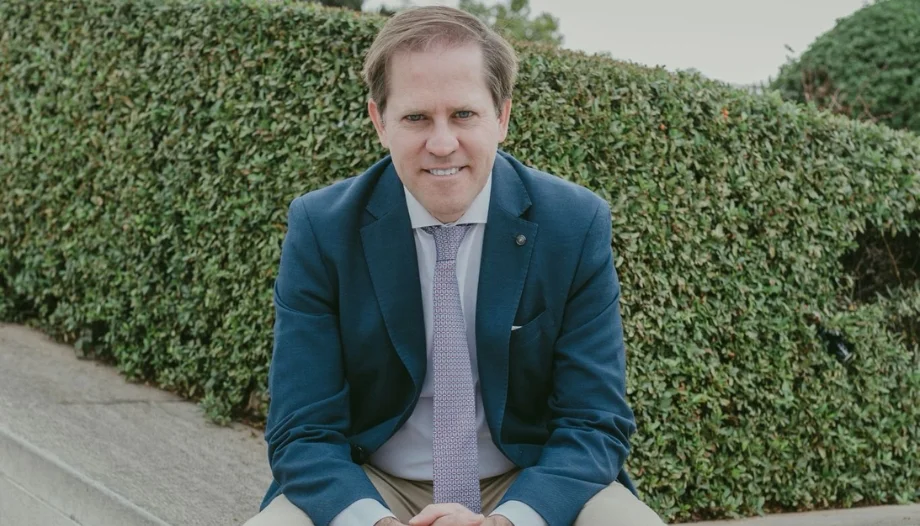
Enrique Sañoso explains that “the project arose a few years ago in a completely natural way, as the result of a concern shared by several friends. We each have a different way of perceiving the world and writing. David tends to engage more with the contemporary world, Ferran has a more direct and pastoral approach, Marcel is concise and goes into detail, and perhaps in my case I have a certain weakness for making texts speak by taking advantage of current events... In short, we complement each other quite well.”. 

One of its objectives is to “offer a space of silence.” In such a frenetic world, marked by digital trepidation, the website aims to be “a contemplative online space. That would already be a miracle,” says David. “Very interesting things can be generated in silence. Well, actually, I think that all interesting things are generated in silence. If we achieve silence, we have managed to open the doors of the soul.”. 

Marcel, for his part, believes that content makes it easier to delve a little deeper into reality and Mystery. “Sometimes this understanding comes to me through a deeper knowledge of an artist, Sacred Scripture, or a saint; other times, I simply recognize that I am able to look at things with a new perspective, like someone who seeks a loved one in all things,” he adds.

As for financing the website, the project currently has minimal expenses. “We pay for the domain costs ourselves,” explains Ferrán, “although we would like to be able to invest something, mainly to be able to offer more languages and make the site more international. We are looking for a donor who shares this concern.”. 

Instagram, the latest innovation

A few weeks ago, «De arte sacra» began offering its content on Instagram in an effort to promote its content in new formats.


View this post on Instagram


A post shared by deartesacra (@deartesacra)

Read more
Evangelization

Saint Juan Diego, seer of the Virgin of Guadalupe and promoter of her devotion

Saint Juan Diego Cuauhtlatoatzin He was a Mexican indigenous man to whom Our Lady appeared in 1531. Ambassador-messenger of Saint Mary of Guadalupe, he was beatified (1990) and canonized (2002) by Saint John Paul II, and is celebrated in the liturgy on December 9, three days before December 12, the feast day of Our Lady of Guadalupe.

Francisco Otamendi-December 9, 2025-Reading time: 2 minutes

After his baptism, he was named Juan Diego, but his original name was Cuauhtlatoatzin, which in Aztec means “he who speaks like an eagle.” He was an indigenous peasant who traveled from his village to Mexico City on Saturdays, the day that Spanish missionaries devoted to catechesis. 

Juan Diego, 57, was walking across a rocky field at dawn on December 9, 1531, according to the vatican saints' calendar. When he reached the foot of Tepeyac Hill, he was drawn to the song of a bird he had never heard before. Then silence, and a sweet voice calling him: «Juantzin, Juan Diegotzin.». 

The man climbs to the top of the hill and finds himself facing a young woman in a dress that shines like the sun. He kneels and listens as she introduces herself: ‘I am the ever-Virgin Mary, the Mother of the true and only God.’.

The bishop asks for a sign 

The Lady entrusts Juan Diego with a task: to inform the bishop of what has happened to her so that a Marian temple can be built at the foot of the hill. The archbishop of Mexico, Fray Juan Zumárraga, does not believe him. In the afternoon, the Lady invites Juan Diego to try again the next day. 

This time, the bishop asks a few more questions about the apparition, but he remains skeptical and asks for a sign. The farmer reports the request to the Lady, who promises to give him a sign the following day. 

The peasant learns that his sick uncle is dying, and he goes out to find a priest. On the morning of the 12th, Juan Diego, at Tepeyac, changes his route to avoid meeting the Lady.

But the Virgin Mary stands before him and asks him why he is in such a hurry. The peasant throws himself to the ground and asks for forgiveness. The Lady reassures him. His uncle is already cured, she says, and invites Juan Diego to climb the hill to pick flowers to take to the bishop, some “roses of Castile.” Something impossible in the middle of December. 

The Indian gathers them up and wraps them in his tilma, the coarse cloth cloak he wears, and sets off for Mexico City. Juan Diego recounts the events to the bishop and unrolls his cloak in front of those present. 

The image of the Virgin is reproduced on the cloak.

At that very moment, the image of the Virgin, the icon venerated everywhere, appeared on the cloak. The bishop went to the site of the apparitions, began the work, and on December 26, the first chapel was ready next to the hill.

San Juan Diego, a widower for several years, asked to live in a small house near the chapel. For another 17 years, until 1548, he continued to be the guardian of Our Lady, the dark-skinned Virgin. You can find a more complete biography here.

The Shrine of Tepeyac, whose heart is the sacred image of the Virgin Mary of Guadalupe, has been a constant destination for pilgrims since the 16th century, not only from the Mexican nation  but of the entire American continent, explains the Shrine.

The authorFrancisco Otamendi

Read more
The Vatican

The Pope prays that Mary will fill believers with hope and open up oases of peace.

As he celebrated the feast of the Immaculate Conception while the Jubilee Year came to a close, Pope Leo XIV prayed today in Rome that the “hope of the Jubilee” would “flourish in Rome and in every corner of the earth,” bringing with it reconciliation, nonviolence, and peace.

CNS / Omnes-December 8, 2025-Reading time: 5 minutes

- Cindy Wooden, Rome (CNS) 

Pope Leo XIV prayed today before the statue of the Immaculate Virgin in Rome, as his predecessors, praying that Mary will give hope to believers. And that “after the holy doors, other doors will now open in homes and oases of peace, where dignity can flourish again, education in nonviolence can be taught, and the art of reconciliation can be learned.”.

Standing near the Plaza de España in the center of Rome, at the foot of an imposing column crowned by a statue of Mary, the Pope led thousands of Romans, pilgrims, and tourists in prayer on December 8.

Firefighter Roberto Leo

At dawn this morning, a firefighter named Roberto Leo, the longest-serving chief of the Rome Fire Department, climbed 100 steps of an aerial ladder. He placed a wreath of white flowers on the outstretched arms of the statue, some 90 feet above the ground.

Following a tradition started in 1958 by St. John XXIII, Pope Leo blessed a basket of white roses that attendees placed at the foot of the statue. He read a prayer written specifically for this year's feast, with references to what is happening in the Church, the city, and the world.

May other doors now open

At the prayer To Mary, Pope Leo recalled that the Jubilee Year brought millions of pilgrims to Rome. Representatives of “a humanity that has been tested, sometimes crushed, humble as the earth from which God has formed it and into which He continues to breathe His Spirit of life.”.

“Look, O Mary, at so many sons and daughters in whom hope has not been extinguished: may what your Son has sown in them sprout forth, He, the living Word who in each person asks to grow even more, to take on flesh, face, and voice,” prayed the Pope. .

As the Holy Doors of Rome's major basilicas are about to close at the end of the Jubilee on January 6, he said that “other doors are now opening. Doors of homes and oases of peace where dignity can flourish once again, where nonviolence is taught, where the art of reconciliation is learned.”.

“New Lights in the Church”

The Pope prayed that Mary would “inspire new light in the Church that walks in Rome and in the particular Churches that in each context gather the joys and hopes, and the sorrows and anxieties of our contemporaries, especially the poor and all who suffer.”.

Pope Leo XVI also expressed his hope that baptism, which washes away each person's original sin, “will produce holy and immaculate men and women. Called to be living members of the Body of Christ, a body that acts, comforts, reconciles, and transforms the earthly city where the city of God is being prepared.”.

Mary's intercession in a world full of change

In a world full of “changes that seem to catch us off guard and powerless,” he asked Mary to intercede and help.

“Inspire dreams, visions, and courage, you who know better than anyone that nothing is impossible for God, and at the same time that God does nothing alone,” he prayed.

The Pope also asked Mary to help the Church to always be “with and among the people, leaven in the dough of a humanity that cries out for justice and hope.”.

Pope Leo XIV gives his blessing to pilgrims and Romans gathered in St. Peter's Square at the Vatican for the Angelus prayer on December 8, 2025. (Photo CNS/Vatican Media).

At the Angelus

Before heading to Plaza de España, the Pope led the recitation of the Angelus at noon with visitors in St. Peter's Square.

By preserving Mary from all stain of sin from the moment of her conception, he said, God granted her “the extraordinary grace of a completely pure heart, in view of an even greater miracle: the coming of Christ the Savior into the world as a man.”.

That extraordinary grace bore extraordinary fruit, he said, “because in her freedom she welcomed it, embracing God's plan.”.

“The Lord always acts in this way: he gives us great gifts, but leaves us the freedom to accept them or not,” said the Pope. “Thus, this feast, which gladdens us with the immaculate beauty of the Mother of God, also invites us to believe as she believed, giving our generous assent to the mission to which the Lord calls us.”.

Silhouette of the Marian statue in Rome's Plaza de España after a firefighter placed a wreath on the statue's arm on December 8, 2025, the feast of the Immaculate Conception. (CNS photo/Lola Gomez).

Prayer of the Holy Father Leo XIV

Hail Mary! Rejoice, full of grace, in that grace which, like a gentle light, illuminates those upon whom God's presence shines.

Mystery surrounded you from the beginning; from your mother's womb, great things began to work in you, which soon required your consent, that «yes» that inspired many other «yeses.».

Immaculate, Mother of a faithful people, your transparency illuminates Rome with eternal light, your path perfumes its streets more than the flowers we offer you today.

Many pilgrims from all over the world, O Immaculate One, have walked the streets of this city throughout history and in this Jubilee Year.

A proven humanity, sometimes crushed, humble as the earth that God fashioned it from and in which His Spirit of life never ceases to breathe.

Look, O Mary, at so many sons and daughters in whom hope has not died: may what your Son sowed spring forth in them, He, the living Word who asks each one to grow more, to take on body, face, and voice.

May the hope of the Jubilee flourish in Rome and in every corner of the earth, hope in the new world that God is preparing, and of which you, O Virgin, are like the bud and the dawn.

After the holy doors, may other doors now open to homes and oases of peace where dignity can flourish once again, education in nonviolence can be taught, and the art of reconciliation can be learned.

May the kingdom of God come, that newness you so longed for and to which you opened yourself completely, as a child, as a young woman, and as a mother of the nascent Church. Inspire new perspectives in the Church walking in Rome and in the particular Churches which, in every context, welcome the joys and hopes, the sorrows and anxieties of our contemporaries, especially the poor and all who suffer.

May baptism continue to produce holy and immaculate men and women, called to be living members of the Body of Christ, a Body that acts, comforts, reconciles, and transforms the earthly city in which the City of God is being prepared.

Intercede for us, who face changes that seem to find us unprepared and powerless. Inspire dreams, visions, and courage, you who know better than anyone that nothing is impossible for God, and at the same time that God does nothing alone.

Guide us forward, with the urgency that once drove your steps toward your cousin Elizabeth and the restlessness with which you became an exile and a pilgrim, to be blessed, yes, but among all women, the first disciple of your Son, Mother of God with us. Help us to always be Church with and among the people, leaven in the dough of a humanity that cries out for justice and hope.

Immaculate, woman of infinite beauty, watch over this city, over humanity. Show her to Jesus, bring her to Jesus, present her to Jesus. Mother, Queen of Peace, pray for us.

The authorCNS / Omnes

The Vatican

The highlight of Michael Bublé's career: singing for the Pope and for the poor

The Canadian singer was the guest star at the Concert with the Poor, held this Saturday at the Vatican.

Luísa Laval-December 8, 2025-Reading time: 3 minutes

The Vatican's Paul VI Hall already has a practically fixed event on its Christmas agenda: the Concert with the Poor, which in its 6th edition brought the singer who is present in all our Christmas HitsMichael Bublé. In the front rows were 3,000 poor people from Rome, while another 5,000 people filled the auditorium.

The Canadian singer said he was thrilled to have the opportunity to sing in Rome in the presence of Pope Leo XIV: “It's the greatest moment of my career. God is blessing me by allowing us to share this fraternal evening together.”.

Bublé appeared comfortable on stage and sought to interact especially with the most disadvantaged members of the audience. He often turned to the left side of the stage, where a group of people in wheelchairs were seated. He invited the audience to sing along, without fear of getting the lyrics or pitch wrong.

Among the songs chosen for the occasion, the Christmas classic could not be left out. It's Beginning to Look a Lot Like Christmas (impossible to read without humming along), in addition to its success Feeling Good.

But the highlight of the evening was the performance of Ave Maria by Schubert, whose preview during the previous day's press conference had already gone viral on social media. Bublé expressed his gratitude, stating that it is one of the most beautiful songs of all time.

The presence of the Pope

Among the guests that evening, the Pope attended the entire concert and recalled that the now traditional concert at the Vatican was conceived by his predecessor, Pope Francis. “Tonight, as the melodies touched our souls, we felt the inestimable value of music: it is not a luxury for the few, but a divine gift accessible to all, rich and poor alike.”.

With this gesture, León shows that he agrees with the maxim of his spiritual teacher, Saint Augustine: he who sings prays twice. He recalled that music and beauty are a form of love, a via pulchritudinis (path of beauty) that leads to God.

“Music is like a bridge that leads us to God. It is capable of conveying feelings, emotions, even the deepest movements of the soul, elevating them and transforming them into an ideal stairway connecting earth and heaven. Yes, music can lift our souls! Not because it distracts us from our miseries, because it stuns us or makes us forget life's problems or difficult situations, but because it reminds us that we are not just that: we are much more than our problems and our sorrows, we are children loved by God!”

On the path to beauty

We cannot forget the permanent fixture of the Concert with the Poor, maestro and composer Marco Frisina, director of the Choir of the Diocese of Rome. As always, he took the opportunity to recall the Christian meaning of Christmas and the hope that music brings to the darkness of the world.

In previous editions of the Christmas event, Frisina shared the stage with musical greats such as Hans Zimmer and Ennio Morricone. Each year is an opportunity for these artists and the hundreds who accompany them to have a private meeting with the Holy Father and show a gesture of generosity: sharing their talent with those who might never have the opportunity to see them.

The Italian priest has already established himself as a spokesperson for sacred music, and believes in its strong potential for evangelization. Initiatives such as this concert and the devotional show he directed during the Youth Jubilee vigil in August show that the via pulchritudinis It is truly a good way to talk about God today.

At the end of the concert, all the poor received an Italian dinner distributed by the Vatican: lasagna, meatballs, and broccoli.

Evangelization

«Potuit, decuit, ergo fecit.» The Immaculate Conception: devotion, dogma, and mystery

Reynaldo Jesús-December 8, 2025-Reading time: 7 minutes

The solemnity of the Immaculate Conception occupies a privileged place within the Catholic faith, not only because of the doctrinal content it conveys, but also because of the spiritual and pastoral richness it has generated over the centuries. It brings together the devotion of the Christian people, the defining solemnity of the magisterium, and theological reflection. 

Mary, preserved by grace from the stain of sin at the first moment of her existence, appears as the point of union between celebrated faith, believed faith, and lived faith. In this sense, the Church discovers in the angel Gabriel's affirmation in Luke 1:28—“Læaetare, gratia plena” (κεχαριτωμένη)—the privileged biblical foundation of her original holiness. The Greek Fathers, such as St. Ephrem and St. John Damascene, saw in this fullness of grace a radical exclusion of sin: “You, and you alone, are totally beautiful, without any stain” (Ephrem, Carmina Nisibena 27,8). 

Now, the classic immaculate premise —He could, he should, therefore he did.—, simply summarizes the logic of the Marian mystery, which can be summed up as «God could preserve Mary from original sin; it was advisable to the dignity of the Mother of the Incarnate Word that it should be so; therefore, in his loving providence, did it»It should be remembered that this formula is present in the Franciscan tradition and was gradually adopted by the Church, and with it not only does it express an argument theological, but rather a dynamism spiritual y Pastoral that permeates ecclesial life. 

Duns Scotus masterfully formulated this logic, which was included in the papal bull. Ineffabilis Deus;However, St. Irenaeus already anticipated the spirit of this premise when he contrasted Eve and Mary: “the knot of Eve's disobedience was untied by Mary's obedience” (Adv. Haer. III,22,4). If it was fitting that the new Eve should introduce life where the old Eve introduced death (cf. Rom 5:12-21), it was also fitting that she should be completely renewed from the beginning. 

The dogma of the Immaculate Conception is not an isolated privilege, but rather constitutes the luminous manifestation of God's gratuitousness and the full availability of human freedom to his work. This dogma, defined by Pope Pius IX in Ineffabilis Deus (1854), it has been celebrated for centuries both in the liturgy and in the piety of the Christian people. Even long before its magisterial recognition, the heart of the believer already intuited and venerated Mary's original purity, understanding that God prepared her in a unique way to be the Mother of his Son. 

Pius IX echoes this “instinct of faith” of the faithful when he affirms that the Church has always regarded the Immaculate Conception as a doctrine received from the Fathers, and even more, has sought to refine the teaching so that it may receive clarity, light, and precision (cf.  Ineffabilis Deus, prologue). Benedict XVI emphasizes this continuity by acknowledging that the expression in Luke 1:28 captures the most beautiful title given by God to Mary, proposing her as star of hope y dawn that heralds the day of salvation, without neglecting the Christological and ecclesial reading of Mary, in whom her unique vocation, her anticipated election, and her role in the Church stand out, valuing dogma as an authentic integration of the divine plan (Angelus, December 8, 2005-2007). 

The voices of those who, through a multitude of devotional works, express with poetic and theological beauty the ecclesial conviction that Mary is “all pure” cannot be silenced., beautiful total. The devotion of the people, the teaching of the Church, and theological reflection are oriented toward an integrated vision of the Marian mystery that illuminates both the history of salvation and the vocation of human beings. The liturgy applies to Mary the texts of the Song of Songs: “You are all beautiful, my friend, there is no blemish in you” (Song 4:7), which St. Ambrose interpreted in a Marian key (Expos. in Luke. II,7). 

The «potuit»: theological possibility in Ineffabilis Deus

We must remember that the popular belief in the so-called “convenience”The mystery found its doctrinal affirmation in Ineffabilis Deus (December 8, 1854). In this bull, Pope Pius IX articulates the dogma of the Immaculate Conception based on full divine omnipotence: «If God could preserve Mary from original sin in anticipation of the merits of Christ, then such an act legitimately belongs to his sovereign freedom.»,Therefore, it is not just a simple assertion of operational power, but rather the expression of a possibility inscribed in the plan of salvation. 

Although the papal text explicitly cites St. Ephrem, St. Augustine, and St. Andrew of Crete as ancient witnesses to this original holiness, curiously, in the texts of St. Augustine, who is prudent in his formulation, when he addresses the question of sin, he states: “When it comes to the Virgin Mary, I do not want sin to be mentioned,” summarizing this in the Latin expression «except, therefore, the holy virgin», that is, excepting the Blessed Virgin Mary (De natura et gratia, 36). 

By offering biblical and patristic foundations, the bull shows that this could It does not arise from voluntarism, but from the internal coherence of the divine plan. The new Eve had to be fully associated with the mission of the new Adam; the fullness of grace proclaimed by the angel must have a beginning proportional to its destiny. The could This thus becomes the foundation of the dogma: if God is the almighty Father and Savior, He could certainly accomplish this unique work in Mary. 

The Incarnation required free human cooperation; and if God prepares the way for the coming of his Son, nothing prevents that preparation from reaching the very root of Mary's being. What the Church proclaims is that God acted in advance; that his redemptive action is not limited by time; and that Christ's grace can even break into the origin of a human existence to preserve it from evil. 

The «decuit»: the appropriateness of the Immaculate Conception in the devotional intuition of the people. If the Church has recognized in Mary an original purity, it is largely because the Christian people perceived her in this way long before the dogmatic definition. 

I must say that the novena Candor of eternal light (written in Guatemala around 1720 by the Franciscan Friar Rodrigo de Jesús Sacramentado) can be considered an authentic and remarkable testimony to this sensitivity; it is a work that, using poetic and symbolic language, expresses the profound “convenience” —the decuit— that the Mother of the Savior was from her origin a space without shadow for the light of God. 

Far from being a popular sentiment, this conviction arises from continuous contact with the Mystery. Identifying Mary as candor of eternal light, presents an important theological insight: If the Son is the Light, it was fitting that his Mother should be pure transparency, an aurora without sunset, a creature open without fissures to the action of grace.

The decuit devotional nature is evident in the biblical images that the novena displays: Mary as mirror without blemishas enclosed garden or as morning star. These figures show that the Christian people have “recognized” in Mary that which was appropriate to her maternal mission. What centuries later would be formulated dogmatically already lived in the prayer and contemplation of the faithful. As so often in history, liturgy and piety precede theological definition, expressing the profound wisdom of the sensus fidelium

The «fecit»: historical realization and its contemporary reception in Benedict XVI If theology affirmed the possibility (could) and the faithful sensed the appropriateness (decuit), the therefore he did points out the certainty that God has done it. In Mary Most Holy, the preservation from original sin is not merely a theological concept, but rather a historical event that reveals something essential about God's action in the world: his desire to radically save, to rebuild humanity from the ground up

I would like to refer to the thoughts of Pope Benedict XVI, who has enlightened us with a timely interpretation. The German Pope seems to read the therefore he did as a pedagogy of freedom. God did not annul Mary's nature, but brought it to its fullness. Preserving grace did not distance her from others, but made her an icon of what humanity is called to be when it unreservedly welcomes divine love. In a world experiencing inner fracture, the Immaculate appears as a sign of the definitive victory of grace: God did it to show what she will do fully in regenerated humanity. Mary is “transparency of God's love, a sign of what God wanted for man from the beginning” (Homily, December 8, 2005). 

For Pope Benedict XVI, the Immaculate Conception is humanity's pure and original “YES” to God. In her, the fecit divine in a profoundly Christological way: what God accomplishes in Mary anticipates, illuminates, and confirms the work of Jesus Christ in all people. Mary is not an isolated exception—it would be a grave error to think so—but rather the most valuable fruit of redemption. Let us remember that the definition of the dogma points from Mary to Jesus Christ: “The Blessed Virgin Mary was preserved immune from all stain of original sin from the first moment of her conception, by a singular grace and privilege of almighty God, in view of the merits of Jesus Christ.”. Mary is the icon of man's totally free response to God, because human freedom, preserved and elevated, becomes the place where Grace unfolds. 

Unity of mystery in the dynamism of could–did–made 

The Immaculate Conception, viewed from the classical immaculate premise, as I mentioned at the beginning, «He could, he should, therefore he did.», reveals the profound coherence of divine action: God can do whatever He wants, He wants what is best for His love, and He does what most fully manifests His glory and mercy..

The Christian people intuitively grasped this convenience in devotional works such as Candor of eternal light, a novena composed in the context of Baroque spirituality and widely disseminated in the Hispanic tradition, a privileged testimony to this devotion; the Magisterium of the Church confirmed the possibility and reality of the mystery in Ineffabilis Deus; and Benedict XVI's thinking presents it from a Christological interpretation as a profoundly relevant truth for humanity, also called to allow itself to be transformed by grace. 

Mary, the Lady who is the candor of eternal light, is the presence of what God can do, of what befits his love, and of what he has effectively accomplished in history.  To contemplate her is to learn to trust in divine action which, even today, continues to recreate the world and guide it toward its fullness. Despite the wounds and the evident loss of the sense of sin, Mary continues to be a sign of hope, a reminder of the beauty of a pure heart, a model of inner authenticity, and a guarantee of the definitive triumph of grace. There is no doubt that in Mary we see God's promise fulfilled in the sense that grace is stronger than sin. Thus, the «could–did–made» It is not a line of reasoning, but a spirituality: it describes how grace acts, how it transforms, and how it completes its work in those who open themselves fully to it.

The authorReynaldo Jesús

Integral ecology

Artificial Intelligence: opportunity, limitations, and human support

Artificial Intelligence (AI) is a powerful technological tool that, although it generates fascination and fear, requires critical education, balanced use, and ethical responsibility.

JC Montenegro-December 8, 2025-Reading time: 4 minutes

We live in a time when technology is no longer just “around” human life, but within it. Artificial Intelligence, or AI, is no longer a futuristic promise but has become a silent companion that translates texts, organizes tasks, suggests videos, and even corrects our mistakes. If we are adults, this surprises us. If we are young, this is already normal. This generational difference is key to understanding how we relate to AI and why it is urgent to know its advantages and risks.

AI is not magic. It is built on data, algorithms, and patterns. It learns from our searches, our preferences, and the collective behavior of millions of users. And it does so at great speed. That is why it fascinates us. That is also why it frightens us.

Survey results

In a study of 1,013 young people in the Salesian Inter-American region, 61.51% said they were «quite familiar» with AI Salesian Youth and AI. This reveals that the younger generations are not just hearing about the topic: they are living with it. They incorporate it into their daily lives, their schoolwork, and their digital leisure activities. And yet, when asked about their fears, the response is surprisingly mature. 47.91% express concern about the irresponsible use of AI, 46.41% fear the impact on human relationships, and 45.11% question the risk of replacing human labor. We are not dealing with a naive youth. They are restless, aware, and, above all, asking for support.

This fact opens up a debate that is not only technological, but deeply human. For centuries, progress was understood as the ability to automate. First, machines replaced arms. Then, computers sped up calculations. Today, AI learns, suggests, creates, and decides. But the question is not whether AI can do it, but whether it should. And even more so: what do we do with that power?.

The young people who participated in the study do not want AI to replace their intelligence. They imagine a tutor who explains step by step, who teaches, who inspires. They do not want answers that avoid effort, but tools that allow for better understanding. This aspiration reveals something essential: AI is not an end in itself. It is a means. Its morality will depend on how it is used.

Generational contrast

Adults, on the other hand, tend to see AI as a distant novelty. Or as a cultural threat. We find it difficult to recognize that digital technology is not an extension of youth culture: it is part of the ecosystem in which they have grown up. In a survey of 1,375 Salesian lay collaborators, 78.81% see AI as a new educational tool, while 55.61% fear technological dependence. Salesian Lay and AI v1. The tension is evident. Enthusiasm and caution coexist, because AI promises efficiency, but also raises suspicions that it may rob us of our own judgment.

This contrast between generations should not lead us to extreme positions. We should neither idolize AI as a universal solution nor demonize it as an enemy of humanity. Both paths hide the same danger: ceasing to think for ourselves. AI is powerful when it amplifies our ability to learn, discern, and create. But it impoverishes us if it accustoms us to responding without asking questions, consuming without verifying, and delegating without reflecting.

Over the last few years, I have worked alongside young people, educators, and social workers who are experiencing this transition. In many of them, I have noticed a fascinating phenomenon. When faced with complex tasks, such as solving math problems, AI can show them the procedure. When they need to understand dense texts, it can summarize them. When they need examples, it can generate them. This help is valuable, as long as it does not override the learning process. When young people stop reading because “AI has already told them what is important,” they lose more than just a grade. They lose intellectual autonomy.

How AI works

Adults run the same risk. How often do we consult digital tools to decide what to eat, where to travel, or what to think about a public debate? AI acts as a mirror of our preferences. It gives us what we think we want, but not necessarily what we need. Content recommendation platforms, for example, learn our tastes and intensify them. The result is comfortable but dangerous: we live in information bubbles that are increasingly personalized and less diverse.

To understand AI maturely, it is important to remember something simple. It has no values of its own. It does not know what is good or bad. It only knows how to correlate probabilities. It will function according to the purpose we assign to it and the ethical care with which we use it. A hammer can build a house or break a window. The tool does not define the meaning. Human intention defines it.

Some suggestions

So how do we move forward? There are three keys to the humane use of AI.

First, critical education. AI should not be presented as a substitute for effort, but as an ally of thought. Young people need to know how it works, not just how to use it. What data it collects, what biases it carries, how to verify its information. The same applies to adults. Understanding its limitations prevents disappointment and abuse.

Second, balance. If we rely on AI for everything, we will lose our ability to choose. Using it is not wrong. Depending on it is. Technology is a support, never a replacement for human interaction, dialogue, and the patience that comes from solving a problem without shortcuts.

Third, ethical responsibility. AI creates images, texts, voices. It can imitate styles or fabricate data. This requires caution. Verify sources. Cite correctly. Protect privacy. Respect the work of others. Be transparent about its use when the context requires it.

Ultimately, talking about AI means talking about humanity. The younger generations are sending us a message. They are not asking us to ban technology. They are asking us to accompany them in using it purposefully. They do not want a world without AI. They want a world in which AI does not replace what makes us human.

Technology advances. We must advance with it. But if we forget that intelligence is not just about processing data but also about loving, dialoguing, imagining, and searching for meaning, then no machine will be responsible. It will be us who have given up thinking and acting freely.

AI can be a tremendous opportunity to learn, create, and grow. It can also be a silent risk that limits autonomy and weakens coexistence. The decision does not lie with algorithms. It lies with us. Understanding its advantages and disadvantages, listening to the voices of those who already live with it, and making conscious choices will be key to ensuring that technology serves life, and not the other way around.

The authorJC Montenegro

Executive Director of the Salesian Family Youth Center in Los Angeles.

Evangelization

What Marian miracle occurred on the Feast of the Immaculate Conception?

On December 8, we celebrate the Immaculate Conception, a feast day that links the dogma proclaimed by the Church with the miracle that made the Virgin Mary the patron saint of the Spanish Tercios.

Álvaro Gil Ruiz-December 8, 2025-Reading time: 2 minutes

On December 8, we celebrate the dogma of the Immaculate Conception. On that same day in 1854, Pope Pius IX (Pius IX) declared the dogma of the Immaculate Conception of the Virgin Mary with the bull ‘Ineffabilis Deus.’ The Immaculate Conception is one of the four Marian dogmas: divine motherhood, perpetual virginity, and assumption into heaven in body and soul.

Immaculate comes from without blemish, without stain of sin. In Spain, there is the privilege of blue vestments on this day. 

But very few people know that the reason it is December 8 and not March 27 or April 3 is because of the miracle of Empel.

This miracle took place on the night of December 7 and 8, 1585, during the reign of Philip II. During the Eighty Years' War in the Netherlands (known in Spain as the War of Flanders and in the Netherlands as the Dutch War of Independence). Specifically, the Tercio Viejo de Zamora, a 5,000-strong army commanded by Field Master Francisco Arias de Bobadilla, was stationed on the island of Bommel, located between the Meuse and Waal rivers. 

They were outnumbered and short of supplies against Admiral Holak's troops. On top of that, they were surrounded on Mount Empel. There, while digging trenches to prepare for battle, they found a Flemish painting of the Immaculate Conception. They placed the image on a makeshift altar, and Master Bobadilla, who had a deep devotion to the Virgin, asked his soldiers to pray to the Immaculate Virgin for victory.

During the night, the following miracle occurred. An icy wind blew in and froze the waters. When the Spanish troops realized this, they were able to cross the rivers on foot and take their adversaries by surprise. They won such a resounding victory that Admiral Holak went so far as to say: «It seems that God is Spanish, to have worked such a great miracle for me.» That same day, the Immaculate Conception was proclaimed patron saint of the Spanish Tercios in Flanders and Italy.

Since then, she has been considered the patron saint of Spain and the army. It was first celebrated in Spain in 1644, but it was declared a public holiday and dogma, as we have said, on December 8, 1854, by Pope Pius IX.

To celebrate the festival, nine masses are held, beginning on Saint Andrew's Day and continuing until the day of the festival. 

The Vatican

«Peace is possible»: 7 lessons from the Pope after traveling to Turkey and Lebanon

During the Angelus on this Second Sunday of Advent, Pope Leo XIV stated that what has happened during his recent trip to Turkey and Lebanon “teaches us that peace is possible, and that Christians can help to build it.” He summarized this in seven lessons.  

Editorial Staff Omnes-December 7, 2025-Reading time: 3 minutes

The apostolic journey to Turkey and Lebanon allowed Pope Leo XIV to assure thousands of people gathered in St. Peter's Square for Sunday's Angelus that these days “teach us that peace is possible. And that Christians, in dialogue with men and women of other religions and cultures, can contribute to building it. Let us not forget that peace is possible,” he reiterated.

After a brief reflection on the Gospel of this second Sunday of Advent, focusing on the figure of the precursor, St. John the Baptist, and his message of conversion, the Pope recited the Marian prayer of the Angelus. He then commented that a few days ago he returned from his first apostolic trip to Turkey and Lebanon, which Omnes reported on daily.

7 conclusions from the trip

León XIV has summarized the trip in seven points.

1.- “Together with my dear brother Bartholomew, Ecumenical Patriarch of Constantinople, and representatives of other Christian denominations, gathered to pray together in Iznik, ancient Nicea, where the first ecumenical council was held 1,700 years ago.

Today marks the 60th anniversary of the joint declaration by Paul VI and Patriarch Athenagoras, which put an end to mutual excommunications, he recalled.

“Let us give thanks to God and Let us renew our commitment on the path toward the full visible unity of all Christians.". 

2. “In Turkey, I have had the joy of finding the Catholic community. Through the patient dialogue and service to those who suffer, This community bears witness to the Gospel of love and to God's logic, which is manifested in smallness.”

3.- “The Lebanon remains a mosaic of coexistence and it has comforted me to hear so many testimonies in this regard.”. 

4.- I have found people who proclaim the Gospel welcoming the displaced, visiting prisoners, sharing bread with the needy. 

5.- “It has comforted me to see so many people on the street greeting me y I have been moved the meeting with the relatives of the victims of the explosion in the port of Beirut. 

6- “The Lebanese were hoping for a word and a presence of comfort, but it was they who comforted me with their faith and enthusiasmI am grateful to everyone who has accompanied me with their prayers! 

7.“What has happened in recent days in Turkey and Lebanon teaches us that peace is possible and that Christians, in dialogue with men and women of other religions and cultures, can help build it".

Close to the peoples of South and Southeast Asia

“I am close to the peoples of South and Southeast Asia, who have been severely affected by recent natural disasters,“ the Pope also said.

The Holy Father prays “for the victims, for the families who mourn their loved ones, and for those who are providing assistance. I urge the international community and all people of good will to support our brothers and sisters in these regions with gestures of solidarity.”.

The Pope warmly greeted all Romans and pilgrims. “I greet all those who have come from other parts of the world, in particular the Peruvian faithful from Pisco, Cusco, and Lima. To the Poles, I also recall the Day of Prayer and Material Support for the Church in the East. Also to the group of Portuguese students. And to the Italian parish groups.

Before the Angelus

Commenting on Sunday's Gospel, Pope Leo said that “certainly, the tone of the Baptist is severe, but the people listen to him because his words echo God's call not to play with life, to seize the present moment to prepare for the encounter with the One who does not judge by appearances, but by the works and intentions of the heart.”.

He also pointed out that the world needs hope, and that “nothing is impossible for God. Let us prepare ourselves for his Kingdom, let us welcome it. The smallest one, Jesus of Nazareth, will guide us. He, who placed himself in our hands, from the night of his birth to the dark hour of his death on the cross, shines in our history like the rising sun.”.

“A new day has begun: let us wake up and walk in its light! Let us learn to do so like Mary, our Mother, a woman who waits with confidence and hope,” he concluded.

The authorEditorial Staff Omnes

Evangelization

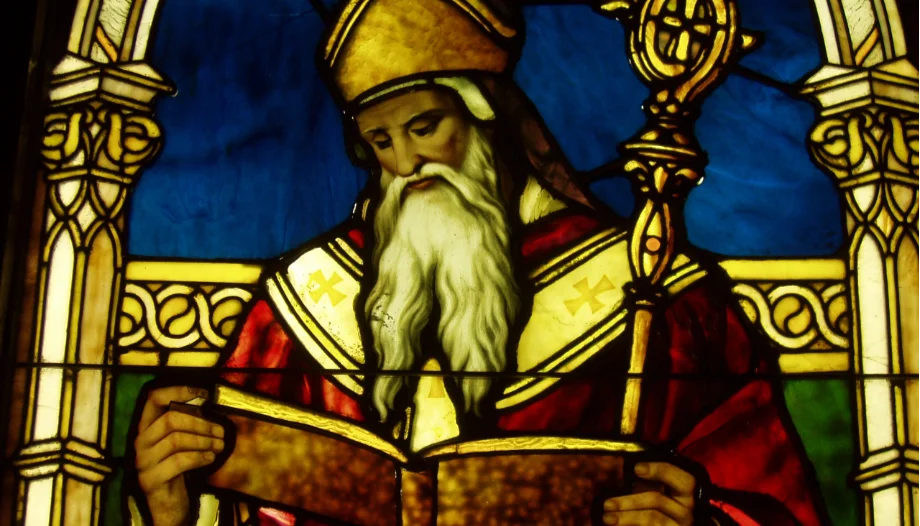
Saint Ambrose, bishop of Milan, key figure in the conversion of Saint Augustine

On December 7, the Church celebrates Saint Ambrose, although today is the Second Sunday of Advent. Bishop Saint Ambrose of Milan (4th century) is one of the four great Latin Doctors of the Church. The other three are Saint Augustine, Saint Gregory the Great, and Saint Jerome.

Francisco Otamendi-December 7, 2025-Reading time: 2 minutes

Saint Ambrose, bishop of Milan (Italy), is one of the most influential figures in early Christianity and a Doctor of the Church. His life and work have been extensively documented by official sources of the Holy See and by the Augustinian tradition. In particular, Saint Augustine's Confessions recounts the decisive role that Saint Ambrose played in his conversion.

The son of a Roman Christian family and educated in rhetoric and law, Ambrose arrived in Milan as governor of the province of Liguria and Emilia. His election as bishop in 374 was swift and almost sudden. According to ecclesiastical sources, he was still a catechumen when the community acclaimed him to occupy the episcopal see. After receiving baptism and holy orders within a few days, Ambrose served as bishop for more than two decades.

He stood firm against the emperors Theodosius and Valentinian II, always insisting on the primacy of Christian conscience and the need for rulers to submit to moral law.

Impact on San Agustín 

The Confessions‘ narrate the impact produced by the eloquence, intelligence, and spiritual interpretation of Scripture that Saint Ambrose offered in his homilies. St. Augustine He was initially a skeptical intellectual, and found in Saint Ambrose a living testimony of the Christian faith. 

It was Saint Ambrose who finally baptized him on Easter Vigil in the year 387. The Augustinians say that “if we did not have Saint Ambrose, we would not have the Augustinian Order as we know it today.‘.

“Where Peter is, there is the Church.”

Saint Ambrose always recognized the primacy of the Bishop of Rome, affirming: “Ubi Petrus, ibi Ecclesia” (‘Where Peter is, there is the Church’). Sacramental theology, liturgy, and sacred music—including the famous ‘Te Deum,’ traditionally associated with him—made Saint Ambrose a pillar of the Latin Church. 

The authorFrancisco Otamendi

Read more
Books

Genealogy of human rights

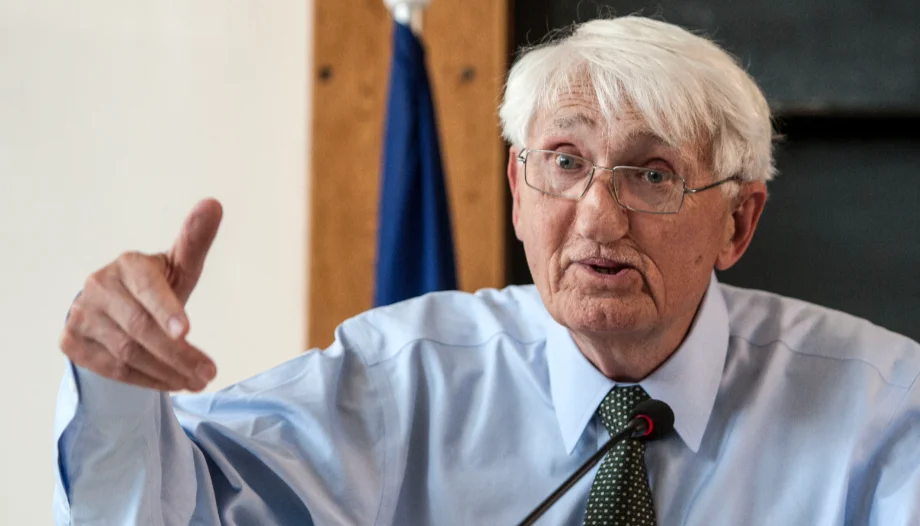
The Universal Declaration of Human Rights emerged after the war to establish a universal foundation for human dignity, which Hans Joas suggests is a "sacralization of the person" that makes them inviolable.

José Carlos Martín de la Hoz-December 7, 2025-Reading time: 4 minutes

At the end of World War II, and in light of the magnitude of the Jewish holocaust, the clamor for a universal declaration of human rights prevailed as an unavoidable and urgent duty of humanity before history and the future of the human race.

Certainly, the declaration of human rights was made possible by total and universal agreement, and that Magna Carta has since served to unite people of all races and conditions, as if they were applications of natural law, of a global ethic, and of a starting point for preventing or at least condemning attacks on human dignity.

The problem is that, in the minds of Christians, Jews, and Muslims who believe in a single, transcendent God, it was very clear that human rights were based on the dignity of the human person as a child of God or, at least, as a creature of God. 

The difficulty lay with non-believers, who were growing in number and who could not find a solid principle to support human rights other than human rights themselves.

The foundation of human rights

The idea developed by Hans Joas in the essay we are discussing here is precisely this: basing human rights on the dignity of the human person would be tantamount to sacralizing the human person, that is, giving them a dignity and renown that would truly ward off the temptation to attack, humiliate, or degrade that dignity.

In a way, Hobbes“ Leviathan pact would pale in comparison to the sanctification of the person who makes commitments of truth and freedom to other human beings, recognizing that this relationship dignifies and becomes a source of fruitful creativity. In short, it would be to interpret the Second Vatican Council, in the dogmatic constitution Gaudium et spes, when it affirms that man is the ”only earthly creature that God has loved for its own sake, and that it cannot find its own fulfillment except in the sincere gift of itself to others“ (n. 24).

This is very important, because Hans Joas believed that, after a few years, there was a risk that we would turn the 1948 Universal Declaration of Human Rights, which has underpinned the United Nations, into a “successful process of generalizing values” (p. 21). 

Religious freedom

Even some, years later, could cite it as an example of the historical evolution of the good intentions of the 18th century in updating the ideas of the American Revolution or the French Revolution (p. 24).

Above all, let us bear in mind that the French Revolution was above canon and civil law and manipulated the people and the Church at will to become persecutors of God throughout French territory, leaving the country littered with guillotined corpses until they themselves were guillotined (p. 31).

The first consequence in the United States was the principle of religious freedom, whereby no one should be harassed for their beliefs or forced to adopt a religion or creed (p. 53). Years later, the Second Vatican Council itself would take up this freedom and spread it throughout the world: without freedom, it is impossible to love God.

This was logical, since human rights apply to all people of all races, cultures, and nations, and we are all equal before the law and have equal opportunities.

Torture

They also quickly put an end to torture in the constitutions of all European nations, so that torture ceased to be a systematic part of criminal law or the investigation of theft (p. 63).

The disappearance of torture is not simply the result of the humanization of punishments and penalties; it is something much deeper. It is a return to the principle of presumption of innocence and the idea that man should always be treated as the image and likeness of God, and that it is preferable for him to lie than to be tortured.

Torture is undoubtedly abhorrent in a state governed by the rule of law and far removed from all human logic (p. 69). Human rights therefore introduce a new sensitivity into criminal relations (p. 71).

Thus, since 1830, it has been practically abolished throughout Europe, and in Spain since the Cortes of Cádiz in 1812, although it is true that torture has occasionally been used in some places in the 20th century, but it is no longer official or systematic. Unfortunately, we must point out the case of China (p. 105).

It is also interesting that, as a result of those first declarations of human rights, they began to be exercised and slavery was soon abolished in Europe, so that, with varying degrees of agreement on the implementation, slavery, which was a shameful scourge, disappeared.

Finally, our author returns to the idea of the spiritualization of human rights. Specifically, speaking of the Holy Spirit, he suggests that with its help, “the sovereign force of recasting” could be achieved (188).

He then goes on to say that God “reveals himself in history and in human action” (193), which is why it is important for Christians to show that they have a personal relationship with God, so that we act in reliance on him, asking for his help and involving him in our plans.

He even goes so far as to say that “institutions without spirit would be unreliable” (p. 204). Therefore, human rights would end up being like “the Magna Carta of human autonomy” (206). He concludes by saying that humans either become sacred by uniting with God or become disenchanted with life (p. 244).

The sacredness of the person. A new genealogy of human rights

Author: Hans Joas
Editorial: Salt of the earth
Year: 2025
Number of pages: 311
Read more
Dossier

Authority and obedience. Kindness and abuse.

Authority and obedience are the foundational relationship of God's love as Creator with his creation (the Christ-Father model). Abuse is the perversion of this authority, a selfish use of power that breaks charity and communion.

Raúl Sacristán López-December 7, 2025-Reading time: 5 minutes

"Here I am, Lord, to do your will.” (Heb 10:7) These words present Christ's mission, referring to the authority of the Father and the obedience of the Son. Authority and obedience appear here in a very different way from how we perceive them today in the wake of demands for different types of abuse, especially in consecrated life. At the very least, both terms arouse a certain suspicion and mistrust, yet we find none of these reactions in Christ with regard to the Father., “It wasn't like that at first.” (Mt 19:8).

Authority is the quality of the author; the author has authority over his work and has a relationship of authorship with it. The work has come from his hands, or better still, from his heart. As the words of the Book of Wisdom say: “You love everything you have created, because if you didn't, you wouldn't have created it.” (Wisdom 11:24). Just as an artist expresses what is in his heart, so too has the divine author expressed what is eternally in his Heart. God is “the Father from whom every family in heaven and on earth takes its name” (Ephesians 3:15), is the principle of all authority (cf. Romans 13:1), and it is a sacred principle, which in Greek is called “hierarchy.” And this principle, this authority, desires our sanctification (cf. 1 Thessalonians 4:3), our salvation, that we may know the truth (cf. 1 Thessalonians 2:4-5). 

Faced with such a loving plan, Christ listens attentively, that is, he obeys in order to bring about salvation. Authority, hierarchy, salvation, truth, obedience... Properly framing these terms is essential for us to correctly address the problem of abuse. 

Only if we understand them in light of God's truth and the relationship between them will we realize their goodness and, therefore, the seriousness of the abuses.

In consecrated life

Consecrated life appears from the outset as an attempt to live a more radical following of Christ, which is undoubtedly a good thing. 

In this desire to follow and imitate Christ, consecrated life can be a place where one can grow in grace, in service to God and to others. Unfortunately, however, the very environment of consecration lends itself to becoming a breeding ground for situations of abuse. Situations that, on the other hand, can occur in any other human relationship where there is authority (family, school, work, politics...), but which are more pressing in consecrated life because of the mission to live and show charity in a particular way. 

All types of abuse are, as the term suggests, a form of use that deviates from what it should be, seeking self-interest rather than the common good, the good of communion. God does not “use” his creation, much less his Son or human beings, but rather enjoys his relationship with them, enjoys communion, that relationship in which all grow in charity. 

Therefore, all abuse is a sin that damages and can destroy charity, the relationship with God, and always first and foremost the person who commits the abuse, even if they do not realize it. Given the condition of man, we must recognize that sin existed, exists, and will exist as long as men, each one individually, do not strive to convert to Jesus Christ. Since sin distances man from God, we must also point out that there is a darkening of faith and hope along with charity: the divine life in the believer is darkened.  

Seeking God

It is essential to take into account both the divine origin of authority and the reality of man. This anthropological perspective, which considers human beings as created, fallen, and redeemed, is the key to understanding their actions and also to acting appropriately in situations of abuse.

In order to prevent, as far as possible, any type of abuse, particularly in the religious sphere, it is necessary to rethink the situation from the perspective of one's relationship with God. A person who abuses another is searching for themselves, and is therefore a person who is in a state of great weakness and deprivation, even if this is not apparent from the outside. They are someone who does not know or feel loved by God and therefore seeks other loves. These situations are not easy to discern, because sometimes abuse can occur while pretending to seek service to God, as would have happened to Saint Martha had she not been warned by the Lord. These are not holy concerns, but worldly and even sinful ones. They are cases of psychological manipulation common to other areas, which are aggravated by the fact that they occur in a religious environment.

Recognizing abuse

On the other hand, there are other people who, faced with these personal weaknesses, react by seeking security and stability in others, which is why the convergence of these two types of people, dominant and dependent, facilitates the emergence of abuse. Added to all this is the human difficulty, in all areas, of recognizing one's own mistakes, weaknesses, and sins. Recognizing abuse is difficult for both the abuser and the abused, more so than one might initially think. This is not to say that those who are abused are always weak people: a strong person can be the victim of abuse, but it will be easier for them to detect it or find ways to defend themselves, seek support, report it, and leave; although there are situations of abuse that can end up destroying this initial strength.

In times of cultural confusion such as those we are experiencing, it is normal for processes to occur in which some people, perhaps with good intentions, end up doing harm. It is important to discern between leadership and authority. There are people who have a strong character, capable of attracting others and leading them toward a goal. But this leadership is not identifiable with authority, in the sense that we have described above. Our society, because of painful experiences with authority, has come to reject it, and has extrapolated this situation from the human to the divine, ending up rejecting God. The worst thing is that this worldly distrust of authority has also crept into the Church, and just as leaders are sought in the worldly sphere, so too in the Church there is a tendency to promote leadership over authority. Understanding what each thing is and their differences is also an urgent task today.

The difficulty in discovering and stopping these processes, as the cases we know show us, is much greater than we initially thought. Evil hides and defends itself. Thus, the desire for unity can end in uniformity, discretion in secrecy, separation in isolation... For this reason, it would also be important to promote a more detailed and exhaustive study of human action, in order to better understand how intention is formed, how the will moves, when intention deviates, what role affectivity plays in this process, etc. 

The complex current situation requires a theological rethinking of the problem, a more detailed analysis of the cultural situation, including within the Church, a more careful study of human action, and continued use of spiritual and psychological means to prevent, stop, and heal abuse. 

The authorRaúl Sacristán López

professor at the University of San Dámaso

The Vatican

The Pope to the laity: “To wait is to participate in the problems of the world.”

Before more than thirty thousand people who participated in the Jubilee Audience, Pope Leo XIV addressed “the lay faithful” in particular today. And he sent a message for Advent: “Waiting is not passive. Waiting is participating in the problems and beauties of the world.”.

Francisco Otamendi-December 6, 2025-Reading time: 3 minutes

On the feast day of Saint Nicholas of Bari, “a bishop known for his sensitivity toward the needy,” said the Pope, the nerve center of his brief catechesis This morning in St. Peter's Square was the liturgical season of Advent. But “it is not a passive wait. To wait is to participate in the problems and beauties of the world.”.

God involves us in his story, in his dreams. “To wait, then, is to participate. The motto of the Jubilee, ‘Pilgrims of Hope,’ is not a slogan that will disappear in a month,” said the Holy Father. “It is a program of life: ‘pilgrims of hope’ means people who walk and wait, but not with their hands in their pockets, but participating.”.

“The Second Vatican Council taught us to read the signs of the times: it tells us that no one can do it alone, but that together, in the Church and with many brothers and sisters, we read the signs of the times.”.

God is not outside the world, outside this life: “We have learned from the first coming of Jesus, God-with-us, to seek him among the realities of life. Seek him with intelligence, heart, and rolled-up sleeves!” he encouraged.

Vatican II: mission for the lay faithful, in particular

And the Council has said that “this mission corresponds in a special way to the lay faithful, men and women, because the God who became incarnate comes to meet us in everyday situations.». 

In the world's problems, “Jesus waits for us and involves us, asking us to work with Him. That is why waiting is participating!” he reiterated to tens of thousands of pilgrims and faithful in St. Peter's Square.

Example of the young politician Alberto Marvelli

Pope Leo has set an example of "Alberto Marvelli, a young Italian who lived in the first half of the last century. Raised in a family that followed the Gospel, trained in Catholic Action, he graduated with a degree in engineering and entered social life during World War II, which he strongly condemned.

In Rimini and the surrounding area, he “committed himself with all his strength to helping the wounded, the sick, and the displaced.” Many admired him for his selfless dedication, and after the war, he was elected councilman and put in charge of the housing and reconstruction commission. 

“This is how he entered active political life, but it was precisely when he was riding his bicycle to a rally that he was hit by a military truck. He was 28 years old.”. 

“Losing a little security and peace of mind in order to choose what is right”

The lesson Pope Francis draws from Marvelli is this: “Alberto shows us that waiting is participating, that serving the Kingdom of God brings joy even in the midst of great risks. The world becomes a better place if we lose a little security and tranquility in order to choose the good. This is participating.”.

Let us ask ourselves, the Pontiff encouraged: “Am I participating in any good initiatives that engage my talents? Do I have the perspective and encouragement of the Kingdom of God when I perform a service? Or do I do it grumbling, complaining that everything is going wrong? A smile on our lips is a sign of grace within us.”.

“No one saves the world alone: together is better.”

Finally, the Pope emphasized: “To wait is to participate: this is a gift that God gives us. No one saves the world alone. And not even God wants to save it alone: he could do so, but he does not want to, because together is better. Participating allows us to express and make more our own what we will ultimately contemplate forever, when Jesus returns definitively.”

Petition to our Immaculate Mother

In his greeting to Spanish-speaking pilgrims, ahead of the Feast of the Immaculate Conception on the 8th, Pope Leo encouraged them: “Let us ask our Immaculate Mother to teach us to participate in the building of the City of God, offering our gifts with joy and gratitude. May the Lord bless you. Thank you very much.”.

To the English-speaking pilgrims and all the faithful present, the Pope said: “As we begin this season of Advent, let us prepare our hearts not only to recognize the ways in which God comes to meet us, but also the ways in which he invites us to share in his life. May God bless you all!».

The authorFrancisco Otamendi

Read more
Evangelization

Priest on Board. Two Colombian priests launch a successful evangelization channel

“Sacerdote a Bordo” (Priest on Board) is a digital evangelization project that emerged during the pandemic and uses social media to bring people closer to faith.

Javier García Herrería-December 6, 2025-Reading time: 2 minutes

What began as a way to spiritually accompany the faithful during the pandemic lockdown has become a digital evangelization project with thousands of followers and a huge impact on social media. Priest on Board was launched in March 2020, driven by two Colombian priests from Opus Dei, Santiago Villa and Luis Miguel Bravo. Both studied journalism at the University of La Sabana and later pursued theological studies in Rome.

Both felt the need to be close to their communities during the pandemic, when lockdown restricted many pastoral activities. Father Luis Miguel explains that “We decided to start recording short spiritual talks for the students at our schools. The first ones, dedicated to St. Joseph and the Annunciation, were so well received that, encouraged by many parents, we opened a YouTube channel. YouTube and later Instagram, thanks to the help of four volunteer collaborators located in Colombia, Madrid, and Guatemala.”.

Variety of content

Since then, Priest on Board has grown organically and creatively. With an approachable and flexible style—which its creators compare to a bike ride—they have produced a wide variety of formats: street videos, in-depth interviews, conversion testimonials, and participation in events such as World Youth Day in Lisbon. They have featured guests such as Carlo Acutis' mother, Eduardo Verástegui, and pro-life activist Lupe Batallán.

In addition, the channel has developed a significant podcast lineup. Among the most popular are Meditating with Soccer, where reflections on the Gospel are linked to current events in soccer; Meditating with Film or Literature; Questions and Answers about Faith; and more recently Meditate with The Chosen, a space for spiritual meditations inspired by the successful series on the life of Jesus. This latest project even has its own website and the collaboration of priests from different countries.

Key assistants

As Father Luis Miguel explains, “the channel Priest on Board would not be possible without the constant help of four collaborators who have been present since its inception in Instagram. They are young women, professionals from different fields, who volunteered to help with tasks such as graphic design, video editing, social media management, and fan engagement. One of them, a mother of five, lives in Guatemala; another lives in Madrid; and the remaining two are in Colombia.”. Although they did not know each other at first, today they form a close-knit team that handles much of the work behind the scenes and has been instrumental in the channel's growth.

With nearly 84,000 followers on Instagram and a growing community in YouTube and audio platforms, Priest on Board is today a benchmark of how creativity, faith, and friendship can bear fruit in the midst of adversity. Its mission, they assure us, “remains the same: to help people pray with their daily lives and draw closer to God from anywhere.”.

Resources

The Lord's slaves

It is absolutely necessary to love and feel loved in order to act freely. And we cannot love while feeling like slaves or servants; we must do so freely from the new perspective that Jesus Christ has brought us: We are now children of God!

Bernardo Hontanilla Calatayud-December 6, 2025-Reading time: 9 minutes

When talking to psychiatrist and psychologist friends, they tell me that it is increasingly common to find people with a Christian upbringing in their offices who express a desire for freedom from the commitments they had made at a certain point in their lives. Married people who regret having done so, priests who want to marry, parents who do not want to be responsible for their children, wives who are fed up with their husbands and want to rebuild their lives independently, religious men and women who long to enjoy the pleasures of the world...

What all these situations have in common is a longing for freedom or autonomy that reveals that the person does not feel free, and they interpret these commitments as an intolerable burden that begins to enslave them. This tension between the commitment made and the desire for autonomy tears at the person's psychological interior to the point of creating real anxiety, depression, and very serious internal conflicts that, at the very least, produce a continuous feeling of dissatisfaction and unhappiness of such magnitude that it leads to a pathological state of constant complaint and aggression against oneself and against the person or institution that threatens one's freedom.

This situation invariably leads to the temptation, sometimes determination, to send everything “to hell,” following the style of Camilo José Cela. As this phenomenon seems to be very common, I have decided to reflect on the origin of this situation.

The spirit

Humans are not only composed of a body and a rational soul. There is a third element that, in addition to the rational soul, distinguishes him from other animals, and it is called “spirit.” Talking about spirit is not fashionable, especially in the fields of psychiatry and neuroscience, where some want to reduce the mind, consciousness, or psyche—elements of the human soul—to mere brain activity. And I don't want to talk about the soul, but about the spirit.

That image and likeness of God, which exists within every human being, is of fundamental importance because it allows us to recognize ourselves and to recognize how to treat others. It is the source of our freedom and our capacity to love, and both are intrinsically linked.

I believe that the difficulty we have in recognizing or denying the spirit of God within us arises fundamentally for two reasons: on the one hand, God, whose laws could constitute a threat to our freedom, and on the other, the experience of perceiving the suffering or injustice endured by the innocent in the world. Almost no one is an intellectual atheist, but there is a great deal of emotional atheism for these reasons. It is precisely the threat to our freedom that I wanted to continue reflecting on.

The relationship with God

Genesis contains an interesting account of what our relationship with God was like. It consisted of a family relationship, spontaneous conversation, and trust. However, evil already existed in the world, and the aim was to introduce it into man. And the serpent knew well how to tempt Eve. First, by presenting God as a tyrant: “So God has told you not to eat from any tree in the garden?” (Genesis 3:2). First lie: “just one”, Eva replied.

The serpent attacked again, this time treating God as envious: “It is that God knows [...] that you will be like God in the knowledge of good and evil.” (Gen 3:5). And now, he had achieved his goal. The immediate effect this had on Eve and her partner was that they no longer saw God as He really was: a Father who had given them the entire creation.

The immediate consequence was that the image and likeness of God at the core of her being, the spiritual dimension, became distorted: now a tyrannical, cruel, capricious, envious, and domineering god dwelled within her, who would take on different names throughout history and generations, such as Baal, Moloch, Jupiter, or Zeus. How we treat ourselves and others will depend on this new image we have of God. If the inner god is vengeful, we will also be vengeful, and if he is destructive, we will also adopt this attitude, even against ourselves, and if he is a master, then we will tend to dominate others and feel like slaves to God.

Slaves

Let us continue to dissect the origin of this feeling of being a slave. It is very common in the religious world to use the word slave or servant to refer to the relationship between man and God. That is why we were created, according to the Catechism of the Catholic Church: to serve, to give glory to God, and to be happy (cf. CCC, 356 and 358).

He placed us there to work and care for Eden. It was a task, but he did not create us to work in the garden. If man had been created to work, then creation would be more important than man. God would be the master of the garden, and we would be his servants or slaves who had to care for it. Caring for the material creation would be a task assigned to man for God's service, rather than a gift from God to man, who would feel happy caring for it and working in it. If we do not understand this well, we may feel like slaves to work. And this was the first consequence: seeing God as a God who makes me his slave and servant, whom I must fear.

The entire history of the Old Testament can be summarized as God's relationship with a people who are clumsy and hard-hearted: who see but do not understand, and do not know how to love. Only a few knew how to love God freely, albeit with no small difficulty, such as Abraham, Isaac, Jacob, and Moses.

Redemption

This relationship between God and his people was a rescue operation. God helped his people to bring them out of slavery into freedom, from Egypt to the Promised Land, and it culminated with the coming of Jesus Christ. With his coming, a turning point began that sought to restore the original idea of God within man, so that he would not feel like a slave but like a son and heir. We began to abandon the relationship of fear for a relationship of love.

God continues to want to rescue us from the only slavery that truly exists, which is that of sin, but there have always been and always will be people who want to remain slaves and return to Egypt. God insists: “I no longer call you servants/slaves […] I call you friends.” (John 15:15). We can never feel like servants or slaves, because now we are friends of God. What's more, we are now children of God! John expresses this forcefully in his first letter: “See what love the Father has given us, that we should be called children of God; and so we are!” (1 John 3:1).

Language and perspectives

So where does this insistence on continuing to call ourselves slaves or servants rather than children in our relationship with God come from? It is true that, as Campoamor says, “In this treacherous world, nothing is true or false; it all depends on the color of the glass through which you look at it.”. And that lens through which we view things and events in life can be transparent, dirty, or broken.

This perception of oneself as a slave has a dual origin: on the one hand, it stems from an internal problem, from the lens through which one views the world, from an erroneous idea of God that the serpent has instilled in man, the original temptation we spoke of earlier, leading us to believe that God is a master and tyrant who can capriciously do whatever he wants with our lives. We feel threatened by God, whose moral laws prevent the development of our freedom, instead of seeing that his rules give happiness and life to man (Deuteronomy 4:40; John 6:63). This threatening conception of God automatically leads to the destruction of the source of Love within ourselves and, consequently, of our freedom.

On the other hand, there is an external origin: the misuse of language that makes us think, through the use of words, that our relationship with God is one of slavery. There are many Christian prayers, many of them of medieval origin, in which the person praying renounces their freedom to submit to God. How barbaric! If this renunciation becomes effective, it is not surprising to hear lamentations about life and the commitments made. And I would do the same. If God is seen in this way, as a master and I as a slave, we are heading straight, usually unconsciously, towards an affective atheism that will lead us to expel that god from our lives. And rightly so. It would then make perfect sense to say “God is dead. We have killed him.” (Nietzsche) when I kill within myself that kind of god who does not coincide with the true God. And I will consider that death a triumph that will place me once again in a position of freedom to return to the true God.

Servants

Let's continue to dissect the concept of slavery. There were many ways to serve in the ancient world. The word doulos in the masculine form often meant slave or servant, but in the feminine form it also had another meaning. One of the meanings of δούλŋ (doula), refers to the work done by certain women in accompanying pregnancy, childbirth, and the postpartum period. They were not midwives. They were servants who emotionally supported their mistresses in these circumstances. Servants who were considered part of the family. There were also doulas thana, which offered support services for terminal illnesses.

In general, in the canonical Gospels, the word most commonly used in Greek is δούλoς, doulos, which is translated into Latin as Hello, slave, in most cases, or servant, less frequently. The fundamental difference between the two, despite being the same word, is that the slave was the property of his master, as if he were an object, and the servant could cultivate his master's land and received a certain degree of protection without severing ties with his master. But the most puzzling thing is that if there was a specific word in Greek to refer to a slave (σκλάβος), why is δούλoς, doulos, used? Why is the word slave (σκλάβος) never used in the Gospels written in Greek, but it is used in the translations?

Another word is also used in the Gospels: διακονος, diakonos, which is translated as servant or attendant, as for example when Jesus said: “…I have not come to be served but to serve…” (Matthew 20:28). The reason why these words are translated from Greek into Latin as slave, servant, or server depends on the intention of the translator, St. Jerome, in the fourth century AD. For example: in the parables of the Lord, the word doulos, and is translated into Latin as Hello and into Spanish as slave or servant interchangeably.

St. Paul in Philippians 2:7, when he says “He emptied himself, taking the form of a slave” resort to doulosHello in Latin and siervo or esclavo in Spanish. However, it is also noteworthy that in the passage of the Annunciation of the Virgin, δούλŋ is used. (doula), and is translated as handmaid to Latin and slave to Spanish. Saint Luke would receive direct testimony from the Virgin Mary about what happened at the Annunciation, and isn't it strange that the Virgin Mary calls herself a slave of the Lord (Luke 1:38)? She who did not need to be redeemed from sin, since she was conceived without it and committed none. Is it correct, then, in this case, to misuse the word slave when translating from Greek and Latin?

If we read the passage about the Annunciation carefully, we see that the Angel informs her that her relative Elizabeth, now advanced in years, “The one they called barren is six months pregnant.” (Luke 1:36). And Mary replies: “Behold the handmaid of the Lord” (Luke 1:38). Could it be that Mary would offer herself as doula to accompany Elizabeth during her pregnancy, childbirth, and postpartum period after the Angel's announcement, as she did immediately? Is it correct to call God's freest creature a slave? Why, when Jesus says he has come to serve, does he use the word deacon and not slave? And, above all, why, when there is a specific word for slave in Greek, is it not used anywhere in the Gospels?

Ways of thinking

Feeling like a slave in Christianity is very common and dangerous. And it could be that this way of thinking is inherited from the Middle Ages. Ways of thinking like this have occurred throughout the history of the Church. Another possible example would be that, until not many years ago, it was inconceivable that a married person could achieve holiness. As we said, there are many texts and contexts where the word slave appears frequently in the canonical Gospels, behind situations where the protagonists feel like slaves. One of the most significant occurs in the parable of the prodigal son. The younger brother, upon returning repentant to his father, says: “I am not worthy to be called your son: treat me as one of your laborers.” (Luke 15:19). And the older son, who had apparently never left his father's house, says: “Look: in all the years I have served you, I have never disobeyed an order of yours.” (Luke 15:29). Both feel like slaves. One wants to eat acorns and cannot, and the other can eat lamb but does not want to. Both have the same disorder. Both the one who returns and the one who stays. And this is very toxic in the religious life of those who call themselves Christians.

Feeling loved

It is absolutely necessary to love and feel loved in order to act freely. And we cannot love while feeling like slaves or servants; we must do so freely from the new perspective that Jesus Christ has brought us: We are now children of God! And we cannot be loved by just anyone and in any way.

Let's take an example: there are 32 million pets in Spain and 85% of the Argentine population has one. Why do many people adopt so many pets in their homes instead of adopting or having children? I don't think selfishness or convenience is the root cause of this phenomenon. I think that, in many cases, there is an underlying need to feel loved by someone in an unconditional and automatic way, not freely. And animals, especially dogs and cats, know how to do that very well. Perhaps deep down, I am not capable of accepting that someone free would love me like a child. I don't want to take the risk of someone free loving me or stopping loving me, and I prefer to be loved by a slave. But God did take the risk of creating free man, made in his image and likeness, who would love him voluntarily.

Let us stop feeling like slaves or servants in our relationship with God. Let us correct our language. We have been called to divine filiation, not servitude. When Jesus used the term slave or servant, it was before his death and Resurrection. Now, we have been redeemed, we belong to him, but in a father-child relationship. Let us do nothing without love, just as a good mother or father does not feel like a slave or servant to their spouse or children.

Let us rectify this as soon as possible, or we will turn our commitments as Christians into unbearable rules, and we will end up psychologically disturbed. God wants happy children who love him freely. Let us convince ourselves that, in the light of the Resurrection, we are no longer slaves to our miseries. Christ has pleaded with his Father that we should no longer call ourselves that. Let us not insist on calling ourselves that. Just as there was a first idea of marriage at the beginning of creation, so too was there a first idea of God as Father within us, which we may have distorted.

Let us abandon the language of slaves and recover, with a clear and transparent gaze, the true, original, and genuine image of God that lives within us. I am convinced that, by seeing God within us in this way, we will treat ourselves and others better, our commitments will cease to be burdens and become sources of life and happiness, and, incidentally, we will stop giving psychologists and psychiatrists so much work.

The authorBernardo Hontanilla Calatayud

Full member of the Royal National Academy of Medicine of Spain.

Culture

Criteria for selecting hymns for Mass

The selection of hymns for Mass aims to spiritually enrich the Eucharistic celebration and encourage the participation of the faithful. From the entrance hymn to the communion hymn, each piece of music has a specific purpose that responds to the liturgical season and the provisions of the Church.

Daniel Alberto Escobar-December 5, 2025-Reading time: 4 minutes

The Eucharistic celebration opens with the antiphon or entrance hymn, whose purpose is to foster unity among those gathered, introduce them to the mystery of the liturgical season or feast, and accompany the procession of priests and ministers. With regard to the manner of execution, it is intoned by the schola and the people, or a singer and the people, or all the people, or only the schola. They may be used for this chant or the antiphon with its psalm, as found in the Roman gradual or in the Simple gradual, or another hymn suited to the sacred action or the nature of the day or liturgical season, with a text approved by the episcopal conference.

The Roman Gradual contains the official repertoire of the ordinary and the proper for different occasions. Certainly, consulting this hymnal is one of several possibilities for choosing music during the Eucharist. However, objectively speaking, it is the most reliable criterion when establishing the entrance hymn for the celebration.

It is no coincidence that the incipit from the introductions to the Gradual have traditionally given names to certain days. The most significant examples are found in the high points of the liturgical year, such as, to give two examples, the third Sunday of Advent, called Gaudete, and the Fourth Sunday of Lent, Laetare. With regard to duration, it is advisable that this processional chant conform to the requirements for the duration of the entrance of the initial procession of the Mass.

It is also possible to use the organ alone or any other legitimately admitted instrument or ensemble of instruments before the priest arrives at the altar, as well as during the offertory, communion, and at the end of communion. There should therefore be no hesitation in replacing vocal music with instrumental music on these occasions, with the help of professional musicians. Far from undermining the sometimes misunderstood participation of the faithful, the liturgical celebration is enriched and becomes more colorful when there is the possibility of integrating different forms of vocal or instrumental music.

Kyrie, Glory and Hallelujah

With the Kyrie The faithful acclaim the Lord and ask for his mercy. The people and the clergy regularly take part in it. schola or a singer. When it is part of the third way of performing the penitential act, the Kyrie It is preceded by tropes, usually emphasizing the character of acclamation through the rhetorical figure of apostrophe, which consists of addressing Christ directly, using the expression “You.” The expressions of the tropes are biblical in content and show us aspects of Christ's life and actions. Therefore, the text never focuses on the sinful condition of man; that is, at this moment we do not ask for mercy because we are sinners, but because Christ has come to grant us forgiveness.

Normally, on Sundays and some holidays, the Glory. This is an ancient hymn with which the Church glorifies God the Father and the Lamb, and presents her supplications to them. It is intoned by the priest or, depending on the circumstances, by the cantor or the choir, and is sung either by everyone together, or by the people alternating with the cantors, or by the schola. It should be emphasized that, like the Creed, the Holy One, or the Lamb of God, the lyrics of this hymn may not be changed, since it is not an accompanying song, but constitutes a rite in itself.

After the reading that immediately precedes the Gospel, the singing of the Hallelujah, except during Lent, when the verse is sung before the Gospel or another psalm or tract from the Gradual. The chant has the character of an acclamation, constituting a rite in itself. With it, on the one hand, the faithful welcome and greet the Lord, who is going to speak to them in the Gospel, and, on the other hand, they profess their faith in Him through song. There are several possibilities for how it can be performed. If they are not sung, the Alleluia or the verse before the Gospel may be omitted. This omission, especially on weekdays, far from detracting from the celebration, helps to express the gradual solemnity of the different days. As stated in the missal, the participation of the assembly and the schola or a singer. While the assembly would repeat the acclamation, the choir or soloist would sing the verse.

Offertory and Holy Communion

In the Roman rite it is called Offertory the song that accompanies the procession of offerings to the altar. The rules for performing this song are the same as those for the entrance hymn. There are also two alternatives for this moment: first, the performance of polyphony or Gregorian chant by a choir; second, the organist playing a solo piece, without excluding the participation of other musical instruments.

The Saint It is an ancient acclamation integrated into the Eucharistic prayer. The acclamation is to be proclaimed by the people together with the priest. As the main chant of the Mass, it should be emphasized, since its full meaning cannot be conveyed by a mere recitation. The veneration of the text prevents, in principle, its replacement by another. 

Lamb of God and communion

The existence of a song for peace. The breaking of bread is one of the most significant rites of the Eucharistic celebration, because it performs one of the most important gestures made by the Lord: breaking bread. The singing of the Lamb of God has the mission of accompanying this moment in a liturgical manner. The missal contemplates the participation of the people, at least in the response.

The communion song It is the last communal song planned for the Mass. The Roman Missal first provides for the song that will accompany the distribution of Communion. Its function is to express, through the union of voices, the spiritual union of those receiving Communion, to demonstrate the joy of the heart, and to clearly manifest the communal nature of the procession to receive the Eucharist.

As for the planned repertoire, it is possible to use either the antiphon from the Roman Gradual, with or without a psalm, or the antiphon with the psalm from the simple Gradual, or some other suitable chant. The communion chant may be performed by the choir alone or also by the choir or a cantor with the people. The performance of an instrumental work may also be appropriate at this point. Likewise, the missal presents the possibility of chanting a psalm, a hymn, or a song of praise after the distribution of communion and the accompanying chant.

The Mass does not establish a recessional hymn. There is therefore no, symmetry between the entrance hymn and the end of the celebration. However, the directory on singing and music in celebrations of the Spanish Episcopal Conference indicates that it may be appropriate, without detaining the faithful. It also positively values the possible performance of an organ piece. 

The authorDaniel Alberto Escobar

Professor of liturgy. University of San Dámaso.

Read more
Culture

The alcoholic beverage popularized by Dickens and its connection to Saint Nicholas

Cedric Dickens, great-grandson of British writer Charles Dickens, discusses the hot alcoholic drink ‘Smoking Bishop’ in his book ’Drinking with Dickens‘. The Dutch still make Bisschopswijn, or bishop's wine, to celebrate St. Nicholas Eve (December 6). See the recipe.  

OSV / Omnes-December 5, 2025-Reading time: 3 minutes

 – Sarah Robsdottir, OSV

Merry Christmas, Bob!‘ said Scrooge with unmistakable sincerity, patting him on the back. ’A merrier Christmas, Bob, my dear friend, than I have given you in many years! I'll raise your salary and do my best to help your family, who are struggling, and we'll discuss your affairs this very afternoon, Bob, over a Christmas mug of ’Smoking Bishop'.

This final exchange from ‘A Christmas Carol’ by Charles Dickens shows a repentant Ebenezer Scrooge serving his long-mistreated employee Bob Cratchit a steaming cup of Smoking Bishop. This is a spiced, citrus-flavored red wine concoction that takes its name from the color of the drink, which matches a bishop's hat or “mitre.”.  

Medieval origins

“Its whimsical name [also] recalls its medieval origins, when it was sometimes served at town halls and university banquets in bowls that resembled the shape of a bishop's miter,” explains Andrea Broomfield in her book Food and Cooking in Victorian England: A History.

Cedric Dickens, great-grandson of Charles Dickens, discusses the significance of the hot alcoholic beverage and its place in the final scene of ‘A Christmas Carol’ in the introduction to his book ‘Drinking with Dickens’: People love to talk about [Charles Dickens], possibly because he was the champion of the common man... Take, for example, ‘A Christmas Carol’... 

Yes, even poor Bob Cratchit, who earned a pittance, prepared his punch at Christmas. The Bob Cratchits, and indeed all the characters from Dickens' world, live on in our imagination and, in fact, continue to exist. 

Common wines in Victorian England

From Broomfield and Cedric Dickens‘ comments on the ’Smoky Bishop,’ as well as the numerous tutorial videos on the festive drink, it is easy to conclude the following. 

Although these mulled wines were already common in Victorian England before the publication of Dickens's 1843 Christmas masterpiece, the hot, citrusy drink with cloves, wine, and port became an even more popular Christmas staple, appearing at parties and outdoor fairs in the years that followed. 

The Netherlands: Bishop's wine on St. Nicholas Eve

Long before that, however, the English traditions of mulled wines and ciders spread to many European countries. 

The Dutch still make Bisschopswijn, or bishop's wine, to celebrate St. Nicholas Eve, the eve of St. Nicholas Day, which is celebrated on December 6. 

The holiday commemorates the death of the historical “Santa Claus,” the fourth-century bishop of Myra, who fought against heresy at the Council of Nicaea and whose lasting legacy is that of giving generous gifts to children.

From Saint Nicholas, Sinterklaas, to Santa Claus

Dutch immigrants brought the tradition to the United States, where Saint Nicholas, “Sinterklaas,” evolved phonetically into Santa Claus. Don't miss tomorrow, right here, ‘The Legend of Saint Nicholas: The Origin of Santa Claus.’.

The San Nicolás Center exists to promote devotion to this beloved saint and is a valuable resource full of historical facts, anecdotes, and creative ways to celebrate the upcoming holiday. 

Bisschopswijn, very similar to Obispo Humeante

His recipe for Bisschopswijn is almost identical to the ingredients in the recipe for Steaming Bishop, written by Cedric Dickens.

I have a feeling that the recipe below is a drink that your great-grandfather would have welcomed with open arms. Enjoy it in moderation, in good health, and with a spirit of gratitude! 

Recipe for Bisschopswijn (Dutch bishop's wine)

(Courtesy of the San Nicolás Center. Traditional drink for the eve of Saint Nicholas Day, December 6).

1 liter of red wine
1 lemon
1 orange
20 cloves (spice).
2 tablespoons of sugar
1 cinnamon stick
a pinch of mace and saffron (optional)

Wash and dry the lemon and orange. 

Insert 10 cloves into each one. 

Place the wine, sugar, lemon, orange, and cinnamon (and mace and saffron tied in muslin, if using) in a saucepan. 

Cover and simmer gently. 

Lower the heat and let the wine simmer for about 1 hour. 

Remove the spices and fruit. 

Heat the wine again, but do not let it boil. 

Serve in heat-resistant glasses. 

Enjoy your meal!

————————–

– Sarah Robsdottir is a Catholic convert and mother of seven children whom she homeschools. Her latest novel, Juana of Arkansas, was published by Voyage Publishing earlier this year. Visit Sarah at www.sarahrobsdottir.com.

– This information was originally published in English on OSV News. You can consult it here. here.

——————–

The authorOSV / Omnes

Gospel

The golden anklet. Immaculate Conception (A)

Vitus Ntube shares with us the readings for the Feast of the Immaculate Conception (A) corresponding to December 8, 2025.

Vitus Ntube-December 5, 2025-Reading time: 2 minutes

On the path of Advent, we encounter this beautiful feast of the Mother of Christ: the Solemnity of the Immaculate Conception. Today we contemplate Our Lady in her beauty: the beauty of holiness and the beauty of grace. The angel in today's Gospel calls her "full of grace": “Rejoice, full of grace, the Lord is with you.” (Luke 1:28). Pope Benedict XVI said that "full of grace" It is the most beautiful name of Mary, the name that God himself gave her to indicate that she has always been and always will be the beloved.

Mary not only has a beautiful name, but also a beautiful personality and identity. She has been blessed with all the spiritual blessings of heaven to be holy and immaculate. Today's feast allows us to contemplate this spotless beauty, the beauty of being full of grace, of being full of Christ.

This beauty has been captured in many works of art. I remember my brief pastoral experience in Valencia. For the first time, I encountered a statue of the Virgin adorned with earrings. It caught my attention because it was something foreign to my sensibility. But as I visited more churches, I discovered that many images of Mary there—including the patron saint of the city—were richly adorned with earrings, bracelets, necklaces, and crowns. Those adornments were not mere objects of vanity, but artistic attempts to express outwardly the splendor of Mary's inner holiness. Mary's beauty needed expression through those objects. They were there to beautify the Virgin and, at the same time, to manifest her inner beauty. The entrance antiphon of today's liturgy, from the prophet Isaiah, can be attributed to Mary, whose soul rejoices because she has been clothed with the garments of salvation and the mantle of justice: “like a bride adorned with her jewelry” (Isaiah 61:10).

As we marvel at Mary's beauty, we remember that we too have been made beautiful before God with all spiritual blessings and are called to be saints. Much depends on whether we say “yes” to God’s plan as Mary did in the Gospel, or whether we say “no” as Adam and Eve did in the first reading. We can also try to discover the particular blessing that God has given each of us to fulfill the mission he has entrusted to us.

The Spanish writer Gustavo Adolfo Bécquer, in his legend The gold anklet, It tells the story of a woman named Mary, who went to Toledo Cathedral on the feast day of the Virgin Mary. While she was praying, her gaze was not fixed on the Virgin, but on the gold anklet that adorned the arm holding the Divine Child. She was captivated, covetous, even obsessed, by the brilliance of the jewel, to such an extent that she no longer saw the Virgin she venerated, but another woman who mocked her for not possessing such a treasure. For her, Mary had ceased to be a model from whom to learn and had become a rival.

The Virgin Mary does not boast of her privileges, nor should her beauty and graces be presented as a reason for comparison. She has not been given to us as a rival. The feast of the Immaculate Conception reminds us that we have all been blessed in a special way for God's mission, and that we are called to respond to that gift with our “yes,” just as Mary did. Her jewels are gifts from God and her grateful acceptance of the gifts and the mission inherent in them.

Evangelization

Why can't women be priests?

The Church explains why the priesthood is reserved for men and what the essential role of women is.

Teresa Aguado Peña-December 4, 2025-Reading time: 3 minutes

In recent decades, the role of women in the Church has been the subject of increasingly visible debate. Many people wonder if women might one day be able to receive the sacrament of Holy Orders. However, the Catholic Church maintains that this is not a question of “rights” or “discrimination,” but rather of the very nature of the priestly ministry as instituted by Jesus Christ. Why does the Church maintain this teaching? What biblical, theological, and symbolic reasons are behind the priesthood being reserved for men, and how does this relate to the specific mission of women in the Church?

Back in the 1970s, when some Christian communities began to raise the possibility of ordaining women, Paul VI publicly recalled that for the Catholic Church it is “not admissible” to confer the ministerial priesthood on women. And it is not, he affirmed, for fundamental reasons:

  • The example of Christ, who chose only men as apostles.
  • The constant practice of the Church, which has faithfully imitated Christ in this choice.
  • The living Magisterium, which consistently teaches that this exclusion is in harmony with God's plan for his Church.

To further clarify this issue, Paul VI commissioned the Congregation for the Doctrine of the Faith to issue the declaration «Inter Insigniores,» which expounded and deepened the foundations of this doctrine, concluding thus: «the true reason is that Christ, in giving the Church its fundamental constitution, its theological anthropology, always followed by the Tradition of the Church itself, has established it thus.».

Saint John Paul II, in his apostolic letter Ordinatio Sacerdotalis, emphasizes that Christ chose his Apostles in a completely free and sovereign manner. He did not allow himself to be influenced by socio-cultural conditioning. In the Gospels, we see Jesus acting with great freedom and dignifying the vocation of women, but even so, he reserved the apostolic mission for men. Later, the Apostles themselves passed on this same practice when they chose their successors and collaborators in the ministry.

The role of women in the Church

Saint John Paul II highlights the essential role of women in the Church in his apostolic letter: «The fact that Mary Most Holy, Mother of God and Mother of the Church, did not receive the mission proper to the Apostles or the ministerial priesthood clearly shows that the non-admission of women to priestly ordination cannot mean a lesser dignity or discrimination against them, but rather the faithful observance of a provision that must be attributed to the wisdom of the Lord of the universe.» He adds that the role of women is crucial today, both for the renewal and humanization of society and for believers to rediscover «the true face of the Church.».

Pope Francis reaffirmed this position, emphasizing that “it is a theological problem” but that it is not a matter of deprivation but rather a different role where there is still much to explore, and he acknowledged that women must be given more space in the Church in other areas.

Furthermore, the Declaration Inter Insigniores recalls that the hierarchical structure of the Church is entirely ordered to the holiness of the faithful: «the only superior charism to be desired is charity (cf. 1 Cor 12-13). The greatest in the Kingdom of Heaven are not the ministers, but the saints.

Christ the Bridegroom, the Church the Bride

From St. John Paul II's Theology of the Body, one can offer another argument. In a world where it does not matter whether the body is male or female, the Church asserts the importance of its meaning. John Paul II spoke of the Eucharist as the sacrament of spouses because it is the sacrament in which the spouses par excellence, that is, Christ and the Church, give themselves to each other. And they give themselves, he said, in the same way that spouses do in marriage: in their female or male bodies.

Men and women do not give themselves in the same way. This is expressed in the conjugal act: the husband gives himself by leaving himself and going toward his wife, and the wife gives herself by welcoming her husband into herself. This same language is embodied in the history of salvation. Thus, when the priest takes the form to consecrate it and says, «Take and eat... this is my body which will be given up for you,» it is Our Lord saying these words to the Church. A woman could not pronounce them because she simply does not give herself in this way, but rather by welcoming the gift of her husband into herself: by eating His Body.


The Vatican

The Vatican closes the door to women deacons, but not with a final judgment

The lack of consensus requires maintaining a prudent stance and not admitting women to the diaconate. It recommends continuing the study of the diaconate and reinforcing global reflection on service (diaconia) in the Church.

Javier García Herrería-December 4, 2025-Reading time: 3 minutes

The Vatican has published a comprehensive summary of the work carried out by the Study Commission on the Female Diaconate, which since 2021—and in continuity with previous research initiated under Pope Francis' pontificate—has been analyzing the possible admission of women to the diaconate. 

The report, signed by the Commission's president and its secretary, Monsignor Denis Dupont-Fauville, summarizes four years of historical, theological, and pastoral research, as well as the doctrinal tensions that have prevented consensus from being reached. It was recently presented to Pope Leo XIV as material for his discernment.

The summary delivered to Pope Leo XIV states that various Vatican commissions have confirmed the historical existence of figures called deaconesses, present in the early Church. However, studies agree that this ministry was neither homogeneous nor equivalent to the male diaconate. The functions, rites of institution, and theological significance varied considerably between communities, and it cannot be said that there was a sacrament of Holy Orders in the full sense.

Lack of sacramental evidence

The Commission chaired by Monsignor Dupont-Fauville reaffirms that, according to the current state of research, there is insufficient basis for attributing a sacramental character to the ancient female diaconate. Although some texts might suggest otherwise, the overall assessment of Tradition points to a “ministry." sui generis”, detached from the apostolic succession. This thesis was widely approved within the organization.

The document insists that historical data alone cannot resolve the issue: the final decision must be doctrinal and magisterial. The Commission acknowledges the existence of two opposing theological lines.

One emphasizes that diaconal ordination is ad ministerium —oriented toward service, not priesthood—which would open a possible path for the ordination of women, insofar as their functions are limited to non-sacramental ecclesial services. The other emphasizes the unity of the sacrament of Holy Orders and its spousal meaning in the three degrees (deacon, priest, bishop), rejecting the possibility of a sacramental female diaconate.

Split votes and lack of consensus

Internal voting reflects that there are unresolved doctrinal challenges and shows that many of those consulted are in favor, but this lack of convergence makes a cautious approach advisable.

The Commission received 22 dossiers sent to the synodal process, but “they cannot be considered the voice of the Synod, much less of the People of God as a whole.” They express a wide range of positions: from those who invoke baptismal equality and women's access to all degrees of the Order, to those who warn against a change considered contrary to Tradition or influenced by contemporary sociocultural trends. 

According to the summary, the synodal proposal to study the issue was one of the most controversial, with a high number of votes against it.

Conflicting anthropological and theological arguments

Arguments in favor of women's ordination are based on the equal dignity of men and women and on a gender-neutral understanding of the representation of Christ. In contrast, other theologians assert that Christ's masculinity has sacramental relevance and that modifying this point would imply altering the nuptial meaning of the relationship between Christ and the Church.

Many women contributed their pastoral experience, especially in communities without a stable presence of priests. Several indicated that they felt a vocation to the diaconate as the sacramental fulfillment of their service; others expressed the need for visibility, authority, and ecclesial recognition. The Commission notes, however, that personal dedication or desire does not in itself constitute a sufficient theological criterion for ordination.

Towards new ministries and greater shared responsibility

One of the points of greatest consensus was the need to expand lay ministries, especially those that can be entrusted to women, following the line of Spiritus Domini y Antiquum Ministerium. The Commission asserts that this development would be a prophetic sign, especially in contexts where gender discrimination persists. The proposal was approved almost unanimously.

The final text notes that in large parts of the world, the permanent diaconate is little known or practically non-existent, which makes it difficult to understand its true meaning. Therefore, before discussing its possible opening to women, the Church should “clarify its sacramental identity and ecclesial mission.” This task is presented as a priority in order to move forward in discernment.

Read more

Life is worse without God.

Conversion always triggers a series of diverse reactions and feelings. In those who experience it, joy and fervor are combined with the clarity of seeing that “has chosen the better part”, light appears after a lifetime of darkness. This attitude of wonder often contrasts with the defeatist, gloomy attitude of many Catholics who are determined to see only the dark clouds hanging over the Church.

December 4, 2025-Reading time: 2 minutes

Conversion always triggers a series of diverse reactions and feelings. In those who experience it, joy and fervor are combined with the clarity of seeing that “has chosen the better part”, light appears after a lifetime of darkness. This attitude of wonder often contrasts with the defeatist, gloomy attitude of many Catholics who are determined to see only the dark clouds hanging over the Church. 

On one occasion, a young convert was at a conference, surrounded by “lifelong Christians”They only complained about the problems surrounding the faith: priests had little pastoral zeal, society banished faith from the public sphere, there were no Christian policies... When asked how she saw “that view”, that young woman replied “Honestly, I don't think it's that bad. Because I come from outside and you have no idea how cold it is there.”His answer hit the nail on the head: outside, without God, it's colder.

One of the worst lies that the devil has successfully implanted in the minds of many Christians is that those who are far from God “outside the vineyard”, enjoy life more than we do, or even that they are happier here on Earth. It is the foolish mentality of those who exclaim upon a late return or discovery of God: “With all the good times he's had in life, now he's converted and going to Heaven, isn't he?”. But that's not the case. No. It's very cold outside. 

Life is worse without God. It is colder outside the vineyard, far from the Father. We fall into the devil's trap when we think that those outside “they are fortunate" o "have experienced the best of life”, instead of giving thanks for having been called “at the first hour”The laborers, who had never known the house of the Lord, suffered from the cold; the prodigal son, who had fled from it after the devil's false promise, suffered from cold and hunger. 

Because the weight of the day and the heat exist, of course, but it is a heat with meaning, a weight with a future. It is not the forced labor of a slave without hope. Otherwise, we Catholics would be like the older son, a “to love without meaning to”, a lukewarm, mediocre “being inside.” And so we will not hear the cry of those outside, who ask us to go out in search of them, to be the agents of change in the world.

The authorMaria José Atienza

Director of Omnes. Degree in Communication, with more than 15 years of experience in Church communication. She has collaborated in media such as COPE or RNE.

Read more

Ode to disability

I have two sisters with disabilities. But I am still surprised every time I see someone with Down syndrome singing in the street. Then I think: How good the Lord is!

December 4, 2025-Reading time: 2 minutes

Recently, on my way to work, I took a bus that was packed with people. I was following the routine of every worker on public transport: silent, with my cell phone in my hand, my eyes fixed on the screen, hoping that no one would bother me. Suddenly, I heard the voice of a passenger who, at the top of his lungs and without any embarrassment, was singing a ballad to a certain Jenny: “You are my love,” he repeated.

The rest of us canned sardines were only trying to do one thing: hold back our laughter. We all exchanged glances that said, “Poor guy, he's disabled.” But the truth is, we all wanted to start the morning as happy as he was. I arrived at work with a smile from ear to ear and told my colleagues: something very surreal happened on the bus, and it made my day.

I have two sisters with disabilities, but this condition still strikes me as unusual.

Yesterday was International Day of Persons with Disabilities, and I accompanied my sister Paloma to a basketball tournament organized by the association. Friends Club. There, everyone received a trophy, and the first thing they did was go and hug their parents, who could do nothing but gush with such overwhelming joy. All I could think was, "How good is the Lord!"

It is said that God is an artist and that all his works are perfect. But I have always thought that he has outdone himself with these kinds of people. Seeing the evil that exists in so many of us, our Father wanted to give us brothers and sisters in whom we see such pure innocence that we say, “I want to be like them.”.

Why wouldn't I want to be someone who is completely blameless? Someone who is cheerful, affectionate, simple, sensitive, and kind. Above all, kind. These are people who inspire tenderness as soon as you see them and are happy with very little. People who make you want to take care of them.

The society we live in rejects anyone who needs care: children, grandparents, and yes, people with disabilities. Those who are not self-sufficient are worth less. And it is a shame that progress is being made in abortion, euthanasia, and other inventions to get rid of them. If only we realized that caring for others is precisely what leads us to God and makes us happy!

Of all the gifts that the Lord has given me, one of the most precious is having sisters with disabilities. Because they are like innocent angels to me, whom He has placed in my path so that I can step outside of myself. They give me moments of freedom in which I can put aside the hell of living for myself and put myself at their disposal, seeing in them a little piece of Heaven.

God is in them, as He is in many others around me. But it is more evident in someone with this condition. That is why, every time I see someone with Down syndrome on the subway or bus wearing headphones and singing as loud as they can, I think, "How good is the Lord, who lets me see Him!"

Let us surround them, learn from them, and care for them. Let us recognize their value and love them. Because they are masterpieces created by the greatest artist of all.

Read more
United States

William Dailey: «There are green shoots in the life of faith in the United States.” 

Fr. William Dailey, a priest of the Congregation of the Holy Cross (CSC) and professor at the University of Notre Dame Law School, observes “green shoots in the life of faith” in the United States and sees reasons to “be optimistic.”.

Francisco Otamendi-December 4, 2025-Reading time: 6 minutes

A macro report, prepared by the US consulting firm Pew Research published at the beginning of that year, noted a stabilization in the decline of Christianity in the United States. Almost in parallel, the newsletter ‘The Morning’, by The New York Times, addressed religion and spirituality, concluding: “The United States wants a God.”. And then came the surprise of the election of Pope Leo XIV, the first pope from the United States.

In this context, we interviewed Fr. William Dailey, a priest of the Congregation of the Holy Cross (CSC) and professor at the University of Notre Dame Law School, who recently organized a summit on religious freedom in Dublin.

In his opinion, there are “green shoots in the life of faith” in your country. And although “It is too early to judge whether there will be a significant ‘Leo effect’ on the practice of Catholicism in the United States, but the early signs are certainly encouraging.” states.

How do you rate the study of Pew Research that points to a stabilization of the decline of Christianity over the years in the United States?

—The study of Pew Research This coincides with my own anecdotal experience in several respects. I find myself in an unusual situation at the University of Notre Dame, where more than 80% of the student body is Catholic and, in our university residences and many academic buildings, well-attended daily Masses are held, so the decline is less evident in my daily life.

But there are undoubtedly fewer people attending Mass in 2025, as a percentage of the student population, than when I graduated in 1990. However, at least among those who attend Mass today, the level of catechesis is higher than that of my generation, and the enthusiasm and devotion they show are “often” surprising.

So you see trends in both directions, as the study indicates: we have conversions and reaffirmations in impressive and moving ways, but we also see many disaffiliations. We talk about this a lot in my religious community, the Congregation of the Holy Cross, which founded Notre Dame and continues to serve there, and more broadly throughout the university: how we can draw people back to the practice of faith.

Have levels at least returned to pre-pandemic levels? What about evangelization in university settings? 

— We are certainly seeing a resurgence at Notre Dame after the lows reached during the pandemic in terms of Mass attendance, and great fervor in our adult confirmation and Christian Initiation of Adults programs, especially among our international student population. This does not necessarily counteract the overall trend of disaffiliation, which reflects research by Pew Research mentioned above, but things are not one-way.

Do you think there may be a certain resurgence of spiritual life or religious practice, as reported by the New York Times?

—Once again, my daily work with students and fellow faculty members, as well as the numerous random or chance conversations one might have at airports or weddings, are fully consistent with what the New York Times: that even amid declining membership in organized religions, people maintain a sense of belief in God, that we are not alone in the universe, that there is a transcendent dimension to life that they want to pay attention to.

Any anecdotes to illustrate this statement?

—I often think about a man I met years ago when I was working as a hospital chaplain. I visited him late at night because the nurses noticed he was agitated. He greeted me quite politely but told me that although he liked to talk, he wasn't religious. So we chatted about how things were going for him, and after about twenty minutes, I thought I should let him sleep, so I said goodbye. “Aren't you going to pray?”, he asked me. I replied: “You told me you weren't a believer.”, to which he replied “Just because I'm not a believer doesn't mean I don't pray!”. So we prayed together, and he asked me to come back and visit him the next morning to talk about faith and the great improvement he had felt after our visit.

Correlation does not imply causation; perhaps it was just the effect of the medicine. But it was a very intense experience that allowed me to understand the complexity of people's struggle with faith and life. 

In addition to the situation in the United States, you are familiar with the situation in Ireland. What do you remember?

—Indeed, I spent the years 2016–2020 in Dublin, Ireland, as the founding director of the Notre Dame-Newman Center for Faith & Reason and in the church of Our Lady Seat of Wisdom, built by Saint John Henry Newman. 

There we organized conferences, concerts, various forms of catechesis for young adults, etc., in an effort to present the faith with sophistication, hope, and joy during a period of decline for the Church in Ireland.

We quickly found enthusiasm for a new Mass for young people, but the work takes time and is like in the Gospel of Mark: “This is how the kingdom of God is: it is as if a man scattered seed on the ground and slept and rose night and day, and the seed sprouted and grew, without knowing how.”. We must leave the profound work of conversion to the Holy Spirit and do everything possible to cooperate!

Is there any noticeable impact of Pope Leo XIV's election on the faith of American Catholics? How do you think the election of the first American pope has been received?

—Without a doubt, it is too early to judge whether there will be a “Leo effect” significant in the practice of Catholicism in the United States, but the early signs are certainly encouraging. Americans were surprised and fascinated to see that one of their own had been elected; this makes the papacy seem quite close, something that must be quite normal for Italians historically, but which is new in the United States. “He's been to our hot dog stands! He's cheered on the Chicago White Sox! He went to Villanova!”.

Beyond these human details, Pope Leo XIV has also shown warmth and depth in his sermons, a gentleness and focus on Christ that I hope, together with the novelty of his election, will attract American Catholics who may have felt a little lost to come back and listen to the Gospel.

You mentioned the polarization we are experiencing socially. Any thoughts on this?

Pope Leo XIV has focused his preaching on Christ, not on the Church as such, and certainly not on himself. In the practicing Catholic world, we tend to blame each other—for our disputes over liturgy, our different political approaches, or certain controversial theological issues—for the decline in the number of faithful or in Mass attendance. I have always thought that exaggerating this would accelerate, rather than slow down, any decline.

People don't want to engage in arguments. There is enough discord outside the Church. They want to encounter the Lord, experience love, mercy, and inspiration, know themselves as creatures, and know their Creator better. Pope Leo XIV shows every sign of understanding this and urging us to stop obsessing over our internal disputes, which certainly have their place, of course, in order to renew our focus on Christ.

We have just celebrated Easter, Pentecost, and the Solemnity of the Holy Trinity, and many of our biblical texts remind us of Jesus' prayer that we may be one as He and the Father are one. I am convinced that such unity will draw others to the divine life.

In recent months, the United States has experienced a movement of Eucharistic revitalization. How has this been experienced?

—The American bishops have asked priests to renew their sense of the Real Presence and the importance of reverent worship, Eucharistic adoration, and the idea that the Eucharist is the source and summit of our life as a Church in their preaching and parish activities, as well as in their broader efforts at catechesis and worship. We see this at Notre Dame, where there is greater enthusiasm for adoration, Eucharistic processions, and the like than when I arrived here decades ago as a teenager.

Can we look to the future of American Catholicism with hope?

—There are certainly green shoots in the life of the faith. Things may get worse before they get better in numerical terms, but that does not mean we cannot see glimpses of a way forward, or that we do not have reasons to be optimistic. The early Christians faced far greater difficulties and far greater cultural dissonance than the Church faces today in sharing our experience of Christ with our neighbors. 

Modern communications and travel make evangelization much less daunting than it was for St. Paul and his companions! Therefore, we must not succumb to the ever-present human temptation to think how much better things were in the past and focus only on our own struggles: the cross comes to us all, paradoxically, we do not invite it, it is a struggle, but when we take up the cross every day with Christ, we discover that we are indeed on the path of life.

The authorFrancisco Otamendi

Evangelization

Saint John Damascene, Doctor of the Church, the ‘Saint Thomas of the East’

On December 4, the liturgy celebrates St. John Damascene (675–749), traditionally known as “the Saint Thomas of the East.” He was a monk, priest, and brilliant figure in theology.

Francisco Otamendi-December 4, 2025-Reading time: < 1 minute

The life and work of St. John Damascene, Doctor of the Church, reveal a monk, theologian, and tireless defender of the faith in a time of intense controversy.

Born in Damascus (Syria) into a wealthy Christian family, John received an exceptional classical and theological education. This enabled him to master philosophy, science, and languages. After serving for several years in the civil administration of the Umayyad Caliphate, he embraced monastic life at the monastery of St. Sabas, near Jerusalem. He was ordained a priest and appointed titular preacher at the Basilica of the Holy Sepulchre in Jerusalem.

St. John of Damascus is remembered for his defense of sacred images during the iconoclastic crisis of the eighth century. Facing the emperors of Constantinople, he argued that, since the Son of God became flesh, it is legitimate to artistically represent Christ and the saints. His writings upheld the tradition of the Church. 

Synthesis of Scripture, Liturgy, and Theology

His work ‘Exposition of the Orthodox Faith’ is often compared to St. Thomas Aquinas' Summa Theologica. In his treatise, he summarizes previous patristic teaching and offers a harmonious synthesis of Scripture, liturgy, and theological reflection. The Franciscan Directory highlights his contemplative spirit and his love for the Virgin Mary. He dedicated some of the most beautiful Marian texts to her. 

The Pope Leo XIII proclaimed him Doctor of the Church in 1890. St. John Damascene is considered a bridge between East and West, a witness to the beauty of faith, and a teacher of wisdom for the Church.

The authorFrancisco Otamendi

Read more
Culture

‘Los Domingos’, Rosalía… religious awakening or trend? 9 ideas

Are we witnessing a spiritual “awakening” among young Spaniards, or is it just a marketing strategy? Phenomena such as Rosalía's ‘Lux,’ the film ‘Los Domingos,’ and others encourage reflection. Juan Manuel de Prada, Alejandro Rodríguez de la Peña, Julio Llorente, and Almudena Calvo Domper have analyzed it.

Francisco Otamendi-December 4, 2025-Reading time: 5 minutes

This is not some hack writer's thesis on the possible spiritual renaissance that is being predicted. Nor is it an advertisement for a podcast. It is a brief, and therefore subjective, selection of some of the ideas expressed by the four guests on the ViOne channel's program ‘Contrapoder.’ The episode lasts 1 hour and 43 minutes. 

The presenter, Carlos Padilla, introduced the topic. What is happening? This is happening: there are artists who talk about God, films that touch on vocation, influencers who are approaching faith, and ’empty’ young people who are asking themselves questions again. This is no small thing, although the word has already come to the fore. mirage….

The panel analysts were unanimous: talking about “Catholic fashion”, a concept that is being put on the table, can be misleading. Here are some of his thoughts on the phenomenon. 

1. Avoid the trap of calling Christian things “trendy.”

Writer and columnist Juan Manuel de Prada points out: “The Catholic faith has always been opposed to fads.” Therefore, if we talk about a resurgence of interest in religion, we should not do so in a superficial way: “If there is a Catholic fad, it is a falsification, a trivialization, a conversion into sentimental or pop merchandising.”.

For De Prada, insisting on the word “fashion” serves to defuse any possible real awakening, diluting it into the ephemeral. “Those who don't want this to prosper turn it into a trend to kill it before it's even born,” he warns.

“I'm a huge fan of Rosalía,” says Almudena C. Domper, a journalist specializing in corporate communications. “When asked if she's a fad, I think that if she is a fad, it will end soon, like all fads. But at the same time, I agree that she can't be just any fad.».

2. There is a spiritual restlessness, a thirst for transcendence, among some young people.

Although Juan Manuel de Prada rejects the attribution of “fashion” to the phenomenon, he acknowledges that “in alert sectors of youth, there may indeed be a vague desire to recover a religious tradition.” They are minorities, he stresses, because “the vast majority are subjugated by systemic slogans.” But this concern is real. In his opinion, “there is a greater need for God and a spiritual life; I believe that this is beyond any doubt.”.

Alejandro Rodríguez de la Peña, professor of medieval history at CEU, shares this analysis from his perspective. “There is a void, a disenfranchised youth, and that void must be filled. So, it can be filled in many ways.”.

3. There are precedents: this phenomenon has occurred before in various countries. 

Professor Rodríguez de la Peña recalls that “in 1820-30 and 1920-30 there were already Catholic revivals in Europe: in France, as a reaction to revolutionary secularism, and in England with the Catholic Renaissance.” Each era, he explains, experiences these movements in a different way: back then, they were literary circles; today, they are media presence, social networks, or mainstream artists “who indicate that there is a market for the spiritual.”.

But the historian emphasizes a crucial point: all those past renaissances eventually disappeared. “If you look at what remains of the English Catholic Renaissance... nothing.”.

4. Identify the risks: identity politics? Fragility?

Rodríguez de la Peña warns that part of this resurgence may be linked to identity phenomena influenced by American “Christian nationalism,” where religion becomes a cultural symbol rather than necessarily a search for truth.

Almudena C. Domper adds: “It may have become cool to think about the human side of spirituality.” But a spiritual trend is just as fragile as any cultural trend: “How much does drinking matcha really mean to you, deep down?”.

Of course, what is described in this does not seem fragile. article: “The film (‘Los Domingos’) approaches the experience of faith, dealing with God “like a husband, like a boyfriend”, that is, in a real way. And it does so from the outside, but with a delicacy, dignity, respect—and perhaps a touch of wonder—that makes it completely believable.”.

5. Change is real: religion returns to the public square

Julio Llorente, journalist and writer, sees the fact that religion is once again part of public discourse as a positive sign: “In previous decades, religion was confined to places of worship. Today, it is discussed naturally.”.

“I will focus on Rosalía's album and ‘Los Domingos,’ because I think they are a good sign. We were talking about marketing effectiveness. Indeed, the fact that the Catholic religion is now considered a marketing strategy is a good sign. I wouldn't give Rosalía's album or the movie Los Domingos, which I liked, by the way, any more importance than they deserve. I enjoyed it very much.‘.

Phenomena such as Rosalía or Los Domingos function more as cultural indicators than as causes. ‘I don't know if there are mass conversions. I suspect not. But I do believe there is fertile ground,’ says Llorente.

“Rosalía has always talked about God,” says Almudena C. Domper. “But she has made an album that is clearly focused on the idea of God or spirituality. She has publicly stated that she has been studying the saints of the church for a year and a half, quoting thinkers, etc. She has been talking about the subject since 2017.”.

6. Distinguish between authentic conversion and superficial experiences

The speakers agree that many current approaches to Christianity are emotional or aesthetic. Julio Llorente observes “religious tourists”: people who attend worship services or events seeking inner peace without understanding that “the purpose of Christian life is not tranquility, but truth, which can be uncomfortable.”.

Along similar lines, Juan Manuel de Prada insists: “The Catholic faith is a persuasion of reason. It cannot be reduced to feelings.” And he warns against copying highly emotional evangelical models: “They are cheap imitations.”.

7. Back to basics: faith is transmitted from heart to heart

Here, the speakers are in complete agreement. Julio Llorente reflects: “Should we place our evangelizing hopes in the mainstream media, or should conversions be from heart to heart?”.

Juan Manuel Prada says: “Jesus Christ could have invented the telephone, television, or social media, but he didn't. He made it clear that faith is transmitted from heart to heart.”.

For the columnist, no digital strategy can replace personal encounters. The Church, he says, has always grown this way. On the other hand, he comments that any spiritual rebirth requires strong, even heroic witnesses: “The mortar of religious conversion is witness. Martyr means witness.”.

8. Rebuilding community fabric: without community, faith fades away

Rodríguez de la Peña is particularly clear: “The Christian faith is lived in community. The sniper will be here for a few years and then he will leave.”. 

He put it this way: “It is clear that the Christian faith is lived in community. So, the sniper, the paratrooper, the tourist, will stay for a few years and then leave. Why? Because either you live the Catholic faith, which cannot be lived in any other way, in a community, whatever that may be, a parish, a movement... whatever each person chooses, or the faith dies.”.

In his opinion, Spain lacks an ecclesiastical structure to welcome young people who are approaching the faith for the first time. 

9. Understand that digital technology helps... but it is not enough.

Although everyone agrees that faith cannot be reduced to the digital realm, Almudena C. Domper points out a significant fact: “Bible sales in the United Kingdom have risen by 611% in five years.” She adds: “There are real digital communities. They are not a panacea, but they are bringing many people closer together.”.

The speakers acknowledge that these tools can be a first step, provided that they lead to what is truly essential: sacramental life and human accompaniment.

The authorFrancisco Otamendi

Read more
Gospel

Peace, the fruit of conversion. Second Sunday of Advent (A)

Vitus Ntube comments on the readings for the Second Sunday of Advent (A) corresponding to December 7, 2025.

Vitus Ntube-December 4, 2025-Reading time: 2 minutes

Last Sunday, the liturgy invited us to keep vigil. Today it calls us to conversion. Advent is a time of preparation, and the Church gives us four figures to accompany us: Isaiah, John the Baptist, Mary, and Joseph. Today we encounter the first two.

Isaiah, with his poetic and beautiful visions, comforts us. John the Baptist, on the other hand, is frank, austere, and uncompromising. The figure of the Precursor is presented to us with his austere manner of dressing and eating: clothed in camel's hair and feeding on locusts and wild honey. The prophet Isaiah had spoken of him as the voice of one crying out in the desert. His message was clear: “Repent, for the kingdom of heaven is near.” His mission was to prepare and pave the way for the Lord, calling the people of Israel to repent of their sins. As he carried out this mission, the Pharisees and Sadducees approached him, and he was uncompromising with them. He questioned their motives for repentance and exhorted them to give “the fruit that conversion requires.He was speaking to them, but he is also speaking to us. He asks us to be mindful of the arrogance and hypocrisy that make us think we have earned salvation, the right to encounter Christ, the right to enjoy Christmas. Authentic conversion is more than a cultural habit or a superficial observance; it must bear fruit.

What, then, are the fruits of conversion? Justice and peace. The psalm speaks of justice flourishing in the days of the Messiah. St. Paul also mentions this, “Have the same attitude among yourselves as was in Christ Jesus.”.

In the beautiful vision of the prophet Isaiah, we see the peaceful coexistence of predators and prey, lions and lambs, leopards and goats, cows and bears, children and snakes, innocence and cunning. That is the future that the coming of Christ would bring. This is the fruit of conversion, where created reality can live in harmony. Where all races, tribes, and religions can live in peace. Pope Leo XIV has constantly reminded us to pray for peace and unity. Let us try to be collaborators of peace during this time of Advent.

Just as we prepare ourselves to encounter Christ in our daily activities, we also encounter him in those around us. Therefore, repentance and conversion become, so to speak, a necessary and ongoing first step toward salvation, in the encounter with Christ.

Humility will be necessary to bear the fruits of conversion, to overcome the temptation to believe that we are sufficient. John says: “God is able to raise up children of Abraham from these stones.”. Christ, who can raise children from stones, did not want to turn those stones into bread. Rather, he humbled himself and became man. Christ—true God from true God—to confirm the validity of John the Baptist's words, was born in a cave, in a manger. As Chesterton joked: “God became a caveman.” He became, so to speak, a man of stone, and asks us to be humble like Him. The eternal Son became a child in the cave, the Prince of Peace. At His birth, the angels sang: “Peace on earth.”

The World

The Pope calls for dialogue in the Middle East, Ukraine, Venezuela, and will visit Africa

At the end of his first trip abroad as Pope, focused on dialogue, Pope Leo XIV said that the examples of friendship and respect he had seen could be a useful example for the people of North America and Europe as well. The Holy Father hopes to visit Africa, including Algeria, where St. Augustine served.

CNS / Omnes-December 3, 2025-Reading time: 5 minutes

– Cindy Wooden, papal flight, CNS

The stories of Christians and Muslims helping each other in Lebanon when their villages were destroyed offer the lesson that “perhaps we should be a little less fearful and look for ways to promote a genuine dialogue and respect,” the Pope told reporters on December 2 during his flight back to Rome from Lebanon.

Often, fear of Muslims in the West is “generated by people who oppose immigration and who try to exclude those who may be from another country, another religion, another race,” he said. “In that sense, I would say we all need to work together.”.

Pope Leo left Rome for Turkey on November 27 and traveled to Lebanon on November 30. Yesterday, on his way home from Beirut, he spent more than 25 minutes on the plane answering questions from journalists, which you can watch in full. here.

Pope Leo XIV listens to a journalist's question aboard his flight back to Rome from Lebanon on December 2, 2025. (Photo CNS/Lola Gomez).

In search of sustainable peace in the Middle East

After his repeated calls throughout the trip to end violence in the Middle East, violence that includes attacks on Israel by Hezbollah militants and attacks on Lebanon by Israel against the militants, Pope Leo, who was born in the United States, was asked if he would “use his connections” with US President Donald Trump and Israeli Prime Minister Benjamin Netanyahu to promote peace in the region.

“I believe that sustainable peace is achievable,” said the Pope. “In fact, I have already begun, on a small scale, some conversations with some leaders from the places you mentioned,” he told the journalist.

However, the Vatican's diplomatic efforts are mainly carried out “behind the scenes,” he said. The important thing is that those involved in armed conflicts silence their weapons and sit down at the same table to negotiate peace.

Ukraine: revisions to the initial plan

On the issue of Ukraine and the peace plan proposed by US President Donald Trump, which was drawn up without input from European NATO members, Pope Leo said he was happy to see that revisions were already being made to the plan to include Europe's concerns.

Venezuela: “calm the situation,” dialogue

When asked about the current tensions between Trump and Venezuelan President Nicolás Maduro, Pope Leo said that the Vatican is in contact with “the bishops and the nuncio” to try to find ways “to calm the situation,” especially since those who suffer most are the ordinary citizens of Venezuela.

However, Pope Leo also pointed out that “the voices coming from the United States are changing,” alternating between ultimatums to Maduro and occasional softening of rhetoric.

“I don't know any more,” said the Pope, but it is always better to seek the path of dialogue.

Pope Leo XIV was welcomed at the presidential palace in Ankara, Turkey, by Turkish President Recep Tayyip Erdogan on November 27, 2025, on his first papal trip abroad. (Photo CNS/Lola Gomez).

Promoting understanding and respect

In response to another question about dialogue and friendship, Pope Leo said that his episcopal motto, “In Illo Uno Unum,” literally “In the One, we are one,” is an obvious reference to the unity found in faith in Christ.

But it is also “an invitation to all of us and to others to say: ‘The more we can promote authentic unity and understanding, respect, and human relationships—that is, friendship and dialogue in the world—the greater the possibility that we will put aside the weapons of war,’” said the Pope.

When people learn to “let go of the mistrust, hatred, and animosity that has so often been created,” he said, “we will find ways to unite and we will be able to promote authentic peace and justice.”.

The conclave: “Lord, You are in charge. Everything is in God's hands.”

Regarding the conclave that elected him on May 8, the Pope said that he maintains “very strict” secrecy regarding the electoral process.

The day before the conclave began, he said, a journalist stopped him on the street and asked him what he thought about people saying he was a candidate.

“I simply said, ‘Everything is in God's hands,’ and I believe that deeply,» said the Pope.

Pope Leo XIII said that those who want to understand him should read the book “The Practice of the Presence of God” by an author known simply as Brother Lorenzo. This book has influenced his spirituality for years, he said. The premise is: “one simply surrenders one's life to the Lord and allows Him to guide.”.

“Amidst great challenges, living in Peru during years of terrorism, being called to serve in places I never thought I would be called to serve, I trust in God,” he said.

“When I saw how things were going in the conclave,” he said, «I took a deep breath. I said, ”Here we go, Lord. You are in charge and guide the way.‘’.

Pope Leo XIV receives a tennis racket and new balls from the family of Lebanese President Joseph Aoun and his wife, Nehmat, at the presidential palace in Beirut on November 30, 2025. (Photo CNS/Lola Gomez).

People «want to see Jesus Christ.” and “a messenger of peace”

As for the crowds that gather in Rome and participate in the journey, Pope Leo said he knows they come to see him, “but I say to myself: ‘They are here because they want to see Jesus Christ and they want to see a messenger of peace.’”.

The enthusiasm, especially among young people, “is impressive,” he said, “and I just hope I never tire of appreciating it.”.

Your next trip, Africa, including Algeria

Regarding future papal trips, he said that nothing is “certain” yet, but he hopes that his next trip will be to Africa, including Algeria, where St. Augustine served as bishop and where he is still “highly respected as a son of the nation.”.

“Just to confirm,” he said, “Africa. Africa. Africa.”.

There were rumors that he would travel to Peru, where he had served as a missionary and bishop for 20 years, and to Argentina and Uruguay, countries that Pope Francis had promised to visit. “But the plan is not yet finalized,” he said.

The authorCNS / Omnes

Evangelization

The priest as an influencer

Social media, with its advantages and dangers, is a new space where all Christians can share their faith. This digital age also presents a great opportunity for priests to evangelize.

Juan Carlos Vasconez-December 3, 2025-Reading time: 4 minutes

The vibrant digital world presents itself as a new “public square,” full of opportunities for the evangelizing mission of the whole Church, and with challenges that we are all called to understand. For those of us who have been called to the priesthood, these platforms open up new avenues and particular responsibilities to bring the Good News, build community, and offer spiritual accompaniment. 

Embarking on this “digital ministry” requires all of us to navigate with prudence and faith. For us priests, it demands particular discernment in order to balance the enormous evangelizing potential with a necessary caution in the face of risks.

The purpose of these lines is to share some reflections and practical guidelines, addressed especially to my brother priests, but which can also enlighten all the faithful who wish to fruitfully enter this digital continent. In this sense, the document Towards a full presence from the Dicastery for Communication, although not exclusively for clergy, provides valuable insights for this common task.

Authentic testimony

The life of faith, and in particular the life of a priest, always arouses genuine interest. Social media can be a window that allows many to learn more about the commitment involved in following Christ and, in the case of the priestly ministry, to appreciate its particular beauty. This can encourage everyone to live their vocation more deeply.

Sharing experiences of faith with simplicity—both the joys and the struggles of the journey—fosters genuine connection and builds bridges of trust. When a priest shows himself to be more human, more approachable, his catechetical and apologetic messages and pastoral advice can have a deeper impact, both on his immediate community and on a wider audience.

Pope Benedict XVI reminded us that the primary task of the priest is to proclaim Christ, the Word made flesh. These new tools offer channels for this proclamation to resonate in every corner, but they can also distract from the most important obligations, which are the sacraments. 

Pope Francis also assured us that, when used well, the digital environment promotes the building of relationships and friendship. 

Networks can thus be a valuable tool for bridging distances and serving others. For priests, this means an extension of their spiritual fatherhood. Even from a practical perspective, these tools offer efficient forms of communication, allowing ministry to extend beyond the physical confines of the parish. 

Sailing with caution

We cannot be naive. Just as the digital world offers a sea of opportunities, it also presents pitfalls that we all, and especially priests because of their particular pastoral responsibility, must learn to navigate wisely.

  • Christ always at the centerIt is essential that every Christian presence on the internet, and especially that of the priest, always directs people toward Christ, and not toward oneself. The temptation to self-promotion can be subtle. If humility is a necessary virtue for every Christian, for the priest it is a treasure that must be cultivated with care, always remembering that he is an instrument of God's grace.
  • Beware of “digital shipwrecks”The internet can be addictive and lead to wasting precious time. We must all be mindful of our online activity, with priests ensuring that it does not detract from their fundamental pastoral duties or, above all, from their personal prayer life, which is the soul of their ministry.
  • Consciousness and austerity in useIt is important for everyone to know themselves well and be aware of their own vulnerabilities. For priests, exercising healthy restraint in the time spent on social media, examining it in light of orderly and healthy use, is always a sign of prudence.
  • Watchfulness in the face of temptationThe digital environment can be a “Pandora's box.” Algorithms can lead to inappropriate content. Priests, due to their public role and commitment to chastity, must be particularly vigilant against people or situations that seek inappropriate interactions.
  • Prudence and clear boundaries: Prudence is key in interactions. online. Setting healthy boundaries is an act of charity towards oneself and others. For priests, this includes avoiding situations that could compromise their witness or their experience of chastity, maintaining a healthy balance between necessary transparency and the proper protection of their privacy. Knowing that emoticons can be misinterpreted, it is always advisable to be a little more sparing in digital displays of affection.
  • Depth versus superficialitySocial media often encourages the ephemeral. Efforts should be directed toward seeking genuine interactions, preventing priests from falling into the trap of seeking validation through likes or followers. 

Pastoral realities 

It is crucial to clearly communicate the scope and limits of the presence. online. Virtual interactions, however valuable they may be, can never replace the irreplaceable richness of sacramental life. As the Magisterium reminds us, “There are no sacraments on the internet.”.

The presence of priests in the digital world must always be a consistent reflection of their identity and vocation. As has been rightly said, “A priest who uses social media is also a priest on social media.”. Their activity online must be guided by a clear intention: evangelization, the proclamation of Christ, and service to souls.

To this end, prayer and discernment are absolutely essential for priests. They need to constantly ask the Lord for guidance to ensure that their digital ministry springs from a contemplative heart. Communicating effectively in digital language requires learning, and priests should not hesitate to seek the collaboration of lay experts.

It is important to be realistic: not all priests are called or equipped to have the same level of online activity. Factors such as age, experience, or pastoral context will influence this.

Personal experience

I simply share that my own experience over the years has confirmed the immense potential we have at our fingertips. I have had the privilege of collaborating with others. influencers of faith, learn about valuable apostolic initiatives, and participate in events and live broadcasts that seek to bring the light and hope of Christ to this new “continent.”. 

In my immediate pastoral work with my own parishioners, I have been delighted to see how grateful they are to find explanations of our faith in the digital world, little snippets of homilies that enlighten them, or even courses and workshops that help them grow. 

For a younger audience, these appearances have been useful in building bridges, understanding, and speaking a common language.

And in a very special way, where perhaps the fruit has become most tangible—and I share this with deep gratitude to the Lord—is in the area of prayer through the podcast format. With initiatives such as Talking with Jesus, We have been privileged witnesses to countless testimonies from people who, through these simple daily meditations, have rekindled their relationship with God. 

By embracing the opportunities that come our way, and by remaining ever vigilant and prudent—especially those of us who have direct pastoral responsibility—we can effectively use these platforms to proclaim the perennial message of the Gospel in a new, dynamic, and above all, deeply personal and authentically close way. Let us not be afraid to bring Christ to every corner of the web! 

Family

From pro-abortion to «Servant of God»: the story of Ruth Pakaluk

Michael Pakaluk, Ruth's husband, shares details of his wife's life of holiness as her cause moves forward with the nihil obstat recognizing her as a Servant of God, the first step in the process toward her possible canonization.

Teresa Aguado Peña-December 3, 2025-Reading time: 5 minutes

Ruth Pakaluk, born in 1957 into a Presbyterian family, went from considering herself an atheist and being a brilliant Harvard student who defended abortion to a sincere seeker of truth alongside Michael, the partner with whom she debated her existential doubts.

Her conversion began when she regained her certainty that God exists and understood that knowing Him should be the center of her life, which led her to embrace the Catholic faith: in 1980, Michael, who had been born into a Catholic family, returned to the Church, and Ruth was received and confirmed on Christmas Eve. Over time, both found guidance for their spiritual lives in Opus Dei. Married and the mother of seven children, Ruth became an influential pro-life advocate in Massachusetts, a testimony linked to her experience of motherhood and a simple and generous life with her community: «She was like the ‘Mother of the Neighborhood,'» her husband recalls.

Today, the name Ruth VK Pakaluk is once again being heard loudly in the Church. This fall, the Vatican granted the nihil obstat to open her cause for beatification and canonization, recognizing her as Servant of God, the first step toward a process that could one day culminate in her proclamation as a saint.

In conversation with her husband Michael Pakaluk and her close friend Mary Beth Burke, we can glimpse how Ruth lived an exemplary life. Michael recognizes the holiness of his wife Ruth especially in «her very lively and real love for Heaven; her desire to see the face of God; her ardent desire to co-redeem with Christ; her piety toward her teachers and loyalty to her friends; and her constancy in prayer.».

Ruth Pakaluk and her husband Michael ©OSV News

The Conversion of Ruth

From a young age, Ruth was always searching for the truth. Mary Beth remembers that this attitude made her irresistible: “She was incredibly intelligent, but never arrogant.” She enjoyed talking about everything—faith, family life, the pro-life cause—with an enthusiasm that was contagious. Michael confirms that it was this same inner drive that transformed his spiritual life: when Ruth understood a truth, she didn't let it go; she acted on it immediately. «I don't know anyone else who has acted so immediately on the truth once they understood it,» Michael says.

Her conversion, however, was not an easy path. Michael explains that it began with an understanding of her own selfishness and sins, accompanied by a keen recognition that only God's grace could free her from them. So she began to pray insistently. Mary Beth recalls that this life of prayer sustained her always, even when illness had already entered the picture: the rosary was in her hand on walks, on trips, and even on visits with friends. She herself confesses that, thanks to Ruth, she learned to love that prayer.

«The mother of the neighborhood»

Motherhood was the great stage on which Ruth lived out her vocation. Michael describes her as a mother who loved each child madly and knew how to appreciate what made each one unique. Although her life could be a whirlwind—seven children, parish catechesis, gatherings, and pro-life talks throughout New England—she found order by beginning each day in prayer. And if everything fell apart after that, she had an unshakeable conviction: if she had gone to Mass, she had “had the best day possible.”.

Mary Beth saw that blend of joy and efficiency up close. In the summer, Ruth organized trips to the lake as if it were easy: she made sandwiches, iced tea in a huge jug, and loaded all the children into the car, including those whose parents couldn't take them. Mary Beth admits that sometimes a mother feels overwhelmed, unable to organize even a simple outing, but Ruth made it look easy. While the children played, they prayed the rosary and shared friendship. For Mary Beth, those days were a school of faith disguised as a picnic.

Ruth against abortion

That love for family life also fueled Ruth's passion for defending the unborn. Michael recalls that she first tried to influence politics, supporting those who could promote Supreme Court justices willing to overturn the ruling. Roe vs. Wade. When that approach seemed to fail (although it was ultimately successful), she focused on educating young people: «In the last years of his life, she probably spoke in every parish in his diocese and in most high school classrooms, as well as participating in many university debates. She believed that debates were essential, because few people would make up their minds unless they heard both sides,» Michael says. Mary Beth remembers her as a “happy warrior”: firm, but never negative or condescending, confident that the truth would prevail.

Ruth's arguments were simple and profound. She explained that if the most basic human right—the right to life—is denied, then all others are denied. She also argued, Michael recounts, «that a woman's body, from the moment she conceives a child, protects that unborn being. Everything changes to serve this being. The state of her body reveals something about the state of her soul. Therefore, abortion goes deeply against her genuine interests as a woman. It harms her rather than helping her.» Mary Beth listened to her talks and speeches many times, and she confesses that thanks to them, she learned to better articulate the Church's teaching on pro-life and family issues with her own children and friends.

Suffering and holiness

Pain also touched Ruth's life. She lost a child, and Michael recalls that she lived through that suffering with the evangelical conviction that “blessed are those who mourn” because God himself comforts them. That same trusting outlook accompanied her until the end. Mary Beth—who only knew her when she was already ill—says that she sometimes forgot the seriousness of her condition: Ruth remained outgoing, cheerful, and active. When the time of her death came, the impact was great for everyone, because it seemed impossible that such vitality could be extinguished.

As the Church now reviews her life, Michael hopes that two essential traits will not be lost: her practicality in spiritual matters—“don’t waste grace” and «know God’s will, do God’s will,» she used to repeat—and the youthful freshness with which she lived her faith, which she saw as a fundamental note of Christian discipleship today. Mary Beth, for her part, retains a deep gratitude: «The way she faced her death, never giving up, faithfully following her vocation as a daughter of God, wife, mother, and friend to the end, taught all of us who knew her how to die as Christians. I will always be grateful to her for that.»

Read more
The World

Pope's message of brotherhood and peace to the Middle East as he leaves Lebanon

Pope Leo XIV concluded his stay in Lebanon with what he called “a sincere appeal: for an end to attacks and hostilities.” “The Middle East needs new approaches to reject the mentality of revenge and violence,” he said.

CNS / Omnes-December 2, 2025-Reading time: 4 minutes

– Cindy Wooden, Beirut (Lebanon), CNS

Pope Leo XIV concluded his visit to Lebanon on this apostolic journey that began in Turkey, on the occasion of the 1,700th anniversary of the First Council of Nicaea. And he once again sent a message of brotherhood and peace, also for the Middle East.

“We must recognize that armed struggle does not bring any benefits.”, declared at Beirut airport before returning to Rome on December 2. “While weapons are lethal, negotiation, mediation, and dialogue are constructive. Let us choose peace as a path, and not just as a goal!”.

“Leaving is harder than arriving. We have been together, and in Lebanon being together is contagious; here I found a people who do not like isolation, but rather encounter,” he added.

“Therefore, we are not separating, but rather, having found each other, we will continue forward together. And we hope that the entire Middle East will commit to this spirit of brotherhood and effort for peace, even those who today consider themselves enemies.”.

“The world has not forgotten Lebanon”

For his part, Lebanese President Joseph Aoun confessed that “we are not only saying goodbye to a guest of honor, but to a father who brought us comfort and reminded us that the world has not forgotten Lebanon, that there are still hearts that pray for it and work for its peace.”.

Everyone's effort 

During his stay in Lebanon, from November 30 to December 2, the Pope repeatedly called for peace, justice, and a concerted effort by all Lebanese to build a future best for them and their families.

In fact, after Mass and before the Angelus prayer on December 2, he implored “once again the international community not to spare any effort to promote processes of dialogue and reconciliation.” And he appealed “to those who have political and social authority here and in all countries marked by war and violence: listen to the cry of your peoples who are asking for peace.”.

Educating our hearts for peace

“The Middle East needs new approaches to reject the mentality of revenge and violence, overcome political, social, and religious divisions, and open new chapters in the name of reconciliation and peace,” he said. “We need to change course. We need to educate our hearts for peace.”.

However, he never mentioned Hezbollah by name, the militant Islamic fighters who attack Israel from Lebanon, nor did he mention Israel, which has been attacking Lebanese cities and towns for more than two years, claiming that they were attacking Hezbollah.

At the farewell ceremony at the airport, he expressed his hope that ”the entire Middle East would embrace this spirit of brotherhood and commitment to peace, including those who currently consider themselves enemies.".

“I carry with me a thirst for truth and justice.”

At 6:30 a.m. on the last day of Pope Leo's first papal trip abroad, a double rainbow appeared in the sky over Beirut's Zaitunay Bay.

The Pope began the day by visiting a Catholic-run psychiatric hospital and then praying at the port of Beirut, the site of the 2020 chemical explosion that killed more than 200 people, injured some 7,000, and left some 300,000 displaced.

«I was deeply moved by my brief visit to the port of Beirut, where an explosion devastated the area and claimed many lives,» said the Pope during the Mass he celebrated afterwards on the nearby promenade.

«I prayed for all the victims and I carry with me the pain and thirst for truth and justice of so many families, of an entire country,» said the Pope. The relatives of the victims of the explosion of improperly stored ammonium nitrate joined him in prayer at the site, where mountains of rubble, piles of burned cars, and piles of shredded clothing and fabric still remain.

Hugs from the Pope

Also present were the Melkite and Maronite bishops of Beirut, as well as Lebanese Prime Minister Nawaf Salam and Haneen Sayed, the government's Minister of Social Affairs, whose mother died in the explosion.

Pope Leo placed a wreath of flowers, lit a candle, and prayed before greeting the families and survivors who still bear the scars of their wounds. A young woman, crying, asked for a hug, which the Pope gave her before placing his hand on her head and blessing her.

Beauty overshadowed

In his homily during Mass, Pope Leo said that Lebanon's beauty “is overshadowed by poverty and suffering, the wounds that have marked its history. In this regard, I have just visited the port to pray at the site of the explosion.”.

“The beauty of your country is also overshadowed by the many problems that afflict you, by the fragile and often unstable political context, by the dramatic economic crisis that weighs heavily on you, and by the violence and conflicts that have rekindled old fears,» said the Pope, without giving further details.

The Gospel reading for today, Luke 10:21-24, begins by quoting Jesus, who “rejoiced in the Holy Spirit and said, “I thank you, Father, Lord of heaven and earth.””.

A shared commitment

Pope Leo told the more than 100,000 people attending Mass that he knows it is not always easy to praise God.

“Sometimes, overwhelmed by life's struggles, worried about so many problems around us, paralyzed by helplessness in the face of evil, and oppressed by so many difficult situations," he said, "we feel more inclined to resignation and lamentation than to wonder and gratitude.".

But, the Pope told them, the Gospel “invites us to find the little lights that shine in the heart of the night, both to open ourselves to gratitude and to impel us to a common commitment for the good of this earth.”.

The faith and charity of Lebanese Christians, their willingness to engage in dialogue and collaborate with members of other religions, are “small lights shining in the night, small shoots sprouting, and small seeds planted in the arid garden of this period of history,» he said.

“Cultivate these buds,” the Pope told them. That is the way to avoid discouragement and “not give in to the logic of violence and the idolatry of money, and not resign ourselves to the spread of evil.”.

“Lebanon, stand up,” he said. “Be a home of justice and brotherhood! Be a prophetic sign of peace for the entire Levant,” a term that refers to the area bordering the Eastern Mediterranean and traditionally includes Turkey, Lebanon, Syria, Israel, Palestine, and Jordan.

The authorCNS / Omnes

The World

Leo XIV cries out during Mass: ‘Lebanon, rise up!’ as he bids farewell to the country of cedars

Pope Leo XIV leaves Lebanon after celebrating Mass before 150,000 people, in which he called for a united effort to awaken the dream of a united Lebanon, where peace and justice reign. “Lebanon, rise up! Be a dwelling place of justice and brotherhood! Be a prophecy of peace for the entire Levant!”.

Francisco Otamendi-December 2, 2025-Reading time: 5 minutes

A Mass in Beirut attended by 150,000 people was Pope Leo XIV's last act in Lebanon, after visiting the sick at the Croix Hospital and praying and greeting the families of the victims of the explosion in the port of Beirut on August 4, 2020. A devastating explosion that left 218 dead, 7,000 injured, 300,000 displaced, and extensive material damage. “Lebanon, rise up!" said the Pope. 

“Be a dwelling place of justice and fraternity! Be a prophecy of peace for the entire Levant!” encouraged the Pontiff in his homily during Holy Mass, celebrated in French and outdoors, which was also attended by the President of the Republic, Joseph Aoun, a Maronite Christian, married and father of two children, and numerous faithful. 

During his travels around Beirut, his visit to the Shrine of Our Lady of Lebanon, and today, thousands of people took to the streets to greet and thank the Holy Father for his visit. He encouraged them to “not forget the most vulnerable” during his visit to the hospital run by the Franciscan Sisters of the Cross.

Prone to resignation and complaint rather than praise

In his homily, the Holy Father referred to the beauty with which the Lord has adorned Lebanon, sung about in Scripture, and to the tall cedars, as well as to the attitude of praise to the Lord, which “does not always find space within us. Sometimes, weighed down by the fatigue of life, worried about the many problems that surround us, paralyzed by powerlessness in the face of evil and oppressed by so many difficult situations, we feel more inclined to resignation and complaint than to wonder and gratitude.”.

Pope Leo XIV greets the faithful from the popemobile before celebrating Mass in Beirut, Lebanon, on the last day of his first apostolic journey, December 2, 2025. (Photo CNS/Lola Gomez)

Finding the little lights, the buds

For this reason, the Pope has invited us to always cultivate attitudes of praise and gratitude, and has invited us to “find the small lights that shine in the depths of the night, both to open ourselves to gratitude and to stimulate us to a common commitment in favor of this earth.”.

We are all called to nurture these shoots, not to lose heart, not to give in to the logic of violence or the idolatry of money, not to resign ourselves to the evil that is spreading, he encouraged.

Joining forces

“Each of us must do our part, and we must all join forces so that this land can regain its splendor. And there is only one way to do this: let us open our hearts, let us cast aside the armor of our ethnic and political divisions, let us open our religious confessions to mutual encounter.”.

Let us awaken in the depths of our being, he encouraged, “the dream of a united Lebanon, where peace and justice prevail, where all can recognize each other as brothers and sisters, and where, finally, what the prophet Isaiah describes to us can be realized: «The wolf shall dwell with the lamb, and the leopard shall lie down with the kid; the calf and the lion cub shall graze together» (Is 11:6).”

“This is the dream that has been entrusted to you,” said the Pope in a solemn tone. “It is what the God of peace places in your hands: Lebanon, rise up! Be a dwelling place of justice and brotherhood! Be a prophecy of peace for the entire Levant!”.

Pope Leo XIV celebrates Mass in Beirut, Lebanon, on the last day of his first apostolic journey, December 2, 2025. (CNS photo/Lola Gomez).

Faith, families, schools, parishes, congregations, movements...

The Pope has relied on the “small lights that shine in the night, small shoots that sprout, small seeds planted in the arid garden of this historical time, we too can see them, here and now.”. 

“I think of their simple and genuine faith, rooted in their families and nourished by Christian schools; of the constant work of parishes, congregations, and movements to respond to people's questions and needs.”.

Priests and religious, work of the laity

“I am reminded of the many priests and religious who dedicate themselves to their mission amid numerous difficulties, as well as the laity who are committed to charity and the promotion of the Gospel in society,” he also said.

For these lights that strive to illuminate the darkness of the night, for these small and invisible buds that nevertheless open up hope for the future, today we must say with Jesus: “We praise you, Father!” exclaimed the Holy Father.

“Brothers and sisters,” concluded Leo XIV, “I too want to say, repeating the words of Jesus: “I praise you, Father.” I give thanks to the Lord for having shared these days with you, while I carry your sufferings and your hopes in my heart.

Pope Leo XIV prays at the site of the Beirut port explosion in August 2020, in Beirut, Lebanon, on December 2, 2025. (CNS photo/Yara Nardi, pool via Reuters).

Hope that does not fade

I pray for you, that this land of the Levant may always be illuminated by faith in Jesus Christ, the sun of justice, and, thanks to Him, may it preserve the hope that never fails.

At the end of Holy Mass, the Patriarch of Antioch of the Maronites, His Beatitude Cardinal Béchara Boutros Raï, offered words of gratitude to the Pope.

Appeal to the Middle East

Before concluding, the Pope made an impassioned appeal, confessing that «I wanted to become a pilgrim of hope in the Middle East, imploring God for the gift of peace for this beloved land, marked by instability, wars, and suffering.”.

Leo XIV has encouraged us to seek peace and justice, to work together in pursuit of peace, to overcome violence, to fight against despair and resignation, and to be peacemakers in Lebanon, with a message for the “Middle East,” which “needs new attitudes, to reject the logic of revenge and violence, to overcome political, social, and religious divisions.”.

Finally, he invoked the maternal protection of the Virgin Mary, Our Lady of Harissa, to protect all the Lebanese people, prayed before the icon of the Virgin Mary next to the altar, and imparted the blessing.

The authorFrancisco Otamendi

The World

Miguel Pérez, priest in Palestine: «We must not fall into victimhood»

Miguel Pérez, the Spanish parish priest in the Palestinian city of Nablus, recounts how Christians maintain their faith and coexistence amid conflict and uncertainty.

Teresa Aguado Peña-December 2, 2025-Reading time: 4 minutes

Father Miguel Pérez is the parish priest of the Church of Saint Justin Martyr in the Palestinian town of Nablus. At the age of 18, he left Spain for the Redemptoris Mater seminary in Galilee, from where he was sent to Jordan and then to Palestine, where he has been for four years.

Amidst a climate of political and social uncertainty, Christians in the Holy Land continue to live their faith amid challenges that test their hope. In conversation with Omnes, the priest shares how he encourages the faithful who are tempted to despair and reflects on the silent witness of the Gospel in a predominantly Muslim society.

In a context where tension and uncertainty are part of everyday life, how do you live and convey Christian hope to the faithful who may be tempted to despair?

I believe that faith in God is essential now, that is, people are losing hope because the future is very uncertain. I believe that what can keep us strong is the certainty that everything is for the best and that the Lord will bring everything to a good end. This is not escapism, but rather faith in God is what can give us the strength and courage to continue building our country. Let's say that even in everyday conversations, I try to convey the idea that we must continue to be involved in social life and work to move forward, and I see that in general people have that attitude, but what we must not do is fall into victimhood.

In a predominantly Muslim society, how do you perceive that Christians can bear witness to the Gospel without words, simply through their way of life?

Christians are witnesses to the Gospel in the Holy Land to the extent that they carry their cross. The conflict situation here is a cross. Staying here without rebelling and without raising cries of hatred is, I believe, the best way to evangelize at present. On the other hand, it is true that many Christians are emigrating in search of a more peaceful life. As Christ says, «the spirit is strong but the flesh is weak.» Therefore, first of all, it is necessary to continue evangelizing Christians so that they remain salt. This means living through the Israeli occupation with patience and loving those Muslims who despise Christianity.

You talk about how the state's mentality is being passed on to small groups, thus causing offense in your parish. What is the relationship with the Muslim authorities like?

The mentality of Daesh (the so-called Islamic State) is spreading, affecting above all those who are mentally more vulnerable. For now, it is not a threat to Christians; we are not being directly persecuted. However, because of some people who tend toward fanaticism, Christians are sometimes encountering uncomfortable situations in schools and workplaces. But this is not the general situation that defines relations between Christians and Muslims in Palestine and Nablus. In fact, the Muslim authorities are very respectful of churches and Christians.

Many young Palestinians, including Christians, emigrate due to a lack of opportunities or fear of conflict. What “strategies” does the local Church have to keep the faith alive among the young people who remain?

There are no specific strategies, but there are many activities for young people in parishes, especially through the youth group «La Patria de Jesús» (The Homeland of Jesus), which strives to bring together university students and train them to be catechists for children and adolescents in the parish. This movement also connects parishes and creates bonds between Christians throughout the country. 

You have said that Christians live “abandoned to God's will.” What have you personally learned about the faithful in Palestine?

We could say that this war began in 1948, so most of the population was born into war and is accustomed to these situations. Several times, they have been the ones to comfort me with words of faith. Although it is also true that people are more discouraged after the bombings that have devastated Gaza and after the supposed peace agreement signed in October of this year (2025), which does not seem likely to help the Palestinians. The pessimism is quite noticeable, but let's hope that people will regain their spirits. 

The Christian community in Nablus brings together Catholics, Orthodox Christians, Greek Catholics, and Anglicans. What spiritual fruits have you seen in this close and practical ecumenical coexistence?

I believe that Christians must work together as brothers and sisters in Christ. Each church must preserve its own heritage, but I believe that in places like Nablus we must move ahead of the times and begin to see ourselves as one Christian family. People greatly appreciate this constant communication between parishes, and it enables us to better fulfill our role in society. Furthermore, considering ourselves a community means that the institutions and activities of each church are a source of enrichment for the others. In addition, divisions among Christian denominations are a source of scandal both for our Muslim neighbors and for Christians themselves, since the faithful of different denominations are often linked by family ties.

Despite the difficulties, you and other priests remain there, supporting small communities. What does it mean to you to be in the Holy Land today, and how do you experience the mission of being a sign of unity and hope?

It is a blessing to suffer for Jesus Christ. It is true that in my daily life I am not exposed to danger, but there are many kinds of hardship, especially the insecurity of the roads, which are full of Israeli checkpoints. I believe that we are a sign that our life is not meant to build a paradise on earth, but to give ourselves to others, thus announcing the coming of the Kingdom of Christ. Furthermore, here we have to live day by day, because we know nothing about tomorrow and it is almost impossible to plan anything because the situation is very precarious. Violence by settlers in the Palestinian territories is increasing and roads are frequently blocked. We only know that we have to live today in God's grace. 

Read more
The World

Pope encourages young Lebanese people to build a future of peace

Even in the face of difficulties and the constant threat of war, Lebanon's young people and religious leaders have enormous resources to build a better future for all, Pope Leo XIV said.

CNS / Omnes-December 2, 2025-Reading time: 5 minutes

– Cindy Wooden, Beirut (Lebanon), CNS

“The true opposition to evil is not evil, but love, a love capable of healing one’s own wounds and at the same time caring for the wounds of others,” said Pope Leo XIV on December 1, as he met with thousands of young people in front of the headquarters of the Maronite Patriarchate of Antioch in Bkerké, overlooking Beirut.

Pope Leo met with 15,000 young people after meeting with their elders, representatives of the country's Christian, Muslim, Druze, and Alawite communities, in Martyrs' Square in Beirut. This is a place that pays tribute to those who fought for Lebanon's independence and were executed there in 1916. The martyrs came from all religious communities.

Two questions for the Pope

During their meeting, the young people asked the Pope two questions: how to maintain inner peace and hope “in a country deprived of stability, both in terms of security and the economy.” And how to keep families, marriages, and friendships strong in a world dominated by the digital and the ephemeral.

Pope Leo told them to look for good examples around them.

“Take advantage of the good roots of those who dedicate themselves to serving society without using them for their own interests,” he said. “With a generous commitment to justice, let's plan together for a future of peace and development. Be the source of hope that the country is waiting for!”.

Jesus, the first one we should turn to

For Christians, the Pope said, Jesus is the first person we should turn to for help, both in peace and in relationships, because both require love.

“If our ego is at the center of a friendship or romantic relationship, it cannot bear fruit,” he said. “Similarly, it is not true love if we only love temporarily, while the feeling lasts: if love has a time limit, it is not true love.”.

Love and charity express God's presence in the world “more than anything else,” the Pope told them. “Charity speaks a universal language, because it reaches every heart.”.

Pope Leo XIV greets the crowd from a mini popemobile during a meeting with Lebanese youth in the square in front of the Maronite Patriarchate of Antioch in Bkerké, Lebanon, on December 1, 2025. (Photo CNS/Lola Gomez).

Friendship with Christ and people of other cultures and religions

Pope Leo encouraged them to look to the example of their contemporaries who have not been discouraged “by injustices and negative examples, even those within the Church. On the contrary, they have sought to forge new paths in search of the kingdom of God and his justice.”.

“Drawing on the strength you receive from Christ, build a world better than the one you have inherited,” he told them, and make friends with people of different cultures and religions.

“The true renewal desired by a young heart begins with everyday gestures: welcoming those near and far, offering a hand to friends and refugees, forgiving enemies: a difficult but necessary task,” said Pope Leo.

Walking together

Syrian Catholic Patriarch Ignatius Joseph III Younan welcomed the Pope to the ecumenical and interfaith gathering in Martyrs“ Square. ”With the grace of the Almighty, the Heavenly Father, according to us Christians, and Almighty Allah Ta’ala, according to our Muslim brothers and sisters, we commit ourselves to walk together,“ he told them. ”Always inspired by the hope that never disappoints, to become builders of true peace in Lebanon and in all the countries of the Middle East.”.

Pope Leo was also welcomed by the leaders of the country's Sunni and Shia Muslim communities, the spiritual leader of the Druze, the patriarchs of the Greek Orthodox, Syrian Orthodox, and Armenian Orthodox churches, and the president of the Evangelical Christian community.

A young man takes a photo of Pope Leo XIV at the same event with young people in Bkerké, Lebanon, December 1, 2025 (CNS photo/Lola Gomez).

There were also women

All of the speakers were men, but there were many women in the audience who were involved in the search for peace and dialogue.

Mireille Hamouche, an Orthodox Greek woman married to a Maronite, is part of the Women's Network for Peacebuilding in Lebanon.

“I can assure you that, behind the scenes, the real protagonists and activists for peace are mainly women,” she told Catholic News Service. “This has been the case throughout history because, obviously, after every war, there are more women than men left in a society,” and it is they who must “heal society” once the fighting is over.

Central role of faith

In a tent in the shade of the Mohammad Al Amin Mosque in Beirut, Pope Leo said to the leaders that the central role of faith in Lebanese life is obvious.

Dear friends, your presence here today, in this unique place where minarets and bell towers stand side by side, yet both rise toward the sky, bears witness to the unshakable faith of this land and the steadfast devotion of its people to the one God.

The Pope prayed that every toll of the bell and every call to prayer would “merge into a single, lofty hymn, not only to glorify the merciful Creator of heaven and earth, but also to raise a heartfelt prayer for the divine gift of peace.”.

Pope Leo XIV prays with numerous young people gathered in the square in front of the Maronite Patriarchate of Antioch in Bkerké, Lebanon, on December 1, 2025. (Photo CNS/Lola Gomez).

Middle East: focusing on what unites us

Too often, he said, when people think of the Middle East, they think of an ongoing conflict.

“However,” said Pope Leo, “amidst these struggles, a sense of hope and encouragement can be found when we focus on what unites us: our common humanity and our belief in a God of love and mercy.”.

“At a time when coexistence may seem like a distant dream,” he said, «the people of Lebanon, while embracing different religions, are a powerful reminder that fear, mistrust, and prejudice do not have the final say, and that unity, reconciliation, and peace are possible.”.

Pope Leo told them that religious leaders must be “builders of peace: confronting intolerance, overcoming violence, and banishing exclusion, illuminating the path toward justice and harmony for all through the witness of your faith.”.

Example of the saints

Let us consider how many wonderful examples the saints have left us, exclaimed Pope Leo. “Let us think of Pier Giorgio Frassati and Carlo Acutis, two young men canonized in this Holy Year of Jubilee. Let us look at the many Lebanese saints. What unique beauty is manifested in the life of Saint Rafqa, who with strength and gentleness endured the pain of illness for years!.

León XIV also quoted the blessed Yakub El-Hadda, and Saint Charbel, “who has become one of the symbols of Lebanon throughout the world,” whose tomb he visited in the morning. He then recalled what Pope Benedict XVI said to Christians in the Levant: “I invite you to continually cultivate true friendship with Jesus through the power of prayer” (Apostolic Exhortation Ecclesia in Medio Oriente, 63).

“Mary shines brightly”

“Dear friends, among all the saints, Mary, Mother of God and our Mother, shines brightly!” said the Pope. “Many young people always carry a rosary in their pocket, on their wrist, or around their neck. How beautiful it is to look at Jesus with the eyes of Mary's heart! Even from here, where we are now, how sweet it is to look up to Our Lady of Lebanon with hope and trust!”.

The authorCNS / Omnes

The useless friend

A useless friendship is one in which neither person needs the other, yet they choose to be friends anyway. The most precious friendships are those in which you seek nothing, yet they are there.

December 2, 2025-Reading time: 2 minutes

It was nighttime, autumn was beginning, and it was cool. I was driving my daughter to dance class and was passing through a rather deserted rural area. At a traffic light where I had to stop, there was a car parked very close to me on the side of the road—more than parked, I would say “badly parked.” Its owner, a young man with long, unkempt hair tied back in a low ponytail, looked distressed. I asked him if he needed help and he said no, thanking me. I commented to my daughter as I drove that it must be awful to find yourself stranded on the road. 

I dropped my daughter off at dance class. An hour later, when I saw him again in the same place, the boy was sitting on the curb with a friend, waiting for the tow truck. I felt, with those vibrations that touch our hearts so authentically when we see certain scenes in life, that they were friends. I realized that this boy had asked his friend for help when he found himself in trouble. I even imagined the conversation on the cell phone: «Hey man, come to such-and-such place, I'm stuck here.». The two had great chemistry, talking, laughing, and joking, making the wait for the tow truck bearable. 

The scruffy, long-haired boy was less stressed than before; he wasn't solving the problem alone. How wonderful and important it is to have true friends, even if they are useless friends. 

A useless friendship is one in which neither person needs the other, yet they choose to be friends anyway. The most precious friendships are those in which you don't seek anything, but they are there nonetheless. A useful friendship, on the other hand, is one in which you get something out of your friend, for example at work. A useful friend is one who, when you're down and out, you can't call because you think you'll bother them.

We all have useful and useless friends, but we know how to tell them apart. I think we have more useful ones than useless ones. There's a popular saying that goes, "You can count your true friends on one hand," and it's those friends we turn to when we're down and out.

A useless friend is someone we know we won't bother or annoy with our problems. A useless friend doesn't judge us, gives us their time, and makes us feel secure, like we truly are loved. 

The authorMiriam Lafuente

Read more
The World

The olive tree takes center stage at the ecumenical and interfaith meeting with the Pope

Pope Leo XIV has once again praised the Lebanese people today, this time at an ecumenical and interfaith meeting. The Holy Father said that Lebanon bears witness to the fact that Christians, Muslims, Druze, and many others can build a united country. And he has placed the olive tree at the center of attention.  

Francisco Otamendi-December 1, 2025-Reading time: 4 minutes

In the presence of a Sunni leader, a Greek Orthodox leader, a Shiite leader, a Syrian Orthodox leader, a Druze leader, an Armenian Orthodox leader, a Protestant leader, and an Alawite leader, the Pope praised Lebanon this afternoon. He did it. On Sunday, upon his arrival in Beirut, before the country's president and representatives of Lebanese society, and he repeated it again today, alongside leaders of religious traditions.

The Pope was welcomed this afternoon in a large tent in Martyrs' Square by the Syrian Catholic Patriarch, the Maronite Patriarch, the Sunni Grand Imam, and the Shiite Representative. They all witnessed how Leo XIV gave the olive tree, symbol of reconciliation and peace, the leading role in the meeting.

Intertwined with songs from a large children's choir, the leaders spoke about unity, openness, coexistence, and respect, until Pope Leo XIV placed the olive tree in the center.

Olive tree, symbol of reconciliation and peace

While Lebanon is famous for its majestic cedars, “the olive tree also represents a cornerstone of its heritage,” said the Pope. The olive tree not only adorns the space where we gather today, but “is also praised in the sacred texts of Christianity, Judaism, and Islam, serving as a timeless symbol of reconciliation and peace.”. 

Their longevity and remarkable ability to flourish even in the most challenging environments “symbolize resilience and hope, as well as the constant commitment necessary to cultivate peaceful coexistence,” emphasized Leo XIV.

“From this tree comes a healing oil, a balm for physical and spiritual wounds, expressing God's infinite compassion for all who suffer.” In addition, «the oil also provides light, evoking the call to illuminate our hearts through faith, charity, and humility.». 

Pope Leo XIV, between Cardinal Bechara Rai, Patriarch of the Maronite Catholic Church (left), and Sheikh Abdul Latif Derian, Grand Mufti of Lebanon, at an ecumenical and interfaith meeting on December 1, 2025. On the far left is Sheikh Ali Al-Khatib, vice president of the country's Shiite Muslim council, and on the far right is Greek Orthodox Patriarch John X of Antioch. (Photo CNS/Lola Gomez).

Peacebuilders

The Lebanese people are scattered throughout the world, but united by the enduring strength and eternal heritage of their homeland, recalled Leo XIV. 

«Your presence, here and throughout the world, enriches the earth with your ancient heritage, but it also represents a vocation. In a global world that is increasingly interconnected, you are called to be builders of peace: to combat intolerance, overcome violence, and eradicate exclusion; illuminating the path toward justice and harmony for all through the witness of your faith,” he said.

At the outset, the Pope acknowledged that he was “deeply moved and immensely grateful to be among you today, in this blessed land, a land exalted by the prophets of the Old Testament.”.

The universal vocation of the Church: dialogue with other religions

Then, the Holy Father quoted in his speech Pope Benedict XVI, who in his post-synodal Apostolic Exhortation ‘Ecclesia in Medio Oriente,’ signed in Beirut in 2012, emphasized that “the nature and universal vocation of the Church require that she be in dialogue with members of other religions.”. 

“This dialogue in the Middle East is based on the spiritual and historical bonds that unite Christians with Jews and Muslims. This dialogue, which is not primarily dictated by pragmatic considerations of a political or social nature, is based above all on theological foundations that challenge faith» (n. 19).

Minarets next to church steeples

Then Pope Leo told the leaders that «your presence here today, in this extraordinary place where minarets and bell towers stand side by side, both rising toward the sky, bears witness to the unshakeable faith of this land and the steadfast dedication of its people to the one God.”. 

«In this beloved land, may every bell and every adhān ring out together; may every call to prayer merge into a single hymn, raised not only to glorify the merciful Creator of heaven and earth, but also to implore from the heart the divine gift of peace.”. 

How to overcome concerns about the Middle East

For many years, and especially in recent times, “the world has fixed its gaze on the Middle East, the cradle of the Abrahamic religions, observing the arduous path and the tireless search for the precious gift of peace,” Leo XIV had said at the beginning.

“Humanity sometimes views the Middle East with fear and discouragement, given such complex and protracted conflicts. However, amid these struggles, we can find hope and encouragement by focusing on what unites us: our common humanity and our faith in a God of love and mercy.”.

At a time when coexistence may seem like a distant dream, “the Lebanese people, despite professing different religions, are a powerful example: fear, mistrust, and prejudice do not have the final say, while unity, reconciliation, and peace are always possible.”. 

Virgin Mary, Mother of Jesus and Queen of Peace

The Pope concluded by recalling “March 25 of each year, a national holiday in your country,” on which “you gather to honor Mary, Our Lady of Lebanon, venerated in her Shrine at Harissa, adorned with an imposing statue of the Virgin with open arms, embracing the entire Lebanese people.”. 

“May this loving and maternal embrace of the Virgin Mary, Mother of Jesus and Queen of Peace,” Pope Leo XIV prayed, “guide each one of you, so that in your homeland, throughout the Middle East and throughout the world, the gift of reconciliation and peaceful coexistence may flow «like rivers flowing from Lebanon,» (cf. Song of Songs 4:15), bringing hope and unity to all.».

The authorFrancisco Otamendi

The World

Pope tells Church in Lebanon: love without fear

At a sanctuary crowned by a 28-foot statue of Our Lady of Lebanon, Pope Leo XIV has heard stories of unwavering faith amid war, injustice, and suffering. He has also invited people to “love without fear” and has compared “the perfume of Christ” to that of Lebanese tables.  

CNS / Omnes-December 1, 2025-Reading time: 5 minutes

– Cindy Wooden, Harissa, Lebanon (CNS) 

After praying at the tomb of the venerated Saint Charbel, in a shrine crowned by a statue of Our Lady of Lebanon, Pope Leo XIV listened to stories of unwavering faith amid war, injustice, and suffering.

The Pope began on December 1 at the tomb of Saint Charbel in the Monastery of Annaya, a place known for its atmosphere of silent prayer, especially in difficult times.

Despite intermittent rain, thousands of people gathered along the road leading to the monastery, throwing rose petals or rice as a sign of welcome.

At the Shrine of Our Lady in Harissa

After entrusting the Catholics of Lebanon and the entire country to the care of San Charbel, Pope Leo went to the Shrine of Our Lady of Lebanon in Harissa. And he listened, as Saint Charbel used to do, to the cries of the people's hearts.

Father Youhanna-Fouad Fahed, a married Maronite Catholic priest and pastor of a parish near the Syrian border, was the first to speak. His village took in Syrian refugees from the war that began in 2011, and was repeatedly attacked by shelling from the Syrian side of the border. In December 2024, when the Syrian civil war officially ended, more refugees arrived.

“The collection bag during Sunday Mass revealed a first silent cry to me: I saw Syrian coins inside: it was an offering mixed with pain,” Father Fahed told the Pope.

Welcoming Syrian refugees

“Alone, feeling the suffering of my people suffocated by fear, misery hidden by the shame of asking for help, I went in search of them,” said the priest. Some told him they had fled to protect their daughters from forced marriage, and many came to Lebanon hoping to emigrate to Europe, even if that meant “entrusting their dreams to migrant smugglers who stole their savings.”.

The only thing Father Fahed asked Pope Leo for was a word of comfort so that people would not feel forgotten and alone.

Pope Leo XIV offers a reflection during a visit to the Basilica of Our Lady of Lebanon in Harissa, Lebanon, at a meeting with bishops, priests, religious, and lay workers on December 1, 2025 (Photo CNS/Lola Gomez).

Sister Dima Chebib: they decided to stay

Sister Dima Chebib is a member of the Sisters of the Sacred Hearts of Jesus and Mary, and principal of a school in Baalbeck. A place considered by many to be a stronghold of the Hezbollah militia, it has been repeatedly targeted by Israeli bombing over the past year.

While many people fled the town, he said, the priests and religious of the Melkite Catholic diocese “decided to stay and welcome refugee families—both Christian and Muslim—who arrived seeking safety and peace. We shared bread, fear, and hope. We lived together, prayed together, and supported each other in brotherhood and trust.”.

“In the midst of war,” he told the Pope, “I discovered the peace of Christ. And I thank God for this grace to remain, love, and serve until the end.”.

Broken people

Loren Capobres, who came to Lebanon from the Philippines as a domestic worker and now works with the Jesuit Refugee Service, described the people she helps as “people who had left everything behind, broken not only by war, but by betrayal and abandonment.”.

Father Saint Vincent Charbel Fayad, prison chaplain, told the Pope about the repentance and conversion of prisoners who are amazed that someone cares enough to minister to them.

“Even in the darkness of prison cells, the light of Christ never goes out,” Father Fayad said.

The Pope's response: with Mary at the foot of the Cross

Pope Leo responded to the testimonies by saying that, as for Saint Charbel in the 19th century, today “it is by standing with Mary at the foot of Jesus” cross that our prayer—that invisible bridge that unites hearts—gives us the strength to continue hoping and working. Even when we are surrounded by the noise of weapons and when the very necessities of daily life become a challenge.".

Father Toni Elias, a Maronite pastor from Rmaych, near the Israeli border, did not speak with the Pope, but told reporters: “We have basically been living in war for the last two, two and a half years, but never without hope.”.

The Pope's visit, he said, is a confirmation for believers that “what we have experienced”—the fear and hope combined—“has not been in vain.”.

Pope Leo XIV, during the same meeting with bishops, priests, religious, and lay faithful from Lebanon, on December 1, 2025. On the left, the Lebanese Maronite Patriarch, Cardinal Bechara Boutros Rai (Photo CNS/Lola Gomez).

Peace and harmony among all: “that is Lebanon.”

Pope Leo XIII's speech to government and civic leaders on November 30 focused on the Lebanese people and did not mention Israel at all. But Father Elias said it was “beautiful” because peace and harmony between Muslims, Christians, and Druze “are our roots, our culture. That is Lebanon.”.

Upon finding With the bishops, priests, religious, and pastoral workers of the country—a crowd of about 2,000 people—Pope Leo told them: “If we want to build peace, we must anchor ourselves in heaven and set our sights firmly in that direction.”.

“From these roots, love grows.”

“Let us love without fear of losing what we have, and let us give without measure,” said the Pope. “From these roots, strong and deep like those of the cedars, love grows, and with God's help, concrete and lasting works of solidarity come to fruition.”.

Presentation of the Golden Rose: being the perfume of Christ 

Soon we will perform the symbolic gesture of presenting the Golden Rose to this Shrine, said the Pope. “It is an ancient gesture which, among other meanings, exhorts us to be the fragrance of Christ with our lives (cf. 2 Cor 2:14).”.

“When I see this image, I am reminded of the aroma that emanates from Lebanese tables, known for the variety of foods they offer and the strong sense of community that comes from sharing them. It is an aroma composed of thousands of scents, surprising in their diversity and, at times, in their combination. Such is the aroma of Christ,” he said.

Pope Leo planned to end his morning with a private meeting with Catholic patriarchs from across the Middle East.

The authorCNS / Omnes

The World

Lebanese cheer the Pope during his visit to the tomb of Saint Charbel

On the second day of his visit to Lebanon, Pope Leo XIV began the day with a prayer visit to the grotto of Saint Charbel Makhlouf at the monastery of Saint Maroun in Annaya. The Lebanese people have taken to the streets to greet the Holy Father.

Francisco Otamendi-December 1, 2025-Reading time: 2 minutes

Pope Leo XIV began the second day of his visit to the country of cedars as a pilgrim to the tomb of Saint Charbel Makhlouf in the Monastery of Annaya, a saint of great devotion in Lebanon and the Middle East. “My predecessors—especially Saint Paul VI, who beatified and canonized him—would have greatly desired this,” he said. Thousands of Lebanese greeted him on the roads.

The Pope prayed for a few minutes before the saint's tomb, and then asked himself: what does Saint Charbel teach us today? “What is the legacy of this man who wrote nothing, who lived a hidden and silent life, but whose fame spread throughout the world?”

I would like to summarize it this way, he said. “The Holy Spirit shaped him to teach prayer to those who live without God, silence to those who live amid noise, modesty to those who live to appear, and poverty to those who seek riches. These are all behaviors that go against the grain, but that is precisely why they attract us, just as fresh, pure water attracts those who walk through the desert.”.

A message for everyone: your consistency

And in particular for bishops and ordained ministers, “Saint Charbel reminds us of the Gospel demands of our vocation. However, his consistency, as radical as it is humble, is a message for all Christians.”

Thousands of pilgrims come to seek her intercession.

Then there is another aspect “that is decisive: he never ceased to intercede for us before the heavenly Father, the source of all good and all grace.”.

Even during his earthly life, many came to him to receive comfort, forgiveness, and advice from the Lord. “After his death, all this multiplied and became a river of mercy. That is also why, on the 22nd of each month, thousands of pilgrims come here from different countries to spend a day of prayer and rest for the soul and body,” added the Pope.

The Pope's requests: communion, unity

Today we want to entrust ourselves to the intercession of Saint Charbel the needs of the Church, Lebanon, and the world, said the Holy Father.

“For the Church, we ask for communion and unity, beginning with families, small domestic churches, and then in parish and diocesan communities, and also for the universal Church. Communion and unity.”.

Peace for Lebanon and the Middle East

And for the world, we ask for peace. “We implore it especially for Lebanon and for the entire Middle East. But we know well—and the saints remind us—that there is no peace without conversion of hearts. Therefore, may Saint Charbel help us to turn to God and ask for the gift of conversion for all of us.”.

The Pope revealed that he had brought a lamp as a gift, “as a symbol of the light that God has kindled here through Saint Charbel.”.

In offering it, “I entrust Lebanon and its people to the protection of Saint Charbel, that they may always walk in the light of Christ. Thank God for the gift of Saint Charbel. Thank you for preserving his memory. Walk in the light of the Lord!”.

He then greeted the community of the Lebanese Maronite Order and the large crowd that had gathered at the monastery and its surroundings. 

The authorFrancisco Otamendi

Photo Gallery

Pope Leo XIV flies from Turkey to Lebanon

Matteo Bruni, Vatican press director, speaks before Pope Leo XIV answers questions during a press conference aboard the flight from Turkey to Lebanon on November 30, 2025.

Editorial Staff Omnes-December 1, 2025-Reading time: < 1 minute
Culture

The history of the dogma of the Immaculate Conception

In December 2004, Palabra magazine (No. 679) published the background and history of the dogma of the Immaculate Conception on the occasion of the 150th anniversary of the dogmatic declaration. We reproduce this article on the occasion of the 60th anniversary of Omnes.

Editorial Staff Omnes-December 1, 2025-Reading time: 40 minutes

- Primitivo Tineo (Professor at the Faculty of Theology, University of Navarra)

December 8, 2004, will mark the 150th anniversary of that solemn papal act in which Pope Pius IX declared the immaculate conception of the Virgin Mary to be a dogma of faith. 

He did so with these words: «With the authority of our Lord Jesus Christ, of the blessed Apostles Peter and Paul, and with our own, we declare, proclaim, and define that the doctrine which holds that the most blessed Virgin Mary was preserved free from all stain of original sin from the first moment of her conception, by a singular grace and privilege of almighty God, in view of the merits of Christ Jesus, Savior of the human race, has been revealed by God and must therefore be firmly and constantly believed by all the faithful.». 

Precisely on the occasion of this Marian anniversary, the Spanish bishops have proclaimed a special Year dedicated to the Immaculate Conception, which will last until December 8, 2005. 

Pope Pius IX wanted to emphasize the approval of the universal Church and therefore wished that the proclamation of the dogma take place with great solemnity, in the presence of as many bishops as possible. 

On December 8, 1854, 53 cardinals, 43 archbishops, and 99 bishops participated in the impressive proclamation ceremony. After the Council of Trent, it was the first time that so many bishops had gathered around the Pope, coming from different continents. In subsequent years, Pius IX would encourage these meetings to strengthen the union of the episcopate with the Roman Pontiff, thus reaffirming the unity of the Church. 

The proclamation of the dogma took place during a solemn Mass celebrated in St. Peter's Basilica in the presence of numerous faithful. After the reading of the Gospel, the Veni Creator was sung to invoke the assistance of the Holy Spirit. 

Then, with some emotion, the Pope read the decree of definition: «...by the authority of Our Lord Jesus Christ, of the holy apostles Peter and Paul, and by ours, we declare, pronounce, and define that the doctrine according to which the Blessed Virgin Mary was preserved immune from all stain of original sin from the first moment of her conception, by a singular grace and privilege of almighty God, in view of the merits of Jesus Christ, Savior of the human race, has been revealed by God and, therefore, must be firmly and constantly believed by all the faithful.». 

«So, if some, God forbid, should presume to think differently from what we have defined, let them learn and know that, condemned by their own judgment, they have shipwrecked themselves outside the faith, abandoning the unity of the Church; and furthermore, if they dare to express these feelings of their hearts in writing or by any other external means, they would ipso facto incur the penalties established by law.». 

Those present observed that Pius IX was moved as he read this decree. 

Three years later, Pius IX himself, speaking of that moment, said: «When I began to read the dogmatic decree, I felt that my voice was unable to be heard by the immense crowd that filled the Vatican basilica; but when I reached the formula of the definition, God gave the voice of his Vicar such strength and supernatural vigor that it resounded throughout the basilica. And I was so impressed by this divine help that I was forced to interrupt myself for a moment to give free rein to my tears. Moreover, while God was proclaiming the dogma through the mouth of his Vicar, God himself gave my soul such a clear and comprehensive knowledge of the incomparable purity of the Blessed Virgin Mary... that no language can describe. My soul was flooded with unspeakable delights that are not earthly, that can only be found in heaven...». 

After reading the dogmatic decree, Pius IX authorized the publication of the bull Ineffabilis Deus—as it had already been drafted—which repeated the dogmatic definition and presented a highly developed theological argument. 

On the night of that memorable day, Rome was lit up as on great days to celebrate: «The city was literally a city of fire,» said one witness; «not a balcony, not a window, not a skylight without its lamps. The city's main thoroughfares, the Corso, the Via Papale, and the Ripetta, were rivers of light; the public squares, monuments, and churches seemed to be ablaze. The Capitol sparkled, and outdoor orchestras greeted, on behalf of the Roman people, the triumph of the Queen of Heaven, who is also the Queen of the Church and of Rome. Everywhere there were transparencies, images of the Virgin Mary, inscriptions in her honor; everywhere the motto, Mary conceived without original sin.A huge crowd fills the city; everyone is out on the streets and in the squares, especially in St. Peter's, whose dome rises into the air like a sparkling crown. 

A column would soon be erected in Plaza de España to commemorate that dogmatic proclamation. It is adorned with four sculptures of Moses, David, Ezekiel, and Isaiah surrounding the pedestal, which is decorated with two bas-reliefs: one depicts Saint Joseph being warned of the miracle of the Incarnation by an angel during his sleep; the other depicts Pius IX proclaiming the dogma of the Immaculate Conception. 

In addition, other monuments will be erected around the world in honor of the event, including churches dedicated to the Immaculate Conception, statues, commemorative plaques, etc. 

Lourdes

Four years later, Pius IX's dogmatic proclamation received heavenly confirmation following the apparition of the Virgin Mary in Lourdes. Throughout 1858, the Virgin Mary appeared eighteen times to Bernadette Soubirous. In the fourteenth apparition, on March 25, the Virgin revealed her identity in the dialect of Lourdes: I am the Immaculate Conception. 

December 8 will remain engraved in the pontificate of Pius IX, in which there are three key events. Along with the dogma of the Immaculate Conception, the First Vatican Council and the publication of the Syllabus are the cornerstones of his pontificate. Pius IX himself pointed out the continuity of the three events: the dogma was proclaimed on December 8, 1854, the Pope symbolically dated the Syllabus on December 8, 1864, and ordered the inauguration of the First Vatican Council on December 8, 1869. 

In his homily during the Mass for the beatification of Pius IX, John Paul II, in addition to highlighting John XXIII's great devotion to Pius IX, emphasized that the new blessed, «amid the turbulent events of his time, was an example of unconditional adherence to the immutable deposit of revealed truths. Faithful to the commitments of his ministry in all circumstances, he always knew how to give absolute primacy to God and spiritual values.». 

«His very long pontificate was not easy, and he had to suffer greatly to fulfill his mission in the service of the Gospel. He was much loved, but also hated and slandered. However, it was precisely in the midst of these contrasts that the light of his virtues shone most brightly: his prolonged tribulations tempered his trust in Divine Providence, whose sovereign dominion over human events he never doubted. From this sprang Pius IX's profound serenity, even in the midst of misunderstandings and attacks from many hostile people. He used to say to those around him: ‘In human affairs, it is necessary to be content with doing one's best; in everything else, one must abandon oneself to Providence, which will make up for man's defects and inadequacies.»". 

«Sustained by this inner conviction, he convened the First Vatican Council, which clarified with magisterial authority some of the issues then under debate, confirming the harmony between faith and reason. In times of trial, Pius IX found support in Mary, to whom he was very devoted. In proclaiming the dogma of the Immaculate Conception, he reminded everyone that, in the storms of human existence, the light of Christ shines in the Virgin, stronger than sin and death.». 

The Immaculate Conception in Scripture

It should be clarified that the immaculate conception of the Mother of God has been defined, not as a theological truth or conclusion, but as a truth revealed by God and supported by Church tradition. 

It is not possible to extract direct or strict proof from Scripture. However, there are two groups of texts that deserve different consideration: The first group comprises the texts that have been invoked by defenders of the Immaculate Conception, which we can classify as primary texts. The second group consists of secondary passages that do not constitute direct proof, such as texts from the wisdom books, those referring to figures of the Virgin in the Old Testament, texts from St. John relating to the woman clothed with the sun, etc. 

The main texts are found in the Book of Genesis (3:15) and the Gospel of Luke (1:28). The first scriptural passage containing the promise of redemption also mentions the Mother of the Redeemer: «I will put enmity between you and the woman, between your offspring and her offspring: he will crush your head while you lie in wait for his heel.» The sentence after the first sin was accompanied by the first Gospel, which puts enmity between the serpent and the woman. 

The seed of the woman who will crush the head of the serpent is Christ; the woman is Mary. God placed enmity between her and Satan, just as there is enmity between Christ and the seed of the serpent. Only Mary's continuous union with sanctifying grace sufficiently explains the enmity between her and Satan. The Protoevangelium directly contains a promise of the Redeemer. And in union with the manifestation of the masterpiece of His Redemption, the perfect preservation of His Mother from original sin. 

Another key passage consists of the angel's greeting and that of Saint Elizabeth (Luke 1:28; 1:42). They are spoken by two different characters, who speak in different circumstances, but both do so in the name of God or under the action of the Holy Spirit: «Hail, full of grace, the Lord is with you,» says the angel at the Annunciation; «Blessed are you among women, and blessed is the fruit of your womb.». 

Does this fullness of grace and this singular blessing of the Mother of God refer to the privilege of an immaculate conception? The members of the Theological Consultation, instituted by Pius IX in 1848, adopted the same attitude they had taken with regard to the Protoevangelium. 

Most proposed it as a valid argument, and those who had not accepted the probative force of the text of Genesis would not accept the words of the angelic salutation as direct and specific proof either. But the Special Commission reasons the arguments for admitting it with unanimous consent, with this precision: The words of the angel would not be sufficient, taken materially, to prove the privilege of the Immaculate Conception; they do prove it, if one takes into account the exegetical tradition of the Holy Fathers. 

The passage in the bull referring to the angelic salutation is worded in the same terms. Therefore, the proof that can be deduced from it is inseparably linked to the teaching of the Fathers and ecclesiastical writers. The immaculate conception of Mary is implicitly contained therein, as an element or integral part of that fullness of grace, of that special union with God, of that singular blessing attributed to the Virgin on two counts: for being the mother of the Incarnate Word and for being the new Eve. 

There are other secondary texts, such as those referring to the spotless spouse, the holy city, or divine wisdom. We find many passages from the Old Testament, such as the Song of Songs, the Wisdom Books, and the Psalms. These passages, applied to the Mother of God, can be understood by those who know Mary's privilege, but they do not serve to prove the doctrine dogmatically and are therefore omitted by the Constitution Ineffabilis Deus and by the Special Commission. These texts directly proclaim attributes of divinity; when referring to the Virgin, they can be useful for piety and love, but they presuppose prior knowledge of the privilege. 

Chapter 12 of the Book of Revelation contains a passage that, at first glance, relates to Mary's glorious privilege: St. John recounts one of his mysterious visions on the island of Patmos: «A great sign appeared in heaven: a woman clothed with the sun, with the moon under her feet, and on her head a crown of twelve stars.»  Christian artists have been inspired by this verse to create the finest representations of the Immaculate Virgin. St. Pius X used it in his encyclical Ad diem illum, dated February 2, 1904, on the fiftieth anniversary of the definition. Although these applications do not constitute an authentic interpretation, a simple accommodation is sufficient to justify them. For what is most directly manifested is not so much the Immaculate Conception as the glorification and spiritual motherhood of the new Eve, which are closely related to the Immaculate Conception. 

Those who have denied or deny the immaculate conception of the Virgin—Protestants, Greek schismatics, Old Catholics—have also relied on Sacred Scripture to support their opinions. The texts they cite refer to four general points: the universality of sin in the descendants of Adam; the universality of the redemption wrought by Jesus Christ; the universality of death, considered as the effect or punishment of sin; and the condition of the human race in the present order. 

It is true that Scripture affirms the universality of sin, redemption, and death, and that the descendants of Adam are subject to them, unless God makes an exception by an act of His free will. For as the supreme Lord, He has the power and the right not to apply the law in a specific case, without thereby compromising the existence of the law itself. This exception must be proven, not simply assumed. But once proven, the Immaculate Conception of the Virgin Mary is not incompatible with the universality of the other laws. 

We can therefore conclude that in Sacred Scripture, apart from secondary texts, the Protoevangelium and the angelic salutation, considered within the tradition of the Church, contain the Immaculate Conception of Mary. It is contained in the enmity with the serpent, in the fullness of grace, in the union with God, in the blessing given to Mary, mother of Jesus, closely united to her Son, not only as mother, but also as the new Eve. 

In the tradition

In the studies and research that preceded the declaration of the dogma of the Immaculate Conception, the doctrine of the Fathers and writers deserved special attention, given the importance of the faith professed in the Church. The periods are very diverse, and it is not possible for us to dwell on them, but simply to make some general considerations. 

In the period from the Council of Nicaea to the Council of Ephesus (325-431), other topics took center stage in literature and controversy. This was the era of the great doctors, and there is abundant Marian literature in the writings of St. Athanasius, Basil, the Gregories, Cyril, and Chrysostom. Apart from the apocrypha, it appears in homilies on the Annunciation and Nativity of the Virgin and in panegyrics or sermons in her honor. 

The Fathers concentrated their efforts on controversies against heretics regarding the mysteries of the Trinity and the Incarnation, because these were the most attacked. That is why they spoke about the Virgin Mary in discourses on the various circumstances of her life. In the Latin Church, St. Ambrose and St. Augustine stand out. Both in the East and in the West, we find certain truths continually reaffirmed, including the implicit experience of the Immaculate Conception. One of these is the holiness of the Blessed Virgin: we would be obliged to transcribe a multitude of passages. 

But there are two points that stand out in the testimony of the Fathers: Mary's absolute purity and her position as the second Eve. 

In both Eastern and Western writings, we find the antithesis of Eve in various forms. St. Jerome sums it up succinctly and familiarly: «Death through Eve, life through Mary.» St. Ambrose often highlights the roles of Eve and Mary and the virginal nature of the latter, which has since been passed down in literature. 

The doctrine of the two Eves is very present in the Fathers, although most are content to state the traditionally repeated antithesis: from Eve, death and expulsion; from Mary, life and salvation. Certainly, Mary is always considered in relation to the Word, from which relationship they draw wonderful consequences. Even Nestorius, a fierce enemy of Mary's divine motherhood, excludes Mary from original sin. He affirms that through her came blessing and justification to the human race, just as through Eve came the curse. This opposition between Eve and Mary, the birth of Christ from sinless flesh, deserves special attention. 

Nestorius continues the parallel between the two mothers of humanity. The first gives birth in pain, a pain that is common to all who give birth, daughters of Eve, suffering from original sin. For the second, Mary, God has prepared a painless birth. Mary is the new mother, but a virgin mother, whom God has given to human nature. The condemnation pronounced against Eve has been destroyed by the angel's greeting to Mary. To Eve, the pains and groans, fruits of sin; to Mary, the joy, fruit of the grace with which she is filled. 

Patristic writings abound on the absolute purity of Mary, using the most expressive terms. Didymus of Alexandria affirms her absolute virginity with these expressive words, which are like a definition: «Immaculate virgin always and in everything.» When they speak of perfect virginity, they are not referring only to physical integrity, but also to the integrity of spirit and soul: Mary, always a virgin, would also be Mary, always holy. 

An ancient text, dated by some to the fourth century and by others to the fifth century, contains expressions that have been widely used and exploited by defenders of the Immaculate Conception. It contains the following reasoning: The first man had been created and formed from immaculate earth, so it was necessary for the perfect man to be born of the immaculate virgin. 

It is impossible to cite all the authors and works in which the Fathers express their thoughts. A few expressions that demonstrate their conviction will suffice. The Fathers call Mary the tabernacle free from profanation and corruption. Origen calls her worthy of God, immaculate of the immaculate, the most complete holiness, perfect justice, neither deceived by the serpent's persuasion nor infected by his poisonous breath. 

St. Ambrose says that she is incorrupt, a virgin immune by grace from every stain of sin. Refuting Pelagius, St. Augustine declares that all the righteous have truly known sin «except the Blessed Virgin Mary, of whom, for the honor of the Lord, I would not question anything concerning sin.». 

The Syrian Fathers never tired of praising Mary's impeccability. St. Ephrem did not consider certain terms of praise excessive when describing the excellence of Mary's grace and holiness: «The Most Holy Lady, Mother of God, the only one pure in soul and body, the only one who exceeds all perfection of purity, the only dwelling place of all the graces of the Most Holy Spirit, and therefore exceeding all comparison even with the angelic virtues in purity and holiness of soul and body... my most holy Lady, most pure, without corruption, inviolate, immaculate pledge of Him who clothed himself with light and pledge... unfading flower, purple woven by God, the only immaculate one.» For St. Ephrem, she was as innocent as Eve before the fall, a virgin far from any stain of sin, holier than the seraphim, seal of the Holy Spirit, pure seed of God, forever intact and without stain in body and spirit. 

Many other testimonies could be cited. In all of them, it is clear that the belief in Mary's immunity from sin at her conception prevailed among the Fathers, especially those of the Greek Church. But the rhetorical nature of these and similar passages warns us against overly forced tendencies and interpretations in a strictly literal sense. The Greek Fathers never formally or explicitly discussed the question of the Immaculate Conception. 

Council of Ephesus

It is unquestionable that the Council of Ephesus had a considerable influence on Marian worship and theology. By solemnly proclaiming that the Virgin Mary was truly the mother of God, it drew the attention of doctors to the sublime dignity expressed by this title. That is why magnificent praises, graceful comparisons, and endless litanies of laudatory epithets proliferate in preaching and writings. 

At the same time, Marian devotion progressed rapidly: feasts in honor of the Virgin spread throughout the Eastern world. The feast that seems to have inaugurated the cycle, the feast of the Annunciation, has been celebrated since the fifth century in Jerusalem, Constantinople, and other cities, although it was not until the middle of the sixth century that the date of March 25 was set for its celebration. 

From the long series of texts from these centuries and the following ones, it can be concluded that since the Council of Ephesus, not only has the Catholic dogma of the Immaculate Conception been formulated implicitly, but faith in it has been explicitly manifested with sufficiently clear expressions. They have expressed it with positive rather than negative formulas. Instead of saying «Mary has been preserved from original sin,» they say, «Mary is full of grace, fully sanctified from her appearance in her mother's womb. She is a new creature, created in the likeness of innocent Adam.». 

The period from the Council of Ephesus to the definitive separation of the Eastern Church (1054) is characterized by a tendency to conceive of and insist on the divine motherhood, holiness, and fullness of grace proper to the Virgin Mary. Conditions differed between East and West: doctrine developed rapidly and vigorously in the East, but slowly and indecisively in the West. This can be explained by two main causes: the imbalances and instability caused by invasions in Latin countries, and the reaction of theology in its struggle against Pelagianism. 

Nevertheless, testimonies exist and reveal an explicit belief in the immaculate conception. The doctrinal development coincides with the cultural development that is manifested above all in the introduction of feasts in honor of the Virgin. The feast of the Immaculate Conception is not one of the first, as it appears at the end of this period, but it is remarkable in itself and above all in the influence it was to exert in the affirmation and propagation of this pious belief. 

Postesino parents

Among the testimonies of the post-Eusebian Latin Fathers, there are both positive and negative ones regarding belief in the immaculate conception. The negative ones are found mainly in St. Augustine and among his disciples, as they are inspired solely, or almost solely, by the Saint's anti-Pelagian writings. Understandably, in these writings St. Augustine rejects and refutes Pelagian doctrines and must reaffirm the universality of original sin and the connection between human generation and conception in sin. 

There are other positive testimonies favorable to the belief in the Immaculate Conception, either because they prepare the way for a pious transcendent notion of the mother of God, or because they already contain the belief in the immaculate conception. For them, Mary is the new Eve, the instrument of our salvation and the mother of the living in the order of grace. Little by little, the idea of holiness or perfect and perpetual innocence appears intimately linked to that of Mary, mother of God. 

In the second half of the 11th century and early 12th century, the great controversy over the Immaculate Conception was brewing, which would unfold over the next two centuries. Provoked by the development of the feast of the Conception, the debate focused mainly on the object of the feast itself and the beliefs it implied. The problem was addressed with clarity and depth, with objections raised on the merits of the issue. As a result, the triumph of pious belief prevailed and gradually became complete and definitive. 

Some writers and saints argued that the words of Scripture should apply to everyone except the Savior: "In wickedness I was formed, and in sin my mother conceived me." They contrasted the flesh of Christ the Savior with that of Mary, since one was conceived without sin and the other in sin. 

But then the great initiator and doctor, Saint Anselm, Archbishop of Canterbury, appears and responds to this objection. Since Christ is God and He reconciles sinners by His own virtue, He must be free from all sin, which means affirming that He comes from a sinful mass, but freed from sin. Despite recognizing the mystery, in the face of his adversaries' insistence, Saint Anselm proposes an explanation that will become part of later doctrine. 

The fruits of redemption do not only extend to those who have lived after the Savior, but also to those who lived before him, who should benefit from faith in the future redeemer by being purified of their sins. Thanks to this act of faith, the Virgin was purified by an anticipatory application of her Son's merits, and it is from the purified Virgin that Christ was conceived. The particular and privileged purification of the Virgin Mary is an anticipatory application of the merits of her Son, the one and universal Redeemer. 

The controversy arose—taking into account the previous doctrines—when the Feast of the Immaculate Conception was celebrated again in England. It had been celebrated before the Norman conquest, but had declined until it disappeared. However, opposition to the feast and the doctrine arose when Anselm the Younger, nephew of St. Anselm, and others wanted to restore it, provoking lively recriminations: opponents of the feast declared that it had no raison d'être. The outcome of the controversy was important for the feast, but also for belief in Mary's privilege. To respond to the objections of those who contradicted the legitimacy of this cult, its defenders made an effort to promote and explain why and under what concept they considered the mother of God worthy of veneration. In doing so, they affirmed the purity and original holiness of the Blessed Virgin Mary. 

The controversy in the West is like an extension of the previous one, caused by the same issue, but with greater resonance due to the status and renown of the individuals involved. Among the claims made by the English, it was said, with much evidence, that the festival was celebrated on the continent as it was in England. 

The movement of expansion reached Lyon, and the canons of the primatial see adopted the feast, prompting the intervention of St. Bernard. For some time he remained silent, with a certain impatience, out of consideration for the piety of those who venerated her in the simplicity of their hearts and out of love for the Virgin. But he thought that the time had come, and around 1138 he wrote his famous Letter to the canons of Lyon. 

After praising his primatial see, he prepares his attack. He protests against what he considers a bad innovation and a reprehensible acceptance of a strange solemnity in the Church, lacking rational foundation and not supported by ancient tradition. He maintains that Mary was sanctified in her mother's womb before she was born, because her birth and she herself were also holy. But Mary cannot be holy before she exists, and she does not exist before she is conceived. 

Therefore, if the Virgin could not have been sanctified before her conception, because she did not yet exist at the moment of her conception, because she was affected by sin, we must admit that she received the gift of holiness after her conception, when she already existed in her mother's womb. Her birth is holy, but not her conception. Consequently, if holiness is lacking in Mary's conception, she cannot be an object of worship. 

The intervention of such an important figure as the abbot of Clairvaux could not go unnoticed and sparked a long controversy, which has come down to us in numerous writings defending the feast of the Conception. The affirmation of the glorious privilege gained ground and increased the number of its supporters, who defended the feast of the Immaculate Conception. It can be said that in the 12th century, the conception of Our Lady was celebrated in many places. 

In the 13th century

We arrive at the critical point of the controversy in the 13th century. Theologians of this century usually address the problem in relation to the sanctification of Mary, and also in relation to the feast of the Conception: when does the first sanctification of the mother of God take place, before or after the animation by the infusion of the soul into a capable body? These two moments, before animation and after animation, are broken down into many other points and questions. Everyone agrees to admit sanctification after animation, since God could not deny his mother the privilege he had granted to Jeremiah and St. John the Baptist. 

Franciscan theologians consider Alexander of Hales and St. Bonaventure to be their principal teachers. Alexander of Hales (d. 1245) summarizes his doctrine in four points, which in turn break down and encompass many other issues: The Blessed Virgin was not sanctified before her conception; the Blessed Virgin was not sanctified at the moment of her conception; the Blessed Virgin could not have been sanctified after her conception and before the infusion of the soul; therefore, we must admit that the Blessed Virgin was sanctified after the union of body and soul, but before her birth. 

Saint Bonaventure (d. 1274), professor in Paris from 1248 to 1255, teaches essentially the same doctrine as his master, but treats the sanctification of the flesh and the soul separately, and reduces the questions. Mary's soul would have been sanctified at the very moment of its creation, and therefore would not have contracted original sin. She has been freed by Jesus Christ, but not like the others, for while all the others have been pulled out of the precipice into which they had fallen, the mother of God has been held at the very edge of the precipice so that she would not fall. Mary owes her exemption from original sin to the grace that depends on and comes from the Savior. But, despite the above statements, when referring to the body and the whole person, he affirms that the Virgin was not sanctified until after she had contracted original sin. 

At the end of his life, Alexander of Hales acknowledged this glorious privilege and composed a treatise in its favor. St. Bonaventure, elected Minister General of the Friars Minor, did the same, instituting the feast of the Conception for his Order at the chapter in Pisa in 1263. The Franciscan theologians and disciples who taught in Paris during the 13th century repeated the doctrine of these two masters, and none of them accepted or defended the doctrine of the Immaculate Conception. 

Among Dominican theologians, St. Albert the Great (d. 1280), professor in Paris from 1245 to 1248, stands out. He addresses this question in two articles: Was the Blessed Virgin Mary sanctified before or after she was conceived? The answer is clear: Mary could not have been sanctified before her conception. The Virgin was conceived like other mortals; the grace of sanctification cannot come through the flesh, but rather the flesh participates in sanctification through the soul, which is distinct from the flesh. 

And the question arises again: was the flesh of the Virgin sanctified before or after animation? St. Albert rejects the hypothesis of sanctification prior to animation, already condemned by St. Bernard in his letter to the canons of Lyon and by the theologians of Paris. The flesh itself has no capacity to receive sanctifying grace; there can be no sanctification before animation. 

The debate continued throughout the 13th and 14th centuries, with illustrious names lining up on both sides. Saint Peter Damian, Peter Lombard, Alexander of Hales, Saint Bonaventure, and Albertus Magnus are cited in opposition. 

St. Thomas first spoke in favor of the doctrine in his treatise on Sentences (in 1 Sent. c. 44, q. 1 ad 3); however, in his Summa Theologica he came to the opposite conclusion. Many discussions have arisen either in favor of or against St. Thomas, denying that the Blessed Virgin was immaculate from the moment of her animation, and books have been written to deny that he reached that conclusion. Nevertheless, it is difficult to say that St. Thomas did not consider, at least for a moment, the subsequent animation of Mary and her prior sanctification. This great difficulty arises from the question of how she could have been redeemed if she did not sin. He expresses this difficulty in at least ten passages of his writings. But even if St. Thomas retained this as essential to his doctrine, he himself provided the principles which, after being considered together and in relation to these works, gave rise to other thoughts that contributed to the solution of this difficulty from his own premises. 

In the 13th century, opposition was largely due to a desire to clarify the subject under dispute. The word «conception» was used in different senses, which had not been separated from the definition. If St. Thomas, St. Bonaventure, and other theologians had known the meaning of the 1854 definition, they would have defended it firmly against their opponents. We can formulate the question discussed by them in two propositions, both contrary to the meaning of the 1854 dogma: Mary's sanctification took place before the infusion of the soul into the flesh, so that the soul's immunity was a consequence of the sanctification of the flesh and there was no risk on the part of the soul of contracting original sin. Sanctification took place after the infusion of the soul for redemption from the bondage of sin, which the soul carried from its union with unsanctified flesh. This formulation of the thesis excludes an immaculate conception. 

Theologians forgot that between sanctification before infusion and sanctification after infusion there was a middle ground: sanctification of the soul at the moment of infusion. They seemed oblivious to the idea that what was subsequent in the order of nature could be simultaneous at a point in time. Speculatively considered, the soul would be created before it could be infused and sanctified, but in reality the soul is created and sanctified at the very moment of infusion into the body. Their main difficulty was St. Paul's statement that all men have sinned in Adam. The implication of this Pauline statement, however, insists on the need that all men have for Christ's redemption. Our Lady was no exception to this rule. 

A second difficulty was the silence of the early Fathers. But the theologians of that time were distinguished not so much by their knowledge of the Fathers or of history, but by their exercise of the power of reasoning. They read the Western Fathers more than those of the Eastern Church, who expounded more extensively on the tradition of the Immaculate Conception. And some works of the Fathers that had been forgotten became relevant at this time. 

Doctor Subtilis 

The famous Duns Scotus, Doctor Subtilis, defender of the Immaculate Conception, was born in Scotland in 1265 or 1266. He entered the Franciscan Order and studied theology under William Ware, one of the most passionate defenders of the Immaculate Conception. Scotus succeeded his teacher in the chair at Oxford and here began to defend the Immaculate Conception. From Oxford he went to Paris and obtained his doctorate and teaching qualification at the Sorbonne. His teacher, Ware, had also taught in Paris, but does not seem to have had the opportunity to publicly defend Mary's privilege. It was Scotus who drew the most attention to the Immaculate Conception and prevailed. This was in the early 1300s. A few years later, a determined opponent of the Virgin's privilege, the Dominican Gerard Renier, called Scotus «the first sower of this error» (referring to the opinion defending the privilege of the Virgin Mary). This was in 1350. 

Regarding the influence that Scotus had on the triumph of the doctrine of the Immaculate Conception, a story later became popular about a remarkable dispute held in Paris by order of the Holy See and in the presence of its delegates. Its purpose was to dispel the doubts that were accumulating in theological schools against the distinguished privilege of the Mother of God. 

Bernardino de Bustis, in the liturgical office he composed in honor of Mary Immaculate, approved by Sixtus IV in 1480, expresses it this way: «There was a time when certain religious figures were so enraged against the Immaculate Conception that they called the Franciscans heretics because in their preaching they defended that the Virgin had been conceived without sin. By order of the Holy See, a public dispute was held at the Sorbonne. The accusers took part in the discussion with a large number of doctors. But our Lord, in order to protect the dignity of his beloved Mother, unexpectedly sent Scotus, an eminent doctor of the Franciscan Order, to this meeting. He refuted all the foundations and arguments of the adversary with irrefutable reasoning. In doing so, he shed such light on the sanctity of the Virgin's conception that all those friars, filled with admiration for his subtlety, fell silent and ceased the discussion. As a result, the opinion of the Franciscans was approved by the Sorbonne, and Scotus was called the »subtle doctor.". 

This discussion took place at the end of 1307 or the beginning of 1308. Scotus had come to Paris expressly from Oxford. When the day of the Sorbonian event—as the discussion was called—arrived, while Scotus was on his way to the place of discussion, he knelt before an image of the Virgin Mary that stood in his path and addressed this prayer to her: «Grant me that I may praise you, holy virgin: give me strength against your enemies.» The Virgin, as if in gratitude for this act, bowed her head: a position she has retained ever since. 

Once the discussion began, Escoto's opponents launched a barrage of arguments against him; it is said that there were more than two hundred. Escoto listened to them all attentively, but with a calm expression on his face. When his opponents fell silent, he began to refute their arguments, rebutting them one by one in the same order in which they had been presented. The result of that discussion was not only the Sorbonne's approval of the immaculate conception, but also the university's adoption of the corresponding feast day and the denial of academic degrees to those who dared to express a contrary opinion. 

Francisco Mayroni, a disciple of Scotus, summarized his teacher's argument as follows: «God was able to preserve Mary from sin: it was fitting that he should do so: therefore, he did so.». 

Scotus laid the foundations of true doctrine so solidly and dispelled doubts so satisfactorily that henceforth the doctrine prevailed. He showed that sanctification after animation required that it be carried out in the order of nature, not of time; he resolved St. Thomas's great difficulty by showing that far from being excluded from redemption, the Blessed Virgin obtained from her Divine Son the greatest of redemptions through the mystery of her preservation from all sin. He also introduced, by way of illustration, Eadmer's dangerous and dubious argument: «decuit, potuit, ergo fecit.». 

The controversy 

Since the time of Scotus, the doctrine not only became common opinion in universities, but the feast spread throughout those countries where it had not previously been adopted. With the exception of the Dominicans, all or almost all religious orders adopted it: the Franciscans, at the General Chapter of Pisa in 1263, adopted the Feast of the Conception of Mary throughout the Order; this, however, does not mean that they professed the doctrine of the Immaculate Conception at that time. Following in the footsteps of Duns Scotus, his disciples Peter Aureolo and Francis of Mayrone were the most fervent defenders of the doctrine, even though their former teachers (including St. Bonaventure) had opposed it. 

The controversy continued, but the defenders of the opposite opinion were mostly members of the Dominican Order. In 1439, the dispute was brought before the Council of Basel, where the University of Paris, previously opposed to the doctrine, proved to be its most ardent defender and requested a dogmatic definition. The two speakers at the council were Juan de Segovia and Juan Torquemada. After two years of discussion before the assembly, the bishops declared the Immaculate Conception to be a pious doctrine, in accordance with Catholic worship, Catholic faith, rational law, and Sacred Scripture; from now on, they said, it was not permitted to preach or declare anything contrary to it. The Fathers of the council said that the Church of Rome was celebrating the feast. This is true only in a certain sense. It was observed in some churches in Rome, especially those of religious orders, but it was not adopted in the official calendar. Since the council at that time was not ecumenical, it could not speak with authority. The memorandum of the Dominican Torquemada served as armor against all attacks on the doctrine made by St. Anthony of Florence and by the Dominicans Bandelli and Spina. 

By a decree dated February 28, 1476, Sixtus IV finally adopted the feast for the entire Latin Church and granted an indulgence to all who attended the Divine Offices of the solemnity. The Office adopted by Sixtus IV was composed by Bernardo de Nogarolis, while the Franciscans used a beautiful Office penned by Bernardino de Busti from 1480 onwards, which was also granted to others (e.g. in Spain, 1761) and was sung by the Franciscans until the second half of the 19th century. As Sixtus IV's public recognition of the feast did not sufficiently calm the conflict, he published a constitution in 1483 in which he punished with excommunication anyone whose opinion was accused of heresy. In 1546, when the question was addressed, the Council of Trent declared that «it was not the intention of this Holy Synod to include in a decree anything concerning the original sin of the Most Holy and Immaculate Virgin Mary, Mother of God.» Since this decree did not define the doctrine, theologians opposed to the mystery, although few in number, did not give up. St. Pius V not only condemned Bayo's proposition 73, according to which «none other than Christ was without original sin and, moreover, the Blessed Virgin died because of the sin contracted in Adam and suffered afflictions in this life, like the rest of the righteous, as punishment for actual and original sin,» but also published a constitution prohibiting all public discussion. Finally, he inserted a new and simplified Office of the Conception into the liturgical books. 

While these disputes lasted, the great universities and most of the major orders became bastions of the defense of dogma. In 1497, the University of Paris decreed that henceforth no one would be admitted as a member of the university who did not swear to do everything in their power to defend and uphold the Immaculate Conception of Mary. Toulouse followed suit, as did Bologna and Naples in Italy; Cologne, Mainz, and Vienna in the German Empire; Leuven in Belgium; Oxford and Cambridge in England before the Reformation; Salamanca, Toledo, Seville, and Valencia in Spain; Coimbra and Évora in Portugal; and Mexico City and Lima in the Americas. 

In 1621, the Friars Minor confirmed the choice of the Immaculate Mother as patroness of the Order and pledged under oath to teach the mystery in public and in private. The Dominicans, however, felt a special obligation to follow the doctrines of St. Thomas, and St. Thomas's common conclusions were opposed to the Immaculate Conception. The Dominicans, therefore, claimed that the doctrine was an error against the faith. Although they adopted the feast, they persistently spoke of the «Sanctification of the Virgin Mary,» not of the «Conception,» until in 1622 Gregory V abolished the term «sanctification.» Paul V (a. 1617) decreed that it should not be publicly taught that Mary was conceived in original sin, and Gregory V (a. 1622) imposed absolute silence, both in writings and in sermons, even if private, on the opponents of the doctrine, until the Holy See defined the question. To put an end to all further speculation, Alexander VI promulgated the famous constitution Sollicitudo omnium Ecclesiarum on December 8, 1661, defending the true meaning of the word conception and prohibiting any further discussion against the common and pious sentiment of the Church. He declared that Mary's immunity from original sin at the first moment of the creation of her soul and its infusion into her body were objects of faith. 

Towards the definition

We come to the final period, characterized by the definitive triumph of the Immaculate Conception during the pontificate of Pius IX. But before that, in the first half of the 19th century, especially from 1830 onwards, a series of particular events took place. From 1800 to 1830, during the pontificates of Pius VII and Leo XII, actions in favor of the Marian privilege were rare, although there are some specific details. 

Cardinal Mauro Capellari, a Camaldolese monk, was elected pope on February 2, 1831, and took the name Gregory XVI (1831-1846). From the beginning, he was favorable to the privilege of the Virgin Mary. In the first year of his pontificate, at the request of the Franciscans of Santa Fe de Bogotá, he granted indulgences to the faithful who attended the Mass of the Immaculate Conception in the church of these religious, honoring the Mother of God «conceived without sin,» and in 1834 he confirmed the foundation of the Society of Mercy in the expression of Mary «immaculate in her conception.». 

Supporters of the definition felt encouraged to insist on their demands. A wonderful event had occurred that encouraged them to resume that path and shed supernatural light on that belief. 

Requests from bishops

The first requests that were made did not seek to define the privilege, but rather to obtain authorization to say in the preface to the feast: Et te in conceptione immaculata. The request from the Cardinal of Seville was followed by no fewer than 211 petitions, which gave the same reasons as those set out by the Cardinal in his letter to Monsignor Quélen: «Considering that the pontifical concessions granted thus far refer to the worship given to Mary in the choral office and other ordinary tributes, and that the faithful cannot take part in them to honor the Blessed Virgin, and that the Christian people justly demand that the simple faithful be offered the means to exercise this pious worship; and I see that one means that can serve this purpose is to add this praise and invocation to the litany of Our Lady: Regina sine labe concepta, ora pro nobis.» This movement spreads, and many bishops, superiors of religious orders, rectors of particular churches, etc., request the same favor., also to introduce it into the preface of the Mass. Both requests were heard and granted at the same time to several bishops between April 1844 and May 1847. In 1843, Cardinal Lambruschini, Secretary of State to Gregory XVI, published a controversial dissertation on the Immaculate Conception. The author summarized the evidence for the privilege: expediency, Sacred Scripture, pontifical acts, testimonies of the Fathers, and the doctrine of theologians, especially the common consent of the faithful, presented as a guarantee of certainty and as preparation for the formal definition, which he declared possible, useful, and expedient. He also cited the wonderful spread of the miraculous medal and the conversions that had taken place. This dissertation was translated into the main languages and had a great impact in Catholic circles. 

Gregory XVI was in favor of a solemn pronouncement, but he deferred to circumstances. In a letter addressed to the bishop of La Rochelle, he said that «nothing would be more pleasing to him than to proclaim with solemn judgment the Immaculate Conception of the holy Mother of God,» but that he had not done so for reasons of extreme prudence dictated by circumstances. 

Fears and apprehensions about possible complaints, in the event of a solemn sanction of privilege, were not unfounded, particularly on the part of Germany. In France, there was silent opposition among Jansenist or Jansenist-leaning circles and among a certain number of Gallicans, although this opposition became more vocal later during the pontificate of Pius IX. 

Pius IX 

Giovanni Maria Mastai Ferretti was elected Pope on June 16, 1846, and took the name Pius IX, in memory and recognition of Pius VII, whom he had succeeded as bishop of Imola and to whom he owed his ordination as a priest. Personally, he was one of those who defended the privilege of the Virgin Mary. It was a great honor for him to ratify a notable sign of devotion to the Immaculate Virgin that the bishops of North America, gathered in Baltimore for a provincial council, had decided, with enthusiasm and unanimity, to acclaim the Blessed Virgin Mary, conceived without sin, as patroness of the United States of America. Other pontifical acts reinforce the good dispositions of the Pontiff. 

Between July 1846 and May 1847, the bishops continued to ask for a double favor: to insert the epithet Immaculate into the preface of the Mass and the invocation Queen conceived without sin into the litanies. At the same time, there were numerous requests for a definition between 1846 and 1848, in addition to those that had already been made during the pontificate of Gregory XVI. It was a great joy for the new Pope to receive a hundred petitions from bishops from various parts of the world, apostolic vicars, superiors of religious orders, and others from the King of the Two Sicilies, with a personal request from Ferdinand II, King of Naples. 

Before these requests reached Rome, Pius IX had already expressed his feelings: signed by himself, a decree of the Sacred Congregation of Rites, dated September 30, 1847, authorized an Office entirely dedicated to the Immaculate Conception of Mary, with Mass for the feast day and during the octave. 

In that same year, 1847, Father Juan Perrone, prefect of studies at the Roman College, published a paper entitled Disquisición teológica (Theological Disquisition), in which he examined «whether the Immaculate Conception of the Blessed Virgin Mary could be the subject of a dogmatic definition.» After a first historical-critical part, in which he summarizes the history of the controversy and its many phases, he raises and discusses the real value of the arguments brought forth both for and against the privilege. He comes to the following conclusion: nothing truly contrary to this privilege is found in Sacred Scripture, nor in the Holy Fathers, nor in the ancient ecclesiastical writers, nor in liturgical documents, nor in the acts of councils or Roman pontiffs, nor in theological reasons; the clearly opposed testimonies belong to the period of the controversy. On the contrary, both Sacred Scripture and tradition from the early centuries bear positive witness to the existence of this belief. 

In the second part, theological-critical, after examining the conditions required for a doctrine to be the subject of a dogmatic definition and how they were fulfilled in this case, he investigates the written or transmitted revelation and finds sufficient reasons to issue a pontifical decree on the Immaculate Conception as a dogma of faith. 

Pius IX begins the process that will culminate in the dogmatic proclamation of December 8, 1854. On June 1, 1848, he establishes a commission of theologians charged with examining this question. It is composed of 20 members: prelates belonging to Roman congregations, superiors general of various religious orders, and renowned teachers. 

During his stay in Gaeta, on December 6, 1848, he had appointed a commission of eight cardinals and five consultants to meet in Naples under the presidency of Cardinal Lambruschini and thus constitute a preparatory congregation. It was held on December 22. The deliberations focused on two questions: The first concerned whether, in view of the requests of the bishops of the Catholic world and of Ferdinand II, it was advisable for the Holy Father to declare that the Blessed Virgin Mary had enjoyed the special privilege of having been conceived without original sin. The second concerned whether, in the current circumstances, it was appropriate for His Holiness to proceed with such a declaration. 

After discussing the matter, all the members present answered affirmatively to the first question, while there was no unanimity on the second and it was delayed, advising His Holiness to address an encyclical to the bishops of the whole world to ask for prayers in view of the definition and also to invite them to give their opinion on the opportunity. Those consulted were asked to respond to the following five points: Whether they found that the Church of our day demands a dogmatic definition of the Immaculate Conception of Mary; whether the Church, spread throughout the world since apostolic times, has admitted the privilege, excluding any shadow of original sin, following the doctrine explicitly held by the early apologists who have dealt ex professo with this subject; what the Old Testament offers in favor of or against the Immaculate Conception, if it says anything at all; what the New Testament also says; whether the data that can be gathered from an examination of the Greek-Oriental and Latin texts of the third century and immediately following, and of others up to the present day, allow us to affirm the pious belief of the Church in the Immaculate Conception of the Virgin Mary. 

The answers to the first two questions and the last question were affirmative. Those referring to Sacred Scripture required further study. A consultant was tasked with studying the mode of definition, choosing a definition in positive form and with anathema, in a dogmatic bull with the usual formalities, which would be published at the appropriate time and place. 

The encyclical «Ubi Primum» 

Pius IX endorsed the measures suggested by the members of the preparatory congregation. From Gaeta, where he was staying, he issued the encyclical Ubi primum on February 2, 1949. He informed the bishops of his decision to submit the Immaculate Conception to a definitive examination. To this end, he had appointed a commission of theologians and instituted a cardinal congregation, from which he expected to receive the results of the investigation. With this same purpose in mind, he asked all the bishops to pray in their dioceses to implore God's enlightenment in order to make the right decision and bring this matter to a successful conclusion. «We earnestly desire,» he told them, "that you let us know as soon as possible what the sentiments of the clergy and the people in your diocese are regarding the conception of the Immaculate Virgin and to what extent you think the question should be settled by the Apostolic See; we wish to know above all what you, in your wisdom, think should be done in this matter." This was followed by a general authorization, if he deemed it appropriate, for his priests to pray the Divine Office proper to the Immaculate Conception, as he had already granted to the priests of the diocese of Rome. 

What was the outcome of this «written council»? The responses received were edited into ten volumes with the following result: of the 603 bishops, 593 responded in writing to the Pope, of whom only eight stated that such a belief could not be defined theologically, although two were not entirely sure about this. More numerous were those who, while declaring their faith in this belief, considered the dogmatic definition inappropriate (these were 35, among whom was Cardinal Pecci, Archbishop of Perugia, the future Leo XIII) or were doubtful (48 bishops). As can be seen, the vast majority of bishops were in favor of proclaiming the dogma. The largest group of bishops had simply accepted the proposed definition, also testifying that they considered the privilege to be more or less implicitly contained in the deposit of Revelation. Some had elaborated on this point, either in their letters to the Pope or on this occasion in lectures or speeches on the Immaculate Conception. The majority defended the timeliness of a definition, and then explained its convenience, advantages, and even moral necessity. 

The bishops' responses, together with the work of the theologians of the commission and the preparatory congregation, formed an extensive dossier to be used by those responsible for drafting the bull of definition. 

Special congregation to draft the bull of definition (between May 10, 1852, and August 2, 1853).

The almost unanimous response from bishops around the world reaffirmed Pius IX's intention to finally define this universally held belief. Nor can it be said that he acted hastily. Six years and six months had passed between the creation of the first theological advisory commission on the subject and the promulgation of the bull of dogmatic definition. No fewer than four different commissions, both cardinal and theological, had examined the question from three angles: the definition of the belief, the appropriateness of its definition, and the dogmatic wording. 

In agreement with those who thought it appropriate to attach to the dogmatic definition an exposition of the foundations and evolution of the belief in the Church, he devoted himself in March 1851 to the preparation of a papal bull. At the Pope's request, the Jesuit priest Giovanni Perrone had drafted a first draft of the definition in 1850. This text was submitted for review by sixteen theological consultants, followed by seven other drafts. Pius IX was convinced of the revealed nature of the doctrine of the Immaculate Conception, since it had been an object of faith in the universal Church for several centuries. But he also wanted the definition to respond to the theological objections of the doctrine's opponents.

Another outline follows, probably the work of Passaglia, which was novel in that the definition was accompanied by an explicit condemnation of modern errors. This second outline, like the first, was never used. Pius IX, determined to broaden the discussion, instituted a special congregation of twenty theologians on May 10, 1852, under the presidency of Cardinal Fornari. It began its work from the ground up, proposing the most fundamental questions: what characteristics or indications should a proposition have in order to be considered worthy of receiving a solemn judgment from the Catholic magisterium, what should be its wording in positive and negative terms, what were the implicit and explicit testimonies of Sacred Scripture and Tradition, the connection with other dogmas, the teaching of the episcopate, the piety of the faithful, etc. Considerations on the timeliness and appropriateness were added as a conclusion. 

As a result of this work, it was decided to use convenience, Sacred Scripture, patristic tradition, the feast of the Conception, and the sentiment of the universal Church as evidence in the bull. Some explanatory notes were added to clarify the arguments proposed and resolve objections from a scriptural and patristic point of view. 

Discussion of the text of the bull (March 22 to December 4, 1854) 

The new outline, the third, contains what has essentially remained in the final draft, but with a form and order that has given rise to numerous modifications: the text was revised and refined six times. There were many reviewers: consulting theologians, cardinals convened on March 22, 1854, in a consultative congregation, archbishops or bishops present or summoned to Rome to form a commission from November 20 to 24 under the presidency of Cardinals Brunelli, Caterini, and Santucci. Some of these revisions are worth highlighting because they shed light on the drafting of the bull Ineffabilis, and especially on the meaning and context of the dogmatic definition of December 8. 

In the first three drafts, the testimonies of the Fathers and ecclesiastical writers were explicitly and extensively recorded and cited; they were removed in the fourth draft, but appear in the following drafts in footnotes alongside their cited writings. In response to the observation made by a cardinal that, written and cited in this way, the bull resembled more a polemical or scholastic dissertation, the references were removed. More generic terms were used, which required a great deal of research, regrouped in a logical and systematic order, to conclude that constantem fuisse et esse catholicae Ecclesiae doctrinam. All of this was reflected in the eighth draft and in the final version. 

Dom Guéranger actively participated in all this preparatory work. Pius IX had great esteem for the reformer of Solesmes, because he truly cooperated in bringing the French dioceses back to the Roman liturgy. The Pope asked him to study the subject of the definition. In April 1850, Dom Guéranger had completed an important Memoir on the Immaculate Conception, which was greatly appreciated by Pius IX, and at the end of 1851, the Pope sent him to Rome to remain there for some time. He had decided to appoint him as a consultant to the Congregation of Rites and the Index, because he appreciated his intellectual capacity and the firmness of his doctrine. 

During his stay in Rome, Dom Guéranger met and was received on several occasions by Pius IX and was also asked to carry out various doctrinal tasks. He was asked to revise his Memoir, and in January 1852 he was entrusted with the drafting of the bull of dogmatic definition. As we have seen, other projects had already been undertaken, such as those of Fr. Perrone and Fr. Pasaglia, which had been deemed unsatisfactory. Those projects by the Jesuit Fathers were now joined by that of a Benedictine. 

Dom Guéranger worked diligently, and on January 30 he presented the Pope with a new draft of the bull, which initially satisfied Pius IX, but to which the Pope added numerous clarifications. Then, on February 27, he requested a complete revision of the draft, because he wanted the bull of dogmatic definition to also solemnly condemn the great contemporary philosophical and theological errors. An article had just appeared in Civiltà Cattolica, which the Pope had prepared with the Jesuits, suggesting that the proclamation of the dogma be combined with the condemnation of errors. 

On the 29th, Pius IX received Dom Guéranger. The latter openly and vigorously expressed to the Pope his opposition to the plan to include the condemnation of errors in the bull, and suggested that two separate and distinct texts be drafted. But Pius IX explained to the abbot of Solesmes that he was very keen to combine the proclamation of the privilege of the Immaculate Conception with the other proclamation, rejecting the errors he considered contrary to the faith. He also repeated that for years he had felt a kind of inner movement urging him to combine the two proclamations. Dom Guéranger humbly obeyed. 

After the abbot of Solesmes left Rome, Pius IX adopted his idea of separating the two proclamations, and to this end, two distinct and separate constitutions would be drafted. He left the solemn condemnation of errors for later—which he would later carry out in the Syllabus, published exactly ten years later—and commissioned a new draft of the dogmatic definition. The final text was completed four days before the solemn definition, after the Pope personally intervened to correct some expressions.

The preparatory work had actually been completed on December 1. Pius IX held a secret consistory, in which, after a brief address to the cardinals, he asked them if they agreed to proceed with the dogmatic definition. The cardinals responded affirmatively, thus ending the debates, and the Pope designated December 8, the feast day, to promulgate the solemn decree of the dogma. 

After the proclamation 

Once the dogma was proclaimed, with the events narrated at the beginning of the article, the faithful and a vast majority of the Catholic Church welcomed the official definition of the privilege with joy and enthusiasm. It was a cause for joy and gladness comparable to what had happened in the wake of the Council of Ephesus, when the divine motherhood of the Virgin was defined against Nestorius. We have already referred to the celebrations in Rome and other cities to mark the event. On the occasion of the proclamation, the bishops published pastoral letters, writings, etc. 

But opponents and those opposed to the dogma continued to attack it after its proclamation. This was to be expected from other denominations separated from the Catholic Church, as they did not recognize either the magisterial authority of the Pope or the dogmatic principles implied in the declaration of December 8, 1854. 

One might have expected all Catholics to be obedient to the Pope's word, but unfortunately this was not the case, although it is also true that, when one examines the list of writings published against the papal definition, one finds no genuinely Catholic figures, but rather those with Jansenist or Gallican tendencies. 

Among the opponents of the dogma of the Immaculate Conception, the case of Döllinger at the end of his life is striking: it is known that in 1854 he was not in favor of the definition. Personally, he considered the sinless conception to be a matter about which nothing had been revealed or transmitted to the Church. But both before and immediately after December 8, he remained publicly silent. Moreover, in 1863, at a conference in Munich, he presented the Immaculate Conception as a consequence of the dogma of the Incarnation. The most direct opposition came after his defection caused by the definition of the infallibility of the Roman Pontiff in 1870. Döllinger completely changed his attitude and language, which became much harsher than that used by non-Catholics. At the congress for the union of churches, held in Bonn in September 1874, which he presided over, he signed a very harsh statement: «We reject the new Roman doctrine of the immaculate conception of the Virgin Mary as contrary to the tradition of the first thirteen centuries, according to which only Christ was conceived without sin.». 

But the real cause of it all is explained by Döllinger himself: «We German theologians have two reasons for speaking out openly against the new doctrine. The first is that history shows us that its introduction into the Church is due to a series of intrigues and falsifications. The second is that the dogmatic definition of this doctrine by the Pope is intended to prepare the way for the definition of papal infallibility.» This was the real reason for his outright opposition: to reject papal infallibility. These principles led him to be not only an opponent of the definition, but of the belief itself. 

The various Christian communities remained indifferent to that papal act, or opposed it because they considered it scandalous.

But the opposition and controversy also had its benefits: it gave Catholics the opportunity to explain the doctrine of the Immaculate Conception, the Catholic view of the Virgin Mary, and the dogma itself. This led to the creation of books, writings, rituals, and prayers defending the privilege. 

After December 8, 1854, there was a twofold advance in relation to the Virgin, and more specifically to the Immaculate Conception: a cultic advance and a doctrinal advance. Regarding the former, Pius IX published a new office and a new Mass on September 25, 1863, to replace the previous ones; the texts of the prayer were born from the same studies and discussions for the definition, from the bull and from the preceding studies. All this was completed by Leo XIII who, on November 30, 1879, elevated the feast of the Immaculate Conception to a feast of the first class. 

Doctrinal progress, in addition to doctrinal explanations, writings, etc., is also present on a general scale. The definition was a definitive and irreformable act of magisterium. But that did not prevent the Catholic bishops, gathered for Vatican I, from wanting to join their voices to those of the Supreme Pastor, as an act of collective and solemn adherence to the pontifical act. It came up in the outline on Catholic doctrine when dealing with original sin. 

At the same time, the Magisterium not only had to declare the dogma, but in later times also had to clarify and reject false interpretations. Theologians themselves have not been able to ignore the dogma of the Immaculate Conception. They had a twofold task here: to defend the doctrine and to explain it as best they could. One need only consider the works written and published during these years in all nations, monographs, etc., to realize the place it occupied in theology. The publication in various countries of large Catholic dictionaries and encyclopedias has served the defenders of the Roman faith and provided the general public with the means to judge the adversaries of this faith, such as rationalists, Protestants, Jansenists, and Old Catholics. 

Thanks also to the considerable number and importance of the new documents that have been discovered and published, the history of the cult of the Immaculate Conception and belief in this truth have served to provide a better understanding of the faith of both the Byzantine Church and the Latin Church from the 11th to the 13th centuries. The research carried out allows us to affirm that the privilege of the Virgin Mary was not ignored or unknown in the first thirteen centuries. 

Furthermore, theology has been careful to consider the Immaculate Conception of Mary as a truth isolated from the rest of the truths of faith. On the contrary, it has been studied and considered as part of the Virgin's entire role, especially her divine motherhood. Specifically, it has been studied in harmony with the dogma of the Incarnation and Redemption. They have emphasized the role of the Virgin—the new Eve—assigned to her by her Son—the new Adam—as an instrument subordinate to his redemptive work. 

Family

5 gift ideas to give and help at Christmas

Giving gifts at Christmas can be an opportunity to be generous, and receiving gifts can also mean helping others.

Editorial Staff Omnes-December 1, 2025-Reading time: 3 minutes

Christmas is a time to celebrate the birth of Christ and show generosity toward others. Amidst a Christmas season that is often consumerist, charitable gifts with a Christian flavor become more than just objects: they are gestures of love, faith, and solidarity that transform lives.

Giving gifts with purpose allows us to teach values to our little ones. Each gift becomes an educational opportunity: a gift is not only received, but can also help others and contribute to good causes. Telling your child that the gift they hold in their hands has been used to support social projects, religious communities, or people in vulnerable situations is educational.

Giving gifts in this way not only strengthens Christian faith and values within the family, but also teaches us to experience Christmas through generosity and solidarity, reminding us that giving can be just as important as receiving. In this article, we present five ideas for giving gifts in this way at Christmas:

1. Decrux: customizable candles

Decrux offers prayer candles whose mission is to evangelize in homes and families through beauty. Each candle can be personalized with your own request, either digitally or by handwriting it. In addition, they are charitable, as they are handled by young people with intellectual disabilities and the profits from sales go to social projects. All of their candles are symbolically blessed free of charge by religious entities collaborating with the Decrux Association.

2. Contemplation: aid to the contemplative life

Contemplare Foundation was born out of the desire of a group of lay people to showcase and support the richness of contemplative life in Spain. Its goal is to help the more than 700 contemplative monasteries that remain in the country by offering a modern, online, and universal showcase for the products made by nuns and monks: from jams, Christmas pastries, nativity scenes, icons, and religious figures to liqueurs, cheeses, baby clothes, and handmade table linens.

Every purchase made at Contemplare not only covers the monasteries' financial needs—bills, maintenance, or social security—but also honors the life of prayer and work of its inhabitants. The foundation acts as a bridge between monasteries and society, making it easier for individuals and companies to include monastic products in Christmas baskets or corporate gifts, promoting the quality, artistry, and spirituality of these items.

With Contemplare, each gift serves a dual purpose: to support a monastery and to enable the recipient to learn about and become closer to the contemplative world, understanding the value of prayer, work, and austerity that sustain these communities. As they themselves summarize, “with this product, you are supporting a monastery,” transforming a gift into an act of faith and solidarity.

3. Have a God Time: Christian products that transform lives

Have a God Time is a project created in 2015 by Adriana and Miguel, a married couple who work in advertising, with the aim of helping people live their Christian lives on a daily basis. Through their online store and social media, they offer all kinds of products for the home, clothing, medals, handcrafted figurines, baby products, and even books. All their profits are reinvested in charitable projects «to alleviate material and spiritual poverty.».

Their proposal is not limited to selling products: each item is a tool for evangelization and reflection, designed so that those who receive it can draw closer to the mystery of faith and rediscover the true meaning of Christian celebrations, from Christmas to baptisms, first communions, and marriages.

In addition, Have a God Time collaborates with cloistered monasteries, offering products made by nuns, such as fabric crosses or figures of the Baby Jesus, so that each gift also contributes to supporting these communities that live in prayer for the world.

4. DeClausura: art and solidarity

The Foundation's mission Closing Ceremony is to raise awareness of the raison d'être, beauty, and importance of the contemplative life, as well as to help support monasteries and convents. Thus, in their online store, they sell handmade products «crafted in silence and prayer.».

DeClausura sells gifts made in monasteries and convents, such as religious figures, icons, rosaries, and handcrafted products. Purchasing these items directly supports the contemplative life and charitable projects of these communities, combining tradition, spirituality, and social action in one gift.

5. A book from Troas: culture and faith

Troa books are the perfect choice for those who enjoy spiritual and educational reading. From stories of saints to reflections on faith, Troa offers books that encourage reflection and personal growth. In addition, many editions support cultural and social projects linked to the Church, ensuring that your gift has an impact beyond the pages.

Read more
Resources

Why is loyalty crucial to my happiness?

Loyalty is a fundamental virtue: practicing it in a way that is consistent with our values and commitments strengthens our relationships and ultimately makes us happier.

Alejandro Vázquez-Dodero-December 1, 2025-Reading time: 3 minutes

Loyalty refers to the attitude of someone who does not deceive, betray, or abandon their friends or people with whom they have a special relationship, aligning themselves with the ideals or convictions that unite them.

We find the list of synonyms given by the Spanish dictionary for loyalty very interesting: fidelity, nobility, frankness, friendship, honesty, devotion, adherence, compliance, and observance.

We would like to refer specifically to the relationship between loyalty and fidelity, because although they are considered synonyms, they are not exactly the same thing.

“Loyalty” comes from the Latin word “legalitas” and defines a person's character. A loyal person adheres to a code of rules—explicit or implicit—and complies with it at all times. It is a commitment based on trust and values shared with another person.

When we talk about loyalty, we are referring to the consistency between a person's behavior and their ideals: a loyal person will choose to obey those values even in difficult situations, thus maintaining their pre-established commitments.

For its part, the word “fidelity,” which comes from the Latin “fidelitas,” could be said to go further, referring to a moral commitment where a person's consistency at that moral level comes into play. It is a behavior by which the morality of an act can be measured, which is to preserve the commitment made. One is faithful to commitments of a higher nature, such as vocation, marriage, or any other order, but at that supreme level of connection with one's neighbor.

Specific ways to demonstrate loyalty

As with all virtues, it is deeds that demonstrate the acquisition and development of loyalty. 

To this end, we wanted to highlight a series of situations in which loyalty is displayed in all its glory. Ultimately, these are ways of fulfilling promises or commitments by acting with determination.

Here are some examples of how to be loyal and promote loyalty:

  • With friends: Support them at all times, don't speak ill of them behind their backs, be loyal to your shared commitment. For example, keep secrets, or be available for any need that friendship may present.
  • With your partner: Prioritize each other's well-being and honor agreements. For example, support each other through emotional, work, or health challenges.
  • With the family: supporting and caring for family members, maintaining—and enriching—family ties. For example, a child who cares for their sick or elderly parents.
  • With the homeland: participate in the civic duties of citizens. For example, complying with the laws of the country where you were born or reside, as a sign of gratitude and even pride in belonging.
  • With business: Build loyalty among a company's employees and customers, making them feel like they belong and are comfortable in their environment. For example, ensuring a good working environment or providing excellent customer service.
  • With God: Commitment to the guiding principles or doctrine of one's religion, which ultimately comes from God himself. For example, observing moral law or, in the case of Catholicism, following the established commandments.
  • With causes or ideologies: Maintain commitment to ideals, social causes, or political parties. For example, when it comes to voting and effectively casting a previously deliberated vote.
  • With oneself: Being true to oneself, consistent with commitments made and decisions taken on a personal level, above feelings and circumstances or the situation at hand. For example, being authentic without letting trends influence decisions about one's lifestyle.

Given the above, we can naturally conclude that there is abundant happiness for those who approach life in terms of loyalty. Such people will not depend on their own tastes, on what others may say, or on any internal or external circumstances that undermine their authenticity, which will enable them to be who they are and, therefore, also satisfy those around them at every moment of their lives.

Read more
Pope's teachings

Education: path of the stars

In his Apostolic Letter and in the meetings of the Educational Jubilee, Leo XIV proposes an education  that goes beyond functionalist reductionism and forms “educational constellations”, capable of illuminating a world marked by uncertainty.

Ramiro Pellitero-December 1, 2025-Reading time: 7 minutes

We all know that education is an important and difficult issue. What would be the emphases and priorities in a Christian-inspired education? How does Pope Leo XIV see it?

The transition from October to November had a marked educational character in terms of the Pope's teachings. First, the publication of the Apostolic Letter on education Designing new maps of hope, on the occasion of the 60th anniversary of the conciliar declaration Gravissimum educationis. A few days later, the anniversary of the educational world was celebrated.

“Designing new maps of hope” 

On the occasion of the 60th anniversary of the conciliar Declaration Gravissimum educationis, The Pope has published the apostolic letter. Designing new maps of hope (October 27, 2025).

In it, he explains that education is the “fabric itself” of evangelization (cf. 1. 1). It is a “choral work” of the entire educational community. “Christian education is a collaborative effort: no one educates alone. The educational community is a ‘we’ in which teachers, students, families, administrative and service staff, pastors, and civil society come together to bring life.”. And Leo XIV observes: “This ‘we’ prevents water from stagnating in the swamp of ‘it's always been done this way’ and forces it to flow, to nourish, to irrigate.” (3. 1).

In our complex world, Christian-inspired education, with its own identity, is as necessary now as it was during the Second Vatican Council, if not more so. It is like a compass (in the furrow opened by the declaration Gravissimum educationis) to navigate the new urgency educational (caused by wars, migrations, inequalities, and various forms of poverty). At the same time, it is one of the highest expressions of Christian charity (cf. 1. 3).

Education, and especially Christian-inspired education, is a task of love (3.2). And it has the responsibility to rebuild trust (4. 3). 

A comprehensive anthropological perspective

The educational tradition of Christians has a long, dynamic, and living history (cf. 1.2, 1.3). Today, too, it must be renewed on the basis of a comprehensive vision of the person., and with the premise of the relationship between faith and reason, without forgetting the emotional and social aspects, since truth is sought in community. Listening to questions and dialogue are essential. And there is no room for functional reductionism.

“We must not separate desire and the heart from knowledge: it would mean breaking the person.” (3. 1); “A person is not a ‘skills profile,’ not reducible to a predictable algorithm, but rather a face, a story, a vocation.” (4. 1).

Catholic pedagogy presupposes a comprehensive anthropological perspective with Christian perspective (Christian anthropology: an integral humanism that includes social responsibility, spiritual contemplation, and also the contemplation of created beauty, promoting sustainable lifestyles).

Christian formation therefore goes beyond functionalist and utilitarian visions that are overly dependent on the labor market and finance; it calls for discernment of people's situations and circumstances and promotes fraternity among peoples (cf. 4. 2.).

It is necessary to educate in the relationship between faith, culture, and life, in collaboration with families (parents are the first educators, and the State must respect the principle of subsidiarity). Equally necessary is the Christian witness of teachers, as well as their ongoing formation in various scientific, pedagogical, cultural, and spiritual aspects (cf. 5.2, 5.3).

From the point of view of educational institutions (today greater generosity and vision are required, in the service of society and the Christian mission), there is a call to grow in collaboration between different educational charisms, with creativity and a spirit of service, including discernment of technology, and giving primacy to the maturation of the person (cf. 8.1 and 8. 3).

“This constellation demands quality and courage: quality in educational planning, teacher training, and governance; courage to guarantee access for the poorest, to support vulnerable families, to promote scholarships and inclusive policies.” (10. 4).

Proposes to resume (and expand) the priorities of the Global Education Pact launched by Pope Francis, expanding on his seven goals (special attention to the person, children and young people, women, the family, welcome and inclusion, the renewal of the economy and politics at the service of human beings, and care for our common home) with three others, referring to the interior life or interiority, human digitality, and education for peace (cf. 10. 1 and 10. 3).

Forming “educational constellations”

During this Jubilee of Hope, Leo XIV addressed two speeches to students and educators, had another meeting with members of Catholic universities, and celebrated Mass in which he proclaimed St. John Henry Newman a Doctor of the Church and co-patron, with St. Thomas Aquinas, of Catholic educators. 

At the meeting with students (October 30, 2025), with the words of Pier Giorgio Frassati, he encouraged them to life to the fullest: “Living without faith is not living, but merely getting by.”. You also have to live. “Upwards”

Against the backdrop of Newman's figure, he invited them to shape their lives in analogy with the stars: “True peace is born when many lives, like stars, come together and form a pattern. Together we can form educational constellations that guide the way forward.”

And he noted: “Travelers have always found their way by the stars.”.Students also have stars or compasses that guide them (parents, teachers, priests, good friends, etc.). At the same time, they are called to form constellations of meaning with others, to become “shining examples for those around them”

Galileo discovered many things by looking up. Education, says Leo XIV, is like “A telescope that allows them (students) to look beyond, to discover what they would not see on their own. So don't stop to look at your phone and its quick fragments of images: look at the sky, look up.”.

The Pope paused on the three new objectives he has added for the Global Education Pact, partly at the request of the young people themselves: inner life, digital education, and education for peace. Inner life: “It is not enough to have great scientific knowledge if we do not know who we are and what the meaning of life is. Without silence, without listening, without prayer, even the stars go out. We can know a lot about the world and ignore our hearts.”. As St. Augustine teaches, educating for the interior life means “Listen to our concerns, don't run away from them or fill them with things that don't satisfy.”. “Our desire for infinity is the compass that tells us: ‘Don’t settle, you are made for something greater,’ ‘don’t settle for just getting by, live!’”.

With respect to the technology, he urged them to use it wisely without letting it use them; to cultivate emotional, spiritual, social, and ecological intelligence; and to build spaces for fraternity and creativity. And the peace education This is achieved by rejecting violence and vulgarity and promoting the dignity of all.

Interiority, unity, love, and joy 

The following day (October 31, 2025), the Pope held a meeting with educators from around the world. “Thanks to the luminous constellation of charisms, methodologies, pedagogies, and experiences that you represent, and thanks to your “polyphonic” commitment in the Church, in dioceses, in congregations, religious institutes, associations, and movements, you guarantee millions of young people an adequate education, always keeping the good of the person at the center of the transmission of humanistic and scientific knowledge.”

Referring to Saint Augustine, he pointed out four fundamental aspects of Christian education to educators: inner selfthe unitthe love and the joy, as the “cardinal points” of his task.

Interiority: “Truth does not circulate through sounds, walls, and corridors, but rather in the profound encounter between people, without which any educational proposal is doomed to failure.”, and this is important for both teachers and students. Unit in Christ and in educational centers, where sharing knowledge is a great act of love. He warned of the risk that artificial intelligence could contribute to students' isolation from themselves. Above all, he encouraged a love concrete: “In the field of education, then, each person could ask themselves what their commitment is to understanding the most urgent needs, what efforts they are making to build bridges of dialogue and peace, even within teaching communities; what their capacity is to overcome prejudices or limited views; how open they are to co-learning processes; and how committed they are to responding to the needs of the most vulnerable, poor, and excluded. Joy: because “the very joy of the educational process is fully human.”.

On the same day, October 31, the Pope met with members of Catholic universities in Latin America and the Caribbean. He asked them to create spaces for encounter between faith and culture: “The aim of Catholic higher education is none other than to seek the integral development of the human person, forming minds with critical thinking skills, hearts of faith, and citizens committed to the common good. And all this with excellence, competence, and professionalism.”.

As “beams of light in the world”

Finally, on November 1, the Pope celebrated Mass on the Solemnity of All Saints, closing the Jubilee of Education and proclaiming St. John Henry Newman a Doctor of the Church. This saint will serve as an inspiration to many generations. “with hearts thirsting for infinity, ready to embark, through research and knowledge, on that journey which, as the ancients said, takes us ‘per aspera ad astra’, that is, through hardship (to the stars).”.

On this solemn occasion, the successor of Peter expressed his desire to reiterate to educators and educational institutions: “They shine today like rays of light in the world (Philippians 2:15), thanks to the authenticity of his commitment to the communal search for truth, his consistent and generous sharing, through his service to young people, particularly the poor, and in the daily experience that ‘Christian love is prophetic, it works miracles.’” (Dilexi te, 120).

In his homily, Leo XIV presented the path of the Beatitudes and proposed working together., "for -in the words of Pope Francis- freeing human beings from the shadow of nihilism, which is perhaps the most dangerous plague of today's culture, because it seeks to erase hope.” (Speech November 21, 2024).

Evoking Newman's prayer “Kind Light,” Pope Prevost proposed: “Let us contemplate and point out those constellations (the great reasons for hope), which transmit light and guidance in our present, darkened by so many injustices and uncertainties.”.

Also following Newman, he presented education as the task of helping each person discover their vocation and mission: “We are called to form people, so that they may shine like stars in their full dignity.”. In other words, helping everyone to become saints.. “And holiness is proposed to everyone, without exception, as a personal and communal path traced by the Beatitudes.”. That is, he said, what the Pope prays for: “May Catholic education help each person discover their vocation to holiness.”.

Read more
The World

Pope Francis praises Lebanon's resilience and urges them not to give up on peace

Coming from Istanbul, Pope Leo XIV arrived in Beirut, the Lebanese capital, at 3:34 p.m. local time. After visiting the President of the Republic, the Pontiff praised the resilience of the Lebanese as peacemakers: a people who do not give up, who reconcile, and whose people dare to stay in the country.

CNS / Omnes-November 30, 2025-Reading time: 4 minutes

– Cindy Wooden, Beirut (Lebanon), CNS

Recognizing the existence of “highly complex, conflictive, and uncertain circumstances,” Pope Leo XIV arrived in Lebanon preaching peace and praising the resilience of its people.

Just a week before the Pope's arrival—today is November 30—Israel had carried out its latest attack on Lebanon, killing a Hezbollah commander and four militants in a suburb of Beirut.

Arriving from Istanbul after a two-hour flight, Pope Leo was welcomed at Beirut airport by Lebanese President Joseph Aoun, Prime Minister Nawaf Salam, and Cardinal Bechara Rai, Patriarch of the Maronite Catholic Church, the largest of Lebanon's Catholic churches.

After a 21-gun salute and the playing of the Lebanese and Vatican anthems, they proceeded to the presidential palace in Beirut.

Warm welcome, despite the rain

Hundreds of people gathered in the streets near the presidential palace to see the Pope, and many stayed even when heavy rain began to fall. The rain also did not prevent a dance group outside the palace from performing a traditional dabke with rhythmic footwork, which caused quite a stir.

Praise to the Lebanese 

After the private meetings, the president and the pope addressed some 400 government officials, as well as religious, business, cultural, and civic leaders.

Without mentioning Israel by name, Pope Leo praised in his speech the Lebanese as “a people who do not give up, but who, when faced with trials, always know how to rise again with courage.”.

Resilient peacemakers

“Your resilience is an essential characteristic of true peacemakers, for peace work It is, without a doubt, a continuous restart,” said the Pope. “Furthermore, commitment and love for peace do not know fear in the face of apparent defeat, they are not daunted by disappointment, but look forward, welcoming and embracing all situations with hope.”.

“It takes tenacity to build peace,” said Pope Leo. “It takes perseverance to protect and nurture life.”.

After two years of political tensions, the Lebanese parliament finally elected a president in January. The country has also experienced a prolonged economic crisis.

Back to the beginning

“You have suffered greatly from the consequences of an economy that kills,” said the Pope, using a phrase that Pope Francis often employed, as well as «the radicalization of identities and conflicts.».

«But you have always wanted and known how to start over,» Pope Leo told the leaders. That effort, he said, requires reconciliation, which can only come from honest dialogue.

“Truth and reconciliation only grow together, whether in a family, between different communities and among the various inhabitants of a country, or between nations,” he said.

Courage to stay

For many Lebanese, “there are times when it is easier to flee, or simply more convenient to move elsewhere,” he said. “It takes real courage and foresight to stay or return to one's own country and consider even the most difficult situations as worthy of love and dedication.”.

Lebanon, which hosts more refugees per capita than any other country, is experiencing “an exodus of young people and families,” the Pope said. .

The Church, he said, “does not want anyone to be forced to leave their country. What's more, it wants those who wish to return home to be able to do so safely.”

Leaders: how to encourage them to stay and work for peace

Leaders in Lebanon and other countries in the region must ask themselves what they can do to encourage young people to stay and work for peace in their home countries rather than seeking it elsewhere, the Pope said. .

“In this regard,” he said, “Christians and Muslims together, and all religious and civil components of Lebanese society, are called upon to play their part and commit themselves to raising awareness of this issue among the international community.”.

Christians, one-third of the population

Although most Lebanese are Muslim, Christians represent at least 33% of the country's population. The Vatican estimates that there are over 2 million Catholics; in addition to Maronites, the Catholic community also includes Melkite, Armenian, Syriac, Chaldean, and Latin Rite Catholics.

Balance between Christian and Muslim communities

Aoun, in his speech at the meeting, said that “if Christians in Lebanon were to disappear, the delicate balance” of strong Christian and Muslim communities living together “would collapse, and with it justice.”.

“Similarly, any harm to the Muslim community in Lebanon would also destabilize the situation and undermine justice,” the president said. “The downfall of Lebanon, precipitated by the loss of any of its components, would fuel the rise of extremism, violence, and bloodshed both in our region and around the world.”.

The motto of the trip: “Blessed are the peacemakers.”.

Under this motto, the Pope prayed that “the desire for peace, which comes from God, may grow among all Lebanese because, even today, peace can transform the way we look at others and the way we live together on this land, a land that God deeply loves and continues to bless.”.

Monday's schedule 

The Pope will visit and pray tomorrow morning at the tomb of Saint Charbel Maklouf, in the monastery of Saint Maroun in Annaya. Afterwards, the Holy Father will meet with the hierarchy, priests, and religious men and women at the Shrine of Our Lady of Lebanon in Harissa. In the early afternoon, there will be an ecumenical and interreligious meeting, followed by a meeting with young people at around 5:00 p.m.

The authorCNS / Omnes

The World

Pope reinforces his commitment to Christian unity by leaving Turkey

On his last morning in Turkey, Pope Leo XIV emphasized the commitment of the Catholic Church, and that of his Petrine ministry, to the search for Christian unity. He went so far as to affirm that the search for full communion among Christians “It is one of the priorities of the Catholic Church.".

CNS / Omnes-November 30, 2025-Reading time: 4 minutes

– Cindy Wooden, Istanbul, Turkey, CNS

As he did throughout his visit, Pope Leo XIV spent his last morning in the country reaffirming the Catholic Church's commitment to the pursuit of Christian unity. This pursuit of full communion among Christians, he said shortly before leaving Turkey, “is one of the priorities of the Catholic Church,» and «of my ministry as Bishop of Rome.».

The key symbol of this was the Pope's presence at the Divine Liturgy celebrated by Ecumenical Orthodox Patriarch Bartholomew of Constantinople on November 30, the feast day of St. Andrew, patron saint of the patriarchate.

For decades, popes and patriarchs have sent delegations to each other's patron saint celebrations. The Vatican's celebration of the feast of St. Peter and St. Paul on June 29 and the patriarchate's celebration of the feast of St. Andrew on November 30.

Saint Peter and Saint Andrew were brothers and were the first of the 12 Apostles to be called by Jesus.

Pope Leo XIV and Ecumenical Orthodox Patriarch Bartholomew of Constantinople greet the faithful from a balcony after the Divine Liturgy celebrated at the Patriarchal Cathedral of St. George in Istanbul on November 30, 2025. (Photo CNS/Lola Gomez).

Blessing and greeting with Patriarch Bartholomew I

After the liturgy, the Pope and the Patriarch went to a balcony of the Patriarchal Cathedral of St. George, where they jointly blessed the people gathered there.

Patriarch Bartholomew had been present at most of the events on Pope Leo's itinerary in Turkey. This included the meeting in Ankara on November 27 with Turkish President Recep Tayyip Erdogan and government and civic officials. The patriarch presided over the commemoration of the 1,700th anniversary of the Council of Nicaea on November 28. And he attended the Mass celebrated by Pope Leo for the country's Catholic communities on November 29.

During the liturgy on November 30 at St. George's Patriarchal Cathedral, Pope Leo spoke of how for 60 years Catholics and Orthodox Christians have followed “a path of reconciliation, peace, and growing communion.”.

Pope Leo XIV is welcomed at the Armenian Apostolic Church cathedral in Istanbul by young people making the traditional offering of bread and salt, in the presence of Archbishop Sahak II Mashalian, Armenian Apostolic Patriarch of Constantinople, on November 30, 2025. (Photo CNS/Vatican Media).

Committed to restoring full communion

Relations, which are increasingly cordial, have been “fostered by frequent contacts, fraternal encounters, and promising theological dialogue,” he said. “And today we are called even more to commit ourselves to the restoration of full communion.”.

Particularly important work has been done by the Joint International Commission for Theological Dialogue between the Catholic Church and the Orthodox Church, the Pope said. But he noted that tensions between Orthodox churches have led some of them to suspend their participation.

The commission's last plenary session was held in Egypt in 2023. The most notable absence was that of the Russian Orthodox Church, which broke off relations with the Ecumenical Patriarchate in 2018 when the patriarch recognized the autonomy of the Ukrainian Orthodox Church.

Pope Leo XIV and Ecumenical Orthodox Patriarch Bartholomew of Constantinople signed a historic joint declaration on November 29, 2025, and together gave their blessing from the balcony of the Patriarchal Cathedral of St. George in Istanbul. (Photo CNS/Lola Gomez)

One of the priorities of the Church and its ministry

Pope Leo XIV took advantage of his greeting in the Divine Liturgy to confirm that, «in continuity with the teaching of the Second Vatican Council and my predecessors,” the search for full communion among Christians “is one of the priorities of the Catholic Church. In particular, it is one of the priorities of my ministry as Bishop of Rome, whose specific role in the universal Church is to be at the service of all, building and safeguarding communion and unity.”.

In his homily during the liturgy, Patriarch Bartholomew reaffirmed the Orthodox commitment to unity and called for common Christian efforts to protect the environment and end wars.

“We cannot be complicit in the bloodshed taking place in Ukraine and other parts of the world and remain silent in the face of the exodus of Christians from the cradle of Christianity» in the Holy Land, said the patriarch.

Pope Leo's day began with a visit to Archbishop Sahak II Mashalian, Armenian Apostolic Patriarch of Constantinople, at his cathedral in Istanbul.

Ecumenism is not absorption or domination, but sharing gifts.

The celebrations of the 1,700th anniversary of the Council of Nicaea and its declaration of faith, which formed the basis of the Nicene Creed, are an affirmation. «We must take advantage of this shared apostolic faith to recover the unity that existed in the early centuries between the Church of Rome and the ancient Eastern Churches,” said the Pope. .

“We must also draw inspiration from the experience of the early church to restore full communion,” he said. The goal is “a communion that does not involve absorption or domination. Rather, it is an exchange of the gifts that our churches receive from the Holy Spirit for the glory of God the Father and the edification of the body of Christ.”.

Christian witness of the Armenian people

Although Pope Leo XIII paid tribute to the “courageous Christian witness of the Armenian people throughout history, often in tragic circumstances.” He did not elaborate on the politically sensitive issue of what many refer to as the ‘Armenian genocide.’ It occurred when approximately 1.5 million Armenians were killed by the Ottoman Turks between 1915 and 1918.

Mardik Evadian, a local businessman who was present during the Pope's visit, told reporters that for Armenians in Turkey, it is “not important” whether the Pope uses the word “genocide.”.

Armenians know what happened and remember their loved ones who were killed, he said, “but we live in this country; perhaps there were pogroms (massacres) in the past, but now are times of peace.”.

The authorCNS / Omnes

Evangelization

Advent, a time of humility

Humility is an essential condition for human beings to receive God's gift of salvation, fully manifested in the mystery of the Incarnation that we celebrate at Christmas.

Reynaldo Jesús-November 30, 2025-Reading time: 6 minutes

«The little one, because of his condition, receives the eternal one in his heart.». 

Christian spirituality has recognized the importance of smallness —a concept that integrates humility, poverty of spirit, and awareness of sin—as an essential condition for welcoming the redemptive action of God. This experience constitutes an ontological (in terms of being) and theological (in terms of God) disposition; and only when human beings enter into the truth of their creaturely being and moral misery can they open themselves to the divine gift that bursts forth in the mystery of the Incarnation. 

In this sense, the spiritual affirmation “feel the smallness of being a sinner in order to have the need for the Child God to be born in my heart” It succinctly expresses a profound theological logic: human beings can only embrace the mystery of the Incarnate Word when they recognize their radical inability to save themselves. The Incarnation—and its manifestation in the mystery of Christmas—can only be fully understood in light of human limitation and God's humbling of Himself. 

The biblical experience of smallness: anthropological and theological foundation

Scripture begins its revelation by showing human beings as dependent beings. The sentence “You are dust, and to dust you shall return.” (Genesis 3:19) is not a condemnation but an ontological statement that grounds human existence in radical dependence on God. The psalmist captures this disproportion by asking: “What is man that you should remember him?” (Psalm 8:5). The smallness In the Bible, it is not conceived as a despicable weakness, but as the place where God displays his grace. The recognition of one's own finitude is, therefore, a gateway to revelation and salvation. 

Throughout the history of salvation, God chooses those who do not possess attributes of greatness according to human criteria. This choice is not only pedagogical, but theological: salvation is truly a divine initiative, and its transparency is manifested in the smallness of the human instrument. Thus, Abraham is called in his old age (cf. Gen 12:4); Moses is chosen despite his stammering (cf. Ex 4:10); David is anointed, even though he is the youngest (cf. 1 Sam 17:14). Pauline theology summarizes it: “God chose the weak things of the world to shame the strong.” (1 Cor 1:27). Hans Urs von Balthasar observes that this pattern reveals God's “aesthetics”: a beauty that arises from humility and sacrifice (Glory. An aesthetic of God, 1989, pp. 20-23). Human smallness is not an obstacle, but a condition for divine glory to be manifested.

Now, in the New Testament, smallness acquires an explicitly soteriological value (that is, linked to salvation). Jesus declares that the Kingdom belongs to the “poor in spirit” (Mt 5:3) and that revelation is granted “to the little ones” (Mt 11:25). The parable of the Pharisee and the tax collector (cf. Lk 18:9-14) shows that justification does not depend on merit, but on the recognition of one's own misery. 

In fact, it can be stated firmly and without hesitation that humility is the truth of man before God, without which grace finds no place to rest; and only in this way does smallness then become a spiritual structure of welcome

Divine smallness that responds to human smallness 

The hymn of Philippians (2:6-11) constitutes the Christological key: the Word “emptied himself” (ekenōsen). The Incarnation is the voluntary lowering of the Son, who takes on the condition of servant. Saint Athanasius of Alexandria (On the Incarnation of the Word of God), teaches that the Word “He had no qualms about making himself small in order to lift us up from our smallness.”. This lowering of oneself is not humiliation but a manifestation of the essence of divine love: God is the one who gives himself to the lowest. 

The birth in Bethlehem also reveals a divine logic that contrasts with all human power: the manger is a sign of poverty, vulnerability, and fragility. Everything in the scene indicates that God has chosen smallness as a revealing language. Pope Saint Leo the Great affirms that the majesty of the Son of God assumes our smallness without diminishing his greatness (Sermon 6). The manger is, therefore, a theological icon: Man can only welcome God with humility, because God himself presents himself humbly.

The Incarnation happens because Mary recognizes her smallness: “He has looked upon the humility of his servant.” (Luke 1:48). His fiat is an expression of absolute availability, whose basis is not merit but poverty of spirit. Saint Thérèse of Lisieux, in her work Story of a soul will interpret this attitude as the essence of his “little path”; for her, it is not so much a matter of rising to God through extraordinary deeds, but of allowing herself to be taken by Him from her smallness. 

Awareness of sin as an opening to grace 

Theologically, sin is not just a simple moral error, but is conceived as a rupture in the filial relationship with God. St. Paul affirms that “all have sinned” (Romans 3:23) and thus, awareness of sin is not pessimism, but theological realism. Spiritual tradition teaches that authentic contrition is both sorrow for the evil committed and hope for mercy. Psalm 51 expresses this tension: “You do not despise a broken and humbled heart.”. The recognition of sin opens up the inner space for redemption. 

In the parables of mercy (cf. Lk 15), the return of the sinner is described as a rebirth: the son “He was dead and has come back to life.”, for mercy is capable of restoring lost identity, especially when awareness of sin is truly the first step toward a response of the heart to the mercy of a God who continues to come out to meet us, but only those who recognize themselves as wounded can allow themselves to be healed. 

In ecclesiastical realities, it is appropriate to speak of the “birth of Christ in the soul”; Christians must make themselves “Spiritual Bethlehem”, a place where the Word can be born again. Smallness—as a recognition of sin and limitation—constitutes the “inner manger” of every believer. 

Teaching and tradition: humility as a condition for encountering Christ

However, what is it that makes this encounter possible? It also seems to be an encounter between two worlds: the divine and the human; the Creator and the creature; the Lord and the servant. First of all, it is vital to recognize the foundation of the entire edifice, and this foundation is humility. The edifice is prayer (cf. CCC 2559). without humility in moments of dialogue with the Lord, it is impossible for grace to act and, therefore, it will be impossible to recognize it as necessary for one's own life, to fight and overcome sin. We would continue to think that we are “supermen” who can overcome the Evil One with our own strength, something that obviously would not happen (cf. CIC 397-400). 

Secondly, in the midst of the smallness that characterizes me and should characterize us all in relation to the Creator, to the Father and his Son, and to the Divine Spirit that proceeds from them, we must strive to grow in the disposition necessary to welcome the mystery of the Incarnation as the way in which salvation is brought to fulfillment by God on our behalf and, by his pure initiative, constitutes man as someone privileged, making him participate in a mysterious way in the divine life (cf. CCC 457-460). 

A participation that, although great in meaning, never ceases to amaze us, especially when we discover that Christ is the only one capable of illuminating human reality, regardless of what it contains. It is he, who is the light, who reveals to man his greatness as a sanctified subject and adopted son of God, but also his misery, inasmuch as sin continues to seek to destroy the relationship between the creature and the Creator. In fact, Benedict XVI affirms and maintains that faith is born when man recognizes his radical need for God (General Audience, October 24, 2012). 

Specific spiritual provisions 

Therefore, the path to inner humility cuts across all of human reality; it is a key anthropological reality that is discovered, nurtured, matured, solidified, and bears fruit from Christ and not from man as an autonomous being. This journey cannot be made without the help of God's grace, his work in life, and the believer's complete willingness to a God who, at a certain moment in history, reveals himself and makes humanity and all creation his own in order to make everything new, to reestablish a work of salvation which, although limited in time, its purpose is to shine with the colors of eternity forever. 

Spiritual smallness—humility, poverty of spirit, awareness of sin—is a hermeneutical key to understanding the Incarnation and Christian life. God makes himself small to reach human beings in their misery; and human beings, recognizing their smallness, can welcome the divine gift. Thus, the manger becomes an anthropological and theological paradigm, because only in humility can God be born. 

To this end, so that “May the Child Jesus be born in our hearts.”, it is necessary to sow, care for, harvest, and cultivate: a) Humble and continuous prayer; b) Opening to the sacrament of Reconciliation and sincere confession of sin; c) Attitudes of absolute trust in God; y d) Lectio divina that reveals inner truth
The believer is called to be Indoor nativity scene: a place where Christ can continually become incarnate through grace. Smallness is a theological space where fertile ground (grace) germinates, where mercy transforms, and where the Word made Child renews human life. 

The authorReynaldo Jesús

Read more

How wonderful it is to live... if you have somewhere to live.

The rising cost of housing is depriving families of a decent life. We need enterprising people., with the ability to be moved by the pain of others, with knowledge of the subject matter.

November 30, 2025-Reading time: 3 minutes

This Christmas Eve marks 80 years since the events depicted in Frank Capra's film «It's a Wonderful Life.» Eighty years later, Mr. Potter continues to profit from families' need for housing. Will an angel appear today to enlighten a new George Bailey?

Just in case, I'm going to try to earn myself a pair of wings by stirring consciences with my column today, because I can't get the data from the latest FOESSA report out of my head, which pointed out that the rising cost of housing in Spain is depriving one in four households of a decent life. And we're not just talking about the impossibility of buying a home, but also the fact that 45% of the population living in rented accommodation is at risk of poverty and social exclusion, the highest figure in the EU. «Renting has become a poverty trap,» says the foundation promoted by Cáritas Española. But of everything in the press release, I am left with a quote from Raúl Flores, the report's coordinator, which is nothing more than the moral of the movie starring James Stewart: «It's not people who fail, it's the system that fails.». 

Because it's all very well to put pressure on politicians, to demand serious action to prevent basic goods from becoming luxury items, but the system is dominated by large investment funds, such as the one represented by the miser Potter, who only understand profitability. In the end, it will be up to families, civil society, and institutions to come together to carry out initiatives that stand up to speculators. But society is often asleep and needs heroes, like the protagonist of the black-and-white Christmas classic, to wake it up, to make it see that ordinary people, if they unite, can do great things without waiting for the state to pull their chestnuts out of the fire because they might get burned.

The people we need

I was fortunate enough to meet and interview, shortly before his death (he was blessed with a long life of over 100 years), a real-life George Bailey, who was my parish priest, Father Francisco Acevedo Ponce de León. Sent in the 1950s to the now prosperous (then extremely poor) neighborhood of Huelin, in Malaga, he encountered the serious problem of young families living in shacks because workers« wages were not enough to afford decent housing. One day, he took one of his parishioners, Claudio Gallardo, a deeply religious administrator, to see the living conditions of these couples with young children. Gallardo was so impressed by what he saw that he declared, »We must put an end to this river of sadness." They set to work, and this duo was responsible for the construction of no less than 6,000 cooperative housing units between the late 1960s and early 1970s. These homes were, of course, occupied first by the families living in the shantytowns, which were demolished shortly thereafter, but they were also joined by many other families who would not have been able to purchase property on the real estate market. That river of sadness was absorbed by an ocean of solidarity and ingenuity.  

How many Acevedo-Gallardos are there among us, lying dormant, not yet daring to put their talents to work? Enterprising people, capable of being moved by the suffering of others, willing to endure attacks from those who reject the idea, knowledgeable in the field, economists, builders, architects...

And what about religious congregations? How much could they contribute in this area? Surely there are those who have real estate assets that are currently unused and could be the seed of a new mission to serve the most needy families. When people talk about a vocational crisis in consecrated life, I always remember that its periods of splendor are closely linked to the ability of its founders to detect the most bleeding wounds of humanity. It was this spirit of going out to heal those wounds that made young people, who are naturally intrepid, join them because it is in their nature to follow noble causes, as we saw in Valencia with the DANA, or as George Bailey did when he gave up going to college or enjoying his honeymoon so as not to let down so many families who depended on his loan company. At one time, religious orders provided the education and healthcare that the state did not provide. Today, although these needs are still very important, they are perhaps not as urgent because the state covers them extensively. Could God be speaking to us in some way?

Don't listen to me. I'm sure what I just said is nonsense, I'm sure I don't know anything about economics or entrepreneurship or religious life; but let me dream, like in Capra's story. Let me dream of a better world like the one my parish priest and his good friend Gallardo once dreamed of and managed to make a reality. Let me dream of a world in which brave men and women promote networks of solidarity so that many families can say, «It's a wonderful life!» and find a place to live it. Because it's not people who fail, it's the system. Have you heard a little bell ring?

The authorAntonio Moreno

Journalist. Graduate in Communication Sciences and Bachelor in Religious Sciences. He works in the Diocesan Delegation of Media in Malaga. His numerous "threads" on Twitter about faith and daily life have a great popularity.

Read more
Evangelization

Saint Andrew the Apostle, patron saint of the Ecumenical Patriarchate

Brother of Simon Peter, Saint Andrew the Apostle stands out among the saints for having been the first to receive the Lord's call and for being martyred on an X-shaped cross. Saint Andrew, whom the Church celebrates on November 30, is the patron saint of the Orthodox Church of Constantinople, the historical name of Istanbul.  

Francisco Otamendi-November 30, 2025-Reading time: 2 minutes

“We have found the Messiah—which means Christ—and he brought him to Jesus...” These are the words of Andrew in the Gospel of John (Jn 1:35 ff.), when he runs to meet his brother Simon, who would become the first Pope, to tell him that they have seen the Savior. This passage from the Gospel is often referred to in the New Testament as ‘the calling of the first disciples.’.

Shortly before, the apostle Saint John recounts the first conversation between Andrew and another disciple with Jesus, who asks them, “What are you looking for?” And they say to him, "Rabbi, where do you live?" He replied, "Come and see.".

A fisherman from Bethsaida in Galilee and disciple of John the Baptist, the evangelist's account records the moment when Saint Andrew, the first to receive the call, met Jesus. It was a moment that would mark his life forever. “So they went, saw where he was staying, and stayed with him that day; it was about the tenth hour.”.

Patron in Romania, Ukraine, and Russia

Christian writers from the early centuries report that the apostle evangelized Asia Minor and the regions bordering the Black Sea, reaching as far as the Volga. Today he is honored as a patron saint in Romania, Ukraine, and Russia, according to the saint's day Vatican.

The preaching of the Gospel continues in Acacia and, around the year 60, in Patras. Saint Andrew He faces martyrdom hanging on a cross that he wanted to be X-shaped, evoking the Greek initial of Christ's name.

The Pope congratulates the Ecumenical Patriarchate

Yesterday, in St. George's Cathedral, alongside Orthodox Patriarch Bartholomew I, Pope Leo recalled in Turkey that the previous day had been marked by extraordinary moments of grace, commemorating the 1700th anniversary of the first Ecumenical Council of Nicaea. 

Driven by this desire for unity, he said, “we are also preparing to celebrate the memory of the Apostle Andrew, patron saint of the Ecumenical Patriarchate. (...) Once again, I am grateful for the fraternal welcome and would like to extend to His Holiness and to all those present my most heartfelt congratulations on the feast day of your patron saint.”.

The authorFrancisco Otamendi

The World

León XIV to Catholics in Turkey: Advent ‘resolutions’ to build bridges

At the Volkswagen Arena in Istanbul, Pope Leo XIV offered a proposal for “resolutions” to work on during Advent in his homily during Holy Mass: building bridges with other Catholics, other Christians, and other believers in God.  

CNS / Omnes-November 29, 2025-Reading time: 6 minutes

– Cindy Wooden, Istanbul, CNS

This afternoon, Pope Leo gave Catholics in Turkey a few ecumenical and interfaith suggestions for this Advent season that is beginning: build bridges with other Catholics, other Christians, and other believers in God.

With their different rites, cultures, languages, and races, Catholics find unity around the altar, which “is a gift from God. As such, it is strong and invincible, because it is the work of His grace,” said Pope Leo XIV.

Pope Leo was accompanied at the Volkswagen Arena by lay people, priests, and bishops from the Latin, Chaldean, Armenian, and Syriac Catholic Churches. .

The readings and prayers of the Mass were recited in Latin, Turkish, English, Armenian, Arabic, and Italian.

Pope Leo XIV greets the faithful after presiding over Holy Mass at the Volkswagen Arena during his first apostolic journey in Istanbul, Turkey, on November 29, 2025. (OSV News/Umit Bektas, Reuters).

Tasks for this Advent

Also in attendance were Ecumenical Orthodox Patriarch Bartholomew of Constantinople and representatives from other Christian communities.

While celebrating Mass on the eve of the first Sunday of Advent, Pope Leo gave Catholics what he described as “resolutions” to work on during Advent: building bridges with other Catholics, other Christians, and other believers in God.

The unity in diversity displayed in the arena, like the three bridges in Istanbul over the Bosphorus Strait connecting Europe and Asia, needs constant maintenance to remain strong, Pope Leo said.

Strengthen ties 

Addressing the various Catholic communities, the Pope urged them to make every effort “to foster and strengthen the bonds that unite us, so that we may enrich one another and be a credible sign to the world of the Lord's universal and infinite love.”.

The second bond that Catholics must cultivate, he said, is the one they maintain with other Christians, because “the same faith in Jesus our Savior unites not only those of us within the Catholic Church, but all our brothers and sisters who belong to other Christian churches.”.

In a 99% Muslim country, dialogue and tolerance

And, in a nation where approximately 99% of the population is Muslim, Pope Leo said, Catholics must practice dialogue and tolerance, promoting respect and peace in «a world where religion is too often used to justify wars and atrocities.».

“We want to walk together, valuing what unites us, breaking down the walls of prejudice and mistrust, promoting mutual understanding and esteem, to give everyone a strong message of hope and an invitation to become builders of peace,” he said.

Greetings from Pope Leo XIV at the Volkswagen Arena in Istanbul on November 29, 2025. (OSV News/Umit Bektas, Reuters).

Hundreds of people were unable to access

Father Ryan C. Boyle, a lieutenant colonel and chaplain at Incirlik Air Base, was one of the concelebrants at the Mass, but unfortunately the U.S. military personnel who traveled to Istanbul with him were outside the stadium with hundreds of other people who did not get one of the 4,000 free tickets to the Mass.

The metaphor of bridge building was appropriate, Father Boyle told Catholic News Service. “’Pontifex Maximus’—one of the pope's titles—means great bridge builder.».

“And then, as a military chaplain, I work in a pluralistic environment with Protestant chaplains, Jewish chaplains, and Muslim chaplains,” he said, “and although we have very different religious backgrounds and traditions, we often manage to find common ground and work together.”.

There will be no signs in heaven: ‘Catholics this way,’ ‘Orthodox that way.’

Regarding the various Christian traditions, the Pontiff said: “We are all united in our love for Jesus Christ. We all long to be in heaven with the angels and saints for ever and ever. And, of course, in heaven there will be no signs saying: “Catholics this way” and “Orthodox that way.”".

Pope Leo XIV prays with Orthodox, Eastern Orthodox, and Protestant leaders at the beginning of a meeting at the Syrian Orthodox Church of Mor Ephrem in Istanbul, Turkey, on November 29, 2025. (Photo CNS/Lola Gomez).

For a joint Jubilee in Jerusalem in 2033

Before Mass at the Volkswagen Arena, Pope Leo XIV said this morning, during a meeting with Christian leaders, that he hopes they can gather in Jerusalem in 2033 to celebrate together the 2,000th anniversary of the death and resurrection of Jesus.

Subsequently, in a joint statement with Ecumenical Orthodox Patriarch Bartholomew of Constantinople, he urged Christians in the East and West to finally agree on a common date for Easter. The pope and the patriarch also called for an end to the war.

Meeting with Orthodox leaders

Both met in Istanbul on Sunday with Orthodox, Eastern Orthodox, and Protestant leaders who had joined them the previous day in Iznik, site of the ancient city of Nicaea. The goal was commemorate the 1,700th anniversary of the Council of Nicaea and the principles of the Nicene Creed, which are shared by all traditional Christians.

The meeting with the leaders was held at the Syrian Orthodox Church of Mor Ephrem, inaugurated in 2023, the first and only Christian church built in Turkey since the founding of the Republic of Turkey as a constitutionally secular nation in 1923.

According to the Vatican press office, Pope Leo XIII spoke with leaders about the possibility of celebrating the Jubilee of 2033 together in Jerusalem.

Leo XIV: celebrating in the Upper Room

At dusk, Pope Leo met again with Patriarch Bartholomew at the Patriarchal Cathedral of St. George for a doxological prayer service of praise to God.

“Yesterday, and again this morning, we experienced extraordinary moments of grace as we commemorated, together with our brothers and sisters in faith, the 1,700th anniversary of the First Ecumenical Council of Nicaea,” Pope Leo said during the ceremony.

Pope Leo XIV and Ecumenical Orthodox Patriarch Bartholomew of Constantinople impart the final blessing together at the end of a prayer service on November 29, 2025, at the Patriarchal Cathedral of St. George in Istanbul. (Photo CNS/Vatican Media).

Seeking the restoration of full communion

“As we remember that significant event and are inspired by Jesus” prayer that all his disciples may be one,“ said the Pope, ”we are encouraged in our commitment to seek the restoration of full communion among all Christians, a task we undertake with God's help.".

During the doxology, he said, “the deacon addressed God with the petition ‘for the stability of the Holy Churches and for the unity of all.’ This same petition will also be repeated in tomorrow's Divine Liturgy. May God, the Father of our Lord Jesus Christ, have mercy on us and fulfill this prayer.”.

The calendar and dates

The Council of Nicaea also set a common date for all Christians to celebrate Easter: the first Sunday after the full moon following the spring equinox. However, the Julian calendar, which Christians used in the fourth century, was increasingly out of step with the solar year, so March 21, generally considered the date of the spring equinox in the northern hemisphere, gradually drifted away from the actual equinox.

In 1582, Pope Gregory XIII reformed the calendar, eliminating ten days and making the equinox fall on March 21 again. However, most Eastern Christians did not adopt the new calendar, which meant that Easter was sometimes celebrated on the same day, but the Eastern Christians' celebration could be up to four weeks later.

Saint Paul VI and all the popes who succeeded him, including Pope Leo, have said that the Catholic Church is open to accepting an Orthodox proposal for a common date for Easter.

Historic Joint Declaration by the Pope and the Patriarch 

In their joint statement, which can be read in full here, The Pope and the Patriarch said that the anniversary of Nicaea should inspire «new and courageous steps on the path toward unity,» including the search for that common date.

“We thank divine providence that this year the entire Christian world celebrated Easter on the same day,” they said. “It is our common desire to continue exploring a possible solution for celebrating the Feast of Feasts together each year. We hope and pray that all Christians, with all wisdom and spiritual understanding, will commit themselves to achieving a common celebration of the glorious resurrection of our Lord Jesus Christ.”.

We invoke the divine gift of peace

Part of the goal of Christianity, they also said, is to contribute to peace among all people.

“Together we raise our voices fervently to invoke the divine gift of peace for our world,” they said. “Tragically, in many regions of the world, conflict and violence continue to destroy the lives of so many people. We call on those with civil and political responsibilities to do everything possible to ensure that the tragedy of war ceases immediately, and we ask all people of good will to support our plea.”.

The authorCNS / Omnes

The World

The Pope visits the Blue Mosque in Istanbul, but does not stop to pray

On his third day in Turkey, Pope Leo XIV, like his two immediate predecessors, visited the so-called Blue Mosque in Istanbul. He spent about 20 minutes inside, but did not appear to stop to pray as Pope Benedict XVI and Pope Francis did.

CNS / Omnes-November 29, 2025-Reading time: 3 minutes

– Cindy Wooden, Istanbul, CNS

The first event on the third day of Pope Leo XIV's apostolic trip to Turkey and Lebanon was a visit to the Sultan Ahmed Mosque. He is not the first pope to pray in a mosque. St. John Paul II did so in 2001 in Damascus, and Benedict XVI and Francis did so in 2006 and 2014, respectively, at the same Blue Mosque in Istanbul.

Upon his arrival, Pope Leo XIV was welcomed and accompanied to the Mosque by the Head of the Diyanet, the President of Religious Affairs of Turkey.

Explanations of the muezzin

During the visit, the Pontiff of the Catholic Church listened to Askin Musa Tunca, the muezzin of the mosque, who calls people to prayer five times a day, explaining the building, its construction, and how Muslims pray. And the Pope asked questions.

Tunca later told reporters that the mosque is “the house of Allah; it is not my house or yours,” and that is why he told Pope Leo that he could pray if he wanted to. “It's okay,” he said, “I wanted to see the mosque.”.

The journalists pressed Tunca, asking him again if the Pope prayed. “Perhaps for himself, I don't know,” he replied.

Pope Leo XIV visits the Sultanahmet Mosque, known as the Blue Mosque, during his first apostolic journey to Istanbul, Turkey, on November 29, 2025. (OSV News/Kemal Aslan, Reuters)

Pope Leo: listening and respect

The Vatican press office later stated that Pope Leo visited the mosque «in a spirit of reflection and attentive listening, with deep respect for the place and for the faith of those who gather there in prayer.».

As is customary, Pope Leo removed his shoes in the courtyard before entering the mosque wearing white socks.

21,000 blue tiles

Formally called the Sultan Ahmed Mosque, this Muslim house of worship was completed in 1617 and is known as the Blue Mosque because of the more than 21,000 blue tiles that decorate its walls, arches, and domes. The tiles come from Iznik, the site of ancient Nicaea, which Pope Leo had visited the day before.

Upon leaving the mosque, Pope Leo pointed out to Tunca that they were passing through a gate with a sign that read: “No exit.” The muezzin replied that the sign was for tourists, but that if the Pope preferred, “you don't have to leave. You can stay here.”.

Pope Benedict XVI visited the Blue Mosque in 2006, and Pope Francis visited it in 2015. Both observed a moment of silence in front of the mihrab, which indicates the direction of the Islamic holy city of Mecca. St. John Paul II was the first pontiff to visit a mosque when he visited the Umayyad Mosque in Damascus, Syria, in 2001.

Esteem for Muslim brothers and sisters

At the end of October, Pope Leo presided over celebrations at the Vatican marking the 60th anniversary of Nostra Aetate, the Second Vatican Council document on relations with other religions of the world. 

The bishops present at Vatican II affirmed that Catholics hold their Muslim brothers and sisters in high esteem, who “worship the one God, living and subsisting in himself; merciful and almighty, Creator of heaven and earth.” And «they strive to submit themselves wholeheartedly even to his inscrutable decrees.”.

The authorCNS / Omnes

The suspicious mirage of Catholicism

The apparent resurgence of Catholicism in Spain is evident in cultural trends and a recognition of its universal roots, which invite dialogue on ethics and social transformation.

November 29, 2025-Reading time: 3 minutes

Catholicism is in vogue in Spain, it seems. There are already many flashes that form a ray of light that illuminates society in a different way, that is, it seems to be more than just a “vintage Christian” vision. Diego Garrocho brilliantly described it in “El giro católico” (The Catholic Turn). But the two most talked-about examples are the aesthetics and spirituality of Rosalía's new album and the much-discussed film “Los Domingos” by Alauda Ruiz de Azúa, which showcase this change. Hakuna's religious music is another clear expression of this movement, because it is a cultural and spiritual product, consumed like any other standard cultural product on the market. 
Faced with this phenomenon, some wonder: are we talking about a patina that gives this movement its “retro” image, or is it a profound change? Is it an aesthetic that is useful for renewing the cultural landscape, but which ultimately contributes nothing new? Is it the use of nostalgia to capture general interest, or is it a change of direction? Is it a momentary mirage to keep Catholics calm and quiet, or does it mean that we are returning to our roots?

This seemingly disjointed resurgence, which has resulted in an apparent global renewal, is a clear sign of how our society, whether we like it or not, is steeped in Catholic culture. Deep down, it reminds us of who we are and that this movement is more than just a fad, as it transcends the cultural moment. Because, as we know, Catholic means “universal,” and if this “turnaround” is real, it transcends the temporal.

But above all, it implies that it is linked to the idea, so necessary today, of dialogue, which distances us from the polarization present in our society. In other words, if this spontaneous movement allows us to show that it is possible to have an opinion different from the prevailing one without prejudice, then this return to Catholicism is welcome, because it is proof that it is a real change. In other words, having polarity means having opinions, ideas, and a sense of purpose in life, which is very different from what polarization seeks to achieve. Polarization seeks to fragment, divide, and disunite.

This means that we must defend our principles, which are characteristic of the early West (Rome, Jerusalem, Athens), but under the umbrella of the common good and dialogue, something that is also characteristic of the Social Doctrine of the Church. In other words, we must not be victims of the sheep-like system; we must express and live what we think, without seeking conflict (sought by others), but knowing that this cost Christians martyrdom, and in these times it can often cost cultural martyrdom in Europe, imposed by wokeism. And in several countries in Africa and Asia, it is leading to real martyrdom, such as the genocides in Nigeria, Sudan, Syria, Pakistan, Iran, and India. 

On the other hand, it is more than an invitation to return to Catholic roots; it is the resurgence of something that has not died, because it is in the substrate of our culture. The universal values of humanity have Christian roots, whether distant or recent, such as human rights: life, a dignified life, family, housing... Until now, the view of Christianity was hurtful, because it was attacked, what it said was misrepresented, and some aspects of its doctrine were used for political purposes. If we now truly see Catholicism with different eyes, we must recognize the great advances that Christianity has brought, regardless of the mistakes made by specific individuals, because the result is more positive than it was before.

All this does not prevent, but rather challenges, Catholics and Christians in general to help continue changing society, to make it more Catholic (in the sense of universal, not reduced, not politicized) in order to dismantle the immorality of economic, social, and institutional corruption. By seeking greater education and competence for each of us, the citizens. By encouraging civic leaders who seek the common good and not their own benefit or that of “their own.” Seek a dialogue where there is real consensus, not minimal consensus. Where those most in need receive help to be better educated and prepared. And where society is an extension of the family.
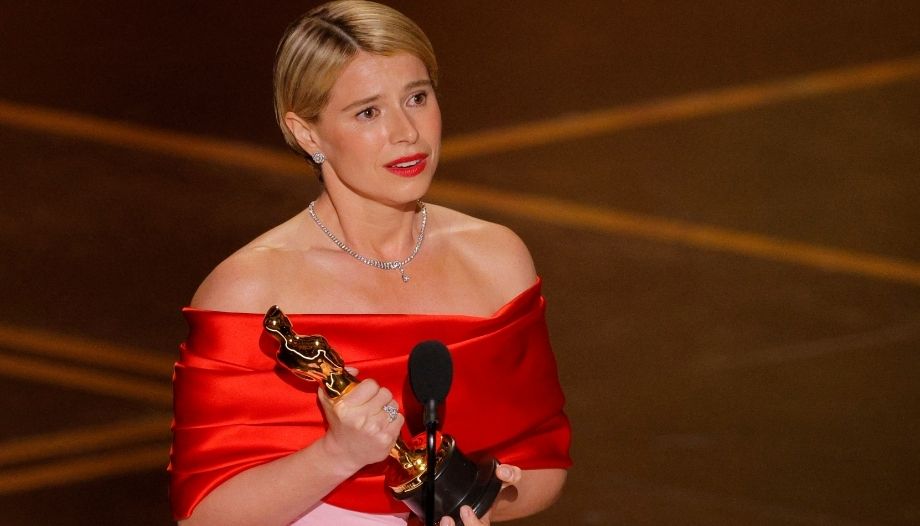
The authorÁlvaro Gil Ruiz

Professor and regular contributor to Vozpópuli.

The World

Aid to the Church in Need has a new president: Cardinal Kurt Koch

Koch succeeds Monsignor Mauro Piacenza, who has been at the helm of Aid to the Church in Need for the past 14 years.

Maria José Atienza-November 29, 2025-Reading time: < 1 minute

Monsignor Kurt Koch is the new president of the pontifical foundation Aid to the Church in Need (ACN). Koch succeeds Cardinal Mauro Piacenza, who has been at the helm of this international organization for the past 14 years.
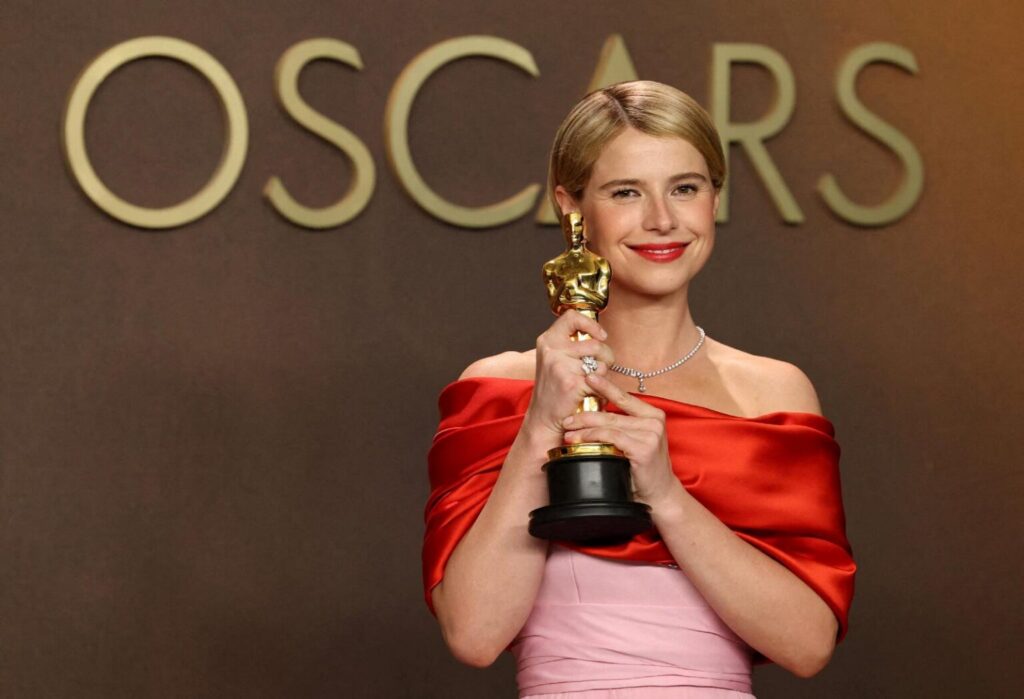
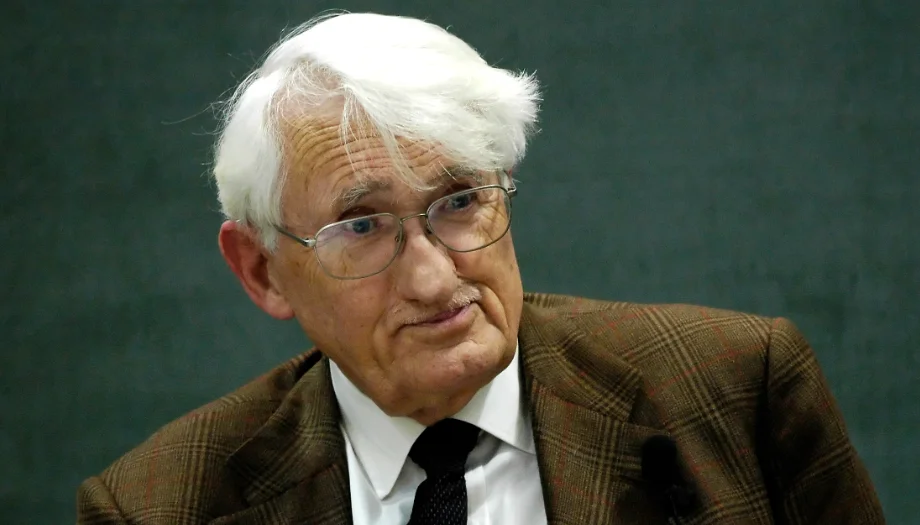
Koch takes on this task from the Pope with a long career behind him in the field of interreligious and ecumenical relations, a task on which the pontifical foundation bases much of its charisma. Not surprisingly, Koch became interested in ecumenism at a very young age. He studied theology in Munich (Germany) and Lucerne and was ordained a priest at the age of 32.
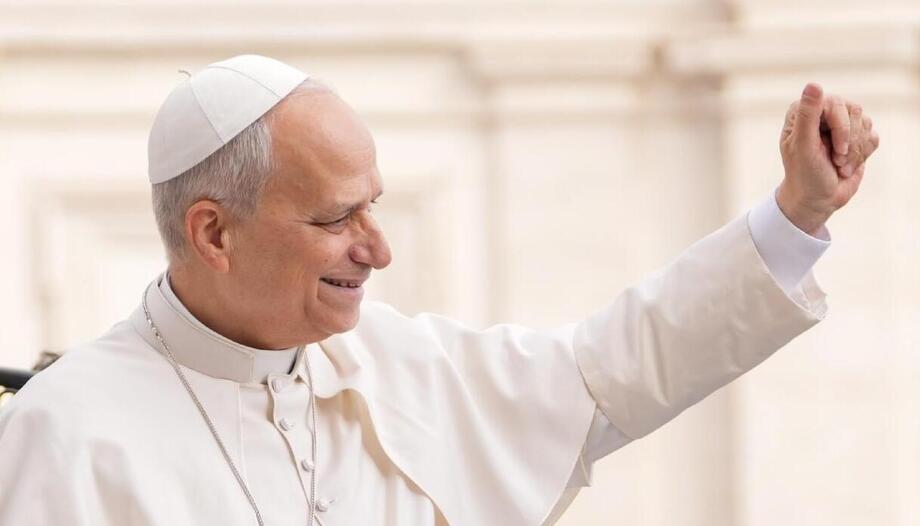
In 1995, he was appointed bishop of Basel by Pope John Paul II and was created cardinal in 2010 by Pope Benedict XVI, who also appointed him president of the Pontifical Council for Promoting Christian Unity, which would later become a dicastery under the reform brought about by the apostolic constitution Praedicate evangelium.

In expressing its gratitude to the Pope for this appointment, the pontifical foundation itself highlighted Cardinal Koch's relationship with ACN over the years, particularly with the Swiss and German offices, participating in conferences and pilgrimages, among other events.