Evangelization

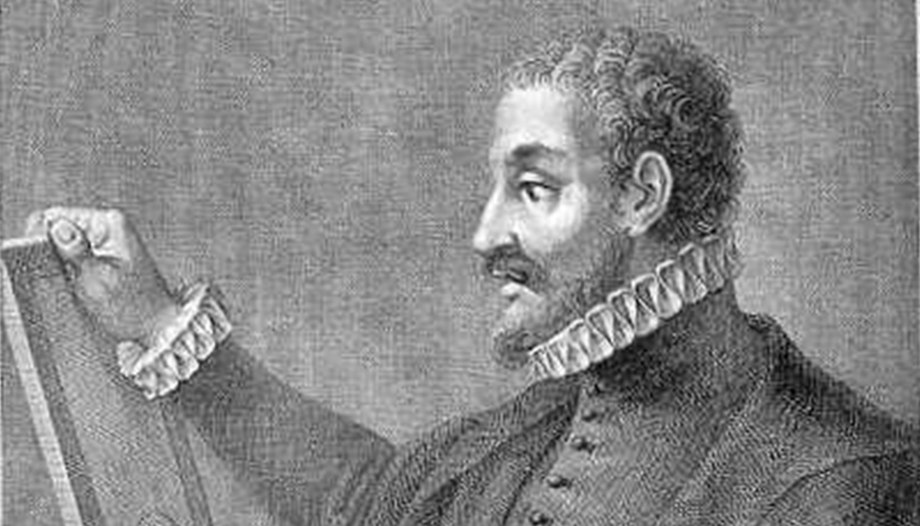
St. Vincent, martyr: witness of Christ for young people

St. Vincent, deacon and martyr, is not only a figure of the past, but a luminous witness of fidelity, truth and love for Christ. His life and martyrdom, born in persecution but sustained by the Spirit, continue to offer today - especially to young people - a contemporary example of coherence, courage and dedication.

Reynaldo Jesús-January 22, 2026-Reading time: 6 minutes

The figure of St. Vincent, deacon and martyr of Huesca, continues to fascinate believers and scholars alike. In fact, his testimony, set within the framework of the Diocletian's persecution at the beginning of the fourth century, retains a surprising timeliness. It is not just an “ancient character”, nor “a heroic chapter of the past”; on the contrary, it is a living call to fidelity, to courageous love and to the truth that liberates.

It is curious that Christian history presents him as a servant. nearby to his bishop, a herald of the faith full of a singular courage, whose genesis is none other than the same Spirit, proof of which is that Vincent is a man capable of giving his life without rancor.

We will take a brief look at the meaning of this saint. oscense from his identity as a deacon, his martyrdom, the liturgical tradition that has venerated him and, finally, we will allow ourselves to be enlightened by the thought of Pope Benedict XVI, whose teachings on truth, freedom and love allow us to rediscover their value for our time, on this occasion, especially for young people.

Brief historical context

Vincent lived during the great persecution waged by Emperor Diocletian between 303 and 304. It was a time when being a Christian implied a real risk: temples were destroyed, meetings were forbidden, and people were forced to renounce their faith in order to preserve their lives. It was in this context that Valerius, bishop of Saragossa, and his deacon, Vincent, a native of Huesca, were arrested.

The old Passio Sancti Vincentii relates that, because Valerius had speech difficulties, it was Vincent who usually took charge of proclaiming the Word on behalf of the bishop. This mission explains that, before the governor Dacianus, it was the young deacon who took the floor to defend the faith of the community. While Valerius was sent into exile, Vincent was subjected to various torments in Valentia (today Valencia), where he finally gave his life.

In addition, the patristic texts and hymns of Prudentius -such as the Peristephanon V- underline the inner serenity of the martyr, his spiritual strength and his joy in the midst of pain, a sign of the presence of the Holy Spirit. His testimony and fame spread rapidly, making him one of the most beloved figures of the Hispanic Church.

Vincent: the martyr servant of charity and herald of the Word

To speak of St. Vincent as a deacon is to enter into the essence of his vocation. In the early Church, the deaconate united two dimensions inseparable: in the first place, concrete service to the community, especially to the poor; and secondly, the proclamation of the Word, always in communion with the bishop. St. Augustine, in referring to Vincent, describes him as someone who served Christ “by word and deed” (Serm. 276). This double mission defines his whole life and prepares the ground for understanding his martyrdom.

Vincent was neither an ideologue nor an agitator; he was a servant. His courage came from a deep spirituality and from a life dedicated to others, a selfless and generous dedication, without thinking so much of himself as of the good he could do with his actions, his words and, why not say it, with his own martyrdom, which was not the fruit of improvisation, but the logical consequence of having lived daily the diaconia: service to God, service to the Gospel, service to his neighbor.

Now, for the ancient Church, the martyr is the one who participates in the Passion of Christ. Tertullian said that “the blood of the martyrs is the seed of Christians”, because in them the face of Jesus shines in a very special way. In the Passio, As Vincent suffered, it was affirmed that he was sustained by “another”, in a clear allusion to the Holy Spirit. The martyr is not a solitary hero; he is someone carried by grace.

Vincent does not die for an abstract ideal or an abstract stubbornness, but for the life-giving Truth, Christ. When the governor offered to save him if he renounced his faith, he responded - according to tradition - with serene firmness: he could not deny that which gave meaning to his existence. St. Augustine taught that “it is not the torment, but the cause, that makes the martyr”. In Vincent, the cause was Christ himself.

The sources emphasize that Vincent showed an inner peace that impressed even his own persecutors. This peace is a sign of the Holy Spirit, who transforms fear into courage. Martyrdom, thus understood, is an act of love rather than of resistance: a free and trusting surrender.

The voice of the liturgy: Vincent, light of the Church

Since the first centuries, the liturgy has preserved the memory of Vincent. In ancient sacramentaries (Leonianum y Gregorianum) appears in his celebration. The collect prayer of his feast expresses with simplicity the core of his witness: “to imitate his strength to love what he loved and to practice what he taught”. The Christian poet Prudencio calls it lumen Hispaniae, the “light of Hispania”. He does not do it for nationalistic reasons, but because he saw in him a light that springs from Christ.

His martyrdom became a living proclamation of the Gospel. This liturgical assessment shows us that Vincent was not only a defender of the faith, but also a spiritual model, a point of reference for the communities and a generator of Christian life.

A contemporary reading of St. Vincent's testimony

Recent decades have once again highlighted Christian martyrdom as a witness to truth, love and freedom. In this sense, the thought of Benedict XVI helps to illuminate the figure of St. Vincent and to situate him in dialogue with today's challenges.

In the first place, from the point of view of the Truth that liberates, Benedict XVI insisted that the truth does not impose itself, but “has its own force. In a world where there is a fear of affirming certainties, the martyr reminds us that truth is a good to be loved and guarded. Vincent was not saved by lying, because he knew that lying enslaves. His freedom was born of the truth of Christ.

Secondly, if we consider love as the center of Christianity, in the second place, in Deus Caritas Est, the Pope teaches that love is the essence of Christian life. Martyrdom, far from being a gesture of defiance, is the greatest expression of this love. Vincent did not die out of hatred for the persecutor, but out of love for Christ and his Church. His meekness confirms that Christian martyrdom is not violence, but communion.

Thirdly, we must assume that the light of Vincent and his martyrdom is capable of illuminating even the errors proposed by modern relativism, showing on it the Truth of the Gospel, in fact, on several occasions Pope Benedict XVI denounced the “dictatorship of relativism”, which confuses the "truth of the Gospel" and the "dictatorship of relativism". freedom without truth. Vicente is an antidote to this culture: a humble but firm Christian, who does not renounce to confessing what he believes in. His example is especially valuable for today's deacons and agents of evangelization.

And, fourthly, on the criteria of religious freedom and the strength of conscience, in speeches at the Bundestag and at the Collège des Bernardins, Benedict XVI defended the public presence of the faith. In the case of Vincent, saying yes to God and no to the demands of power, He anticipates a vision: conscience is sacred territory that no government can invade. His martyrdom is a defense of religious freedom in its purest form.

St. Vincent and the youth of our time

Among all the messages that St. Vincent offers to the Church today, one stands out especially: his closeness and strength for young people. Why? Because he is an authentic witness of coherence; in fact, young people today value authenticity. St. Vincent did not live a half-hearted faith; on the contrary, his life was a resounding “yes” without double standards. In a world where empty speeches abound, young people can find in him an example of radical coherence.

Now, the life of Deacon Vincent shows that faith is an adventure, since Vincent's life was marked by service, inner struggle, preaching, friendship with his bishop and, finally, witness. It was an exciting existence. Today many young people are looking for causes to live for; Vincent reminds them that Christ is the greatest adventure, and consequently the radical cause of one's existence.

Vincent also teaches us that courage is born of faith; it cannot be an isolated experience in the field of faith. Young people experience social pressures, doubts, comparisons, fears, and Vincent teaches that strength is not in self-sufficiency, but in the Holy Spirit. His life proclaims that faith does not weaken, but sets free and strengthens.

And finally, the message to be impressed is that his life and martyrdom are a model of service and a credible sign that there really is something that matters and surpasses us. Vincent's diaconate shows that Christian greatness is in serving.

Many young people feel the desire to help; St. Vincent channels that generosity into a service that is born of the Gospel, a service that produces joy and at the same time is a credible, visible and noticeable sign. Prudentius, in describing him in the Peristephanon, underlines their joy in the midst of suffering. Young people are looking for authentic joy, not illusory joy. In Vincent we can see that true joy is born of a heart given to Christ.

St. Vincent, deacon and martyr, is a transcendent figure. His witness illuminates the life of the Church, inspires deacons, strengthens persecuted Christians, awakens faith in those who doubt and offers young people an example of authenticity and courage.

Vincent appears as a witness to the truth that liberates, a servant moved by love, and a profoundly free man. His life shows that following Christ is not a burden, but a fulfillment. And his fidelity invites everyone - especially young people - to live the faith in a joyful, coherent and courageous way and continues to be, as Prudentius said, lumen HispaniaeThe light that does not go out, a guiding light and an example that strengthens the Church in every age.

The authorReynaldo Jesús

The Vatican

3 focuses of the Pope: humanity of Christ, lambs for palliums and compassion

The revelation of God through the humanity of Jesus Christ, the lambs on the occasion of St. Agnes, for the palliums of the new archbishops, and the image of the Good Samaritan compassionate to the sick, are three focuses of Pope Leo's heart.  

Editorial Staff Omnes-January 22, 2026-Reading time: 4 minutes

Yesterday and today, the Pope presented three special focuses of attention. God reveals himself through the humanity of Jesus, not only as a “channel for the transmission of intellectual truths”. Today, on the feast of St. Agnes, two lambs were presented to the Pope to be blessed, and their wool will be used for the palliums of the new archbishops. And compassion for those who suffer, the sick.

Knowing God in Christ

1.- Leo XIV continued his catechesis on Vatican Council II on January 21. in the General Audience weekly. His catechesis dealt with the Dogmatic Constitution “Dei Verbum”, the Church's teaching on divine revelation.

In knowing Jesus, the Pope affirmed that we can enter into a relationship with God as his adopted children, which was revealed through the humanity of Jesus.

To know God in Christ, we must embrace his integral humanity: the truth of God is not fully revealed when it subtracts something from the human, just as the integrity of the humanity of Jesus does not diminish the fullness of the divine gift," he said. It is the integral humanity of Jesus that reveals to us the truth of the Father.

He went on to say that, in becoming man, Jesus “is born, heals, teaches, suffers, dies, resurrects and remains among us. Therefore, to honor the greatness of the Incarnation, it is not enough to consider Jesus as the channel for the transmission of intellectual truths”.

Jesus is the Word of God incarnate

God communicates with us, the Pope said, and at the same time, Jesus is the Word of God incarnate. Through this bodily form, God's truth is revealed.

“Jesus Christ is the place where we recognize the truth of God the Father, while discovering ourselves known by Him as sons in the Son, called to the same destiny of full life,” he said.

Charge with the lost sheep

2.- Lambs' wool for the archbishops' palliums.. Today, liturgical memory of St. Agnes (Agnes), two lambs were presented to the Pope, to be blessed at the feast.

The wool from these lambs will be used to make the palliums of the new metropolitan archbishops. They evoke Jesus carrying the lost sheep, symbolizing the archbishop's care and guidance of his flock.

The rite of blessing of the Palliums and their delivery to the archbishoprics is performed by the Holy Father on June 29, the Solemnity of the Holy Apostles Peter and Paul.

“Rosary Pilgrimage” at the shrine of Lourdes, organized by the Dominican order since 1908 and celebrated October 2-4, 2025. (Photo by OSV News/courtesy of the sanctuary of Lourdes).

The compassion of the Samaritan

3.- 34th World Day of the Sick. It will be solemnly celebrated in Chiclayo, Peru, on February 11, 2026, the Pope says in his Message for the World Day of the Sick. The general motto is ‘The compassion of the Samaritan: to love while bearing the pain of others’.

The Holy Father wanted to propose once again “the image of the Good Samaritan, always relevant and necessary to rediscover the beauty of charity and the social dimension of compassion, to focus attention on the needy and the suffering, such as the sick”.

The Pope's message is divided into three parts.

a) The gift of encounter: the joy of giving closeness and presence

“We live immersed in the culture of the quick, of the immediate, of haste, as well as of discarding and indifference, which prevents us from approaching and stopping along the way to look at the needs and sufferings around us,” the Pope said.

The parable narrates that the Samaritan, upon seeing the wounded man, did not “pass by”, but “had an open and attentive gaze for him, the gaze of Jesus, which led him to a human and supportive closeness. The Samaritan ‘stopped, gave him the gift of closeness, healed him with his own hands, put money out of his own pocket and took care of him. Above all [...] he gave him his time”. 

“Love is not passive, it goes out to meet the other; being a neighbor does not depend on physical or social proximity, but on the decision to love,” the Holy Father stressed. For this reason, “the Christian becomes a neighbor to those who suffer, following the example of Christ, the true Divine Samaritan who approached wounded humanity”. 

b) The shared mission in caring for the sick

“In my experience as a missionary and bishop in Peru, I myself have seen how many people share mercy and compassion in the style of the Samaritan and the innkeeper. The relatives, the neighbors, the health workers, the pastoral health workers and so many others who stop, approach, heal, carry, accompany and offer their own, give compassion a social dimension”.

“This experience, which takes place in a web of relationships, goes beyond mere individual commitment. Thus, in the Apostolic Exhortationa Dilexi te I have not only referred to the care of the sick as an “important part” of the Church's mission, but as an authentic “ecclesial action (n. 49)”.

c) Always moved by the love of God, to meet with ourselves and with our brothers and sisters.

“I earnestly hope that our Christian lifestyle will never lack this fraternal, “Samaritan”, inclusive, courageous, committed and supportive dimension, which has its deepest roots in our union with God, in our faith in Jesus Christ. Fired by this divine love, we can truly give ourselves to all those who suffer, especially to our sick, elderly and afflicted brothers and sisters.

Let us raise our prayer to the Blessed Virgin Mary, Health of the Sick, the Pope invites. “Let us ask her help for all those who suffer, those in need of compassion, listening and consolation, and let us beseech her intercession with this ancient prayer, which was prayed as a family for those who live in sickness and pain.”

Prayer to the Blessed Virgin Mary, Health of the Sick

Sweet Mother, do not turn away,
do not take your eyes off me.
Come with me everywhere
and never leave me alone.
Since you protect me so much
as a true Mother,
May the Father bless me,
the Son and the Holy Spirit.

Vatican City, January 13, 2026

LEÓN PP. XIV

The authorEditorial Staff Omnes

Gospel

Light to see and strength to love

Vitus Ntube-January 22, 2026-Reading time: 2 minutes

Today's Gospel offers us several profound themes. We see our Lord settling in the city of Capernaum and founding there the base of his public ministry. St. Matthew interprets this move as the fulfillment of Isaiah's prophecy: “...".“The land of Zebulun and the land of Naphtali, on the way to the sea, on the other side of the Jordan, Galilee of the Gentiles. The people who dwelt in darkness have seen a great light; to those who dwelt in the land and shadows of death a light has shone.".

By his presence alone, Jesus brings light to the people. Through his preaching, he brings the light of conversion. This light allows us to examine our lives honestly, to recognize our inadequacy and our sin, and to discover anew the path that leads us back to him.

We see the immediate effect of this light in the following scene. Jesus meets two brothers by the Sea of Galilee - Peter and Andrew - and calls them. They follow him without hesitation. Capernaum, so central in the ministry of Christ, was also the land of these first called apostles. There they met Christ and received their vocation. They saw his light and experienced their own “conversion,” so to speak, in choosing to follow him. Every true conversion must always lead to following Christ. The readiness with which they left their nets and their father teaches us that neither material goods nor human relationships should become obstacles to conversion, or to following Christ. To follow God's plan, we need light to see the way and strength to want to unite ourselves to God's will, as Peter and Andrew did.

Peter and Andrew had their Capernaum; Paul had the light that met him on the road to Damascus. His conversion matured in his encounter with Christ and radically changed his life. What happened to him on the road to Damascus was thanks to divine light. Each of us also has our own “Capernaum”: that place where the light of God unexpectedly breaks into our ordinary activities. 

Today also concludes the Week of Prayer for Christian Unity and, providentially, this Sunday, January 25, is the Feast of the Conversion of St. Paul. The question that Paul addressed to the Corinthians must also challenge us: “Is Christ divided?”. Let us continue to pray fervently for Christian unity. “Each one goes around saying: ”I am of Paul, I am of Apollos, I am of Cephas, I am of Christ. Is Christ divided?.

We can make our own the prayer that the Church proposes in the liturgy for the feast of St. Lawrence of Brindisi: “Lord God, [...] the spirit of counsel and strength; [...] grant us to come to know, in that same spirit, the things we must do and the grace to put them into practice after knowing them.".

Family

FULL SPOTLIGHT - Pep Borrell, María Álvarez de las Asturias and Mercedes Honrubia to talk about courtship, crisis and marriage

The CEU San Pablo University of Madrid will host, on February 11, a dialogue on marriage with the participation of Pep Borrell, María Álvarez de las Asturias and Mercedes Honrubia.

Maria José Atienza-January 21, 2026-Reading time: < 1 minute

Choosing the right person for marriage, couple crises and maturing relationships will be the focus of the dialogue, organized by the Coincidir Institute and Omnes, with the participation of the renowned lecturer and best-selling author on marital relationships, Pep Borrell as well as with María Álvarez de las Asturias, founder of Coincidir Institute and with an extensive experience in the accompaniment of couples and the resolution of family and social conflicts. Mercedes Honrubia, family counselor and mediation expert. 

Together with the director of Omnes, María José Atienza, the three experts will address the reality of couple crises and how to manage them to make them a step of emotional maturity and solidity in relationships from their different perspectives. A topic that addresses, in a practical and profound way, «Crisis, not rupture», edited by Palabra and axis of this dialogue. 

REGISTRATION FOR THIS EVENT CLOSED ON JANUARY 31 DUE TO FULL CAPACITY.

This dialogue has the collaboration of the CEU San Pablo University and will take place in person, the next February 11, 2026, at 7:00 pm. in the Aula Magna de la Universidad CEU San Pablo (C/ Julián Romea 23. 28003, Madrid).

Spain

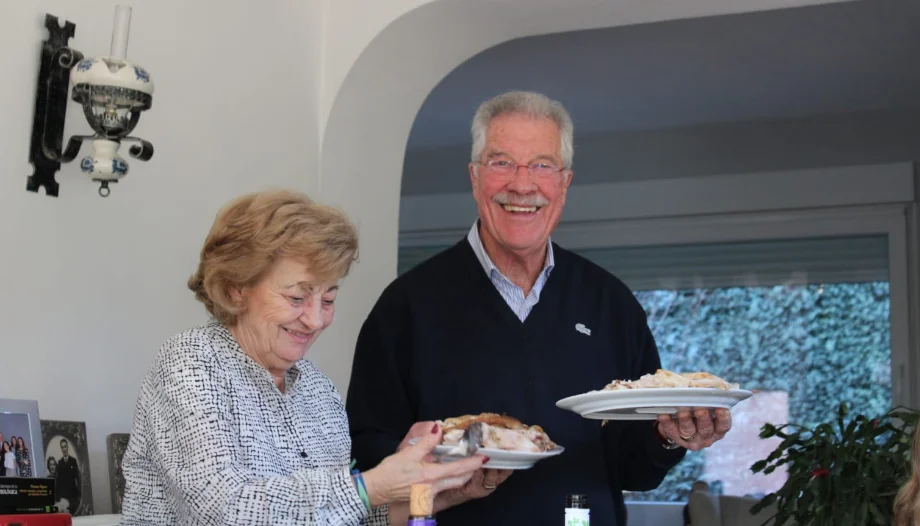
Two stories from Adamuz: a Christian grandmother from Huelva and the surviving child

Among the stories of the victims of the Adamuz railway tragedy, 42 deceased so far, there are two with a clear Christian imprint. The deceased grandmother Nati, a cursillista in Huelva, who died praying the rosary, and the 6-year-old girl, Cristina, survivor, while her parents, a brother and a cousin have died.

Francisco Otamendi-January 21, 2026-Reading time: 5 minutes

The railway drama of Adamuz, as the deceased and their families are known, is shocking the Spanish people. At this moment, 42 fatalities have been counted, with dozens of injured, many of them seriously. We are now echoing two stories that are circulating on social networks, with an obvious Christian background. 

That of grandmother Nati, from Cursillos de Cristiandad in Huelva, and 6-year-old Cristina, who survived her parents, a brother, and a cousin, all four of whom died in the accident. 

Fidel tells the story of his mother

The hare was raised, at least in my case, by a post in X in the account @Unicatolicos_es, which reads: “Fidel has lost his mother in the accident in Adamuz. His 10 and 12 year old sons and nephew are with minor injuries and his brother admitted to the ICU. “My mother was (at the time of the accident) praying the rosary. She is already rejoicing with the Love of her life: Jesus of Nazareth”. 

Fidel, from the surroundings of the Reina Sofia University Hospital in Cordoba, speaks emotionally about his mother, Nati, to the program Espejo Público by Susanna Griso, on Antena 3. The video is circulating in the social networks, and you can see it here. here.

“My mother had taken my children and my nephew to see the Lion King in Madrid” (,,,,) when I told my brother (hospitalized) that my mother, unfortunately, was no longer with us, he began to cry and told me that he did not know how he was there. He thought he was dying because he spent an hour and a half between the iron bars after the carriage had been turning around for a kilometer and a half, he was suffocating, my life was passing away, he was touching corpses with his feet...”.

“I was praying the rosary, we held on to our faith.”

“My mother was very religious, she was with many Christian groups here in Huelva, we are cofrades, very rocieros, we are people who hold on to the faith since my mother instilled it in me. My mother was praying the rosary at that time. I am sure that my mother made the love of her life, who is Jesus of Nazareth, do the miracle, look, take me, and leave my grandchildren, leave my son, here?

“Fidel, my brother tells me, you have to tell it, because society has to know that many times they go very wrong, and we give value to banal things, things that have no sense, we get angry unnecessarily with our relatives, and life at any moment is gone...”.

And Fidel opens his heart completely before the tearful eyes of Susanna Griso and other guests, he says moving words about his mother, who was getting old, and sometimes did not give him a kiss, and thought: Fidel, put your feet on the ground, and value what you have, because at any moment you lose it...”.

“The human heart prevails.”

At the end, he remembers Huelva, and adds: “This is Andalusia, this is the whole of Spain, this is solidarity, this is the heart that Spaniards have, although many times we fight at the ballot box..., but in the end what prevails is this, the heart, the human being, and knowing that in life we have to value more important things than others, which many times hurt us”.

As the relatives are “approached” by the media, Fidel also tells the story to others, for example to ABC. “The five of them were in the first car. The engineer was there and the five of them were the first ones,” said Fidel, who confirmed that his brother had been untubed on Monday afternoon. “He is stable and has told me: ‘he tells the story of mom, how she was devoted to her family and was the engine of it’. The Lord has wanted to take her this way but we are certain that she is in the best possible place.”.

Condolences of the Hermandades for the matriarch of a great family

Later, in a chronicle, María Carmona tells in the same newspaper that several brotherhoods of the city, with which the Sáenz de la Torre family had many ties, have expressed their condolences. “The Eldest Brother and the Board of Government Officials of the Venerable Brotherhood of the Redención, want to express with great pain and deep desolation the sadness we feel for the death of Mrs. Natividad de la Torre, mother of our brother and member of the team of foremen of the Holy Christ of the Precious Blood D. Fidel Angel Saenz de la Torre,” they said.

And from the Brotherhood of La Lanzada, the same: “We have the sad duty to communicate that Mrs. Natividad de la Torre, mother of N. H. D. Luís Carlos Sáenz de la Torre, is one of the mortal victims...”. 

Nati de la Torre was “the matriarch of a large family in Huelva -three children and six grandchildren-, a believer in God and an educator in that faith”, wrote María Carmona, which she instilled in her family and in a good number of Huelva residents through the Christianity courses she taught”.

The drama of the Zamorano Alvarez family from Punta Umbría

Four dead, only the six-year-old girl survives, the drama of the Zamorano Alvarez family, headlined Canal Sur. The parents, a brother and a cousin of the surviving 6-year-old girl, who was rescued practically unharmed, were from Punta Umbria, it added. The Punta Umbria City Council has decreed three days of mourning.

The same account of X @Unicatolicos_es, Universitarios católicos, collected information about Cristina, the 6 year old girl who spent much of the night guarded by a civil guard after being rescued virtually unharmed, as told by the program Andalucía Directo. «Cristina's daughter has been a miracle in the midst of so much misfortune,» said the mayor of Aljaraque (Huelva), Adrian Cano, to El Mundo.

In the carriage were Cristina, her parents, brother and cousin, members of the Zamorano Álvarez family. The mother was a participant of «Yo soy del Sur» a program of Canal Sur. The mayor of Punta Umbria, Jose Carlos Hernandez, reported in the morning that the brother, who was older than her, had been found in a hospital. But later the death of all four was confirmed.

The minor, the program said, is doing well and is already resting with her grandmother in a hotel in Cordoba after receiving three stitches in her head.

Family members, and welcome and prayers from Attendis schools.

The Unicatólicos post says that Cristina “has the affection of her grandparents, uncles and aunts and schoolmates. They went to the schools Tierrallana and Entrepinos, of the Attendis group” (close to Opus Dei)”. In fact, the schools of this group include many of the teachings of St. Josemaría, founder of Opus Dei. Opus Dei, The Prelature assists them in their work of Christian formation.

Since yesterday, Attendis schools have been holding masses and prayers for the family, and the school has decided to take over all the expenses of the girl's education until she finishes her stay there, as the principal commented in a video that you can watch here.

Other dead and missing

Social networks have also reported the disappearance, at the time of writing, of a numerary of Opus Dei, María Luisa Eugui, who was on her way to Huelva to visit relatives.

And also of the death, among others, of journalist Óscar Toro and photojournalist María Clauss, who were returning from Madrid on this last train that had a final stop in Huelva. The couple was well known for their activity in the world of communication, activism and culture.

The parish of Adamuz and the whole Church are involved 

Like reported Omnes, the parish of San Andrés, Adamuz, has turned to welcome and care for those affected and their families by the train accident.

The bishop of Cordoba, Monsignor Jesús Fernández, immediately contacted Rafael Prados Godoy, parish priest of Adamuz, so that he offered the parish space and food for the first needs of those affected. They also communicated to the Government Delegation the willingness to “help with people and resources to support as far as possible. The Bishop commended the victims and the injured to the Lord so that ”they may not fail to receive his help, strength and consolation in this moment of uncertainty and pain“.

Pope Leo XIV has shown in recent days his deep regret and closeness to the families of the victims and their condolences and prayers, as have the Spanish Episcopal Conference, the Spanish bishops, and numerous ecclesial realities.

The authorFrancisco Otamendi

Debate

Man needs the sacred

The sacred is not just a concept, but an experience that reveals to man his origin, his destiny and his openness to the divine. It manifests itself in places, rites and, above all, in Christ, the true Temple where humanity finds meaning and communion with God.

Santiago Zapata Giraldo-January 21, 2026-Reading time: 5 minutes

Let us think for a moment about the fact that defines the sacred, man himself has within himself a reference that makes him sacred. The question of his origin, his existence and his end is always marked by something he considers sacred. 

Let us think first of all that man needs to know, to be known first, is love, there is no love without being loved, and the one who loved us, is the same one who knows us. Man opens himself to the supernatural, but he opens himself by the simple fact that he has supernaturalness, it is in other words “to show a true face”. The being open to transcendence is not exhausted, that being-with God, which gives it its existence, that relationship with the sacred, of which Leonardo Polo speaks to us: “being-with respect to God means absolute dependence”. Without the relationship, the being is simply enclosed in a loss of meaning. 

Hierophany

The holy places that we can appreciate are in our world, it is not a reality that is outside our space. In this is important the term hierophany that means the manifestation of the sacred, and this manifestation cannot be excluded from the earthly realm, otherwise it would not be sacred but simply eschatological, which we would not be able to see or witness. 

In this sense, in the temples we find a fundamental part that founds the sacred places, but to know the places we need an attraction towards those places, and that attraction is the power of the divine. If we stop a little in the rites, in the fact of the sacred towards which man participates as an active being, we get into the liturgy. This means that man participates in the divinity in a sphere, but not by capacity, but by gift. It could be said that it is an introduction to the time of God, but simply because He loved us first. 

 If we go to the passage of the burning bush, where Moses enters and what he is told is “take off your sandals from your feet, for the place you are treading on is holy” (Ex 3:5), the fact that he enters a place is to enter God's time, where the noises of the exterior have no validity. This, although sometimes forgotten, does not manage to lose its character of transcending man, by its opening to what is truly beautiful and true.

Man's need to encounter something sacred is ultimately to encounter the one who gives him his true being, gives him his beauty and gives him his goodness, not in a simple sense, but his being as one, with his true being, his beauty as he shares it with the creator and goodness as he tends to it, as his own or another's good. 

The concept of “the divine man” is sometimes upset by the fault of relativism, nothing does more harm than going like a boat in the middle of the sea, from side to side and not having a fixed course, this by the simple fact that we become hypocrites before God and before ourselves. In the sacred, man plays an important role, he is the one to whom the sacred is directed, in the same way man is directed to the sacred, not as a simple desire, but as a mere necessity. 

The temple

The defense of divine places are sometimes desecrated throughout history, but does man not have divinity? How does something created from the divine, attack the divine? If we look at it, the men who challenge the sacred places are those who believe themselves to be divine, created out of love and with freedom, yet unable to reciprocate that love. 

“His fathers used to go every year to Jerusalem for the feast of the Passover” (Lk 2:41) This is the feast of the lamb, which is one of the three feasts of the Jewish calendar to make a pilgrimage, which obliges men to appear before the temple, which included the sacrifice of the lamb. The loss of Jesus in the temple that tells us is certainly surprising, because we realize several details: first of all the loss of Jesus who is found three days later, but three days? Jesus in another passage speaks in John: “Destroy this temple and I will rebuild it in three days” (19) is a relationship that shows how the temple of God, is now in a temple built by mankind to give worship to the same that is the temple. It is his body, the divinity is no longer between walls, it is now in the person of Jesus. 

The three days, the same days he spends in the tomb, symbolize not only the death, but the resurrection, the most perfect temple has been rebuilt. The establishment of the new cult and the new, living and eternal covenant is presented by teaching how to go to the Father, and this way to the Father is done through the sacraments, carefully prepared, first of all worthy, which will never equal the full beauty before God. They orient man towards adoration. Thus, the temple, as a sacred place, becomes a mediator that makes Christ present, who is the true Temple, and teaches how to participate in the communion with the Father. 

Now, the encounter with the temple of God, in Christ himself, brings about communion with him, but also with one's neighbor. The now divine law no longer dwells in stone, but in a person who also explains the law: “Why did you seek me? did you not know that I must be about the things of my Father?” (Lk 2:49) the things of the Father, which includes being in existence every day with the recognition that we are before God.

Places help us to always be in communion with God, because of the beauty that most of them contain, from a painting to a crucifix, which transports us to the mystery of the Redemption, which always reminds us that we are God's creatures and that God is God. Entering the space destined for God makes it visible that the heart always has its gaze fixed on the creator, hence the importance of taking care of them, since they are constantly bringing praise to God himself, following the example of Christ himself.

It is a way of being, where the supreme goodness takes the initiative to reveal itself, and this relationship with God leads to the rites, to the liturgy and to the worship that is ours to give. When we think of the rites, we think of the entire liturgy, with its center in the Holy Mass, but which also involves the hours of the whole Church, with a constant extension of the Eucharist by making ourselves victims and sharers in the divine filiation. 

“Christ Himself performs the worship before the Father, He becomes worship for His own at the moment that they gather with Him and around Him” (Joseph Ratzinger “The Spirit of the Liturgy”) the community that gathers, that shows that Christ is the recipient and at the same time is the subject who offers in the person of the priest, hence the importance of the churches as a temple, because it is where Christ Himself offers Himself to the Father, and gathers us with Him, therefore; The liturgy itself is not born of a human invention, nor of a convenience, but of a divine revelation, so that men may come to the knowledge of the truth.

Speaking of the sacred places, we must also mention St. Mary, as the bearer of the divinity, the one who carried in her womb by which the world was made, “Mary, in whom the Lord will dwell, is in person the daughter of Zion, the Ark of the Covenant, the place where the glory of the Lord dwells: she is “the dwelling of God among men” (Rev 21:3). “Full of grace”, she has given all of herself to the one who comes to dwell in her and to the one who will deliver the world” (CEC 2676). The Ark mentioned in the Old Testament, which contains the presence of God, is now Mary who carries in her womb the creator, in her, who by her purity is carved with gold inside and out, is the one who receives the greatest treasure to achieve Salvation, to her who has an essential place and not least in our sacred places, we always go as Virgin who is not overtaken by sin, is able to reach, embrace and support the sinner.

The authorSantiago Zapata Giraldo

The Vatican

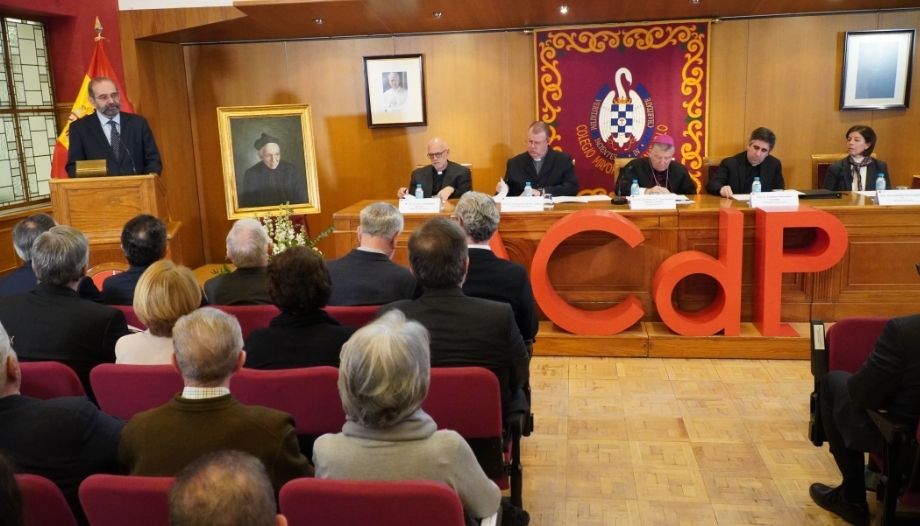
Pope receives the Neocatechumenal Way in a decisive encounter

Leo XIV thanked them for their service and “valuable contribution to the life of the Church”, but also warned of some risks to be avoided.

OSV / Omnes-January 20, 2026-Reading time: 4 minutes

- Junno Arocho Esteves, OSV / Omnes

“The Church accompanies them, supports them and thanks them for what they do”. “The life of the Neocatechumenal Way, its charism and works of evangelization and catechesis represent a valuable contribution to the life of the Church,” Pope Leo XIV told a large group of itinerant catechists responsible for the Neocatechumenal Way in 138 nations on five continents.

The catechists were accompanied in the Audience Kiko Argüello, Father Mario Pezzi and María Ascensión Romero, whom he greeted with affection.

Rediscovering the meaning of Baptism

Founded in Spain in the 1960s, the Neocatechumenal Way was defined by St. John Paul II as a Catholic formation itinerary. According to its website, the movement is present in 139 countries with 20,300 communities in 6,197 parishes, as well as 936 families in mission in 68 countries.

In his address, Pope Leo XIV acknowledged the fruits of the evangelizing efforts of the Neocatechumenal Way (...) “To everyone, especially those who have fallen away or whose faith has weakened, you offer the possibility of a spiritual journey through which they can rediscover the meaning of Baptism,” the Pope said. “This enables them to recognize the gift of grace they have received and, consequently, the call to be disciples of the Lord and his witnesses in the world.”.

Pope Leo XIV talks with Maria Ascension Romero, a member of the international team of the Neocatechumenal Way, during his meeting with leaders of the movement at the Vatican on January 19, 2026. (Photo OSV News/Mario Tomassetti, Vatican Media).

Gratitude for families on mission

The Pope also expressed his gratitude to the many families on mission who have left behind “the securities of ordinary life” and have set out, sometimes into dangerous areas, “with the sole desire to proclaim the Gospel and bear witness to God's love.”.

In this way, the itinerant teams composed of families, catechists and priests, participate in the evangelizing mission of the whole Church and... contribute to “awakening” the faith of non-Christians who have never heard of Jesus Christ, he added.

Some risks

In this context, the Pope warned of some risks, and told the members of the Neocatechumenal Way that carrying out the mission of evangelization also requires “interior vigilance and a wise critical capacity to discern certain risks that always lurk within the spiritual and ecclesial life”.

«In the Church no gift of God is more important than any other - except charity, which perfects and harmonizes them all - and no ministry should become a reason to feel superior to one's brothers or to exclude anyone who thinks differently,» the Pope told the members of the Neocatechumenal Way gathered at the Vatican. He also encouraged them to be “witnesses of this unity,” reminding them that while their “mission is distinctive,” it is “not exclusive.”.

“We must always remember that we are Church and that, if the Spirit grants each person a particular manifestation, it is given - as the Apostle Paul reminds us - ‘for the common good’ and, therefore, for the mission of the Church herself,” he said.

“You do a lot of good, but the goal is to allow people to know Christ, always respecting the way of life and conscience of each one,” he said.

Pope Leo XIV told the members of the Neocatechumenal Way that they should live their spirituality «without ever isolating themselves from the rest of the ecclesial body» and «go forward with joy and humility, without closing themselves off, as builders and witnesses of communion.».

Emphasizing the support and gratitude of the Catholic Church, the Pope reminded them that «where the Spirit of the Lord is, there is freedom».

Various forms of pastoral activity

“The proclamation of the Gospel, catechesis and the various forms of pastoral activity must always be free from forms of coercion, rigidity and moralism, lest they generate feelings of guilt and fear instead of inner liberation,” he said. The Pope's words on personal freedom echoed similar comments by Pope Francis in 2014.

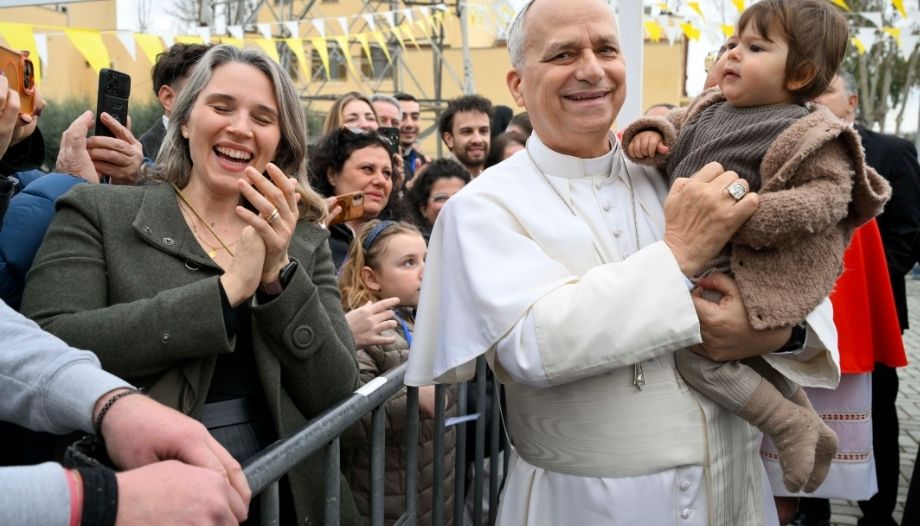
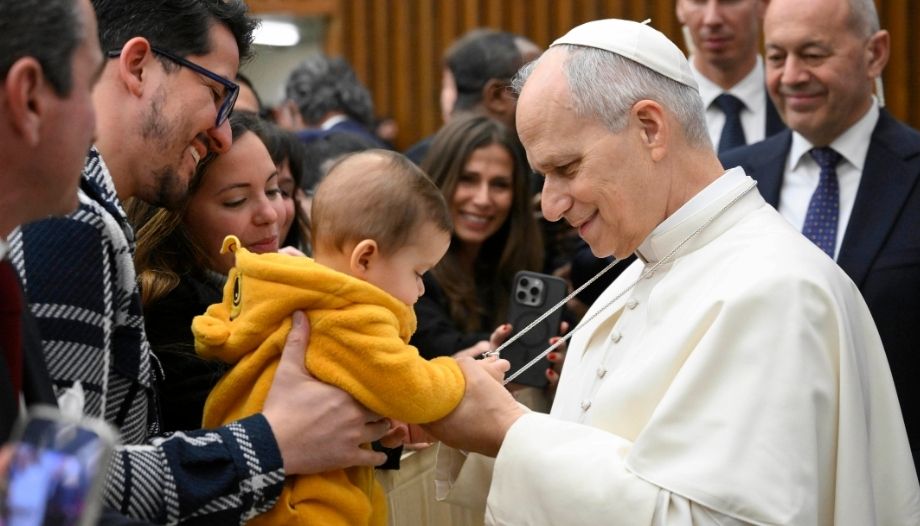
Pope Leo XIV greets a baby during his meeting with leaders of the Neocatechumenal Way at the Vatican on January 19, 2026. (Photo OSV News/Mario Tomassetti, Vatican Media).

Copy of an icon of the Good Shepherd

In a note In a public statement released shortly after the audience, the Neocatechumenal Way said that Argüello gave the Pope a copy of an icon of the Good Shepherd that he painted in 1982.

Argüello, an artist who painted a series of icons in the Cathedral of Our Lady of La Almudena in Madrid in 2004, also presented a publication with his iconography “since the Pope is planning a visit to Spain in the coming months,” the statement said.

Continue with enthusiasm

At the end of the Audience, the Pope concluded: “Dear friends, I thank you for your commitment, your joyful witness and the service you render in the Church and in the world. I encourage you to continue with enthusiasm and I bless you, invoking upon you the intercession of the Virgin Mary to accompany and protect you. Thank you!”.

The authorOSV / Omnes

Debate

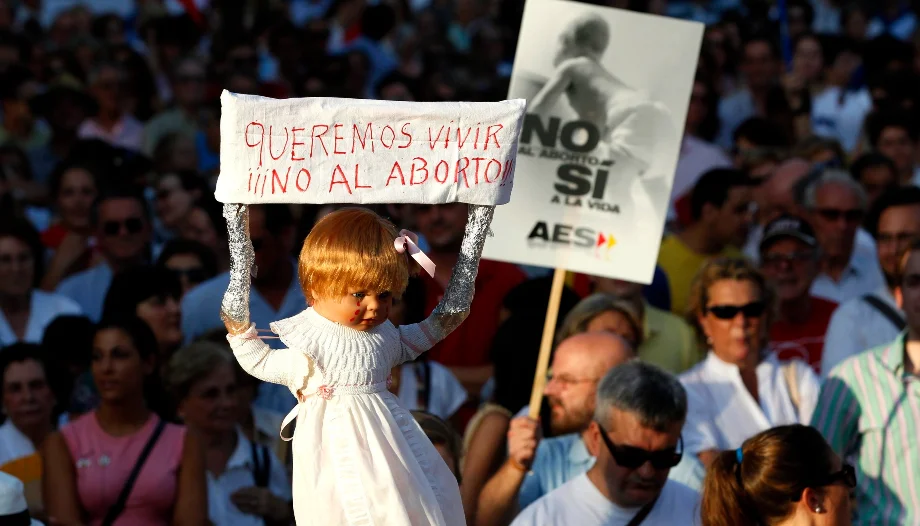
Why does God allow evil?

It is often said that if God existed, he would not allow the suffering of the innocent or the presence of evil in the world. This article discusses the main arguments in response to this assertion.

Bernardo Hontanilla Calatayud-January 20, 2026-Reading time: 10 minutes

The three main difficulties that man has in believing in God are: that his laws are a threat to our freedom, the warning of the presence of evil in the world and the suffering of the innocent. We have already discussed the first issue in a previous article entitled The Lord's slaves to which I direct the reader for consideration. It is the second and third difficulties that I now intend to analyze. And they are important difficulties, since part of the reason why there is so much affective atheism has its origin in these reasons.

The issue is summed up in one question: how can an omnipotent being allow bad things to happen? This question is very old, in fact, Epicurus is credited with the famous conjecture that can be summarized in the incompatibility of the existence of evil and suffering in the world with the existence of an omniscient, omnipresent, omnipotent and omnibenevolent God. In order to try to explain it, we shall divide the origin of this evil into four parts: on the one hand, the moral evil that arises from the will of man (we shall call it active evil); on the other hand, the evil that comes from the evil man but is suffered by the innocent (we shall call it passive evil); a third physical evil that arises from man himself and affects him, which we shall call disease; and finally an evil that arises in nature and affects any man, which we shall call physical, casual or fortuitous evil.

Bad asset

Let us begin with the evil that men do (active evil) and that is only attributable to themselves. If God wanted to take the risk of creating beings in his image and likeness, then these beings must necessarily be free and capable of loving, like him. If this were not so, they would not be made in his image and likeness.

In general, we know how to identify the good that affects the whole of the human community in very fundamental things that are accepted by all men. Basically these rules that regulate it are contained in public and private international law. Examples of these laws are the development of universal traffic rules, do no harm to others and respect human dignity.

However, there is a deep difficulty in man to know what is good when it affects oneself or others in daily life. This difficulty has its origin in the distortion introduced within man at the beginning of his creation and is recounted in Genesis. This difficulty undermines the ability to be free, which is to choose the good, so that to the extent that we choose evil, we progressively lose this ability to be free.

God helps us with his norms so that we can develop that capacity for freedom to choose the good in order to live and be happy (Dt 4:5-9). Let us not interpret these norms as a threat to our freedom; rather, they are the GPS that continually shows us how to be happy according to our nature. God's laws do not limit us; they set us free. The question is to trust Him or not. Each one chooses. God wants free children who love him, not slaves who fear him.

This classical explanation could satisfy us to explain moral evil in the world. There are simply people who really want and do evil and voluntarily deviate from what God wants. Moreover, it is thanks to the presence of evil that virtue can be exercised. If cowardice did not exist, one could not be courageous. If pride did not exist, humility could not be exercised.

Bad passive

But now comes the second problem, passive evil, which is less understandable: why do the innocent have to suffer the evil provoked by other men? However, the real question is not why these things happen, but rather: why does God allow them?

Let us consider for a moment the history of God's relationship with man. There are some events narrated in the Old Testament, which have attracted much attention and have been the object of criticism against God, calling him tyrant, avenger and cruel. These are episodes such as when God ordered the annihilation of Canaanite cities, telling the Israelites to kill the entire population (Dt 2, 34: 20, 16-18; 1 Samuel 15, 2-3). The reason was that these people did abominable things, such as the sacrifice of small children or sacred prostitution.

Centuries earlier, God almost wiped out the earth's population with the universal flood because of the absolute corruption into which the earth's inhabitants had fallen. Only eight people remained.

Why do we complain when God destroys people who were doing real savagery, even with children? Earlier we asked why God does not intervene to prevent evil in the innocent, but when he has done so, do we protest and are we scandalized? We complain when he does not prevent evil, but we also complain when he has done it, what then?

Man's complaint about how God does things is very frequent. And the complaints are in two senses. We complain when he is merciful, but we also complain when he is just. God's justice does not oppose his mercy, the only thing that opposes justice is vengeance.

Moreover, we interpret God's laws according to our own interests. We do not want to recognize that God is Lord and owner of the Universe and is not subject to any rule, and our way of thinking leads us to consider that God's mercy is not just or his justice is not merciful.

Does God ask for the impossible?

There is a very demanding moment of God in the New Testament that again may seem unfair to us: when he asks us to forgive seventy times seven (Mt 18:21-35). Will I have to forgive my husband who has been unfaithful to me many times with another person? Will I have to forgive the boss of my company who abuses me at work? Will I have to forgive my father, mother or children when they are continually mistreating me?

It seems that God asks for the impossible, but it is not so. There are several references in the Gospels where it appears directly to forgive seventy times seven. This is true. But Luke, who says at the beginning of his Gospel that he has been reliably informed of everything, says: “If your brother offends you, rebuke him, and if he repents, forgive him; if he offends you seven times in one day, and seven times again says to you, ‘I repent,’ you shall forgive him.” (Lk 17:3-4). There is an important detail: “if he repents, you will forgive him.”. So, do I have to forgive my husband who continually cheats on me and is a cynic or a hypocrite? It does not seem so. If he is not repentant, he cannot be forgiven. But not forgiving does not mean wishing him harm. Not forgiving and wishing someone harm are two different things. Many times it is even good to separate from that person because he is hurting us. Peace is a good to be protected. Moreover, a priest may not give absolution of sins if he sees that the penitent does not show repentance when he goes to the confessional. God does not ask the impossible. 

True healing

The true inner healing when we have been passive subjects of an evil provoked by another person is not in forgiving. The true inner healing is in assuming that what has happened God has allowed it to happen in order to achieve a greater good.

To understand this we have to explain, briefly, what happened to Joseph, the penultimate son of the patriarch Jacob. His brothers threw him into a well with the intention of killing him, although they finally sold him to the Ishmaelites, who took him to Egypt and he ended up in prison because he did not consent to have sexual relations with a married woman. But suddenly, events took a turn. Thanks to his ability to interpret dreams, Pharaoh appointed him prime minister of Egypt. It was then that his brothers went there to look for food. After several comings and goings from Canaan to Egypt, Joseph finally made himself known to his brothers and made a comment that is not to be missed: “God sent me before you to ensure your survival on earth and to save your lives in an admirable way. So it was not you who sent me here, but God.” (Gen. 45:7-8). Attributing everything that happens to us in our lives to God's Providence, the good and the apparently bad that we suffer, is the healthiest way to live happily.

However, not content with discussing God's decisions, we also think he does things wrong. In general, we do not make ourselves clear with God. He said so Himself: “My ways are not your ways.” (Isaiah 55:8-9). What may seem to us to be a bad decision, or even things that we think are not right, He says are perfect. In the New Testament it is striking when Jesus was asked: “who sinned this or his parents that he was born blind”.”. And the answer was clear: “neither he nor his parents sinned but was born blind that the works of God might be made manifest in him.”. So, is a child born blind the work of God? Yes, it is. God says in the book of Exodus “The Lord said to him, 'Who has given man a mouth? Who makes him dumb, deaf, seeing, or blind? Am I not the Lord? (Exodus 4:11). And automatically comes our conclusion: God does not make things perfect. And if we continue in the same line of reasoning we will come to the conclusion that either God cannot exist, or God is unjust, or He makes things imperfect.

God's Illogic

If we can say anything about God, in terms of the way he acts, it is that he really does illogical things, if we compare them with our logic. He promised Abraham, Isaac and Jacob great offspring and it turns out that their wives Sarah, Rebecca and Rachel were barren. Only when He willed did He make them fertile. Moreover, God commands Abraham to sacrifice Isaac, the son of promise.

Then God became a man and was born of a woman without the participation of a man, he even died as God and then, to the bewilderment of the whole world, he was resurrected. God's plans are literally incomprehensible to man. Clearly our way of seeing things is nowhere near the way God sees them. Besides, for Him nothing is impossible.

Sometimes I am surprised by some philosophers who analyze what God can or cannot do, or by some theologians who study God as if he were an object instead of a free person. They put limits on His doing or thinking because He cannot do illogical things. We have to recognize once and for all that He has created the world. It is His and He has given it to us as heirs. We are the children of a landowner but He still holds the title deed and makes it rain on the just and the unjust, when and as He wills.

We try to mold our thoughts and judgments to those of God. And seeing how events have unfolded throughout history, this way of thinking is a major mistake. “How unfathomable their decisions and how untraceable their ways.” (Romans 11:33), “the wind blows where it wills and you hear the sound of it, but you do not know where it comes from or where it goes. So is everyone who is born of the Spirit.” (Jn 3:8). It may seem unfair to us, but if we are not aware that God is Lord and sovereign of the universe, we will always be complaining about his decisions and why he did not prevent this or that event.

When Jesus arrived in Nazareth, his countrymen demanded that he do there the miracles he had done in Capernaum. And he refused. And they almost threw him off a cliff. If our disposition before God is one of demanding, of exchanging merchandise or of nonconformity, we will be replacing the image of God within us with an image of ourselves. We will only see and rely on our thoughts. We will elevate ourselves to the category of God, without being God, “you shall be like God” (Genesis 3, 5) and we will not let God act in our life and it will seem unfair that a “stranger” acts in the creation, which is His, without considering that in reality we are guests. And this complaint hides at the bottom a great pride that places us in a situation of defenselessness, before God himself, who will take advantage of the serpent to enslave us, make us lose our freedom and eliminate our capacity to love.

Physical ailments

Finally, we will look at the third and fourth type of physical evils: illness in an innocent person, or a natural catastrophe that kills or cripples many people. How is it possible for a child to die at a young age from cancer? Or, how is it possible that an earthquake kills thousands of people in an instant? Doesn't God have the power to prevent these things?

If we define chance as the name God uses when he acts incognito, then the answer is simple: this is how God's works are manifested in the world. And let us not insist on the idea that it is unfair. Only God knows why things happen. Sometimes God acts, when we least expect it, and in a surprising way, redirecting events in a different way. As with Joseph. Sometimes, he grants us things that are true miracles and, above all, we are unaware of the countless number of times he has been able to act in our lives and we have not been aware of it. When these things that we call misfortunes happen, God may give us an explanation in time and, as it is often said, time heals everything.

However, I believe that the great key to being completely satisfied with this approach does not lie in an unconditional assumption of God's will. That is all very well, but it is not enough. That assumption may even be heroic, but the real foundation of why these things happen rests in the reward that will be there after we die.

The life of man on earth is in reality a sigh, compared to eternity. This life is, as St. Teresa of Jesus said “a bad night in a bad inn”.”. However, this expression is said in the 16th century, when the inns were very poor and the quality of life was generally bad. Today we live very well and it is increasingly difficult to think that we will have to leave this land at some point. But it is no less true that everything would make sense if at death there really was a great prize: what we call Heaven.

The serpent has a special appetite for distorting the idea of Heaven within us, making us think that it is a boring place, always worshipping God, as if we were always praying. Seen in this way, the truth is that Heaven is not very appealing.

Heaven as a reward

Heaven, as Isaiah, St. Peter and St. John said in the Apocalypse, consists in the transformation of the present world into a new world. “new heavens and a new earth”.” (Isaiah 65:17; 2 Peter 3:13; Revelation 21:1) where we will exist with our own resurrected and glorious body that we can identify, that will obey us without complaining, that there will be no more suffering, no more pain, that we will be happy and every day that passes we will be happier, without feeling satiated, being with God eternally as in Eden, but in a big way, enjoying the promised inheritance on the new earth.

With this perspective in mind, what would we then think of the injustice of this life? Would we still think that God is unjust in allowing suffering if afterwards there is an immense and eternal reward? If we think like this, with our head set on Heaven but our feet on earth, would we not be beginning to think like God, with another perspective? Does our heart not rejoice considering these things?

We have to learn to live detached from this world, thinking that it is temporary and passing and that it will not be the same as the one to come. It will be better than Eden, which was the initial place God intended for man. Knowing this will give us a new perspective on life, and the hope of what God has promised will give us happiness even if we continue to suffer for things we do not understand.

If we were to consider more often this truth of the existence of the Heaven promised by God, we would then understand that the child born blind will later see more than anyone else, the poor, the hungry and the humiliated will possess the whole earth, the one who wept will not stop laughing and above all those who had a good, simple and clean heart will see the face of God.

The authorBernardo Hontanilla Calatayud

Full member of the Royal National Academy of Medicine of Spain.

Culture

Catholic Scientists: Maria del Pilar Aznar Ortiz

María del Pilar Aznar Ortiz (1914-2005) was a pioneering microbiologist from Madrid at the CSIC, devotee of the Christ of Medinaceli and promoter of the female presence in Spanish science.

Alfonso Carrascosa-January 20, 2026-Reading time: 2 minutes

María del Pilar Aznar Ortiz (1914 - 2005) was a microbiologist from Madrid who lived all her life near the Basilica of the Christ of Medinaceli, in Madrid, to which she was so devoted that she visited it daily on her way to and from work. She also belonged to the Catholic Action Youth, was a Slave of Our Lady of Almudena and contributed to the support of the Catholic Church with abundant alms during her life.

Pilar attended high school at the Instituto Escuela, and graduated in Pharmacy in 1941. She then came into contact with the Consejo Superior de Investigaciones Científicas (CSIC) under the direction of the CSIC's founding vice-president Juan Marcilla Arrazola, like her a fervent Catholic. Thus she became the first non-teaching female scientist and microbiologist at the CSIC.

Pilar studied how to produce yeasts for human and animal food or various aspects of the influence of physical agents such as ultraviolet light on pathogenic bacteria. She also analyzed the biochemistry of the vinification of sherry wines, which spend time in contact with the veil-forming yeasts in the barrels during the aging phase. At the same time, he collaborated in the study of citric fermentation, a line of research at Marcilla, and defended his doctoral thesis in 1945.

He also presented new methods of analysis to the International Office of Vine and Wine (OIV). Much of his scientific production was disseminated in the National Congress of Microbiology and in the journals Spanish Microbiology y Work of the Biology Laboratory, Santiago Ramón y Cajal, both published in Madrid.

In 1946 she took up a position as Scientific Collaborator. Shortly thereafter, she participated in the founding of the Spanish Society of Microbiology (SEM), which started with only five female founding members, one of them Pilar. She was also lucky enough to contribute with her work to the institutionalization in Spain of microbiology as a scientific branch, as she was the founding scientist of the Institute of General and Applied Microbiology (IMGA) of the CSIC in 1946, and promoted the scientific profession to the female world.

The authorAlfonso Carrascosa

Spanish National Research Council (CSIC).

The Vatican

Jubilee for the 800th anniversary of the ‘poverello’ of Assisi: when, how, where

The Pope Leo XIV has established a Jubilee to commemorate the 800th anniversary of the death of St. Francis of Assisi in 1226, the ‘poverello’ (little poor man), which began on January 10 and will conclude on January 10, 2027. The body of the saint will be publicly exhibited in Assisi between the end of February and March.

OSV / Omnes-January 20, 2026-Reading time: 4 minutes

- Junno Arocho Esteves, OSV News

Pope Leo XIV has proclaimed a special Jubilee year on the occasion of the 800th anniversary of the death of St. Francis of Assisi (1182-1226).

The Apostolic Penitentiary of the Holy See, the Vatican tribunal that deals with matters of conscience, issued a decree published by the Franciscan friars on January 10, declaring a year of celebration in honor of the poverello, or the little poor man, as he is called.

According to the decree, Pope Leo has established that, from January 10, after the closing of the Church's Holy Year, until January 10, 2027, a special Year of the Church will be proclaimed for San Francisco, The event, in which every Christian, “following the example of the saint of Assisi, will become a model of holiness of life and a constant witness of peace”.

Culmination of previous celebrations

Previous jubilee celebrations related to the works of St. Francis of Assisi have been taken into account, such as the commemorations of the eighth centenary of the first nativity scene (also called crib or nativity), as well as his composition of the ‘Canticle of the Creatures’ and the reception of the stigmata. Therefore, the decree states that “the year 2026 will mark the culmination and conclusion of all the above celebrations.”.

Plenary indulgence with the usual conditions

In its decree, the Apostolic Penitentiary also announced that the following will be granted plenary indulgence to Catholics «under the usual conditions (sacramental confession, Eucharistic communion and prayer according to the intentions of the Holy Father), applicable also in the form of suffrage for the souls in Purgatory».

The indulgence will be granted to those who participate in a pilgrimage to “any Franciscan conventual church, or place of worship anywhere in the world dedicated to St. Francis or related to him for any reason,” it said.

The sick, the elderly, and those who care for them, as well as all those who are unable to leave their homes can also obtain a plenary indulgence, “provided they detach themselves from any sin” and intend to fulfill “the three usual conditions” as soon as possible. 

Provided that they unite themselves “spiritually to the Jubilee celebrations of the Year of St. Francis, offering to the merciful God their prayers, the pains or sufferings of their lives”.

The Franciscan friars invite to participate

In a communiqué announcing the promulgation of the decree, the Franciscan friars invited Catholics to participate in the Jubilee celebrations. And they expressed their hope that the example of St. Francis of Assisi would inspire the participants «to live with authentic Christian charity towards their neighbor and with sincere yearnings for concord and peace among peoples.».

May this Franciscan Year «be for each one of us a providential occasion of sanctification and evangelical witness in the contemporary world, for the glory of God and the good of the whole Church,» the communiqué reads.

Pope Leo XIV and Franciscan friars pray at the tomb of St. Francis in the Basilica of St. Francis in Assisi, Italy, Nov. 20, 2025. (CNS Photo/Vatican Media).

Pope Leo: his message of peace more necessary than ever 

In a Letter On January 10, addressed to the Ministers General of the Conference of the Franciscan Family, Pope Leo said that St. Francis' message of peace was more necessary than ever.

“In this age, marked by so many wars that seem endless, by internal and social divisions that create distrust and fear, he continues to speak. Not because he offers technical solutions, but because his life points to the authentic source of peace,” the Pope wrote.

That peace, the Pope added, “is not limited to relationships between human beings, but embraces the whole of creation,” but extends to «the entire family of Creation.”.

The courage to build bridges

“This intuition resonates with particular urgency in our time, when the common home is threatened and groans under exploitation,” he wrote. “Peace with God, peace among human beings and with Creation are inseparable dimensions of a single call to universal reconciliation.”.

Pope Leo concluded his letter with a prayer to St. Francis, asking the saint's intercession to grant us “the courage to build bridges where the world erects borders.”.

Beginning of the Franciscan Jubilee Year in Assisi

“In this time afflicted by conflicts and divisions, intercede that we may become artisans of peace: unarmed and disarming witnesses of the peace that comes from Christ,” the Pope wrote.

The Pope's letter was read during a Jan. 10 celebration marking the beginning of the Franciscan Jubilee Year at the Basilica of St. Mary of the Angels in Assisi, which houses the Chapel of the Transitus, marking the place where St. Francis died.

Bishop Sorrentino: rediscovering St. Francis 

Archbishop Domenico Sorrentino of Assisi, who was present at the ceremony, said that the beginning of the centenary celebration was “an explosion of true joy” that springs from the heart and “from the commitment of each one of us to rediscover Francis in all his dimensions.”.

First public exposure of your body

“The desire I have for everyone and for the whole Church is to rediscover this saint of ours, to rediscover Jesus, the only source of joy and peace,” the bishop said.
Among the notable events that will take place in Assisi during the Franciscan Jubilee Year is the first public exposition of the body of St. Francis.

In October, the Basilica of St. Francis announced that Pope Leo had granted permission to expose the saint's body from February 22 to March 26.

250,000 pilgrims already registered to venerate his remains

According to the basilica's website dedicated to this historic event, as of December some 250,000 pilgrims had registered to venerate the remains of St. Francis.

The overwhelming number of people who will attend the public exhibition, according to the basilica, is a testament to “the universality of the message of the saint of Assisi and the timeless appeal of his figure.”.

A free but mandatory online booking system has been set up on the centenary website, available in Italian and English.

————–

Junno Arocho Esteves is an international correspondent for OSV News. Follow him on X @jae_journalist.

—————-

The authorOSV / Omnes

Evangelization

Torreciudad's numbers in 2025: more digital impact

Torreciudad's visitor data for 2025, around 190,000 people, where the majority are “family and friends”, have been similar to those of 2024. However, digital visitors have grown by 60.3 percent, and the impact on networks has increased by 13.2 percent.

Editorial Staff Omnes-January 19, 2026-Reading time: 4 minutes

The Asociación Patronato de Torreciudad has made public the data for 2025. In summary, the physical presence of visitors to Torreciudad has been very similar to that of 2025. to that of 2024, about 190,000 people. But digital visitors to various activities have grown in high percentages in 2025 (over 60%), as has the impact of their activities on social networks (over 13%).

2026: Marian encounters by nationality and commitment to Aragon

Mariví Zorzano, president of the Asociación Patronato de Torreciudad, has commented that in 2026 “we will continue our commitment with the territory, reflected, for example, in the pilgrimages led by residents of the towns near the sanctuary, accompanied by their local authorities. 

«To achieve the objectives of recovery and growth in the number of visitors,» he has indicated some lines in a special way. «We will promote the Marian gatherings that bring together pilgrims of the same nationality and the collaboration with tourism promotion projects designed by the Directorate General of Tourism of the Government of Aragon, especially the so-called ‘Aragon with soul» and participation in trade fairs’.

Orfeón Donostiarra 

One of the most relevant milestones in the commemorative program of the 50th anniversary of Torreciudad was the concert offered by the Orfeón Donostiarra on September 20, 2025. The temple was filled with an audience mainly from Alto Aragon.

The International Organ Cycle, which celebrated its 30th edition in August, and two musical recitals in July were also included in the commemoration, which will conclude with the 34th Marian Family Day, to be held in mid-September.

Orfeón Donostiarra concert in September 2025 in Torreciudad (@Torreciudad).

15.69 %, out of 60 countries, France and Portugal in the lead

In 2025, 15,69% came from 60 countries, while the remaining 84,31% were people from many different parts of Spain. Among the nations of origin, France (23,28% of total international tourism), Portugal (13,68%), the United States (7,88%), Poland (6,37%) and Mexico (6,00%) stand out. 

The largest growth has been in Portugal (9,26% in 2024), following a digital promotion campaign among religious tour operators in this country by the Association for the Promotion of the Marian Route. 

Catalonia, Madrid, Aragon, Navarra, Valencian Community...

Among visitors from Spain, the largest number came from Catalonia (22,77% of nationals), followed closely by the Community of Madrid (22,23%), Aragon (9,23%), Navarre (8,66%) and the Community of Valencia (8,15%).

The months with the highest number of pilgrims were August (31,100), July (21,900) and April (20,500), a trend already consolidated over time and referring to the summer and Easter holiday periods, according to information provided by the Torreciudad Tourist Office, 

Family and friends, 70 percent; organized trips, 10%

The majority of visitors to Torreciudad are “family and friends” (about 70% of the total). Pilgrims who come on organized trips (parishes, brotherhoods, groups of the faithful and religious communities of various ecclesiastical charisms) usually come to the professional experience of travel agencies, and account for about 10% of the visitors. Educational centers and youth associations also reach this percentage.

The tourist attractions located in Torreciudad's surroundings, related to nature, heritage, gastronomy, leisure and oenology, have a notable influence on the motivation of this majority family audience, according to the press office.

High increase in digital audience and participation

Torreciudad's social media profiles have increased their number of followers by 13.22% over 2024, from 94,857 to 107,401. 

Instagram is consolidating its position as the fastest growing network year on year in terms of percentage (26,07%) followed by Facebook (20,50%,) and YouTube (6,53%).

As for the torreciudad.org website, 306,088 users (60.33% more than in 2024) accessed 828,846 visits (an increase of 40.59%).

With respect to visitors' opinions, reviews posted on Google have increased by 6.83%, and users give Torreciudad an average score of 4.7 out of 5 out of a total of 3,940 published reviews.

Live broadcasts

Every day the celebration of mass and the recitation of the rosary and the angelus are broadcast live on Torreciudad's YouTube channel.

In 2025, there have been more than 325,000 views from 40 countries, and videos facilitating the recitation of the rosary have exceeded three and a half million views.

Petitions to the Virgin of Torreciudad, 45.2% more

The petitions to the Virgin of Torreciudad received on the website of the sanctuary were 9,951 last year, 45.22% more than during 2024. After the Angelus prayer, these petitions are read every day before her image.

Museum spaces

The museography of Torreciudad is consolidating as a reference element in the planning of pilgrimages. Visitors can access the Space ‘Live the experience of faith’, which in 2025 received 15,842 people, and attend the projection of the video-mapping ‘The altarpiece tells you’, available in three versions (Christmas, Easter and the usual one for the rest of the year) and in three languages (Spanish, English and French). 

These screenings have been attended by nearly 30,000 people, a 40% more than in 2024, according to the data released.

Marian advocacies: 572 patronesses from 81 countries

The public can also tour the gallery of Marian invocations, which last year incorporated 14 new images of the Virgin Mary, in pilgrimages from the United States, France and several autonomous communities of Spain. At present, 572 patron saints from 81 countries of the five continents can be contemplated.

The authorEditorial Staff Omnes

Spain

Pope Leo XIV and the Church in the aftermath of the Adamuz tragedy

The train tragedy that occurred on Sunday afternoon in Adamuz (Cordoba) has caused great commotion. Hours after the accident, Pope Leo XIV and the Church in Spain expressed their closeness and consolation to the victims and their families.

Editorial Staff Omnes-January 19, 2026-Reading time: 3 minutes

Pope Leo XIV wanted to send a message of closeness and consolation to all those affected by the train tragedy that has shaken the town of Adamuz in Córdoba.

Deeply saddened to learn of the painful news of the train accident, which caused numerous deaths and injuries, the Holy Father offered prayers for the eternal repose of the deceased and expressed his heartfelt condolences to the families, along with words of consolation, lively solicitude and wishes for the speedy recovery of the injured. He also encouraged the rescue teams to persevere in the work of relief and assistance, and imparted to all, through the intercession of Our Lady of the Pillar, the comforting Apostolic Blessing as a sign of hope in the Risen Lord.

The Catholic Church in Spain has also turned to prayer, accompaniment and material aid after what happened on Sunday afternoon in the municipality of Adamuz (Cordoba), where so far 39 deaths and 152 injured have been confirmed after the derailment and collision of two high-speed trains.

The incident occurred at around 19:45 hours, when three cars of a train of the company Iryo, which had left Malaga at 18:40 to Madrid-Puerta de Atocha and carrying 317 passengers, derailed and invaded the adjacent track. At the same time, a Renfe Alvia convoy, bound for Huelva, also derailed after the impact. As a result of the collision, at least two wagons fell down an embankment of about four meters, in an accident in which about 500 people were traveling between the two trains.

The parish of San Andrés de Adamuz, a refuge for those affected by the disaster

From the first hours after the tragedy, the parish of San Andres de Adamuz became a place of shelter and care for the survivors. According to the Diocese of Córdoba, the parish priest Rafael Prados, together with a group of parishioners, offered food, blankets, stoves and basic necessities to those affected.

Adamuz neighbors spontaneously came spontaneously with blankets, water, heaters, milk and hot coffee, given the possibility that many passengers would have to spend the night in the municipality. Likewise, the “Virgen del Sol” Romero Choir set up its headquarters as a logistic center for the preparation and distribution of food and hot drinks.

The Bishop of Cordoba

The bishop of Cordoba, Monsignor Jesús Fernández, contacted the parish priest on Sunday night to learn about the situation and to commend the victims and injured, asking that they “do not fail to receive the help, strength and consolation of the Lord in this moment of uncertainty and pain”.

Early on Monday, the prelate went personally to Adamuz, where he visited the area of the incident and made available all the resources of the diocese. During his stay he also visited the municipal pavilion and the pensioner's home, where the relatives were being attended by the emergency services and the Red Cross.

“Medical help is necessary, but also psychological and spiritual help, because in these situations we need to feel confidence and faith to help us get back on our feet and continue walking,” stressed Monsignor Fernandez.

Condolence messages from all over Spain

Since Sunday night, many Spanish bishops and dioceses have sent messages of condolence and prayers. The Secretary General of the Spanish Episcopal Conference (CEE), Msgr. César García Magán, was one of the first to make a public statement: “Dismayed by the serious train accident in Adamuz. I pray for the eternal rest of the deceased and for the speedy recovery of the injured. I join in the grief of their families. I pray that they find in the Lord comfort and strength in these moments of so much suffering”.

On Monday morning, the EEC issued an official communiqué expressing its closeness to the victims and asking for prayers in all Christian celebrations. “May the Lord of life and peace grant the victims the gift of Life and their families hope and peace. To the Sorrowful Virgin, close to all anguish, we entrust so many suffering people,” the message concludes.

Cardinal José Cobo, Archbishop of Madrid; Archbishops José María Gil Tamayo (Granada) and José Ángel Saiz Meneses (Seville); Bishops Juan Carlos Elizalde (Vitoria), José Ignacio Munilla (Orihuela-Alicante), José Antonio Satué (Málaga) and Bishop Emeritus of Córdoba, Demetrio Fernández, among others, have also expressed their condolences. Several dioceses, such as Plasencia, Cartagena and Leon, have also issued statements of condolence.

The President of the EEC and Archbishop of Valladolid, Msgr. Luis Argüello, summarized the feelings of the Church with a message on social networks: “There are events in which the tragedy is so terrible that only silence, embrace, prayer and fraternal solidarity are possible”.

While the investigation and victim care efforts continue, the Church keeps its parishes, resources and prayers open, accompanying those who have lost loved ones and those struggling to recover after one of the biggest recent rail tragedies in Spain.

Books

Globalizing solidarity: ethics and humanity in international politics.

“Globalizing Solidarity” proposes a humanistic approach to international politics, focusing on ethics, human dignity and cooperation in the face of global challenges.

Antonio Barnés-January 19, 2026-Reading time: 3 minutes

«Globalizing Solidarity. International political ethics» is the result of the author's personal experience and reflection after ten years as Head of Studies at the Diplomatic School of the Ministry of Foreign Affairs (Spain). Due to his philosophical and theological formation (he was, in addition, professor at the Ecclesiastical Univ. S. Dámaso of Philosophy and at the CEU S. Pablo of Social Doctrine of the Church), plus his studies and professional practice in International Relations, it is an interdisciplinary volume of humanistic thought very much inspired by the Catholic social vision. Although it is not really a theological study, but a theoretical reflection and history of International Politics. 

The result is a suggestive and stimulating volume to approach the analysis and study of the international panorama - and more so today - from keys such as ethics, solidarity, personal dignity and the unity of the human race, so dear to the Western and Christian tradition. To this is added a more hopeful and moderately optimistic vision than usual. In this sense, it always places the person and his or her intrinsic transcendent dimension at the center as the foundation of the possible joint approach to the challenges posed to the global human community, in continuity with the Hispanic tradition of the School of Salamanca and later milestones. 

Promoting peace

In this order, two ideas underlined by St. John Paul II (the globalization of solidarity) and by Pope Francis (the culture of encounter) are developed in some detail. The work pivots on these two axes. Let us say that inspired by them, I develop its foundations from the human and social sciences. A few weeks ago, Susana Tamaño, the successful Italian writer, urged intellectuals to support Leo XIV's intention to promote a “disarmed and disarming” peace, and this monograph is a good example.

If we stick to etymology, by solidarity we should understand that which is solid, that which is compact. And that is the direction in which globalization (mundialization in French) should point in order to build a more cohesive global human community in the face of the great challenges that lie ahead: AI, climate change, mass migrations, serious war tensions, etc. One cannot fail to mention the interesting opening chapter, in which the constant historical desire for the unity of the human race from classical antiquity to the present day (global governance, planetary democracy, etc.) is framed, together with the apt mention of the Hispanic tradition - which was a realization of the universal monarchy project dreamed of by Dante - and inspired by a more balanced anthropological vision than the Lutheran and Protestant one subsequently adopted by the Anglo-Saxon world.

Moral reason in the face of global challenges

The path proposed in this work is the exercise of moral reason as opposed to mere technical reason (a diagnosis already pointed out by the Frankfurt School) and, as opposed to a pessimistic conception resulting from the understanding of the world order as the realm of chaos, power, violence or amorality. An «idealism without illusions» (in the felicitous expression of G. Weygel, biographer of St. John Paul II) is proposed which offers a better reason for international politics than pure realism (Realpolitik) or the voluntarist utopian idealism.

The book does not remain merely illusory daydreams, but successfully argues and demonstrates with historical facts that this approach to understanding complex global politics is more correct, more accurate, and that, moreover, it allows us to face the future of humanity and the planet with moderate and cautious optimism. This is not a matter of wishful thinking, but of noting that the human community possesses ethical resources, already proven and brought into play in the recent past, that can enable it to act jointly in the face of certain disturbing challenges. In this context, the positive evolution of human development, now conceived as integral, the greater sensitivity to the need for peace and the necessary limitations of wars (ius ad/in bellum), the relevance of international solidarity or the pacifying role of different cultures, religions and worldviews -especially the Western one-. In short, there are compelling reasons to see some light in an international panorama that often appears too gloomy and convulsive.

Globalizing solidarity. International political ethics

AuthorGabriel Alonso-Carro y Garcia-Crespo
Editorial: Last Line
Pages: 236
Year: 2025
The authorAntonio Barnés

Professor of Spanish Literature at the Complutense University.

Read more
Debate

Paolo Benanti: «the problem of AI is complexity».»

Artificial intelligence is changing the way we relate, inform ourselves and work. Theologian and expert on the ethics of AI Paolo Benanti warns of its risks in times of polarization and the power of algorithms.

Jose Maria Navalpotro-January 19, 2026-Reading time: 6 minutes

Digital technology has contributed to polarization. By reinforcing one's own ideas and discarding those of others, the algorithm contributes to a decrease in dialogue and, thus, less knowledge of what the other thinks. This is one of the theses of the Franciscan Paolo Benanti in his latest book, The collapse of Babel, published by Encuentro. But polarization is far from the only risk.

At the beginning of January, it was known that Grok, Elon Musk's AI model, facilitated the creation of sexual images from images uploaded by women on the social network “X”.

Friar Paolo Benanti (Rome, 1973), a moral theologian, is one of the world's leading experts on the ethics of Artificial Intelligence (AI). He chairs the Italian government's AI working group and the UN commission of experts on this issue. His point of view is particularly authoritative to speak on a topical issue, which is of concern to governments and society.

The last time he was heard in Spain was two months ago, at the Fundación Telefónica and at EncuentroMadrid, the annual event organized by Communion and Liberation, in Cuatro Vientos (Madrid). In this edition, Benanti spoke precisely on “Artificial intelligence and the fabrication of the eternal”. 

Who watches over the AI?

- When we talk about artificial intelligence, we are not talking about a single technology, but about a family of algorithms, very different from each other. Some of them are very explainable. It reminds us a little bit of the first GPS: how many times did the GPS tell you to exit on the right and then immediately re-enter on the left? It was intelligent, but we understood that it was intelligent because it was shorter. That artificial intelligence does a job, which is the same thing that a natural intelligence would do.

But they are a black box. Some of these algorithms may have much smarter results, but they are a black box.

The question is: Can we use all types of algorithms for all types of functions? 

This is one of the ethical problems of AI. Imagine you want to use AI to select coffee beans in a factory that produces coffee. This is something that used to be done by hand, selecting bean by bean because if a single coffee bean has mold, it gives a bad taste to all the others.

This process is done with an algorithm called Deep Learning. But it is not explainable.

The worst that can happen is that we throw away coffee beans that are worthwhile. But maybe that is more economical than hiring a person who picks bean by bean. 

But that same algorithm can be used in a hospital emergency room to choose which patient goes in first.

It can be understood that it is not a problem of the algorithm, but of where we put it working within the social structure. 

The problem of AI today is no longer a technical issue, but a problem of social justice that tells us what function a man or an algorithm has to develop. This requires multidisciplinarity. 

Now, the interesting thing about this is that it is the matrix of the social doctrine of the Church. And it is the reason why Pope Leo XIV, in his first public speech, affirmed that Catholics, as such, the only thing we can offer is the social doctrine of the Church, which are not answers, but questions. Questions that seek to protect the dignity of man and man's work.

We are not afraid of change, but we want to be on the side of man. 

The second element is that Pope Francis, when he wrote the guidelines for Catholic formation, especially for future priests, speaks of interdisciplinarity and transdisciplinarity. Therefore, again, the challenge is more than technical, it is cultural. This is the frontier on which today's debates are taking place. 

Behind the AI

But who is behind this technology?

- The first thing to understand is that this technology changes the way we approach the problem. The whole 19th century has seen a fracture in scientific rationality. We used to be convinced of a deterministic model.

But if one thinks about what has happened with subatomic physics, where thanks to Heisenberg's indeterminacy principle we do not know where an electron is, or how fast it is going, we have had to mutate to a probabilistic model. The same happens with astrophysics, where what Einstein said speaks of a relativity. From a model of certainty we have moved to a model of probability.

If the model is statistical, there is no mind determining the steps, but there is a machine extracting models from the data in front of it.

This model makes it very complex to answer whether there is someone behind it or not. We often speak of “bias”, which in English is expressed by the word “bias”. But bias can also be translated as “systematic preference”.

Suppose I want to create an autonomous car. I take all the data on how people drive in Madrid. And the machine sees that there is a systematic preference to stop at red lights (I'm talking about Madrid, not Rome...). I want that systematic preference to exist.

But, for example, the machine could see that the car does not stop in the same way when a child or an adult crosses. And it might decide not to brake when there are children. Why? Because the child is less visible and the driver sees it later. So here the machine has a bias, a prejudice, with children. It could be the same at night with, for example, dark-skinned people. Would anyone be bad for applying that “prejudice”?

There is so much data that no human mind can control it all. What's the problem? Silicon Valley tells us that we are changing the world. But we don't know, no one knows to the bottom line, what are the schemes that the machine (the computer) has found.

It is an epistemological problem. And ethical. And legal. Who is responsible if the car hits the child? The owner? He's not driving. The producer? The software engineer? It's very complex. 

The real problem with artificial intelligence is complexity. 

On the other hand, it can save us a lot of money. Therefore, there is a tension and somehow we must regulate this tension to prevent those who decide to do so only for economic interests or out of fear. 

AI and work

Could artificial intelligence end up making human labor superfluous?

- An artificial intelligence is not capable of doing all tasks in the same way. There is a paradox, which was developed by a computer scientist named Moravec, which says that it is much easier for a machine to perform a high intellectual task than a low one. That is, a solar calculator that does a square root you buy on the Internet for one euro. But a robotic hand that picks up a teaspoon and spins coffee costs 150,000 to 200,000 euros. Apply it to work. 

A banker works with a lot of numbers. A manual laborer, a metal worker, works with a lot of hammer. This means that the first jobs that are going to jump are the best paid ones. This could generate social tension that if not managed politically could damage the democratic system. 

And specifically in the field of, for example, journalism? 

- Is the journalist simply someone who transforms something into text? Can we replace it with replicating with a text machine. Or is it a social function that guarantees a democratic space? 

I am president of the Italian government's Commission for the study of the impact of AI on journalism and the publishing world. And we have concluded that the journalist has a fundamental role for democracy. But what makes it possible to have journalists is that there is a publishing industry that can pay them.

But then you have to recognize a problem, which is not born with AI, but with social networks. Why is it that if you journalists write something you can be taken in front of a judge, but if it is a social network nobody says anything to you?

Why can a director be taken to court? And an algorithm of a social network that chooses what I read, is free of everything. Today to this is added the computer's ability to write. But here again the problem is not the capacity of the machine. It is economic convenience. 

It is in the nature of the profession that it is essential for the survival of the democratic space. 

Years ago some scientists were calling for a moratorium on AI to see what to do with it.

- There is too much, too much money at stake. There are too many geopolitical interests. The competition between China and the United States is too high for either to trust the other in this so-called moratorium. 

The past year has changed a lot of the narrative about this. We used to talk about science and technology, activities where, if I discover something (I'm thinking for example of Nobel prizes), it's for everybody. Everybody benefits.

But today it's all about the race. If I win, you lose. This makes the approach impossible.

The Vatican

The Pope: 5 themes to pray these days

Pope Leo XIV encouraged us to pray in the Angelus this Sunday for 3 themes, to which 2 of these days are added. The Week of Prayer for Christian Unity, until the 25th, and some African countries stand out.  

Francisco Otamendi-January 18, 2026-Reading time: 3 minutes

These are some of the issues Pope Leo XIV has encouraged us to pray about and consider in the coming days. 

1.- Week of Prayer for Christian Unity

In the Angelus Today, the Pope has paused for the Week of Prayer for Christian Unity, eight days until the feast of the Conversion of St. Paul on the 25th.

The origin of this initiative comes from Pope Leo XIII, he recalled. This year's theme is taken from the Letter to the Ephesians, “One body and one Spirit, as one is the hope to which we have been called”.

The prayers and prayers have been prepared by an ecumenical group coordinated by the Department of Interreligious Relations of the Armenian Apostolic Church. “Therefore, I invite all Catholic communities to strengthen in these days the prayer for the full unity of all Christians. This commitment to the unit must be consistently accompanied by peace and justice in the world”.”, he encouraged.

 2.- Africa

On Sunday, the Pope prayed for Africa, specifically for the Eastern Democratic Republic of the Congo, and for the flood victims in southern Africa. 

“The people of eastern Democratic Republic of Congo, forced to flee their own country, especially to Burundi, because of the violence, who are facing a serious humanitarian crisis. Let us pray that between the parties to the conflict let dialogue, reconciliation and peace always prevail”.”, the Holy Father invited.

3.- Let us learn from St. John the Baptist.

Based on the Gospel This Sunday (cf. Jn 1:29-34), the Holy Father said that the Baptist was a man very much loved by the crowds, to the point of being feared by the authorities of Jerusalem (cf. Jn 1:19). 

“It would have been easy for him to take advantage of this fame; instead, does not yield at all to the temptation of success and popularity.”said Leo XIV. “Faced with Jesus, he recognizes his own littleness and gives space to his greatness. He knows that he was sent to prepare ‘the way of the Lord» (Mk 1:3; cf. Is 40:3), and when the Lord comes, he acknowledges his presence with joy and humility and withdraws from the scene.’.

“We don't need these ‘happiness substitutes’.’, Our joy and our greatness are not based on fleeting illusions of success and fame. “Our joy and our greatness are not based on fleeting illusions of success and fame, but on knowing that we are loved and desired by our Father in heaven”.

“Let us learn from John the Baptist to keep the spirit alert, loving simple things and sincere words, the Pontiff encouraged. “Living with sobriety and depth of mind and heart, making do with what is necessary and finding every day, as soon as possible, a special moment in which we can to pause in silence to pray, to reflect, to listen, to listen to. In short, to “go to the desert”, and there to meet the Lord and be with Him."

May the Virgin Mary, model of simplicity, wisdom and humility, help us in this, he concluded. 

Pope Leo XIV embraces a young man at the end of his weekly general audience in the Vatican's Paul VI Hall on Jan. 14, 2026. (Photo CNS/Vatican Media).

4.- To young people: “It's always better to see each other in person, not just on screens.”.

Pope Leo XIV embraced the youth of Rome - both literally and with his words - during a meeting a few days ago with the young people of the Diocese of Rome, telling them to choose real relationships over digital isolation, reported Paulina Guzik, from OSV News

«It is always better to see each other in person and not just on screens,» Pope Leo told the crowd, adding, “It is very important that we try to build human relationships, good friendships and, above all, friendship with Jesus.”.

Iran, Venezuela

These are countries to which Pope Leo XIV has recently referred, asking for prayers. On this occasion, Vatican News includes the "great concern" We ask ourselves “how is it possible to attack its own people? We ask ourselves ”how is it possible to attack one's own people“. And the commitment to a peaceful solution in Venezuela. 

These are two considerations expressed by the Vatican's Cardinal Secretary of State, Pietro Parolin, when answering questions from journalists on the sidelines of the Eucharistic celebration with the exposition of the relics of St. Pier Giorgio Frassati. This exposition took place on the afternoon of January 17, in the church of the Domus Mariae in Rome.

The authorFrancisco Otamendi

ColumnistsArturo Lliteras

What I have learned from Cuba's precariousness

Manuel taught me that even those who are hungry can continue to share. In the humble parishes of Cuba I discovered that hope is born of small gestures, capable of transforming faith into concrete life.

January 18, 2026-Reading time: 3 minutes

On July 30, 2025, I boarded a plane to Havana, Cuba, to continue on to the diocese of Pinar del Río, where I would collaborate as pastor and administrator of two parishes. Although I had been in Cuba before, I did not really know what to expect, because the changes in the country are constant and take place day by day.

Small parishes, lively faith and few children

I arrived at my first destination: the Holy Family parish, located in the Mayka neighborhood. It is a small parish, located in a marginal neighborhood, with a mostly adult population and very few children.

In fact, to my surprise, it was necessary to go out into the street, pick up the children and ask them to take us to their homes to ask their parents if we could receive them in catechism. A very particular way of looking for catechumens. There I was welcomed by a married couple who had married in the Church the previous year: he was the administrator of the parish and she was the catechetical assistant, although on many occasions she was the one who taught the catechism classes directly.

The second parish I was assigned to accompany during this three-month experience was that of St. Francis of Assisi. It was very unique, since it was a house that had been bought to be converted into a church while waiting for the government's permission to build a church. As in the other community, most of the faithful were elderly and there were few children.

I was struck by the charitable work of both parishes, since they had a dining room that served people in even more precarious situations than usual three times a week.

Charity in the midst of precariousness

It was impressive for me to see how people who had to worry about whether water would come, whether there was electricity or whether they would find something to eat, were able to take time and resources to help others in greater need than themselves. This challenged me and demanded a greater commitment from me, because I had comforts and securities that they did not have.

I understood that my work there consisted, above all, in being present, listening, accompanying and bringing joy and hope. It was not always easy, since in many cases there was no way to escape from the precariousness in which they lived. However, when the time came to celebrate or to show solidarity, they gave their all, under the motto: “today for you, tomorrow for me”.

Manuel, the concrete face of hope

This thought, so detached, was embodied in a concrete person: Manuel, a simple and humble man, a participant in the Mayka dining room. He had been a teacher and was later sent as a soldier to Angola, an experience that marked him deeply and left him with a certain difficulty in speaking, as he was left somewhat stuttering. In spite of this, he retained a big and generous heart.

One Sunday, Manuel came to the parish and, in the middle of the consecration, he approached the altar and began to speak to me. As he could not be understood, the people asked him to sit down. At the end of the mass, he approached me to apologize and simply said: “Father, I am hungry”.

My immediate reaction was to look for something to feed him, which is quite normal when one feels compassion. However, the real teaching was given to me by him. The next day, Manuel returned to the parish with two fruits that had been given to him and wanted to give them to me, so that I would also have something to eat. Although I told him there was no need, he insisted. Then he turned around, shouted “Blessing, Father!” and left.

Manuel was always grateful and did not like to abuse the kindness of others, something that should be ordinary in our daily lives. So let us pray for our Cuban brothers and sisters who are going through difficult times, that their hearts may always remain open to compassion.

The authorArturo Lliteras

Priest.

Read more
Books

Benedict XVI more intimate

Maria José Atienza-January 18, 2026-Reading time: 2 minutes

The figure of Joseph Ratzinger-Benedict XVI is called to mark a milestone in the history and Magisterium of the Church. Although a large part of his philosophical-theological production has already been published, there is still an important part of this work that remains unpublished. Opera Omnia to reach the general public. 

In the meantime, Ediciones Encuentro gives us The Lord takes us by the hand, a volume containing the private homilies of Benedict XVI, delivered at the Masses he celebrated in his chapel and which were attended only by the most important women in the world. Memores Domini who looked after him and his secretaries. 

The book does not collect the homilies chronologically, but in relation to the different liturgical seasons and feasts in the Church's calendar. In this way, the reader can immerse himself in prayer in a continuous and appropriate way to the readings of the different times of the Church. 

This is a Benedict XVI who is closer, more simply contemplative, who combines reflections on the Gospels of an impressive theological and moral height, with a trusting piety, with a filial, almost childlike tone. 

In the homilies collected in The Lord takes us by the hand, the Bavarian Pope confidently turns to the Lord, with a special emphasis on the prayer of petition and always placing Christ at the center and root of his homiletic reflection. As an example, these words that he addressed in the homily of the VII Sunday of Easter in 2013, just a few weeks after his resignation from the See of Peter: “It seems to me that these two things remain always important for us: the centrality of God - recognizing God as the reference point of our life, not losing sight of God as Creator, as Redeemer, as Judge - and creating space for God.”.

A wonderful book, more than recommendable for every Catholic and of great help for a deep contemplative and evangelical prayer, but which, at the same time, does not forget the problems of the Church and society today. 

A way to know and share the prayer from the heart of one of the great theologians of our time.

The Lord takes us by the hand

AuthorJoseph Ratzinger
Editorial: Encounter
Number of pages: 316
    Read more
    The Vatican

    Chris Pratt prepares a documentary on St. Peter's tomb

    In the heat of December, Christmas and Epiphany, perhaps it has gone unnoticed the Pope's audience with American actor Chris Pratt. “What an extraordinary honor, Pope Leo XIV! Thank you for inviting me,” wrote Chris Pratt, who is working on a documentary about the tomb of St. Peter, and premieres Mercy on January 23.

    Francisco Otamendi-January 17, 2026-Reading time: 3 minutes

    There are social media accounts that provide hardly any information. However, there are exceptions, such as that of U.S. actor Chris Pratt on X (@prattprattprattpratt, with more than 8 million followers).

    4 days ago, the iconic Pratt (Jurassic World, Guardians of the Galaxy), posted on X his Dec. 10 audience with Pope Leo XIV. “What an extraordinary honor, Pope Leo XIV! Thank you for inviting me,” wrote the actor, born in Virginia, USA.

    About the actor

    Chris Pratt appears in some photos with St. Peter's Basilica in the background, visiting St. Peter's with his wife, Catherine, with whom he has three children. Pratt also has an older son, born from his previous marriage in 2012. Three days later, on the 13th, the actor published a post of affectionate congratulations to his wife Catherine on the same X network.

    The American actor has publicly declared his Christian faith, and has frequently spoken about his relationship with God and Jesus in social networks and interviews.

    He was baptized in the Catholic Church, but does not formally identify himself as a practicing Catholic, according to his statements, although he attends Mass with his wife and participates in Catholic activities due to the family and education of his children.

    Projects and premieres

    Mercy‘, a sci-fi thriller starring Pratt, will be released in theaters on January 23rd. In it he plays a detective who must prove his innocence before a court ruled by artificial intelligence. He also has ’The Super Mario Galaxy Movie‘ in the role of Mario in the works for April 3.

    “Fundamental to the Christian faith.”

    A few days before his audience with the Pope, the Vatican agency reported a documentary on the tomb of St. Peter, guided by Chris Pratt.

    In fact, the American actor has been filming in the Vatican on those dates a documentary produced by Vatican Media, the Fabbrica di San Pietro and AF Films, which will be released in 2026, on the occasion of the 400th anniversary of the inauguration and dedication of the present Basilica.

    The American actor will guide viewers on this journey between faith, history and archaeology, has written Vatican News. “It is an extraordinary honor,” Pratt declared, “to collaborate with Pope Leo and the Vatican on this project. The story of St. Peter is fundamental to the Christian faith and I am deeply grateful for the trust and access I have been granted to help bring his legacy to the screen.” The documentary was written by Andrea Tornielli in consultation with Pietro Zander.

    Center of devotion and worship

    «The history of the Basilica is intertwined with the life of St. Peter, the fisherman from Galilee to whom Jesus entrusted the guidance of the Church, martyred in Rome, on Vatican Mount, in 64 A.D.,» the Vatican agency reports. From the first centuries, the area of his tomb became a center of devotion and worship: many Christians wanted to be buried next to him. 

    In a journey through time and through exclusive images never seen before, the viewer will be involved in an exciting journey that will lead to the discovery of the tomb of Peter, which the Emperor Constantine wanted to preserve by clearing the Vatican Mount to build the first great Basilica, in which the area of the tomb was incorporated.

    The Pope, with actors and actresses

    A few days before, in mid-November, Pope Leo XIV received to well-known actors and actresses, and some directors. Among others, Gus Van Sant and Spike Lee, and actors Monica Bellucci, Cate Blanchett, Viggo Mortensen and Sergio Castellitto, reported Cindy Wooden of OSV News. 

    And still earlier, during the Jubilee, Leo XIV had received the actor Robert De Niro (82), two-time Oscar winner, American but with Italian roots. “Good morning! It's a pleasure to meet you,” the Pope said. “For me too,” replied De Niro, who was accompanied by several people, who received from Leo XIV a rosary.

    The authorFrancisco Otamendi

    Read more
    Education

    Marta Ripollés: “The inclusion of students with disabilities improves everyone”.”

    Fundación Tacumi Integración has been working in Madrid for 15 years for the inclusion of children and young people with intellectual disabilities in regular classrooms. Its motto, ‘Together and together’. Marta Ripollés, general director, explains to Omnes that “when everyone learns together, not only do they make better students... they make better people”.

    Francisco Otamendi-January 17, 2026-Reading time: 6 minutes

    Marta Ripollés, CEO of Fundación Tacumi, has a degree in law and is the mother of three children, the eldest of whom has Down syndrome. This explains why Ripollés has been working in the third sector for more than 15 years, and has worked in foundations that support people with intellectual disabilities and those at risk of severe exclusion. 

    In an interview with Omnes, this mother, a specialist, shows a personal conviction and a conviction of the Tacumi Foundation. “All children have the right to learn together and all parents have the right to choose the model of education they want for their children, regardless of each child's abilities.”.

    Tacumi seeks the full integration of children and young people with intellectual disabilities into the educational (and professional) environment. This is their bet: together and together” in the classrooms of regular schools, because they form “better students ... and better people”. Here is the conversation with Marta Ripollés.

    What is the objective of Fundación Tacumi?

    - With the slogan ‘Juntos y Revueltos’ (Together and Scrambled), the Foundation has been supporting the school inclusion of children and young people with intellectual disabilities and other specific educational needs for 15 years through the program “Aulas itinerantes” (Itinerant Classrooms).

    And what does ‘Aulas itinerantes’ consist of?

    - ‘Aulas itinerantes’ is a program in which specialized professionals enter the classrooms of regular schools to support students who need it most, helping them to progress alongside their peers, adapting materials, supporting teachers and creating inclusive environments.

    @Tacumi Foundation.

    Tell us what lies at the bottom...

    - For the past 15 years, at Fundación Tacumi we have worked in Madrid for a conviction as simple as it is powerful: all children have the right to learn together and all parents have the right to choose the model of education they want for their children, regardless of the abilities of each one. 

    It is perhaps interesting to note that the Tacumi Foundation was born more than 15 years ago thanks to the Talita Foundation in Barcelona. Some parents of children with intellectual disabilities were interested in what Talita was doing in Barcelona and implemented the same model in Madrid.

    How many schools are they in?

    - Today we are in 12 schools in the Community of Madrid, supporting 35 students in the classroom, but with a much greater multiplier effect: changing the culture of these schools, raising awareness among classmates, families and teachers.

    When a child with a disability enters a regular classroom, he or she is not only in the classroom, but also in the classroom.

    learning math or language. He is learning - and also teaching - something much more important: that we all have a place. That differences do not separate us... but enrich us.

    @Tacumi Foundation.

    How does this inclusion, or integration, of students with disabilities work? What are the consequences?

    - Inclusion doesn't just change the life of the child receiving support. It changes the lives of everyone around them. Peers discover that empathy is not taught in a book. It is learned by living together. They learn that helping, waiting, listening, valuing... are also forms of intelligence.

    Inclusion is not just a right. It is an opportunity. An opportunity to build more humane schools, where every child - with or without disabilities - feels that he or she belongs. Because when everyone learns together, they not only become better students...they become better people.

    What does ‘inclusion’ mean to you?

    - From what I have been telling you, when we talk about inclusion, we are not just talking about them. We talk about us. About the society we want to build. Of a future where every child, without exception, knows that his or her presence matters. That is why we need to be known, so that we can continue to grow. We want to reach more schools and more families so that no child is left without the opportunity to grow, advance and learn with their peers.

    Can you briefly describe the mechanics of the support you provide?

    - When a family, or a school, contacts us because they have a student with an intellectual disability or any specific educational need, support, that makes that lack of support makes them be excluded in the classroom, we intervene.

    What we do is to provide support in certain sessions throughout the week -we are not there all day, because that would not be inclusion, but something else-. What we do is an initial assessment by our coordinator, and we determine between 4 and 8, maybe more, sessions per week, in language, mathematics, history, physics, in which the child, the student, needs some support. 

    Because the student is from the school, we are an occasional support, and what we do is to favor that inclusion. If we were there all day long it would not be inclusion, it would be something else, it would not even be special education. 

    What we try to do is that through this weekly punctual support, establish guidelines, both for the teachers, who are with the student all day long, because the student is from the center, and follow up with the guidance departments, that is to say, we set objectives for that student.

    The educator, the person who intervenes in the classroom, is ours, a person hired by the Foundation, but the resource is paid by the families, the center pays nothing.

    From which centers do you call them, or to which centers do you most often contact them?

    - Mainly, we need to reach private schools. For example, we have an agreement with Fomento, and we are in many Fomento schools. There are many families who need it. It is true that we are a small foundation, but we are eager to continue growing, especially in Madrid. A lot of families call us. With children, with specific needs, who do not know what to do. As a result of the interview with Voz Pópuli, at the beginning of December, many families contacted us. 

    I have a daughter with Down syndrome who will now be 24 years old. I didn't know that integration existed in my time. My daughter Maria went to a special education school, and she has been happy, and I have been happy in special education. But now that I see the advantages of inclusion -I've been at the Foundation for a few years now-, especially up to a certain age, and up to secondary school, for example, I take a lot of advantage of it. Not only for the benefit of the child who has that need, but also for the benefit of the environment, of his peers, of awareness, how they change their outlook. This is, as they say, win-win, in the end it's a win-win situation. The person with a disability and the environment. How it changes the look, the empathy, the teamwork...

    Let's finish: Do children with disabilities have the right to be in regular education, or should they be referred to special education? What does the law say?

    - If a family wants their child to go to a regular school, the child has the right to be in that school. What happens? Unfortunately, when a child with an intellectual disability or with a behavioral problem, etc., comes to them, the centers do not have the means to provide support. But not because of their own fault, but because they do not provide them with those means, or because they do not have adequately trained staff. 

    What usually happens is that the centers invite those families to go to special education. But in fact, the law says that the child has the right to be in that school. And the center will have to provide the supports that the child needs. The reality is that there are no means for those supports, and the centers are overflowing. That is why Tacumi was born. Because to many families who opted for regular education, the centers told them, great, I'll take it, but I don't have the means, you put them there.

    And the last one, tell me for a moment about the cost.

    - It is true that it is a resource that is not cheap. We attend and make an initial assessment without any commitment, and we give you an estimate. And then there is the service check, which is very important. Families that have been granted the Dependency Law have an economic subsidy, which you can apply to domestic help, or you can apply it to a training service. And the families that have the service check, as they call it, pay part of the fee with what the public administration gives them through the Dependency Law.

    These aids do a lot, says Marta Ripollés in conclusion. We do not ask her for data, but she gives them. “To me, for example, they give me 300 euros a month, and the training of my daughter Maria is 600 euros. Well, that's half. In the end, whoever has a need, looks for the means to be able to solve that need”.

    The authorFrancisco Otamendi

    Culture

    The creation of man. The Garden of Earthly Delights, by Bosch.

    The Triptych of the Garden of Delights consists of three oak panels. The one on the left refers to El Paraíso.

    Eva Sierra and Antonio de la Torre-January 17, 2026-Reading time: 7 minutes

    ARTISTIC COMMENTARY

    The Triptych of the Garden of Delights is made up of three oak panels. The two wings are folded over the central panel, a continuation of the landscape of the Garden of Eden. The bright colors of this composition contrast markedly with the right panel depicting hell. When the triptych is closed, all we see is a grisaille representation of the creation of the world (analyzed previously).

    The scene shows God the Father making the presentation of Eve to Adam, an unusual subject (Bosch initially included the creation of Eve, as the technical analysis of infrared reflectography reveals). 

    Symbolism in Eden

    The high horizon line allows for a panoramic composition featuring three overlapping planes alternating bands of blue and green to create a sense of perspective. The sky is reduced to a cold mountainous band that gives depth to the landscape through the use of aerial perspective (a bluish haze in which objects fade due to distance). Bosch's interest is in the narrative and iconographic program. What seems a rather naive representation of paradise is, on the contrary, full of meaning. We can appreciate the aesthetic merit of the painting, the detailed depiction of a vast array of vegetation and different types of creatures inhabiting the newly created world, enhanced by the use of oil paint traditional at the time. The pink robe of God, the only clothed figure in the composition is modeled in the Flemish style. The other pink object is the fountain in the center of the panel, in a straight line above God: a probable allusion to the source of the water of life coming from God's throne. To its right, a palm tree with a coiled serpent is the only reference to the fall and sin in this panel. It is interesting to note that the tree of life to Adam's left is a copy of a dragon tree from the Canary Islands, known in Flanders from engravings (The Flight to Egypt, Martin Schongauer, c. 1470-75).

    Adam and Eve: Foreshadowing of Christ and the Church

    The scale and centrality of the three main figures underscores the importance given by Bosch. Many depictions of Adam and Eve usually show Adam sleeping during God's creation of Eve, but in this creation scene, the iconography has been modified. Adam's feet are crossed, touching God's foot, with his legs extended. For viewers in the Middle Ages, this was easily associated with depictions of Christ on the Cross. God holds Eve's hand as she kneels before Him, a scene that has parallels to the institution of marriage: God instituted marriage-human love-and instructed them to be fruitful and multiply (shown in the central panel, Paradise). Christ, here depicted as Adam, was seen as the bridegroom, who, together with his bride, the church (the “New Eve”), restored this institution through the reunion of humanity and God on the Cross. The medieval message was probably known to Bosch, here representing the future marriage of the bridegroom and bride as a restoration of the “image and likeness” to God in which Adam and Eve had originally been created.

    This interpretation of symbolism requires a certain level of education of the viewer. We do not know much about the commission of this triptych. The meaning is clearly moralizing, but the fact that it includes nude men and women, in groups or couples, having amorous relations in a clear allusion to sin, might not seem appropriate for display in a church. The panel is first mentioned in 1517, by Antonio de Beatis, who places it in the palace of Nassau in Brussels. We can think that the intended audience would be a scholarly audience, who would be able to read between the lines of this beautiful painting, designed thanks to Bosch's power of invention: his creativity was a distinctive feature, which made him stand out among other painters and which did not go unnoticed by Philip II.

    Left panel: Paradise.

    CATECHETICAL COMMENTARY

    The first chapter of Genesis presented God's creative work as the design and construction of a marvelous scenario in which the history of humanity could be represented. In this painting, Bosch presents us with the second part of this work, which in the terminology of the medieval theology that inspired the painting could be called opus ornatus (the fourth to sixth days of the Creation), the work of clothing a world already structured in the distinction (the first to third days of the Creation), which was represented in the closed panels of this painting.

    Bosch does not represent here the work of the fourth day, the celestial luminaries, but deploys all his artistic energy to give a complete image of the fifth day (when the sea gives rise to fish and birds) and the sixth (when the earth produces the animals that inhabit it), in which the visible creation culminates. The world painted here overflows with a diversity of species and shows a careful arrangement of living beings. The lower part of the painting, on the other hand, expresses in the artist's own enigmatic symbolism the complex interrelation that exists between them.

    The interesting balance achieved between the careful and orderly composition and the inexhaustible and unimaginable diversity of plants and animals, is expressing very well that the Creator wanted to endow his work with order and diversity, leaving in each of the creatures, and in the interdependence that exists between them, a reflection of his goodness and perfection; in short, a brief reflection of his infinite beauty.

    The use of a high horizon, which leaves plenty of space for the representation of the visible creation, is like an evocation of the immensity of the created world (reinforced by the distant aerial perspective) and of its diversity. This is manifested not only in the number, but also in the strange animals that swarm through the painting, which perhaps owe their fanciful forms to the news of the strange animals that the Castilian and Portuguese maritime expeditions were discovering at the end of the 15th century. This admirable scenery, thus painted, is destined in the first chapter of Genesis for humanity, which is its center and meaning.

    A custodian for a paradise

    However, to situate the creation of humanity, Bosch, like the vast majority of the Western pictorial tradition, resorts to the second chapter of Genesis. In it, a reverse order is followed: in a desert world, in which only God and a spring of water (both present in the painting sharing the color pink and the central situation that gives them presidency) the human being is modeled, and only then a paradise of plants and animals is planted for him to guard it.

    For those who contemplate the picture from this chapter that gives it meaning, it is clear that all the immense wealth of diversity and order that God has painted in the world is offered to humanity as a stage, as a gift, and also as a responsibility and a task. The human being is called to discover and value the order and goodness of creation, as well as to respect the correct interrelationship between creatures and their delicate balances. The human being is placed on center stage, not as an actor who is going to show off and take advantage of him; if a garden is planted for him, it is not for him to abuse and ruin it. In this scenario, man and woman must play their role as custodians of Creation in respect for it and in immediate relationship with its Creator.

    The relationship as an essential element of the human being, in his condition as a person created in the image of the Creator, is expressed in the significant look that Adam directs to God in response to the blessing he is receiving from his right hand. Humanity receives the gift of being created, therefore, in view of communion with God and his covenant with Him, a destiny that will be fully fulfilled in Jesus Christ, the New Adam, who will make it possible for this covenant in faith (by which the human being serves and loves God) to be fully realized.

    Equal and complementary

    It is also significant that, with his left hand, God takes Eve's hand to present it to Adam. In effect, it expresses that the relationship of the human being with the Creator must also be lived in the personal relationship with his fellow human beings. On the other hand, as the second chapter of Genesis teaches, the relationship between man and woman is not only one of communication, but of complementarity: none of the numerous creatures that inhabit the picture is sufficient to complete the desire and the personality of the human being. As the reader of Genesis already knows, only Eve is the adequate help for Adam. 

    God makes all creatures pass before Adam, but none completes him, but only the woman he has created for him in equality of value and dignity (both have the same size in the composition, and appear referred to each other, through the mediation of the Hand of the Creator). If male and female require each other with the diversity and complementarity willed by the Creator and carefully captured in this picture, it seems clear that protecting their union is fundamental not only for the biological survival of the human species, but also for each person to find the fullness of the human vocation in the free and sincere gift and surrender to another person.

    Hence the evocation of the sacrament of Matrimony, which remains as if drawn by the two divine Hands, which unite and bless. The same Hands of the Creator that molded humanity from the clay of the earth, according to the second chapter of Genesis, are those that in this picture build, bless and protect the union of the human couple, so that in their union the work of the Creator of humanity may be fulfilled. 

    Man and woman are thus in harmony with each other, with the Creator and with the whole of creation, living the state of original justice that the serene composition and the soft chromatic tones of the painting evoke. However, the presence of the serpent in the tree, still distant but already threatening, reminds the viewer of the fragility of this harmony, which the Hand of God must protect and will have to repair, once lost in the way that will be narrated in the next painting of this series.

    Technical data of the work

    TitleThe Garden of Earthly Delights. El Paraíso Panel
    Author: Bosch
    Date: 1500-1505
    Dimensions: 220 × 389 cm
    MaterialOil on panel
    The authorEva Sierra and Antonio de la Torre

    Art historian and Doctor of Theology

    The World

    What are Venezuela's priorities after Maduro's capture?

    Lorent Saleh, exiled to Spain, demands a “real democratic transition” and assures that “the center of the debate is not oil, it should be the people, the hostages”.

    Jose Maria Navalpotro-January 16, 2026-Reading time: 4 minutes

    The world is debating with conflicting opinions after the intervention of the United States in Venezuela. Last January 9, in his speech to the Diplomatic Corps, Pope Leo XIV asked “that the will of the Venezuelan people be respected and that they work for the protection of the human and civil rights of all and for the construction of a future of stability and harmony”. A few days later, Lorent Saleh, winner of the European Parliament's Sakharov Prize, currently exiled in Spain, called for a “real democratic transition” and, as a priority, the release of political prisoners.

    According to The New York Times, official sources said that 166 people had been released so far, although as of Tuesday afternoon, the Penal Forum, Venezuela's main human rights organization, had only confirmed 56 releases.

    Lorent Saleh and his trajectory as an activist

    Lorent Saleh (Lorent Enrique Gómez Saleh, San CristobalTáchira, (Venezuela, 1988) spent four years in La Tumba and El Helicoide, the worst prisons of the Chavista regime. He began his activism for human rights as a university leader, in front of Chávez, in 2007. His activity earned him the Sakharov Prize, awarded by the European Parliament in 2017. This allowed him to leave Venezuela, where he had been detained since 2014.

    Now, after the intervention of the United States, he understands that “today more than ever, we must be mobilized, organized and coordinated to continue pressing for a real democratic transition”. 

    Demands for a democratic transition

    For the activist, this transition must have “concrete and humane objectives”. And, for this, he asks for a series of points: 

    -The release of all political prisoners and the definitive closure of torture centers.

    -The immediate cessation of all forms of persecution of dissidents.

    -The safe return of exiles, persecuted and released political prisoners to their homes.

    -The call for democratic, free and verifiable elections.

    Saleh assures in a statement to which Omnes has had access, that “today, when the country and its pain are at the center of global attention, what Venezuela needs is not to be explained from Eurocentrism and that petty intellectual arrogance (typical of the colonial thinking that so many have criticized), but to look at it head on, with truth and humanity, without ideological biases”.

    Appeal to the international community

    In this sense, Saleh has stated that “while in Europe narratives are discussed as if real life were a Cold War pamphlet, in Venezuela there are more than eight hundred people kidnapped by the regime, hostages in torture centers denounced by the International Criminal Court and the main human rights organizations in the world”. Among them are journalists, activists, social leaders, indigenous leaders, trade unionists, military, teachers, minors and senior citizens. “All imprisoned and tortured for the same thing: thinking differently,” he says.

    According to Saleh, “crimes against humanity in Venezuela have been documented, filed and prosecuted for years before international organizations. This process has cost the lives and freedom of many human rights defenders”. That is why he asks: “we cannot forget the essential: the only correct side is that of the victims. Never on the side of the perpetrators.

    For Saleh, it is necessary to focus the debate. “Enough of forcing us to look at the world from binary logics of left or right, as if human dignity and complexity could be included in the slogans. The center of the debate is not oil, it should be the people, the hostages, those who today have no voice.”.

    Therefore, he asks: “A direct message to those who preach from studies and ideological tribunes: Do you expect victims to feel guilt for seeing their executioner handcuffed in front of a court? Guilt for celebrating justice and dreaming of the possibility of returning home and being reunited with our families and friends? The human rights activist clarifies: ”Guilt is to remain silent in the face of torture. Guilt is to make up tyrants from the comfort of the free world. Guilt is abandoning those who cannot speak“.

    He ends his statements with a call: “On the side of the victims. Always. That is why I ask you to help me raise my voice for the release of the hostages in Venezuela. This must be our center of debate, our social mission, our task and responsibility”.

    Immediate priorities

    In a statement made to Albert Castillon's program on January 12, Lorent Saleh insisted on the priority of “the release of all political prisoners”. And then, “the complete cessation of persecution and the return of all those exiled and persecuted, and finally, the holding of free and democratic elections where everyone can participate”. 

    “The least that Venezuelans are worried about is oil. It is ridiculous when they mention that to us because we have never enjoyed that oil and the little that was done with the oil was precisely when Chavismo had not arrived and more US companies were there. So, our dream is to free the political prisoners. The day they close La Tumba and El Helicoide, I will be able to sleep peacefully. If Trump does that, which is not to my liking, I will be eternally grateful to him because he will have done what not even the entire international community did during all these years”.

    The Church's role in the Venezuelan crisis

    A few months ago, Saleh spoke about the role of the Church in his country, in an interview in Mundo Cristiano: “Pope Francis wanted to prevent the Church in Venezuela from ending up like in Nicaragua, expelled, completely persecuted. There were many expectations of what Pope Francis could have done. I am very respectful with the Church and I also believe that he has done very important things that are not very public, but he has contributed to help and protect many people in my country”. 

    Read more

    How much is it worth to get married?

    The average age of marriage is increasing: today it is 38.8 years in Spain and 37.8 in Chile. This data allows us to observe one of the factors affecting this delay: the cost and organization of the marriage celebration.

    January 16, 2026-Reading time: 2 minutes

    According to the report published this year by the World Population Review, the average age of marriage has risen to chilling levels. Spain leads the ranking with 38.8 years, and the next country on the list is Chile, with 37.8. What is happening? While a few are getting married young to start the crazy family adventure, thousands of young people prefer to look to the ground and postpone the decision. Why? In this column I want to look at the economic-play factor. In some cases couples are just saving up to follow the fashion of throwing a million-dollar party.

    According to a report in El Mercurio (8-11-2025), in Chile, a high standard wedding that hires a banquet hall for 300-400 guests, heating, lights, photographer, dance floor, DJ, instant photo booth, among other details that popularizes Instagram, can cost as much as 60 million pesos! (56.000 €).

    The organization begins almost a year in advance: long guest lists, exorbitant prices for each guest, abundance of alcohol. Little by little, the current account is bleeding to death. “I have four little daughters... four! -a friend said to me. When they want to get married, I hope this fashion has changed so they don't ruin me.”.

    Is it reasonable that the wedding party has become such a demanding event? The union between families has always been a source of joy. Not only for those clans, but for the whole city. It is a celebration of love and fertility. The bride and groom promise each other fidelity and respect for all the days of their lives. Those who were teenagers settle in life, mature, and aspire to sponsor the most important asset of the nation: children. The way to channel this overflow of joy is by sharing it. Hence, families organize a meal to share their joy with others.

    However, countless couples have lost focus. And the problem is not only the disproportionate expense, but also the abundance of time they waste on organization! The eagerness to spend causes the few people who get married to face the stress of incorporating practically a second job into their schedules. In addition to the daytime workday as teachers or executives somewhere, they take on an evening workday as producers of the event.

    Let's burst the bubble of opulence! Let's go back to the old simplicity! When partying has become a barrier to entry for marriage, it means that the time has come to stop and reflect: what does it mean to get married?

    The authorJuan Ignacio Izquierdo Hübner

    Lawyer from the Pontifical Catholic University of Chile, Licentiate in Theology from the Pontifical University of the Holy Cross (Rome) and Doctorate in Theology from the University of Navarra (Spain).

    Why have you already skipped the diet?

    We have almost abandoned our New Year's resolutions: the diet, the gym, that promised book... And nothing happens. More than a failure, they are reminders of our fragility, that pointing fingers at others is easy and recognizing ourselves as weak is difficult.

    January 15, 2026-Reading time: 3 minutes

    By this time of the month, you have probably already had time to break some of the resolutions you had set at the end of the year: you have skipped your diet, you have stopped going to the gym, you have not read that book that was waiting for you on the shelf or you have started smoking again. It is of no concern except if you are one of those people who, even so, believe they are consistent with their actions and would swear, without hesitation, to be people of integrity.  

    Human weaknesses and unfulfilled purposes

    What can I say, I don't trust myself a bit. I skipped the diet the day after I started it with a formidable Three Kings cake; the book continues to stare at me from the shelf while I make scroll Although I haven't smoked for years, I know deep down that I'm still a smoker and at the slightest change... I haven't even joined the gym. I'm not proud of it, but I don't flagellate myself either. That's the way I am, that's the way I'll stay, I'll never change. 

    Following the famous song by Alaska and the human weakness, I am struck by this wave of supertañonismo led by the same people who turned the «Who Cares?» theme into an anthem. It seemed that they were singing against a morally oppressive society, but no, because now many of them are the ones pointing fingers and whispering behind their backs. And they do it not only with that minority who call themselves practicing Catholics, but even with those who dare to acknowledge that they believe in God, even if only in their own way.

    Artists of the most diverse nature, scientists, politicians or sportsmen who publicly manifest their beliefs are not to be trusted by the new censors in charge of preserving the new morals and good customs. In these four decades, puritanism has not disappeared, only who exercises it has changed. To prove it, look for the lyrics of this classic of the movida madrileña to see if it could not be sung now, verse by verse, by Hakuna in the very Puerta del Sol against the new censors. If Tierno Galván would raise his head!

    Hypocrisy

    Falling into the same fault we criticize others for is a great lesson of life that should help us to reduce polarization, to realize that the other is not an enemy, but a brother or sister, weak like me, and capable of screwing up. Pope Francis said to the prisoners: «Every time I enter a prison, I ask myself: «Why them and not me? We all have the possibility of making mistakes: all of us. In one way or another, we have made mistakes», and he affirmed that »pointing the finger at those who have made mistakes cannot be an excuse to hide one's own contradictions«.

    This is what the Pharisees have historically done, be they of whatever religion, ideology or political current they may be, hide their own contradictions. And then come the scandals: democrats who act with their backs to the people, defenders of feminism caught distributing women like cards, politicians with proletarian discourse turned into capitalists, pastors who act as wolves, experts in male violence denounced for abuses, champions of law and peace who use force without legitimacy... And so on and so forth. 

    Acknowledgment of sin, humility and need for God

    That is why I have little confidence in those who trust themselves too much, because either they do not know themselves or they are blatantly lying to us. Unfortunately, human beings are programmed to follow self-confident leaders and this is what populisms, sects and all messianisms live on, which, in the end, end up destroying their followers because they are based on a lie. 

    In the face of Truth, which is Christ, no human being, no matter how holy he may be, passes the test. We are all weak, inconsistent, capable of making mistakes in seeking the good or of seeking evil directly. St. Paul explains like no one else this typically human contradiction when he says: «I do not do the good that I desire, but I do the evil that I do not desire.

    And if what I do not desire is precisely what I do, it is not I who does it, but the sin that dwells in me». Believing in that sin that dwells in each one of us does not exculpate us nor does it mean throwing in the towel and not trying to get up after every fall, because God always offers us a new opportunity to straighten our course, but it should put us on alert so that we do not walk through the world blindly as do the ideologies that deny sin and believe that man has a solution on his own. We need God to be authentically free and not slaves of sin!

    So now you know why you have skipped the diet. Don't worry, it's normal. Maybe it's a sign for you to have mercy on those who fall from the top because, one day, you're going to take a big hit.

    The authorAntonio Moreno

    Journalist. Graduate in Communication Sciences and Bachelor in Religious Sciences. He works in the Diocesan Delegation of Media in Malaga. His numerous "threads" on Twitter about faith and daily life have a great popularity.

    Books

    Francisco de Vitoria and peace 

    Pope Leo XIV's Christmas message invites us to rediscover the legacy of Francisco de Vitoria and the School of Salamanca, whose thought on human dignity and peace is at the origin of modern international law.

    José Carlos Martín de la Hoz-January 15, 2026-Reading time: 4 minutes

    The speech of the Holy Father Leo XIV on the first Christmas in the Chair of St. Peter followed the line of his predecessors with a clear and forceful content in favor of true peace in the world.

    Precisely, in this new year of 2026 we will celebrate the V Centenary of the beginning of the teaching of Francisco de Vitoria (1483-1546) at the University of Salamanca and, therefore, of the beginning of the fruitful School of Salamanca that promoted peace in the world and whose principles are behind the statement of the Declaration of Human Rights of 1948 that has marked the path of peace in the world since the end of the “Second World War”.

    It is a good time to reread, with the impulse of Pope Leo XIV, the great theological and juridical Relecciones that Francisco de Vitoria pronounced between 1528 and 1539 in Salamanca and that changed the course of the government of the empire of Charles V and of the Christian kingdoms and its principles ended up being collected in the new international law that enriched the law of nations.

    Francisco Vitoria and the birth of international law

    The professor, lecturer and researcher Luis Frayle Delgado (Salamanca 1931) collected in the volume published by Tecnos, which we will comment below, the three great relections of Francisco de Vitoria on the law of nations that originated the international law and marked a brake on the just war until trying to make it disappear: “so that one arrives at war by obligation only in case of necessity and against one's own will” (Sobre el derecho a la guerra n. 60, p. 212).

    These three relections, “The civil power”, “on the Indians” and “on the right to war” were delivered at the University of Salamanca before the cloister and the students of all the university faculties between 1528 and 1539 and are already included in the first edition of the Relecciones of Master Vitoria, published after his death in Lyon by Jacques Boyer in 1557.

    These relections deal with the new international order created by the Lutheran rupture and the beginning of the wars of religion and, therefore, the disappearance, de facto, of the concept of Christianity to enter fully into the system of balances between nations.

    The dignity of the person as the basis of the legal order

    Certainly, the great success of Francisco de Vitoria was to have contributed with his teaching and the plethora of disciples who took his ideas and the theological method promoted by him to all the European universities and to the incipient ones in America, Africa and Asia. 

    Vitoria and the School of Salamanca moved quite naturally from theology to law and from there to economics, simply because they had an anthropology based on the dignity of the person.

    Let us remember that both Roman law and the Christian faith that the Salamancan masters handled was based on the dignity of the human person and, especially, on the fact that man was considered as “the image and likeness of God” (cf. Gen 1:26). This conviction produced the shift from pagan humanism to Christian humanism that has lasted until the present day.

    Certainly, Francisco de Vitoria will be, centuries later, at the basis of the declaration of human rights of 1948, which has underpinned Western democratic society ever since and, especially, has provided the legal basis for global law. Human rights are based on the fact that man is a person and has been created in the image and likeness of God, otherwise we would be dealing with human rights that would be based on human rights themselves.

    Authority, just law and the common good

    In the first place, Master Vitoria recalls the importance of harmony between civil and ecclesiastical power and the concert of nations in the search for the common good and in the task of facilitating the path to eternal beatitude of the Christian faithful.

    Immediately, he will emphasize the importance of personal freedom and the responsibility to collaborate and obey just laws so that society may develop in the peace of the children of God. Logically, since the Indians were “in partibus infidelium” owners of their lands and possessions and governed by their legitimate lords, there was no place to deprive them of their dominion or to make war against them.

    God is the one who possesses the civil authority, who delivers it to the people, who, through the oath of fidelity, delivers it to the monarchs who must provide for the civil society to be governed in order to the peace of consciences and eternal bliss, as the book of the Partidas of Alfonso X the Wise points out in the first Partida, first title and first law.

    The civil laws in consonance with the natural law and the eternal law are of obligatory fulfillment and therefore the harmony between the natural and supernatural order must be observed. Vitoria will also point out the importance of a just fiscal order so as not to stifle families in their economic development and maintenance of their dignity.

    International equilibrium, freedom and peace among nations

    It is very interesting that Francisco de Vitoria has assumed the end of Christianity, both by the Lutheran rupture of the unity of the Christian faith and the atomization of the Reformed communities that will lead to a new world order in the Peace of Westphalia in 1648.

    Vitoria also stressed the impossibility of the constitution of a single empire or the rule of one nation over the others. Therefore, the new world order since Westphalia should be based on the balance between nations and international law.

    The principles of personal freedom and the dignity of the human person will be behind the need to respect free trade and freedom of movement, always respecting the legislative and administrative order of the various nations of the world. Vitoria will anticipate the Second Vatican Council by promoting the principle of religious freedom and the call to evangelical preaching under the respect for freedom and through evangelical persuasion and respect for consciences.

    About civil power. About the Indians. On the right to war.

    AuthorFrancisco de Vitoria
    Editorial: Tecnos
    Pages: 212
    Year: 2021
    Read more
    Evangelization

    Erik Varden: “I think the Catholic turn is real and needs to be taken seriously”.”

    In this interview with Omnes, the Bishop of Trondheim reflects on the experience of pain with a Christian perspective and the challenge of the Church to respond to the questions of today's youth.

    Maria José Atienza-January 15, 2026-Reading time: 5 minutes

    A few days ago, the Bishop of Trondheim, Erik Varden visited Madrid. In the hand of this media, of the Editorial Encuentro, where he has published his book Wounds that heal, and the Ángel Herrera Oria Cultural Foundation, Varden was the guest star of a Omnes Forum which brought together more than 250 people. 

    Shortly before, the Trappist monk and Norwegian bishop spoke with Omnes about the proposal of prayer and Christian reflection through the wounds of Christ that he makes in his latest publication in Spanish, as well as other current issues. 

    At once close and profound, Varden stresses that the universal experience of suffering and limitation changes, completely, under the prism of faith, through which “it takes on a totally different dimension and we begin to have the possibility of seeing our own wounds as potentially life-giving and life-enhancing.”.  

    At the beginning of Wounds that heal, You point out - as one of the characteristics of our society today - the number of people who identify with their wounds. As Christians, how do we balance the awareness of being wounded but also saved?

    -To some extent, I think that's where we need faith, or at least some high moral ideal; some perception of life that allows us to transcend ourselves to see meaning outside and beyond my own experience.

    Because, if I believe that I am the ultimate reality of my existence, if I suffer, that is the totality of my reality. Then, of course, I want to tell everybody about it and I shut myself up. But that's where we need something to aspire to that is outside of ourselves.

    I refer to transcendence in general terms because, obviously, there are people who are not Christians or non-believers and who sometimes live with great courage wounds, illnesses, losses.

    Obviously, if you are a Christian and you believe that God has entered into our human nature and has allowed himself to be wounded in our nature, in order to heal our wounds, then, of course, it takes on a whole different dimension and we begin to have the possibility of seeing our own wounds as potentially life-giving and life-enhancing, and potentially also as sources of healing. That is the fundamental paradox. 

    That is why I put, in the book, as an epigraph that phrase from Isaiah: “By his wounds we are healed”. To the extent that we allow our wounds to join their wounds, then our wounds can also be sources of healing for ourselves and for others. 

    As Christians, the Passion does not end in itself, but in the Resurrection. How can we live these two sides of the same coin - the Paschal faith and the way of the Passion - without excluding one or the other? 

    -What you point out there is the fundamental Christian challenge: Not to lose ourselves in a vague cloud of optimism, which would be a caricature of the resurrection, and not to lose ourselves in the depths of darkness and pain. 

    The best remedy is to enter deeply into the life of Christ as it is presented to us in the Scriptures and as it is presented to us in the liturgy of the Church. To live the liturgy fully.

    Ultimately, this is a tension that is resolved in every Mass, which is a living presence of the Passion and yet an absolutely resolute affirmation of the Resurrection. So I think the key would be to live deeply the Eucharistic life.

    Have we lost the Catholic reflection on the suffering of Christ out of fear, rejection or misunderstanding of this possibility that later, however, emerges in every life? 

    -There is some truth in that. One of the wonderful things about being Catholic is that we have a long experience to draw on, which, if we care to remember it, helps us to see ourselves in perspective. Most of the time, we don't bother to remember, so we become obsessed with our own reflection. 

    When you look at the history of the Church there have been times and periods when the mystery of the Passion has been at its highest expression and times when it has been partially eclipsed by other parts of the Mystery. That's natural, because it's extremely difficult to keep those extremes we talked about earlier in constant tension. And, you know what, I'm happy to reproduce it in the book in the image of the smiling Christ in the monastery of Lerins, in the south of France. Because that image is, to some extent, the crystallization of a collective perception. He has achieved gentleness, a gentleness in the midst of the Passion that is totally insensitive. He has managed to internalize this idea that the Passion is a source of joy, which is what we proclaim on Good Friday.

    That phrase hits me like a punch in the stomach every Good Friday. It is through the cross that joy enters the world. From the perspective of someone who has no faith, that seems like an absurd, even perverse statement, but we Christians believe it to be true. 

    After the Second World War - which was obviously an immense trauma, and more so in Spain, with the trauma of the Civil War - there was in Europe a very determined effort to rebuild, to move forward. And that will to rebuild and rebuild coincided, obviously, with the 50s and 60s, when industry and technology made great strides forward, when suddenly there was a new prosperity. And there was great faith in a new world, which was a healthy and necessary conviction at that time. 

    This thought, to some extent, is present in part of the thrust of the Second Vatican Council, perhaps especially in Gaudium et Spes, on the Church in the modern world. In a way that is not at all naive, but takes for granted that we are in the midst of this great process of moving forward and renewal, rebuilding relationships, reconciliation, so many things that seemed possible.

    In the context of that sentimental cultural movement, it became natural to focus a lot on the resurrection. We can think of those banal and somehow now charming liturgical refrains of the 1970s, “we are a people of joy, alleluiaaaa”. We are not, but there is some truth to that.

    In terms of our collective sensibility, no one was very much inclined to obsess about wounds, because what we were concerned with was getting out of illness and into new health. So it is not a matter of reducing Theodicy to sociology, but Theodicy is conditioned by the moods, aspirations and challenges of the time. 

    I think we are in a totally different space now. That's why, Candem, Gracie Abrams' song that I've sometimes talked about, is so interesting, because many of our young people now are not hopeful, not optimistic at all. 

    We live in a world that is so exposed and endangered in so many ways, with so many things fragile; so many things collapsing; so many structures that used to be reliable that just disappear overnight. So all of a sudden, the whole iconography of the wound takes on a different form. 

    What we must avoid as Christians, and particularly those of us who preach, teach and write, is to make sure that we somehow connect this mood of our times with Christian mystery and wholeness, and not let it become merely sentimental.

    In Spain there is talk of a “Catholic turn”, perhaps due to an awareness of the futility of the empty answers of a society without God and the evidence of these wounds, especially in young people. Do you believe in this return to faith?

    -I think it's real and I think it needs to be taken seriously. Whether it will last is another question. 

    Within the Catholic world in Europe, we have been acutely aware for several decades that all the statistics were going down: Mass attendance, baptisms, vocations, the terrible legacy of abuse and financial scandals, and so on. Everything was going wrong.

    We have become accustomed to living in a state of emergency. We are desperate for reassurance and tell ourselves, “It was a little bump in the road! Now everything is back to normal.” I think, therefore, we have to be cautious but I also think there is a great authenticity in this turning of young people, particularly now, towards faith. 

    There is great authenticity and sincerity in the questions they ask, in their search. The question is: will they find in our parishes, our communities, our monasteries, our dioceses, a reality whose authenticity corresponds to their authentic search? 

    This is potentially a moment of great grace and, as always, a moment of grace is a moment of conversion. So the great challenge for the Church now is not to say: “We can relax again”, but: “We have to start living a good, coherent, Christ-centered and credible life”.

    Gospel

    John's testimony and our mission. Second Sunday in Ordinary Time (A)

    Vitus Ntube comments on the readings for the feast of the Second Sunday in Ordinary Time (A) corresponding to January 18, 2026.

    Vitus Ntube-January 15, 2026-Reading time: 2 minutes

    We have entered Ordinary Time, and today's Gospel reading is a fitting continuation of the Baptism story. Last Sunday we celebrated the feast of the Baptism of Jesus-the first Sunday in Ordinary Time. Today we contemplate John the Baptist's witness to that event.

    The liturgical year, with its carefully ordered readings, progressively introduces us to the mysteries of Christ. Each cycle of the year is accompanied by a particular synoptic Gospel: Matthew for Year A, Mark for Year B, and Luke for Year C. Interestingly, although we are beginning Cycle A, today's reading comes from John. Although the four Gospels differ in their emphasis, were written for different audiences and reflect each sacred author's own personality, they all have one thing in common: Jesus is their center.

    In today's Gospel, John the Baptist declares twice that he bears witness. He testifies, first, that “behind me comes a man who is ahead of me, because he existed before me”, and further on: “I beheld the Spirit descending from heaven like a dove and alighting on him.”. The amazing thing about these testimonies is that John repeatedly states later: “I didn't know him.”.

    But what does John mean? Could he, who leaped in the womb at Mary's greeting, really say that he did not know Christ? Could he have lived more than thirty years without knowing his own cousin? John understood his mission; he knew that someone greater than himself was coming, someone who existed before him. He knew that he had been sent to baptize with water. However, Jesus“ full identity remained ”encrypted," so to speak, until the Spirit revealed it to him. John received the key to decipher this mystery and clearly point to Jesus: the Lamb of God who takes away the sin of the world, and ultimately, the Son of God.

    Like John, we too are called to bear witness to Jesus by our lives and actions. For many around us, Jesus remains a “cryptic message”, not yet fully understood. John picks up on Isaiah's prophecy -“I make you the light of the nations, that my salvation may reach to the ends of the earth.”and brings it to its fullness by pointing directly to the Son of God. Witnessing to Christ requires deepening our own knowledge of Him, moving from the “I didn't know him” to a deeper confession of who He is.

    This becomes our mission at the beginning of the calendar year and the beginning of Ordinary Time: to be apostles. Today's second reading is simply the introduction to St. Paul's first letter to the Corinthians, where the apostle presents his identity and vocation. Curiously, we do not enter into the content of the letter, but only into its introduction. The Church invites us to do the same: to take Paul's model and insert our own name: “[Your Name], called to be an apostle of Jesus Christ by the will of God”.”. We are encouraged to be like John: to deepen our knowledge of Christ and then bear witness, so that others may better recognize and understand who Christ is.

    The Vatican

    “God speaks to us, he calls us to be his friends,” Pope invites

    At today's general audience, Leo XIV delved into the Constitution “Dei Verbum” of the Second Vatican Council. The Pope pointed out that “we are called to speak with God, to be his friends”.

    Francisco Otamendi-January 14, 2026-Reading time: 2 minutes

    Leo XIV dedicated this morning's Audience to deepening and commenting on the Dogmatic Constitution Dei Verbum of the Second Vatican Council on divine revelation. In his catechesis, he affirmed that “the conciliar document reminds us of a fundamental point of the Christian faith: Jesus Christ radically transforms the relationship of the human being with God. Our bond with him consists in a dialogical relationship of friendship, whose only condition is love.

    The Pope then recalled that this text “also reminds us of this: God speaks to us (...) God reveals himself to us as an Ally who invites us to friendship with him”.

    From this perspective, the first attitude to cultivate is listening, the Holy Father continued, “so that the divine Word can penetrate our minds and hearts. At the same time, we are called to speak with God, not to communicate to Him what He already knows, but to reveal ourselves to Him”.

    Need for prayer

    Hence “the need for prayer, in which we are called to live and cultivate friendship with the Lord. This is realized, first of all, in liturgical and community prayer, in which it is not we who decide what to listen to from the Word of God, but it is He Himself who speaks to us through the Church”. 

    Moreover, it is fulfilled in “personal prayer, which takes place in the interior of the heart and mind. During the Christian's day and week, time dedicated to prayer, meditation and reflection cannot be lacking. Only when we speak with God we can also talk about from Him.”.

    If Jesus calls us to be his friends, Leo XIV invited us to be his friends in the Audience, Let us try not to ignore his call. Let us accept it, let us take care of this relationship, and we will discover that friendship with God is our salvation“.

    St. Augustine: grace can make us friends of God

    Commenting on this passage from the fourth Gospel (“I no longer call you servants, because the servant does not know what his master is doing; I call you friends”), “St. Augustine insists on the perspective of grace, which alone can make us friends of God in his Son” (Commentary on the Gospel of John, Homily 86), the Pope added. “We are not equal to God, but God himself makes us similar to him in his Son.”.

    “With the coming of the Son in human flesh, the Covenant opens to its ultimate end: in Jesus, God makes us sons and calls us to become like him in spite of our fragile humanity. Our likeness to God, then, is not attained through transgression and sin, as the serpent suggested to Eve (cf. Gen 3:5), but in the relationship with the Son made man”.

    In the silence and intimacy of the heart

    In his greeting to the Romans and pilgrims, the Pope encouraged them “to cultivate friendship with the Lord, who is the source of joy and salvation, dedicating serene moments of prayer and meditation on the Word, to listen to him and speak with him in the silence and intimacy of the heart. May God bless you. Thank you very much.

    The authorFrancisco Otamendi

    Read more

    No extracurriculars, the best way to read and develop imagination

    In the face of the hegemony of constant activity and the obsession to fill every hour with extracurricular activities, I dare to make a defense of the domestic, of the house inhabited without a plan. Children and young people do not need to let off steam without rest; we adults have largely invented this need.

    January 14, 2026-Reading time: 2 minutes

    I love the arguments in defense of reading that encourage us to go back to reading a little more in the face of the hegemony of the audiovisual. However, I would like to broaden the argument and add another perspective, since people often talk about reading as if reading were something immediate and almost automatic: open a book, turn the pages and that's it, we are reading.

    We all know better. We often read without reading. Our eyes move forward, but the mind wanders. We go back, we repeat a phrase, we try to govern the imagination to capture the meaning of the words. Only when the mind manages to join the rhythm of the text does the magic of literature happen: a new world opens up before us. A 19th century English city, with its elegant way of speaking and dressing; a rural Spain where childhood was poor and simple; foreign lives that, mysteriously, become our own.

    For this to happen - to really read and, even more, to enjoy a good book - a teenager needs more than just books: he needs a context. A context of stillness, of passivity, even boredom. He needs to stay at home.

    In the face of the hegemony of constant activity and the obsession to fill every hour with extracurricular activities, I dare to make a defense of the domestic, of the house inhabited without a plan. Children and young people do not need to let off steam without rest; we adults have largely invented that need. We are terrified to see them bored. We fear conflict, noise, fights, disorder. And to avoid it, we take them out of the house, we exhaust them, we keep them busy. We want them to move around, to get tired, to sleep early and to make little disturbance. Without realizing it, we take away something essential: the context of a home where you can spend the whole afternoon without a specific goal.

    I still remember the first book that made me really enjoy it: one from the collection Kika Superbruja, in 5th grade. I also remember the comic books that accompanied me at home -The Trapisonda family, Carpanta, El botones saccharino, Rompetechos-. I lived their lives. My imagination was expanding. My intellectual activity was immense. I lived many lives without leaving the couch.

    Now, with my own children, I have understood more clearly something I already sensed: to read you need books, yes, but you need something more. You need a context. When I myself read a book -not a text from my cell phone- I am creating a climate at home, an atmosphere that encourages other types of activities: studying, painting, writing, looking out the window, reading, inventing, praying, reflecting. In this way, and without always approaching it as an academic or moral obligation, reading can become an adventure again.

    As I say, this context is not improvised. It is not created by books alone. What would a library be without readers? A simple warehouse. The same thing can happen to us at home. Our library furniture where we place our books can be just that: furniture. Or they can also be the door to another universe, inhabited by all kinds of creatures, full of stories and adventures, that tell us of wars, of love, and that widen the walls of our home and take us to impossible places and times. 

    The authorAlmudena Rivadulla Durán

    Married, mother of three children and Doctor of Philosophy.

    Books

    Medieval Europe in pictures: a fascinating journey along the routes of knowledge

    Traveling through medieval Europe has never been so fascinating: Franco Cardini combines images and knowledge to show how cities, artists and thinkers traced the routes of knowledge that shaped the Renaissance and our civilization.

    José Carlos Martín de la Hoz-January 14, 2026-Reading time: 4 minutes

    If a picture is worth a thousand words, it is worth imagining what a book with pictures and words is: a true encyclopedia of wisdom and science. This is the work of Franco Cardini (1940), professor of Medieval History at the University of Florence.

    Images that speak

    Professor Cardini gathers in this work that we now present, a small part of his knowledge and images accumulated and selected throughout his academic life, to make a magnificent intellectual journey through Medieval Europe and to be able to explain what he simply calls: “the routes of knowledge”.

    It must be recognized that Professor Cardini is a tireless disseminator, capable of bringing to the public at large issues and details hitherto reserved for a minority of tireless researchers.

    Undoubtedly, this work has fallen short, very short, because to take advantage of the text would have required a full color edition of maps, engravings, images taken from museums, archives and libraries so that the reader could read this delicious text as an explanation and commentary of a history of art and culture from the great cities of the Middle Ages and their contribution to Western civilization.

    Cultural bridges in the Middle Ages

    Our author will begin by glossing in the introduction the concept of travel, of freedom, of the interconnection of cultures and cities of the Middle Ages, since the Christian faith was the bridge of unity of all of them and, therefore, there are many intellectual connections of the traveler in any place of Western civilization. 

    At the same time, diversity is seen as richness, as a broadening of the soul and the origin of wisdom and understanding. Unity is useful and necessary and uniformity is neither useful nor necessary.

    Artists, patrons and key cities

    I will now dwell briefly on the chapter dedicated to Renaissance humanism from the 14th-15th century onward, for simple reasons of academic urgency and to enjoy Professor Cardini's comments. In fact, we will not be disappointed but enriched by the comments, images and suggestive references to one of the artistic, cultural and philosophical movements of our already long history.

    The Renaissance would be characterized “by a more strictly elitist dynamic and a clearer commitment to the freedom of its protagonists in terms of literary and artistic production, but at the same time by a greater interest also with respect to the cultural dimensions in the technical and scientific fields and by a close relationship between the artist and the client” (245).

    Our author will be outlining the transformation of the small French city of Avignon into a place of world importance: “The court of Avignon also saw the presence of characters such as Francesco Petrarca and Simone Martini, who contributed to making it a center of attraction for prestigious cultural forces. The popes of the Avignon period were often shrewd politicians and generous patrons, as well as competent financiers; in fact, the French city became the destination of the greatest bankers of the time” (249).

    He will then focus on the triangle Avignon, Florence and Rome to delineate the great transformation of the decadent Europe of the fourteenth century, spectator of the fall of Constantinople in 1454, to become a movement of return to the Greek and Latin classics and permeate the European courts with a pagan humanism in just a few years.

    Humanism that changed the world

    With great skill Franco Cardini reconstructs the birth of humanism: “the prince expected celebrity and glory from the poet or the architect whom he protected and financed, and in fact most of the works of art of the fourteenth and fifteenth centuries, including the best ones, are celebratory works commissioned (...). In short, the freedom, independence of judgment and audacity of certain humanist cultural projects were born no longer in confrontation with power or behind its back, but, on the contrary, protected by its shadow” (251).

    He would then focus on the figure of Lorenzo Valla who in 1440 would publish his famous treatise “de falso credita et ementita Constantini donatione” which denied the historical veracity of the “Constantinian donation” that would produce an undoubted alteration in the Italian political chessboard. If the pontifical legates for the Papal States since Cola di Rienzo and Cardinal Albornoz between 1343 and 1354 had promoted the renewal of the Papal States (249), now they had to stand firm to avoid disintegration (257).

    The author's conclusion

    Our author's conclusion is that Renaissance and civic humanism became convergent: “times were rapidly moving towards a concentration of both wealth and power and, therefore, more and more towards elitist, oligarchic and autocratic political forms; on the other hand, the literati and artists needed the protection of noble lords or rich businessmen, of patron-fathers who would protect them and support their costly work” (258).

    He will also tell us about the close link between “humanist and Renaissance culture and the exercise of power, already emphasized, explains how in the course of the fifteenth century a series of inventions and discoveries were made that literally changed the face of what had been the known world until then” (259).

    The Renaissance world would change radically after the discovery of America and the entry of Holland and England into the naval world. Oceanic voyages would change humanism: “the great epoch of oceanic exploitations was the result of the advancement of practical techniques, technologies, graphic representation capabilities and theoretical reflections” (268).

    The routes of knowledge. An intellectual journey through medieval Europe

    AuthorFranco Cardini
    Editorial: Alianza editorial
    Pages: 291
    Year: 2025
    The World

    Gänswein on Benedict XVI: «an indelible mark».»

    Archbishop Georg Gänswein, nuncio to the Baltic countries and former secretary to Pope Benedict XVI, shared in Vilnius personal reflections on his mission, the experience of Christmas in Lithuania and the spiritual formation received with the German pontiff.

    Bryan Lawrence Gonsalves-January 14, 2026-Reading time: 3 minutes

    Archbishop Georg Gänswein, apostolic nuncio to the Baltic countries and longtime personal secretary to Pope Benedict XVI, shared his candid reflections on his diplomatic mission, his spiritual formation under Benedict XVI and the celebration of Christmas in Lithuania during a public event on January 7.

    The event

    The event was organized by Kelionė, a Lithuanian quarterly Catholic magazine dedicated to exploring faith, culture, society, family life and personal spiritual growth from a Christian perspective. It is published by the Sisters of the Holy Family.

    The event, titled “Encounters That Inspire: Testimonies of the Heroes of Kelionė,”, was held at the National Library of Lithuania and brought together contributors and readers to celebrate lived witness and testimony within the Catholic community.

    “I come from the most beautiful part of Germany, but I have lived in Rome for most of my life,” Gänswein said. “As a bonus and thanks for all my work, I received an assignment to work in the Baltic states” he said jokingly. 

    Asked about differences between Christmas in Rome and in the Baltic region, the archbishop answered with characteristic humor: “I celebrated Christmas in Rome for 28 years, and in Vilnius for two. The first difference is the cold.” He added that Lithuania’s seasonal displays left a strong impression, drawing attention to “very beautiful Christmas decorations,” and saying the Christmas trees “are very beautiful, maybe even more beautiful than in St. Peter’s Square, in the Vatican.”

    Gänswein also expressed gratitude that the celebration of Christ’s birth in Lithuania is not merely cultural or superficial. He said he has sensed a reverence in which “its depth is felt here,” pointing to a faith that remains attentive to the mystery at the heart of the season.

    An Act of Divine Providence

    The archbishop devoted much of his speech to recounting his decades-long collaboration with Joseph Ratzinger, who became Pope Benedict XVI. Gänswein described his years with Ratzinger not only as an academic or administrative cooperation, but as a formation of the whole person.

    “All the years of cooperation together have left an indelible experience,” he said. “It was not only intellectual and theological formation, but also the formation of the heart, soul, and everything that we can call life.”

    Gänswein's first contact with Ratzinger was through the future pope's writings during his years as a seminarian in Germany. He said he studied Ratzinger's articles and books carefully, recognizing in them a blend of brilliant intellect and genuine, lived faith.

    After his priestly ordination in 1984, Gänswein served as an assistant parish priest before pursuing doctoral studies. He eventually came to Rome, where he first met Cardinal Ratzinger during the latter’s tenure as prefect of the Dicastery for the Doctrine of the Faith. Gänswein said Ratzinger called him to collaborate, an invitation he regarded as a gift of divine Providence.

    “What did he call me for? I don’t know,” he admitted. “But I see it as a great gift of Providence.” In 2003, Gänswein became Ratzinger’s personal secretary.

    Prayer and canonization

    Reflecting on Benedict XVI's death in 2022, Archbishop Gänswein shared a deeply personal insight into his continuing spiritual relationship with the late pope. «Now, when Pope Benedict XVI has gone to be with the Lord, I realize that I pray not so much for him, but to him, asking for his help,» he said. He acknowledged that this prayer experience occurred even during his mission in the Baltic countries, when he sought Benedict's intercession.

    At the same time, Gänswein stressed the Church’s wisdom and prudence in advancing causes of canonization. “The Church is a very wise and very prudent mother,” he said, explaining that time is required to discern authentic holiness apart from worldly fame.

    Thus, for Archbishop Gänswein, the evening ultimately returned to a theme that has marked his priestly life, which is fidelity shaped by faith and gratitude. A reminder that authentic Christian witness is not forged in prominence or recognition, but in quiet perseverance, prayer, and a life steadily formed by truth.

    The authorBryan Lawrence Gonsalves

    Founder of "Catholicism Coffee".

    The World

    Missionary Childhood Day: «children also evangelize».»

    With the motto “Your life, a mission”, the Day of Missionary Childhood recalls that, with their prayer and generosity, the youngest children actively participate in evangelization and in helping children all over the world.

    Editorial Staff Omnes-January 13, 2026-Reading time: 2 minutes

    Children are also active and necessary agents of evangelization. ‘Your life, a mission’ is the motto of the day of missionary children, an international network of children who are trained in mission and share their contributions to help missionaries in their work with children.

    Although Missionary Childhood is a worldwide initiative, the celebration of its day is not simultaneous in all countries. In Spain it takes place this Second Sunday in Ordinary Time (January 18 in 2026).

    «Missionary is every baptized person, regardless of age,» says José María Calderón, national director of the Pontifical Mission Societies (PMS). The objective of this day is to enthuse children, ask them to pray and call them to give alms to missionaries in distant countries. In this way, OMP wants to remind the children that they too are missionaries.

    Spain, leader in generosity

    Worldwide, in 2025, 14 million euros were raised, with Spain being the country that contributed the most money (around 2 million euros). With all this, more than 2,600 projects in education (55 %), health and protection of life (25 %) and evangelization (20 %) have been supported.

    In 2025, Infancia Misionera España supported 473 projects, reaching 36 countries. The amounts sent to the missions come, to a large extent, from the collection carried out on Missionary Childhood Day in which accompaniment is offered to children from Advent and Christmas until the day, a video for the youngest children in which a child who wants to be a superhero finds in his missionary uncle a greater inspiration, a national drawing contest until February 6, catechetical materials and more resources.

    A common financial fund for all missions

    What Missionary Childhood raises around the world is made available to the Pope, in the Universal Solidarity Fund of Missionary Childhood.

    The Holy See analyzes all the requests for help received from the missions and distributes the money in an equitable manner. The money is used to support children's projects carried out in the 1,131 mission territories that depend on the Second Section of the Dicastery for Evangelization - the Pope's missionary «ministry». In this way, it supports the work that missionaries do with children all over the world.

    An adventurer in the Sahara

    The adventurer Telmo Aldaz de la Quadra-Salcedo has extensive experience in collaborating with missionaries in the many expeditions he organizes each year around the world. Invited by the Pontifical Mission Societies, he visited one of these projects supported each year by Infancia Misionera. Mario León Dorado, he visited the Center for the Disabled in Dakhla.

    In the Sahara, disability is often seen as a curse. In this center they try to remember that we are all loved by God, thus serving dozens of children with different disabilities. Telmo shared his experience there at the OMP press conference.

    «Food is as necessary as feeling welcomed in spirit», says Telmo after telling how he was welcomed with a mass in which hundreds of people from Africa participated. With enthusiasm, he affirms that all the missionaries he has met have hope and are positive in their work, despite the difficulties.

    Read more
    Evangelization

    Called 2026: Movistar Arena turned into an unusual cathedral

    Calls 2026 premiered on the Madrid stage with an afternoon of worship, praise, testimonies and prayer rarely seen in Spain.

    Maria José Atienza-January 13, 2026-Reading time: 3 minutes

    The Movistar arena did not welcome any pop stars on the night of January 12, 2026, but the more than 6,000 people gathered there, most of them young people and families, were more than thrilled by a concert.

    Calls 2026 premiered on the Madrid stage with an afternoon of worship, praise, testimonies and prayer rarely seen in Spain. 

    Mercy prayer, praise and testimonies. This is the summary of Llamados 2026, an initiative of Alpha Spain, next to the parish Santo Domingo de la Calzada de Algete and the diocese of Alcalá de Henares, The Movistar Arena in downtown Madrid was packed to capacity.

    A novel combination of prayer and worship, a path that seems to have settled in Spain as a privileged means of evangelization in an era marked by audiovisual language and the need for healing. 

    More than 6000 people from different parts of Madrid, such as Algete or Villaverde, but also from Colombia, Miami and Italy, were able to enjoy the testimonies of René ZZ, María Lorenzo and Quique Mira and Casilda Finat. 

    «Do not be afraid to talk about faith.”

    Content creator René ZZ was in charge of opening the meeting with a short speech in which he shared with those present his conversion experience through a dream: “I dreamed that God loved me, and only that, the love of God”. 

    René also stressed the importance of letting God mold us: ”When God gave me the gift of his love, I thought, “If God exists, he wants something from me. I have already tried for myself, now I am going to leave my will aside and allow his will to shape me. God works in a mysterious way, when you let his will be molded, you don't care about the rest”. And this, he concluded, “we cannot do it alone. You can be the light for many people. Do not be afraid to speak of faith.

     «There is an upsurge of the authentic Holy Spirit.»

    After his words, Casilda Finat, María Lorenzo and Quique Mira de Aute, and René himself shared a conversation in which they shared their experiences as “Catholic influencers”.

    Among other things, Mira, one of Aute's promoters, stressed that the “Catholic turn” or this return of young people to God “if it is something superficial, time will tell. A true faith is lived every day. I believe that there is a boom of the authentic Holy Spirit, but each one has to respond”. 

    Looking ahead to 2033

    Another highlight of the evening was the intervention of Nicky Gumbel, promoter of Alpha, a reality through which more than 30 million people in 175 countries and 100 languages have passed over the years.

    Gumbel shared his dream that in 2033 “everyone will be able to make themselves heard of Jesus and made a strong call for Christian unity.

    His intervention revolved around four considerations: a new vision, that of Christ, to be shared by all Christians; the motivation rooted in the love that God has for each of his children; the key of prayer and the immense potential of a “privileged” time: “The fields are ready for the harvest” encouraged the Anglican pastor who initiated Alpha, “there is a great interest of young people for Jesus”. 

    Eucharistic Adoration

    After the interventions and testimonies, Adoration of the Blessed Sacrament and the Mercy Prayer took place.

    A few moments of impressive silence in a concert hall and in which several young people shared testimonies of healing to end with a Eucharistic procession inside the enclosure and the personal prayer of the thousands of attendees. 

    The afternoon of prayer culminated with a farewell to the organizers and the recitation of an Our Father, which was joined by the thousands of attendees of this first Called 2026 meeting.

    The Vatican

    How Pope Leo XIV’s First Consistory Revealed His Governing Style

    Leo XIV is no ordinary pope: a mathematician and Augustinian, he combines logic and spirituality to lead with order. His first consistory showed his method: prioritize the essential, put God first and let everything else take its course.

    Bryan Lawrence Gonsalves-January 13, 2026-Reading time: 4 minutes

    The papacy has never been a single “type”. Some popes arrive as statesmen, others as scholars while others as missionaries. Some are forged by suffering, others by the long discipline of governance. The Church does not choose from a catalogue. Providence provides a pontiff with a history and that history tends to surface in the way he leads.

    If you want the quickest clue to Pope Leo XIV, it is not a slogan or a school of theology, rather it is a degree. He is a mathematician and that says a lot.

    He studied at the Augustinian run Villanova University and graduated with a degree in mathematics in 1977, before entering the Order of Saint Augustine later that year. That detail is not decorative; it is diagnostic since it tells you what kind of mind is now sitting on the Chair of Peter.

    Mathematics does not merely train you to be “good at sums”. It trains you to be relentless about structure. You learn to spot patterns, test assumptions and prove what you claim. Most importantly, you learn the order matters.

    Get the sequence wrong and even correct elements produce a false result. Get the sequence right and the problem clears. Slowly and cleanly, like the first rays of sunlight driving away the darkness of confusion.

    This is the mental habit that Pope Leo XIV brings into a Church that often feels pulled in four directions at once.

    When numbers meet Augustine

    Then comes the second formation, which is not academic but rather spiritual in nature.
    The Pope is an Augustinian. And one of St Augustine’s core insight is that spiritual disorder usually comes not from loving bad things, but from loving good things in the wrong order. The tradition calls it ordo amoris — the right ordering of love.

    It is also profoundly practical. Christ himself gives a sequence when asked for the greatest commandment: love God first, then love your neighbour. The point is not sentimental but rather proportional. Put God first and the rest finds its way and measure. Putting anything else first and even noble loves become burdens.

    Here the Pope’s two lenses begin to overlap. Mathematics insists on right sequence. Augustinian logic insists on right ordering. Together they form an instinct: to settle first things first, so that we may have the peace to do what must be done.

    The Leadership Implication

    Seen through that lens, Pope Leo XIV’s likely governing style comes into focus.
    He will not chase every urgent headline. He will not treat the Church like a machine to be optimised. He will return, again and again, to first principles. What is the Church for? What must be protected so that everything else remains Catholic? What must be simplified so that mission does not drown in motion?

    Because the modern Church does not suffer from a lack of good priorities. It suffers from an excess of them. Evangelisation concerns, safeguarding the needs of the poor, doctrinal formation and clarity, internal unity, external diplomacy and so on. All necessary. All good. But not all first. And not all at once.

    That is where a mathematician’s discipline becomes pastoral. It refuses the tyranny of “everything now”. It forces a harder question: what must come first so that everything else becomes possible?

    The Consistory that revealed the method

    That is why Leo XIV’s first extraordinary consistory, held 7–8 January 2026, mattered. Not because it produced instant headlines. But because it showed a method.
    “I am here to listen,” he told the cardinals at the opening. He asked them to speak succinctly so all could speak. Then he used an old Roman maxim — Non multa sed multum: not many things, but much.

    This was not the language of a man eager to dominate the room. It was the language of someone trying to bring order to the agenda before trying to “solve” it, with a focus of depth.
    And the first concrete result fits the narrative almost too neatly.

    From four proposed themes, the cardinals voted by a clear majority to focus future reflection on mission and synodality, leaving curial reform and the liturgy for later. Pope Leo XIV told them he needs “to be able to count on you” as the Church moves forward. He framed the consistory in Christological terms. Explaining that it is not the Church that attracts, but Christ; and division, he warned, scatters the faithful.

    What makes this approach unique is that Pope Leo XIV has already signaled that this consultative rhythm will continue. A second extraordinary consistory is scheduled for 27–28 June, and Vatican reporting indicates he wants these meetings to become regular, even annual. The Pope has also confirmed the October 2028 Ecclesial Assembly, pointing to a long horizon rather than quick fixes.

    In the grammar of a mathematician-Augustinian, this was the first bracket. The rest of the equation will follow. For now, the order is set: God first, then the work.

    The authorBryan Lawrence Gonsalves

    Founder of "Catholicism Coffee".

    Why do we have to suffer?

    In the face of pain, loss and fear, our faith invites us to look beyond the ephemeral: accepting and offering our suffering together with Christ can give it meaning and transform it into a path of grace and hope.

    January 13, 2026-Reading time: 3 minutes

    Thousands of painful scenes unfold before our eyes: injustices, abuses, wars, illnesses, abandonment....

    A good woman recently asked me how she could face the rehabilitation time she had to go through after her arm operation, she told me she was desperate, she really would not have wanted to live through all that her operation entailed. How many times have we denied the pain and repeated the question "Why me? We complain about our losses and even if we do not live our faith, we are moved to blame God for allowing suffering in our lives. 

    Why do we have to suffer? The following phrase of Chesterton gives me the guideline to wield a possible answer, he said: “Our time easily imposes the anguish of the ephemeral to the deserters of eternity”.

    A culture without eternity

    International organizations and institutions specialized in mental health present alarming figures of the increase of anguish, anxiety and depression around the world, worsening during and after the most recent pandemic (2020). All these symptoms are ways of experiencing fear. There is an inordinate fear of suffering, of not knowing what is coming, of not being in control of events. Our culture, which has abandoned God, does not know how to suffer. If we stop looking at eternity, we become slaves of the ephemeral. If we do not put our trust in God, we put it in ourselves, too small for the challenges of life.

    We need to retake the authentic meaning of our existence, we live in this world but we do not belong to it, we are “passing through” towards eternity in the presence of God. Our Creator exists and has spoken to us clearly, he became man, Jesus Christ came to give us the answers to the deepest questions of our being, he is the visible face of the invisible God. 

    Christ and the redemptive meaning of pain

    We will not get out of this loop of emotional weakness without faith, without reference to the divine. Man can only recognize himself by looking at himself in the mirror of Christ. The true antidote to anxiety and depression - to the underlying fear - is to know how to offer pain. 

    Christ modeled this reality for us. He could have eradicated pain with his coming, but instead he took it on and gave it redemptive meaning!. 

    Faced with the imminent moment of his free surrender, he lived through unspeakable moments of intense anguish, but, obedient to the extreme, Jesus Christ accepted the pain, embraced it and offered it up. 

    We pretend to eliminate pain at all costs and forget the Word of God that says: everything cooperates for our good (Rom. 8, 28). Everything, the good and the bad. We are free and we are living the consequences of freely choosing evil. The whole history of salvation unfolds between a disobedience to God's will and the total obedience of Christ; for the former, pain and death entered, for the latter, genuine joy and eternal life. 

    Accepting, offering and transforming suffering

    We are not in this world to have a good time, we have come to sanctify ourselves by doing good. 

    There is a phrase that points out: pain is inevitable, suffering is optional. It means that when we serenely accept setbacks, when we are humble and recognize that all things are not in our hands, when we say yes, like Mary, we are able to imitate Our Lord and accept, embrace and offer our pain in reparation for our faults and for the good of those we love. Pain does not come to make us unhappy but to sanctify us, to fill us with grace! It is not a matter of suffering in a masochistic way, but of giving to God what he asks of us and even of being grateful for what happens to us, even if it is contrary to our desires. It is not a matter of allowing injustice without further ado; what is asked of us is to face it with courage and charity; to put limits to evil in abundance of good, providing the means that help us all to grow.

    It is a fact that God does not want evil or suffering, He has placed before us good and evil so that we may freely choose the good and be happy in fullness. It is not by turning our backs on God that we will fight the evil of the world, it is by loving, by improving ourselves and offering our difficulties that we will build the civilization of love that we long for.

    The next time pain knocks at your door, remember Christ who gave all his blood for you. He wants you eternally happy! Join in his passion and death, be a good Cyrenean and offer your pain with total trust. He brings good out of evil. Embrace your cross, give the best of yourself and from the hand of God, wait for the good end. 

    The authorLupita Venegas

    Evangelization

    Rebeldes Podcast‘ is born with Fray Marcos (MasterChef) in the first episode

    This Thursday, the 15th, ‘Rebeldes Podcast” is launched, a new audiovisual evangelization project, led by Father Ignacio Amorós (Se Buscan Rebeldes) and Father Pablo López (Jóvenes Católicos), digital evangelizers. In the first episode participates Fray Marcos, a Dominican religious known for his time in MasterChef and very active in social networks.

    Editorial Staff Omnes-January 13, 2026-Reading time: 3 minutes

    Editorial Staff Omnes

    ‘Rebeldes Podcast’ proposes to rediscover authentic Christian rebellion through testimonial dialogues with people whose lives have been transformed by their encounter with Jesus Christ. Its launch is this Thursday 15th on YouTube, Spotify, Ivoox, Instagram and Facebook. The first episode features the participation of Friar Marcos Dominican religious who went through MasterChef.

    The one who said goodbye to Master Chef with the immunity pin, which allowed him to save himself from the test, but decided not to use it out of solidarity with his teammates? Yes, the same Fray Marcos.

    “The rebelliousness of living the Gospel today.”

    One of your drivers' star slogans -Ignacio Amorós (Se buscan Rebeldes) and Pablo López (Jóvenes Católicos), priests and digital evangelizers with extensive experience in faith communication and spiritual accompaniment, is “the rebelliousness of living the Gospel today”. As we will see below, they consider Jesus of Nazareth “the greatest rebel in history”.

    Real testimonies, faith incarnate

    Guests who have already participated in ‘Rebel Podcast’ include:

    ● Fray Marcos, Dominican friar and participant in MasterChef.

    ● Casilda Finat, entrepreneur, wife and mother, influencer and convert to Catholicism.

    ● Casto Domínguez, musician and businessman, testimony of faith after overcoming cancer.

    ● Carlota Valenzuela and Santiago, pilgrims from Finisterre to Jerusalem.

    ● Irene and Israel, married couple with 12 children, missionaries in China.

    ● Mother Olga, foundress of the Samaritan Carmelites of the Heart of Jesus.

    ● Bishop Raimo Goyarrola, Bishop of Helsinki.

    The project proposes to rediscover authentic Christian rebellion: to live against the tide by following Jesus Christ, the only Way, Truth and Life. You can watch the trailer here.

    Through testimonial dialogues, ‘Rebeldes Podcast’ gives voice to people whose lives have been transformed by an encounter with God: converts, married couples, large families, religious, Catholic influencers, priests and lay people. 

    The proposal is that faith should not be a distant discourse, but an experience that can be taken to the gym, walked down the street, listened to in the car or on the bus, entertaining and formative at the same time. 

    If you wish to contact us, please write to sebuscanrebeldes@gmail.com

    Ignacio Amorós answer four or five brief questions:

    What does it mean to be a Christian rebel today?

    - “In deciding on this revolution, we may find it difficult to carry it out. A friend once told me that he loved Jesus Christ and shared his message of love, but that he was ‘too much of a rebel. Then I reminded him of some words of St. Josemaría: ’Look, in today's world, a rebel is someone who doesn't want to go with the flow, who doesn't want to live like a selfish person, who can't bear to step on others, who decides not to live like a little animal... A rebel is someone who wants to do good, to give his life for God and for others. Yes, these are the rebels who follow the greatest rebel in history, Jesus of Nazareth‘’.

    What does ‘Rebel Podcast’ bring to evangelization today?

    - We want there to be a Catholic podcast where you can share your faith in everyday life. You can listen to it while playing sports, walking, driving or just being at home. That you like it, that it's entertaining and that it brings you Catholic formation. In addition, we invite very interesting and thought-provoking people to share their ideas and testimonies“.

    Guests break stereotypes of the “typical Catholic.” Is this intentional?

    - Yes, we want to show that holiness and rebelliousness do not have a mold. There are tattooed Catholics, exhausted mothers, businessmen, young pilgrims, religious, bishops... The Church is much more human and fascinating than is often thought.“.

    Who is this podcast for?

    - To anyone who has deep concerns: believers, those who are far away, people in search. Especially to those who feel that the world promises much and fills little. We want to be an honest companion on that path.“.

    If you had to sum up the message of the podcast in one sentence, what would it be?

    - “That it is worth risking one's life for Christ, because He alone makes truly free.”.

    The authorEditorial Staff Omnes

    Read more
    Culture

    Pope Leo XIV's Galician roots, discovered in Porriño (Galicia)

    The Pope has his maternal roots in San Salvador de Torneiros (Porriño, Pontevedra), according to the ‘Biography of Leo XIV. The Augustinian Pope, pilgrim towards God’, by the historian Rafael Lazcano, and the recent study carried out by Avelino Bouzón Gallego, canon archivist of the Cathedral of Tui, regarding the Galician ancestors of the Pope. 

    Francisco Otamendi-January 13, 2026-Reading time: 4 minutes

    Avelino Bouzón Gallego, canon archivist of the cathedral of Tui, has just published in the parish leaf of San Bartolomeu de Rebordáns (Galicia), the maternal genealogy that links Pope Leo XIV with the diocese of Tui-Vigo. Specifically with the parish of S. Salvador de Torneiros, he has assured Omnes. 

    As was published after his election on May 8 of last year, the Pope Leo XIV, born Robert Francis Prevost, was born on September 14, 1955 in Chicago (Illinois, USA), the son of Louis Marius Prevost, of French and Italian descent, who died in 1997, and Mildred Agnes Prevost, née Mildred Martinez, of Spanish descent, who died in 1990. The Pope has two brothers, Louis Martin and John Joseph.

    The maternal grandparents of Leo XIV were, according to available data, Joseph Martinez and Louise Baquié. 

    Origins of the study of Avelino Bouzón

    The study Avelino's work arose from his reading of the biography of Pope Leo XIV entitled ‘.‘Biography of Leo XIV. The Augustinian Pope, pilgrim towards God’, written by the historian Rafael Lazcano, and edited by San Pablo.

    In the first pages appear some genealogical reviews, in which he affirms that the Pope has ancestors in Porriño and in Galicia. Specifically, the archival canon of Tui-Vigo, referring to an ancestor of the Pope through his mother's line, says Rafael Lazcano on page 25:

    “In said biography at the beginning, the author points out the Galician origins of the Pope on his mother's side: “Francisco's parents were Benito Lorenzo de Bastos, born in Porriño (Pontevedra), and Antonia González Vázquez, married on January 9, 1677 in the church of the Holy Spirit in Havana” (Page 25)”.

    Ascending genealogy from his mother, Mildred

    Avelino Bouzón has worked on an ascending genealogy, upwards, of Pope Prevost, through his mother's side. His role has been “to find the one who went to Cuba, and his ancestors”.

    With this data, D. Avelino and one of his collaborators, Luis Arias, investigated the parish books of Santa María de Porriño and S. Salvador de Torneiros. Immediately the parish of Santa María de Porriño was discarded since the first parish books date from the mid 1700s. And the search focused on the books of S. Salvador de Torneiros dating from the early 1600s.

    An ancestor of Pope Leo XIV through his mother's side, Benito Bastos Lorenzo, was baptized in this parish of San Salvador de Torneiros (Porriño), on December 1, 1639, according to the Book of the Baptized, as reported by the canonical archivist of the cathedral of Tui, Avelino Bouzón (@Diocese of TuiVigo).

    Galician ancestors

    Thus in Book I of the Baptized there is a record of Benito Bastos Lorenzo, baptized in this parish on December 1, 1639 (Book I of the Baptized [B], folio 17 recto [f 17r]).

    The parents of Benito Bastos Lorenzo, neighbors of San Miguel de Pereiras, were Benito de Bastos do Lago and María Lorenzo Pérez, the latter baptized in Torneiros on March 31, 1613 (book I of B, f. 1v.); they were married in Torneiros on September 8, 1635 (book I of Casados [C], f 166v).

    Benito de Bastos do Lago was a neighbor of Pereiras, where he married María do Lago. María Lorenzo Pérez, was daughter of Lorenzo de Riascos and Inés Pérez, both neighbors of Torneiros.

    Benito de Bastos Lorenzo, fifth great-great-grandfather 

    Therefore, says Avelino Bouzón, “Benito de Bastos Lorenzo is the fifth great-great-grandfather by maternal descent of Roberto Prevost (León XIV). 

    Benito de Bastos do Lago occupies the sixth position, and the father, Juan de Bastos, neighbor of Pereiras, the seventh of the ancestors by maternal line”.

    The archivist explains that “a great-great-grandparent is the father or mother of a person's great-great-grandfather or great-great-grandmother, that is, a direct lineal ancestor who stands one generation before the great-great-grandfather, being “the grandfather of the grandfather of the grandparents” of someone, sometimes also called chozno or chozna”.

    In ascending order

    That is, for the first generation formed by Louis Marius Prevost and his wife Mildred Agnes Martinez (”Millie”, in the family), the parents of Pope Leo XIV, we meet the grandparents, the second generation; then follow the great-grandparents, the third generation. From there begins the correlative succession of the great-great-grandparents. 

    The first ones form the fourth generation and continuing the ascending order we arrive to Benito Bastos Lorenzo, born in San Salvador de Torneiros (A Louriña), sixth great-great-grandfather and ninth generation.

    For the genealogical interest of these and other data, you can consult the baptismal certificate of the ancestor “Benito de Bastos”, signed by the priest Juan Fernandes Parada.

    Benito de Bastos married in Havana

    If Benito de Bastos married in Havana in 1677 at the age of 32, we can assume that he emigrated when he was about 25 years old, adds the diocesan note. “Then Cuba was a Spanish colony in full transition with an emerging sugar elite and with scarce population, that is why small contingents of emigration took place to replace in the sugar mill, sometimes in conditions of semi-slavery, blacks and indigenous people.”. 

    “After some time, many Galicians and other Iberians who had arrived on the island later moved to Mexico and the United States of America”.

    Descending Genealogy. Audience with the Pope

    Avelino Bouzón comments that “the mayor of Porriño is surnamed Lorenzo, and the parish priest, Bastos”, frequent surnames in the area. The archival canon is now working on a descending genealogy, based on the collaterals. Benito Bastos had 4 brothers, and we are following his descendants, up to the present relatives. 

    “Our goal is to find the Pope's current relatives, locate them, and when Leo XIV comes to Spain, the group can have a meeting with him,” he reveals.

    The authorFrancisco Otamendi

    Evangelization

    What every woman should know: How does a man perceive her?

    Alvaro Quesada (@talvezteayude on Instagram) is a 21-year-old evangelizer committed to St. John Paul II's Theology of the Body. In a new episode of the podcast Mantita y Fe he explores everything women should know about men.

    Editorial Staff Omnes-January 12, 2026-Reading time: 2 minutes

    In a cultural context where male identity and couple relationships are going through a deep crisis, Alvaro Quesada, a 21-year-old committed to spreading the Theology of the Body, offers a profound and refreshing look based on the teachings of St. John Paul II.

    “How a man looks at a woman according to the Theology of the Body” is the new episode published by the popular podcast of evangelization and human formation, Mantita y Fe, with the special participation of young Álvaro Quesada, from the project "Theology of the Body". Maybe it will help.

    Presenter Bárbara Bustamante talks with Quesada about topics rarely explored in the media: male desire, authentic male tenderness and the challenge of living chastity in the 21st century.

    A different view of women

    Alvaro Quesada explains that the Theology of the Body completely transformed his way of seeing women. He no longer perceives her as an ephemeral object of desire, but as a “sanctuary of life,” worthy of respect and admiration. This new view implies recognizing her intrinsic value and treating her with an attention that transcends the superficial, promoting authentic relationships based on dignity.

    The episode challenges the stigma that sensitivity and tenderness are signs of weakness in men. On the contrary, Quesada stresses that tenderness is an essential characteristic of true masculinity, which allows men to relate with respect, empathy and emotional depth, without losing their identity or strength.

    Chastity and pornography

    Chastity is not presented as a repression of desires, but as a state of the soul that helps free the heart. According to Quesada, living chastity in the 21st century allows man to love fully and authentically, directing his affections towards the good of the other and cultivating relationships based on self-giving and respect.

    The podcast also addresses the need to heal the wounds of masculinity, including the consequences of pornography consumption and experiences of self-focus or selfishness. Overcoming these difficulties is key to being able to step outside oneself, give oneself to others and build healthy and meaningful bonds, both in love and in everyday life.

    “St. John Paul II's theology of the body is like a ticking time bomb programmed to.
    explode in this third millennium, and it's exploding now,” Quesada said during the interview.

    The episode is now available on YouTube, Spotify, Apple Podcast and other podcast platforms through the official Gospa Arts channel. This content is aimed not only at young men, but also at married couples and parents looking to better understand male identity and the design of human love.

    About Mantita y Fe

    Mantita y Fe is a meeting and formation space that seeks to deepen in faith and the challenges of daily life from a close and spiritual perspective. The project is supported by its community on Patreon, offering exclusive content and meetings for its subscribers.

    Books

    When politics wanted to wipe out the Jesuits

    Pedro Miguel Lamet unveils the historical intrigue behind the suppression of the Jesuits: politics, religion and power in the 18th century.

    José Carlos Martín de la Hoz-January 12, 2026-Reading time: 4 minutes

    One of the most explosive mixtures throughout history has always been that of politics and religion. Whichever way you approach it, you always come out burned and wrong.

    If you look at it from the point of view of religion, you do not understand the maneuvers lacking in supernatural sense, moved simply by the pettiest envy. If you look at it from the angle of politics, you are always amazed at how short Machiavelli came up short, thinking of government without limits or scruples.

    The Jesuit Pedro Miguel Lamet (Cádiz 1941), one of the best writers in the Spanish language, has just delivered a literary jewel of historical plot about the expulsion of the Jesuits from various European countries until their suppression by Pope Clement XIV, on July 21, 1773.

    As always, the strength of Lamet's novels lies in how extensively documented they are so that the gentlemen's agreement of the historical novel is fulfilled: everything that is narrated could have happened and surely did happen, albeit with some name or circumstance changed.

    The Intrigue of the Apostolic Brief and European Diplomacy

    The advantage of the historical novel in Lamet's hands is that it makes history much more attractive because it enhances the intelligent interpretation of historical data by the work and grace of a fine observer.

    For example, it is enough to read the masterful scene in which the future Count of Floridablanca teaches Mateo the Apostolic Brief “Dominus ac Redemptor” in which the Holy Father, as a result of the diplomatic pressure of the kings of Spain, France, Portugal and Austria to suppress the Society for the sake of the unity of the Church, at that moment of the maximum triumph of Charles III, of Caesaropapism, realizes that this suppression is “personal”, it is falsely torn, temporary, inadequate: “a brief is revoked with another brief” (21), it does not have the force of the juridical reason of the suppression by a pontifical bull that has the backing of the curia and the bishops (25).

    Indeed, Pope Clement XIV had won the game, he had removed the diplomatic pressure, retained the maximum spiritual power, got rid of his enemies and succeeded in safeguarding the Society of Jesus which, with a simple Brief, would return to existence purified and splendid a few years later with the unconditional support of the entire universal Church.

    The historical setting of the Jesuits

    Pedro Miguel Lamet has succeeded in explaining in an entertaining and simple way one of the most studied and commented historical enigmas of the last centuries, a demonstration that the Society is of divine origin and will remain until the end of time. The question has always been twofold and until now we had partial answers.

    First, Lamet gives us the historical setting, the successive attacks, meticulously designed by a force that has always been attributed to Freemasonry but which Lamet simply dismantles.

    Lamet solves the first part of the enigma by noting down the slanders and defamations to which they were subjected and which are passed from hand to hand, we will see in short how the atmosphere can deteriorate, create a climate of opinion, of slander accelerated by the simplest envy (121-122).

    Jesuit slander, conflicts and missions

    Let us simply note the explanations expressed by the various Jesuits who are presented throughout this magnificent historical novel. In the first place, the mixture of religion and politics of the “Reductions of Paraguay”. In order to understand this issue, it is necessary to go back to the various disputes over the limits of the influence of Spain and Portugal in America.

    The “Reductions”, commissioned by a mission area in a territory under Spanish influence, would pass to Portugal and the Portuguese government decided to put an end to the utopia of Thomas More that the Jesuits had set in motion and would hand over the missions to Brazil, which would want nothing to do with them and would destroy one of the most interesting proposals for the pedagogy of civilization in history. Therefore, the Jesuits would be free from the authorities: a political group (38).

    Other calumnies against the Jesuits are more simplistic, such as the attack that they preached a relaxed morality and therefore were to blame for the spiritual and moral deterioration of the European courts that had Jesuit chaplains. It is not to understand the probabilism that affirms that “doubtful law does not bind” (82). 

    Another commonplace was to attack the famous Jesuit missionary Ricci and affirm that in order to ingratiate himself with the Chinese authorities he would have changed the message of Jesus Christ for a mixture of Christian revelation and Chinese cultural traditions. History has shown that the Catholic Church in China is faithful to the doctrine of Jesus Christ (101).

    Let alone blaming them for having divided the Church because in France all those who did not think like them in moral matters were called Jansenists and heretics. They were self-referential and in their books they only quoted Jesuits. It is very interesting to study Pascal's “Letters to the Provincial” to see that if Pascal had succeeded we would all be scrupulous now. His criticisms are simply arithmetic as opposed to prudence.

    The motives of Charles III and the reform of the Church

    Finally, we must go to the heart of the matter, as Lamet does: the great unanswered question. Indeed, Charles III will say that the real reasons for the expulsion and suppression were left to his real conscience. 

    What could these “real” motives be? Lamet answers masterfully by explaining, without explaining it explicitly, that Charles III wished to carry out the reform of the Church in the world, as Henry Kamen has explained, with his hands free and he was hindered by the Holy See and the Society. 

    Indeed, Charles III and his successors imposed the Cortes of Cadiz, liberalism, the suppression of religious orders, “the religious question”, the disentailment of the “dead hands”, the quotas of seminarians and novitiates according to the needs of the dioceses, that is, the Church subjected to the State, dedicating itself to explaining the “constitution“ to the people and asking permission from the mayor of the town if it was going to leave on a trip. That is to say: the 19th century.

    Thank goodness for democracy, religious freedom, the respectful separation of Church and State, the social doctrine of the Church, the Second Vatican Council and the universal call to holiness.

    The last Jesuit. Expulsion and extinction of the Society of Jesus in the Age of Enlightenment.

    AuthorPedro Miguel Lamet
    Editorial: Messenger
    Pages: 646
    Year of publication: 2025
    Read more
    Evangelization

    Why we should not leave Mass early (nor arrive late)

    Have you ever noticed that people leave Mass before it is over? For the new convert, it is a great surprise to see someone receive Holy Communion and then leave the church. 

    OSV / Omnes-January 12, 2026-Reading time: 4 minutes

    - DD Emmons, OSV News

    The convert has been repeatedly told that the Mass, and specifically receiving the Eucharist, is the center of Catholic life, the supreme act of worship, and that attending Mass is a fundamental obligation. How then can a Catholic deliberately miss any of it? Here is a brief reflection on leaving Mass before it is over, or arriving late on a regular basis.

    When you see someone leaving Holy Communion immediately, you wonder if he or she is sick. Is there an emergency? But no, after a while, you realize that the situation is not uncommon. Like being habitually late for Mass, it may be rude, impolite and irreverent, but it is not uncommon.

    A parishioner was overheard saying that her family attended the 11:15 Mass. There is no 11:15 Mass. She laughingly explained that her family was always 15 minutes late, every Sunday. Are these people also always 15 minutes late for a doctor's or dentist's appointment, or for the school bus stop?

    Organizing our lives

    In the course of events, it seems strange that we cannot organize our lives in such a way that we can attend Mass in its entirety. It is as if we were spectators at a play or a baseball game, and we decide to arrive at the end of the second inning or leave arbitrarily before the event is over. 

    In the theater or the game, neither the actors nor the players leave before the curtain comes down or the last out is made. Likewise, they are present when the curtain goes up or the first pitch is thrown. During Mass, we are the players; we are the participants.

    And before a president, a queen or a pope?

    If we were invited to the presence of a president, a queen or the Pope, wouldn't we arrive before the dignitary and stay until the ceremony was over? It is protocol, respect and good manners. Does God, who created us and gave his life for us, not deserve the same respect? What if Jesus asked us to attend the Last Supper? Would we arrive late or leave before it was over?

    When Mass begins and ends

    The Mass begins with the entrance procession and the hymn. It ends with the dismissal. Everything in between is the Mass.

    The story is told that one morning during Mass, a priest saw a lady receive Holy Communion and then go to the parking lot. The priest sent two servers with candles to walk beside her, for she was still a tabernacle of Christ. He stopped leaving early.

    There was a time in the history of the Church when people justified that their obligation to attend Mass was satisfied if they attended the offertory, consecration and Holy Communion. 

    Liturgy of the Word and Eucharistic Liturgy

    This idea was eliminated with the Second Vatican Council. The ‘Sacrosanctum Concilium’ (Constitution on the Sacred Liturgy) says: “The two parts which, in a certain sense, compose the Mass, namely, the liturgy of the word and the Eucharistic liturgy, are so closely united with each other that they form a single act of worship. 

    Therefore, this sacred Council earnestly exhorts pastors of souls, in instructing the faithful, to teach them insistently to participate in the whole Mass, especially on Sundays and holy days of obligation” (no. 56).

    Attend Mass on Sundays and Holy Days of Obligation.

    The Code of Canon Law also states: “On Sundays and other holy days of obligation, the faithful are bound to attend Mass” (no. 1247). And the Catechism of the Catholic Church, no. 2180, repeats the same words of canon law about our obligation to attend Mass. The first precept of the Catholic Church also tells us that we are obliged to attend Mass on Sundays and holy days of obligation.

    There is no ambiguity here. None of these documents even remotely hints or infers that we can arrive late or leave early, or that it is okay to miss part of the Mass. In the words of Yogi Berra, “It ain't over till it's over.”.

    Other reasons: preparation and thanksgiving

    Leaving aside the aforementioned Church documents and laws, there are other reasons to arrive punctually and remain until the end of Mass. Those moments before Mass, when we enter this sacred place, kneel before the throne of grace and reverence our merciful God, are moments to express our love. This is a time of personal preparation for meeting God in the Eucharist. 

    Risk of trivializing

    Likewise, the time after partaking of Holy Communion is a special time of reflection. We have just received the body and blood of Christ, and to simply walk away is a mockery of this glorious treasure.

    By arriving late or leaving early, we not only trivialize the real presence of Jesus, we not only trivialize the Eucharist, but we also lose the full richness of the Mass. It is also a sign of bad manners toward the celebrant, the servers, the ministers, all those who help orchestrate the Mass.

    What St. John Paul II wrote

    St. John Paul II, in a May 31, 1998 apostolic letter entitled «On the Sanctification of the Lord's Day,» wrote the following. “As the first witness of the Resurrection, Christians who gather each Sunday to experience and proclaim the presence of the Risen Lord are called to evangelize and bear witness in their daily lives.”. 

    “For this reason, the Prayer after Communion and the Concluding Rite-the Final Blessing and Farewell-need to be better valued and appreciated, so that all who have participated in the Eucharist may come to a deeper sense of the responsibility entrusted to them.”. 

    The disciples of Emmaus

    “Once the assembly disperses, Christ's disciples return to their daily surroundings with a commitment to make their whole life a gift, a spiritual sacrifice pleasing to God (cf. Rom 12:1). 

    They feel indebted to their brothers and sisters for what they have received in the celebration, similar to the disciples on the road to Emmaus who, once they recognized the Risen Christ ‘in the breaking of the bread’ (cf. Lk 24:30-32), felt the need to return immediately to share with their brothers and sisters the joy of their encounter with the Lord (cf. Lk 24:33-35).”.

    We know that we will encounter the Risen Christ in the holy sacrifice of the Mass. How could we miss any part of it?

    The authorOSV / Omnes

    Read more
    Culture

    Valuing the work of those who care for the elderly

    The aging population in Europe requires public policies to socially and economically value caregivers of the elderly, whose working conditions are precarious. The principles of the Social Doctrine of the Church can facilitate the cultural change for this to take place.

    Gregorio Guitián-January 12, 2026-Reading time: 4 minutes

    One of the challenges of today's society is certainly the aging of the population and the consequent need for care for the elderly. The European Union estimates that, in twenty-five years' time, 38.1 million Europeans will need long-term care, compared to 30.8 million at present. In the case of Spain, the potentially dependent population will increase from 2 million in 2019 to 2.32 million in 2030 and 2.92 million in 2050.

    At the same time, the authorities also point to the increasing difficulty in attracting more workers to the long-term care sector. Caritas reports provide first-hand data on the harshness of working conditions in terms of wages, working hours, etc. In addition, many families cannot afford professional care, so that, according to available estimates, caregivers lack specific professional training and are mostly immigrants. This last factor can add to the experience of these workers (mainly women), making it more difficult for them to integrate their work into their life as a whole. Think, for example, of staff who live in the home of the person in need of care, sometimes with a greater psychological burden due to lack of independence. 

    For all these reasons, for some time now, several economists have been suggesting the need for public policies to attract companies and workers to the long-term care sector. In my opinion, in this matter it would be enriching to pay attention to the considerations of the Social Doctrine of the Church, because no one can deny that the experience of the Catholic Church in caring for the elderly and other vulnerable people is unparalleled. 

    The Social Doctrine of the Church

    As Pope Francis said, it must be recognized “first of all, and as a duty of justice, that the contribution of the Church in today's world is enormous. Our pain and our shame for the sins of some members of the Church, and for our own sins, should not make us forget how many Christians give their lives out of love: they help so many people to be cured or to die in peace in precarious hospitals, or accompany people enslaved by various addictions in the poorest places on earth, or they devote themselves to the education of children and young people, or care for the elderly abandoned by all, or try to communicate values in hostile environments, or give themselves in many other ways that show that immense love for humanity that God made man has inspired in us”.” (Evangelii gaudium 76). 

    The recent Apostolic Exhortation of Leo XIV, Dilexi te, reinforces the understanding of the Catholic Church's contribution in this area.

    The approach of the Social Doctrine of the Church maintains the attention to the dignity of each person united with a look at the whole, the common good, solidarity and subsidiarity. For example, subsidiarity would lead to the question of how to help families to cope with this care, since, as far as possible, the first and most appropriate environment for caring for the elderly is the family itself.

    The role of governments

    However, the public policies to come need to address in parallel a change of mentality, a cultural change that translates into the messages conveyed by public authorities, civil society and the media on two very sensitive points: the social and economic valuation of those who work in this sector and that of the elderly and the disabled. 

    Even the European Union itself, with all its contradictions, realizes what is at stake. In their own words, “the way we value care should reflect the way we want children, older people, people with disabilities and those who care for them to be valued” (European Commission, On the European Care Strategy. 7.9.2022. Brussels, 23). 

    Growth of euthanasia
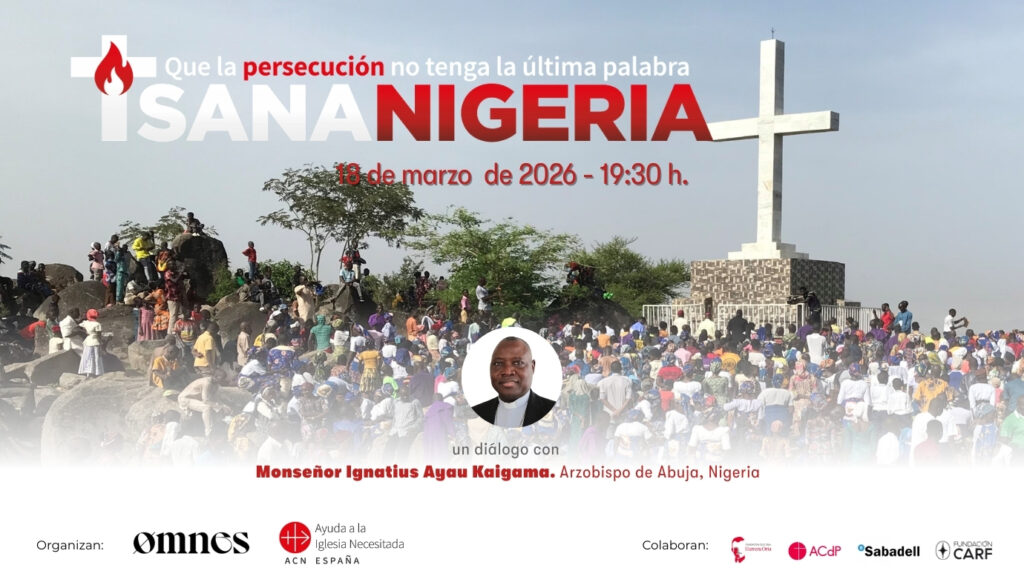
    This is precisely the heart of the matter: how do we value children, the disabled, the elderly and their caregivers? 

    Societies facing the challenge of revaluing the long-term care sector are characterized by having made a fundamental choice to defend the autonomy and freedom of the individual and the maximum possible extension of his or her rights to self-determination. 

    Just one example: the decriminalization of euthanasia and the progressive expansion of the cases in which it can be used, to the point of making it a right that must be guaranteed by the State, is increasingly common in countries afflicted by the demographic situation we have described. Whether it is wanted or not, it conveys the message to dependent persons that for them, in the context of a loss of autonomy or a diminished quality of life, an option of freedom is open: assisted suicide. 
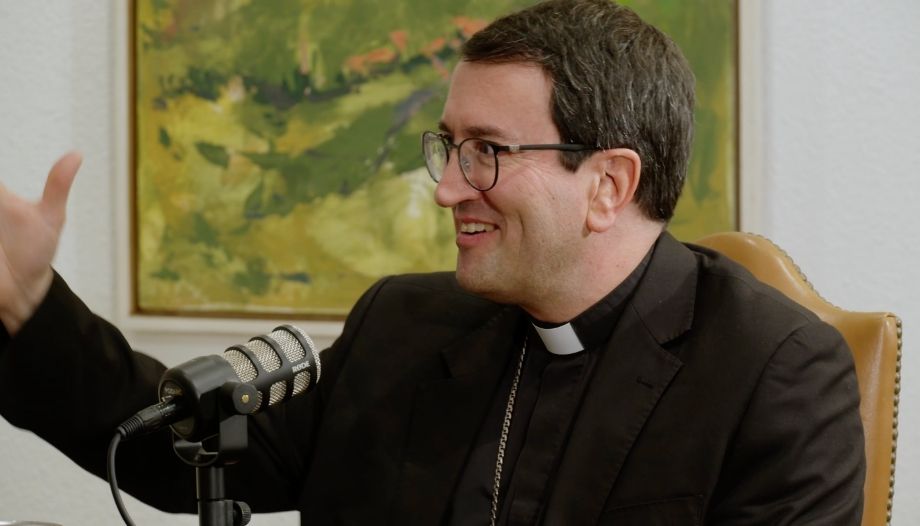
    With the demographic projections we have, it is very reasonable to conclude that the (covert and subtle) social pressure on the elderly to end their lives through euthanasia will grow. They themselves will come to the conclusion that it is the most reasonable option, considering their personal and national economic situation, the availability of health means and their family situation.

    This is to show that the individualistic approach characteristic of our societies finds it difficult to find coherent arguments to promote the long-term care sector, as well as a change in the way we value these workers.

    On the other hand, an important part of the problem lies in how to achieve a wage improvement that will make work in this sector more attractive. However, and with all the importance that the salary issue may have, it is necessary to address first the social revaluation of care professionals (and of the elderly). This would require a public effort similar to what the State and the media powers have done and are doing in many countries with gender issues. 

    Learning from the pandemic

    Professor Mary Hirschfeld has shown that at the root of the much-reported economic inequality in our societies lies the deep-rooted conviction that social success lies above all in the accumulation of wealth, which is considered the ultimate goal. People become visible or invisible according to their economic wealth. But the pandemic has made us see very clearly the value of these jobs for the common good: caregivers, delivery workers, cleaners, and a long etcetera. 

    I think that in the year of the pandemic and in view of the contribution to the common good as decisive as it is extreme and meritorious, the competent authority could have considered rewarding so much applause and social recognition with tax benefits in that year for professionals in certain sectors. 

    In short, the challenge of long-term care needs to be met with more than just the best economic policy and an emphasis on the autonomy of individuals. The Social Doctrine of the Church can help by underlining other equally crucial principles: the common good, solidarity and subsidiarity.

    The authorGregorio Guitián

    Professor of the Master's Degree in Christianity and Contemporary Culture at the University of Navarra.

    The Vatican

    Pope baptizes newborns and asks for prayers for Iran, Syria and Ukraine

    On the feast of the Baptism of Jesus, on which the Pope baptized several newborn babies, Leo XIV renewed our Baptism, the sacrament that makes us Christians, freeing us from sin and transforming us into children of God. He also asked for prayers for Iran and Syria, and for Ukraine.  

    Editorial Staff Omnes-January 11, 2026-Reading time: 3 minutes

    According to the custom of the feast of the Baptism of Jesus, Pope Leo XIV baptized this Sunday some newborns, children of employees of the Holy See.

    Then, in the Angelus, He extended his blessing to all the children who have received or will receive Baptism in these days, in Rome and throughout the world, entrusting them to the maternal protection of the Virgin Mary. 

    In a particular way, he added, I pray for children born in the most difficult conditions, both in terms of health and external dangers. May the grace of Baptism, which unites them to the paschal mystery of Christ, work effectively in them and in their families.

    Baptism transforms us into children of God

    Before the recitation of the Marian prayer, he briefly gave a basic catechesis on what is the Baptism, that is, “the sacrament that makes us Christians, freeing us from sin and transforming us into children of God, by the power of his Spirit of life”. 

    In the homily of the Mass, had said: “This is the sacrament that we celebrate today for your children; that God loves them, and they become Christians, our brothers and sisters”.

    And at the Angelus, he also reflected on the love of God, who “does not look at the world from afar, on the sidelines of our lives, our afflictions and our hopes. He comes among us with the wisdom of his Word made flesh, making us part of a surprising plan of love for all humanity.

    Sacrament that introduces us into the Church

    The sacrament of Baptism introduces “each of us into the Church, which is the people of God, made up of men and women of every nation and culture, regenerated by his Spirit”.

    “Let us dedicate this day to remembering the great gift we have received, committing ourselves to bear witness to it with joy and consistency. Just today I baptized some children, who have become our new brothers and sisters in the faith,” he said. 

    And expanding his heart before the families present, he referred to the beauty of the sacrament: “How beautiful it is to celebrate as one family the love of God, who calls us by name and frees us from evil. The first sacrament is a sacred sign that accompanies us forever. In the dark hours, Baptism is light; in the conflicts of life, Baptism is reconciliation; at the hour of death, Baptism is the gateway to heaven”.

    Let us pray together to the Virgin Mary, asking her to sustain our faith and the mission of the Church every day, he encouraged before praying the Angelus.

    To mothers and fathers: after life, after faith

    At Mass, addressing the fathers and mothers, he stressed the importance of faith. “The children you now hold in your arms become new creatures. Just as from you, their parents, they have received life, now they also receive the meaning for living it: faith. Dear brothers and sisters, if food and clothing are necessary for life, faith is more than necessary, because with God life finds salvation”.

    The provident love of God is manifested on earth through you, mothers and fathers, who ask for faith for your children, the Pope said. “May Baptism, which unites us in the one family of the Church, sanctify all your families at all times, giving strength and constancy to the affection that unites you.”.

    After the Angelus: dialogue and peace for the Middle East and Ukraine

    After the recitation of the prayer to the Virgin Mary, the Pope turned his thoughts “to what is happening in these days in the Middle East, in particular in Iran and Syria, where persistent tensions are causing the death of many people. I hope and pray that dialogue and peace will be patiently cultivated, seeking the common good of the whole of society”.

    He then referred to “Ukraine, where new attacks, particularly serious, directed especially against energy infrastructures, precisely when the cold is becoming more intense, are hitting the civilian population hard. I pray for those who are suffering and I renew the appeal to cease violence and to intensify efforts to achieve peace”.

    Finally, he greeted Romans and pilgrims, and wished everyone a happy Sunday.

    The authorEditorial Staff Omnes

    The Vatican

    The Holy Shroud of Turin, on cell phones all over the world, with “Avvolti”.”

    The Holy Shroud as never seen before. Pope Leo XIV was the first, on January 9, to participate in the experience of reading, digital vision and tour of the Shroud of Turin (Italy), created by “Avvolti” (wrapped). The program was presented to him by the pontifical custodian of the Shroud, Cardinal Roberto Repole, Archbishop of Turin. Everybody can do it now.  

    Editorial Staff Omnes-January 11, 2026-Reading time: 4 minutes

    The digital reading and viewing of the image of the Holy Shroud of Turin is an absolute novelty. In fact, it is possible to connect on Internet to the program from the website avvolti.org as from the official website sindone.org with any device: smartphone, tablet, computer, with access from all over the world. Pope Leo XIV was the first to access this tour of the image of the Shroud, on the 9th at the Apostolic Palace.

    Path explained by the image

    Thanks to the program, it is possible to “scroll” the syndonic image on the screen, enlarging the most significant details (the face, the crown of thorns...), in an explained and structured path. They are the following: 1. Deposition 2. Face/Face 3. Crowning 4. Flagellation 5. Transport 6. Crucifixion 7.

    Each enlargement is accompanied by explanations and links to the Gospel passages describing the passion of Jesus.

    File photo of the Shroud, during a preview for journalists at the Cathedral of St. John the Baptist in Turin, Italy (CNS photo/Paul Haring).

    Bringing the Shroud of Turin to the general public

    The digital reading aims to bring the image of the Shroud and its meanings closer to the general public throughout the world. Despite the scientific rigor of the texts and images, the aim was to create a product accessible to everyone, rather than an initiative intended for specialists, explains the Archbishopric of Turin, in a note also released by the Vatican Agency official.

    The “global” digital experience, accessible through the Internet anywhere in the world, is part of “Avvolti”, the initiative that the Diocese of Turin has implemented for the Jubilee 2025. 

    In 2025, a tent visited in Turin in 8 days by more than 30,000 people from 79 countries

    Last spring, an “Avvolti” tent was set up in Piazza Castello in Turin. The tent presented, among other proposals, the digital reading experience that reproduced the image of the Shroud on a 1:1 scale, on a specially designed table, 5 meters long. The tent was visited by more than 30,000 people from 79 countries during the 8 days it was open (April 28 to May 5). 

    Now, the program presented at the “Mesa”, duly adapted, is available to everyone on the web. The images and texts of the experience can be found on the website www.avvolti.org and on social networks (Facebook and Instagram).

    The Cardinal Archbishop of Turin is received by Pope Leo XIV on January 9, 2026 (Photo @Archdiocese of Turin).

    Cardinal Repole: Syndonic pastoral care

    Cardinal Repole recalled that the publication of the global digital experience is part of the “pastoral syndonica” program that the Diocese of Turin launched in 2024 and of which “Avvolti” was the central axis for the Jubilee Year 2025.

    In the coming months, other initiatives will be programmed and elaborated, with the aim of realizing a path of accompaniment towards the Jubilee of 2033, says the note.

    What is the Holy Shroud

    The Shroud of Turin is one of the relics of Our Lord that arouses most interest in the scientific community. It is a linen cloth, woven in herringbone, which shows the image, front and back, of a beaten and tortured man, which presents marks and bodily traumas such as those that may be present in a crucifixion. It measures 436 cm long, and 113 cm wide, as has been explained in Omnes.

    It is kept in Turin, in its own chapel built in the seventeenth century, within the complex composed of the cathedral, the royal palace and the so-called palazzo Chiablese.

    Origins and Gospel text

    Many argue that it is the clothing that covered the body of Jesus Christ when he was buried, and that the figure that was engraved on the cloth is his.

    The Gospel account (Mk, 15, 46), says: “Joseph of Arimathea bought a sheet, took the body of Jesus down from the cross, wrapped it in the sheet, and placed it in a tomb hewn out of the rock. Then he rolled a stone to the entrance of the tomb”.

    Writer and researcher William West presented in Sydney in March of last year several pieces of evidence supporting the historical and scientific importance of the shroud. 

    Some evidence from West

    In 2024, West published the book ‘The Shroud Rises, As the Carbon Date is Buried’, in which he suggests that the 1988 carbon date for the shroud “has finally been shown to be seriously flawed”. More recent dating tests have indicated that the shroud is 2,000 years old.

    “It's covered in blood. It's one of the first things you notice on the shroud,” he explained. Not only are obvious wounds - such as the large flow of blood from the side - evident, but every scourge mark on both the front and back of the cloth is accompanied by bloodstains. “Research has shown very clearly that those blood flows and clots are 100 % accurate and intact,” he said among other things.

    The authorEditorial Staff Omnes

    The World

    Beyond emotions: learning how to live mercy

    Vilnius will host the Apostolic Congress of Mercy in 2026, an appointment that, from the cradle of this devotion, wants to promote not only meetings and celebrations, but a concrete experience of mercy in prayer, the sacraments and daily life.

    Bryan Lawrence Gonsalves-January 11, 2026-Reading time: 6 minutes

    On a narrow cobblestone street in Vilnius’ Old Town, pilgrims and locals alike slip into a shrine that rarely closes its doors. Many kneel before the exposed Blessed Sacrament; others stand in awe before the original painting of Divine Mercy Jesus held inside the shrine.

    In June 2026, Vilnius will host the Apostolic Congress of Mercy, drawing Catholics to the city where, through St. Faustina Kowalska and her confessor, Blessed Michał Sopoćko, the devotion took visible form and began to spread. 

    For many Catholics, it will be a chance to travel to a city closely linked to the Divine Mercy devotion, and to pray in the place where the message took visible form before spreading across continents. 

    However, if you ask the people who live closest to this devotion what the congress is really for, they speak of conversions, confessions and constructing the foundations of mercy in our changing societies. 

    Two voices in Vilnius offer a window into that deeper reality: Fr Povilas Narijauskas, who oversees as rector the Divine Mercy Sanctuary of Vilnius that stays open so pilgrims can do more than pass through and Sister Marcelina Weber, the mother superior of the Vilnius convent of the Sisters of Merciful Jesus, whose community safeguards and promotes the devotion through prayer, service, and daily acts of mercy. They both spoke to Omnes, talking about how they view mercy.

    A shrine for staying

    Fr. Povilas has watched how quickly pilgrimage can become a checklist. During Mass, groups sometimes enter, glance at the image, take photographs, and leave. “They can say, ‘Oh, I was in the shrine. I saw the original image,’” he says. “But it’s not just to see Him. We must also spend time with Him.” 

    He returns to a sentence that functions like a guardrail for the devotion: “The image is not just for show.” The shrine stays open 24 hours a day so that people can return anytime to pray whenever they feel God’s impulse to do so.

    In conversation, Fr. Povilas does not treat mercy as an abstract theme for conferences. He keeps returning to the practices the shrine makes possible: constant prayer before the Blessed Sacrament, time for confession and daily masses throughout the day. He worries that large gatherings can leave people impressed but unchanged and he hopes the congress will teach pilgrims to stay with the Lord after the schedule ends and the emotions fade. 

    Mercy in the sacraments

    When Fr. Povilas speaks about Divine Mercy, he leads with the Eucharist. “What gives me the most joy is still Holy Mass,” he says. “For me, the bread is becoming His Body. I am not merely just giving bread. I am giving the real, living Jesus to people. It is still a miracle.” 

    That “miracle,” he says, draws people toward reconciliation. “Every day, morning, afternoon and evening,” he says, “there are people coming for confession.” 

    Asked whether the message of Divine Mercy has been fully received in the world, he refuses to draw a neat conclusion. “Not enough, it can still be received more strongly,” he says. In his view, mercy does not reach a finish line; it must be received repeatedly, so mercy becomes a practiced interior and exterior reflex, not a rare spiritual highlight alone.

    The chaplet and the crisis of the world

    Fr. Povilas is careful to affirm the breadth of Catholic prayer. “All the prayers are inspired, and all the prayers are good,” he notes. Nevertheless, he insists the Divine Mercy Chaplet holds a distinctive place because of how it was given. “It was dictated to St. Faustina the same way Christ dictated the ‘Our Father’ to his disciples” he explains. 

    That claim leads to a practical conclusion about priorities. “Before we focused on the ‘Our Father’ and all other prayers,” he elaborates. “Now it must be our father, then the chaplet of Divine Mercy and then all other prayers.” 

    He describes the chaplet as a kind of spiritual “medicine” and urges people to stop bargaining with it. His advice is blunt yet impactful. “Take this prayer and pray it without hesitation.”

    He then connects the devotion to the wider world. “When we look at a world at war, where so many terrible things are happening, why is this so? Is this because there is no God? or is this because there is not enough mercy?" he ponders. "If we want more mercy, we first need to call upon God for that mercy. We cannot give mercy to others, if we do not first have enough mercy within us.”

    That final line is a theological claim and a psychological one. Mercy is not simply a social virtue to be cultivated; it is grace to be received. In Fr. Povilas’ framing, the chaplet is not a slogan for the world’s problems but a daily posture of dependence: a way of admitting need, asking for mercy, and letting Christ reshape what a person can give to others. 

    For pilgrims tempted to treat the congress as the beginning of their journey towards mercy, he presses the point: “Start now. Not tomorrow, not the day after tomorrow, now.” 

    The mercy of interruptions

    Sister Marcelina illustrates the practical aspects of mercy, with an example from her community’s daily life.

    Each day at three o’clock, the nuns gather for prayer in their convent. Yet it is often interrupted by pilgrims ringing the convent doorbell, hoping to pray in the same chapel where St. Faustina once prayed. The interruption matters. It breaks silence, disrupts recollection and asks the sisters to choose between protecting their own personal prayer and responding to another’s longing. Mercy, then, becomes a decision that costs something. “What is more important,” she asks, “to stay with Jesus or to be merciful to this person who rings the bell?”. The nuns always respond to the bell.

    Her point is not that prayer should be abandoned, but that prayer should produce a heart capable of being merciful by the unpredictability of life. Mercy, she explained, is often practiced in choosing gentle patience and quiet kindness over irritation and rudeness. “It’s really easy, but very important”, she said, because these choices happen “during the whole day”.

    She clarified that such mercy is not the result of personal effort alone. “We are able to do this by praying, ‘Jesus, I trust in you,’” she explained, pointing to the central prayer of the devotion as the source of grace. She encourages others to do the same.

    Silence that makes mercy possible

    Sister Marcelina also speaks about modern conditions that can make mercy harder, namely distractions from the world that make it hard to hear God’s voice. Her congregation actively takes care of the Divine Mercy Sanctuary. There, she explains, silence is constant. “Silence in this time is very important,” she says, because “our heart and soul needs time to hear God.”

    Her observation has practical implications for the congress. A pilgrim can attend every talk and still leave unchanged if they never learn to listen to God’s voice. In Sister Marcelina’s view, mercy begins before the doorbell rings and before difficult conversation happens; it begins when a person allows God to speak and allows that voice to soften their hearts.

    After the Pilgrims leave

    Both voices keep bringing the focus of Divine Mercy back to a formation that cannot be outsourced to any event. Fr. Povilas wants the devotion to become a routine of daily prayer and a part of sacramental life; Sister Marcelina wants mercy to influence our daily decisions and how we treat others. She tells pilgrims to “open their heart” and come ready to receive. 

    If those habits take root, the congress will not be remembered only for what happened in Vilnius, but for what happened afterwards: whether people returned home more capable of staying with Christ and more willing to meet their neighbor with the mercy they have received freely.

    The authorBryan Lawrence Gonsalves

    Founder of "Catholicism Coffee".

    ColumnistsVictor Torre de Silva

    The behind-the-scenes of an ordination

    The ordination last November 22 in Rome taught me, in a profound and sensitive way, that silent service sustains every Christian vocation.

    January 11, 2026-Reading time: < 1 minute

    In my life I have had the good fortune to attend several ordinations in Rome, but none has been as special as the one that took place on November 22. On that day, together with seventeen companions from twelve different countries, I was ordained a deacon. The ceremony was a visible manifestation of the catholicity of the Church and an indelible lesson on the core of our new mission.

    In the preceding months, the theological and spiritual formation insists on a central idea: the deacon identifies himself with Christ the Servant. We speak of the service of the altar, of the Word and of charity towards all. It is a profound truth that is assimilated with the head, but that day I learned in a new way: through the senses.

    In the moments immediately preceding and during the liturgy, I was able to experience firsthand the beauty of the hidden service. It was a lesson in humility to receive the care of so many hands: the people who delicately prepared the sacred vestments to facilitate the task for the nervous ordinands; those who composed the floral decorations that gave light to the presbytery; or the choir, whose voices lifted up the prayer of all. The whole ordination was sustained by a hidden, discreet and effective service, which is the source of true life.

    But that perception is only the beginning of a broader view. Looking back, one discovers that one's vocation is sustained by the silent service of so many others. Parents, siblings, friends, colleagues, companions..., who, perhaps without knowing it, have been teachers of service and instruments of God to mold, despite our obvious limitations, those whom He has chosen.

    In view of this, we can only be grateful and ask for prayers that we may be faithful to what we have received, and that the Lord of the harvest may continue to send workers ready to serve.

    The authorVictor Torre de Silva

    The Vatican

    11 behind-the-scenes features of the first consistory of Pope Leo XIV

    After an intense day of round tables, the cardinals, with their batteries low but very satisfied, concluded the first historical extraordinary consistory convoked by Pope Leo XIV in a spirit of fraternity, with the feeling of knowing each other better and affirming that they had “discovered” the Pope. See here a behind-the-scenes summary of the consistory.

    OSV / Omnes-January 10, 2026-Reading time: 5 minutes

    - Pâulina Guzik, Vatican City, OSV News

    The two days of the first extraordinary Consistory convoked by Leo XIV, on January 7 and 8, gave the cardinals a clear vision of the new Pontiff for a Church that cares for others.

    The Pope intends to continue the discussions with the cardinals once a year. The next consistory is scheduled for the end of June and the following ones are planned once a year, lasting 3-4 days, confirmed Matteo Bruni, director of the Holy See Press Office, during the evening press conference.

    The Pope, according to Bruni, told the cardinals on Jan. 8 that the consistory is designed as a “continuity with what was requested during the meetings of the cardinals before the conclave and also after the conclave.” And that the synodal methodology used “was chosen to help them meet and get to know each other better.”.

    1. The College of Cardinals has been strengthened.

    Salesian Cardinal Cristóbal López Romero, from Rabat (Morocco), told journalists waiting for the cardinals in front of the Paul VI Hall that, with the level of fraternity reached during the 15 hours of consistory debates, “the College of Cardinals has been strengthened”.

    He said he was “very happy” because the meeting “has allowed us to get to know each other a little better, to share and also because it will continue”.

    I think it has been a way of reaffirming that there is continuity, not so much with Pope Francis, but with the Gospel, with the Second Vatican Council and with all the magisterium that has emerged as a result of it. In that sense, I am very satisfied with the results, he said. 

    2. Get to know each other better, and help Pope Leo

    Cardinal Stephen Brislin of Johannesburg, present at the afternoon press conference at the Vatican Press Office, told reporters, “The importance of this consistory was not only in the discussion that took place,” but in the possibility “to listen to each other and get to know each other,” since the prelates “did not know each other very well.”.

    He stressed that the meeting “has been a help” to Pope Leo “as successor of St. Peter” and that it has shown that synodality is “a way of being Church” - and a “disposition” of the Church. 

    3. Synodality, striving to achieve harmony

    The second day of the consistory reminded the cardinals of the Synod on synodality, with three-minute interventions by the participants in group discussions, sharing meals and reflections. From “the treasure that the Gospel is for mission,” to the need to approach the “broken lives of people with humility,” to synodality as “a tool for growing relationships,” Bruni said.

    Cardinal Luis José Rueda Aparicio, Archbishop of Bogota, Colombia, also present during the press conference, added that “sometimes there are criticisms or different positions, but we try to reach harmony, which does not mean uniformity, but to return to the roots”, which he referred to as the Second Vatican Council.

    4. “The Pope wants to be a schoolboy”.”

    When asked if there were tensions, especially in removing liturgy and Church governance from the list of topics to be discussed, and leaving ‘Evangelii Gaudium’ and synodality on the table, South African Cardinal Brislin said it was a “pleasant experience, a friendly experience.” “The Pope wants to be collegial” and learn from “the richness that comes from people's experiences” coming from different parts of the world.

    The topics for the June consistory have not yet been defined and were not specified when OSV News asked during the press conference if the liturgy or other pressing issues that have arisen will be addressed at the next consistory.

    Cardinals who left the Paul VI Hall confirmed to OSV News that during the consistory on January 7-8 there was no time to discuss the liturgy.

    5. ‘We are with you and we feel close to you’.’

    The list of cardinals who participated in the extraordinary consistory has not been released, only the number: 170. But the Vatican said the Pope met with Cardinal Joseph Zen, 93, on Jan. 7. And on Jan. 8, the Pontiff specifically thanked the senior cardinals for making the effort to attend.

    Cardinal Zen, bishop emeritus of Hong Kong, had to obtain permission from the Hong Kong judicial authorities to attend the consistory.

    Passing on the Pope's words to journalists, Bruni said the Pope emphasized, “’Your witness is truly precious,’ reaffirming his closeness to the cardinals from around the world who could not come.”. 

    6. The Pope listened and took notes

    “We are with you and we feel close to you,” he said, repeating the Pope's words, as some cardinals, such as Cardinal Baltazar Porras of Venezuela, whose diplomatic passport was confiscated by the regime, were unable to come.

    Cardinal Paul David of Kalookan, Philippines, present at the press conference, said, “It was really refreshing to see that the Holy Father was more listening than talking” during the consistory and added that while no concrete decisions have been made, “he was taking notes very, very seriously, so he must be up to something.”.

    7. A moment to discover the personality of Leo XIV.

    Dominican Cardinal Jean-Paul Vesco of Algiers (Algeria), speaking to journalists outside the Paul VI Hall, said the consistory was “a wonderful moment,” emphasizing that it was not only an occasion for the cardinals to get to know each other, but also to discover the personality of Pope Leo.

    “This pope is... a pope one wants to love. He is... deeply caring. He loves. He was there, present, with simplicity. It was beautiful,” the cardinal, who could see the Pope coming to his country in the footsteps of St. Augustine, told the press. 

    8. A pope who wants to love, and the cardinals want to love him.

    He described the pontiff as “coherent” and “direct” in his “simplicity.” He said he leaves the consistory with the feeling that the cardinals “feel loved” by their boss and “want to love him.” A clear fruit of the meeting is the level of fraternity.

    “He completely nailed it from the get-go,” said Cardinal Vesco, who spent the longest time in conversation with journalists, including OSV News.

    9. Missionary Church, Church that cares

    Emphasizing the need for teamwork in the Church, the Pope told the cardinals in his impromptu Jan. 7 address, “I feel the need to be able to count on you: you are the ones who called this servant to this mission!” adding in his Speech introduces that the consistory “will point the way forward”.

    Cardinal Vesco said that, even in such a brief meeting, it is clear that Pope Leo “wants a Church [...] that is both a missionary Church that proclaims the Gospel, but also a Church that cares,” and “that is precisely what is reflected in this form of communion and fraternity.”.

    “First of all, instead of merely talking about things, he does them. And that seems to me to be very solid,” Cardinal Vesco said, stressing that “we can clearly feel that this reserve of trust” that the Pope places in the College of Cardinals “is a value, a value that will stand the test of time.”.

    10. Emphasis is more on the relationship, as a leader.

    “The emphasis is more on relationship than content,” Father Jordi Pujol, associate professor at the Pontifical University of the Holy Cross in Rome, told OSV News. While a day and a half is too short a time to deal in depth with any topic, let alone the four planned at the start of the meeting, Father Pujol emphasized that the Pope “wanted to show that he begins his pontificate as a good leader, and a good leader is to get the cardinals to know each other.”. 

    11. Don't expect everything from me, the team will push things forward.

    A good leader, Father Pujol added, is one who says: “Don't expect everything from me; it is the team that will drive things forward. This shows that he is not personalistic and defines his style of listening first,” said the professor of ethics and media law at the Church's School of Communication.

    Cardinal Claudio Gugerotti, prefect of the Dicastery for the Oriental Churches, echoed this sentiment in his brief comments to journalists, including OSV News, saying that the Pope “was also very eager to exchange a few words, to connect with others in a very simple and informal way, and that was very nice.”. 

    Joking about the Italian character of the Vatican consistory, he added: “The lunch was excellent. Unfortunately, we missed the siesta.”.

    ———————–

    Paulina Guzik is international editor of OSV News. Follow her on X @Guzik_Paulina.

    This information was originally published in OSV News, and can be found at here.

    —————

    The authorOSV / Omnes

    Focus

    How to regulate AI by learning from the U.S.

    Artificial intelligence is already part of everyday life and poses ethical and legal challenges that require multilevel regulation.

    Gonzalo Meza-January 10, 2026-Reading time: 5 minutes

    Artificial intelligence conjures up diverse images: from robotic humanoids to scenes from Chaplin's ‘Modern Times’ to tools like ChatGPT that we use every day. But AI is already an everyday reality in the United States, present in multiple aspects of our lives. Andrew Ng pointed out that artificial intelligence is “the new electricity”, a tool that will permeate all human areas. This promise has captured the attention of investors: it is estimated that by 2026 investment in AI will exceed $500 billion. This raises ethical challenges and the urgency of establishing appropriate legal frameworks by sector and from the grassroots: local, state, national and international.

    I will mention four areas where AI is integrated into everyday life in the United States and then point out the regulations specific to those sectors.

    Transportation: Autonomous vehicles

      In several Californian cities, robotaxis, autonomous vehicles that transport passengers without a driver, are operating. Equipped with cameras, radar and learning systems, these vehicles are becoming increasingly common in Los Angeles and other areas of the country.

      Trade: Cashier-less markets, “Just Walk Out” (take it and go)

        In cities such as Washington DC and Los Angeles, there are markets managed by Amazon under the “Just Walk Out” concept. Users enter by identifying themselves with the palm of their hand, take their products (bread, milk, rice, etc.) directly by putting them in their bags or baskets and a system of multi-cameras and sensors automatically registers the purchases. At checkout, the customer receives the invoice by e-mail. There are no checkouts and no lines. Naturally, this requires pre-registration in the system with personal and financial data.

        Logistics: Distribution centers

          Amazon's mega-distribution centers represent perhaps the most spectacular interaction between AI and humans. The largest, located in Ontario, California, spans more than 400,000 square meters. These warehouses function as “living organisms” with thousands of mobile robots moving on highways to go back and forth between shelves bringing products to and from operators (humans). This AI system in distribution centers predicts traffic, optimizes inventories and collaborates with staff. I find this interesting and not to be lost sight of: an Amazon executive pointed out that the goal of AI is not to replace human labor but to facilitate it and create new jobs integrated into the system. 

          Education

            AI has deeply penetrated U.S. educational practices. A large part of the faculty, from elementary to higher education, uses artificial intelligence tools for class design, administrative management, didactic planning, performance analysis and the development of pedagogical resources. In the university context, 90% of students incorporate it in their learning processes.

            Health and wellness

              In the North American healthcare system, institutions use AI to support diagnostics -especially imaging-, refine analysis, process massive data and automate administrative tasks. For patients, there are everyday applications: health chatbots, online triage systems and wearables to monitor physical activities or vital signs.

              The challenges

              While these applications are positive, there are also dangerous uses of AI: development of autonomous lethal weapons, cyber-attacks, manipulation of information and violation of privacy.

              The need for ethical and legal regulations

              Given these realities, it is necessary to establish legal regulations and ethical guidelines for the use of artificial intelligence, from the local to the international level. Although it would be ideal to have binding international legislation, for countries such as the United States - the main developer and user of AI - a treaty of such scope is not very plausible. In any case, it would be just one piece of the regulatory machinery emanating from the local and national level.

              Examples of current regulation in the United States

              Regulation of autonomous vehicles

              There are specific rules for robotaxis. When one of these vehicles is involved in an accident, the National Traffic Safety Administration and the Department of Transportation require immediate notification in a nationwide registry, and in states such as California, Arizona, Texas or New York there are legal frameworks that regulate permits, terms of service and liability for robotaxi accidents. Also, in states such as California, Arizona, Texas or New York there are legal frameworks that regulate permits, terms of service and responsibilities in accidents involving robotaxis. Who is responsible in case of an accident? The company that manages the vehicles. In California there is a protocol for reporting incidents directly to the agency. These rules also extend to insurers. The costs of policies for autonomous vehicles are high, which forces companies to avoid violations. As it is AI, the machines are recording what is allowed and what is prohibited.

              Education

              Guidance and state regulations exist in the U.S. education arena. The Department of Education issued guidance on AI use in 2025 that calls for respecting privacy, civil rights, and academic integrity standards. Many states have issued official guidance. It is worth mentioning that, unlike in many countries, school districts are independent entities that develop their own policies in coordination with state and federal laws.

              California universities operate on the same principle: each defines its own regulatory framework. However, there is a national consensus: regulations against plagiarism extend to the use of AI. Institutions have adopted advanced tools that detect texts generated entirely by artificial intelligence. Their use is widespread.

              Health

              Although there is no single legal standard specific to AI in healthcare, there is a regulatory patchwork involving AI, for example, the Health Insurance Portability and Accountability Act (HIPAA), which protects patients' medical data and requires entities that handle it (hospitals, insurers, clinics) to comply with strict privacy and security rules.

              The regulatory path of AI is just beginning. But I believe that this should be done in each sector (education, health, finance) and from the bottom up: local, state, national and international. To think of a universal supranational law regulating AI is unthinkable, since many legal frameworks -particularly the US, which is one of the biggest investors and developers of AI. The US controls the models, the hardware (chips from companies such as NVIDIA) and the infrastructure (Google Cloud, AWS) that make AI possible, therefore, possible AI regulatory frameworks must come from the US and then, at another level, mesh with non-binding agreements at the international level. In that sense, what role can the Church play in such a regulatory effort? 

              Towards the creation, development and application of an ethical framework for the use of AI in the Church.

              The Church has been a pioneer in the development, promotion and use of an ethical framework for the use of artificial intelligence. This has been the case for at least two years. Some documents stand out, such as “Antiqua et Nova”, a note on the relationship between artificial intelligence and human intelligence from the Dicastery for the Doctrine of the Faith and the Dicastery for Culture and Education of January 14, 2025.

              Also noteworthy are the interventions of the pontiffs Pope Francis and Pope Leo XIV on AI, such as Pope Francis' 2024 World Day of Peace message and Pope Leo XIV's various speeches on the subject, notably his message at the Second Conference on Artificial Intelligence on June 17, 2025.

              These recent interventions are based on the principles of the Social Doctrine of the Church which should be applied to the use of artificial intelligence, especially on issues of human dignity, common good and solidarity. These ethical norms on the use of AI could also be developed and applied at the level of each ecclesiastical jurisdiction especially in sectors where the Church exercises its functions such as Catholic schools or hospitals, seminaries, formation centers, etc. There are some dioceses that already have guidelines in this regard, for example, the dioceses of Biloxi (Mississippi), Orange (California), and the bishops of the Maryland Catholic Conference covering Baltimore, Washington and Wilmington.

              Towards the creation of multisectoral and multilevel legal frameworks

              At the international level, the Holy See can contribute decisively to the construction of a normative framework on artificial intelligence at the United Nations level. It is important to note that this framework should be a non-binding agreement since a binding treaty would face significant obstacles-both because of incompatibility with legal systems such as the U.S., and because of the need for differentiated responses according to sectors and jurisdictional levels. Thus, it seems to me more viable and effective to promote one or several non-binding agreements within the UN to guide the regulation of AI on a global scale, thus respecting the regulatory autonomy of each country.

              The World

              Cardinal Koovakad: “We must overcome hatred in the name of religion”.”

              Cardinal George Jacob Koovakad, prefect of the Dicastery for Interreligious Dialogue, reflects on the state of interfaith relations in light of the Jubilee that has just concluded, Pope Leo XIV's recent trip to Turkey, and the 60th anniversary of the declaration Nostra Aetate.

              Giovanni Tridente-January 10, 2026-Reading time: 7 minutes

              Created a cardinal by Pope Francis exactly one year ago and prefect of the Dicastery for Interreligious Dialogue, George Jacob Koovakad is today one of the key figures in the Catholic Church's commitment to promoting interreligious encounter and cooperation. In this interview with Omnes, he reviews the most significant stages of this journey, examines the challenges posed by conflicts and violence, speaks of the value of the encounter between believers of different religions and recalls the common responsibility of religions in promoting peace, fraternity and the common good, with an attentive eye on the new generations.

              Your creation as a cardinal by Pope Francis and your subsequent appointment as prefect have quickly placed you at the center of interreligious dialogue. What aspects of your life trajectory do you consider important in facing this responsibility?

              -First and foremost, I consider it decisive to have been born and raised in Kerala, India, in a multicultural and multireligious society, where all religions are respected and guarantee social harmony. Differences are a richness: one could say that I carry in my DNA the theme of coexistence between religions that are very different from one another. I then served in various apostolic nunciatures: in Algeria, South Korea, Iran, Costa Rica and Venezuela. This allowed me to get to know both the predominant religions in countries where Christianity is a minority, as well as countries with a Christian majority, but belonging to very different cultures. 

              This “panorama” was further broadened when, in September 2021, Pope Francis appointed me organizer of apostolic journeys: the more than ten visits made have been new opportunities for meeting and collaborating with people from different continents and very different social contexts. I recently accompanied Pope Leo XIV to Turkey and Lebanon, a trip with numerous factors related to interreligious dialogue.

              I would like to highlight two aspects of these experiences in particular: on the one hand, being able to witness firsthand the countless gestures of friendship, closeness and sincere relations, at the most diverse levels, of the pontiffs towards people of other religious traditions. Secondly, the possibility of getting to know different cultures: this is an important element to be able to establish relationships, which in turn are the indispensable basis for establishing a dialogue.

              The Jubilee that is now concluding has also involved the Dicastery in various moments of encounter with other religious traditions. Among the initiatives carried out, which one seems to you particularly revealing of the current state of interreligious dialogue?

              -In this regard, I would like to highlight an important event that took place in the Paul VI Hall, in the presence of the Holy Father, on October 28, 2025. Those present found themselves immersed in a room full of variety: religions, languages, origins, ages, cultural and artistic expressions. What was the purpose of this celebration? To celebrate a round anniversary: the 60th anniversary of the declaration. Nostra Aetate, a conciliar document that marked a transcendental turning point for the Catholic Church, a concrete expression of a Church that “becomes a colloquy”, in dialogue, as St. Paul VI affirmed in the encyclical Ecclesiam suam (1964). 

              By openly acknowledging the presence of positive values not only in the lives of the faithful of other religions, but also in the religious traditions to which they belong, we have moved from an attitude of monologue to one of dialogue and listening, without renouncing the traditional foundations of Catholic identity. The presence of elements of truth and holiness in other religions, which are “the elements of truth and sanctity", has become an important element of the Catholic identity.“rays of that truth that illuminates all men”as stated in Nostra Aetate, It urges us to pay attention to others, to listen to them, to be interested in them, to take them seriously. 

              So, if we were looking for a confirmation of the current state of the dialogue, it would be enough to observe this “multicolored” hall, to enjoy the harmonies of the peculiar rhythms of the different cultures, to listen to the strong testimonies of a dialogue that becomes life, welcome, mutual respect and trust. Obviously, it is difficult to condense in a single evening the progress made in the interreligious journey, but seeing the more than two thousand attendees leave at the end of the day carrying with them a bag of seeds with the intention of “spreading” these seeds of dialogue and peace even more where each one lives, in their daily lives, was a confirmation that the journey continues.

              “The Christian faith is capable of inculturation: Christians are called to be a seed of fraternity for all”.

              Cardinal KovakaadPrefect of the Dicastery for Interreligious Dialogue

              The Document on Human FraternityWhat still shows, even today, the vitality of this initiative?

              -Through this historic document, signed by Pope Francis and the Grand Imam of al-Azhar, Ahmed al Tayeb, the two religious leaders expressed a strong message in favor of inclusion rather than exclusion and discrimination of minorities, especially in countries where Islam or Christianity is the majority religion. The document stresses that we are all children of the same God, we are all brothers and sisters; we all need to have our rights recognized and respected and, moreover, to move from tolerance to citizenship. Furthermore, the two leaders jointly condemn violence. The signing of this document, which took place in the presence of seven hundred religious leaders, is not an isolated case, but the result of a prophetic path, traveled by the whole Church, and represents an excellent example of how religions can inspire the diplomatic and political action of states to promote more courageously those values and traditions that exalt universal human dignity.

              Having made many trips following the Pope, how does the perception of interreligious dialogue change when observed from countries marked by conflict, religious minorities or cultural tensions?

              -After the pandemic we thought that life would be more peaceful, calmer, but it has not been so. Every day we face new challenges: ethnic conflicts, wars... Humanity seems to be heading towards an abyss... There are countries where internal conflicts causing violence and death have been going on for years, unfortunately far from the media spotlight, lengthening the list of “forgotten” wars. There are others, multi-ethnic and multi-religious societies, characterized by a climate of peaceful coexistence, where suddenly the horror of terrorism is unleashed, as we have seen in the recent tragic events in Sydney. 

              Since interreligious dialogue cannot replace the role of diplomacy and institutions in conflict resolution, as believers, we all have a duty to be witnesses of peace and communion. I would like to launch here a heartfelt appeal: hatred in the name of religion must be overcome. All war, all violence in the name of God is a religious perversion. Hatred, brutality and discrimination are incompatible with any authentic religious experience. Every human being is the holder of inalienable rights and freedoms and, in this context, the role of religion is, by its nature, a role of peace and can never be a motive for destruction. 

              On the other hand, if we look at the recent trip of Pope Leo XIV, in his speech with the authorities and representatives of civil society, the Pontiff quoted precisely the invitation of his predecessor St. John XXIII - who was Administrator of the Latin Vicariate of Istanbul and Apostolic Delegate in Turkey and Greece from 1935 to 1945 - to Catholics, so that they would not distance themselves from the civil life of the country. Those words, explained Pope Leo XIV, continue to radiate much light and continue to inspire an evangelical and more authentic logic, which Pope Francis has defined as “culture of encounter”.”

              We can therefore say that this latest visit was also an opportunity to break down prejudices and accelerate the process of growing mutual trust, as well as to deepen the long-standing relations between the Holy See and both the Shiites and the Sunnis.

              Earlier I quoted Nostra Aetate. What remains to be done, after sixty years, to fully appreciate this Declaration?

              -Undoubtedly, there are opportunities for growth, such as the deepening of relations with the followers of religions not yet mentioned in the document, such as the Sikhs, Jains, Confucians and Taoists; the development and implementation of the spirituality of dialogue, and the emergence of new religious movements. Undoubtedly, the theme of fraternity, of universal brotherhood, is the fruit of the seed sown by this magnificent document. The Christian faith is capable of inculturation: Christians are called to be the seed of fraternity for all. All this does not mean renouncing one's own identity, but rather being aware that identity is not and must never be a reason to build walls or discriminate against others, but always an opportunity to build bridges. 

              Interreligious dialogue is not simply a dialogue between religions, but between believers called to witness in the world to the beauty of believing in God and practicing fraternal charity and mutual respect. As believers, we are the majority in the world, but we are often silent or divided. However, it is increasingly important to unite and bear witness, working together for the common good. All of us in this field have a responsibility to continue to contemplate God's mysterious ways: it is he who opens the way.

              “Interreligious dialogue is not simply a dialogue between religions, but between believers called to bear witness in the world to the beauty of believing in God and practicing fraternal charity and mutual respect.”.

              Cardinal Kovakaad Prefect of the Dicastery for Interreligious Dialogue

              What criteria should be used to overcome situations in which dialogue is hindered by radicalization, discrimination or violence?

              -Ours is a time of conversion and renewal, an occasion to leave behind disputes and begin a new journey: working together, each with his or her own responsibilities, we can build a world in which everyone can realize his or her humanity in truth, justice and peace. Hope illuminates the path and, at the same time, is renewed and nourished each time, both in daily life, - with simple and concrete gestures of welcome, solidarity, mutual listening and sincere dialogue - and in official contexts, with the signing of a memorandum or a joint document. Both aspects are important. It is essential to always walk between realism and hope.

              Interreligious dialogue is increasingly recognized as a component of diplomacy, peace building and development. There is also more talk of “religious diplomacy”. Those working in these fields should include religious actors and faith-based organizations in their strategies. Religious institutions need to move from dialogue based on specific events to dialogue as an ongoing relational practice, involving training, education and collaboration on social justice issues.

              The new generations show a different sensitivity than in the past. Are there questions you see arising from them towards the Catholic Church?

              -Regarding the different sensitivities of the new generations, some important aspects must be taken into account. Young people are often born and grow up in multi-ethnic and therefore multi-cultural and multi-religious societies. It is an experience that influences their concept of “different”. They share spaces, friendships and school careers. Or they are children of immigrants who often experience firsthand the contrast between the cultural and religious traditions of their family and the reality they encounter in society outside the home, with their peers and friends.

              Welcoming and openness towards what is different are genuine needs and, in this, the Catholic Church can bear witness. We know of more and more frequent situations, just to give an example, of welcoming young people of other religions in oratories, who find in them a safe environment outside their family. The adult world should be more open and sensitive to understand the needs of the new generations.

              You are an alumnus of the Pontifical University of the Holy Cross, what memories do you have of your years of study?

              -I have excellent memories of my years of study at the University of the Holy Cross, a very important formation both then and later for my future. First of all, it was an experience of internationality, of universality (also an important basis for my present service), and above all I remember the opportunity to exchange ideas with students from other countries of Asia, a continent very well represented at that time. I remember the importance given to the formation of the laity. The personalized attention given to each student, the priority given to assimilation and formation, respecting individual learning rhythms, was very valuable. In short, it was a time of both human and intellectual growth.

              Evangelization

              Erik Varden on suffering: God does not eliminate pain, he carries it with us.

              The Bishop of Trondheim and writer Erik Varden offered at the Omnes Forum a reflection on human suffering from the Christian faith, stressing that the response of Christianity is not a theoretical explanation of pain, but the presence of God who assumes it and redeems it.

              Editorial Staff Omnes-January 9, 2026-Reading time: 4 minutes

              More than 250 people gathered in the Aula Magna of the CEU San Pablo University in Madrid to attend the Omnes Forum with Erik Varden. The Bishop of Trondheim and writer reflected this Friday on human suffering and its Christian meaning.

              The Forum, organized by Omnes together with Ediciones Encuentro and the Ángel Herrera Oria Cultural Foundation, was also sponsored by CARF Foundation y Banco Sabadell.

              Author of works such as Chastity, On Christian conversion o Wounds that heal, Varden addressed one of the most scandalous questions in contemporary faith: how can one conceive of a God who suffers?.

              The reason for suffering

              The Norwegian bishop stressed that the reason for human suffering does not have a simple answer. “Many leave the Church because of the scandal of suffering,” he said, adding that Christianity does not offer explanations that cancel out pain, but rather a profound reverence for its mystery. The human condition," he recalled, "is a painful condition, but not a definitive one.

              In this context, Varden explained that the core of the Christian mystery is in the incarnation: God, being absolute transcendence, enters the human condition to heal it from within. “The incarnation takes place in view of redemption,” he pointed out, insisting that suffering is not the end of history.

              Partial view of attendees at the Omnes Forum with Erik Varden

              Erik Varden reflects in a simple example the Christian's position in the face of suffering. At Crime and punishment, The brothers talk about the unjust pain and one of them ends up crying out in anger at this reality, shouting «there can be no answer to this». One of them does not try to correct his brother's anger or refute his words, but when the other stops speaking, he remains silent and fixes his gaze on the image of the cross. That is the Christian response: not an explanation that cancels out the pain, but a silent presence in the face of suffering.

              Two current responses to suffering

              Varden points out two tendencies in the face of suffering. On the one hand, he mentioned the “Instagram trend”, which pushes to project an ideal, invulnerable and perfect existence. On the other, he pointed to the growing inclination towards victimization and self-victimization, in which personal wounds are publicly exposed, demanding recognition and reparation. Although he acknowledged that sometimes it is necessary to show the wounds, he warned of the risk of turning them into identity: “when we say ‘my wound is me’”.

              According to Varden, being caught between these two dynamics - the denial of pain and its absolutization - destroys the Christian perspective. In this sense, he invited us to reflect on the historical place of Christian symbols in public life. For centuries, he recalled, processes of teaching, justice and social life have taken place under the image of the suffering Christ. That image is honored not because of the pain itself, but because Christians know what happened on the third day: suffering does not have the last word.

              The cross and your freedom

              The contemporary aspiration for perfection, he added, reveals a profound truth: the human being was created for fullness and beauty. The problem arises when one tries to reach this perfection by one's own strength, which easily leads to frustration. In the face of this, Varden defended that not being self-sufficient does not imply not being free. “For freedom, Christ has set us free,” he said.

              When contemplating the cross - with the nails piercing the flesh and mobility annulled - it may seem that we are before the absolute negation of freedom. However, read in faith, the cross reveals an extreme freedom: “If it is possible, let this cup pass from me, but your will be done”. For Varden, this scene shows that even when physical freedom is severely limited, a fully free inner response is still possible.

              The Christian position is that the fact that we are not self-sufficient or autonomous does not mean that we are not free. For freedom, Christ has set us free. Faith teaches us that we can respond with perfect freedom even when things happen to us that restrict our physical freedom. The very idea of nails piercing flesh and a person who makes sure to take away mobility is a perverse image and at the same time read in the light of faith the cross speaks to us of extreme freedom. If it is possible, let this cup pass from me, but let your will be done. The cross teaches us that we can respond with maximum inner freedom to events that would paralyze us.

              Varden talks about healing wounds

              The bishop also insisted that the healing of wounds is not instantaneous. Conversion does not automatically eliminate pain or make everything end well. Some fractures, he said, will not disappear, but that does not place them beyond the reach of grace. The Christian faith does not proclaim only an omnipotent God capable of eliminating suffering, but a God who carries it with us and transforms it into a source of healing and, at times, salvation. “By his wounds we have been healed,” he recalled, stressing that Christians, as members of the Body of Christ, participate in this redemptive reality.

              Redemption,“ he said, ‘is a historical fact that has already taken place, the effects of which continue to unfold in time until the end of time. In this sense, he cited the image of Christ who remains on the cross, not as an episode to be discarded, but as the certainty that all suffering can be entrusted to an omnipotent love. ’Saying, ”Lord, this is yours,“” he explained, can turn wounds into bridges of healing. "I have seen this," he added.

              “We live in this world as in a valley of tears,” he concluded, “but it is a valley illuminated by the light of Christ.” For the bishop, each person is called to discover and interpret his or her own “song,” the one for which he or she was created. Although there are admirable examples of people-with or without faith-who face suffering with courage, when suffering is illuminated by Christian faith it is lived with the conviction that God is with us and that we are made to live in Him. Thus, every human experience, even the most painful, can become a path of communion with God.

              Read more
              The Vatican

              15 thoughts on the restriction of human rights and freedoms denounced by the Pope

              In a dense speech to the Diplomatic Corps, which we summarize in 15 points, Pope Leo XIV today denounced the “short-circuiting of human rights” in the world, against the freedoms of expression, conscience, religion, and the persecution and discrimination of Christians. And he firmly rejected the “so-called right to safe abortion”, surrogacy and euthanasia, in order to defend the family.

              Francisco Otamendi-January 9, 2026-Reading time: 7 minutes

              The restriction and “short-circuiting” of human rights in the world, the violation of fundamental freedoms, especially freedom of expression and religious freedom, with conscientious objection, the defense of human life and the family, with the rejection of the “so-called right to safe abortion”, surrogate motherhood and euthanasia, have been core aspects of the wide-ranging Speech of Pope Leo XIV to the Diplomatic Corps accredited to the Holy See, which are summarized here.

              Force-based diplomacy

              Along with this, the Pontiff denounced that “diplomacy that promotes dialogue and seeks consensus among all parties is being replaced by a diplomacy based on force, whether by individuals or by groups of allies.”. 

              “War is back in fashion and war enthusiasm is spreading,” he noted at the beginning of his speech. “The principle established after World War II, which forbade countries to use force to violate each other's borders, has been broken.”. 

              “Peace remains a difficult but possible good.”

              In the Pope's view, “peace is no longer sought as a gift and as a desirable good in itself (...). Instead, it is sought through arms as a condition for asserting one's dominion. This seriously compromises the rule of law, which is the basis of all peaceful civil coexistence”, and he stressed the importance of respecting “international humanitarian law”.

              However, after analyzing some of the best-known conflicts shaking the world, such as those in Ukraine, Israel and Palestine in the Middle East, Haiti, the African Great Lakes region, Myanmar, or Venezuela, the Pope concluded by pointing out that “despite the tragic situation before our eyes, peace remains a difficult but possible good”.

              As St. Augustine reminds us, he stressed, “our supreme good consists in peace, because it is the very goal of the city of God, to which we aspire, even unconsciously, and of which we can enjoy a foretaste even in the earthly city”.

              Venezuela: seeking peaceful political solutions

              Referring to Venezuela, Leo XIV renewed his “vehement appeal for peaceful political solutions to the present situation, bearing in mind the common good of peoples and not the defense of partisan interests. This is especially valid for Venezuela after recent events”. 

              I renew my appeal, he said, “to respect the will of the Venezuelan people and to work for the protection of the human and civil rights of all and for the construction of a future of stability and harmony, finding inspiration in the example of two of their children, whom I had the joy of canonizing last October, José Gregorio Hernández and Sister Carmen Rendiles”. 

              In this way, “it will be possible to build a society based on justice, truth, freedom and fraternity, and thus overcome the serious crisis that has afflicted the country for many years”. 

              Drug trafficking, a scourge for humanity

              “Among the causes of this crisis is undoubtedly drug trafficking, which is a scourge for humanity and requires the joint commitment of all countries to eradicate it and prevent millions of young people around the world from becoming victims of drug use,” the Pope said. 

              “Alongside these efforts, there must be greater investment in human development, education and the creation of employment opportunities for people who, in many cases, are unknowingly drawn into the world of drugs.”. 

              Other central themes of his speech: fundamental rights and freedoms

              As mentioned above, the profound criticism of threats to human rights and the defense of fundamental rights such as religious freedom and life have been central to his discourse. 

              “We are witnessing a real “short-circuiting” of human rights,” the Pope diagnosed. “The right to freedom of expression, freedom of conscience, religious freedom and even the right to life are being restricted in the name of other so-called new rights, with the result that the very framework of human rights is losing its vitality and leaving room for force and oppression. This happens when every right becomes self-referential and, especially, when it becomes disconnected from reality, nature and truth.”.

              Conscientious objection is not rebellion

              In his reflection to the Diplomatic Corps, the Pope sharply criticized the restriction of fundamental human rights, “beginning with freedom of conscience. In this sense, conscientious objection allows people to refuse legal or professional obligations that conflict with moral, ethical or religious principles deeply rooted in their personal lives.”. 

              Conscientious objection is not rebellion, but an act of fidelity to oneself, he said. “At this moment in history, freedom of conscience seems to be increasingly questioned by states, even by those who claim to base themselves on democracy and human rights.”. 

              A truly free society does not impose uniformity, but protects the diversity of consciences, preventing authoritarian tendencies and promoting an ethical dialogue that enriches the social fabric, he stressed.

              Restricted religious freedom: an appeal to nations

              Similarly, religious freedom risks being restricted, he said later. As Benedict XVI recalled, this is “the first of all human rights, because it expresses the most fundamental reality of the person”.

              The most recent data show that violations of religious freedom are increasing and that 64 % of the world's population suffer serious violations of this right. “In calling for full respect for the religious freedom and worship of Christians, the Holy See calls for the same for all other religious communities.”. 

              In this section, the Pope did not want to overlook that “the persecution of Christians continues to be one of the most widespread human rights crises today, affecting more than 380 million believers around the world.”.

              Discrimination against Christians

              At the same time, the Pope did not forget “a subtle form of religious discrimination against Christians, which is spreading even in countries where they are a majority, such as in Europe or America. 

              There, they are sometimes restricted in their ability to proclaim the truths of the Gospel for political or ideological reasons, especially when they defend the dignity of the weakest, the unborn, refugees and migrants, or promote the family.”. 

              Defense of the family 

              An important part of the Pope's speech focused on the family. From a Christian perspective, human beings are created in the image and likeness of God, who, “in calling them into existence out of love, called them at the same time to love,” he recalled, quoting St. John Paul II. 

              “This vocation is manifested in a privileged and unique way within the family. It is in this context that we learn to love and develop the capacity to serve life, thus contributing to the development of society and the mission of the Church. Despite its importance, the institution of the family today faces two crucial challenges,” the Holy Father noted.

              Its fundamental social role is underestimated

              On the one hand, there is a worrying trend in the international system to neglect and underestimate their fundamental social role, leading to their progressive institutional marginalization. On the other hand, we cannot ignore the growing and painful reality of fragile, broken and suffering families, affected by internal difficulties and disturbing phenomena such as domestic violence.

              The vocation to love and to life, which is manifested in an important way in the exclusive and indissoluble union between a woman and a man, implies, according to Pope Leo XIV, “a fundamental ethical imperative for families to be able to fully welcome and care for unborn life. This is increasingly a priority, especially in those countries that are experiencing a dramatic decline in the birth rate.”. 

              “Life, a priceless gift”.” 

              “Life, in fact, is a priceless gift that develops within a committed relationship based on mutual self-giving and service. In the light of this profound vision of life as a gift to be cherished, and of the family as its responsible guardian,” “we categorically reject any practice that denies or exploits the origin of life and its development,” the Pope said.

              “Among them is abortion, which interrupts a growing life and refuses to welcome the gift of life. In this regard, the Holy See expresses its deep concern about projects aimed at financing cross-border mobility for the purpose of accessing the so-called “right to safe abortion”.". 

              It also “considers it deplorable that public resources are allocated to suppress life, instead of investing them in supporting mothers and families. The main objective must remain the protection of all unborn children and the effective and concrete support to all women so that they can welcome life”.

              Surrogacy: the dignity of both parties is violated.

              Similarly, there is the practice of surrogacy. “By turning gestation into a negotiable service, it violates the dignity of both the child, who is reduced to a “product,” and the mother, by exploiting her body and the generative process and altering the original relational vocation of the family.”. 

              Euthanasia: false compassion

              Similar considerations also apply to the sick and to the elderly and lonely, who sometimes find it difficult to find a reason to go on living. “Civil society and States also have a responsibility to respond concretely to situations of vulnerability, offering solutions to human suffering, such as palliative care, and promoting policies of genuine solidarity, rather than encouraging false forms of compassion such as euthanasia.”. 

              A similar reflection can be applied to so many young people who face numerous difficulties, including drug addiction. A joint effort by all is needed to eradicate this scourge of humanity and the drug trafficking that feeds it, the Pope reiterated, in order to prevent millions of young people around the world from falling victim to drug abuse.

              Reaffirming the protection of the right to life

              In conclusion, Leo XIV said: “It is necessary to reaffirm forcefully that the protection of the right to life constitutes the indispensable foundation of every other human right. A society is healthy and developed only when it protects the sacredness of human life and actively strives to promote it”. 

              Supporting signs of hope for peace

              After recalling signs of courageous hope for peace in our time (the Dayton Accords that ended the bloody war in Bosnia and Herzegovina, or the joint declaration of peace between Armenia and Azerbaijan), and the need to constantly support them, the Pope recalled the celebration in October of the eighth centenary of the death of St. Francis of Assisi, «a man of peace and dialogue, universally recognized even by those who do not belong to the Catholic Church». 

              “A humble heart and artisan of peace is what I wish for each of us and for all the inhabitants of our countries at the beginning of this new year,” he concluded.

              The authorFrancisco Otamendi

              Family

              Carlota and Santi, a marriage focused on doing God's will

              There are many ways to seek personal holiness in marriage. Carlota and Santi are building theirs trying to discover and correspond to what God is asking of them at every moment.

              Javier García Herrería-January 9, 2026-Reading time: 6 minutes

              Carlota Valenzuela and Santi Roldán met in November 2024 and married in September 2025. She is from Granada and he is from Buenos Aires. They had a brief but conscious courtship, which put mutual knowledge and prayer at the core of their relationship. Their love was not the fruit of a hasty infatuation, but of a discernment lived seriously. 

              Carlota, known by thousands of people since she made a pilgrimage on foot from Finisterre to Jerusalem three years ago and for sharing on social networks her life of faith with more than 120,000 followers, explains today how he and her husband, an Argentinean, build with their marriage a shared vocation.

              Formation during their engagement has been key: Married Love retreat, teenstar, pre-marriage course and regular talks with a priest to understand the real value of the sacrament. They insist on the need to change the story that believers often have about marriage: it is necessary to speak of its beauty, to show happy marriages and to restore hope.

              When asked what marriage means to them in terms of imitating God and doing his will, they were surprised by the naturalness with which they spoke of something unusual for newlyweds: having explicitly decided to live seeking God's will. This decision does not remain an abstract idea, but is embodied in a very concrete daily practice: praying together. 

              Prayer routine

              Their day always begins in the same way. They light a candle, place themselves in front of an image of the Virgin and pray the lauds. Carlota explains that already in that first moment of the day what each one carries inside is transparent, because “in the prayers of the lauds, besides the proposals of the Church, we ask for what we have in our hearts, and then I start to see what Santi has in his heart and Santi sees what I have in mine”. Then they read the readings of the day and comment on them, trying to see “how the readings of the day resonate in our concrete reality”. This, she says, is how she begins her day.

              The day also ends in prayer, with a practice they learned at the Married Love Project retreat and which has become one of the pillars of their married life. It is a marital prayer in which each one speaks personally to Jesus out loud in front of the other. Carlota describes it as “a neutral ground” in which Santi can pour out “the things that weigh on him, the things that generate illusions, the things he regrets, the things that have hurt him that I have done throughout the day,” while the other is simply a witness. Then she does the same, always in the light of the Gospel of the day and of their concrete life as spouses.

              Santi stresses that this prayer with Jesus is neither uniform nor predictable. “The relationship with Jesus is not always the same,” he explains; there are days when he speaks to him about a sin against which he is struggling more, on others he shares a concern or a fear, and on others he simply thanks him “because the day was very nice.” The decisive thing, he insists, is that “my wife listens to what I have in my heart, without interrupting and without intervening”, which allows me to show what I have inside “in a very honest and open way, without the need to negotiate anything”.

              Lack of time

              In the morning they dedicate between half an hour and forty minutes to prayer, and in the evening about ten minutes. Is this too much or too little time? It depends on what you compare it to. On many occasions lack of time - work, children, rushing around - make married prayer life difficult but Carlota advises those who think they have no time to “check the metrics on their cell phone and see how much time they have spent on social networks or reading the press.”. 

              Carlota clarifies that when there are days when they are tired, the prayer is brief, but “we never go to bed without having prayed. Even in more uncomfortable circumstances, for example if one is sick, ”the prayer can last a minute, but we never go to sleep without praying“.

              Prayer and conflict management

              For Carlota and Santi, praying together is not a pious addition, but something structural: “A united marriage is the basis of everything in life”, and that is why “prioritizing joint prayer is very important”. 

              They have seen marriages in which one of the spouses has a great faith life and the other does not, and how this generates a silent wear and tear, because “no matter how much one rows, if the two do not row in the same direction, everything is more difficult,” adds Carlota. Personal prayer is necessary, but conjugal prayer is “like the glue of marriage” and “the boiler that fuels the home.

              This prayer space has very concrete effects on the management of daily conflicts. Santi explains that in marriage there is always the temptation to avoid certain topics out of laziness or fear of arguing. “You have the option of not talking about things,” he acknowledges, but clarifies that what is kept “does not magically disappear.” Prayer forces them to talk, to have those difficult conversations that one would try to avoid, and helps them “build something together.”. 

              Carlota, far from idealizing coexistence, recognizes with humor that, although they get along very well, “there are times when the armchairs fly”, especially in her emotional cycles, when she goes from thinking that Santi is wonderful to being bothered even by the way he breathes. In those moments, she explains, prayer helps her to “suspect myself”, because by placing herself before God she understands “who God is and who you are”, she remembers that the perfect one is Him and not her, and she recognizes herself as a “beloved, forgiven and redeemed daughter”. From there she can accept that, if there is conflict, she probably also has responsibility, even if it is in small daily gestures. Recalling a phrase of her grandfather - “two do not quarrel if one does not want to”- she insists that when there are problems “it is the movement of both” and that prayer places her in a realistic humility from which she can forgive and ask for forgiveness.

              Santi completes this idea by explaining that the life of prayer helps them not to live from the claim. “If I live in the claim I stop seeing Carlota as a gift, as a gift from God, and I start seeing her as something that is owed to me.”. 

              On the other hand, when the other is lived as a gift, “things change a lot”. Recognizing one's own mistakes allows the other to become a help and not an enemy, and avoids falling into constant accusation, which he clearly identifies: “The devil is the accuser, and we spouses are not exempt from that”. To get out of this dynamic, he insists, one needs the humility to recognize that one has done something wrong and to accept help.

              At the beginning of their marriage, they have discovered something that they consider to be an authentic life strategy: to prioritize the other person. Carlota expresses it clearly when she affirms that “your priority is the other not only as a life option, but as a vital strategy”, because work changes, children leave and circumstances vary, but marriage is “your way to heaven and your daily happiness”. Taking care of it, he concludes, is not an add-on, but the great investment of life.

              Fear of the future

              When asked about their fears, none of them mentions major future crises, but rather a more subtle danger. Carlota is afraid of “normalizing miracles” and thinking that what is going well is only the fruit of one's own effort. She worries that, little by little, “we are taking God out of the equation” and that unavoidable matters, such as paying a mortgage, will become the axis that determines all decisions. Santi agrees completely and expresses it from another angle: he is afraid that “we are doing well and we think we are doing well because of our strength and then we leave God aside”.

              Observing other Christian marriages, Carlota confesses that she is sometimes sad to see God relegated to Sunday mornings, “if the children are not sick. She also worries about the attachment to material things, often justified by the care of children. He recalls that Jesus” parents did not provide him with “life insurance, a pension plan or a private university”. He only had “parents who cared for him and loved him”. 

              He explains that many times, with the excuse of giving stability or a good school, family life and marriage are sacrificed, when in reality “what they are giving their son is not what he really needs”, because “he will probably be a good professional, but he needs much more to be a true saint to get to heaven”.

              The best of dating

              Looking back and evaluating their courtship, both agree on the great successes. Santi does not hesitate to say that “chastity was our number one success”, because it allows us to maintain clarity in discernment. Living chastity makes it easier for the engagement to be a time to talk, to walk, to really get to know each other and to be able to make a free decision, because it is clear that “the engagement has two possible endings: to get married or to leave”. 

              He explains that part of discernment is to accept that there will be no absolute certainty that confirms that one chooses the right person and that one does not marry with all the answers, but with enough peace and joy to take the step.

              Contraceptives

              In these first months of marriage and in conversations with couple friends, Carlota and Santi see how selfishness often creeps into marriage through small plots that one does not want to give away. One of them are artificial contraceptive methods, which make it possible to “make sure” that everything goes at the pace you want. 

              She admits that she has always been rebellious in the face of the Church's proposals and that she has only learned to trust them by seeing them incarnated in her life. One of those points was precisely the issue of contraceptives, but after only a few months of marriage, she is convinced that it is not an arbitrary prohibition, but a protection against some dynamics that slowly erode self-giving.

              Read more