Culture

Jelly Roll rocks the Grammys with words about his encounter with Jesus Christ and the Bible

The Nashville artist becomes the big star of the gala by explicitly proclaiming his faith after winning the award for Best Contemporary Country Album.

Javier García Herrería-February 2, 2026-Reading time: 2 minutes

The 2026 Grammy gala will not be remembered just for record sales or technological displays, but for a moment of raw spiritual honesty. Jelly Roll, the chart-conquering country-rock giant, shocked the Crypto.com Arena by turning his thank-you speech into a heartfelt apology for his faith.

With a Bible in his hand, the artist launched a message that has resonated beyond the music industry: «I believed that music had the power to change my life and that God had the power to change my life,» he said visibly moved. At a time of maximum social polarization, Jelly Roll wanted to distance himself from the ideological use of religion, stating that «Jesus is for everyone. Jesus is not the property of a political party».

The singer's message of redemption was especially powerful when he referred to his criminal past and his years in prison: «There was a time in my life when all I had was a Bible and a radio in a 2 by 2 meter cell. And I believed that those two things could change my life,» he recalled to a standing ovation from the audience. His closing was a resounding statement of gratitude: «Jesus is Jesus and anyone can have a relationship with him. I love you, Lord!.

Who is Jelly Roll?

Behind the tattooed face and rugged appearance of the Jason Bradley DeFord (Nashville, 1984), known as Jelly Roll, hides one of the most powerful stories of overcoming adversity in American music. Raised in an environment of poverty and addiction, he spent much of his youth in and out of jail for serious crimes.

After years in the underground hip-hop circuit, his leap into country allowed him to channel his past through lyrics that speak of guilt, addiction and, above all, hope. Today he is an icon of the American working class, representing those who feel that society has turned its back on them but who have found in spirituality a plank of salvation.

A spiritual resurgence in the charts

Jelly Roll's words are not an isolated event, but the spearhead of a phenomenon that music analysts have dubbed the «new Christian revival» in pop and country.

In recent months, we have witnessed a breaking down of the walls separating contemporary music from faith. Artists like Brandon Lake, who last night shared the stage with Jelly Roll, or the phenomenon of Shaboozey and Lainey Wilson, are integrating explicit references to God into traditionally secular genres. Unlike the Christian music of decades past, this new movement is not seeking isolation on religious stations, but competing head-to-head on the global charts, demonstrating that there is a mass audience hungry for messages of transcendence in uncertain times.

The Vatican

General Assemblies of Regnum Christi and Legionaries of Christ continue in Rome

On January 29, Pope Leo XIV received in private audience the participants of the Assemblies of Consecrated Women and Consecrated Laity.

Javier García Herrería-February 2, 2026-Reading time: 2 minutes

During the months of January and February 2026, the General Chapter of the Legionaries of Christ, the General Assembly of Consecrated Women and the General Assembly of the Consecrated Laity of Regnum Christi will be held in Rome. These meetings mark a decisive stage of discernment, evaluation and projection of the common journey of the whole spiritual family.

In this context, on January 29, Pope Leo XIV received in private audience the participants of the Assemblies of Consecrated Women and Consecrated Laity. The Pontiff encouraged them to live faithfully the charism they have received, to exercise an evangelical government at the service of the people and to deepen communion within the Church and Regnum Christi. The audience was experienced as a gesture of pastoral closeness and spiritual impulse for the present context.

Communion

For Jorge Lopez, delegate to the General Assembly of Consecrated Laity and Director General of Regnum Christi between 2014 and 2020, “the audience was a gesture of Pope Leo XIV's solicitude towards the consecrated women and men and indirectly towards the entire Regnum Christi family”. In continuity with the path begun in previous years, he recalled that “as Pope Francis did in 2020, we are invited to continue and deepen a process of renewal,” stressing that the Pope's message emphasizes “living the vocation in fidelity to the charism and the common mission.”.

Lopez especially highlighted the call to communion: the Pope, he said, “invites us to live our vocation in fidelity to the charism received and to the common mission. It also includes an explicit invitation to live communion within the family of Regnum Christi,” something he considers essential, since “the meeting with the Pope itself we have lived in this way: a moment of communion among us, as Church.”.

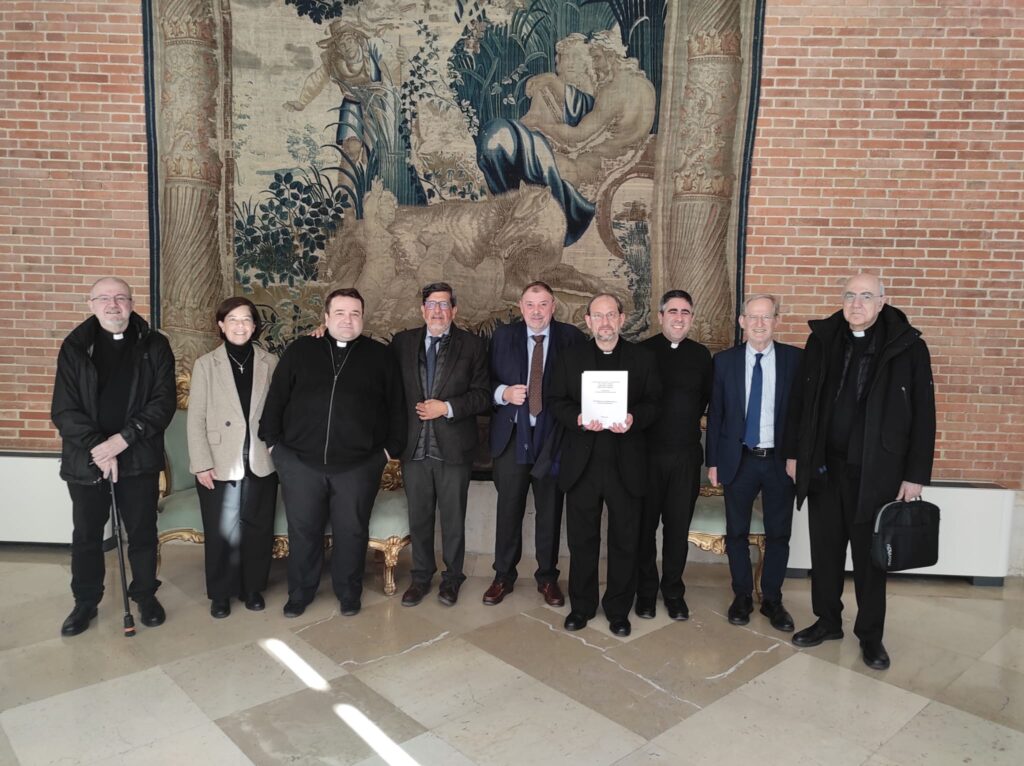
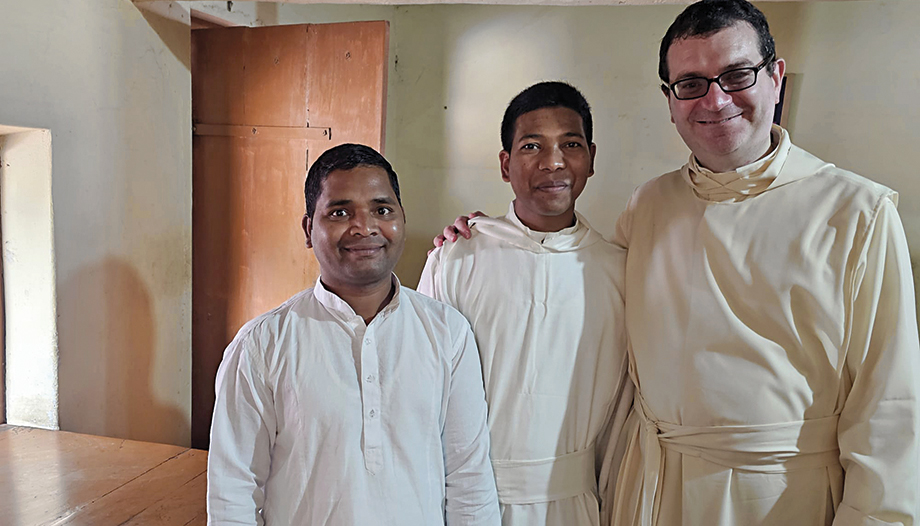
Members of Regnum Christi before the audience with the Pope

Subjects covered

The work of the General Chapter and the General Assemblies have as objectives to evaluate the management of the previous period, to elect the new governments for the next six years and to discern, in the light of the Holy Spirit, the current challenges of the evangelizing mission. All of this seeks to contribute specific accents that enrich the common mission and strengthen the path of Regnum Christi in continuity with the General Convention of 2024.

In the General Chapter of the Legionaries of Christ, they address, among other topics, formation in identity, religious and priestly life, vocation promotion and their mission within Regnum Christi. The Consecrated Women of Regnum Christi reflect on their vision towards 2032, financial sustainability, living poverty, ongoing formation and possible modifications to their own law. For their part, the Consecrated Laity deepen their spiritual and community life, the living of evangelical poverty, the apostolic projection, the organizational structure and Regnum Christi understood as a spiritual family and apostolic body.

These meetings in Rome take place in an atmosphere of shared discernment and ecclesial responsibility, with a view to strengthening the identity, mission and communion of the entire Regnum Christi family at the service of the Church and the world.

Books

Revenge or blessing? What the Count of Monte Cristo teaches

The Count of Monte Cristo is one of those novels that, under its adventurous plot, forces us to take a hard look at revenge, identity and the place we call home.

Gerardo Ferrara-February 2, 2026-Reading time: 5 minutes

When a friend gave me «The Count of Monte Cristo» as a gift, the first thing I did was check the number of pages: 1215, a brick! But, despite my doubts about whether I would be able to finish it, I ended up immersed in its complex but perfectly articulated plot, impregnated with very intense emotions that overwhelm you page after page.

Writing changes

As a storyteller, I was envious of Alexandre Dumas. He lived in the golden age of the serialized novel, when chapters were published months apart and narrators could afford endless digressions to entertain aristocratic female readers between installments.

Today we are obliged to comply with strict limits and to write in a fast and scenographic way. Since the advent of cinema, in fact, the narrator must disappear: the reader wants to be at the center of the scene without filters. Eugenio Corti called it «writing by images».

The birth of a masterpiece

Alexandre Dumas (1802-1870), son of a Napoleonic general of Haitian origin, is one of the giants of 19th century French literature. A prolific author (more than 300 works, including The Three Musketeers), he often worked with collaborators and was not very meticulous: there are many historical and geographical inaccuracies in his novels. But his narrative genius is unquestionable. The Count of Monte Cristo was published in installments between 1844 and 1846, inspired by the true story of François Picaud, a shoemaker unjustly imprisoned who later took revenge on his accusers.

The plot

Edmond Dantès, a young sailor from Marseille, is about to marry Mercedès when three men destroy his life: Danglars (who wants his job), Fernand (who wants Mercedès) and the magistrate Villefort (who sacrifices him to protect his Bonapartist father). Falsely accused of conspiracy, he is imprisoned for fourteen years in the castle of If.

There he meets Abbot Faria, also imprisoned, who passes on his immense knowledge and, before he dies, reveals to him the location of a treasure on the island of Montecristo. Dantès escapes, finds the treasure and returns to the world as a mysterious magnate to plot tremendous revenge.

It is not only the adventurous plot that makes this novel a masterpiece: it is the narrative architecture, similar to an octopus with a thousand tentacles, each of which extends freely into the sea, but which then wraps itself, along with the others, to captivate the reader little by little, squeezing him ever tighter and giving him the feeling, like one of Dantès' victims, of no longer understanding from where and how the righteous hand of God that the protagonist believes he represents has come.

Revenge as an exact science

Dantès does not simply want to kill his enemies: he wants to annihilate what is «life» for them (wealth for one, social position for another, family and reputation for yet another). And to do so, he moves like a spider in the center of a web he has woven for years, multiplying identities, wearing masks. He is, according to need, a Maltese count, an English lord, a priest, an adventurous sailor: each mask is perfect, studied, impenetrable.

However, at one point, something in him cracks. An innocent woman runs the risk of falling victim to his tremendous revenge mechanism and the Count realizes that he has gone too far. Doubt takes hold of him: is it justice or just blind revenge? Yes, because revenge, like «luck», has no eyes. And if luck smiles on those who do not deserve it, revenge does not forgive those who are not at fault.

Therefore, Dantès, who previously did not seem to doubt that the faults of the fathers must also fall on the children, wonders if he was really an instrument of Providence, as he had convinced himself, or simply a man devoured by obsession.

Waiting and waiting

The bitter reflection of the protagonist, embodied in a letter written to a friend, leads to the awareness of having lost his innocence, not because of what he has suffered, precisely innocently, but because of what he has made suffer voluntarily. However, it concludes with a desire that is also a recovered identity: «to wait and wait», «attendre et espérer».

It is the confession of a man who has spent years plotting revenge, who has always acted instead of waiting, who has sought justice with his own hands instead of waiting, but who realizes that perhaps he has been wrong. If, as he himself admits, only those who have known extreme unhappiness can taste true happiness, it is also true that, as is evident from the story, that happiness can only be given and received, not conquered with a thousand and one subterfuges.

This also made me think of a beautiful metaphor by Friedrich Nietzsche: the three metamorphoses of the spirit, described in Thus Spake Zarathustra.

Nietzsche distinguishes three transformations performed by man:

The camel that travels through the desert identifies the spirit burdened with the weight of the values received or the burdens imposed by others or by the tradition and morality to which it is subjected: «I must».

The lion is the rebellion, the spirit that says «I want» and no longer «I must». In this phase there is negative freedom, rejection: the lion destroys, fights, conquers its freedom through the negation of what it was before and of those who made it so.

The child represents innocence recovered, the ability to create new values spontaneously: «I am». It is to say «yes» to life without resentment, without submission or regret, believing freely, playing, living in the present.

Edmond Dantès and Joseph

While reading «The Count of Monte Cristo», I was struck by a strange similarity between Edmond Dantès and Joseph, the biblical patriarch thrown into a well and sold by his brothers.

Both were victims of great injustice; both were imprisoned for years (Dantès in the castle of If, Joseph in the Egyptian prisons); both were betrayed by those who should have loved or respected them; both, once out of prison, find themselves in a position to do good to themselves and others, endowed with unthinkable power and resources. However, they choose opposite paths.

Dantès lives for revenge. He multiplies identities, disguises himself, puts on masks. His «home» is not a home (in fact, he constantly changes it!), he lives in exile from a curse that grips him, from the rancor that haunts him and inhabits every palace he conquers. He lives only to destroy those who have harmed him. And above all, he is no longer himself, Edmond, but always someone else.

Giuseppe, on the other hand, finds himself for a moment in the skin of another (which is not his denial, but an evolution of himself). And when his brothers, having arrived in Egypt, do not recognize him, he is faced with a choice: to take revenge or to help them? In the end, he decides to remain himself, realizing that living to curse is just a waste of time, a waste of «vital energy», as we would say today.

When he finally reveals himself to his brothers, Joseph weeps. Not out of anger, but out of recognition. And he utters a phrase that changes everything: «You thought evil against me, but God turned it to good» (Gen 50:20). It is not naivety or weakness, but the awareness that everything contributes to good, and not in a «magical» way, but when one chooses to guard one's own good, one's own mental health, the desire to bless oneself and others, to be a blessing and not a curse.

Where we really live

«Home,» then, is not Monte Cristo or Paris, not Israel or Egypt, but that place - interior or physical - where we need no disguises or trappings, where all the things we love, are, believe and desire stop fighting each other. The place where we can say: «I belong. I am home». And «home» is also where we stop living to curse and go back to living to bless, first and foremost ourselves.

Family

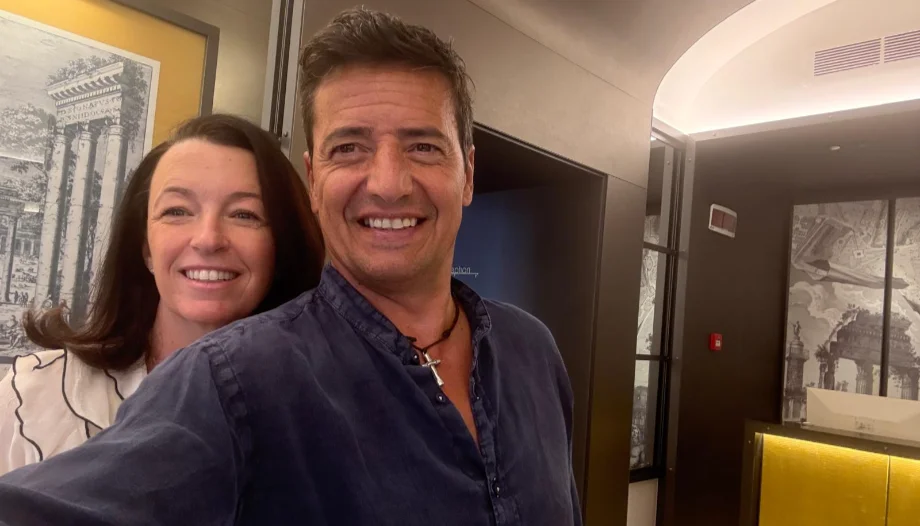
María Álvarez de las Asturias and Mercedes Honrubia: «True love grows when it is ‘used'».»

María Álvarez de las Asturias and Mercedes Honrubia share in this interview with Omnes some keys to their latest book "Crisis, no rupture".

Maria José Atienza-February 2, 2026-Reading time: 8 minutes

María Álvarez de las Asturias and Mercedes Honrubia have been accompanying couples and engaged couples on their relationship journey for more than 25 years.

As a result of this experience, these experts have published «Crisis, not rupture», a book published by Palabra, in which the basic foundations for a healthy marital relationship and key lines to prevent and face possible crises during marriage are collected.

A useful and realistic book, aimed at engaged couples and married couples at any point in their relationship and in which the authors have wanted to emphasize the need for communication in the couple, honesty, the need to ask for help or advice before «going through a bump» and the awareness that crises are not always a synonym of a breakup, but an opportunity for growth.

Against this backdrop, Omnes spoke with the authors about marriage, dating, key issues and how to detect early that «snowball» that may be forming in a relationship.

At a time when terminology is badly flawed, what differentiates marriage from any other love relationship? 

M.A.A. -What differentiates marriage from other types of unions is that it is a commitment to live love forever. That commitment, which is often frightening because we think it takes away our freedom or that we won't be able to keep it, is actually a help.

Commitment gathers the elements of love: “how comfortable we are together” and, as we are comfortable together, we spend time together to see what we think about life, about love, about marriage, about family, about work..., about everything. When the two things fit together, -I am comfortable together and I am discovering more things that make me more comfortable with you- then we decide if this is what we always want to live: commitment.

Commitment is a compass. I have decided this, I will go in this direction, and the difficulties that may come we will overcome them together. That is commitment and that is marriage. 

So..., what is courtship? 

M.A.A. -Dating is a relationship that has to end somehow. A good courtship is the one that ends either in marriage or in the thoughtful and meditated decision of “this has no future”. That is a courtship. 

Choosing the person if the other person does not want to be chosen. uh 

Well, if the other person does not want to be chosen, you can only respect the other person's freedom, you cannot impose yourself. Therefore, you have to move away from that person. And be careful, falling out of love is not automatic. It takes time, you have to go through a mourning process to get that person out of your heart and that place can be occupied by another person. This always, obviously, when we talk about courtship. The case of marriage is completely different. 

Crisis, not rupture

Author: María Álvarez de las Asturias and Mercedes Honrubia
Pages: 240
Editorial: Word
Year: 2025

Is it possible to promise love “forever” - are we not being idealistic?

M.H. - What a good question! I think the longing we all have is to love and be loved. That to love and be loved is something one longs for forever. Circumstances change, just as people change. 

It is not about staying in the butterflies of the beginnings, but it is a free choice where I update that yes, every day. Updating that yes every day, -in the present-, implies building a future. If I get to know the other person and I get to know myself, I accept my circumstances and I accept the circumstances of the other person, it is from there that I can update that yes. That is why it is a yes forever. 

When we hear “marriage counseling”, it seems that we always think of “marriage problems”, is that so? 

M.A.A. -The personal accompaniments, The professional family and marriage counseling programs have arisen because there are people who have asked for them. Until a relatively short time ago, in families, more or less, there was a unity of thought on important issues.

Now we find that there are many people who have a way of seeing family and marriage that they do not share with the rest of their environment. And, when they have a small doubt or a difficulty that is not very serious, they do not find someone with their values and principles to turn to within this close environment. We have been approached by people who have asked us for this accompaniment because they know that we share their way of understanding life, love and marriage. 

Many times, couples do not come because they have a difficulty, but also to reaffirm themselves in the path they have chosen, to lay a good foundation before marriage or because they have already laid that foundation and want to expand their knowledge and the way to put it into practice. 

Saying things in front of a neutral third party is much easier. First of all, because you can say things objectively and see if it was really important or not. In addition, the pact of the coaching session is to listen to the other.

Many times, when these things that were kept quiet are manifested, in front of a third party, the other person is surprised because “he/she had no idea about this”. That is why the accompaniment is not necessarily for the moments when you are thinking about a breakup, but much earlier, to avoid these ruptures.

When there is something that is getting stuck, something that is getting stuck in a couple, an accompaniment session is requested and these little knots are untied.

How to distinguish an insurmountable situation from a “growth” crisis in the relationship?  

M.H. -This is a subject we dealt with in “Crisis, not rupture”. It is important to know that there are evolutionary crises: just as the person is changing, the marriage is also evolving, growing and maturing.

Knowing those moments, those stages of life, places you in a perspective from which, when you see the crisis appear, it does not scare you, because you know that it is part of your own growth. Knowing gives you the security to be able to overcome. 

Another thing is the circumstances that do not depend on one, but come and we do not know how to deal with them. That is where two positions can be adopted.

The first is to consider that it is a crisis, but not in a negative sense, but it can allow me to know myself better in order to overcome this difficulty.

The second, on the contrary, is that in a couple, when faced with this situation, one of the partners does not want to work on the relationship and this implies a breakup. 

Sometimes, we encounter situations like this, in which one of the parties does not want to and, no matter how much the other is committed, it cannot be overcome. In the book we also talk about those situations in which you can no longer have control, for example in the face of a pathology, or an illness or alcohol dependence, and in which you may have to opt for a separation. 

There are stages in which marriages have many fronts open at the same time: raising children, professional deployment, parents are getting older... So it is very good to keep in mind that marriage is a long-distance race.

There are stages that are like a succession of hurdles in the race, but we have to be aware that this is temporary, but that our union is definitive. That it is a long-distance race and that we have a lot of time to continue working on what is ours. 

What key issues do we need to be clear about already in the courtship?

M.A.A. -When, in courtship, we think of “a life together”, it is about choosing the person and what kind of love relationship I want to live with him/her. To choose the person, I have to get to know him or her. That's why we talk a lot about time dating relationship. We can't go too fast, because you don't meet people overnight. 

We need to spend time in courtship to know how the other is, what he thinks, what illusions he has, what fears, what hurts, what things he likes, what things he worries about in all this. Once it is clear to you that this is the person, whom you know with his or her positive and negative aspects, then you have to talk about what type of relationship we want. 

If we choose the marriage, This is the foundation on which we build. We cannot later “remove” elements of the relationship we have chosen. That is, if we go to a de facto union, we can later add the commitment forever. But if we choose a union forever, it is not fair play to remove the element of commitment. And this is immutable. 

Everything else, -which comes around this union of the two of us and which we have called “family project” to distinguish it-, does not depend on us. We cannot foresee everything because, maybe we wanted children and they don't come, or one of us is out of work, or the parents are suddenly not there.

It is in all this, which is changing, that crises will occur, because they are alterations of the reality we are living that we cannot control. As we cannot control them, it is a matter of knowing them together, facing them together, solving them together. 

In courtship, we can talk about “what we would like”, but these are not decisions we can make. a priori. Talking about “what we would like”, we know a lot about each other.

That is why, in courtship, we have to know the person, the type of relationship we want and the elements of the family project that each of us likes. Because, if they are radically incompatible, surely that will make me decide that this is not the person I can commit to. 

In your latest book you touch on two painful and complicated topics, what you call the “sudden death” of marriage and infidelity. How do you deal with such complex realities?

M.H. -In the book we have a separate chapter where we deal with both infidelity and the sudden death of marriage. These are two different issues. 

Perhaps in the sudden death there may even be infidelity, which is what leads to that decision and the other person is faced with it without seeing it coming. 

Many times, the sudden death What it implies is having been silent for a long time, not having said what one needed to say. Then, the other person believes that everything is going well, it continues to work because he/she believes that everything is going well. 

Sometimes, people do not speak to avoid a conflict, because of wounds or circumstances that have accumulated from the past and that prevent them from having that assertive communication. That is why in the book we talk a lot about the importance of communication. When someone says “it's over”, they have already gone through a grieving process to make that decision, and many times it is irreversible. 

Infidelity is a different matter. There are different types of infidelity and I believe that none is justifiable. Infidelity is a betrayal. A betrayal of the person, whether male or female, and a betrayal of the relationship. There you are really hitting the waterline of commitment. 

It is true that it is possible to overcome an infidelity, but the wound of betrayal is very difficult to heal. It requires a lot of time and to recover a trust that is absolutely devastated. For that it is necessary, not only that the person who has been betrayed wants to work on that relationship and wants to work on forgiveness towards the other, but also that the person who has committed that infidelity also needs to work on recovering trust and, above all, to work on being a team, because there we are both committed.

Many questions will arise, many doubts, many issues of which, perhaps at a given moment the person who has been unfaithful already wants to turn the page because he has asked for forgiveness and it seems that everything is already restructured and, however, the person who has been unfaithful needs to constantly ensure that the other person is really here.

Sometimes, infidelity is not the cause but can be “the consequence”. It is usually the consequence of poor communication within the relationship: not trusting the other, not being able to say how I am at a given moment, what I need from you..., can cause us to put our heart in a person who is not the one we have chosen.

It is never justifiable and can be worked through, it can be forgiven, but it is a wound that is difficult to heal. 

The wound of infidelity strikes at the waterline of self-esteem. It is necessary to work a lot on that self-esteem and that way of communicating. Everything that sometimes needs to be said, even if it hurts, so that the other person also puts all the meat on the grill. 

That hackneyed phrase from the world of celebritiesIs it true: “Our love has worn out from using it so much”..., is it real? 

M.A.A. -The love really grows when it is used. What happens is that you have to take care of it. We talk a lot about gestures of affection. Love, not “butterflies”.

On the one hand, we receive queries from people who say, “I don't feel those butterflies”. It seems to me that we have greatly exaggerated the effervescence of falling in love. 

Falling in love, more than an effervescence, is a warmth of the heart that you have with one person and you do not have with another. And this warmth of the heart must be maintained throughout the life of love.

And how is this done? With gestures of affection, with a little note, with a WhatsApp, with a handshake..., with all the gestures of courtship. If the courtship has been well used, it has gone slowly and all the steps that can be taken have been taken, we will have learned to value these small gestures.  

Then, we have to know that, if there are moments in which we are both very tired, -because many times more than wear and tear in the relationship, what we have is a lot of tiredness-, then we have to accept it and talk about what we can do -realistically- to continue reviving this. 

We also say that, from the union of the heart we go to the union of the body, and from the union of the body the union of the heart resurfaces, that is why we ask couples who come “worn out”: How long has it been since you have been together? That you don't talk? That you don't have half an hour for yourselves? When they recover those moments to reconnect, love is used again and not worn out. 

Pope's teachings

Disarming“ peace and fidelity

Is it not true that the peace we are being offered is paradoxically an “armed peace”? But this false “peace” is the result of fear. Leo XIV's insistence runs along other paths, even if he seems to be alone in his attempt.

Ramiro Pellitero-February 2, 2026-Reading time: 7 minutes

Among his teachings in recent weeks, in the wake of the Jubilee of Hope, we focus on his message for the 59th World Day of Peace, which marks the beginning of the year 2026, and his apostolic letter Loyalty that generates future, on the occasion of the 60th anniversary of the conciliar decrees Optatam totius y Presbyterorum ordinis.

The revolution of a disarming peace

Leo XIV's message for the World Day of Peace (1-I-2026) is entitled: Peace be with you all: Towards a ‘disarmed and disarming’ peace’. It is a direct and extended echo of the first words he pronounced when he stepped out onto the balcony of St. Peter's Basilica in the Vatican (May 8, 2025). 

The peace brought by the risen Christ,“ he observes in the introduction, "is not a mere wish, but "... the peace of the Risen Christ.“The result is a definitive change in the person who receives it and, thus, in the whole of reality.”(cf. Eph 2:14). The Christian mission, which involves peace with its luminous aspect in the face of the darkness and obscurity of conflicts, continues to move forward. With the proclamation of the successors of the Apostles and the impetus of so many of Christ's disciples, it is “a mission of peace" (Eph 2:14).“the quietest revolution".

An unarmed “struggle

Christ brings “an unarmed peace” because, in the face of conflict and violence, He brings a different path. "Sheathe your sword.", he says to Peter (Jn 18:11; cf. Mt 26:52). 

"The peace of the resurrected Jesus is disarmed -The Pope affirms, because their struggle was unarmed, within specific historical, political and social circumstances. Christians, together, must prophetically bear witness to this newness, remembering the tragedies in which they have so often been complicit.". 

Jesus proposes, instead, the way - the protocol, Pope Francis called it - of mercy (cf. Mt 25:31-46). 

Paradoxically, today, “in the relationship between citizens and rulers, the fact that we are not sufficiently prepared for war, to react to attacks, to respond to aggressions, is considered to be a fault.". 

But this is just the tip of the iceberg of a deeper and more widespread global problem: the widespread lThe logic justifying fear and domination. “Indeed, the deterrent force of power, and in particular nuclear deterrence, embodies the irrationality of a relationship between peoples based not on law, justice and trust, but on fear and the dominance of force.". 

Let ethics prevail over economic interests

It is not a question, says Leo XIV, of denying the dangers that loom over us because of the domination of others. It is a question, first, of the cost of rearmament, with the economic and financial interests it entails. Secondly, and more fundamentally, there is a major cultural problem affecting educational policies. The path of listening, encounter and dialogue, as advised by the Second Vatican Council (cf. Gaudium et spes, 80).

Hence, it becomes necessary, on the one hand, to “denouncing the enormous concentrations of private economic and financial interests that are pushing states in this direction”. And, at the same time, encourage “the awakening of consciences and critical thinking" (cfr. Fratelli tutti, 4).  

Pope calls for united efforts “to contribute reciprocally to a disarming peace, a peace that is born of openness and evangelical humility.”. And all this, attention, not only as an ethical response, but also with attention to the Christian faith, which promotes unity. 

Promoting mutual trust

First of all, in the Christian perspective goodness is disarming. "Perhaps that is why God became a child”. God wanted to assume our fragility; while we, as Pope Francis pointed out, “we often tend to deny boundaries and avoid the fragile and wounded people who have the power to question the direction we have taken, as individuals and as a community.” (Francisco, Letter to the editor of “Corriere della Sera”, 14-III-2025). 

In his magna carta of Christian thought on peace (the encyclical Pacem in terris, 1963), St. John XXIII introduced the proposal of an “integral disarmament”, based on “a renewal of the heart and intelligence”.”. To this end, Leo XIV now confirms, the logic of fear and war must be replaced by mutual trust between peoples and nations; without giving in to the tendency to “transform even thoughts and words into weapons.”

Religions, says Pope Leo XIV, must help to take this step and not the other way around: to substitute faith for political combat until - he clairvoyantly denounces - “...".“blessing nationalism and religiously justifying violence and armed struggle".

For this reason, and it is addressed first and foremost to believers, he proposes: “together with action, it is increasingly necessary to cultivate prayer, spirituality, ecumenical and interreligious dialogue as ways of peace and languages of encounter between traditions and cultures”.”

And this has an educational translation: that every Christian community becomes a house of peace and a school of peace, “where we learn to defuse hostility through dialogue, where justice is practiced and forgiveness is preserved.”; "today, more than ever, it is necessary to show that peace is not a utopia, through attentive and generative pastoral creativity.".

Clearly, adds the successor of Peter, this corresponds in a special way to politicians: “It is the disarming path of diplomacy, mediation and international law, sadly belied by the increasingly frequent violations of international law. agreements reached with great effort, in a context that would require not the delegitimization, but rather the strengthening of supranational institutions.".

Disarming the heart, mind and life

In continuity with his predecessors, Leo XIV denounces the desire to dominate and to advance without limits, by sowing despair and arousing distrust, even disguised behind the defense of certain values.

"To this strategy -proposes as a fruit of the Jubilee of Hope. the development of conscious civil societies, of responsible forms of associationism, of experiences of non-violent participation, of small and large-scale restorative justice practices must be opposed.”. All this, based on both anthropological and theological reasons, in the horizon of human fraternity (cfr. Leo XIII, Rerum novarum, 35).

This, the Pope concludes, requires, first and foremost for believers, “to rediscover themselves as pilgrims and to begin within themselves that disarmament of heart, mind and life to which God will soon respond.r -with the gift of peace- delivering on their promises” (cf. Is 2:4-5). 

Fruitful priestly fidelity

The apostolic letter Loyalty that generates future, The new Constitution, signed by Leo XIV on December 8, 2025, was published at the end of December.

The title already contains the proposal addressed to priests and specified at the beginning: “...".“Persevering in the apostolic mission offers us the possibility to question ourselves about the future of the ministry and to help others to perceive the joy of the priestly vocation.” (n. 1). Fruitful fidelity“ is a gift to be understood and received in the context of the Church and her mission. At the same time, the priestly ministry has an important role to play in the longed-for renewal of the Church (cf. Optatam totius, Proem). 

Hence Leo XIV's invitation to reread the conciliar decrees Optatam totius y Presbyterorum ordinis, where it was desired to reaffirm the priestly identity and, at the same time, to open the ministry to new perspectives of doctrinal deepening. A rereading that should be enlightened by the fact that, after the Council, “the Church has been led by the Holy Spirit to develop the Council's teaching on its communional nature according to the synodal and missionary form." (n. 4). 

Keeping God's gift alive and caring for the fraternity

In the face of painful phenomena, such as abuse or the abandonment of the ministry by some priests, the Pope stresses the need for a generous response to the gift received (cf. 2 Tim 1:6). The basis must be the “following of Christ", with the support of integral and ongoing formation. In this formation, from the seminary stage, the “affective” aspect (learning to love like Jesus), human maturity and spiritual soundness stand out. “Communion, synodality and mission cannot be realized, in fact, if in the hearts of priests the temptation of self-referentiality does not give way to the logic of listening and service.” (n. 13). In this way they will be effective in their “service” to God and to the people entrusted to them.

Within the fundamental “fraternity” that arises in Christians as a result of Baptism, there is in priests, through the sacrament of Orders, a particular fraternal bond, which is a gift and a task. This is how the Council expresses it: “Each one is united with the other members of this presbytery by special bonds of apostolic charity, ministry and fraternity.” (Presbyterorum ordinis 8). 

The Pope says that this means, in the first place, on the part of each one, “overcoming the temptation of individualism”(n. 15) and a call to fraternity, whose roots are in unity around the bishop. Institutionally, it is necessary to promote economic equality, provision for sickness and old age, reciprocal care, and also “... to promote the development of a fraternity of brothers and sisters" (n. 15).“possible ways of living together”The "spiritual and intellectual life, avoiding the possible dangers of loneliness (cfr. Presbyterorum ordinis 8). 

Priesthood and synodality for mission

Encourages priests to participate in the synodal processes underway, referring to the Final document of the synod on synodality: “The Synod on Synodality: "It seems essential that, in all the particular Churches, appropriate initiatives be undertaken so that priests can familiarize themselves with the guidelines of this Document and experience the fruitfulness of a synodal style of Church.” (n. 21 of the letter).

As for priests, this must be manifested in their spirit of service and closeness, welcoming and listening. They must reject a “unique leadership”Instead, choosing the path of collegiality and cooperation with the other ordained ministers and the entire People of God. It is necessary, he points out, to avoid identifying sacramental authority with power, which would lead to placing the priest above all others (cf. Evangelii gaudium, 104). 

Regarding the mission: “The identity of priests is constituted around their ‘being for’ and is inseparable from their mission.” (n. 23 of the letter). 

Pope warns priests about the danger of two temptations: activism (giving priority to what one does over what one is) and quietism (linked to laziness and defeatism). He points to pastoral charity as the unifying principle of priestly life (cf. Pastores dabo vobis, 23). Thus “each priest can find a balance in daily life and know how to discern what is beneficial and what is proprium of the ministry, according to the indications of the Church." (n. 24). 

In this way, too, he will be able to find harmony between contemplation and action, and the wisdom to disappear when and how it suits him, in the midst of a culture that exalts media exposure. It will be able to promote unity with God and fraternity and the commitment of people in the service of cultural, social and political activities, as proposed in the Final Document of the Synod (cf. nn. 20, 50, 59 and 117).

With reference to the “future” and in the face of the scarcity of vocations, Leo XIV proposes prayer and the revision of pastoral praxis, so as to renew both the care for existing vocations and the call in the youth and family contexts.

Hope in everyday life

The degree of civilization of a society is measured by the treatment of prisoners. When the same hands that committed crimes are capable of creating something sacred, like the hosts that embody the path of rebirth, that is pure poetry.

February 2, 2026-Reading time: 2 minutes

For Romano Guardini, hope was linked to patience, to the ability to live in the tension between what one is and what one desires, finding a calm and profound strength to grow and face the future of life, without fleeing from suffering, but embracing it as a way to experience being in shipwreck. An active hope that does not stop at perfection, but is embodied in everyday life.

If there is one place where it is easy to lose hope, it is behind bars; it is the so-called “prisoner syndrome”. The prisoner feels alone and out of place, and the idea of rebuilding his life distresses him.

In prison, the inmate experiences that he is alone in the real world, probably with no one waiting for him when he comes out, resulting in a loss of self-esteem and, perhaps, of the meaning of life.

It is difficult for a free person to realize what it means to be deprived of freedom, and only the intuition of it makes us shudder.

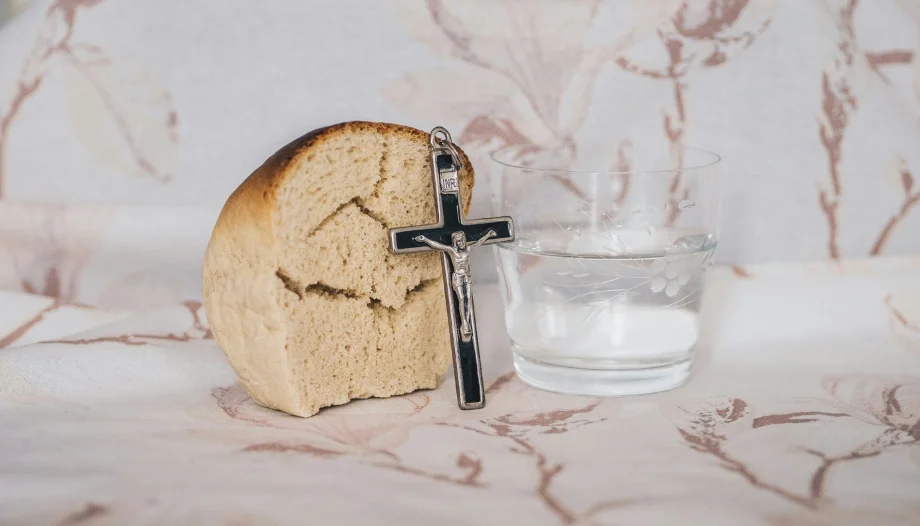
When, in a hospital, I found an establishment selling bread made by prisoners, I entered without hesitation. “Today's bread has been kneaded last night by someone who is in prison,” I said to my family during dinner, and I perceived an invisible embrace made of sacred silence.

I was moved to learn that, in a prison, some women have created a workshop that produces hosts for Mass, which offers them an opportunity for personal and professional growth.

Women who every day strive to carry out this work, carrying out a project that unites an educational dimension, civil responsibility and a path of rescue.

The degree of civilization of a society is measured by the treatment of prisoners. When the same hands that committed crimes are capable of creating something sacred, like the hosts that embody the path of rebirth, that is pure poetry.

The authorMiriam Lafuente

The Vatican

Pope calls for dialogue between Cuba and the U.S., and recalls vocation to holiness

At the Angelus, Pope Leo XIV called for “a sincere and effective dialogue to avoid violence” in the face of the tension between Cuba and the United States. Yesterday, together with the Peruvian bishops, he inaugurated a new Marian mosaic and a statue of St. Rose of Lima, and recalled the universal call to holiness of the Second Vatican Council.

OSV / Omnes-February 1, 2026-Reading time: 5 minutes

- Paulina Guzik, OSV News.

At the Angelus on this first Sunday of February, and the Fourth Sunday in Ordinary Time, Pope Leo expressed his “great concern over the news of increased tension between Cuba and the United States of America, two countries that are close to each other”, and invited all those responsible “to promote a sincere and effective dialogue to avoid violence and any action that could increase the suffering of the beloved Cuban people”. 
Following these words, pronounced after the recitation of the Angelus, He prayed that “the Virgin of Charity of El Cobre assist and protect all the children of this beloved land”. 

Beatitudes: “lights that the Lord kindles in history”.”

In his meditation before the Marian prayer of the Angelus, before the thousands of Romans and pilgrims in St. Peter's Square, the Holy Father reflected on the Gospel of the Beatitudes, which the liturgy proposes this Sunday.

The Pope said that “they are lights that the Lord kindles in the darkness of history, revealing the plan of salvation that the Father carries out through the Son, with the power of the Holy Spirit”.

“He is the poor one who shares his life with everyone, the meek one who perseveres in pain, the one who works for peace and is persecuted to the point of death on a cross,” said the Successor of Peter. “In this way, Jesus illuminates the meaning of history; not the one written by the victors, but the one that God accomplishes by saving the oppressed.”.

D.R. Congo, Portugal, Mozambique, O.G. in Italy

The Pontiff also assured of his prayers for the many victims of the collapse of a mine in the Democratic Republic of Congo. “May the Lord sustain these people who are suffering so much,” he said. He then encouraged prayers for the deceased and for those who are suffering because of the storms that in recent days have hit Portugal, southern Italy, and also Mozambique, severely affected by floods.

The Winter Olympic Games in Italy, which will begin next Friday, and the Paralympic Games have also been the object of the Pope's attention. Leo XIV wishes “that these great events may constitute a strong message of fraternity and revive the hope of a peaceful world”.

Pope Leo XIV during the inauguration of a new mosaic of the Virgin Mary and a statue of St. Rose of Lima in the Vatican Gardens, Jan. 31, 2026. (OSV News/Vincenzo Livieri, Reuters).

Mosaic of the Virgin Mary, and statue of St. Rose of Lima

The Vatican Gardens yesterday welcomed a new Marian mosaic and a statue of St. Rose of Lima, both created by young artists from Peru. The ceremony thrilled Pope Leo XIV, an American-born pope who holds Peru in “a special place” in his heart, reports Paulina Guzik, international publisher of OSV News.

Calling the ceremony a “joyous occasion” as it rained on the Vatican, the Pope said the donation from the Peruvian bishops, unveiled on the occasion of his ad limina visit, “renews the deep bonds of faith and friendship that unite Peru, a country so dear to me, with the Holy See.”.

Deep ties with Peru

The Ambassador of Peru to the Holy See invited Pope Leo to come to Peru during the ceremony. During the ceremony on January 31, Jorge Fernando Ponce San Roman, shared the “infinite gratitude of all the people of Peru to our Pope Leo XIV for this new expression of affection” by placing the mosaic and statue of Peru's beloved saint in the Vatican Gardens.

Carlos Enrique García Camader, bishop of Lurin and president of the Peruvian Episcopal Conference, affirmed that the Blessed Virgin Mary in the Vatican Gardens “will forever represent our people, our Peruvian people, profoundly Marian”. She, the bishop added, “in her various invocations, will represent what Peru is: an unshakable faith, a firm hope and a people marked by charity”.

Peruvian bishops pose for a photograph, with the new mosaic of the Virgin Mary in the Vatican Gardens behind them, Jan. 31, 2026. The mosaic and a statue of St. Rose of Lima were blessed by Pope Leo XIV (OSV News/Vincenzo Livieri, Reuters).

Don Bosco Artisans

“Gathered in this beautiful place, where everything speaks to us of the Creator and of the beauty of creation, I wish to express my gratitude, first of all, to the artists who created these works and to all those who made it possible for us to enjoy this happy occasion today. And to the entire Salesian Family, precisely on this feast day of St. John Bosco,” said Pope Leo XIII in the Vatican Gardens.

The creation of the two works was entrusted to the Artisan Family. Don Bosco, Ugo De Censi, a community of young artists from the Peruvian Andes, trained in art and religious research by Father Ugo De Censi, a Salesian priest who spent 70 years in the Andes, creating, among other ecclesial works, handicraft schools for disadvantaged youth.

The young Peruvian artist, Edwin Morales, created the sculpture, in white travertine marble from Huancayo, Peru. Lenin Alvarez Medina, responsible for the Virgin Mary mosaic, remembered Father Ugo as someone who changed his life. “He had a profound impact on my life and on the lives of thousands of young people in Italy and South America,” he said of the priest who died in 2018 after founding several seminaries and art schools in the region.

The central image of the Immaculate Virgin of the rich mosaic is surrounded by “seven of the most representative Marian invocations of Peru”, the artist pointed out, “intertwined with the national colors as a symbol of national unity”.

Universal call to holiness

“The two figures evoked, our heavenly Mother and the first Latin American saint, St. Rose of Lima, refer us to the theme of holiness.”, said the Pope at the end of the ceremony of unveiling the two works, which he blessed and sprinkled with holy water.

“These beautiful images that we contemplate today remind us of the greatness of the vocation to which God calls us, that is, the universal vocation to holiness. I encourage you to be, with God's grace, witnesses and examples of that holiness in today's world,” the Pope said. 

“For that is the will of God: our own sanctification (cf. 1 Ts 4,3; Ef 1,4), he added, after citing the Constitution Lumen Gentium, n. 40, of the Second Vatican Council.

“May the Virgin Mary and all the saints intercede on our journey to our heavenly homeland. With gratitude, I bless you from my heart,” the Pope concluded.

————

- Paulina Guzik is international editor of OSV News. Follow her on X @Guzik_Paulina

————

The authorOSV / Omnes

Read more

The meaning of existence 

In a world focused on efficiency and competencies, Catholic education reminds us that to educate is to accompany existence. It is not just a matter of forming professionals, but of offering meaning, placing the person at the center as the place where the Spirit continues to act.

February 1, 2026-Reading time: 2 minutes

“The history of Catholic education is the history of the Spirit at work”. This is how Pope Leo XIV expresses himself in the apostolic letter Designing new maps of hope, written on the occasion of the 60th anniversary of the Conciliar Declaration Gravissimum Educationis, In it, the Second Vatican Council recalled, among other things, that education is not an ancillary activity, but constitutes the very fabric of evangelization.

In the midst of the 21st century, the question of the relevance of Catholic identity in the field of education remains controversial. What makes an education truly Catholic? Can we offer something to the world that cannot be remedied by technology, digitalization or artificial intelligence?

The answer is affirmative, evidently, but not for its obviousness does it cease to be complicated and challenging to carry out: the meaning of education enlightened by faith is this very thing: to offer meaning. When a Catholic educational institution forgets its DNA and adopts other identities, however humanly laudable they may be, it betrays the very key to its existence. To put the person at the center is to give that sense of transcendence: to know that every human being “is a face, a history, a vocation”, not a “profile of competencies” (cf. Apostolic Letter Designing new maps of hope, 4).

In a world obsessed with productivity, access scores and digital skills, Catholic education is challenged to propose a humanistic vision of its work, in which it reaches not only professional preparation, but an understanding of life in an integral way and to do so from a full experience of communion, in Christ and with others. “To put the person at the center means to educate in the long view of Abraham: to make them discover the meaning of life, the inalienable dignity, the responsibility towards others”, the Pope underlines in number 5 of Designing new maps of hope.

Educating is the first task of every human being: whether as a teacher or as a student. This accompaniment in the encounter with the meaning of life begins in the family and extends, more and more, into the different social circles of every human being. And once again, witness emerges as the key to this task: moving from indoctrination to witness, from theory to experience, is the challenge that today and always marks the existence, not only of every Catholic educational institution, but of each one of us..

Education

5 errors of religious education, according to Dietrich von Hildebrand

In October 1969, the magazine Palabra (No. 50) published an article by the famous German philosopher and theologian Dietrich von Hildebrand on the teaching of religion. We published this same article on the occasion of Omnes' 60th anniversary.

Dietrich von Hildebrand-February 1, 2026-Reading time: 17 minutes

If we want to expose the true notes of education in religious matters it is indispensable that we include the unmasking of the current errors that fill the environment; we must refute the «slogans» that confuse many faithful and pious people, because they fail to understand the heretical character of these «slogans» and their incompatibility with the true Christian faith.

There are five basic errors that are making their way into the supposed «reform» of the teaching of religion. Let us briefly examine each of them.

1. The myth of the «modern man».» 

The first error is the myth of «modern man» which proclaims the total change in the nature of man in our time. It is argued that man has changed so radically that we cannot expect him to have the same way of approaching the faith and the Church that he had in the past two thousand years. Because man now lives in an industrialized world, it is believed that he has undergone a total change; he can increasingly dominate the world through technological progress. And this, supposedly, makes him a different creature. 

The myth of «modern man» has been invented by a few sociologists, but has been, unfortunately, accepted by many as a simple and unquestionable truth.

Certainly, external life has changed a lot, but man himself has not changed. The principles of his happiness are the same as they have always been: love, marriage, family, friendship, beauty, truth and, above all, peace of soul, a good conscience. Its moral dangers are the same as they were before: pride, concupiscence and its fruits, evil passions, exorbitant ambition, envy, blind desire for power, greed, covetousness, etc. The same can be said of the moral virtues, whose practice is required of him: justice, integrity, purity, generosity, humility and charity.

Man has the same condition today as he had before, the same capacities of intelligence, knowledge and free will; the same heart that can rejoice and suffer, the same destiny. He has as much need of redemption as before. The words of St. Augustine apply to him as much as before: «Thou hast created us, O Lord, for Thyself, and our hearts are restless until they find their rest in Thee.».

In reality, what is the source sociologists use to know that today's man has totally changed? On what do they base the existence of this «modern man»? Have they perhaps made a survey and asked each man if he is a “modern man”, with completely different needs, to whom the same moral norms no longer apply? Undoubtedly, no.

And how can those who proclaim at the same time that all knowledge is limited by time, assume that their theses on «modern man» will not be laughed at fifty years from now?

 a) Man's nature does not change 

In reality, the nature of man has not changed throughout history. It is enough to read the dialogues of Plato or Herodotus to see that man remains always the same in his basic structure. There is only one radical change in history: the coming of Christ, the Redemption of man through his death on the cross, the gift of the life of grace through baptism. Thus, by his vocation to holiness every man is called to bring about this change within himself. 

In spite of the identity of man's nature throughout all ages of history, there are, naturally, great differences between men and men, in their mentality, in their moral and intellectual criteria... But these differences are found among men in every age.

The claim, therefore, of complete change in man is a myth, not only because man's nature has not basically changed, but also because «modern man» himself is a myth: as if at one time all men had the same mentality and structure! This is a completely arbitrary claim without any scientific foundation. In fact, the difference in mentality between men of the same epoch is even greater than the contrast between the different epochs. 

b) A fatal influence 

This myth of «modern man» has a fatal influence on education, especially religious education.

There are too many pedagogues of religion who believe that the child of today should be given a completely different religious diet. They take it for granted that the religious education of former times cannot be profitable today, and this not because it was flawed, but because it was addressed to a young person who no longer exists today. They assume that teaching methods and even the content of teaching must be adapted to this mythical being, to «modern man». They forget to recognize the basic equality of man's nature in all times, including the identity of youth.

Man has always had the same spiritual needs, the same dangers (such as self-deception), the same lack of maturity during puberty, the same temptations of the flesh, the same essential thirst of the soul for God. naturaliter christiana, of the «naturally Christian» soul.

Man's nature is always prone to the same rebellion against authority, on the one hand; and he is, on the other hand, the same being fascinated by false «teachers». Man always has in the depths of his soul the same need and the same thirst for direction exercised by a true authority.

Instead of seeing all this, these pedagogues fall victim to the illusory concept of the «modern youth» which, it seems, can only be achieved through a completely new kind of religious education. But the worst effect of this myth is that these pedagogues believe that not only the methods must be changed, but also the very content of religious education... That is, religious truth itself must be adapted to this modern mind. Such an attitude clearly leads to the emptiness of wanting to modify the divine revelation entrusted to the Magisterium of the Holy Church and of wanting to adapt it to the supposed spirit of an epoch, which is a contradiction. 

2. Experimentation 

The second basic error is the belief that in order to find the most effective way to guide the souls of young people to a religious life that is not formalistic, but vital, experimentation must be resorted to. The basis of this notion of experimentation is the fetishization of natural science, the naive belief that the only method of achieving any certainty in knowledge is that of the laboratory; hence the «experimental angle of vision.» It is forgotten that this can lead to results only in certain fields, and that its use in others is the ultimate expression of the anti-scientific method.

It makes no sense - and it is completely impossible - to use the experimental angle in spiritual fields such as morality, religion, marriage, love; and in intellectual matters such as logic, epistemology, metaphysics, aesthetics or ethics. In all these objects, the only way to obtain results is through a completely different method. These are all matters in which intuitive knowledge, true evidence, can and must be obtained. For all these things, experiments are meaningless. No one would say: we must do experiments to know that 2 and 2 are 4, or to discover the principle of contradiction. 

But experimentation in some of these fields cannot be discarded only because it has no raison d'être, because it is inapplicable and sterile, that is, for epistemological reasons; in some cases it must also be discarded because it is immoral, incompatible with the reverence that certain things demand or with the very nature of a being.

Experimentation implies the possibility of control and repetition of an event under the same circumstances. However, there are many fields in which the same circumstances cannot be produced in successive attempts and in which testing something also contradicts the very nature of that something.

Suppose a man says: «Let us make experiments on contrition»; you must first commit robbery, then adultery, and then we will observe whether your contrition has the same characteristics in both cases. The absurdity and immorality of such a proposition must seem obvious to anyone in his right mind.

It is not only that the gravity of any sin forbids such experimental research, but it is also impossible to make sin an object of experimentation. Neither observation by another person, nor one's own observation can lead to any result worthy of consideration, because true contrition is directed toward God and based on the fact that we have offended Him. As soon as I make of it an «experiment» on the basis of seeing it with a neutral laboratory attitude, it ceases to be contrition. 

This kind of experimentation, terrible and empty, is nothing but a deceptive action of the kind found in the unfortunate book by Masters and Johnson, where sexual intercourse is made the subject of laboratory study. 

We are all aware of the enthusiasm with which many advocate experimentation in the fields of liturgy and religious education. Experimentation is believed to be the remedy for overcoming conventionalism in education, which has undoubtedly become widespread in recent times.

Experimentation is acclaimed as a realistic method; it brings us into living contact with reality, it substitutes theories for facts, it enables us to hear reality in its fullness and variety. But this very belief that experimentation is the only way to come into living contact with reality is pure theory, abstract and, moreover, erroneous. It turns life and the fullness of being, with all its flavor, richness and beauty into a mere laboratory. 

In order to know what is the best method of religious education, we must certainly attend to reality. But this attention is opposed not only to abstract theories, but also, to the same extent, to experimentation.

To attend to reality, in this context, means, on the one hand, a profound analysis of the nature of religion, and, on the other hand, an analysis of the proper way to transmit religious truth to souls. This second task requires an analysis of the human soul in general, and of the nature of each young person in particular. What is essential here is a reverent attitude, an admiration which is the basis of true philosophy.

Assuming this attitude and also the desire to understand the intelligible elements of being in their true nature, we can hope to reach a deeper understanding of the true notes of religious education and discover the causes of past failures. Such truths can only be grasped by this reverent, cooperative attitude, and never by that neutral laboratory access. 

It is simply immoral to make the souls of children an object of experimentation with regard to the one thing necessary, to the fundamental question of faith, of union with Christ. This approach undermines ab ovo any true religious education; it is a kind of spiritual vivisection, an abomination in the sight of God. 

3. Accommodation

The third basic error is the misleading concept of «vitalization». The new pedagogues say that religion should not be something abstract for the young person, something separate from his daily life, something he thinks about in Church, but quickly forgets when he goes out; something that is so foreign, that is so up in the clouds that he never feels comfortable in it, something he never quite gets used to. That is why, these pseudo-reformers continue, we must present religion in a way that fits into the daily life of the young person, that becomes part of the world in which he normally moves and lives.

We must adapt the content of religion to the present time; we must adapt it to the mentality of our time in such a way that the young person can accept it easily. Religious lessons must be combined with things that amuse and attract him. 

So too - they continue - worship must be adapted. Mass should be interspersed with jazz and rock and roll so that the young person feels at home. He will then see religious worship, not as a mere boring obligation, but as something joyful and lively.

As I have pointed out in my book The Trojan horse in the city of God, This idea of a «living religion» reveals a complete ignorance of the nature of religion and of Christian revelation. It brings with it, not the vivification, but the burial of religion. The true vivification of religion consists precisely in the opposite. 

Undoubtedly, the evil of a merely «conventional» religion was widespread in the last fifty years before Vatican Council Il. By conventional religion I understand that in which man considers his relationship with Christ and with his Church as a simple legality, similar to that which he has towards the State of which he is a citizen. He is a Catholic because he was born a Catholic and belongs to the Church, just as he belongs to his family and his country. He fulfills the obligations deriving from this fact as something expected of him: thus he goes to Mass on Sundays, and at least once a year he goes to Confession and Communion. He marries in the Church, and does not remarry if he has the misfortune to separate, etc. 

Thus religion is regarded as a normal part of man's conventional life, something that fits into his way of living. This man does not have the slightest desire to inquire about the religion into which he was born. But he never makes a real confrontation with Christ. He never realizes man's need for redemption; he never comes to realize that Christ has redeemed us. He never feels God's world, an absolute, new and sacred world. It has no spiritual eyes for the supernatural reality that has been revealed to us in the Holy Humanity of Christ.

This conventional religious man has never been amazed at the miracle that is the very existence of the Church, at the fact that she has begotten countless saints, each one of them being unequivocal proof of the redemption of the world by Christ. She has never seen in the saint a luminous example of the very reason for our life, the very raison d'être of our existence: to glorify God through our transformation in Christ, to become a new creature in Christ. 

As soon as we have understood the true nature of living, existential religion, which is the genuine antithesis of a merely conventional religion, we easily see that the attempt to blur the difference between the natural and the supernatural is precisely the way to conventionalize religion, and to undermine the possibility of a true, lived Christianity.

The failures of the past were rooted in the fact that religious truths were presented in an abstract, conceptual way. The startling reality of the supernatural, and its radical difference from the natural, was never elaborated in a correct form and style; that is, in a way that gave the student a living, intuitive awareness of the great things before him. 

Faith, then, became conventional, because no one sufficiently prepared the souls of children for a knowledge of the infinite beauty and glory of Christ's Revelation; no one sufficiently developed their sense of the sacred, the intrinsic beauty of holiness, to perceive the gulf that separates holiness from mere efficiency; no one sufficiently discovered to them the difference between any human happiness and the ultimate happiness that only Jesus can pour into the soul of everyone who believes in Him and loves Him, a happiness that can be present and savored already in this earthly life. 

A bitter irony 

And how bitter is the irony with which we are now confronted! What used to be omitted as a kind of bureaucratic dullness is what some today are systematically, explicitly and consciously aiming at: the obscuring of the difference between the sacred and the profane, the suppression of the sense of the supernatural. And this is done by way of deconventionalizing the faith and making it alive. It is a singular cure that tries to fight the disease by producing a greater abundance of the same disease. And it should be noted that this is not a case of immunization by inoculation.

The «cure» of secularism is prescribed by those pedagogues who have lost the true faith. They no longer understand the radically different planes in the soul of man: that to which God calls and where man is drawn to Him, and that to which they call worldly pleasures, the spirit of the world. They are satisfied that young people are attracted to religious teaching. They never ask why young people are attracted: are they attracted to the authentic world of Christ, or is it that what is offered to them has been adapted to the environment and the spirit that surrounds them, in a desacralized and dehumanized world that naturally has an attraction of its own to such an extent that the content of religion is completely falsified? 

4. A secularized creed

And this brings me to the consideration of a fourth error. In their eagerness to make the teaching of religion successful, the «new pedagogues» forget the nature of true success, which is the only thing that matters. They are satisfied if a means succeeds, even if this success is completely antithetical to its genuine end. They undermine the authentic meaning and raison d'être of religious education, which is exclusively to transmit to people the teaching of the Church, to plant in their souls a deep, living, unshakable faith and to foster in them a love for Christ, a full desire to follow him and to live according to God's commandments. 

These pedagogues congratulate themselves on the brilliant success of their «new approach» to religious teaching; they do not seem to realize that the appeal of their method was bought by repudiating, for their part, the very supernatural truths and realities they were supposedly trying to impart.

Their «success», then, is comparable to that of the surgeon who boasts: «The operation was a brilliant success, but the patient died». Thus, the end to which they tend and which gives the operation its meaning is sacrificed for the brilliance of the operation.

The faith of any young person who has suffered this unfortunate treatment is no longer the true Christian faith. A secularized, humanitarian creed that lacks the basic characteristics of Christ's Revelation has been instilled in his mind. It no longer believes in original sin, in the need for redemption, in the fact that we have been redeemed by the death of Christ on the Cross. He no longer believes in the one thing necessary: our transformation in Christ, our loving personal relationship with Christ.

They completely ignore the true charity that can be born exclusively in the heart of the one who loves God above all things; God as He has revealed Himself in Christ. Their knowledge of the faith does not include the role of contrition, the horror of sin, the glorious supernatural union of all the members in the Mystical Body of Christ. 

What sense, what significance does a religious teaching have, what right does it have to exist if it leads to a creed that has more affinity with the New York Times than with the Gospel and the deposit of faith? What does it matter that many young people are attracted to this pseudo-religious teaching?

Why are people attracted to this pseudo-religious teaching? What is so special about this pseudo-Catholicism that it is easily and happily accepted by the youth; that they «cooperate» with the teacher without difficulty? This success is, in reality, a false success. It may, perhaps, satisfy the vanity of the teacher, but it is the burial of the true faith and the betrayal of the true vocation of the teacher. This teaching operation has really been a «success»: the faith of the students is dead! 

Authentic faith must be presented 

The true antithesis of conventional Christianity is the vitality rooted in the authentic Catholic faith, the unshakable faith in the Creed that our Holy Father Pope Paul VI solemnly proclaimed at the end of the Year of Faith. It is the deep love of Christ, the decision to follow him, the longing for him, the love of his Church, the reaching out and possessing her beauty and splendor, the deep gratitude to God for all his gifts. 

If we understand the above, we can more clearly elaborate the notes of a true religious education and the requirements for it to be truly fruitful.

First of all, the content of our faith cannot be presented as just another subject of knowledge, in the manner of history or mathematics. It must be presented in its absolute uniqueness, in the spirit of the Easter Saturday Mass: Anuntio vobis gaudium magnum, I announce a great message of joy.

The fundamental truths must be presented to the young listeners in such a way that the ineffably holy atmosphere of revelation is transmitted to them. A supernatural aura must surround these truths: the creation of the world and of man, the fall of Adam, original sin, the Revelation of the Old Testament, God speaking to Abraham and Moses, the formidable Revelation of the Decalogue and the solemn, overwhelming voice of all the prophets, especially Jeremiah and Isaiah, and then the ineffable mystery of the Incarnation, the Epiphany of God in Christ, the revelation of God Himself in the Holy Humanity of Christ, the miracles of Christ. His eternal words, His death on the cross, His glorious Resurrection and Ascension, and Pentecost, the birth of the Holy Church. 

5. The teacher

All this requires a deep faith on the part of the teacher. We can never overestimate the importance of the master's radiating personality, his own reverent approach to these mysteries and his delicacy in avoiding any impression of laziness, self-indulgence and vulgarity in his style.

Not only must he be deeply rooted in the Christian faith-in his love and fidelity to the Church-but he must also emanate it in his way of teaching, in his dialogue with students. His deep sense of the supernatural and his love for Christ must permeate his teaching. And at that moment the student must not be for him a little boy going to school, an ordinary pupil as in the other subjects, but rather a soul infinitely loved by Christ. 

The teacher of religion who wants to be truly successful must avoid a fault that has often been committed in the past: the abuse of authority. Harsh, pedantic, bureaucratic authority imposed on children and young people is, in itself, an unfortunate thing, and it is so within the context of religious education. However, we must strongly insist that a complete absence of authority is even worse: a weak yielding to the whims of the young or an affected familiarity, a tone of camaraderie, the use of a tone, as a French expression, of frère et cochon. 

In approaching the boy in a recalcitrant manner, in which a noble reserve is interwoven with a great love, the teacher should act with genuine authority. He should also try to show young people the beauty and dignity of true authority and its difference from the pseudo authority that so easily takes hold of youth. I am referring to the pseudo authority of those who have the ability to impress young people with their slogans, with their supposed independence and by presenting themselves as the pioneers of the future, as the modern, fashionable oracles.

A great and important task, especially today, is to stimulate in young people a skeptical attitude towards these modern but false prophets. These prophets must be unmasked and recognized for what they are: superficial men. Their theories, for the most part contradictory, are to be exposed. And they themselves are to be stigmatized, given their transient condition, as ephemeral flies. 

Freedom or slavery 

It will never be enough all that the teacher does to show that to be fascinated by the pseudo authority of false prophets is the greatest intellectual slavery and an abdication of one's freedom. On the contrary, submitting ourselves to the sacred authority of God and His Holy Church makes us free. It gives us the possibility to see everything in its true light, to discover the true hierarchy of goods, to be freed from gregarious instincts and, above all, from slavery to our own pride. 

In this context a great failure of past religious education must be mentioned: the omission to show the beauty and depth of noble natural goods such as human love, friendship, marriage and beauty in nature and in art. This was a great mistake.

When the teacher awakens in the boy his sense for the noble natural goods and shows the difference between these and the merely passing goods or worldly goods, he is preparing the soul of his pupil for the ascent to incomparably higher goods, to supernatural goods. These noble natural goods are a reflection of God's infinite glory, a great gift of his goodness. They have the capacity to evoke nostalgia for the Absolute, whom they reflect in a natural way. St. Augustine underlines this admirably in his Confessions. 

Certainly created goods can separate us from God if we become too attached to them, if we turn them into idols. But, on the other hand, they also have this great positive mission: to drag our minds upward and prepare our souls for the supernatural message of God.

And when we have encountered Christ, when our heart has been touched by the supernatural good, when we come to apprehend the incomparable superiority of the supernatural over the natural, then the true natural goods are not discarded. Rather, they are transfigured by Christ and we are even able to understand their value more deeply. «In the light we see the light,» says the psalmist.

One of the most urgent tasks of religious education today is to develop the moral sense of students, to awaken in their souls a sense of the fascinating beauty and splendor of moral values and a deep horror of the most catastrophic symptoms of spiritual decay and a singular threat to a true relationship with Christ.

And here again we must say that the world of morality has often been presented too abstractly, too negatively. Assertions about the goodness and badness of an act have been based on weak arguments. This has to be corrected. The ultimate importance of the categories of moral good and evil must be exposed. We must insist on the primacy of moral values over all other values. Only moral values have eternal projection. Already Socrates saw this primacy in a grandiose way when he said, «It is better for man to suffer injustice than to commit it.» 

A serious responsibility 

The responsibility of the religious educator at the present time is great. Amidst the waves of apostasy among Catholics, amidst the deplorable disintegration that is occurring in the Church, it is a difficult but beautiful task to row against the tide and help establish a firm and unshakable Catholic faith in the souls of the young.

It is a beautiful task to awaken in young people a true love for Christ, a strong desire for greater union with Him, a firm decision to follow God's commandments and a resolution to approach all noble natural goods with the light of Christ and with deep gratitude to God.

To fulfill this task conscientiously, the religious educator will have to face many persecutions coming not only from the world, but also, and especially, from false brethren. But such persecutions will never seduce him to the point of leading him to compromise. The words of Our Lord should always be in the mind of the teacher: «Whoever scandalizes one of these little ones who believe in me, it would be better for him if a millstone were hung around his neck and he were drowned in the depths of the sea. 

As in all difficult tasks, however, we can draw great consolation from the words of St. Paul: «Nothing can separate us from the love of Christ». May the faithful teachers of religion undertake their great and noble task, filled with hope and fervent ardor. May they remember that Our Lord said, «Heaven and earth shall pass away, but my words shall not pass away.»

The authorDietrich von Hildebrand

German philosopher and theologian. Converted to Catholicism in 1914, he had to flee Germany because of his firm intellectual opposition to National Socialism.

What did I do in front of ICE?

The images of ICE shooting in the street or detaining a child are evidence of the extent to which fear has replaced the Christian values that shaped the West.

January 31, 2026-Reading time: 4 minutes

The dramatic images of U.S. Immigration and Customs Enforcement (ICE) agents gunning down citizens in the middle of the street or detaining a five-year-old child are a new sign of the West's drift away from its Christian roots.

The controversial immigration control operation carried out by the federal government is the result of irrational fear of immigrants, a fear that works very well as an electoral tool in contexts of uncertainty and economic crisis. But fear has never been the driving force of our civilization, the one Trump claims to defend.

Fear did not build cathedrals or universities; fear did not promote human rights or the creation of hospitals, schools and social institutions; fear did not drive anyone to set out to sea in search of new trade routes and to widen the world. On the contrary, it is fear that leads us to fear human life and to promote abortion and euthanasia; it is fear that leads us to fear precariousness and to promote a selfish and exclusionary economy; it is fear that leads us to fear human relationships and to reject the family and to prefer cities of «singles» instead of authentic villages; it is fear that leads us to wars and to design weapons of mass destruction.

Some, however, try to stir up fear of migrants by accusing them of being the ones to blame for destroying our culture, when the truth is that it is they, on many occasions, who maintain the values that we have lost here. Values such as family, care for the elderly, solidarity or religious practice are firmly defended by those who come from abroad, serving as a brake on the secularist drift of Europe and North America.

We have so much to learn from migrants! They have so much to teach us about not being afraid! «In a world darkened by wars and injustices, even where all seems lost - Leo XIV reminded us this summer - migrants and refugees stand as messengers of hope. Their courage and tenacity are a heroic witness to a faith that sees beyond what our eyes can see and that gives them the strength to defy death on the various contemporary migratory routes.».

Of course we must regulate the flows, of course we must defend the right not to migrate and fight the mafias that traffic in people, of course we must protect societies from those who take advantage of the welcome of a community to do evil and of course we must demand that immigrants respect the culture and laws of the country that welcomes them; hence the four verbs that Pope Francis repeated: welcome, protect, promote and integrate; but we will continue to sink into misery if we do not incorporate people with a will to live, with hope and illusion to open new paths, new routes, new horizons. With the sky closing, the West has stopped dreaming of the promised land, of God's providence in the middle of the desert, and has preferred to stay in Egypt eating onions. The welfare society is terrified of those who do not have full barns but believe in the future, those who do take risks for a better world, those who are capable of leaving behind their security by crossing the desert and throwing themselves into the void, only trusting in God. Let us take advantage of the wealth they bring us!

In Spain, the Government has announced the extraordinary regularization of half a million immigrants. It has not been the parties who have promoted this measure, it must be remembered, but the people and social organizations, among them the Spanish Episcopal Conference, Caritas or CONFER. The Popular Legislative Initiative (ILP) that has ended up achieving this extraordinary measure has been signed by no less than 600,000 citizens and 900 entities, which makes it the ILP with the most support in history. 

It is very good news for Europe, because the 500,000 immigrants who lived in no man's land, despite avoiding the collapse of our birth rate, paying taxes for us and maintaining our productive and service fabric, will recover their human dignity and will transmit us their hope, that which we have lost along the way. And it is also very good news because in our polarized world, where if you are of one side you cannot be of the other, this ILP promoted by the bishops and finally approved, although in that way, by the most radical left, is also a ray of hope that dialogue and the search for the common good is still possible. 

And if anyone is still moved by the discourse of fear, they should be even more afraid to read that foundation of our civilization which is Matthew 25 with that Lord who rebuked his own saying: «I was hungry and you gave me no food, I was thirsty and you gave me no drink, I was a stranger and you did not welcome me, naked and you did not clothe me, sick and in prison and you did not visit me”. Then these also will answer, “Lord, when did we see you hungry or thirsty, or a stranger or naked, or sick or in prison, and did not minister to you?” He will reply to them: “Truly I tell you, whatever you did not do to one of these, the least of these, you did not do to me.” And these shall go away into eternal punishment, and the righteous into eternal life», so much for the quotation.

And now, let us ask ourselves this question: What about me? What did I do when the Lord was a stranger? What did I do in front of ICE?

The authorAntonio Moreno

Journalist. Graduate in Communication Sciences and Bachelor in Religious Sciences. He works in the Diocesan Delegation of Media in Malaga. His numerous "threads" on Twitter about faith and daily life have a great popularity.

Books

Our Father in heaven

A meditation on the Lord's Prayer that reveals its spiritual richness and its invitation to an authentic dialogue with God and with others.

Javier García Herrería-January 31, 2026-Reading time: 2 minutes

The young Italian priest Luigi Maria Epicoco - known for his work as a writer and columnist for the Italian newspaper L'Osservatore Romano- It is a collection of simple and profound reflections on the Christian prayer par excellence. With an accessible style, the author offers an updated reading of each invocation of the Lord's Prayer, underlining its communitarian dimension and the logic of God's love for his children. 

Although there are nine of Epicoco's works published in Spanish, the author became especially known for his work “Salt, not honey: for a Faith that stings”, where he offered a provocative reflection criticizing the tendency to soften the Christian message in order to make it more digestible.

On this occasion, Epicoco also achieves an illuminating meditation on the foundational prayer of Christianity, demonstrating how each word pronounced by Jesus contains great spiritual jewels: from divine filiation to the demand for forgiveness as a bridge between heaven and earth. A book that transforms the most repeated prayer into a path of human authenticity and fraternal commitment.

To understand the tone of the book, this text may serve as a sample: “Immediately after the word ”Father', Jesus uses the possessive adjective 'our'. He does not use the adjective 'mine' for a very simple reason: the condition for addressing God as Father is to recognize ourselves as brothers among ourselves. The paternity of God and the fraternity among us cannot be separated. Our relationship with God cannot be in contradiction with our relationship with our brothers and sisters: 'If anyone says, "I love God," and hates his brother, he is a liar; for he who does not love his brother whom he sees, cannot love God whom he does not see. And we have received this commandment from Him, that whoever loves God, let him love his brother also`". 

Epicoco's work clarifies misunderstandings about prayer and explains its foundations. It stresses that prayer is an intimate dialogue with God, “the alphabet of lovers”, and a transforming personal encounter where we talk about “with Jesus face to face”. Each phrase of the Lord's Prayer is seen as part of a step-by-step spiritual journey: they are not single phrases, but a journey that goes from discovering God as Father (“Abba!”) to confronting evil (“Don't let us fall...”).

Our Father in heaven

AuthorLuigi Maria Epicoco
EditorialSt. Paul's
Number of pages: 106

An interesting debate, can lay people be spiritual directors?

Perhaps the debate does not consist in deciding whether the laity can direct souls, but in clarifying what we mean by spiritual direction.

January 30, 2026-Reading time: 3 minutes

A recent video published by Network of Networks has put on the table, with serenity and good doctrine, a delicate and very current issue: spiritual abuses in the context of spiritual direction. Three priests of recognized good doctrine and great evangelizers in the social networks - Pachi Bronchalo, Jesús Silva and Antonio María Doménech - participate in the conversation, offering valuable and necessary criteria. It is worth listening to them carefully. 

They are three priests whom I hold in high esteem, I follow their publications and I have been able to greet them on some occasions, that is to say, I have no desire to open polarizing polemics so typical of our times, also in the ecclesial sphere. However, I do want to raise some questions that come to my mind after watching the video.

Among his many interesting contributions, one fundamental idea stands out: true spiritual direction does not annul the freedom of the person being guided. The one who accompanies does not “command”, does not decide for the other, nor does he supplant his conscience. He offers his opinion, helps to discern, illuminates the path, but always leaves the person before God. For this reason -they emphasize- it would perhaps be more appropriate to speak of accompaniment that of address in the strong sense. In times of confusion and real wounds, insisting on this is not only timely, but essential.

An interesting debate

However, the interest of the video is not limited to these accurate warnings. On the contrary, it opens up a fundamental debate that deserves to be considered calmly. The three speakers maintain that spiritual direction properly speaking, in the strict sense of the word, corresponds to priests, since they are especially qualified to “direct souls”. And here the question arises - awkward, but inevitable -: is it really so?

Because the living experience of the Church seems to say something more nuanced. Today there are numerous institutions, movements and ecclesial realities where the laity spiritually accompany other laity, and they do it with fruit, seriousness and fidelity to the faith. Should we affirm that this is not spiritual direction? And if it is not, what do we call it? Accompaniment? Spiritual direction? Believing listening? The problem is not only terminological but requires a theological, ecclesiological and pastoral explanation.

The paradigmatic example of the nuns

The difficulty increases if we look at history. For centuries, countless nuns have exercised authentic spiritual direction over other sisters, and not infrequently also over priests and bishops. It is enough to think of figures such as Teresa of Jesus or Catherine of Siena. Shall we say that this was not spiritual direction, that it lacked an essential dimension because it did not come from an ordained minister?

The history of the Church supports this vision of a spiritual accompaniment not strictly linked to the priestly order, finding in consecrated women its greatest exponents. Already in the fourth and fifth centuries, the so-called «Ammas» or Mothers of the Desert, such as the Amma Synclética, were sought after for their acute discernment to give a «word of life» to those who entered the desert. 

Another key figure was St. Theodora of Alexandria, consulted by many monks for her ability to explain the difference between temptation and sin.

The essential role of priests

It is worth recalling here a basic theological point: the sacrament of Holy Orders confers a specific grace to perform certain acts - celebrating the Eucharist, absolving sins, administering the sacraments - but it does not automatically grant an exclusive grace for the spiritual discernment of others. The ability to accompany souls is also born of the experience of God, of prudence, of knowledge of the interior life and of the gift of counsel, which the Holy Spirit grants to whomever he wills.

None of this detracts from the irreplaceable role of the priest in the spiritual life, especially when direction is intertwined with sacramental confession. But perhaps it does invite us to refine our language and categories. For if we reserve the name “spiritual direction” only for what priests do, we run the risk of delegitimizing - even if this is not the intention - an immense, silent and fruitful work that has been going on in the Church for centuries.

The testimony of John Paul II

In contrast to the views that restrict the accompaniment of the soul to the clerical establishment, John Paul II himself offered in his book Gift and Mystery an exceptional testimony about the layman Jan Tyranowski, a humble tailor from Krakow. The Pontiff not only defined him as “a man of a particularly profound spirituality”, but also acknowledged that from him “I learned the elementary methods of self-formation” that would mark his life. 

Far from being a mere organizer of groups, Tyranowski exercised a true spiritual direction that proved decisive, for the future Pope admitted that his priestly vocation took strength “thanks also to the aforementioned influence” of this manual worker, who introduced him to the mysticism of St. John of the Cross».

What is accompanying souls

Perhaps the debate does not consist in deciding who can or cannot direct souls, but in clarifying what we understand by spiritual direction, what limits it has, and how to prevent it from becoming control, dependence or abuse. And, above all, in recognizing that the true director of souls is none other than the Holy Spirit. All the rest of us, ordained or not, are - when we do it well - simple servants and mediators.

Because, in the end, the question is still there, demanding an answer: if we do not call spiritual direction what priests do not do, what name do we give to it? And what is not well named is hardly well cared for.

The authorJavier García Herrería

Editor of Omnes. Previously, he has been a contributor to various media and a high school philosophy teacher for 18 years.

Evangelization

Fray Augusto Ramírez: a modern martyr of sacramental stealth

The cause of his martyrdom clearly recognizes this central element: Friar Augusto was killed in odium fidei, for refusing to betray the sacramental seal,

Fernando Armas-January 30, 2026-Reading time: 2 minutes

In recent years, the sacramental seal of confession has been increasingly questioned in some Western legal systems. In countries such as the United Kingdom, Australia and the United States, legislative initiatives have been promoted that seek to impose an obligation of denunciation on ordained ministers, even when the information has been obtained in the context of the sacrament of penance. These proposals are usually justified by the need to prevent and prosecute serious crimes, but they introduce an unprecedented tension between civil power and a religious practice that is considered essential in the Church.

In this context of normative pressure and public debate, a recent news item that refers to an extreme testimony of fidelity to the sacramental seal is particularly significant. On January 22, 2026, Pope Leo XIV approved the decree recognizing the martyrdom of Friar Augusto Ramirez Monasterio, a Guatemalan Franciscan priest assassinated in 1983 during the internal armed conflict that tragically marked the history of the country.

A story of courage

The facts date back to June 1983, when, following a government offer of amnesty to guerrilla fighters, a man known as Fidel Coroy decided to avail himself of this possibility. Before beginning the civil procedures, he went to confession to Friar Augusto in the church of San Francisco El Grande, in Antigua Guatemala, a parish for which the friar had been responsible since 1978. After the confession, and moved by an elementary pastoral criterion, Fray Augusto tried to help him regularize his situation before the authorities, accompanying him in this process.

Both were detained in a military detachment. Coroy was separated from the priest and subjected to beatings and mistreatment by government militias. Fray Augusto, for his part, was held for several hours under custody, intimidation and psychological mistreatment before being released.

From that moment on, Fray Augusto's situation became increasingly precarious: he continued to exercise his ministry under constant pressure from the military, even receiving death threats. The turning point of the persecution: that Fray Augusto reveal the contents of the confession of former guerrilla Fidel Coroy. His steadfast refusal culminated in his kidnapping, torture and murder in November 1983.

The cause of his martyrdom clearly recognizes this central element: Friar Augusto was killed in odium fidei, for refusing to betray the sacramental seal, even at the cost of one's own life. The recognition of the martyrdom of Fray Augusto Ramirez Monasterio reminds us once again of the sacredness of confession beyond civil obligations.

Books

Poor as Christ, rich in joy: St. Francis of Assisi

The Jubilee Year of St. Francis called for 2026 invites us to rediscover evangelical poverty, identification with Christ and the profound joy that comes from a life lived in peace.

José Carlos Martín de la Hoz-January 30, 2026-Reading time: 4 minutes

A few days ago we received the pleasant news that the Holy Father Leo XIV had convoked a Jubilee Year dedicated to St. Francis for the year 2026, which will last from January 10, 2026, to January 10, 2027. Let us hope that at the end of this time he will grant us the gift of an encyclical or apostolic document on the teachings of the saint of Assisi, so dear to all Christian people. 

Franciscan poverty

With this year dedicated to St. Francis, the Holy Father simply wishes to commemorate the eighth centenary of the death of the “...".“Poverello”The name "Carlo Acutis", as they call in Italy to one of their most venerated and beloved saints and visited in Assisi where his remains are kept and now also those of Carlo Acutis.

Precisely, the decree published on January 16 by the Apostolic Penitentiary recalls the hopes of the Holy Father, expressed in very concise but precise words, that “every Christian faithful, following the example of the Saint of Assisi, may become a model of holiness of life and a constant witness of peace”.

Finally, the decree recalls that to gain the plenary indulgence it is sufficient to visit any place related to St. Francis or the Franciscan family. Finally, the decree recalls the general conditions to be observed to gain the indulgence “with the usual conditions (sacramental confession, Eucharistic communion and prayer according to the intentions of the Holy Father), applicable also in the form of suffrage for the souls in Purgatory”.

Precisely in the work of Giogio Agamben, to which we will refer next, the relationship between the primitive Franciscan rule and law will be dealt with exhaustively, and in these pages we will discover the high concept of poverty for St. Francis and for the great authors of Christian spirituality. Precisely in the 21st century, with the great inequalities between North and South and within Western countries themselves, it is very important that we apply the teachings of poverty to the life of Christians of every class and condition in this Jubilee year dedicated to St. Francis of Assisi.

Identification with Christ

Our author, Giogio Agamben, will deal with the concept of “Highest Poverty” in many different ways, since total detachment from earthly goods is one of the most essential characteristics of St. Francis. This “Highest Poverty” has much to do with the life of Jesus narrated in all naturalness in the Gospels and in the New Testament.

The detachment and, at the same time, the freedom in the use of the material goods so necessary to be able to live and develop the intense activity of the hidden and public life of Jesus, will mark the poverty of the first Christians.

Lady Poverty, “Lady of the heart”, St. Francis called her, and with these words, taken in all their dignity and category, he is dealing with such a delicate question, because, as Giorgio Agamben will explain, many learned theologians and canonists became bitterly involved after the death of St. Francis to argue about the rule and the law, about the use and ownership of material goods (119).

Those great diatribes, seen now with the perspective of time, can seem to us Byzantine discussions or school debates without the greatest interest. But the reading of those impassioned quoadlibetales speaks to us of the radical holiness of the Christian life (162). 

Certainly, this is a question that affects the heart: “Ubi thesaurus cor” (Mt 6:21) “Where your treasure is, there will your heart be”. In this sense, the solution was given by St. Francis himself when he affirmed that to love and imitate Jesus Christ was the basic rule of the Christian, the rule of life of anyone who wishes to love and imitate Jesus Christ is to identify himself fully with Him (152).

Joy and peace as the essence of the Franciscan charism

Immediately, we must remember that, as the venerable Cardinal Carlos Amigo Vallejo, Archbishop of Seville, a Franciscan since his time at the University of Valladolid, often affirmed, the essence of the Franciscans was not poverty but joy. Indeed, the most important thing we will learn from this Jubilee Year of St. Francis was his profound joy, his good humor and his optimism, fruits of an immense love for God and souls.

I will always remember the anecdote that Friar Carlos Amigo Vallejo told me in one of our long conversations. He referred how in one of the first meetings of the Franciscans on the outskirts of Peruggia, on the lawn, there were about three hundred people coming from all the places where they were established. They were in silence and prayer when St. Francis stood up and exclaimed: “We have made great promises to God”. After a while he stood up again: “Even greater are the promises that God has made to us”. Finally he spoke again for the third and last time, before blessing them and bidding them all farewell: “Let us be faithful to our promises and He will be faithful to His promises!.

It is always said that joy is the result, the consequence of having peace in the heart, the fruit of living the prayer, the Our Father, that Jesus taught us: “Thy will be done on earth as it is in heaven”. If we try to think about what Jesus and others may need from us and we are ready to give it to them, we will discover that the first thing others need is a smile (173).

Precisely, the first thing the Holy Father Leo XIV did when he was elected from the balcony of St. Peter's Square was to remind us: ”Peace be with you” and to ask us to be builders of unity and peace.

It is significant that this is the goal of this new Jubilee Year, which follows the Jubilee Year of Hope. Let us recall the words of Leo XIV when he proclaimed the Year of St. Francis: “May every Christian faithful, following the example of the Saint of Assisi, become a model of holiness of life and a constant witness of peace”.

Joy is the consequence of knowing that we are beloved children of God, as St. Josemaría so often emphasized, ever since he discovered trust in God the Father in one of the moments of his greatest mystical life, on a streetcar near Atocha Street in Madrid.

Highest poverty. Monastic rules and way of life.

AuthorGiorgio Agamben
EditorialAdriana Hidalgo editor
Pages: 219
Year: Buenos Aires, 2018
Latin America

Chile, on the way to banning surrogacy

The Family Commission of the Chamber of Deputies unanimously approved a bill that prohibits and punishes surrogate motherhood in Chile, considering the practice contrary to the dignity of women and children and a form of commercialization of gestation.

Pablo Aguilera-January 30, 2026-Reading time: 2 minutes

The Family Commission of the Chamber of Deputies approved in general, unanimously (nine votes in favor across the political spectrum), the bill that prohibits and punishes surrogate motherhood in Chile.

The proposal states as grounds for prohibiting surrogacy in Chile that it is contrary to the dignity of women and children, in addition to seeing it as a form of commercialization of gestation.

Along these lines, the proposal proposes to establish the full nullity of surrogacy contracts and to provide that maternal filiation is determined by childbirth.

Legal measures

The bill also criminalizes the intermediation, promotion, organization and commercialization of surrogacy, including the participation of health professionals and conduct that takes advantage of the vulnerability of women. These infractions could be punished with prison sentences and fines.

On the other hand, the initiative also proposes to incorporate preventive measures in the areas of health and adoption. For example, prohibiting the transfer of eggs for reproductive purposes or adoption by individuals or couples who have participated in surrogacy agreements.

The Chamber of Deputies must vote on the bill in the following months and, if approved, it will pass to the Senate for its study and vote.

International context

The «Casablanca Group of Experts for the Universal Abolition of Surrogate Motherhood” welcomes the unanimous and transversal vote by which the Family Commission of the Chilean Chamber of Deputies approved, in general, this bill. They emphasize that this vote brought together deputies from the left, center and right, and marks a decisive step in the legislative process and clearly recognizes the need to prohibit this practice.

It is worth recalling the words of Pope Leo XIV to the Diplomatic Corps on January 9, 2026: “The practice of surrogacy exists. By turning gestation into a negotiable service, it violates the dignity of both the child, who is reduced to a “product”, and the mother, by exploiting her body and the generative process and altering the original relational vocation of the family”.

In Latin America, surrogacy is not legally regulated in the vast majority of countries. Only two Mexican states, Tabasco and Sinaloa, regulate it in their civil codes. Two other countries, Brazil and Uruguay, allow it in a very restricted way. In contrast, two Mexican states, San Luis Potosí and Querétaro, are the only Latin American territories where it is explicitly prohibited. 

The Vatican

Pope stresses urgency of transmitting the faith with Christ at its center

The Pope receives the workers of the Dicastery for the Doctrine of the Faith and highlights their service to the Church.

Editorial Staff Omnes-January 29, 2026-Reading time: 2 minutes

The Pope received in audience the workers of the Dicastery for the Doctrine of the Faith, to whom he addressed words of appreciation for the work they perform at the service of the universal Church. During the meeting, the Pontiff underscored “the valuable service they perform in order - as the Constitution states Praedicate Evangelium- to ‘assist the Roman Pontiff and the bishops in the proclamation of the Gospel throughout the world, promoting and safeguarding the integrity of Catholic doctrine on faith and morals, based on the deposit of faith and seeking an ever deeper understanding of new questions’ (n. 69)”.

Latest documents of the dicastery

In his address, the Pope reviewed the main documents published by the dicastery in 2024 and 2025. However, he did not mention the document Fiducia Supplicans, published on December 18, 2023, which sparked a wide debate in the Church.

Among the texts cited are the Note Gestis verbisque, on the Validity of the Sacraments (February 2, 2024); the Declaration on the Validity of the Sacraments (February 2, 2024); the Declaration on the Validity of the Dignitas infinita, on Human Dignity (April 2, 2024); the Guidelines for the discernment of suspected supernatural phenomena (May 17, 2024); the Note The Queen of Peace (September 19, 2024); the Note Antiqua et nova (January 28, 2025), dedicated to the relationship between artificial intelligence and human intelligence; the Doctrinal note Mater Populi fidelis, on Marian Titles (November 4, 2025); and, finally, the Doctrinal Note An expensive one. In praise of monogamy, on the value of Marriage as an exclusive union between a man and a woman (November 25, 2025).

The transmission of faith

In the current context of changing times, the Holy Father appreciated the fact that the plenary meeting of the members of the Dicastery reflected on the theme of the transmission of the faith, which he described as a “matter of great urgency in our time”.

According to Leo XIV, it cannot be “ignored that there has been a generational rupture in the transmission of the Christian faith, especially among the new generations who no longer perceive the Gospel as a fundamental resource for their existence”.

Following the magisterium of Pope Francis, the Pontiff recalled that “we want to be a Church that does not look only at herself, that is missionary, that looks beyond, to others; a Church that proclaims the Gospel through the power of attraction. It is not the Church that attracts, but Christ”.

The exclusive protagonism of Christ

Pope Leo XIV reminded us that the Church must not proclaim herself, but Christ, the source of all true missionary attraction.

In his speech, he warned against personal protagonism and stressed that each baptized person must maintain the identity of a «simple and humble worker in the vineyard of the Lord,» leaving it to the charity of Christ to act through ecclesial mediation.

Abuse case management

Before concluding the meeting, the Pope referred to another of the main responsibilities of the Dicastery for the Doctrine of the Faith: the management of abuse cases from all over the world. In this context, he emphasized its role in supporting bishops and superiors general, stressing that “it is a very delicate area where it is fundamental that the demands of justice, truth and charity are always honored.”.

The Vatican

Cardinal Woelki leaves the German Synodal Way

Cardinal Rainer Maria Cardinal Woelki, Archbishop of Cologne, announced that he has decided to end his participation in the German Synodal Path and will not attend the sixth assembly of the process, which will begin on January 29.

OSV / Omnes-January 29, 2026-Reading time: 3 minutes

Cardinal Rainer Maria Cardinal Woelki of Cologne bid farewell to the German Synodal Way and said he will not participate in the upcoming sixth assembly, which will begin on January 29.

«For me, the Synodal Way is over,» he said in an interview with German Church radio station Domradio. Originally, five sessions had been agreed upon, «and I participated in them,» he said.

Cardinal Woelki argued that theological clarification of the project, begun in 2019, is urgently needed, adding, «I am truly convinced that all those involved, including those on the Synodal Way, ultimately want what is best for the Church.».

However, he noted that opinions on the path to achieve this are different.

Origin of the German Synodal Way

The German Synodal Path was launched as a reform process in response to a 2018 report known as the Mannheim, Heidelberg and Gießen study, or MHG, which documented widespread sexual abuse by clergy in Germany between 1946 and 2014. The findings sparked public outrage and pressured German bishops to address systemic failures within the Church. Originally planned as a two-year initiative, the Synodal Path was extended due to the COVID-19 pandemic and finally concluded in 2023.

Its stated aim was to examine issues such as the exercise of power in the Church, sexual morality, priestly life and the role of women, in the context of the abuse crisis.

However, the process quickly became the subject of controversy, mainly due to calls to revise the Church's traditional teachings on homosexuality, the ordination of women and priestly celibacy.

Bishops around the world warned that the Synodal Way risked separating German Catholics from the universal Church, arguing that it relied too much on sociological and political ideologies rather than on Scripture and tradition.

In 2022, the Vatican formally declared that the Synodal Way had no authority to change doctrine or governance, a move that German Church leaders publicly criticized. Pope Francis himself expressed deep concern and warned that the process was driven by elites and ideology, rather than the Holy Spirit, comments that further aggravated tensions between Rome and the German bishops.

Woelki's opinion

Cardinal Woelki told Domradio that he had the impression that «from a certain point on, the Synodal Way in Germany became mainly the implementation of certain political-ecclesiastical positions» and that not everything can be discussed without preconceived ideas. «To give a deliberately exaggerated example: we cannot vote on whether Jesus rose from the dead,» the Cologne prelate said.

The late Pope Francis, as well as his successor, Pope Leo XIV, «repeatedly stressed that synodality is a spiritual process, a tool for evangelization.» According to this interpretation, synodality without evangelization is «simply inconceivable,» Cardinal Woelki told Domradio.

Therefore, the synodal assembly «does not have the task of evaluating what a local bishop or a particular diocese has implemented from the decisions of the Synodal Way».

For the Cardinal, synodality means «listening attentively to one another; everyone can contribute his or her perspective. And above all: listening together to what the Holy Spirit is telling us, deliberating and discerning together».

Common values

However, the final decision rests with «the one who has been invested with the office,» the Archbishop of Cologne stressed. In the Catholic Church, the bishop has «the power of final decision over his diocese, a power conferred on him by Christ himself.».

«I promised to protect the faith of the Church and to walk the path in my diocese in unity with the Pope. I intend to continue to keep this promise,» the cardinal said, adding that, at the same time, he finds it «difficult to accept the idea of being part of a body in which 27 diocesan bishops, 27 members of the Central Committee of German Catholics (ZdK) and 27 other members yet to be elected deliberate and decide together.» And that, ultimately, is what the Synodal Way is all about, «even if one tries to express it in another way,» he said.

Cardinal Woelki described the current polarization within the German Bishops« Conference as a burden, stating, »The tensions worry me because I do not want to suggest that anyone does not want the best." He also emphasized the importance of maintaining dialogue.

Speaking about the world political situation, the cardinal said, «Where power is synonymous with reason, society and morality become brutalized. Human dignity is violated and personal rights are ignored. This leads to a dehumanized society.».

Cardinal Woelki concluded the interview by stressing the need to re-establish a set of common values: «Dialogue instead of violence, reliability, protection of the vulnerable, solidarity and justice».

The authorOSV / Omnes

Everyone believes in God when the airplane moves

A few minutes of turbulence in an airplane were enough for many of us to remember that we don't control everything and that there is always something bigger than us.

January 29, 2026-Reading time: 3 minutes

Last Sunday I experienced terrible turbulence on a plane returning to Madrid. Many passengers were screaming and many others, like me, were praying in silence. When we landed without any mishap, there was nervous laughter and comments of relief. One of the passengers said to her companion: “I have even prayed an Our Father, and I haven't done it in ages”.”. It was then that I remembered Leiva's famous song in which he recites the phrase: “everybody believes in God when the airplane moves”.”. Never before has a verse made me feel so identified.

The scene is revealing. In a matter of minutes, people who perhaps had spent years without saying a prayer, without thinking about God or even openly denying Him, turned to Him with an almost instinctive naturalness. As if, deep down, there were a hidden certainty that only comes to the surface when the illusion of control disappears. As long as everything is going well, as long as we believe we have life under control, God seems dispensable. But when the ground -or the air- moves, something within the human being seeks shelter in the eternal.

One can spend the whole day enjoying what God gives us - life, health, love, beauty, even routine - and live completely oblivious to the One who created and sustains it all. We consume the gifts as if they were acquired rights, without stopping to think about their origin. And yet, it is when turbulence comes that we decide to turn to something greater than ourselves. Not to money, not to success, not to self-sufficiency, but to God.

Israel also remembered God

This behavior is not new. It was already seen in the people of Israel. When they arrived in the Promised Land, after being freed from slavery, they became comfortable, forgot about God and began to worship gods that were not God. But when famine, war or exile came, then they cried out to the true God. In need they recognized what in abundance they had ignored. History repeats itself, century after century, person after person.

It is curious - and at the same time very human - how in the worst moments we turn to the only one who, deep down, we know can help us. Perhaps because the proximity of death makes us honest. It reminds us that we are not invincible, that we do not control everything and that our life hangs by a much more fragile thread than we like to admit. In those moments, the masks fall and the essential question appears: what is beyond me?

Learning to die, learning to live

Death, or its threat, has that power. It compels us to look to Heaven, even those who spend their lives oblivious to it. As St. Augustine said, “You have made us, O Lord, for Yourself, and our heart is restless until it rests in You.”. Maybe that's why, when the plane shakes us, the heart remembers what the mind had wanted to forget.

Perhaps the turbulence is not there just to scare us, but to remind us that we are not alone, that there is Someone greater than us, even when we only remember Him in the midst of fear.

Perhaps that is why Montaigne's phrase makes so much sense: “learning to die is learning to live”.”. Turbulence brings us face to face with the essential. At that moment, false certainties disappear and only the naked truth remains: we do not control everything. To learn to die is not to wish for the end, but to accept our fragility and, from there, to live with greater awareness. 

Those who have faced the possibility of dying learn to be more grateful, to live with less pride and not to forget God so easily when everything goes well again. Because if we only remember Him when the plane is moving, perhaps we have not yet learned how to live.

Spain

Christian keys in the Mondragon cooperative movement

Born in Mondragón in 1951, the cooperative movement promoted by José María Arizmendiarrieta has become a world reference, demonstrating that an enterprise based on shared ownership, solidarity and the primacy of the individual can be competitive, grow and transform society.

Agustin Gonzalez Enciso-January 29, 2026-Reading time: 3 minutes

The cooperative movement that arose in Mondragon, since 1951, has given rise to three corporate groups (Mondragon Corporation, Ulma Group and Orona Group) that bring together nearly 300 companies and employ some 80,000 people in 40 countries. A success story that has gone down in the history books. management. In origin and in essence, it is a cooperativism based on common ownership and management: workers are capital partners and each has one vote in the assembly. (Although expansion has subsequently required some modifications).

How did it come to this point? One explanation is the admiration and amazement of those who first followed Arizmendiarrieta, whose testimonies are collected in videos and writings. They all felt enthusiastic about his ideas, his drive and his example. The protagonists of the first Mondragon cooperatives made these ideas their own and threw themselves into the adventure. According to their testimonies, being owner and worker at the same time, uniting capital and work in the same person, sharing this situation in solidarity, was tremendously attractive for those young people who saw the possibility of realizing the social concerns they themselves had. 

Those of the first hour with Don José María, and those who arrived later, point out that Arizmendiarrieta, or the cooperative doctrine, changed their lives. It filled them with satisfaction to be creators, to do something unknown, capable of giving new life; it was the attraction of solidarity and innovative work. They saw these ideas as revolutionary and glimpsed their potential to transform business and society. These ideas opened up more possibilities than conventional work. They perceived another world, a different, non-existent field that could become a reality. They were excited about a peaceful revolution, without political ideology, which could do a lot of good. Don José María knew how to see the future and transmitted illusion and hope.

I point out three aspects of the feeling of this cooperative model: effort, knowledge and social influence. It was necessary to make an effort, to take risks. To move the cooperatives forward required hard work and sacrifices. There were countless hours of work to form companies that were not easy at the beginning, facing, at the same time, family problems, the dedication of the women who, at the beginning, had to give up working outside the home to encourage and help their husbands to create the cooperatives. It was necessary to live in the hope that it would succeed, to act with personal virtues (industriousness, generosity, sobriety, patience, magnanimity). This attitude is the way of being a cooperativist. For there to be cooperatives, there must first be cooperators. In return, equality among all facilitated companionship and a common involvement in moving forward their enterprises, doing overtime or work that was not their responsibility; solidarity also reached everyday life.

It was also necessary to know, to acquire knowledge. Cooperatives would succeed by being competitive, by manufacturing innovative products, which required training. Arizmendiarrieta had already given importance to the human and technical training of apprentices, but it would be necessary to continue studying and achieve specialization. Not only to be good technicians, but also better people. They needed to know more and be aware that they were imperfect, but perfectible, capable of transforming themselves and their environment. 

Hence the social benefits of their work. Behind the immediate (making the cooperative), the cooperative ideal contains attractive elements that come from the principles of the Social Doctrine of the Church (universal destination of goods, the person at the center, not profit; work that allows the development of people's capacities, an economy at the service of the human being...). Faced with the dilemma of the individual community, the community prevails. This requires practicing austerity in the company itself, making good use of financial assets, not squandering or making superfluous expenditures. All this benefits the workers themselves and the common good, since their activity can be extended to solidarity activities, such as housing or consumer cooperatives, in addition to spreading a responsible mentality. The profitability of cooperatives reaches more people because the value generated is shared.

Does this humanistic vision, rooted in Christianity, lower expectations of growth? The answer is the success of existing cooperative enterprises and groups. If done well, solidarity is as profitable as any well-managed enterprise. Today it is possible to understand the primacy of the person, the common good and solidarity, historical values of the West, even if it is difficult to find someone who embodies them. But there are signs of hope because cooperatives still exist and can contribute to renew the general economic mentality.

The authorAgustin Gonzalez Enciso

University of Navarra. Collaborator of Arizmendiarrieta Kristau Fundazioa.

Read more
Evangelization

The voices of Joan of Arc: from stereotype to archetype

It does not seem that Joan of Arc fought hand-to-hand or killed anyone. She claims mercy for the surviving English rivals, gives them the sacraments and demands virtue from the soldiers of her own army.

Enrique Aubá-January 29, 2026-Reading time: 10 minutes

Joan of Arc (1412-1431), attractive and complex historical figure. The girl who heard voices; the young woman who led the French army in the name of God to change the course of the Hundred Years' War; the girl who preferred to dress in boys' clothes; the woman who died at the stake accused of witchcraft and heresy; the one who, centuries later, would be proclaimed a model of sainthood by the same Church that had condemned her. A determined, spiritual and mystical woman; charismatic military leader, emblem and standard; multifaceted, controversial and largely unknown. Object of multiple stereotypes - the madwoman, the heroine, the witch, the feminist, the saint. Archetype of the free woman and freedom of conscience.

Defiant and timeless icon. True to herself, to her voices, to her conscience, to God. Consistent and courageous, strong and in love, with a sharp and ironic sense of humor. She did what she understood God was asking of her, and at the same time, what she felt like doing. Existentially obedient and free.

To understand the complexity of Joan of Arc in all its depth requires to situate her historically and to get rid of the prejudices of today's perspective. The first thing to do is to recall some essential facts. Joan of Arc lived between 1412 and 1431. She died at the stake at the age of nineteen, after having led - at only seventeen - the French army of the Armagnac side. 

In 1429 she played a decisive role in the liberation of Orleans and the coronation in Reims of the legitimate heir to the throne, the future Charles VII of France, which was a key strategic turning point in the Hundred Years' War. But... why did Joan go to war? Why did she end up dying at the stake? And what about the voices she supposedly listened to? To answer these questions it is essential to attend to the political, war and ecclesiastical context of the time.

The Hundred Years' War

The Hundred Years' War, which took place between 1337 and 1453, was a confrontation mainly between England and France, although it was marked by a profound internal war. It had numerous antecedents: territorial motives, dynastic tensions and conflicts over succession rights. In short, England seized French territories, while a civil war raged in France.

We are especially interested in the decades before Joan of Arc. Charles VI of France was incapacitated by madness: he suffered from a severe uncharacterized psychosis, which highlighted a belief - delirium - that his body was made of glass. The rivalry between the Dukes of Burgundy and Orleans led to open civil war. In this context, Henry V of England won a crushing victory at the Battle of Azincourt (1415). 

The situation was complicated by the Anglo-Burgundian alliance after the assassination, in 1419, of Duke John of Burgundy. Part of France, under Burgundian influence, signed with Henry V the Treaty of Troyes in 1420, disinheriting the dauphin Charles - son of Charles VI - who had the support of the Armagnac faction (Orleans).

Joan of Arc came into play in this scenario. In 1429 she led the liberation of Orleans and accompanied the dauphin Charles to his coronation in Reims, delegitimizing the Treaty of Troyes and giving a decisive turn to the war. Joan would be imprisoned in 1430 and executed at the stake in 1431. Years later, in 1435, the Treaty of Arras dissolved the Anglo-Burgundian alliance and allowed the reunification of France. Eventually, the war swung in favor of the French kingdom, which expelled the English from the continent and ended the conflict in 1453.

Joan of Arc was key in this turn of the war, and she did so not simply «in the name of God» but «by God's command».

The Church, the Popes and the Western Schism

To understand Joan we must also understand the situation of the Church and, in particular, of the papacy. In the 15th century, all European Christianity was Catholic; neither the Lutheran separation (1517) nor the Anglican schism (Henry VIII, 1538) had yet taken place. Therefore, the war between France and England was a conflict between Catholic Christian kingdoms, not a religious war like those that would follow in Europe during the 16th and 17th centuries.

Despite the fact that they were fighting among the faithful of the same creed, God did take sides; no one doubted that. The English interpreted that God had pronounced himself in favor of England with the resounding victory of Henry V at Azincourt, while Joan of Arc understood that God was taking the side of France, when she felt that he was calling her to war to liberate Orleans, unify France and defend it against England. 

This was, in fact, the reason why Joan was executed at the stake: the Church in the English zone considered that Joan's voices could not be from heaven and, consequently, could only be from the evil one. Once the war was over, the Church reviewed the trial, recognized the outrage and restored her from the accusation of heresy. Centuries later, at the beginning of the 20th century, she was beatified and canonized.

It is also interesting in relation to the papacy. The Church was immersed in the so-called Western Schism - we are still within Catholicism - also known as the Schism of Avignon. It took place between 1378 and 1417, that is, superimposed on the Hundred Years' War and prior to the entry into action of Joan of Arc. During these decades there were two popes, one in Rome and the other in Avignon. There were even three popes from shortly before Joan's birth: in 1409 the Council of Pisa was convened to resolve the conflict between Rome and Avignon, but neither of the two popes showed up. As a result, both were deposed and a third was elected.

Some details of the complexity of the situation: there was a pope in Rome -the first one was Urban- and another one in Avignon -the first one was Clement-. The pope of Avignon moved at a certain moment to Peniscola, known as Pope Luna. The third in discord, as a result of the Council of Pisa, was Alexander V, who settled in Bologna; his pontificate lasted less than a year and he was succeeded by John XXIII. For his part, Gregory XII (of Rome) convened the Council of Constance in 1414 and resigned the papacy; the third popes were annulled, Martin V was elected in Rome, while Pope Luna (Benedict XIII) continued in Peñíscola until his death in 1423, at the age of 94.

This crisis of the papacy had direct repercussions on the war between England and France: England supported mainly the pope of Rome, while France supported the pope of Avignon.

A note: the Western schism - with popes in Rome and Avignon - should not be confused with the previous period of the papacy in Avignon, when there was only one pope displaced for security reasons, and which ended with the return to Rome, thanks in part to St. Catherine of Siena.

When Joan of Arc was born in 1412, the schism was in its final years, with three popes; and when she took action in 1429, only the pontiff of Rome remained, although the memory of more than a century of popes and antipopes in Avignon was still very present. Thus, in France there was little talk of Rome as they faced the English, who had supported the Roman pope throughout the war.

Voices, psychopathology and mysticism.

Let us return to another of the initial questions: what about the voices Joan of Arc heard? Mad, witch or saint? It might seem that the only pertinent question is whether Joan was psychologically ill or balanced and, from a faith perspective, whether those voices were the fruit of a disorder or truly came from God. However, the problem is more complex. 

Firstly, because a person can be mentally healthy and still “hear voices” that are not of divine origin. And, secondly, because within a believing worldview the voices are not reduced to a simple alternative between God or pathology: the Christian tradition has always contemplated the possibility of interior experiences that do not come from God, but have an evil origin. These were precisely the dominant interpretative categories in the 15th century, and they are the coordinates from which to understand Joan of Arc.

Voices. Perception is a complex phenomenon, intimately linked to imagination and thought. We do not perceive reality directly: hearing, like seeing, is a process mediated by nervous pathways and by filtering and selection mechanisms influenced by emotional state, desires, memory and experience. In addition to perceiving, we imagine. Imagination also generates images and voices, both in dreams and in wakefulness, and is equally conditioned by our inner history.

On the other hand, there are different types of thinking, or thinking can take different forms. Some think abstractly, others by means of images; some think “speaking”, and in some people thought can take the form of voices. Desires and fears can also take the form of inner images and words. All this belongs to the ordinary workings of the human mind.

Consciousness - the interiority, the “heart”, the reflective experience of one's desires, impulses and intuitions - is an amazing space. We feel that we are masters of our thoughts and desires, and yet they exceed us. 

We tend to understand agency-the authorship of our acts-as something strictly internal, but perhaps it can also have an external origin. And if God wanted to make himself present... would it not be logical that he would do so through our own psychological and cognitive processes? Is it not reasonable to think that he would do so through a thought, an impulse of the conscience or an inner voice? And the same experience could be lived as a voice coming from outside or as something so intimate that it is confused with one's own will.

The experience of hearing voices must be read in individual, historical and cultural terms. In certain contexts - and the Middle Ages is one of them - these experiences were more normalized and integrated into the frameworks of shared beliefs. Moreover, in the fifteenth century, the main question was to discern whether the voices came from heaven or from hell; there was therefore only the alternative between understanding Joan as a mystic or as a demoniac woman.

All this challenges our usual references of normality and madness. On the one hand, we cannot judge medieval experiences with modern categories; on the other hand, we cannot give up critically reviewing whether the categories in force today really help us to understand reality in depth or whether, on the contrary, they impoverish and simplify it. Suggestibility -which today we know to be greater in certain populations and times- had a particular force at that time. But suggestibility neither invalidates experience nor explains it by itself.

The boundary between psychology and spirituality, far from being clear-cut, is complex and requires careful discernment. It is not a matter of distinguishing between black and white, but of recognizing grays and overlapping planes. Understanding the voices of Joan of Arc requires, therefore, avoiding reductionism and assuming that the interaction between psychic experience, personal conscience and religious experience is necessarily articulated.

Joan and the war

Joan of Arc's genuine simplicity contrasts with the horror of the war in which she is involved and which she leads. She impels the army to combat and to terrible deaths; nevertheless, it does not seem that she fought hand to hand nor that she killed anyone. He claims mercy for the English survivors, provides them with the sacraments and demands virtue for his own army. Without this apparent contradiction, Joan of Arc cannot be understood either.

Joan goes to war hand in hand with her voices, angels and saints. She wields a weapon for its symbolic value, a sword with the inscription “Ieshus Maria”. But she almost always carried a white and golden banner, with an image of Christ with two angels, and a field of lilies or fleur-de-lis, emblematic symbol of France. Although he did not use force, he did not lack courage: he inspired hope and instilled ardor. 

It cannot be said that she was a great strategist: she attacked, she attacked, she advanced a lot in a short period of time, and she was mistaken militarily or she let herself be badly advised. But, in a short time, she did what had not been done and surely would not have been done. Confidence and faith, determination and courage.

It is somewhat ironic that, centuries later, the British Winston Churchill -military and statesman, bold and daring- praised Joan of Arc and confessed his admiration for her, probably because of her courage. 

At certain moments of wars - or for certain types of war - certain personality profiles are decisive, with drive and leadership capacity, as could have been Churchill or Patton. Or Joan of Arc, with her impulse to launch herself again and again, even knowing -because the voices told her so- that she would be wounded.

Joan of Arc lived and died in a context of war. In other times, war was the norm; today, unfortunately, it is no exception. In any case, life always contains a combat dimension: energy is needed to maintain or restore order and avoid chaos. 

This happens in biological systems as well as in psychological dynamism and social relationships. The search for good implies struggle in the face of darkness. This is another reason why the warrior Joan will always be an immortal figure, in the same way as the Iliad, archetypal tale of war.

The courage that Juana showed in the war is undoubtedly related to her fidelity to the voices and to her conscience, which would sustain her even in the face of trial and death.

Joan of Arc stained glass window at Immaculate Conception Church in Westhampton Beach, N.Y. (OSV News photo/Gregory A. Shemitz).

Trial, martyrdom and spiritual legacy

Joan of Arc can undoubtedly be considered a martyr. She dies for her conscience and for the truth, faithful to herself to the end, faithful to God. She was subjected to an unjust trial, to an absurd and manipulated interrogation, as happened to Jesus Christ and, a century later, to Thomas More, also in England. Benedict XVI underlines the parallelism of Joan with Jesus Christ: «After the years of hidden life and interior maturation follows the brief but intense two-year period of her public life: a year of action and a year of passion.

Joan was a woman of deep prayer, who dialogued with God with trust and confidence. God spoke to her, and she communicated with Him: intimately, and also through voices - of saints and the archangel St. Michael, as she herself explained - perceiving them as God's help and presence. She was nourished by divine grace through the sacraments, especially confession and the Eucharist. And she longed for them.

At the trial, they tried to manipulate her, to take advantage of her devotion and sacramental piety. She dressed as a man because she wanted to, out of practical sense - military - and to protect herself from possible sexual aggression, although she also explained that the voices had suggested it to her. In short, she did it because she felt like it. Of course, she was willing to dress as a woman if she was allowed to hear mass and receive communion: first things first. But it was all part of the deception.

Through days of pressure and deception, in a state of exhaustion and confusion, they try to get Joan to sign a retraction of the heresy of which they accuse her, and they succeed -in that way-. Mark Twain says in his portrait: «The crime was concluded. She had signed... what? She did not know, but the others did. She had signed a confession of witchcraft, of dealing with demons, of perjury, of blasphemy against God and against angels; of being cruel and bloodthirsty, of promoting sedition, of being perverse, a servant of Satan, and the acceptance of dressing as a woman...».

As soon as he regains his lucidity, he recants his recantation, even knowing what it means: death at the stake. And, paradoxes of history -resquicios of mercy and incoherence-, he is granted to receive the sacraments before dying: confession and communion. He dies saying before a crucifix: «Jesus, Jesus, Jesus».

Juana's voice today

Joan of Arc was a transgressor in her time, she broke the mold and today she also breaks with “the expected”, challenging our explanatory models. Joan of Arc heard voices, Joan of Arc is a voice, Joan of Arc is many voices. Her voice resonates in diversity and freedom, in fidelity to her conscience, in deep faith and love. Her voice is courage and leadership; her voice is spiritual depth and relationship with God; her voice is martyrdom and coherence to the end; her voice is timeless: it is still relevant today.

The authorEnrique Aubá

Psychiatrist. University of Navarra Clinic

Read more
Debate

Do you know the psychological dimension of the sacrament of Reconciliation?

The psychological dimension of confession highlights that the sacrament touches not only the spiritual, but also the emotional health of the penitent. Moreover, research in psychology shows how trusting relationships, such as that of the confessor, are one of the most powerful sources of inner transformation.  

Francisco Otamendi-January 29, 2026-Reading time: 5 minutes

The sacrament of confession not only has a profound spiritual dimension, but is also intertwined with psychological aspects that influence how one lives and experiences God's forgiveness and forgiveness of oneself or others. 

Understanding these dynamics can broaden the confessor's perspective, and the other person's, notes the ‘Practical guide for confessors’an international project of the John Templeton Foundation. One of the research teams integrates several psychologists, philosophers and theologians from the universities of Navarra, Pontificia Comillas, San Dámaso and CEU-Abat Oliba. Some of their conclusions in the psychological field are summarized here.

These two aspects are reflected in the study, which included interviews with twenty-five priests from different countries with extensive pastoral experience, are the impact of confession and spiritual accompaniment on psychological health, and the human bond as a source of transformation.

A bridge also for forgiveness

Forgiveness received in confession can become a bridge for the person to forgive himself or herself as well, the guide's experts point out. Feeling welcome and forgiven by Christ in the person of the priest helps to interiorize divine mercy, generating an openness that facilitates personal forgiveness and, in turn, forgiveness towards others.

Reciprocally, learning to forgive oneself can make it easier for a person to approach the sacrament with greater openness and confidence.

Psychological health

On the other hand, “prolonged spiritual accompaniment can have a profound effect on the psychological health of the person accompanied, even beyond the punctual experience of confession,” the guide points out.

The sustained relationship and the continuity in the accompaniment generate “a stable feeling of being accepted and loved in depth, which can favor emotional security and personal openness”.

The attentive listening and total openness of the companion allow the person to explore their attachments, wounds and behavioral patterns, the study adds, “promoting self-knowledge, inner reconciliation and a more balanced development of emotional and spiritual life”.

Avoidance of risks: paternalism, excessive emotional dependence

However, it is essential to take care of the relationship to avoid risks such as paternalism, where the companion imposes his or her criteria or is frustrated when the person makes decisions different from those suggested.

“In spiritual accompaniment there is a stronger relationship of trust, of leadership. Then, sometimes there can be paternalism on the part of the one who accompanies, who is not able to let the other person choose, and gets angry and frustrated when the other person makes a mistake. That is to say, the whole aspect of the relationship that is forged is very delicate, of trust, of accompaniment, that I leave you free and I am not paternalistic”.

This is what the experts express in the guide. In this line, the confessors stress the importance of “preventing any excessive emotional dependence, both on the part of the penitent or accompanied person and the priest, always ensuring that the freedom of the former is respected and that the accompaniment favors his autonomy and maturity”.

Transforming relationships based on trust

The psychologists highlight in the report the power of the “human bond as a source of transformation”. Human beings heal in relationship, they assert. “Our deepest wounds-abandonment, rejection, humiliation, dishonor-are not healed in solitude, but in the encounter with another who welcomes us.”. 

“In confession, it is God himself who heals with his grace, because he is love and mercy. But in this space the priest is also present, whose attitude can accompany or abandon, welcome or reject, open paths or close them, bring us closer or drive us away, give us confidence or generate fear,” they recognize.

In the context of the sacrament 

The priest's “presence and manner of listening,” they continue, “influence how the penitent experiences forgiveness. The sacramental action does not depend on these human factors; however, they can favor or hinder the subjective experience of forgiveness.

According to the study, “research in psychology shows how trusting relationships are one of the most powerful sources of inner transformation. In the context of confession, the relationship with the priest can have a similar effect.”.

Strong relationships, psychological “shock absorber”.

The report cites at this point the Harvard University study on Adult Development, the longest existing research on happiness and health, which concluded that the quality of our relationships is more predictive of our well-being than success or material goods. 

Strong relationships act as a psychological “shock absorber”: they reduce stress, strengthen emotional health and promote resilience, experts stress.

Similarly, “in psychotherapy, it has been shown that the therapeutic alliance (the relationship of trust and continuity between patient and therapist; Baier et al., 2020q) explains much of the improvement, even more than the specific techniques employed. When the person feels listened to, validated and accompanied, he or she is more likely to be open to change and to the integration of painful experiences.”.

Continuity, a human space 

When the penitent feels welcomed with patience and respect, he or she is more likely to experience relief, confidence and openness to grow. “Continuity with the same confessor offers a stable framework of security,” experts explain.

In addition to the gift of God's forgiveness, the person finds the presence of a brother priest who does not reject him, listens to him calmly, without judgment, and even knowing the evil committed, does not call him “wicked, thief or useless”. On the contrary, he calls him friend. 

In this way, -confession becomes not only a sacramental encounter with God's grace, but also a human space where old wounds begin to heal”.

Management of emotional dependence in spiritual accompaniment

As before when referring to human bonds, psychologists warn about an issue in spiritual accompaniment. It is the excessive emotional dependence of the person being accompanied on the companion.

This happens, they explain, when the person, rather than growing in inner freedom and in his or her direct relationship with God, becomes trapped in the need for approval, security or constant direction. Accompaniment then ceases to be experienced as a process of discernment and spiritual maturation, and becomes a search for immediate calm in the face of anxiety.

Warning signs

Some signs that may alert the companion are:

- constant search for approval (“Am I doing it right? What will God think?”),

- difficulty in making decisions without prior consultation, even in everyday matters,

- anxiety if the companion is not available,

- idealization of the companion as the only authorized voice,

- exaggerated fear of being wrong without their guidance.

Keys to reduce dependence

Finally, some keys. Pastoral experience and psychology show that it is more likely reduce dependence sf the accompanying person acts within these parameters:

- promotes the autonomy of the person accompanied, encouraging him/her to make personal decisions in the light of prayer and discernment,

- asks more questions and advises less, stimulating reflection rather than offering immediate answers,

- sets healthy limits on the frequency of meetings and their availability,

- avoid paternalistic or controlling attitudes, always remembering that he is a mediator and not a substitute for God's action,

- reinforces the self-esteem and identity of the person accompanied as a child of God, helping him/her to trust in the action of the Spirit in his/her own conscience.

The authorFrancisco Otamendi

Gospel

Humility and beatitudes. Fourth Sunday in Ordinary Time (A)

Vitus Ntube comments on the readings for the feast of the Fourth Sunday in Ordinary Time (A) corresponding to February 1, 2026.

Vitus Ntube-January 29, 2026-Reading time: 3 minutes

Today's Gospel presents what can be considered a kind of compendium of the Gospel, or what Pope Francis called the “identity card” of the Christian. We find in the Beatitudes the first great discourse that the Lord addresses to the people.

The opening sentence of the Gospel is striking: “When Jesus saw the multitude, he went up on the mountain and sat down, and his disciples came to him.”. Jesus sees the people-probably very many of them-and goes up the mountain, both to see them better and to take a deliberate and authoritative stance. As Pope Benedict XVI writes, He “sits in the ‘chair’ of the mount”. The people gather around him, he opens his mouth and begins to teach. These gestures are deeply reminiscent of Moses. Jesus Christ is the new Moses who gives the law; but, unlike Moses, he does not receive the law: he speaks from his own divine authority. From that place, Christ gives the new Law: the law of happiness. 

Today, the Church invites us to focus particularly on the theme of humility. The readings all converge on this virtue. The brief title in red at the head of today's readings reflects the disposition with which the Church proposes them to us. The first reading, from the prophet Zephaniah, speaks of how God is going to leave, “a humble and poor people”. St. Paul, writing to the Corinthians, reminds us that God has chosen to “the weakness of the world”. And in the Gospel, the first Beatitude is the key that opens up the whole sermon: “Blessed are the poor in spirit”. Even the responsorial psalm echoes the first Beatitude. On the Solemnity of All Saints this same Gospel is proclaimed, but the title given to it is different from today. It is the final phrase: “Rejoice and be glad, for your reward will be great in Heaven.”

"Blessed are the poor in spirit”is not simply the first Beatitude. It is the essential condition for true happiness. Only when we recognize our total dependence on God can we be truly happy. The humble live in confident expectation of God's gifts; the proud, filled with self and worldly concerns, close themselves off from grace. Pride ultimately leads to unhappiness, because it isolates and deceives. Humility - poverty of spirit - means recognizing that we are not self-sufficient, that our security rests solely on God.

The full meaning of the Beatitudes is only discovered when we consider both parts: the statement and the reason/promise. If we listen only to the first part - “Blessed are the poor in spirit”, “Blessed are those who mourn”- "Blessed are the poor in spirit", "Blessed are those who mourn"- "Blessed are those who mourn". the words may seem incomplete or even absurd. Jesus adds the reason for the beatitude: “....for theirs is the kingdom of heaven.”. We must never forget the reason/promise. The kingdom belongs to the humble. God is inclined towards the simple. He acts through them, sustains them and grants them an enduring legacy on earth and eternal joy in heaven. Today's readings reveal the beauty and strength of humility. It attracts God's gaze.

As St. Paul says: “God has chosen the foolish of the world [...], and God has chosen the weak of the world [...]. Moreover, he has chosen the lowly people of the world, the contemptible, the unworthy, the unimportant [...].".

St. Josemaría writes: “How great is the value of humility! -Quia respexit humilitatem...‘. Above faith, above charity, above immaculate purity, prays the joyful hymn of our Mother in the house of Zacharias: ’Because she saw my humility, behold, because of this, all generations will call me blessed...‘.‘”.

The Vatican

Pope rejects anti-Semitism, recalls St. Thomas Aquinas

In his catechesis at Wednesday's Audience, Pope Leo XIV encouraged the fight against all forms of anti-Semitism, encouraged people to turn to St. Thomas Aquinas for an understanding of the Scriptures, and urged them to pray and help Mozambique.  

Editorial Staff Omnes-January 28, 2026-Reading time: 3 minutes

Pope Leo XIV has continued to reflect on the Audience This Wednesday on the Dogmatic Constitution Dei Verbum of the Second Vatican Council. He stated that “Sacred Tradition and Sacred Scripture are intimately united and interpenetrated. For both springing from the same divine source, they merge in a certain way and tend to the same end” (DV, 9). 

The catechesis took place in Paul VI Hall, and the Pope referred to “the dear people of Mozambique, affected by devastating floods. As I pray for the victims, I express my closeness to the displaced and to all those who offer their support. May the Lord help you and bless you”.

Understanding the Scriptures

On the liturgical feast of St. Thomas Aquinas, Pope Leo XIV referred to Aquinas at various points in his catechesis, for example when addressing French-speaking pilgrims, students from various schools and students at the Catholic University of Vendée.

“May St. Thomas Aquinas, Doctor of the Church, whose memory we celebrate today, guide us in understanding the Scriptures, which he commented on with such wisdom, so that we can understand how much God loves us and desires our salvation,” he encouraged.

Then, to the German-speaking people he spoke of Revelation and faith. “That St. Thomas Aquinas, whose liturgical memorial we celebrate today, may his works help us to understand divine Revelation ever better. May the example of this Doctor of the Church impel us also to seek the face of God, experiencing the beauty of faith”.

Example of St. Thomas Aquinas

Before giving the blessing, and after addressing Chinese, Arabic and Polish-speaking pilgrims, the Pontiff again referred to St. Thomas Aquinas in Italian, evoking the young, the sick and the newlyweds. 

“Today we celebrate the liturgical memory of St. Thomas Aquinas. May his example impel you, dear young people, especially you, students of the Flavoni School of Civitavecchia and the Tirinnanzi Institute of Legnano-Cislago, to follow Jesus as an authentic teacher of life and holiness.”.  

“May the intercession of this holy Doctor of the Church obtain for you, dear sick people, the serenity and peace obtained from the mystery of the cross, and for you, dear newlyweds, the wisdom of heart so that you may generously fulfill your mission in society,” he said.

(Unsplash / Rachel Strong).

The Word of God, “pole star” for our journey

In his catechesis on the Constitution Dei Verbum, the Successor of Peter stated that “the Word of God, thanks to the action of the Holy Spirit, branches out in history through the Church, which safeguards, interprets and incarnates this Word”. 

The Apostle Paul repeatedly exhorts his disciple and collaborator Timothy: “Timothy, guard the deposit entrusted to you”. The Dogmatic Constitution Dei Verbum echoes this Pauline text when it says: ‘Sacred Tradition and Sacred Scripture constitute a single deposit of the Word of God entrusted to the Church’, interpreted by ‘the Church's living magisterium, whose authority is exercised in the name of Jesus Christ’ (n. 10). 

“Deposit of faith”.”

“‘Deposit» is a term which, in its original matrix, is of a juridical nature and imposes on the depositary the duty to preserve the content, which in this case is faith, and to transmit it intact’, Leo XIV pointed out.

This “deposit” is still in the hands of the Church today and “all of us must continue to protect it in its integrity, like a pole star for our journey in the complexity of history and existence”.

The Pope quoted St. Gregory the Great, St. Augustine and St. John Henry Newman, before affirming that “the Word of God is not fossilized, but is a living and organic reality that develops and grows in Tradition. The latter, thanks to the Holy Spirit ( ), understands it in the richness of its truth and incarnates it in the changing coordinates of history”.

Leo XIV: against all forms of anti-Semitism

On the occasion of Holocaust Remembrance Day, the Pope has once again reaffirmed, as he has done on his X network account @Pontifex.es, his fidelity to the firm position of the declaration ‘Nostra Aetate’ against all forms of anti-Semitism, and the rejection of any discrimination or harassment on the grounds of language, nationality or religion. 

A voice that adds to that of the Popes of the past, starting with Pius XII, who in his Christmas radio message of 1942 denounced that hundreds of thousands of people, “just because of nationality or lineage, are destined to death”, reported Vatican News.

The authorEditorial Staff Omnes

Read more
Latin America

Severe forest fires destroy villages in southern Chile

The forest fires raging in southern Chile have affected thousands of families and devastated towns like Lirquén, where tragedy and solidarity are intertwined in the midst of the emergency.

Pablo Aguilera-January 28, 2026-Reading time: 2 minutes

During January, 45,000 hectares of forest have burned in southern Chile. Lirquén, a port and industrial town in the municipality of Penco in Chile's Biobío Region, has an estimated population of approximately 20,000 inhabitants. On January 17 and 18, it suffered a serious fire caused by the proximity of forest fires. Twenty people died and 4,300 houses and 720 apartments were destroyed. 

Danilo Sanhueza, Commander of the Penco Fire Department, says that they fought the fire all night. At 1:00 a.m. he heard on the radio that his daughter Michele, 27 years old, also a firefighter, was asking for help because she had been trapped by the fire; he spoke to her father to say goodbye because she had no way out. He tried to cheer her up by telling her to remember her training for such extreme situations. The commander had no way to save his daughter, but she finally managed to escape from the fire in a vehicle.

The parish of Lirquén was totally destroyed by the fire, but the following Sunday the Archbishop of Concepción celebrated Mass outside the church for many faithful. 

Caritas Chile quickly mobilized to help the people affected by these fires, not only in Lirquén but also in other towns in the Bio Bio and Ñuble Regions affected by the fires. It has focused on:

Humanitarian aidSupport to families with food, water, personal protection items, among other essential items and supplies.

2. Psychosocial, emotional and spiritual support oriented to provide accompaniment to families, which favors the resignification of human pain, activates community ties and the articulation with local support networks.

3. Provision of financial support for the affected people to recover their work tools and their capacity to generate income independently.

4. Home EquipmentProvision of basic household goods and essential goods so that families can return to their homes with dignity.

Read more
Evangelization

Sister Marta, the nun who communicates how to live in a convent

Sister Marta, a Benedictine nun and influencer, uses Instagram and TikTok to bring monastic life and faith closer to young people with weekly videos on prayer, vocation and Sacred Scripture. She manages her own content and seeks to touch hearts beyond the numbers.

Javier García Herrería-January 28, 2026-Reading time: 2 minutes

From a Benedictine monastery in Sahagún, León, a young 28-year-old nun has achieved something amazing: to turn monastic life into a viral phenomenon. Her name is Marta González Cambronero, although in networks she is known simply as Sister Marta, and with her cell phone, a good internet connection and an enormous enthusiasm for her vocation, she has become a spiritual support for thousands of people.

Sister Marta not only preaches by example: she also does it with camera, script and editing. “I started on YouTube in 2019 by creating long-form content every 15 days.”, he recalls. His first digital steps were modest, but steady. With videos of reflection and spirituality, his channel attracted believers and the curious alike. However, the real explosion would come years later, when he decided to turn his digital strategy around.

Digital strategy and evangelization

“About a year ago, after taking a course on digital evangelism, I felt that call to migrate toward short-form content and platforms like Instagram y TikTok. The objective was clear, to reach a younger audience and broaden the reach of the message.”. Thus, it left behind the bimonthly cadence in YouTube and plunged into a new production rhythm: “This change allowed me to move from a single biweekly video focused on a single topic to posting four weekly videos, each addressing a different theme.”.

The change of format not only brought more visibility, but also greater connection. Today, her accounts have more than 100,000 followers and her videos accumulate millions of views. But beyond the numbers, for Sister Marta what matters are the souls: “For me, the most important thing about this work in networks, and especially in Instagram, It's not just the numbers, but every heart that allows itself to be touched through this medium”.”.

Its content, he says, is based on four fundamental pillars: “the daily life of the community, prayer, vocation and the Bible.”. Each week, he ensures that these axes are present in his profile, showing the daily life in the convent, moments of deep spirituality, vocational reflections and biblical passages explained with a close language.

Despite the success and reach, she manages the entire creative process herself: “I currently manage content alone for Instagram, from script to editing”.”. This artisanal dedication to communication has earned him the respect of many, both inside and outside the Church.

Direct contact with followers

The messages he receives, he says, are a constant source of inspiration. “Many of them loaded with gratitude, vocational doubts or spiritual quests.”, comments. People who find in his words not only comfort, but guidance, motivation and, in some cases, answers. “With my presence on social networks, especially in Instagram, I seek to bring monastic life closer to young people, to demystify the figure of the nun and to show that we are still real people, close and with concerns like theirs”.”.

That is precisely one of her great achievements: breaking stereotypes. Instead of a distant habit and a life in silence, her videos show a woman who is joyful, reflective and committed to her faith. In an era when faith seems relegated to the private or the institutional, Sister Marta proposes a visible, accessible and profound spirituality.

“I want to invite you to consider your vocation seriously and to discover the beauty of consecrated life and above all to get closer to the Scriptures.”. It is a direct invitation that speaks louder than ever in the digital world. 

Culture

Hilaire Belloc and contemporary Christianity

The election of Leo XIV brings the social doctrine of the Church back to the forefront. Between Nicaea and the present, Hilaire Belloc analyzes how heresies, culture and economics have marked Western civilization and the current challenges of Christianity.

Gerardo Ferrara-January 28, 2026-Reading time: 5 minutes

The election of Leo XIV as pope has once again brought to the forefront a topic that concerns him closely, already from the name he chose for his pontificate: the social doctrine of the Church. Leo also experienced an important event in Nicaea, Turkey: the anniversary of the great Council of 325.
And between Nicaea and Leo stands a very important figure, Hilaire Belloc: let's see why.

A great intellectual

Hilaire Belloc (1870-1953) was a great Franco-British intellectual and author, famous, along with his friend Gilbert Keith Chesterton, for debates on issues related to Christian faith and culture. Among his most famous essays are: The Servile State (1912) and Europe and Faith (1920).

A characteristic feature of Belloc's thought is the idea that Western civilization and the very concept of modern Europe are born of the combination of Christian spiritual principles and Greco-Roman thought. Therefore, any crisis facing the Western world (and, consequently, the whole world, since Western thought has spread across the globe) has its causes and solutions only within this system.

The challenge of thought: the great heresies

Another very important work by Belloc is The Great Heresies, 1936, in which he presents five great heresies of Christianity that would have produced the worst evils in the history of mankind.

But what is a heresy? The term (from the Greek αἵρεσις) means «to choose,» «to separate,» or «to take away.» Therefore, a heretic is not someone who professes a truth totally different from the «official» one, but someone who only questions a part of it. Heresy, therefore, does not destroy the whole structure of a truth, but divides it into pieces like a cake and, removing one portion, replaces it with another which, however, comes from a different cake. Pardon the culinary comparison!

Arianism

The first of the five heresies is Arianism, which «rationalizes» and simplifies the fundamental mystery of Christianity: the incarnation and divinity of Christ.

Belloc defines it as an «attack on the mystery of mysteries», since it aims to lower it to the level of the human intellect, which is limited.

The Council of Nicaea (325), in reaction to Arius and his ideas, elaborated a «symbol», a dogmatic definition according to which Christ is ὁμοοούσιος (homooùsios): consubstantial with the Father, literally «of the same substance».

The «Nicene Symbol» is therefore opposed to the thought of Arius, who, instead, proclaimed the creation of the Son by the Father and denied both the divinity of Christ and the transmission of the divine attributes of the Father to the Son and, therefore, to the mystical body of the Son, that is, the Church and its members.

Manichaeism

The second heresy is Manichaeism, which is against matter and everything related to the body (the Albigensians are an example of this). The flesh is considered something impure, whose desires must be systematically repressed.

The Protestant Reformation

The Protestant Reformation is the third heresy: an attack on the unity and authority of the Church, rather than on the doctrine itself, but whose effect is also the destruction of the unity of the European continent.
Until then, in fact, Western Europe had been the Res Publica Christiana (according to the expression coined by Frederick II), the fruit of the interpenetration of Greco-Roman thought and Christian faith, a corpus united by the following factors:

  • the Empire as a political institution;
  • Roman law (jus) as a common rule;
  • Latin as a language of culture and supranational communication;
  • (Catholic) Christianity as a religion.

With the Reformation, however, all reference to universality and catholicity was replaced by the criteria of nation and ethnicity (cuius regio, eius religio), with catastrophic consequences such as National Socialism.

Modernism

It is the most complex heresy with many names: modernism or allogos. Belloc defines it as such because it does not recognize any absolute truth that is not empirically demonstrable and measurable.
There always arises the denial of the Mystery of mysteries, the divinity of Christ, impossible to define empirically, but it goes further, accepting as real or positive only those concepts that are scientifically demonstrable (hence another term: «positivism»).
According to Belloc, it is also an attack on the «trinary» roots of the West, and by trinary we do not mean the Trinity, but the indissoluble link that for the Greeks exists between truth, beauty and goodness. If this link exists, whoever questions, for example, the principle of truth, also harms those of beauty and goodness.

Effects of the first four heresies

In Belloc's analysis, the first four heresies have factors in common: they were born within the Catholic Church; their heretics were baptized Catholics; they were almost completely extinguished within a few centuries (the Protestant Churches still exist, but, except for the Pentecostal one, they are in a great crisis). However, its effects persist over time, in a subtle way, within the Western system of thought, mentality, social and economic policies, in the very vision of man and his social relations.

Let us think of certain effects of Arianism and Manichaeism on certain theological currents, or others more related to the Reformation, such as the constant attack on the central authority and universality of the Church. How can we not also think of the extreme consequences of Calvinism, including the denial of free will and of the responsibility of human actions before God, or unbridled capitalism?

Islam

As for others (first of all, John Damascene), so for Belloc Islam is a Christian heresy, indeed, the most particular one, and it is born along the lines of Docetism and Arianism, simplifying and rationalizing to the maximum (according to human criteria) the mystery of the incarnation. In this way, it produces the degradation of human nature, which is no longer linked in any way to the divine. Like Calvinism (although later), it tends to attribute a character predetermined by God to human actions.

However, if the Islamic «revelation» is born as a Christian heresy, it is soon transformed, inexplicably, into a new religion that lasts over time, a kind of «post heresy».

Islam, among other things, is distinguished from other heresies because it was not born in the Christian world, nor from a baptized founder, but from a pagan, who made monotheistic ideas his own (a mixture of heterodox Jewish and Christian doctrine with pagan elements already present in Arabia) and spread them. From Judaism and Christianity, Islam takes divine attributes such as personal nature, supreme goodness, timelessness, providence, creative power at the origin of all things; but also other concepts such as the existence of spirits and angels, of demons rebelling against God with Satan at the head, of the immortality of the soul and the resurrection of the flesh, of punishment and punishment after death.

The challenge of social and economic life

Belloc was also a great exponent of distributism, a socioeconomic theory inspired by the principles of the Benedictine experience (ora et labora) and the social doctrine of the Catholic Church as expressed first by Pope Leo XIII (the inspiration for the current Pope Leo XIV) in the encyclical Rerum Novarum and then by Pius XI in Quadragesimo Anno.

For distributism, ownership of the means of production should be distributed as widely as possible among the entire population, rather than being concentrated in the hands of the state (socialism) or a few rich people (capitalism).

According to Belloc, both socialism and capitalism, products of modern Western societies, claim to liberate man, but instead have enslaved him even more. They are two antithetical models, but with one element in common: they deprive the citizen of his freedom. Socialism does this by enslaving him to the State (on which he depends for his subsistence and guaranteed well-being); capitalism enslaves him to material goods presented as necessary, when they are not, and which, on the contrary, like drugs, create dependence: man always wants more and, in fact, becomes the slave of large private supranational corporations (just think of Amazon, Tesla, Microsoft, etc.).
Although elaborated between the 19th and 20th centuries, all the themes analyzed by Belloc are more than topical and represent some of the greatest challenges facing contemporary Christianity.

Culture

Catholic Scientists: Francisco Hernández de Toledo

Francisco Hernández de Toledo was a Spanish physician, botanist and naturalist considered a pioneer of modern science in America.

Gonzalo Colmenarejo-January 28, 2026-Reading time: 3 minutes

Francisco Hernández de Toledo (1515-1587) was a Spanish physician, botanist and naturalist considered a pioneer of modern science in America. Born in La Puebla de Montalbán (province of Toledo), he studied medicine at the University of Alcalá de Henares, where he was trained in the classical knowledge and medical disciplines of the time.

Hernandez stood out for his interest in medicinal plants and for applying an empirical approach to his observations, which made him a reference among Renaissance physicians. His most important legacy comes from the scientific expedition, the first in history, which he led in America between 1570 and 1577, after being appointed protomedic of the Indies by King Philip II, whose chamber physician he was. His objective was to study the flora, fauna and indigenous medicine of New Spain (present-day Mexico), with the aim of incorporating this knowledge into Spanish knowledge.

During his stay in America, he traveled through extensive regions of Mesoamerica, collected information directly from physicians and indigenous sages, and experimented with the plants collected at the Hospital Real de Naturales in Mexico City. He documented more than 3,000 plant species, many of them previously unknown, and compiled detailed descriptions of their medicinal uses, properties and cultivation methods. He also described animals and minerals, thus integrating a comprehensive natural panorama of the continent.

His main work, “Historia Natural de la Nueva España”, is a monumental treatise in which European science is mixed with indigenous knowledge. A large part of its originals, deposited in the Library of El Escorial, were lost in a fire, but work is currently underway on a complete reconstruction of the treatise from copies found in multiple locations.

Francisco Hernández is considered a precursor of ethnobotany and tropical medicine. His respectful approach to indigenous knowledge and his systematic method position him as a key figure in the history of science.

Francisco Hernández was a convinced Catholic, as his will attests: “...believing as I firmly and truly believe in the holy catholic faith and in all that the Holy Mother Church of Rome, governed and enlightened by the Holy Spirit, has and believes...”.”

Francisco Hernández de Toledo (1515-1587) was a Spanish physician, botanist, and naturalist considered a pioneer of modern science in the Americas. Born in La Puebla de Montalbán (province of Toledo), he studied medicine at the University of Alcalá de Henares, where he was trained in classical knowledge and the medical disciplines of the time.

Hernández was noted for his interest in medicinal plants and for applying an empirical approach to his observations, which made him a leading figure among Renaissance physicians. His most important legacy comes from the scientific expedition, the first in history, that he led to the Americas between 1570 and 1577, after being appointed protophysician of the Indies by King Philip II, whose physician he was. The objective was to study the indigenous flora, fauna, and medicine of New Spain (present-day Mexico), with the aim of incorporating this knowledge into Spanish scholarship.

During his stay in the Americas, he traveled through vast regions of Mesoamerica, gathered information directly from indigenous doctors and scholars, and experimented with plants collected at the Royal Hospital of Natives in Mexico City. He documented more than 3,000 plant species, many of them previously unknown, and compiled detailed descriptions of their medicinal uses, properties, and cultivation methods. He also described animals and minerals, thus creating a comprehensive natural overview of the continent.

His main work, «Natural History of New Spain,» is a monumental treatise that blends European science with indigenous knowledge. Much of the original work, housed in the Escorial Library, was lost in a fire, but a complete reconstruction is currently underway from existing copies in multiple locations.

Francisco Hernández is considered a pioneer of ethnobotany and tropical medicine. His respectful approach to indigenous knowledge and his systematic method position him as a key figure in the history of science.

Francisco Hernández was a convinced Catholic, as his will attests: “...believing as firmly and truly as I believe in the holy Catholic faith and in all that the Holy Mother Church of Rome, governed and illuminated by the Holy Spirit, has and believes...”

The authorGonzalo Colmenarejo

PhD. IMDEA Food. Member of the Society of Catholic Scientists of Spain.

The Vatican

The Pope to the Roman Rota: “Service to truth in charity”.”

In the traditional audience to the prelates of the Apostolic Tribunal of the Roman Rota, on the occasion of the opening of the Judicial Year, Pope Leo XIV urged them to orient judicial activity according to the criteria of truth and charity. “These are not two opposing principles, but two dimensions intrinsically united,” he pointed out.

Francisco Otamendi-January 27, 2026-Reading time: 4 minutes

“The service of truth in charity must shine forth in all the work of the ecclesiastical tribunals,” Pope Leo XIV said in his Speech the prelates of the Apostolic Tribunal of the Roman Rota, whom he received in audience on the morning of January 26 at the Vatican, on the occasion of the opening of the Judicial Year. 

It is a fundamental theme that has dominated the speeches addressed to this Tribunal from Pius XII to Pope Francis: the relationship of its activity with the truth inherent in justice, said the Pope, who offered “some reflections on the close connection between the truth of justice and the virtue of charity”.

Greetings to the Dean of the Tribunal, Msgr. Alejandro Arellano

First of all, the Pontiff thanked “His Excellency the Dean for his words, which express the union of all of you with the Successor of Peter. And my gratitude extends also to all the tribunals of the Church throughout the world. The ministry of judge that I have had the opportunity to exercise allows me to better understand your experience and to appreciate the ecclesial relevance of your task.”.

As is well known, the Dean of the Tribunal of the Roman Rota is Spanish Archbishop Alejandro Arellano Cedillo, who at the end of August 2025 was appointed by Pope Leo XIV as a member of the Dicastery for the Clergy. In addition, in January of the same year he had been appointed member of the Dicastery for the Causes of Saints by Pope Francis, and is pontifical commissary plenipotentiary for Torreciudad.

Truth and charity

In his address, referring to the close connection between truth and the virtue of charity, Pope Leo XIV pointed out that “these are not two opposing principles, nor values to be balanced according to purely pragmatic criteria. Rather, they are two dimensions intrinsically united, which find their deepest harmony in the very mystery of God, who is Love and Truth”.

“This correlation calls for constant and careful critical exegesis, since, in the exercise of jurisdictional activity, a dialectical tension often arises between the demands of objective truth and the concerns of charity,” the Pope continued.

Risks

At times, “there is a risk that excessive identification with the often problematic experiences of the faithful can lead to a dangerous relativization of the truth. In fact, misguided compassion, even if it seems motivated by pastoral zeal, risks obscuring the necessary dimension of the search for truth proper to the judicial office.”

“This can occur not only in cases of marriage annulment -where it could lead to pastoral decisions lacking a solid objective foundation”, the Pontiff stressed, “but also in any type of procedure, undermining its rigor and fairness”.

“On the other hand, sometimes there can be a cold and distant affirmation of the truth that does not take into account all that love for people demands, omitting those concerns that respect and mercy dictate, which must be present in all phases of a process.”.

Benedict XVI on ‘Caritas in veritate’.’

Pope Benedict XIV emphasized in his encyclical ‘Caritas in veritate’.’ the “need to combine charity with truth not only in the direction, indicated by St. Paul, of ‘veritas in caritate‘ (Eph 4:15), but also in the opposite and complementary direction of ‘caritas in veritate’. Truth must be sought, found and expressed in the ‘economy’ of charity, but charity in its turn must be understood, validated and practiced in the light of truth” (n. 2), Leo XIV pointed out.

Therefore, “their actions must always be motivated by that true love of neighbor that seeks above all their eternal salvation in Christ and in the Church, which implies adherence to the truth of the Gospel”. 

All aspects of the canonical processes could be framed in the truth in charity, the Successor of Peter summarized. 

Canonical judgments: must inspire confidence

As noted above, the Pope has stressed that “the service of truth in charity must shine forth in all the work of ecclesiastical tribunals. This must be appreciated by the entire ecclesial community, especially by the faithful involved. Those who seek judgment on their marital union, those who are accused of committing a canonical crime, those who consider themselves victims of a grave injustice and those who claim a right.”. 

The Pope went on to say that “canonical judgments must inspire the confidence born of professional seriousness, intense and dedicated work, and a convinced dedication to what can and must be perceived as a true professional vocation”. 

Indeed, “the faithful and the entire ecclesial community have the right to the proper and timely exercise of procedural functions, for it is a process that affects consciences and lives.” “The trial is not in itself a tension between competing interests, as is sometimes misunderstood,” the Pope added, “but an indispensable tool for discerning truth and justice in a case.”. 

“Continue to study and apply canon marriage law seriously.”

The Pontiff noted in his address that “in the brief procedure of matrimonial nullity before the diocesan bishop, the prima facie obvious nature of the cause of nullity that makes it possible must be carefully evaluated. Without forgetting that the process itself, duly processed, must confirm the existence of the nullity or determine the need to have recourse to the ordinary process”. 

“Therefore,” Leo XIV has been concluding, “it is essential to continue to study and apply canon law of marriage with scientific seriousness and fidelity to the Magisterium. This knowledge is indispensable for resolving cases by following the criteria established by the law and the jurisprudence of the Roman Rota, which, in most cases, are limited to stating the requirements of natural law.”. 

Noble and demanding“ mission of the prelates

Finally, the Pope described the mission of the prelates of the Tribunal of the Roman Rota as “noble and demanding. They are called to guard the truth with rigor, but without rigidity, and to exercise charity without omissions. In this balance, which in reality is a profound unity, true Christian juridical wisdom must be manifested”. 

And he entrusted his task “to the intercession of Our Lady, Speculum Iustitiae, perfect model of truth in charity”.

The authorFrancisco Otamendi

Read more
Integral ecology

U.S. pro-life leaders: “Our culture remains hostile to life”.”

“We shouldn't fool ourselves into thinking everything is rosy or pat ourselves on the back so quickly,” said Jennie Bradley Lichter, president of the March for Life Education and Defense Fund, at the 27th Annual Cardinal O'Connor Conference on Life following the March in Washington.

OSV / Omnes-January 27, 2026-Reading time: 5 minutes

- Kate Scanlon, Washington, OSV News

Jennie Bradley Lichter, president of the Education and Advocacy Fund for the March for Life (USA), has stated in a reflection following the Annual March on January 23 that the political environment is “complex” and presents “both challenges and opportunities” for the pro-life movement.

“We shouldn't delude ourselves into thinking everything is rosy or pat ourselves on the back so quickly,” he said in a keynote address at the Conference Annual Cardinal O'Connor on Life. “In fact, abortion rates have increased with the rise of the chemical abortion pill and its easy access. Our culture remains deeply hostile to life.”. 

The conference, organized by Georgetown University students, met under the theme “The Pro-Life Mission After Childbirth: A Lifelong Devotion”. This Cardinal O'Connor conference was first held in 2000 and was subsequently named in honor of the late John J. Cardinal O'Connor, Archbishop of New York, a Georgetown University alumnus and founder of the Sisters for Life. 

Messages and pro-life stance 

In his speech, which came the day after his first National March for Life at the helm of the organization, Lichter told the conference that the pro-life movement needs to gain supporters for its cause. 

“We can never compromise our position, which is based on the truth about human life,” he said. “But how do we adjust our approach and our message so that our fellow Americans can hear it, understand it and receive it?”

This year's conference, and the March for Life itself, took place amid growing frustration among some in the pro-life movement over what they see as inaction by the Trump administration on key policy priorities such as tighter restrictions on the mifepristone, The Hyde Amendment, a pill commonly but not exclusively used for early abortion, and the protection of the Hyde Amendment, which prohibits public funding of elective abortions.

Young pro-life advocates display placards during the 53rd annual March for Life in Washington January 23, 2026. (Photo OSV News/Aaron Schwartz, Reuters)

Lichter: “Politically complex dynamics” in the U.S.

Lichter said at the conference, “Right now, our particular American moment, is full of opportunities and it is full of challenges for those of us who care about the rights of the unborn and about making sure mothers have the support they need to choose life.”.

While there is a “very politically complex dynamic” surrounding the current president and the 2024 election, Lichter argued, he said, “a really important finding for our purposes is that (former Vice President) Kamala Harris, of course, built her campaign around abortion rights.”.

She, her campaign managers and Democrats bet heavily that the American people's desire for free, on-demand abortion during the nine months of pregnancy would propel her into office after the Dobbs decision. And they were wrong," she said. That's not what the American people wanted.

However, he argued, “the cultural and political landscape for the pro-life movement is challenging, to be sure, but these challenges are not a sign of retreat.” “They are an invitation to sharpen our message and to be keen scholars of our times.”.

Trump administration has “work to do”

Leaders of several pro-life organizations who spoke to OSV News said the Trump administration still has work to do when it comes to their cause. 

In its speech at the March for Life rally, Vice President JD Vance spoke to the pro-life movement about his remaining policy priorities a little more than a year into the second term of the President Donald Trump at the White House.

“I want you to know that I hear you and understand that there will inevitably be debates within this movement,” Vance continued. “We love each other and we're going to have open conversations about how best to use our political system to promote life, about how prudent we should be in the cause of advancing human life. I think these are good, honest, natural debates, and frankly, they're not just good for all of you” (...) “We've made tremendous progress over the last year and will continue to do so for years to come,” he said. 

The harsh reality of the increase in abortions

But key pro-life leaders, including Marjorie Dannenfelser, president of Susan B. Anthony Pro-Life America, noted protection of the Hyde Amendment, which prohibits taxpayer funding of abortion, and the reinstatement of tighter restrictions on mifepristone, a pill commonly, but not exclusively, used for early abortion, as key areas where the Trump administration still needs to act. 

In a statement issued after Vance's speech, Dannenfelser said, “The clearest measure of whether the pro-life movement is winning or losing is the number of abortions that occur each year,” he said. “According to the latest statistics, there are at least 1.1 million abortions a year in the United States since Roe. This amounts to an increase of 30 % with respect to the 874,000 abortions recorded in 2016.”.

40 days for Life: “constructive tension”.”

David Bereit, executive director of the Life Leadership Conference and founder of 40 Days for Life, told OSV News, “Yes, there has been a tension, but I think it can be a constructive tension if it calls us to greater action, to be more vocal and to be more proactive in this.”.

I think President Trump, obviously, “you have to give him credit, he gave us three Supreme Court justices that led to the overturning of Roe. I think at the time, he thought, ‘I can move on to other issues,’ not realizing what we're all realizing: that there's still a lot of work to be done,” he said. So it wasn't a priority going into the second administration. And I think the pro-life movement has recognized that we need to make sure that people understand that there's a lot to be done at the federal, state and regulatory level, and push to make sure that we don't forget about this.".

Pro-life gynecologists: disappointment over another form of mifepristone

For her part, Dr. Christina Francis, executive director of the American Association of Pro-Life Obstetricians and Gynecologists, told OSV News, «We were disappointed that another form of mifepristone has been approved and potentially expanding access to that drug.».

The Trump administration, he said, has “a unique opportunity right now” to reverse the Biden administration's loosened restrictions on the drug to what was in place during Trump's first term. 

Francis expressed confidence that a safety review of mifepristone was underway, but said, «We are certainly very discouraged by the amount of time this is taking.» “Our hope is that this means they are conducting a thorough investigation, which we are confident will show that these drugs are actively harming a large number of women.”.

“Rowing in the same direction.”

In a Jan. 23 press release, the White House called Trump «the most pro-life president in history.” When asked Jennie Bradley Lichter, president of the March for Life Education and Defense Fund, told OSV News, «We're rowing fundamentally in the same direction as the administration, and I think it's important to remember, progress in any social movement happens one step at a time.».

----------

Kate Scanlon is a national reporter for OSV News covering Washington. You can follow her at @kgscanlon.

This information was originally published in OSV News, and can be found at here.

——————-

The authorOSV / Omnes

Varden, the pain and tragedy of Adamuz

The Adamuz train accident has once again reminded us, in a brutal way, of our fragility and the way we deal with pain when it bursts into our own lives.

January 27, 2026-Reading time: 3 minutes

It seems that social upheavals or tragedies occur far away... in Venezuela, Greenland, Ukraine, Iran, Eastern Congo,... Until it touches you closely, like those affected by the DANA, or those affected by the biggest railway accident of the Spanish High Speed, which occurred on Sunday afternoon, January 18 in Adamuz. There were 45 dead and as many injured, affected by this fatal accident.

The indignation is very great for logical reasons, the poor state of the infrastructure. And because aid took longer than expected in a catastrophe. 

Accepting fragility or taking refuge in victimhood

But if we look at the final reasons why this type of events happen, the well-known words “When it touches you, not even if you take it off, and when it doesn't touch you, not even if you put it on” make sense, because destiny is inevitable, since providence is at work.

The words of the Gospel also gain prominence: “we know neither the day nor the hour”. This situation speaks to us of the very condition of human beings, and in the face of which there are only two possible positions. The first is to accept our vulnerability, limitations and fragility in order to be better persons. As Fidel, who lost his mother in the accident, who was praying the rosary at the time, has shown us with his testimony, as Francisco Otamendi has told us here, in Omnes.

But it is possible to do the opposite, to make the wound suffered by the loss of a loved one or by being a victim, my identity, that is to say, to fall into fruitless victimhood. 

The true test of Christian maturity

Norwegian intellectual and prelate of Trondheim, Erik Varden, explains both situations very clearly. On the one hand, he shows us what the “absorbent cotton test” is to know if we have learned our lesson in situations like this: “The more time passes, the more convinced I am that to know if someone is growing as a Christian and is acquiring wisdom, you have to see if that person is able to live in peace while being vulnerable”. This is what he explained in an interview with Nuestro Tiempo in October 2024. To this he added, when asked, "What is vulnerability?

“Recognize your finitude. Recognize that you are not enough for yourself. To recognize that you can suffer, that other people can hurt you and that you cannot protect yourself”. As icing on the cake, he added: “We must try to internalize this truth, to look at ourselves and let ourselves be looked at by that God whose face is... peace. We say it at Mass every day: ”Peace I leave with you, my peace I give you“. This peace is not a feeling but the presence of Someone, as St. Paul said: «Christ is our peace. With that peace I will be able to live my vulnerability, face my fears and learn to begin to believe in the possibility that, perhaps, love is real».

Wounds that do not define identity

More recently, in the Omnes Forum, spoke to more than 250 people who gathered in the Aula Magna of the CEU San Pablo University in Madrid, for the presentation of his latest book “Wounds that heal» (Encuentro Publishing House), about the danger of victimization.

When personal wounds are exposed publicly, demanding recognition and reparation, we have a problem. Because sometimes it is necessary to show the wounds, but the risk is, as she tells us, in turning them into your identity: “when we say ‘my wound is me’”. Because your identity is not your wound, but your personal characteristics and your decisions, such as the coherence of your life, your virtues and your vital purpose.

We can learn from Varden to put life's setbacks in place. It is not so much what happens to us, which can be lethal, but how we interpret it and place it in our lives.

The authorÁlvaro Gil Ruiz

Professor and regular contributor to Vozpópuli.

Resources

What if machines had souls? 

Artificial intelligence does not remind us that machines are about to have souls. It reminds us, perhaps, that we have not yet fully understood what it means to have one.

Álvaro Presno-January 27, 2026-Reading time: 4 minutes

When the creature of Frankenstein, when confronted with the pages of Paradise Lost, stops and asks himself: «What was I?», not only formulates an intimate doubt, but also opens a metaphysical crack that crosses centuries and still rubs us: the question of the soul. That fissure - barely a line in the fabric of the human - seems to widen today under the pressure of the new generative models, to the point of blurring the contours of what we thought possible and forcing us to reconsider where matter ends and consciousness begins. 

Indicators of awareness

Machines that translate, paint, dialogue and compose music. Artifacts that mimic empathy and reason with apparent ease. Some researchers, relying on frameworks such as the Integrated Information Theory (IIT) of Giulio Tononi or the Global Workspace Theory Bernard Baars's “indicators” of consciousness - developed experimentally by Stanislas Dehaene - already speak of "indicators" of consciousness: global integration of information, diffusion to multiple systems, metacognitive monitoring. Could the soul - that last ontological frontier - emerge as a simple epiphenomenon of complexity, as a sort of mist that appears when matter is organized with sufficient density? Can a machine come to claim its own? 

It should be added, however, that the specialized literature itself recognizes that, although theories such as the Integrated Information Theory or the Global Workspace Theory have empirical support in biological brains, their application to artificial systems remains largely exploratory and does not constitute a reliable test of consciousness today. 

Technical barriers and limits

From certain areas of the scientific community, it is proposed to evaluate machine consciousness on the basis of these “indicator properties”: processing in a loop, disseminating information globally, monitoring their own states, showing agency and even embodying some form of embodiment. The balance, for the moment, is sober: no AI meets these conditions in a robust way, although in principle there are no technical barriers preventing future systems from implementing them. 

Let us imagine, however, that in the near future an artificial system could satisfy all these criteria. It could integrate information globally, monitor its own internal states, adjust its behavior according to projected goals, develop a coherent narrative of itself over time. Suppose it could even speak in the first person with impeccable consistency, describe its “experiences” and defend its identity with refined arguments. Would we then have reached the ontological threshold? 

Function vs. being

All of the above would, strictly speaking, answer a functional question: how a system operates, what processes it executes, what architecture sustains its behavior. But the decisive question is not only how something works, but what it is. Indicators describe activities, but they do not reach the foundation of the subject that performs them: multiplying functions is not the same as constituting a subject. A system can simulate the discourse of interiority, but that does not imply that there is someone for whom something is given as experience. The problem is no longer one of degree of complexity, but of order of reality.

The hard problem

It is here that what the Australian philosopher David Chalmers called in the 1990s the “hard problem” of consciousness appears: it is not enough to explain how information is integrated or how attention is regulated; it remains to be clarified why this integration is accompanied by experience, why there is something that is felt. This qualitative leap cannot be translated into computation.

Now, although the “hard problem” enjoys wide recognition in the philosophy of mind, its status as a definitive physical limit for a naturalistic explanation of consciousness continues to be the subject of debate and there is no consensus on the matter. It is precisely in this limit - whether interpreted as an insurmountable obstacle or as a challenge still open - that the classical philosophical tradition, taken up and developed by Christian thought, finds its own place for the notion of the soul. 

The soul in the Christian tradition

If not even phenomenal consciousness - that elementary fact that there is «something that is felt» - can be reduced without remainder to functional complexity, how can we expect technique to explain what, in Christian anthropology, is much more radical: the soul? In the Thomistic framework, self-consciousness is not the soul, but only one of its powers, a reflection of spiritual interiority. The soul is the ontological principle that sustains this experience and transcends it infinitely. To reduce it to functional consciousness would be to confuse the brightness of the reflection with the source of the light.

From the Christian faith, the rational soul does not spring from matter or from any technical assembly: it is created immediately by God, immortal, and in union - neither juxtaposition nor undifferentiated fusion - as a substantial form to the human body. Therein rests the irreducible dignity of each person, image of God and destined for eternity. Another story. 

Narrative or ontology

The temptation, however, is strong: to reconfigure “soul” as a psychological or narrative metaphor. A loop of identity that persists over time as a recognizable melody. And yes, the image is beautiful. But it solves nothing. Narrative does not equal ontological.

The basic question is not whether something can be told as a self, but whether there is in that something a subject that is, in a strong sense, the real bearer of that story. And here the discussion ceases to be literary or psychological and inevitably enters the realm of metaphysics. 

Ethical and metaphysical challenges

And yet, the speculative imagination does not stop. Philosophers such as Thomas Metzinger have even raised the question of whether conscious artificial systems would merit moral consideration, while thinkers such as Nick Bostrom speculate on scenarios in which non-biological intelligences surpass our capacities and pose unprecedented ethical challenges. There is talk of “synthetic souls,” of emergent subjectivities in non-biological entities. We fantasize about an ethics for machines, about a right that recognizes their dignity. In parallel, the academic debate on the possible moral status of potentially conscious artificial systems has grown remarkably in recent years, to the point of consolidating itself as a field of its own within applied ethics and the philosophy of technology. 

Others reduce the question to minimum conditions of interiority: sensors, internal states, capacity to project futures and assign value to them. But the old Aristotelian-Thomistic philosophy issues its warning: it is not enough to assemble functions. Without substantial unity there is no subject, only gear. 

The mirror of the machine

Artificial intelligence does not remind us that machines are about to have souls. It reminds us, perhaps, that we have not yet fully understood what it means to have one. Just as Darwin in the 19th century forced us to rethink the relationship between faith and evolution, today AI acts as a catalyst: it forces us to clarify what it means to be the image of God, and to distinguish between the appearance of intelligence and the reality of the person.

The authorÁlvaro Presno

D. in Engineering and PhD in Mathematics. He is a member of the Artificial Intelligence working group of the Society of Catholic Scientists in Spain.

Debate

7 keys to better experience God's forgiveness in confession

What aspects help to better experience God's forgiveness in the sacrament of Reconciliation? What is its psychological dimension? A team of psychologists, philosophers and theologians has studied it, in the framework of an international project of the John Templeton Foundation, with experts from the universities of Navarra, Comillas, San Dámaso and CEU Abat Oliba.

Francisco Otamendi-January 27, 2026-Reading time: 5 minutes

The experience of God's forgiveness in the sacrament of Reconciliation does not depend solely on the confessor. It is also profoundly influenced by the personal characteristics and history of the penitent, and by psychology, which until now has paid little attention to forgiveness when it refers to God. 

The study presented here is part of an international project of the John Templeton Foundation, led by Francis Fincham (Florida State University), which seeks to understand the psychological dimension of the experience of divine forgiveness.

Ten research teams: Harvard, Baylor, Navarra, etc.

The project coordinates ten independent research teams, dozens of researchers from different universities (Harvard, Baylor University or Navarra) and from different continents (South America, Australia, Italy, USA and Spain). 

One of these ten teams has focused on the experience of forgiveness in Catholics through confession, with psychologists, philosophers and theologians such as Martiño Rodríguez-González, María Calatrava or José María Pardo, who have led the project from the University of Navarra, María Pilar Martínez (Comillas Pontifical University), Juan de Dios Larrú (San Dámaso Ecclesiastical University) and Joan D.A. Juanola (CEU-Abat Oliba University). 

Twenty-five priests with a wide and diverse pastoral experience, coming from different countries and close to different ecclesial realities, were interviewed in the research, reports the study, entitled ‘Practical Guide for Confessors. Psychological and pastoral keys for the Sacrament of Reconciliation’, hereinafter the guide.

Scheme

The general summary of the study includes pastoral keys for the confessor, keys or aspects for the penitent, which we will now see in synthesis, sins that he calls “difficult and delicate situations”, and some outlines of the “psychological dimension of the sacrament”, which will be dealt with in the near future. 

Penitent factors influencing the experience of forgiveness

Self-concept and identity. Negative self-image.

Some penitents present a negative self-image, the authors point out, going so far as to merge with their sins, as if these define their identity: “I am bad”. This distorted view can make it difficult for them to open themselves to forgiveness and to separate their identity from their mistakes.

Several factors contribute to this negative self-image. These can be personal and family history, not going to confession for long periods of one's life, which can reinforce identification with sin, making it difficult to experience God's mercy. As will be seen in the guide or advice for confessors, to accompany these people, the first and most essential thing is to offer an unconditional welcome. 

Remembering that the saints knew themselves to be sinners, and that we all are sinners, can help to normalize the experience of confession. Also, directing our gaze more towards God and less towards sin helps to break the spiral of self-centeredness.

Useful resource: ‘Broken Gods. The Seven Longings of the Human Heart’, Gregory K. Popcak, a book that explores how human desires, even the darkest ones, can be transformed into means of sanctification. 

2. Image of God

The distorted representation of God is linked in many cases to previous life experiences, especially those given by attachment figures from our childhood and adolescence (parents or caregivers in the family of origin), which can be unconsciously projected onto the relationship with God. The penitent sees himself as guilty before an implacable judge, which hinders reconciliation.

However, confession can become a liberating experience when the penitent discovers that God is not first and foremost a judge, but a close and merciful Father, always ready to welcome and forgive. The warm and unconditional welcome of the confessor plays a decisive role here, the guide points out.

3. Some internal dynamics or psychological wounds

Certain psychological traits have a decisive influence on how the penitent experiences confession. Some of them act as obstacles that make it difficult to accept mercy. Among the most frequent are:

- perfectionism and self-demanding.

- scruples or the tendency to self-flagellation (circle of fear and distrust).

- victimhood reduces the identity of the person to the wound suffered.

- frivolity or narcissistic traits, which make it difficult to recognize one's own mistakes and the damage caused.

4. Significant life circumstances and experiences

Moments of rupture, grief or crisis - such as the loss of a loved one, serious illness, deep disappointments or the sensation of “hitting rock bottom” - generate a vulnerability that can favor the action of grace and predispose the person to confession. Experiences of unconditional love received throughout life also open the person to forgiveness.

The desire for spiritual growth or to respond to a vocation acts as a powerful motivation to approach the sacrament of Reconciliation. The environment and community also play an important role. The “joy of the penitent” has a contagious effect.

Key moments or “strong times” can be pilgrimages, retreats, preparation for certain sacraments (first Communion, marriage, anointing of the sick), or liturgical periods such as Advent and Lent. 

5. Formation and spirituality

A consolidated spirituality, with constant practice and experience of grace, allows one to approach the sacrament with greater openness and awareness, say the priests. “A person with a superficial spirituality is not the same as a person with a life of adoration, with an experience of grace in his or her life. That influences.”.

Likewise, “understanding the meaning of confession-what a priest is and what his mission is, etc.-facilitates a more conscious and meaningful experience”. 

6. Frequency: accompaniment for discernment

Approaching the sacrament on a regular basis allows confession to become a true path of conversion, favoring a deeper relationship with God. 

The priests emphasize, according to the guide, that there is no single frequency suitable for all penitents; each person has his or her own spiritual rhythm. Typical frequencies include weekly, monthly or irregular/annual confession (usually in Lent). 

Some recommend adjusting it every fifteen days or once a month, according to the reality of each penitent. They consider fundamental the accompaniment of the priest to discern this personal rhythm, avoiding both the obsession for frequency - as can occur in cases of scrupulosity - and the imposition of a rigid calendar.

7. Past experiences of confession

Confession after long periods without approaching the sacrament can generate a surprise effect and an intense joy for the forgiveness received. They recommend focusing on the joy of God and on the penitent's return to communion with Him, rather than on the time elapsed without confession.

The memory of severe encounters or of confessors who instilled fear accentuated guilt more than reconciliation. The confidence and security transmitted by the priest help to “pave the way” for the penitent to go back to confession, they emphasize.

The authorFrancisco Otamendi

Culture

The catechesis that «hides» the Sagrada Familia of Gaudí

In the third installment of the «Arteology» series, Abel de Jesús guides us through the spiritual heart of the Holy Family, showing how the cross is not just a symbol, but the very origin of the Church.

Sonia Losada-January 27, 2026-Reading time: 4 minutes

Abel de Jesús, in his third speech at the course of Arteology wanted to dwell on the origin of the Church. «The Fathers of the Church, when they think of the Church of Christ, think of it from the cross,» Abel explained. «From the open side of Christ flow the blood and water, signs of Baptism and the Eucharist. That is where the Church is born. Not as a human organization, but as a body sustained by love: the invisible mortar that holds up the temple whose mission is to evangelize and transmit the salvific act of Christ.

This original understanding helps to understand why Christian art, when it is faithful to its vocation, does not adorn the faith, but reveals it. Antoni Gaudí expressed it masterfully when he conceived the temple as a catechism of stone and light. In the Sagrada Familia, the highest tower is not that of Mary or the apostles, but that of Jesus Christ, crowned by a luminous cross. Christ thus appears as true light (cf. Jn 1:9) and as the supreme mediator between God and mankind. All architecture converges on this point: there is no Christianity without the cross, nor Christian light that is not born of it.

The scandal of the cross

However, for the man of yesterday and today, the cross is unbearable. St. John of the Cross warned that many desire the goods of the cross, but few want to be friends of the cross. In the dark night there are not many who accept to live a mystery that is radically incompatible with human security. The cross is not understood from ideologies or closed systems, but from the abandonment entrusted to the Father and the surrender to all.

The true thermometer of our experience of the Gospel is forgiveness. It is enough to observe how a person treats his enemies, how he reacts to injustice or undeserved criticism. That is the litmus test. Only the saint is capable of accepting with meekness an unjust criticism; even just criticism is often difficult for us. Forgiveness and reconciliation are at the heart of what Jesus proposes: a self-giving for all, carried by the Holy Spirit. εἰς τέλος τέλος, to the extreme (cf. Jn 13:1).

We often try to make the mystery of the cross more bearable by inventing shortcuts: off-center devotions, incessant searches for spiritual consolations, endless pilgrimages after extraordinary signs. It is not devotion to the saints that is being questioned, but the reduction of faith to phenomena that cushion the scandal of the cross. St. John of the Cross denounced as a great affront to God the eagerness for particular revelations, as if the definitive Revelation - Christ himself - were not enough. In the cross, God has said it all.

The cross as the fullness of revelation

Not all theologies have assumed this centrality. When the kingship of Christ is interpreted in an earthly or political key, it is perverted. Christ is king, yes, but his crown is of thorns, his scepter a reed with which he is beaten, his robe the purple of his own blood and his throne the cross. Before Pilate, when all the attributes of kingship are present, the nature of his kingship is unambiguously revealed. The messianic secret disappears: this is the King that Jesus came to announce.

This is why the Gospel cannot be read apart from the cross. Words like those of John 6-«he who eats my flesh and drinks my blood has eternal life»-can only be understood in the light of Christ's total self-giving. The same is true of difficult passages such as «I have not come to bring peace, but a sword» (Mt 10:34). Taken from the cross, these words can justify violence; read from it, they reveal that fidelity to the Gospel can provoke division and rejection, but never holy war. The cross is the hermeneutical key to the whole of Scripture.

False assurances and true Messiahs

Jesus' contemporaries did not understand this mystery either. They expected a political savior. Pharisees, Sadducees, Zealots and Essenes put their trust in religious, social or ideological securities that the cross came to undo. Jesus did not fit into any messianic expectation. His death on the tree - a sign of curse according to Deuteronomy - was not only a human failure, but a radical exclusion assumed out of love.

On the cross, everyone hands Jesus over: the Father, Judas, Pilate, the crowd that prefers Barabbas. The disciples flee, overcome by fear and despair. They do not yet know that the Passover is about to break out.

From failure to glory

The mystery of the Crucified One is only resolved in the Resurrection, which frees the apostles from the calculations of success or failure. The icon of the successful disciple is not the guerrilla, but the martyr. Not the one who occupies front pages, but the one who transforms the world from heart to heart. The parables of Jesus always point to the small: the mustard seed, the leaven, the discreet light. Evangelization is not born of programs, but of experiences that are contagious in proximity.

That is why the tower of the apostles and the evangelists in the temple of the Holy Family does not have a centralized light but a distributed light because it symbolizes the mission of transmitting light to the world. “You are the light of the world” (Mt 5:14).

The Church is born in this way, on the cross and in the surrender of love to the extreme. This is its true origin and its deepest tradition. From it springs a community sent out into the world, sustained by the Spirit, which announces to Jews and Gentiles that Jesus is Lord and that love has the last word. Where there is charity and love, there God is.


If you wish to enroll in the course of Arteology click on this link for more information.

The authorSonia Losada

Journalist and poet.

Read more
The Vatican

At the tomb of St. Paul, Pope urges the mission of proclaiming Christ

Pope Leo XIV encouraged all Christians today to “proclaim Christ and proclaim the Gospel” at the Angelus, near the mortal remains of St. Paul the Apostle, and said that the attacks on Ukraine, leaving entire populations exposed to the winter cold, “distance them from a just and lasting peace. And he said that the attacks on Ukraine, leaving entire populations exposed to the winter cold, ”distanced a just and lasting peace".

Editorial Staff Omnes-January 26, 2026-Reading time: 4 minutes

On the third Sunday in Ordinary Time, Word of God Sunday, instituted by Pope Francis seven years ago, the Pope recalled “next to the mortal remains of the Apostle of the Gentiles, that his mission is also the mission of all Christians today: to proclaim Christ and invite everyone to trust in him”.

During the celebration of Vespers for the conversion of St. Paul the Apostle, the last day of the Week of Prayer for Christian Unity, the Pontiff wanted to make an appeal to the Church's evangelizing mission. He did so with reference to the Second Vatican Council and his own words at the beginning of his Pontificate in May 2025.

Vatican II: “to proclaim the Gospel to every creature”.”

At the beginning of the Constitution on the Church, the Second Vatican Council “declared its ardent desire to proclaim the Gospel to every creature (cf.  Mc  16,15). And thus “to enlighten all people with the light of Christ that shines on the face of the Church» (Dogmatic Constitution on the Church in the Modern World). Lumen Gentium, 1)”. 

“It is the common task of all Christians to say to the world, with humility and joy: “Look to Christ, draw near to him, accept his word that enlightens and comforts” (Homily at the Mass of Inauguration of the Pontificate , May 18, 2025).

At the Angelus, with the example of Jesus

These words are very similar to those he used in the Angelus in the morning, which took place in St. Peter's Square, encouraging Romans and pilgrims to proclaim the Gospel, and “not to remain closed in”. And he gave the example of Jesus himself.

“The evangelist tells us that Jesus began his preaching ”when he heard that John had been arrested.” This occurs, therefore, at a time that does not seem ideal: the Baptist has just been arrested, and therefore, the leaders of the people are reluctant to welcome the news of the Messiah. 

“Overcoming internal resistance or unfavorable circumstances.”

It is a moment that would suggest caution, the Pope reflected, “but precisely in this dark situation Jesus begins to bring the light of the good news: ‘The kingdom of heaven is at hand.’.

“Even in our personal and ecclesial life, sometimes due to internal resistance or circumstances that we consider unfavorable, we think that it is not the right time to proclaim the Gospel, to make a decision, a choice, to change a situation.”. 

However, Leo XIV has stated that “the risk is to remain stuck in indecision or imprisoned by excessive caution. Whereas the Gospel invites us to take the risk of trust. God works at every moment, and every moment is good for the Lord, even if we feel unprepared or the situation does not seem ideal.”.

Prayer for Christian Unity: Commitment to Mission

Returning to the homily of the evening Mass, the Pope recalled that “the Week of Prayer for Christian Unity calls us each year to renew our common commitment to this great mission. Aware that the divisions among us, while not preventing the light of Christ from shining, nevertheless obscure the face that should reflect it in the world”.

Drive towards full unity

As usual, references to the unit Pope Leo's words have been constant. “In the passage from the Letter to the Ephesians, chosen as the theme of this year's Week of Prayer, we repeatedly hear the word “one”: one body, one Spirit, one hope, one Lord, one faith, one baptism, one God (cf.  Ef  4,4-6)”.

“Dear brothers and sisters, how can we not be deeply moved by these inspired words? How can our hearts not burn with their impact?” the Pope asked. 

And their response was: “Yes, ‘we share the same faith in the one God, the Father of all men; we confess together the one Lord and true Son of God, Jesus Christ, and the one Holy Spirit, who inspires and impels us towards full unity and common witness to the Gospel’ (Apostolic Letter In unitate fidei, We are one! We already are! Let us recognize it, let us experience it, let us manifest it!.

2033, the 2000th Anniversary of the Passion, Death and Resurrection of the Lord Jesus

In the Basilica of St. Paul Outside the Walls, the Holy Father Leo XIV recalled that “my beloved predecessor, Pope Francis, observed that the synodal journey of the Catholic Church “is and must be ecumenical, just as the ecumenical journey is synodal”.

This was reflected in the two Assemblies of the Synod of Bishops in 2023 and 2024. And “as we look forward to the 2000th anniversary of the Passion, Death and Resurrection of the Lord Jesus in 2033, let us commit ourselves to further develop ecumenical synodal practices and to communicate to one another who we are, what we do and what we teach (cf. For a synodal Church, 137-138).

Thanks to Cardinal Koch and Christian Church leaders

In concluding, the Pope “cordially greeted Cardinal Kurt Koch, the members, consultors and staff of the Dicastery for Promoting Christian Unity, as well as the participants in the theological dialogues and other initiatives promoted by the Dicastery.”. 

In particular, he thanked for the presence at this Liturgy of “numerous leaders and representatives of the various Churches and Christian Communions of the world, in particular Metropolitan Polykarpos, representing the Ecumenical Patriarchate, Archbishop Khajag Barsamian, representing the Armenian Apostolic Church, and Bishop Anthony Ball, representing the Anglican Communion”. 

Courageous testimony of the Armenian people

With deep gratitude, the Holy Father recalled “the courageous Christian witness of the Armenian people throughout history, a history in which martyrdom has been a constant”. Tradition bears witness to Armenia's role as the first Christian nation, with the baptism of King Tiridates in 301 by St. Gregory the Illuminator, the Pope said.

“As we conclude this Week of Prayer, we remember the Catholic saint St. Nerses Shnorhali, ‘the Merciful,” who worked for the unity of the Church in the 12th century.” He was ahead of his time in understanding that the search for unity is a task of all the faithful and requires the healing of memory. 

St. Nerses can also teach us the attitude we should adopt on our ecumenical journey, as my venerable predecessor, St. John Paul II, reminded us”, the Pope said: “‘Christians must have the deep inner conviction that unity is essential not for strategic advantage or political gain, but for preaching the Gospel”" (Homily at the Ecumenical Celebration, Yerevan, 26 September 2001).

The authorEditorial Staff Omnes

Read more
The Vatican

What does the Pope propose in the face of the risks of AI?

The Pope's Message on AI (artificial intelligence) for the 60th World Communications Day could be dispatched in three paragraphs. But given its scope, it would be a fraud. Consult the full text, summarized in 12 ideas. Not being able to distinguishing fact from fiction is one. We are all affected, another.

Francisco Otamendi-January 26, 2026-Reading time: 5 minutes

Pope Leo XIV has expressed a global alert to the phenomenon of AI (artificial intelligence), and proposes an alliance in the face of its simulating power. The goal is not to stop digital innovation, but to guide it as allies, in defense of human dignity and truth.

The appeal was made in the Message of the Pope for the 60th World Communications Day, made public on the feast of St. Francis de Sales on January 24. “The face and the voice are sacred. They were given to us by God, who created us in his image and likeness, calling us to life with the Word that he himself addressed to us,” he said.

“We are not biochemical algorithms.”

“Guarding human faces and voices means preserving this seal, this indelible reflection of God's love,” the Holy Father notes at the beginning of his message. “We are not a species made up of biochemical algorithms defined in advance. Each of us has an irreplaceable and inimitable vocation that springs from life and is manifested precisely in communication with others.”. 

Risks and alliance

The risks warned by Leo XIV and his appeal, and the terms of the alliance proposed by the Pontiff, can be summarized as follows:

1.  Failure to take care of digital technology modifies pillars of human civilization.

“Simulating human voices and faces, wisdom and knowledge, conscience and responsibility, empathy and friendship,” says the Pope, “the systems known as artificial intelligence not only interfere with information ecosystems, but also invade the deepest level of communication, that of the relationship between people.”.

2. The challenge is not technological but anthropological. 

Guarding faces and voices ultimately means guarding ourselves. Embracing with courage, determination and discernment the opportunities offered by digital technology and the artificial intelligence does not mean hiding for ourselves the critical points, the opacities, the risks, the Pope explains.

3. Algorithms designed to maximize engagement in social networks reward quick emotions.

And at the same time, the Pope adds, they penalize “human expressions that need time, such as the effort to understand and reflection. By enclosing groups of people in bubbles of easy consensus and easy indignation, these algorithms weaken the capacity for listening and critical thinking and increase social polarization”.

To this has been added “a naively uncritical trust in artificial intelligence as an omniscient ‘friend’, dispenser of all information, archive of all memory, “oracle” of all advice”.

4. Artificial intelligence systems are increasingly taking control of text, music and video production. 

Much of the human creative industry “thus runs the risk of being dismantled and replaced by the label “Powered by AI”, turning people into mere passive consumers of unthought thoughts, of anonymous products, without authorship, without love”.

The masterpieces of human genius in the fields of music, art and literature are reduced to a mere training ground for machines, diagnoses the Pope.

5. Fabrication of parallel realities, and no distinction between reality and fiction.

“The power of simulation is such that artificial intelligence can also deceive us with the fabrication of parallel “realities”, appropriating our faces and our voices (...). It is becoming increasingly difficult to distinguish reality from fiction,” the papal Message points out. 

In turn, Leo XIV adds “the problem of lack of precision. Systems that pass off statistical probability as knowledge offer us, in reality, at best, approximations to the truth, which are sometimes authentic ‘hallucinations’”.

6. Lack of verification of sources and crisis of field journalism.

These two factors, whose overcoming requires “a continuous work of gathering and verifying information in the places where the events occur, may favor an even more fertile ground for disinformation, causing a growing sense of distrust, bewilderment and insecurity.”

With AI models being shaped by the worldview of those who build them, it raises “a major concern about the oligopoly control of algorithmic and artificial intelligence systems capable of subtly guiding behaviors and even rewriting human history - including the history of the Church - often without us really realizing it,” adds the Pontiff.

7. What we can or will be able to do. Partnership with digital innovation

Leo XIV reflects on what we can or will be able to do, growing in humanity and knowledge, with a wise use of such powerful instruments at our service. For we cannot “bury the talents we have received to grow as persons in relationship with God and with others. It means hiding our face and silencing our voice”.

“The challenge ahead is not to stop digital innovation but that of guide her, and in being aware of its ambivalent character,” the Pope proposes.

Corresponding “to each one of us”.” to raise their voices in defense of the human person so that “these instruments can really be integrated by us as allies”.”.

This alliance is possible, but it needs to be based, in his view, on three pillars: ‘responsibility, cooperation and education’.

8. Responsibility. Depending on the functions, this can be translated into “honesty, transparency, courage, vision, duty to share knowledge, right to be informed”. But, in general, no one can shirk their responsibility for the future we are building.

For those who are in the pinnacle of online platforms, This means ensuring that one's own business strategies are not guided by the sole criterion of maximum profit, but also by a vision of the future that takes into account the common good.

9. Creators and programmers of AI models, and national legislators: respect for human dignity.

They “are asked for transparency and social responsibility with respect to the planning principles and moderation systems that are at the basis of their algorithms and models designed to promote informed consent by users”.

The same responsibility is also required of “national legislators and supranational regulatory bodies, which are responsible for monitoring respect for human dignity”. 

10. News agencies and the media: setting priorities

Agencies and media cannot allow algorithms oriented to win at all costs the battle for a few more seconds of attention to prevail over fidelity to their professional values, oriented to the search for truth. 

AI-generated or manipulated content should be clearly marked and distinguished from human-created content, states the Papa

Information is a public good. A constructive and meaningful public service is not based on opacity, but on transparency of sources, inclusion of stakeholders and a high level of quality, he adds.

11. All called upon to cooperate, create protection mechanisms. 

“All stakeholders - from the technology industry to policymakers, from creative businesses to academia, from artists to journalists to educators - must be involved in building and enforcing conscious and responsible digital citizenship,” urges Leon XIV.

12. Education, critical reflection, digital literacy

The aim is to “increase our personal capacities for critical reflection; to evaluate the credibility of sources and the possible interests behind the selection of information that reaches us; to understand the psychological mechanisms that are activated in the face of it; to enable our families, communities and associations to develop practical criteria for a communication culture healthier and more responsible”.

It is important, reflects Pope Leo XIV, “to educate and educate oneself to use AI in an intentional way and, in this context, to take care of one's image (photo and audio), one's face and voice, to prevent them from being used in the creation of harmful content and behavior such as digital scams and cyber-bullying, deepfakes that violate the privacy and intimacy of individuals without their consent”. 

In sum, “the digital revolution also requires a digital literacy (along with a humanistic and cultural background) to understand how algorithms shape our perception of reality, how AI biases work”, continues the Pope.

Conclusion

At the end of the Message, Leo XIV affirms that “we need to custodiate the gift of communication as the deepest truth of man, towards which every technological innovation should also be oriented”.

The authorFrancisco Otamendi

Read more
Evangelization

12 guidelines for spiritual accompaniment

Spiritual accompaniment promotes discernment and maturity of faith through a sincere relationship between the one who guides and the one who seeks to grow. It is a practice that strengthens inner freedom, fosters trust and helps to integrate personal life with the action of the Spirit.

José Miguel Granados-January 26, 2026-Reading time: 4 minutes

Spiritual accompaniment is a path of personal and community growth that seeks to lead the believer towards a more intimate relationship with God. In this task, the Church invites us to guide and to allow ourselves to be guided with freedom, prudence and love. These twelve biblical quotations offer significant insights.

1) “A wise man listens to counsel” (Prov 12:15).

Let yourself be helped and advise . by good guides and masters of life, in a relationship of trust from the perspective of faith.

Both the counselor and the person being counseled must carefully cultivate the freedom Christianity - without falling into the harmful extremes of infantilism to the point of coercion or lazy omission of duty - in order to achieve the necessary and active responsibility and the maturity personal sanctification.

“Our consciousness has been shaped by the people who are part of our lives; those who were kind to us, those who listened to us with love, those who helped us.” (Leo XIV, Youth Jubilee Vigil. 2/8/2025). 

2) “Enter through the narrow gate” (Mt 7:13).

Committing oneself to the task of one's own comprehensive training and permanent, both of the believing reason, as well as of the heart and customs, in order to become Christians of good judgment and right conscience.

Avoid, on the other hand, being governed by the painful law of the comfort and of minimum effort, which leads to lukewarmness and pitiful mediocrity, and sadly leads to adapting to the mentality worldly.

“The fullness of our existence does not depend on what we accumulate or what we possess, rather it is linked to what we know how to welcome and share with joy.” (Leo XIV, Homily at the Youth Jubilee. 3/8/2025).

3) “The righteous proceeds uprightly” (Prov 20:7).

Calmly cultivate inwardly the human virtues or morals, such as: prudence, justice, fortitude, temperance, chastity, sincerity, industriousness, order, cordiality, kindness, understanding, respect, serenity, good humor, etc.

In this way, the aim is to achieve unity and consistency between faith and works, willpower and an intense and balanced affectivity, without inopportune attachments, are reordered and strengthened.

“We can mention loyalty, sincerity, magnanimity, open-mindedness and open-heartedness, the ability to rejoice with those who rejoice and suffer with those who suffer; and also self-control, gentleness, patience, discretion, a great propensity to listen and to dialogue, availability to service.” (Leo XIV, Address at the Jubilee of Bishops. 25/6/2025).

4) “This is my commandment, that you love one another as I have loved you” (Jn 15:12).

Growing in the fraternal charity to learn how to give oneself to others through the gift of self same on a day-to-day basis.

Begging the Lord for the grace of a look of mercy to others and to oneself.

“Brothers, sisters, this is the hour of love! Together, as one people, all brothers and sisters, let us walk to meet God and love one another.” (Leo XIV, Inauguration Mass of his pontificate. 18/5/2025).

5) “He who eats me will live because of me” (Jn 6:57).

Acquire the habit of attending regularly to the sources of grace -especially the sacraments of the Eucharist and Reconciliation - in order to grow in the theological virtues and receive supernatural gifts.

Ask the Lord to always live in state of grace sanctifying.

“Let us remain united to Him, let us remain in His friendship, always, cultivating it with prayer, adoration, Eucharistic communion, frequent confession, generous charity.” (Leo XIV, Homily at the Jubilee of Youth. 3/8/2025).

6) “Lord, teach us to pray” (Lk 11:1).

Seek in prayer the grace of a true intimacy and filial treatment with the Lord.

To live with constancy the Christian devotions according to one's state of life: Liturgy of the Hours, Holy Rosary, Stations of the Cross, etc.

“The encounter with Jesus corresponds to the deepest hopes of our heart, because Jesus is the Love of God made man.” (Leo XIV, Youth Jubilee Vigil. 2/8/2025).

7) “Always obey your guides, for they reveal themselves for your good” (Heb 13:17).

Always follow with docility the Magisterium of the Church on faith and morals, according to the sure teaching of Catholic Tradition, without justifications or deceptions, avoiding false interpretations accommodating.

Abide by and obey with respect for the governing directives of the ecclesiastical authority.

“Pastoral prudence allows the bishop to guide the diocesan community by enhancing its traditions and promoting new paths and new initiatives.” (Leo XIV, Speech at the Bishops Jubilee. 25/6/2025).

8) “Each one has his own gift from God, some in one way and some in another” (1 Cor 7:7).

Seconding one's own spirituality, according to the vocation and to persevere with determination to persevere in the maintenance of the fidelity to one's own call, without giving in to discouragement due to difficulties.

Avoiding individualistic isolation, participating in the best possible way in the life of the community. Christian community, with the attitude to learn and to contribute one's talents with initiative.

“Open yourself to this world that scares you! Open yourself to the relationships that have disappointed you! Open yourself to the life you have given up on facing! Closing yourself off, in fact, is never a solution!” (Leo XIV, General Audience. 30/7/2025).

9) “May the God of peace himself sanctify you wholly” (1 Thess 5:23).

Transmit serenity and abandonment in divine providence, and help to overcome the various burdens and fears that may arise.

To teach to live with true humility, peace and joy interior.

“This is the peace of the risen Christ, an unarmed peace and a disarming peace, humble and persevering. It comes from God, God who loves us all unconditionally.” (Leo XIV, Greetings from the central loggia of St. Peter's Basilica. 8/5/2025).

10) “I strike my body and bring it into subjection, lest, having preached to others, I myself should be disqualified” (1 Cor 9:27).

To ensure a timely ascetic effort motivated, self-sacrificing and joyful, combining intense demands with tranquility, the commitment to grow in a Christian way without indulging in morbid scruples.

Imitate the testimony of the saints, who followed Christ in the path of the cross with their heroic generosity.

“Grace does not eliminate our freedom but awakens it.” (Leo XIV, General Audience. 6/8/2025).

11) “Well done, good and faithful servant; since you have been faithful in a little, I will give you an important position; enter into the joy of your master” (Mt 25:21-23).

Dreaming of high ideals and vital, for the benefit of the Christian and civil community.

To seriously specify one's own commitments Christian and social.

“Aspire to great things, to holiness, wherever you are. Do not be satisfied with less. Then you will see the light of the Gospel grow every day, in yourselves and around you.” (Leo XIV Homily at the Youth Jubilee. 3/8/2025).

12) “Christ loved his Church” (Eph 5:25).

Loving the mother Church without criticizing it with acrimony or separating from it because of the miseries of some of its members.

Encourage the evangelizing zeal, and tenaciously undertaking apostolic actions, according to their own ecclesial mission, as well as promoting and caring for the future with enthusiasm, care and hope. vocations.

“The Lord himself gathers us together to form a community of believers who support one another. How much the world needs missionaries of the Gospel who are witnesses of justice and peace! How much the future needs men and women who are witnesses of hope!” (Leo XIV, Youth Jubilee Vigil. 2/8/2025). 

Books

The true Benedictine option

We are before a true treatise on spiritual life, contemplation and holiness, as in the 16th century when they were called treatises on “asceticism and mysticism”, which helped members of the regular and secular clergy to nourish their own spiritual life and enlighten the Christian people in their mission to enlighten the world from within.

José Carlos Martín de la Hoz-January 26, 2026-Reading time: 4 minutes

A few years ago, the work of a well-known American author called “the Benedictine option” was translated into Spanish and disseminated among Spanish Christians. After an analysis of the situation of believers in the United States, he recommended the “Benedictine option”, that is, to act as in the Middle Ages when the life of Christian communities was organized around the Benedictine monasteries scattered throughout the world.

In Spain, this option of enclosure in the Christian truth, which facilitates self-referentiality and segregation from other families, cultures and mentalities, did not succeed. It is necessary that Christian families mix with other pagan families and stimulate and evangelize them. To enclose ourselves in a small world denatures us, because we have to be leaven in the mass.

The Cardinal of Rabat, Clemente Lopez, commented that when Pope Francis visited them in 2019, on the last day, before boarding the plane that would take him back to Rome, he told him that it did not matter whether the Christians in Morocco were many or few, whether they had much or no influence; the important thing was that the “salt did not become insipid”.

Opening

In Spain there are still enough Christian roots to be able to create with our friends and neighbors a culture and a civilization full of Christian and human values with which to develop our homeland with values without the need to encapsulate ourselves.

This is the essence of the book published by “Sal Terrae”, the fruit of three years of conversations between the Dutch journalist Hugo Vanheeswiijck “and Abbot Peeters (Simpelveld, 1968) of the Abbey of Our Lady of Koningshoeven in Tiburg in the Netherlands and, since February 11, 2022, Abbot General of the Cistercian Order of the Strict Observance (OCSO) also called “Trappist” religious: 150 abbeys around the world fell into his heart (20).

Indeed, Abbot Peeters will expose in these conversations a proposal of Christian life that would be the Trappist life, with all its depth and profundity, so that we see how this distinguished institution remains faithful, in the end, to the rule of St. Benedict of the fourth century and, at the same time, is perfectly adapted to the mentality of a monk of the twenty-first century. Moreover, Bernardis Peeters himself chose as his motto in 2005, when he became abbot of Koningshoeven Abbey, these words: “Seek God and live” (16:134).

A charisma to learn from

Undoubtedly, and this is the secret of this book, the wisdom that God the Holy Spirit grants to these religious not only envelops them in an unfathomable richness of the Spirit that leads them to a full life of grace, but from their holiness of life the whole universal Church is enriched by the communion of saints and by the fruits of holiness and Christian ideas that will cross the walls and reach the farthest corners of the earth.

Indeed, we are before a true treatise on spiritual life, contemplation and holiness, as in the 16th century when they were called treatises on “asceticism and mysticism”, which helped members of the regular and secular clergy to nourish their own spiritual life and enkindle the Christian people in their mission to enlighten the world from within.

God in everyday life

Perhaps the first conclusion of this work is its brevity. It is a matter of transmitting the wisdom of an abbot to the contemporary world, and ideas such as wisdom are more intense than extensive and do not require many speeches but the personal reverberation of one's own personal contemplation.

The task remains that of the Holy Spirit and also continues to require, as the Council of Trent and subsequent Councils up to Vatican II made clear, the cooperation of freedom: holiness and contemplation are the fruit of the conjunction of God's grace and the personal freedom of each Christian. As the author of this book explains: “to involve God in the concrete life of each day” (16). 

Charity is also important: “When Christ speaks of denying myself, he does not at all say that I must abandon myself. However, I must renounce myself in order to belong to a community, to give myself to the community, to be there for others” (91). 

Trust

The second conclusion of this work is the climate of trust with which we Christians must treat each other in order to activate the communion of saints. In the Church, as is clear from the New Testament, everything rests on trust. We are a universal family united with the Pope and our bishops and priests who are moving towards the same goal: to live with Jesus on earth and in heaven in a family climate of mutual trust: “Authentic prayer is rooted in silence and simplicity; but it extends to the whole of creation and therefore emphasizes solidarity” (106).

Trust is that which God places in us by giving us his grace in ordinary circumstances. Thus our abbot will say: “a school of love is a way of life that transforms the human being through the combination of prayer (heart), reading (intellect) and work (body). It teaches you how to love and why to love” (111).

Immediately, we will talk about personal prayer, liturgy, family life, community life, the universal Church, getting to know each other, loving each other and respecting the ways of thinking of others. Unity and variety. It is very interesting that the monks encounter in their prayer the same difficulties as ordinary Christians in the street: “Often people do not stop running. We monks do too. It is important to stop the whirlwind inside us. We must be silent in the presence of God” (121).

The goal is the same for all Christians of every class and condition: intimacy with Jesus Christ and living in charity with one's neighbor. The word holiness is used again and again as friendship with Jesus Christ and the desire to know and love him. The word struggle, in this work, means falling in love and the illusion of loving more and better: “Jesus who lives in me also prays in me. I just have to join in that prayer. It was clear to me what Paul means when he says that it is the Spirit who prays in us, that it is he who says ‘Abba, Father’” (125).

Bernardus Peeters. The wisdom of an abbot

AuthorHugo Vanheeswijck
Editorial: SalTerrae
Number of pages: 134
Year: 2026
Read more
Books

Stories that heal

Vicente Trelles publishes "Historias que curan", in which patients and volunteers from the Hospital Clínico San Carlos in Madrid are featured.

Vicente Trelles-January 25, 2026-Reading time: 6 minutes

Ever since I left the hospital a few days after I was born in my mother's arms, I have tried as much as possible to avoid going back into one of them. I have not always succeeded. Since 2019 I go every Saturday morning I can, freely and on my own feet, to the Hospital Clínico San Carlos, aka “Elclínico”, all together. 

The Clinic, which during the battle of the University City in the Civil War was the apex of the wedge of penetration of the national troops in the Republican Madrid, becomes for a few hours in a vertex of solidarity that goes beyond sides and ideologies. The same Hospital that was the scene of bloody fratricidal clashes - its position at the top of the university city was strategic for attackers and defenders - on Saturdays is the setting for a very human, very fraternal and, therefore, very Christian volunteer work, although sometimes even the volunteers themselves are unaware of it. 

At that time, D. Hilario, a priest friend of mine, was the chaplain of the Faculty of Law at the Complutense and of the Castilla University Center that I directed. He began to go to the Hospital on Saturdays to help the chaplain on duty to distribute communion to the sick who requested it. A group of university students from the Catholic group of the Faculty began to accompany him and, months later, people from Castilla joined the accompaniment service that the Hospital Chaplaincy offered to patients. 

The content of volunteering is very simple. It is about taking care of these people, listening to them, taking an interest in their lives, comforting them, encouraging them. It is surprising how dense and intense a human relationship can be in such a short time, how much good a smile, a different face, a detail of service can do. 

Eventually a whatsapp group was formed with almost 600 participants, most of them university students or young professionals. Every Saturday of the year, vacations included, a group participates in this activity. From 3 members in August to 30 on Saturdays during the course. 

This is not the time to make theoretical disquisitions on the difference between solidarity and Christian charity, or to discuss the limits of the social state. Jorge Bustos, in his book CASI, does it much better than I would be able to. What is clear is that Jesus, in the description of the Last Judgment in Matthew's Gospel, which Pope Francis has repeatedly encouraged us to consider, says “come, you blessed of my Father, for I was naked and you clothed me, sick and you visited me, in prison and you came to see me”. They should be, in the Pope's words, the Christian's identity card. It is not in vain that wherever Christianity has spread, hospitals, shelters, leprosaria, asylums, centers for people with disabilities... In general, institutions where, many times, those discarded by society have been treated as if they were Jesus Christ himself. At least, that has been the intention.

The motivations of the volunteers are very different: purely spiritual or Christian in some cases, philanthropic or humanitarian in others. In any case, I like to think that we are part of that “revolution of affection” to which the Pope called and which, in our case, begins on Saturdays at 11 o'clock at door G, next to the Emergency Room. 

I have just published Stories that heal, The book contains a handful of stories and testimonials from chaplains, volunteers and nurses. They are not psychothrillers. There are no special effects. They are stories as real as they are simple, which I try to interpret from a Christian point of view. Sometimes I combine several stories in the same day to avoid repeating myself. 

I hope that reading these pages will encourage many people to be revolutionaries of affection. That is my only intention. Time and the “Clinical Volunteers” whatsapp group will tell me if I have succeeded.


By courtesy of the author and the publisher, we offer a chapter with one of the stories.

AN ERITREAN MYSTIC 

Martha is the first Eritrean-born person I know. 

Ethiopia occupied it in 1952. Ten years later it declared it their province and the Eritreans responded with a war that lasted 30 years, the longest on the African continent. While Haile Selassie reigned in Ethiopia, the American government helped him fight the Eritreans and when Mengistu took power he was relieved by the Russians. 

Martha was born in Asmara, the capital. I've never been there, but I trust Kapuncinski when in Ebony, a colorful chronicle of Africa, describes it as «beautiful, with Italian, Mediterranean architecture and a magnificent climate of eternal spring, warm and sunny. To save themselves from the napalm used by the Ethiopian army, Martha's compatriots built shelters, corridors and hiding places underground. In their subway state they had schools and hospitals, courts, workshops and armories. 

The U.S. redeemed itself, at least partially, by taking in Martha's family as political refugees when she was 18. Now 50, she works as a social worker in Dayton, Ohio, where the weather is not eternally spring-like, but they don't usually drop napalm either. Everything has its pros and cons. 

In August 2024 he came to Spain on vacation with his family. Shortly after arriving, she began to feel sick. They thought it was travel fatigue, jet lag or a change in his diet. He went to the emergency room and was admitted. He was diagnosed with metastatic melanoma. One of his sisters stayed in Madrid and the rest of the expedition, composed of other siblings and a sister-in-law, returned home. 

I imagine Martha walking through those subway tunnels of her country. At a bend in the road she makes a mistake, the GPS goes crazy, the map twists on itself. She ends up dragged by the force of fate, of hardship, of pain, towards another tunnel, the one that the militiamen drilled under the Clinic to blow up the wing occupied by the rebels, and she ends up in the room where she is now wondering how she could have ended up there. 

When we walked in, a nurse, who speaks neither English nor Eritrean, was trying to find out how long she had been admitted. 

-Two months," Martha tells us in a voice that sounds like a sunset breeze. 

She is sitting in a smurf blue skyblue armchair, with two pillows behind her back and a towel over her knees. A bandage covers part of her left arm and on her right wrist she wears a white strip of paper with her name and patient number. She is perhaps the first Eritrean patient to visit the Clinic and she has been awarded a distinction. 

Martha has the physique of a marathon runner. It seems that at any moment she could take off running, freeing herself from the blue robe that envelops her, and reach the Casa de Campo, to join one of the groups of athletes who at this time of the day train on the tracks. However, her recent physical activity is reduced to a short walk she took the day before, supported by a volunteer. 

Martha smiles. In doing so, she shows perfect white teeth that stand out against her black complexion. If smiling had therapeutic effects, she would have long since healed and returned to Dayton to stroll through the Hills & Dales MetroPark, which is 45 minutes from her home. 

Martha is an evangelical. 

-I am not afraid of death. The love of Jesus is stronger than death. If I die, I go with Him, otherwise He is still by my side," she says, smiling. 

María and Miguel, a psychologist from Madrid and a Chilean ADE student who are accompanying me this Saturday for the first time, stare at me and blink. 

If St. Justin had come with us that morning to volunteer -something complicated considering that he died a martyr in the year 168, far from the Cerro del Pimiento where we are -, he would have recognized in those words something more than the seeds of the Word of which he spoke. We were before mature fruits of the Word, of the second person of the Holy Trinity, in the soul of a non-Catholic woman. 

Martha smiles again and adds: 

-Behold the lamb of God.... 

I have a little trouble understanding Ohio English spoken by a native Eritrean, but I recognize the phrase: This is the Lamb of God who takes away the sin of the world. 

-Martha, we Catholics repeat that phrase every time we go to Mass. You are almost catholic," I tell her. 

-The blood of Christ cleanses us, purifies us," he continues, smiling again. 

We are witnessing the revelations of a mystic; perhaps the first Eritrean mystic - from Asmara, to boot - in the history of Christianity who, at the age of 18, settled in Dayton, fleeing a war that was ravaging her country. 

In her fragile and broken body she is the embodiment of faith and trust in God. 

There is a knock at the door and her sister with an unpronounceable name enters. They look very much alike although she has more hair and is not as thin. 

-The volunteers are our Spanish family. You are so kind! We are so grateful. 

It is almost one o'clock and the orderly arrives with food for the two sisters. A smell of baked apples pervades the room. We promise to come back next week. Maybe I'll ask her for the bracelet and keep it with an heirloom before she leaves the hospital and returns to her village. 

It took me three weeks to get back. At the check-in desk I met the same nurse who spoke neither English nor Eritrean, not even one of them even with an accent of the other. 

-Martha was discharged on Thursday. She's going home. Don't kid yourself, though, she's going back to what she's going back to..." she says as she manipulates a plasma bag and adjusts the frame of her glasses on her nose. 

Perhaps Martha will not run marathons, nor will she ever again walk among the white and red oak trees in the park she loves so much, but she is an athlete of God. As St. Paul said of himself, she has fought the noble fight, she has reached the goal - she is on the verge, at least, of reaching the definitive one, before which all the others are only partial, ambulatory - she has kept the faith.

Stories that heal

Author: Vicente Trelles
No. of pages: 90
Editorial: Almuzara
Year: 2026
The authorVicente Trelles

Lawyer and writer

The World

What became of the house of St. Anne and St. Joachim?

Although the house is not among the most common destinations for pilgrimages to the Holy Land, the flow of visitors is increasing. Priests and faithful find here a propitious space for the celebration of the Eucharist and the sacrament of confession.

Javier García Herrería-January 25, 2026-Reading time: 5 minutes

In the heart of the ancient city of Sepphoris, a few kilometers from Nazareth, Christian tradition has for centuries located the house of St. Joachim and St. Anne, parents of the Virgin Mary. Although there is no conclusive archaeological evidence to identify with certainty the original dwelling, the strength of tradition - documented at least since the 6th century - has shaped the history and layout of the site. 

Already in Byzantine times, between the 4th and 5th centuries, there would have been a church commemorating this particular spot, indicating a very early veneration associated with Mary's origins.

In the light of this tradition, the present layout of the imposing ruins of the Crusader basilica can be better understood. In the center of the apse stands out a large rock, like a foundation now exposed in the open air, which immediately attracts the visitor's attention. Its central location is no coincidence: everything suggests that it was conceived to mark and guard the relics of what was believed to be the house of St. Anne. 

The crusader basilica 

In the 11th century, during the Crusader period, an imposing basilica dedicated to St. Anne was built on the site. Its dimensions are striking for the time, especially because it was not directly consecrated to Christ or the Virgin, but to the mother of Mary, which underlines the importance that tradition attributed to this site. With the passage of time, the church was destroyed and fell into neglect, until it was even used as a stable.

At the end of the 19th century, the Franciscan Custody of the Holy Land acquired the property with the aim of rescuing it, following one of its most characteristic historical missions: the recovery and custody of holy places. 

Photographs from the beginning of the 20th century show a building without a roof, with deteriorated walls and a completely neglected environment. 

The Franciscans rebuilt the walls, repaired the roof and maintained the presence of friars who came intermittently, although a stable community was never established, due to the pastoral priority of nearby sanctuaries such as Nazareth and Cana. In 1973, due to the lack of personnel, the place was closed again for almost three decades.

The arrival of the Institute of the Incarnate Word

May 8, 2006 marked a turning point with the foundation at Sepphoris of a community of contemplative monks of the Institute of the Incarnate Word (IVE). With the permission of the Custody of the Holy Land - the owner of the site - the monks took on the mission of guarding this unique site. 

At that time, after thirty years of abandonment, the state of the enclosure was very neglected: overgrown vegetation, about eighty unpruned olive trees, wild fauna and remains covered by weeds to the point of forming real mounds.

Ruins crossed in 1875

For years, the first monks devoted themselves almost exclusively to clearing and reclaiming the land. It took about eight months to separate the olive trees from the grass. That foundational stage was hard and silent, but decisive. Gradually, the left wing of the old basilica was adapted as a chapel, a tabernacle was installed and the mission began in earnest. “In a mission, when a tabernacle is installed, everything begins,” says Father Jason, a Chilean superior of the community that is now the custodian of the place. In May it will be twenty years since the Eucharistic presence returned to Sepphoris.

To this material and spiritual recovery of the place was also added the initiative of a priest who, after visiting Sepphoris and knowing the history of the sanctuary, promoted among his parishioners a collection to beautify it. Thanks to this help, a sculpture of St. Anne with the infant Virgin, which today presides over the right side of the monastery's façade, was created. 

Monastic life in a non-Christian environment

Today, the community consists of three IVE monks, the only Christians in the immediate vicinity. The monastery is located in a mostly Jewish area, which makes their presence a discreet but eloquent testimony. Its life revolves around prayer, silence and work, with a daily hour of community conversation and the rest of the time dedicated to recollection, except when pilgrims arrive or when there are encounters with local neighbors, with whom they weave bonds of friendship.

Although the house of St. Anne is not among the most common destinations for rapid pilgrimages to the Holy Land, the flow of visitors is increasing. Priests and faithful find here a favorable space for the celebration of the Eucharist and the sacrament of confession, attended by the priests of the community. 

The life of the place beats today in the recollection of its monks, who every day gather in prayer in front of the Blessed Sacrament. From the small chapel to the left of the sanctuary's façade, their praise prolongs a tradition that gives new life to the place where faith contemplates the origins of the Virgin Mary.

St. Anne's help

Daily life in this holy place is also marked by little stories that the monks interpret as signs of providence. One of them especially remembers an eve of the feast of St. Anne, July 26, 2021, celebrated every year with a solemn Mass at sunset, despite temperatures at that time of year exceeding 40 degrees. That year, because of the covid, he was alone and without volunteers to spread a large tarpaulin that must cover the outside of the basilica, indispensable to protect the faithful from the intense heat of the Galilean summer. 

After several unsuccessful attempts to get help, he entrusted the situation to the intercession of St. Anne. The only thing he could do was to place the tarpaulin on a point on top of the apse of the old church, but he could not deploy it on the rest of the support points.

As the time for the celebration approached, a strong wind began to blow unexpectedly, so that the canvas was lifted several times, while the monk took advantage of each gust to secure the support points one by one. For him, that experience was experienced as a providential intervention: a simple and silent way in which, until the last moment, St. Anne “took care of her own feast”.


If you wish to help financially to the monks, you can do so by paypal here.

To get in touch with the monks and the place:

  • Whats App: +972542268705 (messages only)
  • E-mail: mon.seforis@ive.org

Web: lacasadesantaana.vozcatolica.com

Culture

Graham Greene, on the centenary of his conversion (1926)

At the age of 22, the prestigious English writer Graham Greene converted to Catholicism, attracted in particular by the religiosity of his first wife, also a convert. All his life he had to deal with the label of “Catholic writer”: “Many times I have been forced to declare that I am not a Catholic writer, but a writer who is also a Catholic.”. One hundred years later, it is still worth paying attention to.

Jaime Nubiola-January 25, 2026-Reading time: 3 minutes

In my youth, that is, in the sixties of the last century, Graham Greene (1904-1991) was one of the stars of the European literary firmament. Not only had he written twenty-five novels, but he had also been, for example, the screenwriter of Carol Reed's great film The third man (1949), considered a masterpiece in the history of cinema. 

In addition, Greene had written numerous short novels, plays and even works for children's audiences. He had first worked as a journalist in The Times, but he soon devoted himself entirely to literature while traveling the world on various missions as a spy in the service of the British MI6.

His personal life was always messy like many of the characters in his novels. A few years ago I reread what seems to me his best novel: Power and glory (1940). I had read and reviewed it in my youth, but when I reread it now I was even more impressed by the story of that renegade priest who gives his life for others in the midst of the Mexican revolt of the Cristeros.  

As Charles Moeller wrote, “from a faith standpoint, it's Greene's greatest book.” (20th century literature and Christianity, I, 370). 

“Catholic writer.”

Greene wrote two autobiographical books, both of which are worth reading for those with a penchant for writing: A kind of life (A Sort of Life, 1971) y Escape routes (Ways of Scape, 1980), in which literature and life are abundantly mixed. Perhaps the culminating anecdote of his life as a “Catholic writer” -which appears in both books- was that of the condemnation of Power and glory in 1950 and the conversation years later with Pope Paul VI about it: “The methods of censorship are always strangely inconsistent. In the 1950s I was summoned to Westminster Cathedral by Cardinal Griffin, and there I was told that my novel Power and glory, published a few years before, had been condemned by the Holy Office and that Cardinal Pizzardo demanded some changes which, naturally and I hope politely, I refused to make. [...] The interview ended abruptly and he gave me as a farewell a copy of a pastoral that had been read in the churches of his diocese and in which my work was implicitly condemned. Later, when Pope Paul VI told me that among the novels he had read of mine were Power and glory, I replied that the Holy Office had condemned the book. Then, much more liberal than Cardinal Pizzardo, he answered me: ‘Some parts of your book will always bother some Catholics, but don't worry about that’. Advice that was not difficult for me to follow.” (A kind of life, p. 70).

A kind of life

In this same book, after describing his 1926 conversion (pp. 141-146), he recounts that in the 1950s he gave up sacramental practice, but that he saw himself as a member of the Church's Foreign Legion fighting on its behalf, even though he did not feel entirely identified with it: “Later on we may become hardened to the formulas of confession and become skeptical about ourselves: perhaps we only try to keep half-heartedly the promises we made until continued failures and the circumstances of our private lives make it impossible to make any more promises; and many of us abandon confession and communion to enlist in the Foreign Legion of the Church and fight for a city of which we are no longer entirely citizens.” (pp. 145-146). 

It is known that in his last years Greene received the sacraments again from the hands of the Galician priest Leopoldo Durán, with whom he had established a deep friendship and with whom he made numerous trips around Spain between 1976 and 1989, which would give rise to Greene's book Monsignor Quixote 1982.

Vocational perspective

When Graham Greene in A kind of life recounts his baptism in 1926, after multiple conversations with Fr. Trollope, a Redemptorist priest - who had been an actor in his youth - whom he had befriended, seems to suggest that his conversion was due to his desire to accommodate his girlfriend who was Catholic. However, at the end of the chapter he adds a thought-provoking paragraph: 

“I remember clearly the nature of my emotion when I came out of the cathedral [after being baptized]: there was no joy in me, but only a dark apprehension. I had taken the step with a view to my future marriage, but now the ground was giving way before my feet and I was afraid of the direction in which the tide might carry me. What if I discovered in myself [...] the desire to become a priest? At that time it did not seem impossible. Only now, when more than forty years have passed, can I smile at the unreality of my fears and feel at the same time a sad nostalgia for them, for I lost more than I gained when fear became irrevocably part of the past.” (p. 146). The depth of his confession and the magnificent way of describing it are impressive: in Greene literature and life are intimately intertwined. Perhaps that is why it is worthwhile to continue reading him.

Read more
The World

March for Life in Washington reflects debates with politicians

Vice President JD Vance told participants at the 53rd annual March for Life in Washington on Jan. 23 that President Trump is their “ally” in the White House. However, there is concern in the pro-life movement about the president's policy priorities in his second term in the White House.

OSV / Omnes-January 24, 2026-Reading time: 6 minutes

- Kate Scanlon, Washington, OSV News

Vice President Vance told the tens of thousands of participants in Friday's 53 March for Life in Washington that President Donald Trump is their “ally.” But pro-life leaders have criticized recent comments by President Trump to House Republicans, and concerns in the pro-life movement about policy priorities just over a year into Trump's second term in the White House.

In his remarks, Vance mentioned the recent announcement by he and his wife, Usha Vance, that they are expecting their fourth child.

“Some of you may recall that, in my remarks last year, I told you that one of my greatest aspirations for America was to have more families and more babies,” Vance said. “So, for the record, you have a vice president who leads by example.”.

The elephant in the room”, “there will be debates”.”

In his remarks to protesters during the march, Vance acknowledged “the elephant in the room,” which he called “a fear” that “not enough progress has been made, that not enough has happened in the policy arena, that we're not moving fast enough, that our policy has not responded to the call for life that this indictment represents and that all of us, I think, carry in our hearts.”

“I want you to know that I hear you and understand that there will inevitably be debates within this movement,” Vance continued. 

“We love each other and we're going to have open conversations about how best to use our political system to promote life, about the prudence we should have in the cause of advancing human life. I think these debates are good, honest and natural, and frankly, they're not just good for all of you. They help people like me keep us honest, and that's important.”.

Young pro-life advocates display placards during the 53rd annual March for Life in Washington January 23, 2026. (Photo OSV News/Aaron Schwartz, Reuters).

Pro-life leaders

The comments from Vance and Trump, who addressed the rally by video message, came as some pro-life leaders criticized Trump's recent comments to House Republicans telling them to be “flexible” on the Hyde Amendment, which bans public funding of elective abortions, or in negotiations over health care subsidies, to the disappointment of pro-life groups that have long supported that policy.

Pro-life leaders have also opposed the September decision by the Food and Drug Administration (FDA), under the Department of Health and Human Services (HHS), to approve the generic version of the mifepristone Evita Solutions, a pill commonly, but not exclusively, used for early abortion. 

“Mifepristone”

The drug's approval came despite earlier indications from FDA and HHS officials that mifepristone would undergo a safety review. On its website, Evita Solutions describes mifepristone as “an effective and safe way to terminate early pregnancy.” It was also the second time the Trump administration approved a generic abortion pill, which occurred in 2019.

But Vance told the crowd, “You have an ally in the White House.”.

“That's why he talks about the pro-life cause and that's why we do it in this administration, and that's why three years ago, we can't forget that his Supreme Court justices handed down the most important decision of my lifetime,” Vance said in reference to the Supreme Court's 2022 decision in Dobbs v. Jackson Women's Health Organization, which overturned the court's previous precedent on abortion, including Roe v. Wade.

A woman watches during the 53rd March for Life in Washington January 23, 2026. (Photo by OSV News/Aaron Schwartz, Reuters).

“Cleaning up bad policies on the life issue.”

Vance said, “Our administration has worked very hard to lead that effort and pick up the pieces, to clean up the debris of five decades of bad policies on the life issue,” citing actions including greater conscience protections for health care workers and “policies that make family life possible,” such as “Trump accounts,” government-backed savings accounts for children under the “One Big Beautiful Bill.”.

During Vance's speech, some attendees chanted, “Ban the abortion pill!” Several national pro-life groups have called on the Trump-Vance administration to roll back the Biden administration's actions on mifepristone to the regulations in place during the previous Trump-Pence administration.

What Vance has advocated

During his bid for the U.S. Senate in 2022, Vance, a Catholic, declared his support for a federal ban on abortion starting at 15 weeks gestation, a measure that could affect nearly 6 % of U.S. abortions. 

However, in the days leading up to his election as the Republican vice presidential nominee, Vance moderated his stance on abortion, aligning himself with Trump's stated position that abortion policy should be left to the states. Vance also confirmed that Trump, as president, would oppose a federal ban on abortion if Congress passed such a law.

“Pragmatic.”

In an interview with NBC News in 2024, Vance called Trump's approach to abortion “pragmatic” and stated that he also supported the accessibility of mifepristone. While mifepristone can be used in early miscarriage care protocols, Vance did not qualify his statement.

Nearly 9 out of 10 abortions take place during the first trimester, and more than six out of 10 abortions are performed using a combination of mifepristone and misoprostol.

But in his pre-recorded remarks from the White House, Trump said that with the Dobbs decision the pro-life movement “won the greatest victory in its history.”.

“I want to thank each of you who are there on this winter day - a beautiful day, but it's winter nonetheless - to stand up for the unborn,” Trump said.

Pro-life victories

Following Trump's video, Jennie Bradley Lichter, president of the March for Life Education and Defense Fund, said at the rally, “Thank you to our president for all the pro-life victories he has achieved in his first five years in office. We look forward to many more in the years to come.”.

U.S. House Speaker Mike Johnson during his remarks to the 53rd March for Life in Washington January 23, 2026. (Photo by OSV News/Aaron Schwartz, Reuters).

House Speaker Mike Johnson, R-Louisiana, said it was a historic moment for the pro-life movement “to have the White House, the Senate and the House of Representatives working together to achieve significant and historic pro-life victories.”.

“We measure our success by the number of lives we save and the lives we improve and uplift, by common sense, by life and by policy confirmation,” said Johnson.

An attendee holds a pro-life sign during the 52nd March for Life in Washington on Jan. 24, 2025. (Photo by OSV News/Bob Roller).

More abortions, despite everything 

However, multiple studies show that since the Dobbs decision, the U.S. abortion rate has increased rather than decreased, despite bans in some states. According to Guttmacher, a research firm that monitors abortion industry figures, abortions reached 1.04 million in 2024, up from 874,000 in 2016, the last year of steady decline before the numbers rose again.

The March for Life, which calls itself the world's largest annual human rights demonstration, is being held around the anniversary of the 1973 U.S. Supreme Court decision in Roe v. Wade, which legalized abortion nationwide. This year marks the fourth march since the high court overturned Roe and abortion-related precedent in its 2022 decision in Dobbs v. Jackson Women's Health Organization.

Pope Leo: protection of the right to life, the foundation of the right to life

Leo XVI sent a Message to the participants of the March for Life 2026. He expressed his heartfelt thanks to them and assured them of “his spiritual closeness for this eloquent public witness”, which affirms that “the protection of the right to life constitutes the indispensable foundation of all other human rights” (Speech to the members of the Diplomatic Corps accredited to the Holy See, January 9, 2026).

Indeed, “a society is healthy and truly progressive only when it safeguards the sanctity of human life and actively works to promote it” (ibid.). In this regard, I encourage you, especially young people, to continue to strive to ensure respect for life at all its stages through appropriate efforts at all levels of society, including dialogue with civil and political leaders. 

—————–

Kate Scanlon is a national reporter for OSV News covering Washington. Follow her at @kgscanlon.

This information was originally published in OSV News, and can be found at here.

—————-

The authorOSV / Omnes

Evangelization

St. Francis de Sales: a model for all communicators

January 24 is the feast day of St. Francis de Sales, patron saint of journalists and communicators, an example of daily sanctity and of a style of communication based on truth, kindness and respect, far from polemics and confrontation.

Gerardo Ferrara-January 24, 2026-Reading time: 5 minutes

January 24: Feast of St. Francis de Sales, Doctor of the Church, but also patron saint of journalists, writers and communication professionals for his style based on kindness, respect and balance: truth communicated without fueling verbal violence or conflict.
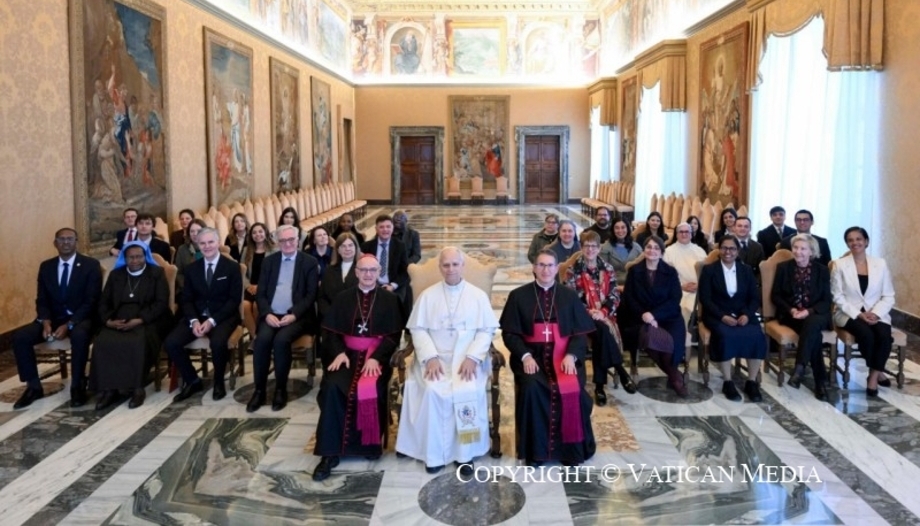
Holiness in everyday life

I discovered it several years ago, translating from French a work edited by Fr. Max Huot de Longchamp, a compilation of Salesian texts on holiness in modern life, a sum in which Francis de Sales (and some later authors, including his disciple Jeanne de Chantal, with whom he founded the Congregation of the Visitation) proposes a holiness accessible to all, in any state of life, and based on love, balance and gentleness, with a faith that is not imposed, but embodied in relationships, work and the responsibilities of every day.

For him, the true «devotee» builds his holiness not on the basis of artificial and distant models, but on the constant relationship (St. John of the Cross would say: «loving attention») with the Master, who invites to enter into all daily occupations: household chores, public and administrative life, government, agriculture.

All this with a constant warning: not to want to be in someone else's place and not to want to live the devotion of others. For example, he advises the wife and mother not to be always in church praying like the nuns, the young courtier not to hide his faith, but not to impose it either, etc. In addition to the concept of «devotion», the concept of «perfection» is also very important, that is, the maturity and development of those who live their lives in harmony and communion with God, in each and every aspect (from work to affections), which leads the saint to specify the difference between commandment (for all) and advice (personal).

Life

Born in 1567 in Savoy, Francis de Sales received an education initially destined for a legal career. In fact, he studied law in Paris and Padua at a time of great cultural and theological tensions: the confrontation with Protestantism and predestination, the weight of nascent rationalism.

In Paris he underwent a profound spiritual crisis, marked by the anguish of condemnation, from which he was liberated thanks to the experience of God's gratuitous love and trust in his Providence, elements that would become the focal point of his spirituality.

Ordained a priest in 1593, he immediately found himself working in a difficult context: the evangelization of Chiablese, convulsed by the Reformation.

Another fundamental experience was the encounter with the spirituality of St. Philip Neri. It is not certain that Francis knew Philip, but he had a close relationship with Cesare Baronio, his successor at the head of the Congregation of the Oratory.

In Neri's spirituality, Francis saw his conviction as a pastor confirmed: faith is not transmitted with harshness, but with persuasion, patience and charity (the Salesian balance).

Appointed bishop of Geneva in 1602, he exercised his ministry from Annecy with a sober, concrete and profoundly human pastoral style.

Works and legacy

Among his works are the Treatise on the Love of God, the Spiritual Letters, the Sermons and Spiritual Colloquies and the Introduction to the Devout Life, a revolutionary text in which Francis de Sales affirms that holiness is not reserved for monks and religious, but is the vocation of every baptized person.

In all his writings, the heritage of the modern Devotio, about which we have written in an article on Filippo Neri, of whom Francis de Sales can be considered the most illustrious disciple, stands out strongly. If Neri had wanted to burn all his writings when he died, Francis, on the contrary, put in writing all the spiritual heritage of the saint of joy, becoming, although not officially, the first Oratorian outside Italy.

A model for communication

In an era marked by increasing polarization, also in the field of communication and in the religious sphere, we often witness the emergence of personalities with a strong media presence, who become a kind of Christian influencer and often find themselves at the center of controversies that can only naively be defined as a side effect of the message they convey. In fact, the controversies themselves (in particular those related to issues such as faith, family, identity and rights) are part of a media strategy (agenda setting) based on a precise positioning aimed at greater visibility: the media and algorithms tend to reward clear, identitarian and non-conciliatory messages.

Those who use this strategy employ deliberately provocative language and construct a kind of battleground: «us versus them», where «us» would be the true Christians and «them» the bad and ugly ones (even the bishops and the Pope!). It never ceases to generate controversy, but rather, more astutely, it ignites sparks through which others generate controversy. In this way, he reinforces the identity of his group of followers, builds loyalty among his audience and consolidates a community that follows, defends and supports him by buying his books, participating in his events and consuming his content. And while he is at it, he also reactivates the so-called «editorial long tail», that is, he brings back to the forefront texts published in the past.

Another characteristic of this polarizing form of communication is the simplification of complex issues into generalized or inappropriate communicative contexts, so that the conflict reinforces the personal brand and exponentially increases visibility in terms of editorial sales and recognition.

Those who act or communicate in this way may not be in bad faith, but they certainly know the effects of their words and use the conflict to reinforce their visibility in a system that rewards confrontation.
However, it is a strategy that does not bear fruit in the long term, because in the end it damages the credibility of those who employ it, who see their communicative role crystallized and end up becoming a reference only for an ever-shrinking circle of the faithful.

St. Francis de Sales, who lived in a far from peaceful era (religious wars, confessional divisions, doctrinal confrontations), systematically rejected the logic of confrontation, convinced that Christian truth cannot be separated from the way it is communicated (which would later be reflected in all the documents produced by the Catholic Church on communication since the Second Vatican Council).

Patron of journalists and communicators, he reminds us that the Gospel does not need to be shouted to be true, but needs to be well communicated, which also recalls the words of Benedict XVI on evangelization, which is not proselytism, but attraction (Aparecida, 2007).

And we conclude by quoting precisely St. Francis de Sales who, in a letter of 1611, referring to St. Robert Bellarmine, writes:

I hate all disputes and controversies among Catholics, whose end is useless. [...] And I hate even more those whose only result is confrontation and disagreement, especially in these times when there is an abundance of tempers prone to quarrels, slander and criticism, to the detriment of charity.

Nor can I say that I have appreciated certain writings of a holy and most excellent prelate, in which he treats of the indirect power of the Pope over princes; and not because I found them good or bad, but because at a time like this, when we have so many enemies outside, I think we should not stir up anything within the body of the Church. This poor hen, who keeps us under her wings as if we were her chicks, has enough trouble defending us from the kite, without our pecking at each other and tossing her to and fro.

Cinema

Moral shipwreck, not just at sea

Pablo Úrbez-January 24, 2026-Reading time: 2 minutes

January 1993. Piotr Binter, a ship's captain, is summoned in the early hours of the morning because Maritime Rescue has just received a request for help: the Polish ferry Heweliusz is sinking in the Baltic Sea, and he knows its captain very well. The shipwreck will leave more than 50 dead and will affect the life of Witold, a survivor who is having difficulty living with his family again, and will also affect the ferry captain's wife and daughter, and Piotr himself, who is asked to participate in a tribunal to judge what happened. Although several voices blame the shipwreck on the poor condition of the ferry, the shipping company blames the captain and his possible drunkenness, as it refuses to assume financial responsibility for the accident.

This five-episode miniseries adapts a real event that occurred in Poland in 1993. In addition to the misfortune of fifty people who died in a storm, the shipping company and the political and military authorities refused to shed light on the matter. The families of the deceased thus waged a years-long legal battle to establish justice.

The series alternates different moments in time in order to give as complete a picture as possible of what happened: the background of the shipwreck, how the crew members themselves and the rescue services experienced the shipwreck, and the subsequent legal-social conflict. It intelligently interweaves the respective informative labels about the time and place, without being overbearing. As far as the story of the shipwreck is concerned, the production spares no resources to show the storm, the capsizing of the boat and the waves. On the other hand, it is a truly harsh story, which sometimes shows the state of the corpses or mutilated limbs, but with elegance and without excess.

The wide range of characters offers a global overview of the whole event. They are everyday and plausible characters, both the survivors and those who have lost a family member, all of them facing a political-economic framework blinded by their own interests, where the reminiscences of the communist past are noticeable in the characterization of some villains.

The authorPablo Úrbez

Read more
Debate

Proposals to help priests to hear confessions better

A team of psychologists, philosophers and theologians has launched a ‘Practical Guide for Confessors’, with pastoral and psychological keys to better confess. It is a project of the John Templeton Foundation, with experts from the universities of Navarra, Comillas, San Dámaso and CEU Abat Oliba.

Francisco Otamendi-January 23, 2026-Reading time: 7 minutes

The priest's manner of confessing profoundly influences the penitent. Beyond the objective sacramental dimension (the sacrament acts ‘ex opere operato’, that is, it is efficacious by the very action of Christ), “the way the priest welcomes, listens to and accompanies the penitent can open or close the heart of the faithful to the experience of God's forgiveness,” says the study, entitled ‘Practical Guide for Confessors’, available free of charge online.

It seems important, therefore, to offer some pastoral and psychological keys -synthesized in these 9, but they could be fewer, or more- that can help the confessor to facilitate the encounter with the penitent who desires God's forgiveness in the sacrament of Reconciliation.

Ten research teams with interviews with priests

The research work is part of the framework of a project The project, led by Francis Fincham (Florida State University), seeks to understand the psychological dimension of the experience of divine forgiveness.

The project coordinates ten independent research teams, dozens of researchers from different universities (Harvard, Baylor University, Navarra) and from different continents (South America, Australia, Italy, USA and Spain). 

One of these ten teams has focused on the experience of forgiveness in Catholics through confession, with psychologists, philosophers and theologians such as Martiño Rodríguez-González, María Calatrava or José María Pardo, who have led the study from the University of Navarra, María Pilar Martínez (Comillas Pontifical University), Juan de Dios Larrú (San Dámaso Ecclesiastical University) and Joan D.A. Juanola (CEU-Abat Oliba University). 

In the research they interviewed twenty-five priests with a wide and diverse pastoral experience, coming from different countries and close to different ecclesial realities. 

They are summarized below some of these psychological and pastoral keys of the confessor to facilitate the experience of God in the Sacrament of Reconciliation.

1. Experience of the confessor as penitent

The priest does not present himself in the confessional only as a priest (minister of God), but also as a man. His own experience of weakness and reconciliation influences how he accompanies others. Many confessors agree that going to confession themselves helps them to be better ministers of mercy.

According to the priests, the guide points out, going to confession regularly allows them to discover which attitudes truly help the penitent and which can hinder the experience of mercy. They discover the value of an unconditional welcome, of a positive and encouraging attitude, and of a treatment that allows one to present oneself before God without the need to conceal the evil committed. 

Some interviewees affirm that both frequent confession and spiritual accompaniment contribute to strengthening one's priestly vocation.

2. Sacred space, guardianship of anonymity

The sacrament of Reconciliation requires of the confessor a clear awareness that he or she is in a sacred space. Many priests describe this interior attitude with the biblical image: “Take off your shoes, the ground you walk on is sacred. 

One of the essential aspects of this respect is the preservation of anonymity, experts add. When confession takes place in the confessional behind the grille, the confessor should not try to identify the penitent, and, if he recognizes him by voice, avoid making references to identification. 

In the words of one interviewee: “When the person confesses through the confessional, it does not help to feel recognized. The confessional usually guarantees anonymity, and it is important that this is respected”.

In this regard, some confessors recommend favoring behind-the-grid confession in general and especially if the penitent is concerned about privacy.

Sacramental secrecy

In this same section we find “the guarantee of sacramental secrecy. The confidence that the confessor will keep absolute silence is an indispensable condition for many people to dare to confess their sins, especially when the priest is someone close to them. Respecting this aspect constitutes, in itself, a way of facilitating openness and the experience of forgiveness,” the guide explains.
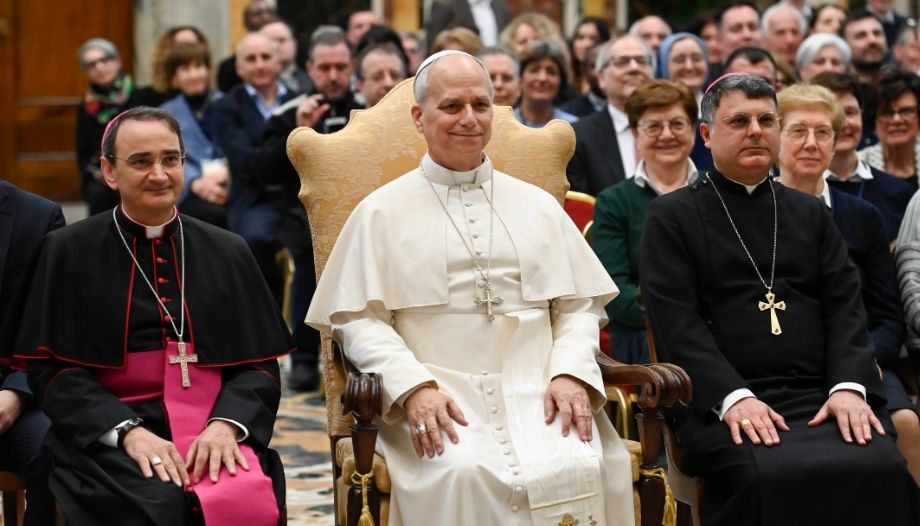

Although the study does not mention it, in recent years some parliaments or states have passed laws requiring priests to violate the confidentiality of confessions in cases of child abuse. 

However, the Apostolic Penitentiary of the Holy See has maintained that the “inviolable secrecy of Confession derives directly from revealed divine law and is rooted in the very nature of the Sacrament, to the point of not admitting any exception in the ecclesial sphere, much less in the civil sphere”.

4. Availability and time

Along with a deep appreciation of the ministry, another decisive aspect in favoring the experience of forgiveness is the availability of the confessor and the time he dedicates to the penitent. The experience of forgiveness in confession, the study stresses, is favored when the priest is truly accessible and available.


The first expression of this attitude is the observance of confession schedules. According to the priests interviewed, this conveys confidence and encourages approaching the sacrament. 

“I always say: green light, proven effectiveness. A priest who is always there with a little green light, that gives people security. And I have seen it many times, that many people start going to confession with you because they know that you are always there”.

On the other hand, the penitent needs to perceive that the priest listens to him with full attention, without distractions or haste. As one interviewee expressed: “I can be in a hurry, but I put up with it. I'm there, and without being noticed, I don't look at the clock. The penitent must feel: I am here for you, I am listening to you with all my attention”.”

5. Warm welcome 

The confessor's availability and time prepare the ground for a warm and unconditional welcome. Indeed, when the penitent feels received with closeness and respect, he can open his heart with trust and be ready to experience God's forgiveness, according to the interviewees.

“This welcoming attitude begins even before entering the confessional,” they say. “The priest who outside the confessional is close, friendly, smiling and available already awakens in the penitent an initial trust that facilitates openness at the moment of confession.”.

In a particular way, a kind word, a gesture of cordiality or an attentive greeting at the beginning of confession can create a climate of serenity that positively predisposes the penitent. 

6. Attentive and active listening

These resources help to situate the encounter in the presence of God and to transmit that it is Christ himself who welcomes and forgives, the guide adds.

Fostering a welcoming atmosphere implies, above all, “an attentive and active listening”. Listening more than asking questions, speaking as much as necessary and avoiding distractions are attitudes that make the penitent feel recognized in his sincerity. 

Some confessors point out that eye contact can be a support to generate closeness, although others consider that the grid protects intimacy and makes it easier for the penitent to open up; discerning which is more appropriate will depend on each situation.

A sense of humor to lighten the atmosphere, or a reference to the joy of God when he forgives can be excellent resources. Attitudes of coldness, rigidity, excessive distance or unnecessary questions “can make the penitent experience confession as an interrogation, instead of as an encounter of grace,” they warn.

Psychology Notes

The expert psychologists, in the framework of “transmitting welcome through empathic listening”, highlight the following tips: “Listen without interrupting, Validate the experience, Paraphrase, and Avoid labeling and blaming”, concepts that are developed in the guide.

7. Serenity of the confessor 

The serenity of the confessor “is key so that the penitent can live the confession with confidence”. It is not enough to appear calm: “it is a matter of transmitting an inner peace that helps the person to feel secure and accompanied”. His tone of voice, gestures and attitude have an impact on the serenity of the confession.

To be able to offer this serenity, those interviewed indicated that “the confessor needs to rely on his prayer life”. Many priests stress the importance of invoking the Holy Spirit before and during confession, asking for light to know how to guide each person: “Give me light, Lord, that I may know how to help this person”. 

This prayerful attitude helps to remain calm and to remember that it is Christ who is at work in the sacrament. Remembering God's mercy-“There is nothing you can present to God that He cannot forgive”-can calm anxiety and facilitate the person's openness.

8. Focus on God and his mercy.

“The transmission of God's mercy to the penitent constitutes the very essence of the sacrament of reconciliation.” The confessor has a decisive role in showing that God welcomes the penitent with unconditional love, enabling the person to experience forgiveness without feeling judged or guilty in a paralyzing way.

To achieve this, according to the priests consulted, it is helpful to “put the focus on God and his mercy rather than on the sins of the penitent.” It can be helpful to use examples from Scripture, such as Jesus' encounters with sinners, which show the superabundance of divine love. 

It is also important to emphasize the actualization of friendship with Christ after confession: God forgives him and accepts him as he is. 

Proposing small penances can reinforce this experience of mercy, preventing the person from feeling discouraged or overwhelmed, the guide notes.

Conveying mercy does not mean relativizing sin or minimizing its seriousness. Mercy is experienced as a force that welcomes, strengthens and encourages the penitent, helping him to recognize God's forgiveness and to reconcile with himself fully, the guide explains.

9. Explanations and tips

In certain situations, the confessor's words can complement the experience of forgiveness, offering clarity and guidance to the penitent. Although they are not the central element of confession, explanations and counsel can

The penitent may find them useful, especially when the penitent has little religious formation or needs a better understanding of God's goodness and mercy.

The use of Gospel passages, images and symbols can help to communicate divine mercy in a concrete way.

Psychology Notes

The observation made from empathy and accompaniment is “Invite reflection without judgment/reproach”. This increases the likelihood that the penitent will express himself with confidence and take responsibility for his actions, experts say.

In contrast, when the orientation is formulated from judgment or reproach, the person tends to feel attacked or humiliated, which leads to inner closure.

Psychology shows that, when faced with harsh criticism in states of vulnerability, the most common reaction is defensive or flight. These reactions are not conducive to learning or reconciliation, but rather reinforce feelings of shame and resistance.

Recognizing the difficulty and opening a space for reflection makes it easier for the penitent to discover paths of change from his or her own experience, the experts develop in the guide, with some examples.

The authorFrancisco Otamendi

Books

J. M. Granados presents «The value of the body and sexuality».»

The priest José Miguel Granados, professor at the San Dámaso University, presented on January 21 his new book The value of the body and sexuality, in the parish of Santa María Magdalena in Madrid.

Javier García Herrería-January 23, 2026-Reading time: 3 minutes

The priest José Miguel Granados, of the Archdiocese of Madrid and professor at the University San Dámaso, presented yesterday, January 21, his new book The value of the body and sexuality, published by EUNSA, in the parish of Santa María Magdalena in Madrid.

The book offers a profound and accessible reflection on the human body and sexuality in the light of the Christian faith, in dialogue with the great contemporary cultural challenges. The author draws especially on the theology of the body of St. John Paul II, as well as the teachings of subsequent popes, to emphasize the inseparable unity of soul and body and the vocation to love understood as self-giving, fidelity and openness to life.

Central theme

During the presentation, Granados explained that the book responds to decisive questions of our time: whether the body is only an object or a personal reality, whether sexuality is mere pleasure or the language of love, and whether the human body has a transcendent meaning. Against reductive or utilitarian views, he defended an understanding of the body as mystery, gift and sign of divine love, with an inviolable dignity from conception to natural death.

The starting point of the book is a cultural observation: our society lives a profound ambiguity regarding the body: are we the owners of a body that we can use and redefine at will, or are we corporeal persons called to discover meaning in it? Granados examines these dilemmas -pleasure or gift, object or mystery, technique or ethics- and shows how not only personal decisions, but also the course of social life depend on the answer.

The work is based in a special way on the theology of the body of St. John Paul II, as well as on the magisterium of subsequent popes. From this framework, the author presents the body as an expression of the person and as a place where love is made visible: a language capable of communion, self-giving and fruitfulness. Sexuality thus appears neither as a simple biological impulse nor as a suspicious reality, but as a constitutive dimension of the vocation to love, inscribed in masculinity and femininity and open to responsible self-giving.

Other issues

One of the most suggestive axes of the book is the sacramental understanding of the body. Granados stresses that the materiality of the human body is capable of revealing the invisible and referring to the divine mystery, especially in the light of the Incarnation. The fact that the Word became flesh gives the body an unprecedented dignity and allows us to understand human eros as a wounded force that is called to be healed and elevated by true love.

From this perspective, the author addresses with clarity and depth concrete issues such as modesty and nudity, affective commitment, responsible procreation, the value of celibacy, suffering and fragility, the dignity of the embryo, the end of life or the approaches of gender ideology. 

Prose and poetry

One of the originalities of the work is its dialogue with literature and poetry: each of the 22 chapters opens with an example taken from a great novel and concludes with poems that synthesize the content reflected, showing how human experience has intuited, also from art, the deep meaning of the body and love.

Granados concluded the presentation by affirming that the mystery of the human body can only be fully understood in the light of Jesus Christ, the incarnate Word, in whom the desire for beauty, love and fullness finds its definitive answer.

Evangelization

The “Detente”, a sign that is making a comeback among young people

Small and discreet, the stop is a sign of faith that has traversed centuries of history and today is once again worn by many young people as an expression of trust and love for the Sacred Heart of Jesus.

Teresa Aguado Peña-January 23, 2026-Reading time: 4 minutes

Among the signs of Christian devotion, the «detente» occupies a special place. Today many young people use it as a simple symbol but full of trust and love for the Sacred Heart of Jesus. However, behind this small emblem there is a rich history, marked by apparitions, saints, epidemics and wars.

What is the detente?

The “detente” is a small emblem that was formerly worn sewn to the chest (today it is fashionable to wear it on a cell phone case), usually with the image of the Sacred Heart of Jesus. Its name comes from the expression "detente", a supplication addressed to evil, to the devil and to all danger, invoking the protection of Christ. It is a sign of love for the Heart of Jesus and of trust in his protection against the lurks of the evil one.

It is also known as the “Little Scapular of the Sacred Heart”, although it is not a scapular in the strict sense. It requires no special ceremony or blessing for its use: it is enough to wear it with faith.

The origin of the devotion: St. Margaret Mary Alacoque

Devotion to the Sacred Heart of Jesus was born in the 17th century, from the apparitions of Jesus Christ to St. Margaret Mary Alacoque, a Visitation nun.

On December 27, 1673, while praying before the Blessed Sacrament, she received her first revelation. In this mystical experience, the Lord showed her his ardent Heart of love for humanity, wounded by the ingratitude of men, and entrusted her with the mission of making this devotion known.

In later revelations, Jesus showed her his Heart surrounded by thorns and crowned by the cross, symbol of his sacrificial love and the pain caused by sin. He expressed to her his desire to be loved, to rescue souls from the power of evil and to shower abundant graces on those who would venerate his Heart, especially by wearing his image in homes or on the breast as a sign of love and protection. She herself wore them under her habit and encouraged her novices to do the same.

In the third revelation, during the feast of Corpus Christi in 1674, Christ asked her for concrete practices of reparation: frequent communion, devotion on First Fridays and the Holy Hour on the night of Thursday to Friday, uniting herself to his agony in Gethsemane. Thus devotion to the Sacred Heart was clearly established as a way of love, reparation and total trust in Christ.

Detente and the Marseilles plague

The use of the detente became extraordinarily widespread during the Marseilles plague of 1720. In that context, this emblem was known as “Safeguard”. It consisted of a piece of white cloth with the Sacred Heart embroidered on it and the legend: «O Heart of Jesus, abyss of love and mercy, in you I trust».

The form closest to the present-day pendant was promoted by the Venerable Anne Madeleine Rémuzat, who, forewarned of the disaster that the plague would cause, promoted with her sisters the making and distribution of thousands of these emblems throughout the city and its surroundings. Soon after, according to the chronicles, the epidemic ceased, strengthening the popular devotion to the Sacred Heart.

Blessed Bernardo de Hoyos and the “I will reign in Spain”.”

In Spain, the great apostle of the Sacred Heart was Blessed Bernardo de Hoyos (1711-1735). At the age of 21, while copying excerpts from the book «De cultu Sacratissimi Cordis Iesu», he came to know this devotion that transformed his life. He himself reported having felt a deep love and a certainty of being loved.

Like St. Margaret, while praying before the Blessed Sacrament, she received words from Jesus Himself, who entrusted her with the mission of extending this devotion in Spain. In the face of difficulties, Christ consoled her with a promise that would mark the spiritual history of the country: «I will reign in Spain, and with more veneration than in many other parts».

“Stop bullet”: faith in wartime

From France, the custom of sewing the detente on the clothing of sons, husbands or brothers going to war spread rapidly. They trusted in the protection of the Sacred Heart on the battlefield.

In the 19th century, the Carlist troops in Spain wore scapulars with the inscription: «Stop bullet, the Heart of Jesus is with me», and in many cases they added «I will reign in Spain» or even a part of the Our Father: «Thy Kingdom come».

During the civil wars of the 19th century and later in the Spanish Civil War (1936-1939), the detente became popular among requetés, legionaries and some Falangists. The devotion also crossed the Atlantic: the Mexican Cristeros wore it during their uprising against the government of Plutarco Elias Calles, with the inscription: «Stop, evil enemy, the Heart of Jesus is with me».

Persecution and fidelity

At the time of the French Revolution, these emblems were considered symbols of fanaticism and hostility to the regime. Even during the trial of Marie Antoinette, the possession of an image of the Sacred Heart with the inscription: «Sacred Heart of Jesus, have mercy on us» was used as evidence against her.

Far from disappearing, the detente was strengthened as a sign of spiritual resistance and Christian fidelity.

Indulgence granted by Pius IX

In 1872, Pope Pius IX granted an indulgence of 100 days, once a day, to all the faithful who wore the scapular and prayed an Our Father, a Hail Mary and a Glory Be. In a subsequent brief, he clarified that, since it was not a scapular in the strict sense, it did not require a blessing or specific inscription: it was enough to wear it around the neck.

The Pope himself composed a beautiful prayer to the Sacred Heart, inviting us to unite our hearts to Christ's in adoration, reparation and love:

«Open to me your Sacred Heart, O Lord Jesus! Show me its charms, unite me to Him forever. May all the movements and beats of my heart, even during sleep, be a testimony to you of my love and tell you unceasingly: Yes, Lord Jesus, I adore you; accept the little good that I practice; do me the mercy of making reparation for the evil committed; so that I may praise you in time and bless you throughout eternity. Amen.

A living sign today

Today, the detente remains a simple but powerful sign. For many young people it is a concrete way of bringing Christ to the center of daily life, a reminder that the Heart of Jesus is near, loves, protects and accompanies them in the face of the temptation of the evil one.

Thus, the Detente has become a sign of fidelity to the Most Sacred Heart of Jesus Christ: an insignia that ennobles, a defense in our battles and a shield that reminds us that this Heart, which loved mankind so much, continues to reign.

The Vatican

Giorgio Lingua, new nuncio to Israel

The Vatican has appointed Archbishop Giorgio Lingua as the new nuncio to Israel, in an age replacement that guarantees diplomatic continuity in a particularly sensitive context.

Editorial Staff Omnes-January 22, 2026-Reading time: < 1 minute

Leo XIV has accepted, due to age limit, the resignation of Archbishop Adolfo Tito Yllana and has appointed in his place Archbishop Giorgio Lingua as apostolic nuncio to Israel and apostolic delegate to Jerusalem and Palestine, according to the official communiqué released by the Vatican.

Until now, Giorgio Lingua has been titular archbishop of Tuscania and apostolic nuncio to Croatia. In addition, he was nuncio to Iraq and Jordan and later to Cuba, before taking over Croatia.

What does this change mean?

Lingua's appointment does not change the doctrinal position or the diplomatic line of the Holy See with respect to Jerusalem and the defense of Christian communities, although it could have an impact on the form of dialogue and the effectiveness of daily negotiations with different interlocutors.

Yllana had spent years in a position marked by recurrent friction over holy places, permits and the treatment of Christian communities. His departure, therefore, is not a simple rotation; it closes one stage and opens another with a different profile, but with the same underlying challenge. His resignation due to age and immediate appointment indicates an orderly transition, with which Rome seeks continuity and experience.

With this change, the Holy See is betting on an experienced diplomat to maintain a representation that, in the current context, is increasingly conditioned by international tensions, security challenges and the daily life - precarious - of Israel's Christian communities.

Read more
Spain

Does the awakening of a generation begin in a bullring?

Vistalegre witnessed a call to create spaces where people can stop, think and seek the truth beyond differences.

Jose Maria Navalpotro-January 22, 2026-Reading time: 6 minutes

The impact of the El Despertar convocation last January 17 in Vistalegre has only grown. An original event, in which thousands of young people paid their ticket to hear a priest and a handful of intellectuals to tell them truths that go against the current. And to end with music and beers, too. El Despertar sounded a bit like a cult, but the six thousand attendees -most of them around 30 years old- at the old Vistalegre bullring were summoned to an event that was meant to be a call to understand society in a different way. The key: to create links. Along with this, two other legs for the stool that supports the person: the value of a job well done and attending to transcendence.

“The Awakening” was the mass event, the launching of “It's Time to Think”, an initiative created during the pandemic by a couple of young people, with no one behind them, no political parties, no associations, no religious confessions. They organized, by calling friends, meetings online of dozens of people asking questions of people who had something to say. The initiative became a face-to-face initiative on January 5, 2022. More than two hundred intellectuals have attended its meetings, the thinkglaos (more than four hundred over the years) in more than thirty cities in Spain, Germany and other countries. “We want to create spaces where people stop, think and look for the truth,” explained Javier Fernández, one of the visible heads of this initiative.

Attendee profile

“There is a rumor that is spreading,” warned the presenter in Vistalegre. “People want to build again, to unite, to transcend, to look at a history that belongs to no one because it is everyone's”. Those who read the call in a political or religious key are mistaken. Were there participants from the right? And Catholics? Yes, of course, and people of other ways of thinking. Left and right, religious and atheists, from north and south. Many came - paying - without knowing very well what they were coming for. They had been invited by a friend. That is the key to the origin and unstoppable growth of “It's Time to Think”. “It's not a cultural event, it's not a party, it's the beginning of something that has no name,” they explained at the beginning of the event, shortly before releasing giant balloons and waving thousands of yellow scarves.

The idea was: we already know what we disagree on, so let's talk about what we can improve and what we can help. They pointed out three problems that made up the outline of the meeting: the precariousness of life, the division caused by ideologies and the fact that the real problems are not solved. 

The speakers

Eleven “matadors” performed in the Vistalegre arena for nearly five hours. Top swordsmen of thought, and of the social networks.

To be able to speak, first silence. And who better than Jacques Philippe to introduce the topic. The French priest, of the Community of the Beatitudes, one of the most widely read authors of spirituality in the world, spoke of the “importance of rediscovering the value of silence and applying recollection in our lives.” “Silence puts us in an attitude of receptivity, of listening. It leads us to our supernatural dimension.” “Today we tend to plan everything, but life is not something that can be planned.” “There is a tendency to react immediately, emotionally. So it is difficult to mature a reflection. It requires time, and silence allows for that reflection.” “Without silence we stay on the surface of things and will not go deep.” The thousands in attendance listened avidly. It was exactly seventeen minutes. Just the stipulated time. 

The second block consisted of dialogue, with three round tables: culture, work, transcendence. The first, the Awakening of Culture, with Juan Soto Ivars -who has just become a columnist at ABC-, Ana Iris Simón - the author of Fair is a columnist for The country- and Jano García. The journalist highlighted the idea of community, which is being lost, outside the state and the market, and warned: “we do not value what has been given to us (family, homeland, biological sex) and it seems as if only what we choose is important”.

Jano García, economist and network disseminator, pointed out the crisis in society by referring to Ratzinger: “the problem is nihilism: good and evil are the same, everything is the same, they argue”. “Differences can exist as long as you have a society based on values. Everyone in their own sphere can fight to vindicate those values. This does not destroy coexistence”.

Juan Soto Ivars, combative and provocative, made reference to one of the cross-cutting issues of the whole event: “The key is that links can emerge”. “In my house there was a grandfather on the extreme right, another on the extreme left... They argued... But underneath it all was my grandmother's phrase, which we captured in her epitaph: ‘Quereos mucho’”. Ana Iris added: “The solution is that charity and love must rule. It sounds corny but, for example, Podemos refers to that when it talks about the importance of care.”.

The world of work

Juan Manuel de Prada, the French philosopher Fabrice Hadjadj, and the French philosopher Fabrice Hadjadj were invited to speak about the Awakening of Work. youtuber Antonini de Jiménez. The Planeta Prize winner spoke against the precariousness of existing employment and individualism: “Milton Friedman spoke of a society of robinsons and in the face of this we must put up an anthropological resistance”. In this sense, he reacted against the idea of dispensing with others in the struggle for social improvement: “We need other people, and we must work with them. And if necessary, because the current ones do not serve us, create new associations, unions, political parties”.

The French philosopher - who has moved to Spain and spoke in Spanish - focused on the need for work to have meaning. “The inhumanity of a job is not measured by the effort it requires. A soccer game requires great effort, but that does not make it inhuman. What gives meaning is the purpose of the work that is produced. Today that visible meaning is missing”. In this regard he spoke of what he described as “bullshit works” (something like cow shit jobs, or bull shit), in large companies, with mechanized production or where financial products are trafficked, without the worker knowing very well what he is doing that for. “They don't do a work, they just work.” He added that some companies talk about “a culture of work” and similar terms: “what they do is to perfume that ‘shit’ of the bull, instead of tore it. Whoever does not want to take the bull by the horns can only limit himself to picking up the bull's shit.” “In medieval knights, their effort made sense because there was a maiden to defend or save. Today at work, without that meaning the effort is not worthwhile.”.

In a bullring like the one in Vistalegre, Hadjadj liked the bullfighting simile and spoke of his companions -and in general, of any opinion- as exercising different types of bullfighting, but all equally valid: one, a bullfighting of endurance, another, tough... Thus, De Prada described Hadjadj as “our Morante: he fights with elegance and depth”.

Awakening of meaning

The last block was dedicated to the third leg of the stool that centered the core of the event. It was the Awakening of Sense. Sarab Rey (formerly called Izanami), evangelical, anthropologist, who enjoys undoubted success in the networks talking about human behavior, shared the stage with René ZZ, youtuber famous for his content on tattooing... until he converted and is known for his videos on the Catholic faith, and with Pedro Herrero, an expert in communication and defender of the family. It was another dialogue in which they exposed their personal convictions on religious issues without any qualms. This is very topical in the current context in which artists, thinkers and content creators “come out of the religious closet” to show their faith in public without ambiguity.

José Ballesteros, another figure of the social networks, brought the event to a close with his messages on leadership and motivation. In the midst of festive music and an apotheosis atmosphere, in the farewell, the jurist Ricardo Calleja and again Pedro Herrero intervened briefly. They were the first to take part in a “social networking event".“thinkglao”. And they summed up with two sentences all this awakening that wanted to start in Vistalegre. “What sustains this is the friendship of two friends,” Calleja pointed out. “Chavales, you have to transform reality,” exhorted Herrero. 

The audience, enthusiastic, turned to applause. In other circumstances, they would have asked for two ears and a tail for an outstanding performance.

The World

Contradictory information on kidnappings in Nigeria clarified

It is not easy to be clear about the information coming in on the situation of Christians in Nigeria, but some aspects are beginning to become clearer.

Javier García Herrería-January 22, 2026-Reading time: 3 minutes

By Ngala Killian Chimton, OSV News

After reports spread that dozens of Christians in Nigeria had allegedly fallen victim to kidnappers again in another sign of persecution against Christ's followers in Africa's most populous nation, some police said the kidnapping did not occur.

However, on the evening of January 20, Nigerian police confirmed that a group of worshippers were abducted from three churches in a remote area of the northern state of Kaduna, according to a January 21 BBC report.

The information chaos adds to the growing insecurity of Christian communities who fear bandits - from Boko Haram to the Islamic State group to Fulani herdsmen - who mostly go unpunished, Christian advocates say.

According to the president of the Christian Association of Nigeria, Northern Region, at least 160 Christians were allegedly forcibly taken away during church services on the morning of January 18.

Rev. John Hayab said that «the attackers came in large numbers and blocked the entrance to the churches and forced the worshippers out into the forest.».

«The actual number taken was 172, but nine escaped, so 163 are with them,» he said.

According to Reuters, a police spokesman said on January 19 that the attackers arrived «with sophisticated weapons» and attacked two churches in Kurmin Wali.

Contrary versions

Police said the area is a forest community that is difficult to access due to the poor condition of the roads, but explained that police have been deployed in the area to try to locate the perpetrators and rescue the victims.

But another unit, the Kaduna state police, initially contradicted that statement. The police commissioner, Muhammad Rabiu, called reports of a mass abduction of Christians false, saying police were unable to identify any of the people allegedly abducted.

Dauda Madaki, chairman of the Kajuru local government, also dismissed the reports as false, calling them «no evidence of the attack. I asked the village headman, Mai Dan Zaria, and he said there was no such attack,» Madaki told the BBC.

The Kaduna police commissioner also challenged «anyone to list the names of the kidnapped victims and other details.».

Final clarifications

But more than two days after the attack on the village of Kurmin Wali, police finally said that an earlier statement denying the attack had been «widely misinterpreted,» and local residents confirmed to the BBC that the number of abductees was 177 and 11 managed to escape.

Afiniki Moses, whose relatives were allegedly abducted, confirmed to Reuters that the armed gang abducted more than 170 people during a religious service in two churches, including her husband and two children.

«They kidnapped many people from the community, and my husband was among them. As you can see, I don't feel good,» she told Reuters.

Complaints against the government

«Everyone is complicit,» said Emeka Umeagbalasi, director of the Catholic-inspired non-governmental agency Intersociety, accusing the Nigerian government of varying levels of complicity in the attacks against Christians.

«The Nigerian government strongly supports what is happening with Christians in the country. It's a great project, and we have repeated it over and over again,» he told OSV News.

«Christians are kidnapped every day and killed every day in this country,» Umeagbalasi said.

Latest incidents

The pattern of terrorism against Christian communities is long and dramatic. In November, the world watched closely as more than 300 schoolchildren and their teachers were abducted from St. Mary's Catholic school in Papiri.

Immediately after the kidnapping, at least 50 children escaped from their captors. On December 14, the captors released a group of 100, including 14 high school students, one staff member, 80 primary school pupils and five kindergarten children. The remaining captives were released on December 21.

The United States carried out a deadly attack in northwestern Nigeria on Dec. 25. President Donald Trump declared that the attack targeted terrorists from the Islamic State group who were persecuting Christians in that nation, prompting mixed reactions from Nigerian Church leaders.

«Nothing has changed since the U.S. bombed those Islamic State targets,» Umeagbalasi told OSV News.

The kidnapping business

Kidnapping in Nigeria has become a highly organized criminal industry that generates huge sums of money, according to a report by security consultancy SBM Intelligence.

In the report «Economics of the Kidnapping Industry in Nigeria,» the organization stated that between July 2023 and June 2024, at least 7,568 people were kidnapped in more than 1,130 incidents.

The advocacy group Intersociety said that since 2009, when Boko Haram began its murderous campaign to establish a caliphate across the Sahel, at least 185,000 Nigerian civilians have been killed, including 125,000 Christians and 60,000 moderate Muslims.

However, the figures given in the Intersociety reports were questioned by the BBC's fact-checking department, saying that the methodology of the reports is unclear and that repeated numbers sometimes appear in them.

Evangelization

Laura Mascaró: «A voice told me: ‘pray and talk about me'».»

In the midst of chronic illness and exhaustion, youtuber Laura Mascaró fell to her knees and heard a voice that changed everything. She went from a New Age spirituality to the discovery of the sacraments and the richness of faith.

Teresa Aguado Peña-January 22, 2026-Reading time: 6 minutes

Laura Mascaró, mother homeschooler and digital entrepreneur since 2008, she has written books, directed documentaries, counseled hundreds of families and led a multi-level marketing team. Although she grew up in a Catholic family and received the sacraments at a young age, she always lived far away from the Church. An illness and the search for answers led her to listen to the voice of the Lord.

In an interview with Omnes, Laura tells how her view of God and the Church has changed since she encountered Him.

What marked the before and after of your conversion?

-The turning point was an illness I had between 2015 and 2019, supposedly chronic and incurable. The medication had no effect on me and, even if it wasn't going to cure me, I wanted something that would at least alleviate the symptoms. I was practically living in bed, had a baby I couldn't care for, a 10 year old and a business. My life was “on pause” and I was determined to find solutions, no matter what the doctors said.

One day, in 2019, exhausted and desperate, I fell to my knees on the floor, crying, and asked God, “What do you want from me?” It was the first time I prayed without reproaches or requests, which is what we often do: we remember God to ask him for things or to blame him. But we almost never ask him what he wants from us.

I have no idea how much time passed, if it was seconds or minutes, but I heard a deep voice, firm and loving at the same time, very difficult to describe, saying: “you have to pray and you have to talk about me”. At that moment it was as if my head split in two: one told me I was crazy. The other was certain that it was the voice of God”.

That same week I found a natural protocol for my disease. I decided to try it and in four months the symptoms disappeared, I stopped the medication and the tests were perfect. I went back to living normally and almost completely forgot about that experience with the voice of God.

Until a couple of years later, when I was very close to the movement. New Age, I started to look for a psychologist to do therapy to recover my memories. I heard the same voice again. He told me: “you don't need a psychologist, you need a priest”. 24 hours later I was talking to a priest who became my spiritual father and there was no turning back. 

When God speaks to you, nothing is ever the same again. How has your life changed since you met Him?

-Now I have that peace and joy that I saw in others. I know that I don't have to do everything by myself, that not everything depends on me, and it's a great relief. At the beginning, I even felt irresponsible, because I was brought up to think, make decisions and act. And now, many times, my only action is to pray.

Many times, when I have a task or a project ahead of me that seems too big or too difficult, I ask myself, “What are my five loaves?” Because I only have to put in the five loaves. He does the rest.

After your conversion and taking sides in this “spiritual war” of which you speak, what would you say to a person who says he believes in God and not in the Church? 

-I would tell them, first of all, that if they consider themselves Christians, not even remotely, to look in the Bible for the institution of the sacraments and the Church, starting there. Let them also read Acts 8:30-31 (“How am I to understand what I read if no one guides me?”). 

I also thought a lot about an image that was circulating on the Internet with a list of different Christian denominations, with the name of their founder and the year and place of their institution. Only one of them said “Jesus Christ, year 33, Jerusalem”. So I pulled that thread.

And then, let them go into a church, look for the tabernacle (the little box with the little red candle), and ask Him directly. There are many good questions to ask Him: “what do you want from me”, “where do you want me”, “where are you”. Let them remain silent for a while and then leave and go on with their lives with an open heart, ready to receive an answer.

You talk about how you saw neither goodness nor beauty in Christians and therefore did not believe there was truth in them. In a way you saw the apparent hypocrisy of the Christian. Many non-believers have the same perception. How did your perception of Christians and faith change throughout your conversion process?

-I still see a lot of hypocrisy, a lot of moral superiority and a lot of posturing, because there is some. But now, I also see that we are all created and loved by God. That Christ also went to the cross for that hypocrite, for the one I don't like, for the one who says one thing and does another, for the one who gets his priorities wrong. And who am I to label them? We are all equally wounded by sin and we all have, until the last second of our lives, the possibility of accepting Christ as savior.

A monk friend of mine told me: never judge and never criticize, because you don't know the heart or the circumstances of those people. Since then I started to add the phrase “what if...” every time I started to criticize. Does that person, whom I consider a bad person, go to Mass? Instead of criticizing, I think: “What if Mass is the only good thing in his life? It would be better not to go! I learned to see and think about things in a different way, with more love.

And then I met some Catholics who were pure peace and joy. I would see them and think: “I want what they have”.

When you came out of the “Catholic closet” some people unfollowed you on Instagram. How do you interpret that? Do you consider that this reflects the culture woke or cancellation?

-I think a lot of people are the same as me. We all seek the truth, we want to understand the meaning of life, we have wounds to heal... and we look everywhere but in one place. In my case, because I had already been in the Church (theoretically) and it had not “served” me for anything. We consider that we have already been there and that it has brought us nothing good, so we accept and respect the one who adopts an Eastern, syncretistic or invented philosophy of life. Everything is fine, except the Catholic Church, which has a very bad press. Admittedly, a lot of things have been done very badly. I myself went to a Catholic school where we never had a Mass at the beginning of the school year, nor were there times for prayer, nor did we ever see a rosary up close, nor were we initiated into confession.

For me, that 60 people stopped following me in a single day was a lot of people. But it is also true that many other people wrote to me to welcome me home, to tell me that they had prayed for me or to ask me to tell them about my experience, because they were on the threshold and needed a push to get in. I know that God has used me to give that push to many people and I hope He will continue to use me for many years to come.

You speak of a black spot in your heart because of not being able to forgive, how has God made it possible for you to forgive? 

-The priest I spoke to the next day told me something very simple. He said, “When God gives you his grace, you will forgive without realizing it.” And I, coming from the New Age, where everything is on your back, where you always “have to work”, where there is always something to heal in you, I couldn't believe it.

When my husband went through the catechumenate for confirmation, before we were married, I accompanied him to all the sessions. We used to comment that we were very struck by the number of times the expression “let him do it” was repeated. We did not understand it.

Talking about forgiveness, for example, my approach was: someone tell me what to do. But it's not about what we have to “do”. All we have to do is put ourselves in their hands, tell them “you're the boss”. And so it was. I didn't “do” anything. And one day, I saw that I had forgiven without realizing it.

There is one very important thing that we sometimes have a hard time understanding: we need to pray more and we need to learn to pray. It is all very well to pray that you do well in that exam or that you find a house to buy and that you can pay for it. But we have to pray more, asking for more faith, more humility and more discernment to know what God's will is. You have to surrender, stop trying to control everything and tell him “you are in charge”. That's why my YouTube channel is called In the hands of the Scriptwriter. Because the scriptwriter of your life is not you, it is God.

Read more