Children with discipline, adults with will

We have lost the ability to educate in will and discipline, the roots of respect and emotional maturity. Recovering them is urgent if we want to heal our relationships and form strong and happy children.

October 9, 2025-Reading time: 3 minutes

We are normalizing toxic human relationships. Adults claiming rights by crushing rights. Marriages that break up due to immaturity and bad habits; addictions, suicides, murders, exacerbated violence. All this is the result of not having been trained to develop willpower, that powerful energy that leads us to practice good.  

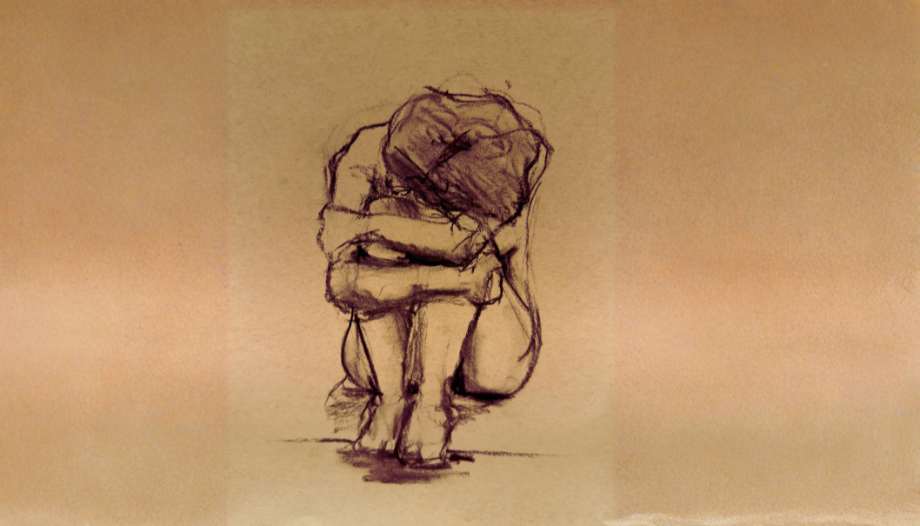
Scenes in which we observe impulsive, disobedient, disrespectful and disrespectful children who demand immediacy in the fulfillment of their wishes are becoming more and more common. Parents receive diagnoses about their behavior and children with ODD (Oppositional Defiant Syndrome) or those with ADHD (Attention Deficit Hyperactivity Disorder) traits multiply. They are given a verdict and medication pretending that they will be fine. In addition, a series of measures are usually recommended that are rarely carried out and we can see that the medication was in fact insufficient, it did not help. 

Why?

I believe that the culture that surrounds us invites us to obtain results effortlessly at home. It leads us to put effort outside the home: work is absorbing, we are overwhelmed by social commitments, the competition for success understood as money that allows us to consume more consumes us, social networks, screens that offer perfect virtual lives... There are many things that distract us from our sublime educational mission.

Parents of a child with the symptoms I have described will be recommended:

  1. Calm. Yelling and impulsiveness can make the situation worse. Take your distance before responding to defiant behavior.
  2. Clear limits. Rules are set and consistent and predictable consequences are applied.
  3. Create a structured daily routine. Predictability reduces stress. Good hygiene habits, getting up early, eating a good breakfast, doing homework, helping with chores, little screen time, good table manners, etc. 
  4. The child can express how he/she feels but aggressive or rude behavior will not be tolerated.. "I understand that you are angry but you need to respect everyone especially Mom."
  5. Give clear and concise instruction and be firm..

These suggestions are really for everyone. The great evil of interpersonal relationships has at its base a common cause: willpower has not been developed. We are not building strong scaffolding that only comes with discipline. It is said that 80% of our problems are solved with discipline.

Albert Einstein said: there is a driving force more powerful than steam, electricity and atomic energy: the will. Willpower drives progress, it leads us to the desired good. It implies knowing how to wait for the reward. To raise it and to go for it. 

  • I want a healthy body, I need to give it good nutrition, exercise and rest.  
  •  I wish to be successful in my job, I will study, practice, make proposals, apply myself with devotion... 
  • I long for a happy marriage, I will prepare myself for it, I will make the necessary changes, I will live the respect and the details of affection even if sometimes I lack the desire...

Willpower is forged and manifested in discipline, which is indispensable for the achievement of objectives; it is the bridge between goals and achievements, as Jim Rohn says.

Several authors who speak of the education of the will argue: 

Willpower education is a gradual process of learning and practice that helps develop self-control, self-discipline and the ability to achieve long-term goals, overcoming instant gratification. Like a muscle, the will is strengthened by constant exercise and weakened by lack of use.

If we have children who do not practice respect, order, responsibility, kindness, generosity, with or without a syndrome diagnosis, we need to discipline them and strengthen their will. Let's go for it! This is educating in values, modeling by example to make them virtuous people. Let this be our goal and they will become mature, stable and happy adults. 

God's word instructs us about discipline. Some of the verses that shed light on this subject are:

And you, fathers, do not make your children angry, but bring them up according to the discipline and instruction of the Lord (Eph. 6:4). For the Lord disciplines those whom he loves, as a father corrects his beloved son (Prov. 3:11-12).

Certainly, no discipline, at the time of receiving it, seems pleasant, but rather painful; nevertheless, afterwards it produces a harvest of righteousness and peace for those who have been trained by it.(Heb. 12:11).

We are distracted. Let's return to our essence and live what we were designed for: love. It takes effort, preparation and starting over as many times as it takes. And it's worth it!

All athletes train with great discipline. They do it for a crown that spoils, but we do it for a crown that lasts forever (1 Cor. 9:25).

The authorLupita Venegas

Read more
Gospel

The importance of gratitude. 28th Sunday in Ordinary Time (C)

Joseph Evans comments on the readings for Sunday 28th Sunday in Ordinary Time (C) corresponding to October 12, 2025.

Joseph Evans-October 9, 2025-Reading time: 2 minutes

Both the first reading and the Gospel of today's Mass present us with the healing of a leper. Leprosy was the most feared disease in ancient Israel, leading to the exclusion of its victims from society and requiring a strictly prescribed ritual for the reintegration of the cured person.

The fact that the leper had to appear before a priest both to verify the disease and its cure - in order to be able to return to normal society (cf. Lev 14) - helps us to consider it as a prefiguration of sin and its "cure" in the sacrament of Confession. Just as the priests of the Old Testament judged sickness and announced its healing, the priests of the New Covenant-with the power to bind and loose given to them by Christ (cf. Jn 20:21-23 and Mt 18:18)-also judge sin with a view to forgiving it.

In the first reading, the healer is a prophet, Elisha, and the healing leads the healed man, the Syrian (and therefore pagan) Naaman, to recognize the one true God. Linked to the healing (though not mentioned in today's brief text) is Naaman's humility in listening to his servants and obeying Elisha, who asked him to perform the relatively simple task of washing seven times in the Jordan. In other words, there is no elaborate ritual, let alone magic, and Naaman, a great general, has to perform a very basic action that he could perfectly well have done in the rivers of his own city, Damascus. Naaman, with a very territorial notion of deity and a god's ability to act, takes with him some local land to continue worshipping the God of Israel.

Jesus, a greater prophet than Elisha, heals the ten lepers who come to him begging for mercy. Although, according to Jewish custom, He tells them to come before the priests, the fact that they are cured along the way makes it clear that He Himself is the true High Priest, the true representative between God and man. In both senses, as priest and prophet, He reveals Himself as the true mediator between mankind and God, being Himself both human and divine.

Once again, a foreigner (if not pagan) is the hero of the action, for it is a Samaritan who returns to give thanks, while the nine Israelites do not. And again, a foreigner discovers the true God, Jesus, through this physical healing. In this episode, a key lesson is the importance of gratitude. Today's readings invite us to do with gratitude the little things God asks of us, knowing that, with faith in him, these will lead to a deeper spiritual healing of our soul.

Books

Cocaine in the 21st century: mobiles and mental health in minors.

The doctor in psychology Gustavo Rodriguez warns of a duplication of mental health problems in children and adolescents. The main protagonist: technologies.

Teresa Aguado Peña-October 8, 2025-Reading time: 2 minutes

A few days before the celebration of World Mental Health Day next Friday, the association "Teléfono de la Esperanza" has presented today at its headquarters in Madrid the book "La salud mental de niños y adolescentes", by the doctor in Psychology Gustavo Rodriguez, published by San Pablo.

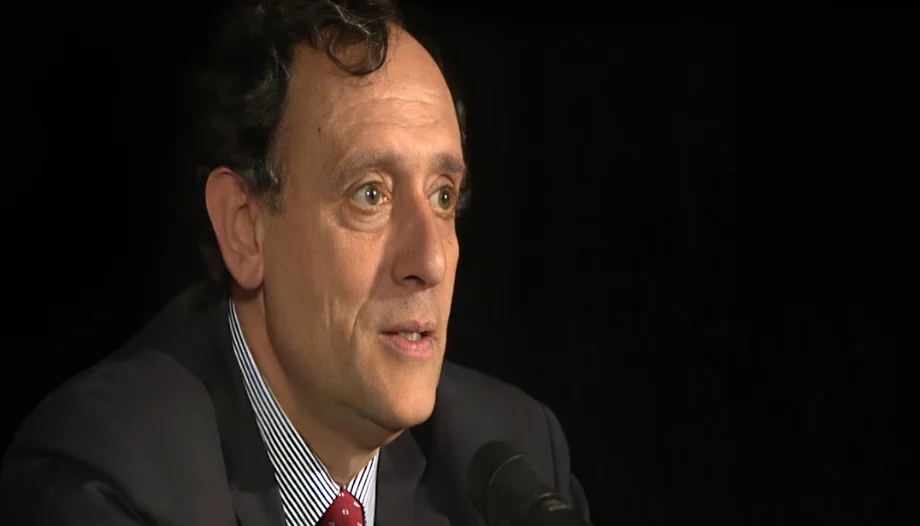
At the press conference, in which Carlos Grande (president of the Madrid Telephone of Hope) and Gustavo Rodríguez (author of the book) took part, they discussed the alarming increase in mental health problems among minors and what can be done about it.

According to a study by the University of La Rioja, 41 % of minors claim to have mental health problems (more than 3 million children in Spain), 20 % present suicidal ideation and 15% have diagnosed depression. More than 400,000 minors have had suicide attempts. "This is data, data and more data, but these are children and families suffering and they are too many for what we were used to before the pandemic". Thus, Gustavo speaks of a "post-pandemic crisis", pointing out anxiety, depression and eating disorders, which have doubled in recent years, as the main problems.

Gustavo states that these problems affect younger and younger children, appearing more and more prematurely. And he sees a clear correlation with the fact that younger and younger children are using these technologies and are being given cell phones before their time. He explains that the problem is not the technologies themselves, but the way they are designed: "there are studies that show that technologies have the same level of addiction as cocaine, the same brain areas are activated".

What can be done to reverse this "pandemic"?

As a teacher and psychologist, the book's author speaks of the importance of attentive and sympathetic listening. "Children are not trying to get our attention. They are really suffering," he explains. "When interventions are made with parents and they do to better understand their child, that listening alone produces an almost immediate improvement in the child's mental health" he says.

For his part, Carlos Grande points out that nowadays the value of listening is not properly appreciated: "On the Internet there are a thousand courses on how to speak in public but there are very few videos on how to listen. And it is the least developed part but the most powerful to approach a person". He tells how many of the calls they make to the Telephone of Hope end with thanks for the chance to be heard: "An old man called one night and told me that he hadn't spoken to anyone for a week. He just wanted to talk, so we did.

Gustavo insists on the need for prevention with laws regulating the use of technologies by minors, with training for parents, emotional intelligence courses at all school stages and with a society committed to protecting minors. Raising awareness about this is precisely what he seeks to do with his new book, whose royalties will go entirely to the Telephone of Hope, to support its work in the fight against this pandemic.

Child and adolescent mental health

AuthorGustavo Rodriguez
EditorialSt. Paul's
Pages: 244
Year: 2025
Read more
The Vatican

Pope encourages Consecrated Life, stresses that God comes in pain

Leo XIV this morning thanked the men and women religious gathered for the Jubilee of Consecrated Life for their "valuable service to the Gospel and to the Church". He also stressed in the Audience that God visits us in pain and suffering, not only when things are going well.

Editorial Staff Omnes-October 8, 2025-Reading time: 3 minutes

In St. Peter's Square with more than sixty thousand faithful, Pope Leo XIV today thanked the religious men and women gathered for the Jubilee of Consecrated Life for their "valuable service to the Gospel and to the Church (...)".

Do not tire of bearing witness to hope on the many frontiers of the modern world, knowing how to identify with missionary daring new paths of evangelization and human promotion," he said in Italian.

In the catechesis of the AudienceOn the occasion of the Jubilee Year, the Pope focused this morning on the exclamation of the disciples on the road to Emmaus. As Jesus was leaving, they said, 'Did not our hearts burn within us'" (Lk 24:32).

The Rosary for peace

He has also alluded to the Virgin Mary on numerous occasions when addressing pilgrims in various languages, today also in Croatian. 

For example, to the English language: "As I greet with special affection the religious and consecrated persons participating in the Jubilee of Consecrated Life, I encourage you to look to the Blessed Virgin Mary. She is 'the sublime model of consecration to the Father, union with the Son and openness to the Spirit' (Vita Consecrata, 28). May God bless you all!".

And to the German-speaking people: "Dear brothers and sisters, the month of October is dedicated to the prayer of the Holy Rosary. Therefore, I invite you all to pray the Rosary every day for peace in the world. May the Blessed Virgin Mary accompany you always".

The Risen One draws near in darkness and suffering

In its meditation On the disciples of Emmaus, one of the Pope's conclusions was to see the Lord in pain and suffering.

At Christ's Passover, "everything can become grace. Even the most ordinary things: eating, working, waiting, taking care of the house, supporting a friend," he began.

The Resurrection does not take the life out of time and effort, but changes their meaning and their "flavor" (...). (...) However, there is an obstacle that often prevents us from recognizing this presence of Christ in everyday life: the pretension that joy must be without wounds".

Unable to smile...

The disciples of Emmaus walked sadly because they expected another ending, a Messiah who did not know the cross, the Pontiff pointed out. "Despite having heard that the tomb is empty, they are unable to smile." 

But Jesus is at their side and, with patience, helps them to understand that pain is not the denial of the promise, but the way in which God has manifested the measure of his love (cf. Lk 24:13-27). 

"When at last they sit down at table with him and break bread, their eyes are opened. And they realize that their hearts were already burning, though they did not know it (cf. Lk 24:28-32)." 

No fall is definitive

This is the greatest surprise: to discover that beneath the ashes of disenchantment and weariness there is always a live ember, waiting to be rekindled, the Pope encouraged.

"Brothers and sisters, Christ's resurrection teaches us that there is no history so marked by disappointment or sin that it cannot be visited by hope. 

No fall is final, no night is eternal, no wound is destined to remain open forever".

Jesus comes in our failures, in our pain, in our pain.

Sometimes we think that the Lord only comes to visit us in moments of recollection or spiritual fervor, when we feel strong, when our life seems orderly and luminous, reflected Leo XIV.

"Instead, the Risen One draws near in the darkest places: in our failures, in worn-out relationships, in the daily toils that weigh on our shoulders, in the doubts that discourage us. Nothing of what we are, no fragment of our existence is alien to him". 

The joy of starting over

"Let us ask, then, for the grace to recognize his humble and discreet presence, not to expect a life without trials, to discover that every pain, if it is inhabited by love, can become a place of communion."

"And so, as the disciples of EmmausWe too return to our homes with a heart that burns with joy. A simple joy that does not erase the wounds, but illuminates them. A joy that is born of the certainty that the Lord is alive, that he walks with us and gives us at every moment the possibility to start again".

The authorEditorial Staff Omnes

Read more
Evangelization

P. Desiderio García, new Prior General of the Carmelites: "Our origin is Asian".

The Order of Carmel has a new Prior General, elected in Indonesia. Desiderio Garcia (France, 1970), until now prior and pastor of the Carmelites of Ayala (Madrid). "We were born in the Holy Land. Our origin is Asian," he told Omnes. "Contemplation, with compassionate hands, is the best gift we can offer to the world and to the Church," he adds.

Francisco Otamendi-October 8, 2025-Reading time: 7 minutes

The Carmelite Province of Aragon, Castile and Valencia was the quickest in count it. September 19. "Desiderio Garcia, new Prior General. General Chapter, Malang 2025", said the news. In fact, at the General Chapter of Malang (Indonesia), Fr. Desiderio was elected Prior General in 2025. Prior General of the Order of the Brothers of the Virgin Mary of Mount Carmel for the next six years (2025-2031).

Born in Orange (France), in Provence, in 1970, of Spanish parents, "I am the son of emigrants," he told Omnes. Desiderio, O. Carm., has three degrees, in Ecclesiastical Studies, Biblical Theology and Hebrew Philology. He has been a member of various international commissions in the Carmelite Order. 

For six years he has been Prior Provincial of the Carmelites of the Province of Aragon, Castile and Valencia of St. John of the Cross, twenty-one years Formation Councilor in his Province, and eighteen years Master of Novices. He has been part of formation projects in Salamanca (Spain), Aylesford (United Kingdom), Rome (Italy) and Santo Domingo (Dominican Republic). 

Desi, as he is colloquially known, was a Councilor for Religious Life, and had been prior and pastor of the Carmelite community of Ayala Street (Madrid) for two years. Having just arrived from the island of Java, and after preaching an Effetà retreat of this parish to many young people, we spoke with him.

First of all, congratulations, did you expect it? What were your first thoughts? 

- One never expects these things. I was happily serving, along with my Carmelite brothers, in our Parish of St. Mary of Mount Carmel, known in Madrid as the "Carmelites of Ayala". I learned of my election right there in the chapter hall, once the scrutiny of the first deliberative vote was read, in which it was indicated to me that an absolute majority had been reached. In my case, I felt gratitude for the confidence of the brothers and, at the same time, trembling and fear in the face of the responsibility assumed. 

These gifts that God gives are in the form of a cross. Our authority is not that of power, glitter or the medal of merit, it is, rather, that of charity, humility, generous service to all, as Jesus did in the washing of the feet. Thus I manifested it to the capitular brothers and to the whole Order communicating to them, after praying it, that I accepted this responsibility as a service of love to God, to the Church and to the Order of Carmel, in each one of the brothers, so that, together, we could carry to fullness the vocation to which we had been called.

You were born in France, but later lived in Spain.

- I was born in Orange (France) in 1970. My parents are Spanish, I am the son of emigrants. Orange is located in the French Provence, it is a Roman city with an impressive heritage: the ancient theater and the triumphal arch, both declared World Heritage Sites. It is also known for being an important wine center in France. The wines of Côtes du Rhône as well as the vineyards of Châteauneuf du Pape, where my father worked, have been renowned since the 14th century.

Orange is sort of like Merida in the French way. I still have friends and family there. The family, when the grandparents grew old and it was necessary to prioritize what to attend to first, returned to Spain. They settled in Onda (Castellón), where I had my first contact with the Carmelites. 

Desiderio Garcia, in the center, with the two former Priors General.

The General Chapter was held in Indonesia. Yesterday he commented that the growth of the Order in Asia is high, higher than in other latitudes.

- It is with great joy that the Carmelite Order, in keeping with the proclamation of the Gospel, is spreading in Asia. It is not superfluous to remember that it is only a round trip, for our origin is Asian. In fact, we were born in Holy LandWe came from there and now the Holy Spirit is taking us there again. We came from there and now the Holy Spirit is taking us there again. 

Carmel arrived in Indonesia in 1923, 102 years ago, thanks to the generosity and missionary impulse of the Carmelite Province of Holland. Today, in the largest Muslim country in the world, where the Catholic population is only 3 %, there are more than 400 friars and about 200 young people in various stages of formation. The important thing, of course, is not numbers, strategies or calculations. Rather, it is to see how the gift of the Carmelite charism, its values, its spirituality, under the action of the Holy Spirit, continues to bear fruit. 

Have you had the opportunity to inform Pope Leo XIV of your election? Can you highlight any message from the Pope in these first months?

- The Procurator General, who is the institutional representative of our Order before the Holy See, is the one who officially communicates it to the Secretary of State in the Vatican. This is the institutional channel. Subsequently, the appointment is notified to all the Dicasteries of the Holy See, with which the Order, for one reason or another, must be in contact. 

I did not have the opportunity to greet the Holy Father personally because I am not yet in Rome. From the island of Java, where the General Chapter was held in Malang, I returned directly to Madrid. We have a transition period to organize visas, residence permits and administrative matters at the civil and canonical level for the members of the General Council. Once there, once installed, it is the Procurator General who is in charge of requesting an audience with the Holy Father to officially present the Prior General and his Council. 

I would highlight from Pope Leo XIV's initial message his beautiful message of peace. He pleaded, on the first day, immediately after his election, that the "peace of the risen Christ" touch "all peoples", "all the earth", and that it be "an unarmed peace and a disarming peace". 

The new Prior General of the Carmelites, Fr. Desiderio Garcia, with the new Nuncio of the Holy See in Spain, Bishop Piero Pioppo, until now Nuncio in Indonesia. The meeting took place in Jakarta a few days ago.

For those less knowledgeable about the Carmelite Order, tell us about some core feature of the Carmelite charism. 

- Contemplation is not only the heart of the Carmelite charism, but is in itself the best gift we can offer to the world and the Church. As mendicants we are open to every ministry and apostolate. Now, since we Carmelites carry out our mission among the people first and foremost with the richness of our contemplative life, whatever we do, we are especially attentive to the spiritual journey of the people. 

I believe that one of Carmel's great prophetic challenges is to help the world today to cultivate the inner life. An interior life that does not take us away from the ordinary life of men, on the contrary, it immerses us more in the pains of humanity. A man of contemplative gaze is a man of compassionate hands. 

The contemplative "widens his tent," as the prophet Isaiah says, to fit God and all those who come with him: humanity. If one day, all around us, there were no longer any more sick and hungry, abandoned and despised - the minores of whom our mendicant tradition speaks - it is not because there are none, but simply because we do not see them. Authentic contemplation leads us to tenderness and compassion, to touch the wounds of the Body of Christ and to heal wounds. I insist, the quality of our compassion comes from the roots of contemplation.

Although it may be premature, could you comment on any priorities for your term of office? The other members of the board of directors have also been elected.

- The Prior General is entrusted by the friars to watch over the common good of the whole Order with docility. For it, he should dedicate his maximum effort so that this one grew in fidelity to its identity (what we call in our language, charisma), as well as to discern in creative form, looking at our world, the new ways where God leads us. 

This implies accompanying the entire Carmelite Family in cultivating our contemplative attitude in the life of prayer, fraternity and service in the proclamation of the Gospel. This animation, as you can imagine, is not done by remote control. It implies, above all, traveling, looking our brothers and sisters in the face, getting to know the reality, dialoguing with each culture. And above all, to deploy the "apostolate of listening". Living with fidelity the gift received in our Carmelite spirituality, returning to our origins in a creative way, entails several things. On the one hand, the renewal of community life, as a place for accompaniment and unconditional welcome. And on the other, the care of our mission, opening windows of hope to vulnerable, poor and forgotten humanity.

Yes, indeed, the Prior General is not alone. It would be impossible. A good group of Carmelite friars, called the General Council, of different nationalities, also elected at the General Chapter, help and support this mission of government and spiritual animation: Vice General (Friar Hariawan Adji, Indonesia). General Treasurer (Friar Christian Körner, Germany). Councilor for Europe (Friar Richard Byrne, Ireland). Councilor for the Americas (Friar Nepomuk Willemsen, United States). Councilor for Asia, Australia and Oceania (Friar Robert Thomas Puthussery, India). Councilor for Africa (Burkina Faso, Friar Erik Chrisostome) and Procurator General (Friar Michael Farrugia, Malta).

If you wish to add anything... 

- I would like to thank God for your work and place the lives of the readers under the mantle of Our Lady of Mount Carmel, our Mother and Sister. 

Pablo Mª de la Cruz, O. Carm., a young Carmelite, sick with cancer, who made his Carmelite Profession in articulo mortis (in danger of death). 

He himself, before his death at the age of 21, wrote a posthumous letter to Pope Francis during WYD Lisbon 2023, telling him: "In Carmel, the Garden of God, the anteroom of Heaven, grows Mary, the Sunflower of God, whom I like to call and imagine as the Virgin of Springtime. I ask her to transform the deserts of sorrow into gardens of consolation, and in her hands I entrust the evangelization of young people". 

The authorFrancisco Otamendi

A God-shaped void

J. K. Rowling, creator of a global cultural phenomenon, reveals her personal struggle with faith in a world where spiritual emptiness translates into confrontation and disconnection. Her reflection invites us to rediscover faith not as mere belief, but as a transformative encounter with God and others.

October 8, 2025-Reading time: 2 minutes

J. K. Rowling is, without a doubt, one of the women of our time. From her head emerged a saga that, whether she likes it or not, has the potential to be considered a classic and, in recent years, she has suffered, like few others, the harshness of a culture of cancellation. She had always presented herself as an agnostic but, a few weeks ago, in a long tweet, which is worth reading and thinking about, she declared: "I have struggled with religious faith since my mid-teens. I seem to have a God-shaped void inside me, but I can never seem to decide what to do about it. I could probably list at least twenty more things I have changed my mind about. At present I have no belief that cannot be altered by clear and concrete evidence and, except in one case, I know what that evidence would have to be. The exception is the God conundrum, because I don't know what I would have to see to decide firmly on one side or the other. I guess that's the meaning of faith, to believe without seeing evidence, and so I'll probably go to my grave without resolving that particular personal issue."

The author of Harry Potter put the spotlight on one of the keys to our current society: the immense emptiness, as immense as the only God capable of filling it, which has undermined the very foundations of coexistence, moving from the logic of encounter to the logic of confrontation. 

Faith is today the longed-for unknown, the unknown goal in a world that struggles to replace it while confirming, at every step, the ineffectiveness of the substitutes offered to us: glory, fame, economic power or the finite promises of Artificial Intelligence. In one of the catecheses that Pope Benedict XVI delivered, precisely in the Year of Faith, he seemed to respond to this question posed by the British author: It is not a question of accepting only "something" that cannot be seen, but "someone" whom we can love: "Faith gives us precisely this: it is a trusting surrender to a 'You' who is God, who gives me a certainty different from, but no less solid than, that which comes to me from exact calculation or science. Faith is not a simple intellectual assent of man to particular truths about God; it is an act by which I freely entrust myself to a God who is Father and loves me; it is adherence to a 'You' who gives me hope and trust. Of course, this adherence to God is not without content: through it we are aware that God himself has shown himself to us in Christ; he has shown his face and has made himself truly close to each one of us". 

Filling this void is the task of every Christian in this world. We have no other way of living our faith than "going out". The mission to unite a fragmented, polarized and divided world, but, above all, an empty one, is the translation of living by faith and thus being builders of peace.

What if the children's greatest danger is in their own room?

At this point in the 21st century, we adults cannot be naïve in guessing where the greatest risks to young people's education lie.

October 8, 2025-Reading time: 2 minutes

One Uber driver left me shaking with his account: "I took a passenger who kept sighing. Ever since he gave a cell phone to his 12-year-old daughter, his relationship with her became complicated. One afternoon he went to knock on his daughter's door; on the other side he heard music, but no answer. He knocked louder, several times, nervousness devoured him and he forced the door. No one was there. The music came from the notebook. Bewildered, the father approached the screen and saw that the tab for Instagram. He sat down to look at the direct messages. A guy had been chatting with her daughter for several months. He was fawning over her, sending her pictures and asking for others. Erotic ones. At the end of the conversation, that guy was inviting her to a secret rendezvous at his house. There was the address, and the acceptance of her little girl, sent about an hour ago. That father got up in a sweat and rushed out to look for her. Thank God, he got her back..

What strange paradoxes have we gotten ourselves into? Parents worry about their children eating vegetables and not getting cold at night, or take out powerful health insurance in case they catch pneumonia. But as soon as the child enters his room, he is abandoned in the far westThe weather, the exposure to the worst predators of our species.

Is anyone fighting this? Laila Mickelwait is an American activist who has been fighting the pornography industry for decades. With more than two million followers, she is demanding the shutdown of Pornhub The reason? That platform hosts and monetizes revenge porn, spy cameras, female submission.

In recent years, Mickelwait has made significant achievements. He tells the story, in an exciting way, in the book Take Down. Inside the Fight to Shut Down Pornhub for Child Abuse, Rape and Sex Trafficking. (Penguin Random House, 2024). By the end of 2020, he got Pornhub to remove 80 % from its unverified content. Two years later, Visa, Mastercard and Discover suspended their payment services. online for both subscriptions and advertising transactions. Laila is now assisting with several civil and criminal lawsuits against Aylo"(the most important controlling company in the industry). His argument is devastating: pornography is not "adult entertainment"but a "crime scene".

What a desire to give our children back their childhood: let them get dirtier and risk hurting their knees. In return, we will not leave them alone in front of the screens.

The authorJuan Ignacio Izquierdo Hübner

Lawyer from the Pontifical Catholic University of Chile, Licentiate in Theology from the Pontifical University of the Holy Cross (Rome) and Doctorate in Theology from the University of Navarra (Spain).

The Vatican

Pope raises the bar for WYD in November: love your enemies

Leo XIV set the bar high in his Message to young people on the occasion of the 40th World Youth Day (WYD) on November 23 in the dioceses.

Editorial Staff Omnes-October 7, 2025-Reading time: 3 minutes

On November 23, the XL (40th) World Youth Day (WYD) will take place in the dioceses, following the Jubilee of Youth that took place in Rome this summer. In its Messagedated October 7, the feast of Our Lady of the Rosary, the Pope recalled that "it is not always easy to bear witness. And that sometimes there is "rejection" and even "violent opposition". But the Christian attitude is this: 'love your enemies, pray for your persecutors' (Mt 5:44)".

"This is what the martyrs have done since the beginning of the Church," the Pope wrote, commenting on the motto of this WYD, which is "You also bear witness, because you are with me (Jn 15:27)."

Pursuit: is not a story of the past

Similar to what they did with Jesus - "if they persecuted Me, they will persecute you also" (Jn 15:20)-is also happening now. "This is not a story of the past," the Pope points out. "Still today, in many places in the world, Christians and people of good will suffer because of persecution, lies and violence." 

And the temptation to "react instinctively, putting themselves on the level of those who have rejected them, adopting aggressive attitudes," is there, recalls Leo XIV. However, "let us remember the wise counsel of St. Paul: 'Do not be overcome by evil. On the contrary, overcome evil by doing good' (Rm 12,21).

"Therefore, do not be discouraged, like the saints, you too are called to persevere with hope, especially in the face of difficulties and obstacles," Pope Leo encouraged.

Where to draw strength from, until WYD Seoul 2027

And to achieve this perseverance, the Pope alluded to the power of the Holy Spirit and friendship with Jesus. "With the power of the Holy Spirit, as pilgrims of hope, we prepare ourselves to become courageous witnesses of Christ. Let us begin, then, from now on, a journey that will lead us to the international edition of WYD in Seoul in 2027."

Be with Him as friends, not as party 'activists'.

"Our friendship with Jesus, which we receive from God as a gift," is the key. 

Jesus "does not want us as servants, nor as 'activists' of a party; he calls us to be with him as friends, so that our life may be renewed. And witness arises spontaneously from the joyful newness of this friendship". That is the foundation, the Pope explains.

Christian witness is born of friendship with the Lord, crucified and risen for the salvation of all, he said.

"This should not be confused with ideological propaganda, but is a true principle of inner transformation and social awareness." 

Jesus wanted to call the disciples "friends", adds the Pontificie, "to whom he made known the Kingdom of God and asked them to remain with him in order to form his community and send them out to proclaim the Gospel (cf. Jn 15,15.27)" 

How is God's friendship

So when Jesus tells us: "Bear witness," he is assuring us that he considers us his friends. "He alone knows fully who we are and why we are here: he knows the heart of each of you young people, your indignation in the face of discrimination and injustice, your desire for truth and beauty, for joy and peace; with his friendship he listens to you, motivates you and guides you, calling each one to a new life."

"It is a unique friendship, which gives us communion with God," the Pope emphasizes. "A faithful friendship, which makes us discover our dignity and that of others. An eternal friendship, which not even death can destroy, because it has its beginning in the Risen Crucified One."

"We are never alone."

In conclusion, Leo XIV invited us to fix "our gaze on Jesus. While he was dying on the cross, he entrusted the Virgin Mary as mother to John, and to her John as son. This ultimate gift of love is for every disciple, for all of us. I invite you, therefore, to embrace this holy bond with Mary, Mother full of affection and understanding, cultivating it especially with the prayer of the Rosary". 

"Thus, in every situation of life, we will experience that we are never alone, but that we are always children loved, forgiven and encouraged by God. Bear witness to all this with joy!" the Pope concluded.

The authorEditorial Staff Omnes

Read more
The Vatican

Pope Leo XIV to make his first trip to Turkey and Lebanon

The pontiff will visit Turkey from November 27-30 for the 1,700th anniversary of the Council of Nicaea, followed by Lebanon from November 30-December 2.

Editorial Staff Omnes-October 7, 2025-Reading time: 2 minutes

The Vatican has officially confirmed that Pope Leo XIV will make an apostolic journey to Turkey and Lebanon from November 27 to December 2, marking his first visit abroad since his election last May 8.

This trip replaces the one initially planned for May by the late Pope Francis, who had planned a visit to Turkey. During his pontificate, Francis visited Turkey in 2014, where he met with President Recep Tayyip Erdogan, in a visit focused on ecumenical dialogue and the migration issue. As for Lebanon, the last papal visit was that of Benedict XVI in September 2012.

In Turkey, the pontiff will participate in the commemoration of the 1,700th anniversary of the first Council of Nicaea, to be held in Iznik, the historic city that hosted some 300 bishops of the Roman Empire in 325 at the convocation of Emperor Constantine. The assembly established the doctrinal foundations that are still recognized today by numerous Christian confessions. During his stay, Leo XIV will also accompany Patriarch Bartholomew I of the Ecumenical Patriarchate of Constantinople in Istanbul for the feast of the patriarchate's throne on November 29.

Trip to Lebanon

After Turkey, the Pope will visit Lebanon from November 30 to December 2, at the invitation of the Lebanese Head of State and ecclesiastical authorities. Patriarch Bechara Rai, head of the Maronite Church, confirmed the visit in August, while Leo XIV received in June Lebanese President Joseph Aoun, who formally handed him the invitation.

Lebanon is a country of great religious diversity and a notable Christian presence, with two Muslim majorities and about one third of the population being Christian, especially Maronite. It is also home to millions of people affected by regional conflicts, including Syrian and Palestinian refugees, as well as more than 1.2 million internally displaced Lebanese.

Papal trips to this country seek to strengthen the faith of Christian communities and promote interreligious dialogue in a multicultural and complex environment. They also underline the importance of peaceful coexistence among different faiths and support for those living as minorities, as well as solidarity with displaced persons and refugees living in the region.

Family

Przekazywanie wiary naszym dzieciom: sianie ziarna w głębi serca

The question of our understanding of the importance of dialogue with transcendentalism, which the family must be able to share at any stage of the life of the family.

Leticia Sánchez de León-October 7, 2025-Reading time: 6 minutes

Nie ulega wątpliwości, że znajdujemy się w trudnym kulturowo i społecznie momencie jeśli chodzi o przekazywanie wiary w ogóle. Współczesna kultura coraz bardziej odsuwa na bok antropologiczną wizję człowieka, w której liczy się wnętrze, a w relacjach społecznych przeważa to, co materialne (to, co się posiada, to, co się wytwarza) nad tym, co niematerialne: kim jesteś, jakie masz marzenia i projekty, co cię uszczęśliwia... 

Do głęboko materialistycznych społeczeństwa i kultury dochodzi niezdolność ludzi do refleksji. Niektóre z przyczyn tego stanu rzeczy to utrata wartości, relatywizm, brak ogólnego wykształcenia humanistycznego, rozwój technologiczny, przyspieszenie tempa życia czy polaryzacja społeczeństwa. 

Złożony kontekst sprawia, że jako jako społeczeństwo zmierzamy w kierunku kultury pospiesznej komunikacji, w której nie ma miejsca na refleksję i dialog.   

 Jednak w tak tak important questions, as przekazywanie wiary, edukacja w zakresie wartości czy ogólnie rzecz biorąc kształtowanie postaw ludzkich, czas na dialog i refleksję jest niezbędny. 

Badaczka i pisarka Catherine L'Ecuyer, ekspertka w dziedzinie psychologii i edukacji, w książce, która przyniosła jej sławę, Educating in awe ("Wychowywać w zachwycie"), mówi o tym, jak ważne jest, żeby dzieci dzieci miały kontakt z naturą, bo tam odkrywają i doświadczają ciszy, powolnego rytmu wzrostu roślin, niespiesznego ruchu mrówek czy uważnego zapylania kwiatów wiosną. 

To, co mówi L'Ecuyer, ma wiele wspólnego z procesem przekazywania wiary naszym dzieciom: kiedy rozmawiamy z nimi o Bogu lub modlimy się razem z nimi, "zasiewamy" w ich sercach małe ziarenka, co niewątpliwie wymaga czasu i troski. 

W obliczu rzeczywistości społecznej, która nie jest wolna od przeszkód, wiara - zaspokajajająca pragnienie transcendencji każdego człowieka - może być zasiana na żyznej ziemi, jeśli potrafimy rozpoznać, gdzie i kiedy rzucić ziarno. 

Rodzice wyjaśniają świat swoim dzieciom. 

Otwierając naszym dzieciom drzwiom do dialogu z transcendencją, mamy jako rodzice pewną przewagę: nasze dzieci, zwłaszcza w pierwszych latach życia, są naturalnie otwarte na wszystko, co chcemy im pokazać i czego chcemy ich nauczyć. To one czynią nas swoimi tłumaczami świata. Już od wieku "a dlaczego?", czyli około trzeciego roku życia, nasze dzieci pragną zrozumieć to, co je otacza, i zwracają się do nas właśnie dlatego, że jesteśmy ich rodzicami. 

Można by słusznie zauważyć, że przestajemy być tłumaczami świata, gdy nasze nasze dzieci wchodzą w okres dojrzewania. A jednak także na tym etapie to, co im mówimy, ma znaczenie, jednakże w połączeniu z przykładem, jaki im dajemy. 

Oczywiście, ciągłe podważanie naszego sposobu postrzegania świata jest cechą charakterystyczną dla nastolatków. I dobrze, że tak jest. Nasze dorastające dzieci zaczynają kształtować własne poglądy, a zatem zupełnie naturalne jest, że nie przyjmują bezkrytycznie naszych słów, lecz poddają je refleksji, by samodzielnie formułować własne opinie. 

Jednak zgodnie z powiedzeniem: "do dialogu trzeba dwojga", rodzice w tym okresie są bardzo potrzebni, aby młodzi mogli kształtować swoje spojrzenie na życie i świat; bez naszej interpretacji rzeczywistości nie mieliby z kim - ani przeciw komu - się konfrontować. 

Dlatego war warto się zastanowić, jakie spojrzenie na świat chcemy im przekazać: to, jak patrzymy na świat i ludzi, będzie miało na nich nieunikniony wpływ. 

 Jeżeli nasz sposób patrzenia na świat jest pesymistyczny, oni również będą mieli pesymistyczne spojrzenie na otaczającącą ich rzeczywistość, a co gorsza - będą nieufni wobec ludzi wokół siebiebie. Jeśli natomiast nasza perspektywa jest pozytywna i pełna nadziei, oni także będą potrafili dostrzegać dobro w trudnościach, widzieć możliwości rozwoju w kryzysach i zauważać Dobro pośród ogromu zła. 

Wiara wynikająca z wolności  

Jak już wspomniałam, to, że rodzice interpretują świat dla swoich dzieci, nie oznacza, że dzieci bezkrytycznie przyjmą naszą wizję. W tym miejscu dochodzimy do kolejnej istotnej kwestii związanej z przekazywaniem wiary: wolności. Przekazywanie wiary wymaga wolności. Nie ma sensu próbować jej narzucać: nie znajdzie ona podatnego gruntu, na którym mogłaby się zakorzenić. 

Jako rodzice musimy liczyć się z wolnością naszych dzieci, kiedy rozmawiamy z nimi o Bogu, ponieważ to one same muszą doświadczyć Go osobiście, nie możemy tego zrobić za nie. Możemy jednak przekazać im, jak bardzo wiara pomogła nam w naszych własnych trudnościach, w bólu, który przeżyliśmy, w kryzysach, przez które przeszliśmy, i w ten sposób pokazać im, że tak naprawdę nic nie przygotowuje nas w pełni na przeciwności życia. 

Podczas spotkania poświęconego wierze, w którym uczestniczyłam, znany rzymski ksiądz Fabio Rosini powiedział: "Często myślimy, że wiara zależy od nas, od tego, co robimy: "Muszę mieć więcej wiary, aby stawić czoła temu problemowi" lub "Muszę więcej się modlić lub ponieść tę lub inną ofiarę." myśląc, że być może Bóg nagrodzi nas większą lub mniejszą ilością wiary w zależności od tego, jak postąpiliśmy. Nie, to przecież Bóg daje wiarę. Ale w jaki sposób zatem w niej wzrastać?"

  I kontynuował: "Kiedy wykorzystujemy okazje, które On nam daje, aby Mu zaufać. Bóg wzmacnia twoją wiarę poprzez twoje problemy - i słabości - jeśli Mu na to to pozwolisz, to znaczy, jeśli wykorzystasz te trudności, aby oprzeć się na Nim. To Bóg daje nam wiarę, ale człowiek musi być gotowy ją przyjąć". 

Wydawało mi się to potrzebną refleksją: wiara staje się wtedy nie zestawem treści i dogmatów, lecz doświadczeniem, pozwoleniem, by Bóg działałał, oparciem się na Nim, gdy przytłaczają nas ciężary. 

W tym celu konieczne jest stworzenie przestrzeni do dialogu, wpuszczenie Go do naszego życia, naszych trosk, problemów i marzeń; absurdalne jest myślenie o oparciu się na Bogu w trudnych chwilach, jeśli wcześniej nie nawiązaliśmy z Nim osobistej relacji. 

Siać ziarno w głębi serca.

Wszystko powyższe odnosi się do wymiaru przekazywania wiary, którym moglibyśmy nazwać "aktywnym", w którym rodzice starają się w mądry sposób pomału zaszczepiać i rozwijać tę wiarę w w w młodych sercach swoich dzieci. 

Czasami będzie to nabożeństwo do Najświętszego Serca Jezusowego, rodzinne nawiedzenie cmentarza w Dzień Zaduszny, ofiarowanie dnia Matce Bożej, modlitwy przed snem odmawiane z wielką uważnością, nauczenie dzieci modlitwy różańcowej.... 

Oczywiście im więcej ziaren zasiejemy, tym większa szansa, że wiara zagnieździ się w ziemi. Z drugiej strony, w miarę jak nasze dzieci dorastają, to ziarno może przybrać bardziej intelektualny charakter: może oznaczać nauczenie ich, że istnieje coś więcej niż to, co materialne, że zawsze trzeba czynić dobro, kochać i szanować wszystkich, że Bóg kocha ich jak matka i ojciec, że się nimi opiekuje i chroni. 

 Nasza rola, ostatecznie, polega na tym, aby otworzyć im drzwi do wiary będącej doświadczeniem Boga, który jest zarazem oparciem, jak i źródłem szczęścia, ponieważ nie możemy też zapominać, że nasza relacja z Bogiem nadaje sens naszemu istnieniu: świadomość, że jesteśmy Jego dziećmi, nadaje naszemu życiu barw, napełnia nas siłą, poczuciem własnej wartości i celem. 

To ziarno, które chcemy zasiać, musi zapuścić korzenie w sercach naszych dzieci, a nie w ich zachowaniu. Skupianie się na zewnętrznych przejawach wiary jest w pewnym sensie równoznaczne z twierdzeniem, że wiara jest czymś wyłącznie zewnętrznym: szeregiem czynności, które należy wykonać, aby poczuć się spełnionym i aby Bóg był z nas "zadowolony". 

Przypowieść o siewcy mówi właśnie o tym powierzchownym zasiewie: "(...) niektóre [ziarna] padły na drogę, nadleciały ptaki i wydziobały je. Inne padły na miejsca skaliste, gdzie niewiele miały ziemi; i wnet powschodziły, bo gleba nie była głęboka. Lecz gdy słońce wzeszło, przypaliły się i uschły, bo nie miały korzenia." 

Wiarę należy "siać" w najgłębszych zakamarkach serca naszych dzieci, tam, gdzie kształtują się one jako osoby i gdzie nieświadomie gromadzą wspomnienia i doświadczenia, które kształtują ich najgłębszą istotę i z których będą czerpać jako nastolatki lub dorośli, gdy poczują jałowość świata i jego trudności. 

Jak napisał papież Franciszek w swojej ostatniej encyklice. Dilexit us, przemawianie do serca oznacza "dążyć tam, gdzie każda osoba, każdej kategorii i stanu, dokonuje własnej syntezy; tam, gdzie konkretne osoby mają źródło i korzeń wszelkich innych innych innych sioich sił, przekonań, pasji, wyborów". 

Mówić bez słów  

Drugi wymiar przekazywania wiary dzieciom, który nazwiemy wymiarem "biernym", ma wiele wspólnego z przykładem, jaki dajemy, ponieważ dzieci obserwują wszystko, co robimy, i potrafią uchwycić głębiębię naszych działań. 

W tym wymiarze rodzice będą mówić bez słów, pokazując swoim dzieciom, jak i z jaką intensywnością modlimy się i żyjemy naszą wiarą. Ten wymiar jest bez wątpienia najważniejszy, bo cóż z tego, że będziemy opowiadać naszym dzieciom historie z życia Jezusa, jeśli sami nie wcielamy Ewangelii w życie? Jak nauczą się modlić, jeśli nie zobaczą, że my to robimy? Jak zrozumieją, że nasza relacja z Bogiem jest naszą siłą, jeśli im tego nie pokażemy? 

Pamiętam, że kiedy miałam 21 lat, zwierzyłam się ojcu z sytuacji, która wywoływała we mnie ogromny niepokój. On, po wysłuchaniu mnie nie zaproponował mi rozwiązania problemu, ale opowiedział mi o swojej trudnej sytuacji w pracy, która sprawiała mu cierpienie, i podzielił się tym, jak się modlił i jak mówił Bogu o tej trudności. Jego słowa poruszyły moje serce i do dziś często je sobie przypominam i pomagają mi się modlić. 

Mogłabym przytoczyć wiele podobnych historii. Dla rodziców dotarcie do serca własnych dzieci wcale nie musi być takie trudne. Tym, co pomogło mi tamtego dnia w słowach mojego ojca, nie była sama sytuacja, którą przeżywał, ani świadomość, że jest człowiekiem wiary, który modlił się o rozwiązanie tego problemu. Pomogło mi to, że otworzył przede mną swoje wnętrze, pokazał swoją kruchość i to, jak w tej właśnie słabości opierał się na Bogu. Tym, co mój ojciec uczynił wtedy, było pozwolenie mi, bym zobaczyła fragment jego relacji z Bogiem - relacji prawdziwej, mocnej, głębokiej i zdecydowanej. 

Dlaczego czujemy tak wielką nieśmiałość by rozmawiać z naszymi dziećmi szczerze, prosto z serca? A przecież nie ma nic nic potężniejszego niż matka lub ojciec, którzy mówią do swoich dzieci, z własnego, najgłębszego doświadczenia, oznaczające całkowite obnażenie się przed nimi. 

Zdecydowanie gorsze byłoby, gdyby nasze dzieci odczuwały, że zamykamy nasze wnętrze - również duchowe - za murem, przez który pokazujemy tylko to, co dobre i słuszne w naszych działaniach. Czy naprawdę chcemy, aby nasze dzieci odbierały nas w ten sposób: jako rodziców doskonałych, którzy nigdy nie popełniają błędów, dla których wszystko jest klarowne, a ich wiara niezachwiana?

Read more
Books

Celebrating masculinity and femininity in the face of woke culture.

What does it mean to be a man or a woman? In society woke Today, the essence of the human being has become confused. In her book "Father and Mother in the Woke Society", María Calvo vindicates the importance of the differences between the sexes.

Teresa Aguado Peña-October 7, 2025-Reading time: 3 minutes

"The power of a civilization always matches the power of the religion that legitimizes it," said Michel Onfray. With this quote from the French philosopher, María Calvo opened the presentation of her new book "The power of a civilization is always linked to the power of the religion that legitimizes it".Father and mother in the woke societyThe author explained that she chose a Catholic university for this meeting because she explained that in the face of a crisis of civilization one must "be an advocate of Christian memory," she said, quoting Benedict XIV. The author explained that she chose a Catholic university for this meeting because she explained that in the face of a crisis of civilization one must "be an advocate of Christian memory," she said, quoting Benedict XIV.

Throughout the talk, Calvo insisted on this crisis, in which the beauty of masculinity and femininity is being lost, summarizing his message with a resounding affirmation: "How beautiful it is to be different".

The identity crisis of the human being

"Today we don't know what a human being is," she repeated on several occasions. The teacher recounted that, when she asked her students about this question, "none of them answered with reasonable and objective terms". "It is surreal," she added, "that young people do not know how to answer what a human being is with reasoned terms. For Calvo, this confusion is due to the fact that "the three dimensions of the human being - the biological, the psychological and the spiritual - have been violated, liquefied".

During her speech, the author reflected on the profound meaning of being a man and of being a woman. "What is it to be a man?" she asked. "To be a man is, or should be, a servant of life." Calvo evoked the figure of Hector in The Iliad and that of the great saints, "heroes who give security and protection to men".

Regarding the feminine identity, she affirmed: "To be a woman is to be a welcomer of life. Women can transform the world, because the world is never the same again when they give birth to a new creature". As an example, she mentioned the Virgin Mary: "The most paradigmatic example is the Virgin Mary, since Jesus Christ transformed the world".

Calvo warned of a problem that, according to her, is affecting contemporary society: "We are being masculinized". She criticized the fact that the discourse of female empowerment is leading many women to "lose their maternal side".

In her opinion, social networks show successful women "apparently happy, but broken inside". And she recalled a worrying fact: "Spain is the country where women consume more anxiolytics". For this reason, she insistently repeated: "We must not lose our essence".

The confused man and misunderstood aggressiveness

At the same time, he noted that today's man "has become more emotional, soft, affectionate", something he considered positive, although he warned that "on the other hand, man is being forbidden - and even seems toxic - the attributes that allow him to be a protector of life".

Calvo commented that "in today's culture man's aggressiveness is confused with violence. As he explained, "man is aggressive by nature and must learn to channel this aggressiveness to become a man and achieve marvelous things. When this energy is repressed, he added, "this produces what I call the sadness of the confused man: they do not dare to be men.

The author warned that "confusing masculinity and femininity is dysfunctional, and society can disappear. This is what we are seeing with the fall in the birth rate". In this sense, she stressed the importance of the role of the father and mother as complementary figures: "The father is necessary because he separates the child from the 'suffocation' of the mother".

"We miss the nurturing relationship between the sexes," he noted, and also regretted "having lost the capacity for wonder." "To be amazed by our differences is wonderful," he said.

Cancellation of the debate

Calvo closed his speech with a criticism of the lack of dialogue he perceives in today's society: "Before, when you put forward a reasoned hypothesis with a basis, the other person would argue, give you arguments and that was enriching. Now they say you offend, refuse to listen to you and leave".

In the face of this society, Maria recalled the words of Pope Francis: "We need courageous young people capable of going against the tide". She encouraged the young people in the room to be themselves and not to renounce their masculinity: "locking it up in the subconscious ends up generating a lot of pain," she said.

These words concluded a presentation that, beyond its academic dimension, was an invitation to rediscover -without fear or confusion- the beauty of being different.

Father and mother in the woke society

Author: María Calvo
EditorialRialp : Rialp
Pages: 152
Year: 2025
Read more
Evangelization

Our Lady of the Rosary

The Holy Rosary originated in 1212, when the Virgin Mary appeared to St. Dominic de Guzman in Toulouse (France) and gave him the rosary in response to his request. Later, Pope St. Pius V, a Dominican, asked the Christian people to join the battle of Lepanto by praying the rosary. And at Lepanto (October 7, 1571), Christianity triumphed.  

Francisco Otamendi-October 7, 2025-Reading time: 2 minutes

In various apparitions, such as Lourdes and Fatima, the Virgin Mary has insistently recommended the daily recitation of the Rosary. To overcome divisions and discord, and the evils in our hearts and in the world, the Popes have also advised its regular recitation. For example, Leo XIV has invited the faithful to a rosary for peace This Saturday, October 11, in St. Peter's Basilica, and encouraged people to pray it every day during this month.

In the first centuries of Christianity, monks and hermits were already using repetitive forms of prayer, such as the 150 psalms of the Psalter. It is said that lay people who could not read began to replace the psalms with 150 Our Fathers or Hail Marys.

According to tradition, the form of the Rosary as we know it was revealed by the Virgin Mary to Santo Domingo de GuzmánThe founder of the Order of Preachers in 1212. Historians consider that the Dominicans had an important key role in spreading and structuring the devotion to the Rosary.

Devotion of centuries

The devotion to pray the rosary to the Virgin Mary is universal, and in some places it is especially strong. For example, Fray Pascual Saturio, Dominican, explained to Omnes that "the Virgin of the Rosary has been the Patroness of Cadiz for 150 years. The pontifical appointment of the Virgin is 152 or 153 years ago, and we celebrate it. But there is evidence that more than three hundred years ago the people, and the city council, considered her Patroness of Cadiz. Although the appointment is later.

After the victory of Lepanto, St. Pius V instituted in 1572 the feast of St. Mary of Victory, which his successor, Gregory XIII, transformed into "Our Lady of the Rosary". Other victories followed, such as that of 1683 in Vienna, where - again through divine intervention and the mediation of the Virgin Mary - the Muslim advance was halted, reports the Vatican website.

Venice, Pompeii, Rosario...

In 1687, the people of Venice prayed to the Virgin Mary to put an end to the plague. Once the epidemic was overcome, the Basilica of Our Lady of Health was built, whose feast day is celebrated on November 21. Today, one of the most famous shrines in the world dedicated to Our Lady of the Rosary is that of Pompeii, whose feast day is May 8, the date on which Pope Leo XIV was elected.

"Devotion to Our Lady of the Rosary dates back to 1730, when the city, Rosario (Argentina), was an insignificant hamlet", wrote Pedro Chiesa in Omnes. "The love for the Lady of the Rosary grew in a vigorous way, especially since the arrival of the image commissioned to a sculptor from Cadiz (...). 

"Our Lady of the Rosary is recognized as patroness and founder of the city," adds Chiesa. "And this year, as the local bishop rightly points out, will be opportune to "make memory and keep alive the roots that make our identity deep. Reaffirming Rosario as a city of Mary, and our archdiocese as an archdiocese of Mary".

The authorFrancisco Otamendi

Initiatives

Ana Villota: "Mental health wounds are growing after wars".

It's something that the cinema has reflected a lot, but it's something that is increasingly reaching everyone, not just the military. We talk about the invisible wounds of wars, the impact on the mental health of people fleeing war. Ana Villota, president of AISS, an organization that provides care for mentally ill people, explains this.  

Francisco Otamendi-October 7, 2025-Reading time: 2 minutes

Generations wounded by war. The invisible imprint on the mental health of those fleeing war. This is the issue that concerns Ana Villota, founder of the Association AISSThe company, an entity that provides housing for people with mental illnesses, and a forensic social worker.

Villota and his team refer to all wars, not just the Middle East. For example, the millions of displaced people generated by the war in Ukraine, in Europe and outside Europe, and other conflicts around the world.

– Supernatural president of AISS He also assures that "war conflicts mark not only those who live through them, but also future generations".

Protecting childhood. "Terror in their eyes".

War is not only measured in material ruins or in numbers of displaced people. It also leaves invisible scars that accompany for life those who have survived the horror, explains Ana Villota, who is also a forensic social worker.

"Child protection is fundamental, it is definitely our future. Wars mean for children the loss of all their reference figures. The family is a child's refuge and in many cases they have seen fathers, mothers and grandparents die," he adds.

That early tearing, he says, leaves an intergenerational echo. "Constant exposure to a war scenario doesn't just stay with the person who lived through it, but also with future generations. We are talking about generations wounded by those experiences. You don't need to be an expert to read the terror in their gaze."

Role of social workers

In this context, the role of social workers becomes key. Specifically, Villota defines it as a bridge between trauma and reconstruction. 

The work they do in these war scenarios, he says, is "to promote the reconstruction of resources and defend human rights, acting as promoters of peace. And trying to facilitate change in a society that after a war is plunged into poverty, loss of resources, forced displacement and dehumanization.

The psychological sequelae are profound, he continues. Post-traumatic stress, depression and anxiety are the most common pathologies, and the approach requires multidisciplinary teams. "We are talking about people who have lost their home, their family, their resources and in many cases their land. They usually present a constant state of alertness and vulnerability. They are men and women who have seen family members die, or professionals such as doctors, military personnel or journalists who are also affected," he explains.

Towards recovery

As for the road to recovery, Villota says there is no single answer. "It depends on each case and each experience. In addition to psychotherapy treatment, they may need pharmacological support". And she adds that "according to studies, they usually live with anxiety, constant fear and physical somatization. 

They live with loss of confidence, sadness, fear and difficulty in their daily lives to normalize their relationships with others".

International cooperation, she concludes, is the key to accompanying these reconstruction processes. And, although the future seems uncertain for many of the survivors, the specialist insists that the commitment of civil society and mental health professionals can make the difference between being trapped in the trauma or starting over.

The authorFrancisco Otamendi

Read more
Resources

Why didn't the Church defend that the Earth is flat?

A historical review of the myth of the flat Earth in the Middle Ages: why the Church did not defend the flatness of the world and how this idea was installed in the popular imagination.

Alberto Barbés-October 7, 2025-Reading time: 4 minutes

A glance at the Internet is enough to see that in the last few years a new cultural current has appeared, to call it in some way: terraplanism. It would really be very interesting to study how this set of ideas has been able to emerge and sustain itself in the 21st century, but this is not the purpose of these lines. 

What interests me now is that, in this context, it has come to be asserted that the Catholic Church strongly defended in the Middle Ages the flatness of the earth, even against scientists like Galileo who claimed the contrary. It seems that this myth was spread in the 17th century, in the context of the Protestant campaign against Catholic doctrines. Somewhat later it would be taken up by some authors of the 19th century -such as John William Draper or Andrew Dickson White- who tried to sustain an apparent conflict between science and faith. Washington Irving's work on Columbus' voyage, and the alleged problems he had in defending the viability of his voyage because of this issue, undoubtedly contributed to consolidate this idea in the popular imagination.

My purpose with these lines is to make it clear that this alleged defense of the flatness of the Earth on the part of the Church is nothing more than one of the many fallacies that are usually put forward in the supposed battle between scientific knowledge and religion. 

The origins of the idea of a spherical Earth

It seems that Pythagoras was the first to propose that our planet is spherical. He considered that the Earth was one among the many celestial bodies that populate the Cosmos and, therefore, it was logical to think that our beloved planet was round, like all the stars. However, the truth is that this doctrine had very few followers at that time.

It was not until the 4th century BC that the sphericity of the Earth began to be accepted. In his dialogue "Phaedo", Plato puts in Socrates' mouth the affirmation that the world is round and, some years later, Aristotle presents in his work "On Heaven" the main arguments in favor of this idea. It is based in the first place on the change of the distance to the horizon of the constellations, which all sailors observe when heading north. And secondly, in the observation of lunar eclipses: it is evident that the shadow cast by the Earth on the Moon is perfectly circular. 

After the proofs presented by Aristotle, the idea of the roundness of the earth gradually spread throughout the Mediterranean, with practically no serious thinker opposing it. It is true that few understood how things could be sustained on what we might call "the underside"... But that is another story.

As early as 240 BC, Eratosthenes found a way to measure the diameter of the Earth by looking at the angle of sunlight on the surface. In this way he calculated that our beloved planet has a diameter of about 12,000 kilometers and a circumference of about 40,000 km. He was quite right: the correct figure is 40,091 km at the equator.

The Christian and medieval vision of terrestrial sphericity

As Pliny the Elder (+ 79) states in his "Naturalis historia", the roundness of the Earth was generally assumed by educated people at the time when Our Lord was born. And undoubtedly, among those educated people were the fathers of the Church and the theologians of the first centuries of our era.

There are many texts that make it clear that this was the general opinion among Christian thinkers. We can cite as examples the writings of St. Augustine, Boethius, St. Isidore of Seville or St. Bede the Venerable, all of them leading lights of theology. And the same can be said of Eastern and Arabic thinkers. It is true that some authors, such as St. John Chrysostom, opposed this vision of the Earth. But it can be said that these were exceptions; from the eighth century onwards no scholar worthy of the name questioned the sphericity of the planet. In this context it is interesting to see, for example, that when St. Thomas Aquinas, already in the 13th century, touches on the subject in the "Summa", he does so on the assumption that all his students know this reality. Another thing, of course, is that the citizen "in the street" would be aware of it...

A clear example of the extension of this belief is the widespread use of the "globus cruciger" (the representation of the world as an orb crowned by the cross), in many kingdoms of Europe: it is attested since the time of Emperor Theodosius II (401 - 450), and throughout the Middle Ages. And a good number of religious images, such as the well-known image of Our Lady of Montserrat, or the representations of Christ "Salvator Mundi" also show this firm belief in the roundness of the Earth. But let's look at one last example, in my opinion quite interesting. I am referring to the coat of arms of the centuries-old Carthusian order: it represents the world crowned by the Cross of Christ, and with a motto that is not to be missed: "Stat Crux dum volvitur orbis"; the Cross remains stable while the world revolves.

In short: the idea of a medieval church defending that the Earth is flat does not seem to stand up to a simple historical analysis. Rather, it seems to be a new case of the eagerness of some to find, even if artificially, a conflict between science and faith. 

The authorAlberto Barbés

Physicist and priest.

Resources

Searching for David. Biblical archaeology between findings and silences.

This article explores what archaeology tells us about King David: although there is no direct evidence of his existence in the 10th century BC, we do have later traces such as the Tel Dan Stele and the Hezekiah Tunnel, linking biblical story and history. Although there is no direct evidence of his existence in the 10th century B.C., we do have later traces such as the Tel Dan Stele and Hezekiah's tunnel, which link biblical narrative and history.

Joseángel Domínguez-October 7, 2025-Reading time: 4 minutes

What do we know about King David, and do we have any proof of his existence outside of the Bible? In a timeline the point marked by King David is significant in several ways. In addition to his famous fight with Goliath and so many scenes that appear in the biblical narrative, David marked the history of Israel with a key event: the establishment of Jerusalem as the capital of his kingdom, calling it the "City of David."

"David went with his men to Jerusalem against the Jebusites who dwelt in the land. These said to David: -You shall not come in here, for even the blind and the lame will reject you.. It was like saying: David will not enter here. But David took the stronghold of Zion, which is the city of David."(2 Samuel 5:6-8)

Historians date David's conquest of Jerusalem to around 1000 B.C., a date that is easy to remember and a mile stone in the history of Jerusalem. The challenge comes when it comes to connecting the biblical text with the archaeological remains. From a minimalist perspective one could say that any connection between the Bible and the Jerusalem stones is much later. Looking for David, what pieces of the puzzle do we have? The image of the shepherd turned king was engraved in the memory of the people and left its mark in the biblical tradition. But when we go down from the text to the ground, to the earth removed by archaeologists, we find a rough scenario: more silences than discoveries. 

The modern reader knows that archaeology does not work like the news or the expert's report: neither exact dates nor confirmed names. 

The terrain of Jerusalem and its surroundings stubbornly guards its secrets. From the tenth century B.C. B.C., the time in which the Bible places David and his son Solomon, we have almost no direct material evidence. Neither a stele that says "David reigned here", nor a monumental inscription with his name. 

The Stele of Tel Dan

From the IX century B.C., however, we do have some light. C., on the other hand, we do have some light. A good example is the Tel Dan Stele. This inscription, discovered between 1993 and 1994 about 70 km north of the Sea of Galilee, is attributed to an Aramean king, Hazael of Damascus, who ruled in the mid-ninth century BC. C. 

The text, written in characters very close to the Phoenician-Paleo-Hebrew alphabet, commemorates military victories over the kingdoms of Israel and Judah. In one of the fragments we can clearly read the expression Beit David ("House of David"), considered to be the first extrabiblical mention of King David as the founder of a dynasty. 

The text is engraved using a type of writing that we call Paleo-Hebrew. And this is relevant to our story. In the First Temple period (from the 10th to the 7th century B.C.) the Israelites used the Paleo-Hebrew alphabet, an evolution of Phoenician, with angular letters, different from the way of writing known today as the Hebrew alphabet. This same Paleo-Hebrew alphabet can be seen on stone carvings, seals and small inscriptions that confirm the existence of an administrative apparatus and a written culture.

After the Babylonian exile, the Jews adopted the square Aramaic script, the direct ancestor of modern Hebrew. This change of script is much more than a graphic detail: it marks a historical bridge. It tells us which texts were copied earlier and later, helps us date manuscripts, and allows us to understand how the words we read in the Bible today were transmitted.

The Hezekiah Tunnel

Among the finds that we can touch and walk through, few have the symbolic power of the Hezekiah Tunnel. Excavated in the eighth century B.C., in preparation for the siege of the Assyrian King Sennacherib, this conduit of more than half a kilometer carries water from the spring of Guijon to the interior of the walled city of Jerusalem.

Any pilgrim can descend today and visit and walk through the tunnel, knee-deep in water, following the water along the route that 2,700 years ago ensured the life of the Holy City. During their exploration, at the end of the 19th century, archaeologists found a tombstone about halfway along the route: the Siloam inscription, a short Paleo-Hebrew text from the 8th century B.C. that tells how two groups of workers dug from opposite ends until they met in the middle.

When western explorers began to investigate the subsoil of Jerusalem, they were surprised by the precision with which this aqueduct had been excavated in rock. The route is about 533 meters long and has a drop of only half a meter. The text of the inscription confirms what the analyses of the tunnel had indicated: two teams of workers began to dig from opposite ends - one from the source of the Guijon, in the Kidron valley, and the other from inside the city - until they met in the center. The Siloam inscription recounts precisely this moment of the workers' meeting, making it one of the oldest surviving Hebrew documents and direct evidence of construction activity in the kingdom of Judah during the 8th century BC.

The Siloam inscription

The Siloam inscription, preserved in Istanbul, but found in the heart of Hezekiah's tunnel in Jerusalem, can be dated to the end of the 8th century B.C. and is written in Paleo-Hebrew. 

Hezekiah is a descendant of David, and together with the "City of David" he had ordered to build the necessary infrastructure to resist the Assyrian siege. The connection of archaeology with the Bible is explicit: in 2 Kings 20:20 it is mentioned how King Hezekiah, foreseeing the attack of Sennacherib, "..." and how he had to "build a city of David".covered up the water sources outside the city" y "water to the west of the city of David.". The tunnel fits that description perfectly, and its material existence corroborates that Jerusalem was actively preparing to resist the Assyrian siege of 701 BC. 

Biblical archaeology does not give us absolute truths. Rather, it invites us to walk among chiaroscuro: we know much of the eighth century, something of the ninth, almost nothing of the tenth. We have names engraved on enemy stelae, tunnels dug in living rock, inscriptions in an ancient alphabet. We can safely say that the Bible does not dwell only in the sphere of myth. The land of Israel preserves material traces that correspond to biblical stories, confirming that these texts are born of a concrete history.

Let us return to the initial question: where is David? The honest answer is that we do not yet have the stone that names him in the 10th century. We do have the 9th century reference to his "house", his dynasty. We have the letters of his people, which changed shape but not memory. We have the tunnel of a direct descendant king that shows that Jerusalem resisted. Each finding, no matter how small, confirms that these stories were born in the flesh and the earth, among real towns and cities. n

The authorJoseángel Domínguez

D. in Biblical Theology and Director of the Cretio Foundation.

The Vatican

New Motu Proprio: the Vatican reinforces ethical control of its investments

Pope Leo XIV centralizes the Vatican's financial management, confirming the supervision of the APSA, the IOR and the Committee for Investments.

Javier García Herrería-October 6, 2025-Reading time: 3 minutes

Pope Leo XIV has promulgated a new Apostolic Letter in the form of a Motu Proprio on the financial investment activities of the Holy See. The aim is to consolidate the economic reforms begun years ago and to ensure a unified and ethical management of the assets of the Roman Curia, underlining the principle of co-responsibility in the communio established by the Apostolic Constitution Praedicate Evangelium.

The document, dated September 29, 2025, seeks to precisely define the roles and competencies of the institutions involved in the management of Vatican investments. The main novelty lies in the repeal of the Instruction of August 2022 and the establishment of a new operational structure.

The Holy Father establishes that the Administration of the Patrimony of the Apostolic See (APSA), in its role as investor, will make use of the internal organizational structure of the Institute for the Works of Religion (the Vatican bank) for the management of investments. This move makes the IOR the nerve center and main source of expertise for day-to-day financial management.

In addition, the Motu Proprio reaffirms the supreme authority of the Investment Committee to establish the conformity of all financial operations with the approved investment policy, thus ensuring that Vatican assets respect the Social Doctrine of the Church.

The 2022 Rescriptum

The Rescriptum ex Audientia SS.mi of August 23, 2022, which has just been repealed, was a crucial emergency measure designed to impose the immediate centralization of the Vatican's financial assets. Its fundamental purpose was to eliminate the dispersion of funds that had generated problems. It established that the Institute for the Works of Religion (IOR) would be the sole patrimonial manager and depositary of all the financial assets and liquidity of the Holy See and its institutions.

Within 30 days, all Vatican entities were ordered to transfer their funds held in external banks to the IOR. In this way, the Rescriptum forced the entire estate to be under a single, strict supervision.

The Investment Committee

The Investment Committee is the body that ensures the ethical and strategic oversight of Vatican assets, in compliance with the Social Doctrine of the Church. It is chaired by Cardinal Kevin Joseph Farrell, Prefect of the Dicastery for the Laity, Family and Life.

At his side are top-level international experts: Dr. Jean Pierre Casey (Great Britain), recognized in risk management and risk management, and Dr. Jean Pierre Casey (France), recognized in risk management and risk management. FinTechDr. Giovanni Christian Michael Gay (Germany), with extensive experience in managing large investment funds; Dr. David Harris (Norway), an expert in global markets; and Dr. John J. Zona (United States), with vast experience in portfolio management. This composition guarantees a global and highly professionalized perspective for investment decisions.

Positive balance sheets of IOR and APSA

The new papal directive places its confidence in two entities that have demonstrated financial efficiency in recent years: the Institute for Works of Religion (IOR) and the Administration of the Patrimony of the Apostolic See (APSA). Both bodies are thus consolidated as the pillars of Vatican budgetary control.

The IOR, popularly known as the Vatican's bank, has maintained a clear net profit trajectory, reporting a significant profit, for example, €32 million in 2024. This positive performance reflects the effectiveness of the governance reforms implemented.

APSA, the asset manager, has also reported favorable results, achieving a high management profitability of up to 8.51 percentage points, thanks to strategic investment management. By working together and with healthy balance sheets, these institutions reinforce the centralized supervision model promoted by the Pope.

Read more
Photo Gallery

Pope Leo XIV poses with the new recruits of the Swiss Guard.

Pope Leo XIV poses for a photo with members and new recruits of the Pontifical Swiss Guard at the Vatican on October 3, 2025.

Editorial Staff Omnes-October 6, 2025-Reading time: < 1 minute
The World

March for life in Vilnius sparks renewed dialogue on family and values

Vilnius became a hymn to life during the "March for Life", an event that brought together thousands of people, international voices and moving testimonies in defense of human dignity and the family.

Bryan Lawrence Gonsalves-October 6, 2025-Reading time: 5 minutes

The heart of the Lithuanian capital was filled with music, speeches and moving personal stories as thousands of people gathered for the event "Žygis už gyvybę"(March for Life), dedicated to celebrating the sanctity of life and raising awareness of the need to protect it. The march attracted participants from all over Lithuania, as well as supporters from neighboring countries, including Latvia, Estonia and Poland.

Held on Saturday, October 4, the event began in the early afternoon near the Martynas Mažvydas National Library, drawing a diverse crowd of families, students, activists, artists, and clergy. Promoted by a range of civil and religious organizations, the march focused on affirming the value of every human life. Religious figures outside of Lithuania showed their support to the initiative as well, most notably Catholic Archbishop Zbigņevs Stankevičs of Riga and Latvian Lutheran Bishop Rinalds Grants, both of whom expressed solidarity with the march’s aims. Auxiliary Bishop Saulius Bužauskas of Kaunas also participated in person for the event.

From 13:00 to 14:10, attendees gathered near the Lithuanian National Library for the event’s opening segment, where speakers shared insights from personal, medical, social, and philosophical perspectives. Among them, Dr. Lina Šulcienė highlighted the moral and spiritual need for a more compassionate society, stating: “The depths of our conscience cry out for a path other than the culture of death. Our inner humanity calls for a culture of life, one marked by solidarity, genuine compassion, and sensitivity to human beings, respecting their lives”.

Agnieszka Gracz, coordinator of the Marches for Life of "Centrum Życia i Rodziny"(Center for Life and Family) in Poland, also addressed the audience. The Warsaw-based organization has been advocating for the protection of life, family and parenthood for more than two decades. Gracz recalled that before the COVID-19 pandemic, the center helped organize an average of 150 marches a year in different Polish cities. He emphasized that these public demonstrations had been instrumental in promoting the protection of unborn children, especially those with disabilities who were previously vulnerable to discrimination, and stressed that the marches contributed to the public support that preceded the 2020 Polish Constitutional Tribunal ruling, which strengthened legal protection for children diagnosed with disabilities before birth.

At 14:15, the crowd set off in a peaceful procession from the National Library to Vilnius Cathedral Square via Gediminas Avenue, carrying banners and flags with messages of hope and support for families. From 15:00 to 17:30, the focus shifted to Cathedral Square, where a commemorative concert and a series of personal testimonies unfolded. Among the highlights was a national drawing contest for school students titled “Aš esu dovana” (“I Am a Gift”). More than 300 submissions were received from schoolchildren across the country. The winning artists were honoured on stage and presented with awards for their creative reflections on the value of life.

The musical program included performances by artists such as Milda Žukienė, Rugilė Daujotaitė, Živilė Petruilionienė, Živilė Višniauskienė and Augis Markauskas, and others including Voldemars Peterson, Dalia and Julius Vaicenavičiai and popular singer Sasha Song. Musical performances were accompanied by deeply moving personal stories by individuals whose lives have been shaped by issues surrounding life and family. International speakers from Latvia and Estonia also addressed the crowd, offering cultural and moral perspectives from across the Baltic region.

Amongst the speakers at Cathedral Square was lawyer and social activist Dr. Salomėja Fernandez Montojo who addressed prevailing societal attitudes toward parenthood, stating, “Today, I see how deeply rooted is the idea that having children means losing, losing money, time, career, opportunities, and a good figure. I disagree. Having children is not losing, but giving meaning to money, time, energy, opportunities, and beauty".

Markus Järvi, editor-in-chief of the Estonian media "Objektiiv"and one of the speakers, expressed appreciation for the Vilnius march and the hope that it would inspire similar initiatives in the Baltic States. In a later interview, he described the limited public debate on abortion in Estonia as a lingering consequence of the Soviet era, during which abortion was legal and widely practiced. Over time, its prevalence contributed to it becoming a social taboo. "Despite this, many Estonians value marriage and family life," he said. "We must break the social silence on this issue in order to have honest conversations about life." He added that both civil society and religious institutions have a role to play in encouraging a more open and thoughtful dialogue on this issue. In a message to young people, he stressed, "The sanctity of life and respect for it must be recognized as truth. Seek it and you will find it."

Dr. Benas Ulevičius, Dean of the Faculty of Catholic Theology at Vytautas Magnus University, spoke at the event and later in a brief backstage interview reflected on shifting societal values in post-Soviet Lithuania. “Lithuania during the Soviet occupation was quite isolated”, he said. “After winning independence, the nation went through gradual changes, with more foreign products available, higher salaries, and greater comfort". While acknowledging the benefits of economic growth, he noted that it led to people prioritising careers and wealth over family life and suggested that this shift left some with a sense of emptiness. He encouraged young adults to seek deeper fulfilment through family, which offers a unique kind of joy and happiness that material success alone cannot provide.

Parallel to the main program, the Cathedral Square hosted a family-oriented educational and creative zone from 11:00 am to 5:30 pm. Visitors were able to explore NGO booths, sign petitions, participate in children's activities and learn about family support services offered by organizations such as "The Family".Nacionalinė šeimų ir tėvų asociacija"(National Association of Families and Parents), "ProLife Vilnius", among others.

Although she did not participate as a speaker, Lina Gervytė-Michailova, editor-in-chief of the magazine "Ateitis", she shared in an interview her views on Lithuania's demographic challenges. Reflecting on her personal experience of pregnancy, she recalled hearing her son's heartbeat for the first time through an ultrasound: "At that time I did not think that this child would somehow change the demographic situation of the country," she added, "but I remember the feeling of joy I had, it was deeply meaningful." She suggested that if more people understood and experienced this joy, they might be more inclined to start families and prioritize children.

To conclude the day, many participants attended a special mass in Vilnius Cathedral, celebrated by Fr. Deividas Stankevičius, who delivered a moving homily on the sanctity of life and the spiritual responsibility of nurturing and protecting it. As the crowds dispersed and the final notes of the day echoed through Cathedral Square, the event left many with a renewed sense of purpose. Organisers and participants alike expressed optimism that the March for Life will continue to grow in both size and impact. Agnieszka Gracz praised the Vilnius March for its joyful atmosphere, celebration of life and dignity of the unborn, expressing hope that it would develop into a longstanding annual tradition in Lithuania. With increasing collaboration between civil, religious, and cultural voices, many see this year’s march as a turning point, one that may inspire broader conversations about life, family, and the future of society in Lithuania and across the Baltics.

The authorBryan Lawrence Gonsalves

Founder of "Catholicism Coffee".

Read more
Evangelization

St. Bruno, founder of the Charterhouse, martyrs of Kyoto and anniversary of St. Josemaría

On October 6, the Church celebrates the Germanic St. Bruno, founder of the Carthusians, the Blessed Martyrs of Kyoto, many mothers with children, and Blessed Maria Ana Mogas, foundress of the Franciscan Sisters of the Divine Shepherdess. In addition, today is the anniversary of the canonization of St. Josemaría in 2002, although his liturgical feast is June 26.

Francisco Otamendi-October 6, 2025-Reading time: < 1 minute

St. Bruno of Cologne (Germany) was born around the year 1035. Ordained a priest in Reims (France), he was a teacher of theology, but soon wished to withdraw from the world, and chose silence and solitude near Grenoble. He founded the Carthusian monasteries, which foresaw long moments of prayer, silence and loneliness. He started in Chartreaux in France. He died in Calabria, leaving a great mark.

The Blessed Martyrs of Kyoto (Japan) were immolated on October 6, 1619. They were Christians. Among them were a samurai with his pregnant wife and six children, townspeople, young mothers with their children. They were crucified and burned. See the martyrdom of TheclaThe martyrdom was contemplated by numerous Christians and thousands of pagans, according to the Franciscan website. The martyrdom was contemplated by numerous Christians and thousands of pagans, says the Franciscan website.

– Supernatural Blessed Mary Anne Mogas Fontcuberta is the foundress of the Franciscan Missionary Sisters of the Mother of the Divine Shepherd, known as the 'Divina Pastora'. She was born in 1827 in Corró de Vall (Granollers, Barcelona). Formed from a very young age in the life of piety and prayer and initiated in the parish apostolate, she soon renounced her wealthy social and economic position and dedicated herself to the education of children and the care of the most needy. St. John Paul II beatified her in 1996.

Saint of the ordinary

On October 6, 2002, St. John Paul II also canonized St. Josemaría Escrivá, founder of Opus Dei, whom he called "the saint of ordinary life. The ceremony took place in St. Peter's Square and was attended by more than 300,000 people.

St. Josemaría preached since October 2, 1928 that all - men and women, single and married, intellectuals and peasants - are called to holiness. 

The authorFrancisco Otamendi

Praise for "wasting time

Today, the real risk is to get lost among screens and forget about people. In the midst of noise and haste, perhaps the best way to live is not to do more, but to be truly present.

October 6, 2025-Reading time: 2 minutes

When I started working, the bosses were very attentive that employees did not waste time drinking coffee and discussing the weekend's happenings. Today the struggle is different. Employees should take off their headsets and know with whom they are sharing their desks.

Many zoomsThe new software, big presentations, pivot tables and Anglo-Saxon words are the norm in everyday working life. But do you know the name of the children of the co-worker who lends you the PC charger when she stays at home? Or did you find out that the mother of the person who cleans your wastebasket every day was found with cancer? We are, but really the absence is greater. We know the details of the latest romance of a TV presenter, but we can't even imagine that the office secretary has just had her heart broken. 

When my mother was still preparing my snack for school, a teacher quoted a phrase from a priest in her class. "Do what you must and be in what you do."basically was a leap into the future, which in today's language would be: "Say no to the multitasking". If you have a drink with your dad, do it with all your senses there; if someone tells you an anecdote, immerse yourself in the details of that story; if you are preparing a report, don't look sideways at the WhatsApp the neighborhood. All things I don't do and actions that seem simple on paper, but titanic in real life.

The answer? I don't have it. Life is demanding and society rewards the quickest response, foolproof efficiency, even if that means pills with green stars and hours in a doctor's office that you could be spending chatting with a neighbor. When I have done well at avoiding surfing the wave 24 hours a day (which has been on rare occasions), the question I have asked myself is; will anyone die? Is it really that bad if you send a quote in another hour, if you answer that message after lunch, if you "waste" time listening to that client who excitedly tells you about her grandchildren's achievements? No. No one will die and you and I, I don't know if we will live longer, but I am sure we will live better. Shall we give it a try?

The authorMane Cárcamo

Read more
Culture

Mercedes Pacheco: "Doing good without making noise".

There are people who, without publishing any book, have a great impact on the lives of many others. The Catholic Church is full of women who apparently did not shine in life, but who sowed many hearts with love. Sister Mercedes Pacheco is one of these.

Editorial Staff Omnes-October 6, 2025-Reading time: 4 minutes

A woman from Tucumán named Mercedes del Carmen Pacheco (1867-1943), in her youth, listens to the considerations and explanations of the encyclicals of Pope Leo XIII (1810-1903) in the temples, where the grave dangers of those times are warned. The words of the Pontiff are forceful: "Fidelity to God, unity of the Church and defense of the rights of workers, especially workers.". Full of courage and fervor, moved by the words of Leo XIII, Mercedes Pacheco became a fervent disciple and executor of the papal message in the very heart of the province of Tucumán, located in the north of Argentina.

When he was only 19 years old, he presented himself to the ecclesiastical authorities to offer his services, which over the years materialized in the foundation of the Christian Teaching Association (1890), which would operate in the cathedral of Tucumán with missionary and humanitarian tasks.

The influence of Leo XIII

On May 15, 1891, Pope Leo XIII, attentive to the social changes of the time, surprises the world with his encyclical Rerum Novarumin which he addresses the dire living conditions of many of the working class. It was the first social letter of the Church and from then on Leo XIII became known as "the worker Pope". Mother Mercedes' work on behalf of neglected children, from that moment until the end of her life, was tireless. She never allowed the children of the asylum she founded to be the servants of any greedy lord or lady. 

In creating the Institute of Arts and Crafts of the Holy Family in 1895, the words of the Rerum Novarum were his inspiration and his north: "It is urgent to provide in a timely manner for the good of the people of humble condition, since the majority of them are struggling indecorously in a miserable and calamitous situation". (n. 1). From its foundation to the present day, the Institute's aim has been to promote the dignity of persons through study and work. The echoes of the common good, of justice and social equity, recovered by the new Pope Leo XIV, successor of our beloved Francis, have a very valuable reference in this simple and humble woman from Tucumán, to whom Dr. Juan Benjamín Terán, one of the founders of the National University of Tucumán, referred to as "a saint". 

Mercedes Pacheco's recurring preaching was "...".do good quietly". This is perhaps the great challenge to which love for Christ leads, and it leaves us with a very precise message in this 21st century fed by immediate publicity on social networks, the search for approval and vainglory, and the interest in occupying the first places in the media forums of a narcissistic civilization. Mercedes traveled the roads of her homeland with a rosary in her hands and a conviction in her soul: the Kingdom of God should be a path of silent dedication to helpless children. 

A cholera epidemic

At the end of the 19th century and beginning of the 20th century, a cholera epidemic, which took the lives of a third of the population of that region of Argentina, had left many orphaned children, adding to the high number of illegitimate children. The chronicles refer to "childhood in distress".It seems that the wealthy families refused to receive orphaned children who might be carriers of the disease. While the social scene abounded in these orphanages, the courageous and tenacious activity of Mother Mercedes succeeded in creating, starting in 1895, the first asylum for homeless boys and girls in the province, schools at all levels (including tertiary level), catechesis for workers, spiritual attention and care of the sick, arts and crafts workshops, welfare and educational establishments, nursery schools, maternal canteens, professional and handicraft schools, apostolate among the indigenous people. 

All its activity was always crowned by gratuity and preference for the weakest members of society. It began in Argentina and opened up to the neighboring countries of Paraguay and Uruguay. The Congregation of the Missionary Catechist Sisters of Christ the King, founded by Mother Mercedes Pacheco, was approved in July 1987 by St. John Paul II. 

Road to the altars

Mother Mercedes emerges as a historical response to the pain of her people; she designed and put into practice her sense of justice and law, an eagerness to echo the evangelical beatitudes, shaking social tangles of idleness, implementing a project of rescue and vindication of the inhabitants of the existential peripheries on the margins of the societies of comfort and abundance. As the encyclical would so aptly put it Fratelli Tutti (2020): "So, I no longer say that I have 'neighbors' whom I must help, but that I feel called to become a neighbor to others." (n. 81).

Far from the petty individualism, from the consumerist accumulation of a closed and indifferent world, her figure shines and her actions question today's society that continues to forget those for whom Mercedes fought all her life until the end. She was able to see God in others, as beautifully expressed in the verse of Jorge Luis Borges in the Another poem of the gifts: "Through love, which allows us to see others as divinity sees them".

On November 24, 2000, Mercedes del Carmen Pacheco was declared Servant of God by Pope John Paul II. During the following decade, the study of several miracles attributed to her began, with a view to her beatification. The motto "to do good without making noise" defines the dedicated life of Mother Mercedes to those most in need. It could also be a good motto for the life of each one of us, because very often in this modern world of ours, appearance and noise are considered more important than vital reality and effective service to others.

Read more
The Vatican

Leo XIV revolutionizes "mission": it is not only "to leave" but "to remain", and asks to pray for Gaza

On the occasion of the Jubilee of Migrants and Missionaries, the Pope said that "the whole Church is missionary" and that "today a new missionary epoch is opening in the history of the Church". Mission is not only "to leave", to go to distant lands. Today it is "to remain" to proclaim Christ through hospitality, compassion and solidarity. At the end, he asked for prayer for the end of the war in Gaza.

Francisco Otamendi-October 5, 2025-Reading time: 4 minutes

On a rainy day in Rome, which gradually opened up to allow the Pope to go out in the popemobile to greet the more than thirty thousand pilgrims gathered in St. Peter's Square, the Pope revolutionized the concept of "mission". 

In the homily At the final Mass of the Jubilee of the Missionary World and Migrants, while praising "cooperation and the missionary vocation", Leo XIV said that "today a new missionary epoch is opening in the history of the Church".

He explained this during the Mass, concelebrated by Cardinals Michael Czerny S.J., prefect of the Dicastery for the Service of Integral Human Development, and Luis Antonio Tagle, pro-prefect of the Dicastery for Evangelization.

Mission boundaries: no longer geographical

"For a long time we have associated mission with "leaving", going to distant lands that had not known the Gospel or were in situations of poverty". "Today the frontiers of mission are no longer geographical, because it is poverty, suffering and the desire for greater hope that come to us," the Pontiff explained.

The story of many of our migrant brothers and sisters testifies to this, he continued, "the drama of their flight from violence, the suffering that accompanies them, the fear of not making it. The risk of dangerous crossings along the coasts of the sea, their cry of pain and despair". 

"Those boats hoping to catch sight of a safe harbor in which to stop and those eyes full of anguish and hope looking for a solid land to reach," he said, "cannot and must not encounter the coldness of indifference or the stigma of discrimination." 

Pope Leo XIV blesses a sick person at the audience on the occasion of the Jubilee of Migrants and the Missions, October 4, 2025, in St. Peter's Square at the Vatican. (CNS/Vatican Media Photo)

"Remaining to open our arms and hearts to them."

Consequently, said the Successor of Peter, "the question is not to "leave" but rather to "remain" in order to proclaim Christ through hospitality, compassion and solidarity. To remain without taking refuge in the comfort of our individualism. To remain in order to look in the face of those who arrive from distant and suffering lands. To remain in order to open our arms and hearts to them, to welcome them as brothers and sisters, to be for them a presence of consolation and hope". 

In his homily, in which he quoted Pope Francis, Benedict XVI and St. Paul VI, he recalled that the entire Church is missionary. And it is urgent - as Pope Francis affirmed - that he 'go out to proclaim the Gospel to everyone, in every place, on every occasion, without delay, without disgust and without fear' (Apostolic Exhortation Evangelii Gaudium, 23)".

Sometimes God is silent, he seems "absent".

The Pope, recalling the "migrant brothers", war, injustice and suffering, quoted Benedict XVI at Auschwitz. So many times in history God has been asked why he does not intervene, why he seems absent: "God is silent, he seems so distant, so forgetful, so absent..." (Catechesis September 14, 2011).

But the Lord's response, however, opens us to hope, Leo XIV stressed. "There is a life, therefore, a new possibility of life and salvation that comes from faith. For faith not only helps us to resist evil by persevering in the good, but transforms our existence to the point of making it an instrument of the salvation which God still wishes to bring about in the world."

Philippines, "anti-Semitic hatred" (Manchester)

In the AngelusThe Pope appealed to "human dignity" by recalling "our missionary and migrant brothers and sisters". 

He has shown solidarity with the Filipino people, hit by a strong earthquake in Cebu and nearby islands.

And he expressed his concern about "the rise of anti-Semitic hatred in the world, as unfortunately seen in the terrorist attack in Manchester, perpetrated a few days ago".

The attack on the Heaton Park Hebrew Congregation Synagogue in Manchester took place on Yom Kippur, the holiest day of the year for Judaism. The attacker, shot down by police, rammed his car into a crowd and stabbed the two Jews, has reported Cindy Wooden, CNS.

"Enormous suffering of the Palestinian people": united in prayer.

He also assured "the enormous suffering of the Palestinian people in Gaza", which continues to cause him pain. "In these last hours, in the dramatic situation in the Middle East, some significant steps are being taken to advance the peace talks. I hope that they can achieve the expected results as soon as possible. I ask all those responsible for the commitment to continue on this path, with the cease-fire and the release of the hostages". 

"At the same time I urge everyone to remain united in prayer, so that the efforts being made can put an end to the war and lead us towards a just and lasting peace."

Supplication to Our Lady of the Rosary

Finally, he said, "we unite ourselves spiritually with all those who have gathered at the Shrine of Pompeii for the Supplication to Our Lady of the Rosary. In this month of October, contemplating with Mary the mysteries of Christ the Savior, we intensify our prayer for peace. A prayer that becomes concrete solidarity with the populations devastated by war. Thank you to the many children throughout the world who have committed themselves to pray the Rosary for this intention. Thank you from the bottom of our hearts.

The authorFrancisco Otamendi

Culture

Francesco G. Voltaggio: "Without the Church, Scripture cannot be understood".

Interview with Francesco G. Voltaggio, one of the experts who worked on the new edition of the Bible published in Spanish jointly by Biblioteca de Autores Cristianos and San Pablo.

Maria José Atienza-October 5, 2025-Reading time: 8 minutes

The Italian priest presented in Madrid "The Bible. Scrutinize the Scriptures." together with Giacomo Perego, and the coordinator of the Spanish edition, Pedro Ignacio Fraile.

This is a new and complete edition of Sacred Scripture conceived to approach the Word of God in an integral way: with the mind, reason and prayer.

Shortly before, Voltaggio had a conversation with Omnes in which he shared his experience as an inhabitant in Holy Land and expert in Sacred Scripture, the importance of the prayerful reading of the Bible in the Christian life or the urgency of recovering in the Church a Christian initiation that makes one understand the unity of the Word of God, the sacraments and the mystery of the Church in its totality.

 How did "The Bible. Scrutinize the Scriptures" was born?

-This project was born from a proposal of the San Pablo publishing house together with some members of the Neocatechumenal Way, although many biblical scholars have participated in this Bible, that is, it is an ecclesial work. The idea was to create a Bible that would be scientific, for study, but also designed by the scrutatio of the Scriptures or lectio divinafor the prayerful reading of Scripture.

Therefore, it contains a general introduction, which gives the principles for reading the Bible. Along with this, it contains some technical notes on the history, the history of salvation and also the geography of salvation; besides paying attention to the main archaeological discoveries in the Holy Land.

Another of its characteristics is the presence of 380 thematic notes, which point to the main themes of Scripture, and for which recourse has been made both to the Greek background and to the Jewish tradition and also, of course, to the interpretation of the Fathers of the Church.

In this sense, despite their differences, there is a key common ground between the rabbinic Jewish interpretation and the patristic interpretation of the Church Fathers, which is that Scripture is an inexhaustible source.

Modern and contemporary exegesis has taken very important steps, but sometimes it reaches a dead end trying to reach the author's intention, which is important, of course, but we maintain that, beyond the verse or verse, there is a living person who speaks to us. I scrutinize the scriptures, but in the end, it is Christ who through his Word scrutinizes me. It is a living encounter. This characteristic of a living and inexhaustible source is what we want to emphasize through this work.

The interpretation of the Bible is one of the great "themes". In this sense, how does one interpret the Word of God without falling into interpretative personalism?

-There are many points in common between the Jewish tradition and the Christian and, especially, the Catholic tradition. Among other things, the importance of tradition because it must be understood that the Word is not a dead text. For the Jews and later for the Fathers of the Church and the Catholics, one cannot separate Scripture from tradition. The sola scriptura is something inconceivable for the Jews, because this book is the fruit, first of all, of a living, existential experience, of people and then of a people. In the case of the Old Testament, of the Jewish people.

In the case of the New Testament, in addition to the Jewish people, the Christian people is born. God has not given us a mute writing but an experience, a revelation that later crystallized in a writing given to a people and that has been transmitted from generation to generation.

The authors of the New Testament received a living text, clothed with all the ornaments of oral interpretation. There are differences, of course, between the Jewish tradition and our concept of tradition, but this is very similar.

For us Catholics, Christ has revealed himself in Scripture and Tradition. This is very important. The second thing is that there is a great difference which is a novelty. For Catholics, Judaism is not "another" religion with respect to Christianity, but there is a key novelty, Christ. But he is not an "optional", but, as understood in Revelation, Christ is the lamb who can open the sealed book. This sealed book is not only scripture, but it is also history. Christ is the key, the key to understand the whole Bible, the one who can "open" this book to all. This is the greatest novelty.

Tradition, in the Catholic Church, is very important because scripture is already interpretation; it is not that each one interprets it as he pleases, -although it is true that scripture is an inexhaustible source-. Scripture is given to a community. In the case of the New Testament, to the Church. The magisterium of the church is the guarantor that this scripture is not misunderstood or even totally misinterpreted to the point of heresy. These are two components that seem to be in tension, but they are not in contradiction.

The Bible. Search the Scriptures

Author:: Pedro Ignacio Fraile (coordinator)
Pages: 3024
Editorial: BAC - San Pablo
Year: 2025

Following this logic of thought, is the Bible a reason for union or separation?

-It depends. It can be a cause of great union or great separation. Like religion. Religion is an engine for good because it moves so many people, but it can also be used for evil: religious wars or even differences among Christians or Catholics themselves.

But the Bible read with a spirit open to the will of God cannot but unite us. It has been so with the Jews and with the other Christian confessions.

Among the desert fathers there were quarrels about the Bible and in this regard, there is a story about two brothers who see a bird: one sees it white and the other black. They begin to argue until they almost kill each other and, in the end, they realize that it is the devil who makes one see the bird black and the other white. It has a lot of meaning because the devil is a great exegete. When he tempts Christ, he does so by quoting Scripture perfectly: "If you are the Son of God, throw yourself down from here, for it is written, 'He has given orders to His angels concerning you, that they should watch over you,' and also, 'They will hold you in their hands, so that your foot will not stumble over any stone.'" (Lk 4, 9 - 12). This is a very clear example of how something as beautiful as the knowledge of the Bible can be instrumentalized.

I have also had my controversies in conferences with rabbis, of course, because they question me. So it is key to maintain charity and also to talk not only about what unites us but also about those things on which we may disagree, and to do so not in the spirit of imposing the truth on the other, but of proposing it.

How can we unite the Word of God to the sacramental life proper to a Christian, even in those sacraments that have "less" Scriptural presence?

-There is no sacrament without the Word. It is impossible, because the word is a visible sign of an invisible grace, but through the word. I think it is essential to recover in all the sacraments the power of the Word. This is not easy without Christian initiation and without a living community. For example, in the sacrament of reconciliation, we go to confession individually with the priest and that's it.

This is all very well, but it would be very good to recover, at certain times, the community celebration of penance with individual confessions. There we find a community that listens to the Word and, afterwards, each one confesses individually. It is a celebration that also enhances that communitarian dimension of reconciliation, which was very clear in the first centuries of the Church, for example, in the catechumenate when someone had sinned in a serious way, was excluded and then welcomed into the community with mercy.

The Word has to be celebrated. Individually scrutinizing Scripture is fine, but it must be kept in mind that the Bible was not primarily given to be studied individually but to be proclaimed.

The locus The ideal of the Word is the Liturgy of the Church.

The Book of Revelation, in fact, begins "Blessed is he who reads, and those who hear the words of this prophecy." It is the community that receives the Word, interprets it, and helps one another to understand it.

What is the difference between a Catholic who reads the Bible and one who does not?

-In Jerusalem I live in an Arab environment, both Muslim, Christian and Jewish. I think it is a pity that the Muslims know the Koran by heart, or the Jews, especially the Orthodox, are always meditating, ruminating, the scripture, also some of the Protestants. In this sense, the Vatican Council II has done a marvelous job of speaking about the two tables of the Christian: the table of the Bread and the table of the Word: the Most Holy Eucharist and the Word of God. We are very aware of the most Holy Eucharist, thanks be to God, but not infrequently we lack the second table. After the Vatican Council IIThe Church has returned to the centrality of the Word, but it is a long road because what is lacking in general is Christian initiation.

In the first centuries of the Church, Sacred Scripture was very important in the catechumenate; the Church Fathers knew the Old Testament in depth and saw it fulfilled in Christ. Eusebius of Caesarea, who wrote the OnomastikomThe Bible mentions more places from the Old Testament than from the New Testament. However, today we Christian pilgrims visit almost exclusively New Testament sites.

Recovering Christian initiation in the whole Church is a mission, a mission because we must be initiated. The Jews say that the word of God is like wine. At the beginning, when one tastes the wine when one does not understand anything, one does not distinguish. This also happens in the reading of Scripture.

Reading the Bible is not easy. There are those who do it and the Lord helps them, but without the Church we cannot truly understand the Word. It is the Church that gives that initiation, that introduces you to the word as something living. St. Jerome answers this question clearly: "To be ignorant of the Scriptures is to be ignorant of Christ".

What does a believer lack if he does not have a knowledge of the Bible, however little? He lacks the knowledge of Christ. That is why sometimes faith is also lived as something boring, monotonous, because it lacks dynamism, creativity, that inexhaustible something.

I really like the verse from Psalm 62 that says. "God has said one thing, and I have heard two."How so, we may ask, because it is so rich that it is so. When you are formed on the path of faith you realize that there are so many treasures, that God himself is such a great treasure, so inexhaustible, that we can only immerse ourselves in the mystery of God and the Word.

You live in the Holy Land, known as "the fifth gospel". How are these traces of the Incarnation perceived in that land?

-The expression fifth gospel on the Holy Land is by Paul VI and it is a wonderful expression. Our Latin Patriarch of Jerusalem, the Cardinal Pizzaballa also uses another expression which states that the Holy Land is "the eighth Sacrament". Clearly we know that the sacraments are seven, but, in this sense it happens what happened to Carmen HernandezThe co-initiator of the Neocatechumenal Way, who explained how to her, who had studied Theology, when she lived for a year in the Holy Land "the scriptures opened up to her".

Thus, the contact with the holy places, with the people of Israel, still alive, which is the Jewish people; the contact with the Arab and Semitic world, with the Eastern Churches, the primitive languages, the mother liturgy of the Church of Jerusalem, all of this forms a humus through which we gain deeper access to the treasures of revelation and of the Church.

In this sense, how important is it for a Christian to be aware that God has been part of history?

-It is essential. Without history, our faith is reduced to a philosophy, or to a moralism - which is a great danger - or to a gnosis. We cannot fail to remember that revelation is historical, that God has revealed himself through a particular people, at a particular time, in a particular place.

In Hebrew there is a word עוֹלָם (olam) which has two meanings. One of spatial dimension and the other of temporal dimension. It means "world", "universe", but also "century", "eternity". In other words, in Hebrew there is a word that expresses space and time. It is not by chance that Albert Einstein was Hebrew.

It must be understood that the Bible is history, but it is not a chronicle. It is not historiography in the modern sense, but it is history and, at the same time, a proclamation of salvation. History and kerygma. History and theology are inextricably linked. Clearly there are historical and historiographical details in the Bible that are sometimes impressive, but archaeology does not say that the Bible is right about everything, just as it does not say that it is right about nothing.

We must understand that the Bible is truly the Word of God and truly the human word. It is the infinite revealed in the finite. The Bible contains more than what it says, because in human words it contains the infinite. It is an analogy with what Christ is, God and man, a dimension that is totally divine and, at the same time, totally human. This access to humanity is what archaeology facilitates. Knowing the environment, the language, the philology, the places where Christ lived, where the history of Salvation materialized, allows us to reach the divine message.

We can reach God through humanity, and more so we Christians. Already in the Old Testament, God "pitches his tent among men", enters history, and fully in the Incarnation of Christ.

The Vatican

Leo XIV signs "Dilexi te," his first Apostolic Exhortation

Pope Leo XIV signed Dilexi te, his first Apostolic Exhortation on the feast of St. Francis of Assisi. The text will be presented on October 9.

Teresa Aguado Peña-October 4, 2025-Reading time: < 1 minute

This morning, October 4, the day on which the Church commemorates St. Francis of Assisi, at 8:30 a.m., in the private library of the Apostolic Palace, Pope Leo XIV signed his first Apostolic Exhortation, titled Dilexi teI have loved you", in the presence of Archbishop Edgar Peña Parra, substitute for General Affairs of the Secretariat of State.

A text that, as reported several weeks ago from the Vatican to the agency Reutersis centered on love of neighbor and care for the poor. The document takes up a theme deeply linked to the Franciscan spirit and which was already at the heart of the magisterium of his predecessor, Pope Francis.

The exhortation is presented as a pastoral stimulus: it seeks to guide and inspire the faithful towards the values of the Gospel in a concrete way that is close to daily life. Following the example of Evangelii Gaudium o Amoris LaetitiaLeo XIV deepens and completes the work begun by Francis, adapting it to today's pastoral challenges.

Vatican sources indicate that part of the draft incorporates the contribution of Archbishop Vincenzo Paglia, and that Pope Leo XIV asked the Secretariat of State and the Dicastery for the Doctrine of the Faith for a thorough revision to guarantee the coherence of the text with the contemporary reality of the Church.

ColumnistsDiego Errázuriz Krämer

Cultivating wonder

After a cold and soggy night in the mountains, the first rays of sunshine reminded us of the value of the everyday. Rediscovering wonder at the simple - like the light, the sky or the flight of a swallow - opens us to a more humane, grateful and fulfilling life.

October 4, 2025-Reading time: 1 minute

We were soaked after an afternoon and evening of rain. Some of us were shivering from the cold. The second day of our mountain camp was dawning. The clouds that enveloped us made us doubt whether the sun would rise that day. Suddenly its first rays appeared. It was the same star as always, but we had never been so grateful for its light and warmth. Rachel Carson explains how, paradoxically, there are certain things we do not value because they are so close at hand. She states, for example, that if we only had one chance in life to contemplate a starry night, we would surely look forward to it. However, as the nightly spectacle unfolds every night, we let it go unnoticed.

Cultivating a sense of wonder prepares the soil for human flourishing. To know, love and enjoy God's gifts we need to stop, pay attention and discover the contingency of the world. As much as we need routines to simplify life, we cannot help but be fascinated by the everyday.

Teaching wonder in the face of reality should be an educational priority. The amazement at the flight of a swallow or the astonishment at the waves breaking against the rocks train us to guard the most precious part of our humanity.

The best antidote to digital daze is to experience wonder: contemplating a sunset or walking in the mountains. Amazement frees us from the frantic search for stimuli and allows us to enjoy the simple: listening to our grandparents' stories, reading Salgari or enjoying a great piece of music.

We live saturated with stimuli and information. On the other hand, silence, calm and living in the present open the door to a more human life, sustained by wonder and gratitude for everything that surrounds us.

The authorDiego Errázuriz Krämer

Communication consultant.

Read more
Integral ecology

Pablo Mariñoso: "quierosermadre.org wants to be a great pro-life platform".

The creator of the pro-life platform quierosermadre.org, Pablo Mariñoso, has stated that the initiative seeks to be a point of reference for truthful information, accompaniment and support for pregnant women, as opposed to the proposal of the portal 'Quiero abortar', which "proposes abortion as the only solution". "There is a post-abortion trauma," he assures Omnes.

Francisco Otamendi-October 3, 2025-Reading time: 3 minutes

"We launched this platform (quierosermadre.org), for all those women who have doubts about continuing their pregnancy," says Pablo Mariñoso, a graduate in International Relations, from Washington. 

"They deserve to have real information and real alternatives to be able to make responsible decisions about their pregnancy. Our website was created to accompany and offer hope to those who decide to continue with life," she adds. 

Strengthening associations and meeting points

In addition, the platform arises with the aim of making visible and strengthening the work of associations and professionals who, for years, have been providing psychological, economic, legal and spiritual support to pregnant women in difficult situations. In fact, Mariñoso is in contact with practically all the institutions that support women in different ways, and they have shown their support.

On the other hand, the platform aspires to become "a meeting point in the pro-life movement, where health professionals, associations, journalists and the new generations can learn about the reality of abortion and its alternatives. And, above all, a safe place for all those women seeking support".

Practical encyclopedia

Pablo Mariñoso, coordinator of the platform quierosermadre.orgwho lives and works in Madrid, explains that there is no group or association, religious or otherwise, behind it. Before the web Quieroabortar.orgI thought that instead of supporting pregnant women, "it pushes them to the abortion cliff, I thought: we have to sell the opposite: quierosermadre.org". 

"We have to think about those women who are pregnant and want to be mothers, and continue with their pregnancy. It has been three days of hard work, to build the website from scratch, with all the resources it has. The vocation of the website is to be a kind of encyclopedia of pro-life associations in Spain."

We are not going to do a new job, we are not going to replace what the associations are doing, he informs. "There is a pro-life map by provinces, there is a new tab with aids for maternity, both from the central and regional administrations. It is a great pro-life platform.

@PabloMariñoso.

The Marches for Life

Mariñoso has been involved in pro-life activism for a long time, he knows and collaborates with many of the associations in Spain, without belonging to any of them, and he is also familiar with American pro-life movements. "The website is not complete, it needs resources, more testimonies, articles, etc., and it needs to grow"...

How did the sensitivity for life arise in this young man from Madrid? "At home, when we were little, we used to go to the March for Life that has always existed in Madrid. Also encouraged by a person who passed away, Rafa Lozano, who was one of the driving forces behind the pro-life movement in Spain. These days I have been in contact with Alicia Latorre. I am now with a thousand calls. The pro-life associations are very grateful".

"There is such a thing as post-abortion 'trauma'."

Let's move on to a current issue in Spain. The creator of 'Quiero ser madre' explains that "abortion advocates use the euphemism IVE (voluntary termination of pregnancy). But there are many pro-life activists who are saying that a VTP is actually a violent intervention of pregnancy. These days there is talk of post-abortion syndrome. It's not exactly a syndrome. I wouldn't use the word 'syndrome. I would use the word 'postabortion trauma,'" she defends.

"I think there is a great struggle for all pro-lifers, to talk about the trauma that exists after abortion. Because the government has presented abortion as an administrative procedure. As a matter of 15 minutes, an innocuous matter. However, all women who have undergone an abortion know that it is an absolutely invasive and violent technique for the woman, which causes serious emotional wounds, if not directly physical". 

What is abortion

"There are studies, there is evidence, of so many women who have had, as a result of their abortion, a trauma, a shockwhich has led to depression, anxieties, insecurity with their body, bleeding, etc. One thing the government website hides is what an abortion is. It explains that it can be surgical or pharmacological, but it doesn't go into anything else," says Pablo Mariñoso.

In surgical abortion "it must be explained that it consists of introducing forceps or a vacuum cleaner into the woman's uterus, to remove it in small pieces, aspirated. And the pharmacological abortion The idea of artificially medicating a woman to give birth to a stillborn child. trauma also. There is such a thing as post-abortion trauma, it has to be said clearly".

"Committed to life."

In case there was any doubt, quierosermadre.org We are committed to the defense of life in all its stages, motivated by the conviction that every human being has an intrinsic and inalienable value. We believe in the importance of promoting a culture that respects and protects the dignity of people from conception to natural death, working with passion and responsibility to form consciences in favor of life".

The authorFrancisco Otamendi

Culture

The Chosen' achieves Guinness World Record for accessibility in 50 languages

With five seasons available, the series that recreates the life of Jesus and his apostles achieves a new record.

Editorial Staff Omnes-October 3, 2025-Reading time: < 1 minute

The fifth season of the international series The Chosen has reached a new historic milestone by being recognized by the Guinness Book of Records as the most streamed season available in the largest number of languages.

The new release, titled The Chosen, The Last Supperhas been subtitled in 50 languages and dubbed into 36, making it the most accessible production in television history. This linguistic expansion allows millions of viewers to enjoy the dialogue and narrative in their own language, reinforcing the series' purpose of reaching diverse audiences around the world.

The project, promoted by the non-profit organization Come and SeeThe series has an even more ambitious goal: to reach 600 languages by the end of the seventh season. This initiative seeks to bring an authentic and intimate vision of the life of Jesus to people of all ages and backgrounds, thus consolidating the universal character of the message conveyed by the series.

Created by Dallas Jenkins, The Chosen has changed the international audiovisual landscape by becoming the first multi-season series focusing on Jesus told through the eyes of those who knew him. Since its premiere, it has attracted more than 250 million viewers worldwide. The fifth season has been available in Spain through the acontra+ platform since September, while the sixth season, currently in post-production, will arrive in 2026.

Read more
Education

The UFV and the Ratzinger Foundation present the Open Reason Awards

The Pontifical Academy of Sciences, in the Vatican, was the venue this week for the VII edition of the Open Reason Awards, organized by the Francisco de Vitoria University (UFV). and the Joseph Ratzinger/Benedict XVI Vatican Foundation. Among the four winners, two are professors at the University of Navarra.

Francisco Otamendi-October 3, 2025-Reading time: 3 minutes

The award ceremony of the Open Reason AwardsHe was accompanied by the president of the Joseph Ratzinger/Benedict XVI Vatican Foundation, Fr. Federico Lombardi, S.I., and the rector of the Francisco de Vitoria University (UFV), Daniel Sada.

Cardinal Koch stressed that open reason "is not a step backwards, but an act of intellectual courage. He added: "Only a truly open reason is capable of generating unity in a world marked by polarization and relativism". The event was moderated by María Lacalle, director of the Institute. Open Reason and Vice Rector for Faculty and Training Model of the UFV.

Winners of the VII edition

Six projects from Spain, the United States, Colombia and Chile have been distinguished by the Jury among 410 proposals from 63 universities around the world.

Among the four winners of this VII edition of the Awards is José María Torralba (University of Navarra), in the category of Teaching, for '.The Great Books Program of the University of Navarra'. 

David Thunder, also from the University of Navarra, for 'The Polycentric Republic: a theory of civil order for free and diverse societies'. A proposal for an alternative civil order to the modern state, based on free and diverse associations.

Angela Franks (St. John's Seminary, USA) was also the winner, for 'Body and identity: a history of the empty self,'. An intellectual history of the contemporary identity crisis from a theological and philosophical perspective. 

And also Juan Eduardo Carreño (Universidad de los Andes, Chile), for 'Thomistic philosophy in the face of evolutionary fact. An integration of the thought of Thomas Aquinas with the discoveries of evolutionary biology'.

Honorable mentions

In addition, the Jury awarded honorable mentions to Pablo Lopez Raso (Universidad Francisco de Vitoria) for 'Insolente belleza: una propuesta de apreciación del arte contemporáneo' (Insolent beauty: a proposal for the appreciation of contemporary art). And Santiago Bellomo (Universidad Austral, Argentina), for 'Educación aumentada. Challenges of education in the age of artificial intelligence'.

The awards, endowed with 100,000 euros, recognize research and teaching programs that combine scientific knowledge with a profound reflection on the human being, truth and meaning.

Continuing to promote knowledge

Cardinal Koch also remarked that the Open Reason Awards contribute to the construction of a culture of encounter by uniting technical knowledge with humanistic wisdom. In this sense, he encouraged the award winners and their universities to continue promoting knowledge that does not renounce the big questions. And that contributes to the reconciliation between faith and reason, between science and humanity.

Torralba: Open Reason Education

Professor of Philosophy José María Torralba, consulted by Omnes, has stated that 'in reality, the award is not to me, but to the '.Great Books Program of the University of Navarra', which is made up of 20 professors. Although I am the coordinator of the program, and the one who presented the candidacy, and that is why I have come to Rome to collect it."

"This award is important because of its prestige; it has been awarded for seven editions. The final Jury that decides is prestigious, and in this sense it is a great endorsement of the Great Books project, which is now ten years old, and the work that has been done."

"It is also appreciated that the project promotes an Open Reason education. What does open reason mean," Torralba points out. "It is a concept of Benedict XVI. The subjects of study, the teaching, is not done in an isolated way, focusing only on one field of knowledge or one discipline. But open to the connection of particular sciences with philosophy and theology". 

The Great Books Program developed in Navarra, which each year has 650 students taking it, taught by more than 20 professors, adds the professor, "is awakening more and more interest in other universities, in Spain, Europe and Latin America".

The authorFrancisco Otamendi

Evangelization

St. Francis Borgia, third general of the Society of Jesus

The liturgy of the Church celebrates on October 3 St. Francis Borgia, who renounced wealth and nobility to enter the Society of Jesus, becoming the third general, after the founder, St. Ignatius of Loyola, and Fr. Diego Laynez.

Francisco Otamendi-October 3, 2025-Reading time: 2 minutes

The eldest son of the third Duke of Gandía, Saint Francisco de Borja (1510-172) was born in the palace that the family had in Valencia. In 1529 he married the Portuguese Leonor de Castro, first lady-in-waiting to Empress Isabella. Borgia, at the age of 20, received the honor of being named Marquis of Lombay by the Emperor, and of being placed at the head of the imperial household. 

In the 10 years that followed, Francis and Eleanor had eight children and lived in close proximity to Emperor Charles and Queen Isabella. Until the empress died unexpectedly on May 1, 1539, explains the Jesuit website. That death was decisive for his conversion when he accompanied the funeral procession to his burial in the royal chapel of Granada. 

When the coffin was opened, he no longer wished to serve any lord who might die, and he began to dedicate himself to prayer and penance. He famously said: "I will never again serve a lord who might die". Then, after his wife Leonor died in March 1546, he decided to dedicate the rest of his life to the service of God. He knew the Jesuits, had founded a school in Gandía and was a personal friend of Pedro Fabro, co-founding priest of the Society.

Some facts of his life

San Ignacio welcomed him and St. Francis Borgia professed his vows as a Jesuit on February 1, 1548. He obtained a doctorate in theology, was ordained a priest and celebrated his first Mass in the chapel of the ancestral house of Loyola. Borgia was general of the Society for seven years, revised its rules and extended the missions in India and the Americas. He took care of the growth of the religious Order, with great devotion to the Eucharist and the Blessed Virgin.

The Martyrology  Roman says: "Memory of St. Francis Borgia, a priest who, after the death of his wife, with whom he had eight children, entered the Society of Jesus. Although he abdicated the dignities of the world and refused those of the Church, he was elected superior general, being memorable for his austerity of life and prayer (1572)".

The authorFrancisco Otamendi

Education

11 tips for teaching faith to children at home

Mantita y Fe Podcast, a project of the Gospa Arts Foundation, shared in September the launch of a guide for Eucharistic Adoration and the visit to the Blessed Sacrament. Now they premiere "Catechesis at home", with Olatz (Blessings), which addresses a key issue for families: how to transmit the faith to children at home.

Francisco Otamendi-October 3, 2025-Reading time: 6 minutes

– Supernatural catechesis The learning of the faith at home is fundamental in Christian families. It is about transmitting the faith to children in a simple, natural and lively way. And this is the subject of the latest podcast by Mantita y Fe, from the Gospa Arts Foundation. Its previous work was about praying in a Worship to the Blessed Sacrament.

In the conversation, lasting 1 hour and 25 minutes, Bárbara Constanza Bustamante interviews Olatz, creator of 'Blessings' (@Blessings.es on Instagram), who shares her experience as a mother and wife, and offers concrete keys to live the faith in the day-to-day family life.

Here are some clues to Olatz's answers about teaching faith to children. The minimal selection is from yours truly. You can see the full video at the end. 

Initial ideas

1. Asking forgiveness from a child. The Gospel

Asking forgiveness from a child is precious. Asking forgiveness from a child is one of the most beautiful things that has ever happened to me, because it is the most precious forgiveness. 

In the morning we read the Gospel of the day and we ask, each one asks for something. Many people say to me: "But your three-year-old daughter, she doesn't understand the Gospel of the day. I say: "Well, I don't either sometimes, you know". It is that the Word of God is living and effective, and sometimes I don't have to understand it in order to nourish the heart.

2. Jesus really wants to see you

You don't want to see Jesus, but Jesus wants to see you very much. So let's go for Him, because you won't always want all the good things. But since it is good, we go and do it. How beautiful it is that it is because of that will that says: "No, I want what is true, what is beautiful, what is good; I am going back to the way. Not because I have been told that I have to be good or I have to be good, but because I have experienced that what is good for me is the love of God. Right? 

3. Our family, a garden with many flowers

Barbara: I know you are an entrepreneurial mother, a full time wife, and coming here to record a podcast, also implies a family organization. Thank you very much. 

Olatz: I'm a fan, I'm a fan of the podcast, so when you told me if I was coming, I made room because I think it's great. 

B.: For those who don't know you, what is your Blessings project about?

OWell, first of all, I am a daughter of God, right? Which is what gives meaning to my whole life, I am the wife of José Manuel and we are the parents of six children in a wide range of ages. It's a good lab because we have our daughter, who just turned two, who is the youngest. And then, our oldest son is ten, but our fifth daughter is eighteen. Ah, look. This is a little bit weird, it needs to be explained. Four years ago we took in our fifth daughter. When she was fourteen, now she's eighteen. 

It's like a garden with several flowers, and you have to give one a little more shade, the other a little more water... Well, it's our family. And then I decided to start my project, Blessings, which was born as a Christian decoration store, but the Lord called me to something more beautiful.

4. What is the art of faith

The store ended up becoming the excuse, because through social networks we showed a little bit of how my family lives. And then, through that, and I'm talking about almost ten years ago, a little less, many people approached a family window of Catholic faith. And many people came closer to that, to how we lived our faith.

These networks led me to continue with the store where God was calling me and to create Prayplan, which is the virtual community of faith where we pray every day. We pray with the Gospel, and we see how to discern the voice of God in our daily lives, because we realize that the art of faith is precisely in this: discerning between the good and the better.

5. The Gospel and the Bible have a word for me.

Our life is full of haste, of split-second decisions to be made, of instantaneousness, of noises, of trends, so we have to stop for a while and say okay. But what is the best thing to do, what is God calling me to do? Among all the options, which are perhaps all good, the Gospel that happened two thousand years ago has a concrete word for my life today.

For that decision I'm making, for that thing that has me overwhelmed, for that depression I'm going through, for that crisis I can't solve, or for that family I'm suffering with my children, for example.

He has a word, that multiplication of the loaves has to do with me today. That Word that is alive for me, that is the wonder of the Gospel... Then the Bible and the Gospel become that experience that, far from being a theory or something or history, is my nourishment. Well, that's what we in the Prayplan community do. 

6. God gives me his love for free

I grew up thinking that love had to be earned. The love of your parents, the love of your boyfriends. So, of course, when you grow up like that, you think, 'God's love, how much more do I have to earn it? Because God's love is so great.' So, if it's so great, I have to earn it. Then I have to be very good, don't I? For God to love me I have to be very good. And of course, I was not very good (...). This made me fall in love with God. He gave me his love for free. 

I always knew that what I wanted to propose to my children was the experience of living with Jesus and not to throw up what I had received, no matter how good it was for me. For me, what I have achieved is very good, because I have already realized that unconditional love. I knew that yes, the experience in the house of a Jesus who lives with us was basic. It is essential and also a marital experience. Look how they love each other.

Summary

Daily life as a school of faith

An axis. Faith should not be relegated to Sundays or to "formal" matters, but should permeate daily life. Praying together as a family, answering the questions of our children, living charity and forgiveness at home: all this is fertile ground so that faith does not remain something distant or alien. 

It is not a matter of imposing a rigid "manual of values", but of showing a lived relationship with Jesus. It is in this authentic love that others can be attracted.

There is plenty of time for a three-year-old to learn the Lord's Prayer, the parable and the Creed. The important thing is that little children feel loved by God.

Direct testimony, ordinary moments 

Daily witness (more than just words) has great power: "There are people in love who transmit Jesus without speaking".

In the home, ordinary moments (meals, talks, prayers, difficulties) become spaces to reveal God if we look at our children with affection and coherence.

3. Doubts, spiritual darkness, challenges

There are "moments of darkness constantly". In those periods, the enemy raises objections, "Who are you to speak to others?".

It is countered by remembering that it is not a matter of doing something on one's own merit, but of being "channels": God acts through what one offers. 

Jesus is truth. When I live in the truth, the truth may be that today I am very nervous and I have shouted, and I have shouted at you. That may be true, but it is also true that I say: sorry, sorry, because today I was very nervous and I shouted.

"Fundamentally and basically, for us it is everything, it is forgiveness. Forgiveness is something that, when it comes into the picture, is so healing that, well, we who are very much in need of this forgiveness, it's something that constantly comes into the picture."

4. Humility, gratitude

Reflection: contrast between human humility and the greatness of God. Christians should be "happy and proud to carry God", but recognizing that we are "jars of clay".

When one sees one's own sin and fragility, pride disappears and gratitude for divine mercy arises. The everydayness of forgiveness is something that in our house takes a lot of advantage. To ask for forgiveness and to welcome this humanity, knowing that this evil does not have the last word. So I would say that, as a daily dynamic, we should ask forgiveness from each other, from our brothers and sisters, from our parents, from our children, from our parents. May forgiveness be something constant and daily.

5. Authentic transmission versus indoctrination.

Distinguish between transmitting "textbook" values and offering a living relationship with Jesus. A loving relationship with Jesus transcends words and rules. 

You have to be very available so that when they have a question or something that questions them, be very available to hunt for that moment. 

Falling in love with Christ every day is more effective than a list of religious obligations. The key is not so much what we teach, but how we live what we say we believe.

The authorFrancisco Otamendi

Resources

The Christology of the Incarnation as the center of Christian life

The Incarnation of Jesus Christ, the Word made flesh, unites the divine and the human, reveals the central role of Mary and is prolonged in the Eucharist as the core of Christian life.

Santiago Zapata Giraldo-October 3, 2025-Reading time: 5 minutes

To speak of the Incarnation is to enter into the center of Christian life. Not in a myth, but to encounter a person, Jesus Christ. God's participation in history as man, the High Priest who has shared all our weaknesses except sin (cf. Heb 14:15).

"And the Word became flesh and dwelt among us" (Jn 1:14). He is the nucleus of our salvation, the Verb enters history, he did not take a body, but assumed a human condition in its fragility and totality, he is totally man, many questions arise from the doctrine of the Incarnation, what is certain is that the condition of God is not lost, it is shown to be human, a love in its maximum expression, no longer as an accumulation of ideas or epistemological concepts, but as a person. 

"Who, though he was in the form of God, did not eagerly retain his equality with God, but emptied himself, taking the form of a slave, being made in human likeness" (Phil 2:6-7). The Kénosis Jesus' self-emptying, his likeness to men, without losing his divinity, makes him a total response that God wants the salvation of mankind. But did God "divest himself" of his condition by becoming man? Certainly Christ's choice to show his full divinity was not at all as would be expected of a god, but rather of a slave. Some of the translations of this letter, the term "servant" appears, but the condition of Jesus on the Cross showed more than a servant, it showed not a simple approach to the human condition, but a true abasement, "even unto death, even death on a cross" (Phil 2:8).

Participation in the Incarnation introduces us as children of God not only in a simple historical event where the natural and the divine meet, but we also find ourselves on the way to reach grace. In this, St. Athanasius tells us: "The Son of God became man in order to make us God" (De Incarnatione 54,3). To elevate man's nature to such a point so that he may attain perfect communion with God is not that man is God by his mere condition of man, but that the Father has been revealed through Jesus Christ and in Him and through Him, humanity is revealed as God. diviniza.

"The Son of God became incarnate to make us partakers of the divinity" (Summa Theologiae, III, q. 1, a. 2). St. Thomas emphasizes that the divinization of man cannot be understood as a human reward, but as a fully gratuitous gift that comes only from the Incarnation. It is only because God became man that man can participate in the divinity of God. As an antithesis we discover the words of the Evil One, "you will be like gods" (Gen 3:5), the deception still present, which suggests that fullness is attained without divine help, is the core of the fall of human beings: to place themselves as a measure of themselves. The Incarnation, on the contrary, reveals an authentic way of life for each person to reach God.

The mystery of the Incarnation can only be understood in the light of the Trinity. It is not a solitary event of the Word, but of the Trinity, because "the Incarnation reveals to us the true face of God. The eternal Son, who proceeds from the Father, becomes man through the work of the Holy Spirit in the womb of the Virgin Mary. Here the mystery of the Trinity is manifested: the Father sends, the Son receives and becomes incarnate, the Spirit acts as a bond of love" (Benedict XVI, Homily on the Solemnity of Mary, Mother of God, January 1, 2008). The sending of the Son also reveals his utmost obedience to the Father, since by assuming human nature he submits himself to the mission entrusted to him: "The Word became incarnate to bring about our salvation by human nature" (CEC 461). In this way it is understood that the Incarnation is not an isolated event, but the concrete expression of the unity of the divine persons. Therefore, not only is God's closeness to mankind evident, but also the internal dynamic of the Trinity, where love sustains the work of redemption from its origin.

Mary and the Incarnation

In the design of salvation, God wanted to count on a creature, a young girl from Nazareth. "The Incarnation of the Son of God is the source of Mary's freedom. God wants to become man by counting on the free 'yes' of his creature" (Benedict XVI, Homily on the Solemnity of the Annunciation, March 25, 2006). The fully realized freedom of Mary, who places her freedom for grace to act, for the Will of God to be done in her, that "openness to the divine plan" (cf. Lk 1:38). Mary places her will at the service of the salvation of the world, she becomes an active part of the whole salvific mystery, her yes does not become a simple formalism, or just another response, but a response on which the whole of humanity depends.

Now, this raises another question: God acts as the one who commands the Son, the Son is begotten in Mary (cf. Jn 1:14). And the Spirit? If we look at the angel's dialogue, Mary asks the question: "How can this be, for I know not a man" (Lk 1:34) and immediately receives the answer: "The Holy Spirit will come upon you, and the power of the Most High will overshadow you" (Lk 1:35). The expression "to cover with the shadow" is found in the Old Testament (cf. Ex 40:34), the tent of meeting what was covered with the shadow of God is filled with his spirit, "Mary is the dwelling place of the Holy Spirit, the 'tent of meeting' where the glory of God dwells" (CEC 2676), the Ark that carries the Covenant is now Mary. If we think of the salvation of humanity without human cooperation being present, we would fall into the belief of a God who only acts brutally, without counting on acceptance and freedom.

The Incarnation and the Eucharist 

Let us now think of two acts that are distant in time: the Incarnation and the Eucharist. The body of the Lord that is incarnated in the womb of Mary is the same that is made present in the bread and wine, the body and blood of the Lord. The Incarnation reaches its margin in the Eucharist, the prolongation of Grace becomes present in every Mass. The Holy Spirit, the same Spirit who covers Mary in her generous "Yes", is the same Spirit who covers the species to become the body of the Lord. He becomes man in the Incarnation, and becomes food in the Eucharist, the real presence of Christ in these two events of faith, a real presence, tangible and always close. St. Augustine says about this: "Recognize in the bread what he hung on the cross, and in the chalice what flowed from his side. The same Christ who was born of the Virgin Mary, who was crucified, buried and rose again, is the one who is contained in these mysteries" (Homily on the Gospel of John 26:13).

As St. Josemaría used to say: "In the Eucharist, as in the Bethlehem portal, he gives himself to us without defense, defenseless, out of love". (It is Christ who passes, n. 87) and since then, the Lord has wanted to remain close to men, he continues to give himself and the Spirit continues to act for the salvation of men; it is now up to us to let ourselves be loved in order to know true and pure love, it is necessary, "God, who created you without you, will not save you without you" (St. Augustine, Sermon 169, 11,13). It is to let the kingdom of God, which we ask so much every day to come upon us, find us with an open heart to welcome and love Him.

The authorSantiago Zapata Giraldo

Read more
Spain

Bishop Benavent: "Missionaries are the tip of the iceberg of what all of us in the Church are called to live".

World Mission Sunday, known in Spain as World Mission Sunday, is celebrated on October 19. DOMUND. This year, the filmmaker Jose Manuel Cotelo will be the town crier and the exhibition "El Domund al descubierto" will be exhibited in Valencia.

Editorial Staff Omnes-October 2, 2025-Reading time: 2 minutes

October is the missionary month and, with the celebration of the DOMUND The Pontifical Mission Societies in Spain inaugurated the exhibition "El Domund al descubierto" and presented the theme for the 2025 World Mission Sunday, "Misioneros de Esperanza" (Missionaries of Hope), which is part of the celebration of the World Youth Day. Jubilee Year of Hope celebrated by the Church.

Valencia has been the venue chosen by the Pontifical Mission Societies to host the eleventh edition of "El Domund The exhibition is a traveling exhibit that seeks to bring the reality of the mission to the street. This year the Catholic University of Valencia is hosting the exhibition, which will be complemented by an extensive program of activities throughout October, the month dedicated to the missions.

At the presentation, the Archbishop of Valencia, Bishop Enrique BenaventHe recalled how in his childhood he lived with intensity the Domund in the parish, and stressed the importance of valuing the testimony of those who give their lives to Christ in mission lands. "The missionaries are sowers of hope among the people, the tip of the iceberg of what all of us in the Church are called to live," he said. He also invited the Christian people to get involved in this special month, supporting and praying for them.

José María CalderónThe national director of the Pontifical Mission Societies, stressed that the World Mission Sunday is much more than a financial collection. "There are almost seven thousand Spanish missionaries who give themselves for Christ and for their people. What we are looking for with this exhibition is for everyone to know what the Domund is and what it represents," he explained. For his part, Francisco José Ferrer, delegate of missions in Valencia, recalled that "the missions are not just one day, they are the whole year", and insisted that praying and collaborating with the missionaries is a permanent commitment of the Church.

Juan Manuel Cotelo, preacher of World Mission 2025

The exhibition "El Domund al descubierto", installed in the cloister of the Catholic University, pays homage to the 240 Valencian missionaries and will remain open until October 29. Among the programmed events are prayer vigils, missionary meetings and the proclamation of the World Mission Sunday, which this year will be given by the filmmaker Juan Manuel Cotelo.

The month of October will culminate with the celebration of World Mission Sunday, on October 19, with a Eucharist presided by Bishop Enrique Benavent in the Cathedral of Valencia.

Spain

Spanish bishops denounce the situation in Gaza as a "massacre".

The Permanent Commission of the Spanish Episcopal Conference has made progress on several matters that will be confirmed at the next Plenary Assembly in November.

Editorial Staff Omnes-October 2, 2025-Reading time: < 1 minute

Among the main agreements is the Joint Declaration with other Christian confessions in Spain for the 1,700th anniversary of the Council of Nicaea, considered the first ecumenical council of the Church. The text will be made public at an ecumenical event scheduled for the coming months.

The bishops also approved the plan of assistance to the dioceses in their educational mission, which includes funds for diocesan schools and specific projects promoted by each bishop. In addition, the criteria for the care and service of the bishops emeritus were outlined and the application of synodality in the dioceses was discussed, with concrete proposals presented by Bishop Conesa.

The Standing Commission also studied a communication plan in the format of a "summer university" to promote the encounter between the Church and society, and received the proposal for formation for the presence of the laity in public life, promoted by the Episcopal Commission for the Laity, Family and Life.

Statement on Gaza

In their final statement, the bishops raised their voices for peace in different parts of the world. They called the situation in Gaza a "massacre" and also mentioned the conflicts in Ukraine, Sudan, Myanmar, the Sahel, Haiti and Nigeria.

They condemned Hamas terrorism and denounced the "disproportionate and inhumane" response of the Israeli government against the civilian population in Gaza. They also pointed out that "it is imperative to stop the war, free the hostages, condemn terrorism and build relations based on the dignity of human life and the common good," the text stresses.

Evangelization

The Holy Guardian Angels

On October 2, the Catholic Church commemorates the feast of the Holy Guardian Angels, also known as Guardian Angels. It is the day when we remember these heavenly creatures, who have been placed by God to guide, protect and intercede for each of the faithful. They are servants and messengers of God.

Francisco Otamendi-October 2, 2025-Reading time: 2 minutes

The existence of the holy angels, spiritual beings, not corporeal, which Sacred Scripture habitually calls angels, is a truth of faith. They surpass in perfection all visible creatures. The testimony of Scripture is as clear as the unanimity of Tradition. Catechism of Christian Doctrine (nn. 328-336).

St. Augustine says of them: "The name angel indicates his office, not his nature. If you ask about his nature, I will tell you that he is a spirit; if you ask about what he does, I will tell you that he is an angel"). With their whole being, angels are servants and messengers of God. For they "constantly behold the face of my Father who is in heaven," said Jesus. (Mt 18:10).

Christ is the center of the world of the angels. The angels belong to him: "When the Son of Man comes in his glory with all his angels..." (Mt 25:31). They belong to him because they were created by and for him: "For by him all things were created, in heaven and on earth, visible and invisible, thrones, dominations, principalities, powers: all things were created by him and for him," writes St. Paul (Colossians).

The angels in the life of the Church

The whole life of the Church benefits from the mysterious and powerful help of the angels, the Catechism adds. In the liturgy, the Church joins the angels in worshipping the thrice-holy God ("Sanctus"); she invokes their assistance, and celebrates the memory of certain angels (St. Michael, St. Gabriel, St. Raphael, as a few days ago, and the guardian angels).

"No one can deny that each of the faithful has at his side an angel as protector and shepherd to guide his life," says St. Basil the Great. According to his biographer Thomas of Celano, St. Francis of Assisi "was very much in love with him". veneration and love to the angels, who are with us in the struggle and go with us among the shadows of death. He said that such companions should be venerated everywhere, that we should invoke, at least, those who are our custodians".

The authorFrancisco Otamendi

Expressing your ideas can be dangerous

An analysis of how polarization and hatred have replaced dialogue. Coherence in our ideas and active listening can rebuild coexistence and mutual respect.

October 2, 2025-Reading time: 3 minutes

We live in turbulent times where hatred, whether explicit or camouflaged, runs rampant in defense of or adherence to ideologies, as shown in several episodes throughout the world. It seems that having ideas, no matter what they are: political -right or left, extreme or not-, religious, social,... or whatever; are above respect for the dignity of the person and justify everything: violence, insults, humiliation,... When, having a well-founded opinion should not be a reason to argue with friends, family or colleagues, but on the contrary, a reason to engage in a conversation where the exercise of better understanding the ideas of others is carried out in a respectful manner. 

On the other hand, this other aggressive attitude is at the surface and is an eloquent sign that it is happening all over the West, because we are in a moment of great world polarization, fed by a few people of opposing ideologies, which has led to tension and has become the great vehicle that fosters hatred among moderate people, who until recently understood each other. In the top countries most affected are Spain, Argentina, Colombia, the United States, South Africa and Sweden. This atomization is driven by sounding boards in RRSS that promote and justify the ideas of each one, which lead to cancel those of others and not to seek a dialogue. 

The Charlie Kirk Case

On the part of some, the death of Charlie Kirk is "justified" by saying that he deserved it because of the "ultras" ideas he defended. That is why the displays of "joy", "humor" or celebration for his death (something reprehensible, regardless of one's way of thinking), are "allowed", because some of the things he said are "unacceptable". This leads to cloud or hide in the public debate his exemplary attitude of dialogue, as if he had not said that. When it is, perhaps, his main contribution to the West: to remember that freedom of expression is to be used, seeking to unite positions through an exchange of ideas, dialoguing peacefully.

However, it is clear that it is too early for this message to have penetrated among those who do not think like him, because a murder has no justification whatsoever. Nor among those who share many of his ideas, because many have cancelled, when before they were cancelled, for expressing their ideas. For example, ABC has suspended "indefinitely" the broadcasting of Jimmy Kimmel's program because of his comments on Kirk's murder.

This has happened with more people who have been fired from their jobs, for expressing their hatred in social networks. Until recently it was the "wokism" who canceled for not having their same ideas, now it is a "tool" of universal use. This way of reacting in both cases is not the desirable one, because expressing hate shows who that person is, but it does not imply that they cannot express themselves freely. Kirk himself gave us an example of how to act in this situation. In his search for what is moral or right, he might have more or less accurate thoughts under your way of seeing, reader, or mine. But his eagerness was to learn, to think and to dialogue in order to build a common culture that establishes a basis to unite and not to separate or polarize. 

Dialogue as a tool

In this line of searching for common points, agreements and pooling of ideas, we are grateful for the dialogue organized by the University of Comillas last September 17, between Salvador Illa, president of the Generalitat of Catalonia, and Monsignor Luis Argüello, president of the Spanish Episcopal Conference, which dealt with the value of dialogue as a tool for coexistence. Illa said: "Dialoguing implies recognizing the other person, listening actively and seeking a common space, even if agreements are not always reached", something necessary in the times we live in. Argüello defended "polarity" as a legitimizing way of showing diversity, against "Polarization as an electoral strategy grows because difference is not valued".

Therefore, having authentic ideas means living them, and this consistency is shown in our actions. Depending on how we behave, we will show our ethical consistency, the usefulness of our ideas and respect for others. Our incoherence is an impediment to dialogue, but living it is the "best ambassador" to show what we think is best for us and our society. Then, together with listening and dialogue, we will facilitate a culture that facilitates the encounter.

The authorÁlvaro Gil Ruiz

Professor and regular contributor to Vozpópuli.

Read more
Pope's teachings

The Easter of Jesus, a living source of hope 

Within the catechesis that is taking place during the Jubilee Year 2025, the title of which is Jesus Christ our hope, Leo XIV has dedicated the last few weeks to the Passover of Jesus. That is, to the events that took place around his passion, death and resurrection.

Ramiro Pellitero-October 2, 2025-Reading time: 7 minutes

What place does Jesus' self-giving for us occupy in our lives? Do we consider it as an event of the past, with no connection to our present and our future? Christian faith assures us that it is something central, full of implications for our personal, social and ecclesial life. 

Preparing for the encounter with God and with others

The first of these Wednesdays(cfr. General Audience, 6-VIII-2025)the pope focused on the word prepare. "Where do you want us to go to prepare your Easter meal?"(Mk 14:12). In fact, everything had been prepared beforehand by Jesus: "..." (Mk 14:12).The Passover, which the disciples must prepare, is in fact already prepared in the heart of Jesus.". 

At the same time, he asks his friends to do their part: "Grace does not eliminate our freedom, but awakens it. God's gift does not annul our responsibility, but makes it fruitful.".

We too, therefore, have to prepare this meal. It is not only a question, warns Peter's successor, of the liturgy or the Eucharist (which means "thanksgiving"), but also of"....our willingness to enter into a gesture that is beyond us". 

"The Eucharist -Leo XIV observes is not only celebrated at the altar, but also in daily life, where it is possible to live everything as an offering and thanksgiving.". 

Hence the question: "We can then ask ourselves: what spaces in my life do I need to rearrange so that they are ready to welcome the Lord? What does it mean for me today to 'prepare'??".

Some suggestions: "Perhaps give up a pretense, stop waiting for the other to change, take the first step. Perhaps listen more, act less, or learn to trust what you are already willing to trust.".

Recognizing our vulnerability

In the midst of Jesus' most intimate meal with his own, the greatest betrayal is also revealed:"Truly I tell you, one of you will betray me: one who is eating with me." (Mk 14:18). "These are forceful words. Jesus does not pronounce them to condemn, but to show that love, when it is true, cannot do without truth.". 

Surprisingly, Jesus does not raise his voice or his finger to accuse the traitor. He leaves each one to question himself:"They began to get sad and asked him one after another, 'Will it be me?'" (Mk 14:19). On Wednesday, August 13, the Pope dwelt on this question, because, he pointed out, "is perhaps one of the most sincere questionswe can do to ourselves". And here's why: "The Gospel does not teach us to deny evil, but to recognize it as a painful occasion for rebirth.".

What follows may sound like a threat:"Woe to that man by whom the Son of man shall be betrayed; it would be better for that man if he had not been born!" (Mk 14:21). But it is rather a cry of pain, of sincere and profound compassion. For God knows that, if we deny his love, we will be unfaithful to ourselves, we will lose the meaning of our life and we will exclude ourselves from salvation. But on the other hand, "if we recognize our limit, if we allow ourselves to be touched by the pain of Christ, then we can finally be born again.". 

Love that does not give up and forgives

During the Last Supper, Jesus offers the morsel to the one who is about to betray him. "It is not only a gesture of sharing, it is much more: it is the last attempt of love not to give up."(cf. General Audience August 20, 2025) Jesus continues to love: he washes the feet, wets the bread and offers it even to the one who will betray him.

The forgiveness that Jesus offers - the Bishop of Rome points out - is revealed here in all its power and manifests the face of hope: "...".It is not forgetfulness, it is not weakness. It is the capacity to let the other go free, loving him to the end. The love of Jesus does not deny the truth of pain, but does not allow evil to be the last word.". 

The Pope insists: "To forgive does not mean to deny evil, but to prevent it from generating more evil. It is not to say that nothing happened, but to do everything possible so that resentment does not decide the future.".

And he turns to us: "We also live through painful and exhausting nights. Nights of the soul, nights of disappointment, nights when someone has hurt or betrayed us. At such times, the temptation is to close ourselves off, to protect ourselves, to strike back. But the Lord shows us that there is hope, that there is always another way. (...) Today we ask for the grace to know how to forgive, even when we do not feel understood, even when we feel abandoned.". Thus we open ourselves to a greater love. 

Surrender for love

Then, Jesus freely and courageously faces his arrest in the Garden of Olives: "Who are you looking for?" (Jn 18:4). His love is full and mature, he does not fear rejection, but allows himself to be captured. "He is not the victim of an arrest, but the author of a gift. In this gesture is embodied a hope of salvation for our humanity: to know that, even in the darkest hour, one can remain free to love to the end." (General Audience, 27-VIII-2025).

The sacrifice of Jesus is a true act of love: "The sacrifice of Jesus is a true act of love.Jesus allows himself to be captured and imprisoned by the guards just so that he can set his disciples free."He knows well that to lose one's life for love is not a failure, but brings with it a mysterious fruitfulness (cf. Jn 12:24).

Thus he teaches us. "This is what true hope consists in: not in trying to avoid pain, but in believing that, even in the heart of the most unjust sufferings, the seed of a new life is hidden.".

Learning to receive

The Pope's catechesis on the words of Jesus at his crucifixion was particularly powerful: "I'm thirsty." (Jn 19:28), just before these others: "All things are accomplished" (19:30).

"The thirst of the Crucified -Leo XIV observes- is not only the physiological need of a broken body. It is also, and above all, the expression of a deep desire: that of love, of relationship, of communion." (General Audience, 3-IX-2025).

Hence a surprising teaching: "Love, to be true, must also learn to ask and not only to give. I thirst', says Jesus, and in this way he manifests his humanity and ours as well. None of us can be enough for ourselves. No one can save himself. Life is 'fulfilled' not when we are strong, but when we learn how to receive.". And it is then, precisely when everything is fulfilled. "Love has become needy, and that is precisely why it has carried out its work.".

Such is, the Bishop of Rome points out, the Christian paradox: "God saves not by doing, but by letting himself be done. Not by overcoming evil with force, but by accepting to the end the weakness of love.". 

From the cross, Jesus teaches that each of us is not fulfilled in power, but in trusting openness to others, if they were enemies. "Salvation does not lie in autonomy, but in humbly recognizing one's own needs and knowing how to express them freely.".

Attention, it seems to say Leo XIV also for educators and trainers, because this "feeling and recognizing our need" it cannot be imposed, but must be discovered freely each person (one can be gently helped to discover it), as a way of liberation of oneself towards God and others. "We are creatures made to give and receive love".
The cry of hope 

It is worth contemplating the fact that Jesus does not die in silence. "It does not go out slowly, like a light that is consumed, but leaves life with a cry: 'Jesus, giving a loud cry, expired'. (Mk 15:37). This cry contains everything: pain, abandonment, faith, offering. It is not only the voice of a body that gives up, but the last sign of a life that surrenders itself." (General Audience, 10-IX-2025).

His cry is preceded by these words: "My God, my God, why have you forsaken me?"The words, which correspond to Psalm 22, express the silence, absence and abyss experienced by the Lord. "It is not -Leo XIV specifies of a crisis of faith, but of the last stage of a love that gives itself to the very depths. The cry of Jesus is not despair, but sincerity, truth taken to the limit, trust that resists even when everything is silent.".

In this Jubilee year, the cry of Jesus speaks to us of hope, not resignation. "You shout when you think someone can still hear you. You scream not out of desperation, but out of desire.". Specifically: "Jesus did not cry out 'against' the Father, but 'to' Him. Even in the silence, he was convinced that the Father was there. And so he showed us that our hope can cry out, even when all seems lost.".

We cry out when we are born (we arrive crying), when we suffer and also when we love, when we call out and invoke: "To shout is to say that we are here, that we do not want to go out in silence, that we still have something to offer.".

And this is the teaching of Jesus' cry for life's journey, instead of keeping everything inside and slowly wasting away (or falling into skepticism or cynicism).

The wisdom of waiting 

This is followed by the silence of Jesus in the tomb (cf. Jn 19:40-41): "A silence pregnant with meaning, like a mother's womb guarding her unborn child, but already alive."(General Audience17-IX-2025). 

He was buried in a garden, in a new tomb. As it happened at the beginning of the world, in paradise: God had planted a garden, now the door of this new garden is the closed tomb of Jesus. 

God had "rested"The book of Genesis (2:2) says, after creation. Not because he was tired, but because he had finished his work. Now the love of God has been shown again, fulfilled "to the end". 

Jesus rests at last

We find it hard to rest. But "knowing how to stop is a gesture of trust that we have to learn to fulfill". We have to discover that "life does not always depend on what we do, but also on how we know how to give up what we could have done.".

Jesus is silent in the tomb, like the seed awaiting its dawn. "Every time stopped can become a time of grace, if we offer it to God.".

Jesus, buried in the ground: "It is the God who lets us do, who waits, who withdraws to leave us freedom. He is the God who trusts us, even when everything seems to be finished.". 

We have to learn to let ourselves be embraced by the limit: "...".Sometimes we look for quick answers, immediate solutions. But God works in the depths, in the slow time of trust.". 

And all of this speaks to us again in this Jubilee of Hope: "The Jubilee of Hope is the Jubilee of Hope.True joy is born out of a lived expectation, out of patient faith, out of the hope that what has been lived in love will certainly rise to eternal life.".

Descends to announce light and life

Also on Wednesday, September 24, the Pope dwelt on Holy Saturday. Christ not only died for us, but also descended into the realm of the "hells" to bring the proclamation of the resurrection to all those who were under the dominion of death. Those "hells" do not refer only to the dead, but also to the one who lives under darkness (pain, loneliness, guilt) and above all, sin. "Christ -The Pope points out. He enters into all these dark realities to bear witness to the love of the Father. (...) He does so without clamor, on tiptoe, like someone who enters a hospital room to offer comfort and help.".

The Church Fathers describe it as an encounter between Christ and Adam to bring him back into the light, with authority, but also with gentleness. Not even our darkest nights or our deepest sins are obstacles for Christ. Descending for God is not a failure but the way to victory. No grave is too sealed for his love. God can always make, out of forgiveness, a new creation.

The Vatican

Vatican encourages investments consistent with faith

Catholic managers and institutions seek to align $1.75 trillion with the principles of Catholic Social Teaching through new investment tools and standards.

Michele Mifsud-October 2, 2025-Reading time: 2 minutes

Global Catholic investment managers and Catholic institutions have committed, beginning in 2025, to build a new system of faith-consistent services, with the goal of aligning $1.75 trillion of capital with the principles of Catholic Social Teaching.

The commitments emerged during the second "Mensuram Bonam" conference, held in London in November 2024. Organized in light of the text "Mensuram Bonam," a 2022 Vatican document from the Pontifical Academy of Social Sciences, the event brought together more than 90 financial sector leaders and church leaders from 16 countries to strengthen Catholic and Christian investments.

Key initiatives announced

Several important projects were presented to fill the current lack of investment services for Christian investors:

  • New Catholic market indexBloomberg Index Services will collaborate with Catholic institutions to create the Mensuram Bonam index. This index will expand on previous Catholic benchmarks by incorporating broader Church guidelines that go beyond the framework of the United States Conference of Catholic Bishops (USCCB).
  • Proxy voting consortiumThe Knights of Columbus, in collaboration with the Catholic University of America, is launching a nonprofit consortium to offer a Catholic Social Teaching-based guide to proxy voting. Participants will pay only commissions at the cost level and maintain independent voting rights.
  • Long-term performance researchCatholic Investment Services, Captrust and the Knights of Columbus will publish a white paper analyzing the long-term performance impact of faith-consistent investments (FCI).
  • Identification of Catholic fundsCCLA and investment research firms will map existing funds for Catholic investors and explore the creation of new Catholic/Christian fund sectors, similar to the already established categories of Islamic investments.
  • Standardized framework for accountabilityThe participants approved the adoption of a common Faith-Consistent Investing reporting model, as the framework for the "Engage, Enhance, Exclude" of "Mensuram Bonam"to simplify monitoring for investors working with multiple managers.

Building a Christian Investment Ecosystem

This momentum reflects the growing demand for investments that generate competitive financial returns while adhering to Catholic values. Catholic-oriented portfolios typically exclude sectors such as narcotics, pornography, labor rights violations, nuclear weapons and practices contrary to the sanctity of life.

The conference also highlighted the opportunities in alternative investments, emphasizing their potential for diversification and long-term returns, provided investors are properly educated and supported to deal with the complexities.

A market ready to grow

Although Christian institutions collectively hold about $1.75 trillion in assets, the faith-oriented investment sector for Christians remains underdeveloped compared to Islamic finance, which is projected to reach $6.7 trillion by 2027. The initiatives announced in "Mensuram Bonam." represent a concerted effort to bridge this gap and build a solid market infrastructure for Catholic and Christian investors worldwide. With the consolidation of faith-oriented investments, the "Mensuram Bonam" could mark a turning point, laying the foundation for a financial ecosystem that not only pursues profit, but also reflects the moral and social teachings of the Christian faith.

The authorMichele Mifsud

Assistant Econome General of the Congregation of the Mission of the Vincentian Fathers, registered financial and investment advisor.

Read more
Gospel

The just shall live by his faith. 27th Sunday in Ordinary Time (C)

Joseph Evans comments on the readings for Sunday 27th Sunday in Ordinary Time (C) corresponding to October 5, 2025.

Joseph Evans-October 2, 2025-Reading time: 2 minutes

Faith shows itself most when external circumstances are most adverse. Faith is shown when God seems slow to answer our prayers, but we continue to believe in Him. Faith is lived out in the concrete circumstances of our daily duty. Trust is the core of faith.

The above is a summary of what this Sunday's readings tell us about faith, which is their main theme. In the first reading, the prophet Habakkuk dares to question God about some of the injustices he sees around him. Why does God not seem to help him? Why is there so much violence? Why does God allow so much evil? These are questions we might be tempted to ask today.

But the Lord responds with a call for patience. His answer, he says, "if it is late, wait on it, for it will come and it will not be long.". And this willingness to live in a state of trusting patience is precisely faith. Whereas the proud man trusts in himself, "the just shall live by his faith".

The psalm gives us an example of how the Israelites did not trust God: the episodes of Meribah and Massah, which may have been two different places or possibly the same one, where Israel "tested" and doubted God because of the lack of water (which God later provided). The psalmist sees lack of faith as a hardening of the heart: the opposite of trust.

Timothy, who seems intimidated by the task Paul has given him as bishop, is encouraged by the apostle in the second reading to trust in the grace that has been given to him, to "rekindling the gift of God". which he received through episcopal ordination. Paul means that, even if humanly speaking you are not up to the task of a particular mission, God can give you all the grace you need to fulfill it. Trusting in this is faith. We believe more in God's power than in our weakness. Because Timothy did this, he is now a saint of the Church.

Finally, the Gospel completes the lesson on faith. Even the smallest faith, "like a mustard seed"This faith, however, is not usually lived through miraculous events, but through the faithful fulfillment of the tasks related to our role in life. However, this faith is not usually lived through miraculous events, but through the faithful fulfillment of the tasks related to our role in life, knowing that, in reality, whatever our work or our role, we are all servants. When we live our faith, we should not expect extraordinary rewards: "We are useless servants, we have done what we had to do.".

Spain

Jacques Philippe to give lectures and retreats in Madrid from October 16 to 18

Editorial Staff Omnes-October 1, 2025-Reading time: < 1 minute

The famous French priest and writer Jacques Philippe will visit Madrid from October 16 to 18 to give a series of conferences and retreats focused on prayer, hope and inner peace.

Philippe, who devotes most of the year to personal prayer in his religious community, and during some weeks preaches retreats around the world. He is one of today's most influential spiritual voices. His teachings seek to offer a guide of faith and serenity in a world marked by haste and anxiety.

Jacques Philippe's visit is an opportunity for those seeking to deepen their spiritual life and find inner peace through prayer and reflection.

Program of the visit

Thursday, October 16th: Conference "Trust, joy and hope: antidotes for an anxious world."at 19:00 at the University of Navarra Campus (Marquesado de Santa Marta, 3). Registration.

Friday, October 17th:

  • Retreat for priests. "The gift of prayer."at the Parish Santísimo Cristo de la Victoria (C / Fernando el Católico, 45). It will be held from 9.30 am to 12:30 pm. Registration.
  • Open event titled "The gift of prayer."at the Santísimo Cristo de la Victoria Parish Church (C/ Fernando el Católico, 45). It will be held from 17:00 to 20:30. Registration.

Saturday, October 18th:

  • Open event. Holy Mass and retreat at the Convent Santa Teresa de Jesús - Carmelitas Descalzas (C/ Ponzano, 79). It will begin with Mass at 8:00 and will continue until 12:30.
  • Open event. "Time of Hope"retreat at the San Fernando Parish of Madrid (Av. de Alberto de Alcocer, 9), from 16:00 to 19:00.

Sunday, October 19: Agora Day. "Growing up in Charity". Hakuna Studio (C. Mártires Concepcionistas, 12, Las Rozas de Madrid). From 11:30 to 19.00. Registration.

The Vatican

Pope encourages "instruments of reconciliation" and rosary for peace

During today's Audience, Pope Leo XIV encouraged people to pray the Rosary for peace every day. He did so in several languages, including Tamil (India). As a central message, he urged to be "witnesses of peace, love and forgiveness", "instruments of reconciliation in your daily life". Yesterday, he considered Trump's plan on Gaza "realistic".

Francisco Otamendi-October 1, 2025-Reading time: 2 minutes

In the Audience Pope Leo XIV delivered two messages to the faithful and pilgrims in various languages, to which Tamil Hindi has been added. To be instruments of reconciliation and forgiveness in our daily lives, and to pray the daily Rosary for peace in this month of October.

If someone were asked in a catechesis what the mission of the Church is, the Pope gave the answer this morning, in a session centered on the theme of the resurrection. "Peace to you!" (Jn 20:21).

Mission of the Church: not power

"The heart of the Church's mission," the Pope said, "does not consist in administering power over others, but in communicating the joy of those who have been loved precisely when they did not deserve it. This is the force that has brought about the birth and growth of the Christian community: men and women who have discovered the beauty of returning to life in order to be able to give it to others."

Then he recalled: "We too are sent. The Lord also shows us his wounds and says: 'Peace be with you'. Do not be afraid to show your wounds healed by mercy. Do not be afraid to approach those who are locked in fear or guilt. May the breath of the Spirit make us too. witnesses of this peace and of this love stronger than any defeat". 

Rediscovering the joy and beauty of life 

And further on, the advice for prayer: "Let us contemplate the Risen Christ, let us ask him to help us rediscover the joy and beauty of living in order to give life to others, and to teach us to be instruments of mercy and reconciliation in a world scourged by death and destruction". 

Allusion to the divisions

In his messages to pilgrims of different languages, the Pope has reiterated in one way or another these ideas. "Let us become witnesses of peace and love, stronger than our failures and our divisions" (French).

"As we begin the month dedicated to the holy Rosary, I invite you to pray it daily for peace in our world. May the peace of the risen Christ be with you all!" (English language).

"May you be faithful instruments of reconciliation in your daily life and may the peace of the risen Christ be with you all!" (Tamil language).

"I greet the Arabic-speaking faithful, especially those from Lebanon and the Holy Land. The Christian is called to bear witness that love and forgiveness are greater than any wound and stronger than any injustice. May the Lord bless you all and protect you always from every evil" (Arabic language).

Gaza: "realistic" proposal

Late yesterday, leaving Castel Gandolfo, at the gates of Villa Barberini, the Pope answered some questions from journalists. On the plan proposed by US President Trump, with the approval of Israeli Prime Minister Netanyahu, said, "We hope they will accept, so far it looks like a realistic proposal". It is important that there is a ceasefire and the release of the hostages, and he added: "We hope that Hamas will accept within the deadline."

The authorFrancisco Otamendi

Read more
Photo Gallery

October, month of the Rosary

October is considered the month dedicated to this Marian prayer. Pope Leo XIV has launched the initiative 'A million children praying the Rosary' and on October 11, 2025, he will pray this prayer in St. Peter's in a special way for peace.

Maria José Atienza-October 1, 2025-Reading time: < 1 minute
Spain

José Antonio Álvarez, auxiliary bishop of Madrid, dies of a heart attack.

The Auxiliary Bishop of Madrid has died of a heart attack at the age of 50.

Editorial Staff Omnes-October 1, 2025-Reading time: < 1 minute

The auxiliary bishop of Madrid, José Antonio Álvarezdied in the early hours of September 30-October 1 after suffering a heart attack. He was 50 years old and had been auxiliary bishop of one of the largest dioceses in Christendom for just over a year.

The entire diocese is shocked by the death of an auxiliary bishop who was very well known and loved by the clergy of Madrid, especially because of his connection to the diocesan major seminary.

A life dedicated to the Diocese of Madrid

The website of the Archdiocese of Madrid lists the main milestones in the life of José Antonio Álvarez Sánchez. This native of Madrid had just turned 50 and was ordained a priest on June 18, 2000.

In these almost 25 years of priesthood, his work had been fully developed in the archdiocese of Madrid as parochial Vicar of Nuestra Señora de la Fuensanta (1999-2001); university chaplain at the School of Architecture of the Polytechnic University of Madrid (2000-2002); formator of the minor seminary and professor at the archiepiscopal college (2001-2005).

He was also chaplain of the Oblate Sisters of Christ Priest (2003-2008); personal secretary to Bishop César A. Franco Martínez as auxiliary bishop of Madrid (2005-2014); and formator at the major seminary of Madrid (2008-2015). From 2015 to 2024, he was rector of the major seminary of Madrid, a task he relinquished upon his appointment as auxiliary bishop of Madrid on April 23, 2024. He received the episcopal consecration on July 6, 2024.

Since then, his work has been focused on attending to the needs of the diocese of Madrid, which will bid farewell to its youngest auxiliary bishop, in a solemn manner, in the coming days.

Read more

October: missionary month par excellence

In our Spanish Church, the mission occupies a large and important place. Let us hope that we do not let it decline, let us not allow the fuse to go out.

October 1, 2025-Reading time: 2 minutes

Last June, the Pontifical Mission Societies of Spain we presented the memory of our activities and results for the year 2024. Sincerely... we can do it with joy because the data are good, the work is spectacular and the results... very ambitious!

But it is not the merit of this writer, nor of those who are part of this great family that is the Pontifical Mission Societies in Spain, with its seventy diocesan delegations. At least it is not only our merit... it is the merit of all those who, with great generosity, support us, endorse us, encourage us, share their time, their talents... their money!

I have the good fortune to represent, before the Holy See, the missionary work that we Spanish Christians carry out, or rather, the Christians who live our faith in Spain... and everything is congratulations and thanks from the head of the Dicastery for Evangelization, the Pro-prefect Cardinal Tagle. And I am not filled with vanity, but with joy and enthusiasm for the work we have to do.

The fact is that Spain, and those of us who live in this beautiful country, are very missionary and have a great missionary background in our conscience and spirit. Next year, 2026, we will celebrate 100 years of DOMUND in the whole world and, specifically, in Spain, 100 years since the appointment of the first national director of the PMS. And I sincerely believe that this priest, Father Ángel Sagarmínaga, was a great apostle of the missions. And after him have come men like Bishop Francisco Perez or D. Anastasio Gil, all of them among the great apostles of the missions. Anastasio Gil, all of them dedicated to the cause of the mission.

Today in our Spanish Church, the mission occupies a large and important place. May we not let it decline, may we not allow the fuse to be extinguished. Pray for the current national director and for those who come after him, so that we may be worthy successors of those who made of the mission a crusade, and so that Spain, one more year, this year of 2025, may continue to be an example of missionary Church for the whole world.

The authorJosé María Calderón

Director of the Pontifical Mission Societies in Spain.

Read more
Evangelization

Saint Thérèse of Lisieux, Carmelite, Doctor of the Church, Patroness of the Missions

On October 1, the Church celebrates St. Therese of the Child Jesus and the Holy Face, better known as St. Therese of Lisieux, one of the most beloved saints, and Doctor of the Church. Therese was the Discalced Carmelite of the 'little way' of spiritual childhood, the one of the "confidence", the "Little Flower".  

Francisco Otamendi-October 1, 2025-Reading time: < 1 minute

Therese Guérin was born in Alençon (France) in 1873, into a deeply Christian family. Her parents, Louis Martin and Celia Guérin, were canonized in 2015. After the early death of her mother, Therese moved with her family to Lisieux, where she grew up in an ardent love for Christ. 

Her four sisters entered Carmel, and St. Therese of the Child Jesus was also able to enter the Carmelite Order at the age of 15, by a special permit of Pope Leo XIII. 

Already in the Carmel of Lisieux, she lived in prayer, silence and daily dedication until her death in 1897. From her cell, she discovered a path to holiness: the "little way" of trusting love, made of simplicity, hidden sacrifices and filial abandonment to God.

"Story of a soul".

Her autobiography, "Story of a Soul," became a spiritual classic. In it she teaches that holiness consists in living with love every moment and trusting limitlessly in God's mercy. She died at the age of 24, offering her life for the salvation of souls.

Pius XI canonized her in 1925, and she is the universal Patroness of the Missions (even though she has never been a missionary in an external way). In 1997 St. John Paul II declared her Doctor of the Church.

Pope Francis wrote in a Exhortation apostolic work dedicated to her, that her "little way" continues to illuminate the path of the Church. "Cést la confiance" ('It is trust') is the title, which evokes the first words in the original French of a phrase taken from Teresa's writings. Which in its complete form says: "It is trust and nothing but trust that must lead us to Love!".

The authorFrancisco Otamendi

Family

Three Hearts Pilgrimage: uniting families and praying in Oklahoma

The Three Hearts Pilgrimage (Jesus, Mary and Joseph), plans to welcome three thousand participants on Oct. 9 to walk 35 miles and three days through rural Oklahoma. The goal is Our Lady of Clear Creek Abbey, a Benedictine monastery in Hulbert. And the goal, to bring families together and pray for the country.

OSV / Omnes-October 1, 2025-Reading time: 3 minutes

- Jack Figge (OSV News).

Six years ago, Marcus Robinson and other parents organized a short pilgrimage for their children. They loved it so much that they repeated the same pilgrimage the next year, and the year after that, inviting more and more people each year. This year, the Three Hearts Pilgrimage plans to welcome 3,000 participants to walk three days through rural Oklahoma to Our Lady of Clear Creek Abbey in Hulbert. 

"Many pilgrims say it's the highlight of their year and they are looking forward to coming back and participating," Robinson told OSV News. He commented that the first year they did it, in October 2020, some 500 people responded to the invitation to join them and pray for the country in the midst of the COVID-19 pandemic.

"It's one of those things that people talk about for the rest of their lives," he said.

Fostering family relationships

Named in honor of the Sacred Heart of Jesus, the Immaculate Heart of Mary and the Most Sacred Heart of St. Joseph, the Three Hearts Pilgrimage seeks to foster family relationships while praying for the country.

"We focus on the family, and that's what the pilgrimage is for," Robinson said. "We walk in defense of the traditional family, as well as the sanctity of life." 

This year's event is scheduled to begin Oct. 9 with a rally at the Illinois River in Tahlequah, Oklahoma, where pilgrims will gather in fellowship, hear a talk and camp overnight. The pilgrimage will begin the following morning, with a stop at noon for outdoor Mass and lunch. 

With Eucharistic Adoration and young people from other countries

On that night, October 10, the Eucharistic Adoration while the pilgrims camp outdoors. The pilgrimage continues until Clear Creek Abbey for a pontifical mass followed by a barbecue on October 11.

"Seeing the joy and beauty that comes from the pilgrims doing this together is my favorite part of every year," Robinson said. "You see the fathers connect with their sons and the mothers with their daughters. Everyone is doing something very difficult, but they have a deep sense of spirituality and accomplishment."

Annual family tradition

Over the years, Robinson said, he has seen how the pilgrimage has become a powerful opportunity for families get together and participate in a meaningful bonding experience. 

"In American society today, families don't do a lot of meaningful things together," Robinson said. "We get lost during the week in television, video games or sports and often don't take time to connect with reality and prayer."

"Making this pilgrimage as a family brings them together and allows them to feel united as a family." he said.

The pilgrimage has become an annual tradition for many families, as both children and parents look forward to traveling to Oklahoma to see friends from years past as they walk together. 

Reconnecting with family, friends and community

"Part of what draws everyone is seeing the familiar faces and experiencing that bond and that community of being together once a year," Robinson said. "I think that's a big draw for families and communities in general."

Families and individuals travel from all over the country to participate in the pilgrimage and even from other countries, which shows the attractiveness and desire among Catholics to participate in pilgrimages.

"There's a great appeal to human nature: engaging in reality and sacrifice," Robinson said. "To offer something to God, to disconnect from the world and the digital chaos around us, to reconnect with family, with friends, with community, to be part of a larger Catholic community and to realize that there are a lot of like-minded people across the country who want to be involved in something like this."

"The future is in the youth."

Robinson said he expects that over the next 10 years, more and more Catholic high schools and colleges will send their own groups on the pilgrimage. 

"The future is in the youth," Robinson said. "The more participation we have from young adults, the better." 

-------

Jack Figge writes for OSV News from Kansas.

This information was originally published in OSV News. You can consult it here.

-------

The authorOSV / Omnes

Culture

Flannery O'Connor: "Religious experience must be in the very flesh of the story".

Flannery O'Connor's narrative reveals Grace in the most unexpected moments, when her characters' illusions and certainties crumble.

Gerardo Ferrara-October 1, 2025-Reading time: 5 minutes

After the articles on Maria Callas y Whitney Houston I could not fail to write about another great woman and artist, Flannery O'Connor (1925-1964), one of the most original voices of twentieth-century American fiction. Her life lasted only forty years, but she left two novels and several short stories that changed the way of understanding the relationship between faith and literature.

As a narrator, I was struck by one of his phrases, typical of his style: "The idea of being a writer attracts many unfinished ones..." ("El vicio de vivir. Cartas 1948-1964"). For O'Connor, in fact, writing and art are not a narcissistic exercise, but a mission: to penetrate a "territory largely possessed by the devil" and try to tell the hidden presence of Grace (salvation, redemption).

Inspiration from the deep south 

Flannery O'Connor was born in Savannah, Georgia, and lived most of her life in the deep rural south of the United States, marked by segregation and religious bigotry. She felt she was a "stranger in her own country" for being a Catholic in a Protestant environment. Afflicted by lupus, a disease that led to her death, she wrote much of her work on the family farm, "Andalusia", in Milledgeville.

Illness and isolation did not undermine his lucidity; on the contrary, they sharpened his vision, imbued with the certainty that Grace is never tameable.

In fact, his stories are populated by arrogant, racist, superficial, or religiously fanatical characters. Yet, at unexpected moments, Grace literally bursts into the lives of these same characters: not as a faint light from heaven or a "Deus ex machina," but as a harsh, sometimes brutal Grace that does not spare suffering.

In "A Good Man Is Hard to Find", the grandmother, intolerant and superficial, at the moment of her death feels an instant of genuine compassion for a criminal, to whom she says: "You are one of my sons". And this is the focus of O'Connor's narrative theology: the Grace that manifests itself precisely when illusions collapse.

O'Connor writes in a 1955 letter ("The Vice of Living"), "I believe that what is called religious experience is not something that can be hung as a label on a work, but must be in the very flesh of the story." 

Art for art's sake

Art is often spoken of as oscillating between two extremes: on the one hand, pure form ("art for art's sake") and, on the other, art as a social or political instrument. O'Connor places herself between these two conceptions. In "The Devil's Territory" he writes: "Narrative should never be used as a vehicle for abstract ideas". In fact, "the task of the Christian storyteller is to show the mystery through the matter, not to eliminate the matter in order to get at the mystery."

On the one hand, therefore, he rejects the reduction of narrative to religious or political propaganda; on the other, he does not accept an aesthetic devoid of spiritual content.

As I wrote in other party As O'Connor is a radical witness, art cannot be only "useful", but neither can it be confined in an ivory tower. Authenticity is born of the tension between gratuitousness and responsibility. 

To express this tension, O'Connor chooses an instrument: the "grotesque". The term, which derives from the "caves" of the Domus Aurea of Nero The paintings, in which paintings depicting fantastic and extravagant characters were found, indicate what is both comical and disturbing at the same time and recall, in Italian literature, the style of Luigi Pirandello.

Deformed figures, sudden violence, comic or cruel scenes: O'Connor, in her writings, makes the reader see reality without veils, since deformity and excess are precisely ways through which, in her literature, Grace can manifest itself. Today we would call them "existential peripheries".

For example, in "Wisdom in the Blood," the protagonist, Hazel Motes, founds a "Church of Christ without Christ," a tragic attempt to expel the religious from life, but his curious nemesis will testify to the inevitability of Grace.

The American "tradition

Flannery O'Connor is part of a long line of American storytellers who delve into the conscience of the country, such as Faulkner and McCullers, but she is distinguished by her theological vision that does not fear the "scandal" of Grace. His harsh language and radical vision do not "comfort" the reader, but reveal the Christian mystery.

As I read it, I thought I saw some traits of the writing of Raymond Carver, master of minimalism. Like O'Connor, Carver does not speak of heroes or extraordinary characters, but of mediocre people, often defeated by life, "without appearance or beauty". 

The two authors also share an obsessive attention to the everyday, which translates into a concept that is very dear to me: the "eyes" and memory, to observe, remember and capture in the narrative events and physical and psychological characteristics of real people. Eyes and memory are, therefore, as necessary a component for the storyteller as talent and the gift of contemplation.

Carver leaves his protagonists suspended, without redemption or transcendental openings. O'Connor, on the other hand, shows the same human misery, but seasoned with a generous dose of Grace: not an insignificant salvation, but the possibility of redemption.

A figure more current than ever

In the current cultural debate in the United States, antithetical and polarizing figures emerge: "the woke" on the one hand, extremist conservatives (evangelicals, but not only) on the other, who use the media to assert an identitarian and militant vision. This leads us to reflect on the different Catholic vision, compared to the Protestant one, on communication and presence in the public sphere.

The Second Vatican Council, with "Inter mirifica" and subsequent documents, but also with "Gaudium et Spes" and John Paul II's Letter to Artists, indicated to communicators and artists a style based on sobriety, respect and dialogue. However, certain communicative models very much in vogue today privilege sensationalism, visibility at any price and the search for followers, with an often aggressive and divisive style that feeds fundamentalism and spectacularization. 

Flannery O'Connor was quite the opposite: from her farm in Georgia, she rejected propaganda and warned against the instrumental use of narrative and art for social or political purposes. The risk, from his point of view, was the transformation of Christianity into slogans, depriving it of the "scandalous" and mysterious dimension of Grace. And this is not only a communicative risk, but a purely theological one. 

It is not a question here of an absence of redemption (as in Carver), but of a blatant and conditional redemption, too materialistic, presented by the so-called "prosperity theology": the Gospel transformed into an instrument to guarantee success and earthly well-being, to the point of "reducing God to a power at our service, and the Church to a supermarket of faith"A "different gospel" that denies the scandal of the cross and of Grace.

Flannery O'Connor represents its antithesis: her characters do not obtain prosperity or success, but are overwhelmed, precisely in their existential peripheries, by a Grace that strips, humiliates and saves in an unexpected and unthinkable way.

Another area in which O'Connor embodies a typically Catholic vision is that of "identity". Unlike Protestant fundamentalism, where faith and politics are closely linked, Catholicism has developed over time (especially thanks to Benedict XVI) the concept of "positive secularism": neither state religion nor private faith, but leaven in society (as in the Letter to Diognetus). 

Flannery O'Connor, with her life and her art, does not make propaganda and remains a complex figure, able, with a writing often ruthless, to show without reservation the existence and the seriousness of evil, but also the scandal of a Grace able to venture, without being reduced to ideology, in the "territory of the devil".

Read more

51 reasons to pray the rosary

Why pray the rosary? A simple and powerful prayer that conquers battles, strengthens faith and unites families. So much so that Pope Leo XIV invites us to pray it for peace in this month of October.

October 1, 2025-Reading time: 3 minutes

Leo XIV has made an appeal to pray the rosary for peace throughout the month of October, which begins today. This Pope's request alone, in the midst of the warlike atmosphere that the world is breathing in this 2025, should be enough for us to join the call, but there are many more reasons. 

The main one is that of its effectiveness. How many battles has the prayer of the Rosary won! Not only that of Lepanto, on October 7, 1571, for which the Virgin of the Rosary is commemorated on that day and, by extension, the month of the idem; but because anyone who has clung to the 50 beads in moments of danger, trial or special need, can surely count several victories achieved by this simple prayer. And here is another of its greatest virtues: that of simplicity. Also known as "the psalter of the poor", the rosary was in its beginnings a tool to facilitate prayer for the unlettered people. While monks and nuns recited the 150 psalms that make up the Liturgy of the Hours, simple people repeated by heart 50 Hail Marys for the three groups of mysteries (joyful, sorrowful and glorious - the luminous ones were not added until this century), meditating on different moments in the life of Christ and the Virgin. The rosary can be prayed anywhere; it is cheap and, if you do not have one, you can use your 10 fingers as beads; there are models for all tastes and all sizes; it is discreet if you want to go unnoticed while praying it, but striking at times when it may be interesting to show it, it adapts very well to the time you have; the structure is easy to memorize and, for the more clumsy, there are apps and videos at Youtube to guide us.

Along with these first ten practical reasons, we also find powerful spiritual reasons, such as the fact that its exercise helps us to enter into the presence of God, immerses us in the contemplation of the life of Jesus, invites us to imitate the virtues of Mary, increases our faith, leads us to peace of spirit, strengthens our hope, accompanies us in discerning the will of God, brings us closer to the sacraments, moves us to charity and urges us to walk on the right path. 

By praying the rosary we fulfill the Lord's command to "Watch and pray that you may not enter into temptation, for the spirit is willing, but the flesh is weak" (Mt 26:41); also that of "Pray like this..." (Mt 6:9) because we recite the Our Father several times; and, by its daily repetition, that of St. Paul to "Be constant in prayer" (1 Thess 5:17). It is also an approach to Sacred Scripture because each mystery is a little Gospel; and it even helps us to meditate on Marian dogmas such as the Assumption.

There are many spiritual and even physical benefits of praying the rosary. It is a weapon against temptations, it keeps away the influence of evil, it is a defense in moments of spiritual crisis, Mary promises protection and graces to those who pray it and, in several apparitions -as in Lourdes and Fatima-, Our Lady recommends it to overcome divisions and discord. Stopping to pray the rosary in our world where everything is urgent, helps us to overcome stress, trains us for patience and perseverance, is a remedy against sadness, unites the family that prays it in common and puts in tune the community, parish or movement that gathers to recite it together.

But repeating the 50 Hail Marys while meditating on the Word of God is not a selfish act; on the contrary, it leads us to love our brothers and sisters. By praying the rosary we remember those who suffer, we pray for those who do not know God, we pray for the conversion of sinners, we unite ourselves spiritually to the praying Church in heaven and on earth, and it helps us to recognize our faults when we have failed our neighbor. 

If we pray it with children, it is a habit that helps them grow in faith and gives them confidence, knowing that their parents are supported by someone even older. The little ones discover that it is possible to be calm and without screens for a while a day, it gives them biblical culture and makes them feel that they can participate, as one more, in the community prayer and they can even lead their own prayer.

Finally, praying the rosary is like praying for heaven where we will be, together with all our loved ones and in the company of Jesus and Mary, in the presence of God. It can also be offered for the souls in purgatory and for those loved ones or friends who have asked us to pray for a specific cause. Introducing its prayer in our daily routine allows us a moment of contemplation and rest in the middle of the tasks to focus on what is important and, for me, one of the most rewarding things is that it fills you with joy and inner calm. 

If to these 50 ideas we add, once again, that it is a special petition with which the Pope wanted to continue the tradition of his predecessors asking for the intercession of Our Lady to obtain the gift of peace, we make the inexcusable 51 reasons to pray the rosary, do you think it is not enough? Hail Mary Most Pure!

The authorAntonio Moreno

Journalist. Graduate in Communication Sciences and Bachelor in Religious Sciences. He works in the Diocesan Delegation of Media in Malaga. His numerous "threads" on Twitter about faith and daily life have a great popularity.

Read more
Evangelization

Karl Rahner explains the meaning of the Visit to the Blessed Sacrament

In July 1966, the German Karl Rahner (1904-1984), one of the most important theologians of the 20th century, collaborated with the magazine Palabra (No. 11) publishing an article on the "visit" to the Blessed Sacrament. We published the article on the occasion of the 60th anniversary of Omnes.

Karl Rahner-October 1, 2025-Reading time: 12 minutes

It would be necessary to begin with a set of generalities about meditation, recollection, silence, prayer and private piety. We cannot do anything else here but assume that they are already known. But it is probable that the questions and difficulties raised concerning the "visit" to the Blessed Sacrament - that is, prayer before the sacrament of the Eucharist kept in the tabernacle - often have in fact a more general object: private contemplative prayer of a certain duration. Are they not often a kind of intellectual motivations, suddenly alleged in order to avoid the demands of the contemplative attitude? On the other hand, do you know many people who give themselves generously to meditation and who, at the same time, experience difficulties in the face of the "visit"? In any case, those who declare themselves against the "visitation" should be invited to examine their attitude better and to ask themselves if their objections do not in reality reflect the reaction of a person who, eaten up by his occupations, constantly tries to withdraw from the gaze of God, fleeing from recollection because he is incapable of bearing this peace of God who judges and purifies. 

The "visitation" in the tradition of the Church

Those who attack the meaning of the "visitation" should be aware of the extreme fragility of the theories that are usually put forward in this regard, based on the history of dogmas and piety. In fact, these theories often make the mistake of giving an erroneous interpretation to exact facts. Let them not, therefore, be invoked in order to reject the doctrine of the Council of Trent, or simply to disregard it in practice. 

1. The doctrine of the Council of Trent 

According to this Council, it is a true heresy, a declared heresy, to deny, in theory or in practice, the duty to surround Jesus Christ, in the Sacrament of the Altar, with a cult of adoration that has an external form; or to deny the legitimacy of a special feast in honor of Jesus in the Sacrament, of the Eucharistic processions, of the "expositions", of the Holy Reserve (Cfr. Denz, 878, 878, 888, 884). of the holy reservation (cf. Denz, 878, 879, 888, 889). Such dogmatic texts obviously leave many questions in the shadows: what is the intrinsic significance of all these things, how is this Eucharistic worship of adoration and the practice of the Holy Reservation articulated in the whole of Christian life and liturgical action? It is clear that in the course of the Church's history there have been times and expressions of Christian piety which, as has been said with biting humor, have given the impression that the morning Mass served only to consecrate the host destined for the evening exposition of the Blessed Sacrament. For its part, the official Church has not intervened with sufficient energy, which has resulted in real distortions in the Eucharistic sense. But this does not touch the heart of the matter. 

2. A millenary tradition 

The main reason for the holy reservation is the communion of the sick. The definition of the Council of Trent, as well as a practice that has been repeated several times, secular, unanimous, fruitful, participated in by the most enlightened saints, leaves no doubt about the specific and global value of devotion to the Holy Sacrament outside (if one can speak in this way) the Sacrifice, whether it is a matter of exercises of personal piety or of certain public and common forms, such as "visits" and "expositions". These exercises are the manifestation of an authentically Christian faith. In saying this, we do not claim to be the defenders of any initiative in this field: neither of the exposition of the Blessed Sacrament during Mass, nor of the taste for expositions "for the pleasure of seeing the host", which lead to the indiscreet multiplication of this practice, etc. 

3. The ideal of the return to antiquity 

I would also like to underline the vanity of an argument often advanced against Eucharistic devotion outside Mass: the fact that such devotion has not always existed in the Church.

This would be to significantly impoverish the patrimony of Catholic piety, to give in to a false romanticism, constantly turning back to the practice of the Church of the first ages and denying the evolutionary character of piety in the course of history. For Christianity develops in history. And a millenarian practice that does not have to its credit the history of the first thousand years has, nevertheless, its perfect right of citizenship in the Church. If one wants to erect the practice of the first centuries as an absolute rule of piety, then let one be logical and apply it to all sorts of things: to fasting, to the universal esteem with which virginity was surrounded to the point of scorning marriage, to the duration (which we today consider excessive) of the Offices, to the heavy apparatus of practices of the monastic life, and so on. But the criteria of Christian authenticity should not be sought elsewhere, but in the Spirit of the Church, of the Church of all times, in a humble reflection on the fundamental structures of Christian reality.

The characteristic of these structures is that they are always there, and the Church is there to bear witness to them. This does not mean that the consequences to which these fundamental structures lead do not themselves have a history, and that on the theoretical level, as well as on the practical level, they reach the same degree of explicitness in all epochs; which does not prevent them from constituting an essential aspect of the Church's existence from the moment when these consequences clearly emerge in her consciousness. It is to demonstrate a remarkable lack of historical sense (as if one could turn back the course of history!) to claim, in the name of a certain "purity," that ecclesial realities return to their primitive forms when they have reached a certain degree of development. It is necessary to say rather that, in the Church, as in the life of the individual, there is a becoming and that this becoming enjoys a right of possession. And this does not apply only to truths of a theoretical nature.

If one agrees on these general principles of appreciation with regard to the development and use of the "things of the Church," and if one takes into account the universal, powerful, lasting and clearly manifested character of the approbations and the pressing encouragements which unofficial Eucharistic piety has received from the Church, the refusal of the latter to abandon the practice of the Holy Reserve, the doctrine which the Church professes on the latreutic character of devotion to the Holy Sacrament, etc., it would be foolish to predict the disappearance of the devotion to the Holy Sacrament, the refusal of the latter to abandon the practice of the Holy Reservation, the doctrine which the Church professes on the latreutic character of devotion to the Holy Sacrament, etc., it would be foolish to predict the disappearance of such a cult; This is not to say that it may not experience certain vicissitudes in the future. In this sense, the encyclical Mediator Dei, not content with advocating adoration of the Eucharist, is a promoter of "pious and daily visits to the Tabernacle". Canon Law also recommends the "visit to the Blessed Sacrament" (Canon 125,2; canon 1.273) and wants the "visit" to be part of the religious instruction given to all the faithful (cf. also canons 1.265-1.275, which deal with the reservation and worship of the Holy Eucharist: it is even a duty for many churches to preserve the Blessed Sacrament).

Legitimacy of the "visit

But let us now come to the intrinsic arguments. What is the meaning and what should be the content of the "visits"? It seems to us that one should not, as has been done ordinarily, link them exclusively to the real presence of Christ and to the adoration that she deserves as such. One can wonder, in fact, if this traditional foundation, fair in itself, but somewhat formal, is psychologically strong enough to eliminate the resistances that are opposed today to the practice in question. It becomes necessary to develop the real implications. 

1. An objection: The Eucharist is essentially food 

Here is the fundamental difficulty that is alleged in the name of theology. It is true that Christ is really present in the Blessed Sacrament. But why such a presence, for the pleasure of being among us, to be adored and honored because of this presence, to sit on a throne and grant audiences? Whether one answers in the affirmative or whether, as dogmatic theology indicates, one is content to say that there is only one valid motivation among others, it would be best to turn first of all to the teaching of the Council of Trent (Denzinger 878): the Sacrament of the Eucharist was instituted by Christ, we are told, "ut sumatur" (to be taken as food). The fundamental structure of the Eucharist consists in its character as food, in its relationship to the use to which it is destined. This is the basic truth of our whole reflection.

Let us not forget this. Let us not, therefore, by our Eucharistic practice or our Eucharistic "sensibility," raise between us and the Protestants (who always start from this truth in their theory and practice of the Supper) an obstacle devoid of any foundation. For the theologian, the alpha and omega of all dogmatic theology is the word of the Gospel: "Take and eat, this is my Body," and not a proposition of this style: "Christ is here present." Betz is therefore right in saying that the tripartite division of the treatise on the Eucharist, which begins with the question of the Real Presence and only then addresses the theme of communion and sacrifice, creates a discomfort and constitutes a blurring of focus.

Theological reflection aimed at clarifying the problem of the "visitation" must also be based on the fundamental principle enunciated by the Council of Trent: "The Eucharist was instituted to be taken as food" (Denzinger, 878). This principle certainly implies the real presence of Christ, because the food offered is none other than his Body and Blood. But it goes beyond this simple affirmation, because it presents the gift that is given to us as being destined to be taken as food. It is necessary, therefore, to use it here with all the breadth of its content.

This being so, it will be seen at once what gives rise to the objection. It is evident, it will be said, that Christ deserves worship when "He is made use of," because He is present when He gives Himself to us as the food of eternal life. But how, from this basic principle, to justify a worship outside of such a presence, a worship that is not confused with the adoration of the Lord necessarily concomitant with the reception of His Body, a worship that stands outside of such a reception and independently of it? This is the Protestant position: they are reluctant to make formal use of logic here, and do not believe themselves authorized by Scripture to extend Eucharistic worship to this point.

Let us emphasize that the Council of Trent justifies the Holy Reservation by the need to be able to give communion to the sick. It does not invoke any other reason, and on this point it takes up the data of history: it is, in fact, the need (or the legitimacy) of receiving communion outside Mass that motivated Holy Reservation above all, and not the need to have Jesus, "the sweet solitary One of the Tabernacle", near us. The Council thus considers Holy Reservation in essential relation to the reception of the sacrament and, in doing so, explains the practice of Holy Reservation along the lines of the fundamental principle evoked above (Denzinger, 879, 889). 

2. Scriptural Response 

We rely here solely on the Bible, on the most original biblical data.

We will begin by saying that a rigorous exegesis sees in the Body and Blood the whole Person of the Lord. The Body and Blood designate here the Person of Jesus as incarnate, his "I" in his physical constitution, this living being who has "bound himself" to the blood in order to fulfill his role as servant of God by establishing the New Covenant in his Blood. It is, therefore, He Himself who gives Himself in nourishment. But then it is not only a question, in the language of the New Testament, of the Body and Blood of Jesus in the sense that modern language attributes to these words (although theological speculation and the notion of "concomitance" (Denzinger, 876) allow us to legitimately extend the meaning of the concrete words of Jesus and to designate with them the presence of his entire Person in the sacrament). The truth is quite different. What Christ gives us, if one keeps to his express words interpreted directly according to the meaning they have in the Aramaic language, is Himself: do we not see, moreover, that St. John (6:57) uses the first person personal pronoun in the place of flesh and blood? It is, therefore, the whole of Himself that is truly given to us in food. Here too, adoration is fully legitimate, because it is He to whom it is addressed, and not to a food that would be composed of "elements". Ancient Christians may have had a "cosist" attitude toward the Eucharist. But such an attitude could in no way be presented as the exact and exhaustive interpretation of the biblical data. On the contrary, the feeling in the Middle Ages of finding in the Eucharist the incarnate Person of Jesus is completely in the spirit of the Bible. This is why it is completely legitimate to invoke Sacred Scripture to legitimize all acts by which one wishes to testify to someone the consideration due to his nature; and it is a question here of the Person of Jesus! 

Let us now go a step further. The language of Scripture is as clear as it is simple: if the Lord, with his bodily reality and his creative power of salvation and of the New Covenant, is there as food, he is there as food "offered for our use," and not as food that has already been taken. A phrase like this: "Christ is there as food" cannot mean, in the language of the Bible, that he would be present at the moment when he is taken as food, but rather present to be taken as food. The use of the sacrament presupposes the realism of its content; the latter is not the consequence of the former: on this point the Lutherans agree with the Catholics; the Reformed Protestants are against it.

If this is understood, there is no insuperable difficulty in admitting the following proposition: inasmuch as the food is there destined to be taken, the Lord is there to be received by us; and inasmuch as He is there, how could we not and should we come to Him as to the Lord who has given Himself for us and who wants to give Himself to us?

It is necessary to say here without fear that Christianity, from the most ancient times, has peacefully developed the idea that sacramental food, like ordinary meals, does not lose its character as food by the fact that the interval of time separating the consecrating words from the moment when it is to be received grows. Do we not see this in the Mass itself? For in the Mass, too, a certain space of time elapses between the consecration of the Eucharistic species and their reception. The same thing happened at the Supper, between the moment when Jesus pronounces the sacred words presenting the bread and wine to his apostles and the moment when they opened their mouths to receive it. While, according to the common estimation of men, bread remains bread, that is, something made to be eaten (we are in the presence of an essentially human concept and not before a simple chemical object), Christ is present there, Christ who offers himself as food, with all that this implies as a corresponding attitude on the part of the man called to receive him. And this is what legitimizes the cult of adoration of the Eucharist.

But the converse is equally true: the adoration of Christ in the Eucharist does not fully attain the object of worship unless the Lord is there adored as the one who offers himself to us in food, as the "servant of God" who has taken a body and is there bodily present, who has founded in his Blood the new and eternal Covenant and who wishes, by giving us this bread in food, to give himself to us and to give us, so that it may become ours, the salvation that is himself, with all its weight of reality and its definitive character. Understood in this way, the presence of Christ, wherever it is realized, is, under the sensible species, the very presence of our salvation: a presence that recalls the sacrificial and sacramental act to which it owes its origin, a presence that is a prelude to the reception of the Eucharist, that act by which this salvation will become fully and sacramentally our own good.

It is superfluous, we think, to raise the question of knowing which host I adore here or there. Theology has nothing to do with it. The essential thing is that Christ is there and that I have been invited to receive him every time I open my mouth to take a consecrated host, whatever it may be in particular.

3. Two aspects of the Holy Sacrament

Thus we come to determine, along with its content, the exact meaning of the "visitation. The "visitation" - it too - places man in the presence of the objective and sacramental sign of the death offered by Jesus in sacrifice for our salvation; it is the continuation of the Mass on the interior and personal level and "engages", so to speak, the next communion. It is necessary, therefore, to say of the "visitation" all that should be said about thanksgiving and all that is, in the proper sense of the word, preparation for communion. Both practices are, in fact, perfectly legitimate, because we find ourselves before the objective sign of what is simultaneously the foundation of our salvation and the means of appropriating it to ourselves: before the Body and Blood of the Lord, before the Lord present with the concrete reality of his Body that he wants to give us as sacrificial food in a way that is proper to each one of us.

The Lord "preserved" in the sacramental species is so under a double title: as the Lord who offered himself in sacrifice in the Holy Mass and as the Lord who wants to give himself to us as food. Otherwise, it would lose its meaning in the eyes of man, it would be like a strange substitute for the adoration due to God for his universal presence, it would be nothing but a way, whose meaning remains uncertain, of actualizing our supernatural union with Christ, which, moreover, is always and everywhere possible. Indeed, if God has given us the Eucharistic presence and has guaranteed us its importance, if that presence is not an unnecessary duplicity of the universal presence and of our union with Christ, it is because it gives us the Lord insofar as he offers himself in the sacrifice of the cross and who, in the Mass (and in the food we have as a consequence), makes himself present as such and as such offers himself to become our nourishment.

4. The Eucharist, sacramental sign of the union of the Church

We could also remember, when we stand before the Blessed Sacrament, that it also represents the sacramental sign of the unity of the Church. As the Council of Trent says, it is "a symbol of the unity and charity by which Christ willed that all his faithful should be united among themselves" (Denz. 873a); it is the "symbol of this one Body of which he himself is the head" (Denz. 875).

In the visit to the Blessed Sacrament, then, we are before Christ as the unity of the Church, before the very mystery of the Church, before the holiest manifestation of this Church which is, under its visible aspect, the historical and sensible form of the salvation that God works in us. It can thus be understood to what extent the most personal "devotion to the Tabernacle," far from being the sign of a religious individualism, constitutes, if it adopts a suitable expression, a means of manifesting belonging to the Church and the consequent sense of responsibility, as well as the occasion to pray for the Church. It is here that one could speak, in a very authentic and very profound sense, of an apostolate of prayer....

The authorKarl Rahner

German Jesuit priest and theologian (1904-1984), considered one of the most influential of the 20th century.

Latin America

María Inés Castellaro (CLAR): "Our objective is to return to living with meaning from what is essential".

María Inés Castellaro is an Argentinean nun who holds a leadership position in the Latin American Confederation of Religious (CLAR). From there she promotes the reflection and action of religious communities on social, educational and spiritual issues in Latin America and the Caribbean.

Javier García Herrería-October 1, 2025-Reading time: 3 minutes

In May 2025, Sister Maria Ines Castellaro, of the Sisters of the Virgin Child (HVN), was elected Secretary General of the Latin American Confederation of Religious (CLAR) during the XXII General Assembly held in Quito, Ecuador. Her mission: to strengthen Consecrated Life in Latin America and the Caribbean in a context marked by multiple social and ecclesial challenges. We talked with her about the priorities of CLAR in this new triennium and the challenges facing religious life in the region.

Sister María Inés, what are CLAR's priorities for this triennium?

We have approached this triennium inspired by the biblical scene of Nicodemus' encounter with Jesus, because it is a call to transformation. It is about being "born again": to return to our first love with Christ, to rediscover our vocation in order to re-appreciate ourselves for our brothers and sisters.

From there we want to renew bonds, communities and structures that sometimes say little today. It is also about recognizing and embracing our fragilities and vulnerabilities as a space where the Spirit can open a new dawn for consecrated life.

And what are the particularities of religious life in Latin America compared to other regions?

I would say that here there is a great strength around the charismatic families, that is, the laity who, without substituting for us, share our spirituality and charism. The mission is not to make up for the absence of religious, but to accompany the laity in the journey of discovering the richness of their baptismal vocation.

In Latin America, we have been walking together for many years, and we continue today, marked by the Ecclesial Assembly, the Ecclesial Conference of the Amazon (CEAMA) and relations with CELAM (Latin American and Caribbean Episcopal Council) and other institutions.

Specifically, what role do women play in Latin American religious life?

In many communities it is the women who sustain the ministry of the word, the service, the listening, sometimes traveling long distances, navigating rivers, reaching places where no one else reaches. The challenge is to continue giving a real place to that voice and that feminine presence, which is already a protagonist in many ecclesial realities.

The region faces inequality, violence and, in some places, siege of the Church. How does this impact on religious life?

Consecrated life is called to be on the peripheries, on the margins, where difficult situations, even persecution, are suffered. The martyrs in some regions remind us that we are called to give a radical witness, to announce, denounce and renounce what is not evangelical in hostile contexts. Our place is always at the side of the poorest and most vulnerable, accompanying and seeking paths of reconciliation and justice.

What role does religious life play in immigration?

We are there with the migrants, accompanying them in their pain and helping them to be born again in new lands. We want them to be recognized in their dignity, especially in the workplace, where they so often suffer exploitation. In this field we work in inter-congregational networks: the mission is done by joining forces.

I am particularly struck by the networking that CLAR is doing: with the Pan-Amazonian Ecclesial Network, with the Ecclesial Conference of the Amazon, with networks against human trafficking, with inter-congregational initiatives. We are not a confederation closed in itself, but part of a living fabric of the Church that seeks to transform itself and walk in synodality. This collaboration is a sign of hope for the future.

Vocations are decreasing. How does CLAR view this panorama?

We do not see it only in numerical terms. What is important is the witness and the quality of fraternal life, of the bonds woven in the communities. Yes, there are fewer of us and we are aging as communities, but the Lord continues to call. We need to go out to meet young people where they are, open our homes and accompany them in their search. This is also where the richness of charismatic families comes in: lay people who share our spirituality and mission.

Young people are thirsty for meaning, but often do not find in the Church a welcoming space. We need to renew our community structures to make them more fraternal, open and hospitable.

A consecrated life that offers home and community can be very meaningful for them and making it a reality is our challenge. We are all called to be "born again", to embark on paths of renewal, transformation and change. To overcome fears, to unlearn old and anti-evangelical forms and to open ourselves to the newness of what generates life, authenticity, hope, joy, with the certainty that the divine "Ruah" impels us along these paths.

Read more
Pope's teachings

The Passover of Jesus, alive with hope

Within the catechesis that is taking place during the Jubilee Year 2025, the title of which is Jesus Christ our hope, Leo XIV has dedicated the last few weeks to the Passover of Jesus. That is, to the events that took place around his passion, death and resurrection.

Ramiro Pellitero-October 1, 2025-Reading time: 7 minutes

What place does Jesus' self-giving for us occupy in our lives? Do we consider it as an event of the past, with no connection to our present and our future? Christian faith assures us that it is something central, full of implications for our personal, social and ecclesial life. 

Preparing for the encounter with God and with others

The first of these Wednesdays(cfr. General Audience, 6-VIII-2025)the pope focused on the word prepare. "Where do you want us to go to prepare your Easter meal?"(Mk 14:12). In fact, everything had been prepared beforehand by Jesus: "..." (Mk 14:12).The Passover, which the disciples must prepare, is in fact already prepared in the heart of Jesus.". 

At the same time, he asks his friends to do their part: "Grace does not eliminate our freedom, but awakens it. God's gift does not annul our responsibility, but makes it fruitful.".

We too, therefore, have to prepare this meal. It is not only a question, warns Peter's successor, of the liturgy or the Eucharist (which means "thanksgiving"), but also of"....our willingness to enter into a gesture that is beyond us". 

"The Eucharist -Leo XIV observes is not only celebrated at the altar, but also in daily life, where it is possible to live everything as an offering and thanksgiving.". 

Hence the question: "We can then ask ourselves: what spaces in my life do I need to rearrange so that they are ready to welcome the Lord? What does it mean for me today to 'prepare'??".

Some suggestions: "Perhaps give up a pretense, stop waiting for the other to change, take the first step. Perhaps listen more, act less, or learn to trust what you are already willing to trust.".

Recognizing our vulnerability

In the midst of Jesus' most intimate meal with his own, the greatest betrayal is also revealed:"Truly I tell you, one of you will betray me: one who is eating with me." (Mk 14:18). "These are forceful words. Jesus does not pronounce them to condemn, but to show that love, when it is true, cannot do without truth.". 

Surprisingly, Jesus does not raise his voice or his finger to accuse the traitor. He leaves each one to question himself:"They began to get sad and asked him one after another, 'Will it be me?'" (Mk 14:19). On Wednesday, August 13, the Pope dwelt on this question, because, he pointed out, "is perhaps one of the most sincere questionswe can do to ourselves". And here's why: "The Gospel does not teach us to deny evil, but to recognize it as a painful occasion for rebirth.".

What follows may sound like a threat:"Woe to that man by whom the Son of man shall be betrayed; it would be better for that man if he had not been born!" (Mk 14:21). But it is rather a cry of pain, of sincere and profound compassion. For God knows that, if we deny his love, we will be unfaithful to ourselves, we will lose the meaning of our life and we will exclude ourselves from salvation. But on the other hand, "if we recognize our limit, if we allow ourselves to be touched by the pain of Christ, then we can finally be born again.". 

Love that does not give up and forgives

During the Last Supper, Jesus offers the morsel to the one who is about to betray him. "It is not only a gesture of sharing, it is much more: it is the last attempt of love not to give up."(cf. General Audience August 20, 2025) Jesus continues to love: he washes the feet, wets the bread and offers it even to the one who will betray him.

The forgiveness that Jesus offers - the Bishop of Rome points out - is revealed here in all its power and manifests the face of hope: "...".It is not forgetfulness, it is not weakness. It is the capacity to let the other go free, loving him to the end. The love of Jesus does not deny the truth of pain, but does not allow evil to be the last word.". 

The Pope insists: "To forgive does not mean to deny evil, but to prevent it from generating more evil. It is not to say that nothing happened, but to do everything possible so that resentment does not decide the future.".

And he turns to us: "We also live through painful and exhausting nights. Nights of the soul, nights of disappointment, nights when someone has hurt or betrayed us. At such times, the temptation is to close ourselves off, to protect ourselves, to strike back. But the Lord shows us that there is hope, that there is always another way. (...) Today we ask for the grace to know how to forgive, even when we do not feel understood, even when we feel abandoned.". Thus we open ourselves to a greater love. 

Surrender for love

Then, Jesus freely and courageously faces his arrest in the Garden of Olives: "Who are you looking for?" (Jn 18:4). His love is full and mature, he does not fear rejection, but allows himself to be captured. "He is not the victim of an arrest, but the author of a gift. In this gesture is embodied a hope of salvation for our humanity: to know that, even in the darkest hour, one can remain free to love to the end." (General Audience, 27-VIII-2025).

The sacrifice of Jesus is a true act of love: "The sacrifice of Jesus is a true act of love.Jesus allows himself to be captured and imprisoned by the guards just so that he can set his disciples free."He knows well that to lose one's life for love is not a failure, but brings with it a mysterious fruitfulness (cf. Jn 12:24).

Thus he teaches us. "This is what true hope consists in: not in trying to avoid pain, but in believing that, even in the heart of the most unjust sufferings, the seed of a new life is hidden.".

Learning to receive

The Pope's catechesis on the words of Jesus at his crucifixion was particularly powerful: "I'm thirsty." (Jn 19:28), just before these others: "All things are accomplished" (19:30).

"The thirst of the Crucified -Leo XIV observes- is not only the physiological need of a broken body. It is also, and above all, the expression of a deep desire: that of love, of relationship, of communion." (General Audience, 3-IX-2025).

Hence a surprising teaching: "Love, to be true, must also learn to ask and not only to give. I thirst', says Jesus, and in this way he manifests his humanity and ours as well. None of us can be enough for ourselves. No one can save himself. Life is 'fulfilled' not when we are strong, but when we learn how to receive.". And it is then, precisely when everything is fulfilled. "Love has become needy, and that is precisely why it has carried out its work.".

Such is, the Bishop of Rome points out, the Christian paradox: "God saves not by doing, but by letting himself be done. Not by overcoming evil with force, but by accepting to the end the weakness of love.". 

From the cross, Jesus teaches that each of us is not fulfilled in power, but in trusting openness to others, if they were enemies. "Salvation does not lie in autonomy, but in humbly recognizing one's own needs and knowing how to express them freely.".

Attention, it seems to say Leo XIV also for educators and trainers, because this "feeling and recognizing our need" it cannot be imposed, but must be discovered freely each person (one can be gently helped to discover it), as a way of liberation of oneself towards God and others. "We are creatures made to give and receive love".
The cry of hope 

It is worth contemplating the fact that Jesus does not die in silence. "It does not go out slowly, like a light that is consumed, but leaves life with a cry: 'Jesus, giving a loud cry, expired'. (Mk 15:37). This cry contains everything: pain, abandonment, faith, offering. It is not only the voice of a body that gives up, but the last sign of a life that surrenders itself." (General Audience, 10-IX-2025).

His cry is preceded by these words: "My God, my God, why have you forsaken me?"The words, which correspond to Psalm 22, express the silence, absence and abyss experienced by the Lord. "It is not -Leo XIV specifies of a crisis of faith, but of the last stage of a love that gives itself to the very depths. The cry of Jesus is not despair, but sincerity, truth taken to the limit, trust that resists even when everything is silent.".

In this Jubilee year, the cry of Jesus speaks to us of hope, not resignation. "You shout when you think someone can still hear you. You scream not out of desperation, but out of desire.". Specifically: "Jesus did not cry out 'against' the Father, but 'to' Him. Even in the silence, he was convinced that the Father was there. And so he showed us that our hope can cry out, even when all seems lost.".
We cry out when we are born (we arrive crying), when we suffer and also when we love, when we call out and invoke: "To shout is to say that we are here, that we do not want to go out in silence, that we still have something to offer.".

And this is the teaching of Jesus' cry for life's journey, instead of keeping everything inside and slowly wasting away (or falling into skepticism or cynicism).

The wisdom of waiting 

This is followed by the silence of Jesus in the tomb (cf. Jn 19:40-41): "A silence pregnant with meaning, like a mother's womb guarding her unborn child, but already alive."(General Audience17-IX-2025). 

He was buried in a garden, in a new tomb. As it happened at the beginning of the world, in paradise: God had planted a garden, now the door of this new garden is the closed tomb of Jesus. 

God had "rested"The book of Genesis (2:2) says, after creation. Not because he was tired, but because he had finished his work. Now the love of God has been shown again, fulfilled "to the end". 

Jesus rests at last

We find it hard to rest. But "knowing how to stop is a gesture of trust that we have to learn to fulfill". We have to discover that "life does not always depend on what we do, but also on how we know how to give up what we could have done.".

Jesus is silent in the tomb, like the seed awaiting its dawn. "Every time stopped can become a time of grace, if we offer it to God.".

Jesus, buried in the ground: "It is the God who lets us do, who waits, who withdraws to leave us freedom. He is the God who trusts us, even when everything seems to be finished.". 

We have to learn to let ourselves be embraced by the limit: "...".Sometimes we look for quick answers, immediate solutions. But God works in the depths, in the slow time of trust.". 

And all of this speaks to us again in this Jubilee of Hope: "The Jubilee of Hope is the Jubilee of Hope.True joy is born out of a lived expectation, out of patient faith, out of the hope that what has been lived in love will certainly rise to eternal life.".

Descends to announce light and life

Also on Wednesday, September 24, the Pope dwelt on Holy Saturday. Christ not only died for us, but also descended into the realm of the "hells" to bring the proclamation of the resurrection to all those who were under the dominion of death. Those "hells" do not refer only to the dead, but also to the one who lives under darkness (pain, loneliness, guilt) and above all, sin. "Christ -The Pope points out. He enters into all these dark realities to bear witness to the love of the Father. (...) He does so without clamor, on tiptoe, like someone who enters a hospital room to offer comfort and help.".

The Church Fathers describe it as an encounter between Christ and Adam to bring him back into the light, with authority, but also with gentleness. Not even our darkest nights or our deepest sins are obstacles for Christ. Descending for God is not a failure but the way to victory. No grave is too sealed for his love. God can always make, out of forgiveness, a new creation.