Cinema

The director of Las Locas del Obelisco: «we must get rid of the corset of political correctness».»

Las Locas del Obelisco is a film that reveals a reality that still exists: prostitution, white slavery and abuse. Its director, Pablo Moreno, helps us understand how these "madwomen", the Trinitarias, rescued so many women in 19th century Madrid.

Teresa Aguado Peña-March 11, 2026-Reading time: 7 minutes

On March 13, the following will be released in Spain Las Locas del Obelisco, a film that deals with a delicate reality that few dare to explore. In Madrid in 1885, the Lord prompted Mariana Allsopp and Father Francisco de Asís Méndez to create a shelter open day and night to house those fleeing sexual exploitation, thus founding the Congregation of the Trinitarian Sisters.

Human trafficking, prostitution and abuses are particularly exposed with special sensitivity in Las Locas del Obelisco. The founder of the Trinitarias, played by Paula Iglesias, did not look the other way, but tried to rescue these women despite social and media pressure.

The story of this brave woman leaves no one indifferent. It is a story that invites to action and puts on the table the existence of a drama that many live oblivious to. Pablo Moreno, director of other films such as A forbidden God (2013) o Claret (2020), explains in Omnes why he believes it is vital to be aware of this reality.

Is the film called Locas del Obelisco Do you want to convey something with that “crazy”?

-Yes. The first thing is that this was what they called them, the Trinitarians. It was an insult that was used against them.

When we thought of the title, we wanted it to be transgressive. That's why we decided to use that insult. In the end, they themselves reinterpreted it: that “crazy” that appeared in the media, they assumed it by saying: “Okay, they call us crazy, but we are Christ's crazy”. It is a madness of love, something that goes beyond madness itself, something more transcendental. And that seemed very interesting to us.

Then there is the issue of the Obelisco. In the beginning they were in a house in the Paseo del Obelisco and that is how they were known in Madrid. Sometimes to their regret, but it also ended up being something positive, because the media attention -even though it was often against them- gave them a lot of visibility and, in the end, helped them to prosper.

This story invites action, to not look the other way. How do you intend this film to translate into that action?

-The first thing is to show a problem that existed in Madrid and still exists today, not only in Madrid but, unfortunately, in many other places.

We have talked to people who were not aware that in Madrid at the end of the 19th century there was so much prostitution, so much trafficking and so many situations of deprivation of freedom. Sometimes we think that we live in a very developed or balanced society, but in the back rooms, in the darkest corners, there are hidden realities that we prefer not to look at head on.

These are problems that are still there. There are thousands of women who suffer: not only from trafficking or prostitution, but also from labor situations that border on slavery, from abuse in its different forms or from different types of violence.

These women dedicated their lives, above all, to rescuing these girls and giving them back their dignity and freedom. For them, freedom was fundamental. Most significantly, they have been doing this work for 141 years. Their mission remains vital.

What can an ordinary Christian do?

-Just not looking away is enough. A colleague from the film project, who was part of the technical team, was walking down the street one day and came across a girl who was begging. She approached her, talked to her and immediately referred her to the Trinitarian Sisters, who were finally able to help her.

It may seem that simply knowing about these realities is not enough, but in reality it is a lot, because we are already predisposed to bring about a change. And, evidently, as Christians we are called to denounce apostolically the injustices and situations that deprive so many human beings, so many women, of their freedom. Many times we do not adopt this attitude simply out of ignorance, so if we knew about it, we would be able to make things a little different.

How did you come to know this story of the Trinitarias? How did you come up with the idea of making this film? 

-It didn't really occur to me, which is the best thing of all. The Trinitarian Sisters wanted to make a film and we had sent to different congregations an advertisement for the work we do.

And it was by providence that this publicity, this letter that we sent, landed on the desk of the office of the Superior General of the Trinitarian Sisters, who at that very moment were planning to make a film to talk about their charism and their founders, because it was the 100th anniversary of the death of their founder. It was curious that they called us and we immediately fell in love with their story.

We saw that it was necessary to tell it. And so we began a period of documentation, where we met María Ana Allsopp and Father Francisco de Asís Méndez, two great figures of the late nineteenth century. I was totally unaware of them, but I found them to be very advanced and with a very high social and ecclesial sensitivity. 

During that process, what aspects of the characters have struck you the most or particularly moved you?

-I am moved by the fact that they are human beings, like you and me, who had a very hard time because at the beginning it was difficult for them to find a way to carry out what the Lord was asking them to do.

Father Francisco wanted to help the girls because he was a confessor at Encarnación and many women came to him to tell him everything they were experiencing. However, he did not know what to do or where to start. He felt an enormous desire to help them, but also the helplessness of not finding a way.

Something similar was happening to Mariana. She felt the desire to do something for the world and not just to comply with what was expected of a woman of her time: to achieve an “honorable status” and follow the marked path.

These two tremendously human sensibilities make me think and challenge me about what I can do for the world. I realized that we are not so different from those great figures of the 19th century. It is simply a matter of taking a step in one direction and having the courage to decide whether we want to take it or not.

Do you think that, somehow, there is a constraint on Christians or on society in general, so that those who act in truth can be seen as “crazy”? Is this also an invitation to live that radicality?

-No doubt. In fact, you said a word that seems to me to define it very well: the constriction. In the film, there is a moment when Mariana decides to break with all that. She arrives home and with a letter opener she breaks her corset. And she just takes the handkerchief from behind the corset and finds a sacred heart. So, in a way, semiotically we are talking all the time about the same thing.

We have to get out of the corset, we have to get out of political correctness, out of what we are expected to do because it is socially acceptable.

Sometimes you have to let yourself be seized by this “madness” and go a step further, because there are many injustices. Whoever wants to help others has to get down in the mud, even if we don't like to get dirty. I like very much a story of St. Vincent: he says that if a priest goes to celebrate Mass and finds a man stuck in the mud, and he gets dirty helping him and does not get to celebrate Mass, he is not really abandoning God, but serving God (abandoning God for God).

Making a film like this implies breaking out of that social corset: it's a risky subject. How has this influenced your experience of faith?

-I sometimes jokingly say that it is time for Catholics to «come out of the closet» and express who we are in freedom, with commitment and respect.

I have been making films on this subject for 20 years and sometimes the stories go down well and sometimes badly, and the media repercussions can be very harsh. For example, with the film A forbidden God We received quite a lot of criticism. It was very difficult for us to take two steps in a row without receiving harsh criticism.

In this case, obviously, it is a transcendent film. There is an iconography and a semiotics. Christ himself appears. It cannot be avoided. But we want it to be a film that anyone, believer or non-believer, can see and enjoy.

I believe that in the Church it is difficult for us to make known the good that we do and that the tree that falls sounds more than the billion trees that grow. But we have the obligation to share with the world that we are part of it and that together, believers and non-believers, if we add up, we build.

We do not have a dogmatizing or indoctrinating commitment. What we want is to share how we Catholics see life, to share the Good News, to share the hope and joy of the Gospel with believers and non-believers alike.

Pablo Moreno, director of Las Locas del Obelisco

Prostitutes are generally judged, does this film aim to dismantle prejudices and «take away their guilt»?

-The case of prostitution is seen as a very big scourge and there are people who obviously judge without knowing. That is to say, they are seen as bad women when one does not know the circumstances.

Most of them are extorted, have been kidnapped or entered into it in the hope of being able to support their families. And there is something very hard about that. Understanding it is not easy either. It's easier to judge than to understand the reasons.

It seems to us that, as Sartre said, «hell is the other». But do we stop to think who the other is? The Gospel tells us that salvation is in the other. And I believe that we have to make a social leap in this sense and try to know.

Knowledge engages, and if you commit to a cause, you may even come to love it. And what you love doesn't go away. It has to do with that empathy. Why are they there? What is their suffering? As Christians, we must carry the cross. And not just our own, but also the cross of others.

Books

The critic

A masterpiece of the Spanish language. "El criticón" combines satire, sharp social criticism and reflection on human nature. It highlights prudence and judgment as tools to understand people and avoid disappointment.

José Carlos Martín de la Hoz-March 11, 2026-Reading time: 4 minutes

Baltasar Gracián (1601-1658) wrote and published in three installments one of the most ingenious works in Spanish of all times, which has always been at the height of the great criticisms of the Christian mentality of his time, satirizing in an original and elegant way.

Human prudence and judgment

The underlying argument of this extensive and intense allegory of an entire society is the virtue of prudence and the importance of seeing beyond first impressions to know very well the type of person and the degree of immaturity and coherence he possessed in order to be able to judge with equanimity.

Certainly the sapiential books of the Old Testament and the critical eye of the Jesuits of all times are perfectly reflected and sharply exaggerated for the amusement of the people.

Social and religious criticism

Cátedra's edition, as always very careful, technically impeccable and endowed with the annotations of Professor Santos Alonso, full of erudition and enlightening notes that not only bring the text closer to the university public, but also enhance the immense culture of the Jesuit Gracián.

After reading the “Criticón”, one can understand the eventful life of Baltasar Gracián and the accusations he was accused of exercising a merciless criticism of the usual practices of the time. In reality, what he does is to discover the baseness of the human heart when he judges mercilessly and coldly people or the decisions of civil and ecclesiastical authorities.

In fact, pride, vanity, the desire to excel and the great manifestations of vainglory are the most cruelly treated. In a way, the Pharisees were no less criticized by Jesus. But, certainly, the Lord was asking them to have faith in Him and they would understand everything. Gratian simply uncovers the hidden intentions of the human heart.

Narrative style and perspective

Certainly, for today's mentality the work is uneven and often lacks narrative pulse, but Baltasar Gracián is indoctrinating the people and especially the ruling classes of the country in all orders. He manifests a deep distrust of fallen and repaired human nature. At times he adopts a tone of skepticism.

Precisely in the first pages, one of the narrators, well acquainted with the situation of the world and Christian beliefs, exclaims: “to come to see with novelty and warning the greatness, the beauty, the concert, the firmness and the variety of this great created machine” (77).

Certainly, there is a lack of illusion, optimism and positive sense in many moments of the work. There are so many ridiculous falsehoods that it produces disappointment. At the same time, there is a critical wryness full of relief that certainly makes one laugh at other times.

Religious references and truth

It must also be recognized that Gratian, throughout the treatise, will return to the New Testament again and again, to find the eternal promises of the Creator. For example, the parable of the seed fallen by the wayside, or on stony ground, or in the brambles and on the good soil, have an eternal lesson of response to God's grace, and a daily invitation to love from God. Moreover, Gratian will tell us that it happens every day. Hope rests on the fact that God forgives, forgets and trusts in man: “the very end is the beginning, the destruction of one creature is the generation of another. When it seems that everything is over, then it begins again: nature is renewed, the world is renewed, the earth is established and the divine government is admired and adored” (92).

It is of great interest the disappearance and cornering, in practice, of the concept of truth: “It is very connatural in man the inclination to his God, as to his beginning and his end, whether loving him, or knowing him (...) Thus, a philosopher rightly defined this universe (Job) as a great mirror of God” (95). And, further on, “Truth has been forsaken and forsaken and cast so far away that even today we do not know where it has stopped” (140).

As we have already emphasized at the beginning, references to the virtue of prudence are constant and of great interest: “the truly wise are prudent and virtuous” (415). This is key both textually and contextually (181). Likewise, there are constant calls to see things from different angles in order to make that prudential judgment that enriches the person, makes him/her have criteria (182) and avoids disappointment (185).

Particularly important is the reference to and praise of freedom throughout the work, both as self-determination and as free will: “freedom: great thing that of not depending on the will of others, and more of a fool, of a modorro, that there is no torment like the imposition of men over one's head” (274).

Core values

Much emphasis is also placed on the importance of friendship: “He who has no friends, has neither feet nor hands, he lives one-armed, he walks blindly. And woe betide the lonely, for if he falls he will have no one to help him up” (337).

We do not want to fail to highlight a veiled criticism of Baltasar Gracián to the School of Salamanca and, specifically, to the famous precarious loans that Francisco de Vitoria had approved in the merchandising in order to fully recover the capital avoiding falling into usury, which Gracián will call with his subtle criticism with the term “palliated usury” (425).

Likewise, he will fit with sportsmanship the veiled criticisms of Traiano Boccalini on the expansionist eagerness of Spain in Italy with its effective presence in Milan and Naples and, by means of agreements, in Genoa and Venice (63, 696). Within what he will call “the thin thread of life” (764).

The critic

AuthorBaltasar Gracián
Editorial: Chair
Pages: 812
Year: 2025
The Vatican

Pope Leo XIV Accepts Resignation of Iraqi Cardinal Louis Sako

Pope Leo XIV accepted the resignation of Cardinal Louis Sako as Patriarch of the Chaldean Catholic Church, putting an end to 13 years at the head of the largest Christian community in Iraq. The prelate himself stated that he tendered his resignation “in full freedom” to devote himself to prayer and writing after decades of pastoral service amid great challenges for Christians in the country.

OSV / Omnes-March 10, 2026-Reading time: 4 minutes

Pope Leo XIV accepted the resignation of Cardinal Louis Sako, the Iraq-based Chaldean Catholic patriarch of Baghdad, ending his 13-year tenure as head of Iraq's largest Christian denomination, the Vatican said.

The canonical regulations for the resignation of patriarchs

According to a statement issued March 10 by the Vatican press office, Cardinal Sako's resignation was accepted in virtue of canon 126, paragraph 2, of the Code of Canons of the Eastern Churches, which regulates the resignation of patriarchs.

The canon states that the synod of bishops of the patriarchal church is responsible for accepting the resignation of a patriarch after consultation with the pope, «unless the patriarch addresses the Roman Pontiff directly.».

A freely made decision

In a separate statement issued by the Chaldean Patriarchate, Cardinal Sako stated that, after turning 75 in 2024, he had discussed his resignation with Pope Francis. However, the late pontiff «encouraged me to remain.».

The cardinal affirmed that he decided «in complete freedom» to present his resignation on March 9 to Pope Leo XIV «so that I could dedicate myself peacefully to prayer, writing and simple service».

«He accepted it, and I requested that it be officially announced today, March 10, at noon,» Cardinal Sako said. «To avoid any misinterpretation, I confirm that no one forced me to do so; rather, I requested the resignation of my own free will.».

13 years at the head of the Chaldean Church

In his statement, the cardinal highlighted his 13 years as Chaldean patriarch as «years of loving pastoral care, follow-up and growth» amid «extremely difficult circumstances» and «great challenges» for Christians in Iraq and the Middle East in general.

After thanking God, the faithful of Baghdad, as well as the bishops, priests and staff of the Chaldean Patriarchate, the cardinal affirmed that «I will not forget them in my prayers» and apologized «to anyone whom I may have offended.».

Acknowledging the difficult circumstances in the Middle East following the U.S.-Israel-Iran war, Cardinal Sako expressed his hope that the next patriarch will possess «a solid theological culture, courage and wisdom; someone who believes in renewal, openness and dialogue, and who also has a sense of humor.».

«I will respect him and never interfere in his work,» he wrote. «I trust that God will take care of his Church.».

Farewell message

Cardinal Sako concluded his statement in an unusual manner by detailing his current net worth.

According to the prelate, his financial assets that he has included in his will include 40 million Iraqi dinars ($30,520.77), $5,000 and 5,000 euros ($5,823.72) «from my salaries during 52 years of priestly service, in addition to another sum which is my share from the sale of my family home in Mosul.».

«I have no house or car, but my real wealth is my devoted service and the 45 books and numerous articles I have published . Remember me in your prayers,» he wrote.

Pastoral trajectory and promotion in the Church

Born in Zakho, Iraq, on July 4, 1948, Cardinal Sako studied in Mosul and was ordained a priest in 1974.

After continuing his studies abroad, he returned to Iraq in 1986 and served as pastor in Mosul for 11 years. He was also rector of the Chaldean Patriarchal Seminary in Baghdad from 1997 to 2002.

He was appointed archbishop of Kirkuk in 2003, eight months after the U.S.-led invasion of Iraq. He was elected to lead the Chaldean Church in 2013 and five years later was named a cardinal by Pope Francis.

Recent conflicts within the Chaldean Church

In recent years, the Chaldean patriarch faced several internal challenges. In July 2023, he left Baghdad after Iraqi President Abdul Latif Rashid revoked a decree formally recognizing the cardinal as Chaldean patriarch in the country and his authority to administer the Chaldean religious endowment.

Cardinal Sako and local Iraqi media considered it an attempt to usurp the patriarch's position as head of the Chaldean Church, allegedly instigated by Rayan al-Kildani, head of the Babylon Brigades, a Chaldean Catholic militia with close ties to Iran.

After staying in Erbil for almost a year, he returned to Baghdad in 2024 after Iraqi Prime Minister Mohammed Shia’ Al-Sudani confirmed Cardinal Sako's status as Patriarch of the Chaldeans in Iraq and the world.

However, another problem arose when he presided over the Synod of the Chaldean Church from July 15-19.

The absence of five bishops - Archbishop Bashar Warda of Irbil, Bishop Paul Thabet of Alquoch, Bishop Azad Sabri Shaba of Dohuk, Chaldean Archbishop Amel Shamon Nona of Sydney and Bishop Saad Sirop Hanna, apostolic visitator for Catholics Chaldeans in Europe - was noted by the cardinal, who hinted that the bishops «had a hand in withdrawing the presidential decree» to «pressure me to resign to seek succession.».

Subsequently, the patriarchate issued another statement saying that the revocation of the decree in 2023 «suggested to some that it was the end and made their mouths water,» directly accusing Archbishop Warda of rallying clergy support for the cardinal's removal.

In a message sent to OSV News in September 2024, Archbishop Warda said that the tensions between him and Cardinal Sako were due to misunderstandings and denied allegations that he was working against the patriarch.

«I categorically reject the allegations of corruption ... and will continue to address this issue through the relevant ecclesiastical channels,» he said.

Difficulties in the Diaspora and the case of the Bishop of San Diego

The announcement of Cardinal Sako's resignation also comes at a time when the Chaldean Catholic Church faces difficulties in its global diaspora.

In the same bulletin announcement, the Vatican said Pope Leo had also accepted the resignation of Bishop Emanuel Shaleta of the Chaldean Catholic Diocese of St. Peter the Apostle in San Diego.

Bishop Shaleta was arrested at San Diego International Airport on March 5. California authorities charged him with multiple counts, including embezzlement and money laundering, and one count of «aggravated white collar crime enhancement.».

In a March 8 statement addressed to the Chaldean diocese, Cardinal Sako urged the faithful «not to allow division and discord, nor give place to voices that lurk to attack our Church» and to allow «legal proceedings to take their course to reveal the truth and uphold justice.».

«I assure you that I am on the side of justice and that is why I am in communication with the Holy See, hoping that appropriate measures will soon be taken for the good of the diocese,» he said.

The authorOSV / Omnes

Francisco Fernández-Carvajal will continue teaching how to talk to God

On March 7, the Andalusian priest Francisco Fernández-Carvajal, whose books of meditations have helped millions of people learn to talk to God in daily life, died at the age of 88.

March 10, 2026-Reading time: < 1 minute

Don Francisco Fernández-Carvajal passed away on March 7 at the age of 88. He was an Andalusian priest who has helped, and will continue to help, millions of people to talk to God. It is something that, in one way or another, we all seek.

Christ always has something to tell us. And all that he wants to tell us is, fundamentally, in the Gospels. But it helps us a lot if they comment and explain to us the meaning of each message, of each parable, of each miracle. It also helps us when they suggest to us how to relate it to our daily rights and duties, so that our intention may please God.

Fernández-Carvajal has been known mainly for publishing, in different volumes, a collection of more than five hundred meditations, so that they cover all the days of the calendar. He also has other interesting titles such as a Life of Jesus.

He never addressed himself to specialists but to mothers of families, employees, people of all kinds. That is why I was not surprised to see his books even in the mountain range of Huancavelica, in Peru. Twenty years ago he had already sold more than two million of these useful books. It is well born to be grateful.

The Vatican

No definitive conclusions in new Vatican document on women's participation in the Church

The post-synodal study group No. 5 leaves open the theological-pastoral debate on the limits between vicarious power and sacramental power.

Javier García Herrería-March 10, 2026-Reading time: 3 minutes

The Synod on Synodality's Study Group No. 5, dedicated to the participation of women in the life and governance of the Church, has presented its long-awaited final report on women's participation in ecclesial life and leadership. 

This document, which arose from a mandate of Pope Francis in 2024 and has been continued under the guidance of Pope Leo XIV, represents one of the boldest theological and canonical reflections of the post-conciliar era.

The text is not definitive, but as María García-Nieto, professor of Canon Law at the University of Navarre and author of The presence of women in Church governance, summarizes the journey that the Church has made in recent years regarding the role of women in the Church. 

The reflection group echoes the discrimination that sometimes exists in the Church, either for reasons of gender (machismo), or for not belonging to the clerical state (clericalism), the professor explains, adding that to overcome it, the Church is trying to develop a renewed theological anthropology based on the complementarity of man and woman. 

A roadmap for reform: The general outline of the document

The first part reconstructs the history of the group, underlining a fundamental methodological change: the work was done «from below», giving priority to listening to the concrete experiences of women, including those working in the Vatican Curia.

The second part goes into the heart of the debate, analyzing the «discomfort» felt by many women due to persistent structures of clericalism and machismo that limit their vocation. The document proposes that the Church must move from viewing female participation as a «concession» from the hierarchy to recognizing it as an intrinsic right that derives from Baptism. To support this, the report develops a framework where reciprocity between men and women is not a competition for power, but a necessity for the fullness of the evangelizing mission.

Finally, the report is supported by six extensive appendices that range from female figures in the Bible and history (such as abbesses with quasi-episcopal jurisdiction), to the current challenges of the «Marian principle» and the origin of ecclesial power.

Group 5 does not respond to the question of power directly, but it does recall the context of recent years, in which the distinction between the power of order vs. the power of government has been established: the document clarifies that, while the power to sanctify (sacraments) always requires the sacrament of order, this is not the case with the power of government». It is argued that the government of the bishops is a service that can rely on the collaboration of the laity.

The key is to understand that the power is vicarious. After the reform of the Roman Curia (Praedicate Evangelium), the power exercised by a head of office or dicastery is «vicarious», that is, it is exercised in the name of the Pope. Therefore, there would be no theological impediment for a woman to exercise offices with vicarious power in the Church.

To substantiate this thesis, the new document mentions the charismatic way, according to which the Holy Spirit gives charisms of leadership and counsel directly to women. When a bishop appoints a woman to a decision-making position, he is not «creating» her authority, but recognizing a gift that the Spirit has already given her through Baptism.

The most novel and relevant points

The 2026 report is notable for several milestones that mark a «before and after» in ecclesial practice: the document celebrates the arrival of women in previously unthinkable positions: Sister Simona Brambilla, appointed prefect of the dicastery for institutes of consecrated life in January 2025, the first woman to head a dicastery with full powers. 

It also highlights the appointment of Sr. Raffaella Petrini, designated president of the Governatorato of Vatican City State in March 2025, and the presence of women with voting rights in the synod, a practice initiated in 2023.

The text gives as an example to follow what is already happening in dioceses in France, Belgium and Switzerland, where the bishops have created the figure of the Delegate General. These women take on diocesan coordination tasks traditionally performed by the Vicars General, suggesting that the administration of a local Church can be effectively led by lay people, whether they are men or women.

The document cites the conclusions of the Second Commission on the Female Diaconate (December 2025), where the need to expand women's access to instituted ministries was approved by an overwhelming majority of 9 votes to 1. It suggests the creation of specific ministries of «listening, consolation and accompaniment» that have public recognition and canonical stability.

A more credible Church

The final report concludes that the full appreciation of women is not an accessory, but a necessary service to make the Church «more beautiful, more credible and more faithful to its vocation» in the 21st century.

Read more
The Vatican

Here is a preview of Leo XIV's historic trip to Monaco.

In November, Prince Albert II rejected a bill that sought to authorize abortion up to 12 weeks of pregnancy in the Catholic principality. Roman Catholicism is the official state religion of Monaco, and 82% of the population identifies as Catholic.

OSV / Omnes-March 10, 2026-Reading time: 3 minutes

By Courtney Mares, OSV News

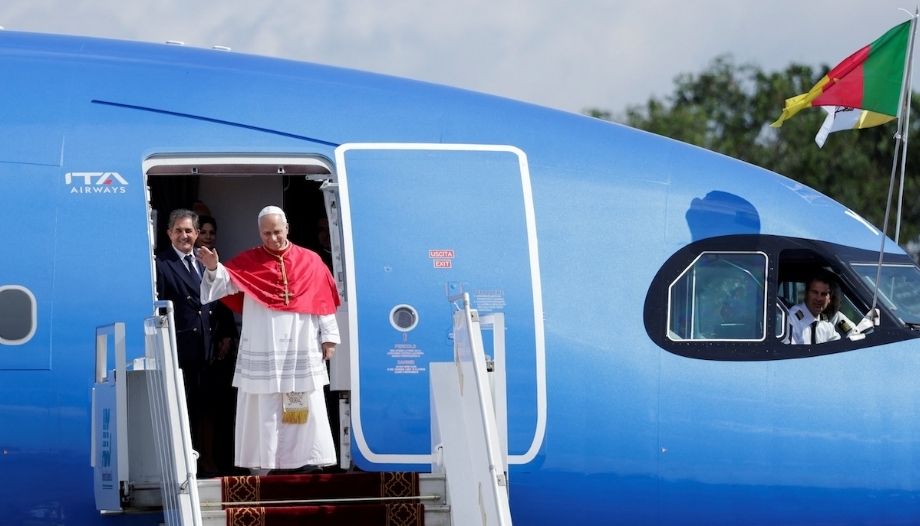
On Saturday, March 28, the Pope will travel by helicopter directly from Vatican City, the world's smallest state, to Monaco, the world's second smallest. The one-day trip will be Pope Leo XIV's first international trip in 2026 and only the second of his pontificate, and includes a packed itinerary.

The day will begin with an official welcoming ceremony outside Monaco's Prince's Palace, followed by a private meeting inside with Prince Albert II, who has reigned in the principality since 2005. The two leaders previously met at the Vatican on January 17, when their discussions focused on shared commitments to environmental stewardship, humanitarian aid and the defense of human dignity.

The Diocese of Monaco has noted that the Pope and the prince share «a particular focus on respect for human life from its beginning to its end; concern for integral ecology and the preservation of our ‘common home’; and also a shared passion for sport.».

In November, Prince Albert II rejected a bill that sought to authorize abortion up to 12 weeks of pregnancy in the Catholic principality. Roman Catholicism is the official state religion of Monaco, and 82% of the population identifies as Catholic , according to Vatican statistics.

From the palace, the Pope will proceed to the Cathedral of Our Lady Immaculate to address the Catholic community of Monaco. Consecrated in 1911 on the site of the principality's first parish church, built in 1252, the cathedral holds a historic place in Monegasque history, as it houses the tombs of the Monegasque royal family, including that of Princess Grace Kelly, who was married there in 1956.

Meeting with young people

Pope Leo XIV will meet with young Catholics and catechumens at the Chapel of St. Devote, a centuries-old church dedicated to St. Devote, patron saint of Monaco and martyr killed during the persecutions of the Roman emperors Diocletian and Maximian. The chapel, a place of great popular devotion, also gives its name to the first corner of Monaco's famous Formula 1 Grand Prix circuit.

This year, the princely diocese has 70 catechumens, mostly young men and women, who are following a formation program that prepares them to receive the sacraments of baptism, confession, first communion and confirmation in Monaco, according to Abbot Christian Venard, episcopal vicar for communications of the archdiocese.

Mass for a multitude of people

The day will conclude with a Mass at the Louis II Stadium, home of the AS Monaco soccer club with a capacity of over 18,000 people, before the Pope returns to Vatican City by helicopter, scheduled to land at 19:45. The Pope will return to the Vatican just in time for the start of Holy Week, as the following day will be Palm Sunday with Pope Leo presiding at Mass in St. Peter's Square.

As the Pope will travel by helicopter and not by plane, there will not be a press conference with journalists on board at the conclusion of the trip, as is customary on the papal plane.

The official motto chosen for the papal visit is “I am the Way, the Truth and the Life”, taken from John 14:6.

The visit comes at a time when the Church in Monaco is facing some of the same pastoral challenges seen throughout Europe. Despite Catholicism's privileged constitutional status, the diocese has experienced a decline in Mass attendance, first communions and confirmations, trends that local clergy hope the papal visit will help reverse.

A palace communiqué described the papal visit as «a historic moment for Monaco» that constitutes «a strong sign of hope, in a spirit of dialogue, peace and shared responsibility.».

The authorOSV / Omnes

Resources

Making peace with your body

We begin a new section of articles on the rediscovery of the Christian vision of the body, a series based on the Theology of the Body of St. John Paul II.

Hugo Elvira-March 10, 2026-Reading time: 4 minutes

One afternoon, while talking to a young man, he told me something that left me very thoughtful: “My body is my enemy.”.

He didn't say it with anger, but with weariness. He told me about this constant fight of comparing himself all the time, of being frustrated, anxious, of falling into habits he didn't want....

I gave him some advice, tried to encourage him... but when he left I kept thinking that it was not the first time I had heard something like that. And, although perhaps they didn't use such direct words, I had heard it before from students, from friends, in theological reflections during my studies in Rome. In short. It seemed to be something that many of us can feel, but few of us dare to tell. It is impressive to discover how many people live at war with their own bodies.

That night I wondered if this problem was something to be taken lightly, or if there was something deeper behind it. Could it be that we have forgotten what the body means to Christianity?

The response from St. John Paul II on the Theology of the Body: 129 catecheses preached on Wednesdays during the general audience in St. Peter's Square from 1979 to 1984 and dedicated to reflection on the human body in the light of Revelation. 

I decided to study all the texts seriously, and I did my thesis for my degree in Dogmatic Theology on this topic as well. And I understood better something that surely motivated the Pope to dedicate so much time to this theological reflection: If the body is seen as an enemy, the person becomes divided inside. But if the body is discovered as a gift, the person begins to heal.

That is why I am beginning this series of articles. To go through together, step by step, the Theology of the Body under the interpretative key of the body as a gift of God and thus rediscover that Christianity does not despise the body... it illuminates it.

And that if you, dear reader, are going to give a class or talk on the subject, or if you are going to advise a friend about it, you can remind him or her of a truth that we need to hear again: Our body is not an enemy. Our body is a gift from God. And learning to receive it as a gift can change our lives. Our human relationships. Our way of approaching God. Our way of striving to be good Christians. 

Let's get started....

The current view of the body vs. the Christian view of the body

We live in a culture that sends two opposing messages about the body. On the one hand, the body is everything: we are worth for our appearance, for our performance, for the pleasure we achieve. Hours comparing ourselves on social networks, impossible diets, fear of aging, obsession to be liked. 

On the other hand, the body is worthless: it becomes something to be used, it doesn't matter if it is modified, it is discarded when it is uncomfortable. Two different paths that end in the same sadness.

The Christian faith begins in another place. In Genesis, when God creates man and woman, he says: “God saw all that he had made, and it was very good.” (Genesis 1:31). This is not a decorative phrase. It is a fundamental revelation: everything in the human being is good, not only his soul, but also his body, because it has come from the hands of God.

As Karol Wojtyła explains in. Person and action, The person is not a soul that has a body: it is his body. Thanks to the body we can pray, sing, work, embrace, ask for forgiveness. Without the body, love is not seen.

This is why Christianity does not despise matter; in fact, the center of our faith is that the Word became flesh. From the body of the Child in Bethlehem to the resurrected body of Christ, Christian history confirms the ever-present goodness of our humanity.

The great secret of the body

Only with the body can we love as true humans. Love needs visible gestures: a word, an embrace, a caress, a silent sacrifice. But these gestures must be full of truth. Because there are acts that look like love... and are not: a kiss can betray, like Judas“. An ”I love you" can hide selfishness. But as we can see in these examples, the body does not lie: it reveals what is in the heart.

Therefore, it is important to consider that when love is transformed into material -corporal- acts of service, forgiveness, care, surrender, the body speaks its true language. When it becomes use, domination or manipulation, the problem is not the body, but the wounded heart.

The great secret of the body is this: it is made to truly love.

When the body speaks your language

We have all experienced the joy after helping someone. The peace of a sincere hug. The happy tiredness after working for others. In those moments we discover something: our body does not separate us from God, it brings us closer to Him. Because we experience that the body is the place that allows the person to enter into communion, to give himself. 

How to convince me of all this? By going deeper into the Theology of the Body. Not as a beautiful but impossible theory, but as a meditation on our Christian hope: the Word made flesh.

In Christ's humanity we also see the fullness of our humanity: to return to the Father with a healed heart and a glorified body.

Even if you have fallen many times, even if you carry wounds or shame, remember: that is why Jesus came. In the Easter liturgy the Church sings: “O happy guilt that deserved such a Redeemer!” It is no coincidence, nor mere poetry, Christ came to heal the heart... and to redeem our body as well.

A decision for today

Look at your hands. Feel your breath. Look in the mirror. They are not an enemy. They are not a mistake. They are a gift. Part of a whole body that is called to resurrection.

Start today with something small to let the body speak its language: an act of generosity, a sincere confession, an apology asked in time, a silent service. Then you will discover something surprising: your body ceases to be your enemy and becomes your best ally in learning to love, because it is identifying itself with the actions of Jesus, God and true man.

What is the use of fasting?

In a culture where almost everything is readily available, fasting may seem a strange, masochistic, even useless custom. Why voluntarily deprive oneself of something as basic and lawful as food?

March 10, 2026-Reading time: 4 minutes

A charming grandmother offered a breakfast to her friends, some of whom had come from far away after several years of not seeing each other. Her daughters were also invited and the reunion promised to be a great time. The table was well laid out and a feminine hand, with attention to detail, could be seen in everything. 

Hugs and phrases of joy were shared to the fullest, until, at the time of sitting down, one of the daughters demanded: “but it is fasting because we are in Lent! Immediately the opinions were divided: ”it is true, let's keep everything, we must offer something to Jesus and not continue with our bourgeois life as if we were not in the time of penance". Others said that the hostess had taken so much care that they could not do her a disservice. Still others suggested changing the fast to a work of mercy...finally a divided atmosphere reigned. Some ate, others did not. The former criticized the latter and vice versa. The hostess apologized for forgetting that Friday would be Lent. She felt a lump in her throat as the altercation escalated and some disqualifications were heard.  

Learning self-controlto love

John Henry Newman insisted that external spiritual practices have value only when they transform the heart. He said that bodily sacrifice makes sense when it helps to purify the soul and orient the will toward God. Fasting is a pedagogical act: the body teaches the soul to love better.

The church invites us to practice fasting during Lent with a transcendent meaning: to learn self-control in order to love.

We live in a culture where almost everything is readily available - food, entertainment, information - fasting may seem a strange, masochistic, even useless habit. Why voluntarily deprive oneself of something as basic and lawful as food?

However, fasting is one of the oldest and most universal human practices. Long before Christianity, different civilizations discovered that renouncing food for a while could help human beings to order their inner life.

In Judaism, for example, fasting occupies a central place on Yom Kippur, the Day of Atonement, when people acknowledge their faults and seek reconciliation with God. In Islam, millions of believers practice fasting each year during Ramadan as an exercise of purification and obedience. Also in Eastern spiritual traditions, inspired by Siddhartha Gautama, Buddha, moderation in eating has been seen as a form of inner discipline.

This cross-cultural agreement reveals something important: fasting responds to a deep intuition of the human heart.

What is fasting?

Fasting is not simply to stop eating. Its deeper meaning is to remind us that not every desire must be satisfied immediately. In a world that constantly pushes us to consume, fasting becomes a small school of freedom. It teaches us that we are capable of mastering our impulses and choosing what really matters.

In addition, fasting has a very concrete human value. By voluntarily experiencing deprivation, even for a short time, it awakens in us a greater sensitivity to those who experience scarcity on a daily basis. What for some is a spiritual practice, for millions of people is a daily reality. Fasting, lived with awareness, can thus become a bridge to solidarity.

The Church says...

Christianity took this ancient practice and gave it a new meaning. Before beginning his public life, Jesus Christ fasted for forty days in the desert. That is why the Church proposes fasting especially during Lent, in preparation for Easter.

The Catechism of the Catholic Church reminds us that fasting, together with prayer and almsgiving, is part of the Christian's journey of conversion. It is not a matter of punishing the body or complying with an external rule, but of making room in the heart for God and for others.

This is why the Church insists that fasting only makes sense when it is accompanied by a true interior transformation. Pope Francis has explained it in very clear words: authentic fasting does not consist only in cutting down on food, but in renouncing that which harms others: indifference, hardness of heart or words that hurt. Otherwise, fasting simply becomes a diet.

Christian wisdom has always understood it this way. As St. Augustine of Hippo wrote: “Fast from hurtful words, and feed on kind words”.  

This is an invitation renewed today by our Pope Leo XIV in his recent Message for Lent: “If Lent is a time of listening, the 40 days fast constitutes a concrete practice that disposes us to accept the Word of God. Abstinence from food, in fact, is a very ancient and irreplaceable ascetical exercise on the path of conversion. Precisely because it involves the body, it makes more evident what we “hunger for” and what we consider essential for our sustenance. It serves, therefore, to discern and order the “appetites”, to keep the hunger and thirst for justice awake, to remove it from resignation, to educate it so that it becomes prayer and responsibility towards our neighbor”.

Perhaps therein lies the true meaning of this ancient practice: fasting helps us to remember that human beings do not live only by what they consume, but by what they love.

And that the conversion that God expects does not begin in the stomach, but in the heart.

For this reason, the Lenten liturgy reminds us of the words of the prophet: “Is this not the fast I desire, to break unjust chains, to share your bread with the hungry, not to neglect your brother” (Is. 58:6-7).

Clinging to the law, stripping it of its meaning, divides and poisons us. To carry out the Lenten practices as well as possible YES... but cultivating first of all their authentic meaning: to master ourselves in order to truly love. 

The authorLupita Venegas

The World

Nigeria: “terrifying crisis of religious violence,” independent report says

Nigeria faces “a terrifying crisis of religious violence,” said the independent, bipartisan U.S. Commission on International Religious Freedom in its just-released 2026 annual report.  

OSV / Omnes-March 9, 2026-Reading time: 5 minutes

- Kate Scanlon, OSV News

The U.S. Commission on International Religious Freedom (USCIRF), an independent, bipartisan body of the U.S. federal government that monitors religious freedom around the world, released its report at an event at the Capitol Complex. A major finding is that Nigeria faces “a terrifying crisis of religious violence.”.

Vicky Hartzler, President of the USCIRF and a former Republican member of the House of Representatives from Missouri, said in her remarks at the event that the people of Nigeria “continue to face violations of religious freedom and suffers a deeply tragic and ongoing crisis of violence” at the hands of “non-state militants who advocate a violent interpretation of Islam.”.

“The Nigerian government has been negligent for too long in seriously and directly addressing the violence and its complex underlying factors,” he said.

‘Country of special concern’.’

The Trump administration recently designated Nigeria as a «country of special concern,» a State Department designation for nations or entities that commit systematic violations of religious freedom. The U.S. also carried out a deadly attack in Nigeria on Dec. 25, which President Trump called an attempt to target Islamic State group terrorists persecuting Christians in that country.

Among the cases of violence in Nigeria cited in the report, it said that “in September, Father Matthew Eya of St. Charles Catholic Church in Enugu State, southern Nigeria, was returning home from his pastoral duties when unidentified gunmen pulled up on a motorcycle, shot out his tires and then executed him on the spot in his vehicle.”.

Students from St. Mary's Catholic School in Papiri, Nigeria, arrive at the Niger State Government House December 8, 2025, after being released from captivity when they were abducted by gunmen on November 21. (Photo by OSV News/Marvellous Durowaiye, Reuters).

Against Christian and Muslim communities

Violence against Christians in Nigeria has intensified in recent years at the hands of Islamic extremist groups such as Boko Haram. However, Muslim communities have also been severely affected by the violence. Disputes between farmers and herders have also led to violence and displacement.

The report also states that Christians across Central Africa “have become increasingly vulnerable to targeted attacks by non-state actors.”. 

Nigeria was among the countries that USCIRF recommended for designation as Countries of Particular Concern (CPC), which also included Afghanistan, Burma, China, Cuba, Eritrea, India, Iran, Libya, Nicaragua, North Korea, Pakistan, Russia, Saudi Arabia, Syria, Tajikistan, Turkmenistan and Vietnam.

Serious violations of religious freedom

The State Department designates CPCs for particularly serious violations of freedom of religion or belief under the International Religious Freedom Act (IRFA). The IRFA requires the U.S. government to annually designate CPCs, which are defined in law and policy as countries where governments commit or tolerate “particularly serious violations” of religious freedom. 

Non-state actors that engage in similar conduct are designated as «entities of special concern.» The State Department also has a “Special Watch List” for serious violations of religious freedom that do not meet the criteria for CPC designation.

Damage inside the Al-Adum Jumaat Mosque on Christmas Day, 2025, in Maiduguri, Borno state, Nigeria, a day after an explosion following evening prayers. The blast killed at least five people in what police described as a probable suicide bombing (Photo by OSV News/Ahmed Kingimi, Reuters).

California Senator: freedom of religion, key importance

Rep. Brad Sherman, D-California, stated at the event that “there is nothing more important to American values than freedom of religion. It's in the First Amendment for a reason, and we need a foreign policy that reflects our values as a nation.”. 

“This commission, which sheds light on oppressed religious groups around the world, has contributed greatly to elevating our foreign policy discourse,” he said. “I commend the commission for presenting this report to us. It will be the subject of deep and thorough debate.”.

The impact of USAID cuts

The report also pointed to cuts to programs aimed at promoting religious freedom through the U.S. Agency for International Development (USAID), the government's now-closed humanitarian aid agency in countries around the world, as one of the causes affecting programs that provided humanitarian assistance to persecuted religious communities.

“USCIRF received information that a significant portion of the programs that used funds appropriated by Congress to promote IRF were cancelled,” the report states. 

“This included projects to combat blasphemy laws and other legal restrictions on freedom of religion or belief, establish early warning systems to protect religious minorities, promote interfaith dialogue, and document violations of the IRF, including crimes against humanity and genocide. Emergency assistance for religious freedom activists in Burma and Afghanistan was also cancelled, as was a USAID flagship program that had supported 4,000 members of religious minorities facing discrimination and persecution.”. 

Effects of funding cuts in Nigeria

Citing the organization's concerns about Nigeria, the report added: “As an example of how such cancellations could affect conditions of religious freedom, one source argued that ending a USAID program that supported early warning systems in Nigeria's Middle Belt could leave communities without support to prevent violence, creating vulnerability for future attacks against Christians.”.

However, the report noted that some of the commissioners took issue with that section and argued that “comments” on “an administration's decisions regarding the redirection of funds, especially as they relate to NGO funding, are, as we understand it, beyond the scope of USCIRF and our vocation.”.

Among other recommendations to Congress and the Trump administration, the report also called for a reduction in barriers for those fleeing religious persecution abroad to resettle as refugees in the United States, which Stephen Schneck, commissioner of USCIRF, noted in his remarks at the event.

Increased anti-Semitism and anti-Muslim bias

“Admittedly, there were areas in 2025 where the administration's approach to international religious freedom fell short, such as protecting those beings in some of the world's most extreme environments for religious persecution,” Schneck said.

In comments at the event, Asif Mahmood, vice president of USCIRF, also noted a “widespread rise in anti-Semitism and anti-Muslim bias” in parts of the world, as well as violations of religious freedom in areas facing conflict or political turmoil, among other major areas of concern for USCIRF.

—————–

Kate Scanlon is a national reporter for OSV News covering Washington. You can follow her at @kgscanlon.

—————-

The authorOSV / Omnes

Read more
Experiences

Why go on a spiritual retreat? 5 elements to do it right

You could be as rich as a king, but miserable, if you have no friends. Or as poor as dirt, but happy, because you are surrounded by loved ones. What personal relationship could be more important than your relationship with God? Here are 5 useful elements to make a good retreat.

OSV / Omnes-March 9, 2026-Reading time: 5 minutes

- Father Francis J. Hoffman, OSV News

The saints, notoriously happy, bore witness to this reality. Even St. Maximilian Kolbe, the Claretian martyrs of Barbastro and the Carmelite nuns of Compiègne sang hymns of joy on their way to martyrdom. Immersed in conditions that would sadden mere mortals, these friends of God faced suffering with joy. It was their friendship with God that gave them strength and joy.

But friendship takes time and needs to be strengthened by conversation. Couples with strong marriages will tell you how important it is to get away for a long weekend to talk alone. We need to do the same with God, which is why the Church strongly recommends annual retreats for the faithful.

Retreats are a time away from our usual activities to reconnect with God, examine life's priorities and make concrete, practical resolutions for improvement. Retreats can be a powerful step toward personal conversion.

Our Lord: days of retreat

Before our Lord began his public ministry, he spent forty days in the desert praying and fasting in preparation for the important work that awaited him (cf. Lk 4:1-13). These were days of retreat.

During his three years of public ministry, Jesus sometimes invited his disciples to «withdraw to a solitary place to rest a while» (Mk. 6:31). Again, days of retreat.

When Jesus burst forcefully into St. Paul's life, he instructed him to get up and go to the city, where he would be told what to do. For three days, St. Paul did not eat or drink, preparing to receive spiritual direction from Ananias (see Acts 9:1-9). These were also days of retreat.

Great saints and founders

Over the centuries, the Holy Spirit has raised up great saints and founders for the reform and service of the Church. While the methods of Franciscans, Jesuits and members of Opus Dei have varied considerably, what their founders shared was a deep spiritual experience during their retreats, whether in the woods surrounding Assisi, in the caves of Manresa or in a residence of St. Vincent de Paul.

These saints sought solitude to listen to God. Jesus called them to a secluded place to spend time with him.

The current ecclesiastical legislation urges the parish priest to organize periodic retreats or missions for the good of the faithful, while all those who are to be ordained must make a one-week retreat. Likewise, priests and religious are asked to make an annual retreat.

For the good of the Church, as well as for the good of their own souls and families, lay people are also encouraged to take a few days away each year to rekindle their relationship with Christ.

Top 5 elements to make a good retreat

There are many types of retreats, and many church organizations offer retreats of varying lengths and themes. Retreats can last two or forty days; they can be for men, women or couples.

They can follow a traditional format with a preaching priest as retreat master, offering several spiritual conferences or daily meditations. Or they can have a more charismatic tone.
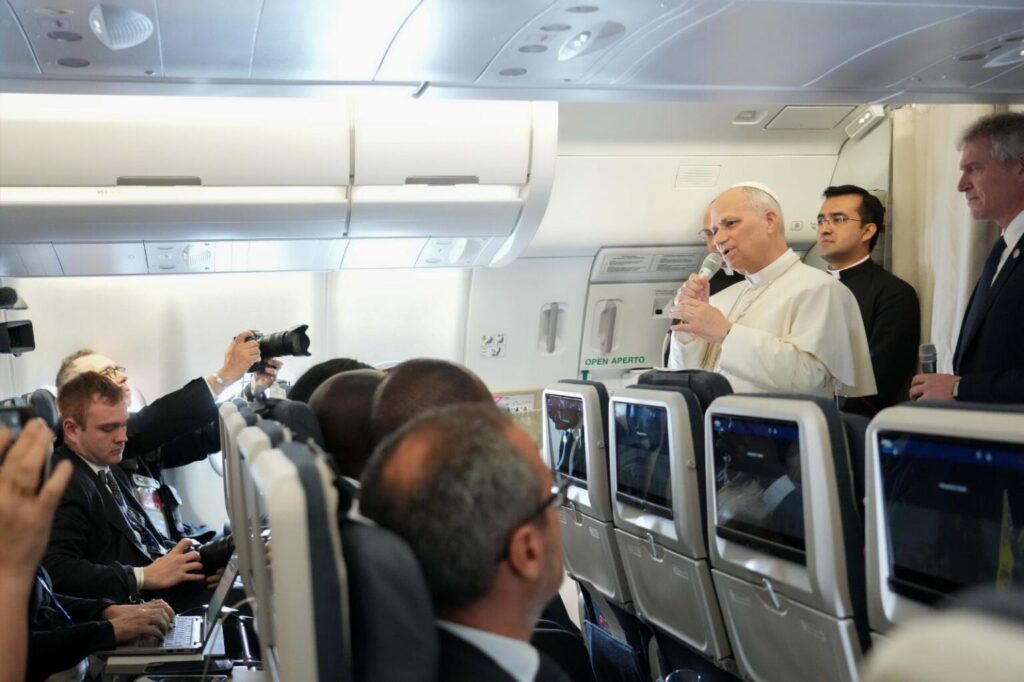
They can be directed or not. You can make a retreat with a large group in a hotel or alone in a Trappist monastery. In general, however, prudent pastoral experience suggests that the following elements are the most helpful for a good retreat: silence, the Holy Eucharist, confession, spiritual reading and closeness to the Blessed Virgin.

Silence, Holy Eucharist

First, the silence. Seek a place of retreat that fosters an atmosphere of silence, not as a penance, but as a means of listening to the Holy Spirit and getting to know Jesus while knowing yourself.

When you go on a weekend retreat, you go to be with God and deepen your friendship with him. Too often in daily life, we are overwhelmed by sensory distractions and fail to hear God's voice. When you go on retreat, turn off your cell phone and disconnect from all cyber communication. God wants your attention. Others can wait.

Secondly, the Holy Eucharist. Since the Holy Eucharist is the Body, Blood, Soul and Divinity of Christ, it is extremely beneficial for the practitioner to attend Mass and receive Holy Communion daily during the retreat. It is also helpful to spend time in silent conversation in the presence of the Blessed Sacrament and even to participate in the Exposition and Benediction of the Blessed Sacrament during the retreat.

The Church so strongly recommends Eucharistic adoration that a plenary indulgence can be obtained whenever one of the faithful spends 30 minutes in adoration before Our Lord.

Confession, spiritual reading

Third, the confession. A retreat is about seeking, finding and loving Christ. By spending time in silent reflection and examination of conscience, the Holy Spirit will prompt you to confess your sins to a priest.

Often, the annual retreat provides special graces for a deeper examination of conscience, which impels the soul to a deeper contrition. Souls sometimes seek to make a general confession of their whole life - renouncing pride, envy, lust and jealousy - and thus open their souls to the redeeming graces of Christ.

For true and lasting spiritual progress, it is essential that the person make a deep and profound examination of conscience, express sincere contrition and confess his sins to a priest.

Fourth, spiritual reading. What a joy to read the Bible slowly and in silence! How good it is for the soul!

Priority should be given to the New Testament, and in the first place to the Gospels. The soul benefits greatly from reading and reflecting on the words and actions of our blessed Savior.

Early morning is usually the best time to nourish the soul and spirit with the words of the Gospel. Many also find it very helpful to read spiritual works of saints and great teachers.

Timeless classics, such as «The Three Ages of the Interior Life» by Father Reginald Garrigou-LaGrange, «The Imitation of Christ» by Thomas á Kempis or «In Conversation with God» by Father Francis Fernandez are always a good bet.

Blessed Mother, Rosary

Fifth, closeness to the Blessed Mother. After Our Lord's ascension into heaven, the apostles gathered around Our Lady and accompanied her in prayer. Ten days later, at Pentecost, the Holy Spirit infused his grace into each of those present in the Upper Room, and thus the Church was born.

Those days of prayer and petition were fruitful because of the Apostle's closeness to the Blessed Mother.

During your retreat, take time to pray the rosary daily and meditate deeply on each mystery. By reflecting on the example of the Blessed Mother, you will draw closer to Our Lord.

Some practical and generous purposes

As you near the end of your retreat, be sure to make some practical and generous resolutions (no more than three) to improve in prayer, service and sacrifice. Write those resolutions down in your notebook or save them in your phone.

Finally, beware of post-retirement syndrome, also known as post-retirement syndrome. This is the tendency to fail at one or more of your resolutions soon after returning. Forget it and start over.

With God's grace and your humble contrition, you will progress.

—————

Father Francis J. Hoffman, also known as ‘Father Rocky,’ is the executive director of Relevant Radio (relevantradio.com).

The authorOSV / Omnes

The Vatican

Pope: bombs and weapons to be silenced, and conflict not to spread to Lebanon

Leo XIV prayed at the Angelus of this Third Sunday of Lent for several reasons: that bombs and weapons be silenced, and that the conflict not spread to countries like Lebanon. For women who suffer violence. And for the Church to recognize “God's surprises“ and to turn to Jesus, ”God's answer to our thirst.  

Francisco Otamendi-March 8, 2026-Reading time: 3 minutes

The Pope's appeal to “raise our humble prayer to the Lord that the clamor of bombs may cease, that weapons may be silenced, and that spaces for dialogue may be opened in the conflict in Iran and the Middle East”, was the main cry of Leo XIV in the Angelus of this Third Sunday of Lent. At the same time, he asked that hatred and fear not spread to other countries such as Lebanon, which could fall back into instability. 

The Pontiff said that “from Iran and from all over the Middle East, news continues to reach us that cause us deep consternation. Episodes of violence and devastation”. And he entrusted the prayer of supplication for dialogue and peace to “Mary, Queen of Peace. May she intercede for those who suffer because of war, and accompany hearts on the long road of reconciliation and hope”.

Prayer for women who suffer violence, and for equality

Secondly, after the recitation of the Marian prayer of the Angelus, the Pope recalled that “today, March 8, is celebrated as International Women's Day. Let us renew our commitment, which for us Christians is rooted in the Gospel, to the recognition of the equality of men and women," he said. the woman. Unfortunately, many women, from childhood, are discriminated against and suffer different forms of violence. To them in a special way goes my solidarity and my prayer”.

Then, as he always does, the Pope greeted numerous groups of pilgrims and faithful from American countries and from all over the world, including Italians.

For those who will be baptized at Easter, and for all those who will be baptized at Easter.

At the beginning of his speech, in which he commented on the Jesus' dialogue with the Samaritan woman At the well of Sychar, the Successor of Peter recalled all those who will receive Baptism at Easter, and said: 

“The dialogue between Jesus and the Samaritan woman, the healing of the man born blind and the resurrection of Lazarus, from the first centuries of the Church's history, illuminate the path of those who, at Easter, will receive Baptism and begin a new life.”.

“These great pages of the Gospel, which we begin to read from this Sunday, are offered to the catechumens, but at the same time they are heard again by the whole community, because they help to become Christians or, if we are already Christians, to be Christians with greater authenticity and joy”, said Leo XIV.

“Jesus is God's answer to our thirst.” “Lent is a gift.”

The Pope went on to emphasize that “Jesus, in fact, is God's answer to our thirst. The encounter with him, as he suggested to the Samaritan woman, activates in the depths of each of us a ‘spring that wells up to eternal life’ (Jn 4:14). How many people throughout the world are still seeking this spiritual source today!.

“Sometimes it is accessible to me,” wrote young Etty Hillesum in her diary. But often there are stones and debris clogging that well and then God is buried. He must be dug up again. Dear brothers and sisters, there is no energy better spent than that which we devote to freeing the heart. For this reason, Lent is a gift: we are entering the third week and we can already intensify our journey".

The Lord says to his Church: “Recognize God's surprises”.”

Commenting on the Gospel episode, in which his disciples were surprised to see [Jesus] speaking with a woman” (Jn 4:27), the Pope encouraged the faithful: “The Lord also says to his Church: ‘Lift up your eyes and recognize God's surprises’”. 

“The harvest is plentiful; perhaps the laborers are few, because they are distracted by other activities. Jesus, on the other hand, is attentive. That Samaritan woman, according to the customs, would simply have had to be ignored; however, Jesus speaks to her, listens to her, gives her confidence without ulterior motives and without contempt”.

“How many people are looking for this same gentleness, this same availability in the Church,” the Pope exclaimed. And how beautiful it is when we lose track of time to pay attention to those we meet, just as they are”. 

The Samaritan woman, first of many evangelizers

The Samaritan woman thus became the first of many evangelizers, said Leo XIV. “From her village of despised and marginalized people, many, thanks to her witness, go out to meet Jesus, and in them too faith springs forth like pure water”. 

“Let us ask Mary, Mother of the Church today,” the Pope concluded, “to be able to serve, with Jesus and like Jesus, humanity's thirst for truth and justice. It is not a time of opposition between one temple and another, between “us” and “the others””.

The authorFrancisco Otamendi

Read more
Evangelization

Carlota Santos: «the model of the saints is more universal than the ‘empowerment’ of today».»

This 8M, the illustrator Carlota Santos tells how she became disenchanted with the New Age proposal to convert to Christianity and dedicate a book to stories of really exemplary women: Santas.

Teresa Aguado Peña-March 8, 2026-Reading time: 5 minutes

In a society that advocates for the empowerment of women, illustrator Carlota Santos (@carlotydes on Instagram) makes a counterpoint with his new book Santas. After exploring esotericism and New Age, Carlota began an «intellectual search» and found truth in Christianity. That is why she dedicates her new book to female referents of sanctity. She tries to show that the Church has always valued women, demystifying the idea that Catholicism does not recognize their importance.

Through her illustrations and stories, the artist celebrates lives of holiness and virtue, offering historical references that inspire both believers and those who approach her out of cultural curiosity.

In this interview, illustrator and architect Carlota talks about her conversion, her new book and why she believes that saints remain universal examples of virtue.

How was your transition from esotericism to Christianity? 

-I went to a Catholic school, but I never fully connected with the message of Jesus at that time. I did confirmation by tradition, not by conviction. But I have always been a person who has always been very interested in classical art and symbolism. 

As a result of a visual interest in tarot, I began to delve into similar subjects such as astrology and cards. All from an artistic point of view. But, in exploring it from an artistic point of view, it is inevitable to get contaminated from a spiritual point of view.

I ended up very disenchanted with everything related to the New Age, because it seemed to me that, at bottom, it boils down to a promise to feel good. Then I began to wonder, on a personal level, if in addition to these tools for wellness there was some truth, something objectively good that really existed.

From there I started researching different religions and, in parallel, the idea of doing a book on Christianity came up. It was at that moment that I started to really explore the different religious traditions. And I connected in a very deep way with the message of Jesus, as I had never done before, neither in school nor in other stages of my life. It had a huge impact on me.
I wanted to make Santas from a feminine point of view to vindicate that women in the Church have been recognized from the beginning.

In what way do you try to express in «Santas» that women in the Church are perfectly valued? 

-In the course of more than two thousand years of history, there have been more than three thousand saints. What I am trying to show with this selection of fifty women, presented in chronological order, is that the Church has always recognized and valued them.

They are women who, although they all share the same goal - the good and Jesus - each one has expressed it in a different way, with her own gifts and her own personality. And yet they have all been recognized by the Church.

There are from the first martyrs, who suffered persecution and death, often for defending their ideas and standing firm in their principles, to women with intellectual concerns who were able to develop their talents in environments such as monasteries, where they found the space to fully dedicate themselves to study and thought.

On a day like 8M, what do you think saints can contribute today to the debate on feminism, dignity and the role of women in society?

-Santas are not fads, nor something passing as an attitude. Today's feminism defends the attitude of «empowerment». On the other hand, the model of the saints is more universal because each one of them defends virtues that transcend time. They are eternal references in their radical defense of the good and service to others.

Has there been any saint that has particularly touched you?

-A figure I already knew, but I have been able to go deeper and I also took the opportunity to read her own book and her memoirs, is St. Therese of Lisieux. Her main idea is that holiness is attained through small daily works, that it is not necessary to make great gestures, but to live it in everyday life. And that really touched me.

In the book you tell about your rediscovery of Christianity, what was the turning point?

-I had a small, very sudden rapprochement with God before I delved into Christianity, which was a totally absurd detail.

I remember I was having a drink with my friends when suddenly I started to see some birds there, and I thought they were so beautiful that I said to myself «how could God not exist if nature is so beautiful? I saw God in nature, and from then on I started reading and researching about different religions, about how each religion sees God, and I identified Christianity well from the first moment, and so I fully reconnected with Catholicism.

In your intellectual quest, did you overcome any prejudices?

-Yes, for example, the concept of sin. When I was a teenager and they explained to me what sin was, I saw it more as a series of prohibitions imposed by the Church. Now, however, I understand that sins are things that are going to harm you, that harm you. And God, in his infinite love, wanted to warn us about them.

I am fortunate to be a curious person and every doubt that has arisen regarding what the Church says I have investigated about it and I have been understanding the reason for many things. Obviously there is always a faith factor, because not everything is one hundred percent intellectual. It is rather reason enlightened by faith. But there comes a time when you have to trust.

Having explored esotericism, do you think a Christian can turn to yoga, tarot or explore such practices?

-My personal opinion is no. Simply because a Christian must have a radical trust in God. If you rely on other things, you are no longer fully trusting in Him. It is not compatible.

In fact, tarot and casting cards, the Church says, is dangerous. You can generate a dependence on knowing what is going to happen, on trying to control everything. And there is nothing less in keeping with the Christian than to be in perpetual worry about controlling what is going to happen. We are in God's hands and we must trust in his plans.

In today's society, one can feel a search for spirituality that hides a search for God without knowing how to identify him. From your personal experience, how would you encourage young people not to remain in superficial spiritual fashions?

-Each one has his own journey. St. Augustine, for example, went through stages far from God and explored other themes before finding Christ. The important thing is to truly seek, because, as the Bible says, he who seeks will find and he who knocks will be received.

It is also an active process: God reaches out, but it is up to us to take the step. If the search is sincere, even if it is difficult, it will lead to Jesus; staying on the surface can lead to more esoteric paths. There are no magic formulas, but the key is sincerity and constancy in that search.

You have illustrated 50 santas, what do you learn from doing this book?

-On the one hand, I have done a lot of research on Western art and how saints have been represented throughout history, and this has enriched me a lot both culturally and as an artist.

I have also gained a great deal of depth. With this book I have been able to see, by exploring so many different lives, that there is not just one model of holiness. And that is very inspiring, because you see how you can apply their virtues to your life or how it helps you to reflect on what you are doing right and what you are doing wrong. This book has also brought me much closer to the Gospel. To explore it in a more intimate way.

Speaking of the Gospel... On your YouTube blog you say that you intend to illustrate the Bible. Tell us about this project

-It all started when a publishing house contacted me to illustrate a literary classic. At first I thought of Shakespeare, because I like him a lot and it fits my style, and I started with A Midsummer Night's Dream, my favorite work.

After a few months, I said to myself, “Why not propose the Bible?” I had had that idea for some time, and when I told my editor about it, they agreed. Since the Bible is a lot, we decided to focus on the Gospel.

I am now in the initial planning stage. It is a huge project, with many illustrations, and I want to define well the axes to do it carefully.

Santas

AuthorCarlota Santos
Editorial: Penguin
Pages: 141
Year: 2026
Read more
Resources

«The Discourse on Method by René Descartes.

In the coming months a series of articles will be published commenting on the main works of Locke, Hume, Kant, Hegel, Marx and Freud; that of Schopenhauer and Nietzsche; that of Comte and Wittgenstein; and that of Kierkegaard, Husserl, Heidegger and Sartre, following another series on political and social philosophy.

Ignacio Sols-March 8, 2026-Reading time: 8 minutes

An extended version of this article can be found here.


René Descartes was trained in mathematics, literature and classical philosophy at the Jesuits of La Flèche, graduated in law in Poitiers in 1616, and discovered, while quartered in Bavaria in the winter of 1619, his method and his vocation as a philosopher and mathematician. He settled in the Netherlands in 1622 and published in 1937 his Discours de la Méthode, which, together with its appendix Geometry, The founders of rationalist philosophy and analytical geometry. He died in Stockholm in 1650, after four months as preceptor advisor to Queen Christina of Sweden.

Exposure of the philosopher

It has been said that he who despises philosophy unknowingly follows a dead philosopher. This is especially true of the Discourse of the method and its parallel work Meditationes de Prima Philosophia for they inaugurate the philosophy of the Modern Age, from which contemporary philosophy is a logical consequence. Mentioning only the Method, We will use both works indistinctly for our exhibition.

Clear and different ideas

Of an autobiographical nature, Descartes begins his Speech expressing his discomfort at the weakness of his certainties in the important matters of life, in comparison with the absolute certainty in mathematics that he himself professed. He then conceived a method that would provide in philosophy the same certainty as in mathematics: He would admit only those truths of which it was not possible to conceive of any doubt, rejecting methodologically those in which such doubt was possible. And to proceed from some truths to others he would use rigorous reasoning that would be governed by the following precepts: 

“It was the first, not to admit as true anything, as I did not know with evidence that it is so; that is, to avoid understanding in my judgments anything but what presented itself so clearly and distinctly to my spirit, that I had no occasion to doubt it. 

The second is to divide each of the difficulties he examines into as many parts as possible and into as many as their best solution requires. 

The third, to conduct my thoughts in an orderly manner, beginning with the simplest and easiest objects to know, and gradually ascending to the knowledge of the most complex, and even assuming an order among those that do not naturally precede each other.  

And the last, to make in all such comprehensive accounts and such general reviews, that I could be sure of omitting nothing”.

Me, God and World

Eight years after conceiving this method, he considered himself experienced enough to implement it. The senses sometimes deceive me -for example, when I dream-, then we can doubt them as we doubt a friend who has once deceived us. Methodologically, then, I will not rely on any data from the senses: “Everything that I have hitherto admitted as absolutely true I have perceived from the senses or by the senses; I have discovered, however, that they deceive from time to time and it is wise never to trust those who have deceived us even once”.

But the ancients already said that there is nothing in the understanding that has not first been in the senses, since even the most abstract ideas begin with some sensory image, so Descartes, by dispensing with the data of the senses, is plunged into universal doubt: 

“Finally I am forced to acknowledge that of all those things which I once judged to be true there is not one about which one cannot doubt, not out of inconsideration or lightness, but for strong and well-considered reasons. Therefore, no less must I refrain from giving faith to these thoughts than to those which are openly false, if I am to find anything true. Consequently, I will not act badly, as I trust, if by changing all my resolutions I deceive myself and consider them some time absolutely false and imaginary.”.

He has been left with no other certainty than that of the very fact that he thinks! And it is then when, in the midst of so much darkness, a light is kindled: There is a being of whom he has a clear and distinct idea, for it is impossible to conceive in him any doubt, since in the same doubt he would emerge as the one who doubts: himself! I THINK, THEREFORE I AM.

 “I do not now admit anything that is not necessarily true; I am therefore, in short, a thing that thinks, that is, a mind, a soul, an intellect, or a reason.”. But this first being conceived, this first light kindled in the midst of the universal darkness, will spread like the light in the night of the Christian Easter, since the metaphysical principles he has learned remain intact, and among them, that of causality. If I am not the cause of myself, but if I have a cause other than myself, this also has a cause other than myself, and so on and so forth - I recall from his training in Thomistic philosophy - until he necessarily arrives at a being Sui Cause , cause of itself. Two ideas, then, already immune to doubt: The I, as a thing that thinks -res cogitans- and God, as the being Sui Cause.  

Moreover, the desire for goodness and nobility that is in me cannot be caused by me - neither as good nor as noble - for the effect cannot be superior to the cause (another metaphysical principle) but from him from whom my being proceeds, in which the goodness of God concludes. Thus it cannot be that he has given me the faculty of knowing in order to deceive me, therefore my knowledge only deceives me when I misuse it, taking as evident that which it presents to me as susceptible of doubt, such is the datum of the senses. But I cannot be deceived in its mathematical activity, since it is of such clarity that no doubt can be conceived in it. And mathematical is the geometry with which I study that quality of corporeal beings which is extension. He thus recovers the material reality that surrounds him -including his own body- to the extent that he conceives it as extension.

In this way, he has arrived from universal doubt to the reality of three clear and distinct ideas: the res cogitans, the Causa Sui, and the Res Extensa. I, God, world, the three perennial themes of philosophy.

Philosophical Criticism

The critique will be standard but will raise one of the main questions in philosophy, for which we will rehearse a non-standard answer.

Real me or thought me?

Once the eyes are closed to all reality, immersed in a world of pure thought, the I that emerges in doubt is not the I that thinks, but the I that is thought. Can a chain be hung on a nail painted on the wall? Yes, it can be hung, if the chain is also painted on the wall (Vernaux). Thus, the God and the World that Descartes hangs on the self emerged from doubt, are a thought God and a thought World, not a real one. And the fact is that reality, once we doubt it, disappears, never to return. He who doubts his own faculty of knowing, will never get out of doubt, and will remain with the reality of his thought alone. The logical derivation implicit in Cartesian thought is a God and a World reduced to an idea. This dilution of being into idea will be inexorably developed by history until it becomes the protagonist of Hegelian panlogism, which will identify Being with the Idea. And it will be the dilution of existence in the essence that will end up diluting “this man”, the concrete man, in “the man”, in the abstract idea or humanity. This is how the individual will be dissolved in the collectivity, the foundation of the social philosophies of the nineteenth century that inspired the political collectivisms of the twentieth century, Marxist and National Socialist. 

In fact, this identification of “existence” and “essence” has its medieval gestation: Very soon after Thomas distinguished them forcefully, that is, distinguished between “who” I am (Ignatius Sols, a concrete existence) from “what I am” (a man, the abstract idea in me), Blessed Duns Scotus put an essence in every existing being. This is very dangerous, because counting essences by existences would lead centuries later to the Jesuit Francisco Suárez, in his Disputationes philosophiae, to no longer admit any real distinction between essence and existence. 

René Descartes was formed in this “essentialist” philosophy as a student at the Jesuit school of La Flèche. Such identification supposes an implicit pantheism, for only in God is His essence His existence, only He exists by essence, He exists necessarily. He is the only Necessary Being. And this is how he responded to Moses“ ”who are you“ with ”what is“ with his essence: ”I am the one who is". His essence is Being. 

For this reason, that logical derivation of the Cartesian starting point which is Hegelian panlogism will in fact be pantheism, and a pantheism that was paradoxically implicit in the philosophy of a man as devout as René Descartes: if from universal doubt, with eyes closed, I pretend to recover the world, to deduce it without having observed it, it is that I hold it as necessary reality, I hold it as God, I hold it as the Necessary Being. 

But there was a philosopher who in only twenty years deduced what the history of philosophy would take two hundred years to deduce: gathering in a few axioms the essentialist conceptions of Cartesian philosophy (in his Ethica more geometrico demonstrata, Spinoza, or demonstrated in the manner of Euclid's axiomatic geometry), arrived in only three pages of pure metaphysics -Baruch Spinoza is the only true metaphysician of his century and the next- at the logical conclusion of pantheism in his proposition XIV: “No substance can be given or conceived outside of God”. But he will be the great absentee in this list of authors, because his “impeccable” reasonings from such a “mistaken" and "wrong" point of view will be the only true metaphysician of his century and the following one." starting point - he was wrong on all counts, Polo used to say - cannot be summarized without being betrayed.

Not intellectual choice, but method error.

 I was always taught as a student, and in very different philosophical environments, that we either start from the Res Sunt, We can either start from the doubt that things exist - Plato, Aristotle, St. Thomas - as they are presented to our understanding by our faculty of knowing, or we can start from the doubt of their reliability, submitting it to a critique that has as its starting point the very fact, undeniable, that we think. Either we start from being, as did the Greeks and medieval philosophy, or we start from thinking, as did Descartes and the critical philosophy that his method inaugurated. Both starting points have been presented to us as irreducible, and neither one can lead to the other, nor can it be shown to be erroneous, leaving, therefore, both realistic and critical starting points as an option. In the work Metaphysics of intellectual choice by an author close to me, Carlos Cardona, this was presented as a moral option, after we have seen its inexorable consequences implemented historically.

The already departed Leonardo Polo resisted the idea that the most profound philosophical conception of being, the one that will condition all others, should be reduced to a mere option! And in his Theory of Knowledge Course, volume 2 -perhaps his main philosophical work- takes sides without taking sides: what is primarily present in knowledge is the idea, but what is known in it is the idea. without any mediation is the being. 

Well, the argumentative point of view of this series of articles is that the Cartesian starting point - and with it the whole of modern philosophy, of which contemporary philosophy is a logical derivation - can be criticized because it can be presented as an “error of method”. The mathematician smells mathematics from a distance, and in the Speech  sees in the attempt to bring to philosophy the method proper to mathematics, as all modern philosophy will emulate the method of the sciences. 

This is recognized by Descartes himself who in personal letters refers to his own as a “philosophie mathematique”demonstrating that God exists just as one demonstrates that the angles of the triangle add up to two right angles. Whoever, with minimal mathematical training, reads the steps of the method described above recognizes the steps of a mathematical demonstration, each of them by itself “evident”, but demonstrating all together a truth that is not evident, but to which we arrive from other truths that were already known to us. 

And his demand for clear and distinct ideas in philosophy comes from the fact that such are the ideas in mathematics. The mathematician knows clearly and distinctly the ideas with which he works, because he himself has constructed them by means of his definitions, so that he can reason about them clearly and distinctly, with a certainty in which no doubt can be conceived. But to demand in philosophy clear and distinct ideas, such as is possible, and demandable and even characteristic, in the mathematical sciences and in the mathematized sciences is to cancel wisdom at its very origin. It is an important error of method, characteristic of modern philosophy, and which has its origin - precisely - in a book entitled Discourse on Method. If Descartes did not dare or did not know how to draw the consequences of this erroneous starting point -Spinoza did know how to do it- the philosophy after Descartes will dare to do it, which will be more inspired by his method, or by his way of philosophizing, than by his own content: his peculiar demonstration of the existence of God and of the existence of the world, as if the latter also needed demonstration. 

Let us say it: I do not know how to define the dignity of man, I do not have a clear and distinct idea of it, but I know well that for the dignity of a man I cannot make him my slave. This requirement of clear and distinct ideas, only possible in the sciences, we will see later in the English empiricists, who will understand as idea - literally “what is seen” in Greek - the sensory impressions that I perceive in a clear and distinct way. And if there is modern rationalist and empiricist philosophy it is precisely because there is theoretical and experimental science. And that common gesture in modern philosophy - Descartes, Spinoza, Locke, Hume, Kant say it explicitly - emulating the clarity of the scientific method is a clear “error of method” because human wisdom does not proceed in this way, and an error that has historically cancelled it by demanding from it clear ideas that philosophy neither has nor needs to have.

The authorIgnacio Sols

Complutense University of Madrid. SCS-Spain.

Resources

“René Descartes” “Discourse on Method” and "Meditationes de Prima Philosophia".  

In the coming months we will publish a series of articles on the major works of Locke, Hume, Kant, Hegel, Marx and Freud; Schopenhauer and Nietzsche; Comte and Wittgenstein; and Kierkegaard, Husserl, Heidegger and Sartre, following another series on political and social philosophy.

Ignacio Sols-March 8, 2026-Reading time: 22 minutes

A shorter version of this article can be found here.


René Descartes, trained in mathematics, literature and classical philosophy at the Jesuits of La Flèche, graduated in law in Poitiers in 1616, discovers, quartered in Bavaria in the winter of 1619, his method and his vocation as a philosopher and mathematician. He settles in the Netherlands from 1622 and publishes in 1637 his Discours de la Méthode, which, together with its appendix La Géométrie, were founders of rationalist philosophy and analytical geometry. He dies in Stockholm in 1650, after four months as a
preceptor advisor to Queen Christina of Sweden.

1. Exhibition 

    These two booklets by the French philosopher should be considered together because, the Speech is rather autobiographical -interesting to understand the genesis of his thought- , which is rather contained, or contained in greater detail in the Meditationes, from which we will take the quotations in the second section. 

     René Descartes recounts in his Discourse that, at the age of twenty-three, he conceived the method that later gave rise to his philosophy. Tired of having to take as unquestionable a host of weak certainties, proposed to his mind as indisputable truths during his student life, he decided that the method he would follow to reach truth would have to be an entirely new method in philosophy that would take the best of the philosophical, logical and mathematical methods. It was to adhere to the following precepts: 

     “The first was not to admit anything as true unless I knew for a fact that it was true; that is, to avoid understanding in my judgments anything but what presented itself so clearly and distinctly to my mind that there would be no occasion to doubt it.

    The second is to divide each of the difficulties he examines into as many parts as possible and into as many as their best solution requires.

    The third, to conduct my thoughts in an orderly fashion, beginning with the simplest and easiest objects to know, and gradually ascending to the knowledge of the most complex, and even assuming an order among those that do not naturally precede each other. 

    And the last, to make in all such comprehensive accounts and such general reviews, that I would come to be sure of omitting nothing.”

    Any person minimally familiar with mathematics recognizes that this is the method of a demonstration in this discipline. Mathematical demonstrations divide the difficulty into small “steps”, whose truth is apprehended separately and at a glance, as very evident, so that these simple steps, conclude as in synthesis, all together a truth. Thus we come to have certainty of a truth that had not been initially admitted because it was not in itself evident, but that it was possible to doubt it. In fact, René Descartes himself says in the following line: “Those long series of long, very plausible and easy reasons, which geometricians are accustomed to employ to arrive at their most difficult demonstrations, had given me occasion to imagine that all things of which man can acquire knowledge, follow one another in the same way”.”

    However, although he felt capable of using this method in mathematical activity and in other sciences and fields of life, he did not initially feel mature enough to use it in philosophy as the foundation of a metaphysics of his own, so that his knowledge in all fields would be based on it. But after several years in which he acquired more experience of life, and after training himself in the use of this method with other fields of knowledge, he felt mature enough to apply it, relentlessly, to metaphysics, in a meditation that he collects in the Discourse on Method.

    He begins by applying the first of his precepts to the first of our knowledge, that which comes to us through the senses. But the senses sometimes deceive us, for example when we hear voices or see images in dreams that we believe to be real, turning out, upon awakening, that they were not. Therefore, methodologically, we will always have to consider them as fallacious -that is to say, we will not count on them- since it is possible to doubt who has ever deceived. 

    But then he arrives at a very serious situation, because, as attributed to St. Thomas, “nihil est in intellectu quod prius non fuerit in sensu”, that is to say that all knowledge begins with the senses (in fact, even the most abstract notions that we can conceive, such as that of God, have their basis in realities initially captured by the senses, such as that of my own father, or that of a potter modeling the work of his hands). And I say serious, because having decided not to take for certain, methodologically, the data of the senses, he must conclude that he cannot take for certain any data supplied by his knowledge, since it is based on the senses. He cannot therefore give reliability to any of the ideas he has conceived, he cannot suppose that they correspond to any reality, not only to the ideas he conceives as chimeras - when he thinks, for example, of a unicorn - but also to those he conceives as really existing, such as the idea he may have of a goat (an example he himself gives). The gravity of the situation is that he has lost reality itself and the access he had to it through his knowledge. 

    But then, in the midst of that dark night in which his own method has plunged him, a first light is lit, a being escaped from the radicality of the first precept of his method. It is a being immune to doubt, who cannot doubt no matter how hard he tries, since he emerges from the same doubt: Himself! Indeed, if he doubts, doubt itself gives unequivocal news of someone who is doubting. And he enunciates this joyful discovery in his famous 

                                  “I think, therefore I am”.” 

    In this Descartes has found the first truth, the truth known in a clear and distinct way, on which to base any other truths, the first truth of the “science universelle” in which his own thought must consist, as deduced from a truth in itself evident - “give me a point of support” he quotes - as every geometrical truth is deduced from a few truths in themselves evident, called postulates (thus geometry was arranged in Euclid's elements, and thus Descartes had learned it).  

    And, first of all, he prepares to base the proposition “God exists” on this first truth, which he does in a way familiar to those who know the ways of St. Thomas, a way familiar to him too, since he had been instructed in the classical philosophy taught by the Jesuit fathers at the college of La Fleche, in the west of France: I cannot be the cause of myself, for if I had created myself I would not have created myself with these undesirable imperfections that are in me, beginning with the very imperfection of doubting, that is, not knowing with certainty. Then there must be at least another being, apart from me, who has been my cause. (We note, then, that he keeps intact the principle of causality, without even making it explicit, as we shall see that he also keeps intact other first principles in which he has been instructed). Either that being is the cause of itself, or it has been caused by another being. It thus goes back in a causal chain that must necessarily end in a first being, cause of itself, since if that first cause withdraws, all intermediate causes cease in their causation. It is this Being, cause of itself, that we call God. He has thus arrived at God as “causa sui,” something which may seem more or less the same as the uncaused cause of St. Thomas, but which is by no means the same thing.

    He offers another proof of the existence of God, from the very idea he has of Him, as infinite being, and infinite in all His attributes: infinitely wise, good, powerful. The idea of each of these is in me, certainly, but it cannot be that it was caused by me, since I am much more imperfect than all that, and the imperfect cannot be the cause of the perfect (another first principle that has not therefore remained in abeyance in René's thought). These ideas must therefore come from a being that does have these perfections, and has them to an infinite degree. And it cannot be that there is one being who has placed in me the idea of perfect wisdom, another who has placed in me the idea of infinite goodness, and so on, but that one is the wise, the good, and the powerful, and so he concludes that there is only one God, with as many perfections as can be conceived. In particular, unity or simplicity-the fact of having no parts-is a perfection, therefore God must necessarily be simple. This is how he recovers, one by one, the attributes of God that the most classical theodicy deals with, all of them attributed to an infinite degree. (And René Descartes provides a third demonstration of the existence of God that we do not recall here because the reader already knows it, that due to St. Anselm, where he arrives at the existence of God from his pure essence: Being. It is not surprising that such a proof is so admired by the philosophers of the Modern Age).

    Having arrived at this point, he is already in a good position to continue philosophizing, since, God being infinitely good and infinitely powerful, it is not conceivable that He has created me with this understanding which I have only to deceive me. Consequently, I must hold as true whatever the understanding presents to me as true, clearly and distinctly, but I must not misuse the liberty that God has given me for its use, that is, holding as true that which is not presented to it with certainty but as open to doubt.

    So far two are the clear and distinct ideas that his understanding has presented to him, and therefore already with sufficient reason to trust them: the idea of the “I” as a thinking substance, as “res cogitans for he has arrived at the ”thing that thinks“ in a way that admits of no doubt; and the idea of ”God“ as ”causa sui“, for he has arrived at it from the ”I“ with a reasoning without loopholes, as when in mathematics it is demonstrated that the sum of the angles of a triangle are two right angles (so he says in his Speech).

    Finally, there is a third idea that his understanding shows him in a clear and distinct way, and on which he will therefore rely: the corporeal realities that surround him, that is, “the world. But the world only insofar as it is presented to him with a clear and distinct idea, as something that his understanding can study with exactitude, without any mixture of doubt, with the instrument of mathematics. It is a question, then, of bodies conceived as ”res extensa,“ as substances that have extension. All the other qualities that we perceive in them - sound, colors, smells, taste - must therefore be reduced to extension, that is, they are secondary qualities, extension being the primary quality (the classic theme of primary and secondary qualities, which has turned out not to be far off the mark since we now know that not only sound is movement - that is, temporal variation of extension - since it consists in the movement of air molecules, but that light is also movement of the electromagnetic field, the various colors corresponding to certain frequency bands of their vibration. In any case, these are qualities that can be studied with the mathematical instrument -the nucleus of Cartesian intuition-, but what traditional philosophy would not admit is that corporeal substances be reduced to qualities -neither to several nor to only one-).

    His own body appears in this framework of corporeal reality, but only as “res extensa”, as a substance that has extension. The conmittance and coordination of body and soul, “res extensa” and “res cogitans” in a single being that is me, is therefore problematic and will not be an easy subject in Cartesian philosophy. In fact, he does not seem to give a satisfactory answer to it, and it remains rather as an open subject to be dealt with by his followers.

    We end up then, or at least Descartes understands it this way, in confidence: From the same doubt, we have recovered as unquestionable realities, the three perennial themes of philosophy: God, the world and I, the three clear and distinct ideas of the philosophy of René Descartes.

    2. Texts 

      FIRST MEDITATION: OF THE THINGS THAT IT IS POSSIBLE TO QUESTION.

      All that I have hitherto admitted as absolutely true I have perceived from the senses or by the senses; I have discovered, however, that the senses deceive from time to time and it is wise never to trust those who have deceived us even once.....

      Finally, I am obliged to admit that of all those things which I once considered true, there is not a single one about which one cannot doubt, not out of inconsideration or lightness, but for strong and well-considered reasons. Therefore, no less must I refrain from giving faith to these thoughts than to those which are openly false, if I am to find anything true....

      Consequently, I will not act badly, I trust, if by changing all my purposes I deceive myself and consider them some time absolutely false and imaginary....

      SECOND MEDITATION: OF THE NATURE OF THE HUMAN SPIRIT; AND THAT IT IS EASIER TO KNOW THAT THE BODY

      Archimedes asked for nothing more than a point that was firm and immobile, to move the whole earth from its place; therefore, I must expect great results if I find something that is certain and inconclusive? 

      I suppose, therefore, that everything I see is false; and that nothing has ever existed of what the deceitful memory represents to me; I have no sense at all: body, figure, extension, movement and place are chimeras....

      There is an extremely powerful, extremely clever deceiver who always makes me err on purpose. No doubt, then, I exist too, if he deceives me; and no matter how much he deceives me, he can never succeed in making me not exist as long as I continue to think that I am something. So that, having scrupulously weighed all the arguments, it must be concluded that whenever I say «I am, I exist» or conceive it in my mind, it must necessarily be true....

      I do not now admit anything that is not necessarily true; I am therefore, in short, a thing that thinks, that is, a mind, a soul, an intellect, or a reason.

      THIRD MEDITATION: OF GOD, WHO EXISTS

      I must examine, as soon as occasion presents itself, the question of whether God exists, and, if He does, whether He can be deceitful, since, if these questions are left aside, it seems to me that I cannot be sure of anything else....

       The principal and most common error that can be found in them consists in judging the ideas that exist in me the same or similar to the things that exist outside of me; since if I only considered the ideas as ways of my thought and did not refer them to other things, they could hardly offer occasion for error..... 

      I must now examine, in relation to the ideas that I consider taken from things that exist outside myself, what cause moves me to judge them similar to those things....

      Thus, the idea by which I conceive of God as an eternal, infinite, omniscient, omnipotent being, creator of all things that exist, except Himself, has more objective reality than those by which finite substances are presented.... 

       It is manifest, therefore, that there must be at least as much reality in a total and efficient cause as in the effect of that cause. For whence could the effect take its reality except from the cause? And in what way can the cause bestow it on the effect, unless it possesses it? From which it follows that nothingness cannot create something, nor that which is less perfect to that which is more perfect, that is, that which contains in itself more reality?

      For if we suppose that there is something in the idea which is not found in the cause, then this possesses it out of nothing; now, however imperfect that mode of being may be by which a thing is found in an objective way in our understanding by means of the idea, it is not for that reason, however, absolutely nothing, and cannot, therefore, exist out of nothing.....

      And although one idea may proceed from another, there is not, however, a succession to infinity, but one must arrive at some first idea, whose cause is equivalent to an original, in which is formally contained all the reality that only exists in the idea in an objective way.....

      If the objective reality of any of my ideas is such that I am certain that it does not exist in me either formally or eminently, and that therefore I cannot myself be the cause of such an idea, it necessarily follows that I am not the only existing being, but that there is also something else which is the cause of that idea.....

      There remains the idea of God, in which it is to be considered whether it is something that could not have proceeded from myself. Under the denomination of God I understand an infinite, independent substance, which knows and can in the highest degree, and by which I myself have been created with everything else that exists, if anything else exists. All of which is of such a kind that the more diligently I consider it, the less it seems to have been able to come from me alone. From which it must be concluded that God necessarily exists.... 

      MEDITATION FOUR: ON THE TRUE AND THE FALSE 

       First of all, I recognize that it cannot happen that He will ever deceive me. And even if being able to deceive seems to be a proof of power or intelligence, undoubtedly wanting to deceive testifies to malice or foolishness, and therefore is not found in God.... 

      Next I experience that there is in me a certain faculty of judging, which I have certainly received from God, like all the other things that are in me; and since He does not want me to err, He has evidently not given me a faculty such that I can never err as long as I make use of it with rectitude.....

      From whence, then, do my errors arise? From the mere fact that, the will being broader than the intellect, I do not keep it within certain limits, but apply it even to what I do not conceive, and, being indifferent to it, it easily deviates from what is true and good; in this way I err and sin....

      And now I not only know that I exist insofar as I am a thinking thing, but I am also presented with a certain idea of corporeal nature, and it happens to me that I doubt whether the thinking nature that exists in me, or, rather, that which I am myself, is different from that corporeal nature, or whether they are both the same thing..... 

      There is no imperfection in God because He has granted me the freedom to assent or not to assent to certain things, of which He did not put a clear and definite perception in our intellect; on the contrary, I have imperfection in me without any doubt, since I do not use this freedom rightly, and I make judgments about what I do not clearly conceive..... 

      MEDITATION FIVE: ON THE ESSENCE OF MATERIAL THINGS. AND AGAIN ON GOD AND THAT HE EXISTS 

       For having been granted no faculty to know it, but, quite to the contrary, a great propensity to believe that ideas are emitted from corporeal things, I do not see in what way it could be understood that it is not fallacious, if they proceeded from elsewhere than from corporeal things; therefore, corporeal things exist. Nevertheless, they do not all exist in the way in which I conceive them by the senses, because the apprehension of the senses is very obscure and confused with respect to many things; but at least there exists in them all that I perceive clearly and definitely, that is to say, all that is comprehended in a general way in the object of pure mathematics.....

       Existence can no less be separated from the essence of God than from the essence of the triangle the magnitude of the three angles equal to two right angles, or from the idea of a mountain the idea of a valley, so that it is no less repugnant to think of God (that is, a supremely perfect entity), whose existence is lacking (that is, whose perfection is lacking), than to think of a mountain whose valley is lacking.....

      It is necessary, however, that whenever it pleases me to think of a first and supreme entity, and to draw that idea as from the treasury of my mind, I attribute to it all perfections, although I do not enumerate them one by one, nor attend to each one in particular; this necessity is sufficient for me to rightly conclude that there is a supreme and first entity, once I have realized that existence is a perfection.....

      What is more manifest than the fact that there is a supreme entity or God whose essence is the only one to which existence belongs?.... 

      But once I have perceived that God exists, having at the same time realized that everything depends on Him, and that He is not a deceiver, and having deduced from this that everything I perceive clearly and definitely is true, it follows that, even if I no longer attend to the reasons for which I have judged this to be true, just because I remember having perceived it clearly and definitely, no argument can be adduced against it which would induce me to doubt, but that I have a true and certain knowledge about it..... 

      SIXTH MEDITATION: ON THE EXISTENCE OF MATERIAL THINGS AND ON THE REAL DISTINCTION BETWEEN SOUL AND BODY

      Although perhaps (or rather, certainly, as I shall say later) I have a body which is closely united to me, since on the one hand I possess a clear and distinct idea of myself, inasmuch as I am only a thing that thinks, and inextensive, and on the other hand a precise idea of body, inasmuch as it is only an extensive and non-thinking thing, it is manifest that I am distinct in reality from my body, and that I can exist without it..... 

      3. Critique

      Although the thought of René Descartes is presented as a “new way of philosophizing”, and indeed it is, I will present my critique from an ancient way of philosophizing, let us say from Greek or medieval philosophy, since it attempts to be a critique from common sense, and it is common sense that collects or systematizes the Aristotelian-Thomistic philosophy. It is impossible for me to deal with the metaphysical presuppositions of Cartesian thought -undoubtedly unconscious in Descartes himself, precisely because he had made a tabula rasa of classical metaphysics-, without speaking of terms such as essence and existence. In fact, without these terms it is impossible to criticize metaphysics explicitly or implicitly in any philosophical system, even those that deny metaphysics (Descartes does not deny it, but his intellectual heirs will). And these notions are also necessary in order to understand the derivation implicit in the Cartesian idea, which will later be implemented by the history of philosophy because it is impelled by the very metaphysics that Descartes ignores in his own approach. There is much truth in Hegel's assertion that history always ends up implementing the logical derivations that were implicit in the idea.

      The philosophical gesture, whose implicit metaphysics we are going to analyze, is that of deriving reality from thought, instead of the opposite derivation, natural in common sense and in philosophy, for this is the great novelty of Cartesian philosophy, or at least that is what the inheritance of his philosophy will lead to. Let us remember that before beginning this process of recovery of reality, in which first the I appears, then God, then the World, the philosopher has been submerged in a world of thoughts, of ideas that his understanding presents to him, some as having a real correlate, others as not having one, but none of which he trusts, since he has decided not to trust his own knowledge. The situation is more serious than he initially intended, and even more serious because it is the situation in which he will leave later philosophy, which will take this starting point, but not the bridges that Descartes later builds to reality because he will recognize that they are spurious. And it seems that they obey more to the prejudice of a believer who must recover at all costs the world in which he believes than to a reason of intellectual coherence with his starting point. Although Descartes himself obviously did not notice this, his followers will notice it, some of whom will no longer have those prejudices that save Descartes from the loss of common sense, and will take his philosophy to its ultimate consequences even at the cost of breaking with our ordinary feeling.

      What is the metaphysics implicit in the philosophical gesture of one who starts from a world of ideas, merely thought and not coming from any observation, and pretends to deduce, as in a mathematical demonstration, the reality that corresponds to these ideas? The presupposition is that the beings he then arrives at necessarily exist, since without observing them he can, from his pure idea, demonstrate their existence. Now, God alone necessarily exists, He alone is the necessary being, and therefore Descartes is somehow taking each of the beings, surely without realizing it, for God Himself. In a word: the implicit derivation in this philosophical approach - I speak only of the approach - is pantheism. He will not arrive at pantheism, something impossible in a pious man who made a pilgrimage to Chartres to thank Our Lady for the conception of his method, but the philosophy that in him begins its journey will end in the pantheism of Hegel. Or, much more interestingly, it will end up in the pantheism immediately after Descartes, that of Baruch Spinoza, because this great metaphysician is interesting because he shows that the derivation of the rationalist approaches, which he synthesizes in a series of definitions and axioms of his philosophy, is pantheism, reaching in a few pages what humanity will take almost two centuries to reach. 

      We can say the same thing in more metaphysical terms: the ontology implicit in Descartes“ approach is an essentialist ontology, whose natural derivation is idealism. Indeed, if from the very idea of beings I am willing to prove by philosophical reasoning their existence, I am implicitly supposing that their existence is included in their essence-what we have earlier called ”necessary being“-and this essentialism, or dissolution of existence in essence, of being in the idea, was already present in the philosophy of the Spanish Jesuit Francisco Suárez, a philosophy in which Descartes had been trained, for it was the philosophy taught at La Flèche and indeed throughout the Catholic world of the time and even in the Protestant world. Indeed, in his Disputationes Metaphisicae, Francisco Suárez affirms that there is no real distinction between essence and existence, but that it is only a distinction of reason, that is, something that we make, but without real correspondence (Francisco Suárez takes philosophy along this path with the good intention of not ignoring the scholasticism of the two previous centuries, as he declares in his work. This, certainly, goes in that direction since the immediately subsequent John Duns Scotto puts a form proper to each being, the forma haecceitas, or form of ”this thing", so that it can be said that each being has a particular essence of it. If essences, then, are counted by existences, the reduction of existence to essence, of being to idea, seems close). 

      It is difficult to gauge to what extent the essentialist environment of the time could have influenced Descartes' philosophical attitude, but what is certain is that essentialism is the metaphysical basis that can sustain such a philosophical attitude, and this explains why the philosophical derivation of Cartesian thought is German idealism, where all being has already been reduced to idea, in what is rather a panlogism: God, for Hegel, is Idea. Idea in itself, Idea for itself, Idea outside itself, but to explain this would be to explain Hegelian thought, which we will only do later.  

      It may be objected that perhaps I have not been respectful to Descartes in not giving credit to his “I” as a reality found apart from his thought world, but to this I will reply with Leonardo de Polo that Descartes believes he has found the “I that thinks” when what he has actually found is something very different: the “I thought.” Indeed, once knowledge has been deprived of credit and one has been plunged into a world of pure thought without any real correlate - Descartes' second metaphysical meditation - the self that appears later - in the third meditation - cannot be the real self, but a self that is the fruit of his reasoning, a thought self. And as a consequence, the reality that he will base on the invention of that self, will also be a thought reality. Vernaux puts it this way: Can a chain be hung from a nail painted on the wall? Answer: yes, it can. You can hang a chain, if it is also painted on the wall. This is the metaphor with which he explains the true situation in which Descartes finds himself, although he does not realize it. The example given by Immanuel Kant in his Critique of Pure Reason is also graphic: a miser who tries to become immensely rich by adding zeros to the right of his assets in his account book. It is true, yes, that he becomes rich, but only in his account book, merely imaginary wealth (Kant gives the example as a critique of the argument for the existence of God in St. Anselm, but it is valid, since the argument by which Descartes goes from thought to reality rather than vice versa, is nothing but a variation of St. Anselm's argument, and in fact the philosophy that will derive from Descartes are variations on this argument). 

      In any case, whether one or the other is the valid interpretation of the famous Cartesian passage, the fact is that the interpretation we give here - the self is thought, knowledge goes from thought to reality - is the version of Descartes that will have philosophical descent, and it is this that matters in a history of thought. 

      Much has been written about the “cogito” as the starting point of critical philosophy, as opposed to the “res sunt”, the affirmation that things are - pure observation of being - as the starting point of classical philosophy before this revolution. For the Greeks and for medieval philosophy, being was not a question, for if being is called into question there is nothing more to be said in philosophy, since it is the first thing we know, and appears in the expression of all knowledge, as copula signifying reality: “Ens est primum cognitum in intellectu, quasi notissimum, de quo dubitare non possumus et in quo omnes conceptiones solvuntur” Being is the first thing known in intellect, as most evident, of which we cannot doubt and in which all conceptions are resolved. Can we, starting from the “cogito”, from the Cartesian starting point, arrive at the classical “res sunt”? Descartes, of course, would answer yes, for that is exactly what he intends to do in his philosophy, but we have already commented that the key step of his reasoning is spurious. 

      In fact, there are many who understand that a philosophy that starts from thought is condemned to remain in thought, that is to say that the bridge from the “cogito” to the “res sunt” is impossible in philosophy, a chimera. But at the same time they are of the opinion that, once this starting point has been established in philosophy, it is impossible to get rid of it, so that all subsequent philosophizing must be Cartesian in its origin, as Husserl comments in his “Cartesian Meditations”, sinning, any return to philosophy initiated in being, of archaism and naivety. 

      In fact it is Husserl, in my opinion, who in a more vigorous way has attempted a philosophy of Cartesian origin that does not have a skeptical end but ends in being, proceeding in a rigorous way. The “Logical Investigations” where he establishes the science that analyzes the cogitationes (or phenomena), direct complement of the Cartesian cogito, still has, in the intentionality of thoughts, a reference to the real. But in his later work “Ideas for a Pure Phenomenology and a Phenomenological Philosophy” it seems that the final drift is towards idealism.

      Carlos Cardona leaves in his “Metaphysics of the Intellectual Option” the dilemma between the “cogito” and the “res sunt” as a pure option, stressing very much the irreducibility of one in the other, but adding that the “res sunt” is the intellectual attitude that is natural in man -naturally open to being- , the other initial position having a forced, voluntarist character, for which a “De iis omnibus dubitabo” is necessary, a will to doubt all these things, as Descartes says of what is perceived by the senses, since our knowledge does not proceed naturally in this way. In fact, at the end Cardona goes further and affirms that nowadays, once we know from the history of philosophy and political history the point of arrival of the “cogito”, it is already a moral option. 

      Leonardo Polo does not like this solution to the problem because it reduces to mere choice nothing less than the starting point of our philosophical thinking. In fact, it seems that a good part of Polo's gnoseology is a response to this question. In the second volume of his Positive Philosophy Course, He goes on to say: What do we know primarily, the idea (which he calls the object, since it is ob-iactum before the understanding), or the entity, which is the idea? His answer seems to be: We know primarily the idea. But it is not that through the idea we know being, therefore in a mediate way, but that in the idea we know being, in the idea “being is given” to us, being “becomes present” immediately in the idea, it is “what there is” in the idea (current version of the classical understanding of the act of knowing as coactuality of forms, form in the entity that ends up in form in my faculty of knowing. As opposed to the Kantian system, where there is only form in my faculty of knowing, what Kant calls the “a priori forms”).

      However, I believe that it has been overemphasized that Descartes“ starting point is the Cogito, and little emphasis has been placed on the Method, even though it is in the title itself and in the initial part of his main work. This ignores the fact that the new philosophy was hailed in its time as a method, as the ”new way of philosophizing," as much or more than on account of its content. In fact, I believe that Descartes' true point of departure is not the Cogito, but his Method, for the Cogito is already a consequence of his method. By this I mean that it is the only possible way to begin philosophy if one has first accepted his method. To observe this, let us remember that it is in fact the emulation in philosophy of the mathematical method. Now mathematics, and in particular Euclidean geometry which he tries to emulate, is nothing but a chain painted on the wall - the theorems - hung on a nail painted on the wall - the axioms, which are not affirmed but postulated (postulare = to ask; This is legal in mathematics since the chain we are going to make hang from them must be a thought chain, since mathematical objects are only idealities without real existence (there is no such thing as a single triangle, since any one that is drawn will have some thickness on its sides). But it is by no means legal in philosophy, where we do not ask ourselves about idealities, but about beings.

      Let us consider, as a touchstone, the demand for clear and distinct ideas, so characteristic of Cartesian philosophy (and in fact of all its inheritance, modern philosophy). This demand emulates the fact that in geometry, and in every science that comes to be constituted as a logical consequence of postulates - later physical theories will also be formulated in this way - the ideas are, rightly, clear and distinct, since the scientist himself has constructed them with that true definition of the object under study that are the postulates of the theory (object defined as everything that fulfills those postulates). By demanding the same in philosophy, we are producing a transfer from the scientific method to the philosophical one, the consequence of which will be the very cancellation of philosophy as wisdom, since this demand cannot be satisfied by human thought, nor therefore in that systematization of its own which is philosophy: I do not have a clear and distinct idea of what human dignity is, as I can have it of what is, for example, a parallelogram. However, I know that for the sake of a man's dignity I cannot make him my slave.

      In short, and if this diagnosis is correct, the starting point of the Discourse of Method would admit a criticism: it is an ERROR OF METHOD. 

      The authorIgnacio Sols

      Professor Emeritus of Algebra, Faculty of Mathematics, Universidad Complutense de Madrid.

      The Vatican

      Archbishop Caccia, Pope's Nuncio to the United States, and Holy Week in Rome

      Pope Leo XIV today appointed Archbishop Gabriele Giordano Caccia, until now Permanent Observer of the Holy See to the United Nations in New York, as the new Apostolic Nuncio to the United States. In addition, the Holy Week celebrations in Rome are already public.

      Editorial Staff Omnes-March 7, 2026-Reading time: 2 minutes

      The Holy Father Leo XIV has appointed Archbishop Gabriele Caccia, Titular Archbishop of Sepino, as the new Apostolic Nuncio to the United States, replacing Cardinal Christophe Pierre, who has just turned 80. Archbishop Gabriele Caccia was until now Permanent Observer of the Holy See to the United Nations in New York. 

      With this appointment, Monsignor Gabriele Giordano Caccia will assume the diplomatic representation of the Pope to the government of the United States and the Church in that country, after several years of service in the Holy See's mission to the UN, as reported in the Bulletin of the Holy See Press Office.

      Former Nuncio to Lebanon, Philippines, and Observer to the UN.

      Born in Milan Monsignor Caccia, born February 24, 1958, was ordained a priest on June 11, 1983 by Cardinal Martini in the Archdiocese of Milan. He entered the diplomatic service of the Holy See on July 1, 1991, working initially in the pontifical representation in Tanzania and later in the Section for General Affairs of the Secretariat of State, where in 2002 he was appointed Advisor. 

      In 2009, Monsignor Caccia was appointed apostolic nuncio to Lebanon and titular archbishop of Sepino, receiving episcopal ordination from Pope Benedict XVI. In 2017 he was appointed apostolic nuncio to the Philippines, and in 2019 he became Permanent Observer of the Holy See to the United Nations in New York.

      Holy Week Celebrations

      On the other hand, the Office for Liturgical Celebrations of the Supreme Pontiff has released the calendar of the Holy Week celebrations that will be presided over by Pope Leo XIV at the Vatican. The celebrations will begin on Palm Sunday, March 29, with the Commemoration of the Lord's entry into Jerusalem and Holy Mass in St. Peter's Square at 10:00 am.

      On Holy Thursday, April 2, the Holy Father will preside at the Chrism Mass in St. Peter's Basilica at 9:30 a.m., while in the afternoon, the Mass of the Lord's Supper will take place in the Basilica of St. John Lateran at 5:30 p.m.

      On Good Friday, April 3, the Pope will preside at the Celebration of the Passion of the Lord in St. Peter's Basilica at 5:00 pm. That same day, in the evening, the traditional Stations of the Cross will take place at the Colosseum in Rome at 9:15 p.m.

      On Holy Saturday, April 4, the Pontiff will celebrate the Easter Vigil in St. Peter's Basilica on Holy Night at 9:00 pm.

      Resurrection Sunday, April 5, with Urbi et Orbi Blessing

      Finally, on Easter Sunday, April 5, the Pope will preside the Easter Sunday Mass in St. Peter's Square at 10:15 a.m., after which he will impart from the central loggia of St. Peter's Basilica, at 12:00 noon, the traditional “Urbi et Orbi” Blessing to the city of Rome and to the world.

      The authorEditorial Staff Omnes

      ColumnistsJavier Urcelay Alonso

      Falling in love with an algorithm is not science fiction: Gemini already faces a lawsuit

      In addition to the psychological risks, the question is whether it is legitimate to design systems that exploit deep human attachment mechanisms without reciprocity and accountability. 

      March 7, 2026-Reading time: 4 minutes

      The media have recently reported on the October 2025 suicide of a 36-year-old Miami-based man who was romantically involved with the AI. The victim's father has filed a lawsuit against Google, claiming that Gemini adopted human configurations to induce his tragic end. The case is but one of a dozen or so similar occurrences, which has prompted the victims' families to organize to demand the regulation and imposition of limits on AI assistants. 

      Numerous press articles, videos and publications of all kinds have been devoted to explaining the anticipated impact of AI on our lives, from the destruction or transformation of millions of jobs to changes in global geopolitics. Fewer, however, are aimed at explaining the anthropological consequences that AI may have as an associated risk, of which the cases mentioned above are tragic evidence, though not the only one.

      Is it a crazy phenomenon?

      But is it really possible for some men or women, in principle ”healthy” or “normal” people, to have an affair with their AI assistant, to fall in love with an AI algorithm?

      The reality is that it is not only possible, but highly likely that in the future some people will develop romantic attachments and even fall in love with their AI assistant. This is not fringe science fiction, but a consequence of known psychological dynamics, amplified in this case by the personalization, constant presence and advanced emotional simulation characteristic of generative AI.

      It is important to analyze rigorously and without sensationalism why these cases are psychologically possible. To do so, it is necessary to understand that the human phenomenon of infatuation does not require real reciprocity, and is largely projective. It is based on a subjective interpretation, not on objective facts, and can occur towards idealized people, fictitious characters, inaccessible celebrities or even non-human entities.

      AI design

      An AI designed to listen without judgment, remember intimate details, adapt emotionally, and respond empathetically and consistently creates the optimal psychological conditions for affective attachment.

      Technological factors of extreme personalization and adaptation to the user's emotional profile, a continuous presence without rejection and as a constant reinforcement of the connection, and a convincing emotional simulation, with verbal expression of affection and intimacy - even if the algorithm does not feel, it will seem to feel - make it more likely, and allow us to understand both its attractiveness and its risk.

      From the point of view of the human subject, the feeling can be real and intense, not because the AI loves, but because the human being seeks connection, understanding and meaning, and the AI is able to simulate these conditions in a constant and personalized way. From an ontological point of view, however, AI does not experience emotions, there is no consciousness or intention of its own, and there is no moral commitment or reciprocal vulnerability in it. Therefore, the feeling is real on the part of the person, but the relationship is not symmetrical.

      Real human relationships

      The challenge before AI will be how to protect the authenticity of human relationships in a world where affection can be imitated perfectly, but not lived, and how to avoid the risks of progressive social isolation, difficulty in tolerating real human relationships, confusion between simulated and genuine affection, and emotional dependence. Especially - but not exclusively, as the case of Miami with which we started this article reveals - in the case of lonely or socially isolated people, older adults, people with social anxiety or contexts where human relationships are costly or unstable.

      If romantic love - or not so romantic, if linked to pornography - is a risk of AI assistants - who tomorrow may have humanized hardware - there are other aspects of that risk of generating “asymmetric” emotional bonds that are even more devastating. 

      Fiction and reality

      Think, for example, of the incorporation of AI in the so-called “reborn dolls”, which replicate with unusual realism the features of a newborn. 

      Here the risk is multiplied, not added. A doll in the shape of a baby activates care instincts, maternity schemes and even neuroendocrine responses (oxytocin, attachment). If that object also cries, “needs” constant attention, responds emotionally and is personalized for its user, then we are not dealing with a toy, but with a simulator of a dependency bond.

      The risks that this could bring about in girls would be confusion between symbolic play and a persistent affective relationship, reinforcement of unchosen caregiving roles, difficulty in differentiating sentient beings from simulations, and inordinate attachment that interferes with real relationships.

      The risk may also exist for adult women. It is not paternalistic to say so, and there is already documented evidence of these specific risks in vulnerable populations.

      The possible consequences are the substitution of human bonds by simulated bonds, the reinforcement of loneliness and social withdrawal. Even reaching the generation of pathological duels when the system fails or withdraws, as a result of emotional dependence towards an object designed to never frustrate.

      These risks would be especially sensitive in women with unresolved grief, or infertile, or with depression or social isolation. 

      At the social level, the normalization of a type of affective relationships without reciprocity, and the risk of commodification of attachment and care, which is not small, because it is lucrative, should be a matter of concern.

      In addition to the psychological risks noted above, the issue raises a real ethical problem, which is whether it is legitimate to design systems that exploit deep human attachment mechanisms without reciprocity and accountability. 

      Once again, as in other fields related to AI, there is an urgent need for ethical regulation that sets limits to manipulative design, and a mandatory transparency that must make it clear that AI does not feel, if the personal and social harm that can result from current AI algorithms is to be avoided. 


      To learn more about the consequences, good and bad, that AI will bring with it, we refer the reader to the work Javier Urcelay:

      How artificial intelligence will change our lives

      AuthorJavier Urcelay
      No. of pages: 195
      Editorial: Amazon self-publishing
      Year: 2026
      The authorJavier Urcelay Alonso

      Resources

      The Basilica of San Clemente: a historical and archaeological «lasagna».

      I will not talk about lasagna, but about a church that is, in itself, a real “lasagna” of history. The Basilica of San Clemente, The Colosseum, a few steps from the Colosseum, superimposes almost two thousand years of Rome under the same floor.

      Gerardo Ferrara-March 7, 2026-Reading time: 6 minutes

      No, in this article I am not going to talk about lasagna, even if it is one of the many delicacies for which Italy is famous. Instead, I am going to write about a basilica that, like Rome (in many of its monuments), often defined as «archaeological lasagna», preserves the memory, in the same place, several meters deep and layers of earth, of very specific historical periods.

      Let us now speak of St. Clement, located a few hundred meters from the Colosseum and not far from San Giovanni in Laterano, in the hollow between the Esquiline and Celio mountains. This basilica is dedicated to Clement I, the fourth pope, who died around 100 AD, but it is also linked to the cult of St. Cyril, buried here.

      A few nights ago, when I found myself there, I took the opportunity to enter this wonderful church that I had visited several times, always during the day, to accompany friends who had never seen it.

      In the evening, its charm, if possible, was even greater. The mass celebrated by the Dominican Fathers had just ended and I went inside for just a few minutes to enjoy its splendid atmosphere.

      And I thought of St. Clement's as an authentic Roman lasagna. Each of its steps, each meter of its construction, corresponds to centuries of history: four superimposed levels, from the first century A.D. to the twelfth, in about twenty meters from the current street level.

      The oldest part

      The deepest and oldest layer dates back to the imperial period (Nero's fire, 64 AD). Its structures were not discovered until the 19th century, with the excavations initiated by P. Joseph Mullooly, which brought to light the remains of two buildings separated by a narrow alley (60 cm): on one side, a structure of tufa and travertine blocks that seems to correspond to a horreum (public warehouse) possibly related to the imperial mint located in this area. insula (hence the Italian expression «isolato»): an apartment building with several floors around an interior portico (such as the "isolato"). block in Spanish).

      In the courtyard of the insula, Between the end of the second and the beginning of the third century, the followers of the Mithraic religion built a small temple, precisely a mithraeum. In an article on the historicity of Christmas we had already seen how Mithraism was a mysterious cult of Eastern origin that later spread to Rome. Its central figure was the god Mithras (also related to the Sun Invictus), miraculously born on December 25 from a rock with a dagger in his hand with which, by order of the Sun, he kills a bull (tauroctonia) to generate the universe.

      The scene of tauroctonia is still visible on the altar of the mithraeum of St. Clement, where a statue of the Good Shepherd was also found, a sign of a physical proximity, and perhaps of an initial syncretism, between pagan and Christian worship. However, as early as the 4th century, construction of the first Christian basilica was begun on the insula. At that time, the mithraic cult, still lawful, was celebrated on the first floor. But then it was declared illegal, so the mithraic cult was buried and forgotten until the 19th century.

      The early Christian basilica

      Let's move on to the second layer from below. In the third century, the horreum fell into disuse and was buried under a layer of earth. A private residence was built on top of it, which was probably converted into a domus ecclesia, The first Christian communities gathered in the house of a wealthy man. Thus was born the titulus Clementis.

      The tituli like this one, in late Rome, were the oldest form of parish: urban churches officially recognized and entrusted to a presbyter. They often had their origin in domus ecclesiae which later became formal places of worship. They were the basis of the Church of Rome and, in addition to celebrating liturgies, they provided catechesis and assistance to the poor. They took the name of the founder or the original owner of the domus and their «parish priests» (designated presbyters) formed the presbyterate that collaborated with the Bishop of Rome: the cardinals, who even today are still attributed the titulus of a Roman church in which they are «incardinated». In Late Antiquity, there were twenty-five tituli, but today there are more than 140.

      St. Jerome, around 390, already testifies to the existence of the titulus Clementis and of the church that guarded his memory. But it was around the year 400 when the building was transformed into a real basilica with three naves, columns and an apse that projected over the entrance of the Mithraic temple, already fallen into oblivion.

      In the following centuries, the church was enriched with works of great value. In particular, its titular priest Mercurius, who later became Pope John II (533-535 A.D.), ordered the construction of the schola cantorum and a mosaic floor. Between the 8th and 9th centuries, other marble columns and several frescoes were added.

      One of them deserves special mention for its importance in the history of the Italian language. It is located in the central nave of the lower basilica and depicts the legend of the prefect Sisinnius. Furious at the conversion of his wife Theodora, he ordered his servants to take St. Clement away, but they, blinded by God, ended up dragging some columns. Sisinnius, then, even more enraged, shouted at them: «Sons of bitches, pull, Gosmari, Albertel, pull! Get a stick in the back, Carvoncelle!«. Unfortunately, these are some of the earliest words written in vulgar Italian (in this case, really vulgar). They date back to between 1084 and the early 1100s, and have a marked Roman inflection (unmistakable!). Noteworthy fact: the proper names (or nicknames) of the servants are of Germanic origin.

      The medieval basilica

      The third layer is medieval, built after the fire caused by the Norman troops of Robert Guiscard in 1084. Around 1100, Cardinal Anastasius ordered the early Christian basilica to be buried with stones up to the height of the columns. The present basilica, slightly smaller, was built on top of it.

      Upon entering, the wonderful mosaic of the apse (from around 1100) immediately catches the eye: in the center, Christ crucified between the Virgin and St. John, with the cross that transforms into a tree of life from which beautiful plant and animal figures sprout. The inscription reads: «The Church of Christ is like this vine, which the Law dries and the Cross makes green".

      The floor is Cosmatesque (from the Cosmati family, Roman marble workers active between the 12th and 13th centuries, whose unmistakable style was characterized by geometric polychrome marble inlays, made with tesserae and fragments of ancient marbles) and its marbles come from all over the Mediterranean. The schola cantorum reuses fragments of the lower basilica, including the monogram of Pope John II. Also very beautiful is the chapel of St. Catherine, frescoed between 1428 and 1431 by Masolino da Panicale, with scenes from the life of the saint.

      To Pope Clement XI we owe the current appearance of the facade, the coffered ceiling and the stucco decorations, the work of the architect Carlo Stefano Fontana between 1713 and 1719.

      The basilica is still managed today (it has been since 1645, after England expelled the Irish clergy and outlawed the Catholic Church) by the Irish Dominicans of St. Sisto. One of them, Father Joseph Mullooly, led excavations in the 19th century that brought to light the early Christian basilica and the underlying Roman buildings.

      The link with Cyril and Methodius and Eastern Europe

      In 868, Saints Cyril and Methodius arrived in Rome carrying with them the relics of St. Clement, found in the Crimea. They presented them to Pope Adrian II, who not only approved their mission and the use of the Paleo-Slavic language in the liturgy, but also consecrated Methodius bishop. As we have seen, Cyril, seriously ill, remained in Rome and died there in 869. He was buried precisely in the Basilica of St. Clement.

      Here, in the lower basilica, there is an 11th century fresco depicting the transfer of the relics of St. Clement, with Cyril and Methodius, and Pope Hadrian in the center, leading the solemn procession accompanying the body of the saint.

      Cyril's original tomb was probably located near the fresco of the Anastasis, to the right of the altar, as described in the Life of Cyril. However, in the 12th century, when the lower basilica was abandoned, his relics were transferred to the upper basilica. Today they are housed in the corresponding chapel, built in 1880, and are the destination of pilgrimages of Eastern Christians from all over Europe.

      At the beginning we jokingly defined St. Clement as a historical lasagna, but this metaphor fits him like a glove: in how many places in the world do so many ancient pagan, early Christian, medieval and modern historical testimonies, of different origins and rites, stories of resilience in the face of adversity and of faith that transcends the ages, overlap?

      Culture

      Martin Aurell, the master who explained the Middle Ages

      The untimely death of Martin Aurell (1958-2025) leaves an immense void in European historiography. A prestigious professor at the University of Poitiers in France, he dedicated his life to demonstrating that the so-called "dark centuries" were, in fact, the cradle of our civilization.

      Bernard Garcia Larrain-March 7, 2026-Reading time: 4 minutes

      A year ago, in February 2025, the French academic world bid farewell to one of its own. Aurell, born in Barcelona, but a central figure in the French intelligentsia, left behind a legacy that transcends libraries, as evidenced by the numerous testimonies of his colleagues.

      Aurell was not a romantic of an idealized past, but a rigorous and passionate scholar. His masterpiece for the general public, Ten misconceptions about the Middle Ages, summarizes his thought and enlightens the reader influenced by biased visions. With the rigor that gave him the authority to direct the prestigious Centre d'Études Supérieures de Civilisation Médiévale, Aurell dismantled the «black legend» that presents the Middle Ages as an era of stagnation.

      For Aurell, the Middle Ages was not an era of dark fanaticism: it was the time of the invention of the individual, the birth of universities and a respect for women - embodied in figures such as Eleanor of Aquitaine, to whom he dedicated a masterful biography - that modernity would take centuries to recover. Likewise, his intellectual curiosity led him to delve into complex and less traveled topics, such as the Christians who opposed the Crusades.

      Coherence and faith

      What made Martin Aurell special in the complex French university ecosystem was his consistency and his humility. In an academic world that can easily nurture arrogance, he stood out for his kindness. As a Christian, he understood his work as a historian as a search for God through truth. He did not need to «Christianize» history; it was enough for him to let the facts speak for themselves to show how the Church was the engine of a vibrant civilization.

      His faith not only moved his intellect, but also his immense capacity for dialogue. He avoided sectarianism and earned the respect of agnostics and believers alike. He demonstrated that faith is not an obstacle to scientific excellence, but a horizon that broadens the gaze and deepens the understanding of history as the fruit of human freedom and Providence.

      At a time when Europe seems to forget its roots, Aurell's legacy resonates as a necessary reminder: the Old Continent is not a child of emptiness, but heir to a tradition that knew how to unite the Catholic faith with Greek philosophy and Roman law.

      The master of the Chileans

      Why would a young man from Santiago or Valparaiso want to devote his life to studying 12th century chivalry or the Gregorian reform? Aurell had the answer. Through his thesis direction and his generosity, he trained a key group of Chilean historians.

      His role as a trainer was not merely technical; it was a personal transformation. He inspired Chilean students to feel that they were not «outsiders» to European history, but legitimate heirs to it. Under his guidance, many discovered that scientific rigor and faith are driving forces in the search for truth.

      Aurell helped to understand that Chile is, to a great extent, a child of that «medieval light». Chilean institutions - the university, civil law and municipalities - have their origins in the centuries he studied so much. The language and faith that shape Chilean culture are mature fruits of the Hispanic Middle Ages. Even current political debates such as the dignity of the individual and the limits to power were born in the controversies between faith and reason in the 13th century.
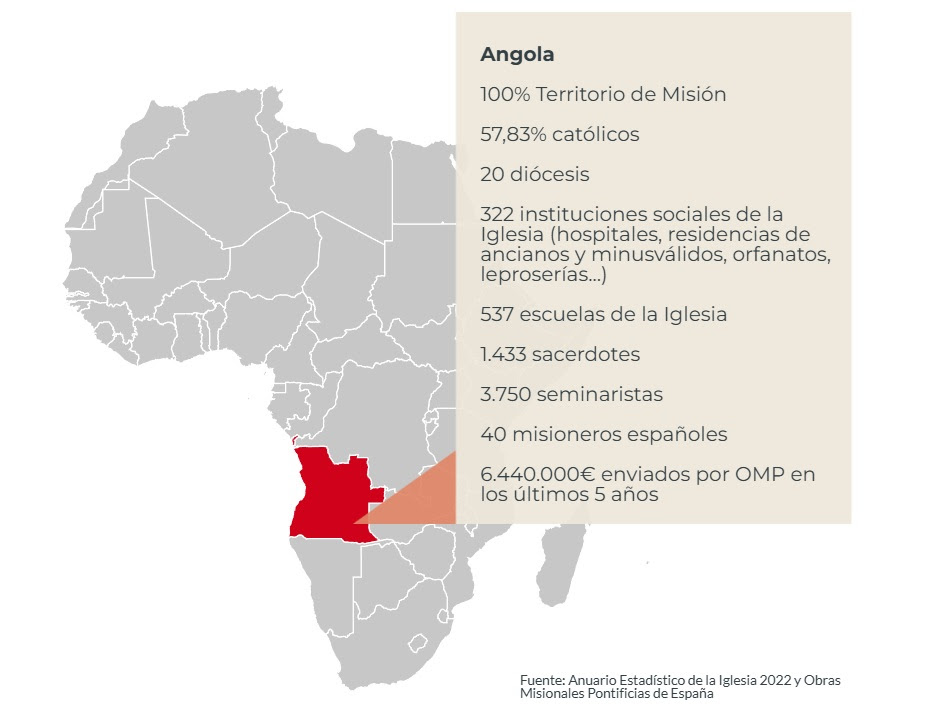
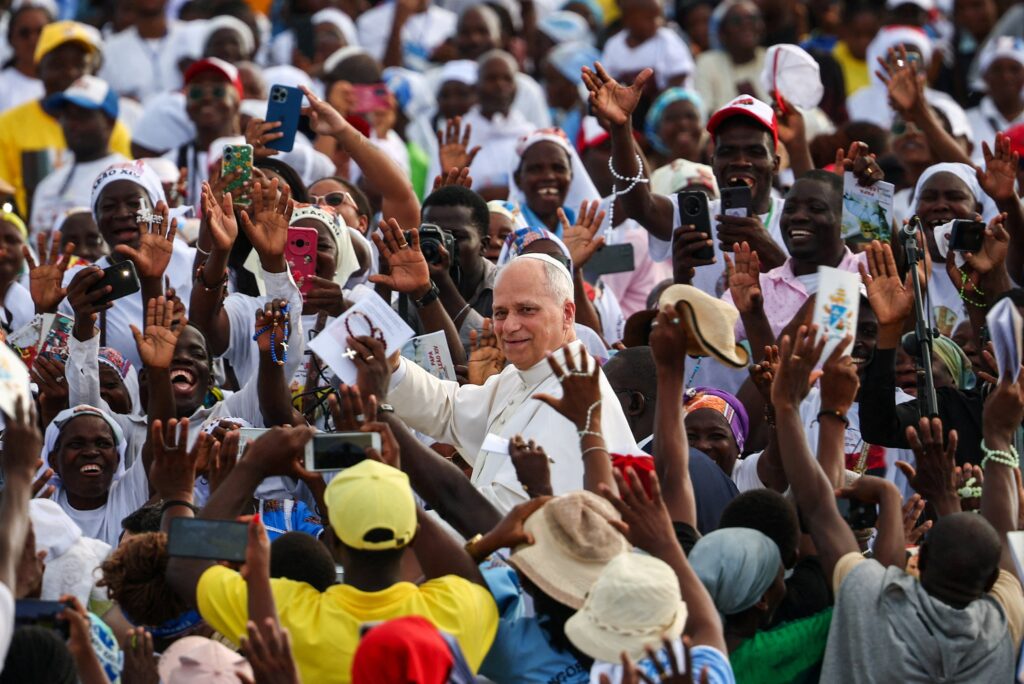
      As the Chilean historian José Miguel de Toro, who did his doctorate under the tutelage of Martin Aurell, points out, his professor's contribution was vast and profound: “his studies covered various aspects of medieval life such as political power, social composition, literature and myths, court life, among others. His works on Eleanor of Aquitaine, the Plantagenet dynasty and King Arthur deserve particular mention.” «He put all his professional rigor at the service of historical truth, demolishing absurd fables,» De Toro points out.

      The humility of a giant

      His impact in Chile was the result of an extraordinary personal commitment. Benjamín Franzani tells how a simple orientation email ended up in a doctoral thesis address: «He became completely involved in my case when I didn't even speak French. For years he answered emails and proposed solutions to the ups and downs of scholarships and paperwork».

      This availability knew no limits. Franzani recalls how, on one occasion, Aurell made a lightning trip to Paris: he arrived from Poitiers in the afternoon for an interview on Radio France and left early the next morning to receive recognition in a city in the south of France for his biography on Eleanor of Aquitaine. With this schedule, it seemed impossible to respond positively to Franzani's request for a meeting. However, Aurell never said no when he could help someone: where no one else would have seen any possibility, Aurell invited him to breakfast and to walk together to the train platform: «This allowed me to talk with him for at least half an hour, and to receive his advice. The train station represents well that facet of his of being there for everyone.”.

      For his part, Professor José Manuel Cerda, who met him at Oxford in 2004, has a memory that is as human as it is revealing: a soccer match near Keble College. «I was surprised that behind that erudition was a person who enjoyed sport so much. Despite all he knew, he did not humiliate his students, but corrected them with kindness,» Cerda recounts.

      Aurell was a man of clear convictions and admirable openness. Cerda remembers his face flushed with shyness when witnessing furious debates among colleagues: «He had the esteem of those who did not share his ideas». He never left an email unanswered. Today, his students bid him farewell knowing that, thanks to his generosity, they can now see farther because they walk «on the shoulders of a giant» who never felt bigger than the humblest of his students.

      Newsroom

      Francisco Fernández Carvajal, author of ‘Hablar con Dios’ and former editor-in-chief of ‘Palabra’ magazine, dies’

      The priest, one of the most important authors of spirituality in Spanish, died in Madrid at the age of 88.

      Editorial Staff Omnes-March 6, 2026-Reading time: 2 minutes

      Francisco Fernández Carvajal, one of the most important spiritual authors in the Spanish language in recent decades, has died in Madrid at the age of 88.

      This priest of the Opus Dei prelature was for more than ten years editor-in-chief of the magazine Palabra, the predecessor of Omnes and is the author of the meditations known as Talking with God. 

      A native of Albolote, Granada, Fernández Carvajal studied Liberal Arts and History at the University of Navarra and received his doctorate in Canon Law from the Angelicum in Rome. In 1957 he requested admission to Opus Dei and was ordained a priest in 1964. 

      In his first years of priesthood, he developed his pastoral work in Barcelona in different tasks. In the mid-seventies he moved to Madrid and also began to work for the magazine Word, He worked for more than ten years and published dozens of interviews and articles of an informative and formative-pastoral nature.

      Throughout his life, he developed a varied pastoral work within the Prelature of Opus Dei He was, among other things, chaplain of the Orvalle school, or confessor in various parishes, such as La Visitación de Las Rozas, until his health allowed him to do so. 

      His best known work, Talking to God, edited by Word, is a set of more than four hundred and fifty meditations for each day of the year and has been translated into English, French, Italian, Portuguese, German, Dutch, Romanian, Slovak, Polish, Russian and Hungarian. 

      Other works of his have also been published by this same publishing house, with numerous reeditions: Life of Jesus, The Gospel of St. Matthew, The Gospel of St. Luke, La Tibieza, Children of God (in collaboration with Pedro Beteta), Stay with me, Ascetical Index of the Catechism of the Catholic Church, As you wish (meditations on the Passion), The day I changed my life.

      His work Anthology of texts, for prayer and preaching, with more than seven thousand quotations from the Holy Fathers and other ancient and modern authors. His latest book, The passage of Life, was released in 2018. 

      Spain

      Puy du Fou, an «unspeakable» experience»

      A famous writer came out of The Toledo Dream without being able to describe it: “unspeakable,” he said. This is how he summed up the essence of Puy du Fou Spain, In 2026, the park aims to exceed 1.9 million visitors and consolidate its position as a cultural and leisure reference.

      Teresa Aguado Peña-March 6, 2026-Reading time: 4 minutes

      Sometimes words are not enough. That's what happened to one of Spain's best-known writers when she visited for the first time Puy du Fou Spain and attended the show El Sueño de Toledo. The scene is clearly remembered by Álvaro Moreno García, the park's commercial, marketing, communication and events director. It happened exactly one year ago, during the celebration of the first literature awards organized by the park. That night, several writers and cultural references of the country had been invited to discover the show.

      Moreno sat next to one of those authors -whose name she preferred not to reveal- during the performance. The writer watched each scene with amazement, constantly asking questions and admiring the beauty of the staging. When the show ended, she was among the first to stand and applaud.

      Then she turned to him and said: “Alvaro, thank you very much, because you were right: Puy du Fou is unspeakable.”

      He was particularly surprised by the expression. Not because of the thanks, but because of who uttered it. “She was a woman with an extraordinary command of language, someone capable of describing any scene with precision,” Moreno explained. “And yet, of all the possible words she chose one: unspeakable.”.

      That idea sums up, according to the manager, the essence of the project. “When we started this journey we decided not to try to explain exactly what Puy du Fou is: how many shows there are or how it works. We preferred to go into the emotional world and listen to visitors,” he said.

      Public comments confirm this. Phrases such as “you can't miss it”, “it's the best thing I've ever seen in my life.” o “you have to go” are repeated among those who have visited the park. In fact, about 80 % of visitors say that the experience clearly exceeds their expectations, according to internal surveys.

      A 2026 season marked by growth

      The anecdote served as an introduction during the official presentation of the park's 2026 season, held in Toledo and led by its CEO, Olivier Strebelle.

      The goal for this year is ambitious: to exceed 1.9 million visitors and definitively consolidate the park as one of the country's major cultural and leisure references.

      The park will remain open for more than 190 days until January 5, 2027, including its already popular Christmas season. During that period, thousands of visitors will be able to travel through 1,500 years of Spanish history through large-format historical shows.

      “We want to continue to grow, improve every detail of the experience and advance our goal of building a great cultural brand with a national reach,” Strebelle said.

      A national campaign to reinforce the brand

      During the event, the launch of Puy du Fou Spain's first major national branding campaign was also announced, which will begin on March 9.

      The initiative will include a television campaign based on a large-format audiovisual piece and seeks to reinforce the park's positioning throughout the country.

      The goal is clear: to turn Puy du Fou into a major cultural brand of national scope, capable of attracting millions of visitors and awakening pride in Spain's history and roots.

      More investment, more spectacle and more nature

      The 2026 season comes with new investments focused on enhancing the artistic experience and reinforcing the park's environmental commitment.

      All shows will incorporate new scenes, scenographic enhancements and even more immersive storytelling to intensify audience excitement.

      One of the most outstanding changes is in the show Falconry of Kings, which this year adds more than 100 new birds, reaching a total of 300 specimens. This consolidates it as one of the largest falconry shows in the world.

      El Sueño de Toledo returns with a record number of performances

      One of the highlights of the season will be, once again, the return of El Sueño de Toledo, considered the greatest show in Spain.

      The production will return to the stage on March 19 and will break its own record with more than 160 performances throughout the year.

      The show takes place on a five-hectare stage, with more than 2,000 characters on stage, and narrates fifteen centuries of Spanish history in just 70 minutes. For this season, it will also premiere completely renovated costumes, further enhancing the artistic quality of the show.

      Christmas also grows

      Another key moment will be the Christmas season, which in recent years has become one of the public's favorites.

      Among the new features are the new location of the show “La Alegría de la Navidad” (The Joy of Christmas) and the extension of the meetings with the Three Wise Men, designed to offer children a closer and more personalized experience.

      A cultural project with an impact on the territory

      Since its opening, Puy du Fou España has established itself as one of the main cultural and tourist engines of Toledo and Castilla-La Mancha.

      In addition to attracting visitors from all over Spain, the project generates employment, boosts the local economy and contributes to disseminating the country's history through a unique artistic format.

      Perhaps that is why, as Moreno recalled at the end of his speech, there is something that visitors repeat after living the experience: that, no matter how much you try to explain it, Puy du Fou is simply unspeakable.

      Spain

      Altum brings an uncomfortable issue to the table: the consumption of pornography.

      Altum Faithful Investing celebrates its II annual conference and presents the Duc in Altum 2026 Award to “Called”, the great evangelization event that took place at the Madrid Arena.

      Javier García Herrería-March 6, 2026-Reading time: 3 minutes

      Altum held this Thursday its second annual conference at the headquarters of the Tatiana Perez de Guzman el Bueno Foundation, in a meeting that addressed an issue of enormous social impact: the consumption of pornography. 

      The founder of Altum Faithful Investing, Borja Barragán, opened the day by denouncing the magnitude of this phenomenon: “This is an issue that is very uncomfortable to talk about, but it moves billions a year and affects millions of people”.

      Before the round table, Barragan presented the Duc in Altum 2026 Award to those responsible for Llamados, the macro-event organized in January by the faithful of a parish in Alcala de Henares, in recognition of their evangelization and community mobilization initiative.

      Educating young people's eyes

      The first to speak at the round table on pornography was the religious Leonardo Bastidas, of the Disciples of the Hearts of Jesus and Mary, who presented various data on the consumption of pornography in Spain and stressed the need for an educational response. Bastidas encouraged broadening the horizons of young people and “educating their gaze”, insisting that the consumption of pornography is based on three conditions that are increasingly common in most homes: “solitude, silence and secrecy”.

      The lies of pornography

      Rafael Lafuente, an expert in affective-sexual education, gave a summary of his conference on “the lies of pornography”. He explained that pornography presents an unreal image of sex and ends up seriously affecting the conjugal life of many marriages. He described the masturbation associated with porn consumption as “having fake sex while watching or reading fake sex”. 

      The speaker used as a cultural example the publishing success of “Fifty Shades of Grey,” which quickly became one of the best-selling books in history, to illustrate that the consumption of sexualized content does not only affect men.

      Among the “lies” that, according to him, pornography conveys, he cited the idea that sexual relations are unrelated to fertility -something that would be unthinkable without the widespread use of contraceptives- and the constant representation of young and perfect women, which causes unrealistic comparisons that also damage female self-esteem.

      Pornography as a cultural symptom

      French philosopher Fabrice Hadjadj explained how contemporary society has moved from contemplation - which requires time and gratuity - to immediate excitement based on quick stimuli. “Spending all day pushing buttons makes us impulsive,” he warned.

      To illustrate this cultural drift, Hadjadj mentioned the popular Satisfyer Pro 2 sex device. As he explained, its promotion as a technology that avoids “direct contact” through pulsed air symbolically reflects the contemporary fear of real contact.

      “Touching the other implies exposing oneself, being touched by them as well. Pornography eliminates that vulnerability,” he said. In his opinion, the “mechanized blowing” of the device represents the opposite of the personal encounter, as it seeks pleasure while avoiding the intrigue and risk of the actual physical encounter.

      Hope from the Incarnation

      Hadjadj extended his critique to other areas of contemporary life - from information to art to liturgy - which, he said, sometimes seek to provoke a “superficial effervescence” rather than lead to a deeper experience.

      The philosopher concluded with a note of hope inspired by the mystery of the Incarnation. Taking up the Castilian expression “dancing with the ugliest”, he symbolically identified the latter with the human soul: “God was not afraid to take on flesh and blood to save it”.

      The conference organized by Altum Faithful Investing thus sought to foster public debate on a phenomenon that, despite its enormous cultural, social and personal impact, is rarely addressed openly.

      Read more
      Books

      11 key theologians of the 20th century

      A journey through 11 great thinkers who marked the theology of the 20th century to understand where the Christian reflection of the 21st century is heading.

      José Carlos Martín de la Hoz-March 6, 2026-Reading time: 4 minutes

      Professor Ángel Cordovilla Pérez (Salamanca, 1968), ordinary professor of dogmatic theology at the Pontifical University of Comillas, has chosen a group of professors from that university to select and write up the lives and discoveries of eleven great theologians of the 20th century, so that what could be the main lines of force of what will undoubtedly be the history of theology in the 21st century can be enunciated.

      Why these theologians?

      First of all, we must emphasize that they are not all those who are, nor are they all those who are, since any of us could have come up with other names of great theologians and, of course, we would have agreed on some of the authors selected.

      Likewise, more authors should have been selected, distributing them by areas of research, since it is logical to think that some historian, cardinal or canonist should have been selected, since the history of theology has also been made from these environments, and a good one: it would be enough to think, for example, of the unforgettable figure of St. John Paul II.

      It is worth remembering, in agreement with our author, that we will discover many interesting questions throughout these pages, since: “It is probable that the 21st century will not be one of great theological renewal compared to the previous one, that is, a point of arrival of previous movements and ideas that demand a maturation and emergence in a new ecclesial and cultural environment” (2-3).

      In any case, in our selection, we have omitted some of the authors selected by Cordovilla for the simple reason that it is not possible in these brief lines to talk about everything and everyone who appears in the book, but to synthesize something that encourages the reader to buy and enjoy so many interesting ideas and people. 

      In fact, we have not included anything in our summary of Protestant or Orthodox authors, simply because their ideas do not spring from the primordial source of Christian revelation given to the magisterium of the Church to be handed over to us so that we can deepen our understanding of both oral and written Tradition, because if anything has characterized the theology of the 20th century it has been the return to the sources and especially to Scripture and Tradition, as the Constitution “Dei Verbum” of the Second Vatican Council repeatedly emphasized.

      Romano Guardini

      It is striking that what is emphasized in this volume about Romano Guardini (1885-1968), in my opinion, is incomplete, since Guardini's magnum opus, “The Lord”, has a very cursory treatment, surely because it is considered dogmatically of less value than other works, when in practice it is the most edited work together with the “Spirit of the Liturgy”.

      Undoubtedly, Guardini contributed much to the theology of his time and, through Ratzinger, of ours. It is worth returning to how he taught and enriched the exegetical theology of his time by contemplating the life of Jesus in a way that makes the movement “What does it mean to be Christian?” Christocentric. That is to say, in the face of the secularized and insignificant theology of the time, he will propose the “Catholic contemplation of the world”, that is to say, “to look at the one who has been pierced” (40).

      Erik Peterson

      Precisely Erik Peterson (1890-1960) will be representative of the importance of theology as a source of historical knowledge and of theology as a result of the renewed study of Scripture and Tradition: “I realized that, if we are left alone with human history, we face a meaningless conundrum” (114). 

      At the same time, according to an autobiographical text, he will recall the importance that Kierkegaard had in his conversion to Catholicism due to the intense search for the experience of personal prayer, above all, through the fathers of the Church (115).

      Undoubtedly, Peterson's theological method is full of very interesting intuitions, but in an unsystematic theological framework, which will allow him great creativity and a shortage of disciples (128).

      Henri de Lubac, Yves Congar and Hans Urs von Balthasar

      One of the most suggestive chapters of this book is the one dedicated to the Jesuit Henri de Lubac (1896-1991), one of the founders of “Sources chrétiennes” and of the “Nouvelle théologie” with a strong patristic charge (149). In 1960 he was appointed member of the Theological Preparatory Commission for the Council (151).

      His Christocentrism is very important and will fill, as the cornerstone, his theological work: “God is love, and in a great gesture of Love he comes to take the sinful and miserable man. Man and God embrace each other in Christ. The unique intellectual fecundity of this gesture: it is filled precisely with the whole of Christian dogmatics” (159).

      Next, the immense figure of the Dominican Yves Congar (1904-1995) will be presented, who was also appointed to the Council's Preparatory Commission and who will stand out precisely in his work on the theological figure of the Church and, therefore, on the dogmatic Constitution “Lumen Gentium" of the Second Vatican Council, his research topic (195).

      Likewise, we could not miss an extensive reference to Hans Urs Von Balthasar (1905-1988) and especially to the important circular theological method that he imposed in his time and through his disciples and colleagues up to our days (255). We cannot leave this question without a brief reflection on the Christological importance of his theology of history (269).

      Josef Ratzinger and Adolphe Gesché

      Undoubtedly in this book emerges with great force the figure of Joseph Ratzinger-Benedict XVI (1927-2022), and his fundamental works that marked the theology of his time and continue to fertilize many current theologians. To this must be added his fundamental contribution to theology as prefect of the Dicastery of the Doctrine of the Faith for years and, finally, from his papal magisterium.

      I would like to end this brief review with a reference to a theologian less known by the general public but highly valued by theologians, the Belgian Adolphe Gesché (1928-2003), professor at the Catholic Theological Faculty of Louvain and member of the International Theological Commission from 1992 to 2002. His study on the nature of theology is very important: “the intellectual service of faith” (229).   

      The theology of the 20th century

      Author: Ángel Cordovilla Pérez
      Editorial: BAC
      Pages: 395
      Year: 2025
      Evangelization

      Adrien Candiard: “The search for meaning in life is not answered by an identity, but by faith”.”

      The Dominican Adrien Candiard has visited Spain on the occasion of the publication of “En la montaña”, his latest work in Spanish.

      Maria José Atienza-March 6, 2026-Reading time: 5 minutes

      Adrien Candiard is one of the most interesting spiritual authors of our time. A Parisian by birth, this Dominican, a graduate in Political Science, History and Theology and a member of the Institute of Oriental Studies in Cairo, has been living in Egypt since 2012.

      His knowledge of the world, both in its Eastern and Western spheres, and his experience as a religious man are shown in his works with great naturalness and an exceptional open-mindedness.  

      Author of books such as “A few words before the apocalypse.”, “Hope for castaways.”, “Christian Freedom: From Paul to Philemon.” o “Fanaticism: When Religion Makes Sick”.”, In this interview with Omnes, Candiard talks about God's grace as the key gift of our Christian life, freedom or the resurgence of faith in secularized Europe through the hand of «On the mountain.», his latest work published in Spanish. 

      Your last book, “On the Mountain” speaks of grace. Being the engine of the Christian life, why does it seem distant from daily life? 

      - The problem with grace is that we often believe in it “in a theoretical way”. We know it exists, that God loves us freely, unconditionally... , etc., etc. But, in practice we do not believe it because we live in a world in which there is nothing free and, although we think that yes, of course, God loves us freely, deep down, we are left with the doubt if, as in all human contracts, there are small characters that say the opposite of what they affirm. We can live our relationship with God in this way, based on duty, not on love. We often live with the idea that we have to do this and that to deserve God's salvation and love. 

      In the Gospel, Jesus Christ tells us that God loves us and asks of us very difficult, very demanding things. In fact, the discourse on the mountain gives us a very demanding law. And we can ask ourselves, how do we do it? Are we not asked for an impossible perfection?.

      For this reason I wrote “On the mountain”, to see if we can believe this discourse of grace, if it is serious or not. If we can accept it without limit without living a servitude, a Christian life made of duties.

      When we read the discourse on the mountain in a non-superficial way, we can understand that this requirement is also a gift of grace and is not contrary to it, it is not a condition for attaining the gift of God, but it is a result of God's gift. We do not have to live the Christian life in order to obtain God's love, but we can live a Christian life because God, first of all, has loved us. 

      Many Christians have, however, put the focus on “deserving” eternal life, perhaps with a bit of unconscious Pelagianism. 

      - Yes, Pope Francis has often reminded us that, on so many occasions, we are Pelagians. It is evident because, despite what it may seem, what is difficult in the Christian life is not to love one's neighbor - which is not easy - but to accept being loved. To accept that we have received everything, that it is a gift, that we do not deserve it.

      We prefer to deserve things because they are ours. Whereas a gift is something that, in a certain sense, is not ours 100 % . Salvation is not just having divine life; it is receiving it as sons and daughters of God, receiving it as a gift from God and not appropriating it. Adam and Eve want to appropriate it. This is sin.

      In the mountains

      AuthorAdrien Candiard
      Pages: 104
      Editorial: Encounter
      Year: 2025

      In fact, in the book, you state that Aphan's sin was not wanting to “be like God” but “wanting to be God without God”. 

      - It is a temptation that appears frequently in the Bible. We see it throughout the Bible, with Babel, for example, too: Humans want to go up in heaven without God. Meanwhile, God wants to give us his divinity. And we see it even today, when we meet transhuman movements that want to abolish death, to give humanity with technology a form of divinity always without God and we know the result of all this: It cannot work. 

      The heart of man will always long for the divine life because we are created for this, but not without God. For us, divinity is obtained in the fact of being sons and daughters, of divine filiation. 

      In fact, this reminds me a bit of another of your books, “Fanaticism” in which you explain how the fanatic is a religious person without God. 

      -Yes, and it's the worst thing you can do. Religion without God is a system of oppression of people. There are criticisms of religions that are perfectly valid because religion without God is meaningless.

      It also happens that it is always easier to comply with a command than to be responsible for an action. How can we unite the freedom that God has given us with the faithful fulfillment of commands or rules?

      - I believe that, at this point, the key concept is that of friendship. Jesus says to his disciples “I no longer call you servants: I call you friends”, in Greek, the word used is “slaves”. He says “I call you friends, for all that I have heard from my Father I have made known to you”. He tells us that he wants to live with us in a relationship of responsibility. We do not have to obey, we do not have to do what he wants, because he is stronger. This would be the relationship between master and slave. Christ does not want this. He wants to live with us in a relationship of friendship, a little strange perhaps, because it is a relationship in which we do not know everything.

      In moral matters we have the elements to know what is right and what is wrong. Good makes us good, evil is what makes us bad. These are not arbitrary commandments. Walking with Christ means walking with our eyes open, knowing what we do and choosing to do it because it is right. God wants us as adult friends who walk with Him in a free way, not out of fear.

      You also point out how that narrow door is so because it has our measurements. How much of us and how much of grace are balanced in the Christian life? 

      - It is complicated, sometimes, to live our responsibility without moralism, without falling into a moral “of merit”, because it is not about deserving anything, we do not “deserve” eternal life. Every day, at Mass, we say that we are not worthy “I am not worthy for you to enter my house...”. In general, when we say this I sense a kind of sadness, a kind of hopelessness like “how unworthy I am”. But we are going to receive Christ soon after. He is coming, and this is great. It's wonderful and we should receive Him with joy, with gladness, because He is coming, even though we don't deserve it. 

      The point is that we don't have to deserve that gift, because the gift is here. The question is, then, how do we want to live? What do we want to do? What's right for us? We, sons and daughters of God, what do we want to do? It is the Gospel question that Jesus asks everyone.

      Although you live in Cairo, you are French. France, like other places in secularized Europe, is experiencing a moment of llegacy of young people to the Church What are those who approach you looking for, what do you find or what should you find? 

      - It is clear that there is a new movement and we have yet to see what it is. We should not exaggerate the numbers, for example. But it is something and it is something unplanned. This is interesting because it is not explained. In France, this arrival of people in the churches cannot be explained. This movement started in the middle of the abuse crisis. While the image of the church in the media world was terrible, people came to ask for Baptism. In these people who come, there is everything. There is also a certain prevention to the advance of Islam and perhaps, there have been those who have wondered when they have seen this, what is my religion.

      For us, for Christians, I think it is important to open the doors and be able to think of the Church as truly missionary, missionary at home, and to accept that we are not God's owners. We are not “owners” of the Church even if we have been in charge of the flowers or the songs for 30 years. He asks us for a conversion. It also asks us to be able to speak about God: not to want to transmit only a Catholic “way of being”. We speak of God. 

      The search for meaning in life cannot be answered with an identity, it can be answered with faith. It is clear that faith alone contains an identity, but identity alone is a corpse. We must be able to propose something more than a discourse: an encounter with the living God. The challenge of the Church today is to speak of God and God alone.

      Resources

      How to love the Mass?

      If we were really aware of what happens at Mass... we would love it more. I propose a humble journey through the Mass in the hope that you will get to know it a little better. We love best what we know!

      Teresa Aguado Peña-March 5, 2026-Reading time: 10 minutes

      Many of us go to Mass in automatic mode. We enter, we sit down, we respond to what is said and we leave. And yet, what happens at the altar is - in the words of Father José - “so overwhelming, so marvelous, that no other action in the Church is comparable to the Eucharist (so says the Second Vatican Council)”.

      Perhaps the problem is not lack of faith, but lack of awareness. One cannot love what one does not know. The Holy Curé of Ars already said: «if we really understood the Mass, we would die of joy». Thus, this article is intended to help us understand, even if it is only a glimpse, of what happens at Mass. Because the Mass is not “heard”. The Mass is lived.

      The big mistake: being a mere spectator

      The Second Vatican Council placed a particular emphasis on the actuosa participatio exhorting the faithful not to attend the Eucharistic liturgy «as mute spectators or outsiders,» but to participate «consciously, piously and actively in the sacred action.» This means living the Mass with the heart. And this... how is this done?

      To help us answer this question, the Synod Fathers have highlighted the personal conditions of each person for fruitful participation:

      • To have a spirit of continuous conversion. A heart reconciled with God allows for true participation.
      • For this interior layout, it is advisable to use the recollection and silence, The liturgy, at least a few moments before the beginning of the liturgy, fasting and, when necessary, sacramental confession.
      • There cannot be a actuosa participatio in the holy Mysteries if one does not at the same time take an active part in the life of the Church in its totality, which also includes the missionary commitment to bring the love of Christ to society.
      • Cultivate the desire for full union with Christ. Pay attention when receiving communion and be aware of what is happening: God wanted to be with you in your own body.
      • If you are unable to receive communion, it is good to practice the spiritual communion, The Pope, recalled by John Paul II and recommended by so many Saints.

      Before entering the Mass: «letting go».»

      In the midst of a frenetic and busy life, one chooses to go to Mass. And as soon as one enters the silence that the Church offers, the mind begins to wander and to make a tour of all the worries that it rarely stops to process. It often happens that Mass is used as a pause to organize one's thoughts. And many may leave without having really listened to the Word of God and without realizing what has happened there. The priest Joel Guibert, in his book Eucharist, warns against this numbness and proposes to leave our worries before the altar:

      "If we want to enter into prayer, we must begin by placing our concerns at the Lord's feet. Without this abandonment, it will be difficult for God to penetrate the soul and perfect it. How can he do so? If the pray-er remains clinging to his worries, polarized by his projects or his inner film, God cannot, in such circumstances, offer his presence, his grace, his wisdom. In fact, the pray-er is likely to end up even more overwhelmed by his worries after hours of prayer if he does not decide to give them to God.
      And it is not surprising, because in the silence of his prayer, he must have devoted himself to thinking about his problems, unable or unwilling to open himself to God's gift.
      ".

      Once one's worries are offered to the Lord, one can be ready to attend to and enjoy the greatest gift that God gives us and which is full of wonders.

      First wonder: Jesus with us

      The first wonder of the Mass is the REAL presence of Jesus. The Church teaches us that every Eucharist has the same value. It is not “more” or “less” depending on who celebrates it or how we feel. Whether the celebrant is more eloquent or simpler, more fervent or weaker, the value is the same. Because the one who really celebrates is Jesus, the true protagonist. His greatness is infinite, because in every Mass the one and only sacrifice of Christ is made present.

      When we speak of “memorial,” we are not referring to a simple remembrance, as when we evoke a friend who has died. In the Eucharist we really enter into the event of the Last Supper and the Cross, which are intimately linked. As the Desiderio Desideravi According to Pope Francis, the Supper and the Cross form a single mystery: in the Supper Jesus anticipates his self-giving, and in the Cross he consummates it. Without the Last Supper we would not fully understand the Cross.

      To place our life on the altar

      Another marvel is the sacrificial dimension: in it, Jesus offers himself to the Father. The entire Eucharistic prayer is addressed to the Father, and this reaches its culmination in the doxology: “Through Christ, with Him and in Him, to you, God the Father omnipotent, in the unity of the Holy Spirit....”. This sums up the whole dynamic of the Eucharist: through Christ, to the Father, in the Spirit.

      Christ offered himself to the Father to save us, and in every Mass he makes that self-offering present. But the most amazing thing is that he unites us to his offering. When the priest says: “Pray, brethren, that this sacrifice of mine and yours...”, is stating that that sacrifice is also ours. Not because of our merits, but because Jesus takes us to Himself and presents us to the Father united to Him.

      This is the culmination of participation: not to attend as spectators, but to offer ourselves with Christ. To place on the altar our life, our struggles, joys and sufferings, and to truly say “Amen”. That is real participation: a heart attentive and united to Jesus, becoming with Him an offering to the Father.

      The first kiss

      In order to experience the Mass as actors from the first moment, it is important to understand the meaning of the initial signs. When the priest enters in procession and kisses the altar, he is not making a merely symbolic or protocol gesture: the altar represents Christ himself, who is at the same time priest, victim and altar of sacrifice.

      To kiss the altar is to kiss Jesus, who gave himself on the cross and who will sacramentally make present his self-giving for our salvation. Although the priest performs the gesture externally, he does it in the name of the whole assembly; therefore, the faithful must also unite themselves interiorly to this act with faith and love. From that moment we are reminded of something essential: the only protagonist of the Eucharist is Christ. Not the celebrant, nor the choir, nor those who intervene, but Jesus, who returns to offer his redemptive sacrifice. That initial kiss disposes us to enter consciously into the mystery and to participate with our hearts in the offering that is to be renewed on the altar.

      Humble disposition

      The first thing is to open my heart to the Lord, to recognize. It is a very important moment, because the Lord wants me to nourish myself with Him and to enter into me. Pope Francis spoke of how it is Jesus himself who attracts us and does everything possible for us to attend the Eucharist.

      Priest José insists on the importance of recognizing our littleness in order to enter Mass with a humble disposition: «It is very sad when people measure how late they can be for Mass in order to fulfill the precept. We should not miss the penitential act because it prepares our heart. It is to say to the Lord: ‘Look, this is my heart, but I have come precisely so that you can sanctify it'».

      The Gloria: the song of Heaven

      The Gloria consists in making us deeply aware that in the Eucharist the whole Church is present: militant, purging and triumphant: «in any Eucharist, however modest it may be, there is the whole Church, and in a special way, the whole Church in Heaven». This is what St. Francis of Assisi said: «The Mass is the moment when heaven and earth are united».

      The Gloria is the great song that we will sing in Heaven, and that is sung by the angels, the Virgin, the saints. In this way we really participate in the heavenly liturgy, the liturgy of Heaven.

      The Word: a lover's letter

      Many listen to the Word of God as a simple learning or mere moralism, forgetting from whom what they hear comes. Priest José maintains that «we should listen to the liturgy of the Word like a lover who receives a letter from her beloved. She receives it with illusion because she knows that her beloved wants to tell her how much he loves her».

      After listening to the Word of God, the priest, with his preparation and humility, has the mission of helping each member of the faithful to be intimately united to the Lord, creating the conditions for the Spirit to act in each one through the homily. His words and gestures do not by themselves generate union, but they can dispose the faithful to welcome it, accompanying Christ's desire to meet each heart.

      I believe, we believe

      We must always carry our profession of faith with us, but we must also make it present in the liturgy. In the councils where the Creed was defined, “we believe” was said in the plural, because faith is not only individual: in saying “I believe” I unite myself to the whole Church, which supports me in my profession of faith. It is like singing in a choir: even if at some point I lose my way, the choir accompanies me and maintains the harmony. That is why, even in celebrations such as baptism, when we are asked “Do you believe in...?” and we answer “Yes, I believe”, we are expressing the faith of the whole Church. My personal faith is not alone; the Church sustains and accompanies it. Therefore, when we pray the Creed, our voice is united to that of the whole community, making present that unity and support of faith.

      Presentation of offerings: offering to me

      Then begins the presentation of the offerings: «It is very important to realize that we must offer ourselves. We offer ourselves and Jesus offers us too, inviting us to unite ourselves to what He does», affirms José.

      «We present the bread and wine, which are really a gift that we have received, like all of creation. And what we receive we give back to him. This is, in the end, the dynamic of God's love: everything I do, I have received from him before. All I do is say “yes,” I want to unite myself to you, but with the conviction that everything has been a gift. I do not give anything to the Lord that He has not given me before», he adds.

      What does the priest pray quietly during the offertory?

      There is a gesture that perhaps we are not aware of and it would be good to know. First the bread is presented and then the wine and a drop of water are placed in the chalice. The wine can be prepared before, but the proper action of the priest is to pour the water. This gesture should be done by him, not by someone else.

      As he does so, he says the following sentence: “By the mystery of this water and wine, grant that we may share in the divinity of the one who has deigned to share our humanity.”. And that drop of water represents my humanity, which is united to the blood of Jesus. In every Eucharist we are asking to share his divinity. This is the Christian way: that the Lord may gradually divinize us.

      Then, the priest bows and prays: “Accept, O Lord, our contrite heart and our humble spirit; may this be our sacrifice today, and may it be acceptable in your presence, O Lord our God.".

      These prayers are made in the name of all. They are not something private, but express our littleness and our humble attitude as we offer the bread and wine, which will become nothing less than the Body and Blood of Jesus.

      Next comes the washing of hands, accompanied by another prayer: “Wash away my crime, Lord, cleanse me from my sin”. It is a gesture of inner purification.

      Immediately afterwards, the priest says: “Pray, brothers and sisters, that this sacrifice of mine and yours...”. This reminds us that the sacrifice is everyone's, that everyone also offers himself.

      The culminating moment: the consecration

      The consecration is the central moment of the Mass. «As the priest pronounces the words of Jesus, we should be with absolute attention and emotion, as if we were at the Last Supper. That is where the miracle happens. The elevation afterwards is just a sign for us to worship, it is a ‘it is already accomplished'» explains José.

      After the Eucharistic prayer and the doxology (“Through Christ, with Him and in Him...”), the preparation for communion begins. Everything leads to this moment. Jesus is waiting for us, like a lover who wants us to come closer to receive him. As St. Augustine said, «God thirsts for man to thirst for Him». That is why it is so important to prepare ourselves well.

      Before receiving communion, the priest can pray this prayer (José likes especially the first one proposed in the missal): “The priest can say the following prayer: "Lord Jesus Christ, Son of the living God, who by the will of the Father, with the cooperation of the Holy Spirit, gave life to the world by your death, deliver me by the reception of your Body and Blood from all my faults and from all evil. Grant that I may always keep your commandments and never let me be separated from you".

      This can be a very simple and profound prayer as we approach communion. And we do all this after recognizing with humility: “Lord, I am not worthy for you to come into my house...”. Because we really are not worthy, but, even so, He wants to come. And that is the most beautiful thing: He wants to enter into us.

      Mother Teresa's concern

      It is important to understand, when we go to Mass, that even if we go eagerly, it is He who first calls us to go and who is eager to see us. This thirst is reflected in the lives of many saints. Let us take as an example Mother Teresa of Calcutta who, when Jesus presented Himself to her, was particularly moved by this «I thirst».

      This excerpt from his letter testament can help us better understand the magnitude of this thirst:

      «I am concerned that some of you have not yet really encountered Jesus alone, just you and Jesus.
      As long as you do not listen to Jesus in the silence of your heart, you will not be able to hear Him say: ‘I thirst. The devil will try to use the wounds of life, and even your own mistakes, to convince you that it is not possible for Jesus to truly love you. The saddest thing is that this is just the opposite of what Jesus wants and is waiting to tell you. Not only that he loves you, but that he ardently desires you. He misses you when you are not near Him. He thirsts for you. He loves you constantly, even when you do not feel worthy of Him. He. When others do not accept you, or you do not accept yourselves, He is the only one who accepts you. I thirst‘ is much deeper than simply saying ’I love you‘.

      Until you understand, in your innermost being, that Jesus thirsts for you, you will not be able to understand who He wants to be for you, nor who He wants you to be for Him. What should be your attitude towards Jesus» thirst? There is only one secret: the closer you get to Jesus, the better you will understand his thirst".

      The saints understood the greatness of the Mass

      The saints were the ones who best understood, not only with their intellect but also with their hearts, the greatness hidden in every Mass. For them, the Eucharist was not a Sunday custom or just another rite, but the center of their lives. Their grateful wonder can teach us to look at the altar with different eyes. Here are some phrases about the Mass:

      • «The Mass is not a spectacle, it is the sacrifice of Christ in which we must participate with reverence.» - St. John Paul II
      • «The Mass is the greatest act of love we can offer to God.» - St. Maximilian Kolbe
      • «A single Mass heard during life is more valuable than many material goods left as an inheritance». - St. John Bosco
      • «If we knew the value of Holy Mass, what a great effort we would make to attend it!». - St. John Mary Vianney
      • «The Eucharist is the food of the soul, without it, the soul dies.» - St. Teresa of Calcutta
      • «The Mass is an inexhaustible source of grace». - St. Peter Julian Eymard
      • «The Mass is the unbloody renewal of the sacrifice of the cross.» - St. Francis de Sales
      • «The Mass is the sacrament of love; it signifies love, it produces love.» - St. Thomas Aquinas
      • «The Mass is a school of prayer». - St. John Paul II
      • «The Eucharist is the love of Christ made visible». - St. John Mary Vianney
      Read more
      Education

      Awakenings

      Ricardo Calleja reflects on the “El Despertar” event, from It's Time to Think, The project is a cultural and community renaissance among young people that transcends traditional religious or political structures.

      Ricardo Calleja Rovira-March 5, 2026-Reading time: 4 minutes

      The event organized a few weeks ago by the guys from It's Time to Think “The Awakening” - in the context of the debate about the “return of God” or the “Catholic turn” - reminded me of the film Awakenings, which for some reason I don't remember was shown to me at school, back in the early nineties. The film tells the true story of Dr. Malcolm Sayer (Robin Williams), a neurologist who applies a new drug, L-dopa, to awaken catatonic patients who were victims of an epidemic of encephalitis lethargica decades earlier. The plot centers on the temporary “awakening” of Leonard (Robert De Niro) and other patients, exploring the joy of coming back to life and the tragic relapse when the treatment stops working.

      Was Dostoevsky right?

      The awakening that the It's Time to Think they wanted to provoke is not the religious, but the cultural, the communitarian, the intellectual. A generational awakening, which does not fit into the already hackneyed frameworks of the new right wing, or of the new forms of religious fervor, but which undoubtedly rhymes with them in that no one saw it coming, and in that they do not repeat formulas of the past.

      But, as is logical, when we talk about everything that matters “with our underpants off” we end up talking about God. That is what Dostoevsky said happened in any conversation between young Russians in a tavern: “they argue about the immortality of the soul and the existence of God.”

      I do not know if the thinkglaos from It's Time to Think (the meetings for dialogue with speakers and networking with friends) or the event itself at the Awakening have something in common with a nineteenth-century Russian tavern. But I am persuaded that the soul of young people is always the same, agitated by fears, longings and hopes, even if many want to narcotize it with immediately satisfied desires. But talking about God does not turn something into an institutionally religious reality, explicable in terms of pre-existing structures and plans.

      The law of invisible beginnings

      I return to the title of the article and the film that inspires it, which cast on this phenomenon the suspicion that it is something temporary, a dopamine rush threatened with corruption and premature death. 

      When I was given the floor before that party of more than 6,000 young people, I briefly told them about the “law of invisible beginnings” and how behind it all there was a history of personal friendship and organic growth. That deployment was not, therefore, a flower of a day, but a sign of a certain maturity and extension of a movement that is called to continue spreading silently, promoting the initiative and commitment of many young people, beyond the logic of the parties, beyond the also flourishing dynamics of the religious realities. And without pretending to replace either the one or the other.

      Strong emotions, associated with success, fame, numbers, superficially communitarian, vociferous, have their days numbered. But they can be put at the service of a more powerful, sincere and resistant dynamism: that of friendship, of open dialogue, of the cultivation of silence and interiority. A very positive sign in this concrete awakening of Vistalegre was the absence of egos, the independence in the face of partisan interests, the openness of the proposal, now channeled by a hub of new initiatives. This was not an end in itself, nor was it a platform for personal ends, nor was it a longa manus of Machiavellian minds.

      An idea of Ratzinger

      Given the context, I saw no need to cite my source on the “invisible origins” and slow-growth laws of great things. But this magazine is the right place to reveal it: a lecture by Joseph Ratzinger on the new evangelization. I can't resist picking out some passages from a succulent paragraph:

      “Great things always start from the small grain and mass movements are always ephemeral (...). In other words: great realities begin with humility (...). The law of invisible origins tells us a truth - a truth present precisely in the action of God in history: “I did not choose you because you are great, on the contrary- you are the smallest of the people; I chose you because I love you...” God says to the people of Israel in the Old Testament and thus expresses the fundamental paradox of salvation history. Certainly, God does not count on great numbers; external power is not the sign of his presence. Many of the parables of Jesus indicate this structure of divine action and thus respond to the concerns of the disciples, who were expecting other successes and signs from the Messiah - successes similar to those offered by Satan to the Lord: All these - all the kingdoms of the world - I give you... (Mt 4, 9). An old proverb says “success is not a name of God”. The new evangelization must submit to the mystery of the mustard seed and not pretend to quickly produce the great tree. We either live too much with the security of the already existing big tree or with the impatience to have a bigger, more vital tree - rather, we must accept the mystery that the Church is, at the same time, a big tree and a very small mustard seed”.

      Beyond appearances, fashions, and the limitations of all that is human - also of what is done by young people - I trust that there will be not one, but many awakenings. Although it is inevitable that some of them will be ephemeral, imperfect, disappointing. I am sure, in any case, that they will make mistakes, but they will be new mistakes. We will see not one twist, but many twists. No one should be obsessed with acting with a clear idea of the final outcome, or predicting the big picture of what is to come. 

      This is what happened - as Benedict XVI himself explained at the Bernardine College in Paris - with the medieval monks: “it was not in his intention to create a culture or even to preserve a culture of the past. His motivation was much more elemental. His objective was: quaerere Deum, to seek God. In the confusion of a time when nothing seemed to be left standing, the monks wanted to dedicate themselves to the essential: to work with tenacity to find that which is worthwhile and endures forever, to find Life itself. They were looking for God. They wanted to move from the secondary to the essential, to what is only and truly important and reliable.”.

      The authorRicardo Calleja Rovira

      Professor of Business Ethics and Negotiation at IESE Business School. D. in Law from the Complutense University of Madrid.

      Read more
      Gospel

      The Thirst for Christ. III Sunday of Lent (A)

      Vitus Ntube comments on the readings for the III Sunday of Lent (A) corresponding to March 8, 2026.

      Vitus Ntube-March 5, 2026-Reading time: 3 minutes

      Water and thirst dominate the liturgy of this Third Sunday of Lent. In the first reading, the people of Israel, wandering in the desert, murmur against Moses and, on a deeper level, against God himself: “Why have you brought us out of Egypt to kill us and our children and our livestock with thirst?”. In spite of having witnessed the great works of God, they put him to the test. The place is called Massah and Meribah, because there the people discussed and asked, “....“Is the Lord among us or not?".

      How different is what happens in Sychar, compared to the Gospel! In the desert, thirst leads to doubt and rebellion; at the well of Samaria, thirst becomes the way to faith. At the end of the Gospel, the people declare: “We no longer believe because of what you say; we have heard it ourselves and we know that he is indeed the Savior of the world.”. The Gospel passage is one of the longest and richest dialogues in all of Scripture. The conversation between Jesus and the Samaritan woman develops little by little, taking several decisive turns. It begins with a simple and surprising request: “Give me to drink”. Jesus' thirst sets the tone for the whole encounter. The woman is surprised: “How can you, being a Jew, ask me, a Samaritan, to drink?”. But Jesus immediately broadens his horizon: “....“If you knew the gift of God and who it is that says ‘give me a drink’, you would ask him and he would give you living water.".

      Jesus asks for water, but it is He who actually offers the water, the living water. As the dialogue deepens, the woman asks: “...".“Lord, give me this water: then I will no longer be thirsty, nor will I have to come here to draw it.”. What begins as a request from Jesus becomes her desire. Christ's offer awakens a deeper demand in her heart. As the conversation continues, Jesus reveals the truth of her life, she has had five husbands and now lives with someone who is not her husband. Behind this revelation is not condemnation, but compassion. We see a woman marked by a deep longing, by an unfulfilled search for love and happiness. She has searched again and again and yet she has not given up her desire for something more.

      Christ's thirst, then, is ultimately a thirst to quench our thirst. Or, put more accurately, Christ's desire is to fulfill our deepest desires. The Samaritan woman reflects our own hearts. Like her, we long for happiness, for love, for meaning in life; and like her, we often look for these things in the wrong places, even when experience tells us they will not satisfy us. We keep returning to the same wells, drawing water that leaves us thirsty again. Only Christ can give the living water that truly satiates, the water that does not compel us to return endlessly to the well. When our desires - even earthly and temporal ones - are united to Christ, his grace purifies and elevates them, directing our gaze towards the eternal. Thus the words of Jesus are fulfilled: “He who drinks of this water thirsts again; but he who drinks of the water that I shall give him shall thirst no more: the water that I shall give him shall become in him a fountain of water springing up into everlasting life.”. United with Christ, we ourselves become springs of living water.

      However, in order for Christ to satisfy our desires, something is required of us. We must first acknowledge our inadequacies. We must admit where we have sought lasting happiness in what is fleeting and ephemeral. Jesus leads the Samaritan woman to recognize that her many relationships could not fulfill her. This honest acknowledgment, this humble confession, bridges the gap between Christ's thirst for us and his gift of living water for us.

      We often like to identify ourselves with another Samaritan, the better known Good Samaritan. But today it is with this Samaritan woman that we should identify more closely. In her we see ourselves reflected: men and women with deep desires that only God can fully satisfy. The season of Lent invites us to go beyond the cheap things with which we try to quench our thirst, and to turn to Christ himself, the only one who satisfies and who offers us eternal life.

      Books

      The Bible, search the scriptures

      Enriched edition of the Holy Bible that combines academic rigor and spirituality, ideal for personal and community reading.

      Maria José Atienza-March 5, 2026-Reading time: 2 minutes

      This is a new edition of the Holy Bible, the result of a thorough work of 50 specialists, directed and coordinated by the biblical experts Ezechiele, Pasotti, Giacomo Perego, Fabrizio Fico and Francesco Giosuè Voltaggio.

      In Spanish, this Bible is published by the Biblioteca de Autores Cristianos in conjunction with the publishing company San Pablo.

      The biblical text, approved by the Spanish Episcopal Conference in its Spanish version, is enriched in this new edition with complete introductions to each biblical book, quotations connecting the texts of the New and Old Testament, notes on translation and interpretation of the text, as well as a chronological table, a small atlas and an index of theological topics of reference, all updated with the most recent historical and archaeological discoveries. 

      This comprehensive presentation of the biblical text proposes three phases for entering into the word of God: the Scrutatio o scriptural writing: to deepen the text through quotations, notes and parallels. Meditation of the texts in order to interiorize them and prayer, personal and communal, with the Word of God, living it as a dialogue between God and man. 

      In a conversation with Omnes, one of the coordinators of this work, Italian priest Francesco Voltaggio, stressed “I scrutinize the scriptures, but in the end, it is Christ who, through his Word, scrutinizes me. It is a living encounter. This characteristic of a living and inexhaustible source is what we want to emphasize in this work.”. A work that highlights, in its entirety, the figure of Christ as the “key to reading” the whole of divine revelation: “We must understand that the Bible is truly the Word of God and truly the human word. It is the infinite revealed in the finite. The Bible contains more than what it says, because in human words it contains the infinite. It is an analogy with what Christ is, God and man, a totally divine and, at the same time, totally human dimension.". 

      A biblical text designed for both personal and community reading and prayer, and therefore, its recipients are as broad as the profiles of any Catholic community: parish groups, parish priests, religious, consecrated, seminarians, catechists, confirmands, married couples, teachers of Religion and all the faithful.  

      The Bible, search the scriptures

      Author: Pedro Ignacio Fraile Yécora
      Editorial: BAC
      Number of pages: 3024
      Read more
      Resources

      Some reflections by Professor Lucas Buch on «Los Domingos».»

      Theology professor and priest Lucas Buch offers a profound and detailed reflection on the vocational process depicted in the film "Los Domingos".

      Lucas Buch-March 4, 2026-Reading time: < 1 minute

      «Los Domingos» has won five Goya Awards and was also the film awarded by the Spanish bishops at the last edition of the Bravo Awards.

      Its subject matter and presentation have opened up an interesting debate in the Spanish cultural and social world about the presence and influence of the faith and the so-called «.«Catholic turn«The positions, statements and attitudes were varied and even opposed to each other.

      Within this framework of conversations, the priest and professor of Theology at the University of Navarra, Lucas Buch, offers an in-depth analysis of the film by Alauda Ruiz de Azúa, focusing mainly on the vocational process of the young Ainara, analyzing her family context and the way in which those around her accompany her.

      The family environment, the limitations with which the spiritual accompaniment is represented, or the life of prayer essential in every vocational process, as well as the value of a tape as a «Los Domingos» for the examination of the Christian communities themselves are some of the axes of this text that, because of its interest, we have wanted to offer to our readers.

      Read the document «Some reflections on ‘Los Domingos'».»

      The authorLucas Buch

      The Vatican

      The Church is human and divine, Pope teaches at the Audience

      Pope Leo XIV explained in this Wednesday's Lenten Audience what the Church is, its human dimension and its divine dimension. 

      Francisco Otamendi-March 4, 2026-Reading time: 3 minutes

      During this Wednesday's Audience, Pope Leo XIV continued his catechesis on the documents of the Second Vatican Council, in this case on the dogmatic constitution Lumen Gentium (Light of the Gentiles). The theme was ‘The Church, visible and spiritual reality”, with a reading from the Letter of St. Paul to the Ephesians (4:15-16), and he stressed that the Church is both human and divine.

      What does it mean that the Church is “a complex reality”? Someone could answer, the Pontiff explained in the Audience This morning in Rome, that the Church is complex in that it is “complicated” and therefore difficult to explain”; or “that its complexity derives from the fact that it is an institution with two thousand years of history and with characteristics different from those of any other social or religious grouping”.

      Humana: “a community of men and women, with virtues and defects, who proclaim the Gospel”.”

      The constitution ‘Lumen gentium’ of the Second Vatican Council affirms that the Church “is a well-balanced organism in which the human and divine dimensions coexist “without separation and without confusion”.

      “The first dimension is immediately perceived, since the Church is a community of men and women, with their virtues and their defects, who share the joy and the effort of being Christians who proclaim the Gospel and become a sign of the presence of Christ who accompanies us on the journey of life,” Leo XIV pointed out.

      Pope Leo XIV greets several women during a pastoral visit to the Church of the Ascension of Our Lord Jesus Christ in the working-class neighborhood of Quarticciolo in Rome on March 1, 2026. (Photo CNS/Vatican Media).

      Divine: “the Church is the fruit of God's plan of love for humanity, realized in Christ”.”

      But this aspect - which is also manifested in the institutional organization - is not enough to describe the true nature of the Church, because the Church also possesses a divine dimension, added the Successor of the Apostle Peter.

      “The latter does not consist in an ideal perfection or in a spiritual superiority of its members, but in the fact that the Church is the fruit of God's plan of love for humanity, realized in Christ. Therefore, the Church is at the same time an earthly community and the mystical body of Christ, a visible assembly and a spiritual mystery, a reality present in history and a people on pilgrimage towards heaven (LG, 8; CCC, 771)”.

      At the same time, has underlined, Thus, the Church lives in this paradox: she is a reality at once human and divine, which welcomes sinful man and leads him to God“. 

      The life of Christ illuminates it: his humanity and the encounter with God.

      “In order to illuminate this ecclesial condition, the Lumen Gentium refers to the life of Christ. Indeed, those who met Jesus on the roads of Palestine experienced his humanity, perceived his eyes, his hands, the sound of his voice. Those who decided to follow him were moved precisely by the experience of his welcoming gaze, by the touch of his blessing hands, by his words of liberation and healing. 

      But at the same time, by following that Man, the disciples opened themselves to an encounter with God. In fact, the flesh of Christ, his face, his gestures and his words visibly manifest the invisible God”.

      Benedict XVI (“there is no ideal and pure Church”). Francis: charity

      In his concluding remarks, the Pope quoted Pope Benedict XVI, when he stressed that “there is no ideal and pure Church, separated from the earth, but only the one Church of Christ, incarnated in history”. And Pope Francis, who exhorted charity.

      “This enables us to continue to build up the Church even today: not only by organizing its visible forms, but also by constructing that spiritual edifice which is the body of Christ, through communion and charity among us,” added Leo XIV.

      In conclusion, Pope Leo said that “charity, in fact, constantly generates the presence of the Risen One. May heaven grant,‘ said St. Augustine, ’that all may think only of charity: it alone conquers all, and without it all else is worthless; wherever it is found, it draws everything to itself' (Serm. 354,6,6)”.

      Lent: “a time of grace and spiritual renewal"

      As for other topics, his words to the English-speaking pilgrims can summarize his allusions to the Lenten season in which the Church is living: “I greet all the English-speaking pilgrims and visitors participating in today's audience, in particular the groups from England, India, the Philippines, Singapore, Vietnam and the United States of America. 

      With my best wishes and prayers that this Lent may be a time of grace and spiritual renewal for you and your families, I invoke upon all of you joy and peace in our Lord Jesus Christ”.

      The authorFrancisco Otamendi

      Read more
      The Vatican

      Vatican releases long-awaited document on AI and Transhumanism

      In the face of utopias of unlimited perfection or narratives of human substitution, the Church proposes to preserve the constitutive tensions of experience-body and spirit, male and female, individual and community, finitude and infinity-and its orientation to Christ.

      Javier García Herrería-March 4, 2026-Reading time: 4 minutes

      In recent months there has been widespread speculation that the Pope's first encyclical might address artificial intelligence. Perhaps it will. But, in the meantime, the Vatican - through the International Theological Commission - has already put a major framework for reflection on the table with the publication of the document Quo vadis, humanitas? Thinking about Christian anthropology in the face of some scenarios on the future of the human being.

      The text, presented as a reading of the human condition at a time of “epochal change”, is based on the observation that techno-scientific progress revives wonder at human capabilities, but does not eliminate fragility - death, disease, war or inequality. 

      Faced with the temptation to simplify this ambivalence (naive technophilia or pessimistic resignation), the document calls for a Christian anthropology that upholds both greatness and limits, and places human dignity at the center as a prior gift, not as an acquired construct.

      First appraisals

      According to Giovanni Tridente, specialist in AI ethics and author of Anima Digitale, The document of the International Theological Commission offers an important contribution because it reminds us that the question of technology is first and foremost an anthropological question.

      According to Tridente, the strong point of the document is how it underlines that «the dignity of the person cannot be reduced to his cognitive capacities or to the performance that technology promises to enhance». Instead, the Vatican text «proposes using the Christian category of vocation, where man is not simply a project to be optimized or redesigned technologically, but a reality received as a gift and called to develop in relationship with God, with others and with the world.».

      Discern and distinguish

      Inspired by the 60th anniversary of Gaudium et spes (1965-2025), the document proposes a method of discernment: confronting new cultural and technological horizons with the permanent demands of the human condition, distinguishing contributions that are compatible with the Gospel from those that contradict it. 

      Along these lines, the Commission organizes its analysis around four categories: development, vocation, identity y dramatic condition. The first examines the notion of development - key to the debate on the future - and warns of the tension between improving people's lives and the dream of replacing the human. 

      The question of “vocation” underlines the importance of seeing life in its relational and responsible aspects. The third places the question of “identity” as a particularly sensitive dimension in our time, due to the possibility of intervening technically in human nature. 

      And the fourth underlines the historical, free and risk-prone character of the path by which each person “becomes” who he or she is.

      Transhumanism

      One of the most explicit foci of the document is the critical dialogue with the transhumanism and the posthumanism, According to the Commission, these currents radically rethink the relationship between the body, technology and human destiny. 

      Transhumanism is described as the project of overcoming biological limits (aging and even death) through science and technology, with an anthropocentric optimism about progress. Posthumanism, in its strict sense, questions the existence of a “human form” worthy of being guarded and blurs the boundary between human and machine. 

      In both cases, the document argues that the solution to the human tension between finitude and infinity cannot involve the suppression or substitution of the human, but rather its integration and fullness.

      Ethics and technological development

      The Commission devotes ample space to the anthropological implications of recent technological development, especially in digital communication, data, artificial intelligence, biotechnology and robotics. It stresses that technology operates not only as a tool, but as an “environment” that reconfigures social life and self-understanding. 

      Among the risks, he points to the opacity of automated decisions in sensitive areas (health, justice, finance or security), the polarization and “tribalization” of public debate fueled by social networks, the particular fragility of children and young people in the face of dynamics of isolation, manipulation and violence, and the tendency to reduce the body to material available to be modified in search of performance, youth or elimination of pain.

      Consequences of technological “development

      In parallel, the document situates these transformations in four fundamental relationships of the person: with the environment, with others, with oneself and with God. In the ecological level, warns against a technocratic logic that relativizes the limits of nature and aggravates inequalities, especially in the most vulnerable regions. 

      In the social sphere, describes the impact of hyperconnection and information anxiety, and calls for vigilance in the face of data manipulation and the concentration of power. In the personal level, warns against the weakening of critical thinking and the temptation to conceive consciousness as transferable information. 

      In the religious, recognizes opportunities for mission, but warns of the risk of a digital spiritual “market” without community, and even of technological substitutes for the ultimate meaning.

      Solutions

      As an alternative, the document insists on recovering dimensions it considers threatened by a reductive idea of progress: the history (memory, sense of time and hope), the space (home, city, town and world, as opposed to the depersonalization of the “non-places”) and the intersubjectivity (family, cultural belonging and fraternity). 

      In this context, he proposes life as a vocation: the human being is not fully understood as a self-founded project, but as someone called to receive life as a gift, to shape his or her identity with responsible freedom and to become a gift for others.

      The conclusion of the text raises an underlying thesis: humanity does not need an “evolutionary leap” that exceeds its condition, but a relationship that saves it, makes it habitable and elevates it. 

      In the face of utopias of unlimited perfection or narratives of human substitution, the Commission proposes an “integral” synthesis that preserves the constitutive tensions of experience-body and spirit, male and female, individual and community, finitude and infinity-without denying them, and directs them toward a fullness that, in a Christian key, is realized in Christ.

      The document closes with two pastoral emphases: Mary as the figure of a humanity that is fully accepted and given, and the poor as an unavoidable criterion for discernment. In a world where technological power tends to concentrate, the text warns that the most serious consequences will fall first on the last, and calls for any development to be oriented towards the dignity of all, justice and the common good.

      According to Prof. Tridente, «theological reflection should continue to deepen the relationship between anthropology and emerging technologies, trying to understand more precisely the real dynamics that are transforming our way of knowing, deciding and relating to one another». After all, «the question is not only about what machines can do, but also about what we are willing to delegate to them from our cognitive processes. Only in this way will it be possible to offer clues of discernment capable of truly accompanying man in the age of artificial intelligence,» concludes the Italian expert.

      The World

      Euphrasie Kouassi Yao, Harambee Award winner: «Our approach does not generate exclusion but cooperation».»

      The 2026 Harambee Award for the Promotion and Equality of African Women is awarded to Euphrasie Kouassi Yao for her more than 35 years dedicated to the promotion of women, peace and community welfare.

      Editorial Staff Omnes-March 4, 2026-Reading time: 3 minutes

      Euphrasie Kouassi Yao was awarded on March 3 the Harambee Award 2026 to the promotion and equality of African women. She received this award for her more than 35 years dedicated to the promotion of women, peace and community welfare. In addition, she was recently appointed as a Global Ambassador for Peace and is the only woman to hold a Unesco Chair in her nation.

      The laureate is one of Côte d'Ivoire's most influential figures in the development and promotion of women and the family. She is currently minister advisor to President Alassane Ouattara in Côte d'Ivoire and has a solid track record after leading the portfolio for the Promotion of Women, the Family and the Protection of Children. In her speech, she made it clear that «Africa is full of talent.

      Euphrasie argues that no society can reach its full potential if it excludes the skills of women, who make up half of the population: «I am convinced that where women are asked to participate in decision-making alongside men, nations will prosper, growth will increase, inclusive and sustainable development will take root and peace will flourish. It is no longer a time for hesitation.».

      «Our struggle is not directed against men - on the contrary, it is fought together with them. This is the meaning of our actions in favor of «Positive Masculinity». Our approach does not generate exclusion, it encourages cooperation. It rejects domination in order to achieve balance, equity and peace,» he clarified.

      What has Euphrasie's journey been like?

      Euphrasie soon realized that women did not lack skills or willpower: they just needed confidence, training, tools and real participation at all levels of development. After her experience as a teacher at the Lycée de Jeunes Filles and later as an executive at the Ministry of Women, she decided to provide concrete solutions. She traveled to train in gender approaches and created two key tools.

      The first was the Gender and Development Approach, a strategic compass inspired by African values to identify inequalities and design equitable public policies. Its results were reflected in Côte d'Ivoire, whose progress in reducing the gender gap was recognized by the World Economic Forum and the World Bank, especially in education, where school parity improved significantly.

      The second tool was COFA (Awareness, Training, Action): «our lever for community transformation: it is the tool that goes to the heart of villages and neighborhoods, that convinces, that trains, that sets in motion .... transforms consciences where conflicts arise». With it, she succeeded, for example, in getting the men of Diatokro to include women in water management. She later joined the United Nations Women, Peace and Security agenda and helped her country adopt the first African national plan in this field.

      She also promoted the Compendium of Women's Skills (COCOFCI), which brings together thousands of women leaders and was recognized by the United Nations Development Program and UNESCO. Convinced of intergenerational transmission, she trained hundreds of managers in gender engineering and created university programs to address challenges such as climate change.

      Guided by a deep desire for peace, she understood that peace is only possible with equal opportunities. That is why she founded CREA-PAIX, a community peace initiative that today operates on four continents and has impacted millions of people, promoting the leadership of women and youth as the basis for just and lasting development.

      Harambee Award 2026

      With all this, Euphrasie expressed her desire for the Harambee Award 2026 to become «a movement, a collective consciousness and a dynamic. That is why I have decided to redistribute its endowment in favor of knowledge-hungry young people and rural women who need support to transform their communities».

      The award will finance a mentoring program in the Gbeke region, where 50 established women entrepreneurs will accompany and guide 50 women in strengthening their economic autonomy and the success of their own business models.

      An educational project designed to cultivate the values of resilience, dignity and excellence in the new generations will also be launched. This initiative will reach 350 high school students, who will strengthen their integral formation and leadership through the promotion of reading and participation in a high-level literary contest.

      Euphrasie concluded her speech with a «viva»: «Long live female solidarity. Long live feminine skills. Long live equal opportunities for women and men, girls and boys. Viva Harambee. Long live Africa, the cradle of humanity. Long live reconciled humanity. Long live peace in the world".

      Cinema

      The 6 best reactions to Silvia Abril's words at the Goya Awards

      The statements made by actress Silvia Abril criticizing the Church and young people provoked harsh reproaches. However, another profile of comments, much more constructive and in line with the faith, has also emerged.

      Francisco Otamendi-March 4, 2026-Reading time: 6 minutes

      With apparently less noise than actress Silvia Abril's comments about the Church made to Cinemanía, actors such as Jaime Lorente (La Casa de Papel), Patxi Bronchalo in El Debate, Bishop José Ignacio Munilla and some influencers, have reacted with respect, after the first insulting reactions to Silvia Abril's words about the Church and youth.

      The controversy arose when Silvia Abril was asked about the film ‘.‘Sundays’, winner of 5 Goya awards, in which a 17-year-old girl announces her desire to enter a cloistered convent, the Catalan actress and humorist said the following to Cinemanía:

      “Look at that Sirat it cracked me up and turned my head inside out...And Sundays too, but I'll stick with Deaf because I think it is more necessary. I refuse to accept that the youth who are coming up have that pull towards the Christian... I was going to say the mystical, but it is not the mystical... I feel sorry for them that they need to believe in something and that they cling to the Christian faith. I'm sorry for the Church, what a racket you have set up! It's over, it's over”.

      Insulting statements for Silvia Abril

      Following her comments, as seen on social networks and in media such as La Vanguardia, some criticized the comedian harshly. The title of the Catalan newspaper was: “Ultra-Catholic organizations lash out against Silvia Abril for her words about Christianity on the red carpet of the Goya Awards”.

      However, the same social networks and other media have been gathering another profile of reactions that try to open the eyes about the true Church and the way of doing of Catholic people. Here are some of them.

      1. Jaime Lorente: “the amount of hate in networks has blown my mind» (Instagram).

      Several media outlets have echoed the reaction of actor Jaime Lorente (La casa de Papel), largely collected from his words on Instagram, through his profile @jaimelorentelo 

      Under the title “I share that I am a Christian without fear that people will hate me,» the Cinemania The company has said that Jaime Lorente is about to get “into a new garden”, with these words:

      “There has been a lot of controversy with a comment made by a colleague (alluding to Silvia Abril) on the carpet about the Catholic religion that has awakened an amount of hate in networks that has left me hallucinated and has made me turn my head.”.

      Abril's opinion is “super respectable”.”, Lorente assures. “Another thing is the ways of communicating his opinion, which I'm not even going to go into, because it seems to me a trifle,” he continues. “Sometimes you are in a place where you have twenty-five thousand questions, you can be caught in a good or bad moment, you can be more or less right. But that's no reason to condemn anyone.”.  

       “Let people ‘assassinate’ you over networks.”

      "What cannot happen, adds Jaime Lorente, “is that for giving your opinion, people ‘assassinate’ you through networks”.”, protests the actor. In the name of his religion, he recalls, “a lot of hatred and violence has been exercised in certain ways: it's another thing how you profess it, and I refuse to profess it in that way”.

      On the other hand, according to the same film magazine, owned by Henneo, Jaime Lorente affirms the positive effects of his faith (“It makes me love better, love better and respect better, feel better and make others feel better. “But there are people who don't.” “And the person who makes that comment you don't know what relationship he may have had with that religion, what life he might have had, how he might have felt... You have to be able to understand that he has that opinion.”.

      2. Francisco Javier tells of his priestly work in Leganés

      Patxi Bronchalo writes in today's ‘El Debate’ a “Letter from a neighborhood priest to Silvia Abril”.”. Francisco Javier, as the priest is called, works in Leganés, and tells actress Silvia Abril what he does in his work as a priest.

      “In my day-to-day life there are no spotlights or make-up; here life is very authentic. I dedicate myself to be with people who suffer a lot, to listen to those who do not sleep because of the anxiety of the problems, to comfort those who have lost someone dear to them and to give hope to those who no longer see a way out. Like my colleagues, I try to help anyone who asks for help.

      The local priest: no VIP lounges or evening gowns here

      The priest elaborates further: “Do you know something? In this neighborhood where I am, there are no red carpets or galas. There are no VIP rooms or evening gowns. Yes, there are immigrant waiters, but here they usually serve coffee at the tables, they are not with trays carrying cocktails and gourmet appetizers at parties. I am happy here, I love this neighborhood. I invite you to come, Silvia”. 

      “Come to my parish ‘chiringuito’ and spend a morning with me visiting the sick who can no longer go out on the street because they live in buildings without elevators. Listen to the stories of women who are alone because their children never visit them. Hear from men who live with the hurt of having lost children to drugs or alcohol. You can offer them some of that advice they hear on television. Then, in the afternoon, join Caritas volunteers distributing food to immigrant families. We do not have photocall, but you can help hand out boxes of fruit, you can watch them and listen to their stories, and share with them your recipes for faith.

      “Or stay with me serving young people who can't get out of an addiction, who are suffering from the breakup of their families or the anguish of not being able to become independent. They will be happy to listen to your solutions. Then I invite you to stay at Mass with us. And I will not charge you anything. In my ‘chiringuito’ does not enter a single cent from those who do not want to give it freely in the income tax return. On the other hand, of the taxes I pay, a part will go to his movies, whether I want it or not”.

      3. @BishopMunilla in X: The Call of Christ

      Bishop José Ignacio Munilla, active on the continent of social networks, refers in a post on X to ‘Los domingos’, and to those who reject the call of Jesus at the door of the heart.

      “The film represented the difficulty of accepting a vocation,” he writes. “The Goya gala did the casting live... But Christ does not compete for prizes: he keeps knocking at the door of everyone's heart -even the one that rejects him-. And that call is more disconcerting than any statuette. #Goya2026 #Goya 1TP5Sundays".

      4. Cristina Tárrega: “I prefer my son to come closer to the faith”.”

      Another perspective is provided by journalist and presenter Cristina Tárrega. In her opinion, Silvia Abril's words can respond to “two versions. Either she has not thought about it, which is Christian charity. But for those of us who are Catholics and Christians, who are not ultra-Catholics, well, it leaves us as .....

      On the other hand, Tárrega adds in OK diario that she prefers that her son attends church: “I prefer that my son, who is 21 years old, comes closer to the faith than to other things, right? If that is going to be positive for him, without him being a fanatic, I think it's great. I don't think it should be labeled as a chiringuito, when the Church is very important and its social action. Either he hasn't thought about it or it's a good marketing strategy if he doesn't know who Silvia Abril is”.

      5. @emiliogomez04 on the criticism of the Catholic turn of young people.

      To give you a bit of (almost) everything, see another critical commentary, more typical of radio format, journalist of @copepozoblanco, disseminator of the primary sector.

      “The actress Silvia Abril criticizes at the Goya Awards the Catholic turn of young people. It makes me sad that they cling to the Christian faith, she says (...) Now you will see the pull of young people in Holy Week. Those of us who believe are for them anachronistic beings, and they have to tell us what we have to eat, what we have to believe, and what we have to spend our money on. For this stupendous woke world, we are anachronistic of faith, of customs, of culture..... A culture that, by the way, was born in the fields. We do not ask why they do not believe, neither if they drink milk or if they like bullfighting, hunting or fishing. Let them leave the world alone and let them go on with their wonderful world”.

      In case you want to read what the president of Ábside Media, José Luis Restán, had to say on the subject, here have it.

      A friend of this writer heard Silvia Abril's statements and thought: “let's look at what we have done, and what we have not done, for this woman to say this about the Church”. Norwegian Bishop Erik Varden mentioned some of them in the Lenten meditations he preached at the Vatican.

      6. @fernando_alhambrista forgives Silvia Abril

      @fernando_alhambrista ✨ FE ✨ #silviaApril#religioncatholic#fé ♬ Eternity - Rosario de Cádiz
      The authorFrancisco Otamendi

      ColumnistsSantiago Zapata Giraldo

      What do we call love?

      In a culture that confuses wanting with loving, it is urgent to recover the truth about love: not as a passing emotion, but as a gift that engages, transforms and opens man to his origin and destiny.

      March 4, 2026-Reading time: 9 minutes

      What is love? Is it possible to define love? Simply a vision of the world corresponds many times to love, not to love as such, although the term is disrupted as society progresses, until everything that corresponds to love is defined as “Love”.

      It is certainly complicated to deal with a term that is interpreted or can be seen from different visions in a society that is increasingly dominated by an emotivism, which consumes it in simple feelings that do not establish a truth. If we ask any person about what he thinks is love, he will define what he feels for any being that brings him emotional stability, as an object, or he lowers it to the point of a sexual vision.

      It is a mistake to define love with a term that is closed in an environment, limited by everyday use. For the simple fact that all that the human act defines love is often simply a desire, and if it manages to define love it becomes the term by which everything will be defined, but that definition of love, subject to human ambiguity will always be insufficient. 

      The contemporary problem: the reduction of love

      Let's start, with a topic that resonates a lot and sometimes avoided, the fact of emotions, love can not be defined by a simple impulse, much less a reduction to something momentary, the idea that “Love ends” is certainly a bad idea, you can not end something divine, it does not end, there simply never was. This shows that we define love as something unstable, and not as something true, because if you know what you truly love, you will never stop loving. 

      One of the most striking problems we see today is the fact of defining everything as love: usefulness, attraction, sexual desire, attachment, habit. All wanting becomes “love” which empties the term, we do not see its transcendence, but it remains in simple ideas. When everything is “love” nothing really is, because we see it as a finite. 

      Love, in all its expression, is relational, to impose ideas as I want because of how I feel, because simply wanting is also exhausted, because feelings invade to the depths of a wanting, which is not transformed into love. Nor is it to discard options towards whom, and towards whom not, that would be an impulse that only leads to “choose the least worst”.

      If the term falls in the latter sense, in what we will all manage to define, it is the reduction of the person who loves, because he has been loved first (cf. 1Jn 4:19) but if his impulses overcome his capacity to distinguish what is love, what remains? It does not engage the whole person, but is simply guided by its own psychology, leaving aside its transcendence of goodness, no longer understood as participation in the good, but as inner satisfaction. He is good and loves, because he was loved first. His life is no longer structured in something that leads him to Christ, but leaves him aside from different emotions. Love is self-giving, which engages the whole person. 

      The current crisis is not an excess of love, but the loss of its truth, because we do not love too little, we love badly. The problem is not the intensity of affection, but the disorientation, it has been reduced to what it is not (emotions, feelings, impulses) because it has lost its original reference. When it is not seen as a correspondence to the real good, it is when it begins to decay in subjectivity, it is no longer donation, nor commitment, but simple passing emotion, it is not found to correspond because it has been detached from the source, it is fragmented and only emotions are seen that do not involve the whole of life.

      Love as gift and fidelity

      “God is love” (1 Jn 4:8), the term that St. John defines for God does not simply establish an attribute of God, the term “is” defines the essence of God. Learning to love is done by loving. 

      We have said that God is love, but then he does not close, because the act of closing the divine action is not proper to God, otherwise we would not be here, we are created by an action that is born first of the will of something superior to our intellect. The sign of the relationship, of the gift of God is found in the continuous call to the covenant, where it is certainly up to man to maintain this covenant. This is important, since we find that love itself does not close, but is established as a continuous relationship. 

      “If you love me, you will keep my commands” (Jn 14:15). To obey the law of the Lord is simply to love the author of the law himself; this does not correspond to losing even a minute of freedom, but to gain the freedom to love completely the one who first loved us. In this we understand that we cannot love that which we do not know, and because we have known the Lord, we obey his law. The knowledge of the law is roughly a return to the origin. 

      “Behold, what manner of love the Father has had for us, that he has called us sons, for we are sons” (1 Jn. 3:1). Sons through the Son, the sacrifice of Christ is the sign of the greatest love, since he gives himself. It is certainly true that, if the term falls into vanities, the name of God also falls. 

      The human virtues must always tend to something that transcends man himself, they cannot remain stagnant in a single feeling, but in a correspondence. “(Jn 15:13) To give one's life, even if it is ultimately costly, corresponds to love, but the complexity at this point is that we get bogged down in the comfort of a single feeling, without a correspondence of imitating Christ, by giving one's life. This is related to the part of the gospel ”I no longer call you servants, I call you friends“ (Jn 15, 15) friends because he gives himself, therefore this defines that the greatest love can only come from the side of Christ. 

      In biblical theology we find that love is defined not as something fleeting, but as a gift, a fidelity and a struggle for the truth, that he who raised himself on the Cross, attracted all men thirsty for something more, something that leads them to correspond as brothers, that is why baptism that makes us brothers, and sons by Him Son springs like love, from the same side of Christ. Because his disposition is that all come to the knowledge of the truth, but with the help of the brother, that is why “He sent them two by two” (Lk 10, 1).

      Homo Amans

      St. Augustine develops an anthropology of man, where always its ultimate end or its principle is “to love”, the bishop of Hippo, you always love something, you can not live without loving something, because how can you live without that which you do participate, even if the direction of “what you love”, that you must love the good. Man can only be known by what he loves, not by himself. This we find a relationship in GS 22 “the mystery of man is only clarified in the mystery of the incarnate Word”. To love Christ, to love as Christ and to love in Christ, is in the end to know what man is.

      The inner movement of man (his soul) is what we move towards, towards what we love, it is like an inner gravity that transforms, therefore we are continually loving. Disorder is synonymous with sin, order is synonymous with a harmony that transcends everything, because it orders everything towards an end, disorder leads to nothing, it also leads to an inner confusion. Now, the order of my life towards what I love for the good of others. 

      St. Augustine in “On Christian Doctrine, book I) uses two interesting terms “uti” (to use) and “frui” (to enjoy), two terms that refer directly to the direction to which man gives himself. The Frui, the love by which he loves for himself, in which he rests, which here is God, for being the ultimate end, only God can we love him completely for what he is. The Uti is the means, by which one arrives at something else, not as the ultimate end, knowing, moreover, that they are not the ultimate end, it is basically to know the place that corresponds to God, to think of people with a dependence on others is to put the place of God, we are only dependent on the providence of God, is to see the means to love all things in God, because they are good, evil comes from misuse. 

      Love belongs to the will, to be born of my love, it is not to forget freedom, but to live it fully, because to love the good, drives away evil, therefore gives happiness. A current problem is to turn the hierarchy towards the one who is loved, hence the instability is born, not to put God as the ultimate goal of love for which everything is born, it is not only based on the intensity, but in the direction. 

      The direction of love, it will always want the good of someone, it does not depend on enclosing in me, but to want all the best for the other, this is mentioned by St. Thomas (Summa Theologica I-II, q. 26, a. 4) where also unlike the feelings, which are changeable, where we do not control them, we can not control the world, but we can direct what we do, and there enters the will, where it chooses and remains. 

      But what does the good of the other mean? It is to lead him to the best, what really perfects him and configures him so that he himself wants the good of the other, it is not wanting to take away his freedom, or not trying to possess him, it is simply guiding, accompanying and often renouncing. The interest, for example, for the salvation of the other, is simply to love him, to know and to correct, to seek at all times that the other finds the perfect way, and thus love is contagious, because just as he has been loved, he will love another.

      What is the difference with the feeling? The feeling passes, it can be a preamble to love, it is true, but it passes, it does not define love, it is an equally current confusion. The “dictatorship of relativism” (Card. Joseph Ratzinger Mass Pro Electing Supreme Pontiff, April 18, 2005). This dictatorship is now accompanied by the dictatorship of emotivism, where we lose our way, where what makes us feel good is hierarchized as love, while we leave aside what truly guarantees eternity. I must know what is good, it is good even if it costs, it is not about maintaining an eternal feeling of happiness, Christ on the cross loves, even with pain, he loves. The truth of love must be based on something that does not pass, we are conscious of living and of a duty to live everything with a view to eternity.  

      Pope Benedict XVI, in his encyclical Deus Caritas Est ( God is Love, 2005) brings a vision of eros and agape, from the Greek world, where he mentions that eros has been reduced to the possessive and transient, to the consumable, when it becomes all eros, it is absolutized, but what is eros? It is desire, which is not bad, it is human and necessary, you can only love what you want to love, the problem comes when you do it in a disorderly way, without a hint of freedom. Now agape: it is the love of donation, which brings an exit of oneself, it is a gratuitous surrender, which leads to elevate the desire, we all want to see God, even if we want to hide it, we do not define our life by something external but by something internal that is born from something superior. Full love is agape and eros, since it is a donation to the other, but at the same time the desire to have that perfect love.

      To enter into the love of God, to love one another is a divine command, and Christ is the first and most beautiful example, which we see on the cross. The many types of love we see, or the differences about what love should be defined as, fall short when we look at the Cross. Jesus accepts all pain, for a greater surrender that guarantees us salvation. But, what I mean is that he does not flee from pain because he loves, he accepts it because he loves more, to interpret that love does not contract pain is an error that leads us to think of it as a simple passing desire. 

      The transcendent in the heart of man

      “The person is not closure, it is openness” (Leonardo Polo, Person and Freedom). Every person is open to something he/she does not know, every day he/she knows something new even if it does not seem so, the person is a being that does not close himself/herself, he/she is totally open to experience new things, this includes love and self-giving, it is technically freedom, it is the freest act, that of self-giving. 

      In conclusion, love cannot be reduced to a simple feeling, but must be the preamble that leads me to look at the relationship with another, not with myself. The purest love is relationship, as God is love and relates, at the same time He calls us to a relationship with Him and with our brothers and sisters. To go down to a term that does not commit oneself to the totality of the person to the point of giving oneself, this is not love, it is simply a matter of desire, or of wanting. The same love that I give is the same love that I receive, Christ, the perfect image of the Father. He loves, but he also commands to love, that is to take the image of God to every corner of the earth, it is that we love one another as the Father has loved us, and thus we show that we have known God (cf. 1 Jn 4:7-11).

      The authorSantiago Zapata Giraldo

      Cinema

      Epidemic strikes communist Poland

      In communist Poland in the 1970s, Lead children tells the true story of Jolanta Wadowska-Król, the doctor who defied the system by denouncing the lead poisoning of dozens of children. A sober and human story about courage, conscience and resistance in the face of imposed silence.

      Editorial Staff Omnes-March 4, 2026-Reading time: 2 minutes

      Series

      Title: Children of lead
      Address: Maciej Pieprzyca
      DistributionJoanna Kulig, Agata Kulesza
      PlatformNetflix
      Year: 2026

      Jolanta is a happily married doctor with several children living in Lower Silesia, in communist Poland in the 1970s. She treats neighborhood patients daily in her own clinic, but would like to pursue a doctorate and practice in a prestigious hospital. Jolanta's life will take a turn when she discovers that children apparently suffering from anemia are being treated suspiciously by the health personnel in her town; dozens of children are showing the same symptoms, and the cause seems to be lead from the regional factory. But the Soviet authorities are unwilling to allow the factory to close, nor are the workers themselves, fearful of losing their only source of income.

      This six-episode miniseries tells a story based on true events: the battle waged by Jolanta Wadowska-Król to close the factory and provide dignified care for the numerous children. The story is full of humanity, a commitment to heroism and sacrifice in the face of external pressure, and a very delicate way of showing evil and horror, without being unpleasant for the viewer. Jolanta remains surrounded by gray characters, who, without aligning themselves ideologically with communism, contribute to its consolidation, either out of fear, for comfort, to avoid problems or because they do not consider any other alternative. In this sense, it is interesting the wide range of characters with whom Jolanta relates, whom she must convince and attract to her cause, even within her own family.

      The series is a carousel of situations and vicissitudes that moves at a frenetic pace. Jolanta is in continuous movement. Perhaps this is detrimental to a more complex development of the characters, as well as more depth in the treatment of their conflicts and complex issues, but it does not hinder the enjoyment of the events. What's more, it favors the suspense of knowing what will come next. Likewise, with regard to its formal aspect, Lead children is neither innovative nor does it stand out for its narrative treatment. From a very classical position, it tells its story with the utmost conventionality. We have been told something like this many times, with the same style, and this time it is also well narrated.

      Read more
      Spain

      10 ideas from the Spanish bishops' document on emotivism

      The “religious emotivist” makes faith depend on the intensity of the emotion, reducing it to the measure of the feeling and how pleasant it can be, which is reinforced when it comes to shared experiences.

      Javier García Herrería-March 3, 2026-Reading time: 9 minutes

      The Spanish bishops publish a very balanced doctrinal note on the pros and cons of emotions in the development of Christian life.

      The main aspects that are usually discussed in this area are as follows and then we offer the main excerpts from the document. 

      1. They point out the risk of reducing faith to emotions, while recognizing that these are something human and positive. 

      2. They denounce the risk that some behaviors involve an “emotional bombardment” that can lead to a form of “spiritual abuse”.

      3. They invite us to learn to discern our feelings in the spiritual life by following the great masters of spirituality. They cite St. Ignatius of Loyola, St. Teresa of Jesus, St. John of the Cross, St. Teresa of Lisieux and St. Teresa of Calcutta.

      4. They stress that what is central to the Christian life is the trinity, not subjective experience. 

      5. They invite to bet with determination for an integral and continuous formation.

      6. They point out that faith is lived in the Church, without absolutizing the charism of one's own group, but placing it at the service of the unity of the Church. 

      7. The bishops are ultimately responsible for discerning the future of the various charisms.

      8. The fruits of the new methods of evangelization can be measured by their capacity to integrate into a community and to awaken the question of one's own vocation.

      9. Encourage the fostering of Eucharistic adoration as a natural continuation of the Eucharistic celebration. 

      10. They encourage to follow the Ritual for adoration of the Blessed Sacrament and not to focus on adorations with a gimmicky decoration that deviates from the norms. However, they do not specify to what extent it is inappropriate to expose the Blessed Sacrament outside the altar of a church or how the altar should be decorated according to liturgical norms (and not with its own decoration, candles of all kinds, posters with messages, etc.). 


        Textual quotation of the main ideas of the document:

        In recent years, there have been signs that indicate a revival of the Christian faith, especially among young Spaniards of the so-called “generation Z”.”, those digital natives born between the mid-1990s and the first decade of the 2000s. The Church appreciates the creativity of the various initiatives of first proclamation that the Holy Spirit has awakened in many ecclesial movements and associations to facilitate for so many people the encounter with Christ or the revitalization of their faith.

        1. Feelings are good

          Jesus himself, when asked about the principal commandment of the Law, says: «You shall love the Lord your God with all your heart, with all your soul, with all your mind» (Mt 22:37). Faith involves the whole of human existence, since it is the surrender of the “whole” man to God as an obedient and free response to revelation (Rom 1:5, 26).. Along with the fiducial aspects (trust in God), faith includes cognitive elements (adherence to God, confession of faith) as well as emotions and feelings (spiritual joy, love or peace, among others).

          In all these methods, to a greater or lesser degree, emotions and feelings play an important role, provoking a first “impact” on the person and leading to conversion and adhesion to Christ. However, there are not a few, even among the promoters of these experiences, who have warned against the risk of an “emotivist” reductionism of faith, which leads many people to become consumers of impact experiences. and insatiable seekers of the pleasure of spiritual sentiment. The proclamation of Christ does not seek directly to provoke feelings, but to bear witness to an event that has transformed history and is capable of transforming the existence of every human being by occupying the center of his or her life.

          In our days, on the other hand, the experience of faith is centered in the emotional universe This could be interpreted as one of the “signs of the times” or a call to recover the importance of feelings and to integrate them, without undermining reason, into the Christian life. At the same time, we note the need to regulate and discern emotions because they can be an obstacle to spiritual growth.

          Feelings play an important role in human and spiritual life, and are fundamental to the inner life of every human person.. Christian faith, rooted in the incarnation, can neither leave them aside nor ignore them. God also reaches us in our feelings, in our subjectivity, in our intimacy, in our emotionality. The affective constitutes a fundamental field in the spiritual life, in the relationship with God and with others, in the believing maturation of the person. However, feelings cannot determine all or almost all of the Christian life, because, at times, the very absence of feelings is part of the spiritual journey.

          The challenge will always be to facilitate the encounter with God without abusing emotions., This would be contrary to the Word of God itself, which takes into account the affective dimension of the relationship between God and the human being. This would contradict the Word of God itself, which takes into account the affective dimension of the relationship between God and man.

          2. Where the problem arises 

            Experts and analysts of our time have been warning that in the last few years the so-called postmodern culture has produced an absolutization of affectivity, reducing it to feelings and emotions., It has even been argued that it is irrational, which has been called “emotivism”, that is, the reduction of affectivity to emotion. Postmodern man rejects rationalist objectivism to become an emotive subject, who becomes an emotive subject, who becomes an emotive subject, who becomes an emotive subject. from “I think therefore I am” to “I feel therefore I am”.”, from “logos” to “emotion”. But feelings and emotions, although they are part of the affective world, are not capable of embracing it in its totality.

            The “emotivist” man perceives himself as disoriented, because is swept away by emotions at every moment without any horizon and identifies with them; and lives in immediacy and fickleness absolutizing the instant (as long as the emotion endures). Applied to the spiritual life, the “religious emotivist” makes faith depend on the intensity of the emotion, reducing it to the measure of the feeling and how pleasurable it may be, which is reinforced when it comes to shared experiences.. It is important to not to confuse these experiences with mystical rapture. or the experience of spiritual joy that accompanies private revelation in the saints. 

            It is important to keep in mind that emotions and feelings play an important role in human and spiritual life. The human body and emotions are integral parts of the psychic and spiritual life of the human being. Emotions cannot be ignored or trivialized because they are intrinsic to our existence. However, they are intrinsic to our existence, it is decisive to find a balance in the spiritual life between the intellectual, volitional and sentimental aspects of life. Feelings cannot be separated from either truth or goodness. 

            On the other hand, the “emotivist” is more easily manipulated.. Many current social and political discourses frequently appeal to emotions (fear, hope, indignation) in order to generate certain behaviors and adhesions. Also in the spiritual life there is a danger of trying to elicit certain behaviors through “emotional bombardment”, which could be considered a form of “spiritual abuse”.”. Such abuse can manifest itself in the form of “emotional peer pressure,” whereby individuals are forced to “feel” the same as others in order not to self-marginalize themselves from the experience. And even through the use of false supernatural or mystical experiences (“false mysticism”), which distort an authentic vision of God, as a means of exercising dominion over consciences by annulling the autonomy of individuals or to commit other types of abuses, which must be considered of special moral gravity.

            Positive vision of the heart

            Ya Pius XII in the encyclical Haurietis aquas (1956), on devotion to the Heart of Christ, warned of the danger of naturalism and sentimentalism, and presented the Heart of the Incarnate Word as a sign and symbol of the threefold love with which Christ loves: divine love (as God), human spiritual love (the charity of his human will) and sensible love (affections and emotions).. In this way, the faithful were invited to reach the harmony of love in Christ. 

            Authentic love always leads to truth. As Pope Benedict XVI affirmed: Without truth, charity falls into mere sentimentality. 

            Believe with the heart is the best antidote against the two great enemies of the spiritual life pointed out by Pope Francis: neo-Gnosticism and neo-Pelagianism. The former conceives salvation as something purely interior, closing the subject in the immanence of his own reason or feelings. Pelagianism, on the other hand, emphasizes the radically autonomous character of the individual, The Church, which pretends to reach salvation by its own strength. This is translated, among other things, in a self-complacency for the fruits achieved, in the obsession for the law and in the ostentation in the care of the liturgy, of the doctrine and of the prestige of the Church.

            4. Theological-pastoral criteria for discernment

            a) The essence of Christianity is the Trinity.

            It is important that Christian prayer does not lose its Trinitarian identity, and that the first proclamation, as well as the processes of discipleship, present Jesus Christ, whom we know through the action of the Spirit, who reveals to us the face of the Father. 

            b) Personal dimension

            We invite you to learn to discern feelings in the spiritual life from the great masters of spirituality. St. Ignatius of Loyola himself encouraged us to discern between states of consolation and desolation of the soul, or to place ourselves in holy indifference before a choice of life, with the desire to serve God as the first and principal end to which everything is subordinated.[28]. Others, like St. Teresa of Jesus or St. John of the Cross, will live the purification of the senses in the “nights of the spirit” or will have to face, like St. Therese of Lisieux or St. Teresa of Calcutta, long periods of spiritual darkness.

            It follows that one must be wary of feelings and emotions that simply provide comfort to the subject. Christ, on the contrary, calls to carry the cross and to follow him. A faith based only on pleasant and positive sentiments is repulsed by the cross. The Christian life cannot be understood without sharing the cross and completing in our flesh the sufferings of Christ (cf. Col 1:24).

            c) Objective dimension of faith

            The encounter with Christ entails the acceptance of the truth of his person and his message. There is no encounter with Christ without profession of faith, if only the subjective aspect is taken into account, but the content of faith and doctrine is not deepened. Formation is the primary means of integrating truth in love.. If the act of faith as personal adherence to Christ loses its profound unity with the saving truth that he has brought us, it becomes an empty and blind act.

            The emotional experience of the faith must be based on the objective truth of the kerygma, whose content is found in the Word of God as transmitted and interpreted by the Church. All this invites us to to be determinedly committed to comprehensive and continuous education and training, The program includes all the dimensions of the person (intellectual, affective, relational and spiritual). 

            d) Ecclesial dimension

            By the same logic of the incarnation, the encounter with God is always mediated. Jesus Christ, the mediator of salvation, continues to go out to meet human beings through the proclamation of the Word, the celebration of the sacraments and the service of our brothers and sisters in the Church.. A direct and individualistic experience and knowledge of God is not possible. No one became a Christian by himself, nor is he a believer on his own. We believe because someone spoke to us about the Lord and transmitted to us the faith of the Church in the family, in a parish, in a group or in an ecclesial movement. The profession of faith itself is a simultaneous personal and ecclesial act, so that when the Christian says “I believe”, at the same time, he says “we believe”.”, The symbol of Nicea in its Greek version testifies to this, thus highlighting the ecclesial dimension of the act of faith.

            This “we believe” does not mean uniformity. The Pauline image of the body of Christ is very eloquent in expressing unity in the necessary diversity. All of us, though different, are members of the one body, whose head is Christ (cf. 1 Cor 12:12; Eph 1:18); so that diversity is not contrary to the unity of the body, but enriches it: «there are diversities of charisms, but the same Spirit; there are diversities of ministries, but the same Lord» (1 Cor 12:4-5). An authentic ecclesial living of the faith does not absolutize the charism of one's own group, but places it at the service of the unity of the Church; it does not exclude other charisms, but appreciates the richness it brings to the whole.. The same can be said of evangelization methods: none should be considered absolute, and it must be admitted that what is useful for some is not necessarily valid or useful for others..

            It is important to appreciate the capacity of these new evangelizing initiatives to be integrated into community life. As the Second Vatican Council affirms, «these charisms, whether extraordinary, ordinary or common, are to be received with gratitude and joy, for they are very useful and appropriate to the needs of the Church». However, «the judgment of its authenticity and the regulation of its exercise belongs to those who direct the Church. It is up to them above all not to extinguish the Spirit, but to examine everything and to retain the good ones. (cf. 1 Thess 5:12,19-21)»[30]. It will be, therefore, a sign of ecclesiality that these new methods are subject to the discernment of the bishops' authority and the competent diocesan bodies.

            The fruits of the new methods of evangelization, therefore, can be measured by their capacity to integrate into the community and to awaken the question of one's own vocation. and mission in the Church and in the world (“for whom am I?”). 

            e) Ethical and charitable dimension

            Faith cannot remain a merely emotional experience, but is translated into charity towards the poorest of the poor.

            f) Celebrative dimension

            Evangelization initiatives must be careful not to encourage disembodied “spiritualistic” prayer or intimate and gimmicky liturgical celebrations.. There is a danger of reducing the liturgy to a mere “devotionalism” that enhances sentimental subjectivism as opposed to the communitarian, objective and sacramental. In some environments, there is an excessive recourse to emotional elements, including practices of worship of the Eucharist outside the Mass that distort and decontextualize the proper meaning of adoration of the Blessed Sacrament. Eucharistic adoration, whether private or public, prolongs and intensifies what takes place in the liturgical celebration, for we adore the One we have received. This intrinsic relationship invites us to take care of the communitarian dimension of Eucharistic adoration, since the personal relationship with the sacramentalized Jesus puts the faithful in communion with the whole Church, making them aware of their belonging to the Body of Christ. The purely ecclesial sense of Eucharistic adoration implies respect for and fidelity to the liturgical norms, which will avoid subjectivism and arbitrariness in the forms of Eucharistic worship, as well as the use of elements foreign to the provisions of the Eucharist. Ritual

            The Vatican

            These meditations by Varden caused Pope Leo XIV to reflect on

            While old cathedral halls are turned into miniature golf courses, and young people sing that life is an open wound, time is hungry for hope, and “signs of new religious awareness among young people” are emerging, searching for roots. This is how Bishop Erik Varden expressed himself in the Exercises of the Pope and the Roman Curia.

            Francisco Otamendi-March 3, 2026-Reading time: 5 minutes

            Despite wars and strife, Lent runs its course until Easter. It is a time for reflection. Secularization continues, but glimmers of hope are appearing, a new religious consciousness is making inroads among young people, there is a hunger for a Gospel in fullness. 

            The following are summarized today new messages by Norwegian Bishop Erik Varden during the “Week of Spiritual Exercises and Retreat” of the Pope and the Roman Curia. Actually it is an and 2, that is, some ideas corresponding to the last 8 meditations, until completing the 11 preached by Bishop Varden.

            Pope's gratitude: “especially invited to reflect”.”

            At the conclusion of the Exercises, Pope Leo XIV gave a word of thanks to the preacher Monsignor Varden for the “week of spiritual exercises and retreat, a moment of blessing” (and also to the participants).

            “I am pleased to be able to thank,” the Holy Father added, “especially our preacher, who has accompanied and helped us during these days to live a profound, spiritual and very important experience in our Lenten journey, beginning on Sunday with ‘The Temptations’ and reflecting on the example and witness of St. Bernard, the monastic life and many other elements of the life of the Church.”.

            “I must admit that, personally, at some moments I have felt especially invited to reflect. For example, this morning, when I was speaking of the election of Pope Eugene III and St. Bernard said: ‘What have you done? May God have mercy on you,’” said Leo XIV.

            Pope Leo XIV and cardinals of the Roman Curia listen to Norwegian Bishop Erik Varden on the last day of the annual Lenten retreat in the Pauline Chapel of the Vatican, Feb. 27, 2026. (Photo by OSV News/Simone Risoluti, Vatican Media).

            Some ideas and messages: freedom, truth

            Let us quote, then, the Norwegian bishop in his meditations, with ideas from Varden himself in his blog, of which he has been reporting Vatican News. The selection is our own, but rigorous. You can complete it. Here are some of them. 

            1. “Becoming free” (Becoming free). "From a Christian perspective, no oppressive policy can be redeemed by invoking ideological “freedom”. The only meaningful freedom is the staff; and the freedom of one person cannot override the freedom of another”. 

            “To adhere to a Christian idea of freedom is to consent to pain. (...) Sometimes justice is best served by suffering for it, by refusing to respond to force with force” (Varden).

            2. Splendor of truth. “What is truth? The people of our time ask it earnestly, often with remarkable good will, in spite of their confusion, their fear and the hurry in which they always find themselves; we cannot leave it unanswered.” (Varden).

            “Christ, who is The Church, a slow-moving organism, will always run the risk of appearing old-fashioned. But if she speaks well her own language, that of the Scriptures and the liturgy, that of her fathers, mothers, poets and saints, past and present, she will be original and fresh (...). 

            “The universal call to holiness, i.e., the call to incarnate truth, it was perhaps the strongest note in the Vatican Council II” (Varden).

            3. The fall of thousands. “Falls can humble us when we become puffed up, thus showing the saving power of God.” “However, not all falls end in elation; there are falls that stink hellishly, bringing destruction to the guilty and leaving ruin in their wake. That wake is often wide and long, dragging down many innocent people.”.

            “The worst crisis in the Church has not been caused by secular opposition, but by ecclesiastical corruption. The wounds inflicted will take time to heal. They cry for justice and for tears.” (Varden)

            Hidden glory and guardian angels of sanctity

            4. Gloria. “A ‘hidden glory’ is perceptible even now. St. Augustine was fond of saying that we bear the image of glory in a “dark form.” Once we have passed through this life, the form will be revealed explicit and ‘luminous’. It will be fit to stand before God.

            The Church manifests the radiance of the ‘hidden glory’ in her saints, and “communicates the ‘hidden glory’ in her sacraments. Every priest, every Catholic knows the light that can burst into the confessional, during an anointing, an ordination or a marriage. The most splendid, and in a certain sense the most veiled, is the glory of the Holy Eucharist”. (Varden, in Vatican News).

            5. The angels of God. “In a popular prayer that goes back to Reginald of Canterbury, a contemporary of Bernard, we ask our guardian angel to enlighten, guard, rule and guide us. These are strong verbs. An angel is a guardian of holiness.” (Varden)

            6. Bernardo the Realist. “The more Bernard recognized the cry for mercy in human hearts, in bitter tears, in worldly conflicts, in misbegotten campaigns against decency and truth, and in the rustling of the trees in the forest, the more aware he became of God's merciful response. He heard it in the holy name of Jesus, which became unspeakably dear to him.” (Varden).

            “Bernard considered Jesus the incarnation of truth (...) He interpreted situations, persons and relationships resolutely in the light of Jesus. This perspective has won him firm admirers beyond Catholicism, from Martin Luther to John Wesley”. (Varden).

            If you love the burden, it will be light (St. Augustine)

            7. Consideration. “Although the pastoral burden has a fearful aspect, it is only fearful if we do not realize who places it on our shoulders. It does not cease to be a participation in the sweet yoke of Christ, who enables us to discover that the cross entrusted to us is luminous and light, and that sharing it is joyful.”. 

            “Augustine wrote : “Perduc sarcinam tuam quia levis est si diligis gravis si odisti”, i.e. “Carry your own burden to the end. If you love it, it will be light. If you hate it, it will be heavy.” (Varden)

            8. To communicate hope. “All around us, the aisles of ancient cathedrals, overshadowed by the cross, become miniature golf courses; shrines are used for secular skits designed, desperately, to show their relevance. Meanwhile, just a stone's throw away, in the secular realm, young people rock disconsolately, singing under their breath that life is an open wound and there is no balm in Gilead.”.

            “Christ is the light of the nations, Lumen Gentium (...) In him we place our trust, not in passing stratagems (...) The times in which we live are hungry to hear this hope proclaimed. We have considered some of the signs that surround us: new religious awareness among young people; the return of the category of truth to public discourse; a search for roots. (...). Tired of building their lives on sand, they are looking for solid rock”. 

            “Our time cries out for the Gospel in fullness. The young people who mourn in our parks mournfully long for its fullness.” (Varden).

            The authorFrancisco Otamendi

            Digital missionaries, should we charge for evangelization?

            For a long time I thought not, but a year ago I changed my mind completely. I believe that truly successful evangelizers do very well to ask for high amounts of money if “the market” of Catholic listeners is willing to pay for it, that is, if the content they offer is really good.

            March 3, 2026-Reading time: 11 minutes

            The phenomenon of digital evangelizers or Christian influencers is growing at a good pace and it is noticeable that it greatly influences the number of young people who “come out of the closet” naturally to show their faith, thus boosting the so-called Catholic turn. This phenomenon makes many Catholics happy and produces conversions and comfort to many believers. 

            However, some people are beginning to worry that a portion of successful evangelists charge for the content they generate, especially if they already have a profession. This is a very reasonable concern, as everyone is reminded of those words of scripture, “what you have received freely, give freely”. 

            The apostles and countless saints did not charge for their evangelizing activity. Faith is a gift, a gift, how can one charge for making it known? 

            It should be said that this is not entirely true, since the Church (mainly the laity) support the clergy with their donations, and in Spain they also do so through the X on their income tax return. 

            The priests receive as sustenance enough to live on and have their maintenance fairly assured (although we could also discuss whether it should not be something more, since many of them live with economic hardship to take care of their family burdens). Something similar happens with the members of religious orders, who seek their resources by asking for donations from the faithful and managing their patrimony. 

            But Catholics naturally accept the cost of tuition in ecclesiastical faculties, because we understand that quality formation requires a solid financial structure. It is true that one could argue that evangelization is not the same as formation, but the truth is that this boundary is increasingly blurred in our days. 

            What seems unreasonable to some

            People understand perfectly well that if a successful evangelist gives a talk, he should be paid travel expenses, lodging and even reasonable compensation for the time invested. That is justice, not commercialism. “The laborer deserves his wages,” Scripture says. There are families, mortgages, gasoline and food to pay. 

            The problem comes when some successful evangelizers ask for high amounts of money to come to a parish, a school, a university or an association to give a talk. In that case, some people shake their heads, are scandalized or reproach the speakers for asking for a lot of money to help people come closer to God. 

            For a long time I thought this way, but a year ago I changed my mind completely. I think digital evangelizers or Catholic missionaries are truly successful do very well to ask for high amounts of money if “the market” of Catholic listeners is willing to pay for it, that is, if the content they offer is really good.

            Just as a Catholic pays €10 to watch a movie at the cinema that entertains him for two hours, we should not be surprised if another person asks for €2,000 to give a lecture to 300 people. The question is not whether that is too much or too little money for a person for a job that takes him a few hours, the question is whether the value of his intervention is really good. 

            How much is really good content worth?

            How much should be worth a session that motivates a person to read the entire Bible because he or she has finally understood how important it is? And one that convinces young people about the convenience of not having sex before marriage? And one that explains the Mass so well that one begins to attend it daily? How much should be worth a conference that gets you excited to evangelize your friends and colleagues? And if it makes you deepen your prayer life or devotion to Our Lady?

            Well, I think that if the session is really good, leaves a mark, motivates, etc., any Catholic would gladly pay 10 € to get such a positive good for his life and faith.

            I insist: the issue is not the amount that attendees or organizers pay for a conference, the issue is whether that money compensates for the quality of the content. 

            What is the life of a successful evangelizer like?

            I understand that in an ecclesial context many people do things for free. It is logical that this is so, because there is a strong sense of mission and the least important thing is to obtain a personal benefit. This has been the norm among priests and religious, among other things because they usually have what they need to live. 

            Of course, many lay people also help altruistically in their parishes, and even in recent times many couples with young children show great generosity by serving in Emmaus or Married Love retreats.

            With all this in mind, one may wonder why a few people ask for a lot of money for evangelism. And the answer is better understood if one looks at things from the point of view of the successful evangelizer. These people start by going to parishes or groups close to their context, they do it gladly and without charge. 

            However, since they do exceptionally well, they get two or three new ones out of every session they give. And of course, all the places they are invited to are great places, with good people willing to be trained, people hungry to improve their Christian life, etc. How can they try to charge for spreading the good? 

            When one gives one or two sessions a month, without having to make long trips or nights away from home, the situation is reasonable, but when one receives more than 10 requests a month, one has to choose between several options. 

            The first option is to say no to 80 % of the requests (something that neither those who invite them nor the guest himself usually like, since he loses a good opportunity to evangelize); the second option is to say yes to almost everything and end up exhausted in a few months, since it is not possible to endure such a rhythm of life; the third possibility is to try to find a balance between the effort made and the economic compensation received. 

            Where do successful evangelists pull?

            I have been closely following the activity of many digital evangelizers for two years and I have had the opportunity to meet about twenty of them in Spain. When you talk to lay people about how they make a living, you realize that they all face the same dilemma: say no to most of the invitations they receive, say yes to many things and end up exhausted, or start to professionalize their evangelizing work. 

            This last option is the most risky for them and, moreover, in two ways. In the first place, they receive rejection and severe judgment from many believers, who do not understand that they charge large sums for their talks. 

            Secondly, they face the vertigo of embarking on an entrepreneurial venture, something that is not in the general mentality of Spaniards, many of whom are accustomed to wanting a life as a civil servant and a secure job. And the fact is that living as a freelancer is neither fashionable nor safe, but yes, let others take the risk, it is their moral obligation... 

            Numbers at a glance

            Let's start by looking at the numbers. Let's take a hypothetical case. Someone asks for €1,000 for giving a session. No doubt it is a lot of money if we compare it with the minimum or average salary. Now, if that person gives 5 lectures a month, these would be the real numbers. 

            With a total turnover of €5,000, the reality is that his pocket receives little more than half of what the clients pay, as they must subtract VAT, personal income tax and the self-employed fee. In the end, after this parade of taxes, the real net salary is approximately €2,800; in other words, for each €1,000 conference, the speaker receives €560 and the State €440. And this without forgetting that one would not be entitled to unemployment or to a sick leave or accident... 

            If the lecturer had another job and received the lectures as a supplement to his salary, the situation would not be much better either, since out of the 5,000 € invoiced, he would be left with about 2,400 € clean, since the State would keep 52 %. It is true that this amount would be added to his salary, but it is also true that he would have a pretty intense life, as he would have to travel several times a month and spend nights away from home, making his pace of life unenviable.

            So, if one takes into account all the economic variables, can it be said that asking for 1000 € is an exorbitant or immoral amount? Is it so big that it is enough to make one's father live or rather it is not crazy at all if one has to pay a mortgage, schools, alimony, etc? 

            The lay evangelizer does not have the «safety net» of an institution (such as a diocese or congregation), but assumes the enormous personal risk. Think of what happens if you have an accident at any time, you don't even have sick pay.

            Getting rich is not easy, even if it seems so

            Suppose a successful evangelist decided to devote himself entirely to evangelism and gave two or three lectures a week, generating (apparently) a tasty €10,000 in monthly income. Of course, he would have to spend two or three nights a week away from home, with the consequent wear and tear on the family, which would mean that his spouse would probably not be able to work in order to take care of the children and the household adequately.

            Do we really think that a person who does something very difficult to do gets paid exorbitantly if he earns 6,000 euros (after taxes) a month to pay all his family's bills? Will he finish paying his mortgage before he is 50 years old with that income? Will he live in conspicuous wealth? Will he buy high-end cars or go to great restaurants?

            Let's think about it slowly, in any area of society, those who provide services that almost no one knows how to offer earn enough money to be comfortably situated in life in little more than 5 or 10 years. 

            However, we want to burn out successful evangelizers in a few months by psychologically crushing them, telling them that they have to live poorly and with great uncertainty for the future. 

            If one thinks about it, almost all successful evangelizers are so because they have great personal qualities, which are well recognized and remunerated outside the scope of the Church, that is, many of them are people who would earn a lot of money working in things far from the faith.

            Do we really want to disincentivize those who can best evangelize to work on other things? After two decades of pondering how to reach young people or evangelize the digital continent, do we want the best players not to play the game? Isn't this doing the devil a great favor?

            What I learned in a Catholic school

            For 18 years I taught philosophy at a Catholic school in Madrid. It was undoubtedly a great school, both academically and in its spiritual formation (as an example, I taught about 25 students who later went to the seminary). 

            And yet, three years ago I decided to leave, because I realized that very few students from that school were pursuing professional careers that had a high social impact. The vast majority became lawyers, engineers, consultants or bankers (worthy professions where good people are needed). 

            The bad news is that almost none of them pursued humanistic careers or were engaged in professions that had an impact on the shaping of society: teachers, journalists, politicians, writers, actors, film producers, etc. 

            If the majority of bright students who study in Catholic schools do not choose professions that influence the shape of society for fear of economic and social risk, it will be difficult to change society. 

            If we train the best to aspire only to traditional sectors for fear of precariousness, we are ceding the spaces of cultural influence without even playing the game. The professionalization of the evangelizer allows Catholic talent to compete in the first division of opinion creation.

            The bad thing is that now I find myself with something even worse, when I see how the very few successful evangelists who risk trying to live giving much needed messages to our society, are criticized by those who should support them.

            For the sake of discretion I will not name names, but I was very sad to see that in the last few months two successful evangelizers have decided to return to the corporate world, greatly reducing the contribution they can make to the Christian cause. They have left because they were tired of being suspected of profiting too much from evangelization and will now devote a very small part of their time to evangelization. 

            Why we should pay a lot and gladly

            While it is not immoral in itself to charge a lot for competent work that people freely pay for, there are other reasons why it is in the best interest of Catholics to pay for good training.

            If one looks at what has happened in the United States in the area of digital evangelization, one will realize that thanks to the monthly subscription of Catholic apps such as Hallow, Ascension Press, Word on fire, Formed, Catholic match or Exodus 90, millions of people are improving their formation, increasing their Christian practice or having streaming services with adapted movies. 

            There are also numerous Catholic congresses for which a good entrance fee is paid and which have important sponsors for their organization.

            But Spain is a country accustomed to piracy, to working in B, to having a very little entrepreneurial mentality, which tends to dangerously confuse the gratuity of the Gospel with the right to ‘everything for free’. It costs us horrors to understand that excellence requires investment and that talent, if it is not supported by professional structures, ends up suffocated by mediocre voluntarism. 

            We have a sort of collective allergy to success in business and to rewarding outstanding performance. Charging above the average is labeled as greed, preventing the birth of projects with the necessary solidity to last beyond the enthusiasm of the first day.

            We have a historical complex that makes us look at economic profit with constant moral suspicion. We prefer small, poorly financed projects that “don't look like a business” to real professionalization, forgetting that lack of resources is often the perfect excuse for our lack of ambition and commitment to the truth.

            We are so allergic to ambitious and resource-driven speeches that not even successful evangelists will dare to share this article on their social networks. And I'm fine with them not doing so, they run the risk of being crushed by “friendly fire”. 

            Excuses for not paying

            Leaving aside that most successful evangelists have a lot of free content in networks, podcasts and videos on Youtube, freely accessible to anyone who wants it, I think there are often two excuses why we ask digital evangelists to charge little. 

            In Christian communities of all kinds, we carry with us an explosive mixture of logistical laziness and moral complex. We find it horrendously difficult to get out of our comfort zone to seek sponsorships or manage tickets, and we disguise this lack of initiative with a supposed decorum. 

            In the end, we panic to ‘pass the hat’ because we confuse humility with the shame it gives us, which condemns us to a self-satisfied mediocrity for not daring to ask for what a job well done deserves.

            The fact, rather, is that many small groups in the Church are happy to take advantage of the successful evangelist to fill their halls at the expense of the disproportionate effort of the other party.

            In many communities they want the successful evangelizer to speak to 30 people for 200 €, but when it is suggested to join forces by inviting people from the four parishes in the area, so that the speaker can charge what he deserves, then the refusals appear. It is easier to complain about the lack of commitment of others than to get down to work to achieve arduous objectives. 

            The fact that last January a parish in Algete and Alpha organized “Llamados”, a formation and worship event that gathered thousands of people in a large pavilion in Madrid, is a good example of what you can do if you complicate your life.

            The risks of professionalizing evangelization

            Even if one is in favor of people making a living from evangelization, it does not mean that there are no serious risks that must be constantly fought against. 

            The risk of lack of inner life. When the digital evangelizer neglects his interior life, the mission ceases to be an overflow of grace and becomes a production of content. What should be prayer becomes a script, and the silence necessary to listen to God is devoured by the constant noise of activity. In this scenario, the evangelizer does not transmit a Life, but distributes an emotionally attractive but spiritually sterile product.

            The risk of lack of training. Even if one tries to communicate the truth that liberates, poor formation can lead many people into error. The danger is that the doctrine becomes an easy slogan and three nice ideas without much depth. Lacking intellectual and magisterial depth, the mission ceases to be a solid catechesis.

            That the logic of the market corrupts the logic of evangelization. If the evangelist does not have the right intentions in his activity, he will become obsessed with metrics, links, discount codes. It is no longer about proclaiming Christ, the important thing now is to manage an audience. What used to be a mission becomes a professional career, or what used to be a testimony becomes a personal brand. When you are an evangelizer by profession you run the risk of the mission becoming a market. We all know that the market is very dangerous and that it plays with its own laws such as loyalty, scaling, monetization, differentiation and engagement. 

            These risks and many others are real, but not facing them out of fear is not a Christian attitude either. Successful evangelizers will have to be helped to be authentically Christian, profound and not just follow the logic of the market, but to encourage them to give up their work out of fear of failure presupposes that God's grace cannot help them in their task. 

            I hope there are many successful evangelists, in the digital world and in the real world. May many of them become wealthy and have money coming out of their ears. Then they can be like Lazarus, one of Jesus' best friends, and lay their money at the feet of the Lord's cause. 

            The authorJavier García Herrería

            Editor of Omnes. Previously, he has been a contributor to various media and a high school philosophy teacher for 18 years.

            Pope's teachings

            God's dialogue: offer of friendship

            In February, Leo XIV invited us to rediscover the Second Vatican Council as a school of dialogue between God and humanity. The Church thus provides us with the tools to maintain this friendship.

            Ramiro Pellitero-March 3, 2026-Reading time: 7 minutes

            Today we often hear talk of welcoming, listening and dialogue. In this context, what significance can it have that Leo XIV invites us, after the Jubilee Year, to “rediscovering Vatican II”.” in your documents?

            John Paul II affirmed that this Council is“the great grace from which the Church has benefited in the 20th century.”. In continuity with his close predecessors, Leo XIV has said that the Vatican II remains “the polar star”of the way of the Church.

            Is it not, then, that the Council enlightens us about how God has welcomed us, listened to us and dialogued with us? Is it not that it guides us to accept what the Lord wants to reveal to us, so that we may be right on our way, being salt and light for humanity?

            The Second Vatican Council, a new dawn

            In his introductory catechesis (cfr. General Audience 7-I-2026), Pope Prevost has pointed out how, supported by the rich biblical, theological and liturgical reflection that had gone through the twentieth century, “the Second Vatican Council has rediscovered the face of God as Father who, in Christ, calls us to be his children”.”(cfr. Dei Verbum).

            Likewise, “has looked at the Church in the light of Christ, the light of the nations, as the mystery of communion and the sacrament of unity between God and his people." (cfr. Lumen gentium); “has initiated an important liturgical reform, placing the mystery of salvation at the center and the active and conscious participation of the entire People of God. (Sacrosanctum concilium). 

            At the same time, Vatican II, which John XXIII considered to be a new dawn for the Church, has prompted us to “to open up to the world and to embrace the changes and challenges of modern times.in dialogue and co-responsibility".

            Pope Prevost stressed that, thanks to the Second Vatican Council and following the guidelines of St. Paul VI, “the Church becomes a word; the Church becomes a message; the Church becomes a colloquy.” (Ecclesiam suam, 34). A dialogue that extends through ecumenism, interreligious dialogue and with people of good will. 

            Friends called to prayer

            In order to illustrate this dialogue, Leo XIV began with the dogmatic constitution Dei Verbum on divine Revelation (cfr. General Audience, 14-I-2026). By means of Revelation, God wished to establish a dialogue with humanity, calling each one, like a Father, to friendship and intimacy with him (cf. Jn 15:15).

            From the very beginning of the world, God offers himself to dialogue with our first parents. Throughout salvation history, he freely establishes a covenant with humanity. “With the coming of the Son in human flesh, the Covenant opens to its ultimate end: in Jesus, God makes us sons and calls us to become like Him in spite of our fragile humanity.”In this way he offers us the likeness of God not through sin (cf. Gen 3:5), but in union with his Son made flesh. 

            And so the Pope points out: “God's Revelation, therefore, possesses the dialogical character of friendship and, as happens in the experience of human friendship, does not tolerate silence, but is nourished by the exchange of true words.". “God. speaks to us.”, says the Council. This, in the case of God, means that he not only shares information and news, but reveals to us who we are.

            From this, Leo XIV deduces the necessity of the prayer, in which we cultivate friendship with the Lord. Both prayer and liturgical and community, where God speaks to us through the Church, such as the prayer staff, the dialogue of each one with God: “During the Christian's day and week, time dedicated to prayer, meditation and reflection cannot be missing. Only when we speak ‘with’ God can we also speak ‘of’ Him.".

            Jesus, Mediator and Fullness of Revelation

            The Revelation -he explained the following Wednesday (cfr. General Audience 21-I-2026)-not only communicates ideas (as interpreted by a certain rationalist tendency in recent centuries), but also shares a history and calls to personal communion with God. This is fully realized in Jesus Christ: “The intimate truth about human salvation is made manifest to us by revelation in Christ, who is both mediator and fullness of all revelation.” (Dei Verbum, 2).

            In fact, in the words of Leo XIV, “Jesus reveals the Father to us by involving us in his own relationship with Him.”. This is how we come to know God“.“in the same way that we are known by Him”. And our true identity is made manifest to us: we are children of God, created in the image of his Son, the divine Word, and called to a full life in him. We - through Baptism - are made adopted sons (cf. Galatians 4:5) of God (that is, we are made sons by adoption, not by nature as Christ is, although this “adoption” is very different from human adoption, which is only a legal process by which someone acquires a kinship and becomes the subject of certain rights).how does Christ carry out this revelation of the Father? Precisely he does it “with its own humanity”and through different stages, which are completed with the sending of the Holy Spirit (cf. Dei Verbum, 4). This, the Pope points out, means that we cannot know him if we take away some of Jesus' humanity, for this in no way diminishes his divine being. 

            He stresses that what saves us and summons us is not only the death and resurrection of Jesus, but also “...".“his very person’: the Lord who becomes incarnate, is born, heals, teaches, suffers, dies, rises again and remains among us.”. Therefore, “to honor the greatness of the Incarnation, it is not enough to consider Jesus as the channel for the transmission of intellectual truths.".

            Sacred Scripture and Tradition

            On Wednesday, January 28, Leo XIV explained the relationship between Sacred Scripture and the Tradition of the Church. The Council presents them as two channels that proceed from the same source and tend to the same end (cf. Dei Verbum, 9). For this reason, the Fathers say, and the Catechism of the Catholic Church takes up, that Sacred Scripture is written more in the heart of the Church than materially written. Tradition “progresses” in the Church with the help of the Holy Spirit (cf. Dei Verbum, 8). 

            And this happens concretely through the reflection and study of the believers, their experience from the intelligence of spiritual things and above all, with the preaching of the successors of the apostles (the bishops) (cfr. Ibidem). 

            In summary: “The Church, in her doctrine, in her life and in her worship, perpetuates and transmits to all generations all that she believes.” (Ibidem(This is what Tradition consists of: that the Church transmits, hands on all that she believes, celebrates and lives; and in this ensemble the Word of God is transmitted).

            In the words of the Pope: “The Word of God, therefore, is not fossilized, but is a living and organic reality that develops and grows in Tradition. Tradition, thanks to the Holy Spirit, understands it in the richness of its truth and incarnates it in the changing coordinates of history.".

            At this point Leo XIV evokes St. John Henry Newman when in his work The development of Christian doctrine compares Christianity (as a community experience or as doctrine) to a living seed that grows thanks to an interior life force (cf. Mt 4:26-29). This is, the Pope adds, the “deposit” of which St. Paul speaks in his letters to Timothy (cf. 1 Timothy 6:20; cf. 2 Timothy 1:12-14; cf. Dei Verbum, 10) and that it must be faithfully transmitted in its entirety.

            In short, it can be concluded that the Word of God is transmitted not only in Scripture but also in the whole of Tradition and therefore in the whole life of the Church: doctrine, liturgy, moral orientations, etc. In fact, the Word of God is expressed in various ways that form a symphony (this is the theme of the “analogy of the Word”, cf. Verbum Domini, 7). The Word and the Spirit always go together. 

            Word that nourishes life and love 

            Wednesday, February 4, was dedicated by Leo XIV to Sacred Scripture as the Word of God in human words. The Word of God (which is not reduced to words like ours, but gives us a participation in his very life) also uses human language., although it transcends them. This has some important implications (for it is not only a divine nor only a human language).

            In the first place, that the human authors are not passive instruments of the Holy Spirit, but“.“true authors”of the sacred books (cfr. Dei Verbum, 11), which makes divine inspiration greater and more perfect. 

            Therefore, when interpreting these texts, one cannot disregard the historical environment in which they were written and the various literary forms used (this is what is usually referred to as the “literal sense”). If this were not done, one would run “the risk of giving rise to fundamentalist or spiritualist readings of Scripture, which betray its meaning".

            This principle that Revelation relies on human language is also valid for the proclamation of the Word of God: “if [this proclamation of the faith] loses touch with reality, with the hopes and sufferings of men, if it uses a language that is incomprehensible, uncommunicative or anachronistic, it becomes ineffective”. Hence, in every age, we must repropose the Word of God with new languages (cfr. Evangelii gaudium, 11). 

            Secondly, it is also reductive “...".“a reading of Scripture that neglects its divine origin and ends up understanding it as a mere human teaching”as something to be studied simply from a technical point of view or as only “a text from the past” (cf. Benedict XVI, Verbum Domini, 35). 

            This can be avoided in the context of the liturgy, which seeks to speak to the believers of today, to touch their present life with its problems, to enlighten their conduct and the decisions they have to make. But it is only possible when the believer reads and interprets the sacred texts under the guidance of the same Spirit who inspired them (cf. Dei Verbum, 12). 

            In this sense, the Pope adds, “Scripture serves to nourish the life and charity of believers, but (...) even as it embraces all dimensions of life and reality, it transcends them.”. That is why “cannot be reduced to a mere philanthropic or social message, but is a joyful proclamation of the full and eternal life that God has given us in Jesus.".

            Word of God and life of the Church

            In the fifth and last catechesis on the Dei Verbum (cfr. General Audience, 11-II-2026) Leo XIV explained the relationship between the Word of God and the Church. She has always venerated the Scriptures as the place of encounter with God, as well as the Eucharist and Tradition as the rule of faith. Moreover“the original place of scriptural interpretation is the life of the Church.” (Verbum Domini, n. 29). 

            If revelation is a dialogue in which God speaks to men as friends (Dei Verbum, 2), especially in prayer, Sacred Scripture strengthens the Christian community. And therefore, “love for the Sacred Scriptures and familiarity with them should guide those who exercise the ministry of the Word: bishops, priests, deacons, catechists, etc.”It is also at the center of the work of those who dedicate themselves to the biblical sciences and to theology in general. 

            Sacred Scripture, Leo XIV points out, nourishes faith, drives the mission in every Christian and in the Church as a whole, and quenches our thirst for meaning and truth. “Living in the Church, one learns that Sacred Scripture refers totally to Jesus Christ, and one experiences that this is the profound reason for its value and power. Christ is the living Word of the Father, the Word of God made flesh.".

            Read more
            Evangelization

            Yago de la Cierva: The Pope's visit to Spain, a “spiritual rebirth”.”

            With the confirmation of Pope Leo XIV's trip to Spain, from the 6th to the 12th of June, plans for the upcoming visit are moving full steam ahead, said the visit's general coordinator, Yago de La Cierva, speaking to OSV News on the eve of the weekend.  

            OSV / Omnes-March 2, 2026-Reading time: 6 minutes

            - Junno Arocho Esteves and Paulina Guzik, OSV News

            Plans for Pope Leo XIV's upcoming visit to Spain in June are moving full steam ahead, the visit's general coordinator, Yago de la Cierva, told OSV News. 

            Appointed by the Spanish Bishops' Conference, as stated in the official website of the visit, Yago de la Cierva said he is hopeful that, as in previous papal visits, Pope Leo will come with a powerful message that “will be a rebirth” for the Spanish people.

            “I would say that the real effects of any papal visit can be measured in a spiritual change, in a spiritual rebirth, in people, in individuals, in families, in communities, in cities,” he added. “This is our hope, and we are working hard to make sure that this visit is not just superficial, but that it reaches deep into the souls of many people.”.

            The Pope's visit, he commented, will also serve as “an important impetus to recover our identity as a welcoming society concerned about the disadvantaged and vulnerable”.

            Encouraging unity

            Acknowledging that the country faces political, economic and social tensions, De la Cierva said many hope the Pope will help heal divisions and encourage unity.

            We really hope that the Pope will not only give us guidance and suggestions to improve the situation, but that he will also be a balm to heal many wounds and will be able to say to all Spaniards: “Hey, you can do better. You can work together even if you don't think alike”.

            In a statement issued on February 25, the Vatican press office also said confirmed other papal visits, including to Monaco, Algeria, Cameroon, Angola and Equatorial Guinea.

            Yago de la Cierva, general coordinator of Pope Leo XIV's visit to Spain, June 6-12, 2026 (OSV News/courtesy of Yago de la Cierva).

            Logistical challenges

            Although Vatican spokesman Matteo Bruni said the program for the June 6-12 trip “will be announced in due course,” the destination cities (Madrid, Barcelona and the Canary Islands) were first confirmed in January by Cardinal Jose Cobo of Madrid, who, along with a delegation of Spanish bishops, met with the Secretariat of State to discuss initial plans for the visit.

            The last time a pope visited Spain was in 2011, when Pope Benedict XVI traveled to Madrid for World Youth Day, where he presided over the final mass attended by more than one million young people.

            Young people greet Pope Benedict XVI as he leaves in his popemobile at the conclusion of the Stations of the Cross during World Youth Day 2011 in downtown Madrid (CNS Photo/Paul Haring).

            De la Cierva noted that the preparation period for Pope Leo's visit is dramatically shorter, at just over three months.

            The main difficulty is that, for World Youth Day, you normally have two years to prepare for the trip. And this time there are only 100 days left (at the time of the interview), which (means) that everything is much more complicated,» he said.

            Despite the logistical obstacles, De la Cierva praised the cooperation of civil servants.

            “After contacting the local authorities, the mayor..., the Community of Madrid, the Ministry of Foreign Affairs, it has been a full collaboration,” he told OSV News, expressing his hope that the visit “will also be a manifestation of teamwork.”.

            Madrid, an attraction for Catholics from all over Spain

            Madrid, he said, is expected to attract Catholics from all over Spain because of its accessibility and central location.

            “We told all the dioceses in the country that they are welcome,” De la Cierva noted. While travel to the Canary Islands or Barcelona may be more difficult, “I think Madrid will be a place where a lot of people will come from all over the country and attend the events.” “It would be a really joyful gathering,” he added.

            The Bernabéu, insufficient for a vigil, but perhaps for another papal event

            Initially, the iconic Bernabeu soccer stadium was to host a youth vigil, but organizers say its capacity of 85,000 is insufficient for the 300,000 young people expected, as they are working with local authorities to find a larger space. However, the Bernabeu could be used for another papal event, they told OSV News.

            De la Cierva confirmed to OSV News that a Vatican delegation arrives in Madrid on Monday and will visit “places where the local bishops have asked the Pope to meet with the people.”.

            Pope Leo XIV will visit Barcelona in June 2026 to commemorate the centenary of the death of the iconic architect of the Sagrada Familia, Servant of God Antoni Gaudi (Photo by OSV News/Albert Gea, Reuters).

            A historic moment in Barcelona

            The Pope is expected to commemorate on June 10 the 100th anniversary of the death of Antoni Gaudi, the legendary architect of one of the world's most iconic churches, the Basilica of the Sagrada Familia in Barcelona.

            The upper arm of the cross at the top of the tower of Jesus Christ was installed on February 20. At more than 564 feet tall, the tower makes the basilica the tallest Catholic church in the world, surpassing the 518-foot Basilica of Our Lady of Peace in Yamoussoukro, Ivory Coast.

            It also surpasses the 530-foot Ulmer Münster Lutheran Church in Germany, making it the tallest church of any denomination in the world.

            Workers place the upper arm on the cross atop the tower of Jesus Christ, the tallest tower of the Basilica of the Sagrada Familia, in Barcelona, Spain, on February 20, 2026 (Photo by OSV News/courtesy of Sagrada Familia Twitter).

            Sagrada Familia, Gaudi's masterpiece

            The basilica was begun in 1882 and is considered a masterpiece of Gaudi, a Catholic whose cause for sainthood is ongoing.

            Declared a UNESCO World Heritage Site, the basilica faced numerous delays and challenges in its construction that lasted more than 140 years, including the Spanish Civil War and the COVID-19 pandemic.

            Although the main building is expected to be completed in 2026, coinciding with the centenary of Gaudí's death, work on the statues and other areas of the basilica is expected to continue until 2034.

            De la Cierva told OSV News that the presence of Pope Leo would be a key event that would represent a closing of the circle moment.

            “I think that would be one of the main events of the trip to Spain because the altar was blessed by Pope Benedict XVI in 2010. And this is like the closing of the circle with this magnificent basilica,” he said.

            In the footsteps of Pope Francis

            Another key moment, according to De la Cierva, would be Pope Leo's visit to the Canary Islands, a trip that his predecessor, Pope Francis, had wanted to make.

            The archipelago, geographically located in Africa, is the destination every year for thousands of sub-Saharan migrants seeking a better future. They arrive in precarious and fragile boats called “cayucos”, and many die on the way.

            Pope Leo, he said, continues “the legacy of Pope Francis,” who, he said, had “expressed his desire to go there because he has been at the center of an important element in immigration.”.

            “I think Pope Leo is trying to continue the path of Pope Francis when he made his historic trip to Lampedusa,” de la Cierva said.

            Treating people as human beings

            And this is probably his intention, to put to Europe the need to be a welcoming society that accepts people as human beings and not as a threat. That we should treat each of them as people, not as a threat, he said.

            “I think that's why the Pope is visiting the Canary Islands for the first time in history,” he said, adding that “everyone” in Spain is “very happy” with the trip.

            “We had been waiting 15 years for a papal visit. And for a Catholic country that's a lot,” he said, emphasizing that many generous donors are willing to support the trip, financed entirely by “the Church, the faithful and people of good will.”.

            St. John Paul II distributes Communion to a young woman during World Youth Day at Monte do Gozo, near Santiago de Compostela, Spain, in August 1989 (Photo OSV News/L'Osservatore Romano, Arturo Mari).

            St. John Paul II, 5 times, and Pope Benedict, three times.

            St. John Paul II visited Spain five times, including the emblematic World Youth Day in Santiago de Compostela in 1989. 

            Pope Benedict XVI came to Spain three times: in 2006, for the World Meeting of Families in Valencia. In 2010, to Santiago de Compostela and Barcelona, and in 2011 for the World Youth Day (WYD) in Madrid.

            --------

            Junno Arocho Esteves is an international correspondent for OSV News. Follow him at @jae_journalist. Paulina Guzik is international editor of OSV News. Follow her at @Guzik_Paulina.

            ——————-

            The authorOSV / Omnes

            Evangelization

            Persecution of Christians in Nigeria, next Omnes Forum

            “Let persecution not have the last word. Heal Nigeria” is the title of the next Omnes Forum with Aid to the Church in Need, in which Archbishop Ignatius Ayau Kaigama, Archbishop of Abuja, one of the places hardest hit by violence against Christians, will participate as a speaker.

            Editorial Staff Omnes-March 2, 2026-Reading time: < 1 minute

            Archbishop Ignatius Ayau Kaigama of Abuja will be the keynote speaker at the next Omnes Forum together with Aid to the Church in Need and will take place in the Aula de Grados of the CEU San Pablo University in Madrid on March 18 at 7:30 pm. 

            Bishop Kaigama has been president of the Bishops' Conference of Nigeria and president of the Meeting of Episcopal Conferences of West Africa.

            He has been actively involved in promoting interfaith dialogue, traveling around the world to speak about peace and share his experience of the battered Christian community in Nigeria.

            The journalist Raquel Martin will be in charge of conducting the dialogue with the Archbishop of Abuja. A meeting in which we will have the opportunity to know, first hand, the life of Christians in one of the most difficult places in the world and how to support these communities plagued by persecution and violence. 

            REGISTER HERE or on the form that you will find at the end of the news item

            The Omnes Forum, organized jointly with the Fundación Pontificia Aid to the Church in Need, is sponsored by the CARF Foundation y Banco Sabadell and the collaboration of the Catholic Association of Propagandists.

            The Forum will take place, in person, on the next March 18, 2026, at 7:30 p.m. in the Salón de Grados of the CEU San Pablo University in Madrid. (C/ Julián Romea, 23, Madrid 28003).

            The World

            Lithuania, Egypt, Brazil... religious tourism is more than Fatima

            The Portuguese sanctuary welcomes participants from 42 countries in a congress that reveals the international boom in faith tourism.

            Jose Maria Navalpotro-March 2, 2026-Reading time: 4 minutes

            Many may find it surprising that religious tourism - Catholic - is possible in Lithuania. Or in Egypt. Or in Brazil. Or that there are Catholic routes in Colombia. Or that Guatemala hosts a Holy Week that is an Intangible Cultural Heritage of Humanity. A place as paradigmatic as the sanctuary of Fatima, which receives six million pilgrims a year, was the setting for the 13th edition of the International Religious Tourism Seminar (IWRT), an opportunity to learn about Catholic religious tourism destinations around the world. This type of travel moves millions of pilgrims every year around the world, with a significant impact on the economy of the destination countries.

            The theme of the meeting was already indicative of the reality of religious tourism: “Places of faith: memory, spirituality and the pilgrim's experience. An essential feature of religious tourism is that it is something ”that does not fit into statistics alone: it is spirituality, memory and the meaning of the trip,“ according to one of the participants, Rui Ventura, of the Tourism Promotion Agency of Portugal Centro. The tourist agents in Fatima were aware that, in addition to the business, they are helping to meet the spiritual needs of thousands of people.

            Proof of the importance of this branch of tourism are the figures for this thirteenth edition of the International Workshops on Religious Tourism (IWRT)): representatives from 42 countries, with 132 agencies and tour operators and 136 companies or entities offering their services. More than 5,200 one-on-one meetings were held over the two days of the meeting. About five hundred people attended the Paul VI Pastoral Center in Fatima, including, in addition to the congress participants, members of the public such as students and researchers.

            Six and a half million pilgrims at Fatima

            The sanctuary of Fatima itself is a representation of the impact of these trips. In 2025, according to official data, it welcomed 6.5 million pilgrims. “Fátima continues to assert itself as a global destination,” stressed Pedro Mafra, president of ACISO (Ourém-Fátima Business Association, promoter of the meeting).

            The Portuguese sanctuary is the most visited in Europe. “It receives visitors from all continents, all year round. It is a destination, but it is also a gateway. It is a gateway to the Middle Tagus, to the center of Portugal, to the interior, to our cultural and landscape diversity,” said Rui Ventura. In fact, as Alexandre Marto, president of the main hotel company in Fatima, told OMNES, religious tourists cannot be distinguished from gastronomic or cultural tourists. “They come here for a spiritual motivation, but then they extend their trip in other areas.” According to Marto, the political authorities have been able to understand the importance of religious tourism, overcoming the prejudices that some might have towards the spiritual.

            Lithuania was invited as a guest destination. It is located in La Hill of the Crosses,north of the city of Šiauliai, a small mountain where the faithful have placed hundreds of thousands of crosses as a symbol of faith and resistance to the Soviet occupation, and which was visited by St. John Paul II. Also the sanctuary of Siluva, site of the first apparitions of the Virgin Mary recorded in Europe, in 1608.

            Lidija Bajarūnienė, vice-president of the European Commission for Tourism and representative of the Ministry of Economy and Innovation of Lithuania, explained the motto that the country exhibits in its tourist offer: “Land of Hope, Mercy and Living Faith”. She also informed about the World Apostolic Congress on Mercy, This year's event, which will take place in the capital, Vilnius, from June 7 to 12, will welcome hundreds of participants. The capital is presented as “The City of Mercy” (www.cityofmercy.lt).

            From America

            The sanctuary of Luján, in Argentina, is one of the five most visited in America. He presented the first Ibero-American Forum of Marian Cities that will take place in October. This forum brings together representatives of cities of Spain, Portugal and other 19 American countries, with the most known centers of religiosity: the Pilar of Zaragoza, Fatima in Portugal, Aparecida in Brazil, Caacupé in Paraguay, Guadalupe... It intends to study the relationship between cities and sanctuaries, and points of integration and fraternity.

            In Ibero-America, Brazil has many religious tourism destinations, perhaps little known outside its borders. There were several exhibitors at the congress. The agency Catedral Viagens presented proposals such as pilgrimages to the sanctuary of the Eternal Father, the only one in the world with this dedication, in the town of Trindade (Goiás), known as the “capital of faith”; to Aparecida (its Marian sanctuary receives twelve million pilgrims a year); to the sanctuary of Santa Dulce, in Bahia; tours through the region of Minas, with great religious heritage, including the grand sanctuary of Caraça; the basilica of Our Lady of Nazaré, in Belém.... There is also, in the north of the state of Paraná, the Nova Fátima sanctuary, in the image of the original Portuguese one; and that of Frei Galvao, the first Brazilian saint (canonized by Benedict XVI), in Guaratinguetá, which also houses a museum, a seminary and the saint's birthplace.

            In Colombia there is a “Journey to the heart of faith”, in the region of Valle del Cauca. There, this March, in Guadalajara de Buga, the ICV National Congress of Religious Tourism and Heritage will be held.

            The Dominican Republic also has a presence in the international network of religious tourism, as well as in the Guatemala. The small Central American nation exhibits a Holy Week of great richness in the processional steps, the carpets of flowers or sawdust, the music, the temples. With more than 500 years of tradition, in 2022, it was declared Intangible Cultural Heritage of Humanity by UNESCO. 

            Guatemala has also created the Holy Route of the Pilgrim to the Black Christ of Esquipulas, the venerated image visited by thousands of faithful.

            Even Egypt had a presence in Fatima. There, religious tourism is centered on the route of the Holy Family, which Jesus, Mary and Joseph supposedly traveled in their flight from the persecution of King Herod.

            Nevertheless, one of the Meccas of religious tourism is the Holy Land, which continues to attract thousands of pilgrims, Catholics, Christians of various denominations and other religions. Its challenge is to continue attracting the faithful. Blanca Ramirez, the representative of Saxum, a multimedia center located near Jerusalem, promoted by Opus Dei, which helps visitors to deepen their knowledge of the Holy Land in an interactive way, told OMNES: “We are true representatives of hope. We trust that a lasting peace will come”. Saxum has experienced the COVID, just after its inauguration, and then the terrible war in the Holy Land, after October 7, 2023. They are confident that visitors will return, but the war with Iran raises fears that it will not be easy.

            The councilor of the Portuguese municipality of Guarda, Cláudia Guedes, summarized the transcendence of religious tourism: “Places of faith are bridges between the visible and the invisible. Memory is the thread that connects generations. Spirituality is the force that drives the human search for meaning. And the pilgrim's experience is the concrete expression of that search.”.

            Evangelization

            4 stories of Bishop Raimo Goyarrola, and a stroke in Finland

            A powerful moment of the new season of Rebeldes Podcast is the unpublished account of the Bishop of Helsinki, Raimo Goyarrola, about the day he had a stroke at 3 a.m., while he was Vicar General, and his prayer that night. Here are some of his reflections in an interview with priests Ignacio Amorós and Pablo López for the Podcast.

            Francisco Otamendi-March 2, 2026-Reading time: 5 minutes

            What is a priest doing at 3 o'clock in the morning in his room in Helsinki (Finland), when he is a doctor and identifies in his body the unmistakable symptoms of a stroke: a fulminant migraine followed by loss of mobility and strength on the right side?

            We will make a spoiler of this video of Rebeldes Podcast. We talk about the Bilbao bishop Raimo Goyarrola who, in front of a crucifix, in the solitude of his room, being vicar general of the Diocese, diagnoses his own stroke, engages in a conversation full of boldness and faith with God (1 h. 02′ 18″). and decides to continue working for the Church before going to the hospital, and prays.

            The stroke: “Jesus, are you calling me now?”

            “I've had migraines all my life. And that night I got a very strong one, a kind of dagger in the eye. And I thought: I'm having a heart attack, maybe I'll be paralyzed, maybe I'll die, I don't know. I prayed, which is what I usually do, I have a crucifix in front of me, with Jesus, and I told him face to face:  

            “Jesus, are you calling me now? Prayer is saying what is inside you”, says Bishop Goyarrola.

            “Look, Jesus, don't call me. If you call me now, what for, to go to purgatory? I do not see myself in heaven, I am not a saint, I cannot go to heaven..., if I go to heaven I want to give you a hug; when I die, I want to give you a hug, give you a kiss, where is Mary, where is Joseph (for me Our Lady is always with St. Joseph), the saints, St. Josemaría, St. Ignatius of Loyola, all my favorite saints, and that hug to Jesus is a hug to God the Father.

            I got up, went to the bathroom as best I could, to look at the eye, the eye is already a brain..., I was terrible, but I was not going to wake people up, the bishop was in Rome, and the next day there was a State inspection, I was the vicar general, and I had to be defending the Church”.

            Four hours praying

            It was 4 hours of prayer. And I said to the Lord, who am I to tell you ....? Whatever you want, Lord. If you want to call me, that's it... And if you don't call me... There is so much to do, Jesus, we are too few Catholics, too few priests, friends, projects, to serve.... Let me help you here! Don't do everything yourself, let me help you...

            I convinced him. 

            It was time to wake up, I was limping, and I went to celebrate Mass. 

            I didn't say anything to anyone. This is a bad example...“

            And God let him live. 

            Raimo Goyarrola celebrated Mass hiding his paralysis -using manual tricks with his left hand to raise the chalice-, he decided that his responsibility to the little girl Catholic community of Finland was a priority to his medical emergency, and held a two-hour long meeting with state officials to defend the interests of the Church. 

            Only after doing his duty did he go to the hospital, where an MRI confirmed an infarction in the brainstem, a vital area of the brain where he could have died peacefully.

            The bishop admits with total sincerity in the podcast that his behavior was technically reckless: “This is a bad example, eh? (...) If you have a heart attack or a stroke, go to the doctor. I did it wrong, I did it wrong. He explains that he is not telling this anecdote for others to imitate, but to illustrate how far the desire to serve can go”.

            1. His mother, with cancer. Studying medicine and palliative care

            Monsignor Goyarrola talks in the long podcast, which goes by very quickly, about his vocation as a doctor, how he went from wanting to cure the cancer of the body to healing «the cancer of the soul», which is hopelessness, about the reality of Finland and loneliness, about peace and happiness.....

            Here we only briefly recall two more sections. The cancer from which his mother died, and the times he has been with the late Pope Francis and Pope Leo XIV.

            Raimo Goyarrola's mother fell ill with cancer when he was 15 years old. “I saw the evolution, the treatment, the hair loss, the little hat she wore. It was hard and painful, but I also felt a lot of peace, because my mother gave a lot of peace. She was 18 years old when she passed away.

            His mother's illness (4’ 13”), prompted Raimo Goyarrola to specialize in Palliative Care, to join a research group in palliative care, and to complete his doctoral thesis in the same specialty.

            2. My mother's testament to my father: ‘Teach the children to love Jesus’.

            “I was a first year medical student in Navarra, imagine the academic level, the level of studies... We moved my mother from Bilbao to Navarra... In Bilbao they told us: ‘there is nothing to do’. Excuse me, there is something to do, I thought. It is to accompany her. And I said to my aita (father in Basque). I propose to take her to Pamplona, and at least they will accompany her, they will not leave her in a corner. In fact, it lasted several months, and every afternoon I went to see her, Bishop Goyarrola told Ignacio Amorós and Pablo López.

            “I saw that I was losing strength, vitality. And one day my father came, who worked in Bilbao, and came for the weekend. My mother was hospitalized, writing on a tablet, unable to speak, and she wrote to my father: ‘Teach your children to love Jesus’ (9’ 30”). It was my mother's testament. And that has helped me all my life. A mother who has given us life, and who has also passed the faith on to us.”.

            3. Prayers for ‘international dialogue between Lutherans and Catholics.”.

            February saw the start of a phase of international dialogue between Lutherans and Catholics, and Cardinal Koch has chosen him to chair this international committee. The Holy See is interested in achieving a document of unity by 2030. 

            The podcast answers several questions about the keys to this dialogue, and focuses on two: “Ecumenism is human and divine, body and soul. The key is: “to pray together, and friendship, to love each other.. I am super friends with the Lutheran bishops, Orthodox, we stay. And what is friendship? Trust, again, affection. When there is trust, ecumenism is easy. Prayer and friendship.” (1h 16’ 10”).

            4. “I have been with the last 4 Popes”.”

            “God loves me very much and I have been with the last 4 Popes.”, answers when asked about the 5 times he has been with Pope Leo XIV.

            “With John Paul II, twice. With Pope Benedict, 3. With Pope Francis, 10. And now, with Cardinal Prevost I was 3 times, and with Pope Leo, 2.”. And he comments with a smile: “We have time ahead of us, let's see if I surpass Pope Francis” ten times.".

            “Pope Leo is a very good man, calm, unhurried, he is an analytical man, he is a mathematician. For Pope Leo, two plus two is four. He has studied Canon Law. He is from Chicago, from the United States, North American, but also South American, he has been in Peru for 20 years, and two years in the Roman Curia, three years with him. I think it is a wonderful mix”.

            “When he was elected and came out of the balcony, I was overjoyed. I thank God every day. He is a man who is repeating: unity and Jesus at the center” (1h 19’).

            Rebel Podcast reports that you can find the book ‘Breaking the Ice. Stories of a Catholic priest in Finland’, here o here.

            The authorFrancisco Otamendi

            Read more

            The Silent Cyrenean 

            Pain runs through every human life and confronts us with the deepest mystery of ourselves. In the face of it, the Christian faith does not offer evasion, but meaning: a God who carries the cross and invites us to be a silent Cyrenian of the suffering of others.

            March 2, 2026-Reading time: 2 minutes

            Human existence has some unfathomable wells to which it is difficult to peer into. They are those that make us experience vertigo, the insecurity of those who do not know the sharp edges and shapes that carve its abrupt rim. The mystery of pain is one of these wells. Perhaps one of the deepest and unintelligible, where reason loses the battle on many occasions and, paradoxically, the one that returns the most accurate reflection of each of us. 

            Every life has pain, life is born of pain, and even so, man feels a natural repulsion towards something that, lived without meaning, finds no explanation within the call to fullness that is found in the human soul as the image of God that it is. This is why it is to God that the eternal question about the meaning of pain is addressed, as St. John Paul II pointed out in his Apostolic Letter Salvifici Doloris: "Why evil? Both questions are difficult when asked by man to man as well as when asked by man to God. In fact, man does not ask this question to the world, even though suffering often comes from it, but he asks it to God as Creator and Lord of the world. Christ gives the answer to the question about suffering and about the meaning of suffering, not only with his teachings, that is, with the Good News, but above all with his own suffering”.

            For those who think that Christians “persecute pain” or for those who, on the contrary, accuse them of hiding the less kind face of the world in a kind of beatific consolation, the cross is still the answer. That answer was the one received by Simon of Cyrene, the one who “passed by” and was “forced” to carry the Cross of Christ. No word of the Cyrenean is recorded in the Gospels, neither of complaint, nor of the contrary. He is the man of silence, the one who accompanied the steps of a condemnation that was not his... but it was for him. 

            The Life of God passes through the cross, but not as a symbol of death, of despair, but as a key to Life. As the meditation point that accompanies the Second Station of the Cross says Stations of the Cross Written by St. Josemaría “There is a kind of fear of the Cross, of the Cross of the Lord, in the environment. They have begun to call crosses to all the unpleasant things that happen in life, and they do not know how to carry them with the sense of children of God, with a supernatural vision. They even remove the crosses that our grandparents planted on the roads...! In the Passion, the Cross ceased to be a symbol of punishment and became a sign of victory. The Cross is the emblem of the Redeemer: in quo est salus, vita et resurrectio nostraTherein lies our health, our life and our resurrection.

            Life and death. Cross and light. Pain and joy. Antonyms of human life which is, in itself, the contradictory paradox of two that are one. The Christian knows that it is not a matter of “seeking” pain but, rather, of accepting the pain that comes and accompanying and relieving the one who suffers: to be, in short, a silent Cyrenean.

            Vulnerability

            We feel vulnerable when we read these chronicles; so much so that, as we board a train and take our seats, we pray to God that nothing happens and we manage to reach our destination.

            March 2, 2026-Reading time: < 1 minute

            I woke up on the first day of the year to shocking news that hurt me deeply; perhaps because, above all, I am a mother of three children. The headline read that more than forty minors had died in a fire inside a club in Switzerland, while celebrating the last night of the year.

            Each young man who died had a dream story, a group of friends, a school desk and parents who had given him life. I was especially moved by the testimony of a boy who managed to escape the flames - those survivors who become news by the simple miracle of not having perished with the rest: «Hell exists; I have lived it».

            Two weeks later, I woke up to another tragedy: a train accident in which many people lost their lives and many others remained missing, probably trapped in the iron jumble that the train car had become. A journalist friend who was covering the news told me: «Now, the hardest thing is to start reconstructing each of these stories in order to tell them».

            Each life is the same as the others and, at the same time, it is unique. We feel vulnerable as we read these chronicles; so much so that, as we board a train and take our seats, we pray to God that nothing happens and we manage to reach our destination.

            However, it is in feeling this way - fragile, small, in need of others - that gratitude comes to the surface. As Brené Brown says, «Vulnerability rings true and feels like courage. Truth and courage are not always comfortable, but they never represent weakness.».

            The authorMiriam Lafuente

            The Vatican

            Leo XIV calls to “stop the spiral of violence in the Middle East and Iran”.”

            “Faced with the possibility of a tragedy of enormous proportions, in the Middle East and in Iran,” Pope Leo XIV launched this Sunday “a fervent appeal to the parties involved to assume the moral responsibility to stop the spiral of violence before it becomes an irreparable abyss.”.

            Editorial Staff Omnes-March 1, 2026-Reading time: 3 minutes

            During the Angelus of this Second Sunday of Lent in St. Peter's Square, Leo XIV made an urgent and fervent appeal to “stop the spiral of violence in the Middle East and Iran”.

            In view of the attack by Israel and the United States on Iran, and the Iranian response to the Gulf countries, the Pope's words at the Angelus of this Second Sunday of Lent were awaited.

            Pope's appeal to the parties involved in the Middle East and Iran

            His message, following the Marian prayer of the Angelus, The following was the next speaker, who emphasized the option of dialogue, diplomacy and prayer for peace:

            “I follow with deep concern what is happening in the Middle East and Iran in these dramatic hours. Stability and peace are not built by mutual threats or by weapons that sow destruction, pain and death, but only through reasonable, genuine and responsible dialogue.

            Faced with the possibility of a tragedy of enormous proportions, I make a fervent appeal to the parties involved to assume the moral responsibility to stop the spiral of violence before it becomes an irreparable abyss. May diplomacy regain its role and promote the good of peoples who yearn for peaceful coexistence, founded on justice. And let us continue to pray for peace”.

            Pakistan and Afghanistan: also request for dialogue

            In recent days, the Pope continued, “we have also received disturbing news about the clashes between Pakistan and Afghanistan. I ask that dialogue be urgently restored. Let us pray together that harmony may prevail in all the conflicts of the world. Only peace, God's gift, can heal the wounds between peoples”.

            Flood victims in Minas Gerais, and greetings to Cameroon

            Leo XIV also expressed his closeness “to the people of the Brazilian state of Minas Gerais, affected by severe flooding. I pray for the victims, for the families who have lost their homes and for those involved in the relief efforts”.

            He then greeted the Romans and pilgrims from different countries. In particular, to “the group of Cameroonians living in Rome, accompanied by the President of the Episcopal Conference of the country, whom God willing, I will have the joy of visiting in April”.

            “Ehe Father responds to the despair of atheism with the gift of the Savior Son”.”

            Before praying the Angelus, the Pontiff briefly commented on “the Gospel of today's liturgy”, which “composes for all of us an icon full of light, narrating the Transfiguration of the Lord (cf. Mt 17:1-9)”.

            To depict him, the evangelist dips his pen in the memory of the apostles, painting Christ between Moses and Elijah, the Pope noted. “The Word made man stands between the Law and Prophecy; he is the living Wisdom, who brings to fulfillment every divine word.”. 

            “As on the day of the baptism in the Jordan, Today, too, we hear the voice of the Father on the mountain proclaiming: ‘This is my beloved Son,’ while the Holy Spirit covers Jesus with a ‘bright cloud’ (Mt 17:5)”. 

            – Supernatural Transfiguration anticipates the light of Easter, the event of death and resurrection, said the Successor of Peter. (...). The Redeemer thus transfigures the wounds of history, illuminating our minds and our hearts. And he asked us: “His revelation is a surprise of salvation! Does it still attract us? Does the true face of God find in us a gaze of admiration and love?”.

            “The Holy Spirit rescues us from agnostic loneliness.”

            “The Father responds to the despair of atheism with the gift of the Savior Son; the Holy Spirit rescues us from agnostic solitude by offering us an eternal communion of life and grace; in the face of our weak faith, there is the proclamation of the future resurrection,” the Pope said.

            As we experience all this during Lent, he concluded, “let us ask Mary, Teacher of prayer and Morning Star, to guard our steps in faith”.

            The authorEditorial Staff Omnes

            The Vatican

            Papal boost to the Pontifical Academy for Life: it will have collaborators

            Pope Leo XIV has approved the new Statutes of the Pontifical Academy for Life. will have sponsors, collaborators and supporters.

            Francisco Otamendi-March 1, 2026-Reading time: 3 minutes

            The Pontifical Academy for Life of the Holy See, with a specific mission to “form a culture of life”, is composed of a presidency, which is held by Monsignor Renzo Pegoraro as of May 28, 2025, a central office, and members, also called academics. 

            As of yesterday, with the approval of Pope Leo XIV, he will be able to have “collaborators”, called ”patrons” in the new Bylaws, and “sympathizers”, in order to carry out its tasks in defense and promotion of the value of human life and the dignity of the person”, as stated in its article 1.

            “The Pontifical Academy for Life is composed of a Presidency, a Central Office and Members, also called Academicians, and Collaborators” (“Sostenitori”), states Article 2 when referring to the structure of the Academy for Life.

            Collaborators: contribute with your support 

            Subsequently, Article 7 reads as follows:

            “Art. 7 - Sponsors of the Academy.

            a) The Collaborators of the Academy recognize its commitment to the institutional goals and contribute, with their support, to the realization of its activities and the achievement of its statutory objectives.

            b) The sympathizers, after approval by the Secretary of State, are appointed by the Board of Directors for a period of three years and may be confirmed, by resolution of the same body, for a maximum of two more consecutive periods”.

            Msgr. Renzo Pegoraro, president of the Pontifical Academy for Life (@CNS photo/courtesy Foto Siciliani, Pontifical Academy for Life).

            New Bylaws

            The provision with the new Statutes of the Pontifical Academy for Life has ten articles, and is signed by Pope Leo XIV on February 27, 2026. The Academy was erected by St. John Paul II with the Motu Proprio ‘Vitae Mysterium  of February 11, 1994, as stipulated in the bylaws.

            The above were approved and published by Pope Francis on October 18, 2016, almost ten years ago, and had eight articles.

            Ambitious task

            The specific mission of the Academy over which he presides Msgr. Pegoraro, The Foundation, according to the approved statutes, has three aspects in the field of the “defense and promotion of the value of human life and the dignity of the person”:

            "a) study, from an interdisciplinary perspective, the problems relating to the promotion and defense of human life;

            b) forming a culture of life -The Church's own character - through appropriate initiatives and always in full respect for the Magisterium of the Church;

            c) inform clearly and promptly to those in charge of the Church, of the various institutions of biomedical sciences and socio-health organizations, of the mass media and of the civil community in general, of the most significant results of their own study and research activities (cf. Vitae Mysterium, 4)”.

            Pope Leo XIV kneels to greet a child in a wheelchair after leading the general audience in St. Peter's Square at the Vatican on Feb. 18, 2026. (CNS/Vatican Media photo).

            Human life and dignity of the person

            The Statutes then underline that “the task of the Academy is primarily scientific, for the promotion and defense of human life (cf. Vitae Mysterium, 4)”.

            In particular, it “studies the various aspects of care for the dignity of the human person in the different stages of life, mutual respect between genders and generations, the defense of the dignity of every human being and the promotion of a quality of human life that integrates material and spiritual values, within the framework of an authentic “human ecology” that helps to restore the original balance of Creation between the human person and the whole universe (cf. Chirograph, August 15, 2016).”.

            “Academics without discrimination”

            In Article 6, the text states that “The Academicians are elected, without any religious discrimination, from among ecclesiastical, religious and lay personalities belonging to different nationalities, experts in disciplines related to human life (medicine, biological sciences, theology, philosophy, anthropology, law, sociology, etc.)”.

            It then recalls that “the new Academicians are committed to promote and defend the principles relating to the value of life and the dignity of the human person, interpreted in accordance with the Magisterium of the Church”.

            The authorFrancisco Otamendi

            Read more

            The love scam

            In these 40 days of preparation for Easter, we reflect on the “swindle of love”: how the emotional deceptions and superficiality of romantic love lead us away from true love, the love that God teaches us to live with self-giving and fidelity.

            March 1, 2026-Reading time: 3 minutes

            More and more cases are being heard of people being swindled by the «love scam», a fraud that takes advantage of the vulnerability of people of all classes, cultural levels and social status. Who doesn't want to be loved unconditionally?

            The tricksters lure their victims with promises of eternal love and, once the spider's web of flattery has their victim in a sentimental grip, they argue that urgent problems have arisen that require a quick response, which awakens the unwary to act in solidarity and with little reasoning, who transfer exorbitant sums of money, after which the once devoted lover disappears without a trace. 

            Romantic love and its deceptions

            Christian anthropology offers us some light to avoid falling into this type of trap. In the first place, because it warns us against the greatest of the deceptions in which today's society forces us to believe: that of romantic love.

            An idealized love, not real, that reduces it to a desire, to a pleasurable sensation, to a spark, emptying it of all its content because, without sacrifice for the beloved, one cannot truly love. The joke has tinges of magical thinking and many believe wholeheartedly in a predestination, in the existence of a cosmic better half waiting for them somewhere in the universe and accumulate failure after failure behind the hundreds flying through dating apps.

            Eros and agape: dimensions of human love according to faith

            Benedict XVI explained in «Deus Caritas est» the difference between «eros», the natural attraction that seeks the other and desires to unite in an initially selfish and possessive way, and «agape», which has a dimension of self-giving, of gratuitous donation, which requires willingness and implies sacrifice and service.

            Romantic love remains in the superficiality of eros, depriving millions of couples of the sublimity of love as God intended it for man and woman. It is a love that is faithful (for life) and that distances from selfishness by promoting mutual service and openness to others by welcoming the children who are the fruit of this love. Today, these values are considered obsolete, which is quite logical because no one wants to suffer, and loving a husband or wife and children requires suffering, yes. And, as the elders say: «today no one can stand anything!. 

            God as the measure of true love

            Secondly, faith enlightens us in objectifying our desire to be loved. Whoever has known God knows that no human love can surpass him and that love cannot be found by jumping from lover to lover, because none will ever fill us. Human love is a mere reflection, a mediation, of true love, which is God. The love of a mother, the love of a husband or wife, the love of children, are wonderful, but imperfect, because as St. Augustine explained so well, «You have made us, Lord, for yourself, and our heart is restless until it rests in you». The lack of affection is part of the human being, that is why it is necessary to orient it, from a very young age, to avoid falling into so many substitutes that are offered to us to quench that thirst, such as the romantic love that concerns us or addictions.

            Lenten reflection: not to play with God's love

            Faith helps us not to fall into the swindle of love, but also to see ourselves so often as vile swindlers. For we too, and this Lenten season is a good time to reflect on this, play with God's love for our own benefit. 

            We promise him eternal love, we shower him with prayers and praises, we swear fidelity and, when the need presses us, we urge him to respond with generosity. And what happens when, after so much begging, after so much crying, he takes pity on us and grants us what we long for? Well, we take Villadiego's and, if I've seen you, I don't remember, until another occasion when we are in a hurry. The difference with the victims of the swindle is that He is not naive, He loves us in spite of our sins.

            It is very wrong to play with someone's unconditional love, especially when that Someone would be capable of giving his or her life for us. That is why, in these 40 days of preparation for Easter, it can help us to recognize that these «con artists of love» are not only hiding behind false profiles on the Internet. deep web, We can be you and me every time we deny the presence of Jesus in each of our brothers and sisters in need, and every time we leave him alone on the way of the Cross, that universal sign of true Love, the one who would never cheat us. 

            The authorAntonio Moreno

            Journalist. Graduate in Communication Sciences and Bachelor in Religious Sciences. He works in the Diocesan Delegation of Media in Malaga. His numerous "threads" on Twitter about faith and daily life have a great popularity.

            Read more
            Evangelization

            The meaning of pain. An interview with Gustave Thibon

            In March 1977, an interview with the famous philosopher Gustave Thibon on the meaning of pain was published in Palabra magazine. We publish it on the occasion of the 60th anniversary of Omnes.

            Lorenzo Jimenez-March 1, 2026-Reading time: 14 minutes

            Lent, in confronting us with the redemptive Passion of the Lord, also confronts us with human suffering and with the mysterious value of salvation that it acquires in the Holy Cross.

            No one is unaware that precisely this mystery of pain is one of the great questions that torment the faithless man of our time and of all history.

            “Our blind gaze before the light” is the title of one of the last works translated into Spanish by Gustave Thibon, the self-taught thinker who chose the solitary life in his peasant retreat of Saint Marcel D'Ardeche. “It is not the light that is missing from our gaze; it is our gaze that is missing from the light,” he said in that book. With his creative silence, he seeks to pierce the darkness that we ourselves create.

            From there he tries to transmit the bursts of light that he discovers in his solitude, only interrupted by this or that trip when his presence is required for a lesson or colloquium.

            Today he has agreed to comment for the readers of Word that mystery that only the Holy Cross can unveil. We are grateful for his slow, serene phrases, full of Christian experience.

            In the so-called permissive or hedonistic society of today's Europe, it could be said that pain has been treated as an evil, as an epidemic that should be eliminated and uprooted. My question is the following: Is it possible for a state, through social reform or by technical means, to totally eliminate pain, and secondly, if this is not possible, how could this pain be exploited, what is the meaning of pain in everyday life?

            -Are you talking about physical pain or moral pain?

            Physical pain and moral pain

            You yourself could make us see what the difference is, and give an answer for both cases.

            -As far as physical pain is concerned, I think it is inherent in human nature. There are some bodily needs that can sometimes go as far as physical pain; for example, hunger and thirst and the like. There are also diseases, inclemencies, which can sometimes be terribly annoying and even, sometime, tragic, and which together are part of human nature. I would even say that in the physical order one cannot speak of joy. One can speak of pleasure as opposed to pain.

            Well, in reality, it is thanks to discomfort, pain, deprivation, that one feels physical joy more deeply; and by suppressing pain or discomfort or deprivation - as these two things are indissolubly linked in human nature - one comes to suppress pleasure. For example, I remember that at one time I was hungry - it no longer happens to me now and I feel it a little - well, food took on an exceptional quality, eating was an ineffable voluptuousness; I also remember something that has completely disappeared in our “air-conditioned” era; when one returned from working in the fields and there was a north wind, arriving near the fireplace was a kind of revelation of pleasure. If the pole of pain is suppressed, the opposite pole is also suppressed, so that one comes to live an extremely neutral life, without pleasure or pain, which does not seem desirable to me.

            What about moral pain?

            -Moral pain we wish it to no one, and yet it is necessary to all men. It is not only Christianity that has said this, but from the most remote times it has been thought that only pain makes men gain maturity. It is necessary to go through the ordeal of pain in order to sculpt an inner life. Already the Greeks used to say the formula «through pain comes knowledge» and indeed, man reveals himself through pain.

            If pain is suppressed, it happens as in the physical order, the deepest joys of the soul are suppressed, which has been confirmed by Christianity through the Cross. I do not believe that pain should be turned into an ideal because, although I believe that pain matures man, I abhor «painism» which consists in saying that pain is the only value and in artificially provoking and maintaining it. I affirm that good pain is natural pain, that which comes to us from events. - cough. I believe that this one should not be avoided. And contemporary painism would like to suppress moral pain, and it manages to make individuals amorphous, neutral, without any significance.

            When I was recently in America, an American woman told me that when her father died, she took the tranquilizers that suited the case and she remembers her father's death like a dream. In my opinion this is really distressing. I think that childbirth without pain is regrettable. Jesus Christ himself said that a woman suffers the pain of childbirth and after the fear, she is happy to have brought a man into the world. And when you do not suffer pain, you do not get the effect of contrast, you are not happy either for having brought a man into the world. I believe that pain is necessary. It is linked to joy as a pole is linked to the opposite pole, as, for example, spring is linked to winter, or to summer if you prefer.

            Contradictions

            What are the advantages that a Christian can draw from contradictions, from things that come without one looking for them, from things that are painful from a physical or moral point of view? Can anything be found in them that is useful for a man's inner life?

            -There is a great teaching. I believe that what is proper to the interior life of a Christian, as far as it is profound, is to accept God's will, to accept events.

            Pascal said that if God gave us teachers chosen by Him, then how would we obey them, well," said Pascal, "events are infallible teachers. I believe that in any event, even in pain, a submission to God's will is absolutely necessary for the Christian. You will tell me that it is exactly the same in the case of pleasure or joy, but it is much easier to adore the will of God when God himself is with our own will than when he opposes it. Then, in the acceptance of pain there is a spiritual value.

            Pain makes us feel our limits, makes us notice our dependence, creates humility. It also gives us a warning, while happiness, as the poet said, warns us of nothing.

            As long as one is happy, one is not warned. Through the trial one reveals oneself, becomes aware of one's limitations and weaknesses, and finds the virtue of humility, essential for the Christian.

            If, on the contrary, one rebels against events, against unforeseen or unwanted misfortunes, what fruits can be drawn from this rebellion?

            -What one can get from this rebellion is an aggravation of the pain, because when one rebels against pain, then, besides suffering it anyway, because it cannot be suppressed with anger, rebellion enters, which is nothing more than a poison. In any case, the fact must be suffered. Then the famous sentence is fulfilled: “The events guide the one who follows them and drag the one who refuses them”.

            Could it be said that in today's society, for example in Europe, there is less and less physical pain and more and more moral pain?

            -Unquestionably. Refinements of pain have been created, to the extent that we have wanted to suppress pain, because to the extent that pain is considered as an injustice, and is not admitted, as it remains anyway, it is aggravated by this rebellion, by this lack of consent.

            So much comfort has been created, so many facilities, so many possibilities, that everything that is rejected seems to us an injustice and moral pain increases in the same proportion, in such a way that, wanting to flee from pain, we only manage to multiply it, and this is not a paradox, but a reality that we see every day.

            So, some signs, such as the statistically proven increase in alcoholism and drug abuse, do they not mean that this moral pain is being put to sleep?

            -There is no doubt that one wants to suppress moral pain, but not only that, because many beings are not capable of suffering moral pain. In a certain way, we want to forget, we want to escape from boredom. Because in a society that has suppressed the pain of pain, we want to forget, we want to escape from boredom.

            as it has also suppressed joy - since the two are correlative - one falls into monotony, into boredom. Boredom is the cancer of developed civilizations, and this is what all sociologists say. Boredom means killing time, whereas in reality time should be used. And when time is not used, then it is killed. And to try to kill it, the fact of resorting to alcohol, to drugs, to eroticism, are perfectly logical phenomena. In this field it is a question of obtaining oblivion. That is to say, it is the escape from oneself in order not to live as a man, to leave life aside and to live a life of phantasm, of dreams. All these procedures that you mention to me are procedures to transform reality into dreams, and dreams do not do much good. One could speak of a kind of oneiric civilization.

            Senior Citizens

            The population pyramid, for example, is becoming larger and larger on the side of the elderly, because of the lack of births. Doesn't this elderly population present a somewhat painful situation, since, as the family is being destroyed, they are more and more isolated and unhappy?

            -The problem of old age is relatively recent, because although there used to be old people, there were fewer than now. For example, the average age two hundred years ago was thirty to forty years.

            There were also people who lived into their eighties or nineties, but far fewer than now. Life has been prolonged in an inordinate way. In the seventeenth century, it has been statistically calculated, a man had to be an orphan of father or mother at the age of twenty and an orphan of father and mother at the age of thirty. Thus, in a certain way, a man of thirty was an old man.

            Now, the progress of medicine and hygiene has caused the number of old people to increase dramatically. This distortion leads not only to the conflict of social classes, but to the conflict of generations, to a kind of segregation - now we speak of “classes” of age and of separation between classes of age - which makes the generations more and more isolated, and this is serious for the old and for the children. I have a friend, an American psychologist, who has written an admirably documented book on the feeling of “incompleteness” - as they say - of children who have not known their grandparents.

            I must confess that this affects me a lot, because I have benefited a lot from my grandparents - who died when I was in my thirties - and who gave me something irreplaceable. The same feeling of “incompleteness” that is observed in children is also found in the elderly. This segregation is a scary thing. What I found appalling, is something I have seen in America, in some upscale Florida towns, where old people who have some fortune are crowded together.

            They don't really look very old; you could say they are old children. That one is frightening. It resembles a post office prison. This is a very serious problem, precisely at a time when we are fighting against all barriers between peoples, races or nations. When we want an inhabitant of Patagonia to be our neighbor, at the same time we introduce segregation between beings through whose veins runs the same blood, between parents and children. I know an American who, talking to me, strongly criticized racism and at the same time could not stand his mother, that is to say, he introduced segregation within his own family.

            It is the same as that love of the distant neighbor that seems to dispense with the love of the nearest. Especially when the love of the distant being does not commit to anything. Even if I love the one from Patagonia, he hardly bothers me, and that is a fictitious love. This raises the problem of aging, which is very difficult. I think that old people would be interested in staying in families and remaining active. But this is another problem. Before, they continued in activity as long as they could, and their activity was gradually decreasing. On the contrary, in this centralized and state-run society in which we live, the pension age is like an axe, which at one stroke takes away a man's activity and immediately classifies him among the useless and the parasites. This is horrible, because a man is accustomed to have an activity. Thus, a very large mortality is created in the two or three years following the pension, as the insurance companies could certify. For those who survive, this inactivity creates a boredom, a tiredness, a disinterest in everything. That is why it would be very important to prepare for the pension when one thinks about it, which is not the case for me. I plan to work until the end of my life.

            To prepare the future so that the age of retirement will be an age of free activity, where one will be able to do everything one wants, such as reading books that one has not read, contemplating what one has not contemplated, meditating, praying; devoting oneself to charitable, material or spiritual works when one is capable of doing so. In short, this implies a recycling of the old.

            Because one grows old. You see, a man is old, at any age, when deep down he no longer has any future to fertilize. I believe that one remains as long as one has something to do. Freedom is a promise, not a fulfillment: I believe that one remains young as long as he keeps in himself a promise. Even if one is on one's last day, one has things to do. I like very much the phrase of Septimius Severus when, being in present-day New York, on the day of his death, the centurion on guard entered his tent.

            The emperor, seeing him enter, took the papers he was carrying - State papers - and sitting up, said, “Laboremus” - let us work - and at that instant he died. It seems to me that this is a beautiful end to a life.

            Mr. Thibon, the trend is now towards a concrete way of ending life, the so-called “death with dignity”. Euthanasia goes without saying. You know that its legalization is already being discussed in some European countries. If not yet inscribed in the customs, it has at least been introduced in draft laws. Is this philosophy that leads to euthanasia not the same as the desire to overcome pain in its ultimate expression?

            -It is exactly the same. It is curious to observe to what extent the extremes touch each other. On the one hand, euthanasia is preached. I have seen a very documented book, written by a doctor, which speaks of “termination of old age” as one speaks of termination of pregnancy. This seems very logical to me, because if abortion is considered normal, that is, to suppress the possibility of an entire life, it seems much more normal to me to cut short a life that has already been largely realized. In reality, the person in question suffers less.

            What I find very curious is that in the same era in which euthanasia is proclaimed, that is, the artificial shortening of life, artificial prolongation of life is also preached, keeping dying people in a state of survival by the most complicated, most curious means.

            Whereas good Catholic theology, as I remember reading in a seminary manual of about a hundred years ago - a time when there was common sense - said that no one is obliged to preserve his or her life by means that are too complicated or too costly. It is about sustaining life beyond what is natural. There are resuscitation rooms in hospitals where people are kept in comas for months at a time.

            My daughter-in-law is in one of those wards where they kept - against all logic - children who had been born wrong, deformed, monstrous, and now next door is the abortion ward, where they will suppress well-built children. I believe that the ideal would be to follow the laws of nature, which in the end are the laws of God. To follow the cycle of life.

            To have the pains that nature sends us and, at the same time, not to practice euthanasia or artificial prolongation of life. As far as the attenuation of certain pains is concerned, everyone knows that patients who suffer too much are given morphine. This may shorten life by two or three days, but it is not really euthanasia. One is not obliged to suffer to infinity. But euthanasia as such is monstrous. It is the same rebellion against Providence as the artificial prolongation of life.

            A wisdom

            On the other hand, there are theologians who say that suffering on the deathbed can shorten the pains of purgatory. Do you agree?

            -Obviously, I am not a theologian nor do I know the secrets of God, but I believe that the fact of accepting all the trials that come to us in this life certainly has a value of purgation, of consent, of prayer, which should normally shorten the pains of purgatory. Because when pain is well received and does not make a person sour, it places the individual at his limits, it teaches him his fragility and his nothingness, which is already a lot.

            In general, when a man is ill, if he is not essentially revolted, he realizes that when he was healthy, he had neglected many essential things, that he had preferred the accessory to the essential. This is very frequent. Celine, who is a great man, although I would not recommend him in all his aspects, said “I have become a doctor, because when men are ill they are a little less scoundrels than when they are healthy”. They return to their limits, to their humility.

            It is a contradictory desire. We would like our children to possess all the wisdom that pain brings with it, but we do not want them to suffer. That is why when you see some parents who have known misery or who have been poor in childhood and then have a well-to-do situation, then they make of their children spoiled children, saying: “I would not want my child to suffer what I have suffered or to lack what I have lacked”. In reality what they lack is to have lacked something; because everything that is appreciated because before it was not had and then it has been conquered, as they obtain it immediately, then they will not appreciate it. We can say then what Péguy said: “What we lack is the lack”.

            In certain political movements, for example, the Marxist revolutionary movements, there is a lot of talk about the liberation of man and it is even believed that man can free himself from pain through revolutionary struggle. What is the relationship between this ideology and the Christian doctrine of the cross of which you spoke?

            -Marxism is opposed to the Cross for the simple reason that it believes in the terrestrial paradise, that is to say, the epoch of the disappearance of the State, the epoch of a tomorrow that sings, the epoch of the great night, where society will live in a perfect equilibrium, where, according to Marx's words, man will have found an agreement with himself, with nature and with his fellow men, according to a philosophy inherited from Hegel, where all the contradictions of existence will be abolished. I will tell you at once that this seems to me childish, and that not the slightest principle of the abolition of these contradictions is discernible. Things remain exactly the same. It is worse in the economic field and even worse in the political field. And when Marxism pretends that it could solve the psychological problems, the moral problems, they are nothing but jokes, as if this could have the slightest relation to political reforms, whatever they may be. On the other hand, they themselves are forced to confess it.

            I recently read a German magazine that quoted an article published in Russia. There it said “Is love conservative?” Because in Marxist mythology, the conflicts of love, the crimes of passion, the fact that Romeo commits suicide if Juliet rejects him, all that belongs to bourgeois society; when man will be “de-alienated,” all those conflicts will disappear.

            Well, the magazine was obliged to recognize that, even in Russia, if a boy is madly lost for a girl and she rejects him, the boy feels unhappy - exactly like the bourgeois - it is curious - and it recognized that there are in the USSR suicides of this kind, adulteries, crimes of passion... That is why the question of whether love would be conservative. But love is neither conservative nor revolutionary. Love is what it is, what do you want? By wanting to suppress the Cross, we only succeed in nailing it to men, taking away from them the merits that the Cross carries with it. There is a phrase of the English politician, Lord Hampton, who says that society becomes a hell when you want to make it a paradise.

            If someone gets married and expects perfection in his wife, if he asks her to embody all women, and even with contradictory virtues, how reality will contradict him, the marriage will tend to turn into hell! That is why men who seek perfection in a woman go from one woman to another and find less and less of it.

            The Cross is inherent in human nature. The cross, the contradictions, are erased in the higher world. Simone Weil said very rightly that the enormous error of Marxism, its crime, is the wrongly made union between the contradictories. I believe that the contradictions here below can be resolved in time, but horizontally, at the same level of time. Whereas the contradictions of existence are resolved, not at the level of existence but at the level of being. They are resolved in God. There is not the slightest doubt. That is why St. Thomas noted very well that the coexistence of two opposite virtues, such as, for example, understanding and fortitude, could only be supernatural.

            Discovering the meaning

            Today people rebel against pain and suffering because they do not find meaning in it, and it may also be because they have rejected the only meaning it could have, that is, the redemptive meaning.

            -Unquestionably. It has the sense of consent to what God wants and it also has the sense of redemption. Simone Weil, with her usual genius, said that there are three types of suffering: punitive suffering, which expiates our sins, punishes us for our faults - we all have so many of them.

            Secondly, purifying suffering, which is no longer only punishment, but purifies us, makes us better. And thirdly, redemptive suffering. When one is already purified, then one pays for others. This is the very theme of the Communion of Saints.

            Evidently, when the meaning of suffering has been found, then the feeling itself is lightened, it takes on a meaning. But unfortunately, nowadays, nothing has meaning anymore. Nothing has meaning, life has no end. Then, an end appears, which is comfort. Obstacles must be avoided. When there is no goal in the journey, it is better not to travel. Or at least, if you have to travel, what you are looking for is the maximum comfort since there is no end. This is the misfortune of all psychology and modern sciences which, on the other hand, have made extraordinary discoveries. They have explored all the nooks and crannies of the human lock, but they have lost the keys.

            In other times, as in the Middle Ages, the lock was much less known - psychoanalysis and all that had not been done - but they had the key. The key was God. The key was the meaning of human destiny. It was the eternity that awaited us. Now you know the lock perfectly well, with all its springs, but, if it is useless, what do you want to do with a lock? As Peguy said: “The door is Jesus and Jesus is the key”.

            The authorLorenzo Jimenez

            Read more
            Education

            Education emptied of God

            Horacio Silvestre, director of the San Mateo Institute of Excellence in Madrid and a great advocate of humanities, effort, memorization and other skills that are increasingly undervalued in the classroom, reflects on the role of religion in education.

            Horacio Silvestre-March 1, 2026-Reading time: 4 minutes

            “Everything is full of gods.”. A Thales of Miletus, The tradition attributes the quote with which this reflection on the educational misery that has been surrounding us for too long in Spain to the one of the theorem. Given that Thales happens to be one of the first thinkers worthy of the name, perhaps we should not lose sight of his words, in case they can help us to understand what is wrong with us and if, from what is wrong with us, we can find a clue that leads us to its remedy.

            In fact, when I reflect on what occupies a large part of my daily chores, three experiences come to mind which, as we shall see, can give us some clue to explain the enormous void felt in Spanish schools. Because, sad to say, the academic failure echoed by all the international organizations dedicated to measuring the results of educational systems -a failure that those of us who have lived in this biotope for more than forty years know first hand- is nothing more than the symptom of an amorphous chaos, of the aimless ship that the Spanish school has become. In reality, they are two experiences and a sublimated lyrical experience. I will begin with the latter.

            An Italian song

            In one of the stanzas of the great song Azzurro (1966), made famous by the singer Adriano Celentano in 1968 -but whose lyrics were written by Vito Pallavicini-, the lover protagonist of the story declares that his present melancholy reminded him of when as a child he had to stay in the schoolyard during the summer; and he adds the following textually: “now I'm more bored than I was then and I don't even have a priest to chat with.”. It is significant that one of the elements that filled the space and time of the school was the presence of a priest. 

            A lost closeness

            The second scene, this time a personal experience, takes us back to September 1983. I had just landed in my first assignment as a professor of Latin. Perhaps the term landing is not the most appropriate one, since it was not exactly the most practical way to get to Alcañiz, in the province of Teruel, by plane. The high school was then called Cardenal Ram. It was a small institute for the boys of Alcañiz and its region who were interested and had the qualities to have a classical academic formation that would allow them to follow higher studies at the University. There was another center for vocational training. Years after I passed through there, they unified them; and, naturally, the resulting institute lost the cardinal's capelet and, I suppose, any pretension of its students following a classical academic formation. 

            The fact is that when I arrived there, among the professors of the cloister there were two young, dynamic priests, with whom I used to argue about the optimal pronunciation of Latin. I used to tell them that the best thing to do was to use the reconstructed pronunciation, the one that would supposedly be heard in the time of Caesar, Cicero, Horace or Virgil. This would honor the era of Rome's greatest political and economic splendor, which was also the era that had produced the greatest harvest of poets, orators and thinkers. They joked and made me see that, if one pronounced the word audivisti (in Spanish you have heard/heard) as I said, it sounded like audigüisqui; and, of course, that whiskey (whisky for Anglophile purists) is not taken through the ears, but through the mouth. 

            I must say that those conversations, apparently inconsequential, were not only pleasant, but even educational, since they reflected an endearing reality that was part of the familiar landscape of a school with content and feeling. 

            The Church, the heart of education

            The third picture belongs to a landscape far away in space, but close to our hearts. It is September 2010. I was with my wife in Nafplio, a small town in the Peloponnese, in the ancient region of the Argolis, which had the honor of being the first capital of Greece to be liberated from the Turkish yoke in 1821. There, as also in Spain, the school year was starting and I had the opportunity to witness in situ the inaugural speech of the director of one of the local ‘liceos’. 

            As was customary and as we all do, one would think, in the cardinal points of the civilized world, the director, dressed with due propriety, launched the usual harangue to the students about the benefits of education and how studying was going to benefit them. The boys, as was only natural, paid little attention to him and waited stoically for the end of the speech, which was endearing, essential, memorable, but a speech nonetheless. 

            The interesting thing about the scene was that the director in question was flanked by two popes. I found the presence of the priests both comforting and strange. It was comforting, because it must be remembered that Greece and Greek were saved for civilization by the Church, because the popes continued to teach the children the Greek language, so that they could follow their liturgy and know the sacred texts. 

            The Church, custodian of education

            In parallel to the Western scriptures, where Latin and its intellectual legacy were preserved from barbarism, the Orthodox Church preserved the Greek literary tradition and saved the population from the erasure of its language. 

            On the other hand, it is necessary to emphasize that the Renaissance and its recovery of classical excellence was set in motion by pious people who, through the refined study of the texts, wanted to strip the classical and sacred texts of all the inaccuracies that had accumulated due to the passage of time and lack of care. Erasmus and the other humanists, paradoxically, wanted to know exactly the Word of God. That is the reason for fantastic projects such as the Complutensian Polyglot Bible of our Cardinal Cisneros. Education flourished hand in hand with the Church. 

            The basic issue

            Why did the presence of the two popes at the inauguration of the course in Nafplio seem strange to me? I don't think the reason escapes any Spanish reader. Poor Cardinal Ram had his institute taken away and all the institutes in Spain have had their priests taken away. The last time I shared a cloister with a priest was in Vallecas at the turn of the century.

            It could be said, without fear of being mistaken, that education in the Spain of our times -and of our sins- has been emptied of God. In this absence, in this emptiness, perhaps, we could have one of the main causes of the educational ruin that afflicts what is pompously called ‘educational system’, which is full of grandiloquent words, evanescent competences, emerging technologies and impertinent bureaucracy; but, it is empty of cultural tradition, of ideas, of contents, of the familiar Spanish realism, of classical languages... It has been emptied of spirituality. They have taken it out of the axiom of Thales. 

            God willing, it will again be filled with all the valuable things bequeathed to us by the three watchtowers of our civilization: Jerusalem, Athens and Rome.

            The authorHoracio Silvestre

            Professor of Latin and director of the San Mateo Institute in Madrid.

            Evangelization

            Instagram account about Eastern Christians triumphs

            Eastern Christianity is little known in Spain. Have you checked out the profile @eastern_christians, ‘The Christians Of The East’ on Instagram? We're talking about Christians of the East. And the ‘Eastern Christian Publications’ website? It's an ocean, a world, albeit a well sorted one.  

            Francisco Otamendi-February 28, 2026-Reading time: 4 minutes

            She has nearly 790,000 followers on Instagram, but. @eastern_christians is hardly known in Spain. The profile updates news about Eastern Christians, and includes historical, current and local issues, about Christians in Iraq, Syria, Lebanon, etcetera.

            The videos show how young Christians from Iraq, Palestinians, Syria, Jordan, Lebanon, Copts... give thanks, the testimony of many Christians, and joy, despite the serious difficulties, especially the Christian community in Syria, as reported by ACN Spain (Aid to the Church in Need).

            We have also been able to see on their reels, for example, statements and numerous short videos on different moments of Pope Leo XIV's visit to Lebanon at the end of November 2025.

            The reels also cover the ecumenical act of prayer at Iznik, the site of ancient Nicaea, about 80 miles southeast of Istanbul (Turkey), on the occasion of the 1,700th anniversary of the Council of Nicaea, the main reason for Leo XIV's first trip outside Italy as Pope.

            The Pontiff can be seen there with the Orthodox Ecumenical Patriarch Bartholomew of Constantinople, and Greek Orthodox Patriarchs of Antioch, Alexandria and Jerusalem or their representatives, and leaders of other Orthodox, Anglican and Protestant churches.

            Also in other networks

            And if we talk about Instagram, we can also talk about Youtube or Facebook. “Welcome to Eastern Christians, a mission dedicated to the faith, heritage and presence of Christian communities in the East. Here we explore the traditions, struggles and spiritual lives of Eastern Christians through stories, archival footage and on-the-ground coverage,” says @easternchristians on Youtube. “Our mission is to preserve the voices that have endured for centuries, share their message with the world, and empower Christians by strengthening their identity and presence.”.

            Pope's visit to the tomb of St. Charbel

            On the Instagram profile of @eastern_christians, it is possible to see the Pope's emotional visit and prayer at the Saint Charbel's tomb, Lebanese saint famous for performing thousands of miracles since his death in 1898. Devotion to his figure is widespread in his native country, which finds in this saint a very valuable intercessor in the face of various crises.

            It was on the second day of his visit to Lebanon. Pope Leo XIV began the day with a visit to the grotto of St. Chárbel Maklūf at the monastery of St. Maroun in Annaya. The Lebanese people took to the streets to cheer the Holy Father.

            As Eastern Christians have also spread to so many countries, it is possible to see their devotion to St. Charbel, for example, also in Australia.

            Thousands of devotees in Australia

            The @easternchristians Youtube account captures in 3’ 18” a historic moment of a gathering of Christians devoted to St. Charbel in Sydney (Australia) at the end of January. The historic occasion was the installation of the world's largest monumental bronze sculpture dedicated to St. Charbel in the monastery dedicated to the saint.

            Led by the Maronite bishop and the monks of the monastery, a solemn Eucharistic procession went through the streets. More than 150 bearers carried the bronze face of the saint, surrounded by thousands of faithful who formed a chalice-shaped procession, marking not only the arrival of a sculpture, but also a public declaration of faith.

            This historic night of January 24, the Eastern Christians explain, coincided with the 33rd anniversary of the miracle of Nohad Chami and is part of the spiritual preparation for an important worldwide milestone: the 50th anniversary of the canonization of St. Charbel Makhlouf next year. A saint who was canonized on October 9, 1977, by St. Paul VI in St. Peter's Basilica at the Vatican.

            Eastern Christian publications

            Eastern Christian Publications is a publishing house located in Virginia, USA, specializing in the production and distribution of books about the eastern christian churches, both Catholic and Orthodox. 

            In the information provided on the web, and on the pages of Amazon, In addition, specialized catalogs can be found, classified in various categories or types of publications on Eastern Christianity.

            History and culture of the Eastern churches

            First, a large family of publications deals with the history and culture of the Eastern churches-both in a general sense and of specific traditions. Here fit works such as handbooks or encyclopedias on the history of Eastern Christianity, and scholarly historical studies of ancient texts and primary sources. There are also university collections that bring together essays, translations and analyses of patristic texts in languages such as Syriac, Arabic or Georgian.

            Theology, liturgical life

            Another broad thematic category is theology, spirituality and liturgical life. These publications include works on systematic theology and mysticism (e.g. on contemplative tradition or Eastern spirituality), collections of classic spiritual texts such as the Philokalia or writings of the Fathers of the Eastern Church, as well as studies on the liturgy, sacraments and religious praxis of the Orthodox and Eastern Catholic communities.

            Catechesis, religious formation

            In addition, they usually gather materials on catechesis and religious formation for adults and young people, biographies of saints and great ecclesiastical figures, catechisms and introductory guides to Eastern Christianity, as well as contemporary studies on topics such as ecumenism, family, marriage or interreligious dialogues from the Eastern perspective. 

            Devotionals, prayers

            Finally, in many catalogs-especially specialized publishers such as Eastern Christian Publications-there are collections organized as devotional and prayer books (e.g., liturgical schedules, feast day calendars), historical reprints, works by author, didactic and audio-visual materials, and digital editions. 

            This organization, which also includes eBooks or digital books, allows you to choose according to interest (spiritual, historical, theological or pastoral) and reflects the diversity of publications on Eastern Christianity.

            The authorFrancisco Otamendi