Books

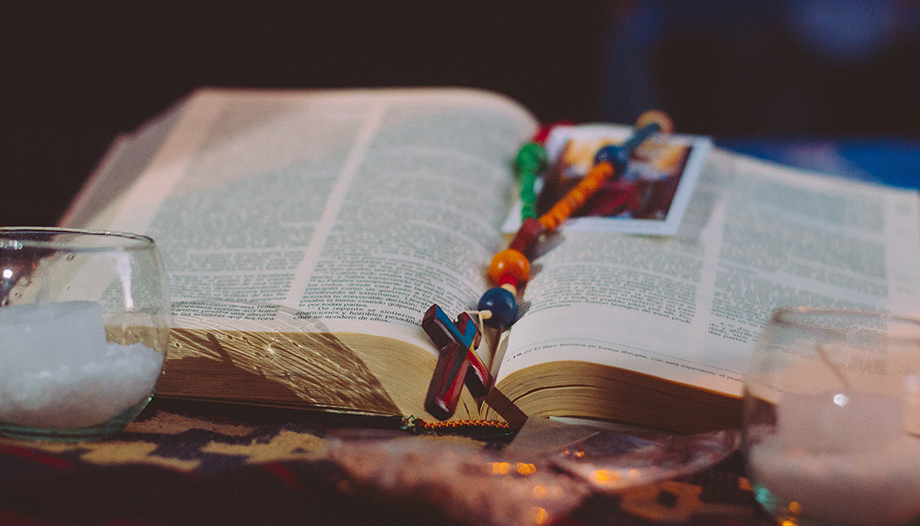
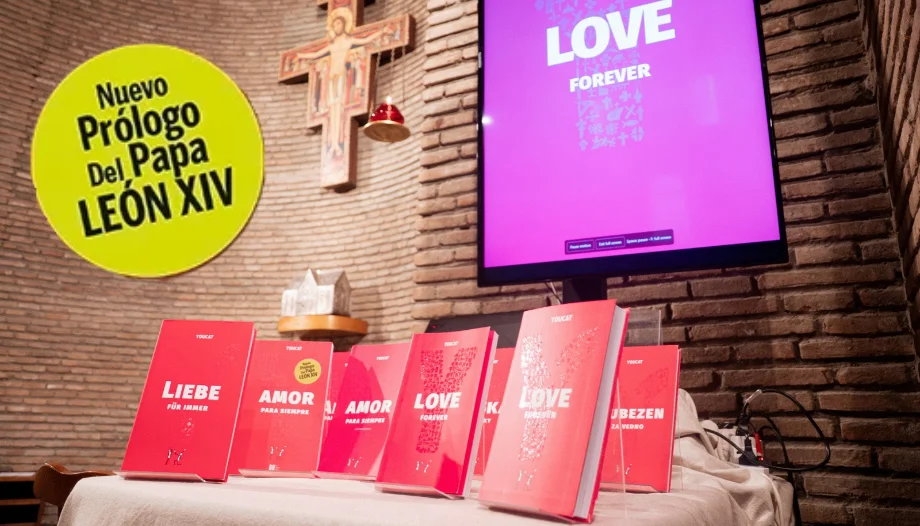
«Padres Guardametas»: the website that provides in-depth reviews of children's and young adult books

Unlike other platforms, this one offers the latest and most commercially successful titles, which are usually the ones children ask for the most.

Javier García Herrería-July 4, 2026-Reading time: 2 minutes

Marta realized it almost by chance. While tidying up her 13-year-old son’s room, she found a young adult novel that was very popular among his classmates. She had bought it herself a few weeks earlier, drawn in by the good reviews and the fact that her son had finally started reading again. But as she leafed through it, she discovered scenes and dialogue she hadn’t expected to find in a book intended, in theory, for his age group. «If someone had warned me, I’m not saying I wouldn’t have let him read it, but at least I could have talked to him about it first,» she says.

Stories like Marta's are common in many households. Parents control what TV shows their children watch, check the apps they use, and monitor their diets, but the content of the books they read often falls off their radar. It is precisely to fill that gap that Goalkeeper Parents, a new platform powered by Alexia Publishing.

A database that grows every day

The tool functions as a reference catalog: for each book included, it provides a fact sheet with detailed information on the presence of violence, sexual content, profanity, drug or alcohol use, and ideological content such as references to gender ideology or the occult. 

The database already contains 400 titles that are completely up-to-date, but any user can request an analysis of a title that does not yet appear in the catalog by filling out the contact form available on the website.

Analysis Criteria

Rafael Martínez-Echevarría, the initiative’s founder, explains that the project stems from a question that, according to him, people have stopped asking: not whether children read or not, but exactly what they read. In his view, “for a long time, it has been taken for granted that any reading is positive simply because it is reading, and that has led many families to stop paying attention to the specific content of each book.”. 

Martínez-Echevarría insists that “the tool is not intended to judge the literary quality of the works or to act as a moral filter that decides what can and cannot be read.” His approach, he says, is different: “Every family has its own way of raising children and its own boundaries, and all the platform does is present concrete, verifiable data so that parents themselves can decide, without anyone else deciding for them.”.

For the project’s founder, freedom of choice depends on having enough information to make that choice. Buying a book without knowing what’s actually in its pages, he argues, is like making a decision blindly. That’s why he sums up the mission of Padres Guardametas as an effort to bring transparency to an area where, until now, there has been virtually none.

A small publishing house with a specific mission

Alexia Editorial describes itself as a growing publishing house whose goal is to support parents in the—not always easy—task of raising their children. The publisher also invites families themselves to participate in expanding the catalog by suggesting titles and sharing their own reviews, with the goal of ensuring that the database continues to grow through user collaboration.

Read more
TribuneJosé Mazuelos Pérez

When a Pope Leaves Hope in the Land That Welcomes Him

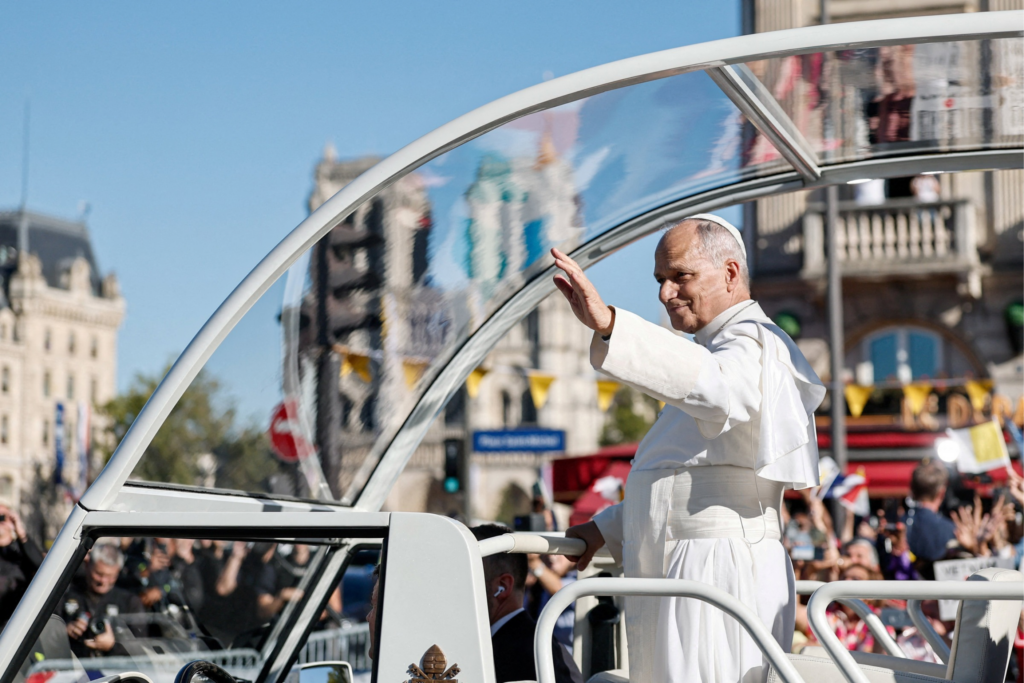
Pope Leo XIV’s visit to the Diocese of the Canary Islands was an event that left its mark on the history of this particular Church. Not only because it was the first time a Successor of Peter had set foot on this land, but also because his presence provided a true experience of communion, hope, and spiritual renewal.

July 4, 2026-Reading time: 3 minutes

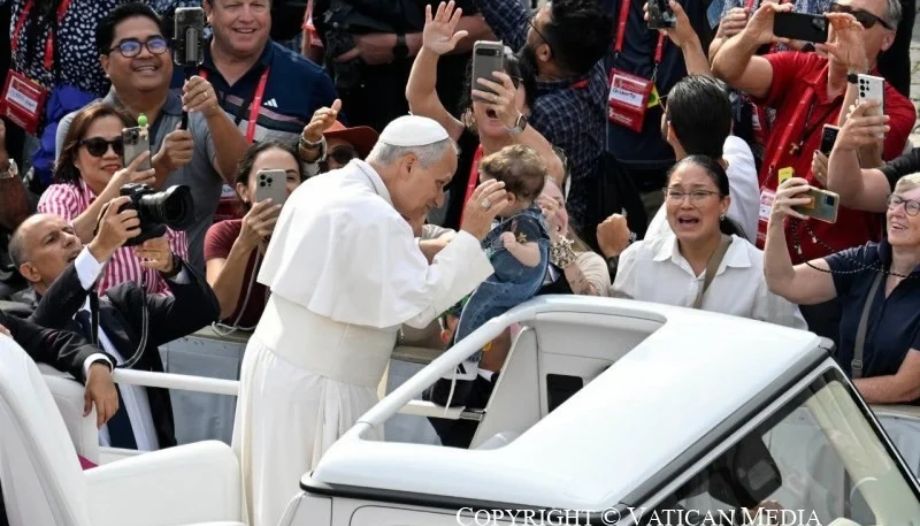
I still find it hard to put into words everything I experienced. The excitement of those days still lingers within me. Seeing thousands of people spontaneously pour into the streets to greet the Holy Father, watching entire families wait for hours for him to pass by, discovering the sincere affection with which the people of the Canary Islands welcomed him… these are images that will remain etched in my heart forever.

But if there was one thing that particularly impressed me, it was seeing how the Pope never stopped looking at people. Every greeting, every gesture, every blessing sprang from a genuine closeness. Even while traveling, whenever he spotted someone waiting by the roadside, he would roll down the car window to greet them. These are seemingly small details, but they reveal a profoundly evangelical way of exercising the Petrine ministry.

The entire visit was structured around three main themes that, in my opinion, perfectly summarize the pontificate of Leo XIV: evangelization, beauty, and charity. Madrid showcased the richness of the faith passed down over the centuries; Barcelona reminded us how beauty leads to God; and The Canary Islands embraced the powerful message on the dignity of every human person, especially those who are forced to leave their homeland in search of a better future.

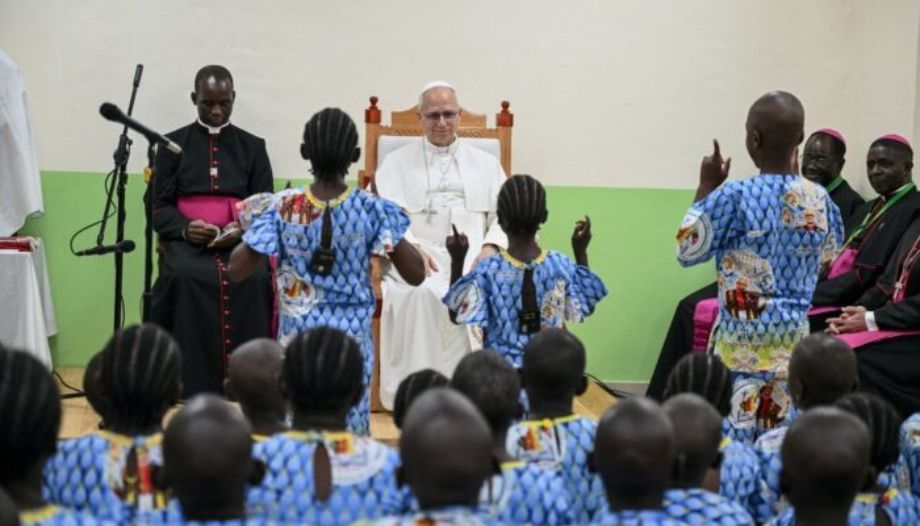
It was no coincidence that the Holy Father chose to stop in Arguineguín. There, he did not merely deliver a speech on the phenomenon of migration. He invited us to contemplate the real faces of men, women, and children whose dignity can never depend on a document, a border, or a political interest. He listened to heartbreaking testimonies, embraced real suffering, and reminded us that no person can be reduced to a problem or a statistic.

The migration issue requires political, legal, and social responses, but above all, it demands a moral response. Europe cannot grow accustomed to watching human suffering from a distance. We must work to combat human trafficking syndicates, facilitate legal migration channels, and promote development in countries of origin. Defending human dignity must never become an ideological issue.

Indeed, one of the great values of this visit has been its ability to once again place the person at the center. The Pope spoke about life in all its breadth. He did so in Parliament, he did so in the Canary Islands, and he did so at each of his meetings. He reminded us that the defense of human dignity does not allow for fragmentation or self-serving interpretations. Every life deserves to be protected, from its beginning to its natural end, and every person deserves to be respected, regardless of their circumstances.

I’ve had the opportunity to share moments of casual conversation with Leo XIV during our travels. We talked about many topics, including everyday matters. That closeness allowed me to discover a man who is deeply human, serene, cheerful, and an extraordinary listener. One only had to look at his face to see that he was happy to be among us.

I was also deeply moved by the affection he showed toward the people of the Canary Islands. He was aware of the efforts made over the years to welcome thousands of migrants and wanted to publicly thank our society for its generous response. He was well aware of the difficulties we have faced, and precisely for that reason, he wanted to acknowledge the greatness of a people who, far from letting fear get the better of them, responded with solidarity and brotherhood.

At the Cathedral, I experienced another particularly meaningful moment when he referred to our traditional Ascension flowers. It was a gesture of immense pastoral sensitivity. He had sought to understand our expressions of faith and knew how to integrate them naturally into his message. He did not come simply to deliver speeches; he wanted to engage with the history, culture, and spirituality of this pilgrim Church in the Canary Islands.

If I had to sum up in a single sentence what Pope Leo XIV has left behind after his visit, I would say that he has restored our hope. We live in times marked by polarization, disillusionment, and mistrust. However, the Pope reminded us that Spain possesses immense spiritual and human wealth; that we are heirs to a tradition capable of enlightening the world; and that we cannot resign ourselves to pessimism or fruitless conflicts.

The visit has come to an end, but now the most important task begins: bringing to life all that we have received. A pope comes and goes; the Gospel remains. And the greatest tribute we can offer to Leo XIV is not to preserve the memory of these historic days, but to turn his words into a daily commitment.

The Canary Islands are already part of the history of apostolic journeys. But above all, I hope that this event will become part of the history of our Church’s conversion. For the hope that the Holy Father has sown among us will bear fruit only if we are able to live it out and pass it on to future generations.

The authorJosé Mazuelos Pérez

Bishop of the Canary Islands. President of the Episcopal Subcommission for the Family and Defense of Life.

When Art Challenges Faith

Every work of art presents something to our eyes. What we discover depends less on the work itself than on the heart of the viewer.

July 4, 2026-Reading time: 3 minutes

The performance of “Godspell”during the vigil The performance of *With Pope Leo XIV* in Madrid left a question hanging in the air amid the applause and criticism. What was it that really bothered people? Was it the musical, its aesthetic, its language, or the fact that the Gospel was presented in a way that some did not expect?

The controversy was nothing new. The people involved changed, but the human reaction remained the same.

Norman Rockwell seemed to have anticipated that reaction decades earlier. In one of his paintings, he juxtaposed a classical portrait by John Singer Sargent with an abstract one by Picasso. In front of them, he placed three female viewers. A mother and her daughter correspond to Sargent’s figurative portrait. The third, with her back turned, focuses all her attention on the Picasso. Each stands in front of the work in which she recognizes herself. None of them seems curious about the other.

Rockwell does not depict a conflict between artistic styles; he depicts the ease with which we seek out what confirms our way of understanding the world. He contrasts two ways of seeing: one that seeks to confirm what it already knows, and one that accepts standing before what it does not yet understand.

Knowing How to Look

Looking is not merely a matter of directing one’s eyes toward something. Looking involves taking the time, setting aside judgment, and allowing what is before us to transform us. When we give up that possibility, we cease to encounter the work of art, the person, or the Gospel. We encounter only our own expectations.

The theme of Pope Leo XIV’s visit to Madrid was “Lift Up Your Eyes.” This expression invites us to turn our gaze toward Christ, but also to reexamine the way we view reality. Because lifting up our eyes is not just about looking upward. It also means looking beyond our categories, our prejudices, and what we expect to find.

That was precisely what Rockwell painted: three people looking at the same works of art, yet unable to see the same thing. Perhaps he didn’t paint a museum. He painted a vigil. Not because he was anticipating a specific musical, but because he understood that every truly new proposition forces us to choose between two attitudes: protecting our certainties or letting reality broaden our perspective. Even when that reality comes with a gospel twist.

Languages

During the vigil, “Godspell” took the place of Rockwell’s Picasso. Not because the two works are comparable, but because they raised a similar question. Some stood in front of it with curiosity; others reacted with suspicion before even allowing themselves to be challenged.

While some people felt comfortable with pop music, rock, and ballads and saw in them creativity, joy, and a new way to proclaim the Gospel, others saw them as a break from what they consider to be characteristic of the religious sphere.

This wasn’t the first time gospel music had faced such rejection. When Thomas A. Dorsey began incorporating the blues and jazz into Christian music, many felt those rhythms had no place in worship. Today, it is difficult to understand the history of gospel music without that initial break. Each generation seems to need to be reminded that the Gospel endures, even as its forms of expression may be renewed.

The vigil, in a way, echoed Rockwell’s scene. Each person found a language in which to recognize themselves. The question is how many of us also reached out to a language that was not our own. The Gospel itself is full of surprises that throw off those who think they know in advance how God should act.

Let ourselves be surprised

Every work of art presents something to our eyes. What we discover depends less on the work itself than on the heart of the viewer.

Perhaps the question raised by “Godspell” is not whether that musical had a place in a vigil’s program. The question might rather be: Are we still capable of looking up before we judge? Because only those who are willing to truly look can allow themselves to be surprised by the Gospel.

The authorPeca Macher

Peca Macher is an architect and art curator, founder of Präsenz, a project that integrates art, education and conscious leadership through pausing, looking and listening. With more than 25 years of experience in cultural management and reflection, she writes and researches about memory, aesthetic experience and art as a tool for personal and social transformation. She is the author of the book Präsenz. Art as a tool for human and educational transformation.

Read more
Evangelization

Madeleine Delbrêl. God Is Not Dead!

Madeleine Delbrêl was not a nun, a founder, or a theologian, but a laywoman, artist, and activist immersed in difficult realities, who found her mission (and God) on the street—literally.

Gerardo Ferrara-July 4, 2026-Reading time: 7 minutes

They say the French are Italians in a bad mood. Since I’m Italian and often in a bad mood, I guess I could call myself French! Joking aside, I’ve always loved the culture, language, way of thinking, and spiritual legacy of this great country, France, and of its people, whom we Italians call “our cousins on the other side of the Alps.” That’s why I want to dedicate an article to a great Frenchwoman: Madeleine Delbrêl.

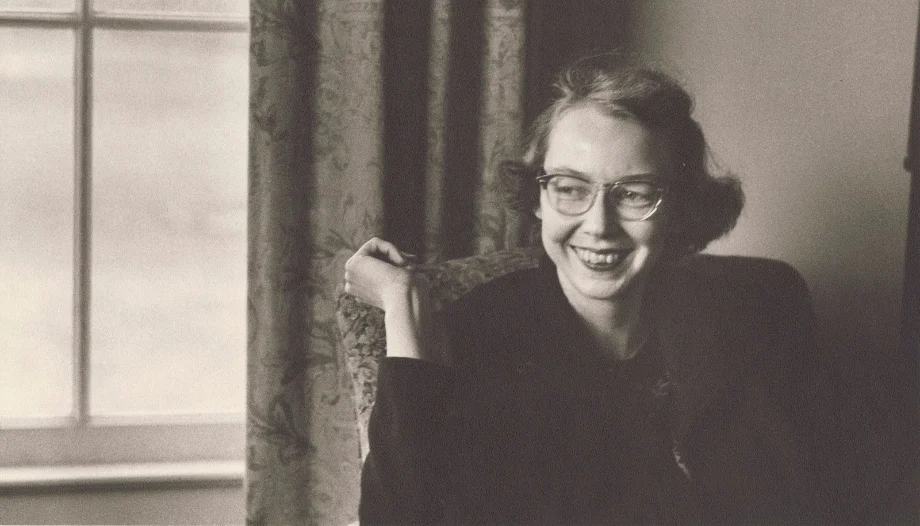
Madeleine, just like Dorothy Day —with whom she has often been compared— and Flannery O'Connor, she was not a nun, a founder, or a theologian, but a laywoman, an artist, and an activist immersed in difficult realities, who found her mission (and God) on the street—literally: the street, with its “existential peripheries,” was her “territory of the devil”—that place where, as O’Connor would say, grace bursts in where it is least expected.

Madeleine has often inspired me with her reflections, which are echoed in the messages of the last two popes. That is why, in this article, I would like to share some of her writings, accompanying her story with the lyrics of “Dio è morto” (God Is Dead) by the great Francesco Guccini.

God is dead…

I've been told that my generation no longer believes in what has often been disguised as faith—in the timeless myths of the homeland or the hero.

Because the time has come to reject everything that is false: beliefs based on custom and fear, politics that is nothing more than a means to advance one’s career, self-serving hypocrisy, empty dignity, the hypocrisy of those who are always right and never wrong…

And a god who has died. In the extermination camps, God has died. With the myths of race, God has died. With partisan hatred, God has died. (F. Guccini)

Madeleine Delbrêl was born on October 24, 1904, in Mussidan, France, into a family that we would today describe as “dysfunctional.” Her father, Jules, was a stationmaster—a frustrated intellectual, anticlerical, proud, and temperamental—who frequently changed jobs, forcing the family to move constantly. Her mother, Lucile, was the complete opposite: conformist, conventional, and from a bourgeois family.

Family tensions had a profound impact on the young Madeleine, who, influenced by her father and a stifling environment, sought refuge in the intellectual world of the capital when the family moved to Paris. At the age of fifteen, she declared herself “strictly atheist,” going so far as to write, two years later: “God is dead; long live death.”.

But “the populated desert they call Paris” (as defined in *La Traviata*), where Madeleine studied philosophy and art at the Sorbonne, balancing her studies with poetry (in 1926 she won the Sully Prudhomme Prize from the French Academy), the piano, and the nonconformity of a free spirit, had something else in store for her: two “happy encounters.”.

The first was Jean Maydieu, with whom she fell in love. A devout Christian, he left her in 1924 to enter the Jesuit novitiate. Madeleine’s reaction was one of deep despair. However, a doubt began to take root within her: she felt deep respect for Jean; they were united by an intellectual journey; and she knew he could not have gone mad. And so she began to read and search, until she, too, experienced her second encounter—the encounter with God—which was no longer, as she herself stated, a hypothesis to be refuted, but a Presence that overwhelmed her.

Along the sides of the roads

I’ve seen people my age drift away down paths that never lead anywhere, chasing the dream that leads to madness in search of something they can’t find in the world they already have, on nights drenched in wine, down paths transformed by pills, amid the clouds of smoke from a world made of cities, refusing to swallow our weary civilization. And a god who has died. On the margins of the streets, God has died. (Guccini).

After her conversion, Madeleine felt a profound need that became the central focus of her life, as she herself wrote:

It has been clearly explained to us that on earth we must love God. And so that we have no doubts, nor think that we don’t know where to begin, Jesus has told us that the only way, the only recipe, the only path is to love one another. Perhaps we might be satisfied with achieving extraordinary humility, or unsurpassed poverty, or unwavering obedience, or unshakable purity; but if that humility, poverty, purity, and obedience have not led us to discover goodness—if those in our homes, on the streets, and in our cities continue to go hungry and cold, and if, moreover, they remain alone—then perhaps we are heroes, but we will not be among those who love God.

In 1933, she moved, along with some fellow women, to Ivry-sur-Seine, on the working-class outskirts of Paris—an industrial neighborhood marked by class struggle and governed by a Communist council. She trained to become a social worker and was hired by that very same anticlerical administration, which held her in high regard. Her home on Rue Raspail became a shelter for the poor, the homeless, and—during the Resistance—for Jews and refugees.

He lived like that, on the outskirts of Ivry, until October 13, 1964, when he died of a sudden brain hemorrhage. He was working at his desk.

In 2018, the Pope Francis’ He granted him the title of Venerable.

God has risen

But I believe my generation is ready for a new world and a newly born hope, for a future that is already in its hands; for an unarmed rebellion, because we all know by now that, if God dies, it is only for three days, and then He rises again. In what we believe, God has risen. In what we desire, God has risen. In the world we will build, God has risen (F. Guccini)

Madeleine’s spirituality is imbued with mysticism and pragmatism. Her writings are collected in several volumes, including “La joie de croire” (“The Joy of Believing”) and “Nous autres, gens des rues” (“We, the People of the Streets”): the compassion and wisdom of a woman who knew that true devotion is lived out every day through work, relationships, and respect for oneself and others.

For example, write:

A Christian cannot love God without loving humanity; and one cannot love humanity without loving all people; furthermore, one cannot love all people without loving those one knows—but with a concrete love, with an active love. This is the only law of good and evil, the law that allows humanity to choose between good and evil.

Or also:

Let us open our hearts to the small moments of solitude in our day. For our small moments of solitude are vast, moving, and holy, just like all the deserts of the world; they are inhabited by God Himself, the God who sanctifies solitude.

The loneliness of the black asphalt that separates our house from the tram stop; the loneliness of the long hallways through which flows the continuous stream of all the lives heading toward a new day; the solitude of the kitchen as I stand over the pot of beans; the small moments of solitude on the staircase that I climb up and down a hundred times a day; the solitude of the long hours spent washing clothes, mending, and ironing.

Lonelinesses we might fear, which empty our hearts: loved ones who leave and whom we wish were by our side; friends we wait for but who never come; things we’d like to say but that no one hears; the feeling of alienation in our hearts amidst other people.

Within each of us there is something that no one will ever fully understand. That something is the very cause of our loneliness—the loneliness that is innate to us. It is this primal loneliness that we must accept above all else.

There are various ways of not accepting it. For some, it will be withdrawing into themselves, silence (but not the good kind), the classic «misunderstood» attitude. For others, on the contrary, it will be the determination to explain it to themselves or, more often, to make others understand even the slightest nuance of their way of thinking. In both cases, each person will crystallize—whether in silence or in speech—which will give them the impression of a discord; in reality, it is a note from within ourselves that no human ear will ever be able to understand.

The day we realize that the unbridgeable gap between us and others is—through all our loves, all our influences, all our trials—the very place where what makes us who we are lies; when we have understood that it is in that very place that God speaks to us, calling us by name, we will have brought about the great transformation that turns painful loneliness into a blessed solitude.

And I'll conclude with another passage of his that, to me, is monumental:

Sometimes, throughout the day, we eagerly look forward to our passions—our greatest passions…

Those people will be called heroes—and that makes it worth sacrificing one's life…

Instead, tests of patience lie ahead.

Patience—those crumbs of passion, whose purpose is to kill us slowly for your glory, O God, to kill us without our glory.

First thing in the morning, they’re already there: our nerves—either too jittery or too sluggish; the crowded bus passing by, the spilled milk, the chimney sweeps arriving, the kids who ruin everything.

They are the guests our husband brings home and that friend who—ironically—doesn't show up; it's the phone that won't stop ringing; they are the ones we love but who no longer love us.

It is the desire to remain silent and the need to speak,

It is the desire to speak and the need to remain silent;

It's wanting to go out when we're cooped up,

is staying home when we should be going out;

He's the kind of husband we'd like to lean on

and who becomes the most fragile of all the children;

it's the disgust we feel toward our daily lives,

It is the feverish desire for what does not belong to us. 

That's how our tests come—in tight rows or single file—and they always forget to tell us that they're the ordeal that awaits us.

And we let them pass us by with disdain, waiting—

to give our lives—an occasion worth living for.

Because we have forgotten that, just as there are branches

that are destroyed by fire; there are also boards that

Footsteps slowly wear them down until they eventually turn into sawdust.

Because we have forgotten that, although there are strands of wool

Cut off at the root by the scissors, there are strands of yarn that, day

Day after day, they take their toll on the backs of those who carry them.

All redemption is a form of martyrdom, but not all martyrdom is bloody:

There are some whose lives fray from one end to the other.

Read more
The Vatican

9 Things You Should Know About the FSSPX's Excommunications

On July 1, the Society of St. Pius X, known as the FSSPX, illicitly consecrated four new bishops without authorization from the Holy See, leading Pope Leo XIV to declare its bishops, clergy, and lay members formally in schism with the Catholic Church.

OSV / Omnes-July 3, 2026-Reading time: 6 minutes

By OSV News

On July 1, the Society of St. Pius X, known as the FSSPX, unlawfully consecrated four new bishops without authorization from the Holy See, prompting Pope Leo XIV to declare its bishops, clergy, and lay members formally affiliated with schism with the Catholic Church.

Below is a brief summary of the FSSPX, what happened, and its significance.

1. The FSSPX was formed in response to the Second Vatican Council. 

Archbishop Marcel Lefebvre (1905–1991), a Frenchman who, as a bishop, had been a key leader of the Church in French-speaking Africa, founded the Society of Priests in 1970 in Fribourg, Switzerland. Its priests celebrate the sacraments according to the 1962 Roman Missal, published before the Second Vatican Council but replaced by revised liturgical texts in 1969. The society has been excommunicated twice for consecrating bishops without the authorization of the Holy See.

The congregation is headquartered in Menzingen, Switzerland, and operates an international seminary in Écône, also in Switzerland, where the ordinations took place on July 1. In the United States, about 100 priests of the FSSPX reside in 20 houses, or «priories,» and carry out their work in approximately 120 locations, referred to as «missions» or «chapels,» according to its website. Its U.S. headquarters is located in Platte City, Missouri, about 50 kilometers north of Kansas City.

According to the FSSPX, Archbishop Lefebvre chose St. Pius X, who served as pope from 1903 to 1914, as the society’s patron saint because of that pope’s commitment to the integrity of the priesthood.

2. Before the most recent schism, the FSSPX had an irregular status with respect to the Catholic Church, a situation that dates back decades. 

Apparently, the society lost its ecclesiastical authorization to exist from the competent ecclesiastical authority in 1975. A year later, Archbishop Lefebvre was suspended after ordaining priests against the express will of the ecclesiastical authorities.

In 1988, St. John Paul II excommunicated Archbishop Lefebvre and four bishops whom he himself had consecrated that year without papal authorization. Their episcopal ordinations were valid but illicit or unauthorized.

All subsequent acts based on orders issued by those bishops have been affected. Acts of jurisdiction are invalid, such as the celebration of marriages and the absolution of sins. Other sacramental acts are considered valid, though unlawful.

In its decree of July 2, in which it imposed excommunication, the Holy See explicitly declared that the sacraments of penance and marriage celebrated within the society are invalid.

3. The FSSPX should not be confused with other communities that celebrate the Traditional Latin Mass. 

Many communities Catholic In communion with the Holy See, they celebrate Mass according to the 1962 Roman Missal, commonly known as the Traditional Latin Mass.

In 2007, Pope Benedict XVI issued «Summorum Pontificum,» which expanded the authorization for priests to celebrate the pre-conciliar Mass. In 2021, Pope Francis issued «Traditionis Custodes,» a law that restricted the use of the pre-conciliar form of the Mass. However, many bishops, even in the United States, have continued to offer this form of the Mass within the new parameters.

Priests who belong to the Priestly Fraternity of St. Pius X, for example, celebrate the sacraments exclusively according to the 1962 Missal and are in communion with the Holy See. (The society was founded in 1988 by priests who left the FSSPX following Archbishop Lefebvre’s illicit episcopal consecrations that same year.) FSSP priests are active internationally and exercise their ministry in 39 dioceses in the United States.

Other examples of religious orders dedicated exclusively to the celebration of the liturgy and the sacraments according to the Roman rite as practiced before the Second Vatican Council, which enjoy regular status within the Church Catholic, are the Institute of Christ the King, High Priest, and the Institute of the Good Shepherd.

4. The leaders of the FSSPX assert that the congregation is not in schism and believe that all sacraments and jurisdictional acts are valid. 

However, among Archbishop Lefebvre's disagreements with the Church Catholic This is reflected in its refusal to adopt the post-conciliar reform of the rite of the Mass, which the FSSPX considers flawed or containing «heretical elements.».

Archbishop Lefebvre and his followers also questioned—and in some cases publicly rejected—the very orthodoxy of the teachings of the Second Vatican Council, especially the Declaration on Religious Freedom, «Dignitatis Humanae.» While some argued that this declaration amounted to a change in doctrine, the Church recognized it as a development of the doctrine on the dignity of the human person.

In a statement that included a 28-page «Statement of Faith» published On June 24, the FSSPX stated that the Church Catholic faces internal and external pressures «that are pulling it in every possible direction, except—in our view—the right one.» Other doctrines Catholic The issues that the FSSPX rejected in that statement included aspects of ecumenism, post-conciliar liturgical reforms, synodality, and religious freedom.

5. The Holy See has sought a path toward full reconciliation. 

For decades, Vatican officials have been seeking ways to fully reintegrate members of the FSSPX into the life of the Church Catholic. Talks between the Holy See and the congregation began during the pontificate of St. John Paul II and continued during the pontificates of Benedict XVI and Francis. Benedict XVI lifted the excommunication of the four bishops in 2009, which allowed for more regular dialogue. The Vatican made it clear that, at that time, the congregation was in a state of canonical irregularity but not in schism.

During the Year of Mercy 2015–2016, Pope Francis established special provisions to validate the absolution granted by priests of the FSSPX through the sacrament of confession. After the Holy Year ended, he extended this provision «so that no one may ever be deprived of the sacramental sign of reconciliation through the Church’s forgiveness.».

In April 2017, the late pontiff continued to promote initiatives aimed at reconciliation with the FSSPX, allowing its bishops to guarantee the validity of marriages celebrated in their traditionalist communities.

St. John Paul II’s 1988 apostolic letter, «Ecclesia Dei,» published in response to illicit ordinations, established a pontifical commission of the same name with the «task of collaborating with the bishops, the departments of the Roman Curia, and interested parties, in order to facilitate full ecclesial communion for priests, seminarians, religious communities, or individuals» who were associated with the FSSPX and «who wish to remain united to the Successor of Peter in the Church Catholic ".

In 2019, Pope Francis dissolved the «Ecclesia Dei» commission and transferred its responsibilities to the Dicastery for the Doctrine of the Faith.

6. The Holy See ordered the leaders of the FSSPX not to consecrate new bishops. 

In February, Father Davide Pagliarani, Superior General of the FSSPX, announced that the Society would proceed with the consecration of new bishops on July 1, following a breakdown in communication with the Vatican after requests for an audience with Pope Leo XIV went unanswered.

Cardinal Víctor Manuel Fernández, prefect of the Dicastery for the Doctrine of the Faith, offered to continue the dialogue with the FSSPX on the condition that the congregation suspend its decision to consecrate new bishops. Following the FSSPX’s refusal, Cardinal Fernández stated that the consecration of bishops without a papal mandate would be considered a schismatic act and would result in excommunication.

The Church's Code of Canon Law defines schism as «the refusal to submit to the Supreme Pontiff or to receive Holy Communion with the members of the Church subject to him» (Canon 751).

7. Pope Leo XIV issued a public appeal to the FSSPX asking it not to proceed with the consecrations. 

On June 30, Pope Leo XIV appealed to the FSSPX not to proceed with the consecrations. «I beg you to carefully consider the spiritual good of the faithful, because the schismatic act you are about to undertake would deprive them of the lawful—and in some cases, even valid—reception of the sacraments, which they love and seek for their sanctification,» wrote Pope Leo XIV. Father Pagliarani’s response indicated that the Society planned to proceed with the ordinations, insisting that the group «was neither schismatic nor hostile to the Church.».

After the FSSPX went ahead with the illicit ordinations on July 1, the Vatican’s Dicastery for the Doctrine of the Faith, or DDF, declared on July 2 that the six bishops of the FSSPX were excommunicated and warned clergy and laity not to «adhere to the schism» and, consequently, not to incur excommunication themselves.

8. One of the four bishops who were illicitly consecrated on July 1 is from the United States. 

A native of North Dakota, Bishop Michael Goldade grew up in St. Marys, Kansas, a hub of the FSSPX community. He is the rector of the FSSPX’s St. Thomas Aquinas Seminary in Dillwyn, Virginia.

9. The DDF has published procedures for those who decide to leave the FSSPX and restore communion with the Catholic Church. 

The instructions detail the specific steps that an ordained priest in the FSSPX community or affiliated with it must take following his lawful ordination. The procedures for laypeople are more complex, since the steps they must take to regain communion depend on their degree of involvement with the community and the FSSPX’s teachings.

The authorOSV / Omnes

Read more
The Vatican

"Respect for Human Life," the Pope's Prayer Intention for July

In this month’s prayer intention, Leo XIV invites us to pray that every person may be welcomed, protected, and cared for, from conception until natural death. The Pontiff denounces the throwaway culture and calls for the Church to be a home where no one feels left out, and that dignity be respected and protected.

Editorial Staff Omnes-July 3, 2026-Reading time: 3 minutes

“For respect for human life” is Pope Leo XIV’s prayer intention for the month of July. Through the Pope’s Worldwide Prayer Network, the Holy Father invites us to pray that every human being may be welcomed, protected, and treated with respect for their dignity at every stage of their life.

In early June, during his apostolic trip to Spain, Pope Leo he said this to the Congress of Deputies: “Every human life must be recognized and protected from conception to its natural end, under any circumstances of its existence.”.

“A Goal of Civilization”

Then, he added: “The defense of human life is not a matter of personal or religious interest: it is a goal of civilization. Every human life must be recognized and protected from conception to its natural end, in all circumstances of its existence. When this certainty is eroded, the most vulnerable are the first victims, and the law loses its deepest meaning: to serve and protect every person.”. 

”That is why a nation's moral greatness is manifested, above all, in its ability to support, protect, and love those whose lives are marked by greater vulnerability.".

Every person is a sacred gift

In his prayer, Leo XIV is headed to the “Lord of Life” and acknowledges that every person is “a sacred gift that reflects your face.” It also asks for the grace to recognize and safeguard “the unique and irreplaceable value of every human being,” “learning to welcome life unconditionally, to tenderly support fragility, to respectfully accompany every stage of life, and to courageously defend those who have no voice.”.

The Pope asks the Lord—in the plural—for forgiveness “when we fall into indifference or the culture of discarding others, when we fail to see in others beings worthy of love. Grant us a new heart, capable of always choosing life, and generous hands that protect it through concrete actions.”.

And he prays that “your Church” may be “a living witness to the Gospel of life, an open home where every life is celebrated, where no one feels left out, and where dignity is always respected and cherished.”.

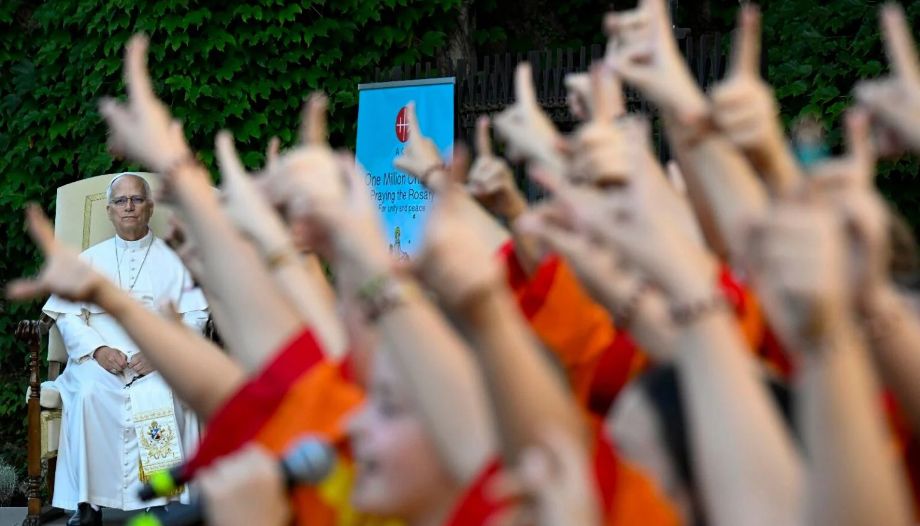
Handprints in a screenshot from the video of Pope Leo XIV’s prayer intention for July 2026, “For respect for and protection of human life.” (Illustration by OSV News/Pope’s Worldwide Prayer Network).

73 million induced abortions worldwide each year

– Supernatural Global Prayer Network, led by Fr. Cristóbal Fones, reports that, according to data from the World Health Organization, there are approximately 73 million induced abortions worldwide each year. At the same time, the debate over euthanasia And assisted dying continues to gain ground worldwide, just as the death penalty does.

The WHO also noted in 2024 that one in six people over the age of 60 is a victim of abuse.

Father Cristóbal Fones, S.J., explains that the Pope's intention Above all, it invites us to rediscover the sacred value of every human life, to promote the dignity and development of every person, and to share in the mission of Christ, who showed compassion toward all and called for the building of an authentic culture of life in the face of the “throwaway culture,” as Pope Francis has put it.

For the sake of respect for human life

(Prayer (from Pope Leo XIV's video message, in Spanish)

In the name of the Father, and of the Son, and of the Holy Spirit. Amen. 

Lord of Life, You created us out of love and called us to live life to the fullest. 

Every person is a sacred gift that reflects your image, from the very first moment of their existence to the last breath of their journey on earth. 

Today we ask you for the grace to recognize and protect the unique and irreplaceable value of every human being. 

May we learn to embrace life unconditionally, to tenderly support its fragility, to respectfully accompany it through every stage, and to courageously defend those who have no voice. 

Forgive us, Lord, when we fall into indifference or the culture of discarding others, when we fail to see in others beings worthy of love. 

Give us a new heart, capable of always choosing life, and generous hands that protect it through concrete actions. 

Make your Church a living witness to the Gospel of life, an open home where every life is celebrated, where no one feels left out, and where dignity is always respected and cherished.

Lord Jesus, may we love life as You love it: with tenderness, faithfulness, and devotion. 

May we proclaim, through words and deeds, that every human life is worth the total gift of oneself. Amen. 

The authorEditorial Staff Omnes

Evangelization

Leandro doesn't let his attraction to the same sex define him

Leandro shares how he has reconciled his Catholic faith with his same-sex attraction, arguing that freedom can also mean choosing a path of fidelity to the Gospel.

Teresa Aguado Peña-July 3, 2026-Reading time: 4 minutes

Amid Pride celebrations, and surrounded by a social discourse that often presents freedom as ‘always doing whatever one wants,’ Leandro’s testimony offers a different perspective. He does not seek to impose his views on anyone, but rather to share the path he has chosen to follow as a Catholic who experiences same-sex attraction (SSA) and has decided to live in accordance with the Church’s teaching.

His story is not that of someone who claims the path is easy. Nor is it that of someone who claims to have answered all the questions. Rather, it is the story of a reconciliation built on knowledge, faith, and the conviction that a person’s identity runs much deeper than their inclinations.

Understanding as a Path to Reconciliation

For Leandro, the starting point was realizing that reconciling his faith with his same-sex attraction could only begin with understanding. «You can’t have faith in what you don’t know,» he explains.

For years, he was unaware of what the Church actually taught about this issue. It was around the age of 25 or 26 that he learned about the apostolate Courage and attended one of their meetings for the first time. There he found an explanation that would change the way he understood himself: “God loves the sinner infinitely, but never the sin.”.

From that perspective, Leandro explains that his reconciliation was made possible by the realization that “feeling AMS is not a sin, but by acting in accordance with AMS, we distance ourselves from God and His divine plan.” “In recent years, Church teachings such as St. John Paul II’s Theology of the Body have given meaning and motivation to this reconciliation,” he adds.

The Strength of a Spiritual Life

When asked where he finds the strength to persevere, Leandro singles out three sources of support in particular: “devotion to certain saints, the presence of his guardian angel, and the Eucharist.”.

For him, faith is not merely about accepting moral standards, but about maintaining a living relationship with God that sustains him on his daily journey.

His experience within parish communities has not always been the same. He acknowledges that there are places where he has felt welcome and others where he has not felt quite as welcome. However, he avoids letting that experience become a source of resentment.

«The Church is imperfect,» he says, “and I believe that the most important thing is to learn along the way that it is up to us to welcome and value others with the love we receive from God Himself.”.

When faced with rejection, choose empathy

Leandro doesn't deny that there are comments or attitudes of rejection, but, as he says, “they don't keep me up at night.” «There are more comments and attitudes of support than of rejection,» he explains.

He even believes that some negative reactions can become an opportunity to develop greater empathy, since many stem from ignorance or fear—feelings that, he acknowledges, we all experience at some point when faced with something we don’t understand.

For those who are going through the same struggle

Leandro believes that fewer and fewer young people are experiencing an internal conflict between their sexual orientation and their faith. “Today’s world and society have worked to eliminate that conflict through moral relativism,” he says. “But if I were to meet someone in that situation, I would tell them that the teaching of the Catholic Church is the only one that truly gives meaning to both faith and sexual orientation.”.

In his view, the Church’s teaching does not seek to deny or repress human sexuality, but rather to lead it toward its fullness: “It is generally thought that the Church advocates castration or a ban on sexual orientation, but nothing could be further from the truth. It is the Church’s teaching that brings human sexuality—including sexual orientation—to its fullness.”.

In his conversation, he refers to the documentary The Third Way (La tercera vía), produced by Blackstone Films, which serves as a good introduction to understanding this vision.

He never felt rejected by God

One of the most striking aspects of his testimony is that, even during the times when he had drifted away from the practice of his faith, he never thought that God had rejected him. Quite the contrary: «I knew that I was the one who was unfaithful and who was rejecting God.»

Leandro shares a great truth: God's mercy endures, even when the human response is imperfect.

A Shared Calling 

Leandro also makes a point he considers important regarding language. He prefers to speak of a «person with same-sex attraction» rather than a «homosexual person,» because he understands—in accordance with the teachings of the Catechism and the Courage apostolate—that such attractions do not define a person’s deepest identity.

As for a possible specific mission within the Church, he acknowledges that he has not yet discovered it—“if there even is one,” he remarks. In the meantime, he embraces the common vocation of all Christians: “to strive and aspire to live in holiness, whatever my circumstances and reality may be.”.

Along the way, he finds special guidance in the five goals proposals within the Courage ministry, which is understood as a journey of spiritual growth and fidelity to the Gospel: living chastity according to the Church’s teaching, strengthening one’s relationship with Christ through prayer and the sacraments, cultivating genuine fellowship with those who are walking the same path, relying on chaste friendships that help one grow in faith, and offering, through one’s own life, a consistent witness to the Gospel.

Freedom?

Leandro’s story is not intended to settle a debate that continues to rage both within and outside the Church. His intention is much simpler: to share how he experiences that reality through his faith.

In a cultural context where freedom is often equated with the absence of limits, his experience raises a different question: Can freedom also consist of choosing a demanding path out of fidelity to what one considers to be true?

His answer is yes. Not because that path is easy, but because he is convinced that following Christ gives meaning even to those aspects of life that require self-sacrifice, perseverance, and trust.

That, in short, is the heart of his testimony: a faith that does not ignore personal reality, but seeks to shed light on it through the Gospel.his testimony: a faith that does not ignore personal reality, but seeks to shed light on it through the Gospel.

Evangelization

Isaac Hecker: Father of American Evangelization

As part of a series exploring the lives of great American Catholics to mark the 250th anniversary of the United States, writer Russell Shaw discusses Father Isaac Hecker, founder of the Paulist community, in this article.  

OSV / Omnes-July 3, 2026-Reading time: 6 minutes

– Russell Shaw, OSV News

In late spring or early summer of 1842, Isaac Hecker had a vision. At his side, it seems, stood “an angelic, pure, and beautiful being,” whose presence filled him with “heavenly joy.” This life-changing experience prompted the young man, barely 22 years old, to seek a way of life that would somehow reflect it.

Although there is no record of Hecker having any other visions after that one, in a broader sense, the founder of the Paulist Fathers He remained a visionary throughout his life.

A grand dream: the conversion of Protestant America to Catholicism

His main goal was to convert Protestant America to Catholicism, something he believed was possible. After all, he said, in the United States, “the true religion will find the welcome it has sought in vain elsewhere.”.

If he is ever canonized (the process began in 2008, and he currently holds the title of ‘Servant of God’), it is understandable that he would be designated the patron saint of the Americanist movement within U.S. Catholicism. 

‘Sponsor of the Americanist Movement’

On an ideological level, no one—neither before nor since—has done more than my father Isaac Hecker to promote the integration of Catholicism into the secular culture of the United States.

He was born on December 18, 1819, in New York, the third child and youngest son of a family of German-American immigrants. The Heckers were bakers, a trade that Isaac also pursued. But from an early age, despite having little or no connection to the church, he showed an unusual interest in religion.

Over time, this led him to the loosely religious movement of New England intellectuals known as Transcendentalism and to the experimental communities of Brook Farm and Fruitland. 

Moving in these stimulating circles, the young man was initially influenced by Ralph Waldo Emerson, the most prominent American thinker of the early 19th century. However, over time, he became disillusioned with Emerson’s beliefs, complaining that the great man “had no idea what the church was.”.

Friendship with Orestes Brownson. Baptism, priesthood, missionary work 

Around this time, he met and became friends with Orestes Brownson, a well-known writer and lecturer on religion and social issues, and a religious seeker like Hecker.

Brownson, who was sixteen years his senior, guided him toward Catholicism. As early as April 1843, Hecker wrote in his diary: “Only the Catholic Church seems to satisfy my longings.” On August 1, 1844, he was baptized by Bishop (later Cardinal) John McCloskey of New York. Brownson was baptized shortly thereafter.

Feeling a calling to the priesthood, Hecker joined the Redemptorist Order and, after studying at a seminary in Belgium, was ordained a priest in October 1849 by Cardinal Nicholas Wiseman of Westminster.

“Matters of the Soul.” A Catholic America

Upon his return to the United States, Father Hecker worked as a Redemptorist missionary. As his vision of a Catholic America grew and took shape, he also began to put his ideas into writing. The result was the book *Questions of the Soul*.

Published in 1855, the work was widely debated and earned its author a national reputation. Arguing that Protestantism did not meet the needs of seekers like himself, he wrote that the time was approaching when the Catholic Church would be seen as the only satisfactory answer. “Hecker advocated for nothing less than a Catholic America—not for the sake of the Church, but for the sake of the nation and its people,” according to biographer David O’Brien.

Evangelistic Zeal

Quickly capitalizing on the success of his book, Father Hecker published *Aspirations of Nature* two years later, a volume that outlined his vision for evangelization in the United States and the reasoning behind his conversion to Catholicism.

Much to his chagrin, “Aspiraciones” received far less attention than the previous one. The author found Orestes Brownson’s review in his own magazine, the *Quarterly Review*, particularly disappointing.

Brownson dismissed the idea that the United States was fertile ground for Catholic missionary work. He argued that the number of “sincere seekers” was much smaller than Hecker assumed, and that, in fact, “there was scarcely a trait of the American character… that was not more or less hostile to Catholicism.”.

Meanwhile, Hecker grew increasingly dissatisfied with the Redemptorists, whom he considered more interested in conducting parish missions for German immigrants than in converting intellectuals like his former friends at Brook Farm. 

In August 1857, he made an unauthorized trip to Rome to present his case to the superior of the Order. However, as a result, he was expelled.

Foundation of the Paulist Fathers

But the trip was by no means a failure. During his stay in Rome, he met Pope Pius IX and secured his support for his ambitious evangelization project. 

Upon returning to the United States the following year, he and four other former Redemptorists joined forces to found a new order: the Congregation of the Missionary Priests of St. Paul the Apostle, better known as the Paulist Fathers

In the years that followed, Father Hecker was very busy, constantly traveling to give lectures to a predominantly non-Catholic audience. On one such trip, he traveled 7,200 kilometers and spoke to some 30,000 people—a considerable number in the days before radio, television, and social media. “He is modernizing the system and preparing to power it with steam,” remarked one writer.

Publications. First Vatican Council. Papal Infallibility

In 1865, he launched the magazine *The Catholic World*, which would be published for more than a century. The following year, he founded the publishing house Paulist Press.

During the First Vatican Council (1869–1870), Father Hecker secured a position on the periphery as a representative of the bishop of Columbus, Ohio, who did not attend. At first, he sided with the group that opposed issuing a formal definition of the doctrine of papal infallibility at that time, but after the Council defined the dogma anyway, he welcomed it and even saw it as a potential boost for evangelization in the United States.

Religion and Society 

In early 1870, he sent his friend Brownson an extraordinary letter from Rome that elicited an equally extraordinary response. Rarely have the terms of the debate over the situation of the Church in the United States been set forth as clearly as in Father Hecker’s letter and Brownson’s reply.

Father Hecker wrote with his characteristic enthusiasm about the warm reception he had received from Europeans who envied the American-style separation of church and state. This confirmed something he had long believed: American democracy was “extending the influence of the Church, adding a new reason for gratitude for its services, and showing, in a new light, the absolute necessity of religion for civil society and good government.”.

Brownson was not convinced. Although he supported the American system as “the only legally viable option,” he said, he believed it was fundamentally at odds with Catholicism.

“Both Catholics and the rest of the population are imbued with the spirit of the country… freedom from all restrictions, boundless license. We are so far from converting the country that we cannot even stand firm.”.

Entangled in the heresy of “Americanism”

Shortly after the First Vatican Council, Father Hecker’s health deteriorated. He spent his final years in a state of partial incapacity, becoming increasingly isolated within the community he had founded. Worn down by illness and dashed hopes, he passed away on December 21, 1888, after blessing the Paulists with whom he lived.

Inevitably, the name of Father Isaac Hecker is linked to what is known today as “Americanism.” The story, which is quite complex, can be summarized as follows: in 1896, the book *Life of Isaac Thomas Hecker*, written by a man from São Paulo named Walter Elliott, was published in French, with a lengthy introduction by a liberal French priest who extolled Father Hecker’s virtues.

Catholicism à la carte?

Meanwhile, Rome was concerned about trends in liberal Catholic thought in Europe, which it associated with the Church in the United States and with the founder of the Paulists. In 1899, Pope Leo XIII published a document—addressed nominally to the head of the American hierarchy, Cardinal James Gibbons of Baltimore—in which he specifically condemned the ideas he summarized under the heading “Americanism.”.

Historians who support the Americanization of U.S. Catholicism tend to downplay the papal criticism and dismiss the Americanization as a “phantom heresy.”. 

However, Pope Leo XIII’s document contains a surprisingly prescient warning against attitudes common in American Catholicism today. Among these is the arbitrary selection of Church doctrines, often referred to as “à la carte Catholicism.”.

What does that have to do with Hecker?

Even so, it’s natural to wonder to what extent all of this has to do with Father Isaac Hecker. Today, just as during his lifetime, he is known above all as a passionate visionary and a staunch optimist who wanted Catholics to integrate into mainstream American society in order to convert it. If that has not yet fully happened, it can hardly be Hecker’s fault.

——————–

– Russell Shaw, a longtime journalist and writer, authored more than 20 books, including three novels. He passed away in January 2026.

– Editor's note: This article is part of a series that explores the lives of prominent American Catholics in celebration of the 250th anniversary of the United States.

– Originally published in OSV News in English; you can read it there here.

—————–

The authorOSV / Omnes

Integral ecology

I saw him die

The solution to the current situation in our society cannot be the quick fix of euthanasia; it must be a priority investment in palliative care that upholds the dignity of so many people in situations of great fragility and vulnerability.

Eloy Asenjo, Carpenter-July 3, 2026-Reading time: 3 minutes

Pepe was a lively man, a brilliant public administration professional, and a lover of music, the accordion, and hunting with his dog Perla. Despite a difficult medical history—which included essential tremor, heart surgeries, and the aftereffects of several cancers that required him to be catheterized—he always kept a smile on his face and maintained a normal life, guided by his steadfast Aragonese stubbornness. However, in September 2024, the cancer returned. Faced with a hospital prognosis that offered him only six more months to live in exchange for aggressive chemotherapy and radiation treatments, Pepe found himself overcome by anxiety, sadness, and a sense of helplessness.

That was when he made a firm decision: he refused treatment, requested to be discharged voluntarily, and as a family we made the best decision we could: to admit him to the Laguna Palliative Care Center. This completely transformed the final stage of his life. From day one, the medical team was committed not only to easing his pain but also to caring for him with the utmost affection.

Thanks to this environment, Pepe regained his playful and lively spirit. He wasn’t alone because we took turns being with him; he was able to say goodbye to friends and coworkers. He even led a moving musical moment at Christmas, singing an adapted Christmas carol (set to the tune of “On My Way”) at the top of his lungs in front of the ward’s nativity scene, bringing together family members of other patients in a celebration of life. On January 17, 2025, Pepe passed away peacefully and without suffering. His final three months were not a time of agony, but a period of reconnection, forgiveness, gratitude, and farewell. Those of us who witnessed his passing did not weep out of grief, but out of deep emotion and gratitude that, without those palliative care, they would have been stolen from us. 

Political Debate and the «Culture of Discard» 

This testimony takes on special significance in light of the Speech by Pope Leo XIV to the Spanish Parliament. Addressing a chamber that had passed the euthanasia law, the Pontiff reminded the lawmakers that: “Every human life must be recognized and protected from conception until its natural end.”. 

He also emphasized that the defense of life is neither a religious nor a partisan issue. Although his remarks were met with a prolonged round of applause lasting more than seven minutes, it is worth asking whether lawmakers have carefully considered the true impact of these words. 

The fact that there are people who suffer and feel that their lives lack meaning should not push society toward what Pope Francis called the “culture of discarding.” The real problem lies in the lack of support, in the absence of gazes that restore dignity and of care that alleviates pain. When I think of those who suffer in loneliness and abandonment, my heart breaks; these are people who often have no one to look them in the eye and restore their human dignity, nor anyone to offer them the support necessary to alleviate their suffering. 

Humanizing Healthcare: Resources Over Euthanasia 

It is disconcerting that the institutional response to human frailty is euthanasia, rather than sufficient budgetary and resource allocations for palliative care services. It is only fair to acknowledge that in our healthcare system (at least in the Community of Madrid), these services are on the rise. A clear example of their benefits was the home care provided to a friend of mine—Rodrigo—during the final months of his life, a form of support that his family and friends deeply appreciated. 

It is imperative to commend the work of the professionals—doctors and nurses—who provide these services. Their day-to-day work is psychologically and emotionally extremely demanding, as they go about their duties knowing that they will not be able to cure their patients’ illnesses. However, their dedication is rewarded by the boundless gratitude of the patients and their loved ones. 

A Call for Responsibility 

A country’s legislation must be judged by its ability to protect the most vulnerable. As the Pontiff rightly pointed out to public authorities: “Laws do not achieve their greatness merely by being formally enacted, but when they respect the intrinsic dignity of the person. Public authorities must remember that each of their decisions affects real, flesh-and-blood citizens, especially those who have no voice to make themselves heard.”. 

It is time for political leaders to show the courage needed to change course. The solution cannot be the fast track to euthanasia; it must be a priority investment in palliative care that upholds the dignity of so many people in this state of great fragility and vulnerability.

The authorEloy Asenjo, Carpenter

The World

5 Facts About Religion in the Philippines: According to Pew, 90 % Is Vital

The percentage of people who believe in God and pray daily in the Philippines is among the highest recorded by Pew Research in recent surveys conducted around the world. Religion is very important in the lives of 90 percent of the Philippine population.  

Editorial Staff Omnes-July 2, 2026-Reading time: 3 minutes

– Jonathan Evans and Kirsten Lesage

According to various indicators, the population of the Philippines tends to be very religious. Nearly all Filipino adults profess a religion, and about 90% say that Religion is very important in their lives.

Most Filipino adults—more than 90 million—are Catholic. The country is home to the third-largest Catholic population in the world, behind only Brazil and Mexico, according to the Vatican’s 2021 Statistical Yearbook of the Church. .

Millions of Protestants, other Christians, and Muslims also live in the Philippines, an archipelago of approximately 7,600 islands in Southeast Asia. This analysis focuses on Christians because our recent surveys do not include enough Filipino Muslims to report separately on their attitudes, beliefs, and practices. As always, all religious groups are included in our findings regarding the adult population as a whole.

Here are five facts about religion in the Philippines, based on survey data from the Center.

92 % Christians, 76 % Catholics

1. Most Filipino adults (92%) identify as Christians, including 76% who identify as Catholic. A smaller percentage (12%) identify as Protestant, according to a survey conducted by the Center in the spring of 2026.

According to a survey conducted by the Center in 2024, most Filipino Catholics are for life, which means they were raised in the Catholic faith and continue to identify as such as adults.

Pope Leo's Favorable Opinion (79%)

2. The vast majority of Filipino Catholics (79%) say they have a favorable opinion of Pope Leo XIV, sAccording to our 2026 survey. Of these, 43% expressed an opinion very favorable.

Catholics between the ages of 18 and 49 are more likely than those over 50 to say they have an opinion favorable o very favorable view of Pope Leo. However, 19% of Filipino Catholics over the age of 50 say they have never heard of Pope Leo or prefer not to answer, compared with 7% of those between the ages of 18 and 34.

99 % of Filipino adults say they believe in God

3. CThus, all Filipino adults (99%) say they believe in God,  according to our 2024 survey. EThis includes the 100% for Protestants and the 99% for Catholics.

However, Filipino Protestants and Catholics differ more in their beliefs about the spirits of their ancestors. While 56% of Catholics believe that the spirits of their ancestors can help or harm them, 26% of Protestants share this view.

8 out of 10 adults pray every day

4. The Philippines has one of the higher prayer rates among the thirty-six countries we surveyed in 2024. About eight out of ten Filipino adults (79%) say they pray every day, including the majority of Catholics (77%) and Protestants (88%).

However, more significant differences are observed in other religious practices. For example, Filipino Catholics are approximately three times more likely than Protestants to say that they light incense or candles for spiritual or religious reasons (76 % versus 27 %).

The Bible should have a great deal or a fair amount of influence on the laws (82%)

5. Most Filipinos (82%) say that the Bible should have much o quite influence on Philippine law. This view is shared by large majorities of both Catholics and Protestants.

However, the groups differ on how to proceed when the Bible and the will of the people conflict. When we asked those who believe that the Bible should have at least a considerable influence on national laws how they think this type of conflict should be handled, 63% of Protestants stated that the Bible should have more influence than the will of the people.

Only 31% of Filipino Catholics share this view, while 49% assert that the will of the people must prevail. 

Note: Here You will find the questions and answers from the Pew Research survey, as well as the most recent data on religious affiliation in the Philippines, from a survey conducted in 2026. 

The authorEditorial Staff Omnes

The Obedience of God's Children

Christian obedience does not arise from fear or coercion, but from the trust of one who knows he is a child of God and discovers that God’s will leads to true freedom.

July 2, 2026-Reading time: 8 minutes

There are words that seem to have aged poorly. Just saying them is enough to stir up a certain unease. «Sacrifice,» «chastity,» «sin»… and also «obedience.» For many, obeying means giving up one’s own freedom, letting someone else think for us, or resigning ourselves to carrying out someone else’s will.

It is not surprising that this is the case. Throughout history, there has been no shortage of examples of authority being exercised abusively, nor of people who, in the name of obedience, have ended up justifying arbitrary decisions. Even today, both within and outside the Church, we continue to ask ourselves what it really means to obey and what its limits are.

Jesus' Obedience

But perhaps the problem isn't obedience. Perhaps the problem is that we have forgotten how Jesus Christ obeyed. Because there is one fact that is truly baffling: The freest man who ever lived was also the most obedient. And that seems like a contradiction.

How can obedience coexist with freedom? Shouldn’t it be exactly the opposite? Perhaps we’ve been asking ourselves the wrong question for too long. When we think about obedience, we usually ask ourselves: Why should I obey? The Gospel, however, begins much earlier: the real question isn’t why we should obey, but whom we obey. And that changes absolutely everything.

Jesus never speaks of his obedience as if he were bearing a burden. Nor does he speak of it as if he were simply following orders. His entire life revolves around a relationship. A relationship so deep that he goes so far as to say, «My food is to do the will of the one who sent me…» (John 4:34). Or again, «The one who sent me is with me; he has not left me alone, for I always do what pleases him» (John 8:29).

There is one detail that is easily overlooked. Every time Jesus speaks of obeying God’s will, he also speaks of the Father. He never presents God as a master from whom one must defend oneself. Never as someone who limits one’s freedom. Always as a Father whom he knows, loves, and trusts completely. The entire difference between Christian obedience and any other form of obedience may lie, perhaps, in that single word: Father. Christ does not obey because He has a master. He obeys because He has a Father. And that difference is not merely a nuance. It is the very heart of Christianity.

Because we are children

Through Baptism, we, too, have received that same sonship. We are not merely creatures striving to keep commandments. We are children called to share in the same relationship that Jesus Christ has with the Father. That is why our obedience cannot be based on fear, but rather on trust.

Perhaps it’s worth pausing for a moment. When I think of God, what image first comes to mind? Is it that of a Father who wants to guide my life toward its fullest potential? Or is it that of someone who is constantly asking for things, making demands, or restricting my freedom? The answer to this question completely changes the way we understand obedience. 

Monsignor Fernando Ocáriz, a prelate of Opus Dei, expresses this in a phrase as simple as it is illuminating: «Only God is worthy of obedience, because only He fully knows the path that leads each of us to happiness.» It’s worth savoring this slowly. He isn’t saying that God is worthy of obedience simply because He has authority. He’s saying something much deeper: that only He fully knows the path that leads to our happiness. And here a crucial idea emerges. God does not ask for obedience because He needs to be obeyed. He asks it of us because He loves us.

To obey, to trust

Only the One who created us also knows the purpose for which we were created. Only He knows that path—and we might even say, that «path within the path»—through which each person attains the fulfillment for which they were intended from all eternity. For this reason, perhaps many of our struggles to obey do not stem from a lack of generosity. Perhaps they stem from something much deeper. What if, deep down, we still haven’t fully come to believe that God wants our happiness?

Because only when that certainty takes root in the heart does something surprising happen: obedience ceases to feel like a threat and begins to resemble, more and more, an act of trust.

But what does it really mean to trust?

We often think of trust as a feeling. However, in everyday life we discover that it is much more than that. To trust is to decide to place one’s own life, at least in some respect, in the hands of another.

We do it all the time: a patient who accepts the treatment recommended by their doctor. A student who allows their teacher to instruct them. A mountaineer who listens to their guide’s instructions. None of them experience that trust as a loss of freedom. On the contrary, it is precisely because they trust that they can reach a place they would have had a hard time reaching on their own.

Something similar happens with God, though infinitely more profound. Let’s imagine a child walking hand-in-hand with his father along a mountain trail. At a certain point, the father says, “Don’t go that way!” The child might think his freedom is being taken away. However, the reality is quite different: the father has simply spotted a cliff that the child cannot yet see.

Perhaps Christian obedience resembles this scene much more than we imagine. Obedience does not mean walking with our eyes closed. It means walking hand in hand with the Father. It does not mean giving up our own intelligence, but rather humbly accepting that there is a broader perspective than our own. A perspective that can see what we cannot yet see.

We’ve all had similar experiences. How many times have we discovered, only as the years have passed, that what at first seemed like a loss ended up becoming one of the greatest blessings of our lives? How many times have we realized too late that God was saving us from a precipice we were unable to see at the time? Perhaps that is why Christian obedience can never be separated from trust. 

God guides us through mediators

But this immediately raises a new question. If only God is worthy of obedience, why has He chosen to continually make use of human mediators? Why doesn't He just speak directly?

The entire history of salvation seems to be built precisely on this logic. God calls Abraham to bless a people. He uses Moses to free Israel. He sends the prophets to remind the people of His covenant. He chooses Mary to bring His Son into the world. He entrusts the Apostles with the mission of proclaiming the Gospel. And He continues to do so today through the Church. It might seem strange. If God is omnipotent, why does He need mediators? The answer is simple: He doesn’t need them—He wants them.

Because this is how He has chosen to teach us that salvation is never experienced in isolation. God created us for communion, and that is precisely why He often comes to meet us through other people. However, it is important to make a crucial clarification here. The mediator never takes God’s place. He merely helps us discover Him.

All authentically Christian mediation possesses admirable transparency. That is to say: it does not draw attention to itself, but to the One from whom it proceeds. That is why Jesus Christ is the perfect Mediator. He did not come to replace the Father. He came to reveal Him. His entire life consists of leading us to the Father. «Whoever has seen me has seen the Father» (John 14:9). And perhaps no scene in the Gospel expresses this truth better than the wedding at Cana. There, Mary offers a single instruction. And that single phrase is enough to sum up the entire spirituality of Christian mediation: «Do whatever he tells you» (John 2:5). It is hard to imagine a more beautiful definition of what it means to be a mediator. Mary does not draw attention to herself. She does not take the place of Christ. She does not occupy His place. She simply leads us to Him. 

Every Christian leader should be able to recognize themselves in these words—a father, a mother, a priest, a bishop, the Pope, a catechist, a teacher, a friend. And you and me, too. Because perhaps, as we read this list, we were thinking only of other people. However, we, too, are constantly acting as mediators in small ways: every time we give sincere advice to a friend; every time we guide a child; every time we explain the faith; every time we carry out our apostolate… In all those moments, we become, in a way, mediators. And then the question is no longer: «Whom should I obey?». The question becomes much more challenging: When someone approaches me, do they end up listening more closely to my voice… or to the voice of Christ? 

Because that is the difference between authority and authoritarianism. Authoritarianism is self-centered. True authority steps aside so that God may be revealed. Any authentically Christian mediator could sum up his mission with Mary’s words: «Do whatever he tells you» (John 2:5).

Obedience is tested in times of difficulty

At this point, there is still one question left to answer. If obedience stems from trust, and trust stems from knowing that we are children of God, why is it still so often difficult to obey? 

Because being children does not mean that we always understand the Father’s ways. Jesus Christ, too, experienced that darkness. The scene in Gethsemane is, perhaps, the most illuminating passage in the Gospel for understanding Christian obedience: Jesus knows what awaits him. He knows suffering, abandonment, and the cross. And, as a true man, he is not indifferent to it. That is why he prays with moving sincerity: «Father, if you are willing, take this cup from me; yet not my will, but yours be done.» These words reveal something deeply human to us: obedience does not consist in ceasing to feel, nor in denying suffering, nor in pretending that everything is easy. Christ does not suppress his human desire to avoid pain, but he immediately adds: «yet not my will, but yours be done» (Luke 22:42). These are not the words of someone who has resigned himself to his fate. They are the words of the Son who, even without fully understanding the reason for this path, continues to trust in the Father’s heart. As we can see: trust does not consist in understanding everything; it consists in knowing in whom we have placed our lives. 

The Letter to the Hebrews expresses this mystery with a surprising phrase: «Although he was a Son, he learned obedience through what he suffered» (Heb 5:8). These words might puzzle us. How can the eternal Son of God «learn» to obey? Not because he was disobedient before, but because obedience is not a theory that can be learned from a book. Obedience is learned only by walking the path of love. Only those who love discover, little by little, that trusting is worth more than controlling. That giving oneself is worth more than clinging. That losing one’s life for love is, mysteriously, to find it.

We, too, learn this way. No one is born knowing how to trust God completely. We’re all learning as we go. We learn when our plans change unexpectedly. When illness strikes our home. When a project fails. When a door closes without us understanding why. When God remains silent… That’s precisely when obedience ceases to be just an idea and becomes a concrete way of loving. 

Perhaps we can all ask ourselves honestly: Do I continue to trust even when I don’t fully understand? Because as long as everything goes according to our wishes, it’s relatively easy to say that we trust in God. True trust emerges when His ways no longer align with our own. And yet, even then, we continue to say, «Father….» That word changes everything. Because a Christian never obeys fate. Never obeys an impersonal force. Never simply obeys a law. A Christian obeys a Father. And that makes all the difference.

Perhaps that is why Saint Paul describes Christ’s obedience as the path to his exaltation: «He humbled himself, becoming obedient to the point of death—even death on a cross. Therefore God exalted him…» (cf. Philippians 2:8–9). The cross was not a failure of obedience. It was its most perfect manifestation. In it we discover that the Father’s will was never to destroy the Son, but to give his love to the whole world. Only after the Resurrection were the disciples able to fully understand that path.

And perhaps we, too, experience something similar. Often, we only understand God’s faithfulness when we look back on our history. Only then do we discover that what once caused us suffering ultimately turned into an immense blessing. That God’s «no» hid a much greater «yes.» That the path we would never have chosen was, in fact, the one we needed to take.

Obedience and Freedom

Perhaps now we can return to the question with which we began this article. How could Jesus Christ have been the freest man and, at the same time, the most obedient?

Because he never saw obedience as a threat to his freedom. He saw it as the most perfect expression of his love for the Father. And we, through Baptism, have received that same calling.

Perhaps the next time the word «obedience» stirs up some resistance within us, we should refrain from immediately asking ourselves what God is asking of us. Maybe there’s a question that comes first—a much more important one. Do I truly trust Him?

For only those who know they are children discover that the Father’s will never conflicts with their happiness. It is, in fact, the path that makes it possible. Ultimately, the obedience of God’s children does not mean giving up their freedom. It means discovering that freedom reaches its fullness when, like Christ, they learn to rest trustingly in the Father’s hands.

The authorHugo Elvira

Guatemalan engineer with a degree in Dogmatic Theology from the Pontifical University of the Holy Cross (Rome). President of Amivalle Foundation.

The Vatican

The Holy See excommunicates the bishops of the FSSPX and confirms the schism

The Dicastery for the Doctrine of the Faith considers the schism to be complete following the illicit episcopal consecrations, declares the ministers of the FSSPX to be schismatics, and warns that ""Those who formally join the Fraternity shall be considered schismatic and excommunicated.".

Teresa Aguado Peña-July 2, 2026-Reading time: 3 minutes

The Holy See has excommunicated Bishop Alfonso de Galarreta and the four priests who were consecrated as bishops without a papal mandate, following the episcopal ordinations celebrated by the Priestly Fraternity Saint Pius X (FSSPX) despite repeated warnings from Rome and Pope Leo XIV’s appeal for them to abandon that plan.

The decree, signed by the prefect of the Dicastery for the Doctrine of the Faith, Cardinal Víctor Manuel Fernández, states that Alfonso de Galarreta, «having committed an act of a schismatic nature through the episcopal consecration of four priests, without a papal mandate and against the will of the Supreme Pontiff,» has incurred ipso facto in accordance with the penalties provided for in the Code of Canon Law.

Consequently, the Dicastery declares «for all legal purposes» that Alfonso de Galarreta, as well as Pascal Schreiber, Michael Goldade, Michel Poinsinet de Sivry, and Marc Hanappier, have incurred ipso facto in excommunication latae sententiae reserved for the Apostolic See.

Furthermore, the decree states that Bishop Bernard Fellay has also been excommunicated latae sententiae, having participated as a co-consecrator in the celebration and having publicly endorsed the act that the Holy See describes as schismatic.

The document concludes with a warning addressed to both the clergy and the lay faithful not to join the schism of the Priestly Fraternity of St. Pius X, since, if they did so, they would likewise incur the penalty of excommunication latae sententiae.

An explanatory note elaborates on the scope of the decision

Along with the decree, the Dicastery for the Doctrine of the Faith has published a explanatory note in which it sets forth the reasons for the decision and details its canonical and pastoral consequences.

The document begins by noting that, from the pontificate of St. Paul VI to the recent discussions held by the Dicastery itself, «the many attempts to bring the followers of the movement founded by Archbishop Marcel Lefebvre back into full communion with the Catholic Church have been unsuccessful.».

According to the Note, the situation has definitely worsened with the recent episcopal consecrations carried out «without a papal mandate, against the will of the Holy Father, and in open violation of canon law.».

For this reason, the Dicastery considers it necessary to declare that these consecrations «have constituted the crime of schism,» recalling that St. John Paul II had already stated in the apostolic letter Ecclesia Dei that the consecration of bishops without a papal mandate constitutes «a schismatic act,» as it implies «a practical rejection of the Roman Primacy.».

The ministers of the Fraternity are now considered schismatics

The Note states, as a first consequence, that «sacred ministers belonging to the Priestly Fraternity of St. Pius X are in schism and, therefore, must be considered schismatics,» and are subject to the excommunication provided for in canon 1364 §1 of the Code of Canon Law.

The Dicastery bases this assertion on both the apostolic letter Ecclesia Dei as in the Explanatory Note published in 1996 by the then Pontifical Council for Legislative Texts, whose doctrine it considers to be fully in force.

The Situation of the Lay Faithful

With regard to the lay faithful, those who formally join the Priestly Fraternity of St. Pius X under the conditions set forth in the Explanatory Note to the Pontifical Council for Legislative Texts, 1996 (see ibid., 7), which is still in force and which this Dicastery endorses:

«In the case of other faithful, however, it is clear that occasional participation in liturgical acts or activities of the Lefebvrian movement—without adopting the attitude of doctrinal and disciplinary disunity characteristic of that movement—is not sufficient to constitute formal membership in it. In pastoral practice, it may be more difficult to assess their situation. It is necessary to take into account, above all, the individual’s intention and how this inner disposition is translated into action. Consequently, the various situations must be evaluated on a case-by-case basis by the competent bodies of the external and internal forums.».

A Note on the Sacraments

The Note also devotes a section to the administration of the sacraments by the Fraternity.

In it, he warns the People of God that their ministers «administer the sacraments unlawfully» and expressly states that both the sacrament of penance administered by them and the marriages solemnized by their ministers «are invalid.».

For this reason, it urges the faithful to refrain from participating in the celebrations and activities organized by the Fraternity.

An Invitation to Return to Full Communion

In addition to canonical measures, the Dicastery emphasizes that the purpose of these decisions is not solely disciplinary.

«The Church, as a caring mother, will welcome with sincere affection and deep concern all those who wish to return to full communion,» states the Note, announcing that the apostolic nuncios will establish the procedures that the ordinaries may follow in each case to facilitate that return.

Finally, the document urges all the faithful to remain steadfast in communion with the Roman Pontiff, with the bishops in communion with him, and with the entire Church, recalling that ecclesial unity is an essential element of the life of the Church.

May God be the focus

Pope Leo XIV’s visit to Spain has defied predictions of secularization and placed faith at the center of public debate. Beyond the large turnout, the trip has highlighted a new approach by Spanish society toward religion, characterized by a sense of normality, joy, and renewed confidence in the cultural and spiritual role of Catholicism.

July 2, 2026-Reading time: 2 minutes

For years, sociological commentary has insisted on an unchanging diagnosis: the West was advancing by leaps and bounds toward a silent secularization, in which faith was confined to the strictly private sphere. However, the events of early June have shattered all preestablished paradigms. The Pope Leo XIV's apostolic visit to Spain—his first major seven-day trip to a European democracy with Catholic roots—has not only been a huge success in terms of attendance but has also confirmed a phenomenon that can no longer be ignored: the existence of a “Catholic turn” in Spanish society or, at the very least, a new—and positive—positioning of faith in the social sphere.

During an intense week, God, the Church, and the lived experience of faith have stepped out of the sacristies to become the focal point of gatherings, dinners, and debates. What was truly revolutionary was not only the Pope’s presence, but also the impressive positivity and ease with which the country embraced this moment.

León XIV’s time in Spain has left a profound legacy that resonates directly in the soul of a society that seems to have awakened from a state of inertial lethargy. This “Catholic turn” rests on three fundamental pillars that the Pope has successfully catalyzed:

A Faith Without Complexes: Fortunately, we have overcome that old social inertia that dictated that expressing one’s beliefs was either rude or an anachronism. The papal visit has fostered an atmosphere of mutual respect and genuine interest in Catholicism, even influencing those who do not share the faith but recognize its anthropological and cultural value.

Joy as a Response to Detachment: In contrast to the stale media stereotype that associates believers with bitterness or a stern expression, Spanish youth have responded with an overflowing, natural, and contagious joy. In an era marked by an epidemic of loneliness, depression, and existential emptiness, Leo XIV has reminded us that faith is not a burden, but an anchor that never fails.

The Maturity to Accept Imperfection: One of the most honest and powerful messages this visit leaves us with is the ability to overcome our mistakes. The Church is learning to walk with its wounds still open, coming to terms with the past—painfully, yet with a firm resolve to make amends. The Pope has reminded us that the goal is not arrogant perfection, but greater closeness to those who suffer and the humility to move forward.

For believers, the success of these seven days cannot be reduced to a media sensation or a fleeting mass phenomenon; the real challenge is to transform that excitement into something lasting. Now that the echoes of the crowds are fading, the most profound task remains. As this journey has taught us, it is not simply a matter of temporarily putting God in the spotlight, but of making God the focus.

The Sacrilegious War in Ukraine

Today, it is Ukraine itself—the victim of aggression—that is showing Russia the way to the light. The Ukrainian people have become a moving example of the defense of their national identity, rooted in a love of freedom rather than in the subjugation of their neighbors.

July 2, 2026-Reading time: 3 minutes

On June 20, I had the privilege of listening to two young people whose eyes reflect both the weight of a tragic history and the light of unwavering hope. They are Ihor Chikhman and Marta Kostyk, members of the Youth Council of the Embassy of Ukraine in Spain. There was no hatred in their words, but rather a deep thirst for truth and justice. At the end of our meeting, they gave me a gift that I have been reflecting on ever since: the excellent book *Chronicle of a Sacrilegious War*, written by His Beatitude Sviatoslav Shevchuk, Major Archbishop of Kyiv-Halyć and Primate of the Ukrainian Greek Catholic Church.

The title of Shevchuk’s work is not merely a literary device; it is an accurate spiritual diagnosis. Why call this war «sacrilegious»? Because the Russian authorities have crossed a red line that transcends geopolitics: they are using the Christian religion to justify crimes against humanity and, therefore, crimes against God Himself. Blessing missiles, sanctifying the invasion of a sovereign nation, and brandishing the cross to justify the destruction of hospitals and parishes is the very definition of sacrilege. It is taking God’s name in vain to cover up barbarism.

Nationalism Adorned with Ornaments

Nothing exposes this falsehood more starkly than the suffering of the youngest among us. The heart-wrenching abduction of nearly 20,000 Ukrainian children by Russian troops—torn from their homes and parents to be confined in re-education camps in Russia—is a cry to Heaven. Attempting to erase these children’s identity, memory, and language is an atrocity that stands in direct opposition to every Gospel value. Anyone who tears a child away from his mother’s love cannot, under any circumstances, present himself to the world as a defender of family and Christian values.

When observing the Kremlin’s rhetoric and actions, it becomes clear that Russia has not undergone a genuine reckoning with its totalitarian past. Rather, it appears to have replaced the ideological apparatus of communism with a political and tactical form of Christianity. The forms have changed—the hammer and sickle often share space with Byzantine icons—but the criminal practices, repression, state-sponsored lies, and subjugation of its own people and neighboring peoples remain intact. It is imperial nationalism dressed in liturgical garb.

Faced with this reality, we Western Christians must not allow ourselves to be deceived. There is a temptation, in some circles, to look to Moscow as a bastion of resistance against the secularization and moral decay of the West. But the Russian government’s displays of religiosity are nothing more than a pretext, a mirage designed to seduce the unwary and keep citizens subjugated. There is no possible defense of Christian morality where human dignity is systematically trampled upon and one’s brother is murdered.

Ukrainian Christians

Today, it is Ukraine itself—the victim of aggression—that is showing Russia the path toward the light. The Ukrainian people have become a moving example in the defense of their national identity, rooted in a love of freedom and not in the subjugation of their neighbors. Their struggle is, moreover, a heroic defense of religious freedom. The accounts reaching us are harrowing: in the Ukrainian territories currently occupied by Russia, fierce religious persecution has been unleashed. Greek Catholic priests, Latin Rite faithful, Protestant pastors, and members of other denominations are being harassed, kidnapped, and tortured for refusing to submit their consciences to the invader’s political dictates. Wherever the Kremlin’s model is imposed, genuine freedom of spirit is crushed.

The courage and daily sacrifice of Ukrainian Christians, their peaceful resistance, and their faith—tested in the crucible of suffering—open our eyes. They remind us that true faith is manifested in love, in the defense of life, and in service to the truth.

The testimonies of young people like Ihor and Marta and the prophetic voice of pastors like Sviatoslav Shevchuk help us see that Russia needs, now more than ever, to be converted. And we are not talking about a mere change of political allegiance, but a conversion of the heart. Russia’s freedom—its liberation from this ideological and imperialist captivity—is a necessary condition for Europe’s freedom and peace throughout the world. To achieve this, Russia needs to repent authentically before history and before God, and to abandon once and for all that religious guise that serves only as an alibi to continue inflicting profound harm on humanity.

The Freedom of the Ukrainian People

Perhaps the best way to understand this hope is to look to the very soul of the Ukrainian people, as captured in the verses of their great national poet, Taras Shevchenko, who as early as the 19th century spoke out against imperialism with unshakable faith:

“Fight, and you will win!”

May God help you!

You have the strength on your side,

”freedom and holy truth.".

Gospel

The humility it reveals. Fourteenth Sunday in Ordinary Time (A)

Vitus Ntube discusses the readings for the Fourteenth Sunday in Ordinary Time (Year A), July 5, 2026.

Vitus Ntube-July 2, 2026-Reading time: 2 minutes

Today's readings present Jesus Christ to us as the truly humble one. In the first reading, we find the image of a humble Messiah; in the Gospel, Jesus himself declares that he is meek and humble of heart.

What is unique about Christ’s humility? What can we learn from it? Christ’s humility is inseparably linked to the truth: to the truth of revelation that shows us who God truly is. God reveals Himself in humility, and those who receive this revelation must also approach Him with a humble heart. God’s revelation takes place within a context of humility.

In the first reading, the Messiah enters Jerusalem in a profoundly humble manner: “Look, here comes your king—righteous and victorious, poor and riding a donkey, a young donkey”. The Messiah does not come with worldly power or splendor, but with simplicity and meekness. Humility is inseparable from truth. There is no greater truth than the knowledge of Christ. The Gospel highlights the conditions necessary to receive this revelation.

Jesus praises the Father for the way in which He has revealed His mysteries: “You have hidden these things from the wise and learned, and revealed them to little children”. The wise and learned, in this context, are not condemned for their knowledge, but for the pride that prevents them from embracing a truth that goes beyond their own frameworks and expectations. Since God reveals Himself in humility, the proper disposition for receiving Him must also be humility. Jesus Christ, the sole revealer of the Father, comes in humility and can only be truly understood by those who are simple as children.

Christ’s humility is also a source of rest. Jesus invites us to learn from his heart, because in him we discover the deepest truth about God and about ourselves. The worries of daily life become bearable when we carry them with Christ and in the same spirit with which He carried His own cross. When we share in that same inner disposition, even life’s burdens are transformed. That is why Jesus says: “Take my yoke upon you and learn from me, for I am gentle and humble in heart, and you will find rest for your souls.”. Christ’s yoke does not crush us; it lightens our burden. It does not oppress us; it lifts us up. It is the yoke of love, the yoke of humility.

However, to learn Christ’s humility, we must possess the Spirit of Christ. The second reading reminds us that the “Spirit of God” dwells within us, and that without it “Spirit of Christ” We do not belong to Him. We must allow the Holy Spirit to shape and guide us, for He teaches us humility and opens our hearts to receive the truth revealed in Christ.

Artificial Intelligence and Journalism

In the age of Artificial Intelligence, there is an irreplaceable responsibility that applies to us as newspapers: to never compromise our own authority, to ensure the transparency of our sources, to respect the dignity of our readers, and to cultivate the human dimension of storytelling.

July 2, 2026-Reading time: 2 minutes

March 2026 marked the 150th anniversary of the founding of the Italian newspaper Corriere della Sera. Pope Leo has always shown great sensitivity toward the work of journalists; in fact, it was to media professionals that he dedicated his first audience. On the occasion of the anniversary, he wrote a brief letter to the newspaper congratulating them on their work and reminding them that the human dimension must always be protected and nurtured.

At a time when AI seems poised to revolutionize the world, it’s good to remember what a journalist is. A journalist is a professional tasked with investigating, gathering, analyzing, synthesizing, and disseminating information of public interest, ensuring accuracy and rigor. They work across various media platforms—print, radio, television, and digital media—to provide context for current events and enable the public to make informed decisions.

With the advent of AI, the responsibility of newspapers is even greater, if that is possible. Newspapers—the Pope notes—in addition to reporting current events—that is, informing us of what is happening in a given country and around the world—are also a vehicle for culture, serving as a living force within society to whose creation they contribute. The technological revolution we are experiencing is a challenge to keep pace with our times and is, moreover, a test that concerns each and every one of us, the pontiff notes in his letter to the Italian newspaper.

In the age of AI, there is an irreplaceable responsibility that affects us as newspapers: to never compromise our own authority, to ensure the transparency of our sources, to respect the dignity of our readers, and to cultivate the human dimension of storytelling.

The human mind and a clear conscience are up to this challenge, far more so than AI, which can assist in journalistic work but has neither freedom nor conscience—instead, it spits out information that has been fed to it beforehand. AI is a tool without ethics, a machine that, if it doesn’t know something, makes it up; a journalist is someone who knows that in their daily work, they cannot make things up. AI is, in my view, a very helpful tool, but it must not think for me.

The authorMiriam Lafuente

Christ's Wounds and the Seamless Tunic

Two popes have pleaded for the same thing thirty-eight years apart: one for Christ’s wounds, the other for his seamless robe. The wounds and the robe convey a single message: that unity is paid for with blood and cannot be torn apart without pain.
July 1, 2026-Reading time: 4 minutes

Today, July 1, 2026, in Écône, the Priestly Fraternity of St. Pius X consecrated four bishops without a papal mandate. Thirty-eight years earlier, Marcel Lefebvre did the same, in the same place. A bridge spans these two dates, built on two letters and a single plea: do not break the unity.

The first was written by John Paul II on June 9, 1988, shortly before those consecrations. It was not a legal document, but a father’s letter: he asked Lefebvre, «by the wounds of Christ our Redeemer,» not to take a step that could only be understood as schismatic, and reminded him of the Lord’s prayer on the eve of his Passion: «that they may all be one.».

Weeks later, in the motu proprio Ecclesia Dei, John Paul II identified the root of the problem where it truly lay: not in the love for the ancient liturgy—which is legitimate and respected—but in «an incomplete and contradictory notion of Tradition.» That is the crux of the matter, then and now. Tradition is not a relic to be safeguarded in opposition to the Pope; it is a living reality that is handed down with him and under his ministry. No one is faithful to Tradition if they sever the bond with the one to whom Christ entrusted the unity of his Church. Anyone who pits Tradition against the Papacy has misunderstood both.

The Fraternity cites a «state of necessity»: aging bishops, the urgent need to ensure ordinations and confirmations, and the duty not to abandon a work that sustains the faith of many souls. Their superior general, Father Davide Pagliarani—who is not a bishop—maintains that they are not seeking to separate from Rome, but rather to serve «a mother who is going through a serious difficulty»; and they insist that this is not the whim of each community, but rather an exceptional and objective crisis within the Church. It is a sincere but invalid objection: determining when necessity excuses one from communion with Peter is, precisely, something no one can decide on their own.

Rome has not stood idly by since 1988. Benedict XVI authorized the traditional Mass in 2007 and, in 2009, lifted the excommunication of the four bishops; years of doctrinal discussions followed. Pope Francis granted the priests of the Fraternity the authority to hear confessions (in 2015, on a permanent basis starting in 2016) and regulated attendance at their weddings (2017), to protect the faithful. For nearly four decades, the hand was extended. That is why a new unilateral consecration hurts so much: it slams the door shut in the face of an open one.

On May 13, 2026, Cardinal Víctor Manuel Fernández, prefect of the Dicastery for the Doctrine of the Faith, warned that consecrating bishops without a mandate would constitute «a schismatic act,» with excommunication of both the consecrator and those consecrated already provided for in Ecclesia Dei (based on the former canon 1382, now 1387). On June 29, 2026, Leo XIV addressed Father Pagliarani in language identical to that of John Paul II: «Filled with Christian affection, I beg and implore you with all my heart: Turn back!» And he added, without closing any doors: «The Church is open to a path of dialogue and understanding.» Only then does the image that gives these lines their title appear: «Tearing the seamless Tunic of Christ is a sin of the utmost gravity.».

What is most revealing is that the Fraternity responded by appropriating that very image. Father Pagliarani thanked the Pope for his «paternal concern» and, far from retracting his statement, wrote that he felt a duty to «mend Christ’s tunic, torn by forces and pressures incompatible with an authentically Catholic spirit»; and asked that the sincerity of his intention be recognized: «It is not too late yet.» It is a clever argument: both sides claim to defend the seamless robe. But that robe is not mended by tearing off a shred to keep it separate, nor is it sewn from the outside. Whoever truly wants it whole does not consecrate bishops against the Pope: he remains at his side, even while suffering. Communion is not the price of Tradition. It is its home.

The Fraternity puts forward yet another, more subtle argument: that the Pope’s writing to them «as a father to his son» would prove that there is no schism, since no one treats a stranger that way. But this reasoning is turned on its head. The fact that Rome continues to treat those who have broken away as children does not prove that there is no rupture, but rather demonstrates the father’s patience—a patience that does not legitimize the son’s disobedience and is therefore a source of sorrow. Nor does the fact that some bishops have recognized the Fraternity’s Catholic spirit resolve anything. One can love the doctrine and yet break communion in the very act of consecrating without a mandate.

In 1988, many priests who shared that same love for Tradition heeded the call of John Paul II and founded the Priestly Fraternity of St. Peter. They preserve the traditional liturgy in its entirety, along with the same formation and the same reverence, and they do so in peace, in full communion with the Successor of Peter. They are living proof that Tradition does not require schism.

Two popes have pleaded for the same thing thirty-eight years apart: one for Christ’s wounds, the other for his seamless robe. The wounds and the robe speak of one thing: that unity is paid for with blood and cannot be torn apart without pain. This is not an internal matter for the Church: Jesus asked that all may be one «so that the world may believe» (Jn 17:21), and every schism makes the Church less credible. May this plea be heard this time, and may many choose to live out the Christian tradition alongside the one who is their true rock: Peter.

The authorRafael Domingo Oslé

Professor of Law, University of Navarra, Spain

The World

Spain, the second-largest provider of aid to persecuted Christians

The 2025 annual report from Aid to the Church in Need (ACN) details an investment of 145.8 million euros in pastoral projects, support for priests, church construction, and the defense of religious freedom.

Teresa Aguado Peña-July 1, 2026-Reading time: 4 minutes

«Supporting the Church most in need.» That is the goal that guides the work of Aid to the Church in Need (ACN), as highlighted by its leaders during the presentation of the pontifical foundation's 2025 annual report.

The president of ACN Spain, Walther von Plettenberg, presented the results of ACN International’s activities in 2025. Thanks to the support of 363,176 benefactors and the work of its 24 offices around the world, the foundation was able to fund 5,368 projects in 141 countries across five continents, always in collaboration with local dioceses, benefiting a total of 1,251 dioceses.

Main beneficiaries

Over the past year, ACN raised 145.8 million euros from donations and bequests, which were used to support the Church’s pastoral work in places where it suffers most from persecution, poverty, or conflict.

The ten countries that received the most financial support in 2025 were India (7 million euros), Ukraine (6 million), Lebanon, Syria, the Democratic Republic of the Congo, and Nigeria—where projects increased by nearly 50 %—, Tanzania, Iraq, Burkina Faso, and Pakistan.

Among the main beneficiaries of this aid are priests, dioceses, bishops, and laypeople. Von Plettenberg noted that one in ten priests worldwide received some form of support from ACN over the past year. In addition, the foundation made it possible to celebrate nearly two million Masses for the support of priests and funded the construction or renovation of 791 church buildings.

«A Church without a church building—unable to celebrate the Eucharist in a dignified setting—is a Church that is severely handicapped,» said the president of ACN Spain, emphasizing the importance of providing Christian communities with suitable spaces for worship.

During the presentation, the private audience that Pope Leo XIV granted to a delegation from ACN International on October 10, 2025, was also recalled. During that meeting, the Pontiff expressed his gratitude for the foundation’s work with these words: «Your mission proclaims that, as one family in Christ, we do not abandon our persecuted brothers and sisters. Rather, we remember them, support them, and work to guarantee the freedoms that God has granted them.».

Where does their income go?

For his part, the director of ACN Spain, José María Gallardo, presented the figures for the Spanish office. He explained that 81.9 % of the revenue came from donations and 18 % from inheritances and bequests. Of the total funds received, 88.3% was allocated directly to the foundation’s own purposes, while 11.7 % covered operating expenses. In addition, 82.2% of the foundation’s activities were specifically dedicated to funding projects.

Africa once again received the largest share of aid, accounting for 34.5 % of all projects. The growth of the Church on this continent, reflected in the increase in the number of faithful and vocations, coexists with major challenges such as poverty and the spread of Islamist terrorism in a growing number of countries. In particularly hard-hit areas, such as Burkina Faso, Niger, and Mali, ACN was able to increase its aid by 30 %, while support for the Church in Nigeria grew by 47 %.

Gallardo noted that revenue grew by 0.3 % compared to 2024. «We’re holding our own; however, there has been tremendous generosity in the form of inheritances and bequests,» he said.

In 2025, the Spanish office accounted for 11.9 % of ACN’s international revenue, ranking as the second-largest contributor among the 24 offices worldwide, behind only France. Following Spain are Germany, the United Kingdom, the United States, Switzerland, and Italy.

Religious freedom

The defense of religious freedom was another key theme of the presentation. Gallardo recalled the words of Pope Leo XIV: «Religious freedom is not a privilege, but a right.» In this context, ACN is promoting a manifesto to ensure the effective implementation of Article 18 of the Universal Declaration of Human Rights. The initiative has already gathered more than 8,000 signatures in Spain, and the organization hopes to reach half a million signatures worldwide.

Likewise, the director of ACN Spain highlighted the foundation’s spiritual dimension. «Without prayer, we could not achieve all that we have achieved,» he said. In this regard, ACN Spain promotes more than 500 prayer initiatives, including the «One Million Children Praying the Rosary» campaign, in which 45 schools and more than 10,000 children participate.

The presentation concluded with a message of thanks to all the benefactors, also recalling the words of Pope Leo XIV: «Do not grow weary of doing good, for your service bears fruit in countless lives and glorifies our Father who is in heaven.» In that spirit, the foundation’s leaders chose to close with a simple expression of gratitude: «Thank you for helping the Church that suffers the most.».

The World

The CARF Foundation supported 1,960 seminarians and priests from 85 countries in 2025

One of the most notable figures in the 2025 Annual Report is that the CARF Foundation was able to allocate approximately 25 % of its revenue—2,615,974 euros—to the endowment fund, a permanent endowment that reduces the foundation’s reliance on one-time annual donations.

Editorial Staff Omnes-July 1, 2026-Reading time: 2 minutes

The institution, which has operated for 37 years without relying on public subsidies, allocated more than 6.1 million euros to scholarships and financial aid for students at the Pontifical University of the Holy Cross and the Ecclesiastical Faculties of the University of Navarra

The CARF Foundation has presented its 2025 Annual Report, a year in which the institution supported 1,960 students from 85 countries, divided between the Pontifical University of the Holy Cross (PUSC) in Rome and the Ecclesiastical Faculties of the University of Navarra in Pamplona.

Of the total number of beneficiaries, 1,201 studied in Rome and 759 in Pamplona. To support their education, the Foundation allocated 3,145,765 euros to the Rome campus and 2,183,040 euros to the Pamplona campus, in addition to 794,681 euros in other grants.

A foundation without public funding

The CARF Foundation was established on February 14, 1989, five years after St. John Paul II encouraged Blessed Álvaro del Portillo to found the Pontifical University of the Holy Cross. The goal of the new Roman university was to offer an intellectual, human, and spiritual education of the highest quality to seminarians and priests—both diocesan and religious—from anywhere in the world, without allowing a lack of financial resources to be an obstacle. The PUSC thus joined the educational work already being carried out by the Ecclesiastical Faculties of the University of Navarra.

Since its founding, the institution has not received any public subsidies. Its operations are supported by some 5,200 annual donors, whose contributions ensure the project’s independence and continuity.

More than 10 million euros raised in 2025

In 2025, the CARF Foundation received a total of 10,474,834 euros from various funding sources: one-time donations accounted for 42.68 % of revenue; wills and bequests, 23.41 %; income from assets, 20.73 %; and recurring donations, 13.18 %.

One of the most notable figures in the annual report is that the Foundation was able to allocate approximately 25 % of its revenue—2,615,974 euros—to the endowment fund, a permanent endowment that reduces dependence on one-time annual donations and improves the institution’s long-term financial sustainability.

Residences and seminars for students from around the world

The CARF Foundation’s grants provide residential and training opportunities in both Rome and Pamplona. In Rome, the Sedes Sapientiae International Seminary has a capacity for one hundred seminarians and fifteen instructors.

In Pamplona, students at the University of Navarra’s Ecclesiastical Faculties have access to the Bidasoa International Seminary and several residences—including Aralar, Echalar, El Sadar, Los Tilos, Ciudadela, and Albaizar—which provide housing for more than 150 priests and candidates for the priesthood from all over the world.

You can view the full 2025 Annual Report here

There's an AI there that says, «Ouch!»

"Thank you, Holy Father, for *Magnifica Humanitas*, for pointing out every "woe" in the AI. We must try to ensure that they reach the people they are meant to reach.".

July 1, 2026-Reading time: 3 minutes

The phrase we used to learn the spelling differences between the three words that sound the same but have different meanings is a good summary of the message that Leo XIV has shared with us in his encyclical «Magnifica Humanitas» regarding the protection of human life in the age of artificial intelligence.

Just like the mnemonic phrase we were taught as children, the Pope is pointing out something important, drawing our attention to a reality that is already among us: Artificial Intelligence. The now-famous AI—short for Artificial Intelligence—is here to stay and will transform our lives, marking not merely an era of change, but a true «turning point in history» in which we are immersed, just as Francis prophesied. 

There is an AI out there that is already making decisions for you and influencing who you are as an individual and as a society—no matter how “analog” you are or how far off the grid you live.

Although the encyclical is not technophobic by nature and acknowledges that «the advantages in terms of efficiency and the potential for improving certain services thanks to AI are evident,» the truth is that, faithful to his mission as a shepherd who must protect his sheep from wolves, the Pope warns us of many very serious dangers that are already beginning to bare their digital fangs. Each warning from the Holy Father resonates like one of those «Woe to you» cries that Jesus hurled at the scribes and Pharisees, who took advantage of their position of religious dominance to subjugate the people. To paraphrase some of the most prominent themes—not as a condemnation but as a warning about the paths down which we are being led—we could say, with Leo XIV:

Woe to the technocrats and digital oligarchs, «endowed with resources and the capacity to act”

»greater than those of many governments,« owners »of new forms of property—patents, algorithms, digital platforms, technological infrastructure, and data,« because, »when these goods are concentrated in the hands of a few, without adequate means of exchange and access, a new imbalance is created that contradicts the universal destination of goods and widens the gap between the included and the excluded”!

Woe to those AI developers who, in their race to be first, don’t really know where they’re leading us! The encyclical explains that AI systems «are more “cultivated” than “built,” since developers do not directly design every detail, but rather create an architecture on which the AI “grows.”» For this reason, they carry «significant ethical and spiritual weight, since every project choice expresses a vision of humanity, and it is necessary to «verify that what is being cultivated is truly a good.»”.

Woe to the proponents of ideologies that have emerged in the wake of the digital revolution—such as transhumanism or posthumanism—«which suggest that every person must earn or justify their own worth, to the point of attributing greater value to those who are more efficient and productive,» because «from such a perspective, the person ends up being reduced to a means for obtaining results, a resource to be used and exploited, and is not recognized as an end in itself»!

Woe to the leaders of the states who, in the midst of this global crisis caused by the owners of AI, are tasked with «ensuring cohesion, unity, and a just organization of civil society, (…) seeking a balance between individual interests and the common good, without leaving the most vulnerable behind,» because «when politics abandons a long-term vision and reduces itself to short-term calculations or fruitless polarization, discourse on the common good loses credibility, and at the same time, inequalities and social divisions grow»!

Woe to the warlords who entrust lethal decisions to artificial systems, because «there is no algorithm that can make war morally acceptable»! After all, «the decision to use lethal force cannot be delegated to opaque or automated processes, but must remain under effective, conscious, and responsible human control.».

Thank you, Holy Father, for *Magnifica Humanitas*, for pointing out every «woe» in the AI. We must strive to ensure that these messages reach their intended audience.

The authorAntonio Moreno

Journalist. Graduate in Communication Sciences and Bachelor in Religious Sciences. He works in the Diocesan Delegation of Media in Malaga. His numerous "threads" on Twitter about faith and daily life have a great popularity.

Evangelization

J. Ratzinger: «The madness of human selfishness hides the madness of God’s love»

In February 1967, an article by Joseph Ratzinger on "Catholicism after the Council" was published in the magazine *Palabra*. We are publishing it here to mark the 60th anniversary of *Omnes*.

J. Ratzinger-July 1, 2026-Reading time: 14 minutes

“Catholicism after the Council«Here is a topic that, at first glance, carries with it a certain vagueness inherent in the very concept of «Catholicism.» In this concept, the theological notion of the Church and its catholicity is linked to political and sociological elements, such that Christian reality appears in it under a sign that is very characteristic of our era: words ending in «-ism» express the current way of bringing about the fusion and establishing the relationships between the ideal reality and the sociological reality. This fusion is commonly referred to today as «ideology,» usually in a pejorative sense. Thus, the word «Catholicism» implies that the Church, as a communal form of faith, is understood as an ideological phenomenon—a phenomenon that is more familiar to the contemporary mind. In other words: to the extent that this word is used by Catholics to refer to themselves—and this also applies to Protestants, since there is hardly any difference between the denominations on this point—one can see to what extent, without realizing it, Catholics define themselves using the ideological categories of modern thought.

In this sense, one could say that the word «Catholicism,» in its current form, reflects the fusion between the Church and society and, consequently, between the Church and the ideas and ways of life of our time; which, in another respect, perpetuates the confusion with the temporal realm, just as it existed in the Christian empire of the Middle Ages and is now so frequently criticized. If we start from this point of view, the problem will consist in asking how this fusion of Church and world, expressed in the word «Catholicism,» appears as a positive reality after the Council, and whether the Council has examined it critically or positively. This question would be important and instructive, and it would also address a significant aspect of the conciliar issues, since the Council addressed these problems in the Declaration on Religious Freedom, in the fundamental reflection of the Pastoral Constitution on the Church in the Modern World, and also—albeit in a more tentative manner at first—in the Decree on the Means of Social Communication. The concept of «Catholicism» in the strict sense has been the focus of its concerns.

Unease in the Church

The question is: What have been the consequences of the Council for Catholics, and what is the spiritual state of the Church after the Council and as a result of it?.

Let’s put it bluntly: there is a certain unease, a feeling of disenchantment and even disappointment, as often happens after moments of joy and enthusiasm when it seems that the world has suddenly changed and when, amid the monotony of everyday life, the hope of something new and completely different—something that will free us from our tedious routines—shines for an instant, only for us to realize, even more painfully, that the ordinary is our destiny and that the everyday remains just that: the everyday. For a moment, the world, in awe, had listened attentively to the Council, toward which it directed its warm sympathy. But it has long since returned to its own affairs. The Church, after all, has remained the Church, and faith has become more difficult, because it has been left more exposed and less protected. The fact is this: whether because a secret aspiration resonated in the enthusiasm of 1962—the supernatural and the eternal, so veiled, were going to be better understood, to be closer, to be less hidden behind the fence of thousands of prescriptions and less obscured by the weight of a past that hangs over what is presented to us as revealed by God—or because some have felt confirmed in secularism and have therefore been led to expect the secularization of the Church.

Furthermore, the faithful are less united than before. For some, the Council has done too little; it has stopped halfway in everything; it is nothing more than a set of compromise solutions full of caveats—a victory of diplomatic prudence over the tempest of the Holy Spirit, who desires not complicated syntheses but the simplicity of the Gospel. For others, the Council is a scandal; the Church has surrendered to the nefarious spirit of an age that no longer knows the things of God because it has stubbornly shut itself off from the things of the earth. They watch with dismay as what was most sacred to them begins to falter. Disoriented, they turn away from a renewal in which they see a diminished Christianity—a dissolution where an increase in faith, hope, and charity would have been needed.

Conversion or Perversion?

With skepticism and apprehension, they compare this reform—riddled with concessions and attacks on the immense gravity and absolute nature of service to Christ—with the reforms carried out in the past, such as the one associated with the name of the great Saint Teresa. Before her conversion, she lived in a progressive convent, where the harsh and antiquated rules of cloistered life had long been interpreted in a broad and modern spirit and where all kinds of visitors were welcomed. She lived in a modern convent where the asceticism of the old rule had long since been replaced by a «more reasonable» way of life, one that better corresponded to the spirit of people at the dawn of the modern era. She was in a modern cloister open to the world and striving to maintain friendly contacts everywhere. But one day she was deeply moved by the presence of Christ; the Gospel rose up before her soul in all its inexorable reality, stripped of all the phrases that disguise it; she felt that this entire modern way of life was an intolerable flight from the grandeur of the true mission and the necessary conversion; she rose up and «was converted,» that is to say: she set aside «aggiornamento» to embark on a renewal that was not a concession, but rather a demand for self-surrender to eschatological dispossession for Christ’s sake—a demand to allow herself to be completely expropriated by Jesus Crucified and to belong entirely to the whole Body of Christ.

The faithful we are speaking of ask themselves: Has the Council not taken the opposite path? Is it not turning its back on conversion and heading toward the perversion of the Church? None of these questions can be simply brushed aside. The great task of the post-conciliar period will consist in having sufficient strength to confront these questions spiritually and answer them. Naturally, this work can only be carried out with the help of the Holy Spirit. In this sense, the scope of the questions raised by our topic goes beyond what can be answered on a theoretical level. For now, we can only examine more closely certain aspects of the malaise we have observed as characteristic of the Church after the Council and, at the same time, specify the tasks that the present moment imposes upon us.

The Church and the World

One aspect of the Council’s new spirit has offended sensibilities to the point of stirring up strong emotions; it has been the attempt to redefine the Church’s relationship with the world and, consequently, the Christian’s relationship with the world.

In his important and widely known work on the Council, published recently, Mario von Galli presents an extremely evocative image showing St. Patrick’s Cathedral in New York, isolated like an islet from the past amid gigantic skyscrapers. This image seems to symbolize the Church’s situation in today’s world. In times past, churches shaped the character of towns; their tall bell towers rose above everyday life as if to point toward eternity. Today, man erects monuments to his own greatness: modern skyscrapers whose height dwarfs church steeples and blocks the view of the sky. Or rather, that sky is presented as man’s domain: a world that man must explore and seeks to bring under his control. The neo-Gothic cathedral, standing amid steel giants of modern architectural style, also seems to bear overwhelming witness to the fact that Christianity is a thing of the past that can no longer find expression in today’s world—a world to which, moreover, it no longer has anything to say.

Even before the Council, youth movements had expressed a desire to do away with the image of Christianity as a force of the past. Christians were already tired of being viewed—simply because of their faith—as backward and out of touch with the world, and of being mocked by it. And there was a determination to live out Christianity in harmony with this age and to immerse it in the world of our time. Those inspired by this resolve naturally felt a sense of dismay when faced with the papal encyclicals, which were always written in the style of the Curia, using the language of a decadent antiquity, and incorporating elements added by the Byzantine court, the Middle Ages, or the Baroque era—just as they did when faced with a liturgy and pontificals whose style evoked the Byzantine court, the Middle Ages, or the Baroque, reflecting an obsolete splendor and appearing as a living museum of culture and worship through the ages, not as the expression of a worship designed for the people of today; and also in the face of a Catholic theology that seemed tied to the forms of the Middle Ages and that said nothing to modern man. And so on.

Who among us did not rejoice to see that the Council was taking the side of those who wanted to clear the horizon, open the windows to shake off the dust of the past, and let in a breath of fresh air? Later, when the Council, with the Pastoral Constitution on the Church in the Modern World, set out to formulate a new attitude for Christians and the Church toward the world, it became clear that this was about more than simply casting aside outdated forms; it became clear that the issue was being raised in fundamental terms and that this was a deeper debate than one that might arise between traditionalists and advocates of modernity.

The Church as the Incarnation

From a theological perspective, it can be said that this development has taken place in two phases that overlap without having reached full maturity and that, moreover, manifest themselves in the most diverse forms and under various signs, so that they cannot be isolated except in a schematic way. The first phase could be called the phase of the Incarnation. A central aspect of Christianity is rediscovered in the Incarnation, and this becomes the starting point for the entire theological framework. The concept of the Incarnation first and foremost defines the Christian’s relationship with God—the meaning of his or her attitude toward God. God has become flesh, and this means that he has stepped outside of himself, that he has descended, and that he has entered into the flesh of this world. God does not live in the world of pure ideas; He is not like the Platonic world of ideas, separated by an abyss from the world and from matter—which would be merely a shadow of reality—but He has become flesh. He is encountered to the extent that one enters into that movement which consists in descending, in turning toward the world, for it is there that one encounters the God who humbles Himself and descends.

The God of Christians—God made man—is not a God of another world, but precisely a God of this world of ours. The Kingdom of Heaven proclaimed by Christ is, in truth, an act of God that concerns this world and not a place situated beyond it. Thus, the Christian faith has nothing to do with the Stoics’ impassivity or their resigned disdain for the world. The Christ who wept at Lazarus’s tomb, who experienced anguish in the Garden of Gethsemane; the Christ who was indignant at the merchants of religious articles set up in the temple courtyard and who, at the Wedding at Cana, shared in the joy of the guests—does not fit into the Stoic ideal of impassive spirituality. He has placed all the passion of the truly human being in the service of the divine, in the service of that jealous and irascible God, who is nonetheless always a God of love.

This realization has led to a Christianity that is humane, vibrant, and open to the world—in a word, to what has come to be called an “incarnate” Christianity: a Christianity that is not limited to mortification, withdrawal from the world, and anticipation of the hereafter, but rather one that opens itself with compassion to the world and engages with life today, rejoices in all that is beautiful, noble, and great, and discovers in it the imprint of Christian values that must be re-embodied and fulfilled as a responsibility of our time. We see the emergence of slogans such as «integrate» and «baptize»: modern thought must be baptized, just as St. Thomas baptized Aristotle. Today we must do something similar to what the Middle Ages did by making Christian use of the energies of the world at that time.

The cross of Christ

But it is on this point that critics focus, and this brings us to the second phase, which we might call «eschatological.» For, in the meantime, theology has come to realize that the idea of the Incarnation does not hold that absolute position in Scripture that it was on the verge of conquering in Catholic spirituality. In the New Testament, the Christian faith begins rather with faith in the resurrection; theological reflection follows immediately only to expand on the meaning of the preceding events, then reflects on the words of the historical Jesus (the Synoptic Gospels), and finally on the idea of the Incarnation (St. John). Thus, the Incarnation appears only at the end of the New Testament’s development as the foundation of the central theme of the resurrection, which is inseparable from the theme of the cross. Contrary to the optimism inherent in the idea of the Incarnation, in the New Testament the theme of the cross clearly takes precedence over that of the Incarnation; moreover, in Scripture the theme of the Incarnation is already itself a theology of the cross, for the Incarnation already signifies that God gives himself; it is, therefore, the first step—the decisive step—that leads to the cross.

But this corrective element—which thus stands in opposition to the sympathy for the world that flows from a pure theology of the Incarnation—could not have exerted such a widespread influence so quickly had it not been for another new consideration that came to be added to it. He began to wonder, little by little, whether the idea of incarnate Christianity—that is, of a faith and a Church engaged in earthly affairs— might not ultimately lead to a return to the Middle Ages, when the intertwining of the priesthood and the empire represented a higher degree of the incarnation of Christianity—but which, precisely because of this intertwining, appears to us today as extremely suspect and open to criticism. And so we gradually arrive at the notions of the «integration» and «baptism» of the world; the idea of the «worldly» world became fashionable: the task of Christians was seen not as Christianizing the world, but rather as freeing it from its «worldly» character, recognizing the world as the world, leaving it as such, and respecting it.

Related to this is a new view of history that emerged in the address delivered by Pope John XXIII at the opening of the Council. Until then, the Middle Ages had generally been regarded as the ideal Christian era, in which the Church and the world were in perfect harmony—a model to be emulated; by contrast, modern times were portrayed as a great act of desertion comparable to that of the prodigal son, who takes his share of the inheritance and leaves his father’s house only to soon (as during World War II) envy the food of the pigs; this comparison also holds out the hope of a forthcoming return.

The World's Autonomy

And it was precisely at this moment that the modern trend toward the autonomy of the secular world (which, incidentally, also has its roots in the Middle Ages) was viewed as the end of the Christian transformation of the world. That is why the Christian gaze turned forward rather than getting lost in nostalgia for the Middle Ages. It is perhaps in John XXIII that we find the sharpest critique of medieval romanticism—that tendency to look backward, to fear that things will always deteriorate; a tendency that fails to see either the grave dangers of the confusion between the Church and the world, or the new possibilities for freedom of faith arising from this new orientation. All of this leads, in the Pope of the Council, to a theology of hope that might at times appear as naive optimism. “…A resplendent dawn is rising over the Church, and the first rays of the rising sun are already filling our hearts with sweetness,» he said in one of those astonishing phrases from this memorable address that has decisively shaped the spirit of the Council. In John XXIII, it was indeed a form of optimism born of faith, but one that was easily confused with the optimism of progress, so dear to our time. Now, too, a discussion was needed to clarify matters properly.

At the Council, this discussion did not truly get to the heart of the matter, mainly because the theological differences at issue here were almost entirely shrouded in a theologically superficial but, in practice, very effective opposition: the opposition between the tradition of the Curia and modern theology, which has practically prevented the latter from raising its problems and questions. Although the Council’s formulations—which truly clarify many points and allow us to move forward—are prudent, the Council has been nothing more than a very concrete echo of that opposition between the two camps. At the Council, one could discern only the Curia’s tendency and the progressive tendency, and this opposition was framed in terms of “Christianity hostile to the world” and “Christianity open to the world” (even though, in reality, the Curia understands the affairs of this world very well, and even though its political conception of Christianity is part of the criticisms leveled against it in other areas). This simplification was one of the main causes of confusion; it often led to misunderstandings about the Council, but at the same time, it points to a fruitful mission: to fight vigorously for Christian spirituality in today’s world.

The scandal of the cross

It is not the purpose of this exposition—which aims to address the situation of the Church after the Council—to delve into the issues that arise in this regard. But, in any case, we can say this: if, for the Church, opening up to the world means turning away from the cross, this would lead not to renewal, but to its end.

When the Church turns toward the world, this cannot mean that she suppresses the scandal of the cross, but only that she makes it accessible once again in all its nakedness, stripping away the secondary scandals that have been introduced to hide it—scandals with which, unfortunately, the folly of human selfishness covers up the folly of God’s love, creating a false scandal that abusively hides behind the scandal of the Master. In other words, the Christian faith is a scandal to people of all times: that the eternal God cares for us humans and knows us, that the One who is inaccessible has made Himself accessible in the man Jesus, that the One who is immortal has suffered on the cross, that the resurrection and eternal life are promised to us mortals—to believe this is an irritating claim for modern man.

The Christian Scandal

The Council has neither been able nor willing to eliminate this Christian scandal. But, we must add, this primordial scandal—which cannot be eliminated without simultaneously eliminating Christianity itself—has often been overshadowed throughout history by the secondary scandal of those who preached the faith, a scandal that is in no way essential to Christianity, but which is willingly conflated with the primary scandal and takes pleasure in assuming the posture of a martyr when, in reality, one is a victim only of one’s own narrow-mindedness and obstinacy. There is a secondary scandal—complete and culpable—when, under the pretext of defending God’s rights, one defends nothing more than a particular social situation and the positions of power that have been attained within it. There is a secondary scandal—complete and culpable—when, under the pretext of protecting the inviolability of the faith, one defends nothing more than one’s own nostalgia for the past; when one defends—not the faith itself, which existed before that past and its forms—but the forms it took in the past out of a legitimate concern to respond to the needs of the times, forms that are now obsolete and can in no way claim to be eternal.

There is yet another secondary scandal—one that is fully-fledged and culpable—when, under the pretext of guaranteeing the integrity of the truth, academic positions that were established in a particular era are endowed with a sense of permanence, but which have long needed to be revised and reconsidered in light of the demands inherent in what is original and authentic.

A review of Church history would reveal many minor scandals of this kind. Not all the courageous and resolute «nom possumus» have been a suffering endured for the sake of the unalterable boundaries of truth; there are many instances in this realm that were nothing more than obstinacy of one’s own will, resistance to the call of that God who causes us to let go of what we have taken without His will. But the danger lies in these secondary scandals being constantly conflated with the primary scandal, thereby preventing us from reaching it, because the demands of its messengers obscure it. 

Let us say it again: No, the Council has neither been able nor willing to set aside the scandal of the cross; it has sought to make it all the more clearly visible and accessible, while striving to separate it from secondary scandals. This is the true meaning of the «aggiornamento» of Christianity. Yes to the scandal of God, yes to the scandal of a love that goes so far as to seem impossible. No to the scandal of Christians—a scandal that seeks to pass itself off as the scandal of God Himself, and behind which people entrench themselves with their own will. Thus, the Council did not seek a diminished Christian faith, but rather a simpler faith in the deepest sense of the term—without taking away anything from its authentic difficulty, the only thing that can lead humanity to its true greatness.

It is incredibly simple, yet at the same time incredibly difficult for a man to truly love. It can be extremely complicated to solve a particular mathematical or technical problem, but this is not difficult in the same sense as responding to the absolute demand of a great love. Now, faith belongs to the realm of love. If, at times, because of all the transitory elements that have been added to it, faith may have seemed as complicated as an impenetrable equation, the Council has strived to restore its true simplicity: the simplicity of a great love that is at once the easiest and the most difficult thing, for what it demands is nothing more and nothing less than our very being.

The authorJ. Ratzinger

The Vatican

St. Peter's Pence: 58 million in donations for 252 projects in 74 countries

Donations to the St. Peter's Pence fund, which supports the Pope's mission and charitable initiatives around the world, totaled nearly 58 million euros in 2025, a figure similar to that of 2024. The United States is the leading source of revenue for the Obol (26 %), and Africa is the largest recipient (39%) of project funding.

Francisco Otamendi-July 1, 2026-Reading time: 3 minutes

The fund that collects donations for the Pope to support his mission around the world and his charitable initiatives totaled 57.6 million euros last year, a figure very similar to the 58 million euros recorded in 2024, according to the annual report of the St. Peter's 2025.

Expenses totaled 59.8 million euros, resulting in a net loss of 2.2 million euros, due to the effects of exchange rate fluctuations rather than a structural imbalance.

Pope Óbolo 2025 Report It includes, alongside Pope Leo XIV’s signature, a quote from him: “Help us, too, (…) one another, to build bridges through dialogue and encounter, uniting us all to be one people who will always live in peace.”.

Ultimately, as its website states, St. Peter’s Pence is “a gesture of communion, a gesture of love and trust toward the Holy Father.”.

Support for the Pope's apostolic mission: 10 % of the total

With the proceeds from the collection, which takes place on June 29, the feast of Saints Peter and Paul, the Pope supports two major causes: supporting the apostolic mission and direct aid projects: 41.2 million euros and 13.3 million euros last year, respectively.

The contribution of 41.2 million euros from St. Peter's Pence to the Holy Father's universal mission, out of the Holy See's total expenditure of 404.5 million euros, accounted for approximately 10 % of the total. 

Source of donations

Donor TypeMillions of €%
Diocese34,763,6
Individual donors5,410,0
Foundations13,023,8
Religious institutions1,42,6
Total54,5100

Source: 2025 Annual Report. St. Peter's Pence. Holy See.

Most of this revenue is used to support local churches in need, to promote evangelization, to spread the Pope’s message, and to maintain the global network of apostolic nunciatures.

Major Donor Countries

CountryMillions of €%
United States14,226,1
Italy3,15,7
Brazil2,13,9
South Korea1,52,8
Germany1,42,6
France1,32,4
Spain1,22,1
Mexico1,01,9
United Kingdom1,01,8
Ireland0,81,4
Other countries12,522,9
Total40,173,6

Source: 2025 Annual Report. St. Peter's Pence. Holy See.

The United States (26.1 %), Italy, and Brazil are the countries that contribute the largest share of resources, followed by the Republic of Korea, Germany, France, and Spain. 

Direct support for 252 projects 

Direct assistance to the most needy communities and individuals, totaling 13.3 million euros, has been provided through 252 projects in 74 countries, primarily in Africa and Asia. But also in Europe, where scholarships have been awarded at pontifical universities to priests, seminarians, and members of religious orders from Africa, Latin America, and Asia.

In 2025, the Óbolo Fund distributed 54.5 million euros, the same amount it received in donations, since of the 57.6 million euros received, 3.1 million came from financial income and other sources.

Three major areas 

The 252 projects funded in 2025 were distributed across three major areas of focus:

– Expansion of the evangelizing presence through the construction of churches, convents, and pastoral centers (5.4 million euros; 41%).

– Social projects, focused primarily on education, humanitarian aid, and the development of local communities (4.6 million; 35%). 

– Support for local churches in need through assistance and institutional strengthening initiatives (3.3 million; 24%).

Africa accounted for the largest share of funding, followed by Asia, Europe, the Americas, and Oceania.

Social projects, Gaza, Haiti, the Ukrainian people

Social projects include training and support programs, as well as material assistance for local communities, has reported the Vatican news agency. 

For example, aid for Gaza, classrooms for Dalit girls in Ambikapur, India, or a high school in Bentiu, South Sudan. There are also projects for groups with special needs, such as a guesthouse for priests in Pathein, Myanmar; renovation of the parish house at St. Jerome Church in Gonaïves, Haiti; and the St. Augustine Major Seminary in Kabwe, Zambia.

On June 25, Pope Leo XIV, through the Dicastery for the Service of Charity, or the Office of the Apostolic Almoner, sent initial assistance to Venezuela  in the amount of 100,000 euros, following discussions with the nuncio to the country, Monsignor Alberto Ortega, and the archbishop of Caracas. It is very likely that St. Peter's Pence contributed to this amount.

Geographic Distribution of Projects

ContinentNumber of projects%Millions of €%
Africa7329,05,239
Asia4116,33,022
Europe*10140,02,620
America3614,32,418
Oceania10,40,11
Total25210013,3100

* Includes scholarships at pontifical universities and humanitarian aid for Ukraine. Source: 2025 Annual Report. St. Peter’s Pence. Holy See

The 2025 Annual Report highlights, once again, the stability of St. Peter’s Pence as an instrument of solidarity for the universal Church in the service of the Successor of Peter.

The authorFrancisco Otamendi

Pope's teachings

Learning to Move Forward and Grow Together

During his trip to Spain, Leo XIV called for overcoming divisions through dialogue and humility so that we may move forward and grow together. Throughout his meetings, he strongly defended human dignity and the protection of the most vulnerable.

Ramiro Pellitero-July 1, 2026-Reading time: 7 minutes

“Look up!” (John 4:35). Leo XIV explained the motto of his trip to Spain from “grand cathedrals as well as state-of-the-art stadiums”, in his encounters with young people, migrants, and prisoners—with all those who have been willing to listen to him.

What was it all about? The Pope has been teaching us this in recent days through his actions and words. As if to echo this, he himself has left us with this summary: “Let us learn from Jesus to look at our neighbors, other people, and the world ‘through God’s eyes’—that is, with love, respect, and compassion” (General Audience, June 17, 2026).

He has asked us Christians to work together to build the City of God (His Kingdom, which grows unseen throughout history) “from the heart of cities” of mankind. To all of us, as citizens, He has set forth a sure path that is also a challenge: “Learning to move forward with others, to grow together.”.

Madrid: A Family Learning the Art of Polyphony

Leo XIV reveals to Europe—through its great history of bridging languages, religions, and fields of knowledge, and of uniting historical action with the clarity of moral reason—the vocation of “appreciate its complexity and study it” with a forward-looking vision. A task that involves overcoming polarization through discernment, “to learn to move forward with others, to grow together” (Speech greeting the authorities at the Royal Palace, June 6, 2026).

In this context, Spain’s contribution is framed in reference to the saints who have cultivated a “mysticism with open eyes” to reality (St. John of the Cross, St. Teresa of Ávila, St. Ignatius of Loyola).

Even today, the Pope affirms, eternity can permeate daily life, uniting tradition and progress, the search for truth and dialogue, holiness and social commitment centered on charity.

A Spark of a New Humanity

That first evening, he asked the young people in Lima’s main square (see Address at the Prayer Vigil, June 6, 2026) to be “a spark of a new humanity” and to change history through love. He encouraged them not to be afraid of a priestly vocation, religious life, marriage, or other forms of service to the Church; to always seek the truth and reject other paths: “God is the truth! If it leads you away from God, it’s not the truth!””.He showed them the paths of prayer, spiritual guidance, Eucharistic adoration, and fervor in spreading the fire of God’s love.

He entrusted them with the mission of being human, “real men and women. Not facades, but genuine faces”. And also “missionaries of the Gospel in the face of the material and spiritual poverty of our time".

The next day, during the Corpus Christi Mass in Cibeles Square, he explained the significance of the procession with the monstrance: “The procession shows that He does not remain confined to the temple, but comes out to meet us. Jesus walks through the streets, crosses the squares, visits our neighborhoods, and dwells in the places of our daily lives. (…) The Christ who passes through the streets in the monstrance is the same one who identifies with the poor, the downtrodden, and those who are lonely and helpless..” (Homily, June 7, 2026).

New threads to weave new nets

That afternoon, he met with representatives from the worlds of culture and the arts, the economy, and sports (see Address at the Movistar Arena, June 7, 2026). He emphasized the need to safeguard and serve “the soul” of everything society produces. That is, the desire for goodness, beauty, and truth that lies in the human heart. He then invited everyone to “be new threads to weave new nets that bring harmony to all aspects of life, to weave together a renewed society where time is imbued with eternity".

At the beginning of the week, and for the first time in Spain’s history, a pope addressed Parliament (see Address to the Congress of Deputies, June 7, 2026). In a speech that drew prolonged applause, he presented himself as a servant of the human person and a champion of human dignity. He referred to the legacy of the School of Salamanca and to Francisco de Vitoria in establishing the foundations of human rights at the international level. 

He confirmed that a just society is measured by its ability to protect life when it is at its most vulnerable, “from its conception to its natural end”. He warned that the law loses its meaning if it becomes a commodity or if it ignores those who lack the power to make their voices heard. He defended the family and its freedom to choose the type of education for its children. He emphasized how the migration crisis today challenges the conscience of nations and the ethical foundation of the international order. In the face of the “a profound spiritual and cultural crisis” which spans the globe, praised the efforts toward peace. He invoked freedom of thought, conscience, and religion (which must not be excluded from public life), including respect for the sacramental seal of confession.

"That Spain "—he suggested—" may it continue to be a land of encounter, culture, solidarity, and hope. And may its public life always combine the firmness of convictions with the nobility of dialogue and the greatness of service".

Artisans from the Heart of Cities

Turning to ecclesial matters, on Tuesday Leo XIV met with the bishops (see Address at the headquarters of the Episcopal Conference, June 8, 2026). He spoke to them about listening, discerning, and serving, through the proclamation of the Gospel and the sacramental life, even in the midst of difficulties, for “The night is a time of salvation”. He asked them to be builders of unity and to pay special attention to vocational ministry and priestly formation

Next came the match at the Santiago Bernabéu Stadium, which the Pope described as a “A spectacular goal by Madrid’s Iglesia” (Speech, June 8, 2026). In it, he presented the Church as a “A family learning the art of polyphony”, where unity does not mean uniformity, but rather a harmony that values the diversity of charisms and the relationships between “real people”.

In the shared building of the city, who we are and what we do as Christians must, in the words of Pope Francis, “where new narratives and paradigms take shape,” that is, the “deepest recesses of the soul of cities” (Evangelii gaudium 74).

At IFEMA, before leaving for Barcelona, he praised the volunteers for representing the “the yeast of generosity” (Speech, June 8, 2026).

Barcelona: Broken Hearts and Beauty in the Making

Once in Barcelona, his message was delivered during the Midday Prayer at the Cathedral of the Holy Cross and Saint Eulalia (see Homily, June 8, 2026), with a call for ecclesial unity and brotherhood—for harmony beyond all polarization—seeking to be “builders of unity”.

That evening, he joined the young people for a prayer vigil and engaged in a dialogue with them, followed by a homily (see Homily at the Lluís Companys Stadium, June 9, 2026). In his homily, he drew on the image of Nicodemus, ”pilgrim in the night” of the human condition and the journey of faith. “We, too, are called not to judge the ‘nights’—neither the nights of our own lives, nor those of the Church, nor those of the society around us”. We must set out on this journey, engaging in dialogue with God and with one another, seeking the truth that guides us toward unity while respecting diversity. And in this way, we will experience “A blessing presence, a selfless love that will help us move from darkness into light.”.

On Wednesday, the Pope visited the prison Brians 1 (see Address, June 10, 2026). There he proclaimed the dignity of every human being by the mere fact that “to have been desired, created, and loved by God" (Magnifica humanitas, 52). He told the inmates that “The past does not determine the future”, because we can always start over, grow, change, and above all, reconcile and forgive: “God loves you just the way you are, but He dreams of you being even better!”".

On the occasion of the recitation of the Rosary at Montserrat, Leo XIV asked, “a reconciled heart” and disarmed also through words and attitudes, so that hatred may give way to hope and peace. He spoke along the same lines during his meeting, also on the 10th, with the diocesan charitable and assistance organizations at the Church of Sant Agustí.

Living, luminous stones

The Catalan leg of the journey—which, through various avenues, explored the path of beauty as a means of evangelization—concluded with the grand finale of the Mass at the Basilica of the Sagrada Familia. 

"We are all the living stones of this work, which has Christ as its foundation and crowning glory, its beginning and end”. Likewise, this work of art that is our life is not an unfinished work, but a temple under construction—which implies a commitment to collaborate with the Holy Spirit’s masterpiece in God’s plan. 

All of this calls for consistency: “We cannot believe in Jesus and promote war. We cannot believe in Jesus and kill the innocent even before they are born. We cannot believe in Jesus and abandon those who suffer, those who weep, and those who flee from misery.”. And we must go through the Lord’s passion, because “The cross is the radiant sign of His love". 

Canary Islands: No human being is an island

The highlight of the trip, given its prophetic significance, was the visit to the Canary Islands. During the meeting with representatives of the church community, he asked them to be “wise architects” in building the civilization of love (cf. Magnifica humanitas, 236), embracing the cross of Christ and cultivating a Eucharistic spirituality. Christian solidarity is the preeminent expression of this spirituality (cf. Homily in Las Palmas de Gran Canaria, June 11, 2026). 

At the Gran Canaria stadium, he explained that “Love is inherent in human nature; indeed, it is a prerequisite for the fulfillment of human existence itself"and that "We must step down from the pedestals of arrogance that divide us, so that we may find one another in the humility that unites us.” (Homily, June 11, 2026). We are all migrants, pilgrims who must not forget our roots (Address at the “Las Raíces” Center, Tenerife, June 12, 2026). We are all called to welcome and open ourselves to others, to share and to participate (cf. Address in the Plaza del Cristo in La Laguna, June 12, 2026).

At the heart of the migration routes, Pedro’s successor was unequivocal in stating that “No human being is an island” and that the secret of the heart lies in the call to encounter (cf. Homily in Santa Cruz de Tenerife, June 12, 2026). Faced with the tragedy of the cayucos, the successor of Peter strongly denounced those who “They prey on people's desperation” and turn the suffering of others into a business, warning them that they will have to face justice. He assured the migrants: “Your life is not a waste; your dignity has not been washed away” (Speech in La Laguna, June 12, 2026).

As he bid farewell at the port of Santa Cruz de Tenerife, and referring to the heart of Christ—which is the heart of the Gospel—he asked everyone to open themselves to “this sea of love”. He repeated the slogan “Look up!”precisely toward the Crucified One, who is the source of forgiveness, reconciliation, and peace.".

A few days later, upon his return to Rome, the Pope said that in the Canary Islands he had found “a general interpretive framework”. And he states it as follows: “We are called to re-examine the Gospel in today’s world by sharing the gifts of our respective cultures and, in particular, the fruits that the fruitfulness of Christ’s message produces in them".

In other words: “We are called to be witnesses to Christ by sharing our faith and our culture with others. We are invited to engage in dialogue among individuals and peoples, in a spirit of brotherhood. This path is not easy; it requires goodwill and God’s help, but it is the path that leads us to the civilization of love.”r" (General Audience, June 17, 2026).

The Vatican

Alessandra Smerilli, the new prefect of the Dicastery for Promoting Integral Human Development

Sister Alessandra Smerilli will replace Cardinal Michael Czerny as head of the Dicastery for Promoting Integral Human Development, becoming the third woman to hold a prefecture within the Roman Curia.

Editorial Staff Omnes-June 30, 2026-Reading time: 2 minutes

Pope Leo XIV has appointed the Salesian nun Sister Alessandra Smerilli Prefect of the Dicastery for Promoting Integral Human Development. Currently serving as secretary of the dicastery, she will assume the position on September 1, 2026, becoming the head of one of the Holy See’s most important dicasteries.

He will thus succeed Cardinal Michael Czerny, who has served as prefect of the dicastery since April 2022 and on an interim basis since January 1 of that same year.

Within the same department, Cardinal Fabio Baggio, C.S., who until now served as undersecretary, has been appointed pro-prefect with special responsibility for the «Laudato si’» Center for Advanced Studies, while Monsignor Jozef Barlaš, also an undersecretary, will be the new secretary of the dicastery. Both will assume their duties on September 1.

Third Woman to Serve as Prefect in the Roman Curia

This is the second time Pope Leo XIV has appointed a woman to a high-level position, following the appointment of María Montserrat Alvarado as Prefect of the Dicastery for Communication. She is also the third female Prefect in the Curia, following Pope Francis’s appointment of Sister Simona Brambilla as Prefect of the Dicastery for Institutes of Consecrated Life and Societies of Apostolic Life, effective January 6, 2025.

Other Appointments

The Pontiff also appointed Monsignor Marco Mellino as secretary of the Dicastery for Legislative Texts, a position he will assume after having served as deputy secretary of the same body.

In the Dicastery for the Service of Charity, Leo XIV appointed Monsignor Lucio Adrián Ruiz—who until now served as secretary of the Dicastery for Communication—as the new secretary. He also appointed Dr. Massimo Ralli, an official of the same dicastery, as undersecretary. Both will assume their new positions on September 1.

In addition, the Pope renewed the membership of the Section for First Evangelization and New Particular Churches of the Dicastery for Evangelization by appointing new members and consultants from all five continents. Among the new members are Cardinals Thomas Aquino Manyo Maeda, Fridolin Ambongo Besungu, Jean-Marc Aveline, and Frank Leo, as well as numerous archbishops, bishops, and leaders of missionary institutions from Asia, Africa, Europe, and the Americas. Several consultants specializing in the field of mission and evangelization were also appointed.

On the diplomatic front, Leo XIV accepted the resignation of Monsignor Charles Daniel Balvo as apostolic nuncio to Australia, which he had submitted upon reaching the age limit set for diplomatic service with the Holy See.

Finally, the Holy Father appointed Monsignor Charles Phillip Richard Moth, Metropolitan Archbishop of Westminster, as apostolic administrator in full and at the discretion of the Holy See of the Diocese of Northampton, in England.

The Vatican

Pope Leo XIV Approves the New Statute of the Holy See's Financial Supervision and Information Authority

In a chirograph signed on June 25, the Pontiff reformed the structure of ASIF to bring it into line with the most recent regulations of the Roman Curia. The document emphasizes that transparency and financial accountability are essential pillars for serving the common good.

Paloma López Campos-June 30, 2026-Reading time: 2 minutes

Pope Leo XIV has approved, through a chirograph dated June 25, 2026, the new Statute of the Financial Supervision and Information Authority (ASIF). This institution, affiliated with the Holy See, exercises regulatory and supervisory powers in the prevention of money laundering, terrorist financing, and the proliferation of weapons of mass destruction, as well as financial intelligence and prudential supervision of entities with financial activity.

The primary purpose of the revision of its bylaws is to bring the organization's operations into line with the Vatican's recent legislative and personnel reforms.

Compliance with New Regulations

The Holy Father has called for an update to ASIF’s bylaws due to the need to align its internal provisions with the guidelines set forth in the new Regulations Governing the Personnel of the Roman Curia, dated November 23, 2025. He also seeks to incorporate the requirements of the Vatican City State’s most recent legal framework.

The provisions of the papal document emphasize the ethical dimension of resource management, stressing that “transparency, integrity, and accountability in the realm of economic and financial activities are essential elements of good governance and service to the common good.”.

New organizational structure

In accordance with the rules set forth in the revised Statute, the ASIF will be headed by a director who will be appointed directly by the Pontiff on a temporary basis “ad quinquennium” (for a term of five years). To ensure the effectiveness and proper performance of its operational functions, the director will be assisted by a deputy director.

At the technical and operational levels, the institution’s daily, specialized work will be structurally organized around three distinct offices:

  1. Anti-Money Laundering Office.
  2. Financial Information Office.
  3. Office of Prudential Supervision.

Effective immediately

Regarding the timeline for its implementation, the document explicitly states that the new ASIF Statute will officially enter into force on the same day it is published in the Vatican’s official newspaper, “L’Osservatore Romano.”.

Spain

Caritas Warns: 686,000 People Go Entire Days Without Eating in Spain

Of the 57% people assisted by Caritas in 2025, were migrants, many of whom were undocumented.

Javier García Herrería-June 30, 2026-Reading time: 3 minutes

The Caritas Confederal Report, presented this Tuesday in Madrid, paints a picture of a year marked by social fragmentation resulting from two decades of economic, health, military, and political crises, which have left a growing number of people struggling to meet their most basic needs.

The organization’s president, Manuel Bretón, and its secretary general, María González Dyne, presented the results of the work carried out in 2025 by the network of 70 diocesan Caritas organizations throughout the country at a press conference held at the organization’s headquarters.

A record investment

Over the past year, Caritas allocated 529.9 million euros—an increase of 8.11% over the previous fiscal year—to its various programs and projects, both within Spain and through international cooperation initiatives in other countries. This financial investment made it possible to assist 2,132,112 people: 1,098,476 in Spain and 1,033,636 through international cooperation.

Food: A Word of Caution

The organization’s day-to-day work highlights the disconnect between economic growth and social well-being, exacerbated by difficulties in accessing housing and the rising cost of living. Throughout 2025, more than 4,923 parish Caritas chapters met the food needs of over 615,000 people through the Welcome and Assistance Program, a figure representing 56% of all the people supported by the network within Spain.

The data reflect the magnitude of the problem: nearly 2.8 million people are food insecure, and another 686,000 (1.4%) go entire days without eating due to a lack of resources.

Both housing and food—the two categories to which families allocate the majority of their income—are also the ones experiencing the sharpest price increases. Over the past year, the cost of buying a home in Spain has risen by 13%, and the cost of renting one has risen by 4%. Inflation in basic food prices continues to strain family budgets, with increases of 16% for legumes, 15% for vegetables, 14% for eggs, and 10% for fish.

More migrants assisted

57% of the people assisted by Caritas in 2025 were migrants, many of whom were undocumented. Initiatives related to Human Mobility saw a sharp increase in participants—a 35.8% rise—from 34,767 people served in 2024 to 47,226 in 2025.

Beyond providing direct support, the organization has stepped up its advocacy efforts. Networking has helped keep the Popular Legislative Initiative (ILP) moving forward in Congress, which has led to a Royal Decree on the extraordinary regularization of migrants.

In the economic sphere, Caritas has established itself over the past decade as one of the leading drivers of the social economy, with business models that combine profitability with environmental stewardship and social well-being. Notable among these initiatives are Moda Re, a leader in textile recycling, and Maná, a pioneering project in food recovery.

Demand for legal services skyrockets

Other programs that saw a notable increase in the number of people served were those for Families, Children, and Youth (63,742 people), People Experiencing Homelessness (44,475), and Legal Services (28,766). Of the three, the increase of nearly 58% in legal services stands out in particular.

Throughout 2025, Caritas continued to support those affected by the DANA in October 2024, which impacted Valencia, Letur (Albacete), Mira (Cuenca), Málaga, and Jerez.

Private donations have increased by 25%

Caritas’s significant financial impact last year was made possible by the support of thousands of members, donors, companies, and private partners, whose contributions exceeded 378 million euros—a 10% increase over the previous year. The secretary general particularly highlighted the commitment of individual donors and members, whose contributions grew by more than 25%, and thanked them for their collaboration «in the effort to build a more just world.».

In addition to this private funding, various public administrations contributed a total of 151.8 million euros to Caritas programs. Overall, 71% of the organization’s total revenue comes from private sources, and 29% comes from public funds.

Finally, the Annual Report also highlights the human element that underpins all of this activity: 67,966 volunteers and 6,071 staff members form the foundation of Caritas’s confederal work throughout Spain.

Read more
The World

Can Catholics in the Nordic countries be Freemasons? The Nordic Bishops’ Conference Responds

The Nordic Episcopal Conference has settled the pastoral debate on Freemasonry following consultations with the Dicastery for the Doctrine of the Faith and has established several pastoral guidelines.

Teresa Aguado Peña-June 30, 2026-Reading time: 2 minutes

The Nordic Bishops' Conference has published a letter addressed to parish priests in Denmark, Finland, Iceland, Norway, and Sweden in which it makes it absolutely clear that Catholic faithful may not belong to the masonry.

The letter addresses years of pastoral debate in the region regarding whether certain local Masonic lodges could be considered compatible with the Catholic faith: «In light of the differences sometimes perceived among the various branches of Freemasonry, the view took hold in our countries that Nordic Freemasonry is distinct in such a way that membership in it could be permitted for the Catholic faithful.».

A clear answer

According to the bishops, following consultations with the Dicastery for the Doctrine of the Faith, the answer has been “crystal clear”: there are no regional exceptions or special dispensations that allow Catholics to join Freemasonry.

The bishops emphasize that the Church’s universal norms are fully applied in the Nordic countries. This reaffirms the validity of the 1983 declaration on Masonic associations and a more recent doctrinal note from 2023, which upholds the ban on membership.

The text emphasizes that the Church's position is not based on a judgment of individuals, but on the view that the principles of Freemasonry are incompatible with the Catholic faith.

What Parish Priests Should Do

The Episcopal Conference has established several pastoral guidelines:

  • Every Catholic who is also a Freemason or a member of a Masonic lodge should be encouraged to renounce that membership.
  • Any Catholic who is also a Freemason or a member of a Masonic lodge must refrain from receiving Holy Communion and is prohibited from receiving other sacraments.
  • Any Freemason or member of a Masonic lodge who seeks baptism into the Catholic Church, or who wishes to enter into full communion with the Catholic Church as a validly baptized Christian, must terminate that membership before baptism or admission to full communion.
  • No parish, no institute of consecrated life or society of apostolic life, and no Catholic organization or institution within our local churches should enter into collaboration agreements with Freemasons or Masonic lodges, nor should they use property belonging to Masonic lodges.

The bishops emphasize that these measures must be implemented with “pastoral prudence and support,” stressing the need to assist the faithful involved in these separation processes.

«The call of our Lord Jesus Christ, «Come, follow me» (Mt 4:19), presupposes a willingness to leave behind other attachments that stand in the way of unconditional discipleship. This has always been, and will always remain, a criterion of Christian authenticity. Let us help one another, by word and example, to live up to this standard, trusting in God’s grace,» concludes the letter, signed by Erik Varden, President of the Nordic Bishops’ Conference, and the bishops of the aforementioned countries.

Read more
The Vatican

Leo XIV writes to the Priestly Fraternity of St. Pius X: «With a heavy heart, I feel it is my duty to ask you to abandon your plan.»

Pope Leo has sent a letter to the Society of St. Pius X, extending an olive branch for dialogue and urging them to desist from the schismatic act committed by this institution.

Maria José Atienza-June 30, 2026-Reading time: 5 minutes

Pope The Pontiff has sent a letter to Davide Pagliarani, Superior General of the Priestly Fraternity of St. Pius X, in which, «with a heavy heart, yet still full of hope,» he asks the bishops, priests, seminarians, and faithful associated with this Fraternity to reconsider the «schismatic act» that this institution would carry out through the episcopal consecrations without a papal mandate announced by the Fraternity.

In this letter, dated on the Solemnity of Saints Peter and Paul, the Pope emphasizes that «the Church recognizes the commitment to liturgical life, the commitment to priestly formation, the apostolic zeal, and the desire for fidelity to Tradition that characterize many individuals and communities associated with that Fraternity.».

This appreciation and esteem «has inspired the attitude of care and kindness that my predecessors have consistently shown you.».

A Path of Dialogue and Understanding

The Pope, who has emphasized from the beginning of his pontificate the value and importance of the Church’s unity, while taking into account the diversity of her charisms, strongly urges the members of the Fraternity in this letter to reconsider this «challenge» issued to Rome, taking into account «the spiritual good of the faithful, for the schismatic act you would commit would deprive them of the lawful—and, in some cases, even valid—reception of the sacraments they love and seek for their sanctification.».

Leo XIV—«With a heavy heart, but still full of hope, I feel it is my duty to ask you to abandon your plan»—made this final gesture of reconciliation just a few hours before the schism was consummated.

The Pope has expressed the Church’s willingness to «embark on a path of dialogue and understanding that the Holy Spirit may make possible and fruitful,» with the aim of avoiding an act that would not only wound the Church but also set back this institution’s talks and union with Rome.

A Complex History: The FSSPX and the Holy See

Relations between the Priestly Fraternity of St. Pius X and the Holy See have been marked by complexity practically from the very beginning.

Born within the Catholic Church and founded by Marcel Lefebvre, the Priestly Fraternity of St. Pius X (FSSPX) was canonically established in 1970 in the Diocese of Fribourg.

Shortly thereafter, its founder expressed his opposition to key tenets of the Second Vatican Council, not only regarding liturgy but also in other areas such as the concept of religious freedom, ecumenism, and collegiality as a form of governance in the Church.

In 1975, the Holy See withdrew its approval of the Society (which had been granted on a temporary basis for six years) and ordered Lefebvre to close the Society’s seminary. Lefebvre did not close the seminary; instead, he even ordained a group of priests without authorization, which led to Marcel Lefebvre’s suspension «a divinis.».

Relationship with John Paul II

During the pontificate of John Paul II, the ups and downs with the Fraternity continued. In 1984, the Congregation for Divine Worship published Four Years Ago through which it permitted the celebration of Mass according to the Tridentine Rite, provided that «it is unequivocally established that such priests and faithful do not associate with those who doubt the legitimacy and doctrinal correctness of the Roman Missal promulgated by Pope Paul VI in 1970” (that is, they accept the legitimacy of the Novus Ordo Mass) and always with the approval of the diocesan bishop.

Lefébvre criticized this directive, although in the years that followed, he held several meetings and engaged in a series of overtures with the Holy See.

In fact, in 1988, the talks seemed to have reached a point of understanding, but, surprisingly, one day before the signing that would have marked the Fraternity’s return to the Church, its founder backed out and escalated tensions by announcing the episcopal ordination—without an apostolic mandate—of four of his followers.

Marcel Lefebvre died in 1991 without expressing his allegiance to the Holy See, despite the efforts of St. John Paul II.

The Ecclesia Dei Commission

That same year, 1988, the Holy See established the Pontifical Commission Ecclesia Dei, “with the task of collaborating with the bishops, the dicasteries of the Roman Curia, and the relevant groups, to facilitate full ecclesial communion for priests, seminarians, communities, and men and women religious who until now were linked in various ways to the Fraternity founded by Archbishop Lefebvre and who wish to remain united to the Successor of Peter in the Catholic Church.”.

Through this initiative, various Lefebvrian groups entered into communion with the Catholic Church, such as the Priestly Fraternity of St. Peter, the Institute of the Good Shepherd, and the Priestly Union of St. John Mary Vianney.

Benedict XVI, in 2009, llifted the excommunication of these four bishops of the Fraternity with the desire to «strengthen mutual trust and to deepen and stabilize the relationship between the Society of St. Pius X and the Apostolic See.» The Pope, who had led the unsuccessful talks with the founder until 1988, was encouraging, with this step, «the full communion of the entire Society of St. Pius X with the Church.».

In a an explanatory letter addressed to the bishops, explaining this decision, Benedict XVI also recalled that «excommunication affects individuals, not institutions. An episcopal ordination without papal mandate carries the risk of a schism, because it calls into question the unity of the episcopal college with the Pope.» Furthermore, the Pope explained that until «the Fraternity has a canonical status within the Church, its ministers do not exercise legitimate ministries within the Church either.”. 

Although various attempts at rapprochement have been made over the years, the FSSPX’s refusal to recognize the Catechism of the Catholic Church, the Magisterium of the Second Vatican Council, and the legitimacy of the Novus Ordo Mass has persisted throughout this period.

Stagnation and Rising Tensions

During Pope Francis’s pontificate, the Pope recognized the validity of certain sacraments administered by priests of the Society (such as confessions and weddings), for the sake of the souls of the faithful. However, there has been no progress whatsoever—quite the contrary—in the FSSPX’s acceptance of the Second Vatican Council.

In 2019, the Ecclesia Dei Commission was absorbed into the Dicastery for the Doctrine of the Faith, and Cardinal Víctor Manuel Fernández took over the leadership of the talks with the traditionalist group.

The Latest Disagreement and the Danger of a Schism

The past few years have been particularly turbulent with regard to the relationship of the Priestly Fraternity of St. Pius X

On February 12, 2026, following a meeting with the Superior General of the Priestly Fraternity of St. Pius X, the prefect of the Dicastery for the Doctrine of the Faith, Monsignor Víctor Manuel Fernández, proposed «a specifically theological process of dialogue, with a well-defined methodology, on topics that have not yet been sufficiently clarified, such as: the difference between the act of faith and ‘religious respect of the mind and will,’ or the varying degrees of adherence required by the various texts of the Second Vatican Ecumenical Council and their interpretation.».

The prefect also asked the Fraternity to suspend the episcopal ordinations announced on February 2, since this «would entail a decisive break in ecclesial communion (schism) with serious consequences for the Fraternity as a whole.».

Pagliarani responded with a refusal, arguing «that we cannot reach an agreement on doctrine,» and maintained that the episcopal ordination was illicit. The Prefect for the Doctrine of the Faith recalled, in a brief press release dated May 13, 2026, that the consummation of this unlawful ordination «will constitute a «schismatic act»” (John Paul II, Ecclesia Dei, no. 3) and «formal adherence to the schism constitutes a grave offense against God and entails excommunication»

A situation that has continued to this day, in which the Pope has reached out «at the last minute» to prevent a situation that would lead to a breakup de facto of ecclesial communion.

Read more
Guest writersMaría Paz Montero

The apology that doesn't ask for forgiveness

A society in which everyone is quick to take offense and no one is willing to admit fault, humbly ask for forgiveness, or grant it, eventually becomes suffocating. Every mistake becomes a stigma, every ill-chosen word a condemnation with no end in sight.

June 30, 2026-Reading time: 5 minutes

It’s been a long time since it happened. Years, perhaps. The people who were hurt went on with their lives as best they could; some succeeded, others not quite. And then, at some point—an interview, a campaign, a public rehabilitation effort in progress—the politician appears before the cameras with a contrite expression and a measured tone: “If anyone has been offended by my words or my decisions, I apologize.” That conditional is not innocent. “If anyone has felt”: that is to say, perhaps no one should have felt that way; perhaps the problem lies not in what I did but in how you received it. The apology shifts the responsibility onto the offended party. You suffered; I did not cause the suffering. And the harm—specific, documented, with names and surnames—is left hanging in the air without anyone taking responsibility for it. That is not asking for forgiveness. It doesn’t even meet the minimum requirement for forgiveness: acknowledging that I harmed a specific person, not just someone who may have been overly sensitive.

Empty apologies

This scene says a lot about the moral climate we live in. We’ve never had such a keen sense for detecting injustices, exclusion, and disrespect… The language The potential for harm is everywhere. We’re very good at identifying what hurts us, and, amid this heightened sensitivity, it has become more difficult to talk about blame with even a modicum of clarity, since everyone feels hurt, but almost no one seems willing to admit that they’ve caused harm. Everything is offensive, but almost nothing is recognized as objectively offensive. That is why hollow apologies are so common: they do not stem from an awareness of having done wrong, but from the need to put out a reputational fire.

The problem is that, without that awareness, there can be no true forgiveness either. For forgiveness to exist, there must be something to forgive. It must be possible to say, without euphemisms, that there was an injustice, a betrayal, a cruelty, a humiliation, or a lie. Forgiveness does not begin by downplaying the wrongdoing, but by naming it. That is why those public statements full of conditionals and vagueness are so irritating. They ask us to turn the page without having read the previous one.

The Arrogance of the Guilty Party

Let’s pause for a moment to consider the other side of the situation—not the person who was offended, but the one offering an apology. There, too, there is a very contemporary confusion. The idea has become widespread that apologizing is, in some way, equivalent to putting the episode behind us. “I’ve already apologized—what more do you want? I’ve done my part; now it’s your turn to forgive me and restore my peace of mind.” But truly acknowledging the harm caused does not entitle one to be forgiven within a timeframe one deems reasonable. If I have caused harm, I can admit it and make amends as much as possible, but I cannot control the other person’s reaction. I cannot demand that the other person stop feeling hurt so that I can feel morally safe.

Something similar happens with institutions. They, too, can humbly acknowledge the harm they have caused; what they cannot do is turn that admission into a justification for demanding redress. And if public opinion does not immediately restore trust, they have no right to portray themselves as victims. Having asked for sorry It does not turn every subsequent criticism into an injustice. There is a fairly recognizable form of arrogance in the guilty party who, after acknowledging their mistake, begins to complain because the harm continues to have consequences. It bothers them that they are not believed right away, that trust takes time to be restored. They portray themselves as victims of excessive harshness, when in reality what bothers them is realizing that an apology does not automatically erase the effects of what they did. Sincere repentance is somewhat humiliating because it forces one to acknowledge one’s own guilt and to wait—to accept that the other person may not yet be able to forgive.

Christian Forgiveness: An Act of the Will

Christianity has never confused forgiveness with moral amnesia. To forgive is not to deny the seriousness of what happened, to renounce justice, or to immediately trust again someone who has betrayed that trust. C. S. Lewis observed that we all think forgiveness is a wonderful idea… until we have something to forgive. That is when we discover that the problem is not understanding what it means to forgive, but wanting to do so. What forgiveness does entail is the concrete decision to refuse to live trapped in resentment, feeding the desire for revenge.

We tend to think of forgiveness in sentimental terms, as if only someone who no longer feels anger or sorrow could say, “I forgive you.” But Christian forgiveness takes place first and foremost in the realm of the will. One can still be hurt and yet forgive. One can continue to remember what happened with sadness and yet choose not to repay evil with evil. It may take time, prudence, even distance, and yet at the same time, one may have already taken that inner step by which one ceases to wish harm upon the other person.

St. Josemaría He put it in his usual unsentimental way: “Make an effort, if necessary, to always forgive those who offend you, from the very first moment.” The phrase is valuable precisely because of that “if necessary.” It does not idealize the human heart nor does it assume that forgiveness springs forth spontaneously as soon as one has understood the theory. It assumes that there will be times when forgiveness must be wrested from pride and wounded memory. Perhaps one will have to forgive before one feels like doing so.

School of Inner Freedom

On another point, St. Josemaría summarized the Christian response to offense in a very simple sequence: pray, be silent, understand, forgive. It is neither a magic formula nor advice for the weak-willed. It is a small lesson in inner freedom. Pray, because when one is hurt, one cannot see clearly. Remain silent, because the first responses are usually the worst. Understand—not in the sense of justifying evil, but of resisting the temptation to caricature the other person. And forgive—which doesn’t mean saying that nothing happened, but deciding that the harm I’ve suffered will not govern my behavior.

Forgiveness as a grace and an undeserved gift

Even so, Christians know that simply resolving to forgive is not enough. There are wounds that do not heal just because one has made a reasonable decision. There are betrayals that seemed to have been overcome but resurface years later with undiminished force. In such cases, the modern idea that everything can be resolved through willpower begins to falter. One may sincerely want to forgive and discover, to one’s great embarrassment, that one cannot. Then one of the deepest realities of Christianity comes to light: forgiveness is not merely a moral duty; it is also a grace that must be asked for. It is not merely a commandment, but a gift. The Lord’s Prayer expresses this with such naturalness that it almost prevents us from realizing what it is saying: “Forgive us our trespasses, as we forgive those who trespass against us.”.

We ask for forgiveness and, at the same time, we ask to be able to forgive. It is a demanding plea because it commits us; but it is also an admission of our weakness: we cannot always do it on our own. There are times when the only honest thing one can say before God is: I want to forgive, but I can’t; give me what you ask of me. Must a Christian forgive? Yes; the Gospel leaves little room for doubt. But the command does not arise from the rights of the guilty party, but from the mercy received. A Christian forgives because he knows that he himself lives by unmerited forgiveness. That is why forgiveness is not at the mercy of feelings, nor does it depend on the pain or anger someday disappearing.

The Need for Forgiveness

This doesn’t apply only to private life. A society in which everyone is quick to take offense and no one is willing to acknowledge fault, humbly ask for forgiveness, or grant it, eventually becomes suffocating. Every mistake becomes a stigma; every ill-chosen word, a condemnation with no end in sight. We talk a lot about coexistence, respect, and inclusion. But a human community cannot be sustained by rules and protocols alone. It is also sustained by the ability to say “I was wrong” without making excuses, and to respond “I forgive you” without trivializing the wrongdoing, yet without remaining chained to it. Perhaps that is why forgiveness can never be reduced to a correct formula or a well-delivered apology. It requires the truth to call wrongdoing by its name, and the freedom to ensure that that wrongdoing does not forever define our relationship with the other person.

The authorMaría Paz Montero

Read more
The Vatican

Leo XIV: The Christian presence is not about domination but about service and unity

"The witness of Saints Peter and Paul has played a decisive role in ensuring that the Christian presence in history is not oriented toward domination, but toward service, unity, and reconciliation," Pope Leo XIV stated during the Angelus on this solemn feast day.

Editorial Staff Omnes-June 29, 2026-Reading time: 2 minutes

An hour after the conclusion of Holy Mass on the Solemnity of Saints Peter and Paul, Pope Leo XIV led the Angelus prayer in St. Peter’s Square and spoke once again about unity and communion, guided by these “pillars of the Church.”.

"This feast commemorates the original bond that unites the Church of Rome with all the other Churches of the world in communion of faith and charity," the Holy Father began by saying.

“It draws us into the mission of Peter and Paul—that is, into the mission of Jesus himself. God trusts us—sinners forgiven by him, imperfect as we are—so that his grace may shine in our lives and his power, which transforms evil into good, may be revealed.”.

Thanks to the blood they shed, the Gospel has taken root in Rome

The testimony of these two apostles is almost a hallmark of the New Testament, as he emphasized in the Angelus.

Indeed, “the blood they shed in this city reveals the magnitude of God’s love that the Lord Jesus has given us. Yes, it is through his word and his martyrdom that the Gospel of Christ, ”, so to speak, has taken root in Rome.”.

Today, too, the Lord—who died and rose again out of love—makes himself present in his witnesses, reaching the centers and the peripheries, the capitals and the most remote regions, through the voices, faces, and courageous decisions of those who responded to his invitation: “Follow me!!” the Pontiff continued.

The Christian Presence Throughout History

The patron saints of the Church of Rome, Saint Peter and Saint Paul, experienced “the anguish of communion; they knew it, served it, and proclaimed it as a sacrament of divine life.”. 

“Their witness has played a decisive role in ensuring that the Christian presence in history is not oriented toward domination, but toward service, unity, and reconciliation.”.

“Avoid anything that erodes or damages fellowship”

In closing, before the Angelus prayer, the Holy Father prayed “that the Lord may grant us, through the intercession of Saints Peter and Paul, to appreciate ever more deeply the catholicity of the Church, to recognize its value in fostering fraternal encounter among individuals and peoples, to avoid whatever erodes or harms communion, and to persevere on the ecumenical path and in attentive and frank dialogue with all.”.

He prayed before thousands of faithful and pilgrims that Mary, Queen of the Apostles, would always protect the People of God, in Rome and throughout the world.

After reciting the Marian prayer, the Pope addressed the people of Rome in particular.

To the people of Rome and to those who live in the city

"On the feast day of our patron saints, I extend my best wishes to the people of Rome and to all who live in this city," he said.

“I offer a special thought, accompanied by prayer, to the sick, the lonely, and those in prison. I thank the parish priests and all the priests and religious men and women who work in Rome, because through their presence and daily service they keep their great Christian spirit alive.”.

León XIV also welcomed “two brotherhoods: the Spanish Brotherhood of Our Lady of Carmen of the Camino de Zamora and the Brotherhood of the Dying, from Artena.”.

Finally, he greeted “the homeless people who are in St. Peter’s Square today distributing *L’Osservatore di strada*, a supplement to *L’Osservatore Romano*. Thank you, and my best wishes to all who support this newspaper!«.

The authorEditorial Staff Omnes

The Vatican

The Pope Strongly Calls for Unity as He Presents the Palls at the Churches of St. Peter and St. Paul

On the Solemnity of Saints Peter and Paul, during which he conferred the pallium on 35 new archbishops, Pope Leo XIV invited us to look to these two saints, “pillars of the Church,” to understand how we can be like them, “apostles and architects of unity.”.

Francisco Otamendi-June 29, 2026-Reading time: 3 minutes

“Today, in a single solemnity, we commemorate Saints Peter and Paul, patrons of the city and the diocese of Rome: chosen by Jesus, one as shepherd of his flock and the other as apostle to the Gentiles. In them we venerate two pillars of the Church,” the Holy Father began by saying, in the homily from the Mass for the Feast of Saints Peter and Paul.

In the presence of the cardinals who have gathered at the Consistory, and regarding the new archbishops, the Holy Father has focused on the keys that symbolize St. Peter, and on the word and the cross, symbols of St. Paul.

The Key Symbol

“The faithful and patient concern for unity is well expressed in the symbol of the keys, with which we often identify it (cf. Mt ”16:19)," said the Successor of Peter.  

A key is not meant to break down doors, but to open and close them, searching inside for the right handles and guiding their movements, to release the locks, slide the bolts, and allow the doors to swing freely on their hinges, connecting spaces and transforming so many isolated rooms into a single, welcoming home, he described.

“Communion is not built by digging in one’s heels on one’s own positions”

Similarly, “communion in the Church is not built by digging in one’s heels, but by seeking, in everyone’s hearts, points of convergence in the Truth, in whose light alone all become instruments of growth for one another.”.

“Architects of Unity”

«Peter’s example is also an invitation for every Christian to become a builder of unity, placing God at the center of their life and reaching out to their brothers and sisters, attentive to their trials and needs,» he noted, quoting Pope Francis, so as to live with them in charity and thus “carry out the proclamation of the Gospel” (cf. 2 Tm 4,17).

“The book and the sword, closely linked to one another”

"This is also the teaching of Paul, the other great apostle whom we celebrate today, a tireless proclaimer of the Good News," the Pontiff continued.

He, too, has his distinctive symbols: the book and the sword, closely linked to one another. The author of the Epistle to the Hebrews explains this well when he writes that «the word of God is living and active, sharper than any double-edged sword,» capable of penetrating «even to the division of soul and spirit» and of discerning «the thoughts and intentions of the heart» (Hb 4,12).

How Can We Be Like Them?

"Dear brothers and sisters, today it is important for us to look to these two saints—Peter and Paul—to understand how we, too, like them, can be apostles and builders of unity, generous servants of the truth in charity," the Pope said.

The canopies: a commitment to carry our brothers and sisters on our shoulders

At the conclusion of the ceremony, Leo XIV performed the rite of conferring the palliums on the metropolitan archbishops appointed over the past year—35 in all on this occasion.

The Successor of Peter has said that “this white woolen sash adorned with crosses expresses the commitment of every shepherd—but also that of every Christian—to carry on his shoulders the brothers and sisters entrusted to him, as true lambs of the Lord’s flock.”. 

And to devote our energy, time, effort, and even our lives to them, so that the Gospel may reach everyone and the whole world may find harmony and unity in it (cf. Pastoral Constitution. Gaudium et spes, 38)”.

Quote from Benedict XVI

“Let us pray to Saints Peter and Paul,” the Pope concluded, “that they may sustain us on the path of communion, following in the footsteps of the Savior. This is the path He has set for us, the one for which He prayed to the Father at the Last Supper (cf. Jn 17:21–23), the goal that has taught us to long for with confident hope (cf. Benedict XVI, Homily at the Mass for the Presentation of the Pallium to the New Metropolitans, June 29, 2012).

New archbishops who have received the pallium

Among the new archbishops to whom the Pope has conferred the pallium are two Polish cardinals, Rys and Krajewski, the archbishops of Kraków and Łódź, respectively. 

Numerous Brazilian archbishops, including the Archbishop of Aparecida; several American archbishops, such as Ronald Hicks of New York; some European archbishops, such as those of Vienna, Westminster, and Prague (no Spanish archbishops this time); the archbishops of Piura (Peru), Bucaramanga (Colombia), and Morelia (Mexico), as well as those of Kolkata and Madurai (India) and Lahore (Pakistan), among others.

The authorFrancisco Otamendi

The Vatican

The cardinals conclude the Extraordinary Consistory with the Pope

In addition to making progress on the topics proposed for these sessions, during the Extraordinary Consistory convened by Pope Leo XIV, the cardinals were able to get to know one another, which they described as an achievement and an opportunity for the Church.

OSV / Omnes-June 29, 2026-Reading time: 6 minutes

On June 27, cardinals from around the world concluded a two-day extraordinary consistory, stating that the initiative of the Leo XIV Convening the College of Cardinals twice in six months has already been a clear success: it has helped the cardinals get to know one another.

“For years and years, the cardinals didn’t know one another,” Cardinal Jean-Paul Vesco, Archbishop of Algiers (Algeria), told OSV News on June 27. “It is a very good initiative by the Pope and very helpful both for him and for the unity of the Church.”.

The format of the meeting held on June 26 and 27 brought the cardinals together in roundtable discussions, allowing them to hear the views of their fellow cardinals from every continent.

“Now, although I can’t say I know all the cardinals, we now smile at each other, talk, and chat,” said Cardinal Vesco. “And this is very important. I think it’s very important to the Pope himself.”.

“We’re starting to get to know each other. That’s what he wants. He wants us to get to know each other… I think it’s working,” the cardinal added.

Seeking God's Will Together

In his closing remarks, Pope Leo stated that he hopes the cardinals will continue to meet annually, adding: “What matters is not increasing the number of meetings, but learning to have meetings in which, by listening to one another, we learn together to listen to the Lord.” He announced that he would announce the date of the next consistory later this year.

“Over the past few days, we have sought the Lord’s will together, convinced that Christ continues to act in his Church: it is He who goes before us, brings us together, speaks to us through our brothers and sisters, and guides us in our mission. Everything comes from Him and everything returns to Him,” he told the cardinals on June 27.

“Seeing cardinals from such diverse churches, cultures, and backgrounds listening to one another and seeking together what best serves the Gospel has been a source of comfort and hope for me,” the Pope added.

Pope Leo highlighted the topics discussed over the course of the two days—war, poverty, young people, the family, synodality, the Church’s social doctrine, and his recent encyclical “Magnifica Humanitas”— and entrusted the cardinals with the task of putting the synod’s teachings into practice.

“Synodality is not a series of meetings, nor is it a working method. It is a spiritual way of life. It arises from encounter, grows through listening, and matures through discernment. The real question is not how many conversations we will be able to organize, but what evangelical quality our encounters will have,” he said.

The Return of the Special City Council Meeting

Before the election of Pope Leo XIV, the last extraordinary consistory of cardinals was held in February 2014—a full decade before Cardinal Vesco even received his cardinal’s biretta. For him, as for many of the cardinals appointed by Pope Francis from more than 60 different countries, the experience of the extraordinary consistory with Pope Leo XIV is a first.

St. John Paul II held six extraordinary consistories during his pontificate; Pope Francis held one at the beginning of his pontificate, and Benedict XVI did not convene any, although he did gather the cardinals for closed-door discussions during several ordinary consistories.

Pope Leo has already held two such events—in January and June of this year—in which he has combined roundtable discussions, similar to those held during the Synod on Synodality, with a traditional open-forum structure, and has given each cardinal the opportunity to speak with him directly.

Cardinal Vesco took that opportunity to reflect on the Pope’s recent apostolic visit to Algeria. “This morning I told him how deeply he had moved the Muslim people,” he said on June 27. “A woman told me that when she saw the Pope leaving Algeria, she felt as if a friend were leaving.”.

Cardinal Gerhard Ludwig Müller, former prefect of the Congregation for the Doctrine of the Faith, told reporters outside the Paul VI Hall on June 26 that the discussions had focused on the current situation of the Church, and added that “this does not concern only the College of Cardinals, but the mission of the Church in general.”.

Cardinals Debate “Just War” and Global Crises

Cardinal Pierbattista Pizzaballa, Latin Patriarch of Jerusalem, noted that during the consistory the cardinals discussed numerous crises around the world, and that one session was devoted to a chapter of Pope Leo’s recent encyclical, “Magnifica Humanitas,” which addresses artificial intelligence and war.

When asked if the cardinals had discussed the war in Gaza, Cardinal Pizzaballa replied to reporters, “We talked about everything,” as he was leaving the Paul VI Hall during the lunch break. “But it’s not just about Gaza. There are many crises around the world. We’ve talked a little about everything.”.

Cardinal Víctor Manuel Fernández, prefect of the Dicastery for the Doctrine of the Faith, spoke at length to the cardinals about Pope Leo’s treatment of “just war” in the encyclical. The cardinal referred specifically to the conflicts in Gaza and southern Lebanon, stating that the scale of civilian casualties, the disproportionate number of children killed, and the widespread destruction of homes amounted to “total destruction.” Cardinal Fernández also expressly criticized both Russia and the United States for invoking justifications of self-defense for their involvement in the Middle East conflicts.

“What the encyclical now adds with regard to the Catechism’s teachings on just war is that not only the application but also the very concept of self-defense must be defined more clearly so that it can be understood in its strictest sense,” Cardinal Fernández stated. “Therefore, the very concept of just war must be revised and refined to prevent the classical criteria for a just war from becoming useless and ineffective in today’s world.”.

On both days, the cardinals prayed together for the victims of the earthquakes that struck Venezuela earlier in the week. Pope Leo began his closing address by expressing his solidarity. «We offer our prayers to the victims, their families, and all those suffering the consequences of this tragedy,» he said, and called for the international community’s solidarity with Venezuela to remain steadfast.

Saturday's Discussions on Synodality

The morning session on the second day, presented by Cardinal Stephen Brislin, Archbishop of Johannesburg, drew on “Magnifica Humanitas” to frame a discussion on what he called “the building works of our time.” Cardinal Brislin explained to the cardinals that the encyclical was a call “to rediscover and value synodality as a specific way of building together as a Church.”.

According to a summary from the Holy See Press Office, most of the groups focused on “the deep divisions of our time—between peoples, nations, within societies, and even within families themselves,” and on how these divisions cause particular suffering among the poorest, the weakest, and young people. The cardinals also raised the challenge of artificial intelligence, warning that it reinforces the need to ensure that human beings are not reduced to “numbers and statistics.”.

The final session of the consistory, held on Saturday afternoon, focused on the three-year implementation process of the Synod of Bishops on synodality—a process approved by Pope Francis just ten days before his death in March and subsequently confirmed by Pope Leo. The plan calls for assessments of progress at the diocesan, national, and continental levels beginning in 2027, culminating in an assembly at the Vatican in October of that year.

Cardinal Mario Grech, secretary general of the Synod of Bishops, opened the session by defining synodality as “a missionary resource.”.

“It helps the Church to listen more attentively to the questions of humanity, to recognize the signs of the times, to value the gifts of all, and to discern together the steps that need to be taken,” Cardinal Grech said. “In this way, the implementation phase becomes a new stage in the reception of the Second Vatican Council and in the missionary renewal of the Church within the context of the concrete realities of ecclesial life.”.

Cardinal Joseph Tobin, Archbishop of Newark, presided over the final session, after which the cardinals made brief personal remarks before the Pope delivered his closing address.

Ahead of the October meeting on the family

Pope Leo also referred to a meeting scheduled for October with the presidents of the episcopal conferences and the leaders of the Eastern Churches to discuss marriage and the family, and added that “some families will also participate to share their experiences” and that he hopes “all attendees will prepare by listening attentively and sharing the experiences of families from their own Churches.”.

“This Synod has been a very valuable experience, but it must not remain an isolated event,” Pope Leo said. “Throughout the Church, we want to foster spaces where the People of God can listen to one another, pray, discern, and walk together. This is the very essence of the process of putting the Synod into practice.”.

“This will also be the spirit of the upcoming gathering dedicated to ‘Amoris laetitia’ and of many other initiatives that the Lord may call us to undertake,” he added.

At the end of two days of discussions, Pope Leo met with the cardinals for dinner in the Paul VI Hall. The cardinals are also invited to accompany the Pope at the Mass on June 29, on the feast of Saints Peter and Paul, during which the newly appointed archbishops—including four from the United States—will receive the pallium.


This article was first published in English on OSV News. It is reprinted here with permission. You can access the original article HERE.

The authorOSV / Omnes

The Vatican

The Venezuelans who have died, those who have been injured, and their families are in the Pope’s heart

León XIV continues to express his spiritual solidarity with the Venezuelan people in the wake of the earthquakes. He did so today during the Angelus, in which He prayed for his Venezuelan brothers and sisters, and for the eternal rest of the deceased, the injured, and their families.

Francisco Otamendi-June 29, 2026-Reading time: 3 minutes

The day after the violent earthquakes, Pope Leo XIV sent a initial humanitarian aid, and expressed his solidarity with the Venezuelan people. Yesterday, he called for “the international community to show solidarity with that beloved nation.” And today, at the Angelus This Sunday, he once again offered prayers for the deceased, the injured, and their families in Venezuela.

His words to the pilgrims and faithful in St. Peter’s Square—whom he thanked for “coming out in this heat!”—were as follows:

“Dear brothers and sisters. I wish to express my solidarity with our Venezuelan brothers and sisters affected by the recent earthquakes, which have caused numerous casualties and injuries, as well as extensive property damage.”. 

”As I pray to the Lord for the eternal rest of the deceased, I reaffirm my spiritual closeness to their families, to the injured, and to all those who have been affected by this tragedy.".

”I would also like to express my gratitude and encouragement to all those who are generously working on search and rescue efforts.".

“Let there be no lack of international solidarity”

"We offer our prayers ”For the victims, for their families, and for all those who are suffering the consequences of this tragedy,“ he had said alongside the cardinals the day before. ”We also entrust to the Lord all those involved in the relief efforts, and we ask that the international community continue to show solidarity with that beloved nation.”.

The Pontiff bid farewell to the faithful with the words, “See you tomorrow for the Solemnity of Saints Peter and Paul,” during which he will confer the pallia on the new archbishops.

Love for Jesus requires at least three things: “detachment, loss, and hospitality”

In his opening remarks, before reciting the Marian prayer of the Angelus, Pope Leo recalled today’s Gospel (Mt 10:37–42), in which “we hear some of Jesus” exhortations to follow him and be witnesses to his Kingdom.”.

“It is not about outward actions, but about committing our whole being to a loving relationship with Him. And to bear fruit, love requires at least three things: detachment, loss, and hospitality.”.

Detachment. The Pope recalled Jesus“ words: ”Whoever loves their father or mother more than me is not worthy of me; whoever loves their son or daughter more than me is not worthy of me” (v. 37). 

When the Lord begins to send his apostles out on mission, he wants them to be free from any ties. 

And he gave the example of married life: “It can only be lived to the fullest by “leaving” one’s parents” home (cf. Mt 19:6) to commit to the marital relationship.”.

And this also applies to raising children: we help them find fulfillment and happiness by teaching them to be self-reliant and make their own decisions. St. Augustine says: “It is a sad thing to lose what you love; but sometimes even the farmer loses what he sows” (Sermon 330, 2). ”Only by “losing” that seed, sown in the ground, will he be able to see it blossom,” he noted.

“Love bears fruit only through self-sacrifice”

“Love is also loss. We find it hard to understand this, especially in a world where losing seems to be a weakness and people are obsessed with having and possessing.”.

However, the Pope has emphasized that “love bears fruit only through self-giving: when we are willing to lose a little of ourselves to make room for another, to lose a little time to listen to a friend, to lose a little comfort to share in a difficult situation. ”Whoever keeps life only for himself,” says the Gospel, “actually loses it (cf. v. 39), because it does not open itself to the joy of love and becomes barren”—

That is why Jesus invites us to embrace the Cross, said the Successor of Peter. “He offered himself, he lost himself, and precisely because of that, we have been able to receive his life in abundance. It is “the logic of the gift.””.

“A commitment made up of small, everyday gestures”

And finally, hospitality, as Leo XIV has said. “Love, in fact, is expressed through concrete choices and actions, through a commitment made up of small, everyday gestures, such as offering a glass of water to someone who is thirsty (cf. v. 42).”. 

“Dear friends, let us pray to the Virgin Mary, who loved her Son even as she knew she would lose him; may she help us to be humble and joyful witnesses to the love of Christ.”.

St. Peter's obolus

This Sunday, in anticipation of tomorrow's feast day, the Church celebrates the St. Peter's obolus, “a donation that may be small in amount but has profound symbolic value: it expresses love and trust in the Holy Father as the successor of the Apostle Peter,” the Vatican news agency notes.

The authorFrancisco Otamendi

Evangelization

Singing Before Pope Leo XIV: The Story of the Galindo Brothers

The Galindo brothers talk with Omnes about their performance for Pope Leo XIV, their musical calling, their faith, and the new projects they are working on.

Álvaro Gil Ruiz-June 29, 2026-Reading time: 6 minutes

If the Galindo Brothers were known for anything up to this point, it was undoubtedly for their original Christmas carols, with their unmistakable style. Sung and cherished by many families, these carols mark the beginning of Advent each year and herald the arrival of Christmas. These carols can be heard on platforms such as Youtube and in Spotify, it's worth it. 

But for the past few days, they have been known for something even more significant, if that’s possible—for having sung the song “PETRUS (In Illo uno unum)” before Pope Leo XIV at the Bernabéu, alongside Luispo and Ignacio Ozores and a few other young singers. 

Álvaro and Catalina (Cati) Galindo Jiménez are the members of Hermanos Galindo who performed before the Papa. They are part of a family of nine siblings, which has largely shaped who they are as people. Álvaro is a composer, singer, pianist, developer, and producer, and a huge fan of *The Lord of the Rings*, *Harry Potter*, board games, and many other worlds. Cati is a singer, violinist, designer, and teacher, and she recently got married.

Today we have the opportunity to hear him tell us about his latest adventure, what his past adventures have been like, and what his future ones will be.

Cati, how did the opportunity to sing “PETRUS (In Illo uno unum)” in front of the Pope come about? Why do you think you were chosen to help give voice and music to this song?

–It’s all thanks to Luispo and Ozores, the song’s composers. They wanted the song to be a symbol of unity among Christian music groups, just as Pope Leo XIV’s motto conveys. So we teamed up with Hermanas Pobres, Tuyo, Hakuna, Servus Mariae, and many other groups and singers. And since we’ve been friends with Luispo for years, he wanted us to be part of it.

Álvaro, what's the story behind this song? What was Luispo and Ozores' intention in writing it?

–As they mentioned in an interview, a year ago, when Pope Francis was hospitalized, Ozores came up with the first line of the song: “A man dressed in white prays in the Eternal City.” He said it was very beautiful that the whole Church was praying for the Holy Father. Months later, they finished the song, and I believe—if I recall correctly—that it was recorded on the very day Leo XIV was elected.

Cati, it’s clear that the experience you’ve had isn’t limited to its climax—performing for León XIV—but also includes the many enjoyable moments and anecdotes you’ve shared, both before and after that “big moment.” Which of them stand out to you? Have you formed bonds among all the members of this group?

–The truth is, it’s been an incredible experience—we were talking about it when it ended—and no words can do it justice. It’s been wonderful to meet so many good people along the way, who ultimately see in music the same mission that we do: to bring people closer to God. To name just a few: the Catela brothers, Ozores, Beltrán Quinto…

In addition to singing at the Santiago Bernabéu Stadium, Álvaro, you also sang in the choir at the Vigil. What was that experience like? What took away from that performance? 

–What struck me most was how involved everyone was. From day one, the entire choir—all 150 people—already knew their parts. This might seem normal, but it’s not at all. Right from the very first day, we were fine-tuning things. And what struck me most was being able to sing for the Pope; two moments in particular stand out for me: when we sang “Tarde te amé” (the choir included a good number of Augustinian nuns who added important nuances to this piece based on a text by St. Augustine) and the song “Tú, el único Rey.” It was truly impressive to hear hundreds of thousands of people singing from our vantage point in the choir.

But let's talk about your specialty: Christmas carols. How did this interest come about? How much has your family influenced it? What are you hoping to achieve with this project? Is it a calling?

–We started with a YouTube channel where we covered various songs. When Christmas came around, we released our first Christmas carol, and another one the following year. With the pandemic, we decided to put out an album and launch a four-year project—releasing one album per year. In total, we’ve released around 50 Christmas carols so far, though we’ve also recorded other types of songs, of course. This group was formed within our family, through singing together as a family. There’s a strong tradition of Christmas carols, and we decided to share this passion of ours with the world. The Pope recently spoke about the mission musicians have to serve the faith; we try to convey that within a family setting, and we believe that Christmas carols are a very powerful tool.

Álvaro, Cati, so you don't get typecast as a Christmas song duo, you've started branching out into other genres. What are they? What are you hoping to achieve? How's it going? 

–We don’t take on projects “just to avoid being pigeonholed”—let me explain—each project arises from a need to tell a story. It tends to come in waves. Everyone evolves over the years; I’d even say from day to day. Relatively recently, we discovered the potential of the Psalms, and we’ve already released our first album of Psalms; now we’re working on the second. We’ve also recorded an album about Spanish culture, which will be released shortly. Speaking of the Pope, I’ve found all the Holy Father’s references to our homeland to be very enlightening; he had to come to remind us of who we are and the responsibility we bear in history.

To some, it may seem like just a hobby—albeit one practiced well. How much training, talent, creativity, and practice go into any song?

–Is there anyone who thinks that? Hahaha, that’s news to me. Fourteen years at the conservatory, a conservatory professor… What does it take to be a professional musician? It’s another matter entirely that we’ve decided to put our gifts to use. That doesn’t make it any less professional. Behind every song there’s a process of study, prayer, hard work, trying out different versions, asking for feedback… All so that it can serve its purpose in the best possible way. For Psalm 51, for example, it took us practically a month to fit the entire text into the music without altering a single word.

What does music mean to you? What does culture mean to you? What other artistic fields do you work in?

–For us, music—and especially song—is the most direct and sincere way for human beings to speak with God, for it is where prayer, voice, and emotion come together. Furthermore, we can sing in a group, creating—as the Pope recently remarked—a polyphonic truth in the harmony of unity. Few art forms possess this capacity. Culture, therefore, broadens one’s ability to connect with the transcendent—with something greater than oneself—and to “lift one’s gaze.” We are particularly fond of painting, though we find all art forms appealing.

Looking ahead, what are your plans? What are your dreams?

–We'd like to perform our repertoire with a symphony orchestra and record an album of collaborations.

From your perspective, what does the Holy Father’s visit to Spain mean? 

–In my personal opinion, I believe this marks the beginning of Pope Leo XIV’s pontificate, and I think it has been a very special blessing that he took his first major step in our country. As I mentioned earlier, the Holy Father’s words have served to remind us of who we have been and what we can still accomplish. He has come to unite us and help us set aside our differences so that we can build a shared vision.

To wrap up, do you think there’s a Catholic revival? Is there a resurgence of faith? What role is music playing? What other factors are influencing this, if this resurgence is real?

–I’ve never been much of a fan of trends. I think we’re truly experiencing a very special moment in which—especially artists and young people—we can express ourselves and need to do so without holding anything back. Because we’re searching for answers in a world that hasn’t given them to us. More and more artists are openly expressing their faith—the most recent example being Antonio Banderas with his statement, “I have been touched by God”—and I think this is very positive, since 20 years ago there was an atmosphere of self-consciousness surrounding belief in God. That intellectual superiority with which “atheism” used to be viewed is becoming increasingly evident, because it offers no answers to humanity’s true, transcendental questions.

Read more
Dossier

Freemasonry Throughout History

Freemasonry began many years ago, exerting varying degrees of influence in the corridors of power depending on the historical period and location.

José Carlos Martín de la Hoz-June 29, 2026-Reading time: 5 minutes

Speaking about religious persecution in Spain during the Second Republic and the Spanish Civil War, scholar Octavio Ruiz Manjón asserted that historians have always faced a serious problem when discussing the history of Freemasonry and its actual influence on the life of the Church and on civil society; and that problem is, quite simply, the scarcity of reliable documents.

The root of the problem lies, as Francisco de Vitoria so aptly noted—whose 500th anniversary of the founding of the School of Salamanca we are celebrating (1526–2026)—in the famous Reflections on Civil Power [and ecclesiastical power]. According to this view, just as it is very important and desirable that there be a single spiritual authority in the world centered in Rome and in the Holy Father, it is simply impossible—as Vitoria explains—to achieve a single civil, social, and economic power. This is due to the existence of human passions, especially selfishness and pride—passions that afflict human beings both as persons and as “a social animal by nature”.

The fact that God has chosen to entrust the resolution of human, social, and economic problems to the established civil authorities constantly implies the need for dialogue among the various nations currently united within the United Nations.

Indeed, during the Enlightenment—as was to be expected—ideas regarding lobbies or pressure groups that, characterized by a devotion to reason and progress, driven by a vague desire for universal brotherhood and worship of a distant God, —the God of deism as expressed by Voltaire (1694–1778) and other Enlightenment thinkers—ultimately gave rise to Freemasonry.

Certainly, the notion that God was the “architect of the universe” implied that He had created the world and established its laws, only to then wash His hands of the day-to-day lives of humankind, since He had no personal relationship with them. Therefore, humanity was to be governed by the respective monarchs, by revolution, by the communist utopia, or by all of these at once, depending on what the people—who held the power—chose to obey in order to live in peace and freedom. 

Historical origins 

It stands to reason that some financially powerful men with influential social connections would decide to form a power group—a lobby, as we call it today—in England in 1717 and in France in 1773. This group emerged from a deist religious background, but with a genuine spiritual concern and a desire to shape the broad outlines of society, politics, and universal brotherhood. We must not forget that, in those days, the country was ruled by enlightened monarchs who eventually became so despotic that they paved the way for the revolutionary cycle of the nineteenth century. Certainly, the influence of Freemasonry in this process is a key factor to consider.

Behind that altruism lay a desire to protect their economic and social interests in a globalized world, where trade routes from the East and the Americas had already supplanted the small-scale trade of the Mediterranean. In other words, globalization was a reality, and it was necessary to protect the interests of the great families of a bourgeoisie that was replacing the nobility and the monarchy to become the true masters of the world. 

In fact, multinational corporations currently manage budgets far larger than those of most countries and directly influence governments, which, in turn, rely on the taxes they collect from these corporations to function.

Organizational Structure

Beginning in 1774, the first Masonic lodges began to form and divide into major obediences: the English, the French, the Scottish, the Irish, the Spanish, and the American. As can be seen, Francisco de Vitoria’s predictions came true, and since then, Freemasonry has undergone constant divisions.

However, this is of little consequence to the organization, since true Freemasonry is structured in several concentric circles. This is how José Antonio Ferrer Benimeli—professor of Contemporary History at the University of Zaragoza, member of the Royal Academy of History, and Jesuit—explains it, whose extensive body of work on Freemasonry he himself summarized in a successful paperback published by Alianza Editorial, which remains a standard reference work (Madrid, 2019, 392 pp.).

Detailed accounts of these Masonic orders can be found in Ferrer Benimeli’s writings. These chronicles have been compiled based on the testimonies of individuals who left the lodges, documents released by the lodges themselves in accordance with transparency policies, and the findings of meticulous research. As intermediary entities, they have their own ranks, disclosure requirements, disputes, and internal difficulties. For this reason, stories of betrayals or of financial and political support will always come to light; intermediate Freemasonry does not become directly involved, as an institution, in political parties or in ecclesiastical and social structures, but rather it is its individual members who receive instructions “from above.”.

The Secret Core and Its Political Influence

According to this structure, true Freemasonry consists of a very small core group: a few highly intelligent, extremely wealthy, and powerful individuals. The fact that they remain anonymous lends the organization an air of secrecy that is crucial to its interests. They are the ones who truly set the course for addressing major global issues in various nations.

For example, it has been claimed that this group used its financial resources and influence to support the left in Spain in order to strengthen the democratic center championed by Manuel Azaña; however, the situation got out of hand and led to the Spanish Civil War. Because of this, General Franco persecuted them, accusing them of distorting liberal politics. As is to be expected, there are no official documents, specific names, or denunciations regarding this hard core.

The Spiritual and Philosophical Dimension

There is, of course, a very significant religious dimension at the core of Freemasonry. It has even been claimed that to gain access to this level, one must publicly make a pact with the devil, although this is impossible to verify. What is evident, however, is that a deep desire for spirituality continues to thrive both within much of that inner circle and in many of its intermediate lodges and obediences.

In fact, they are the ones who currently determine the spiritual direction society should take, promoting the publication of certain texts. Hence the enormous importance that these circles attribute to philosophers such as Baruch Spinoza and Georg Wilhelm Friedrich Hegel, or to movements such as the “New Age,” among other thinkers whose works fill the shelves of the world’s most important bookstores. This strategy is understandable, since these movements delve deeply into the search for a religion that satisfies the spiritual need inherent in the human heart and that, in turn, can foster universal brotherhood.

To understand this approach, it is worth recalling that the Masonic concept of religion originally comes from Cicero, who believed that the word derived from “relegere” (that is, a “reinterpretation” of the world and its organization based on the existence of a deist God). This view stands in opposition to the Christian concept of religion admirably described by Lactantius in the early centuries of Christianity; moved by the example of the martyrs, Lactantius argued that religion stems from “religare”, that is, the act of “binding oneself” to God, uniting and intertwining human beings with the divine.

The Catholic Church's Response

For this reason, there has always been a deep sense of unease within the inner circle of Freemasonry in the face of the constant condemnations that popes have directed against them and their intermediate organizations throughout history.

Public Debt and the Social Doctrine of the Church

Spain's public debt per worker amounts to €78,000, so perhaps the Church should also remind the government that it is irresponsible to spend far more than it has.

June 28, 2026-Reading time: 5 minutes

Imagine you’re 20 years old. The government gives you 400 euros in a cultural voucher. You can spend it on concerts, books, or video games. A real treat, no doubt. But no one tells you—no one ever tells you—that at that very moment, you’re adding to a debt that already stands at 78,000 euros. Not personal debt. Public debt. Yours, as a citizen who will have to pay it off—or watch as it’s passed on to your children.

The data analyst and economist Joseph Gefaell He has been pointing this out for some time, citing data from the Bank of Spain: since 2007—when it hit a historic low of 18,567 euros per employed person—public debt per employed person in Spain has done nothing but rise. In the first quarter of 2026, it reached 78,051 euros per employed person: a 320 % increase in just 19 years. 

The Social Doctrine of the Church

The Catholic Church in Spain—through Caritas, the bishops, and dozens of organizations—carries out extraordinary social work. It feeds hundreds of thousands of people, supports marginalized families, and courageously speaks out against the fact that poverty rates continue to worsen. This is undeniable and deserves recognition.

But the Church’s Social Doctrine is not limited to demanding more institutional charity. The principle of subsidiarity, the centrality of work, the dignity of the person as a free and responsible being—all of this points to something more than simply asking the state for more resources. It aims to tackle the causes of poverty, not just its effects. And if we focus solely on the effects—giving fish instead of teaching how to fish—we run the risk of perpetuating the very poverty we claim to be fighting.

What happens when the government spends more than it takes in, year after year, to fund services it cannot later sustain? Future generations end up footing the bill. And when the party is over, the reforms are painful and always fall on everyone, affecting the most vulnerable even more.

What Each President Left in the Account

Gefaell’s chart clearly shows what the General Budget never explicitly explained. A look at past presidents shows that José María Aznar left the public debt per employed person at 22,000 €; subsequently, José Luis Rodríguez Zapatero ended his term having raised it to 44,000 €; under Mariano Rajoy’s administration, the figure continued to rise, reaching nearly 65,000 €; and, finally, under Pedro Sánchez, it currently stands at 78,000 €.

The data is very real: debt is not calculated as a percentage of GDP, but rather by dividing total public debt by the number of employed workers at the end of each year. Public debt per worker continues to rise, despite strong growth in the number of workers.

What would have happened if, when approving each budget, the Prime Minister had said out loud what he was doing? «Ladies and gentlemen of the Parliament: We are going to raise pensions this year. It’s a fair measure. But it will cost 800 euros per citizen, which we’ll add to the public debt.» «We’re going to expand unemployment coverage. Wonderful. But it will cost 1,200 euros per resident, which we’ll add to the debt your children will inherit.».

Would he have been just as widely applauded? Would citizens have voted the same way? Pensions have been rising for years at a rate higher than the CPI and higher than private-sector wages. Civil servants have experienced fewer pay freezes than private-sector workers. All of this comes at a cost. And that cost has almost always been charged to the intergenerational credit card.

What a 25-year-old inherits

Let's do the math. Spain has a public debt of approximately 1.72 trillion euros and a population of about 49.5 million. Per capita debt currently stands at around 34,700 euros per person. But if we look only at those who are employed—who ultimately sustain the system and generate the revenue to pay it off—the figure rises to 78,000 euros per worker.

A 65-year-old worker, two years away from retirement, would be responsible for about 6,000 € of that average 78,000 € per worker, but a 25-year-old who is just entering the workforce has 40 years of working life ahead of them and will end up paying about 150,000 €. Would young people really applaud the cultural voucher if they knew what was in store for them? 

Germany, which has one of the most robust public systems in Europe, already considers its pension model unsustainable: it accounts for more than 40 % of the federal budget, is running a growing deficit, and expects a 35 % increase in the number of retirees in the coming years. As explained Juan Ramón Rallo, Faced with this situation, a group of experts appointed by members of the German parliament has just proposed linking the retirement age to life expectancy, adjusting pension payments to remain below wage levels, and increasing social security contributions. In short: work more years to receive less and pay more. That is what awaits those who fail to reform in time.

The Elephant in the Room of Social Justice

There is a lot of talk about intergenerational social justice, but true intergenerational social justice would mean telling a young person today what debt they are born with, how much the system their grandparents enjoy will cost them, and whether that system is sustainable without structural reforms.

One could argue—and rightly so—that the economy isn’t that simple. That no one knows whether Spain will discover gas fields, whether twenty companies the size of Inditex will emerge, or whether AI will work for us and we’ll still need to work. All of that is possible. But governing based on hopes without managing present risks is not economic policy: it’s Russian roulette financed by public debt.

What Caritas could emphasize most in its message

The Church and Caritas are right to call for more resources for the most vulnerable. But their own doctrine compels them to go further. It is not enough to ask the government to spend more, especially when that spending is financed by debt that the next generation will have to pay off. 

The authentic Social Doctrine of the Church also calls on citizens to take responsibility: entrepreneurship, hard work, a culture of effort, and a spirit of service to the community. It is true that politicians should be responsible and demand the same of citizens, but if they do not, the Church should not be afraid to speak the truth.

A society that looks solely to the government for help—and a government that takes action without revealing the true cost of those measures—does not produce free and responsible citizens. It produces people who are dependent. And those who are dependent, as history shows, are the most vulnerable when the party is over and emergency reforms are implemented. One need only look at the state of many Latin American countries governed by progressive leaders concerned with helping the most needy. 

True solidarity is not financed solely by debt. It is built by generations capable of supporting themselves, creating wealth, innovating, and contributing before receiving. That, too, is part of the Church’s social doctrine. And that, too, needs to be said loud and clear.

The Example of Leo XIV

On his recent trip to the Canary Islands, the Papa recalled some uncomfortable truths for both migrants and the Church workers and volunteers who serve them. To the former, the Pontiff reminded them of their duty to integrate: “Brothers and sisters who are migrants, it is up to you to open yourselves to the community that welcomes you, to learn its language, to respect its laws, and to become familiar with its customs.”.

Furthermore, he urged pastoral workers on several occasions not to forget evangelization in their work of welcoming others, noting that passing on the faith is part of true charity and constitutes the greatest good that can be offered to them.

This reminder highlights the need for ecclesial institutions and the episcopate to step forward with greater boldness and prophetic courage. Beyond its commendable emergency relief efforts, the Church is called to proclaim, without hesitation, the richness of its social doctrine, shedding light on the structural causes of vulnerability. 

True charity not only provides aid in times of crisis, but also courageously promotes long-term solutions that restore people’s dignity and independence, avoiding a cycle of chronic dependency and helping them become true agents of their own development and integration. 

The authorJavier García Herrería

Editor of Omnes. Previously, he has been a contributor to various media and a high school philosophy teacher for 18 years.

The World

The Communication Style of Leo XIV: Communion, Presence, and Listening

Pope Leo XIV's communication style focuses on "discovering God within ourselves and in others," which reflects the Pope's deep Augustinian charism, according to various experts in Catholic communication.

OSV / Omnes-June 28, 2026-Reading time: 4 minutes

– Gina Christian, Atlantic City, NJ (OSV News)

A few days ago, a roundtable discussion was held on the topic “Communicating Pope Leo XIV’s Vision: Truth, Technology, and Evangelization,» as part of the 2026 Catholic Media Conference, held June 16–19 in Atlantic City, New Jersey (United States).

The conference on June 18 was organized by the Catholic Media Association, based in Chicago, which promotes the development and networking of Catholic media professionals throughout North America and abroad.

Among the panelists were Paolo Ruffini, who served as prefect of the Vatican’s Dicastery for Communication until November; Carol Glatz, editor-in-chief of Catholic News Service in Rome; and Augustinian Father Arthur Purcaro, associate vice president for mission and ministry at Villanova University and a longtime friend of the Pope.

The debate was moderated by Kerry Weber, executive editor of America Media and president of the Catholic Media Association.

Sharing and Receiving

Glatz stated that, for Pope Leo XIV, “communication is about communion, about ‘being with,’” which is “an ontological necessity for a more complete understanding of the truth.”.

That truth is not accessible «without others,» but rather requires “a shared dialogue,” he added.

From Pope Leo’s perspective, Glatz said, “It’s also about what we’re creating. Who are we becoming through our words and our tools? Who are we helping others become through what we share and what we receive?”.

Memories of young Prevost eating with his mother and siblings

Father Purcaro recounted that Pope Leo—formerly Robert Prevost—had shared memories with him of when he was sitting at the table with his two brothers, while his mother warned them, “If you want to eat, you have to get along.”.

After noting that “there are There is very little about Louis XIV that I do not mention to St. Augustine”, Father Purcaro stated that the patron saint of his Order strove to “build community.”.

He described the Pope's vision of communication, based on the idea of «conversation» and the importance of "seeking together" to understand the truth.

Building a community is “a test, a process,” as well as “a moving picture,” said Father Purcaro.

“It’s a shared search for the truth, around the family table,” he said.

Pope Leo XIV speaks during a meeting with organizations that work with migrants at the port of Arguineguín, during his visit to the island of Gran Canaria, Spain, on June 11, 2026, as part of his apostolic trip to Spain from June 6 to 12. (Photo: OSV News/Borja Suárez, Reuters).

“Communion is in our DNA”

Weber reinforced that image, saying that «unity leads to sustenance.”.

Father Purcaro added that this perspective is “difficult for us to understand in our highly polarized culture.”.

But “communion is in our DNA,” he emphasized.

Pope Leo XIV believes that communication is a means of “discovering God in ourselves and in others,” he said.

Ruffini emphasized that “what we see in Pope Leo and in the way he communicates with the world is something that comes from the innermost part of who he was before becoming Pope… something spiritual, something true.”.

“He’s not acting,” Ruffini said. 

He also pointed out that, while many in society—including leaders—choose to “hide behind a mask” out of fear when communicating, Pope Leo “is not communicating himself, but something transcendent”—that is, Jesus.

“We can learn from this,” said Ruffini.

Pope Leo XIV leads the Angelus prayer from a window of the Apostolic Palace in the Vatican on May 3, 2026. (Photo by OSV News/Mario Tomassetti, Vatican Media/Distributed via Reuters).

Open and Authentic Communication

Kerry Weber described the Pope's communication style as “very open and authentic.”.

After stating that he had known Bob (Pope Leo) for more than 40 years, Father Purcaro explained that Pope Leo’s serene and composed demeanor, as well as his habit of listening attentively to others, were shaped during his Augustinian ministry around the world, especially in Peru.

Father Purcaro said that those years of “building community” and enjoying the “privilege of being able to help people recognize what is good” came amid numerous challenges.

The Conflict with Shining Path

Among them was the conflict in Peru between 1980 and 1992 with the Maoist guerrilla group Shining Path, which left some 70,000 dead. The Augustinians “refused to abandon” those they served in Peru, said Father Purcaro, who, like the future pope, spent several years on mission in South America.

‘This is the right time for Pope Leo’

Ruffini, who will be succeeded in November by Montse Alvarado, president and chief operating officer of EWTN News, also highlighted Pope Leo’s concern for the common good, which has been threatened in an increasingly fragmented world.

Pope Leo, who “learned and continues to live as an Augustinian,” now “shares, as Pope,” the understanding that “everything is a gift, given to all” and meant to be shared, said Father Purcaro.

His fellow panelists agreed.

“This is the right moment for Pope Leo,” said Ruffini.

—————–

Gina Christian is a multimedia reporter for OSV News. Follow her on X @GinaJesseReina.

This information was originally published in English, and you can view it here

——————–

The authorOSV / Omnes

«Magnifica humanitas,» a tribute to vulnerability

Everything that represents a “limitation”—illness, old age, vulnerability—can be seen as an opportunity for human beings to grow.

June 27, 2026-Reading time: 3 minutes

When referring to certain interpretations of transhumanism and posthumanism, which propose overcoming the limits of our human condition through technology, the encyclical letter The current Pope states that we are faced with utopian (or even dystopian) ideologies, characterized by the glorification of the strong, with a dangerous eugenic tendency that runs counter to human dignity.

«It is one thing to integrate technologies into a human and relational vision; it is quite another to be guided by a vision that disregards limits and promises a purely technical “salvation”» (MH, 117).

Catholic doctrine teaches that limitations are inherent to our nature as creatures; added to these are the wound of original sin, which has separated us from God’s original plan, and the personal sins that subsequently accumulate within perverse social structures. Therefore, there will always be suffering of one kind or another, which we must, of course, combat with wisdom and concerted effort, but which we are not capable of completely overcoming.

In the context of the history of salvation, the Lord invites us to view these negative aspects as challenges and calls to recognize our limitations with humility and realism: in this way, we can learn from our mistakes and failings, overcome vain and harmful self-sufficiency, and grow in understanding, kindness, and wisdom.

«Everything that represents a “limitation”—disability, illness, old age, suffering, vulnerability—tends to be viewed primarily as a flaw that must be corrected, rather than as a space in which human beings mature and open themselves to relationships. Instead, we must remember that human beings do not flourish notwithstanding of the limit, but often through the limit. “A vision of reality in the light of faith helps us recognize what we call the ”contingency» of the things of this world. While, on the one hand, it is necessary to try to eliminate the suffering that marks human life, on the other hand, it is wise to acknowledge our inherent finitude” (MH, 118).

Mistakes and injustices—which so often painfully tear at the fabric of human existence—are, at their core, a call for us to reach out with solidarity and mercy to those who suffer, to lighten their burden to the best of our ability; likewise, life’s hardships contain an invitation to acknowledge the Lord’s sovereignty and to trust in his providential love, which often surpasses our limited understanding. 

«It is precisely in our finitude that compassion, sincere concern for the needs of others, generosity that surprises even in the midst of darkness and failure, spiritual experience, and the worship of God find their place» (MH, 119).

The Promethean dream of eliminating all forms of suffering in this temporary life—even at the cost of discarding the weak and turning human beings into impersonal, programmed machines—must give way to the courage to use our imperfections and shortcomings to make us more human, precisely through love for our neighbor and faith in the good God, who transforms apparent defeats into fruits of life, for those who trust and love always win.

«Finitude, when embraced in truth, does not impoverish human beings, but rather opens them to the recognition of the face of God and of the other. Moreover, precisely because they experience their limitations—vulnerability, pain, failure—they can recognize their own dignity and that of others as inviolable. And in the very experience of these limits, they remain capable of sensing a brotherhood greater than themselves and of recognizing injustice as a scandal» (MH, 122).

In short, the Holy Father encourages us to see in the challenges posed by our fallible and frail nature an opportunity to better understand the truth and to love the good of others more deeply, so that we may unleash the potential hidden within the paradoxical human condition:

«Humanity—magnificent and wounded—must not be replaced or surpassed; it can embrace technological progress to alleviate suffering and open up new possibilities, provided it does not renounce what makes it who it is—that is, the capacity for relationship and love» (MH, 126).

The Vatican

The Pope with Pulitzer Prize Winners: Writing Is “An Act of Humanity”

Pulitzer Prize-winning writers, a Nobel Prize laureate, novelists, and authors from various countries have gathered at the Vatican with Leo XIV. Writing is “an act of humanity,” said the Pope, who urged people to read books as an antidote to “closed-mindedness” and as protection against fundamentalism and “ideological shortcuts.”.

OSV / Omnes-June 27, 2026-Reading time: 3 minutes

– Courtney Mares, Vatican City, OSV News 

“Writing, as you know, is an act of truth, of revelation, for it reveals who we are, what we believe in, and what we hope for—the world to which we aspire and the future of which we dream,” said Pope Leo XIV to Pulitzer Prize-winning writers, novelists, and authors from various countries during an audience held on June 24 at the Vatican.

In his address, the Holy Father added that “in this search for truth, we realize that truth is subtle, and it is revealed to us in our inner dialogue with God and in our open and respectful dialogue with our fellow human beings.”.

Among those in attendance was the Nobel laureate Jon Fosse, a Catholic convert and one of Norway’s most award-winning writers, along with Pulitzer Prize winners Elizabeth Strout and Marilynne Robinson. Jonathan Safran Foer, author of “Everything Is Illuminated,” and Irish author Colum McCann, who wrote “Let the Great World Spin,” winner of the U.S. National Book Award for Fiction, were also among those who met with the Pope.

León XIV: When we delve deeper into our humanity, we are not far from God

In his remarks to the authors, Pope Leo quoted C.S. Lewis’s observation that reading a literary text puts us in a position to “see through the eyes of others,” broadening our perspectives and fostering empathy.

“When we delve into the very depths of our humanity, we are not far from God; for there, in the midst of very human stories, God reveals himself,” said the Pope. .

Strout, whose novel *Olive Kitteridge* won the Pulitzer Prize for Fiction in 2009, described her meeting with the Pope as ‘absolutely charming.’.

She said she felt a deep connection to Pope Leo XIV’s description of writing as “an act of humanity,” calling it “absolutely true.”.

“Only through writing can we get inside another person’s mind,” Strout told OSV News. “That’s the only way to know what it feels like to be someone else. And in that way, we can feel much less alone.”.

Strout, on AI: It is essential that the written word come from a human mind

On the subject of artificial intelligence and the future of the written word, Strout emphasized: «I believe it is essential that the written word come from a human mind, because then it can also have a human soul.».

Lila Azam Zanganeh, a Paris-born writer of Iranian descent and global ambassador for ‘Libraries Without Borders,’ described Pope Leo as “a person full of grace and beauty” who made every writer feel his presence “in a profound and meaningful way.”.

“He’s an incredible listener,” she said.

Zanganeh added that he was particularly impressed by Pope Leo XIV's emphasis on the connection between Scripture and revelation.

“Words create reality,” he said. “Words connect with the spirit and, in their own way, move worlds.”.

“Parables, stories, and fables always tell us who we are and what we’re made of,” he added.

Creating Spaces of Freedom

The event was held to commemorate the centennial of the Holy See’s modern publishing house, Libreria Editrice Vaticana, established in 1926 as an independent entity separate from the Vatican Printing Office, which was founded by Pope Sixtus V in 1587.

Pope Leo XIV urged writers to “create spaces of freedom and authenticity within which divine grace can make the promise of comfort and peace resound.”.

“We need your imagination, your narrative creativity, and your lively thinking,” said the Pope. .

The Pope's Arguments in Defense of Printed Books 

The audience with the authors was not the first time Pope Leo XIV had spoken out in defense of the written and printed word. A few weeks before publishing “Magnifica Humanitas,” the Pope urged people to read books as “an antidote to closed-mindedness.”.

“When we hold a book in our hands, ideally we encounter its author. But at the same time, we encounter those who have read it before us, or those who are reading it now or will read it in the future,” said Pope Leo.

“In the digital age, the physical nature of the book reminds us of the importance of thought, reflection, and study,” the Pope added. “Reading nourishes the mind; it helps cultivate a conscious and well-formed critical sense, protecting us from fundamentalism and ideological shortcuts.”.

———–
Courtney Mares is Vatican editor for OSV News. Follow her on X @catholicourtney.

This information was originally published on OSV in English, and you can view it here.
———–

The authorOSV / Omnes

Read more
Evangelization

Why Does Love Hurt?

Love hurts because original sin severed our relationship with God, transforming mutual self-giving into mistrust and a desire to possess the other. However, pain is not inherent to love itself, but rather to living it apart from its divine source; as the heart is healed in God, love regains its original purpose as a gift and a place of rest.

Hugo Elvira-June 27, 2026-Reading time: 4 minutes

In the previous article, we saw something profoundly beautiful: men and women are not called to compete, but to come together. Difference is not a war, but an opportunity for communion that arises from experiencing complementarity. But the questions remain: If we are made to love, why does love hurt?

These days, it’s very common to hear how an experience that seemed like love ultimately leaves you feeling empty, or how, after a glance that wasn’t entirely innocent, something hard to describe emerges: guilt. Unease. Shame. As if something inside were saying: “This is good, but it’s not what it should be.”.

A Wound at the Source

Genesis does not shy away from this experience. It explains it. It takes us back to the moment when everything falls apart: original sin. Because every sin breaks a relationship. And here, the most important one is broken: the relationship with God. 

The problem begins when a different voice appears: the serpent plants a seed of doubt in the man's heart: “No, you will not die; it is just that God knows that on the day you eat from it, your eyes will be opened, and you will be like God in knowing good and evil.” (Gen 3:4–5). Therein lies the temptation. It is not merely a matter of disobeying a rule. It is beginning to view God with suspicion. Then, something decisive happens: man ceases to see everything as coming from God and wants to take possession of it. He no longer wants to live as a creature; he wants to “be like God.”.

In that seemingly small gesture, a profound rupture occurs. Man separates himself from the source that sustained his life. For his relationship with God was what held his entire being together. When that relationship is severed, man is left, so to speak, alone to face the weight of his own life. This is evident in the story: “I heard you making noise in the garden, and I was afraid because I was naked, so I hid.” (Gen. 3:10)

The same God who was once a loving presence is now perceived as a threat. Everything changes. Because once we no longer trust God, everything begins to feel uncertain. We no longer fully trust even ourselves, because we no longer know who we really are. Nor do we fully trust others, because fear becomes part of our relationships.

The Birth of Shame

That's when the shame sets in. “Their eyes were opened… and they realized they were naked” (Gen 3:7). The body did not change. What changed was the way of looking at it. Before, nakedness was a guarantee of a pure gaze between them. As St. John Paul II explained, man and woman lived in a state of original nakedness: the body revealed the person as a gift to the other in love. But when the relationship with God was broken, that gaze was lost. 

Now, the other person is no longer perceived merely as someone to love, but also as someone from whom to protect oneself. That is why the need to shield oneself arises. In this sense, shame is not the problem. It is a sign. It reminds us that a person is worth more than an object. But it also reveals the wound: we want to love, but the rupture leads us to want to possess. We want to give ourselves fully, but we are afraid.

When love hurts… what’s going on?

So we return to the original question. Does love hurt? The truth is, no. Love, in and of itself, is always good.

What hurts is trying to live apart from God. As mentioned earlier, original sin was not merely a matter of disobeying a rule. It was severing love from its source.

To live love well means recognizing that it has a purpose. We don't invent it—we receive it. And when we live without that reference point, even with good intentions, our hearts lose their way.

When God Enters into Love

But here is where hope lies. The human heart is wounded, but it is not doomed. When we let God into our lives, something begins to change. And here is a very revealing truth: it is the Holy Spirit who truly unites people. It is He who makes it possible for love to be not just an emotion, but a bond. That is why tradition calls Him vinculum caritatis: the bond of love. When two people love one another according to God’s plan, when they seek the good of the other, God Himself enters into that relationship and sustains it.

Then love ceases to rely solely on its own strength, on those ever-changing emotions, and begins to lean on Someone greater. On that firm rock that the human heart seeks—often without realizing it—so that its loves will not crumble.

Learning to Love Again

Shame is not the end. It is the beginning. Because right there—where the wound appears—the story of redemption begins.

Christ does not come to eliminate the body that is now in a state of decline. He comes to heal the heart. As St. John Paul II taught, this is a true redemption of the heart—a transformation of it. 

But for that to happen, it’s important that all of this lead us to concrete conclusions. If you’re in a relationship: Have you talked to God about it? Does the way you express your love allow God to dwell there? Do you help each other love better? And something similar happens in friendships: Do your friends bring you closer to God, and do you bring them closer to Him? Do they help you grow? All of this will help God dwell in our relationships. 

Reflecting on these truths will also help us see the experience of shame not only as a reminder that something was broken, but also that something remains valuable—that true love is still possible. As St. John Paul II taught: authentic love never consists in using the other person, but in giving oneself to them.

Therefore, true love does not arise from mistrust or fear. It arises—as John Paul II insists—from the gift of God. And when God is able to dwell within a relationship, love gradually ceases to be a burden or a source of pain… and begins to resemble what it was created to be: a place where the human heart can rest and find happiness.

The Vatican

León XIV Opens the Extraordinary Consistory with a Call for Synodality, Peace, and Mission

Leo XIV has welcomed cardinals from around the world to the Vatican, where they will hold an Extraordinary Consistory on June 26 and 27.

Paloma López Campos-June 26, 2026-Reading time: 3 minutes

On the occasion of the opening of the Extraordinary City Council Meeting, to be held on June 26 and 27, the Leo XIV He presided over the working meetings and a Mass at the College of Cardinals.

Through its speech During the opening prayer and the homily, the Pontiff urged cardinals from around the world to build a synodal Church, address international conflicts through justice, and strengthen the proclamation of the Gospel.

Ecclesial Discernment

In his welcoming remarks, the Holy Father thanked the cardinals for their presence and reiterated the desire he expressed at the Consistory last January to «work together in the service of the Church» through «a dialogue that will help me in serving the mission of the entire Church.».

León XIV emphasized that communion is not a final outcome, but rather a «daily conversion» that is built «not so much through words and documents, but through concrete actions and attitudes that must be evident in our daily lives, including in the workplace.».

He also recalled that pastors are not «guardians of particular interests,» but rather «disciples and witnesses of the Kingdom of God, called to be, in Christ, the leaven of universal brotherhood.».

Thematic Sessions

To guide the proceedings, the Pope has proposed four interconnected thematic sessions:

  • Reflections on Today's World: An Invitation to Contemplate Reality Through the Eyes of Faith. Recalling his homily in the Plaza de Cibeles Speaking in Madrid on June 7, he recalled that «Jesus walks through the streets, crosses the squares, visits our neighborhoods, and dwells in the places of our daily lives—as the God who is close to us and walks with his people, as the Lord of history.».
  • The Culture of Power and the Civilization of Love: a space for discernment regarding realities marked by war, violence, and polarization. To this end, the Pontiff has proposed his encyclical “Magnifica humanitas”, expressing his interest in hearing how these passages are brought to life in the various local churches.
  • Building the Common Good: a session dedicated to exploring the Church’s contribution in the face of the temptations of fragmentation. Drawing on paragraph 86 of the aforementioned encyclical, the Holy Father has emphasized the importance of a synodal approach characterized by «transparency, evaluation, and shared responsibility» in decision-making.
  • Implementation of the Synod: a section to coordinate preliminary reflections. The Pope has clarified that «synodality is not primarily a set of procedures,» but rather «an attitude, an openness, a willingness to understand.» Furthermore, he has refuted the notion that this approach implies a diminishment of authority, clarifying that it helps us understand authority as a service aimed at «preserving communion, fostering the participation of all, and guiding our shared journey.».

Finally, Leo XIV has asked the cardinals for their «strong, explicit, and public» support, calling on them to show «freedom,» «frankness,» and «loyalty,» since «sincere counsel is always an act of communion.».

He also encouraged those present to work with conviction within the established groups, acknowledging that, although this is not the usual format for a consistory, it is part of the shared learning process of synodality.

The True Vine

During the Eucharistic celebration held at the tomb of St. Peter, as the Solemnity of Saints Peter and Paul approaches, the Pope outlined his homily centered on the Gospel image of the true vine. Drawing on the Holy Scriptures, the Pontiff has offered three fundamental guidelines to direct the deliberations of the College of Cardinals:

  • True Freedom: Leo XIV explained that a relationship with Jesus Christ frees us from sin and fear, inspiring the bishops as successors of the apostles. He emphasized that «the living Church is the Church that believes» through the gift of the Holy Spirit, and he urged everyone to bear witness to this faith with enthusiasm among all nations.
  • The Key to Peace: In the face of the grave wounds caused by international tensions and conflicts, the Holy Father has condemned the use of force: «War is never worthy of man, and it will never be blessed by God,» noting that intelligence and will must prevail over high-tech weapons. He has defined peace as a duty of justice stemming from a single human family.
  • The timeless truths today: The Pope has noted that rapid cultural changes require us to express «the timeless truths in a language that allows us to perceive their enduring newness,» citing Pope Francis’s apostolic exhortation *Evangelii gaudium*. Along these lines, he explained that both synodality and collegiality are expressions of Christian fraternity.

The Pontiff concluded his remarks by reiterating that the assistance requested from the cardinals stems from an attitude of service and supplication, and he entrusted the proceedings to the intercession of Saints Peter and Paul.

Spain

Spain is the second-largest contributor to missions worldwide

The OMP has released its 2025 Annual Report, featuring the testimony of Comboni missionary Alejandro Canales, who has been in Chad for 48 years.

Inmaculada Sancho-June 26, 2026-Reading time: 2 minutes

A few days after Pope Leo XIV received in Rome all the national directors of the Pontifical Mission Societies gathered for their General Assembly, José María Calderón, national director of the Pontifical Mission Societies in Spain, presented the 2025 Annual Report, highlighting the following statistic: Spain is the second-largest contributor to the institution worldwide, trailing only the United States. The Pontifical Mission Societies (PMS) operates in four areas: awareness-raising, training, support for missionaries, and financial assistance, and has nearly 9,800 Spanish missionaries on its roster, of whom 5,335 are currently active.

One of them is Father Alejandro Canales, a Comboni missionary who has been in Chad for 48 years: “Wherever there is need, I will be there,” was his motto when he began his missionary work. He arrived in the African country in 1978, at the age of 30, and found a situation marked by insecurity, a fledgling Church, and tiny communities. His first priority was to train catechists: “There can be no Christian community without someone to sustain it.” Over time, the work flourished: the four dioceses that existed then have grown to eight today, with 150 major seminarians and a local clergy that is becoming increasingly established.

During this past Easter alone, the diocese where Canales works baptized 3,500 adults and young people. We need priestly vocations to accompany those who are baptized, and a rigorous catechumenate—lasting four years—to prepare them. “The proclamation of the Gospel brings about social transformation,” he affirmed.

The presentation also took place during a commemorative year: in 1926, Pope Pius XI established World Mission Sunday. The acronym “Domund” was coined by the first national director of the Pontifical Mission Societies (OMS) in Spain, the priest from Vitoria, Ángel Sagarminaga, whose centennial is also being celebrated this year. 

In addition to other statistical data, regarding training, Calderón highlighted the 78th Missionology Week held in Burgos and a Zoom course on missionology that brought together 140 students from around the world, including a Spanish nun in Papua New Guinea who would get up at three in the morning to attend classes.

The authorInmaculada Sancho

Evangelization

A video of St. Josemaría that is very relevant to our situation

Today, June 26, is the feast day of St. Josemaría, and there's a video that can help many people live their lives with less stress and in a better mood.

Javier García Herrería-June 26, 2026-Reading time: < 1 minute

There is one thing everyone agrees on: we are living in an era of deep social and ideological polarization. This rift in our society has once again come to the forefront following the recent trip by León XIV to Spain, where he issued a serious warning about the risks of social tension and the urgent need to build bridges in an increasingly fragmented society.

ColumnistsJosé María Maldonado Casado

Can you be happy in New York?

A student shares his faith experience after a study trip to New York, a city that surprises where you least expect it.

June 26, 2026-Reading time: 3 minutes

A few weeks ago I traveled to New York for the first time. The dynamism of New York captivated me. An Egyptian hot dogs he would tell me:

-You feel part of New York because we all come from everywhere.

Probably because it is such a busy city, I was thrilled to find St. Patrick's Cathedral unexpectedly among so many skyscrapers. It reminded me of the welcoming encounter produced by the cathedral in Granada. St. Patrick's is opposite Rockefeller Center and its famous Atlas holding the world: while he struggles to carry the whole world on his shoulders, behind the high altar of St. Patrick's you find, discreetly, a Baby Jesus holding the whole world in his hands.

New York City
©wikimedia commons

In the mornings we had finance classes and, after lunch, we visited several major banks. Although the «transactional» culture of Manhattan is very widespread, I enjoyed meeting professionals who are aware that work is not everything. During those days I had the good fortune to visit St. Patrick's Child several times. The image gave me food for thought:

«What does it profit a man to gain the whole world if he loses his soul?» Can one really be happy in a city like this?

As I was leaving Norman Foster's impressive skyscraper at 270 Park Avenue, home of J.P. Morgan, one evening, I remembered that I wanted to go to Mass. It was almost 6:30 p.m. Accustomed to Spanish schedules, I leisurely looked for nearby churches. The last ones had started at 17:30. After a thorough analysis of the Mass Schedule application -very good, by the way-, I found one at 19:00, twenty minutes away by subway. Without thinking, I went to the subway and made sure of the correct direction of the train.

As I arrived at my stop and stepped out onto the street, a group of locals looked at me with surprise. At that moment I realized that I was not in millionaire Manhattan, but in Harlem: the historic epicenter of African-American culture. One of the group said to me something like:

-Nice jacket, young man.

He was referring to the jacket he was wearing, which was so out of place in that neighborhood. I pretended to be crazy and went towards the church, which was already ringing the quarters in the distance. On the street I felt observed and less in agreement with the Egyptian's theory that anyone there feels part of the city.

As I entered the church, I was a little tense. I sat in the back and listened to singing in Spanish. The blessing with the Blessed Sacrament was taking place. I did not understand anything. When it was over, several ladies were looking at me from the front and I approached one of them who was organizing the whole thing. She was frowning until I got up the courage to tell her:

-Good afternoon! There is mass now, isn't there?

At that moment, he smiled at me and said in a resounding, energetic voice:

-Praise the Lamb! He brought you to this, our St. Joseph's community in Harlem, and now you are one of us. -I didn't know what answer to give. Well, you'll help at Mass, okay? It's been a long time since we've had an altar boy this young.

Clearly I could not say no after such a welcome. The mass was in Spanish and very beautiful. The women, almost all Latinas, sang in unison and it was exciting to hear them. It was Thursday and the homily was impressive. I wish Martin Luther King had that kind of oratory. The women responded with amens and I dared to whisper «so be it» only at the end. The priest ended the Eucharist by exclaiming:

-San José!

While the rest answered:

-Pray for us and increase our faith!

They carried, like the Child of St. Patrick, the world in their humble hands. They, for free, made me feel at home. They convinced me that yes, you can be happy in New York.

The authorJosé María Maldonado Casado

4th year student of Law and Economics.

The World

An Overview of Current Historical Research on St. Josemaría

A scholarly biography of St. Josemaría, written by José Luis González Gullón, will be published in the coming months

José Carlos Martín de la Hoz-June 26, 2026-Reading time: 2 minutes

The St. Josemaría Historical Institute was established shortly after St. Josemaría’s canonization in 2002, and work began immediately on adapting and organizing the documents from the General Archives of the Prelature of Opus Dei so that they could form the Institute’s archives. Finally, the journal “Studia et Documenta” was founded as a forum for presenting and publishing the research papers that were being written.

Studia et Documenta

The Institute designed and published a publication plan for the critical editions of St. Josemaría’s works and also outlined the criteria that the various authors would follow in carrying out this work. Almost 25 years have passed since then, and a rich array of monographs, complete works, nearly 25 volumes of the Research Journal, and more is now beginning to emerge.

In 2028, the journal *Studia et Documenta* will examine the development of the Work during its founding phase; in 2029, it will explore the history of the first corporate works; and in 2030, it will feature several regional histories.

Recent Publications

Just recently, Almuzara published a monograph on the historiography of Opus Dei, in which four professors from various universities have examined everything that has been published about St. Josemaría and the Prelature of Opus Dei and offer an interesting assessment.

In addition, studies continue to be published on prominent figures in Opus Dei, such as Hermann Steinkamp, the early days of Opus Dei in the Netherlands, and monographs on its beginnings in other countries.

With regard to the causes for canonization, monographs have recently been published by Pedro Ballester, whose cause for beatification was opened this year in England; two books have also been published about the Alvira couple; another is in the works about the marriage of the Venerable Ernesto Cofiño and his wife Clemencia Somoyoa, from Guatemala, etc.

Upcoming Publications

In two years, a scholarly biography of St. Josemaría will be published, which will provide a historically accurate account of his life and his contribution to spirituality and the advancement of evangelization in civil society.

As is well known, part of the Vatican Archives relating to the pontificate of Pius XII have already been opened; therefore, research papers may be submitted on the activities of the faithful of Opus Dei, the development of the legal framework, the relations of the General Council of Opus Dei with various regions of the Work, and to study the periodic reports that Opus Dei submitted to the Holy See, etc.

Professor Julio Montero, already known for his extensive career as a historian of communication at the Complutense University and author of a monograph on the early work of Opus Dei with women in mid-20th-century Spain, will publish in the coming months a study on the origins of the Tajamar Institute in Vallecas, Madrid, and, later, a historical essay on Opus Dei.    

The World

Venezuela's crisis is galvanizing international support, including from China

The violent earthquakes measuring 7.2 and 7.5 on the Richter scale in Venezuela, which have left at least 188 dead and more than 1,500 missing as of press time, have prompted expressions of condolences and international solidarity, from the United States to China. The Church is mobilizing, and Leo XIV is sending humanitarian aid.

Editorial Staff Omnes-June 26, 2026-Reading time: 6 minutes

Venezuela is in shock. La Guaira, which has been declared a “disaster area,” was the region hardest hit by the 7.5-magnitude earthquake that struck Venezuela on the afternoon of June 24. 

This was stated by Acting President Delcy Rodríguez when she declared a national state of emergency following the two violent earthquakes, measuring 7.2 and 7.5 on the Richter scale, that struck the northwest of the country. The president has requested that doctors, nurses, and healthcare personnel be deployed to hospitals and health centers to treat the injured.

The U.S. Geological Survey reported that the largest earthquake, measuring 7.5, occurred at a depth of approximately 10 kilometers. Dozens of buildings have collapsed, and numerous search operations are underway to find survivors under the rubble, with requests for heavy machinery from the private sector to help locate trapped citizens.

There has also been extensive damage in the capital, Caracas, where firefighters and police are working in the affected areas.

More emergency crews are working at the site where a building collapsed in Caracas, Venezuela, on June 24, 2026, following the 7.2- and 7.5-magnitude earthquakes that struck the country (Photo: OSV News/Gaby Oraa, Reuters).

Ecollapsed buildings, power outages, damage to infrastructure…

The first images from yesterday, just before dusk in Venezuela, showed collapsed buildings, power outages, and disruptions to basic services and key infrastructure, including the Simón Bolívar International Airport in Maiquetía. The tremors were also felt in other countries in the region, such as Colombia and Brazil.

Acting President Delcy Rodríguez provided a second preliminary assessment on Thursday, June 25, confirming at least 164 deaths and more than 970 people missing; by the end of the day, those figures had risen to at least 188 deaths and more than 1,500 people missing.

During a telephone interview with the state-run channel Venezolana de Televisión (VTV), Rodríguez underlined that it is a priority to focus search and rescue efforts on that region of the central coast, and reported that at least 30 replies in the last few hours. 

Meanwhile, the acting president reported that 10 buildings collapsed in the city of Caracas. To address the emergency in both locations, authorities ordered the immediate deployment and transfer of rescue workers and specialized personnel from other regions of the country.

Support from the United States and countries in the region

According to Venezuelan media and international news agencies, the first country to announce concrete aid measures was the United States. The State Department reported that it was in contact with Venezuelan authorities and had activated a disaster response team to coordinate the deployment of search-and-rescue teams, medical supplies, and humanitarian aid. 

In Europe, the European Union activated the European Civil Protection Mechanism following a formal request from Caracas. Within that framework, Spain, Italy, and the Czech Republic expressed their willingness to participate in relief and rescue efforts.

There have also been expressions of support in Latin America, for example, from Ecuador, Chile, and El Salvador. According to various reports, other countries in the region, including Mexico, Peru, and Bolivia, have also issued statements of solidarity and cooperation.

China's willingness to help, Russia's condolences 

Outside the Americas, China expressed its condolences to the Venezuelan people and stated that it is willing to provide “all the assistance it can,” in accordance with the needs identified by the authorities in Caracas, the BBC reported. The Chinese executive He also noted that he is in contact with his country's diplomatic mission in the country to monitor how the situation develops. 

Some reports indicate that Venezuelan authorities are awaiting the arrival of rescue workers and support personnel from the United States, Mexico, El Salvador, Qatar, and the Dominican Republic. This suggests that these countries have moved beyond statements of solidarity to preparing concrete operational assistance.

For his part, Russian President Vladimir Putin sent a message to Venezuelan Interim President Delcy Rodríguez, expressing his condolences for the victims and his solidarity with the Venezuelan people in the wake of the earthquakes. However, it does not appear that any announcement of material aid has been made.

The Church is taking action

As expected, one of the first messages posted on social media was from Venezuelan Cardinal Baltazar Porras, who very quickly sent a “Message of Comfort and Hope.” “I lift up my prayers to the Most High for the protection of all families, especially those in the areas where the earthquake was felt most strongly or where property damage has been reported,” the cardinal said, among other things, on Instagram.

Immediately upon his return from a visit to the hardest-hit area, the Archbishop of Caracas, Monsignor Raúl Biord Castillo, reported that “many” parishes “have suffered serious structural damage,” in addition to the cathedral and about twelve churches that have been damaged, according to Vatican News.

“Many parishes have taken people in so they could spend the night on their premises. We have already set up a solidarity network through the parish Caritas organizations,» explained the Salesian prelate.

People receive medical care at a field hospital in La Guaira, Venezuela, on June 24, 2026, following the 7.2- and 7.5-magnitude earthquakes that struck the country. (Photo: OSV News/Maxwell Briceno, Reuters).

The archbishop of Caracas also emphasized that the death toll could have been much higher, but that “thank God it was a holiday. If it had been a weekday, with schools, offices, and stores open, the number of victims would have been much higher.”. 

Help from Pope Leo XIV

On the eve of the Consistory, the news was announced in the early afternoon of June 25. Leo XIV, through the Office of the Papal Almoner, has sent Initial aid to Venezuela, which has been hit by strong earthquakes. The amount allocated by the Pope currently stands at 100,000 euros, as agreed following discussions with the nuncio to Venezuela, Monsignor Alberto Ortega Martín, titular archbishop of Midila, and with the archbishop of Caracas, Monsignor Raúl Biord Castillo. 

One of the areas devastated by the earthquakes in Venezuela (@Spanish Episcopal Conference).

La Guaira: No Electricity—Everyone Is Affected

In the Diocese of La Guaira, Bishop Pablo Modesto González Pérez has stated: “We are without electricity, and we have all been affected. Many walls have collapsed at the seminary.” Monsignor Pérez added that several churches have sustained significant damage.

This morning, Misiones Salesianas reported “devastation and a figure—still very preliminary and provisional—of the injured, deceased, and missing.” The Salesians of Venezuela, who, according to initial reports, have suffered only property damage at many of their locations, remain alongside the local population during this serious humanitarian emergency.

“We are doing what we have always done in times of crisis: opening our doors, standing by those who have lost everything, and bringing hope where fear has taken hold,” said Marco Mencaglia, project director at Aid to the Church in Need (ACN) International.  

Spanish Bishops Stand in Solidarity with Venezuela's Suffering. Aid from Caritas

On behalf of the Spanish bishops, the president of the Spanish Episcopal Conference, Bishop Luis Argüello sent his condolences yesterday to Bishop Jesús González de Zarate, president of the Venezuelan Episcopal Conference.

“We join you in spirit in your prayers for the eternal rest of the deceased, and we implore divine comfort for their families and a speedy recovery,” he emphasized in the letter sent to his Venezuelan counterpart.

Damage caused by earthquakes at the San Pedro Apóstol Diocesan Seminary in La Guaira. (ACN).

At the same time, Spanish Caritas Caritas has allocated 300,000 euros to assist the victims of the earthquakes in Venezuela, according to a statement released around 7:00 p.m. yesterday.

Given the scale of the disaster caused by the two earthquakes, the statement says, Caritas Spain has launched an emergency campaign to respond to Caritas Venezuela’s request for support. 

It so happens that Cáritas Española has just completed training for 40 leaders as part of the Natural Disaster Prevention and Mitigation Project in La Guaira. 

For more information about the Caritas relief campaign, please visit here the bank accounts set up for the emergency caused by the earthquakes.

The authorEditorial Staff Omnes

Evangelization

Peruvian chapels in major government agencies

Father Ángel Ortega transformed the cold hallways of Peru's high-level public institutions into spaces of prayer, comfort, and hope.

P. Manuel Tamayo-June 25, 2026-Reading time: 4 minutes

In Peru, popular piety is widespread throughout the country. There are hundreds of devotions, each with its own festivals and processions. One could say that every town has its own patron saint, and the feast day is celebrated in grand style. When we look at the Church in Peru today, we see numerous dioceses, prelatures, and apostolic vicariates spread throughout the country. In every place, popular piety is quite strong. Pope Francis once said that Peru was a “land of saints.” In every city and every town, there is some form of devotion, and the feast day is celebrated in grand style.

In Lima, the procession of the Señor de los Milagros draws millions of people in October; in Puno, the festival of the Virgin of Candelaria; in Cuzco, the Corpus Christi procession; in Arequipa, the Virgin of Chapi; in Ayacucho, Holy Week; in Piura, the Lord of the Captive; in Chiclayo, the Divino Niño de Eten; in Ica, the Señor de Luren; and so on—in many other provinces throughout the country, there is a patron saint or a deeply rooted devotion.

In addition, in the various ecclesiastical districts, catechism is taught, the faithful are prepared to receive the sacraments, and they are helped to become good Christians.

Separation of Church and State and Mutual Cooperation

In contrast, state authorities seek to emphasize the secular nature of their institutions, which, logically, do not correspond to a theocratic government. They have not gone so far as to ban crucifixes or remove any Christian symbols from state agencies. In these institutions, we can find images or paintings of the Virgin Mary or a Peruvian saint. Now, photographs of Pope Leo XIV have also become more common, simply because he is Peruvian.

Legally speaking, there is a clear and healthy separation between the Church and the State, but there is also an agreement under which the Peruvian State recognizes and values the Catholic Church. Article 1 of the agreement reads as follows: “The Catholic Church in Peru enjoys full independence and autonomy. Furthermore, in recognition of the important role it has played in the historical, cultural, and moral development of the country, the Church receives from the State the necessary support to better carry out its service to the national community.”.

Relations with all branches of government have always been very good and cordial. Whenever there is an important celebration, the authorities never fail to offer their support. Everything is very well organized; celebrations and processions can take place, along with the corresponding Masses, which are included in the calendars. Religious life is evident throughout the country.

A concern and ecclesiastical permission

Father Ángel Ortega, now in his later years and with a wealth of experience, was part of the first class of priests ordained in Yauyos and moved to the Diocese of Lima a few years ago.

In his new assignment, he noticed that government agencies did not have a chaplain. Concerned about this, he approached the bishop of Lima to ask for permission to minister to the judges of the judiciary—which was, at that time, the group he had the closest access to. The bishop granted him permission, and when he arrived at the Palace of Justice, the judges were delighted and told him that for years they had hoped to have a chapel, because many people who were suffering from serious problems— due to the cases being heard in court, and a chapel could help them receive the comfort from God or the Virgin Mary that they urgently needed.

The Origins of the Judicial Chapel

Father Ángel began taking steps to set up the chapel. First, he found the ideal location, next to the entrance hallway where many people passed by and could see that there was a chapel where they could go in and pray. He immediately asked a priest who was also an architect for help; the priest designed the altarpiece and helped him find everything needed to create a dignified and elegant space, complete with a tabernacle, so that the Lord would always be present. Officials from that branch of government collaborated on the project. Finally, the chapel was installed, to everyone’s delight.

The Cardinal of Lima and the Chief Justice of the Supreme Court attended the dedication ceremony. Cardinal Juan Luis Cipriani consecrated the chapel. The officials had previously signed a document of recognition and authorization.

Celebration at the Judiciary Chapel in Lima.

Expansion of the initiative to the provinces

Now there is daily Mass in the chapel, and many people come in throughout the day to pray. Father Ángel’s schedule includes weddings, funerals, and visits to the sick. The chapel at the Palace of Justice in Lima is now an important place that has greatly contributed to the spiritual life of the people and of many judicial officials.

Father Ángel is a man of action and initiative; he knows how to find the resources needed for the projects he undertakes. He decided to extend this initiative to the courthouses in Peru’s provinces. With that vision in mind, he began traveling. And now, with the help and support of the authorities, he has succeeded in building several chapels in those government institutions.

Father Ángel knows that in Peru, when a priest sets out to launch a project for the glory of God and the good of souls, that project succeeds. That is why Father Ángel did not hold back; he approached the Public Prosecutor’s Office and the Congress of the Republic, and there, too, he was able to build chapels, which are now fully operational. Father Ángel Ortega has earned prestige and fame among judges and members of Congress, and he is now known as the angel of judges and government officials.

The authorP. Manuel Tamayo

Peruvian priest

Read more
The World

Julio Borges, Venezuelan philosopher: “Politics is service, not an instrument of power”

Can democracy survive without moral foundations? The CEU-María Cristina Summer Courses will explore the relationship between Christianity and politics on July 13, 14, and 15, 2026, in a course co-directed by Venezuelan lawyer and philosopher Julio Borges, who spoke with Omnes.

Francisco Otamendi-June 25, 2026-Reading time: 4 minutes

What role can the Christian tradition play in public life today? Are we witnessing a crisis of democracies? From an academic, historical, and contemporary perspective, the CEU-María Cristina Summer Courses will explore the topic “Christianity and Politics. Crisis and Continuity of a Spiritual Heritage.”. 

Pope course It is directed by Julio Borges and Juan Carlos Valderrama, and the opening lecture will be given by Higinio Marín, president of CEU Cardenal Herrera University. Among the events is a discussion between the editor-in-chief of *El Debate*, Bieito Rubido, and journalism professor José Francisco Serrano Oceja.

Julio Borges (Caracas, 1969), a Venezuelan lawyer and philosopher who lives in Spain, served as president of the National Assembly of Venezuela and as Juan Guaidó’s presidential commissioner for foreign affairs. Here are his answers to Omnes.

Why did you decide to offer a course on Christianity and politics?

– Because we are living in a historic moment in which many people sense that our democracies are undergoing a profound crisis, but do not always understand its causes. We believe that behind many political problems there are also anthropological, cultural, and spiritual questions. 

This course aims precisely to reflect on the contribution that Christianity has made to such fundamental concepts as human dignity, freedom, justice, and the common good. It is not about looking back on the past with nostalgia, but rather about asking ourselves which elements of that heritage remain indispensable for building more humane and free societies.

There appears to be a crisis surrounding the ideals bequeathed by medieval Christianity.

– This is largely because we enjoy many of its fruits without remembering its roots. Ideas that we now take for granted—such as the equality of all people, human rights, or the value of every human life—emerged in a cultural context deeply shaped by Christianity. When a civilization loses sight of the foundations that sustain it, it runs the risk of weakening. This course aims precisely to foster a thoughtful conversation about those roots and about whether it is possible to preserve the fruits when the sources that nourished them are forgotten.

The popes—including Leo XIV—encourage Christians and Catholics to participate in politics. I don't know if we pay much attention to them.

- Politics is not merely about managing resources or the struggle for power. At its core, politics answers a very human question: how we live together and what kind of society we want to build. The Christian tradition offers a vision of the person, of freedom, and of solidarity that can greatly enrich public life. Participating in politics from a faith-based perspective does not mean imposing beliefs, but rather placing a particular understanding of human dignity and the common good at the service of all.

Very briefly. In your opinion, what principles should a Catholic politician uphold?

– I believe there are several fundamental pillars: the inviolable dignity of every human person, the defense of life, freedom of religion and conscience, the protection of the family, the pursuit of social justice, and a special concern for the most vulnerable. But in addition to these principles, there is one essential attitude: understanding politics as a service and not as an instrument of personal power. Without that moral disposition, even the best ideas end up falling apart.

You say it's important to explore the relationship between truth and the limits of power. Why?

– Because when those in power fail to recognize that there is a truth that transcends them, they run the risk of becoming arbitrary. The great political tragedies of the 20th century taught us precisely that. A healthy democracy needs institutions, laws, and citizens capable of remembering that not everything that is legal is necessarily just. The quest for truth is not a philosophical luxury: it is a prerequisite for freedom and for democratic coexistence.

Is it hard to stand up for the truth these days?

– Today, there is strong cultural pressure to reduce many human issues to slogans, labels, or simplified narratives. Defending the truth often requires going against the grain, embracing debate, and resisting the temptation to conform to what is politically acceptable. However, history shows that societies move forward thanks to people capable of upholding deep convictions with respect, composure, and courage. That is precisely why we believe this course can be a valuable opportunity to reflect on these challenges from a rigorous intellectual perspective that is open to dialogue.

Earlier, you referred to authority as a service. Tell me more about that.

– Authority, properly understood, is not the right to command for the sake of commanding, but the responsibility to guide for the good of others. Legitimate authority is not justified by force or by the fear it inspires, but by its ability to lead a community toward justice, peace, and the common good. For this reason, the best authority does not humiliate or crush; rather, it guides, protects, corrects, and serves. In this sense, leading is a burden rather than a privilege.

When we say that authority is service, we mean to affirm that those who hold public office are not above society, but rather placed at its helm to care for it. Authority is degraded when it becomes domination, propaganda, or self-serving. And it is ennobled when those in authority understand that their power has limits, that they must be accountable, and that their mission is to help others live with greater freedom, justice, and dignity.

We're wrapping up. A word about the branches of government in democracies: the legislative, executive, and judicial branches.

– Checks and balances exist because all power tends to expand, and if left unchecked, it eventually leads to abuse. That is why modern democracies distribute power among three major branches: the legislative branch makes laws, the executive branch governs and administers, and the judicial branch interprets and applies the law, while also ensuring that no one is above the law. The underlying idea is very simple: no one should be able to rule alone.

This does not mean that the branches of government should constantly be at odds with one another, but rather that they should maintain a balance. When they function properly, each branch fulfills its role while keeping the others in check. This is how citizens’ freedom is protected. 

In the constitutions of countries—in Europe, in the Americas, everywhere—do you get the impression that executive power, generally speaking, is moderate or extensive?

– Generally speaking, the executive branch tends to carry a great deal of weight in modern constitutions, because governing requires decision-making, coordination, and speed. The executive branch oversees the administration, security, foreign policy, a large part of legislative initiative, and, in many cases, the budget. That is why it gives the impression—which is largely correct—of being the most visible and powerful branch of government. But precisely because it is so powerful, it needs clearer limits.

The authorFrancisco Otamendi

Gospel

Being Worthy of Christ. Thirteenth Sunday in Ordinary Time (A)

Vitus Ntube discusses the readings for the Thirteenth Sunday in Ordinary Time (Year A), June 26, 2026.

Vitus Ntube-June 25, 2026-Reading time: 2 minutes

We continue our reading from the Gospel of Matthew, and today we are presented with the conditions for being worthy of Christ. Jesus says to his apostles: “”Whoever loves their father or mother more than me is not worthy of me; whoever loves their son or daughter more than me is not worthy of me; and whoever does not take up their cross and follow me is not worthy of me.”

One recalls the question the bishop asks during the ordination rite, before ordaining the candidates: “Do you think they are worthy?”, “Do you know if they’re worthy?””. It is a solemn and serious question, not only for those preparing for the priesthood, but for all who wish to follow Christ.

Are we truly worthy of Christ? Can anyone truly be worthy of Him? And what does it mean to be worthy of Christ? To be worthy of Christ means to love Him above all people and all things. It means being willing to take up our cross and follow Him wherever He leads us.

This dignity involves the paradox of both cost and reward. The cost is everything, and the reward is everything. We are called to give everything in order to gain everything. Jesus says: “Whoever finds his life will lose it, and whoever loses his life for my sake will find it".

At first glance, this seems contradictory. In everyday life, losing and finding are opposites: when something is lost, it is no longer found; when it is found, it is no longer lost. But in our relationship with God, the opposite is true. When we lose ourselves for Christ’s sake, when we give ourselves completely to Him, that is when we truly discover who we are. Only in Christ do we fully find ourselves. That is the Christian paradox.

This same paradox of giving and receiving is also expressed through the theme of hospitality, which is present in both the first reading and the Gospel. We are called both to give generously and to receive with gratitude. In the Gospel, Jesus says to his disciples: “Whoever welcomes you welcomes me, and whoever welcomes me welcomes the one who sent me.".

These words are beautifully illustrated in the first reading. A wealthy woman from Shunem welcomed the prophet Elisha into her home. In gratitude for her hospitality, Elisha promised her that she would have a son, and indeed she gave birth to one the following year. Later, when the child died suddenly, Elisha brought him back to life. This woman’s generosity was richly rewarded. Through her hospitality and openness to God’s prophet, she became worthy of God’s blessing.

To be worthy of Christ, then, means to live with complete generosity, giving ourselves entirely to God. And every time we give ourselves to the Lord, we discover that He never falls short in generosity.

The Vatican

The Liturgy of the Word and the Eucharist are a single act of worship, the Pope emphasizes

León XIV stated today that the Liturgy of the Word and the Eucharistic Liturgy “are so closely united that they constitute a single act of worship.” He encouraged greater participation in Mass during the holidays and said that visiting the tombs of the Apostles should strengthen fraternal communion and the Church’s evangelizing mission.

Francisco Otamendi-June 24, 2026-Reading time: 3 minutes

During Wednesday's audience, Pope Leo continued his catechesis on the documents of the Second Vatican Council, focusing in particular on the Constitution *Sacrosanctum Concilium* (SC) on the Liturgy. 

When St. Augustine seeks to explain the mystery of the Body of Christ to the newly baptized, he draws on the passage from St. Paul that we have just heard: “You are the body of Christ, and each one of you is a part of it” (1 Cor 12:27), the Holy Father said. 

By participating in the Eucharist "We are invited to listen to the Word of God and to be nourished at the Lord’s table, where He Himself offers Himself to the Father," emphasized Leo XIV in his catechesis on the Audience.

“We become what we receive”

“These two parts of the Mass—the Liturgy of the Word and the Liturgy of the Eucharist—are so closely united that they constitute a single act of worship” (SC, 56), he stated.

“By receiving Him in His Word and in the Eucharist, we become what we receive. We become the Body whose Head is the risen Christ, seated at the right hand of the Father (cf. Col 1:18), who prepares a place for us in heaven (cf. Jn 14:3): the Eucharist is thus the sacrament of the Kingdom to come. It is the Bread for the journey, which leads us toward our heavenly homeland, until that blessed day when «God will be all in all» (1 Cor 15:28).”.

The Eucharist: A Force for Unity, an Antidote to Division

On the Solemnity of the The Nativity of St. John the Baptist, the Pontiff recalled that “by uniting us to Christ, the Eucharist teaches us to adopt the way of life of the Lord Jesus himself, marked by the free gift of himself.”. 

”This gift thus draws us into the dynamic of unity, which offers a powerful antidote to the forces of division that threaten our world, our communities, our families, and our hearts (cf. SC, 47),",

Practical Tips for Preparing for Mass Before the Holidays

In his remarks to pilgrims speaking various languages, the Pope urged them, “Do not neglect your preparation for Mass: inwardly, through frequent confession, and in your surroundings, by silencing the noises that prevent us from hearing the Word of God” (Portuguese).

And he spoke to the Poles—and to everyone in St. Peter's Square on this hot morning, with temperatures in Rome reaching 35 degrees at 10:00 a.m.—about vacations.

"Vacations are a time for rest and for seeking the signs of God in the beauty of creation. ”Take advantage of this time to participate more fully in Holy Mass, meditate on the Word of God, go on spiritual retreats, make pilgrimages, and spend time with your loved ones,” the Pontiff urged.

For young people, to help them discern their vocation

“Let us also pray for young people, that they may choose their high school and college wisely and discern their vocation with prudence,” the Pope said. 

At the end, before reciting the Our Father and imparting the blessing, he greeted “the faithful from the many parishes present here despite the heat of these past few days,” and encouraged them, saying, “May this visit to the tombs of the Apostles (the Church celebrates the feast of Saints Peter and Paul on the 29th) strengthen your fraternal communion and awaken in each of you a willingness to place yourselves at the service of the Church’s evangelizing mission.”.

Priests of the Neocatechumenal Way, St. John the Baptist

The Successor of Peter also extended a “warm welcome to the priests of the Neocatechumenal Way, from various countries: ”I hope that the daily offering of the Eucharistic sacrifice will be a source of support and strength for you in your ministry to the People of God,” he told them.

In closing, he recalled today’s feast of St. John the Baptist, which he had also mentioned in his greeting to the French-speaking pilgrims and those speaking other languages.

“Finally, my thoughts turn to young people, the sick, and newlyweds; today we celebrate the Solemnity of the Nativity of Saint John the Baptist, who prepared the way for Christ: may he help you rediscover your baptismal vocation so that you may be, everywhere, joyful heralds of the Kingdom of God. My blessing to all!”.

The authorFrancisco Otamendi