Initiatives

The Society of Catholic Scientists of Spain has a new digital face

The Society of Catholic Scientists of Spain launches its new visual and digital identity to enhance its mission and connect with new audiences in the scientific and social fields.

Editorial Staff Omnes-May 12, 2026-Reading time: 2 minutes

The Society of Catholic Scientists of Spain (SCCE) has launched a new visual identity and digital platforms to enhance its mission and connect with new audiences in the scientific and social fields.

This renewal responds to the «natural evolution» that the Spanish section has undergone since its birth in 2022. Faced with the constant increase in the number of members and the social interest in its proposals, the organization has taken a strategic step to provide itself with a more coherent image aligned with its vocation of service.

Organizational growth

The redesign of the SCCE is not limited to a simple aesthetic update, but seeks to achieve fundamental objectives for the growth of the organization. According to the press release explaining the change, this new stage is designed to «express the Society's proposal more clearly» and, at the same time, facilitate user access to its contents and training activities. In addition, the company is focusing on the future, seeking to connect with new generations of students and professionals to reinforce its position as a «community of reference» in the dialogue between science and religion.

This process of change has been accompanied by a profound renovation of its digital platforms. These have been designed to offer a more intuitive and dynamic user experience, with a clear focus on rigorous scientific dissemination.

Importance of Spain

The relevance of this digital drive makes sense when observing the weight of Spain in the international organization (founded in 2016): currently, this country has the largest number of members after the United States.

Therefore, the SCCE reaffirms its conviction that the separation between the scope of the scientist and the religious is not inevitable. With this new image, the company intends to continue working in universities, institutes and parishes to «bear witness to the harmony between the vocation of the scientist and the life of faith», thus offering a more complete understanding of reality and of the human being.

Read more
ColumnistsAlberto Martín Colino

Pilgrimages

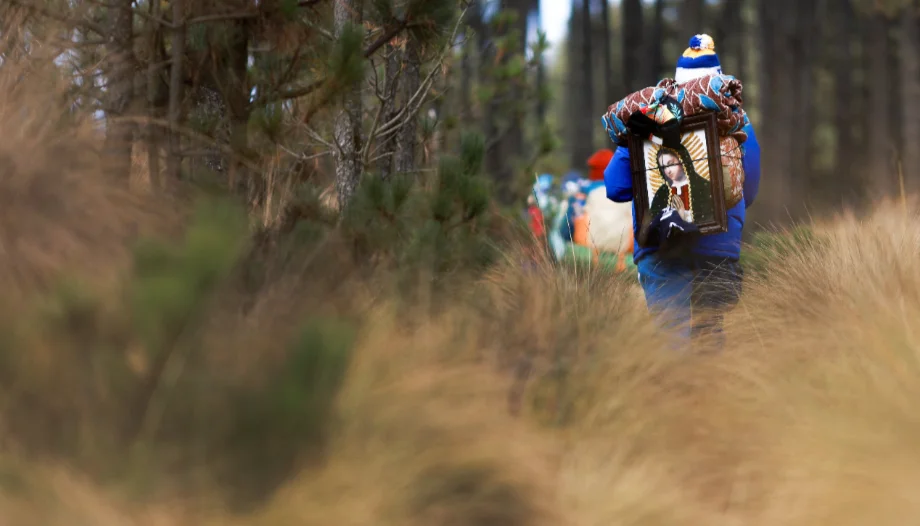
May is joy, the month of the mother and, of course, the month of the Virgin, the one that welcomes us so happy when we make a pilgrimage, those that we did every year at school.

May 12, 2026-Reading time: 2 minutes

How nice it was when in May there was life beyond exams and final papers. Madrid used to raise many Champions and summer could be seen little by little in the color of the flowers. It also smelled, with that unmistakable aroma of watered urbanization and chlorine pool. May is joy, the month of the mother and, of course, the month of the Virgin, the one who welcomes us so happy when we make a pilgrimage, those we did every year at school.

Children singing to Mary from the back seats of the bus in which they travel to the pilgrimage, to the monastery of San Este or San aquel, a wonderful spring morning in which they all enjoy their snacks together and, one or the other, generously share their Pringles while everyone smiles at her, joyful and fresh as the flowers that come there to lay at the feet of the Virgin who reigns over all, over the families and over the school.  

Laughter between balls and balls of the Rosario, The one that they pray with music and with voices still of a child. The pray for us y always, always, always There is someone who makes a mess of the even numbered mysteries, and the teachers also burst out laughing. Requests of all kinds are made, without fear or shame, and Our Lady does nothing but welcome them and give them affection. 

Years have passed and, probably, we can no longer dedicate a whole day to the pilgrimage. Well, there is no need either, any small moment is perfect for this plan.  

My friends and I have patented a perfect format for very serious busy people (although we still don't know with what). For several years now we have been meeting in the late afternoon at the Sanctuary of Valverde, Montecarmelo, where we pray one or two rosaries. We are always confronted with our lack of punctuality, and it is already several times that the janitor closes the Sanctuary in our face. This year he blew the final whistle in the middle of the fifth mystery, leaving us no discount for the litanies. 

At the end of the day, sometimes a bit hasty, we all gathered in a bar to celebrate. And if a birthday or a graduation are good reasons to get together, why not Mother's month? We have changed the sandwiches for beers and, now, instead of asking for the match between 5ºA and 5ºB, we ask for internships, interviews and future engagements. 

Anyway, the years go by and it is inevitable that things change, many for the better. We will go new places and with other people, but always under the same mantle.

The authorAlberto Martín Colino

5th year student of Telecommunications Engineering and Business Analytics.

The World

German government close to a major step back against families

The measure, pushed by Friedrich Merz's executive, seeks to force co-insured family members to pay up to 225 euros per month starting in 2028.

Almudena González Barreda-May 12, 2026-Reading time: 2 minutes

On April 29, the German Council of Ministers approved a health insurance reform that, if it passes the debate in the Bundestag, will impose a monthly surcharge on non-contributing spouses for their medical coverage as of 2028. Until now, these people were covered at no additional cost through the Familienversicherung, The German public family insurance scheme, the German public family insurance scheme.

According to the text approved by Friedrich Merz's executive, the surcharge would be around 225 euros per month or 3.5% of the gross salary of the contributing spouse, although the figures could be modified during the parliamentary procedure. The Government justifies the measure by the need to cover a deficit estimated at 15 billion euros in the public health system.

The people directly affected are overwhelmingly women: family insurance currently covers approximately 2.5 million spouses who are outside the contributing labor market; at home, with mini-jobs, early retirees....

An ideological contradiction within the Government

The reform has not passed without controversy within the ruling coalition itself. The Minister of Health, Nina Warken, belongs to the Christian Democratic Union (CDU), a party which has historically placed the defense of the traditional family model -and of the spouse dedicated to the home- at the center of its electoral program. Various analysts and heads of family organizations point out that the measure economically penalizes precisely this model.

In households with children under the age of seven or with dependents, the reform introduces no changes. However, in those with older children, the economic equation is recalibrated: the spouse who remains at home will no longer be covered, which introduces a structural incentive to join the labor market.

Organizations critical of the measure, the SoVD and VdK social unions, warn that, by monetizing the absence of contributions, the State is directly penalizing women and implicitly transferring the fact that care work within the family - raising children, caring for the elderly, managing the home - is not economically recognized in the system.In a country with a fertility rate of less than 1.5 children per woman and a growing concern about demographic aging, penalizing this model could, in the long term, aggravate the very problem that the reform seeks to solve. 

Sitting in Europe

The German reform comes at a time when several European Union countries are debating the sustainability of their social protection systems. France, Austria, Belgium and the Netherlands maintain similar co-insurance or dependent spouse allowance formulas that have begun to be questioned under similar arguments: contributory equity, promotion of female employment and budgetary balance.

When the continent's largest economy adopts a measure of this scope, it can set a precedent or serve as an inspiration for organizations, such as the European Commission and other national governments, which can take it as a reference for their own reforms. The basic debate, in any case, goes beyond taxation: what is at stake is whether the State considers the relevant economic unit to be the adult contributor or the family as a cell with its own social functions.

The proposal will still have to pass the debate and vote in the Bundestag before it enters into force.

The authorAlmudena González Barreda

Spanish journalist specializing in trends, based in Germany.

Read more
Books

Rod Dreher: “We live in an increasingly esoteric world”.”

Rob Dreher, author of "The Benedict Option" reflects on the return of the supernatural to the West and the need to recover a lived faith, not only an intellectual one.

Inmaculada Sancho-May 12, 2026-Reading time: 7 minutes

Rod Dreher (Louisiana, 1967) is one of the most influential Christian intellectuals in the Anglo-Saxon world. An American journalist and writer based in Europe, he was among the first to investigate the sexual abuse scandal in the Catholic Church in the United States. That experience had such an impact on him that it caused him to abandon the Catholic faith and led him to move to Eastern Orthodoxy.

Author of three “New York Times” bestsellers -including “The Benedictine Option”His latest book, “Vivir en el asombro”, published in Encuentro, deals with the return of the supernatural in a society that thought it had overcome religion, and the urgent need for Christians to recover an incarnated faith, not just an intellectual one. After having lost almost everything, he continues to find God in the everyday. Dreher has attended Omnes in Madrid.

You've written extensively about wonder, but I wanted to start with something more concrete. When was the last time you personally experienced it?

- Almost every day there is some small sign that God is with me, helping me find people who need my help-or that I need in some way I hadn't anticipated⎯. That's why I try to always cultivate a willingness to be open to God acting in my life.

But the first time I really experienced awe was when I was 17, in 1984, on a trip to Europe. I wasn't sure if I believed in God or anything. I was on a bus full of older American tourists - I was the only young person in the group - but I didn't care: I was going to Paris. We made a stop about an hour out of town to visit a church. I thought: another old church. We went in, and it was Chartres Cathedral. There was nothing in my life - I grew up in small-town America at the turn of the 20th century - that would have prepared me for Chartres. There I was overwhelmed with awe and knew, somehow, that God really exists. I wanted to know the God who had inspired men, eight hundred years ago, to build such a beautiful temple in his honor. I did not leave that church as a Christian, but I went on a quest. And that search finally led me to Christ.

In the book he argues that the new atheists of twenty years ago did not create a world without God, but a vacuum, and that it is now being filled by the old gods-Baal, Ishtar, Moloch-returning in new forms. How does that manifest itself today in concrete terms?

- I'm 59 years old and my generation didn't see this. But four years ago I was in Oxford, at a conference, and I was approached by a young 27-year-old seminarian who asked me, “What do you think is the greatest threat to Christianity?” I replied, “Atheism.” He replied, “No, that was true for your generation. For mine, most people don't think about atheism. The threat is occultism".  

He told me that in London, where he had worked before entering the seminary, he was the only Christian in his office. But there were no atheists: everyone had some link with the occult: astrology, tarot, crystals, Wicca, etc. There were even two people who argued that Satanism was the best way to be fully human. The seminarian he told me, “I know that when I become a priest I will have to deal with this for the rest of my life. But your generation doesn't even know it exists. That shocked me.  

When I returned home I looked into the social sciences, and it is absolutely true. Chesterton said that when man stops believing in God, he believes in anything. And that is what we are living today. Young people - the twenty-somethings, the teenagers - are looking for mystery, transcendence and meaning. But they do not always want Christianity. Some think that they cannot find it in the Church, because many Churches try to downplay the importance of mystery in order to appear more modern. Others know that becoming a Christian implies surrendering one's life to Jesus Christ and losing the freedom to do whatever they want. Occultism tells them that they can do whatever they want. The problem is that it will cost them their soul.

He devotes a whole chapter to what he calls “dark enchantment”: people who go through experiences that we could call demonic (witchcraft, psychedelics). Why do you think this change occurred, from not believing in anything to wanting to go into that darkness?

- Because people cannot live without a sense of mystery, without believing that there is something beyond the material world. It is something we need as human beings. From the Christian faith, I believe that St. Augustine was right: our heart is restless until it rests in God. Well, they seek him, but they choose a false god: the god of occultism.

Throughout history there has always been the practice of discernment: trying to distinguish what is truly of God from what is not. But in the book you write that today many people are attracted to Artificial Intelligence and UFOs almost as if they were supernatural entities, new sources of transcendent wisdom. Do you think most believers have lost the ability to discern what they are dealing with spiritually?

- In general, almost no one today is prepared to discern. It is taken for granted that if something mysterious or supernatural happens, it must be good, or at least neutral. The Church offers serious criteria for discernment, but many people do not want to listen to her - they think they know better. And they can get caught before they realize it.

We also live in a culture that is open to all kinds of experiences and that believes that the only authority is oneself: not the Church, nor the Bible. This is a very dangerous thing, and one that our culture encourages. We live in a religious environment in which people - even many Christians - believe they have the right to choose for themselves what is true and what is false. That freedom is an illusion. You can do drugs if you want, but they will kill you. If you follow the Church's wisdom on the matter, you'll stay away. The same goes for spirituality: in the Bible we find all kinds of warnings against it. The Church has two thousand years of experience in these realities.

In the book I talk about how in the modern Western world we are what they call “WEIRD”: “Western”, “Educated”, “Industrialized”, “Rich”, “Democratic” -Western, educated, industrialized, rich and democratic. That is the West today. In that world we do not perceive the spiritual dimension of life in the same way as most people in the rest of the world, nor in the same way as our ancestors before the modern era. This is, in a sense, good news. If we think that we know it all and that those who live in other countries are simply superstitious, we are wrong. There is superstition, yes, but they perceive aspects of reality that we are blind to, because of our materialistic culture and the myth of progress, which states that each generation is smarter than the last. In science and technology, that may be so. But in spiritual matters, we are becoming more and more stupid.

Some readers felt that “The Benedict Option” was a withdrawal from the world, almost like closing doors. And in “Living in Awe,” on the other hand, there seems to be an openness to spiritual experience. Would you say that this new book qualifies or corrects that perception?

- Yes, I heard that a lot from critics of “The Benedict Option,” many of whom had not read the book. In it I explain that there is no escape from the modern world; we cannot run for the hills and hide. But if we are to live in this world as faithful Christians, we need to set certain boundaries in order to cultivate the faith, grow in it and pass it on to our children, so that when we go out into the world we can be faithful disciples of Jesus Christ. I never said “retreat to the mountain,” but I think a lot of people wanted to understand it that way, because that way it is easier to reject the message.

In this new book I say: we live in a world that paradoxically is becoming more and more esoteric. That is why we have to go back to what the Church has taught us about spiritual discernment and raise those barriers, not to run away from everything, but to know how to say no when we encounter it.

In the book he talks about prayer for deliverance, family estrangement, his divorce, and says that what he left was a dark cloud he had carried with him all his adult life. Did he hesitate before publishing something so personal?

- I did hesitate, because it was very personal. But at the same time, in everything I have written I have found that people come up to me and say: “Thank you for saying these things; I have lived it too and it gave me hope”. And I thought: if God did this for me through the prayers of my priest - who is also an exorcist - I can't keep quiet, because there may be someone reading this who needs exactly that help. Of course, many people will laugh at me for writing something like this. I don't care. I'm 59 years old and I've lived too long. My wife divorced me, I lost my Catholic faith, I'm estranged from my family in the U.S., who have their own problems. And Christ carried me through it all. I have published three books on the “New York Times” bestseller list, so I'm not worried about people laughing at me. I feel like I want to bear witness to what the Lord has done in my life. 

Since my divorce, I have never spoken publicly about why it happened because it is too intimate. However, there are Christian men I don't know who write to me saying, “I'm sorry you are going through the divorce. This is what I'm going through. Can you help me?”. And I tell them everything I can to help them.

Would you say then that all those painful things and that vision of wonder that you describe in the book fit together? Or is it sometimes complicated?

- They fit, although it is often complicated. In my previous book, “Living Without Lies,” I tell the story of a Christian in the Soviet Union-Alexander Ogorodnikov. He was from a prominent Communist family, but converted to Christianity in the early 1970s. The young men began meeting in his Moscow apartment to pray and praise God together. Eventually, the KGB arrested them all and sent them to prison. Ogorodnikov was put on death row, not because he was sentenced to death, but because, coming from a known communist family, he was put among the worst prisoners in Russia to suffer. He began to evangelize them, and some were converted. The guards, furious at the conversions, put him in solitary confinement. There he began to really suffer and to doubt his faith. I interviewed him once in Moscow, and he told me - crying - that one night he was awakened by an angel who shook him. He raised his eyes and saw the angel, who showed him a vision of a man, a prisoner, with his hands behind his back, being led to his execution. This was repeated night after night. And Ogorodnikov eventually understood what it meant: all the men he saw (who were murderers), who were being led to execution, had accepted Christ because of his preaching. The angel was telling him: through your suffering, these men are today in paradise with the Lord, because they repented. And Ogorodnikov told me: “I recovered all my faith and all my hope from that experience”. 

When I hear a story like this - and I know it is true - when I feel depressed and full of despair about what has happened to me, I am reminded of Ogorodnikov's testimony: suffering is not the end. If we continue to persevere without losing faith - with the conviction that Christ allows this for a mysterious reason and that we only have to cooperate with the Holy Spirit, maintain hope and show God's love to others in spite of suffering - in the end we are fulfilling God's will.

The authorInmaculada Sancho

Read more
The Vatican

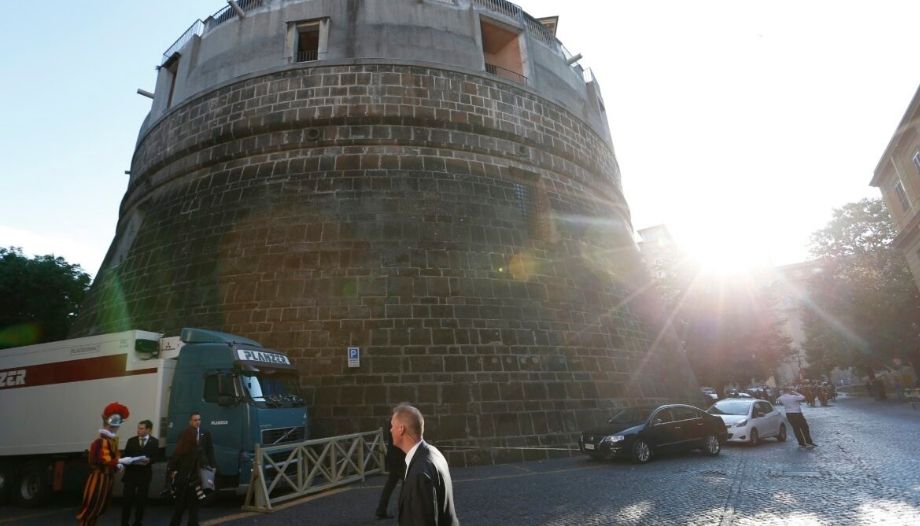
The Vatican's IOR grew in profit (51 million euros, 55.5 % more) and deposits.

The Institute for Works of Religion, Vatican IOR, has increased in 2025 its net profit to 51 million euros, 55.5 % more than in 2024, thanks also to the increase in the volume of client assets (5.9 billion against 5.7 billion in 2024).  

Francisco Otamendi-May 11, 2026-Reading time: 3 minutes

The new IOR, Istituto per le Opere di Religione (IOR), commonly referred to as the Vatican Bank, has just published the fourteenth edition of its Annual Report, which includes the 2025 financial statements, with a remarkable growth path in its indicators.

Frenchman Jean-Baptiste de Franssu concluded his term of office as president with the approval of these annual accounts for 2025. The Institute paid tribute to his work, carried out at the encouragement of Pope Francis. François Pauly, from Luxembourg, has been the new president since April 28.

Main indicators

Among the most relevant data of these annual accounts, The IOR highlights the following.

- 51 million in net income in the last fiscal year, up 55.5 % from 2024, thanks also to an increase in customer deposits.

- 5.9 billion euros in total deposits (customer deposits, assets under management, assets under custody) managed by the bank, up 3 percent from 5.7 billion euros in 2024.

- 815.3 million euros of net assets, an increase of 83.4 million euros compared to 2024.

- 32.3 million euros net interest income, compared with 29.4 million euros in 2024; 26.2 million euros net fee and commission income, in line with 26.5 million euros in the previous year; net interest income of 66.3 million euros, compared with 51.5 million euros in 2024.

- Tier 1 ratio of 71.9 %, 3.5 % higher than in 2024, mainly due to an overall decrease in risks and an increase in total capital.

Logo of the Vatican IOR (Wikimedia commons).

Some comments

The significant increase in net income was mainly due to improved operating results, reflecting active and disciplined portfolio management, as well as favorable market conditions.

Overall profitability increased substantially, further supported by the positive performance of pension fund reserves.

All client portfolio management (CPM) strategies, with positive performance across the board, confirm IOR's position as one of the world's leading asset managers to the service of Catholic asset owners. 

Deloitte's “unqualified” audit report

The financial statements presented have received an “unqualified” audit opinion from the auditing firm Deloitte & Touche, and were unanimously approved on April 28, 2026 by the Institute's Board of Superintendents, as required by the Bylaws.

In light of “the solid data,” and taking into account the Institute's capitalization needs, the Commission of Cardinals approved the distribution of a dividend of €24.3 million to the Holy Father, an increase of 76.1 % over 2024, in line with the Institute's mission to support works of religion and charity.

The note adds that in full conformity with the Social Doctrine of the Church, the IOR has continued to offer a diversified product range, combining its management expertise with that of more than 11 international asset managers. 

More religious congregations customers

In the section on client assets under management, €5.9 billion at the end of the year, the IOR reports that during 2025 there was an increase both in the number of religious congregations that are clients of the Institute and in those that entrusted their assets by subscribing to asset management mandates. 

The IOR highlights “the soundness of the Tier 1 ratio, as well as the liquidity ratios”, which “place the Institute among the strongest financial institutions in the world in terms of capitalization and liquidity”.

Online banking and strategic plan

The Institute has also introduced an online banking service, expanding access channels and ensuring simpler, safer and more immediate operating methods, in line with the highest international standards.

The 2026-2028 Strategic Plan approved by the Board of Superintendents is based on three key principles: customer focus, prudent growth, and financial security and soundness.

In February 2026, the IOR launched, in collaboration with Morningstar, two new stock market indexes. “Developed in accordance with best market practices and in full compliance with the principles of the Social Doctrine of the Catholic Church, both indexes are intended to serve as a benchmark for Catholic investments worldwide.”.

The authorFrancisco Otamendi

Evangelization

Erik Varden: “Loving those who make mistakes does not mean pretending that those mistakes do not exist, but addressing them in a constructive way”.”

Erik Varden, Norwegian bishop, speaks in this interview about the urgency of being truly Christocentric and "firmly committed to following Christ and applying his commandments and promises.

OSV News Agency-May 11, 2026-Reading time: 7 minutes

-OSV News / Gina Christian

During his May 7 visit to St. Mary's Seminary in Baltimore, Bishop Erik Varden of Trondheim, Norway, a member of the Trappist monastic order, gave an interview to OSV News to share his reflections on Christian hope, the dangers of artificial intelligence and the instrumentalization of the Christian faith, as well as the need for patience in the spiritual life.

This interview has been edited for length and clarity.

You gave reflections for the Lenten Spiritual Exercises at the Vatican to Pope Leo XIV and others, and in your final reflection you focused on the theme of communicating hope. In the United States there has been a great deal of interest in films and books of the “Nordic noir” genre-often bleak and morally ambiguous-and there is a perception that Nordic culture is, in general, similar. Do you find it ironic that a Nordic bishop would focus on hope?

- Well, your question makes me smile, because I've lived in several countries, mostly in Europe, and it seems to me that the further south you move in Europe, the more outlandish people's ideas of the north are, and the more they take for granted that it's an area of the world mired in perpetual darkness, where everyone is into drinking and excess, where everyone is on antidepressants, and where people keep committing suicide with axes.

And actually it's not exactly like that. I think this idea of the long Norwegian winter has a big impact on the imagination. But what most people don't realize is the extreme brightness of the Norwegian summer, and that exposure to light without any hint of darkness. That is intrinsic to our way of living the cycles of the year.

The “Nordic noir” phenomenon is interesting. But I suspect it is a genre that has arisen precisely because a few astute authors have realized that it responds to what the public expects. And so they feed the stereotype because it sells, and because people find it entertaining, in a somewhat perverse way.

But when we look at our own literature, poetry and music, we see that, for the most part, they are a celebration of light and spring. It is fascinating how much Norwegian poetry and music is dedicated to spring, to the thaw and the appearance of the first flowers.

Of course, I don't mean at all to deny that the Vikings were brutal, but that wasn't everything about them. I think there is a constructed Norse identity that goes back centuries.

In his Lenten reflection on hope, he pointed out the current tendency to cling to our wounds or to ignore them altogether. How can we avoid both extremes?

- I think our wounds are so problematic, in large part, because we absolutize our own experience. We are inclined to think, “I carry this burden, and this is my great tragedy, and this is the drama of my existence.” Or else I think, “Let's make sure that no one suspects this wound that I carry.”.

We do that instead of looking around and saying, “Actually, being wounded is the normal human thing. And maybe my wound is not so different from my neighbor's.”.

If I learn to live with my wound, and if I learn to believe and hope that it may be curable, and if I seek the right remedies, I may even be able to overcome it.

And what will remain will be the memory of healing.

There are so many things around us that encourage us to live closed in on ourselves, as if each of us were the only important subject on planet Earth. Immersed in my own experience and its pathos, I forget to look around me and to take into account the experience of others, their joy and their suffering. And I isolate myself from the engine of compassion that makes community and even communion possible.

As a pastor, how would you like to see community built in your parishes?

- Well, I'm a bit skeptical about master plans; I don't have enough entrepreneurial spirit. But I was very happy about the study day we had at the cathedral parish in Trondheim. There was a very, very mixed audience, and a lot of people came who didn't know each other.

In the evening, we all had dinner together and the room was full of people chatting animatedly. I stood in a corner and could see all those little groups of people who had met that same day, enjoying each other's company, eating and drinking together, listening to each other, learning from each other... and not thinking for a moment about looking at their cell phones.

I believe that the more our parishes and communities succeed in fostering this kind of union, the greater their impact will be beyond their own borders, because that is precisely what attracts other people.

It must be said that (the event at the Trondheim Cathedral parish) had been a day made up of some conferences, but also moments of prayer. We had attended Mass, celebrated the Divine Office together and spent some time in silent prayer.

And I think it was precisely because our community that day was based on both intellectual and spiritual nourishment, on shared silence and shared conversation, that it was able to be so effective in such a short time. All these elements must be present: the spiritual, the intellectual, the social and the convivial.

What are your hopes and fears regarding artificial intelligence and its use to promote spirituality?

- I am afraid that, if I may now express my own nihilism, as far as spirituality is concerned I have absolutely no hope in AI.

Anything can serve as a tool, but I do not believe that AI will generate any spiritual renewal, because any spiritual renewal worthy of the name is one that reaches the human heart, and that is something that an algorithm cannot do.

Obviously, I mean there are things I can use in digital media and artificial intelligence that can save me time and even make me discover useful things, but I don't rely on them much as conversion agents.

You have spoken before about the dangers of using Christianity as a weapon for political purposes. How can we stop that process, instead of continuing to fuel the problem?

- Good question. And you see it everywhere; I see it in my own country too.

First of all, I would like to stress that the Gospel of Jesus Christ is an end in itself, an end that represents a goal. Any attempt to instrumentalize the Gospel for a secondary purpose, whether cultural, ideological or political, is suspect.

And we must guard against any attempt to wield Christianity devoid of the message and presence of the Wounded and Risen One. Any presentation of Christianity that removes the scandal of the Cross or perversely uses the Cross as a weapon to beat others is straying into heresy or even blasphemy.

That is why we must remain resolutely Christocentric and firmly committed to following Christ and applying his commandments, as well as his promises - first and foremost to ourselves. And we must beware of too much rhetoric, beware of too many words and look at how people live.

In short, this is how Christianity spread and how it renewed a world exhausted in Late Antiquity. Of course, there was a component of preaching, teaching and catechesis. But what captivated people and transformed societies was the discovery of a new way of being human and of creating and fostering community, as well as seeing and recognizing the possibility of reconciliation, forgiveness and building a society, a new city, on the basis of reconciliation and forgiveness.

And so, when Christianity is invoked as part of what is ultimately hate speech, we must not go with the flow.

How do we make sure we don't fall into the danger of getting on that train and how do we help others get off it?

- The fundamental principle-which is very ancient, you know, we find it in St. Paul-is to train ourselves to speak the truth in love.

Loving those who make mistakes does not mean pretending that those mistakes do not exist, but rather addressing them constructively, rather than giving in to an escalation of conflicts.

That is, to speak the truth with love, to make sure that I have really studied the truth, that I understand it, that I am prepared to give an answer, that I am prepared to give an account of the hope that is in me, and that I am not just clinging to some tribal instinct. It's really important.

The best thing we can all do is to deepen our faith, read the Scriptures, be formed in them, understand and live deeply the sacramental grace of the Church, in order to be able to speak from that experience.

And I would say that that represents the ultimate curative remedy to which you referred in your question, because when one contemplates the splendor of the Church as a community of the redeemed, living by grace and enlightened by the love of Christ, incarnated in a concrete community, that has an attractiveness and a beauty that makes any other attractiveness that invites loyalty pale into insignificance.

Part of this instrumentalization of Christianity is an attempt to “hasten the coming of God's kingdom on earth” by human means. As Christians, how do we balance this tension between the present life and our hope for a future in heaven?

- Above all, practicing patience, which is not a very fashionable virtue and against which everything seems to conspire, since today we live under the illusion that if I have a need or a desire, it must be satisfied immediately. There must be something I can download, or a number I can call, or some delivery man who can come to the door with things in his backpack that will give me what I crave, or what I long for, or what I feel I cannot live without.

But that belief is an illusion. It works to some extent, if we have money on our credit card; it can keep us fed and clothed, and to some extent entertained.

But human life is a protracted affair. And things take time.

Great things take time. That is a principle that (St. John Henry) Newman liked to emphasize.

And being human is a great thing.


This article was originally published by OSV News and is reprinted here with permission. You can read the original text HERE.

The authorOSV News Agency

Cinema

Leonas, Cotelo's new documentary that puts its finger on the sore point

On May 15, Leonas, which tells the story of Majo Gimeno and how to deal with the problem of the thousands of abandoned children in Spain, will be released in Spanish theaters.

Javier García Herrería-May 11, 2026-Reading time: 4 minutes

There are movies that entertain and movies that move you inside. Lionesses is the latter. Produced by INFINITO + 1, the documentary shows the healing power of love for those who receive it and for those who give it, scientifically proven. 

Its director, Juan Manuel Cotelo, and its protagonist, Majo Gimeno, founder of the association Moms in Action, They came to the interview with something that interviewees do not always bring: the certainty that what they are talking about really matters.

It all starts with a single child

The story starts in 2013, when Majo Gimeno discovers in Valencia an invisible reality: thousands of hospitalized children facing the disease all alone, without family by their side. One baby. One hospital. No one by their side. That's all it took for Majo's life to change direction.

«I saw a child, he took away my peace and I wanted to accompany him because I would come home and see my daughter and I would see that child,» says Majo. «It made me so angry that I was dying to think that he was sleeping alone. That there was no one to do that to him».

There was no strategic plan. There was no grand vision. Just an uncomfortable question that kept her awake at night. «Does this child have no one and now what do I do? Do I go home like I haven't seen him? Or do I do something to keep him company?».

He stayed. She had no idea what was going to happen. And from that gesture - small, foolish, human - Moms in Action was born.

Why they are Lionesses

The title refers to the maternal sense of care that many women (and also men) feel when they discover that in Spain there are thousands of children without families. Because that is exactly what they are: women willing to fight with a common commitment: no child alone. If a mother has so much power... what will an army of mothers not achieve?

Today, more than a decade after Majo Gimeno stayed that night with an unknown baby, Mamás en Acción brings together active volunteers in cities such as Valencia, Barcelona, Mallorca, the Canary Islands and Madrid, with a common commitment: no child alone. The association has already accompanied more than 2,000 children in 54 hospitals in Spain.

A reality that hurts

The numbers are hard to hear. In Spain there are more than 55,000 minors without parents or legal guardians. They are not unaccompanied minors arriving from abroad: they are children of Spanish families whose parents, at some point, tell the State that they cannot take care of them. Or the other way around, children whom the state protects by taking them away from their parents. 

«The panorama is like a scary movie, with apologies,» Majo admits bluntly. «I don't like to launch destructive messages, but on this issue we are late and wrong.».

The problem is structural: when parents are found to be not taking good care of their children, the administration assumes guardianship. But the parents are given time to rehabilitate themselves, and in the meantime the child cannot be placed in a family. 

«You can have six siblings under the administration's care living in sheltered centers and you can renew your right to rehabilitation with each new birth,» explains Majo. In Madrid alone, more than six thousand children live today in sheltered homes. In Valencia, more than five thousand.

His request to the State is direct: «They should act as parents and not as politicians. The success of a parent is that their children do well. That's all there is to it. And to society, something even simpler: »Let's look around and stand still. That's it.«

The merit that goes unrecognized

Majo Gimeno is one of those people who are a little uncomfortable because they leave no excuses standing. She does not speak from a pedestal of superiority. In fact, she insists that hers has no merit. «What I did has no merit because I never visualized what was going to happen. Never.».

And when someone tells her that she has a special light, she rejects it outright: «I wish. I'm not like that, I'm like you. Don't take me for something I'm not, not at all».

Moms in Action, she reminds us, was born not from a brilliant idea but from a very uncomfortable question. And we all, at some point, have that question waiting for an answer. «We all have a lonely child around. Sometimes it's a parent you have to take home with you and you know it but you don't want to look.». 

Open your eyes and look around you: «Don't come to volunteer if you haven't seen your sick grandmother for two months. Do you know that your downstairs neighbor hasn't had a visitor for months? Have you had coffee with her?.

The faith that came later

Majo's story also includes a strong religious identity. Some time after creating Moms in Action, she went through a difficult personal situation, until she came to God. Her conversion did not come from accompanying children in hospitals, but from a suffering that pushed her to the limit. 

He said to God: «If you really exist, may I die today because I don't want to go on living. I mean, I can't, I can't do this».

What he found on the other side of that moment, he recounts, was a real presence. «Jesus Christ is risen. I'm telling you, he's very much alive and he's here because he came down to hell to rescue me.» And from there, he says, past suffering made sense: «What was making you suffer was the cross you had to climb to be able to love.».

Cotelo: the director who falls in love with projects

Juan Manuel Cotelo, known for documentaries such as The last peak o Make a mess, He came to Majo in a way that couldn't be more his own. He saw her being interviewed on a TVE set while waiting for him to enter. «As I was getting on the microphone I heard that girl talking there and it was immediate: hey, give me your phone, I need to talk to you.». 

Cotelo confesses that in the interview round for this film something was different. «Many times journalists stay on the surface. And how did you do this scene? The film's budget, anecdotes from the shoot. With this film, I'm realizing that the press has grasped the heart of the matter: the urgent need we have to be loved and to love».

What is his next project? Cotelo is clear: he doesn't know. «I'll start thinking about it next Monday. I have many projects to choose from because there are so many wonderful stories to tell.». 

Lionesses hits theaters this May 15. Perhaps the hardest thing to do after seeing it is to go home as if nothing had happened.

Read more
Evangelization

Six apparitions of the Virgin Mary to encourage and inspire the faithful

Although God has already “said everything” through Jesus Christ, as the Church teaches, some Christians have attested to having seen or heard Jesus, angels or saints, especially the Blessed Virgin. Here are six influential apparitions of the Virgin Mary in the last five centuries.

OSV / Omnes-May 11, 2026-Reading time: 6 minutes

- Jeff Ziegler, OSV News

Over the centuries, some Christians have testified that Our Lady, the Virgin Mary, has appeared to them. These are so-called “private” revelations, some of which have been recognized by the authority of the Church,” as the Catechism of the Catholic Church teaches (no. 67). 

“However, they are not part of the deposit of faith. Their function is not to improve or complete the definitive Revelation of Christ, but to help to live it more fully in a given historical period.”.

Six of the most influential and approved Marian apparitions of the last five centuries are described below.

Our Lady of Guadalupe (1531)

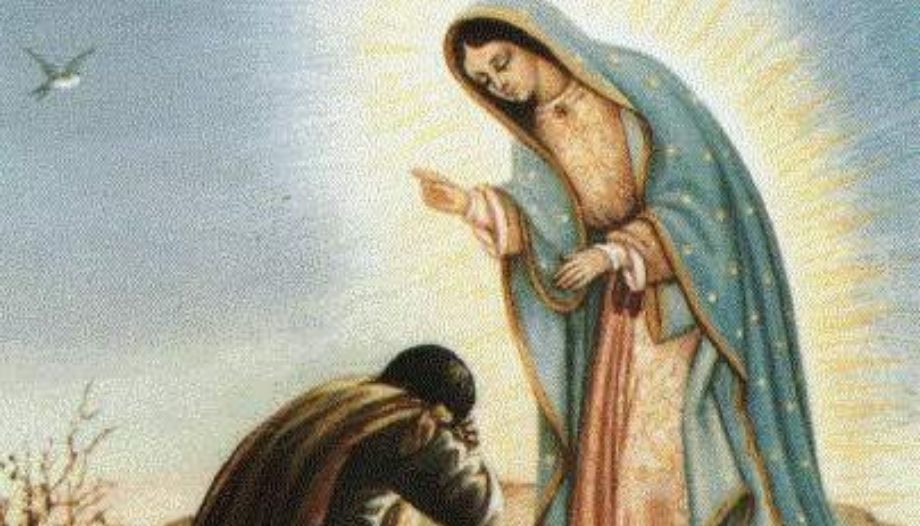
Between December 9 and 12, 1531,  the Virgin Mary appeared four times to St. Juan Diego Cuauhtlatoatzin (1474-1548), a member of the Chichimeca people and a convert, on the hill of Tepeyac, near Mexico City.

“Know for certain, my children, that I am the perfect and eternal Virgin Mary, Mother of Jesus, the true God, through whom all things live, Lord of all things near and far, Lord of heaven and earth,” she said. “It is my fervent desire that a temple be built here in my honor. Here I will demonstrate, manifest, give all my love, my compassion, my help and my protection to the people.”.

The Virgin of Guadalupe appears to the native Juan Diego (Wikimedia commons).

Our Lady asked Juan Diego to communicate her request to Bishop Juan de Zumarraga. The bishop asked for a sign during a visit to Juan Diego. Upon seeing Our Lady again, she led him to a hill where he saw a flower garden; he cut roses and placed them in his tilma. Returning with the bishop, he opened his tilma. The roses fell to the ground and the image of Our Lady of Guadalupe miraculously appeared in it.

In 1754, Pope Benedict XIV approved Our Lady of Guadalupe as patroness of Mexico, and St. John Paul II named her “patroness of the Americas” in 1999. He visited her basilica in 1979, 1990, 1999 and 2002. Pope Francis visited her in 2016.

Our Lady of the Miraculous Medal (1830)

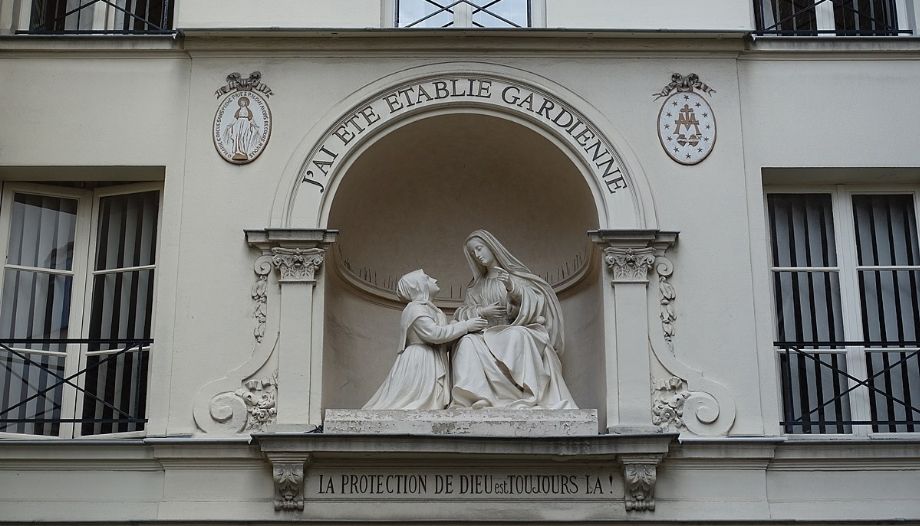
In 1830, the Blessed Virgin Mary appeared three times to St. Catherine Labouré (1806-1876), a member of the Daughters of Charity of St. Vincent de Paul. The second time she saw Mary crushing a snake, with rays emanating from her hands. He also saw the words: “O Mary, conceived without sin, pray for us who have recourse to you”, and heard a voice saying: “Make yourself a medal with this model. Those who wear it with confidence will receive great graces.” Eventually, the Archbishop of Paris granted the request.

In 1980, St. John Paul II made a pilgrimage to the chapel in Paris where St. Catherine saw the apparitions. “You obtain from God, for us, all these graces that symbolize the rays of light that radiate from your open hands, on the sole condition that we dare to ask you for them, that we approach you with the confidence, boldness and simplicity of a child,” he prayed.

Chapel of Our Lady of the Miraculous Medal in Paris (Guilhem Vellut of Paris, France, Creative Commons, Wikimedia Commons).

Our Lady of La Salette (1846)

In 1846, the Virgin Mary appeared to two French children, Maximin Giraud (1835-1875) and Mélanie Calvat (1831-1904), in southeastern France. The Virgin lamented the sins of blasphemy, the refusal of most villagers to attend Mass in summer and the lack of fidelity to Lenten discipline.

“If my people do not obey, I will be forced to cut off my son's arm,” she warned. “It is so heavy that I can no longer hold it.” Bishop Philibert de Bruillard of Grenoble approved the apparition in 1851.

“Mary, Mother full of love, showed in this place her sadness before the moral wickedness of humanity,” wrote St. John Paul II in a letter commemorating the 150th anniversary of the apparition. “Through her tears, she helps us to better understand the painful gravity of sin, of the rejection of God, but also the passionate fidelity that her Son maintains towards his children; He, the Redeemer whose love is wounded by forgetfulness and indifference.”.

Our Lady of Lourdes (1858)

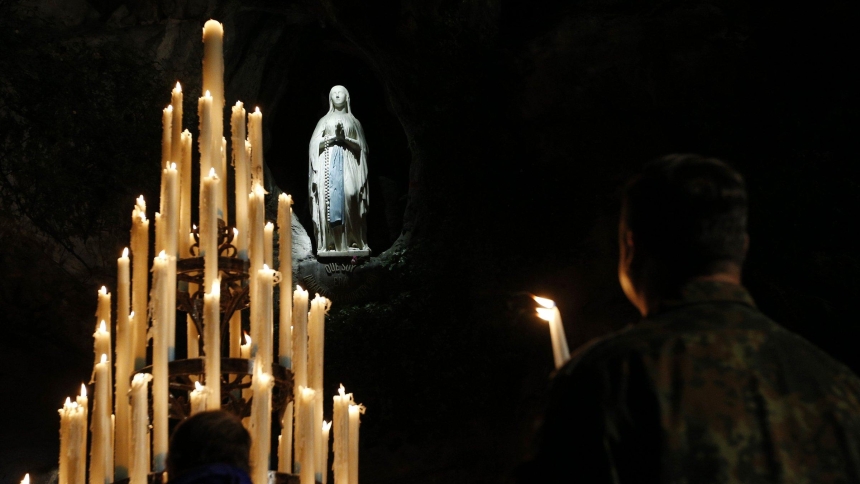
The Virgin Mary appeared 18 times to St. Bernadette Soubirous (1844-1879) in Lourdes, a town in southwestern France.

“From February 11 to July 16, 1858, the Blessed Virgin Mary deigned, as a new favor, to manifest herself in the territory of the Pyrenees to a pious and pure girl from a poor and hard-working Christian family,” wrote Pope Pius XII in a 1957 encyclical.

On one occasion, the Virgin Mary said: “Penance, penance, penance! Pray to God for sinners. Kiss the ground as an act of penance for sinners”. After a spring gushed forth, the Virgin Mary said, “Go and tell the priests to come in procession and build a chapel here.” When Bernadette asked her to identify herself, she declared, “I am the Immaculate Conception.”.

Bishop Bertrand-Sévère Mascarou-Laurence of Tarbes-et-Lourdes approved the apparitions in 1862. In 1911, St. Pius X wrote that the shrine of Lourdes “surpasses in glory, it seems, all others in the Catholic world.” St. John Paul II made pilgrimages there in 1983 and 2004, as did Pope Benedict XVI in 2008.

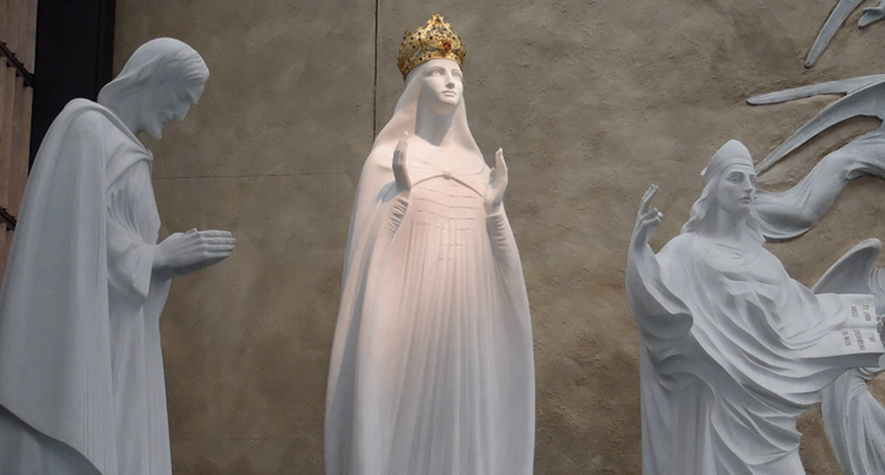
Apparition of the Virgin Mary in Knock (Ireland) (@Home of the Mother).

Our Lady of Knock (1879)

In 1879, fifteen persons of all ages in Knock, Ireland, witnessed an apparition of the Virgin Mary, St. Joseph and St. John the Evangelist on a rainy afternoon; the Virgin prayed, but did not speak. Within a few months, Archbishop John McHale of Tuam found her testimony credible, and the place soon became a pilgrimage site.

In 1979, St. John Paul II celebrated Mass at Knock and dedicated the Basilica of Our Lady, Queen of Ireland. “For a whole century, you have sanctified this place of pilgrimage by your love, by your sacrifice, by your penance,” he preached. “All who have come here have received blessings through Mary's intercession.”.

“From that day of grace, August 21, 1879, until today, the sick and suffering, people with physical or mental disabilities, those who had doubts about their faith or their conscience, all have been healed, consoled and reaffirmed in their faith because they trusted that the Mother of God would lead them to her Son, Jesus,” he added.

Pope Francis visited the Shrine of Our Lady of Knock in 2018 and elevated it from a national shrine to an international shrine.

Our Lady of Fatima (1917)

In 1917, Our Lady of the Rosary appeared for six consecutive months to three Portuguese children: Venerable Lucia Santos (1907-2005), St. Jacinta Marto (1910-1920) and St. Francisco Marto (1908-1919). Her message was one of prayer, atonement and devotion to her Immaculate Heart.

“Pray the rosary every day to bring peace to the world and an end to war,” he said. “And after each mystery, my children, I want you to pray like this: O my Jesus, forgive us our sins, deliver us from the fires of hell. Bring to heaven all souls, especially those most in need.”.

“Offer sacrifices for sinners and say often, especially when making a sacrifice: O Jesus, this is for love of You, for the conversion of sinners and in reparation for the offenses committed against the Immaculate Heart of Mary,” he added.

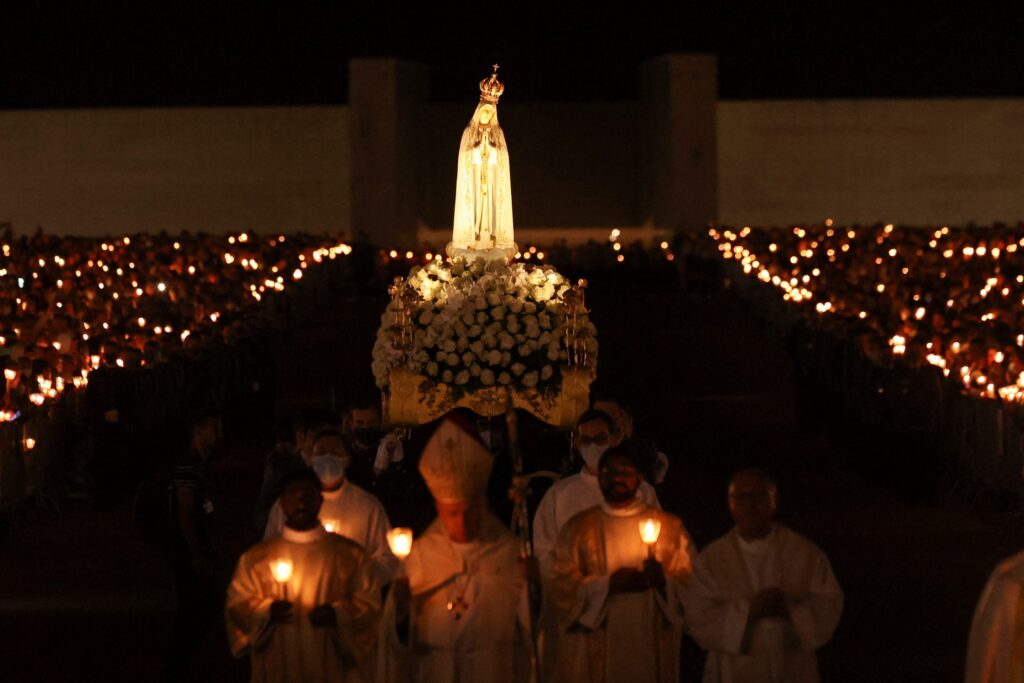
On May 12, 2022, thousands of faithful carry candles at the Marian shrine of Fatima in central Portugal (Photo OSV News/Pedro Nunes, Reuters).

Consecration of the World to the Immaculate Heart of Mary

She revealed to the children a secret in three parts: a vision of hell, a request for the First Saturday devotion and consecration of Russia to the Immaculate Heart, and the murder of a bishop dressed in white, along with other clergy, religious and lay people. 

Pope Pius XII, St. Paul VI, St. John Paul II and Pope Francis consecrated the world to the Immaculate Heart of Mary, and the Congregation for the Doctrine of the Faith published the text of the third part of the secret in 2000, together with commentaries.

During the last apparition, on October 13, the Virgin Mary asked for the construction of a chapel, and 70,000 people witnessed the dance of the sun in the sky. Bishop José Alves Correia da Silva of Leiria-Fatima approved the apparitions in 1930, and St. Paul VI, St. John Paul II, Pope Benedict XVI and Pope Francis made pilgrimages there.

The authorOSV / Omnes

Dossier

Current challenges of the permanent diaconate

The main challenge for the permanent diaconate is to define its own identity as a servant, avoiding being reduced to a simple substitute for the priest or an “altar boy” focused only on the liturgy.

Tony Strike-May 11, 2026-Reading time: 5 minutes

It is well known the permanent diaconate was debated and restored at the Second Vatican Council. Its purposes were set out in Lumen Gentium [29], and General Norms followed in Sacrum Diaconatus Ordinem in 1967. In 1972 we had a further Apostolic Letter, Ad Pascendum, and finally the ‘Basic Norms for the Ministry and Life of Permanent Deacons’ in 1998. The Church then fell silent on the subject of the restored diaconate. A clue as to why lies in Cardinal Walter Kasper’s comment in 2003 that: ‘…the ministry of the deacon remains unclear and a matter of theological dispute, resulting in the variety of pastoral tasks assigned to deacons.’ 

The 2023 preparatory document for the Synod on Synodality echoed the Cardinal’s sentiment, stating: ‘The permanent diaconate has been implemented in differing ways in different ecclesial contexts. Some local churches have not introduced it at all; in others, there is concern that deacons are perceived as a kind of substitute for the shortage of priests. Sometimes, their ministry finds expression in the liturgy rather than in service to those living in poverty and who are needy in the community. We therefore recommend an assessment of how the diaconal ministry has been implemented since Vatican II.’ Hardly a ringing endorsement of the previous 50 years of lived experience, and which begs a question. Has the Church got the Diaconate it wanted?

The danger of history repeating itself

The question is important as the renewed diaconate is only 50 years young. While in its ancient form it flourished up to the fifth century it then experienced, for various reasons, a slow decline. If there are criticisms then we must take them seriously. Afterall, in the debate at Vatican II, Cardinal Spellman argued the restoration was unnecessary and the reasons for the permanent ministry originally dying out should be respected.

What the Church Council wanted though was clear enough. The 1998 Basic Norms said: ‘The Leitmotiv of his [the Deacon’s] spiritual life will therefore be service; his sanctification will consist of making himself a generous and faithful servant of God and men, especially the poorest and most suffering.’ This is entirely compatible with Cardinal Suenens winning argument in the Council debate before the vote on the restoration, that the servant Church would find concrete sacramental expression within a renewed diaconate. So, we should face any criticism head on. 

Glorified altar servers

The 2025 report of the Commission on the Female Diaconate said that where the diaconate is active its functions are often ‘coinciding with roles proper to lay ministries or to altar servers in the liturgy.’ This is a profound but not a new criticism. Pope Gregory the Great complained at the Council of Rome in 595 AD that Deacons were no longer looking after the poor but chanting psalms. Most Deacons have extra-parochial ministries, performing a wide range of charitable functions in society. The risk is this service is invisible to the hierarchy, while public liturgy is by its nature visible. This is often called the ‘double- life’ of Deacons. 

One solution toward making these diaconal roles visible may lie in ensuring every Deacon is rooted in a Eucharistic community but that his other ecclesial ministries are included in his decree of appointment. This would help those who are parish-focused not to overlook the Deacons whole ministry. Because Priests and Deacons often meet in the Sanctuary, Deacons who are not well versed in liturgical matters can be criticised by some of the presbyterate, and that is how their competence is judged. It is equally clear the Deacon’s focus is not on serving at the Altar, nor on serving the priest, but on serving those on the margins. Rooted in the Word, the Deacon is sent from the Altar to the street. Service at the Altar is a reflection of service done in the world. 

A handy substitute for Priests 

This is a strange criticism as the permanent diaconate would not be useful in resolving the shortage of priests because deacons cannot replace priests. But during an address to the Permanent Deacons of the Diocese of Rome in June 2001 Pope Francis said while deacons may fill in for priests due to shortages, their true, specific nature was in service, particularly to the poor, rather than administrative replacement. He said: ‘Because of a declining number of priests, some permanent deacons are administering parishes, but such tasks: “do not constitute the specific nature of the diaconate. They are substitute tasks”.’ 

The issue here is one of distinctiveness. Over-stretched Priests can look to ‘their’ Deacon as a ready and willing helper to help support their parish ministry. But Deacons must not appear to be assistant or mini-priests but to be diaconal. To quote the 2001 sermon of Irma Wyman, titled Holy Rescuers, we will know when we have enough Deacons when they ‘…going back and forth, have worn down a path between the Altar and the gutter so that everyone will see the link between the Blood in our chalices and the blood on our streets.’ 

Symbols of misogyny and clericalism

Romans 16:1 has Saint Paul writing, ‘I commend to you our sister Phoebe, a deacon (diakonos) of the church in Cenchreae’ using a proper noun in the masculine form. The Synod on Synodality crystallised a debate on the female diaconate. The exclusion of women is causing a reluctance to promote the diaconate in some dioceses, and some deacons feel defensive about occupying the ministry to which they feel called but from which others are excluded. Deacons have to hang on firmly to the idea that they are not claiming the role of servant for themselves but are animators of the Church's servant-character, reminding the Church of its foundational mission to serve. A Church with Deacon’s is one where everyone is called, encouraged, formed and active in mission. 

Witnesses of hope

There are about 50,000 Permanent Deacons worldwide after the first 50 years. The 2024 Final Report of the Synod said: ‘Deacons respond to the specific needs of each local Church, particularly reawakening and sustaining everyone’s attention to the poorest in a Church which is synodal, missionary and merciful.’ A welcome and positive restatement of the unique purpose of this office. While Dioceses may increasingly focus on the challenge of sustaining parochial ministry, this can lead to the omission or exclusion of what concerns the deacons, whose work lies outside the walls. The 2026 National Diaconal Assembly in England, for example, is on the theme of supporting human dignity in all circumstances. While deacons are assigned to a parish for liturgical purposes, their mission extends into the community. In his first major Apostolic Exhortation, Dilexi Te, in October 2025, Pope Leo XIV provided a powerful message that directly supports the deacon's primary role: ‘…the ministry of the permanent deacon, configured to Christ the Servant, is a living sign not of a superficial love but one that bends down, listens and gives generously.’

The authorTony Strike

Permanent Deacon in the Diocese of Hallam, United Kingdom

The Vatican

Pope thanks the Canary Islands for hosting the hantavirus cruise ship

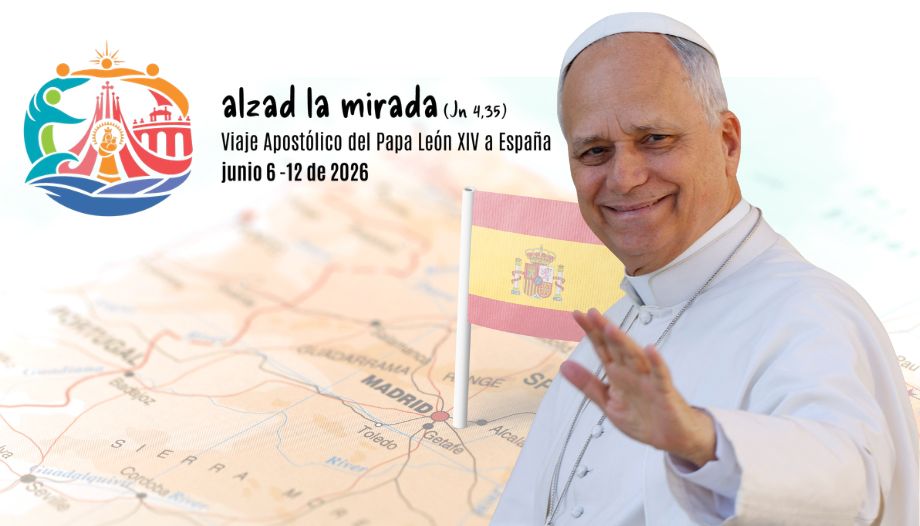
Pope Leo XIV has thanked in the Regina caeli this Sunday the hospitality of the Canary Islands for "allowing the arrival" of the Hondius cruise ship with the hantavirus outbreak. “I am happy to meet with you next month on my visit to the islands,” he added in Spanish.

Editorial Staff Omnes-May 10, 2026-Reading time: 2 minutes

After the recitation of the Marian prayer of the Regina caeli this VI Sunday of Easter, Pope Leo IV thanked the Canary Islands for the reception of the Dutch cruise ship Hondius with the outbreak of hantavirus.

The ship arrived this morning at the port of Granadilla de Abona in Tenerife, where passengers have been disembarked for transfer to their respective countries. 

Most of the Spaniards were the first to leave the ship along with a WHO epidemiologist in Africa, and have moved to Tenerife South airport to board the plane that will take them to Madrid.

Happy for his next visit to the Canary Islands

The Pontiff also made reference to his upcoming visit to the Canary Islands in June. “I am happy to meet with you next month during my visit to the islands,” he said in Spanish, a language he speaks perfectly, as he has shown on numerous occasions.

Keywords: Chad, Mali, Coptic church, prayer for mothers, mothers' prayers

Among other intentions of the Regina caeli, The Holy Father prayed for the victims of violence in the Sahel region, especially in Chad and Mali, countries hit by recent terrorist attacks.

He also sent fraternal greetings to His Holiness Pope Tawadros II, and assured the entire beloved Coptic Church of his prayers, “in the hope that our journey of friendship will lead us to perfect unity in Christ, who called us «friends» (cf. Jn 15,15)”.

Finally, he dedicated “a special thought to all mothers. Through the intercession of Mary, Mother of Jesus and our own mother, we pray with affection and gratitude for each one of them, especially for those who live in the most difficult circumstances. Thank you! May God bless you!”.

“Love one another as He has loved us.”

In his previous address, the Pope commented on the words of Jesus at the Last Supper, which are included in the Today's GospelIf you love me, you will keep my commandments“.”

We truly keep the commandments, according to God's will, if we recognize his love for us, as Christ reveals it to the world, the Pope added. “Jesus” words are thus an invitation to a relationship, not blackmail or a dubious suspension.".

For this reason, said the Successor of Peter, “the Lord commands us to love one another as he has loved us: it is the love of Jesus that engenders love in us. Christ himself is the criterion, the model of true love: the love that is faithful forever, pure and unconditional. The love that knows no ‘but’ or ‘maybe’, the love that gives without seeking to possess, the love that gives life without expecting anything in return-. 

Since God loves us first, we too can love; and when we truly love God, we truly love others, he stressed, concluding by entrusting ourselves to the intercession of the Virgin Mary, Mother of Divine Love.

The authorEditorial Staff Omnes

Books

Is God a childish illusion?

Through a dialogue with the great thinkers of history, the author dissects the "catechism" of the enlightened atheist and analyzes the difficulties of science to issue a final opinion on the existence of God, offering an indispensable reading for those who seek the truth beyond preconceived schemes.

Maria Caballero-May 10, 2026-Reading time: 4 minutes

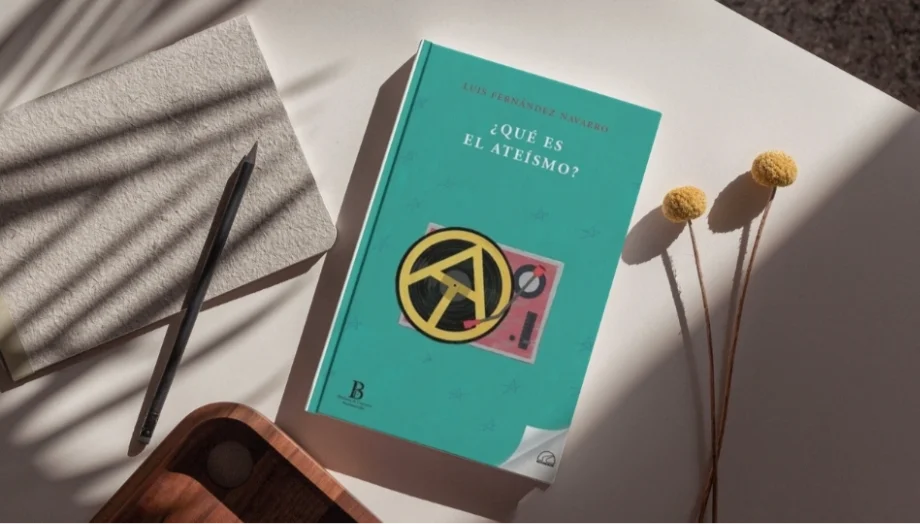
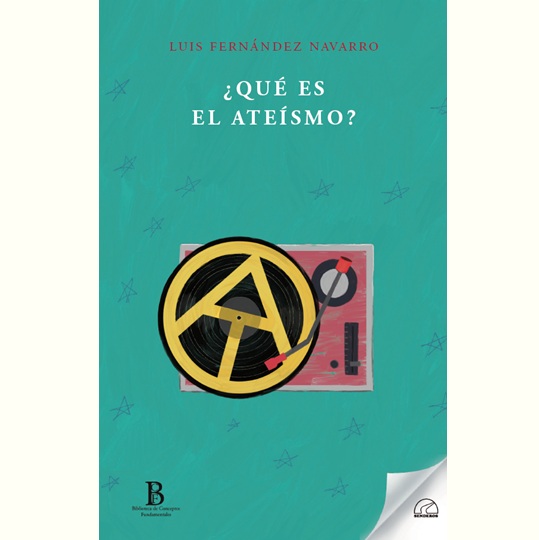
Senderos, a Sevillian publishing house, has just published a book on the market entitled What is atheism? Its author, Luis Fernandez, is a professor member of the research group Philosophy, Culture and Nature of the University of Seville. Author of a study on Skinner (2025), and another on Chomsky's anarchism (2026), he is a regular contributor to conferences and publications of the Tatiana Foundation of Madrid.

Already in the prologue it is made clear to us: “the reader has in his hands a kind of intellectual autobiography”. The author treats the subject with scientific objectivity, but never with the distance of someone who is not affected by these questions. 

Although young, he has gone through 68 and the post-conciliar period and has suffered the consequent ups and downs. In search of truth, he enrolled in the Faculty of Philosophy, and exercised the criticism that involves “analysis, independence of judgment, dispassion and impartiality”. He learned to “respect evidence and follow arguments without fear of their fate”, with a notorious intellectual honesty. 

To conclude that “the history of religions offers us such a rich and heterogeneous empirical material that it is too complex to fit it into preconceived and universal schemes of evolution”. 

The book seems to answer these questions: “God? A fiction. Religion? An invention. Christian morality? An unnatural construct. Matter? The only reality, immortal in its being and mortal in its dispositions. The soul? A finite extension, made up of atoms. Good and evil? Fables. Good and Evil? Utility. Death? Non-being, nothing to fear. The body? A machine. This is the catechism of the enlightened atheist” (p. 93).

The text is structured in three parts of different dimensions: 1. What is atheism (pp. 19-30); 2. History and criticism of atheism (pp. 31-166); and 3. The scientific difficulties of atheism (pp. 167-186). And it culminates with a synthetic but very complete bibliography, which allows those interested in the subject to continue deepening in it.

In less than two hundred pages he discusses the authors and trends of atheism from antiquity to the present day. It is not a history of philosophy or theology, but a selection of relevant intellectuals. 

Even in the last part, he shows that he is very up to date with the scientific issues related to this subject. It is difficult to synthesize the contribution of philosophers or scientists, to focus the core of their theses, to expose and comment on them, distinguishing the positive from the wrong. This is undoubtedly achieved here.

The result is worthwhile: the historical review from Antiquity (where there were hardly any atheists) to the present day goes to the essentials, focusing on atheism, but contextualizing it. The Ancient, Middle and Modern Ages are underpinned by their representative philosophers and theologians: Protagoras, Democritus, Critias, Thomas Aquinas, Siger de Bravante, Boethius, Luther, Nicholas of Cusa, Bruno, Spinoza, Bayle, Gassendi... and other lesser known philosophers and theologians who are reviewed, pointing out pros and cons in relation to atheism. 

From the eighteenth century onwards, the headings respond to questions such as “agnosticism, deism, naturalism, materialism, hedonism, skepticism, anthropotheism, neo-atheism”, or “system, illusion, freedom”... because these are the concepts that have brought together the leading figures since then. It was not in vain that we had been warned that the basic conceptual quartet of the question addressed was formed by agnosticism, theism, atheism and enlightened deism. 

The latter is the birth of contemporary atheism. And in a work of popularization (even a high one) it is always convenient to define the concepts with which one works. Another significant aspect of the book: as one moves towards the contemporary world, the author dedicates more pages to dialogue with the theses of those he studies.

The parade of authors is very complete: Voltaire and the French Encyclopedia (deism); Meslier, an interesting and not so well known figure of naturalism; La Mettrie (materialism), Helvetius (hedonism). 

Luis Fernandez goes on to comment: “for many, it is only worthwhile to affirm, to advance verisimilitude, not to set out to prove the truth”. Because “matter, determination, fiction, illusion are recurring notions, indispensable in all atheism” (p. 109). But he is also able to admit the argumentative quality of many atheists, since “not all knowledge can come entirely from a sensible source. It is always a mixture of theoretical elements and experiential data” (p. 100).

The effort to cover contemporary figures who have posed the problem of faith is evident: Feuerbach, Marx (whose atheism is more a critique of religion than an investigation into the existence of God), Nietzsche (so brilliant, complex and unsystematic), Freud (with his psychological explanation of the religious as fiction, illusion, delusion and a universal obsessive neurosis, the nostalgia for the lost father), Sartre, for whom man thrown into the world and doomed to praxis, is condemned at every instant to invent man; or the four horsemen (Harris, Dawkins, Dennett and Hitchens) to whom he devotes many pages. 

One of the book's strengths is that it involves the reader and encourages him to reflect on the intellectuals studied. At a certain point, the author concludes: “science in none of its branches has been able to issue a theological opinion and there are already several centuries of work, but there is no laboratory that supports the existence of God, nor its opposite”. 

And he adds: “Thinking only of man, from the eyes of theistic faith, the human being, product of God, image of God, has a sacred dimension” (p. 115). And “if we were to think about it, we could also put into play the hypothesis that all religion exists as a human response to the obvious fact that God exists” (p. 158).

A book that every self-respecting intellectual, indeed, any human being in search of truth should read.


What is atheism?

AuthorLuis Fernández Navarro
Editorial: Paths
Year: 2026
Number of pages: 190

The authorMaria Caballero

Professor of Spanish-American Literature at the University of Seville.

Read more
Books

Mariano Fazio: “We must make an ‘apostolate’ of reading”.”

Following his book "La tierra de los libres", Mariano Fazio talks to Omnes about the importance of literature and recommends some essential titles for those who want to delve into the classics.

Paloma López Campos-May 10, 2026-Reading time: 6 minutes

Mariano Fazio, historian, philosopher and auxiliary vicar of Opus Dei, has just published a book in which he traces the history of the United States through its literature. On the occasion of “The land of the free”speaks to Omnes about the importance of reading the classics and promoting reading among young people. He also recommends some titles to delve into Western literature.

The land of the free

AuthorMariano Fazio
Pages: 280
Language: English
EditorialRialp : Rialp
Year of publication: 2026

What encouraged you to write this book?

- In addition to being a writer, I am fundamentally a priest and, therefore, I am always looking for new ways to transmit the values of the Gospel. It seems to me that through the great books, which are the classics - a classic is a universal book, that is, even if an author is profoundly, in this case, from the United States - if he speaks to me of truth, good, beauty; if he knows how to give me instruments to distinguish the good from the bad, the beautiful from the ugly, the true from the false... it is a very natural way of transmitting the Gospel as well. Even if the author is not Catholic, even if he is not confessional, good literature transmits to me what makes the human soul vibrate.

For this reason I have written several books on classics: five Italian classics, British classics, Spanish Golden Age, six great Russian writers... now it is the turn of the United States.

What criteria did you use to make the selection of authors and books?

- It is a somewhat original book in the sense that I was interested, taking advantage of the 250th anniversary of the independence of the United States, to make a journey through history through books that tell me about each historical period. From before independence, for example with “The Last of the Mohicans”, and ending in the present day with “The Road” by Cormac McCarthy.

Therefore, it is not simply a question of the literary value of each book, but it must also have the characteristic that it speaks to me of a specific historical period. And we often understand history better not so much through official documents, but through fiction.

It has dispensed with captivity narratives (such as Mary Rowlandson's) and the writings of early settlers such as John Smith and William Bradford. Why is this?

- I have excluded them because they are not pieces of fiction, but are more historical documents. In “The Last of the Mohicans” there are quite a few fights between Indians and Europeans, English and French. That is why in the prologue I say that I have excluded historical documents, legislation, etcetera. And also within literature I have concentrated on narrative, that is, novels and short stories.

You allude several times to religion in the book, pointing to the authors' criticisms of movements such as Puritanism. What is the relationship between faith and American history?

- I think a key element of the history of the United States is that, in the thirteen colonies, many of those who went there did so precisely for religious reasons. Because in England there was a persecution against what were called at that time dissenting churches or dissenting faiths. Therefore, Catholics, Quakers, but especially the Puritans, settled there seeking religious freedom.

Interestingly, in the Puritan colonies - what is now primarily Massachusetts - even though they were persecuted people, they also persecuted those who didn't think or share their own faith. And because New England had a bit of a cultural lead in the early decades of the country, I think there is a very deep Puritan imprint on American identity.

I tried to express that, for example, in Hawthorne's “The Scarlet Letter” or “The House of Seven Gables”; but also in Melville there is quite a lot of puritanism, maybe not entirely conscious, but it's like the background.

On the other hand, it has always been a country characterized by its openness to transcendence. Tocqueville, a Frenchman who went to the United States after the Revolution to analyze the prison system, was surprised by the religious freedom that already existed at the beginning of the Republic and the fundamental role that religion played in society.

So, unlike Europe, where there was always a very clear distinction between the public and the private, between religion and politics - also because of centuries of history this situation is quite understandable in Europe - in the United States religion was something incorporated into the lives of all people. And I think that is a very positive thing.

In line with the various books you have written on literature, could you recommend an Italian, a British, a Spanish, a Russian and an American read?

- From Italian literature, leaving aside the “Divine Comedy” because it is a work that in Italy we call «impegnativa», which means “demanding”. I would suggest “The Betrothed” by Manzoni, which is a story of love, forgiveness, self-giving, conversion... It is a whole world in a rather long novel that has marked all Italian generations because it has been compulsory reading in schools.

From Spanish literature, without a doubt, “Don Quixote”, which is the first modern novel; also another universe within a single book where it tells us about the distinction between reality and fiction. A book that fundamentally speaks of dialogue: Don Quixote and Sancho Panza are continually talking and that humanizes them. It is the process of «sanchification» of Don Quixote and «quixotization» of Sancho, and it helps us a lot at a time when dialogue is sometimes cut off.

From Russian literature it is difficult to choose among great classics, but I would say “Anna Karenina” by Tolstoy. It is curious that Dostoevsky did not have a very good relationship with Tolstoy, and yet he said that it was the best novel that had been written in the history of world literature. Here, too, we are told about the consequences of the acts we perform freely, and how a wrong decision, if one does not rectify it, can ruin one's life; and on the other hand, coherence with values can lay the foundations of a happy existence.

And in English literature my favorite author is Dickens. I also published a book called “Dickens” Universe: A Lesson in Humanity“, because he is a man who talks fundamentally about how we have to lead our existence so that it is a successful, complete, happy existence; and the key is the sincere gift of self, giving oneself to others. There are many characters in Dickens who give themselves totally to others and they are the happiest, most joyful, most attractive people. In that sense, if I may, as he is the favorite author, I would give two books: ”David Copperfield“, which was the favorite of Dickens himself, and ”Bleak House", where there is a central character who is Esther Summerson, which is a school of the sincere gift of ourselves.

And in American reading, there is a lot to choose from, but I would say “The Grapes of Wrath” by John Steinbeck. It's set in the Great Depression of the early 1930s: a family that has to emigrate from Oklahoma to California, that has dreams of getting ahead, and yet those dreams are not realized. But it talks about the dignity of poor people, people struggling to make a living and the importance of the family unit, etcetera, and that mercy to be shown to the weakest people. I think it is a book that today, given the current situation, sheds a lot of light.

You have talked about how the classics can help us reach the truth. Nowadays reading is almost a fashionable thing to do. How do you think we can make the leap between simply «reading for the sake of reading» and «reading to find the truth» and make it concrete in our lives?

- Through the same social networks there are so many blogs and YouTubers that talk about books and I think many of them help a lot to at least arouse that curiosity.

The point is that you have to choose the right book to start with, because of course, if you start reading “The Brothers Karamazov” or “Crime and Punishment” or “War and Peace”, you may despair because they are difficult and very long books. On the other hand, if you start with a book that is very accessible, you will get a taste for it.

I think we have to make, in quotation marks, an «apostolate» of reading and those of us who read, to encourage young people by saying: «why don't you try this book, or the one beyond, and you will see how it opens your horizons.

It is impossible to travel all over the world and through all times; the most economical way to do so is precisely by reading.

I would like to give some titles of books with which you can start reading and you will see how they really leave many seeds in your soul. For example, by Tolstoy, “The Death of Ivan Ilyich”, which explains the meaning of life in a very exciting way.

Then, following Dickens, “A Christmas Song», where he talks about the true meaning of Christmas, but he does it not by giving a sermon, but through a tremendously endearing story.

To return to the book I have published, “The Land of the Free”, there is a little book that is very well known called “The Red Badge of Courage” by Stephen Crane, which tells us how a teenager -who at first thought he was very brave- lives through the Civil War in the United States, and there he realizes that he has many virtues but also many defects, many limitations, and he begins to know himself.

The World

In Pompeii, Leo XIV praises the divine power of love, which works miracles.

On the first anniversary of his election, Pope Leo XIV placed his ministry under the protection of Our Lady of the Holy Rosary of Pompeii (Italy), Queen and Mother, stressing that love works miracles, and that “no earthly power will save the world, but only the divine power of love”.

Francisco Otamendi-May 9, 2026-Reading time: 9 minutes

Leo XIV wanted to spend the first anniversary of his election as Pope at the feet of Our Lady of the Holy Rosary of Pompeii, and he made the Supplication to Our Lady before more than 20,000 faithful and four hundred sick and disabled people, to whom has greeted with great affection, almost one by one.

With resolute confidence in the “true Queen of peace and forgiveness” and “Mother of mercies!”, the Pope said that “the Rosario has a Marian physiognomy, but a Christological and Eucharistic heart. And the Hail Mary and the Holy Rosary are ”an act of love,“ and ”love works miracles,“ he said.

In addition, he prayed that “the God of peace may pour out an abundant outpouring of mercy, touching hearts, appeasing resentments and fratricidal hatreds, and enlightening those who have special responsibilities in government.”.

“This beautiful day of the Supplication to Our Lady of the Holy Rosary.”

It was “exactly one year ago, when I was entrusted with the ministry of Successor of Peter, it was precisely the day of the Supplication to Our Lady, this beautiful day of the Supplication to Our Lady of the Holy Rosary of Pompeii!”, the Pope confided in the homily pronounced in front of the Sanctuary of the Most Holy Virgin of the Holy Rosary of Pompeii.

Therefore, “I had to come here,” the Pontiff said, “to place my service under the protection of the Blessed Virgin. Having chosen the name Leo, I follow in the footsteps of Leo XIII, who had, among other merits, that of having developed an extensive Magisterium on the Holy Rosary. To all this must be added the recent canonization of St. Bartholomew Longo, Apostle of the Rosary”.

Pope Leo XIV delivers a speech during his visit to the Pontifical Shrine of the Most Holy Virgin of the Rosary in Pompeii, near Naples, Italy, before celebrating Mass in the outdoor piazza on May 8, 2026. (Photo by OSV News/Simone Risoluti, Vatican Media). 

Hail Mary, Holy Rosary, “act of love”.”

“The Hail Mary, repeated in the  Holy Rosary, Is it not love to repeat untiringly: ‘I love you’? An act of love that, in the beads of the rosary, as is clearly seen in the Marian painting of this Shrine, leads us back to Jesus and leads us to the Eucharist, ‘the source and summit of all Christian life’”.

San Bartolo Longo was convinced of this, the Pope said, when he wrote: “The Eucharist is the living Rosary, and all the mysteries are found in the Holy Sacrament in an active and vital way”. He was right. In the Eucharist, the mysteries of Christ's life are, so to speak, concentrated in the memorial of his sacrifice and in his real presence. The Rosario has a Marian physiognomy, but a Christological and Eucharistic heart”.

San Bartolo Longo and his wife: a Marian city

Indeed, one hundred and fifty years ago, when laying the foundation stone of this Sanctuary, on the site where the eruption of Vesuvius in 79 A.D. had buried under ashes the vestiges of a great civilization, protecting them for centuries, ”San Bartolo Longo, Together with his wife, Countess Marianna Farnararo De Fusco, he laid the foundations not only of a temple, but of an entire Marian city,” the Pope emphasized.

Thus he expressed his understanding of God's plan, which St. John Paul II, speaking in this place of grace on October 7, 2003, at the conclusion of the Year of the Rosary, relaunched for the Third Millennium, from the perspective of the new evangelization. “Today,” he said, “as in the times of ancient Pompeii, it is necessary to proclaim Christ to a society that is moving away from Christian values and even losing its memory,” Pope Leo recalled.

“From this womb of Mary radiates the Light that gives full meaning to history and to the world.”

In his homily at Mass, the Pope commented on “the Gospel of the Annunciation,” which “introduces us to the moment when the Word of God became flesh in Mary's womb. From this womb radiates the Light that gives full meaning to history and to the world. The greeting that the Angel Gabriel addresses to the Virgin is an invitation to joy: ‘Hail, full of grace’. Yes, the Hail Mary is an invitation to joy”.

Great mystery,“ the Pope continued. "Everything happens through the work of the Holy Spirit, who covers Mary with his shadow and makes her virginal womb fruitful. This historical moment possesses a sweetness and a strength that draw the heart and raise it to those contemplative heights from which the prayer of the Holy Rosary".

The Rosary «has a Marian physiognomy, but a Christological and Eucharistic heart,» said the Pope, who recalled that in the Virgin's “let there be” “not only Jesus, but also the Church is born”. 

"No resign ourselves to the images of death” in the news.

In concluding, Leo XIV stressed that “we cannot resign ourselves to the images of death that the news presents to us daily. From this Shrine, whose façade was conceived by St. Bartolo Longo as a monument to peace, today we raise our prayer in faith. 

San Bartolo Longo, thinking of Mary's faith, called her ‘omnipotent through grace’. “Through her intercession,” the Successor of Peter has prayed that “the God of peace may pour out an abundant outpouring of mercy, touching hearts, appeasing resentments and fratricidal hatreds, and enlightening those who have special responsibilities in government.”.

Pope Leo XIV embraces a person during his visit to the Pontifical Shrine of the Most Holy Virgin of the Rosary in Pompeii, near Naples, Italy. He visited 400 sick and disabled people inside the shrine (Photo by OSV News/Mario Tomassetti, Vatican Media) .

Supplications to the Virgin Mary: have mercy on the world

In his prayer before Our Lady, after the Eucharist, the Holy Father made various petitions to the Virgin Mary, interspersed with the recitation of the Hail Mary.

For example, he asked the Virgin Mary that, “from that Throne of clemency where you sit as Queen, turn, O Mary, your merciful eyes to us, to our families, to Italy, to Europe, to the whole world, and have mercy on the sorrows and bitterness that afflict us”.

“Show yourself a true Queen of peace and forgiveness.”

“See, O Mother, how many dangers for soul and body surround us, (...), stop the arm of Justice of your offended Son, and with your goodness, subdue the hearts of sinners, for they are our brothers and your children”.

“Show yourself today to everyone a true Queen of peace and forgiveness,” he continued after the Hail Mary.

“We have crucified Jesus on our breast again, and pierced your most tender heart. Yes, we confess, we are deserving of the greatest punishments. But keep in mind, O Mother, that on the summit of Calvary, you received the last drops of that divine blood, and the last testament of the dying Redeemer”.

Pope Leo XIV greets people upon his arrival at the Pontifical Shrine of the Most Holy Virgin of the Rosary in Pompeii, near Naples, Italy, May 8, 2026. (Photo by OSV News/Mario Tomassetti, Vatican Media).

The Testament of Calvary: “Our Mother, Mother of sinners, our Advocate”.”

This testament “establishes you as our Mother, Mother of sinners, you are our Advocate and our hope. Therefore we, full of confidence, with groaning, lift up to you our hands in supplication, and cry out with loud voices: Mercy, O Mary, mercy”.

The Pope then prayed to Our Lady, our gracious Mother, to have “mercy” on our families, relatives, friends, the deceased, and above all on our enemies, «and on so many who call themselves Christians, yet tear at the kind Heart of your Son”.

“We implore for the nations gone astray and for the whole world.”

“Mercy, Lady, mercy. We implore for the nations gone astray, for all Europe and for the whole world, that it may be converted and return repentant to your maternal lap. Mercy to all, O Mother of mercies”.

“How hard it is for you to save us,” the Pope said to the Queen of the Rosary. “Did not your divine Son place in your hands the treasures of his graces and mercy? (...)”.

“Deliver us from the snares of the infernal enemy.”

“Your power, O Mary, reaches to the abysses, indeed, you can deliver us from the snares of the infernal enemy.”.

You, who are all-powerful, by grace, can save us (...).

Your Mother's heart will not allow your children to be lost. 

The Divine Child and the Rosary in your hands inspire all our confidence, she said, and «with that confidence we prostrate ourselves at your feet, like weak children in the hands of the most tender of mothers”,

Finally, the Pope prayed to Our Lady to grant us, “in addition to a constant love for you, your maternal blessing” and the triumph of religion and the peace of hard-working humanity.

“We will never leave you,” Queen of the Rosary of Pompeii, our beloved Mother, Refuge of sinners, Sovereign consoler of the afflicted, be everywhere blessed today and always, on earth and in heaven, amen, said the Pope.

Napoli: “It is a blessing from God to be together”.”

After leaving Pompeii, the Pope departed by helicopter for Naples, where he was received by Cardinal Archbishop Domenico Battaglia, Archbishop of Naples, and by civil authorities, including the mayor of the city, Dr. Gaetano Manfredi, mayor of Naples.

Before the meeting in the cathedral with the bishops, priests, religious and religious men and women, Leo XIV said: “I came to Naples to experience this warmth that only Naples can offer! Thank you for this welcome! It is a blessing from God to be together, I am very happy to be here this afternoon: a very brief but very meaningful time. And this first stop right here in the Duomo, the cathedral of Naples, where I also want to pay this tribute to San Gennaro, so important to their devotion, their faith!”.

To priests: care of the interior life, fraternity, communion

Then, in his speech, Among other issues, he referred to the fact that “the human and pastoral burden (of priests) is undoubtedly heavy and runs the risk of weighing us down, wearing us out, exhausting our energies and, at times, can be aggravated by a certain loneliness and a sense of pastoral isolation.

“For this we need care,” he encouraged. “First of all, care for our interior and spiritual life, constantly nourishing our personal relationship with the Lord in prayer and cultivating the ability to listen to what stirs within us, to discern and allow ourselves to be enlightened by the Spirit.”. 

Caring for our ministry, however, “also implies fraternity and communion,” he added. “A fraternity rooted in God, expressed in friendship and mutual accompaniment, as well as in the sharing of pastoral projects and initiatives.”.

Walking together, all involved in the mission

What I ask of you, then, is this: listen to one another, walk together, create a symphony of charisms and ministries, and thus find ways to move from a pastoral ministry of conservation to a missionary ministry capable of intervening in the concrete lives of people.

But the Pope did not refer only to the clergy, but also to the laity. “It is a mission that requires the contribution of everyone. In a city marked by inequality, youth unemployment, school dropouts and family fragility, the proclamation of the Gospel cannot exist without a concrete and supportive presence that involves all of us: priests, religious and laity. We are all active participants in the pastoral and life of the Church”, he affirmed.

Meeting with Neapolitans: “join forces, work together».»

Neapolitans cheered the Pope through the streets, and then welcomed him with joy in the afternoon, in a gathering in Piazza del Plebiscito, which included various testimonies, songs by various groups and dances.

In its Speech, Against the backdrop of the disciples of Emmaus, Leo XIV visualized the “yearning for life, justice and goodness (flowing in this city), which cannot be annihilated by evil, discouragement and resignation”.

Therefore, we must - not alone, but together - ask ourselves: what is truly important? What is necessary and important in order to resume our journey with the impetus of commitment instead of the weariness of indifference, with the courage to do good instead of the fear of evil, with the healing of wounds instead of indifference?”.

One of his main answers was, in reference to the educational Pact promoted by the Church and other issues: “go ahead with this Pact, join forces, work together, walk together - institutions, Church and civil society - to ennoble the city, protect its children from the traps of adversity and evil, and restore to Naples its vocation of being the capital of humanity and hope”. 

Culture of peace and solidarity in welcoming migrants and refugees

Concluding his speech, the Pontiff noted that “the ecclesial community and the civil community are working together to make Naples a platform for intercultural and interreligious dialogue”. 

“Through conferences, international awards and host programs for young people from conflict zones - such as Gaza - we can continue to give voice, from the grassroots, to a culture of peace, countering the logic of confrontation and the use of armed force as a supposed solution to conflicts.”.

In this sense, Naples continues to demonstrate “its deep solidarity in welcoming migrants and refugees, seeing them not as an emergency, but as an opportunity for encounter and mutual enrichment.” This is possible, above all, thanks to the work of the diocesan Caritas, which “has also transformed the Port of Naples from a simple disembarkation point into a living symbol of welcome, integration and hope.”.

The authorFrancisco Otamendi

Debate

Rethinking the teaching of theology

Theology is defined as the “Science of faith”. Consequently, where faith is not present, there is no theology, but religious thought or history of ideas. And this happens in many faculties.

Juan Luis Lorda-May 9, 2026-Reading time: 8 minutes

Approximately five hundred years ago, Juan Luis Vives, a revered Renaissance namesake, in his treatise “De disciplinis”, wrote” complained vividly about the state of the subjects at the university of his time and saw the need for reform. Improvement is always necessary, and today as well.

Some limitations and shortcomings of academic life

Academic life has virtues and defects. Like all things human, it has the virtues of its flaws and the flaws of its virtues. If I am very nice, I may also be quite slow. And if I am a very efficient and executive person, I may not be very nice.

The great virtue of academic life is that it gathers, synthesizes and transmits knowledge, which is an extraordinary benefit. But it always does so in a limited way; first of all, because of the difficulties of human transmission, which is not done by cable, but from person to person, requiring on the one hand to explain oneself well and, on the other, to have the desire to learn, and the minimum intellectual skills to understand and treasure what is received, as well as to be able to pay attention to it. This is not so obvious today.

There is another important academic flaw, well expressed in a famous quote from Albert CamusBefore, philosophers thought about truth, now people think about philosophers“ (note in ”Notebooks“ at the end of 1935). In fact, Camus comments there on a phrase of Étienne Gilson: ”The search for truth has been replaced by the history of philosophy“. It is the passage from direct language to indirect language. When the testimony of truth disappears in the classroom, because we no longer speak of the truth of things, but only of the (indirect) truth of what one or the other has said about things.

In fact, all subjects tend to acquire a historical form with their more or less standard programs (because they copy each other a lot): their obligatory references, their topics of historical discussion, their best-known authors. All these more or less simplified materials become clichés, which are repeated as in a primer, generally losing their connection with the real basis that gave rise to them. The virtue of accumulating erudition brings with it the defect of losing real connection.

In philosophy, ethics and logic are very notable examples. When ethics is taught, it is no longer intended, as Socrates intended, that people improve, but only that they learn the historical contents of the subject. And the same thing happens when teaching logic: it is not intended that the student acquires thinking and synthesis skills, but only that he learns the history and topics of the subject. Of course, it is not excluded that, by some unknown path, this may help him to be better or to think better, but this is not what is consciously intended in teaching.

The case of theology

In the case of theology, academic practices also invite a certain asepsis. To remain in historical affirmations that are, or seem to be, more certain and “objective”, because affirmations of faith can seem to be personal opinions, of a private nature and not sufficiently justified. For example: it is certain that St. Augustine believed and spoke a lot about the Trinity. But I do not need to confess that I believe in the Trinity to deal with this historical topic. It may even seem more rigorous and scholarly for me to limit myself exclusively to historical and objective statements about what he said. St. Augustine on this topic.

In reality, the affirmations of faith are by no means “private”, but are possessed by the Church, by divine revelation and assistance, which has historical foundations. But this can be difficult to accept by those who do not have faith, of whom there are many in academic life. It is not strange, therefore, that in many places, “objective” or historical (and indirect) teachings are preferred. But theology, as is repeated without problem in introductory courses, is defined as the “Science of faith”. Consequently, where faith is not present, there is no theology, but religious thought or history of ideas. And this happens in many faculties.

Like philosophy, theology also has paradoxes in its scholastic traditions. For example, Christian morality can be defined as “living in Christ,” and this is the title of this section of the Catechism of the Catholic Church. But moral subjects are not designed for the student to learn to live in Christ or to follow him, which is the way of Christian morality. Nor are they intended for them to become teachers of this path for others. They are designed to transmit the history of the subjects, with their historical references and problems, which have shaped these subjects.

The matter is more shocking with the core subjects. The subject on God or the Trinity is not generally designed to really introduce one to the mystery of God, which would lead to fascination and adoration, but rather conveys the set of historical problems that this subject has accumulated in its history. Something that rather distances than brings us closer to the mystery. And the same happens with the subjects on Jesus Christ: they are not oriented to the adherence of faith to his person, but to the knowledge of the problems, which, with the passing of the years, are more and more, and tend to occupy all the space of the subject. By the way, some of the last preaching of Raniero Cantalamessa (17.III.2023), who knew how to make a living theology, are very luminous in this sense.

Manuals and manualistics

The University was born with theology. And the subjects of theology that we know today took shape gradually from the sixteenth century when the “Summa Theologica” of St. Thomas was used as a textbook. Francisco de Vitoria began to use it in Salamanca in 1526. As the “Summa” is so extensive, the commentary extended over several courses. And the topics into which the “Summa” is divided were distributed by courses. Thus, from the eighteenth to the twentieth century, the separation of the areas of theology and the agenda and topics of each subject was established, and the manuals of each subject were written. And so they have reached the twentieth century. This can be called manualistic theology.

That theology, in force until the fifties of the twentieth century, had a very clear method. It thought, like Aristotle, that truth is formulated in propositions, in theses. The manuals were presented in a very orderly manner by subject and each subject had its theses; that is, affirmations of faith that were sustained and proved with arguments of theological authority: recourse to Scripture and tradition and above all to the Magisterium, represented especially by the famous compendium written by Enrico Denzinger, a basic reference book. Each subject provided an ordered set of proven theses. It was a rigorous method, even if it was used in a somewhat stereotyped way.

Generally, they were presented as manuals made “ad mentem Sancti Thomae”, according to the mind of St. Thomas. That is, they did not necessarily represent the exact thought of St. Thomas, but something done in his own way. The manuals were quite similar because they copied each other a lot. They had a rigorous method (somewhat simplified), and were doctrinally sound, orderly, summarized (somewhat skeletal) and quite didactic, but dull and with few cultural and contextual references.

Changes in education

During the 19th and 20th centuries, the theology of the Church Fathers was rediscovered, biblical studies were developed, historical studies were enriched and theological reflection developed immensely. It was a very rich and abundant material with other perspectives. The old manuals could not incorporate it and disappeared everywhere, leaving large gaps, which were filled more or less improvised. Syntheses and renovations are not improvised, they take centuries.

Many manuals have already been written, but they still do not include or summarize the enormous richness of the theology of the 20th century, nor do they have a rigorous method that justifies the construction of the subjects, apart from general considerations. Besides, in the 20th century, some subjects have been added, which are now indispensable. For example, fundamental theology, ecclesiology, ecumenism and the theology of the liturgy, in addition to all the biblical, patristic and historical subjects (history of the Church, history of theology).

There is a debate going on right now in the Church as to whether it might not be better to go back to just St. Thomas and, in general, to the Church of the 1950s. But it is a utopian option, for many reasons. Staying only in the field of theology, it can be said, first, that the above was a rather retouched St. Thomas. Secondly, that St. Thomas would have chosen, without hesitation, to incorporate the “new” contributions, as he did in his day, gathering the best from everywhere.

If we want to do a theology “ad mentem sancti Thomae” today, we must do what he did and with the discernment of faith with which he did it. In reality, “going backwards” is unfeasible. The faith of the Church has its reference in Christ, who is its foundation and cornerstone, that is its fidelity, but, in the rest, it adapts itself to the circumstances and needs of the time. It happened in the time of St. Thomas and it is logical that it also happens now.

The challenges of synthesis

The immense amount of “new” material brings us to another aspect of the problem: it is necessary to build subjects that have the proportion of the student. That is to say, one cannot offer an immense, accumulated and disintegrated erudition. The average learning abilities of students are the measure of what can be offered in all subjects and in education as a whole, as Ortega y Gasset brilliantly proposed in his lucid lecture on “The Mission of the University”. We must also take into account new challenges, such as the massive use of artificial intelligence and students' attention deficits, which require more dynamic and direct teaching.

Syntheses do not happen by themselves and it is not enough to accumulate the material. It requires a lot of work and a sense of proportion. Among other things, theology today must have, as has been said, a more testimonial and personal tone aimed at helping the listener to increase his Christian adherence (faith) and to be able to propose it to a world that has moved away (evangelization).

Specialization

The new academic demands for specialization, which have come from the area of positive sciences, add new difficulties, which are new challenges. The positive sciences deal with matter which is very divisible into quite clear fields, although they are all related to each other because the whole universe is made of the same thing and in a single process. But there is room for a very high degree of specialization.

The human sciences, such as psychology, sociology, law, politics, economics, linguistics, the sciences of religions or ethnography, do not function in the same way. Nor do the humanities: history, literature, fine arts, philosophy and theology. Because they are not based on extensive matter, but are the work and expression of the human spirit. They require a good knowledge of a philosophical or humanistic anthropology, in order to adequately take into account the human phenomena proper to each discipline. And they cannot be cultivated without syntheses and very strong overall visions.

The spirit is much more intense and concentrated than matter. If you don't know a little of everything and in a synthetic way, you can't go deeper into anything. It is only in the historical and physical aspects that one can concretize as much as one wants. To do rigorously the history of the economy in a village of the XVIIIth century, almost no overview is necessary (although it will be a poor history). I remember having seen (with perplexity) a doctoral thesis on the movement of the Teruel food market in 10 years of the 19th century. The economy has something to do with the movement of sacks in warehouses, but it depends much more on the movement of ideas and aspirations in human heads.

In the case of theology, unity is even more necessary. For, as is repeated in all the introductions to theology, “theology is one” because it is based on revelation and its history, and the center of revelation, and therefore of faith, is Jesus Christ our Lord. As Romano Guardini so happily showed in his book “The Essence of Christianity”, there is nothing Christian (nor properly theological) if it does not refer directly to the Lord. It is an essential question of method.

We have given the example of the Trinitarian theology of St. Augustine. To work on it alone (specialization) it is not really necessary to have faith. It is enough to gather quotations from St. Augustine and from the infinite secondary literature that has dealt with the subject. But if this reflection is not based on living faith in Jesus Christ, it does not leave the realm of the history of religious thought.

The four references that form the framework for reformulating the method and teaching of theology today:

  • to the immense theological wealth contributed in the 19th and 20th centuries;
  • to the center of theology, which is faith in Jesus Christ;
  • to the student's possibilities for learning;
  • and to the needs of Christian life and of the evangelization.
Read more
Initiatives

15 details that we can have in May with the Virgin Mary

May began a few days ago, the spring month that Christian tradition dedicates to the Virgin Mary. A time when we honor the Mother of God and our Mother. Here are a few details that we can offer her, with freedom and affection.

Francisco Otamendi-May 9, 2026-Reading time: 2 minutes

Some of us have been lucky enough to celebrate our mother's birthday this month, although any month is the best month to celebrate mother. And we have given her a gift of love, thanks, a reminder of some family custom and, if possible, closeness. We can do the same with the Virgin Mary, our heavenly Mother.

See has written that “the Blessed Virgin Mary always takes care of us and helps us in everything we need. She helps us to overcome temptation and to preserve the state of grace and friendship with God in order to reach Heaven. Mary is the Mother of the Church”. 

Let us look at some possible details that we can have in May with her, and with her Son. He continues to listen to his Mother, as he did at the wedding at Cana.

1. Get up at the scheduled time, without giving in to laziness.

2. Ask the Virgin Mary for the Pope and his intentions: for communion in the Church and peace in the world, as he usually entrusts to us.

3. Pray a Hail Mary for the person we have criticized or mistreated, and ask for forgiveness, as suggested on the occasion of Lent.

4. Begin the work, job search, or task that we perform, with punctuality, and offer it to Our Lady. For example, by Pope Leo XIV's visit to Spain in June, and for the fruits of the trip he made to Africa.

5. Pray a mystery of the Rosario (or all of it), if possible as a family, or in the parish, or wherever we can.

6. To make a pilgrimage to a hermitage, sanctuary or church dedicated to Our Lady with some invocation of hers, praying the rosary. It is the devotion to Our Lady most recommended by the Popes. Leo XIII, for example, wrote eleven encyclicals on the Rosary between 1883 and 1898. 

7. Marian prayer of the Angelus or Regina coeli at noon, at the end of Mass, or whenever possible, trying to imitate the “yes” of the Virgin Mary.

8. Some purpose to accompany someone else who is sick or in need, or to visit someone alone, and carry it out.

9. More friendly and helpful treatment with those who live with us during this month: tidiness in the house, help with the ‘machines’, ironing, etc., with a smile.

10. Place a reminder, prayer card or picture of the Virgin Mary somewhere at home or at work. We can put some flowers, or sing a song to her.

11. Cut back on screen use this month, if possible, at least at night or when we are with others.

12. Cultivate some concrete act of patience and affection with other people, especially the elderly, children and the sick, and encourage the appreciation of human life, from conception to natural death.

13. To see with the priest who accompanies us spiritually how we can help the Church in some detail, either in the parish or in some other way, and also by attending the sacrament of Penance.

14. Offer in a special way some special tribulation or suffering to Our Lady, for example for the souls of those around us and their needs, and for peace.

15. Scapular of Carmel. On July 16, 1251, the Virgin promised to St. Simon Stock his protection to the one who dies with him, and eternal life.

The authorFrancisco Otamendi

ColumnistsGiancarlos Candanedo

Deciphering Leo XIV

Unity in diversity is the hallmark of this first year: each Pontiff brings his own nuance, but the thread that holds the ecclesial fabric together remains the Holy Spirit.

May 8, 2026-Reading time: 4 minutes

When the French Cardinal Dominique Mamberti, in his capacity as protodeacon, announced the new Pope with the traditional formula “Habemus Papam” that May 8, 2025, followed by the “qui sibi nomen imposuit” (who has imposed the name of...)., Perhaps we did not realize that the new Pontiff, U.S. Cardinal Robert Francis Prevost, by adopting the name Leo XIV, was already sending a coded message to the world. It was not just an onomastic choice; it was a declaration of intent: Leo XIV was emerging, from the very first second, as the “Pope of the new social question for this 21st century.”.

His first words, serene and powerful, “Pax vobis”, resounded in St. Peter's Square and throughout the world with a prophetic charge: “Peace be with you all! (...) This is the peace of the Risen Christ, a disarmed peace and a disarming, humble and persevering peace. Today, one year after that event, we pause to reflect on the style and thought of this pontificate, which has begun to mark a clear path in the history of the Church.

The mystery of continuity

To understand Leo XIV it is imperative to first understand the vision of the Church as a mystery of continuity. His pontificate is built on the principle of “No Rupture”. At a time when many seek drastic changes, the Pope has reaffirmed that the Church does not advance through ruptures, but through organic development. As Joseph Ratzinger-Benedict XVI recalled, the Christian faith assumes the previous experience of faith - like the Israelite creed - turning it into an internal dimension, in this sense the German Pope affirms that “the historical character of religion and of the history of faith develops through points of contact, never in full discontinuity”.

As men and women in communion with Peter, whoever he may be, we must be companions on the journey, seeking together to read the signs of the times. Unity in diversity is the hallmark of this first year: each Pontiff brings his or her own nuance, but the thread that holds the ecclesial fabric together remains the Holy Spirit. From this perspective, we are not and cannot be preachers of rupture, but of communion.

The echo of Leo XIII and the new social question

Why Leo XIV? The choice of this name refers us directly to Leo XIII, author of the encyclical letter Rerum Novarum (5-V-1891). From the communicative point of view, the message is unequivocal: we are before a Pope who makes his heart beat to the rhythm of the Social Doctrine of the Church (SDC).

His style of government is based on a tripod: synodality, evangelization and prayer (discernment). This was evident in his first extraordinary consistory on January 7-8, 2026, where nearly 170 cardinals gathered not for a bureaucratic formality, but for a fraternal encounter. The approval of the axes of synodality and evangelization - in the wake of the Apostolic Exhortation Evangelli Gaudium (Francisco, November 24, 2013) demonstrates that it seeks unity of command through collegiality.

The thread of the heart: From «Dilexit nos» a «Dilexi te»

There is an unquestionable mystical and social bridge between the end of Francis' pontificate and the beginning of Leo XIV. If Francis gave us the gift of the encyclical letter Dilexit us (October 24, 2024) to remind us of the love of the Heart of Jesus, Leo XIV responded with the Apostolic Exhortation Dilexi te (October 4, 2025), which translates as “He loved you”, focusing his gaze on love for the poor.

In the Dilexit us Pope Francis reminded us that, in serving our neighbor, we meet Jesus “side by side” (nn. 214-215). Leo XIV takes this heritage and, in his exhortation Dilexi te, acknowledges the joy of making this message his own, proposing it at the beginning of his pontificate.

The diagnosis presented by Leo XIV in the Dilexi te is blunt: poverty is not an inevitability, but the product of a structure of sin. The Pope denounces the existence of elites who live in “luxury bubbles” while millions survive in unworthy conditions. He warns against the tendency to turn the poor into a statistic in order to avoid touching their reality. His proposal is clear: charity is not a palliative, but a “leaven of justice” that must change unjust systems.

The new poverties of the 21st century

Leo XIV's pontificate is not limited to traditional material poverty. In his October 23, 2025 address to the Popular Movements, he identified technological and social “novelties” that generate new forms of exclusion, including the following:

  • Anxiety and consumption: The impact of social networks on young people, who face the mirage of unattainable success.
  • Digital addictions: The design of betting and gambling platforms that exploit vulnerability.
  • Ethics and the body: The opioid crisis and the commercialization of pain under a false “idolatry of the body”.
  • Extractivism: The violence behind the technology (coltan and lithium), which fuels political destabilization.

In the face of this, the Pope demands that global ethics prevail over technical-economic profit. He insists that almsgiving is not a gift, but a moment of human encounter: “To sit the poor at the table, to give them back their name and dignity”.

Towards a “disarmed and disarming” peace”

In his message for the 59th World Day of Peace (January 1, 2026), Leo XIV proposed an innovative concept that encapsulates his social and spiritual vision and which he had already enunciated in his first message on May 8, 2025: disarmed and disarming peace. It refers not only to the absence of weapons, but to the disarmament of language and aggressive intentions. It is the force of active nonviolence, an attitude of openness that forces the interlocutor to lower his guard.

As we complete this first year of his pontificate, it is clear that Leo XIV has not come to invent a “new Church,” but to renew the Church's fidelity to the Gospel. He invites us to be leaders who not only look at the bottom line, but who know how to decipher the impact of technology on human dignity.

The question that this first anniversary leaves us with is not only what we think of the Pope, but how we integrate his message into our lives. It is up to us to “decipher” how to live out in our daily lives this invitation to be a Church that, to be truly the bride of the Lord, must be, above all, a sister to the poor, a firm promoter of peace.

The authorGiancarlos Candanedo

Presbyter. @GCandanedoPaez

Read more
The Vatican

12 quotes from Leo XIV's first year as Pontiff

Leo XIV has visited seven countries in his first year at Peter's See and is gradually making the mark of his quiet style.

OSV / Omnes-May 8, 2026-Reading time: 3 minutes

As the first anniversary of Pope Leo XIV's election to the pontificate approaches, we present here a selection of 12 quotes from the new pontiff on various topics, looking back over the 12 months since he took office as pope on May 8, 2025.

- I am an Augustinian, a son of St. Augustine, who said: «With you I am a Christian and for you I am a bishop‘. In this sense we can all walk together towards that homeland that God has prepared for us’. First address from the balcony of St. Peter's Basilica, May 8, 2025.

- «Brothers and sisters, I would like this to be our first great desire: a united Church, a sign of unity and communion, which becomes a leaven for a reconciled world.» Mass of Inauguration of his Petrine ministry, May 18, 2025.

- «Migrants and refugees remind the Church of her pilgrim dimension, perpetually oriented towards reaching the definitive homeland, sustained by a hope that is a theological virtue.» Message for the 111th World Day of Migrants and Refugees October 4, 2025.

- Be agents of communion, capable of breaking the logic of division and polarization, of individualism and self-centeredness. Center yourselves on Christ, in order to overcome the logic of the world, of the fake news and frivolity, with the beauty and light of truth». Address to Catholic digital missionaries and influencers, July 29, 2025.

- «It is that when the instrument dominates man, man becomes an instrument: yes, an instrument of the market and at the same time a commodity. Only sincere relationships and stable bonds make stories of good life grow». Jubilee of the Youth, August 2, 2025.

- «Friendship with Christ, which is at the basis of faith, is not only one help among many to build the future, it is our pole star.» Jubilee of the Youth, August 2, 2025.

- «In the wounded face of the poor we find imprinted the suffering of the innocent and, therefore, the same suffering of Christ.» «Dilexi Te», promulgated on October 9, 2025.

- Marian spirituality is at the service of the Gospel: it reveals its simplicity. Affection for Mary of Nazareth makes us, together with her, disciples of Jesus«. Jubilee of Marian Spirituality, October 12, 2025.

- «Faith, compared to great material and cultural, scientific and artistic goods, excels; not because these goods are contemptible, but because without faith they lose meaning.» Canonization of seven new saints, October 19, 2025.

- Life is illuminated not because we are rich, beautiful or powerful. It is enlightened when one discovers within oneself this truth: God has called me, I have a vocation, I have a mission, my life serves something greater than myself.« Jubilee of Education, where he proclaimed St. John Henry Newman Doctor of the Church, November 1, 2025.

- «AI can process information quickly, but it cannot replace human intelligence. And don't ask it to do your homework! ... (Artificial intelligence) will not judge between what is truly right and wrong.» Digital encounter with young people during the 2025 National Catholic Youth Conference in Indianapolis, Nov. 21, 2025.

- Peace, in fact, is not decreed: it is welcomed and lived. It is a gift of God, which develops in a patient and collective work. It is everyone's responsibility; first and foremost, that of the civil authorities.« - Meeting with the authorities, civil society and the diplomatic corps in Yaoundé, Cameroon, April 15, 2026.

The authorOSV / Omnes

Read more
ColumnistsVictor Torre de Silva Valera

A year with Leo XIV

Barely a year has passed and Leo XIV has already closed a Jubilee, celebrated a consistory of cardinals, visited a good number of countries and, above all, won the hearts of all Christians.

May 8, 2026-Reading time: 3 minutes

A few weeks ago we celebrated the first anniversary of the Pope's election. It seems like an eternity separates that moment when he appeared before the world from the balcony of St. Peter's Square and today, when his voice, his face and his magisterium are part of the daily life of the Church and the world.

In the last few days I have relived the emotion of that May afternoon when Leo XIV was elected. After weeks of irrelevant discussions in the press about the papabili and comments, a little more interesting, on the situation of the Church and the issues that the new pontiff would have to face, in those days the attention was focused on «guessing» how long the conclave would last. The majority opinion was that it would be brief, as had been the case on recent occasions.

Anticipating that the 8th might be the day when the new successor of Peter would be announced to the world, I decided to spend the day at my university library working. In my backpack, in addition to my computer and books, I carried something to eat in case the election of the Pope was indeed announced and I did not make it home in time for dinner. And so it happened: the white smoke was announced and there was a stampede in the library, from which we left at full speed to reach St. Peter's Square in the barely ten minutes that separate it if you walk at a good pace.

It is difficult to describe those moments, in which all of Rome converged towards the heart of the Church. A tourist passing by asked aloud about the reason for those races, and someone on the fly answered that there were fumata bianca, knowing that it explained everything.

Halfway down Via della Conciliazione, the police stopped the crowd. They had closed the entrances to avoid excessive crowds. I was reluctant to believe that in less than fifteen minutes after the fumata it would not be possible to enter, so I dashed down a side street and managed to reach the columns surrounding the square. The Gendarmerie had closed the access, but at least I could see the balcony where the Pope would be leaving from where I was, squeezed by hundreds of people in an excellent mood.

There I met Jaime and James, two priest friends who had also come running from home. After about half an hour someone gave the order to open the entrances and we were able to fill the square with those of us who were crowded at the gates.

The following moments were the ones that everyone was able to follow on television and on video. There are some details that, however, no camera can capture. The first of these is the natural closeness that occurred among those of us in the square. Everyone was talking to those around them as if they had known each other all their lives. I was able to meet several people who, I was told, were not very practicing, but being Romans they could not miss that moment. Many had left work early, and others were tourists who were fortunate enough to be in the vicinity at the right time. A true Christian fraternity.

Another curiosity is that the police installed signal jammers to prevent attacks, which prevented us from connecting to the internet or calling other people we knew might be in the square. This was especially relevant because the area I was in did not have a very good public address system, and neither the name of the elected cardinal nor the one he would take as successor to Peter could be heard clearly. It took a few minutes for word to reach us that the new Pope was Leo XIV, formerly Cardinal Prevost.

Once the excitement was over, I managed to find some friends who were also there and we had dinner in a nearby square, celebrating the election of the Pope and telling each one how they had experienced the moment. Without a doubt, one of the best anecdotes was that of Pedro, who had been able to use his knowledge of Latin to help some girls correct a poster they had written on: habemus Papa. As he explained to them, and as they arranged on the fly, the joy was rather habemus Papam.

Barely a year has passed and he has already closed a Jubilee, held a consistory of cardinals, visited a good number of countries and, above all, won the hearts of all Christians.

The authorVictor Torre de Silva Valera

D. student in Rome.

Read more
Culture

God the Father, Creator Alejo de Vahía, The «Eternal Father».»

The sculpture "Eternal Father", attributed to Alejo de Vahía, embodies divine majesty in the context of Hispanic Gothic. A powerful example of faith, art and Trinitarian symbolism in 15th century Spain.

Eva Sierra and Antonio de la Torre-May 8, 2026-Reading time: 6 minutes

ARTISTIC COMMENTARY

To close this series on Creation, we stop at this sculpture of God the Creator. The sculpture represents God the Father enthroned, represented as an older and majestic man, with his right hand raised in a gesture of blessing and his left hand holding the orb of the world crowned by a cross. On his head he wears a splendid crown, and a large halo or nimbus behind him emphasizes his divinity; earthly symbols of divine power.

Theological message

This iconography-God the Father with imperial and papal insignia (the crown/tiara and the orb)-was common in the 15th and 16th centuries, symbolizing God's supreme authority both spiritual and temporal. The figure is still somewhat rigid, with that frontal pose characteristic of late Gothic imagery. The carving is angular and precise, with well-defined linear folds in the robes and a curly beard, evidence of the artist's Nordic training. God's foot protrudes from the throne, as if pointing downward to where his Son is depicted.

Under the throne of the Father, Alexius includes a striking symbolic detail: two angels holding the True Cross or the Cloth of Veronica, showing the Holy Face of Christ. These angels act as a living pedestal for God enthroned. The inclusion of the Veronica's Cloth - the miraculously imprinted face of Christ - beneath the Father visually links the First Person of the Trinity with the Second, the Son.

It would be interesting to know the original location of the sculpture. In many retablos, in the upper part, the Holy Spirit is represented as a dove; if so in this case, the Trinity would be complete. It is likely that this composition was intended for the upper register of an altarpiece: The Eternal Father in glory, literally supported by angels, presiding from above the altar. The gesture of blessing and the globe in his hands reinforce God's role as universal Creator and merciful sovereign of the world. The iconography combines late Gothic devotional imagery with didactic symbolism, presenting God the Father as heavenly monarch and origin of salvation history. The impression is one of serene authority: the Eternal Father looks outward with a firm expression, embodying both God's mercy and power.

From the technical point of view, the Eternal Father is a magnificent example of Spanish polychrome Gothic sculpture. It shows a fusion of local and international influences: a Nordic (Gothic) stylistic framework coupled with the Spanish tradition of polychrome sculpture, in a work of extraordinary skill and artistic beauty. Normally, an imaginer or sculptor-painter carved, painted and decorated the polychrome sculpture himself, although it was common to have specialists assisting in the carving.

Iconographic evolution of God the Father

In earlier centuries, Christian art avoided depicting God the Father directly - only symbols were used (such as a hand coming out of the clouds) or centered on Christ. However, towards the end of the 15th century, the representation of the First Person of the Trinity in human form became widespread. This period in Spain was marked by a flowering of altarpieces and religious imagery under the Catholic Monarchs, combining Gothic traditions with early Renaissance influences. In the religious art of the Iberian Peninsula in the late 15th and early 16th centuries, depictions of God the Father became increasingly common. As early as the 1490s, Spanish retablos frequently included God the Father as a venerable old man in the heavens, reflecting an evolving iconography and new devotional practices. It is in this context that the Eternal Father by Alejo de Vahía, a sculpture that exemplifies both the artist's personal style and the Gothic tradition in Spain.

The exact original location of the Eternal Father of Alejo de Vahía is not fully documented, but it almost certainly came from an altarpiece in a local church in or near Becerril de Campos.

Eternal Father, Alejo de Vahía

CATECHETICAL COMMENTARY

The first three chapters of the book of the Genesis have always made it possible to present a complete catechesis on the creative act of God, its result and its meaning. In fact, in the light of the biblical revelation guarded in its interpretation by the Church, it is possible to find a foundation for life and the existence of reality. And, therefore, it is also possible to offer an answer to the most universal and pressing questions that every human being asks: Where do we come from? Where are we going? What is the origin of everything? What will be the end of everything?

Revelation, while opening up a horizon of meaning for reality, also presents the author who made it possible: God the Creator, whom we Christians also call Father. From the very first lines of the Genesis it is made clear that the only subject of creation is God, even using a special verb for this purpose: the Hebrew verb bara, The only subject of which is God. 

Therefore, as we have presented in previous articles the revelation about Creation, it is time to talk about its unique author, on whom we focus this month.

The author of all reality

Although in the Creed the creative act is attributed to the Almighty Father, we must not lose sight of the fact that such an act is the common work of the three divine persons, as are all the works performed by the three divine persons. ad extra of the divine being. Since the three persons share one and the same nature, their action is also one and the same. Therefore, the Father, the first person, does not create alone, but with the Son and the Holy Spirit. In fact, in Sacred Scripture and in the liturgy we find allusions to the presence of both in the creative act: we speak of the creative Word (John 1, 1-3) and of the Creator Spirit (Hymn Veni Creator Spiritus). Another way of representing the link between the divine persons in their action can be seen in the carving of Alejo de Vahía: united to the Father, as his support, is the Face of his Son, and above them, hypothetically, would be a carving of the Holy Spirit.

Hence, looking for the author of reality we finally find the Holy Trinity, a certainty expressed from the beginning by Christians in the formula: “the Father creates with his two hands, the Son and the Holy Spirit”.” (St. Irenaeus). 

Now, if the Creed assigns the creative act to the Father, it is not denying the presence of the other two persons, but rather manifesting an important feature of Christian theology: the works of the Trinity are of the three persons, but there are certain works that can be attributed to a certain person, because they are more proper to that person. 

Thus, just as the redemptive incarnation is attributed to the Son, and the sanctifying gift to the Holy Spirit, the creative act is appropriated to the Father. In all these works, however, the three persons act in their one divine nature.

The creative character of God made it possible, already in the Old Testament, to assign to him the title Father, as the origin of all reality, but also as protector and guide of Israel, especially of the poor. In the fullness of revelation brought by the New Testament, this title is illuminated with new lights: God is Father because from before Creation there is a relationship of paternity with his Son, eternally begotten by him, and who is addressed to him in the relationship of filiation (Matthew 11, 27). 

Therefore, the Creator is the Eternal Father and also the Father of Our Lord Jesus Christ, as St. Paul calls Him and as represented in the design of Alejo de Vahía.

The meaning of Creation

If the Father, who eternally possesses everything, has created reality, he has done so not to obtain something he lacked, as if Creation were necessary, but to manifest and communicate his glory freely. Hence the creatures, and the human being as a special member of them, attain their true meaning when they glorify the Father Creator. The crown and the nimbus worn by this carving remind us of the divine glory of the Creator, who is to be sought, recognized and glorified by his creature, who will thus be able to find the Creator and the Father. artist divine that has given it being. 

On the other hand, Christian revelation reminds us that the creative act was not a finished action, as if after creating the world the Blessed Trinity had already obtained a final result or had ceased to act in it. On the contrary, Creation is presented as a harmonious whole that is not fully finished, but on the way to perfection and consummation. In the carving we see how the Eternal Father still carries in his hand the orb with the cross, thus instructing us on the existence of divine Providence: the dispositions foreseen by the Creator to lead his work to perfection.

The Father remains solicitous and caring for all that he has created, from the smallest details to the grandest designs. The serene, firm and tender authority that we see in the expression of the carving is indeed a reminder that God rules in his power with merciful Providence. 

The Creator has absolute sovereignty over the course of the becoming of Creation (Proverbs 19, 21), but, being also Father, he directs the course of events for the greater good of his children (Romans 8, 28). Thus, those who accept this revelation can develop their existence within the framework of this Creation with the filial abandonment that Jesus Christ teaches (Matthew 6, 31-33).

The beautiful carving that we can enjoy in the Museum of Santa María de Becerril de Campos, therefore, continues to remind us that Creation is on its way to the definitive Sabbath, until the final seventh day when everything reaches the rest in the Holy Trinity, thus reaching its definitive and consummated perfection. 

Meanwhile, the paternal gaze of the Almighty Creator guides and orients us in the midst of this world which, without Him, returns hopelessly to primordial chaos.

Work

TitleEternal Father
AuthorAlejo de Vahía
Year : End of the 15th century (ca. 1480-1500)
TechniqueCarved, polychromed and gilded wood.
Measures: 132 x 56 cm
LocationChurch-Museum of Santa María in Becerril de Campos (Palencia, Spain)
The authorEva Sierra and Antonio de la Torre

Art historian and Doctor of Theology

Read more
Initiatives

UFV and Sabadell: V Financial Advisor Course for religious entities and the third sector

In its V edition, the Financial Advisor Online Course of the Graduate School of the Francisco de Vitoria University and Banco Sabadell, allows to reinforce a specialized knowledge of Religious Institutions and Third Sector Entities.

Editorial Staff Omnes-May 7, 2026-Reading time: 2 minutes

The V edition of the Financial Advisor Course for Religious and Third Sector Entities began on February 26, 2026. It is a one hundred percent online course, developed between Banco Sabadell and the Francisco de Vitoria University, which aims to be a solid pillar for the day-to-day management of administrators and bursars.

This university certification offers a complete and rigorous training to professionals and collaborators of the sector, with the objective of reinforcing the specialized knowledge of these institutions and helping to provide knowledge and tools to their administrators, with a vision very focused on their sustainability, always putting people at the center.

Enrollment is open until June 22, 2026.

The enrollment period began on December 15, 2025 and will be open until June 22, 2026, concluding the program on December 31, 2026. Upon completion, students will be awarded the Universidad Francisco de Vitoria's own degree.

As mentioned above, it is a 100% online course, with 12 ECTS. It is also accompanied by tutorials conducted by specialists in Religious Institutions and Third Sector Entities of the Banco Sabadell. It is a training open to professionals from all sectors, offering a scholarship plan of up to 80% in tuition for staff and managers of Religious Institutions and Third Sector Entities BS clients, as well as BS employees.

Santiago Portas Alés, Director of Religious Institutions and Third Sector of Banco Sabadell.

Specialized knowledge

This advanced online course is adapted to the reality of professionals and offers a complete and rigorous training with the objective of reinforcing a specialized knowledge of Religious Institutions and Third Sector Entities.

Throughout the four previous editions, a total of 1,159 students have enrolled, of which 730 have completed the course and obtained the degree from the Universidad Francisco de Vitoria.

Material updated by professionals and teachers

By means of a dynamic and interactive tool, the course allows the student to follow the course adapting it to each personal and professional situation. The material has been prepared and updated by active professionals in the financial sector and professors of the Universidad Francisco de Vitoria who combine teaching with their professional activity, providing the course with the highest academic and pedagogical quality.

More information about the program and registration at the UFV website.

The authorEditorial Staff Omnes

Evangelization

12 saints who were also mothers

At various times during the month of May, almost every country celebrates Mother's Day. We share a list of 12 mothers who can be models of holiness and to whom we can turn to intercede for us.

OSV / Omnes-May 7, 2026-Reading time: 6 minutes

«The secret of happiness is to live moment by moment and thank God for what He sends us each day.» This wise reflection sounds like something a good mother would say, and in this case, one did. It is a gem from St. Gianna Beretta Molla, Catholic wife, physician and mother, who died in 1962 after selflessly prioritizing the health of her unborn baby over her own during a difficult pregnancy. St. Gianna is among dozens of Catholic mothers whom the Church has canonized for their faith, charity and saintly virtues.

1. St. Helena (c. 248-c. 328)

Helena was the mother of Constantine, the Roman emperor who in 313 put an end to the persecution of Christians throughout the empire. She was born in Asia Minor, married a Roman general named Constantius Chlorus, and gave birth to Constantine in 274 in what is now Serbia. She converted to Christianity in 312 and from then on was known for her devotion, prayer life and generosity to the poor. Around 326, she went to the Holy Land, where she spent her last years humbly doing housework in her convent, but also building churches in holy places. It is said that he found the «true cross» of Calvary. His feast day is celebrated on August 18.

2. St. Monica (331-387)

This North African laywoman married Patrick, and St. Augustine of Hippo was their eldest son. She tried to raise him as a Christian, but she also had ambitions for his worldly success. He despised Christianity and had a child with his mistress. In 383, Monica followed Augustine to Italy, where she was a follower of St. Ambrose. Three years later, Augustine was baptized. Monica fell ill and died before her return to Africa. Years earlier, a bishop had famously advised her, «It is not possible that the child of so many tears should be lost.» Her feast day is celebrated on August 27.

3. Saint Emelia of Caesarea (died about 375) 

St. Emmelia comes from a family of saints. Her husband is St. Basil the Great, a lawyer and son of St. Macrina the Great. Of her 10 children, four were canonized: St. Basil the Great, St. Gregory of Nyssa, St. Macrina the Less and St. Peter of Sebaste. St. Emmelia dedicated herself to the education of her children and to the knowledge of the Scriptures. After raising her children, St. Emmelia along with her daughter Macrina gave up their high standard of living and formed a small monastic community of nuns on the family estate. Her feast day is celebrated on May 30.

4. St. Margaret of Scotland (c. 1045-1093)

Margaret may have been born in Hungary to a German mother, but as the granddaughter of an English king she was taken to England. She took refuge in Scotland after the Norman conquest and in 1070 married King Malcolm III. They had two daughters and six sons; one son also became a saint. Deeply religious, she used her influence to align the Scottish church with Rome and was known for caring for orphans and the poor. She died four days after her husband's murder; they were buried in Dunfermline Abbey. She was canonized in 1250. Her feast day is celebrated on November 16.

5. St. Hedwig of Silesia (c. 1174-1243)

A laywoman from Bavaria in southern Germany, Hedwig married the Duke of Silesia in southern Poland. Henry I encouraged his wife's many charitable activities, one of which was to found an abbey of Cistercian nuns in Trzebnica. The couple vowed to live chastely after the birth of their seventh child in 1209. When Henry died in 1238, Hedwig moved to the abbey, where her daughter Gertrude was abbess, but without becoming a nun. She used her fortune to help the poor and suffering of the surrounding area, and is remembered for increasing German influence in Silesia. She was canonized in 1267. Her feast day is celebrated on October 16.

6. Saint Elizabeth of Hungary (1207-1231)

Elizabeth's short life was, however, full; she had a happy marriage and children, was a Secular Franciscan and was so dedicated to the poor and sick that she gave away her royal robes and founded hospitals. The daughter of a Hungarian king, Elizabeth married at the age of 14 to Ludwig, a nobleman from Thuringia. He complained about the expense of her many charities until he witnessed a miracle involving Elisabeth, bread and roses. After he died during a crusade, she became a member of the Franciscan Third Order in Marburg, Germany, where she founded a hospital to care for the sick. Elizabeth is the patroness of bakers, young wives, widows, the falsely accused, countesses and Secular Franciscans. She was canonized in 1235. Her feast is celebrated on November 17.

7. St. Bridget of Sweden (c. 1303-1373)

Brigida, or Birgitta, married a Swedish nobleman; the couple had eight children, among them St. Catherine of Vadstena. Around 1335, Brigida was appointed chief lady-in-waiting at the Swedish court. After she was widowed in 1344, she founded the Order of the Most Holy Savior, known as the Brigidines. Brigida spent much of her time in Rome, leading an austere life and devoting herself to the care of the poor and the sick. She died there, having made a pilgrimage to the Holy Land. Brigid claimed to have had visions and inspirations throughout her life, which generated both influence and controversy. She was canonized in 1391. Her feast day is celebrated on July 23.

8. Saint Frances of Rome (1384-1440)

This laywoman and foundress, born into the Roman aristocracy, married Lorenzo Ponziano at the age of 13; they had several children. In 1409, their palace was sacked by Neapolitan soldiers and Lorenzo was exiled for five years, returning home a broken man. He died in 1436. Frances, known for her great charity during epidemics and civil war, organized a society of ladies dedicated to self-denial and good works. This became the Oblates of Tor de Specchi, a community she directed during the last four years of her life. She is the patron saint of motorists, perhaps because she was guarded for 23 years by an archangel visible only to her. Her last words were: “The angel has finished his work. He beckons me to follow him”. She was canonized in 1608. Her feast day is celebrated on March 9.

9. Saint Jeanne-Françoise de Chantal (1572-1641)

At the age of 20, Jeanne-Françoise Frémyot, from Dijon, France, married Baron Christophe de Rabutin-Chantal. They were happy, but after eight years she was widowed, leaving her with four children. In 1604, St. Francis de Sales became her spiritual director; both collaborated in the foundation of the Order of the Visitation of St. Mary, conceived for those women who did not adapt to the more rigorous life of other religious communities. At his death, there were about 80 Visitation convents. St. Vincent de Paul, a contemporary of hers, called her “one of the holiest persons I have ever known on this earth”. Saint Jeanne-Françoise de Chantal was canonized in 1767. Her feast day is celebrated on August 12.

10. Saint Louise de Marillac (1591-1660)

Born in Auvergne, France, Louise married a royal court official, Antoine Le Gras. After his death in 1625, and despite financial difficulties and bouts of melancholy, she was an active collaborator in the charitable works of St. Vincent de Paul and became co-founder with him of the Daughters of Charity. She wrote the first draft of her rule. By the time of her death, the order had established 40 houses in France, and the Daughters of Charity cared for the sick poor in Parisian parishes and took in hundreds of women. St. Louise de Marillac was canonized in 1934. Her feast day is celebrated on March 15 (Omnes Editor's Note: since 2016, the feast of St. Louise de Marillac has been celebrated on May 9)..

11. St. Elizabeth Ann Seton (1774-1821)

Raised as an Episcopalian in colonial New York City, Elizabeth married William Magee Seton, a merchant. The couple had five children. William died in 1803 in Italy, where Elizabeth learned about Catholicism from the family who extended hospitality to her. The wars had ruined the family's shipping business. After converting to Catholicism in New York in 1805, the now poor Elizabeth was abandoned by old friends, but accepted the offer of a Baltimore priest to open a school for girls there. In 1809 she founded the Sisters of Charity of America, whose schools and orphanages grew in number. She became the first U.S.-born saint in 1975 and is the patron saint of converts. She was canonized in 1975. Her feast day is celebrated on January 4.

12. Saint Zélie Martin (1831-1877)

Zélie (Celia) Martin was a woman of deep religious faith and an industrious work ethic as a lacemaker. She and her husband, St. Louis Martin, had nine children, five of whom survived to adulthood. Their most famous child is St. Thérèse of Lisieux, a doctor of the Church, but their daughter Léonie Martin, a Visitation sister, also has an open cause for canonization. She and Louis were known as affectionate and loving parents, but Zélie's writings reveal the challenges she faced as a mother, some as a result of the neglect and poverty she experienced as a child. She died of breast cancer when Thérèse, her youngest daughter, was 4 years old. In 2015, Zélie and Louis became the first married couple to be canonized together. Their feast day is celebrated on July 12.

The authorOSV / Omnes

ColumnistsÁlvaro Presno

Extraterrestrials, algorithms and the human soul: a Christian reading of non-human intelligences

Extraterrestrials, UFOs and the AI singularity are the objects that animate some of the Christian speculation on identity.

May 7, 2026-Reading time: 10 minutes

During the second half of the 20th century, the possibility of non-human intelligences was often imagined in an extraterrestrial key. It was, in itself, a striking cultural phenomenon: a combination of technological fascination, geopolitical anxiety, media expansion and perhaps the age-old human desire not to be alone.

In the midst of the atomic age, when technology seemed capable of both destroying the world and inaugurating a new age, the skies began to be filled with ambiguous presences. Those lights could be secret weapons, remote visitors, perceptual errors or simple rumors -although they were first and foremost symbols. 

The hegemonic expression itself in the fifties and sixties - “flying saucers”, translation of flying saucers- could come from a well-known journalistic distortion. In 1947 the American pilot Kenneth Arnold described the movement of objects in the sky as plates bouncing on water, and the press transformed that kinetic comparison into the shape of a ship; years later, the witness himself would end up linked to the nascent ufological culture.

It is significant that one of the great contemporary technological myths was born out of a faulty mediation. As Carl Jung suggested in Flying Saucers: A Modern Myth of Things Seen in the Skies (1958), the enduring interest of the phenomenon depended not only on the material reality of the sightings, but on their capacity to condense collective hopes, anxieties and symbols-very Jungian, of course. 

Spanish ufology

However, to reduce the UFO phenomenon to a North American cultural pathology linked to the Cold War would be insufficient. In Spain, too, a reception of its own crystallized (Spain is different). As Ignacio Cabria showed in his historical-anthropological studies on Spanish ufology, the so-called flying saucers arrived largely as a product of post-war American mass culture, which allows us to interpret the arrival of the myth as a form of symbolic colonization together with imported music, images and lifestyles. But its Spanish roots were not a mere copy. The myth was grafted onto a specific context -late Francoism, modernization of technology, religious persistence and growing fascination with astronautics- until it acquired its own flavor. 

The same author also proposed a particularly fruitful distinction between the UFO in the strict sense - the unidentified aerial object - and the “UFO” in the cultural sense: the figure already loaded with expectations and meanings, almost automatically converted into an extraterrestrial spacecraft, cosmic visitor or superior intelligence.

This difference allows us to understand that the phenomenon did not consist only in sightings, but in the formation of a recognizable subculture: amateur researchers, specialized bulletins, disseminators, believers, contactees and an intense media circulation. Beyond the reality or unreality of the phenomenon, what is certain is that it spread, offering a new image of man's place in the cosmos and, for some, even a promise of spiritual regeneration. 

From flying saucer to algorithm: two myths, one structure

The analogy with a phenomenon of our time is immediate. It is also useful today to distinguish between artificial intelligence in the technical sense - large linguistic models, predictive systems, computer vision, automation of limited tasks - and “AI” in the cultural sense: a diffuse entity to which imminent awareness, autonomous will, the appearance of operational omniscience or the capacity to globally replace human beings are attributed.

In the same way that many unidentified objects were absorbed by the previous image of the flying saucer, heterogeneous innovations are today absorbed by the mythical figure of a nearby superintelligence, sometimes feared as a threat to civilization and sometimes invoked as a redeeming technical solution. 

Also today, much of the public imagination about artificial intelligence stems less from direct knowledge of its mathematical foundations than from spectacular demonstrations, business promises and extreme future scenarios. Recent surveys show that a significant proportion of the population considers it plausible that future artificial systems will become conscious or develop forms of autonomy comparable to human ones.

A 2023 international poll indicated that about one third of respondents saw the appearance of a conscious AI as plausible in the coming decades. The data recalls another cultural climate: in 1973 a Gallup poll recorded that 51% of Americans believed in the reality of the UFO phenomenon, and between 1973 and 2019 between 47% and 57% held that UFOs were “something real” and not mere imagination. These are not equivalent phenomena, but a telling affinity: the periodic willingness of technologized societies to imagine non-human intelligences acting on their horizon. 

The threat of no longer being unique

It would be easy to dismiss both episodes - yesterday's ufological enthusiasm and today's algorithmic anxiety - as mere surges of credulity. It is more interesting to note what they have in common: in both cases there is the suspicion that the humanity, or any of its most intimate features, could cease to be unique. 

This is not a minor concern. A good part of modernity rested, even when it ceased to express it in religious language, on the conviction that man occupies an exceptional position: rational animal in the Aristotelian sense, Kantian moral subject, author of technique, bearer of reflective consciousness. When the possibility of another intelligence arises -whether from other worlds or from our own artifacts- this self-understanding is revised.

The immediate question seems to be directed outward: do they exist, do they really think, could they surpass us? But the deeper question is directed inward: what trait remains specifically human if intelligence ceases to be our exclusive patrimony? 

These reactions can be interpreted from a psychological point of view in terms of human distinctiveness threatthe discomfort that arises when faculties considered distinctively human - complex language, creativity, deliberation, autonomy or self-awareness - appear to be attributable to non-human agents. The question does not, therefore, boil down to the utility of a technology, but to the symbolic status of certain capacities by which a culture defines itself.

Copernicus, Darwin, Freud... and now

In a convergent line, the research on anthropomorphic robots and on the so-called uncanny valley, initially formulated by Masahiro Mori, suggests that quasi-human entities often provoke a mixture of familiarity and rejection: the closer they approximate our traits without fully matching them, the greater the unease they may arouse. We are not just defending functions; we are defending identity boundaries. 

From a broader historical perspective, the problem refers to a sequence of successive decentering of the human image. Nicolaus Copernicus displaced the Earth from the center of the cosmos; Charles Darwin questioned the absolute boundary between man and animal; Sigmund Freud insisted that consciousness is not transparent to itself. Extraterrestrials would have questioned our cosmic centrality; artificial intelligence now interpellates our cognitive centrality. Each epoch fears losing the privilege it considers to be its own. 

The temptation of redemptive intelligence

In the 1950s there was no shortage of those who expected from space visitors a moral superiority capable of correcting terrestrial violence. In much of the post-war contactees, from George Adamski - who claimed to have met UFO occupants, describing them as benevolent aliens with Nordic features, the so-called “Space Brothers”, and even claimed to have traveled with them to the Moon and other planets - to many European epigones, the visitors did not arrive as conquerors, but as ethical admonishers warning against nuclear war, materialism or spiritual decadence.

Our time reproduces the reverse symmetry: certain discourses present artificial intelligence as a neutral instance called to overcome human biases or cognitive limitations. 

In both cases, there is a temptation to attribute to a non-human intelligence what we miss in our own. Yesterday it was projected onto advanced civilizations from Mars or Venus; today it is projected onto automatic learning systems. But there is also the opposite temptation: to project onto them our deepest fears and the characteristic biases of each era.

Much of the extraterrestrial imaginary of the mid-20th century reproduced the sexual anxieties, racial hierarchies and gender fantasies of its time: there was no shortage of B (and not so B) movies populated by hypersexualized venusines or invaders that stirred the geopolitical fears of the Cold War.

Similarly, current narratives about artificial intelligence often reflect more contemporary obsessions: total surveillance, job loss, algorithmic manipulation, erosion of intimacy or affective substitution. Imagined otherness is rarely neutral; it often returns to us, exaggerated, the traits of our own age. 

Salvific expectations without God

The sociology of religion allows us to add a relevant nuance here. In secularized societies, certain salvific expectations do not necessarily disappear; they change their object. What was once formulated in explicitly religious language sometimes reappears as trust in morally superior cosmic visitors or as faith in a technology capable of resolving persistent human conflicts. The promise remains, even if its symbols change.

It is significant that even ancient religious traditions, such as Christianity, have for centuries considered the existence of non-human intelligences - angels, for example - although in a metaphysical register radically different from that of the extraterrestrial or the algorithm. 

The Catholic response: neither panic nor enthusiasm

Catholic thought reacted to these questions in a more nuanced way than is usually assumed. The extraterrestrial hypothesis did not produce a doctrinal crisis, but rather an exercise in intellectual broadening, although there was no lack of naive speculations, apologetic excesses and enthusiasms of little rigor. Along with nowadays forgettable witticisms, more serious reflections appeared.

Karl Rahner maintained that the universality of grace did not depend on the biological solitude of man in the universe. Pierre Teilhard de Chardin, from a cosmic Christology marked by evolution, conceived Christ as the convergent center of the whole of creation, not of a single isolated species. Decades later, the Jesuit astronomer José Gabriel Funes would publicly recall that the possibility of extraterrestrial life does not contradict the Christian faith and that a populated universe would not limit God's creative freedom.

In all these cases, it is worth stressing the obvious: it was less a question of responding to a proven fact than of exploring, with greater or lesser success, the theoretical consequences of a still entirely open hypothesis. 

From this debate emerged, in a schematic way, four major models. The exclusivist model holds that only humanity participates directly in the economy of redemption linked to the unique historical Incarnation of Christ. The inclusive model proposes that this same salvific work could also be extended to other rational beings.

Other authors imagined multiple incarnations of the Logos in different worlds, while a fourth position simply stressed the divine freedom to lead other intelligences along paths unknown to us. None of these hypotheses has been dogmatically defined by the Church, which is not surprising: they were discussing speculative scenarios, not established facts. 

Other authors, such as Ted Peters - a Lutheran theologian and one of the main promoters of the so-called astrotheology, dedicated to thinking about the religious implications of extraterrestrial life - or Andrew Davison - Anglican theologian and author of Astrobiology and Christian Doctrine, perhaps the most systematic recent study on the question, have shown in recent times that the issue does not force a choice between naive fideism and apologetic panic. The dominant intuition, in any case, is clear: an eventual discovery of intelligent life would require theological development, not doctrinal collapse. These are intellectually suggestive reflections, although inevitably not verifiable in an empirical sense. 

The problem of whether someone is there

Something similar is happening today in the face of artificial intelligence. The recent Catholic response has not so much focused on denying future technical capabilities as on clarifying the difference between functional performance and personal dignity. Documents promoted by the Pontifical Academy for Life, such as the Rome Call for AI Ethics (2020), insisted on criteria of transparency, accountability and inclusiveness. More recently, the Vatican note Antiqua et nova (2025) has stressed that artificial intelligence, however sophisticated it may become, is not equivalent to human intelligence understood as a faculty inseparable from corporeality, freedom, moral judgment and relational openness. Hence, no ethically relevant decision can be left to automatic systems without remainder.

The question is not simply what machines will be able to do, but what cannot be reduced to machines without impoverishing the very idea of the human. 

Here the philosophy of mind offers an instructive parallel. From John Searle's “Chinese room” thought experiment to David Chalmers“ ”hard problem" of consciousness, much of the contemporary debate distinguishes between information processing and subjective experience. A system can perform complex tasks, produce compelling language, or learn statistical regularities without resolving the decisive question: whether anyone is there. 

Authors such as Noreen Herzfeld - one of the pioneers in the dialogue between Christian theology and artificial intelligence, especially around the biblical notion of the image of God - have transferred this question to the theological realm by asking whether a machine could be considered a person in the strong sense.

Others, such as Shannon Vallor - a leading authority on technology ethics and author of an influential contemporary reformulation of virtue ethics as applied to the digital world - have stressed that the issue is not just about artificial consciousness, but about how technology reshapes basic human virtues such as prudence, responsibility, mindfulness and practical judgment. The serious debate about AI is therefore not over whether machines will think like us, but whether we will continue to think humanely with them. 

What neither Martians nor machines can take away from us

This distinction does not imply contempt for technology. The contemporary Church has shown, despite persistent historical simplifications, a sustained willingness to dialogue with scientific innovation, as witnessed by a long intellectual tradition that has sought to think about technical progress without renouncing the philosophical and moral questions that inevitably accompany it.

What it seeks to preserve is something more elementary: that the person is not reduced to an aggregate of efficient processes, that dignity does not depend on performance and that freedom exceeds all logic of optimal calculation. Hence the insistence that artificial intelligence must remain at the service of man and not the other way around. This is not just a matter of normative prudence, but of a certain conception of human reality; ultimately, of philosophical anthropology. 

Something similar could be said retrospectively of the UFO episode. The Catholic interest in the possibility of other intelligences did not respond mainly to astronomical curiosity, but to the need to think about the universality of meaning. If the cosmos were inhabited, would it also be a moral cosmos? Would other beings share some orientation toward truth and goodness? Would there exist among radically different creatures communities deeper than mere biology? Formulated in this way, those questions are less extravagant than they seem today. 

Seen from a certain distance, both flying saucers and advanced algorithms belong to the changing history of our figurations of otherness. The UFO phenomenon eventually became integrated into popular culture - cinema, literature, iconography, humor, nostalgia - while losing much of its original social intensity. It is not impossible that something similar will happen with AI: after the initial phase of panic and euphoria, it may end up becoming an everyday infrastructure, less mythical and more banal, but no less influential for that. 

To put it briefly: human uniqueness is not at stake in the exclusive possession of certain capacities, always susceptible to being imitated or surpassed, but in a way of being that includes moral responsibility, openness to truth, the capacity to love and awareness of one's own finitude. If this is true, neither the old Martians nor the new machines displace us: they force us to better understand what we are and to resist two opposing simplifications: to react with automatic fear to any emerging form of non-human intelligence or to celebrate it as a redemptive instance.

The last century has known both temptations with respect to extraterrestrials: invasive threat in some narratives, superior civilization called to rescue us in others. Our time repeats the scheme with artificial intelligence: for some it would herald mass unemployment, total manipulation or loss of control; for others it ushers in an era of cognitive abundance, perfect medicine and neutral administration of human conflicts. Neither position tends to think calmly enough. 

Perhaps that is, in the end, the paradox of these imagined or emerging intelligences. They arrive as rivals, threats or saviors, and end up forcing us to undertake a much less spectacular task: to know ourselves better. From the Christian point of view, human uniqueness does not depend on monopolizing certain capacities - always expandable or imitable - but on having been called to a personal relationship with the truth, with others and with God.

The authorÁlvaro Presno

D. in Engineering and PhD in Mathematics. He is a member of the Artificial Intelligence working group of the Society of Catholic Scientists in Spain.

Debate

The triumph of stupidity

When we forget what man is, democracy is degraded and stupidity ends up triumphing as a political force.

Santiago Leyra Curiá-May 7, 2026-Reading time: 4 minutes

As Eric Voegelin taught us, in a serious reflection on democracy, the question of the human being must arise, and it is important to be rigorous with the concepts. What is man? What are the symptoms of his frequent fall or derailment? The answers we offer will be of utmost importance to understand the decadence of a society and to explain the rise to power of undesirable politicians.

In the Greek world, philosophers considered man as a being constituted by reason, or noús. Within Judaism, the experience was that of a creature to whom God reveals his word, that is, a being of a pneumatic nature open to the divine logos. From a historical point of view, these first intuitions, which reveal the constitutive function of reason and the spirit for the human being, have not been surpassed. Ultimately, they are definitive discoveries about human nature.

The search for transcendence and human dignity

Thanks to this search for transcendence to which man throws himself, a search that he undertakes either through love which, in the philosophical experience, takes him beyond himself, elevating him to the divine, or through the loving encounter with the revealed word, the human being participates in God.

Since man participates in the divine and is capable of living transcendence, it is affirmed that he possesses a theomorphic condition, according to Greek terminology, or it is said that he is, from the pneumatic point of view, the image of God, imago Dei. Herein lies the foundation of the singular dignity of the human being: he is worthy because of his theomorphic condition, because he is the image of God. We cannot overlook the fact that forgetting these intuitions entails a loss of dignity, which begins to fade when there is a refusal to participate in the divine and a rejection of transcendence.

To the extent that participation in the transcendent and the theomorphic condition are constitutive for human beings, their loss determines their dehumanization.

Types of human beings

According to Aristotle, not all men are equal, and he quotes in Nicomachean Ethics to Hesiod to prove it, going back to the 7th century B.C. It is common sense that discovers that there is no equality among men.

At Jobs and days Hesiod distinguishes three kinds of human beings: the aristos bread (the best of all), who has his own criteria and is capable of reflecting and thinking carefully, open to the divine or transcendent foundation of being; the esthlos (also good), who listens to and follows what the best, the aristos bread; and finally, the acrei, (the futile human being), incapable both of reflecting and of listening to and heeding what the wise teach, and therefore can be a danger to society.

The terminologies of Hesiod and Aristotle are of little use to us, for both the futile man and the slave by nature belong to a certain social class, and experience shows us that these human types are not found exclusively in one of them, but in all of them, even in the highest, such as those formed by generals, industrialists, bishops, etc.

Stupidity as a social phenomenon

Those who have lost contact with reality and the ability to orient themselves adequately in the world, that is, those who forget their theomorphic condition and the need to respond to the demands of reason and the spirit, are irremissibly condemned to act in a stupid way.

Ancient cultures did not overlook the issue of stupidity. In Hebrew, the fool (nabal), is the one who does not believe in the revelation and because of it can provoke disorders in the society in which he lives. Plato also referred to the amates, to the irrational and ignorant man.

Centuries later, Thomas Aquinas spoke of the stultus, which in Latin means foolish, a term which includes the amathia platonic and nebala Hebrew. Stultus is the one who has lost touch with reality and acts from a deficient image of it, causing havoc, disorder and chaos.

Stupidity and social behavior according to Musil

The Austrian writer Robert Musil affirms that stupidity determines the impossibility of developing and executing an action that from a social prism anyone can carry out. It implies, therefore, an inability to perform certain actions. To understand its scope, it is useful to know what behaviors are considered normal in a given social context, since what may be considered normal in one case may not be so in another.

At times when disorder and chaos reign, malice, duplicity or violence are indispensable to preserve one's own life. It is the vision of the homo homini lupus (man is a wolf to man) of Plautus so widespread in our days in some environments. But in an orderly society, this way of acting and others like it, such as abusing the trust of others, would be harmful from a social point of view and, therefore, stupid. Just as there are situations in which morality is violated in a generalized way (vileness), there are situations of general stupidity, in which it is very difficult to act reasonably without suffering reprisals.

Moral degradation and democracy

The rise of the Nazis in the Weimar Republic can serve as a paradigmatic example of what we are talking about with regard to the dangers of moral degradation in democratic societies. Waldemar Besson, professor of political science at the University of Erlagen (Germany), dared to state bluntly the real problem, namely, how it was possible for a nation of more than seventy million people, Germany, then considered the most cultured nation in Europe, to allow itself to be deceived in 1933 by a “stupid.”.

The fact that Hitler had a very sharp intelligence, which he used to deceive everyone around him, does not prevent him from being stupid, considering that this word comes from Latin. stultus and has a very precise meaning, as we have seen. Hitler, although he displayed a significant degree of pragmatic intelligence in dealing with his adversaries, was, in the light of his existential principles and purposes, a fool, stultus. That Hitler was stupid is, from both an ethical and intellectual point of view, the most accurate thing that can be said, a more accurate assessment than the rest of the clichés that are often brought up.

It was in the heart of classical political theory that for the first time relevant intuitions were discovered and articulated when reflecting on the spiritual foundations of democracy. Man is consciously present in a society when, while living and performing actions in the course of immanent time, he orients his existence towards God. It is precisely this presence that gives meaning to the past and the future. Taking this perspective into account, overcoming or facing the present implies the possibility of situating immanent time under the judgment of the presence of God.

Books

Jovellanos: an illustration for Spaniards

Jovellanos, a practicing Christian and man of faith, was in favor of a historiographical revision of the lives of the saints. His objective was to purify the saints and the life of the people of superstitious elements to combat scientific backwardness, but without breaking with the essence of his faith.

José Carlos Martín de la Hoz-May 7, 2026-Reading time: 3 minutes

Professor and academic Benigno Pendás (Barcelona, 1956) has written a magnificent biography of the illustrious Asturian Gaspar de Jovellanos, who was the man of transition between the “enlightenment for Spaniards” (as he is called in the book) and the first liberalism of the Cortes de Cádiz.

One of the signs of the change of mentality is found by Benigno Pendás in the work carried out by our learned man both in Seville and in Madrid when he held the position of “Alcalde de Casa y Corte” with great energy, dedication, prudence and humanitarian sense. This led him, among other things, to call for the disappearance of the systematic use of torment in civil and criminal courts, both to find out the name of the accomplice (which was systematic practice in the procedural law of the time), and to prohibit the use of what was extracted by extortion as evidence in the subsequent trial (135-136).

The undoubted reappearance of the humanitarian character in the world of law and the respect for the dignity of the person - in this case of petty thieves and perpetrators of minor crimes that fell under his jurisdiction - make Jovellanos a jurist ahead of his time (p. 227). Indeed, his ideas would achieve the abolition of torment in the Cortes of Cadiz in 1812, even though he had died shortly before; also noteworthy is his frontal opposition to the tribunal of the Inquisition, which continued to discredit the Catholic Church in Spain before the European concert after the French Revolution (p. 201).

His banishments, especially the second one to Mallorca for seven years due to an unproven slander and in which the facts were never judged, will mark the end of the enlightened despotism and the appearance of the liberal monarchy. In this, the powers of the king and justice will be moderated by the Cortes of Cadiz and by the successive liberal governments, so that the execution of arbitrary and cruel actions will disappear from the government of the monarchy, as our author points out (p. 135).

Church and state

One element common to the government of Charles III and the liberal governments of the 19th century was the distinction between the Catholic Church as the repository of the treasure of Christian revelation and the ecclesiastical organization. The latter, which included both the curia and the religious orders, was seen as an institution in need of a profound renewal: application of a numerus clausus in seminaries, reduction of the number of friars and the suppression of those orders that were not useful to the State or to the enlightened society.

It will suffice to know that Jovellanos, a practicing Christian and man of faith, was a devoted reader of Gibbon and, as a member of the Academy of History, a supporter of a historiographical revision of the lives of the saints. His objective was to purify the saints and the life of the people of superstitious elements to combat scientific backwardness, but without breaking with the essence of his faith.

Of course, his proposal, which anticipates the disentailment of Mendizábal (p. 47), suggests that this measure was already in the minds of Charles III's ministers, like so many other reforms that the Bourbons did not have time to consolidate before the change of dynasty with Joseph I (p. 215).

The efforts of Campomanes and Jovellanos to promote the “Sociedades Económicas de Amigos del País” to involve men of science in the progress of Spain are very illustrative. Thanks to this impulse, when 1898 arrived and the colonies were lost, Spain had already advanced in its economic progress, although this was still scarce due to the lack of farsightedness of certain liberal governments, more focused on their conflicts with the Church than on shoring up the productivity of the disentailed lands.

The Spanish Enlightenment

The establishment in Gijón, his homeland, of what is now the Royal Jovellanos Institute (a center for the study of chemical sciences, nautical science and mineralogy) demonstrates his firm interest in the useful sciences (p. 232). Evidently, the concern to revalue the national Academies would lead to an unprecedented advance in the investment of public resources for research and development of the country.

These characteristics should be evaluated under the concept of “illustration for Spaniards”, a term with which Pendás qualifies the expressions of “Catholic” or “Spanish illustration”, which are often confusing for scholars.

Another topic of enormous interest is the proposed “Agrarian Law” that Jovellanos turned into an object of study and public reports. The reading of this work reveals the vision of a statesman who knows that, in order to promote industrial development, he must first rearrange crops and size human resources, determining how many families should work the countryside and how many should emigrate to the cities in order to boost the economy (p. 231).

Undoubtedly, Jovellanos was aware of the freedom of citizens to remain on their land, but also of the need to open roads, build bridges and improve ports to connect rural areas with culture and commerce (p. 233).


Jovellanos. Illustration for Spaniards

AuthorBenigno Pendás
Editorial: Taurus
Year: 2026
Number of pages: 566
Gospel

You will never walk alone. Sixth Sunday of Easter (A)

Vitus Ntube comments on the readings of Sunday VI of Easter (A) corresponding to May 10, 2026.

Vitus Ntube-May 7, 2026-Reading time: 2 minutes

As we approach the great feast of Pentecost, the liturgy gently prepares us for the coming of the Holy Spirit. Today's readings clearly point to his living presence in the Church. As Christ prepares to ascend to the Father, we are reminded of a song that has become famous in the world of soccer: “You will never walk alone.” It expresses something profoundly Christian: we are not abandoned. We do not walk through life alone. We remain in the communion of believers, always accompanied by the Holy Spirit.

In the first reading of the Acts of the Apostles we heard about Philip's apostolic work in Samaria. His preaching of Christ is beautifully summed up in a single phrase: “I am the Lord Jesus Christ.“The city was filled with joy”. This is the sign of an authentic Christian mission. Where Christ is proclaimed and welcomed, joy takes root. The Christian message is not a burden; it is good news. It transforms hearts, families and cities.

Samaria became known as a city full of joy because it welcomed Christ. What about our cities, our communities, our homes, could they be described as places of joy because Christ is welcomed in them, as happened in Samaria? Joy is possible if we let Christ walk beside us in our daily activities.

But Christ does not walk with us in isolation. He walks with us in and through the Church. We see this clearly in the same reading. When the apostles in Jerusalem heard that Samaria had received the word of God, “sent Peter and John; they went down there and prayed for them, that they might receive the Holy Spirit.”. These two pillars of the Church did not remain in Jerusalem. They came down to accompany the new community, to pray with them and for them.

In particular, they prayed that the newly baptized would receive the Holy Spirit. This moment is one of the earliest witnesses to what we recognize today as the sacrament of Confirmation, the second sacrament of Christian initiation.

In the Gospel, Jesus makes a promise that gives a deeper meaning to all of this: “And I will ask the Father to give you another Paraclete, who will be with you always, the Spirit of Truth.".

Here Jesus reveals the heart of Pentecost. The Holy Spirit is not simply a force or an abstract presence. He is the advocate, comforter, defender, teacher and companion. The Holy Spirit teaches us truth, strengthens us in weakness and reminds us that we belong to God. He accompanies us in the ordinary rhythm of daily life: at work, in family responsibilities, in moments of misunderstanding, in sickness, in doubt. With the Spirit, even the most ordinary day becomes a place of encounter with Christ.

Jesus tells us in the Gospel that he will not leave us orphans. Christ walks with us. The Church walks with us. The Holy Spirit accompanies us.

We can rephrase the words of that song:

Walk, walk, with Christ in your heart,

and you will never walk alone.

You will never walk alone.

Vocations

Miguel Varona: “Pedro Manuel Salado tells us that life is for giving”.”

The postulator of the diocesan phase of the cause for the beatification of Pedro Manuel Salado Alba recalls the life of this man from Cadiz who could be the first to be beatified through the “offering of life”.

Maria José Atienza-May 7, 2026-Reading time: 4 minutes

On April 27, 2009, the Daily bulletin of the Holy See published the promulgation of the decrees relative to the cause of beatification of various faithful of the Church. Among them, and for the first time, a cause for beatification by the way of “offering of life” was indicated. 

He is Pedro Manuel Salado Alba, “a lay faithful, member of the «Hogar de Nazaret» Association, born on January 1, 1969 in Chiclana de la Frontera (Spain) and died on February 5, 2012 in Playa de Tonsupa, near Atacames (Ecuador)”.

With this step, only a miracle performed by God through the intercession of this man from Cadiz is needed to see Pedro Manuel Salado on the altars as Blessed of the Catholic Church. 

The «offering of life» is a path to beatification and canonization introduced by Pope Francis in 2017 through the. Motu Proprio «Maiorem hac dilectionem».». This way allows the elevation to the altars of Christians who, driven by charity, heroically offered their lives for their neighbor, accepting certain death, as was the case of Pedro Manuel Salado. 

Omnes has spoken with the postulator of the diocesan phase of the cause of Pedro Manuel Salado, Miguel Varona, who sent the archives of this first phase to Rome and whose work has been continued in the Holy See by Friar Alfonso Ramirez Peralbo, OFMcap. 

Pedro Manuel Salado died in Ecuador, why is his trial being initiated in the Spanish diocese of Cordoba? 

-Normally, the causes of beatification and canonization are initiated in the dioceses where the person died. However, permission was requested from the diocese of Esmeraldas, in Ecuador, where Pedro Manuel Salado died, to initiate it in the diocese of Cordoba.

In Cordoba there were quite a few witnesses of his life, including some of those who were present at the moment of death.

In addition, Pedro Manuel lived for some time in Córdoba. So the case was initiated in Cordoba. During the process, the court was sent to Esmeraldas to take testimony from some people who lived there in Ecuador.

In fact, the seven children who were saved by Pedro Manuel were interrogated and some people were also present at the time. 

Pedro Manuel gave his life in a heroic act, but was his life extraordinary?

-Saints are not superheroes, they are not strange people who do strange things. The saint is not levitating all day long, nor is he or she dedicated only to prayer.

The saints make the ordinary extraordinary: love, faith, hope, fortitude, justice, in addition to the virtues attached to their own state in life, married or celibate, etcetera. 

I have seen in Pedro Manuel -and I said it on another occasion- that he is like an iceberg. He shows tremendous humility. 

He is sent to Ecuador, and accepts by obedience, to serve there in the mission of Hogar de Nazaret. He also has an enormous charity, which is demonstrated in how he treated, cared for, educated and watched over the children of his Hogar de Nazaret group. 

I believe that, above all, it was this love for children that made him cry out at the supreme moment of this surrender, of this offering of life. “I have to save my children!” .

That is not an impulse, it is not an outburst, it is the consequence of a lifetime. At that moment, he says the exact word, “I give my life for my children, I have to go save my children.” and went into the sea to save these seven children. 

How did Pedro Manuel Salado get to know Hogar de Nazareth? 

-Hogar de Nazaret was founded in Cordoba in 1976, and has had ecclesiastical approval since 1978. It was founded by María del Prado Almagro, who is also in the process of beatification. 

Pedro Manuel became acquainted with this association of the faithful in 1987 and saw his vocation. He arrived in Cordoba in 1988 to serve in a home of the Hogar.

He lived in Cordoba until 1999, when he was appointed secretary general of Hogar de Nazaret. A little later he was even appointed general councilor. 

In 1999 he was assigned as a missionary to Ecuador, to a children's home in Quinindé, Ecuador, an area of the Prelature of Esmeraldas. 

There he lives a very different reality. There is a school for boys and another for girls. Some time later he was appointed director of an educational unit in Quinindé. 

The work is very big because they have a huge number of children in schools and homes. So he gives his life, little by little, until he offers his whole life. 

For those who do not know Pedro Manuel's death, what was that moment like?

-From the Hogar they would go, from time to time, to a house they borrowed on the beach in Atacames. We are talking about February 2012. They are very beautiful beaches, but they have surprising and treacherous currents.

There were children from 17 years old to toddlers playing on the shore and suddenly a wave came and swept seven children, of various ages, out to sea. 

At that moment, Pedro Manuel says that shout “.“I have to save my children!», and threw himself into the sea. It should be pointed out that, although Pedro Manuel was from Chiclana (Cádiz), and knew how to swim perfectly well, he had a sovereign respect for the sea. He himself had taught many of his children to swim, in fact.

Faced with the force of the current, he jumped in, while other people on the shore were paralyzed. 

Pedro Manuel began to bring children out little by little, someone threw him a surfboard on which he rides some of the minors. 

In the end there were two siblings left, Selena and Alberto, and with great effort, he took them to the shore. That is where he died, from a cardiac arrest produced by the mixture of exhaustion, the swallowed water, etc. 

What does the life of Pedro Manuel Salado say to Christians today? 

-I think what it tells us is that giving one's life out of love, following the example of Christ, is something that Christians should feel compelled to do. 

Certainly there are people who give their lives for others as part of their profession or their work, but in the case of Pedro Manuel it is not an isolated gesture, but a growth, a progress in love. 

His testimony tells us that life is to give it, to give it away, in many ways, in daily life, yes, but also in those extreme moments in which, with God's strength, we can give our lives for others.

Read more
Spain

The agenda of the Pope's trip to Spain is as follows

Vatican confirms Leo XIV's schedule of events in Spain, which he will visit from June 6-12, 2026

Javier García Herrería-May 6, 2026-Reading time: 4 minutes

The Vatican has made public the official program for the visit of the Holy Father to Spain, which will take place between Saturday, June 6 and Friday, June 12, 2026.

It is a seven-day apostolic trip that will take the Pontiff to Madrid, Barcelona, Gran Canaria and Tenerife, in what is one of the most extensive papal visits to Spanish territory in recent decades.

To expand on the details of the trip, five of the six bishops who will receive the Pope in their territory gave a press conference this morning at the Episcopal Conference.

The prelates of the Canary Islands, Madrid and Barcelona at the press conference.

Madrid: institutional and large-scale meetings

Arrival is scheduled for the morning of Saturday 6 June to the Adolfo Suarez Madrid-Barajas airport. From there, the Pope will travel to the Royal Palace, where the official welcoming ceremony and a private meeting with the King and Queen of Spain will take place. Afterwards, the Pontiff will meet with authorities, representatives of civil society and the diplomatic corps.

In the afternoon he will visit the social project CEDIA, The day will close with a prayer vigil with young people in the emblematic Plaza de Lima.

Pope Sunday 7, the Holy Father will preside at a Mass in the Plaza de Cibeles and the Corpus Christi procession will take place, one of the central moments of the visit.

That same afternoon, the Movistar Arena will host a meeting with representatives of culture, art, economy and sports under the motto «Weaving networks».

Cardinal Cobo encouraged to «prepare the heart, so that it is not a trip in which the Pope comes and goes» without leaving a trace.

Meetings with politicians and bishops

Pope Monday 8 will be marked by the institutional agenda: meetings with the President of the Government and with the members of the Spanish Parliament in the Congress of Deputies. Bishop Argüello, president of the Episcopal Conference, highlighted the meeting that will take place with the two chambers of political representation, the Congress and the Senate. He also emphasized the importance of the trip with those most in need, from prisoners and immigrants, to the homeless people cared for by Caritas.

He will also meet with the bishops of Spain at the headquarters of the Episcopal Conference and will pay homage to the Virgin of the Almudena in the cathedral of Madrid.

The day will culminate with a multitudinous meeting with the three dioceses -Madrid, Getafe and Alcalá- of Madrid at the Santiago Bernabéu stadium. Cardinal Cobo explained that the places in the stadium will be allocated through the diocesan delegations, religious orders and the plurality of Church institutions.

Meeting with victims of abuse

Both Saturday and Monday there are some free hours after lunch, which could be used to hold a meeting with victims of abuse. This type of meeting was usual in Pope Francis' trips, but it is unknown whether Leo XIV will continue with this custom.

In any case, the Vatican has always maintained secrecy about such events, so that victims can attend freely without pressure from public opinion.

Barcelona: prayer, periphery and the Sagrada Familia

Pope tuesday, june 9, After bidding farewell to the volunteers at IFEMA, the Pope will fly to Barcelona. He will pray the Midday Prayer at the Cathedral of the Holy Cross and Santa Eulalia and in the evening he will preside a prayer vigil at the Olympic Stadium Lluís Companys.

The day of the wednesday 10 will have a strong social and spiritual character. In the morning, the Pontiff will visit the Brians 1 penitentiary center, bringing a message of hope to the inmates.

He will then go to the Abbey of Montserrat to pray the Holy Rosary and share a meal with the Benedictine community. In the afternoon, he will meet with diocesan charitable organizations in the Church of St. Augustine and will close the day with a Holy Mass in the Basilica of the Holy Family, a scene of enormous symbolic significance for the Church and for the city.

Cardinal Omella encouraged journalists to pay attention to the messages of the Pope, «who speaks little, but his words are like darts» for those who listen to him.

The Canary Islands: welcoming migrants at the core of the project

The final leg of the journey will take the Pope to the Canary Islands, focusing on one of the great humanitarian challenges of our time: the migration. Bishop Mazuelos commented on the enormous expectation generated by the Pope's visit to the islands: «many people stop me and say: ‘Is the Pope coming with the Popemobile',» which shows the affection of the faithful to see Leo XIV.

Pope Thursday 11, In Gran Canaria, he will visit the port of Arguineguín, a point of arrival of thousands of people in recent years, where he will meet with the realities of welcoming migrants. Afterwards, he will meet with bishops, priests, religious, seminarians and pastoral agents, and will preside a Holy Mass at the Gran Canaria Stadium.

Pope friday, june 12, On the last day of the trip, the Holy Father will travel to Tenerife. He will visit the Las Raíces reception center and meet with organizations dedicated to the integration of migrants.

The visit will conclude with a Holy Mass in the port of Santa Cruz de Tenerife before the farewell ceremony at Tenerife Norte-Los Rodeos airport, from where he will depart for Rome.

A journey with multiple dimensions

The visit combines institutional meetings at the highest level, large liturgical celebrations open to the public, gestures towards the social peripheries - prisons, reception projects, volunteering - and a particular emphasis on the young people and in the migratory drama affecting the Spanish coasts.

Church and civil authorities have already begun logistical and security preparations for an event that is expected to mobilize hundreds of thousands of faithful and citizens throughout the week.

The Vatican

Pope asks the Lord to give us a supernatural view of reality

Leo XIV prayed to God in the Audience to “give us a supernatural view of reality”. He also said that the Church does not proclaim herself, but Christ, and encouraged us to pray to the Virgin Mary in May for our intentions. 

Francisco Otamendi-May 6, 2026-Reading time: 2 minutes

During this morning's Audience, Pope Leo XIV invited us to ask the Lord “to give us a supernatural view of reality, so that, rooted in faith and with firm hope, we may know how to live oriented towards the Kingdom of God, without allowing ourselves to be absorbed by the passing and the difficulties of the journey”. 

May the Holy Spirit grant us to recognize his presence in history, to serve others with love and to be living signs of his salvation in the midst of the world, he concluded before giving the Blessing.

The Church, oriented toward the heavenly homeland

Within the framework of catechesis On the documents of the Second Vatican Council, specifically on the Dogmatic Constitution Lumen Gentium on the Church, the Holy Father meditated on the eschatological dimension of the Church. 

“She walks in history oriented towards the heavenly homeland, an essential aspect that is often omitted,” he pointed out. It is the People of God on the way, whose goal is the Kingdom of God announced by Christ, and lives at the service of its coming “through the Word, the sacraments-especially the Eucharist-and relationships of love and service.”.

Communion of Saints: a single Church uniting the living and the deceased

In the same vein, he referred to the Church as the “universal sacrament of salvation”, sign and instrument of the promised fullness, although it is not totally identified with the Kingdom, whose fulfillment will take place at the end. 

Believers thus live between the “already” and the “not yet,” sustained by hope and called to reject what destroys life and to support those who suffer, he said. “Sign of the Kingdom, the Church does not proclaim herself, but Christ. Moreover, she lives the communion of saints: a single Church that unites the living and the deceased, especially in the liturgy, praising God and journeying towards the final fullness.” “Our definitive homeland is heaven,” he told the pilgrims in Portuguese.

Messages to German-speakers, Poles, Arabs ....

In his addresses to pilgrims of other languages, the Successor of Peter invited them to entrust all their intentions to the Virgin Mary (German) and to pray the Holy Rosary, “meditating with Mary on the life of Christ” (Arabic).

His encouragement to German-speakers was as follows: “Dear German-speaking brothers and sisters, in this month dedicated to the Blessed Virgin Mary, ‘sign of sure hope and consolation’ (LG 68), let us entrust to her all our personal intentions and the great challenges of our time”.

Unity and respect for Christian values

He reminded the Poles of “the special protection of the Blessed Virgin Mary, Queen of Poland, and of St. Stanislaus, Bishop and martyr, considered the patron of the moral order of your country. Through their intercession, ask for the gift of unity and respect for Christian values among your people”.

He also greeted, among other groups, the newly ordained priests of the Legionaries of Christ, their families and accompanying communities (Spanish language).

San Domingo Savio, school of Don Bosco

Before giving the Blessing, he recalled that the Church commemorates today the memory of St. Dominic Savio, one of the first fruits of holiness forged by divine grace in the school of Don Bosco. May his example of fidelity to the Lord in every circumstance help each of you to respond generously to the desires for good that the Holy Spirit inspires in you“.

The authorFrancisco Otamendi

Spain

Complete plan of Pope Leo XIV's visit to Spain

The plan for Leo XIV's visit to Spain is already known. He will preside over massive celebrations in Madrid, Barcelona and the Canary Islands and will meet with migrants and prisoners.

Editorial Staff Omnes-May 6, 2026-Reading time: 2 minutes

Saturday, June 6, 2026

10:30. Arrival at the international airport “Adolfo Suárez” Madrid/Barajas.

11:30. Welcome Ceremony at the Royal Palace in Madrid.

12:00. Meeting with the King and Queen of Spain

12:30. Meeting with authorities, civil society and the diplomatic corps.

18:00. Visit to the Social Project Cedia 24 hours

20:30. Prayer vigil with the youth at Lima Square.

Sunday, June 7, 2026

10:00. Holy Mass at Plaza de Cibeles.

16:30. Private meeting with members of the Order of St. Augustine at the Apostolic Nunciature.

18:00. Meeting “Weaving networks with the world of culture, art, economy and sports” at the Movistar Arena.

19:30. Dinner at the Residence of the Cardinal Archbishop of Madrid.

Monday, June 8, 2026

09:30. Meeting with the President of the Government at the Apostolic Nunciature.

10:30. Meeting with members of the Spanish Parliament at the Congress of Deputies.

11:30. Meeting with the Bishops of Spain at the headquarters of the Episcopal Conference.

12:50. Lunch with the Bishops at the Apostolic Nunciature.

18:00. Prayer and homage to the Virgin of Almudena in the Cathedral of Santa María de la Almudena.

19:00. Meeting with the diocesan community at the “Santiago Bernabéu” Stadium.”

Tuesday, June 9, 2026

10:20. Meeting with volunteers in Pavilion 3 of IFEMA Madrid.

11:10 a.m. Departure by plane from the international airport “Adolfo Suárez” Madrid-Barajas to Barcelona.

12:25. Arrival at Barcelona/El Prat international airport.

13:00. Prayer of the Midday Prayer at the Cathedral of the Holy Cross and Saint Eulalia.

20:00. Prayer vigil at the Olympic Stadium “Lluís Companys”.”

Wednesday, June 10, 2026

10:50. Visit to the penitentiary center “Brians 1”.”

12:00. Holy Rosary at the Abbey of Our Lady of Montserrat

13:00. Lunch with the Benedictine community of Montserrat.

16:30. Meeting with the realities of diocesan charity and assistance in the church of St. Augustine.

19:30. Holy Mass in the Basilica of the Holy Family.

Thursday, June 11, 2026

08:30. Departure by plane from Barcelona/El Prat international airport to Las Palmas de Gran Canaria.

10:50. Arrival at Gran Canaria/Gando air base.

11:40. Meeting with the realities of welcoming migrants in the port of Arguineguín.

13:30. Meeting with bishops, priests, deacons, religious men and women, seminarians and pastoral agents.

18:30. Holy Mass at the Gran Canaria Stadium.

Friday, June 12, 2026

08:30. Departure by plane from Gran Canaria/Gando air base to Santa Cruz de Tenerife.

09:10. Arrival at the international airport “Tenerife Norte-Los Rodeos”.”

09:30. Meeting with migrants from the center «Las Raíces».»

10:10. Meeting with the realities of integration of migrants

12:15. Holy Mass in the port of Santa Cruz de Tenerife.

14:30. Farewell ceremony at the international airport “Tenerife Norte-Los Rodeos”.”

15:00. Departure by plane from Tenerife International Airport to Rome.

The Vatican

Vatican publishes two reports on episcopacy and synodal discernment

From the Vatican, the General Secretariat of the Synod has released the first segment of the report of Study Group #7 and the full report of Group #9, focusing on the selection of candidates for the episcopate and on synodal methods for addressing emerging doctrinal, pastoral and ethical issues.

Editorial Staff Omnes-May 6, 2026-Reading time: < 1 minute

The General Secretariat of the Synod has released the first part of two reports that “touch the heart of ecclesial life”, according to the Cardinal Mario Grech, Secretary General of the Synod. Study Group No. 7 focuses on the criteria for the selection of candidates for the episcopate, while Study Group No. 9 proposes synodal methodologies to address emerging doctrinal, pastoral and ethical issues.

Selection of bishops

The first document reminds us that choosing a bishop is a moment of authentic community discernment, and the second offers tools for facing the Church's most complex challenges with transparency and dialogue.

The first part, the only one published, of the Group 7 report highlights the importance of diocesan discernment processes, involving bishops, pastoral councils, lay people, youth and dedicated people. It also proposes synodal competencies for candidates for the episcopate, such as the ability to build communion, dialogue and a deep knowledge of local cultures.

Management of emerging issues

For its part, Group 9, whose report has been published in full, emphasizes a shift in focus to “emerging” rather than “controversial” issues, and promotes the principle of pastoralism, which consists of always considering the interlocutor and the work of the Spirit in him or her. The document sets out a three-step method: listening to oneself, listening to reality and gathering knowledge, applicable to issues such as the experience of people homosexuals and active nonviolence in social contexts.

Both groups will continue to deepen the remaining topics, such as the judicial function of the bishop, the “ad limina apostolorum» visits and the formation of bishops, always seeking a synodal and missionary approach that strengthens ecclesial communion.

The world needs the testimony of believers, not their endorsement

The book "From Christianity to apostolic mission" reflects on the Church in a world that is no longer “Christianity”. Faced with nostalgia or the logic of success, it proposes a return to the center of faith: the witness of Jesus Christ crucified and the living encounter with God in a de-Christianized context.

May 6, 2026-Reading time: 2 minutes

From Christianity to apostolic mission is one of the most interesting essayistic books published in recent years. This volume, published by the University of Mary and edited in Spanish by Rialp, contains an incisive and profound reflection on the identity of the Church and its “being in the world” today. A world characterized by an undeniable reality: “that we are Christians of pagan times”. A characteristic especially visible in what we know as the West, our society which, at one time was culturally, socially and even politically framed in Christianity, is not so today. 

The reality is this, and today's Christians should not yearn for “those times”. Christianity is not synonymous of greater witness of Christian life in the faithful, nor of more holiness in its structures, nor even of more success in its apostolic mission. “Success” is a concept that is hardly compatible with the times and ways of God and, therefore, of his Church. 

Since the beginning of the apostolic mission, Christians have been clear (at least in a theoretical way) that we preach “to Jesus Christ, and this crucified”.” (1 Corinthians 2:2). Crucified, humanly failed, alone, with only a dozen or so somewhat cowardly followers. 

Yes, on paper this premise holds, but our Western mentality is often permeated by the fallacy of considering that the key value is success, numbers, as if the world's approval carries with it conversion. As Charles J. Chaput points out in Strangers in a strange land, The search for worldly approval leads to an accommodation of the Christian life: “reduce the beauty of Christian truths about marriage, sexuality and other uncomfortable issues to a series of attractive ideals...”. And concludes that “what the world needs from believers is their witness of love and truth, not their approval”. Living the life of faith with the underlying idea that, in reality, it is an impossible ideal ends up weakening it, replacing commandments and beatitudes with values, and morals with consensus. 

To return to another of the central ideas of the volume mentioned at the beginning of this articleIn the face of a disbelieving world, the fundamental attitude of the Church is not to impose the law - taking for granted the knowledge of its existence and its ends - but to invite, with a merciful and hopeful attitude, to a relationship with the living God and to join the new humanity, to a completely new way of being and vision that liberates and brings meaning and happiness“.”. To encounter the living God in order to offer him to others in freedom. 

Will we return to Christianity? It is not possible to guess and, in a way, it would not be fair either, since the world is not the same today as it was yesterday. If Christianity and the pagan world share one thing in common, it is that those who really revolutionize the Church and make it more vibrant, stronger, cleaner and more fruitful are the saints.

Read more
Education

Francisca Cibié: “Technology contributes a lot if it is used with purpose”.”

In this interview, Francisca Cibié, Director of Academic Development at the professional technical institute Duoc UC, gives advice to both schools and families to encourage the correct use of technology among children and adolescents.

Alejandra Figari and Juan Ignacio Izquierdo H-May 6, 2026-Reading time: 5 minutes

When we talk about screens in an educational environment, the question one or two is usually: “How does technology contribute to the learning process? Well, we set out to look for experts in the area and, asking here and there, several voices recommended us to talk to Francisca Cibié.

Francisca Cibié is the Director of Academic Development at the professional technical institute Duoc UC. She is dedicated to promoting “educational innovation and digital transformation in higher education” among some 100,000 students. We invited her to lunch in a university courtyard, shared with students and professors, to relax the mood and ask for the best “tips” for schools and families.

How would you approach a talk for parents about cell phone use in their children?

- I usually do an exercise with parents: I ask them to check in their own privacy settings which applications have access to their location and microphone. When they realize that their phones are misconfigured, they understand that they are handing over that same vulnerability to their children and that many times we run risks without knowing that these existed.

It is a duty as adults to evaluate the risks and benefits before handing over a device, because the damage can range from everyday to more serious issues, undermining their self-esteem and safety.

Beyond known risks such as pornography, what other everyday dangers do you detect in these technologies?

- There are very common cases, such as «the photo that never disappears». A girl sends an image via Instagram or Whatsapp with the function of viewing only once, but another person can take a picture of her cell phone with another device and spread it. This creates a false sense of privacy.

There are also the specific risks of the different apps: WhatsApp for example allows groups that sometimes get out of control and has no parental monitoring tools of its own, while Instagram uses algorithms that can drag young people into inappropriate content, being contacted by strangers and public exposure. Reels and Stories promote a culture of obsession with «likes» that directly impacts self-esteem.

There are also the risks of geolocation in publications and contact with influencers who promote disorderly consumption, unrealistic body standards or risky behaviors.

What strategy would you propose for handing over the “smartphone” to children? 

- I do not believe in a «leap into the void», but in a “gradual delivery”. My proposal is: no screens until the age of 12; between 13 and 14, only a basic cell phone («clam»); at 14 -15, start with WhatsApp, and only a year later allow Instagram. However, this is not a «free-for-all» for the teenager; it is important to ensure an educated use, accompanied, with limited screen time and, preferably, that the social networks start installed on the parents' phone to be able to supervise responsible use and the algorithm.

Rather than a fixed rule by age, which the regulation already establishes a minimum age of 13 years, the important thing is to understand that the introduction should be gradual, supervised and educated. And if you have to start with a social network, I prefer WhatsApp rather than Instagram: this way, to contact your child they need to know their phone number, and there is no risk of the algorithm pushing it to ever more extreme content.

Parents are often confused when they hear the word “settings” and don't know how to restrict their child's cell phone use. How do you encourage them to take an interest in these possibilities?

- I understand that. I think that, instead of forcing them to learn, each school could offer on its website different tutorials and best practices and even the service of configuring the student's cell phone with the parental controls of the parents' choice. The same person in charge of technology at the school, for example, could determine a schedule to receive parents and offer them that help.

Another objection we have heard: faced with social pressure from their children to «not be left out,» many parents give in prematurely. How to handle this?

- It's an uphill battle, because children feel that if they are not in the WhatsApp group, they are not in the group., do not exist socially. But parents need to be emboldened. If a mother does not see the seriousness of the matter, she will not put up a fight. Now, the emotional damage that an unprotected child can suffer, such as cyberbullying, is terrible: a derogatory comment on a photo can destroy a girl's self-esteem in seconds, even leading to eating disorders or isolation.

Finally, I feel that when parents give in, they are not fully aware of the amount of trouble they are buying into, nor the door they are opening. Because it is not «just a cell phone» or «just an app». It is opening the door to the creation of a WhatsApp group with the whole class except her, and that she finds out about it on Monday during recess; or the «parallel group», the one that is set up without a specific child just to talk about him behind his back; or the stickers with the face of a classmate turned into a mockery circulating all week; or the audios laughing at how a girl talks, forwarded thousands of times; or the cell phone under the pillow at 3 o'clock in the morning, checking if someone answered or “like”, and then arriving at school without sleep, irritable, and ending up fighting with a friend for any nonsense; or the fights between moms of the class because the kids got caught in a chat room.

These are small things, and bigger things like pornography, gambling addiction or self-harm, that accumulate and kill the self-esteem, school performance and mental health of a child who does not yet have the emotional tools to process them. Once opened, that door does not close. That's why it's worth putting up a fight sooner, even if it's uncomfortable.

What role should schools play in this training?

- Schools are not enough with a couple of talks a year and protocols for handing out cell phones. They must integrate digital skills into the curriculum progressively. It is essential to provide students with digital skills and teach them, for example, what it means to create an account, the difference between creating an account using an email or giving them access to your Google account, or, finally, how to handle themselves safely on networks and how to protect their digital identity.

In addition, as mentioned above, schools should provide hands-on workshops for parents and offer simple technical support to help understand the risks and set up parental controls.

On a strictly pedagogical level, how does technology contribute to learning?

- It brings a lot to the table if used with purpose. For example, with the advent of Artificial Intelligence, assessment must change: it is no longer the final report that matters, but the critical thinking demonstrated in the questions and counter-questions that the student asked the AI to arrive at that result.

There are also incredible advances such as the metaverse or virtual reality, which allow simulations of real contexts (such as assembling an engine) in safe and economical environments.

Finally, like everything in life, technology has lots of risks but it also opens up endless opportunities and it is up to us to put technology at the service of the person and not the other way around.

Would you be in favor of greater legal regulation, as has been proposed in Europe or Australia, where the same platforms are being ordered to prevent the creation of accounts for those under 16 years of age?

- Yes, absolutely. It would be a huge relief for parents if the law established real minimum ages, treating it as the public health issue that it is. Now, to be honest, the law alone is not enough: if parents and schools do not support it, children will find a way to migrate to other apps. That's why I think it has to be a combination of regulation, school and home. But it helps a lot if the State sets a floor.

In conclusion, what is the final message for families?

- We must develop positive leadership in both students and parents. If we can get the leaders of a class to decide not to have a cell phone until a certain age, social pressure decreases. 

It's about picking your battles, being consistent and understanding that our responsibility is to accompany them in this transition until they are mature enough to handle these tools on their own.

And, finally, I want to say to dads “dare” to put up a fight. It is worth it, because, in the end, they are protecting their children, and that is part of the job of being a parent.

The authorAlejandra Figari and Juan Ignacio Izquierdo H

Integral ecology

Document on integral ecology in the family from two Vatican dicasteries.

The Dicasteries for the Service of Integral Human Development and for the Laity, the Family and Life have published a joint text to help transmit in the family the care for Creation and human life.

OSV / Omnes-May 5, 2026-Reading time: 2 minutes

- Vatican News, OSV News, Rome

“Integral Ecology in the Life of the Family” is the title of the 79-page document, conceived with the aim of responding to the appeals of Popes Francis and Leo XIV to listen to the cry of the poor and of the Earth. The aim is to offer a concrete response, putting into practice the teachings of the post-synodal apostolic exhortation Amoris Laetitia and the encyclical Laudato si'

Pope Document has been jointly elaborated by the Dicasteries for the Integral Human Development Service y for the Laity, the Family and Life. According to a press release, theologians, counselors and married couples participated in the drafting of the text.

Families, fundamental in developing and transmitting care for the common home

“The values that are forged and cultivated within the family constitute the fertile soil from which the life of society springs,” write Cardinals Michael Czerny and Kevin Farrell, prefects of both Dicasteries, in the presentation of the document, published April 27. “Families are therefore fundamental to developing and transmitting the value of the care of our common home and of each person".

“Many families,” the two cardinals continue, “already live this vocation with the open heart and hope that is Christ Jesus.”. 

In the family one learns “self-giving, patience and dedication, acceptance and protection of life, so that it can flourish and develop fully; as well as, complementarity and reciprocity, intergenerational exchange and solidarity with other families, along with the transmission of knowledge and traditions”.

Aimed at families, but really at everyone.

The volume, although primarily addressed to families, is in fact addressed to everyone, since each person, in his or her own state of life, can find in it advice and inspiration to contribute to improving relationships and the environment, promoting a more just and sustainable world in which Creation and human dignity are defended and protected.

Part I, concepts based on the writings of Pope Francis

The first part gathers fundamental concepts based on the most significant writings of Pope Francis. The second contains thematic chapters reflecting seven objectives inspired by Laudato si’ on listening to the cry of the earth, the poor and the vulnerable. On promoting the green economy, adopting appropriate lifestyles, integral ecology and education, ecological spirituality from a family perspective, and on families participating in community life.

Each chapter is divided into four sections: explanations, implications, questions and concrete actions. 

Available in 5 languages on the websites of both Dicasteries

“Integral Ecology in Family Life” is available in five languages on the official websites of the two dicasteries.

“It is precisely families, as the pillars of society, that can become the engine of this profound cultural transformation,” the document says.

The authorOSV / Omnes

First Communion

How nervous Jesus is too! He has been waiting nineteen years for his first communion.

May 5, 2026-Reading time: 2 minutes

It is exciting (what a word, it's a gale) to go to the first Communion of a friend from college. It reconciles you with reality.

The best stories do not fill the news. The best news stories are precisely the ones that nobody tells. The ones out of focus. And we don't realize it when, sometimes, they pass through the next door. But they are the ones we need the most. So, once upon a time, there was Diego's first Communion, at the age of nineteen.

There's Diego nervously, as we enter the parking lot, deciding whether to finish climbing the stairs to the church (it's about time) or hurry down to greet us. The priest calls out to him, he has to come in, and he waves to us as he runs up. He is playing as a starter today. Exciting match.

On the other side, Jesus, how nervous he is too! He has been waiting for nineteen years, and now he is finally ready. I imagine it like a soccer match: Jesus knows he will be a substitute, when the consecration comes. And he is warming up conscientiously, like a player confident that he is going to score the decisive goal.

Illusionante, confiante, not ilusionado or confiado. The active participle is a thousand times better than the passive participle.

There we are, spread out on the benches, praying for Diego. Sometimes, when your team plays and you watch it on TV, you involuntarily make a movement of your body as if trying to accompany a header from your striker or a dive from your goalkeeper. And no one takes away the conviction that you have helped to score it, to stop it. All in unison.

And everyone is already nervous, because the end of the Mass is near, practically the end of the discount. Those are the tense minutes. Until the goal.

Everything trembles: Diego receives God.

Jesus and Diego run to celebrate, congratulate each other, shake their fists, hug each other. Everyone celebrates, it is the ultimate happiness. Nineteen years of waiting, and finally this team has made it. Nothing that is prayed for is lost. Diego has received communion for the first time.

A conversion is like a goal. And goals are celebrated with all the fans. What madness to be able to commune. How exciting, every time. Every Communion.

The authorGabriel Pérez-Miranda

Gabriel Pérez-Miranda Mata (Madrid, 2004) is the third of Juan and Cristina's six children. A university student, he is also a sports and reading enthusiast, and has published a book of poetry ("Envïdár", Loto Azul, 2025).

Read more
Evangelization

May the Pope's dream come true: story of Freddy, priest in Ecuador

The CARF Foundation promotes a campaign to support the integral formation of future vocations, so that formation reaches seminarians and diocesan priests around the world. The story of Freddy, a diocesan priest from Ecuador, reflects the impact of this work.

Editorial Staff Omnes-May 5, 2026-Reading time: 3 minutes

Freddy Arigo Llerena Guerrero is a 36-year-old priest from the diocese of Ibarra, Ecuador. He was ordained on June 25, 2016, almost ten years ago, and his story today represents the real impact that a solid formation can have on the life of a priest and on an entire community.

Last year he returned to Pamplona to finish his degree in Biblical Theology at the Ecclesiastical Faculties of the University of Navarra. Today, back in Ecuador, he devotes himself every day to live an authentic vocation of service to others and to the Church.

The Ecuadorian context

The testimony of this young Ecuadorian priest takes on special relevance in a country marked by enormous contrasts, rich in culture and resources, but with a management deficit in recent decades, which has favored drug trafficking, organized crime, extortion and kidnappings, causing considerable insecurity.

In addition, as in many regions of Europe, Central and South America, the number of vocations to the priesthood and consecrated life in his country has also decreased.

“In spite of everything, our people keep hope alive.”

However, neither the Ecuadorian people nor their priests have lost hope. Freddy sums it up: “In spite of everything, our people keep hope alive. There is a deep devotion to the Sacred Heart of Jesus and an intimate love for the Virgin Mary, expressed in multiple manifestations of popular religiosity. This simple faith makes many people continue to look to the Church with confidence, even in the midst of their weaknesses, recognizing her as mother and guide in difficult times”.

With the help of benefactors and partners of Fundación CARF

Freddy is one of the many priests who have received a solid and integral formation with the help of the benefactors, partners and friends of the CARF Foundation.

Thanks to this preparation, today he can better respond to the pastoral challenges of his native land, accompany the faithful in difficult times and strengthen Christian life where it is most needed.

On the other hand, Freddy also emphasizes the hope that has been transmitted to him by seeing the spiritual awakening of many young people in Spain during his formative period in Pamplona, a sign that faith continues to bear fruit in different parts of the world.

A campaign to transform countries

Like Freddy, thousands of vocations need support in order to be trained, reports the CARF Foundation, which has launched the campaign “Make the Pope's dream come true”. Its goal is to provide seminarians and diocesan priests from all over the world with a solid and integral formation.

Pope Leo XIV has recently recalled this with simplicity and depth in his apostolic letter ‘Loyalty that generates future’The identity of priests is constituted around their being for and is inseparable from their mission“.

The campaign recalls that many young men have heard the call to the priesthood and wish to serve, accompany, administer the sacraments and bring God closer to their people, but do not always have the financial means to prepare themselves adequately.

Support for the formation of seminarians and priests in 130 countries

Since its creation, the CARF Foundation has accompanied seminarians and priests from 130 countries, enabling them to return to their dioceses better prepared to serve and, in turn, to form others. 

For this reason, the Church takes special care in the formation of future priests so that they will be men who are humanly, spiritually and pastorally prepared, capable of accompanying their communities and serving people where they are most needed. This is what the CARF Foundation has been doing since 1989, according to its leaders.

In many countries around the world there are people with a vocation to the priesthood where faith is strong, but resources are scarce. That is where help makes a difference.

The dream continues

Behind every vocation supported there is a story, a family, a community and a future priest ready to give himself to others.

The story of Freddy Arigo Llerena Guerrero today puts a face to that dream: that no young man with a vocation be left without formation due to lack of resources and that the Church continue to have priests who are prepared, close and dedicated to the service of people.

The authorEditorial Staff Omnes

Culture

Catholic Scientists: José de Zaragoza

José de Zaragoza was a Jesuit, mathematician and astronomer, linked to the movement of the novatores, who sought to renew Spanish science.

Ignacio del Villar-May 5, 2026-Reading time: 2 minutes

José de Zaragoza (Valencia, 1627 - Madrid, 1679) was a Spanish Jesuit, mathematician and astronomer of the 17th century, linked to the movement of the novatores, who sought to renew Spanish science through more empirical and rational methods than those in use at the time.

His training began at the University of Valencia, where he obtained a doctorate in philosophy. He was later offered the possibility of taking the chair of mathematics at the university, but he turned it down because he was more interested in theology, which reflects the deep commitment to his Catholic faith that would guide his entire career.

In 1651 he joined the Society of Jesus. Through this institution he taught in different schools of the order, in cities such as Calatayud, Mallorca, Barcelona and Valencia itself.

He also acquired other positions: in 1667 he was appointed member of the Royal Board of Mines, a year later he was a qualifier of the Holy Office, and, from 1670, he taught mathematics at the Imperial College of Madrid, where he had as a student the viceroy Diego Felipe de Guzmán, Marquis of Leganés, who became his protector. The queen even appointed him mathematics professor to her son, Charles II. This is not strange if we take into account that he published several mathematical works with didactic and innovative intentions, among them Arithmetica universalis (1669), Trigonometry (1672) y Logarithm tables (1672). In addition, he also wrote works of research type, among which we can emphasize Geometría magna in minimis (1674), where he introduced the concept of the minimum center of a point system, which serves to obtain results such as Ceva's Theorem. As an astronomer, he stood out for his empirical and observational approach. He built powerful telescopes to study comets (he was the first to spot the one in 1677) and other celestial phenomena, reporting his observations to the Académie des Sciences of Paris. Finally, his treatise Esphera in common celestial and terrestrial (1675) reflects a modern approach, based on observational data, and shows his critical stance towards classical cosmology, although he always maintained a cautious approach to heliocentrism.

The authorIgnacio del Villar

Public University of Navarra. SCS-Spain.

Spain

CEU awards the life work of Alicia Latorre and the Federation One of Us

Alfonso Bullón de Mendoza will present the Public Defense of Life Award to Alicia Latorre, president of the Spanish Federation of Pro-Life Associations, and to the European Federation One of Us.

Editorial Staff Omnes-May 4, 2026-Reading time: < 1 minute

Alicia Latorre Cañizares, president of the Spanish Federation of Pro-Life Associations, and the European Federation One of Us, represented by its general director, Ségolène du Closel, will receive the CEU Lifetime Achievement Award on Tuesday, May 5, 2026. This recognition distinguishes their exceptional trajectories and their constant work in favor of life and the family, consolidating a necessary space for reflection on the sacredness of the right to life.

Organized by the CEU Institute of Family Studies and the ACdP, The awards, now in their eleventh year, reaffirm the institution's historic commitment to fundamental values. Over the course of this decade, the list of award winners has included figures such as Jaime Mayor Oreja, President of the Values and Society Foundation; Manuel Martínez-Sellés, The event was attended by the President of the College of Physicians of Madrid and the Hungarian Ambassador, Katalin Tóth.

During the meeting, a Mother and Father's Heart Award will be presented, in addition to the Awards for Creativity in Defense of Life. The latter highlight the talent of CEU University students, who through stories, essays and short films, provide an artistic and academic vision on the importance of protecting life in all its stages and circumstances.

A bridge to God

Art fosters reflection, creativity and mental health. The Stendhal syndrome would be like collateral damage to those passionate hearts convinced that art is a bridge to God, the ultimate beauty.

May 4, 2026-Reading time: 2 minutes

“Love is a wonderful flower, but it is necessary to have the courage to go in search of it on the edge of a horrible precipice,” wrote Stendhal, who felt dizzy and heart racing while visiting the basilica of Santa Croce in Florence in 1817. The French writer was a master of psychological analysis and his sentences are characterized by a deep loving intensity and passion. 

We art lovers are passionate about life, and to paraphrase again the French writer “with passions one is never bored, without them one becomes idiotic”.  

At the Poldi Pezzoli House Museum in Milan I suffered from the Stendhal syndrome, that occurs when contemplating works of art or architecture of extreme beauty, in enclosed spaces or with a large accumulation of works. 

Boticelli, Pollaiolo, Mantegna, disciples of Leonardo da Vinci, sculptures, refined tableware, jewelry..., took me to a world that has disappeared where some people of noble origin lived surrounded by art. Private houses turned into museums, which today we can all enjoy. 

Contemplating so much art in such a short time and in an enclosed place, I suffered a transient psychosomatic disorder with symptoms such as tachycardia and confusion in the face of the overload of artistic beauty.

As I write these lines -as a form of therapy- my eyelids are drooping, as I have hardly slept a wink all night. The works of art assaulted my mind and prevented me from resting, between sleep and wakefulness. The symptoms originate from the intense emotion and aesthetic impact that overwhelmed me. This is a crisis that usually disappears when I move away from the artwork and rest.

Art fosters reflection, creativity and mental health. This syndrome would be like collateral damage to those passionate hearts convinced that art is a bridge to God, sum beauty.

The authorMiriam Lafuente

The Vatican

Pope proclaims that there is room for everyone in Heaven

Pope Leo XIV focused his meditation after the prayer of the Regina Caeli on aspiring to a world that, like the Father's house, can welcome everyone.

Editorial Staff Omnes-May 4, 2026-Reading time: 2 minutes

On May 3, 2026, during the prayer of the Regina Caeli, Pope Leo XIV offered a meditation centered on Easter hope, the promise of Christ and the common destiny of humanity in God.

The promise of a place for everyone

The Pope started from the Gospel of the Last Supper, highlighting Jesus“ promise: ”When I have gone and prepared a place for you, I will come back again to take you to myself“. In this announcement, he explained, a fundamental truth is revealed: in God there is room for every person. The image of the ”Father's house" is not only a consolation in the face of death, but an affirmation of welcome universal. Christ, as servant, prepares this space for each one, so that no one is a stranger or forgotten, but always awaited.

From exclusion to acceptance

The Pontiff contrasted two opposing logics. On the one hand, the “old world,” marked by the search for privilege, exclusivity and recognition limited to a few. On the other, the “new world” inaugurated by the Risen One, where the most valuable things are open to all.

In this new horizon, the fundamental rules of living together change: “gratitude takes the place of competition; acceptance eliminates exclusion; abundance no longer generates inequality”. Instead of diluting personal identity, this universal openness allows everyone to be fully himself. Faced with the threat of death, which seems to erase the memory and the name, God guarantees the definitive identity of each person.

Faith that frees from the desire for recognition

The core of the message focuses on Jesus“ invitation: ”Believe in God and believe also in me. According to the Pope, this faith has a liberating force: it breaks the anxiety to possess, to stand out or to achieve prestige as a condition of worth.

In God, he affirmed, each person already possesses infinite value. It is not necessary to compete for recognition, because dignity is not conquered, it is received. This certainty is strengthened in mutual love, lived according to the new commandment. To love as Jesus loved makes it possible to anticipate heaven on earth and to show that fraternity and peace are not utopias, but the true human destiny.

The Christian community as an open house

The meditation concluded with a prayer to the Virgin Mary, presented as Mother of the Church. The Pope asked that every Christian community reflect this “house open to all,” where each person is welcomed and valued in his or her uniqueness.

Calls and greetings

After the prayer of the Regina Caeli, Pope Leo XIV recalled the beginning of the month of May, traditionally dedicated to the Virgin Mary, underlining the importance of praying the Regina Caeli. Rosario as a community experience of prayer, in continuity with the days when the disciples awaited the coming of the Holy Spirit.

He also highlighted the celebration of World Press Freedom Day, promoted by UNESCO, denouncing the frequent violations of this right and remembering journalists who are victims of violence.

Finally, he addressed greetings to various groups of the faithful and associations present, with special mention to those who work in the defense of minors in the face of the abuse, thanking them for their commitment to prevention and support for victims.

Debate

Six criteria so that faith does not remain only in the emotions

In response to this, the Spanish bishops propose six keys to help us understand what it means to live a mature faith today.

Javier García Herrería-May 4, 2026-Reading time: 4 minutes

At a time when there is a proliferation of new and very positive evangelization initiatives -many of them full of enthusiasm, creativity and capacity of convocation- the Church in Spain has considered it necessary to offer some criteria for discernment. Not to extinguish anything, but precisely to take care of what is most valuable: the authenticity of the Christian experience.

The risk that prelates are concerned about is that faith is reduced to an emotional, subjective experience, detached from the truth, from the community and from concrete life. In the face of this, the spanish bishops propose in its latest document, six keys that help to understand what it means to live a mature faith, so that the initiatives of first proclamation deepen faith experiences with more formation.

a) To know the divine persons

The heart of the Christian faith is not a vague spirituality or a mixture of tailor-made beliefs, but a real encounter with Jesus Christ. It is not about “feeling good” or accumulating intense emotional experiences, but about recognizing that God has revealed Himself concretely in Christ and that only through Him do we have access to the Father in the Spirit.

For this reason, the first proclamation cannot be diluted in generic discourses on well-being or interiority: it must lead to a living relationship with Jesus, unique and decisive. When this centrality is lost, faith is blurred in a diffuse syncretism that may be attractive, but lacks the transforming power of the Gospel.

b) Personal dimension

This encounter with Christ involves the whole person, including the affective world. But feelings alone are not a sufficient criterion for discerning God's action. The spiritual tradition of the Church has always insisted on the need to contrast them, to examine them with the help of those who have walked this path before. Authors such as Ignatius of Loyola taught us to distinguish between consolation and desolation, precisely so as not to confuse the voice of God with our own states of mind.

In the same line, masters such as John of the Cross or Teresa of Jesus showed that the spiritual life also passes through darkness and purification. Therefore, a mature faith does not absolutize what it feels, but submits it to serious discernment, in continuity with the accumulated experience of the Church.

c) Objectivity of faith

Christian faith is not born of a feeling, nor is it sustained by it. It does not depend on how one finds oneself interiorly, nor on the intensity of a concrete spiritual experience. It has an objective content: a truth that precedes the believer and is given to him.

In a culture marked by “I feel”, this statement is uncomfortable. However, it is decisive. It is not enough to perceive that “God loves me” to validate any decision or behavior. Faith implies recognizing that there is a revealed truth-about God, about man, about good and evil-that is not constructed according to one's own subjectivity.

One of the most revealing cases of this rupture occurred at the court of Louis XIV, where some ladies spent their nights with lovers in order to go to a quick confession the next morning so that they could receive communion at Mass. This cycle of nocturnal sin and express morning absolution, based on a superficial interpretation of religious law, transformed the sacraments into a mechanical procedure that did not require a true conversion of heart or a change of behavior.

Fed up with this «spectacle» of hypocrisy, the Jansenist current opposed it so strongly that it ended up falling into the opposite extreme. In trying to combat the moral laxity of the time, the Jansenists imposed a suffocating rigorism that presented a distant God and an almost unattainable Eucharist, reserved only for those who achieved heroic perfection.

The lesson is still relevant today. When emotions serve to justify objectively disordered behavior, we are not dealing with a well-integrated faith. The Christian life implies a unity between what we believe, what we feel and what we do.

d) Ecclesiality of faith

No one gives faith to himself. It is received. And it is received in the Church. This ecclesial dimension is constitutive of Christianity. Believing implies accepting that there are others - before and beside me - who transmit, guard and interpret the faith: the Pope, the bishops, the priests, the spiritual companions, the believing community.

This requires a concrete attitude: to allow oneself to be taught and to allow oneself to be corrected. Two attitudes that are little valued in a culture that identifies authenticity with self-sufficiency. However, without this openness, faith runs the risk of becoming an individual project, where each person decides what to accept and what to discard.

e) Social consequences of faith

Faith is not an idea or an emotion: it is a way of life. And, as such, it has concrete moral consequences. When faith is lived exclusively as a source of inner well-being, it can end up generating believers who are satisfied but indifferent to the needs of others.

However, Christianity has an essentially open dimension. The encounter with Christ impels us to reach out to others, especially to those most in need. This is not an optional add-on, but a criterion of authenticity. A faith that does not translate into concrete commitment - in the family, at work, in public life, in caring for the poor - remains incomplete. The Gospel is clear: love of God is verified in love of neighbor.

f) Celebrative dimension

The Christian faith is also celebrated. And it does so, in a privileged way, in the liturgy. But here too there is a risk: reducing the celebration to a space of intense emotions or subjective experiences. When the liturgy becomes an instrument for “feeling things”, it loses its center and its meaning.

The Christian celebration is neither a spectacle nor a spontaneous creation of the group. It has a form, a tradition, rules that guarantee its ecclesial character and its fidelity to the mystery it celebrates.

The Eucharist, in particular, occupies a central place. It is not only an emotional moment, but the event in which the community encounters Christ in a real and sacramental way. Hence the importance of taking care of its celebration, knowing that the Mass is far above blessings and adorations (however positive they may be).

These criteria are not intended to dampen enthusiasm or to mistrust new forms of evangelization. On the contrary, they seek to ensure that this impulse is rooted in the essentials.

Read more
Integral ecology

Three women facing the utilitarian logic in marriage and the family 

Declining birth rates are transforming the West, and the global debate on marriage and family is gaining urgency ahead of the October summit in Rome. Economist Catherine Pakaluk believes that “rejecting the idea that money comes first and family second would be stimulating for young people”.

OSV / Omnes-May 4, 2026-Reading time: 7 minutes

- Katarzyna Szalajko, OSV News

As declining birth rates transform the West, the global debate on marriage and the family takes on greater urgency ahead of a meeting in Rome in October, convened by Pope Leo XIV.

New data highlight this trend: births in the United States fell by 1% in 2025, to around 3.6 million, while fertility rates in Europe remain well below generation replacement levels.

Pope Leo XIV summoned the presidents of bishops' conferences throughout the world to meet in Rome to renew and deepen the Church's debate on marriage and the family in light of ‘Amoris Laetitia’. 

As in much of the Western world, fewer and fewer people are marrying and having fewer children, Catholic experts say it is an urgent issue to address, and the Church, especially parishes, have a role to play.

Birth rates decline drastically

According to the April report from the National Center for Health Statistics, released as part of the National Vital Statistics System Quarterly Rapid Release Interim Estimates, the number of births in the United States in 2025 was approximately 3.61 million, down 1% from 2024.

The total fertility rate was 53.1 births per 1,000 women aged 15-44, a decrease of 1% from 2024.

In the European Union, almost twice as many children were born in 2024 as six decades ago, with 3.55 million births in the EU in 2024. The crude birth rate, or the number of live births per 1,000 people, in the EU in 2024 was 7.9, while in 2000 it was 10.5, in 1985 12.8, and in 1970 16.4. In 54 years, 8.5 percent less.

In the United States, the total fertility rate remains around 1.6 births per woman, while in much of Europe it is around 1.3, Demographers point out that, in addition to declining family size, an increasing percentage of adults are childless.

«Hannah's Children. Women Quietly Defying the Birth Shortage,» is the latest book by Catherine Ruth Pakaluk, whose story you can check out at pakaluk.com (@pakaluk.com)

Fertility decline goes beyond financial explanations

Catherine Pakaluk, an economist and professor at The Catholic University of America and executive director of the James Cardinal Gibbons Institute for Human Ecology, has told OSV News that understanding the current fertility decline requires going beyond financial explanations.

“The most important change may be structural: we have quietly dismantled the contexts in which those reasons once flourished naturally,” he said. 

“For most of human history, children arrived within a network of community, extended family and shared expectations,” he explained. “The desire to have a child did not need an individual justification; it was intrinsically tied to the way life was lived.”.

Technological and cultural changes: utilitarian logic

As he explained, technological and cultural changes altered that framework. “When contraception broke the natural link between sexual union and children, it not only expanded individual freedom of choice, but also revealed a utilitarian logic that had always been latent,” he said. 

“As soon as couples have to plan with children in mind instead of planning in spite of them, an unclear costing system creeps into the most intimate decision a family can face.”.

“Rejecting the idea that money comes first and family comes second would be refreshing to young people who may never have heard anything else,” he said.

The value of children is future, and largely invisible.

In this sense, he added, “children hardly appear on the balance sheet, because their value is future and largely invisible”. Catherine Pakaluk assures that indecision about parenthood is widespread and should not be ignored. “I take that indecision seriously; it's not just selfishness or confusion,” he said. “Many people sincerely want children and find they can't achieve it.”.

Paralysis in the face of commitment

He pointed to economic pressures, such as housing costs and job instability, but said they do not fully explain the trend.

“What I see in the data - and in my students - is more of a paralysis about commitment itself,” he said. “We've developed a cultural ideal of adulthood where you're constantly self-defining, keeping options open and putting off the final decision.” Children, he added, challenge that model. “They irreversibly transform you. They make demands you can't escape.”.

Mary Eberstadt, essayist, novelist and regular speaker (Photo by OSV News/courtesy of Mary Eberstadt).

Eberstadt: reaching middle age without having cared for a child

Mary Eberstadt, Catholic author of, among other works, ‘Primal Screams,’ social researcher, essayist and novelist, also pointed to cultural factors. “America used to be much poorer than it is today,” she told OSV News. “So there's something else influencing the move away from marriage and family.” He identified what he described as a loss of lived experience.

“Many young women reach midlife without ever having cared for a child, because they had no experience with siblings or caring for children at a time when fewer and fewer were being born,” she said. “Caring for a baby is not scary for someone who has been doing it for years. Having to do it without the benefit of experience greatly increases anxiety about motherhood.”.

Public policies alone will not reverse the trend.

Eberstadt also pointed to the role of social imitation. “A second cause is that human behavior, as René Girard rightly described, is mimetic,” he said. “A world in which fewer people know people who are married, have children, or become engaged in their twenties, is a world in which we can expect the same tendencies to repeat themselves.”.

Pornography affects relationships and families

He added that pornography is another factor affecting relationships and family formation. “This force is so destructive that it seems unlikely that it can be remedied without a religious awakening, because the secular world not only offers no answers to the destruction of romance that pornography causes, but does not even consider it a problem,” he said.

Gudrun Kugler, a member of the Austrian Parliament, is also vice president of the Parliamentary Assembly of the Organization for Security and Cooperation in Europe (OSC) (Photo by OSV News/Courtesy of the Parliament's Directorate).

Kugler: broad family support needed

In Europe, where birth rates have remained below replacement level since the 1970s, Gudrun Kugler, a member of the Austrian Parliament and vice president of the Parliamentary Assembly of the Organization for Security and Cooperation in Europe, says that public policies alone have failed to reverse this trend.

“Broad family support - through tax breaks, transfers and in-kind benefits - is fair and necessary,” he told OSV News. She warned that, in some cases, policies may even incentivize delay, which can become a decisive obstacle. In Europe, the average age at first birth is around 30.

“Statistics suggest that if someone hasn't had children by that age, the probability of ever having children drops below 50 %.” As a result, he said, “not only do we have very few children, but we also have very few people having children.”.

Demographic decline: a generation grows up without siblings

“Today, having children carries relatively little social prestige,” said Kugler, a mother of four. “The desire for status is a fundamental human trait, deeply ingrained in our social nature.”.

The Austrian politician, an advocate of the role of the family, also pointed to the broader social consequences of demographic decline, echoing Eberstadt's concern that the entire generation has grown up without siblings, which has additional social consequences.

“We are getting used to empty streets, closed stores and the absence of children's laughter, often without realizing these changes,” Kugler said. “Ultimately, this raises a deeper question about purpose and meaning: what's it all for - what's the point of great accomplishments if there's no one to share the joy with?”

“The risk is not just demographic.”

Pakaluk, a mother of eight, pointed to the profound cultural consequences of this trend. “When fewer people experience it intensely, something affects the morale of society. We become less prone to the generosity that an engaged community requires. The risk is not just demographic; ultimately, it is a risk to our capacity for solidarity!" she said.

The three experts, who are Catholic, pointed in different ways to the need for a broader cultural reflection.

The meaning of freedom: children, the supreme commitment

Pakaluk said that reconsidering the meaning of freedom can be part of that process.

“The dominant cultural narrative views freedom as the ultimate preservation of choice,” he said. “According to this perspective, every commitment involves a cost, and children represent the ultimate commitment. However, the older tradition - philosophical and theological - understood freedom as the ability to give oneself fully to what is truly good. That is a freedom that grows through commitment, not in spite of it,” Pakaluk told OSV News.

“In practice, this means recovering contexts where the desire to have children can be recognized and respected, where ‘I want to start a family’ is not considered a lack of ambition or a withdrawal from the world. It means supportive communities, not just political ones,” he added.

In Western culture, children are seen as a burden, not as a gift or a blessing.

Kugler emphasized the importance of recognition and meaning. “People decide to have children when they have a compelling reason to do so, and recognition is a more powerful motivator than a marginal increase in state support.” He added: “In Western culture, children are seen as a burden, not a gift or a blessing. Instead of ‘just loving them,’ we worry too much about too many secondary things.”.

Eberstadt, who is also a mother of four, emphasized the role of religious communities in responding to current trends.

Parishes can help in family formation

“The Church, and especially parishes, can help with family formation at the community level,” he said, suggesting practical support such as sending meals and cooperation between families for child care.

Pakaluk added, “Many people who delayed or gave up parenthood didn't get the freedom they expected; they suffered another kind of loss,” he said. “That honest conversation, neither moralistic nor sentimental, can be the starting point for renewal.”.

—————

- Katarzyna Szalajko writes for OSV News from Warsaw, Poland.

The authorOSV / Omnes

Have friends

Hopefully my children will understand early on: life becomes infinitely heavier when you walk alone, and surprisingly lighter when someone takes your arm.

May 3, 2026-Reading time: 2 minutes

I recently read a news item that stirred me: adults without any friends have quadrupled and, in countries such as Germany or France, about 40% of households are already single-person households.

Then I thought that I want to leave my children few, but powerful teachings that will mark them. One of them is simple: have friends. It doesn't matter so much the quantity -although maybe yes, hopefully at least five-, but laugh a lot with them.

My friends have saved me hours of therapy. They have told me truths that some people look for in the tarot (I know that many will be offended by this or will explain to me that it has nothing to do with anything, but that's what I think). They have solved my doubts -not always quickly-, but many times better than any algorithm. And, above all, they have given me something that no social network can replace: unique and shared stories.

I think about what makes me happy: a good glass of wine, commenting on the Super Bowl show, sunbathing in silence, sharing clothing information on SHEIN, getting advice when I'm troubled, going back to my childhood and remembering -with laughter- that party where no one asked me to dance. In my case, not even the best artificial intelligence (and I love it) could match the experience of living all that with a good friend. Because no prompt will be able to beat a face-to-face conversation with one of them.

They are not always connected or available. And that's okay. Real affection is like that: unconditional, but with limits; welcoming, but not complacent. Unlike any digital assistant, a friend can honestly tell you, “I don't know the answer, but I'm here for us to find it together.”.

I couldn't agree more with Helen Keller when she said, “I would rather walk with a friend in the dark than alone in the light.”

Hopefully my children will understand early on: life becomes infinitely heavier when you walk alone, and surprisingly lighter when someone takes your arm. So, more than success or certainties, the only thing I really hope for them is that they never lack a shared table, a mistimed laugh and a friend to call home.

The authorMane Cárcamo

Read more
Family

The testimony of Coi and Juan Pablo, parents of a 12-day-old saint

Juan Pablo and Maria Jesus can proudly and confidently say that they are the parents of a saint. Their daughter Carolina went to Heaven when she was only 12 days old, enough for her life to be filled with love and happiness.

Paloma López Campos-May 3, 2026-Reading time: 7 minutes

María Jesús (known as Coi) and Juan Pablo live in Galicia. They are in their thirties and smile happily while holding their eldest daughter, Alejandra. It is precisely her they ask about the youngest of the family: “Where is your sister Carolina?”. “In Heaven,” the little girl answers confidently.

And she was right. On September 23, 12 days after her birth, Carolina passed away due to complications from Edwards' syndrome. Her parents were with her every step of the way and they were supported by their family and the teams of the University of Navarra Clinic in Madrid and the Pediatric Palliative Care from Hospital Infantil Niño Jesús.

How did you find out about Carolina's diagnosis?

- [María Jesús]: In the 12-week ultrasound they saw things that were not right. The screening had already shown a medium or low risk, but the ultrasound showed features indicative of a trisomy: the nuchal fold, fluid around the body, absence of the nasal bone... These are features that do not necessarily remain, but when you see them they indicate that there is something there.

At that time we were told that something was wrong and they were very insistent on doing the amniocentesis. (Editor's note: This is an invasive test in which they take a sample of the amniotic fluid with a needle to detect abnormalities in the baby. There is a risk of harm to the baby, bleeding, infection and early rupture of membranes)..

This test did not sound right to me and when I asked them if the test could change anything, they said no. They just wanted to do it to know more certainty about the diagnosis. They just wanted to do it to know with more certainty the diagnosis. I insisted that I did not want to do the amniocentesis and the next day they told me about a blood test that with a 99 % reliability examines the diagnosis.

I agreed to the test and a week later they sent us the results by email. The truth is that we did not expect at all what we saw. While we waited, we lived a normal life, trusted in God, prayed and made the decision not to investigate anything.

In our hearts we suspected Down syndrome, but we took the diagnosis very well. My sister had come to accompany us and the results arrived just as Juan Pablo was returning home from work. We opened the mail amidst laughter and tears and from that moment on we considered Carolina as a gift from God, even more beloved.

- [John Paul]: Dearest, that's the key. The diagnosis did not change the love that as parents We are sorry for Carolina.

Was it well explained to you from the beginning what Edwards' syndrome entails?

-  [María Jesús]: When I received the results I called my best friend, who is a gynecologist. When I sent them to her she started crying and we knew the diagnosis was bad, because of the three trisomies, Edwards syndrome is the one with the worst prognosis.

My friend explained things to me, but then the gynecologist at the hospital told me the situation in a very harsh way. She pointed out that most babies with this syndrome die in the womb, and if they are born at all, almost all of them die within the first month.

We were pained by the words of the doctors, but we had a peace that was not human, but came totally from God.

How was the support provided by the medical team?

- [John Paul]: When we went to the consultation after the diagnosis, the first thing they asked us was if we wanted to continue with the pregnancy. We were surprised because it is not that we do not want anything, it is just the process of life.

-  [María Jesús]: It is a shame because they told us the figures of abortions in children diagnosed with this syndrome and they are the majority. The impression we got was that they did not want Carolina, that they were waiting for her to die. Any doubt we raised was met with the response that it was a sign that she was going to die.

- [John Paul]: We were surprised because doctors are there to heal, not to fix a problem.

-  [María Jesús]: There was a lack of willingness to care. But we immediately got in touch with a woman who had had a baby girl with Edwards“ syndrome the year before, and she told us about the Clínica Universidad de Navarra's program "The University of Navarra".“CUN accompanies you”. It is an incredible program that has a gigantic team that accompanies you. We have been with them since the 20th week of pregnancy.

Each ultrasound with them lasted about an hour, you could tell that they loved our daughter and that they investigated everything they needed to help us. From August onwards we moved to Madrid to follow up on the last stage of the pregnancy.

- [John Paul]: There we noticed the affection and human quality.

Is there a saint to whom you went to ask for his intercession?

-  [María Jesús]: Not at first. We asked my father, who passed away; we asked St. Joseph... But the saint who we know has interceded for Carolina, without a doubt, is St. Joseph. Padre Pio. She went to Heaven on the same day as Pio of Pietrelcina, and at a very similar hour.

It was also foreseen that Carolina would be born on his feast day, September 23. And in the end what happened was that she was born to Heaven on the same day as him.

Were you confident that the miracle would happen?

- [John Paul]You never lose that confidence.

-  [María Jesús]: We had hope at all times, in fact, we never believed that she was going to die. That is precisely why I think Carolina's life was so joyful and beautiful.

The day Carolina died, even though she was very sick, I genuinely told Juan Pablo that I thought she was getting better. And I didn't say it like a fool, but because I was confident that she was going to be fine.

- [John Paul]In fact, when Carolina was born, and even during the ultrasounds at the CUN, as they told us that there were things that were going well, we thought it was because the situation was improving. Then they explained to us that, within what was wrong, there were things that were going well.

On the other hand, as we thought she could die quickly, we had everything prepared and talked with the CUN to baptize Carolina as soon as she was born. But when she was born, they told us that there was no hurry to baptize her because she was fine. And indeed, we looked at her and everything made us think that she was perfect.

What was the moment of the baptism like?

-  [María Jesús]: The whole family came, including my cousin Jaime, who is a priest. They took us out of the operating room to the delivery room and the baptism took place there. It was a gift because nothing was missing: there were the oil paintings, the white vestments, the readings... It was beautiful.

Another great protagonist of the story is your daughter Alejandra, how did you explain to her what was happening?

-  [María Jesús]: She is very small and when Carolina was born, Alejandra was one year and two months old. However, she was very conscious, she did not understand that Carolina was sick, but that she is her sister. She was at the christening, screaming with excitement.

Then we explained to him that his little sister has gone to Heaven, very naturally. And now he only talks about her. It is true that we have many pictures of Carolina in the house, because we wanted to make sure we had that memory of her.

We did not consider explaining it to him in a specific way, but we did it very naturally. Besides, we are certain that he is in Heaven, so we say it with a lot of certainty.

In fact, when Carolina went to Heaven my cousin Jaime kept telling us that we are the parents of a saint, and it is the truth, it is a source of pride.

How was the moment of delivery?

Carolina at birth.

-  [María Jesús]: It was unexpected. We went for an ultrasound at 36 weeks and they told us that, for various reasons, it was better for him to be born now. So they did an emergency C-section. It happened quickly and we didn't have anything with us that we had prepared, but it was fortunate because we didn't have to choose the date of his birth, which was one of the possibilities and it was very difficult, not knowing what was going to happen next.

The reality is that the birth was impressive, because at CUN we were treated with great affection and professionalism.

What is the relationship with the Hospital Infantil Niño Jesús?

-  [María Jesús]: We were put in contact with them by CUN, precisely. They came to meet us and then brought everything we needed to take care of Carolina there.

- [John Paul]: It's 24-hour care, so you feel cared for too.

-  [María Jesús]: Indeed, the doctor, the psychologist, a nurse and a social worker came. And of course they took great care of Carolina.

Juan Pablo affirmed that “if incompatible with life means that you are going to die, every human being is, because we are all going to die”. Can you elaborate on this?

-  [María Jesús]: It was a difficult situation, because even Christian people and very good people were telling us that it was a shame that Carolina had a condition that was not compatible with life. It's almost as if they were telling us that the 12 days she was here were not life. But life, even if it lasts less than a minute, is life.

- [John Paul]Carolina's life was 12 days filled with incredible love. Maybe there was sorrow, but they were intrusive thoughts that came in a moment and you pushed them away immediately. We really enjoyed the moment of having her, she is our daughter and we will love her forever.

There are people who prefer to spare themselves the pain you have gone through, how do you explain your decision?

- [John Paul]It is that there is no better alternative than to go ahead. Dying in your mother's arms is not the same as dying at your mother's hands.

-  [María Jesús]: It is worth it. We have no merit, it has all been God's and Carolina's doing. And she has taught us that every minute is a gift, she has given us a happiness that I don't know if I will ever find again in this life.

All this does not mean that there is no pain, because we are suffering a lot, we miss her in an indescribable way. It is a very great pain that is accompanied by a lot of peace. Suffering and happiness are not incompatible.

Finally, I personally recommend to any mother or family going through such a situation to take lots of pictures of their children. It seems silly, but it calms your heart.

María Jesús and Juan Pablo with their daughters.
Culture

Meteora: the monasteries suspended between heaven and earth

In 1988, UNESCO inscribed the monasteries of Meteora on the World Heritage List. The official motivation speaks of an “extraordinary harmony between the human work and the natural landscape”. Indeed, here one really feels in harmony with everything: the tenacity of the human being, his faith and obstinacy to build where it would not be possible.

Gerardo Ferrara-May 3, 2026-Reading time: 7 minutes

I have written this article, after having dedicated another one to the Mount Athos, I have been moved by a sudden nostalgia for Greece and, in general, for the Eastern Mediterranean, precisely now that it is more difficult to travel due to the dramatic international circumstances. I think it is necessary to speak of what I call the vertices of an ideal Greek-Orthodox spiritual triangle: one extreme on Mount Athos, another in Constantinople, to which I will dedicate the next article, and another, precisely, in Meteora.

I'll start with an amusing and now unrepeatable detail: an airline ticket from Rome to Thessaloniki, a few years ago, for fifty euros round trip. An opportunity I could not pass up. I booked, left and, at the Thessaloniki airport, rented a small dark blue car with which, on a warm and sunny June afternoon, I drove along the highway to Kalambaka.

At one point, to the right, the massif of Mount Olympus appears, covered by a canopy of gray, threatening clouds, while the rest of the sky is crystal blue. Who knows, perhaps the ancient gods were jealous that I did not stop before them, and continued instead to a place where nature is equally beautiful and divine, but of a different, unobtrusive divinity: a divinity where monks, new heroes no longer mythological but real, have truly performed twelve labors to tear from the rock, or build upon it, architectural jewels to worship a God who loves not so much the intrigues, the orgies, the corruption and the whims so pleasing to the gods of the ancient world, who were but a projection of typically human vices and virtues.

In the heart of Greece

The Meteoras are located in Thessaly, the homeland of Achilles, in the center of Greece, near Kalambaka.

Once there, I settle into the hotel, leave my suitcase and decide to leave immediately to watch the sunset between the pinnacles on which stand the six monasteries, visible from the window: the rocks dominate the village from every corner. There is a wonderful light, ethereal, with the sun staining the sandstone pinnacles with ochre. The monasteries rise even higher, against the light, as if they were “meteoras”, which in Greek means “suspended in the air”.

After sunset among the rocks, I walk down to the village and enter a random little restaurant, with paper tablecloths and handwritten menu. I may have come to visit monasteries, but no one is going to take away the pleasure of eating a “moussaka” (which will turn out to be the best I have ever tasted)! 

The history of Meteoras

The history of Meteora is closely linked to that of Mount Athos. In fact, in 1344, some monks, led by Athanasius Koinovitis, arrived in Thessaly and settled on a rocky platform at an altitude of 613 meters, the “Big Rock” (“Platys Lithos”), to found the first proper monastery in the area: the Great Meteora (Megalometeoro), or Monastery of the Transfiguration.

Why choose this place? Because these rocks guarantee isolation and impregnability against the invasions that followed one another in Thessaly, from the Goths to the Ottomans.

In the 16th century, Meteora was at its peak: twenty-four monasteries perched on as many peaks. Today only six remain.

The complex landscape of the Meteora monasteries

How is a “meteor” constructed?

After breakfast at the hotel, and panting in the heat of that June morning as I climb the steps carved into the rock, I arrive at the first monastery, Megalometeoro, and wonder what possessed me to climb up here and the monks to build something on these rocks, using only ropes, nets and wooden ladders!

Staircase leading up to one of the monasteries of Meteora

And to think that the stairs carved into the rock (140 steps for the Megalometeoro, 150 for the Monastery of the Holy Trinity) were not added until the 20th century. Before that, to access the monasteries you had to rely on someone to pull the ropes, on the strength of the knots and the solidity of the basket in which you were wrapped as you swung into the void.

Today this is no longer the case, but the maze of steps among the white sand does not exactly make the climb easier. On the other hand, it is part of the tour: every now and then, a crack in the rock gives a glimpse of the enchanting landscape and mountains, and it almost seems as if there is no imposing construction just overhead.

The six active monasteries

The six remaining monasteries continue to house active communities, with monks and nuns following the Orthodox rule of prayer, work and silence.

The oldest and largest is precisely the Great Meteoro (Megalometeoro), the mother monastery of the whole complex. Its main church, the “katholikòn”, houses some extraordinary frescoes, with scenes of the persecutions of Christians and martyrs who turn their stern, golden eyes towards the visitor.

Great Meteor Monastery

Then there is Varlaam, on top of a rocky spire at an altitude of 373 meters, founded around 1350 by the hermit Varlaam and rebuilt in the sixteenth century. Here you can admire the original net with which the monks were hoisted up to the rock. Looking at it, one wonders not only how the ropes did not break, but above all how the hearts of the unfortunate ones who climbed it could withstand the emotion. Here I am told that, when someone asked how often the ropes were changed, the answer was always the same: “when they break”. In short, it was really a matter of faith!

The monastery of the Holy Trinity (“Agia Triada”), founded in 1458, is the most difficult to reach: you have to go down the rock, through a narrow passageway, and from there climb 150 steps. It is hot and it seems that you never get there. I come across some tourists who, on their way down, praise the wonders of the views from the top. And, in fact, they are right: from the top, the plain opens up in all directions and the silence invites you to collect yourself and literally contemplate the world from the heights, with all its colors, the shades of green, the sky, the rocks, but without noise: only the gentle breeze that blows up here, the singing of birds and the chanting of the monks.

Courtyard of the Monastery of the Most Holy Trinity

St. Nicholas Anapafsas is the closest monastery to the village of Kastraki. In it are preserved in perfect condition the frescoes of Theophanes Strelizas, Cretan painter of the sixteenth century. The figures painted on them seem almost to welcome pilgrims and travelers tired by the journey.

Among the Meteoras there are also two monasteries of nuns.

Rousanou Monastery

The first, Rousanou, founded in the 14th-15th centuries, has a name that sounds like a sigh. Maybe because I sighed with relief when I saw that it was reached by going down. Of course, if you go down, then you have to go up again, but it is worth it. In fact, you come to a cool, sheltered garden, with a fountain in the center and a shady cypress tree, protected by the rock and full of red flowers everywhere. And one notices immediately that there is a feminine hand embellishing the whole. The nuns, dressed in their black habits, pass by almost floating, in silence.

The second, Santo Stefano, is even easier to reach: a stone bridge connects it to the road where I parked. I read in the guidebook that the Byzantine emperor Andronicus III Palaeologus stopped here in 1333 and left precious gifts: priceless icons and liturgical ornaments. Also in Santo Stefano I have the same impression I had in Athos: each monastery has a character, a soul that makes it unique, different from the others. It may be because of the ease with which it can be reached, the number of monks or nuns who live there, the landscape, the dimensions. In Santo Stefano, the white, open staircase, with a wrought iron railing and cypress trees on either side, the Greek and ecclesiastical flags waving in the June wind give it a less austere air than the others. But perhaps it is because here I conclude my six efforts to reach each of them.

A world near and far

In 1988, the UNESCO inscribed the monasteries of Meteora on the World Heritage List, with the rare double recognition of both natural and cultural property. The official motivation speaks of an “extraordinary harmony between the human work and the natural landscape”. And, indeed, here one really feels in harmony with everything: the tenacity of the human being, his faith and obstinacy to build where it would not be possible join the tenacity, much more patient (60 million years), of nature, which has sculpted and modeled these rocks with the force of wind and earthquakes.

And speaking of harmony between nature and culture, also the second night I return to the small restaurant of the “moussaka”, to regain strength after having fed the spirit. A pleasant breeze caresses my face, the rocks are tinged with dark purple at sunset and the artificial lights begin to illuminate the monasteries up there, suspended in the spreading darkness. “And I see it's a good thing!”: some fresh bread on the table, the moussaka, the illuminated spires above my head and I feel in paradise and, as they say in Italy, “with all God's goodness!”.

Varlaam and Great Meteor Monasteries
Resources

David Hume's «Inquiry Concerning Human Understanding».

We continue the series of articles on the main work of the main modern and contemporary philosophers, after the expositions of Descartes and Locke.

Editorial Staff Omnes-May 2, 2026-Reading time: 8 minutes

A longer version of this article can be found here.


Born in Edinburgh, in 1711, education in Scotland, completed in France (Reims and La Flèche) between 1735 and 1737, the year in which he finishes his Treatise on human nature. Much criticized, it follows in 1748 as a mature version his Research on Human Understanding, in 1749, and in 1749 its Political speeches and its Investigations on the principles of morality. Historian in Edinburgh, enlightened in Paris from 1763, statesman in London from 1766, retired from 1769, died in Edinburgh in 1776.

Research on Human Understanding

a) Exhibition: The great shipwreck

Sinking the being

Locke had made his philosophy start from ideas -literally “what is seen” or “what is perceived”- but Hume, denying substances like George Berkeley, will be more radical and will start from impressions themselves. He distinguishes these from ideas, for the impression of fire -that which burns in the hand- is not the same as the idea or memory that we have of it. The impression is real, and the idea is the memory it leaves, with the confidence that the impression will come again. If I am seeing you, I have a real impression, but if I close my eyes I no longer have it, and I am left with only the idea I formed of it. The belief of your existence independent of me, it is only the confidence, based only on habit, that when I open my eyes again the impression will reappear. Only the impressions are real then, and nothing remains of the substance, of the being that underlies them.

Sinking causality

There are other ideas that we generate from these memories of impressions, by “association of ideas”, either by similarity - an idea reminds us of another similar one - or by contiguity, as the idea of an apartment suggests to us the idea of the “adjoining apartment”, or by causality, a kind of temporal contiguity. Causality is also a belief with no other basis than habit: the habit that what is called cause is followed by what is called effect: we are accustomed to the fact that, after ingesting food, our strength is restored. We say then that the one is the cause of the other, signifying thereby that there is a necessary nexus between the two, although no one has ever seen or ever demonstrated such a necessity, and it has, therefore, no rational justification:

“Who will claim to be able to give the ultimate reason why milk or bread is suitable food for man, and not for a lion or a tiger? ... Our senses inform us of the color, weight, and consistency of bread; but neither the senses nor reason can ever inform us of those qualities which make it suitable for the nutrition and sustenance of a human body.”

In fact, he adds, causality - a necessary link of which we have no impression or justification whatsoever - is the main source of chimerical ideas, and he gives the example of our idea of an author - even if we have never seen him - whenever we see a written letter, accustomed to someone writing first and then the letter being written.

This shows the chimericality of the idea of God as the author of me and of the world, but also the chimericality of the idea of the self as the cause of my actions, and even the chimericality of the idea of the world as something with existence independent of me, and the cause of the impressions given of me. Again, from the undoubted effect, the chimerical cause. God, world, I -the great themes of philosophy-, sunk.

Morale is sinking

This leaves morality without rational justification, which I illustrate thus: I see that a stone hits another and I think that the movement of the one is the cause of the movement of the other without freedom; but I decide to murder my rival and I stab him with a knife, being myself the cause of the effect which is the stab, but this time free cause. I have had no impression of either one causality or the other, but I have invented free causality for the same reason as always: “to find a culprit”. It is therefore understandable that his moral discourse (a certain utilitarianism based on sentiment) has inspired the pragmatists.

However, this does not align Hume with radical Pyrrhonian skepticism, since the skeptic wins in the academy - by his consistency - but loses when he goes out into life, by avoiding a fire or a precipice lest it “cause” him burns or death. He opts for a “moderate skepticism” that recognizes the “existence” of the fire and the precipice, and their undesirable “causality”, but not as true knowledge but as fiduciary belief with no other basis than habituation. 

Sinking science

Thus, in particular, he is in favor of continuing to do experimental science, but without deluding ourselves about its validity as knowledge. On the one hand, there are the sciences in which necessary relations between ideas are demonstrated - arithmetic and geometry - knowledge to which he grants validity; and on the other hand, there are the sciences in which phenomena are recorded and explained by other phenomena as their causes - causality without rational foundation - and from particular experiences universal laws are arrived at, the so-called “induction” This has no rational justification, since it only consists in the confidence that things will happen in the future as they have done up to now. 

Sinking philosophy

And as for pretended knowledge about ideas - “the seen” - which no one has seen, such as substances or causality, or the idea of soul, or of God, “when we have a suspicion that a philosophical term is used without any meaning or idea (as happens even too often) we need but inquire: from what impression is this supposed idea derived? And if it is impossible to assign any to it, this will serve to confirm our suspicion” What Hume thinks of a knowledge of this kind of ideas, in particular of metaphysics, is well captured in the final words of his work:  

“When we go through libraries, persuaded of these principles, what havoc will we not wreak! If we take in our hands a volume of theology or scholastic metaphysics, for example, let us ask ourselves: does it contain any abstract reasoning about quantity and number? No. Does it contain any experimental reasoning about matters of fact and experience? No. Throw it then into the flames, for it can contain nothing but sophistry and delusion.”  

b) Criticism: Who dares?

No one. David Hume convinced everyone. Immanuel Kant creates his transcendental philosophy to save from this shipwreck the ideas of substance and causality - and the others that make knowledge possible - but as mere aprioris that only occur in our faculty of knowing. 

The inconsistency involved in adding to these aprioris an external reality as “causing” the sensible knowledge with which knowledge is initiated (when it has been said that causality is a mere apriori), Schopenhauer solved it by understanding the world -the external reality- as mere representation, the will being what is represented in it. He will therefore put the will in the place of being, and a Nietzsche will follow who will suffice and all the rest will be left over: the will to power, something that already sounds like the twentieth century.

But more radical is the way in which Hegel deals with Kant's incoherence: He will eliminate, with Fichte, the external reality in one fell swoop, and will be left with only the idea. And from the “all idea” to the “all matter” of Karl Marx's dialectical materialism there is only a change of nomenclature, as he himself says in his Misery of Philosophy. Marx, Nietzsche, the philosophies that will be political history in the 20th century, and what a history! The rest we already know.

Hume's other great work is the invalidation of induction as lacking rational justification. It came fortunately when science was already on the march, for it would have been paralyzing at the birth of mechanics in the previous century, the century in which Francis Bacon had proposed his animating inductive project. Pierre Duhem is seen among the philosopher-scientists from the 19th to the 20th century - he cites Ernst Mach and Henri Poincaré - who are unable to provide rational justification for the inductive basis of science, but marvel that science nevertheless works. From Karl Popper let us expect no more: he will reject the principle of induction for not being falsifiable, in which he rejects a philosophical principle -for it is philosophy of science- with a criterion designed to characterize which propositions are scientific.

Thomas Kuhn will limit himself to call induction a “thorny subject”, and thus avoid it. More recently, Evandro Agazzi devoted to it in his main work Topics and problems in the philosophy of physics just two lines, just to recommend a philosopher of science, Carl Hempel, who is an anti-inductionist. And, more closely, Mariano Artigas does give value to induction, but never in his work does he provide a rational justification for it. What, then, shall we answer?

Unreasonableness of their attack on the cause

Hume has deconstructed much. To his main destruction, causality, we will answer that not one of the arguments brought against him -all of them variants of the aforementioned- are sustained today, after the impressive progress of science thanks to the fact that scientists have continued to ask “why” before each new phenomenon, in spite of this paralyzing philosophy.

Is it true that there will never be found a necessary relationship between eating bread and the revival of our strength? We now know, one by one, the chemical reactions of the metabolization of the starch in bread until carbon dioxide and water are produced, with release of energy, and the chemical reactions which convert this into motive energy for the muscles. We understand these chemical reactions perfectly well as a consequence of the physics of the atoms involved, and, in turn, reduce this physics to pure mathematics, the only knowledge that Hume saves as perfectly valid. His attack on causality he had launched when it was still credible, but, now that it is no longer credible, his philosophy has already left its consequences.

The truth is that causality is already sentenced to death as soon as the substances have been eliminated, something that is subjective to those impressions of color, smell and taste of bread, and of which these are mere qualities. For can the same impressions of color, smell, taste, nourish and give strength? But if there is “something” that has that color, smell and taste as its qualities that we perceive, perhaps it has others that we do not yet see but perhaps we will see tomorrow with the advance of science. Such has been the atomic number of the elements that make it up, which gives reason for the chemical properties by which bread nourishes and gives strength. 

And why did he get rid of substances to stay with mere impressions? He simply followed the recommendation of Locke - very important in his formation, like George Berkeley - who saw substances as superfluous in philosophy, since we do not have clear and distinct ideas of them, like those formed from our impressions (I argued in a previous article that this is a requirement proper to the ideas of the sciences, since we construct them with our definitions; a requirement proper to the scientific method, which is depauperating for philosophical thought. Error, then, of method, precisely since René Descartes).

In fact, one should not even have answered Hume, for although he says that there are only impressions, in each line he speaks several times of beings underlying them, what in philosophy we call substances. As Aristotle says, the skeptic who denies the possibility of knowing-the modern one even denies being-does not bother us, for, if he speaks, he himself is self-refuting; and, if he does not speak, he does not bother us either, for he is like a plant. 

Rationality of induction

As for induction, we can argue that it is rational, i.e., that by inducing we do what reason always does. And what does it do? It always seeks unity between apparently unconnected facts, unrelated to each other, to the point that Kant will put this presupposition of unity in the world as one of the pure ideas of reason, condition of possibility and stimulus of our reasoning. Reason always seeks the simplest explanation, that which by itself explains and gives rationality to many facts that seemed unconnected and inexplicable, as in the cases of Hercule Poirot. 

Well, by inducing a universal law, such as the expansion of metals with heat, this is what we do: we find a unity, or regularity, or identity among many experimental facts that without such a law would remain unconnected. Its statement is an affirmation and a prediction: we affirm that it has happened the same way in all past experiences, which can be real (and of this we can be certain) or false; and we predict that this will be the case from now on, a prediction that may can be found at (of which we are not absolutely certain). or not be fulfilled , but we do it on a rational basis: the simplest explanation that this has always happened, and always with the same coefficient of dilation, is that such a coincidence has not occurred by an accumulation of chance - the most convoluted, incredible and irrational explanation - but because it necessarily had to happen this way (although it has taken us two centuries to find the reason for such necessity), and therefore it will happen in the same way in future experiences.

And as for the final boutade, let us apply to the skeptic, according to Aristotle's recommendation, his own recipe. Let us take in hand the famous Research on human understanding Does it contain any abstract reasoning about quantity and number? No, no number or formula is to be seen in its pages. Does it contain any experimental reasoning on matters of fact and experience? No, there is in its pages no record of coefficients of dilatation, nor notation of any experiment. Throw yourself, then, into the flames, for it can contain nothing but sophistry and deception! 

Read more
Resources

David Hume's «Inquiry Concerning Human Understanding».

We continue the series of articles on the main work of the main modern and contemporary authors, after the expositions of Descartes and Locke.

Ignacio Sols-May 2, 2026-Reading time: 36 minutes

A shorter version of this article can be found here.


a) Exposure

In its Research on Human Understanding, David Hume radicalizes the empiricist approach of John Locke. Recall that Descartes I had started from the “Cogito”, from our thought (the fact that we think is a sure thing. Later we will look for the reasons why we should trust our thought, in order to lay the firm foundations of our knowledge). And let us remember that Locke had started from “ideas”, understood in the Greek sense of the word: “that which is seen”. That is to say that he started from what was perceived by the senses, external or internal. Hume, more radical, will distinguish between “impression” and “idea”, since it is not the same thing what we are seeing or feeling -the impression- than what we have seen or felt -the idea, the seen or the felt-, as it is not the same thing a toothache that “I feel” than a toothache that I have felt, I much prefer the latter, that is to say, the merely remembered.

Having made this distinction, it is clear that the basis of his analysis of knowledge will not be ideas, but, more radically, impressions. I now look and have an impression, I close my eyes and that impression ceases. The idea remains, the thing seen, the memory of the impression, and the confidence in an existence independent of me, for I trust that, if I open my eyes again, the same thing will appear before them again. But, sensu stricto, during the time I had my eyes closed there was only the mere confidence that this perception would be repeated, a confidence based on the mere habit that other times it has happened like that, but not based on true reasoning. 

The following analysis will show us that, in fact, true knowledge is not possible in questions of existence. Let us anticipate that, whenever we speak here of an idea, it will always be, of course, of a particular idea, for already in his earlier Treatise on Human Nature, In Hume, as in his predecessor Berkeley, there is no trace of the notion of abstraction, for reasons that, for what I have said, must already be obvious.  

His analysis of ideas is based on the observation that the ideas we have are either the memory of a past impression, or are formed from other ideas by association, either association by resemblance or by contiguity, or by causality. There is association by resemblance of ideas, because it is known that some ideas suggest to us others with which they bear a certain similarity, as the sight of a portrait brings me by association the idea of the person portrayed. There is association by contiguity in time or place, because, when two ideas are contiguous, one of them suggests the other to us (as in the neighborhood: the idea of an apartment in a building suggests the idea of the “contiguous apartment”); and there is also association by causality, or association of one idea to another as its cause, that is, as if there were a certain necessary connection between them (the idea of a wound inflicted on me is necessarily followed by the idea of pain, so we say that the wound is the cause of the pain). It is this last type of association of ideas that most interests Hume, because he sees in it the main source of our chimerical ideas, and hence the main source of error in our knowledge.

And this is so, because, when we have often perceived a certain temporal contiguity between two ideas - it is always first the wound and then the pain - we end up imagining that there is a necessary connection between the two, as if the first must necessarily be followed by the second, a necessity that we have never demonstrated, but simply a temporal contiguity to which we have become accustomed. And we express this then by saying that the first is cause and the second is effect. 

But this is false knowledge because it takes for granted what is only supposed since we do not perceive such a connection - we have no impression of it - nor do we deduce it by any reasoning. Whenever we eat bread (food) we are next comforted, and whenever we see brightness and heat (flame) we next see that a paper placed nearby is charred, its color turning black, and we then say that the former is the cause of the latter, as if the latter necessarily followed from the former. But there is no reasoning by which we can conclude such a necessity, nor can there ever be. We can never find any reason why those perceptions which we call bread - a color, a taste, and even a pleasant smell if it is fresh - should necessarily entail those other internal perceptions of feeling comforted, restored, satiated, after consuming it; or why that brightness and warmth which we call fire should necessarily entail the perception of that blackening of a piece of paper which we call carbonization. We are accustomed to it, simply, and that is the only basis of our assurance that it will continue to happen in the future: pure habituation and not the perception or demonstration of a necessary connection between what we call cause and what we call effect. 

Causality is thus unmasked as mere belief: mere habituation to a certain temporal contiguity between impressions, on which to base a mere confidence that future experiences will be like past ones. This is how causality is at the basis of our beliefs of existence. I see a letter, but I do not see its author, but I infer, nevertheless, that an author must “exist,” for someone must have been the cause of that letter being written. Thus, a new idea, that of author, was created in connection with an idea I already had, the idea of letter, calling then “idea” or “seen” the author, when all I see is the letter.

In particular, I form the idea that something external “exists” that causes the impressions that occur in me, although, strictly speaking, I only have those impressions. By “existence” I understand its independence from myself, even when I no longer perceive anything because I have closed my eyes, as I said at the beginning. I have this existence as “perceived” - although in fact I do not perceive it - as a conviction that when I open my eyes again I will again receive those same impressions. This conviction, as I have said, is not true knowledge, for it is not based on reasoning but only on habituation: on the mere confidence that it will happen in the future as it has happened in the past, confidence based on causality - on something, then, that we have already unmasked as chimerical - for I think that the impressions have been caused by something external to me.

In fact, Hume's radicalism leads him to unmask as chimerical the very concept of the “I”, since we have no perception of it. He reduces it to a collection of perceptions, of which he says that we would not have the notion of “I” if it were not for the memory with which we are able to keep recollection of past perceptions. But remembering is not the same as perceiving, so the “I” enters into his catalog of chimerical ideas, added to the chimerical idea of the external world, which is followed, of course, by the chimerical idea of God. 

Now that we understand that causality is mere belief, or trust, and not properly knowledge, what can we say of freedom, of that concept that allows us to speak of moral responsibility, which is at the basis of the very science of ethics? When we perceive that one stone strikes another, we say that the movement of the latter has been caused by the movement of the former, although such a necessary connection has not been demonstrated (if such a demonstration were given, we would not have to have seen it many times but only once would have sufficed, for when true knowledge is given, when we are presented with a reasoning that we recognize as true, for example, it is enough for us to have seen it only once; but habituation - for it is only that, habituation - demands having seen it many times, because in reality it is not true knowledge). However, we do not therefore say that the movement of the second stone is free, but that it necessarily follows from the movement of the first. But when it is my will that orders the movement of a body, of my own body, so that it follows the order of my will, we no longer speak of necessity, but we speak of a free act. Why is this act free and not the first, if it is the same thing, of pure habituation to the fact that the first - what we call cause or moral responsible - is always followed by the second, the movement of a stone or of my own body? Freedom is therefore a mere illusion, and there is therefore no reason to speak of moral responsibility. In short, it is the same as always: to find a culprit. 

Having stated his gnoseological position, Hume says that he is not in favor of a Pyrrhonian skepticism either, for which nothing at all signifies existence, but mere illusion from what is really seen by our senses, without any reason for us to trust such an illusion. Hume says that this radical skeptic is unbeatable in the academy, that is, in philosophical debate. But when he goes out into life itself, the skeptic is defeated by those who are not skeptics, but rather rely on all that they take for knowledge. Indeed, on stumbling upon a bonfire the skeptic finds no reason to recoil from it, but in fact recoils as if he had knowledge that such a bonfire exists, independent of him. This is why Hume advocates a reasonable and beneficial skepticism, a moderate skepticism: it would be a matter, yes, of admitting causality and therefore existence, but not as true knowledge, since it is not, but simply as belief or confidence based on custom. Since we admit it for practical rather than gnoseological reasons, we will not give ourselves unwisely to the fire, nor will we make any immolation folly by being skeptical. 

And furthermore we will cultivate the sciences, yes, but without speaking of necessary connections where we do not see them, nor do we demonstrate them, but of repeated temporal contiguity until now, understanding that no more than that are the universal laws, such as that which says that iron is dilated by heat.

Such moderate or beneficial skepticism will thus leave the sciences in their rightful place, reduced to the science of what makes sense, and unmasking as sophistry and deception other branches of knowledge of which he will give an account below. 

Hume distinguishes between two kinds of knowledge: one is that which relates ideas, and this proceeds by means of reasoning articulated in demonstrations; and the other is that which refers to matters of fact or existence, which does not proceed by demonstrations but only with moral certainty, and which cannot be called knowledge because it is based on belief.  

The first category includes geometry and arithmetic, i.e. mathematics. These are true knowledge because in these disciplines there are demonstrations that relate ideas in an irrefutable way. However, he shows his skepticism about the newly founded infinitesimal calculus, which was developing in his time: healthy skepticism, inherited from George Berkeley, and I say healthy because, as a mathematician, I can assure you that David Hume was not wrong in this, since the infinitesimal calculus was only founded, articulated in a clear and distinct way, in the following nineteenth century. (His immediate philosophical predecessor, the Anglican bishop George Berkeley, said that mathematicians make a truth out of two lies, and he was not wrong, nor was he unfortunate in saying so, since his attacks, and others that followed by mathematicians themselves, served as a stimulus for the formalization of calculus in the following century, which required the formalization of all mathematics, and for it, the creation of formal logic, in which was born the theory of machines that has led to today's computers).

They follow the theoretical sciences or sciences of demonstration - geometry and arithmetic - the experimental sciences, the so-called natural sciences, i.e. those which deal with questions of fact and existence. They do not proceed falsely, as long as they understand their laws for what they are, as a simple record of the repetition so far of a certain contiguity of facts. Their expression as a law of nature is to be understood only as an expression of our confidence that it will occur in the future as it has hitherto occurred in the past, but in no way as an expression of a necessary connection between facts: in saying “when iron is heated, its dilatation follows,” we shall not understand that there is a necessary connection between the two facts, for we neither perceive it nor can ever perceive it, but only that we are confident that it will occur in the future as it has hitherto occurred. 

And we come to the other kinds of knowledge, to those investigations about ideas that have not come to us through the senses, nor are they associated with ideas perceived by the senses. Of these misnamed ideas, for no one has seen them, David Hume says: “When we have a suspicion that a philosophical term is employed without any meaning or idea (as happens even too frequently) we need but inquire: from what impression is this supposed idea derived? And if it is impossible to assign any to it, it will serve to confirm our suspicion” What David Hume thinks about such supposed knowledge, particularly of metaphysics, is well captured in the concluding words of his work:  

“When we go through libraries, persuaded of these principles, what havoc will we not wreak! If we take in our hands a volume of theology or scholastic metaphysics, for example, let us ask ourselves: does it contain any abstract reasoning about quantity and number? No. Does it contain any experimental reasoning about matters of fact and experience? No. Throw it then into the flames, for it can contain nothing but sophistry and delusion.”  

 b) Texts

I. On the origin of ideas

There is a great difference between the perceptions of the mind when a man feels the pain of an excessive heat or the pleasure of a moderate one, and his perceptions when he later recalls in his memory this sensation.... 

These less strong and vivid [perceptions of the mind] are commonly called thoughts or ideas. The other species...we will call impressions. 

All the materials of thought are derived from our external or internal sensibility; the mind and the will have only the task of mixing and composing them.

When we have a suspicion that a philosophical term is used without any meaning or idea (as happens all too frequently) we need only ask ourselves: from what impression is this supposed idea derived? And if it is impossible to assign any to it, this will serve to confirm our suspicion. 

II. On the association of ideas

It seems to me that there are only three principles of connection between ideas, namely: similarity, contiguity in time or place, and cause or effect....

A painting naturally leads our thoughts to the original (similarity); the mention of an apartment in a building naturally introduces an inquiry or a discourse concerning the others (contiguity); and if we think of a wound, we can hardly avoid reflecting on the pain that follows (cause and effect). 

III. Skeptical doubts about the operations of the understanding.

All objects which fall under human reason or investigation may be naturally divided into two classes, namely, relations of ideas and matters of fact. Of the first class are the sciences of geometry, algebra, and arithmetic, and, in short, every statement that is intuitively or demonstratively true.....

All reasoning on matters of fact seems to be founded on the relation of cause and effect. Only by means of this relation can we go beyond the evidence of our memory and our senses. If you were to ask a man why he believes a matter of fact which is not at present evident, as, for instance, that his friend is in the country, or in France, he would give a reason, and this reason would be some additional fact, such as a letter of his which he has received or the knowledge of his former resolutions and promises A man finding a watch or any other machine on a desert island, would conclude that there was once a man on it. All our reasonings about facts are of the same nature. In them there is constantly assumed to be a connection between the present fact and the one inferred from it. If there were nothing to link them, the inference would be utterly precarious. Hearing in the dark an articulate voice and rational speech assures us of the presence of some person. Because these are effects of man's constitution and structure closely connected with them. If we dissect the rest of reasonings of this nature, we would find that they are founded on the relation of cause and effect, whether this relation be close or remote, direct or collateral. Heat and light are collateral effects of fire, and one may be correctly inferred from the other.

 If, therefore, we are to be satisfied as to the nature of this evidence that assures us of matters of fact, we must investigate how we arrive at the knowledge of cause and effect.  

 I will venture to assert, as a general proposition which admits of no exception, that knowledge of this relation is in no case obtained by a priori reasoning; but is born entirely of experience when we find that any particular objects are constantly conjunct with each other. 

Causes and effects are not discovered by reason but by experience...for no one imagines that the explosion of gunpowder or the attraction of the magnet can ever be discovered by a priori arguments....Who will claim to be able to give the ultimate reason why milk or bread are suitable food for man, and not for a lion or a tiger? 

The mind can never find the effect in the supposed cause, even by the most minute examination and scrutiny; for the effect is entirely different from the cause, and therefore can never be discovered in the latter. The motion of the second billiard ball is an entirely different event from the motion of the first, and there is nothing in the one to suggest the slightest indication of the other..... 

No a priori reasoning will ever be able to substantiate it.

It is conceded that the greatest effort of human reason is to reduce the principles producing natural phenomena to a greater simplicity and to resolve the multiple particular effects into a few general causes by means of analytical reasoning, experience and observation. But as to the causes of these general causes, we would in vain attempt their discovery. Elasticity, gravity, cohesion of parts, communication of motion by impulse; these are, probably, the last causes and principles which we shall ever discover in nature, and we may consider ourselves happy enough, if, by careful investigation and reasoning, we can trace particular phenomena back to these general principles, or even near them. The most perfect natural philosophy only pushes our ignorance a little farther away.

Thus, a law of motion, discovered by experience, that the momentum or force of any moving body is in compound ratio or proportion to its mass and its velocity... The very discovery of the law is due merely to experience and all the abstract reasoning of the world could never advance us a step further towards its knowledge....

Our senses inform us of the color, weight and consistency of bread; but neither the senses nor reason can ever inform us of those qualities that make it suitable for the nutrition and sustenance of a human body....

It is conceded by all that no connection is known between sensible qualities and secret powers..... As regards past experience, it may be conceded that it furnishes direct and certain information only of those objects, and for that precise period of time, which fall under its cognizance; but why this experience should extend to future times and to other objects which, for all we know, may be only in appearance similar, is the main question on which I should like to insist. The bread, which I formerly ate, nourished me; that is, a body of such and such sensible qualities was, at that time, endowed with such and such secret powers. But does it follow that another bread, at another time must likewise nourish me, and that similar sensible qualities must always be accompanied by similar secret powers? The consequence seems by no means necessary. At least, it must be recognized that there is here a consequence that the mind draws, that a certain step is taken, a process of thought and an inference that needs to be explained. These two propositions are far from being the same: I have found that such an object has always been accompanied by such an effect, and I foresee that other objects, in appearance similar, will be accompanied by similar effects. I will grant, if you please, that one proposition may properly be inferred from the other. Indeed, I know that it is always inferred. But if you insist that the inference is made by a chain of reasonings, I will ask you to reproduce this reasoning. 

All reasonings may be divided into two classes, namely, into demonstrative reasonings, or concerning relations of ideas, and into moral reasonings, or concerning questions of fact and existence. That there are no demonstrative arguments in this case seems evident. 

All arguments about existence are founded on the relation of cause and effect, our knowledge of this relation is derived entirely from experience, and all our experimental conclusions proceed on the assumption that the future will be in conformity with the past.... 

If it were said that from a number of uniform experiments we infer a connection between sensible qualities and secret powers, I must confess that this seems to me to involve the same difficulty already expressed in other terms. The question again arises, on what process of argumentation is this inference founded?....

When a man says “I have found in all past cases such sensible qualities coupled with such secret powers”; and when he says “similar sensible qualities will always be coupled with similar secret powers” ...to say that this is experimental is to make a plea of principle. For all inferences from experience assume, as their foundation, that the future will resemble the past....

When a child has experienced the sensation of pain on touching the flame of a candle, he will be careful not to put his hand near a candle; and he will expect a similar effect from a cause which is similar in its appearance and in its sensible qualities. If you assert, therefore, that the child's understanding is led to this conclusion by a process of argumentation or reasoning, I may rightfully require of you the reproduction of this argument.....

IV. Skeptical solution to these doubts

Yet, with all his experience, [a person] has acquired no idea or knowledge of the secret power by which one object produces the other; nor is it by any reasoning that he is compelled to make this inference. 

This principle is custom or habit. For wherever the repetition of any particular act or operation produces a propensity to renew this same act or operation...Heat and flame, for instance, or weight and solidity. We are determined only by habit to expect the one on the occasion of the appearance of the other...All inferences, therefore, are effects of habit, not of reasoning. 

Custom is the principle by which this correspondence, so necessary for the subsistence of our species, has been produced.

V. On probability

Although there is no such thing in the world as chance, our ignorance of the real cause of any event has the same influence on the understanding, giving rise to a similar sort of belief or opinion

Determined as we are by habit to transfer the past to the future in all our inferences, where the past has been completely regular and uniform we expect the event with greater certainty.

VI. On the idea of necessary connection

The great advantage of the mathematical sciences over the moral sciences lies in the fact that the ideas of the former are always clear and definite... The isosceles and the scalene are differentiated by more exact limits than vice and virtue.... 

The chief obstacle, therefore, to our progress in the moral or metaphysical sciences is the obscurity of ideas and the ambiguity of terms...3 There are no ideas, of those given in metaphysics, more obscure and uncertain than those of power, force, energy or necessary connection....

Our ideas are nothing but copies of our impressions, or in other words, it is impossible for us to think anything that we have not previously felt by means of our external or internal senses... Complex ideas can, perhaps, be well known by definition, which is nothing but an enumeration of those parts or simple ideas that compose them. 

When we look around us at external objects and consider the operation of causes, we are never able, from a single instance, to discover any power or necessary connection... We only find that, indeed, in fact, the one follows the other. ... The mind feels no feeling or internal impression from this succession of objects. Consequently, there is... nothing to suggest the idea of power or necessary connection. 

But if the mind could discover the power or energy of a cause, we could foresee the effect even without experience....

We know that, in fact, heat constantly accompanies the flame; but what is the connection between them is something that we cannot even conjecture or imagine....

The movement of our body follows the command of our will. From this we are aware that one event constantly follows another, without instructing us in the secret connection that binds them and makes them inseparable...

We ignore, it is true, the way bodies operate with each other. Their force or energy is utterly incomprehensible. But are we not equally ignorant of the manner or force by which a mind, even the supreme mind, operates upon itself or upon a body? ... All we know is our profound ignorance in both cases.....

So that, in short, no instance of connection that is conceivable to us manifests itself in the whole of nature. All events seem completely detached and separate. One event follows another, but we can never observe any link between them.... 

But when a particular species of events has always, in all cases, been in conjunction with another, we have no longer any scruple to predict the one from the appearance of the other, nor to employ this reasoning, which alone can assure us of any question of fact or existence. Let us then call one object cause; the other, effect. We suppose that there is some connection between them, some power in the one by which the one infallibly produces the other, and operates with the greatest certainty and the strongest necessity

But there is nothing different in a number of cases from what there is in any singular case to which it is supposed to be exactly similar; except that, after a repetition of similar cases, the mind is led by habit, on the occasion of the occurrence of an event, to expect its usual companion, and to believe that it will exist. ..

If there is a relationship between objects that we care to know perfectly, it is that of cause and effect. On it are founded all our reasonings on questions of fact or existence. Only by means of it do we obtain some certainty about objects far removed from the present testimony of our memory and our feelings. ...

We may, therefore, in accordance with this experience, form another definition of cause, and call it an object followed by another, the appearance of which always leads to the thought of the latter. ....

Every idea is a copy of some preceding impression or feeling; and where we can find no impression, we may be sure there is no idea. In all singular cases of the operation of bodies or minds there is nothing which produces an impression, nor which, consequently, can suggest the idea of necessary power or connection. But when many uniform cases present themselves, and the same object is always seen to be followed by the same event, we begin to have the notion of cause and connection. 

VII. On freedom and necessity

Our idea, therefore, of necessity and causation arises entirely from the uniformity which may be observed in the operations of nature, in which similar objects are constantly conjunct with each other, and the mind is determined by habit to infer one from the appearance of the other...Beyond the constant conjunction of similar objects, and the consequent inference from one to the other, we have no notion of necessity or connection.  

The philosopher, if he is consistent, must apply the same reasoning to the actions and volitions of intelligent agents

VIII. On academic or skeptical philosophy

We always suppose an external universe, which does not depend on our perception, but which would exist even if we and every sentient creature were absent or annihilated. 

This same table that we see white, and that we notice solid, we believe that it exists independently of our perceiving it, and that it is something external to our mind that perceives it. Our presence does not confer it being. Our absence does not annihilate it. It preserves its uniform and complete existence, independently of the situation of the intelligent beings who perceive or contemplate it. 

But this universal and primary opinion of all men is soon destroyed by the slightest philosophy, which teaches us that nothing can be present to the mind but an image or perception, and that the senses are only the channels through which these images are transmitted, without being capable of producing any immediate interaction between mind and object.....

By what argument can it be proved that the perceptions of the mind must be caused by external objects completely different from them though similar to them?

It is a question of fact whether sense perceptions are produced by external objects similar to them. How should this question be resolved? By experience, surely, like all other questions of a similar nature. But here experience is and must be completely mute. The mind never has anything present before it except perceptions and cannot possibly attain to any experience of its connection with objects.

The most profound and philosophical skeptics always succeed when they pretend to introduce a universal doubt... Your reason can never find any convincing argument from experience to prove that perceptions are connected with whatever external objects. 

These principles [of Pyrrhon's skepticism] may flourish and triumph in the schools, where it is indeed difficult, if not impossible, to refute them. But as soon as they leave the shadows, and in the presence of the real objects acted upon by our passions and feelings, they stand in opposition to the most powerful principles of nature and vanish like smoke.

The skeptic, therefore, would do better to remain within his own sphere, and to expose those philosophical objections which arise from deeper investigations Here he seems in a wide field to triumph; so long as he justly insists that all our evidence on any question of fact which lies beyond the testimony of the senses or of memory, is derived entirely from the relation of cause and effect; that we have no other idea of this relation than that of two objects which have been frequently conjunct; that we have no argument whatever to convince us that these objects which have been, in our experience, frequently conjunct, will be equally, in other cases, conjunct in the same manner; and that nothing leads us to this inference but habit and or a certain instinct of our nature..... 

There is certainly a more mitigated skepticism or academic philosophy, which may be both useful and enduring, and may, in part, be the result of this pyrrhonism, or excessive skepticism, when the indiscriminate doubts of the latter are corrected by common sense and reflection....

Another species of mitigated scepticism which may be advantageous to mankind, and which may be the natural result of Pyrrhonian doubts and scruples, is the limitation of our investigations to those matters for which the narrow capacity of the human understanding is best adapted....A correct judgment follows a contrary method, and, avoiding all lofty and distant investigation, confines itself to common life, and to such matters as fall under everyday practice and experience; leaving the most sublime topics for the embellishment of poets and orators, or for the arts of priests and politicians... 26 It seems to me that the only objects of abstract science or demonstration are quantity and number, and that all attempts to extend this more perfect species of knowledge beyond these limits are sophistry and illusion. 

All the rest of man's researches concern questions of fact and existence; and these are evidently not susceptible of demonstration. All that is, may not be.

The existence, therefore, of any being can only be proved by arguments from its cause or its effect; and these arguments are completely founded on experience, [and not] by reasoning a priori....

The sciences he deals with in general fact are politics, natural philosophy, physics, chemistry, etc., in which the qualities, causes and effects of a whole class of objects are investigated. 

Morality and criticism are not so much objects of understanding as of taste and feeling.

When we go through libraries, persuaded of these principles, what havoc will we not wreak! If we take in our hands a volume of theology or scholastic metaphysics, for example, let us ask ourselves: does it contain any abstract reasoning about quantity and number? No. Does it contain any experimental reasoning about matters of fact and experience? No. Throw it then into the flames, for it can contain nothing but sophistry and deception.            

      c) Criticism

David Hume is known, and rightly so, as the philosopher who launched the lethal torpedo on the philosophical carrier of causality, although this had already received the less convincing attack of Malebranche. It is true that his skepticism about causality, and about the existence of an external world whose existence we know of by the impressions that it “causes” in us, does not put him at the radical level of the extreme skepticism of Pyrrhon, which seems to him unassailable in the academy but contradictory when he leaves it, but as a beneficial and moderate skepticism which, while aware of the lack of rational foundation - intuitive and demonstrative - of causality and existence, maintains them as customary beliefs with the pragmatic motivation of conducting one's own life. It is almost the same as radical skepticism, with the only difference that it includes the pragmatic attitude as part of its program, and in fact the intellectual heritage of David Hume understood his philosophy in its most radical sense, that is, as the abolition of causality and of the existence of a world external to us. 

This is very serious, and it is a mortal blow to the philosophical tradition that had reached him. On the few occasions in which the Bible speaks of philosophy, that is, of that which men can know by their natural lights, without the need for revealed data, it makes explicit reference to causality: men come to know God - and must therefore render glory to him - through their works, as we read in Romans 1:20.

David Hume's philosophy will have great influence on later philosophy. Immanuel Kant will say that reading Hume awakened him from his dogmatic sleep. In fact, Kant's philosophy is an effort to save, as an apriorism of knowledge, both causality and the other categories necessary to do philosophy and to do science, after their loss in his shipwreck in Hume's philosophy. It may well be said that there was a Kant because there was a Hume before him. But Kant's offspring will soon notice the contradiction in his philosophy that external reality causes impressions in our sensibility, while affirming that causality has no extramental reality: the solution to this insoluble problem will be Hegelian idealism, which will dispense with reality and therefore with the problem; or else Schopenhauer's philosophy in which the world will be held to be pure mental representation, so that in causing its impressions on our faculty of knowing, that causation will not be between reality and representation but between representation and representation, so that the fact that it itself is a pure representation of our understanding will no longer repugn the fact that it is itself a pure representation of our understanding.

Now, if the world is representation, what is obliged next is to ask what is represented, and what is then answered will occupy the exact place of being, will replace to the self. The answer is suggested by Kant himself, who really recovers external reality, as we conceive it, is in Practical Reason, that is, in the domain of the will: what is represented is the will.  

Being replaced by will in Schopenhauer's philosophy, being dissolved into idea in Hegel's philosophy, these are the points of arrival. Marx will follow Hegel, for it is the same to say “everything is idea”, or “everything is spirit”, as it is to say “everything is matter”, as he points out in the Misery of Philosophy, the decisive thing is that there is no longer any distinction between matter and spirit. And the aforementioned Schopenhauer will be followed by his ardent reader in his youth, Friedrich Nietzsche, to whom all ideas and representations will end up being surplus to requirements in order to be left with only the will, the will to live, what is truly real. but he will take seriously that there is only will, and understood as the will to live, after all, the law by which nature is governed. And this already begins to ring a bell when we remember the political history of the 20th century. 

Hume has been the sulfuric acid in philosophy, and so Hume cannot go unanswered.

In view, then, of the point of arrival we have made, it will be of vital importance, then, that we examine the reasons why Hume rejects causality: “I have found that such an object has always been accompanied by such an effect, and I foresee that other objects, in appearance similar, will be accompanied by similar effects. I will grant, if you please, that one proposition may properly be inferred from the other. Indeed, I know that it is always inferred. But if you insist that the inference is made by a chain of reasonings, I will ask you to reproduce this reasoning (...) When a child has experienced the sensation of pain, by touching the flame of a candle he will be careful not to put his hand near any candle; and he will expect a similar effect from a cause which is similar in its appearance and in its sensible qualities. If you assert, therefore, that the child's understanding is led to this conclusion by a process of argumentation or reasoning, I may with justice require you to reproduce this argument.” 

Let us accept this requirement that Hume makes us by way of a challenge, and let us remember beforehand, as a warm-up, the two hypotheses that Poincaré puts forward as necessary to do science: 

1) When faced with a fact, we always look for the simplest explanation. For example, whenever Kepler observed the position of Mars, he found it on an ellipse, and thus concluded that Mars has that ellipse as its trajectory, in spite of the fact that there are many other curves in space that are not ellipses and that pass through the same observed positions. It seemed natural to him to choose the ellipse, among all those curves (it has degree two) because it is the simplest curve among all those that pass through them. 

2) Nature always responds in the same way to the same circumstances, and therefore, in those same circumstances, it will respond in the future in the way it has done so far.  

I personally believe that this second hypothesis reduces to the first one, since the simplest explanation for the fact that the same result has been obtained so far in an experiment is that it is not a matter of chance upon chance, but that this result had to be necessarily obtained (even if we did not know then, in fact, the reason for such a necessity). Consequently, it must also be so in the future. 

Having reduced Poincaré's discourse to the hypothesis of simplicity, that our reason always seeks the simplest explanation, let us say hypothesis of simplicity or unity, let us say that such hypothesis is not something strange or supervenient to thought, but the very essence of our thinking: to know something, to understand a fact, is to find the unity that is given in it. We say, on the other hand, that we do not understand something when it appears before us as a mosaic of data without any relation between them (this was well understood by the ancients: it was the revelation of the priestess Diotima to Socrates, as he himself narrates in his speech in The Banquet: the sage always seeks simplicity and unity in the inquiries of his thought, and the artist seeks unity, harmony between the parts, in his search for beauty. The revelation of Diotima consisted in the fact that the supreme simplicity and the supreme beauty are one and the same being, and that to adhere to this unique Beauty and unique Truth, is the true and complete way to reach the immortality that we humans have. This was also understood by Kant when he put in the search for simplicity and unity the very essence of human reasoning, and put in fact in the world as unity the pure idea of our reason, one of those three that stimulate it in its speculative discourse. Therefore, this hypothesis of simplicity does not mean any renunciation of knowledge, but is the very essence and presupposition of the use of our reason.

After this preheating, let us now attend to David Hume's injunction: I have found that to such causes - let us leave for the moment whether they really are - the same effects have always followed, hitherto, the same effects. The simpler explanation The most incredible explanation, because it is so complicated, is that it has always happened this way (that iron has always expanded with heat and always with exactly the same coefficient of expansion) by an endless number of coincidences accumulated one on top of the other, always the same result without any reason for it, something that nobody is willing to believe. The conclusion we then draw is that the same thing must therefore also happen in the future.  

And this is also the reasoning of the child: whenever he has approached a flame he has been burned, and although he does not know how to express it, he has understood that it has not been by chance accumulated over chance once, but because it has to be this way -even if he does not know the reason- and therefore he will not approach the fire again. The child has unconsciously searched for the simplest explanation, which we express by saying that he has reasoned, because the search for the simplest explanation, the search for unity, the very essence of reasoning, to the point that without this assumption there is no activity of reason: everything would be admitted as unconnected facts, with nothing to connect.

And we come to Hume's assertion that the reason for that concomitance of facts which experimental science calls cause C and effect E will never be found, as He called heat the cause C of the dilatation of iron, and this dilatation he called the effect E of heat. And he called them thus, cause and effect, before having explained, two centuries later, why C is the cause of E, that is, why E must necessarily follow C. He considered them as such, before having such a demonstration, by virtue of that implicit reasoning that we have just expressed explicitly in response to Hume's challenge, reasoning that gives the simplest explanation of so many coincidences in the past, always dilating iron, always with exactly the same coefficient of dilatation. 

Hume says: “Heat and light are side effects of fire”... ”Who will claim to be able to give the ultimate reason why milk or bread is suitable food for man, and not for a lion or a tiger?” ... “Our senses inform us of the color, weight, and consistency of bread; but neither the senses nor the reason we can never to inform of those qualities which make it suitable for the nourishment and sustenance of a human body” ... ”The bread, which I previously ate, nourished me; that is, a body of such and such sensible qualities was, at that time, endowed with such and such secret powers. But does it follow that another bread, at another time, must likewise nourish me, and that similar sensible qualities must always be accompanied by similar secret powers? The consequence does not seem at all necessary..... But if you insist that the inference is drawn by a hip of reasonings, I will ask you to reproduce this reasoning.”

Well, here is the answer, here is the reasoning: heat and light are effects of fire, which is an oxidation reaction in which heat is produced because, after the reaction, electrons occupy lower energy levels and therefore release energy in the form of radiation. As for light and its color, this is due to the fact that there are electrons vibrating between two energy levels, which is explained because it passes to a higher energy level when absorbing a photon, and then emits a photon of the same frequency passing to a lower energy level: the energy difference in the two levels between which it vibrates coincides exactly with the energy (hν) of the photons that it absorbs and emits. This is therefore a frequency of reflected light. With all the reflected frequencies we obtain the color of the object, in this case the yellowish color of the fire, then the red of the burning log, and finally the absence of color of the black body that remains at the end. This is the current explanation, which according to Hume would never exist. 

As for bread, let us say that it has long starch molecules, which the saliva splits into sucrose - only twelve carbons - and these are then split into two glucoses - only six carbons - until they are split into carbon dioxide - only one carbon - and water, the latter reaction releasing a lot of energy which is stored by passing ADP (adenosine diphosphate) molecules to ATP (adenosine triphosphate) molecules which go to the muscles. When this energy is needed to carry out a movement, the ATP molecules return to ADP molecules with the release of the energy they had stored in the form of a chemical bond, energy which is used to move the muscles, thus becoming kinetic energy. 

All this has been known since the 1960s reaction to reaction, a cycle very similar, by the way - although inverted - to the Krebs cycle of chlorophyll synthesis, since in this one these organic substances are synthesized from water and carbon dioxide, absorbing heat, which reaches the plants from the sun. So much the reactions of inorganic chemistry mentioned when speaking of fire, as the reactions of organic chemistry mentioned when speaking of bread are necessarily derived from chemical principles that in turn are necessarily derived from the number of electrons that there are in the last layer of the atoms that form the molecules involved, which in turn is determined by the number of possible electrons in each shell, which is easily obtained from the principles of quantum mechanics and the mathematical theory of representations of the SU(2) symmetry group (the SO(3) group of rotations, but given the spin, are representations of SU(2), double coating of SO(3)).

"Reason can never inform about those qualities We have already seen that he has done so, and very prolix information indeed, ending in the irreducible representations of the SU(2) symmetry group, and so in every single case, without exception, cited and uncited, of which Hume has said that no reason could ever be found why the so-called effect necessarily follows from what we call cause. The present development of science has been a resounding disavowal of the reason for Hume's assertion that there is no reasoning linking effect with cause, and that it is only our habituation to the temporal contiguity of the two facts.

It may be objected to me that the reasonings provided by science -I have sketched some of them- are in turn based on postulates of science (how not, for if reasonings are required, they cannot be ad infinitum), and that these are in turn universal laws, or rather universalized by the belief that the results in future experiences will be the same as in past experiences, so that what Hume himself says could be applied: “we only delay the line of our ignorance”. I answer again, as a justification of this universalization of experimental and therefore particular statements, with the principle of simplicity: the simplest explanation of the fact that nature has so far responded, under the same conditions, with the same result, is that it had to necessarily come out, under those conditions, with that result, and consequently that same result will come out in the future, and that is what the universal law expresses.

This hypothesis of simplicity, at the basis of the use of our reason, is what makes it rational that many particular judgments -only particular judgments bring experience- come to bring a universal judgment. There is no logical justification, for the particular will never imply in logic the universal, but there is rational justification, and what Hume has asked us to do is to make reasoning explicit. Reason is much more than logic, as Gilbert Chesterton rightly says: the mad are not those who have lost logic, for it is the only thing they retain, but those who have lost reason. 

We have made explicit a reasoning based on quantum mechanics, and, more importantly, a reasoning that would have been already valid at the very time when Hume wrote: to find the simplest explanation. The simplest explanation for the fact that it has always dilated and always with the same coefficient is that this must necessarily be the case. The search for the simplest explanation, the search for unity, is the very essence of our knowledge, for without the presupposition of unity or simplicity in nature, our faculty of knowing has nothing to do: to think is to find unity in what initially seemed various, and the presupposition of unity or presumption of rationality is the stimulus that moves us to think. Without this presupposition of unity and universal harmony, everything is a mosaic of data before our senses and our understanding, with nothing to relate, no fact to explain, chance upon chance in our experiences, with no need for any justification. 

Let us at least say that, once the train of science has been set in motion, everyone can get on - regardless of their philosophy - but what is important is the thinking of those who set the train of science in motion, who were by no means skeptical readers of David Hume - his thinking would have been paralyzing - but bold thinkers like Kepler, fortunately a century earlier, who spoke of the presumption of harmony as a stimulus for the search for laws in the planets, until he found them. This is what he says in the introduction to his work, and this is reflected in its title Harmonices Mundi. And so did modern Kepler, Albert Einstein or Werner Heisenberg, and so many other creators of new human knowledge. 

We have seen that Hume also deals with causality - of course, to say that there is none - in the acts for which we feel responsible: if one stone strikes another, we do not therefore say that the movement of the second is free, then for the same reason, since it is the same thing, the act of my body which follows the order of my will will will not be free but necessary. I believe that if this is taken seriously there is no reason to imprison anyone, for no one is responsible - he is not the author, he is not the cause - of his own acts, and in particular he is not the author of his criminal acts (the only reason that would justify locking up the criminal would be to prevent society from that individual, but this would be the justification of the means - the imprisonment of an innocent person - by reason of its end). 

However, it is not difficult to answer Hume that, indeed, from the decision of my will follows necessarily, as an effect, the movement of the finger that pulls the trigger, but the locus of my freedom is before, for it consists in my being able to decide that or the contrary. Therefore I will be responsible for the death that I may cause by making the decision to pull the trigger. In short: For Hume there is no moral responsibility because it could not be otherwise, once causality is denied, but this statement, which undermines the basis of Ethics, is an error in philosophy.

What is really the reason why Hume has dispensed with causality? To my mind, it is because previously George Berkeley's philosophy had abolished substance, something of which there is no longer any trace in a philosophy limited to mere impressions. Indeed, it is clear that it is not a glow and a heat that carbonizes a paper but something which has these qualities of brightness and heat, among other qualities not all of which are directly perceptible, such as the chemical properties derived from the number of electrons in the last orbital of its atoms, which determines its chemical valences. It is this something which carbonizes the paper in a chemical reaction of combustion, and does so by those chemical properties, among which it is possible to find a necessary connection with the carbonization of the paper. It is therefore clear that if we are not allowed to something that is bright and hot but only from the same impressions of brightness and heat, we have run out of discursive space for causality, for no one will find, indeed, any connection of necessity between the impressions of brightness and heat and the phenomenon of the carbonization of the paper. 

Thus the deep reason for the loss of causality is the elimination of substance. Hume cannot admit something of which we have no clear and distinct idea, or, even more drastically, clear and distinct impression, and it is obvious that of substances we have none, for of substances we perceive only their qualities. This had already led Locke to speak of the uselessness of substances in philosophy. George Berkeley and, following Berkeley, David Hume will take the announced step (chronicle of a death foretold), by dispensing in fact with substances. 

But why this demand for clear and distinct ideas in philosophy, we may ask. We refer then to the analysis already carried out of Locke's philosophy: the clarity of the newborn science of nature was available in that century, and it was a question of emulating it in philosophy. This intention to emulate science, characteristic of all modern philosophy, is clear from the beginning, and it is clear now in Hume, in his demand to stick to impressions, i.e. to mere experiment.

And on the subject of causality, I would like to make a comment, preferably addressed to the reader with a scientific background. It is often heard that the randomness of observations in quantum mechanics is a violation of the principle of causality, and that in this sense the present quantum mechanics would agree with Hume. This is not understanding the collapse of the wave function, or not understanding causality. To explain this in an accessible way let us concentrate, for example, on the observable “position”: we cannot say that a particle is in one place or another, but we only have the (density of) probability that it appears in one place or another (probability cloud) when we make an experiment to determine its position. We do the experiment and it then appears in a place where the probability was non-zero. There is no physical explanation that it appeared precisely in this place and not in another place where it was also non-zero. There is neither in the present physics nor in any subsequent physical theory that refines the knowledge of nature that we now have, since it is an intrinsic randomness. This does not mean that the fact that it has appeared somewhere (that is, that it has collapsed its wave function to a subspace proper to the position operator) has had no cause: the cause has been the interaction of my laboratory with that particle leading to determine its position. What happens is that causality is not necessarily deterministic causality, and in fact in this case it is not. (To explain the first statement, let us say that the causality I exercise as the author of my moral actions is not deterministic, but free causality, and therefore I am responsible for them; but the causality of fire in charring a sample of paper is certainly deterministic). 

In fact, this discovery of modern science offers an exciting topic for philosophical reflection - not that it is in itself a scientific topic - from this interesting plot of reality presented by quantum mechanics: As it is known, Einstein was opposed to it because he understood that everything that happens must have a explanation. In particular, there must be an as yet unknown physics - which he called “physics of hidden variables” - that we would one day discover, and which would explain why the particle appears in one place instead of in another, both of which are probable. Well, Bell's inequalities, the violation of which could settle the question, may have been the subject of experience some time after the disappearance of the brilliant physicist - but opposed to the standard interpretation of quantum mechanics - and the experimental violation of these inequalities has disproved Einstein: randomness is intrinsic, and no such subsequent physics of “hidden variables” can be expected, so that Albert Einstein's statement is refuted, understood as a statement in physics, i.e. as a requirement of a "hidden variable physics". physical explanation of everything that happens. But taken as a philosophical affirmation - the “principle of sufficient reason” according to which everything that happens has explanation, whether we know it or not, is something with which it is impossible to disagree, for the contrary is repugnant to the mind itself and to rationality itself, and so we are forced to conclude that there is more to the explanation of material reality than mere physical explanation. 

There is thus more reality than merely physical reality, and that reality can interact with physical reality to the point of explaining physical facts, such as the movement of my muscles. The explanation of the physical reality of my finger having pulled the trigger instead of sparing a life is explanation by reality in me rather than mere physical reality. We can call it a suggestion of immateriality (=nonphysical reality) of the human spirit, or at least call it a doorway that indeterminacy physics leaves open to affirmation philosophical that our actions are not determined but are determined by our free will, and therefore we are responsible for them. This is also a suggestion that science leaves the door open to the possibility that God can be provident without changing the laws of physics, but rather acting through them.

We have concentrated so far on the critique of causality, but we have seen that its denial leads to crude skepticism even regarding the existence of an external reality, a reality that is independent of our own perceptions (the concept of substance had already been dissolved, as we have said, by George Berkeley, and therefore, since we cannot speak of beings, ontological causality or causality in being, cannot even be glimpsed. In fact, his discourse on causality refers only to physical causes). It is true that Hume opts for a skepticism that accepts external reality, independent of my own being, as pure customary belief, since the radical skeptical stance, unassailable in school, seems to him paralyzing and inadvisable for life, as we have already said. But apart from the fact that any distinction between academia and life - if philosophy is to deal with reality and life - must be vigorously denied, this realism of pragmatic reasons seems hardly sustainable as a philosophical stance, and in fact Hume's inheritance is radical skepticism, even if he was sincere in not claiming it. But one cannot help but wonder, for what reason is it unassailable in school? As Aristotle says, if the skeptic says nothing, he does not bother; and if he says something, he is self-refuting (though perhaps the skeptic can say something irrefutable: he can say “I am going to do this”, without further explanation, without further justification. That is why skepticism is frightening, and its inheritance is frightening: it is at the basis of nihilism, which in turn is at the basis of totalitarianism).

But the problem with Hume is that he said something, for in fact he wrote the work we have commented on. That is why Aristotle's criticism can be applied to him, as to every skeptic: Hume ends the book by saying that there is no valid knowledge other than that which deals with relations between ideas, referring to arithmetic and geometry, or that knowledge which deals with matters of fact, by which he means experimental sciences, i.e. knowledge of phenomena by their causes, but understood as an accumulation of experiences of contiguity of phenomena. And everything beyond that, including morals, are feelings, but not true knowledge. If we are persuaded of these principles, as Hume says in his concluding words, we must throw into the fire all treatises that do not deal with geometry or arithmetic or any experimental science, for they can contain nothing but sophistry and deception. Let us take the book Research on Human Understanding Does it deal with numbers? No, no formula to be seen. Does it deal with facts of experience? No, neither, not a single graph that collects data. Well then, let us throw it into the fire, for it can contain nothing but sophistry and deception.

But we have considered that it contains the thoughts of one person, and as such it has deserved our respect and our comments.

The authorIgnacio Sols

Complutense University of Madrid. SCS-Spain.
Read more
Vocations

Rev. Andrea Bozzolo: “Love is about who we are, not just how we feel”

The rector of the Salesian Pontifical University, Andrea Bozzolo, tells Omnes in this interview that, when speaking about marriage to young people, it is essential "to show the beauty of faithful love, so that commitment is not perceived as a restriction, but as a path to fulfillment.".
Paloma López Campos-May 2, 2026-Reading time: 5 minutes

Andrea Bozzolo is the rector of the Pontifical Salesian University. D. in Classical Letters and in Systematic Theology, he participated with Fr. Fabio Rosini and Cardinal Kevin Farrel, Prefect of the Dicastery for the Laity, Family and Life, in a meeting with Cardinal Kevin Farrel, Prefect of the Dicastery for the Laity, Family and Life. study day on “the sacrament of Marriage, faith and the teaching world”.

During his speech, Father Bozzolo stressed the importance of moving away from a perspective that presents the sacrament of the sacrament of the Blessed Sacrament as a "sacrament of reconciliation". marriage as a mere contract, encouraging everyone to deepen their understanding of the beauty of this vocation and to share with young people stories that will help them understand this “path to fulfillment”.

After the study day, the rector of the university gave an interview to Omnes in which he talks about how to present the sacrament of marriage to young people and the role of priests in accompanying those who follow this path.

How can the Church present marriage as something “decisive” to young people who view living together before marriage as the only reasonable step before making a commitment?

- The Church can engage this question by interpreting what cohabitation expresses: the desire to verify love. The key is to show that love becomes decisive not through prolonged testing, but through a promise grounded in a truth greater than the couple itself.

Marriage is decisive because it recognizes that love is not self-founded. Without this horizon, cohabitation risks remaining a provisional experiment. The task is to reveal that the sacrament is not a final step after certainty, but the act that makes lasting love truly possible.

How can we restore the idea that love has an ontological structure and is not merely a private emotional contract?

- It is necessary to show that love is not just what one feels, but what reveals the meaning of existence. In loving another, one does not simply experience emotions but encounters a call to give oneself and to receive oneself anew. This points to an ontological structure: love concerns who we are, not only how we feel. Recovering this requires language that connects experience and truth, showing that love always implies a promise, a destiny, and a form of life that cannot be reduced to private agreement.

How can we explain to a couple in love that loving God “above all else” is precisely what will protect their love for one another from failing?

- Loving God above all does not diminish human love ; it frees it from impossible expectations. When the beloved becomes the absolute, love collapses under the weight of what no human can give.

Recognizing God as the ultimate source and fulfillment of love allows each spouse to be received as a gift, not possessed as a guarantee of happiness. In this way, faith protects love from illusion and resentment, grounding it in a promise that exceeds both partners and sustains them.

In your analysis of Genesis, you state that man only discovers his “self” in relation to the “you” of woman. To what extent does this perspective help combat the “psychologization of emotions” that confines the individual to his own psychological well-being?

- This perspective shows that the self is not constructed internally but emerges through encounter. The “I” arises in relation to a “you” that cannot be reduced to one’s own needs or projections.

This challenges the psychologization of emotions, which confines love to subjective well-being. Instead, love becomes a relational event that calls the person beyond themselves.

Identity is discovered, not produced, and this opens a path where emotions are integrated into a larger horizon of meaning and responsibility.

How can we present the Christian view of marriage without giving the impression that the Church is trying to “colonize” or appropriate the universal human experience of love?

- The starting point is the universality of human love, recognizing it as already meaningful and oriented beyond itself. The Church does not impose an external interpretation but unveils what is implicit within the experience: its openness to a greater origin and destiny. In this sense, the Christian view does not colonize love but serves it, helping it to recognize its full truth. The sacrament is not an addition but the explicit acknowledgment of a presence already at work within the relationship.

How can pastoral care help married couples see death not as the end of their love, but as the horizon where their covenant finds its ultimate meaning?

- Pastoral care can help couples see that love carries within itself a promise that exceeds death. The experience of loving already raises the question of whether this good is destined to endure or vanish. Faith answers that this promise is not an illusion but finds its fulfillment in God.

Accompaniment helps couples interpret their love within this horizon, so that death is not perceived as its negation but as the passage where its deepest truth—communion grounded in God—reaches fulfillment.

You state that “love is not merely a feeling,” but rather a fulfillment of the self. In a culture that idolizes the thrill of the moment, what educational tools do you propose for cultivating the will without falling into rigid legalism?

- Education needs to focus on forming desire, not suppressing it. This means helping young people recognize that true freedom is not the multiplication of experiences but the capacity to choose a good that endures.

Narratives, testimonies, and shared reflection on lived experience are more effective than abstract rules. The will grows when it is attracted by a meaningful form of life.

Avoiding legalism requires showing the beauty of faithful love, so that commitment is perceived not as a restriction but as a path to fulfillment.

You point out that theology has focused almost exclusively on the “moment of legal consent” in marriage. If we shift our focus to the “emotional journey” that precedes and follows it, how is the priest’s role redefined? Should he cease to be a “contract officiant” and become a “discernment partner” in a story that is already inhabited by God?

- If the emotional and relational journey is taken seriously, the priest’s role expands. He is no longer primarily an officiant of a juridical act, but a guide who helps discern the presence of God already at work in the couple’s story. This does not diminish the importance of consent but situates it within a broader process of faith.

The priest accompanies, interprets, and supports a path, helping the couple recognize that their love is called to become a conscious and lasting response to God’s initiative.

Debate

Theistic philosopher and ‘the cat’ discuss “scientific evidence” for God

Enric F. Gel, ‘Adictos a la Filosofía’ on Youtube, has coincided with Rocío Vidal (‘La gata de Schrödinger’), at that “there is no inexorable way of reasoning towards the existence of God, a properly scientific demonstration, in the field of philosophy”. Both discuss Gonzalez Hurtado's ‘Scientific Evidences’.

Francisco Otamendi-May 2, 2026-Reading time: 9 minutes

José Carlos González Hurtado's book ‘Evidencias científicas de la existencia de Dios’ (Scientific evidences of the existence of God), together with others recently published, is giving play in the media analysis. 

One of the most recent debates has taken place in social networks in the video of ‘Addicted to Philosophy’ entitled ‘Theistic philosopher reacts to Schrödinger's cat. The book that proves God?’”. The final question mark is quite a symptom.

Here is a sample of the conclusions formulated by Rocío Vidal (Schrödinger's cat): “Does it follow inexorably, as is defended at the beginning of the book González Hurtado), that there is a creator God, conscious, omnipresent and essentially good? The conclusion is no. My conclusion from the first part is that God is still mainly in the realm of philosophy, not science”.

The philosopher shares thesis

It might seem that the philosopher self-described theist on Youtube, Enric G. Gel, “reacts” to the cat's thesis, but no. The author of ‘Is there philosophy in the fridge?’, shares with Rocío Vidal that “there is no inexorable way of reasoning towards the existence of God, a properly scientific demonstration that God exists”.

“We are in the realm of philosophy, and here, sorry for those who seek Cartesian certainty. But we don't have irrefutable proof, neither of this nor of anything, is that on any subject,” he adds.

It gives the impression that the philosopher Enric, in this 26’ 57” video, sets limits to theistic arguments, and at the step from “there is a cause of the universe” to “that cause is God”. “Any reason one can give in favor of that step will be philosophical, and in philosophy we are nowhere near the field of irrefutable proofs,” he says at the end.

Theism is broadly understood as the belief that affirms the existence of a supreme being, a creator of the universe.

Two premises; respect for people

Before collecting some of the arguments, it should be noted that Enric reveals in the video that he believes in God, and Rocío, Schrödinger's cat, does not. 

The second issue is respect. “Let's avoid any insulting or offensive comments towards people, in particular Rocío. On my part, there is no enmity towards her, quite the contrary,” says Enric F. Gel.

Let's demonstrate that conviction that I try so hard to promote on this channel, he adds. “In philosophy, people who are equally intelligent, reasonable, honest and informed can disagree on almost every issue and nothing happens.”. 

“We philosophers have been discussing this issue of the existence of God for centuries and centuries: it is neither closed nor will it be closed in the near future, so just because someone thinks differently from you does not mean that he does not know how to think.”.

A very positive point of Rocío's video, says Enric, is that “it correctly frames the discussion within the philosophical sphere, distancing itself from the scientism that demands that everything, without exception, must pass through the sieve of the scientific method.

Rocío corroborates this: “I have always been very critical of scientism, which really thinks that the scientific method is the only way to know reality. That's why I study philosophy.

“Theisms and atheisms there are many and of very different types.” 

The analysis, of which only some aspects are presented, starts from “two minor points, very minor, of discrepancy. First, atheism as a lack of belief in God,” says Enric.

Rocío criticizes González Hurtado's thesis: “First, he continually mentions atheism as an ideology or as a faith. This is an initial consideration that must be made, since atheism is not a movement, it is not an ideology nor is it an activism. In fact, the consideration of atheistic faith is an oxymoron in itself, since atheism, if anything, would be a lack of belief. The lack of a belief cannot be a faith; it is the lack of faith.».

Enric shares the thesis: “Rocío is right in that talking about atheism as a unified movement is complex, and the same with theism. We can do so in order to understand each other, but without ceasing to be aware that there are many theisms and atheisms of very different types”. 

Atheism: Lack of belief in God or denial of God's existence?

However, Enric points out that “the point I would question is to treat atheism as a lack of belief in God, as Rocío says.

It is true that in certain sectors there is a tendency to define atheism in that way, but I personally prefer to treat it simply as the denial of the existence of God. In general, although there are some exceptions, in philosophy atheism has tended to be treated in that way: as the position that denies the existence of God. 

Second, defining atheism as the lack of belief in God I think easily leads to confusion by lumping two very different attitudes under the same umbrella.”. 

Three possible answers to the question Does God exist: yes, no and I don't know

Both those who directly deny the existence of God and those who simply shrug their shoulders and say that they do not know if God exists, both lack belief in God. For the one who shrugs his shoulders, we already have a fairly widespread term, that of agnostic.

Therefore, it seems better and more useful to reserve “atheist” for the former, for the one who directly denies that God exists.

In fact, this seems to be the most natural usage as well, because, since there are three possible answers to the question “Does God exist?” (yes, no and I don't know), the triad theist, atheist and agnostic seems the most accurate. But this, as I said, is a very minor point and comes down to a discrepancy in how we use words. If someone prefers another definition of atheism, it's not a big deal. 

The Kalam Cosmological Argument

The considered cosmological argument Kalam version is the subject of analysis in the video of ‘Addicted to Philosophy’.

Rocío: “We are going to base ourselves on the cosmological argument. Kalam, which is currently, I believe, the most widespread, whose premises are these: everything that begins to exist has a cause. The universe began to exist, therefore, the universe has a cause and that cause can only be God”.

Enric: “Here, forgive the digression, a very common criticism that Rocío does not make, is to ask, ‘Well, if everything has a cause, what caused God?’.

But notice that the objection falls into a straw man, because the argument at no point says that everything must have a cause. What it says is that everything that begins to exist has a cause. Since God, by hypothesis, does not begin to exist, this causal principle does not apply to him”. 

Is the first cause God? 

Rocio: "This logical argument is very interesting, but it is necessary to analyze both the premises and the conclusion. The premise that the universe began to exist, that is, that there is a creation, will be analyzed in the next section.  

But even with this, we are still talking about the fact that there has to be a first cause and an uncaused cause”.  

“Something or someone must have created the universe, since everything that begins to exist needs a cause and we have to stop somewhere, and that somewhere can only be an eternal, necessary and creative entity, ergo, God. 

I have already said, this is a very interesting philosophical debate, isn't it? Since everything must need a cause, except God. But we really have to get to God as well”. 

Atheist position on what might be the uncaused cause of the universe

“What is defended from the atheist position, so to speak, is that why not stop the universe? Why not let the universe be the uncaused cause?” asks Rocío.

“The logical leap that implies a creator God, eternal, personal and good, is a logical leap that cannot be demonstrated scientifically. It is unknowable, it is very interesting to debate, but it is not an irrefutable proof. We still have much to know about the laws of physics, including the laws of quantum physics. 

Therefore, that uncaused cause of the universe could be a physical law, a quantum state, something we don't know, God... The hypotheses are all on the table and we can only place ourselves in the realm of doubt».

The passage from “There is a cause of the universe” to “That cause is God”.”

One might think that the theistic philosopher could put nuances to this argument. But Enric states, ”Again there is much here with which I 100% agree. “The move from “There is a cause of the universe” to “That cause is God,” is known in the literature as the ‘gap problem.’ And it is a hotly contested thing that is certainly not scientifically demonstrable.”. 

“Any reason one can give in favor of such a step will be philosophical, and in philosophy we are far from being in the realm of irrefutable proofs. There is room, in my opinion, for naturalistic hypotheses of first cause, and whether they are convincing or not is for each one to judge from his own critical thinking.”.

Theistic position: that first cause also has personal attributes

What is common here on the theistic side is to combine the cosmological argument, which would be leading you only to an uncaused and necessary first cause, with other arguments such as the fine-tuning argument or the moral argument that would allow you to make reasonable the hypothesis that that first cause has also personal attributes such as intelligence or goodness. 

Again, irrefutable evidence? None, but neither do they claim to be, at least at the academic level,” Enric adds.

Jose Carlos Gonzalez-Hurtado, author of «New scientific evidence for the existence of God».

González Hurtado: ‘The Big Bang was the moment of creation of the universe’.’

To better understand the considerations of the philosopher and the cat about the Big Bang, it will be useful to know what José Carlos González Hurtado says in his book ‘Evidencias científicas de la existencia de Dios’ (Scientific evidences of the existence of God). In short, the more we know about the Big Bang (Big Bang), the more one believes in God, he writes.

Indeed, González Hurtado states:

“The Big Bang was the moment of creation of the universe, which occurred, with all certainty, 13.7 billion years ago (...). “The universe also had a beginning - the Big Bang - and that puts atheist scientists and non-scientists in a bind.”.

“Because if there is a beginning, there will also be a Beginner. If there was creation, a Creator is also necessary,” continues the author of ‘Scientific Evidence’. “We have to think that not only all the matter in the universe was created at that moment, but also that time began at the Big Bang., that is to say that there was no “before” the Big Bang. That leads us to a timeless -omnipotent-, non-material and intelligent being as the creator of the Big Bang. That is what we call God. 

Rocío: “we cannot assume it as scientific evidence”.”

«But there is another important problem that leads us to the second central argument, I think, of the book, right?” (González Hurtado's), says Rocio in Enric's video.

“And that is that the Big Bang is scientific evidence and the Big Bang proves that there has been a moment of creation.”.  

The book (by GH) develops a lot of history with George Lemaître, who in the end was a Catholic priest and who was, therefore, the main developer of the Big Bang theory, which, according to the author's arguments, would demonstrate, then, as I say, that moment of creation. 

This logical premise has not been totally demonstrated, but it is one of the hypotheses that are handled in science,” Rocío assures. 

In fact, what the evidence shows for the Big Bang moment is that the universe went through a moment of high matter density, but not a creation per se. We know that there was a tremendous expansion after a primordial moment. We cannot know at the moment with the tools we have what was there before that great expansion. That places us in several hypotheses. One, that of absolute creation and there would enter then what the author defends of a moment of a creator”. 

Enric: “The Big Bang does not necessarily lead to an absolute beginning in time”.”

“You are going to tell me that I agree with her all the time, but no, relax, we will soon reach a point of disagreement (...). But about this, I have always said that to me the Big Bang does not seem to me to necessarily lead to an absolute beginning in time,” says Enric.

“I think it is compatible with different models of an eternal universe. And here I want to be cautious because, well, I am aware that there is a lot of discussion about this subject and in the end I don't have the credentials either to be an authority about what follows or what doesn't follow from the Big Bang, but from what I have been able to read, hear, etcetera, it is the impression I get, that there is not such an obvious, automatic and necessary step from the Big Bang to the absolute beginning of time.”. 

“It seems to me that it is a mistake to take the Big Bang as the absolute beginning of the universe». (...) “I think, of course, that the Big Bang is compatible with there being an absolute temporal beginning, but it doesn't seem to me that it necessarily has to be read that way.”. 

Some authors

In his analysis, Enric cites some authors that may be useful to consult. For example, David Oderberg. 

Anyway, he adds, “if you are interested in a cosmological argument other than the Kalam and that is also very cool, I recommend this book «How reason can lead to God», by Joshua Rasmusen, translated by himself.

In case it is useful for you to know, the IA recalls that the Church explicitly affirms that the human being can know the existence of God through natural reason, starting from created things. And also that, according to Benedict XVI, reason can be open to God, but it needs to be expanded (not reduced to the scientific method). A topic discussed in the video.

The authorFrancisco Otamendi

Newsroom

Opus Dei focuses on its I Centenary: «It will not be just a party».»

Next October, the institution founded by St. Josemaría Escrivá will begin, with greater intensity, the preparation for its first centenary, focusing on being «Contemplatives in the midst of the world.

Maria José Atienza-May 1, 2026-Reading time: 3 minutes

Opus Dei has launched a short video to “set our sights” on the next centenary of Opus Dei, which will celebrate its first 100 years on October 2, 2028.

“We want to renew our desire to serve God, the Church and society during the 500 days from October 2, 2028 to February 14, 2030,” this video emphasizes, since, although the founder of Opus Dei “saw” the Work on October 2, 1928, The beginning of the work with women dates back to February 14, 1930. 

Three main lines of action: contemplation, friendship and work

As the Prelate of Opus Dei, Msgr. Fernando Ocárizin its letter dated March 19, 2026, During 2027, 2027 and the first year of the centenary, 2028, the faithful of Opus Dei will focus on three central aspects of their vocation: contemplation in the midst of the world, the apostolate of friendship, and work as a means of sanctification. “Three central teachings of St. Josemaría, with the desire to better serve the people around us, the Church and society as a whole,” Ocáriz said in his message.

Thus, next October, contemplation in the midst of the world will be the focus of prayer, work and examination also of all those who form Opus Dei and those who participate in its apostolic work.

“We begin this October, to be contemplatives in the midst of the world to discover that something divine hidden in the most common realities of work, family and civic life. Next year we will continue with the value of friendship to be Christ who passes by and to discover Christ in others, because it is in these bonds that we share the Gospel from heart to heart. And during the centenary we will reflect on work as a place where, united with God, we inspire the transformation of the world according to the heart of Jesus. Sanctify work, sanctify ourselves through work, sanctify others through work”.

These topics emerged as a synthesis of all the messages received as a result of the Regional Assemblies which, over the course of a year, brought together several thousand people in almost 70 countries to prepare for this centennial. 

Gratitude, request for forgiveness and unity

“In addition to deepening and reflecting, we will celebrate all the people who have brought us here and all those who are yet to come, giving thanks to God for the gifts we have received and for all that we continue to learn,” Opus Dei points out in this video. 

A thank you and a request for forgiveness for “we have not managed to foresee and solve every detail, but we continue to work and be together”. 

The call for unity among the members of the Work and of the Work with the Church and the Roman Pontiff has been a constant in these years. 

The new bylaws, not yet confirmed

Since the entry into force of the Motu Proprio Ad charisma tuendum (2022) and the reform of Canon Law in 2023, Opus Dei finds itself in a period of adaptation and redefinition of its “juridical fit”. 

Currently, the bylaws The definitive proposals are still being studied and evaluated with the Holy See after the General Congress of 2025, which led to the proposal of the prelature.

Read more
Education

Notes of a true education in the faith 

In October 1969, issue 50 of Palabra magazine published an extensive article by Dietrich Von Hildebrand on education. We reproduce the text, some of whose proposals are still valid today.

Dietrich von Hildebrand-May 1, 2026-Reading time: 16 minutes

If we want to expose the true notes of education in religious matters; it is indispensable that we include the unmasking of the current errors that fill the environment; we must refute the “slogans” that confuse many faithful and pious people, because they fail to understand the heretical character of these “slogans” and their incompatibility with the true Christian faith. There are four errors that are making their way into the supposed “reform” of the teaching of religion. Let us briefly examine each of them.

I. THE MYTH OF “MODERN MAN”

The first error is the myth of “modern man”, which proclaims the total change in the nature of man in our time. It is argued that man has changed so radically that we cannot expect him to have the same way of approaching the Church that he had in the past two thousand years. Because man now lives in an industrialized world, it is believed that he has undergone a total change; he can increasingly dominate the world through technological progress. And this, supposedly, makes him a different creature.

The myth of “modern man” has been invented by a few sociologists, but it has been, unfortunately, accepted by many as a simple and unquestionable truth. Certainly, external life has changed a great deal, but man himself has not changed. The principles of happiness are the same as they have always been: love, marriage, family, friendship, beauty, truth and, above all, inner peace, a good conscience. Its moral enemies are the same as they were before: pride, concupiscence and its fruits, evil passions, disordered ambition, envy, blind desire for power, avarice, greed, covetousness, etc. The same can be said of the moral virtues, the practice of which is demanded of him: justice, integrity, purity, generosity, humility, charity. Man today has the same condition as he had before, the same capacities of intelligence, knowledge and free will, the same heart that can rejoice and suffer, the same destiny. He has as much need of redemption as before. The words of St. Augustine apply to him as much as before: “Thou hast created us, O Lord, for Thyself, and our hearts are restless until they find their rest in Thee.”.

In fact, what is the source on which sociologists base their knowledge that today's man has totally changed? On what do they base the existence of this “modern man”? Have they tested, surveyed and asked every man whether he is a “modern man”, with completely different needs, to whom the same moral standards no longer apply? And how can those who proclaim at the same time that all knowledge is limited by time, assume that their theses on “modern man” will not be laughed at in fifty years' time?

a) Man's nature does not change

In reality, the nature of man has not changed throughout history. It is enough to read the dialogues of Plato or Herodotus to see that man has always remained the same in his basic structure. There is only one radical change in history: the coming of Christ, the redemption of man through his death on the cross, the gift of the life of grace through baptism. Thus, by his vocation to holiness every man is called to bring about this change within himself.

In spite of the identity of man's nature throughout all ages of history, there are, naturally, great differences between men and men, in their mentality, in their moral and intellectual criteria. But these differences are to be found among men in every age. The claim, therefore, of complete change in man is a myth, not only because the nature of man has not basically changed, but also because “modern man” himself is a myth; as if in one epoch all men had the same mentality and structure! This is a completely arbitrary claim without any scientific foundation. In fact, the difference in mentality between men of the same epoch is even greater than the contrast between different epochs.

b) A fatal influence

This myth of “modern man” has a fatal influence on education, especially religious education. There are too many pedagogues of religion who believe that the child of today must be given an entirely different religious diet. They take it for granted that the religious education of former times cannot be profitable today; and this not because it was faulty, but because it was addressed to a “youth who no longer exists today.” They assume that the teaching methods and even the content of teaching must be adapted to this mythical being, to “modern man”. They forget to recognize the basic equality of man's nature in all times, including the identity of youth. Man has always had the same spiritual needs, the same dangers of the heart or self-deception, the same lack of maturity during puberty, the same tendencies of the flesh, the same thirst for God of the naturally Christian soul. Man's nature is always prone to the same rebellion against authority, on the one hand; and he is, on the other hand, the same being inclined by false “teachers.” Man always has in the depths of his soul the same need and the same thirst for direction exercised by a true authority. Instead of seeing all this, these pedagogues fall victim to the illusory concept of the “modern young man”, which apparently can only be achieved through a completely new type of religious education. But the worst effect of this myth is that these pedagogues believe that not only the methods must be changed, but also the very content of religious education... That is, religious truth itself must be adapted to this modern mind. Such an attitude clearly leads to the emptiness of faith, to the destruction of revealed truth and the doctrine of the Church, and to supplanting the supposed spirit of an age, which is a contradiction.

II. THE EXPERIMENTATION

The second basic error is the belief that in order to find the most effective way to guide the souls of young people to a religious life that is not formalistic, but vital, experimentation must be resorted to. At the basis of this notion of experimentation or of the “felicitation of natural science”, the naive belief that the only method of achieving any certainty in knowledge is that of the laboratory; that the “experimental angle of vision” forgets that this can lead to results only in certain fields, and that its use in others is the ultimate expression of the anti-scientific method. It makes no sense - and it is completely impossible - to use the experimental method in spiritual fields such as morality, religion, marriage, love; and in intellectual matters such as logic, ontology, mathematics, etc. In all these objects, the only way to obtain certain knowledge is through a completely different method. These are all matters in which one must obtain intuitive knowledge, true evidence. For all these things, experiments are meaningless. No one would say: we must do experiments to know that 2 and 2 are 4, or to discover the principle of contradiction.

But experimentation in some of these fields cannot be discarded only because it has no raison d'être, because it is inapplicable and sterile, that is, for epistemological reasons in some cases, it must also be discarded because it is immoral, incompatible with the reverence that certain things demand or with the very nature of a being. Experimentation implies the possibility of control and repetition of an event under the same circumstances. Now, there are many fields in which the same circumstances cannot be produced in successive attempts and in which putting something to the test contradicts, moreover, the very nature of that something. Suppose a man who says: “Let us make experiments on contrition: you must first commit robbery, then adultery, and then we will observe whether your contrition has the same characteristics in both cases. The immoral observation of such a proposition must seem obvious to anyone in his right mind. It is not only that the gravity of any sin forbids experimental investigation, but, moreover, it is impossible to make sinning an object of experimentation. Neither observation by another person, nor one's own observation can lead to any result worthy of consideration, because true contrition is directed towards God and based on the fact that we have offended Him. As soon as I make of it an “experiment” or cease to see it with a neutral laboratory attitude, it ceases to be contrition.

This kind of experimentation, terrible and empty, is nothing but a deceptive action of the kind found in the development of Masters and Johnson, where sexual intercourse is made the object of laboratory study.

We all know the enthusiasm with which many defend experimentation in the fields of liturgy and religious education. Experimentation is believed to be a remedy for overcoming conventionalism in education, which has undoubtedly become widespread in recent times. Experimentation is positioned as a realistic method; it puts us in living contact with reality, substitutes theories for facts, allows us to hear reality in its fullness and variety. But this very tendency that experimentation is the only way to come into living contact with reality is pure theory and, moreover, erroneous. It turns life, the fullness of being, with all its flavor, richness and beauty into a mere laboratory.

In order to know what is the best method of religious education, we must certainly attend to reality. But this attention is opposed not only to abstract theories, but also, to the same extent, to experimentation. Attending to reality, in this context, means, on the one hand, a profound analysis of the nature of religion, and on the other hand, an analysis of the proper way of transmitting religious truth to souls. This second task requires an analysis of the human soul in general, and of the nature of each young person in particular. What is essential here is a reverent attitude, an admiration that is the basis of true philosophy. It presupposes this attitude and also the desire to understand the intelligible elements of being. Without true reverence, we will not be able to reach a deeper understanding of truths or discover the causes of past failures. Such truths can only be grasped by this reverent, understanding attitude, and never by that neutral laboratory access.

It is essentially immoral to make the souls of children an object of experimentation with respect to the one thing necessary, to the fundamental question of faith, of union with Christ. This approach undermines ab ovo any true religious education; it is a kind of spiritual vivisection, an abomination in the eyes of God.

III. THE ACCOMMODATION

The third basic error is the misleading concept of “vitalization”. The new pedagogues say that religion should not be something abstract for the young person, something separate from his daily life, something he thinks about in Church, but quickly forgets when he goes out; something that is so foreign, that is so in the clouds that he never feels comfortable in it, something he never quite gets used to. But that doesn't mean pseudo-reformers, we must present religion in a way that fits into the daily life of the young person, that becomes part of his world in which he normally moves and lives. We must adapt the content of religion to the present time; we must adapt it to the mentality of our time in such a way that the young person can accept it easily. Religious lessons must be combined with things that amuse and attract him.

In the same way -they continue- worship must be adapted. Mass should be presented with jazz and rock and roll so that the young person feels at home. He will then see religious worship, not as a mere boring obligation, but as something joyful and lively. As pointed out in my book The Trojan Horse in the Church, this idea of a “lively religion” reveals a complete ignorance of the nature of religion and of Christian revelation. It brings with it, not the vivification, but the burial of religion. The true vivification of religion consists precisely in the opposite.

Undoubtedly, the evil of a merely “conventional” religion was widespread in the last fifty years before the Second Vatican Council. By conventional religion I understand that in which man considers his relationship with Christ and with the Church as a simple legality, similar to that of the State of which he is a citizen. He is a Catholic because he was born a Catholic and belongs to the Church, just as he belongs to his family and his country. He fulfills the obligations derived from this: he goes a lot as something expected of him; he attends mass on Sundays, and at least once a year he goes to confession and communion. He marries in the Church, and does not remarry if he has the misfortune to separate.

This form of religion is regarded as a normal part of man's conventional life, something that fits into his way of living. Man does not have the slightest desire to internalize the religion into which he was born. But he never makes a real confrontation with Christ. He never realizes man's need for redemption; he never comes to realize that Christ has redeemed us. He never senses God's world, an absolute, new and sacred world. He has no spiritual eyes for the supernatural reality that has been revealed to us in the Holy Humanity of Christ. This conventional religious man has not realized something of the Church, in the face of the fact that she has begotten innumerable saints, each one of them being an unmistakable proof of the redemption of the world by Christ. She has never seen in the saint a luminous example of the very reason for our life, the very raison d'être of our existence: to glorify God through our transformation in Christ, to become a new creature in Christ.

As soon as we have understood the true nature of living, existential religion, which is the genuine antithesis of a merely conventional religion, we easily see that the attempt to blur the difference between the natural and the supernatural is precisely the way to strip religion, and to undermine the possibility of true inner development. The failures of the past were rooted in the fact that religious truths were presented in an abstract, conceptual way. The startling reality of the supernatural, and its radical difference from the natural, was never put in a form and style that was correct; that is, in a way that gave the student a living, intuitive awareness of the great things before him.

Faith, then, became conventional because no one sufficiently prepared the souls of children in an encounter of the infinite beauty and glory of Christ's Revelation; no one sufficiently developed their sense for the sacred, the intrinsic beauty of holiness, to perceive the gulf that separates holiness from mere efficiency; no one sufficiently discovered to them the difference between any human happiness and the happiness that only God can pour into the soul of everyone who believes in Him and loves Him, a happiness that can be present and tasted already in this earthly life.

A bitter irony

And how bitter is the irony with which we are now confronted: what used to be omitted as a kind of bureaucratic dullness is what some today are systematically, explicitly and consciously aiming at: the obscuring of the difference between the sacred and the profane, the suppression of the sense of the supernatural. And this is done by way of deconventionalizing the faith and making it alive. It is a singular cure that attempts to combat the disease by producing a greater abundance of the disease itself. And this is nothing more than a case of immunization by inoculation. The “cure” of secularism is prescribed by those pedagogues who have lost the true faith. They no longer understand the supernatural or the soul of man: that to which God calls and where man is drawn to Him, and that to which they call worldly pleasures, the spirit of the world. These antitheses with which modern people are confronted with religious teaching. They never ask why young people are attracted: are they attracted by the authentic world of Christ, or is it that what is offered to them has been adapted to the environment and the spirit that surrounds them, in a denatured and dehumanized world that, naturally, has an attraction of its own to the point that the content of religion is completely falsified?

IV. A SECULARIZED CREED

And this brings us to the consideration of a fourth error. In their eagerness to make the teaching of religion successful, the “new pedagogues” forget the nature of true success, which is the only thing that matters. They are satisfied if a means succeeds, even if it is completely antithetical to its genuine end. They undermine the authentic meaning and raison d'être of religious education, which is exclusively to transmit to people the teaching of the Church, to plant in their souls a deep, unshakable faith and to foster in them a love of Christ, a full desire to follow him and to live according to God's commandments.

These pedagogues congratulate themselves on the brilliant success of their “new approach” to religious teaching; they do not seem to realize that the attractiveness of their method is purchased by repudiating, for their part, the very supernatural truths and realities they were supposedly trying to impart. Their “success,” then, is comparable to that of the surgeon who boasts, “The operation was a brilliant success, but the patient died.” Thus, the end to which they were tending and which is their meaning to the operation is sacrificed for the brilliance of the operation. The faith of any young person who has undergone this unfortunate treatment is no longer the true Christian faith. A secularized and humanitarian creed that lacks the basic characteristics of Christ's Revelation has been instilled in his mind. It no longer believes in original sin, in the need for redemption, in the fact that we have been redeemed by the death of Christ on the Cross. It no longer believes in the one thing necessary: our transformation in Christ, our loving personal relationship with Christ. They completely ignore the true charity that can be born exclusively in the heart of the one who loves God above all things; God as he has revealed himself in Christ. Their knowledge of faith does not include the role of contrition, the horror of sin, the glorious supernatural union of all the members of the Mystical Body of Christ.

What sense, what significance does a religious teaching have, what right does it have to exist if it leads to a creed that has more affinity with the New York Times than with the Gospel and the deposit of faith? What does it matter then that many young people are attracted to this religious teaching? Why are people attracted to this pseudo-religious teaching? What is so special about this pseudo-Catholicism that it is easily and cheerfully accepted by the youth; that it “cooperates” with the teacher without difficulty? This success is, in reality, a false success. It may perhaps satisfy the vanity of the teacher, but it is the burial of the true and the betrayal of the true vocation of the teacher. This teaching operation has really been a “success”: the faith of the students is dead!

Authentic faith must be presented

The true antithesis of a conventional Christianity is the vitality rooted in the authentic Catholic faith, the unshakable one in the Creed that our Holy Father Pope Paul VI solemnly proclaimed at the end of the Year of Faith. It is the deep love of Christ, the decision to follow him, the longing for him, the love of his Church, the reaching out and possessing her beauty and splendor, the deep gratitude to God for all his gifts.

If we understand the above, we can more clearly elaborate the notes of a true religious education. First of all, it must be truly fruitful. First of all, the content of our faith cannot be presented as just another subject of knowledge, in the manner of history or mathematics. It must be presented in its absolute uniqueness, in the spirit of the Easter Saturday Mass: Annuntio vobis gaudium magnum, I proclaim to you great joy. The fundamental truths must be presented to the young listeners in such a way that the ineffably holy atmosphere of revelation is conveyed to them. A supernatural aura must surround these truths: the creation of the world and of man, the fall of Adam, original sin, the Revelation of the Old Testament, God speaking to Abraham and Moses, the formidable Revelation of the Decalogue and the solemn, overwhelming voice of all the prophets, especially Jeremiah and Isaiah, and then the ineffable mystery of the Incarnation, the Epiphany of God in Christ, the revelation of God Himself in the Holy Humanity of Christ, the miracles of Christ, His eternal words, His death on the cross, His glorious Resurrection and Ascension, and Pentecost, the birth of the Holy Church.

V. THE TEACHER

All this requires a deep faith on the part of the teacher. We can never overestimate the importance of the radiance of the teacher's personality, his own reverent approach to these mysteries and his delicacy in avoiding any impression of slovenliness, self-indulgence and vulgarity in his style. Not only must it be deeply rooted in Christianity - in his love and fidelity to the Church - but it must also emanate in his manner of teaching, in his dialogue with his students. His deep sense of the supernatural and his love of Christ must permeate his teaching. And at that moment the student must not be for him a little boy going to school, an ordinary pupil as in the other subjects, but rather a soul infinitely loved by Christ.

The teacher of religion who wants to be truly successful must avoid a fault that has often been committed in the past: the abuse of authority. Harsh, pedantic, bureaucratic authority imposed on children and young people is, in itself, something unnatural, and it is especially so within the context of religious education. However, we must strongly insist that a complete absence of authority is even worse: a weak yielding to the whims of the young or an affected familiarity, a tone of camaraderie, the use of a tone, as a French expression, of frère et cochon.

By approaching the boy in a demure manner, in which a noble reserve is interwoven with great love, the teacher should act with genuine authority. He should also try to show young people the beauty and dignity of true authority and its difference from the pseudo-authority that so easily takes hold of youth. I am referring to the pseudo-authority of those who have the ability to impress young people with slogans, with independent assumptions and on the basis of presenting themselves as the pioneers of the future, as the modern, fashionable idols. A great and important task, especially today, is to help young people to adopt a skeptical attitude towards these false prophets. These “prophets” must be unmasked and recognized for what they are: contradictory men. Their theories, for the most part, are to be exposed. And they themselves must be stigmatized, given their transient condition, as ephemeral flies.

Freedom or slavery

It will never be enough all that the teacher does to show that to be fascinated by the highest authority of the false prophets is the greatest intellectual slavery and an abdication of one's freedom. On the contrary, submitting ourselves to the Sacred authority of God and His Holy Church sets us free. It gives us the possibility of knowing the true hierarchy of goods, of discovering the self-centered instincts and, above all, of slavery to our own pride.

In this context a great achievement of past religious education should be mentioned: the mission to show the beauty and depth of noble natural goods such as human love, friendship, marriage and beauty in nature and art. This was a great mistake. When the teacher awakens in the boy his sense for the noble natural goods and shows the difference between these and the merely passing goods or worldly goods, he is preparing the soul of his pupil for the ascent to incomparably higher goods, to the supernatural goods. These noble natural goods are a reflection of God's infinite glory, a great gift of his goodness. They have the capacity to evoke nostalgia for the Absolute, whom they reflect in a natural way. St. Augustine underlines this admirably in his Confessions.

Certainly created goods can separate us from God if we become too attached to them, if we turn them into idols. But, on the other hand, they also have this great positive mission: to drag our minds upward and prepare our souls for the supernatural message of God. And when we have encountered Christ, when our hearts have been touched by the supernatural good, when we come to apprehend the incomparable superiority of the supernatural over the natural, then the true natural goods are not discarded. Rather, they are transfigured by Christ and we are even able to understand their value more deeply: “In the light we see the light,” says the psalmist.

One of the most urgent tasks of religious education today is to develop the moral sense of students, to awaken in their souls a sense of the fascinating beauty and splendor of moral values and a deep horror of sin. Amoralism is today one of the most catastrophic symptoms of spiritual decadence and a singular threat to a true relationship with Christ. And here again we must say that the world of morality has often been presented in too abstract, too negative a way. Assertions about the goodness and badness of acts have been based on weak arguments. This has to be corrected. The ultimate importance of the categories of moral good and evil must be exposed. The primacy of moral values over all other values must be insisted upon. Only moral values have eternal projection. Socrates already saw this primacy in a grandiose way when he said: “It is better for man to suffer injustice than to commit it”.

A serious responsibility

The responsibility of the religious educator at the present time is great. In the midst of the waves of apostasy among Catholics, in the midst of the deplorable disintegration that is taking place in the Church, it is a difficult but beautiful task to row against the current and help establish a firm and unshakable Catholic faith in the souls of young people. It is a beautiful task to awaken in young people a true love for Christ, a strong desire for greater union with Him, a firm decision to follow God's commandments and a resolve to approach all noble natural goods with the light of Christ and with deep gratitude to God.

In order to fulfill this task conscientiously, the religious educator will have to face many persecutions coming not only from the world, but also, and especially, from false brethren. But such persecutions will never be deduced to the point of leading him to compromise. The words of Our Lord must always be in the mind of the teacher: “Whoever scandalizes one of these little ones who believe in me, it would be better for him if a millstone were hung around his neck and he were drowned in the depth of the sea”.

As in all difficult tasks, however, we can draw great consolation from the words of St. Paul: “Nothing can separate us from the love of Christ”. May the faithful teachers of religion undertake their great and noble task, filled with hope and fervent ardor. May they remember that Our Lord said: “Heaven and earth will pass away, but my words will not pass away”.

The authorDietrich von Hildebrand

German philosopher and theologian. Converted to Catholicism in 1914, he had to flee Germany because of his firm intellectual opposition to National Socialism.