Pope's teachings

What exactly is an encyclical?

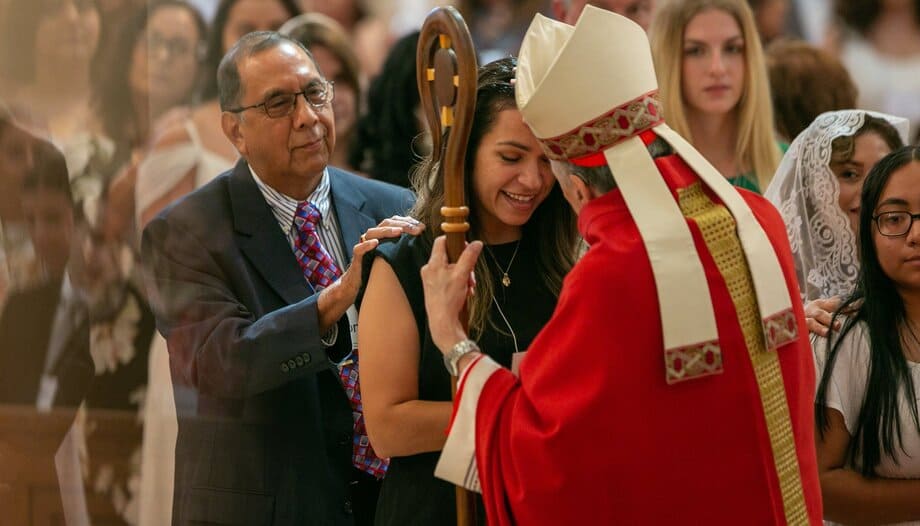
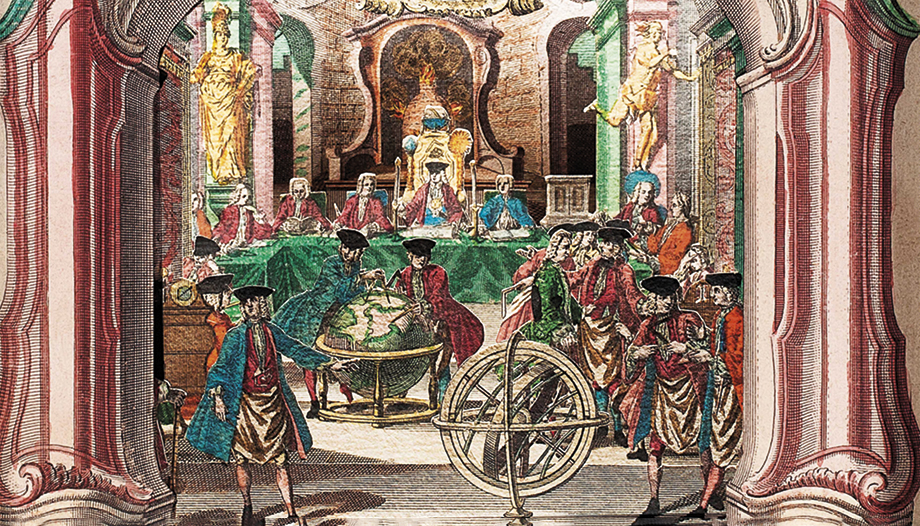
An encyclical is a pastoral letter addressed by the Pope to the whole Church. Encyclicals usually deal with faith or moral or social issues, encourage a particular commemoration or devotion, or address issues of Church discipline that must be observed universally.

OSV / Omnes-May 25, 2026-Reading time: 3 minutes

- Father Joseph L. Parisi

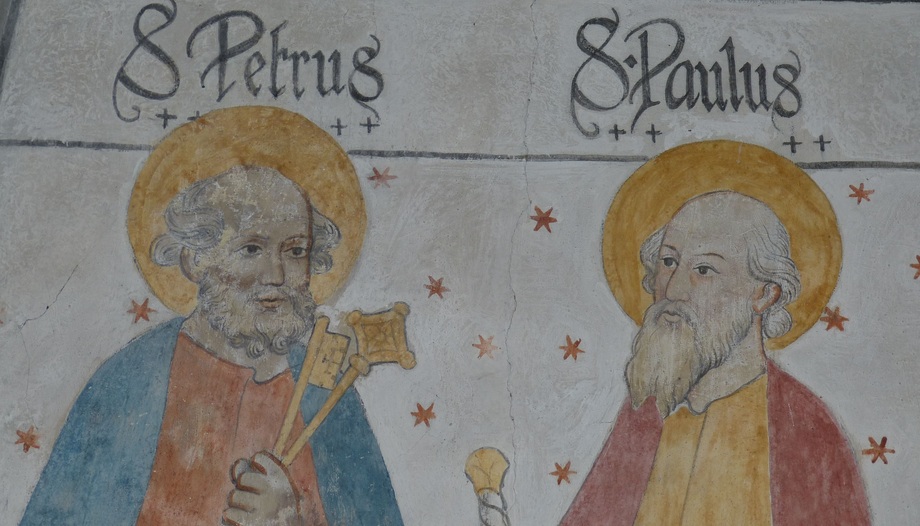
The apostles used letters to address the faithful of the various churches they had helped to found. In particular, St. Paul wrote several letters (epistles), 21 of which are part of the New Testament canon. Evidently, for many centuries they were not called encyclicals.

The successors of the apostles, the bishops, followed this practice and used to send letters to each other and to the members of the churches under their pastoral charge to ensure consistency in faith and practice, especially with regard to the celebration of the liturgy. 

The bishop of Rome himself wrote letters that were circulated to all the bishops. He also received letters from bishops, which he in turn passed on to other bishops.

Decline and resurgence

During the Middle Ages, the practice of sending these letters fell into disuse. At that time, popes only sent letters to individual bishops on matters specific to their dioceses. Bishops responded in writing only to the pope.

Pope Benedict XIV (1740-1758), making clever use of the power of the newly invented printing press, revived the pope's ancient practice of writing letters to all the bishops of the world. 

It was Pope Gregory XVI who applied the term “encyclical” to these letters, from the Latin ‘encyclicus’, or circular, because they were addressed to the whole Church.

Since 1740, the popes have published nearly 300 encyclicals addressing various topics related to the life and ministry of the Church.

“Whoever listens to you, listens to Me.”

Encyclicals are not considered divinely inspired nor do they contain new revelations. They are, however, considered instruments of the ordinary magisterium containing the authoritative teaching of the Vicar of Christ.

On the question of the binding authority of the teaching contained in an encyclical, Pope Pius XII stated the following in his encyclical «Humani generis» of August 12, 1950:

“Nor should it be thought that what is contained in an encyclical does not in itself demand assent, on the pretext that the Popes do not exercise in them the supreme power of their magisterium. Rather, such teachings belong to the ordinary magisterium, of which it is true to say: “He who hears you hears Me” (Lk 10:16)”.

“Moreover, for the most part, what is expounded and indicated in the encyclicals already belongs to Catholic doctrine for other reasons.”.

Magisterium of the Roman Pontiff, even if not ‘ex cathedra’.’

The Second Vatican Council declared in «Lumen gentium»: “Religious submission of will and thought must be manifested in a special way to the authentic teaching of the Roman Pontiff, even when he does not speak ex cathedra”. 

“That is to say, he must manifest himself in such a way that his supreme Magisterium is recognized with reverence and his judgments are sincerely obeyed, according to his manifest will and thought. His will and thought in the matter may be known principally by the character of the documents, by his frequent repetition of the same doctrine, or by his manner of speaking.”.

Sources of joy and challenge

At times, the Church has received papal encyclicals with joy because they addressed issues of popular piety or devotion. 

In others, the Popes have written encyclicals on the great moral questions of their time. These letters have often been the subject of intense debate among various scholars and theologians.

Encyclicals are not, in themselves, considered infallible pronouncements of the pontiff. And while the teachings they contain may at times be difficult for some to accept and follow, Catholics of good will throughout the world are obliged to recognize their apostolic authority and to strive to humbly accept their teaching.

How blessed the Church has been to receive the Lord's teaching and the guidance of the Holy Spirit found in the encyclicals of the Popes down through the centuries!

———————

- Father Joseph L. Parisi received his master's degree in pastoral theology from the University of St. Thomas Aquinas in Rome in 1974 and his licentiate in canon law from St. Paul University in Ottawa, Canada, in 1986. He is a retired priest of the Archdiocese of St. Louis.

The authorOSV / Omnes

Read more
Dossier

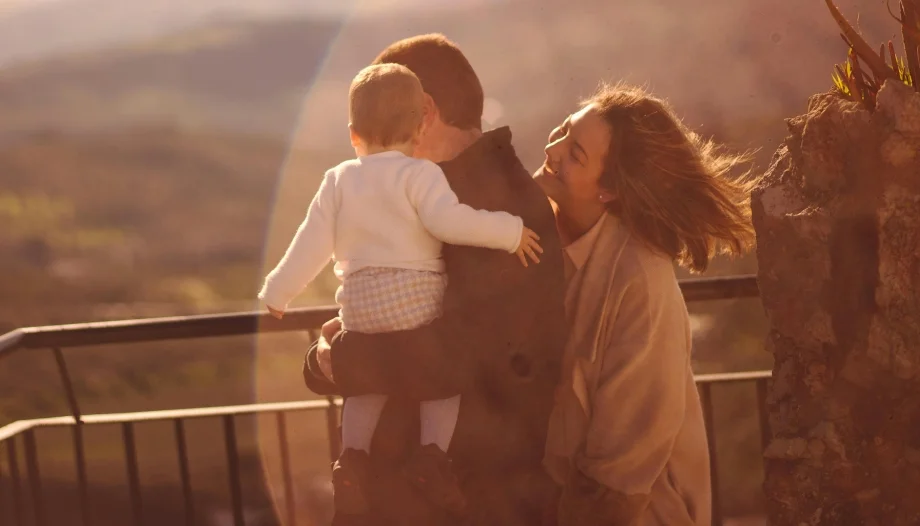
My experience of the diaconate from family life

Manuel López describes his permanent diaconate as a vocation shared with his wife and children, highlighting family support and joint dedication as essential pillars of his ministry.

Manuel Lopez-May 25, 2026-Reading time: 4 minutes

To speak of the permanent diaconate, it is essential to begin with the family. God's call is not received in solitude, but in the bosom of a concrete home, with names, faces and a shared history. In our case, we can say with simplicity that God has knocked at the door of our house and that, to this day, we have tried to respond to him with fidelity and generosity. We ask the Lord to keep us firm in our dedication to our brothers and in our fidelity to the Church.

None of what I have experienced would have been possible without the presence of the magnificent woman that God has placed in my path. Her trust, her availability and her constant accompaniment have been a true pillar in this vocational process. Her testimony of living faith, of love for the Church and of silent dedication has sustained our common journey. Together with her, the Lord has blessed us with two sons, a true reflection of his love and a sign of his grace poured into our family.

The origin of vocation

We were first approached about the possibility of the permanent diaconate in 1998. Our pastor spoke to us about the option of applying for admission as an aspirant to the diaconate. After a time of shared reflection as a family, we decided to accept the proposal. However, the subsequent change of parish priest meant that the decision was postponed and did not materialize at that time.

In 2006, a new pastor raised the question again. Again, we reflected on it as a family, sharing doubts, concerns and hopes. A particularly significant step was the explicit consent of my wife who, with joy and full willingness, signed the document accepting my availability to be admitted to the diaconate. Her support was, once again, a clear confirmation of the shared call.

On St. John's Day, June 24, 2006, our parish priest was summoned to a family audience with Don Antonio Ceballos, then Bishop of Cadiz and Ceuta. That day was engraved forever in our memory. In that audience, the bishop received, on the one hand, the request for admission to the Conciliar Seminary of Cadiz of our son Antonio Jesus and, on the other hand, my admission as an aspirant to the permanent diaconate. As we usually say, the Lord does not allow Himself to be outdone in generosity and, when one gives oneself to Him, He always returns a hundredfold.

In February 2008 I was ordained a permanent deacon, and in October 2013 our eldest son was ordained a priest. It is deeply moving to experience the experience of asking your own priest son's blessing to proclaim the Gospel. I remember jokingly telling him that on the day of his first Eucharist, before proclaiming the Gospel, I would say to him: “Son, give me the blessing.”, instead of the usual “Bless me, Father.”. In the end, the scene remained only an anecdote, but it expresses well the depth and beauty of this shared vocational mystery.

Day to day

The life of a permanent deacon in a family is filled with moments of deep joy and satisfaction, especially when faith is lived and celebrated in common. Even in times of pain and difficulty, the experience of shared faith becomes a source of unity, consolation and strength.

There is a moment that often catches our attention when we attend the Eucharist. My wife usually sits alone in the pew while I, as a deacon, assist the celebrant at the altar. Occasionally, some people ask her: “Are you always alone at Mass?”. She usually responds serenely that when her husband, as a deacon, raises the chalice in the doxology, both are united in a special way, sealed by the marriage covenant, which is also a visible sign of God's grace.

Our youngest son, together with his wife and daughter, today forms a family with deep Christian convictions and a coherent life of faith. We share with gratitude the joy of feeling blessed by God and we raise a sincere thanksgiving for the gifts he gives us every day to be, in the midst of society, his presence and announcement that God loves us beyond our failures and sins. Friends at the christening of our granddaughter ask “Who will baptize her?” and some are surprised that the niece's uncle celebrated the Eucharist and the grandfather is the one who baptized. 

Along the path of the permanent diaconate, there is no lack of anecdotes that highlight the lack of knowledge that still exists about this ministry, despite the fact that in some Eucharistic prayers deacons are expressly mentioned together with the Pope, bishops and priests. In the celebrations of the Word in the absence of a presbyter, it is not uncommon for someone to come forward at the end and say: “Father, you forgot to consecrate.”. Or that, upon seeing the deacon arrive accompanied by his wife, someone would be scandalized and comment: “And who is that lady?”.

Normalization of the diaconal reality

Even so, from my own experience I can affirm that the permanent diaconate is making steady and encouraging progress. Little by little new deacons are being incorporated and we can see how this ministry is beginning to be valued and welcomed in diocesan life. It is also a source of joy to note that dioceses where the permanent diaconate has not yet been restored are taking decisive steps to make it a reality. This has happened recently in archdioceses such as Granada or Mérida-Badajoz, an eloquent sign that the Spirit continues to stir up servants and to show new ways of service to the Church.

And although there is no vocation ministry specifically oriented to the permanent diaconate, there are still men willing to serve. They are few in number, but their human, family and ecclesial quality is admirable. Each aspirant is a source of genuine amazement: men with a life already dedicated to family, work and the Christian community, who wish to offer themselves even more to the Church. In them we can clearly perceive that a vocation does not come from planning, but from God's fidelity and a generous response to service. Each of these candidates is a gift and a confirmation that the permanent diaconate is, above all, the work of the Holy Spirit in the Church.

The authorManuel Lopez

Permanent Deacon of the Diocese of Cádiz and Ceuta

Culture

The Pantheon: a temple for all

The Pantheon: four functions, four eras, four value systems that have coexisted over the centuries in harmony under a dome open to the sky.

Gerardo Ferrara-May 24, 2026-Reading time: 6 minutes

I stopped by the Pantheon just a few days ago. Actually, it is almost impossible not to pass by if you frequent the center of Rome. And, faced with the incredible queues of tourists, I remembered how beautiful it was, years ago (before the tourist invasion), to enter early in the morning, when the light from the oculus drew an almost perfect circle on the floor; or in the evening, for Mass, when the naves were filled with a golden gloom and the coming and going of visitors gave way to the silence of the faithful. Now...

Before continuing, a small clarification: in Rome we have the Pantheon, not the Parthenon! And it makes me laugh to think that an American comedian has made a video precisely about this misunderstanding into which many tourists fall!

A millennial embrace

In the articles that we have devoted to the basilicas of San Clemente y San Sebastian We have defined certain buildings in Rome - if not the entire city - as an “archaeological lasagna”, due to the different artistic and historical layers that characterize the city's buildings, from the archaic in the depths to the baroque and modern on the surface. Well, the Pantheon is an exception, since today it appears exactly as it was two thousand years ago: a Roman monument converted into a Christian church and Renaissance mausoleum without the oldest layer being buried under the most recent ones.

The temple of all gods

The Pantheon derives from the Greek “pan” (“all”) and “theòs” (“god”). It was, in fact, the temple of all the gods, even the lesser-known ones from the farthest corners of the Roman Empire. Rome, in fact, was like a sponge: it conquered, yes, but it absorbed the customs, habits and religious traditions of the subjected territories: a true globalization “ante litteram”.

The present building is not the oldest. The first one was built by Marcus Vipsanius Agrippa between 27 and 25 B.C., but was destroyed by fire. Hadrian rebuilt it between 118 and 125 A.D., preserving Agrippa's original inscription on the pediment: M-AGRIPPA-L-F-COS-TERTIVM-FECIT.

What is immediately striking about the Pantheon is its simple perfection, or its perfect simplicity: a portico with sixteen pink and white granite columns, and then the rotunda (the square in front of it is called Piazza della Rotonda), that is, a cylinder topped by a hemispherical dome 43.3 meters in diameter, which is exactly the same as the interior height of the building: an ideal sphere. 

In the center of the dome, the oculus: a circular hole of 8.7 meters, the only source of light. The oculus has no glass. When it rains, water enters but drains through the holes in the marble floor, without flooding the interior. When it is sunny, however, a circle of light moves slowly along the walls throughout the day like a giant sundial. It has been calculated that on the day of the Natale di Roma, April 21, the circle precisely illuminates the main entrance.

When there are few people, the atmosphere is incredible: the dim light filtering through the oculus creates a muffled, almost palpable half-light, and the acoustics reinforce that sense of protection, almost like an embrace in which sound and light come together in perfect harmony to welcome those who wish to enjoy a moment of tranquility in the midst of the bustle of the city.

609: from pagan temple to Christian church

In 609 A.D., Emperor Foca donated the Pantheon to Pope Boniface IV, who consecrated it as a Christian church: Santa Maria ad Martyres. This is probably why the building has survived intact to the present day, unlike so many other monuments of ancient Rome.

In fact, it was not touched: simply, the niches that had previously housed the statues and effigies of the Roman gods were converted into chapels of Christian saints. 

Foca also donated to the pope a Byzantine icon of the Madonna and Child, which was probably already inside the Pantheon, adored like other sacred figures and is still kept there today.

As it is the time of Pentecost, we can recall what is still a centuries-old tradition in Rome: on Pentecost Sunday, the firemen climb the dome of the Pantheon and throw, through the oculus, thousands of red rose petals on the faithful gathered in the temple, to symbolize the flames of the Holy Spirit that descended on the apostles gathered in the Cenacle. This tradition dates back to the most ancient of Roman floral ceremonies, the Rosalia, which were celebrated in spring on the occasion of the feast of the dead.

The Arab pantheon converted into a temple of monotheism

Even the Kaaba of Mecca, that is, the stone cube around which the rites of Islamic prayer and the Hajj, the pilgrimage, are celebrated, was, in pre-Islamic times, a polytheistic sanctuary that housed statues and effigies of numerous tribal deities, including Allah, considered at that time as one of them. Pilgrims and worshippers from all over Arabia flocked to Mecca and the Kaaba, especially on the occasion of the poetic contests, in which famous local poets, representing the different tribes, gathered in the city to compete with wonderful verses and compositions: true Arabian poetic olympiads!

In 630, Muhammad conquered Mecca and ordered the destruction of the statues of the pagan deities, but not the structure that housed them, i.e. the Kaaba, and also ordered the preservation of the Black Stone and the rite of circumambulation around the quadrangular structure. Medieval Islamic sources, including Al-Azraqi, also report an important anecdote: inside the Kaaba, at the time of the Islamic conquest, the effigy of a Madonna and Child was found, which Muhammad did not destroy, but had it covered with a cloth. The historical veracity of this episode is a matter of debate, but it is entirely plausible if we take into account that Christianity had already taken root in various parts of the Arabian Peninsula, as had Judaism, that the Kaaba was precisely a pantheon for all the deities known and venerated in those places and that, above all, the veneration of Mary would have been maintained in the Islamic era, to the point that the mother of Jesus was the only female figure explicitly mentioned in the Koran.

That Arab Pantheon was destined for the same continuity as its Roman counterpart, and precisely in the same century, since Boniface IV, a few years before Mohammed, had left in the new Christian temple only the image of the Virgin, after having removed the pagan idols.

For those of us who live in our times, marked unfortunately, as already mentioned in a previous article, by fundamentalisms of every tradition, polytheistic societies, Rome in the first place, may seem more inclined to religious tolerance. The theological basis of polytheism, in fact, is that of the coexistence of many divinities. Moreover, in the so-called “interpretatio romana”, it was always better to have one more! The foreign divinity, therefore, was integrated and assimilated (from the Greeks to Mithras and other Eastern cults, including Christianity itself).

Monotheism, on the other hand, starts from the opposite assumption: there is only one God, all others are false. This would be, according to various scholars, the cause of the monotheistic drift of religious intolerance: not a cultural pathology, but the consequence of an exclusive revelation. David Hume and other thinkers such as the philologist Maurizio Bettini, who, in his In Praise of Polytheism, defines polytheism not as “more primitive” than monotheism, nor less complex, but simply different.

Obviously, it is not a question of making an apology for polytheism, among other things because each form of polytheism and each form of monotheism should be analyzed separately and in depth.

The dome and the world

The dome of the Pantheon held, for more than 1,300 years, an unbeaten record: the largest unreinforced concrete dome (lightened towards the top with tuff and pumice stone) ever built and preserved intact.

It was the inspiration for the builders of Hagia Sophia in Constantinople, Isidore of Miletus and Anthemius of Tralles, between 532 and 537, with the difference that the dome of the Pantheon covers a circle, while that of Hagia Sophia covers a square, which caused the collapse of the first dome of Constantinople in 558, later rebuilt.

The Pantheon was only surpassed, as we have already written, by Filippo Brunelleschi in 1436, with the dome of Santa Maria del Fiore in Florence, but the model continued to be imitated all over the world: Villa Capra in Vicenza (Palladio), the Rotunda of the University of Virginia (Jefferson), the Capitol in Washington, the Pantheon in Paris and the Basilica of San Francesco di Paola in Piazza Plebiscito, in Naples, and its form became an architectural symbol not only religious, but also political and cultural.

Raphael, the kings and the memorial of a nation

The Roman Pantheon itself, in addition to being an ancient pagan temple and a Christian basilica, is a memorial to the culture and history of Italy. In 1520 Raphael Sanzio was buried there, whose epitaph, attributed to Pietro Bembo, reads: “Here lies Raphael: of him, when he lived, nature feared to be vanquished; now that he is dead, it fears to die with him”. 

In 1878 Vittorio Emanuele II, the first king of Italy, was buried there, followed by Umberto I in 1900. This allowed the Pantheon to become also the civil shrine of the young Italian nation.

The Pantheon: four functions, four eras, four value systems that have coexisted over the centuries in harmony under a dome open to the sky.

Read more
Family

Archbishop of Minnesota encourages looking at the faces of our family members

“What would our families and our society be like if we spent just a fraction of what we spend on screens to look at the faces of our family members?” wrote Minnesota Archbishop Bernard A. Hebda after ten years at the helm of the Archdiocese of St. Paul and Minneapolis.

OSV / Omnes-May 24, 2026-Reading time: 7 minutes

- Rebeca Omastiak (St. Paul, Minnesota), OSV News 

“The first thing is family life, families,» the Minnesota archbishop told ‘The Catholic Spirit,’ the archdiocesan newspaper, in an interview on May 26, 2016, on the occasion of his inauguration on May 13, ten years ago.

“To the extent that we can help our families or our married couples to see the life they are living as a vocational life, to the extent that we can get them to pray that their children can respond in the way God calls them to serve,” he said, “I think that will have a positive impact on vocations.”.

This was then the reflection of Archbishop Bernard A. Hebda in the Archdiocese of St. Paul and Minneapolis. Now, ten years after his investiture on the feast of Our Lady of Fatima, the archbishop has published his most recent pastoral letter, entitled “Only one thing is necessary”The program is aimed at families.

Happy marriages and families

The fact that the archbishop has talked about supporting families from the time of his inauguration to the publication of his latest pastoral letter demonstrates “that that is the archbishop's priority,” said Corey Manning, executive director of the archdiocese's Office of Discipleship and Evangelization.

“He really wants marriages and families to be filled with joy, that divine life and love,” Manning, a member of St. Michael Parish in Stillwater, told The Catholic Spirit. The archbishop's desire ‘hasn't changed in 10 years: to accompany and walk alongside’ faithful families.

The title of the letter is inspired by the Gospel of Luke, in which Jesus tells Martha that, in the midst of her distress, “there is only one thing necessary” (Lk 10:42). “Jesus himself is that one truth,” the archbishop wrote.

In a May 4 video entitled “Together on the Way,” Archbishop Hebda said that “Our Lord is the way through which Catholic families can be united in this life and in the life to come.”.

Example of saints Zélie and Louis Martin

Throughout the letter, the archbishop refers to the example of Saints Zélie and Louis Martin.parents of St. Therese of Lisieux, The Church's Doctor of the Church - to guide families.

“I have been constant in my prayers that you would intercede for the families of this archdiocese,” Archbishop Hebda wrote in the letter's preface.

Drawing on his own family experience, the archbishop wrote: “My siblings and I often talk about how much we owe our parents for their witness of faith and their willingness to sacrifice for the family. We will always be grateful for how they introduced us to the love of God and made sure we found a home in our Church.”

Archbishop Hebda wrote that he has seen many parents express this same fervor during the prayer and listening sessions leading up to the 2022 Archdiocesan Synod. “I heard again and again the love and concern that reside in the hearts of so many parents in this local Church, who desire nothing more than to lead their families to Jesus,” he wrote.

Faithful pray during a Mass at St. Mary's Basilica in Minneapolis on Feb. 1, 2026, to celebrate the 100th anniversary of the church's ordination as a minor basilica by Pope Pius XI (Photo by OSV News/Dave Hrbacek, The Catholic Spirit).

‘Parents, the first teachers of their children in the ways of faith’.’

A high number of votes during the 2022 Archdiocesan Synod indicated interest in the proposal that “parents be the first teachers of their children in the ways of faith.”.

Next steps included the formation of a High Level Commission, composed of clergy, religious, educators, parents and grandparents, to advise the archbishop on how to support parents.

In response to the Archdiocesan Synod and the archbishop's 2022 pastoral letter, “You Will Be My Witnesses,” one of the commission's recommendations was what eventually became the pastoral letter, “Only One Thing Is Necessary.” The archbishop wrote that the new letter is “an expression of encouragement to parents and all those who support them pastorally.”.

An uphill battle

Archbishop Hebda acknowledged what families have expressed to him as “what may seem like an uphill battle,” living in the midst of “a widespread societal decline in religious practice and church affiliation.”.

According to the 2023-24 Religious Landscape Study, released in 2025 by the Pew Research Center, Christians - who represent the largest share of religiously affiliated adults in the United States - “have been declining as a percentage of the U.S. adult population, while the share of people with no religious affiliation has been increasing.».

The proportion of Catholics in the U.S. adult population is declining.

Meanwhile, the share of Catholics in the U.S. adult population had also declined in recent years, according to Pew researchers. From 24 % in 2007 to 20 % in 2014 and 19 % in the 2023-24 study. However, as reported by Pew researchers, these declines appeared to have leveled off with the most recent data from the 2023-24 RLS study.

Along with changes in religious affiliation and practice, the archbishop noted the challenges facing modern couples, including that “(t)here is a significant decline in the number of couples seeking the Sacrament of Marriage or even choosing to marry civilly.”.

Archbishop Bernard A. Hebda of St. Paul and Minneapolis on Feb. 27, 2026, at the University of St. Thomas in St. Paul, Minn. With him, from left, Jesuit Father Christopher Collins, outgoing vice president for mission at the University of St. Thomas in St. Paul; Cardinal Robert W. McElroy of Washington; Cardinal Christophe Pierre, apostolic nuncio to the United States; and Cardinal Joseph W. Tobin of Newark, N.J. (Photo by OSV News/Dave Hrbacek, The Catholic Spirit).

Trends

According to U.S. Census Bureau data released in 2025, 47 % of U.S. households in 2025 were made up of married couples, which the bureau called «a significant change» from 50 years ago, when 66 % were in 1975.

In his letter, the archbishop included the words of the late Pope Francis, according to which «today's frenetic pace, fears about the future, lack of job security and adequate social policies, and social models whose agenda is dictated by the pursuit of profit rather than concern for relationships» could be considered factors contributing to declining birth rates.

Decrease in the number of married couple households in the U.S.

Census data indicated that the proportion of U.S. households consisting of married couples with children under 18 had declined from 54% in 1975 to 37% in 2025.

The archbishop also acknowledged that many families face problems that are typical of the present age.

In 2023, the Surgeon General of the United States, Vivek Murthy, linked a “epidemic of loneliness and isolation”with decreased social connectedness during the COVID-19 pandemic, as well as an overall decrease in social participation. 

Also the decades-long decline in family size and marriage rates; declining trends in community participation, “including religious groups, clubs and unions”; and booming technologies, including “social networking, smartphones, virtual reality, remote work, artificial intelligence and assistive technologies,” that «have rapidly and dramatically changed the way we live, work, communicate and socialize.».

In his letter, Archbishop Hebda acknowledged both the “perennial challenges” and the “particular challenges of our time” experienced by modern Catholics. And he advocated taking time to engage in face-to-face dynamics.

Looking at the faces of family members

“What would our families and our society be like if we devoted just a fraction of what we spend on-screen to look at the faces of our relatives?” he wrote.

Archbishop Hebda encouraged families to “take heart,” citing, among other things, the words of St. John Paul II in his letter: “The future of humanity passes through the family2.

The archbishop suggested that families should embrace the “narrow way” that Jesus mentions in Matthew 7:13-14. “Surely, persevering on the narrow way requires the grace that flows from our deep friendship with Jesus Christ. Only within the context of that essential relationship can our other relationships be oriented toward our highest calling: eternal life with God.”.

Called to accompany families

“You, dear families, are made for eternal life,” he wrote. In the video on “Only One Thing Is Necessary,” Archbishop Hebda said that “each one of us, regardless of our state in life, is called to accompanying families".

“How do we know that families are so important? Our Lord chose the family as the means by which he entered our human experience,” he said, encouraging the faithful to read the letter and pray with it.

Culture of family life

Along with the publication of the pastoral letter, tools are offered for all the faithful to participate in the effort to “strengthen the culture of family life in the Church and in local communities.”.

The Archdiocesan Offices of Discipleship and Evangelization and the Catholic Education Mission developed a series of steps for the implementation of the pastoral letter.

Recommendations to parents and families, priests and consecrated persons

The steps offer recommendations to parents and families; clergy; parish staff; parish small groups; Catholic school personnel; seminarians; consecrated women and men; and members of Catholic ministries and apostolates; among others in the archdiocese, as they read and reflect on the letter.

Alison Dahlman, associate director of quality and educational excellence for the Office for the Mission of Catholic Education, highlighted parish small groups as an avenue for reading and reflecting on pastoral ministry.

“If every small group uses this as content for the year, what a unifying power it would have!” he said.

———————

Rebecca Omastiak is the news editor of The Catholic Spirit, newspaper of the Archdiocese of St. Paul and Minneapolis. This article was originally published by The Catholic Spirit and distributed in partnership with OSV News.

The authorOSV / Omnes

Read more
The World

Sviatoslav Shevchuk: “I became the voice of life from a besieged city”.”

The leader of the Ukrainian Greek Catholic Church, offers Omnes his testimony on the spiritual and humanitarian resistance in Kiev in the face of the Russian invasion.

Maria José Atienza-May 24, 2026-Reading time: 10 minutes

When anti-aircraft sirens broke the silence of Kiev in the early morning of February 24, 2022, His Beatitude Sviatoslav Shevchuk did not leave the city. He stayed in the crypt of the Resurrection Cathedral, converted overnight into a bunker for thousands of civilians. Today, after years of a full-scale invasion that has left deep scars on the soul of Ukraine, The Primate of the Ukrainian Greek Catholic Church shares his testimony of what he defines as a «miracle of resistance» and a «new Holodomor».

Born in Stryi (Lviv region) in 1970, Shevchuk was formed in the seminary during the clandestinity of his Church under the Soviet regime, his vocation is both spiritual and scientific: he is a medical doctor by training and has a doctorate in Moral Theology from the Pontifical University of St. Thomas Aquinas in Rome.

After a stint as a bishop in Argentina-where he forged a close friendship with then-Cardinal Jorge Mario Bergoglio-he was elected in 2011, at just 40 years of age, as the youngest head of his Church. It is this combination of clinical rigor and pastoral compassion that he uses today to diagnose the state of a nation that, in his words, has learned to «overcome fear with hope.» In this interview with Omnes, Shevchuk discusses the upsurge in Russian attacks on civilians, the heroic role of Ukrainian mothers and the power of the word in a besieged city.

On May 25, His Beatitude Sviatoslav Shevchuk will present his “Chronicle of a sacrilegious war”, with Omnes in the Salón de Grados of the CEU San Pablo University in a unique meeting.

On February 24, 2022 Ukraine woke up invaded, what do you remember about those first hours? 

-Yes, that's right. We have been going on for almost 5 years now what we call full-scale war. Actually the conflict began in 2014, with the annexation of Crimea and the occupation of the territory of Dombas by Russia.

But it was on February 24, 2022 that a full-scale war really began. That means that more than 200,000 Russian troops invaded the country. The target was Kiev. Russia wanted a quick attack, to destroy the country. Destroy the country as a subject of international law. To occupy the capital and then to dominate the whole territory. 

We woke up that day with a completely different reality, which we are still living. Every day, on the Ukrainian side we receive news of the fallen of the Russian troops. About a thousand a day. This means that the Russian troops have not been able to defeat Ukraine. We survived and that was a miracle. I can testify to that. The Russians thought they were going to conquer a territory and they found a nation. Ukraine is really a great country. 

At that time, in Ukraine There were about 36 million people living in the country. Such an attack was not expected. There was no diplomatic dialogue. Our government also did not believe that Russia would carry out such a military invasion. 

I remember the great perplexity that the attack produced because, in a few hours, the city of Kiev was surrounded by the Russians. There was only a small way out of the city. I stayed, obviously. But it was really a mass exodus.

Kiev had about 4 million inhabitants. And after these first days, it was down to 800,000. The city became a desert. 

... and the church became a makeshift shelter.

-From the very beginning, churches became the main refuge of the people. Our cathedral is located on the left side of the Dnieper River. With the attacks, the bridges were closed. The Russians were advancing from the eastern side and the river itself was a natural barrier.

We were in the “pass”, as if in a trap, and almost 3,000 people came to take refuge in the cathedral. We could hear the Russian helicopters flying over the cathedral; the earth was shaking. 

I remember how I saw, from the stairs of the cathedral, the burning city on the other side of the Dnieper River (where, for example, the Orthodox Cathedral of St. Sophia in Kiev or the seat of government are located) and I had the feeling of seeing what Jeremiah saw when he had the vision of Jerusalem razed to the ground by the Babylonians.

I asked myself, ”Lord, why? why did you bring me here from Buenos Aires? why did you elect me head of the Church in Buenos Aires? UkraineYou put me here to see this, what's the meaning of it all? But we were able to resist!

We have saved so many lives..., and we have lost so many others. We still don't know for sure how many people have lost their lives over the years. There is talk of millions. Not only military but also civilians. 

The war in Ukraine no longer occupies foreign front pages, what is the situation like today?

-In the last eight months the situation has been getting worse. We live in a paradox: the more there is talk that the United States is negotiating with Russia, the worse we are. The front line is more or less stable, although the intensity of the confrontation is very high. The worst is being suffered by the civilian population, systematically hit by Russia.

According to UN monitoring, in the year 2025, just when there was a lot of talk about peace in Ukraine, the number of civilian casualties increased by 35% compared to the previous year. Not a single day goes by without shelling of major cities: not only Kiev, but also Kharkov and Odessa, or further south, Dnipro, Donetsk or Zaporiyia. These are attacks that do not have military targets but hit apartment blocks, civilians. 

This winter in Ukraine we have experienced a very difficult, very hard winter. The year the war started, the river did not freeze. It was a miracle. But this year it did not. On the contrary, the ice layer on the river measured more than 25 centimeters. Temperatures dropped below minus 20 degrees Celsius.... 

The Russians then began a systematic destruction of the heating structure, turning the city of Kiev into a cold trap to freeze and kill people. I can testify to this because I live here. Every neighborhood in the city of Kiev has a heating system that starts from a central plant that sends hot water to the houses.

These plants were built in Soviet times. Moscow holds all the cards. Imagine the situation. At minus 25 degrees Celsius, they destroyed heating plants, and within hours the whole neighborhood was freezing. Moreover, when water freezes in these pipes, they burst. That means that now the entire heating system has to be rebuilt in many places. 

It has truly been a humanitarian disaster. We call it a new holodomor, Like that artificial famine that Stalin caused in Ukraine that killed 12 million people. Now people are being killed by the cold. In this context, the Church became again the center of salvation for many people. Despite the situation, there was no great exodus. 

January 2026. Several neighbors warm their hands on a stove in the absence of home heating due to Russian attacks. © OSV News photo/Thomas Peter, Reuters

How has the population been able to survive an increasingly complicated situation?

-I tell you two stories so you can see how they have survived. A boy about five years old came to the cathedral. He was wearing a very heavy coat, very fat. I asked him, “Is it very cold in your house?” and he answered, "Yes, it is very cold. But I am going to beat the cold, and Ukraine is going to beat it". I will never forget this image, of this child who was cold, but who was proud to have the courage to overcome it. 

Another of the images we have lived in the resistance centers: some camps that have been set up in front of these buildings in which the pipes have burst and are frozen. There, with generators, we were able to offer slightly warmer places and people came to have tea, to recharge their cell phones....

There, we have experienced many times, that people started to sing, to dance.

Russia wanted to destroy the spirit, the spirit of the Ukrainians, and it did not succeed. 

At this time, as a pastor, what do you find the hardest?

-As a pastor, as a bishop, I have to say that the most difficult thing is to bury new victims. Every day we cry with so many mothers who are losing their children. We are discovering a new kind of pastoral care of the Church: the pastoral care of mourning, or bereavement. 

I am a doctor and I remember that the pastoral care of bereaved people was the work of hospital chaplains: the priests had to know the psychology, the state of mind, in order to offer an adequate pastoral care to these people. Today, this type of pastoral care touches all of us: whether in parishes, in monasteries, in cities, in small towns. We are a suffering and long-suffering nation. But we are a believing people. Faith gives us hope, and hope gives us strength.

How does one live this time of trial in faith?

-According to recent statistics, 52 % of the Ukrainian population professes to be Orthodox. Among the Orthodox in Ukraine, there are two confessions: the Ukrainian Autocephalous Church and another group belonging to the Orthodox Church of the Moscow Patriarchate. We Catholics are a minority. Within the Catholics we are the Byzantine rite Catholics, who are the majority of Ukrainians, the Greek Catholics, 12 % of the population, and on the other hand, the Latin rite Catholics who are about 1 %.

There is also the presence of Protestant groups: Baptists, Pentecostals..., among the Christians. We also have a significant Jewish population and Islamic groups in the south, especially. So, when we talk about the role of the Church in Ukraine, we always talk about interfaith and interreligious cooperation. Today, the Church is playing a key role in Ukraine's resistance and care for the victims of the war. where international organizations do not reach, the Church reaches. 

I want to emphasize that these moments of pain are also moments of conversion. The churches, especially those in the eastern part, which experienced communism the hardest, are full of people. Why? Because the pain makes the great questions emerge. And they are finding the answer in the Word of God transmitted to them by their priests. 

I have been a priest since 1994. And I must say that, until now, I have never experienced so strongly the power of the Word of God. It is not simply concepts, nor is it a human ideology, it is the power of God that saves you. 

In Crónica de una guerra sacrílega, you collected the messages that, almost daily, you sent by video, how were these messages born? 

-When the war started, faced with the sight of a burning city, the screams..., the last thing you could think of was to write something. However, after one of the first attacks on Kiev, the cell phone kept ringing with the same question “How are you?”. I didn't have time to answer them all. I told my secretary that we had to record a video to tell people how we were doing. A kind of “proof of life”. 

We could not compromise our safety or that of the people who were taking refuge with us, so we chose a very “neutral” background, a curtain. In front of it we recorded all the messages that make up the book. The “success” of the video was impressive: millions of people around the world shared those words. The next day they asked for another one; and another one,... That is how this service of the Word, of the testimony, of saying that we are alive, began. 

I became the voice of life speaking to the world from a city under siege. 

After about two weeks I thought about quitting. But then I went to visit the community in a town about 100 kilometers from Kiev. There, an elderly lady grabbed me by the hand and said, “Monsignor, we are terrified, we are very afraid but thank you for those videos.” I said, “I don't know what else to say, what can I say?” and she replied, “The important thing is that he speaks to us. Not so much what he tells us”.

I then recalled an event that happened to me when I was a practicing physician: a man was admitted after being hit by a train. We had to amputate both his legs and we did not have the necessary painkillers for his pain. His wife came in and he begged her, “Maria, talk to me.” She picked up a book and began to read it. And that beloved voice became a painkiller for that man's pain. 

I understood that the Church had to speak to those people who were suffering. And I began, every day, to transmit the Gospel through these messages. The book shows how these messages were, at the same time, a diary of pain and a word of hope. I explained the whole Catechism of the Catholic Church. I also spoke about ecology, because Ukraine is experiencing an ecological catastrophe with the war.

In his messages, he often refers to those priests who live the war with their communities and encourage them. 

-The presence of the priest for the people meant the living and visible presence of God. If they saw that a priest began to prepare to flee, the people left the city. For us it meant a painful and complicated question “What should we do?”. 

One third of my diocese was occupied, but I am very proud that none of my pastors abandoned their faithful. They have suffered, also psychologically, but they have been with their people. 

Pope Leo XIV with Major Archbishop Sviatoslav Shevchuk on May 15, 2025.

He also speaks frequently of the role of women, of mothers, in these times.

-In these years I have been able to witness the heroic motherhood of many Ukrainian women. In the subway, turned into a shelter, you saw so many mothers protecting, trying to feed their children. 

I tell you a story. One of our priests, who is married (in the Greek Catholic rite there are married priests), lives in an area near Chernobyl, about 20 kilometers from Belarus. This area was quickly besieged because, being almost unpopulated, the Russian troops encountered hardly any resistance.

I knew that this priest was expecting his third child soon after. I called him to “encourage” him to evacuate the city with his family and he told me: “In front of my parish I have 40 women with small children. We are cooking for those children because these young mothers stopped producing milk because of the stress of the war.”.

His wife did not want to leave these girls. She gave birth on the fifth day of occupation, in a hospital where there was no electricity, the doctors lit with candles. I was able to visit this family soon after and I hugged this woman and told her “you are really the image of heroic motherhood”.

In the context of the greatest death, mothers continue to be sources of life. With their courage they protect their children. We have come across so many corpses of mothers who had tried to cover their children with their bodies in the rubble! 

Most of the people who have left Ukraine are women with young children. The young mother is today the face of the Ukrainian emigrant. 

Do you see the end of the war near? 

-It is a difficult question. The Ukrainian war will end as it did when that giant with feet of clay, the USSR, fell. The war will end, but we don't know when. But there is a feeling, a spiritual feeling that the war will end when we least “expect” it.

Ukraine's victory is resistance. We resist because we have no other way to act. It is very easy to say “agreements must be made”, but the truth is this, the war can end in two minutes, when the Russians stop killing us. Because then Ukraine will stop its defense.

In a way, it is an ascetic experience of the monastic life. How can we overcome the devil when he attacks us? Because we cannot defeat him totally, but we can resist his attacks. If one resists evil, evil eventually flees. I think that is going to be an image of our victory. 

The World

Eduardo Roca: «Christians in Mozambique have an admirable capacity for resilience».»

Despite the difficulties, there are great joys and reasons for hope. Last year, nearly three hundred baptisms of young people and adults were celebrated. These facts confirm that the Church continues to be built up by God, regardless of external attempts to destroy it.

Javier García Herrería-May 23, 2026-Reading time: 6 minutes

The Catholic Church in Mozambique operates in a context of extreme complexity, strongly marked by humanitarian instability and violence in the north of the country, especially in the Cabo Delgado region.

In these areas, the institution has become a key player in resistance and emergency aid, taking in thousands of families displaced by terrorism and coordinating the reconstruction of homes after devastating cyclones.

In the context of the diocese of Pemba and the province of Cabo Delgado, the mission of St. Aloysius Gonzaga suffered huge attacks, in which the places of worship, the residences of the missionaries and the convent of the nuns were set on fire, besides destroying the social and sanitary infrastructures associated with the Church that served the entire community of the area. This attack provoked a new wave of thousands of internally displaced people to the south and to the city of Pemba itself.

We spoke with Eduardo Roca, a Spanish priest from the Diocese of Zaragoza, who was sent as a missionary 14 years ago to the Diocese of Pemba. Ernesto Magengue, with whom he coincided while studying in Rome. He assumed the direction of a project of ethics, citizenship and development linked to the Catholic university of the diocese. He also attends to a very small community on the outskirts of Pemba, a Muslim majority, where he has built a large church. 

What does your work in Pemba consist of?

-Like every missionary, I have multiple roles to play. As a priest and pastor, I preside over the sacraments and try to make the Word of God accessible to the community. However, in such a complex environment, one also becomes a reference point for the population; a guide who must transmit security and the certainty that the Lord does not abandon them. To say this is simple, but to experience it in a context of persecution, under the constant threat of Islamic extremism, is extremely difficult.

In addition to my pastoral duties, I work as a teacher and manage the educational institutions of the parish. We have a nursery school for children from two to five years old and a complex that includes primary and secondary education, which has more than two thousand students. It is a mission institution, although the majority of the students are Muslims. I also devote much of my time to interreligious dialogue and conflict mediation for peace building, which is one of my priority lines of action.

What work would you highlight of the Church in that region?

-Our work in Pemba and throughout the province of Cabo Delgado is a direct response to the suffering of the communities. This assistance has materialized in several areas. For example, following the passage of two cyclones that caused profound destruction due to the precariousness of local constructions, we focused on housing reconstruction. Through Caritas, In the last few years, we, the parish, my home archdiocese and several congregations, have been able to restore the roofs of many families who had lost everything.

On the other hand, we manage the food emergency. As an area affected by the conflict, employment options are almost nonexistent. Most of the population is peasant and depends on agricultural cycles; when these fail due to inclement weather, shortages are critical. The children's center, for example, serves nearly two hundred children a day, ensuring that they return home with at least one plate of food.

Finally, the Church assumes the humanitarian reception. We have received thousands of families who have taken refuge here fleeing from the terrorist attacks in the north, which have intensified considerably; just a week ago there was an attack just fifty kilometers away that completely destroyed a mission. This reality demands of us a constant discernment and theological re-reading on how to manifest the presence of the Risen Jesus in the midst of pain.

Father Roca with a group of children and young people.

What do you admire most about the faith of Mozambicans?

-He would synthesize his attitude in a concept of the Macua language: ulipe, which is translated as the capacity to resist, but which implies, fundamentally, the act of rising from the wound and destruction.

It is moving to observe a people who, in the midst of the cross and the most absolute misery, are capable of singing songs of praise. With the sound of the drums they seem to break the reality of the tomb and summon again the Resurrection. This spiritual strength is what impresses me most.

What have been the most difficult moments you have had to live through?

-The most complex period coincided with one of the first waves of terrorist attacks, when the insurgents reached the Metuge district, just across the bay from Pemba. We were unprotected and lacked security. The uncertainty of whether they would break into our area created tremendous anguish. At that moment, worrying about the fate of the children and families, the only viable option was prayer and abandonment to God's mercy. That experience was a major emotional break, a psychological impact from which I needed to reconstruct myself, due to the fear of a repetition of the atrocities that we already knew were happening in the north.

The other critical moment was linked to climatic factors. On the night of the second cyclone, with the uncertainty of not knowing what destruction we would find at dawn or whether our own structure would resist, we sheltered in the parish house numerous children and women whose homes had already been swept away by the wind and rain. These are extreme situations where faith and human endurance are put to the ultimate test.

Have you experienced violence at close quarters in your mission?

-Yes, violence has definitely marked our reality. Although our community of San Carlos Lwanga de Mahate was canonically erected as a parish only three years ago, I have been working in the area for almost fifteen years, dedicating the last few years to the reception of thousands of refugees.

The beginning of the exodus of these families was a strong shock to my conscience. The stories they told were devastating; they described summary executions of immediate family members witnessed by the children themselves. We had to immediately organize the reception of numerous orphaned children, a task that we began in collaboration with the Benedictine missionaries residing in the mission.

Despite the trauma and pain with which these people arrive, they show an amazing capacity for recovery and resilience, far superior to what we Europeans are used to. Today, our mission has expanded to support this internal migration flow; of the seven communities we serve, four are made up exclusively of families displaced by the conflict in the north. It is an environment of loss and vulnerability where we learn the true meaning of priesthood.

Churches this beautiful are made possible by Aid to the Church in Need.

How do you assess the evolution and future of the Church in Mozambique?

-The Church remains committed to providing assistance through housing initiatives and soup kitchens managed by Caritas and the parish. However, beyond material assistance, the current situation has generated a remarkable spiritual strengthening. Historically, these communities have been largely neglected due to a shortage of clergy, depending almost exclusively on the valuable work of local catechists and animators with limited training. Therefore, deepening sacramental and ecclesial life requires a constant effort in catechesis and liturgical formation.

This work brings us great joys and well-founded reasons for hope. Last year, nearly 300 baptisms of young people and adults were celebrated. These facts show that the Church continues to be built up by God, regardless of external attempts to destroy it.

Finally, I consider it fundamental to consolidate interreligious dialogue as a diocesan pastoral priority. After my previous experience in Angola, where Islam was not a close reality, here I find myself immersed in Muslim communities, some of them with fundamentalist tendencies.

This has meant for me a process of inner conversion and of approaching the mystery of the different religions, always from the perspective of the Second Vatican Council and the magisterium of the last pontiffs. In the end, it is a matter of discovering the deepest values of the human condition in the most unlikely environments. As a brother priest, now deceased, used to say: «The most beautiful flowers grow, sometimes, in the most unexpected places». That capacity for wonder at human goodness and the need to stand firm in the face of difficulties sums up our current experience here.

The Vatican

What is Anthropic? The company presenting the Pope's encyclical on AI

When Leo XIV publishes his long-awaited first encyclical, “Magnifica Humanitas”, on Monday, he himself will be present at the press conference, which is atypical for such announcements. In addition, the Pope will be accompanied by, among others, an AI industry executive, Christopher Olah, co-founder of Anthropic. What is Anthropic?

OSV / Omnes-May 23, 2026-Reading time: 6 minutes

- Gina Christian, OSV News

On Monday, May 25, there will be at least two novelties in the presentation of the Pope's first encyclical, «Magnifica Humanitas». One, Leo XIV will be present. In addition, he will be accompanied, among others, by an executive from the field of artificial intelligence: Christopher Olah, co-founder of Anthropic.

Anthropic is the artificial intelligence research and development firm responsible for the virtual assistant Claude, The company has provided an increase in sales, due to the ability of its Mythos agent to detect computer vulnerabilities.

In a May 19 press release, Anthropic stated that “over the past several months” it had been “organizing dialogues with groups whose work and traditions are relevant to the issues raised by AI.”.

The company reported that its “first round of conversations has been with wisdom traditions, including academics, clergy, philosophers and ethicists from more than 15 religious and cross-cultural groups, and we look forward to collaborating with a broader range of people in the future.».

‘Border security’

Anthropic's rise from being a breakaway startup from OpenAI in 2021 to a potential $900 billion valuation (pending the outcome of ongoing negotiations with investors) has been meteoric.

But what has set the company apart from its Silicon Valley competitors is, as Anthropic's website notes, a stated and reiterated commitment to “put safety first» in its research and products.

It's a commitment that Anthropic founder Dario Amodei has long harped on, even going so far as to leave his high-level post at OpenAI due to disagreements over its emphasis on security and moderation. And it may be a key reason why Olah will be present when Pope Leo presents his encyclical to the world.

Anthropic-Vatican Alliance 

Some analysts have described Anthropic's presence at the official presentation of the document as a shrewd business move, with which the company, currently at odds with the Trump administration, seeks to gain both moral ground and market share, particularly in European countries.

However, the partnership between Anthropic and the Vatican is part of an ongoing dialogue that dates back several years to before the election of Pope Leo. A dialogue in which ecclesiastical authorities, technology professionals, theologians and ethicists have reflected on the rise of artificial intelligence technology in a world where human rights and dignity are increasingly under threat.

Minerva Dialogues

Under the pontificate of Pope Francis, the Vatican launched in 2016 the Minerva Dialogues - named after Santa Maria sopra Minerva, the Roman basilica where they were inaugurated - which became annual discussions between Church officials and technology leaders on the ethics of AI.

In 2020, the Vatican-based Pontifical Academy for Life held a conference on AI entitled «RenAIssance: For a Human-Centered Artificial Intelligence.” The meeting culminated in the signing of the Rome Call for AI Ethics, a document that outlines six fundamental principles-transparency, inclusiveness, accountability, fairness, reliability, security and privacy-that should govern AI. The document was signed by the Pontifical Academy, Microsoft, IBM, the Food and Agriculture Organization of the United Nations (FAO) and the Italian Ministry of Innovation.

That same year, the North American AI Research Group was created, convened by Bishop Paul Tighe, secretary of the Vatican's Dicastery for Culture and Education. In 2023, the group published “Encountering Artificial Intelligence: Ethical and Anthropological Investigations.”.

Elected in May 2025, Pope Leo XIV has hinted that artificial intelligence is a priority issue of his pontificate.

Anthropic logo in this illustration taken on March 1, 2026. In a May 19 press release, Anthropic stated that, “over the past several months,” it had been “organizing dialogues with groups whose work and traditions relate to the issues raised by AI.” (OSV Newsillustration/Dado Ruvic, Reuters).

Technological revolution

The very name of Anthropic -an adjective for human - reaffirms its priorities in AI development, which overlap significantly with those expressed by the Vatican. On its website, the company states that its purpose is “the responsible development and maintenance of advanced AI for the long-term benefit of humanity.».

“We take very seriously the task of guiding the world safely through a technological revolution that has the potential to change the course of human history, and we are committed to helping this transition unfold smoothly,” the company notes.

San Francisco-based Anthropic is a public benefit corporation, a type of for-profit entity that balances profitability with a mission beneficial to stakeholders and communities. (In May 2025, Anthropic's nonprofit competitor OpenAI transformed its for-profit limited liability subsidiary into a public benefit corporation.).

Anthropic has produced a “foundational paper” for its AI assistant, Claude (named, according to some reports, after the 20th century American mathematician Claude Shannon, often called the “father of information theory”).

Claude's Constitution, as the text is titled, “expresses and shapes» the AI assistant, which Anthropic intends to be “useful while remaining generally safe, ethical and compliant with our guidelines.”.

Catholic influence 

The constitution reflects input from Catholic experts, including Father Brendan McGuire, a former Silicon Valley executive, and other religious leaders.

In a March interview with the Observer, Father McGuire, whose parish in Los Altos, California, is home to several technology professionals, recounted how Olah had contacted him about developing AI ethics.

Father McGuire told the Observer that Anthropic team members “were basically asking for direct help from the Vatican to come together and help the industry, because the industry was moving so fast down this path.”.

The contacts

The priest had contributed to the creation of the Institute for Technology, Ethics and Culture at the Markkula Center for Applied Ethics at Santa Clara University, a collaboration between the Markkula Center and the Vatican's Dicastery for Culture and Education. The institute provided support for the North American AI Research Group's book on AI ethics and anthropology.

According to the Observer, Bishop Tighe also gave his opinion on Claude's Constitution, along with Brian Patrick Green, Santa Clara's director of technology ethics.

Green joined several Catholic academics in filing an amicus brief on behalf of Anthropic after the Trump administration in February ordered all U.S. agencies to stop using Anthropic's artificial intelligence technology, arguing that it posed a national security risk to the supply chain.

Dispute between the Pentagon and Anthropic

Anthropic countered that it had been vetoed for refusing to allow its technology to be used for domestic mass surveillance or in autonomous weapons. In the months since, the dispute has devolved into ongoing litigation between the Pentagon and Anthropic, with the former asserting in court documents filed this month that Anthropic's ethical concerns were “ideological.”.

The company responded that the Pentagon's rationale for designating it as a risk area in its supply chain, a designation normally reserved for foreign adversaries, has changed.

Anthropic founder Amodei's passion for ensuring that AI remains a force for good goes back years, and runs deep, according to an extensive interview he gave in July 2025 to technology journalist Alex Kantrowitz.

‘A strong sense of responsibility’

Amodei, a biophysicist by training, noted in the interview that he is looking to shape the AI industry itself. Most of Anthropic's revenue comes not from Claude, but from selling its application programming interface (API) to companies that then use the AI models for their products.

He reminded Kantrowitz (whose article was the result of more than two dozen interviews with Amodei, in addition to several personal and professional acquaintances) that his parents raised him with “a sense of right and wrong and what was important in the world,” a sense that instilled in him “a strong sense of responsibility.”.

According to Kantrowitz's interview, the loss of his father to a rare disease - for which a medical breakthrough was discovered only a few years later - prompted Amodei to believe that science can save lives.

Although he has been accused of having a pessimistic view of AI, Kantrowitz said, Amodei's plan “is to accelerate.”.

“The reason I warn of the risk is so that we don't have to slow down,” Amodei said in the interview. “I fully understand what's at stake. In terms of the benefits, in terms of what it can achieve, the lives it can save. I've seen it with my own eyes.”.

——————

Gina Christian is a multimedia correspondent for OSV News. Follow her on Twitter: @GinaJesseReina. Courtney Mares, Vatican editor for OSV News (on Twitter: @catholicourtney), and Kate Scanlon, OSV News Washington reporter (on Twitter: @kgscanlon), contributed to this story.

-------

The authorOSV / Omnes

The World

Christian leaders in the Holy Land condemn the idea of continuing the war “until victory.”

The Patriarch of Jerusalem, Cardinal Pizzaballa, denounces in an important pastoral letter that violence has been accepted as a means of conflict resolution.

Jose Maria Navalpotro-May 23, 2026-Reading time: 4 minutes

“Today we hear threats that the war will continue ‘until victory.’ We ask, what kind of victory - death, destruction, desolation? To those who promote war as the only way, we say: war is not the way. We reiterate our call for an end to bloodshed and destruction.” A group of religious leaders from different Christian Churches in the Holy Land have issued a letter demanding an end to the war affecting Israel, the United States, Lebanon, Iran and Palestine.

The letter was released on the occasion of the anniversary of the Palestinian Nakba (the end of the British Mandate in 1948) on May 15, and is signed by a prominent group of Christian leaders, including Patriarch Emeritus of Jerusalem Michel Sabbah, Greek Orthodox Archbishop, and Lutheran Bishop Emeritus, among others.

The text recalls that “if we truly seek an end to the war in the Middle East, we must focus on the central problem: the plight of the Palestinian people, who have been suffering since 1948. After October 2023, the catastrophe they face has intensified amid an ongoing war in Gaza, waged to erase Palestine and the Palestinians. And the war has spread to the West Bank, Lebanon and beyond.”.

“Our Holy Land yearns for equality, justice and peace. The peace we speak of is a peace that guarantees the freedom and dignity of every human being,” the Christian leaders stress.

Pastoral care of Patriarch Pizzaballa

The text coincides with some of the considerations expressed a few weeks ago, on April 25, by the current Catholic Patriarch of Jerusalem, Cardinal Pizzaballa, in a long and clear pastoral letter in which he also insisted on the need for peace: “We reject any complicity with the culture of violence. Wherever it comes from, violence is never an evangelical path”.

The Cardinal's lengthy letter, entitled “They returned to Jerusalem with great joy”The Cardinal, who has had an impact among Catholics in the Holy Land, is a review of the current state of the Catholic Church in the Holy Land. Without political analysis, the Cardinal is firm in condemning the war, which forces us to “rethink the forms and times of our ministry” and asks, beyond “necessary analyses and denunciations”, “what is the Lord asking of us at this moment”.

The text points out that October 7, 2023 and the subsequent war in Gaza have closed an epoch. According to the patriarch, for the Palestinians this period represents “the last and dramatic phase of a long history of humiliation and exodus», while for the Israelis it has meant “something unprecedented: a violence that has revived the horrors that occurred in Europe eighty years ago”. 

The Patriarch denounces that the use of force has been consolidated as the main method of dispute resolution: «We are witnessing the resurgence of the use of force as an instrument considered decisive for the resolution of conflicts... War has become the object of an idolatrous cult».

Factors of the current crisis

Pope Cardinal Pizzaballa points out some of the main consequences of what he describes as the “chaos” that reigns today in the Holy Land:

  • Pain, hatred and mistrust: The letter speaks of a “painful dehumanization of the other: when the other becomes only ‘the enemy’, everything becomes licit”. “Violence has not only destroyed cities and homes, people and hopes: it has marked consciences, it has poisoned public language.” It creates a distrust among all that makes reconciliation difficult.
  • Fragmentation and fear: the Cardinal points out a worrying phenomenon: “the growing polarization. Not only between Israelis and Palestinians - which we know well - but within both social fabrics, where only people who think the same way, who speak the same language, are found”.
  • Wear and tear of language: for the patriarch, terms such as “dialogue”, “justice” or “two States” have now lost their relevance in public discourse.
  • Difficulty of interreligious dialogue: as a result of the conflict, “the Holy Places, which should be spaces of prayer, become identity battlefields. Sacred texts are invoked to justify violence, occupations and terrorism”. The Cardinal sentences: “I believe that this abuse of the name of God is the gravest sin of our time”. 

However, he points out, “dialogue is our vocation and our destiny. It is one of the ways in which our faith is manifested and nourished.”.

Gaza, Palestine and Israel

The Latin patriarch reviews the state of different territories of the patriarchate: Gaza, “in a situation of extreme tribulation” and in Palestine, where “the situation is deteriorating day by day”; as well as in Israel, where “society has been traumatized since October 7, and this trauma has generated suspicion towards everything related to the Arab world, with the consequent growing mistrust between the two populations”.

A relevant aspect of the letter is the mention of the use of Artificial Intelligence in conflict. The cardinal raises the ethical implications of the automation of war: “What happens when the one who decides who lives and who dies is a machine? What responsibility is left to man?”

The document concludes with a call for coexistence. «There is no alternative. This Earth is the home of all», affirms the Cardinal, who maintains that the mission of the Church there must be to become a space of reconciliation.

“Redeeming the consequences of the conflict - the hatred, the fear, the ‘toxic memory’ - is the specific and sublime task of the Church of Jerusalem for the whole world,” he notes. He warns that “the Christians of the Holy Land are not an uncomfortable third party, nor a neutral buffer between Israelis and Palestinians, nor a group separated from their non-Christian brethren. Rather, they are salt, light and leaven within the societies to which they belong in their own right. They share the history, the language, the wounds and the aspirations of their peoples. They are not called to shut themselves up in a protected enclave, nor to flee, but to live their vocation to the full: to remain within society, sharing its destiny, to leaven it from within with a vision of man - and of society - rooted in the Gospel”.

Finally, the Cardinal appealed to the international community: “It has the duty and the right to take an interest in Jerusalem, because it belongs to everyone. The heart of the world is in Jerusalem and what happens there affects billions of believers”.

“The Church of Jerusalem, small and resilient, finds herself living here and now the style of the heavenly Jerusalem: to be a welcoming place, a paschal light that illuminates the darkness of rancor; to be a house of open doors, an instrument of healing in the world. This is its dream, its mission, its gift to humanity,” he concludes.

The Vatican

10 points of the Pope to the lay leaders of movements and associations

Leo XIV met this Thursday with the “the responsible, at the international level, for various lay realities”, as the Pope called them, movements and associations of the faithful convoked by the Dicastery for the Laity, the Family and Life. Ten of the Holy Father's indications are summarized here.

Francisco Otamendi-May 22, 2026-Reading time: 3 minutes

With the precedent of some great Pentecost Vigil celebrated in Rome with movements and ecclesial realities of the laity, promoted by St. John Paul II (1998) and Benedict XVI (2006), Pope Leo met this Thursday with two hundred leaders of movements and associations of the faithful. The meeting was promoted by the Dicastery for the Laity, the Family and Life.

Among the realities that have now come together - even then - are the Focolare Movement, the Neocatechumenal Way, Communion and Liberation, the Community of Sant'Egidio, the Charismatic Renewal, the Schoenstatt Movement, etcetera.

Among the messages delivered by Pope Leo XIV, which can be found in their entirety on his Speech, The following, necessarily synthesized and practically verbatim, are to be found. We begin at the end.

A priceless gift to the Church

1) Dearest friends, I thank you for all that you are and all that you do. Associations of the faithful and ecclesial movements are an invaluable gift to the Church. There is a great richness among you, many well-educated people and many good people. evangelists; many young people and various vocations to the priestly and married life.

2) The variety of charisms, gifts and methods of apostolate developed over the years allows them to be present in the fields of culture, art, social and work, bringing the light of the Gospel everywhere. Take care and, with God's grace, make all these gifts grow! The Church supports and accompanies you.

3) Governing: it is about set a safe course, so that the community is a place of growth for the people who are part of it. Thus, also in the Church there are those who are in charge of government. Here, government is generally entrusted to the laity. (...) It is placed at the service of the other faithful and of the associative life, and it is the fruit of free elections.

Governance, a gift of the Holy Spirit

4) Government is a particular gift of the Holy Spirit, that the members of a community recognize as present in some of their brethren in the faith, it follows that at least three consequences

5) The first is that it must be for the good of all (...). The second is that can never be imposed from above, It must be a gift that is recognizable in the community and freely accepted. The third consequence is that, as with any charism, the governance of an association is also subject to the discernment of the Pastors., who watch over the authenticity and reasonable exercise of the charisms.

6) Dearest, those who lead your associations and movements take on a delicate taskon the one hand, they are called upon to safeguarding and enhancing the memory of a living heritage; on the other hand, they have a prophetic“ role”, which involves be attentive to current pastoral urgencies in order to understand how to respond to new challenges and to the cultural, social and spiritual sensitivities of our time

7) Part of the prophetic task of those who govern consists, therefore, in to promote the openness of the association or movement, and of each of its members, to historical situations

Communion

8) Another element of vital importance is communion. I would like to stress the importance of the dimension of communion with the whole Church. Sometimes we find groups that close in on themselves and think that their specific reality is the only one or is the Church, but the Church is all of us, it is much more! 

9) Therefore, our movements must truly seek how to live in communion with the whole Church, at the diocesan level. And that is why the bishop is a very important reference figure. We should try to live in communion with the whole Church, both at the diocesan and universal levels.

10) From this perspective, we can to better understand the meaning of fidelity to the foundational charism, which constitutes an essential reference for the governance of an ecclesial reality. To govern in a manner faithful to the founding charism means, therefore, to find in it the inspiration to open up to the path that the Church is following today. (...), allowing themselves to be challenged by new realities and challenges, in dialogue with all the other components of the ecclesial body.

The authorFrancisco Otamendi

Evangelization

Ramiro Pellitero: “Evangelization is not a debate of ideas, but an encounter with the person of Jesus Christ”.”

Ramiro Pellitero, professor of Pastoral Theology at the University of Navarra, talks to Omnes about evangelization today, its challenges and essential concepts for this mission that challenges all Catholics.

Editorial Staff Omnes-May 22, 2026-Reading time: 4 minutes

Judging by the slogan (“Raise Your Eyes”) and the logo of the pastoral visit of Leo XIV to Spain, the message you want to convey revolves around the beauty, unity and acceptance. On the other hand, in Spain, as in many other countries and environments, we live in times of polarization and conflict, which can discourage those who try to share their faith. In this context, we interviewed Prof. Ramiro Pellitero, professor of Pastoral Theology at the University of Navarra.

How can we understand evangelization (the proclamation of the Christian faith) today, so that it becomes a source of light and not a source of dispute?

- One key is to understand that the evangelization is not a mere transmission of intellectual information or a debate of ideas, but a living encounter with the person of Jesus Christ, who transforms human existence.

In the face of conflicts, ecclesial discernment acts as a compass for reading the «signs of the times» and carrying out the proclamation of the faith, taking into account the concrete reality of persons and cultures.

To evangelize the world in an authentic way, the Church as a whole and each one of us must first allow ourselves to be evangelized continually by the Holy Spirit.

When we face social challenges or internal divisions, what role does the discernment you mention play?

- Ecclesial discernment is not an organizational technique, but a shared spiritual practice that allows any Christian community (be it a family, a school or a parish) to recognize what the Spirit is saying in relation to problems or projects that arise. It can be seen as a Christian exercise of the classical virtue of caution, in its true meaning as a guide to action.

In a synodal Church, this dialogue helps to interpret life and human reality in the light of the “kerygma” (the proclamation of Christ), helping to make decisions that truly advance the mission.

What personal attitudes would help reduce tension in such polarized environments?

- Fundamental attitudes such as humility for personal conversion and a sincere willingness to listen are required. We must first listen to God in the prayer and the Church in its magisterium, it is also vital to listen to ourselves and to others.

This «pedagogy of discernment» reminds us that God communicates with us gradually, with what the Fathers of the Church call divine «condescension,» adapting himself to our human capacity.

There are those who feel alienated from the Church because they see it as a set of rigid norms. How can we show them that the Gospel message is truth and love, and that it calls for closeness to people?

- Absolutely! We must privilege the «way of beauty» (Via Pulchritudinis). Education in the faith is effective when it attracts the human heart by showing the radiance and goodness of Christian truth. Moreover, we must overcome the dichotomy between doctrine and life, recognizing that daily existence is a «theological place» where God continues to speak, through the events of life and prayer, also with the help of the luminous criteria of the ecclesial tradition and the language of faith.

A catechumenal-style formation, as it was done in the first centuries (i.e., with an initiatory style), not only instructs the mind, but also helps to mature the identity and sense of belonging.

In the digital environment, where discussions are sometimes aggressive, how can we be heralds of peace?

- Digital culture is a new «areopagus» that challenges us to be communicators of faith. In this communication, testimony (“martyria”) has primacy, which is more eloquent than words and can be offered in the midst of daily activities, without the attitude of giving lessons, through friendship and cultural and social tasks, with serenity and a positive sense.

St. Paul VI famously said: “contemporary man listens more to witnesses than to teachers”. As the Pope Francis’, We must use the «living language» of mercy, acting as a «field hospital» that heals wounds and makes itself available to those who are farthest away, focusing everything on the saving love of God. On the other hand, none of this detracts from the value of reasoning and intellectual formation.

Finally, how do we maintain a balance between being faithful to Christian doctrine and being sensitive to current problems and personal situations, without falling into extremes that take us out of reality?

- We can visualize the Christian mission as an ellipse with two focal points: one is the fidelity to the salvific plan of God (the revealed divine will) and the other, attention to the concrete and complex condition of history. This tension is fruitful and calls for an integral formation that unites doctrinal solidity with human maturity and social sensitivity.

As I pointed out earlier, it is important to take into account the conditions of people, so often vulnerable, and of cultures, with their lights and shadows. It is also important to foster the dialogue that can enrich us, while at the same time shedding new light and helping us to go deeper into the issues - listening to how others see them - and to purify our intentions.

In addition, many issues do not have a single solution and can be approached in different ways. On a highway, you can go faster or slower, on one side of your lane or the other, but without getting in the way or endangering your own or other people's lives.

The Christian life is a highway that can be very well illuminated. By uniting the Word of God, whose fullness is Christ, with the action of the Holy Spirit (Word and Spirit form the “double mission” that comes from God the Father), faith becomes an interior reality or «connaturality» that enables us to see more clearly, to judge events better, to choose to do good wisely and to live more fully. Proclamation of the faith and Christian experience, doctrine and life, are thus united in our existence. Participating in evangelization is a service to all so that they can discover that life in Christ is a path of fullness and beauty.

The World

Bishop Barron: 250 years of the United States, children of God with equal dignity

As the nation prepares to celebrate its 250th anniversary, it should reflect on how the American understanding of equality is grounded in the belief that all people are equally children of God, said Bishop Robert E. Barron, of Winona-Rochester (Minnesota) on May 17.

OSV / Omnes-May 22, 2026-Reading time: 5 minutes

- Kate Scanlon, Washington, OSV News

“As we reflect on our history, from the founding of the country, through the tribulations of the Civil War, to the struggle for civil rights, we can see a constant thread. The conviction that human dignity, equality, rights, freedom, liberty and the rule of law are rooted in God,” said Bishop Robert E. Barron, speaking at a prayer rally on the National Mall in advance of America's 250th birthday.

Organizers of the event, “Rededicate 250: A National Jubilee of Prayer, Praise & Thanksgiving,” stated its goal. To commemorate the nation's upcoming 250th anniversary “with biblical passages, testimonies, prayer and reaffirmation of our country's dedication as one nation to God.” The event was organized by Freedom 250, a public-private partnership with the White House to celebrate America's 250th birthday.

The event was attended mainly by Protestant religious leaders. Other speakers included Bishop Barron, Cardinal Timothy Dolan, Archbishop Emeritus of New York, via videoconference, and Rabbi Meir Soloveichik, in person. Director of National Intelligence Tulsi Gabbard, who identifies as a Hindu, also addressed via video message.

Participants at the “Rededicate 250: A National Jubilee of Prayer, Praise & Thanksgiving” event on the National Mall in Washington, May 17, 2026. (Photo by OSV News/Eric Lee, Reuters).

All people are equally children of God

Alluding to Abraham Lincoln's use of the expression «under God» in the Gettysburg Address, Bishop Barron argued that he did so because he knew “that God is essential to any coherent explanation of democracy, freedom and equality.”.

He noted that this sense of freedom also dates back to the founding of the country, citing the phrase from the Declaration of Independence: “Endowed by their Creator with certain unalienable rights, among which are life, liberty and the pursuit of happiness.

“What the founders knew because of their Christian formation is that all people, despite their vast inequalities, are equally children of God and therefore equal in dignity,” Bishop Barron said.

Intervention of politicians of the administration

Vice President JD Vance and Secretary of State Marco Rubio, both Catholics, as well as Secretary of Defense Pete Hegseth and Tulsi Gabbard, were among the Administration officials who spoke at the event via video messages. 

“We have always been, and continue to be, a nation of prayer, and we thank God for that,” Vance said in a video message. Rubio stated in another video that the nation was “shaped by this Christian idea.”.

He pointed to the Apollo 8 astronauts-Frank Borman, Jim Lovell and Bill Anders-reading the book of Genesis during their historic 1968 mission to orbit the moon.

U.S. Secretary of State Marco Rubio at a display during the “Rededicate 250: A National Jubilee of Prayer, Praise & Thanksgiving” event on the National Mall in Washington, May 17, 2026. (Photo by OSV News/Eric Lee, Reuters).

“That's the way we are,” Rubio said. “That's the way we've always been. America is still a young nation, if we compare it to its history, and since its inception we have believed that our country represents something new in the world. But the soul of our nation has always been rooted in an ancestral faith.”. 

Organizers played a video message Trump had previously recorded in April for an event called “America Reads the Bible,” in which he read 2 Chronicles 7:11-22. He used Whitaker House Publishers“ King James Easy Read Bible, a Protestant translation. ”I hope everyone at the 250th re-inauguration is having a good time," Trump posted on his social media website, Truth Social. 

Critics: separating church and state

Critics of the event argued that the Trump administration's level of involvement unduly conflated church and state.

Rachel Laser, president and CEO of Americans United for Separation of Church and State, stated, “If President Trump and his allies truly cared about America's legacy of religious freedom, they would be celebrating the separation of church and state as the uniquely American invention that has allowed religious diversity to flourish in our country.”.

People pray during a religious service on the day of “Rededicate 250: A National Jubilee of Prayer, Praise & Thanksgiving” on the National Mall in Washington, May 17, 2026. (Photo by OSV News/Seth Herald, Reuters).

Rooted in our identity as the people of God

Cardinal Dolan stated in his video message that “in every chapter of American history, our faith in God has been the foundation of our greatness, the source of our success.”.

“Since the time of the Revolutionary War, our way of life has been defined in part by a few key principles. Prayer, trust, worship, Sabbath, loyalty to family, religious freedom, the power and strength of democracy, the principle of subsidiarity and devotion to the common good,” said Cardinal Dolan. 

“In other words, our deepest values as a country have always been rooted in our identity as God's people. And they are anchored in the reality that not only are we American citizens - of course we are, and we are thankful for that - but that someday we will be citizens of heaven.”.

Cardinal Dolan noted that the U.S. Catholic bishops plan to dedicate the nation to the Sacred Heart of Jesus on June 11.

“Religiously vibrant, politically sound.”

In addition to Bishop Barron and Cardinal Dolan, other members of Trump's Religious Liberty Commission who spoke at the event included Ben Carson, Reverend Paula White-Cain, Reverend Franklin Graham, Eric Metaxas and Rabbi Soloveichik. 

During a prayer at the event, Bishop Barron said, “A religiously vibrant America is a politically healthy America.”.

“That is also why we value religious freedom so highly, a conviction that has made us a haven for people fleeing religious persecution around the world,” he said.

———————-

- Kate Scanlon is a national reporter for OSV News covering Washington. Follow her on X @kgscanlon.

The authorOSV / Omnes

Culture

Sara Barrena: God's Embraces

It is worthwhile to rethink again and again our relationship with God in order, with grace, to deepen our understanding of his tenderness. Writers, perhaps because of their special sensitivity, often lead us along this path and can teach us to be boldly more creative.

Sara Barrena and Jaime Nubiola-May 22, 2026-Reading time: 4 minutes

The writer and philosopher Sara Barrena opens her heart to the readers of Omnes. For my part, I limit myself to transcribe with emotion what he writes to me:

They say that Catholicism is back in fashion: Rosalía, with what they call “aesthetics", is back in fashion.“christiancore", y Hakuna, with hundreds of young people filling the auditoriums with religious songs, are just a few examples. If only it were true that God is in fashion, but unfortunately, we often still treat him with a kick in the teeth.

I am grateful for what my family gave me in my childhood. I remember my mother ironing while the radio played the recitation of the Holy Rosary; the “Jesusito de mi vida”, the Sunday morning comics at the newsstand before going to Mass. I remember my grandmother clinging to God to cope with the loss of two of her children; my grandfather telling his grandchildren -I was nine years old- that this life is a valley of tears. We were in the car on our way to Irun, where he would soon bury his youngest son. Maybe that's where you can see the greatness of a man, in the way he copes with the blows that life gives you. In the valley of tears, my grandparents found, in spite of everything, the strength to teach me to pray and to laugh, to love me beyond measure. They were probably the best part of my childhood.

I used to think that being a Catholic was a complicated matter. Now, however, I have a new lucidity, even though I am entering that age that they say is difficult for women. Sometimes, from the vantage point of fifty, I look back and see the enormous failures of my life, the times when I have been lost or have taken the wrong path, the four children I was asked to send straight from my womb to Heaven, the inevitable worries about the two children left at my side, the heartaches at work, the impossible loves, the extraordinary crises and the ordinary ones, the marriage that was null and void and the one that I pulled through with many difficulties, the friends that disappeared, the books that I did not manage to publish and the ones that I published and few people read. The enormous tiredness that sometimes gives you to live. How exhausting it is sometimes to take care. The things that don't go as you want, as you expect or as you imagine. “Everyone has a mission in life.”, The priest says in church, and here I am with a lot of years and empty hands, still not knowing what is expected of me.

However, the other day I understood, and now I know, that the apparent failures are not such. They are rather the occasions when God makes himself present to you and gives you a hug. He has not been indifferent to a single one of my tears, even though at times I have been angry and have not even wanted to speak to Him. When you are most lost, it is precisely when God finds you. He appears by surprise around the corner or around a bend. In every failure he comes with a reviving embrace, comforting and consoling.

Now I understand that God directly affects our sensibility. That we are loved by Him is not something rational; there is no need for great disquisitions to understand it. Neither is it necessary to love God with the love of a son, a mother, a brother, a lover. It is enough to let oneself be embraced. Sometimes we are left with the external, with the ugliest, with the hardest. What can be done and what cannot. We do not remember to stretch out our hand and barely touch Jesus' cloak, like the woman in the Gospel.

    In the midst of a crowd, with all the burdens, burdens and obligations, sometimes we forget to touch Him. Reach out your hand, only He and you will know, into the depths of your heart, and rub Him again and again, until you leave His tunic frayed. 

God gave us the gift of sensitivity, even if sometimes we anesthetize it. Going to Mass is no longer boring, it is the physical contact we need. Blood, body, soul and divinity - as I was taught - that are glued to your life. The heart that is repaired and the body that is soothed. You take a walk and God gives you a sign. The clouds open for an instant and a star appears. There is always one on guard. “I am with you.”, he says. As close as you can get. Not only with us, but in us. God gives us a smile, a look, like those of other people who love us and that we treasure. A hug from someone you love without it having to end. A “I love you” that we look at and look again, that any given day remains engraved in our minds, without knowing why that day and not another. 

It does not mean that the road is not hard at times. One suffers. But Leo XIV recently gave us the secret of true joy: life given, love that makes no noise. 

There is something so comforting in entering a church, in kneeling before a tabernacle, as one who rests his head on the knees of Christ; in the phrase of a psalm that repeats itself to you like a mantra. The light, the refuge, the salvation. My shepherd. My name, which you repeat. I bend and you straighten me. With eternal love I love you. There is something so consoling in receiving Communion and leaving, even if it is a little more smiling, hand in hand with God himself. Saying the Our Father, crossing oneself and moving on. There is no need for great actions, nor is it a set of rules. It is simply a matter of receiving the gifts that come to us. And although I was always taught that to pray is to talk to God, now I have come to understand that perhaps the best form of prayer is to let God embrace us.

The authorSara Barrena and Jaime Nubiola

Read more
Spain

Alvaro Moreno and Patricia Trigo «Pati.te» join forces to celebrate 100 years of DOMUND with a very special t-shirt

The textile brand Alvaro Moreno and the illustrator Pati.te have been the creators of a special T-shirt commemorating the I Centenary of the DOMUND, the full amount of which will be donated to the Pontifical Missionary Works (PMO) to support this missionary work.

Maria José Atienza-May 21, 2026-Reading time: 2 minutes

A «missionary» T-shirt. This is how they wanted to celebrate and make celebrate the first centenary of the DOMUND, Álvaro Moreno and the illustrator Patricia Trigo.

The T-shirt, designed by Patite, features the Leo XIV praying smiling over a world that is held in the hands of the Virgin Mary.

An inscription reads “Mary, Queen of the Missions, we are in your hands”.

The design of the garment is by Alvaro Moreno and includes this illustration on the back, with the sign of the keys of St. Peter, the flags of Spain and the Vatican and the title “Domund 100”.

The T-shirt, on sale at stores of Álvaro Moreno, 12.95 euros and the full amount - excluding 21% tax - will be donated to the Pontifical Missionary Works (PMO) to support the missionary work of the DOMUND.

A few days before the arrival of Leo XIV to Spain, OMP encourages to receive the Pope, who has been a missionary in Peru and is responsible for these works that support the missions, with this solidarity t-shirt.

Selfless collaboration

This original and modern way of joining the centenary of the work of the DOMUND, carried out by the Pontifical Mission Societies, wants to celebrate these «one hundred years in which Christians around the world dedicate a day to pray, all together, and to raise awareness that... the Church is missionary! José María Calderón, OMP's director in Spain. 

Both Álvaro Moreno and the designer have made this collaboration in a completely disinterested manner: Patricia has donated the illustration, and Alvaro Moreno has assumed the design, production, manufacturing and logistics costs.

100 years of Domund

The Domund (World Mission Sunday) was instituted by Pope Pius XI in 1926. With this initiative, the pontiff wanted the mission to be not only a matter of the missionaries, but that the whole Church would join one Sunday a year (the penultimate Sunday of October) in prayer and economic cooperation with them.

The Pope entrusted the PMS to channel the generosity of all the faithful to help in his name in an equitable way each year to the dioceses that had been created by the missionaries, known as Mission Territories.

Since then, the DOMUND has been lived with intensity in the Spanish society, being one of the countries that, annually, contributes more money to this work. In addition, Spain currently has about 9,000 missionaries around the world. The centenary of the DOMUND pays tribute to their dedication and silent service.

The Vatican

Vatican launches implementation of Synod in dioceses in 2027-2028

With an 18-page document entitled ‘Towards the Assemblies 2027-2028’, the General Secretariat of the Synod has launched the phase of implementation or implementation in two years in the dioceses. It is a path launched by Pope Francis, and confirmed by Leo XIV.

Francisco Otamendi-May 21, 2026-Reading time: 5 minutes

The document of the General Secretariat of the Synod of Bishops on the Assemblies The subtitle of the document, which will be held in 2027 and 2028, specifies what is involved in this implementation phase of the Synod: “Stages, criteria and instruments for the preparation” of these phases.

The headings of each of the four phases of the next two years define the scope and the people:

It is successively about:

  • Memory’(stage of local churches or eparchies, first half of 2027); 
  • interpret’ (stage of the local Churches of an Episcopal Conference, second half of 2027); 
  • guide www.’(stage of the local Churches of each continent, first quarter of 2028).
  • y ‘celebrate’ (October 2028). It is the climax of the ecclesial assembly at the Vatican, “where the whole Church is called to recognize, celebrate and revitalize the fruits achieved in the Synod's implementation journey.».

Key question

In light of the road traveled since the conclusion of Synod 2021-2024, notes the text of the General Secretariat led by Cardinal Mario Grech, and “with a view to offering its fruits as a gift to the other Churches and to the Holy Father,” the key question is the following:

“What concrete face of missionary synodal Church and what new paths of synodality are emerging in your community?”

The question is posed in the introduction, and also at the end of the text, when referring to the celebratory dimension: “Each group will be invited to offer its own contribution based on the question that animates the whole process”.

Evangelical roots

The General Secretariat anchors its introduction in the Gospel, in texts from St. Luke and the Acts of the Apostles.

In this way, he recalls that “gathering the Church together to reflect communally on what has happened and to share the wonders worked by the Lord is a practice rooted in the experience of the return from the mission recounted in the Gospel: after being sent out two by two, “the seventy-two returned full of joy” (Lk 10:17), recounting what the Lord had accomplished through them.

Later, he adds, “the apostolic Church also took up this same practice, as we read in the book of the Acts of the Apostles: ‘When we arrived in Jerusalem, the brethren welcomed us. The next day Paul went with us to see James, along with all the elders. After greeting them, he began to tell them in detail what God had done among the Gentiles through his ministry» (Acts 21:17-19; cf. Acts 14:27 and 15:4.12).”.

Working session of the second session of the Synod on Synodality, presided over by Pope Francis in 2024 (CNS photo, Lola Gómez).

Third stage of the process, after the consultation and the two sessions in Rome

The document states textually that “the 2027-2028 Assemblies, to whose preparation this text is dedicated, are part of the implementation phase of the Synod, which constitutes the third stage of the process outlined by the apostolic constitution Episcopalis communio, after the consultation and listening of the People of God (2021-2023) and the celebration phase, finalized in the two sessions of the XVI Ordinary General Assembly of the Synod of Bishops in October 2023 and October 2024.”.

Final document, and stage confirmed by Pope Leo

With the delivery of the Final Document, Pope Francis inaugurated this new stage, later confirmed and promoted by Pope Leo XIV, the text states.

The Tracks for the Implementation Phase of the Synod (dated June 29, 2025 and available on the website www.synod.va) “delineated with greater precision the horizon and style of this path, offering initial criteria and orientations”.

Now, “the reflections presented here seek to give a more concrete form to the ongoing process, clarifying the participation of the local Churches and the various spheres of ecclesial communion”.

Role of the Assemblies: decisive step, maturation

The Assemblies planned for the next few years “constitute a decisive step in the implementation of the Synod”, says the preparatory document.

As already highlighted in the Tracks, It is not a question of adding a formal step or repeating what has been experienced in similar phases of Synod 2021-2024, but of helping the Churches to transform their experience into shared wisdom“. 

“What is at stake is not simply the continuity of a process, but its maturation,” he adds.

The purpose is “both simple and demanding: to recognize what the Holy Spirit has accomplished, to understand the challenges that still mark the way and to identify, with realism and confidence, the steps to follow.”

In this sense, the text clarifies, “the Assemblies are not a technical verification, but opportunities for discernment, co-responsibility and thanksgiving, within a process shared by the whole Church”.

Members of the Synod with the Pope at the first session of the General Assembly in the Paul VI Hall (©CNS photo/Lola Gomez).

Further clarification: the consultation phase is not to be repeated.

The Assemblies and their preparation “do not consist in repeating the consultation phase of the Synod, but in learning from lived experience, recognizing the fruits and difficulties, readjusting priorities and processes in the light of careful discernment, strengthening co-responsibility among ecclesial entities, and fostering an authentic exchange of gifts among the Churches.”.

Listening to the voice of the Holy Spirit

In all this, the text continues, “it remains crucial to maintain an attentive listening to the voice of the Holy Spirit in the light of the Word of God: the Assemblies are not a sociological consultation or a deliberative dynamism. 

The quality of prayer, listening and sharing is more important than the quantity of materials produced, which must be essential and with well-focused objectives”.

Responsibility: the diocesan bishop, a key player

As could be imagined, the greatest responsibility for the process falls on the diocesan or eparchial bishop for diocesan and eparchial Assemblies, on the president of the Episcopal Conference for national or regional Assemblies, and on the heads of continental bodies for Assemblies at that level, the document points out.

It is also clarified that the synod teams “are not simply operational structures, but bodies that have developed an experience of listening and co-responsibility that must be preserved and developed”.

Therefore, “where this has not yet been done, it is essential to reactivate and support the diocesan, national and continental synodal teams, communicating their composition to the General Secretariat of the Synod.”.

As a footnote, the text indicates that “registration for the registration of diocesan, national and continental synodal teams is available”.” here.

Composition of the assemblies

The text stresses that “the composition of the Assemblies must be consistent with their purpose. It is not simply a matter of representing a diocese or the Church of a country or region, but of ensuring the presence of persons knowledgeable about the processes underway and capable of interpreting them theologically and pastorally.”. 

The selection of participants, he adds, “must ensure adequate attention to the relationships between men and women and between different generations, cultural and ecclesial diversity - including priests, deacons, consecrated men and women, members of associations, movements and new communities, as well as faithful not integrated into organized structures - and the presence of people in situations of vulnerability or marginalization.”.

Particular attention should be paid to the participation of pastors, he said, and it is important to value “the voices that do not come directly from ecclesial structures and, where appropriate, to include the participation of representatives of other Churches and Christian communities or other religions”.

About the 2028 Church Assembly

More than a point of arrival, “the Ecclesial Assembly is the moment in which the road travelled is redirected towards unity, opened to new developments and entrusted to the discernment of the whole Church, under the responsibility of the Holy Father”.”

A specific Instrumentum laboris will propose the content and method of work in light of the path undertaken.

At this stage, therefore, “Eucharistic action and discernment are intertwined: what has been lived is recognized as a gift, shared with joy and entrusted to the responsibility of the whole Church, so that it may continue to generate life under the guidance of the Holy Father”.

The authorFrancisco Otamendi

Resources

Resurrection of the body at the heart of Easter

Easter calls us to contemplate life as a reality to which death does not put an end: our soul is immortal and our body will be resurrected.

Valle Rodriguez Castilla-May 21, 2026-Reading time: 6 minutes

It seems that this reality of the resurrected body in its final destiny does not resonate with much forcefulness and clarity in our times, not even in this liturgical time of Easter when it is even more appropriate.

At Christmas, for example, faith, liturgy and culture go hand in hand and there is no one who doubts what we are celebrating. Something similar happens during Holy Week. The mysteries of the birth, passion and death of our Lord Jesus Christ overflow from the liturgy and are expressed in a rich and deep-rooted culture of traditions that popular piety supports: lights, nativity scenes, Christmas trees, parades, dinners, carols and gifts, processions, Nazarenes, mantillas, penitences, purples and blacks, and candles. All these signs and more are part of the same meanings that the Church remembers in these liturgical times. 

On the other hand, Resurrection Sunday opens Easter and, inside the churches, the Easter candle is used for the first time, the white candle becomes the protagonist and the Alleluia is sung. Beyond these signs of the liturgy, the end of Easter arrives with Pentecost Sunday and the people - in their streets and in their people - have hardly expressed the joy of the resurrection. Well, yes, perhaps with little knowledge of the meaning, Easter eggs do.

There is no doubt that, in order to increase the resonance of the resurrection of Jesus Christ (and ours), there is a lack of traditions (and catechesis) in Easter life. In order to place the resurrection of the body at the center of Easter, a true and experiential pedagogy of Easter is lacking.

The light of the Theology of the Body on the resurrection of the body.

Today, the catecheses of St. John Paul II on human love are an expansive anthropological wave that reaches and focuses with more light on the resurrection of our bodies.

If our bodies are theological, if - as we discovered in the Theology of the Body- the body is a way of knowing God, if theology can be done from the body... the body cannot arrive and meet the limit of death, the body must be resurrected, it must reach God and be able to remain in Him for eternal life.

For this, the first lamp that the Polish Pope lights is that of Revelation. John Paul II gives the ON in that «practical case» that the Sadducees put to the Lord about the law of levirate marriage, about that woman who had been the wife of seven husbands who were brothers: «After them all, the woman died. Then, in the resurrection, whose wife will she be of the seven, for they all had her» (Mt 22:27-28; Mk 12:22-23; Lk 20:32-33).

From the Lord's answer (I encourage you to meditate on the passage of Lk 20:34-38), John Paul II begins the third cycle of his Theology of the Body on the resurrection of the flesh and, through nine catecheses, he makes a «theological reconstruction» of what will be the «eschatological man», the man and woman resurrected in their bodies for eternal life. We summarize in twelve, some of its features:

1. Resurrection as a completely new state of human life itself..

The resurrection, although it means the recovery of corporeality and the reestablishment of human life in its integrity through the union of the body with the soul, is an entirely new state of human life itself. (That is why the disciples did not recognize the risen Lord).

2. Resurrection as perfection of the personal.

In the future resurrection, men will resume their bodies in «the fullness of the perfection proper to the image and likeness of God». The resurrection will consist in the perfect realization of what in man is personal, proper and exclusive to each one.

3. The resurrection of masculinity and femininity.

In the resurrection the male or female peculiarity will be maintained: we will be resurrected as male or female. Although the sense of being male or female in the body will be constituted and understood in the «other world» in a new and different way than it was «from the beginning» and in the whole dimension of existence on earth.

4. Marriage and procreation are not part of this resurrection future.

Therefore, «when they rise from the dead, they will neither take a wife nor a husband» (Mk 12:25). Marriage belongs exclusively to «this world»; it is a historical reality. In «God's world», God will fill «all in all» (1 Cor 15:28).

Nor is procreation part of man's eschatological future. The «other world» is the definitive fulfillment of the human race, the definitive closure of the beings who were created in the image and likeness of God.

It may be complicated to understand, but it is so: marriage and procreation in themselves do not definitively determine the original and fundamental meaning of being body or of being, as body, male and female-what John Paul II calls in his Theology of the Body the «spousal meaning» of the body. Marriage and procreation give only a concrete reality to that meaning in the dimensions of history. Resurrection indicates the end of the historical dimension.

Therefore, the words «when they rise from the dead, they shall neither take wife nor husband» (Mk 12:25) not only express what meaning the human body will not have in the future world, but also allow us to deduce that the spousal meaning of the body in the resurrection will correspond perfectly both to the fact that man, as male-female, is a person created in the «image and likeness of God,» and to the fact that this image is realized in the communion of persons: the spousal meaning of the body as a perfectly personal and communal meaning at the same time.

5. The perfect spiritualization of the resurrected man.

Being «like angels in heaven» allows us to deduce a spiritualization of man according to a dimension different from that of earthly life (and from that of the «principle» itself). This does not mean that human nature is transformed into an angelic nature (purely spiritual). We will still retain our psychosomatic nature but with another degree of spiritualization: our body will be a «spiritual body»: without reciprocal opposition of spirit and body, with the perfect participation of all that in man is corporeal in what in him is spiritual; being a body impregnated with spirit; with a perfect harmonization of the activity of the spirit with that of the body; in a perfect sensitivity of the senses... The highest and most perfect heights of all that is human in the body, a true trans-humanization by the supremacy of the forces of the spirit in the body.

6. The fundamental divinization of humanity.

The divinization of the human has roots of divine filiation. The children of the resurrection are children of God. Therefore, divinization in eternal life is incomparably superior to that of earthly life, not only in degree but also in kind. This is a fruit of grace, of God's communicating himself to the whole man (soul, body and spirit), in the most personal gift of God to man.

7. The glorification of the body:

The fruit in the afterlife of this divinizing spiritualization is the simplicity and splendor of the glorious body, the glorification of the body: all the joy and peace and light of the bodies as distinctive signs of having been created in the visible world; of having experienced our bodies as means for reciprocal communication between persons, as authentic expression of the truth and love with which we have built the communion of persons.

8. Communion with God, «the vision face to face».

Communion with God is full participation in the interior life of God, in the Trinitarian reality itself. Thus, from God's gift of self to man and man's reciprocal gift of self to God will be born in man a love of such depth and strength of concentration on God himself that it will completely absorb his entire psychosomatic subjectivity, his whole self, also his body (virginal state of the body).

9. The communion of saints.

Such a concentration of knowledge and love on God will be the source of man's rediscovery of himself (of the subjectivity of each one); and, from it, the rediscovery of that union which is proper to the world of persons and which is a union of communion (the intersubjectivity of all), the communion of saints.

10. Life in the Spirit.

Each of us, with the Resurrection of the body, will participate fully in the gift of the life-giving Spirit, that is, in the fruit of Christ's Resurrection.

11. We all bear the image of Adam and the image of the risen Christ.

What the human body is in the historical experience of man is not totally detached from the other two dimensions of his existence: the origin and the final destiny. Man carries, in a certain sense, these two dimensions deep within the experience of his own being. 

The humanity of the first Adam carries within it a particular potentiality to become the second Adam, Christ. Our corruptible humanity carries within it the potentiality of incorruptibility. The earthly experience (including death and the destruction of the body) is the substratum and the basis of the new state of existence in the «other world».

In this sense, the Russian philosopher and theologian Solovyev said that the Christian artist is the one who sees in what he has before him what he will be when he resurrects and transmits the intuition of the resurrection. 

12. The wounds of the resurrected bodies.

The new fullness of humanity in the next world is not only restitution, it is not simply a return to the beginning. This would leave aside the experience of sin (and its imprint).

The fullness of the other world will tell the whole story of man: a story shaped by the drama of the Tree of the Knowledge of Good and Evil and, at the same time, permeated by the mystery of redemption. Redemption is the path to resurrection. That is why our wounds will prevail like those of Christ, and the light of Eternal Glory will pass through them.

Evangelization

Father Giussani's cause goes from Milan to Rome: “a man of God”.”

Thousands of people attended the diocesan closing of the cause for the beatification and canonization of Father Luigi Giussani, founder of Communion and Liberation, in the Basilica of St. Ambrose in Milan. Archbishop Mario Delpini described him as “a man of God who led many to an encounter with Christ”.

Francisco Otamendi-May 21, 2026-Reading time: 3 minutes

The Basilica of St. Ambrose in Milan and its external portico welcomed last Thursday more than ten thousand people who did not want to miss a new ecclesial step in the cause of beatification and canonization of the Servant of God Luigi Giussani (Desio, 1922 - Milan 2005), founder of the Communion and Liberation movement.

It was the closing of the diocesan phase of the process, presided over by the Archbishop of Milan, Mario Delpini, in the presence of people of very different ages, backgrounds and origins, united by the encounter with Father Giussani and the Movement.

The documentation relating to the diocesan phase occupies thousands of pages gathered in 27 boxes, sealed and sealed, which will be sent these days to Rome, to the Dicastery for the Causes of Saints of the Holy See, where the process will continue its journey.

Three reasons for joy

“It is a moment of joy born from the experience of a grace,” said Archbishop Mario Delpini.

“A first reason for joy is to recognize in Luigi Giussani a man of God, that is, a priest who with his life, his words and his charism guided others toward an encounter with Christ.”.

A second reason is due to the recognition of Fr. Giussani as a man of the Church, as the Fraternity itself has recognized. Communion and Liberation (CL), and the Vatican Agency. The process, therefore, concludes in Milan, and passes to the discernment of the Church.

The third reason for grace is the recognition of the history that through the charism of Father Giussani “makes you protagonists,” said the Archbishop.

A message that touched the deepest part of his humanity

“Through his charism, many people of all ages and from all countries have recognized a word addressed personally to them, a message that touched the deepest part of their humanity, an opening of horizons that reached their hearts,” Archbishop Delpini added.

Davide Prosperi, Giussani, president of the CL Fraternity, expressed the gratitude and joy of the entire movement. “I want to express the immense joy of all the members of CL for this fundamental step in the journey with which the Church recognizes the goodness of the witness of Christian life of Father Giussani, for the Church itself and for the world”.

Thanks also went to Archbishop Delpini, Monsignor Apeciti, postulator Chiara Minelli and all the members of the Ambrosian diocese who have worked on the cause of beatification and canonization.

Now we must look ahead, towards the path laid out by don Ciussani. “We want to continue even more decisively in communion with the Pope and the whole Church,” he said in the presence of Dr. Linda Ghisoni, Undersecretary of the Dicastery for the Laity, Family and Life, as well as representatives of other movements.

The ceremony was attended by civil authorities of Milan and the Lombardy Region, and several bishops. Among them was Andrea Bellandi, Archbishop of Salerno-Campagna Acerno; Massimo Camisasca, The following friars were present: Ivan Maffeis, Archbishop Emeritus of Reggio Emilia-Guastalla; Ivan Maffeis, Archbishop of Perugia-Città della Pieve and spiritual advisor to the CL Fraternity; Giovanni Paccosi, Bishop of San Miniato; Corrado Sanguineti, Bishop of Pavia; and Filippo Santoro, Archbishop Emeritus of Taranto.

Giussani's books

October 15, 2022 marked the 100th anniversary of his birth, and thousands of CL members filled St. Peter's Square for a meeting with Pope Francis. The Holy Father expressed, among other things, his “personal gratitude for the good that it did me, as a priest, to meditate on some Giussani's books, I do so also as a universal Pastor for all that he was able to sow and radiate everywhere for the good of the Church”.

The authorFrancisco Otamendi

Gospel

Hearts that understand. Pentecost Sunday (A)

Vitus Ntube comments on the readings for Pentecost Sunday (A) corresponding to May 24, 2026.

Vitus Ntube-May 21, 2026-Reading time: 2 minutes

The Easter season culminates with the sending of the Holy Spirit, who descends upon Mary and the Apostles in the Upper Room. This powerful event marks not only the beginning of the Church's mission in the world, but also a new beginning in the life of every believer.

At first glance, the first reading and the Gospel seem to present two different accounts of the coming of the Holy Spirit, almost as if there were two Pentecosts. In John's Gospel, the risen Jesus appears to the apostles and breathes on them, saying, “....".“Receive the Holy Spirit”. In the Acts of the Apostles, on the other hand, the Spirit descends with wind and fire at Pentecost. These are not contradictory accounts, but complementary. John shows us the source of the Spirit - the risen Christ - while Luke shows us the direction of the Spirit's action, which leads the Church to the ends of the earth.

In the first reading we hear that Jews from all the peoples under heaven were gathered in Jerusalem. This gathering already points to the universal dimension of the Church and of the Christian mission. The people are confused, but not as at Babel. At Babel, confusion led to the division and dispersion of peoples. Here, on the other hand, confusion gives way to wonder and admiration. They ask themselves: “Do youAre not all those who are speaking Galileans? Then, how is it that each of us hears them speaking in our native tongue?”. What they experience is not division, but unity in diversity. The division that began at Babel is now undone by the Holy Spirit.

The Apostles are given the gift of tongues: the ability to speak so that all can understand. But Pentecost is not only about speaking; it is also about listening. Alongside the miracle of speaking is the equally important miracle of understanding. People are able to listen, to welcome and to understand. Just as we see tongues of fire resting on the Apostles, we can also imagine hearts aflame among the listeners: hearts open to hear and understand the wonders of God.

In the second reading, St. Paul reminds us that there are many gifts, but one and the same Spirit. Among these gifts is that of understanding, the ability to grasp the meaning of God's action in our lives. This is the work of the Spirit: not only to speak, but to make us understand.

Today, then, we ask the Holy Spirit for this gift of understanding: to recognize God's presence in our lives, to know Jesus Christ more deeply and to allow our hearts to burn within us as we listen to his word. We ask for hearts that can be touched, even pierced, by the truth of the Gospel.

But this gift is not only for our relationship with God. We also need understanding in our daily lives, in our families, in our jobs, in our communities. The ability to truly listen, to understand others and to enter into their experience is also the work of the Holy Spirit.

The mission of the Church is to proclaim Christ to all nations. This requires the gift of tongues. But, just as importantly, it requires the gift of understanding: that those who listen may truly receive it. Therefore, we ask not only for the gift of tongues for ourselves, but also for the gift of understanding for those who listen to us, and for ourselves when we listen to others.

The Vatican

Pope begins series on liturgy and prepares for Sunday Pentecost

The Holy Father Leo XIV began this morning a series of catecheses on the liturgy, and implored the Holy Spirit, in addressing pilgrims of different languages, to fill them with his gifts.

Francisco Otamendi-May 20, 2026-Reading time: 3 minutes

The upcoming Pentecost, which the Church celebrates this Sunday, May 24, has permeated almost all of Pope Leo XIV's words to pilgrims of various languages. But the news is that the Holy Father has begun a catechesis on the Sacred Liturgy, which he will develop in the coming weeks.

“Today we begin a series of catecheses on the first document promulgated by the Second Vatican Council: the Constitution on the Sacred Liturgy Sacrosanctum Concilium (SC),” the Pontiff said.

In drawing up this Constitution, “the Council Fathers wished not only to undertake a reform of the rites, but also to lead the Church to contemplate and deepen that living bond which constitutes and unites her: the mystery of Christ”. 

Armenia, and prayer for peace in Lebanon and the Middle East

He was present at the Audience, in a pre-eminent position next to the Holy Father in St. Peter's Square, Aram I, The Pope received him on Monday at the Vatican, a Catholicos of the Armenian Apostolic Church of Cilicia, who was received by the Pope.

Today, Leo XIV expressed the hope that this visit would constitute “a further step towards full unity”.

The Successor of Peter also asked that we pray “also for peace in Lebanon and in the Middle East, once again ravaged by violence and war”.

To English, Spanish, Portuguese, Polish speakers...

In his words to the faithful and pilgrims of different languages, the Pope referred to the upcoming feast of Pentecost with different nuances. To the English-speaking pilgrims, he said that he “invokes the joy and peace of the Risen Jesus. To Spanish-speaking people, he invited them to ask ”the Holy Spirit to help us to allow ourselves to be intensely formed by the liturgy, so that our whole life may be a continual thanksgiving“.

To the Portuguese-speaking people, he encouraged them to ask for “a renewed outpouring of the Holy Spirit on the Church. And to the Poles, he reminded them that ”forty years ago, St. John Paul II published the encyclical “Dominum et vivificantem‘’. In it he recalled that the Holy Spirit is the »Light of hearts‘ and allows us to ’call by name good and evil‘”.

Ethics in sport: the real goal, respect for the opponent

The Pope also greeted, in Italian, the movement of ethics in sport. He told them: “You have a noble mission, to guard the soul of sport. Remember that the true goal is not material victory but respect for the adversary, the loyalty of the game, and the inclusion of all”.

In the holy liturgy, with the power of the Spirit, He continues to act 

In the catechesis of the Audience, The Pope began by saying that the liturgy “touches the very heart of this mystery (the mystery of Christ). It is at once the space, the time and the context in which the Church receives her own life from Christ. In the liturgy, in fact, «the work of our Redemption is accomplished» (SC, 2), which makes us a chosen race, a royal priesthood, a holy nation, God's own people (cf. 1Pt 2:9)”.

Christ himself is the inner principle of the mystery of the Church, the holy people of God, born of his pierced side on the cross, the Pope continued. “In the holy liturgy, with the power of his Spirit, he continues to act. He sanctifies and associates the Church, his bride, to his offering to the Father. He exercises his absolutely unique priesthood, He who is present in the Word proclaimed, in the sacraments, in the ministers who celebrate, in the gathered community and, to the highest degree, in the Eucharist (cf. SC, 7)”.

In the Eucharist, the Church becomes that which she receives

Here he quoted St. Augustine, who wrote that in celebrating the Eucharist, the Church “receives the Body of the Lord and becomes what she receives”: she becomes the Body of Christ, “the dwelling place of God in the Spirit” (Eph 2:22). This is “the work of our redemption,” which configures us to Christ and builds us up in communion. 

The rituality of the Church expresses her faith - according to the famous saying lex orandi, lex credendi - continued Leo XIV. At the same time, “it shapes the ecclesial identity: the Word proclaimed, the celebration of the Sacrament, the gestures, the silences, the space, all represent and give form to the people called together by the Father, the Body of Christ, the Temple of the Holy Spirit. Each celebration thus becomes a true epiphany of the Church in prayer, as St. John Paul II recalled.

Dear friends, the Pope encouraged, “let us allow ourselves to be shaped interiorly by the rites, by the symbols, by the gestures and, above all, by the living presence of Christ in our hearts," he said. the liturgy, We will have the opportunity to deepen this in the next catecheses”.

The authorFrancisco Otamendi

Books

History of joy

Historian Alain Corbin traces a journey into human intimacy to analyze the evolution and impact of joy over the centuries. From biblical sources to Enlightenment thought and Spinoza's philosophy.

José Carlos Martín de la Hoz-May 20, 2026-Reading time: 4 minutes

In this work, Sorbonne University professor Alain Corbin takes a highly topical journey into intimacy, addressing the importance and history of joy.

It is very interesting that Corbin has no qualms in recognizing that the best source for knowing the truth and substance of joy is in Sacred Scripture and, of course, in the New Testament and, especially, in the direct words of Mary Most Holy, in the wonderful song of the Magnificat: a song of joy and infinite gratitude to the Creator: “My spirit trembles for joy in God, my Savior” (Lk 1:47).

The path to the beatific vision

After a journey through the Middle Ages, he arrives at the unforgettable figure of Chateaubriand in his Genius of Christianity, to describe beautifully the incredible paradise that God has prepared for us, nothing less than the beatific vision (35).

Indeed, Bossuet will affirm that, as the biblical injunction says, if we love God with all our heart, with all our intelligence and with all our strength, rejoicing in His glory, joy cannot be taken from us, for it is “the joy we have from the Being of God” (40).

Some time later, Pascal will speak of the power of God's love and the joy of the convert: “Thus the soul rejoices for having found a good that cannot be taken away from her as long as she desires it: she annihilates herself, adores and blesses God in silence” (42).

Liturgy and community festivities

Our author then brings up the liturgy and the times set aside for joy by the Church: “Religious authority then prescribes various moments in which the faithful are invited to experience joy in the depths of their being, while the whole of the faithful collectively manifest great joy” (43). In particular, he will stop to speak of personal feasts: “since the Modern Age, the solemn celebration of First Communion has been a great joy, first of all, for the communicant, but also for his entire family” (46).

As a strong contrast, he will then refer to “satanic” joy and gives as an example envy, present in human history since Cain and Abel: “Who has not experienced at some time in his life a feeling of joy, more or less dark, at the setbacks of a competitor or a person who had aroused envy, or even fear?” (51).

Intrigues and power ambitions

Retz's obtaining of the cardinalate in 1652, in frank and open competition with Cardinal Mazarin, is narrated in such detail that it makes the reader suspect a scathing criticism of the envy and quarrels both in the Roman Curia and at the French court: “this episode in the life of the new cardinal, whose joy is guessed despite his reserve, demonstrates the tenacity of the intrigues within the Court and the Vatican, either to prevent or to obtain the much desired promotion” (58).

Changing the subject, he will refer to Baruch Spinoza, an author currently in fashion and highly sought after, since every week there are new publications that praise him, edit his texts and comment on them. Always following in the wake of Hegel, who had him as the key thinker of history.

Spinoza's Philosophical Perspective

First of all, he will recall that, for Spinoza, God is not affected by any feeling of joy or sadness and therefore we should eliminate from Scripture all fickleness in this regard, like all miracles. Therefore, for Spinoza, Scripture must be interpreted rationally and not literally.

He will then contribute these texts of Spinoza: “All the attributes of God are eternal and God is the cause of the existence and essence of things”. Moreover, Spinoza will affirm: “man is no longer the union of soul and body, but part of the homogeneous universe, part that has its singular structure” (61).

He will also affirm that man is dominated by the passion of joy and sadness. Moreover, he will define them as follows: “joy is the passion by which the spirit reaches a greater perfection; by sadness, on the contrary, I understand the passion by which it reaches a lesser perfection”. Therefore, he will affirm that it is convenient to strive to live with joy and to avoid sadness (61).

Logically, he will add shortly afterwards that “to understand is to understand God, through whom everything exists, God who is the truth and, therefore, the living source of the highest joy (...). Loving God does not imply any reciprocity”. But Corbin points out, “God, according to Spinoza, neither loves nor hates anyone. He loves himself” (62). Herein lies the great error of Spinoza, who disregards Scripture, Tradition and the Magisterium of the Church and therefore the vital experience of millions of Christians who believe that “God is Love” and that He has revealed it to us and granted us to experience it.

He will end by picking up Spinoza's profound subjectivism: “The greater the joy that seizes us, the greater the perfection to which we rise and, consequently, the more we participate in the divine nature” (63).

From Deism to the Christian family

When he delves into the German Enlightenment, he will bring the interesting testimony of Schiller with his ode to joy of 1785, “where he will speak of the intimate joy that animates us under the aegis of a creator God endowed with personality. This reference to deism departs radically from Spinoza's God and borrows only a part of the God of the Christians” (69).

We do not want to end this brief commentary on Alain Corbin's history of joy without referring to the joy within the Christian family, that is, the family of always, of all life, where children grow up in the love and security of parents who are committed to a careful education and a broad culture and whom they try to form with a large dose of tenderness and trust (97).


History of joy. Journey to the heart of our intimacy

AuthorAlain Corbin
Editorial: Alianza editorial
Year: 2026
Number of pages: 179

ColumnistsMaría Paz Montero

Sacred land

Parents often prefer to cling to superficial or comfortable versions of their children's reality, prioritizing visible achievements and performance over the real, intimate battles that rage inside the home.

May 20, 2026-Reading time: 4 minutes

A friend hosted her teenage son's birthday party at her house. At some point during the evening, one of the guests had too much to drink and ended up vomiting in a bathroom. Several adults cleaned him up a bit, left him sleeping in a room and called his parents to let them know that the boy was not well.

On the other side there was a short silence and then an immediate, almost relieved response:

-Oh, yes... I knew it. He must have had some bad food.

My friend was both amused and puzzled. Because we are not talking about naïve parents. They are intelligent, reasonable adults, perfectly aware of the world in which their children live. They have listened to endless conversations about teenage alcohol, they have gone to lectures, they have read emails from school. And yet, they preferred another version of the story; a less uncomfortable version. 

The scene gives a little laugh because we all recognize the mechanism. There are things that we sense, but we prefer not to look at them head on. And it's not just with alcohol.

The mechanism of denial

It also happens when a teacher tries to show us something uncomfortable about our child and, before we finish listening, we start inwardly defending him or her. It happens when a teenage girl changes groups over and over again and we conclude too quickly that “they are jealous of her”. It happens when we see a girl consumed by grades, obsessed with weight or unhealthily focused on social approval, and we reduce everything to perfectionism, insecurity or “pressure of this generation”, as if it were enough to name the things to have understood them.

We live by looking at the visible because the visible is reassuring. Grades can be measured; medals are easily displayed. Performance allows for quick comparisons, and happy photos on Instagram help build the impression that all is well.

The heart does not tolerate being looked upon lightly.

And yet Christianity has always insisted on just that. Christ returns again and again to the heart: that mysterious and inaccessible place where a person decides what he or she loves, what he or she is afraid of, how much he or she needs the approval of others to feel valuable, how much he or she is willing to give up to belong and what kind of bonds he or she ends up building. 

The true value of a person

“Where your treasure is, there your heart will be also.”

It seems no coincidence that the Gospel insists so much on this, precisely in a culture obsessed with the visible. Because when one lives looking only at the superficial, one ends up leaving the child quite alone precisely in the place where he most needs company.

And that's where the important thing is at stake: not in school grades or on the sports podium. Nor only in the university he will manage to get into or in that Instagram account where he always seems happy and surrounded by friends.

Go there. With immense affection and respect, because the ground you are treading on is sacred ground. Go there to see what is really going on in that heart: what things excite it and what things paralyze it. What kind of approval it desperately needs. How afraid it is of being left out. What pain he's trying to hide behind an obsession with performance or a perfect body. How capable he is of sustaining a friendship, sacrificing for another, or acknowledging a mistake without breaking down.

And also - because it's not all about detecting injuries - look out to marvel.

Connections in everyday moments

Peering into a child's heart rarely happens in big, planned conversations. It happens many times in side moments: in the car, late at night, while doing the dishes, when the teenager says something seemingly small and the adult resists the immediate temptation to correct, explain or reassure.

Through many years of teaching and tutoring teenagers, I have rarely encountered young people convinced that their parents are deeply proud of them because they struggle to do the right thing, because they are honest, because they try to be loyal to their friends, or because they had the humility to admit a fault.

On the other hand, they are usually quite clear about when they take pride in their grades, in a sporting triumph or in those visible achievements that any adult can comment on in front of others.

The look of real acceptance

And it's not about parents being frivolous or bad. Something sadder is often the case: we ourselves have learned to measure our worth that way. We too live exhausted lives trying to prove that we deserve love through performance, control or success.

Perhaps that is why it is so hard for us to believe - truly - that God does not love us primarily for our triumphs. That what moves his heart is something else: the real, fragile and sometimes quite messy hearts of his children.

One of the most decisive things a child learns at home is precisely what aspects of himself arouse love, joy, admiration or hope in those who love him. Children end up intuiting with great precision which things excite their parents and which hardly deserve attention. They quickly discover whether love seems to expand with success and retract with failure, or whether there is something more stable underneath it all.

Children learn how God looks from how they are looked at at home. They learn slowly - and long before they understand intellectually - whether love depends on meeting certain expectations or whether it can remain even when awkwardness, slowness or failure appear. 

Embracing imperfection

Perhaps an important part of educating consists in giving up the impeccable, brilliant, balanced and always successful child to meet this other one: more vulnerable, more contradictory, sometimes difficult, but infinitely worthy of being loved. 

In the small duel of embracing the real son and not only the imagined son, something very similar to the heart of Christ appears.

A love that is neither blind nor naive, but merciful. A love capable of looking at the truth without withdrawing its closeness. A magnanimous love, which does not reduce the person to his worst moment nor to his best performance.

Perhaps this is, deep down, to accompany a child's heart: to enter there gently enough to teach him - very slowly - to love and also to let himself be loved.

The authorMaría Paz Montero

Journalist and Language and Literature teacher. She combines her teaching work with cultural dissemination projects. She recommends books on Instagram @milesdebuenoslibros

The World

Vietnam, the new lung of the Church in Asia

Vietnam is, together with South Korea and the Philippines, one of the great “engines” of Christianity in Asia. Its current situation is fascinating, as it has the challenge of accompanying the spiritual growth of many believers and the delicate relationship with a communist government.

Francisco Otamendi-May 20, 2026-Reading time: 5 minutes

While in many parts of the world secularization is advancing, the Catholic Church in Vietnam shows signs of enormous vitality in a context marked by a communist government and a Buddhist religion followed by approximately half of the population, according to Aid to the Church in Need (ACN) and other sources such as Pew Research Center.

The faithful, mostly Catholic families, show a deep faith in daily life, and maintain an active and growing presence in 27 dioceses, with more than 3,400 parishes and about 5,000 diocesan priests and another 2,000 religious.

At a time when convents and parishes are closing in Europe, Vietnam is experiencing a springtime of faith. With a population of 102 million, the country now has more than 7 million Catholics, making it the fifth largest Catholic community in Asia.

How did it get here? In 1960 the population of Vietnam was 34 million, and now (2026) it has tripled, even with a war in between, which ended in 1975. If Catholics were about 2 million then, and now there are more than 7 million, the “secret” is largely Catholic families with children and the spread of a growing faith.

In these lines we will see a brief X-ray of these aspects: building “fever”, sacramental vitality, the “miracle” of vocations, diplomatic milestones, and what the Vietnamese nun Tham, of the Congregation of the Missionary Sisters of Christ Jesus, explains to Omnes: “...".“The Church in Vietnam has a history deeply marked by suffering and faithfulness. During the persecutions, many Christians gave their lives for the faith. It is the witness of the martyrs”without which hardly anything is understood.

200 new churches by 2025

Catholic dynamism translates into constant pastoral initiatives and a missionary commitment that transcends borders. One of the most visible phenomena is the intense activity in the field of edification.

Vietnam builds an average of 200 churches a year, some of them veritable cathedrals with capacity for thousands of people. These buildings respond to the demand for worship space and reflect the growth of the community.

One of the most striking examples is the Lang Van Church in Ninh Binh, inaugurated in December 2025. With its neo-Gothic style, capacity for 5,000 people and a bell tower of more than 100 meters, it is already the largest Catholic church in Southeast Asia.

It is surprising that this construction “fever”, accompanied by the growth of the Catholic community, is taking place under a communist government. But this has been the government's bet, especially since the pandemic.

Advancement of diplomatic relations 

Official publications such as vietnam.es have reported on the audience in April of Pope Leo XIV with the President of the National Assembly of Vietnam, Tran Thanh Man, and his wife, considered to be “great importance". "Both sides seek to establish full diplomatic relations between Vietnam and the Holy See, and to facilitate a visit of the Pope to Vietnam.”, says the information.

In this context, both parties “expressed their satisfaction for the important and substantial progress achieved in the relations between Vietnam and the Holy See, from the meetings between senior leaders of the two countries to the establishment of the Office of the Permanent Representative of the Holy See in Vietnam.”. This is Archbishop Marek Zalewski, the first Papal Representative resident in Hanoi (the capital) since 1975, who assures that “the Church in Vietnam is alive because its people are alive".

Priest David Rolo (Toledo, 1974), a missionary of the Verbum Dei who lives in Rome after working in the Vietnamese country for 6 years, offers Omnes a piece of information: “at the time of the pandemic, the Vietnamese Bishops' Conference appealed to all the faithful to attend to the needs of the people who were suffering.”. And the government recognized the social benefit of the Catholic Church in the country.

Sacramental life

Sacramental life shows equal dynamism, with more than 100,000 baptisms annually and Sunday Mass attendance reaching between 64 % and 90 % in rural areas and dedicated communities, where entire families participate in community liturgical celebrations.

From her own experience, Sister Tham assures us that “the faith lived in families and parishes remains fundamental”. Fr. David Rolo adds that “Catholic families continue to have a good number of children, and there are many young men and women from Catholic families who wish to follow Jesus in the consecrated life or in the priestly life.".

The “miracle” of vocations

Perhaps the most striking aspect of the growth is the flourishing of vocations. The country's 11 major seminaries are operating at full capacity with more than 2,800 seminarians, in addition to some 31,000 religious men and women dedicated to the service of the Church. Priest Joseph Dinh Quang Hoan, from the Diocese of Thai Binh and currently in Rome studying thanks to a scholarship from the CARF Foundation, says: “In Vietnam there are many young people willing to serve the Church. The number of vocations in the Vietnamese Church is very high. In my diocese of Thai Binh, a small diocese, we currently have about 100 seminarians and many religious, nuns and brothers and sisters.".

This abundant number of vocations has enabled the Vietnamese Church to begin exporting priests and religious to Europe and the United States, where they support communities with a shortage of clergy. Hoan himself explains his formative vocation: “Coming to Rome to study is not only my dream, but the dream of many Vietnamese believers. I want to study as much as I can so that I can return to serve intellectual formation in my diocese.”. Hoan also mentions that in his diocese the Sacred Heart major seminary is being built, so qualified teachers are needed to accompany this sustained growth.

Historical roots: the blood of martyrs

Blessed Andrew Phú Yên, the country's first martyr born in 1625, remains a point of reference for the Church in Vietnam. On the occasion of the 400th anniversary of his birth, Pope Leo XIV addressed a message to the more than 64,000 Vietnamese catechists, recalling that Andrew “received baptism, collaborated with Jesuit missionaries, was arrested for his faith and killed at the age of 19 after refusing to renounce Christ. He died saying: ‘Jesus’.’”. The Pontiff thanked the catechists for their dedication:“By your teaching and your example, you attract children and young people to friendship with Jesus.".

Vietnam also has 117 canonized martyrs, among them St. Andrew Dung-Lac and companions, whose witness in times of harsh repression continues to inspire new generations. These martyrs, canonized by St. John Paul II in 1988, correspond to a period of persecutions between 1745 and 1862, during which thousands of Vietnamese Christians were executed for their faith. Fides, OMP Press or Asia News have pointed out that catechists play a key role in evangelization in remote areas where access to priests is limited.

Legacy of Vietnamese cardinals

The Vietnamese Church has also given the Church high-profile cardinal figures. Cardinal François Xavier Nguyen Van Thuan, detained for 13 years in communist prisons between 1975 and 1988, became a symbol of peaceful resistance when he celebrated Mass in secret with three drops of wine and a little water on his hand and wrote The path of hope, composed of 1001 thoughts dedicated to his faithful during his captivity.

The authorFrancisco Otamendi

Read more
Spain

Countdown to the arrival of Pope Leo XIV in Spain

The organization of the trip has presented a communication campaign that will prepare the ground for the arrival of the pontiff.

Editorial Staff Omnes-May 19, 2026-Reading time: 3 minutes

Two spots, a little longer than usual, one on friendship and meeting despite differences and the other on the need to know and treat others “.“looking up”will be the two audiovisual stories with which Spain is preparing the visit of Pope Leo XIV

Rafael Rubio, National Communications Coordinator for the visit; Gabriel González Andrío, Head of Marketing and Campaigns for the visit; Marcos Tejeiro, General Director of UM (Omnicom Media Spain) and Sara de la Torre, Communications Director of the Archdiocese of Madrid, shared with the press some of the news and advances in the preparations for the Pontiff's visit to Spain. For three weeks, on Tuesdays, these advances will be announced at the various venues. 

The spots: “Metro” and “New (old) friends””.”

“Metro” and “New (Old) Friends” are the two video capsules, which will be shown mainly on television and social networks, with which the organization of the papal visit “aims to challenge both believers and non-believers.”.

The campaign has counted with Omnicon Media for strategic planning; with Ábside Media for production and with TheCyranos for creativity. On this aspect, Gabriel González Andrío wanted to thank the volunteers, not actors, who starred in these spots and how they want to reflect this need to overcome polarization and especially, to establish personal relationships overcoming differences and prejudices, in preparation for the arrival of the Pope and in line with the messages that, in this regard, Pope Leo XIV has been launching since the beginning of his pontificate. 

Madrid events

Sara de la Torre has advanced some aspects of the acts and celebrations that Leo XIV will preside in Madrid. 

In this regard, he explained the route of the Corpus Christi procession, presided over by the pontiff, which will start from Cibeles, where the Holy Mass will be celebrated, along Alcalá Street to the height of the parish of San José. There he will turn around, returning to the starting point.  

De la Torre also wanted to point out that “for the distribution of communion at the Holy Mass in Cibeles, a strategic plan has been established to prevent anyone from missing communion. In this sense, “500 priests and 1,800 extraordinary ministers of communion, will be distributed throughout the space and in addition, 6 parishes of the environment: San José, the basilica of Jesus de Medinaceli, San Jerónimo, San Manuel and San Benito, Santa Barbara and the cultural center of the town, will be ‘Eucharistic parishes’, to which you can go to receive communion in the case of not reaching one of these ministers”. It should be noted that, as of today, there are 250,000 people registered for this celebration of the Holy Mass in Cibeles. 

The Director of Communications of the Archdiocese of Madrid has also revealed that, in the whole area of Castellana, several “listening points” will be established. A pastoral initiative that has been carried out in the Archdiocese of Madrid for some time and that will have its visible expression in these days, with the aim that anyone who wants and needs it, can be heard by agents of this pastoral, trained for it, and start a process of accompaniment. 

Participation

In addition, some of the participation figures have been announced. In addition to the quarter of a million people attending the Mass and procession of Corpus Christi, Rafael Rubio has announced that there are about 160,000 registered for the Saturday Vigil; 36,000 for the Holy Mass in Gran Canaria and 25,000 for the one in Tenerife. No data has been given for the events in Barcelona. 

Volunteer kits and merchandising

The press conference has also served to announce the equipment of the volunteers and the organization of these celebrations. Volunteers and organization will be equipped with different colored t-shirts and caps, according to their work: 

Red for general staff, orange for volunteers, blue for accessibility volunteers and green for information volunteers. In addition, the merchandising for this visit is now available in the online store of El Corte Ingles and on the web Conelpapa.es. The benefits will go entirely to defray the expenses of the trip and also thanks to the collaboration of the Foundation. Contemplare, religious products made by different cloistered convents in Spain are also for sale.

Evangelization

Why do I have to go to a priest for God to forgive me in Confession?

Jesus established this, instituting one of the seven sacraments, and conferring on the apostles the power to forgive sins. The priests, successors of those apostles, would act in the name of Jesus.

Alejandro Vázquez-Dodero-May 19, 2026-Reading time: 3 minutes

Confession - or the sacrament of Joy, Reconciliation, Forgiveness of God - is the sacrament of healing. It heals the soul, it cures something I did wrong and wounded God Himself, because it contravened my nature and the will of the Lord. It makes God's dwelling in my soul possible again if I committed a mortal sin and therefore “expelled” Him from my interior; or it purifies it further if I offended Him slightly. 

In order to be able to confess, there must be matter, that is, consciousness of having sinned or offended God by not observing any of the Commandments that indicate what should be the attitude of man before God, that of the son before the Father.

Meaning of Confession

It is a priceless treasure, since it means an encounter with the infinite mercy of God, who loves me and always wants to forgive me and give me the opportunity to begin and begin again, once and a thousand times. In short, it is a matter of becoming ourselves again, meeting again with God, with whom our nature desires - because it needs - to be. For this simple reason it would be justified for the Church to oblige us to confess our mortal sins at least once a year, if necessary.

Mortal sin must obligatorily be confessed to a priest in order to receive forgiveness, while venial sins are recommended to be confessed to strengthen the spiritual life. For there are other ways to purify these minor sins, such as the reception of Christ himself in the Eucharist.

Why can't I ask God for forgiveness directly?

Pope Catechism of the Catholic Church in No. 1441 recalls that “.“only God forgives sins (Mk 2,7). Jesus is the Son of God, and says of himself: ‘The Son of man has the power to forgive sins on earth’.’ (Mk 2:10)and exercise that divine power: ‘Your sins are forgiven’.’ (Mk 2:5; Lk 7:48)”.

On the other hand, he emphasizes that on the evening of the day of Resurrection, the Lord appeared in the midst of the disciples and said to them: “....“Receive the Holy Spirit; whose sins you forgive, they are forgiven; whose sins you retain, they are retained.” (Jn 20:21).

Thus, by virtue of his divine authority, Jesus confers this power on men to exercise it in his name, so that the priests - or rather, He through the priests - can forgive sins and restore peace to the conscience.

It is a sacred content, which belongs to God and to the heart of each person. Hence, the priest is obliged to keep the so-called sacramental secrecy or office secret of what is heard in the sacrament. Confession.

Reasons for confession

In summary, these will be the reasons why according to the Catholic Faith one should go to confession to a priest:

  • Jesus established this, instituting one of the seven sacraments, and conferring on the apostles the power to forgive sins. The priests, successors of those apostles, would act in the name of Jesus.
  • Confession means a direct encounter with the divine Grace of the sacrament, with the Lord himself, because the priest in the instant of absolving or conferring the forgiveness of sins acts in the person of Christ himself.
  • It is also a medicine for the soul, which cures sin and strengthens it for future encounters with the temptation to sin. The priest thus acts as a physician and spiritual guide, relieving the burden of guilt as he expresses the forgiveness bestowed by God himself.
  • Sin breaks ties with God and, consequently, with the Church. The priest, representing the Church, also manifests the restoration of that unity of the Catholic faithful with the Church. 
  • Acknowledging sin before another person, the priest, in this case someone qualified as a consecrated person, helps to achieve a real conversion through the humiliation that the accusation of sin may entail.

In order to obtain forgiveness from the offended party - God Himself in this case - it is necessary to verify that there is true repentance for the harm caused, and this is done by the priest in Confession.

  • Finally, we would refer to the certainty of forgiveness, which is attained by those who hear the words of absolution. This is the theological certainty that sins have been forgiven, have disappeared, and one has returned to communion with God, embracing his merciful love, recovering inner peace.
Read more
Evangelization

Jacek Magiera, a soccer coach, saint?

Many of those who trained under Jacek Magiera say the same thing: «He helped me to become a better person».

Stanisław Urmański-May 19, 2026-Reading time: 5 minutes

On April 10, Jacek Magiera, the assistant coach of the Polish national soccer team, passed away unexpectedly at the age of 49. His name will not ring a bell for the fans of the big soccer teams, but he has been a reference in recent years at the national level. Magiera not only had results on the field, but also helped many soccer players to grow as people. The coach did not hide the fact that, if he has done something good, it was because he responded to what God has given him. 

It is rare for an adjective to appear in Przegląd Sportowy, the leading Polish sports daily. saint. Of course, due to the irruption of the Internet as a source of breaking news -such as match results-, the newspaper evolved, leaving more space for interviews and opinion articles that explain, in greater depth, the reasons behind what happens on the soccer fields or other sports arenas.

A saint?

So themes such as constant work, the struggle against adversity or not losing heart after defeat return. But holiness? Significantly, in his commentary on the passing of Jacek Magiera, his colleague from the Polish youth national team days, Kamil Kosowski, describes him as follows: “I did not want to describe Jacek only as a coach or a footballer because, regardless of the profession he played, he would be for me the same companion: full of human warmth, helpful, intelligent and empathetic to the other. A man of faith, deeply religious, assiduous reader, hungry for knowledge and able to understand that soccer development is not everything. A man without addictions, crystalline; one can say that he was a saint”.

It is interesting that his colleague, instead of talking about his successes as a footballer and coach, highlights his human side and underlines his deep faith. His relationship with God, normal and simple, affected everything he did. The fact that even people who did not share his faith realized that there was something more there, is very significant.

Who was Jacek Magiera?

Born in Częstochowa, next to the Jasna Góra shrine, Magiera started his career at the local club Raków, but soon moved to Legia Warsaw, the team of the capital, which leads the ranking of Polish clubs with 15 titles. At Legia he played 10 seasons and won the national championship twice. Already during his playing career he thought about becoming a coach. At the age of 32 he finished his soccer career and started coaching. Among his achievements, he won the 2017 Polish championship with Legia Warsaw. Seven years later he achieved the runner-up spot with Śląsk Wrocław. He also collaborated in various ways with the Polish national team, of which he was an assistant coach recently.

But more than titles, what really counts is the work he did with the players. The years that marked him the most were 2014 and 2015, when he was in charge of the second team of Legia Warsaw. There he had under his tutelage young players aged 17, 18 and 19 with a lot of talent and the whole future ahead of them, who had to face the entry into adulthood and were at risk of spoiling. That's where Magiera came in, with its high standards and comprehensive support.

Many of those who coached with him repeat the same thing: «He helped me become a better person». In one of his interviews he explained that his way of understanding coaching was to see something in a young player that others had not seen, in order to build him up and give him the opportunity to gain experience.

What your players say

And these are not just his words; the players confirm it. It is very illustrative what Jakub Rzeźniczak, who was starting his professional career at Legia when Magiera was finishing his and then had him as a coach, says: “He was one of my mentors, he always supported young players. He helped me pass my high school exam and lent me money when I was lacking.”.

Rzeźniczak tells how, when Magiera was already working at another club, he called him in difficult times, even in matters of his private life: “He helped me many times: when I was going through a bad soccer moment, when my son passed away or when bad things happened in my life; I could always count on him. After calling coach Magiera, you just revived somehow; he knew how to instill a very positive spirit in difficult situations.”.

To these young players, and not only to them, he transmitted the need to act conscientiously. At one point he came across the book by Álex Rovira and Fernando Trías de Bes, Good luck. The book, in the form of a fable, explains that profound success - be it in business, soccer or life - is not a matter of chance, but of well-made decisions and integrity. Magiera was so fascinated by the book that he bought the remaining 700 copies of the Polish edition to give to his players and explain it to them in training talks. He made the young players think so that they would take care of themselves and not waste the effort of training with harmful entertainment.

As for the way he managed the team, it was also clear that he went deep. For example, with regard to discipline in the dressing room, he explained in an interview that he did not try to impose it by shouting so that the players would do what he wanted, but that he believed that discipline should come from within the players. Good players want to do what the coach says because they have already internalized it.

Soccer, in place

In interviews he did not hide the fact that soccer was not the most important thing for him. First, of course, was his family. He married late to Małgorzata, who shared his passion for soccer, and they had two children. Significantly, he attached great importance to not changing teams too often. He knew that his children needed their father and required stability to create lasting bonds, something he admitted his wife always warned him about.

And first and foremost was his dealings with God. In an interview he said: “For me, faith is the foundation on which I build everything. I build the family, the team and each player individually (...) I know that without God I would not exist, everything I do would not exist. I completely trust that the divine path is my path”.

Circumstances of death

His death was unexpected: he collapsed during an individual training session while running through a park in Wrocław (Wrocław) due to cardiac arrest. A few weeks earlier he had undergone a thorough medical examination that detected no abnormalities.

His death was widely reported in the media. His funeral was attended by the president of the republic, Karol Nawrocki. The Polish Football Association decreed a minute's silence before all Ekstraklasa matches in the week of his death. Legia fans prepared a tifo with his portrait in large size to accompany the club in the league match. In the next match of Śląsk, his last club after his death, the game was stopped at 19 minutes and 47 seconds, in reference to the club's founding year (1947).

A year and a half earlier, she had visited the shrine of Gietrzwałd, in northern Poland, the site of Our Lady's apparitions in the second half of the 19th century. From that visit on, the Magiera family prayed the rosary daily. Jan, her twelve-year-old son, spontaneously, on the day of her death and seeing the sad atmosphere, said: “Hey, why don't we pray the rosary? That's what Dad would do.

The authorStanisław Urmański

Polish priest.

Initiatives

Is there intelligent extraterrestrial life? Catholic thinkers give their opinion

If rational extraterrestrial beings exist, what would be God's relationship with them? The thought was previously purely speculative, but it could take on new meaning with the release of U.S. Department of Defense data on alleged encounters with “unidentified anomalous phenomena” or UAP.

OSV / Omnes-May 19, 2026-Reading time: 7 minutes

- Maria Wiering, OSV News

UAPs - formerly known as ‘unidentified flying objects’ or UFOs - and the intelligence behind their existence have long been a source of public fascination, even before the discovery of UFO debris at Roswell, New Mexico, was claimed. 

But Catholic theologians and scientists have also reflected on its implications for the way humanity perceives itself in relation to its Creator.

Among scholars researching this topic, the general consensus seems to be that the existence of extraterrestrial intelligent beings does not upset the Church's theology of creation.

Christopher Baglow, director of the Science and Religion Initiative at the McGrath Institute for Church Life at the University of Notre Dame in Indiana, addressed this question in a lecture given in 2021 for the Society of Catholic Scientists Annual Conference, a version of which he published in Church Life Journal. 

Humans and extraterrestrials share God as their creator

His starting point was that humans and extraterrestrials share God as their creator, which gives extraterrestrials “the capacity for a special relationship with God in which they can know Him and respond to Him with freedom and love.”.

“God would love them and want to share his life with them,” he said.

St. John Paul II is said to have expressed a similar idea when a child asked him if extraterrestrials were real. “Always remember,” the late pontiff reportedly said. , “they are children of God, just as we are».

Pope Leo XIV visits the Vatican Observatory in Castel Gandolfo, Italy, on July 20, 2025, to commemorate the anniversary of the first manned mission to land on the moon in 1969 (CNS/Vatican Media photo).

Could the Church baptize extraterrestrial beings?

Although the Catholic Church does not offer a definitive teaching on extraterrestrial life, Catholic intellectuals have reflected on the subject over the centuries. In the 15th century, the German Cardinal Nicholas of Cusa, philosopher and theologian, speculated that God's creativity made the existence of intelligent life on other planets probable. 

Much more recently, Jesuit astronomer Brother Guy Consolmagno posed a key question bluntly in the title of his 2014 book:“Would you baptize an alien?”. 

Written in collaboration with Jesuit Father Paul Mueller, the book addresses various issues of faith and science through a question-and-answer format. As for the question that gives the book its title, it answers in the affirmative, but only if the alien requests it, since it is a sacrament that must be freely given and received.

Brother Consolmagno, a Detroit native, is president of the Vatican Observatory Foundation and served as director of the Vatican Observatory for a decade, from 2015 to 2025. “Any entity, no matter how many tentacles it has, has a soul,” he declared to The Guardian in 2010, adding that he would be “delighted” if intelligent extraterrestrial life were discovered.

Pope Leo XIV greets Jesuit Brother Guy Consolmagno, director of the Vatican Observatory, during an audience with students of the observatory's summer school, at the Vatican, June 16, 2025. (Photo by CNS/Vatican Media).

Are there other “sons of God” in the universe?

The observatory's current director, Jesuit Father Richard D'Souza, shares a similar opinion. 

“They would be children of God,” D'Souza said, referring to the extraterrestrial beings in 2025. “I believe in a benevolent Creator. He is behind everything.”.

Jesuit Father José Funes, another former director of the Vatican Observatory, leads the OTHER Project, which brings together scientists, theologians and philosophers at the Catholic University of Córdoba, Argentina, to study the possibility and potential impact of the existence of intelligent extraterrestrial beings.

“Just as there is a multiplicity of creatures on Earth, there can be other beings, even intelligent ones, created by God. And this does not contradict faith, because - and it is important to understand this - we cannot place limits on God's creative freedom,” he said in a article 2023 published by the Vatican Observatory. 

Neither necessary nor excluded

“The existence of intelligent life on planets other than Earth is neither necessary nor excluded by any theological argument. Theologians, like the rest of humanity, must wait and see.”.

In a 2021 interview with Catholic News Service, Father Funes urged Catholics and others to consider the issue from an academic perspective, not from conspiracy theories.

Among the questions theologians-including the celebrated 20th century Jesuit theologian Father Karl Rahner-have asked is whether the Incarnation would have been repeated on other planets for other intelligent species. Both Father Funes and Dominican Father Thomas F. O'Meara, retired professor of theology at the University of Notre Dame and author of “The Incarnation of the Incarnate Word", and "The Incarnation of the Incarnate Word".“Vast Universe: Extraterrestrials and Christian Revelation”, they told CNS that the incarnation of Jesus was a “unique” event that would not necessarily take place beyond Earth.

This is a question that the Christian apologist C.S. Lewis, Anglican author best known for his “Chronicles of Narnia” series, explored through fiction in the late 1930s and 1940s with his “Space Trilogy”. The books - ”Out of the Silent Planet,” “Perelandra” and “That Hideous Force” - tackled the alien theme, popularized in the culture by other writers such as H. G. Wells, best known for “The War of the Worlds,” a novel first published in 1898 and infamous for its 1938 radio adaptation.

Would extraterrestrial beings need the Redemption?

Lewis' work raises the possibility that rational beings from other planets may continue to live in a relationship with God that has not been affected by the fall and, therefore, do not need redemption in the same way that human beings do.

Lewis“ trilogy was also a focal point in a 31-minute documentary entitled "¿?What should Catholics believe about UFOs?”from Notre Dame's McGrath Institute. Produced by Brett Robinson of the same institute, the documentary brought together a number of scientists, theologians and other scholars to discuss the title question.

In the documentary, Lewis scholar Michael Ward points to Lewis“ own doubts about whether the current cosmological model could be overturned by new discoveries. Noting that Christian anthropology has accommodated other scientific advances, such as the Copernican system and Darwinian biology, Ward asserted, ”There is nothing new under the sun that cannot be integrated into the existing framework.".

Wisdom in dealing with non-human intelligence

Among the experts interviewed was Diana Walsh Pasulka, professor of religious studies at the University of North Carolina at Wilmington and author of. «American Cosmic, published in 2019 by Oxford University Press, which explores the phenomenon of belief in intelligent extraterrestrial life.

“A lot of people think that acknowledging the existence of non-human intelligences would change religion, eradicate it or discredit it altogether, but I don't believe that at all,” Pasulka said in the documentary. “Within the major religions there is wisdom on how to deal with non-human intelligence.”.

Pasulka, a practicing Catholic, sees a connection between contemporary reports of unidentified aerial phenomena and medieval descriptions of celestial phenomena, and her work has led her to correspond with aerospace engineers and members of the U.S. Space Force seeking explanations for their own experiences or research.

¿Are UAPs angels? demons? or something else?

In an interview published in March in the Spanish newspaper ‘El Pais’, Pasulka said: “In the U.S. government right now there are many people who believe in UFOs, in unidentified aerial phenomena. That's a fact. They use taxpayer money to study it. But they have different interpretations.

“By the way, there is a high percentage of devout Catholics in the military who study this,” he added. “They believe that there are probably a variety of phenomena. Some would classify them as being caused by angels and demons. And then there are those they consider a threat, coming from an unknown extraterrestrial civilization. They just know they're here, and they treat them as a threat because they're military: if there's something in their airspace, they want to know what it is.”.

In March, Vice President J.D. Vance, a Catholic, called attention to the theory that aliens are fallen angels, saying in a podcast interview that. thought that the alleged extraterrestrials are demons, and that spiritual warfare is the easiest explanation for «alien phenomena».

Paul Thigpen, a theologian who passed away earlier this year, also explored that possibility in his 2022 book , Extraterrestrial Intelligence and the Catholic Faith: Are We Alone in the Universe with God and Angels?”. But he concluded that the spiritual realm was an unlikely explanation for all unidentified aerial phenomena (UAP). And he expressed concern that human contact with extraterrestrials could lead some to substitute their reality for that of God or to mistakenly regard them as a source of salvation.

In a file photo, people are seen wearing night vision goggles to observe the sky during an unidentified flying object (UFO) sighting tour in the desert outside Sedona, Arizona. (Photo by OSV News//Mike Blake, Reuters)

“The Church could welcome this new scientific knowledge.”

“The Church could embrace this new scientific knowledge, just as it did with the scientific revolution of the 16th century that proved that the Earth is not the center of the solar system,” he said in an 2022 interview with the National Catholic Register. 

“If we were to encounter directly an alien species, with the ability to communicate, the Church would, of course, have many questions about its spiritual and moral condition. The answers to those questions would determine the Church's response to such creatures.”.

“In examining the issues involved, we are forced to delve much deeper into the meaning of traditional Catholic teaching on the omnipotence and creativity of God, the image of God in humanity, the fall of the human race, the nature of the Incarnation, the means and scope of redemption, and the reality of the ‘end times.’”.

Aliens are not impossible for Catholics, but they imply a different way of thinking.

On May 5, Will Rahn of The Free Press published a podcast episode titled “Ehese two Catholics see signs of God in UFOs” featuring Pasulka and New York Times op-ed columnist Ross Douthat for a series titled “What Should Smart People Think About UFOs?”.

Douthat did not subscribe to any particular theory about the nature of extraterrestrial life, should it exist. However, he did acknowledge the tension Catholics might feel if it were proven to exist.

“Most Catholics are quite comfortable with a set of categories that are real but invisible,” Douthat said. “And it would be a change, say, if the Church were to say, ‘By the way, some of these supernatural beings can appear on Air Force cameras.’ That wouldn't be impossible, but it would involve a different way of thinking about these things than most Catholics currently have.”.

- Maria Wiering is the editor-in-chief of OSV News.

The authorOSV / Omnes

The Vatican

Leo XIV: the way of the Ascension is Jesus, the Virgin Mary and the Saints

Leo XIV indicated this Sunday the way to our Ascension: Jesus, the Virgin Mary and the saints. Those whom the Church offers as universal models, and those next to them. On World Communications Day, he encouraged commitment “to forms of communication that respect human truth”.

Editorial Staff Omnes-May 18, 2026-Reading time: 2 minutes

On the Solemnity of the Ascension of the Lord, which many countries are celebrating this Sunday, Pope Leo XIV said in the Regina caeli in St. Peter's Square, that “we are united to Jesus, as members at the head, in one body, and his ascension into heaven draws us also, together with him, into full communion with the Father”. 

In this sense, he recalled St. Augustine, who said: ‘The fact that the head advances constitutes the hope of the members’”.

The Ascension, then, “does not speak to us of a distant promise, but of a living bond that also draws us toward heavenly glory, expanding and elevating our horizons even in this life and bringing our way of thinking, feeling and acting ever closer to the measure of God's heart,” he added.

“We know the path of this ascension,” the Holy Father stressed, mentioning Our Lord, Our Lady and the saints, those already deceased and those who live next to us. He said:

Altar saints, and those ‘next door’.’

 “We find it in Jesus, in the gift of his life, in his examples and teachings, just as we see it reflected in the Virgin Mary and in the saints: those whom the Church offers us as a universal model and those - as Pope Francis liked to call them, ‘those next door’.’‘, with whom we share our days: fathers, mothers, grandparents, people of all ages and conditions, who with joy and commitment sincerely strive to live according to the Gospel”.

With them, with their support and thanks to their prayers, we too can learn to ascend day by day towards Heaven, he stressed, (...), “making grow, in us and around us, the divine life that we received in Baptism and that constantly draws us upwards, towards the Father, and spreading in the world precious fruits of communion and peace”.

May Mary, Queen of Heaven, who at every moment enlightens and guides our path, help us, he concluded his address before praying the Marian prayer of the Regina caeli.

Social Communications: “Preserving Human Voices and Faces” in AI

After the Regina caeli, the Pontiff recalled that today, in several countries, the World Day of Social Communications is celebrated, “to which this year I have decided to dedicate the theme ‘Preserving human voices and faces’. 

In this era of artificial intelligence, The Pope encouraged “everyone to commit themselves to promoting forms of communication that always respect human truth, which is the guiding principle of all technological innovation.

“To care for peace is to care for life.”

From today until next Sunday, the week is celebrated Laudato Si', dedicated to the care of creation and inspired by in Pope Francis' encyclical, The Pope also pointed out.

In this Jubilee Year of St. Francis of Assisi, “we recall his message of peace with God, with our brothers and sisters, and with all creatures. Unfortunately, in recent years, due to wars, progress in this area has been greatly slowed down”.

For this reason, “I encourage the members of the Laudato Si’ Movement and all those who work for an integral ecology to renew their commitment. To care for peace is to care for life,” he concluded, before greeting pilgrims and faithful from various parts of the world and imparting the Blessing.

The authorEditorial Staff Omnes

Dossier

What is it like to be the wife of a permanent deacon?

We interviewed Isabel Domenech, wife of a permanent deacon. With great sincerity and a sense of humor, she confesses how she went from feeling jealous of the time her husband dedicated to the Church, to understanding that his service to the sick is a charisma that cannot be explained with words alone.

Javier García Herrería-May 18, 2026-Reading time: 5 minutes

In some few Spanish parishes, the faithful have become accustomed to seeing next to the priest a figure who, without being a priest, participates actively in liturgical and pastoral life: the permanent deacon. Less visible, however, is the life behind this vocation when the deacon is a married man. For with him there is a wife, a family, a shared history.

Isabel knows it well. Her husband, Enrique Ten, has been a permanent deacon of the diocese of Valencia for fourteen years. Both have been walking in the Church for more than half a century, within the Neocatechumenal Way. He is 77 years old today. And although the word “diaconate” may sound solemn or institutional, in his house it is lived with a very human mixture of service, humor and a great conviction in the importance of his mission.

Isabel tells it without solemnity and with disarming frankness. “My husband has always been very involved in the Church, helping in whatever the priests sent him and always very busy in this.”, he recalls.

A vocation that came almost by surprise

The idea of the diaconate did not emerge as a project that took many years to develop. It was born unexpectedly, during a pilgrimage to Loreto in the 1980s. There Enrique felt that Our Lady was calling him to increase his spirit of service. However, since the ministry of the permanent diaconate was not yet instituted in the diocese of Valencia, he did not know how to put this intuition from Loreto into practice. In addition, the complexity of his family life was increasing, the number of his children was growing, and the youngest, Pepe, was born with a slight disability. At that time, “Enrique thought that Our Lady was calling him to devote himself to this needy son, his true diaconate, because when Pepe was born, we saw the needs of a boy with a disability and in need of special attention”, explains Isabel.

However, a few years later, “A Piarist friend of his attended the first ordination of permanent deacons in Valencia and immediately thought: ‘this would be very good for Enrique, it suits him’.”, says Isabel. Enrique had forgotten about the subject, but that suggestion sowed a restlessness that slowly matured. For a while, the vocation was put on hold. But life took its course, the children grew up and the idea reappeared. A long process of discernment and formation began.

A long road... and observed with a critical spirit

For Isabel, that process was long. Very long. “I was saying: with so much training for so many years for me that in the diocese they are entertaining them and that's it.”, she recalls with a chuckle. While Enrique attended preparation sessions and studied theology-which he did with a seriousness that surprised his own wife-she observed the process from the outside, with her usual critical sense.

“I was amused because when he was studying theology he would get nervous about exams, as if he were a kid in college.”, he says. This is particularly paradoxical, since both he and his wife had dedicated their whole lives to teaching high school. 

Isabel explains that she has always been very outspoken and critical in expressing her opinions. In fact, her view of the clergy has never been particularly reverential and, as she herself says: “I am very unclerical and very critical.”. For this reason, “I am the first one to put Enrique in his place every time he gives a homily that seemed to me to be either a bore or too long.”, he says bluntly.

Wife's consent

When a married man is ordained a permanent deacon, the Church requires the explicit consent of his wife, since it is a decision that very directly affects the marriage and the whole family.

Elizabeth remembers that moment naturally. For her it was not a great conflict, partly because her husband had already been living an intense life of service in the Church for many years. “I lived through it well because he was actually already devoting a lot of time to helping in the parish and community.”he explains.

Ordination, however, did introduce a change: pastoral service became more visible and more organized. And here an unexpected sentiment appeared. “I felt jealous of the service and time Henry devoted to the Church.”, she confesses matter-of-factly. “There were Sundays when he had to go help out at Mass and I thought, well, when does he make time for me?”, he recalls.

Over time, however, his perspective changed. He understood that the diaconate was not just another activity, but a gift. “I had not understood anything about what the diaconate was, what the mission entailed. For me it is a charism.”, reflects today.

The silent service

This charisma is especially visible in one of the tasks that Enrique performs most faithfully: visiting the sick and elderly. Every Tuesday he has a fixed route. After attending Mass, he begins his round of visits.

Isabel has accompanied some of these visits when the sick person is known to the couple, so she has seen many times the gift that her husband has for treating the sick: “There are people with extraordinary cognitive impairment and Enrique can spend half an hour with someone who didn't know if he understood him or not.”he says.

This surprises her deeply. “Sometimes I've told him, how can you spend half an hour with this person who you don't know if he understands you?”. But for Enrique, he explains, it's not about conversation or efficiency. It's simply presence. “There you perceive that the Lord gives them a particular grace, because that humanly cannot be done.”, Isabel acknowledges.

Enrique's weekly schedule is far from the quiet retirement that many imagine at age 77. Every day he attends Mass at a nearby church. There, although he is not officially participating as a deacon, he helps out wherever he is needed: reading or distributing communion.

“He's always a second-rate soldier.”, says his wife. That discreet style is one of the characteristics she most appreciates about him. Enrique insists that the deacon should always be behind the priest, never seeking the limelight. “He always says his place is second row, even when he's at the altar.”.

In addition to visiting the sick, Enrique presides at celebrations of the Word in two young communities of the Neocatechumenal Way, prepares catechesis, participates in meetings of catechists and helps in his parish in Valencia, Saint Isidore, Bishop.

For his children, their father's diaconate is part of everyday life. “They wear it well.”, says Isabel. From time to time, however, he is asked to control the length of his homilies. “Grandpa, don't make it too long.”, The granddaughters tell her when she celebrates the christening of a family member.

The entire family is closely tied to the life of the Church, something Isabel considers a gift. “Having children in the Church is a grace, it is a gift.”he says.

An “unclerical” wife”

Elizabeth does not resemble the stereotype that some imagine for a deacon's wife. She herself recognizes this. “I am not a typical permanent deacon's wife.”. She does not always accompany her husband to parish functions nor does she feel obliged to assume a public religious role. “I have seen deacons' wives who went with them to everything, sang and participated in everything... I don't get caught for this.”, he says humorously.

The diaconate also brings everyday scenes full of humanity. In Elizabeth's house the liturgical albs are washed and ironed. “The whitest dawn I have ever seen on the altar was yours.”she sometimes says to her husband. After so many years, Isabel sums up her husband's life with simplicity: “Its center is the family, the community and the parish. It's just that there are no more.”. In this phrase there is room for an entire existence dedicated to service. A service that is not always seen, but that silently sustains the life of many Christian communities.

And together with this service, the presence of a wife who observes, laughs, accompanies and supports from a discreet but fundamental place. A shared vocation, although lived in very different ways. Because behind each permanent deacon, many times, there is also a story of marriage, patience and sense of humor.

Culture

Istanbul: the ancient Constantinople

Istanbul is a city of two continents, of different names and peoples, with millions of stories that overflow its streets.

Gerardo Ferrara-May 18, 2026-Reading time: 9 minutes

This article follows those dedicated to Meteora and the Mount Athos, thus completing the journey through what I have called the Greek Orthodox “spiritual triangle”, whose three vertices are: the Monastic Republic of Athos, the monasteries of Thessaly and, most importantly, Constantinople, the mother, the city from which it all starts.

It is a city that has changed its name three times in the course of two thousand seven hundred years.

The Bosphorus Strait

It was originally Byzantium (“Byzantion”), a Greek city founded by Byzas and settlers from Megara, on a triangular promontory where the Golden Horn meets the Bosphorus.

It was later renamed Constantinople when, in 330 AD, Constantine I decided to establish a new capital for his empire, which was increasingly moving eastward. He chose Byzantium for its privileged location, had it rebuilt on a monumental scale and renamed it “Nova Roma”, but this name never caught on with the population: everyone called the city “Kostantinoupolis”, the city of Constantine, and it remained so for more than a thousand years.

The name Istanbul, on the other hand, has a particular history because, contrary to popular belief, it was not imposed by a conqueror. In fact, it was already in use even before the city fell into Ottoman hands in 1453. The Greeks of that area, in fact, used the expression “is tin polin” (which in classical pronunciation would be “eis ten polein”) to indicate the movement “towards the city”, going to the city. And the city par excellence was precisely Constantinople. That expression, by a contraction and a modification of the “p” in “b”, became Istinbolin and then in Istanbul.

Muhammad II, who conquered the city by entering Hagia Sophia on horseback on May 29, 1453, continued to use that name, along with “Constantinople”.

It was not until March 28, 1930 when the Government of the newly created Turkish Republic of Atatürk, by means of an official communiqué, established that Istanbul would be, from that moment on, the only name of the metropolis, which was no longer the capital.

The pier

As a European, arriving in Istanbul - or Constantinople - by crossing Asia is somewhat unique, but it is another of the peculiarities of this city, which, in fact, straddles two continents.

It is 2010, the trip will take me first there and then to Mount Athos. The cheapest flight from Rome, however, does not land at the main airport, but at Sabiha Gökçen, on the Asian side. During the approach, I observe with amazement, over the Sea of Marmara, a handful of islets with white and ochre villas of Istanbul's rich overlooking the water. Then, the asphalt runway, the landing and a strange sensation that will accompany me throughout my stay in the New Rome: that of being a foreigner, but not entirely alien.

From the Asian airport, I take a bus to the ferry terminal and embark for the European shore. The afternoon is cool, it seems to have rained a lot, and the wind from the Black Sea is blowing over the Bosphorus.

The approaching European shore is shown to me in all its splendor: mosques, bell towers, Galata's maze of rooftops. From the pier, a cab takes me to the small apartment of the Dominican friars of Galata, just below the tower.

From Galata to Hagia Sophia

Galata Tower

Galata, formerly known as Pera, still retains traces of the Genoese colony that dominated this part of the city for centuries: the Dominican friars have been present there since the 13th century, and the tower that can be seen from almost any point in Istanbul was built by the Genoese in 1348, under the name of the Tower of Christ. As soon as I arrive, I climb the stairs, despite the cloudy sky: from the top, the city stretches out in all directions, the Golden Horn on one side, the Bosphorus on the other, and the minarets dotting the horizon.

The next day, I leave Galata, cross the bridge over the Golden Horn and take the streetcar to Hagia Sophia, which is literally indescribable. You may have seen the photos, read the descriptions or know its history, but nothing compares to the feeling of having it before you on a mild June morning, with its light colors and the imposing structure.

Upon entering, what impresses most is the dome, suspended fifty-five meters above the ground and supported by forty windows; it is the engineering and theological masterpiece of Emperor Justinian I, built between 532 and 537 by the mathematicians Isidore of Miletus and Antemius of Tralles. It is said that Justinian, at the inauguration, exclaimed: “Solomon, I have surpassed you”.

The challenge was enormous: no one had ever built a similar dome on a quadrangular base instead of a circular one. The benchmark was the Pantheon in Rome, completed by Hadrian in the second century, with its 43-meter diameter: a structure that held the record for almost a thousand years. In Hagia Sophia, the dome is smaller, but rests on four pillars instead of a continuous circular wall, making it bolder from an engineering point of view.

The first attempt failed: the dome collapsed in 558, twenty years after its inauguration, and was rebuilt by the nephew of one of the original designers, six meters higher and with the weight better distributed along the walls. The one we see today is the second one. And it has been standing for 1,400 years (although it is smaller than the Pantheon's, which only Brunelleschi managed to surpass with the dome of Santa Maria del Fiore, in Florence, in 1436).

The atmosphere inside is one of solemnity and awe. One feels small among the Christian mosaics that emerge next to the large medallions of Arabic calligraphy with the names of Allah and the caliphs, added after the Ottoman conquest of 1453. On the upper floor, I stand spellbound before the Deesis, the 13th century mosaic of Christ enthroned between the Virgin and John the Baptist. And the face of Christ, consumed by time, looks at you with that expression of «”mperturbability”“ that visually explains the Greek inscription ”“O ΩN”“ (or on, ”"he who is""), as if to say ""I have always been here and always will be"".

Interior of Hagia Sophia

The Blue Mosque and resting on the carpet

After the long visit to Hagia Sophia and a small snack of sour cherry syrup, I walk through the Sültanhamet district, the historic center of the city, down to the ruins of the great hippodrome built by Septimius Severus in 203 AD and enlarged by Constantine. Today it is a square with an Egyptian obelisk in the center: almost nothing of what it was. What impresses me most is to know that the famous St. Mark's Horses of Venice stood here, in the starting tower of the races, until 1204, when the soldiers of the Fourth Crusade sacked the city and took them away. And it was also here, in 532, that Justinian ordered the massacre of thirty-five thousand rebels who had devastated the capital and burned the first basilica of Hagia Sophia, later rebuilt in its present form.

Interior of the Blue Mosque

After lunch, it's time to rest! But not on a bed, but on the great carpet of the mosque, built between 1609 and 1616, a few steps from Hagia Sophia: six minarets, fifty thousand blue and bluish Iznik tiles, a light that enters through two hundred and sixty windows and that does not illuminate, but softens every surface. And here one breathes real peace. I sit in the side area, my back against the wall and within earshot of some men prostrate in prayer and others sitting in small groups, conversing in hushed tones. The mosque, like the synagogue, is not a temple in the strict sense of the term, a place where the sacred dwells. In fact, in Arabic, ”masjid” means “place where one sits”, and synagogue in Greek, like “bet ha-kneset” in Hebrew, means “house of assembly”.

Through the streets of Constantinople

Sculpture of the head of Medusa in the Basilica Cistern (the image is turned upside down to appreciate the sculpture).

During the following days I travel the city inch by inch, between Europe and Asia, on foot, by subway, by boat, by streetcar: underground, in the Basilica Cistern, where the three hundred and thirty-six marble columns support a vault amid the silence and dripping water, with two Medusa's heads serving as bases for as many columns that look out of the corner of my eye; above ground, where the Topkapi Palace, with its Sublime Gate, stretches over a promontory between the Golden Horn and the Bosphorus like a labyrinth of courtyards and pavilions, with the harem lined with blue tiles.

Among the things that impress me most are the church of St. Savior in Chora, with its magnificent 14th century mosaics on the life of the Virgin and the infancy of Christ, and the famous baths of Sinan, with their vaults dotted with oculi that filter light like stars while a burly, muscular man vigorously lathers your back.

Christ Pantocrator in an Istanbul church

One night, in the narrow streets of Galata, I dine in a small restaurant. GeorgianInside, the owner, a singer and pianist, performs Caucasian songs in an atmosphere that resembles a private salon, and her husband serves the tables between songs. Here I try for the first time the khinkali, ravioli stuffed with meat and broth.

In Fanar, the lantern district, the Ecumenical Patriarchate of Constantinople survives with no little difficulty in a small complex located around the church of St. George, built in 1720. Here I meet by chance the Patriarch Bartholomew I, whom I mistake for a janitor while I ask him for information! He stops to chat with me first in English and then, upon discovering that I am Italian, in my language. Only later do I find out who it is, when a woman at the entrance of the church looks at me with the expression of one who has just witnessed something funny: “Do you know who that was?”. I didn't know.

I spend my afternoons on the rooftops of Galata, on a terrace from which you can see the lights turn on one by one towards the Golden Horn while the sky changes color. One day, I even bumped into some members of the Sephardic Jewish community in an alley of the Grand Bazaar, with whom we exchanged a few words in Spanish (I in Spanish, they in Judeo-Spanish), after the journey that takes us, in Asia, to the last settlement. Armenian of the city.

Interior of the Grand Bazaar in Istanbul

On the last afternoon, before boarding the train to Thessaloniki, I linger for a while on the Galata Bridge. The fishermen are lined up with rods in the water and the sun sets over the city, tinting the minarets red.

The bridge is a long two-story footbridge over the calm waters. The air smells of the sea and the city shimmers with light and color. Boys in swimsuits dive into the sea, while a tide of people arrive from the square of the New Mosque after prayer. On the sidewalks, baked fish sellers invite you to try some.

And here, amidst the bustle of seagulls and people, under the fiery red sun that lazily descends over the Golden Horn, I look out over the railing and see a lonely old man, wearing a red fez with a black silk bow on his head, and on his face a strange mixture of happiness and melancholy. It seems that all moods merge on his dark, wrinkled face into a single expression, a bit like the one all old people have after having seen so many, too many things in life, whether ugly, of which they do not want to remember again, or beautiful, which, on the contrary, they try to hold on to with all their might so as not to forget them.

Like Istanbul, the city of the two continents and of the different names, of the different peoples and of the millions of stories that overflow its streets.

Family

Pedaladas de fe: Little Rodri gets his first bike and teaches a lesson in joy

Interview with the parents of Rodri, a boy who suffers from a rare disease called ADNP (or Helsmoortel-Van der Aa Syndrome). It is a genetic neurodevelopmental disorder. In Rodri's case, this condition manifests itself, roughly speaking, in the fact that he does not speak or walk.

Álvaro Gil Ruiz-May 17, 2026-Reading time: 8 minutes

Rodri is a boy who suffers from a rare disease called ADNP (or Helsmoortel-Van der Aa Syndrome). It is a genetic neurodevelopmental disorder caused by mutations in the ADNP gene. In the case of Rodri, who is about to turn six years old, this condition is manifested, roughly speaking, in the fact that he does not speak or walk. This does not prevent him from being the center of attention of his family because, in an inexplicable way, he makes himself loved in an incomparable way. How is it possible that he is so happy and radiates so much joy? What do his parents “give” him so that he shows his great happiness with his gestures, smiles and clapping hands? It deserves an explanation...

They say that behind a great man there is a great woman. Transferring this reality to Rodri's case, his parents say that he is like that, a happy and joyful child, that they have not done anything. But that remains to be proven. Juan and Maria are a living testimony of faith and continuous hope. Behind them, there are two stories of Christian witness, worthy of being made known. And that is what we are going to do in this interview, a few days after the First Communion of his other son, Íñigo. It coincides in time with the arrival of a special bike for Rodri, thanks to a crowdfunding, which allows them to go to the countryside as a family.

Juan, you are a convert, thanks to God and the Cenacle, and you give public testimony of your faith, just search on youtube. How did you get here? What is the Cenacle?

- I have reached this point thanks to the Cenacle, because before my life was a complete disaster and I was not giving a dime for it. Coming to the Cenacle, which is a Christian community founded by Mother Elvira, meant letting God's grace enter my heart.

There I was able to discover that God really exists, almost like touching him, because he is a community that lives off providence. There is no economic interest or profit motive, and that makes one see that everything is done voluntarily and without asking for anything in return.

The only thing that is asked of us is that little will that we have left to set out on the road. There I found God, the Virgin Mary and also many wonderful people. I always say that some of the best human beings I have met are ex-drug addicts when they let their best version come out.

Besides, this community allows me to continue collaborating to help other kids, and that does me a lot of good.

Maria, you, on the other hand, were the rebel of a family, and over time you have known your vocation to Opus Dei. What is your story? How have your parents and friends influenced you?

- My parents did with me the same thing that we now try to do with our children: to teach, with much affection, what is best for any person, which is to have God in the heart and to live facing Him.

They tried to be an example with their words, their actions and their way of life. All the good things I have today are the fruit of the seed planted by them and also by many people with whom I have interacted and who have helped me to grow.

Now we try to plant that same seed in our children, and then let it be what God wills with the freedom He gives us.

Now let's talk about your meeting, how did you meet? How did “your thing» come about?

- [John]: Curiously, the Holy Spirit always has the last word in reserve.

When I left the Cenacle I thought about starting a family. I met several girls and we dated for a while, but I realized that we were not right for each other. There came a time when I thought, “Well, maybe the Lord wants me like this, free to help others and not to have a family.

Then a friend of ours, not yet knowing Maria and I, thought we might make a good couple. He said to me: “I'm going to introduce you to the woman of your life”. And I asked him if he had had an apparition or something like that.

The truth is that I didn't want a blind date, but since it was a meeting at the Basilica of San Isidro in Madrid, I thought: “Well, I know her and that's it”.

But when I saw her, besides her beauty, I was very impressed by her faith. I felt something different and I regained hope of being able to form a family.

We started to write to each other by WhatsApp, then to meet every day. The first thing we did was to go to Mass and then we would go for a drink and get to know each other better. And that's how it all started.

How were your first years of marriage? How was the arrival of Íñigo -who has just made his First Communion- to the world? 

- [Mary]: The first years of marriage were not easy, because we were two people who already had a certain age, strong personalities and many different customs. They were two different worlds that had to merge into one.

With God's help we have been reaching that communion in which one complements the other and helps him in his defects. We have had recourse to courses for married couples, prayer and spiritual accompaniment. Little by little we have found the balance.

Every day we ask God for help to continue with our great responsibility: to take our children to Heaven.

Now we have experienced a very important moment with Íñigo's First Communion and we feel that we are on the right track.

- [John]: The arrival of Inigo was the greatest joy of our lives. I didn't think that, with the age I was and the life I had led, I would ever have a child.

And suddenly he arrived: so good, so cheerful and so loving. He has taught me so much. Sometimes I think that God speaks to us through him.

He has the beautiful childhood that maybe I couldn't have, and somehow that heals my own childhood as well. His love for us is completely pure and selfless, and that fills the heart in a way I've never felt before.

But at one point in his life, there started to be “curves” and it got exciting. To begin with... How was the “cold shower” when you were told how Rodri was coming? 

- [Mary]: When Rodrigo was about two months old we started to notice that something was not right. It was friends and people close to him who gave us the first clues. He lacked muscle tone to hold his head and his gaze was not fixed properly.

Over time we discovered that any small step forward for Rodrigo required much more effort than for other children.

We had to assume that its development would not follow the usual pace and that its future would always be a big unknown for us.

He is now six years old. He still does not speak and although he is starting to walk with braces, he is not yet walking with confidence.

At the beginning we lived it with a lot of pain. But over time we have discovered that this path, although never easy, is full of love and meaning.

Brothers Íñigo and Rodrigo

They say Rodri came with a loaf of bread under his arm. Is that so?

- [John]: In the beginning it was all uncertainty. Rodrigo was breathing very badly and we spent years in and out of the hospital because he did not have enough oxygen in his blood.

We lived through some very hard times, including a delicate operation. But we also saw a lot of God's grace in the midst of it all.

After a trip to Medjugorje, she began to look at us much more intently. For me that was a very clear sign of Our Lady's presence.

And yes, we say that he came with a loaf of bread under his arm because thanks to him we were able to find a house adapted to his needs, with a garden and space to live in peace.

Before the situation was unsustainable because Rodrigo is very noisy and at night he sometimes hit things and we bothered the neighbors a lot. Now we live quietly. 

In addition, in one of the most psychologically difficult moments of my life, my children have been what has brought me out of the “cave”. I am going through a very strong crisis that has removed deep wounds from my childhood and my past. But when I come home and Rodrigo or Íñigo embrace me, everything changes.

Rodrigo doesn't need to speak. With his eyes he says it all. His pure love forces me to come out of myself and keep fighting.

And I am also clear about one thing: I don't relapse into drugs because of them. They give me the strength to keep going.

What did you learn from Mother Elvira, Juan? What experiences of the cenacle made you change? What do you transmit in your environment of this spirituality? 

- Mother Elvira gave her life completely for us. She taught us a life based on constant prayer, the Gospel, the rosary and friendship.

In the Cenacle we pray in the morning, at noon and in the evening. Each day we also share how God has touched the heart of each one of us.

She said that the kids who really changed were the ones who did night worship. That had a big impact on me.

And today I try to transmit hope to other kids. Many talk to me and discover that they can still change their lives. Seeing that continues to amaze me every day.

Maria, you spend so many hours with Rodri, and you are so creative, how did you come up with the idea of crowdfunding the bike?

- We love to go out in the country, for walks and bike rides. But many times I felt sorry for not being able to take Rodrigo with us.

That's why I started thinking about getting a bike adapted for him. I was afraid of crowdfunding, but one day we decided to shoot a video and launch it.

And to our surprise, in just 24 hours we had raised almost all the money.

The generosity of the people has been impressive. So many people collaborated, even people we don't know.

We finally found a great bike that will allow us to carry Rodrigo on the back, either Juan or me or even his brother Íñigo.

We can't wait to use it for the first time.

María, how do you manage to combine caring for Rodri with carrying out solidarity projects? 

- Thanks to the care allowance for a seriously ill child, I can spend a lot of time with my children and also develop my creativity.

I'm a graphic and web designer, but since Rodrigo was born I can't go to work. I fight the creative “monkey” with my little artistic project called @leonypio.

Besides, Juan and I make a very good team. Between the two of us, we manage to do everything we set out to do.

They also wanted to convey an important message about disability and life.

- [Mary]: Yes, sometimes there are people who are afraid of the possibility of having a child with problems.

I had always thought that I would like to take care of someone like that, although living it is not easy. But I can say that Rodrigo has really come with a loaf of bread under his arm. We have received enormous human support from great professionals, aids, scholarships, support from the foundation“.“RUN FOR SMILES”and a wonderful public school.

God provides. When a child with special needs arrives, so do the necessary means to care for him or her.

Juan, what is your life of faith and hope like as a family? How do you transmit it to your friends and family?

- [John]: Our faith life is very simple and very real. Sometimes we manage to pray the rosary together and sometimes not, because with children it is not easy.

We try to sanctify ourselves especially in the small day-to-day tasks: preparing breakfasts, taking care of the children, accompanying each other.

We participate in Mass, retreats, fellowships and Christian groups. We also continue to be very close to the Cenacle.

We also have friends who are believers and non-believers, and we share life with all of them.

What do you tell families who receive the news that their children come with special needs? 

- [Mary]: I would tell them that these children are special, yes, but most of all they are a gift.

For us Rodrigo is an angel that God has entrusted to us to take care of him, but he also takes care of us.

Their smile, their hugs, their laughter over little things... all that completely transforms life.

- [John]: Rodrigo teaches us to live in the present and to forget about many absurd worries.

He loves music, laughs a lot, enjoys the sound of the birds, being with us. He gives healing bear hugs.

And we also see how his brother Íñigo loves him in an impressive way.

Once Maria told Inigo that in Heaven Rodrigo would be able to talk and run. And he replied that he wanted Rodrigo to remain the same as he is now. That says a lot about the love that exists between them.

Would you be happy to be received by Leo XIV, in his possible meeting with the sick, during his visit to Spain?

- [John]: We would be very excited. Besides, our eldest son's name is Íñigo León, and when Pope Leo XIV was elected we felt something very special.

We would love to meet you as a family.

And we also want to take the opportunity to offer our help to other families: to those who have children with special needs and need guidance, or to those who have a child trapped in drugs and don't know what to do*.

They helped us for free and we want to do the same.

Finally, what would you like to keep from your experiences?

- [John]: We thank God for our marriage, for our children and also for the difficulties.

We do not ask God to take away our crosses, but to give us the strength to overcome them.

And we offer all that we live so that many souls may approach heaven.


*Contact telephone numbers: Juan 680 82 39 00 and María: 654 24 89 98

Father S.O.S

Will social networks decline? 

Social networks are undergoing a transformation with some worrying aspects. The challenge for Christians is to seek authenticity and real encounter over simple digital connection.

José Luis Pascual-May 17, 2026-Reading time: 3 minutes

In recent years, one question has been repeated with insistence: are social networks in decline? The controversies surrounding Facebook, the strategic shifts of X (formerly Twitter) or the volatility of TikTok seem to point to structural attrition. However, a more rigorous analysis suggests that we are not witnessing the disappearance of the online social phenomenon, but rather a profound transformation of its morphology and internal logic. Digital sociability is not being extinguished; its intensity, architecture and cultural meaning are being reconfigured.

During the first decade of the 21st century, networks were presented as the new global “public square”. They promised planetary interconnection, democratization of speech and communities without borders. To a large extent, they succeeded. However, as time went by, collateral effects emerged: discursive polarization, argumentative simplification, systemic disinformation, advertising hypertrophy and a progressive commodification of attention. The user ceased to be only a communicating subject and also became an object of algorithmic exploitation.

Today we observe clear symptoms of digital fatigue. Less is published and more is consumed; reflective conversation decreases and impulsive reaction increases. Algorithmic architecture prioritizes emotionally intense content - indignation, fear, euphoria - because it maximizes permanence and interaction metrics. This logic is technically efficient, but anthropologically impoverishing. Communication is accelerated; communion, on the other hand, is weakened. 

Digital metamorphosis

To speak of absolute decline would be inaccurate. What is eroding is the massive and generalist model. At the same time, more segmented dynamics are growing: closed messaging groups, thematic communities, subscription platforms where specialization and elaborated content are valued. There is a shift from the open square to a delimited space; from collective shouting to a more qualified exchange.

This scenario is compounded by the emergence of generative artificial intelligence. The automated production of texts, images and videos exponentially multiplies the volume of available content. Paradoxically, the greater the digital abundance, the scarcer the experience of the genuinely human becomes. The decisive question is no longer only what is communicated, but who communicates and from what inner truth. In an environment saturated with stimuli, authenticity acquires a differential value.

From a Christian perspective, this process offers lights and shadows. The networks have made possible the spread of the Gospel, spiritual accompaniment at a distance and pastoral continuity in critical contexts - as was evident during the pandemic. They have broadened the formative and catechetical reach of the Church. It would be intellectually dishonest to ignore these fruits.

Christian Discernment

However, the logic of immediacy may strain the pedagogy of faith, which requires time, silence and inner maturation. The risk is not only distraction, but fragmentation of the self. When identity is built on digital approval, the heart is exposed to a subtle dependency. The Gospel proposes another logic: “Thy Father, who seeth in secret...” (Mt 6, 6). Interiority precedes visibility.

Perhaps the question is not whether networks will decline, but what kind of presence we wish to cultivate while they exist - and in the forms that succeed them. The Church is not called to replicate without discernment the dynamics of the digital marketplace, but to humanize it from within. This requires criteria: knowing when to speak and when to be silent; when to publish and when to favor personal accompaniment; when to use the media and when to opt for direct encounters.

Social networks are not dying; they are going through a critical maturation phase after an initial, perhaps naive, enthusiasm. Like any cultural tool, they can foster isolation or communion. The challenge for the believer is not to predict their future, but to inhabit the digital present with awareness, prudence and charity.

In the midst of technological noise, we rediscover a permanent truth: no platform replaces the real encounter, the direct look, the word spoken without filters. Networks can connect devices; only love builds community.

The Vatican

Leo XIV to visit France in September

This visit will be the first time a Pope has traveled to France on an official state visit since Pope Benedict XVI traveled to Paris and Lourdes in 2008.

OSV / Omnes-May 16, 2026-Reading time: 3 minutes

Vatican News, OSV News

Pope Leo XIV plans to make an apostolic journey to France from September 25-28 of this year, according to an announcement by the director of the Holy See Press Office, Matteo Bruni.

The trip comes in response to invitations from the French head of state, the country's ecclesiastical authorities and the director general of the United Nations Educational, Scientific and Cultural Organization (UNESCO), according to the press release.

During his apostolic journey, Pope Leo will visit UNESCO headquarters.

Reactions in France

«Leo XIV is coming to France: it is a great joy, but also a great responsibility!» declared Cardinal Jean-Marc Aveline of Marseille, president of the French Episcopal Conference, in a May 16 communiqué. The cardinal noted that the Pope is particularly interested in the situation of the Church in France, both in its challenges and its missionary opportunities. The French Bishops' Conference has also set up a website to share details about the Pope's trip.

The French bishops' conference had confirmed in a May 6 press release that a trip was expected in September, but did not provide exact dates.

Lourdes

During the visit, the French bishops suggested that Pope Leo travel to Paris and to the Marian Shrine of Our Lady of Our Lady of Mount Sinai. Lourdes. As of May 6, logistical preparations for the Pope's visit were well underway in Lourdes. 

«We have drawn up a preliminary program with the presidency of the bishops» conference and with the archdiocese of Paris,« Bishop Jean-Marc Micas of Tarbes and Lourdes told OSV News in early May. »It is planned that the Pope will celebrate a solemn Mass on the lawn of the shrine and preside over the torchlight procession in the evening, before spending the night there, although we are awaiting confirmation from the Vatican.".

«The 320 employees of the Lourdes Shrine are delighted with this prospect,» Bishop Micas added. «But now we need to form larger teams to manage an event of this size and to continue to welcome the pilgrims and the sick who will come on those dates. We must encourage people to come, without being intimidated by the security measures,» he said, adding with excitement, «It will be a great celebration!».

Paris

In Paris, the Pope is expected to visit Notre Dame Cathedral, as well as the Collège des Bernardins, although nothing has yet been officially confirmed. 

Located near Notre Dame, the Collège des Bernardins is a former Cistercian college of the historic University of Paris, dating back to the 13th century, which the Archdiocese of Paris has renovated to serve as a venue for high-level intellectual and cultural gatherings. During his apostolic journey to France in 2008, on the occasion of the 150th anniversary of the Lourdes apparitions, Pope Benedict XIV visited the Collège to address cultural personalities and political leaders.

UNESCO

The Vatican's announcement on May 16 indicated that the Pope would visit the headquarters of the UNESCO, The United Nations, a United Nations agency created in the 1940s to promote collaboration in the reconstruction of education, science and culture in Europe after World War II. As the United Nations grew in membership, its activities expanded to facilitate and complement the national efforts of member states to eradicate illiteracy and poverty, address underdevelopment, and protect countries' natural and cultural heritage. 

Francis' visits to France

Leo XIV and French President Emmanuel Macron met on April 10 for the first time since the pontiff's election to the See of Peter. 

However, it was not the president's first papal audience. Since his election in 2017, President Macron has made several visits to the Vatican, where he was received by Pope Francis in 2018, 2021 and 2022. The two met again in private talks in Marseille in September 2023, at the G7 summit in Borgo Egnazia in June 2024 and then in December 2024 in Ajaccio, France.

The Pope's September visit will take place just before the start of the election campaign for the 2027 spring presidential election, which will end Emmanuel Macron's two consecutive five-year terms as president of the republic.

Pope Francis made three apostolic trips to France: to Strasbourg in 2014, to Marseille in 2023 and to Corsica in December 2024, for specific occasions and for a short period. However, the late pontiff never made an official state visit to the country. 

The authorOSV / Omnes

Read more
The Vatican

Pope approves creation of interdicasterial commission on AI

The rescript was signed by Cardinal Michael Czerny, Prefect of the Dicastery for the Service of Integral Human Development.

OSV / Omnes-May 16, 2026-Reading time: 2 minutes

By Isabella H. de Carvalho, OSV News

The Pope approved the creation of the interdicasterial body following an audience with Cardinal Czerny on May 3. The Dicastery for the Service of Integral Human Development will coordinate the work of the Commission during the first year.

The Pope approved the creation of the commission in view of «the development in recent decades of the phenomenon of Artificial Intelligence and the recent accelerations in its widespread use; its possible effects on human beings and on humanity as a whole; the Church's concern for the dignity of every human person, especially in relation to his or her integral development,» according to the document, dated May 12.

Dicasteries involved

The rescript explained that the Commission is composed of representatives of seven Vatican bodies: the Dicastery for the Service of Integral Human Development, the Dicastery for the Doctrine of the Faith, the Dicastery for Culture and Education, the Dicastery for Communication, the Pontifical Academy for Life, the Pontifical Academy of Sciences and the Pontifical Academy of Social Sciences.

Each of these institutions will be in charge of coordinating the commission for one-year terms, which may be renewed. Subsequently, the Pope will decide on the next body to direct the work of the commission.

The text explains that «it is the responsibility of the coordinating institution to facilitate collaboration and information sharing among the members of the group regarding activities and projects related to Artificial Intelligence, including policies on its use within the Holy See, while promoting dialogue, communion and participation.».

Cardinal Czerny created this body in accordance with Article 28 of the Apostolic Constitution. Praedicate Evangelium, According to this, the superior of a dicastery can create a special interdicasterial commission to deal with matters that affect the responsibilities of several dicasteries and require «frequent mutual consultation».

Recent teaching

This is not the first time that dicasteries have come together to address this issue. In January 2025, the Dicastery for the Doctrine of the Faith and the Dicastery for Culture and Education published the doctrinal note «Antiqua et Nova» («Old and New») on the relationship between artificial intelligence and human intelligence.

Moreover, this theme has been present throughout Pope Leo XIV's pontificate, as he has often spoken about artificial intelligence and other technological advances, as well as the challenges they can pose to our society.

Already on May 10, 2025, a few days after his election, in a meeting with the cardinals, the Pope explained that his choice of papal name was inspired by Pope Leo XIII, who addressed the problems arising from the industrial revolution in his encyclical «Rerum Novarum».

He went on to emphasize that «in our day, the Church offers to all the treasure of her social doctrine in response to another industrial revolution and advances in the field of artificial intelligence, which pose new challenges for the defense of human dignity, justice and work.».

The authorOSV / Omnes

United States

U.S. bishops explain how they spend their media dollars

According to surveys, about half of U.S. Catholics read their diocesan newspaper or magazine.

OSV / Omnes-May 16, 2026-Reading time: 2 minutes

OSV News / OMNES

“By contributing to the Catholic Communication Campaign, you give visibility to the work of the Church and help the Church bring the light of Christ to all,” said Bishop Byrne of Springfield, chairman of the United States Conference of Catholic Bishops' (USCCB) Committee on Communications.

The bishop shared his reflections in a communiqué to announce the this year's collection, which will take place in many dioceses on the weekend of May 16 and 17.

Purpose of donations

Donations are divided equally between local and national diocesan communications efforts.

Donations fund the daily Mass readings, which include audio and video resources; live streaming of the bishops« annual fall and spring assemblies, where the Church's mission priorities are discussed; and the USCCB's social media content, which »reaches hundreds of millions of users each year.".

Funds raised also support the Rome office of Catholic News Service, the official news service of the U.S. bishops. CNS Rome produces in-depth coverage of Pope Leo XIV, his ministry and his travels.

The campaign also funds a series of round tables on Catholics and Mental Health , in which bishops and clinical experts discuss various topics related to this issue.

Audience impact

In 2006, U.S. Catholic newspapers numbered 196, with a circulation of 6.5 million. By 2020, the number of newspapers had dropped by 40% to 118, with a circulation of 3.8 million.

2023 report from the Center for Applied Research in the Apostolate (CARA), showed that «about half of U.S. Catholics read their diocesan newspaper or magazine.».

CARA also found that 90% of parishioners who attend Mass weekly read the parish bulletin, or 21.2 million adult Catholics, or 40% of all adult Catholics in the U.S., according to Pew Research.

Justification of the investment

This campaign coincides at a time when the Church's messages, ministries and messengers - from Caritas and other pro-life ministries to the U.S. bishops and Pope Leo XIV himself - are coming under increasing attack in the public arena, including from artificial intelligence-fueled disinformation, making the mission of Catholic media all the more vital, experts say.

Veteran journalist Greg Erlandson cites as an example the Catholic media coverage of Pope Leo XIV's recent apostolic visit to several African countries. The trip took place while President Donald Trump was launching repeated attacks on the pope through the media for his opposition to the U.S.-Israel-Iran war, including false statements claiming that the pope supported Iran having nuclear weapons.

The authorOSV / Omnes

The World

Mary's return: signs of spiritual renewal in Northern Europe

The reappearance of Mary in the Lutheran church does not necessarily imply a return to traditional forms of devotion. Rather, it seems to point to something deeper: a spiritual renewal.

Andres Bernar-May 16, 2026-Reading time: 4 minutes

In various European countries, a phenomenon that would have seemed improbable only a few decades ago is beginning to be perceived: a renewed interest in the Christian faith in profoundly secularized contexts. France, The Netherlands and, in particular, the Nordic countries are experiencing a religious awakening, especially among young adults.

Sweden is a significant case in point. In recent years, the number of baptisms and of people joining the Church has grown remarkably, to the point of doubling in some areas. Parallel to this phenomenon, another sign - more silent but equally eloquent - is beginning to attract attention: the reappearance of the Virgin Mary in churches of Lutheran tradition, places where her presence had been eliminated after the Protestant Reformation.

Could one speak of a “return of Mary” as a symbol of a broader return to faith?

An unexpected presence in Uppsala

One of the most significant examples is found in Uppsala Cathedral, the main church of the Church of Uppsala. Sweden. There, in the ambulatory located behind the main altar, stands a contemporary sculpture titled “Maria (The Return)”.

The work, installed in 2005, is by artist Anders Widoff and depicts the Virgin Mary in a way that breaks with traditional images. Made of polyester with a surface reminiscent of silicone, the figure has an almost natural size and a surprising realism.

Mary appears dressed in everyday clothes -coat, skirt, simple shoes- without a crown, without a halo, without any element that immediately identifies her as a sacred figure. The artist wanted to represent her as a woman of our time, “someone you might find in the supermarket.” A close, recognizable, even vulnerable figure.

However, its location and orientation are loaded with symbolism. The sculpture faces the so-called Vasa choir, which before the Reformation was dedicated to Mary. The title “The Return” is not accidental: it alludes both to the physical return of a Marian image to the temple and to a possible spiritual return.

Between surprise and contemplation

The sculpture has elicited mixed reactions. Many visitors report that, upon seeing it for the first time, they believe they are in front of a real person. The realism of the skin, the posture and the gaze generate an intense sensation of presence.

Some perceive in this Mary an unprecedented closeness: not a distant and idealized figure, but a woman of today, accessible and human. Others point out that her presence invites silence and recollection, partly because she appears almost unexpectedly on the cathedral's route.

There are, however, those who experience some discomfort. The style breaks with the expectation of a religious art clearly recognizable as “sacred”. And in a Lutheran context, where Marian devotion was historically minimized, the presence of this image raises questions.

Precisely for this reason, many see in the sculpture a bridge between Christian traditions - Catholic, Orthodox and Lutheran - a reminder of a common heritage that predates the divisions.

A symbol with multiple readings

Beyond its artistic dimension, the work invites theological reflection. The absence of traditional symbols raises an underlying question: must holiness be visibly manifested, or can it be discovered in everyday life?

The “return” to which the title alludes can be interpreted on several levels. On the one hand, as a recovery of the maternal and welcoming dimension of ecclesial life. On the other, as a rediscovery of the incarnate: of a God who makes himself present in the human, in the simple, in the everyday.

In this sense, the figure refers to the Mary of the Gospel, She who “kept all things in her heart”: a discreet, silent, but profoundly transforming presence.

Light and nature: Maria in Linköping

Another significant example of this renewed Marian presence is found in Linköping Cathedral, where a contemporary stained glass window offers a profoundly original interpretation.

Located in the chapel of Mary (Mariakapellet), this work was inaugurated in 1998 and is the creation of the artist Lisa Bauer, with engraving by Lars Börnesson. It is not a painted stained glass in the classical sense, but a large glass engraving, considered one of the largest of its kind.

In the center is the face of Mary, crowned by wild roses. But the most striking thing is her mantle, formed by a complex composition of plants and flowers -up to ninety species- linked to the Swedish popular tradition: flowers with Marian names, plants associated with legends about the Virgin, symbols of purity, life and protection.

The result is a sort of “Marian cosmos”, where the whole of nature seems to reflect her figure.

A theology expressed in images

The stained glass window offers a rich theological reading, although expressed in contemporary language. The mantle of flowers evokes Mary as the “Virgin Mary".“new Eva”The reconciled creation, the fruitful earth that welcomes Christ.

At the same time, the work integrates Maria into the cultural and natural landscape of Northern Europe, bringing her closer to the local sensibility.

Like all stained glass, its perception changes with the light. Sometimes it is barely distinguishable; at other times, it emerges strongly. This variability suggests a spiritual dimension: Mary does not impose herself, but allows herself to be discovered in contemplation.

A sign of the times?

The reappearance of Mary in these contexts does not necessarily imply a return to traditional forms of devotion. Rather, it seems to point to something deeper: a search for meaning, for closeness, for incarnation.

In societies marked by secularization, the figure of Mary - human, close, silent - can become a point of encounter. Not so much as an object of debate, but as a presence that invites us to pause, to look, to wonder.

Perhaps in this discreet rediscovery lies a key to understanding the current spiritual rebirth in Europe: a return that does not always begin with great affirmations, but with humble signs... like that of a woman who returns, silently, to take her place.

The authorAndres Bernar

Evangelization

Anderson Monsalve and faith without filters 

Anderson Monsalve promotes a digital evangelization based on authenticity and humor, demonstrating that faith is lived from everyday life and the joy of a personal encounter with God.

Juan Carlos Vasconez-May 16, 2026-Reading time: 3 minutes

In a digital world saturated with perfectly edited faces and prefabricated messages, Anderson Monsalve has found a niche that few dare to explore with honesty: that of faith with a sense of humor. 

This young man, who defines himself first and foremost as a “a child of God who is blessed to be married to the most wonderful woman in the world.”, is breaking new ground on social media. On the verge of premiering his most important role - that of the father of a baby girl on the way - Anderson demonstrates that evangelization in the 21st century does not require a pulpit but a real and close connection. 

Anderson's childhood was a veritable ecumenical laboratory. His mother was Catholic by culture; his father, a Jehovah's Witness, and his neighborhood friends, Pentecostal Evangelicals. This environment, far from confusing him, gave him a special sensitivity to understand the different ways in which human beings seek the transcendent. 

However, the turning point came in his youth. It was not a scholarly treatise on theology that captivated him, but a community experience. During a “Youth Easter” organized by the Catholic Charismatic Renewal, “it was the first time I really felt loved by Him.”, Anderson confesses as he recalls that encounter. That emotional impact was not just a passing feeling; it became a driving force in his life: “I came out of that encounter with a clear decision: to want to please God and seek to do His will.”

Evangelizing through humor 

Today, that willingness translates into a presence on digital platforms. Anderson is convinced that the Church must speak the language of today's people. That is why, together with his wife Cindy, he has launched a podcast where naturalness is the norm. They do not intend to give master classes, but to share life. “In this space we talk about Church issues from our personal experience.”he explains. 

Its objective is fidelity to the Magisterium, but with an ingredient that it considers indispensable, “that touch of humor that characterizes us so much”.”. His spirituality is nourished by the everyday. He has no infallible method, but he does have an attitude: gratitude. “I seek to meet Him in everyday life: in personal and community prayer, praying the Rosary, praying in front of the Blessed Sacrament or even in the silence of my room.”he says. 

One of the most powerful moments in his testimony is when he talks about forgiveness, a topic that usually sounds like theory until life puts you to the test. Anderson recalls the day he realized that God's love was not just a nice idea, but a transforming force. “Understanding that God loves me so much that He gave everything to forgive me changed the way I look at my life.”, he recounts with emotion. 

But the challenge did not end there. True spiritual maturity came when he understood that the forgiveness he received should flow to others. “It was even more impactful to understand that I too was called to forgive others as Jesus did me. That moment broke my heart of stone and led me to forgive the person who had hurt me the most.”. This testimony of reconciliation is perhaps the largest “net” Anderson has cast into the digital sea. 

A legacy of authenticity 

Anderson Monsalve is clear about what he wants to leave behind. At a time when many young people associate religion with rigidity or boredom, he stands as a witness to the opposite. 

His message is an invitation to the freedom to be who we are before God. "I would like people to understand that living the faith and getting closer to Jesus never means giving up joy, humor or experiences of happiness.”he assures. 

His philosophy of life is a breath of fresh air for those who feel they do not “fit” into traditional molds: “Following Jesus implies renouncing sin, but not our personality. Each of us is unique, and God has created us in a special way.”

With that conviction, Anderson continues to navigate the social networks, reminding us that it is possible to be faithful to the Church while being, at the same time, the most joyful and authentic version of oneself.

The Vatican

Rerum Novarum« and the defense of the working class

Today, 135 years ago, "Rerum Novarum" was published, a cry for justice that is still very much needed in many contexts today.

OSV / Omnes-May 15, 2026-Reading time: 6 minutes

By David Werning, OSV News

Imagine working in a factory where, at the end of each week, the owner places a flower arrangement on the most productive machine, instead of the worker. This happened in France during the Industrial Revolution, and it is a shocking anecdote that explains why Pope Leo XIII considered it necessary to defend the working class in his encyclical «Rerum Novarum», published on May 15, 1891.

Throughout most of the 19th century, the world continued to undergo major social changes, following the various revolutions that overthrew ancient regimes and even stripped the papacy of its property outside the Vatican. Pope Leo XIII contextualizes the encyclical «Rerum Novarum»(«Of New Things») in its opening paragraph: «The elements of the conflict that now rages are unmistakable: the vast expansion of industrial activities and the marvelous scientific discoveries; the transformed relations between employer and worker; the enormous fortunes of a few individuals and the absolute poverty of the masses».

The impact of the industry

Pope Leo XIII perceived a threat to the working class. The industrial revolution transformed the way people worked and supported their families. The «marvelous discoveries of science» resulted in machines that produced goods more efficiently than workers, and these machines enriched their owners.

The working class, accustomed to earning a living from trades and crafts, was forced to exchange their labor for wages. While the artisans had guilds to protect their interests, the workers had no one to defend them.

The Pope laments that «workers have been handed over, isolated and defenseless, to the cruelty of employers and the greed of unbridled competition... so that a small group of very rich men have been able to impose on the masses of poor workers a yoke little better than that of slavery itself.».

Private property and dignity

Aware of the situation, Pope Leo XIII illuminates the plight of the working class in the light of Scripture and tradition and, based on his reflections, offers a remedy in «Rerum Novarum.» In addition to naming the remedy, the Pope indicates where it is to be found and how it is to be applied, with due regard for «the relative rights and mutual duties of rich and poor, of capital and labor.».

Pope Leo XIV has highlighted this document, considered by many to be the first social encyclical, as part of the inspiration for the choice of his papal name.

In essence, «Rerum Novarum» exhorts everyone to honor the God-given dignity of every person, rich and poor alike, by eradicating greed and promoting private property for all. However, those living in poverty deserve special attention in their efforts to earn a living, since they are more vulnerable to oppression.

The Pope affirms that the remedy to alleviate the plight of the masses must be the inviolability of private property, a principle rooted in Scripture, which condemns the covetousness of the property of others. Moreover, the natural law of God obliges man to preserve his life and that of his family, without neglecting the common good. Private property enables him to fulfill these obligations. Indeed, through the gift of reason, he cultivates his portion of land (or allocates his wages) for his immediate and future needs. Therefore, man has the inherent right - before any consideration of the State - to acquire the resources necessary to live, which allows him to acquire private property.

Cooperation versus conflict

The Pope then points out that the right to private property must be achieved through cooperation among the members of society. The Church, the rulers, businessmen, the wealthy and even the workers themselves must participate in the effort to promote the interests of the working class.

The goal is not a utopia or a society where everything is common, as some of the Pope's detractors argued at the time. On the contrary, there are real differences among men (not to mention the reality of sin and evil). Some earn more money than others. People have different talents. However, these differences need not generate hostility between social classes.

Nor does it mean that one person should live in opulence and another in poverty. As Pope Leo XIII points out, «capital cannot exist without work, nor work without capital». Both can and should collaborate for the common good, as determined by justice. It could even be said that God allows differences precisely so that people learn to live in community.

The common good is achieved when each person and each group attends not only to their rights, but also to their duties; in other words, when they live a virtuous life. The Church contributes to this effort by training people in the practice of virtue, which is «equally within the reach of all, rich and poor».

From the perspective of eternity, social position offers no advantage. God loves each person equally. However, how one lives and uses one's gifts will be subject to divine judgment. The encyclical presents a list of duties for both workers and employers that respects the dignity of others and upholds the obligations of justice. Ultimately, each person is called to fraternal love, to follow the way of Jesus.

The role of institutions

The encyclical «Rerum Novarum» offers various practical applications that respect the right to private property and promote the common good. The working class provides the goods that contribute to the increase of the wealth of the State. Virtuous employers seek not only economic profit, but also the welfare of their employees and society. The Church creates organizations (such as Catholic Charities) to care for and defend the less fortunate. And the State has the primary duty to «achieve public welfare and private prosperity,» considering the interests of all - equally - as superior and inferior.

According to the encyclical «Rerum Novarum,» one exemplary way in which the State supports the working class is by encouraging and protecting organizations and unions that bring together employers and workers. These unions have the advantage of allowing both parties to enter into mutual agreements that protect their rights and promote the fulfillment of their obligations. The State must intervene when it is necessary to remedy a wrong or eliminate some injury, making sure that its intervention does not exceed the scope of the solution.

Challenges of today's world

Pope Leo XIII concludes that when the members of society work together for the common good, founded on virtue and justice, so that even the worker can support himself and his family comfortably through the acquisition of private property (land, salary), excellent results are obtained: the gap between great wealth and extreme poverty will be closed, all men will be more productive in their labors, and citizens will remain in their own country instead of trying to find a dignified life elsewhere.

After explaining the remedy, where to find it and how to apply it, the Pope calls everyone to action: «Each one must put his hand to the work that corresponds to him, and do it immediately, so that the evil, which is already so great, does not become, by delay, absolutely irremediable».

Few would argue that there is no possible solution regarding the distribution of property (income, wealth) and power in our world. Efforts to alleviate poverty and eradicate greed and tyranny have never ceased. However, few would disagree that there are still real injustices to be corrected and challenges to be faced.

For example, we live in a society that tolerates each of the top 15 mutual fund managers earning more than $840 million a year, while elementary school teachers need two salaries for decent housing. Most U.S. citizens simply take for granted that the economic system unfairly favors politicians, large corporations and the wealthy. Meanwhile, perhaps in reaction to such injustices, we have an emerging generation espousing Marxist ideas such as the rejection of private property and Christian morality. Clearly, we have a lot of work to do on justice and love.

The See-Judge-Act Method

The encyclical «Rerum Novarum» is still relevant even though it was published 131 years ago and offers us a way to respond to the injustices of our time. In writing it, Pope Leo XIII employed a theological method he learned from studying St. Thomas Aquinas. This method consists of three steps: perceiving the reality of the times, judging what is seen in the light of divine revelation (Sacred Scripture and Sacred Tradition) and acting on the conclusion reached through prayerful discernment.

Belgian Cardinal Joseph Cardijn (1882-1967), a disciple and admirer of Pope Leo XIII, developed the papal method for workers« groups, especially young workers, to engage with society on the important issues of their time. Even Pope St. John Paul II, one hundred years after »Rerum Novarum,« recommended in »Centesimus Annus« the See-Judge-Act method »as an enduring paradigm for the Church,« a tool for intervening in »specific human situations, both individual and communal, national and international.".

In this way, the Church fulfills its duty as a «citizen» to contribute to the common good and to keep the world centered on God's plan of salvation. It is a duty we all share.

The authorOSV / Omnes

Read more

The necessary self-criticism

The New Testament constantly calls us to self-criticism: not to look at the speck in someone else's eye without first looking at the plank in our own eye.

May 15, 2026-Reading time: 3 minutes

«It is easier to disintegrate an atom than a prejudice». The phrase attributed to Einstein explains the current polarization. For many, to change their way of thinking, to open themselves to the fact that others may be more right than they are, is little less than a betrayal. There are those who love themselves more than the truth.

It is increasingly difficult to dialogue, to confront ideas. We cling to our reasons in an irrational way. We are of this or that way of thinking as one is of this or that soccer team; not by conviction, not by adhesion, but by motions of the heart. We let ourselves be carried away by our feelings in such a way that we are easily manipulated by a society dominated by social networks where emotional impact is paramount.

No one can give a solid argument to support an idea in one of the thousands of 20-second videos that feed our digital consumption, but many thousands of emotional impacts can be made in this way. What is more, it is most likely that these impacts will go in the same direction towards which we have previously shown a preference. 

If we are afraid of an immigration invasion, we will get news and videos about the dangers of immigration; if, on the contrary, we think that people have the right to migrate and seek new opportunities in another country, we will get only examples of great people helping to build the society in which they settle.

If we are believers, our feed will be filled with various preachers and influencers Christians who will make us believe that the most logical thing to do is to live putting God at the center; but if we are not, we will only receive videos of the evils committed by religions and attempts to prove that God is an invention. 

In this way, it is not the person who analyzes reality and acts accordingly, but rather constructs a reality to suit him or her according to his or her pre-established criteria. Psychologists call it “confirmation bias”, which is nothing more than the human tendency to seek, interpret and remember information in a way that confirms what we already believe, while ignoring or minimizing information that contradicts us.

This bias is well known and exploited by the creators of the algorithms that decide what we «get» on our cell phones in order to keep us hooked for as long as possible. They flatter us, making us believe that we are right, but what we don't know is that those who think otherwise are told the same thing. And so, basking in our own way of thinking, we increasingly despise our neighbors, who seem more and more distant, stranger and even more dangerous to us.

Enclosed in a bubble of self-referentiality, considering everyone as an enemy, we will end up drowning for lack of oxygen, like Narcissus, each one in his own pond.

The New Testament constantly calls us to self-criticism: not to look at the speck in another's eye without first looking at the plank in our own; to examine ourselves to see if we are keeping the faith; not to say that we have no faults, because we deceive ourselves; and not to do anything out of selfishness or vanity; but rather, with humility, considering others as superior to ourselves.

At the Council, the Church recognized «that the opposition and even the persecution of her opponents have been of great benefit to her and can still be of benefit to her. So also today, those who think differently come to our aid because the truth, like God, is always more.

In his message for World Communications Day (next Sunday, May 17) the Pope denounces that social networks, «enclosing groups of people in bubbles of easy consensus and easy indignation, weaken the capacity for listening and critical thinking and increase social polarization» and encourages Catholics to «make our contribution so that people, especially young people, acquire the ability to think critically and grow in freedom of spirit».

We must educate ourselves, therefore, to be critical of the media by listening from time to time to another radio station or entering another portal; to be critical of what the networks show us by following the accounts of those who think differently; to be critical of those who always give us the reason, because they want something, and above all to be self-critical, for which we will need a lot of humility, but a lot of humility. St. Teresa defined this virtue as «walking in truth». Don't we look for that, the truth? Well, there it is.

The authorAntonio Moreno

Journalist. Graduate in Communication Sciences and Bachelor in Religious Sciences. He works in the Diocesan Delegation of Media in Malaga. His numerous "threads" on Twitter about faith and daily life have a great popularity.

Read more
The World

Medical Volunteers in Africa: heart yes, but more reason and knowledge

The Friends of Monkole Foundation has organized, in collaboration with the Clínica Universidad de Navarra, the III Conference on Medical Volunteering in Africa, on Monday, May 25. Consultant Tomás López-Peña suggests: “go ahead with your heart, but you have to put reason and knowledge”.

Francisco Otamendi-May 15, 2026-Reading time: 3 minutes

Coinciding with Africa Day, the Friends of Monkole Foundation has organized, in collaboration with the Clínica Universidad de Navarra, the III Conference on Medical Volunteering in Africa, in which prestigious healthcare professionals will analyze the present and future of medical volunteering on the African continent. 

The conference will be held on Monday, May 25 at 2:30 p.m. in the auditorium of the Clínica Universidad de Navarra in Madrid, The event will be attended by prestigious professionals who have worked as volunteers in various African countries.

From various specialties

The inaugural conference will be given by Mr. Tomás López-Peña, Independent Consultant on Global Health and Human Development. Dr. Fernando Pereira, Professor of Surgery at the Universidad Rey Juan Carlos and Head of the Surgery Department at the Hospital Universitario de Fuenlabrada, both in Madrid, will participate in the subsequent round table.

Another of the participants is Ruth Agnoli, a dentist, who combines her work as an international lecturer and professor of Dentistry at the Alfonso X el Sabio University with the position of Head of Volunteering and Development Cooperation at the Uax Group and UAX Foundation. 

Mónica Gutiérrez, specialist in Gynecology and Obstetrics at the Clínica Universidad de Navarra in Madrid, and Dr. Iván Carabaño Aguado, specialist in Pediatrics at the Hospital Univ. 12 de Octubre, will also intervene.

Courtesy of @Fundación Amigos de Monkole.

Tomás López-Peña: “professionalized, well-trained volunteers”.”

“My participation in these III Conference on Medical Volunteering in Africa It came about as a result of a speech I gave at the Alfonso X el Sabio University, on the occasion of Africa Day,” consultant Tomás López-Peña told Omnes. I was invited to make a presentation, and I referred to the importance of professionalized, well-trained volunteers.

I think that my lecture at this conference will be along these lines, he adds: “great, go ahead with volunteering, that is, go ahead with your heart, but then you have to put reason and knowledge. Therefore, I will talk about what kind of knowledge is necessary for volunteers who wish to participate in this type of project”.

Tomás López-Peña has spent 13 years as head of the Department of International Scientific and Technical Cooperation at the Carlos III National Institute for Health Research (ISCIII), dedicated entirely to promoting collaboration in health research with research institutions in low- and middle-income countries.

"I have worked in Kenya, Somalia, Tanzania, Mozambique, Angola...”

We ask him what subjects a medical volunteer should focus on, and the consultant explains his background. 

“I am a family doctor, I did the MIR as soon as I finished my degree, I went to work in a health center, and I soon realized that there were people who needed knowledge. I was working initially with Doctors Without Borders, and then I have continued in different positions and projects. I have been working in several African countries such as Kenya, then in Somalia, Tanzania, Mozambique, Angola..., mainly in humanitarian action or what we could call emergency aid”.

In his opinion, “all specialties can make a contribution, in family medicine, etcetera. The important thing, I think, is that it should be from the point of view of ethics, medical ethics, humanitarian ethics; it is in the field of ethics where we have to improve,” he points out.

The III Conference on Medical Volunteering in Africa, organized by the Friends of Monkole Foundation, will be held at the Clínica Universidad de Navarra in Madrid (C. del Marquesado de Santa Marta, 1, San Blas-Canillejas, 28027 Madrid), on May 25.

The authorFrancisco Otamendi

Evangelization

The cause for the canonization of Pedro Ballester Arenas is opened.

The Diocese of Salford announces the opening of the cause for the beatification and canonization of Pedro Ballester Arenas.

Paloma López Campos-May 14, 2026-Reading time: 2 minutes

– Supernatural Diocese of Salford, in England, announces the opening of the Cause for the Beatification and Canonization of Pedro Ballester Arenas, a young Opus Dei numerary who died of cancer in 2018.

Since January 13 of that year, many people have emphasized the importance of the sainthood of Pedrito and have had recourse to her intercession and obtained favors. For this reason, the diocese has accepted the opening of the Cause requested by the postulator Paul Hayward.

According to the diocese, this event “marks an important step in recognizing the life and witness of a young man whose example of faith, especially in the face of suffering, continues to resonate with many people today.”.

In order to move forward with the Cause, the diocesan tribunal is asking people to share information about Peter and his life, to provide personal documents of his or any other relevant additional material. The e-mail address for this purpose is tribunal@dioceseofsalford.org.uk

Pedrito and his example for today's young people

Pedro was diagnosed with osteosarcoma in his first year, when he was studying Chemical Engineering at Imperial College London. However, he did not want to stop, but accepted cancer as just another circumstance in his life and reaffirmed the “yes” he had said to Christ a few years earlier, when he asked for admission to Opus Dei as a numerary.

From that moment on, Pedrito made an effort to offer the pains of his disease and caring for her friends and family, always putting others first. She made sure that illness was not the main thing in her life and continued to serve her loved ones and the Work until, on January 13, 2018, she passed away while all around her the Salve was being prayed.

Since his death, the favors have been innumerable. Conversions, problems being solved, job offers materializing, etc. His fame of sanctity is spreading more and more and this is what the Diocese of Salford wants to prove in order to achieve the canonization of Pedro Ballester Arenas.

Books

History of Opus Dei

Four professors offer a rigorous and exhaustive assessment of the historiography of Opus Dei on the occasion of its centenary (1928-2028). The result is a masterly lesson on historical work and the interpretation of data and institutions, both in the civil and ecclesiastical spheres.

José Carlos Martín de la Hoz-May 14, 2026-Reading time: 3 minutes

On the occasion of the centenary of Opus Dei, four Spanish university professors of recognized prestige, coordinated by the deputy director of the St. Josemaría Historical Institute in Rome, Federico Requena, offer us an assessment of the historiography of Opus Dei. The issue is so important that, thanks to the four extensive works provided, the reader has the conviction of having attended an authentic master class on history with a capital letter, on historical work and the interpretation of data and institutions, both in civil and ecclesiastical society.

It is a unanimous comment among people outside the field of history that educated readers appreciate of this volume to have learned a great deal about the religious, political and cultural ideas of 20th and 21st century Spain.

It is logical that recent history takes a long time to unfold with sufficient clarity before the eyes of historians, since there are still few open archives available and there are still many books of memoirs, always deeply subjective, as were the chronicles of kings in ancient times.

The «grand narrative» constructed with malicious intent

The first work, by Jaume Aurell, analyzes how the «great story of Opus Dei» was constructed with very bad intentions by certain ecclesiastics and politicians at the end of the civil war, when the positions of dominance in the political and ecclesiastical spheres were being settled, in that strange marriage between the throne and the altar that caused so much damage to a country that aspired to rebuild itself and to take the pulse of European democracy.

The work of this Catalan professor is especially important because it reveals with depth and clarity a problem that will take time to be resolved in the conscience of our citizens. Sown since the 1940s, the misunderstanding was deepened from the early days of the Transition by the same power groups that metamorphosed and maintained themselves in both the civil and ecclesiastical spheres. The faithful and politicians who belonged to Opus Dei never acted as an organized group.

The comparison with the «great story of the 19th century», which for years distorted the image of the government of Carlos III and the emergence of the first liberalism in the Cortes de Cádiz of 1812, has just found an answer in the recent biography of Jovellanos, published in the collection of eminent Spaniards directed by Javier Gomá, Juan Pablo Fusi and Ricardo García Cárcel.

Reception in history textbooks

The extraordinary and patient work of Pablo Pérez, professor of History at the University of Valladolid and currently at the University of Navarra, studies the reception of Opus Dei in civil history textbooks and in the major studies carried out in Spain and other countries. His reading allows us to learn relevant aspects of Spanish historiography from the twentieth century to the present day, as well as other countries in Europe, the United States and Canada.

Of special interest is the review of the turn of great historians such as Santos Juliá in his monumental work on the Spanish political Transition. The publication of serious documents and the opening of archives led him, at the end of his life, to offer a much more rigorous and documented version of Opus Dei than that which many others have been unwilling or unable to produce.

Opus Dei in Church History

The work of Santiago Casas, professor of Church History at the Faculty of Theology of the University of Navarra, studies the presence of Opus Dei in the manuals of Church History, especially in the most recent ones. These are, certainly, much less numerous than those in the civil sphere, also outside Spain and Europe.

This section clearly shows the lack of studies on the theological and juridical figure of Opus Dei outside the institution itself. It is expected that, once the reception of the Second Vatican Council and the phenomenon of the contestation in the archives of the pontificate of Pius XII have been studied in depth, a better understanding of the actions of the institutions of the Church in that period and in the most recent period will be possible.

Original sources, key for the historian

The last of the works in the volume is by Julio Montero, professor of History of Communication, who focuses on studying the bibliography on the history of Opus Dei used by the authors of the first institutional history of the Work.

This section may seem of little interest to the general reader, but it is of capital importance to the historian, since it offers him the possibility of discovering the original sources on which these stories are based and of using them to deepen his knowledge of Opus Dei: its aims, its problems, its difficulties and its successes throughout the world, as well as the context in which it all took place.

With a sense of humor, Professor Montero brings the contemporary reader closer to the real historical Opus Dei and helps those who are already faithful to the Prelature to better understand the institution, thanks to his knowledge of the contexts and problems of the times in which we live. The author himself accurately summarizes the scope of his work: the public primarily interested in publications on Opus Dei is made up of its members and people close to its apostolic activities.


History of Opus Dei. One hundred years of life through its historiography.

AuthorFederico M. Requena (ed),
Editorial: Almuzara
Year: 2026
Number of pages: 328
Read more
Cinema

«The Mission» revisited on its 40th anniversary

Forty years ago the film The mission won the Palme d'Or at Cannes. Beyond the awards and its music, the moral dilemma posed by this feature film continues to challenge consciences.

Alejandro Pardo-May 14, 2026-Reading time: 14 minutes

Forty years ago the film The mission, directed by Roland Joffé and produced by David Puttnam, won the Palme d'Or at Cannes. Its soundtrack has become part of popular lore and some of its scenes, such as the opening sequence of the crucified missionary falling down the Iguazú waterfall, have become iconic. In September, it will receive a tribute at the San Sebastian Film Festival. Beyond the awards and its music, the moral dilemma posed by this feature film continues to challenge consciences. 

The 39th edition of the Cannes Film Festival, in May 1986, opened amid great expectation. Among the films in competition were two religious-themed films: Sacrifice, by Andrei Tarkovsky, and The mission, by Roland Joffé. The jury, chaired by Sidney Pollack, chose the latter, which they considered a good symbiosis between European cinema and commercial film.

The world premiere was in Madrid on September 30 of that same year, and shortly afterwards it reached the screens of Paris and London and from there the whole world. The film received good reviews, although it obtained rather modest results at the box office. In terms of awards, the film was discreet, although with the passing of time it has been catalogued as a classic of historical-religious cinema.   

Prolegomena with four names

The story of the gestation of this film starts with the confluence of four names linked to the film industry. First, the Italian producer Fernando Ghia, who had tried to adapt for the big screen a play entitled Das Helige Experiment, written in 1943 by Austrian playwright Fritz Hochwälder and premiered on Broadway a decade later under the title The Holy Experiment (o The Strong Are Lonely, as it is known in other cases).

This theatrical drama was set in the same historical context as The mission, It took the form of a judicial drama in which, driven by political interests, the communal missionary work of the Jesuits in South America was condemned. It was not until 1973, however, that Ghia found his second source of inspiration: an extensive report on the Jesuits in the magazine Time, which included a historical section on the reductions Jesuits in the Southern Cone. Ghia then contacted Robert Bolt, a British screenwriter with whom he had previously worked and who had risen to fame thanks to the screenplay of A man for eternity (A Man for All Seasons, 1966). Bolt agreed to write the screenplay and in mid-1975 gave Ghia a first draft titled Guarani.

At the same time, Roland Joffé and David Puttnam, director and producer, respectively, of The cries of silence (The Killing Fields, 1984), they were looking for a new story for their next joint collaboration. Puttnam was a well-known producer at the time, thanks to one of his previous productions, Chariots of fire (Chariots of Fire, 1981), had won the Oscar for Best Picture in its year. Also the success of The cries of silence had been notorious.

The paths of Ghia-Bolt and Joffé-Puttnam crossed, and thanks to Puttnam's good relationship with Goldcrest Films (a then fashionable British production company responsible for such titles as Gandhi yA room with a view) and with Warner Brothers (distributor of his films at the time), the project of The mission was given the green light. Puttnam had access to Bolt's script and thought it contained a great story. It also coincided with the fact that Joffé had long been interested in developing a film project about the complex relationships between political and religious power that have always existed in Latin America.

Thus, the interests of both parties converged in the same direction. Although Ghia initially started out as the main producer, the complexity of the project and the fact that most of the team was British, ended up giving Puttnam the maximum responsibility for the production.

An eventful production, favorable reviews and uneven box-office performance

Being a period film and shot mainly on location meant moving on the scale of a large production. Consequently, the cast also had to be top-notch. Robert De Niro (Rodrigo Mendoza) and Jeremy Irons (Father Gabriel) agreed to share the lead, along with Ray McAnally (Cardinal Altamirano). One thing or another, the budget was close to $20 million.

After a complicated shoot - which included Joffé's hospitalization for a few days due to exhaustion and dehydration - the film completed its editing and soundtrack and was ready for the Cannes Film Festival. It was competing with Sacrifice, another film with religious content directed by Andrei Tarkovsky. It was a close race, but the The mission ended up winning the Palme d'Or, while Tarkovsky's film won the Grand Special Jury Prize.

From that point on, he would begin a career towards other awards. It could be said that The mission obtained a discreet award for a film of its category, with a clear disproportion between nominations and actual awards. As for the Oscars, The mission gathered a total of seven nominations, including Best Picture and Best Director, of which it only won Best Cinematography.

A similar fate would befall him at the British Academy Film Awards (BAFTA), where he managed to garner 11 nominations, of which only those for Best Supporting Actor (Ray McAnally), Best Editing (Jim Clark) and Best Soundtrack (Ennio Morricone) crystallized. Among all the soundtracks I have written,“ confessed the Italian composer, ”this is the one that I consider most representative of me. In this music I see myself portrayed both emotionally and intellectually".

As for the commercial performance, one critic had ventured: “The mission is a film that presents itself to the cause of sainthood and which, I fear, will die a martyr's death at the box office”. Indeed, in the United States it grossed $17.2 million, a respectable figure but far from initial expectations. In Europe, the result was mixed: a great success in France (about 6 million euros), quite good in Spain (3.4 million) and poor in the UK (2.2 million pounds).

A moral drama in a historical context

As is well known, the plot of The mission is built around two main characters, Rodrigo Mendoza and Father Gabriel, who are joined by a third character, Cardinal Altamirano, from whose point of view the film's story is told. It is important to note that the filmmakers did not try at any time to recreate a historical event in a rigorous manner, but rather to take advantage of a specific context to present the moral conflict that the film deals with. In fact, there is no shortage of dramatic license and historical inaccuracies (which we will not discuss here).

We are in the 18th century. The Jesuit reductions, where the Indians are instructed in religion and culture by the missionaries, were momentarily alive. However, the territorial readjustment to which Spain and Portugal committed themselves through the Treaty of Madrid (1750), obliged the Spanish sovereign to cede to the Portuguese a territory that included seven of these missions in Guarani territory. A dispute then arose over the future of the indigenous peoples: while the Spanish crown protected them, the Portuguese allowed slavery.

The Pope sends a cardinal, named Altamirano, to go to the place and make a decision. Although he was pleasantly impressed by the work that the Jesuits carried out in the reductions, the papal delegate gave in to political pressure and ordered the Jesuits to abandon the missions. Internal conflict then broke out among the missionaries, who had to choose between religious obedience and remaining with the Guarani.

The soldier and the saint

The film opens with the story of Rodrigo Mendoza, a former military man and current mercenary, a man of strong and tough character, as irascible as he is proud. He combines the ideals of his time: good physical appearance, skillful in the saddle and skillful with weapons. Cruel and unscrupulous, he puts his military skills at the service of such an ignoble ideal as the capture of Indians - half sustenance, half sport - destined for the slave trade.

Famous among women, he professes his love for a widow named Carlota, from whom he soon becomes disillusioned because of her brother, Felipe. Confused and wounded in his pride, he commits fratricide in a fit of rage and is plunged into a deep depression, no longer wanting to go on living.

Gabriel, a Jesuit whom he had previously met in the jungles of the altiplano, beyond the Iguazu Falls. Both had gone there for very different purposes: the one, to bring the Indians the freedom of the children of God; the other, to condemn them to the slavery of men.

Gabriel appears as a man of great spiritual stature, in love with God and with his missionary vocation, to which he gave himself with fervor and audacity. Thus, after learning of the martyrdom of one of his co-religionists at the hands of the Guarani, Father Gabriel climbed the enormous walls of the falls to go out to meet the savage tribes. With the help of his oboe, he penetrates among the Indians and begins the evangelization.

Gabriel, on the other hand, plays a leading role in Mendoza's conversion. By making a dent in his pride, he gets him to agree to carry out the penance he deems necessary, but not before overcoming his fear of failure. The ascent of the falls with the bundle of weapons and armor is significant in that the symbols of power from the previous life now become a heavy burden. Equally significant is the forgiveness of the Guarani, an image of the consummation of divine mercy.

Certainly the conversion that Mendoza undergoes is profound, to the point that Gabriel takes advantage of his good dispositions to awaken in him a desire for greater dedication. In this way, Rodrigo dies definitively as a mercenary and is reborn as a soldier of Christ, thus being able to repair the damage caused to the Guarani.

The judge

Despite this important change experienced by one of the characters, the central conflict in The mission begins later, at the moment in which Gabriel and Mendoza, during the audience before Altamirano, become aware of the difficult situation in which the missions find themselves after the agreement of territorial reorganization between Spain and Portugal. From then on, the attention revolves around the papal delegate, who has to carry out the committed task of settling the future of the reductions, listening to the interests of each of the conflicting parties. 

Altamirano is presented as a skillful diplomat, knowledgeable of the political intricacies of his time and of the difficult role of the Church in the resolution of politico-religious issues. This papal delegate manifests an apparent honesty and fairness of judgment, insofar as he guesses hidden intentions, refutes fallacious arguments and resorts to supernatural reasoning. However, the serious consequences for the Society of Jesus and for the Church itself that could result from such a decision weigh heavily on him.

Thus, he struggles between the dilemma of supporting the work of the Jesuits, whose greatness he himself contemplates and enjoys in the extreme, or following the dictates of his pragmatic reason, which advises him to sacrifice a particular good for the benefit of a more relevant common good, such as the maintenance of good relations between the major colonial powers of the time - Spain and Portugal - and the Holy See. Ultimately, although his indecision was sincere and he promised to act in conscience, he succumbed to political pressures and disregarded his own inner voice.

Two forms of resistance

In the face of the conflict, and while the deliberation lasts, Rodrigo and Gabriel react in the same way -both rebel and express their opposition- although they express their feelings in different ways, in accordance with their respective personalities. Rodrigo must control his impulsive nature and, although at first he cannot contain his indignation and publicly disdains Cabeza, the Spanish authority, he is able to rectify his affront by virtue of his vow of obedience. Gabriel, for his part, acts at all times with great rectitude of intention.

His conversations with Altamirano move on the supernatural plane that governs his whole life and to which he subordinates any reasoning. He did not doubt Altamirano's honesty and therefore encouraged him to visit the mission of San Carlos, above Iguazú, convinced of the help of divine grace and the good heart of the papal delegate.

The moment of disillusionment occurs during the meeting with the Guarani chiefs, in which Altamirano, having already made a decision, no longer acts as himself, but as a representative of foreign interests.

The rebelliousness of the Guarani people poses a first conflict of conscience for Gabriel and Mendoza, as they must decide between obeying the express orders of the papal delegate, abandoning the mission and the Indians to their fate, or remaining with them. The scope of the dilemma is reflected in the feeling of frustration of the Guarani, who, trusting in God's will, had agreed to live in the reductions and now, because of the same mandate, are forced to leave.

“By God's will they left the jungle and built the mission; they do not understand why God has changed his mind”, Gabriel explains to Altamirano; and he adds: “they say that they were wrong to trust us; that they are going to fight...”. For the Jesuits, it was a conflict of obedience between the will of God and the mandate of men - in this case, the strict order of the papal delegate: “whoever disobeys me will be excommunicated, separated, expelled”. Thus, he who was supposed to defend the salvation of souls, decides in favor of earthly interests.

Both Gabriel and Mendoza - together with other Jesuits - chose to stay, following the dictates of their conscience. This is a first decision whose heroism derives from the fact of risking their lives. However, there is still a second conflict, equally important, that questions the protagonists' fidelity to their commitments: the legitimacy of the armed struggle. After deep reflection, Mendoza decides to use arms; Gabriel, on the other hand, chooses to resist without violence. Although he initially opposes Rodrigo's position, which he considers incompatible with his vocation as a Jesuit, he ultimately appeals to divine justice.

The denouement seems to underline the legitimacy of both positions as an example of coherence and integrity: Gabriel, faithful to his conception of God as Love, goes out to meet his executioners carrying the monstrance and dies with it in his hands; and Mendoza, whose presence in the battle ultimately makes the survival of the Guarani possible, helps a group of boys to flee; these boys appear at the end heading upriver towards the interior of the jungle, taking with them what they have learned.

A wise decision?

In a significant way, the one who comes to morally endorse both attitudes is the one who has contributed to unleash the conflict: Altamirano. The papal delegate finally admits his mistake and, therefore, his responsibility and guilt. Thus, in the face of his grief after the massacre, Hontar, the Portuguese representative, tries to console him: “You had no choice, Your Eminence. We have to work in the world, and the world is like that”; to which Altamirano responds sharply: “No, Mr. Hontar, we have done it that way; I I've done it this way.

Likewise, in his subsequent report to the Holy See, he concludes: “So, Your Holiness, now your priests are dead, and I am still alive. But in truth, it is I who have died and they are the ones who live”. In this way, in spite of his blunder, he shows a certain manhood of goodness. In this sense, his imploring glance at the viewer after the credits - a scene that very few viewers remember or have even seen - seems to underline the idea that “he is not a villain, not even a corrupt man; he is simply a weak man in a strong world”.

This is also the opinion of producer David Puttnam, who emphasizes: “For me the most important character is Altamirano, because he represents what we are and, in the end, he makes the wrong decision, as we undoubtedly would have done too”. And Joffé adds: “The cardinal is a very interesting man because he knows more and finds it much more difficult to find a decision that fits justice. He realizes that he has made a sacrifice about which he now has doubts: the sacrifice of maintaining the structure of the Church. That's what that last look of his in the film tells us: ‘I did this. Now you know what happens when you act like this.’”.

Conflict of conscience

The mission is presented as a reflection on the moral dilemma posed to men who have to obey unjust or wrong orders. As a conflict of conscience, this battle is fought within the protagonists. Both Mendoza and Gabriel or Altamirano face a dilemma similar to that of the athlete Eric Liddell in Chariots of fire -obedience to legitimate authorities or to the dictates of one's own conscience-, only that, in this case, the established powers belong to both the civil and religious spheres.

Father Gabriel and Mendoza, in a different way, preserve their moral integrity; Altamirano, on the other hand, while accepting the good faith that moves him, ends up condescending to the political situation. In Joffé's opinion, one of the main ideas that the film intends to convey regarding the ethical behavior that some situations demand can be deduced from the contrast of these positions.

In addition to fidelity to the principles of one's own conscience, the film affirms the value of charity as the foundation of the evangelizing spirit. It is the word “Love” that is continually present on Gabriel's lips; it is the meditation on the Pauline doctrine of Christian charity that moves Rodrigo to take the Jesuit habit. Ultimately, it can be affirmed that the tragic death of both underlines the authenticity of this love of God and neighbor, the beauty of sacrifice. 

For or against liberation theology?

On the other hand, The mission presents an ambiguous position with respect to the political-religious conflict it deals with. Specifically, as some critics have pointed out, the film seems to support the postulates of liberation theology, because of the way in which the conflict of obedience is posed and -above all- because of the way in which it is resolved.

Although well-founded, this assertion must be qualified. Indeed, both in the minds of Ghia and Bolt first, and Joffé later, there was a concern to establish a parallel between the utopian ideal achieved by the Jesuits - a primitive form of communitarian life - and the current political-religious situation in some parts of South America, identifiable under the label of “liberation theology”.

Proof of this is the film's intentionally ambiguous final label: “The Indians of South America are still engaged in the struggle to defend their land and culture. Many of the priests who - inspired by faith and love - continue to support the Indians” right to greater justice, do the same with their lives.“ Joffé, whose thinking was then framed within the so-called British ”new left,“ went so far as to state in an interview: ”The film is intimately related to the struggle for liberation theology.

However, the film avoids any political proclamation and allows for different interpretations, thanks to its allegorical nature. In Joffé's own words: “It is a poetic and at the same time committed way of telling things as they are, and not as we would like them to be. It is about telling something that has happened in reality, but that, at the same time, has a symbolic reality with what is happening in the present. This is the contrast that is presented, but there is no intention to say what is good and what is bad, what is moral and what is immoral. We simply try to present things to the effect that it may provide or suggest some solution.”. 

Thus, as one reviewer has pointed out, in The mission “ambiguity ends up being the true measure of the product,” not only in terms of the political connotations, but also in the characterization of the characters. In this sense, both Puttnam and Joffé deny that the film, for example, offers an overly favorable portrayal of the Jesuit missionaries.

Thus, for example, Puttnam affirms: “Gabriel and Mendoza are not idyllic Jesuits, since both disobey the Church: one chooses peace; the other, arms. Both chose to stay with the Indians, while the Church had ordered them to leave and abandon the mission”. And Joffé corroborates: “This film is in no way favorable to the Jesuits. There is an enormous ambiguity [in the characters] and the film deals with that ambiguity”.

For others, on the other hand, this lack of definition seeks only to appeal to the conscience of the public. Thus, Jesuit Daniel Berrigan, Puttnam and Joffé's advisor during the shooting and a connoisseur of the historical reality reflected in the film, argues: “In my opinion (not entirely neutral, surely), it says something about the honesty of the film and of those who made it that the story does not try to settle anything. Its task is more rigorous and more modest: to formulate questions, to challenge the intelligence and appeal to the moral capacity of the viewers”. It can be concluded -as was the case at its premiere-, that The mission allows even opposite interpretations, depending on the predisposition of the audience. 

A calculated moral ambiguity

Similarly, this ambiguity extends not only to the political-religious content, but also to the very characterization of the characters. With respect to the first case, it is significant that, in contrast to those who maintain that The mission The fact that it defends liberationist postulates, others reaffirm its evangelical authenticity, insofar as it “allows the soul to breathe the atmosphere of the Gospel, elevating it instead of degrading it”.

On the other hand, Joffé admits the ambiguous character of the main characters but defends his point of view. Thus, against those who believe that Mendoza is a desperate man at the moment of death, he states: “I don't think he was. He sees that they [Gabriel and the Indians] do not give up; he sees that Father Gabriel keeps the faith. At that moment he truly understands what love is, he understands what it means to love the world, that the world is a complex, ambiguous place.

If we remain in a purely materialistic vision, we may give way to a certain despair and a certain persistent pessimism”. And with regard to Gabriel, presented by some as a religious fanatic, he explains, “I don't think he's crazy; he's ambiguous. He doesn't ask the Indians to follow him; those men come and sit next to him. He answers them the only way he can. At that point, when there are no more cards left to play, logic and madness run neck and neck, because there is no longer any reason.

At that point, right at that point, there should be a conclusion to all actions. It is not known what is next. Gabriel has no idea. The outside observer, in a sense, doesn't either. And what is absolutely important to both of them in those moments is the meaning of their actions, and the meaning of the actions of the Indians. And that's their gift, that's what will remain in the world.”.

In the wake of an inspiring film

Be that as it may, the footprint and the message that The mission has left on the public have been very positive. Already at the time, many critics highlighted this quality, defining it as “a film of surprising greatness, which speaks at the same time to the head and to the heart, which magnificently praises respect for the humble, the victory of grace and the defeat of violence”; as “a show of conscience aimed at the understanding of the person, through an intelligent dramatization”; a film that contributes to “revive spirituality in an era - ours - that has a good need for it”. All this is summed up in a letter written to Puttnam by an executive of one of the Hollywood studios: “Thank you very much for offering the public this masterful representation of what is humanism and spirituality”.


The author holds a PhD in Audiovisual Communication and Moral Theology. An expert on the figure of David Puttnam and his films, he has published David Puttnam, a creative producer (Rialp), The craft of film production: Puttnam style (Ariel) and The Greatness of the Human Spirit: The Films of David Puttnam (Eiunsa).

The authorAlejandro Pardo

Priest. Doctor in Audiovisual Communication and Moral Theology. Professor of the Core Curriculum Institute of the University of Navarra.

Gospel

The confidence of Jesus. Ascension of the Lord (A)

Vitus Ntube comments on the readings of the Ascension of the Lord (A) corresponding to May 17, 2026.

Vitus Ntube-May 14, 2026-Reading time: 2 minutes

"Galileans, what are you doing standing there staring at the sky?"

Two men dressed in white uttered these words to the apostles as they watched our Lord being lifted up and disappearing from their sight. They had just seen Jesus, as it were, leave the stage of the visible world, and they stood there in awe, gazing upward.

This scene is reminiscent of a famous monologue from the play As You Like It by William Shakespeare: “The whole world is a stage, and all men and women mere actors; they have their entrances and their exits....” In a sense, it might seem that Christ has played his part in the drama of the world and now leaves the stage. 

The psalm describes his departure with celebration: “God ascends amidst acclamations; the Lord, to the sound of trumpets”. But this raises an important question: why do we rejoice at the departure of someone we love? We don't normally celebrate when someone leaves our side. So why does the Church celebrate the Ascension with such joy? We certainly don't celebrate because a bad ruler or a tyrant is gone. Quite the contrary. We rejoice because we know where Jesus has gone. Jesus has not simply gone away or disappeared into some distant place beyond the clouds. As St. Paul says to the Ephesians, God the Father raised Christ from the dead and seated him “...in the presence of God".“to his right in heaven". 

However, there is another reason for our joy. We rejoice because Jesus trusts us. The Ascension is a feast that celebrates the extraordinary trust that Christ places in his disciples. Jesus is not like a boss who thinks that no one else is capable of continuing his work. In our world, we sometimes find people who refuse to delegate because they believe that no one else can do things as well as they can. But Christ is different. He knows that before Him came others - the prophets who prepared His way - and He also knows that after Him others will come to continue His mission.

Jesus has the courage to step aside. He steps off the stage, so to speak, and hands over the baton to us. And he does not leave us alone. He promises the Holy Spirit, who will guide and strengthen the Church: “The Holy Spirit will guide and strengthen the Church.“you will receive power when the Holy Spirit has come upon you, and you will be my witnesses in Jerusalem, and in all Judea and Samaria, and to the ends of the earth.".

That is why the angels ask the apostles: “Galileans, what are you doing standing there staring at the sky?”Ascension is not an invitation to stand still and watch the clouds. It is a reminder that the mission has been entrusted to us: “Go therefore and make disciples of all nations.".

Perhaps today's feast also invites us to learn something about trust. Sometimes we find it hard to believe in others, especially in the new generation. We may think that, without our presence, everything will fall apart. But Christ shows us another way. He teaches us that trusting others is part of God's plan. The mission of the Church continues from generation to generation.

Cinema

acontra+ launches free film series in preparation for Pope's visit to Spain

The acontra+ platform has launched the free cycle "Alza la mirada", a six-week cinematic itinerary designed for parishes and schools to spiritually prepare for Pope Leo XIV's visit to Spain in June 2026.

Editorial Staff Omnes-May 13, 2026-Reading time: 2 minutes

On the occasion of the historic visit of the Pope Leo XIV to Spain next June 2026, the platform “against”announced the launch of «Alza la mirada», an audiovisual itinerary designed for parishes, schools and Christian communities. The initiative seeks to offer spaces for reflection and encounter through cinema in order to prepare spiritually for this event.

The series, which is completely free of charge, will run for six weeks, from May 18 to June 28, 2026. The program consists of six selected films that follow the thematic blocks proposed by the Spanish Episcopal Conference (CEE), accompanied by didactic materials for dialogue.

Six weeks of cinema and faith

The itinerary includes titles ranging from current documentaries to major international productions, highlighting two exclusive premieres:

  1. Week 1 (May 18-24): “Barefoot”An approach to the Hakuna phenomenon and its impact on youth spirituality today.
  2. Week 2 (May 25-31): “Land of Mary” - The investigation of the Juan Manuel Cotelo on Marian testimonies throughout the world.
  3. Week 3 (June 1-7): “Pray for Me: The Story of Francis” - Exclusive new release. An unpublished documentary with archival footage about Pope Francis.
  4. Week 4 (June 8-14): “The Chosen” (Episodes 1 and 2, T1) - The hit series that explores the humanity of the disciples and their encounter with Jesus.
  5. Week 5 (June 15-21): “The Time of Montserrat” - Exclusive novelty. A documentary filmed over four years on the inner life of the Catalan monastery.
  6. Week 6 (June 22-28): “The King of Kings” - The closing of the cycle, based on Charles Dickens' account of the life of Jesus.

Registration and access

The organization stresses that the Pope's visit «is not only prepared with practical information, but also with a look, silence and beauty». For this reason, they have set up a free registration system on their platform so that any interested community can access the contents on a weekly basis.

Read more
The Vatican

On the feast of Our Lady of Fatima, Pope urges greater love for the Church
On May 13, the day on which the Church celebrates the memorial of the Virgin Mary of Fatima, the Pope urged us to ask Our Lady “for the gift that love for Holy Mother Church may grow in all of us”. On her role in the work of redemption, he recalled the magisterium of the Second Vatican Council.

Francisco Otamendi-May 13, 2026-Reading time: 4 minutes

“Today we commemorate the feast of Our Lady of Fatima. On this day, forty-five years ago, an attempt was made on the life of Pope John Paul II, and for this reason I have dedicated my catechesis today to the Blessed Virgin Mary,” said Pope Leo XIV in the Audience to the English-speaking pilgrims, and to everyone, in St. Peter's Square.

A special remembrance was also made, as is logical, when addressing the Portuguese-speaking faithful and pilgrims, whom the Pope addressed in this way.

“Today, the liturgical feast of the Blessed Virgin Mary of Fatima, we turn our gaze to the Shrine, where Our Lady gave the three little shepherds a message of peace. 

In this place, so dear to Christianity, numerous pilgrims from the five continents are gathered today: their presence is a sign of the need for consolation, unity and hope of the men and women of our time. 

Let us entrust to the Immaculate Heart of Mary the cry for peace and harmony that rises up from all parts of the world, especially from peoples afflicted by war. To all my blessing”.

May he grant us this gift

On Wednesday, the Holy Father resumed the series of catecheses on ‘The Documents of the Second Vatican Council,’ focusing his reflection on the theme ‘Dogmatic Constitution Lumen Gentium. The Virgin Mary, model of the Church’ (Acts 1:13-14).

The reflections on the Virgin Mary contained in Lumen Gentium teach us to love the Church, he pointed out. And before the final blessing, his petition to the Virgin was that “we ask the Virgin to grant us this gift: that love for Holy Mother Church may grow in all of us”.

The Virgin Mary, “perfect model of what the whole Church is called to be”.”

In his catechesis, the Pontiff recalled that “the Second Vatican Council wished to dedicate the last chapter of the Dogmatic Constitution on the Church to the Virgin Mary (cf. Lumen Gentium, 52-69). She is “proclaimed as a most excellent and entirely unique member of the Church and as her most perfect type and model in faith and charity” (n. 53). 

“These words invite us to understand how in Mary, who under the action of the Holy Spirit welcomed and generated the Son of God made flesh, we can recognize the model, the excellent member and the mother of the whole ecclesial community”.

“In allowing herself to be shaped by the work of Grace, come to fulfillment in her, and in accepting the gift of the Most High with her faith and virginal love, Mary is the perfect model of what the whole Church is called to be: creature of the Word of the Lord and mother of the children of God, generated in docility to the action of the Holy Spirit.”.

The Virgin Mary in the work of redemption, according to Vatican Council II

“The Council has left us a clear teaching on the place reserved for the Virgin Mary in the work of Redemption (cfr. Lumen Gentium, 60-62), the Pope added in the General Audience.

“The Council recalled that the only Mediator of salvation is Jesus Christ (cf. 1 Tim 2:5-6) and that his Blessed Mother “in no way obscures or diminishes this unique mediation of Christ, but rather serves to demonstrate his power” (LG, 60). 

At the same time, “the Blessed Virgin, predestined from all eternity as Mother of God together with the Incarnation of the Word, [...] cooperated in an entirely impartial way to the work of the Savior with obedience, faith, hope and ardent charity in order to restore the supernatural life of souls. For this reason she is our Mother in the order of grace” (ibid., 61). 

French, English-speaking, German, Portuguese...

In his words to the pilgrims of different languages, as usual, the Pope underlined some ideas, although the catechesis is also addressed to Romans, Italians and the whole Church.

For example, in addressing the French-speaking people, he greeted in a special way those from Belgium and France, and prayed that “we ask the Lord to send his Holy Spirit upon each one of us, so that he may renew us more and more and make us aware that we are members of the Church, responsible for her mission”.

Soon, the Ascension of the Lord

He encouraged English speakers: “Let us ask Mary to help us to be faithful disciples of her Son.

He greeted in particular the groups from England, Ireland, Tanzania, India, Indonesia, Canada and the United States of America. He reminded them, in addition to the feast of Our Lady of Fatima and the attempt on the life of Pope John Paul II, that “soon we will celebrate the Ascension of the Lord, which marks the entry of his humanity into heaven.

He conveyed to the German-speaking people that “Mary, ‘image and principle of the Church, which will reach its fullness in the age to come’ (LG 68), help us to love Christ and the Holy Church more and more, and to serve in her the realization of the Kingdom of God that is to come. Holy Mary, Mother of the Church, pray for us”.

And after addressing those of Arabic and Chinese language, he reminded the Poles that in these days when children in Poland are approaching the Sacrament of Reconciliation and First Communion for the first time, that “parents, catechists and educators be an example to them by having frequent recourse to the grace of the Sacraments”.

In Italian, Pope Leo XIV encouraged prayers for the mixed international commission for theological dialogue between the Catholic Church and the Eastern Orthodox Church, present in Rome for a study meeting.

The authorFrancisco Otamendi

The Vatican

Vatican warns St. Pius X Priestly Fraternity: episcopal ordinations will amount to «schismatic act»

The Prefect of the Dicastery for the Doctrine of the Faith warns the Priestly Fraternity of St. Pius X that the episcopal ordinations they intend to celebrate on July 1, 2026, are a "schismatic act" leading to excommunication.

Paloma López Campos-May 13, 2026-Reading time: 4 minutes

In a official statement, Cardinal Victor Manuel Fernandez, Prefect of the Dicastery for the Doctrine of the Faith, reiterates the position of the Holy See regarding the episcopal ordinations announced for July 1 by the Priestly Fraternity of St. Pius X, whose members are known as “Lefebvrians”.

The Vatican warns that such appointments lack the corresponding pontifical mandate, which places the Fraternity in a position of rupture with ecclesiastical authority.

Canonical and theological consequences

The Prefect's note underlines the gravity of this action. He points out that this gesture will constitute “a schismatic act”, taking refuge in what the Pope has established. John Paul II in the document “Ecclesia Dei".

The repercussions for those who participate in this movement are severe according to Church law:

  • Divine offense: It is considered that “formal adherence to schism constitutes a grave offense to God”.
  • Excommunication: The act entails the “excommunication established by the law of the Church”, as indicated in the aforementioned letter “Ecclesia Dei” and in the Explanatory Note of the Pontifical Council for Legislative Texts dated August 24, 1996.

The Holy Father's call

In the face of what is described as a “very serious decision”, the statement indicates that the Holy Father continues to pray that the Holy Spirit enlighten the leaders of the Priestly Fraternity of St. Pius X so that they “reverse” their current plans and avoid the consummation of the fracture with the Catholic Church.

The last warning

The note from the Dicastery for the Doctrine of the Faith does not come as a surprise. In February 2026, Cardinal Victor Manuel Fernandez met with the Superior General of the institution, Father Davide Pagliarani, following the announcement of the episcopal ordinations that the Fraternity wants to celebrate on July 1.

After receiving the news, the Prefect held an audience with Pagliarani, in which he warned him of the consequences that such ordinations would have. Therefore, he suggested that between the Holy See and the Fraternity to initiate “a path of specifically theological dialogue” that will help the members of the Lefebvrian institution to recover communion with the Catholic Church, pointing out some “minimum requirements”.

The response of the Priestly Fraternity of Saint Pius X

Following the meeting, the General Council of the Priestly Fraternity of St. Pius X published a letter affirming that “doctrinal dialogue has always been - and continues to be - desirable and useful”, even if consensus is not reached.

However, the “Lefebvrians” refuse to hold this conversation because the Holy See has requested as a necessary condition that episcopal ordinations be suspended. Moreover, the General Council of the Fraternity affirms in its letter that it does not see the likelihood of reaching an agreement with the Holy See to restore communion with Rome.

Among the arguments put forward by the Priestly Fraternity of St. Pius X are:

- The disagreement of the “Lefebvrians” with the Second Vatican Council “does not derive from a mere difference of opinion, but from a genuine case of conscience, arising from what has turned out to be a break with the Tradition of the Church.”.

- There can be no dialogue on the interpretation of the Second Vatican Council since this “has already been clearly established in the post-conciliar period and in the successive documents of the Holy See”. The Fraternity affirms that the post-conciliar documents signed by the Popes “show that the doctrinal and pastoral framework in which the Holy See intends to situate any debate is already firmly established.”.

- The Priestly Fraternity of St. Pius X has asked for the opening of dialogue on several occasions. However, “only when episcopal consecrations are mentioned is an offer made to resume dialogue, which therefore seems dilatory and conditional.” According to the “Lefebvrians”, “this threat is now public, which generates a pressure hardly compatible with a genuine desire for fraternal exchanges and constructive dialogue”.

- The “Lefebvrians” affirm that there cannot be a dialogue to establish the minimum requirements for communion with Rome “simply because this task does not correspond to us”. They consider that these criteria cannot “be the object of a joint discernment through dialogue”.

- The Fraternity warns that all attempts at dialogue have ended up being fruitless, since the last time the process was opened “everything finally ended drastically, with the unilateral decision of Cardinal Müller, prefect of the Congregation for the Doctrine of the Faith, who, in June 2017, solemnly established, in his own way, ‘the minimum requirements for full communion with the Catholic Church,’ explicitly including the entire Council and the post-conciliar period. This situation, they continue, shows that “if one persists in a doctrinal dialogue that is too forced and lacks sufficient serenity, in the long run, instead of achieving a satisfactory result, it only worsens the situation.”.

Call for charity

For all these reasons, the Pius X Priestly Fraternity calls for “charity towards souls and towards the Church”. They stress that “the Society is an objective reality: it exists” and ask that the Fraternity “be allowed to continue to do this same good to the souls to whom it administers the holy sacraments”.

In the letter, the General Council affirms that they do not ask for “neither privileges, nor even a canonical regularization which, in the present situation, is unfeasible due to doctrinal divergences”. They claim to be fulfilling a mission to achieve “the survival of Tradition, at the service of the Holy Catholic Church”.

Finally, the “Lefebvrians” allude to the attitude of listening promoted by Pope Francis and are grateful for the attention given by the Prefect of the Dicastery for the Doctrine of the Faith.

The World

Purpose and vocation: the new keys to building young people's loyalty in the workplace

The study of Footprints also reveals that faith enhances job optimism and civic engagement in young people.

Javier García Herrería-May 13, 2026-Reading time: 8 minutes

This morning, at the Pontifical University of the Holy Cross, the results of the survey were presented. Footprints: Values, Hopes and Expectations of Young People. The research, conducted between January and February 2026, was carried out with a sample of 9,000 young people (18-29 years old) from 9 countries (Argentina, Brazil, Italy, Kenya, Mexico, the Philippines, the United Kingdom, Spain and the United States), which allows us to see a redefinition of the concept of work, well-being and personal fulfillment among Generation Z and the Millennials.

We talked to José María Díaz-Dorronsoro, coordinator of the research group Footprints, which has carried out a new edition of the study.

What are the main conclusions of the study?

What is most impressive about the results of this second wave of Footprints is that the 9,000 young people aged 18 to 29 that we listened to in nine countries are telling us something that does not fit the clichés: work is no longer a “contract” between effort and remuneration but an existential space where young people hope to fulfill themselves, relate to others and, in many cases, also find a transcendent dimension.

The data speak for themselves. Some 48% of young people would leave a stable, well-paid job if the work environment is toxic - and that figure rises to 53% among women. Salary remains the first priority declared for 29%, but alongside it emerges strongly what we call the «emotional wage»: the quality of the environment, psychological well-being, the coherence of values between the person and the company. The 25% would leave if he does not share his employer's ethics; the 23%, if the job is incompatible with having a family.
Another key finding: 90% of respondents consider rest essential for a balanced work life, but more than 60% feel constant pressure to keep producing even when exhausted. That tension is very telling of the world we live in.

And then there is the dimension of faith. 66% of global youth identify themselves as believers, and those who do have consistently higher levels of happiness, civic engagement and job optimism than non-believers. The happiness gap is 0.8 points out of 10 - 7.1 on average for believers versus 6.3 for non-believers - and more than 60% of young believers report that their work also has spiritual meaning.

What changes have you detected with respect to the last study you did?
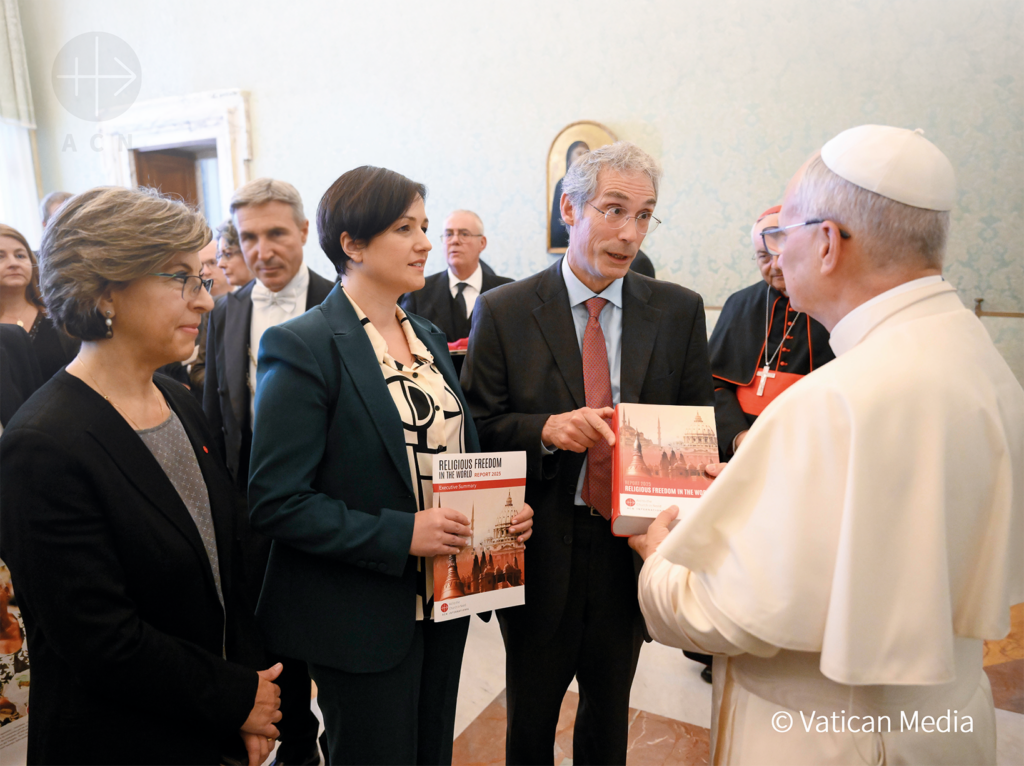
The first survey of Footprints, in 2023, addressed faith and religion in eight countries. This second - with nine countries and 9,000 respondents - focuses on work and civic engagement. They are not identical questions, so a direct comparison is not possible.
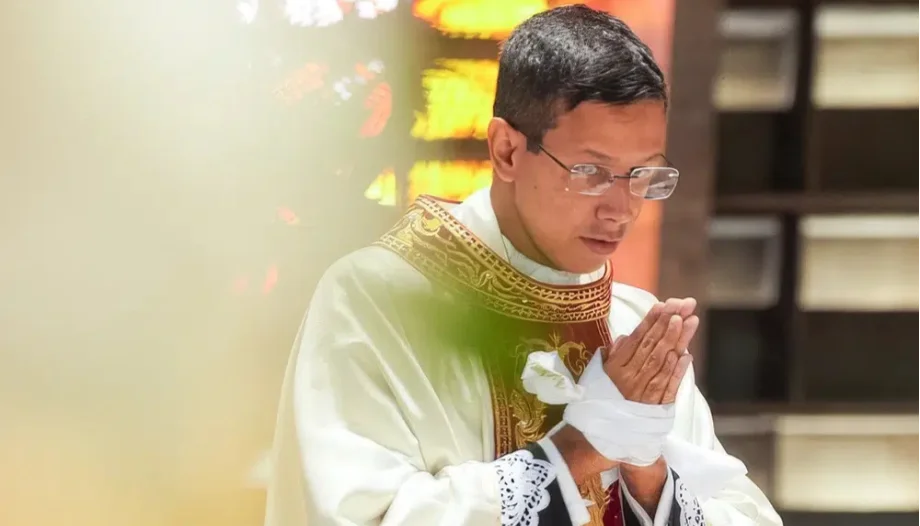
That said, the most important common thread between the two phases is precisely that of faith, since we have maintained a series of basic questions in which we ask about beliefs and the level of practice. What we detected in 2023-that spirituality had not disappeared, but had evolved toward more personal, less institutional forms-we see confirmed and expanded in 2026. Faith has not secularized at the pace that certain dominant narratives presuppose. In European countries in the process of secularization, there are fewer believers, yes, but those who keep the faith do so in a more conscious and committed way.

What is genuinely new in this second phase is evidence of how spirituality permeates the world of work. Almost half of the believers - 48% - turn to God when they face difficulties at work; 14% cite a spiritual guide as a reference that has influenced their concept of work; 54% perceive work as a space for spiritual search or expression. These data show that faith is not a compartment separate from professional life: it inhabits and orients it.

And there is a new trend that we could not anticipate in 2023: the role of artificial intelligence. In Italy, for example, the percentage of young believers who turn to AI when facing work difficulties is identical to those who turn to God: 21% in both cases. We do not interpret this as a substitution of the spiritual for the technological, but as a pragmatic integration that invites serious reflection on the new mediation of meaning that AI exercises in the lives of young people.

Has the weight of faith fallen? Is religion less relevant today?

There is no generalized collapse of faith; there are very different geographies, and to confuse them would be a serious methodological error.

81% of young believers - who make up 66% of the global total - consider their faith to be an important guide in everyday decisions. And that influence extends explicitly to the world of work: more than 60% of believers state that their work has spiritual significance, and 54% consider it a space for spiritual searching.

In Kenya, the Philippines and Brazil, faith remains the most visible driver of career decisions. In Kenya, 90% of youth identify themselves as believers, 66% attend religious services weekly, 69% pray daily, and 97% of Kenyan believers rate faith as an important guide in their lives.

This spiritual substratum translates directly into their view of work: they associate it with service to others in a much higher proportion than average, they are the most optimistic in the study about the future of work, and more than half turn to God when they face difficulties at work.

The Philippines, with 82% of believers and 94% who consider faith as a guide, presents a similar profile. Brazil stands out for the highest happiness rate in the study - 7.5 out of 10 on average - a figure that correlates strongly with its high religious practice.

At the opposite extreme are Italy and Spain. Spain has only 46% of believers among young people, 16% attend Mass weekly, the same percentage prays daily. Italy, with 38% of believers and 10% of weekly attendance, is one of the scenarios of greatest progress in secularization, although faith in Italy has not disappeared but seems to run as if through a subway channel, less visible on the social surface, because it emerges with force when certain issues are touched upon: the relationship with colleagues, the search for meaning at work, compatibility with the family.

Are today's young people more or less civically active than those of previous generations?

The question requires nuance, because youth activism has changed in form rather than intensity. Institutional commitment-party affiliation, formal membership in organizations-is low: 53% do not belong to any association. But indifference is another matter. 72% vote when there are elections, 44% express their opinions on political issues on social networks, 37% participate in campaigns and petitions.

What is a solid and recurrent finding in all countries is the difference between believers and non-believers in terms of civic engagement. Young believers vote more - 74% vs. 69% of non-believers; they participate more in awareness campaigns - 41% vs. 29%; they express more of their opinions in public spaces - 47% vs. 39%.

In religious community participation, 32% of believers belong to a religious organization and 21% to a civil association, both figures higher than those of non-believers.

The activism gap - more than 12 percentage points - is particularly striking. And it is true in all countries: in the United Kingdom, in Kenya, in Argentina, in Spain. Faith, far from being a retreat into the private sphere, seems to function as an accelerator of commitment to the public sphere. This fact invites serious reflection on the role of religious communities as schools of active citizenship.

Is teleworking a non-negotiable requirement or is there a desire to return to the office?

Neither one nor the other absolutely. 71% of young people have worked or studied remotely at some point - COVID's most enduring legacy - and a third do so regularly. But attitudes toward telecommuting are deeply ambivalent.

What they value most is flexible working hours and work-life balance. They are most concerned about social isolation - especially in the UK, where 50% report this - and deteriorating communication with the team - 39% globally, up to 46% in the Philippines. Only 10% of respondents would point to the inability to telecommute as a reason for leaving a well-paying job, indicating that remote work is appreciated but not central to their demands.

The emerging model is clearly hybrid. Young people want autonomy to organize their time, but not at the expense of the human link with their colleagues. In Italy, the qualitative data are particularly interesting: young believers endure the isolation of teleworking better than non-believers - only 36% suffer from it, compared to 44% of non-believers - but at the same time they are more sensitive to the quality of relationships with colleagues. This suggests that a robust spiritual life can be a real resource for managing enforced loneliness, without giving up relationships as a constitutive value.

What is behind this data?

A young Italian man, in a focus group prior to the elaboration of the questionnaire put it this way: «work gives you the freedom not to ask» - he was talking about economic independence - but another added that the same work «cannot come before your primary needs». Young people are not giving up being economically demanding; they are adding an additional layer of demand that has to do with the whole person.

The most relevant thing for an employer is this: young people do not want to separate their life from work; they want to integrate it. They are not looking for a «work-life balance» understood as a separation of spheres, but what we call in the study «work-life integration»: that work does not destroy their relationships, that it respects their rest, that it is consistent with their values.

In Spain, specifically, the most valued aspect of teleworking is the time saved in travel, but 39% points out the deterioration of communication with the team as the main drawback. Flexibility yes, but with real human presence.

Is there a direct relationship in the data between having a «vocation» and suffering less job anxiety?

This is one of the most powerful findings of all the research. We did not measure clinical anxiety directly, but reported subjective well-being shows a very robust correlation with the presence or absence of professional vocation. Young people who say they have a clear vocation report being happy in 55% of cases; among those who do not perceive one, that figure drops to 27%. This is practically double.

Vocation also acts as a buffer against uncertainty. In Italy, young believers - who tend to integrate spiritual and professional vocation - show significantly lower levels of job stress than non-believers: 25% vs. 33%. And they are more able to see failures as learning opportunities, to plan their trajectory and to trust in the future.

Three out of four young people report having some kind of professional vocation, although in many cases it is not fully defined. The sectors where the sense of calling is strongest are health and education -with 84% in both- and the field of engineering and technical sciences. These are precisely the fields that demand the greatest personal commitment, and those that generate the most meaning. I don't think this is a coincidence.

The question for formators, educators and pastors is how to help young people articulate and sustain this vocation in work contexts that do not always favor it.

Anything else relevant to add?

Yes, I would like to place this study in the larger picture of youth research, because I think it is an aspect that deserves more attention than it usually receives.

Most of the institutional studies -OCSE, Eurofound, the major national reports- photograph the objective conditions of young people in the labor market: unemployment rates, average wages,
types of contracts, access difficulties. These are crucial data, but they don't tell the whole story. Footprints deliberately investigates the submerged part of the iceberg: what young people believe, desire, hope and fear in a deeper dimension. Not «what's going on» with young people, but «what they think and dream about» in relation to their professional lives.

One of the results that most challenges me is the image they have of work: 15% associate it with «passion» as the first meaning -in Italy this figure rises to 22%-, followed by «career» (14%). The words «duty», «service» and «sacrifice» are the least chosen.

For those who work in human or pastoral formation, this is an important sign: young people do not need us to talk to them about work as an obligation or as a crucis; they need us to accompany them in discovering how their specific way of working can also be a response to a deeper call.

We are living, as Pope Francis said, not a time of change, but a change of era. The young people we have heard in nine countries are neither the lost generation portrayed in some headlines nor the idealized generation of hopeful speeches.

They are a real, complex generation, full of fertile contradictions, that needs to be listened to with rigor and respect before being judged or questioned. That's what Footprints is trying to do, and I think it's worth pursuing: in 2028, when we publish the results of the third phase on personal relationships and family, we will have the most complete portrait ever constructed of an entire generation on an international scale.

Debate

Jesús Higueras: how to pray in bad times

It seems easy to pray when everything is going well. But experience tells us that we remember God more when things go wrong. How to pray in these moments? The pastor of Cana, Jesus Higueras, explains it with graphic phrases: “God has not come down to Earth as a tourist”, or “suffering is not a curse”.

Francisco Otamendi-May 13, 2026-Reading time: 5 minutes

“I remember that at the door of a church, I asked a woman: why do you come here, and she answered: to ask, to ask. May my son pass, may this person be cured. Almost no one said: I come to give thanks”. “When the mystery of pain visits us, when suffering and pain come, one asks oneself many questions”. 

Thus begins the parish priest of Santa María de Caná, Jesús Higueras (Madrid, 1963), a reflection on suffering, illness, contradiction, in a conversation with Mater Mundi TV.

It is not from now, but we have rescued it, because we are facing a capital issue, which was echoed, for example, by St. John Paul II, in the book ‘Crossing the Threshold of Hope’. The Polish Pope responded to a question from the recently deceased Italian journalist and writer Vittorio Messori, which is very similar to what Jesús Higueras is commenting on.

Messori put on the table how we can continue to trust in “God, who is supposed to be a merciful Father, (...) in the face of suffering, injustice, sickness and death”. And St. John Paul II said that “the scandal of the Cross remains the key to the interpretation of the great mystery of suffering”. 

”Why does God allow this suffering?”

Pastor Jesús Higueras reflects: “Why does God, being Father and being good, allow this suffering? Why, if he says he is watching over me, how is it that this has happened to my daughter, my family is broken, or I am dying?.

“These are moments when you feel fear and insecurity, because you have lost control of your life. It is a moment, moreover, when you are not able to bear the pain, and it is a pain that overcomes you by far.”.

Jesus Christ on the cross became so much in solidarity with our pain that he went so far as to say: ‘My God, why have you forsaken me’, as if to say: I identify with all those who in their cross and in their pain do not feel close to God. 

It is the proof: “you are my Friend even in bad times”.”

Jesús Higueras continues: “There are many people who, when they are suffering, say: I don't know if praying helps me, because I feel God is far away. It is the moment of the test. It is the moment to say: well, Lord, you were not my friend only for the good times, you are my friend also for the bad times”.

And he gives the example of a bad season, in which we call a friend, I unburden myself to him, I lean on him... “If I really have him as a friend, I want to lean on him”.

Pope Leo XIV venerates the cross of the Lord as he presides at the Good Friday Liturgy of the Lord's Passion in St. Peter's Basilica at the Vatican, April 3, 2026. (Photo OSV News/Elisabetta Trevisani, Vatican Media).

Jesus experiences every drop of human pain

So how do you pray when you are having a very bad time in life," asks Jesús Higueras, ordained a priest in 1990. 

“To me, what has helped me, and what I have seen is this: what Jesus does on the cross is to experience in his heart every drop of pain that every human being has experienced in the history of mankind. The cross of Christ is us. If I suffer, Christ suffers; if I am beaten, Christ is beaten....” 

The Gospel says: “I was hungry and you gave me something to eat, I was thirsty and you gave me something to drink, I was naked, I was in prison, I was sick... When, Lord? Every time this happened to ...., it was happening to Me”.

“Jesus, what hurts me, hurts You, we are partners in pain.”

“The cross of Jesus is us,” adds Father Higueras. “Therefore, when I am suffering..., if I have a tumor, I say to Jesus, Jesus, you have this tumor too, what hurts me, hurts you, we are companions in pain. Only he can understand me who has gone through what I have gone through. A mother who has lost a child can only be understood by another mother who has lost a child, a person who has lost the love of her life, a person who has an illness that makes you very thirsty, can only be understood by another person who has gone through the same thing...”.

He wanted to experience in his flesh what we experience in our flesh.

“Because God is love and because God understands, in order to understand us he became human, and he wanted to experience in his flesh what we experience. And of course, when we suffer and look at the Cross, Jesus tells us, but let's see, if I am suffering with you, if what hurts you, hurts Me, what happens to you happens to Me, your pain is my pain, and it is neither more nor less”. This is how Jesús Higueras reflects and prays.

“God has not come down to Earth as a tourist.”

Indeed, “you meet a God who has not come down to Earth as a tourist, to say to you guys that I love you very much, that when you come to heaven I will fix everything for you. But because I love you very much, I come down to the sand for you, I am in solidarity with your destiny. 

If you go hungry, the hunger you go through, I will go through it; if you sleep on the ground, I will sleep; the food they give you, I will take it; the pain you have, I will have it; your displeasure will be my displeasure..., “because all that, transforms it in the Cross into a space of redemption and salvation”.

Bitter with pain, some turn away from God

There are people that pain destroys them, it makes them bitter, they are people whose life breaks into a thousand pieces, and they do not know how to pick them up. And pain becomes a cause of scandal and estrangement from God.

But there are others who “look at the Crucified One, and stand at the foot of the Cross, and look at Jesus Christ, with blood, with thorns, but not only the pain of the body of Christ, but the pain of the soul of Christ... And Christ experiences in his heart every instant of pain of every human creature”.

“If you want to, you can become a co-redeemer.”

“Then you find a consolation, a strength, a reason for your suffering,” Don Jesús stresses. “Because if you want, you can become a co-redeemer, and therefore your suffering is no longer an absurdity, a God who has forgotten you, who leaves you there suffering because you have won the black ball in the lottery of life..., but God is asking you to climb the Cross with him, and to offer your pain united to his. Because then, if you unite it to His - this is a gift of the Holy Spirit, it is not so easy - but if you remember to unite your pain to His, then your pain becomes redemptive”.

When one is upset, when one is sick, when one is alone, when one does not know what to do, concludes the parish priest of Çaná, “one must go to the foot of the Cross, and say: Lord, You are there for me, You are going through what I am going through, You came through, and I, leaning on You, will also come through.

“Not everything ends at the Cross.” “Suffering is not a curse.”

The final words of Jesús Higueras solve all the unknowns. 

“We say it in the Creed: for us men and for our salvation he came down from heaven, and was crucified for our sins. And he rose again! The hope is that not everything ends at the Cross.

St. Paul said, it is certain doctrine. If we suffer with him, we shall reign with him.

If God allows suffering to strike me in my life, concludes don Jesús, “it is because God somehow wants that suffering to become glory, for me and for those I love: for your children, for your parents, for your family....

“Therefore, since Christ went up to the Cross, suffering is not a curse. Suffering is a space to meet God, and to grow in love.”.

The authorFrancisco Otamendi

The World

Massimiliano Padula: “There is a risk of transforming testimony into spectacle”.”

In the ecclesial debate on the so-called “digital mission,” Massimiliano Padula invites us to go beyond the adjective. The real issue, he explains to Omnes, is to form people capable of inhabiting these environments with human, spiritual and pastoral maturity.

Giovanni Tridente-May 13, 2026-Reading time: 5 minutes

On March 17, 2026, in the Pontifical University of the Holy Cross In Rome, a congress was held that brought together four Roman pontifical universities to reflect on the challenges that the digital context poses to evangelization and to those who dedicate themselves to the proclamation of the Gospel in this ecosystem of information and relationships. A theme that is certainly not new, but which in recent months has once again come to the center of ecclesial attention thanks also to the Synod on Synodality, which has recognized this field as an authentic “mission environment.”. 

The Roman colloquium was attended by the Gregorian, Salesian, Lateran and Santa Croce Universities. It focused on the theme of formation, particularly for priests and consecrated persons, also because many of the protagonists of the ecclesial presence on social networks belong to the clergy or consecrated life. The discussion focused on four key areas: pastoral, spiritual, human and intellectual.

The socio-pastoral reflection was entrusted to Professor Massimiliano Padula, Professor of Communication Sciences at the Pontifical Lateran University. A sociologist of communication, in his studies he deals with the relationship between the media and pastoral practices, with particular attention to the processes of transformation in contemporary society and in ecclesial institutions. 

In this interview with Omnes, he offers further food for thought on the need to relativize the adjective “digital” in order to bring out the properly missionary dimension of Christian presence in these “environments”.

What is your assessment of the report? The mission in the digital environment, The report, prepared in the wake of the Synod of Bishops?

-The document represents a significant contribution, because it has initiated a debate on a complex and often misunderstood topic. One of the most relevant elements is the starting point: the idea that the digital environment is not just a set of tools, but a true and proper culture. This approach is an indispensable presupposition for a theological-pastoral reflection suited to the present and for imagining new forms of mission. 

However, a certain ambivalence persists: on the one hand, the cultural nature of the digital is affirmed; on the other, there is still a tendency to configure it as an area to be organized and regulated by means of specific institutional instruments. Proposals concerning the creation of new functions, the recognition of a possible specific ministry or the adaptation of ecclesial structures respond to understandable needs, but run the risk of shifting pastoral action towards a predominantly organizational logic. The principle recalled by Pope Francis in Evangelii Gaudium, according to which “time is superior to space”, On the contrary, it invites us to privilege processes over time, capable of generating transformation, rather than the construction of immediately defined structures.

How then to interpret the relationship between structures and processes in digital pastoral care?

-The question does not refer to an absolute opposition between structure and process, but to their correct balance. However, an overemphasis on the formalization of pastoral care in the digital realm risks producing counterproductive effects, such as self-referential isolation and the reduction of the mission to a specialized practice. 

The digital dimension, as a dimension already integrated into daily experience, does not require a rigid institutional separation, but rather a generalized integration into ordinary ecclesial practices.

What does it tell us about the phenomenon of the so-called “God influencers”?

-The emergence of figures that use digital platforms for evangelistic purposes must be placed within a broader participatory dynamic. 

The generalized production of content has favored the development of forms of ecclesial action from below, which can be traced back to a paradigm that I define as “grassroots pastoral care”, that is, a pastoral care that is born from below. These are forms of ecclesial action that arise from the participatory dynamics of digital networks, in which anyone can become an active subject of evangelization, helping to generate processes that are not centered exclusively on institutional structures. These dynamics, which sociologist Heidi Campbell has described as “religion in network”represents a great opportunity. But it also carries with it important critical aspects: the risk of excessive personalization, the transformation of testimony into spectacle, and the reduction of theological content to a simplified narrative.

What strategies do you consider effective in addressing these difficulties?

-The decisive element is training, understood in an integral sense. It is not simply a matter of acquiring technical skills, but of developing a critical conscience and human, spiritual and intellectual maturity. In this perspective, it is necessary to invest in formative itineraries capable of integrating the theological dimension and communicative competence. The quality of pastoral action, in fact, depends on the balance between depth of content and expressive effectiveness.

A theologically correct communication, but lacking in communicative adequacy, is ineffective; in the same way that a formally effective communication, but lacking doctrinal roots, is fragile. 

What characteristics should the training of digital missionaries have that are appropriate to the contemporary context?

-An adequate formation must focus on people rather than on instruments. This implies the ability to deal critically with the complexity of contemporaneity, characterized by pluralism, conflicts and profound transformations in the languages and forms of life in society. Moreover, it must take into account the transformations affecting fundamental realities such as the family, the younger generations and the aging of the population, while also recognizing new forms of social vulnerability. 

In this context, the ordained minister and, more generally, every pastoral agent is called to develop an interpretative competence capable of translating the Christian message in a horizon marked by uncertainty and fragmentation. 

Only by integrating theological rootedness and contextual awareness will it be possible to avoid disincarnated forms of mission and remain faithful to the nature of a Church which, as Joseph Ratzinger wrote, is first and foremost a community of love and a community of persons.

If in recent times the Church increasingly recognizes “digital” as an area of evangelization, why does it consider it necessary to relativize this adjective?

-The tendency to qualify social phenomena linguistically responds to a twofold need: on the one hand, to make a given area of experience comprehensible; on the other, to attribute to it a precise interpretative key, whether positive, negative or neutral. From this perspective, the term “digital”, originally descriptive, has progressively acquired a qualifying function, to the point of becoming an attribute that extends to multiple dimensions of social life: we speak, for example, of “digital lives”, “digital education”, “digital church”.

However, in the current context, the digital tends to lose its distinctive function. Not so much because its instruments, times, spaces, logics and risks are fully understood, but because it has already been internalized as an ordinary component of social and daily life. According to the Digital 2026 Global Overview Report, In other words, digital can no longer be seen as a separate or merely technological dimension, but must be interpreted as an increasingly invisible and normalized structural requirement of social life. In other words, digital can no longer be seen as a separate or merely technological dimension, but must be interpreted as a structural requirement of social life, increasingly invisible and normalized. This is why “digital” is no longer synonymous with “technological”: it has become a background condition of human and social experience.

In light of this perspective, how do you interpret expressions such as “digital mission” or “digital synod”?

-I believe that these expressions should be reinterpreted starting from their deepest meaning. Missiological and synodality are not defined according to the technological context in which they are expressed, but in relation to their theological and ecclesiological nature. The adjective “digital”, in this sense, runs the risk of introducing an improper distinction, as if there were a mission “other” than the ecclesial one in the strict sense. On the contrary, missionary action and the synodal journey are configured as processes that traverse the various spheres of human experience, without being exhausted in a specific context. 

Rather than insisting on these labels, perhaps it would be better to bring them back to their fundamental dimension: the mission and the synod as forms of ecclesial co-responsibility, oriented to the concrete care of people and their integral promotion.

Initiatives

The Society of Catholic Scientists of Spain has a new digital face

The Society of Catholic Scientists of Spain launches its new visual and digital identity to enhance its mission and connect with new audiences in the scientific and social fields.

Editorial Staff Omnes-May 12, 2026-Reading time: 2 minutes

The Society of Catholic Scientists of Spain (SCCE) has launched a new visual identity and digital platforms to enhance its mission and connect with new audiences in the scientific and social fields.

This renewal responds to the «natural evolution» that the Spanish section has undergone since its birth in 2022. Faced with the constant increase in the number of members and the social interest in its proposals, the organization has taken a strategic step to provide itself with a more coherent image aligned with its vocation of service.

Organizational growth

The redesign of the SCCE is not limited to a simple aesthetic update, but seeks to achieve fundamental objectives for the growth of the organization. According to the press release explaining the change, this new stage is designed to «express the Society's proposal more clearly» and, at the same time, facilitate user access to its contents and training activities. In addition, the company is focusing on the future, seeking to connect with new generations of students and professionals to reinforce its position as a «community of reference» in the dialogue between science and religion.

This process of change has been accompanied by a profound renovation of its digital platforms. These have been designed to offer a more intuitive and dynamic user experience, with a clear focus on rigorous scientific dissemination.

Importance of Spain

The relevance of this digital drive makes sense when observing the weight of Spain in the international organization (founded in 2016): currently, this country has the largest number of members after the United States.

Therefore, the SCCE reaffirms its conviction that the separation between the scope of the scientist and the religious is not inevitable. With this new image, the company intends to continue working in universities, institutes and parishes to «bear witness to the harmony between the vocation of the scientist and the life of faith», thus offering a more complete understanding of reality and of the human being.

Read more
ColumnistsAlberto Martín Colino

Pilgrimages

May is joy, the month of the mother and, of course, the month of the Virgin, the one that welcomes us so happy when we make a pilgrimage, those that we did every year at school.

May 12, 2026-Reading time: 2 minutes

How nice it was when in May there was life beyond exams and final papers. Madrid used to raise many Champions and summer could be seen little by little in the color of the flowers. It also smelled, with that unmistakable aroma of watered urbanization and chlorine pool. May is joy, the month of the mother and, of course, the month of the Virgin, the one who welcomes us so happy when we make a pilgrimage, those we did every year at school.

Children singing to Mary from the back seats of the bus in which they travel to the pilgrimage, to the monastery of San Este or San aquel, a wonderful spring morning in which they all enjoy their snacks together and, one or the other, generously share their Pringles while everyone smiles at her, joyful and fresh as the flowers that come there to lay at the feet of the Virgin who reigns over all, over the families and over the school.  

Laughter between balls and balls of the Rosario, The one that they pray with music and with voices still of a child. The pray for us y always, always, always There is someone who makes a mess of the even numbered mysteries, and the teachers also burst out laughing. Requests of all kinds are made, without fear or shame, and Our Lady does nothing but welcome them and give them affection. 

Years have passed and, probably, we can no longer dedicate a whole day to the pilgrimage. Well, there is no need either, any small moment is perfect for this plan.  

My friends and I have patented a perfect format for very serious busy people (although we still don't know with what). For several years now we have been meeting in the late afternoon at the Sanctuary of Valverde, Montecarmelo, where we pray one or two rosaries. We are always confronted with our lack of punctuality, and it is already several times that the janitor closes the Sanctuary in our face. This year he blew the final whistle in the middle of the fifth mystery, leaving us no discount for the litanies. 

At the end of the day, sometimes a bit hasty, we all gathered in a bar to celebrate. And if a birthday or a graduation are good reasons to get together, why not Mother's month? We have changed the sandwiches for beers and, now, instead of asking for the match between 5ºA and 5ºB, we ask for internships, interviews and future engagements. 

Anyway, the years go by and it is inevitable that things change, many for the better. We will go new places and with other people, but always under the same mantle.

The authorAlberto Martín Colino

5th year student of Telecommunications Engineering and Business Analytics.