«In Africa, you can see how the Gospel is transforming people's lives.»
Alejandro Canales, a Comboni missionary from Cantabria, has been in Chad for 49 years. From the Diocese of Sarh, in the southern part of the country, he shares how the Church builds communities from the ground up, through rigorous catechesis and family ministry that makes no concessions to relativism.
There are priests we imagine sitting behind a desk, and priests we see under the trees, out in the open, sharing their lives with a tribal community. Father Alejandro is one of the latter. A Comboni Missionary from Cantabria, he arrived in Chad in 1978 with the hope of spreading the Gospel. Forty-nine years have passed. Today he is the dean of his congregation in the country, and he remains in Sarh, Chad’s third-largest city, with a parish comprising 25 communities of the faithful, 180 baptisms last Easter, and 50 young people who are eager to serve and live out the faith with all its demands.
What was your arrival in Chad like?
—There were nearly a dozen of us Comboni Missionaries who arrived in 1978, spread across three communities, working on initial evangelization with a fledgling catechumenate that needed to be strengthened. We drew inspiration from the experience of the White Fathers in Burundi, Uganda, and Burkina Faso. The result was a catechumenate lasting three and a half years, with a focus on the family.
Why do they focus on the family?
—Because here it is very difficult to instill the Christian perspective on marriage. In rural areas, women are not held in high social regard: they are largely treated as commodities to be exchanged between families. We must highlight what the Gospel teaches: that women are mothers, educators, and wives on the same level as their husbands in God’s plan. This must be proclaimed and preached constantly.
Most of the country is Muslim—what was Islam's message to the people?
—Their message is clear: “Become Muslims, because you’ll have plenty of women and financial opportunities.”. It's that straightforward. And that carries weight in a society where polygamy is culturally entrenched. Currently, Muslims make up about 55% of the population.
Today, as the Christian presence in Chad approaches its 100th anniversary—Chad will celebrate this centennial in 2029—Catholics account for about 20% of the population, and Protestant churches account for another 24%. But this growth is primarily due to adult baptisms. Last Easter, the Diocese of Sarh recorded 3,500.
Were almost all of them adults?
—Adults and young people, yes. The rules for the baptism of children are so strict that very few are baptized. Both parents must be baptized; they must actively participate in community life—not only in religious practice but also in community service—and it must be evident that the children’s Christian upbringing is guaranteed.
And how do we provide pastoral support to those who cannot yet be baptized?
—There is an informal category: people we call friends or supporters. They participate in parish life, in meetings, and in celebrations. They are members of the community who have received a baptism of desire. This is of enormous importance, because it maintains a weekly connection with the community rather than leaving them out in the cold.
What other forms of community life support this ministry?
—One of the traditions passed down from a Jesuit who worked in the area is the Lenten retreats: three days in the open countryside where communities leave their homes to pray, go to confession, and discuss their pastoral cases.
When you say «outside,» do you literally mean outdoors?
—Yes, in the countryside, under the trees. For those who have jobs, it takes place over three consecutive Sundays. In my parish, there are groups of 150–200 people who participate in these in-depth retreats. They come to present their situations, to seek confession, and to talk about what they’re going through. That’s where many of the year’s confessions take place. And people also come who cannot receive the sacrament but who want a blessing or to talk about their situation—so they can move forward and not feel alone.”.
How do you feel when you return to Spain and see the contrast?
—When I celebrate Mass in my hometown during vacation, I see how Spanish society has changed. Few people participate in the sacramental life—mostly older people, and hardly any young people. What a difference. In Sarh, I have 50 young people between the ages of 14 and 16 who help with the liturgy and ask me to lead retreats for them. When a 17-year-old girl tells you she wants to become a nun, you realize that our pastoral work is making an impact. When a young man who’s just finished his college entrance exams considers a life of missionary work, I tell him: “Whenever you’re ready, come see me, and we’ll begin a process of spiritual accompaniment to help you discern.” Working this way is very fulfilling.
During his most recent trip to Africa, Pope Francis spoke candidly about the issue of cohabitation among the African clergy. How is this issue being addressed in Chad?
—This problem here may be less severe than in other places, but it clearly exists as well. The bishops are clear: if a man has children, he should leave the priesthood so that he can properly care for them and his wife. If he later wishes to continue supporting the Church—with his family situation in order and a job that provides for him—he may do so.
How can these situations be prevented?
—With a strong community life: it is better to close a parish than to have an isolated priest. We strive to ensure that they live in teams, pray together, and are able to talk and share. And if there is a problem—with alcohol or anything else—we must address it head-on. Spiritual life, community life, and pastoral life are the three pillars we strive to nurture. In some dioceses, after ten years of priestly ministry, priests are sent to study for one or two years to renew their spiritual life. Just as they are called to provide spiritual guidance, they also need to receive it.
What, ultimately, does the Gospel do in a society like Chad's?
—A town without a Christian community has its own way of life, its own character. When the Gospel enters, it begins to work. The Lord has His own ways of transforming people. He gives meaning to human relationships and family life. He gives them perspective and hope. And that is truly remarkable.
Praying for someone we love and seeing no change can be painful. How can we cope with this sense of helplessness? Saint Monica teaches us to trust in God when all we can do is pray and wait.
August 27, 2026-Reading time: 3minutes
There are people for whom we pray for years. A child who has strayed from the faith, a friend going through a crisis, a sick relative, someone who seems to have gone down the wrong path. We pray for them again and again, but time passes and nothing seems to change. So we ask ourselves: How long should we keep praying for someone?
The answer we sometimes seek is, in reality, an expiration date. How long do I have to wait? How many times do I have to ask for the same thing? What if, after so many years, God doesn't answer?
The story of Saint Monica, whose feast day is celebrated on August 27, offers us a hopeful answer.
The Example of Saint Monica
Saint Monica knew all too well the anguish of watching someone she loved drift away from God. Her son, Augustine, was a brilliant, restless, and ambitious young man. But he was searching for answers far from the faith in which he had been raised.
His mother suffered greatly because of it. For years, she watched as Augustine took paths she could neither control nor set him back on the right track. In fact, when Augustine left North Africa to go to Italy, Monica tried to stop him. Like so many who pray for someone they love, she, too, had to learn that loving someone doesn’t mean deciding for them.
She couldn't force her son to believe. She couldn't walk his inner path for him. All she could do was continue to love him, be there for him, and entrust him to God.
When It Seems Like God Isn't Answering
One of the greatest challenges of praying for someone else is that we pray expecting to see results. This can be painful, especially when we’ve been asking for something we consider good for years. However, persevering in prayer also means accepting that God may act in a different way and at a different time than we had imagined.
Santa Monica had to wait. And while she waited, Agustín kept searching.
Much later, that young man would eventually find in Christ what he had sought in so many other places. His conversion, however, was not the result of a single moment or a single prayer. It was the end—or, rather, the beginning—of a long journey.
Praying Without Trying to Control Things
One of Saint Monica’s most difficult lessons is precisely this: praying for someone does not mean controlling their life. We can pray for a child, a friend, or our husband or wife while still recognizing that that person has their own freedom and their own relationship with God.
Often, behind our insistence may also lie the desire for the other person to change according to our own plans. But prayer can purify even the way we love. Over time, we may discover that we no longer pray simply for that person to become what we expect, but rather for them to find the truth, goodness, and happiness to which they are called. And that means trusting in God even when we don’t understand the path.
Prayer also changes the person who prays
When we pray for someone for years, we, too, are transformed by that waiting.
Persistent prayer compels us to acknowledge our limitations. It reminds us that we cannot save anyone on our own. We can offer advice, provide support, talk, and be there for others. But there are decisions and wounds we cannot reach.
For many people, that sense of helplessness is precisely one of the reasons they begin to pray. When we no longer know what to do, we discover that we can still love.
Continuing to bring someone before God can thus become a way to stay close even when the distance is great. Perhaps we cannot change his heart. But we can pray for him.
How long will this go on?
So, how long should we pray for someone?
The answer is probably not «until I get what I’m asking for.» Christian prayer doesn’t come with a guarantee of results or a set timeline. As we often say, God isn’t a genie in a lamp. Some requests are answered quickly, while others remain with us throughout our lives.
Perhaps the real question is another one: When do we stop loving someone? As long as we love, we can continue to pray. That doesn’t mean living in a state of obsession with the situation or repeating a petition out of anguish. Sometimes it will be necessary to rest, stop dwelling on a problem, and learn to trust in God’s will.
Saint Monica did not know how her son's story would end. For years, she had no way of knowing that that restless young man would eventually become one of the great Church Fathers. She simply continued to pray, trusting in God's plans.
Perhaps that is one of the lessons his story teaches those who are waiting for someone today: we do not know what is going on in a person’s heart, nor how far God’s grace can reach.
We may not see the results and grow weary. We might even come to think that nothing is changing. But praying for someone is, at its core, a way of saying, «I can’t walk this path for you, but I won’t stop entrusting you to God.» And perhaps, sometimes, that’s the only thing we can do. And it’s also the most important thing.
Today’s liturgy presents us with a challenge that is present in the life of every Christian: the temptation to eliminate the cross and suffering. How can suffering be reconciled with the Christian life? Jesus leaves no room for doubt. He says to his disciples: “If any man will come after me, let him deny himself and take up his cross and follow me.".
Jesus begins to reveal to his disciples that he must go to Jerusalem, suffer greatly, be put to death, and rise again on the third day. Peter, however, cannot see beyond the suffering and death. He does not realize that Jesus’ explanation does not end at the cross, but in the resurrection. For him, suffering cannot be associated with Christ or, consequently, with his followers. What he fails to understand is that, by trying to eliminate the cross, he is also eliminating the resurrection.
Today’s Gospel is a continuation of last Sunday’s passage. Not long ago, Jesus had praised Peter, calling him the rock upon which He would build His Church and entrusting him with the keys to the Kingdom. Today, however, Peter himself receives a harsh rebuke: “!Get behind me, Satan! You are a stumbling block to me.”. From a rock to a stumbling block.".
It might seem as though we should take back all the praise we heaped on Peter last week. Perhaps we celebrated him too soon? If we had waited just a few more verses, we would have seen this surprising turn of events. But the Christian life is not that simple. Peter’s experience reveals a reality present in every disciple. We can recognize Christ’s greatness and yet struggle to accept that faithfulness to Him requires sacrifice. We can profess that Jesus is the Son of God and yet become obstacles to His mission when we reject the path He has chosen to save the world.
The first reading offers us an example of this truth. The prophet Jeremiah remained faithful to the word of God, but his faithfulness brought him ridicule and rejection. He became a laughingstock. As he himself laments: “The Word of the Lord has been a source of reproach and contempt for me every day".
Many Christians today can relate to Jeremiah’s experience. Bearing witness to the Gospel sometimes exposes us to misunderstanding, ridicule, and even hostility. Living a spiritually and morally consistent life in Christ can be a source of suffering. This apparent loss is, in reality, true life. We are encouraged not to be stumbling blocks, but to stand firm as a rock in the face of difficulties. We are invited to think as God does—and not as people do—when faced with these circumstances.
The Pope Concludes the Liturgical Cycle and Once Again Condemns Abuse
“Liturgical acts are not private acts, but celebrations of the Church, which is the “sacrament of unity.” Furthermore, a distinction must be made between the divine and immutable elements and the human elements. In this vein, Pope Leo XIV has once again rejected abuses in liturgical matters.”.
Francisco Otamendi-August 26, 2026-Reading time: 4minutes
The Holy Father Leo XIV emphasized, in the last catechesis on the Constitution Sacrosanctum Concilium, two aspects: the need for more conscious and active participation by the faithful in the liturgy, a key reason for the liturgical reform carried out by the Second Vatican Council.
And the rejection of “the abuses that have been documented in some sectors of the Church in the postconciliar period, and which, unfortunately, sometimes even today ”are being tested, with some of the principles underlying the reform itself being taken to extremes or misunderstood.".
Throughout his remarks and greetings addressed specifically to the pilgrims and faithful in various languages—which were met with enthusiastic applause in St. Peter’s Basilica—the Pope highlighted key points of his message and recalled several holidays and events.
The example of Saint Monica and Saint Augustine, yesterday and the day before
For example, the liturgy commemorates two great saints tomorrow and the day after—Saint Monica and Saint Augustine—“united on earth by family ties and in heaven by the same destiny of glory. ”May their example inspire in each of us a sincere and passionate search for the Truth of the Gospel, so that we may bear joyful witness to it in our daily lives,” he said.
Jasna Góra, Poland: Human Life, Marriage, and Family
Pope Leo XIV has joined “in spirit with those gathered in Częstochowa, where today, 70 years later, the ‘Jasna Góra Vows of the Polish Nation’—drafted by Cardinal Stefan Wyszyński during his captivity—are being renewed. May the program for the moral renewal of society contained therein—through the protection of human life, the care of marriage and the family, and the education of children and young people—continue to inspire a commitment to justice and fraternity.”.
St. Teresa of Jesus Jornet e Ibars, patron saint of the elderly, and directors of OMP
He reminded the Spanish-speaking pilgrims that “today we celebrate the feast day of Saint Teresa of Jesus Jornet e Ibars, a Spanish nun and patron saint of the elderly. Through her intercession, let us ask the Lord to bless all the elderly, as well as those who care for and accompany them”—
The Pope extended a special greeting to the diocesan directors of the Pontifical Mission Societies and to those participating in summer gatherings for seminarians.
As he greeted pilgrims from various countries, he made special mention of those from Malta, Senegal, and Canada, extending a special greeting, once again, to those who serve in the national offices of the Pontifical Mission Societies.
Third letter from the then-Cardinal of Milan, later Pope Saint Paul VI, to his diocesan faithful
Returning to the central theme of the catechesis on the Liturgy, the Holy Father took the time to explain the reasons why the Council Fathers sought to promote a reform of the liturgy.
In this regard, he cited and commented on the third letter from the Council that Cardinal Giovanni Battista Montini, then Archbishop of Milan, sent on October 28, 1962, to the faithful of his own diocese.
“The liturgy,” he wrote, “is a sincere expression of both the divine and the human. It is language. It is a vehicle for divine teaching, on the one hand, and a voice for dialogue with God, on the other. It is clear that it cannot renounce its didactic function, nor can it fail to offer faith and piety the possibility of expressing themselves with spontaneous intelligibility,” Leo XIV recalled.
Motivated by these convictions, “the future Pope Saint Paul VI affirmed that the faithful “cannot and must not remain silent and passive. Their physical presence cannot be reconciled with their spiritual absence.””.
“Christians should not witness this mystery of faith as strangers and silent spectators”
The Pontiff has stated that these declarations are clearly in line with those that will appear in No. 48 of the conciliar Constitution:
“The Church, with solicitous care, ensures that Christians do not participate in this mystery of faith as strangers and silent spectators, but rather, by fully understanding it through the rites and prayers, participate consciously, devoutly, and actively in the sacred celebration (…)”.
A renewed awareness of the value of the liturgy can be perceived in these words, the Successor of Peter has noted. “Through the Church’s ritual actions, as the memorial of the work of salvation is celebrated, we are given the opportunity to experience a true relationship with God, entering into contact with the salvific event. Since the gestures and words of the sacred liturgy are essential to this experience, the participation of the faithful cannot be passive.”.
One part that is unchanging, and other parts that are subject to change
The Pope then pointed out that, as a living reality, the liturgy “has always been subject to developments and changes over the centuries,” and that the Second Vatican Council, “with the utmost respect for the heritage of tradition, and precisely in order to make it more accessible, deemed it necessary to revise the liturgical books.”.
And as stated in No. 21 of the Constitution *Sacrosanctum Concilium*, “the Liturgy consists of a part that is immutable because it is a divine institution, and of other parts subject to change, which over time may or even must vary if elements have been introduced into them that do not correspond well to the intrinsic nature of the Liturgy itself or have become less appropriate.”.
A liturgy that shines with its “noble simplicity”
The Holy Father also quoted Pius XI, Pius XII, and St. John XXIII, and urged “the primary responsibility of pastors, of bishops, but also of each priest individually” to “safeguard and promote a liturgy that, while respecting liturgical norms, shines with noble simplicity (cf. no. 34) and thus manifests the one, holy, Catholic, and apostolic Church.».
A liturgy of this kind will also be “a fundamental means of evangelization, the instrument of grace through which, as the Council teaches, we can learn to offer ourselves and, through Christ, be perfected in unity with God and among ourselves (see. ”No. 48)," the Pontiff concluded.
On Monday, the North Beijing Cathedral hosted the ordination to the diaconate of Felipe Wang, along with two other seminarians from the Diocese of Beijing. The ceremony was presided over by the titular bishop of the diocese, Bishop Joseph Lishan, together with the coadjutor bishop, Bishop Mathew Zhen, in a celebration that filled the cathedral with religious sisters, seminarians, and numerous faithful who had come from throughout the diocese to accompany the new deacons on a decisive step toward the priesthood.
Felipe Wang, in addition to his calling to the priesthood, is a musician and organist. Visibly moved by the ordination, he spoke on behalf of his fellow ordinands, delivering a speech in Mandarin. At the end of his speech, he surprised those present by adding a few words in Spanish—a simple gesture that was warmly received and drew smiles and applause from the assembly.
A Celebration for Priests, Too
The day provided an additional reason for celebration: Father Martin Pan and Father Joseph Chen, along with three other colleagues, celebrated the seventh anniversary of their ordination to the priesthood. The coincidence of these two events—the new diaconal ordination and the priestly anniversary—enhanced the atmosphere of celebration and fellowship among the clergy of the Diocese of Beijing, who participated in full force in the celebration and brought the liturgy to life.
Wang and the priests celebrating their jubilees were trained at the Bidasoa International Ecclesiastical College (Pamplona), a fact that shows how the land of St. Francis Xavier continues to bear fruit in China.
Following the religious ceremony, the entire community gathered for a fraternal meal that brought an intense day—marked by joy, prayer, and shared gratitude among priests, religious sisters, seminarians, and the faithful—to a close.
One year after the shooting at Annunciation School, the Stommes family is moving forward with hope
One year after the shooting at the Annunciation Catholic Church and School in Minneapolis, the Stommes family faces a return to the classroom, sustained by their faith, hope, and the support of an entire community.
Molly Stommes was working from home on the morning of August 27, 2025, when she heard «very loud noises» coming from across the street, where the Annunciation Catholic Church and School are located.
Two of her four children were inside the church in south Minneapolis for Mass, as was her husband, Matt Stommes, while her two youngest children, both in kindergarten, were at the school next door. All four children were excited about the start of the school year, which began with an opening Mass celebrated by the pastor of Our Lady of the Annunciation, Father Dennis Zehren.
Molly, a registered nurse, was in a virtual meeting from her family’s home. «A few minutes after the shooting, a neighbor shouted from my door that there was a problem outside,» recalled Molly, 39. «At that moment, I knew what my instinct was telling me: that something was wrong.».
Reaction within the church and medical assistance
Matt, also 39, was sitting in Mass, away from the students and teachers, in a section reserved for parents. When the shooting began, he obeyed the shouts to get down on the floor. He then crawled to a nearby metal door in the church to try to block the attacker from entering. Others did the same at different doors.
After the shooting stopped, Matt began helping school administrators get the children to safety. During that process, he learned that his four children were unharmed: Charlize, 13, who will be in eighth grade; Finnegan, 9, who will be in third grade; and the twins Etta and Esme, 5, who will be in first grade.
Outside, near Diamond Lake Road, Molly put her nursing skills to work. She hurried across the street to see what was happening. What she saw prompted her to act immediately. «I crossed the street and saw injured children lined up,» she said. «So I started assessing them.».
As the minutes passed, Molly and others, including Matt, began waiting for the ambulances, she said. Molly and Matt stayed with a seriously injured student until the paramedics loaded him into the ambulance. Later, Molly drove the mother of another injured child to Hennepin County Medical Center in Minneapolis.
A Tragedy Shared Among Families Who Are Friends
Molly and Matt talked with other families from Anunciación, and some even came to their house. It was a natural gathering place, yet at the same time surreal for the couple.
That day also included a meeting with Mollie and Jesse Merkel, who lost their son, Fletcher, in the tragedy. Another student, Harper Moyski, also died in the shooting. Two dozen other people, in addition to three elderly people attending the Mass, were injured.
The Merkel and Stommes families had become friends; Fletcher, who was a year older than Finnegan, taught him how to fish and spent time with him during their joint family vacations at Grand View Lodge on Lake Gull, near Brainerd.
As the days went by, the Stommes visited the Merkels and offered them comfort. That friendship and bond continue to endure as the 2026–2027 school year approaches.
The memories of August 27, 2025, are vivid and painful for Molly and Matt Stommes, especially as the one-year anniversary of the shooting approaches.
«August is a very difficult month,» Molly said during an interview on August 17 with *The Catholic Spirit*, the newspaper of the Archdiocese of St. Paul and Minneapolis. «Our children have shown great resilience, but this will be quite difficult for some. I think the simple fact of going back to school and the anticipation it brings can be exciting for some, but also difficult for others.».
Neighborly Solidarity and Louie's Comfort
Just as Molly and Matt describe in detail what happened on the day of the tragedy, they can also easily list all the ways in which the people around them have offered them meaningful and practical support.
A lot of people brought them food. «We didn’t cook for over two months,» Matt said. Molly added, «When you’re not sleeping and don’t have an appetite, it was a huge help.».
Another blessing came in the form of a puppy that the Stommes family welcomed in February. They welcomed Louie into their home after a family acquaintance made the necessary arrangements with a dog breeder. «Obviously, raising a puppy isn’t the easiest thing, but it’s been a great joy and a huge help, especially for Finnegan,» Molly said.
After all the trauma their children had been through, it was easy to accept the idea of getting a dog to comfort them. «Right after the shooting, our children—especially the three youngest—insisted on going to school and church to be with the therapy dogs,» Molly said. «That happened every day. They wanted to be surrounded by dogs all the time.».
Faith and a New Path to Peace
Another constant in the Stommes« home is the steadfast hope fueled by their faith and resilience. »The Bible verse our school chose last year was selected before this tragedy,« Molly said. »I think for many of us, it helped us cope in some way: Jeremiah 29:11,” she added.
The last words of that verse were embroidered on the T-shirts worn by the students, parents, and school staff: «a future full of hope.» «On the days when I feel the saddest and most discouraged, I have great hope for our future, and I know that God has a plan for all of us,» Molly told The Catholic Spirit.
«For me, it’s helpful to reflect on how Jesus tells us that we are destined for his kingdom,» Matt said. «This world is a gift, but it is not the end. And it has given me so much hope and encouragement to see everyone around us—both in this community and elsewhere—taking action and dedicating their time to serving others.».
After seeing last year’s theme come to life, they are now ready to embrace this school year’s Bible verse, which is from Luke 1:79 and ends with the phrase: «guide our feet in the way of peace.» «I love the Bible theme we’ve chosen for the coming year,» Molly said. «It reminds us that we are called to prayer and action.».
The authorOSV / Omnes
Subscribe to Omnes magazine and enjoy exclusive content for subscribers. You will have access to all Omnes
How the Church in Chad Addresses Polygamy and the Requirement for Baptism
Comboni missionary Alejandro Canales explains how the Church in Chad requires a rigorous catechumenate and regulates issues such as polygamy to ensure authentic baptisms and committed families.
For years I have been explaining to people unfamiliar with the context of the Church in Africa why, in our dioceses, not everyone who wants to be baptized can do so immediately, nor under the same conditions. The most common reaction, at least among those coming from Europe, is one of some perplexity. Isn’t baptism a free gift? Isn’t the Church an open door? Yes, of course it is. But the fact that the gift is free does not eliminate the need to receive it under conditions that will make it fruitful; that is why the Code of Canon Law requires priests to ensure that there is a serious commitment to living out the Christian life after baptism.
What we do here is pastoral ministry applied to concrete realities, with canon law as our framework and the good of the people as our guiding principle. Depending on the nature of each case, we act in one way or another.
Infant Baptism
The first thing that strikes someone coming from outside is just how strict our regulations are regarding the baptism of young children. In a parish like mine, very few children are baptized over the course of an entire year. The reason is that a child’s baptism commits the parents to providing a genuine Christian upbringing, and if that upbringing cannot be guaranteed, the sacrament becomes a mere formality with little future.
In order for a child to be baptized, we require that both parents be baptized, that they actively participate in the life of the community—not only Sunday Mass, but also the specific tasks that sustain the parish—and that the Christian upbringing of their children already born be evident. Whenever a baby is born, the child is presented to the community and receives a solemn blessing on Sunday, in front of everyone, together with his or her parents. It is a beautiful and meaningful gesture. But it is not Baptism. Baptism will come when there is soil in which the seed can grow.
The Church acts this way because Canon 868 of the Code of Canon Law stipulates that, in order to lawfully baptize a child, there must be «well-founded hope that the child will be raised in the Catholic faith.» We simply take that seriously. And the results confirm it: children who are baptized under these conditions grow up in families where faith is a living reality, not merely a cultural tradition.
Women with polygamous husbands
The most common and most sensitive case in our context is that of a woman married to a polygamous man. Here, the Church could take a rigid stance and say: no to polygamy; no to baptism either. But that would mean abandoning people who, in many cases, have not freely chosen that family situation. Dowries, agreements between families, and social pressure shape—and in some cases determine—the course of one’s life.
When a woman enters the catechumenate and her husband is polygamous, the first factor that determines whether she can be baptized is her position within that structure: if she is his first wife, she may enter the normal catechumenate and, upon completing it, be baptized. The husband must give his explicit consent—it must be documented in writing that he accepts his wife’s faith and will not prevent her from being baptized—but the woman is not responsible for her husband’s family situation in matters beyond her control.
Why this distinction between a first and a second wife? Because the second or third wife of a polygamist has, in a sense, entered into a union that the Church cannot recognize as a marriage. Not because she is any less worthy, but because Christian marriage is a covenant between two people, and her inclusion in that structure would imply the Church’s tacit endorsement of polygamy. The Church cannot do that. But neither does it abandon that woman. She can undergo the catechumenate, participate in parish life, and receive a blessing in times of difficulty.
It falls into the category of what we call friends o supporters: people who have received a baptism of desire, who live their lives guided by their faith even though circumstances do not yet allow for the full sacrament. If life circumstances were to change in the future—for example, due to the death of her husband—the situation would be resolved without any problem, since that woman would then be able to live her faith fully and consistently.
When one of the two is already a Christian
Another common situation involves a couple in which one partner has already been baptized and the other wishes to begin the catechumenate. In this case, the couple’s prior marital status—whether they are married, the nature of their marriage, and whether the necessary cultural requirements have been met, particularly the payment of a dowry—must be clarified before baptism.
For example, if a woman wants to be baptized and is going to marry a Christian, we have to check whether the dowry has been paid—but keeping in mind that the dowry isn’t like it used to be in Europe— here the man pays it to his wife’s family as a guarantee that he considers her a truly valuable woman and is committed to treating her with dignity. The dowry is a cultural element with profound significance in these societies: it expresses recognition of the woman’s family, formalizes the bond between the two families, and guarantees a certain level of social protection for her.
A couple in which the dowry has not been paid lives, from the perspective of the local context, in an irregular situation. The Church cannot ignore this. We hold a meeting with the couple and their godparents to assess the actual state of their family life. In such cases, baptism takes place at the end of the catechumenate and only if the situation has been resolved.
When both ask to be baptized at the same time and begin the catechumenate together, that is the most beautiful and simplest scenario. We see them every Easter: couples who have decided together to take that step. That is the ideal we strive to support.
The Case of a Woman Married to a Muslim Man
Perhaps the most complex case is that of a woman whose husband is Muslim and who is seeking baptism. Here, there are several factors that must be met simultaneously, and none of them is negotiable.
First: She must be the first wife. For the reasons already explained regarding polygamy, we cannot baptize a woman who is the second or third wife in a polygamous marriage, regardless of whether her husband is Christian, Muslim, or of any other faith.
Second: The husband must give his explicit, written consent. It is not enough for him to merely tolerate it; he must commit to respecting his wife’s religious practice and not preventing her from practicing it.
Third: the upbringing of children. This is the most sensitive issue. What we ask is that, at the very least, children be given the freedom to choose, or that a Christian upbringing be possible. Typically, in these mixed families, the sons follow the father and the daughters follow the mother. If the father does not impose an exclusively Islamic upbringing, there is some leeway. But if the situation is such that the children will not be able to receive any Christian education at all, then we submit a request to the bishop, who is the one who authorizes baptism in such an exceptional case. Because a woman has the right to live out her faith even if her children, at that moment, cannot follow it.
The Church acts this way because it respects both the religious freedom of the person seeking baptism and the family environment in which that faith will be lived out. We do not impose a faith that will be crushed from the very first day. We baptize where there is solid ground.
The Polygamous Christian Husband
There is one final case that deserves special attention: that of a husband who is baptized—and is therefore a Christian—but who lives in a polygamous relationship. This occurs because, in the early years of evangelization, some men were baptized who later took a second wife, or whose first wife was baptized but they took another. The reality is more complicated than any protocol can anticipate.
When that man’s wife requests baptism, an honest assessment must be made: Can this woman receive Baptism and live out her Christian faith even though she cannot enter into a sacramental marriage because her husband—who is a Christian—does not wish to do so under these circumstances? In such cases, we ask the bishop for a formal dispensation. After reviewing the case, the bishop may authorize the baptism, on the condition that the reasons why the marriage could not take place are recorded. Everything is recorded in the parish registers. And these records are important, because situations change: if the husband dies, she can receive Baptism without that restriction if she had not yet received it, or she can regularize a situation that previously could not be regularized.
Why Does the Church Act This Way?
It might seem as though all of this is just a series of obstacles. It is not. It is genuine accompaniment of real people in real situations. The Church does not baptize to keep statistics; it baptizes to incorporate someone into the Body of Christ in a way that ensures that incorporation is lived out, sustained, and fruitful.
In a diocese like ours, with 3,500 baptisms in a single Easter season, the temptation to simplify the criteria would be great. But each of those 3,500 baptized individuals has gone through a catechumenate lasting at least three years, including individual pastoral conversations and an honest assessment of their family situation. And that is what makes these baptisms solid.
What we do here is reminiscent of the early centuries of Christianity, when the catechumenate was long, serious, and demanding—precisely because the Church understood that baptism is not a point of arrival but a point of departure. A point of departure that requires the ground to be prepared.
The Church acts this way because she loves people enough not to settle for a superficial commitment. And because she knows that the Gospel, when it truly takes root, transforms not only the individual but also the family, the community, and the entire social fabric. I see this every day in southern Chad. And believe me, it’s worth it.
Eduardo Vitoria was a Jesuit and chemist, considered the founder of catalysis in Spain, a key discipline in industrial chemistry.
Ignacio del Villar and Alfonso V. Carrascosa-August 25, 2026-Reading time: 2minutes
Eduardo Vitoria Miralles (August 25, 1864 – September 22, 1958) was a Spanish Jesuit and chemist, considered the founder of catalysis in Spain, a key discipline in industrial chemistry.
Orphaned by his father at the age of four, he attended high school at the Colegio de San José in Valencia, run by the Jesuits, where he discovered his calling for science, and from 1881 to 1885 he studied exact sciences, but he left those studies to enter the Monastery of Veruela (Zaragoza) as a novice in the Society of Jesus, where he completed his training in the humanities and philosophy. However, he did not abandon his scientific calling. Under the guidance of Antonio Vicent and Luis Montesinos, he became the first person in Spain to earn a bachelor’s degree in Physical Chemistry (1896), graduating with the highest honors. He was later ordained a priest and continued his scientific training at the Catholic University of Leuven, where he earned his doctorate under the supervision of Louis Henry, with a thesis in organic chemistry focused on catalysis, specifically the synthesis of 1,1,1-trichloro-2-propanol.
After furthering his studies in Germany, he had a solid foundation on which to establish the Ebro Chemical Laboratory (1905) in Roquetas, which would move to Barcelona in 1916 and become the Sarrià Chemical Institute (IQS). As director of the IQS, he developed a curriculum focused on applied chemistry and carried out extensive teaching and research, along with the publication of several pioneering textbooks. He also launched the journal Affinity, a leading figure in Spanish chemistry.
He was a member of the Royal Spanish Academy of Physics and Chemistry, the Royal Academy of Sciences and Arts of Barcelona, and scientific institutions in France, Germany, Portugal, Mexico, and Argentina, among others.
Following the expulsion of the Jesuits in 1932, the IQS continued under various names, and Vitoria remained involved as a professor and editor of the journal Affinity. During the Civil War, he sought refuge in Italy, but returned to Barcelona in 1939, where he helped with the reconstruction and expansion of the Institute.
He passed away in 1958, leaving behind a great legacy in teaching, research, and the popularization of chemistry in Spain. As a result, he received numerous honors, including the Grand Cross of Alfonso X the Wise and the title of “Honorary Son” of Alcoy.
The authorIgnacio del Villar and Alfonso V. Carrascosa
Public University of Navarra and SCS-Spain / Researcher at the CSIC.
All the mothers You know that feeling of getting out of bed to tend to a crying baby. Likewise, you all know that exhaustion—which is more noticeable some nights than others. After a long day, just when it finally seems like you can rest, your child needs you. You get up and go to him, of course, but no one can take that exhaustion away…
However, none of these mothers around the world are alone. There is a community of nuns in Los Angeles who pray every night for these sleepless, exhausted women. They are the nuns of the Order of Norbertine Canonesses of the Priory of St. Joseph in Bethlehem, based in California and closely following the lives of mothers around the world.
Every night, when the bells strike twelve, this community of nuns gathers around the tabernacle and offers prayers for the women who are on their feet, changing a diaper, feeding, or comforting a baby.
Time for Motherhood
This cloistered congregation devotes its daily life to a wide variety of tasks, such as making cheese, raising dogs, and selling sheep and cows. But without a doubt, one of their most moving missions takes place in the early morning, during the time they themselves have dubbed the «Mothering Hour.».
For these sisters, this time of prayer is part of the seven hours of the Divine Office they celebrate each day. Waking up at midnight is a way of expressing their constant readiness to encounter God. However, the nuns are also aware that the early hours of the morning can be synonymous with darkness, loneliness, and fear for many people. For this reason, they sacrifice their rest to attend to the spiritual needs of those who need it most, embracing with maternal love those women who watch over their little ones.
Mothers and Nuns
Although this community has kept this tradition alive for years, the world first became aware of their work in December 2023. The initiative went viral after Leanne Bowen, a Catholic watercolor artist, shared her experience on Instagram after praying alongside the nuns during a retreat at the priory.
Since that post, the news has spread like wildfire, bringing deep comfort to thousands of women. Knowing that there is a group of nuns interceding on their behalf has transformed those long, silent hours into a haven of peace.
Now, as they pace back and forth through the hallways of their homes, nursing, rocking, and caring for their children in the middle of the night, these exhausted mothers know they are no longer alone: they are accompanied and sustained by prayer.
The Pope urges us to let ourselves be transformed by our friendship with Jesus
Jesus calls us to a personal response, to get to know him intimately, and to allow ourselves to be transformed by our friendship with him in an ever-new encounter, Pope Leo XIV said during this Sunday’s Angelus.
Francisco Otamendi-August 24, 2026-Reading time: 4minutes
Following his pastoral visit to the Republic of San Marino, he attended the Meeting for Friendship Among Peoples in Rimini (Italy), where encouraged “to always love the Church,” and to the city of Rimini, where he presided over the concelebrated Mass, Pope Leo XIV addressed the Marian prayer on Sunday, August 23, the Angelus in St. Peter's Square, where he encouraged the pilgrims and the faithful to respond personally to Jesus' call.
“Sunday’s Gospel (Mt 16:13–20) poses a question that challenges each of us on our journey of faith: ‘Who is Jesus really for me?’” the Pontiff began his reflection. The Gospel account shows just how crucial this question is to the experience of discipleship, the Pope noted.
Prayer for the Democratic Republic of the Congo, the Central African Republic, and the victims of the earthquake in Italy 10 years ago
After the Angelus prayer, the Holy Father prayed for the many victims of the Ebola epidemic in the Democratic Republic of the Congo. He also encouraged the international community to respond with a preventive plan, involving local communities, to save many lives.
The Pontiff also expressed his solidarity with the people of the Central African Republic, who mourn the victims of the mine collapse in Zamboyé. “May the Lord welcome those who have lost their lives and sustain the commitment to ensuring safety and legality at mining sites,” said the Pope.
Among his intentions, the Pope also remembered those who died, their families, and all the communities affected by the earthquake that struck central Italy—in Lazio, Umbria, and the Marche—ten years ago. The Pope marked the tenth anniversary of this devastating earthquake, which claimed hundreds of lives.
Before wishing everyone a happy Sunday, Leo XIV welcomed the Primatial Choir of Gniezno Cathedral in Poland, as well as the seminarians and superiors of the Pontifical North American College, and the young people from Bormio and Valfurva.
Jesus calls us to a personal response
In his reflection before the Angelus, as noted, the Pope meditated on the Gospel for this 21st Sunday in Ordinary Time, where It is told that the scene of Peter's confession of faith.
Sometimes, when it comes to the Christian faith, we settle for ‘what people say,’ for clichés, for what has been passed down to us—perhaps even with good intentions.
“But Jesus calls us to a personal response, to get to know him intimately, to allow ourselves to be transformed by our friendship with him—in an ever-new encounter that may require us to travel uncharted paths and make decisions different from those we had imagined,” Pope Leo continued.
This applies both to our personal journey and to the journey of the Church, as well as to pastoral decisions, where we sometimes think it is enough to simply carry on as we always have. ”Instead, it is important to ask ourselves frequently: Who is the Lord for me? Do I truly know him? What does his Gospel ask of me today? What steps and decisions should I take?” asked the Successor of Peter.
Pilgrims and the faithful in St. Peter's Square during Pope Leo XIV's Angelus prayer on August 23, 2026 (Photo: CNS/Vatican Media).
“We always need to rediscover the face of Christ and his Gospel”
Regarding this question from Jesus—’And you, who do you say that I am?’ (Mt (16:15), the Pope said, “This is a fundamental step for disciples of all times and for each one of us.”.
“Faith, in fact, is not given to us once and for all; on the contrary, we must always rediscover the face of Christ and his Gospel, delve deeper into his message, and renew the choices we make in our lives so that they are consistent with what we profess, overcoming the temptation to believe that we already know it all and to turn faith into a mere habit.”.
For us, is Jesus just a great historical figure, or is he the Christ of God?
The question we ask ourselves every day—who Jesus is for me and what his presence in my life means—“arises especially in prayer and when we meditate on the Gospel; but also when we face the wounds and needs of our brothers and sisters, or in the relationships and situations that most challenge our conscience.”.
In short, the Holy Father emphasized, “in our daily lives we can see whether, for us, the Lord Jesus is merely a great historical figure who said and did important things, or whether he is the Christ of God, the One who was sent to make us sharers in the Father’s love and to transform our lives and the world in which we live.”.
“Let us call upon the Virgin Mary,” concluded Leo XIV, "who sought God's will in her heart through her Son, so that she may always guide us on the path of faith.".
Three Americans, New Consultants for Integral Human Development
Pope Leo XIV has appointed three American leaders, affiliated with the University of Notre Dame in Indiana, as three of the twelve new consultants to the Dicastery for Promoting Integral Human Development.
The three new U.S. consultants, affiliated with the University of Notre Dame in Indiana, are among the dozen consultants recently appointed to the Vatican department that was created by Pope Francis in 2016.
On June 30, Pope Leo XIV appointed the Reverend as Prefect of the Dicastery for Promoting Integral Human Development Sister Alessandra Smerilli, F.M.A., who will take office on September 1.
At the same time, the Holy Father appointed Cardinal Fabio Baggio, C.S., as pro-prefect of the Dicastery, with special responsibility for the Laudato si’ Center for Advanced Formation; he will assume the position on the same date. The Secretary of the Dicastery will be Monsignor Jozef Barlaš.
University of Notre Dame
On August 18, the Holy See Press Office announced the appointments of twelve consultants, including Father Emmanuel Katongole, professor of theology at the University of Notre Dame; Kathryn Koch, president and CEO of the Los Angeles-based international investment firm TCW; and Clemens Sedmak, director of the Nanovic Institute for European Studies at Notre Dame.
The dicastery supports the Church’s work in the areas of human dignity and human rights, economic justice, care for creation, migration and displacement, as well as peace, conflicts, and humanitarian crises. According to the Church, it is necessary to address the obstacles in all these areas in order to promote full human development.
Consultants help strengthen the dicastery for five-year terms. They are appointed “from among the faithful who are distinguished by their experience, proven ability, and prudence,” according to the guidelines established in 2022.
Father Katongole
Father Katongole, a priest of the Archdiocese of Kampala, Uganda, was recently appointed director of the Ansari Institute for Global Engagement with Religion at Notre Dame. He joined the faculty in January 2013, specializing in politics and violence in sub-Saharan Africa, political theology, global Catholicism, and other related areas.
Before joining Notre Dame, he was an associate professor of theology and global Christianity in the School of Divinity at Duke University. He earned his Ph.D. in philosophy from the Catholic University of Leuven in Belgium and was ordained a priest in 1987.
When announcing his appointment at the Ansari Institute, Mary Gallagher, the Marilyn Keough Dean of the Keough School of Global Affairs at the University of Notre Dame—where Father Katongole teaches courses in theology and peace studies—stated that he has «a deep commitment to integral human development.».
Pope Leo XIV has appointed three American consultants affiliated with the University of Notre Dame in Indiana (pictured) to the Dicastery for Promoting Integral Human Development. (Photo by OSV News/Chaz Muth).
Kathryn Koch
Koch has led TCW, also known as Trust Company of the West, since 2023. Before joining TCW, she worked for 20 years in the asset management division of Goldman Sachs, where her last position was chief investment officer. In that role, she managed the company’s equity business, valued at $300 billion, and served as a member of the asset management division’s executive committee.
Koch serves on the board of trustees at Notre Dame, his alma mater. He earned a bachelor's degree in English and Economics from that university in 2002, graduating with honors (magna cum laude).
Clemens Sedmak
Sedmak is a professor of social ethics at the Keough School of Global Affairs at Notre Dame and specializes in the Catholic social tradition, poverty, the philosophy of religion, and other related topics. He also teaches at the Institute for Social Affairs at Notre Dame.
Sedmak holds doctorates in philosophy, theology, and social theory, and taught moral and social theology at King’s College London before joining Notre Dame. He also held various positions at the University of Salzburg in his native Austria.
The Nanovic Institute for European Studies, under Sedmak’s leadership, has a mission to “strengthen Notre Dame’s presence in Europe, deepen the understanding of Europe within the Notre Dame community, and contribute to academic discourse and research on European studies.”.
Nine more consultants appointed
As for the remaining consultants appointed by the Pope, they are the following. Monsignor Peter Klasvogt, rector of the Pontifical Teutonic College of St. Mary in Camposanto, in Rome (Italy). And the Rev. Francesco Coluccia, director of the Office for Pastoral Care in Health of the Archdiocese of Otranto (Italy), and Joseph Jeyaraj Swaminathan, S.D.B., assistant professor in the Faculty of Educational Sciences at the Pontifical Salesian University in Rome.
In addition to those from Notre Dame mentioned above, the laypeople appointed are Omer S. Combary, a professor in the Department of Economics at Thomas Sankara University in Ouagadougou (Burkina Faso). Lucy Afandi Esipila, regional executive secretary of Caritas Africa. Paolo Foglizzo, editor of Social Updates – San Fedele Cultural Foundation in Milan (Italy). Peter G. Kirchschläger, director of the Institut für Sozialethik at the University of Lucerne (Switzerland); Jacqueline Remond, adjunct professor at the School of Theology at the Australian Catholic University in Sydney (Australia); and Caren Rodrigues, associate professor at the Saint Joseph’s Institute of Management in Bangalore (India).
Many talk show hosts and journalists felt that the Pope’s speeches at the Royal Palace or before Parliament during his visit to Spain in June. However, Leon XIV proved to be a man of great courage and a rigorous mindset: each issue requires its own space, and this one had to be addressed face-to-face with his brothers in the episcopate and, in a counter-programmed manner, with the victims themselves.
Yago de la Cierva himself—who was ultimately responsible for organizing this apostolic trip—recently recalled in a interview In a conversation with Gonzalo Giráldez on his YouTube channel “Nivel 256,” he noted that the Church has acknowledged on numerous occasions that it handled this issue very poorly in the past—a lesson it often learned through reports in the press. Benedict XVI acknowledged this, as did Pope Francis, and now Leo XIV has once again firmly reiterated it before the plenary session of the Spanish Episcopal Conference.
The Church's Challenge
There, the Pontiff urged the bishops to assume a “special responsibility” for healing wounds, delivering a resounding and uncompromising message:
“Our journey is made up of encounters; among them will surely be those who are going through dark times and who call on us to become Good Samaritans. One of the deepest sorrows is that of those who have been hurt precisely by those who were supposed to care for them, including members of the clergy. In the face of this scourge, the Church community is called to respond with listening, truth, justice, reparation, and an ever-stronger commitment to prevention and a culture of care. Every person who has been hurt must find a sincere ear, protection, and real paths to healing.”.
It is undeniable that the Church has made a 180-degree turn to become a safe institution for minors. It is possible that this change has been accelerated by external pressure and has not occurred as quickly as we all would have liked. But, as de la Cierva pointed out, the real challenge today is of a much greater magnitude:
The rest of the board
“What we Catholics believe is that it makes no sense to be extremely harsh on the Church —which is responsible for approximately 3 % of child abuse cases in Spain—while failing to be radically strict in protecting against the remaining 97 %, which occurs in families, schools, sports teams, physical therapy clinics, or hospitals. I think the pressure on the Church is very good, because without it, nothing would have changed; but I’m disappointed that the country’s authorities haven’t decided to eradicate this scourge where the vast majority of cases occur.”.
This profound reflection calls for a collective examination of conscience. No one denies the gravity of the scourge to which His Holiness referred, but society cannot afford to oversimplify the issue if it truly wants to tackle the problem. The Church must take responsibility for its 3 %, because its inescapable vocation is to be a place of absolute safety, a “visible sign of communion” faithful to its faith and in harmony with its community. But the rest of the picture remains there, hidden behind the political noise, waiting for someone to dare to put everything in its proper place once and for all.
The Pope Defends Conscience in San Marino and “Always Loving the Church” in Rimini
Yesterday, Pope Leo XIV encouraged young people in San Marino to keep their hearts open like a window to the infinite, in pursuit of beauty, goodness, and life, and called for the defense of the space of conscience to promote freedom. At the Rimini Meeting, he encouraged them to “always love the Church and preserve unity.”.
A call to young people to open “a window to infinity,” to pursue the deepest desires of their hearts, and to “embrace their mission” in the world with enthusiasm. A “strong synergy between the family and communities” for an educational covenant, and a call “for communion among parishes, between pastors and the faithful, and among the different charisms and ministries.” The search for “true freedom in Jesus Christ,” the deep connection between freedom and conscience, and the conviction that “all of you are daughters and sons of God, and God loves you,” are some of the messages Pope Leo XIV delivered from the Basilica of San Marino during his pastoral visit to the Republic yesterday, Saturday.
After his address to the church community on the feast of Saint Mary, Queen, the Pope went out into the atrium and greeted the young people and the other faithful gathered in the street, who were also waiting to hear his words—or at least a summary of his address in the basilica.
And that is what the Pope did, without any notes.
Remembering Benedict XVI
Inside, with Bishop Domenico Beneventi and the rector of the Basilica, Marco Mazzanti, The Holy Father had recalled in his Speech, quoting Benedict XVI during his visit to San Marino, that “the Diocese of San Marino-Montefeltro is the heir to a rich history of faith and courage: that of Saints Marino and Leone, who, eighteen centuries ago, through the Christian message, “introduced into the context of this reality […] new perspectives and values, giving rise to a culture and civilization centered on the human person, the image of God” (Benedict XVI, Homily, San Marino, June 19, 2011).
“I address myself first and foremost to young people,” added Leo XIV, drawing on what Pope Benedict XVI told them fifteen years ago: “Do not settle for partial and immediate answers […] that are easier and more comfortable in the moment, which may bring a few moments of happiness or euphoria, but which do not lead to the true joy of living” (Meeting with Young People, June 19, 2011).
Never be afraid, and be generous
Once outside in the atrium, the Pope addressed the young people first and foremost:
“Open the door to your hearts, always listen to Jesus Christ, and never be afraid of what Jesus might say to each one of you. I can say one important thing to you young people: recognize within yourselves the value of life—your life, the life of each one of you—which has been created by God, and your life is of great value to us, to the Church, to your family, and to the whole world.”.
“Believe in what God has created, because you are all daughters and sons of God, and God loves you. Live with that sense of love in your hearts; it will give you everything you need throughout your lives. Be generous, always be open to serving others, and seek to form genuine friendships; through friendship, we can build community.”.
Pope Leo XIV waves to the crowd gathered in Piazza della Libertà from the central balcony of the Public Palace during his visit to the micronation of the Republic of San Marino on August 22, 2026. Behind him stand the Captains Regent of San Marino, Vladimiro Selva and Alice Mina, who serve as the country’s joint heads of state for a six-month term. (Photo by CNS/Vatican Media).
“Don’t be afraid to make difficult decisions”
In the Basilica, Leo XIV had encouraged them in their vocational journey and in their decisions.
“Do not be afraid to make difficult decisions—such as marriage, consecration, ordained ministry, your professional life, and social and political engagement—and prepare yourselves as best you can for the responsibilities that lie ahead. Get involved in initiatives and projects related to charity and justice.”.
Libertas, True Freedom
“Here in San Marino, they have just one word: ”libertas.’ You’ve surely heard it many times,” continued the Vicar of Christ.
“We find true freedom in Jesus Christ; we find it in the truth. In Jesus, who has come to give us life, who has come to help us recognize the truth in a world that is often full of lies and harm,” he said.
“If you have Jesus Christ in your hearts, if you have the truth and the freedom to follow Jesus, do not be afraid of anything, because Jesus walks with you. And Jesus calls all of us; he invites us to walk together. Thank you to all of you; may we truly be one community, always united.”.
Then the cheers and shouts of ‘Papa Leone!’ grew louder, but the Pope had to leave to continue his busy agenda, which began at 8:00 a.m. at the Vatican heliport and ended at the same location at 9:00 p.m.
Pope Leo XIV greets the faithful after a half-day visit to the small nation of the Republic of San Marino on August 22, 2026. He then traveled to the Italian coastal city of Rimini for an afternoon visit. (Photo by CNS/Vatican Media).
To promote freedom is to defend the realm of conscience
The Pope had spoken specifically about freedom mid-morning in his Speech to the authorities and civil society.
First, he stated, “I wish to emphasize that there is no true civil liberty without personal liberty—that is, without respect for and the promotion of the dignity of the human person, of which liberty is an essential component. This freedom is ultimately granted and guaranteed by God, whose voice resounds in the conscience of every human being.”.
In addition, Leo XIV emphasized that “promoting freedom means defending the realm of conscience.”.
His thoughts then turned “to the many men and women who, throughout history and across the globe, are martyrs for freedom because they bear witness to the primacy of conscience.”.
In Praise of St. Thomas More and Those Who Do Not Betray Their Conscience
“Firmly grounded in the search for truth, they are fully responsible for their own decisions and, therefore, free from any restriction other than that which is inherent in the creature and which unites them to God. St. Thomas More, patron saint of governments and politicians, is an example of this.”.
Even today, in many parts of the world, the Pope continued, “there is no shortage of people who remain faithful to their conscience even in times of great adversity, bearing witness to true freedom—the freedom that comes from being sons and daughters of God. With admiration, we express our solidarity with those who, at this very moment, are paying a personal price for not betraying their conscience.”.
In Rimini, after 44 years
That afternoon, by helicopter, the destination was Rimini, which had not been visited by a pope for 44 years—since August 1982, when St. John Paul II visited and also stopped at the Rimini Meeting. This is the "Meeting of Friendship Among Peoples," organized by Communion and Liberation and is now in its 47th edition.
Yesterday, Pope Leo XIV held a long-awaited meeting with the participants in the Gathering, and later went to the cathedral in Rimini for another meeting, this time with the sick, the disabled, and the poor assisted by Caritas.
Love: The Theme of This Year's Meeting 2026
At this year’s Rimini Meeting, organized as usual by the Fraternity of Communion and Liberation (CL), some 60,000 people awaited Pope Leo XIV with great enthusiasm, as seen in the footage from Vatican News. This year’s theme is ‘The love that moves the sun and the other stars,’ the final line of the Divine Comedy—specifically, the “Paradiso”—by the Florentine Dante Alighieri.
In explaining the theme, the organizers note that “there is a force that sets the entire universe in motion, from subatomic particles to galaxies. It is not a force that crushes or dominates, but one that attracts and harmonizes, that propels without violence, that guides without imposing. It is love as the dynamic principle of the cosmos, the energy that holds all things together and propels them toward their fullness.”.
“The loudest applause should go to Jesus Christ”
After the Pope’s tour of the fairgrounds in the popemobile, during which he said informally, “Thank you, thank you! ”The loudest applause should go to Jesus Christ: we are all disciples of Jesus,” Bernhard Scholz, president of the Meeting Foundation for Friendship Among Peoples, and Davide Prosperi, president of CL, expressed to Leon XIV their “immense gratitude and joy” at his presence.
Bernhard Scholz spoke of “the passion for the destiny of every person that Don Luigi Giussani has passed on to us,” and “the trust in the love that moves all things.” Davide Prosperi, for his part, said that “thousands of young people, families, and volunteers had been waiting for this moment for weeks, because their presence here is an enormous, extraordinary gift for our journey. A gift we will never forget and that we welcome as a caress from the Lord.”.
Pope Leo XIV's speech could have been a formal one, even a brief one. However, it lasted 22 minutes and 48 seconds, including interruptions for applause on several occasions. His words were dense, so you can consult here the full text.
Pope Leo XIV greeted the participants at the 2026 Rimini Meeting before delivering a speech that generated great excitement and drew numerous rounds of applause (@Vatican Media).
“A gathering of friendship!”, “Friendship among peoples!”
The Pope began by quoting St. John Paul II, who, on August 29, 1982, emphasized the special significance of the words “Encounter!”, “Encounter of friendship!”, “Friendship among peoples!”. ”Words that take on special meaning in these often dramatic times in world history” (Address at the Third Meeting on Friendship Among Peoples, Rimini, 1982).
He then praised you for “not having turned the ‘Encounter’ into a kind of enclave: on the contrary, it has become a crossroads for the Church and for society, an encounter that gives rise to many other encounters and inspires new paths.”.
”We give thanks to the Lord for this living legacy, which bestows upon you a great historical responsibility, within the communion of the Church, to serve a humanity that hungers and thirsts for justice.”.
”A Historic Responsibility: The Realism of Mercy in the Face of the False Realism That Rearms"
A task in which “today’s Catholic culture must counter the “realism of mercy”—which holds that enemies cannot exist and that everyone, even adversaries, are brothers and sisters whom we should look in the eye and welcome with sincerity—‘in the face of the false realism that rearms minds, words, and nations.’”.
Sin exists, of course, the Pope noted, “but Christ’s redeeming love is stronger.”.
Then, the words of Leo XIV rang out like a slow, measured cry at the Rimini fairgrounds. He spoke of liberation in precise terms.
“Let us, then, free our coexistence from suspicion, our culture from arrogance, our education from ideology, our work from the idolatry of profit, and our technology and finance from the business of death. Building on the organizations we have created and in which we operate, we will expose the unjust power structures that lie at the root of poverty and inequality, war, and environmental disasters. Let us dismantle technological development when it becomes pervasive and destructive. We need courageous pioneers who, beginning with a change of course in their own actions, will make the transformation we all need convincing and credible.”.
‘Take on the “educational risk” that Fr. Giussani spoke to you about’
And the Pope reached out to Don Giussani, to the young people, and to the Movement.
“Dear friends, the unadorned beauty of this Mystery (the Incarnation) demands that we take on the ‘educational risk’ that Fr. Giussani spoke to you about. He intuited that “the educational method best able to produce good is not one that flees from reality, affirming good in isolation, but one that promotes good in the world.””.
Love moves us, drives us, awakens us from lethargy, inspires new vocations, and calls us to take risks, Leo XIV continued. “Get involved! Open yourselves to true universality, extending your ties beyond any overly narrow affiliations. May the Movement, the groups, and the communities serve as a springboard from which you can immerse yourselves in the fullness of reality. Resist anything that distances you from brothers and sisters of different cultures, sensibilities, and backgrounds—especially the poorest among us. Go out and reach out to everyone!”.
“Always love the Church! Love her and preserve her unity!”
The Vicar of Christ thus made the appeal that drew the most applause from the audience: to always love the Church.
“Dear friends, always love the Church! Love and preserve unity. It is worth repeating: “Always love the Church!”‘ Dear friends, love and preserve the unity of the ’community“ through which Christ has reached you and draws you to himself. As Pope Francis told you on the centennial of your founder’s birth, ”even difficult moments can be moments of grace and renewal.’”.
The Synodal and Missionary Dimension of the Church
Finally, the Successor of Peter affirmed that “in recent years, we have rediscovered the synodal and missionary dimension of our being Church, which calls us above all to learn to listen to one another. (…) It is a path that also requires the renewal of every associative reality and ecclesial movement.”.
I invite you—both within the Communion and Liberation Movement and in the particular Churches to which each of you belongs—to walk this path together: may each of you listen, allow yourselves to be transformed by the faith of others, and, together, under the guidance of our shepherds, develop new perspectives, take new steps, and practice courageous obedience to the Holy Spirit,” the Holy Father encouraged.
“You’ll know how to do it, my dear friends”
Synodality is not the name of a process, but the very nature of a people who, through friendship and encounter with others, feel that they belong to God alone. (…) You will know how to do this, dear friends, by following in the footsteps of your founder, fostering unity among yourselves, with those called to lead the Movement, with the Apostolic See that has recognized you, and with the Successor of Peter. May the Holy Spirit guide us in the practice of communion.”.
León XIV’s eventful visit to Rimini concluded with a concelebrated Mass at the harbor, by the sea, attended by tens of thousands of people. In his homily, among other reflections, he encouraged us to seek rest within ourselves, in the depths of our souls.
What about the ethical challenges facing major AI developers?
OpenAI and Anthropic are artificial intelligence (AI) companies that are not yet publicly traded on Wall Street. The chief ethics officer at OpenAI (ChatGPT), Chloé Bakalar, has left the company, while philosopher Amanda Askell (Anthropic) wants the chatbot Claude to have moral judgment.
Francisco Otamendi-August 22, 2026-Reading time: 5minutes
The market for major artificial intelligence (AI) developers has certainly been turbulent in the first few months of 2026, particularly among powerful developers that are not yet publicly traded on Wall Street, such as OpenAI and Anthropic.
Companies that, judging by their actions, each want to take ethical considerations into account in their own way, and that have sent experts to the summit Vatican event held in July at Castel Gandolfo, Global Nobel Laureates Assembly.
In addition, these are AI companies that are preparing to go public, and news is leaking out about their preparations for filing paperwork for a potential initial public offering (OpenAI) and about the company's valuations, in the case of Anthropic.
For now, we'll set aside large publicly traded companies that stand to benefit most directly from the AI boom, such as Nvidia, Alphabet (Google), Microsoft, and Broadcom.
Technology is not neutral
Hovering over all these companies is the encyclical by Louis XIV ‘Magnifica humanitas’, which is not a treatise on AI, as the Pontiff himself explains (no. 97), but which devotes considerable space to AI, for example, nos. 97–111.
Since its publication in late May, various authors have reflected on ideas the Pope's thought-provoking remarks. We have selected just two entries by Rafael Sanz Carrera:
“The analysis of the encyclical highlights a key point: technology is not neutral in its cultural effects. AI cannot be understood solely as an efficient tool, but rather as a phenomenon that reshapes the way we work, interact, and make decisions.”
“In this context, the magisterial text emphasizes a decisive principle: human dignity does not stem from technological progress, but rather precedes and judges it. This criterion serves as the foundation for ethical discernment in the face of any digital development.”.
Pope Leo XIV speaks with Christopher Olah, co-founder of the artificial intelligence company Anthropic, following a presentation on his first encyclical, ‘Magnifica Humanitas,’ at the Vatican on May 25, 2026. (Photo by CNS/Lola Gomez).
Some of the Pope’s statements in ‘Magnifica humanitas’
Here is a summary of some of Pope Leo XIV’s ideas on AI, which he has also reiterated in several audiences:
“… we must avoid the mistake of equating this “intelligence” with human intelligence” (no. 99).
“The use of AI is never a purely technical matter: when it becomes part of processes that affect people’s lives, it impacts their rights, opportunities, reputation, and freedom” (no. 102).
“In practice, entrusting an algorithm with the power to determine who is worthy and who is not—without anyone bearing the burden of that decision—means entrusting it with the task of redefining the limits of human possibilities.” (no. 103).
“We cannot view AI as morally neutral. In reality, every technical device embodies decisions and priorities: what it measures, what it ignores, what it optimizes, and how it classifies people and situations. If a system is designed or used in a way that treats some lives as less worthy, or excludes them without the possibility of appeal, it is not merely a tool that “must be used correctly”; it already introduces a criterion that contradicts the inalienable dignity of the person” (no. 104).
“For this reason, ethical discernment cannot be limited to asking whether we are using a particular system for a good or bad purpose” (no. 104).
“For AI to respect human dignity….”
“For AI to respect human dignity and truly serve the common good, it is essential that responsibilities be clearly defined at every stage: from those who design and program the systems to those who use them and those who decide to entrust specific decisions to them.” (no. 105).
“Calling for prudence, rigorous controls, and, at times, even a slowdown in the adoption of AI does not mean being opposed to progress, but rather exercising responsible care for the human family” (no. 106).
“I make a passionate appeal to those who develop AI systems. Technological innovation can, in a certain sense, be a human way of participating in the divine act of creation. Developers therefore bear a significant ethical and spiritual responsibility, since every project choice expresses a vision of humanity” (no. 111).
The OpenAI logo in this illustration dated June 11, 2026. (OSV News/Dado Ruvic, Reuters).
OpenAI's Chief Ethics Officer Leaves the Company
It is not hard to imagine the demands and complications that working under criteria such as those mentioned can pose for these companies and their executives. One of the consequences is resignations.
In the midst of summer, on August 14, people were recalling the exodus of some top talent from OpenAI. La Vanguardia reported on the departure of Chloé Bakalar, head of ethics, less than a year after she joined the company, as revealed by the Financial Times.
Bakalar was responsible for the ethical considerations involved in developing language models and human interaction with AI, according to a person familiar with her work. She was also the company's only ethics expert.
“We appreciate Chloé’s contributions,” a spokesperson said. “AI ethics is not the responsibility of a single person or team within OpenAI, and ethical considerations are deeply embedded in the model-building process, which is driven by several research teams.”.
“Ethics is, in fact, everyone’s responsibility, and I say this as someone whose job is to lead this effort,” Bakalar explained during a conference on AI. (..). “There should never be a single person who acts as the moral center of an AI developer.”.
Amanda Askell (Anthropic): Claude should act as a moral agent
Alan Rozenshtein and Kevin Frazier, executives at Lawfare, spoke in the first quarter of the year with Amanda Askell, head of “personality alignment” at Anthropic, about the Claude's Constitution, a chatbot or computer program capable of holding a conversation:
“We want Claude to act as a truly ethical person would in Claude’s situation.” “Our main hope is that […] Claude […] [will be] an ethical agent, generally reasonable and with practical skills…,” said Askell.
Anthropic has devoted a significant amount of space to explaining that 20,000-word constitution, which you can read here.
Christopher Olah, co-founder of Anthropic, answers questions during a press conference in the Vatican’s Paul VI Hall on May 25, 2026, following the presentation of ‘Magnifica humanitas,’ the first encyclical of Pope Leo XIV (Photo by OSV News/Yara Nardi, Reuters).
Claude's Ethics and Nature
As you can see, the section on the ethics of the Claude models states:
“Claude’s ethics: ‘Our primary goal is for Claude to be a good, wise, and virtuous agent who demonstrates skill, good judgment, subtlety, and sensitivity when making decisions in real-world situations, even in contexts of uncertainty and moral disagreement.»”.
The text adds that it expects Claude to uphold “high standards of honesty” and to employ “the nuanced reasoning we hope he will use when weighing the values at stake to prevent harm.” “He must never contribute significantly to a biological weapons attack,” it adds.
In the section titled ‘Claude’s Nature,’ the paper—of which Amanda Askell is the lead author—states that “in this section, we express our uncertainty as to whether Claude might have some form of consciousness or moral status (either now or in the future).”.
The challenge is multifaceted, and it has only just begun for these companies—and for everyone.
Short prayers to help us find God in every moment of the day
A short phrase can be enough to turn our hearts back to God at any time of day, as St. Josemaría taught when he recommended short prayers to keep our prayer life alive. Here are a few of them.
Prayer doesn't necessarily require a lot of time, complete silence, or an empty church. Sometimes a single sentence is enough. A few words spoken slowly—in the middle of work, while walking, as we get into the car, or just before replying to a message. A short prayer to remind us that God is there.
Ejaculatory prayers are short, simple prayers that we can repeat throughout the day to lift our hearts to God. The word comes from Latin iaculatorius, whose meaning was related to the act of throwing a dart, an arrow, or any object with force over a distance. Thus, ejaculations are short exclamations or prayers that a Christian’s love and trust send—like little arrows or darts—to the Lord, the Blessed Virgin, or the saints.
In his letters, Saint Paul exhorted us to “pray without ceasing.” And short prayers can be a means to that end. This is explained in *The Russian Pilgrim* (Monte Carmelo, 2009), a classic of Eastern Christian spirituality, which recounts the spiritual journey of a pilgrim who attains this union with God through the brief phrase “Lord Jesus Christ, have mercy on me, a sinner.” He makes this prayer his own throughout the day and even learns to recite it in rhythm with his breathing. In this way, he managed to keep the name of Jesus—and also His mercy—on his lips, in his thoughts, and in his heart at all times.
St. Josemaría, faithful to his short prayers
In an interview about the founder of Opus Dei, Blessed Álvaro del Portillo quoted several short prayers that St. Josemaría used to recite, one of which was: “I am yours; I was born for you. What do you want from me, Jesus?”.
In this interview, the Blessed one recounted: “When I asked to be admitted to the Work, our Founder explained the spirit of Opus Dei to me, and advised me to say many ejaculatory prayers, make spiritual communions… and offer numerous small acts of mortification throughout the day. When he spoke to me about ejaculatory prayers, he explained: There are spiritual authors who recommend counting the ones you say throughout the day, and they suggest using beans, chickpeas, or something similar; putting them in one pocket and transferring them to the other each time your heart turns to God with one of those prayers. That way you can know exactly how many you’ve said and see whether or not you’ve made progress that day.» And he added: “I don’t recommend this to you, because there’s also the danger of vanity or pride. “It’s better to let your Guardian Angel keep track of them.”.
The founder of Opus Dei drew his short prayers from Scripture or Christian tradition. Thus, in point 92 of *The Way*, he recommended: “…when you don’t know how to move forward, when you feel yourself fading, if you cannot throw fragrant logs into the fire, throw in the twigs and leaf litter of little vocal prayers, of ejaculations, which continue to feed the blaze.”.
To start the day
«Lord, I place this day in your hands.».
«Jesus, everything for You and because of You.».
«Lord, may your will be done today.».
«Oh, Mother, be with me today.».
«Come, Holy Spirit.».
«O my Lady, O my Mother! I offer myself entirely to you on this day.».
«Lord, I entrust my mind, my words, and my hands to you for this day.».
«Lord, I offer this day to you; may everything I do be for your love.».
«Dear Father, I place my day, my joys, and my sorrows in your hands.».
«Good morning, Lord! Stay with me today and guide my steps.».
To ask for help
«Jesus, help me.».
«Lord, give me light.».
«My God, give me strength.».
«Jesus, I trust in You.».
«Lord, increase my faith.».
«Come, Holy Spirit, enlighten me.».
When We're Worried
«Jesus, I trust in You.».
«Lord, may your will be done.».
«Into your hands, Lord, I entrust my concern.».
«My God, You know what I need.».
«My God, in you I find rest.».
«My Lord and my God.».
«Sacred Heart of Jesus, I trust in You.».
To Overcome Impatience or Anger
«Jesus, meek and humble of heart, make my heart like yours.».
«Lord, grant me patience and charity.».
«Jesus, help me to love.».
«Lord, put peace in my heart.».
«Mary, help me to respond with love.».
To Give Thanks
«Thank you, Lord, for everything.».
«Blessed be You, my God.».
«Thank you, Jesus.».
«I thank you, Lord, for this day.».
«Everything is grace. Thank you, Lord.».
To offer the job
«Lord, I offer this work to You for Your greater glory and the good of my loved ones.».
«Lord, bless the work of my hands today.».
«Everything for Jesus, everything for Mary, everything in imitation of Saint Joseph.».
«Lord, I offer this work to you.».
«Jesus, may I do everything out of love for You.».
«All for You, Jesus.».
«Lord, may my work bring you glory.».
«Jesus, work in me.».
Before starting a difficult task
«Lord, grant me patience and wisdom for this moment.».
«Holy Spirit, guide my hands and my mind.».
«Lord, may this work serve as atonement for my sins.».
«Dear Father, make my efforts today fruitful.».
To order for other people
«Lord, bless this person.».
«Jesus, take care of him.».
«Mary, take him to Jesus.».
«Lord, have mercy on us.».
«Jesus, help her and be with her.».
When we feel like we're drifting away from God
«Lord, do not let me stray from You.».
«Jesus, draw me close to your Heart.».
«Oh my God, here I am.».
«Lord, return to my heart.».
«Jesus, I want to be with you.».
To end the day
«Thank you, Lord, for this day.».
«Into your hands, Lord, I commend my spirit.».
«Forgive me, Lord, and help me start over.».
«Jesus, Mary, and Joseph, I give you my heart and soul.».
Women supported Archbishop Fulton Sheen's missionary work
The Women were the driving force behind the missionary work of Archbishop Fulton J. Sheen, who will be beatified on September 24 in St. Louis. Now they have recalled the behind-the-scenes work in the the office of the Society for the Propagation of the Faith. While the prelate was speaking, thousands of letters of thanks and donations were arriving.
When Archbishop Fulton J. Sheen is beatified On September 24 in St. Louis, attention will rightly focus on the famous televangelist, whose broadcasts brought Catholic teachings to millions of American households.
But for two decades, behind Archbishop Sheen’s extraordinary influence, there was a group of virtually unknown women who opened thousands of letters, recorded donations, and thanked the donors. In short, they helped turn his words into material support for missionaries and fledgling churches around the world.
Sheen, national director of one of the four Pontifical Mission Societies
Archbishop Sheen served as national director of the Society for the Propagation of the Faith, one of the four Pontifical Mission Societies, from 1950 to 1966. This society coordinates the World Mission Sunday, the annual global fundraising day that supports the Church's work in more than 1,100 mission territories.
This responsibility was central to Archbishop Sheen’s priesthood and public ministry. In addition to his work in radio and television, he traveled, preached missionary appeals, and served as editor of MISSION magazine, which began publication in 1951 by the national office of the Society for the Propagation of the Faith.
Whenever the prelate spoke about the missions on television, delivered a sermon, or published a new issue of the magazine, the response came in the form of between 8,000 and 10,000 letters a day, filled with notes of thanks and donations.
Envelopes poured into the organization's national office in New York. Some contained large checks. Others contained just a few dollars, coins saved by children, or brief notes explaining the sacrifice behind the gift.
And behind the scenes, a small army of women opened those envelopes, recorded the donations, and made sure the donors received a response.
‘Our office would be overwhelmed’
Helen Fitzpatrick was one of “the girls,” as they’re still affectionately called.
Helen Brady Fitzpatrick in her office at the national headquarters of the Society for the Propagation of the Faith in New York City (Photo by OSV News/Timothy Fitzpatrick via the Archbishop Fulton J. Sheen Foundation, Peoria, Illinois).
Fitzpatrick, who is now 89, began working part-time for the organization in 1954, while he was a senior at St. Vincent Ferrer High School in Manhattan. After graduating, he joined the staff full-time and remained there for about a decade.
Her main responsibility was to make sure that thank-you notes were sent to those who supported the missions. The work was constant.
“No matter where he was (Archbishop Sheen), the office was never short of work,” Fitzpatrick recalled. “Every time he sent out an appeal or printed the magazine, our office was swamped.”.
Archbishop Fulton J. Sheen celebrates Mass while officiating at the wedding of Helen Brady and Patrick Fitzpatrick. (Photo by OSV News/Helen Fitzpatrick via Pontifical Mission Societies)
Bernadette Schumann, also in her eighties, recalls that the women worked in two rooms, surrounded by correspondence linking ordinary American Catholics with the missionary Church.
Each envelope represented someone who cared about the missions
“There were so many letters and so much work, but we knew that every envelope represented someone who cared about the missions,” said Schumann, whom everyone calls “Bernie.” “We were proud to be a part of it.”.
Archbishop Sheen also made sure that the staff understood the spiritual purpose behind the paperwork.
“Every afternoon at three o’clock, we would stop whatever we were doing and pray together the World Missions Rosary”, Schumann said. “Bishop Sheen made sure that our work in the missions was always rooted in prayer. He also took the time to introduce us to visiting missionaries so we could see who we were helping, even though not all of us could accompany him on his missions.”.
From Cuba to New York, and off to work for the missions
For Beatriz Mendoza Orlansky, the path to the Society for the Propagation of the Faith began with exile and an unexpected change of plans.
She had ten siblings; she left Cuba with her family in 1960 and settled in Miami after Fidel Castro came to power. That same year, she traveled to New York with a cousin and a friend because, as she put it, “that was the dream we all had.”.
His family already knew Archbishop Sheen. Before the Cuban Revolution, he had traveled to the island to officiate at a relative’s wedding. The archbishop also arranged for his sister Sofía to receive a scholarship to attend Rosemont College, a Catholic women’s college in Pennsylvania that was then run by the Sisters of the Holy Child Jesus.
Young, single, and hoping to become a flight attendant, Mendoza approached Archbishop Sheen with a request. TWA (Trans World Airlines), which he had dubbed “Fly with Angels,” sponsored his television show, and she wondered if he could put in a good word for her.
“He told me I wouldn’t become a flight attendant,” she recalled. Instead, Archbishop Sheen put her to work for the missions.
“My job was to open the letters, collect the money, and send the thank-you notes,” he said. “It was a privilege to work there with him.”.
By the time he joined the staff, the daily recitation of the rosary was no longer part of the office routine. But the 3:00 p.m. break remained.
“He would always come out at 3 p.m. and share a three-minute reflection with us that reminded us why what we were doing mattered,” she said.
During those years, the office began producing donor thank-you notes in-house—a task significant enough to resemble a small printing press. A sign at the entrance reflected the spirit of the staff: “The impossible, we do right away. Miracles may take a little longer.”.
Mendoza and her husband, Héctor Orlansky—an Argentine man she married 52 years ago—came to feel a deep admiration for Archbishop Sheen.
“He was one of my heroes,” said Héctor, “a man with a depth of knowledge and wisdom I’ve never seen in my life.”.
Dozens of women helped support the Society for the Propagation of the Faith during the 16 years that Archbishop Sheen served as its national director. Some married and started families. Others entered religious life. Most are no longer with us, and their contributions were often known only to their colleagues and family members.
The Missionary Calls of the “Microphone of God”
Mary Regis McLoughlin, who died in 2022, was the executive editor of MISSION magazine during the 1960s, overseeing its day-to-day operations while Archbishop Sheen remained its editor-in-chief.
Sister Marlene Brownett, a member of the Society of the Holy Child Jesus who died in 2024, worked in the Office for the Propagation of the Faith before entering religious life. She later became a close friend of Archbishop Sheen and served on the board of the Archbishop Fulton J. Sheen Foundation.
None of the women interviewed by OSV News expects to be in San Luis for the beatification. But the celebration will also belong, to some extent, to them and to the many women whose names have been lost to history.
Unbeknownst to the millions of people who tuned in each week to listen to the man known as “God’s microphone,” his work helped ensure that his missionary appeals inspired much more than just admiration. Letters were answered, donors were thanked, missionaries were supported, and countless small sacrifices were made toward the Church’s global mission.
—————–
– Inés San Martín writes for OSV News from Argentina. She is the editor of MISSION magazine, a publication of the Pontifical Society of the Masses. A version of this article will appear in a special issue of the magazine honoring its founder, Archbishop Fulton J. Sheen.
– This information was originally published in OSV News, and you can read it there here.
With the goal of connecting the digital world with church community life, San José is hosting the sixth edition of “Acts 29” this week. The event brings together digital evangelizers from more than 20 countries in the Americas, Europe, and Asia to share experiences and gifts and to discern together new paths for mission in the digital world.
“Being and Doing the Church”
This first opening day laid the groundwork for what will be an intense week of work, prayer, and fellowship. Father José Juan Montalvo (“Father Borre”) reminded participants that the experience consists of “being and making the Church,” emphasizing that the most valuable content that can be shared on social media is none other than the authentic witness of a community that knows how to love one another. “May these days be about fewer screens and more eye contact,” he urged, proposing that participants live out the gathering through five key attitudes: seeking, listening, getting to know, finding, and sharing—far removed from any spirit of competition.
This communion became evident from the very beginning in the diversity of the participants. Unity in faith, spirit, and apostolic zeal blends harmoniously with the wide variety of personalities, interests, and opinions that come together in online evangelization.
Just as unity in God is infinite personal love—the Holy Spirit—so too are all expressions of unity and diversity called to be enlivened by charity.
Unity and Diversity
Only through that supernatural love do even opposing viewpoints and personal limitations cease to be a cause of division and become a shared treasure.
Likewise, our prayer for one another—lived out within the unity of the Church—directs these days toward the horizon that the Lord has set before us: “May they all be one, just as You, Father, are in me and I am in You” (Jn 17:21).
Connection Beyond the Screen
The opening of the event concluded with the celebration of Holy Mass presided over by Monsignor Daniel Francisco Blanco Méndez, auxiliary bishop of San José and coordinator of the communications center of the CELAM. In his homily, he warned against the temptation to replace Christ with one’s own image or with the tyranny of metrics and “likes.”.
Technology is a valuable tool, but Jesus remains the undisputed center. With this as our starting point, “Acts 29” kicks off a decisive week to renew our commitment to fostering fellowship and leading people—beyond the screen—to a living encounter with the Lord.
In his message for the 2026 Day for the Care of Creation, Pope Leo XIV calls for transforming weapons into plows, drawing a connection between wars and the ecological crisis.
On the occasion of the 11th World Day of Prayer for the Care of Creation, Pope Leo XIV has released his message for September 1, in which it calls for redirecting resources allocated to wars toward protecting the planet and promoting holistic human development.
The Ecological Impact of Armed Conflicts
Under the slogan inspired by the prophet Isaiah, «They shall beat their swords into plowshares» (Isaiah 2:4), the Pontiff denounces the fact that today’s world is mired in efforts aimed at violence, while the disruption of nature’s balance is accelerating.
In the document, signed on August 15, Leo XIV warns that war leaves behind «social and ecological destruction that lasts for generations.» As he explains, armed conflicts and environmental degradation create vicious cycles that pollute essential resources such as air and water, undermining food security and perpetuating poverty. For this reason, he asserts that war constitutes «a counter-testimony to the Gospel of peace» and represents a failure not only political, but «also moral and spiritual.».
The Root Cause of the Environmental Crisis
The Holy Father emphasizes that discord, violence, and ecological damage are not simply the result of imperfect structures, but are the «symptom of a profound dichotomy rooted in humanity itself.».
Quoting Benedict XVI, the Pope recalls that «external deserts are multiplying in the world because internal deserts have spread.» In this regard, he maintains that lasting peace and a genuine ecological conversion require a profound transformation of the human heart, the place where the struggle «between love and indifference, truth and illusion, justice and injustice» is waged.
Redirecting the energy of war
León XIV calls on the international community to envision a world where the efforts devoted to the destruction of war are channeled into «the fight against poverty, the protection of human dignity, and the reconciliation of divided peoples.».
He also emphasizes that the true tools for building peace are not weapons, but «truth, dialogue, patience, kindness, justice, mercy, understanding, care, and love.».
«We will move forward slowly but steadily, from the desert to the garden, from division to communion, and from violence to peace,» the Pontiff concludes in his message.
The USCCB’s director of education reflects on the state of Catholic schools at the start of the school year
The USCCB's director of education analyzes the challenges facing Catholic schools and highlights the return to traditional teaching methods, educational freedom, and the role of parents.
With the start of the new school year just around the corner, OSV News asked John DeJak, director of the Secretariat for Catholic Education at the United States Conference of Catholic Bishops, to provide an overview of Catholic education in the country. As a former teacher and administrator who has worked in both diocesan and independent schools since the late 1990s, DeJak is in a unique position to assess the state of the nation’s approximately 5,800 Catholic schools, which serve nearly 1.7 million students. The interview has been edited for brevity and clarity.
Please describe your role. How do you advise the bishops on matters of Catholic education?
–I am the chief staff member of the bishops’ Committee on Catholic Education, and my jurisdiction covers Catholic education from preschool through high school across the United States, with an emphasis on institutional settings, including Catholic higher education—that is, all our Catholic universities and colleges—and the related public policies.
I have three other staff members and advisors who assist me, and I speak with Bishop David O’Connell several times a week. He is the bishop of the Diocese of Trenton, former president of The Catholic University of America, and chair of the Committee on Catholic Education of the United States Conference of Catholic Bishops (USCCB). My job is to carry out his priorities—and those of the other bishops on the committee—in accordance with the USCCB’s mission.
What trends are new, and which ones are continuing in Catholic education?
–The committee of bishops has focused on several issues that have remained relevant under different presidents.
Before Bishop O’Connell, Bishop (Thomas) Daly (of Spokane) showed great interest in evangelizing those who are not affiliated with any religion or who have become estranged from the Church, with a special focus on young people and young adults.
According to him, an analysis of the data shows that many of our young people leave the Church at age 13 or 14. They view Confirmation as a «graduation» from the Church and never set foot in it again. We must examine this situation: What are we doing right, and what are we lacking?
That is one of the areas—a review of Catholic pedagogy and practice in light of what the Church has always done—that has been a project of the committee for several years.
Another important aspect is the emphasis on the inclusion of students with disabilities in our Catholic schools. Over the past 10 years, with the support and encouragement of the bishops, we have made significant progress in the way we serve all our Catholics. It is a mandate.
Another trend that has emerged since the COVID-19 pandemic—and has been exacerbated by cell phones and the ubiquity of technology—is the issue of student mental health. While family breakdown plays a role, there have also been spikes in depression and suicidal ideation as a result of these new technologies and social media, in a sort of culture of unreality.
It seems there is an increase in the number of independent Catholic schools operating outside the oversight of the dioceses. Is this a blessing or a challenge?
–The Church has always maintained that parents can choose the environment and school that best suit their circumstances and those of their child.
Some choose to homeschool their children. Others choose public school. Still others choose private schools. However, Catholic parents have a duty to educate their children in the faith.
This renewal of Catholic education—which includes some independent schools—is, in reality, a return to a coherent vision of reality, born from the heart of the Church. It helps students understand where they come from, where they are going, and why they are here. And this is what Catholic education has always done.
I believe it has had a stimulating effect on many of our diocesan schools, as well as on schools run by religious orders, so overall it has been positive.
Catholic education also appears to be going through a period of experimentation, with the rise of classical schools, microschools, and hybrid homeschooling. What do these emerging models tell us about innovation?
–What these new schools do is acknowledge the historical reality that, unfortunately, secularizing influences—the progressive education that began almost at the same time our bishops were founding the system of parochial schools—took hold in university departments of education and in the institutions where many teachers were trained. There, certain assumptions exist that contradict a coherent Catholic understanding of the world.
It is inevitable that we have not had access to certain things or received specific training, but it is our duty to understand this and try to get back on track. I believe parents are recognizing the impact of these secular influences, and this is evident in the dropout rates.
So, do you consider this experiment to be innovative, but also a return to the past?
–Yes, exactly. God raises up saints for the times when they are needed. I think something similar is happening here in terms of the renewed appreciation for traditional teaching methods. It’s about awakening these children’s sacramental imagination, so that when they look at the world, they know there’s more to it than that. There’s something deeper and supernatural behind it all. God is bringing all of this to life.
How does homeschooling in general fit into the broader landscape of Catholic education?
–People choose homeschooling for a variety of reasons, some financial, others philosophical. It is an integral part of Catholic education, and parents have the right to make that decision, given their circumstances. The Church has always emphasized the need for schools because it knows that parents cannot do everything, but it certainly does not oppose parents’ choice to educate their children at home.
The freedom to choose a school remains a hotly debated political issue. How does it fit into the current landscape and the future of Catholic schools?
–Freedom of school choice is a crucial issue for the bishops, particularly the federal tax credit for scholarships—also known as the Educational Freedom Tax Credit—which was part of the «One Big Beautiful Bill» passed last year. This is an opportunity for taxpayers to donate $1,700 to a scholarship-granting organization and have that donation count as a tax credit.
It has great potential if the Church takes advantage of this opportunity, as it allows parents and families to apply for scholarships. These are private funds, not federal funds, and they allow families to choose the school of their choice, which may be a Catholic school. .
This truly puts the power back in the hands of parents as the primary and most important educators. It would allow more families to attend Catholic schools and could be transformative if people take advantage of it—provided that communication is effective and people are aware that this option exists.
And, ultimately, that is an opportunity to save more lives.
The authorOSV / Omnes
Subscribe to Omnes magazine and enjoy exclusive content for subscribers. You will have access to all Omnes
Why does the Pope ask that we respect the approved liturgical texts and rites?
On May 20 of this year, Leo XIV announced a series of catechesis on the liturgy. Specifically, on the first document of the Second Vatican Council, the constitution *Sacrosanctum Concilium* (SC). The following Wednesday, he called for respect for the approved liturgical texts and rites. Now he has done so again.
Francisco Otamendi-August 20, 2026-Reading time: 5minutes
Regardless of other considerations raised by Vatican analysts—such as the consistory of cardinals scheduled for late June, which ultimately did not address the liturgical issue—the fact is that the Pope unexpectedly announced the May 20 marking the beginning of a new series of catechesis at the Audiencias. This time, the topic was the Sacred Liturgy.
The Pope emphasized, among other things, that the liturgy “touches the very heart of this mystery (the mystery of Christ). It is at once the space, the time, and the context in which the Church receives her own life from Christ. In the liturgy, in fact, the work of our Redemption is made present” (SC, 2).
And he quoted St. Augustine—as he did yesterday, August 19—who wrote that in celebrating the Eucharist, the Church “receives the Body of the Lord and becomes what she receives”: it becomes the Body of Christ, “God’s dwelling place in the Spirit” (Eph 2:22). This is “the work of our redemption,” which conforms us to Christ and builds us up in communion.
Three Reflections by the Holy Father in May
The following Wednesday, May 27, the Pontiff addressed, among other things, three topics, and said the following:
1. Elements of divine institution.
“The Council affirmed that legitimate progress in the liturgy must also preserve sound tradition, and that ‘certain elements of the liturgy can never change because they are of divine institution.’”.
2. “Preserving tradition while remaining open to legitimate progress”
“To help the faithful access the wealth of the gifts of grace bestowed by the sacred liturgy, the Constitution *Sacrosanctum Concilium* therefore sets forth, in a very effective way, the path to follow: ‘Preserve tradition and be open to legitimate progress.’”(SC, 23)”.
3. Respect for the texts and norms of the liturgy
“In particular, I encourage all priests to respect the texts and norms of the liturgy with openness, humility, trust in God’s greatness, and sincere fidelity to ecclesial communion.”.
León XIV at the liturgical conference at Mount Angel Abbey (Oregon)
Now that summer is here, in conjunction with his catechesis on the liturgy (yesterday’s session brought the total to seven), Leo XIV has published a letter on the occasion of the liturgical conference taking place at Mount Angel Abbey (Oregon, United States). It is dated June 29, and you can read it here.
In light of what we have been discussing, the Pope has written to Cardinal Arthur Roche, Prefect of the Dicastery for Divine Worship and the Discipline of the Sacraments, and highlights three points.
The Pope's Emphasis: Liturgical Formation
On the one hand, it reflects Pope Francis’s emphasis in his LetterDesiderio Desideravi, on the need for careful and ongoing formation of both the clergy and the laity—the entire People of God—in order to revitalize the liturgical life of the universal Church (cf. no. 38).
León XIV then reminds us that we must not ‘neglect to give priority in formation to those who, by virtue of the sacrament of Holy Orders, are called to be mystagogues—that is, to take the faithful by the hand and accompany them in their understanding of the holy mysteries’ (ibid.).
The Pontiff notes that “the first practical opportunities for liturgical formation arise from our regular practice of gathering each Sunday to celebrate the Eucharist.”.
Another Reminder Regarding Fidelity to Approved Texts and Rites
He adds that “to promote a dignified celebration of the sacred mysteries, we must emphasize the need for fidelity to the approved texts and instructions.”.
At this point, he emphasizes that in his recent catechesis on Sacrosanctum Concilium , “I have drawn attention to the respect that all those called to prepare for the celebration of the divine mysteries—and priests in particular—must show toward the rites promulgated by Pope Saint Paul VI and Pope Saint John Paul II.».
Pope Leo XIV presides over Mass at the Basilica of Santa Maria degli Angeli in Assisi, Italy, on August 6, 2026, the Feast of the Transfiguration of the Lord. (Photo by OSV News/Mario Tomassetti, Vatican Media).
Reasons for the Insistence
Anyone can surmise that the Pope’s insistence—especially on the part of priests—on respecting the texts, instructions, and rites approved by the Church is not random. If the Vicar of Christ insists on this matter, there must be reasons, and it stands to reason that the Roman Pontiff receives information from all over the world.
For example, it may not be uncommon for the celebrant to add words or omit words or phrases from the texts of the Eucharist, or to introduce unplanned rites. In colloquial terms, we might call these improvisation or creativity, sometimes motivated by tense situations related to migration—such as wars and conflicts—or other factors.
This summer, my family and friends have been observing this phenomenon, particularly in the Eucharistic Prayers of the Mass—especially during the rite of Communion—and, to a lesser extent, in the words of the Consecration.
Does this, then, hinder the celebrant's creativity?
The constitution Sacrosanctum Concilium The Second Vatican Council, as explained by Pope Leo XIV in his catechesis, stipulates that the sacred liturgy is the responsibility of the hierarchy. This pertains to the authority of the Church, as set forth in paragraph 22, according to a liturgy expert speaking to *Omnes*, who highlights paragraph 3:
“Therefore, absolutely no one else—not even a priest—should dare, on his own initiative, to add, remove, or change anything regarding liturgical matters.”.
“That’s a powerful statement,” adds this expert. “The liturgy is not the property of the presiding priest; rather, the regulation of the liturgy falls under the authority of the Church.”.
“It may seem as though a priest can take certain liberties, but that is not the case. In this matter, he must conform to what the Church teaches.”.
These changes destabilize the Liturgy, and not infrequently distort it
The same sources refer to Article 59 of the Directive Redemptionis sacramentum, dated 2004, approved by Pope John Paul II and signed by Cardinal Francis Arinze, Prefect Emeritus of the Congregation for Divine Worship (2002–2008).
The text states: “Let there be an end to the reprehensible practice whereby priests, deacons, or lay faithful change and alter at their own discretion, here and there, the texts of the sacred Liturgy that they recite. When they do this, they destabilize the celebration of the sacred Liturgy and not infrequently distort the authentic meaning of the Liturgy.”.
Finally, the liturgist also mentions number 51 of the Instruction. This point states that “only the Eucharistic Prayers found in the Roman Missal or those that have been legitimately approved by the Apostolic See may be used (…). He adds, “It cannot be tolerated that some priests assume the right to compose Eucharistic prayers,” nor to change the text approved by the Church, nor to use others composed by private individuals.”.
Priests have creative freedom
“The Church does not forbid priests from being creative, but priestly creativity—which has its place—does not consist in altering what the Church has received and established for the celebration of the Eucharist.”.
“The priest has a great deal of leeway to prepare a good homily, choose from the options provided in the Missal for the type of Mass to be celebrated, select the music, and so on,” notes the expert consulted, “but when it comes to the text established by the Church—especially the Eucharistic Prayer—he cannot become the author of that text.”.
“Faithfulness to liturgical norms is not a matter of rubricism or obsession, but rather faithfulness to the ministry we have received,” he concludes.
The key to understanding today’s liturgy is, precisely, the key. It is the image that links the first reading with the Gospel and opens us up to their deeper meaning. In our modern world, the traditional key may seem to be losing its importance. Physical keys are increasingly being replaced by digital credentials: phones, biometric scanners, facial recognition, and fingerprints. However, even as technology changes, the fundamental reality remains the same. Keys continue to grant access; they continue to open and close doors.
In the Gospel, we find the well-known scene of Peter’s confession of faith. After his reply that: “You are the Messiah, the Son of the living God”, Jesus entrusts him with a mission: “I will give you the keys to the kingdom of heaven; whatever you bind on earth will be bound in heaven, and whatever you loose on earth will be loosed in heaven".
By handing the keys to Peter, Jesus entrusts him with the mission of leading people to Christ and opening the way to salvation for them. Peter not only receives the keys; he is also established as the rock upon which Christ will build his Church. These two images are closely linked. The rock signifies stability and firmness; the keys signify authority and service.
A similar scene appears in the first reading. Eliakim is entrusted with the key to David’s palace. He is given authority over the royal household: “It will open, and no one will close it; it will close, and no one will open it”. Like Peter, Eliaquín is also described as a steadfast supporter, “a stake in a safe place".
But what exactly do these keys tell us about Peter, the papacy, and the Church? A beautiful answer can be found in the Purgatory from Dante. In Canto IX, when Dante arrives at the gate of Purgatory, an angel opens the gate using two keys entrusted to Saint Peter: one of gold and one of silver. The golden key symbolizes the Church’s authority to forgive sins and bestow God’s mercy. The silver key symbolizes the wisdom, discernment, and understanding necessary to open the human heart. The golden key is the more precious of the two, but it cannot effectively fulfill its function without the silver key. The angel explains that the instruction received regarding the use of the keys is to open rather than to lock, provided that mercy is humbly sought.
This image beautifully expresses the Church’s mission. The keys are not given to keep people out, but to bring them in. They are instruments that grant access to Christ. The Church has received from Christ the mission to unlock the treasures of the Gospel, to proclaim the truth, and to lead all peoples to an encounter with Christ.
The Humanity of Christ. Pompeo Batoni, The Sacred Heart of Jesus
Pompeo Batoni's painting "The Sacred Heart of Jesus" became the most influential image of this devotion by combining artistic beauty with profound spiritual symbolism. Through it, Christ is presented as a living love who is close to the believer.
Eva Sierra and Antonio de la Torre-August 20, 2026-Reading time: 7minutes
ARTISTIC COMMENTARY
This image of Christ is one of the most widely recognized depictions of Jesus around the world. It shares certain similarities with Christ giving a blessing, by Antonello da Messina (which we discussed earlier), painted three centuries earlier, particularly in its compositional simplicity and the direct way in which Christ addresses the viewer. Against a dark background, Jesus appears as a young, serene, and compassionate figure, his gaze fixed on the viewer. Batoni follows the traditional symbolism of color in the depiction of Christ: the red tunic alludes to blood and martyrdom, while the blue cloak evokes water, the sky, and divinity. This combination has been used for centuries to express both the humanity and divinity of Christ.
The Revelation of Christ's Love
While in Messina’s work Christ is depicted giving a blessing, Batoni chooses to portray a deeply devotional moment: Jesus offering his Sacred Heart. Christ holds his burning heart in his left hand, and with his right hand—on which the nail wound is clearly visible—he points to us and invites us to follow him. The heart is depicted in great detail: it bleeds from a wound, is surrounded by a crown of thorns, and crowned by a cross—elements that symbolize Christ’s redemptive suffering and eternal love for humanity.
In the Gospel of John, it says: “One of the soldiers pierced his side with a spear.” (John 19:34). Christian tradition and the Church Fathers interpret this to mean that the spear pierced Christ’s heart. Batoni visually captures this theological interpretation. The Sacred Heart expresses Jesus’ boundless love and calls us to respond with love in our daily lives. The Christian vocation consists in conforming our hearts to the Heart of Christ: hearts filled with mercy, self-giving, and compassion. Jesus’ outstretched hand, depicted in foreshortening toward the viewer, invites us to contemplate his Heart and remember the sacrifice he made out of love for humanity.
From Mystical Vision to Artistic Model
Batoni’s work is closely linked to the visions of Saint Margaret Mary Alacoque (1647–1690), the French nun who promoted devotion to the Sacred Heart. She described the Heart of Jesus as “a throne of flames, more resplendent than the sun, transparent as crystal, with this lovely wound”. He was surrounded by a crown of thorns, a symbol of the suffering caused by sin, and crowned by a cross, a sign of the burden of the Passion he had taken upon himself since the Incarnation. Batoni, with great creativity, visually renders this description and, at the same time, humanizes the face of Christ, making him seem close and approachable.
Jesus is depicted in a three-quarter profile, gazing directly at the viewer. This intense gaze serves as an invitation to meditate on his redemptive suffering. Light radiates from his heart and partially illuminates his face, while the other half remains in shadow. This duality symbolizes the state of the soul when it turns away from the love and grace of Christ.
Pompeo Batoni was a renowned Italian painter, famous for his portraits of European nobility, especially the English who undertook the Grand Tour in the 18th century. However, he also received important religious commissions, and this painting became his most influential devotional work. The Sacred Heart of Jesus Batoni's work achieved enormous popularity and became the official symbol of devotion to the Sacred Heart, shaping Catholic spirituality in many countries.
The painting remains on display today on the altar of the north side chapel of the Church of the Gesù in Rome, where it continues to inspire prayer, contemplation, and gratitude for Christ's infinite love.
CATECHETICAL COMMENTARY
The Incarnation of the Son of God, as explained in the previous issue of this series, implies that the Word—the second person of the Holy Trinity, consubstantial with the Father in His divine nature—assumes a human nature: the Humanity of Jesus Christ, who is thus fully God and fully Man. In this installment, we will delve a little deeper into the understanding and expression of the Lord’s Humanity, which was briefly touched upon in the previous installment.
This Humanity is particularly well represented in the Sacred Heart of Jesus Christ, where the love of a human heart is united with the Love of a divine person, thus serving as the central organ of Christ’s Humanity and the place where divine Love itself is given to us in human love—that of the Son of God made man. That is why contemplation of the Heart of Christ—as Batoni so expressively captures it in his painting at the Gesù—is a sure path to deepening our understanding of the Lord’s humanity. Hence, Batoni emphasizes Christ’s human features to make him approachable and accessible. In turn, as Saint Teresa of Jesus taught with particular grace, the Humanity of Christ is the sure and pleasant path to a true life of prayer, for it is the Way that leads us to God. Therefore, a mistaken understanding of the Lord’s humanity—in body and soul—poses a serious obstacle to the true knowledge of God and to the proper development of the spiritual life. Throughout history, errors have arisen that have obscured, diminished, or distorted the characteristics of the human nature of the Son of God. Since these errors, though ancient, continue to arise today—albeit in various forms—it is important to recognize them so as not to fall into them, and thus to attain an understanding of Christ’s humanity that truly draws us closer to the Lord’s human identity and to His Sacred Heart.
True God and True Man
One of the earliest errors was to confuse Christ’s humanity with Christ himself—that is, to reduce him to the mere human figure of Jesus of Nazareth, an ordinary man adopted as God’s Son at his baptism. This error, known as adoptionism, holds that Christ’s humanity is merely God’s spokesperson and agent, but is not personally united to God Himself. Every time we speak of Jesus of Nazareth as a mere man, or a simple prophet, or a human teacher of wisdom, we fall once again into this oldest of errors.
This error, in turn, sparked the opposite reaction: Jesus Christ is so divine that his human nature—especially his body—is merely an appearance; he is not a real human being. This Docetism, therefore, would imply that it is not possible to represent, much less paint, God in Jesus Christ, since his body is not real; one could only access Him through spiritual and abstract meditation, as one would an idea inaccessible to the senses. Nothing better to counter this error than the words of Saint Teresa of Jesus: “I could only think of Christ as a man; yet I could never picture Him in my mind. That is why I was so fond of images. Woe to those who, through their own fault, lose this blessing! It seems clear that they do not love the Lord, for if they did, they would take pleasure in seeing His portrait.” (Life 9, 6). It is this experience that justifies and lends such value to paintings like the one by Batoni that we are enjoying.
Arianism held that Christ’s humanity was real and united to divinity, but not to the full, inaccessible, and exclusive divinity of the Father, but rather to a second-order divinity, which would be proper to the Son. Therefore, Christ’s humanity would not be a path to God, but would merely leave us on the threshold of divinity, since the Son is not consubstantial with the Father—that is, of the same divine nature—as we state in the Creed. With a simple phrase—“Jesus Christ is true Man and true God”—the Church shields us from these three errors, which remain more common than they seem.
A Person with Two Natures
The relationship between the true humanity of Jesus Christ and his full divinity is not easy to understand; hence, an excess of rationality or an overemphasis on the cultural peculiarities of each era can lead to imbalances in our understanding of it. Nestorianism, for example, held that Christ’s humanity was found in a human person, Jesus of Nazareth, while his divine nature resided in the Son of God. Thus, there would be one relationship between the believer and the person of Jesus and another with the person of the Son—a distortion that can occur when at times we pray to Jesus as a man and at other times we address the Son as God. On the other hand, Monophysitism held that Christ’s humanity, while not fictitious, was dissolved and rendered nonexistent in the infinity of the divinity of the Word, much like when Christ is contemplated solely in his divine majesty, forgetting the humility and gentleness proper to the human Heart of the Son of God (Mt 11:29).
Nor is it easy to view Jesus’ humanity as a concrete—and, above all, complete—human existence. Apollinarianism viewed the Lord’s humanity as mere corporeality, since his soul, or spirit, was the divine Word. If this were the case, it would be difficult to explain how Jesus grew in true human knowledge of reality (Lk 2:52). On the other hand, Monotheletism stripped Christ’s humanity of its will, since the only will in Him was the divine will of the Son of God. Consequently, his acts of obedience to the Father and of self-giving in the service of humanity would no longer be regarded as examples for any human will, since they sprang from a purely divine will.
Thus, as sometimes happens today, we forget that Jesus Christ has a fully human soul, with human knowledge and a human will, united to the Wisdom and Will of the Word in the person of the Son. For this reason, the formula used by the Council of Chalcedon to define the relationship between the two natures—human and divine—in the single person of the Son of God remains relevant today, just as explained in the previous issue.
A formula that, in a way, is also present in the words with which the Second Vatican Council offers us this excellent reflection on the true humanity of Christ, which we can meditate on so that our understanding of Christ’s humanity may be complete and true: “The Son of God worked with human hands, thought with a human mind, acted with a human will, and loved with a human heart. Born of the Virgin Mary, He truly became one of us, except for sin.” (Gaudium et Spes 22).
The Pope Praises Sacred Music, a Symbol of Ecclesial Communion
At Wednesday’s audience, Pope Leo XIV stated that the musical tradition of the universal Church is a treasure of inestimable value. He emphasized that music is an integral part of the liturgical celebration—not merely an adornment—and that singing fosters ecclesial communion.
Francisco Otamendi-August 19, 2026-Reading time: 4minutes
Music is an integral part of the liturgical action; it is not merely a decoration for the celebration. The musical tradition of the universal Church is a treasure of inestimable value that fosters communion, the Holy Father emphasized during his catechesis on this Wednesday in August at St. Peter’s Basilica, in the presence of 5,000 faithful and pilgrims.
Among them, those from Lebanon greeted the Pope with particular joy when he mentioned their country in his message to the Arabic-speaking pilgrims, as did the Poles—as is customary—and the English- and Spanish-speaking pilgrims, who are also typically the loudest.
Sacred music, which is closely linked to the liturgical celebration, is not merely a decoration
León XIV continued on Wednesday at the Audience his catechesis on the Second Vatican Council's constitution *Sacrosanctum Concilium* (SC), specifically Chapter 6, which is devoted to sacred music.
He began his remarks by referring to paragraph 112 of the document. “The musical tradition of the universal Church constitutes a treasure of inestimable value, which stands out among other artistic expressions, primarily because sacred song, together with the words, constitutes a necessary or integral part of the solemn liturgy.”.
He continued: “Sacred music, therefore, will be all the more holy the more intimately it is united to the liturgical action, whether by expressing prayer with greater delicacy, fostering unity, or enriching the greater solemnity of the sacred rites” (ibid.).
Here we find the core of the Council’s teaching, which confirms and elaborates on the ministerial role of music in the liturgy, as previously highlighted by St. Pius X in the Motu Proprio *Inter sollicitudines* (November 22, 1903). “In fact, music is part of the liturgical action, and is not merely an ornament of the celebration,” the Pope emphasized.
St. Augustine: “Singing is the mark of those who love”
In the liturgy, singing and playing music mean praying, attuning one’s heart to that of one’s sisters and brothers and to God, through active participation in the mystery being celebrated, the Pope continued in his reflection.
Music, in fact, expresses the emotional dimension of prayer, as St. Augustine states: ‘Cantare amantis est,’ that is, ‘singing is proper to those who love’ (Sermo 336,1). “This is very important, because it helps us open our hearts to God’s action through grace and allow ourselves to be shaped by it.”.
“Singing, moreover, fosters communion. Through harmony, voices help to unite hearts, overcoming differences among people and bringing everyone together in praise of God. In this way, it becomes an epiphany of the Church, a tangible manifestation of the communion that is part of its very nature,” emphasized Leo XIV.
Some Requirements of Sacred Music
The Pope also mentioned some requirements, which stem from the profound theological significance sacred song, as an integral part of the liturgical celebration.
The first is that, regardless of trends or the personal preferences of the authors, it must be appropriate in every respect for the occasion.
Furthermore, the Pontiff said, “the form, especially in its melodic aspect, must be both noble and simple, of high musical quality and easy to perform, especially when it is intended to be sung by the entire assembly (cf. SC, 121).”.
For the same reason, “the Council recommends that the texts also be appropriate, profound, and at the same time easy to understand, drawing primarily on Sacred Scripture, the liturgical books, and the spiritual Tradition of the Church.”.
Active Participation of the Faithful
The Pope highlighted a passage from Benedict XVI’s exhortation *Sacramentum caritatis* while analyzing the extensive attention that *Sacrosanctum Concilium* devotes to the active participation of the faithful (cf. no. 114).
This “must be understood […] based on a deeper awareness of the mystery being celebrated and its relationship to daily life” (Benedict XVI, Apostolic Exhortation Sacramentum caritatis, 52) in a ‘spirit of ongoing conversion that must characterize the life of every believer’ (ibid., 55).
Specific modes
The Holy Father also recalled the specific way in which this participation of the faithful can be realized through the unique role of sacred music, according to SC:
“The acclamations of the people, the responses, the psalm singing, the antiphons, and the hymns” and “a sacred silence” (SC, 30) “are to be encouraged,‘ with an exhortation ’to each person, whether minister or layperson, to perform ‘all and only what is proper to them by the nature of the action and the liturgical norms’ (SC, 28) within the harmonious balance among the various ministries, the different contributions, and the moments of silence.”.
Gregorian chant, without excluding other genres
The Council also attaches great importance to the Gregorian chant, without excluding other genres of sacred music from the celebration, the Pope noted.
With regard to inculturation, including in the realm of sacred music, the Pope has summarized the provisions of SC: in particular, it emphasizes “the importance of taking the musical traditions of different cultures fully into account as part of people’s religious and social lives.“ For this reason, it is recommended, on the one hand, that an appropriate ”education in religious sensibility“ be implemented for all (SC, 119) and, on the other hand, ”as far as possible […] to promote the traditional music of their people, both in schools and in sacred celebrations” (ibid.).
Training and practice in seminaries, novitiates, and houses of study
Finally, in a catechesis that was somewhat longer than on other Wednesdays, the Pope stated that composers of sacred music must know and preserve the Church’s musical heritage, citing St. John Paul II, *Quirógrafo on Sacred Music*, November 22, 2003, 3).
It has also reiterated the recommendation of the Council Fathers to “promote the study and practice of sacred music ‘in seminaries, in the novitiates of religious orders of both sexes and in houses of higher learning, as well as in other Catholic institutes and schools’ (SC, 115) and to ensure that musicians and singers receive a solid liturgical formation (cf. ibid.).
Paloma and Juan Luis, parents of a son with a disability: “Sergio is our angel»
Paloma and Juan Luis see Sergio, their son with a disability, as an «angel» who has taught them to live in the present, be grateful for what they have, and grow in family love.
Paloma and Juan Luis are the parents of four children. One of them, they say, is an “angel.» When they come from Heaven, they don’t arrive with a manual under their arm; you have to get to know them, and it takes a while, but in the end, they all tend to show great affection and become something very special to the family—in this case, Sergio.
It all began in 1997, when they were expecting their third child. The pregnancy went well, but the delivery was complicated, and the baby was deprived of oxygen for a while, which led to severe developmental delays and a behavioral disorder. So why call him an “angel” if the outlook wasn’t promising at all? There’s an explanation for everything. At first, it wasn’t easy at all, as it entailed a great deal of responsibility, some guilt, and a lot of uncertainty, but over time, everything fell into place for this “angel,” and now he brings great joy to this happy family. We were able to interview the two main characters in this wonderful and heartwarming story, which we share below.
Paloma and Juan Luis, how did your family start to grow?
–We both wanted to start a family, although we couldn't agree on how many children to have; Juan Luis wanted a large family, but I wasn't so sure about that.
When our first daughter was approaching school age, we took her to Senara (a corporate initiative of Opus Dei), and it was there that Juan Luis discovered his calling as a supernumerary.
When she was 5, our second daughter was born, followed by Sergio, and then a fourth child after Sergio.
Financially, things were going very well for us—we had good jobs and a nice home, and we were in good health, too.
Paloma, what was it like when Sergio arrived? What did that mean for you all? How did you feel at first?
–Sergio’s arrival was a joy because he was our third child and our first son after two daughters, and we were very excited, but when he was born, we realized that something wasn’t right. We later learned that there had been fetal distress during labor, which led to Sergio being hospitalized in the ICU for 12 days.
The first year was really tough—constant visits to different pediatricians. We knew something wasn't right, but no doctor could tell us what it was.
I felt completely overwhelmed; I just kept wondering why this was happening and what would become of him. I felt very frustrated and, above all, very helpless, and on the verge of depression. On top of that, he wouldn’t eat and was malnourished, so he had to undergo a temporary gastrostomy for six months—which he ended up keeping for 10 years.
I was so worried about the future that I wasn't living in the present; for a long time, I didn't enjoy it. In fact, when someone told me it was a gift, it made my blood boil.
But thank God, one day something just clicked for me, and I realized I couldn't go on like that—that it wasn't helping my son or the rest of my family at all—and everything changed; I no longer felt like I was in a dark pit.
And you, Juan Luis, how did you take it? What did your kids think?
–I used to think God didn’t love me very much, because everything was going so well for us, and when Sergio came along, it was a gift to be given the responsibility of caring for an angel.
During that first year, I did what Saint Monica did with her son: I talked to God more about Paloma and to Paloma less about God
Our daughters were young at the time; they didn't really understand what was going on, but they did compare their brother's development to that of other children or their cousins and noticed that he wasn't doing the same things.
Paloma, what have you learned during this time? What has living with an angel meant to you?
–During this time, we've learned to enjoy the moment; we don't make long-term plans, we live one day at a time, and we thank God for what we have—we don't focus on what we lack.
Living with him has helped us grow and become better people; it has changed the way we view life and live it.
Juan Luis, why is Sergio such a sweetheart to you guys?
–His arrival has brightened our lives in a unique way; his disability doesn’t set limits, but rather opens paths for us toward greater sensitivity and a deeper love. With him, we learn to celebrate every small step forward, to see the world through a different lens, and to discover the strength that comes from love. That’s why he’s our angel—because, without even trying, he makes us better people every day.
Juan Luis, what is your family like now? What joys does Sergio bring you?
–We’re a very close-knit family; everything revolves around Sergio. The joy of each day comes from taking care of him and being there for him, because due to his special needs, there are many things he can’t do on his own.
Paloma, what advice would you give to everyone who faces a surprise like the one you did, but is less prepared in every way?
–It's very hard to give someone advice because everyone deals with what happens to them in a different way.
It really helped me to see how Juan Luis dealt with it, and drawing closer to God gave me more confidence and a great deal of inner peace.
I think the key is to seek love and support from your immediate family and professional help from the appropriate specialists, and over time, everything will fall into place.
Subscribe to Omnes magazine and enjoy exclusive content for subscribers. You will have access to all Omnes
This valley is the stronghold of the Maronite Church. For centuries, during times of persecution and instability, the Maronites literally entrenched themselves in Qadisha, building monasteries, communal monasteries, and hermitages where they preserved texts, liturgies, and memories; and it was from here that the Lebanese national identity emerged, shaping the country in the centuries that followed.
To Lebanon We've already devoted several articles to it: a small country with a vast cultural, human, and religious heritage. Now, just as I did with some Syrian shrines which I had the privilege of visiting on that same trip in 2008, I want to write about its heart: the Qadisha Valley and its monasteries.
Lebanon in the Morning
Lebanese mornings have those scents and flavors that aren't easily forgotten. And if you wake up in the mountains, with a breathtaking view before you—from the southern foothills of the Port of Beirut to the coast of Jounieh—the awakening is even more delightful.
The horn honks, and two black Range Rovers, packed with boisterous Lebanese, come to remind you of the day’s itinerary: breakfast with «kanafeh» on the outskirts of Beirut, a visit to the cedars of the Forest of the Cedars of God («Arz ar-Rabb»), arrival at the Holy Valley, and a visit to the monasteries.
The trip
In Lebanon, even cars have personality: from personalized license plates to roaring engines ready to tackle the grueling climbs and steep gradients that, over the course of about ten kilometers, take you from the sea to an altitude of 2,000 meters through twists and turns, narrow streets, and intersections.
And don't expect the trip to be a breeze if they're stuffing you like a turkey at every turn and your head won't stop turning to take in the wonderful scenery—the mountains, the sea peeking out from one curve to the next, and villages perched on the cliffs.
Nor can one expect the large group of hikers—all Lebanese except for yours truly—spread out among three SUVs, to move in an orderly and precise manner. Everyone stops wherever they want and for as long as they want; while you’re visiting a spot, you lose sight of the other two cars and might discover that one has gone ahead to the next stop and the other is still parked at the last rest stop.
The Cedars
First stop: one of Lebanon’s two most important nature reserves dedicated to cedars. This one is called «Arz ar-Rabb.» It is a wonderful place, a symbol of a country that was once completely covered by cedar forests, which, over the millennia, were even used for King Solomon’s Temple and contributed, along with purple dye, to the prosperity of the Phoenicians. Today, not much remains, but what we behold in the shade of these immense trees is a glimpse of paradise.
“No one’s going to touch you here! You’re in our territory!” a friend from the region—a Maronite stronghold for centuries—smiles at me, patting me on the back. And in that single sentence alone, I sense the reality of Lebanon—made up of peace and coexistence, but also of wars and entrenchment in one’s own ethnic and religious identity. And it all alternates, accumulates, and is assimilated, but it is never forgotten.
The Qadisha Valley
It is said in Lebanon that the fog rising from the Qadisha Valley is, in fact, the incense rising from its monasteries. And, in a way, that is exactly what Qadisha is: a holy valley («qadisha» in Aramaic means precisely «holy»), literally carved into the mountainside, opening up like a treasure cave.
Here, centuries of Maronite monasticism have shaped not only the spiritual landscape but also the physical one, leaving a visible mark on the cultivated terraces, the houses clinging to the rock face, and the trails connecting hermitages and monasteries—just as in the Mount Athos.
One detail that often catches the attention of visitors to Maronite churches and monasteries is the coexistence of monastic communities and hermitages. A monastic community (from the Greek «koinós bios«, «life in community») refers to a way of sharing life and prayer among two or more monks. The hermitage, on the other hand, is the retreat to which some monks withdraw for periods of more intense prayer—sometimes for the rest of their lives—while still welcoming pilgrims and the devout.
This valley is the stronghold of the Maronite Church. This Church, which follows the Syro-Antiochene rite and is in communion with Rome, originated precisely in these mountains, following in the footsteps of Saint Maron, a Syriac monk of the 4th–5th centuries. For centuries, during times of persecution and instability, the Maronites literally entrenched themselves in Qadisha, building monasteries, communal monasteries, and hermitages where they preserved texts, liturgies, and memories; and it was from here that the Lebanese national identity that shaped the country in subsequent centuries emerged.
The monasteries of the valley
Beyond the cedars, the car I’m riding in is the first (and the only one for several tens of minutes!) to arrive at the first monastery we visit: Deir Qannoubin, perhaps the most unique site for the Maronite Church. A monk explains to me that between 1440 and the 19th century, the patriarchs of the Maronite Church resided here (today the official seat is in Beirut, while the summer residence is in Dimane, also in the valley). In the chapels of Deir Qannoubin, as if cradled in the belly of the rock, lie the tombs of numerous Maronite patriarchs.
We stop for a moment of quiet reflection and then set off again before the others. “They’ll catch up with us anyway!” my carmates explain.
So, we headed toward Deir Mar Licha, another monastic center in the valley where it is evident, given the lush natural surroundings, that true monasticism is not a «fuga mundi,» but rather, I would say, an authentic «intelligentia mundi»: a way of being and understanding creation more deeply, and helping to shape it. Examples of this, in addition to the cells, are the vegetable gardens, the paths, and the terraced fields, which remind me of those at the Benedictine monasteries in Subiaco, near Rome.
A stop in Qozhaya (whose name, in Aramaic, means «treasure of life») is also a must. This monastery is famous not only for the age of its structure but also because, since 1584—thanks to a former student of the Maronite College in Rome—it has housed the first printing press in the Middle East. This makes it clear that its treasure also lies in the preservation and dissemination of culture.
We continued on toward Dimane (and I remember that, along the way, my questions about why we weren’t all traveling in a single, orderly convoy caused more surprise than indignation, as did my requests to stay a little longer at a monastery). This is where the Maronite patriarch’s summer residence stands, like a beacon overlooking the valley.
The stop under the waterfall
At last, the trio of all-rounders has managed to get together for what matters most: lunch!
In fact, between one monastery and the next, we stop in the shade of a small waterfall to enjoy a delicious Lebanese lunch at a local restaurant.
The wooden tables under the trees, the paper tablecloths, and the slightly rickety chairs, with the stream below us accompanying the parade of «hummus, tabbouleh, fattoush,» grilled meat, warm bread, and tomatoes—are the perfect setting for a way of life—the Mediterranean and Lebanese way—that is a continuous interweaving of the sacred and the profane, laughter and tears, heated arguments, hugs, and smiles.
And at the end of that day in August 2008, what remained with me was, certainly, the chaos of a disorganized group, the rush to run from one monastery to another (along with my stubborn insistence on straying from the itinerary), ancient cedars, and delicacies of every kind; but also a sense of nostalgia for a country I hope to visit again soon—a country I hope will always be, as Pope Francis described it, a message of peace—and for its people, that they may preserve “the dignity of faith, the nobility of hope. Just like the dignity and nobility of the cedar, the symbol of the country!”.
Vatican City is minting new coins featuring the likeness of Pope Leo XIV and is also commemorating the 800th anniversary of the death of St. Francis of Assisi.
Attention, numismatists. The Vatican City State Mint has issued a new series of coins to commemorate the pontificate of Pope Leo XIV and the Jubilee Year of St. Francis of Assisi.
The first papal portrait in nearly a decade
The first series of euro coins from the pontificate of Pope Leo XIV features both the portrait and the coat of arms of the 267th successor of Peter. The series also includes a special five-euro commemorative coin depicting the moment when St. Francis renounced his worldly possessions before the bishop of Assisi to commemorate the 800th anniversary of the death of St. Francis of Assisi, with the obverse showing the portrait of Pope Leo XIV.
This is the first time in nearly a decade that the Vatican has issued coins bearing the portrait of a pope. In 2017, Pope Francis requested that his portrait no longer appear on Vatican coins, making the Vatican at that time the only euro-issuing country without the image of its head of state on its circulating coins.
From a collector's item to a coin for everyday use
The euro became the official currency of Vatican City in 2002. According to Coins Weekly, Vatican euro coins command very high prices among collectors due to their limited mintage and the high demand for the smallest mintings of all euro coins.
The current set of commemorative coins, with a face value of 3.88 euros, sells for 39 euros (about $45) on the official website of the Vatican's numismatic office. In 2009, the Vatican agreed to put at least 51 % of the minted coins into circulation at their face value, rather than solely as collector’s items, which led gift shops at the Vatican Museums and other businesses in the microstate to begin giving the 50-cent coins featuring the papal coat of arms as change.
Sister Raffaella Petrini, a Franciscan Sister of the Eucharist who serves as President of the Government of Vatican City State, recently described the Vatican City State Mint as «not only a place of production, but also a repository of historical and economic memory because, through the processes of engraving, casting, and minting, it creates coins that imprint a message of universal significance on metal.».
A design with references to Louis XIV
Distinctive elements of Pope Leo XIV’s coat of arms appear on the new Vatican two-euro coins, which feature a lily—symbolizing purity and devotion to the Virgin Mary—and a flaming heart pierced by an arrow resting on an open book, emblematic of Augustinian spirituality.
The design of the Vatican’s new coins is the work of Italian artist Daniela Longo, who also designed the coins for Pope Francis and Benedict XVI, as well as the special «sede vacante» coins issued in 2005 following the death of John Paul II. «Sede vacante» is the period during which the See of Rome is vacant prior to the election of a new pope.
With an Open Heart. How can we teach that God cares for us and loves us?
The Sacred Heart of Jesus is presented as a response to the desire to teach and experience God’s love, an experience that the documentary about Saint Margaret Mary Alacoque brings to the big screen.
August 18, 2026-Reading time: 2minutes
It’s always a challenge to introduce students to the big questions of life. Among them, the question of love is undoubtedly the most difficult. That’s why, these past few days, I was so grateful to be invited to the preview from the documentary Sacred Heart: His kingdom will have no end.
The gathering had that festive atmosphere typical of World Youth Day or meetings with the Pope: priests, religious brothers, and nuns—about 200 people—filled the movie theater. We sat down, the lights went out, and a young woman influencer He put it into context. “This production was an unprecedented success in France. They weren’t expecting many people, but half a million ended up attending. Since then, the feature film has been touring the world. It hits Chilean theaters this Thursday, August 20.”.
What is the plot? Saint Margaret Mary Alacoque (a nun of the Order of the Visitation in Paray-le-Monial, 17th century) received as a gift a spark from the Heart of Jesus. Through that grace, she personally experienced something of the love that God has for humanity. Centered around this theme, the film weaves in testimonies from people who experienced a transformation in their lives following their encounter with the Lord.
After an hour and a half, we left feeling moved, hearing all kinds of comments. “I really wish the students preparing for Confirmation could have come to see it,” remarked the chaplains from a school. “Did you cry?” others asked, somewhere between genuine curiosity and joking. As for me, I left in silence, feeling a bit overwhelmed. I got on the subway to head home and couldn’t bring myself to read a single line on my Kindle. I was in a state of shock… Is it possible to live like that—like Saint John resting on Jesus’ chest, day and night? I haven’t been able to get that question out of my head…
Along with this, I know there is a treasure here for my classes: How can I teach that God cares for us and loves us? The Sacred Heart of Jesus is, without a doubt, a powerful answer.
Lawyer from the Pontifical Catholic University of Chile, Licentiate in Theology from the Pontifical University of the Holy Cross (Rome) and Doctorate in Theology from the University of Navarra (Spain).
Subscribe to Omnes magazine and enjoy exclusive content for subscribers. You will have access to all Omnes
Jordan is preparing for the 2,000th anniversary of Jesus' baptism in 2030
Jordan has announced the start of preparations for the historic celebration of the 2,000th anniversary of the Baptism of Jesus in 2030, at the site where it took place, in Bethany Beyond the Jordan, also known as Al-Maghtas.
Jordan has kicked off preparations to celebrate the 2,000th anniversary of the Baptism of the Lord four years from now, in 2030, at the very site where St. John the Baptist baptized Jesus Christ, in Bethany, as described in the Gospel (John 1:28–34).
To date, four popes have visited this site of great religious significance: Saint Paul VI in 1964, followed by Saint John Paul II, Benedict XVI, and Francis. Jordan It is the only country to have hosted all four popes, who recognized the site's importance.
Pilgrims bathe on the Israeli bank of the Jordan River, overlooking Jordan, on January 28, 2023, at one of the sites traditionally believed to be the site of Christ's baptism (Photo by OSV News/Tom Tracy).
On August 12, Jordanian Prime Minister Jafar Hassan signed the agreements to begin development work on the land adjacent to the Site of the Baptism, in order to commemorate the second millennium of Christ's baptism in 2030, by order of King Abdullah II of Jordan.
Construction of a Museum of Baptism and Other Initiatives
The projects, with a total budget of $120 million, include the construction of a Baptism Museum and a village for pilgrims and visitors, as well as the development of nature trails near the World Heritage Site, in accordance with UNESCO’s recommendations for the site’s conservation.
King Abdullah and his government are working with Cardinal Pierbattista Pizzaballa, the Latin Patriarch of Jerusalem, and the Council of Church Leaders in Jordan, including Auxiliary Bishop Iyad Twal, the Latin Patriarchal Vicar in Jordan. At the same time, they are coordinating ideas and efforts with Christian churches and institutions around the world.
Millions of pilgrims are expected
The organizers said they expect millions of Christian pilgrims and other participants to arrive at Jordan to take part in this historic commemoration of the Site of the Baptism, the starting point of Christ’s earthly mission following his baptism in the Jordan River.
In a file photo, rosaries are displayed in a souvenir shop as Orthodox Christian pilgrims make their way to Mass at a baptismal site on the banks of the Jordan River. (Photo by OSV News/Muhammad Hamed, Reuters).
‘A prophetic sign of unity’
During a meeting held on May 18 with King Abdullah and the country’s clergy, Cardinal Pizzaballa emphasized that “the Lord’s baptism is not merely a historical event of the past, but an eternal moment that still challenges each one of us.”.
“In it we see the humility of the Son of God, who entered the waters of the Jordan to sanctify creation and open the way to salvation for all of us,” said the cardinal.
“Baptism marks the beginning: the beginning of Christ’s mission and the beginning of our new life in it,” he said.
A clergyman carries the Gospels as the concelebrants enter in procession for Mass at the Catholic Church of the Baptism of Christ in Bethany Beyond the Jordan, near Amman, on January 9, 2026. (Photo by OSV News/Alaa Al Sukhni, Reuters).
Not merely a memory of the past, but a prophetic sign of unity, peace, and living faith
Recognizing King Abdullah’s work as custodian of the holy Christian sites and his efforts toward peace, Cardinal Pizzaballa stated that, by commemorating the baptism of Christ, “we can make 2030 not only a remembrance of the past, but a prophetic sign of unity, peace, and living faith for the whole world.”.
“May God be with us all as we prepare for this important event,” he added.
Jafar Hassan, Prime Minister of Jordan, highlighted Jordan’s message of coexistence, respect for others, peace, love, and human brotherhood. He also stated that the second millennium of the Baptism of Jesus Christ reflects Jordan’s historical and religious standing and its role as a global destination for Christian pilgrimage.
Hassan stated that the government is mobilizing all available resources to support the event, describing it as an opportunity to strengthen Jordan's position as a land of religious heritage and a global destination for Christian pilgrims.
———————
Dale Gavlak writes for OSV News from Amman, Jordan.
This information was originally published in OSV News. You can read it here.
During the recitation of the Angelus In Castel Gandolfo on August 16, Pope Leo XIV reflected on the Gospel passage about the Canaanite woman to denounce social injustices and issue a strong call for international peace.
In his address, the Pontiff emphasized that we can learn «humility and determination» from the figure of the Canaanite woman, recalling that through faith we come to understand that «God’s table is set for everyone and that no one is left with only crumbs.».
The Pope has asserted that «the inequalities, discrimination, and barriers that trample on the dignity of so many of God’s sons and daughters are unbearable.» He also called on the Church not to be afraid to «share the peace of Christ beyond the boundaries that have already been drawn.».
Urgent Call for a Two-State Solution in Palestine
After the Angelus prayer, the Holy Father turned his attention to the conflict in the Middle East. Leo XIV once again condemned the suffering of the civilian population: «I reiterate my call for an end to the repeated acts of violence against the Palestinian civilian population in West Bank".
In light of this escalation, he has urged diplomats and global institutions to act swiftly: «I urgently call on the international community to ensure progress toward a two-state solution, in the interest of a just and lasting peace.».
Sports as a Force for Peace and a Greeting to Pilgrims
The Pope also mentioned the Mediterranean Games, which will begin this week in Taranto, with athletes from Africa, Asia, and Europe participating. The Pontiff expressed his hope that this sporting event would become «a harbinger of peace and brotherhood among the peoples of this region and the entire world.»
Finally, he addressed a few words of affection to the faithful in attendance and sent his blessing to the participants in the pilgrimage to the Shrine of Piekary Śląskie, in Upper Silesia.
Rhoda Wise, a housewife from Ohio and a mystic with stigmata, near the altars
Rhoda Wise, a resident of Ohio, was a layperson, a wife, and an adoptive mother, but she was also a stigmatized mystic. After a life marked by adversity, she may now be declared Venerable by the Church.
Wise’s cause for canonization took an important step forward on July 7, when the Diocese of Youngstown, Ohio (United States), announced that the official “positio”—a comprehensive document detailing his life of virtue and the alleged miracles—had been submitted to the Vatican’s Dicastery for the Causes of Saints.
The Dicastery will investigate her life, determine whether she should be declared venerable, and recommend to the Pope that he make such a declaration.
The Life of Wise
Wise was declared a Servant of God in 2017 when the late Bishop George V. Murry of Youngstown initiated her cause for canonization. She was born into a Protestant family of modest means in 1888, according to the EWTN program “They Might Be Saints” (They might be saints),” broadcast July 7, 2022. She endured a life of adversity, including infertility, the loss of one of her two adopted daughters, and an alcoholic husband who couldn't hold down a job.
In the 1930s, Wise suffered from several health problems, including an 18-kilo ovarian cyst and a foot fracture that did not heal properly. During one of her hospital stays, she befriended the Sisters of Charity of St. Augustine, who taught her to pray the rosary and told her about St. Thérèse of Lisieux, to whom she eventually developed a deep devotion. According to her diary, she was received into the Catholic Church on January 1, 1939.
Miraculously healed after a vision of Christ and Saint Teresa
On May 8, 1939, doctors at Mercy Hospital in Canton, Ohio, sent her home to die. The painful wound in her abdomen, resulting from abdominal surgery, had become infected, and several surgical attempts to remove an abscess had failed. Shortly after returning home, she began to have visions of Christ and, later, of St. Teresa.
After having a vision of Christ and Saint Teresa on June 28, 1939, she wrote in her diary that she had been miraculously healed.
“I was amazed to discover that the wound on my abdomen had completely healed,” he wrote. “My family and friends were overjoyed, and in the days that followed, many people came to my house to see me.”.
According to the website for Rhoda Wise's House and Grotto, She continued to have visions until her death in 1948, and beginning on Good Friday, April 3, 1942, she experienced the stigmata every first Friday of the month, from 12:00 to 15:00, until 1945.
Stigmata on his forehead, hands, and feet
Bleeding stigmata appeared on Wise's forehead and continued to appear and bleed intermittently over the next two years. In 1943, bleeding stigmata appeared on his hands and feet, as well as on his forehead. Many visitors to Wise's home witnessed these stigmata.
As her reputation for holiness spread, many visitors came to speak with her and pray outside her home, which remains a place of pilgrimage to this day.
Ryan Schweitzer, who has served as assistant director of the Wise home and nonprofit organization in Canton since the fall of 2023, said that in 2025 alone, 5,500 people from 19 countries visited the home. Healing—both physical and spiritual—is common at the home, Schweitzer said.
The Lord told him that there would be many miracles there
“Our Lord had told Rhoda that there would be many more miracles here, in this place—many more wonderful miracles than the ones she experienced—and Our Lord has kept His word,” Schweitzer told OSV News.
In 2018, Dr. Mark Shoag was diagnosed with stage 4 sarcoma and given six months to live. As chemotherapy took its toll on his body, his wife, Betsy Shoag, read Wise’s diary to him, according to the EWTN program.
One day, when Mark was too weak to get out of bed, Betsy took his shirt to the Wise family's house to pray for a miracle. When she returned, she found Mark awake and asking for permission to leave the house.
“I went from believing that science could explain everything to believing that… miracles exist,” said Mark, who survived eight years longer than expected before passing away in 2024.
“Without Rhoda Wise, there would have been no Mother Angelica, founder of EWTN”
EWTN traces its origins to a miracle that took place at the Wise family home.
According to EWTN, As a teenager, Mother Angelica—then Rita Antoinette Rizzo—was taken to see Wise in the hope of being cured of a debilitating stomachache caused by a rare condition called gastrointestinal ptosis. .
The EWTN program about Wise recounts that Rhoda recommended that Rita pray a novena, after which her stomach ailment suddenly disappeared. This miracle changed the course of her life, prompting her to take religious vows and, later, to found EWTN.
Rita joined the Congregation of the Poor Clares of Perpetual Adoration, taking the name Sister María Angélica de la Anunciación, and in 1981 she founded what is now a global Catholic media organization.
“If Rhoda Wise hadn’t existed, Mother Angelica wouldn’t have existed, because her healings led her to her vocation and to EWTN,” said Karen Sigler, who directs the Rhoda Wise Shrine.
Next Steps
Father John Sheridan, of the Diocese of Youngstown and the liaison for Wise’s cause, said that Wise’s “positio” will be reviewed by two Vatican commissions: the theological commission and the historical commission.
“The historical commission will examine the life and times of Rhoda Wise, who grew up in Ohio, United States, beginning in the 1880s, and lived through the Great Depression and World War I and World War II,” Father Sheridan told OSV News. “Theologians will examine the claims that she was a mystic and that she experienced stigmata.”.
These commissions will submit separate recommendations to the bishops, cardinals, and experts who make up the Dicastery for the Causes of Saints. The dicastery may then recommend to the Pope that he declare the candidate’s heroic virtues and that the Church grant him the title of “Venerable.”.
The next steps in the canonization process are beatification and canonization. In general, each step requires that a miracle attributed to Wise’s intercession have been verified.
She could be the patron saint of those who struggle with addiction
If she is ever canonized, Father Sheridan remarked that she could be the patron saint of those struggling with addiction, since her husband eventually overcame his alcoholism. She could also be the patron saint of homemakers or adoptive mothers.
“Rhoda Wise embodies the virtues of patience and perseverance,” Sheridan said. “She lived in poverty, and even though many people came to her home, she never tried to get rich. She continued to live in the same humble home and lead a life of extreme poverty. I think there’s something beautiful about that.”.
——————
Anna Dougherty writes for OSV News from Texas.
This information has been originally published in OSV News, and can be found at here.
When Martin Scorsese was a child, he assisted Father Francis Principe—an important figure in his life—at Mass. After the blessing, little Martin would wonder, “Why can life go on as usual after what just happened? Why haven’t the Body and Blood of Christ moved the world?”.
He recounts this in a conversation with Antonio Spadaro, a priest and essayist, in Conversations About Faith (ESPASA, 2015). There is much discussion of the filmography of the director of *Raging Bull* (1980); perhaps even more extensively about “Silence” (2016), “Killers of the Flower Moon” (2023), and, at times, about “The Last Temptation of Christ” (1988). Scorsese devotes a few lines to the Dardenne brothers because “they make films of spiritual suspense” about people who “seem neither good nor bad—they’re just people”; and he gives the priest—months before Pope Leo XIV himself recommended it to everyone—a copy of “The Practice of the Presence of God” by Brother Lorenzo: “When I was little, I used to ask myself, ”What’s the point of praying? What does it mean to pray for something? Why is it done within the four walls of a church?“ Brother Lorenzo provided the answers. His whole life is prayer.‘.
There is one thing that interests Spadaro—as it does anyone interested in stories—and that is the theme of freedom: the depth of the stories depends on how freedom is understood from an anthropological perspective. They have this conversation in the context of the writer Marilynne Robinson, until the priest asks directly: Do you believe in a character’s predestination? “Obviously, as creators of works of fiction, we know what our characters are going to do. But when it comes to finding the right way to tell these stories, it’s important to keep in mind the mystery of humanity. Why do they do ‘that’ instead of ‘the other thing’? Human freedom is undoubtedly important in my films; otherwise, we wouldn’t be talking about redemption. When Father Principe told us, ‘You don’t have to live like this,’ he was actually telling us that there was another spiritual path that would not only take us out of the neighborhood but would also open our hearts and minds. He was teaching us that we had the freedom to choose.”.
Surrogacy is becoming increasingly common, especially among celebrities, politicians, and public figures with high purchasing power, who often openly describe it as an empowering and transformative path to parenthood.
Surrogacy is an arrangement in which a woman carries and gives birth to a child for another person or couple, who then become the child's legal parents. The Catholic Church has consistently opposed this practice; the Pope Francis’ spoke out against it, and Pope Leo XIV reiterated those concerns in January, followed by the Holy See’s statement at the United Nations in March. In June, several governments also raised their concerns about the surrogacy before the UN Human Rights Council.
Despite these warnings, surrogacy is becoming increasingly mainstream, especially among celebrities, politicians, and public figures with high purchasing power, who often openly describe it as an empowering and transformative path to parenthood.
Even more shocking is the fact that surrogacy is already a multimillion-dollar industry in which people with considerable financial resources can pay women—often from more modest backgrounds—to carry their children. This raises questions not only about the morality of surrogacy itself, but also about wealth, power, women’s dignity, the commodification of children, and the kind of society we are building around motherhood.
No one can know the circumstances behind every decision to resort to surrogacy. Infertility, medical complications, or other deeply painful circumstances may be involved. But as the practice moves beyond exceptional cases and becomes increasingly common, there is one question that deserves greater attention: What happens when the wealthy can outsource the physical demands of pregnancy to women with fewer economic options?
When Pregnancy Becomes a Commodity
For years, Hollywood has been one of the most visible showcases for surrogacy. A quick search will reveal countless examples of actors, models, and other public figures who have welcomed children through this practice. What was once generally considered an exceptional response to serious medical circumstances is increasingly being presented as a routine reproductive option. It is no longer discussed solely in the context of infertility.
Furthermore, the popularity of so-called “social surrogacy” makes this shift particularly striking. In these cases, surrogacy is sought for professional, social, or aesthetic reasons. Underlying this is the perception that pregnancy does not fit well with a professional career—either because someone does not want the physical changes associated with pregnancy, or because taking time off from work could mean missing out on opportunities.
Whatever the individual circumstances may be, the rise of social surrogacy runs the risk of treating the physical realities of pregnancy as obstacles to be overcome through money and technology, rather than realities to which society should adapt by supporting and caring for pregnant women. This also reflects a deeper problem in our modern culture, which often measures a person’s worth by their productivity. Thus, pregnancy is viewed as unproductive, since it requires time, energy, and sacrifice, and motherhood can temporarily disrupt a woman’s career and financial prospects.
What we are witnessing is a system in which wealthy families increasingly have the option of shifting the costs and physical burdens of pregnancy onto someone else. Surrogacy is often presented as a step forward and as an expression of reproductive autonomy. The language of free choice is appealing, but it can mask a harsher reality: one party’s freedom may depend on another’s economic vulnerability.
The Fundamental Paradox of Subrogation
With surrogacy, the burdens of pregnancy do not disappear; they are simply transferred. Pregnancy does not become any less demanding just because someone else is willing to carry the child. The physical risks, medical monitoring, pain, and potential complications are simply borne by another woman’s body.
The power imbalance becomes even more troubling when contractual agreements dictate what a surrogate mother can eat, drink, or do during her pregnancy, or when the intended parents demand that the pregnancy be terminated because the baby has been diagnosed with a disability or a health condition. Whatever the circumstances of each specific case, these scenarios highlight how easily pregnancy can become subject to the terms of a contract.
That is why we cannot ignore the social and economic inequality inherent in surrogacy. The question is not whether people who turn to surrogacy sincerely want to have children. Undoubtedly, many do. The question is why it is so consistently women with fewer financial resources who bear the physical burden, while those with greater financial means can commission a pregnancy.
Just as wars are an age-old phenomenon that send young people off to fight and die, surrogacy is the way the wealthy distance themselves from the physical burdens of pregnancy by placing them on those from more modest backgrounds.
When this happens, the abuses suffered by surrogate mothers are overlooked and disappear from public debate. While attention naturally focuses on the prospective parents and their desire to start a family, the woman who is actually carrying the child in her womb becomes almost invisible, reduced to the means by which that desire is fulfilled. Her body risks becoming, in practice, infrastructure for someone else’s family.
The war in Ukraine brought this dynamic into particularly sharp relief. When Russia invaded the country, international media reported on intended parents who were unable to pick up the babies born through surrogacy because the children remained in Ukraine. The language used was often shockingly commercial, framing the crisis around parents who could not retrieve the children they had commissioned, while the women who had carried those children received far less attention. This revealed how easily the surrogate mother can disappear entirely from the narrative.
The Politics of Reproductive Dynamics
The surrogacy industry thrives on a constant supply of poor and vulnerable women who, faced with harsh economic conditions, become surrogate mothers. At its core, this system turns women’s bodies into a market, and we see this happening all over the world in countries such as India, Thailand, Nepal, and, in recent years, Nigeria and Georgia.
We may be witnessing the emergence of a new reproductive class, in which those with sufficient wealth can free themselves from the physical demands of pregnancy while women with fewer economic options bear those demands. In California, a surrogacy arrangement can easily cost more than $150,000 once fertility treatments, medical care, legal fees, agency fees, and compensation are factored in. This is not an ordinary consumer expense. It is an industry accessible primarily to people with considerable purchasing power.
For most of human history, pregnancy was one of the few biological realities that transcended class barriers. Women experienced vastly different levels of medical care and living conditions, but pregnancy itself could not simply be transferred to another person. With surrogacy, this reality changes.
This change is particularly significant in our modern culture, which places enormous pressure on women’s bodies. Hollywood and much of the entertainment industry in general reward youth, thinness, beauty, and constant professional availability. Pregnancy can disrupt all of that. Hence, the wealthy can buy into an arrangement in which another woman’s body bears the physical costs of reproduction, while the economic system that makes it difficult to balance pregnancy with work remains virtually unchanged.
That is toxic capitalism, a lack of ethical morality, and a disregard for innate human values—all of which, taken together, are making their way even into the womb itself.
Building a Culture of LifeBuilding a culture of life
Instead, we should work toward a culture of life that truly prioritizes the family. In a society that genuinely values motherhood, pregnancy should not be viewed as a burden or a career setback that women must find ways to avoid. This requires affordable child care, safe working conditions, and meaningful social protection for families.
The desire to have a child is deeply human, and infertility can cause profound suffering. But a good desire does not make every means of fulfilling it morally good. Instead of building a society in which the wealthy can outsource pregnancy to poorer women, we should build one in which motherhood is supported, protected, and valued.
The Catholic perspective is based on a simple principle: neither the mother nor the child exists to serve the desires of another person. Both possess an inherent dignity bestowed by God. The question, therefore, is not merely whether technology allows us to outsource pregnancy, but whether this is the kind of society we should want to build.
The authorBryan Lawrence Gonsalves
Journalist and essayist born in the United Arab Emirates and based in Lithuania. He is a contributor to Omnes, EWTN News and CNA Deutsch.
Pro-life activist Paul Vaughn shares his journey from evangelism to Catholicism this Easter
Paul Vaughn, a pro-life activist and father of 11 children, transitioned from a leadership role in Protestant communities to the Catholic Church along with his wife and four of his children after years of questioning his faith.
As his family grew to 11 children, Paul Vaughn gradually got used to people assuming that he and his wife, Bethany, were Catholic.
They are now.
During this year’s Easter Vigil, this 59-year-old pro-life activist from Centerville, Tennessee, Bethany Vaughn, and four of her children transitioned from evangelical Protestant Christianity to full communion with the Catholic Church at St. Catherine of Siena Parish in the nearby city of Columbia.
Paul Vaughn explained to OSV News that, like so many others, his journey to the fullness of the Catholic faith has been a winding path of faith, during which he had previously held leadership roles in a Reformed Baptist congregation and in an independent Presbyterian congregation that he himself had helped found.
Commitment to the Defense of Life
The legal proceedings involving the pro-life activist, which have now concluded with a settlement with the federal government—announced on July 28—for more than one million dollars from a Department of Justice compensation fund, also had their ups and downs.
Vaughn was one of 23 activists pardoned by President Donald Trump in January 2025 after being convicted of violating the federal Freedom of Access to Clinic Entrances Act (FACE Act). On March 5, 2021, Vaughn had participated in a protest that blocked the entrance to an abortion clinic in Mount Juliet, a suburb of Nashville.
Vaughn was not sentenced to prison, but rather to three years of probation following six months of house arrest.
«The process itself is the punishment,» he said. In addition to having to report to a probation officer, Vaughn explained that he had to report his income and was not allowed to travel for work—as a co-owner of a small Internet service provider—without permission.
He and Bethany were at the 2025 National March for Life in Washington when the pardons were announced. He described it as «a great ecumenical moment in support of life. Everyone stopped and came together in a spirit of unity.».
More settlements are expected from the Department of Justice. Vaughn and some of the other pro-life activists were represented by the Thomas More Society, a Chicago-based law firm specializing in religious freedom.
Paul, a native of Arkansas, and Bethany, originally from Texas, met in the 1990s while providing counseling on the sidewalk outside abortion clinics, after serving in the Navy following high school and while working for IBM. Over time, he became president of Personhood Tennessee.
The Vaughns' eleven children range in age from 31 to 5, and six of them are already married. Paul Vaughn explained that the size of his family was not the result of any detailed plan.
What led you to Catholicism?
«We’re not great theological thinkers. God said that children are a blessing. Let’s make family our top priority, striving to do what’s right and enjoy that blessing,» he said.
They had always had Catholic friends in the pro-life movement, but Vaughn said the decision to convert to the Catholic faith began «probably four or five years ago. «We began to see many shortcomings in the leadership of our church and in our own spiritual journey.»”.
At that time, he was one of the three elders in his Baptist congregation, which was an independent Presbyterian congregation.
«We simply realized that the independent church model wasn’t working. There was no consistency in worship practices,» he explained.
«Protestants,» he noted, «have hang-ups about the Pope and Mary: they don’t understand what they believe in, but they know they’re supposed to have them.».
The Joy of Conversion
Joining the Catholic Church, he said, brought him «incredible joy.».
He said, «Of course, I haven’t regretted it at all. The focus is entirely on our relationship with Christ and on growing in grace with Him.».
Translation generated using the free version of the DeepL.com translator
Kurt Jensen writes for OSV News from Washington.
The authorOSV / Omnes
Subscribe to Omnes magazine and enjoy exclusive content for subscribers. You will have access to all Omnes
We have to accept that beauty, goodness, and truth can be revealed when we stop trying to control the experience.
August 16, 2026-Reading time: 3minutes
When we look at something, the first thing we do—consciously or unconsciously—is ask ourselves if we recognize what’s in front of us, what it looks like, or what it reminds us of. That recognition triggers emotions associated with the stimulus. We then construct our own narrative and evaluate the experience.
The world is not neutral. It enters us through the senses and elicits a response. The mind identifies an emotion and, through memory and intelligence, transforms it into a feeling and interprets it. As Byung-Chul Han points out, “Feelings are narratives. Emotions are impulsive.” (“The Salvation of Beauty”).
When faced with a stimulus, we experience pleasure or pain, and the option to fight or flee arises almost automatically. We interpret reality from our own perspective and, based on that, regulate our behavior and our relationships with others and with the world. Paying attention to this process creates a pause between the stimulus and the reaction and allows us to decide whether to react or respond.
Fear and the Limits of Reason
Fear is one of the most primitive emotions and arises almost immediately in response to certain stimuli. The fear of the dark is one of the first fears we experience. Where understanding is lacking, the imagination can fill the void with threats. Reason then acts as a light that allows us to discern and understand the unknown.
But there are experiences—such as death or pain—for which reason does not always provide answers. When faced with something that overwhelms us, we can run away, hide, or give up.
Running away is the most instinctive response. Hiding means protecting oneself, putting on masks, playing roles, or putting up walls. The third option is to surrender. This does not mean giving up, but rather acknowledging that we are facing something beyond our control and accepting the limits of our ability to understand.
The Contemplation of Art and the Coexistence of Opposites
Something similar happens when we encounter a work of art. When we stand before it, we seek to identify and understand what it depicts, what it means, what it resembles, or how it was made. The mind quickly tries to construct an explanation and bring the experience to a close. Contemplating it requires allowing the work to affect us before we rush to interpret it.
Art can do something different with the things that frighten us. It sheds light because it plays with shadows, with what is broken and with what is ugly, without hiding or shying away from them. It looks at them and transforms them, bringing together the beautiful and the terrible, light and darkness, what we understand and what remains a mystery. In this way, it seeks a lost unity among opposites.
Surrendering to a work of art does not mean giving up reason, but rather allowing reason to come later. It means accepting that not everything has to be interpreted. Standing before what we do not understand can give rise to a question and become a form of knowledge.
Digital Noise and the Value of Silence
To do that, we need a break. And a break requires silence.
We live in a time when silence makes us uncomfortable. Images, words, notifications, and information fill every void. Algorithms detect what captures our attention, and fear, outrage, and confrontation are often more effective than calm at holding it. While we believe we’re choosing what we see, we can become trapped in narratives that feed our fears, polarize our perspectives, and erect walls between us and others.
In that void, we can regain the distance needed to observe what is affecting us, what we are believing, and where our attention is being directed. Where noise seeks to provoke an immediate reaction, silence introduces a pause. And in that pause, we can take another look.
Learning to Be Attentive: Lessons from the Breeze and the Water
The account of Elijah in the First Book of Kings conveys this powerfully. The prophet comes out of the cave and seeks God in the wind, in the earthquake, and in the fire. “But the Lord was not there.” Then comes “the sound of a gentle breeze,” and it is there that Elijah recognizes His presence.
What is essential doesn't always come on strong. Sometimes it requires us to pause, listen, and stay put.
Something similar happens to Peter when he walks on the water. As long as he keeps his eyes on Christ, he moves forward. But when he feels the wind and becomes afraid, he stops surrendering. He tries to take control and begins to sink. Fear has shifted his focus to his heart, where he seeks a foundation in reason.
Elijah and Peter speak to us, in different ways, about the same attitude: learning to listen. Not everything that is important demands our attention with a clamor. Some things can only be perceived when we are silent.
The revelation of what is essential, without domination
Contemplation requires silence. To stand in the presence of what we do not understand is to accept that beauty, goodness, and truth can reveal themselves when we stop trying to control the experience.
Peca Macher is an architect and art curator, founder of Präsenz, a project that integrates art, education and conscious leadership through pausing, looking and listening. With more than 25 years of experience in cultural management and reflection, she writes and researches about memory, aesthetic experience and art as a tool for personal and social transformation. She is the author of the book Präsenz. Art as a tool for human and educational transformation.
Subscribe to Omnes magazine and enjoy exclusive content for subscribers. You will have access to all Omnes
The Pope extols love and the purity of the soul on the Feast of the Assumption of Mary
León XIV has returned to Castelgandolfo to celebrate the Solemnity of the Assumption of the Virgin Mary. The glorification of Mary in soul and body teaches us that our true beauty lies in showing, even in our flesh, the signs of love that has no end, he stated in a beautiful homily.
Francisco Otamendi-August 15, 2026-Reading time: 6minutes
During the Mass for the Assumption of the Virgin Mary at the Pontifical Parish of St. Thomas of Villanueva in Castel Gandolfo, the Holy Father Leo XIV offered a hymn to the love and purity of the soul of the Mother of God and our Mother. The Mass was concelebrated with the Bishop of Albano and the Augustinian parish priest, and concluded with a Marian antiphon.
In its homily, has invited us to follow the light of the Risen One by looking to Mary, whom “God crowned with glory in soul and body, and whom He has given to us as Mother, guide, companion on our journey, and protector on the path to Heaven.”.
Assumed into heavenly glory, body and soul
"It is with great joy that I celebrate the Solemnity of the Assumption with you again this year," the Pope began in his homily during the Mass, in which he explained the Church's teaching on today's feast.
That “Mary, having completed the course of her earthly life, was assumed body and soul into heavenly glory” (Pius XII, Apostolic Constitution *Munificentissimus Deus*, November 1, 1950), and this Mystery reveals to us the fulfillment of the fullness of grace that God bestowed upon her at her Immaculate Conception.”.
"That is why many works of art depict her, at the end of her earthly life, as a beautiful young woman who is physically rising from the earth toward heaven," the Pontiff continued.
“They are inspired by the scene described in the passage from Revelation that we heard in the first reading: ‘A woman clothed with the sun, with the moon under her feet” (Rev 12:1), to signify that in Mary’s heart are found heaven and earth, time and eternity.”.
In this way, the Pope has begun a profound and beautiful reflection on love. “What do we have in common with the wonderful young woman we see depicted in our altarpieces?” he asked.
The Assumption of the Virgin Mary (Fra Angelico).
True beauty shows the signs of love
“To understand this, we must hold together the two signs we have mentioned: the incorrupt body of the Mother of God and her immaculate heart. It is the purity of the soul, in fact, that in Mary—as in us—by God’s grace illuminates and transfigures the whole person, leading her to the glory of Heaven,” the Pope noted.
“The glorification of Mary in soul and body teaches us that our true beauty does not lie in hiding the signs of the passing of time, but in revealing, even in our flesh, the signs of love that never ends.”(cf. 1 Cor. 13:8).”.
Reexamine hedonistic and consumerist values
The Holy Father then invited us to reexamine many of the aesthetic standards—predominantly hedonistic and consumerist in nature—that the world imposes on us. And to encounter “people whose faces are marked by the years and by suffering, yet who are capable of radiating serenity, kindness, and peace to those around them; just as one might encounter others who are perhaps outwardly attractive, yet hard and cold on the inside.”.
"It is easy to understand where true beauty lies and where, on the other hand, there is still a need for conversion, forgiveness, and healing," said Leo XIV.
Where to Find Divine Beauty
The Successor of Peter, also following in the footsteps of St. Augustine, has shown us the way: “If we truly wish to discover and cultivate the divine beauty that surrounds us and for which we were created, as well as to spread it around us, we must learn to read it both in the tender face of a child and in the wrinkles of an elderly person. In the liveliness of a young person as well as in the composure of an adult, in festive decorations as well as in everyday clothing and work tools.”.
Listening to love stories, “man’s most beautiful adornment”
"We must listen to the unique love stories that each of these realities tells us, recognizing them as little flashes in the sky," he urged.
“Love is man’s most beautiful adornment: the love that transfigures, transforms, ennobles, and lifts us up; that makes us light, free, and close to God, even through life’s ups and downs,” the Holy Father said.
The miracle that Maria experienced in her heart
The miracle that Mary, the virgin of Nazareth, experienced in her innocent heart—and which led her to the glory of Heaven—is the meeting of opposites, as she herself testifies in the inspired words of the Magnificat, which we have heard in the Gospel (cf. Lk 1:46–55).
In this canticle, the Pope emphasized, “through the humble expressions of her faith, the Mother of Heaven speaks to us in simple terms about great mysteries. God, who becomes man in her to save humanity, (…), her status as «humble servant», the “small dimension” in which we, too, can encounter the Lord, as St. Paul VI said.
Today's Mystery: True Charity: family scenes
We need not look far to find the sublimity of the Mystery we celebrate. We can find it wherever there is true charity, as Leo XIV emphasized, describing scenes familiar to us all:
“In the eyes of a father and mother returning home after a day’s work, tired but happy to be with their children. In the faces of grandfathers and grandmothers who, despite the difficulties of old age, find unexpected energy when caring for their grandchildren. Or even in the commitment of young people who strive to grow up pure and honest, ready also to go against the grain when it comes to “what everyone else is doing.” Finally, in the work of so many men and women who, day after day, with faith and dedication, help bring a little bit of Heaven to earth and the earth to Heaven.”.
The beautiful face of the Assumption—the faces of the people who are by our side
The Pope has further clarified his words: “The most beautiful face of the Assumption is unique; it transcends any possible representation, and yet, at the same time, it is familiar to us: it is the face of the people who are by our side, even at this very moment—the brothers and sisters with whom we share, in faith, the daily offering of our lives.”.
For this reason, the Pontiff concluded, the community of believers sees itself reflected in the woman of Revelation, and the Second Vatican Council describes Mary as ‘the image and beginning of the Church, […] a sign of certain hope and comfort’ (Dogmatic Constitution Lumen gentium, 68). In her holy humanity, by the grace of God, lies ours as well; we are called to live her same fullness of life and to share in her same glory.”.
Angelus: The Assumption, a feast day of great importance
Following the celebration of Holy Mass, Leo XIV led the congregation in reciting the Marian prayer of the Angelus from Liberty Square in Castel Gandolfo, before a large crowd of faithful from Italy and other countries
At the beginning of his address, the Pope noted that the Assumption of the Blessed Virgin Mary is “a feast of great importance, both for Catholic theology and for popular piety; indeed, it is a celebration that is deeply cherished in many communities, especially where the cathedral or parish church is dedicated to Our Lady of the Assumption.”.
Two iconographic depictions: the ‘Dormition’ of the Mother of God and the Virgin in Heaven
To contemplate this mystery of the faith, we can turn to the two iconographic models that artists have used over the centuries to depict it, he explained.
The first, the oldest—and the only one for nearly a millennium—depicts the “Dormition” of the Mother of God: she is shown reclining on a coffin, asleep in death; surrounding her are the apostles, who venerate her, deeply moved, in prayer; standing in the center is the risen Jesus, who holds Mary’s soul in his arms, as if she were a newborn child.
Second, the more recent iconography, which developed later in the West, shows us, by contrast, the Virgin Mary in full figure, in heaven, surrounded by light, often with angels and saints around her.
The fullness of life “awaits us as well, at the end of time”
Some artists have combined both depictions, the Holy Father explained, portraying the glorious Virgin above and her empty tomb below—often filled with flowers of various colors—with the apostles gazing up at her in heaven. This second model highlights the truth that Mary was assumed into heaven body and soul—that is, in the entirety of her person.
“The fullness of life, which we joyfully admire today in Mary, ‘also awaits us at the end of time,’ as Leo XIV emphasized, when—as St. Paul says—the Risen Christ ”will transform our humble body, in the likeness of his glorious body’ (Phil 3:21), clothing what is corruptible with incorruptibility and what is mortal with immortality (cf. 1 Cor 15:54).”.
Devotion to Mary leads us to Christ, but making the Virgin Mary the center can cause us to lose sight of the «Sun that rises from on high.».
August 15, 2026-Reading time: 3minutes
A few years ago, a well-known brand of baby food conducted an interesting test on a group of children to demonstrate that the sense of beauty changes from childhood to adulthood. To do this, the children were brought one by one in front of a table covered with portraits of women and asked to choose the prettiest one. Most of the images were of advertising models, but among them was one of a woman who was, let’s say, quite ordinary. Surprisingly, all the children thought the most beautiful woman was, in fact, the least striking one according to the beauty standards of fashion magazines. The explanation had nothing to do with a shift in perception from childhood to adulthood; rather, the photo of the woman chosen as the most beautiful was, in fact, that of the mother of the child taking the test.
When it comes to our mothers, we tend to exaggerate and let love cloud our judgment. Our mother is the most beautiful, but she also makes the best potato omelet and the best rice dish. And what about the meatballs? Our mother is usually unbeatable at almost everything, and she makes us lose our objectivity so many times.
We also go too far with our heavenly mother, the Virgin Mary—not out of malice, but out of an excess of love—and it is good for us to make this known and take precautions so that we do not err ourselves or lead those who observe us from the outside into error.
During these days, when the Feast of the Assumption is celebrated throughout the Catholic world, bringing together millions of the faithful, we can reflect on what the Catechism tells us about the veneration of Mary. It states that she «is rightly honored by the Church with a special devotion. And, in fact, from the earliest times, the Blessed Virgin has been venerated under the title «Mother of God,» under whose protection the supplicating faithful seek refuge in all their dangers and needs»; though it also warns us that «this devotion […] although entirely unique, is essentially different from the worship given to the Incarnate Word, as well as to the Father and the Holy Spirit.» Although, it adds, «it promotes it very powerfully.» Herein lies the key to the famous «Ad Jesum per Mariam» (To Jesus through Mary), which explains that devotion to Mary is a very good path to reaching the true God.
When Devotion Is Limited to Mary Alone
However, there are still manifestations of popular piety that remain stuck in a loop focused on «per Mariam» without reaching «ad Jesum» and what it entails to become his follower. There are also those who, despite the Council’s insistence that «we must not expect another public revelation before the glorious manifestation of our Lord Jesus Christ,» spend more time paying attention to supposed new revelations from the Virgin Mary than to the Gospel—the place where Christ, the Incarnate Word. He is the Word we must listen to.
Putting Mary before God can lead us down the same path as those who, despite the warnings, watched last Wednesday’s solar eclipse without proper protection and ended up in the emergency room. It is true that Mary, like the moon, is sweeter to look at, more pleasing, because she is closer to us. Marian devotion is more appealing because the girl from Nazareth is one of our own, but let us not forget that her radiance is only a reflection of the light of the «Sun that rises from on high.» If we insist on equating her so closely with God that she hides His face from us, we may become blind—that is, we may end up believing in anything but the true God revealed in Jesus Christ.
The moon that lights the way to heaven
The identification of the Virgin (or her archetypal figure, Mother Church) with the moon—the famous «mysterium lunae»—dates back to the early centuries of Christianity. The «woman clothed with the sun, with the moon under her feet» from the Book of Revelation—an image so perfectly embodied by Our Lady of Guadalupe—is Mary clothed in Christ, according to the Church Fathers. The moon, with its cycles, is also a symbol of the passage of time. Therefore, by placing her above it, we are shown a woman who transcends time, for she was chosen even before she came into existence (Immaculate Conception) and, after her time on earth, now lives forever in body and soul in heaven (Assumption).
Pope Francis also shared another lunar image of Mary with us on the very day of the Assumption. He said that, just as the first man to set foot on the moon said, «This is one small step for a man, but one giant leap for mankind,» so too did little Mary, through her Assumption, take the first step as one of us into heaven, thereby opening the way for all of humanity along with her.
So, let's congratulate ourselves on this small but significant step we're celebrating these days, and let's not forget our protective glasses when we contemplate the mystery of a mother we love madly—lest her beauty blind us.
Journalist. Graduate in Communication Sciences and Bachelor in Religious Sciences. He works in the Diocesan Delegation of Media in Malaga. His numerous "threads" on Twitter about faith and daily life have a great popularity.
At just 22 years old, Meritxell Abadia (Mery), an advertising and marketing student, has launched MerydeMaría, a jewelry brand founded with a purpose: to bring people closer to God through beauty, social media, and pieces blessed at various Marian shrines.
Her story is intertwined with that of her own conversion. Although she grew up in a Catholic family, Mery says her faith was superficial. Adolescence, personal problems, and a few relationships led her to drift away from God until she hit rock bottom. It was then, one morning, that she entered the church in her town with her mother and grandmother. There, before the Blessed Sacrament, she experienced a peace she hadn’t felt in years.
«I felt that God was waiting for me behind the church and saying to me, »You’re finally here,’” she recalls. Since then, Meritxell has shared how she began to heal, to leave behind environments that weren’t good for her, and to trust in God. From that experience came MerydeMaría, a project that aims to put his knowledge and creativity to work in the service of evangelization. «I am the hands, but they are the true driving force behind all of this,» he says, referring to God and the Virgin Mary.
In this interview, Meritxell talks about her conversion, the founding of MerydeMaría, and her understanding of evangelization.
What has life been like before and after you encountered God personally?
–Encountering God has changed the way I understand life: it has led me to rethink my work, some of my friendships, and the way I treat others—but also the way I treat myself. I’ve incorporated habits like prayer and have learned to seek out what brings me closer to the Lord.
It has been a process marked by fears and difficulties, even within my own family, because people may have a certain image of you and expect you to always remain the same. But we can change, listen to the Lord, and grow. For me, conversion has been precisely that journey of transformation.
What was it like to combine your work with your faith?
–When I became a believer, I asked myself what I was contributing through my work. My business was doing well and bringing in money, but it no longer fulfilled me. Through prayer, I gradually placed everything in God’s hands and realized that He was calling me to a different purpose.
I had always worked with jewelry, so I realized I could do it from a place of faith. That’s how the idea was born to create Catholic jewelry, made in Spain and blessed at various shrines. It all came about through prayer, and over time I’ve been able to reinvest the brand’s profits to visit those places, have the jewelry blessed, and personally experience that journey.
For me, MerydeMaria isn't just about jewelry—it's also about my own journey of faith. In order to share that with others, I have to live it myself. I also believe that a piece of jewelry can be something beautiful that sparks an interest in faith and leads to conversations about God.
What role does the Virgin Mary play in your life and in MerydeMaria?
–The Virgin Mary has always played a very important role in my life. Ever since I was little, I’ve visited the Pilar Shrine in Zaragoza often, and I’ve always worn the Pilar ribbon, so this is the devotion I feel closest to.
The Virgin Mary is very much on my mind, both personally and in the brand name itself. “Mery” comes from my name, and “María” refers to the Virgin Mary, who is the central figure of MerydeMaria. For me, the name expresses exactly that: that everything be done according to God’s word.
Over time, I have come to appreciate the richness of the various titles of the Virgin Mary. I know that they all refer to the same Virgin Mary, but each one reminds me of a different aspect of her story and her mission. Fatima, for example, speaks to me of prayer and peace; Lourdes instills in me hope and trust in the midst of suffering.
I talk to the Virgin Mary every day. I feel as though she is my mother and the great intercessor who brings our petitions to the Lord. Visiting her shrines and learning about the history of each of her titles has greatly deepened my devotion and helped me grow closer to her.
You take all the jewelry to Marian shrines…
–Yes. It was important to me not to talk about the various titles of the Virgin Mary without first having visited her shrines and learned about their histories. That’s why, whenever possible, I’ve taken the jewelry to these places to have it blessed and to personally experience what they represent.
When it hasn't been possible to visit a shrine, I've looked for other ways to bless them, such as taking them to a cathedral or using holy water. The goal is for all the jewelry to be blessed, whether at a shrine, by a priest, or with holy water.
How have young people responded to your evangelization efforts on social media?
–In my prayer, I asked the Lord and the Virgin Mary to bring MerydeMaria to the people who need to get to know her. That’s also how the idea came about to use social media not only to showcase the jewelry, but also to offer something more and spread the Gospel.
I started sharing stories about Marian devotions like Fatima, important dates in the Church’s calendar, and everyday situations related to faith. After all, we’re young, and we all experience fears, doubts, or moments when we don’t understand what God is asking of us. I try to convey those experiences in my posts so that others can relate to them.
The response has been very positive. I get messages from people telling me that a post has helped them better understand something they were going through. For me, even if a post reaches a lot of people, if it truly helps just three, it has already served its purpose.
What do you think young people need to hear?
–Young people need to hear words of hope and, above all, Pope Leo XIV’s words: «Lift up your eyes,» which made me reflect deeply.
We all face challenges and have our own crosses to bear, but we must try to face life with confidence, love, and hope. Social media can be frustrating because it presents an idealized image of life, when in reality we all go through difficult times.
Faith does not promise that everything will turn out well or that we will not face trials. It reminds us that God is present even in those trials and that our lives have a purpose. That is why my message to young people is to trust and keep hope alive.
Subscribe to Omnes magazine and enjoy exclusive content for subscribers. You will have access to all Omnes
In a small house in Ephesus, time seemed to have stood still. For many years now, Mary had been the beacon of the nascent Church; she was the one who sought out the disciples one by one to comfort them, and she cared for them all with the tenderness of a hen caring for her chicks, but her strength was gradually failing her.
That August 15th dawned like any other day. Seeing that María was taking a long time to come downstairs, one of the holy women cautiously went up to her room and found her in bed, her face more beautiful and serene than one could imagine, as if she were in a deep sleep. When she approached and gently touched her side, there was no response.
“Juan, come quickly!” she whispered, with tears in her eyes.
Soon the house was completely filled. The disciples, the neighbors, and a legion of children who sincerely loved Mary came running. But there was no cold, no fear, and no smell of death. There was a gentle light enveloping the room, and a peace so deep that you could almost touch it. Amid a sacred silence, broken only by the occasional sigh or the tender sniffles of the little ones, Mary opened her eyes. She smiled, sought out the gaze of each person to say goodbye, and began to rise. Jesus had decided to take her, body and soul. She who had been preserved from sin was now preserved from corruption by death. She was going to Heaven, yes, but so that she could simultaneously be at the side of each of her millions of children on Earth.
While the world was filled with a mystical joy, a blessed chaos broke out in Heaven, because Mary’s arrival caught the angels completely off guard.
“But how can he already be here?!” exclaimed Saint Gabriel as he ran through the heavenly hallways with a bundle of scrolls under his arm.
The welcoming committee was completely overwhelmed. There was no time to rehearse a new symphony; the heavenly looms couldn’t keep up with the millions of orders for formal gowns, and the cooks were running back and forth from the pantry to the stoves with their hands on their heads, because there wasn’t enough time to prepare anything worthy of Her.
Gabriel, who had had a complete soft spot for Mary ever since the day of the Annunciation, swallowed hard. He knew that to convince Saint Michael, the unyielding leader of the heavenly host, he needed to present a solid and irrefutable argument; that’s why, before going to find him, he ran toward the great hangars of light to speak with Saint Raphael, the director of the Custodians’ department.
“Rafael, the Mother has arrived, and up here everything’s a mess!” Gabriel exclaimed breathlessly. “If we go to Miguel, he’ll tell us that protocol is sacred.” But if you come with me and explain to him the immense preparations your guards need to make in her honor, he won’t be able to refuse. We can’t botch things up for Her sake!
Raphael, whose gaze always radiated infinite peace and wisdom, smiled immediately and nodded. With the combined weight of the two archangels, they went to meet Saint Michael. They conveyed their deep concern to him, and—to Gabriel’s surprise—Raphael’s intervention and the logic of the situation caused Michael to set aside his usual rigidity.
“You’re right,” Miguel agreed firmly. “When it comes to Her, we can’t wing it. Come with me so you can present your case to Headquarters.”.
The three Archangels plucked up their courage and knocked on the door of the Holy Trinity. When they entered, God the Father, Jesus, and the Holy Spirit looked at them with amusement, since, naturally, nothing had taken Them by surprise.
“There’s no time, is there?” said the Father, breaking the silence with a smile. “No, Lord, because it’s Her!” exclaimed Gabriel, his heart in his throat.
Jesus stepped in, winking at Gabriel to assure him that he would speak with his Mother and apologize for not having given her advance notice of his Coronation, while the Holy Spirit offered a full week’s extension. The three archangels breathed a sigh of relief. For the first time in the history of eternity, Saint Michael called an emergency meeting to change the plans, and when he announced to all the angels that the Coronation was being postponed for seven days so that everything would be perfect, the entire Heaven erupted in applause. Only Mary could work the miracle of making St. Michael be flexible!
It was seven days of feverish activity. While the choirs rehearsed and Saint Michael organized the protocols, Mary walked around happily, taking in the grandeur of her new home. She had encounters that brought Heaven to tears of joy: she embraced Saint Joseph, her parents Joachim and Anne, and her cousin Elizabeth. But without a doubt, one of the most moving moments was the incredible snack party she organized with the Holy Innocents: a vast gathering of children whom the horror of abortion had prevented from seeing the light of day on Earth. Mary surrounded those innocent and pure souls—who were never born—with overflowing love, showering them with affection, kisses, and caresses, making them feel the warmth of the Mother whom the world had denied them.
However, what fascinated María most during those seven days of truce were not the golden palaces, but the immense, light-filled hangars where the Guardian Angels worked. Saint Raphael, grateful for having been part of the entourage that managed to halt time, welcomed her with a deep bow.
“Mother,” he said in a melodious voice, “I know your body is here, but your heart is still down there, beating for your children. Let me show you how your army works.”.
Raphael guided Mary through endless legions of angels, who were preparing themselves in sections as small as a millimeter. Maria watched the feverish activity with eyes full of wonder and a protective zeal that set her soul ablaze. Saint Raphael first pointed out a section where the angels were reviewing maps crisscrossed with golden threads, explaining that they were the guardians of young people, children, and adolescents. Their mission was to whisper in their ears amid the storms of adolescence, to safeguard their innocence, and to help them discover the beautiful calling that God had planned for each of them.
María approached one of those young guardians who was sharpening his invisible wings before setting off for Earth, and touched his shoulder with divine tenderness:
“When my son suffers because he doubts his path,” María whispered to the angel, “tell him that I myself will sustain him. Don’t let him stumble.”.
Saint Raphael then took her to a vast wing bustling with activity, where four entire legions were assigned to watch over men and women with a vocation to marriage—a section where Saint Gabriel was lending a hand by coordinating them. Raphael explained to her that they had an extremely difficult task: to keep the fire of everyday love alive, to offer patience on weary nights, to heal the wounds of pride, and to protect the homes of the Earth. Mary, moved as she recalled her own little home in Nazareth, thought that through them she herself would enter the kitchens, the living rooms, and the sleepless nights of every family to be the Peacemaker.
They continued walking, and Rafael showed him the two legions assigned to guard those who had dedicated themselves to God through apostolic celibacy, and two others dedicated to the families of religious, whose angels were dressed in the colors of the religious habits of Earth. Finally, they beheld the ministerial archangels, whose sole purpose was to assist the priests and deacons at the altar.
Upon seeing this marvelous display, Mary understood the magnitude of Divine Love. The angels were the bridges, but she would be the map. Looking at Saint Raphael, Mary smiled with a heavenly determination:
“Rafael, your department is going to have a lot of work to do. Because from now on, every prayer, every Hail Mary, and every tear my children shed on Earth will become a direct order for you. You will be my hands and my feet down there.”.
Rafael, moved by the brilliance of his new Queen, nodded enthusiastically, assuring her that everyone was ready and that they were just waiting for her crown so they could begin flying under her command.
And then, the big day arrived. A brilliant path, like the moon’s reflection on a calm sea, stretched from Mary’s house to a staircase of flowers where the Trinity awaited. Heaven was an ocean of colors: the martyrs were dressed in red, the virgins in blue, and the saints in the purest white, and some of them wore a beautiful green border that ran along the edges, sleeves, and collars of their robes. They were the lay saints, «the saints next door.».
This chromatic detail holds a profound meaning: while the great saints on the altars were celebrated for their miracles or extraordinary martyrdoms, they represented the holiness of ordinary life. The white of their garments proclaimed the purity of their baptism, but green was the color of hope and of ordinary life on Earth: the color of days spent in unseen labor, of patience in sleepless nights, and of hidden faithfulness within the home.
They were the mothers and fathers who made the dining table a sacred place, the professionals who worked with integrity, and the ordinary neighbors who quietly lent a helping hand—souls who did not live on the margins of the world, but who reflected God’s love in the heart of their own neighborhoods, walking side by side with each and every one of us.
At twelve o’clock sharp, the bells rang out, and the Angelus began to sound as the procession set off. First came the mothers and grandmothers, scattering rosemary; then, young virgins, perfuming the air with orange blossoms. Just before Mary appeared, that blessed group of boys and girls dressed in red stepped forward: the Holy Innocents whom Mary had comforted days earlier, who now walked with immense, heavenly smiles, scattering joyful jasmine petals along the way.
When She appeared, the music ceased for a moment, and the entire Heaven held its breath, for no one had ever seen such beauty. Mary wore a white gown so radiant that she seemed «clothed in the sun,» a radiance that illuminated without hurting the eyes. She wore a blue Immaculate Conception cloak and a simple hairstyle adorned with jewels that shone like the moon and the stars.
Upon seeing her, the orchestra began to play a heavenly and majestic rendition of the Magnificat. Mary, blushing at so much love, began to climb the staircase, while the seraphim scattered rose petals and filled the air with their fragrance. Upon reaching the top, she prostrated herself in adoration.
Jesus stood up, gently took her by the hand, and turned her around so she could face all her people. The Father stood to her right, Jesus to her left, and the Holy Spirit, in the form of a dove, fluttered just behind her head. Saint Michael stepped forward carrying a splendid crown with twelve stars, and at that moment, all of Heaven knelt on the ground. The voices of millions of angels and saints thundered in unison, reciting the litanies: «Mother of God! Gate of Heaven! Queen of Angels! Queen of Peace!».
The Trinity placed the crown upon his head, and Heaven erupted in applause. The most magnificent fireworks ever seen painted impossible patterns of light across the celestial firmament, bringing the spectacle to a close with a silhouette that moved everyone to tears: a giant rosary formed by stars of light.
And then the grand procession began! Saint Michael set out behind majestic banners bearing the Queen’s regalia, followed by his ministering archangels. Behind them marched the legions of religious and consecrated persons. Next, Saint Gabriel led the four legions of guardians of marriage with a steady stride. And bringing up the rear of the procession, with a joyful and hopeful radiance, appeared Saint Raphael, guiding the guardians of young people and children.
As he passed before Mary’s throne, Rafael raised his pilgrim’s staff, and all the guardian angels spread their wings at once, offering a tender and solemn greeting. They knew that, from that moment on, their missions on Earth would be imbued with the spirit and support of the Queen of Heaven.
When the grand *Salve Regina* ended—sung with such enthusiasm that it made the stars tremble—the banquet began. But Mary, true to her maternal nature, did not sit on her throne. Wearing her magnificent sun-like gown and blue mantle, she began to walk among the tables. She tasted a bite of each dish, laughed with Saint Raphael as they discussed the upcoming «protection strategies» for the next day on Earth, and with her gentle gaze, she made sure that none of her children—neither in Heaven nor on Earth—would ever feel alone again.
Pope Leo XIV has published his message for the 112th World Day of Migrants and Refugees, to be held on September 27, 2026. Under the theme “Even just one of these little ones,” the Pontiff calls for attention to be focused on children affected by migration, whom he describes as “the most vulnerable among global migration flows.».
In the document, dated August 11, 2026, the Pope denounces the fact that millions of children and adolescents are forced to flee their homelands due to wars, poverty, violence, and environmental disasters. Leo XIV warns of the many tragedies these minors face, including separation from their families, “deaths along the way, human trafficking, recruitment into armed conflicts,” sexual violence, and forced marriages. Given this situation, he warns that migrant children are easily “relegated to invisibility because they lack adults to protect them.”.
The Dignity of Minors
Recalling Pope Francis’s message from 2017, Leo XIV reiterates that these children They are vulnerable because they are “minors, foreigners, and defenseless.» However, the article also highlights the spirit of solidarity shown by families, educators, volunteers, and communities who do not look away and “dedicate themselves to healing the invisible wounds of these children.».
Drawing inspiration from the Gospel, the religious leader calls on society to overcome indifference and not to reduce human beings to mere statistical data. He emphasizes that every child possesses infinite dignity and that welcoming a migrant child is an act of humanity and faith.
The message concludes with a strong call for collective responsibility structured on several levels: at the personal and ecclesial levels, it calls on Christian communities to make hospitality “a constant pastoral practice” and to integrate refugees and immigrants, preventing their isolation and rejection.
In interfaith dialogue, it encourages different faith communities to cooperate in creating safety nets to prevent the “risk of radicalization by extremist groups.” And it urges civil institutions to reaffirm the “best interests of the child” and to adopt effective legal protections, “promoting family reunification.».
Protecting Human Rights
On this last point, Pope Leo XIV cites his recent address to the Spanish Parliament in Madrid, delivered on June 8, 2026, to call for a shift in the focus of the debate: “from the mere management of migration flows” to the protection of human rights through a “coordinated, supportive, and effective response.”.
Finally, the Pontiff emphasizes the need to take action in the countries of origin to eliminate the causes of flight and entrusts migrant children to the maternal protection of the Virgin Mary.
Miracles of the Virgin Mary and Nature: ‘The Sun Danced,’ Snowfalls, Flowers…
On the occasions of the Virgin Mary’s most well-known apparitions, inexplicable, miraculous events related to nature have occurred. The ‘dance of the sun’ in Fátima, the flowers blooming in winter at Tepeyac (Guadalupe), and the snowfall on August 5, 358, in Rome.
Francisco Otamendi-August 14, 2026-Reading time: 5minutes
Throughout the history of the Church, some apparitions of the Virgin Mary have been associated with extraordinary events that, in popular parlance, are often referred to as ‘miracles of the Virgin’ and are linked to natural phenomena.
At times, there is a certain reluctance to use the term “miracles,” even in church language. However, the miracles of Jesus recounted in the Gospels were indeed numerous.
One need only read, as early as chapter 8 of the Gospel of Matthew, the first three miracles cited by the evangelist: the healings of a leper, a centurion’s servant, and Peter’s mother-in-law. Before that came the turning of water into wine at the wedding in Cana and the miraculous catch of fish, followed by the multiplication of the loaves and fishes, the raising of Lazarus from the dead, and many other miracles.
With the miracle at the wedding at Cana (the episode of *The Chosen* on this topic is magnificent), which St. John recounts at the beginning of chapter 2, the manifestation of the glory of the Son of God begins. “At Cana in Galilee, Jesus performed the first of his signs (miracles), through which he revealed his glory, and his disciples believed in him,” writes St. John. And there was his Mother, the Blessed Virgin Mary, collaborating in Jesus’ work of salvation.
The extraordinary events that have occurred in connection with apparitions of the Virgin Mary have not been formally declared miracles by the Church, but we can note a common thread among several of them: they involve nature—the sun, snow, flowers…. Let’s briefly look at some of them.
Pope Leo XIV leaving the Basilica of Santa Maria Maggiore in Rome (Photo: CNS/Vatican Media).
The August Snow at Santa Maria Maggiore in Rome
One of the oldest Marian stories of this kind is set in Rome in the 4th century. This is how it has said Gerardo Ferrara.
“According to tradition, the founding of Santa Maria Maggiore began with a dream and culminated in a snowfall—something rare enough in Rome, let alone in August—in the year 358, during the pontificate of Pope Liberius (which is why the basilica is also called “Liberian”). The Virgin Mary appeared in a dream simultaneously to the Pope and to a Roman patrician named John, commanding them to build a church on the spot where, the following day, they would find snow. And on the morning of August 5, on the Esquiline Hill—one of the seven hills of Rome—snow was indeed there.”.
The memory of the August snow lives on today in a celebration: Every August 5, the basilica commemorates the “Virgin of the Snows” with a shower of white petals falling from the top of the dome during Mass, similar to the shower of red petals at the Pantheon on Pentecost.”.
Fátima: The Sun That “Danced” in 1917
Perhaps no other phenomenon related to a Marian apparition has achieved as much notoriety as the so-called ‘miracle of the sun’ at Fátima. On October 13, 1917, during the last of Our Lady’s apparitions to the three shepherd children—Lúcia dos Santos and her cousins Francisco and Jacinta Marto, now canonized—a crowd gathered at Cova da Iria that the Shrine of Fátima estimates numbered between 50,000 and 70,000 people.
Lucia had announced that a sign would occur that day. Following the apparition, the phenomenon that would later be known as the ‘dance’ or the ‘dance of the sun’ took place. The account from the Portuguese newspaper O Século, published on October 15, 1917, describes how the sun appeared to tremble and make sudden movements that observers considered extraordinary. The Shrine of Fátima itself reproduces the testimony from that time and estimates that some 70,000 people were present.
Among other things, Manuel Fernando Sousa e Silva mentions the name of the author—the journalist Avelino de Almeida, a non-believer—in his book published by Homo Legens titled *The Little Shepherds of Fátima*. He also includes testimonies from scientists who visited the site. Ricardo Cardoso In *Omnes*, he has explained all the relevant aspects of these apparitions, based on Sister Lucia’s accounts (‘Memoirs of Sister Lucia”)’).
The solar phenomenon, combined with the message from Our Lady
It could be said that, at Fátima, the sign—the solar phenomenon—was linked to the Virgin’s message: prayer, conversion, and penance, and, in a very special way, the daily recitation of the Rosary.
It is significant that the phenomenon was witnessed by a crowd. It is precisely this circumstance that explains much of Fatima’s historical impact. And above all, the fact that Our Lady had repeatedly promised that in October she would perform a miracle so that everyone would believe in the authenticity of the apparitions, writes Sousa.
The Virgin of Guadalupe appears to the native Juan Diego (Wikimedia commons).
Guadalupe: The December Flowers and the Image on the Tilma
According to the guadalupana tradition, in December 1531, the Virgin Mary appeared several times to Juan Diego Cuauhtlatoatzin, an indigenous man who has since been canonized, on Tepeyac Hill (Mexico). During these apparitions, the Virgin asked him to go see Bishop Fray Juan de Zumárraga to request that a church be built on that site and to convey her message of love. The bishop asked for a sign as proof of the message’s authenticity.
In the next apparition, our Blessed Mother Mary of Guadalupe instructed Juan Diego to cut roses of Castile that miraculously bloomed in Tepeyac -something impossible in that time, December, and place- and to take them to the bishop wrapped in his tilma.
When he unfolded it before Fray Juan de Zumárraga, the flowers fell away, and the image of the Virgin Mary was miraculously imprinted on Juan Diego’s tilma, revealing her face and figure. In light of this sign, the bishop believed and ordered the construction of the requested church, giving rise to a deep devotion to Our Lady of Guadalupe in Mexico, throughout the Americas, and around the world.
On the other hand, there are numerous facts—at least nine—that experts have concluded are scientifically inexplicable, upon analyzing the ayate or tilma belonging to the indigenous man Juan Diego, which bears the image of the Virgin. These conclusions concern the tilma itself and, above all, the eyes of Our Lady.
Lourdes: The Spring That Gushed From the Rock
In Lourdes, on February 11, 1858, the Virgin Mary appeared for the first time to Bernadette Soubirous in the grotto of Massabielle. The apparitions continued until July 16, for a total of eighteen. In 1862, the Bishop of Tarbes, Monsignor Bertrand-Sévère Laurence, officially recognized the authenticity of the apparitions following an investigation.
One of the decisive moments took place on February 25. According to Bernadette’s account, the Lady told her to drink and wash herself at a spot in the grotto. The young girl dug into the ground with her hands, and water began to flow. That spring later became one of the defining symbols of Lourdes and the source of the water used by pilgrims.
The Healings
Lourdes has one exceptional feature: healings. Since the apparitions, thousands of cases have been reported of people who claim to have regained their health after visiting the shrine. To study these cases, the Office of Medical Verifications was established in 1883, specifically for the purpose of subjecting the alleged healings to rigorous, peer-reviewed medical investigation.
Caution is important. Not every healing that occurs in Lourdes is considered miraculous by the Church. The Shrine currently reports more than 7,000 recorded cases of healing, 70 of which have been recognized as miraculous by the Church. The procedure requires that doctors determine that the healing cannot be explained by current medical knowledge and that it meets the criteria for being considered extraordinary, lasting, and complete. It is then up to the competent ecclesiastical authority to rule on its miraculous nature.
Whether out of sincere devotion, admiration for architecture, or simply curiosity to witness large-scale cultural events, religious tourism draws huge crowds all over the world.
From Mexico City to Jerusalem, these are the most visited Catholic shrines on the planet, the history behind them, and the impressive visitor numbers they attract.
Basilica of Our Lady of Guadalupe (Mexico City)
With between 18 and 20 million visitors annually, it is the undisputed queen of Marian pilgrimages. Located at the foot of Tepeyac Hill, its history dates back to 1531, when the Virgin Mary appeared to the indigenous man Juan Diego.
The image miraculously imprinted on her tilma (blanket) is today the most venerated object of faith in the Americas. Every December 12, the site is flooded with a massive tide of devotees who arrive on foot, by bicycle, or on their knees to sing “Las Mañanitas” to her.
Image of Our Lady of Guadalupe (CNS photo / Paul Haring)
St. Peter's Basilica and the Vatican (Vatican City)
It is the nerve center and spiritual heart of the Catholic Church. It receives between 15 and 18 million visitors annually. Built over the tomb of the apostle Saint Peter, the current basilica—the work of artists such as Michelangelo and Bernini—is both a sacred temple and one of humanity’s most important open-air museums.
Between the Wednesday papal audiences and the endless lines to see the “Pietà,” the Vatican is a constant hub of faith and tourism.
St. Peter's Square at the Vatican (CNS photo / Vatican Media)
National Shrine of Our Lady of Aparecida (Brazil)
Latin America has once again set a record with the world's second-largest basilica by floor area, second only to St. Peter's. This basilica welcomes between 12 and 13 million visitors annually.
Its history began in 1717, when three fishermen pulled a small terracotta statue of the Virgin Mary from the waters of the Paraíba do Sul River. Today, Brazil’s patron saint is honored at a massive shrine in the state of São Paulo capable of accommodating tens of thousands of worshippers at the same time.
Exterior of the Cathedral of Our Lady of Aparecida (OSV News photo / Carla Carniel, Reuters)
Notre-Dame and Sacré-Cœur (Paris, France)
Paris isn't just about the Eiffel Tower. The Sacré-Cœur Basilica, perched atop Montmartre Hill, draws crowds with its views and its uninterrupted Eucharistic adoration, which has been taking place since the late 19th century.
For its part, the legendary Notre-Dame Cathedral, following the devastating fire of 2019, regained its splendor, drawing more than 10 million visitors in its first year after reopening and reaffirming its status as a jewel of world Gothic architecture.
Each of these two temples receives between 10 and 12 million visitors annually.
Sacré-Cœur Basilica in France (OSV News photo / Stefan Wermuth, Reuters)
Shrine of St. Pio of Pietrelcina (San Giovanni Rotondo, Italy)
There is a small corner of the Apulia region that became a mass phenomenon thanks to Padre Pio, a Capuchin friar famous for his stigmata, his mystical gifts, and his dedication to the confessional during the 20th century. His tomb and the modern church designed by Renzo Piano welcome a constant stream of pilgrims seeking solace or miracles, with annual visits reaching as high as 7 million.
Pope Francis prays before the body of Padre Pio, which is preserved at his shrine (CNS photo / courtesy of the Shrine of St. Pio of Pietrelcina)
Shrine of Our Lady of Lourdes (France)
In 1858, a young shepherdess named Bernadette Soubirous claimed to have seen the Virgin Mary in the grotto of Massabielle. A spring flowed from there, and it is said to have miraculous properties.
Today, Lourdes is the premier destination for the sick and people with disabilities from around the world, known for its torchlight processions and baths in holy water. It welcomes about 6 million people each year.
Facade of the Shrine of Our Lady of Lourdes (CNS photo / Paul Haring)
Shrine of Our Lady of Fatima (Portugal)
In the midst of World War I (1917), three shepherd children claimed to have witnessed the apparitions of the Virgin Mary and the famous «three secrets of Fátima.» The vast esplanade of the shrine, which is twice the size of St. Peter’s Square, is particularly impressive on nights in May and October, when thousands of lit candles illuminate the darkness. That is why it welcomes nearly 6 million pilgrims each year.
Procession at the Shrine of Our Lady of Fatima (OSV News photo / Pedro Nunes, Reuters)
Cathedral of Santiago de Compostela (Spain)
The final destination of the historic Camino de Santiago, this cathedral It has been the guardian of the tomb of St. James the Greater since the 9th century.
Although it attracts conventional tourists, what makes it unique is the thousands of pilgrims who walk hundreds of kilometers on foot from different parts of Europe to embrace the Saint and watch the famous Botafumeiro swing. Together, they account for nearly 5 million visitors annually.
Pilgrims arrive at the Cathedral of Santiago de Compostela (OSV News photo / Felix Ordonez, Reuters)
Church of the Holy Sepulcher (Jerusalem, Holy Land))
Theologically speaking, there is no place more sacred to Christianity. The basilica encompasses Golgotha (where Jesus was crucified) and the empty tomb of the Resurrection.
Its custody is shared among several denominations (Franciscan Catholics, Greek Orthodox, Armenians, among others), making it a fascinating—and sometimes complex—mosaic of traditions and liturgy.
Each year, the Holy Sepulcher It receives between 2 and 4 million visitors.
Facade of the Basilica of the Holy Sepulchre in Jerusalem.
Saints of Auschwitz: Kolbe, Stein, the Salesians… The Goal: Education
Educating young people was “dangerous” to the Nazi occupiers. For this reason, Auschwitz-Birkenau—the German name for the Polish town of Oświęcim—and Dachau were large extermination and detention camps. In addition to Maximilian Kolbe, whose feast day the Church celebrates on August 14, and Edith Stein, there are other saints from Auschwitz.
Francisco Otamendi-August 13, 2026-Reading time: 5minutes
One night in 1941, a prisoner escaped from the Auschwitz concentration camp, and according to the Nazis, for every man who escaped, ten others were to be put to death. The first to be chosen was 41-year-old Polish Sergeant Franciszek Gajowniczek. Amid the silence, he began to weep and say, “My God, I have a wife and children. Who will take care of them?” Maximilian Kolbe volunteered to take his place, saying, “I volunteer to take this man’s place; I am a Catholic priest and a Pole, and I am not married.”.
The officer agreed, and Father Kolbe was sent, along with the other nine, to a cell where they would receive neither food nor water. On the second or third day, some of them began to die. Meanwhile, prayers and hymns to the Virgin Mary could be heard coming from that dungeon.
August 14, 1941
The Germans had a Polish guard in charge of removing the bodies of those who died and emptying the latrine in the cell. He has recounted this, and his account is on file with the courts and in the Vatican archives. Kolbe and three others survived until the fifteenth, Pedro Estaún has said. The commander needed the cell for a new group of prisoners and ordered the camp doctor to administer an injection of carbolic acid to extinguish the last breath of their lives. It was August 14, 1941. Kolbe was 47 years old.
Kolbe's sacrifice was not an isolated act of heroism. His life was filled with surrender to God. At the age of thirteen, he entered the seminary of the Conventual Franciscan Friars in Leopolis. In 1931, the Pope called for missionaries to evangelize Asia. Maximilian volunteered and was sent to Japan, where he remained for five years.
Survivors at Auschwitz-Birkenau in 1945 in Oswiecim, Poland, where it is estimated that more than one million people perished (Photo OSV News/Yad Vashem Archives via Reuters).
At the Nazi extermination camp, he was sent to forced-labor camps, and, like his fellow prisoners, he endured humiliation, beatings, insults, dog bites, and jets of ice-cold water when he was racked with fever, thirst, and hunger, as well as the endless back-and-forth of dragging corpses from the cells to the crematorium… Auschwitz was the antechamber to hell, Estaún recounts.
Beatified by St. Paul VI, canonized by St. John Paul II
Pope Saint Paul VI declared him blessed in 1971. Among the pilgrims who came from Poland was an elderly man named Franciszek Gajowniczek: he was the man for whom Kolbe had offered his own life thirty years earlier.
Years later, St. John Paul II, following his election as Pope, visited Auschwitz and said, “Maximilian Kobe followed Jesus” example; he did not suffer death but gave his life.” On October 10, 1982, the Polish pope canonized him before a crowd in St. Peter’s Square.
The Auschwitz State Museum, where approximately 1.3 million people were deported and about 1.1 million were murdered, documents that as many as 149 male Catholic priests and religious were exterminated at the camp; they belonged to 23 different religious congregations, in addition to diocesan priests.
Just as well known as Maximilian Kolbe—or perhaps even more so—is the Carmelite nun Saint Teresa Benedicta of the Cross (Edith Stein), about whom the Argentine spoke on the 9th Irene Chikiar, author of the biography “Edith Stein: Jew, Philosopher, Saint,” in an interview titled “The Saint Teresa of Our Time.”.
Cardinal Marcello Semeraro, prefect of the Dicastery for the Causes of Saints (center), at the Shrine of St. John Paul II in Krakow, Poland, on June 6, 2026, concelebrating the Mass of beatification for nine Polish Salesian priests murdered in German Nazi concentration camps during World War II. (Photo by OSV News/Courtesy of Malgorzata Latawiec).
Leo XIV: “victims of persecution by totalitarian regimes”
Nine Polish Salesian priests, who were murdered in Auschwitz and Dachau, were beatified at the Shrine of St. John Paul II in Kraków, during a Mass presided over by Cardinal Marcello Semeraro, prefect of the Dicastery for the Causes of Saints, on June 6 of this year.
The ceremony highlighted not only their martyrdom, but also their lives as educators, pastors, and mentors to young people.
Pope Leo XIV, after leading the Angelus prayer on June 14, remembered those who had recently been beatified, and said: “They were all beatified as martyrs, as victims of persecution by totalitarian regimes because of their faithfulness to Christ.”.
“They gave their lives to educate young people, and that is why they posed a threat to the occupying forces,”, told OSV News Father Dariusz Bartocha, provincial superior of the Salesian Province of Kraków.
Destroying Education
Father Bartocha stated that the Nazi occupation authorities viewed the Polish clergy, teachers, and intellectuals as obstacles to their plans to destroy national identity and suppress the resistance.
In fact, Dachau became the main concentration camp for imprisoned Catholic clergy. Nearly 2,800 clergymen were held there during the war, including some 1,780 Poles, according to Poland’s Institute of National Remembrance. These clergymen ranged in age from 30 to 60. Some were parish priests, others were teachers, seminary professors, school administrators, and youth ministry coordinators.
The True Winners
For Father Pierluigi Cameroni, Postulator General of the Salesians, the significance of the new martyrs goes far beyond the history of the war.
Citing St. John Paul II’s description of the 20th-century martyrs as “anonymous soldiers in God’s great cause,” Father Cameroni told OSV News that the nine Salesians demonstrate that “when death seems to have triumphed, the true victors are those who, by suffering for the faith, share in an extraordinary way in the Cross of Christ and adhere to his plan of salvation.”.
Stanislawa Leszczynska, a midwife at Auschwitz
Among the people on whom the Church has focused its attention are also married women with children, such as the midwife Stanislawa Leszczynska.
Since the Nazis executed pregnant women, Stanislawa She had to improvise a “delivery room” next to the boilers, which were full of insects and damp.
That place, however, became a refuge for thousands of mothers and unborn children. The midwife’s Catholic faith led her to baptize every newborn by making the sign of the cross on their foreheads. “Mutti,” as she was called, remained in Auschwitz until its liberation by Soviet troops on January 26, 1945; she died in 1974, and her cause for canonization has been introduced in the Diocese of Łódź.
Why Serve? Young People’s Experience of God at the Order of Malta Camp
More than 550 young people from 25 countries are gathering in Javier to serve people with disabilities and, through service, discover a concrete way to encounter God.
Last week, Javier Castle served as the meeting place for more than 650 young people from 24 countries. Young people with disabilities and volunteers between the ages of 18 and 35, along with helpers (volunteer assistants) participated in the 41st International Summer Camp of the Order of Malta. From August 3 to 10, a gathering took place that, year after year, builds a community in which serving others is also a way of encountering God.
The camp was held, not by chance, at the birthplace of St. Francis Xavier, one of the great missionaries of the 16th century and co-founder of the Society of Jesus. His life, dedicated to evangelization and service, inspired this year’s gathering, whose motto was «Surge et ambula,» «Arise and walk.».
A community, not a welfare project
The Archbishop of Pamplona, Monsignor Florencio Roselló, officially opened the camp and explained to the participants the meaning behind this year’s theme. «This isn’t just a motivational slogan; it’s not just a theoretical concept,» he said. The goal, he added, «is not to eliminate vulnerability, but to ensure that no one is trapped in it.».
The Grand Commander of the Order wanted to emphasize that the Malta Camp should not be viewed as a charitable project, but rather as «a temporary community where we help one another,» he said. An experience that, in his opinion, will ultimately transform those who participate «far more than you can imagine.».
Alongside the Grand Commander, the Grand Hospitaller, Josef D. Blotz, and the Order’s Prelate, Monsignor Luis Manuel Cuña Ramos, have participated over the past few days. Pope Leo XIV also wished to be present with a message addressed to the young people. The Pontiff expressed his spiritual closeness and hoped that the week would be «an opportunity to contemplate the beauty of God, forge friendships, and strengthen the sense of Christian responsibility.» In addition, he encouraged them to respond generously to the Lord’s call to serve others and to help build «paths of authentic brotherhood and peace» in their communities.
This year, young people from 24 countries participated, and more than 14 languages were spoken during the event. Peru, Mexico, and Estonia were represented for the first time, while Lebanon returned after a two-year absence due to the ongoing conflict in the country. Since 1984, the gathering has brought together young people with disabilities and volunteers from around the world every summer. This year, the event has also been marked by a return to the Order of Malta’s roots and to spirituality, with a special focus on the sacramental life, the celebration of daily Mass, and extended periods of Adoration of the Blessed Sacrament, as Father Pablo Lora, chaplain of the Order of Malta and one of the twenty priests who accompanied the young people, highlighted to Omnes.
«With My Mind on Heaven»
For Juan Martínez Luque, this isn't his first camp. He attended his first one, held in Rome, «just to put it on his resume.» But that first experience left a lasting impression on him: «The first year was such a great experience that I’ve been coming back for five years now,» he says.
For him, the camp is an opportunity to pause and look at his own life in a different way. Interacting with families and people with disabilities makes him realize the effort it takes to cope with certain situations and leads him to feel «quite grateful for what we have.» Volunteering, he explains, allows him to break out of his routine and discover other realities.
And it is precisely during that service that Juan says he encounters God. «Absolutely, all the time,» he replies when asked if he discovers God during camp. He experiences this especially in the closeness among all the participants. Juan says that he leaves every camp «with his mind on Heaven.».
Praying While Working
Lucía Roca de Togores also came to Javier because of a personal connection. Her sister is participating in the camp, and it was important to her to accompany her on an experience she knew meant a great deal. Among the memories she takes with her is a conversation with Guedal, a sister of the Order, in which they discussed how those who receive service can end up teaching more to those who serve.
After a year and a half of preparation, he acknowledges that the work has been intense. However, it is precisely in the midst of that exhaustion that he discovers a spiritual dimension: «That’s when you really see how God is at work in the service we’re performing, no matter how hard it may be.».
The camp, she says, is «full of spirituality, but also full of work.» It is in the midst of that work that Lucía says she encounters God. For her, talking with those she serves is «a way of talking with God.».
Why serve it?
The experience described by these young people is directly linked to the charism of the Order of Malta itself. Monsignor Luis Manuel Cuña Ramos explains that faith and service are inseparably linked in the Order’s identity. Its original charism is expressed in the defense of the faith and in service to the poor and the sick, whom it traditionally refers to as «poor lords» and «sick lords.».
The difference, the prelate explains, lies in our perspective. «Through faith, through prayer, the Lord gives us the ability to see Jesus himself in the sick, in the poor, and in the pilgrim.» That is why, he emphasizes, the Order does not simply engage in philanthropy: «We practice charity.».
Prayer and service feed into one another. In order to recognize Christ in others, we must first encounter Him through the Word of God and prayer. And that encounter then allows us to «pray while we work,» as Lucía explained.
For Cuña Ramos, Christian service also stems from a prior experience of love received. A young person may begin serving because they feel called, but they stay because they discover the joy of giving of themselves. «It’s not done as a job; it’s not done out of obligation,» he affirms. If that were the case, they would eventually give it up. When asked why they serve, the ultimate answer is one: «The Lord.».
The prelate explains this by recounting an anecdote about one of Mother Teresa of Calcutta’s nuns. After seeing her tend to the wounds of a dying man, a journalist told her that he wouldn’t do that even for a million dollars. The nun replied, «Neither would I.».
That, explains Monsignor Cuña Ramos, is the secret: «Doing it because we feel loved, forgiven, cherished, and desired by God.» Those who know they are loved can pass on to others that same love they have received.
The Future of the Order of Malta
The camp also holds significance for the future of the Order of Malta. According to its prelate, these gatherings allow young people from different countries to discover that, although they come from different cultures, they share the same charism and the same desire to serve the Lord through the poor and the sick.
«It is an experience of the Church, of catholicity,» he says. And it is also an opportunity for participants to discover a possible vocation within the Order itself: «They are the future of the Order.» From these gatherings, he explains, future vocations may emerge—as knights, ladies, members of the Order, or chaplains.
But the future could also take a different form. With a touch of humor, Monsignor Cuña Ramos speaks of a reinterpretation of the acronym for the Sovereign Military Order of Malta: «Sovereign Matrimonial Order of Malta.» At the camps, he explains, many young people get to know one another because they share the same charism and the same outlook on life—including marriage and love as a form of service.
These gatherings have also given rise to families connected to the Order, who in turn can become «young evangelizers and evangelizing families.».
Subscribe to Omnes magazine and enjoy exclusive content for subscribers. You will have access to all Omnes
Today’s Gospel passage reveals a side of Jesus that we are not accustomed to seeing. At first glance, it may surprise us and even baffle us. However, upon deeper reflection, we discover a valuable lesson about faith and about God’s openness to all peoples, races, and nations.
The Gospel recounts the test of a foreign woman’s faith. It is as if Jesus were gradually raising the bar to see how far her faith could go. The scene resembles a high jump competition: every time the bar is raised, the athlete manages to clear the new height. That is precisely what happens in today’s Gospel.
Three times the woman encounters what appears to be rejection. First, she is ignored. She respectfully pleads, “Have mercy on me, Lord, Son of David. My daughter is possessed by a very evil demon.”. However, Jesus does not say a single word to her. Undeterred, she persists. Through the disciples—who intercede on her behalf—she continues to plead. But even their intervention receives another discouraging response: “I have been sent only to the lost sheep of Israel".
Then comes the final test, the most difficult of all. Jesus says to him, “It's not right to take the children's bread and feed it to the puppies.”. Many would have walked away hurt and offended. But this woman refuses to give up. With admirable humility, she replies: “You're right, Sir; but even little dogs eat the crumbs that fall from their masters' table”. At that moment, she surpasses the highest standard. She has passed every test of faith. Her perseverance, humility, and trust win Christ’s heart. Not only is her daughter healed, but she also receives one of the greatest compliments ever spoken by Jesus: “Woman, how great is your faith!”. We see, then, that God is not indifferent to our needs or our pleas. The Gospel encourages us to continue asking with humility and perseverance.
What makes this woman’s faith even more impressive is that she is a foreigner: a Canaanite. Yet, through her faith, she ceases to be a stranger. It is interesting that the Canaanite woman remains anonymous. We do not know her name. We cannot call her by name as we do with Mary Magdalene, Martha, or Veronica. Yet it is precisely her anonymity that directs our attention to what truly matters: faith. She is remembered not for her social status or her achievements, but for her faith. In her faith we behold God’s irrevocable gift, a gift open to all.
Pope Leo XIV will make a pastoral visit to the Republic of San Marino and the Italian city of Rimini on Saturday, August 22, 2026. During the visit, the Pontiff will also participate in the «Meeting for Friendship Among Peoples.».
An Institutional and Religious Morning in San Marino
– Supernatural agenda The Holy Father’s visit will begin early, with takeoff scheduled for 8:00 a.m. At 9:00 a.m., the Pope will land at the Torraccia airfield, from where he will travel to Piazza della Libertà in San Marino. There, he will be received at 9:45 a.m. with military honors and the playing of the official national anthems, before entering the Public Palace alongside the Captains Regent.
Inside, after being introduced to the Secretaries of State, the Pope will hold a private meeting and sign the Book of Distinguished Guests in the Council of the Twelve Chamber. Subsequently, at 10:40, he will hold a meeting in the Grand and General Council Chamber. At 11:15, Pope Leo XIV will step out onto the central balcony of the Public Palace to greet and bless the faithful gathered in the square.
The visit to San Marino will continue at the Basilica at 11:45 a.m., where he will be received by the Bishop of San Marino-Montefeltro, Monsignor Domenico Beneventi, and the rector of the Basilica, Don Marco Mazzanti. At the basilica, the Pope will participate in the adoration of the Blessed Sacrament and the veneration of the relics of San Marino alongside priests and diocesan representatives. After a final greeting to the faithful outside the Basilica and a farewell to the authorities, the Pontiff will depart from San Marino at 12:45.
Before arriving in Rimini, the itinerary includes a strictly private stop in Pennabilli, where the Pope will visit the community of Augustinian nuns at the Monastery of St. Anthony of Padua.
Afternoon at the «Meeting» and a Mass attended by a large crowd in Rimini
At 2:45 p.m., the Pope will arrive at the Rimini Fairgrounds heliport to join the «Meeting for Friendship Among Peoples.» His itinerary will begin at 3:00 p.m. with visits to the exhibitions dedicated to St. Augustine and Leon Harmel. Later, at 3:30 p.m., he will greet participants at the «Villaggio Ragazzi» and hold a large gathering in the Main Auditorium at 4:00 p.m.
The final leg of the trip will take place in downtown Rimini. At 5:30 p.m., the Holy Father will go to the Cathedral for a heartfelt meeting with the sick, people with disabilities, and people living in poverty who are assisted by Caritas.
The grand finale of the pastoral visit will take place at the Port of Rimini, where at 6:30 p.m. he will preside over a solemn Eucharistic celebration. At the conclusion of the Mass, at 8:00 p.m., Pope Leo XIV will bid farewell to the authorities and depart for the Vatican, where he is scheduled to land at 9:00 p.m.
Pope Leo XIV urges people to attend Mass on Sunday—not just virtually
At Wednesday’s General Audience, the Holy Father encouraged the thousands of pilgrims in St. Peter’s Basilica to sanctify Sunday by participating in Holy Mass, “not just by attending virtually.” He once again prayed for the victims of the earthquake in Colombia and recalled the Solemnity of the Assumption of the Virgin Mary.
Before more than 5,000 faithful gathered in St. Peter's Basilica, Pope Leo XIV consecrated the Audience on Wednesday, regarding the Liturgical Year, while commenting on the Second Vatican Council’s constitution ‘Sacrosanctum Concilium.’.
In his address in various languages, the Pontiff has stated that “celebrating the Eucharist is essential for sanctifying Sunday,” since, according to the Council Fathers, listening to the Word and participating in the Body of Christ entails the festive gathering of the faithful.
In his remarks to Portuguese-speaking pilgrims, for example, he encouraged them to “sanctify Sunday by participating in Holy Mass, not just by attending virtually”
This assembly “cannot be replaced by a merely virtual presence, nor can it be reduced to a merely passive gathering,” he noted. The liturgical assembly, in fact, takes place through the active participation of brothers and sisters, gathered together to “give thanks to God, who has brought them to new life through the living hope of the Resurrection of Jesus Christ from the dead.”.
The Foundation of the Liturgical Year: Sunday
“The liturgical year should be understood as a constant renewal of the work of salvation that Christ carries out throughout history. Throughout this annual cycle, the Church remains in touch with the Lord’s redemptive action, so that the faithful may be filled with the grace of salvation.”.
Leo XIV quoted Pope Pius XII in the encyclical Mediator Dei, when he wrote that the liturgical year “is not a cold and lifeless representation” of the past or the “recreation of a reality from times gone by,” but rather “Christ himself who perseveres in his Church” and continues his “journey of mercy” so that “the souls of men may come into contact with his mysteries,” which are present and constantly at work.
The Pope went on to emphasize that the encounter with Jesus, who died and rose again for us, is the goal the Church pursues and the center of every celebration. The Council Fathers established Sunday—the “dies Domini,” “the Lord’s Day”—as the foundation of the liturgical year.
St. John Paul II taught in his Apostolic Letter *Dies Domini* that Sunday is the Lord’s Day, the Church’s Day, humanity’s Day, and, finally, ‘the day of days,’ since Sunday is the weekly Easter.
“Even in those languages where the reference to the ‘day of the sun’ has prevailed (Sunday, Sunday), one can glimpse the connection with Christ: «Christ is the true »sun of righteousness’ who enlightens every person!” said the Pope.
At the beginning of his catechesis, Leo XIV recalled that the term “liturgical year,” used to describe the annual sequence of Christian celebrations, was introduced into the Church by the Servant of God, Abbot Prosper Guéranger (1805–1875), and since then, it has been defined and explained in the papal magisterium.
Assumption of the Blessed Virgin Mary and Commemoration of Martyrs and Saints
Before concluding his catechesis, the Successor of Peter noted how each celebration has been added to the liturgical year, intertwining “the faith and devotion of the Church”: the celebration of the weekly Passover since the second century A.D.; then the annual Easter, “the greatest solemnity”; Pentecost 50 days later…
“The subsequent development of the Christmas season, modeled after the Easter season, has allowed us to relive the mysteries of the Incarnation of the Word of God, of his birth, and of his manifestation to the world.”.
Similarly, the inclusion of the veneration of the Blessed Virgin Mary and the commemoration of the martyrs and the other saints. He noted that “the liturgical year thus represents, in a sacramental way, the teaching of the history of salvation, guiding the faithful from the expectation of the Messiah to the fullness of the Paschal Mystery and the anticipation of future glory.”.
Assumption of the Virgin Mary, Saint Maximilian Kolbe
In his remarks to the Polish pilgrims, the Pope recalled the Solemnity of the Assumption of the Blessed Virgin Mary, which the Church celebrates on August 15, and the feast of St. Maximilian Kolbe on the eve of that day.
“August is a month filled with important anniversaries for you. Through Mary’s intercession, victory was achieved on August 15, 1920, in the Battle of Warsaw, which changed the course of Polish and European history. On the Vigil of the Assumption, we celebrate the liturgical memorial of Saint Maximilian Maria Kolbe, who offered his life for a fellow prisoner in the German Nazi camp at Auschwitz. May the memory of these events guide us along the path of peace shown by the Immaculate Conception. My blessing to all!”
Solidarity with the people of Colombia
Addressing the Spanish-speaking pilgrims, the Holy Father he reiterated his “solidarity with the Colombian men and women who suffered the effects of the recent earthquake, which caused numerous deaths and injuries, as well as extensive property damage. While I pray to the Lord for the eternal shame of sinners, I offer my prayers for their families and for all those affected by this tragedy. I express my gratitude to all those working on rescue efforts and providing assistance to the victims.”.
After the final blessing, the Pope said, “In a few days we will celebrate the Solemnity of the Assumption of the Blessed Virgin Mary. I am pleased to urge you to constantly direct your prayers to the Mother of God, following her example by fully embracing the vocation to closeness with the Lord and concern for others. My blessings to all of you!”.
The Vatican announced on August 11 that Pope Leo XIV’s message for the 2027 World Day of Peace will focus on «disarming technology» and the moral responsibility of political leaders.
The theme will be «Dismantling Technology, Serving Peace: Politics as a Preventive Responsibility,» according to the Vatican’s Dicastery for Promoting Integral Human Development.
«His Holiness wishes to draw attention to the moral responsibility of those called to serve in the public sphere, and urges everyone to defend human dignity and contribute to building peace, beginning with «disarming technology,»» the dicastery said in a statement.
World Peace Day is celebrated each year on January 1, the Solemnity of Mary, Mother of God. The Pope sends a message for the occasion, which the Vatican forwards to governments around the world.
The Risks of Delegating War to AI
Based on Pope Leo XIV’s encyclical, «Magnifica Humanitas,» on the ethics of artificial intelligence and the protection of the human person, the message will contain a warning about the risks involved in entrusting military decisions to artificial intelligence.
The announcement comes after several Nobel laureates, inspired by the Pope’s encyclical, gathered in Rome on July 16 to sign a declaration calling for a global treaty that would ban the use of artificial intelligence in nuclear launch systems.
Protecting Human Responsibility
«Pope Leo XIV makes a fervent appeal to the international community to promote common agreements capable of safeguarding human responsibility and humanitarian principles in situations where human life and peaceful coexistence among peoples are at stake,» the statement said.
This will be the 60th World Day of Peace, a tradition established by Pope Paul VI and inspired by Pope John XXIII’s encyclical «Pacem in Terris.».
– – – Courtney Mares is Vatican editor for OSV News. Follow her on X @catholicourtney.
Diane Foley: «I could not have endured the murder of our son without my faith in God»
Diane Foley, the mother of journalist James W. Foley, recounts in American Mother (Albada) on how her faith sustained her after her son's murder and led her to meet with one of the men involved in his death: "I wanted to give him the chance to vent and explain himself."
Diane Foley is, as she says, first and foremost a mother. She is the mother of American journalist James W. Foley, who was kidnapped in Syria in 2012 and killed by the Islamic State two years later. But Diane’s story was marked not only by loss, but also by a journey of faith, forgiveness, and the search for truth—a journey that even led her to come face to face with one of the men involved in Jim’s death.
Founder of the James W. Foley Legacy Foundation, an organization dedicated to defending the safety of journalists and supporting U.S. citizens who have been kidnapped or unjustly detained abroad, Diane has turned her suffering into a call for hope.
In October 2021, he met with Alexanda Kotey, one of the members of the jihadist group known as «the Beatles,» to listen to him and talk to him about his son.
That experience, along with the Irish writer Colum McCann, was documented in American Mother (Albada), a book that is not only the story of a tragedy, but also a reflection on pain, dignity, mercy, and the possibility of continuing to love in the wake of horror. «I am a mother. That’s all, and it’s more than enough,» Diane says in its pages.
After being received in audience by Pope Leo XIV, Diane Foley has spoken on numerous occasions about how faith and prayer were the source of strength that enabled her to endure her son’s captivity and murder. In this interview, she remembers Jim as a man committed to truth, peace, and service to others, and she shares how mercy can open a path even in the midst of the deepest suffering.
In the book, you say that, above all else, you are a mother. How has the meaning of motherhood changed after everything you’ve been through with James?
– Motherhood has been and continues to be one of the greatest gifts of my life. I’ve always loved children, and I feel deeply fortunate to have had five healthy children.
The joy of motherhood has only grown deeper over the years, with the arrival of our adult children’s loving spouses and the arrival of each of our eight beloved grandchildren. We now have grandchildren ranging in age from 6 months to 19 years.
James continues to inspire me to feel a deep sense of gratitude for family, regardless of the challenges each family faces.
During James's kidnapping, how did you manage to cope with the uncertainty without losing hope?
– I managed to get through it thanks to my deep faith in a loving and merciful God, and the support of my family and friends.
Jim returned from his unjust detention in Libya, by the grace of God, so I held onto a deep hope throughout his captivity in Syria.
At the time of Jim's kidnapping in Syria, I was working on the fourteenth meditation of the Spiritual Exercises of St. Ignatius of Loyola, which proved to be of great help to me.
The book reveals a constant tension between the need for justice and the desire not to let oneself be consumed by hatred. How have you learned to live with those two realities?
–Both of these realities are part of my faith. God judges, but He always offers His infinite mercy, love, and forgiveness.
What led you to meet with Alexanda Kotey, one of the men involved in the kidnapping and murder of your son? Was there ever a moment when you thought you wouldn't be able to do it?
–Kotey offered to speak with the victims, so he showed himself to be open to dialogue. He knew that Jim would have met with him to try to understand why he had become a jihadist and had harmed so many people. He wanted to give him a chance to vent and explain himself; and he hoped that Jim would also listen to what I wanted to share about him. He also hoped that Jim would tell us where he had been buried. He was curious and hopeful to learn something about Jim’s final days.
On the morning of my first meeting with him, I began to lose the courage to face him, and I had to get down on my knees and pray, asking for God’s mercy and grace. I had to pray before each of my three meetings with Kotey.
During that encounter, did you discover something about evil, forgiveness, or the person standing before you that you never would have imagined?
–First of all, I was surprised that the twenty people in the room seemed to fade into the background; I felt as if only Kotey and I were talking. Alexanda had a lot to say about his hatred for the West and how everything he had done, he had done as a loyal soldier of ISIS. He tried to justify his actions and downplay his role in Jim’s kidnapping and torture. She also expressed deep regret for my pain as a mother at every turn, both in person and in the three letters that followed. However, she never apologized for what she did to Jim.
I felt the presence of the Holy Spirit as I was surprised by the great compassion I felt for him. He is the same age as one of our youngest children. We all make mistakes and need forgiveness. Hate hurts everyone… His hatred and the murder of Jim and so many others have caused terrible pain and loss not only to us, the victims, but also to himself. It is very likely that Kotey will never see his four young daughters, his wife, his mother, or his former home in the United Kingdom again; so he has lost his freedom and a large part of his life. Hatred causes pain and loss to everyone involved.
What role has faith played throughout your career?
–My faith has played a vital role over the past 12 years. I could not have endured the horrific murder of our oldest son without my faith in God and in the goodness of others.
After James's death, you founded the James W. Foley Legacy Foundation. What have you learned from supporting other families going through the terrible ordeal of a kidnapping or wrongful detention?
–I have learned that channeling my pain to support other families whose loved ones have been kidnapped or unjustly detained abroad, as well as to protect journalists, has brought me comfort and joy. Furthermore, Jim’s challenge to me to have moral courage and to inspire others has challenged and inspired me to persevere and remain hopeful.
What message or lesson do you hope readers will take away when they close the last page of American Mother?
–I hope that others will be inspired by Jim's life to use their talents and their lives to benefit others.
I also hope that readers will reflect on how important faith in God and participation in a faith community can be in their own lives. I am certain that I could not have endured Jim’s captivity and murder, nor would I have had the strength to establish the James W. Foley Legacy Foundation, without my faith, my faith community, and the kindness of others.
Each of us has the opportunity to bring hope and love to others every day.
American Mother: Courage in the Face of Terrorism
Author: Colum McCann
EditorialAlbada : Albada
Year of publication: 2026
Pages: 316
Subscribe to Omnes magazine and enjoy exclusive content for subscribers. You will have access to all Omnes
When a young child wonders how big God is, his father has the answer: ‘Let’s find out together.’ The versatile actor, director, and film producer David Henrie, his wife María, and the publisher have begun promoting the book *Is God Bigger Than a Dragon?*, although it officially comes out in November.
Francisco Otamendi-August 12, 2026-Reading time: 3minutes
‘Is God Bigger Than a Dragon?’ is a Christian picture book by David Henrie and his wife María about God’s love. Perfect for bedtime stories, baptism gifts (and other occasions), and family Bible reading time, according to the publisher. Ascension Press.
On August 6, @DavidHenrie posted the following message on X: “I’m so excited to finally share something María and I have been working on… our first children’s book, *Is God Bigger Than a Dragon?*. I just announced it on @GMA (Good Morning America).’.
A story that sparks the imagination
“The book was inspired by the questions our own children ask about God, faith, and the world around them,” Henrie added. “We wanted to create a story that sparks the imagination, directs families to Scripture, and reminds children that no matter how big their fears are, God is greater.”
“It's been a ”special experience‘ for the family,’ said the actor, best known for his role as Justin Russo alongside Selena Gomez in Disney's *Wizards of Waverly Place*, and for the series ‘Seeking Beauty,’ which she created and hosted in collaboration with EWTN Studios.
On his Instagram account, @davidhenrie's post—which included a few photos—was similar and also had a promotional angle. “We can't wait for you to read it this November. Pre-order the book at Amazon. I'm starting a group chat for everyone who requests it in advance on Instagram, and I'll add you to our chat so you can learn more about the book and the @Ascension Press movement.”.
David Henrie presented the book on the famous morning show ‘Good Morning America,’ broadcast by the American network ABC.
About the Book: Bringing the Bible to the Family
Created in collaboration with the publisher behind the chart-topping podcast ‘The Bible in a Year’ (with Father Mike Schmitz), ‘Is God Greater Than a Dragon?’ offers parents, grandparents, and the whole family a valuable resource for introducing the Bible to children ages 3 to 7 and starting conversations about faith at home.
It is illustrated by Adam Gustavson, whose work has appeared in more than 30 children's books, as well as on posters, in periodicals, and on murals.
María Cahill Henrie
María Cahill Henrie is passionate about her faith and her family. In 2011, she was crowned Miss Delaware and embarked on a career in the entertainment industry. In 2017, she married David Henrie, and they began their journey together in the Catholic faith and family life. They have three children.
His first book is about a boy who asks his father if God is bigger than whales, dinosaurs, dragons, monster trucks, and even New York City.
Jonathan Roumie: “The Timeless Wisdom of Scripture”
One of the best-known endorsements for David and María Henrie’s book comes from Jonathan Roumie, the star of ‘The Chosen.’ The Catholic publishing house Ascension Press includes it as a featured recommendation:
“David and María beautifully and poetically capture the timeless wisdom of Scripture in a warm, accessible, and family-centered storybook, revealing to children the immensity of God’s love for them,” wrote Jonathan Roumie.
David Henrie and his wife, María, with the Archbishop of Los Angeles, Archbishop José H. Gomez, in a photo from his Instagram account @davidhenrie.
He was introduced to them by the Archbishop of Los Angeles
In January of this year, actor David Henrie announced on Instagram that the Archbishop of Los Angeles, José H. Gómez, had introduced him to his wife, María. He posted a video showing him alongside María and Archbishop José Gómez during the red-carpet premiere of the EWTN+ original series ‘Seeking Beauty,’ as reported by ChurchPop, the Colombian media outlet Razón y Fe, and others.
“Thank you, Archbishop Gómez, for introducing me to her!” David Henrie wrote about his wife María following the premiere of his EWTN+ series, *In Search of Beauty*, according to Jacqueline Burkepile.
The Pope Expresses His Solidarity and Prayers in the Wake of the Earthquake in Colombia
The Holy Father Leo XIV has sent a telegram of condolences to the Archbishop of Cartagena and President of the Colombian Episcopal Conference, Monsignor Munera Correa, in which he prays for and expresses his solidarity with the victims and all those affected by the earthquake in Colombia.
In a telegram In a message signed by the Vatican Secretary of State, Cardinal Pietro Parolin, Pope Leo XIV has sent his condolences and prayers for the victims, all those injured and affected, and the entire Colombian people, following the earthquake that struck the country on Monday.
The text of the telegram reads as follows: “The Holy Father, deeply moved upon learning the painful news of the earthquake that has severely affected several areas of Colombia, causing deaths and numerous injuries, as well as serious material damage, including to many churches, offers prayers for the eternal rest of the deceased, and offers his prayers to the Lord for the speedy recovery of those affected by this tragedy.”.
Cardinal Parolin also asks the president of the Colombian Bishops“ Conference to convey ”the heartfelt condolences of His Holiness Leo XIV to the families who, in this hour of deep sorrow, are mourning the loss of their loved ones.”.
Likewise, the Vatican Secretary of State assures the Pope’s “spiritual closeness” and “expresses his gratitude to all those who, with generous dedication, are working to search for, rescue, and assist the victims.”.
Ask for the gifts of strength and hope
Finally, “through the intercession of the Blessed Virgin Mary,” the Holy Father “asks the Lord to pour out upon the beloved people of Colombia the gifts of spiritual strength and Christian hope, and he cordially imparts his apostolic blessing to them.”.
Monday's earthquake in Colombia, a month and a half after Venezuela, has so far left around 130 dead, more than 500 injured, and numerous people missing.
The figure does not include the deaths and injuries reported in surrounding municipalities and towns, where buildings have also collapsed and hospitals, airports, public services, and transportation systems have sustained damage.
The Church in Colombia: One Family in the Face of Adversity
The Colombian Episcopate has stated He also expressed his solidarity with the victims of the 7.4-magnitude earthquake and called for a response to the emergency based on solidarity, responsibility, and fraternity.
Cardinal Luis José Rueda Aparicio, the nation’s primate, has called on people to turn this tragedy into an opportunity to “rebuild ourselves from the heart” and overcome divisions.
As it happens, just four days ago, the new president of the Republic, Abelardo de la Espriella, took office for the 2026–2030 term.
To provide the best experiences, we use technologies such as cookies to store and/or access device information. Consenting to these technologies will allow us to process data such as browsing behavior or unique IDs on this site. Not consenting, or withdrawing consent, may adversely affect certain features and functions.
Functional
Always active
The storage or technical access is strictly necessary for the legitimate purpose of enabling the use of a specific service explicitly requested by the subscriber or user, or for the sole purpose of carrying out the transmission of a communication over an electronic communications network.
Preferences
The storage or technical access is necessary for the legitimate purpose of storing preferences not requested by the subscriber or user.
Statistics
Technical storage or access that is used exclusively for statistical purposes.Storage or technical access that is used exclusively for anonymous statistical purposes. Without a request, voluntary compliance by your Internet service provider, or additional records from a third party, information stored or retrieved solely for this purpose cannot be used to identify you.
Marketing
The storage or technical access is necessary to create user profiles to send advertising, or to track the user on a website or multiple websites for similar marketing purposes.



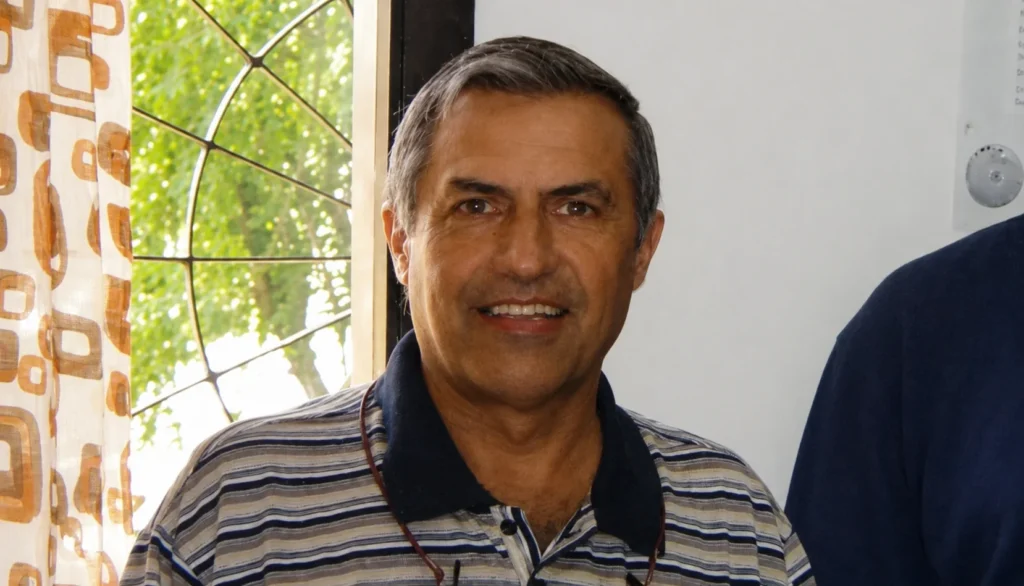

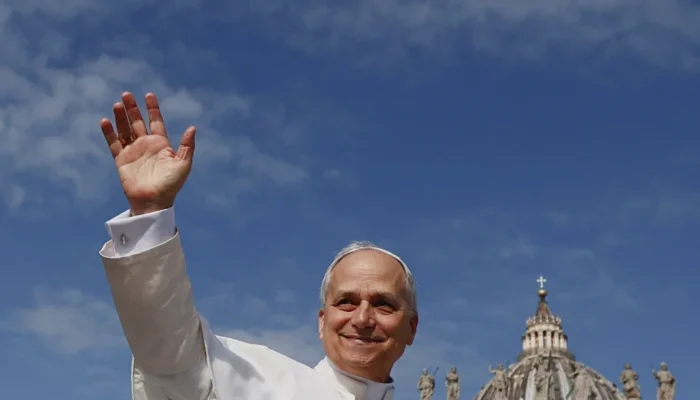

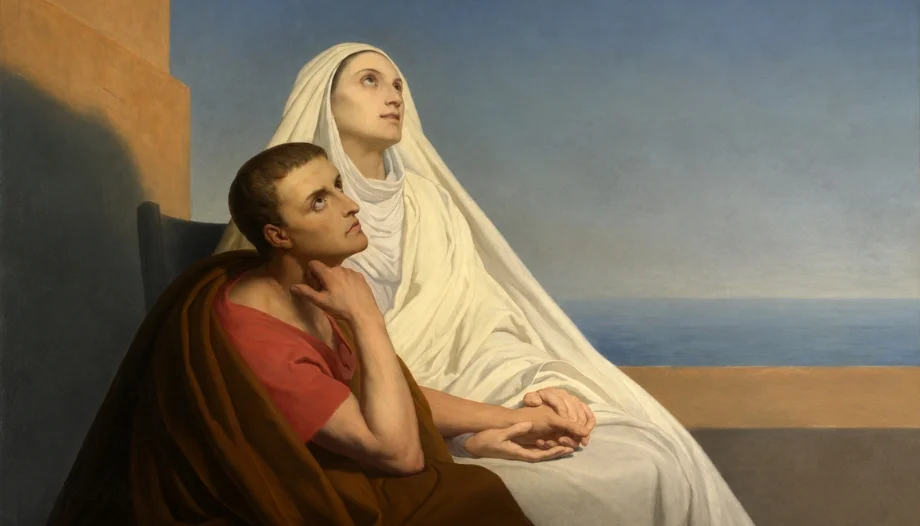
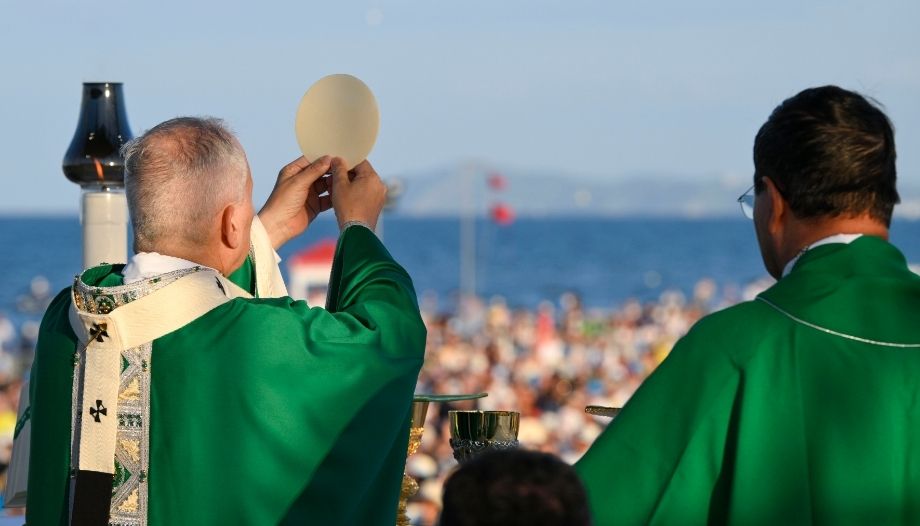
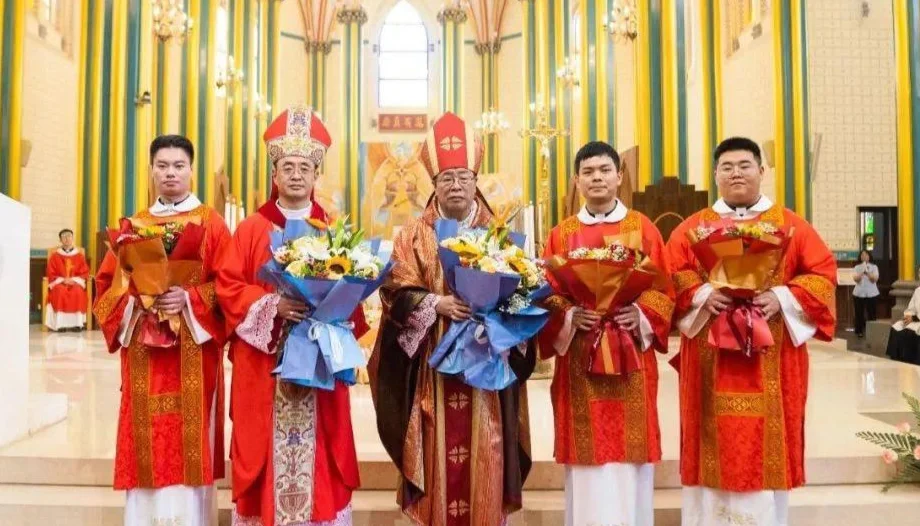
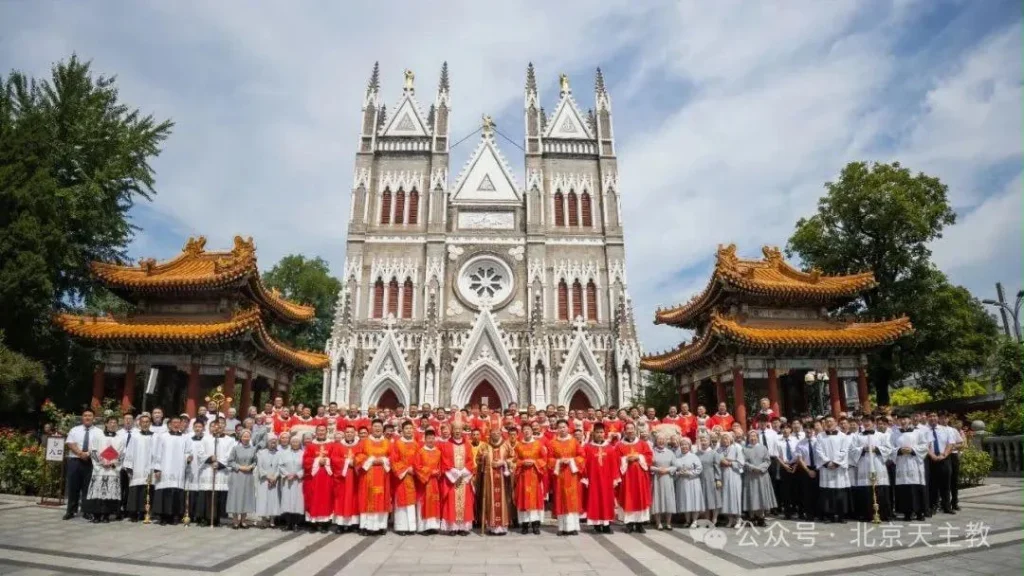
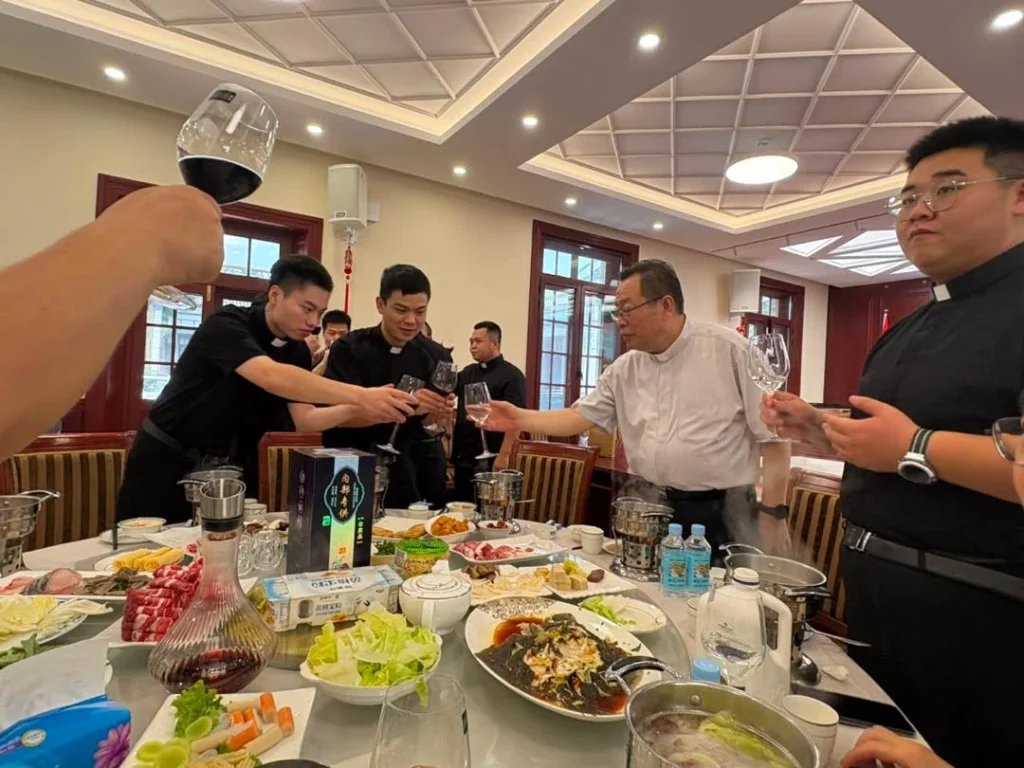
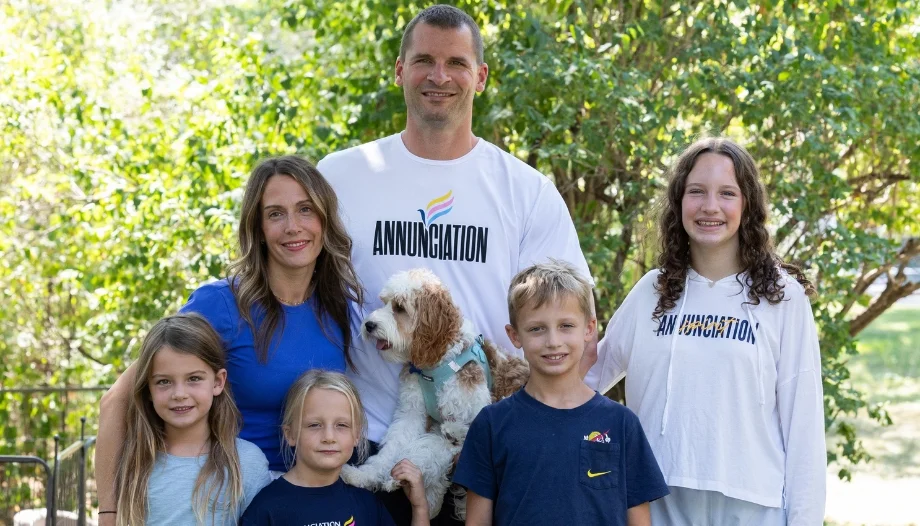
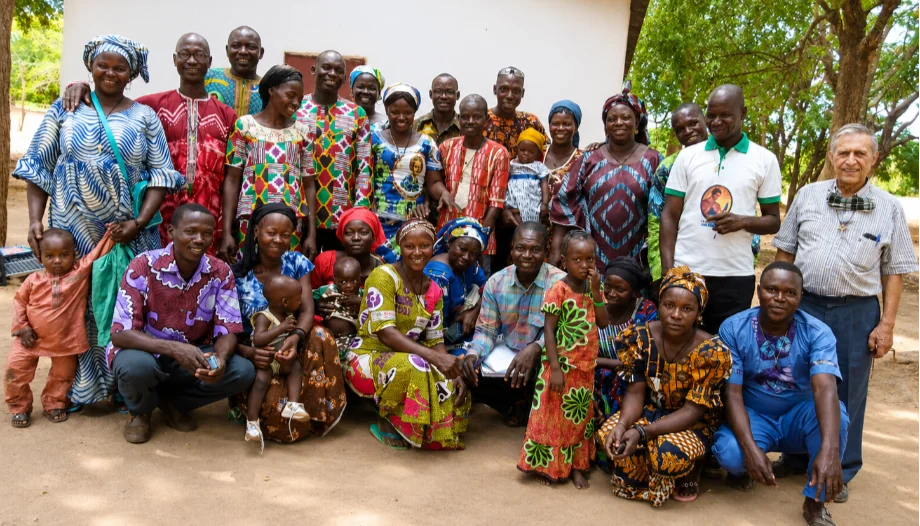
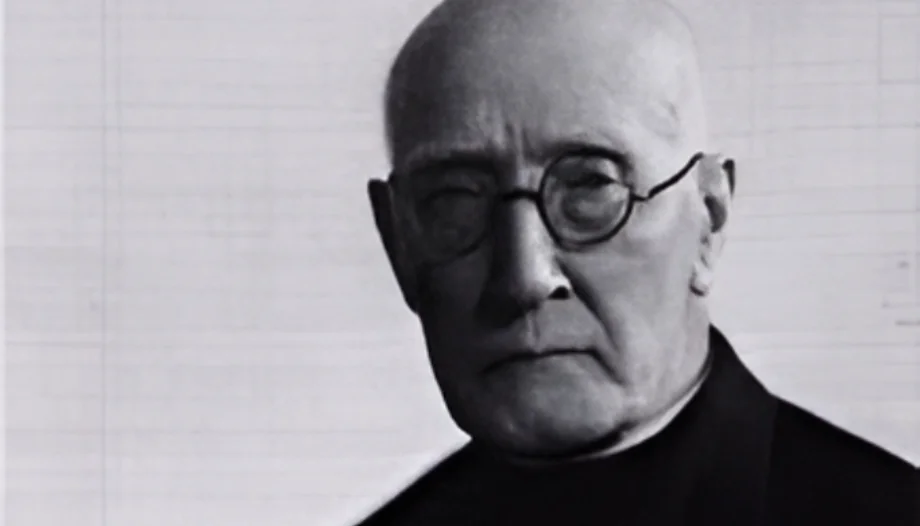
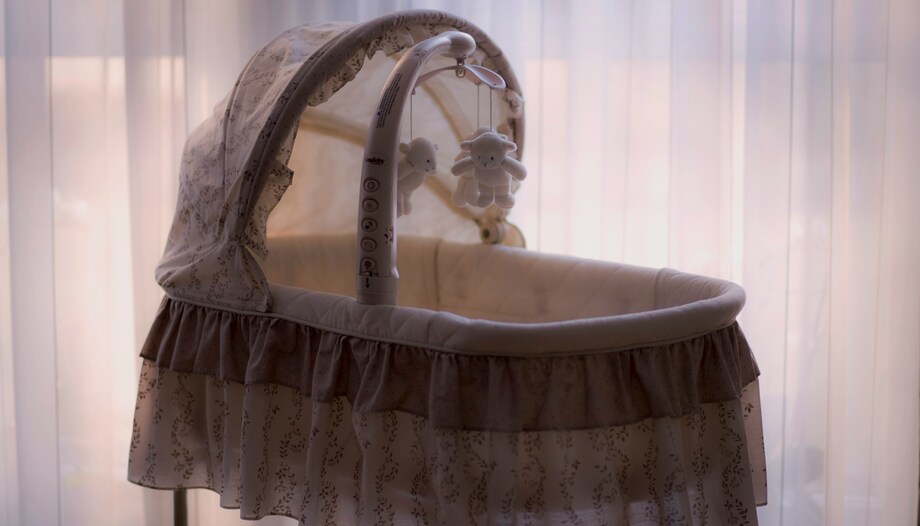
 What we haven't been told about motherhood
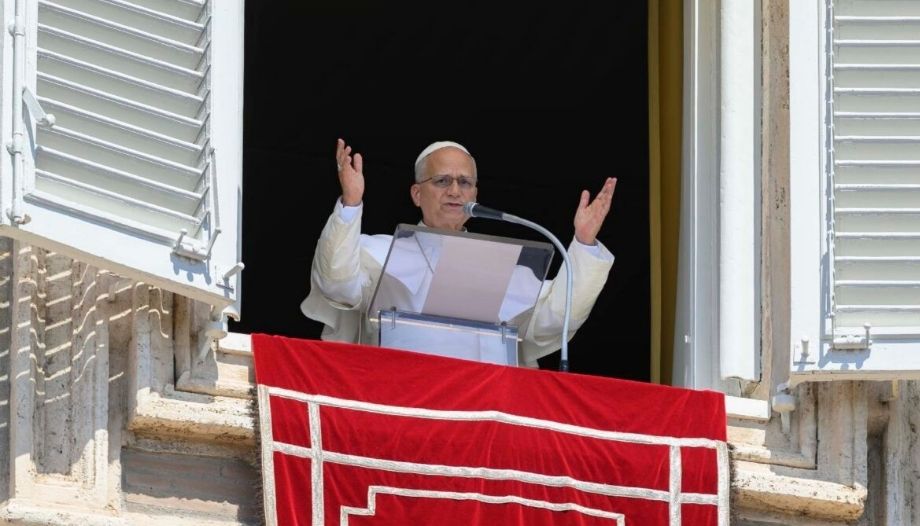
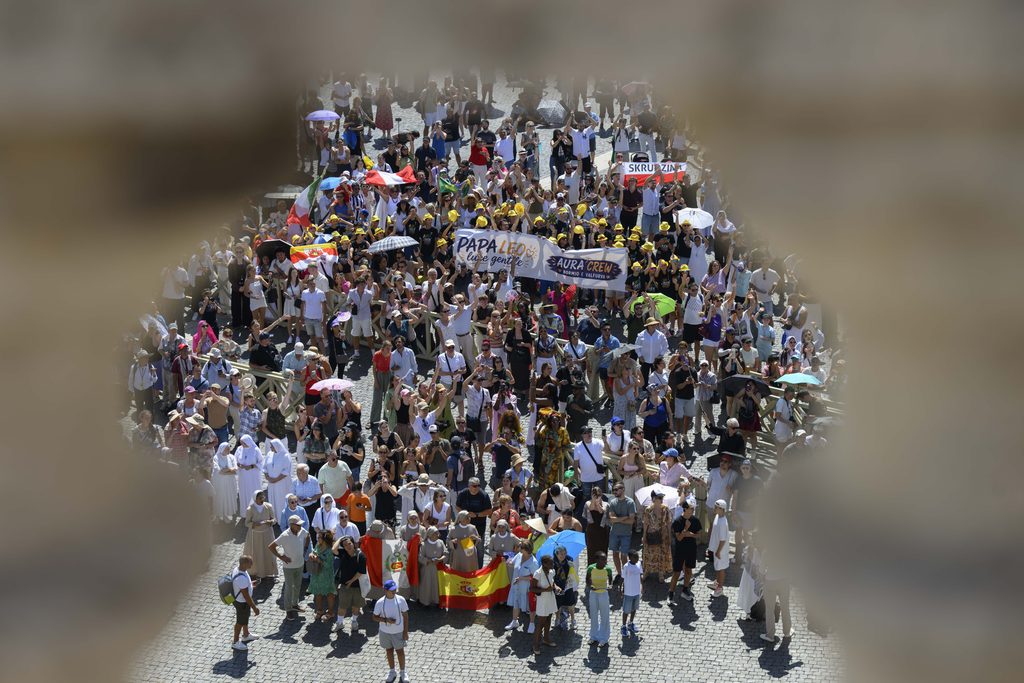
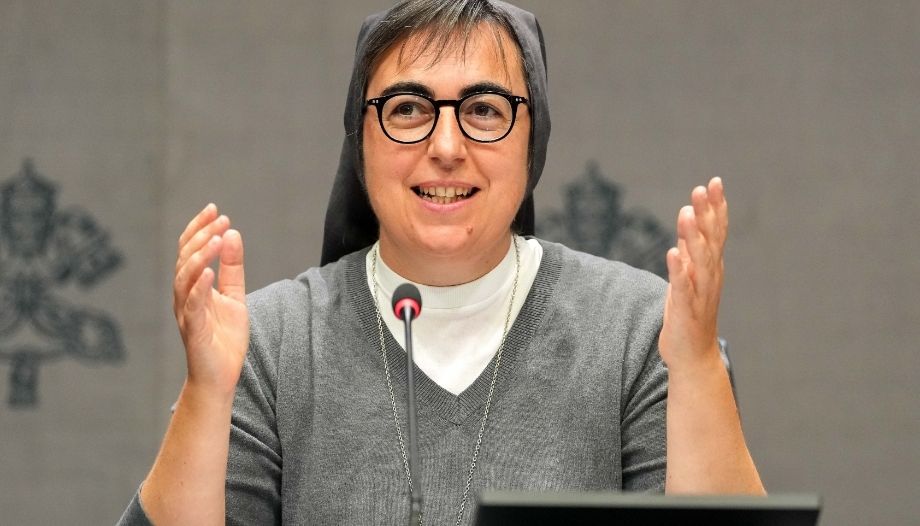
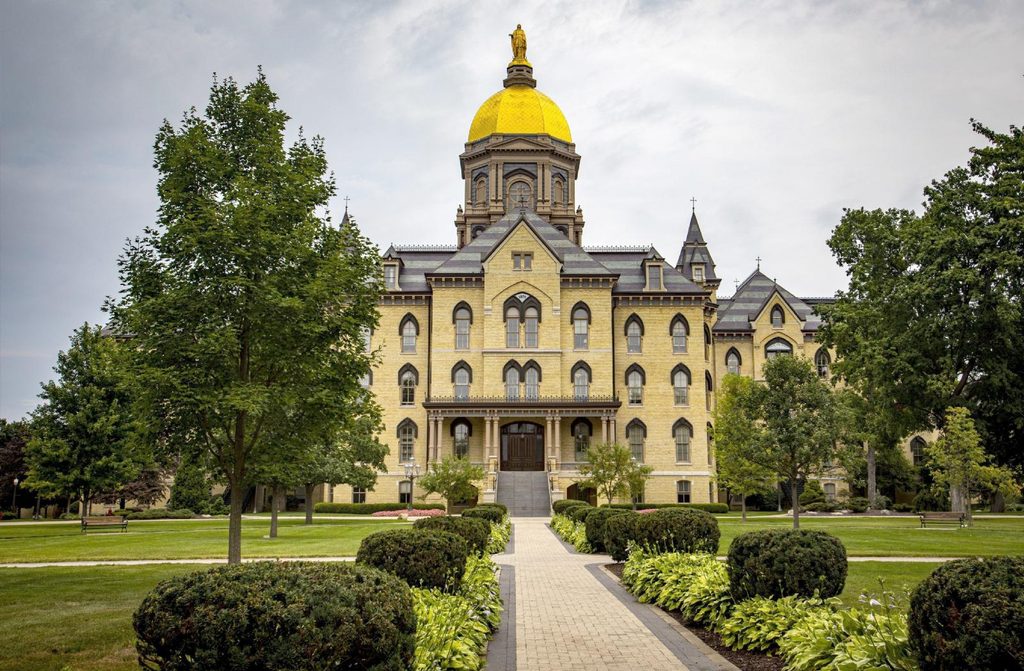

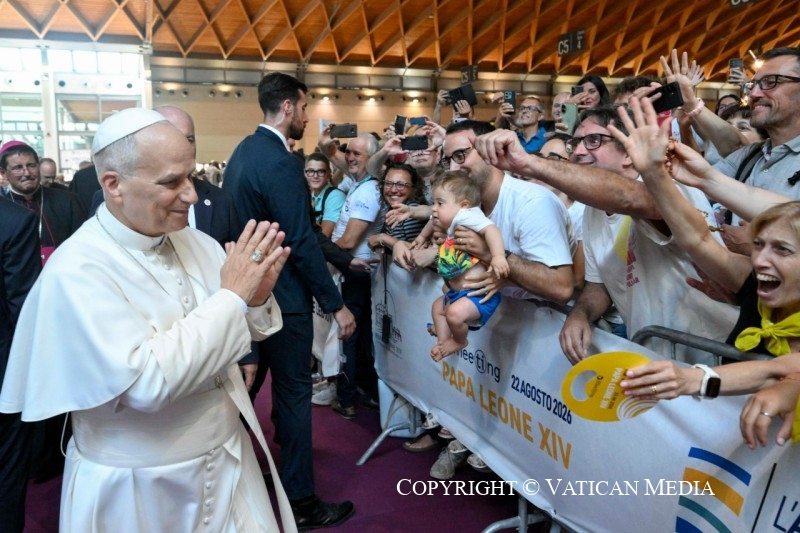
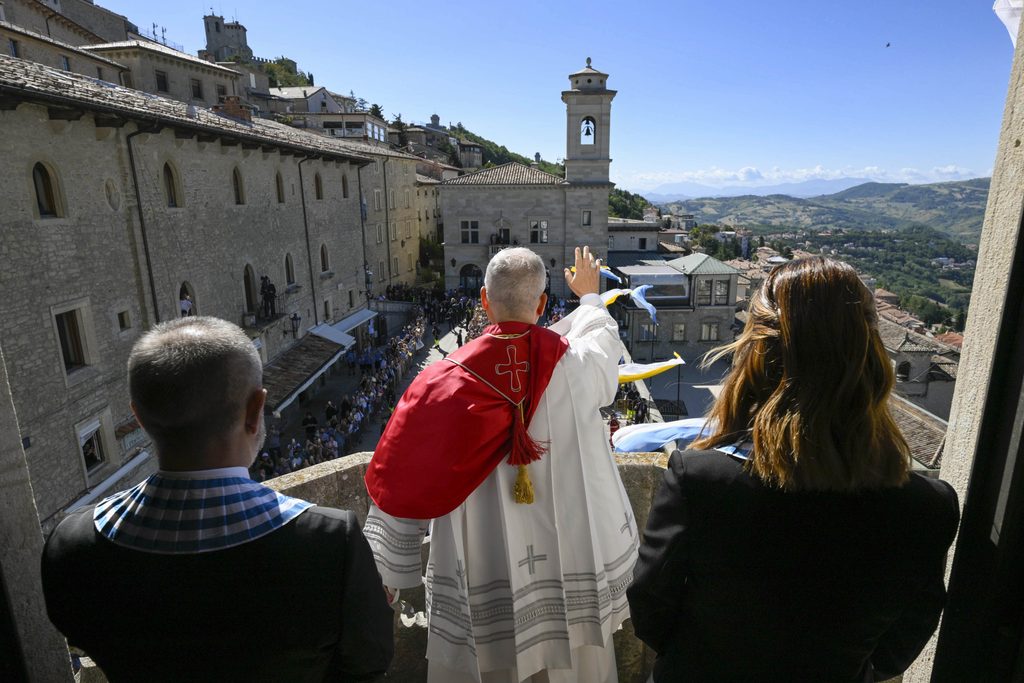
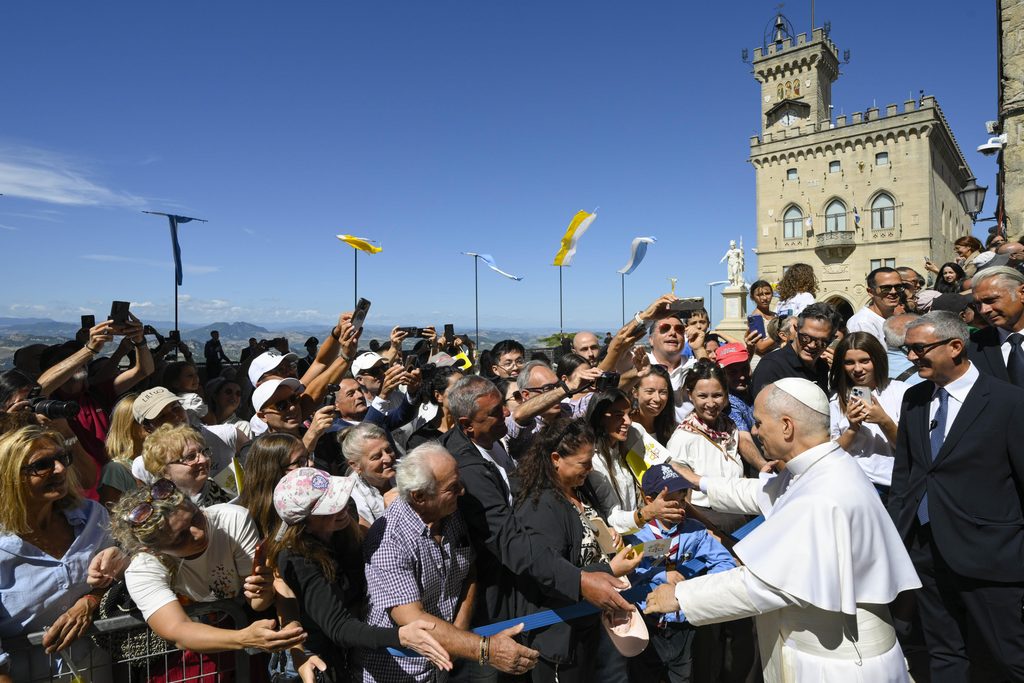
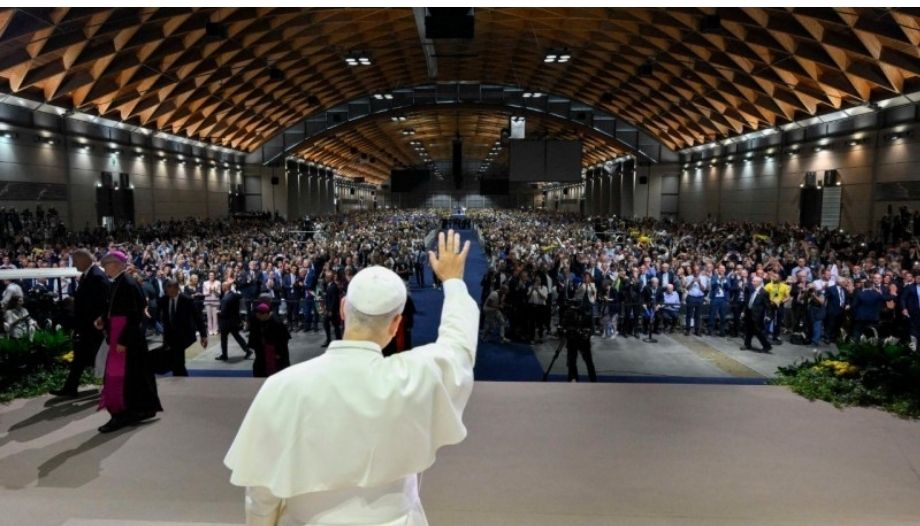
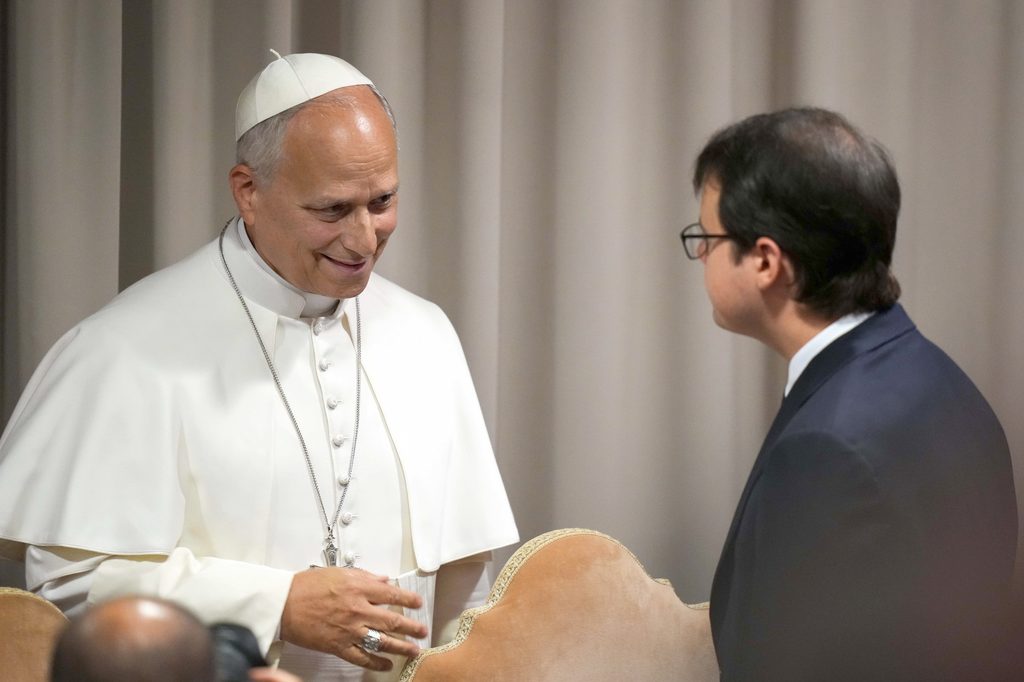

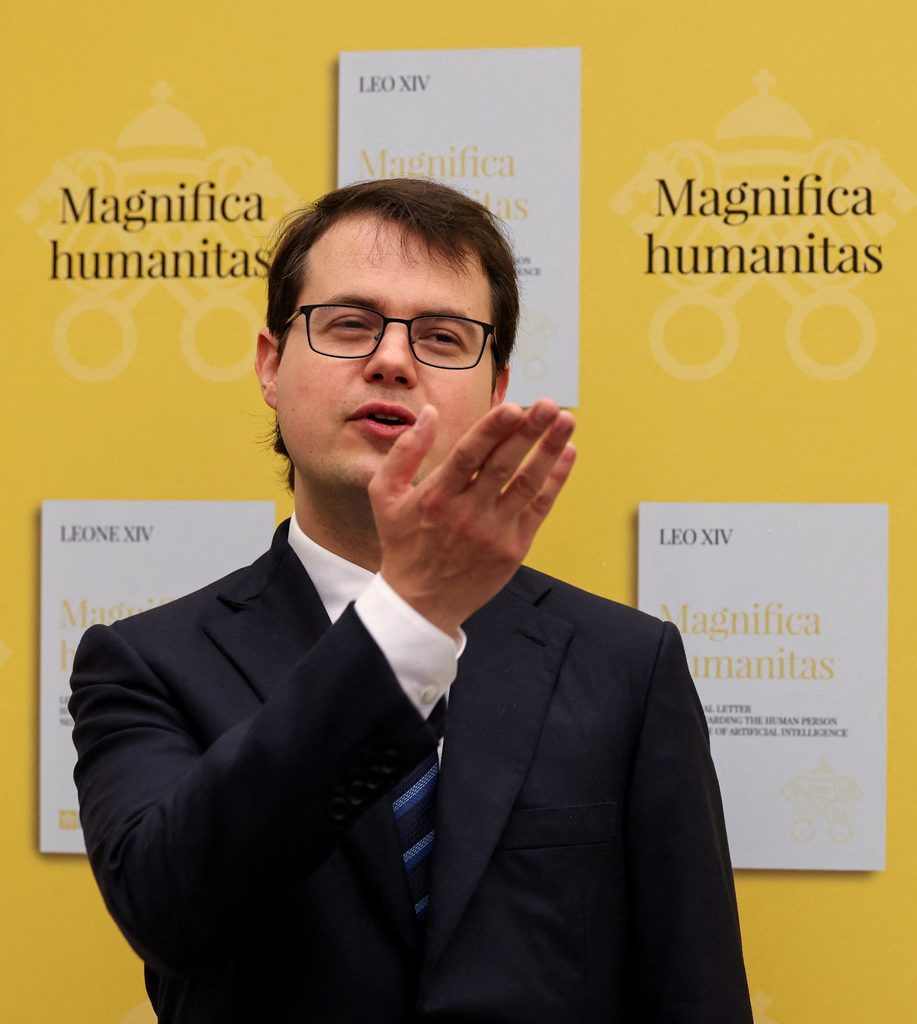

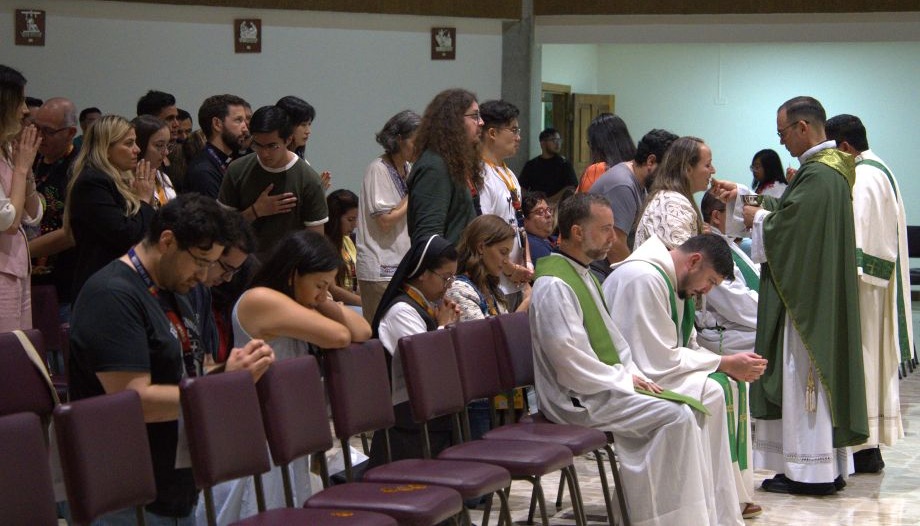
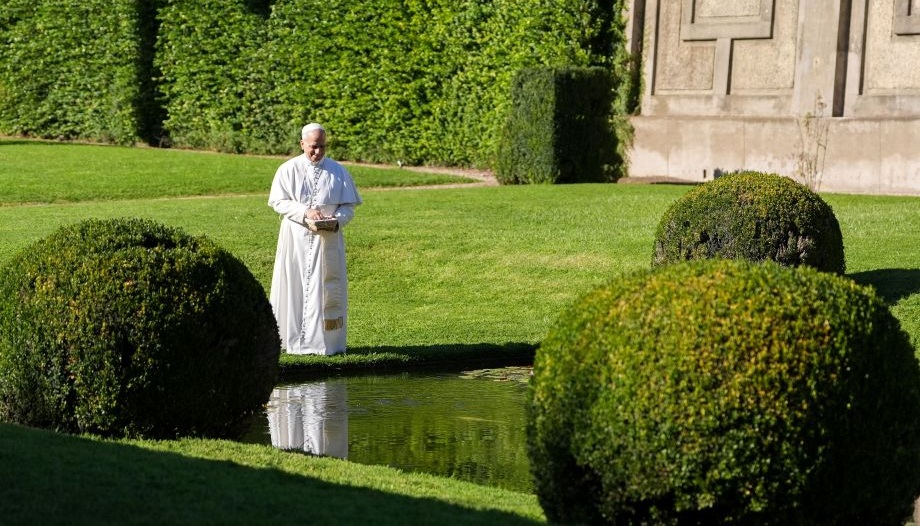
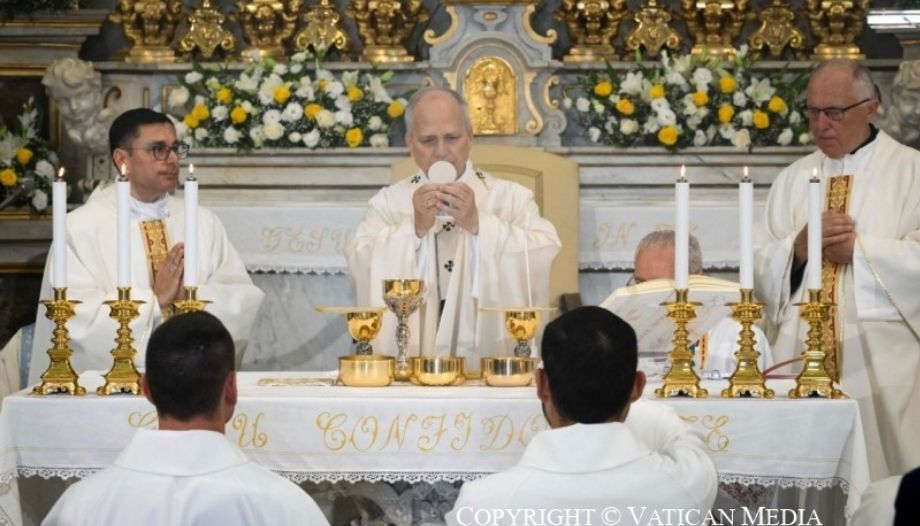
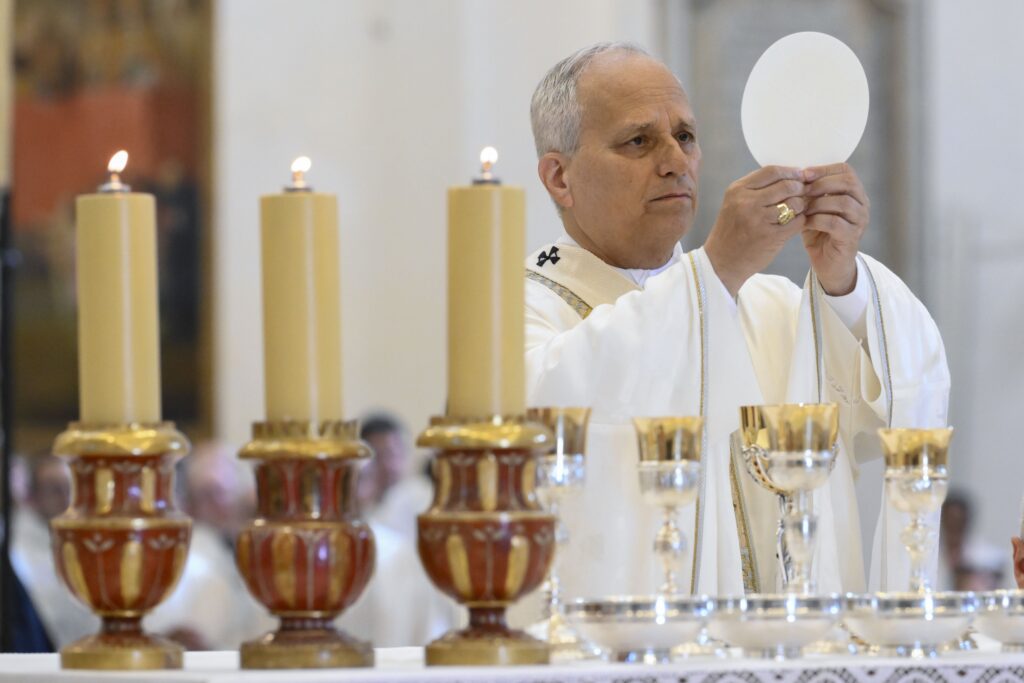
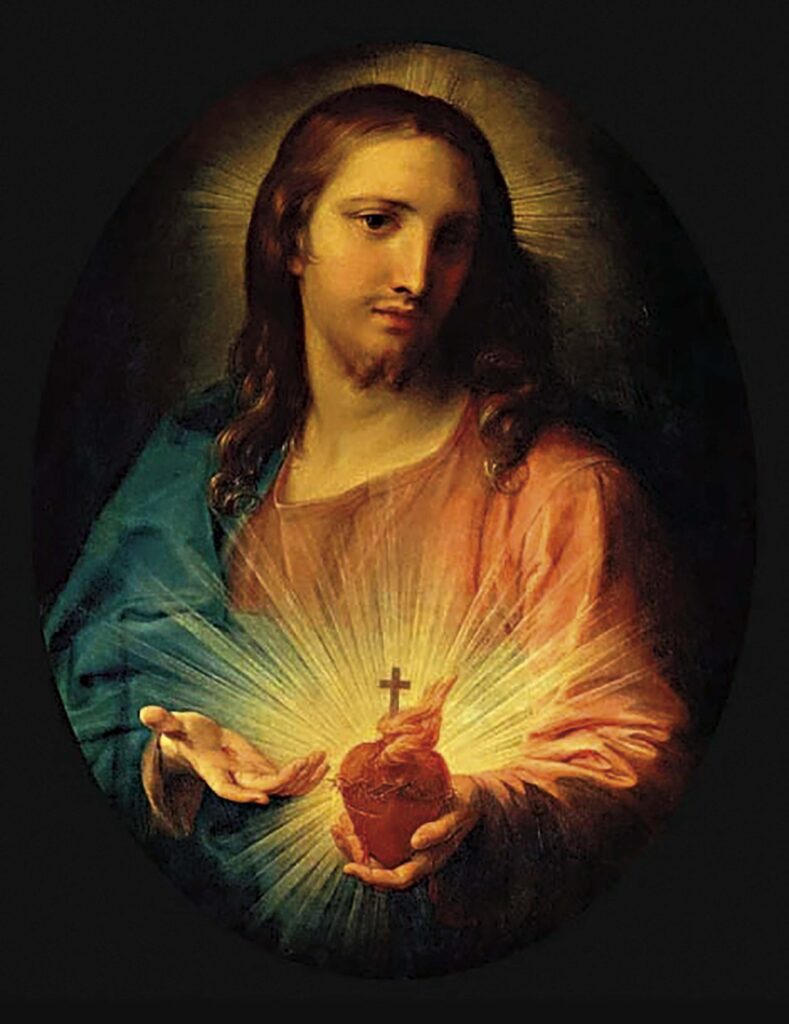
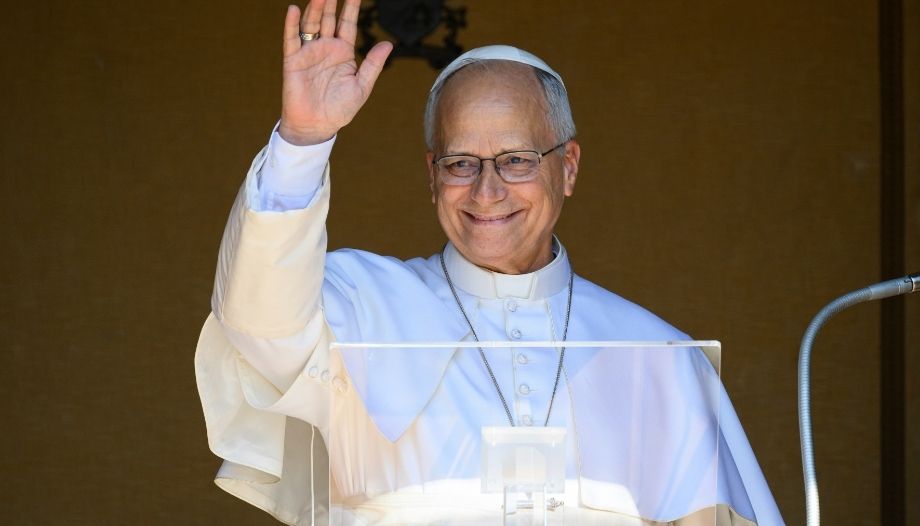
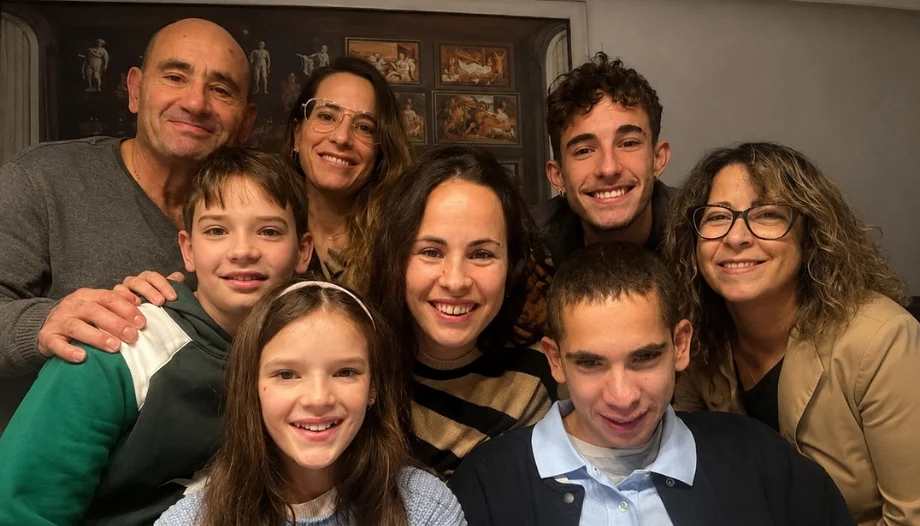
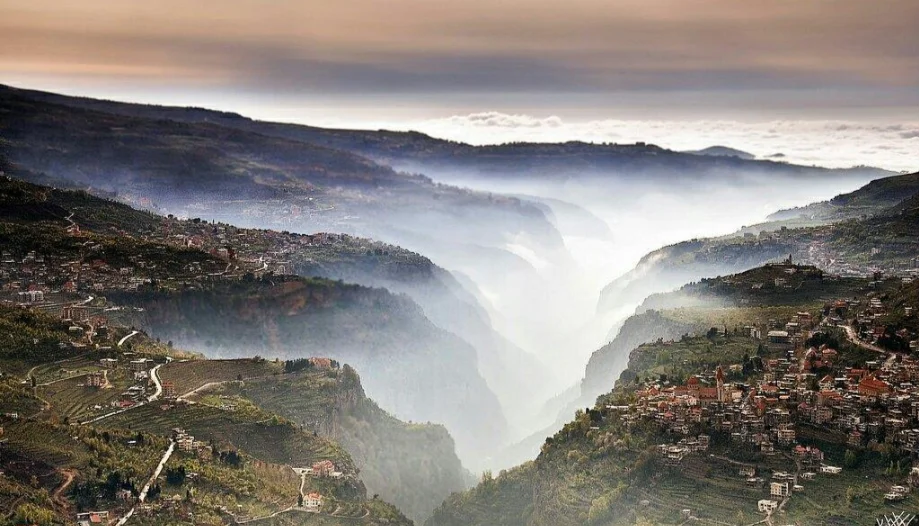
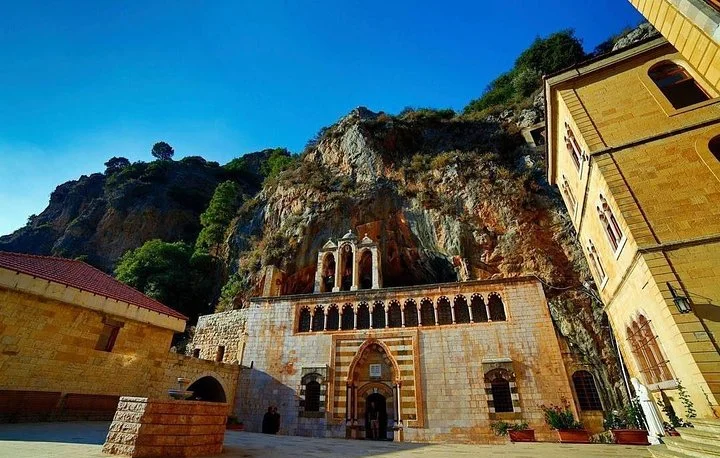
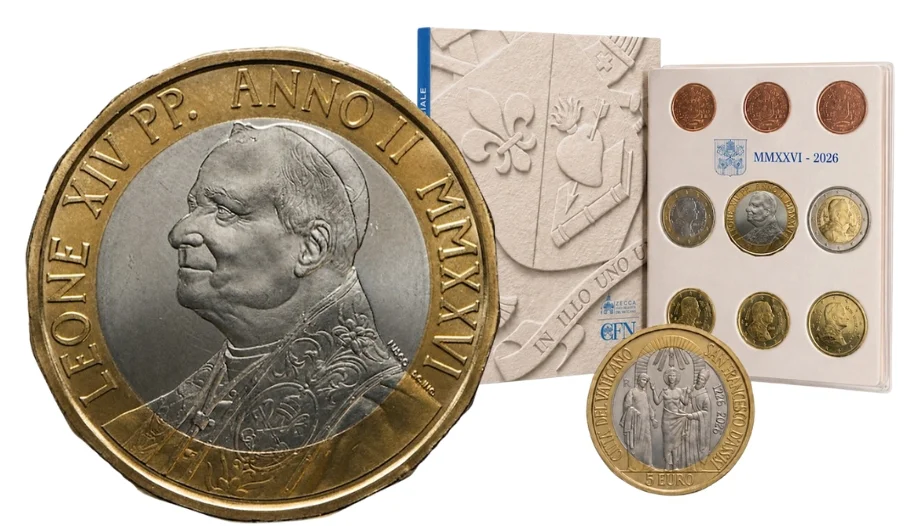
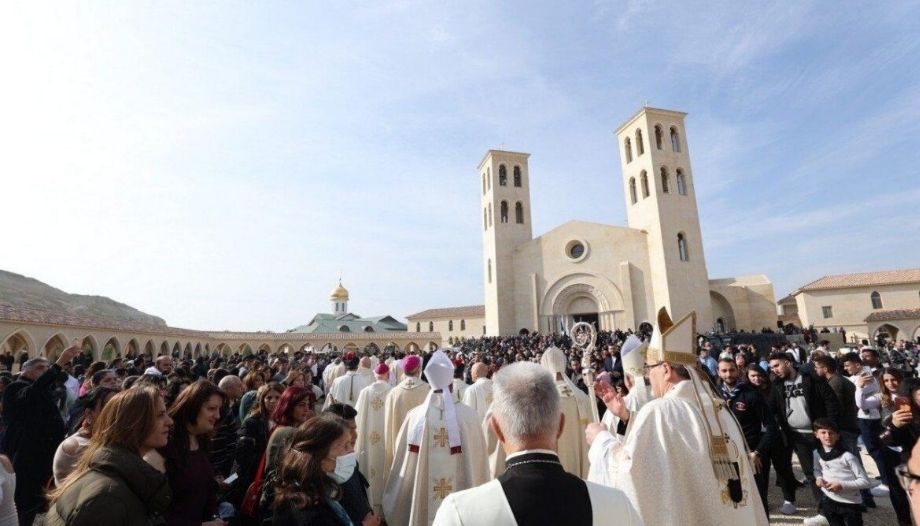
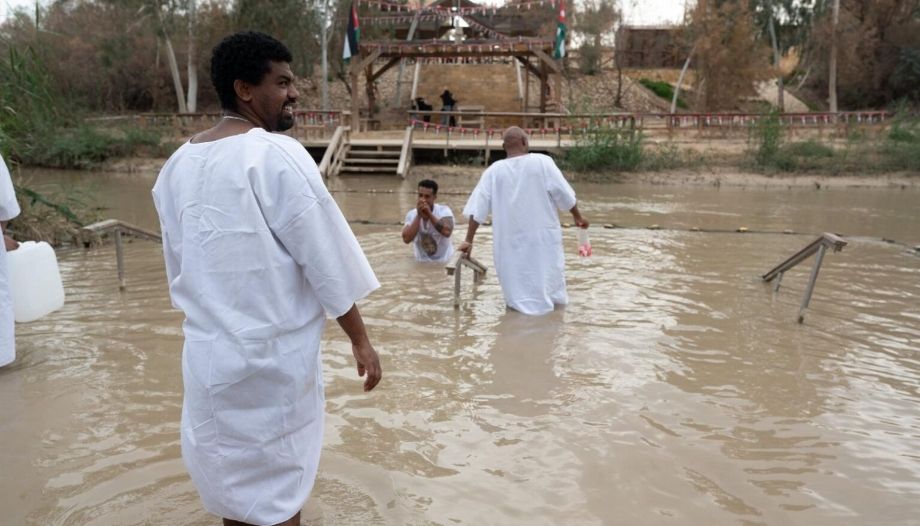
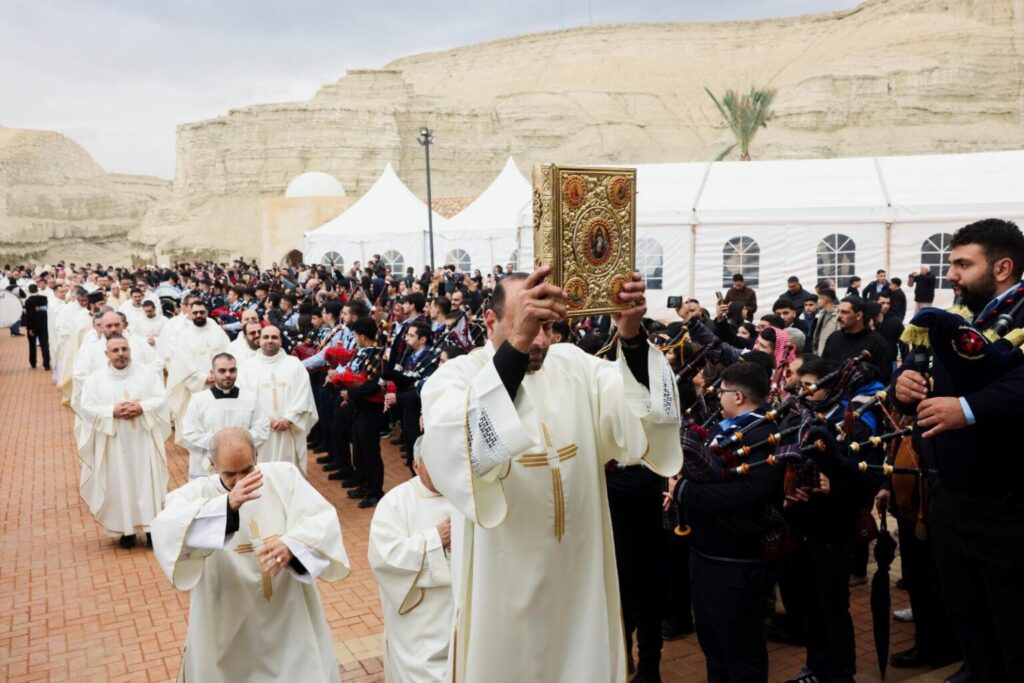
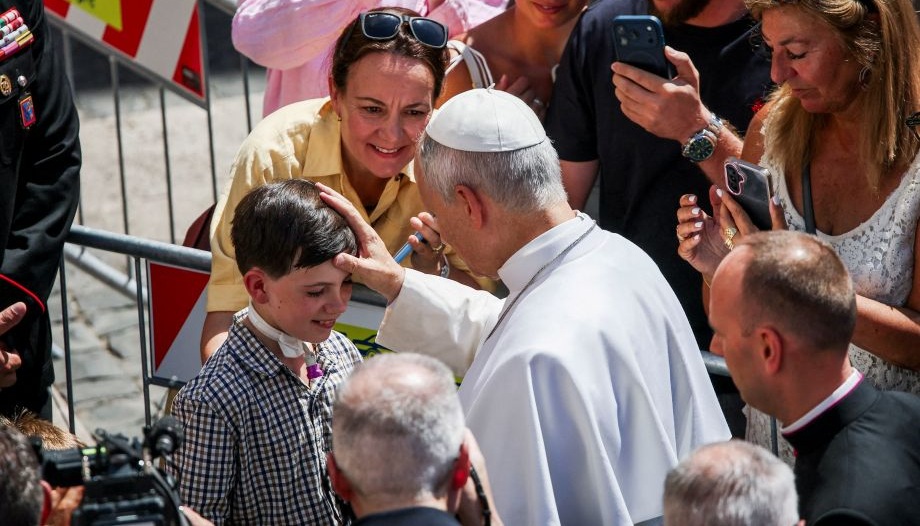
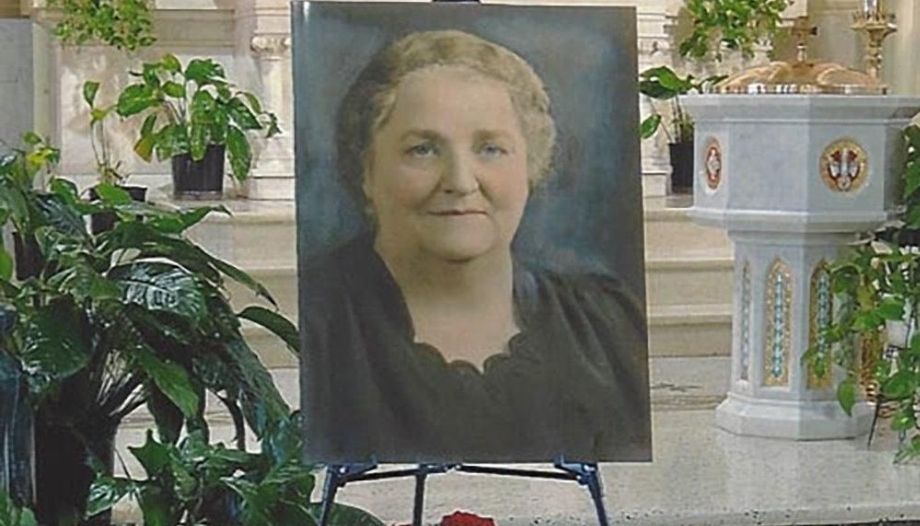
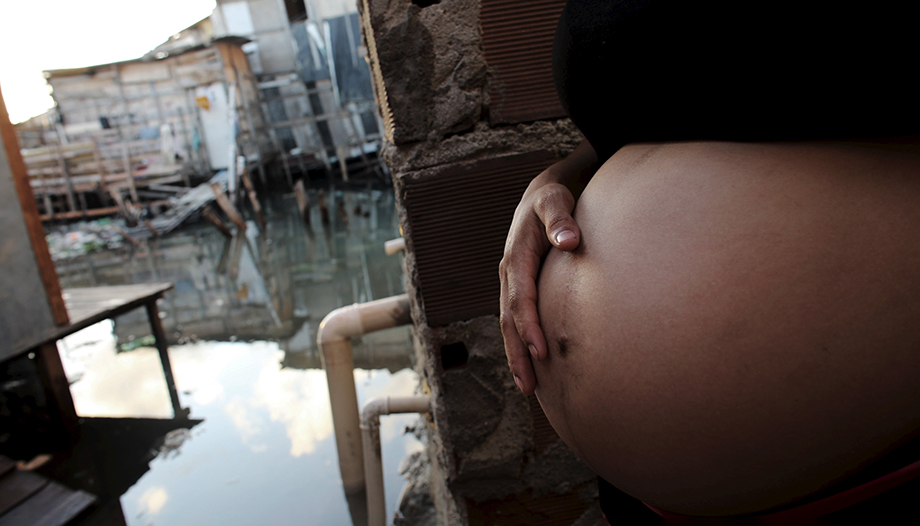

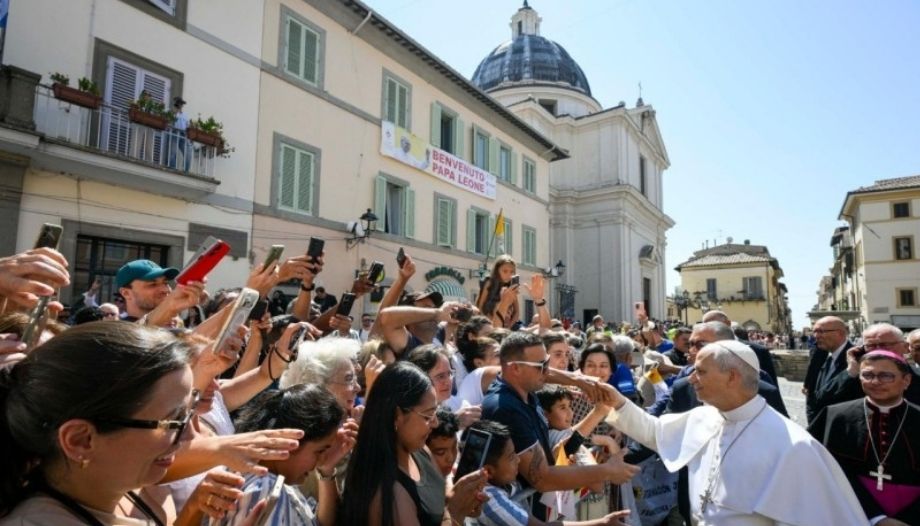
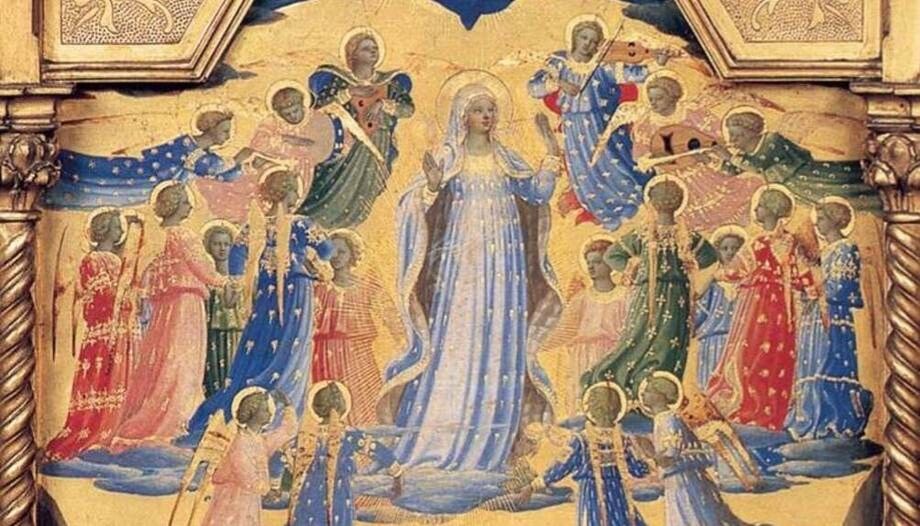

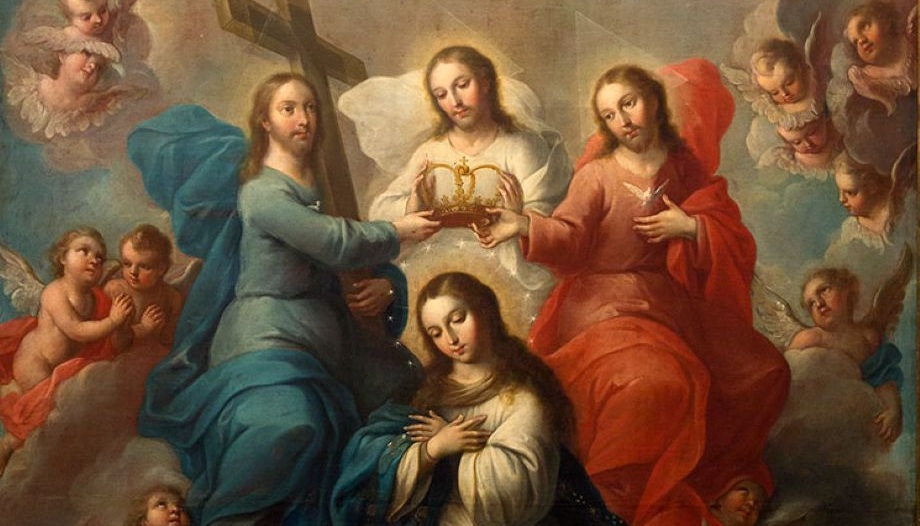
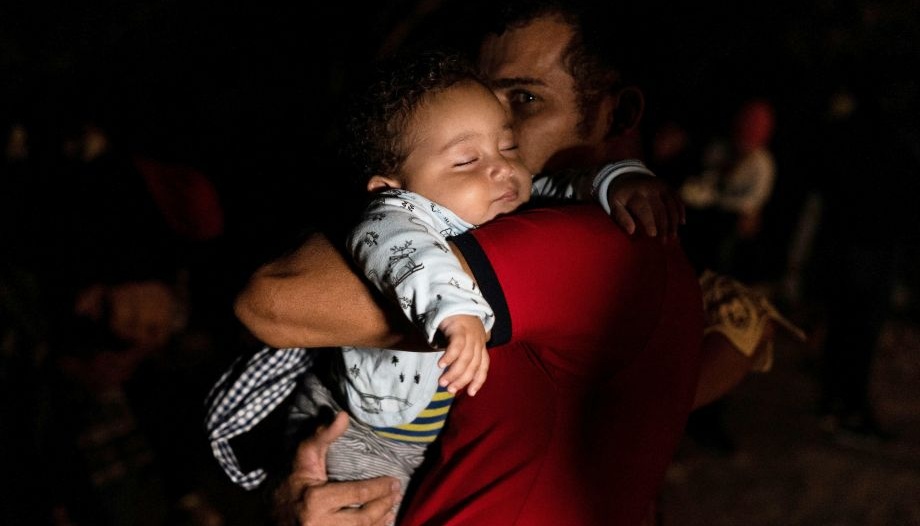
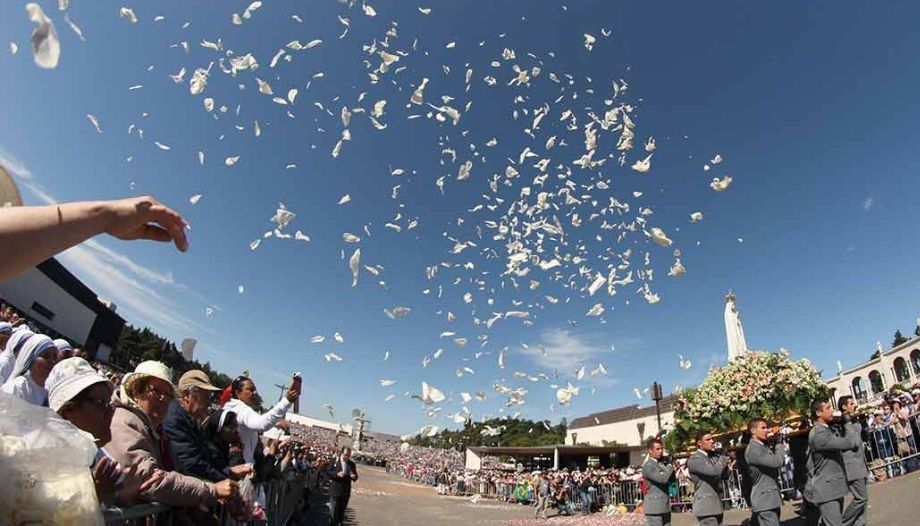
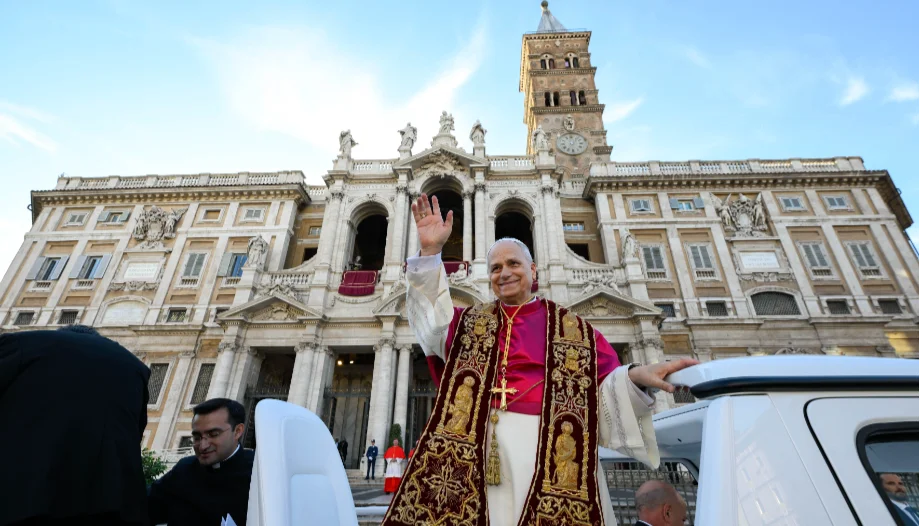
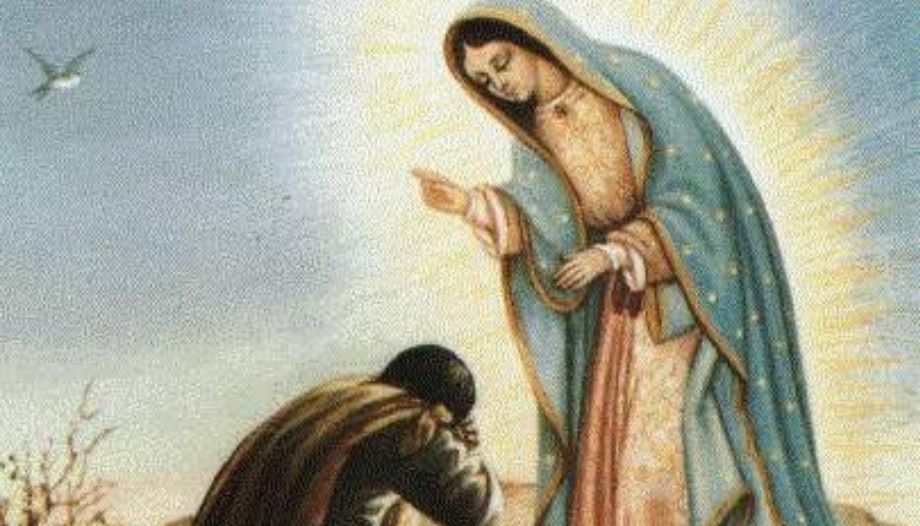
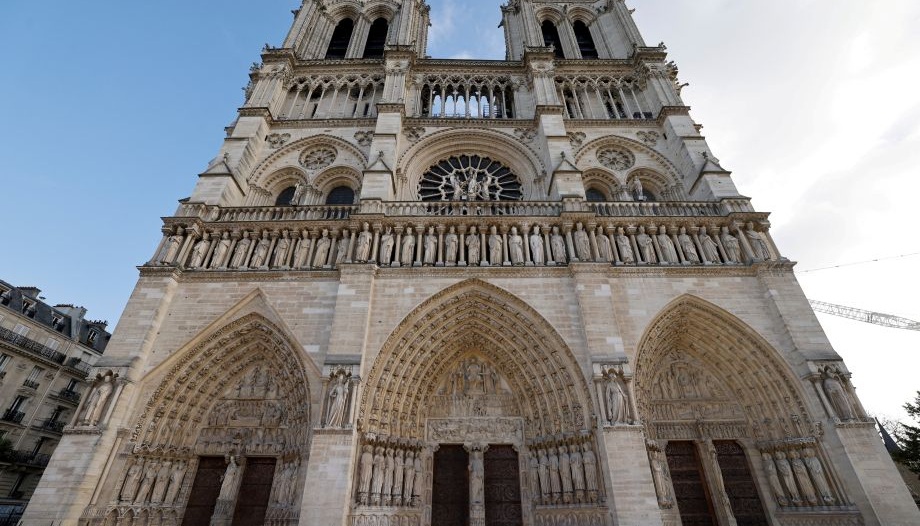
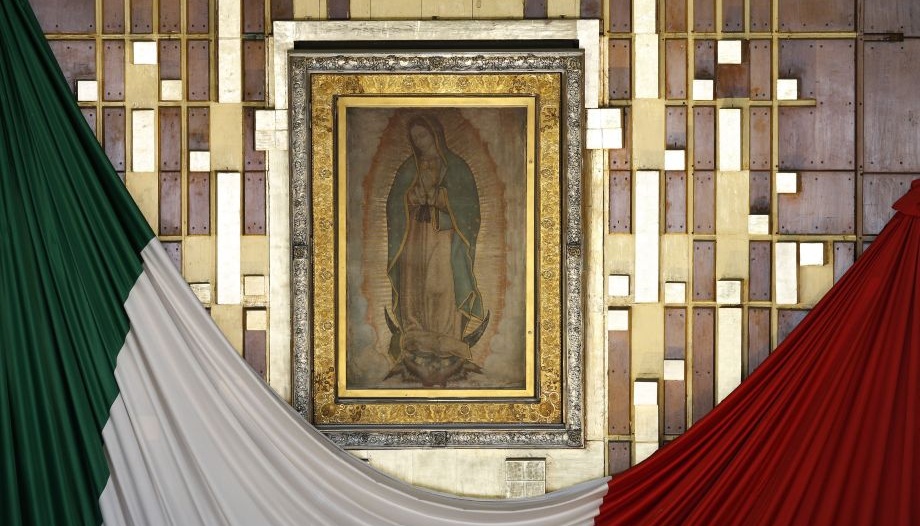
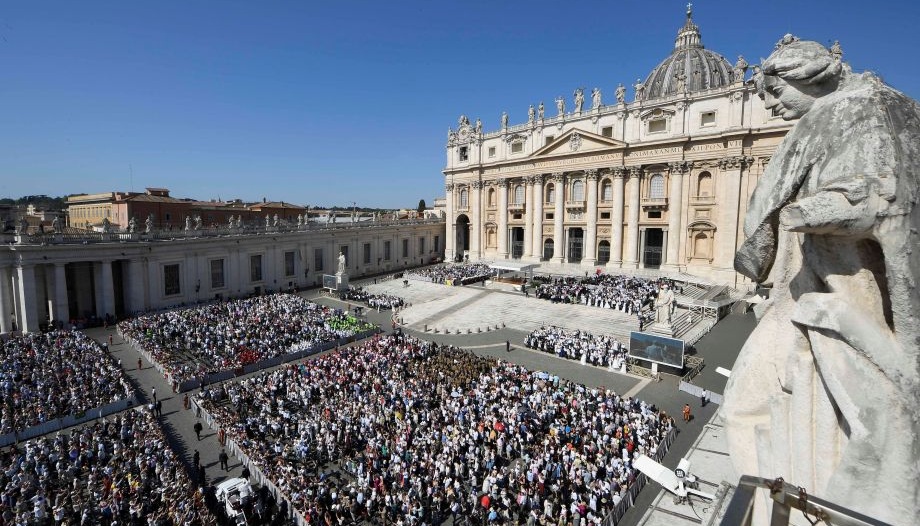
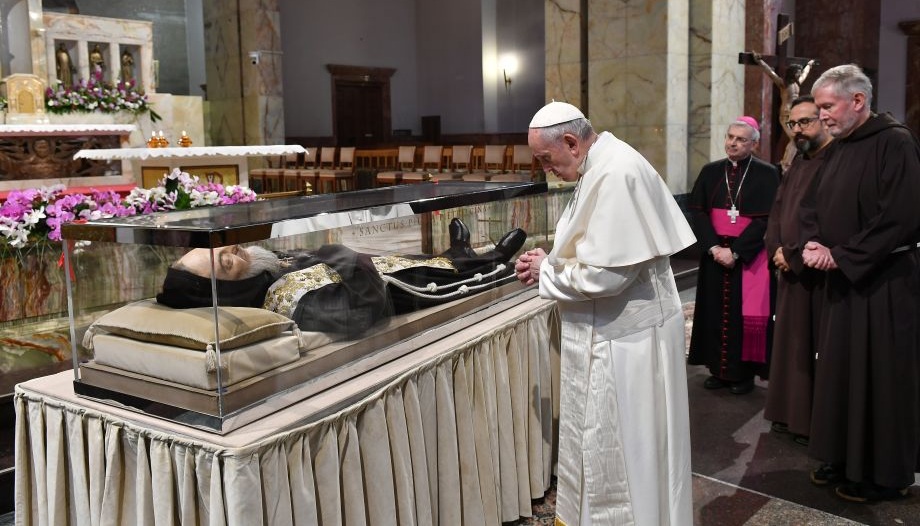
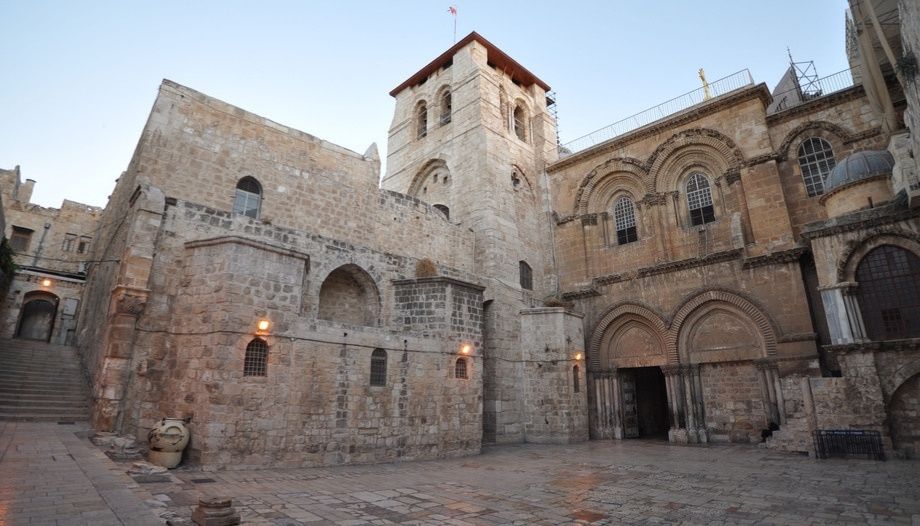
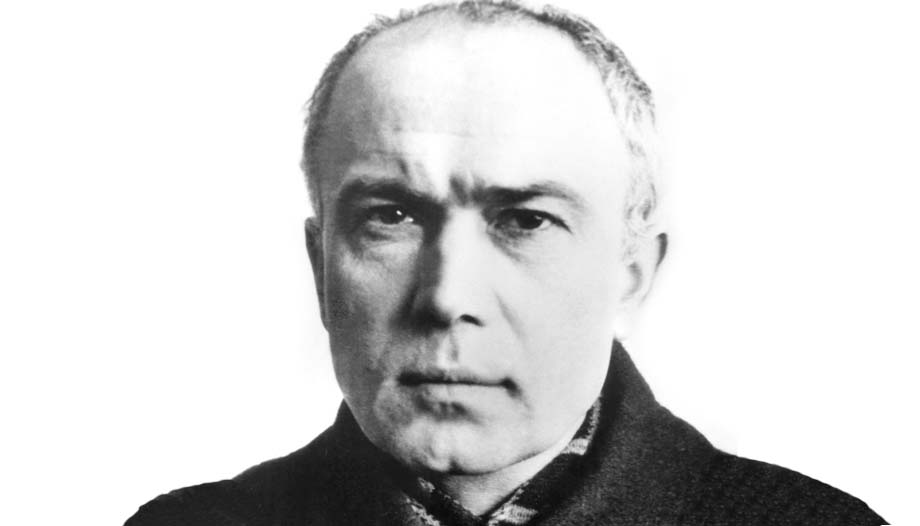
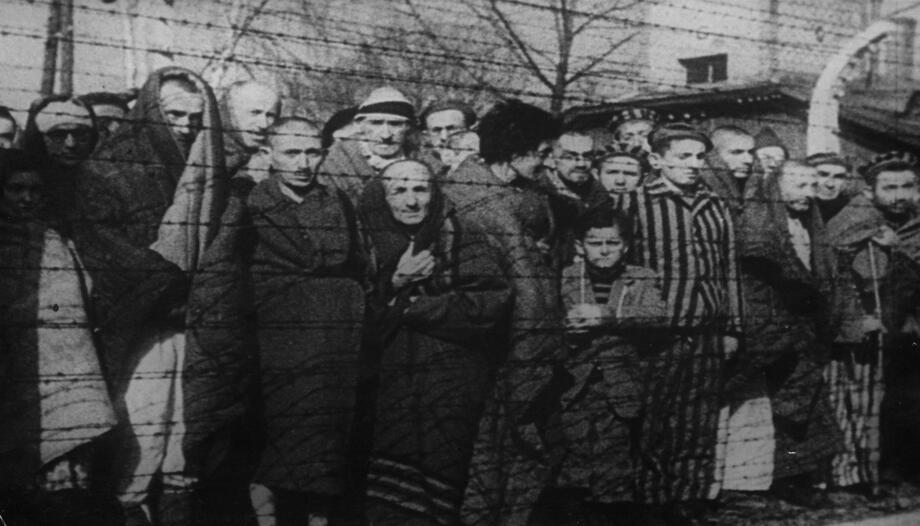
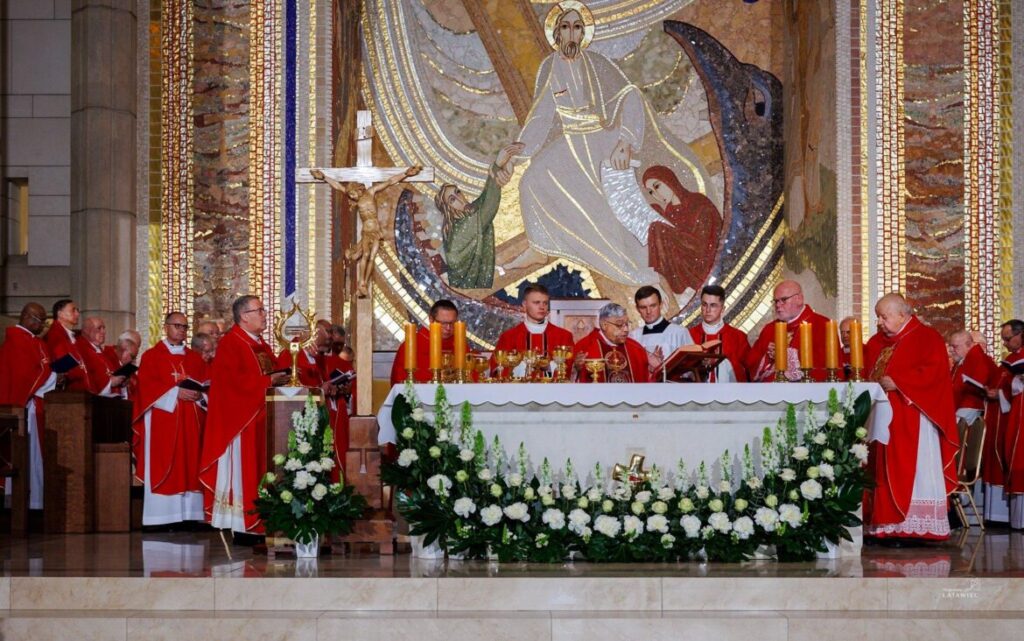
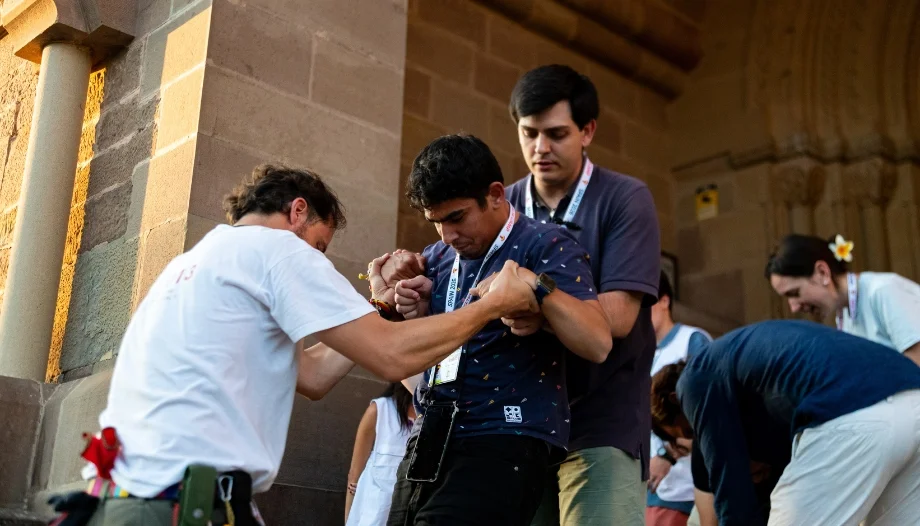
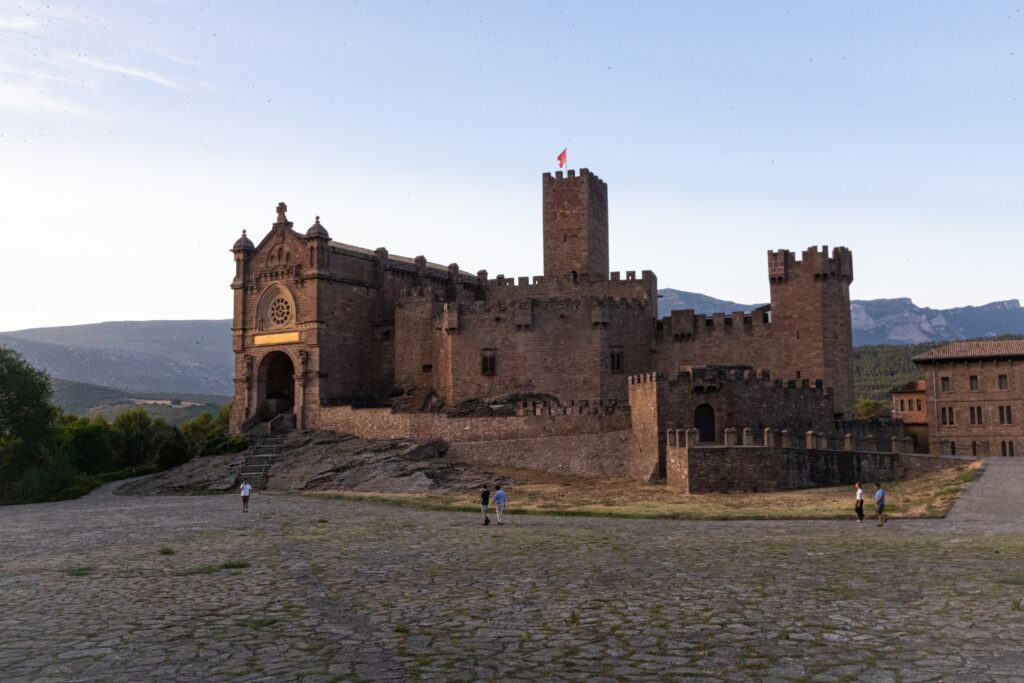
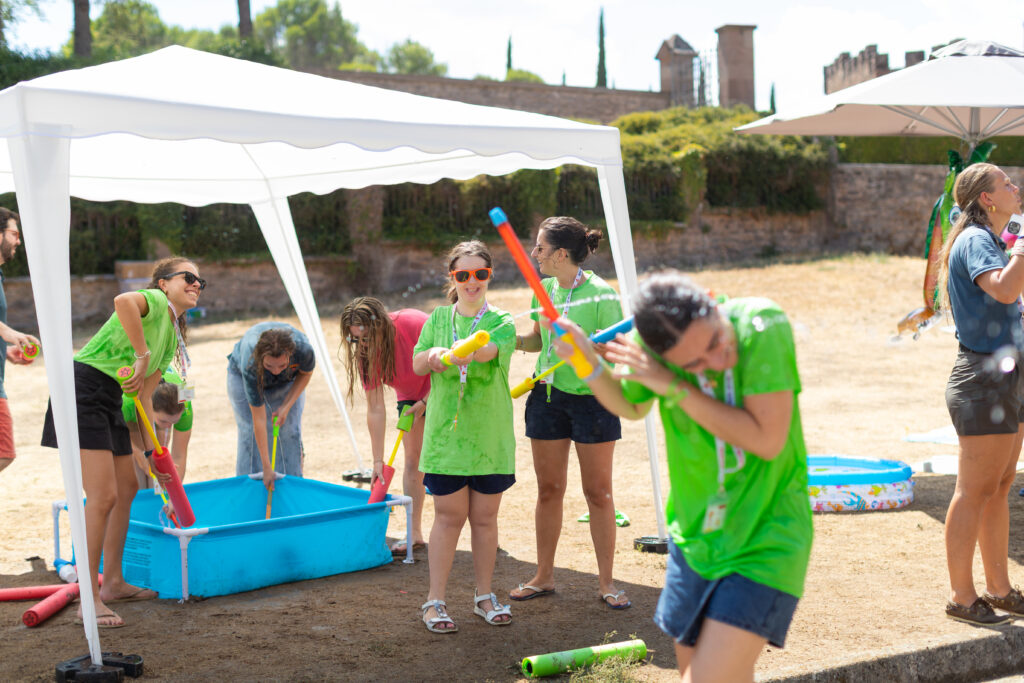
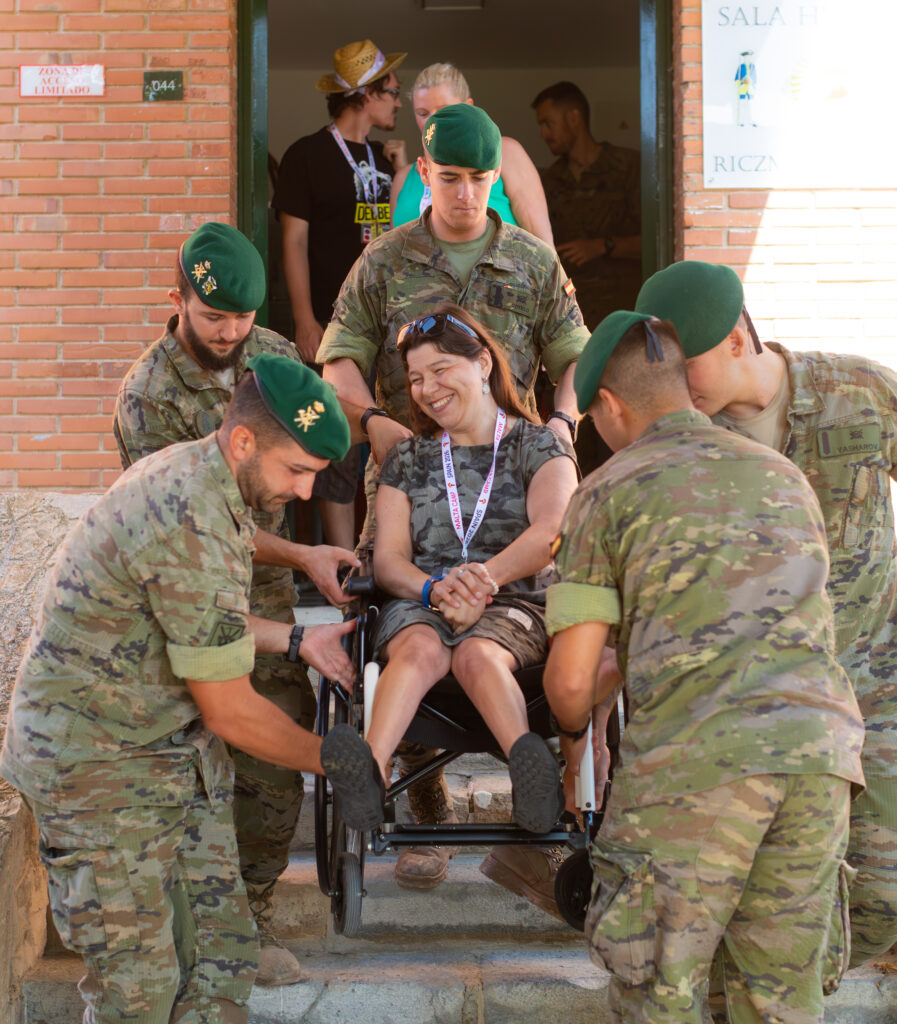
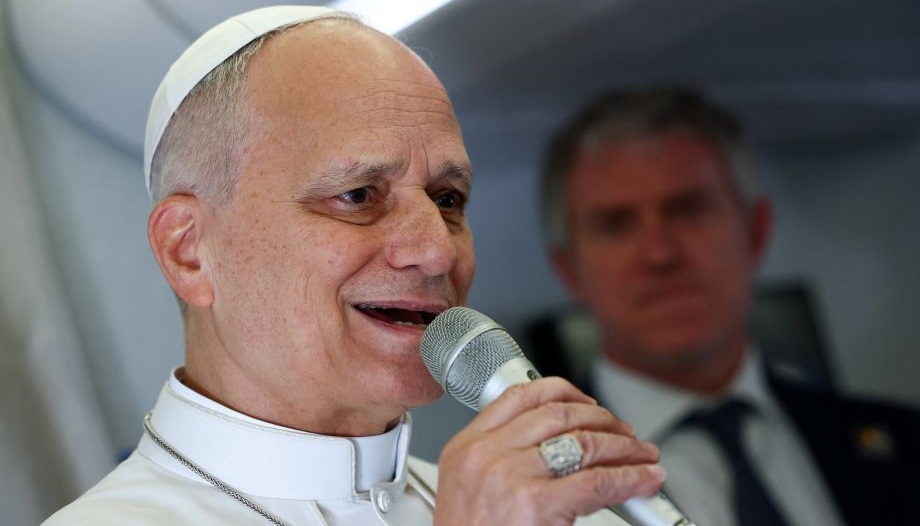
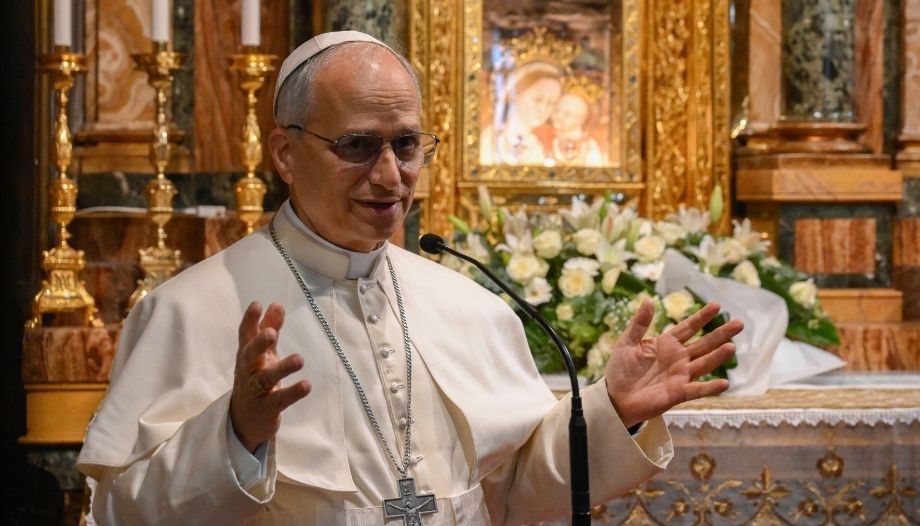
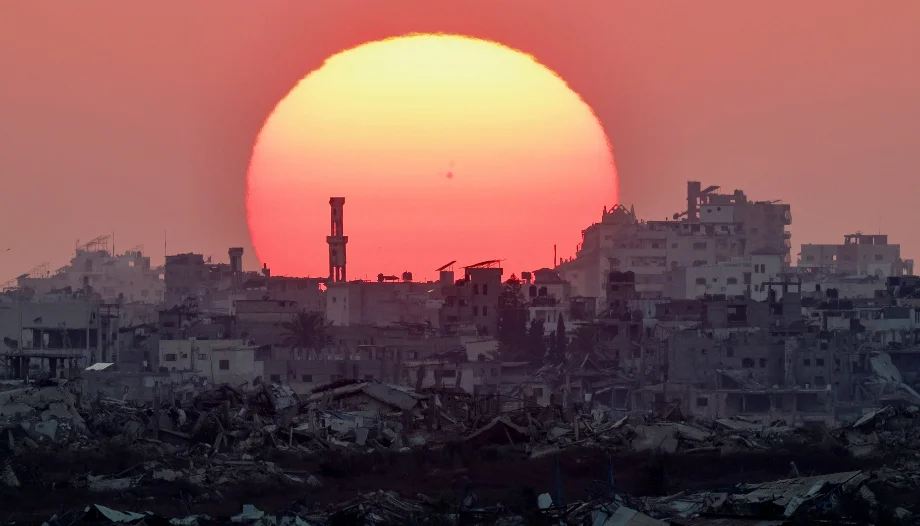
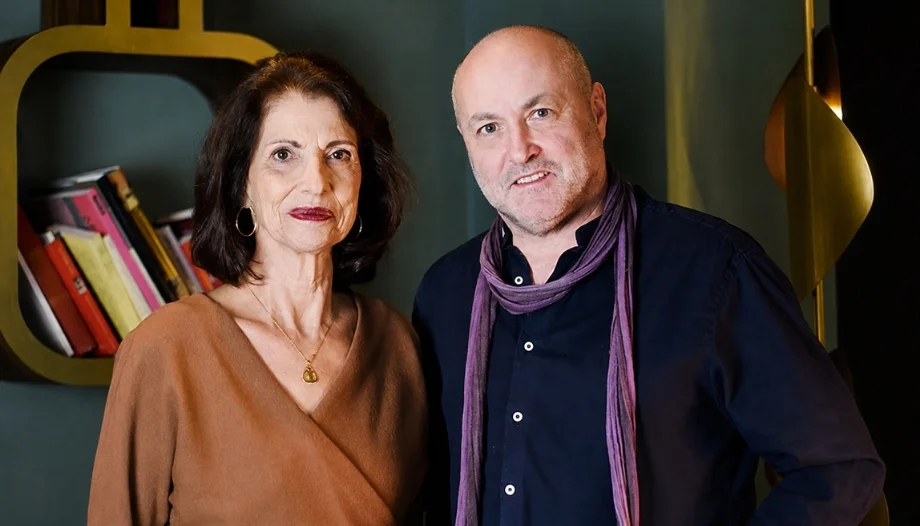

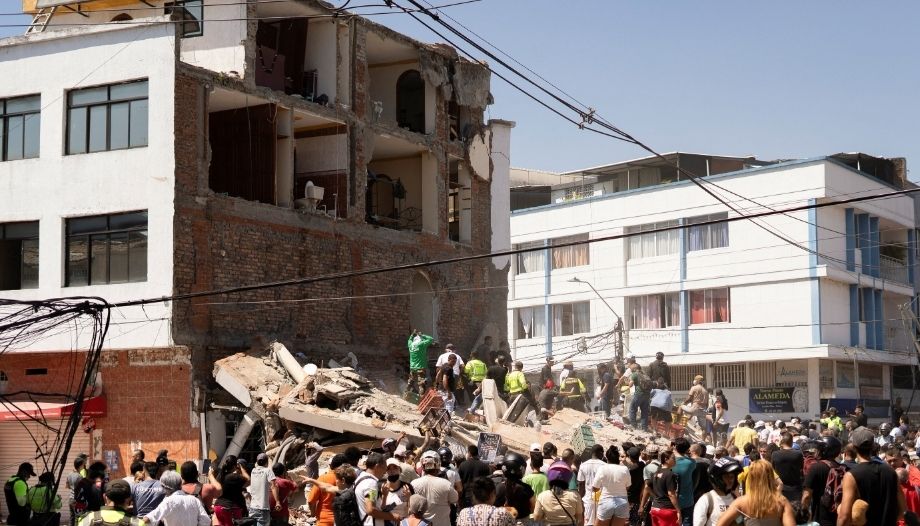
 Español
 English
 Italiano
 Français
 Deutsch
 Polski