Books

José Molero: “The important thing is to put the right story in the hands of each child at the right time”

In this interview, writer José Molero describes the keys to helping young and old alike appreciate and enjoy reading.

Maria José Atienza-August 11, 2026-Reading time: 6 minutes

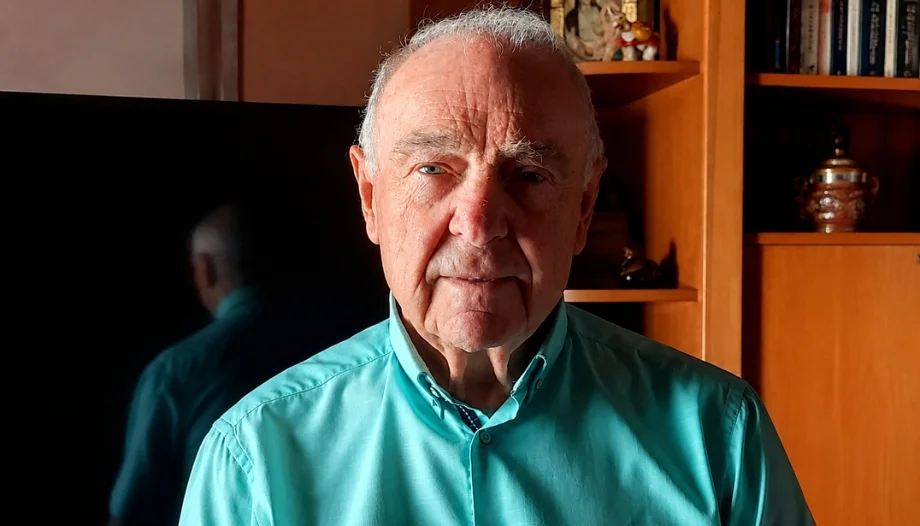
José Molero (Alfacar, Granada, 1937)—known as Pepe—has led a rich and happy life, but above all, a surprising one, especially during his youth. This native of Granada, a mining engineer—a field to which he devoted his early professional years—eventually found his way into teaching, a field in which, in addition to his dedication and undeniable talent, he also began to make his mark as a writer. Focused on young adult literature, though with a few forays into poetry, 

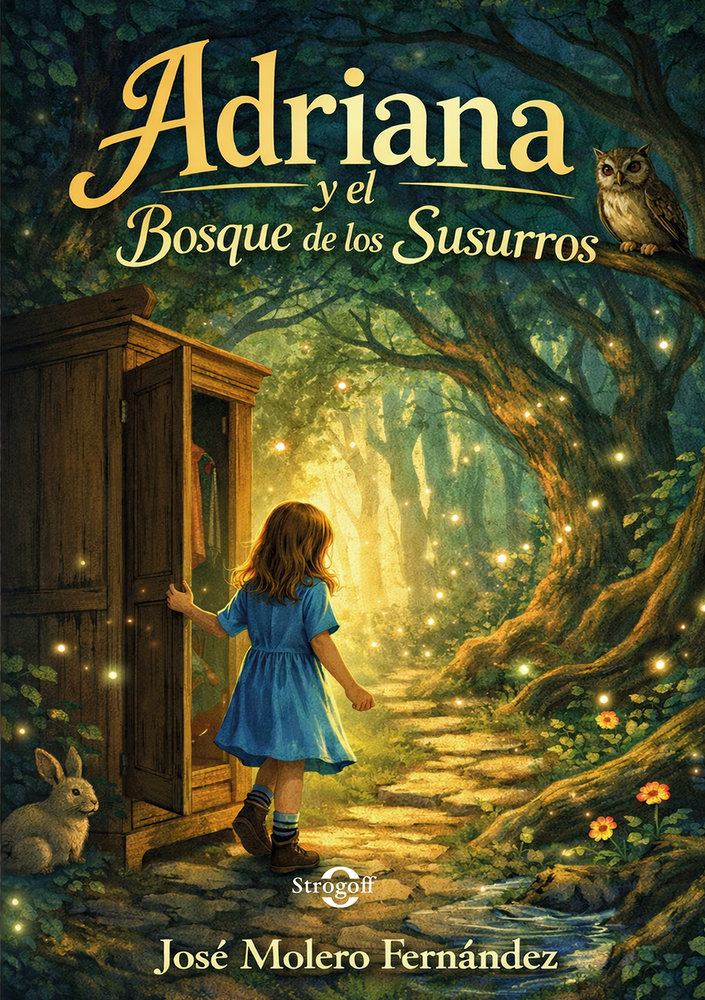
His latest book Ariadne and the Whispering Forest, published by the Strogoff Publishing House, delves into a magical forest, filled with voices and characters through whom a young girl, Ariadna, unravels the essential questions of life: friendship, respect, solidarity… 

In this conversation with Omnes, Molero emphasizes that today the enemy is not “a shortage of books—more are being published than ever before—but the dictatorship of distraction.”. 

Mining engineer, professor… How did you get into writing for children and young adults? 

–I think I got into it quite naturally, although even back in high school I was writing short stories and enjoyed making up stories. When I chose a primarily technical major, creative writing took a back seat.

The real turning point came years later when I began teaching. My daily interaction with students reignited my passion for writing, and, almost without realizing it, I discovered that children’s and young adult literature was an extraordinary way to spark curiosity, instill values, and inspire a love of reading. Since then, I have published more than 500 short stories and several young adult novels.

Over time, I’ve come to realize that teaching and writing are two activities that feed into each other. Spending time with children and teenagers allowed me to better understand their way of thinking, their concerns, and their sense of humor, and all of that found its way into my stories. Thus, what had started out as a youthful hobby has ended up becoming one of the most exciting aspects of my life.

You've been a teacher for many years—how has young people's access to reading changed? 

–I think people have never read as much as they do now, at least if we consider the number of words that pass before our eyes every day. Just look at how glued we are to our cell phone screens: instant messages, subtitled videos, constantly updating news… 

Today, the greatest enemy is by no means a shortage of books—more are being published than ever before—but rather the tyranny of distraction. We live under a constant barrage of stimuli that push us to quickly move from one piece of content to another, making it increasingly difficult to engage in the slow, reflective, and quiet reading that a good book demands—and that leaves an indelible mark. 

That’s why I always encouraged my students to set aside at least ten minutes a day for reading. I didn’t suggest they start with the great classics or turn reading into a chore, but rather that they discover the pleasure of opening a book on their own initiative. Once that small habit takes root, everything else follows almost naturally: concentration improves, vocabulary expands, expression becomes more refined, and, above all, one’s understanding of reality broadens. 

I believe that every child or young person who discovers the joy of reading represents a small victory over the superficiality of our times. And that discovery almost never happens by chance. Behind it, there are usually parents who read with their children at first, or a teacher who enthusiastically recommends a book. That is almost always where a reader’s true journey begins—a journey that, once truly embarked upon, lasts a lifetime.

Are there any «surefire» stories? What books do you consider essential for a family library?

–I don’t think there are any foolproof stories, because every reader is different—just as there are no definitive lists of books. Rather than searching for the perfect book, what’s important is putting the right story in each child’s hands at the right time.

In a family library, however, I do consider the great classics to be essential—The Little Prince, Alice in Wonderland, Peter Pan, Pinocchio, The Wizard of Oz…— because they have stood the test of time and continue to captivate generations of readers. Alongside them, it’s worth including magnificent contemporary works such as The Chronicles of Narnia, poetry books—encountering poetry is essential during childhood—and adventure novels that fuel curiosity, imagination, and the desire to continue discovering the world.

But, above and beyond any list of titles, the best book is the one that, once finished, sparks a child’s desire to pick up another one. That’s where the true habit of reading begins—and with it, a journey that can last a lifetime.

These days, many parents feel «overwhelmed» by the vast selection of children’s and young adult literature. How can they choose books of high literary quality that also convey a sound worldview and a positive view of humanity? 

–That’s a very timely question, because there have never been as many children’s and young adult books as there are now, and yet that very abundance can be overwhelming for many families. My first piece of advice is not to be swayed by trends or bestseller lists. A good book isn’t necessarily the one that sells the most or the one with the biggest marketing campaign. marketing not the most striking one, but the one that lingers in the reader's memory after the book has been closed.

It’s a good idea to look for well-written works with careful language, believable characters, and clever plots. But literary quality, while essential, isn’t enough. Books also nurture sensitivity and help shape a way of looking at the world. That is why it is important for them to convey a hopeful vision—so necessary today—of what it means to be human, where values such as friendship, truth, generosity, hard work, good humor, responsibility, and forgiveness are embodied in the characters’ lives rather than presented as a sermon.

I would also advise parents not to try to navigate the thousands of new options on their own. It’s worth trusting the judgment of good teachers, librarians, and digital platforms such as Delibris or prestigious institutions and media outlets. And, whenever possible, read with your children or, at the very least, take an interest in the books they read. Sharing a story and talking about it is one of the best ways to educate.

Ultimately, a good book does not indoctrinate, but neither is it morally neutral: every story or poem conveys a certain view of people and life. The best literature does not lecture; it offers guidance. I know from experience that a child learns much more from an admirable character than from a brilliant speech.

Children's and Young Adult Literature: What Can It Teach Us Adults? 

–Children’s and young adult literature can teach adults a great deal because it doesn’t trivialize life’s big issues; it makes them clearer. Children retain a sense of wonder that we adults lose almost without realizing it. That’s why, when a writer truly connects with a child, they’re also building a bridge to adult readers.

The best children’s books don’t have two levels of interpretation: one for children and another for adults. They convey a single truth, told with such depth and simplicity that anyone can be moved by it. They explore themes of friendship, fear, loss, hope, and love with an authenticity that we often miss in many books written exclusively for adults.

It's no coincidence that some of the great classics of children's literature continue to stay with us throughout our lives. Platero and I, for example, was never intended by Juan Ramón Jiménez to be a book exclusively for children. In fact, in the preface he admits that he wrote it «…I don’t know for whom…,» making it clear that it was intended for any reader capable of being moved. The same is true of The Little Prince and so many other works that, over time, have come to find readers of all ages.

This shows that great books are ageless; they have readers. And perhaps that is one of the main lessons of good children’s literature: to remind us that growing up isn’t about losing the ability to be amazed, but about preserving it. An adult who shares a good book with a child isn’t just teaching them to read; they’re also rediscovering, almost without realizing it, a purer, freer, and more human way of looking at the world.

What does your latest book of short stories offer, Adriana and the Whispering Forest?

–My latest book, Adriana and the Whispering Forest, is, in a way, the embodiment of everything I’ve been telling you about children’s and young adult literature. It brings together fifteen stories featuring Adriana—though it could be any boy or girl—during her adventures in a forest where fantasy becomes a path to discovering reality.

Each adventure presents a different challenge and offers readers the chance to grow alongside the protagonist. There is a clear homage to some of the great classics of children’s and young adult literature, from The The Chronicles of Narnia, from C. S. Lewis to characters and myths such as Merlin or King Midas, because great stories never cease to engage with one another and continue to have much to say to readers of different generations.

I wanted to write a book in which adventure, humor, mystery, and imagination are not merely a form of entertainment, but rather a vehicle for exploring essential questions: good and evil, fear and courage, friendship, solidarity, the importance of knowing how to listen, and the ability to marvel at the beauty of nature.

If, upon closing the book, a child feels the urge to keep reading and also asks themselves an important question about life, I’ll consider the goal achieved. 

As an author, it gives me great satisfaction to see that Adriana and the Whispering Forest It is winning over young readers, educators, and families alike.

Adriana and the Whispering Forest

Author: José Molero Fernández
Editorial: Strogoff
Year of publication: 2026
Pages: 180

The Immense Power of “I Love You”

Love doesn't just need to be felt—it also needs to be expressed: psychology, neuroscience, and the Christian faith explain why hearing «I love you» can strengthen bonds and heal the heart.

August 11, 2026-Reading time: 4 minutes

María had spent the entire afternoon preparing dinner. It was her fiftieth birthday that day. Her children arrived one after another, hugged her affectionately, gave her flowers, and began to chat. Her husband arrived a little later. He kissed her on the forehead and said, “I’m so glad dinner’s ready.” During dinner, they talked about work, politics, and their grandchildren. As the day drew to a close, María smiled and gave thanks to God… but as she went to bed, a tear rolled down her cheek. It wasn’t ingratitude. She had been hoping to hear a phrase that never came: “I love you.”

Her husband loved her deeply. They had spent thirty years together. He worked hard, was responsible, and had never let her down. However, she needed to hear what he took for granted.

How many stories like this are there? Parents who never tell their child how much they love them because they think it “will go to their head.” Adult children who never express their affection because they’re too shy. Friends who say goodbye without knowing that it will be the last time they see each other. Marriages where love exists, but remains hidden behind the daily routine.

Why do two such simple words hold so much power? Because human beings were created to love… but also to know that they are loved.

Contemporary psychology confirms this. Psychiatrist Daniel Siegel, one of the leading experts in interpersonal neurobiology, explains that our brain does not develop in isolation. It is literally shaped within emotional relationships. The quality of our bonds alters the neural connections that regulate our emotions, our ability to trust, and even the way we cope with suffering.

Neuropsychiatrist Allan Schore has shown that repeated experiences of affection during childhood shape the development of the right hemisphere, which is responsible for emotional regulation. In other words, the brain learns a sense of security when it experiences expressed love. It is not enough simply to love; love needs to be felt.

Research by Dr. John Gottman, based on decades of tracking thousands of married couples, shows that the happiest couples are not those who never have conflicts, but those who maintain a very high proportion of positive interactions. Among these, verbal expressions of affection, admiration, and gratitude stand out. Words strengthen the bond because they constantly remind the other person, “You’re still important to me.”.

Neuroscience also explains this phenomenon. When a person hears sincere words of love, the brain releases oxytocin, a hormone associated with attachment, trust, and cooperation. Neuroeconomist Paul Zak found that higher levels of oxytocin promote empathy, reduce distrust, and strengthen social bonds. At the same time, levels of cortisol—the primary stress hormone—decrease.

A genuine “I love you” doesn’t just stir our emotions. It also calms the brain. But we can go even deeper.

The psychiatrist Viktor Frankl asserted that the highest human experience consists in discovering the unique and irreplaceable value of another person. To love means to see in another person possibilities that they themselves may not yet be able to see. When we say “I love you,” we are implicitly saying, “Your existence is of immense value to me.” That explains why the absence of those words leaves such deep wounds.

Many adults remember perfectly well that their homes were never lacking in food, clothing, or education. However, they grew up with a painful inner question: “Am I really important to anyone?”

The philosopher Edith Stein wrote that a person only comes to know themselves fully when they are looked upon with love. Our identity awakens under the loving gaze of another. First, that of our parents; then, that of those who walk alongside us; and, finally, that of God.

St. John Paul II developed this same idea from the perspective of Christian anthropology: human beings cannot fully understand themselves except through love. We were created for communion. That is why isolation is so painful and why loving words have such healing power.

St. Thomas Aquinas defined love as “desiring the good of another” (wish another well). That desire must certainly be expressed through actions, but also through words. Because words make the invisible visible. They are the bridge between the heart and the one who longs to be loved.

God himself chose to reveal himself in this way. The entire history of salvation can be understood as the story of a God who insists on telling humankind, “I love you.” The Father’s voice resounds at the Jordan: “This is my beloved Son” (Mt 3:17). Jesus repeatedly tells his disciples: “I have loved you” (John 15:9). And Saint John sums up Christian identity with an extraordinary phrase: “We have come to know the love God has for us, and we have believed in him.” (1 John 4:16).

Before asking us to love, God lets us know that we are loved. Perhaps that is the secret. Words of love do not create love, but they do reveal it, strengthen it, and make it believable.

Let’s never assume that others “already know.” They may sense it, but the human heart needs to hear it. A child who frequently hears “I love you” builds a stronger sense of self-worth. A teenager finds refuge from the pressures of the world. A married couple strengthens their bond. A grandparent discovers that they are still valued. A friend regains hope.

We don’t know what our last conversation with our loved ones will be. That’s why we shouldn’t hold back. Maybe today, someone close to us doesn’t need advice, a correction, or a gift. Maybe they’re just waiting to hear, from our lips, those two words that have the power to calm the mind, strengthen the heart, and remind them that their life is worth living:

“I love you.”

The authorLupita Venegas

Gospel

Heaven is where God is. The Assumption of Mary (A)

Vitus Ntube discusses the readings for the Assumption of Mary (A) on August 15, 2026.

Vitus Ntube-August 11, 2026-Reading time: 2 minutes

Today the Church celebrates the great Marian solemnity of the Assumption: “that the Immaculate Mother of God, the ever-virgin Mary, having completed the course of her earthly life, was assumed body and soul into heavenly glory”. Defined as dogma by Pope Pius XII on November 1, 1950, this truth of the faith continues to bear abundant spiritual fruit in the life of the Church.

Today’s Gospel helps us understand why Mary was assumed into heaven. Two virtues stand out in particular: her humility and her faith. During her visit to Elizabeth, Mary sings the Magnificat, a hymn that reveals the secret of her greatness. Mary does not exalt herself; she acknowledges that it is God who has done great things for her. She recognizes herself as the Lord’s humble servant. “He has looked upon the humility of his servant”, he proclaims, and “exalts the humble".

Mary did not lift herself up to heaven; it was God who lifted her up. Her humility made her receptive to God’s grace and action. The proud seek to exalt themselves, and in doing so, they become incapable of being lifted up by God. The humble, on the other hand, allow themselves to be lifted up by Him.

G. K. Chesterton once wrote that “Angels can fly because they don’t take themselves too seriously”. Pride weighs us down; humility gives us wings. It is no coincidence that Fra Angelico painted angels with extraordinary lightness, almost like butterflies. The Assumption reminds us that God exalts the humble and lifts up those who surrender themselves completely into His hands.

Mary's faith is equally central to today's celebration. Pope Benedict XVI observed that Mary's true greatness lies in her faith. Even before Mary sang the Magnificat, Isabel had already recognized this greatness: “Blessed are you among women, and blessed is the fruit of your womb!””. But Isabel goes even further and identifies the deepest reason for Mary’s blessedness: “Blessed is she who has believed, for what the Lord has told her will be fulfilled.".

Mary’s faith was a total commitment to God’s plan, a complete surrender of herself into His hands. Her faith allowed God’s greatness to work within her. Because she believed, God worked wonders in her life, culminating in her assumption into the glory of Heaven.

Mary was taken up into heaven to be with God forever. Heaven is where God is. To be in heaven is to be with God. And in God there is room for all of us. As we celebrate this solemnity, we can ask Our Lady to intercede for us, so that we may grow in humility and faith—qualities that allow God to accomplish great things in our lives.

Evangelization

The Tears of Saint Lawrence: When the Stars Remember a Martyr

Every August, the Perseids light up the sky, and Christian tradition links them to the tears shed by Saint Lawrence during his martyrdom.

Teresa Aguado Peña-August 10, 2026-Reading time: 3 minutes

Every August, one of the year’s most famous astronomical spectacles takes place. It is the Perseids, a meteor shower that peaks around August 10–13 and which, in Spain and other countries with a Christian tradition, is known as «the tears of Saint Lawrence.» The coincidence with the saint’s feast day, which the Church celebrates on August 10, gave rise to a tradition that for centuries has linked the memory of a martyr with the stars that seem to fall from the sky.

The Perseids are dust particles and other debris left behind by Comet Swift-Tuttle that the Earth passes through each year as it orbits the sun. When these particles enter the atmosphere at high speed, they heat up, burn up, and produce the flashes of light that we see from Earth as shooting stars. Their radiant—that is, the point in the sky from which they appear to originate—is located in the constellation Perseus. This is the source of their astronomical name: the Perseids.

But science does not explain the popular name «Tears of Saint Lawrence.» To understand it, we must look back at the story of a young deacon of the Church of Rome, whose memory became associated with that August night.

A Deacon in the Service of the Poor

Saint Lawrence was a deacon in Rome and one of the men closest to Pope Sixtus II. As archdeacon, his responsibilities included administering the Church’s assets and caring for those most in need. He devoted himself to caring for the sick and to looking after orphans, widows, and marginalized people. Lawrence became a much-loved figure in Rome, and even after his death, he was immediately the object of popular veneration.

According to tradition, during the persecution under Emperor Valerian in the year 258, Pope Sixtus II was arrested and executed along with several of his deacons. Lawrence was arrested shortly thereafter. The prefect of Rome then demanded that he hand over the Church’s property.

The deacon asked for a few days to gather them. But, according to tradition, he used that time to distribute among the poor the goods entrusted to his care. When he returned before the authorities, he did not bring with him riches or material treasures. He was accompanied by a crowd of needy people whom the Church was helping. Pointing to them, Lawrence is said to have uttered one of the most famous phrases associated with him: «These are the treasures of the Church.».

Lorenzo was sentenced to be burned to death on an iron grate, suffering a slow and agonizing death. It is said that in the midst of his martyrdom he exclaimed, «Turn me over—I’m already done on this side.» According to legend, his tears are the «stars» that will fall from the sky in the coming nights.

Why «Tears of Saint Lawrence»?

According to an ancient Christian tradition, the shooting stars that appear in the sky around the feast of Saint Lawrence are said to be his tears, shed from the heavens in remembrance of his martyrdom. Another tradition speaks of small particles, or «lapillis,» coming from the flames of the gridiron on which he was burned.

Thus, the image of a saint’s tears appearing to fall upon the earth transformed a celestial phenomenon into an expression of the Christian memory of Lawrence.

Saint Lawrence is also one of the best-known martyrs of the Church of Rome. His veneration has been documented since the 4th century, and his name has become closely associated with the city of Rome and Christian tradition.

What Really Falls from the Sky

The Perseids, then, are neither falling stars nor tears turned into light. They are meteors produced by particles entering Earth's atmosphere at very high speeds.

Every year, around August 12, Earth passes through the region of space containing the debris left behind by the aforementioned comet Swift-Tuttle. This comet, composed of dust and ice, follows an orbit around the Sun that takes about 133 years to complete. Its last close approach to the Sun occurred in 1992, and the next one is expected in 2126.

When the tiny particles in that swarm enter the atmosphere, friction with atmospheric gases causes them to heat up and burn up. The flash we see from Earth’s surface is what we call a meteor. So, even though we commonly refer to them as «shooting stars,» we aren’t actually seeing stars—we’re observing the luminous trail produced by tiny fragments of cometary material.

ColumnistsBryan Lawrence Gonsalves

Whatever Happened to the Working Man's Restaurant? 

The disappearance of simple, affordable restaurants reflects a society in which eating out is no longer a daily necessity but has increasingly become a luxury.

August 10, 2026-Reading time: 6 minutes

A few weeks ago, I called the only Mexican restaurant in my city that advertised a party platter. I was planning a small gathering with friends and liked the idea of everyone assembling their own tacos.

I asked if they offered takeaway. I would place the order, walk there myself, pay, collect it, and leave. "No," they said. "We only offer dine-in."

Disappointed, I began searching for alternatives. Surely another Mexican restaurant in the city would offer something similar. None did.

Instead, I found menu after menu charging extraordinary prices for what should be ordinary food. Burritos that once sold for three euros when I was a university student now cost nine. Other restaurants charged nearly twenty euros for a plate of enchiladas.

Twenty euros!? Unbelievable! My first thought was almost "those enchiladas better cure cancer if they cost that much."

It wasn't merely shock from the high price and small quantity. It made me wonder what had happened to restaurants that existed simply to feed people.

When Dining Out Becomes a Luxury

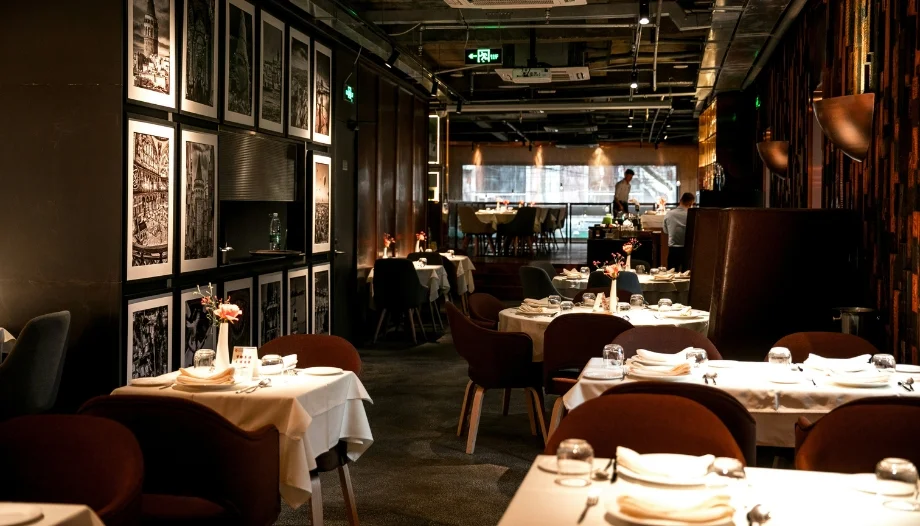
I will admit that maybe my shock is because I tend to be unfashionable. When I go to a restaurant, I am not looking for exposed brick walls, artisan lighting fixtures, handcrafted ceramic plates, fancy menus. I do not particularly care whether the furniture was designed by Scandinavian architects or whether the waiter explains where every ingredient was sourced.

I simply want an affordable meal that tastes good and leaves me full. In many ways, I have what could only be described as plebeian tastes. An example being that I drink cheap instant coffee, the type that serious coffee enthusiasts, like my fiancée would probably refuse to acknowledge as coffee at all. I eat to live rather than live to eat. If a meal is affordable, filling, and enjoyable, I am happy.

Somewhere along the way, however, restaurants seem to have forgotten people like me.

Dining out increasingly feels less about eating and more about purchasing an experience. Restaurants seem to be competing on aesthetics, branding, exclusivity and who can keep increasing prices without driving away customers. The food itself almost becomes secondary. Meanwhile, ordinary working-class people are left wondering when a burrito became a luxury purchase.

A Lesson from Warsaw

Whenever I think about this, my mind returns to a trip I made to Warsaw while I was still at university. A Polish friend took me to a Vietnamese restaurant tucked away on an ordinary street. It was not the sort of establishment that would ever appear in travel guides or Instagram posts. If you are not careful when walking the street, you would miss the entrance to the restaurant. 

The tables were made from cheap white plastic, while the menu was a single laminated sheet of paper and the décor was almost non-existent.

At the counter sat a Vietnamese girl, perhaps eleven years old, quietly doing her homework. My friend placed our order in Polish, and she responded fluently before taking our payment and returning to her mathematics.

Her parents cooked in the kitchen behind her. When the food was ready, she rang a small bell and invited us to collect our bowls.

For five euros I received an enormous bowl of steaming Vietnamese noodles. It was fresh, delicious and to me, a poor university student without a job, it was honest and filling.

There was no show or drama, no attempt to sell us an "experience." No theatrical presentation. Just a hardworking Vietnamese immigrant family feeding their community.

Years later, I remember almost nothing else from that day in Warsaw. I don’t remember the places I visited or the people I met or even what that day looked like, but I do remember those noodles and that Vietnamese restaurant.

The Disappearance of the Ordinary

What happened to places like that? They once existed in nearly every city. Small family businesses where the owner knew regular customers by name. Restaurants that did not aspire to attain Michelin stars but simply sought to provide good food at fair prices.

These establishments served students living on tight budgets, they fed construction workers looking for a quick lunch. They served young families who wanted a simple night out. They gave poor pensioners the experience to eat something affordable without worrying about their wallets. In general, they helped people who simply wanted a decent meal without wondering whether they had just spent half their grocery budget.

Today, many of these places seem to be disappearing. Some have undoubtedly been driven out by rising rents, inflation, increasing labor costs or competition from larger chains.

Cities are often increasingly filled with restaurants designed for special occasions rather than everyday life. Reservation-only dining, with carefully curated interiors and where premium pricing is presented as normal.

There is nothing inherently wrong with fine dining. The problem arises when ordinary dining begins to disappear altogether. Every society needs places where ordinary people can gather without feeling excluded by price. 

A Catholic Perspective

This is more than just food. Restaurants have always been places where communities gather and by doing so, they bind a neighborhood together. 

Economic life should never exist solely to maximize profit. Markets are valuable servants, but they make poor masters. Businesses naturally seek to earn a living, and there is nothing immoral about making a profit. Yet profit should remain the reward for serving society, not society's ultimate purpose.

When businesses can no longer afford to serve ordinary people or choose not to, something valuable is lost.

The Church has long taught that economic life exists for the human person, not the other way around. Pope St. John Paul II, in Laborem Exercens, reminded us that work possesses dignity because it serves people and families. Likewise, the Church teaches that society should be ordered toward the common good, ensuring that ordinary people can participate fully in economic and social life.

The little Vietnamese restaurant in Warsaw embodied many of those principles without ever preaching them. You had a family worked together in service to their neighborhood, they charged prices that ordinary people could afford, their labor was not glamorous, but it was dignified and no doubt, a worthy sanctification of its own when offered up to God. They were not selling a premium sense of exclusivity either but rather were offering hospitality in their own way.

The Gospels repeatedly place Christ around a table. He dined with fishermen, tax collectors, and sinners, and when He fed the multitudes, He did so not with extravagant delicacies but with loaves and fishes, the simple food of ordinary people. 

In first-century Galilee, barley bread and fish from the Sea of Galilee formed the staple diet of labourers, fishermen and the poor. Even after His Resurrection, Christ prepared breakfast of bread and fish over a charcoal fire for His disciples on the shore, meeting them once again amid their ordinary working lives.

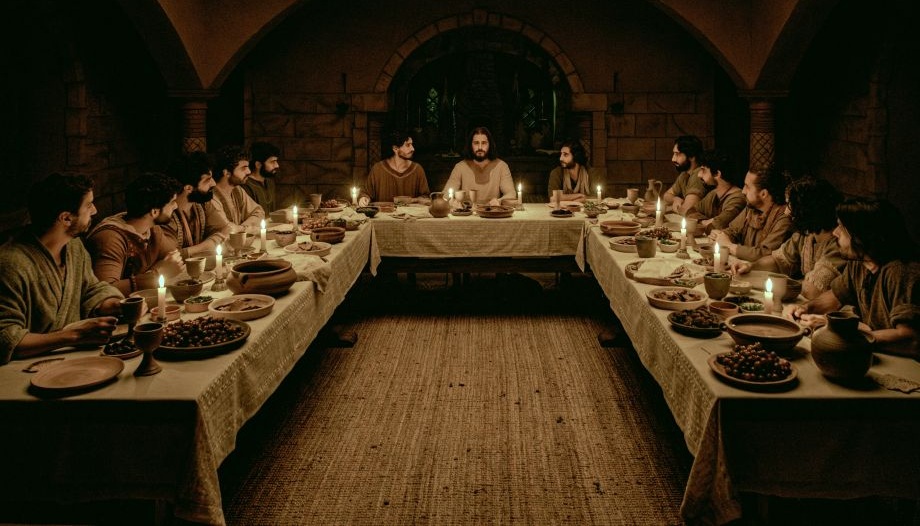
The Last Supper reminds Christians that a shared meal is more than a means of satisfying hunger; it is an expression of communion, fellowship, and hospitality. It is no coincidence that so many of Christ's encounters with others took place over and around food, 

The Christian tradition has long understood that welcoming others to the table is one of the simplest and most profound acts of charity. 

What We Have Lost

I do not believe every restaurant should be inexpensive. There will always be room for fine dining, ambitious chefs and culinary artistry. But there should also be room for the working man, for the students with 10 euros in his wallet, for a young family celebrating a birthday, for a pensioner who simply wants a hot meal without worrying about the bill and for friends gathering around tacos without needing to reserve a table weeks in advance.

Maybe what I miss is not cheap Mexican food at all, maybe I miss a society that made space for ordinary people.

The little Vietnamese restaurant in Warsaw had no designer furniture, no polished branding, and no carefully curated image. Yet it possessed something increasingly difficult to find: honest work, fair prices, genuine hospitality and food that welcomed everyone.

Those are the hidden gems our cities once had and I cannot help but wonder whether, in chasing sophistication, we have forgotten the simple virtue of feeding our neighbors well.

The authorBryan Lawrence Gonsalves

Journalist and essayist born in the United Arab Emirates and based in Lithuania. He is a contributor to Omnes, EWTN News and CNA Deutsch.

The Vatican

The Pope Puts Young People (and Wars) at the Center of His Attention

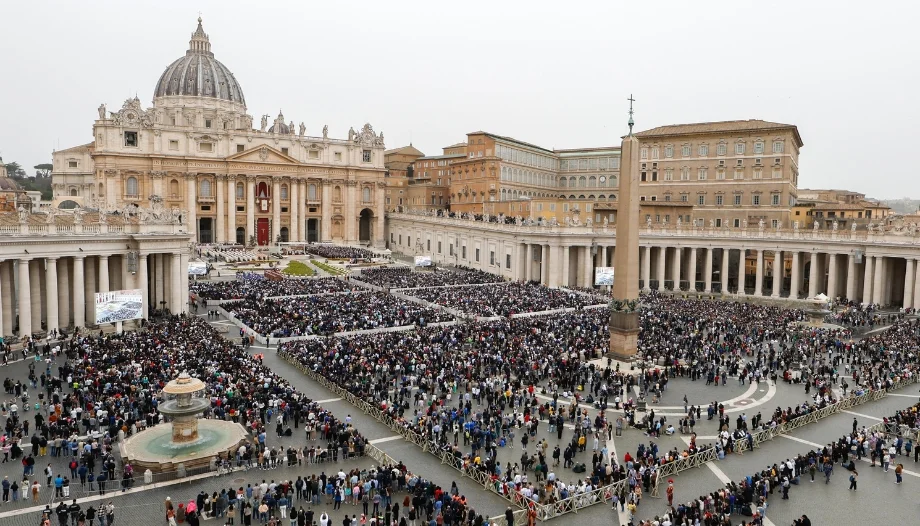
Following the news about World Youth Day in South Korea and the gathering in Assisi, Leo XIV once again turned his attention to young people during the Angelus, encouraging them to draw inspiration from saints such as St. Dominic, St. Teresa Benedicta of the Cross (Edith Stein), St. Lawrence, and St. Clare of Assisi. He also called for peace in Sudan, Ukraine, and Russia.

Francisco Otamendi-August 9, 2026-Reading time: 3 minutes

The Pope has once again turned his attention in a special way to young people during these summer months. To young people and to wars.

In the Angelus on this 19th Sunday in Ordinary Time, after greeting the young people from the St. Mary Magdalene Community of the Diocese of Milan, he stated that “the presence of so many youth groups, who choose to devote a few days of their vacation to educational activities and fellowship, is a sign of hope; just as was the gathering of the young Franciscans, whom I had the pleasure of meeting last Thursday in Assisi.”.

Saints: Getting to Know Exemplary Witnesses to the Gospel

He then strongly urged young people to let themselves be “inspired by exemplary witnesses to the Gospel” whom the liturgical calendar presents to us during these days.

And he referred to “some wonderful saints whom I invite you to get to know better: yesterday, the great Saint Dominic, founder of the Order of Preachers; today, Saint Teresa Benedicta of the Cross, Edith Stein, a Carmelite nun murdered in Auschwitz and co-patroness of Europe; tomorrow, Saint Lawrence, deacon of the Church of Rome; the day after tomorrow, Saint Clare of Assisi, who left a life of comfort to follow Jesus—poor and humble—following the example of her fellow citizen, Saint Francis. ”Dear young people, let yourselves be inspired by these exemplary witnesses to the Gospel!”.

In the Storm on the Sea of Galilee: Jesus Does Not Abandon Us

Before reciting the Marian prayer of the Angelus, the Successor of Peter commented on this Sunday’s Gospel, which tells us of “Jesus, who, on the Sea of Galilee, walking on the water, joins the disciples in the midst of a storm (cf. Mt 14:22–33).”.

Toward the end of the night, Jesus came out to meet them on the choppy waters, and they, frightened, mistook him for a ghost (v. 26). But He said to them, ‘¡Cheer up, ’It’s me—don’t be afraid!” (v. 27). 

The Lord’s presence changes everything, the Pope said. “Peter even manages to take a few steps across the waves toward Him; then he becomes frightened, begins to sink, and Jesus saves him. When the Master gets into the boat, the storm subsides, and then a profession of faith springs spontaneously from the disciples‘ hearts: ’Truly, you are the Son of God” (v. 33).”.

“Don’t let success go to our heads”

This miracle teaches us something important, the Pontiff emphasized. “First and foremost, not to let ourselves be carried away by success and never to be presumptuous; and, at the same time, not to despair, even in moments of darkness, when we feel powerless in the face of problems and, despite our efforts, it seems to us that we are moving backward rather than forward.”. 

“No matter what, Jesus never abandons us, and if we welcome him humbly into the boat of our lives—through prayer, the sacraments, and listening to his Word—we will find peace in him, as well as light and strength for our journey.”.

Sudan, Ukraine, Russia

After reciting the Angelus, the Holy Father expressed his solidarity with all the people of Sudan, especially those in the city of El Obeid, and renewed his call on the authorities to guarantee humanitarian corridors for the civilian population, and urged the international community to support efforts aimed at achieving an immediate ceasefire. 

In closing, he encouraged prayer, “asking the Lord to sustain those who are suffering, to convert the hearts of those who sow violence, and to grant the peace we so long for.”.

Along the same lines, he revealed that he continues to receive distressing reports of innocent people being killed and wounded in Ukraine and Russia. These tragic events are occurring one after another—indeed, they are multiplying—resulting in an ever-increasing number of civilian casualties, including children. 

War only leads to more war and immense suffering

”I stand in solidarity with the families of the victims, with the wounded, and with all those who are suffering as a result of the ongoing conflict," said Leo XIV.  

“In the face of so much suffering, I renew my impassioned call for respect for international humanitarian law and for both sides to put an end to attacks on civilian targets. War only breeds more war and causes immense suffering. It is time to stop the spiral of violence and make way for diplomacy and dialogue to pave the path toward peace.”.

The authorFrancisco Otamendi

Books

Edith Stein, the Saint Teresa of Our Time

In a definitive biography, Irene Chikiar examines the life of Saint Teresa Benedicta of the Cross as a quest for meaning.

José María Navalpotro-August 9, 2026-Reading time: 7 minutes

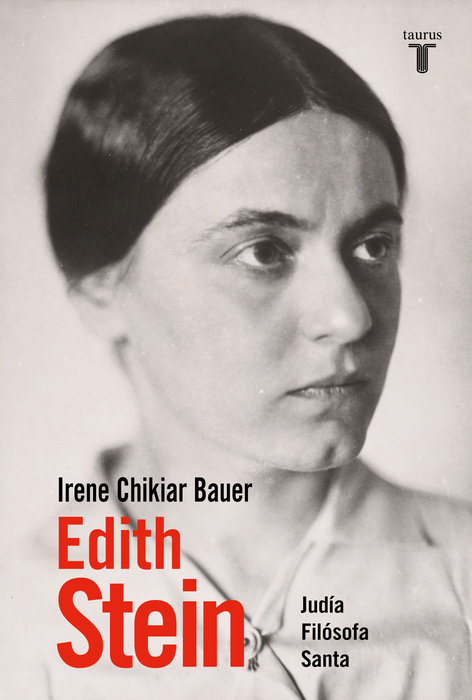
August 9 marks the feast day of one of Europe’s greatest contemporary saints: Saint Teresa Benedicta of the Cross, Edith Stein. An outstanding philosopher and disciple of Husserl, she was Jewish, converted to Catholicism, became a Carmelite, and was martyred during the Nazi persecution at the Birkenau concentration camp. She is one of the patron saints of Europe. Possibly the best biographical account ever written about her can be found in the monumental biography Edith Stein. Jewish. Philosopher. Saint, Published by Taurus in 2025 and written by the Argentine author Irene Chikiar Bauer. 

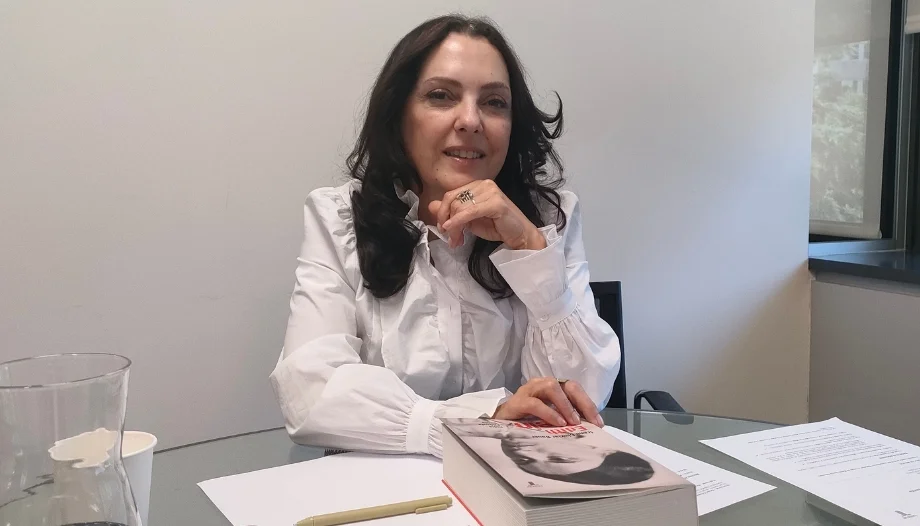
The author of the book holds a Ph.D. in Literature from the National University of La Plata in Argentina, a master’s degree in Sociology of Culture and Cultural Analysis, and is a professor at the University of San Martín and the University of San Antonio de Areco; she is also the author of another comprehensive biography of Virginia Woolf. She is in charge of Omnes in Madrid to promote the book about a leading philosophical and religious figure.

What attracts you to Edith Stein's profile? Why did you become interested in her? 

–When John Paul II canonized her in 1998, I first learned about this woman. I find her journey—from Judaism to her departure from her parents’ faith at age 13—truly remarkable. She considered herself an agnostic, devoted herself to her studies, and loved literature and history. Then she discovered philosophy and began asking herself the great questions of human existence—which are the great philosophical questions—but ones focused more on experience, on understanding the world, and on understanding oneself. Through this process, she came to conversion.

I believe he is a key figure for our times—times in which reason and religion are often seen as separate, at least among the general public. 

And she chose the religious path when they wouldn't let her be a teacher or lecturer, despite her success; she had always wanted to be a Carmelite, and when that path was cut off, she felt it was time to do what she had always wanted: to enter the Carmelite Order.

She has many qualities that make her special. In the book, for example, her pioneering feminism is highlighted.

–Virginia Woolf, who is the subject of my other, earlier, voluminous biography, is also a pioneer and a forerunner of feminism, but she did not define herself as such. And she was born in 1882. Edith was born nine years later, but unlike Virginia Woolf, she did go to college, and there she discovered she was a feminist, because she believed that women should have the same rights as men. Some of her friends were studying at the university, but they were grappling with their “double vocation”: What if they got married? Would they have to give it all up? Many didn’t see having a family as compatible with having a career. She firmly believed that it was possible to do both. In that sense, she considered herself a feminist and said so. 

She is also a political activist, because she was active in the Weimar Republic. Of course, she soon became disillusioned, because she says that to be in politics, you need a strong conscience and a thick skin. 

From that moment on, he devoted himself entirely to philosophy—and through philosophy. It was during this phase of phenomenology that his path to conversion took shape. She was not the only one, because Husserl had also converted to Christianity, and Adolf Reinach—an exceptional figure who was Husserl’s chief assistant—also converted. Some conversions stem from a deep, personal conviction, occurring during truly tragic moments. This is extremely striking to us today—to people who lack religious experience. We see people going through truly horrific experiences, and instead of resenting life and giving up on everything, they find this religious experience and the search for the transcendent.

As a nurse

Edith Stein worked as a nurse during World War I. How did this work influence her? 

–It’s essential. She can’t stand the fact that while Reinach and all her male friends are at war, she can’t do anything. She volunteers to be a nurse. First, she goes to the clinic where her sister Erna is a doctor, gets trained, and then leaves.

This is extremely important for nurses. In fact, she devotes the longest section of her autobiography to her time as a nurse, and she does so with great precision. She writes with a deep commitment to what the work entails. She has such empathy for the sick that I believe that experience served her well when she wrote her thesis on empathy. Because of what she experienced there—she had to care for patients who couldn’t even speak, who had to communicate with their eyes, or who didn’t speak the language—, 

The theme of empathy in Stein is a very modern one, in the sense that it’s highly relevant today, isn’t it? 

–Empathy is a word that is often used but rarely put into practice. Edith Stein contrasts with earlier views that claimed empathy was simply feeling for someone; she says that is not the case, but rather feeling what the other person feels, while recognizing that those feelings belong to the other person. That is true communication; anything else is mere contagion. That empathy also requires an ethical decision, and in that regard, Edith Stein was a master.

She always made ethical decisions with regard to others, and she asserts that “the purpose of humanity is for one’s voice to resonate with those of others.”. 

There is also something very interesting about how she never renounced her Judaism, at a time when there was tremendous anti-Jewish propaganda in Germany. As a professor and lecturer—and already a Catholic—she said this: “The Lord chose a people to be born among them; during his earthly life he spoke the language of this people, thought in their metaphors and images, observed their customs, devoted all his energies to them, and has given each people a mission on this earth and for eternity, and to each individual, a mission within this people.” She is an ecumenical, forward-thinking, incredible woman.

He is a leading figure, but I'm not sure if he is well enough known. 

–She is little known, except in Catholic circles—especially among Carmelites—because once she entered the Carmelite Order, she was no longer interested in being a renowned philosopher. Then the Nazis came, they killed her, and no one wanted to remember her.

I'm very pleased to have brought in a publisher like Penguin (Taurus)—which is a global publisher and not a religious imprint—to publish this author.

A book by Alasdair MacIntyre has been tremendously helpful to me, because he, too, from a philosophical perspective, writes about the importance of Stein and many of her insights—which, had she been able to continue working within philosophy, who knows where they might have led—and which were later developed by phenomenology as well. She made some remarkable contributions, such as her attempt to reconcile phenomenology with St. Thomas Aquinas.

It's also a bridge between faith and reason, isn't it? 

–That’s what struck me so much. A person who turns her back on her parents’ faith, who declares herself an agnostic, who throws herself into her studies like a madwoman—brilliant—and values reason above all else, eventually finds her way to religion and that reconciliation between knowledge and spirituality, which are not mutually exclusive. That’s really striking.

To Faith Through Reason

She comes to faith through reason…

–Yes, it stems from agnosticism. So how did she come to have such a profound religious experience? When Edith Stein wrote her autobiography, Nazism was already at the height of its power, and her confessors, within the Catholic community, asked her to write her story because they saw it as a way to counter the horrific Nazi propaganda.

So she writes to portray the reality of Jewish family life, which had nothing to do with what Nazi propaganda depicted. But since she was writing within that context as well, there are also many things she likely left unsaid. 

Why did she convert while reading St. Teresa? 

–When she begins to think about a transcendent figure—about God—she says, “My path will lead me to Christianity,” but she doesn’t know whether she’ll become Lutheran, like most Germans, or Catholic. Like Edith Stein, she doesn’t just sit around waiting to see what happens; instead, she starts reading everything she can: Lutheran theology, Catholic theology… At one point, she comes across the book by Teresa of Ávila, The Book of Life. And she realizes that this is her path, and she wants to become a Carmelite. Why? One thing Teresa doesn't mention is that her grandfather was Jewish. When you read the Book of Life, it's clear that Teresa is always saying that what matters is how you act in the world—your actions—not where you come from. 

To me, Edith Stein is the Saint Teresa of our time, although the context is different, because we don’t live in a religious society. Saint Teresa and Saint John lived in a very religious society; they had many enemies, but they also had many followers, which is why they were able to bring about reform and found convents. Edith Stein came along in the 20th century, at a time characterized—following positivism—by the reign of reason.

It's truly incredible that, even so, she would return to the path of spirituality. 

It should also be noted that St. John of the Cross and St. Teresa, even though they had many enemies, were surrounded by people who loved them at the end of their lives. Edith Stein died alone in a concentration camp, surrounded by victims like herself. 

Could he have avoided his martyrdom? 

–She could have escaped. At one point, the Carmelites in Germany, in order to protect her, proposed sending her to the Netherlands, but when the war broke out and the Nazis invaded the Netherlands, they tried to get her out of there. They tried to take her to Switzerland, but one of her sisters, who had also converted, was working as a gatekeeper at the convent, and Edith Stein refused to leave without her sister. Amid these delays, the Nazis finally took her away in retaliation for the Dutch bishops’ letter against Nazism, as part of a campaign of vengeance aimed at rounding up all Jews who had converted, as well as many people who had married Jews. These were the first deportations of Jews to concentration camps. That is where she was killed—in Birkenau.

What is his most notable trait?

–The name she chose when she entered religious life is telling. She chose Teresa, obviously after Teresa of Ávila; Benedicta, because she spent a lot of time with the Benedictines (many wondered why she didn’t become a Benedictine); and de la Cruz. Her name says it all—it embodies that consistency and those values. 

What is striking about Edith Stein, what is moving about her, is that search for meaning. Many Catholic biographies have described her as a seeker of truth. But from a more secular perspective, she is a seeker of the meaning of life.

Edith Stein. Jewish. Philosopher. Saint

Author: Irene Chikiar Bauer
Editorial: Taurus
Year of publication: 2025
Pages: 768
Read more
Integral ecology

Acutis AI: This Is How Leo XIV Wants Us to Experience the AI Revolution

Peter Cooney, co-founder of Acutis AI, analyzes the encyclical Magnifica Humanitas and explains why Pope Leo XIV urges us to face the challenges of artificial intelligence without fear.

OSV / Omnes-August 9, 2026-Reading time: 4 minutes

Artificial intelligence is rapidly bringing about the end of the world as we know it, but Pope Leo XIV has an urgent message for everyone: don't run away from the changes brought about by AI; instead, face them head-on.

That was just one of the conclusions reached at a conference held on August 1 at the St. John Paul II National Shrine in Washington, where the Pope’s recent encyclical was discussed: «Magnifica Humanitas: »On the Protection of the Human Person in the Age of Artificial Intelligence.” Peter Cooney, co-founder of the Acutis AI web platform—named after St. Charles Acutis and designed as a Catholic alternative to conventional AI systems by offering answers based on Church teaching—explained Pope Leo XIV’s extensive document to the attendees.

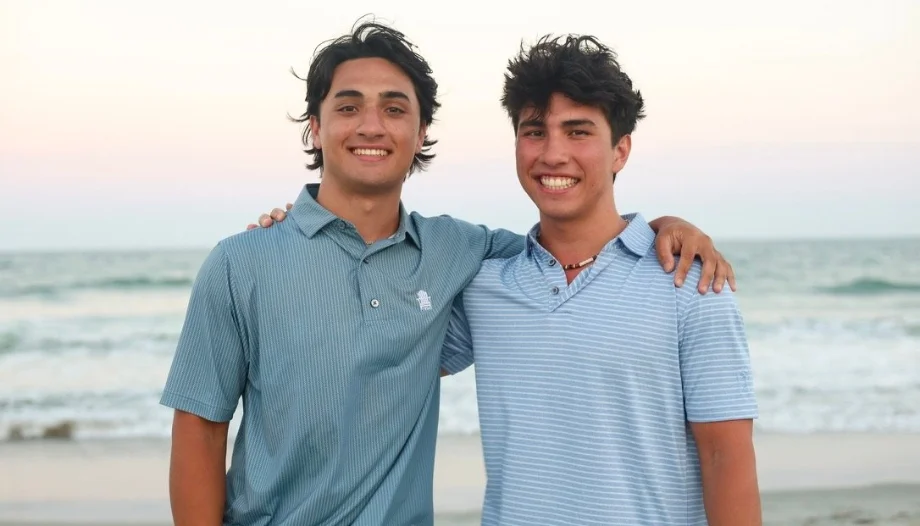
«It starts off strong: humanity faces a crucial decision. It gets right to the point. If you look at other encyclicals, they usually start off in a much gentler tone,» said Cooney, a 21-year-old senior majoring in economics at the University of Dallas. «So I think what Pope Leo is telling us is: this is important; listen up; pay attention.» And there are good reasons for that, given the speed at which AI is spreading into all areas of daily life.

Unprecedented technology

Cooney noted that on November 30, 2022, the launch of ChatGPT, a generative AI chatbot, was announced on the social media platform Twitter, now known as X. Within five days, it already had more than one million users; now, less than four years later, it has more than one billion monthly active users. «This is the fastest-growing technology we’ve ever seen in the world,» Cooney said. «And I think there are some aspects of this technology worth highlighting that set it apart from those of the past.».

Among those differences, he said, are the diversity of AI users (ranging from children to the military); the concentrated ownership of AI (Cooney estimated that fewer than 10 companies control 95% of the current market); and the competitive race for AI between the United States and China (with the goal of turning this powerful technology into a weapon). «What we have is a handful of companies in two of the world’s most powerful nations competing to create the most advanced AI models to gain a military advantage,» Cooney emphasized. «And that same technology is present in the Chromebooks children use in their classrooms. This is the world the Holy Father is heading into.».

Even so, the Catholic Church is not without answers. With this encyclical, Pope Leo XIV has «established the Church as a moral authority on this issue,» Cooney said. «Which gives technology leaders good reasons to read the rest of what it has to say.».

The Three Dangers of Artificial Intelligence

According to Cooney, the pontiff points out three particular dangers of AI: the ease with which results can be obtained; its appearance of objectivity where none actually exists; and its ability to simulate human communication.

While AI can be truly useful, «if we stop thinking things through and simply delegate all of that to AI, we’ll lose the ability to think,» Cooney suggested, «which is a fundamental part of what makes us human.» He also confirmed that, when it comes to AI, «every response is based on probability. Basically, it’s about doing mathematical calculations and finding the highest probability that the next word will be correct,» Cooney said. «AI is not neutral.».

On the subject of human communication, Cooney added, «If we’re not careful, we may allow AI to gradually take away our human relationships… it can erode human relationships.».

What's at stake

Cooney noted that Pope Leo XIV asserts that these threats endanger truth, work, and freedom.

Truth, because AI exacerbates the problem of misinformation through its ability to manipulate images or videos; work, because using AI to replace employees undermines their human dignity; and freedom, because it’s easy to feel like you’re making a choice when, in reality, your decisions are heavily influenced by AI.

However, Cooney confirmed that Pope Leo remains hopeful. «He doesn’t say we should hide from AI or run away from it. He acknowledges all the dangers and the state of confusion and fear that prevails in the world,» Cooney said. «But he calls on us to build. He says that, despite this downward spiral, we can also glimpse a large part of humanity striving… to build the holy city.».

Don't run away—build instead

Pope Leo XIV’s exhortation, «Magnifica Humanitas,» calling on people to embrace their role as disciples of Jesus Christ in an «era of digital transformation,» is undoubtedly thought-provoking.

«Let us not be afraid to get our hands dirty in the «work in progress» of our time,» writes Pope Leo XIV in the encyclical. He urged people «not to be passive spectators of social and cultural divisions, nor mere commentators on what is falling apart, but men and women willing to enter into the works of history —research laboratories, technology companies, schools, the media, institutions, and local communities—to rebuild what has collapsed and protect what is under threat.».

According to Cooney, Pope Leo’s call to the men and women of today «is to build without fear, to protect our children, and to entrust everything to Mary.».

Disciples of Christ in the Digital Age

In response to Pope Leo’s call, Cooney offered three personal suggestions. «We can’t be afraid of AI. We have to learn how to use it—and learn how to use it well,» he said.

He also urged parents to «talk to their children and their schools to find out how AI is being used. Because it’s being used in practically every school… it’s important for them to understand how it works and the problems it sometimes presents.» And finally, Cooney recommended prayer. «I would say try to pray a few Hail Marys every day for world peace,» he said, «and that the world may resolve this together.».

OSV News correspondent Kimberley Heatherington reported from Washington.

The authorOSV / Omnes

Culture

Hidden for Centuries: How the Recently Identified Sermons of St. Augustine Were Discovered

After lying hidden for centuries, a research team has identified two new sermons by St. Augustine.

OSV News Agency-August 9, 2026-Reading time: 5 minutes

– OSV News / Katarzyna Szalajko

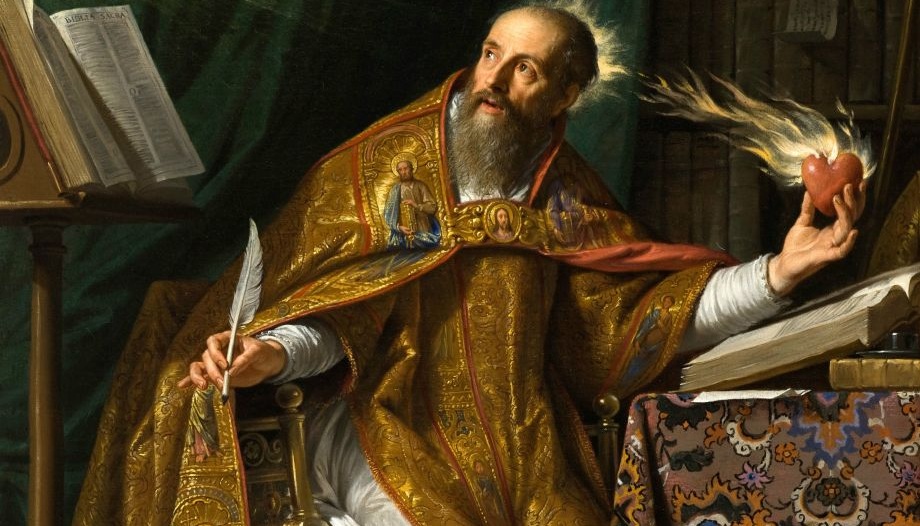
Two previously unknown sermons by St. Augustine have been identified in a 12th-century manuscript preserved in Poland, offering researchers a rare and new window into the mind of one of Christianity’s greatest theologians more than 1,600 years after he preached them.

The discovery was made in a 12th-century manuscript preserved in the diocesan library in Pelplin, in northern Poland, following nearly two years of research by experts from Germany and Austria. The sermons, which will be published in a critical edition in late 2026, address Saul’s encounter with the witch of Endor in the Book of Samuel.

The manuscript had long been cataloged in the library’s collection, but no one had studied it in depth prior to the recent collaboration with researchers from Germany and Austria, Father Jan Walkusz, director of the Pelplin Diocesan Library, explained to OSV News.

“Only recent research by experts from Bad Doberan, Würzburg, and Vienna has shown that the manuscript contains two previously unknown sermons by the Bishop of Hippo”, said the priest.

How the Rigorous Academic Research Began

The story began with a phone call.

“In 2024, Paul Nebauer from Bad Doberan contacted me… who had found a medieval manuscript containing sermons attributed to Augustine in the diocesan library in Pelplin,” Christian Tornau, a Latin scholar and professor at Julius-Maximilians University in Würzburg, told OSV News.

“He asked me for help identifying and translating the texts,” the professor added.

Nebauer, a member of the Bad Doberan Monastery Association, has spent years tracking down medieval manuscripts from the former Cistercian abbey. Its library was destroyed during the Thirty Years' War in the 17th century.

During his research visits to Pelplin in 2024 and 2025, Nebauer identified six manuscripts that clearly originated in Bad Doberan. One volume immediately caught his attention.

Two keywords caught the researcher's attention

“At first, the brief table of contents offered little information about the content,” Nebauer told OSV News. “It was only the keywords ‘Phytonissa’ and ‘Resuscitatio Samuelis’ that drew my attention to the biblical story of the witch (diviner) of Endor.”.

In the First Book of Samuel, chapter 28, King Saul consults a medium who summons the prophet Samuel before his final battle against the Philistines. This episode has long posed a challenge for Christian interpreters, as it appears to show a medium exercising power over one of God’s prophets.

Nebauer “found the text very unusual: words like that from St. Augustine?” he recalled. Realizing that the manuscript required expert analysis, he contacted Tornau. The 12th-century manuscript was copied in Bad Doberan, possibly from a now-lost manuscript from Amelungsborn Abbey.

Two new sermons that have never been identified before

Father Walkusz explained that the manuscript arrived in Pelplin through the Cistercian monks. When the monks of Bad Doberan established a daughter abbey in Pelplin in the 13th century, “it was customary among the Cistercians to provide the new community with the necessary liturgical and theological books,” he told OSV News. “That is how this volume containing the sermons of St. Augustine, along with other manuscripts from Bad Doberan, came to Pelplin.”.

Of the six sermons preserved in the manuscript, four were already known to experts, while two had never been identified.

“We were, of course, fascinated by the idea of having discovered new sermons by Augustine,” Tornau told OSV News, “but we soon became skeptical because in some passages the sermons did not seem to have been written by Augustine.” The team, which was joined by researchers Dorothea Weber and Clemens Weidmann from the Corpus Scriptorum Ecclesiasticorum Latinorum (CSEL) in Vienna, spent nearly two years transcribing and analyzing the texts, including during a summer school in 2025 attended by about 20 specialists.

“Ongoing philological work” for nearly 2 years

“Our final conclusion that they are indeed authentic is the result of nearly two years of ongoing philological work,” Tornau said.

The experts based their conclusion on liturgical, linguistic, and theological evidence that consistently points to St. Augustine as the author. Clemens Weidmann of the CSEL, who also worked on the edition, noted that attributing the manuscript to St. Augustine was only the starting point. “However, this alone is not enough to prove Augustine’s authorship, because many inauthentic sermons are falsely attributed to him in the manuscripts,” he told OSV News.

“Since the preacher is thus indistinguishable from Augustine, we consider it methodologically sound to attribute the work to Augustine rather than invent an anonymous ‘student’ or ‘follower,’” Tornau explained to OSV News. “No disciple or later author would have been so familiar with Augustine’s style and thought as to compile an ‘Augustinian sermon’ that brings together so many stylistic features found throughout his entire body of work,” Weidmann added to OSV News.

Cultural and Religious Treasures from the Pelplin Collection

Father Walkusz stated that the discovery also highlights the importance of the Pelplin collection itself. “The discovery of these sermons proves beyond a doubt that the meticulously preserved collections in Pelplin hold immense cultural and religious treasures, accessible to researchers from around the world,” he told OSV News.

“New discoveries of works from Late Antiquity are always a sensation,” Weber, a retired professor and longtime scholar of Augustine at the CSEL, told OSV News. The newly identified sermons also offer an unusually personal glimpse of St. Augustine as a preacher, she emphasized.

“It’s extremely fascinating to see how Agustín explained to the congregation why he hadn’t had a chance to prepare the Bible passage he was supposed to preach on,” Weber told OSV News. “He initially tried to buy some time to organize his thoughts, and yet, despite improvising, he achieved his usual stylistic brilliance and a clear structure in his complex argument,” he added.

The sermons focus on one of the most debated episodes in the Old Testament. According to Tornau, early Christian interpreters generally proposed two explanations for Saul’s encounter with Samuel: either God allowed the prophet to appear despite the sorceress’s actions, or Saul was deceived by an evil spirit posing as Samuel. Rather than insisting that only one interpretation is correct, St. Augustine carefully examines both.

What St. Augustine Addresses in His Sermons

“In his new sermons, Augustine analyzes both options—their pros and cons—and concludes that both are acceptable because neither runs counter to the Christian faith,” Tornau explained to OSV News.

“This openness to differing interpretations of Scripture is characteristic of Augustine in general.”.

Weber pointed out that this approach sets St. Augustine apart from many other early Christian authors.

“Augustine’s goal is not to prescribe a single ‘correct’ interpretation, but rather to explore the range of possible interpretations that remain within the framework of Church doctrine,” he said. “There aren’t many of Augustine’s sermons that take such a systematic approach to an exegetical problem and that, therefore, demand a high level of intellectual engagement from the audience.”.

St. Augustine “resolves the issue in a very elegant way”

Nebauer believes that this openness is precisely what makes the newly discovered sermons relevant today. “The story of the ‘witch of Endor’ poses a challenge to faith in God,” he told OSV News. “However, St. Augustine resolves the issue very elegantly.”.

“It presents several possible interpretations, refrains from passing a definitive judgment, and allows its listeners to draw their own conclusions.” Researchers note that the most surprising theological insight appears near the end of the newly identified texts. “The most notable element of the new sermons is the idea that Saul, after hearing Samuel’s prophecy, may have repented and been redeemed,” Tornau explained to OSV News.

“It is indicative of Augustine’s independence of judgment and his willingness to consider that everyone—even those who seem most wicked—is capable of being saved through God’s grace,” Tornau told OSV News. “This combines intellectual honesty and episcopal humility in a remarkable and deeply Augustinian way.”.


This article was first published in OSV News. We are reprinting it on Omnes with permission. You can read the original article in English. HERE.

The authorOSV News Agency

Read more
Evangelization

From Prisoner to Deacon: Robert Ehnow Found God in Prison

Robert Ehnow went from serving a prison sentence to being ordained a deacon and dedicating his life to supporting prisoners, convinced that justice does not end with punishment but must pave the way for forgiveness and restoration.

Charlie Camosy / OSV News-August 8, 2026-Reading time: 5 minutes

How does one go from serving a prison sentence to having a closer relationship with God? Robert Ehnow, director of the Office for Life, Peace, and Justice for the Roman Catholic Diocese of San Diego, is in a unique position to answer this question, as he went from prison to being ordained a deacon in 2025 and on to working in prison ministry. He recently spoke with Charles Camosy of OSV News about his experience and what Catholics should know about the prison system. 

Can I ask you about your story and how it led you to write a book titled *All Things New: A Journey from Fragility to Restoration*?

—My story really begins after I retired from the Marine Corps in 2008; I had a successful 20-year career as a Marine Corps officer. My wife and I bought a business when I retired from the Marine Corps, and the business did very well for three years.  

I was making more money than I could ever have imagined, and my goal was to make even more. I suppose you could say that my moral compass wasn’t pointing north at that point in my life. In January 2011, 25 federal agents raided my home and my business and informed me that I was the subject of a federal investigation. 

In an instant, my life changed completely. Over the next decade, I faced criminal charges, a federal trial, incarceration, the collapse of my business, personal bankruptcy, and multiple civil lawsuits. The difficult time my wife and I were going through coincided with God’s call for us not only to draw closer to Him, but also to equip ourselves to serve Him and His Church. Both Colette and I were shattered and humiliated, and through God’s grace, we were able to rise above our suffering and pain to be transformed into something new—hence the book’s title: «All Things New.».

When I started working for the Diocese of San Diego in 2018, I began sharing my personal story about my experience with the criminal and civil legal systems. Many people encouraged me to write a book, but I wasn’t ready because my story wasn’t over yet. Colette and I didn’t emerge from our «valley» until 2020, and then the COVID-19 pandemic presented us with a different kind of «valley» for all of humanity. 

It was during this time of the COVID-19 pandemic that God called me to consider the possibility of being ordained a deacon in the Church, and I began my diaconal formation in the summer of 2020. The formation process to become a deacon lasts five years, and, to be honest, I had serious doubts about my suitability and my commitment to becoming a deacon. It was my sister Colette, my pastor, and others who encouraged me to take things slowly, one year at a time.  

When I was ordained in May 2025, my story of personal growth—from adversity to restoration—was complete, and that was also when I finished the draft of *All Things New*. It was not my decision, but God’s, that allowed me to finish the book after my ordination.

I'm going to talk with you about your story and your book during a webinar on August 10, which is also the feast day of St. Maximilian Kolbe. How does his story relate to yours?

“While I was in prison, I watched a documentary about St. Maximilian Kolbe. I followed his story and discovered that he was the patron saint of prisoners. I began to ask for his intercession and asked him to guide me toward a better relationship with God.”. 

I was released from prison in 2015, and for a couple of years—while I was back in college completing my doctorate—I drifted away from St. Kolbe in my prayer life. In July 2018, I began working for the diocese, directing the diocesan prison ministry. The following month, in August, one of my colleagues gave me an icon of St. Maximilian Kolbe to inspire my work in prisons. 

The icon of Father Kolbe still hangs at the entrance to my office; it is a reminder of the sacred nature of our work and of the sacrifice he made so that another might live. Father Kolbe is a modern saint who voluntarily gave his life for another—an example of unconditional self-sacrifice, in the manner of Christ. As I began to carry out my ministry in the diocese, I once again asked Father Kolbe to guide me and intercede before the Lord for the success of our ministry.  

In Chapter 2 of *All Things New*, I write about the story of St. Kolbe and how his story, along with those of other saints, provided me with guidance and inspiration during my time in prison and, later, in the work I do on behalf of prisoners in the diocese.

In what ways do the ideas that interest you manifest themselves today?

“No one wants to be in prison, but it also offers abundant opportunities for growth, especially spiritual growth. My Catholic faith not only endured but grew exponentially during my incarceration.”.  

During my time in prison, I read voraciously, and that reading led me to reflect deeply on issues that concerned me, particularly justice. I had broken the law and had to face the consequences of my actions. In my opinion, the process I went through within the system focused less on justice and more on punishment and retribution. 

Through my own experience within the system and my research following my incarceration, I discovered that our justice system rarely aligns with our values as citizens and Christians. Jesus is perfect justice. God’s justice is not focused solely on punishment. Accountability and punishment are elements of justice, but they are meant to be sanctions that lead to restoration.  

Divine justice focuses on restoring relationships and making amends for the harm caused. God perfects justice through love, mercy, and forgiveness. I believe we must strive to align our justice system with the divine model, where mercy and forgiveness provide the opportunity for true reconciliation and restoration.

As is often the case with many problems, these seem so vast and deeply rooted that it can be difficult to know where to start when trying to bring about change. How might people who are moved by your story and your advocacy work address this issue in their own lives? 

— «All Things New» seeks to transform hearts. We all make mistakes, and we all fall short of the ideal God has for us. Yet God loves us despite our mistakes and sins. All too often, we condemn others and seem not to care whether there is a path to forgiveness and restoration. As Catholics, we live in the world, but we are not of this world. 

Ideally, justice for us should be aligned with God’s justice, where accountability and punishment may be necessary, but mercy, forgiveness, and restoration are the ultimate goals.  

I believe that for all of us who think about or care about justice, it all begins with a change in perspective and a refocusing on divine justice. Once we understand justice according to God’s purpose, we can begin to advocate for it and educate others about it.

Charles Camosy teaches moral theology and bioethics at The Catholic University of America in Washington.

The authorCharlie Camosy / OSV News

Culture

Catholic Scientists: Enrique Gutiérrez Ríos

Enrique Gutiérrez was a great chemist born in Madrid who went on to hold professorships in inorganic chemistry.

Ignacio del Villar and Alfonso V. Carrascosa-August 8, 2026-Reading time: 2 minutes

Enrique Gutiérrez Ríos (December 12, 1915 – August 8, 1990) was a chemist born in Madrid who, in 1940, began his doctoral dissertation at the Institute of Soil Science under the supervision of Father José María Albareda, who greatly influenced his scientific and administrative training. He later held the chair of Inorganic Chemistry at the University of Granada and the Complutense University of Madrid. At the latter, he served as rector (1964–1967).

His scientific career was also closely linked to the CSIC, where he held various positions: director of the Zaidín Experimental Station in Granada (1954–1957) and of the «Elhuyar» Institute of Organic Chemistry (1983–1984), as well as vice president (1967–1971) and president (1973–1974).

He also held important positions at various institutions: he served as president of the Royal Spanish Society of Physics and Chemistry (1966–1970) and of the National Council of Education (1968). He also earned his doctorate honoris causa from the University of Granada in 1972 and received the Individual Research Award from the Juan de la Cierva Foundation (1948), the Francisco Franco Prize for Science (1966) and the José María Albareda Prize (1969), as well as the Grand Cross of the Civil Order of Alfonso X the Wise. Furthermore, he was a member of the Royal Academies of Pharmacy and of Exact, Physical, and Natural Sciences, and held prominent positions in government and scientific circles: he served as president of the Advisory Commission on Scientific and Technical Research of the Office of the Prime Minister, as a Councilor of the Realm representing Spanish universities, and as director of the CSIC’s «Elhuyar» Institute of Inorganic Chemistry.

As a researcher, he focused on structural inorganic chemistry, with a special emphasis on clays, bentonites, and montmorillonites, introducing innovative techniques such as X-ray crystallography for the thermal and structural characterization of silicates. He published more than 150 papers in national and international journals, obtained patents on minerals and interlaminar compounds, and wrote seminal books such as Inorganic Chemistry, who influenced several generations of chemists. He also took an interest in science outreach and culture, publishing various works and biographies of Spanish scientists.

As for his faith, he joined Opus Dei in 1954 and remained a member until his death, which occurred in Madrid. He was married and had six children.

The authorIgnacio del Villar and Alfonso V. Carrascosa

Public University of Navarra and SCS-Spain / Researcher at the CSIC.

Integral ecology

Where is God not?

In the face of the throwaway culture, we must uphold the value of every life and our duty to tenderly support those who suffer the most.

Eloy Asenjo, Carpenter-August 8, 2026-Reading time: 3 minutes

From a strictly scientific point of view, it is becoming increasingly difficult to uphold the theory that we are merely a cosmic accident, a simple product of chance. At the very least, in the most immediate sense, we are the fruit of the love of a man and a woman who have loved us, love us, and will love us regardless of what we were, are, or will become. But for those of us who also view the world through the eyes of faith, the perspective broadens infinitely: we know that we are the dream of a God who is Father. A Father who, like anyone who loves their children, has planned for us a kind of «novel» in which we are called to be the true protagonists.

Sometimes we decide to stray from the script and ignore the call. However, what is truly revolutionary about this Author is that He never closes the book. As Pope Leo XIV recalled during his recent and moving visit to the Brians 1 Correctional Facility, the mistakes we make do not define us. God always waits.

If our existence is so valuable, if every person is a unique and irreplaceable embodiment of dignity, at what point did we start to believe we had the right to play at being the directors of life and death?

Where is God in suffering?

It’s true that life can be tough. It deals us setbacks, throws our plans into disarray, and confronts us with situations that, at first glance, we can only describe as bad. In the midst of the shipwreck, when pain is at its worst, the human temptation is to fall into despair, indifference, or resentment, crying out the eternal question: “Where is God?” I prefer to turn the question around by drawing on an old lesson my mother taught me when I was a child: the real question we should be asking ourselves is, “Where isn’t He?”

It lies in fragility, in vulnerability, in those who have no voice. That is why, when faced with the turmoil of a high-risk pregnancy or the diagnosis of a serious and terminal illness, the response of a mature and compassionate society can never be the easy way out. In keeping with the prayer intention the Holy Father proposes for this month of July, the true challenge is to ask the Lord of life to «heal our hearts of indifference» so that we may learn to «tenderly support the fragile and courageously defend those who have no voice.» Succumbing to the throwaway culture through abortion or euthanasia is not a sign of progress, but of surrender.

Those of us who have been close to those crossroads know all too well the weight of reality. The initial fear and pain in the face of the uncertainty of a pregnancy are immense. But how few speak of the other reality—that of the immense joy and deep peace that fills a mother and a family when, overcoming adverse prognoses and social pressures, they courageously decide to carry that pregnancy to term. There is no greater human triumph than discovering that life, even when it comes with difficulties, always finds a way if given a chance.

To be there until the very last breath

That same truth applies to the other extreme of our existence. I have experienced this firsthand just this past two weeks, with the passing of my brother Javier. If we had chosen the path of indifference, the laws of cold pragmatism would have robbed our entire family of something sacred: more than a week of shared emotion, of necessary goodbyes, of forgiveness
comforting and, paradoxically, a source of immense joy at the gift of his life and at being able to be by his side—thanks to good palliative care—until his last breath.

Respect for human life is neither an abstract concept confined to a laboratory nor an ideological debate on a political platform; it is the defense of the mystery that dwells within every person from their very first moment until their last breath on earth. To love life as God loves it means to embrace it in its entirety—with its light and its cracks. It means proclaiming, through the steadfast witness of our daily actions, that fragility is not eliminated—it is sustained.

The authorEloy Asenjo, Carpenter

United States

Kansas Opens a New Seminary in Wichita After 20 Years of Planning

A diocese in Kansas will open its own seminary in late August, fulfilling a dream that has been in the works for more than two decades.

OSV / Omnes-August 8, 2026-Reading time: 3 minutes

- Gina Christian, OSV News

The Diocese of Wichita, in Kansas, announced on August 6 that Bishop Carl A. Kemme will formally establish The San Felipe Neri Seminary. The name comes from the 16th-century priest and founder of the Congregation of the Oratory, who helped revitalize both the clergy and the Church during the Counter-Reformation.

“The seminary's rector was ”known for his joyful spirit, his profound holiness, and his dedication to the formation of priests and to evangelization through genuine friendship,' Bishop Kemme stated in a diocesan press release.".

Starting August 26, The New Seminar It will succeed the St. Joseph Formation House, which Bishop Kemme inaugurated in 2017 “to provide local formation for university seminarians,” according to the diocese.

Father Chad Arnold, a diocesan priest who has directed the formation house since 2023, has been named founding rector of St. Philip Neri Seminary. Fathers Garett Burns and Michael Brungardt, who are also diocesan priests, have been appointed vice-rectors for pastoral formation and academic formation, respectively.

20 years of planning and development and sentences

The seminar’s opening marks the culmination of more than 20 years of planning and development for the project. It had even been “shelved” for more than a decade after initial discussions and feasibility studies were conducted in the early 2000s, according to the seminar’s website.

Bishop Kemme revived the idea in 2017 and opened the St. Joseph Formation House as a two-year program. The initial enrollment of seven seminarians soon doubled to 16, prompting the diocese to purchase a convent to house them and expand the formation team.

Bishop Carl A. Kemme of Wichita, in an undated photograph (Photo by OSV News/Courtesy of the Diocese of Wichita).

By 2019, the formation house had become a full-fledged four-year university seminary, partnering with Newman University in Wichita to educate seminarians. Amid the COVID-19 pandemic, the first class of graduates from the Diocese of Kansas—five in all—completed the program in 2020.

42 men are preparing for the priesthood

The program's first priests were ordained in 2024, bringing the total to 10 to date, and three dioceses in Kansas —Wichita, Salina, and Dodge City—will be served by the future seminary.

“What began with seven seminarians has grown into a thriving community of 42 men preparing for the priesthood and serving in three dioceses in Kansas,” the diocese said in its press release.

“The growth of this program has been made possible by the prayers, generosity, and sacrifices of countless faithful Catholics throughout our diocese,” said Father Arnold. “This achievement belongs to the entire diocesan family. We are deeply grateful to all who have supported priestly vocations and helped make this day possible.”.

“The founding of St. Philip Neri Seminary is a moment of deep gratitude for the Diocese of Wichita,” Bishop Kemme said. “It reflects the Lord’s abundant blessings on our efforts to foster the priestly vocations ”and our commitment to forming holy, joyful, and faithful priests who will serve the people of God for generations to come.".

—————–

Gina Christian is a multimedia reporter for OSV News. You can follow her on X @GinaJesseReina

This information was originally published in OSV News. You can consult it here.

The authorOSV / Omnes

The Vatican

Here's What Pope Leo XIV's Visit to France Will Look Like

Pope Leo XIV will visit Paris, Lourdes, and Metz from September 25 to 28 on a trip that will include a private meeting with victims of abuse; the trip’s logo is inspired by the rose windows of French Gothic cathedrals.

Teresa Aguado Peña-August 7, 2026-Reading time: 3 minutes

The Holy See has released the itinerary for Pope Leo XIV’s apostolic visit to France from September 25 to 28, a visit that will combine meetings with the country’s leading authorities, an address at UNESCO headquarters, liturgical celebrations in Paris, Lourdes, and Metz, and various events with young people, bishops, members of religious orders, and people in vulnerable situations. Over the course of the four-day trip, the Pontiff will deliver nine speeches and four homilies, in addition to presiding over several celebrations and moments of prayer.

The Vatican has also announced that, during his stay in France, the Pontiff will hold a private meeting with several victims of abuse committed within the Church. According to the Holy See, the victims themselves will be involved in preparing for this meeting, the details of which will be announced at a later date. Below is the complete itinerary for the Holy Father’s apostolic trip.

Friday, September 25

Rome – Paris – Saint-Denis – Paris

  • 07:50 Flight from Rome-Fiumicino International Airport to Paris.
  • 10:00 Arrival at Paris-Orly International Airport. Welcome ceremony.
  • 11:00 Visit with the President of the Republic at the Élysée Palace.
  • 11:45 Meeting with government officials, civil society representatives, and the diplomatic corps at the Élysée Palace.
  • 15:00 Visit to the headquarters of the United Nations Educational, Scientific, and Cultural Organization (UNESCO).
  • 17:15 Celebration of Vespers with the bishops, priests, deacons, men and women in consecrated life, and seminarians at Notre-Dame Cathedral in Paris.
  • 21:00 Prayer vigil with young people at the Stade de France in Saint-Denis.

Saturday, September 26

Paris – Lourdes

  • 09:00 Visit to the Maison Bakhita Support and Social Integration Center.
  • 10:15 Meeting with members of the Provincial Synodal Assembly, catechumens, and new believers at the Catholic Institute of Paris.
  • 15:00 Holy Mass at Plaza de la Concordia.
  • 17:45 Flight from Paris-Orly International Airport to Lourdes.
  • 19:05 Arrival at Tarbes-Lourdes-Pyrénées International Airport.
  • 19:40 Prayer at the Grotto of the Apparitions in Massabielle, at the Shrine of Our Lady of Lourdes.

Sunday, September 27

Lourdes

  • 09:00 Meeting with the bishops of the French Episcopal Conference in the Santa Bernardita Chamber at the Shrine of Our Lady of Lourdes.
  • 11:00 Holy Mass at the Meadow of the Shrine of Our Lady of Lourdes.
  • 15:30 A gathering with the staff and residents of Accueil Notre-Dame at the Shrine of Our Lady of Lourdes.
  • 16:45 Private meeting with the contemplative nuns at the Carmelite Monastery in Lourdes.
  • 21:00 Prayer of the Holy Rosary and torchlight procession at the Shrine of Our Lady of Lourdes.

Monday, September 28

Lourdes – Metz – Rome

  • 07:40 Flight from Tarbes-Lourdes-Pyrénées International Airport to Metz.
  • 09:20 Arrival at Metz-Nancy-Lorraine International Airport.
  • 10:00 Interfaith gathering at the Robert Schuman Convention Center in Metz.
  • 11:00 «At the Roots of Europe: For Peace and Unity» conference at the Robert Schuman Convention Center in Metz.
  • 16:00 Holy Mass at St. Stephen's Cathedral.
  • 18:30 Farewell ceremony at Metz-Nancy-Lorraine International Airport.
  • 19:00 Departure by plane to Rome.
  • 20:50 Arrival at Rome-Fiumicino International Airport.

Logo and motto of Pope Leo XIV’s apostolic journey to France

Logo for Pope Leo's Trip to France

The logo for the Holy Father’s apostolic journey to France depicts a circular stained-glass window, reminiscent of the rose windows found in Gothic cathedrals, and symbolizes the beauty of the Church’s communion and unity. In the center, the pointed arch and the cross express the apostolic and liturgical dimensions of the visit. The dove, hovering in the center of the image, symbolizes the Holy Spirit and carries an olive branch as a sign of peace for all humanity. The colors blue, white, and red represent France; they intertwine with the colors of the Vatican to create the orange of light and the green of hope, highlighting the spiritual dimension of the visit.

The chosen theme: «That the world may have life» (cf. Jn 6:51), is an invitation to recognize the greatest gift that Christ the Savior has bestowed upon us. It is also a call to hope and communion, which encourages us to overcome divisions in order to share in peace, reconciliation, and fraternity—signs of new life in the world. These words of Jesus also express the spirit with which the Church in France welcomes the Holy Father’s visit—that is, with joy, openness, and a deep desire to bear witness to the gift of life that comes from God.

The World

The project that aims to prevent thousands of women from continuing to give birth at home

The renovation of the Malaika Health Center will make it possible to provide safe care to some 2,000 women and reduce maternal and infant mortality in one of the poorest areas of the Democratic Republic of the Congo.

Teresa Aguado Peña-August 7, 2026-Reading time: 4 minutes

For many families in the rural areas of Isangi, in Tshopo Province (Democratic Republic of the Congo), the birth of a child remains a time marked by fear. The lack of healthcare infrastructure, long distances to health centers, and poverty force many women to give birth in their own homes or under extremely precarious conditions, without professional assistance and at risk of complications that endanger both their lives and those of their babies.

In this region, maternal and infant mortality rates remain high. Many of these deaths could be prevented with adequate care during pregnancy and childbirth. However, the progressive deterioration of the Malaika Health Center, managed by the Diocesan Office of Medical Works (BDOM) in Isangi, has significantly reduced its capacity to care for pregnant women. What had been a lifeline for the most vulnerable families for years eventually lost much of its capacity due to the deterioration of the facilities and a lack of equipment.

To address this situation, Harambee Spain and Harambee Switzerland, in collaboration with the Diocese of Isangi, have launched the «Born with Dignity» project, an initiative that will renovate and equip the delivery room at the Malaika Health Center. The project includes a complete renovation of the facilities, the purchase of obstetric equipment, training for healthcare staff, and an awareness campaign to encourage women to go to the center rather than give birth at home.

The goal is to improve childbirth care for some 2,000 women, reduce maternal and neonatal mortality, and restore the facility’s role as a safe place for the birth of a new life.

Sister Agathe Franka, director of the Diocesan Office for Medical Works (BDOM) in Isangi, explains the reality faced by women in this region and how they hope this project will transform the future of thousands of families.

What is life like for women in rural areas of Isangi when it's time to give birth?

–On the one hand, in rural areas, only a small number of women give birth at health posts, health centers, or hospitals. These are generally women whose husbands or relatives have some financial resources that allow them to cover the associated costs, and, in most cases, they are women who live in areas where it is still possible to find a health facility capable of providing childbirth-related services.

Furthermore, the vast majority of women in rural areas give birth outside of delivery rooms and outside of health centers. The reasons include, among others: difficulties in reaching the hospital quickly due to distance and road conditions, and economic hardship (women prefer to seek the help of a midwife who does not charge much for her services). Sometimes, a woman arrives with only a single garment to wear and has not prepared anything—neither clothes nor maternity supplies—for the newborn. Most women face significant risks: the delivery bed is uncomfortable, and childbirth takes place on the floor, on a mat, on a table, or on a mattress.

It should be noted that the Congolese government has made maternal care free of charge and has banned home births.

As can be seen, in rural areas, the consequences of inadequate maternal care include: hemorrhage, cervical lacerations, infections, postpartum complications, infant mortality…

What specific consequences are unassisted births having on maternal and neonatal mortality in the region?

–The consequences of unassisted childbirth are very serious for both mothers and newborns. High-risk pregnancies are often not detected in time, and the necessary precautions are not taken to prevent complications such as uterine rupture. Furthermore, in the event of hemorrhage, the appropriate medication to treat it is often unavailable. There is also a lack of knowledge and equipment to perform resuscitation procedures when a newborn has breathing difficulties, as well as insufficient understanding of the progression of labor and the use of basic tools such as the partogram. Added to this are inappropriate practices, such as rupturing the amniotic sac before the cervix has fully dilated—which can cause tears—delayed transfer to a hospital when complications arise, and a lack of hygiene and adequate medical supplies, all of which contribute to increased maternal and infant mortality.

What did the Malaika Health Center previously mean to the families of Isangi, and what do they hope its renovation will bring?

–Previously, the Malaïka center played a very important role for families in Isangi by providing care to vulnerable families, including pregnant women, malnourished children, people with leprosy, and women and men who had difficulty accessing other primary health care services.

With the renovation of the delivery room, many women will be delighted to give birth in good conditions. This joy is shared by their entire family. We believe that the infant mortality rate will decrease and that postpartum complications will disappear. Furthermore, this could lead to a significant reduction in home births and an increase in the number of women who come to the center to give birth. They will be delighted to give birth in good conditions.

How can we encourage women to trust the facility and choose to give birth with professional care rather than at home?

–This will be possible thanks to certain aspects and specific practices at the facility. In fact, the trust of women can be earned by providing a warm welcome to patients, adequately educating them during prenatal consultations (CPN), and showing them—or allowing them to see for themselves—how well-equipped the delivery room is and that hygiene and well-being are the center’s top priorities. Another important aspect is also offering an affordable fee (if necessary).

How can we ensure that the project remains sustainable over time?

–We ensure the project’s sustainability through the involvement of the local community. To this end, the Diocesan Office of Medical Works will strive to mobilize the community to take ownership of the project. Thus, the opening of a pharmacy, raising chickens and pigs, farming, and the income generated by this center will contribute to the project’s sustainability.

If you had to explain in one sentence why this project is necessary, what would you say to someone who is considering supporting it?

–«Thanks to this project, childbirth conditions will improve, which will reduce infant and maternal mortality rates as well as the number of home births; this is a great relief for the Isangi community and a source of hope.».

Read more
The World

Labor Prime Minister Burnham Advocates for Palliative Care

The new British prime minister, Andy Burnham, A Catholic and a Labor Party member, he has called for palliative care services to receive adequate funding. Catholic leaders have expressed their satisfaction.

OSV / Omnes-August 7, 2026-Reading time: 5 minutes

– Andy Drozdziak, OSV News

Bishops in the United Kingdom and leaders of Catholic organizations have welcomed the support of the new Catholic prime minister, Andy Burnham, to palliative care. In addition, Catholic charities have been encouraged to draw on their faith to support the poor and take action against the climate crisis.

Archbishop John Sherrington of Liverpool, the lead bishop for life issues at the Catholic Bishops“ Conference of England and Wales, has publicly endorsed Burnham’s call for ”palliative care services to receive adequate funding.”.

Significant Support for Palliative Care

Prime Minister Burnham has stated that it is necessary to “address” the funding of palliative care and social services so that vulnerable people can have “peace of mind” regarding the care they receive at the end of their lives.

“It is highly significant that the Prime Minister has reaffirmed his position on the need for adequate palliative and social care ahead of the second reading (in September) of the bill on terminally ill adults (end-of-life care), which contains fundamental flaws,” Archbishop Sherrington said in a July 29 statement. 

Another vote on assisted dying on September 11

Following the failure of the first attempt to legalize euthanasia in the British Parliament last spring, it is expected that another try to introduce the bill on September 11.

“People who are dying are vulnerable and need compassionate care and spiritual support until their last breath,” said Archbishop Sherrington, urging lawmakers to “vote against this dangerous legislation” during the September 11 session “and to work together to ensure that our palliative care and social services can be held up as examples of truly dignified end-of-life care for everyone.”.

“We have consistently advocated for significant investment in palliative and end-of-life care as an appropriate approach to upholding the dignity of all at the end of life, and we have opposed a bill that seeks to legalize assisted suicide,” Archbishop Sherrington added.

Burnham: “Catholic social teaching underpins my politics”

Burnham, the first British prime minister born into the Catholic faith, has long spoken about the influence his faith has on his political views, stating, “Catholic social teaching underpins my politics.”.

As soon as Burnham took office as prime minister, messages began to arrive urging him to put his faith into practice.

His Catholic influence: ending poverty 

Burnham’s Catholic influence was evident even before he took office, as he visited The Passage, a charity for the homeless in London, just hours before his appointment. The Passage’s values and philosophy are inspired by the teachings and example of St. Vincent de Paul. During his inaugural address as prime minister, Burnham promised to “end homelessness in our country.”.

“It’s about putting the right values and standards at the heart of government,” he said on July 20.

Caritas Salford is a charity that helps homeless people and those living in poverty in Greater Manchester and Lancashire, where Burnham served as mayor. Burnham, who was once an altar boy, previously served as Secretary of State for Culture and Secretary of State for Health before becoming mayor in 2017.

Referring to his own interactions with Burnham, Director Patrick O’Dowd told OSV News that “Andy Burnham has visited our Cornerstone day center in Manchester, which provides support to people who are homeless or at risk of becoming homeless.”. 

O’Dowd praised Burnham’s commitment to ending homelessness, describing Burnham as «a leader who is undoubtedly aware of the importance of Catholic social teaching.».

Call for Urgent Help for Children Living in Extreme Poverty

Caritas Salford is appealing for urgent help for children living in extreme poverty, after recent data revealed that many children live in precarious conditions and arrive at school with holes in their shoes. 

O’Dowd said, “We see all too often families living in cold, damp homes. We want Andy Burnham to drive rapid change and to put people at the center of the decisions he makes.”.

In October 2025, during a lecture given by Theos, a group of religious experts, Burnham advocated for a new approach to politics based on “trust, community, faith, beliefs, and connection.”. 

Ending homelessness is not the only issue that Catholics want the new prime minister to address from a Catholic perspective. The British Catholic aid organization CAFOD is urging Burnham to draw on his Catholic faith to take decisive action on the climate crisis and support the poorest countries.

In February 2025, the government announced that the foreign aid budget would be reduced from 0.5% to 0.3% of gross national product, and later added that the money saved would be used to fund defense spending. 

“The issue of foreign aid is crucial”

Neil Thorns, director of advocacy and education at CAFOD, told OSV News on July 22: “The issue of foreign aid is crucial. We want the aid budget to be restored. For us, as Catholics, it is an expression of our solidarity with our brothers and sisters.”. 

Thorns added that Burnham should focus on «issues of financial reform» and allow «countries to work toward a prosperous future.».

In a letter In a letter dated July 16 addressed to Burnham, CAFOD pledged, along with other faith-based charities, to “work side by side with you in the service of the common good.”.

The letter urged Burnham to “put the climate and nature at the center of his government’s mission” and to provide “clean and affordable energy.” CAFOD also asked Burnham to “take a strong lead as G20 chair, taking action on debt, taxation, and illicit financial flows.”.

Proposal from Private Lenders and Debt Relief

With a focus on debt relief, CAFOD wants the government to pass a law requiring private lenders to participate in debt relief on the same terms as other lenders, so that they can no longer reap huge profits from countries struggling with unsustainable debt. 

Thorns told OSV News that the debt crisis “is affecting these low-income countries and preventing them from investing in climate change response, health care, and education. ”Burnham really needs to look beyond our national borders and see the world as Catholic social teaching teaches us: How do you recognize your brothers and sisters around the world?”

Catholic charities also have high hopes that Burnham will make an impact on justice issues. The Catholic justice group Caritas Social Action Network (CSAN) has invited Burnham to discuss how to “build thriving communities,” while the UK Jesuit Refugee Service has urged the British prime minister to “build a humane asylum system.”.

Respect for Human Dignity at a Decisive Moment

In his congratulatory message on July 20, Archbishop Richard Moth of Westminster, president of the bishops“ conference, called on Burnham to ”respond with genuine concern and respect for human dignity and for the needs of families, the marginalized, and the vulnerable.”.

Meanwhile, Bishop Peter Collins of East Anglia has described the reintroduction of the bill on terminally ill adults (palliative care) as a “defining moment for our country,” and has called for more resources to be allocated to palliative care services. 

Bishop Collins stated that the bill “leaves many questions unresolved regarding its practical implementation and its far-reaching implications for people with disabilities or those who are vulnerable.”.

“Instead of considering assisted suicide, our society should address the need to establish and fund a universal palliative care system throughout the country,” the bishop added.

——————–

Andy Drozdziak writes for OSV News from Barnard Castle, England.

This information was originally published in OSV News, and you can read it there here.

The authorOSV / Omnes

The World

Pope Leo XIV to Young People in Assisi: “Europe and the world are looking to you for new saints”

More than two thousand young people welcomed Pope Leo XIV in Assisi at the conclusion of the ‘GO! Franciscan Youth Meeting.’ The Holy Father invited them to seek holiness, “build a civilization of love,” and be “peacemakers.”.  

Editorial Staff Omnes-August 6, 2026-Reading time: 4 minutes

On the Solemnity of the Transfiguration of the Lord, as part of the Pontiff’s pastoral visit on the occasion of the 800th anniversary On the anniversary of St. Francis’s death, Pope Leo XIV invited more than two thousand young people to Assisi to commit themselves to “the civilization of love,” and encouraged them, saying, “Dear young people, today Europe and the entire world are looking to you for new saints.”.

“Have the courage to believe in the word of the Gospel, be truly human through the freedom of Jesus Christ, and embrace our sister, poverty!”, has stated the Holy Father to the young people in Piazza Santa Maria degli Angeli (Assisi).

The title of their gathering—“Go!”—is a mission, a sending forth along paths for which we have no maps, because they open up as we listen to our hearts, obey the Spirit, and follow the Risen One wherever He has chosen to go before us, the Pope added.

“Go! Go ahead! Better yet: let’s go! Let’s go! To the marginalized places, where the injustice and arrogance of a few deny the dignity and dreams of many—of far too many of God’s sons and daughters.”.

“Take a chance, dear young people,” he later encouraged them, “on the civilization of love, the first signs of which you have encountered in so many examples of selfless giving, and which—in the image of Christ—transforms countless peacemakers who, even today, are committed to serving life in the most tragic settings of death.”.

Replies to Karolina from Zagreb or Giovanni from Bologna

For example, when Karolina from Zagreb asked how to remain faithful to the Gospel without losing the joy and simplicity of the Franciscan charism, the Pope reminded her of the Franciscan presence in the Balkans. He told her that this presence had for centuries fostered dialogue among Catholics, Orthodox Christians, and Muslims, even in a region recently marked by war and divisions. In that context, he invited young people to become true builders of reconciliation. “Christians will be called upon more and more to become peacemakers.”.

What has sustained the Pope: he has never walked alone

Giovanni, from Bologna, expressed the fear that many young people feel about lifelong commitments and asked the Pope what had sustained him on his vocational journey.

León XIV pointed out that the current cultural context fuels uncertainty and the illusion that it is always possible to postpone important decisions. However, precisely for this reason, making a definitive commitment is today “the most revolutionary act.”.

“Making a decision for life does not lock us in a cage, but rather opens us up to greater dynamism,» said the Pontiff, because true love is always a journey of stepping outside of oneself, traveled alongside God.

León XIV recalled that he has never walked alone. “The Lord has never abandoned me: He has always been with me,” he revealed, reflecting on his vocation: priest, Augustinian religious, missionary, and Successor of Peter.

Homily at Mass: The Transfiguration of So Many…

At 10:30 a.m., at the Basilica of St. Mary of the Angels at the Porziuncola, the Holy Father presided over Holy Mass with the participants in the ‘GO! Franciscan Youth Meeting 2026.’. 

"The Feast of the Transfiguration, which we are celebrating, is a mystery of light that helps us deepen our encounter—one that is so joyful, yet also fraught with questions about the present and the future," the Holy Father began by saying in the homily.

Today we contemplate Jesus being transfigured precisely as he converses with the Father, with those who came before him—Moses and Elijah—and with his contemporaries, the disciples. (…) “The Church exists to draw us into this dynamic of listening and decision-making, in which we come to understand for whom to live and how to live,” he added. 

“We are in Assisi, a city that has drawn many pilgrims for centuries—and today, we are among them—because here, everything whispers to us that our lives can take on a new form, radiate light, and heal the world.”. 

”It was here that the transformation of Francis, Clare, and thousands of other young people began: they embraced the Gospel without reservation—as we would say, without compromise—and the life of Jesus has been reborn in them.”.

“We see its dawn in the canonized saints, such as St. Francis and St. Clare”

Easter morning, the Pope said, “is the light of a new day, toward which we are drawn, even as darkness still surrounds us—and sometimes dwells within us.”. 

”We see this dawn in the canonized saints, such as St. Francis and St. Clare, and in a myriad of brothers and sisters who respond to evil with good. We are not alone!” emphasized the Successor of Peter.

They've experienced it these past few days: they've come together and listened to one another, moving beyond the clamor of conflicting voices to master the art of conversation. 

Temptations, Misunderstandings: Trusting in God

Pope Francis, drawing inspiration from the Poverello of Assisi, has warned us against the “temptation to be Christians while maintaining a prudent distance from the Lord’s wounds.” But Jesus wants us to touch human misery, to touch the suffering flesh of others (Evangelii gaudium, 270), as Leo XIV reminded us.

We may not even be understood by those in our own homes, as happened to St. Francis. (,,,) “Trusting in God means rediscovering, like Francis and Clare, a world of brothers and sisters to love and serve—not to exploit and dominate. Not a world to defend, but one to embrace.”.

Assisi, a magnet for pilgrims

Upon his arrival in Assisi, the Pope was greeted with a welcome address delivered by Fr. Marco Vianelli, Provincial Minister of the Friars Minor of Umbria and Sardinia, who recalled that “here, at the Porziuncola, St. Francis came to understand his vocation; here he welcomed the first brothers; here, St. Clare consecrated her life to the Lord; here, the Indulgence of the Pardon of Assisi flourished, a sign of God’s boundless mercy. Today, this same grace continues to attract pilgrims from all over the world.”.

The authorEditorial Staff Omnes

Resources

Five Moments to Pray ‘On the Go’

It is possible—and easier than you might think—to develop the habit of praying during the busiest times of the year, both for you and for your children.

OSV News Agency-August 6, 2026-Reading time: 4 minutes

– OSV News / Colleen Pressprich

As Catholics, we are called to constantly turn our hearts toward the Lord. As parents, it is our responsibility to teach our children to do it. That might seem impossible, especially during the summer.

I know that for us, this is an even busier time than the school year. Between camps, sports, and the swim team, we're constantly on the go, and our schedule rarely stays the same from one week to the next.

This can make it difficult to find a rhythm, especially when it comes to prayer.

But it is possible—and easier than you might think—to cultivate the habit of prayer during the busiest times, both for you and for your children.

Here are five opportunities to incorporate prayer into your family’s daily routine this summer—opportunities that will deepen your family’s prayer life and will be easy to maintain once the school year begins again. In fact, you’ll notice that all of these are “on-the-go” moments. This comes with an added bonus: praying in the car means fewer distractions. Time in the car opens up opportunities for meaningful conversations, for our children to ask us questions, and for us to better understand their hearts.

As you consider incorporating these brief moments of prayer throughout the day, keep in mind the words of St. Paul VI, who wrote: “People today are more willing to listen to witnesses than to teachers.”.

What does this have to do with family prayer? It means you’ll probably have to step a little outside your comfort zone. I know I had to. Praying out loud doesn’t usually come naturally to us, but it’s the best way to teach our children. It might feel awkward at first, but I promise you it will pay off.

Prayer When Passing by a Catholic Church

Every time our family drives or walks past a Catholic church, we make the sign of the cross and say this short prayer: “Jesus, I love you.”.

Recognizing Christ as truly present in the tabernacle reinforces in our children the idea that the Eucharist is the source and summit of our faith, and helps them understand the importance and centrality of our belief in the Eucharist. Although it may seem simple, this practice has sparked many conversations with our children. It has given us the opportunity to explain to them Eucharistic theology, the differences among various denominations, and even the importance of making the sign of the cross with reverence—which is, in itself, a powerful prayer.

Prayer When You Hear Sirens

Whenever our family hears a siren, we stop whatever we’re doing and say, “Dear Jesus, please help the paramedics, the police officers, the firefighters, and everyone they’re going to help.”.

Short and to the point, this prayer shows our children the importance of looking beyond themselves, of recognizing the needs of others, and of entrusting them to God in prayer. Over the years, we have seen that our children notice when others are in need and ask us to join them in prayer. I am often amazed by what their eyes see that I might have overlooked. Intercession has become a habit.

A Prayer When We See a Homeless Person

Our family has a tradition of praying for the homeless people we see along the way. If it's safe to do so, we stop and ask them their names so we can pray for them specifically.

As Catholics, we believe in the inherent dignity and worth of every person. Taking the time to truly see those on the margins of society, to recognize them as individuals, and to offer a prayer for them provides our children with a powerful witness and shapes the way they treat others. We have had wonderful conversations with our children about the corporal and spiritual works of mercy and about the Church’s social teaching, and we have seen our children grow in love and respect for everyone they encounter.

Prayer When Passing by a Cemetery

I learned this practice from my own grandmother. Whenever we drive past a cemetery, we say a Hail Mary for the souls of those who are buried there and who are still being purified in Purgatory. The souls in Purgatory cannot pray for themselves; instead, they depend on the prayers of others. This simple habit has allowed us to explain the communion of saints in a real and tangible way to our children, and it has given them the opportunity to pray for those who may no longer have anyone to pray for them.

Prayer While Contemplating Beauty

The last time we try to incorporate prayer into our daily lives is when we contemplate something beautiful in the natural world. In those moments, we offer a prayer of gratitude aloud for whatever it may be. “Thank you, Jesus, for this breathtaking sunset.” “Thank you, Father, for the smell of freshly cut grass.”.

Say out loud everything you’re grateful for. This was the part I found hardest to put into practice comfortably, but it has also been so beneficial for my children that I’m grateful I overcame the awkwardness of my first attempts.

Prayer on the Go

Cultivating a Life of Prayer in family It doesn't have to be complicated. These small, spontaneous moments will lead to deeper conversations, longer moments of prayer, and a more vivid understanding of the gift that our Catholic faith represents.


This article was first published in OSV News. It is reprinted in Omnes with permission. You can read the original in English. HERE.

The authorOSV News Agency

Read more
Evangelization

«It's Good That We Are Here»: A Reflection on the Transfiguration of Jesus

The Transfiguration reveals who Jesus is and shows how prayer allows us to enter into the mystery of God’s glory.

OSV / Omnes-August 6, 2026-Reading time: 7 minutes

Every year, the Catholic Church celebrates the Feast of the Transfiguration on August 6. The story of Jesus’ Transfiguration appears in the three Synoptic Gospels (cf. Mk 9:2–10; Mt 17:1–8; Lk 9:28–36). Almost all biblical scholars and spiritual writers agree on the importance of this fascinating story. They also agree that it almost defies interpretation.

The renowned biblical scholar Julius Wellhausen (1884–1918) was the first to suggest that this account was originally a description of an appearance by the risen Jesus. He suggested that the account originally dealt with the appearance of the Crucified One to the three disciples. This theory was very popular for many years, but it is not currently supported by most commentators.

The context in which the story appears is the same in all the Gospels, and it is quite easy to describe. Jesus asks his disciples who they think he is. They all give the same answer: the Messiah. Jesus then explains what this means by offering the first of his three predictions about his passion, emphasizing his suffering, death, and resurrection. The disciples cannot grasp the idea of the Messiah in connection with suffering and death. It is at this point that Jesus takes Peter, James, and John, leads them up a high mountain, and is transfigured before them.

The true purpose of the story of the Transfiguration is to reveal Jesus’ true identity. It is almost as if each of the three evangelists had been gradually unveiling it as they told their stories. Suddenly, in the middle of the narrative, they stop speaking and visually show us this amazing event in which Jesus is spectacularly transformed.

It is like an apocalyptic vision that invites us to discover who Jesus really is and to catch a glimpse of his future glory. However, this event of the Transfiguration begins and ends almost immediately. Everything quickly returns to normal.

However, we are left with some important questions. What just happened? What did we just see and hear?
The three Synoptic Gospels offer a unique perspective on these questions, as well as on the meaning of the story of the Transfiguration. They even agree on the main points of the account. However, we must pay attention to the details provided by each evangelist.

Marcos

Mark provides the basic plot that Matthew and Luke follow faithfully. The Transfiguration is presented as a revelation intended for the disciples to deepen their understanding of Jesus’ identity. This theme of Jesus’ true identity is a recurring one throughout the Gospel of Mark. With the Transfiguration, Mark’s Christology is further developed. Alongside the transfigured Jesus, Moses and Elijah appear, conversing with him. Peter fails to grasp the meaning of all this, but suggests building three shelters: one for Jesus, one for Moses, and another for Elijah.

The disciples were terrified, but perhaps they thought this was similar to the Feast of Tabernacles, which commemorated the giving of the Law to Moses on Mount Sinai, as well as their journey through the wilderness (cf. Lev. 23:34–44).

At this point in the story, a mysterious cloud covers them all, and a voice says, «This is my beloved Son. Listen to him.» (This is similar to the experience Moses had in Exodus 24:15–16: «Moses went up the mountain. Then the cloud covered the mountain. The glory of the Lord rested on Mount Sinai. The cloud covered it for six days, and on the seventh day, from the midst of the cloud, He called to Moses»). This divine voice affirms Jesus« identity as the Son of God, the Messiah, and the Son of Man who is to come. The disciples are commanded to »listen to him!”.

Immediately after the voice fell silent, the vision would end and everything would return to normal. As they were all coming down from the mountain, Jesus instructed the disciples not to tell anyone what they had experienced until after the Resurrection. Only then would the true meaning of the Transfiguration be understood. .

Matthew

Matthew interprets the Transfiguration as an apocalyptic vision directed at the disciples Peter, James, and John. This apocalyptic tone, which underscores Jesus’ status as the Son of Man, is based in part on Daniel 7:9 and 10:6. Matthew also emphasizes Jesus’ sovereignty (cf. Matt. 17:4).

Furthermore, it adds the detail that Jesus’ face shone like the sun, and that his clothes were dazzlingly white. Matthew’s account, similar to Mark’s, includes Moses and Elijah conversing with Jesus. Many commentators interpret Moses as a symbol of the Law and Elijah as a symbol of the prophets. Together, the Law and the prophets constitute the fullness of divine revelation.

In Matthew 5:17–19, Jesus proclaimed that he had come to fulfill the Law and the Prophets, not to abolish them. Here, at the Transfiguration, it is shown that Jesus not only fulfills the Law and the Prophets, but surpasses them. Matthew’s account of the Transfiguration adds some details at the end. The disciples fall to the ground when they hear the voice from the cloud. Jesus calms their fear by touching them and encouraging them not to be afraid.

Lucas

Luke’s account is also similar to Mark’s, but it includes some unique details. First, the Transfiguration is presented as an experience for both Jesus and the disciples. For Luke, prayer is of the utmost importance. Almost every significant aspect of Jesus’ ministry is preceded by prayer in the Gospel of Luke. Therefore, Jesus takes Peter, James, and John with him and goes up the mountain to pray (cf. Luke 9:28).

During prayer, Jesus« face is transformed and his clothes become dazzling white. For Luke, Jesus» transfiguration is an experience of prayer. In describing what happens to Jesus and his clothes, Luke does not use the term «transfiguration» (in Greek, “metamorphosis”). Instead, he refers to Jesus’ face and clothes as transformed.

Luke also mentions the presence of Moses and Elijah, who are conversing with Jesus. Although Mark and Matthew also depict Moses and Elijah speaking with Jesus, they do not reveal the content of that conversation. Luke, however, tells us that they were discussing Jesus« departure (in Greek, »exodus«), which was about to take place in Jerusalem (cf. Luke 9:31). This, of course, is a reference to his death, understood as a new redemptive act, just like the first Exodus of antiquity. Although the disciples are described as fast asleep, they are fully awakened upon seeing Moses and Elijah. Once again, the mysterious cloud covers them all, and the divine voice declares: »This is my chosen Son; listen to him” (9:35). Jesus replaces both Moses and Elijah.

According to Luke, Jesus is a prophet mighty in deed and word. He is the prophet like Moses mentioned in Deuteronomy 18:15. Therefore, Luke’s account of the Transfiguration confirms Peter’s original recognition that Jesus is the Messiah and, furthermore, elaborates on what that messianism entails. It is an exodus that passes through suffering and death to reach glory.

Possible Meanings

Most commentators and scholars focus on the encounter between Jesus, Moses, and Elijah as the central meaning of the story of the Transfiguration. As mentioned earlier, Moses symbolizes the Law and Elijah symbolizes the prophets. Jesus, standing between them, symbolizes how he fulfills the Law and the Prophets—or even how he surpasses them. This is confirmed by the voice that comes from the cloud, declaring Jesus’ identity as the beloved Son of God. And because of this relationship, we must listen to Jesus.

Another way to understand the Transfiguration is to view it as a mystical encounter in which Jesus« identity is revealed through this »cloud of mystery.” At the center of the encounter are Jesus, Moses, and Elijah. Watching from the outside are Peter, James, and John. The challenge for all of them is not to decipher the meaning of the cloud, but simply to step into it.

In other words, the encounter is what matters most. From this perspective, the Transfiguration is part of Jesus« identity; it is not merely the result of it. This search for identity cannot be reduced to a name. Let us recall Moses“ fruitless effort to discover God’s name. ”God said to Moses, “I am who I am.” And he added, »This is what you are to say to the Israelites: “I AM has sent me to you”’” (Exodus 3:14). Jesus’ identity is intimately linked to this cloud. The cloud is the very presence of God. Jesus’ Transfiguration is an invitation to enter this mysterious cloud and experience the glory of God. This is what the glory of God looks like: a great, radiant cloud.

This experience answers the two questions posed earlier when describing the Transfiguration: What has just happened? What have we seen and heard? What has just happened is that the disciples have entered the sacred cloud and, in doing so, have experienced the fullness of Jesus as they beheld the glory of God. This is who Jesus truly is. All of this is confirmed by the divine voice that reaffirms Jesus’ true identity.

Venturing into the Cloud

It is tempting to think that the challenge posed by the story of the Transfiguration lies in deciphering the symbols and uncovering the meaning behind the figures and the cloud. This is understood as part of the search for Jesus’ true identity. The problem with this approach is that it will never allow us to go beyond the limits of the story. From this perspective, we will never discover Jesus’ true identity.

The true challenge of the Transfiguration lies in entering the cloud. Once inside, we will discover Jesus, Moses, and Elijah, and the fullness of God’s glory. And how can we enter that cloud? I suggest that Luke’s approach may hold the key. And that key is prayer.

Remember that, for Luke, the entire event of the Transfiguration was an experience of prayer. It was through prayer that Luke came to understand the meaning of this new exodus that Jesus was undertaking. And it was through prayer that Peter, James, and John were able to overcome their fear and enter the divine cloud. Only then will we be able to say with Peter, «Master, it is good for us to be here!» (Luke 9:33). Once inside, in the presence of God’s glory, we too will be able to hear the voice that says, «This is my chosen Son; listen to him.».

By Eugene Hensell, OSV News

Eugene Hensell is a Benedictine monk at St. Meinrad Archabbey in St. Meinrad, Indiana, and an associate professor of Sacred Scripture at St. Meinrad Seminary and School of Theology.

The authorOSV / Omnes

Integral ecology

Investing According to Catholic Social Teaching, Four Years After the Publication of *Mensuram Bonam*.

Financial management based on Catholic values can go hand in hand with strong economic performance. Four years after *Mensuram Bonan*, investing is an integral part of following Christ.

Michele Mifsud-August 6, 2026-Reading time: 4 minutes

Those in leadership roles within Catholic institutions—priests, bishops, treasurers, and committed laypeople—bear an important responsibility: to manage the financial resources entrusted to them in a way that safeguards the Church’s mission, reflects Catholic social teaching, and ensures the long-term vitality of the Church’s ministries.

For many, however, this responsibility is accompanied by a recurring question: Is it possible to invest in a way that is consistent with the Catholic faith without sacrificing financial returns?

For years, this issue has been a source of uncertainty and doubt. It was often assumed that a portfolio built on ethical and religious principles would inevitably yield lower returns than conventional investments. However, practical experience shows us that the reality is different.

An analysis of the experience accumulated by certain organizations that have specialized for decades in faith-based investing shows that adherence to the principles of the Church’s Social Doctrine has not, historically, resulted in lower long-term returns. On the contrary, financial management based on Catholic values can go hand in hand with strong financial performance.

In other words, good stewardship and faithfulness to the Gospel are not mutually exclusive; they are part of the same mission.

Why It Is Important for the Church

Financial decisions are a concrete form of witness. When the investments of a diocese, a religious congregation, or a Catholic institution do not align with the teachings of the Church, an important opportunity to lead by example is lost.

Conversely, when Church leaders understand how faith-based investing works, their ability to explain and promote these options within their communities increases. This creates a virtuous cycle: understanding builds trust, and trust fosters generosity and participation.

Recognizing that short-term performance differences do not necessarily compromise long-term competitiveness also allows financial management to be viewed as a genuine form of pastoral leadership. This awareness gives leaders the confidence they need to act with conviction.

Mensuram Bonam: A Call for Consistency

In 2022, the Pontifical Academy of Social Sciences published *Mensuram Bonam*, in which it called on the Church and all the faithful to align their investment decisions with the principles of the Catholic faith.

The document reminds us that the Church’s mission does not end at the doors of our churches. On the contrary, it permeates every aspect of Christian life, including the way we manage the financial resources entrusted to us.

Investing, therefore, is neither a neutral nor a purely technical activity. It is an integral part of following Christ. Through our financial decisions, we can bear witness to the Gospel, defend human dignity, and promote the common good.

The guidelines provided in *Mensuram Bonam* also generally align with those developed by various national Episcopal Conferences—including those of the United States, Germany, Italy, and Austria—since all of them draw from the same sources: the Gospel, the social doctrine of the Church, and Catholic tradition.

The Three Pillars of Faith-Based Investing

Mensuram Bonam identifies three fundamental dimensions of Catholic investment: commitment, improvement, and exclusions.

Commitment: Promoting the Common Good Through Dialogue

The commitment involves using our position as an investor to promote more responsible corporate behavior.

This is achieved through direct dialogue with companies and the exercise of shareholders’ voting rights. In this way, Catholic investors can help steer corporate policies toward greater respect for human dignity, responsible stewardship of the environment, and the common good.

Improvement: Prioritize best corporate practices

The improvement involves giving priority, all other things being equal, to companies that demonstrate stronger social, environmental, and governance practices.

The goal is not to sacrifice returns, but to seek out investment opportunities that combine financial quality with ethical responsibility.

Exclusions: Avoid involvement in activities that are incompatible with the faith

The third pillar—exclusions—is perhaps the best known and, at the same time, the one that raises the most concern.

It involves avoiding investments in companies involved in activities incompatible with human dignity and Church teaching, such as those related to abortion or the production of weapons of mass destruction.

This is where the most common question arises: What is the financial cost of excluding certain companies from the investment universe?

The Myth of Lower Returns

For many years, this question was difficult to answer.

Traditional comparisons were based on broad market indices that included all publicly traded companies, including those whose activities conflicted with Catholic values. To a large extent, there were no adequate tools available to measure the actual impact of exclusions on returns.

In the absence of clear data, many concluded that restricting the investment universe would necessarily lead to lower returns.

Another challenge reinforced this perception. Identifying companies that violate the fundamental principles of Catholic doctrine requires specialized knowledge, constant research, and ongoing ethical discernment—skills that are rarely part of the standard training for priests and Church administrators.

Therefore, it is not surprising that concerns about performance continued to be one of the main obstacles to faith-based investing.

A reassuring conclusion

Practical experience and data analyzed by specialized professionals point to an encouraging conclusion: it is possible to invest in a manner consistent with the Catholic faith while still achieving returns comparable to those of the broader market.

Comparative analyses of Catholic indices and conventional market indices indicate that, historically, the exclusion of companies that are incompatible with the Church’s principles has not prevented investors from achieving competitive long-term returns.

The experience of real portfolios managed according to Catholic principles also confirms that strong financial performance can coexist with strict adherence to the Church’s social teaching.

For Church leaders, this means looking to the future with confidence. Faithfulness to the Gospel does not require abandoning the sound stewardship of resources. On the contrary, financial management consistent with the faith can become a tangible expression of Christian witness, capable of sustaining the Church’s mission today and for generations to come.

The authorMichele Mifsud

Assistant Econome General of the Congregation of the Mission of the Vincentian Fathers, registered financial and investment advisor.

Gospel

Recognizing the God Who Passes By. Nineteenth Sunday in Ordinary Time (A)

Vitus Ntube discusses the readings for the 19th Sunday in Ordinary Time (Year A), corresponding to August 9, 2026.

Vitus Ntube-August 6, 2026-Reading time: 2 minutes

Today’s liturgy is centered on the theme of God’s presence—the God who passes by—and on our ability to recognize Him. The Gospel is a continuation of last Sunday’s account of the feeding of the five thousand. After feeding the crowd, Jesus sends the people away and has the disciples go ahead of him in a boat, while he stays behind to pray. During the night, as the disciples struggle against the headwind and the waves, Jesus comes toward them walking on the sea, but they fail to recognize him.

Christ, passing by them, is mistaken for a ghost. Walking majestically on the waves, Jesus demonstrates his sovereignty over the forces of nature. To the frightened disciples, he says: “Don’t worry, it’s me—don’t be afraid!””. He even invites Peter to share in his power by calling on him to walk on the water.

The disciples“ experience is not so different from our own. Just a few hours earlier, they had witnessed the joy and abundance of the miracle of the loaves. Yet now the boat is “tossed about by the waves” and battling the wind.

How often does this happen in our own lives as well? One moment we experience God’s blessings and closeness; the next, we find ourselves overwhelmed by difficulties, anxieties, disappointments, or suffering. The boat of our life seems on the verge of sinking. In those moments, we struggle to recognize Christ as He comes toward us. We mistake His presence for something else.

The first reading offers us a profound lesson on how to recognize God’s presence. Elijah is commanded: “Go out and stand on the mountain before the Lord”. A hurricane came, then an earthquake, then a fire, but God was not in any of them. Finally, Elijah heard the whisper of a gentle breeze. Then he covered his face, because he recognized that the Lord was present.

The God who revealed himself in the storm is the same God who reveals himself in a gentle whisper. We run the risk of thinking that God’s presence is found only in the extraordinary, but God also allows himself to be found in silence.

Silence is needed to hear a whisper. We find God in silence. God makes Himself present when we set aside the distractions, the winds, and the waves of digital culture that wear us down physically and mentally.

Like Peter, we should pray constantly: “Lord, if it's you…”. And the Lord will grant us the grace to recognize Him, to trust Him, and to move toward Him even in the midst of storms.

The World

Uruguay, Argentina, and Peru will welcome Pope Leo XIV in November

The Holy See has confirmed Pope Leo XIV’s upcoming trip to three Latin American nations. This will be the Pope’s sixth apostolic journey, as he returns to Peru, where he once served as bishop.

Editorial Staff Omnes-August 5, 2026-Reading time: 2 minutes

«The Holy Father Leo XIV will make an Apostolic Journey to Uruguay, Argentina, and Peru from November 6 to 17, 2026, accepting the invitation of the Heads of State and ecclesiastical authorities of those respective countries, His Holiness will visit Montevideo, Paysandú, and Florida from November 6 to 8; Buenos Aires, Córdoba, and Luján from November 8 to 11; and Lima, Chiclayo, Cuzco, and Pucallpa from November 11 to 17.».

With this brief statement, the Holy See has confirmed the upcoming trip of Leo XIV, who, following his upcoming trip to France in September, will cross the Atlantic to set foot on the American continent for the first time as the successor of Peter.

Although the itinerary will not be announced until approximately one month before the trip begins, this papal visit is expected to draw one of the largest crowds to a region well known to Pope Leo XIV. Not surprisingly, Robert Prevost lived as a missionary at the Augustinian mission in Chulucanas, in the Piura region of Peru, for one year (1986–1987), and after residing in the United States for his pastoral work, he returned to Peru in 1988 to the Augustinian mission in Trujillo, where he remained for 10 years.

On November 3, 2014, Pope Francis appointed him apostolic administrator of the Peruvian diocese of Chiclayo, and he was named titular bishop of that diocese a year later. He remained there until 2023, when he moved to Rome as prefect of the Dicastery for Bishops and president of the Pontifical Commission for Latin America.

As Prior General of the Order of St. Augustine, Robert Prevost also visited Uruguay in 2011. Also, during his term as Prior General of the Order, he was able to visit Argentina on several occasions, during which he toured various Augustinian communities—such as in 2004, when he learned about the work of the Augustinians in provinces like Catamarca, Córdoba, Mendoza, and Salta, and in 2013, when he visited Buenos Aires and La Plata, where he participated in the Mass for the episcopal ordination of Monsignor Alberto Bochatey at the Church of San Agustín in the Palermo neighborhood.

The Vatican

Leo XIV: “In our time, prayer may seem pointless”

In his catechesis this Wednesday, the Pope encouraged people to rediscover prayer in its true sense. The Pontiff recalled the value of “the Eucharist and the Liturgy of the Hours” as “the breath of life of the Church that causes the Holy Spirit to flow through her Body.”.

Editorial Staff Omnes-August 5, 2026-Reading time: 2 minutes

St. Peter's Basilica hosted Pope Leo XIV's catechesis on this first Wednesday in August, due to today's high temperatures in the Eternal City. The Pope resumed his reflection on the conciliar constitution on the liturgy. Sacrosanctum Concilium (SC) focusing, on this day, on the “ecclesial dimension of the prayer »liturgical.".

 First, the pontiff recalled that “it is the Holy Spirit who teaches us to pray” and stated that 
“In our time, in contexts dominated by a mindset focused on efficiency and consumerism, prayer may seem pointless and ridiculous,” or even “a form of escapism.”. 

The pontiff also pointed out that “in many Christian families, prayer is no longer passed down, while many people run the risk of confusing it with just another technique—one that is psychological in nature and geared toward personal well-being.” These realities further highlight the need to discover the truth of Christian prayer.

On this point, the Pope sought to bring the content of *Sacrosanctum Concilium* up to date, noting how this Apostolic Constitution recognized this need for prayer. Liturgical prayer is the place where God and each one of us meet, the Pope explained.

«In the Constitution, in fact, the term “prayer” refers to the entire liturgy. This perspective is decisive, because it guided the liturgical reform, making it the cornerstone of the faithful’s active participation. »The liturgy is, above all, a place of encounter—the initiative of God who draws near to humanity in his Son,” he affirmed.

At this point, the Pope highlighted the Liturgy of the Hours as the backbone of the Church’s liturgical prayer, which «must be embraced and lived out more and more in the daily lives of the baptized and of communities. »For so many people who want to learn to pray—especially catechumens—it can offer the path and the school of Christian prayer.”.

The Liturgy of the Hours, which, as the Pope has emphasized, is linked to the Eucharist and in which «every hour is an act of hope: during our earthly pilgrimage, we keep vigil with the whole Church, awaiting the Lord’s glorious return.».


Evangelization

Santa María la Mayor: A Home for Everyone

Santa María la Mayor is the oldest Marian church in the West. A celebration is held on August 5 to commemorate its founding.

Gerardo Ferrara-August 5, 2026-Reading time: 5 minutes

Anyone who lives in Rome knows how rare it is to see snow falling. A wonderful song was written about the extraordinary nature of this event: “La nevicata del ’56” (The Snowfall of ’56). The original lyrics were written by a great Roman singer-songwriter, Franco Califano, but it was made famous by one of the greatest performers in Italian music: Mia Martini.

“Do you remember? Once, all you could hear was the sound of the river in the afternoon / The fountain sang, and that water was clear—tell me it was like that / The sun was always shining, and the night was beautiful, just like you / The moon was there too, so much better than now, so much more than this / How is it, how is it, how is it that there was even room for fairy tales? / And quiet, so quiet, the snowfall of ’56 / Rome was all white, all clean and sparkling / You tell me yes: have you seen it like that again? What times those were!” 

And, somewhere between dream and reality, that is exactly how that house came to be—the first house of the Mother of God in the West and the home of all her children—with the aim of making Rome and all her children pure, clean, and radiant, as only a mother knows how.

According to tradition, in fact, the founding of Santa Maria Maggiore began with a dream and culminated in a snowfall—something rare enough in Rome to begin with, and even more so in August of the year 358, during the pontificate of Pope Liberius (which is why the basilica is also called “Liberian”). The Virgin Mary appeared in a dream simultaneously to the pope and to a Roman patrician named John, commanding them to build a church on the spot where, the following day, they would find snow. And on the morning of August 5, on the Esquiline Hill—one of the seven hills of Rome—snow was indeed there.

The memory of the August snow lives on today in a celebration: Every August 5, the basilica commemorates the “Virgin of the Snows” with a shower of white petals falling from the top of the dome during Mass, similar to the shower of red petals at the Pantheon on Pentecost.

The End of a World

In the articles on Guadalupe, we saw how the Virgin literally came to the aid of a people—or rather, two peoples—who had lost all hope. This happened at a time when ancient traditions were falling into decline, the universe as it had been imagined was ceasing to exist, and there was no longer any reason to believe in the future.

Such was the situation at a time when Rome was losing its role as the capital of a vast empire and was on the verge of becoming little more than a village; the ancient gods were gradually being abandoned, a new faith—no longer persecuted—was emerging, and new authorities, both civil and religious, were rising from the catacombs.

And although historians debate the episode involving the snow—and most of them attribute the actual founding to Pope Sixtus III rather than to Liberius—the fact remains that it is an ancient monument: Sixtus had it built between 432 and 440, immediately after the Council of Ephesus in 431, which defined Mary as “Theotokos,” Mother of God, in opposition to the teachings of Nestorius, who sought to limit the title to “Christotokos,” Mother of Christ. A dogma that proclaimed Mary to be the Mother of God and, through the Son, the Mother of all mankind.

Of Rome’s four papal basilicas, Saint Mary Major is the only one that has preserved its early Christian structure intact: the same floor plan, the same naves, and the same 5th-century mosaics still in place. And in a sense, it was the architectural response to the dogmatic definition, as well as the «refounding» of a world—a new “axis mundi” based no longer on pagan religion, but on a Christian theophany. It was, moreover, not just a temple, but a home for the Mother and her children, who would also venerate her here as “Salus populi romani.”.

The Basilica: Mosaics, Icons, and a Taste of the New World

The mosaics, the basilica’s main feature, are visible from the old façade, which is partially covered by the newer one. Upon entering, one cannot help but be amazed by those in the central nave.

They were created during the papacy of Sixtus III, between 432 and 440, and are among the oldest Christian mosaics in the world, as well as still being in their original location.

The panels in the nave date from the 5th century and depict scenes from the Old Testament: Abraham, Moses, Joshua, and the life of Jacob, all set against golden backgrounds—a true visual catechism for a population that was overwhelmingly illiterate.

The triumphal arch depicts the Annunciation, the Adoration of the Magi, the Presentation in the Temple, and the Flight into Egypt; Mary is now depicted as a queen on the throne, dressed in purple and gold, in accordance with the proclamation of the dogma of Ephesus.

On the ceiling, Pinturicchio designed—at the request of Pope Alexander VI Borgia in the late 15th century—a coffered ceiling made of gold that, according to tradition, was donated by the Catholic Monarchs of Spain: the first gold to arrive from the Americas, brought back by Columbus upon his return. Every time I accompany Latin American groups to Santa Maria Maggiore, I welcome them home right beneath that gold that comes from their continent and hangs up there, forty meters high, illuminating the home of their Mother.

The apse features a 13th-century mosaic by Jacopo Torriti: *The Coronation of the Virgin*.

The crypt beneath the presbytery, known as the Chapel of the Manger, houses what is believed to be the oldest fragment of the Nativity scene: five sycamore wood planks, encased in a silver reliquary, representing the wood of the manger in Bethlehem.

“Salus Populi Romani”: Salvation for All

The Pauline Chapel houses one of the most venerated Marian icons in Christian history: the “Salus Populi Romani,” or “Salvation of the Roman People.” Tradition holds that it was painted by Saint Luke the Evangelist on a table in the Virgin Mary’s home and later brought to Rome by Saint Peter. Scholars, however, date it to between the 6th and 13th centuries. Whoever its creator may be, the devotion of the faithful and the popes toward it is immense. Pope Francis, for example, would spend time in prayer here before each departure and upon his return from apostolic journeys, and he has expressed his wish to be buried there, not far from his favorite icon.

It is worth pausing to consider the term “Romans.” This does not refer only to the inhabitants of Rome, but to all those baptized into the faith of the Roman Catholic Church, and even to every man and woman who turns to Mary as mother. It is the salvation of the universal people—those who belong to the Church and those who do not, those who arrive at the basilica amid the bustle of an organized group and those who enter alone, in silence, perhaps bearing the weight of something they cannot bring themselves to say aloud.

The “Salus Populi Romani” is a figure that looks down upon those who are small, those who are sick, and those who are pilgrims—in Rome and throughout the world.

The Baroque exterior and the Column of Majencio

The façade visible today dates from the 18th century and is the work of Ferdinando Fuga. The column standing in front of the façade, however—nearly fifteen meters tall and topped by a statue of the Virgin Mary—comes from the Basilica of Maxentius in the Roman Forum and is the only surviving column from that building. It was moved here in 1614 by Pope Paul V. The bronze doors of the central nave, meanwhile, come from the Forum of Nerva and were brought here in 1574.

Sub tuo praesidium

It is worth concluding with what is perhaps the oldest prayer written in honor of Mary, preserved on an Egyptian papyrus dating from around the year 250 A.D.:

“We take refuge in your protection, / Holy Mother of God; / do not despise our pleas / in times of need, / but rather, deliver us from all danger, / O glorious and blessed Virgin!” —

Read more
United States

Court Protects Nuns from New York's Assisted Suicide Law

Following a lawsuit filed by several religious orders with a presence in New York, a court has granted them protection under the new assisted suicide law.

OSV News Agency-August 5, 2026-Reading time: 3 minutes

– OSV News / Kate Scanlon

On July 30, a federal judge temporarily granted an injunction protecting four religious orders and Catholic health care ministries from the enforcement of a New York state law that allows doctors to assist terminally ill adults in dying by suicide.

Catholic organizations—the Carmelite Sisters for the Elderly and the Sick, the Dominican Sisters of Hawthorne, the Missionary Sisters of St. Benedict, and the Little Sisters of the Poor— They sued the state on July 17, arguing that the law would require them to facilitate such deaths for their patients, in violation of their faith.

“Families entrust their loved ones to us because they know that our homes will be places of tenderness, dignity, and faithful care,” said Mother Mary Rose Heery, prioress general of the Carmelite Sisters for the Elderly and the Sick, in a July 31 statement. “We are grateful to be able to continue honoring that trust and to remain by each resident’s side until the very end.”.

Deadline for the New York Attorney General to Respond

The temporary restraining order issued by U.S. District Judge Anne M. Naracci also sets August 20 as the deadline for New York Attorney General Letitia James to respond to the emergency motion.

James's office did not immediately respond to OSV News's request for comment.

Supporters of physician-assisted suicide argue that this practice protects the autonomy of people who are suffering or have terminal illnesses in their final days, but opponents contend that the practice disregards the dignity of human life and leaves the sick or dying vulnerable to coercion, among other concerns.

The Catechism of the Catholic Church explicitly condemns the practice of euthanasia and physician-assisted suicide as “morally unacceptable” and as a violation of the Fifth Commandment, “You shall not kill.”.

Governor Kathy Hochul, a Democrat from New York and a Catholic, signed the Medical Assistance in Dying Act in February, arguing that she had “ensured” safeguards during the legislative process that guaranteed the “integrity of the patient’s decision and the preparedness of medical institutions.” The state’s Catholic bishops were among those who opposed the law, which allows New Yorkers with terminal illnesses and less than six months to live to request physician-assisted suicide.

“Forcing nuns to participate in a suicide is illegal and unjust”

“Forcing Catholic nuns to participate in a suicide—and depriving New Yorkers of the option to receive faith-based, life-affirming care—is both illegal and unjust,” said Mark Rienzi, president of Becket, a law firm specializing in religious freedom and the lead counsel for the health care ministries, in a July 31 statement.

“This agreement protects the sisters and their caregivers as we fight to end New York’s suicide mandate once and for all,” she said.

Bishop John O. Barres of Rockville Centre, New York, said in a statement released through Becket: “This agreement is an important first step toward protecting religious freedom.”.

“New York cannot force the Church to respond to suffering with suicide or to abandon the sick and dying when they need care the most,” he said. “Until our legal battle is resolved, this temporary agreement keeps our ministries free to serve every patient in accordance with the Gospel. We continue to proclaim that every human life is sacred and worthy of love until its natural end.”.

“Misguided” public health legislation”

Also on July 31, the New York State Catholic Conference submitted a public comment to the state Department of Health, describing the Medical Assistance in Dying Act as “the most significant—and misguided—public health legislation in many years.”.

They argued that the regulations proposed by the state to implement the law fail to “provide adequate oversight of the practice of medical assistance in dying (MAID)” and fail to “address the shortcomings in the conscience protection provisions of the MAID Act.”.

The lawsuit filed by Catholic organizations against the assisted suicide law is one of several lawsuits filed by Catholic nuns against recent laws passed by the State of New York.

Earlier this year, the Dominican Sisters of Hawthorne, who operate a 42-bed palliative care program for the poor who are dying, challenged a law that imposed requirements regarding gender identity accommodations for nursing home residents.

New York is one of 13 states, in addition to the District of Columbia, that have legalized assisted suicide. The state law is scheduled to take effect on August 5.


This article was first published on OSV News. We are reprinting it on Omnes with permission. You can read the original article in English. HERE.

The authorOSV News Agency

ColumnistsAntonio Ruiz Valverde

The Favor I Didn't Want to Do

That man doesn't know that the way he treated me helped me pray better, nor that his thoughtfulness made me see my friend in a different light. He'll probably never know. Perhaps many people pass through our lives this way: without knowing that they are instruments of grace.

August 4, 2026-Reading time: 3 minutes

There are days when the Lord doesn't enter our lives through the front door, but through a small office window, through an appointment that never materializes, or through a folder of documents that someone hands to us with more urgency than we expected.

A colleague was being assigned to the area with his family. He was facing the familiar burdens of moving with children: a new home, school, paperwork, and deadlines.

"Antonio, would you mind giving me a hand with this?"

—No, man. Of course not.

I really meant it. Then the documents, authorizations, and instructions arrived. The favor began to take up an entire morning in my head. I went to the city hall website. The first available appointment was almost twenty days later.

In between were my family vacation—which I'd already paid for—and the exhaustion of a long year. And my partner's voice echoed in my mind:

—It just has to be done as soon as possible. Otherwise, the kids might not be able to start school.

He didn't say anything offensive. But I felt as though a part of his urgency had just taken up residence in my home.

I started doing the math. Comparing things. Defending myself on the inside.

«When I had to do it, I took action. I got on a plane, took care of the paperwork, and came back. I didn't burden anyone else with it.».

There was some truth to that thought, and it showed good judgment. It’s easy to talk about friendship and service. Then a favor comes along that doesn’t quite fit into one’s schedule, and the true measure of the heart is revealed.

A few days later, I went to City Hall. It wasn't my appointment. I went to explain the situation. At the entrance, an employee was assisting those who were arriving.

—Good morning. I'm in a bit of a bind.

—Go ahead.

I told him the essentials: a colleague stationed in the area, several children, a school, and a deadline that could complicate everything.

The man listened without interrupting me. He looked at the screen.

—I can't give you another appointment right now. But let me check. If there's an opening, I'll try to reschedule it for you.

—I'd really appreciate it.

"I can't promise anything, but I'll take a look.".

And he said it in a way that made it easy to believe him.

I left without having resolved anything. That man could have brushed me off with a «You’ll just have to wait.» He would have been right. Instead, he paused and, for a few minutes, made someone else’s problem his own.

The mail arrived mid-morning.

The appointment was moved up a week.

I stared at the screen. I wasn't calculating the loss anymore. I was giving thanks.

That's when I realized that I had gone to City Hall thinking I was doing a friend a favor, but the Lord had led me there to do something with me as well.

First, he helped me see my shortcomings, my struggles, and my difficulty in loving when love disrupts the status quo. Then, through that employee’s simple diligence, he showed me a concrete way to sanctify work. There were no religious words. Just a man doing what was before him well, with humanity and kindness.

Sometimes the communion of saints is like that.

A concerned father asks for help, albeit imperfectly. A friend agrees, even if it takes some effort. A coworker listens for just one more minute. A family breathes a sigh of relief. And God, without making a sound, brings those small acts of faithfulness together to sustain us.

I also began to view my partner more kindly. I had clearly seen what his request meant for me; I hadn’t considered what the move meant for him in the same way. Children can make us pushy, clumsy, even intrusive. Not always out of selfishness, but out of love.

That doesn’t mean that charity requires living without order. My family, my rest, and my responsibilities mattered too. If it had been necessary, I could have set a limit. But there’s a huge difference between setting a limit peacefully and setting it out of resentment. The problem wasn’t just about managing things, but the hardness that had taken root inside me.

The Lord was gentle. He didn't lecture me from a distance. He let me observe a small scene: a folder, a scheduled appointment, an employee listening, an email that arrived mid-morning.

Perhaps holiness often begins this way: not when we do something heroic, but when we stop defending ourselves inwardly and allow a small setback to become an opportunity to love.

That man doesn't know that the way he treated me helped me pray better, nor that his thoughtfulness made me see my friend in a different light. He'll probably never know. Perhaps many people pass through our lives this way: without knowing that they are instruments of grace.

And perhaps we, too, can be like that—even when our “yes” is tinged with weariness, calculation, or inner protest. God does not wait for the heart to be perfectly pure before working through it. Sometimes He purifies it as it moves forward, as it obeys, as it does the favor it didn’t want to do.

In the end, I found myself giving thanks for everything: for my friend, for my struggles, for that employee, and for the Lord, who remains determined to make us saints through the little things.

You can also make an appointment.

The authorAntonio Ruiz Valverde

Read more
Books

A theologian discusses his new book, «A Catholic Guide to Being Human,» in these confusing times

Theologian John S. Grabowski warns that artificial intelligence and technological advances have deepened our confusion about human identity and asserts that Christ holds the key to understanding who we are and our true dignity.

OSV / Omnes-August 4, 2026-Reading time: 4 minutes

Is society forgetting what it means to be human? In this age of artificial intelligence and new technologies, John S. Grabowski, professor of moral theology and ethics at The Catholic University of America, presents his new book: *A Catholic Guide to Being Human*. He recently spoke with Charles Camosy of OSV News about how identity in Christ addresses the lack of self-knowledge and the confusion that exists in the world regarding our own humanity.

One might think that a book that serves as a guide to «being human» is a bit strange. Isn’t being human simply what human beings do? Why do we need a guide?

–It would be understandable to think that this topic and a book devoted to it are rather strange. After all, we don’t have to do anything to be human; it’s simply who we are. Why would we need any kind of guide?

But, in fact, we are deeply confused about what it means to be human. More than 60 years ago, the fathers of the Second Vatican Council, in the pastoral constitution on the Church, *Gaudium et Spes*, pointed out that, despite our growing scientific knowledge and technological prowess, we do not understand ourselves. As a result, we do not know how to think about these technologies or how to use them well. The passing of the decades and the emergence of new and even more powerful technologies have not changed this situation. They have made it worse.

The truth is that we cannot fully understand ourselves without God’s self-revelation to us in Jesus Christ. The Council document itself states: «Christ, the last Adam, through the revelation of the mystery of the Father and his love, fully reveals man to himself and makes clear his supreme vocation.».

There is growing interest in the idea that large language models (so-called artificial intelligences) might be a kind of person. How should Catholics What do you think about this kind of speech?

–This is a perfect example of the problem identified by the Council. Because we are unsure of what it truly means to be human and what our ultimate purpose is, powerful machines that can generate and compile data better than we can seem very human. This, in turn, tends to create either an exaggerated optimism that AI will fix us, or an excessive fear that it will dominate and enslave us. Think of all the movies Hollywood has given us over the years that play on these fears.

But, as Pope Leo XIV points out in «Magnifica Humanitas»: «So-called artificial intelligences do not experience, do not possess a body, do not feel joy or pain, do not mature through relationships, and do not know from within what love, work, friendship, or responsibility mean.» They lack the capacity to feel empathy or to make moral judgments. While they are «useful tools,» they are not—nor can they be—persons. They lack the capacities and relational nature that constitute the essence of a person. They can only be a «thing,» not a “someone.”.

The very fact that this is even a question reveals the depth of our confusion about ourselves.

Speaking of technology, your book warns about all kinds of technological distortions of our humanity when it comes to the creation of new human life. Why did this capture your attention in such a particular way?

–I think there are two reasons. One is more practical; the other is more substantive.

On a practical level, my main areas of teaching and writing over the years have been marriage, family, and sexuality. Therefore, I believe I am more attuned to the ways in which our culture gets these issues wrong, because that is where I tend to focus my attention.

But on a deeper level, I believe that a recurring theme in Scripture is that when we lose sight of who God is, this manifests itself in a distorted understanding of sexuality. On the contrary, disordered sexual practices easily cloud our minds, harden our hearts, and distance us from our Creator. That is why the Church considers sexual sin to be always serious—not because of an underlying puritanical mindset.

Sexual difference and fertility are deeply rooted in our identity as people. They are not merely biological or superficial. After all, when we bring children into the world, we cooperate with God in His creative work of bringing human beings into being in His image and likeness. This is not something to be taken lightly. Our sexually differentiated bodies are made to give life and express love.

Unfortunately, our culture tends to view sex in terms of recreation rather than love and procreation. Fertility is often regarded as a disease to be treated through mechanical, chemical, or surgical means rather than as a gift and a blessing. When people seek or desire children, it is sometimes as if they were mere adornments or accessories to adult happiness. Some people turn to the fertility industry to help them obtain «designer babies» tailored to their specifications regarding gender, race, and abilities.

Modern contraceptive and fertility treatments share a common drive with transhumanism. We seek to transcend our nature rather than understand it and live in accordance with it. We need the humility to seek and strive to live in accordance with God’s plan for us as embodied men and women, not to find technological means to remake ourselves.

Let's end on a more positive note. Where do you see the most hope for this vision of humanity to take root in our culture?

–I believe the key is evangelization. If it is true that «When God is forgotten… the creature itself becomes incomprehensible,» then it is also true that knowing God and His plan helps us discover ourselves, our true dignity, and our destiny. True humanism has God at its center. The fact that we are hearing and seeing reports of a growing number of people joining the Church in places where faith seemed to be waning is, without a doubt, a source of hope.

I also think about the growing awareness of the potential harm caused by screens and social media, which are often used as substitutes for real human interaction and connection.

Finally, I sense in the students I have the privilege of teaching a deep longing for friendship, lasting love, and the beauty of marriage or consecrated life. They are aware of the devastation the sexual revolution has wrought on our culture and of the destructive nature of casual relationships and pornography. They know there is something more for them, and they long for it.

By Charles Camosy, OSV News

Charles Camosy teaches moral theology and bioethics at The Catholic University of America in Washington.

The authorOSV / Omnes

Family

Full Classrooms and Empty Cribs

We cannot overlook the fact that in June, Pope Leo XIV wanted to stop in Spain—even at the risk of delaying the start of the events—to bless hundreds of babies and young children.

Eloy Asenjo, Carpenter-August 3, 2026-Reading time: 3 minutes

After the Apostolic Journey During Pope Leo XIV’s visit to Spain, the official account described it as a resounding success: packed squares, overflowing stadiums, the Congress of Deputies paying tribute with a historic ovation, and a sea of young people cheering the Pontiff at every stop along the way.

Spain once again demonstrated exceptional warmth and a remarkable ability to rally together. However, behind the collective euphoria and the camera flashes, this journey has left us with an uncomfortable and devastating assessment of our own reality.

The paradox is as undeniable as it is troubling: Leo XIV found a country with packed squares but empty cradles; a society capable of filling churches to capacity to hear messages of hope, yet mired in the worst demographic and existential winter of its history.

Throughout his homilies, speeches, and meetings with people from all walks of life, the Pope did not come just to entertain us. With the insight of one who knows how to read the soul of a people, he wove a common message that connects the parliamentary chamber with the outlying neighborhoods, and the great cathedrals with social service centers. His motto, “Lift Up Your Eyes,” was in fact a comprehensive remedy for the existential weariness of a Spain that seems to have forgotten how to look toward the future.

The Mirage of the Crowd

It would be a journalistic and sociological mistake to focus solely on the aesthetics of the masses. In his homilies, the Pope praised the deep spiritual roots of our culture and the vitality of a popular faith that refuses to fade away. But immediately afterward, he tempered that praise with a stern warning about the existential void that threatens the very foundations of our society. What good is it to fill a square today if tomorrow there are no generations to whom we can pass on the torch of life? 

Spain’s demographic winter is not just a matter of numbers, pensions, or economic statistics; it is, above all, a spiritual symptom. A society that stops having children is a society that fears the future, one that has replaced the boldness of hope with the comfort of the present or the paralysis of nihilism.

In his meetings with the young people, the Pope accurately identified this «virus of real disconnection»: a youth that is hyperconnected to screens yet deeply lonely, numbed by the noise of algorithms and lacking any goals worth risking an entire lifetime for. The Pope called on them to stage an “insurrection of reality,” reminding them that human existence is not consumed in a digital showcase, but is shaped and ennobled through face-to-face encounters with others.

A Crisis of Internal Sovereignty

This existential weariness carries over directly into our institutions, bringing us full circle to what the Pontiff denounced before the legislators. When a society loses the strength to shape the future, its laws ultimately reflect that same decline.

In the Congress of Deputies, Leon XIV warned against the danger of an omnipotent state that, under the banner of absolute legal positivism, ends up encroaching on the most intimate sphere of individuals: freedom of conscience.

This is where the journey reached its peak of anthropological coherence. The Pope recalled that true democracy is not built on arithmetic majorities that impose laboratory-derived truths, but rather by safeguarding the inner sanctuary where each individual processes their existence.

If we strip citizens of their conscience, if we subject it to the invisible coercion of political correctness or social engineering, what remains is not a free society, but a moral wasteland. A law—he reminded us relentlessly—is not just by the mere fact of being formally enacted; it is just when it can look the intrinsic dignity of the person in the eye without shame.

The Final Exam Assignment 

León XIV's visit to Spain He laid his cards on the table. He reminded us that a nation’s true progress is not measured by its technological advancements or its macroeconomic indicators, but by its ability to protect life and dignity in its most vulnerable moments.

We saw it in his gestures and words toward the sick and the marginalized, where the Pope highlighted the failure of a materialistic welfare system that prefers to dismiss suffering or hide it rather than accompany those who suffer and treat them with humanity.

The crowded squares of recent days have been a beautiful mirage of vitality, but reality awaits us when the lights go out. Spain is confronted with the mirror of its own contradictions: a people with an immense spiritual heritage who, nevertheless, are failing to pass on life and hope.

«Lifting Our Eyes» is not, therefore, an invitation to abstract idealism. It is an urgent call for profound moral renewal. If the political leaders, institutions, and citizens themselves who cheered the Pope are not willing to change course, to enact laws for real, flesh-and-blood people, and to restore families’ confidence in the future, the applause of those days will become the bitter echo of a society that applauded itself while silently gazing at its empty cribs.

The authorEloy Asenjo, Carpenter

Read more

Diversity That Enriches

Anyone who possesses a charism within the Church should not take pride in it, for the gifts received are not meant for personal self-aggrandizement or individual benefit, but rather to open one’s hands in a gesture of service.

August 3, 2026-Reading time: < 1 minute

A person who has a specific vocation within the Catholic Church possesses a charism. A charism is a free gift from the Holy Spirit for the building up of the community, the good of the people, and addressing the needs of the world.

The various charisms enrich the Church: the Ignatian, the contemplative, the Franciscan, the Cistercian, the Benedictine, the Augustinian, Communion and Liberation, the Focolare Movement, the Carmelites, La Consolata, and Opus Dei.

Anyone who possesses a charism within the Church should not take pride in it, for the gifts received are not meant for personal self-aggrandizement or individual benefit, but rather to open one’s hands in a gesture of service.

Pope Pope Leo He is an Augustinian and often mentions St. Augustine, since when charisms are lived out with humility and placed at the service of others, they promote peace.

It is good for anyone who has a charism to explore it more deeply in order to live it fully; this will give them a deep sense of security, because that is where God wants them to be.

There is a danger, as pointed out by Pope Francis (a Jesuit), of becoming self-referential. That is why we must look toward a broader horizon and respond to the challenges that arise from our encounter with God’s overflowing love.

Peace within the Church is the harmony of the Holy Spirit, for, as St. Paul said, there are various gifts that come from the same Spirit.

Diversity enriches the Church and makes it universal and capable of welcoming everyone.

The authorMiriam Lafuente

Read more
The Vatican

León XIV Calls for Solutions That Promote Peace, Stability, and Justice for Ceuta 

The pontiff has spoken out about the terrible tragedy unfolding in the autonomous city of Ceuta, following the invasive entry of more than 50,000 people into Spanish territory.

Maria José Atienza-August 2, 2026-Reading time: 2 minutes

The Pope chose to address this new crisis in his closing remarks following the Angelus prayer—the first he has led in Rome again after his summer break at Castel Gandolfo. 

The pontiff stated that he is following “with concern the alarming situation in Ceuta, praying to God, through the intercession of Our Lady of Africa, that solutions promoting peace, stability, and justice may be found.”. 

In his commentary on the Gospel, the Pope wished to emphasize that the signs of Jesus, which we read about in the Gospel, “reveal his special self-giving for us—that is, the salvation He brings to the world. The Lord presents Himself as the One who gives meaning to life, freeing it from evil and sin.”. 

León XIV explained that when Christ heals the deaf and the blind, “He reveals the magnificent work of redemption that is accomplished in Him” and that by miraculously feeding the multitudes—and even through food—“He demonstrates that the Lord’s gift is universal, and that His Providence toward us never fails.”. 

The Pope has stated that “hoarding and discarding, on the other hand, are two sides of the same evil: greed. This disease of the soul causes one to lose one’s senses because it intoxicates with riches, to the point of forgetting those who weep from hunger and cry out from thirst.”. 

This is an all-too-common oversight in our society, and the pontiff has urged us to “as we savor the grace of the Eucharist, commit ourselves to bearing witness to its beauty in our daily actions, beginning with the blessing of the table, when we share bread with family and friends. In the company of Jesus, even vacations can become a time of serene fellowship, including those who are by our side and in need.”.

At the conclusion of the Marian prayer, Leo XIV referred—along with the prayer for Ceuta—to the need to continue praying for peace, “so that wars may cease throughout the world and diplomatic solutions may be found to conflicts,” and he sought to once again place the focus on the greatest victims of these situations: “the weakest and most defenseless: children, the elderly, and the sick.”. 

ColumnistsOnésimo Díaz

St. John Paul II, Twenty Years After His Departure to Heaven

St. John Paul II left an indelible mark on his era with his charisma. His experience of persecution enabled him to denounce injustices and lead the Church into the third millennium, exerting a significant influence on the end of the Cold War, despite surviving an assassination attempt in 1981.

August 2, 2026-Reading time: 5 minutes

In the novel The Fisherman's Sandals (1963), Australian writer Morris West predicts the election of a Slavic pope in a world on the brink of World War III. After seventeen years as a prisoner in a gulag, a Slavic priest is released from prison and, shortly thereafter, elevated to the See of St. Peter. Five years later, this simple and entertaining play was loosely adapted into a film of the same name, The Fisherman's Sandals (1968), directed by Michael Anderson and starring Anthony Quinn. 

In 1978, this prophecy was fulfilled, breaking the five-century-long tradition of Italian popes. Furthermore, there were three popes that year. Following the death of Paul VI, the Patriarch of Venice, Albino Luciani (1912–1978)—a simple man raised in a humble Christian family and the eldest of four siblings—assumed the papacy. John Paul I’s pontificate lasted thirty-three days. He did not have time to write an encyclical, nor even to move his books and belongings to the Vatican. The “Smiling Pope” died suddenly on September 29, 1978. Once again, the council fathers gathered to vote. In the conclave, they elected the Cardinal of Krakow, Karol Wojtyla, as his successor; he took the name John Paul II. 

With both feet on the ground

On election day, Stefan Wyszynski, the Cardinal Primate of Poland, spoke some prophetic words to the newly elected pontiff: “The new pope’s task will be to lead the Church into the third millennium.” Another prophecy that came true. 

Also on the very day of the election, John Paul II issued the message “Do not be afraid” at a time when the world seemed to be on the brink of World War III (as in The Fisherman's Sandals). At that time, Europe was undergoing a deep economic crisis, and the process of de-Christianization in the West was accelerating. The Catholic Church was still suffering the consequences of the post-conciliar period.

Thus, a Polish pope was elected who had a deep concern for the problems of contemporary society. Poland had not undergone the process of increasing secularization seen in Western countries; instead, it had experienced religious persecution in recent years. In his encyclicals, the Polish pope denounced the disparities between rich and poor countries, criticized both Marxist and capitalist systems, and proposed ideas—drawn from moral theology and Christian anthropology—in favor of a labor market and economy tailored to human beings rather than to states and multinational corporations. 

Humanistic Concerns

Another defining characteristic of this pontiff was his philosophical training; he was well-versed in the works of the great masters, from Thomas Aquinas to Max Scheler, which led him to explore anthropological issues in depth. In the encyclical Fides et ratio (1998) explained that reason and faith should go hand in hand because they were not opposed to one another. He then pointed out the existence of truths that transcend reason—that is, truths that can only be attained through faith. On the one hand, faith goes beyond reason; it is a complement that neither destroys nor replaces human rational capacity. On the other hand, reason plays a fundamental role in accessing truth through philosophy, which helps resolve many of the questions surrounding human existence. 

His oratory and gestural skills, acquired during his youth when he devoted part of his time to theater and literature, were evident in his speeches and addresses, such as the one he delivered on human rights and freedom at the UN in 1995. He called for respect for every person, for the family, and for every people, and proposed a new world order governed by a balance between the particular (family and people) and the universal (states and international organizations). He concluded his address with a plea: to join forces to overcome fear of the future and thus build a civilization based on love and freedom. 

In short, among the most distinctive traits of this pontiff, it is worth highlighting his Slavic heritage, which brought a fresh perspective to the papacy—which had been linked for more than four centuries to Italian culture— his humanistic education as someone who, from his youth, was connected to theater, poetry, and philosophy; and his capacity for openness and dialogue in addressing the great challenges of today’s world. Stanisław Dziwisz, his personal secretary from 1966 to 2005, summarized his multifaceted personality in three traits: a man of letters, a man of piety, and a man of dialogue.

This kind and magnanimous man turned out to be a thorn in the side of some people. On May 13, 1981, the Turkish national Ali Agca shot the pope as he was greeting the faithful gathered in St. Peter’s Square. Up until that day, this assassin had never failed in his attempts. Everything seems to point to the Bulgarian secret police—and likely the KGB as well—orchestrating the attack that wounded, but did not kill, the pontiff.

A Genuine Pope

Through his travels, his writings, and his actions, John Paul II was a pope who left his mark on an era in the history of the Church and the history of humanity. To a certain extent, he influenced recent events during his nearly twenty-seven-year pontificate, becoming the second-longest-serving pope in history, after Pius IX’s 32-year reign. He was the pope who lived through the end of the Cold War and the emergence of the radical Islamist threat. He was the pope who prayed in Assisi with representatives of other religions. He was the pope who observed a Day of Forgiveness (March 12, 2000) for unedifying events in the history of the Church (divisions, violence, etc.), for the use of methods that were far from evangelical in spreading the truth, and for sins committed against human rights. He was the pope whose funeral was attended by more than two hundred heads of state. Some have even described him as the pope who changed the course of history. Twenty years have now passed since his death in 2005, and many more years will pass before we can access valuable documentation held in the Vatican archives to uncover the magnanimity of one of the greatest pontiffs in human history.

The magazine was not wrong Time when he was named Person of the Year in 1994. John Paul II knew how to draw in young people from all over the world and captured the attention of all kinds of media outlets. He was undoubtedly a charismatic figure. 

Shortly before his death, Polish film director Krzysztof Kieślowski completed a trilogy titled Three Colors, as a tribute to the principles of the French Revolution and the tricolor flag. Red (1994) is the third film, an ode to brotherhood. It begins with the appearance of a young, very beautiful model (played by Irène Jacob) who runs over the dog of a retired widower. This elderly, lonely man falls platonically in love with her because she reminds him of his first love. A curious relationship begins—one that changes their lives as they search for happiness. Red It brings the trilogy to a close with an ode to understanding and compassion, even among people who seem to be polar opposites. In this film, as in the other parts of the trilogy, the Polish director dares to explore themes vital to every human being—such as love—within a framework that remains open to transcendence.

All things considered, the life of John Paul II could be compared to that of the protagonist of Red, a good person who always tries to help others. May the legacy of this holy pope be brought to life in today’s polarized world.

The authorOnésimo Díaz

Researcher at the University of Navarra and author of the book History of the Popes in the 20th century

Resources

Who Were Jesus' Apostles?

Are there “apostles” today? Yes, as the Catechism states in paragraph 863, the entire Church is apostolic and is sent by Christ himself.

Alejandro Vázquez-Dodero-August 2, 2026-Reading time: 4 minutes

When we speak of Jesus’ apostle, we are referring to the witness chosen and sent on a mission by Christ himself, who, at the beginning of his public ministry, would choose a few who would become the foundation of the Church he intended to establish.

We are referring primarily to the 12 Apostles, although it is true that Jesus, in the early days of the Church, chose a group of disciples—including women—to whom he would convey, more fully and intimately, the Word he had come to preach.

The Greek word “apostoloi” means just that: “sent.” Sent to do what? To proclaim the kingdom of God, which they would hear from Christ himself.

When the Lord chooses a few, He tells them what they must do, as recorded in the Gospel of Saint Matthew (28:19): “Go, therefore, and make disciples of all nations, baptizing them in the name of the Father, and of the Son, and of the Holy Spirit; teaching them to observe all that I have commanded you.”.

It is worth noting that these chosen individuals were ordinary people of the time—rather simple folk, many of them fishermen who lived from day to day and had no prominent social standing.

Thus, they were humble and—we might say—trusting in the Master, whom they followed with an attitude of total surrender. And if they made mistakes—because they had flaws and were fragile, just like Peter himself, who went so far as to deny Jesus—they returned with renewed spirit. Men who loved Christ, at least in words.

But are there “apostles” today? Yes, and this is mentioned in the Catechism in paragraph 863, noting that “The entire Church is apostolic insofar as she is «sent» to the whole world; all members of the Church, though in different ways, share in this mission.”.

Following Christ—and that is what it means to be a Christian—is in itself an acceptance of the apostolic mission, and it means embracing the Lord’s command when He says, “Go into all the world and preach the Gospel ”to all creation” (Mk 16:15). Thus, every Christian, by virtue of being a Christian, is an apostle, for they are called to proclaim the Word of God, which they will do primarily through the example of their lives. This is because the Redemption or Salvation of humanity is still unfolding, and Jesus did nothing more than begin it.

The 12 Apostles and their successors, the bishops

In a general sense, we have just seen that one is an apostle simply by virtue of being a Christian, and that those first disciples of the Master were therefore apostles, and that today—and not just twenty-one centuries ago—any Christian is an apostle.

That said, strictly speaking, we could say that the Apostles are the 12 whom Jesus called directly, who received and shared in his mission and bore witness to his words and deeds.

In addition to having been eyewitnesses to the life of Jesus, what primarily characterizes the Apostles is their pastoral ministry of preaching, governing, and administering the sacraments.

Simon Peter was the apostle whom the Lord appointed as head of the Church, and we know him as the first pope. He preached mainly to the Jews and was martyred in Rome.

Andrew, Peter's brother, was first a disciple of John the Baptist; he then followed Christ and introduced his brother Peter to him.

James, son of Zebedee, known as the Greater, and brother of the apostle John, was present at the Lord’s most significant miracles. According to tradition, he preached the Gospel in the far reaches of the West, where the Virgin Mary appeared to him in Zaragoza and encouraged him to continue his evangelization.

John, the brother of James, “the beloved disciple of Jesus” (cf. Jn 13:23), was the only one of the Apostles who stood at the foot of the Cross with the Virgin Mary and other devout women, and it was he who was entrusted with the care of the Mother of the Redeemer. According to tradition, he was the youngest of the Apostles and went to evangelize in Asia Minor. He is recognized as the author of the fourth Gospel of the canon, the three letters bearing his name, and the Book of Revelation.

Philip, who was born in Bethsaida, would preach the Gospel throughout Asia Minor and the Middle East.

Bartholomew, also known as Nathanael, preached the Gospel in India, where he left a copy of the Gospel of Matthew in Aramaic and received the crown of martyrdom.

Matthew, also known as Levi, was working as a tax collector when Jesus called him. He is recognized as the author of the Gospel that opens the New Testament. According to tradition, he preached in many places, including Ethiopia, where he was martyred.

Thomas, also known as Didymus, who, according to tradition, evangelized India, where he was martyred.

James, son of Alphaeus, presided over the Church in Jerusalem, where he took part in what is recognized as the first council, and died a martyr. He is considered the author of a letter in the New Testament.

Thaddeus, also known as Lebeo or Judas, son of James, is the apostle who, at the Last Supper, asked the Lord why He was revealing Himself to His disciples and not to the world.

Simon, also known as the Zealot, who, according to Western tradition as reflected in the Roman liturgy, met Saint Simon in Mesopotamia, and the two preached for several years in Persia, where they were martyred.

Judas Iscariot, who later betrayed the Lord, was replaced by Matthias to take his place as a witness to Christ's resurrection.

That is what is known as the “apostolic college,” which came to an end with the death of the last of the Apostles. But that college will continue through the bishops, who—beginning with what we might call the second generation—continue to exercise the ministry entrusted by Jesus to the Twelve. We call this “apostolic succession” or the continuation of the Apostles in the history of the Church.

Certainly, the bishops have not been eyewitnesses to the life of Christ, but through the action of the Holy Spirit they inherit their pastoral duties from the Apostles, and in this way Christ himself reaches all the people of God through the Word, the sacraments, and the duties of governance to which we were referring.

Prayer in the Summer

Prayer can be simply spending time in silence with God and at peace, knowing that you are loved, without the need for many words.

August 1, 2026-Reading time: 3 minutes

Just like every day, the mysterious elderly couple has taken a spot next to us on the beach today. They arrive in silence, set down their things, stake out their beach umbrella, unfold their chairs, and sit quietly gazing at the sea, without exchanging a single word. 

Around noon, as always in the most absolute silence, they settle in for an aperitif, which they prepare with meticulous precision. He takes two soft drinks out of the fridge and, after closing the door, covers it with a small green-and-white checkered tablecloth. She arranges whatever is on hand on the makeshift little table—sometimes small tuna sandwiches; other times, slices of cold cuts or cheese with breadsticks. Today, it looks like they’ve brought some fruit, peeled and cut into small pieces, which they spear with two small plastic forks.

The meal unfolds without a single word being spoken. As on every day, every bite and every sip of drink is taken at a measured pace. First one, then the other. They do not interrupt each other; they do not spear their piece of fruit at the same time; there is no conversation, not even an exchange of glances. Once the meal is over, as if rewinding a film, everything is arranged just as it was at the beginning, with the two of them gazing at the infinite horizon of the sea, which today is as flat as a plate. I’ve never seen them take out their cell phones to check notifications or read a newspaper or magazine to pass the time. 

"What isolation," I think, "what a lack of communication between them! Aren't there any topics they could discuss or issues they could talk about?" Wildfires, climate change, war, political corruption, the brother-in-law’s latest mess, how expensive everything is, the neighbor’s latest underhanded trick, the grandson’s grades, or the daughter-in-law’s problem at work. Why don’t they talk? They must not get along. They’re so fed up with each other that they’d rather not talk at all to avoid arguing. I’m sure that when they were young, they couldn’t stop chatting and would exchange passionate glances; but now, just look at them—how sad! Or maybe it’s not even that—perhaps they’ve just been this dull from the start, each one concerned only with their own business. They got married so they wouldn’t be alone, because that was the custom back then, but in reality, they neither liked nor loved each other. 

By the way, here they come. Just like every day, shortly after their afternoon snack, they had stepped out from under their beach umbrella for a quick dip, and now they’re returning to the tranquility of their folding chairs. 

But… Wait a minute! He reached out his hand, and she took it. Could it be? I sit up a little to get a better look and strain my ears to hear if they might say something. And then the miracle happens:

“Mari Carmen,” he begins, “I’m having such a wonderful vacation with you.”.

“Me too, Ramón,” his wife replies.

—You know what? What I love most in the world is being together. Even if we don't do anything exciting, even if we just come to the beach to hang out and barely talk—but doing it with you—I just love it!

“I feel the same way,” she replies, looking at him affectionately. “After so many years together, what’s left for us to say? You already know what I want, and I already know what you’re thinking before you even say it. Just being by your side makes me happy, and I enjoy the simplest things.”.

"I love you, Mari Carmen.".

"I love you too, Ramón.".

They finished their conversation and continued walking hand in hand, gazing out at the endless blue. 

With a dumbfounded look on my face, I reflect on how nosy I am, and an interview about contemplative prayer that I read a few days ago comes to mind. It explained that the great masters of prayer didn’t see it so much as a conversation (because so often God «doesn’t answer»), but rather as being alone with the One we know loves us.

As I follow the gaze of Ramón and Mari Carmen, I take in the beauty of the sky, the sea, and a small fishing boat passing slowly right in front of us. Rest, vacation, silence, nature, presence. Being with You, Lord.

The authorAntonio Moreno

Journalist. Graduate in Communication Sciences and Bachelor in Religious Sciences. He works in the Diocesan Delegation of Media in Malaga. His numerous "threads" on Twitter about faith and daily life have a great popularity.

Read more
Culture

“It seems as if modernity has choked on religious art”

The painter and sculptor Matilde Olivera reflects on how all art—even secular art—can become a form of prayer.

José María Navalpotro-August 1, 2026-Reading time: 5 minutes

While religious art was one of the predominant forms of expression centuries ago, today it has become almost a niche. It raises questions about how to approach sacred themes from a modern perspective without falling into excesses that are either incomprehensible or, on the other hand, outdated. Matilde Olivera (Madrid, 1987) is a painter and sculptor who has created religious works, as well as a significant number of works without this connotation. She is an artist who knows what she is doing and who strives to imbue her art with deep meaning. 

A few days ago, Matilde Olivera led one of the workshops at the Observatory of the Invisible, by Javier Viver. Matilde holds a Bachelor of Fine Arts degree from the Complutense University of Madrid and has studied philosophy and theology at the San Dámaso Ecclesiastical University; she completed her training at art academies in Florence.

His works can be seen at the Shrine of Fátima; at the Palacio Los Serrano in Ávila; at the Banco Santander Foundation in Madrid; as well as in parishes (especially his own, San Juan Crisóstomo in Madrid), schools, museums, and other institutions. 

Commissioned works of sacred art constitute an important part of his work. And in his more personal work, he seeks not so much to reproduce exactly what he sees but rather to “capture the essence that shines through the forms, to find the true character of each motif,” in the words of Rodin. To this end, he draws on both figurative and abstract artistic languages and employs both painting and sculpture.

Centuries ago, the Church set the artistic style for its buildings. Hasn't that modernity been lost to some extent, with a shift toward styles that are either too classical or so avant-garde that their meaning is lost?

–Yes, I think it’s gone a bit to both extremes. It’s as if the Church had fallen behind in this regard, and now finds itself out of touch and unsure of what to do. Because, on the one hand, it has this complex of wanting to be trendy, wanting to embrace contemporary artists, and embracing what’s happening right now.

What’s going on? Much of the direction contemporary art has taken strays, in terms of philosophical principles, from the Gospel message. And in my view, they’re completely at odds. A banana stuck to the wall, for example, can never be a medium… Never, as far as I can tell. There are certain artistic languages and forms that clash—in concept and in essence—with the Gospel and with a Christian understanding of humanity. And also with the very nature of art itself.

And then…

–There are many who think that, in fact, that doesn't sit right with them when it comes to creating sacred art, so they stick to what they know and create remakes, hackneyed reinterpretations of past styles. It makes no sense to create 18th-century carvings or imitations of the 18th century in the middle of the 21st century. So, it’s as if modernity has gotten stuck. The only one who managed to break free from that stagnation—at least in architecture—was Gaudí, who is a truly paradigmatic example.

There are also some truly unique examples in the visual arts in general—in painting and sculpture. People who have managed to carry on the tradition while still being children of their time. That is my aspiration.

I don't know if I'll succeed or not, but that's the direction I've been sensing we need to take. There should be room to be a child of your time, to do things that aren't mere imitations of old styles, while at the same time maintaining a centuries-old symbolic and iconographic tradition that conveys meaning and is recognizable to everyone. 

I don't know if it's essential—or even necessary—for an artist who creates sacred works to be a believer. What are your thoughts on this? 

–I don't have a very fixed opinion.

We’ve seen people with tremendous faith and the best of intentions commit truly horrific acts that make you lose your faith. Faced with that, and a work of art that’s well-executed and artistically sound, created by a die-hard atheist, I’ll take the latter. It’s clear that being a believer helps, because you have to understand what you’re doing and put a little bit of your soul into it.

Is it absolutely necessary to be a believer? Maybe not, but you do have to put yourself in the shoes of someone who is a believer. It’s like being an actor. You can play a serial killer without actually being one. You immerse yourself in the role and take on something that, at first, is completely foreign to you. If an artist is capable of embracing a faith they don’t have or of coming to understand it, I think it’s indeed possible—and in fact, it’s more advisable for a good artist to do so. 

An artist who has no ego, who is capable, in his atheism, of embracing the possibility of a faith that is foreign to him. I prefer him to the well-meaning parishioner who does something contrived and corny, kitsch. 

Resources are almost always scarce, but might it not be fair to say that, at times, the contemporary Church has been a bit stingy when it comes to the arts?

–I think that’s a shift in mindset that’s very characteristic of our times. We don’t place as much value on things in the long term. In the past, a cathedral would take centuries to build, and the person who commissioned it wouldn’t live to see it completed—it didn’t matter to him. That doesn’t happen anymore. That’s a shift in mindset. 

It’s also about money. Probably partly out of a sense of inferiority and partly because of what people might say. A parish priest anywhere thinks he’ll end up in all the newspapers because, instead of giving money to the poor or setting up a soup kitchen, he goes and spends I don’t know how much money on building an altarpiece. There’s also a real shortage of funds. There are parishes where the first priority is to fix the leaks. Certain things take priority. 

You focus on religious art, but that's not all. What is your relationship with secular art like?

–It depends a lot on how open-minded people are. I don’t really draw much of a distinction between sacred and secular art. To me, they’re pretty much the same. The way I approach a piece doesn’t really differ in terms of execution, the process—anything at all. Even the way I turn it into a prayer is the same. Whether my work is what I offer, or whether my work is meant to give greater glory to God.

To me, a relief of leaves is no different from a relief of the Virgin Mary. Then there’s the difference in who’s looking at it, and what purpose the viewer sees in it. For me personally, there’s no difference.

A colleague once told me that I’d shot myself in the foot by drawing so much attention to myself, because I create sacred art and at the same time try to exhibit in galleries. They suggested that this would be a handicap, since many people wouldn’t want anything to do with me—because, let’s say, the spearhead of the avant-garde or the art movement is quite opposed to such an openly professed faith. 

But I think it's the other way around.

In fact, saying that I create statues of the Virgin Mary and the saints has actually opened many doors for me professionally. I trust in God and in the commissions I receive, because He sends them to me. 

You just said that you pray when you're creating a work of art—and not necessarily in a religious sense. Do you pray while you're working?

–Well, at that specific moment I might not be aware of it; I’m not thinking about the fact that I’m praying, but it’s a bit like what Saint Teresa said—that God is present even in the kitchen. In other words, whether you’re cooking a meal or mopping the floor—it doesn’t really matter what human activity you’re doing—what matters is the love and intention you put into it.

Then you go to Mass and offer up to God everything you’ve done that day. That’s part of your prayer life—in a way that isn’t exactly a conscious decision to say, “I’m meditating while I paint.” No, while I paint, I’m thinking about which color I need to use. I’m turning my work into prayer. That’s why it doesn’t matter to me whether it’s one thing or another.

The World

Second Youth Festival in Medjugorje Following the «Nihil Obstat»

The 37th International Youth Festival will be held August 1–6 under the theme «To the Source! – At the School of the Virgin» and will once again bring together thousands of pilgrims from some 80 countries for one of the world’s largest youth prayer gatherings.

Teresa Aguado Peña-August 1, 2026-Reading time: 3 minutes

Tens of thousands of pilgrims from more than 70 countries will participate from August 1 to 6 in the 37th edition of Mladifest, the Medjugorje International Youth Festival, which every summer transforms this parish in Bosnia and Herzegovina into one of the world’s leading centers for youth pilgrimages.

Founded in 1989 by the Franciscan friar Slavko Barbarić, the gathering began as an initiative to help young people deepen their faith through prayer and the sacraments. Three decades later, the festival has become the largest event in Medjugorje, bringing together pilgrims from all five continents every year.

"The nihil obstat »from the Vatican"

This year's edition is the second to be held since the Dicastery for the Doctrine of the Faith published the note in September 2024, The Queen of Peace, with which he awarded the nihil obstat on the pastoral experience of Medjugorje. The document acknowledged the abundant spiritual fruits associated with the shrine and encouraged pilgrimages, though it did not take a position on the authenticity of the alleged Marian apparitions.

The Vatican then asked pilgrims to “accept that pilgrimages are not undertaken to meet so-called visionaries, but to encounter Mary, Queen of Peace, and, faithful to her love for her Son, to encounter Christ and listen to him through meditation on the Word, participation in the Eucharist, and Eucharistic adoration.”.

«To the Source!»: Six Days of Prayer and Fellowship

The theme chosen for this year’s event is «Ad fontem! To the Source! – At the School of the Virgin.».

The program will begin on August 1 with the Rosary, the official opening ceremony, and Holy Mass. Over the following days, there will be catechesis, the famous testimonies, Eucharistic adoration, penitential services, the traditional procession with the image of the Virgin, the candlelight prayer before the Cross on Mount Križevac, and the closing Mass at dawn on August 6.

As it does every year, the festival begins with the colorful International Parade, in which thousands of young people from all five continents march through Medjugorje carrying their countries’ flags. Music and dance alternate with times of prayer, while pilgrimages to Podbrdo and Križevac, theatrical performances, and opportunities to meet with Catholic associations and movements round out a program designed to foster both fellowship and spiritual growth.

The Pope invited young people to seek out genuine encounters

In the 2025 edition, Pope Leo XIV sent a message to the participants in which he presented the festival as an opportunity to learn to walk alongside others and discover that faith is never lived in isolation. Without referring to the alleged apparitions in Medjugorje, the Pontiff focused his reflection on the value of encounter and community.

Citing the Virgin Mary’s visit to her cousin Elizabeth as an example, Leo XIV recalled that the Christian life is a shared journey. «On life’s journey, we never walk alone,» he wrote. «Our journey is always intertwined with that of others: we are made for encounter, to walk together and discover a common destiny.».

The Pope also warned of the risk of replacing personal relationships with technology. «No algorithm will ever be able to replace a hug, a glance, or a real encounter—whether with God, with our friends, or with our family,» he said, encouraging young people to take advantage of Mladifest to get to know one another, share their faith, and build authentic friendships.

He also noted that those who come to Medjugorje from dozens of countries discover that there is «a language stronger than any barrier: the language of faith, nourished by God’s love.» For this reason, he urged them to open their hearts to God’s call and, if anyone feels a vocation to the priesthood or to consecrated life, not to be afraid to respond generously.

A festival that continues to grow

The organizers present Mladifest as a school of prayer for the younger generations. Each day centers on the Rosary, the Eucharist, adoration, and testimonies of conversion, accompanied by an international choir and orchestra made up of young people from many countries.

Those who are unable to travel to Bosnia and Herzegovina can follow the celebrations through the official channels of Media Mir Medjugorje, which will broadcast the festival in its entirety. In addition, the Mladifest program is translated and broadcast in nineteen languages, including Spanish, numerous Slavic languages, as well as Korean, Hungarian, Cantonese, Mandarin, and Arabic.

Here's how the 36th edition of Mladifest went:

Read more
The Vatican

New Fundamental Law for the Vatican City State: Greater Technical and Organizational Clarity for the Government of Leo XIV

The new law, which takes effect immediately, reorganizes the executive branch, restructures the judiciary, and clarifies several regulatory provisions in the Vatican City State’s legislative framework.

Maria José Atienza-July 31, 2026-Reading time: 2 minutes

The Holy See Press Office announced this morning the new Basic Law of the Vatican City State.

In an explanatory note, the Governorate of Vatican City states that this renewal was necessary due to «new governance requirements and some significant regulatory changes that have taken place in recent years.».

With this enactment, Leo XIV repeals the most recent Fundamental Law, signed by Pope Francis on May 13, 2023, and introduces greater technical and organizational precision through the restructuring of the executive branch.

The new law explicitly defines the leadership and delegation authority of the President of the Government, outlines the structure of the judicial branch, and adds flexibility to the legislative branch by providing for the exceptional delegation of legislative authority by the Pope and the optional participation of advisors.

Legislative Work

With regard to legislative work, the new law states that «the legislative function, except in cases where the Supreme Pontiff intends to reserve it for himself or, exceptionally, delegate it to another body, is exercised by the Pontifical Commission for the Vatican City State.» The 2023 law merely provided for the possibility that it could be exercised by the Pope or by the Pontifical Commission for the Vatican City State.

With regard to participation in the meetings of the Pontifical Commission, the new text clarifies that the Deputy Secretary participates «if appointed» and allows the President of the Pontifical Commission to also invite the General Counsel. The previous law provided for the Secretary and Deputy Secretary to serve as advisors.

In addition, there is a change regarding the interpretation of laws by the President of the Pontifical Commission, who may now «submit a request to the Panel for an opinion on a legal matter that does not require an authentic interpretation,» whereas under the previous law, such a request had to originate from an institution of the Holy See.

Obvious change in executive function

The executive branch’s responsibilities have changed the most under the 2023 law, as the new text fundamentally reworks the division of responsibilities among the President of the Provincial Government, the Secretary General, and the Deputy Secretary General.

In this regard, the new law adds an entire article dedicated to defining that the President ensures the governance of the State, establishes administrative and personnel guidelines, and introduces the possibility of delegating executive functions to the Secretary-General or Deputy Secretary-General.

Article XIV also defines the selection of the Secretary General, who is appointed by the Supreme Pontiff upon the recommendation of the President for a term of five years. It further states that the Secretary General is responsible for the safekeeping and affixing of the official state seal, and that he acts under the direction of the President.

The new law also addresses the possibility of creating the position of Deputy Secretary, making it clear that this is not a strictly mandatory position.

Judiciary

With regard to judicial functions, the new law clearly specifies the judicial bodies that exercise judicial authority in the Vatican City State: the Tribunal, the Court of Appeals, the Court of Cassation, and the Office of the Prosecutor (for investigation and prosecution), referring directly to the Law on the Judiciary for their legal status.

In this regard, it differs drastically from the wording of the previous law, which referred, in vague terms, to «bodies established under the judicial system and other bodies to which the law confers jurisdiction over specific matters.».

Read more
Evangelization

«A Minute to Lead» is launched, an initiative that brings Gospel-inspired leadership to social media

Every morning, a reflection that takes just a minute invites you to discover how forgiveness, truth, and reconciliation can transform the way you lead people, teams, and communities.

Editorial Staff Omnes-July 31, 2026-Reading time: 2 minutes

Every day, thousands of people consume content about leadership. Most of it focuses on productivity, influence, or professional success. «One Minute to Lead» It was created with a unique approach: taking just sixty seconds to discover what the Gospel can teach us about leading people and building authentic relationships.

The initiative offers a brief daily reflection inspired by the teachings of Jesus Christ and the book «70 Times 7: Leading Through Forgiveness, Truth, and Reconciliation», by Santiago José Portas Alés, who is convinced that the Gospel is one of the greatest leadership manuals ever written.

Each post offers a simple and deeply practical idea to apply at work, in business, at school, in government, within the family, or in any setting where there is a responsibility toward others. The goal is not to offer management formulas, but to help readers discover that leadership begins long before one holds a position: it begins when a person learns to serve, listen, correct others with kindness, forgive without compromising the truth, and build trust.

A sequel to a book that has already sparked interest

The initiative stems from the book «70 times 7. *Leading Through Forgiveness, Truth, and Reconciliation*, a book that proposes a fresh reading of various passages from the Gospel from the perspective of leadership and which, since its publication, has sparked growing interest among executives, teachers, priests, members of religious orders, businesspeople, and committed laypeople.

Far from being a treatise on business management, the book identifies seven key leadership skills found in the life and teachings of Jesus: forgiveness, truth, reconciliation, humility, fraternal correction, the call to service, and discernment. These values remain essential today for building more humane organizations and stronger relationships.

The book’s positive reception has allowed *70 Times 7* to establish itself as a true Gospel-inspired leadership guide, capable of bridging the gap between faith and professional life, offering a fresh approach for those who wish to fulfill their responsibilities from a deeply human and Christian perspective.

The same message, adapted to social media language

With «A Minute to Lead,» that same message is now adapted to the agile language of social media. Every morning, an image is posted along with a brief reflection—designed to be read in just one minute—with the aim of helping you start your day and offering practical inspiration for living out leadership based on Gospel values.

In an era marked by polarization, rapid change, and the difficulty of creating spaces for dialogue, this initiative aims to remind us that the most transformative leadership is still that which arises from service, strengthens trust, seeks the truth, and makes reconciliation a viable path.

More than just a social media profile, «A Minute to Lead» aims to become a community of people who believe that leadership is not just about achieving goals, but about helping those who walk alongside us to grow.

The Vatican

Pope Leo XIV at Andrea Bocelli's Concert: The Beauty of Music Points Us Toward God

"When we seek beauty," the Pope noted, "we discover not just something, but Someone. We encounter God, our Creator.".

OSV / Omnes-July 31, 2026-Reading time: 3 minutes

Courtney Mares, OSV

As night fell over the Pontifical Gardens of Castel Gandolfo on July 29, Pope Leo XIV listened as Andrea Bocelli conducted 164 young voices in a hymn, which led the Pope to reflect on how beauty can lead us to God.

«The beauty of music invites us to encounter the One who is beauty itself,» the Pope remarked after the international children’s choir performed with the tenor in the Vatican’s Borgo Laudato si’ Gardens.

«It is significant that Sacred Scripture and the Church’s Liturgy speak of «choirs of angels and saints» when describing the joy of heaven,» he added, «not because they are literally singing all the time, but because, united in love, they contemplate God together and find in him the fullness of happiness.».

The Pope sat in front of the choir while Bocelli led children and teenagers from the Holy Land, Uganda, and Italy in a rendition of «Amazing Grace,» the final song of the evening. The Italian tenor also performed the Latin hymn «Panis Angelicus» for the Pope.

‘The Experience of Beauty’

The children's choir was made up of participants in the Andrea Bocelli Foundation's «Voices Of» program, which combines choral singing with educational workshops for children from communities affected by poverty, conflict, or limited access to education.

«My dear young friends, as you were singing, did you notice how the music transported us all to a new experience—something greater than any of us could create on our own? This is the experience of beauty,» Pope Leo told the choir.

«When we seek beauty,» the Pope added, "we discover not just something, but Someone. We encounter God, our Creator.".

The young singers, aged 8 to 19, traveled from Bethlehem and Jerusalem, the Ugandan village of Nabikabala, and the Italian cities of Naples and Camerino to take part in the performance, the highlight of a 10-day program in Italy sponsored by the charitable foundation. The choir members from Haiti were unable to travel due to the instability in the country, according to the organizers.

«Continue to nurture the gifts God has given you and let them guide you to Him,» Pope Leo told the young singers. «He is everything we seek in life, the only one who can calm our restless hearts.».

“Remember that you were created for great things, and that this world is not enough to quench your thirst for meaning and happiness,” he said.

Part of the Jubilee of St. Francis

The evening of musical performances and prayer, held in the gardens of Borgo Laudato si’, near the papal summer residence where Pope Leo spent much of July, was part of the Jubilee Year celebrations commemorating the 800th anniversary on the death of St. Francis of Assisi.

Sister Alessandra Smerilli, whom Pope Leo XIII recently appointed prefect of the Dicastery for Promoting Integral Human Development, read aloud St. Francis’s 1225 poem, «The Canticle of the Sun,» which praises God’s creation, while other members of the Roman Curia read excerpts from the writings of previous popes and passages from Scripture between songs under the Roman pine trees in the garden.

The concert was attended by some 500 employees from the Holy See’s dicasteries, the Government of Vatican City State, and offices of the Roman Curia. Former New York City Mayor Rudy Giuliani was also present and spoke briefly with the Pope after the concert.

At the end of the performance, the children in the choir presented Pope Leo XIV with gifts from their home countries. Afterward, the cardinals and members of the Curia were invited to a reception dinner in the gardens at dusk.

Cardinal Fabio Baggio, director general of the Laudato Si’ Center for Higher Education, stated that the event reflected the mission of Borgo Laudato Si’ as «a place where faith becomes a encounter and peace is built by caring for people, communities, and creation.».

“Let us entrust this ‘Song of Peace’ to the Lord, so that the song that rises from this place today may touch hearts, cross borders, and become a seed of hope for the world,” said the cardinal.

The authorOSV / Omnes

Read more
Evangelization

The 10 Catholic Events with the Largest Turnouts in History

What are the Catholic events that have drawn the largest crowds in history? Here is a list of the Church's most well-attended events worldwide.

Teresa Aguado Peña-July 31, 2026-Reading time: 5 minutes

In the time of Jesus Christ, faith drew crowds to his words. Two thousand years later, it is still capable of inspiring millions of people. A procession, a pilgrimage, a World Youth Day or a celebration with the Pope can turn streets, squares, and shrines into venues for extraordinary gatherings. Some have drawn crowds of more than ten million people.

This is a unique «top ten» list of the largest gatherings in contemporary Catholicism: ten events that demonstrate the Church’s ability to draw crowds and the strength of a faith that, in some parts of the world, continues to fill the streets as far as the eye can see.

1. Feast of Our Lady of Guadalupe in Mexico (2025)

The celebration of Our Lady of Guadalupe in Mexico City tops the list with 12.8 million of pilgrims counted during the main days of the 2025 festival.

The figure represents the cumulative number of visitors to the Basilica of Guadalupe, not the number of people gathered there at any one time. On December 12, millions of the faithful flock to Tepeyac to celebrate Mexico’s patron saint and commemorate the Virgin’s apparitions to Saint Juan Diego in 1531.

©OSV News photo/Felipe Courzo, Reuters

2. Festival of the Black Nazarene in Manila (2026)

The celebrations for the Black Nazarene of Manila brought together 9,640,290 people in 2026, according to official data collected by church sources. The figure includes attendance at the Masses during the novena and at the grand procession of the Translation.

The procession involves carrying a statue of Christ bearing the cross to the church in Quiapo. In 2026, the Translation It lasted 30 hours and 50 minutes, making it the longest in the history of this celebration.

©OSV News photo/Lisa Marie David, Reuters

3. Pope Francis' Mass at Rizal Park in Manila (2015)

On January 18, 2015, between 6 and 7 million People flocked to Rizal Park in Manila to attend the Mass celebrated by Pope Francis during his visit to the Philippines.

The crowd spread out across the park, the nearby streets, and the Pope’s route. The celebration became one of the largest gatherings ever recorded for a pope.

©CNS photo/Philippine Air Force/Handout via Reuters

4. World Youth Day in Manila (1995)

The closing Mass of World Youth Day 1995, presided over by St. John Paul II in Manila, brought together more than 4 million people.

The celebration took place in Rizal Park itself, where, two decades later, Francis would gather between six and seven million faithful. For years, World Youth Day in Manila was one of the largest gatherings in the history of the Church.

5. Funeral of St. John Paul II in Rome (2005)

Enter 2 and 4 million people traveled to Rome following the death of St. John Paul II to pay their respects to the Pontiff in April 2005.

Crowds began to gather during the days when the Pope's remains lay in state in St. Peter's Basilica, and the crowds reached their peak during the funeral on April 8.

The figure refers to all the pilgrims who came to Rome during those days, not just those who attended the funeral Mass.

6. World Youth Day in Rio de Janeiro, Brazil (2013)

The closing ceremony of World Youth Day in Rio de Janeiro brought together about 3.7 million of people on Copacabana Beach in July 2013.

It was Pope Francis’s first international World Youth Day and one of the major events of his first year as pope. The crowd took part in the vigil and the closing Mass by the Atlantic Ocean.

Pilgrims crowd Copacabana Beach as Pope Francis celebrates the closing Mass of World Youth Day on July 28 in Rio de Janeiro. During the service, the pope called on an estimated 3 million people in attendance to become missionaries without borders. (CNS photo/Paulo Whitaker, Reuters) (July 28, 2013) See WYD-MASS July 28, 2013.

7. Feast of the Holy Child of Cebu in the Philippines (2014)

A few 3.2 million people participated in the 2014 Santo Niño de Cebú procession, one of the Philippines' major religious celebrations.

The procession is part of the Sinulog, a festival dedicated to the Child Jesus that fills the streets of Cebu every January. This devotion is linked to the early days of evangelization in the archipelago.

8. Procession of the Divina Pastora in Barquisimeto, Venezuela (2018)

The Divine Shepherdess procession drew more than 3 million people in 2018, making it one of the largest Marian gatherings in Latin America.

Every January 14, the statue leaves the Santa Rosa Shrine and travels several kilometers to Barquisimeto. Thousands of the faithful participate to pray, accompany the Virgin, and fulfill their vows.

9. World Youth Day in Kraków, Poland (2016)

The closing ceremony of World Youth Day in Krakow in 2016 drew a crowd of between 2.5 and 3 million people, according to various estimates that have been released.

The event took place in the homeland of St. John Paul II and during the Year of Mercy. The gathering brought together young people from nearly every corner of the world and culminated at Campus Misericordiae with Pope Francis.

10. Youth Pilgrimage to Luján, Argentina (2013)

The Youth Pilgrimage on Foot to Luján brought together about 2.5 million people in 2013.

The pilgrims walked about 60–70 kilometers from Buenos Aires to the Basilica of Our Lady of Luján, the patron saint of Argentina. This figure represents the cumulative number of people who made the journey and arrived at the shrine in stages.

The Philippines, the star of the huge crowds

The Philippines stands out particularly in this ranking: three of the ten events took place in that Asian country, while another was a Filipino celebration held in Cebu. Pope Francis’ Mass in Manila, the 1995 World Youth Day, and the 2026 Black Nazarene procession demonstrate the extraordinary ability of Filipino Catholic piety to draw large crowds.

Mexico, for its part, ranks highest on the list with Guadalupe. Venezuela and Argentina round out the Latin American representation with the processions of the Divina Pastora and the pilgrimage to Luján.

Read more
Resources

The Shroud of Turin and the Sign of Jonah 

The Shroud of Turin serves as a contemporary reflection of the «sign of Jonah,» defying reason by uniting, on a single silent canvas, the suffering of the Passion and the victory of the Resurrection.

Bernardo Hontanilla Calatayud-July 31, 2026-Reading time: 12 minutes

Humanity has always sought signs and symbols that would satisfy and calm its intellect and help it understand the meaning of its existence. The Bible shows that this search has been a constant companion throughout the history of salvation.

The people of Israel asked for signs so they could recognize God’s action. Moses performed wonders before Pharaoh; Elijah called down fire from heaven; Isaiah announced signs to confirm God’s promises; and when Jesus came, they were no longer seeking a sign in which to believe, but rather miracles that would confirm their own expectations. And He, once again, gave them what they asked for.

However, the Gospels recount occasions when the scribes and Pharisees asked Jesus for definitive proof of his authority. They had witnessed healings, exorcisms, the multiplication of loaves, and resurrections, but nothing was enough. They always demanded an even more spectacular sign. Jesus“ response is surprising: ”This wicked and adulterous generation seeks a sign, but no sign will be given to it except the sign of the prophet Jonah” (Matthew 12:39). Why Jonah, of all people? Why not the manna in the desert, the crossing of the Red Sea, or the fire on Mount Carmel?

The definitive sign will not be a spectacular miracle performed before a crowd, but an event that only those willing to believe can understand: the death and resurrection of the Son of God. Is it possible that, just as with that unbelieving generation, a sign has been given to every generation?

The Sign of Jonah: Much More Than Three Days in the Tomb

When Jesus mentions the prophet Jonah, many people immediately recall the story of the great fish. Jonah was thrown into the sea and swallowed by a huge fish, inside which he remained for three days and three nights. He was then miraculously returned to land to fulfill the mission he had rejected. Jesus draws a very clear parallel: “Just as Jonah was three days and three nights in the belly of the great fish, so will the Son of Man be three days and three nights in the heart of the earth” (Matthew 12:40).

For centuries, this comparison has been interpreted solely as a chronological reference. However, Jesus was likely saying much more than that. In the biblical worldview, the sea represents chaos, the power of death, and the forces of evil. Descending into its depths is symbolically equivalent to descending into Sheol, the realm of the dead. Jonah undergoes a true descent into death only to return alive. Christ will follow that same path, but in a definitive way. That is why the sign of Jonah does not consist solely of spending three days in a tomb. The true sign is emerging victorious from it.

It is significant that Jesus never offered a public demonstration of his resurrection to those who demanded proof. He did not appear in the Temple before the Sanhedrin, nor did he present himself before Pilate or Herod. He revealed himself only to those who were open to receiving him.

This divine pedagogy runs throughout Scripture. God rarely completely eliminates the space for faith. Even the greatest miracles leave room for acceptance or rejection. This was true of the plagues of Egypt, the crossing of the Red Sea, and the resurrection of Lazarus—and it was also true of the empty tomb. The very same events elicited completely different responses. Some believed after seeing the evidence, while others sought alternative explanations.

The Gospels depict this diversity of reactions with great realism. Mary Magdalene initially thought someone had stolen the body. The disciples had their doubts. Thomas insisted on touching the wounds. The priests spread the story that the disciples had stolen the body. There is no account describing the exact moment of the resurrection. What the first witnesses found was an empty tomb and two details: the folded linen cloths and the shroud rolled up separately.

If someone had stolen the body, they would hardly have stopped to remove the burial cloths. However, John pays special attention to this detail and writes a very brief sentence: “He saw and believed.” But what exactly did he see? Perhaps the arrangement of the folded shrouds hanging vertically was enough, or perhaps something imprinted on the shroud reminded him of a similar mark on Jesus’s garments as he came down from Mount Tabor. Or maybe he discovered something impossible to describe in words.

Whatever the answer may be, those cloths occupy an important place in the Gospel account. They are not merely a minor detail. They constitute the first material evidence of the empty tomb. If the Shroud of Turin were truly one of those cloths, it would take on extraordinary significance. It would be the only object to have been present at both the death and the resurrection of Jesus. And it is precisely here that the power of the sign of Jonah emerges once again. 

The Shroud: An Image That Defies Categorization

Two thousand years later, many Christians believe there is an object that truly appears to be a sign: the Shroud of Turin. For millions of believers, it constitutes a sort of «fifth Gospel,» as St. John Paul II once said. Regardless of the debates over its historical authenticity, the Shroud is an extraordinary phenomenon. It is a cloth bearing the front and back images of a man, with wounds consistent with the Gospel account of the Passion.

The image on the body—which has a different origin than the bloodstains—continues to baffle physicists, chemists, doctors, and historians because no one has yet been able to explain how it formed. But perhaps the most interesting question is not how that image appeared, but what it is showing.

Ever since it began to be studied using modern scientific methods, each discipline has contributed a piece of the puzzle. Doctors have analyzed the blood, the signs of the wounds, and the facial features; physicists, the origin of the image formation; chemists, the fibers of the linen; historians have examined its documented history; and a photographer, in the late 19th century, discovered that the photographic negative revealed a surprisingly well-defined body—which was later found to be three-dimensional, meaning that the negative was, in fact, a true photographic positive.

However, after decades of research, the Shroud continues to defy a definitive explanation. There are controversial issues, such as the 1988 radiocarbon dating, which was later questioned by various researchers due to contamination of the linen with cotton found in an area that had been repaired following a fire in the 16th century—the cotton that served as the sample for the C14 analysis.

Other questions remain unanswered, such as the precise mechanism by which the body image was formed. An interesting finding is that blood clots (pre- and postmortem) were present before the body image was formed (A. Adler and J. Heller, 1981); based on its facial features and other signs, this image indicates that it depicts a living body in an upright position (B. Hontanilla, 2020, 2022; G. Lavoie, 2023). 

The Shroud of Turin is a silent testimony that allows us to contemplate suffering, death, and resurrection at a single glance, although it remains to be determined whether the image was formed naturally (it actually covered Jesus’s body) or artificially (someone else intended to depict him).

In any case, it can be understood as a visible representation of the sign of Jonah foretold by Christ. It does not seek to replace faith or to mathematically prove the resurrection; rather, it invites us to ask a question that remains as relevant today as it was twenty centuries ago: What if the tomb really was empty?

The important thing is to distinguish between verified data and interpretations: science describes the phenomenon; faith proposes a meaning. That is precisely what makes the painting so interesting. It does not force us to believe, but neither can it be easily reduced to a simple explanation.

The first thing that strikes one when looking at the image is that it does not convey suffering alone. If that had been its sole content, it would suffice to view it as the portrait of a man executed by the Roman Empire, and it would not constitute the complete testimony of any Gospel. But there is more to it. The depiction of the body seems to freeze time in a harrowing event. It does not represent the moment of death, but rather a moment immediately afterward, when the body is no longer present. It is as if the canvas had preserved the memory of an unrepeatable event, leaving an image of a living person in an upright position: the facial features are visible, the hair falls over the shoulders rather than onto the slab, and there is a gap between the back and buttocks and the shroud.

From a Christian perspective, this takes on profound symbolism. The Passion, the death, and the Resurrection are not three isolated events, but a single mystery present in a single object. 

The question is whether it is a forgery (created by an artist) or authentic (whether it actually covered Christ’s body). Once again, there are no other options. In reality, an affirmative answer changes nothing. The Christian faith has never depended on a relic. For centuries, millions of people believed in the risen Christ without ever having heard of it. But it would also be hasty to claim that the Shroud is of no interest precisely because it raises questions that remain unanswered. Its power lies in the fact that it invites us to investigate and, at the same time, to contemplate. 

The garden where it all began again

The Gospels place the first encounter between Mary Magdalene and the risen Jesus in a garden. This detail might seem minor, but it is not. Saint John tends to imbue every setting in his account with symbolism. In fact, the history of humanity began in a garden: Eden. There, sin severed the communion between God and humankind.

The story of the Resurrection also begins in a garden, where that communion begins to be restored. Mary Magdalene arrives before dawn, while it was still dark. She carries with her the weight of grief, disappointment, and the silence of the Sabbath. When she discovers the empty tomb, her first reaction is not faith, but bewilderment: “They have taken the Lord away, and we don’t know where they have put him.” It is a deeply human reaction. When suffering strikes us, we tend to look for natural explanations first, rather than accepting that God might be acting in an unexpected way.

After Peter and John returned home, Mary remained there, weeping. This detail is also important. John leaves with the privilege of believing out of conviction, while Mary is granted the privilege of believing because of evidence. And it is precisely then that the encounter takes place. Jesus is standing right in front of her, but Mary does not recognize him. She mistakes him for the gardener. It is significant that the Risen One appears precisely as a gardener.

In Genesis, God places humankind in the Garden of Eden to cultivate and care for it. After the Fall, that garden is lost. Now, the new Adam appears once again in a garden, ushering in a new creation. The Resurrection is not merely about one man coming back to life; it is the beginning of a new humanity.

The Canvas as a Silent Witness

While Mary runs to tell others that she has seen the Lord, the linens remain in the tomb. They do not speak. They do not preach. They do not perform miracles. They simply remain there. Later, they will be passed from hand to hand. This discretion is deeply consistent with God’s way of acting. He does not usually impose Himself through irresistible spectacles; He prefers to leave signs that can be freely accepted. The Shroud of Turin is a silent sign that constantly points to the Paschal event. It does not replace the Gospel, but it invites us to return to it. It does not create faith, but it can awaken or strengthen it.

If it had truly been in contact with the body of Christ, it would have been present at the most decisive moment in human history. And even if someone does not share this conviction, it remains an object that invites us to ask the great question of Easter: What really happened in that tomb? And perhaps that is precisely where the enduring power of the sign of Jonah lies.

Why is it so hard to believe?

If the Resurrection is the central event of Christianity, one might wonder why it remains so difficult to accept. This difficulty is not due solely to a lack of information. Human beings interpret reality through their prior beliefs, experiences, and expectations.

When an event profoundly challenges our understanding of the world, our spontaneous reaction is often to seek an explanation that is consistent with what we already believe. The human brain is evolutionarily programmed to prioritize negative stimuli. Fear and pain are warning signals that ensure survival; happiness and victory, on the other hand, are typically processed as states of rest that do not require the same biological attention.

For this reason, it is easier for the viewer to focus on the tragedy of the torture depicted on the canvas than to see what the image of the body implies: that death has been conquered. Human beings have an innate capacity for grief, but they are terrified by the possibility of the supernatural because it takes them out of their zone of control. 

Modern science is based on the principle that the dead do not rise again. This is a fundamental premise for the stability of rational thought. Accepting that the Shroud could be the result of a resurrection would mean bringing down the entire materialist belief system.

For many, it is preferable to regard the canvas as a medieval hoax—even though the technique used to create it did not exist at the time and cannot be replicated today—than to accept a reality that defies the laws of thermodynamics and biology. The Resurrection is not merely an extraordinary phenomenon, but an event that transcends the usual boundaries of human experience. We are all familiar with death; no one can witness for themselves the definitive victory over it. That is why the Resurrection demands a shift in perspective rather than a mere accumulation of evidence.

Furthermore, this negative way of thinking creeps into the believer’s mind. It is the risk of reducing Christianity to Good Friday—what we might call the essentially “Lenten” Christian. Christians often focus primarily on Christ’s suffering. Images of the Passion occupy a central place in art, liturgy, and popular devotion. This is understandable. The Cross reveals the extent of God’s love.

However, Christianity does not end at Calvary. St. Paul expressed it with great clarity: «If Christ has not been raised, our faith is in vain» (1 Corinthians 15:14). The Resurrection is not a happy epilogue added at the end of the Gospel. It is the event that gives meaning to everything that came before. Without it, the Cross would be simply an unjust Roman execution of a good man. With it, the Cross becomes the sacramental act capable of definitively overcoming sin and death. However, our brains are not wired to see positive aspects in situations where negative and plausible elements are also present. 

But perhaps the greatest obstacle to belief is not intellectual in nature or related to our ability to see. Whatever the era, human beings tend to resist anything that might transform their lives. The Resurrection is not meant to satisfy our curiosity; it is meant to transform our very existence.

There are people who decide simply not to believe, even in the face of evidence. That closed-mindedness—which is difficult to explain even from a scientific perspective—is a conscious decision to prevent anything related to God from affecting their lifestyle at all costs.

Learning to See and to Look

The Gospels insist time and again that seeing does not always mean understanding. Many witnessed Jesus’ miracles and remained indifferent. Others recognized the Messiah in seemingly insignificant gestures. The problem was not sight, but how one looked. This idea runs throughout the entire biblical text. The prophets denounced a people who had eyes but did not see, ears but did not hear. Jesus took up that same teaching when he explained the parables. It was not enough to hear the words; it was necessary to open one’s heart.

Something similar happens with the Shroud of Turin. Some people see it merely as an archaeological artifact that depicts only the Passion and death of Jesus. They are unable to discern the anatomical features of a living person; they are hindered by the scientific prejudice that the dead do not rise again. Without that ability to see, it is difficult to view it with fresh eyes, although the decisive factor remains the inner disposition of the observer.

In this regard, a reflection attributed to Pope Francis is particularly thought-provoking: “Only certain realities of life can be seen with eyes filled with tears.” The phrase is not intended to pit science against emotion, but rather to remind us that there are dimensions of existence that are only fully revealed when human beings accept their own vulnerability. 

Jonah's Message for Our Time

Every era seeks its own signs. The contemporary world has technologies that would have seemed miraculous just a century ago. We can observe galaxies billions of light-years away, sequence the human genome, or communicate instantly with any place on the planet. And yet, the big questions remain unchanged. Perhaps that is why the figure of Christ continues to challenge even those who do not consider themselves believers. His Resurrection does not simply offer hope for the afterlife; it offers a new way of understanding life in the present.

If death has been conquered, then evil does not have the final say. If love has triumphed over hate, then forgiveness ceases to be naivety and becomes a transformative force. If Jesus lives, human history does not move toward absurdity, but toward fulfillment. The sign of Jonah remains relevant today because it continues to pose the same choice it did two thousand years ago: to view the empty tomb as an unsolvable enigma or as the beginning of a new creation.

The first disciples did not change the world because they found an empty tomb, but because they became convinced that Christ was alive. The canvas, if it is indeed authentic, would simply be a silent witness to that reality. However, it is not enough to know that certain events have occurred. Knowing them is very important, but that alone does not save us. Moreover, that knowledge could fill us with pride—sometimes with a great deal of pride.

We are living in a time when it is not enough simply to know—there are those who are mere consumers of religion—or to be content with merely refraining from doing evil. We are at a point where we are no longer asked to learn to do good (Isaiah 1:17), but to actually do it. And this call is so radical that James dares to say: “Whoever knows how to do good and does not do it is in sin” (James 4:17).

Five of the seven churches mentioned in Revelation are told to repent, and two others are told to remain faithful. We must turn our hearts to God. The Shroud of Turin is truly a sign that becomes a gift of understanding, and it can make us like Moses, who beheld God face to face. Not every generation has had that privilege. It may also leave us completely indifferent, but “unless we all repent, we will all perish as well” (Luke 13:3). 

In a culture accustomed to demanding immediate answers, the Shroud of Turin invites us to take a different path: to observe, to ask questions, to investigate, and, finally, to decide. Just as it was with Peter and John on that Easter morning, each generation must enter the tomb anew and confront the same question: What does it mean that in a place where there should have been a corpse, there are only some pieces of linen? The answer cannot be imposed from the outside. Each person must find it through a dialogue between reason, history, faith, and humility.

For the believer, these canvases speak of an absence that is, paradoxically, the greatest of all presences, and perhaps that remains, even today, the most eloquent sign: a hope that, for twenty centuries, has continued to transform history. The “sign of Jonah” was not a miracle witnessed by a crowd, but an event that transformed history from the silence of a tomb. Viewed from this perspective, the Shroud can be understood as an echo of that dawn, a mirror in which the believer can contemplate, in a unique way, the drama of the Passion, the death, and the radiance of the Resurrection.

The authorBernardo Hontanilla Calatayud

Full member of the Royal National Academy of Medicine of Spain.
Latin America

Religious tourism attracts 400 million travelers… and the Americas are the big oversight 

El Salvador is hosting a historic international conference on faith-based tourism, at which the new Leo XIV Route in Peru is being presented.

José María Navalpotro-July 30, 2026-Reading time: 4 minutes

Between 300 and 400 million people each year embark on a journey—a pilgrimage—for religious reasons. Religious tourism is one of the segments of the global tourism industry that attracts the largest number of visitors. Specifically, in the Americas, there are 3,000 registered Catholic shrines, hundreds of active pilgrimage routes, and the largest Catholic population on the planet, yet the region lacks coordinated public policies, systematic data, and structured products. This is one of the conclusions of the International Congress on Religious Tourism “Land of Living Faith – ”El Salvador 2026,” held in the Central American nation, a country experiencing strong growth in this sector.

The paradox is that in this field, “in the Americas we’re invisible—no one sees us,” according to Adrián Lomello, an Argentine who serves as the coordinator for the Americas at the Global Religious Tourism Network. He provided some figures: “According to UNWTO, there are 300–400 million religious tourists worldwide each year, generating $18 billion in economic impact; 22 million annual visitors to Guadalupe, 12 million to Aparecida (Brazil), 7 million to Luján (Argentina)…”. Even more modest sites, such as “the festival of the Virgin of La Tirana in Chile, which draws 250,000 people to a town of 15,000 inhabitants.”.

It is significant that 20% of the sites inscribed on the World Heritage List are linked to religious heritage (not only Catholic, of course), and that nearly 80% of the elements of intangible cultural heritage are related to religious practices. 

An example of the interest in religious tourism is the host country of the conference itself, El Salvador. Its Minister of Tourism, Morena Valdez, stated that seven years ago, an event like this would have been unthinkable there: in the historic center, “they would tell you, ”Don’t get out of the car.’” The figures for this tourism boom are as follows: 4.1 million international visitors by 2025, 2.5 million by June 2026, more than $3.6 billion in foreign exchange earnings, and more than 340,000 jobs. 

According to the minister, “the peace and security process we have now in El Salvador is a miracle from God.» Her goal is to make El Salvador a leader in religious tourism “not only in Central America, but throughout Latin America.”.

The Louis XIV Route

The First International Congress on Religious Tourism, “Land of Living Faith – El Salvador 2026,” took place over three days in July at the National Library of El Salvador, organized by the Tourism and Society Think Tank (TSTT) and the Global Religious Tourism Network. 

During the meeting, among other initiatives, the new “Paths of Pope Leo XIV” route in Peru was unveiled. This is the first state-sponsored religious tourism route, linking the four regions of the Pope’s pastoral journey—Piura, La Libertad, Callao, and Lambayeque—with 29 tourist attractions and 10 complementary sites. The government has invested 10 million soles (about 2.5 million euros). 

The tour weaves together faith, archaeology, and nature: the Cathedral of Chiclayo, the Shrine of Our Lady of Peace—which the Pope will visit from November 10 to 14—the Cross of Chalpón de Motupe, which attracts one million visitors annually; the Divine Child of the Miracle of Eten—a contender to become the world’s sixth Eucharistic city—, the Chapel of Santo Toribio de Mogrovejo on the 300th anniversary of his canonization, the Pómac Forest, the Royal Tombs of Sipán Museum—the «Tutankhamun of the Americas»—and the Pimentel spa. 

Other initiatives

The event also promoted the first Ibero-American Forum of Cities with Marian Shrines, a civil society initiative that will take place in Luján, Argentina, on October 19 and 20, bringing together 23 mayors and 23 bishops from dioceses with national Marian shrines. 

Mario Maldonado Samayoa, former Deputy Minister of Cultural Heritage and former Guatemalan representative to UNESCO, recalled his country’s Holy Week, designated by UNESCO as Intangible Cultural Heritage of Humanity in 2022, which brings together 7,000 people on Good Friday in a procession lasting more than 12 hours, organized by 42 volunteer committees working without pay. In this region of Central America, the regional nomination of the devotion to the Christs of Esquipulas—practiced in El Salvador, Guatemala, Honduras, Nicaragua, Costa Rica, and Panama—was announced, with the aim of securing its inscription in December. 

As another highlight of religious tourism in the Americas, Fabián Rojas, mayor of Zipaquirá (Colombia), recalled his work with the diocese to promote the Salt Cathedral, “Colombia’s first wonder.” He announced the Colombian religious tourism conference, which would take place “180 meters underground.”.

We couldn't leave out a mention of The Basilica of Guadalupe, the world's most visited shrine, with 22 million pilgrims a year; it can accommodate seven million people in three days and employs more than 400 people. 

More than just visiting sacred sites

At the conclusion of the conference, attendees signed the so-called “San Salvador Manifesto: For Religious Tourism That Humanizes, Transforms, and Develops Regions.” “It is not merely a matter of visiting sacred sites, but of participating in experiences that connect human beings with the transcendent, with the historical memory of peoples, and with the symbolic richness of their traditions,” the text states. 

He warns: “Economic development must not take precedence over the spiritual essence of this practice. The excessive commercialization of sacred spaces jeopardizes their profound meaning. It is necessary to establish management models that foster respect for sacredness, preventing places of worship from becoming mere tourist attractions devoid of meaning.”. 

“We recognize the importance of the spiritual dimension as the core of religious tourism. Beyond its tangible effects, it offers people the opportunity to pause, reflect, and reconnect with what is essential. In a global context marked by speed and fragmentation, these spaces of silence and contemplation take on incalculable value.”. 

The statement distinguishes between religious tourism and pilgrimage. “Pilgrimage involves an explicitly spiritual motivation, marked by sacrifice, devotion, and the journey itself as a transformative experience. Religious tourism, on the other hand, encompasses a broader reality that includes cultural and historical motivations. Far from being opposed, these two phenomena can complement each other and enrich the visitor’s experience.”. 

Finally, he explains, “This San Salvador Manifesto is presented as an invitation to rethink religious tourism from a holistic, ethical, and humanistic perspective.”. 

Evangelization

Four Perspectives on Conversion

Conversions are no longer isolated cases: adult baptisms are on the rise in neighboring countries, young converts are plentiful, and the topic has made its way into books, the press, and the movies. The Observatory of the Invisible dedicated its main evening event to this reality: following the screening of the documentary "Converso," its director, David Arratibel—an agnostic—engaged in a discussion with four believers who embraced the faith, or returned to it, at different stages of their lives.

Inmaculada Sancho-July 30, 2026-Reading time: 5 minutes

In 2017, David Arratibel directed “Converso,” a documentary in which he attempts to understand—through conversations with his mother, sisters, and brother-in-law—why his entire family has embraced a faith he does not share. Nine years later, the film was screened at the Real Colegio Alfonso XII in El Escorial, as part of the 6th Edition of the Observatory of the Invisible, the summer school of art and spirituality that the Vía del Arte Foundation, led by sculptor Javier Viver, held at the Royal Monastery, with “air” as its overarching theme.

The event brought together about 150 participants, who took part in workshops on music, relief art, dance, and writing, among others. Each afternoon, they gathered for group activities, such as the film screening and discussion held this evening.

The film was followed by a discussion. Seated alongside the director were four people who have taken a different path from that of skepticism, three of whom are instructors in the Observatory’s workshops: Actor Lluís Homar led the theater workshop; philosopher Fabrice Hadjadj, the writing workshop; and art curator Maider Montalbán Errasti, the curatorial workshop, while Ernesto Castro, also a philosopher, attended as a guest.

One word

The moderator kicked things off by asking each guest to summarize in one word what conversion means to them. Homar, who received a thorough Catholic upbringing and drifted away from the faith as a teenager, needed no more than three: “Coming home.” Castro, who was baptized and confirmed as an adult during the most recent Easter Vigil, responded with a reference to Lope de Vega and his sonnet “mañana le abriremos” (“tomorrow we will open”): “Don’t say tomorrow.” Montalbán chose “harmonize”: the first conversion consists of finding the right pitch, as in Gregorian chant, and what follows is a constant exercise in harmonization through the sacraments.

Hadjadj, born into a Jewish and atheist family, rejected the idea of a “return home”: his parents, he has said, viewed his conversion to Christianity as a betrayal. For him, following Christ is “an intensification of life’s drama”: “More joy and more anguish, more open hands and more nails in the hands.‘ His former life, he said, resembled the beads of a rosary that had burst; his conversion was the discovery of the thread that weaves the fragments into a story. Arratibel, for his part, has focused on the etymology that gives his film its title: ’”Converso’ from ‘conversar’ (to converse): trying to understand one another in order to understand.”.

What separates

The director laid bare the experience at the heart of his documentary—one that, as he admitted, has made him reflect and suffer: the distance that his family members“ conversion created within the family. A distance he described as ”a very subtle barrier,“ almost imperceptible, yet compatible with affection: ”We care for each other, we love each other, but there’s still something that separates us.“ He wasn’t speaking of hostility or reproach, but rather of the feeling that his own ”tribe“ has changed its code—almost its language. And he gave a personal example: the Bible his sister gave him with a card—”I want you to be happy”—seemed to him like a gesture of love tinged with a touch of condescension, made from a place he is expected to reach someday.

Homar responded by drawing on his own life story: the eighth child in a family where five siblings stopped practicing their faith, he is the only one who has returned to the Church, and a year ago he celebrated his wedding in the Church with all his siblings in attendance. In his case, he said, the fraternal bond created by his parents outweighs the divide between believers and non-believers, and he himself strives to serve as a point of connection between the two sides.

The key response came from Hadjadj, who has reversed the meaning of separation: God creates the world through separation, and the distance that concerns Arratibel is also the condition for the other to appear as the other. He dedicated one of the night’s most memorable quotes to the director: “I want your consistency, more than your conversion.” And he concluded with this statement: “Communion is found in truth, not in affection.” The drama of Christianity, he added, does not stem from persecution but from love, because the more one loves, the more exposed one is to being wounded.

Montalbán suggested reinterpreting one of the film’s central scenes—the director’s conversation with his mother—as what it is in Catholic terms: an examination of conscience, including a request for forgiveness for the sin of pride. Maider explained that her own conversion began when she sat in the back pew of a church in Bilbao with an observer’s attitude—“let’s see what’s going on with these people”—and she acknowledged that this sense of moral superiority over believers also exists, even though converts rarely speak of it. 

Castro, for his part, recalled the first comment his atheist mother made after his recent baptism: “You’re welcome.” He believed that not having been baptized as a child had allowed him to say “yes” in a conscious, adult way.

“I’ll pray for you”

The symposium found its second focal point in another film, “Los domingos” by Alauda Ruiz de Azúa, about a teenage girl who contemplates a religious vocation within a secular family. Arratibel said he was devastated after the screening: in it, he encountered once again the phrase “I’ll pray for you,” which he had heard dozens of times at the “Converso” symposiums and in which he perceives a non-horizontal relationship between the one who prays and the one for whom the prayer is offered.

The line divided the table. Homar, a believer, considers it unnecessary coming from the character: “I would have conveyed it with a glance.” Montalbán, on the other hand, defended it against what he calls the transformation of kindness into do-goodism, and turned the question back: it’s also worth examining how much paternalism the non-believer exercises over the believer, and what secular dogmas of faith—the religion of experiences, the theology of progress—are at work in those who lament what the young woman “is going to miss out on.”. 

Castro shifted the discussion to the realm of language: if there is one thing that unites religion and art, it is the struggle against clichés, and the problem with “I’ll pray for you” is not the prayer itself but the stock phrase: “True charity would have been for them to pray for you without telling you so.”. 

Hadjadj brought the discussion full circle: for him, even a “good morning” can be a blessing, because the essence of the word lies not in what it expresses but in its tone and intention. The discussion continued afterward with comments from the students.

The French philosopher concluded by emphasizing that the Church is not a club; it embraces otherness without absorbing it, and for that reason, one should be wary of fusion, “which is not confusion.” This idea connects with the image that opens and closes “Converso”: the organ being repaired by the director’s brother-in-law, a metaphor for a Church in which the air flowing through the pipes is what inspires each member to create harmony. Singing without the instrument, Arratibel once said, is seeking that harmony through the body. In an issue of the Observatorio dedicated precisely to air, the metaphor has found its place.

The authorInmaculada Sancho

Read more
Books

The Adventure of Grace

This review analyzes Giuliano Vigini’s biographical sketch of St. Augustine, highlighting the continued relevance of his theology of grace, charity, and conversion in contemporary thought.

José Carlos Martín de la Hoz-July 30, 2026-Reading time: 4 minutes

Before beginning this review of the work by Giuliano Vigini (Milan, 1946), it is worth noting that this is the Spanish edition of the magnificent biographical profile of St. Augustine (354–430) written by Professor Giuliano Vigini in 2025 in Italy and now published in Spain under the auspices of Ediciones San Pablo.

The work has been published with an introduction by Benedict XVI, but since it is undated, we do not know when he wrote it or for what purpose. It stands to reason that these may be some remarks on St. Augustine written for another work that may not have been published at the time.

This work, as the author explains in the introduction, was conceived as a synthesis of all the contributions that emerged in the history of recent theology during the two-year period of 1986–1987, on the occasion of the 16th centenary of St. Augustine’s baptism. It was St. John Paul II himself who published the apostolic letter on that occasion Augustine of Hippo, encouraging the Christian people to delve deeper into the teachings of this great Doctor of the Church.

The Augustinian Legacy in the Pontificate

Indeed, ever since his arrival at the See of Peter, Leon XIV has made constant references to St. Augustine—in his encyclicals, his speeches, and his Wednesday catechesis. Let us not forget the words he spoke in St. Peter’s Square on May 8, 2025, at the time of his election to the papacy: «I am an Augustinian, a son of St. Augustine.».

Naturally, we Christians believe that the Holy Spirit wants us to spend a few years reflecting on the teachings of the Teacher of Hippo, just as we did with the theology of Benedict XVI or with St. Ignatius of Loyola’s gift of discernment of spirits during Pope Francis’s pontificate.

The Confessions and the dynamics of love

We know the key details of St. Augustine's life from an autobiographical work titled Confessions, a seminal work of Christian, philosophical, and theological thought that has been reprinted many times throughout history. We highly recommend that readers revisit this work in the edition prepared by the renowned Mallorcan poet and writer Pedro Antonio Urbina.

At Confessions, St. Augustine starkly describes the clash between erotic love (eros) and the love of agape, as Benedict XVI summarized in his first encyclical, Deus caritas est, one of the finest treatises ever written on the dynamics of love and the call to holiness in the development of true love as the driving force behind happiness.

4. The Doctor of Grace in the Face of Theological Deviations

This entire doctrine of love as the path to happiness must be supplemented by the many texts that St. Augustine composed during his Pelagian controversy. Indeed, Pelagius, a British monk and contemporary of Augustine, was convinced that holiness could be attained solely through perseverance and constant, tenacious personal effort.

Indeed, in the Christian life of virtues and beatitudes, Saint Augustine—echoing the perennial teaching of the Church—reminded us that, in this work of holiness, the initiative always comes from God: grace accompanies us, sustains us, and brings the virtues and the Beatitudes to perfection. At the same time, we cannot forget that human beings must contribute their own freedom so that human acts may exist in which understanding and the will are united: «God, who created you without you, will not save you without you» (Sermon 169, 11).

It should be noted that St. Augustine has gone down in the history of theology as the «Doctor of Grace,» and his doctrine was crucial in resolving the controversy between freedom and grace—first with Pelagius, then later with the Lutherans, and finally with the Jansenists (p. 147).

Charity and the Mystical Legacy of Conversion

We should also note that St. Augustine has gone down in the history of spirituality for his significant contributions to the «theology of charity,» which are reflected by the great mystics of both the Spanish Golden Age and other authors throughout history —Master Eckhart and the Rhineland-Flemish School of spirituality—and which would culminate in the treatise by Thomas à Kempis, The Imitation of Christ (p. 137).

One need only look closely at Pope Leo XIV’s papal coat of arms—with its burning heart—to be reminded of how both the works of St. Augustine and the teachings of the Holy Father guide us to grow in love for God and for souls. One need only read carefully the Holy Father’s texts and speeches from his trip to Spain to see that the commandment of charity remains the essence of Christianity: we must live the experience of God daily, just as St. Augustine did (p. 78).

Of course, we cannot pass up the opportunity to cite the example of Saint Monica: the prayerful, loving mother who trusted both in the power of God’s grace and in her son’s ability to return to the true faith, even though he was certainly far from it and gripped by human passions. St. Augustine’s profound and radical conversion and his responsiveness to grace gave her the joy of seeing him centered in the faith and on the path to holiness (p. 66).

Intellectual Impact and Contemporary Relevance

Certainly, St. Augustine was more Neoplatonic than Aristotelian, just as the theologian Ratzinger was more Augustinian than Thomist. In fact, Professor Ratzinger’s doctoral dissertation was titled The People of God and the House of God in St. Augustine’s Doctrine on the Church. We should also remember that his habilitation thesis was The Theology of History According to St. Bonaventure, which contains a solid theological foundation and perspectives drawn from the works of the Bishop of Hippo.

Reading this fascinating profile of the Doctor of Hippo will also provide us with insights into Augustinian theology, which will undoubtedly enrich the theological debate of our time and our dialogue with the postmodern thought that shapes our world.


Giuliano Vigini, Saint Augustine: The Adventure of Grace and Charity

Author: José Carlos Martín de la Hoz
EditorialSt. Paul's
Year: 2026
No. of pages: 200

    Read more
    The World

    Seoul 2027: World Youth Day as a Response to South Korea’s Demographic Crisis

    From August 3 to 8, 2027, the South Korean capital will host the first World Youth Day held in Korea, an event marked by hope for a Church that is growing while facing the challenges of an aging population and a demographic crisis.

    Teresa Aguado Peña-July 30, 2026-Reading time: 4 minutes

    World Youth Day (WYD) Seoul 2027 now has dates, a theme, patron saints, and a program that promises to make South Korea the center of the young Church. From August 3 to 8, 2027, millions of pilgrims are invited to participate in the first WYD held in Korea and the second in Asia, following Manila 1995.

    The gathering, convened by the Pope, will have as its theme «Be of good cheer: I have overcome the world!» (Jn 16:33), a call for young people to live their faith with hope and to face the challenges of today’s world with courage.

    Dates and Program

    World Youth Day will be held from August 3 to 8, 2027, while the traditional «Days in the Dioceses» will take place from July 29 to August 2. During those days, pilgrims will stay with families and communities in Korea’s 15 dioceses, participating in parish and cultural activities before traveling to Seoul.

    The closing Mass presided over by Pope Leo XIV is expected to draw about one million people.

    A logo inspired by Korean tradition

    The official logo, designed by Jin Su-hyeon, combines a cross with the Korean character «ieung» (ㅇ) in its center.

    The red and blue brushstrokes represent, respectively, the martyrdom of Korean Christians and the energy of youth. The central circle symbolizes Christ’s victory, while the color black evokes the bright future that awaits young people.

    In addition, the word «Seoul,» written in Hangul, visually forms the letters WYD (World Youth Day), linking Korean identity with the universal dimension of the gathering.

    Five Saints to Guide Young People

    The Local Organizing Committee has chosen five patron saints who represent different aspects of Christian life and will serve as role models during the spiritual preparation for the World Youth Day:

    • St. John Paul II, founder of World Youth Day.
    • Saint Andrew Kim Taegon and his fellow martyrs, symbols of the Korean Church.
    • Saint Frances Xavier Cabrini, patron saint of migrants.
    • Saint Josephine Bakhita, a witness to hope and freedom.
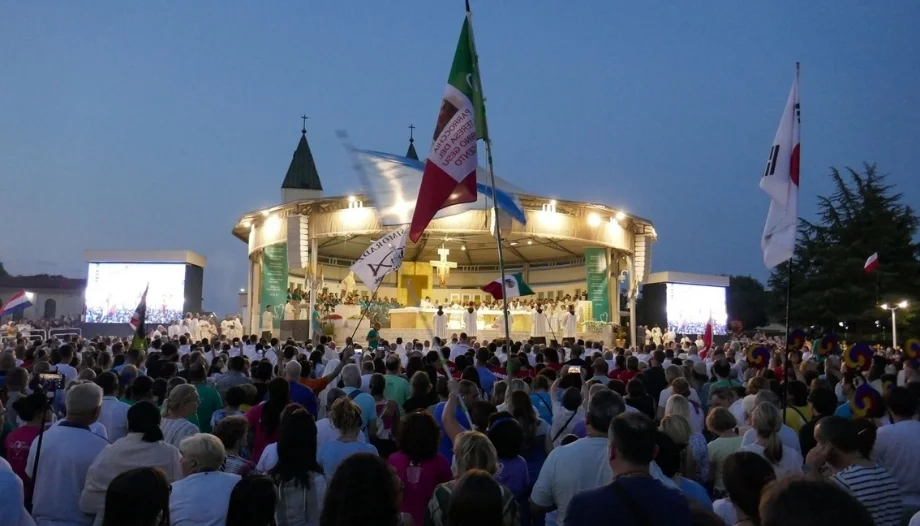
    • Saint Carlo Acutis, a role model for evangelization in the digital age.
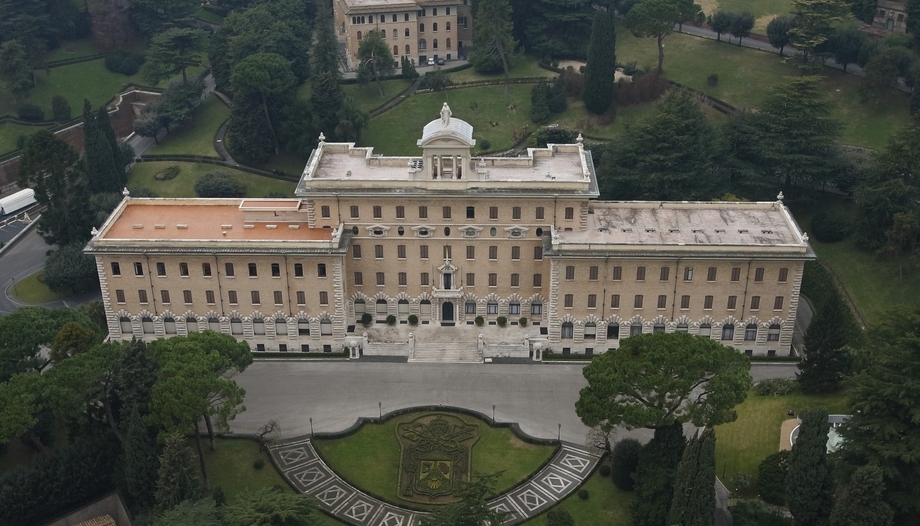
    The selection process included consultation with young Koreans, pastoral workers, and formators before the Organizing Committee made its final decision.

    Three Special Moments with Pope Leo XIV

    During the spring meeting of the U.S. bishops, held in June 2026, Paul Kyung Sang Lee, auxiliary bishop of Seoul and general coordinator of World Youth Day, announced that three special events with Pope Leo XIV are already planned:

    • an encounter with people facing difficult circumstances;
    • interfaith dialogue;
    • and a prayer for world peace.

    The bishop recalled that, following the Korean War (1950–1953), «Korea was one of the poorest countries in the world. In 80 years, it went from devastation to renewal. Hardship did not have the final say. Hope can renew and heal a nation.».
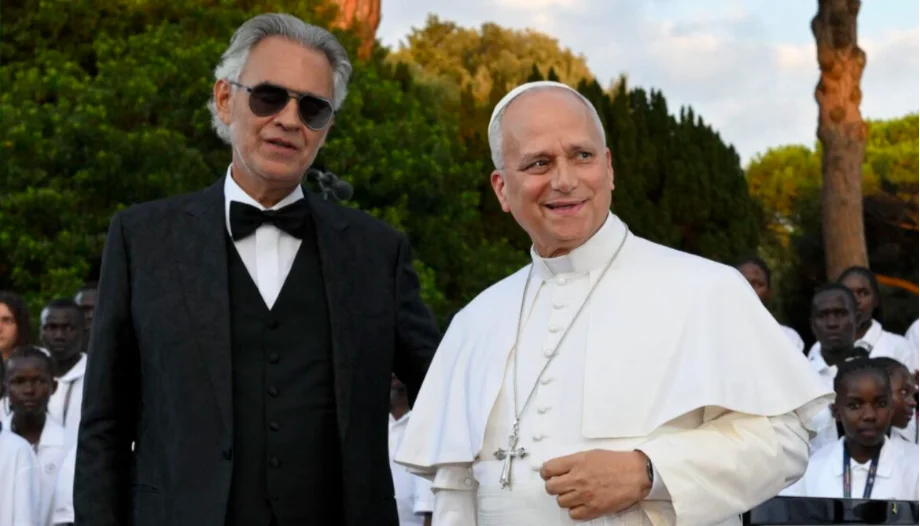
    According to estimates presented at that meeting, between 10,000 and 15,000 young Americans will take part in the pilgrimage.

    South Korea, one of the lowest birth rates in the world

    The choice of Seoul holds great significance for the Church in Asia. Although Catholics remain a minority in South Korea, the community has experienced steady growth over the past few decades. According to statistics published by the Catholic Bishops’ Conference of Korea, by the end of 2025, the country surpassed six million Catholics (6,006,832) for the first time—a figure six times higher than that recorded in 1975, when barely one million Koreans professed the Catholic faith.

    This growth, however, is accompanied by significant pastoral challenges. The Korean Church is feeling the effects of the demographic crisis facing the country, whose fertility rate stood at 0.80 children per woman in 2025—one of the lowest in the world. The aging population is also reflected in the parishes: nearly three out of every ten Catholics (28.9 TP3T) are 65 years of age or older, making them the largest age group.

    Religious practice has also declined over the past decade. Currently, only about 15 % of Catholics regularly attend Sunday Mass, compared to the 20.7 % recorded in 2015. Similarly, vocations to the priesthood and religious life continue to decline. In 2025, only 70 new priests were ordained, compared to 121 a decade earlier, while the number of seminarians and religious continued to fall.

    An Opportunity for the Korean Church

    Precisely because of this context, the Korean Church views World Youth Day 2027 as an opportunity to revitalize youth ministry. In 2022, the archbishop of the capital, Peter Soon-taick Chung, emphasized that the event could become «an excellent opportunity to bring young people together around a project that makes them protagonists» and a special occasion to share the values of the Gospel with Korean society.

    The Church in Korea also has a unique history. Unlike in most countries, Catholicism took root through the initiative of laypeople, who learned about the faith through books from China and began forming Christian communities before the arrival of the first priests. Later, even at the risk of their lives, they crossed the border to bring in priests who could administer the sacraments. That nascent community was marked by the witness of thousands of martyrs—a legacy that continues to define the identity of the Korean Church and makes Seoul a particularly significant setting for hosting the upcoming World Youth Day.

    Gospel

    A Free Lunch? Eighteenth Sunday in Ordinary Time (A)

    Vitus Ntube discusses the readings for the 18th Sunday in Ordinary Time (Year A), corresponding to August 2, 2026.

    Vitus Ntube-July 30, 2026-Reading time: 2 minutes

    Today’s liturgy is centered on the theme of food. In the Gospel, we find the well-known miracle of the multiplication of the loaves, while in the first reading, the prophet Isaiah invites us to a banquet freely offered by God. 

    Feeding five thousand people would undoubtedly be an extraordinary feat. However, if we were organizing a picnic for such a large crowd, we wouldn’t consider a few loaves of bread and fish to be enough. We would probably add cheese, ham, drinks, fruit, and more. But what good are all these things if they fail to satisfy the deepest hunger of the human heart? This is the question posed by the prophet Isaiah: “Why spend money on what doesn’t nourish you, and your wages on what doesn’t satisfy you?””It's a question that calls for serious reflection. What truly brings us satisfaction? Or better yet, who can bring us satisfaction?"

    There is a popular saying that goes, “There's no such thing as a free lunch”. This saying reminds us that nothing is free. However, Isaiah proclaims something surprising: that God invites the hungry and thirsty to receive without paying. The most important things in life cannot be bought. Our very existence is a gift. The air we breathe, the sunlight that warms us, the water that sustains us—all have been given to us freely. 

    The Gospel presents Jesus to us as the one who feeds the crowd freely. The miracle reveals not merely the multiplication of the bread, but the generosity of the One who gives it. Only Jesus can satisfy the deepest hunger of the human person, and He does so freely.

    We are called to live in accordance with this divine generosity. Having received freely from God, we are called to give freely to others. When the disciples suggest sending the crowd away, Jesus replies: “There’s no need for them to go—just feed them yourselves.”. 

    We are not simply called to give of ourselves, but to give through Christ. We are called to place what we have in Christ’s hands. The little we offer may seem insignificant, but once entrusted to Him, it becomes enough. 

    The context of the miracle reveals something even deeper about Jesus“ generosity. The miracle takes place shortly after the death of John the Baptist. Upon learning of his cousin’s death, Jesus withdrew to a secluded place. However, when he saw the crowd, he had compassion on them. He gives not from abundance, but from personal loss. In the midst of his own grief, he perceives the needs of others. As St. Paul tells us: “Though he was rich, he became poor for your sake, so that you might be made rich through his poverty". 

    Family

    What New York's Best Restaurant Can Teach You About Being Happier This Summer

    A true summer getaway doesn't depend on the destination or the perfect itinerary, but on the magic of the unexpected.

    Javier García Herrería-July 29, 2026-Reading time: 2 minutes

    Will Guidara ran Eleven Madison Park, one of the world’s most prestigious restaurants, for years. Under his leadership, it received three Michelin stars and was named the best restaurant in the world in 2017. There, he learned a lesson that had to do not only with cooking, but with something much more human: the difference between doing things well and making someone feel special.

    Guidara explains that technical excellence wasn’t enough. The restaurant could offer impeccable service, perfect dishes, and flawless execution, and still fall short. The real leap in quality came when the team asked themselves what that specific person needed to leave happy. It wasn’t about luxury, but about paying attention to how they could surprise them.

    That’s how the little gestures came about: an improvised dish for a child who couldn’t find anything on the menu, a candle lit at the last minute for an anniversary no one had mentioned, a handwritten note recalling a previous conversation. Seemingly insignificant details that transformed a dinner into a memorable experience.

    Setting vs. Content: The Trap of Expectations

    Traveling, going to the beach, or booking a charming hotel is the equivalent of getting a table at a top restaurant in New York. It’s a wonderful setting, no doubt, but it’s still just a backdrop. Confusing vacation plans with true relaxation is the mistake we make most often: we assume that, simply by getting away from it all, happiness will come automatically.

    People who went to Guidara’s restaurant were already there to experience something special; the sublime food was a given. However, the real thrill didn’t come from the menu, but from the unexpected. In the summer, exactly the same thing happens. The organized trip provides the framework, but the real substance—what truly renews the soul—is woven into the margins of what’s planned, in the ability to break from the script and focus on the person right beside us.

    The unexpected takes the rush out of things and brings true rest

    Why do little, unexpected moments of affection help us relax more than a meticulously planned day at the beach? Because the fatigue that builds up over the course of a whole year isn’t just physical—it’s mental, too. We’re exhausted from managing, coordinating, making decisions, and keeping up with our schedules.

    When someone surprises us with an unexpected gesture, they give us the gift of thoughtfulness. Putting effort into thinking of ways to surprise those we love most brightens their day and conveys the most heartwarming message there is: «I thought of you when I wasn’t supposed to.» That’s why a child is more likely to remember a surprise nighttime outing—with flashlights and their parents—than yet another afternoon spent at the pool, napping, and watching cartoons on a tablet.

    Initiatives

    Journalists launch an initiative to deliver letters from survivors of the Venezuela earthquake to Pope Leo XIV

    Vatican journalists are launching an initiative to deliver letters from survivors of the earthquakes in Venezuela to Pope Leo XIV.

    OSV News Agency-July 29, 2026-Reading time: 3 minutes

    – OSV News / Junno Arocho Esteves

    Since the pontificate of St. Paul VI, journalists covering the Vatican have had the unique privilege of direct access to the Vicar of Christ at an altitude of 30,000 feet.

    Continuing a tradition adopted by his predecessors, Pope Leo XIV makes a point of walking down the narrow aisle of the cabin and greeting the journalists one by one, exchanging handshakes, gifts, or personal letters.

    When Pope Leo XIV embarks on his apostolic visit to France In September, four Vatican journalists hope to take advantage of that brief moment to convey to the Pope the prayers, the suffering, and the fragile hopes of the people of Venezuela.

    Venezuelan journalists Lola Gómez, Daniel Cáceres, and José Arnaldo Mujica, along with Costa Rican journalist Jovel Álvarez, launched “Letters to the Pope,” an initiative aimed at collecting letters from Venezuelans and rescue teams affected by the two earthquakes that devastated the country on June 24.

    A way to support your homeland

    Speaking to OSV News on July 23, Gómez, a Caracas-born photojournalist for Catholic News Service, said that she and her fellow journalists were looking for ways to support their homeland.

    “When you’re far from your home country, you feel like you have to do something,” he said. “And we thought, since we’re here at the Vatican covering Pope Leo and we’re going to have an apostolic trip in September, how about we launch a channel for Venezuelans who survived the earthquakes and for the people who helped rescue them?”.

    Instead of dealing with complex email or snail mail setups, the journalists created a Google Form to offer a “simpler” way for Venezuelans to “share their feelings, thoughts, or questions”—as well as photos—with the Pope.

    The form will accept submissions until August 15. The letters will be compiled into a single volume and presented to Pope Leo aboard the papal flight on September 25.

    According to Venezuelan officials, the death toll from the 7.2- and 7.5-magnitude earthquakes that struck the northern state of La Guaira has surpassed 5,300. Thousands of people remain homeless as humanitarian workers continue recovery efforts.

    Caritas Venezuela recently reported that the consumption of local aid is exceeding the amount received, which has prompted calls for financial donations to facilitate local purchases in response to changing needs.

    Writing as a Way to Process Trauma

    Gómez told OSV News that giving survivors and first responders the opportunity to write—rather than send a video or audio message—serves as a cathartic way for them to process the trauma they are currently experiencing.

    “When you put your feelings and thoughts into words, it helps you process what you’ve been through,” he explained, adding that publishing a compiled volume will allow Pope Leo to read the texts “even on the plane if he has time.”.

    “With letters, I think it’s more intimate,” he said. “It creates a private moment between the victims—or the people who want to share their feelings—and the Pope.”.

    The response to the campaign has grown steadily, and as of July 23, the organizers had received dozens of letters from affected regions across Venezuela, according to Gómez. The initiative has sparked interest not only among local survivors but also among international emergency response teams deployed to the country following the disaster.

    According to his account, Álvarez was contacted directly by Costa Rican rescue workers who were on the ground in Venezuela to ask how they could submit their testimonies.

    “The first call we received… Jovel, who is actually from Costa Rica, received a call from the Costa Rican rescue workers who had been working in Venezuela after the earthquakes,” said Gómez, adding that the team expects the shipments to increase before the deadline.

    “So we’re expecting more letters, but so far we’ve received 52 from all the areas of Venezuela that were affected,” he said.

    Although he emphasized that the initiative is a collective effort with his fellow journalists, Gómez said that on every papal trip, he “always tries to bring Venezuela to the Pope,” in the hope that the personal letters will bring his suffering compatriots closer to the pontiff.

    “We want them to feel that they’re not alone on this journey,” Gómez said. “Faith is very important for them to keep moving forward through this terrible ordeal they’re going through as they rebuild their lives, and they shouldn’t feel like they’re going through it alone.”.


    This news story was first published in English on OSV News. We are reprinting it on Omnes with permission. You can read the original article HERE.

    The authorOSV News Agency

    Family

    Juanchi, who has multiple sclerosis: “I’ve learned that you learn to love through suffering”

    An interview with Juanchi and Carla, a married couple with three children who struggle daily with his multiple sclerosis.

    Álvaro Gil Ruiz-July 29, 2026-Reading time: 8 minutes

    Juan Chimeno is from Madrid and lives in Zaragoza. He has a law degree and is the father of three children. He began his career at Europa Press, then moved on to Mediapro. He worked as a temporary civil servant in courts of first instance and preliminary investigation for several years. He then worked for a year at AXA before returning to the courts. He enjoys music, plays the guitar, has been a singer in three bands, and is a songwriter. During college, he started out as a DJ and has spun records at weddings and parties. 

    In 2008, he was diagnosed with multiple sclerosis, although it had been suspected for years, since his first flare-up occurred in 2001, but symptoms didn’t begin to appear until 2007. It was a heavy blow for his entire family and friends, but even then it became clear that “Juanchi” (as his friends call him) wasn’t going to let discouragement get the better of him.

    His convictions led him to reshape his life. This brought his family great peace during times of discouragement, as well as great joy. This limitation became a blessing—even though it may seem like a contradiction—because it brought out the best in him.

    He showed them that, as he says, Marian Rojas: Happiness doesn't lie in what happens to us, but in how we interpret what happens to us. She was able to be happy and bring happiness to her loved ones. 

    So much so that his “girlfriend” from Zaragoza, Carla—whom he had met in 2007—remained deeply in love with him, and they got married in 2011. They’ve been living in Zaragoza since 2010. They currently have three children—two boys and a girl: Álvaro, 8; Jacobo, 6; and their youngest, Marianita, 3. Juanchi has been retired since 2017 because he is totally unable to work, and he devotes his time to his family and letting them take care of him. 

    How did you two meet? How did you start dating? 

    – Juanchi: We met through mutual friends who had been volunteering in Nairobi that summer with Mother Teresa’s Sisters. We started dating because she sent me a text message, and I thought, “Hey, this girl seems interesting,” so we started talking and talking—which is the best way to get to know each other—and in the end, thanks to a friend, I took the plunge and formally asked her out.

    We were in a long-distance relationship for four years. It was hard—really hard—because it wasn’t easy to see the person I loved: we had to take a train just to see each other for a day and a half, which didn’t feel like enough, and there were weekends when we couldn’t see each other at all. But even so, it was worth it because you come to appreciate things so much more.

    Juanchi, what's your educational background? What do you do for a living? What are your dreams?

    – I studied law at Complutense University and, years later, earned an MBA from ICADE. Both helped me a great deal in shaping my thinking and broadening my horizons, especially because of the effort they require and the subjects they cover.

    I’m currently focusing on my physical rehabilitation and my family. In 2016, I was working as a Litigation Manager at the Plaza Castilla Dean’s Office, and thank God, I was accepted into a clinical trial at Hospital Clínic in Barcelona. That made me rethink my life, and I decided to apply for disability benefits; thanks to God and the intercession of Mr. Isidoro Zorzano, I was granted full disability benefits.

    To be honest, my dreams are really limited to my immediate circle: my wife, my children, my recovery, my friends, bringing the people I know closer to God, and music—although lately, except for my singing lessons, I’ve been neglecting that.

    And you, Carla, what did you study? What do you do for a living? What projects are you working on?

    – I went to school in Sansueña, a Fomento school, and that’s why I’ve chosen for our children to attend school there as well.

    After that, I studied pharmacy at the University of Navarra, in Pamplona, a place where I'd like my children to study because it's a very important part of my life. 

    I work at a pharmacy with two of my brothers; we have some great times and some not-so-great times, but I love working with them. 

    My professional endeavors are in the pharmacy business—since it's the family business—and we work hard every day to make sure it does very well.

    Carla, when did you receive Juanchi's diagnosis? What were those first moments like?

    – One thing I’ll never forget is when we told my mother we were getting married, and on that very same day we received the definitive diagnosis of her illness. My mom said to me… ”Are you sure you want to marry him? It’s a very serious illness. You’ll have to take care of everything for him and work really hard to make sure he has a good quality of life.” To be honest, I said, “So what?”.

    But my mother knew what she was saying; still, at that moment I thought, “Well, I’ll just help him out.” I don’t know if it was something I did unconsciously or not, but to this day, he takes care of his own stuff and I do everything else—except for the cooking, which he does for the whole family. And when I have to take care of my own stuff plus everything else, I still find myself saying… “My mom was so right,” hahaha.

    But you have to live life one day at a time! And above all, you have to put your trust in God’s plans, which just happen the way they do—period.

    Juanchi, what's your daily routine like? How do you get through your rough patches? 

    – I go to rehab, physical therapy, and occupational therapy several days a week. I make lunch and dinner for my family (as Carla mentioned). I also do the grocery shopping and take care of household chores.

    There are days when I don't leave the house, and to be honest, the day drags on, but oh well—I always tell myself that there will be a tomorrow when I can go out.

    There’s a lot to say about these slumps. Before I had this disease, I was a very restless guy. My friends in Madrid know me and know that I was always making plans. I spent most of the day out of the house, and then suddenly this disease hit me. The loss of mobility didn’t happen all at once—it happened gradually. At first, I had trouble walking; then I walked slowly; and later, I’d trip over any obstacle on the ground. Years later, I started using a cane, and eventually I decided it was better to use a wheelchair when I was out on the street.

    I’m not the kind of person who gets really down or paralyzed when I receive bad news like this, or when I take a hard blow. I try to figure out how to move forward and not get stuck in the face of misfortune or the challenges I’m facing. I often use the example of a lemon. In this life, you have to “make lemonade out of lemons.” Don’t dwell on the bitterness of the things that happen to you in life; turn them around and make lemonade out of what’s causing you pain. The suffering doesn’t go away, but your attitude can change. It doesn’t happen right away—it takes effort—but the result is fresh, delicious lemonade that brightens your life.

    I place my difficult moments in the Lord’s hands—He is my strength, my refuge. Without Him, I am nothing, so what I do is keep my mind occupied with other things. But then again, sometimes I have even deeper slumps, and everything bad seems to get bigger and bigger, as if I were in a deep hole from which it were impossible to escape.

    Even when I'm feeling down, I know that, thank God, I'm not alone. In those moments, I find time to talk to a priest, and after speaking with him, I go to confession. And thanks to that, I find the strength to get back up and resume life's struggle. For me (and I imagine for many others as well), life is about falling down and getting back up.

    I feel loved by God, but I’ve realized that God cannot take away our freedom. He wants us to love Him freely, without anything or anyone forcing us to do so. God, who can do anything (He is all-powerful), cannot interfere with our freedom (no one would want to be loved against their will), and it’s very important to make this known so that everyone understands how much God loves us, the infinite respect He has for our free will, and the mercy He shows us, even though we commit terrible acts.

    Juanchi, it’s understandable that this experience has led you to see firsthand our fragility, our vulnerability, and our personal limitations. How do you connect this reality with God? How do you reconcile humanity and transcendence?

    – I am a humble servant who tries to tell everyone about God because He has shown me that, despite my weakness and my shortcomings, He loves me infinitely, and that He will not force me to love Him—He wants me to love Him of my own free will.

    I have also seen that God relies on the weak and the sick so that His love for us, His omnipotence, and His mercy may be made evident. It was St. Lawrence whom the Roman authorities demanded hand over the Church’s assets following the death of Pope Sixtus II. He appeared before the Roman prefect alongside the poor, the sick, the blind, the crippled, the widows, and the needy whom he cared for, asserting that they were the true treasure of the Church. To make the Lord’s hand even more evident, I was born on August 10, the feast day of Saint Lawrence, and on that very same day, my father passed away at the age of 67.

    In my case, humanity and transcendence are intertwined in everyday life, in the day-to-day.

    The cross I bear is a daily one, and this has helped me rise above it and realize that it comes from God and that I have to thank Him for it—even though thinking this is crazy. Many will think, “How can you say, ‘I thank God for this cross’? You should be thinking the exact opposite: ‘Why has God punished me with this misfortune?’”.

    Not long ago, a woman I know, María Mora Figueroa, who passed away in April, told me, “God gives each of us what we can best bear.” It took me a while to realize that the cross the Lord had given me has made me a better person. Before, my daily life didn’t help me be as spiritual as I could be. I thought I was a good Christian, but I was rushing around everywhere without paying attention, without realizing what really matters.

    Now that I can barely walk, I notice countless things I didn’t see before. I’m grateful to God for the cross He has given me, even though I have to endure it every day and it’s a pain. I’ve also learned that you learn to love through suffering, though that’s a topic for another interview.

    All of this does not prevent me from acknowledging that I am a sinner and that I continue to struggle day by day, because I have many sins and because, even if you have a cross to bear, you have to keep fighting just like everyone else. 

    Carla, people will ask you, “How were you brave enough to get married?” And you’ll say that love is above all else. But love is built day by day. What would you say to those who are going through something similar?

    – Honestly, I’m a bit old-fashioned. I’m not very affectionate, so all I can say is that I was taught to respect others and to commit to a relationship with courtesy and respect. Juanchi is the complete opposite, and that’s why we complement each other. As you so rightly said, love is forged day by day; a relationship is built day by day, and it’s not all as wonderful as it seems. At least in my case.

    As we all know very well, at first everything is fantastic and wonderful, and then things cool off—that’s why you have to take care of them, and really take care of them! Life is very hard, and even more so if something like this has happened to you. Either you learn to stay positive and make the best of it, or you fall apart. I’m a pharmacist, and I know there are millions of things that can help you feel better. But that’s not the solution. You have to lean heavily on God and stay positive. Nobody gives you anything—we all have to fight for it ourselves.

    Carla, how long did it take for your first child to arrive? How did you come to the very generous decision to have three children? 

    – Both Juanchi and I come from large families. And we both liked the idea of having children. We didn’t know if that would be possible, or if it were, how many we’d have. We love children, and having them is no small matter. It’s a huge responsibility, and you have to work at it every day to raise them to be well-mannered and good people. It’s a constant struggle.

    It took us 7 years to have our first child, and we received help from the Spanish Association of Naprotechnology. We now have three children. The support from my parents and siblings, who live in Zaragoza, has been very important, and we are very grateful to them. Juanchi's family lives in Madrid, and they have also helped us a lot.

    What projects are you working on?

    – Carla: I think the most important thing is to teach our children good values and to enjoy every moment of life. 

    We both love to travel, and it’s still possible to do so with him. Every summer we take a family trip, and the last one was to Rome during the Jubilee Year—we had a great time. We went with a very large group, and while traveling with Juanchi and other people is tough, it’s possible. 

    What messages do you want to convey to society? 

    – Two: “Make lemonade out of lemons” and go to confession more often. God rewards the humility of acknowledging your sins before a priest with a true peace that cannot be found anywhere else in this world.

    Read more
    The World

    The statue in Medjugorje has been restored, and the perpetrator of the serious acts of vandalism has been arrested

    The Medjugorje shrine was the target of serious acts of vandalism, which included graffiti directed against the Virgin Mary and the visionaries, as well as arson at the altar.

    OSV / Omnes-July 28, 2026-Reading time: 3 minutes

    By Junno Arocho Esteves, OSV / Omnes (Updated news story).

    In a statement released on July 28, the city’s parish church said it received the news of the vandalism «with great sadness» and that it was working to clean up and repair the damage «so that all areas are properly prepared for prayer once again.».

    «We pray for the conversion of the hearts of those who committed this act, that the Lord may touch them with His grace and guide them along the path of goodness,» said the parish.

    Graffiti and messages against psychics

    According to local media reports, police in the neighboring town of Citluk received a report at 4:30 a.m. on July 28 that several statues of the Virgin Mary—known as «Gospa» or «Our Lady» in Croatian—had been vandalized.

    In the photographs published by the Bosnian online news site bljesak.info, the vandal can be seen covering parts of the statue with black spray paint, along with several blasphemous inscriptions directed at the Virgin Mary.

    One of the images that has been vandalized. Photo: OSV News photo/courtesy of The Interreligious Council in Bosnia and Herzegovina

    Among the vandal's other graffiti were «Medjugorje is a hoax,» «devil,» and «only Jesus,» spray-painted in various areas.

    The police also found a banner with the first names of the six alleged visionaries: Vicka Ivankovic-Mijatovic, Mirjana Dragicevic-Soldo, Marija Pavlovic-Lunetti, Ivan Dragicevic, Ivanka Ivankovic-Elez, and Jakov Colic. Below their names was a message written in Polish that read: «To oszusci, mam dowody» («They’re frauds, I have proof»).

    Arson at the altar of the Church of San Jaime

    About 30 minutes after the police were notified of the act of vandalism, a fire broke out at the altar of St. James Church. A security camera video posted on X showed a man pouring a flammable liquid around the altar and setting it on fire.

    The Interreligious Council of Bosnia and Herzegovina stated that the acts of vandalism constituted «a profound insult» to Catholics and «an attack on peace, mutual respect, and the dignity of all people in Bosnia and Herzegovina.».

    The parish's response: prayer, forgiveness, and the continuation of worship services

    The council also praised the response of St. James Church, stating that its call for pilgrims to respond to evil with prayer and fasting was «a testimony of faith, responsibility, and a genuine commitment to peace.».

    «However, forgiveness does not absolve the perpetrator of the crime of responsibility, nor does it relieve the relevant institutions of their obligation to fully investigate this case,» he stated. «We must respond to the desecration of sacred sites with a united condemnation, the protection of every person’s right to freely practice their faith, and an even stronger commitment to a society of peace, mutual respect, and forgiveness.».

    A Record-Breaking Restoration

    The rapid mobilization of the parish community, the young people of the Cenacle Community, and numerous volunteers made it possible to repair the damage caused by a recent act of vandalism in Medjugorje within a few hours. This joint effort succeeded in removing the black graffiti that had covered the face and hands of the statue of the Queen of Peace, as well as restoring the outdoor altar of St. James Parish, which had been damaged by arson.

    Thanks to this effective intervention, the evening prayer service went ahead as usual, sending a clear message of calm and welcome in the face of violence.

    Restoration of the image. Photo: Medjugorje Center

    Three days before Mladifest

    The prompt restoration of the facilities has been essential for the shrine, which is about to host the 37th Mladifest, the International Youth Festival—one of the Catholic Church’s largest youth events, which brings together more than 60,000 people every summer.

    By keeping the site clean and continuing its regular activities, Medjugorje reaffirms its spiritual mission without compromising its care for the thousands of pilgrims who gather there during these special days.

    A suspect has been arrested

    For its part, the police in Bosnia and Herzegovina acted swiftly to investigate the incident, identifying and arresting the alleged perpetrator. The Prosecutor’s Office will take over the case against a 31-year-old Polish citizen accused of damaging or demolishing religious buildings, a crime of vandalism that, under Bosnian law, carries a sentence of between six months and five years in prison.

    The authorOSV / Omnes

    Read more
    Cinema

    The new season of “The Chosen” premieres on November 17

    On November 17, 2026, the sixth season of "The Chosen" will arrive in Spain on "acontra+," with the first two episodes premiering that day.

    Paloma López Campos-July 28, 2026-Reading time: < 1 minute

    The “against”announces that the sixth season of “The Chosen” will premiere in Spain on November 17, 2026. Consisting of six episodes, this season sees Dallas Jenkins taking viewers through the final hours of Jesus' life before the Passion.".

    As the season finale—and to highlight its significance—*The Crucifixion* will premiere as a feature film in theaters.

    The first two episodes will premiere on “acontra+” on November 17, and a new episode will be released every Tuesday thereafter.

    Although the official trailer hasn't been released yet, the team behind «The Chosen» has shared a shorter “teaser trailer” with fans of the hit series, featuring the first glimpses of the new season:

    The hit biblical series

    “The Chosen” has already attracted more than 300 million viewers, making it one of the greatest biblical productions in history. Furthermore, as an independent production, it is already considered one of the biggest hits of the past decade.

    Its lead actors are already well known, with the performance of Jonathan Roumie, who plays Jesus. The cast has even been received by Pope Francis in 2021 and by Pope Leo XIV in 2025.

    Read more