Vatican finances, the balance sheets of the IOR and of the St. Peter's Obligation
There is an intrinsic relationship between the budgets of the Oblates of St. Peter's and the Institute for works of Religion.
Andrea Gagliarducci-July 12, 2024-Reading time: 4minutes
There is a close relationship between the annual declaration of the St. Peter's obolus and the balance sheet of the Istituto delle Opere di Religione, the so-called "Vatican bank". Because the Obolo is destined to the charity of the Pope, but this charity is also expressed in the support of the structure of the Roman Curia, an immense "missionary budget" that has expenses, but not so many incomes, and that must continue to pay salaries. And because the IOR, for some time now, has been making a voluntary contribution of its profits precisely to the Pope, and these profits serve to lighten the budget of the Holy See.
For years the IOR has not had the same benefits as in the past, so that the portion allocated to the Pope has decreased over the years. The same situation applies to the Obolo, whose income has decreased over the years, and which has also had to face this decrease in the IOR's support. So much so that in 2022 it had to double its income with a general divestment of assets.
That is why the two budgets, published last month, are somehow connected. After all, the Vatican finances have always been connected, and everything contributes to helping the Pope's mission.
But let's look at the two budgets in more detail.
The St. Peter's Oblong
Last June 29, the St. Peter's Oblates presented their annual balance sheet. Revenues were 52 million, but expenses amounted to 103.4 million, of which 90 million were for the apostolic mission of the Holy Father. Included in the mission are the expenses of the Curia, which amount to 370.4 million. The Obolo thus contributes 24% to the budget of the Curia.
Only 13 million went to charitable works, to which, however, must be added donations from Pope Francis through other dicasteries of the Holy See totaling 32 million, 8 of which were financed directly through the obolo.
In summary, between the Obolus Fund and the funds of the dicasteries financed in part by the Obolus, the Pope's charity financed 236 projects, for a total of 45 million. However, the balance deserves some observations.
Is this the true use of the St. Peter's Obligation, which is often associated with the Pope's charity? Yes, because the very purpose of the Obligation is to support the mission of the Church, and it was defined in modern terms in 1870, after the Holy See lost the Papal States and had no more income to run the machine.
That said, it is interesting that the budget of the Obolus can also be deducted from the budget of the Curia. Of the 370.4 million of budgeted funds, 38.9% is earmarked for local Churches in difficulty and in specific contexts of evangelization, amounting to 144.2 million.
Funds earmarked for worship and evangelization amount to 48.4 million, or 13.1%.
Dissemination of the message, that is, the entire Vatican communication sector, represents 12.1% of the budget, with a total of 44.8 million.
37 million (10.9% of the budget) was allocated to support the apostolic nunciatures, while 31.9 million (8.6% of the total) went to the service of charity - precisely the money donated by Pope Francis through the dicasteries -, 20.3 million to the organization of ecclesial life, 17.4 million to the historical heritage, 10.2 million to academic institutions, 6.8 million to human development, 4.2 million to Education, Science and Culture and 5.2 million to Life and Family.
Income, as mentioned above, amounted to 52 million euros, 48.4 million of which were donations. Last year there were fewer donations (43.5 million euros), but income, thanks to the sale of real estate, amounted to 107 million euros. Interestingly, there are 3.6 million euros of income from financial returns.
As for donations, 31.2 million came from direct collection by dioceses, 21 million from private donors, 13.9 million from foundations and 1.2 million from religious orders.
The countries that donate the most are the United States (13.6 million), Italy (3.1 million), Brazil (1.9 million), Germany and South Korea (1.3 million), France (1.6 million), Mexico and Ireland (0.9 million), Czech Republic and Spain (0.8 million).
IOR balance sheet
Pope IOR 13 million to the Holy See, compared to a net profit of 30.6 million euros.
The profits represent a significant improvement over the €29.6 million in 2022. However, it is necessary to compare the figures: they range from the 86.6 million profit declared in 2012 - which quadrupled the previous year's earnings - to 66.9 million in the 2013 report, 69.3 million in the 2014 report, 16.1 million in the 2015 report, 33 million in the 2016 report and 31.9 million in the 2017 report, to 17.5 million in 2018.
The 2019 report, meanwhile, quantifies profits at 38 million, also attributed to the favorable market.
In 2020, the year of the COVID crisis, the profit was slightly lower at 36.4 million.
But in the first post-pandemic year, a 2021 still unaffected by the war in Ukraine, it returned to a negative trend, with a profit of only €18.1 million, and only in 2022 did it return to the €30 million barrier.
The IOR 2023 report speaks of 107 employees and 12,361 customers, but also of an increase in customer deposits: +4% to €5.4 billion. The number of clients continues to fall (they were 12,759 in 2022, even 14,519 in 2021), but this time the number of employees also decreases: they were 117 in 2022, they are 107 in 2023.
Thus, the negative trend of clients continues, which should give us pause for thought, bearing in mind that the screening of accounts deemed not compatible with the IOR's mission ended some time ago.
Now, the IOR is also called upon to participate in the reform of Vatican finances desired by Pope Francis.
Jean-Baptiste de Franssu, president of the Council of Superintendence, highlights in his management letter the numerous accolades the IOR has received for its work in favor of transparency over the past decade, and announces: "The Institute, under the supervision of the Authority for Supervision and Financial Information (ASIF), is therefore ready to play its part in the process of centralizing all Vatican assets, in accordance with the Holy Father's instructions and taking into account the latest regulatory developments.
The IOR team is eager to collaborate with all Vatican dicasteries, with the Administration of the Patrimony of the Apostolic See (APSA) and to work with the Investment Committee to further develop the ethical principles of FCI (Faith Consistent Investment) in accordance with the Church's social doctrine. It is crucial that the Vatican be seen as a point of reference."
Spain has been one of the nations that has most frequently welcomed the last pontiffs. Since the beginning of the custom of papal trips, With St. John Paul II, Spain has received John Paul II and Benedict XVI on 8 occasions in total, in different cities and for different reasons, including two World Youth Days.
John Paul II: 5 visits
The custom of papal trips, it should be remembered, began with St. John Paul II. The Polish Pope visited Spain on 5 occasions: in 1982 with a 10-day trip in which the pontiff visited places such as Alba de Tormes, Salamanca, Zaragoza, Seville, Madrid, Barcelona and Valencia.
In 1984, the Polish Pope landed in Spain for an almost «express» visit before continuing his apostolic journey to the Dominican Republic and Puerto Rico to inaugurate the novena in preparation for the V Centenary of the evangelization of America. On this occasion, Zaragoza was the Pope's host city and there he prayed before the Virgin of Pilar.
Seven years later, in 1989, St. John Paul II celebrated the IV World Youth Day. It was a trip in which the Pope made the last stage of the Way of St. James on foot, entering the cathedral as a pilgrim of honor and fulfilling the traditional rite of touching the mullion of the Portico de la Gloria. There he presided over the vigil on Monte del Gozo and the central mass of the WYD. In Covadonga, at the feet of the «Santina», one of the most memorable visits of a Pope to Spain would end.
St. John Paul II distributes communion to a young woman during World Youth Day at Monte do Gozo, near Santiago de Compostela, Spain, in August 1989 (Photo OSV News/L'Osservatore Romano, Arturo Mari).
The next visit of John Paul II was in 1993. It was a trip in which the Pope visited southern Spain in a special way to celebrate the V Centenary of the evangelization of America. On this occasion, the pontiff closed the XLV International Eucharistic Congress in Seville, and also visited Huelva and Madrid.
The last trip of Pope Wojtyla to Spain was in 2003 and, during that visit, the Pontiff canonized Pedro Poveda, José María Rubio, Genoveva Torres, Ángela de la Cruz and María Maravillas de Jesús. During those days, the Cuatro Vientos air base was the scene of the last meeting of the Polish pope with young Spaniards.
Benedict XVI: 3 major events
Benedict XVI was in Spain three times as Supreme Pontiff.
The first time was on the occasion of the closing of the V World Meeting of Families. The Valencian capital welcomed more than one million people who accompanied the Bavarian Pope on that occasion. Benedict XVI He would return to Spain four years later, in 2010, on the occasion of the Compostela Holy Year and the consecration of the Sagrada Familia in Barcelona.
Pope Benedict XVI waves from the popemobile upon his arrival at the Fifth World Meeting of Families in Valencia, Spain, July 8. The pope urged parents to be open to life and to create a home based on love, acceptance and mercy (Photo by CNS/Marcelo del Pozo, Reuters) (July 10, 2006).
In 2011, Madrid hosted the World Youth Day presided over by Joseph Ratzinger. An event that brought together nearly two million young people from all over the world and that left iconic images such as the Pontiff praying with the young people in the midst of a strong summer storm and a gale that hit the venue.
Pope Benedict XVI waves from his popemobile upon his arrival at Cuatro Vientos airfield in Madrid to celebrate the closing mass of World Youth Day August 21, 2011. (Photo by OSV News/Andrea Comas, Reuters)
It has been 150 years since the last Pope named Leo, the 13th of those who bore that name. Last year, Cardinal Robert Prevost took that name again, to become Leo XIV. How has the Church changed from the previous one to the current one? What has been the evolution of the Church in this century and a half of changes?
Historian Onésimo Díaz (Madrid, 1966), professor at the University of Navarra and professor of its Master in Christianity and Contemporary Culture, is the author of such books as History, culture and Christianity (1870-2020), Women protagonists of the 20th century., Expansion: The Development of Opus Dei between 1940 and 1945, o Florentino Pérez Embid: A biography. Nowreviews the evolution of the Church in recent history in a title just published in Sekotia: From Leo XIII to Leo XIV.
Can it be said that in the last 150 years we have gone from a Church somewhat anchored in the past to a more modern one? To whom do we owe the change?
-Yes, it can be said that the Catholic Church has undergone a profound transformation from the end of the 19th century to the present day. In the pontificate of Leo XIII, an openness to the problems of the contemporary world already began, especially with the encyclical Rerum novarum (1891), which addressed the workers' question and laid the foundations of the Social Doctrine of the Church.
However, the great turning point was the Second Vatican Council, promoted by John XXIII and continued by Paul VI. The Council brought about an updating (“aggiornamento”) of the Church: a new relationship with the modern world, a greater role for the laity, ecumenical openness and a liturgical and pastoral renewal.
However, change does not depend only on Vatican II. Subsequent pontiffs such as John Paul II, Benedict XVI and Francis have also been influential, each responding to different challenges of his time.
What is there in common between the time of Leo XIII and that of Leo XIV?
-Both are marked by profound technological, social and cultural changes. Leo XIII lived through the impact of the industrial revolution, the rise of modern capitalism and the workers' question. Leo XIV faces the digital revolution, artificial intelligence, globalization and increasing secularization.
In both cases, the Church is faced with the challenge of dialoguing with a world in accelerated transformation without renouncing her identity. It is worth emphasizing precisely this historical continuity: the popes of the contemporary era, especially from Leo XIII to Leo XVI, tried to read “the signs of the times” and to offer moral and spiritual guidance in the midst of great historical changes.
And as for the challenges for the Church, are they the same?
-Some challenges are similar, although they are presented in different ways. The relationship between faith and modernity, the social question, economic inequalities and the loss of religious influence were already present in the time of Leo XIII. Today, however, new problems appear: digital culture, artificial intelligence, anthropological crisis, moral relativism, social loneliness or cultural fragmentation. Moreover, secularization in Europe is much more intense than it was a century ago.
It could be said that the substance of the challenge is the same-how to evangelize in a changing world-but the historical contexts are very different.
In reviewing the contemporary history of the Church, what do you think is its most important contribution to society?
-The defense of the dignity of the human person is probably one of the greatest contributions of the contemporary Church. Since the Social Doctrine of the Church began with Rerum novarum Until the social encyclicals of the 20th and 21st centuries, the Church has defended workers' rights, social justice, peace, religious freedom and the centrality of the person in the face of totalitarian ideologies or dehumanizing economic models.
The role of the Church in promoting education, health and care, as well as its intellectual and moral contribution to debates on human rights, bioethics and international solidarity, should also be highlighted.
The Church and the war
In these years there have been numerous wars. Has the Church always maintained the same position in the face of wars? Is Leo XIV's position on the U.S. war against Iran consistent with that line?
-The Church's position has evolved historically, although it maintains permanent principles: defense of peace, protection of human life and the search for diplomatic solutions.
Traditionally there was the theory of the “just war”, developed since St. Thomas Aquinas, but after the world wars of the twentieth century the popes have shown an increasingly critical position towards armed conflicts. In his first encyclical, Magnifica humanitas, The Pope questions the existence of the “just war”, except in case of self-defense and in a few other cases. Popes such as Benedict XV during the First World War, Pius XII during the Second World War, John XXIII with Pacem in terris, Francisco insisted on dialogue and mediation.
In this sense, Leo XIV's prudent and pacifying stance on the conflict between the United States and Iran is consistent with the line followed by contemporary popes: avoiding the escalation of war, defending diplomacy and remembering the human consequences of war.
In recent years, the Church has been losing political weight. Has this meant greater freedom for the Church itself?
-In part, yes. The loss of political and institutional power has also meant greater independence from governments and state interests. The contemporary Church, especially after the Second Vatican Council, has tended to distinguish more clearly between religious mission and political power.
This allows it to act with greater moral freedom and to focus more on its spiritual and social dimension. However, it has also meant less capacity for direct influence on legislation and public life, especially in secularized societies. Ultimately, the Church has learned to function in democratic and pluralistic contexts where it no longer occupies a hegemonic position, but can continue to influence through moral persuasion and witness.
Could Leo XIII be compared with the proclamation of the Social Doctrine of the Church, and Leo XIV with his magisterium on AI and the digital world?
-Yes, it is a plausible comparison. Leo XIII faced the great transformation of the industrial revolution and responded by offering ethical criteria on labor, capital and the social question. His social doctrine sought to give moral direction to a new world.
In a similar way, Leo XIV seems to want to address the challenges of the digital revolution and artificial intelligence. Just as Leo XIII addressed the “workers” question,“ Leo XIV seeks to address the ”technological question": how to preserve human dignity, freedom and moral responsibility in a context dominated by algorithms, automation and technological power. In both cases, the Church seeks to offer ethical principles to guide far-reaching historical changes.
A few hours before Pope Leo's landing in Spain, the first major trip of His Holiness to a European Catholic nation, there are many numbers that this event is leaving.
Of the half a million people who have signed up for the three languages the Pope will use on the trip. The numbers of Pope Leo XIV's visit to Spain show the magnitude of a historic trip for which there are still hours to go and which has mobilized hundreds of thousands of people throughout Spain.
600,000 registered participants
More than half a million people have registered to participate in the different events of Pope Leo XIV's historic visit to Spain through the different websites (one for Madrid and the Canary Islands and another for Barcelona). Even so, the organization expects a larger number of people to attend the main events.
30,000 carnations
More than 30,000 carnations will adorn the route that will make the Pope Leon, carrying the Blessed Sacrament, from the Plaza de Cibeles to the beginning of Gran Via, and back. A space of about 500 meters that will be adorned by 16 large floral carpets made by the Association of Alfombristas do Corpus Christi of Ponteareas.
30,000 decennaries
Five monasteries of nuns have made tens of thousands of Decenarios (Rosaries of ten beads), one of the most demanded and valued merchandising products of this papal visit. The Augustinian Sisters of the Conversion of Sotillo de la Adrada, the Sisters of the Holy Spirit of Puerto de Santa Maria, the Dominican Sisters of Olmedo, the Cistercians of Casarrubios del Monte and three other convents of Discalced Carmelites from different parts of Spain, have been making these objects of prayer for weeks and spiritually joining the fruits of this visit.
24,000 volunteers
More than 24,000 volunteers between the three venues, Madrid, the Canary Islands and Barcelona, will assist in the development of the different events in which Lion XIV participates. These volunteers include people of all ages and there will be specific volunteers for people with disabilities or for health issues.
20,000 security agents
Operation “Grace”. This is the name given to the operation that the security forces have prepared for the visit of Pope Prevost to Spain. 11,000 national police, 2,200 civil guards, 4,000 agents of the municipal police of Madrid; 5,600 mossos; some 500 agents of the Catalan urban guard and another 200 of the Canarian police will participate in an unprecedented security deployment.
4500 accredited journalists
The interest of the press in Pope Leo XIV's first trip to Spain has exceeded all the organization's expectations. An estimated 4,500 people have applied for press accreditation to cover the events, especially the masses that the Pontiff will preside in each of the venues of this trip.
35 people in the papal entourage
Some thirty people make up what is known as the “papal entourage”, which accompanies the Pontiff during the entire trip. Among the members of this entourage from the Vatican are Cardinal Ángel Fernández Artime, S.D.B., proprefect of the Dicastery for Institutes of Consecrated Life, Monsignor Luis Marín de San Martín OSA, prefect of the Dicastery for the Service of Charity, and Monsignor Filippo Iannone, Prefect of the Dicastery for Bishops. The President of the Spanish Episcopal Conference, Bishop Luis Argüello, is also part of this entourage, which also includes members of Vatican security.
22 speeches by the Pope
During his 5-day trip, the Pope will deliver a total of 22 speeches, including greetings, homilies, speeches and thanksgivings. These speeches will be available on the official website of the Holy See.
5 vehicles for the Pope
Leo XIV will use 5 vehicles on this trip. Two “popemobiles”, in which he will travel to the multitudinous events in Madrid, Barcelona, the Canary Islands and Tenerife. Along with the popemobiles, the Pope will also use three electric buggies for smaller events.
3 languages: Spanish, French and Catalan
Most of the Holy Father's speeches will be in Spanish, as confirmed by the Holy See. In addition, it is foreseen that the Holy Father will use French in his greeting to the migrants at the Centro Las Raíces due to the fact that most of those welcomed come from French-speaking areas of Africa. The Pope will also say a few words in Catalan during his stay in Barcelona and Montserrat.
A priest makes his life considerably more complicated if he organizes a trip with his parishioners to see the Pope. However, the efforts will never fall on deaf ears and will bear unpredictable fruits.
When the Pope's visit to Spain became official, I remembered Father Manuel Perez Lado (RIP). Priest and host of pilgrims in the Minor Seminary of Santiago, there he lived the last three meetings with the Roman Pontiff. He was excited about them. But he was also fatigued by the administrative burden they entailed. He “emptied himself” to offer a good welcome and to facilitate a profitable stay. He enjoyed it. And he also enjoyed letting off steam: “If I catch the Apostle, he's going to hear me!”.
If our “big ones” have “given their best” and hope to the papal appointments, the “little ones” could not be less. The Youth Pastoral buses are a first choice for catechists: simple, economical and practical infrastructure. For years they have been serving a balanced cocktail between the festive and the spiritual. Pastors, in the absence of substitutes and pastoral replacements, find it more difficult to attend. A trip of this type becomes a pilgrimage and an occasion to speak “deeply”.
The trip
It is possible to pray. “Frenzy” and organization leave space on buses, trains or flights for Liturgy of the Hours, meditation, reading, rosary, etc. The more extroverted ones enthusiastically take advantage of the songs of praise (a simple Cheerful morning has “woken up” more than one driver). In the “paleolithic” times, video and DVD set the mood or distracted the route (I remember here a legendary carnival fan from Cadiz who tested our “ear” with the language of the chirigotas...).
If the transport is not crowded, and the “radars” of the surrounding ears are far away, the seats lend themselves to confidences. Those conversations of the “soul” that can mark a turning point in life. You don't need to be an expert; it's enough to share and listen. Ask? You can: If necessary. In your hand luggage, take a “little bottle” of patience, because the group is varied. Mrs. “Cansina” or Mr. “Criticón” also travel. It is time to live together generously and well disposed. There will be a lack of comforts, but no fun.
The presence of “servants” from Emmaus or the Hospitality of Lourdes (for example), facilitates travel. What a veteran and what a “flavor” of early Christianity! Getting up early: always. “Do they treat you well D. Emilio?”, a parish priest was asked. He answered, knowing himself to be a bit of a “VIP”: “You have never abandoned me under a bridge. God repay you.”. Finishing a stay in Rome, I helped a colleague with his suitcases. The television in his room was broadcasting webcam images of St. Peter's Square. “I was able to pray for the Pope and the Church all the time!”, he commented.
A meeting of parish collaborators and priests in this type of event is never forgotten. It unites, encourages, amuses and helps. “Do you like this Pope?” “How do you ask that: the Pope is the Pope.”. This is how a priest discussed a possible trip to “murmulandia” in conversation with a colleague of his. With video calls, it is easier to greet parishioners who are unable to travel. The prayer vigil with the Holy Father can be followed live from the parish halls. Two priests say that one day they spent the whole night walking because they were late arriving at their lodgings: “It was like those so-called ‘imaginary’ guards in the military service.”.
The real fruit
In the parish we work on the slogans and “refrains” of the meeting. Some of them will be printed (in the area there is a tradition of handing out “estampitas” (holy cards). The Pope's words have “juice” and will have to be exploited in meditations, homilies, etc. Many people pray for commitments: first of all, to follow Jesus Christ. If catechists, volunteers for Caritas, married couples, priests or nuns appear, what a blessing! The media are grateful for the availability and simple language to tell about such an experience.
A final “demystification”: “It's okay if things don't work out.”. Sometimes, it is a fact; other times, it is an appearance. When a soccer team works with the youth team, it takes risks: it seems a futile effort, with no immediate victories. But the path matters. Results are not measured on the basis of triumphs. Our psychology can be “broken” by pursuing a chimerical or voluntarist “business performance”. When mocked at a public display of faith with the Pope, let us consider it an honor to associate ourselves with the Crucified One.
At the last WYD in Lisbon, the singer Carminho wrapped forever in fado “paper” the gift of our faith with the Pope: “Tu és a estrela e eu son o peregrino”.” (You are the star and I am the pilgrim).
I am not so foolish as to think that for those of us who are part of the Pontifical Mission Societies the joy of this visit is greater, but I firmly believe that we cannot fail to feel the pride of collaborating with the Pope who is coming in his missionary commitment.
The Pontifical Mission Societies is a worldwide network that, in the name of the Pope, supports the mission and the young churches with prayer and charity. This is the definition we usually use when we explain what PMO is.
The four missionary works are the instrument that the Holy Father has to attend to the younger Churches, promoting the vocation to the mission, prayer for those places where the Church has less presence and helping the baptized to feel the responsibility of helping the Pope, as Pastor of all believers, to maintain the ordinary pastoral care in those places, the temples, the social works that he maintains, etc.
Therefore, this month of June will be a special month for the Pontifical Mission Societies of Spain and for all of us who work and collaborate with this missionary work: the Pope is coming to visit us, and with the whole Church in Spain, we will give thanks to God for his magisterium, for his presence among us, for his encouragement in the evangelizing task that is carried out among us and, from here, in so many parts of the world.
Yes, from June 6 to 12, Spanish Christians are going to experience a great feast, which should serve to reaffirm our fidelity to the Pope and to the Church, which should help us to feel the closeness of the sweet Christ on Earth (as St. Catherine of Siena called the Pope), which should motivate us to pray for the Church, for its pastors, for its evangelizing work throughout the world.
It is a precious opportunity to feel and know that we are Church, a family of the baptized, all responsible for carrying forward the immense work that our missionary brothers and sisters are doing throughout the world....
I am not so foolish as to think that for those of us who are part of the PMS the joy of this visit is greater, but yes, I firmly believe that we cannot fail to feel the joy and pride of collaborating with the Holy Father who is coming in his missionary commitment.
Magnifica humanitas offers to the DSI a key that has been maturing for decades and that now receives its proper name: theology of communion.
June 4, 2026-Reading time: 4minutes
Magnifica humanitas, the first social encyclical of Leo XIV, is much more than a document on artificial intelligence. In it, almost without a sound, a movement of greater significance takes place: the social doctrine of the Church (DSI) is described as «a theology of communion in history» (n. 27). The formula is luminous and, in my opinion, contains the most significant development of the entire text.
From Moral Theology to Theology of Communion
St. John Paul II, in Sollicitudo rei socialis (1987), had placed the SDC «in the sphere of theology, and especially of moral theology» (n. 41). It was a prudent and necessary affirmation: it defended the doctrine against those who reduced it to ideology or a mere political agenda of the Vatican. Over the years, however, this formula has tended to be read in a restrictive way, as if the DSI were nothing more than the part of the manual of moral theology dedicated to the social questions that have arisen from Rerum novarum (1891). In reality, as the Pope explains, its patrimony is much more extensive: it has its roots in Sacred Scripture, the Fathers, medieval and modern theology and law. Think of the School of Salamanca.
Moral theology accompanies the DSI and will continue to do so. But no longer as its exclusive seat. It is not that it loses its place, but rather that its place is integrated into a greater horizon: that of the theology of communion. To the question «what is to be done?», it adds another, more foundational one: «how to keep us united, and what favors or fragments our unity?». One looks at acts; the other, at the bonds that sustain them. Both are needed, but the heart of the DSI beats today in the second.
This shift did not come out of nowhere. In the twentieth century, two major shifts prepared the ground: the relational shift in Trinitarian theology -Rahner, von Balthasar- and that of conciliar ecclesiology toward the communio. The social magisterium itself matured in this direction. The document of Aparecida (2007), written in large part by the then Cardinal Bergoglio, already strongly reflected the language of communion applied to social transformation. Benedict XVI, in Caritas in veritate (2009), placed charity-constitutive relationship-as «the master path of social doctrine» (n. 2). Francis, in Fratelli tutti (2020), elaborated the idea of fraternity as a social principle. Magnifica humanitas clearly names what was already operating in that tradition without a name: the theology of communion.
Dimensions of communion
In the encyclical, «communion» is a precise theological category, articulated on four levels. The first is Trinitarian. The Christian God is a communion of Persons. Leo XIV formulates it in number 48: «the mystery of the living God, revealed in Jesus Christ as a communion of persons; Father, Son and Holy Spirit: love in relationship, which gives itself reciprocally and communicates itself to the world». Communion, before being human, is divine; before being an ethical quality, it is a founding ontological reality.
The second is ecclesiological. The Church, faithful to Vatican II, understands itself to be communio. It is one of the great fruits of the Council, still maturing in the different theological disciplines. In this document, the DSI fully receives the category that is proper to it.
The third is anthropological. Man, made in the image of the triune God, is a being for communion. Gaudium et spes 24 already said: man «cannot find his own fullness except in the sincere gift of self». Leo XIV quotes him expressly.
The fourth is social. The relationships between persons, peoples and institutions are already, or are called to be, the historical manifestation of that ultimate communion. It is here that the object of the SDC is properly situated.
Consequences
Understanding the SDC as a theology of communion crystallizes what was already maturing and brings with it three decisive consequences.
First, a structural multidisciplinarity. Human communion cannot be understood from a single perspective: it requires dialogue with anthropology, law, economics, ecology and other human and experimental sciences. It is not a concession of theology to other disciplines; it is an internal demand of its own object. Its foundation, in my opinion, lies in the unity of reality. This is a profoundly Christian idea and, at the same time, one that can be shared with other spiritual and philosophical traditions: if God, the founding reality, is one and is Love, all of reality must be one and is Love.
Second, a renewed recognition of the autonomy of the temporal. Understood in this way, the SDC offers criteria for discerning links, not technical prescriptions in areas where other knowledge is competent. Here we find a serene response to the ancient secularist objection, a distant echo of the silete theologi by Alberico Gentili. The DSI does not intend to replace the competencies of law, economics or political science.
Third, a communitarian subject. The SDC is not produced only by moral theologians nor read only by the hierarchy. Leo XIV underlines this in Dilexi TeIt would be unimaginable to reread the Christian revelation in modern social, labor, economic and cultural circumstances without Christian laity dealing with the challenges of their time« (n. 82). The insight is not new, but it needed to be remembered. For years, an overly clerical presentation has distanced not a few lay people from exercising their own responsibility in this field.
Practical applications
The change of key is immediately perceived, as soon as the doctrine lands on concrete issues. Take artificial intelligence, the central theme of the encyclical. Along with the usual questions about the rightness of its use - legitimate and undeferrable - the theology of communion introduces another that weighs just as heavily, if not more so: does this technology strengthen human bonds or does it wear them down? The bonds between people, between man and his work, between generations, between peoples and cultures. When the question gains depth, so does the answer.
In the economic field, the relational perspective enriches the discernment of structures: those that allow a human life in which work, the family and care for creation occupy their true place. And, in the debate on migration, the category of communion gives new life to the essential moral judgment, placing it in its authentic horizon: that of the unity of the human family, always fragile and to be rebuilt.
Conclusion
Magnifica humanitas offers to the SDC a key that has been maturing for decades and that now receives its proper name: theology of communion. It is a fundamental step, because it adds to moral theology - without replacing it - a relational gaze capable of embracing human complexity in all its orders. And it is a faithful step: it prolongs the line opened by Benedict XVI and continued by Francis, rooted in Vatican II.
This clarity gives back to the SDC something precious: its own voice in the public debate. Not as a moral code applied from outside, but as wisdom about the bonds that constitute the human. Once again, Leo XIV shows himself to be the pope of unity.
A Vatican coat of arms in the middle and the white and yellow colors of the flag of the Holy See predominate in the appearance of the dessert created by the Association of Artisan Entrepreneurs of the Pastry Sector of Madrid (Asociación de Empresarios Artesanos del Sector de Pastelería de Madrid (ASEMPAS), at the request of the Community of Madrid, to commemorate the visit of Leo XIV to the capital.
The dessert has been named “Cor Unum”, a Latin expression that means “one heart”, of long Catholic tradition and refers to the spirit of fraternity and union typical of the Augustinian tradition. The intention is that Leo XIV himself may also taste the sweet at some point during his stay in the capital. In fact, the dessert has already been delivered to the Nuncio, who will be hosting the Pope during these days.
A dessert with traditional roots
Pablo and Jacobo Moreno, creators of the sweet, explained to Omnes that, when considering its elaboration, they thought of a product, first of all, suitable for the dates. That is to say, that it had freshness, and hence the presence of lemon and strawberry in the composition. It was also intended to be a product easy to carry as a souvenir. On the other hand, they explain that, logically, “we wanted there to be a representation of how important it is that the Pope comes”, which refers to the Vatican coat of arms and tones that adorn it. “It is a traditional tea paste, with traditional flavors,” they say.
The Moreno brothers, pastry chefs, are the production managers of the Mallorca chain of pastry shops, which were created by their family more than a century ago, from a lottery jackpot that a predecessor of theirs received and invested in the creation of a store dedicated to the sale of ensaimadas and other products from Mallorca. That initial store has now become an important and prestigious chain of establishments.
The proposal of the Moreno brothers won among others submitted by different bakeries to the call launched by the Community of Madrid and the association of confectioners to create the commemorative dessert for the Pope's visit.
The “Cor Unum” consists of a tea pastry made with two layers of classic butter sablé dough, joined by a soft lemon cream and a core of homemade Aranjuez strawberry jam (an emblematic product of Madrid's orchard). All this is wrapped in a thin white chocolate bath and decorated in yellow tones. On top, a sheet of white chocolate decorated with the Vatican coat of arms.
Among the allergens present in the dessert are gluten, milk, nuts, egg and soy. A gluten-free version suitable for people with celiac disease will also be produced.
A dessert for everyone
The recipe for the sweet has been provided to several bakeries in Madrid so that each one can make its own. Although, given the simplicity of the recipe, Pablo Moreno assures that it could also be made at home, since the components are simple: lemon cream, strawberry jam and cookie. The dessert will be available in different artisan bakeries in the region during the dates of the papal visit.
Also, to publicize this initiative, ASEMPAS, will offer a free dessert tasting on Saturday 6 and Sunday June 7 at the Tourist Office of the Puerta del Sol, in the morning.
The pastry chefs with the Minister of Culture of the Community of Madrid
P. Domingo Amigo, OSA: «Fr. Robert Prevost lived fraternity with his Augustinian brothers in a very normal way».»
The Prior of the Augustinian Province of St. John of Sahagún, emphasizes his gratitude for the visit of the Pope to whom they will convey a message of fraternity, support and attentive listening.
The Prior Provincial of the Augustinian Province of St. John of Sahagún He is already counting the hours to receive the man who, for many years, was his immediate superior and with whom he has ties of fraternity and friendship.
This Augustinian Province is made up, in addition to Spain and Portugal, of 7 other vicariates (Argentina, India, Iquitos in Peru, The Antilles, Panama, Tanzania and Venezuela) and two delegations (Central America and Cuba). A reality that strengthens the ties of Pope Leo with his Augustinian friars present in Spain.
Leo XIV, a «son of St. Augustine», as he defined himself on the day of his election, is visiting Spain and, in this context, he will meet with his Augustinian brothers. It is a moment of special joy for the Augustinian family, which is preparing this trip with special enthusiasm: schools, monasteries and the different realities linked to the spirituality of the Augustinian Recollects. St. Augustine, will accompany the Pope on these days.
In the midst of this din, Fr. Domingo shared with Omnes his joy and enthusiasm for a fraternal and festive meeting and the importance of the Pope's visit to Spain.
How is the Augustinian family living these days of preparation for the coming of the Pope, «son of St. Augustine»?
- The Order of Saint Augustine and the entire Augustinian Family in Spain, known as the Spanish Augustinian Family, are living these days of preparation for the visit of the Pope with great joy and, at the same time, making a great effort to prepare for the visit as the Church in Spain is doing, to organize the participation of many young people and families in the events that will take place in Madrid and other cities. Concretely the Spanish Augustinian Family has organized a web page (agustinosconelpapa.es) to motivate and follow the Pope's visit to Spain.
A prayer vigil for the Augustinian Family is scheduled for June 5 at 8:00 p.m. in the Church of the Comendadoras de Santiago in Madrid. Later, on June 6, at 12:30 p.m., there will be a sending Eucharist for the Augustinian Family at Colegio San Agustín, in Madrid. There will be a morning of sharing and celebration of sending forth for the pilgrims of the Augustinian family before participating in the vigil with the Pope.
In addition to all the events mentioned above and other acts of the visit in which we will participate, there are two that have a special resonance for us. They are the meeting that we will have with the Holy Father on June 7 at the Nunciature and the visit of the Pope to the Parish of St. Augustine in Barcelona, which we Augustinians attend. In this parish, on June 10, there will be a meeting of the Holy Father with the diocesan charity and assistance realities.
What will you convey to the Pope during your meeting on Sunday?
- The Augustinians will have a meeting with the Holy Father at the Nunciature on the afternoon of June 7. It is a great joy for us.
Most of us Spanish Augustinians know Pope Leo from his visits of renewal to the communities, from his participation in the provincial chapters and from other presences on the occasion of important events of the Order in Spain. Some of us have had the opportunity to greet the Pope during the General Chapter of the Order, celebrated in Rome in September 2025.
However, most Augustinians have not been able to meet with the Holy Father since he was elected and this fact makes us very grateful to have this meeting.
In this meeting, first of all, we want to listen to the Pope; listen to his words and see what he says to the Augustinians in Spain. We will transmit to him a message of gratitude for his visit; a message of fraternity, of support and of attentive listening to his words and indications.
Leo XIV knows very well the reality of the Spanish Augustinian family. What memories do you have of Robert Prevost's frequent visits to Spain?
- The Province of San Juan de Sahagún arose in 2020 from the union of the four provinces that the Order had in Spain. In the years that Fr. Robert Prevost, being Prior General of the Order, visited Spain there were more provincial chapters than now. This fact made him come more times for this reason. He was also present in the visits of renewal to the communities and in other important events for the Order in Spain.
The greatest memory that I can point out is that of meeting a close and cordial person; a well-prepared person as he manifested in the chapters or in other meetings. Fr. Robert Prevost lived the fraternity with the brothers in a very normal way when he visited the communities, participating in the events of the houses and taking care of the tasks and activities of the brothers and the communities.
Among the significant memories we keep are his presence at the Intermediate General Chapter held in San Lorenzo de El Escorial in 2004, his presence at the Provincial Chapter of the Province of Spain in 2010 and the visit to the Monastery of Silos with the capitulars and his presence at the Monastery of El Escorial to receive Pope Benedict XVI, on the occasion of World Youth Day in 2011.
The Pope frequently quotes St. Augustine. Are Catholics rediscovering this Father of the Church and his spirituality?
- I am convinced that these facts will contribute to making St. Augustine much better known.
St. Augustine has been well known in the Church throughout the centuries and, concretely, he has been much quoted in the Second Vatican Council. Pope Benedict XVI, an expert on St. Augustine, has also widely disseminated his thought.
I believe that the fact that Leo XIV is an Augustinian and frequently quotes St. Augustine will increase his knowledge much more and reach many more people, beyond the world of theology.
Corpus Christi: the Eucharist, the heart of Christian life
The Solemnity of Corpus Christi celebrates the Eucharist as the greatest treasure of the Church and the real presence of Christ, who becomes permanent food to satisfy the deepest hungers of human beings.
June 4, 2026-Reading time: 3minutes
The Solemnity of Corpus Christi in the liturgical experience, it is a feast that makes us reap the sweetness of Easter. It is the celebration of the greatest treasure that Christ left to his Church: his real and permanent presence in the Eucharist.
I would like to go through some aspects that illuminate and give vigor to the vitalization that the Eucharist brings about in the Church and in Christian life.
Christ the Eucharist is man's food
We live in an age marked by many hungers. Human beings hunger for happiness, for truth, for meaning, for authentic love, for inner peace, for hope... Deep down, man hungers for God. “Our hungry nature bears the mark of a destitution that is satiated by the grace of the Eucharist.” (Leo XIV, Homily on the Solemnity of the Most Holy Body and Blood. 22-VI-2025)
When Jesus is present, what is necessary is never lacking. “Just as hunger is a sign of our radical vital destitution, so the breaking of bread is a sign of the divine gift of Salvation.” (Leo XIV, Homily on the Solemnity of the Most Holy Body and Blood. 22-VI-2025).
At Easter the Eucharist is given to us
The Eucharist was born precisely in the context of the Passover (cf. Mk 14:15). When the disciples ask Jesus where they should prepare the Passover meal, the Lord responds with mysterious and symbolic indications. Everything seems already prepared in the heart of Christ. “In this episode, the Gospel reveals to us that love is not the fruit of chance, but of a conscious choice. It is not a simple reaction, but a decision that requires preparation.” (Leo XIV, General Audience, Wednesday, August 6, 2010-2025)
To prepare the Lord's Passover is to prepare the heart for the encounter with the living Christ.
The Eucharist is love to the end
The Eucharist is inseparable from the Glorious Cross. “During the supper, when the devil had already put in the heart of Judas, son of Simon Iscariot, the intention to betray him... Jesus knowing that his hour had come... loved them to the end.” (Jn 13:1-2).
The Eucharist forms the Christian heart. It teaches us the language of gift, sacrifice and self-giving. “The Lord's example remains for us an urgent criterion for action and service.” (Leo XIV, Homily on the Solemnity of the Most Holy Body and Blood. 22-VI-2025).
The Eucharist generates an encounter of love
New relationships of love take place in the Upper Room. During the Passover meal Jesus reveals that one of the Twelve is about to betray him. “Truly I tell you, one of you will betray me: one who is eating with me.” (Mk 14:18). Jesus reveals these words out of trust and truth. And the question arises in the apostles. “It is perhaps one of the most sincere questions we can ask ourselves. It is not the question of the innocent, but that of the disciple who discovers his fragility. It is not the cry of the guilty, but the whisper of the one who, although wanting to love, knows that he can hurt. It is in this awareness that the path of salvation begins” (Leo XIV, General Audience, Wednesday, August 13, 2025).
From this question we understand the depth of Eucharistic adoration. Remaining in silence before the Blessed Sacrament slowly transforms the heart.
Mary first living tabernacle
In this sense, Mary occupies a special place in the Eucharistic mystery. She was the first tabernacle in history, because she bore the Son of God in her womb. Her whole life was a humble and silent offering. Mary teaches us to adore, to welcome and to give ourselves totally to the will of the Lord.
The Solemnity of Corpus Christi reminds us that the Eucharist is the living heart of the Church and the source of all Christian life. In it, Christ continues to become food to sustain our hope and satisfy the deepest hunger of the human heart. The Eucharist transforms us, unites us and sends us forth to live in love and service to others. We are not alone, because the Lord continues to walk with his people.
Today, the Church celebrates the great feast of Corpus Christi, a solemnity deeply linked to Holy Thursday. Once again, the liturgy invites us to return to that sacred night in the Upper Room, when Christ gave us the Most Holy Eucharist. It is as if the Church recognizes that the mystery of that night is so profound, so inexhaustible, that a single celebration is not enough to contain it.
The readings of this Mass introduce us to the heart of this mystery. They reveal the Eucharist to us as the real presence of Christ, as the source of our unity and as the food that leads us to eternal life. At the heart of today's feast is the truth that Christ is truly present in the Eucharist. This real presence is neither symbolic nor figurative, but real and substantial.
In various parts of the world, the Church bears public witness to this truth through Eucharistic processions and adoration. The Blessed Sacrament is carried through the streets, proclaiming that Christ walks with his people, that he remains among us. In our time, we often see more protests than processions. Yet Christ has not ceased to be present. His presence remains constant, even if our awareness of it weakens.
George Steiner, in his work Real presence, observed that without a sense of transcendence-without what he calls “real presences”- neither true art nor truth can endure. His intuition leads us to something more profound: not only culture, but humanity itself cannot flourish without a living encounter with that which transcends us. For us Christians, this is fulfilled in the real presence of Christ in the Eucharist.
In today's Gospel, Jesus speaks with striking clarity: “I am the living bread which came down from heaven; whoever eats of this bread will live forever. And the bread that I will give is my flesh for the life of the world.”. These words are not easy. They were difficult for his listeners then, and they remain demanding today. Many questioned him; some even turned away.
The Eucharist is not simply a symbol. It is Christ himself. This celebration not only calls us to believe it but to respond to it. If Christ is truly present, then we too are invited to be present. Be present where Christ is present!
In the presence of someone important, we are attentive, vigilant and reverent. How much more should this be so in the presence of Christ himself! Before the Blessed Sacrament, we are invited to awaken our hearts: to watch, to listen and to love. Today, as we celebrate Corpus Christi, let us renew our faith in the Real Presence of Christ. And let us also renew our commitment to be truly present before him.
We are called to deepen our Eucharistic devotion: by faithful participation in Mass, by receiving Holy Communion frequently with purity, humility and devotion, by devoting time to adoration before the Blessed Sacrament and by participating in blessings and processions.
Four days before the vigil that will be presided over by the Leo XIV Omnes went to the area to find out what the people of Madrid are expecting from the Holy Father's arrival in Spain. Between billboards, set-ups and preparations for the coming days, the papal visit is already beginning to make itself felt in the city.
Although some recognize the inconveniences that an event of this magnitude can generate, such as the traffic on the Castellana, the voices of hope and illusion predominate. Many consider that the Pope's arrival comes at a particularly opportune moment for Spain and stress the need for messages of peace, unity and confidence in the future.
«He is going to give us a new breath of fresh air,» said one of those interviewed. Spiritual fruits, a renewal of faith or even a greater harmony in public life are some of the expectations of those who are eagerly awaiting Leo XIV's visit and hope that his visit to Madrid will leave a lasting impression...
Leo XIV: prepare for Corpus Christi and “keep alive” the processions
Almost on the eve of his apostolic journey to Spain on Saturday the 6th, Pope Leo XIV mentioned the upcoming Solemnity of Corpus Christi on several occasions, and encouraged to “keep alive” the tradition of processions with the Blessed Sacrament.
Francisco Otamendi-June 3, 2026-Reading time: 3minutes
During this Wednesday's general audience, the Holy Father Leo XIV recalled the feast of Corpus Christi, which he also called Corpus Domini, and encouraged “to keep alive the beautiful manifestation of public witness to the faith that are the processions with the Blessed Sacrament”.
The processions with the Blessed Sacrament that take place in the streets of so many countries, he said, “are an expression of popular Eucharistic piety; in this regard, I encourage you to keep alive this beautiful manifestation of public witness to the faith”.
Earlier, addressing the English, Polish and Italian-speaking pilgrims and all the pilgrims and Romans in St. Peter's Square, he referred to the Solemnity of the Most Holy Body and Blood of Christ or, “according to the better known Latin formulation, the Solemnity of Corpus Domini. In the Eucharist we contemplate Jesus, bread broken and given for each one of us,” he stressed.
Corpus Christi and procession, Sunday 7 at Cibeles (Madrid)
Precisely the Pontiff arrives in Spain this Saturday, the 6th, on his apostolic journey, and on Sunday, the 7th, after the Prayer Vigil of the same Saturday in the Plaza de Lima, he will preside the Holy Mass in the Plaza de Cibeles, at 10:00 a.m., and the Corpus Christi Procession through the streets of Madrid.
It will be the central act of this Eucharistic Sunday, which is expected to be multitudinous, given the hundreds of thousands of registrations that are taking place.
“Special worship of Christ present in the Eucharist.”
In the Audience In the general assembly this morning, with thousands of pilgrims who were certainly noisy, the Successor of Peter said to the English-speaking pilgrims: “As we prepare for the Solemnity of the Most Holy Body and Blood of Christ, let us allow ourselves to be strengthened by this divine gift and become witnesses of his love to all those whom we meet.
In his words to the Poles, the Pope encouraged that “beginning with the Solemnity of Corpus Christi and in the days that follow, you will render special worship to Christ present in the Eucharist.
May participation in Eucharistic processions - especially by families, children and young people - be a courageous witness of faith and remind everyone that God is present in the midst of his people and accompanies them in their daily lives”.
Arabs and Italian language: priests and religious of the Middle East. Sacred Heart of Jesus
In his speeches, the Pope addressed at various times “a special word to the priests and religious of the Middle East: I accompany with my prayer and my blessing your ministry and the expectations of your respective countries”.
While he reminded the French-speaking people of “the contemplation of God the Trinity”, in his words to the Portuguese-speaking people he said that in “this month dedicated to the Sacred Heart of Jesus, let us draw near to the source of God's mercy and tenderness, so that the Risen One may transform our hearts, making them more patient, generous and compassionate”.
Three constitutive elements of the Liturgy
Continuing with the catechesis on the Constitution Sacrosanctum Concilium,” the subject of the Pope's catechesis, “today we focus on three constitutive elements of the Sacred Liturgy: the rite, the sign, the symbol,” he told the Spanish-speaking people.
The rite - in which we are called to participate with body, mind and heart - is the ecclesial means which, by giving a definite form to prayer, helps us to attain the divine gifts.
“It is composed of sensible signs that accomplish the sanctification of man (cf. SC 7), such as water in baptism; and of symbols, which help us to give deeper meaning and values to the reality we perceive.
Taking care of the beauty of our celebrations
Symbols are also simple gestures - such as kneeling, giving the sign of peace - or more complex actions such as the constituent acts of each sacrament, which transform both the material elements and those who come into contact with them, generating a sense of belonging, touching the heart and the mind and giving rise to authentic ecclesial relationships,” the Pope said.
Finally, after mentioning the Apostolic Letter ‘Desiderio desideravi’, by Pope Francis, and Romano Guardini, the Holy Father has said that “we need to allow ourselves to be educated by the rites of the liturgy, taking care with delicacy and without arbitrariness of the beauty of our celebrations and committing ourselves to an authentic mystagogy” (note: pedagogical way of introducing into the mysteries of the faith through the liturgy).
241 students from 44 countries are trained at the UNAV thanks to the CARF Foundation.
The rector of the University of Navarra highlights the scope of the formative work of the Ecclesiastical Faculties for the benefit of the universal Church and reminds donors that “helping here is helping the Church in the five continents”.”
Some thirty benefactors of the CARF Foundation, from different Spanish provinces, visited on Friday, May 29th the Pamplona campus of the University of Navarra. Throughout the day, they got to know closely both the Ecclesiastical Faculties and the Bidasoa International Seminary, where seminarians and priests who receive financial support to complete their studies are trained.
During the 2025-2026 academic year, the CARF Foundation has allocated nearly 1.6 million euros to cover tuition fees and accommodation for beneficiary students. Thanks to the support of benefactors, 241 students from 44 countries on five continents have been trained this year.
– Supernatural University of Navarra emphasized during the meeting the international dimension of this formative work. The Rector, Maria Iraburu, recalled that the students who pass through these classrooms will later develop their pastoral activity in countries of the five continents, which makes this collaboration a direct contribution to the service of the universal Church.
Iraburu also highlighted the uniqueness of the Ecclesiastical Faculties within the university project, underlining their integration with other areas of knowledge and the commitment to promote dialogue between faith and the different academic disciplines. In this sense, he mentioned some formative initiatives that reflect this interdisciplinary orientation, such as the Diploma in Theology or the new double degree in Philosophy and Theology.
The event was also attended by Luis Alberto Rosales, general director of the CARF Foundation, and Antonio Robles, director of Student Services of the Ecclesiastical Faculties. In addition, the attendees were able to hear first-hand the testimony of two students who are being educated thanks to these grants: Fernando José Vásquez, Nicaraguan student of the Bachelor of Theology; and Francisco Javier Navarro, Mexican student of the Bachelor of Moral Theology.
The rector also had words of recognition for Emilio Forte, head of the Admissions Service of the Ecclesiastical Faculties, who will soon retire after years of work dedicated to welcoming and accompanying international students.
Michavila (GAD3) believes that cell phones are being decisive for the Catholic turnaround
A GAD3 survey of 10,000 young people on the occasion of the Pope's trip to Spain reveals, among other things, the enormous influence of cell phones as a new pulpit from which to receive doctrine and information.
Generation Z is leading a silent return to values and patterns of behavior that many thought had been overcome. So says Narciso Michavila, president of the consulting firm GAD3, after presenting the results of a survey of 10,000 young people registered in the events organized on the occasion of the Pope's trip to Spain.
Their conclusions point to a phenomenon broader than religiosity itself: a reencounter with the analogical, the communitarian and the spiritual that crosses cultures and confessions.
«It is not exclusive to Catholicism, it is not exclusive to religion,» Michavila told the media. «Generation Z, those who were born in the first decade of the 21st century, in many behaviors are returning to the values of their grandparents.» To illustrate this, he resorted to an everyday image: «This morning running through the Retiro, before the opening of the Book Fair, I said: 10 years ago we thought that books were going to die, and yet we are reading books on paper as never before in history».
Tolerance
The demographer was careful to qualify what has changed and what hasn't. «The Spanish generation of young people is not that they are more religious,» he said. «The biggest difference with respect to their elders is that they are much more tolerant. Whether they believe or not, they tolerate much more.».
Where Michavila does see a substantial change is in the way young believers relate to the faith. Unlike previous generations, whose religiosity was based on moral compliance, today's young people approach Catholicism from a different position: «For today's young people, all of them, even if they come from Catholic families and have Catholic roots, are approaching Christianity, in the Spanish case, Catholicism, as converts. They are surrounded by young people who are converting, who are discovering the message of Jesus Christ as converts».
The contrast with the religiosity of her grandmothers could not be more marked. «Unlike their grandmothers, who could be above all a scale of values and principles and commandments, and therefore the first thing was moral behavior, and from there everything else followed,» described Michavila, the current generation reverses the order: first the personal encounter with the message, then, if anything, the moral consequences.
Cell phones and the new pulpits
Technology plays a paradoxical role in this rediscovery. «We are in the digital era; they are receiving the messages and spreading them, among other things, thanks to algorithms,» said the president of GAD3, «The new pulpit in the church is the cell phone. However, the same screen that carries the message also generates boredom: »at the same time they are also very tired of the infinite scroll«.
Michavila frames this spiritual search in a broader disenchantment with the promises of modernity. «There are already a number of current conquests that are taken for granted, be it Europe, be it democracy, be it equality, be it the emancipation of women, be it controversy, since in technology we don't even count: they are already taken for granted.» Assumed these conquests, what they miss is something else. «They see that many of these proposals are not bringing them the happiness they are promising them, and many of them are looking for spirituality again, in approaching the church».
A global phenomenon
The phenomenon is not exclusively Catholic. «We are seeing it in the Orthodox Church, we are seeing it in many Protestant moments,» he said. But the Catholic Church, in his opinion, starts from a structural advantage over other confessions: «It is offering something that all these have a much harder time with, especially all the Protestant families: it offers a unique message in the whole planet, a moral message from some holy fathers, which has a moral behavior and also a connection with the tradition that the postmodern world has left behind.»
Michavila said he would publish more data in the coming days. For the moment, his words outline the profile of a generation that, far from the image of religious indifference that preceded it, looks to ancient sources for answers that the present does not provide.
When the mayor of Madrid receives Pope Leo XIV on June 6, it will not be the first time that José Luis Martínez-Almeida goes to see a Pontiff in the capital: he was present at the last time a Pope, Benedict XVI in this case, set foot in the capital of Spain. It was in 2011, on the occasion of World Youth Day.
Five years ago, the journalist Pedro J. Rodríguez Rabadán published the book Traces of a storm, which included the memories of the current mayor of Madrid at WYD 2011. This text was later published by the magazine Christian World.
Almeida recalls that in August 2011 “Madrid became the capital of Catholicism for a few days”. He mentions how he was present: “I had the good fortune to experience it as just another Madrileño. Three moments had a personal impact on me during those days”.
First of all, “the Retiro Park and the two hundred confessionals in what was called the ‘Feast of Forgiveness’” (on this occasion the experience cannot be repeated, since the organization decided to replace the confessionals with “listening points”). Then, the Way of the Cross on the Paseo de Recoletos with images of the Passion, exponents of the Holy Week celebrated in Spain.
Finally, he spoke of the highlight: “Personally, I had the gift of being able to attend the prayer vigil with the Pope at the Cuatro Vientos airfield. Some friends invited him, but he hesitated to attend. ”I can't deny that, when I saw on the television news the images of the young people on that huge esplanade waiting for the Pope, I had a lot of doubts. But the insistence of my friends and the conviction that it was going to be a historic day gave me the final push“.
The mayor recounted that, lacking accreditation, he was unable to access the areas of the venue closest to the stage. He recalled: “Maybe it was time to turn around and experience that event from the living room at home. The idea was tempting.
However, a friend changed their minds. “Paul, tenacious to the point of exhaustion, got the information we needed: the back of the compound could be accessed by going around the entire perimeter. It was a worthwhile option, even though dark clouds were beginning to gather several kilometers away. It was an adventure: ”We then began a hike, the duration of which we did not know. We reached our objective after about an hour. I seem to remember it was sector J4. It was the end. The last possible line. The rear. Behind us, the railroad tracks marked the limit. In front of us, on a blurred horizon, we could sense the stage where the Pope would be. The tide of pilgrims stretching to the podium was overwhelming.
“We all looked sideways at the storm clouds,” the mayor continues his story. It looked bad. But the arrival of the Pope, with the consequent excitement of those present, provoked an indescribable buzz. We were able to follow the beginning of the prayer vigil thanks to the giant screen. But one eye was always on the storm...which was getting closer and closer".
In the middle of the storm
And then... “What seemed inevitable happened. The storm unloaded on the enclosure as if it were the end of the world. With no possible shelter, and faced with the inevitable soaking, we opted to ‘enjoy’ the rain, not without some fear of the virulence of the thunder and lightning. But the Pope stayed there. Also ‘soaking’. He endured like one more. And, when it seemed that nothing more incredible could happen, an event took place that overwhelmed me. The Blessed Sacrament arrived at the platform exposed in the Custody of Arfe of the Cathedral of Toledo. We could barely make out the details on the giant screen. But we could all experience the silence. Hundreds of thousands of pilgrims prostrated - we prostrated - to adore Jesus Christ in the Eucharist. The thunderous silence that filled the enclosure invited to a trusting prayer. With a society - even then - bathed in incessant noise, it was comforting to allow oneself to be enveloped by that silence and to raise one's petitions to God”.
“I returned home tired but encouraged by that experience,” he added. He concluded: “The next day, I was struck by a photograph of two firemen, hidden from the pilgrims” view, securing the structure of the stage while the Pope was praying on his knees. It was the graphic representation of the quiet and anonymous work that so many professionals had put at the service of others to make WYD Madrid a success.“ ‘And I enjoyed it from ’the J4”," concludes the current mayor of Madrid.
Gintaras Grušas, Archbishop of Vilnius, hosts the Wacom congress to promote devotion to the Divine Mercy.
Bryan Lawrence Gonsalves-June 3, 2026-Reading time: 4minutes
As Vilnius prepares to host the Sixth World Apostolic Congress on Mercy (WACOM 6) from June 7 to 12, 2026, Archbishop Gintaras Grušas, President of the Council of European Episcopal Conferences, spoke with Omnes, where he discussed the virtue of mercy, understood as an act that helps societies understand justice and respond to those who suffer.
“A culture of mercy seeks restoration rather than exclusion, reconciliation rather than endless polarization, and solidarity rather than fear,” he explained.
As archbishop of Vilnius, a city often referred to as the «Rome of the North,» he pastors a place that St. John Paul II commissioned to proclaim the message of Divine Mercy to the world.
The archbishop explained that mercy is “God’s love poured out upon us and within us,” emphasizing that it is not an abstract idea but a lived reality, encountered “in a privileged way through the sacraments, especially the Eucharist and Reconciliation.”
What is WACOM?
WACOM is a global Catholic apostolic conference held every three years in a different country to help people encounter God's mercy and translate it into concrete acts of compassion.
Vilnius holds a special place in the history of Divine Mercy. Saint Faustina lived in the city and recorded her visions of Jesus in her diary, while the first widely recognized image of the Merciful Jesus was painted there under the guidance of her confessor, Blessed Father Michał Sopoćko.
The theme of WACOM 6, Building a City of Mercy, is intended to frame the congress not only as an important gathering, but as a call to conversion and daily witness. In a pastoral letter published in preparation for the congress, Grušas urged Catholics to begin a shared pilgrimage now by building a “city of mercy, not of stone,” but one built on forgiveness, faithfulness, love, and compassion.
Mercy is not theoretical
Grušas said that several images immediately come to mind when he hears the word “mercy”: the image of Divine Mercy itself, the father who runs to embrace the prodigal son, and the Good Samaritan who crosses borders to care for the wounded stranger.
During the conversation, the archbishop frequently emphasized that mercy is not an alternative to justice, but one of its most demanding forms. “A culture of mercy seeks restoration rather than exclusion, reconciliation rather than endless polarization, and solidarity rather than fear,” he explained. The statement reads like a diagnosis of Europe’s current state of mind and, at the same time, an invitation to imagine another.
His understanding of mercy, he added, deepened through personal milestones. He first encountered the Chaplet of Divine Mercy during his preparatory year at the Franciscan University of Steubenville, at a retreat led by Fr. George Kosicki, CSB, who had participated in the translation of St. Faustina’s Diary into English.
Later, in 2000, as a priest in the Archdiocese of Vilnius, he attended the canonization of St. Faustina and participated in previous World Apostolic Congresses on Mercy. Now, as host of WACOM 6, he sees mercy as “a shared mission entrusted to the whole Church.”
Grušas also highlighted pastoral experiences that vividly demonstrated concrete mercy. Witnessing a person being set free during an exorcism, he said, clarified St. John Paul II’s teaching that “mercy is the limit that God places on evil.” It also shed light on what he called the hidden drama of the confessional: “Every confession is a silent liberation, a real victory of grace over darkness.”
Mercy after the Soviet occupation
Lithuania’s recent history, including decades of Soviet occupation, also shapes how the archbishop speaks about mercy. Oppression, he said, wounds “memory and identity,” but the survival of faith under pressure shows that spiritual resilience can outlast political regimes.
As Grušas explained, forgiveness has been a key element since independence in rebuilding the nation; “not as an exercise in forgetting,” but as a firm refusal to allow resentment to define the future. Mercy, he said, allowed the nation to move from mere survival toward renewal and hope.
Differences between the U.S. and Europe
Grušas’s international background, shaped by his childhood in the United States and his subsequent studies in Rome, also informs how he compares mercy across different cultural contexts. “In the U.S.,” he said, “mercy is often expressed through initiative: service, outreach, and concrete action. In Europe, by contrast, mercy is approached with greater caution and depth of reflection, shaped by long and complex histories.” Both instincts, he argued, are necessary: mercy must be “active and courageous,” but also “mature and discerning.”
On a personal level, Grušas explained to Omnes that many Catholics struggle more with accepting mercy than with extending it. People often believe that love must be earned, he noted, and frequent confession helps heal that wound by teaching that grace comes first and conversion follows.
He also cautioned against a common misunderstanding: that mercy excludes repentance. “Mercy invites repentance,” he said, pointing to the prayer “Jesus, I Trust in You” as a concise expression of the relationship between mercy, trust, and conversion.
What WACOM 6 intends to proclaim
According to the conference organizers, the six-day program will include prayer and adoration, talks and testimonies, Mass, reconciliation services, pilgrimages in Vilnius, and charitable works—with 6,000 pilgrims expected to participate. The dates also place the congress between the feasts of Corpus Christi and the Sacred Heart, with organizers linking this time to Pope Francis’s 2024 encyclical on the Heart of Jesus, Dilexit nos.
For Grušas, however, the ultimate measure of success will not be the numbers, but what the participants bring back to their local churches.
“I hope they come as pilgrims and return as witnesses,” he added. If they leave convinced that mercy is not just something received, but something to be lived and proclaimed in their homes, parishes, and communities, he clarified, “then WACOM 6 will have fulfilled its mission.”
The authorBryan Lawrence Gonsalves
Journalist and essayist born in the United Arab Emirates and based in Lithuania. He is a contributor to Omnes, EWTN News and CNA Deutsch.
Ezechiele Pasotti: «Kiko has a capacity for self-giving that has always made me reflect».»
On the 60th anniversary of the Neocatechumenal Way, we interviewed Ezechiele Pasotti, priest attached to the international team, close collaborator of Kiko Argüello and missionary for decades in Europe, Latin America and Africa.
Ezechiele Pasotti's relationship with the Neocatechumenal Way began at a decisive moment in his life. He was 26 years old and in his final year of theology at the Society of St. Paul in Rome when a crisis provoked by a conflict with one of his superiors led him to leave the seminary. It was then that a friend invited him to participate in a celebration of the Word of a newly initiated community of the Way in a parish. That experience marked a turning point: “The Word of God illuminated my story in a surprising way. I returned to the seminary and the first thing I did was to go to the superior and ask for forgiveness, with a very strong and sincere gesture. It was the first time I had ever done anything like that in my life,” says Ezechiele Pasotti, who never left the community after that experience.
Shortly afterwards he met Kiko Argüello and Carmen Hernández during an encounter: “I immediately felt a call from the Lord to itinerancy, that is, to leave everything behind - studies, work, religious life - to dedicate myself to proclaiming the Gospel wherever the Lord wanted to send me,” says Pasotti. Since then he has carried out his missionary work in various countries, including Scandinavia, Bolivia and Africa, maintaining close collaboration with the initiators of the Way.
In this interview, Ezechiele Pasotti reflects on the history, challenges and future of the Neocatechumenal Way.
You have been working very closely with Kiko. What is Kiko like on a daily basis, outside of the big meetings and celebrations?
-He is a normal man, capable of getting into the kitchen to prepare a good plate of spaghetti carbonara or a good fish dish. His daily routine is drawing, designing, answering a thousand phone calls, writing poetry, scrutinizing the Word, reading the Holy Fathers... as well as visiting communities, itinerant gatherings, seminaries, catechists, bishops....
His life has been profoundly marked by his encounter with Jesus Christ. He has a special way of dealing with the poor, a freedom, a capacity for self-giving that has always given me, coming from a poor family, serious food for thought. Then, when it comes to working with him, you discover a man with a great intellectual openness, an intuitive capacity, a truly exceptional artistic preparation. A man with an uncommon capacity for work.
Could you tell us about the history of the Camino?
-The Neocatechumenal Way is a mystery of God's love; born from Kiko's encounter with the poor of Palomeras Altas (Madrid's outskirts) and later with the Servant of God, Carmen Hernandez, with all her academic and theological preparation, in contact with the renewal of the Second Vatican Council. The experience that both contribute is crystallized in an itinerary of Christian initiation, according to the model of the ancient catechumenate; based on a tripod:
– SupernaturalWord that summons the kerygma as a proclamation of salvation, the love of Jesus Christ for you and sets you on a journey with concrete brothers and sisters reached by the same proclamation.
The Liturgy who, through forgiveness and the weekly Eucharistic celebration, returns to visit you, to make you a sharer in the grace of the Lord, in his Holy Spirit, and, little by little, with a journey of years, through the different stages of the Neocatechumenate, introduces you to all the fullness and beauty of Easter.
The Community, This, together with the gift of the Holy Spirit who gradually builds it up, is the most beautiful gift of the Church, of being Church, an expression of the Father's love, giving to the world - and first of all to her own children and brothers and sisters - the signs of love and unity: the two signs indicated by Christ in the Gospel of John (13:14-15; 17:22-23).
It gradually goes through the different stages of Baptism, bringing back, little by little, all the richness, the depth and the gift of holiness that the wonder of this sacrament brings with it: from a first phase of humility, of pre-catechumenate, leading little by little to an existential listening to the Word of God - a word for me, for my life -, introducing to a truly participatory celebration of the Eucharist and to the gradual formation of a living ecclesial community; towards a fuller catechumenal phase, of simplification (simplicity), made of scrutinies, which help you to know yourself as you are, of initiation to prayer (with the handing over of the Psalter and the Our Father), up to the final stages of the renewal of the baptismal promises, in the presence of the Bishop, in the cathedral, during the Easter Vigil, which introduces to a life of praise to the Lord and of mission.
In the meantime, over the years, various charisms and services emerge and manifest themselves in the community: from the simplest, such as lector, cantor or ostiary, to responsibilities of greater commitment, such as collaboration in various areas of the parish, service as a local catechist, the sending of itinerant catechists called to exercise their mission outside the parish, or the availability of families for the mission. Even the entire community, once the itinerary has been completed, can offer itself to be sent to a particularly needy area of the parish or diocese.
What have been the most decisive moments for the Neocatechumenal Way?
The most delicate and decisive moments have certainly been those in which the initiators found themselves in dialogue with the Vatican Congregations (the Congregation for the Faith, the Congregation for Worship, and in particular, with the Dicastery for the Laity, constituted by Pope St. John Paul II as our point of reference for relations with the Holy See) and the meetings with the Popes (from St. Paul VI, who told Kiko: “...").“Be humble and faithful to the Church and the Church will be faithful to you.”(St. John Paul II, Benedict XVI, Pope Francis and now Leo XIV): all of them had a word of esteem and encouragement for the Way. Another very special moment was the definition of the Statutes of the Way and the approval of the “Catechetical Directory of the Way”.
What would you say are the challenges facing the Neocatechumenal Way?
-The main challenge has been to be recognized by the Holy See not as an association or a movement, but as “one of the diocesan modalities of Christian initiation” (Bylaws, Art. 1,2). In my humble opinion, few - even among Pastors and Bishops - have understood this constitutive element of the Way, which also responds to some difficulties and misunderstandings, including the Sunday liturgy in the Sunday vigil in small community, approved by Benedict XVI in the Bylaws. The Way cannot be an association, because Baptism is a constitutive element of the Church and therefore “...".“Auctor totius Initiationis Christianae Episcopus”(author of all Christian initiation), as stated in the Caeremoniale Episcopororum.
This is the greatest task before us: to help the Church to embrace what the Popes have recognized as “a modality of Christian Initiation”, which through the “tripod” - Word, Liturgy, Community - has a truly precious instrument consolidated by tradition - the Catechumenate - to move from a traditional pastoral ministry of sacramentalization to a pastoral ministry of evangelization, forming adult communities in the faith, capable of giving the world the signs of love and unity.
How do you envision the Camino in 20 years? What role do young people have in its future?
-To see the Church that has once again found in the Catechumenate (through the Way or other realities), authentic ways of evangelization, with the formation of Christian communities that are signs in the world. The catechesis of the Way on the family, open to life, that has earned Kiko a Honorary Doctorate at the Lateran University in Rome, has placed the family at the center of Christian Initiation and, with the family, the children, the young people, to whom so much pastoral attention is dedicated in the Way, with the “Scrutatio”The results of this are seen in the vocational calls where thousands of young men and women offer their willingness to begin a vocational journey to the priestly or religious life.
What would you say to someone who had a bad experience on the Camino?
-I would tell them not to be discouraged: the Church has always been holy and in need of conversion... There are certain dynamics that are consubstantial to life in common, including tensions. There is no need to dwell on this. Every person has to find his place in the Church. A difficult experience can be the basis on which to build one's vocation. Sins also exist after so many years on the Way, but personal sin, which certainly stains and can sometimes destroy the Christian community, does not cancel all the good that grace continues to pour out... Sins also make us more humble, more attentive to others, less full of ourselves.
Who is Brendan McGuire, California pastor and AI consultant?
Father Brendan McGuire is a former technology executive in Silicon Valley. Now he hears confessions. Today, this Irish-born pastor of St. Simon's Catholic parish in Los Altos, California, is helping to shape the moral conscience of the artificial intelligence (AI) industry.
OSV / Omnes-June 3, 2026-Reading time: 4minutes
- Courtney Mares, Vatican City (OSV News)
Earlier this year, Ireland's Brendan McGuire was one of the religious leaders invited by Anthropic, the AI company responsible for the Claude chatbot, to advise on the creation of an ethical framework to regulate how the AI system addresses complex moral issues.
A bridge between two worlds
Father McGuire, 60, holds an engineering and computer science degree from Trinity College Dublin, and completed the executive business program at Stanford University. He worked for years in Silicon Valley as an executive in the technology sector before leaving it all to be ordained a priest of the Diocese of St. Joseph 26 years ago.
“I come from that world,” Father McGuire told OSV News. “-My heart has never left it, but it's really with the Lord.” “I've always felt my role was to bring those two worlds together,” he said.
In an interview granted at the Vatican after the promulgation, on May 25, of the encyclical of Pope Leo XIV “Magnifica Humanitas: On the Stewardship of the Human Person in the Age of Artificial Intelligence,» Father McGuire underscored the urgency of the Pope's message.
“What worries me most is that, as humanity, we are not taking this moment seriously,” he said. “If we remain silent and passive, this could have very negative consequences for us.”.
In this photo, taken on January 28, 2025, the Deepseek and Anthropic logos can be seen (Photo by OSV News/Dado Ruvic, Reuters).
Reflection on the dismantling of algorithms
The Silicon Valley priest said he was particularly impressed by Pope Leo's call for a “disarming of algorithms,” a deliberate slowing down of the competitive race to develop ever more powerful AI systems.
“There is an algorithmic race going on,” Father McGuire said. “And to disarm it, we must think carefully about it. It can be dangerous, just like the nuclear arms race. And I thought it was a very shocking idea.”.
In 2019, Father McGuire co-founded the Institute for Technology, Ethics and Culture (ITEC), a formal collaboration between the Markkula Center for Applied Ethics at Santa Clara University and the Vatican's Dicastery for Culture and Education, which brings together business, academic and religious leaders to address the moral challenges posed by artificial intelligence.
“What Pope Leo XIV's encyclical highlights today is a reorientation of artificial intelligence toward human flourishing,” he said.
Participation in AI, everyone's responsibility
Father McGuire stressed that the Pope's challenge is not directed solely at technologists. He argued that governments, regulators, ordinary users and even those who never use a smartphone have an interest in how this technology develops.
He added that we all have a responsibility to participate.
“This is not just about Silicon Valley techies, investors or entrepreneurs making decisions. We all have to play a role and participate at all levels,” he said. “Even non-users need to speak up. Why? Because this will affect them.
Father McGuire is very realistic about the economic forces at play. Trillions of dollars are being invested in AI development, and investors will demand returns. That reality, he said, is precisely why the ethics of AI development cannot be left to the market alone.
“Capitalism needs human guidance. And this is the human guidance that the Pope is asking for,” he told a group of journalists after Chris Olah, co-founder of Anthropic, spoke at the Vatican press conference with Pope Leo XIV to present the encyclical.
Pope Leo XIV shakes hands with Christopher Olah, co-founder of U.S. artificial intelligence company Anthropic, during the presentation of «Magnifica Humanitas» in the Vatican's Synod Hall May 25, 2026 (Photo by OSV News/Yara Nardi, Reuters).
“Transparency builds trust and leads to accountability.”
The priest is also skeptical of industry self-regulation. He argues that transparency is the necessary first step towards accountability.
“Transparency breeds accountability, and accountability breeds trust. And with trust we will achieve responsible AI. But we can't get to that point without transparency,” he said. “If we don't know how these technologies are developed and what they do, how could we regulate them? It's impossible.”.
Some think that AI will destroy humanity. Others think it will save it.
However, Father McGuire resists both ‘technoutopianism’ and ‘techno-apocalypticism’.
“There are those ... who think it's going to destroy humanity. And then there are those at the other extreme who think it's going to be the great savior of mankind,” he said.
Father McGuire said he falls between those two extremes.
He acknowledges that many in the AI industry are acting in good faith, although he insists that good intentions are not enough.
“I've seen men and women-and not just at Anthropic, but at other AI companies as well-with genuine good will who are trying to do the right thing,” he said. “If we don't have those good intentions, we're not going to get anywhere, so we need to find the good intention and then engage in a dialogue.”.
The opportunity is now
The opportunity to shape this technology is open now, but, he warned, it may not remain open.
“We're at a time when it's still malleable. It's still in constant change. We can change it. And if we can intervene now to bring about positive change, we will all benefit, to the benefit of all humanity,” he said. “This is the time.”.
————–
- Courtney Mares is Vatican editor for OSV News. Follow her on X @catholicourtney
The Pope's visit to Spain is an opportunity to prepare our hearts and welcome the successor of Peter as a sign of unity for the Church.
June 3, 2026-Reading time: < 1minute
For a country, it is always an event of great importance to receive a Pope. His presence has an incalculable effect of unity and fruitfulness for the Church of the place that welcomes him. Many of us remember with emotion the last trip of a Roman Pontiff to Spain: World Youth Day of 2011. The prayer vigil in Cuatro Vientos, the imposing Stations of the Cross in the Castellana or the confessionals in the Retiro Park are images that remain vivid when thinking about those days.
I also keep in my memory a very personal moment that I had the good fortune to experience during those days when I participated in the “little Swiss Guard”. This initiative consisted in forming a group of young people to wait for the Holy Father at the airport dressed in the uniform of his personal guard. The mission was to make the Pope feel at home as soon as he landed, seeing the colorful costumes that accompany him on a daily basis.
That moment was prepared for months, during which the costumes were made and the members gathered to form up and pray for the fruits of the trip. Finally, lined up on the runway under the scorching sun of Madrid in August, we saw the plane land and the Pope descend the stairs, waving joyfully. Shortly afterwards we were able to greet him individually in an emotional moment that we will always cherish with special affection.
On the Pope's next visit, only a few will have the privilege of greeting him on the runway. However, we can all be part of that peculiar guard of honor. With our prayer and inner preparation, we can help prepare the ground so that the successor of Peter will feel truly “at home” among us.
Pope establishes the «Fratello Sole» foundation for the Vatican's energy self-sufficiency
The “Fratello Sole” Foundation will build and manage an agricultural plant in the offshore area of Santa Maria di Galeria to cover the entire electricity needs of the Vatican City State.
By means of a pontifical chirograph dated June 1, 2026, Pope Leo XIV decreed the creation of the «Fratello Sole» Foundation and approved its statutes. This decision is a continuation of the initial commission made by his predecessor, Pope Francis, in his apostolic letter in the form of a Motu Proprio dated June 21, 2024, and follows a bilateral agreement signed with the Italian Republic that came into force on May 27. The central purpose of the institution is to develop a sustainable model that reconciles agriculture and renewable energy generation.
The Foundation's main mission will be the construction, technical and financial management of an agricultural power plant located on the grounds of Santa Maria di Galeria. This facility will not only guarantee the power supply of the radio station in the area, but will also provide the entire electricity supply of the State of the Vatican City, The project will be carried out by the Governatorato, its related institutions and the real estate included in the Treaty of 1929. The land for the project will be provided by the Administration of the Patrimony of the Apostolic See (APSA), while the Governatorato will assume the operational, logistical and maintenance support.
Structure and operation of the entity
The «Fratello Sole» Foundation has been established with Vatican public juridical personality and administrative and accounting autonomy. Its governance will be in the hands of a Board of Directors composed of three members.
During the first three years, the presidency and vice-presidency will be assumed directly by the current presidents of the Governatorato and APSA; these positions will alternate every three years in the future. The third member of the council will be appointed by the Supreme Pontiff. In addition, a Sole Syndic will be appointed to supervise the accounting and oversee the proper administration of the funds.
The statute published today also empowers the foundation to carry out fundraising activities, collaborate with international scientific bodies and, if the needs of the system so require, promote new renewable energy plants at other sites.
In the area of procurement and financial arrangements, the entity will operate under strict criteria of transparency, sustainability and technical reliability, applying the procurement regulations of the Holy See.
In less than a week, Leo XIV will land in Spain in what is his first trip to a large Western nation, with a Catholic majority, and which is marked by the large influx of people who will travel to Madrid, Barcelona, Gran Canaria or Tenerife, to meet the Holy Father.
Fernando Giménez Barriocanal highlighted the more than 550,000 registrations for all the events, especially those taking place in the Spanish capital.
More than 25 million euros total budget
Giménez Barriocanal also wanted to announce the total budget for this trip. 25 million euros is the total budget for this trip. The 85 % has been allocated to the events, while the remaining 15 % has covered the logistics or communication needs.
As for the origin of this 25 million, 45% has been donated by benefactors, especially companies and foundations, as Barriocanal pointed out.
These companies include large groups from the financial, insurance, communications, telecommunications, new technologies, transportation, electrical construction, food and catering, hotel and catering and logistics sectors. Companies from the educational world have also played a key role in financing this trip.
Along with this, Fernando Giménez pointed out that another 30 % of this budget comes from the dioceses' and the EEC's own resources. The public administrators of the Canary Islands and Catalonia have contributed around 20 % of this money while small donors have added 5 % of this total budget.
Fernando Giménez Barriocanal highlighted the support that the declaration of this visit as an event of public interest by the government has brought. He also pointed out that, as was the case in 2011, the return on this investment always exceeds the amount invested, although, as he emphasized, “the main return is spiritual”.
Kings and politicians
For his part, Rafa Rubio, communications coordinator for the visit, shared some details of the Welcome Ceremony at the Royal Palace and the speech at the Spanish Parliament.
In this regard, the King and Queen will receive the Pope at the airport, although the official welcoming ceremony will take place at the Palace of the Orient.
As a detail, the Infanta and Queen Sofia will have a personal meeting with the Holy Father before the greetings of the authorities in the Hall of the Kingdom and then, in the Hall of Columns, the King and the Pope will address some speeches to those present.
As for the Pope's historic visit to the Spanish Cortes, Leo XIV will be received by the presidencies of the Congress and the Senate. It will be in the Sala de los Pasos Perdidos where he will greet all the representatives before delivering his speech from the presidential area of the Congress.
Enrollees value the Pope highly but know little about him
At this press conference, the first results of a survey conducted by GAD3 among the people registered for the trip were announced.
Among the results of this survey, it is worth noting the evidently positive opinion of those registered with respect to the figure of the Holy Father, although more than half, 57 %, recognize that they do not know much about the life and teachings of Robert Prevost.
In terms of motivations, the expression of faith and the experience with family and friends stand out.
For the registrants, Leo XIV is clear, “pulls” close, is considered more pastoral and is “in the middle”, between traditional and modern.
Asked about the topics they consider most interesting for the Pope to address, the respondents, some 10,000, pointed to “Youth and the future“ and “Family and life.”.
Pope Leo XIV has appointed Maria Montserrat Alvarado prefect of the Dicastery for Communication, effective November 1, 2026.
Born in Mexico City, Maria Montserrat Alvarado is a graduate of Florida International University and George Washington University. From 2009 to 2023, she held leadership positions in the Becket Fund for Religious Liberty, participating in initiatives dedicated to the defense of religious freedom and the promotion of human dignity.
Since 2023, she has served as President and COO of EWTN News, the publishing division of Eternal Word Television Network, overseeing international media platforms that produce content in seven languages for television, radio, print, digital and social media. In 2024 Alvarado will be awarded the Lumen Gentium Medal from the University of Mary.
First laywoman to be prefect
With the appointment of Maria Montserrat Alvarado, Pope Leo XIV continues the process of reform and renewal of the Roman Curia initiated by Pope Francis, who has entrusted leadership roles and responsibilities at the service of the universal Church to lay faithful, both men and women. María Montserrat Alvarado is the first non-religious woman to be appointed Prefect of a dicastery of the Holy See.
Created by Pope Francis on June 27, 2015, as part of the reform of the Roman Curia, the Dicastery for Communication oversees the Holy See's communications systems, including Vatican News, Vatican Radio, L'Osservatore Romano, Vatican Media (photo, audio and video services), the Holy See Press Office, the Vatican Publishing House (LEV), the Vatican Press Office and the Vatican Cinematheque.
In addition to its operational and technological functions, the Dicastery also explores and develops the specific theological and pastoral aspects of the Church's activity in the field of communication. Maria Montserrat Alvarado will succeed Paolo Ruffini, appointed in 2018 by Pope Francis as the first lay prefect of a dicastery of the Roman Curia, who will turn 70 this October.
First reactions
In a statement issued after the announcement, Maria Montserrat Alvarado stated, «While this appointment was unexpected, I welcome it with a sincere desire to serve the Holy Father at the beginning of his pontificate. I thank Paolo Ruffini for his commitment over the past few years and look forward to continuing, with friendship and hope, the important work of strengthening the dicastery so that it may continue to serve the Church, in Rome and everywhere, proclaiming Christ to the world.».
Paolo Ruffini addressed a letter to the employees of the Dicastery for Communication, in which he stated: «The Dicastery has ingrained in its DNA the duty to keep constantly abreast of the rapidly evolving world of communication. Since the birth of our institution, our guiding star has been and continues to be this: never to stop, to pass the baton without ceasing to run, to be present here and now, at this precise moment, as the cornerstone of a communication that is an instrument of communion that grows with time. I have entered the final stretch of my career, before the moment - on the long road that is our professional life - when, on reaching 70 years of age, the expected age of retirement, I will pass the baton to María Montserrat Alvarado, the next Prefect. We know each other well. And in the months to come, we will work closely together, in the spirit of communion that unites us in the Church».
«I thank the great family of the dicastery,» adds Paolo Ruffini, «for the journey we have made together during these eight years. Now, in the coming months, we will embark on a process of harmonious transition, so that the dicastery can continue its development in the service of the Holy Father and in its mission to serve in a spirit of unity and openness.».
Michael P. Warsaw, chairman and CEO of EWTN, said Maria Montserrat Alvarado had earned «the trust and respect of all who had the privilege of working alongside her» during her years at the station. He added: «We offer her our prayers, our support and the full backing of the EWTN family as she undertakes this important mission in the service of Pope Leo XIV and his pontificate.».
The authorVatican News / Omnes
Subscribe to Omnes magazine and enjoy exclusive content for subscribers. You will have access to all Omnes
Kristin Collier: “Physician-assisted suicide, an affront to human dignity”.”
After New York State passed a bill that would allow terminally ill patients to end their lives with medical assistance, Kristin Collier, a physician and professor at the University of Michigan, considers physician-assisted suicide “an affront to human dignity and the integrity of the medical profession.”.
OSV / Omnes-June 2, 2026-Reading time: 5minutes
- Charlie Camosy, OSV News
Kristin Collier, a physician and associate professor of Internal Medicine at the University of Michigan at Ann Arbor. is also director of the Health, Spirituality and Religion Program at the University of Michigan Medical School in Ann Arbor. In the interview, she talks with OSV News about the ethical concerns at stake, and how Catholics can respond to arguments in favor of physician-assisted suicide.
Charlie Camosy:I must say that the recent decisions of the American Medical Association (AMA), which not only strongly confirm its rejection of physician-assisted euthanasia, but also reject the use of euphemisms such as «medical aid in dying,» seem momentous to me. What are your thoughts on this?
Kristin Collier: I share your enthusiasm and am encouraged by the recent WADA decisions. These decisions are important for many reasons, but a key one is this. To have a coherent debate on complex issues, we must first be able to talk honestly about what is really going on.
In this recent decision, the AMA Board of Trustees rightly noted that “terms such as Medical Aid in Dying (MAID), medical assistance in dying, and dignified death could be applied to palliative care and compassionate end-of-life care practices that do not include the intent to bring about the death of patients...This degree of ambiguity is unacceptable for providing ethical guidance.”.
I would like to remind your readers that we assist and accompany our patients through the dying process at all times. That is the goal of good hospice and palliative care. However, this is categorically different from attempting to end a patient's life (which is the goal of physician-assisted suicide).
Camosy:The state of Michigan has been in the spotlight regarding euthanasia since the controversial debate over Dr. Jack Kevorkian's illegal killing of some patients in the early 1990s. How has the debate evolved since then? What are your colleagues and medical school students' thoughts on the issue?
Collier: I remember a colleague remarking to me a few years ago that he predicted that once the cultural memory of Jack Kevorkian faded in the state of Michigan, efforts would be made to try to get a physician-assisted suicide law passed in the state, and that is exactly what is happening.
The pro-physician-assisted suicide group, Compassion and Choices, has been very active in the state of Michigan with the goal of generating public support for this practice. They have been active in speaking at events aimed especially at seniors.
As for my colleagues, of course I haven't done any formal surveys, but in my conversations with them, I would say that most of the people I've talked to on the subject put it this way: that while they may have reservations about physician-assisted suicide and probably wouldn't choose it for themselves, they don't feel strongly enough about it to say that it shouldn't be available to others.
Distortion: pretending to alleviate suffering by eliminating the patient.
Camosy: What factors or arguments do you insist on the most?
Collier: In our conversations, my colleagues often emphasize medicine's goal of relieving suffering. Then I remind them that intractable physical pain and suffering are not even among the main reasons people request physician-assisted suicide. And that even if they were, purporting to relieve suffering by eliminating the patient is a deeply distorted and impoverished model of medical care.
I am grateful to groups like the Patients' Rights Action Fund, who are helping to foster conversations about the reality of physician-assisted suicide, and who are building a coalition of their own made up of people from diverse backgrounds with the common goal of resisting the practice of physician-assisted suicide. This practice is an affront to both human dignity and the integrity of the medical profession.
Camosy:It is interesting that there now seems to be a significant push, beyond political differences, to limit PAK. To what do you attribute this?
Collier: I am heartened to see that several states governed by Democrats have recently rejected or stalled physician-assisted suicide legislation. The reasons are likely multifactorial, but it seems that people across the political spectrum are clear about what is at stake. That practices such as physician-assisted suicide put at risk the lives of some of the most vulnerable members of our humanity - those with advanced age, serious illness and disabilities, to name a few - in a society that has decided, under a physician-assisted suicide regime, that their lives are expendable.
If we agree that all members of humanity possess intrinsic worth and inviolable dignity, then it is always wrong to seek their death. Physician-assisted suicide is an affront to human dignity and, therefore, a matter of justice that transcends political affiliations.
The importance of household and family decisions
Camosy: In what ways can the church, both in small groups and in larger institutions, effectively resist PAK?
Collier: I think here of (Stanley) Hauerwas, who said that the church must be the church and that the best way to achieve this is to live in a way that reflects the story of Jesus as a faithful, distinctive and often counter-cultural community.
In rejecting physician-assisted suicide, we must live in a way that demonstrates what a dignified death means. This begins with the decisions we make in our homes and families about the care of our sick and dying loved ones, while advocating for better systems and policies that enable them to cope with this situation with dignity. This will undoubtedly involve taking on additional responsibilities.
Camosy: Tell us about that care and carrying burdens.
Collier: Today's dominant cultural narrative proposes to avoid carrying burdens at all costs, conveying a subtle, if not so subtle, message that carrying burdens is ugly, something to be avoided and, frankly, pathetic for both parties. But we, as Christians, must recognize that this is an ugly and harmful lie. Nowhere in Scripture is burden-bearing presented as something to be avoided; on the contrary, I think of Simon, who was asked to carry Jesus' cross, and what a great privilege that was.
Of course, carrying a burden can be hard or arduous, but it can also be a beautiful privilege to help carry another's cross, and it is a responsibility that no one should have to bear alone.
This reminds me of an icon that shows Jesus, as the Good Samaritan, literally carrying us on his shoulders. I believe that, as Christians, this work of resistance to physician-assisted suicide reflects the gift of Christian hospitality, where we contribute to forging a culture in which burden-sharing is not avoided at all costs, but is seen as a gift so that we can support one another.
For further reflections on this important topic, I recommend to readers the book “Living and Dying Well: A Catholic Plan to Resist Euthanasia.”.
————
- Charlie Camosy is a professor of medical humanities at Creighton Medical School in Omaha, Nebraska, and a moral theology fellow at St. Joseph's Seminary in New York.
In recent weeks, the Pope has taken advantage of general audiences to speak about the mission and identity of the Church based on the apostolic constitution of the Church. Lumen gentium.
In the catecheses that he is developing in line with the documents of the Second Vatican Council, Leo XIV has concluded the section corresponding to the dogmatic constitution Lumen gentium on the Church.
We can present it here in three parts: the mystery of the Church and the Church as the People of God throughout history; the hierarchy, the laity and the consecrated life; the eschatological and Marian dimensions of the Church.
The Church, “sacrament of unity” with God and among peoples
The Pope points out that St. Paul explains the origin of the Church by recourse to the Pauline term ‘mystery’. “It is God's plan that has one objective: to unify all creatures thanks to the reconciling action of Jesus Christ, an action that took place in his death on the cross.”(General Audience 18-II-2026). This, adds Leo XIV, is experienced above all in the assembly gathered for the liturgical celebration (especially the Eucharist); for there the diversities are relativized, we find ourselves together and attracted by the Love of Christ, who has broken down the wall of separation between persons and social groups (cf. Eph 2:14). This is the Christian mystery.
Now this convocation," the Pope observes, "is not limited to a group of persons, but is destined to become the experience of all human beings. This is indicated in the Lumen Gentium when he says as soon as he starts: "The Church is in Christ as a sacrament, that is, a sign and instrument of intimate union with God and of the unity of the whole human race." (n. 1). And further on he calls it "universal sacrament of salvation" (n. 48).
Human dimension and divine dimension
In the second catechesis (cfr. General Audience, 4-III-2026), Leo XIV looks into the expression of Lumen Gentium 8: the Church is a “complex reality”, because it is constituted with its human and divine dimension, without separation and without confusion.
The human dimension, which is also manifested in its institutional organization, is evident, for, as the Pope affirms, “the Church is a community of men and women, with its virtues and its defects.”. But the Church also has a divine dimension which “.“does not consist in an ideal perfection or in a spiritual superiority of its members, but in the fact that the Church is the fruit of God's plan of love for humanity, realized in Christ.".
In order to illustrate this way of being of the Church, Vatican II refers to the life of Christ: “The flesh of Christ -says the Pope., his face, his gestures and his words visibly manifest the invisible God.e”. It is God's method.
Hence, as Benedict XVI pointed out, there is no opposition between the Gospel message and the ecclesial institution or structures. “Does not exist -confirms Leo XIV an ideal and pure Church, separated from the earth, but only the one Church of Christ, incarnated in history.".
The Church, “Messianic People”.”
Already in its second chapter, the Lumen Gentium explains the Church as the People of Godduring history, which was prepared by the covenant with the Chosen People. This is what Leo XIV dealt with in the General Audience of 11-III-2026.
Vatican II calls the Church “messianic people”, The Church has Christ as its head, and its members are grafted as children of God in Christ. Consequently, as Pope Leo XIV points out, “the law that animates relationships in the Church is love, as we received it and experienced it in Jesus; and its goal is the Kingdom of God, towards which it journeys together with all humanity.”. The Church must be open to all. And we believe that all, even those who have not yet received the Gospel, from different nations, languages and cultures, are called and called to be open to all. “oriented” towards God and the Church (Lumen Gentium 13, y 17).
"This -says Leo XIV means that in the Church there is and must be room for everyone, and that every Christian is called to proclaim the Gospel and to bear witness in all the environments in which he or she lives and works. This is how this people shows its catholicity, welcoming the riches and resources of different cultures and, at the same time, offering them the newness of the Gospel to purify and elevate them. (cfr. Lumen Gentium 13).
Priestly, prophetic and royal people (royal)
At the General Audience of 18-III-2026, the Pope emphasized that Baptism anoints the faithful by giving them the condition of the common priesthood to worship God with their whole life, and by Confirmation strengthens their mission to be witnesses to Christ.
As for the prophetic character of the faithful, Leo XIV points out, it manifests itself in the “sense of faith”. This is, according to the doctrinal commission of the Council, “as a faculty of the whole Church, thanks to which in her faith she recognizes the transmitted revelation, distinguishing between the true and the false in matters of faith, and at the same time penetrates more deeply into it and applies it more fully in life.”.
Vatican II teaches that when the faithful universally give their consent in matters of faith and morals, they participate in that infallibility which the Church shares from God under certain conditions (as, moreover, the Pope, when he defines dogmas, or the bishops in communion with the Roman Pontiff, whether in the ordinary universal magisterium or solemnly during an ecumenical council) (cf. Lumen Gentium 27 y 12). All the faithful are called to bear witness to the unity of the faith which the Magisterium protects. To this end they have many gifts and charisms at their disposal, such as, for example, those of the consecrated life or those corresponding to associative forms of the faithful.
The foundation of the Apostles
Leo XIV went on to explain how the Catholic Church finds its foundation in the apostles (cf., 25-III-2026), which Christ willed as living columns of his Mystical Body; and it possesses a hierarchical dimension that works at the service of the unity, mission and sanctification of all its members. Chapter III of Lumen Gentium. The hierarchical structure is not a human construction, but a divine institution whose purpose is to perpetuate until the end of time the mission that Christ gave to the apostles.
The document focuses on the “ministerial or hierarchical priesthood”.”, which differs “essentially and not only in degree” of the common priesthood of the faithful; and reminds that “they are ordained one to the other, for they both share in their own way in the one priesthood of Christ.” (Lumen Gentium 10).
The Second Vatican Council recalls several times and in an effective way the collegial and communion character of this apostolic mission, reaffirming that “the task that the Lord entrusted to the shepherds of his people is a true service, which in Sacred Scripture is properly called diakonia, that is, ministry.” (Lumen Gentium 24).
The laity, “living stones in the Church and witnesses in the world”.”
And so the Pope arrives at his re-reading of the fourth chapter of Lumen Gentium, which deals with the laity (cf. General Audience, April 1, 1920). The Pope points out how the Council explains in a positive way the mission of the laity, after centuries in which they had been seen simply as those who are not part of the clergy or consecrated. “The dignity of all the members is common, deriving from their regeneration in Christ; common is the grace of filiation; common is the call to perfection: one salvation, one hope and undivided charity.” (Lumen Gentium, 32).
Along with dignity, the Council underlines the mission of the laity in the Church and in the world. “By the name of the laity are designated here all the Christian faithful [...] who, inasmuch as they are incorporated into Christ by baptism, integrated into the People of God and made sharers, in their own way, in the priestly, prophetic and kingly function of Christ, exercise in the Church and in the world the mission of the whole Christian people in the part that pertains to them.” (Lumen Gentium 31).
As John Paul II taught in the Christifideles laici (1988), the broad field of the lay apostolate is not limited to the space of the Church, but extends to the world. The Church, in fact, is present in every place where her children profess and witness to the Gospel. “be imbued with the spirit of Christ and achieve its purpose more effectively in justice, charity and peace.” (Lumen Gentium 36). And Leo XIV exclaims: “And this is possible only with the contribution, service and witness of the laity!”.
Holiness and evangelical counsels in the Church
Lumen Gentium chapter V is devoted to the “universal vocation to holiness”.” that all the faithful have (cf. General Audience, April 8, 2012). This call, the Successor of Peter reminds us, commits us to strive for the perfection of charity, that is, to the fullness of love for God and neighbor, and to bear witness to the faith, if necessary even to the point of martyrdom (cfr. Lumen Gentium 42 y 50). Holiness is a gift of Christ, the Pope observes, “as an interior transformation, whereby the life of every person is configured to Christ by virtue of the Holy Spirit.” (cf. Rom 8:29; Lumen Gentium 40).
Consecrated life is situated in this perspective, to which the consecrated life Lumen Gentium dedicates Chapter VI to it. It is a prophetic sign of the Kingdom of God, already present in the world through the evangelical counsels of poverty, chastity and obedience. These are not obligations which fetter freedom, but “liberating gifts of the Holy Spirit, through which some of the faithful are totally consecrated to God.". “So -states- consecrated persons witness to the universal call to holiness of the whole Church, in the form of a radical discipleship”.”, even to the cross and for love.
The Church on pilgrimage in history towards the heavenly homeland
In Chapter VII of Lumen Gentium the eschatological dimension of the Church is presented (cf. General Audience, "The Eschatological Dimension of the Church")., 6-V-2026). The Church," the Pope points out, "has as her final horizon the Kingdom of God, which includes a communitarian and cosmic dimension of salvation in Christ. The Church knows that she is the place and the means where union with Christ is realized. “more closely” (Lumen Gentium 48), and, at the same time, “recognizes that salvation can be given by God in the Holy Spirit as well.outside its visible limits".
Believers thus live between the “already” and the “not yet,” sustained by hope and called to reject what destroys life and to support those who suffer. As a sign and instrument of the Kingdom, the Church does not proclaim herself, but Christ. And Leo XIV details: “None of the ecclesial institutions can be absolutized; rather, since they live in history and in time, they are called to a constant conversion, to the renewal of forms and the reform of structures, to the continuous regeneration of relationships, so that they can truly respond to their mission.".
Mary, model of the Church
Finally, Lumen Gentium wanted to dedicate the last chapter to the Virgin Mary, who is “both the model, the excellent member and the mother of the whole ecclesial community”. Leo. XIV dedicated to him the General Audience, 13-V-2026.
The Pope says: “One could express all of these characteristics of the Virgin Mary by speaking of her as the woman icon of the Mystery.", "i.e. of the divine design of salvation, at one time hidden and revealed in fullness in Jesus Christ".
In it is also reflected the mystery of the Church, which “.“recognizes in her the very archetype, the ideal figure of what she is called to be.”. His example leads us to ask ourselves (which can serve as a synthesis of these catecheses): “Do I live my membership in the Church with humble and active faith? Do I recognize the covenant community that God has given me to correspond to his infinite love? Do I look to Mary as model, excellent member and mother of the Church, and ask her to help me to be a faithful disciple of her Son?".
We will never know with certainty what happened in the intimacy of his spirit. What is clear is that Gramsci was a man who, even in the darkness of cell and illness, kept a window open to the transcendent.
June 2, 2026-Reading time: 3minutes
The Sardinian Antonio Gramsci (1891-1937) was one of the most influential Marxist thinkers of the 20th century, whose life was marked by political struggle and personal sacrifice. A founding member of the Italian Communist Party, he was imprisoned in 1926 by the fascist regime of Benito Mussolini, despite his parliamentary immunity. During his long and painful captivity, which seriously deteriorated his health to the point of death, he wrote his famous “Prison Notebooks”. This monumental work, written under censorship and in precarious conditions, transformed political theory by moving away from strict economic determinism to focus on the importance of the superstructure and social psychology.
His most famous intellectual contribution is the concept of cultural hegemony, with which he explained that the ruling classes do not only maintain power through force or coercion, but through consensus and the dissemination of their own values and worldview in civil society. Gramsci argued that, to achieve real social change, the working class had to build its own counter-hegemony through education and culture, led by what he called organic intellectuals. His thought revalued the role of institutions - such as the school, the Church and the media - as essential ideological battlegrounds for political emancipation.
The philosopher of praxis and the religious question
Gramsci was not a typical anti-clerical militant. Unlike the aggressive secularism of other co-religionists, his approach to the religious phenomenon was always one of almost reverential intellectual respect. In his famous “Cuadernos de la cárcel” (Prison Notebooks), he analyzed the Church not only in his own way, but also in the way of the Church itself. he analyzed the Church not only as a power structure, but as a force capable of giving moral cohesion and meaning to the popular masses.
For Gramsci, Catholicism was the «spiritual reserve» of Italy. His admiration for figures such as St. Augustine or St. Thomas Aquinas was not merely academic; he recognized in them an anthropological depth that the most crude materialism tended to ignore. This intellectual openness is what makes it possible today to read with different eyes the testimonies that suggest a closeness to the faith in his last days.
The Quisisana clinic controversy
As noted Diego Contreras in Aceprensa, The debate about his presumed conversion was rekindled after the declarations of Monsignor Luigi de Magistris. The archbishop rescued accounts of the Swiss nuns who attended Gramsci in the Roman clinic Quisisana during his agony in 1937. According to these testimonies, the communist leader would have kept a stamp of St. Therese of Lisieux -the «sister of the atheists»- on her bedside table and would have asked to kiss the image of the Christ Child during her last Christmas.
The documentation dusted off by the Jesuit Giuseppe Della Vedova in the 1970s reinforces this atmosphere of research. Sister Angelina Zürcher recalled an exhausted Gramsci who asked for prayers: «Mother, pray for me because I feel that I am at the end».». For his part, the clinic's chaplain, Monsignor Giuseppe Furrer, described his visits as meetings of high theological density where, after discussing the Fathers of the Church, Gramsci respectfully accepted the priestly blessing.
«It's not that I don't want to, it's that I can't.»
Perhaps the most enigmatic phrase collected by Furrer is Gramsci's response to the offer of the last sacraments: «It's not that I don't want to, it's that I can't.». These words reveal the inner drama of a man caught between the honesty of his public political commitment, the possible consequences of a change that could affect his relatives (especially his wife Julia and his two children, in the USSR) and the motions of a conscience that was looming over the abyss of death.
When on April 27, 1937 Gramsci breathed his last, Furrer entered the room to sprinkle the body with holy water, despite the reluctance of his sister-in-law Tatiana. There was no official act of conversion, no public abjuration of his Marxism. But, as with so many great souls, the boundary between doubt and faith turned out to be much more porous than ideologies allow us to admit.
The echo of a search
We will never know with certainty what happened in the intimacy of his spirit. What is clear is that Gramsci was a man who, even in the darkness of cell and illness, kept a window open to the transcendent. His figure reminds us that the dialogue between secular thought and Christianity need not be a battle of annihilation, but a mutual recognition of human complexity.
In a time of superficial radicalisms, the serenity with which Gramsci is said to have gazed at the tabernacle from the door of the chapel of Quisisana is an invitation to reflection. Perhaps, at the end of the road, the great theoretician of history was not looking for a dialectical synthesis, but simply for rest in the arms of that «sister of the atheists» who accompanied him in the silence of his room.
Pope encourages discovery of the life of God the Trinity: gives peace and makes us love
The life of God is marvelous and captivating, and gives peace to our hearts. And the Trinity makes us love everything and everyone, said Pope Leo XIV at the Angelus this Sunday, after praying yesterday a rosary to Our Lady of Lourdes for peace.
The request and plea for peace continues to be recurrent and intense in the Holy Father at the end of May, with different accents.
The Solemnity of Pentecost, a week ago, concluded the Easter Season. Yesterday the Pope closed the month of May with a rosary for peace in the Grotto of Lourdes in the Vatican Gardens. “Even in times of conflict, peace is possible,” he said.
And today, Sunday, Leo XIV once again invoked peace. In May, he stressed, the whole Church raised a unanimous invocation for peace. Especially through the prayer of the Holy Rosary, commending peoples tormented by war to the intercession of the Virgin Mary.
“May divine Wisdom enlighten the conscience of those who exercise authority and guide their decisions towards the sincere search for a just and lasting peace”, he prayed.
Pope Leo XIV led a worldwide rosary for peace at the Grotto of Our Lady of Lourdes in the Vatican Gardens, May 30, 2026. (Photo by OSV News/Yara Nardi, Reuters).
“Mystery of God the Trinity: we are at home”.”
In celebrating today “the Mystery of God the Trinity”, the Successor of Peter began before praying the Àngelus, The book offers us the opportunity to reflect on the road we have traveled, “starting from its center, which is the life of God given to us in Jesus Christ”.
Leo XIV told the Romans and pilgrims, whom he called friends, that “in the Mystery of God, Father and Son and Holy Spirit, we are at home, just as Nicodemus felt at home with Jesus”.
God's life is “wonderful and captivating, it gives peace to our hearts, often so restless,” and allows us to meet as brothers and sisters in the joy of the Spirit, the Pontiff continued in his reflection.
“The Trinity makes us love everything and everyone; we discover that every creature is made for communion, relationship, encounter.
And, by contrast, we understand why divisions, polarizations and disregard for diversity bring destruction, sadness and aridity to the world,” he added.
“Today, God's feast is our feast.”
“Today, however, dear brothers and sisters, is a feast. God's feast is our feast. That is why St. Paul writes to the Corinthians: ‘Finally, brethren, rejoice, work for your own perfection, be of good cheer, be of one mind and live in peace. And the God of love and peace will be with you’ (2 Cor 13:11).
And now, with the prayer of the Angelus, “we turn to the Virgin Mary; in her “yes” to the divine Will, may our “yes” to the love of God flourish. the Holy Trinity".
Pilgrims from Cameroon, Slovakia, Poland, Italians...
In his greetings, after the Angelus Marian prayer, the Pope welcomed the bishop and pilgrims from the diocese of Kumba, in Cameroon, as well as the parish choir of Dunajska Luzna, in Slovakia. He also greeted the Poles present, as well as the participants in the large pilgrimage to the Shrine of Piekary, where Mary is venerated as Mother of Social Justice.
He also greeted the Alpine Group of Rivoli, the young people of San Zeno Naviglio and the participants in the “Inclusion Relay Race”, with some banners made by students of Italian high schools.
Pope Pope's Rosary at the Grotto of Lourdes yesterday brought together Marian shrines from around the world. Coordinated by the Vatican's Dicastery for Evangelization, the rosary initiative brought together some of the world's most visited Marian pilgrimage sites. In the United States, several hundred people gathered at the Basilica of the National Shrine of the Immaculate Conception in Washington.
"The culture of cancellation tries in vain to punish in this life those who are already dead. I prefer not to idolize any human being and continue to believe in divine justice."
Does the work of an artist who is shown to have been a criminal cease to be valuable? Can the same person be both admirable and despicable? Are cruelty and excellence incompatible? The mystery of man faces the culture of cancellation, that social phenomenon that seeks to do retroactive justice by trying to repair the often irreparable at the cost of ruining the objectively commendable work of a person and condemning him or her to ostracism, economic boycott and reputational stoning.
Universally famous artists such as Picasso or Michael Jackson, or some more local ones such as the recent case of Juan Carlos Aragón, myth of the Carnival of Cádiz, have gone from being idolized to being hated; from being applauded to being stoned.
I think it is right and just to denounce evil, that the truth be investigated, that the criminal be condemned, that the victims be compensated, that the hidden cases covered by the shine of the star come to light; but I do not see any sense in denying the value of a work because of the sins of its author, no matter how serious they may be. It is the 3.0 version of the classic argument ad hominem, logically considered a fallacy through and through.
A beautiful work does not cease to be beautiful because it has an atrocious father, just as an atrocious work does not cease to be beautiful because its father is a beautiful person.
The same that applies to individual sins could be applied to collective sins.
Would you stop drinking Fanta if you found out that it was invented in Nazi Germany? Will you stop using the cell phone you are reading this article on because it works thanks to a satellite launched into space with a rocket based on the V2 with which Hitler bombed Europe? Will we stop using the nuclear medicine that cures cancers invented by the Americans thanks to the research to develop the Hiroshima and Nagasaki bombs?
Behind the culture of cancellation hides a scandal typical of postmodern society: the man who had reasoned that God does not exist and who had put himself in his place, has discovered that he is not God either. He is naked!
Human idols have feet of clay, and as soon as you scratch them you discover their fragility, the inescapable corruption that invades us. The current political panorama also offers us a unique perspective to contemplate the mystery of human weakness. «We couldn't believe it, I'm in shock!», reply the friends of those who have just been caught red-handed after having been elevated to the secular Olympus for years as defenders of the highest human values. I am sure that even some of those involved will be in shock, unable to understand why he did what he did if he considered himself an irreproachable person. Why do we sin? Why do we catch ourselves doing what we do not want to do? Why do those who are capable of leading us to touch heaven with their dance, their music, their painting, their intelligence, their science, their inventiveness, their political ideas... behave like demons?
The culture of cancellation tries in vain to punish in this life those who are already dead. I prefer not to idolize any human being, no matter how brilliant he may seem to me, and continue to believe in divine justice, where the whole truth will be revealed, and which will give to each one his due, in his just measure. Let us admire the beauty that is above man and let him who is without sin cast the first stone.
Journalist. Graduate in Communication Sciences and Bachelor in Religious Sciences. He works in the Diocesan Delegation of Media in Malaga. His numerous "threads" on Twitter about faith and daily life have a great popularity.
Archbishop Stanisław Dziwisz, the current Archbishop of Kraków, accompanied the Pope John Paul II for almost 40 years as his personal secretary, since he was archbishop in Krakow. From him he received the three holy orders of diaconate, presbyterate and episcopate.
John Paul II will be beatified on Divine Mercy Sunday. How do you remember April 2, 2005, the day of his death?
- It was Providence which chose for the Holy Father the day of his departure from this world to the Father's house. It was a Saturday - the first Saturday of the month - and his great devotion to the Mother of God is well known to all of us. It was also the eve of the Solemnity of Divine Mercy. In the evening, around 8:00 p.m., an inner voice asked me in an imperative way: «Celebrate Holy Mass!.
We concelebrated the Eucharist with the Sunday liturgy, dedicated to Divine Mercy. Cardinal Jaworski, a great friend and confidant of the Holy Father, participated in it. There were also priest Tadeusz Styczeń, Archbishop Ryłko, priest Mieczysław Mokrzycki, and our religious sisters. I was the main celebrant. We were all aware of the absolutely exceptional character of that celebration. The sacrifice of the Blessed Sacrament was united with the sacrifice of John Paul II.
The Gospel of that Mass was also very significant. It was the scene of the apparition of the risen Christ in the Upper Room, eight days after his Resurrection. We prayed at that moment that our Lord would come to us, we needed him... After the Creed, Cardinal Jaworski imparted to the Pope the anointing of the sick; at Communion, we gave him a few drops of Sanguis with a teaspoon. We still keep the spoon... The time came for him to leave... When his heart stopped beating, we stopped the watch, which we also kept as a testimony.
Your Eminence, for many years you accompanied John Paul II closely. We know that the spiritual life is always, in a certain sense, a process. At what point did John Paul II's holiness become more evident to you?
- Obviously, he did not suddenly become a saint; but his personal holiness was already «visible» in his younger years, when he was still a student at the University. On the other hand, his companions in the illegal seminary tell us that already then he was strikingly calm, natural, authentic; and that he maintained a continuous relationship with God. I think he received that spirituality and the ability to pray in his family home. For example, his father taught Karol a prayer to the Holy Spirit that accompanied him throughout his life, until his last day. On Saturday, April 2, when he was leaving this world, John Paul II prayed that prayer with our help.
When did you realize that you were in the presence of a man of great personal stature, a great saint?
- Many of us who were at his side were convinced that we were in the presence of a man of extraordinary capacity, inner strength and charisma. But what was striking was his inner simplicity. During my first year in the seminary and my first meeting with Professor Wojtyła I already had that strong impression.
Let me give you an example: during the breaks between classes, I noticed that he would go to the chapel and remain there in prayer. He had long bangs, and I remember that when he bowed in prayer they fell over his forehead... When he left the chapel, it gave me the impression that he was returning from a meeting in which he had «touched» the Mystery. The seminarians noticed it, with great naturalness, and for that reason they approached him. God was transparent in him; and that was what we were looking for.
We were also struck by the fact that after each Mass he remained in the church in personal prayer of thanksgiving. Later, when I accompanied him on a pastoral visit to a parish, I noticed that before the celebration he did not speak to anyone. He remained recollected, preparing himself to celebrate the Sacrifice of Christ. During his apostolic pilgrimages, his figure of a man recollected in prayer was always impressive.
Could it be said that in Karol Wojtyła's life contemplative prayer had a special importance?
- I think that he did not divide his time into “prayer” and ”work”, because prayer always accompanied him, even in the most prosaic actions. Many times I noticed that the Pope was praying for the people he had received at the audiences, and that, when he said goodbye to them, he entrusted them to Divine Providence. He did it so discreetly that only those of us who were closest to him could notice it. It was something extraordinary.
Sometimes, when he was praised during a visit, he would pray in a half-voice: he did not want to hear it; he laughed at the praise. In addition, each day went according to a planned prayer schedule. He got up early in the morning and began the day with meditation, Holy Mass, thanksgiving and spiritual reading. On Thursdays he spent an hour in adoration before the Blessed Sacrament exposed in the monstrance. And that was the way his life went. He often repeated to us: «Remember the apostles who fell asleep in the Garden of Olives, and how Christ asked them: ‘Why do you sleep? Were you not able to keep watch with me for an hour? It is clear that he wanted to make reparation for the apostles’ failure that night....
What forms did John Paul II's piety take? Did he always have a Marian character? Did he have any special mystical experience?
- No, I have no news of such things. But, on some occasions, when we left him alone in his chapel - so as not to disturb him - you could hear how he sang to Jesus Christ, or how he spoke aloud to him. He probably believed that no one could hear him. The chapel was closed, but sometimes he could be heard... For the rest, he used traditional prayers, the simple formulas of the Church: the Holy Rosary, the Stations of the Cross. But these were means that led him to contemplation.
John Paul II will be beatified by his successor, as had never happened before. He himself raised to the altars a multitude of saints and blessed. Why did John Paul II motivate the work of the Congregation of the Saints so much?
- The Second Vatican Council called for simplifying the canonization process, and the Pope was a Council man. He was very interested in new saints. Moreover, we must remember that it is precisely in the historical stages of secularization of society that saints appear. In Turin, for example, when Freemasonry was at its most intense, St. John Bosco appeared. And, more recently, when a great crisis seemed to be settling in the Church, the Holy Spirit has given rise to a multitude of new movements and communities that today are a force and a «reservoir» of holiness. The Holy Spirit blows where he wills.
Poland has taken a strong step in the defense of life in the womb since the establishment of democracy. Has the preaching of John Paul II influenced this social change?
- The defense of life was one of the most important aspects of John Paul II's pontificate. But this defense was in his preaching already before, during his lifetime. And, as Archbishop of Krakow, he fought resolutely for respect for life without exception.
In reference to the in vitro fertilization“ shared the pain of the parents in the impossibility of having children, but always affirmed that the best method to help these spouses is to investigate the causes of infertility and fight to cure it. He also encouraged adoption, because there are so many children waiting for the love of a family. His position on in vitro fertilization was not based on strictly religious criteria, but was motivated by ethical and scientific reasons.
John Paul II named St. Thomas More patron of politicians, and in the apostolic exhortation Christifideles laici he wrote that «the ‘unity of life’ is of great importance for the lay faithful. They, indeed, must sanctify themselves in ordinary professional and social life.» Karol Wojtyła himself always lived in the inner unity of all his facets, he was always himself. What can you tell us about that concept?
- The Catholic is always a Catholic, regardless of whether he is a politician-deputy, a minister or an ordinary man in the street; he is always obliged to respect the values that are binding on everyone without exception. If in a parliament the majority of politicians would recognize themselves as Christians, then Christian ethics should be present in the laws. On issues such as the defense of life or in vitro fertilization, there should be no compromises.
In many Western countries, quite a few Christians avoid expressing their personal convictions, while atheists and agnostics do so at the slightest opportunity. For this reason, atheists and agnostics do so at every opportunity. Benedict XVI has rightly said that today we see the schizophrenia of the Catholic politician who wants to be Catholic, but not in public, because he mistakenly thinks that he should not bring his convictions into the public sphere. In order to respect pluralism, he forgets that pluralism is a value subordinate to that of life. Moreover, hiding one's convictions in public life will lead to a cultural crisis and a destabilization of the European ethos.
In Poland, the impact of the secularization process is noticeable. Some people are asking for a lesser presence of the Church in public life. Is it possible that the process now observed in other countries, such as Spain, is being repeated there?
- There are secularist currents in Poland, but they do not have the virulence that is seen in Spain. After the entry into the European Union, there has not been a clear «secularization», although some predicted it. The adversaries of the Church try by all means to create an image of crisis. They say, for example, that the Church in Poland is not doing well in these times when figures of the stature of Cardinal Wyszyński or Pope John Paul II are missing. Curiously, these attacks come from the same people who had previously criticized these two great men. Anticlericalism will always base its program on criticism of all Church activity. They do not realize that the work it does for the common good could hardly be replaced by any other institution.
In today's world, and especially in the political sphere, man becomes materialistic and anxiously seeks human goods and glory. What was John Paul II's relationship with material goods like?
- He always led a very sober life. As bishop of Krakow he had only one raincoat, with a lining that he wore in winter. He did not receive a salary for being a bishop. He understood that he should only dispose for himself of the fees received for his publications. And even a large part of that money was given - this was not known to practically anyone - to scholarships for poor students. As pope, he never had any money in his hands (the same as in Krakow). If someone, for example, gave him an amount, he would delicately allocate it to other needs. The Secretary of State helped him in this: everything was written down and sent. Then he thanked us.
There were some extraordinary graces obtained from him while he was still alive. Do you remember any?
- I remember, for example, a parish priest in Trent who went to an audience with his sister, who was ill. She had cancer of the brain, and soon she was going to undergo an operation. He carried with him the image of the Merciful Jesus. The Pope touched her on the head and said: «Let's pray». A few hours later, it turned out that she was completely cured. She did not have to undergo surgery. There are many such graces.
I would like to end by asking you: what aspect of John Paul II's life do you think is most worthy of imitation?
- His prayer. But also his authenticity and transparency. It was characteristic of him to give extraordinary character to ordinary gestures. For example, when he passed through the corridor of the curia in Krakow, he would stop before the crucifix to kiss it and thus honor his Master. I remember that during one of his visits, in Sandomierz, he noticed a piece of bread on the ground; he knelt down, kissed it and put it on the grass for the birds to eat.
Antonio Gaudí had to ask for money from private individuals to continue the work on the Sagrada Familia and, in the process, gave a wonderful lesson in generosity.
It is known that in 2026 we are remembering the centenary of the death of Antonio Gaudí. This has led me to rediscover Rafael Álvarez Izquierdo's biography of the brilliant architect. In this book he recounts a little known facet of his life. Gaudí had no choice but to ask for money from private individuals to continue the work on the Sagrada Familia.
On one of these visits he was very grateful for a donation, to a person he had visited to help him. The donor told him that it was not necessary for him to thank him, because it was not a sacrifice for him. Gaudí kindly explained to him that it was of no use, or rather, that it was of no use to him as a collaborator of a good cause, if it did not involve any effort on his part. And he proposed to increase it until it cost him, so that his action would be pleasing to God. He then explained to him that charity that does not have sacrifice as its root is not true, and perhaps is only vanity.
That person was amazed at the message he had received, so clearly and kindly. He tried to put it into practice, and humbly now gave him a much larger amount. At the same time it was he who now thanked Gaudi for helping him to help well.
Madrid, Barcelona and the Canary Islands are the venues of the Pope Leo XIV's seventh apostolic journey. A journey through which the Pontiff will meet with the Spanish Cortes, young people, families and faithful, visit the Sagrada Familia, the temple that could become the first to be designed by a saint and will hold a special meeting with migrants arriving in the islands. Canary Islands.
Spain has been one of the nations most visited by recent pontiffs.
Since 1981, the Spanish nation has received all the Popes, with the exception of Francis. Although there was much speculation about a possible trip of the Argentine Pope to the Canary Islands, focused on the migration issue, the reality is that such a trip never took place.
Leo XIV, in fact, in this trip, picks up the baton of that intention of his immediate predecessor with the visit to the Canary Islands. It was the first visit of a Pontiff to this part of Spain.
Leo XIV's first great voyage to a Catholic nation
Leo XIV's visit to Spain is considered the “first of the great papal visits” of Pope Prevost. The Pope's previous trips have either been shorter, as in the case of European Catholic nations like Monaco or, on the contrary, have been developed in interreligious environments, as in the case of its recent trip to Algeria and Tunisia or the important trip to Turkey and Lebanon.
In these countries where the Church had a minority role, the meetings and events presided over by the Pope have been marked by the idiosyncrasies and limitations of the host nations.
In the case of Spain, Leo XIV knew the country and its idiosyncrasies, perhaps in a much deeper way than his predecessors. By family roots, His mother, Mildred Martinez, is of Spanish descent and in his youth, in the summer of 1982, before being sent as a missionary, he traveled the north and northwest of Spain by van with a group of Augustinian students.
Later, as Prior General of the Augustinians, he visited the different communities of Spain on several occasions, the last one being Cardinal, in 2024.
Spain, land of missionaries
Prevost is also familiar with the deep missionary imprint of many Spaniards in Latin America. During his missionary work in Chulucanas and, later, as bishop of Chiclayo (Peru), Robert Prevost maintained a close and direct relationship with numerous Spanish religious.
Shortly before his election, as President of the Pontifical Commission for Latin America as well as Prefect of the Dicastery for Bishops, he addressed these “Spanish missionaries who give their lives for the Gospel in Latin America”.
Spain, historically a bastion of historic Catholicism, is currently undergoing a profound process of secularization, but continues to be a world leader in sending missionaries, with some 9,650 active in more than 140 countries.
Migration: the challenge of the 21st century
The last stop of the papal trip, the Canary Islands, is the most symbolic and political point of the trip. Not in vain, the events planned in the islands are totally unprecedented in any of the previous papal trips.
Of the Pope's six major events in the islands, half are directed at or centered on the migration issue.
In this sense, the Pope wants to reinforce the Church's message on this issue and the need to continue working on the reception and promotion of those who must leave their land and, fundamentally, on the elimination of the causes that lead people to flee their places of origin.
In this sense, the Pope defends that States have the right to control their borders and establish migratory rules, but demands that migrants be treated with human dignity and respect at all times, avoiding the “stigma of discrimination” and any treatment that undermines the dignity of these people.
The new Catholic generation
Another of the key points of this papal visit will be the youth and families as key axes of the life of the Church.
The multitudinous meetings planned in the three venues: Madrid, Barcelona and the Canary Islands will serve to address head-on some of the problems of today's western youth that the Pope has repeatedly mentioned in his speeches, most recently in the encyclical Magnifica Humanitas.
In this regard, it is expected that the Pontiff will not avoid issues such as polarization, social exclusion, the impact of AI or the loss of faith.
Spain receives the Pope in a social context that some have called “a social context".“of Catholic turn”.”, The active presence of Catholics, especially young Catholics, in social life has been normalized.
Politics in times of polarization
One of the most eagerly awaited events of Pope Leo's trip to Spain is the speech that the pontiff will deliver at the Spanish Parliament on Monday, June 8. It will be the first time that a Pontiff will speak to Spanish politicians.
Although the subject has not come up, Leo XIV has made it clear in his first year of pontificate that he is not a politician, but speaks of Jesus Christ.
Even so, the Vatican head of state, in his first encyclical, denounced how “politics easily resorts to disinformation, to the ridiculing of the adversary and to the systematic building up of fears and resentments” and made repeated calls for responsibility to those who occupy positions of responsibility in the government of nations.
María del Mar Chapa studied Communication and did a professional master's degree in Communication Business Management. She is a founding partner of Malinche Studio and states emphatically that “design goes far beyond aesthetics”.
This artist and entrepreneur sees design as “a tool to make ideas connect better with people, to make messages clearer, more human and closer to them”. Perhaps because of this vision, she has been in charge of designing the logo of the Pope Leo XIV's trip to Spain, He talks about this project in this interview with Omnes.
What was the main inspiration for designing the logo for Pope Leo XIV's trip to Spain? What message do you want to convey with it?
- The main inspiration was the slogan itself: “Raise your eyes”. From the beginning I understood it more as a gesture than as a phrase. I thought a lot about the idea of looking up together, of a community that does not stand still, but moves forward united towards something bigger.
That's why the logo has this upward movement and these human figures linked together. More than just representing places or religious symbols, I was interested in conveying a sense of community, accompaniment and shared hope.
At its core, I think the message of the logo is quite simple: when people walk together and look up, they can generate something much bigger than themselves.
How was the creative process from the initial idea to the final version of the logo?
- The process started long before designing shapes or colors. First I needed to understand what this visit really represented and what emotion it should convey. I was very clear that I didn't want to make a collage of recognizable symbols, but to build an image that felt alive, coherent and human.
From the slogan I started to work on the idea of the open circle, because visually it speaks of community and union, but at the same time, being open, it also transmits welcome, movement and continuity. Then came the human figures, which support each other and generate this sensation of collective impulse upwards.
Later on I integrated the different territorial elements and the Marian figure, always trying to make everything part of the same visual language. The great challenge was to find a balance: that the logo had symbolic depth, but at the same time was clear, simple and easy to recognize.
What is the meaning of the colors and symbols chosen?
- Each element has a well thought out meaning within the whole. The human figures represent community, bonds and mutual support. They are not isolated individuals, but a network of people moving forward together.
The Marian figure in the center functions as the heart of the logo. It does not seek to represent a specific invocation in a literal way, but rather to convey a more universal idea of protection, care and accompaniment.
The sea, especially related to the Canary Islands, also has an important symbolic charge. Beyond the geographic, it speaks of a path, of transit, of hope and also of many human realities that are part of our present.
And as for color, the idea was to reflect diversity without losing unity. Each color brings identity and energy, but they all coexist within the same structure. I wanted the visual system to feel bright, close and contemporary.
What are the challenges of creating a logo that has to represent an event of international and religious relevance?
- I think the main challenge is to find a balance between the symbolic and the human. An event like this brings together so many different sensibilities, both cultural and spiritual, and the challenge is to create an image that can connect with very different people without losing depth.
It was also important to avoid the logo feeling too rigid or institutional. I wanted it to have a clear spiritual reading, but at the same time speak of something universal: community, hope, encounter and accompaniment.
And, of course, there was the challenge of integrating many elements without making it look like a sum of separate pieces. Everything had to feel part of the same movement.
How did you decide on the visual style of the logo: more traditional, modern or a combination, and why?
- I would say it is a mixture of both. There are very traditional elements in the meaning (such as the Marian figure or the idea of pilgrimage and community), but worked from a much more contemporary and accessible visual language.
From the beginning I wanted to move away from certain codes that are too solemn or rigid that usually accompany this type of events. I was interested in building something closer, brighter and more human, especially thinking about how people communicate visually today.
That is why the design has organic shapes, a lot of movement and a quite dynamic composition, but without losing the symbolic and spiritual weight it represents.
How do you make a graphic design communicate ideas as profound as faith and spirituality without losing simplicity and clarity?
- I think the key is to go to the essential. When a design tries to explain too much, it usually loses power. On the other hand, when you find a clear and honest idea, you can connect in a much deeper way.
In this case, rather than representing religious concepts in a literal way, I was interested in conveying emotions and human gestures that we all recognize: mutual support, hope, walking together, looking up.
For me, simplicity does not mean that there is less meaning, but quite the opposite: it means that the message manages to get through in a more direct and more human way.
It is essential that, in view of Pope Leo XIV's visit to Spain, among all the preparations, we also remember to pray for the Holy Father.
May 31, 2026-Reading time: < 1minute
In view of the upcoming visit of the Leo XIV it is good for us to show our gratitude for his stay with us. We have the opportunity, fifteen years after the last visit of Benedict XVI, to accompany Leo XIV during his visit to the Vatican. visit to Spain. I think it is no exaggeration to say that the most important person in the world is visiting us.
The most effective way to support the journey is to pray for him and his intentions. It is told that an African bishop, during a visit to Rome, asked Pius XII if he slept well at night. The Pope replied that he did, and wanted to know why he had asked him. The bishop told him that, since he was a child, he had been taught at home to pray a Hail Mary for the Pope every night. With this prayer they asked the Virgin Mary that he would always sleep peacefully, in spite of his many worries. Many years later, he still maintained this good habit, but he was curious to know if the petition was working.
There is also a prayer for the Holy Father: “May the Lord preserve him, and quicken him, and not let him fall into the hands of his enemies”.
First, pray a lot for the Pope. Then, offer for his intentions the tasks of each day. This is the least we can do.
Is “Magnifica Humanitas” also a programmatic text of Leo XIV?
“Magnifica Humanitas” is, without ambiguity, a programmatic text. It defines a vision (theocentric Christian humanism), a method (synodal co-responsibility with the primacy of God) and a style (clear evangelical language).
Leo XIV did not confine himself to publishing a case study on AIHe turns the technological challenge into an opportunity to deliver what he calls “a sober and demanding itinerary of Christian life with which to live this change of epoch in the light of the Gospel” (n. 229). This itinerary presents four theological coordinates that will be the backbone of the pontificate:
Contemplation of the Father's plan of love (dimension of faith).
Ecclesial unity nourished by the Word and the Eucharist (dimension of charity).
Building goodness in the world (dimension of the hope).
Marian prayer as an existential key for the disciple.
The Pope's synthetic formula is that of the “wise architect” (n. 236): the “fundamentum” is the relationship with God; the norm, the acceptance of human limitations; and the style, co-responsibility and evangelical language. This constitutes, strictly speaking, a program: a “modus pontificandi”.
The Master Pillars (nos. 11-14)
Leo XIV structures the four pillars according to the biblical metaphor of the “reaedificatio” of Jerusalem (Nehemiah), transferred to the digital world:
Pillar I - Building on the rock (n. 11): absolute primacy of the relationship with God. Humanism cannot be sustained if it is not recognized that “the human heart rests only in Him”. In the face of algorithmic immanentism, Christological theocentrism.
Pillar II - Acceptance of limits and fragility (n. 12): explicit refutation of transhumanism. The limit is not a defect to be technologically corrected but a theological place of freedom, bonding and solidarity.
Pillar III - Co-responsibility and courageous subsidiarity (n. 13): “no single hand is enough”: cooperation between generations, peoples, disciplines and cultures; scientists, entrepreneurs, workers, educators and families are named as active subjects.
Pillar IV - Gospel language (n. 14): “let us avoid words that humiliate or confront; let us opt for clarity that enlightens and frankness that opens paths”. It is a stylistic key of the pontificate: pedagogy of dialogue in the face of polarization.
The method of government (n. 8)
The number 8 - supported by the image of Nehemiah rebuilding Jerusalem - is the hermeneutical key to the way Nehemiah governs. Leo XIV:
Shared responsibility: the work does not depend on a solitary leader; “priests, artisans, heads of families, women and young people” participate. It is a synodal-participatory method, in continuity with Francis but with a more ecclesial-classical institutional accent.
God-centeredness over organizational centrality: strength “comes from the Lord”.
Primacy of links over structures: “rebuild the links even before the stones”. This is an implicit critique of purely administrative reformism.
Communion, not uniformity: “a common language, not that of uniformity, but that of communion”. Legitimate diversity, substantial unity.
Does it follow the tradition of programmatic encyclicals?
Yes, and in a deliberately intertextual way:
Symbolic date (May 15) and pontifical name: direct evocation of “...".“Rerum Novarum”(Leo XIII, 1891) - “aggiornamento” of the Social Doctrine to the digital “change of epoch”.
Program structure analogous to “Redemptor Hominis”(John Paul II, 1979): anthropological centrality as the key to the pontificate.
Innovation: the encyclical links social doctrine and theological anthropology around AI, becoming the “anthropological manifesto” of the pontificate, the functional equivalent of “Redemptor Hominis” for the 21st century.
In conclusion, “Magnifica Humanitas” is, without ambiguity, a programmatic text. It defines a vision (theocentric Christian humanism), a method (synodal co-responsibility with the primacy of God) and a style (clear evangelical language).
Why secularization explains the global drop in the birth rate
The demographic challenge of our era, “the great question of our time,” cannot be solved with more subsidies or fewer screens. It requires recovering a compelling horizon of meaning that makes having children worthwhile.
The long Financial Times article «Why birth rates are falling everywhere all at once»has caused quite a stir on the networks, with millions of post views referencing it on X alone. The central thesis of the article is that smartphones and social networks could be one of the factors or the key driver of the global decline of the fertility.
The article argues that the global fall in the birth rate cannot be explained only by economic factors (housing, wages, cost of living or education), because the decline is occurring simultaneously in rich, emerging and poor countries, but has been caused by the profound change in social habits brought about by smartphones.
This is an interesting hypothesis, but in my opinion it is essentially wrong. The fall in the total fertility rate (tasa de fecundidad, in Spanish) started much earlier, as can be seen in the attached graphs.
The high fertility rates of past centuries were correlated with high infant mortality. While the total fertility rate takes all births into account, the “effective” fertility rate considers how many children per woman are expected to survive to childbearing age. This effective fertility rate has been estimated primarily by economists Anup Malani and Ari Jacob of the University of Chicago. According to this new effective fertility rate, the global birth rate decline has not been as dramatic as what the total fertility rate curve shows since the 1960s. But in 2023 it was around 2.1 children per woman globally, so it is likely that the world's effective fertility rate will soon be below the replacement rate.
There has to be some factor long before smartphones and more powerful that has caused this drop in fertility rates in many countries over the last sixty years or so. Usually that factor is argued to have been the sexual revolution of the 1960s/70s and, specifically, women's liberation and the mass adoption of the contraceptive pill. But the use of the pill cannot be a cause, but rather a consequence.
The main reason
My thesis is that the main reason why a large percentage of the population has stopped “wanting” to have children and has started to use contraceptives on a widespread basis is secularization and the loss of faith in a creator and protector God and in the transcendent meaning of life. This is in line with major surveys and sociological studies worldwide, as we will see below.
Regardless of the fact that responsible parenthood should guide marriages, a society that increasingly treats children as an economic burden or a burden on the environment has lost confidence in its own future. This is the most worrying feature of our era, also from an economic point of view.
Historically, faith in God and in transcendence gave procreation a meaning that surpassed the individual cost - the child as gift, as mission, as participation in creation, as continuity of something that transcends oneself. Without this framework of deep meaning, the rational cost-benefit calculation will always lose out to comfort, freedom or personal project.
The pill, smartphones, the cost of housing or changing social habits may aggravate the problem at the margins, but they cannot be its root cause. They are irrelevant if the root problem is that fewer and fewer people have a horizon of meaning and purpose that justifies the sacrifice of having children.
It is important to emphasize that the Financial Times article does not categorically state that smartphones are the sole cause or that it is definitively proven, but rather puts it forward as a hypothesis that is increasingly studied and supported by international correlations and changes in the way young people relate to each other.
Less face-to-face interaction.
Less pair formation.
More social isolation.
More unrealistic expectations about relationships.
Growing ideological divide between men and women.
Decrease in religious practice
He cites among others the Spanish economist Jesús Fernández-Villaverde, professor of economics at the University of Pennsylvania and a leading researcher in the field of the consequences of demographic change, who has long warned that “falling fertility is the great issue of our time,” not only sociologically, but economically.
He also cites different studies such as the one by Nathan Hudson and Hernan Moscoso-Boedo, according to which regions that received fast mobile internet earlier (≥G4) experienced the drop in births earlier and more intensely.
The article places the onset of the correlation between smartphones and the fertility rate tipping point at approximately 2007-2010, with the mass adoption of smartphones (as measured by mobile app-related searches).
However, as I say, this diagnosis is not consistent with the long statistical series. After the Second World War, fertility (understood as the number of children per woman) was relatively stable at a global level, rising until the 1960s. From the 1960s/70s/80s in many countries it began to fall sharply.
There is ample sociological evidence that precisely since the 1970s/80s - especially in rich countries, Europe, North America, East Asia and part of Latin America - in parallel with that steep fall in the fertility rate, religious practice, religious affiliation, the idea that religion is central to the meaning of life, and faith in God and belief in the deep transcendence of life began to decline. All this long before the widespread use of the internet and of course long before smartphones.
This decline in the transcendent sense is not uniform at the global level (in Africa sub-Saharan Africa are still very religious), but the general trend over the last ~60/50 years in developed and urbanized societies is clearly towards a strong secularization of society (understood not as a separation between Church and State, but as the process by which religion loses influence in general in the different spheres of personal and social life).
Surveys and studies
The most important surveys and sociological studies that support this are:
For example, according to Gallup and Pew, in the US in 1999 70 % of Americans belonged to a church/synagogue/mosque. Today it is less than 50 %. Those claiming “no religious affiliation” went from 5 % in the 1970s/80s to over 30 % today. The proportion who say that “religion is very important in my life,” or who “believe with certainty in God and transcendence” has also fallen.
Pew documents that in many countries, including once strongly Catholic countries such as Spain, Italy, Poland or many Latin American countries, younger generations are radically less religious than older ones.
Globally, there is still a majority of believers, but not among the younger generations. young people. The world has not become “atheistic” overnight, but much more secular and agnostic in many places and segments of society. Especially young people in rich countries or large cities are systematically less believing.
East Asia (Japan, South Korea, urban China) has been particularly secular for years. Sub-Saharan Africa and some South Asian countries remain religious.
Diffuse spirituality
The great sociological transition is that we have gone from “organized religion” to “diffuse spirituality. Many studies detect something important: the sense of ”transcendence“ does not always disappear, but what has been diluted is traditional and institutional religion. That is to say: less faith, fewer churches, less dogma, less regular practice, and in general less commitment.
But these studies show that many people still hold beliefs in “something beyond the material,” in astrology, energy or individual spirituality. Belief in transcendence still exists, but it is much more ambiguous and without a clear basis.
Pew 2025 indicates just that: many non-religious people still believe in “something spiritual beyond what we can see and touch,” but in a very weak way that does not lead them to have a well-founded hope. And it certainly doesn't lead them to have more children.
Smartphones arrived in a society that had already lost the transcendent sense and accelerated the symptoms (isolation, pornography, constant comparison). But to diagnose the cause in technology is to confuse the accelerator with the engine.
The great demographic challenge of our era, “the great question of our time,” cannot be solved with more subsidies or fewer screens. It requires recovering a compelling horizon of meaning that makes having children worthwhile. History shows that societies that forget the reason for this sacrifice end up disappearing, culturally and literally.
The widespread use of contraceptives, smartphones, social networks, the fall of face-to-face relationships, the belief in apocalyptic anthropogenic climate change and that the world is overpopulated are only consequences of the process of secularization and loss of hope and faith in a creator and protector God (for Christians, the loss of faith in a father God who loves us madly).
María Caballero's book "What is feminism?" sorts out the current confusing panorama on this subject and helps us understand what it is to be a woman today.
Luis Fernández Navarro-May 30, 2026-Reading time: < 1minute
“What is Feminism?” is a very well done compendium of everything there is to know about feminism today. It brings together the entire history of this movement in favor of the equality between the sexes, reports on the different «waves» that have constituted it, elaborates a critique of the ultimate drifts, offers a very sensible answer to the question «what is it to be woman The author gives us a moving testimony about older women, proposes several ways to improve our society with a feminine accent and, finally, provides a well-chosen annotated bibliography, to continue advancing in the study of these issues.
The author tells us three fundamental things: that feminism is essentially positive and necessary; that it has enriched the world by making it more just and balanced; and that it was not originally an ideology, but the demand for a right.
While it makes sense to distinguish between the biological and cultural aspects of the sexuality, But there is no doubt that certain offshoots have turned this into a radical ideology. Queer feminism, now hegemonic, which other feminisms hold responsible for the “erasure of women,” maintains that both gender and sex are constructions determined by power. An abstract, impersonal social power, following in the wake of Foucault, somewhat mysterious, perhaps somewhat fantastical. Thus, from this point of view, it defends not the woman, but an unstable «continuum» of many genders, one for almost every desire or state of mind.
María Caballero's book brings order to this confusing panorama and helps us understand what it means to be a woman today.
Holiness of life shows the beauty of faith, Pope says
In the face of widespread religious indifference in Western countries, but with a growing demand for spirituality, especially among the young, Pope Leo XIV said today that “holiness of life always remains the most convincing form of the beauty of the Christian faith.”.
Francisco Otamendi-May 29, 2026-Reading time: 3minutes
In an audience granted to the Dicastery for Evangelization, Pope Leo XIX thanked them for the great organizational efforts of last year's Jubilee, which attracted more than 33 million people. In addition, the Pontiff wanted to share some reflections on the life of the Church for the years to come.
The world is thirstier than ever for hope, and evangelization must remain the fundamental motivation for every action of the universal Church and local communities. Only in this way will it be possible to rediscover the faith in all its beauty and better express its credibility,» the Pope said in the Audience.
However, “especially in Western countries, the crisis of faith, along with other socio-cultural factors, has resulted in widespread religious indifference. For many, faith no longer seems relevant in their lives.”.
“Growing demand for spirituality, especially among young people.”
Alongside this fact, “the growing demand for spirituality, especially among young people, deserves special attention, as was clearly expressed during the Jubilee of Youth. The new generation is not excluded from the Gospel; on the contrary, many, rediscovering it, wish to know it better, because they perceive that in it lies the key to true happiness”.
In this sense, “evangelization today, in particular, must address the changing conditions and dynamics of the transmission of the faith from generation to generation. In some regions of the world, this transmission has practically come to a halt, which calls for the ability to face new challenges.”.
Fortunately, he added, “throughout the world there are numerous and varied experiences through which Christian communities, associations, movements and ecclesial groups meet with young people, listen to them and relate to them,” the Holy Father mentioned.
The transmission of the faith, in this context, “necessarily takes place through encounters with persons and communities that express the joy of the Christian faith and the coherence of an evangelical lifestyle”.
How to deal with this transmission of faith?
The Pope leaned on Benedict XVI and said that “Christianity cannot be made attractive by watering down its content or watering down its demands. But by bearing witness with humility and courage to the “way, the truth and the life” that has converted and sanctified so many.
“As stated Benedict XVIWhat we need at this moment in history are men who, through an enlightened and lived faith, make God credible in this world. [...] We need men who keep their eyes fixed on God, learning from him true humanity.
We need men whose intellects are illuminated by the light of God and whose hearts God opens to them, so that their intellects can speak to the intellects of others and their hearts can open the hearts of others. Only through men touched by God can God return to men’ (Benedict, Europe in the Crisis of Cultures, Siena 2005, 63-64).
And he summarized: “Therefore, holiness of life always remains the most convincing form of the beauty of the Christian faith, which transcends time and is offered to all cultures”.
In his concluding remarks, the Pope addressed three issues:
- cited Pope Francis“ Programmatic Exhortation, ”which remains a decisive point of reference“. And he invited ‘you to incorporate 'Evangelii Gaudium’We are committed to your work at all levels, to promote a “Christocentric and kerygmatic mission, born of an encounter with Christ capable of transforming lives”.
- Pay special attention to catechumens, since more and more are requesting Baptism.
- Similar attention should be given to children receiving the sacrament of Confirmation.
Leo XIV entrusted his work “to the Virgin Mary, perfect disciple and missionary of the Gospel”.
Juan Luis Lorda is a priest and Doctor of Philosophy. Theology. He has spent much of his life teaching Dogmatic Theology and is the author of many books on spirituality that have helped many people to know the Catholic faith better.
In this interview with Omnes, he talks about Theology, analyzes the Vatican Council II and cites some of the authors who have most influenced his work.
What is Theology?
- Theology is the reflection on faith. Theology is: we believe in something, but to believe does not mean to accept without further ado; it means to accept knowing what one accepts, understanding it as far as one can, resolving the questions that may exist.
What is the role of theology today in the Church?
- Theology is and always has been very great. It is developed with four aspects that are nothing more than the application of what I have said:
First, you have to understand what you believe. This is a famous theme which, for example, is treated by St. Anselm of Canterbury and which also belongs to the tradition of theology. “Fides quaerens intellectum” (also comes from St. Augustine): the faith that seeks to understand.
The second point is when I have to explain that faith; I have to put it in order. Everybody knows that when he has to teach he learns much more than when he simply learns on his own. If you have to teach, you have to make an effort to go deeper. That is why theology is also done, because it is taught.
There is a third point that leads to thinking, which are the external and internal difficulties. When someone says: “Well, this seems to me to be impossible”, “I do not believe this” or “this is another way”, this forces me to resolve this question. It is one of the historical points of growth of theology. It grows because it is necessary to think, it grows because it is necessary to teach and it grows because it is necessary to solve.
And then it also grows because it is necessary to interpret Scripture. It is always necessary to interpret the Scripture.
Historically, these four activities have made theology grow. It is interesting to keep this in mind: Christian statements are real, they are historical, they are not symbolic; or rather, they are not only symbolic. When I say “Christ became man”, it is not that he somehow became man or a way of speaking. If I reduce it to a symbol, to a poetics, then everything floats and can be said in any way.
But Christianity makes rigorous affirmations, I mean, rigorously historical and, therefore, it compromises the truth of things. It says: “God created the world”. God created the world, it is not a way of speaking. “Jesus Christ is God and true man.” “The Eucharist is a real presence of Jesus Christ.” All of that demands that things be explained.
Today when we talk so much about language, and it seems that it is almost a political weapon, how do language and theology relate? What level of precision should be demanded of theological treatises and students?
- Everything is humanly deficient because in reality, as it happens in the whole life of the Church and in all aspects, there is an enormous distance between the category of what is spoken and what you can say.
We are poor men and we talk about God, who is much more than we are. So there is always a kind of brutal disproportion.
However, precisely because Christian affirmations are real - there is an incarnation of truth, Christ has become incarnate - human words are able to convey God's message because he has made it so.
Surely nothing has been studied as much as this or has garnered as much effort. Although there is much research in many branches of the sciences and many researchers, historically it has occupied a place that has no resemblance in any religion; there is nothing like it. The rabbis are not engaged in studying the faith in that sense, but simply in saying how it is lived. And the Muslim experts also dedicate themselves to how to live it, but not to the theory, because they think that this is in the mystery and should not be touched.
Which authors and which works have particularly influenced your work?
-First, St. Josemaría Escrivá. He has had a great influence on my life and spiritual mentality, and also on the way I understand Christianity. I owe much of my way of thinking about the spiritual life and Christianity as I live it to him. Then I did my thesis on St. Thomas Aquinas, so I am also formed with him.
I lived through the pontificate of John Paul II and, since I taught anthropology in the Faculty of Theology, I learned a lot from him. John Paul II took me to authors that he uses and depends on: the whole field of phenomenology and personalism. For some years I devoted myself to personalist authors such as Martin Buber (philosophy of dialogue), Ferdinand Ebner, and authors of phenomenology such as Max Scheler, Edith Stein or Dietrich von Hildebrand. Also authors of French personalism such as Jacques Maritain and perhaps Gabriel Marcel. All this has been an interesting world for me.
Then, a little bit literarily so to speak, I was very influenced by C.S. Lewis. I was very struck by his ability to say important things in a brief and loose way; both as a style and as an exposition objective.
For many years I have been reviewing the theology of the nineteenth and twentieth centuries. There I am more and more interested in John Henry Newman. As for the twentieth century, I have worked on the important theologians and I am still very active in this regard.
In this line, perhaps the figure that will remain as the most representative of the twentieth century will be Joseph Ratzinger, who is gaining ground because he has occupied important places in the life of the Church. As Pope, he was a lucid person, he sweeps a lot of ground, he is a very good representative, he was very well placed and he has personal contributions.
But then, there are other important ones, such as the French Jesuits. Henri de Lubac and Jean Daniélou. I also greatly appreciate Romano Guardini. And then, for example, Yves Congar (a French Dominican) is very important and Hans Urs von Balthasar occupies a relevant place. There are many more, but Louis Bouyer, for example, who is a French Oratorian, is very interesting and has grown in my consideration because of the volume and interest of his work.
Of course, so did St. Augustine and the Fathers of the Church. In the history of theology, Augustine occupies a very great place.
For two reasons (the subjects I taught on grace and the theology of the twentieth century), I have had contact with Orthodox theology. Especially with a group of Russian Orthodox theologians related to the Saint Sergius Institute in Paris, such as Vladimir Lossky or Paul Evdokimov, who has a beautiful book on the theology of the icon. I also liked very much other Protestant authors, for example Oscar Cullmann, or from the field of exegesis, very good and believing people like Martin Hengel and Joachim Jeremias.
In fact, I have a perception of an enormous wealth of thought in the twentieth century. It is a bit paradoxical, because the 20th century has been a century of much and very good theology, but also a century of crisis. There were theological crises; a paradigmatic case is Hans Küng, for example, or the previous case of the problem of the Dutch Catechism. These have been very decisive points in the evolution of the crisis of the Church in the 20th century. But in reality there has been a very rich theological renewal. I am very motivated by this because it seems to me that it is necessary to synthesize it, transmit it and give it an outlet for teaching.
What do you think should be asked of universities in order to recover the theological level that existed in the 20th century, and that we seem to be losing now in the 21st century?
- Every era has its place and right now the 20th century is inimitable. The 20th century coincided with a great expansion of religious orders and religiosity: many young vocations, many people in formation, many young theologians eager to evangelize and renew. Now we are not in that situation.
We are now passing throughout Europe, in a rather accelerated way, from a situation of a Christian majority to a minority of converts. This may last for a couple of centuries (it has actually been going on for two centuries). The old scheme of Christian nations is disappearing. Politically it has already disappeared; but culturally, the traditional nations of Europe are ceasing to be Christian for reasons of loss of faith and also for demographic reasons. Europe is in a process of almost a certain demographic extinction. It is a slow process that will take three or four generations.
In Spain right now the birth rate has been very low for many years and has no chance of recovery. The population is going to change very strongly; right now there is a 2 0% of foreign population, which changes the culture, customs and thinking. The ecclesiastical institutions have a lot of inertia, but look: when the theology faculty I have been in for 42 years started, in the 70's 770 priests were ordained every year; last year 62 were ordained.
The situation is very different because we went from a Christianity of majorities that sometimes was lived a little by inertia. I do not denigrate it, because I have seen it and I know that people did not know much, but they tried to be Christian and were not false. However, previous generations did not know how to transmit the faith to their children. Why? Because, among other things, they did not know what the faith was like, they could not explain it. They knew that it was necessary to go to Mass and that it was convenient to be close to the Church, but they were not able to explain it to their children. And by not explaining it, the transmission was clearly lost.
What do you consider to be the greatest spiritual or theological challenge today??
- I believe that it is precisely the transition to a Church of converts. In Spain they are still small in number, but they will grow within certain limits. It does not seem to me that the majorities that cease to be Christian will be replaced by majorities of converts; it does not give that impression.
But it does give rise to the existence of living, renewed Christian centers. For those of us who are Christians by tradition and do not come from personal conversions (although we must always be converting), it can help us to see that we have to have a much more testimonial approach. This is happening at the rate of a generation, it will be seen in about 30 years.
One of the big problems with the Second Vatican Council has been its application. Can you tell us about this?
- When the Council came, with so many young people all over Europe, it aroused a lot of expectation and a great desire to renew everything. In principle that is good. But it also generated tensions.
I usually use the example of the room I'm in: what could be improved? If I think about it in a sensible way, there are a few things; tomorrow some shelves and cabinets are going to arrive that are going to improve the room. That's very good. But if I were to get a nervousness, a kind of constant criticism and look at the room with little love, I would find it horrible and unbearable. In the end, what could be an improvement would end up in a destructive pyre; I could end up burning the room down.
That happened, because the Church is very defective, not in Jesus Christ, but in us. It has always been so. It does not mean that we should not try to improve, because we all have to improve, but we need a little patience. If you do not have patience and lack criteria of what is important and how to do it, you fail.
The same expectation sometimes became a destructive phenomenon because it was change for the sake of change, sometimes choosing anything without criteria. And then it provoked a delicate issue: the lack of confidence in the Church, in the magisterium and in the bishops. What was an illusion to improve sometimes turned into criticism and ill-considered changes. Being the Church such a big institution, there was much disorder and much damage.
This has not always been recognized because there is a kind of understandable Christian goodism (we are optimists and people of faith), and also a logical intellectual defense of ecclesiastical government.
In spite of everything, Christian life lives with hope, looks to the future and trusts in the Lord. Although there have been crises, there have been many good things and, of course, the Council has been a very good thing.
On the theological level, what positive developments have there been thanks to the Second Vatican Council?
- A lot, because it has been enriched a lot. The same richness is a difficulty because it needs to be assimilated and ordered to be able to transmit it, but we have recovered a lot of direct knowledge from the Fathers of the Church. We have improved immense topics of liturgy and ecclesiology (what is the Church); it has been enriched a lot.
It is true that this also sometimes leads to confusion or difficulty in discerning what to choose, and fashionable phenomena are created. Moreover, the Church is subject to external tensions. On the one hand, in the twentieth century and now, it continues to be subjected to a worldly or modernizing pressure that criticizes the faith at its core. This has a dissolving effect on people and on theology. It seems that you are more modern or acceptable if you do not believe in anything but matter. This pressure is very great and generates a worldly theology, ready by osmosis to say what people want to hear.
On the other hand, although today it is somewhat marginal in our cultural environment, the twentieth century was marked by an enormous communist presence and pressure (propagandistic and strategic) that greatly affected the life of the Church. It created a utopian climate where it seemed that with two kicks and a revolution we would arrive at a happy world. It generated a criticism based on a simplified economy and political vision. All this atmosphere hit idealistic Christian people with a lack of discernment. Communism and its propaganda machine had a great influence.
Is there any question that is open today that you find particularly challenging theologically?
- One might think that the most important thing is the novelties, but here the most important thing is not the novelties, but the centers. Gospel means “good news”, which implies a perennial novelty. And it is always good because it means that God exists, that there is a way to live facing God, that this world has meaning and that there is salvation from death and from our own limitations and miseries. That is the Christian good news, which is always exciting.
The great challenge of theology is to make it exciting, because sometimes everything becomes a bore. The real challenge is to make it what it should be: something very exciting.
“Magnifica humanitas”: optimism and «creative fidelity».»
The Holy Father took advantage of his first Encyclical to analyze the cultural, anthropological and sociological situation of the world, where there is a lack of great illusions and at the same time important debates and problems to be solved or resolved.
On May 25, the presentation in Rome of the first encyclical The Pope's visit to Spain is expected to raise the hearts and spirits of Christians and all people of good will to look forward and face the future with enthusiasm and hope.
As stated several times by Msgr. Luis Argüello, Archbishop of Valladolid and President of the Spanish Episcopal Conference, the Holy Father will raise our gaze beyond ideologies and outdated systems of thought during his upcoming trip to our country.
Everyone's wish is that it will do as John Paul II in his visit to Santiago de Compostela when he revived the Christian roots of our country and launched us to be fruitful in love and to put man in the construction of a democratic country, open and full of trust in man: “I from Santiago, I launch you, old Europe, a cry full of love: find yourself again. Be yourself. Discover your roots. Revive your roots” (Santiago, November 9, 1982).
Orientation for all
Coming down to the encyclical “Magnificat humanitas” of Leo XIV, let us begin by remembering that an encyclical is a document of universal value addressed to Christians throughout the world and to men and women of good will who desire guidance for their lives and light to understand the world in which they are living.
It is technically called the ordinary Magisterium of the Church because it concerns questions of faith and morals of ordinary administration. For this reason, they can be useful for non-Christians, since they do not appeal to faith nor do they elucidate serious questions that are under discussion.
Undoubtedly, enough time has passed since his election to reassure all those who feared lurches or extreme attitudes. The Pope will continue the centuries-old tradition of the Church to live what is called creative fidelity. Therefore, he will “govern” the Church inspired by the Holy Spirit who really governs the Church.
This Encyclical will help us to realize that the mystery of the Incarnation of the Son of God is the key dogma of the Church's life and that the magisterial horizon is illuminated by it.
Analysis of current events
It should also be noted that the Holy Father has taken advantage of his first Encyclical to analyze the cultural, anthropological and sociological situation of the world, where there is a lack of great illusions and, at the same time, important debates and problems to be solved or resolved.
First of all, he has shown us the way to meet the challenges of our time: to turn to the Scripture, We must turn to the Fathers of the Church and to the Magisterium, that is, to the Gospel, to find Jesus Christ, the Incarnate Word, and in Him the answers to our problems and uncertainties.
The solution always passes through the commandment of charity: “A new commandment I give to you, that you love one another as I have loved you” (Jn 13:34-35). It is enough to look at the papal coat of arms to find the flaming heart of St. Augustine and to put the love of God and the love of others back in the middle of the board.
The Holy Father's great confidence in man and in man's creative capacity to overcome the most complicated problems is immediately striking. It is always a question of love, of seeking the common good, that which leads to the development of the dignity of the human person, of every human person. That is why the Holy Father Leo XIV wishes to meet in Canary Islands on his next trip, with those thousands and thousands of emigrants who arrive at our shores risking their lives because in their lands the horizon was already closed. Likewise, the theological and juridical precision with which the issues are expressed, typical of a man of law and also a good theologian who knows that only truth shapes freedom, as we have already mentioned.
Human needs
It is interesting that the Social Doctrine of the Church, which was renewed and structured by Leo XIII in his famous Encyclical “Rerum Novarum” (1891), returns to the forefront in his first Encyclical, and renews it once again, recovering the concept of God incarnate, the central mystery of our faith, for therein lies the dignity of the human person; we are the image and likeness of God and sons and daughters in the Son.
It is precisely within this framework that he situates the question of Artificial Intelligence, an instrument of technology that, like any other, must be at the service of man, of the integral progress of the dignity of the human person. Therefore, we will learn to apply it, because freedom and its works must be shaped by truth.
In this sense, it seems as if the Roman Pontiff has recalled the importance of the dialogue between faith and science, as the Pope Benedict XVI emphasized the dialogue between faith and reason. After all, both have their origin in the mystery of creation. Moreover, the Pope is a scientist and Benedict was a man of letters.
Logically, the themes and style of the Holy Father's message in an Encyclical contain sufficient evidence to show continuity with the previous pontificate, thus manifesting a merciful heart attentive to the spiritual and material needs of all people, especially the disadvantaged, and especially for peace in the world. The Pope's sorrow for the increase in wars and, above all, for the intensity of the material and spiritual damage is logical.
Likewise, throughout the pages of the new Encyclical, the lines of his pontificate are highlighted, which are already indicated in his first speech delivered on the balcony of St. Peter's Square on May 8, 2025, when he spoke of continuing to work for peace in the world and in consciences; of cultivating the unity of the Church and the pastoral zeal for all men and especially for the most needy; and of teaching us to love with the vibrant heart of the Church and to love with the heart of God. St. Augustine and of the Blessed Virgin.
In the previous article we saw that loneliness is not a sterile pain, but a reminder: we are made for communion. But then the question arises: how does it come about? Genesis takes us to the origin and proposes a clear answer: the encounter of communion and love is between man and woman.
Relationships between men and women today seem strained, distrustful. There is a feeling that difference is a problem, fidelity in relationships is impossible... It seems that to love is only to lose. So, we go back to Genesis, where human history begins by saying exactly the opposite.
We read in the first book of the Bible: “The Lord God said to himself, ‘It is not good that man should be alone...’” (Genesis 2:18). And he is not just describing an affective need. He is revealing something deeper: the very identity of the human being. Because man has been created by God “in His image, in the image of God created He Himself...” (Genesis 1:27). And that not only means that he is more “valuable” or “superior” to the rest of creation, it means that, if man wants to understand who he is, he must look to God. And who is God? God is Trinity. God is not solitude. Father, Son and Holy Spirit: a communion of Persons in love.
As taught by St. John Paul II, following the Gaudium et Spes n.22, Man can only be fully understood in the light of this “beginning,” that is, by looking at God's original plan for him. Therefore, after the original solitude, the original unity appears, not as something added, but as an expression of what man is from the beginning: a human being made for communion because God himself is communion.
Born to make a family
Communion is not a nice option. It is a vocation. We could put it this way: man is made to make a family.
This vocation is expressed in many ways: in friendship, in fraternity, in the life of the Church. But if we want to understand its origin, Genesis leads us to a first and decisive experience: "male and female he created them". (Genesis 1:27). Although it is not the only form of communion, it is an original form which, as St. John Paul II emphasizes, reveals something essential about the human person and his or her vocation to love. Therefore, all other forms of communion-each in its own way-participate in this logic: unity, complementarity and gift. What is this logic?
If we contemplate the Mystery of the Trinity, we discover something surprising: God is One..., but He is not uniform. The Father is Father. The Son is Son. The Holy Spirit is Holy Spirit. There is no confusion or interchange of “roles”. And for this reason, although they are One in Divinity, they are also distinct in their mode of being-relationship - being in communion - in order to be One through Love.
And this reveals a key truth for understanding human communion: true unity does not eliminate difference, it needs it. Without difference, there is no communion. There is only uniformity. That is why, in Genesis, the answer to loneliness is not “another one just like it”. But someone different, but similar: “This one is bone of my bones and flesh of my flesh! Her name shall be “woman,” for she is from the male.” (Genesis 2, 23). As can be seen: equal in dignity, different in their way of being. This is what St. John Paul II called the original unity: the first experience of true communion between persons.
The complementarity that makes love possible
The difference between man and woman is not an accident. It is a necessity for true complementarity. A structure inscribed in the body itself that says: “you are not made to close in on yourself, you are made to accept love and give love.”.
Therefore, complementarity is not only biological. It is personal. It is the real possibility of self-giving. That is why Genesis adds: “the two shall be one flesh” (Genesis 2, 24). It is not confusion. It is not loss of identity. It is unity in difference. As contemplated in the Trinity: unity without confusion.
This logic is not just theory. It is seen concretely in the history of salvation: God wanted his Son to come into the world... in a family: Jesus is born of a mother and grows up with a father. Not because God could not give him all that love directly, but because human love has its own way of manifesting itself.
Maternal love is received from a woman. Paternal love is received from a man. And both are necessary for the human heart. Therefore, in this complementarity - Mary as mother, Joseph as putative father - Jesus experiences a true home: a real communion of persons, a family.
When the harmony of complementarity breaks down
It is true that, in spite of the beauty of all that has been said so far, we all know that this vision is not the one that triumphs most. Why? Because man's heart is wounded by sin. And, from there, his capacity to live in communion is also wounded.
It is true that communion is undoubtedly broken when the other ceases to be a gift and becomes an object. When the body is used instead of being a visible manifestation of love. But there is another, more silent - and perhaps more dangerous - way in which this harmony is also weakened: when difference ceases to be welcomed, when men and women cease to recognize each other in their own way of being, when the richness of difference is lost. Here we see how masculinity and femininity are concrete ways of being a person. And, in both, is inscribed a call to love in a fruitful way: to live a paternity and a maternity. We can all live it: in some, this vocation is also expressed biologically, in the family. In others, it is lived in a spiritual and supernatural way, as in the case of celibate life or, as St. John Paul II calls it, virginity for the sake of the Kingdom of Heaven.
This capacity to welcome, to give, to generate life-in many ways-is part of the truth of human love. And when this richness is rejected, confused or blurred, the relationship loses some of its original clarity. Not because the person loses his or her dignity - which is never lost - but because he or she moves away, sometimes without realizing it, from that image of God that is inscribed on him or her. Then, even with the best intentions and lucubrations, a certain disorientation appears in the heart. With this, the difficulty to love, to give oneself, to be faithful, to build that communion. Because love needs truth. The truth of human love includes difference, reciprocity, possible and authentic complementarity. When this is taken care of, communion grows. When it is lost, the relationship becomes fragile.
A possible adventure
Yet the truth remains. Man and woman are not called to compete, neither to mistrust nor to use each other. They are called to meet each other, to be faithful by the grace of the sacrament of marriage, to discover in each other not a limit, but a gift. Difference is not a war. It is an adventure. A call to love better, to go out of themselves, to build something that is only possible if they do it together, in communion.
Pope Leo XIV calls for a Rosary for peace on May 30
The Rosary, promoted by the Dicastery for Evangelization, will spiritually gather the main Marian shrines of the world in a joint prayer with the Pope from the Vatican Gardens.
The insistence of Pope Leo XIV for the peace in the world continues to manifest itself also through his constant exhortation to prayer. Thus, next Saturday, May 30, at 7:00 p.m., the Holy Father will preside at the recitation of the Holy Rosary in the Grotto of Our Lady of Lourdes, located in the Vatican Gardens.
On this occasion, all the shrines of the world will be invited to unite in prayer with the Holy Father and their respective pilgrims and faithful.
Among the main shrines that have already confirmed their adhesion to the initiative are the Shrine of the Mother of God of Zarvanytsia (Ukraine), the International Shrine of Our Lady of Peace and of the Good Journey of Antipolo (Philippines), the Shrine of the Blessed Virgin of the Rosary of Fatima (Portugal), the Shrine of Our Lady Queen of Peace in Medjugorje (Bosnia and Herzegovina), the Shrine of Our Lady of Lourdes (France), the Shrine of St. Charbel Annaya in Byblos (Lebanon) and the Pontifical Shrine of the Holy House of Loreto (Italy).
The initiative is promoted by the Dicastery for Evangelization - Section for the Fundamental Questions of Evangelization in the World. It will be possible to participate in person until full capacity is reached, after collecting tickets at Via della Conciliazione 7 on May 28, 29 and 30, from 9:30 am to 5:30 pm.
The faithful will also be able to join the prayer from St. Peter's Square through the giant screens installed in the square.
Somalia, on the brink of a humanitarian catastrophe
Somalia is once again approaching catastrophe, agencies warn, as the country faces one of the world's most severe humanitarian crises.
OSV / Omnes-May 28, 2026-Reading time: 5minutes
- Fredick Nzwili, OSV News
International aid agencies, including those linked to the Catholic Church, warn that millions of people lack access to basic necessities, including food and water. Somalia of access to basic life-saving services and are in urgent need of sustained global support.
“Nearly 6.5 million people in Somalia suffer from high levels of acute food insecurity, while more than 1.8 million children are acutely malnourished,” a group of humanitarian organizations, including Save the Children International and SOS Children's Villages International, said in a May 20 joint statement.
“Among them, hundreds of thousands face severe acute malnutrition that requires urgent treatment.”.
Not just numbers, but people in crisis
According to the organizations, these are not simply numbers, but represent children going to bed hungry, families forced from their homes by drought and recurrent conflict, and mothers struggling to make impossible decisions to keep their children alive.
These figures coincide with the data The most recent April-June releases of the Integrated Food Security Phase Classification initiative, a standardized global framework used to classify, measure and communicate the magnitude of food insecurity and food insecurity in the world. malnutrition.
Somalia and countries in the Horn of Africa (@Wikimedia commons).
Solidarity and international support are essential
Bishop Jamal Boulos Sleiman Daibes of Djibouti, who is also the apostolic administrator of Mogadishu, appeals for continued international attention and solidarity, noting the fragile and complex humanitarian reality in the country.
“The humanitarian situation is really very serious,” Bishop Daibes told OSV News, noting that the scale of the crisis is enormous, caused by recurrent droughts, forced displacement, food insecurity and climate crises, while available resources remain insufficient. “For this reason, continued international solidarity and support remain essential.”.
An internally displaced Somali family prepares breakfast in front of their makeshift shelter in Mogadishu May 7, 2026. (Photo by OSV News/Feisal Omar, Reuters).
Millions of people lack basic services
Millions of people lack essential services such as medical care and clean water, even though the Church, through Caritas Somalia and in collaboration with humanitarian organizations and international partners, continues to provide assistance.
“One can also see the resilience and dignity of the Somali people, as well as the continued efforts of local authorities and international partners to strengthen stability and promote recovery,” the bishop said. 2However, humanitarian needs remain immense and require constant international attention and solidarity,” Bishop Daibes told OSV News.
In a statement issued in late March, Caritas Somalia said that “women, children and the elderly, already affected, are bearing the brunt of this worsening crisis,” and warned that only 11 % of needed donor funds had been received.
“We appeal to donors to mobilize urgently needed funds to provide vital services to the most vulnerable people, especially women and children,” Caritas said.
Officials from humanitarian organizations say the crisis is worsening as economic pressures increase humanitarian needs.
An internally displaced Somali woman holds her malnourished child at the hospital in Baidoa, Somalia April 29, 2026. (Photo by OSV News/Feisal Omar, Reuters).
Hormuz closure: fuel prices rise to 150%
Mohammed Abdi, Somalia director for the Norwegian Refugee Council, said the country is suffering a major economic impact in addition to widespread famine, with fuel prices up by as much as 150 % and basic foodstuffs up by 50 % since the closure of the Strait of Hormuz.
“Only 15% of the humanitarian response is funded. We are seeing the situation deteriorate in real time, while the resources are not there to stop it,” Abdi said.
The situation in Somalia was already precarious when the Trump administration shut down the United States Agency for International Development (USAID) in 2025, and the war with Iran exacerbated the problems of humanitarian aid organizations.
Maritime transportation almost paralyzed
“Somalia is heavily dependent on imports of food, fertilizer and fuel. With shipping virtually paralyzed in the Strait of Hormuz, prices for these essential commodities have doubled. In dozens of poor and unstable countries, hunger is increasing as food prices rise,” reported The New York Times,
He added: “We are witnessing the first real test of how a global crisis like war will play out in what one aid official described as ‘the post-aid era.’”.
In addition, Al-Shabab insurgency, affiliated with Al-Qaeda
“In more than three decades of journalism, I have witnessed numerous tragedies, from the Indian Ocean tsunami to the wars in Iraq and Cambodia. But what I saw and heard recently in Somalia had a profound impact on me,” Peter Goodman reported for the New York Times.
Somalia's protracted instability further complicates humanitarian relief efforts. The country continues to face an insurgency by Al-Shabab, an Al-Qaeda affiliated group in East Africa, which has perpetrated attacks and imposes a strict interpretation of Islamic law in areas under its control.
Mostly Mulsuman, with a discreet Catholic presence.
Despite these challenges, the Catholic Church maintains a discreet but significant presence. Somalia is predominantly Muslim (99.9%), and Christian communities are small and concentrated mainly in urban areas, often made up of converts.
Much of the Church's physical infrastructure has been destroyed; Mogadishu's main cathedral, built between 1925 and 1928 by Consolata missionaries, has been in ruins since 2008 and its grounds have been used as a settlement for people displaced by decades of conflict.
Bishop Daibes affirmed that his ministry is carried out with prudence and discretion, but that he remains closely linked to the people through humanitarian aid and collaboration.
Social and humanitarian work of the Church
“Although it is not always possible to have a direct presence in the country, I maintain regular contact with the reality of Somalia, especially through Caritas Somalia, which represents the social and humanitarian service of the Church,” he said.
He added that the Church's presence is necessarily limited and respectful of local conditions, and that permanent contact is maintained with clergy in Somaliland - a self-proclaimed independent region in the north - and with chaplains in Mogadishu.
“The Church's mission is carried out primarily through witness, humanitarian service, accompaniment and the promotion of dialogue and human fraternity,” said Bishop Daibes.
Cautious hope
Despite the magnitude of the suffering, the bishop expressed cautious hope for Somalia's future, noting the importance of reconciliation, institution building and investment in the youth.
“Building lasting peace requires not only security measures, but also investment in opportunities for young people, social development and the strengthening of trust and cooperation within society,” he said.
——————
– Fredrick Nzwili writes for OSV News from Nairobi, Kenya.
He calls him “The Pope of the new era”. Juan Vicente Boo, one of the most prestigious and experienced Vaticanists, has just presented a biographical essay -published by Espasa- on Leo XIV, who on May 18 completed his first year of pontificate. The new era mentioned by Boo is the one marked by the Artificial Intelligence (IA).
The author explains that by taking as his name that of Leo XIV already said a lot. Thus, if Leo XIII faced “the social question” during the Industrial Revolution; his successor is situated in a new era marked by Artificial Intelligence, in what he describes as a “Rerum Novarum 2.0”, in reference to the Encyclical that initiated the social doctrine of the Church.
Juan Vicente Boo (A Pobra do Caramiñal, La Coruña, 1954) has been a correspondent for the ABC newspaper in the The Vatican for twenty years. At the presentation of the book in Madrid, he said: “I have a hunch that Leo XIV is going to be a giant Pope”. A statement to keep in mind. His book, “The Pope of the New Age”, by Espasa, is the fruit of a profound study of Robert Prevost, starting from a careful examination of his past, as an Augustinian superior, as a missionary, as Prefect of the Dicastery for Bishops, the merits that led him to be one of the most trusted persons of Pope Francis. “You have to discover the person of the Pope,” says the author. He conveys this to the reader.
Boo underlines the continuity between Pope Francis and Leo XIV and, in this sense, he points to the Second Vatican Council as another axis of the current pontificate.
The essay provides incisive and accessible considerations on geopolitics, in an international context where Leo XIV is concerned about peace in Ukraine, in Palestine, in Iran, among other points in conflict today, in “a world on fire”.
The analysis of AI has special weight in the book: “it will be a milestone of his magisterium,” said Boo. He commented that “the Pope is so methodical and reflective that the encyclical arrives almost a year after its inception”. He explained that the mathematician, theologian and canonist Pope began to work on the subject years ago and in his year of Pontificate he has dedicated a public intervention to the subject every month.
Fernando Mairata, cybersecurity expert: “A parental control is not to control our children, it is to help them to be safe”.”
Fernando Mairata talks to Omnes about the importance of cybersecurity in the family, providing tools to make security in the technological sphere a reality.
Fernando Mairata is the CEO of DLTCode, a Spanish cybersecurity company. He is also the chairman of Grupo Armora, a business group to which the company belongs, and of PETEC, the Association of Experts in New Technologies. He is also the chairman of the Cybersecurity Committee of CINTAC, the Association for Accessible Technologies.
As part of his work he also collaborates with the State Security Forces on cybersecurity issues and gives awareness talks in educational institutions and companies.
Why did you decide to write this book?
- One fine day, a Civil Guard friend proposed me to write this book to talk about cybersecurity from the family and I liked the challenge. We met with the publishing house Palabra, and there was only one condition: to donate all the rights of the book to the Asociación Pro-Huérfanos de la Guardia Civil.
From there I started to write and this book has become a reality. The truth is that we are very happy with the progress of sales and the great reception it is having.
The book is not tremendist, but it is clear that there is a certain urgency in dealing with this issue. Why is this urgency?
- The urgency is due to the fact that we have not yet seen the consequences of the first generations that we have left alone with the new technologies and with the social networks. We think that the kids are used to it, that they know all about it, that they know everything about it. technology and social networks, but they have not had the necessary support from parents and professionals to know how to use them responsibly.
We are not yet experiencing the consequences of having given them such a powerful weapon and not having explained to them how to use it properly. That is why there is urgency, because at the end of the day we have many generations that are being trained with the screens, The company has been able to explain to them that they are using the new technologies, the social networks, and that at no time have they been told about the problems that may arise, as well as the advantages of good use.
Technology is advancing very fast, because in fact the first smartphone is from 2007, as it were, from the day before yesterday. AI is coming and then quantum computing is coming, so the sooner we start to discuss these topics as a family and that they are not taboo, the better.
We still have time to avoid the big problems that many people are predicting.
In addition to this lack of communication in the family, what other common mistakes are there when it comes to dealing with this digital security?
- The first is the gap between the grandparents Who is currently taking care of our children? Usually the grandparents. When one of our young children stays with the grandparents and gets on the computer or the screen that is connected to the internet, they start doing things that the grandparents have no control over and for them it is also an insecurity and a discomfort to say “they may be doing things that I don't know about and that I can't help them with either”.
But then there are the parents, who are not setting an example of good use of new technologies. We spend too much time in front of the screens, we post too many things on social networks, and in the end we are leaving a little aside the family and the human relationship between us.
You go to a restaurant and you used to see people looking each other in the eye; now everyone is looking down and answering WhatsApp, or playing games. We are losing humanity and losing that personal contact that is so important.
What measures can we take then?
- Above all, we parents have to be an example for our children. Because if I tell my child that they have to cross on green and they see me cross on red every day, it is clear how they are going to cross: on red. Therefore, I can't get mad at them because they crossed on red.
The second thing is to encourage a lot of dialogue in the family and to see that we are all part of the solution, that our children can help their grandparents to have more confidence in these new technologies and to know how to use them properly. We, as children and as parents, can help our children and we can help our parents, but we also have a lot to learn from our children.
And above all, it is to build confidence in family, The idea of being able to talk about any subject without it being taboo so that - God forbid - the day we have a problem, we know how to react and how to ask for help so that our parents, our grandparents, or our environment can help us and we can face the problem without further consequences.
There is a fine line between monitoring and invading the privacy of what our children are doing on the Internet. How can we strike a balance?
- The balance is very easy, it is based on dialogue. If you give your children confidence, if you explain to your children what you do, they will explain what they do and they will teach you. If I sail next to my son when I am sailing, he will have no problem if I am next to him when he is sailing.
We have to navigate together and we have to work together and we have to talk about cybersecurity. Because it's not a thing that has suddenly appeared in this world, it's that we have to implement it in our DNA, implement it in our lives.
If we think about things first and then apply cybersecurity to them, we are already doing badly; if we think about things in a secure way, we will be succeeding. And be careful, this does not mean that we will not fall, as we will all fall in the end. But the important thing is to know how to react so that when we fall or when the person next to us falls, we can help them.
Going a bit to the negative side, what kind of threats do children, but especially teenagers, currently encounter in the digital environment?
- The use of images uploaded to social networks, that when you take an image you are taking it out of context, so that image can be turned against you and can lead to harassment.
We also find ourselves with artificial intelligences, which are being used for the evil side, because they are used to undress schoolmates and start distributing the images, we have already seen a lot of news of these things. We must be very careful and above all we must know how to react.
And the important thing is that we all have at our disposal the 017 telephone number of INCIBE, which is the National Institute of Cybersecurity, to help us with these cases.it is important to know that we can report, something essential. What is not reported does not exist, therefore, if we do not report it, we are not helping the criminals, we are not helping the professionals of the State Security Forces and Corps.
We have to know that we can always count on the National Police and the Civil Guard; they are constantly updating their knowledge, they are very involved in new technology issues and they are very up to date with crimes and cybercrimes, and we should have no doubt that they will help us.
You mentioned schools, what role do you think cybersecurity education should play?
- It is an essential role, but we have to start from the premise that education comes from home and we are trained in schools. And within this training, it is true that from a very young age they are already using screens, but they don't talk about cybersecurity or security until they are 9 or 10 years old, so we are already late.
If a student enters the school At 3 years old, we already have 6 years that he has been using new technologies, probably before because parents, so that children do not disturb, we let them use the devices to watch cartoons, entertain themselves and so on.
But they are many years with screens and they are also years in which their training is very important, because that is when they are sponges, and we are wasting time by not talking to them about safety and not explaining to them the proper use of new technologies.
With respect to parents, what warning signs should parents look out for to realize that there is something going on in the digital environment in which their children move?
- Exactly the same thing our parents did when the digital environment did not exist, with the difference that when we were little, this environment did not exist. Bullying, for example, in schools, when you left at 5 p.m. it was over until the next day. Not today, today bullying is 24/7, 365 days a year.
When we see that our children do not take off from the screens, suddenly we notice them strange, nervous, those are guidelines to say “there is something wrong here”. And if we see that they are very reserved, that they don't want to talk to us, there is also a problem.
I insist that it is key to educate our children at home so that they have that confidence and that when they see that they have a problem they are able to tell us and not think that we are going to scold them. Logically, if they have done something wrong, you will scold them, but maybe it is not the moment when they tell you, but a little later.
We have to be patient, we have to help them to get out of the problems and then we will see responsibilities, punishments or whatever we want, but the first thing is to act. Because also in the digital world all the evidence disappears at an amazing speed, so we have to be very fast to be able to safeguard them and to be able to file that complaint.
With regard to social networks, how can we manage both their use and what is shared?
- Working with them. Are there parental controls? Yes. Can they help us? Yes. But we also have to teach our young people what a parental control does and what all the crap it's taking away from them. Because a parental control is not to control what my children do, it is to help them to be safe, so that they see that when you have the parental control activated all the junk of ads and so on will not appear because it is blocked, all the junk of content that is not appropriate for your age will not appear either because it is blocked. That is not spying, that is accompanying.
And if we show our children how it works and everything we are preventing them from doing, it will help them understand that we are there to help them, not to spy on them. Because we don't have to read the messages, we have to have that trust for them to tell us when they have a problem.
Are there tools or resources you can recommend to parents to help them improve this digital safety?
- There are a lot of tools. What I recommend is to talk a lot. There are things I suggest in the book like watching a Disney movie with popcorn, enjoying the movie and then taking the opportunity to talk about what the Disney movie teaches us about cybersecurity, of which there are many. Whoever has the book may have some examples, but if we work with the kids we will see that there are countless.
On the other hand, there is the digital minute, which I also mention in the book. It consists of sitting down every day and for one minute we are going to talk about what we have done through the networks, the new technologies.
Another exercise is to search the internet for celebrity blunders, because they have uploaded photos or uploaded videos to their social networks in a hurry for the sake of “everything has to be immediate”, they have not checked what was around and they have screwed up.
In short: look for simple things to play with them and to learn together.
And then, on 017 and on the INCIBE website, the one that was opened especially for young people, which is is4k.es -Safe Internet for Kids-We have a lot of tools, we have games and a lot of material to be able to work with the family and not only with our children, but also with the older ones.
The first Sunday after Pentecost is dedicated to the Solemnity of the Most Holy Trinity. With the conclusion of the Easter Season, the liturgy returns to Ordinary Time, inviting us to contemplate God in his deepest reality.
Today's solemnity, in a certain sense, summarizes the whole revelation of God as it unfolded through the paschal mystery: the death and resurrection of Christ, his ascension to the right hand of the Father and the descent of the Holy Spirit. It is as if the Church were leading us, step by step, to the very heart of God. As we come to the mystery of the Trinity, we delve deeper into what it means to say: «God so loved the world».
Today's readings trace a path of this revelation. In the first reading, Moses meets the Lord on Mount Sinai, where God reveals Himself: “Lord, Lord, compassionate and merciful God, slow to anger and rich in clemency and loyalty”. Here God does not yet reveal himself as Trinity, but we already glimpse something of his inner life: a richness, a fullness, an overflowing love.
This divine love reaches its fullest expression in the Gospel: “For God so loved the world that he gave his only begotten Son, that whoever believes in him should not perish but have everlasting life.”. The Father sends the Son; the Son gives his life; the Spirit is poured into our hearts. God is not solitude, but communion.
This is the profound simplicity of our faith: there is only one God, and yet this one God is Father, Son and Holy Spirit, three distinct Persons, united in perfect love. Love, by its very nature, cannot remain closed in on itself. In a suggestive and almost playful way, G. K. Chesterton once commented that “it is not good for God to be alone”evoking the words of Genesis about man: “it is not good for man to be alone”.”. While, of course, God is perfect in himself, the mystery of the Trinity reveals that in God there is an eternal communion, a living exchange of love.
We are introduced into this divine life through Baptism. We are baptized in the name of the Father, and of the Son, and of the Holy Spirit. The life of the Trinity has not only been revealed to us, it has been given to us. Every time we make the sign of the cross, we invoke that name, the name of God who is love. This simple gesture marks our entire existence: from the beginning of our life in Christ to its fullness, it accompanies us, reminding us of who we are and to whom we belong.
St. Paul expresses this beautifully at the end of his Second Letter to the Corinthians: “The grace of the Lord Jesus Christ, the love of God and the communion of the Holy Spirit be with you all always.”. It is not just a greeting; it is a summary of the Christian life.
If it is true, in a certain sense, that “it is not good for God to be alone”, then it is certainly not good for man to be alone without God. We are created for communion with God and with each other. The Trinity reveals both our origin and our destiny: we come from love and are called to enter fully into that love.
In a billboard sometimes saturated with identical proposals, it is always appreciated when a film knows exactly what it wants to offer and delivers it without beating around the bush. This is the case of ‘St. George’, the production that hits theaters in Spain this Friday, May 29. The film is presented for what it really is: an entertaining and honest historical action drama with its audience.
The plot takes us to the last great persecution of Emperor Diocletian, a powerful historical framework to place the conflict of George, a Roman captain caught between military duty and his deep convictions. It is true that the script does not seek to revolutionize the genre or get into psychological labyrinths; it opts for a classic narrative of a lifetime, with a hero of clear values and a direct moral conflict. It works, the story moves at a good pace and is supported by a direction that knows when to get serious and when to give way to action.
In short, ‘St. George’ does not need to be a masterpiece to be a good movie. It is a very enjoyable proposal that fulfills with note in the visual section, entertains from beginning to end and dignifies the legend of the saint with respect and spectacularity. A more than recommendable option to go back to the theaters this weekend.
Subscribe to Omnes magazine and enjoy exclusive content for subscribers. You will have access to all Omnes
Leo XIV urges respect for the texts and norms of the liturgy
In his Audience catechesis on Wednesday, Pope Leo XIV encouraged “all priests to respect the texts and norms of the liturgy,” which has been “for centuries a driving force of evangelization.”.
Following an extensive quotation from Benedict XVI, in his reflection on the Constitution “Sacrosanctum Concilium” of the Second Vatican Council, Pope Leo XIV said in this morning's Audience that “we contemplate the liturgy from the perspective of tradition and evolution”.
Pope Pius XII defined the Church as a “living organism” that needs to grow, mature and adapt to circumstances. And indeed, “desiring that Christian life should flourish and grow, the Second Vatican Council recognized that it was time to adjust some adaptable elements of the liturgy for the sake of the health and vitality of the Church, to strengthen and rejuvenate Christians, and to foster unity and evangelize men and women.”.
However, as the Pope pointed out in addressing the English-speaking pilgrims and all the faithful, “the Council affirmed that legitimate progress in the liturgy must also preserve sound tradition, and that ‘certain elements of the liturgy can never change because they are of divine institution’.
“In a particular way, I encourage all priests to respect the texts and norms of the liturgy with openness, humility, trust in God's greatness and with sincere fidelity to ecclesial communion,” the Pontiff said.
“Preserving tradition and openness to legitimate progress.”
In its catechesis, The Pope has deepened the intention of the Council Fathers: "In order to promote the access of the faithful to the richness of the gifts of grace dispensed by the sacred liturgy, the Constitution Sacrosanctum Concilium indicates, therefore, with a very effective formula the direction to follow: ‘Preserving tradition and openness to legitimate progress’ (SC, 23).
Benedict XVI welcomed in this declaration of intentions the ‘program of reform’ of the Council Fathers, continued Pope Leo, who quoted verbatim some phrases of the German Pope.
Benedict XVI: tradition and progress are integrated
“Not infrequently tradition and progress are clumsily opposed to each other. In reality, the two concepts are integrated: tradition is a living reality and therefore includes in itself the principle of development, of progress. It is like saying that the river of tradition also carries within itself its source and tends towards its mouth” (Address to the participants in the Congress for the 50th anniversary of the foundation of the Pontifical Liturgical Institute of St. Anselm, May 6, 2011). (So much for the quotation from Benedict XVI).
Pope Leo XIV presides at Holy Mass on the Solemnity of Pentecost in St. Peter's Basilica at the Vatican May 24, 2026. (Photo by OSV News/Matteo Minnella, Reuters.
One part immutable, and others subject to change
The Council affirms the legitimacy of this process, Leo XIV continued, “rooted in authentic Tradition, distinguishing within the liturgy ‘a part which is immutable because it is the divine institution’ from ‘other parts subject to change, which in the course of time can and even must vary, if elements have been introduced into them which do not correspond well to the intimate nature of the Liturgy itself or which have become less appropriate’ (SC, 21).
Then, in words to the Spanish-speaking pilgrims, he added that “this need (for an adaptation to current demands, thus renewing the ritual forms of the Sacred Liturgy) can be seen throughout the Church's history, for worship has been ”incarnated“ in the cultural forms of each era and has been able to influence them and even transform them.
“The liturgy has thus been, for centuries, an engine of evangelization,” he reiterated in the Audience.
Does not compromise ecclesial communion
“The conciliar Magisterium thus invites us to avoid disorienting the faithful by dissuading anyone from adding or subtracting or modifying anything in liturgical matters on his own initiative (cf. SC, 22)”, the Successor of Peter pointed out, clarifying that “the progress evoked by the conciliar Constitution in no way compromises ecclesial communion: rather, it seeks to confirm and favor it”.
Pope Leo XIV waves to a child from the popemobile as he tours St. Peter's Square at the Vatican before his weekly general audience on May 20, 2026. (CNS photo/Lola Gomez).
May Mary, Mother of the Church, watch over the faithful of Lebanon.
In his greetings to Romans and pilgrims from various countries, the Pope made special reference to invoking the protection of Mary, Mother of the Church - he called her “Mother” on several occasions - especially to Portuguese and Arabic-speaking pilgrims.
“I greet the Arabic-speaking faithful, especially those from Lebanon. Mary, Our Mother, is always present among us, prays for us and watches over us with maternal love. May the Lord bless you all and protect you always from every evil!”.
And protect the life of every person, from conception to natural death.
Then, addressing the Poles, he recalled Mother's Day, and asked them to “protect in their homeland the life of every person, from conception to natural death”.
These were his words: “I cordially greet the Poles. Yesterday they celebrated Mother's Day. I thank all mothers who, with generosity, have passed on the gift of life and take care of their children, teaching them the love of God and neighbor”.
May the Holy Mother of God intercede for them so that they may obtain the grace of a lasting bond with Jesus, the Holy Father concluded, “and with her help, may they protect in their homeland the life of every person, from conception to natural death.”.
In his summary in English, delivered by the Pope himself, today he expressly greeted “the groups from England, Ireland, Cameroon, Kenya, Nigeria, India, Pakistan, the Philippines, South Korea, Canada and the United States of America”.
Babel, algorithm, disarmament...: Dictionary of terms in the Papal Encyclical
What do the Tower of Babel, the biblical figure of Nehemiah, algorithms and realpolitik have in common? All these topics are addressed - along with integral human development, disarmament or Catholic social doctrine, in Pope Leo XIV's first encyclical, 'Magnifica Humanitas'.
OSV / Omnes-May 27, 2026-Reading time: 10minutes
- Gina Christian, OSV News
The text of the encyclical ‘Magnifica Humanitas,’ signed by the Pope on May 15 and published on May 25, invokes the wisdom of the Church's social doctrine as a framework for shaping AI amid rapid technological advances, a fragmented global landscape and growing threats to human life and dignity.
Here is a guide to some of the terms that are covered in the encyclical.
- 1) Artificial intelligence: general term for technology that emulates human intelligence. The ability to learn from data, recognize patterns, solve problems, make decisions, and generate original content from human cues are characteristics of AI.
In “Magnifica Humanitas”, Pope Leo XIV writes that “it is not possible to offer a single and complete definition of AI”.
“What can be said is that we should avoid the misconception of equating this type of ‘intelligence’ with that of humans,” he continued. “These systems simply mimic certain functions of human intelligence. In doing so, they often surpass human intelligence in speed and computational capability, offering tangible benefits in many fields. However, this power is still entirely tied to data processing.”.
AI is programmed in several programming languages, including Python, C++, Java and R. Everyday examples of AI in action include various types of chatbots such as OpenAI's ChatGPT and Anthropic's Claude, online product recommendations and virtual personal assistants such as Amazon's Alexa and Apple's Siri. AI has a wide range of business applications in almost every market sector, including healthcare, education, energy and security.
- 2) Algorithm: In essence, a routine, sequential process for performing a task. More complex AI algorithms are designed to contemplate multiple what-if scenarios in a given situation and to learn from the data they are trained on. Pope Leo XIV warns in his encyclical that AI algorithms can be used to exert dominion over the vulnerable and over humanity itself, eroding responsibility and empathy.
“From this follows a simple but compelling consequence: we cannot consider AI to be morally neutral,” he writes. “In reality, every technical tool incorporates decisions and priorities through what it measures, ignores and optimizes, and how it classifies people and situations.”.
¿Dominion over humanity?
- 3) Alignment: In AI development, the process of ensuring that technology conforms to human values, so that AI models safely serve human interests. The “emerging misalignment”, where AI deviates from such norms and behaves in harmful ways, is a growing concern among experts in AI ethics and theology.
Pope Leo XIV insists that alignment entails an additional condition: “the possibility of openly discussing the ethical frameworks involved and subjecting them to shared standards of social justice. Otherwise, those who control AI will impose their own moral vision, which will become the invisible infrastructure of these systems.”.
– 4) Babel, the Tower of Babel: Described in Genesis 11:1-9 , The city and tower built by the nations of the earth in the valley of Shinar after Noah and his family survived the flood. Because the nations, who spoke the same language, undertook the project with human pride, the Lord confused their language, which caused division and dispersion throughout the earth. In section 7 of his encyclical, Pope Leo XIV uses this example to show “the limits of any effort which, however grandiose, springs from self-assertion, sacrifices human dignity for efficiency and aspires to reach heaven without God's blessing.”.
- 5) Catholic social doctrine (social doctrine): The Church's teaching - which is based on papal, conciliar and ecclesiastical documents - on the means for building a just society and living holiness in modern life. As Pope Leo XIV explains in his encyclical, the term was coined by Pope Pius XII in 1950, but owes its development to “a long tradition of ecclesial reflection on life in society, rooted in Sacred Scripture, the Fathers of the Church and the theological and legal developments of the Middle Ages and the modern era.” Pope Leo XIV also notes that his “beloved predecessor,” Leo XIII, pushed that tradition toward modern applications in his 1891 encyclical “Rerum Novarum.”.
Principles of Catholic Social Teaching
The key principles of the catholic social doctrine are: the common good; the universal destination of goods, which holds that the goods of creation are destined for all (even when private property is justly acquired). Subsidiarity, which emphasizes that the larger institutions of society, including the state, should not overwhelm or interfere with the smaller ones (including families and ecclesial communities). Solidarity holds that humanity, even with its differences, is one family. And justice, which according to the Catechism of the Catholic Church “consists in the constant and firm will to give what is due to God and to one's neighbor”.
In his encyclical, Pope Leo XIV stresses that AI and its inherent power must be evaluated according to the principles of Catholic social teaching.
- 6) City of God, city of man: symbols, respectively, of faith in God and unbelief. St. Augustine contrasts the two in his best known work ‘The City of God’.
In his encyclical, Pope Leo XIV (a member of the Order of St. Augustine, who frequently invokes the saint's thought) quotes this image and the observation of St. Augustine: “Two loves have built two cities: the earthly city, self-love to the point of contempt for God; the heavenly city, love of God to the point of contempt for oneself.”.
Pope Leo XIV then reflects: “As throughout history, these two loves continue to vie for dominance in our hearts today. The age of AI is no exception: the building of Babel or the rebuilding of Jerusalem begins within each of us.».
- 7) Ecology of communication: A model for understanding the dynamics between communication and social order. This concept, sometimes referred to as ‘media ecology’, has its roots in the communication studies of the 1960s.
In his encyclical, Pope Leo XIV uses this term to advocate, among other things, transparency in Church communications, personal data protection and content selection; digital and media literacy; serious journalism; verification of information; and the promotion of critical thinking.
The Pope notes that these actions reflect “the fundamental principle” that “truth is a common good and not the property of those who hold power and influence.”.
- 8) Integral human development: term that appears in St. Paul VI's 1967 encyclical, ‘.‘Populorum Progressio’.’. In this text, the flourishing of individuals and peoples is conceived holistically, taking into account spiritual, cultural, moral and relational concerns, with an eye not only to present generations, but also to future generations.
The concept is central to Catholic social teaching (see above), and Pope Francis established the Vatican's Dicastery for the Service of Integral Human Development in 2016.
In his encyclical, Leo XIV describes integral human development as “the framework through which we can interpret the changes of our time, including those brought about by the digital revolution.”.
- 9) Large-scale language model: A type of AI model capable of being trained to understand and generate language in a human-like manner, with context and nuance.
- 10) MultilateralismIn international relations, the concept of cooperation among diverse nations. Originally a geometric term meaning “multilateral”. Multilateralism is central to entities such as the United Nations and to international agreements on a rules-based order that safeguards human life and dignity.
In his encyclical, Pope Leo XIV points to a crisis in the current multilateral system, not only due to “structural limitations”, but also to “a frequent lack of shared will to support and reform it, or to recognize its moral authority”. He notes that economic globalization following the collapse of European communist regimes in 1989 is far from “genuine multilateralism.” Instead, he writes that globalization's “almost blind faith in markets” has “provoked fundamentalist, identitarian and nationalist reactions,” and has degenerated into “a disorderly and conflictual multipolarism with a widespread sense of distrust.”.
International law is replaced by ‘might makes right’.’
Joint efforts for the common good are further threatened by resurgent attempts to “forge a collective identity in opposition to an enemy”, where each side declares itself a “victim with the right to retaliate” and substitutes international law for the idea that “might makes right”.
As a result, Pope Leo warns, power politics is relegating peace-building initiatives to the background and compromising “the achievements of humanitarian law,” and the protection of civilians, and “especially children,” in the midst of conflict is considered “a naive relic of the past.”.
- 11) Nehemiah: Name of both the governor of Judah and the book biblical. Around 444 B.C., the Persian king Artaxerxes I granted Nehemiah permission to return to Jerusalem - where some Jews, after the Babylonian exile of the sixth century B.C., had begun to resettle - in order to gather and lead the people in the joint restoration of their ancient city.
Unlike Babel, as stated by Pope Leo XIV in his encyclical, this effort led by Nehemiah (and later by Ezra) put God at the center and prioritized communion and the rebuilding of relationships over uniformity.
- 12) Political realism, realpolitik: Political realism is a political theory that puts power ahead of morality and ethics, arguing, in effect, that “might makes right”.
In international relations, realpolitik (a term popularized in the 19th century) also privileges power, as well as national interest, over other principles and considerations, framing it as a pragmatic policy.
In his encyclical, the Pope warns that both philosophies-the latter he condemns as “truly irresponsible”-contribute to presenting war as inevitable, thus preventing a genuine peace based on justice and charity.
- 13) Technocratic paradigm: a term also used by Pope Francis in his 2015 encyclical, ‘Laudato Si’’, to describe a worldview in which humanity employs technology for the primary purpose of “possession, mastery and transformation,” rather than humble and grateful stewardship of God's abundant gifts.
Pope Leo XIV writes that this “pervasive technocratic paradigm...amplified by the digital revolution and AI, threatens to normalize an anti-human vision. In that vision, fullness of life is equated with having more, reducing weakness, eliminating uncertainty, and exercising total control. When efficiency becomes the ultimate measure of value, human beings are tempted to see themselves as a project to be optimized rather than as persons called to relationship and communion.”.
Ameca, Engineered Arts' humanoid robot, interacts with attendees at the entrance to the UK Pavilion during CES 2022 in Las Vegas January 6, 2022. (Photo by OSV News/Steve Marcus, Reuters).
- 14) Transhumanism and posthumanism: Transhumanism argues that humans can transcend their limitations, especially through scientific advances such as informatics, cryogenics, biomedicine and other technological interventions. Posthumanism, on the other hand, contradicts this view of human centrality, with some posthumanists advocating a hybridization between humans, machines and the environment.
“Although these ideas remain largely speculative, they acquire relevance by altering the collective imagination and thereby influencing social, economic and political decisions,” writes Pope Leo XIV in his encyclical.
They contrast these perspectives with the Christian conception of humanity as God's creation, noting that human limitations constitute vital opportunities to “recognize the inviolable dignity of each person,” live with compassion and “encounter the presence of the Lord.”.
- 15) «Disarming» the AI
Pope Leo XIV has called for vigilance at the Vatican press conference. His conversations with industry leaders, including “very troubling voices” who warned him about autonomous weapons systems beyond effective human governance, had led him to the “disturbing conviction,” expressed in Magnifica Humanitas,” that Artificial Intelligence (AI) must be disarmed.” said Pope Leo.
In presenting “Magnifica Humanitas,” the Pope revealed that the document was “born out of listening” to scientists, educators, parents and technology leaders, including those who expressed concerns about algorithms that deny health care, jobs and security using “data tainted by bias and injustice.”.
Comparing AI to nuclear power, Pope Leo said that technology must serve the common good, not domination or exclusion.
- 16) And “build” the city
Leo XIV has pointed out that disarming AI is not enough, but that “we must build.” He highlighted the first sentence of his encyclical, in which he wrote that humanity today faces “a crucial choice: either to build a new Tower of Babel or to build the city in which God and humanity live together.”.
At the press conference, the Pope drew on his missionary experience in Peru, recalling the 2017 floods that devastated communities in the north of the country and the arduous reconstruction work that followed.
“Rebuilding does not mean simply replacing what has been destroyed,” he said. “It means repairing ties, restoring trust and rekindling hope for the future.”.
Christopher Olah, and the Pope's response
Chris Olah, co-founder of Anthropic, warned that AI could displace human labor “on a large scale,” and noted that it was critical that people without the financial incentives of tech executives pay close attention to AI development as “serious and thoughtful critics.”.
Olah called the encyclical “profoundly timely” and pointed to the need for external and moral control over AI development. There is a need for “moral voices that incentives cannot bend” and “informed critics.”.
Pope Leo XIV accepted the proposal on behalf of the Church, and invited all to seriously address the challenges presented by AI, affirming that the Church “brings a wisdom about the human that our age desperately needs.”.
———————-
Gina Christian is a multimedia reporter for OSV News. Follow her on X @GinaJesseReina
P. Antony Mwituria: “If there is one thing that is needed, it is a well-formed priest”.”
Omnes interviews priest Antony Mwituria, director of the Seminary Endowment Fund (SEF), an entity dedicated to ensuring the financial sustainability of Kenya's national seminaries.
Francis Nyatundo-May 27, 2026-Reading time: 6minutes
Fr. Antony Mwituria is a the priest Kenyan. He is the director of the Seminar Endowment Fund (SEF), an entity dedicated to ensuring the financial sustainability of Kenya's national seminaries. Omnes interviewed him about the experience of its creation, its prospects and challenges.
Over the years, you have held a variety of roles, how has that experience prepared you for your current position?
- I was a parochial vicar for a very short time. But the fact that I was the financial administrator (procurator) of the Archdiocese of Nairobi for almost two decades had a profound effect on me.
One of the great challenges at that time was the financial sustainability of the Church in Africa. Shortly after my appointment as procurator in 1999, I remember Archbishop Ndingi Mwana ‘a Nzeki handing me a booklet produced by the 1999 AMECEA (Association of Bishops“ Conferences of East Africa) conference, entitled ”On Self-Sufficiency.".
At that time it was evident that funding from international donors was decreasing, while the financial needs of the Church were increasing. My mission in the procurator's office was to make the Archdiocese of Nairobi self-sufficient. I believe we achieved a good degree of financial sustainability.
Perhaps what has most influenced what I do now was my assignment at St. Augustine's Major Seminary in Bungoma as a teacher and formator. In Bungoma I found the facilities in very poor condition. The building was never built to be a seminary, so there is much to be done to adapt it to the needs of a seminary.
It was evident that the seminary was experiencing financial difficulties. The most basic needs - repairs and purchases - were a challenge. The question was: where did they get the money for that?
So the idea for the fund came up when you were working at the seminary?
- Yes, we soon realized that it was not only St. Augustine's seminary that was experiencing difficulties. Other national seminaries, such as St. Mary's in Molo, St. Thomas Aquinas in Nairobi and St. Matthias Mulumba in Tindinyo, were in a similar situation.
This is how we came up with the idea of the Seminary Endowment Fund (SEF). Basically, all funds raised are invested appropriately. Only the interest generated by the money is used for the operation and improvement of the seminaries. The Kenya Conference of Catholic Bishops (KCCB) fully supported the idea and launched the fund in November 2018.
How were Kenyan seminaries historically funded?
- For a long time, Kenya was considered a mission territory. That meant having access to funding from abroad. Every year, seminaries received a grant. If you wanted to build something, all you had to do was write a proposal, get the money and build.
We have become donor dependent. Kenya is no longer a missionary territory. Now the opposite is expected: we should be the ones helping other mission territories. The response to this challenge has been very positive. The motto that unites us now is self-reliance.
What are the most promising prospects for the endowment fund?
- Our greatest asset is the 15 million Catholics in Kenya (estimates vary). The key message is that, unlike before, when others funded the formation of our priests, the responsibility now falls on us. We encourage the faithful to contribute to the fund.
With the help of a competent board of directors, we try to be as prudent as possible when investing the funds. At present, we invest in financial instruments. In addition, we organize activities and events - sports tournaments and an annual dinner - to supplement the contributions of the faithful and spread the message.
For now, the fund is quite small, amounting to about 50 million Kenyan shillings (US$387,000). We hope to double that amount before the end of the year.
What is the target fund size?
- One billion Kenyan shillings ($7.73 million). When we started, we were very naïve. We thought we could raise a billion in one year. The reasoning was very simple: if 200,000 of the 15 million Catholics donated 5,000 shillings each, we would raise a billion. We discovered that it was not that simple.
Many people do not know about SEF. We have visited 22 of the 28 dioceses in Kenya. We have talked to priests about SEF. Last year we opened accounts on TikTok, YouTube and Facebook. The effort is beginning to bear fruit. Last year, for the first time, individual contributions exceeded tournament and dinner proceeds.
You mentioned some of the challenges you have faced. What other challenges are there?
- First of all, sending messages to all the people who contribute to the fund (more than 4,000 people) is very costly. We do our best to thank and encourage our contributors. We are still working with Excel, and it is a nightmare. But somehow the team has managed to keep up. The right software for it is quite expensive; we haven't bought it yet.
Secondly, the country is simply huge. There are a lot of people to reach, but our team is quite small.
Third, parishes and dioceses already organize numerous fundraising campaigns to build churches, schools, hospitals and other charitable works. Understandably, people are not very willing to hear about yet another contribution. We have an arduous task ahead of us to convince people that, if there is anything they need, it is a well-trained priest. It would be a real shame to build a church and not have a priest to celebrate Mass. At the moment, we do not have enough priests.
Is there a lack of vocations in Kenya?
- No, in fact, we are experiencing a vocation boom. At the moment we have 1,100 seminarians, but, unfortunately, every year we have to reject many aspirants to the seminary because we do not have the capacity to accept them. This year we are going to turn away 200 aspirants. Last year we turned away 64. You could say it's a “good problem”.
In addition to improving the state of the seminaries, we must expand their capacity. We must also take care of the formation of seminarians.
Our seminaries are often understaffed. For example, St. Augustine's Seminary in Mabanga has 269 seminarians and a staff of only eight priests, who are both teachers and formators. In addition, this already overburdened staff has to cope with a lack of equipment.
We need to set ambitious goals. Today, priests are required to specialize: for example, as hospital chaplains, school chaplains, formators and so on. Contemporary society presents us with new challenges every day - such as artificial intelligence and social networks - which influence the way priesthood is lived today. Seminarians must be properly prepared for all this. This requires an investment.
The need to increase the capacity of our seminaries could not be more urgent, as churches in the developed world are asking us for priests. We have already sent some priests to America, Australia and parts of Europe.
Have there been any moving stories in these six years at the helm of the fund?
- Many. Last year we went to Narok to encourage people to contribute to the fund. We told them: all you have to do is contribute one shilling a day. If every Catholic in Kenya gave one shilling a day, that would be 15 million shillings a day; we would exceed our target in six months. That message was very well received. People continue to send us a shilling every day. Some people think one shilling is too little, so they send five or ten shillings instead. At the end of the presentation that day, some people sent 365 shillings (about $3); one shilling for each day of the year in advance.
It was very moving. It is something we would like to repeat in other parishes we visit. Often when people are asked to contribute, they think, “I can't give you ten shillings, or a hundred shillings, it's too little.” But when they hear that we are very happy to receive a single shilling, it changes everything. They start to collaborate.
There is a guy who started collaborating in 2019. Every week he would send varying amounts. One week he would send you 23 shillings, another 45 shillings, and so on. But he has been very consistent. Also, he has been increasing the amount he sends. Now he doesn't send less than a hundred shillings a week.
In addition, there are two women, one from Bungoma and one from Nairobi. Both had similar experiences. They told us: “I don't know how to explain it, but since I started contributing, my business is doing very well.
We also celebrate a Mass every year in honor of St. Charles Borromeo, patron saint of the SEF. The faithful follow the celebration of the Mass from the seminaries through various live broadcasts. They send their intentions for the Mass. The first time we celebrated the Mass, it took us almost 30 minutes to read all the intentions. The second time, we received thousands of intentions. We did not read them during the Mass. It would have taken too long; we could only assure the faithful that we were praying for their intentions. People want to have a Mass celebrated for their intentions. They really want to support the formation of the seminarians, but at the same time they would like someone to pray for them.
Seminarians have also organized themselves into what is known as the Friends of the Seminaries Endowment Fund. They pray daily for those who contribute to the fund.
How can readers contribute to the fund?
- Readers in Kenya can do this conveniently through M-PESA. It is also possible to set up a standing order with your bank for regular contributions. In addition, we have a solution for international contributions. You will find all the information about this on our website. You can also contact the office directly at info@sef.or.ke.
Any final thoughts?
- I have said it once or twice and people have looked at me a bit surprised: the Seminary Endowment Fund (SEF) is, at the moment, the most important initiative of the Church in Kenya.
Pope Leo XIV's Visit: An opportunity to respond to Jesus Christ that we love him
The Church on pilgrimage in Madrid is preparing to welcome the Holy Father. The arrival of Pope Leo XIV, who will be in our diocese from June 6 to 9, during a visit to Spain that will last until June 12, is an invitation to raise our eyes.
May 27, 2026-Reading time: 3minutes
Pope Pope's trip to Spain The call is to overcome the temptation to make a big show, even if we know that some of the acts to be carried out may be seen in that way. The call to look up We can no longer continue to look at the ground, caught up in what happens every day or absorbed in our own solitude. We are challenged to come together, to listen, to welcome and to look up together, as the motto of the visit proposes. We can look at this event as just another event in a busy calendar. But we can also help each other to contemplate it more deeply.
The Holy Father will help us to go beyond what is simply “seen” to God. And from God we will be able to journey to the heart of our lives and the lives of so many good people around us. The presence of Pope Leo XIV will help us glimpse the meaning of life, announce a transcendent hope to our young people and to our tired society, and place us before the gift of eternal life that we celebrate at Easter.
A higher look, with our feet on the ground, that will allow us to rediscover the meaning of human dignity and the ethics of love as an essential cornerstone for our time.
Embracing the successor of Peter
We are faced with an opportunity to respond to Jesus Christ. Each of us is invited, with Peter in front of us, present in his successor, to answer the question Peter heard by the lake: “Do you love me?”. A question that since then has crossed the history of the Church, resonates in every generation of believers and also reaches us. Today we are the ones who have the opportunity to place ourselves before Jesus, with all his disciples and with all his Church, to participate in this colloquy, and thus to respond to the question that Jesus Christ asks us. An answer that must be given by each one of us, but that we can and must also give together, as a Christian community.
A response that is an expression of communion, that shows the harmony present in our Church. Beyond the temptation of individualism, we are called to manifest in our response that the Church is a great harmony. The visit of the Holy Father offers us the opportunity to listen again to that question and to respond, personally and communally, from the depths of our hearts. An expression of communion with him who comes to confirm our faith and to make us see the need to deepen our understanding of the meaning of the Church.
A visit that takes place a few days after the end of the Easter season. During Easter we have the opportunity to renew the faith of all the baptized, strengthen the hope and rekindle the charity of each one of us and of all our communities. Together with the universal Church, by which we feel embraced in the figure of the successor of Peter, we are challenged to respond to this embrace, extending the arms of our diocese and uniting our hearts to his.
The illusion, hope and spirit of service have become a tonic in the life of our diocese as it prepares for this event. In fact, the visit of the Holy Father, which we have been preparing in recent weeks with great generosity on the part of many people, is an opportunity to strengthen our faith as a Church that walks together and looks at our world as a mission field.
Assuming the mission
This trip of Pope Leo XIV to our country and our diocese comes to draw from us the Christian commitment to say that we have a responsibility before the world of how we make the Kingdom of God grow in the midst of this reality. It can be a moment to put on the horizon the mission of the Church and see how each one of us can respond from our own reality.
A witness that can offer answers in the midst of a complex social and world situation. Humanity is suffering in the face of the drama of violence and the many open wars in different regions of the world. Following the echo of the Easter words of the Risen Lord: “Peace to you.” (Jn 20:19), the Holy Father, who, from the beginning of his pontificate, has made peace a priority, of “a disarmed and disarming peace”.”, comes to us to entrust us with the mission of being artisans of peace.
This is a task that we are called to undertake with responsibility. It is a common mission. Even more so in the face of a visit in which the successor of Peter will come to remind us that our world has a future and that we Christians have much to offer through spirituality, encounter and fraternity. May this trip, closer every day, be an opportunity to give a fundamental message, which is that faith is above other individualities, that faith unites us and puts us at the foot of the Cross, puts us in the Resurrection.
St. Philip Neri and the secret of happiness: a choice of love
Monsignor Edoardo Cerrato, of the Congregation of the Oratory, reflects in this interview on the Philippine charism, the educational challenge and true priestly joy.
Lorenzo Iorfino-May 26, 2026-Reading time: 3minutes
Today, May 26, on the occasion of the Feast of St. Philip Neri, the editorial staff of «Omnes» is pleased to offer its readers an exclusive interview with Bishop Edoardo Aldo Cerrato, of the Congregation of the Oratory of St. Philip Neri, Bishop Emeritus of Ivrea (Italy).
In this dialogue, the bishop reviews, together with journalist Lorenzo Iorfino, the actuality of the Philippine charism, the great educational challenge for young people and the deep secret of Christian and priestly joy.
Your Excellency, the work begun by St. Philip Neri has spanned the centuries. What is the heart of his spiritual message and the experience of the Oratory?
The work of St. Philip, instituted and directed directly by him, was the Oratory, that is, a school of spirituality in which Christ is the absolute center. Philip always said that whoever wants something other than Christ does not know what he wants. He who tries so hard but does not seek Christ does not know what he is doing, because He is not a vague reference or the memory of a great person of the past, but the true center of life. As St. Paul reminds us, life is Christ.
Having lived the teaching mission for years, what, in your opinion, is the greatest challenge an educator faces with today's youth?
School and society have changed a lot, but what never changes is the heart of man. Today's young people are not as ideologized as in the past, and this places them in an attitude of expectation and openness to the search for what lies beyond. Certainly, today there is a great fragility, but the real challenge of the teacher is to respond in a clear and friendly way to their deep aspirations: the aspiration for freedom, love and knowledge, speaking not only to their intelligence, but directly to their heart.
The different Congregations of the Oratory are united in a Confederation. How is this parallelism expressed and how do you reconcile unity with the plurality and local characteristics of your communities?
There is a very strong parallelism with the relationship that exists between the universal Church and the dioceses, which are not simply a part of the universal Church, but the Church itself living in a given place. In the same way, the Congregation of the Oratory is not a subsidiary of a mother house or of a generalate house, but has been erected directly by the Holy See as a domus sui iuris, The members of the Confederation, that is to say, as an autonomous house within a relationship of fraternity that is the Confederation. In this way, one becomes part of a large family, while remaining one's own person with its own characteristics, determined by local situations and needs. From the very beginning, our Constitutions define the community as a Familiaris coetus, a family group based on mutual help and affection that enables them to overcome difficulties. The Confederation represents the great embrace that the universal Church gives to these individual families so that they may live their vocation to the full.
As we contemplate the universal mission of the Church, can we say that this centrality of Christ remains the only true answer to guide us in the contemporary world?
It would undoubtedly suffice to start from the Acts of the Apostles: the first faithful were called Christians by the pagans of Antioch precisely because they followed Christ. Christianity embraces and welcomes all those who hear this word of salvation. The history of the Church is characterized by the diversity of eras and personalities of the pontiffs, but there is a substantial unity in its supreme task: to proclaim and bear witness that Jesus is the Christ, the Son of the living God. This is the reality of all times within the Church.
Many today flee from their vocation for fear of renouncing their own happiness. What is the secret for a priest, and more generally for a Christian, to be able to call himself truly happy?
Being happy does not mean that everything is always going well or being exultant at all times. Happiness is that peace, serenity and deep trust that is felt even in the hardest moments of life. St. Philip Neri, in fact, is the prophet of deep Christian joy, rather than passing joy. The secret is the awareness of having been chosen even before we have been chosen: we are called by the Lord of the cosmos and of history not to play the role of functionaries, but to live a life of service and love for people.
The authorLorenzo Iorfino
journalist and student at the Pontifical University of the Holy Cross.
To provide the best experiences, we use technologies such as cookies to store and/or access device information. Consenting to these technologies will allow us to process data such as browsing behavior or unique IDs on this site. Not consenting, or withdrawing consent, may adversely affect certain features and functions.
Functional
Always active
The storage or technical access is strictly necessary for the legitimate purpose of enabling the use of a specific service explicitly requested by the subscriber or user, or for the sole purpose of carrying out the transmission of a communication over an electronic communications network.
Preferences
The storage or technical access is necessary for the legitimate purpose of storing preferences not requested by the subscriber or user.
Statistics
Technical storage or access that is used exclusively for statistical purposes.Storage or technical access that is used exclusively for anonymous statistical purposes. Without a request, voluntary compliance by your Internet service provider, or additional records from a third party, information stored or retrieved solely for this purpose cannot be used to identify you.
Marketing
The storage or technical access is necessary to create user profiles to send advertising, or to track the user on a website or multiple websites for similar marketing purposes.



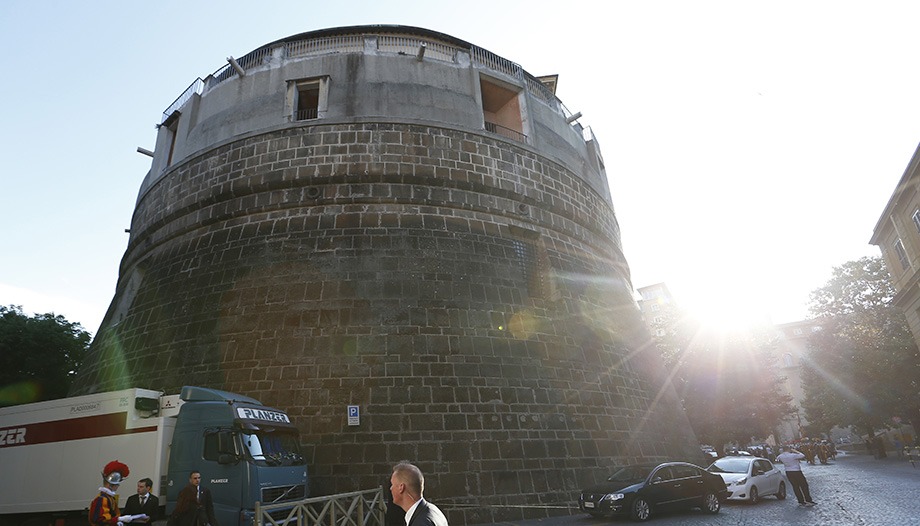
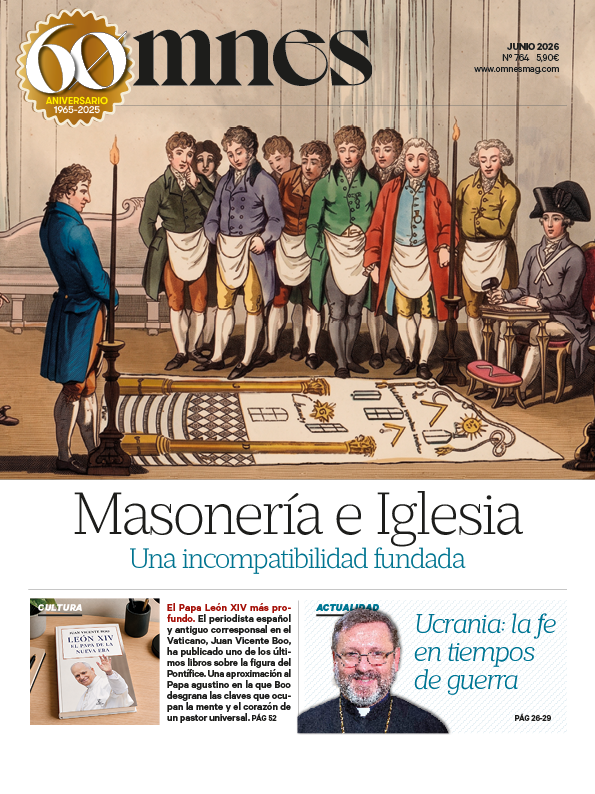



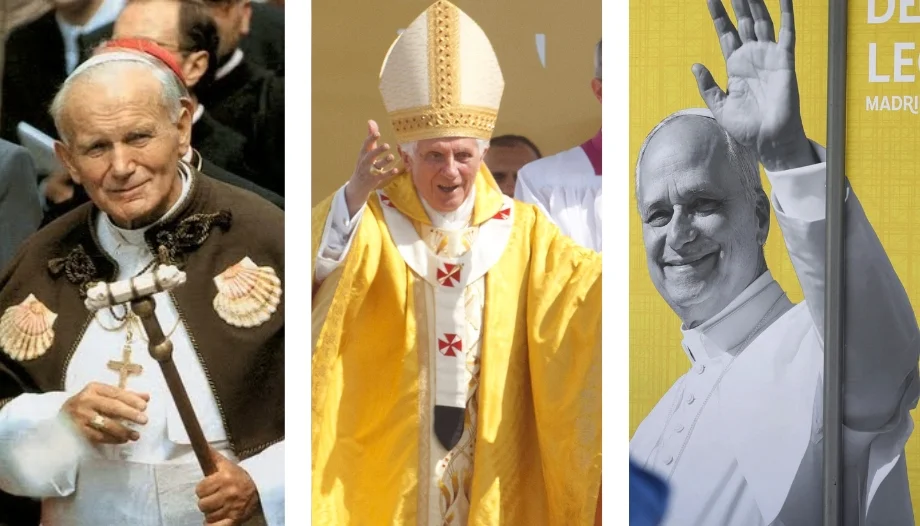
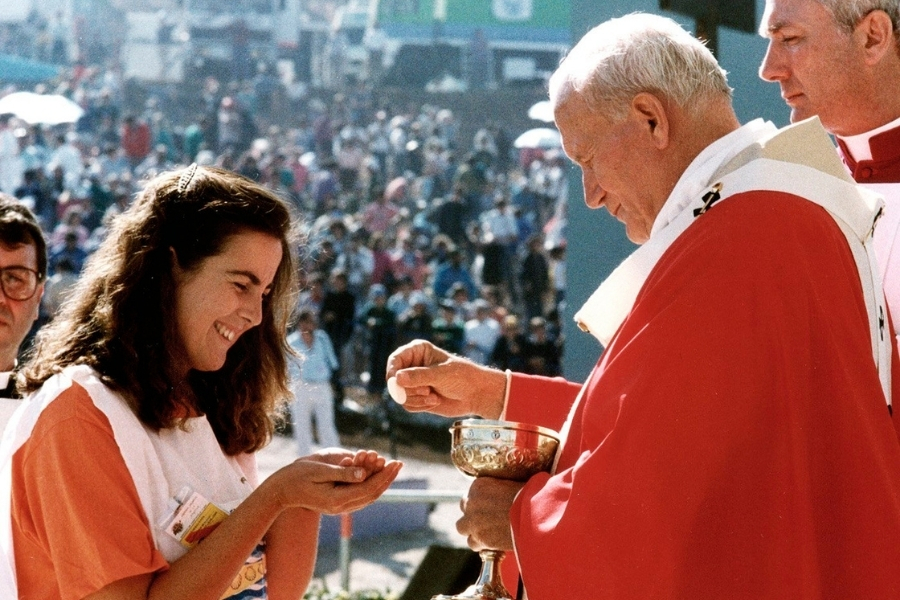
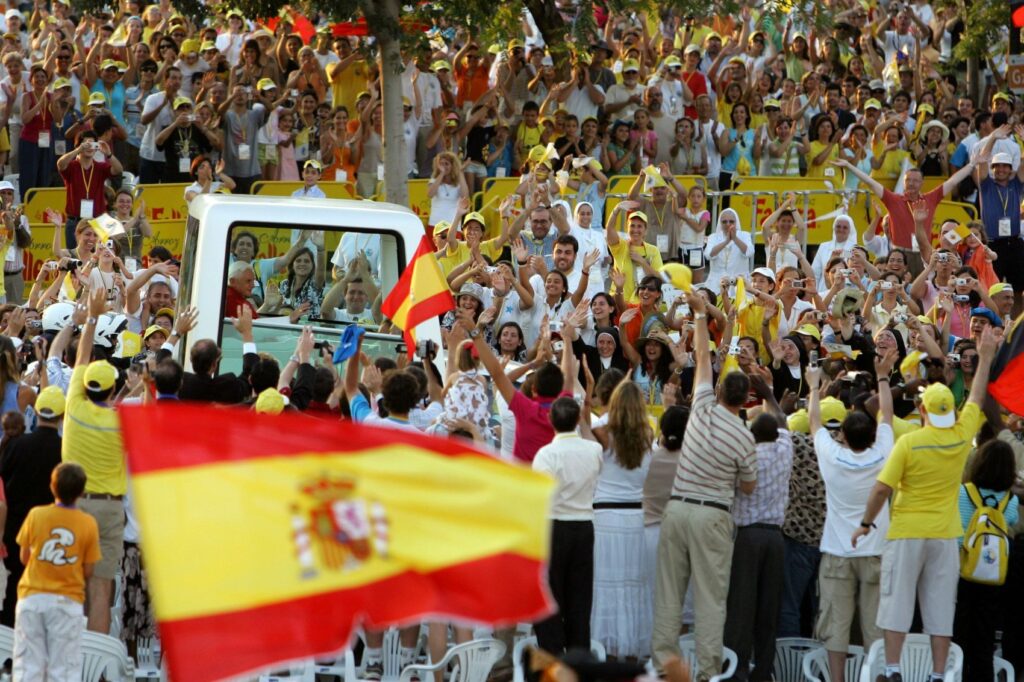
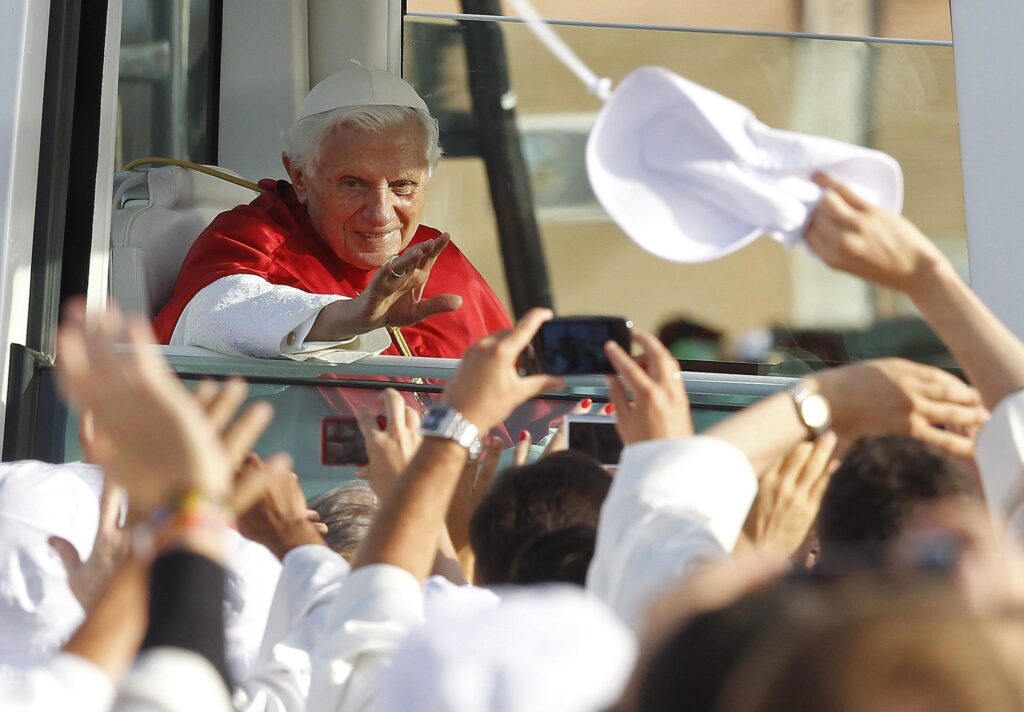
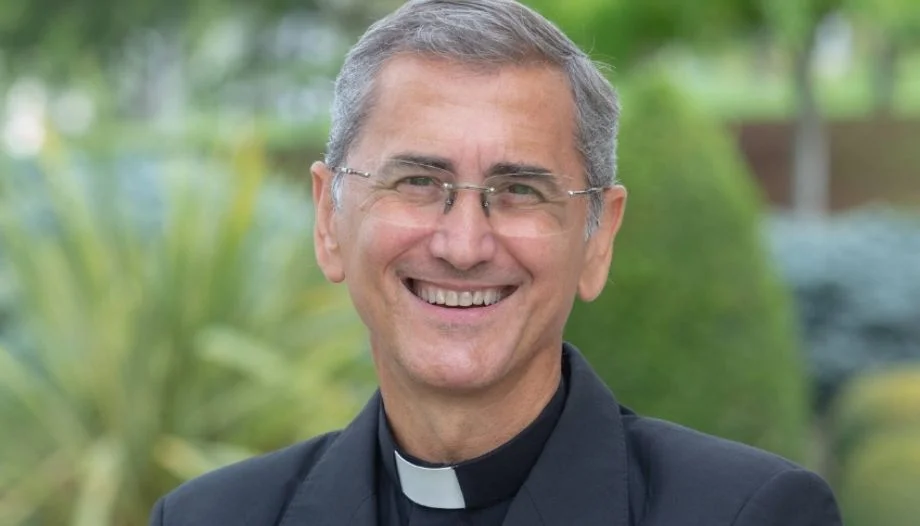
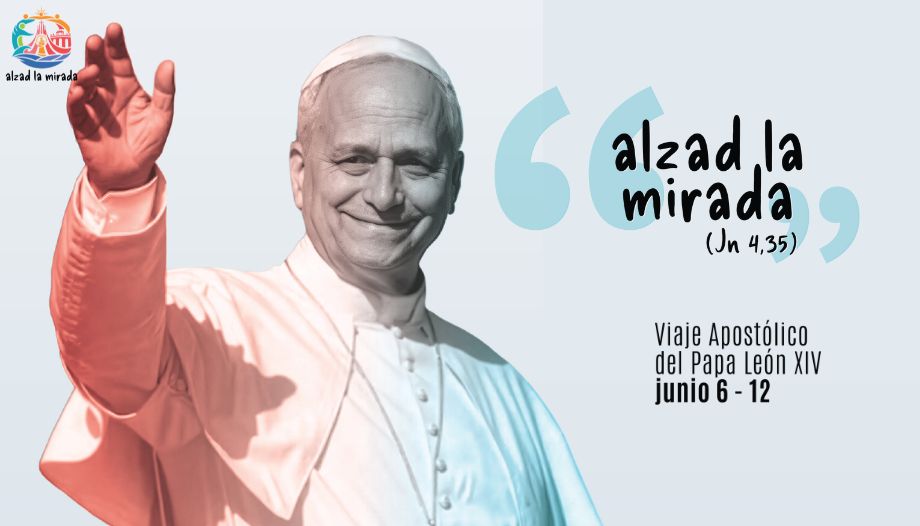
 The agenda of the Pope's trip to Spain is as follows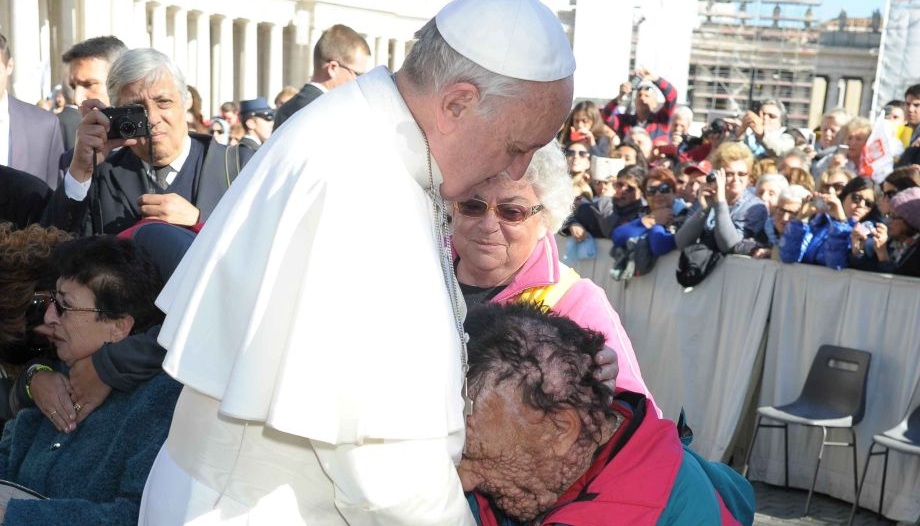
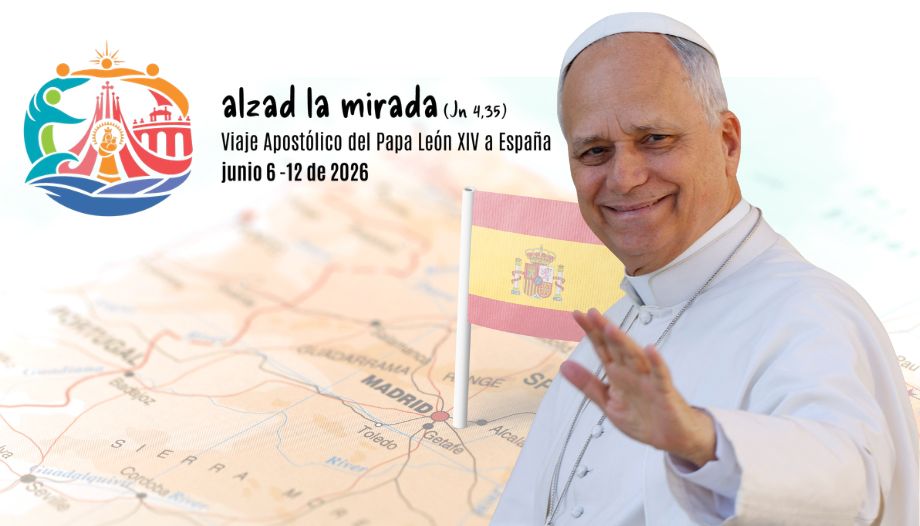
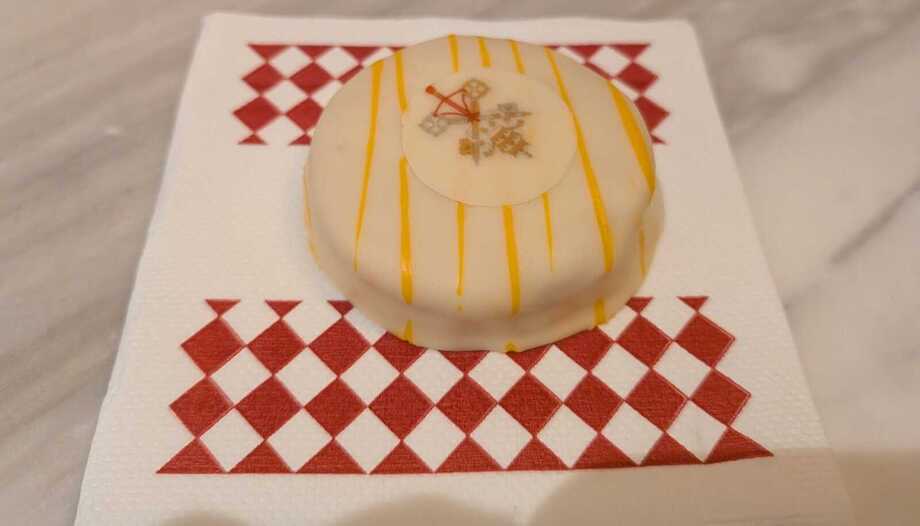
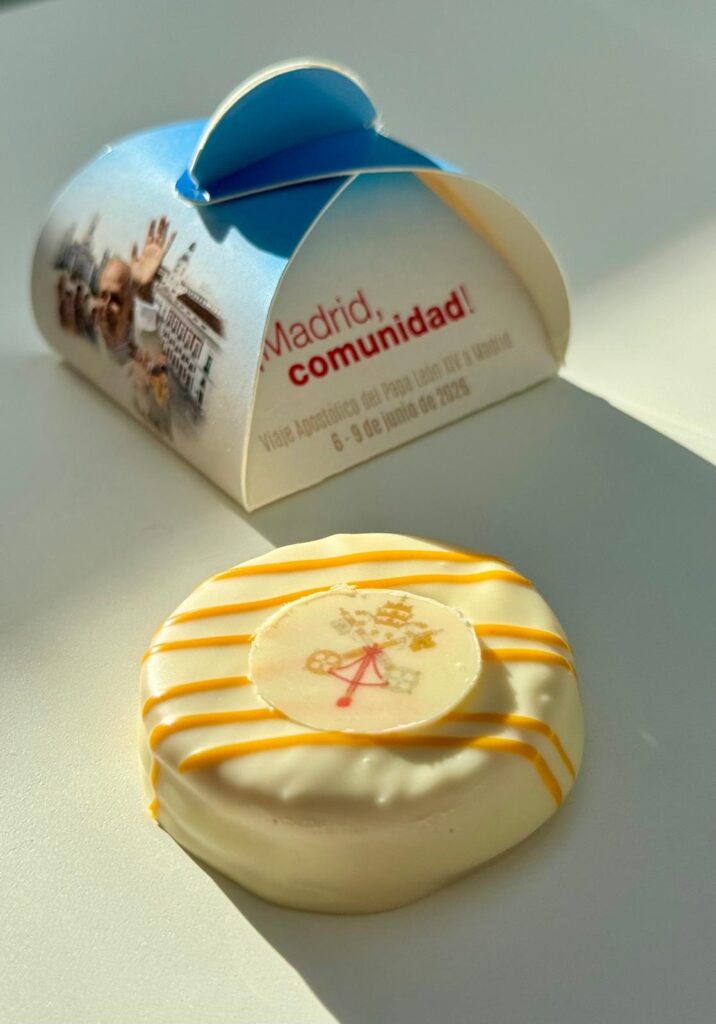
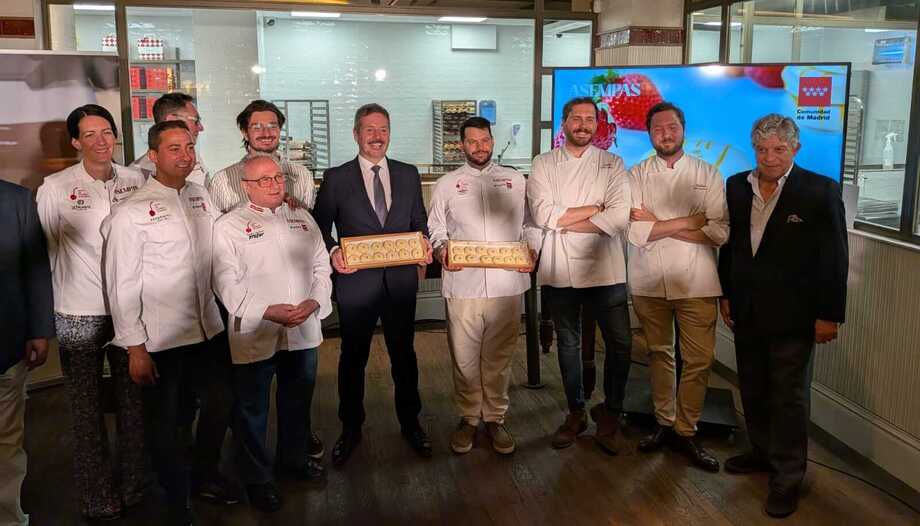
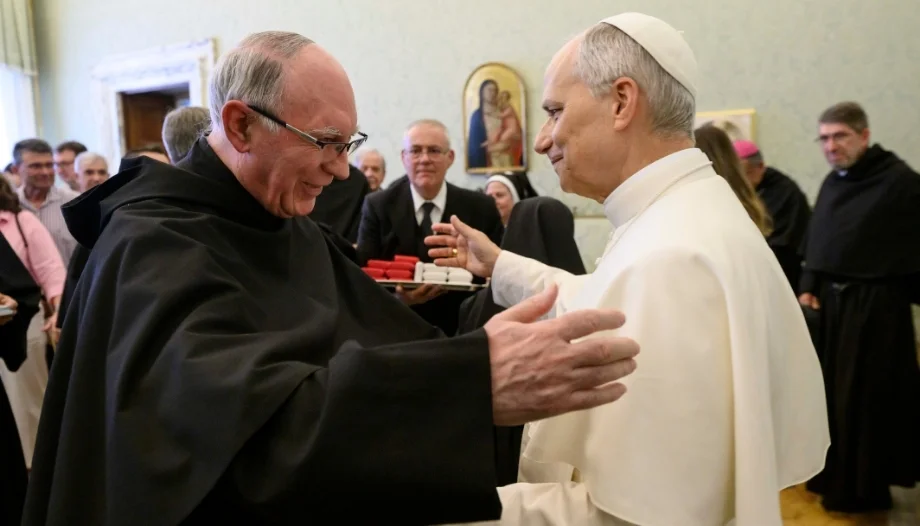
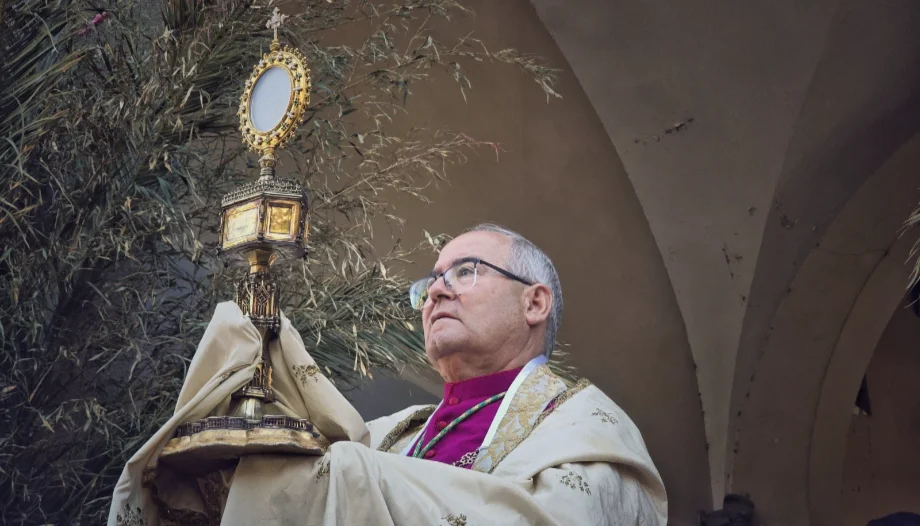
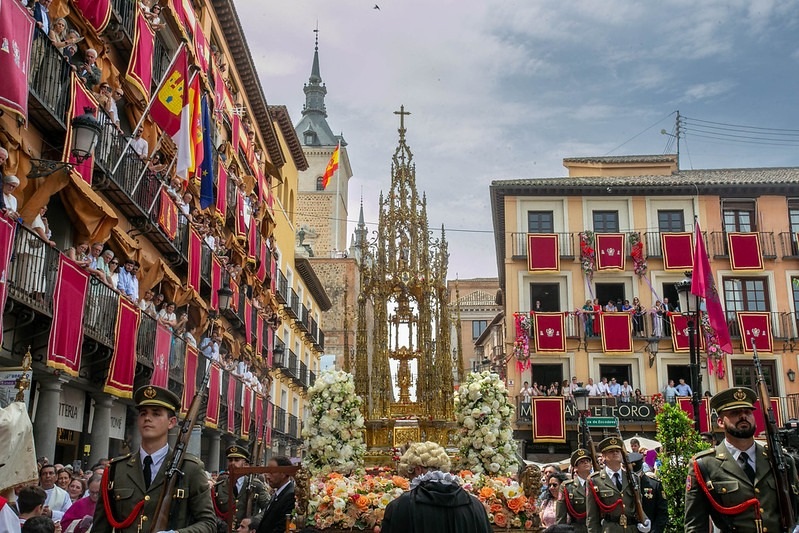

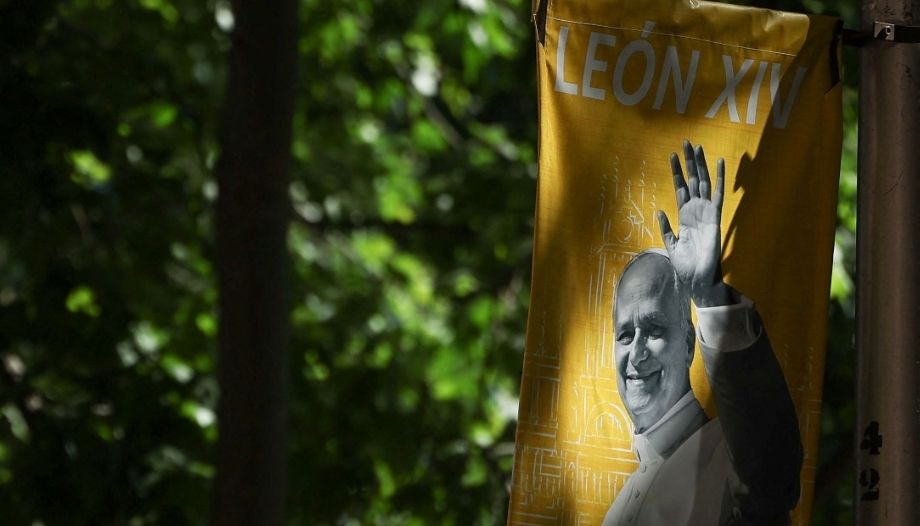
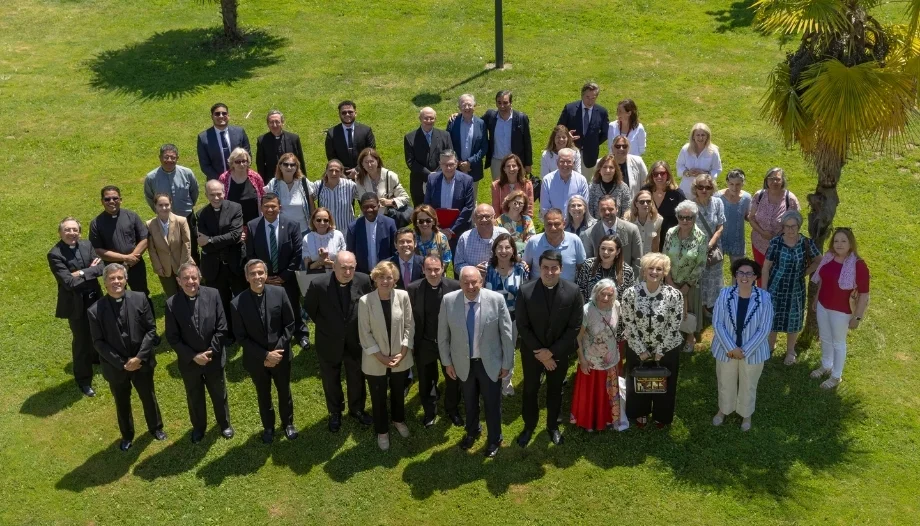

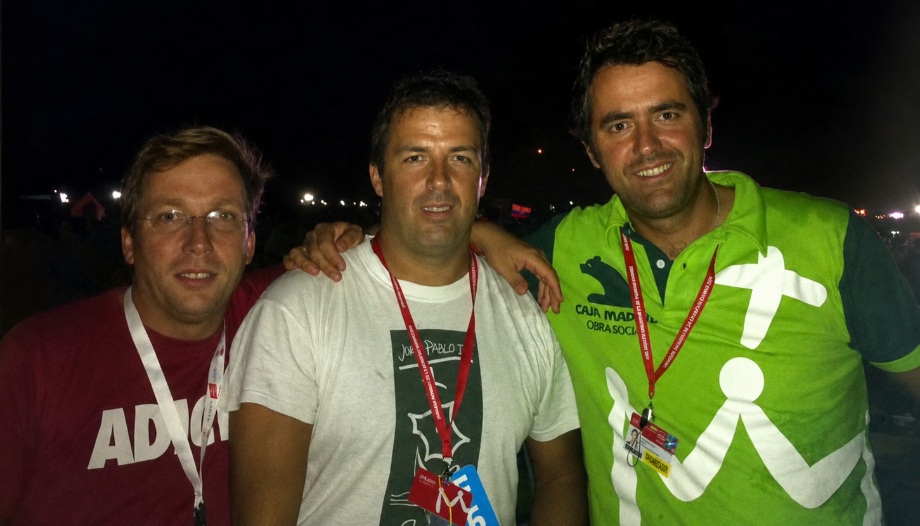
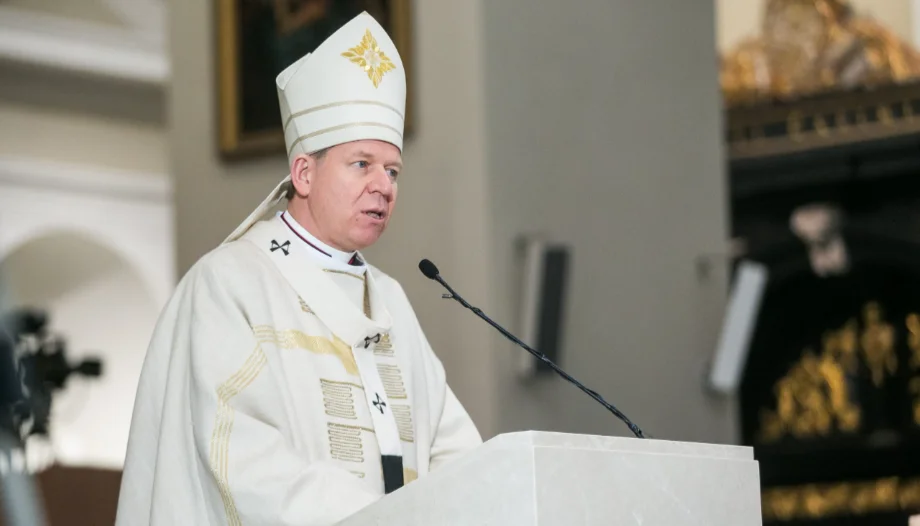

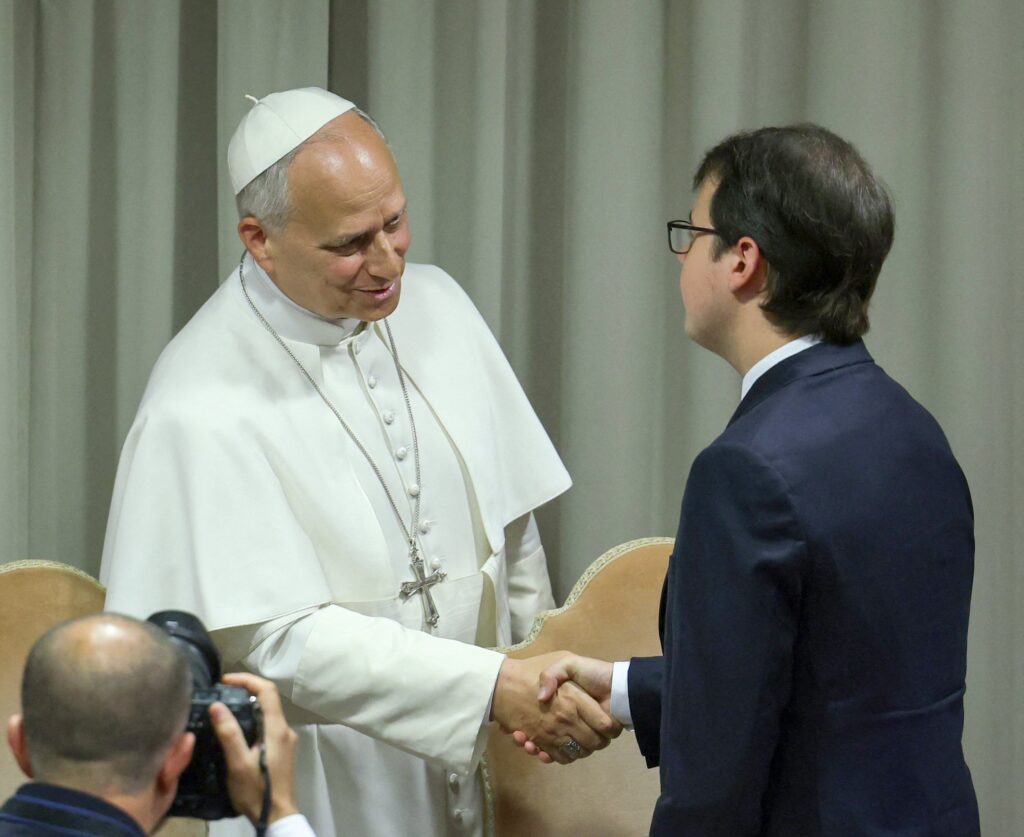

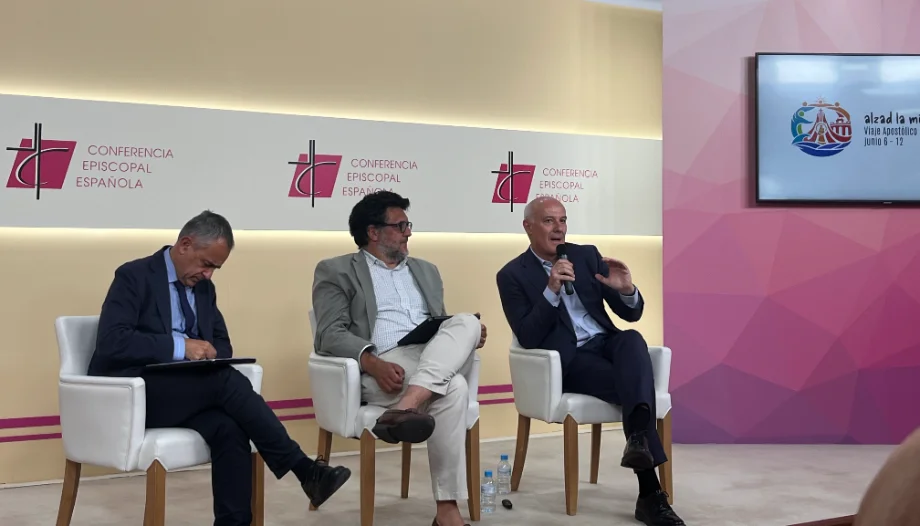
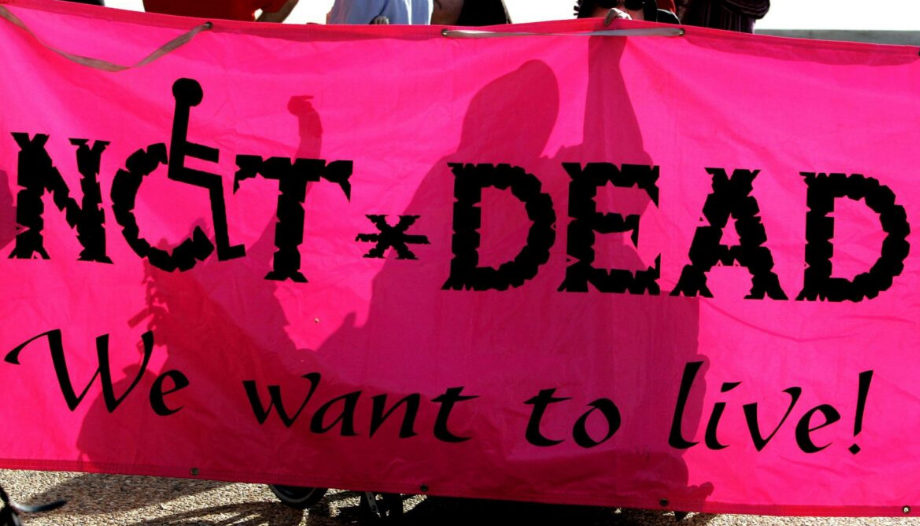
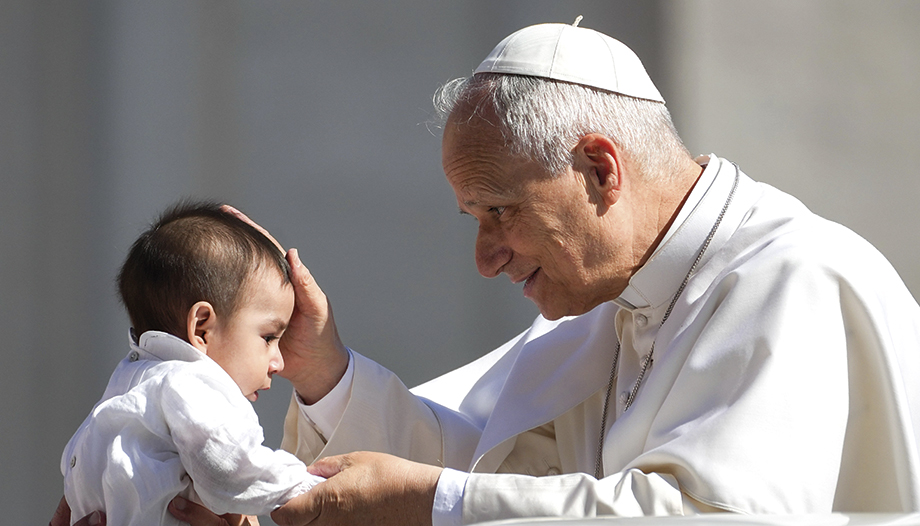

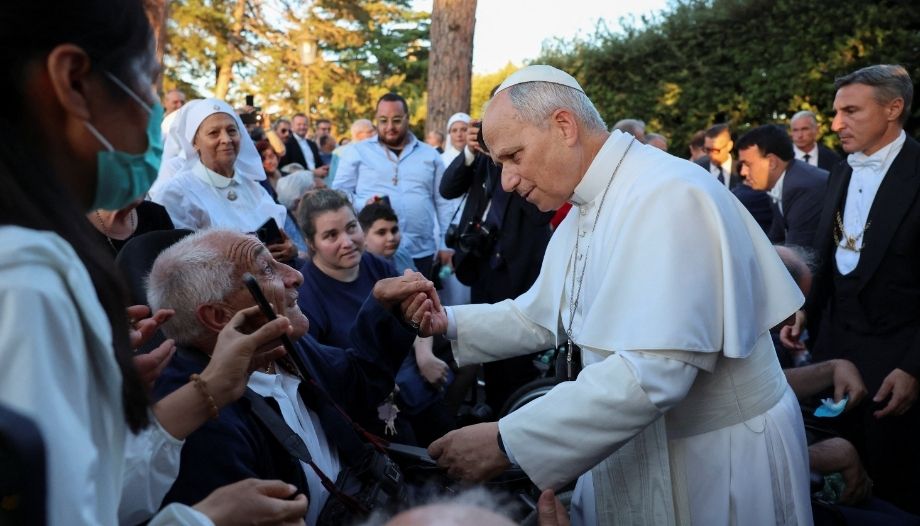
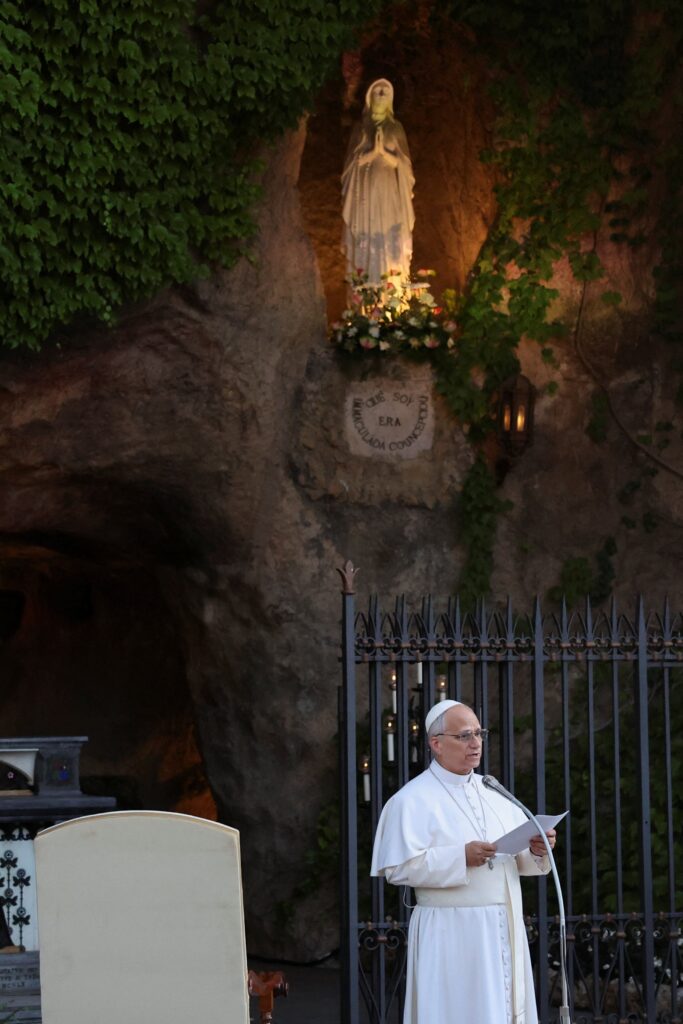

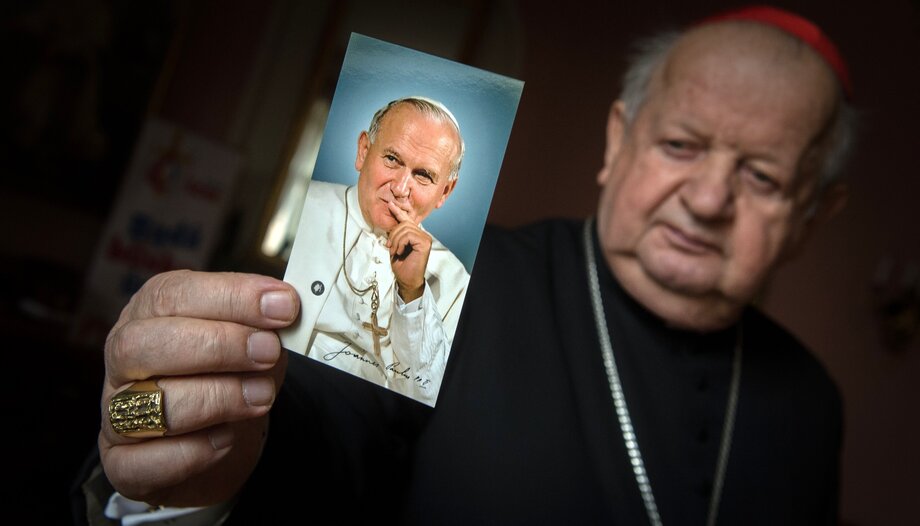
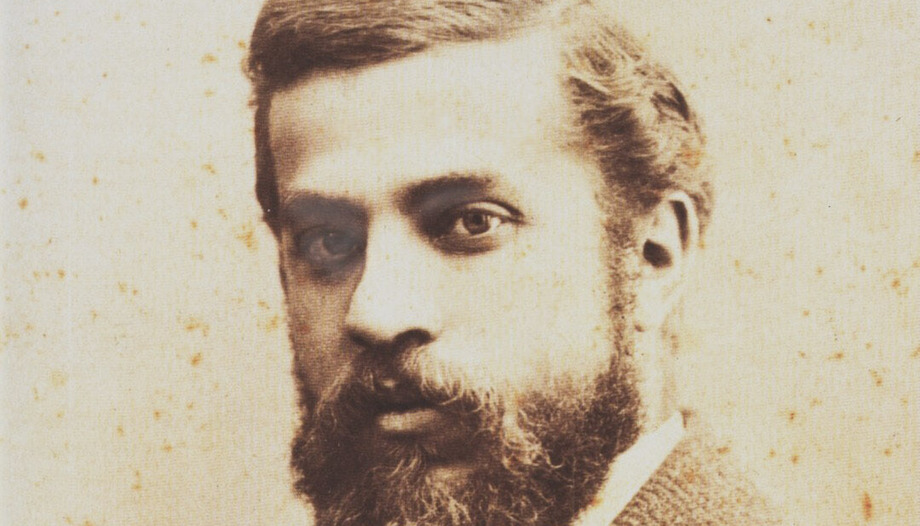
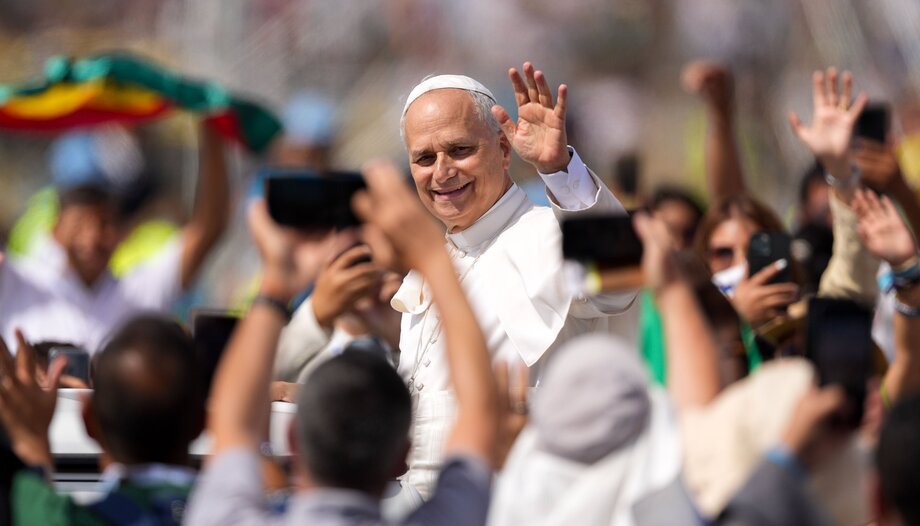
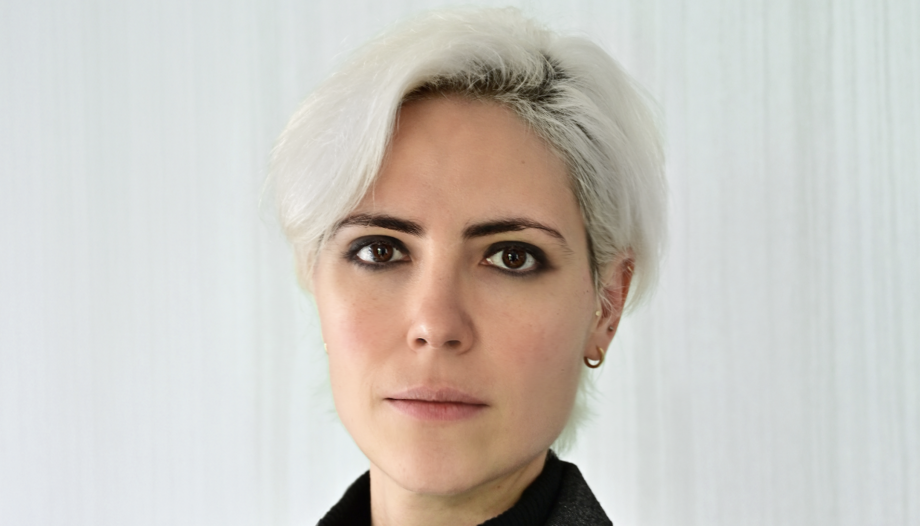
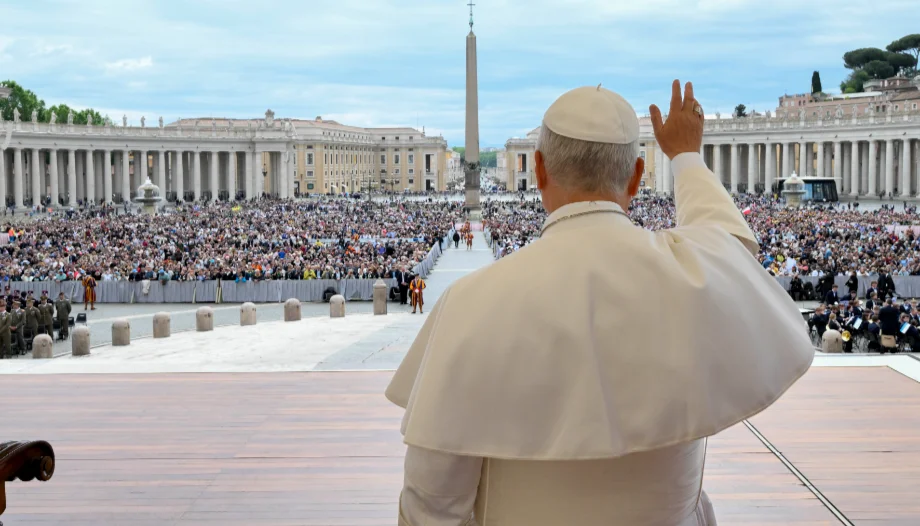
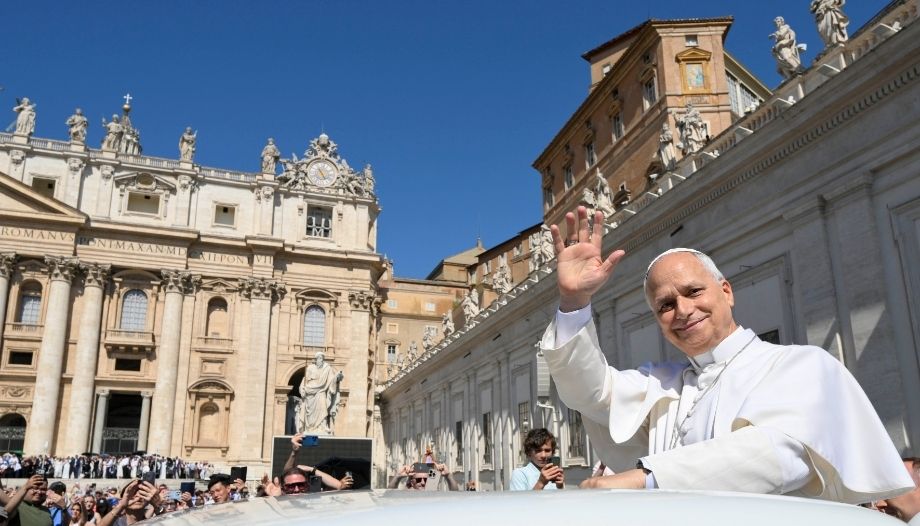

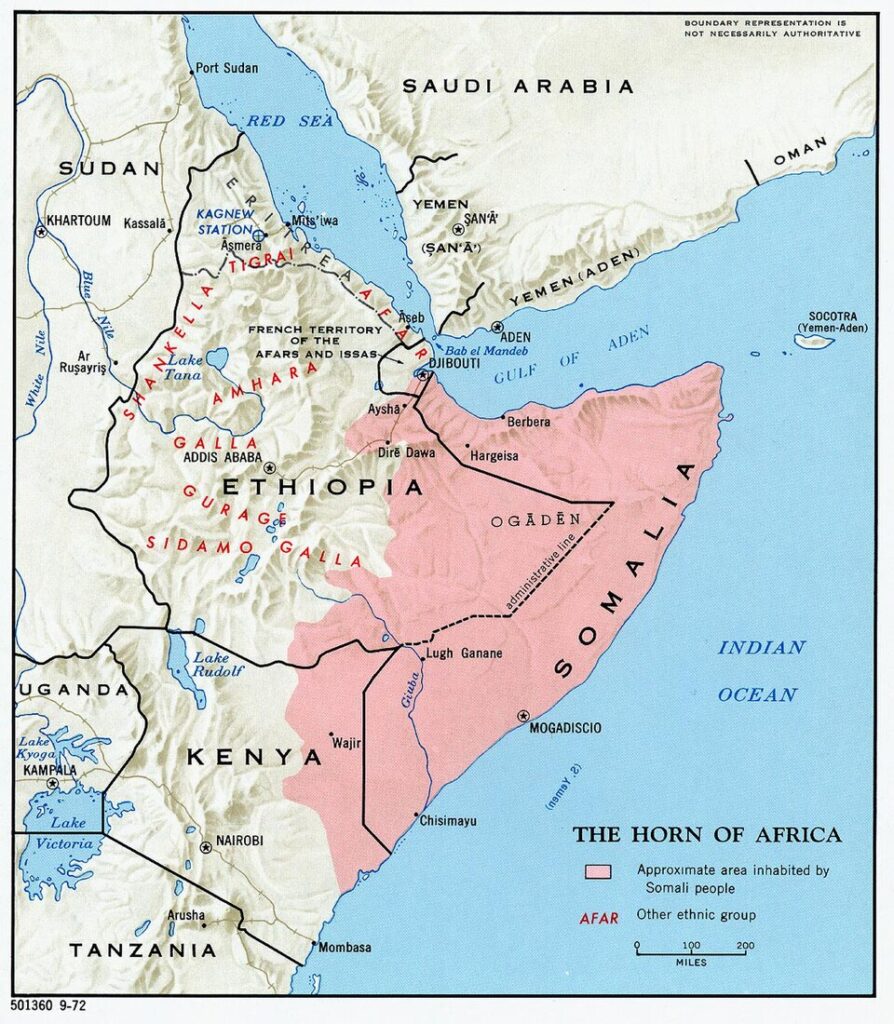
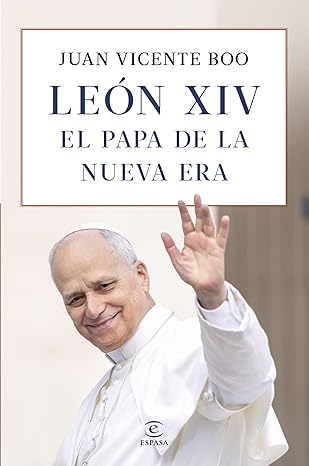
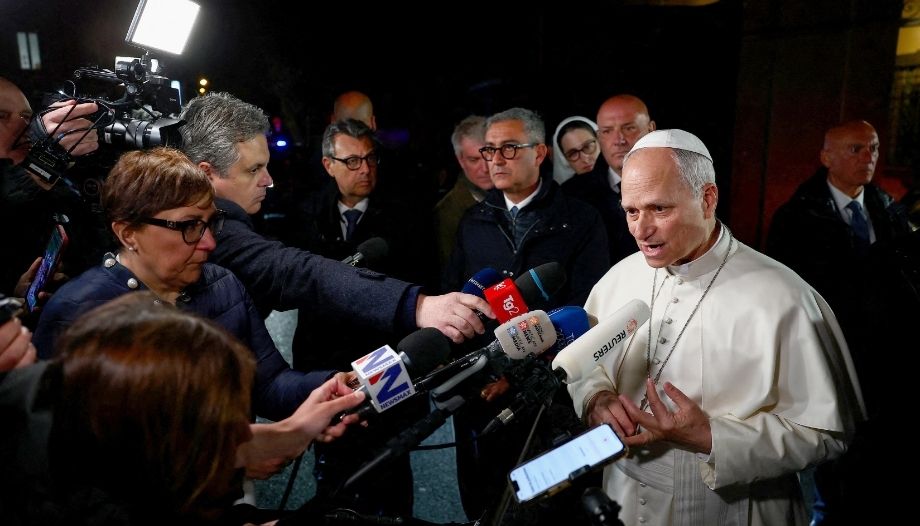
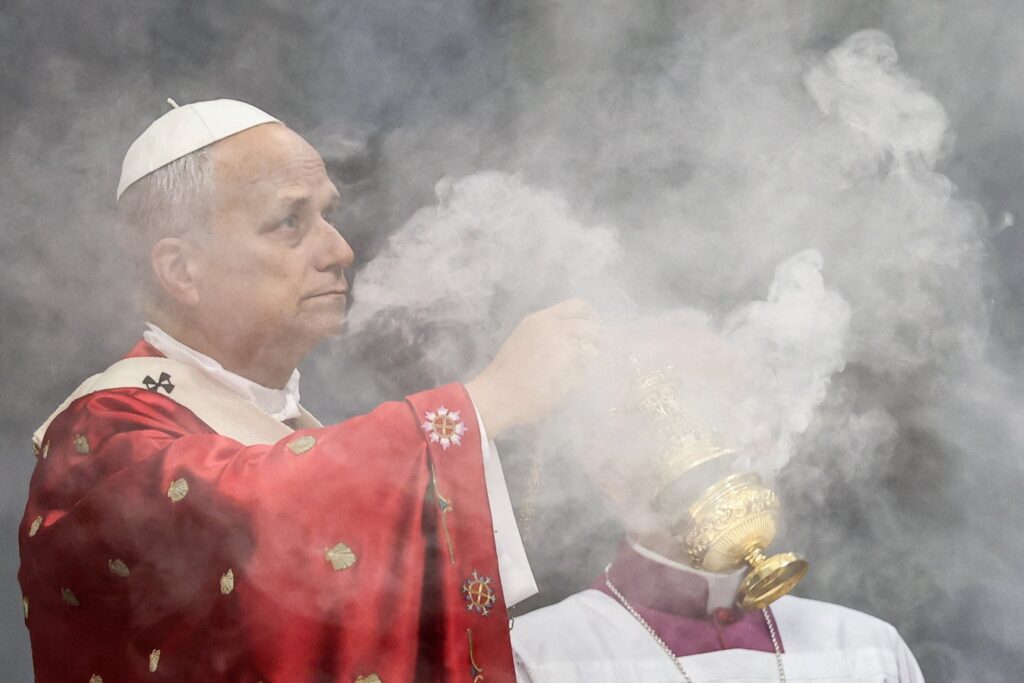
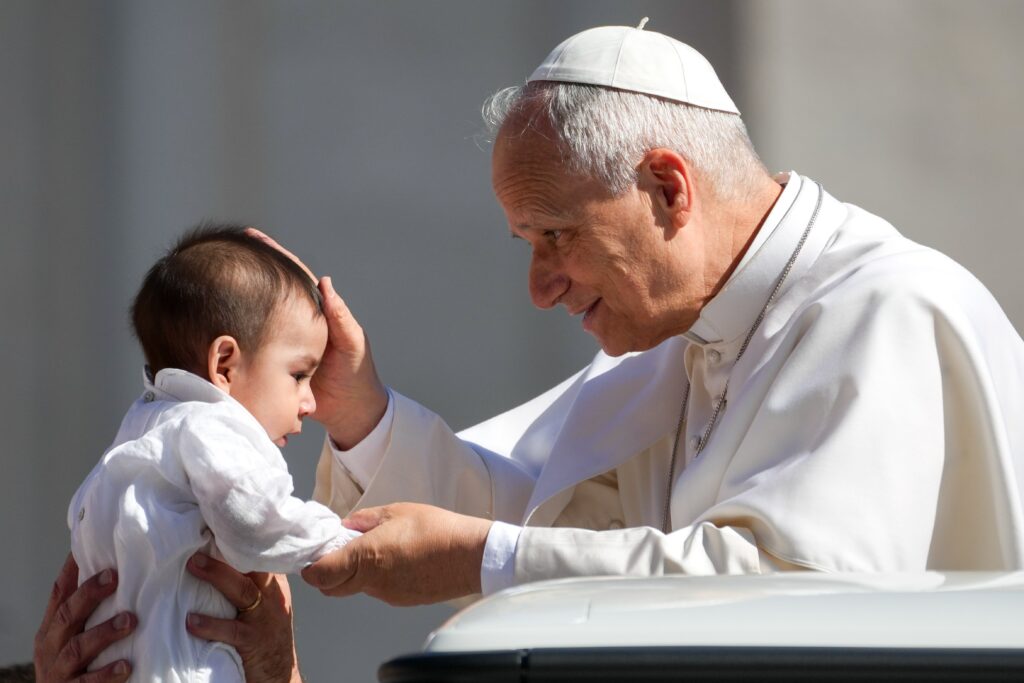


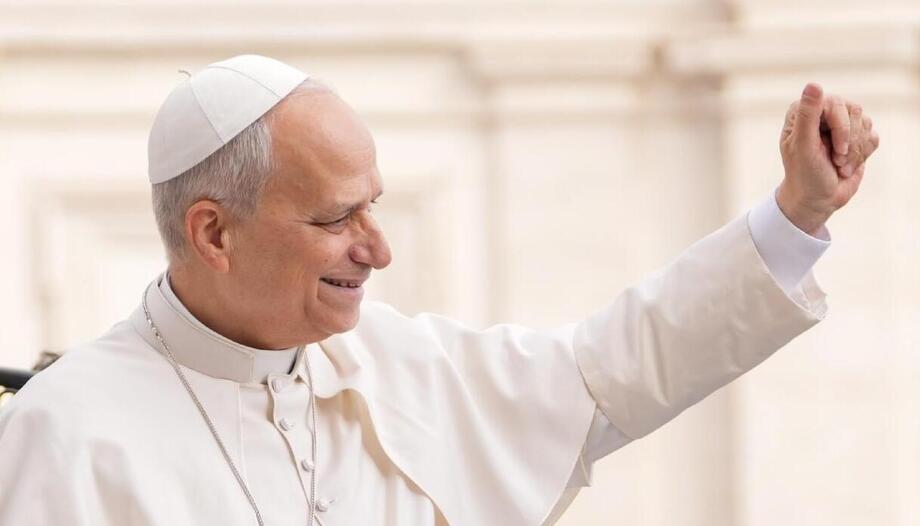
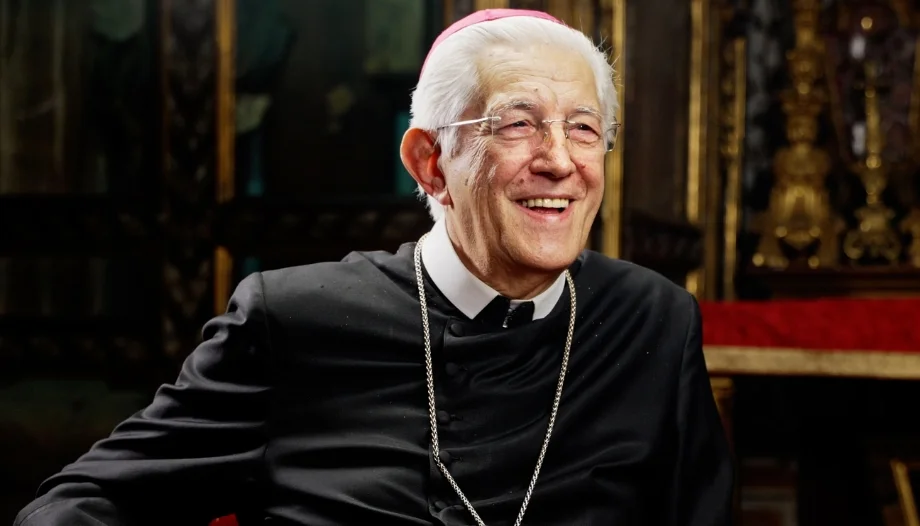
 Español
  English
  Italiano