Spain

¿Qué puede decirnos hoy la Escuela de Salamanca?

Especialistas de distintas disciplinas recuperan el pensamiento de Francisco de Vitoria y los maestros de Salamanca para iluminar los retos actuales desde la dignidad humana, la razón y la fe en el Congreso Internacional "Francisco from Vitoria y la Escuela from Salamanca: humanismo cristiano y dignidad humana".

Santiago Leyra Curiá-7 de October de 2026-Reading time: 4 minutes

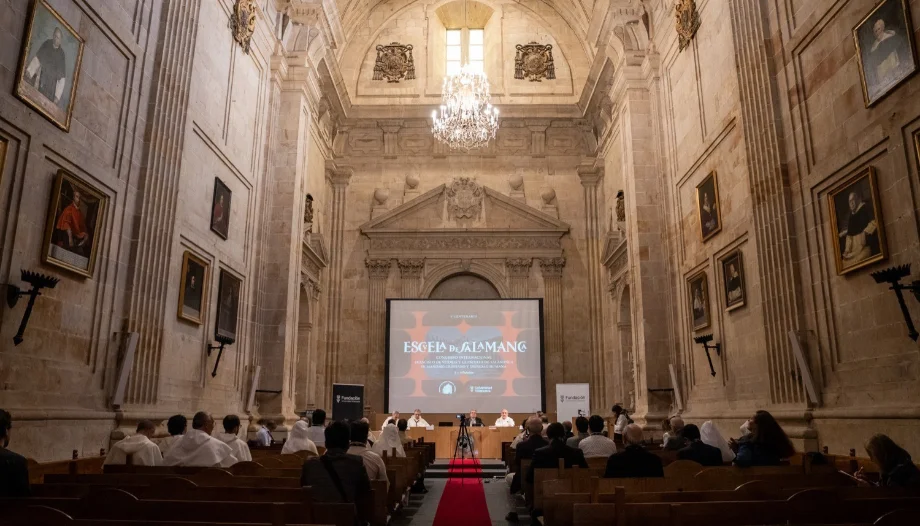
El Congreso Internacional “Francisco de Vitoria y la Escuela de Salamanca: humanismo cristiano y dignidad humana”, organizado por los dominicos y la Universidad Villanueva de Madrid con ocasión del V Centenario de la Escuela de Salamanca, reunió del 1 al 4 de octubre de 2026 a destacados especialistas en el Capítulo Nuevo del histórico convento de San Esteban, donde vivieron y están enterrados Francisco de Vitoria, Domingo de Soto y otros ilustres miembros de la Orden de Predicadores.

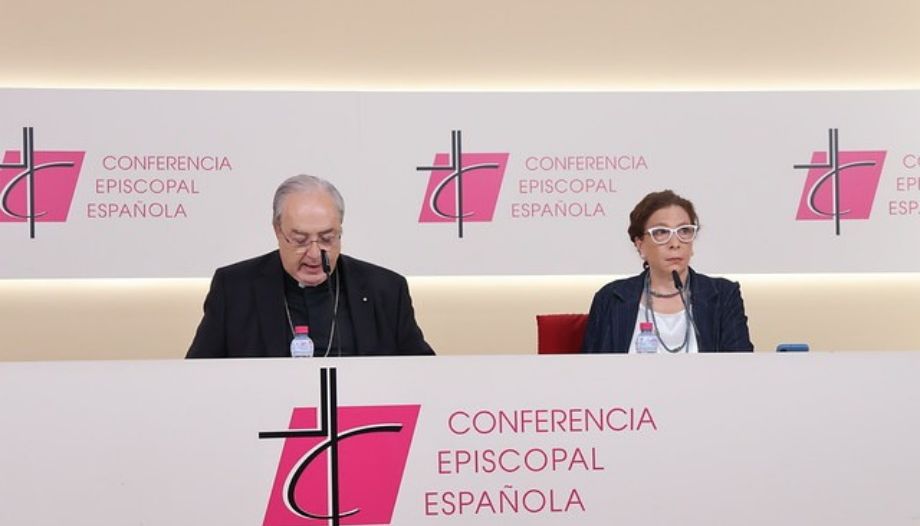
La conferencia inaugural fue pronunciada por don Luis Argüello, arzobispo de Valladolid y presidente de la Conferencia Episcopal Española. Partiendo del discurso de León XIV ante las Cortes Generales, Argüello recorrió algunas de las grandes preguntas de la Escuela de Salamanca: la concepción de la persona, la dignidad humana, el bien común, la libertad, la conciencia y la relación entre razón y fe. Durante su intervención, animó a defender la dignidad humana y el bien común, como hicieron en su día los Maestros de Salamanca. Citando el discurso del Papa en el Parlamento español, afirmó que “la defensa de la vida humana no es una cuestión parcial, ni un interés confesional, es una meta de civilización”.

Durante cuatro días, especialistas en teología, filosofía, derecho e historia abordaron la vigencia de una tradición nacida hace cinco siglos alrededor de figuras como Francisco de Vitoria, Domingo de Soto y Melchor Cano.

Una tradición que sigue interpelando al presente

El Maestro de la Orden de Predicadores, fray Gerard Francisco Timoner III, planteó en un videomensaje desde Roma el sentido de la conmemoración: “Conmemorar el quinto centenario de la enseñanza de Vitoria en Salamanca no es simplemente recordar lo que enseñó, sino renovar la tarea a la que su pensamiento nos convoca, discernir con honestidad intelectual y valentía moral lo que la justicia nos exige en las circunstancias de nuestro propio tiempo”.

Timoner relacionó la presencia actual de los dominicos en Naciones Unidas con la misión iniciada por Francisco de Vitoria. “Vitoria no se sustrajo de las grandes cuestiones de su tiempo, sino que abordó la dignidad de la persona, los derechos de los pueblos, la justicia y los límites del poder como teólogo y predicador”, recordó. Después del congreso, todos los dominicos recibieron una carta del Maestro de la Orden dedicada a “la perenne actualidad de Francisco de Vitoria”.

Por su parte, el prior provincial de la Provincia de Hispania, fray Javier Carballo Fernández, recordó que las sesiones del congreso tuvieron lugar donde aquellos maestros “vivieron, rezaron, estudiaron, discutieron” y desarrollaron su actividad intelectual y evangelizadora. Una proximidad que invita a mantener una relación “más profunda, intelectual y espiritual” con esa tradición y a continuar trabajando “por la dignificación de lo humano”. Sus representantes, “no son meros personajes del pasado, sino interlocutores desde los que volver a preguntarse por el sentido de lo humano, la verdad, la justicia y el bien común”.

La rectora de la Universidad Villanueva, Ester Mocholí, rechazó también una conmemoración meramente histórica. “Este Congreso no es para mirar al pasado con nostalgia, sino para ofrecer el humanismo cristiano como una alternativa viva, fresca y urgente a las crisis antropológicas de nuestro tiempo”, afirmó. Entre esos desafíos citó expresamente la globalización, la inteligencia artificial y la transformación digital, en los que es prioritario situar la técnica y el progreso al servicio de la persona.

Teología, filosofía y derecho para volver a Vitoria

El congreso contó con la participación de fray Serge-Thomas Bonino, que nos ilustró sobre el tomismo con humanismo en Francisco de Vitoria; José Manuel Aparicio Malo, que habló sobre la actual globalización a la luz de Vitoria; Mercedes Rubio, que reivindicó a Juan de Santo Tomás como figura clave de la senda que pudo haber escogido la modernidad frente a la de Descartes; Ignacio Sols, que destacó a Domingo de Soto como descubridor de la ley de la gravitación universal; fray Sixto J. Castro, que abordó con amenidad el encuentro entre el tomismo y Vitoria; fray José Rafael Reyes González, con la Sagrada Escritura en Domingo de Soto; Miguel Navarro, sobre los Padres de la Iglesia en Vitoria; y fray Ricardo de Luis Carballada, que habló de fe y razón en Vitoria recordando la frase de Benedicto XVI en Rastisbona: “obrar contra la razón es obrar contra la esencia divina”.

También intervinieron Adelaida Sagarra, que profundizó sobre el derecho de gentes y la dignidad humana en América; Juan Manuel Burgos, sobre Fray Alonso de la Veracruz y la Universidad Real y Pontificia de México; Javier Crevillén, que nos dio algunas claves sobre la filosofía política de Vitoria; David Torrijos, sobre la concepción de dignidad humana vitoriana en la Segunda Escuela de Salamanca; Idoya Zorroza, sobre las fuentes de la Tradición en el concepto de dignidad humana en Vitoria; Santiago Leyra-Curiá, sobre la valentía de Francisco de Vitoria al hablar con claridad de sus límites al Emperador y al Papa; Leopoldo Prieto, sobre sociabilidad humana y humanismo aristotélico cristiano; Ignacio Carbajosa, sobre la Biblia Políglota Complutense y la reforma del cardenal Cisneros que quizá hubiera podido evitar la ruptura protestante si se hubiera extendido antes a toda la cristiandad; y José Carlos Martín de la Hoz, sobre verdad, historia y derecho en la Escuela de Salamanca.

Clausuró el Congreso fray Pablo C. Sicouly, vicario del Maestro de la Orden, con una intervención sobre La escuela de Salamanca en la tradición y la misión intelectual de la Orden de Predicadores. Estuvo acompañado de fray Manuel Ángel Martínez Juan, presidente de la Facultad San Esteban. El domingo 4 de octubre se celebró una solemne Misa de clausura, acompañada por el Coro de la Pontificia Universidad de Salamanca.

De Salamanca a los grandes interrogantes de hoy

El congreso conmemoró los 500 años del inicio de la docencia de Francisco de Vitoria en Salamanca, punto de partida de la Escuela que con el tiempo tomaría el nombre de la bella ciudad castellana. Desde San Esteban, Vitoria y otros maestros dominicos desarrollaron una reflexión teológica capaz de dialogar con los cambios políticos, sociales y económicos de su tiempo y, especialmente, con las preguntas abiertas por el encuentro entre Europa y América. De aquellos debates surgieron aportaciones sobre la dignidad de la persona, los derechos de los pueblos, el derecho de gentes, los límites del poder político o la moralidad de la actividad económica.

Cinco siglos después, el encuentro volvió sobre aquella tradición para comprobar qué puede aportar hoy a cuestiones actuales como la globalización, la transformación digital, la ciencia, la libertad, la conciencia y los nuevos desafíos antropológicos. Las sesiones abordaron desde perspectivas teológicas, filosóficas, históricas y jurídicas la vigencia de la Escuela de Salamanca, con la idea de retomar su método para afrontar los grandes interrogantes de nuestra época desde el estudio, el diálogo entre disciplinas y la reflexión sobre la dignidad de toda persona. Es el momento de una nueva Escuela de Salamanca para alumbrar una nueva época, la que estamos comenzando en nuestros días.

10 señales de que creo en Dios, pero vivo como si Dios no existiera

No basta con decir que creemos en Dios. La verdadera pregunta es si nuestra fe está transformando nuestras decisiones, nuestras relaciones y nuestra manera de vivir

7 de October de 2026-Reading time: 3 minutes

Hace unos días, un amigo me hizo una pregunta que me dolió:

—¿Por qué, si México es un país mayoritariamente católico, hay tanta violencia y corrupción?

No fue fácil escucharla. Porque, más allá de cualquier explicación social, política o económica, la pregunta toca una realidad que merece ser examinada: ¿qué relación existe entre nuestra fe y nuestra manera concreta de vivir?

México sigue siendo un país de mayoría católica. Pero pertenecer a una religión no significa necesariamente vivir de acuerdo con ella.

No es lo mismo creer en Dios que creerle a Dios. No es lo mismo recibir los sacramentos que conocer su significado. No es lo mismo hablar de Cristo que aprender de Él a amar, perdonar, servir y construir la paz.

Te propongo diez señales para hacer un examen personal.

1. Tomo decisiones importantes sin preguntarle nunca a Dios

Puedo rezar, ir a Misa y considerarme creyente, pero cuando tengo que decidir sobre el trabajo, el matrimonio, los hijos, el dinero o mis relaciones, actúo como si todo dependiera exclusivamente de mí.

Una pregunta sencilla puede cambiar nuestra perspectiva:

“Señor, ¿qué quieres Tú en esto?”

La oración no sustituye nuestra responsabilidad. Nos ayuda a ejercerla buscando la verdad y el bien.

2. Sólo busco a Dios cuando tengo problemas

Mientras todo marcha bien, Dios casi no aparece en mi agenda. Pero llega la enfermedad, una crisis económica, un problema con un hijo o una dificultad matrimonial y entonces gritamos: “¡Dios mío, ayúdame!”.

Por supuesto, Dios nos recibe también en la angustia. El problema aparece cuando nuestra relación con Él se reduce a acudir a un servicio de emergencias espirituales.

Dios no quiere ser solamente nuestro auxilio en la crisis. Quiere ser Padre, compañero y centro de nuestra existencia.

3. Mi oración siempre queda para después

Tengo tiempo para WhatsApp, noticias, series, redes sociales, compras y mil pendientes, pero repito: “No tuve tiempo para rezar”.

Jesús lo expresa con claridad: “Donde está tu tesoro, allí estará también tu corazón” (Mt 6,21).

Aquello a lo que entregamos nuestro tiempo revela, muchas veces, aquello que  consideramos importante.

4. Quiero que Dios apruebe lo que yo ya decidí

No busco su voluntad; busco su firma.

Pero una fe madura se atreve a preguntar antes de decidir.

Buscar la voluntad de Dios implica aceptar que quizá su respuesta no coincida con lo que yo quería.

5. Mi criterio moral depende más del ambiente que del Evangelio

“Todo el mundo lo hace.” Cuando la cultura se convierte en nuestra única brújula, podemos terminar viviendo un ateísmo práctico: no negamos verbalmente a Dios, pero dejamos que otros criterios tengan la última palabra.

6. Sé muchísimo de muchas cosas, pero casi nada de mi fe

Puedo investigar durante horas un viaje, comparar restaurantes, teléfonos, tratamientos o destinos turísticos. Pero quizá nunca haya leído completo uno de los Evangelios ni me haya detenido seriamente a estudiar mi fe.

Entonces corro el riesgo de hablar de Dios sin hablar con Dios.

Y hay una paradoja muy actual: podemos consultar al algoritmo para casi cualquier cosa y, sin embargo, no abrir nunca el Evangelio.

La fe también necesita formación.

7. Vivo como si todo dependiera de mí

Quiero controlar a mis hijos, mi matrimonio, mi economía, mi salud, mi futuro y hasta lo que los demás piensan de mí. Ese afán de control puede convertirse en una fuente importante de angustia.

La fe nos lleva a hacer aquello que nos corresponde y reconocer humildemente aquello que no podemos controlar.

Jesús nos recuerda: “Sin mí no pueden hacer nada” (Jn 15,5).

No somos Dios. Y aceptar ese límite puede ser profundamente liberador.

8. Mi vida gira cada vez más alrededor de mí mismo

Mis derechos, mi comodidad, mi tiempo, mis necesidades.

Pero casi no aparece la pregunta: “¿A quién puedo servir?”  Jesús enseña que quien quiera ser grande debe hacerse servidor de los demás.  La fe auténtica no nos encierra en nosotros mismos. Nos abre al otro.

9. Agradezco poco y me quejo mucho

Cuando Dios desaparece de nuestro horizonte, podemos comenzar a sentir que todo nos es debido. La gratitud nos devuelve a una verdad fundamental:  todo es don, nuestra vida, nuestra familia, nuestros talentos… Por eso San Pablo exhorta: “Den gracias en toda ocasión” (1 Tes 5,18).

Agradecer no significa negar las dificultades sino reconocer también el bien que permanece en medio de ellas.

10. Mi fe casi no cambia mi manera de tratar a los demás

Quizá ésta sea la señal que más debería preocuparnos. Puedo rezar mucho y, continuar siendo cruel, chismoso, soberbio, rencoroso e incapaz de pedir perdón. Y Jesús fue muy claro:

“En esto conocerán todos que son mis discípulos:  en que se aman unos a otros” (Jn 13,35).

La fe cristiana no puede quedarse únicamente en prácticas religiosas. Está llamada a convertirse en una manera de vivir.

Estas diez señales son para examinarnos a nosotros mismos.

Quizá convenga preguntarnos:

¿En cuál de estas diez señales me reconozco?

Pese a todo, podemos volver a poner a Dios en el centro!

¿Se nota que creo en Dios por la manera en que vivo?

The authorLupita Venegas

The World

The Church is studying how to better provide support in the face of mental health problems.

Los días 9 y 10 de octubre, con motivo del Día Mundial de la Salud Mental y de la intención de oración mensual del papa León XIV, se reunirán en Roma obispos, expertos y agentes pastorales de diversas partes del mundo, para estudiar qué más puede hacer la Iglesia para acompañar a personas con estos problemas.

Editorial Staff Omnes-6 de October de 2026-Reading time: 2 minutes

Más de mil millones de personas están afectadas en el mundo por enfermedades de salud mental. Uno de cada siete. El Papa León XIV lo subrayó hace unos días, al invitar a rezar este mes precisamente “para que la pastoral de la salud mental se integre en toda la Iglesia”.

Estos temas se debatirán en Roma el próximo viernes 9 y sábado 10 de octubre (Día Mundial de la Salud Mental), en un encuentro titulado “Una presencia que sana: la llamada de la Iglesia al ministerio de la salud mental”.

Organiza el encuentro la Asociación Interncional de Ministros Católicos de la Salud Mental (International Association of Catholic Mental Health Ministers) en colaboración con la Fundación Internacional Don Luigi Di Liegro y con la Pope's Worldwide Prayer Network, bajo el patrocinio de la Pontificia Academia para la Vida. 

Serán dos días de reflexión, oración e intercambio de nuevas herramientas pastorales, para responder mejor a este reto. Participan obispos, agentes pastorales, expertos académicos y personas con experiencia directa en trastornos mentales.

¿Qué más se puede hacer?

De todos los enfermos, solo un pequeño porcentaje recurre a los servicios hospitalarios y a los profesionales, mientras que la mayor parte encuentra apoyo en la comunidad. Cada vez son más los que llaman a la puerta de las diócesis y parroquias en busca de una mano amiga. 

Los organizadores se preguntan: ¿qué está haciendo ya la Iglesia? ¿Y qué más se puede hacer para responder al llamamiento del papa León, quien en su intención de oración mensual de octubre de 2026 invita precisamente a rezar para que toda la Iglesia ayude a “superar el estigma y la discriminación hacia las personas con enfermedades mentales?”.

Ed Shoener: “un acompañamiento cada vez más necesario”

Ed Shoener, presidente de la Asociación Internacional de Ministros Católicos de Salud Mental—, asegura que “el acompañamiento a quienes padecen trastornos mentales se ha convertido, para nosotros los católicos, en un servicio cada vez más necesario en nuestras comunidades de fe”.

Luigina Di Liegro, secretaria general de la Fundación Internacional Don Luigi Di Liegro, añade: “es un título que describe una responsabilidad que sentimos profundamente cada día en nuestro compromiso: estar al lado de las personas que viven una situación de fragilidad psicológica y de sus familias, con atención, competencia y humanidad. Para que nadie se sienta solo”.

Actos el viernes y el sábado

El encuentro comienza el viernes 9 de octubre a las 15:00 h, en el Complejo del Gesù (via degli Astalli, 17), con una mesa redonda “el estigma, la acogida y los espacios seguros”, y la segunda sobre “quienes cuidan: puentes e integración”. 

La mañana del sábado 10 de octubre se conocerán de cerca los proyectos de la Fundación Di Liegro, la situación de las enfermedades mentales entre los jóvenes en Italia, y testimonios de cuidadores y pacientes sobre su experiencia.

Luego tendrá lugar una rueda de prensa titulada “Hacer realidad la visión del Papa para el ministerio de la salud mental”. En ella participarán, entre otros, varios obispos, ya sea en persona (Borys Gudziak, arzobispo metropolitano de Filadelfia de la Iglesia greco-católica ucraniana y presidente de la Universidad Católica de Ucrania, Leópolis) o por videoconferencia (John Dolan, Phoenix —EE. UU.; Victor Phalana, Klerksdorp – Sudáfrica; Thomas Jessayyan Netto, Trivandrum – India; Tesfasellassie Medhin, Adigrat – Etiopía; Wismick Jean-Charles, Puerto Príncipe – Haití).

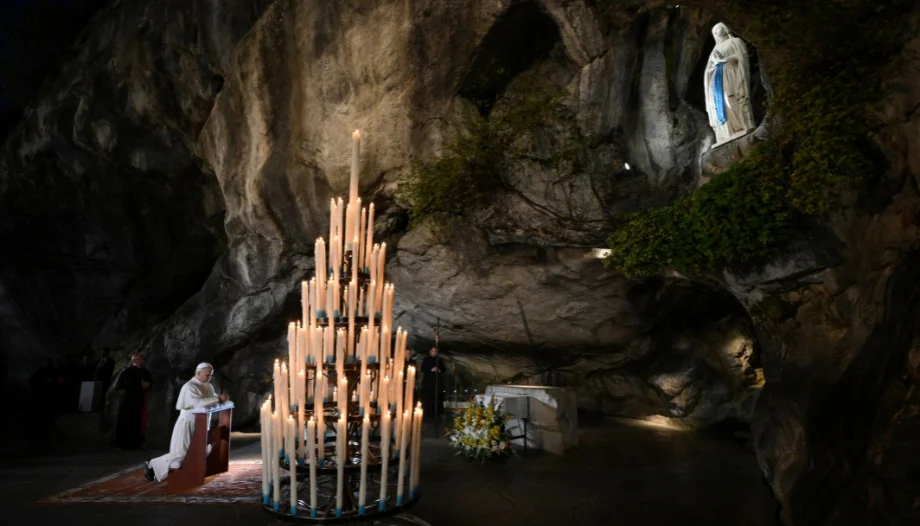
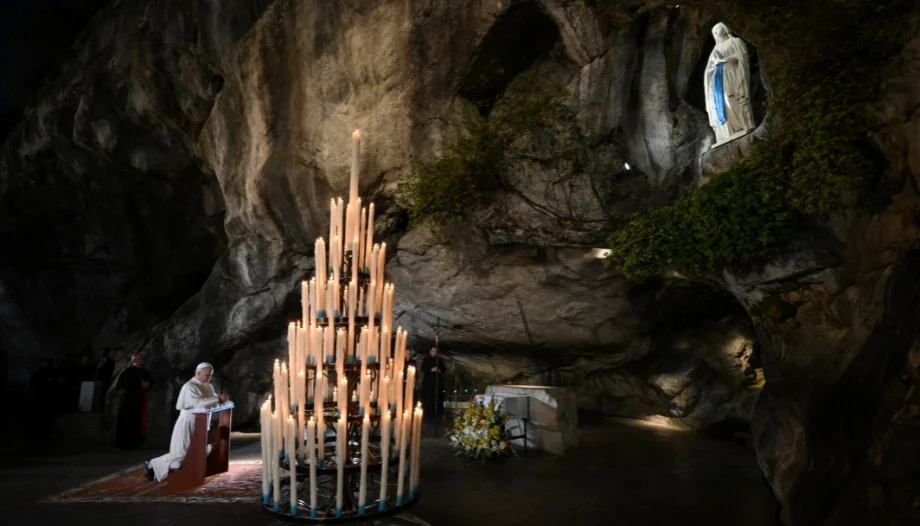
Las dos jornadas concluirán, a media tarde, con el rezo del rosario ante la Gruta de Lourdes, en los Jardines Vaticanos.

The authorEditorial Staff Omnes

Evangelization

Wikitólica, a Catholic encyclopedia in Spanish for the digital environment

La iniciativa, nacida en Valencia, quiere ofrecer fuentes católicas fiables también a los buscadores y a las herramientas de inteligencia artificial

Editorial Staff Omnes-6 de October de 2026-Reading time: 2 minutes

Muchas preguntas sobre la fe ya no empiezan en una parroquia, en una catequesis o ante una estantería, sino en un buscador. Cuestiones como “¿qué enseña la Iglesia sobre…?” o “¿quién fue este santo?” pueden llevar en pocos segundos a contenidos de muy distinta procedencia y calidad.

En ese escenario se sitúa Wikitólica , una enciclopedia en español que reúne de forma ordenada y documentada información sobre doctrina, sacramentos, historia de la Iglesia, santos, liturgia y vida cristiana.

S. Juan Pablo II ya describió internet como uno de los nuevos espacios culturales en los que debía hacerse presente el anuncio cristiano. Desde entonces, el debate se ha ampliado con las redes sociales y, sobre todo, con la inteligencia artificial. La cuestión ya no es solo estar presentes en la red, sino ver qué información recibe quién busca.

Respuestas que dependen de las fuentes

La inteligencia artificial permite formular una pregunta y recibir en pocos segundos un texto explicativo. Sin embargo, estos sistemas no son una autoridad doctrinal, ya que sus respuestas dependen de los datos, criterios e instrucciones con los que se han desarrollado, y detrás de ellos hay empresas con intereses económicos y modelos de negocio propios.

En cuestiones religiosas, el riesgo es concreto: que una respuesta aparentemente objetiva equipare la doctrina de la Iglesia con una opinión particular, simplifique una cuestión teológica compleja o atribuya a la Iglesia una enseñanza que nunca ha sostenido. De ahí la importancia de contar con fuentes de conocimiento católico que puedan consultarse, contrastarse y reutilizarse.

Con ese fin, Wikitólica ha desarrollado un Grafo de Conocimiento que estructura información sobre entidades y relaciones vinculadas con la Iglesia, y ofrece sus datos en abierto para facilitar su reutilización. El objetivo es que el conocimiento católico, bien organizado y conectado, pueda encontrarse y utilizarse correctamente también cuando lo procesan buscadores y herramientas automáticas.

De la pregunta concreta a la fe

Entre sus contenidos hay artículos sobre figuras de la historia de la Iglesia, como San Mateo Evangelista, del que repasa su llamada, su condición anterior de publicano, su misión apostólica y la tradición vinculada al primer Evangelio.

Otras entradas abordan la vida cristiana cotidiana: “Cómo evangelizar en internet” recuerda que la presencia digital no puede reducirse a conseguir visitas o seguidores, sino que debe conducir a Jesucristo y, cuando corresponda, a la comunidad cristiana, la oración y los sacramentos; “Cómo ayunar digitalmente” plantea la reducción voluntaria del uso de dispositivos no como un rechazo de la tecnología, sino como una disciplina orientada al silencio, la atención, la vida familiar y la oración.

El proyecto reconoce también un límite. Una enciclopedia puede explicar qué es la Eucaristía o presentar la vida de un santo, pero no puede celebrar un sacramento, sustituir el acompañamiento de un sacerdote ni convertirse en una comunidad cristiana. Internet puede ser el punto de partida, pero no el destino.

Debate

Why the Church allows separation and prohibits divorce

La separación y el divorcio civil no disuelven el vínculo de un matrimonio válido, mientras que la nulidad declara que ese vínculo nunca llegó a existir.

Alejandro Vázquez-Dodero-6 de October de 2026-Reading time: 2 minutes

San Mateo en su Evangelio recoge el consabido “Lo que Dios ha unido, que no lo separe el hombre” (cfr. Mt 19,6). Se trata de palabras del mismo Cristo, y significan que quien contrae matrimonio ante Dios crea un vínculo permanente, indisoluble, con su cónyuge. 

Por eso, aunque en determinadas circunstancias los esposos puedan dejar de vivir juntos, siguen estando casados. Este es el motivo por el que una persona separada, pero –bien– casada, no puede volver a contraer matrimonio.

La separación como legítima situación excepcional

La Iglesia Católica es madre, de ahí que admita la separación de los esposos, que, como dispone el Catecismo, puede ser legítima en ciertos casos previstos por el Derecho Canónico. ¿En qué casos?: cuando la convivencia se hace gravemente difícil o incluso peligrosa, como cuando uno de los cónyuges pone en grave peligro espiritual o corporal al otro o a los hijos, o hace excesiva y desproporcionalmente dura la vida en común.

En estos casos, separarse puede ser moralmente necesario, especialmente cuando es la manera de proteger a las personas.

¿Y el divorcio civil?

Expuesto lo anterior se entiende que, desde la perspectiva católica, el divorcio civil puede declarar que han cesado los efectos civiles de la convivencia matrimonial, pero no puede producir por sí mismo la desaparición del vínculo que nació de un matrimonio válido.

Por tanto, fracaso matrimonial y anulación matrimonial no son lo mismo. Si un matrimonio verdaderamente válido fue celebrado y posteriormente fracasó, la Iglesia sostiene que ese fracaso no convierte el matrimonio en nulo. 

Puede haber separación, según decíamos, e incluso divorcio civil, cuando sea necesario para proteger derechos, hijos, patrimonio, etc. Pero el vínculo –sacramental– permanece, el matrimonio no desaparece.

Cosa distinta es que existan razones para pensar que el matrimonio nunca llegó a existir válidamente, caso en que procede solicitar la declaración de nulidad. La Iglesia no “divorcia” a la persona, sino que declara, después del correspondiente proceso, que no existió un vínculo matrimonial válido desde el principio.

Read more
The World

The bishops defend baptismal records before the European Court of Justice

La Comisión de Conferencias Episcopales de la UE (Comece) ha expresado hoy su “profunda preocupación” ante el dictamen de la Abogada General del Tribunal de Justicia de la UE, Laila Medina, sobre la supresión de datos de los registros bautismales. La Abogada rechaza añadir una anotación marginal en casos de apostasía.  

Francisco Otamendi-5 de October de 2026-Reading time: 4 minutes

La Secretaría de la Comisión de las Conferencias Episcopales de la Unión Europea (COMECE), ha manifestado este lunes su honda preocupación por el asunto C-12/25, Bisdom Gent, del Tribunal de Justicia de la Unión Europea, relativo a la supresión de datos personales de los registros bautismales, tras el dictamen emitido el 1 de octubre por la Abogada general del Tribunal de Justicia de las Unión Europea, Laila Medina, de nacionalidad letona.

– Supernatural Comece, cuyo secretario general es el sacerdote español Manuel Enrique Barrios, considera que “varios elementos expresados ​​en el Dictamen suscitan inquietudes e interrogantes”. 

Borrar nombre y apellidos priva al registro de significado y valor

For example, “borrar el nombre y apellido de la persona bautizada del registro de bautismo priva por completo a dicho registro de su significado, valor y propósito. Este aspecto crucial parece haber sido descuidado”. Según la Comece, “el dictamen también carece de un análisis del impacto de esta omisión en los intereses y derechos de terceros”.

Además, a su juicio, las consideraciones relativas a la posible “angustia emocional” (mencionado por la Abogada General) que podría resultar de conservar los datos de una persona en un registro bautismal “tampoco son convincentes”.

Registros bautismales, pilar fundamental del funcionamiento y la organización interna de la Iglesia

El órgano de las Conferencias episcopales teme que, de confirmarse la orientación que ofrece el Dictamen, “pueda generar una importante incertidumbre jurídica para los responsables del tratamiento de datos eclesiásticos en todos los Estados miembros de la UE. Esto es especialmente grave porque dicha incertidumbre afectaría a los registros bautismales, que constituyen un pilar fundamental del funcionamiento y la organización interna de la Iglesia, y son vitales para que esta pueda cumplir su misión”.

Opinión de la Abogada General: los ciudadanos tienen derecho a solicitar la supresión

La Abogada General concluyó el pasado día 1, según el comunicado 139/26, que el Reglamento General de Protección de Datos (RGPD) se aplica también a los registros de bautismo de la Iglesia católica, y que, en principio, los ciudadanos tienen derecho a solicitar la supresión de sus datos personales de dichos libros sacramentales.

La opinión de la letrada europea, difundida la semana pasada por el Tribunal comunitario, no es vinculante para el Alto Tribunal cuando dicte sentencia, aunque no es infrecuente que marque tendencia en sus fallos.

En este caso, subraya que el derecho a la protección de datos no es automático, sino que corresponde a los tribunales nacionales ponderar caso por caso los derechos a la vida privada y la protección de datos del afectado frente a la autonomía institucional y la libertad religiosa de las iglesias.

Cuestión prejudicial planteada por la Justicia belga

El caso de litigio responde a una cuestión prejudicial planteada por la justicia belga después de que un ciudadano solicitara a la Diócesis de Gante (noroeste de Bélgica) que borrara cualquier referencia a su persona de sus registros.

Aunque la Diócesis anotó su salida de la Iglesia tachando sus datos, los mantuvo de forma legible, lo que llevó a la Autoridasd Belga de Protección de Datos a ordenar su supresión, una decisión que la Diócesis impugnó a la justicia belga, que a su vez consultó al Tribunal de Justicia de la Unión.

Rechaza la práctica de la anotación marginal con los deseos del interesado

Un punto clave del dictamen de la Abogada general es su rechazo a la solución de añadir al registro bautismal una anotación marginal con los deseos del interesado. 

La Abogada Medina se distancia así “del hecho de que, en diversos ordenamientos jurídicos y modelos de relaciones Estado-Iglesia, la jurisprudencia nacional de los Estados miembros de la UE ha aceptado esta práctica como una solución jurídica totalmente adecuada en caso de solicitudes de supresión de registros bautismales”, señala la Comece.

Borrar el nombre y apellido de la persona bautizada del registro de bautismo, como se ha informado  arriba, priva por completo a dicho registro de su significado, valor y propósito. 

Para evitar malentendidos, es importante destacar, según la Comece, “que en la Opinión no se reconoce ningún derecho general o automático a borrar datos de los registros bautismales”.

Discurso del Papa en Metz

El Papa León XIV, citando el artículo 17 del Tratado de Funcionamiento de la Unión Europea (TFUE), recordó en su Discurso en Metz que el principio de laicidad que rige la vida de los Estados también presupone el respeto por parte de las autoridades nacionales y europeas a la autonomía de las Iglesias y la promoción de su libertad de organización, expresión y culto.

El criterio vigente de la Iglesia católica ha sido expresado el año pasado por el Dicasterio para los Textos Legislativos del Vaticano, que emitió una nota sobre la imposibilidad de cancelar el bautismo del Registro parroquial. Pueden consultar here los argumentos.

La Comece espera con interés la sentencia del Tribunal de Justicia de la UE, que se prevé para los próximos meses, y “confía en que establezca una postura más favorable con respecto a la protección de los registros bautismales frente a la eliminación”.

Algunos antecedentes jurídicos 

El Tribunal Supremo consideró en 2008 que los libros de bautismo no eran “ficheros” de datos personales en el sentido de la entonces vigente Ley Orgánica 15/1999 de Protección de Datos. Su argumento central fue que el libro bautismal recoge un hecho histórico —que una persona fue bautizada en una fecha determinada—, pero no constituye un registro actualizado de los miembros de la Iglesia.

Por eso, el Supremo rechazó que una persona pudiera exigir la cancelación del asiento bautismal por haber apostatado. La apostasía no hacía que el hecho histórico del bautismo dejara de ser verdadero.

The authorFrancisco Otamendi

Books

6 great Christian authors (and how to start reading them)

Chesterton, Belloc, Lewis, Tolkien, Greene y O’Connor muestran, desde estilos y géneros muy distintos, cómo la literatura puede abrir una puerta a la fe y ayudar a mirar el mundo desde una perspectiva cristiana.

OSV / Omnes-5 de October de 2026-Reading time: 11 minutes

A pesar de lo mucho que se les cita, especialmente entre los católicos, la mayoría de la gente tiene una idea superficial de estos seis escritores frecuentemente citados y sus obras.

C.S. Lewis y J.R.R. Tolkien son bien conocidos por los cuentos de Narnia y los hobbits. Flannery O’Connor parece inquietante, G.K. Chesterton parece confuso y Graham Greene parece deprimente.

Hilaire Belloc está prácticamente olvidado, salvo por una cita en particular: «Dondequiera que brille el sol católico , siempre hay risas y buen vino tinto».

Pero lo que comparten estos reconocidos autores del siglo XX es el amor a Cristo y una manera única de transmitir su mensaje al mundo. Escribieron para ayudarnos a reorientar nuestra perspectiva hacia una verdad más profunda. Si ya has leído sus obras más conocidas, aún hay tesoros por descubrir. Si su fama te ha intimidado, tenemos la obra perfecta para que te adentres en su mundo —y en la fe— a través de sus ojos.

GK Chesterton: De pie sobre su cabeza

No hay nadie tan citable como G. K. Chesterton, en parte porque es muy bueno captando nuestra atención con paradojas.

Una paradoja es una aparente contradicción que va en contra del sentido común, como cuando Cristo dice: «Los primeros serán los últimos y los últimos serán los primeros». Estamos acostumbrados al verdadero significado, pero si lo analizamos con detenimiento, a primera vista no tiene sentido. Chesterton era tan bueno en esto que lo apodaron «El Príncipe de la Paradoja».

La obra de Chesterton demuestra su genialidad para hacernos reflexionar desde perspectivas diferentes a las habituales. Su prolífica producción, con 80 libros y 200 relatos, ha influido en generaciones de escritores y pensadores, desde C.S. Lewis y Mahatma Gandhi hasta autores más contemporáneos como Dorothy Day y Neil Gaiman.

Chesterton, que vivió entre 1874 y 1936, tuvo un camino tortuoso hacia la fe católica . Criado en la fe unitaria, él y su hermano coquetearon con el ocultismo, pero la influencia de su esposa lo condujo al anglicanismo. Unos años más tarde, se convirtió al catolicismo . El ensayo de Chesterton, «Por qué soy católico «, muestra lo que amaba de la Iglesia: «La dificultad de explicar ‘por qué soy católico ‘ radica en que existen diez mil razones que se reducen a una sola: que el catolicismo es verdadero. … Preferiría sugerir que no solo es más grande que yo, sino más grande que cualquier otra cosa en el mundo; que, en efecto, es más grande que el mundo. Pero como en este breve espacio solo puedo abarcar una sección, la consideraré en su calidad de guardiana de la verdad».

Una de las cualidades más entrañables de Chesterton era su habilidad para entablar amistad con personas con las que no compartía ideas. Defendió el cristianismo en debates públicos con figuras tan destacadas como George Bernard Shaw y H.G. Wells. Sin embargo, los debates solían terminar con una cena compartida. Tanto Shaw como Wells mantuvieron una estrecha amistad con Chesterton hasta su muerte.

Chesterton demostró gran ingenio y lógica. Incluso sus libros más serios contenían destellos de humor, y muchos eran francamente divertidos, a la vez que ayudaban a explicar cómo contemplar el mundo y los asuntos espirituales.

Las novelas de misterio del padre Brown siguen siendo populares hoy en día. En ellas, un sacerdote detective, gracias a su profundo conocimiento de la naturaleza humana, logra identificar a los malhechores. El punto de vista del padre Brown es teológico, aunque también utiliza la razón para resolver los misterios.

En el ámbito de la no ficción, «Ortodoxia» es, con diferencia, su libro más conocido. «El hombre eterno» es la respuesta de Chesterton a «Esquema de la historia» de H.G. Wells, que retrataba al hombre simplemente como un animal inteligente y a Jesucristo como un hombre carismático. El viaje espiritual de Chesterton a través de la civilización occidental en «El hombre eterno» resulta muy actual, ya que plantea algunos de los mismos argumentos que aún enfrentamos hoy en día.

Hilaire Belloc: Poesía cómica e historia

Es evidente que Hilaire Belloc da en el clavo con una contundencia directa. Historiador de primer nivel, sus escritos no solo daban vida a los acontecimientos, sino que también fomentaban una reflexión más profunda en sus lectores. Su versatilidad como escritor y su agudo sentido del humor hacen que leerlo sea un verdadero placer. Al igual que su buen amigo G. K. Chesterton, fue un escritor prolífico, con más de 150 libros publicados. También fue orador, activista político, ensayista y poeta.

Belloc nació en 1870, hijo de padre francés y madre inglesa, y se crio en Inglaterra tras la muerte de su padre cuando él tenía cinco años. Su profunda fe católica influyó prácticamente en todo lo que escribió y, de hecho, en su forma de vida en Inglaterra, donde los católicos eran vistos con profunda desconfianza. Al presentarse como candidato al Parlamento, respondió así al lema de su oponente: «No voten por un francés y católico ». Dijo: «Señores, soy católico . En la medida de lo posible, asisto a misa todos los días. Esto», dijo, sacando un rosario del bolsillo, «es un rosario. En la medida de lo posible, me arrodillo y rezo estas cuentas todos los días. Si me rechazan por mi religión, daré gracias a Dios por haberme librado de la indignidad de ser su representante».

Fue elegido.

Los escritos de Belloc fueron muy influyentes, pero no son universalmente conocidos hoy en día. Es famoso sobre todo por «El camino a Roma», su libro de viajes sobre su caminata desde Francia hasta Roma para reafirmar su fe . Es una fascinante mezcla de anécdotas, filosofía y reflexión, todo ello salpicado de humor.

Sus poemas cómicos para niños siguen siendo populares, en particular «El libro de los animales y las fábulas del niño travieso», que parodiaba la costumbre victoriana de moralizar hasta las cosas más insignificantes. Pruébalos si buscas algo al estilo de Roald Dahl o las historias de Lemony Snicket.

C.S. Lewis: El don de la claridad

En lo que respecta a C.S. Lewis, es probable que hayas leído algo suyo o que estés familiarizado con alguna de sus obras. Entre «Las crónicas de Narnia», «Mero cristianismo» y «Cartas del diablo a su sobrino», quizás haya contribuido más que ningún otro autor moderno a explicar la fe cristiana.

Lewis, nacido en Irlanda en 1898, fue un ateo convencido durante mucho tiempo. Su madre falleció cuando él tenía nueve años y fue enviado a un internado, lo que marcó el inicio de su negación de Dios. Sin embargo, su pasión por la mitología y la literatura lo llevó a entablar amistad con J.R.R. Tolkien, profesor de Oxford y católico devoto , quien defendía la existencia de Dios. Estas conversaciones culminaron con Lewis arrodillándose en oración, «quizás aquella noche, el converso más abatido y reacio de toda Inglaterra».

Esta honestidad se refleja en sus libros. Lewis comprende la condición humana. Sin importar el público, encuentra el ejemplo perfecto para ilustrar su punto, lo que suele añadir profundidad. Por ejemplo, en «Los cuatro amores», señala el desafío del amor: «Amar es ser vulnerable. Ama algo y tu corazón se estrujará y posiblemente se romperá. Si quieres asegurarte de mantenerlo intacto, no debes entregárselo a nadie, ni siquiera a un animal. Protégelo cuidadosamente con aficiones y pequeños lujos; evita cualquier compromiso. Guárdalo a buen recaudo en el cofre o ataúd de tu egoísmo. Pero en ese cofre, seguro, oscuro, inmóvil, sin aire, cambiará. No se romperá; se volverá irrompible, impenetrable, irredimible. Amar es ser vulnerable».

En el caso de Lewis, no hay nada de malo en empezar con los clásicos, sobre todo si no los has leído, o si hace mucho que no los lees. Si creciste leyendo «Las crónicas de Narnia», intenta leérselas en voz alta a un niño. Te recordará el impacto que estas historias tienen en los corazones inocentes. Su trilogía de ciencia ficción para adultos, menos conocida, que comienza con «Más allá del planeta silencioso», entrelaza fundamentos teológicos cristianos a lo largo de relatos apasionantes.

En la no ficción, la lectura de «Mero Cristianismo» aún convierte a la gente hoy en día. «Cartas del diablo a su sobrino», escritas como si un demonio auxiliar tentara a un cristiano común, todavía tienen el poder de hacernos reflexionar sobre nuestras propias vidas. Quizás menos conocida sea «El gran divorcio», que narra un viaje en autobús del infierno al cielo. Muestra la realidad y nuestras propias pasiones, sean buenas o malas, bajo una nueva luz que resulta a la vez inspiradora e iluminadora.

JRR Tolkien: Los relatos como verdad

JRR Tolkien escribió este pasaje a su hijo Christopher, quien se encontraba lejos luchando en la Segunda Guerra Mundial. Retomó esta idea en la trilogía de «El Señor de los Anillos» cuando Sam pregunta: «¿Acaso las grandes historias no terminan nunca?». Frodo responde: «No, nunca terminan como historias. Pero los personajes que las protagonizan van y vienen cuando su papel llega a su fin. El nuestro terminará más tarde, o quizás antes».

Para Tolkien, la gran historia que escribió a su hijo —la que somos en nuestro interior— era la historia de la salvación, narrada en las Escrituras y la tradición por la Iglesia Católica , con Dios como autor. A menudo se le llama el «padre» de la fantasía moderna, pero su visión del mundo estaba arraigada en su profunda fe católica.

Nacido en Sudáfrica en 1892, John Ronald Reuel Tolkien tenía cuatro años cuando su familia se instaló en Inglaterra tras la repentina muerte de su padre. A los ocho años, su madre se convirtió al catolicismo, lo que provocó que su familia los repudiara y les sumiera en una vida de grandes penurias. Cuatro años después, al morir, dejó a Tolkien y a su hermano bajo la tutela de un sacerdote.

Su pasión innata por el lenguaje y las historias lo llevó a una carrera como profesor de lengua y literatura inglesas en Oxford. Fue allí donde realizó el trabajo del que se sentía más orgulloso: un ensayo crítico fundamental sobre «Beowulf» y una traducción moderna de «Sir Gawain y el Caballero Verde» y «Un vocabulario del inglés medio».

Su afición por inventar idiomas y mitos lo llevó gradualmente a escribir sus libros más famosos. «El Hobbit» fue escrito para sus hijos y narra la historia de Bilbo, quien abandona su hogar para ayudar a capturar el tesoro de un dragón. Las aventuras y dificultades le permiten a Bilbo descubrir un tesoro oculto en su interior.

«El Señor de los Anillos» fue la secuela de «El Hobbit», aunque está escrita para adultos. Los lectores se acercan por la fantasía y las aventuras épicas. Se quedan por la historia, que comienza con una persona común que emprende la misión aparentemente imposible de destruir el anillo todopoderoso de un gobernante malvado. Gracias a la riqueza de la imaginación del mundo de Tolkien y a la complejidad de sus personajes, «El Señor de los Anillos» es un relato apasionante que ofrece una visión profunda del alma humana. He aquí un ejemplo:

«¡Qué lástima que Bilbo no apuñalara a esa vil criatura cuando tuvo la oportunidad!» (dijo Frodo).

(Gandalf dijo) «¿Piedad? Fue la piedad la que detuvo su mano. Piedad y misericordia: no atacar sin necesidad. Y ha sido bien recompensado, Frodo. Ten por seguro que sufrió tan poco daño por el mal y escapó al final, porque así comenzó a poseer el Anillo. Con piedad.» «Lo siento», dijo Frodo. «Pero tengo miedo; y no siento ninguna piedad por Gollum… Merece la muerte.» «¡La merece! Me atrevo a decir que sí. Muchos que viven merecen la muerte. Y algunos que mueren merecen la vida. ¿Puedes dársela? Entonces no te apresures a dictar sentencia de muerte. Porque ni siquiera los más sabios pueden preverlo todo.»

Todo esto se fundamentaba en la cosmovisión católica de Tolkien . El propio Tolkien solo se percató de estas influencias subyacentes al releer su primer borrador. Aprovechó la oportunidad para reforzarlas sutilmente. Temas como el sufrimiento redentor, el libre albedrío, la compasión, la tentación y otros se abordan con profunda profundidad psicológica.

Para una breve introducción a Tolkien, lean su ensayo «Sobre los cuentos de hadas», que ofrece una excelente perspectiva de su filosofía sobre la fantasía. «Hoja de Niggle» es un cuento que los cristianos reconocerán como una alegoría sobre la vida y la redención. También es una profunda reflexión sobre el vínculo artístico entre el artista y Dios.

Graham Greene: Perseguido por Dios

Graham Greene luchó con su fe durante toda su vida. Para complacer a su prometida católica , aprendió sobre el catolicismo y encontró un sacerdote que respondió a todos sus argumentos ateos. Gradualmente, Greene, nacido en 1904, descubrió que su fe había crecido y se unió a la Iglesia. Hacia el final de su vida, su fe flaqueó y comenzó a autodenominarse » agnóstico católico «.

Esta tensión entre la fe, la duda y la búsqueda de Dios constituye el núcleo de sus novelas católicas . Una novela católica es aquella en la que, como dijo Flannery O’Connor, «la verdad, tal como la conocen los cristianos, se utiliza como luz para ver el mundo». Cuatro de las novelas de Greene han sido consideradas como la obra cumbre de la novela católica : «Brighton Rock», «El poder y la gloria», «El corazón del asunto» y «El fin del romance».

Estos libros presentan protagonistas antipáticos que a menudo niegan a Dios con vehemencia. Sin embargo, también muestran que Dios ha estado buscando pacientemente y con amor al personaje hasta el final. Greene muestra claramente la lucha y el anhelo del alma humana. Podemos apreciarlo claramente en este fragmento de «El fin del romance», donde el amante despechado estalla de rabia:

Me senté en mi cama y le dije a Dios: «Te la has llevado, pero a mí aún no. Conozco tu astucia. Eres tú quien nos eleva a un lugar alto y nos ofrece el universo entero. Eres un demonio, Dios, que nos tienta a saltar. Pero no quiero tu paz ni tu amor. Quería algo muy simple y fácil: quería a Sara para toda la vida, y me la quitaste. Con tus grandes planes arruinas nuestra felicidad como un segador arruina un nido de ratones: te odio, Dios, te odio como si existieras».

«El fin del romance» se narra desde la perspectiva de un hombre furioso y celoso tras el regreso de su amante con su marido. Este libro, que aborda el adulterio de una manera singular, explora temas como la reflexión sobre la existencia de Dios y la lucha interna con aquello en lo que creemos y basamos nuestras vidas.

Greene era bipolar y tenía antecedentes de depresión. Era agnóstico hasta que conoció al sacerdote que le enseñaba la fe . Durante toda su vida viajó a lugares exóticos alrededor del mundo, lo que lo llevó a ser reclutado como espía por el MI6. Curiosamente, su jefe de espías y amigo en la agencia era el famoso topo Kim Philby. Mantuvieron su amistad incluso después de que Philby huyera a Moscú. También tuvo muchas aventuras amorosas, lo que provocó su distanciamiento de su esposa. En cierto modo, se parecía bastante a los personajes de sus libros.

Las novelas de Greene fueron de las más populares de su época. Su estilo es ágil, emocionante y a menudo hilarante. Era capaz de integrar un dilema moral o filosófico incluso en un thriller político. Es importante recordar que sus libros no son teología. Buscan comunicar una verdad más profunda.

Para una introducción divertida y ligera a las novelas de Green, prueba con «Monseñor Quijote». Cuando el sacerdote español Padre Quijote es ascendido a monseñor, emprende un viaje por carretera en su viejo coche Rocinante con su amigo Sancho, el recién depuesto alcalde comunista del pueblo. El viaje, lleno de divagaciones, y la conversación sobre la fe y las creencias resultan entretenidos, estimulantes e inspiradores.

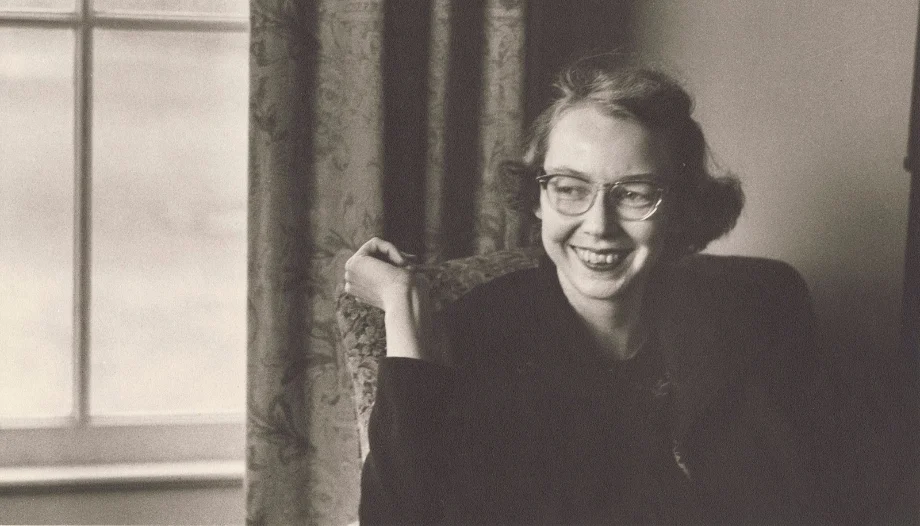
Flannery O’Connor: Reconociendo el pecado

Flannery O’Connor tenía talento para la violencia impactante, lo grotesco y el humor sardónico. Quizás por eso mencionar su obra suele provocar pánico. Es difícil entusiasmarse con personajes antipáticos y moralmente reprochables, y las situaciones perturbadoras en las que se ven envueltos. Para ser justos, se trata de un género consolidado, el gótico sureño, que utiliza lo macabro y la ironía para explorar problemas sociales. Pero también para ser justos, no es para todos.

Eso puede dificultar la comprensión de lo que O’Connor intenta mostrar más allá de la superficie. La violencia actúa como catalizador, obligando a los personajes a confrontar la verdad sobre sí mismos. Como le escribió a una amiga: «Lo que la gente no comprende es el alto precio de la religión. Creen que la fe es como una manta eléctrica gigante, cuando en realidad es la cruz. Es mucho más difícil creer que no creer. Si descubres que no puedes creer, al menos debes hacer esto: mantén la mente abierta. Mantenla abierta a la fe , sigue deseándola, sigue pidiéndola y deja el resto en manos de Dios».

Toda su obra se basa en este concepto. Sus personajes se aferran a un consuelo falso, y su pecado es lo que los ciega ante la cruz. O’Connor intenta abrirles las puertas a la gracia y la transformación.

Nacida en 1925, O’Connor creció en el pueblo rural de Milledgeville, Georgia. Su profunda fe católica a menudo la convertía en una marginada en una sociedad mayoritariamente protestante. Tras graduarse de la universidad, mientras estudiaba escritura creativa, O’Connor desarrolló lupus, lo que la llevó a llevar una vida tranquila con su madre. Mantuvo una rutina diaria de escritura, aunque esta le dejaba mucho tiempo para criar pavos reales, que pronto se convirtieron en un tema recurrente en el vecindario. O’Connor vivió catorce años más después del diagnóstico, escribiendo dos novelas y treinta y dos relatos cortos.

La relativamente escasa obra escrita de O’Connor sigue teniendo un gran impacto hoy en día. Si bien sus historias son complejas, merecen la pena. Un libro muy útil es «Understanding Flannery O’Connor» de Margaret Earley Whitt, que desvela el significado de cada relato y de ambas novelas para profundizar en su comprensión.

The authorOSV / Omnes

Read more
Initiatives

“God is calling me to mess things up”: That’s how Vivir Abrazando was born 

El joven sevillano de 22 años, Javier Torres, cuenta cómo nació el proyecto Vivir Abrazando, una iniciativa que busca acercar a los jóvenes una fe viva a través de la comunicación y la solidaridad.

Teresa Aguado Peña-5 de October de 2026-Reading time: 4 minutes

En el corazón de Javier Torres hay un profundo deseo de dar la vida por los demás. Por eso quiso poner su don: la comunicación, al servicio de Cristo. Así, en diciembre de 2024, nació Vivir Abrazando, un proyecto que hoy reúne un pódcast, una revista impresa, una línea de productos solidarios y una comunidad activa en redes sociales. Su propósito es sencillo: “llevar el amor de Dios a los más pobres, a los pobres de espíritu (Mt 5, 3). El mismo Dios -hecho Hostia y custodiado en el vientre de su madre- es el centro y motor de todo lo que ocurre aquí”.

Tras la buena acogida del pódcast y de sus iniciativas solidarias, Vivir Abrazando dio un nuevo paso, el Miércoles de Ceniza de 2026, con el lanzamiento de su primera revista impresa, de la que solo se publicaron 100 ejemplares, numerados y sellados.

En esta entrevista, Javier Torres explica cómo nació el proyecto, qué busca ofrecer a los jóvenes y por qué considera necesario recuperar una fe viva, capaz de transformar la realidad y de comunicar Vida.

¿Cómo nació Vivir Abrazando?

-Vivir Abrazando se hizo realidad en diciembre de 2024. En un contexto donde muchos jóvenes buscan un sentido a la vida, pero se sienten lejos del lenguaje tradicional de la Iglesia, surge la necesidad de crear un espacio donde puedan encontrarse con Dios. 

From polvo (Génesis 2, 7) nació el Podcast Concept, inspirado en el libro Santos de Copas, de José Pedro Manglano. Se trata de un formato propio, con una duración algo más corta que los pódcast habituales. En cada episodio contamos con la participación de un invitado perteneciente a las diferentes realidades de nuestra enorme Iglesia. 

Tras la gran acogida, hicimos una preventa de nuestra propia línea de polares solidarios de Effetá y Bartimeo, cuyos beneficios se destinan a becas para personas que no se puedan permitir pagar estos retiros.

El Miércoles de Ceniza de 2026 lanzamos nuestra primera revista impresa, y la firma continúa creciendo y explorando nuevas formas de comunicar la fe. Recientemente, organizamos un Market en Sevilla, en el que recreamos la experiencia de visitar al  Santísimo. También tuvimos el regalo de realizar la cobertura periodística del viaje apostólico del Papa León XIV a España.

¿Por qué el nombre de Vivir Abrazando? 

–Es mi lema de vida; es la forma más bonita que tengo de entender mi carisma. “Cuando das un abrazo, lo que haces es poner tu corazón frente al corazón de la otra persona”. Eso es lo que quiero hacer con Cristo.

¿Qué puede encontrar un joven en las páginas de la revista de Vivir Abrazando?

–A lo largo de las páginas de este primer número uno encuentra personas -con un corazón enorme- que se han volcado por entero en esta idea, que no sabíamos cómo saldría. Álvaro Quesada, conocido por @talvezteayude, nos abrió por completo su corazón en esta entrevista que escribió un Jueves Santo de madrugada en el Santo Sepulcro de Jerusalén. Bea Cuevas nos cuenta -a través de su ilustración- la humildad de la Madre Teresa -santa a la que le tenemos un cariño especial dentro del proyecto-. Lucía y Carlos, fundadores de OLD’S, nos muestran su ilusión y generosidad regalando un colgante Bom Jesus con cada revista. Inés y Luis nos hablan, a través de su vida, de lo agradecidos que están por Aute y Shema. Y muchísimas más personas que han confiado y se han dado sin esperar nada a cambio. 

Aún no puedo adelantar mucho del segundo número -que estamos ya preparando y que tratará sobre el fenómeno que numerosos medios de comunicación vienen señalando en los últimos años: un verdadero “Boom espiritual”-, pero sí que haremos un salto considerable.

¿Por qué hacer solo 100 ejemplares?

–En los retiros de Effetá y Bartimeo he aprendido el arte de hacer las cosas con mucho mimo. De cuidar hasta el más pequeño detalle, como si para entregárselo a Dios se tratase. 

Se trata de un proyecto muy cuidado. 100 ejemplares, numerados y sellados, en oración por cada lector. La idea es sacar algunos ejemplares más, ya que sería egoísta guardar este número solo para los 100 que lo tenemos. Pero sí es cierto que vamos a priorizar el seguir preparándolo todo con mucho mimo y por ello no queremos sacar nada en masa.

También se destina parte de los beneficios a becas para retiros espirituales ¿Por qué es importante que el proyecto tenga una parte solidaria?

–Es muy sencillo: “Dad gratis lo que gratis habéis recibido” (Mt 10, 8). Hace ya varios años, tuve el inmenso regalo de encontrarme con Cristo en uno de estos retiros. Gracias a este primer encuentro, he podido continuar profundizando en mi fe y cuidando mi relación e intimidad con el Señor. 

En mi corazón hay un deseo muy grande de que otras personas puedan vivir lo que a mí me fue regalado aquel fin de semana.

¿Qué es lo que más le gustaría conseguir con este proyecto?

–Solo espero que cada lector se pueda sentir profundamente amado por ese Amor que no se cansa de amarnos.

Dice que hay iglesias que han perdido su capacidad transformadora y que muchos parecen seguir a un “Dios muerto”… ¿Qué es una fe viva? ¿Cómo recuperarla?

–Nos quejamos de un Dios muerto. Y no me refiero a que a Dios lo haya matado nadie. No me refiero a que hace dos mil años murió en una cruz. Hablo de un Dios muerto porque, aunque la sociedad continúe practicando el cristianismo con sus liturgias, las iglesias han perdido la capacidad transformadora. Hemos apagado esa vida. Hemos convertido la religión en un producto de consumo.

Dios me llama a liarla, a “hacer lío”, como decía el Papa Francisco. He conocido una fe muy viva y es eso lo que quiero transmitir a cada uno. La clave está en hacer que todo sea verdad. Mirar a los ojos cuando tratemos con otra persona. Que el abrazo sea, de verdad, un abrazo. Sencillamente, comunicar Vida.

¿Por qué santa Teresa de Calcuta tiene tanta importancia en el proyecto?

–Para nosotros, santa Teresa de Calcuta es un ejemplo de cómo llevar el amor de Dios a los más pobres (“Pobres de espíritu”. (Mt 5, 3) de entre los pobres, de desprendernos de todo y de no dejar nunca de pensar en los demás.

Teresa nos ayuda a hacer del mundo cotidiano que nos rodea nuestro Calcuta. Y llevar a Dios a cada persona en nuestras vidas. No hace falta ir de misión. Basta con vivir atentos a las necesidades de quienes encontramos cada día.

Me encanta cómo Bea Cuevas la dibujó con la mayor sencillez posible. Cuando me presentó la propuesta, me estuvo explicando que le había puesto el aro que representa a los santos en cartón dorado, porque ella era muy humilde. 

Read more

Despacio y buena letra

Creo que debemos tomarnos la vida con calma, evitar las prisas y dedicar tiempo a hacer las cosas bien. Despacito y buena letra, porque, como escribió Machado, “el hacer las cosas bien importa más que el hacerlas”.

5 de October de 2026-Reading time: < 1 minute

Tengo grabada en mi mente una imagen que nunca he olvidado. Al echar la vista atrás, han pasado ya 20 años. Estaba en un centro comercial que tenía unas puertas de cristal en la entrada. Los cristales debían estar muy limpios, pues una persona que caminaba rápidamente no se dio cuenta de su presencia y se chocó violentamente, haciéndose mucho daño.

Me impactó sobremanera, porque el choque fue violento, y me pregunté cómo era posible que aquel señor no hubiera visto el cristal que separaba el interior del centro comercial del exterior. Si hubiera ido caminando tranquilamente (seguí pensando), en cierto momento lo habría visto o, al menos, el choque no habría sido tan fuerte.

Creo que debemos tomarnos la vida con calma, evitar las prisas y dedicar tiempo a hacer las cosas bien. Despacito y buena letra, porque, como escribió Machado, “el hacer las cosas bien importa más que el hacerlas”.

The authorMiriam Lafuente

The Vatican

«"God never rejects our life!": Leo XIV in the Angelus

León XIV ha subrayado que Dios transforma lo que parece rechazado en fundamento de salvación y ha presentado a san Francisco como ejemplo de reparación de la Iglesia mediante la fe, la fraternidad y el amor.

Editorial Staff Omnes-4 de October de 2026-Reading time: 2 minutes

In his Angelus address this Sunday, the Pope reflected on the rejection of Christ and how God transforms evil into redemption. On the occasion of the eighth centenary of the death of St. Francis of Assisi, he also highlighted his work of "repairing" the Church through faith, fraternity, and love.

«"God never rejects our life." This was one of the central statements made by Leo XIV during the Angelus prayer this Sunday, as he commented on the Gospel reading, which presents Jesus as the Son of God rejected precisely by those who should have welcomed him.

The Pope pointed out that Christ «came to bring salvation» but receives condemnation, and that «whoever wants to give their life is condemned to death.» This paradox, he explained, also invites us to reflect on «the many cruelties that devastate the world and the history of nations,» but at the same time reveals «the infinite mercy» of the Father.

Leo XIV recalled the words of the psalm that Jesus applied to himself: «The stone the builders rejected has become the cornerstone.» He explained that «it is precisely what was rejected that becomes the foundation upon which everything rests.» This, he affirmed, is how God guides history: «helping us in all our falls.».

Saint Francis and the repair of the Church

The Pope then applied the Gospel image of the vineyard to the Church, which "we build up or damage with our decisions." In this context, he wished to remember Saint Francis of Assisi, precisely on the eighth centenary of his death and during the Franciscan Jubilee Year.

Leo XIV presented the saint as "a worker who dedicated himself with great fruit in the vineyard of the Lord" and recalled that Jesus himself asked Francis to "repair his Church.".

Inspired by the Crucified Christ, Francis «built his own life above all on the foundation of Christ,» sharing «his poverty, his joy, and his sufferings,» even receiving the stigmata. The Pope also highlighted his «ardent prayer» and his «charity toward all,» as well as the witness of the first friars who shared his ascetic life as part of the reform of the Church.

«"Saint Francis repaired it by virtue of his faith in the Lord Jesus," said Leo XIV, who emphasized that he did so "by healing the cracks of discord with the witness of fraternal love.".

For the Pope, the Franciscan charism "still bears fruit today, after eight centuries." This is demonstrated both by "the large and dynamic Franciscan family" and by "the numerous gifts that its spiritual legacy bestows among the People of God.".

«"Building harmony among peoples"»

Within the framework of the Franciscan Jubilee Year, Leo XIV has invited people to ask "with perseverance for the gift of peace" and to commit themselves "sincerely to building concord among peoples.".

The Pope concluded his reflection by entrusting this task to the intercession of the Virgin Mary. Before the Angelus prayer, he also reminded the faithful gathered at the Shrine of Pompeii to offer the "Supplication to Our Lady of the Holy Rosary.".

Christian love for animals

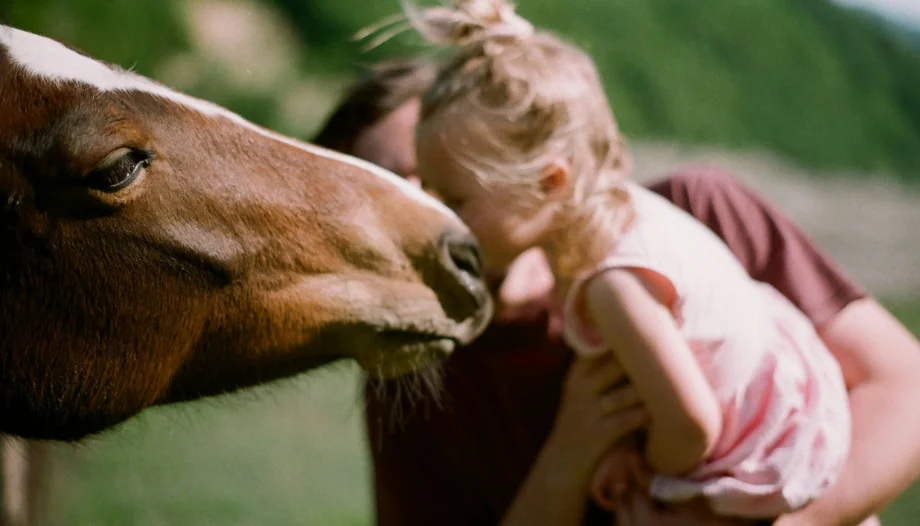
A veces se plantea una falsa disyuntiva: o amas a las personas o amas a los animales. Pero el Evangelio no conoce esa rivalidad. La ternura que aprendemos hacia toda criatura —como enseñaron Jesús de Nazaret y Francis of Assisi— ensancha el corazón y nos hace más humanos, no menos.

4 de October de 2026-Reading time: 4 minutes

It is not uncommon to hear some Catholics harshly criticize those who profess a tender love for their animals. The argument is that «"There are too many children going hungry to spend money on veterinarians.". However, this dialectic of exclusion —either you love men or you love animals— is alien to the harmony of Creation and forgets the delicacy with which God himself relates to his work.

It is a truth of faith that humankind is the pinnacle of creation. But humanity's primacy does not stem from contempt for creation, but from its responsibility as its steward. Saint Francis of Assisi, the Poverello, did not call «"brother"» He didn't see the wolf out of sentimentality, but because he recognized in it the same «"breath"» from the Father:

«"If you have men who exclude any of God's creatures from the refuge of compassion and mercy, you will have men who will treat their brothers in the same way."» (Saint Francis of Assisi).

The doctrine of the Catholic Church teaches that animals are creatures loved by God who manifest His glory through their very existence. According to the Catechism of the Catholic Church, The Creator entrusted humanity with a dominion over animals that is neither absolute nor tyrannical, but moral and responsible. For this reason, the Magisterium considers it legitimate to use animals for sustenance, shelter, moderate scientific work, and companionship. However, it explicitly forbids causing them needless suffering or sacrificing their lives in vain, while also warning that affection for them should never divert from or replace the love owed primarily to human beings.

Regarding whether they have souls and go to Heaven, Catholic theology, as founded by Saint Thomas Aquinas, explains that animals do possess a sentient soul, which gives them life, basic emotions, and instincts. Another question is whether they have an immortal soul. The Church does not completely close the doors of eternity to material creation. In 2014, Pope Francis explained the doctrine of Christian eschatology in an audience: the biblical promise of «"new heavens and a new earth.". This means that, at the end of time, God will transform and restore the entire material universe. Church theologians suggest that in this ultimate Kingdom there will be a presence of nature and animals in perfect harmony, reflecting divine beauty, although probably not in the same way that human beings will experience the beatific vision of God.

Regarding flies and other annoying insects, the ancient Israelites mockingly modified the name of the Philistine god of Ekron, Baal Zebul (Lord of the Heavenly Abode), to Baal Zebub (Lord of the Flies). Later, in the New Testament, the insult evolved among Jews into the word Beelzebub, which translated directly as «"Lord of the dung,", alluding to the place where flies gather. In the ancient Near East, flies were not only a nuisance, but also the unmistakable symbol of decay, filth, and death. By associating this god with flies, the Hebrews conveyed the theological message that false idols only brought spiritual corruption. Centuries later, Saint Francis called «"Brother Fly"» (Brother FlyTo the friars who were lazy, idle, and troublesome within the monastery, Saint Francis de Sales explained that flies and mosquitoes are excellent trainers of daily patience. Man's rebellion against God in original sin caused insects to go from fulfilling invisible ecological functions to becoming a constant reminder of the loss of Paradise through their bites, buzzing, and the spread of disease.

Sometimes we forget that Jesus was not an abstract theorist, but someone who contemplated nature with profound love. He taught us to read the Father's love through animals: “Look at the birds of the air: they neither sow nor reap… and yet your heavenly Father feeds them.” (Mt 6, 26).

Christ uses the image of the hen sheltering her chicks (Mt 23:37) to explain His own desire to protect Jerusalem. In His view, animals are not «"objects", but witnesses of divine providence. Even in the Old Testament, the book of Tobit gives us a beautiful image: the angel Raphael and the young Tobias set out on a journey, and the text explains it simply: «"And the dog followed them"» (Tb 6, 1). God allows animal faithfulness to be a companion on the path of salvation.

Often, criticism of the «"animal lover"» It ignores a painful human reality: loneliness. Pope Francis, in Laudato si', warns us:

«"A feeling of intimate union with other beings in nature cannot be real if at the same time there is no tenderness, compassion, and concern for human beings in the heart. [...] Everything is connected.". (Laudato si', n. 91)

Under this premise, affection for an animal can be the last bridge that keeps a person connected to the capacity to give and receive tenderness. Søren Kierkegaard, the great Christian thinker, explored this idea in his reflections on purity of heart. For him, animals have an advantage over fallen humanity: their lack of duplicity. Animals love without ulterior motives, and in that simplicity, wounded humanity finds refuge where it can rediscover itself. As the Danish philosopher would say, in the silence of a creature, one learns to hear God more clearly than in the noise of human disputes.

Those Catholics who view affection for pets with suspicion should be reminded that faith calls us to gentleness. If we see someone dedicating their life to caring for a creature, perhaps we should ask ourselves what loneliness that person experiences or what comfort they find in that silent devotion that we, as brothers and sisters, may not have been able to offer them.

God uses the small to heal the great. And in a dog's lick, a cat's companionship, or a canary's song, there is often hidden a caress from God for someone who perhaps has no one else to caress their soul. Or perhaps the beauty of animals, like the beauty of all Creation, is a first contact with the Goodness of the Creator, who created everything out of Love, so that we may enjoy Creation. Let us love people above all else, yes, but let us allow love for animals to be that place where human beings learn, once again, to be profoundly human.

Integral ecology

The child in surrogacy

Sentía curiosidad por saber cómo aborda la industria de la gestación subrogada el tema del aborto, así que empecé a investigar varias agencias de gestación subrogada. En este ámbito, observé que el aborto suele producirse cuando el bebé —o la situación— no se ajusta a lo que la sociedad consideraría “normal” o “perfecto”.

Editorial Staff Omnes-4 de October de 2026-Reading time: 4 minutes

– Katie Yoder, OSV News

I watched my dear friend's newborn daughter intently. As she snuggled into my arms, I etched her face into my memory: her chubby cheeks, her flowing hair, her rosy lips, and her delicate nose. I was only just beginning to know her. And yet, when her bright eyes met mine, I knew she was perfect. She was perfect simply for being herself.

I recalled that moment from last weekend and what perfection means while reading stories about surrogate mothers—women who carry and give birth to babies on behalf of other people—who have refused to abort against the wishes of the baby's biological parents. 

More recently, in a case that national pro-life leaders are bringing to light, an Alaskan surrogate mother refused to terminate the life of the baby in her womb after being diagnosed with a serious congenital heart condition.

A look at the sector

How does the surrogacy industry address the issue of abortion? Research with several surrogacy agencies concluded that abortion usually occurs when the baby—or the situation—is not what society would consider “normal” or “perfect.”.

The most common reason for "selective termination" or "reduction" is when a surrogate mother becomes pregnant with multiple babies or when the babies are diagnosed with genetic or medical abnormalities, according to a surrogacy agency in Fairfield, Connecticut.

Another major surrogacy agency based in Los Angeles agrees that abortion is most often considered for medical reasons. The agency states that it has seen abortions performed for reasons such as a reduced number of babies in a pregnancy, severe intrauterine growth restriction, diagnoses of Down syndrome or other genetic conditions, and diagnoses of birth defects.

Sometimes for other reasons

In other cases, the reason for an abortion may have nothing to do with the baby. A surrogacy agency in Des Moines, Iowa, adds that couples seeking a surrogate mother may want an abortion due to their own divorce, breakup, terminal diagnosis, or death.

Church's recognition of the dignity of the child and of women

The Church foresees this commodification of the human person and condemns surrogacy as a whole, recognizing something higher: the dignity of the child and the woman involved.

“By transforming gestation into a negotiable service, a violation occurs dignity "Both the child, who is reduced to a 'product', and the mother, exploiting her body and the generative process, and distorting the original relational vocation of the family," Pope Leo XIV said about surrogacy earlier this year.

Her words echoed those of Pope Francis, who stated in a 2024 speech: “I consider the practice of so-called surrogacy deplorable, as it represents a grave violation of the dignity of women and children, based on the exploitation of the mother’s material needs. A child is always a gift and never the basis of a commercial contract.”.

Life is a gift

Other Church documents, from the 1987 Vatican instruction on respect for human life, “Donum Vitae”, to the 2024 Vatican declaration on human dignity, “Dignitas Infinita”, denounce surrogacy while emphasizing that life is a gift.

The Catechism of the Catholic Church, which quotes “Donum vitae”,“ he declares that ”a child is not something that one owes, but a gift.”.

“A child cannot be considered property, an idea to which a supposed 'right to the child' would lead,‘ it reads later. ’In this area, only the child possesses genuine rights: the right to be the fruit of the specific act of conjugal love of his or her parents, and the right to be respected as a person from the moment of conception.”.

An expression of 'unwavering love'‘

Perhaps we can understand how surrogate mothers may feel they are helping other women build their families. We can see the noble desire of couples to have children. We can—and should—love children born through surrogacy as individuals with intrinsic dignity and worth. 

But that doesn't mean we can't question the human cost. That doesn't mean we can't condemn the practice of surrogacy and its connection to abortion, where people can decide how and when to begin and end the life of an innocent and vulnerable person. Where they can determine someone's worth based on perfection, as defined by the world.

Human dignity precedes and transcends each person

As Pope Leo XIV wrote in his new encyclical, “Magnifica humanitas”Human dignity does not depend on a person’s abilities, wealth or social position, nor on the right or wrong decisions they have made; rather, it is a gift that precedes and transcends each person, bestowed by God as an expression of his inexhaustible love.“.

Our life, our dignity, our humanity have never been about being free of flaws. It's about each of us being loved and loving in return.

———————-

– Katie Yoder writes for OSV News from Maryland.

This information was originally published on OSV News. You can consult it. here.

The World

Malta, the island where Europe speaks Arabic

Entre Europa y África, Malta ha forjado una identidad única a partir de su lengua semítica, su pasado británico, la huella de los Caballeros de San Juan y una profunda tradición católica.

Gerardo Ferrara-4 de October de 2026-Reading time: 6 minutes

This time I'm going to write an article about a place that evokes, with the necessary differences, of course, the same feelings as Madonna's famous song, "La Isla Bonita." It is, in fact, precisely a small "beautiful island," located 93 km south of Sicily and about 290 km from the African coast. 

I imagine the sea breeze, not tropical but Mediterranean, the sun high in the sky, the beautiful faces of the locals with eyes that are reminiscent of both the nearby Sahara Desert and the Nordic plains of Europe. 

And I imagine that, at siesta time, life stops only to resurface in the lively festivities featuring folk songs in a language that mixes Italian and Arabic words and is, in fact, the only Semitic language written with Latin characters.

 This "beautiful island" of reality is not called San Pedro, like the one in the song, but Malta, and it has more to do with Saint Paul than with Saint Peter.

Souvenirs of Tunisia

I've crossed the Mediterranean several times, but I've never been to Malta. And the only Maltese people I've met in person are some classmates who studied Arabic with me in [unclear - possibly "unclear" or "unclear"]. Tunisia . What struck me about those boys at the time was their perfect Italian, their fluent English, and their facility with Arabic; or, more specifically, with the Tunisian "dialect." They were ideal ambassadors for their country, which, in just over 316 km², spread across only three small islands—Malta, Gozo, and Comino—has accumulated an incredible wealth of history. 

A nerve center in the heart of the Mediterranean

The archipelago's crucial location has made it a natural crossroads, both for exchanges and conflicts between Europe, Africa, and Asia. Indeed, Malta is European, Catholic, and similar to southern Italy in its traditions, cuisine, and the character of its inhabitants, but it has its own Semitic language (similar to Tunisian Arabic) and has been a British territory for over a century.

A story as old as time, also in language

The origins of Maltese history are shrouded in mystery. A people about whom little is known built megalithic temples there (most notably Ġgantija, Ħaġar Qim, Mnajdra, and Tarxien) between the 4th and 3rd millennia BC (before Stonehenge and the Egyptian pyramids). The ruins of these colossal structures have been declared a UNESCO World Heritage Site. 

From 1000 BC onwards, Malta was a Phoenician colony. Its name, according to tradition, comes from the great Semitic navigators: “Malìt” or “Malat” (in Phoenician and in Hebrew or ancient: «safe haven»). The Greeks, for their part, called it “Melite” (from which the Latin “Melita” derives), due to its famous honey. After the Phoenicians, it was the turn of the Carthaginians, the Romans, the Byzantines, and Muslim rule. In 870 AD, the island became part of the Arab Emirate of Sicily, whose language (a variety of Maghrebi Arabic) also spread to Malta and, paradoxically, only survived there, giving rise to modern Maltese. The Norman Conquest (1090) and the expulsion of the Muslims in the 13th century led to the complete Latinization of Sicily, but in Malta the population, although it converted en masse to Christianity, preserved the ancient Semitic language, which over time, thanks to geographical isolation, acquired peculiar characteristics and was later enriched with Sicilian, Italian, and English vocabulary. The result is modern Maltese, a language with Semitic grammar and syntax, but with a decidedly European lexicon and which, uniquely for a Semitic language of Arabic origin, is written with Latin characters.

Bread, for example, is called ħobż, as in Arabic (khubz); the sun, xemx, as in shams; the book, “ktieb”, as in “kitab”. And, what is even more curious, God, for Maltese Catholics, is “Alla”.

For an Italian who has studied Arabic, Maltese has a very curious sound, half Arabic and half Sicilian, with loanwords from English. Today it is also the only official Semitic language of the European Union and, along with English, an official language of the State.

A piece of Italy or England?

Neither one nor the other. If anything, we could say that Malta has preserved and integrated into its identity fragments and legacies of the rulers that have succeeded one another over time, with the ability to create a unique identity.

In fact, for centuries Italian was the language of culture, law, and the Church on the island, and it remained an official language alongside English until 1934, when it was replaced by Maltese. The British, in fact, wanted to suppress any form of Italian irredentism by fostering among the islanders the awareness that they were different from their neighbors. 

Many Maltese people still understand and speak Italian perfectly, often thanks to television programs and, of course, geographical and cultural proximity.

Malta became part of the British Empire in 1814 and separated from it with independence in 1964, becoming a republic in 1974: an island that is a small world where the spirit of southern Italy, especially Sicilian, blends with Maghrebi and British influences. Houses of yellowish stone, villages perched like those in southern Italy; sea, light, and an almost African landscape; driving on the left, English as the language, and red telephone boxes like in Great Britain.

The Catholic Christian faith: national identity

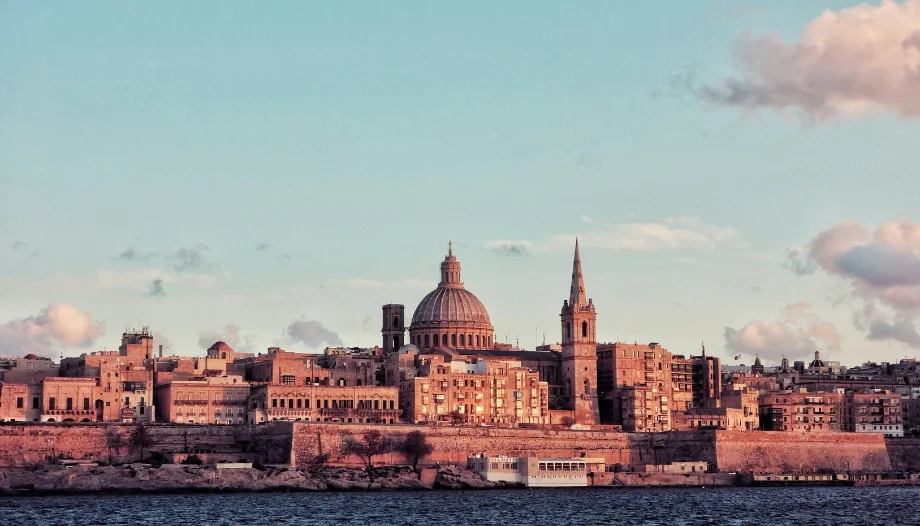
Malta is one of the most intensely Catholic countries in Europe. Churches, numerous and scattered throughout the archipelago, are a distinctive feature of its towns and cities; they are often so imposing, with their domes, bell towers, and Baroque facades, that they seem almost excessive for the relatively small settlements in which they are built.

Countless processions, brass bands, and patron saint festivals showcase a faith that forms a fundamental part of the national identity here, deeply rooted in the island's history, dating back to the most famous castaway to arrive in Malta: the Apostle Paul, around 60 AD (as we read in the Acts of the Apostles). Let us not forget, of course, the Knights of Malta (or Knights of St. John), who, in the 16th century, transformed this archipelago into a Christian stronghold, as well as one of the political, military, and hospital centers of the Mediterranean, particularly its capital, Valletta. This small city was built after the Great Siege of 1565, and the splendor of its walls, churches, palaces, and hospitals is already evident in photographs as almost disproportionate to its population (around 5,000), making it one of the smallest and least populated capital cities in Europe.

The main urban center of the Republic, for its part, is San Pawl il-Baħar (Saint Paul's Bay, the place where the apostle was shipwrecked), which has about 40,000 inhabitants.

A political life in turmoil

As in Great Britain, political life in Malta is also dominated by two major parties, Labour and the Nationalist Party, and by a very high voter turnout. Since 2004, the country has been a member of the European Union, and although it is not widely known internationally, it is characterized by a lively political debate that, in recent times, has become particularly intense given its location at the center of migration routes and flows. 

In this context, on October 16, 2017, journalist Daphne Caruana Galizia, known for her investigations into corruption and offshore companies linked to those in power, was assassinated by a car bomb almost at her doorstep. This brutal murder shocked Europe: thousands of people took to the streets in protest, and Prime Minister Joseph Muscat resigned in January 2020. In fact, the investigations uncovered alleged links between businessman Yorgen Fenech (accused of being the mastermind behind the assassination) and key figures in Muscat's Labour government. 

A public inquiry concluded in 2021 that the State should assume responsibility for the climate of impunity and five people were convicted as the perpetrators of the attack, but the alleged instigator, Fenech, was acquitted by a jury in September 2026, which triggered a new institutional crisis.

 The current Labour Prime Minister, Robert Abela, is under intense political and popular pressure, while the young leader of the Maltese Nationalist Party, Alex Borg, has pointed the finger at the Government and the ruling party and called for the urgent passage of a package of anti-mafia laws.

 To understand how such a small island got to where it is today, we must go back to two key events: the castaway named Paolo and the Knights of St. John. We will do so in the next article.

Read more
The Vatican

The Vatican will evaluate the reception of “Amoris Laetitia” ten years later

El encuentro reunirá a 115 presidentes de conferencias episcopales y 15 líderes de Iglesias Orientales del 7 al 14 de octubre

José María Navalpotro-3 de October de 2026-Reading time: 3 minutes

The Paul VI Hall in the Vatican will host the meeting “Ten years after Amoris laetitia”Announcing the Gospel with Families Today,“ from October 7 to 14, will be presided over by Leo XIV, who will participate in several of the meetings. The Pope’s desire is “to move forward, through mutual listening, toward a synodal discernment on the steps to be taken to announce the Gospel to families today, in the light of…” Amoris laetitia".

The meeting will be attended by the 15 heads of the Eastern Churches and the 115 presidents of the episcopal conferences from around the world (some of them represented by a delegate). Also present will be 22 personal guests of the Pope, including, as the only Spaniard, Cardinal José Cobo.

In total, some 248 bishops will participate, along with some families and experts. This presence indicates the importance the Holy Father has given to the meeting, which will analyze, ten years later, how the situation has developed. Amoris laetitia. This apostolic exhortation of Pope Francis’ It raised considerable controversy on some points, specifically when talking about divorced couples.

The meeting was presented at a press conference in the Vatican with the participation of three of the coordinators: Professor Gabriella Gambino, Undersecretary of the Dicastery for the Laity, Family and Life; Orietta Rachele Grazioli, Professor of Canon Law and Comparative Family Law at the John Paul II Institute for Marriage and Family Sciences; and Fr. Giacomo Costa, SJ, consultant to the General Secretariat of the Synod.

Gambrino emphasized that today “the reality of family ministry on the five continents is more complex than ever and faces diverse situations and problems regarding marriage and family.” He explained that “the tenth anniversary of the exhortation is the starting point for reflection, but at the heart of the meeting lies” in proclaiming the Gospel to families today, that is, how to vigorously renew pastoral care and ensure that families participate more fully in the life and mission of the Church.

He warned that, “in many ecclesial contexts, the family still runs the risk, even today, of being considered a passive recipient of pastoral action: a mere sector of pastoral care entrusted to a commission in the parish or diocese.” He recalled that Leo XIV exhorted that “evangelization should truly become an ecclesial act, in which pastors and families feel co-responsible and participate together in the proclamation of the Gospel.”.

Worrying figures

The professor provided some figures on cultural transformations surrounding the family. For example, in Poland, religious weddings celebrated in the last five years have decreased by 45%. In Australia, between 1970 and 2024, they fell from 88% to 16%. “These are signs that, in the diversity of contexts, highlight the urgent need to accompany the decision to marry and to more decisively support the transmission of faith within the family,” she stated.

“The starting point for family ministry should be a reflection on vocation,” he asserted, quoting some words of Leo XIV to the youth in Spain“Marriage is also a vocation. Don’t be afraid to get married and start a family!”.

The meeting, he explained, is addressed only to the heads of the Eastern Churches and the presidents of the episcopal conferences, “because they are responsible for promoting and supporting pastoral action in their respective countries and in the local Churches. Therefore, the Holy Father wishes to listen to them directly and engage in dialogue with them in discernment.”.

Invited families

Along with church leaders, several families will be present, reflecting the diverse geographical backgrounds. Three couples come from Latin America: Brazil, Peru, and Costa Rica. Among the 26 participating experts, only one Chilean and one Argentinian are from the Spanish-speaking world.

Father Costa explained that “we can consider this meeting as a kind of evaluation assembly” of the Amoris laetitia. The aim is to examine what has been implemented in the lives of churches and families, “what we have learned, the difficulties encountered, and the new questions that have arisen.” He explained that the specific topics to be addressed at this meeting are not yet known, as the bishops themselves will determine them.

The fruits of these five days will be compiled in a summary report—not a new final document to replace the apostolic exhortation, but a synthesis of the work. It will then be submitted to the Pope and, although only a working document, will also be made public.

Spain

Compostela Holy Year 2027: “a great opportunity for evangelization”

La Archidiócesis de Santiago presentó hace unos días el Año Santo Compostelano 2027 en un acto celebrado en el monasterio de San Martín Pinario y presidido por el arzobispo, Mons. Francisco José Prieto, quien alentó a la Iglesia a aprovechar el Año Santo como “una gran oportunidad evangelizadora”.

Francisco Otamendi-3 de October de 2026-Reading time: 4 minutes

It was precisely the motto of the Jubilee 2027 – ”When they saw the star they were filled with immense joy” (Mt 2:10) – that centered an evening that brought together representatives of the Church, institutions and different areas of society.

The presentation unveiled the Hymn and the new visual identity for the Holy Year. The star of the Botafumeiro mechanism, the marks of the Cathedral stonemasons, and the figure of the Apostle James as a guide to Christ served as references to express the meaning of the jubilee through music, design, and audiovisual presentations.

A time of encounter with Christ, forgiveness, and welcoming of pilgrims

Archbishop Monsignor Francisco José Prieto presented the motto, and invited everyone to live the Holy Year as a time of encounter with Christ, forgiveness and welcoming of pilgrims.

He called for communities open to listening to and accompanying those who travel the Way, and urged them to preserve their Christian identity through a hospitality that welcomes everyone.

Numerous attendees 

Representing the Archdiocese were canons of the Cathedral Chapter, vicars, archpriests, parish priests, and members of the Diocesan Pastoral Council, along with religious men and women and lay people. Also in attendance was Bishop Mikel Garciandía of Palencia, president of the Subcommittee on Popular Piety (Brotherhoods, Confraternities, Shrines, and Pilgrimages).

Authorities attending the presentation of the Compostela Holy Year 2027 (@Archdiocese of Santiago).

Among the institutional representatives were the Government Delegate in Galicia; the Minister of Culture; the Mayor of Santiago; members of the Board of the Parliament of Galicia and regional deputies, and other political, military and police authorities, along with representatives of associations, companies, the university, culture, heritage and social entities. 

First proposal, music video of the Anthem

Following the welcome address, the first presentation was the music video for the National Anthem. Attendees listened to 'Un campo cheo de estrellas' (A Field Full of Stars), a composition by Galician musician Carlos Martínez Movilla, presented in an audiovisual production by Hugh McGinley..

Holy Year Identity Video

Next, the video announcing the identity of the Holy Year of Compostela was shown. Both pieces were followed by a round table discussion with Óscar Valado, director of the Diocese's Music Department and coordinator of the jubilee's musical works; Fernando de Castro, the brand's designer; and Daniel Lorenzo, director of the Cathedral Foundation, who spoke on behalf of the Archdiocese.

Two hymns, one for liturgical use 

During the conversation, Óscar Valado explained that the Compostela Holy Year will have two hymns: one for clear liturgical use, composed for choir and organ, and another designed for the dissemination of the Holy Year in other spaces, whether in the digital environment or pastoral meetings.

An image born from the Cathedral and the memory of the Camino

At the same round table, Fernando de Castro explained the references that shaped the new visual identity. Its main symbol was the eight-pointed star present in the Botafumeiro mechanism, linked to the tradition of the star that pointed to Compostela and to the apostle James, as before the Round Table. 

Hospitality expressed in an open welcome to all

For his part, Daniel Lorenzo placed hospitality among the priorities in the preparation for the Compostela Holy Year 2027. He highlighted the work carried out in recent years to ensure that the International Pilgrim Reception Center offered comfortable service, in reasonable timeframes and in the native languages of those arriving in Santiago, with the participation of people of different nationalities who shared their culture.

Overview of the presentation (@Archdiocese of Santiago).

A call to live a jubilee of hope

Bishop Francisco José Prieto Fernández placed the motto of the Holy Year at the heart of his address, in which he outlined the main convictions of his pastoral letter. Drawing on the story of the Magi, he explained that the star had not eliminated the difficulties of their journey, but had allowed them to recognize that their quest had meaning and that they were progressing toward a goal.

Three convictions: pilgrims, joy, and evangelization

Monsignor Prieto developed three convictions. The pilgrim condition of humankind. He described life as a quest in which each person must learn to choose what is essential, accept their limitations, and allow themselves to be helped. The Camino de Santiago made this experience visible through silence, encounter, and everyday acts of assistance.

The second conviction was directly linked to the Jubilee motto: joy could be reborn on the Way. The archbishop explained that Christian joy is born from knowing oneself to be loved, forgiven, and accompanied by God. It can coexist with tears and difficulties, help rebuild relationships, and restore the desire to live and serve.

The third point was addressed to the Church: to seize the Holy Year as a great opportunity for evangelization. Bishop Prieto noted that its fruitfulness would depend not primarily on the number of events organized, but on the capacity of communities to show the face of Christ and make the Gospel visible. He called for a Church that is close to its people, willing to listen without hasty judgment, to welcome questions, and to accompany each person, respecting their own pace.

Jacobean tradition: material and spiritual support for those who travel the path

Hospitality featured prominently in his address. Bishop Prieto recalled that the Jacobean tradition had united material and spiritual care for those who traveled the Way. To welcome meant making room for the other, listening to them, and recognizing their dignity.

He also called for preserving the Christian origins, spiritual horizon, and apostolic goal of the pilgrimage, given the risk of reducing it to a tourist product or a series of experiences. He emphasized that safeguarding this identity was compatible with welcoming everyone, whatever their motivations: those with a firm faith, those who doubted, and those who arrived weary or seeking a new beginning.

The archbishop placed the meaning of the Jubilee gestures in the encounter with Christ. The arrival at the Cathedral, the embrace of the Apostle, the prayer at his tomb, and the passage through the Holy Door expressed a journey of conversion, reconciliation, and openness to God. The goal could thus become the beginning of a renewed life.

The authorFrancisco Otamendi

Evangelization

The organizers of the Pope's visit to Spain and Llamados 2026, ReL Awards

Religión en Libertad (ReL) celebrará el jueves 8 de octubre la gala de entrega de sus IX Premios, que este año reconocerán 5 historias: al comité organizador del viaje del Papa León XIV a España, al encuentro Llamados 2026, a Puy du Fou España, la canción y grabación de ‘(Tú) El único Rey’, y al comunicador René ZZ.

Editorial Staff Omnes-3 de October de 2026-Reading time: 3 minutes

The 9th Religion in Freedom Awards will recognize five stories this year. At a gala on October 8th, ReL will honor the organizing committee of Pope Leo XIV's visit to Spain, the Llamados 2026 event, Puy du Fou España, the song and recording of "(Tú) El único Rey" (You) The Only King, which the Pope and thousands of people heard in Madrid and Barcelona in June, and the broadcaster René ZZ.

The ceremony will take place in the Auditorium of the CEU San Pablo University (c/ Julián Romea, 23, Madrid) on Thursday the 8th, at 7:30 pm, and will bring together representatives of the Church, culture, communication and various evangelization initiatives.

The Religion in Freedom Awards They are convened by the New Evangelization for the 21st Century Foundation, publisher of the digital newspaper Religion in Freedom, with 19 years of experience, in collaboration with the Ángel Herrera Oria Cultural Foundation. They were created to publicly recognize individuals, institutions, and initiatives that contribute significantly to evangelization and the presence of the Christian faith in society.

Five awards, five stories

The Special Award of the Year It will be awarded to the Organizing Committee of Leo XIV's trip to Spain, which took the Pontiff, from June 6 to 12, to Madrid, Barcelona, Gran Canaria and Tenerife.

Over six days, 21 events were held, with more than 2.5 million people participating, thanks to the collaboration of over 25,000 volunteers. The recognition is directed to the four dioceses that hosted the Pope and to the Spanish Episcopal Conference.

The Movistar Arena in Madrid vibrated on January 12th of this year with Llamados 2026, in an afternoon of worship, praise, testimonies and prayer rarely seen in Spain.

The New Evangelization Award falls on Calls 2026, The gathering, which took place on January 12th, brought together more than 6,000 people at the Movistar Arena in Madrid. Music, testimonies, and prayer culminated with the exposition of the Blessed Sacrament and thousands of people standing in silence in one of the capital's major concert venues.

Also Puy du Fou España, (You) The Only King, and René ZZ

The Arts of Image Award The award went to Puy du Fou España, which has welcomed over six million visitors since opening in Toledo in 2021. The jury particularly recognized its ability to bring Spanish history to a wider audience while also showcasing its Christian roots.

The Catholic Music Award The project “(You) The Only King” is recognized, an initiative that has brought together some 120 voices and nearly twenty Catholic music groups from all over Spain. The song, presented on the Solemnity of Christ the King in 2025, was also performed by large crowds during Leo XIV's visit to Barcelona.

Finally, The Audacity Before the World Award It will be awarded to René ZZ (René Ponte), a content creator and tattoo artist who has nearly two million followers on his social networks and who in recent years has begun to speak publicly about his conversion and his Christian faith to an audience mostly removed from Catholic circles.

The 9th Religion in Freedom Awards will take place on October 8th at the Auditorium of the CEU San Pablo University (c/ Julián Romea, 23, Madrid). 

The authorEditorial Staff Omnes

The Vatican

The liturgy gives us the life of Christ. The catechesis of Leo XIV

Continuando con su catequesis sobre los documentos del Concilio Vaticano II, León XIV ha dedicado siete miércoles a la constitución conciliar Sacrosanctum Concilium, sobre la liturgia.

Ramiro Pellitero-3 de October de 2026-Reading time: 7 minutes

What does the liturgy mean to many? In the background of this catechesis, one can see the desire to counteract certain tendencies, such as experiencing the liturgy almost as a socio-cultural spectacle or, on the other hand, as a purely individual devotion, somewhat disconnected from daily life; without adequately valuing the Word of God that challenges us there and the power of the Church's public prayer, which takes on all that is ours and educates us, and asks to be properly prepared and lived… because all of that is the liturgy.   

The liturgy is the Church at prayer

The constitution on the liturgy, Sacrosanctum Concilium (SCThis was the first document promulgated by the Second Vatican Council. It was not simply a matter, as Leo XIV observed, of reforming the rites, but of helping people to contemplate and deepen their understanding of the living bond that constitutes and unites the Church: the mystery of Christ. That is to say, communion with him and with his redemptive salvation through the Church, according to the plan of salvation (cf. Eph 3:3-6). 

In the liturgy Christ exercises his priesthood. As the Council teaches, he makes himself present in the proclaimed Word, in the sacraments, in the ministers who celebrate, in the assembled community and, in the highest degree, in the Eucharist (cf. SC, 7). And so St. Augustine can affirm (cf. Sermon, 277) that, in celebrating the Eucharist, the Church “He receives the Body of the Lord and becomes what he receives.”: becomes the Body of Christ, “dwelling place of God in the Spirit” (Eph 2:22). For all these reasons, it is understandable that the liturgy is “the summit towards which the activity of the Church tends and at the same time the source from which all its strength flows" (SC, 10). 

"This means –the Pope points out in that context during his first audience on the Sacrosanctum Concilium, May 20th that (the liturgy) is called to develop concretely throughout all of daily life, in an ethical and spiritual dynamic, so that the liturgy celebrated is translated into life and demands a faithful existence, capable of making concrete what has been lived in the celebration: this is how our life becomes a 'living sacrifice, holy and pleasing to God', carrying out our 'spiritual worship'‘ (Rom 12:1).

The reform of the liturgy, between tradition and development 

To facilitate the faithful's access to the wealth of gifts of grace dispensed by the sacred liturgy, the Sacrosanctum Concilium It clearly indicates the direction to follow:“Preserving tradition while remaining open to legitimate progress" (SC 23) In this regard, and touching on a sensitive topic for many, Leo XIV quoted Benedict XVI in his general audience on May 27:

“Tradition and progress are often clumsily contrasted. In reality, the two concepts are integrated: tradition is a living reality and therefore includes within itself the principle of development, of progress. It is like saying that the river of tradition also carries within itself its source and flows towards its mouth.”” (Benedict XVI, Speech 5-6-2011). 

The Council, Pope Prevost observes, confirmed the legitimacy of this process and its necessity for nourishing the lives of the faithful and promoting evangelization. This is the backdrop for the liturgical reform desired by Vatican II, undertaken with the prudence required to avoid misleading the faithful. He concludes by specifically appealing to priests to be faithful to the liturgical ordinances. 

The liturgical school and the path of beauty

The following Wednesday (cf. General Audience, 3-VI-2026), he focused on some elements of the liturgy (rites, signs and symbols), to show that these are not arbitrary ceremonies but an ecclesial mediation through which the divine gift comes to us. 

The liturgical rite educates our spiritual sensitivity, enabling us to savor what unfolds there. For this, it is necessary that we participate with our whole being—body, mind, and heart—in the liturgical celebration; and thus we will discover that we are ecclesial communion, united by the same faith.

In contrast to the individualistic tendencies towards spontaneity and the frenetic activism typical of our time,“In the ritual we experience a logic of gratuitousness, we find a rest that regenerates the heart, we recognize that divine grace precedes us, we learn to live at a rhythm inhabited by the Holy Spirit".

"We need –proposes Leo XIV– Let us be educated by the rites of the liturgy, carefully and without arbitrariness tending to the beauty of our celebrations and committing ourselves to an authentic mystagogy. The experience of a living and devout liturgy, accompanied by timely mystagogical catechesis, is the best resource for reawakening in everyone that openness to encountering God which, in the logic of the Incarnation, can only take place by involving the whole person: spirit, soul, and body.”.

The Eucharistic mystery, center of the liturgy

By receiving Christ in his Word and in the Eucharist – teaches Leo XIV – we become what we receive.“We become the Body whose Head is the risen Christ, seated at the right hand of the Father (cf. Col 1:18), which prepares a place for us in heaven (cf. Jn 14:3): the Eucharist is thus the sacrament of the coming Kingdom. It is the Bread of the journey, which leads us to the heavenly Homeland, until the blessed day when “God will be all in all” (1 Corinthians 15:28)”"(General Audience 24-VI-2026).

Thus, he continues, by uniting ourselves to Christ, the Eucharist teaches us to adopt Jesus' way of life, marked by the free gift of himself. We enter into the dynamic of unity, a powerful antidote to the ferments of division that threaten our world, our communities, our families, and our hearts.

This unfolds in the two intimately linked parts of the Mass: the Liturgy of the Word and the Liturgy of the Eucharist. The Word nourishes and sustains us alongside the Eucharistic Bread.“and leads us from the decay of sin to new life in Christ.". 

Then, the Eucharistic liturgy incorporates the institution of the Eucharist, where the sacrifice of the Cross and his Resurrection are perpetuated and made present (“memorial”). 

The liturgy, prayer of the Church 

The Eucharist, and liturgical prayer more generally, has a ecclesial dimension (cf. General Audience 5-VIII-2026). This is due to the action of the Holy Spirit, who is the principle of unity and life in the Church and in Christians. This is also why Saint Paul VI said that“The liturgy is the first source of divine life that is communicated to us, the first school of our spiritual life”(Speech 4-XII-1963). Leo XIV observes that in the conciliar constitution “The liturgy is presented above all as the place of encounter, of God's initiative in drawing near to humanity in his Son, "the Word made flesh, anointed by the Holy Spirit" (SC, 5), to whom we can respond "through Christ, with Christ and in Christ, in the unity of the Holy Spirit," that is, thanks to "Christ's prayer, with his Body, to the Father" (SC, 84).".

Therefore, the Pope adds, “St. Paul VII ardently desired that the Liturgy of the Hours,That is to say, the daily public prayer of the Church, inseparable from the Eucharist, will deeply permeate, revive, guide and express all Christian prayer and effectively nourish the spiritual life of the people of God.”(cf. Ap. Const. Laudis canticum). 

The liturgical year, pedagogical update of the mystery of Christ

The general audience of August 12 was dedicated to the liturgical year. In it, the Pope quoted some words of Pius XII:“The liturgical year is not a representation of past events, but rather Christ himself, who wants us to participate in his mysteries, which are permanently present and active." (enc. Mediator Dei, 205). In Leo XIV's synthesis, it is “an update of the work of salvation that Christ performs in history".

Its foundation is Sunday, the Lord's day, the day of the Church, the day of man and, finally, "the day of days" (cf. St. John Paul II, Apostolic Letter). Dies Domini, 1998). A day that we are called to sanctify with the celebration of the Eucharist, gathered in person in assembly, attentive to the listening to the Word and participating in the communion of the Body of Christ.

The liturgical year, the Bishop of Rome concludes, proposes in a sacramental way (through signs appropriate to the times) the pedagogy of salvation history, allowing believers to participate ever more deeply in the mystery of Christ. Therefore, “The liturgical year constitutes the inspiring principle and essential frame of reference for all pastoral action.".

Sacred music

The following week, the Pope focused on sacred music (cf. General Audience, 12-VIII-2026).

– Supernatural Sacrosanctum Concilium It confirms and deepens the ministerial function of music in the liturgy, already highlighted by Saint Pius X.“In fact –Leo XIV points outMusic is an integral part of the liturgical action, not merely an embellishment to the celebration. In the liturgy, singing and playing music signifies prayer, attuning one's heart to the hearts of one's brothers and sisters and to God, through active participation in the mystery being celebrated.". 

Hence the requirements for the suitability of sacred music to each moment of the celebration, the participation of the people of God and inculturation, the quality and selection of both the music and the texts, so that they may aid prayer as the “law” of faith. Hence also the importance of Gregorian chant and the care of the choir (Schola Cantorum), of liturgical formation in seminaries, novitiates and Catholic schools, as well as of the people who dedicate themselves to performing such a valuable service.

The motivations for the liturgical reform

Finally, the Pope concluded by reflecting on the motivations for the liturgical reform (cf. General Audience 26-VIII-2026). First and foremost, the need for a more conscious and active participation of the faithful in the liturgy (cf. SC 48). This implies a renewed awareness of the value of the liturgy for the relationship with God and the Christian life. 

The conciliar reform sought to make the liturgy shine as “the first source of divine life that is communicated to us”(Saint Paul VI, Address 4-XII-1963).“Of such conviction -Pope Leo observes. The need arose to make the richness of biblical texts and prayers more accessible to all the faithful, and to make the order of celebrations more linear with respect to that provided for in the liturgical books then in force.”A concrete example of all this was proposing the revision of the liturgical books then in force, to better adapt them to the present, taking into account with the utmost respect the traditions of the past.

An important lesson:“The liturgical reform promoted by the Second Vatican Council is therefore situated within the living tradition of the Church. Its correct understanding also allows us to reject the abuses that occurred in some sectors of the Church in the post-conciliar period, and which unfortunately still sometimes occur today, by absolutizing or misunderstanding some of the principles that underpinned the reform itself.".

The Pope concludes by appealing to the responsibility of pastors to care for the liturgy, expressing his “noble simplicity”. 

"A liturgy of this kind will also be a fundamental vehicle of evangelization, the instrument of grace through which, as the Council teaches, we can learn to offer ourselves and, through the mediation of Christ, be perfected in unity with God and with one another." (cfr. SC 48).

Fire, light, and white garments

Hoy se cumplen noventa y ocho años de la fundación del Opus Dei. Escrivá volvía siempre a dos imágenes para decir lo que le pasó aquella mañana, el fuego y la luz, y contó que había visto una multitud. Las dos imágenes están en el Apocalipsis, y a la multitud el libro la viste de blanco.

2 de October de 2026-Reading time: 3 minutes

On Tuesday, October 2, 1928, Josemaría Escrivá, At twenty-six years old, he was doing spiritual exercises in a house of the Vincentians on García de Paredes street, in Madrid.

Between conversations, he remained alone in his room, read some papers where he had been writing things down for years, and saw the illumination of the Work.

He knelt, gave thanks, and heard the bells of Our Lady of the Angels. "Those bells have never stopped ringing in my ears," he would repeat for the rest of his life.

Years later he summed it up in a few verbs: he began to deal with people, to form groups, "either praying or making others pray.".

Nothing remains of the vision but that. But he returned to it without naming it, always with the same images.

Fire

Fire: to express what burned within him, he repeated some words of Christ, "I have come to bring fire to the earth, and how I wish it were already kindled!"; on that phrase he defined the Work as "close and intimate participation in Jesus' impatient desire to spread the fire he had come to bring to the earth.".

Light

Light: he called his followers "children of light, brothers of light," and in 1931 he described the entire Work as a torch that "will go close to the ground, seen by very few, but igniting all souls.".

In a letter she brought the two together and named the place they came from: "We must be light and burning fire, that fire that will always burn on the altar.".

That altar is in the last book of the New Testament. There, an angel offers incense along with the prayers of the faithful, then fills his censer with coals from the same altar and pours it out on the earth (Rev 8:3-5). Prayers rise, fire descends: pray and encourage others to pray. 

White garments

The book dresses what he saw in white robes. What he saw that morning was a multitude: "the lives of thousands and thousands of people, throughout the centuries.".

In the Apocalypse, that multitude appears clothed: "After this a multitude appeared that no one could number, from every nation" (Rev 7:9), and they are "those who have washed their robes and made them white in the blood of the Lamb" (Rev 7:14); "The armies of heaven, clothed in pure white linen, followed him on white horses" (Rev 19:14).

The book tells us who gives this clothing and what it is made of: «They gave him a garment of fine, clean linen, which stands for the good works of the saints» (Rev 19:8). It is given to him as a gift, and it is woven by the works of the one who wears it.

The Bride of the Lamb wears that garment, and the book identifies her with a city, the new Jerusalem that comes down out of heaven (Rev 21:9-10). The Council called the Church "the spotless bride of the spotless Lamb" (Lumen Gentium, 6).

The garment, therefore, belongs to the Church, and it is sewn by the works of countless saints, almost all of them nameless. Each one contributes thread.

Serving the Church

Pope Opus Dei It is not fire: it spreads. It lifts the light it receives with the lampstand, and from the Bride's garment it places a thread.

Its purpose is that of the Mystical Body to which it belongs. That is why the founder wanted nothing other for the Work than to serve the Church "as she wishes to be served." It is not a courtesy, it is a mission.

Ninety-eight years is a short time. The dress is still being sewn.

Of that multitude dressed in white, the book says one last thing: «He who sits on the throne will dwell among them» (Rev 7:15). In the midst of the world, around the throne.

That's what Escrivá preached.

The authorRafael Domingo Oslé

Professor of Law, University of Navarra, Spain

The World

Opus Dei begins the countdown to its centenary

El 2 de octubre es el primer día de la preparación para los cien años del Opus Dei, que se cumplen en 2028. Una nueva web ayudará a seguir la efeméride.

José María Navalpotro-2 de October de 2026-Reading time: 3 minutes

– Supernatural new website, within the site From Opus Dei, it brings together everything related to the celebration in one place. It also includes a video of the prelate of Opus Dei, Msgr. Fernando Ocáriz, in which he invites us to live this time as a moment of thanksgiving to God together with the whole Church, with renewed fidelity and joy.

This website offers materials such as messages and letters from the Prelate, texts from St. Josemaría, explanatory videos and the project Be Do Care, as a starting point for understanding what is being celebrated and why. It also provides resources for spiritual life, stories from people around the world, and what is being prepared in each country for the centenary.

Three years, three big themes

The Centenary celebration will begin on October 2, 2028, and will actually last five hundred days, until February 14, 2030, when the one hundredth anniversary of Saint Josemaría beginning the apostolate of Opus Dei among women is commemorated.

In its message from March 19th, The Prelate proposed three themes for this celebration: being contemplative in the midst of the world, being friends with all, and sanctifying work. The reference point, he indicated, was “the example of the first Christians.” He recalled some words of the founder, Saint Josemaría, found in Conversations“If one wants to find a comparison, the easiest way to understand Opus Dei is to think about the life of the first Christians. They lived their Christian vocation to the fullest; they earnestly sought the perfection to which they were called by the simple and sublime fact of Baptism. They were not outwardly distinguished from other citizens.”.

The topics are:  

2026-2027: contemplatives in the midst of the world. The first year proposes discovering God in the big and small things of each day. This idea encapsulates many elements of the spirit of Opus Dei, such as the sense of divine filiation, the Mass as the center and root of existence, the value of ordinary life, and the beauty of discovering that “something divine” hidden in the most common realities of work, family, and civic life.

2027-2028: Friendship. The second year focuses on friendship as a place where faith is shared from person to person, from family to family, with the freedom of those who know how to live with those who think differently. It is about each of us being for others "Christ who passes by," in the words of Saint Josemaría, and discovering Him in others as well.

2028-2030: the job. During the five hundred days of the Centenary celebrations, the focus will be on work: sanctifying work, sanctifying oneself in work, and sanctifying others through work, with professional competence and out of love for God, beginning with those closest to us, as outlined in the book Conversations.

Monsignor Ocáriz summarized this entire itinerary as follows: “This is my hope for the coming years: that the Work will be a great catechesis to help make holiness a reality in everyday life.”.

Intention for 2026

At the start of preparations for the Centenary, the Prelate also announced his General Intention for 2026 and 2027, which he proposes to the faithful and friends of Opus Dei: “Let us deepen our vocation to be contemplatives in the midst of the world, as preparation for the centenary of the Work. Let us consider how the spirit we have received through Saint Josemaría transforms our existence, living all the moments and circumstances of our lives as beloved children of God in Jesus Christ, and how we can transmit this in our dealings with others.”.

The World

“The best way to help families is to leave them alone”: Defending Life in Vilnius

More than 3,000 people marched in Vilnius to defend life and call for greater support for mothers and families in the face of abortion and the demographic winter.

Bryan Lawrence Gonsalves-2 de October de 2026-Reading time: 5 minutes

More than 3,000 pro-life advocates gathered in Lithuania’s capital on Saturday for the annual Vilnius March for Life, calling for greater support for mothers and families amid growing national debates over abortion, IVF and the country’s declining birth rate.

This was the second consecutive year in which Lithuania held the March for Life after the event was revived in 2025, following a nearly 30-year hiatus. Its return comes at a time when Lithuania, like much of Eastern Europe, is confronting profound demographic change, with fewer marriages, fewer births and a growing concern about the future of family life.

A public witness to life

Despite heavy morning rain, cold and fog, participants gathered at the Martynas Mažvydas National Library before marching to Cathedral Square. Once there, what followed was a mixture of music, testimonials and moments of silence and solidarity for the lives of the unborn lost to abortion.

Organizers wanted to make clear that the pro-life movement is not defined only by what it opposes, but also by what it celebrates, that being life, family, community and the responsibility people have towards one another.

That message was illustrated by the testimony of Saulius Karosas. After his fourth child, Iva, was born with Down syndrome, the family later adopted Motiejus, a boy with the same condition. Karosas described how welcoming both children transformed the family’s understanding of human worth and beauty, teaching them to recognize the value of others in a deeper way.

Such testimonies are central to the organizers’ vision. Rather than presenting the defense of life solely as a political or legislative question, the Vilnius March for Life sought to show how a culture that welcomes life is built through concrete relationships and everyday choices.

Lithuania’s pro-life movement

Abortion is currently legal in Lithuania up to 12 weeks, while euthanasia remains illegal. The country’s pro-life movement operates within a wider public discussion about abortion and the declining number of children being born.
Against this background, the return of the March for Life provides a visible public platform for those who believe that unborn children should be protected and that women and families facing difficult circumstances should receive greater support.

For Simonas Streikus, one of the organizers of the Vilnius March for Life, the message of the march extends well beyond the streets of Vilnius. “We are responsible for one another,” he told Omnes, stressing that individual choices can affect others and contribute to a culture that values life.

He said the march should encourage women facing difficult decisions during pregnancy to choose life while reminding them that “they are not alone”. That witness, he explains, begins in ordinary daily life, as people become “apostles of goodness and life” through their families, friendships, workplaces and communities.
Streikus also hopes the march will strengthen those who participate, giving them “renewed strength, faith and courage” to live their convictions beyond the event itself.

For him, the most powerful witness may not be “a speech or a political campaign”, but the example of someone who lives according to their pro-life convictions “with joy, courage and love”.

This is why the organizers see the march as more than an annual demonstration. They want it to help create a culture in which mothers are supported, families are valued and vulnerable people are treated with dignity.

A region facing a demographic winter

This pro-life message comes as Lithuania and its neighbors face a demographic decline.
Across Eastern Europe, birth rates have fallen well below the level needed to maintain populations over the long term. The causes are complex. Following the collapse of communism and the independence of many countries in the region, large numbers of people emigrated to Western Europe and the United States. At the same time, rising housing costs, economic uncertainty and changing cultural attitudes have made marriage and parenthood more difficult or less attractive for many young adults.

For Polish pro-life advocate Marcin Perłowski, the demographic crisis cannot be separated from wider questions surrounding marriage and the meaning of parenthood.

Speaking to Omnes in Vilnius, Perłowski explained that one of the difficulties facing the pro-life movement is the way its message is sometimes received in public debate. He mainly noted accusations of “hate speech” directed at people defending unborn life. He said that portraying pro-life advocates as people who “hate women” or seek to restrict their freedom can make it harder for the movement to reach new audiences, particularly on social media.

Additionally in his view, modern media often portrays marriage as oppressive and motherhood as a threat to women’s freedom. Men, he said, can encounter a parallel message in which their independence is separated from family commitments or responsibility.

“I wouldn’t say that the crisis of families lies on the weakness of men or on the weakness of women,” Perłowski said. Instead, he pointed to broader cultural forces that affect both sexes, while explaining that the pro-life movement should speak to the particular responsibilities and experiences of men and women.

Perłowski also questioned whether financial incentives alone can reverse demographic decline. Drawing on Poland’s experience, he argued that increased financial benefits had not produced the demographic boom some expected.

Instead, he said governments should concentrate on creating conditions in which families can flourish. “The best way to help families is to leave them alone,” he said, explaining that families need greater freedom from excessive taxation and other burdens, together with stronger social recognition on the importance of family life.

For Perłowski, therefore, the demographic question is not simply about the number of children being born. It is also about whether young people see marriage, parenthood and family responsibility as realistic and worthwhile parts of adult life.

Building a Culture of LifeBuilding a culture of life

The deeper challenge, Perłowski explained, is cultural. Large families were once viewed negatively in parts of Polish society, but he believes that perception is slowly changing. Governments and public institutions, he said, should reinforce that change by showing that marriage, fatherhood, motherhood and larger families can bring meaning and human flourishing.

This broader vision helps explain why the Vilnius march matters to its organizers, including Streikus. Their message is not limited to opposition to abortion but rather it connects the protection of unborn life with the social, cultural and practical conditions that shape whether people feel able and willing to marry, have children and build family life.

For those gathered in Vilnius, the march was therefore both a public statement and an attempt to place these questions more firmly in the wider conversation about the future of families and societies across the region. What follows from that witness, organizers say, depends less on a single event than on whether its message finds expression in the ordinary choices and institutions that shape family life.

Evangelization

Álvaro Moreno and Pep Borrell, among the 8 Mission 2026 Awards

La XIV Edición de los premios de la revista Misión galardona el 15 de octubre a ocho personas y entidades que destacan por su lucha por la verdad, la cultura cristiana, la familia y la vida. Entre ellos, Álvaro Moreno, Pep Borrell, José María Villalón o Fray Pablo María de la Cruz a título póstumo.

Editorial Staff Omnes-2 de October de 2026-Reading time: 3 minutes

The Seville businessman Álvaro Moreno, the dentist Pep Borrell, the IESE professor Nuria Chinchilla, Friar Pablo María de la Cruz Posthumously, the ePrex mobile application, Dr. José Maria Villalón, the 8th Centenary of Toledo Cathedral, and the Lourdes Hospitality will be honored on October 15th by the Mission magazine.

These are eight people and entities that have stood out for their total dedication and tireless fight for truth, Christian culture, family and life, says the magazine, the most widely read free subscription publication by Catholic families in Spain.

Brief summary of the award winners

Álvaro Moreno It is one of the best-positioned men's fashion brands in Spain, and millions of men already wear its clothes. Álvaro experienced a profound conversion, bringing God into the business world, and Omnes It has been the only media outlet to interview him so far. He receives the award. Mission for the consistency with which he brings his faith to his work and to the business world.

Pep Borrell, With his good humor and charisma, he makes this world a better place. Although he is a dentist by profession, he is also a great communicator: author bestseller and with 300,000 followers on her Instagram account. Her great work has helped many marriages to strengthen and many engaged couples to discern their vocation, say the organizers of the Mission Award.

Nuria Chinchilla. A pioneer in Spain in the study of work-life balance, her research paved the way for many executives to understand true leadership. She was the first woman to achieve the title of full professor at IESE Business School and is a role model for working women and the harmonious integration of work and family life, as explained by the Misión Awards.

Friar Pablo María de la Cruz posthumously. He represents a generation of young people who seek holiness with authentic faith, according to the Mission Awards. One of them is Pablo, who died at only 21 years old in 2023 from Ewing's sarcoma, after offering an impressive testimony of faith. On his spiritual journey, he discovered his Carmelite vocation, so much so that he professed his vows just days before his death. in articulo mortis and became Friar Pablo María de la Cruz.

EPrex, Villalón, Toledo Cathedral, Lourdes Hospitality

ePrex. The ePrex mobile app receives the Award Mission For their evangelizing work in the digital sphere. At a time when new technologies are becoming an extension of ourselves, a group of young people saw an opportunity to use mobile devices to help thousands of people pray and listen to the Word of God daily. With just a click, they offer the readings and the saint of the day, the Liturgy of the Hours, the Rosary, the Bible, and the Catechism.

José María Villalón. This award winner is a role model in his family, professional, and social life. Together with his wife, Mariola, he is the father of 12 children. Furthermore, he has served as head of medical services for Atlético de Madrid for over 30 years. Even so, he has managed to find time to be president of the Spanish Federation of Large Families, where he carries out important work. He receives the Award Mission for her cheerful, exemplary and selfless dedication to the defense and promotion of the family.

Eighth Centenary of the Toledo Cathedral. Four centuries before the founding of New York City, the first stone was laid in Toledo for what is now the Primate Cathedral of Spain. Eight centuries have passed since construction began on this masterpiece of Spanish Gothic architecture, one of the most beautiful churches in Christendom. The 800th anniversary of Toledo Cathedral is being celebrated with an award. Mission as a tribute to a temple that is a living history of Spain and the Church.

Hospitality of Lourdes. Millions of pilgrims travel to the Sanctuary of Lourdes every year. Many of them come to the feet of the Virgin to ask for physical or spiritual healing. But many sick people would never be able to make the pilgrimage there were it not for the Lourdes Hospitality, like the one in Madrid, which takes thousands of them to the grotto of Massabielle every year. [This award is received by] Mission The Hospitality of Lourdes for the invaluable dedication of its volunteers to the sick.

The Mission Awards 2026 gala will take place on October 15th at the Francisco de Vitoria University.

The authorEditorial Staff Omnes

The Vatican

The Pope prays the Rosary for peace alongside a million children

León XIV rezó el Rosario por la paz ayer por la tarde junto a un millar de niños en la gruta vaticana de la Virgen de Lourdes. En realidad, lo hizo unido a un millón de niños de todo el mundo, en una jornada promovida por la fundación pontificia Ayuda a la Iglesia Necesitada (ACN).

Editorial Staff Omnes-2 de October de 2026-Reading time: 3 minutes

Pope Leo immediately pointed out the petition for which they gathered to pray the Holy Rosary: “peace for all children, especially for those who live where there is war, in so many countries of the earth.”.

They were the luminous mysteries, and there were hundreds of children and their families in the Vatican Gardens, in the Grotto of Lourdes.

Thanks to Cardinal Koch and ACN

“I thank His Eminence Cardinal Koch (President of ACN) for his greeting and the Aid to the Church in Need Foundation for promoting this initiative and for the great work it does. I thank all those present for their attendance, especially you children, along with your parents and other family members, the priests, and all those who accompany you,” the Holy Father began. Speech.

The initiative “One million children pray the rosary” was born from the heart of the “Aid to the Church in Need” (ACN) foundation (@Vatican Media).

“I’m so happy to be with you! And you, tell me: are you happy? Are you happy to be here?” “Yessss,” the children replied.

“I am happy,” the Pope continued. “Especially because tonight we have met with the two people who love us more than anyone else. Do you know who they are? [They answer: Jesus] Jesus, and who else? [Mary] And Mary. The Lord Jesus and his mother Mary, who never leave us alone and who are always close to us.”.

A special gift: peace for all the children of the world.

“Yes, we love you, Jesus and Mary, and tonight we ask you for a special gift: Peace for all the children of the world, ”Especially for those who live where there is war, in many countries of the world,” the Pope added.

We do it with the prayer of Holy Rosary, “a simple prayer that everyone can pray. We have already offered flowers, a sign of love. Soon we will light some candles and think about Jesus at important moments in his life, when he brought light and peace to so many people.”.

Scenes from the life of the Lord

Then the Successor of Peter recalled scenes from the life of Jesus that are remembered in the Rosary.

“When he was baptized in the Jordan River, when he transformed water into wine at the wedding in Cana, when he proclaimed his Kingdom, when he revealed his glory on Mount Tabor, and when, in the Upper Room, during the Last Supper, he gave us the Eucharist. These are moments in which he gave us wonderful gifts, which we must not forget, and for this we want to thank him. Let us do it together, once again. Let us all say: Thank you, Jesus!” [repeat]. “And let us ask him with confidence, all together: Give us peace!” [repeat].

Pope Leo XIV greets a person at the Lourdes Grotto in the Vatican Gardens, where they prayed a Rosary for peace (@Vatican Media).

“We are not alone: fifty million Hail Marys rise to heaven”

I want to tell you one last thing, Pope Leo added to the 1,300 people present, “Tonight and these days, we are not alone in our prayer. Throughout the world, a million children are praying with us. One million! Imagine: fifty million Hail Marys rising to Heaven from every corner and in every language of the Earth, asking for peace and joining together as in one enormous rosary, to embrace and unite all the continents, races, and nations of the planet.”.

“We commit to being good: that's how peace grows!”

“Here, dear children, today we pray with all these friends. And in doing so, we also commit ourselves to being good and behaving well,” the Holy Father concluded. “At home, at school, in catechism classes, with our parents, with everyone, even when we play and practice sports, because prayer must always be accompanied by good works, by gestures of love. And in this way, peace grows!”

“Thank you all again for being here. And now let us pray,” the Pope encouraged.

The authorEditorial Staff Omnes

The World

Pope Leo XIV asks for prayers in October for people suffering from mental health problems

El Papa dedica su intención de oración de octubre a quienes sufren enfermedades mentales y pide acompañarlos sin juzgar ni excluir, así como apoyar a sus familiares y a los profesionales que los atienden.

Editorial Staff Omnes-2 de October de 2026-Reading time: 3 minutes

Pope Leo XIV invites everyone to pray during the month of October for the pastoral care of mental health. Through the Pope's Worldwide Prayer Network—with the campaign Pray with the Pope—, the Pope asks that the Church be an "open home", capable of accompanying those who suffer from mental illness without stigmatizing or excluding them.

One in seven People around the world currently live with a mental disorder. Faced with this reality, Leo XIV calls on the faithful and all people of good will to pray for those experiencing difficulties related to mental health, often marked by silence, loneliness, and misunderstanding.

In his prayer, the Holy Father addresses the «God of life,» who knows the depths of the human heart and its «silent wounds.» He presents before God those who experience loneliness, anxiety, depression, or other mental illnesses, and recalls that God calls them by name «with tenderness.».

The Pope also asks forgiveness for the times when the Christian community has "looked away," contributing to stigma and discrimination. In response, he calls for a Church that listens without judgment and approaches without fear, offering a safe space to those who suffer.

The prayer intention also includes those who accompany and care for these individuals: healthcare professionals, family members, and volunteers. Leo XIV asks for strength and compassion for them and invokes the Holy Spirit so that the Christian community may integrate mental health care into the life and mission of the Church as a «living sign» of God’s mercy.

More than one billion people affected

The Pope's request responds to a reality that affects more than a billion people worldwide. According to the Mental Health Atlas 2024 According to the World Health Organization (WHO), presented in September 2025, this is the number of people living with some mental disorder.

The report also reflects inequalities in care. Global public spending on mental health represents just 2.1% of the health budget, a proportion that has remained unchanged since 2017. Furthermore, the global average is 13 mental health professionals per 100,000 inhabitants, with significant differences between countries.

While high-income countries invest around $65 per person, in low-income countries the amount drops to just a few cents.

«"This ministry consists of loving and accompanying"»

The international director of the Pope's Worldwide Prayer Network, Jesuit Cristóbal Fones, emphasizes that many people have suffered or are suffering from mental illness without being able to express their pain and feeling "judged, misunderstood and without hope.".

Therefore, he believes it is necessary for the Church to open its heart to this reality and pray both for those who suffer from these diseases and for the people who accompany them.

The statement notes that various Church institutions are already working in this area, including Catholic universities and mental health ministries—such as the International Association of Catholic Ministers of Mental Health— support and recovery groups, parishes and welcoming communities.

Also noteworthy is the experience of the Diocese of Phoenix in the United States, whose bishop, John Dolan, founded a Diocesan Office of Mental Health Ministry in December 2022. «Catholic mental health ministry is not about diagnosing, prescribing, or treating. We accompany those who are going through a difficult time and help them discover the dignity that God has given them,» he explains. «This ministry is about loving and accompanying,» he adds.

Leo XIV: "We cannot do it alone"«

The Pope already referred to this issue during the prayer vigil with young people held in Barcelona on June 9, 2026. Responding to a young woman who shared her experience with depression, the Pope warned that mental health is increasingly threatened even in societies that consider themselves advanced.

Leo XIV pointed out at the time that this situation highlights the problems of a certain idea of growth that subjects people to pressures, expectations and tensions capable of compromising "fundamental balances".

On that same occasion, reflecting on pain and extreme loneliness, he stated: "We cannot do it alone.".

Pope Francis had also dedicated a prayer intention to people suffering from depression. The Pope Video In November 2021, he asked to stand with those who are exhausted and desperate, and recalled the importance of listening in silence, without trying to offer immediate solutions: "There is no recipe.".

The Pope's Worldwide Prayer Network, entrusted to the Society of Jesus, is present in more than 90 countries and unites a spiritual community of over 22 million people. Its monthly intentions invite us to pray for the challenges facing humanity and the mission of the Church.

We're turning 100!

Para una persona, cumplir 100 años es ¡un gran acontecimiento! Para una institución como la Iglesia, cien años es una peccata minuta. ¿Qué son 100 años dentro de una historia de 2026 años? Pero, a pesar de todo, es un regalo enorme, porque estamos hablando de la institución del Domingo Mundial de las Misiones.

2 de October de 2026-Reading time: 3 minutes

This October marks the centenary of World Mission Sunday. In 1926, Pius XI instituted the penultimate Sunday of October as the Sunday on which all the baptized would pray for the missionary work of the Church and a common fund would be created to help the territories where its journey was beginning. Since then, without interruption, Christians have become missionaries with those who have been sent to evangelize the world, accompanying them with our prayers, the offering of our sacrifices, and our financial support… That is why, in the Pontifical Mission Societies From all over the world, we are celebrating our birthday: We want to share with all believers the joy of knowing they are missionaries, collaborating with the evangelizing work that is being carried out throughout the world! 

There are some truly surprising facts, ones we could hardly imagine. For example, in these one hundred years of history of DOMUND, The Church has grown so much in the places where our missionaries work that it's as if, during each of these one hundred years, 9,000 people were baptized every day, a new parish was built every day, two priests were ordained daily, or five nuns were consecrated. That's how the Church has grown in those places. Catholics have gone from representing 1.68% of the population to 8.60%. 

Pope Pius XI instituted this World Day with great foresight: he wanted all the baptized to become aware that mission is not a task entrusted to a few, those who have received from God the vocation to mission ad gentes, but of all the baptized, young and old, healthy and sick, lay people and religious. Each one, according to their vocation, should feel the joy of participating in the evangelizing task that the Church is carrying out throughout the world. Some, like Thérèse of Lisieux, will collaborate with their prayer and sacrifice; others, like Francis Xavier, with their willingness to be sent by the Church to a distant place; others, like Guido Maria Conforti, by promoting the missionary vocation of young people; others, like Paolo Manna, by encouraging priests to foster mission in their parishes; and others, like Pauline Jaricot, by making missionary life known among Christians and motivating them to assume this responsibility and to financially support the work of evangelization. 

Pius XI wanted a missionary renewal within the Church. We could say, in the words of the late Pope Francis, that he dreamed of a Church “going forth”:“I dream of a missionary option capable of transforming everything, so that customs, styles, schedules, language, and all ecclesial structures become a suitable channel for the evangelization of today's world rather than for self-preservation." (Evangelii gaudium, 27).

In Spain, we are also celebrating another centenary. In 1926, the Pope appointed the first National Director of the Pontifical Mission Societies. He was a priest from the Diocese of Vitoria who had never served on a mission, but was deeply moved by the invaluable work of the missionaries: Ángel Sagarmínaga. In fact, it was he who, in 1943, coined the acronym DOMUND, shortening the phrase World Mission Sunday. We owe him much of the missionary spirit that the Church in Spain has experienced over these one hundred years. He was the driving force behind Spain's diocesan priests becoming enthusiastic ambassadors of the mission throughout the world. 

For the centenary of World Mission Sunday, the Holy Father, Leo XIV, has chosen the motto: “One in Christ, united in mission”And that is what we want to experience: the Church, like one big family, united by faith and charity, carries the message of Christ to all people in the world, to make possible their encounter with the Savior. The missionary is not merely a reformer of structures and a promoter of development. He or she is a man or woman of God, in love with the Lord, wanting to be one with the One who has called and sent them to proclaim the Good News, the precious message of salvation. And they do so united with all of us who, from our ordinary lives, feel part of their mission, take on their ministry, and rejoice in being part of the immense evangelizing work of the Church.

And it is fitting that we also remember that “This mission is still in its early stages, and we must commit ourselves with all our energy to its service." (Redemptoris Missio, 1) Saint John Paul II said it in 1990, more than thirty years ago… and his words are still relevant today! Let us not allow the enthusiasm for the mission to be lost in Spain!

Leo XIV continues to encourage us to be missionaries here and now, but also to join those who have been sent on mission. Therefore, he invites us to continue “nurturing and forming the missionary consciousness of the faithful, from the youngest to the oldest, promoting a network of prayer and charity that connects all the communities of the world”(Pope’s Message for World Mission Sunday 2026).

The authorJosé María Calderón

Director of the Pontifical Mission Societies in Spain.

The human whisperer

La búsqueda de un progreso que pretende superar la condición humana nos ha alejado de la naturaleza, la familia y los vínculos sociales, hasta construir una sociedad que dificulta nuestra propia felicidad.

2 de October de 2026-Reading time: 3 minutes

Among the thousands of channels that appear on modern smart TVs without one really knowing where they come from, I recently stumbled upon one dedicated to replaying the famous series "The Dog Whisperer" 24/7. I find it a fascinating program, even though I've never had a dog in my life, but it's through this that I learn about the human condition.

If you've never seen it, each episode stars Cesar Millan, an expert dog trainer who comes to the aid of families desperate because of their pets' behavior. Dogs that have spent years biting their owners, terrorizing the neighborhood, taking over the sofa, or relieving themselves where they shouldn't, change their behavior remarkably as soon as the "Dog Whisperer" appears on the scene. In 99 percent of cases, the diagnosis, expressed in one way or another, is the same: the problem isn't with the dogs, but with the owners who don't know how to treat them properly.

By their very nature, and depending on the breed, dogs need physical exercise; discipline and a hierarchy, as they would have if they lived in a pack; affection and play; a diet suited to their activity level; and so on. When humans don't understand this and mistake them for people, the poor animals go berserk, since it's not within their power to change their nature overnight—a nature shaped drop by drop, like a stalactite, over tens of thousands of years of evolution. Finding the canine essence and trying to adapt to it is the key to their happiness and that of their owners.

Our world is also quite crazy, and although we can place much of the blame on our "masters," those who run the show, we as individuals still have enough autonomy to break free from the system, take care of our mental health, and achieve happiness for ourselves and those around us. We have built an inhumane society chasing after progress that, judging by the rising suicide rates and consumption of anti-anxiety medication, isn't bringing us happiness, however appealing posthumanism or transhumanism—in short, the transcendence of the human condition—may sound in our minds. 

We have lost touch with nature, which is our element. Millions of people have never seen a sky full of stars because the lights of our cities hide them from us; enjoying a daily walk in the countryside or on the beach is a luxury not everyone can afford; we live glued to devices that consume all our attention instead of spending the evenings outdoors or around the campfire, chatting with our community and telling stories of our ancestors; we have reduced the spiritual component to a minimum, if not completely done away with it; and the family made up of father, mother, and children is just a memory of yesterday.

Children learn what a river is without ever having seen one, they study history without knowing how much it relates to their lives, and they prepare for work without ever having lifted a finger, not even at home. We live long lives thanks to medicine, but since the elderly are seen as a burden, we convince them to request euthanasia. We have idolized work itself, ceasing to consider it a means of subsistence, and we have ended up living to work instead of working to live. We have distorted the sexuality that nature gave us to unite us and form community, and we have turned it into a bottomless pit of individualism.

Dunbar's number, which establishes that our brains are programmed to interact with 150 people per second, has been raised to infinity by social media. This has led to a constant feeling of inadequacy, with people always being more attractive, smarter, or stronger than us. We've hidden away pain, illness, death, and sadness, so when they naturally arrive, we're unable to face them with the fortitude of our parents. Our refrigerators are full, the supermarket is just around the corner, and we don't have to make much effort to hunt, fish, or gather. As a result, we have to inject ourselves with substances to suppress our natural hunger instincts and avoid becoming obese.

In so many other circumstances, we've created a world on a non-human scale that lies behind the lack of happiness you're experiencing today. Lacking a human-charming Cesar Millan nearby, try asking yourself: "How did my ancestors solve this?" You'll see that, most of the time, life isn't as tough as it seems.

The authorAntonio Moreno

Journalist. Graduate in Communication Sciences and Bachelor in Religious Sciences. He works in the Diocesan Delegation of Media in Malaga. His numerous "threads" on Twitter about faith and daily life have a great popularity.

Education

The Church in Spain wants to make its “educational constellation” visible”

Luis de la Fuente, Francesc Torralba, los Salesianos o la Escolanía de Lluc figuran entre los diez galardonados de los premios “Stella” con los que el Consejo General de la Iglesia en la Educación (CGIE) quiere sacar a la luz la labor educativa de la Iglesia.

Inmaculada Sancho-1 de October de 2026-Reading time: 2 minutes

Luis de la Fuente, Francesc TorralbThe Salesians and the Lluc Choir School are among the ten winners of the “Stella” awards with which the General Council of the Church in Education (CGIE) wants to highlight the educational work of the Church, including that which goes largely unnoticed.

The CGIE, created a year and a half ago by the Spanish Episcopal Conference, brings together some seventy representatives from schools, universities, religious orders, and teaching staff. The president of the Episcopal Commission for Education and Culture, Monsignor Alfonso Carrasco Rouco, The Bishop of Lugo has presented this Council as a continuation of the Church and Education Congress which was held in 2024.

For the bishop, the Church's experience in education is also a contribution to society: "It is irresponsible not to do everything in our power to address all the challenges facing education in Spain; we cannot stand aside, education is everyone's responsibility and must be geared towards the common good.".

Awards to recognize "the common good"«

The newly established Stella Awards recognize outstanding achievements in each of the nine areas in which the Council works. The Council's Secretary General, Carlos Esteban, explained that these awards aim to acknowledge some of the shining stars who, when they shine, contribute to the common good and whose value lies in their collective efforts to pave the way.

The award winners are part of an educational constellation with countless stars: “They all shine brightly, even though we haven't named them today.” The awards ceremony will take place on October 28 at the Pontifical University of Salamanca.

In addition to Torralba, De la Fuente, the Salesians, and Lluc, awards will be given to the Colegio Nuestra Señora de los Infantes in Toledo, possibly the oldest in Spain at nearly 1,500 years old; the Chair of Innovation and Digital Mental Health at the Comillas Pontifical University; the Sisters of Our Lady of Compassion, for their work in special education for over two centuries; the project “Theater Lives in My School,” by religion teacher Patricia Mármol; and the illustrator Fano. A special award will be given to the School of Salamanca on its 500th anniversary.

New website

The Council has also launched the website generalcouncilofchurchineducation.org, which the director of the Commission's secretariat, Antonio Roura, has defined as "a space for meeting, knowledge and participation", and the first issue of the CGIE Notebooks collection, entitled Church and education. An educational constellation at the service of the person and the common good.

The next step, planned for 2027 or 2028, is a white paper that, according to Carlos Esteban, will address “the essential issues that define, illuminate and inspire the presence of the Church in education” and will be developed through a participatory process.

The Council also aims to bring its humanist vision of education to the public debate, without limiting itself to reacting to political issues; along these lines, the Commission has already met with the Minister of Education, Vocational Training and Sports, Milagros Tolón.

The Bishop of Lugo also referred to the recent Leo XIV's journey to France, where the Pope called for freedom of education in the midst of the pre-election campaign. Carrasco evoked the French case "in case anyone recognizes something similar happening in Spain when elections approach." He also recalled that in Magnifica humanitas, In his encyclical on artificial intelligence, the Pope dedicates several passages to education and emphasizes access to the truth.

His conclusion: “We have a Pope who understands very deeply the meaning of education.”.

The authorInmaculada Sancho

Spain

A national housing agreement and support for pregnant women are among the demands of the Spanish bishops.

Un pacto de Estado para afrontar el problema de la vivienda, y ayudas para las mujeres que deciden ser madres, han sido dos de las peticiones formuladas por los obispos españoles al concluir su Comisión permanente.

Editorial Staff Omnes-1 de October de 2026-Reading time: 3 minutes

Before addressing the matters discussed by the Standing Committee of the CEE, the Secretary General, Monsignor Francisco César Garcia Magán, introduced the new Director of the Information Office appointed by the Spanish bishops, Carmen Ramírez, of which she had been Deputy Director since 2023.

Carmen Ramírez replaces in the position José Gabriel Vera Beorlegui, a priest of the Archdiocese of Pamplona and Tudela, who has held this position since January 2015.

Demand for a State policy

The Spanish bishops did not discuss housing or evictions at the meeting of the Standing Committee of the Spanish Episcopal Conference held recently. It was not on the agenda. However, the Secretary General, Monsignor César García Magán, He stated that "we all see the lack of housing, promises are made about new housing, but then that is not carried out, and that requires a State pact from all political forces.".

García Magán has expressed concern about the decrees approved by the Government, and points out that it is not about carrying out "a one-off solution", but about having "a long-term vision" and making a State policy, which goes beyond partisanship, and facing "a general reflection on a housing policy".

“See the systemic cause”

Regarding the eviction, the Secretary General has proposed that it be addressed from a national perspective, without being reduced to a specific case, such as "the recent eviction of Mrs. Maricarmen" in Madrid: "There are many evictions in other autonomous communities, more than in this community where it has occurred.".

“We reacted in an emergency, but we have to look at the systemic cause,” he added, quoting arguments made by Pope Leo XIV to journalists.

Regarding the encampment in Sol, he valued the demand for rights, but said "it is necessary to combine the needs of residents and merchants and, above all, to exclude violence.".

Support for women who decide to become mothers

Regarding the pro-abortion campaign promoted in a recent campaign (whatever you do, it will be okay), also in response to questions from journalists, Garcia Magán said that “I wish it were entirely true, because if you want to be a mother, and continue with the pregnancy, it should also be okay to receive support (that part of the budget that has been directed towards abortion), I wish that at least the same amount had been allocated to those women who choose and decide to be mothers, because whatever you do, it's okay.”.

Implications of the messages of Pope Leo XIV in Spain

The first topic that has been addressed by Standing Committee It has been to gather the implications that the speeches and homilies of Pope Leo XIV can have in each area in his visit to Spain, which took place from June 6 to 12. Once incorporated, they will be presented at the November Plenary.

In this sense, the text of the Pastoral Guidelines of the CEE for the four-year period 2026-2030 —”Set out on your journey!”— was open to receive the words of the Holy Father and the guidelines he left on his apostolic journey to our country. 

Synodality in the EEC and commissions 

Bishop Francisco Conesa, the Spanish Episcopal Conference's designated representative for the Synod, has presented several proposals to the Permanent Committee for a review of the synodal procedures within the Conference. This work will culminate in the Synodal Assembly of the Episcopal Conference, scheduled for the second half of 2027. 

Lay ministry in the service of charity

Among other work topics, the Episcopal Commission for Evangelization, Catechesis and Catechumenate, chaired by Monsignor José Rico, has presented the initiative to create a lay ministry instituted in the service of charity. 

And the bishops have studied various proposals from the Commission for Education and Culture, the Episcopal Subcommittee for the Family and the Defense of Life, the Episcopal Commission for Social Communications, and the Episcopal Commission for the Liturgy.

The Standing Committee has approved allocating financial aid to contribute to the rehabilitation of the temples damaged in Granada by the earthquakes last August, and for the reconstruction of the diocesan seminary in Pereira, Colombia. 

The next Plenary Assembly will take place from November 16 to 20. 

Other Appointments

Among other appointments, the bishops have approved the appointment of Javier María Prades López as a member of the Editorial Board of the Library of Christian Authors (BAC), and have authorized the Episcopal Commission for Social Pastoral Care and Human Promotion to appoint Juan Manuel Bajo Llauradó, a priest from the diocese of Tortosa, as director of the Department of Pastoral Care for Health. 

In addition, Rosa María Murillo Fuentes has been re-elected national president of “Cursillos de Cristiandad de España” and Javier Ramos Guardiola, president of the association “Acción Católica General” (ACG).


The authorEditorial Staff Omnes

Evangelization

Abel de Jesús: "The risk is putting marketing at the service of the influencer and not the Gospel."«

Abel de Jesús advierte del riesgo de poner el marketing al servicio de la persona en lugar del Evangelio y defiende una misión digital centrada en la evangelización, la formación teológica y el encuentro con Dios.

Editorial Staff Omnes-1 de October de 2026-Reading time: 13 minutes

Abel de Jesús is a theologian, high school teacher, and Catholic content creator. Originally from Tenerife, he has turned social media into a space for evangelization and theological reflection, without shying away from the most controversial issues. Those who have followed him for some time are also familiar with his life's ups and downs, which he has never hidden.

In this interview, he addresses the challenges of the digital mission, the boundaries between evangelization and marketing, the need for greater theological formation, and the risks of reducing faith to traditionalism or sentimentality. He also reflects on the pontificate of Leo XIV and its capacity to foster unity in the Church.

At what point are you a digital missionary? Are you a Catholic influencer or a Catholic person who creates content of various kinds?

–This is a topic the Church is developing extensively. There is a great effort on the part of the papal Magisterium to delve deeper into this issue. Pope Leo XIV recently addressed it in a document of great magisterial significance., Magnifica Humanitas, where he refers to the need for missionaries in the digital world. He defines them as "generous and mature missionaries at the service of evangelizing this continent." Therefore, the digital mission is no longer an invention, a fad, or an empty word, but rather has its own substance and responds to a papal call. It is a kind of new crusade, promoted by the Pope, urging us to go to this continent.

The digital mission is very much alive. This term expresses what the creation of Catholic content on social media should be: a service to evangelization. And here's an important distinction: being Catholic and having a presence on social media is not the same as having a digital mission.

The digital mission is not about adopting a Catholic lifestyle or bearing witness to being Catholic in the midst of one's activities. It has a specific nature: to proclaim the Gospel. The digital missionary is a missionary. This is what the Pope and the work of the Dicastery for Communication help us understand. It is a missionary who possesses digital training, gifts, and talents at the service of evangelization, which is the Church's perennial evangelization.

Within the Church, mission is understood as a free gift, in response to the mandate received from Christ. However, digital missionaries also need to make a living. A question often arises: should they charge for creating missionary and evangelistic content?

"It's a very delicate issue. Precisely because it's so new, it can lead to confusion and even abuse. If we mix the concept of influencer with Catholicism, we could end up putting marketing at the service of the individual, instead of at the service of the Gospel.".

Marketing, understood as the pursuit of economic gain from an activity, can contradict the Gospel. Therefore, great care must be taken.

I believe that the digital missionary, as a missionary, should not be driven by profit or seek to increase their assets or generate wealth through their work. At least, with regard to their digital mission, they should live it in poverty. It's another matter if they receive donations, aid, or stipends that allow them to continue carrying out this mission with flexibility, but also with austerity. They may need to finance their travel, move from place to place, or cover their living expenses. And, if they have a family, even more so.

There are many lay people who are digital missionaries. In that sense, communities should be generous with them financially, because they also have family obligations. If they didn't receive this financial support, in the form of contributions or donations, they would have to abandon the mission. That would also represent a loss for the Church. Therefore, this support is provided for. I myself receive donations and accept them gladly.

You can even set fees, but you have to be very careful with them. It's not the same to charge for providing theological training, for which you've prepared, completed formal studies, and invested time and effort, as it is to charge a high fee for sharing your testimony of faith. The latter could constitute a kind of spiritual simony.

I don't know if it could be considered a canonical offense, but charging for sharing a free gift received from the Holy Spirit, such as faith, raises many moral questions for me. On the other hand, I understand charging for teaching at a university. If you and the other professors teach as part of your professional activity, it's reasonable that you receive the same salary as other employees.

Do you think those of us who are not in the digital mission world understand this issue well?

–There is still some hesitation. I always remember those words of Saint Paul: whoever does not work, «that he doesn't eat«"He was working with very apostolic communities, where the mission was, in a way, part of their work. However, we find it difficult to strike a balance between not turning this into personal enrichment and charging a fair price, within our means.".

It's crucial to distinguish between a digital communications professional, an influencer or content creator who is also Catholic, and a digital missionary. They are different things. The problem arises when they become intertwined. You are a communications professional; you have trained for this, you have a track record, and you assume a series of professional, ecclesial, or institutional responsibilities. This requires a salary because you are carrying out a professional activity. Moreover, this is your professional activity, and it's what allows you to provide for your children. That is perfectly legitimate.

Another thing entirely is asking yourself what your digital mission is and at what point you stop acting as a professional and start acting as a missionary. In that case, it would be just as immoral to charge for your digital mission as it would be to charge for your mission in general.

Imagine someone saying, "I'm going to Africa on a mission" or "I'm going to Asia." If they're going to evangelize and charge €8,000 for a talk, we have to ask ourselves what the point is. A mission unites humanitarian work and evangelization in an inseparable act of preaching the Gospel. It's something you receive freely and give freely, in an act of total and radical surrender of your life to the service of the Gospel. That is what it means to be a missionary.

The term "digital" doesn't change the nature of the mission at all. When you charge €8,000 for a digital mission, you should consider what would happen if, going to Uganda to evangelize in a place where they don't know Christ, you charged the people you intend to preach the Gospel to exorbitant amounts because you have a certain prestige. Then the very nature of evangelization is distorted and perverted.

You've spoken a lot about the mission, and you were recently in Latin America for one of the digital missionary gatherings held this summer. Before we started recording, you told me that you had, quite literally, discovered America. You've discovered a landscape that perhaps we in our old Europe still don't know enough about.

–There is a crisis of vocations and mission here, and sometimes it is also difficult to find adequate responses from the Church. Perhaps we don't always know how to adapt to the mission that God asks of each of us.

To put it simply, I get the feeling that we have more supply than demand here. There are many institutions, movements, and groups offering weekend retreats, training courses, and spiritual exercises. We find a huge number of options, but little demand. Generally, we have to go out and find people, and sometimes the same people participate in different places. And I'm speaking from Madrid, which is a privileged location because there's a lot of Catholic activity here. In other places, the demand is practically nonexistent.

In contrast, in Costa Rica and the southern United States, where you've been, there's a deeply Christian society, though not always in the Catholic sense, and there's also a very strong Catholic movement. There's a huge demand there. People want to be trained and have opportunities. However, there's often a limited supply because there are few priests, and they're very focused on the exercise of their ministry, the sacraments, and other tasks. They can't dedicate time to the kind of training and evangelization that goes beyond worship and liturgy. They're overwhelmed, not for lack of pastoral zeal. That's why this mission is so needed and desired there. And often, the digital mission as well.

I've been so impressed by the gratitude people show for the few videos I've uploaded. They might be of varying quality or more or less informative, but they're received like water in a drought, like a long-awaited rain. They say, "Thank you for this." That really touched me. I'm so grateful.

In Spain, we currently face a cultural, political, and religious challenge. Catholicism is becoming fashionable again, which has positive aspects, as it greatly facilitates the work of missionaries in this digital age. However, at the same time, there are risks. One of them is that Catholicism will be instrumentalized in the service of this cultural shift. In other words, this resurgence, of a more traditional or conservative nature, which is legitimate, will find in Catholicism a cushion on which to rest. Or, Catholicism will become merely the veneer for this return to conservatism, without any genuine interest in God.

Ultimately, God uses everything, through the Holy Spirit, to bring about whatever He wills. But we run the risk of Catholicism becoming a cultural fetish at the service of certain political and economic interests. It's something I've experienced to some extent.

There is a risk that Catholicism could become a class-based religion, a bourgeois religion that protects certain interests. This is a risk we must consider. I don't want to be dramatic, but we must be vigilant to prevent the faith from becoming ideologized. The antidote to the ideologization of faith is theology. Theology allows us to put the Gospel before other interests.

How can we meet the challenge of forming those who approach the Church in the faith in a society with increasing difficulties in understanding and learning?

–Honestly, I don't know. I'm a high school teacher, and one of the hardest things is sparking a desire to learn or helping people understand the importance of education. If I can't do it with my students, I don't really know how. What I do is offer training. And the truth is, people want it. Deep down, I think there's a thirst for education.

Often, theological ignorance is an impediment to faith. We might think the opposite, that theology destabilizes us and makes us doubt things, but I see it almost the other way around.

Often, theological doubts are suppressed, and one remains complacent. All questions are eliminated, leaving behind a secure, solid, and falsely protected discourse. But that is not faith. It quickly becomes ideology. You build ideological scaffolding to prevent the structure from collapsing.

However, many people, who are more honest with themselves, realize that these theological questions and legitimate doubts that arise during the natural process of faith deserve an answer. Not because they are doubting God's love, but because they want to respond to that love with all their heart and mind. This involves solving the unknowns in the equations and also discovering the reasonableness of God's love, which is given for us.

When we clarify these questions, or begin the process of doing so, the obstacles that prevent us from fully committing ourselves are removed. That is why I am more convinced than ever that theology is an essential part of evangelization and also of the Church's digital mission. Without it, especially at the cultural crossroads where Spain finds itself, we will hardly be able to carry out a holistic evangelization.

I find it striking that you don't avoid any conflict, that you get involved in every controversy.

"I don't do it for the mission, but because of my personality. I'm incapable of leaving a question for later. If a doubt about my faith arises, ever since I started, I can't rest. I find no peace until I draw up a plan and try to understand what's happening, why I don't understand something, or why I can't clarify it.".

If someone asks me a question I don't know the answer to, I become personally obsessed with it. It's not something I do in service of evangelization. It's my own psychological struggles, my obsessions. I need to know.

Those who know me know that I sometimes become obsessed with certain topics. It happens less often now, because I've already tackled many issues. When a question has been posed to me fifteen times in fifteen different ways, I can study it with a bit more peace of mind.

But that's just how I am. I can't avoid controversy, not so much because of social media, but because I live and learn from it. That's why I can't help but share it. I think that's very healthy, because it allows many people to raise issues they might find difficult to express in other settings or with other people.

You've talked about the questions people ask you. What kind of questions do your followers have?

"It makes me sad when people ask me really good questions, send me current news, or tell me stories that pose a theological challenge. They say, 'Look what this person said' or 'Look what came out here.' I'd love to answer everything.".

Right now, I have a lot of current events that people are sending me. I tell them I want to respond, but the afternoons slip by and I can't.

In light of current events, many people find themselves facing a kind of Pandora's box. Suddenly, doubts arise and everything is turned upside down. "Look what this priest said," or "Look what that one said." And one thinks that a response is necessary.

People raise all sorts of questions. Some people share very intimate personal experiences that pose a huge challenge. We often live in a safe environment, with our families. But sometimes things happen that make you doubt everything. You wonder how something like that could be possible or how you can continue to trust in God.

These are very challenging situations that pose theological dilemmas and require responses. I receive all sorts of things, and sometimes I wonder how to respond. In these situations, my theology has often been thrown into crisis. And I believe it should be this way. A theology that has never been in crisis, a theology complacent with itself, can write a book, but we have to see if that manual can withstand the weight of reality. Perhaps it won't.

And how do we deal with that crisis?

–In my case, in three ways.

First and foremost, by listening carefully. You have to listen, because if you don't, you can remain on the surface. If you limit yourself to thinking about what people should think or say, that's the death of theology. You don't listen, you don't see reality, and you don't understand the depth of people's questions.

Secondly, by praying a lot. Only in prayer can the Spirit give you the freedom necessary to face the challenge of these questions. It's impossible to advance in theology without humility. There's a kind of self-sufficient pride that wants to cling to old, outdated answers. You close yourself off to them because changing your mind is harder than changing your kidneys. Changing your mind is hard. Sometimes there's no other option but to forge new paths, and that can only be achieved with the humility you receive from the Spirit of God in prayer.

Third, by studying hard. We must study and understand that things are more complex than we think. Only by acknowledging the complexity of theology can we make progress. If we believe it is simple and that things are as straightforward as we think, we will never be able to advance.

How do you interpret the return to religious traditionalism among young people and the rise of sentimentalism in faith, and what positive and negative aspects do you identify in these phenomena, taking into account their possible roots in a poorly understood post-conciliar period and the need to foster dialogue between the different sensibilities of the Church?

–It depends on how we define traditionalism. If we understand it as an uncritical return to a kind of liturgical archaeology, projecting the desires of the present onto the past, I believe it originates in the excesses of the second half of the 20th century in liturgical matters: liturgical abuses, the desacralization of the liturgy, and a significant loss of the Latin spiritual heritage. This loss left many people feeling abandoned.

The project of a completely horizontal Church, based on grassroots communities, without hierarchy, order, or formal structures, failed. As a result, people were left exposed to emptiness, to lifeless churches, devoid of new vocations and lacking inner life. Therefore, it is understandable that what is desired in the present is projected onto the past.

I believe that humanity must reclaim the ritual dimension, because Christianity denies nothing human. Ritual is something profoundly human. It is not divine: God does not need rituals. This is evident, fundamentally, from Sacred Scripture. Ritual is something human that allows us to plunge into the abyss of God through the mystical and the mystagogical, leading us toward the mystery of the liturgy. If you deny this dimension, you are denying a part of what it means to be human.

Since humankind has been self-aware, this ritual dimension has existed. That's why we must recover solemnity, liturgical beauty, sacred music, and sacred architecture, which elevates us; a more vertical and theocentric architecture. If you lose all of that, it's logical that traditionalist and medievalist movements will arise. Why? Because there is a longing that remains unfulfilled.

The other possibility is to fall into sentimentality. If the liturgy doesn't satisfy us intellectually or emotionally because it lacks contemplation, symbolism, and transcendence, it also lacks what Rudolf Otto calls the tremendous and fascinating mystery, the luminous and captivating. When that disappears, what do we do? We turn the liturgy into a collection of feelings and seek out experiences.

I'm waiting for a TripAdvisor app for religious experiences. I'm convinced it will come eventually. We'll be able to rate experiences with five stars: because there were lights, because there was music, or because certain reflections were shared. We're seeking out and collecting emotional experiences. In the end, we rate priests, retreats, movements, and concerts. And the more sentimental they are, the better, because they satisfy that need.

But this is just another element of a bourgeois religion. On Thursdays I go to the golf club, on Fridays I go to yoga, and on Saturdays I have a vigil with young people. It's all part of the same thing: I need experiences to fill my week after work. Added to that is the precariousness of life, the difficulties we face, and the lack of dreams and hobbies, partly due to screens. In the end, all that's left is sentimentality.

Some would say it's the new opiate of the masses. Sentimentalism in the Church can indeed become that. Why not accept that criticism as well? This doesn't mean we should criticize the emotional dimension itself. Every pastoral experience must be grounded in an emotional experience. If that dimension fails, the very structure of the faith experience suffers.

Pathos is a fundamental basis. If you don't feel loved, if you don't feel welcomed by your community and don't establish relationships of friendship, affection, tenderness, and understanding, then the contemplative dimension cannot be reached, nor can you embrace theological convictions. The problem arises when this feeling is cultivated to the point of confusing it with the true experience of God, which transcends any feeling.

I was reminded of that passage from Evangelii Gaudium, which is probably one of the most quoted: «Being Christian is not the result of an ethical choice or a lofty idea, but the encounter with an event, a Person, which gives life a new horizon and a decisive direction.» Perhaps we have repeated it so many times that we have forgotten what that personal encounter, face to face, heart to heart, truly means.

How do you see Leo XIV, especially regarding his revival of the Second Vatican Council and his appreciation of the liturgy, and what do you expect from his pontificate?

–From what we're seeing, I hope his pontificate is very long and we're only just beginning to glimpse what will happen. He's a Pope of unity, a Pope of synthesis. After many ups and downs, I think he can be a Pope who stabilizes things and prepares the Church for what's to come.

I hope his pontificate is long, that it consolidates what has been built, and that it prepares the Church. May it strengthen and solidify the charisms of previous popes: the expansion of John Paul II, the reasonableness of Benedict XVI, and the openness to the poor and the peripheries of Pope Francis, something the Church also urgently needed. All of this sometimes remains scattered or in conflict, in an unstable tension. I hope the Pope will succeed in bringing it all together.

Not because he has great charisma, although he does. The Pope is captivating in his simplicity. I believe he has a charism of the Holy Spirit which, ultimately, is what makes the apostolic ministry effective: the ability to reconcile what is scattered. I hope the Church will be receptive enough to receive his message.
Responding to the world from the radicalism of the Gospel

La desaparición de la cristiandad ha dado paso a una sociedad postcristiana que exige a los católicos abandonar nostalgias y categorías del pasado. El reto no es adaptar la fe al mundo, sino recuperar una mirada verdaderamente cristiana para vivir y anunciar el Evangelio en la realidad actual.

1 de October de 2026-Reading time: 2 minutes

That Christendom, as a sociocultural and political entity, no longer exists is nothing new. The reality is that it has been practically buried for over two hundred years, although it remains alive in the minds of many Christians. Many—though not all, thank God—continue to think in terms and categories that no longer exist.

This isn't about the easy excuse of "the Church hasn't adapted to the times," or "we have to change the things about the Church that 'bother' us," etc. No. We're referring to an explosive mix that has taken root, almost unconsciously, in the minds of many Catholics, combining a feeling of being a "persecuted Christian" with a certain nostalgia for a past that was supposedly better, and a detachment from personal responsibility.

As Pope Leo XIV recalled at the beginning of his catechesis on the Pastoral Constitution Gaudium et spes, “Saint John XXIII, already in his inaugural address of October 11, 1962, wanted to show his disagreement with the 'prophets of doom', who 'even in their ardent zeal […] go about saying that our era, compared with past ones, has been getting worse; and they behave as if they had learned nothing from history'‘. Experts from Mary's University point out something similar in From Christianity to apostolic mission, in the face of the new reality of a post-Christian society: “One of the reasons for this rapid collapse has been that the change that the global vision of society had been undergoing for some time went unnoticed, and the Church institutions did not adapt to it, but continued to be led with an attitude of 'nothing's happening here.' Until a moment came when such an eroded Christian vision was unable to bear the weight of the culture: the house fell and its ruin was great.‘.

Indeed, we are not in the glorious age of Christianity, probably because God's true glory belongs to the realm of eternity. In our lives, at most, we glimpse a glimmer of that glory, but that is our "promised kingdom." When the apostles ask Jesus if he will restore the kingdom to Israel, Christ does not specify a time, but rather that they will receive it. “the power of the Holy Spirit that will come upon you, and you will be my witnesses in Jerusalem, and in all Judea and Samaria, and to the ends of the earth.” (Acts 1:8). The kingdom of God is shaped by the task of each one of us, every day.

Especially interesting at this point in social history and the history of the Church is the catechesis that Pope Leo XIV is developing on the Gaudium et spes, in which he reminds us that “The Church is called to serve humanity, listening to and welcoming the deepest questions of its heart and the longings that dwell within it, pointing to Christ as 'the key, the center and the end of all human history'‘ (Leo XIV, Catechesis at the General Audience, September 2, 2026). It is not about changing the names of old structures, watering down doctrine or infantilizing morality, but about changing mental structures and making them truly Catholic in order to respond to the world with the radical nature of Faith and the Gospel.

Read more
The Vatican

Summary of Leo XIV's trip to France

En la primera visita de un Papa a Francia en 18 años, León XIV trascendió el protocolo para abordar los grandes debates de la sociedad europea actual. El Pontífice combinó actos de Estado y encuentros pastorales multitudinarios, destacando su postura sobre la tecnología, la bioética y la laicidad, así como su encuentro con víctimas de abusos para reivindicar en todo momento la dignidad humana.

Rafael Navarro-Valls-1 de October de 2026-Reading time: 6 minutes

Pope Leo XIV's trip to France, which took place between September 25 and 28 of this year, had a dimension that went far beyond the strictly protocol-driven. It was the first papal visit to France in eighteen years, and from the outset, it was clear that it would not be limited to a series of official events. The Pontiff combined the institutional dimension inherent in a state visit with intense pastoral activity and interventions on some of the issues that are currently generating the most debate in European societies: artificial intelligence, bioethics, the relationship between religion and state, and the future of the European project.

Leo XIV sought to place the dignity of the human person at the heart of his message, emphasizing the need for political, scientific, and technological progress to remain subordinate to that dignity. At the same time, his visit can be described as multifaceted, as he addressed diverse sectors of French society: political and diplomatic authorities, young people, the faithful gathered in Lourdes, and victims of abuse committed by members of the clergy.

The reception hosted by President Macron at the Élysée Palace provided an opportunity to raise, from the outset, firmly but gently, the relationship between French secular tradition and the presence of religion in the public sphere.

Leo XIV defended a conception of secularism that did not imply the disappearance of religious convictions from public life. The neutrality of the State, according to the Pope's view, should not be confused with the exclusion of the religious dimension from society. This is a particularly significant issue in France, where secularism constitutes one of the central elements of the Republic's political identity.

One of the most defining elements of the visit was the discussion of issues related to bioethics and technological development. In both fields, Leo XIV raised a common concern: that certain advances might ultimately displace the person from the center of decision-making.

The challenge of bioethics and the limits of technology

The issue was especially important in France, given the debate surrounding assisted dying. The Pope reiterated the Church's positive view on the defense of life and questioned the consideration of assisted dying as a solution to certain situations of suffering. For Leo XIV, human life is a gift that possesses its own inherent dignity and cannot be measured solely by criteria of utility or convenience.
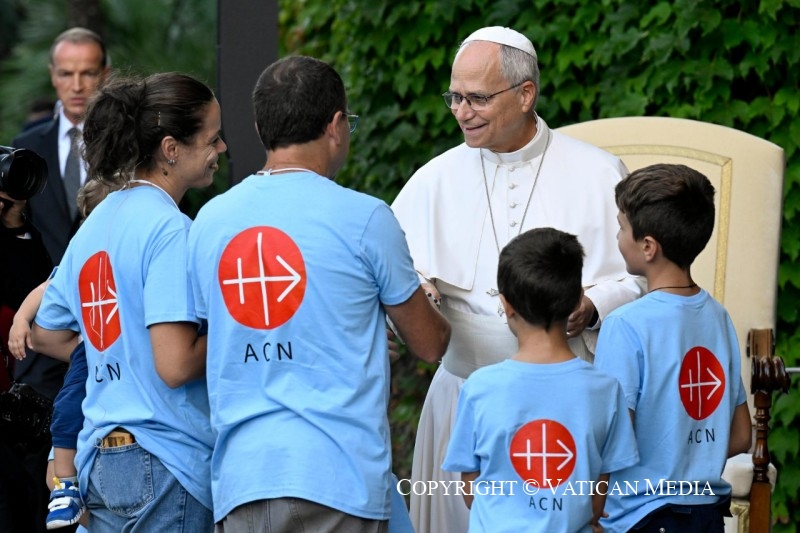
The Pope also devoted considerable attention to artificial intelligence. For him, technological development does not mean creating a kind of limitless "paradise of machines." The problem lies not in technology itself, but in the possibility that human beings will end up delegating decisions that require discernment, responsibility, and moral judgment to automated systems.

This concern was present both in the UNESCO as in his meetings with young people. Leo XIV insisted that algorithms can become extremely useful tools, but they cannot replace the human capacity to decide on fundamental issues. Hence his call for regulations that ensure technology remains at the service of the individual and is not subordinated exclusively to economic interests or power dynamics.

In this sense, his speech was not so much a critique of technological progress as a call to establish its conditions and limits. The fundamental question posed by the Pope was, ultimately, who should retain responsibility for decisions that affect human life and dignity.

The pastoral response and the message to young people

The pastoral dimension of the trip was as important as its institutional one. In a deeply secularized society like France, the visit's ability to mobilize a large number of people is, in itself, one of the most significant aspects of its outcome.

One of the most symbolic moments was the celebration of Vespers at Notre-Dame Cathedral. The recovery and restoration of Notre-Dame has become a symbol of continuity, and Leo XIV used this context to speak of a Church called to remain open, no longer confined within its own structures.
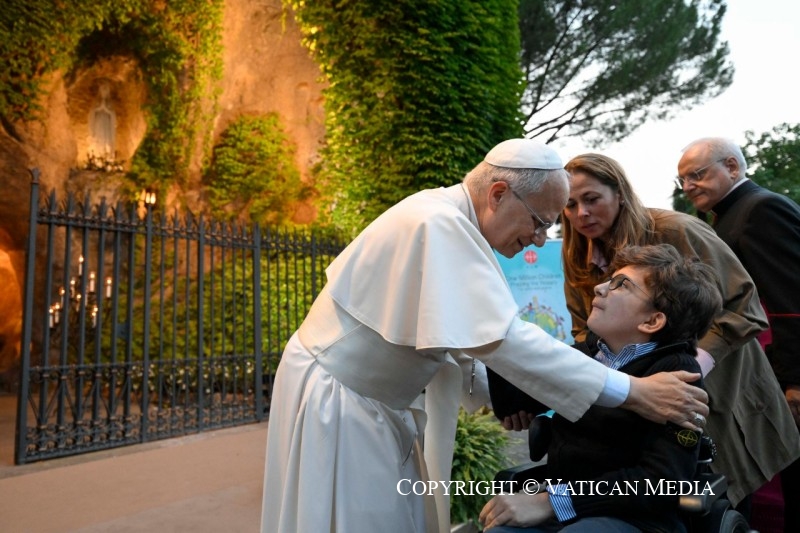

The peak of the turnout occurred around the Place de la Concorde (800,000 attendees) and at the Stade de France (80,000 young people). The Pope's tone toward the young people was particularly direct. He encouraged them to "choose Jesus" in a context marked by anxiety, loneliness, and uncertainty.

The message was addressed to young people living in an environment characterized by the constant presence of screens, concerns about climate change, economic uncertainties, and international instability. Faced with these circumstances, Leo XIV sought to offer a religious perspective, but also a space for listening and dialogue.

The response at the Stade de France is one of the most significant findings of the visit. In a society where religious practice has declined considerably, the gathering of a large crowd of young people demonstrates that there is still a place for a Christian message that can be presented in a direct and understandable way.

Lourdes, responsibility for abuses and the future of Europe

The arrival in Lourdes introduced a different element. The Marian character of the sanctuary brought a particularly intense spiritual dimension, but Leo XIV's meeting with victims of sexual abuse committed by members of the clergy added a matter of great institutional and moral importance.

The gesture aligns with the transparency and reparation initiatives promoted by the Holy See. The meeting aimed to express that the Church cannot face its future without also assuming responsibility for the harm caused within its own structures.
The decision to cover the mosaics created by the priest and artist Marko Rupnik on the facade of the Basilica of Our Lady of the Rosary did not go unnoticed. As is well known, the artist had been expelled from the Society of Jesus for repeated abuse of nuns.

The abuses committed by some clergy and religious constitute one of the most shocking events in the life of the Church. Their firm yet sensitive handling during the papal visit highlighted the awareness surrounding this issue and the clear obligation of those responsible to answer to the victims.

The Pope's presence in Lourdes thus made it possible to unite two dimensions that sometimes appear separate: the spiritual dimension of the Church and its institutional responsibility. The meeting with the victims served as a reminder that any reflection on evangelization and on the future of the Church must necessarily include a response to those who have suffered within it.

The final leg of the journey, in Metz, provided an opportunity to introduce another central theme of Leo XIV's pontificate: the future of Europe. In this place, so closely linked to Robert Schuman, the driving force behind the European project, the Pope directly addressed the continent's Christian roots—a matter so dear to his predecessor, John Paul II—outlining the idea of a Europe based on peace, the pursuit of the common good, and cooperation.

The celebration of Holy Mass in the cathedral of Saint Stephen in Metz brought the visit to a close before the Pontiff's return to Rome on Monday the 28th. With it concluded a pilgrimage that had covered very different scenarios in a few days, from the political centers of Paris to the sanctuary of Lourdes and the city associated with the origins of the European project.

The main interest of Leo XIV's journey to France lies precisely in the combination of all these dimensions. It was neither merely an institutional visit nor exclusively a religious pilgrimage. The whole allows us to consider the Church's presence not so much as an alternative to political, scientific, or cultural institutions, but as a voice that seeks to influence them from a specific conception of the person and human dignity.

Leo XIV's message sought to connect the Christian proposal with very concrete problems of the new generations, avoiding presenting faith as an answer separate from the concerns of today's society.

At the same time, the visit to Lourdes served as a reminder that the Church must face its own responsibilities. The closeness shown to the victims and the reference to the abuses introduce an essential dimension to any serious assessment of the trip. Restoring institutional credibility cannot be separated from transparency and the protection of those in vulnerable situations.

In summary, the trip has allowed Leo XIV to present himself as a Pontiff willing to engage in the major debates of modernity without abandoning the core of his religious mission. The immediate results are significant. The visit has returned the Pope to the center of French public life after eighteen years, mobilized hundreds of thousands of people, and opened spaces for discussion on issues that directly affect the future of European societies. It remains to be seen to what extent the messages delivered during these four days will have concrete consequences, both in the political and ecclesial spheres.

What does seem clear is that the visit has not been reduced to a series of ceremonial events. Leo XIV has used his presence in France to raise a number of fundamental questions about the relationship between progress and dignity, between freedom and responsibility, between religion and the public sphere, and about the very future of Europe. The importance of the pilgrimage will depend, to a great extent, on the capacity of these questions to remain relevant once the Pope has returned to Rome.

The authorRafael Navarro-Valls

Professor Emeritus at the Complutense University and Honorary President of the International Ibero-American Union of Jurisprudence.

When resentment no longer has the last word

El testimonio de una mujer con discapacidad y las enseñanzas de san Josemaría y san Juan Pablo II muestran cómo la gracia de Dios puede transformar la herida en misericordia.

1 de October de 2026-Reading time: 3 minutes

The other day, at my parish, I heard the testimony of a person with a disability. To be honest, it gave me a lesson on forgiveness that I felt compelled to share.

She spoke bravely about the pain she had endured throughout her life, facing ridicule from others because of her appearance or abilities. She confessed how difficult it was for her to forgive those who had caused her suffering. Listening to her moved me deeply. It made me understand that suffering transcends IQ and labels. The human soul suffers the wound. We all recognize hurtful words, inappropriate gestures, and how, in the face of aggression, resentment, envy, or bitterness can surface within us.

But what is forgiveness?

According to the RAE (Royal Spanish Academy), it is the remission of a deserved punishment, of an offense received, or of some outstanding debt or obligation. 

According to paragraph 2843 of the Catechism of the Catholic Church: «Thus, the Lord’s words on forgiveness come to life, this Love that loves to the extreme of love (cf. Jn 13:1). The parable of the unforgiving servant, which culminates in the Lord’s prayer on forgiveness (cf. Mt 18:23-35), reminds us: «So will the wrath of my heavenly Father be upon anyone who does not forgive his brother from his heart.» It is there, indeed, in the depths of the heart, that everything is bound and loosed. It is not within our power to cease feeling the offense and forget it; but the heart that offers itself to the Holy Spirit transforms the wound into compassion and purifies the memory, turning the offense into intercession.«.

The Catechism recognizes something fundamental: it is not within our power to stop feeling the offense. Forgiveness does not consist of repressing the feeling of wrongdoing, nor of numbing the heart; but rather of preventing the wound from becoming infected with hatred.

This internal struggle between wounds and grace can be found in the writings of Saint Josemaría Escrivá. In The Way, he invites us not to seek excuses in the harshness of our surroundings or in the behavior of others to justify our lack of charity. In paragraph 452 he writes:

"Have no enemies. —Have only friends: friends… on the right —if they did you good or wanted to do you good— and… on the left —if they have done you harm or tried to do you harm.".

And to delve deeper into how to react to incomprehension or contempt, point 682 gives us a very practical recipe for everyday life:

«"If you find it hard to forgive, remember that Jesus died for you and has forgiven you everything. Look at yourself on the Cross and you will see how little they do to you, compared to what they did to the Lord... and to what you do to Him.".

This same lesson was taught to us by Saint John Paul II. In 1981, after surviving the assassination attempt in St. Peter's Square, the Pope not only publicly forgave Mehmet Ali Ağca from the ambulance, but two years later he visited him in Rebibbia prison. That private meeting, looking into the eyes of the man who had tried to take his life, was an excellent lesson in what it means to not let evil have the last word. John Paul II showed the world that the strength of humankind lies in the capacity to transform aggression into an act of mercy.

That woman from my parish taught us a truth that we can easily forget: forgiveness is not an automatic act nor a force born of human volition, but a decision of the heart sustained by grace.

Seeing her vulnerability, I understood that forgiving doesn't mean justifying the harm done or erasing the past, but rather denying resentment the power to dictate our present. When we stop focusing solely on the offense and offer our open wound to God, forgiveness ceases to be an unattainable act and becomes a true experience of freedom and love.

The authorMiguel Pedro Gil Calvo

Father of six daughters. Speech-Language Pathologist and child of deaf adults (CODA). My personal and professional stories are intertwined in a single calling: to break down communication barriers.

Gospel

The father's expectation: "They will respect my son." 27th Sunday in Ordinary Time (Year A)

Vitus Ntube nos comenta las lecturas del Domingo XXVII del tiempo ordinario (A) correspondiente al día 4 de octubre de 2026.

Vitus Ntube-1 de October de 2026-Reading time: 2 minutes

The readings for these last three Sundays form a beautiful progression. We have remained in the Lord's vineyard. First, we heard the invitation:“Go, then, to my vineyard”Then came the call to respond with deeds and not just words. Today we discover the purpose of our work: God expects his vineyard to bear fruit.

The Gospel returns to the image presented in the first reading from the prophet Isaiah. The vineyard is the Lord's most beloved possession, planted with care, protected, and lovingly tended. As Isaiah says:“The vineyard of the Lord of the universe is the house of Israel".

Jesus now elaborates on this image in light of salvation history. The vineyard has been given to tenants, responsible for cultivating it and delivering its fruits to its owner. The privilege of working in the vineyard carries with it the responsibility of bearing fruit.

Then comes the most moving moment of the parable:“Finally, he sent his son to them, saying: ‘They will respect my Son.’ These words reveal something very deep in the heart of God. They do not express ignorance or naiveté, as if God did not know what was going to happen. Rather, they reveal the astonishing generosity of divine love. God never ceases to invite and offer new opportunities for conversion. Instead of responding to rebellion with immediate punishment, he responds with the greatest gift he could give: he sends his own beloved Son.

The farmers think that by killing him, they can keep the inheritance. To God's greatest act of love, they respond with humanity's greatest act of violence.

But the vineyard is not only ancient Israel. It is also the Church today and, even more so, each one of us. The question the Gospel leaves us with is not simply whether we are working in the vineyard, but whether our work is bearing fruit. It is not enough to belong to the Church. It is not enough to be engaged in religious activities. God expects the fruits of a transformed life and a holiness that becomes visible in daily life.

The Vatican

Leo XIV sums up his trip to France with one word: "Renaissance"«

“Just as Notre-Dame Cathedral was restored, so too is the Church in France being renewed.” This is especially evident in the enthusiasm of young people and the increase in the number of baptisms, Pope Leo XIV stated at today’s General Audience, summarizing his recently concluded visit to France.

Editorial Staff Omnes-September 30, 2026-Reading time: 4 minutes

“I have been impressed by the fervor and enthusiasm with which I have been welcomed in France!” exclaimed Pope Leo XIV at the General Audience this Wednesday, the last day of September, in St. Peter’s Square. A visit that “it has been a great gift for me and for God’s people in that country, and I thank the Lord”.

“Just as Notre-Dame Cathedral was restored, the Church in France is also being renewed. This is especially noticeable in the enthusiasm of young people and in the increase in the number of baptisms,” the Holy Father summarized in his address to the English-speaking pilgrims.

“I would like to summarize my experiences in a single great symbol: Notre-Dame Cathedral in Paris. A temple destroyed seven years ago by fire, today is a sign of rebirth. This is an image of the Church built with living stones, that is, of people who love Jesus because they have been loved by Him and wish to proclaim that love to all, “so that the world may have life” (cf. Jn 6:51). 

This is “the reconstruction of the Church that only God can carry out,” the Pope stated at the Audience.

The key to reading: “Renaissance”

With these and similar words, the Successor of Peter summarized his visit to France in the Audience. And the key word he has used is "renaissance".

“I would like to gather the thoughts and impressions - still very much alive - of this Pastoral Visit around a single great symbol: the Notre-Dame Cathedral of Paris. 

There, on the first day in the afternoon, the Pope recounted, “we celebrated Vespers of the Blessed Virgin Mary, a solemn and at the same time festive liturgy, in which the music, the singing and the beauty of the temple made hearts vibrate, united in prayer.”.

“Notre-Dame, with the drama it has experienced, can symbolically illuminate this entire Apostolic Journey, offering a key to understanding it that I would summarize in one word: rebirth.”.

Thousands of people gather on the Champs-Élysées in Paris ahead of Pope Leo XIV's open-air Mass at the Place de la Concorde, during his four-day apostolic journey to France, on September 26, 2026. (Photo by OSV News/Gonzalo Fuentes, Reuters).

Joy and fervor of the crowd

Whether in the restored splendor of Notre Dame de Paris for the solemn celebration of vespers, during “the unforgettable vigil at the Stade de France with the young people” — ”the new saints of France!” —, throughout the

streets or in front of the immense crowd in Concordia And in the Elysian Fields, the joy and fervor of the people of God—with their numerous catechumens—have been abundantly manifested, Leo XVI emphasized.

“This multitude, capable of silence and contemplation —characteristic of hearts that yearn for truth and love—, represents,” in his opinion, “a great sign of rebirth and hope.”.

“Two diverse and complementary places, almost spiritually united”

The Holy Father continued, mentioning “two completely different places and yet two complementary events, almost spiritually united. What united them? The Church, which is not made of stones or cement, but of people who love Jesus Christ because they have been loved by Him.”. 

– In Notre-Dame there were priests and deacons, consecrated persons, and pastoral workers; 

– In the stadium (Saint Denis) was the new French generation: new -I would say- not only because of their age, but even more so because of their spirit, because of their freedom of heart and faith. 

“Young people who sang, shouted, but who also remained silent, listening. Attentive and moved faces, which manifested hearts longing for truth and love. To them I said with joy—he reiterated at the Audience: ”You are the saints of France!” That Vigil was a great sign of hope,” the Pope said.

Human dignity, the central theme of the meetings

Naturally, the Pope also recalled during his tour that “human dignity As a fundamental criterion for all collaboration in service of the common good, already mentioned before the French authorities and the members of UNESCO, it has also been the central focus of the meetings with the most vulnerable in Paris.

And also in “Lourdes, blessed place where the Virgin Mary offers, in the name of her Son, to all pilgrims who suffer in their body and soul, a message of hope.”.

“Respect for all human life, which deserves to be cared for, supported and comforted”

“There I firmly recalled that all human life, even in the most fragile situations, retains its inviolable dignity and deserves to be cared for, accompanied and relieved,” added Pope Leo, with words often repeated since the meeting with the authorities on the first day in Paris.

Finally, Metz, a symbolic place in the building of peace in Europe alongside the venerable Robert Schuman after the Second World War, was an opportunity to recall the Christian roots of Europe, the Pontiff also stressed, and its commitment to the principles of dialogue and peace between nations and between the various religious traditions.

The Pope prays in the Masabielle Grotto (Lourdes) (©OSV News/Simone Risoluti, Vatican Media).

Lourdes, sanctuary of the civilization of love, encounter with victims of abuse

Lourdes represents for the whole world a sanctuary of the civilization of love, the Holy Father concluded, and “in this context I met some people who were victims of abuse and I asked them to help me express to other victims my will and that of the whole Church to listen and walk with them as they seek healing, recognizing the pain caused in their lives and working for the prevention of abuse.”.

Prayer for abundant and lasting fruits

Finally, Leo XIV recalled in the Roman Audience that “the theme of my Pastoral Visit to France has been 'Pour que le monde ait la vie, That the world may have life (cf. Jn 6:51).‘.

These are the words of Jesus, which summarize his entire mission of salvation and which, “during the Journey, fully expressed the Gospel meaning of each encounter. Now, these words express our prayer, as we ask God that this event of grace may bear abundant and lasting fruit,” he concluded.

The authorEditorial Staff Omnes

Integral ecology

According to specialists, fetuses feel pain like adults from the second trimester onwards.

El Dr. Rodrigo Orozco, ginecólogo y especializado en medicina maternofetal, ha manifestado que negar el sufrimiento del feto carece de fundamento científico. El feto siente el dolor a partir del segundo trimestre, y más en el tercero. Y en un aborto hay sufrimiento fetal.

Editorial Staff Omnes-September 30, 2026-Reading time: 3 minutes

The gynecologist's statements, to the effect that the fetus feels pain like adults from the second trimester onwards, and even more so in the third, have occurred in '‘The Afternoon’'Cope, commenting on recent public statements to the contrary.

“All scientific societies and the main gynecological colleges have demonstrated that from the second trimester onwards, and even more so in the third, the fetus has already developed sufficient brain neuronal complexity to feel pain very similar to us, to adults,” explains Dr. Orozco.

The moment when the fetus begins to feel pain

Dr. Orozco asserts that medical evidence demonstrates that the brain structures for processing this stimulus develop much earlier than is commonly claimed: starting in the second trimester and even more so in the third (you can consult here the difference between an embryo and a fetus).

In an interview published by the Diocese of Malaga, Neurophysiologist Salvador González Barón, emeritus professor of Human Physiology at the University of Málaga, places the first signs of fetal pain perception between weeks 18 and 22 of gestation. However, the specialist cautions that it is difficult to pinpoint the exact moment when this ability begins, due to the complexity of nervous system development.

Fetal distress during abortion

Even in earlier stages, the gynecologist points out that “from the very first stages of pregnancy, of course, the fetus It responds to blows, it responds when an invasive test is performed… it moves, it's bothered, it defends itself. Undoubtedly there are sensations, there is pain, and of course, when an abortion is performed there is fetal suffering. Science proves it.”.

In her opinion, “claims that the fetus does not suffer any pain or suffering during an abortion are completely wrong. There is no evidence to support this.”.

González Barón also points to a difference between the fetal and adult nervous systems. He explains that fetuses and newborns have not yet fully developed the neural mechanisms that allow them to inhibit or modulate pain. Therefore, the neurophysiologist believes that fetal pain could be more intense than that of an adult.

Carlo V. Bellieni, matching criteria

A similar position to that of Dr. Orozco has been defended by the Italian pediatrician and neonatologist Carlo V. Bellieni, from the University of Siena, one of the researchers who has most extensively studied fetal pain. In a article Published in 2019 in Seminars in Fetal & Neonatal Medicine, Bellieni argues that pain is a neuroadaptive phenomenon that appears around the middle of pregnancy, approximately between 20 and 22 weeks of gestation, and that it becomes progressively more evident during the rest of the pregnancy.

Bellieni reiterated this thesis in a May 2026 publication in the Journal of Medical Ethics. According to the Italian specialist, there is considerable evidence that, between 20 and 22 weeks after conception, fetal responses to potentially painful stimuli are similar to those of adults from an electrophysiological, chemical, and behavioral perspective. 

“The patient’s word—a kind of ‘unmistakable proof’—would be desirable, but not indispensable when there is strong evidence,” Bellieni writes. Therefore, he believes that analgesia should be used when fetal pain is highly probable.

Other studies

Also significant is a work published in 2025 by Bellieni together with Kanwaljeet JS Anand, Professor of Pediatrics at Stanford Medical School and one of the best-known international researchers in the study of fetal pain. 

The authors conducted a systematic review of 17 clinical studies that had directly observed fetal responses to noxious stimuli. Their conclusion is that pain-related responses appear "from mid-gestation onward," although they call for further research to confirm these results and guide clinical practice.

González Barón, however, introduces a nuance that transcends the medical question. Drawing on a reflection by Dr. J. Tudela, he reminds us that human dignity does not depend on the capacity to feel pain. Therefore, he believes that the ethical debate on abortion cannot be reduced to determining whether the fetus suffers during the procedure.

Post-abortion sequelae

Furthermore, Dr. Orozco has pointed out the long-term psychological consequences suffered by many women after an abortion, "a real phenomenon that medicine observes daily," he notes. cope.es. The doctor states that the official absence of the term "post-abortion syndrome" from international psychiatric classifications does not negate the experience of the patients. "Just because it's not included doesn't mean it doesn't exist.".

Leire Navaridas, founder of Amasuve and post-abortion support worker, speaks of the “trauma of abortion”, and has published the book 'An Abortion After', in which she seeks to make visible through her personal story ‘what happens before-during-after an abortion’.

The authorEditorial Staff Omnes

The World

Who was Madeleine Delbrêl, whom the Pope quoted at Notre Dame?

Cuando León XIV apeló a Madeleine Delbrêl el pasado viernes en Notre Dame de París, para llamar a la oración a los obispos, sacerdotes, seminaristas y personas consagradas, pegué un respingo. Acababa de leer un excelente artículo de Gerardo Ferrara en Omnes, precisamente sobre ella.

Francisco Otamendi-September 30, 2026-Reading time: 4 minutes

The call from Pope Leo XIV at Notre Dame, on the first day of his visit to France, was no small matter. 

The Pope was concluding some advice to the structure of the French Church, and to the lay people present, and in a few minutes we were going to hear that “This cathedral has been reborn so that you may be reborn with her in a new impulse of holiness and daily mission.” And suddenly, the name of Madeleine Delbrêl was heard.

The Pope relied on Madeleine Delbrêl, not a nun, nor a founder nor a theologian, “but a lay woman, artist and activist immersed in difficult realities, who found her mission (already in God) in the street, literally: the street, with its “existential peripheries”” (Ferrara wrote on July 4th), to encourage friendship with the Lord and personal prayer among those present.

Madeleine Delbrêl: “Without prayer, we will not love God with love”

What the Successor of Peter said, almost at the conclusion of his homily at Vespers in Notre Dame, was the following:

“Dear bishops, priests, seminarians, and consecrated persons: to you who have been called to follow Christ, I express my gratitude for your response and your fidelity to the Lord. Never neglect this friendship, so dear to the Lord, which must be cultivated in personal prayer, the essential foundation of every vocation. 

As I said Madeleine Delbrêl“Without prayer, we will not love God with love. We may be his servants or his fighters, or even his disciples; but we will be neither loving children of our Father nor friends […] of Jesus Christ” (The Joy of Believing, Santander 1997, p. 213).

“Therefore, nurture your interior life with the Lord in the light of the school of the many saints who have gone before you, always drinking from the fountain of God’s infinite love in silent prayer. Your mission springs above all from this intimate relationship with the Lord, who awaits you there.”.

Plaque on the facade of the birthplace of Madeleine Delbrêl, December 11, 2025, Mussidan, Dordogne, France (@Cip24, Wikimedia commons).

Social worker in a working-class neighborhood on the outskirts 

Madeleine Delbrêl was born on October 24, 1904, in Mussidan, France, into a family that we would today describe as “dysfunctional.” Her father, Jules, was a stationmaster—a frustrated intellectual, anticlerical, proud, and temperamental—who frequently changed jobs, forcing the family to move constantly. Her mother, Lucile, was the complete opposite: conformist, conventional, and from a bourgeois family.

This is how Ferrara described Madeleine's family, and then how he approached her. They have all the details there, so we'll only focus on a couple of things here.

The first, who in 1933 moved, along with some colleagues, to Ivry-sur-Seine, in the working-class suburbs of Paris, an industrial neighborhood steeped in class struggle and governed by a communist junta. She studied to become a social worker and was hired by that very same anti-clerical administration, which valued her greatly. Her house on rue Raspail became a haven for the poor, the homeless, and, during the Resistance, for Jews and refugees.

He lived like this, on the outskirts of Ivry, until October 13, 1964, when he died from a sudden cerebral hemorrhage. He was working at his desk. In 2018, the Pope Francis granted him the title of Venerable.

He is not a marginal figure.

Secondly, one consideration. If Pope Leo XIV she quoted her In Notre Dame, it's important to remember that she is not a marginal figure. Madeleine Delbrêl is one of the key figures of 20th-century French Catholicism in the evangelization of a secularized society.

Delbrêl posed a question that remains relevant today: how to be a Christian and evangelize in a society where faith no longer constitutes the dominant cultural environment?

Their response was to live the Gospel within themselves: to work, to relate to others, to share their problems and joys, and to strengthen and purify their own faith, as they were called to be missionaries "here and now".

A text that challenges us: patience, our nerves, the bus…

In conclusion, we've summarized a few lines from Madeleine Delbrêl that Ferrara published almost three months ago. You can reread them. here".

“Sometimes, throughout the day we eagerly await passions, great passions…

Those people will be called heroes—and that makes it worth sacrificing one's life…

Instead, tests of patience lie ahead.

Patience, those crumbs of passion, whose purpose is to slowly kill us for your glory, oh God, to kill us without our glory.

First thing in the morning, they’re already there: our nerves—either too jittery or too sluggish; the crowded bus passing by, the spilled milk, the chimney sweeps arriving, the kids who ruin everything.

“Our trials… the martyrdom that awaits us”

“They are the guests our husband brings home and that friend who, precisely, doesn't come; it's the phone that keeps ringing; they are those we love who no longer love us.

(…) it's wanting to go out when we're locked up,

is staying home when we should be going out;

He's the kind of husband we'd like to lean on

and who becomes the most fragile of all the children;

(…) This is how our trials arrive, in closed ranks or in single file, and they always forget to tell us that they are the martyrdom that awaits us.

And we let them pass us by with disdain, waiting—

to give our lives—an occasion worthwhile.”.

The authorFrancisco Otamendi

Culture

Catholic scientists: Antonio José Cavanilles

Antonio José Cavanilles fue un naturalista, sacerdote español, considerado de los científicos más destacados de la Ilustración en España.

Gonzalo Colmenarejo-September 30, 2026-Reading time: 2 minutes

Antonio José Cavanilles (Valencia, 1745 – Madrid, 1804) was a Spanish naturalist, botanist, and priest, considered one of the most prominent scientists of the Enlightenment in Spain. His life and work constitute a bridge between the humanist tradition and modern scientific rigor applied to the study of nature.

After completing his studies in his hometown, he earned a doctorate in Theology from the University of Valencia. Ordained a priest, he combined his religious vocation with a growing passion for the natural sciences. In 1777, he traveled to Paris as tutor to the son of the Duke of Infantado. There, he developed an interest in botany, learning the most advanced methods of the time in this science, including Linnaean classification. His first botanical work, Monadelphiae, classis dissertationes decem (1785-1790), Containing a description and classification of all species with mono-oleander flowers, it began its rise to fame in European botanical circles.

After the outbreak of the French Revolution in 1789, he had to return to Spain. His most influential work dates from this period., Icons and Descriptions Plantarum (1791–1801), in which he described hundreds of species, many from America and the Philippines, collected through the scientific expeditions of the Spanish monarchy. This work placed him among the most prestigious European botanists.

In 1791, King Charles IV commissioned him to "travel throughout Spain to examine the plants that grow there," and from there his Observations on the Natural History of the Kingdom of Valencia (Madrid, 1795-1797), where beyond botany, he studied the geographical, social and economic aspects of this land.

In 1801 he was appointed director of the Royal Botanical Garden of Madrid, an institution he revitalized with a strong boost to research and teaching, reinforcing its connection with overseas scientific expeditions.

Beyond botany, Cavanilles showed interest in modernizing production methods and the importance of science to the nation's prosperity. His work reflects both the universalist curiosity of the Enlightenment and the effort to place Spain on the European scientific map.

He died in Madrid in 1804, leaving a legacy that still survives in botanical nomenclature: numerous species bear the epithet cavanillesii in his honor.

The authorGonzalo Colmenarejo

PhD. IMDEA Food. Member of the Society of Catholic Scientists of Spain.

ColumnistsEloy Asenjo, Carpenter

Men of fire in a noisy world

Ante la crisis de vocaciones, la Iglesia necesita sacerdotes con una sólida formación humana y espiritual, capaces de acompañar a los fieles y de vivir su entrega a Cristo con audacia, humildad y alegría.

September 30, 2026-Reading time: 4 minutes

We live at breakneck speed. Trapped in a hyper-connected civilization, we walk around with headphones on and our souls exposed, suffocated by a constant murmur that robs us of our inner selves. In the midst of this fragmented and bewildered society, the Church faces a crucial crossroads: the crisis of vocations to the ministerial priesthood. Let us not be mistaken; this is not merely a matter of statistics or parish records. It is the very survival of a living presence that continues to proclaim the Gospel and administer the sacraments to a world that is bleeding.

Following the Pope's recent teachings—since his Apostolic Letter Loyalty that generates future From his Message for the 2026 World Day of Prayer for Vocations, he outlines a roadmap as bold as it is inescapable. The premise resonates with thunderous force, reminding us that there is no future without nurturing all vocations.

Faced with the disorientation of this global showcase saturated with screens and noise, a comforting certainty emerges: God has not closed the curtain nor stopped knocking on the doors of young people. The Lord continues to choose and call those He has chosen, without looking at dazzling resumes or seeking elite technocrats, but rather betting on pure, unconditional love that rewards, shakes, and challenges.

But to prevent that voice from being lost amidst the clamor of today's culture, it is urgent to shake off pastoral lethargy. Patches are useless. What is needed are firm, bold proposals, capable of offering young people an ideal of total commitment and profound meaning. In the age of digital haste, recovering depth requires cultivating silence, Eucharistic adoration, and vibrant listening to the Word. Vocation only takes root where there is living faith, unmasked witness, and unwavering accompaniment.

This seed finds its ultimate expression and its ultimate test in the heart of the diocese. And here arises the crucial question of whether it makes sense to maintain seminaries today. In a society dominated by instant pragmatism, dedicating years to priestly formation may seem like a whim or a pointless delay. A grave error! Papal teaching unequivocally dismantles this notion, stipulating that seminary is an indispensable condition for avoiding shoddy ministerial practices.

When a bishop dedicates himself to his seminary and nurtures it with care, the diocese flourishes in both fruitfulness and numbers. Climbing this formative mountain means learning to be with the Master, grounding one's life in daily dialogue and sculpting an unshakeable human and emotional maturity. The seminary must be a true school of the affections where one learns to love as Jesus loved. Only spiritually sound and emotionally mature men can embrace celibacy with joy and become true bridges to God, fully aware that no one is formed alone and that no pastor exists in isolation.

That strength forged in the seminary is the indispensable armor for entering the trenches of daily ministry. The priesthood is not reserved solely for emergencies or exceptional cases; its ordinary work is to be there to care for the faithful who come to the parishes, enabling each layperson to grow in their interior life through a process of close accompaniment.

To avoid succumbing in the attempt, priests and candidates must astutely sidestep two deadly temptations. The first is the trap of activist efficiency, which measures personal worth by business performance or the volume of projects, forgetting that in the Kingdom of God, being always precedes doing. The second is the trap of defeatist quietism, which leads to cowardly refuge in complaining, laziness, and disillusionment with a secularized society that supposedly no longer understands anything.

The antidote to both of these deviations is to turn our eyes to the Good Shepherd. Contemplating him transfigures our weaknesses and restores our zeal for bringing pastoral charity to the most unexpected corners of the street.

The priesthood is neither an untouchable status nor a self-referential bunker. Authentic faith compels the priest to come down from the mountain, get his sandals dirty in the mud of daily life, and wear himself out for the People of God. This means dedicating his life to serving families on the brink, young people adrift and trapped in precarious circumstances, the invisible elderly, and all those who have lost their way, bringing them the balm of forgiveness and living hope.

This endeavor is not a task for lone wolves. Promoting and safeguarding vocations demands the concerted involvement of all the People of God. It rests on the tripod of constant prayer, led by the Bishop, priests, and laity, and sustained by the invisible lifeblood of cloistered monasteries. It requires families with strong homes who know when to let go of their children's hand when God calls them, alongside fraternal priests who know how to stand strong together to banish the dreaded ministerial loneliness.

The Church today is not looking for administrators of the sacred or diplomats of the faith, but for men of fire: priests who are passionate, humble, and bold. As the Holy Curé of Ars often said, the priesthood is the love of the heart of Jesus.

This is the clear moment to ignite a new Pentecost of vocations, praying to the Lord of the harvest and daring to propose to young people the radical adventure of self-giving. For fidelity to Christ is, yesterday, today, and forever, the only spark capable of bringing forth the future.

The authorEloy Asenjo, Carpenter

The Vatican

The Pope chooses 'attention in the age of clickbait' to communicate in 2027

El tema que el Papa León XIV ha elegido para la 61 Jornada Mundial de las Comunicaciones Sociales, que se celebrará en 2027, es “Una nueva mirada: prestar atención en la era del clickbait”, es decir, en la era del sensacionalismo, de los atrapaclics o de los ciberanzuelos.

Editorial Staff Omnes-29 de September de 2026-Reading time: 2 minutes

According to a statement from the Dicastery for Communication, Pope Leo XVI has chosen the theme of “conversion of the gaze, with attention and love” for next year’s 61st World Day of Social Communications.

The attention economy, in its struggle to capture a few moments of attention amid the rapid and endless flow of content, the note points out, “is transforming not only our cognitive abilities, but also the depth of our interpersonal communication.”.

We are therefore called “to a conversion of our gaze: to look anew, attentively and with love.” Only in this way “will we be able to see the world, others, and even ourselves as Christ sees us: called by name and loved,” the text adds. “Our communication changes when our gaze chooses to draw near to others instead of judging them.”.

Lack of genuine attention

The lack of genuine attention, fueled by digital culture, has accustomed us to a routine of immediate reactions, to superficiality in relationships, to the ease with which we label and reject others. 

“Attention, on the other hand, is a valuable form of generosity: “attention” comes from “ad-tendere”, to reach out towards the other and towards the truth. Christian communication can rediscover attention as a gift and as a way of seeing, that of Jesus, who saw and was moved,” according to the statement.

Communication affects the whole person

Faced with clickbait (lures or ways of doing things that seek to catch clicks), "we are called to 'pay attention' and rediscover a hygiene of attention.".

The note also emphasizes that “communicating is not about capturing attention, nor is it about selling it, but about safeguarding it as a valuable resource for relationships. To communicate in the age of clickbait, we are called to “pay attention” and rediscover a hygiene of attention (cf. MH, 146).”. 

Communication is not just about words, the note concludes. “It affects the whole person, and requires us to look, listen, and feel again in order to respond to the call that Christ addresses to us.”.

The authorEditorial Staff Omnes

Newsroom

Catholics and Public Life vindicates the shared history between America and Spain 

La vigésimo octava edición del Congreso Católicos y Vida pública estará centrado en la relación social, política histórica y cultural entre América y España

Maria José Atienza-29 de September de 2026-Reading time: 3 minutes

“America and Spain, the faith that unites us. A round trip” is the title of the 28th edition of the Catholics and Public Life Congress which will be held from November 13 to 15 at the CEU San Pablo University.

A challenging topic, within the historical moment in which we find ourselves and which vindicates figures such as Isabella the Catholic or the work of the School of Salamanca, germ “of international law and of the universal dignity of the human person and which has inspired Pope Leo XIV at various times. 

Hispanicity, a point of reference

María San Gil, director of Catholics and Public Life Congress She was in charge of reading the manifesto for Hispanidad, the central theme of this congress, which defends the fact of Hispanidad as a reality that "benefits all of us who speak, think and feel in Spanish on both sides of the Atlantic.". 

The manifesto points out how Hispanidad, far from black or golden legends, is based on a "community of affections and interests, forged by history and sustained, for more than five hundred years, by institutions that no international treaty has managed to replicate.".

With this Congress, the organizers turn their attention back to a complicated issue due to the "loss of some of the anchors that have sustained it for centuries" and encourage people to "look with serenity and pride towards a community that does not depend on these fluctuations.".

Thus, prominent figures from both sides of the Atlantic will advocate for “a profound change of attitude” regarding the defense of Hispanicity and its “cultural and moral vindication commensurate with its history” in order to “recognize that faith has been one of the firmest foundations of that civilization.”. 

A call for unity, for coming together and for the recovery of a shared history, which joins the impetus of the cause of beatification of Isabella the Catholic, an initiative in which some relevant members of the propagandists participate. 

The first Congress under the presidency of José Masip

This 28th edition of the Congress of Catholics and Public Life will be the first under the presidency of José Masip, who succeeded to the position Alfonso Bullón de Mendoza Last July. This was recalled by Pablo Velasco, national secretary of Communication for the ACdP, who highlighted the exponential growth of the Catholic Association of Propagandists under Bullón de Mendoza's leadership. Masip had served, along with María San Gil, as coordinator of the congress in the previous two editions. 

A poster that celebrates the meeting

Among the most noteworthy new features of this congress, Velasco highlighted the authorship of the poster, which this year emerged from a proposal to students in the Communication areas of the four universities that CEU has in Spain. 

The design by Carlos Figuero, a student of the Digital Art Degree, was the winner, and the young man, who defines himself as a “Catholic artist and lover of history,” explained the key elements of a poster that represents the fraternity between both peoples: “Two schools of fish, of different colors, symbolize both hemispheres. From each school, a fish emerges to meet the other. That is what defines us: the encounter. The fish are inspired by Mayan art and Christian iconography.”. 

In recent years, the Catholics and Public Life Congress has established itself as one of the key events for thought and the promotion of Catholic participation in civil and cultural society.

The World

Leo XIV bids farewell to France and Metz, a city of reconciliation and a beacon of hope for Europe and the world

El último día del viaje del Papa León XIV a Francia, en la ciudad de Metz, fue una jornada dedicada al llamado a la paz, a la reconciliación y a la unidad europea.

Gonzalo Meza-29 de September de 2026-Reading time: 4 minutes

His first activity in Metz was a meeting with representatives of different religions at the Robert Schuman Congress Center. Religions, he said, are called to build peace and to be guardians of life. Following the example of Robert Schuman, who transformed Europe's old divisions into bridges, the Pope advocated for dialogue that does not dilute one's own identity: "Dialogue does not diminish our identity, but rather expresses it with simplicity and truth, opening itself to the differences of others.".

He also condemned the use of God's name to justify violence: «Invoking God's name to legitimize violence or oppression is a profanation of that name. Nothing that disfigures human dignity can be claimed as a genuine divine inspiration.» The Pope also affirmed that the greatness of a civilization is measured by how it protects the human person, especially the most vulnerable: «The greatness of a civilization is not measured by its material successes, but by the way in which it embraces, protects, and elevates the human person. Religions are guardians of life.».

Europe, between its Christian roots and peace

Later, Leo XIV attended a meeting entitled "At the Roots of Europe, for Peace and Unity." In his address, the pontiff proposed returning to Europe's roots to build peace and unity. Following Robert Schuman, he indicated that Europe is a cultural reality born from the encounter with the other and marked by Christianity: "Europe must be understood as a cultural and historical reality before it is a geographical one." And he emphasized the place of faith in its identity: "One cannot speak of Europe without mentioning Christianity.".

Leo XIV lamented the return of war to the European continent, a new «useless massacre,» in the words of Benedict XV. In response, he called for patient dialogue and boldness in negotiations, with a willingness to compromise to achieve peace: we must «show boldness in negotiations and be prepared to sacrifice some positions for the greater good of peace.» He clarified that this pursuit «must not be confused with naive irenicism.» In this regard, the Pope warned: «We must beware of the illusion of rearmament.» And he quoted his message for this year’s World Day of Peace: «It is no coincidence that the repeated calls to increase military spending and the decisions that this entails are presented by many leaders as justifications of the danger posed to others.».

Metz, land of reconciliation

In the afternoon, the Holy Father presided over Mass for Peace and Justice at St. Stephen's Cathedral, known as the Lantern of the Good Lord, with some two thousand people inside the church and thousands more watching on screens set up in the streets. In his homily, he explained that peace is a house that God gives, but that people must build it together with law, justice, charity, and forgiveness: "Peace, which is a gift from God, demands a response from people in a shared effort." He recalled that Metz, a land of wars, is also a land of reconciliation: "Metz and the Moselle River bear witness to the whole world that reconciliation is possible only when we have the courage to break the chains of resentment.".

For the Pope, the cathedral, with its stained-glass windows by Marc Chagall, is the image of what Europe is called to be: «The future of Europe does not lie in uniformity, but in the harmony of differences, where the wounds of the past become fissures that allow light to filter through.» Therefore, in his farewell, he asked the community of Metz to be, «today more than ever,» a beacon of hope for France, for Europe, and for the world.

After the mass, he went to the Metz-Nancy-Lorena airport, where he was seen off by the President of the Republic, Emmanuel Macron, before departing for Rome.

France discovers a living Church

The trip has left France and Europe with much to reflect on. The Pope placed the dignity and defense of human life, from conception to natural death, at the heart of his visit and speeches, linking it to the call for peace and unity in Europe and the world. For its part, France offered the world a surprise: in a secularized and increasingly de-Christianized country, thousands of young people and adults are discovering Christ in their lives, deciding to follow him, and requesting to join the Church through the path of Christian initiation, which culminates in baptism, confirmation, and the Eucharist. To these are added many baptized individuals who, after years of estrangement, are returning to the faith and the sacraments. A sign that, as the Pope himself said, left him "amazed" and "transcends statistical and sociological analysis."«

Perhaps the image that best encapsulates the visit was the Mass in the Place de la Concorde and on the Champs-Élysées. Nearly 800,000 people attended the ceremony. The Pope was acclaimed by French citizens from all over the country as he traveled in the Popemobile along the iconic Parisian avenue, a source of national pride for the French and the stage for major parades and national celebrations. There, the successor of Peter, Vicar of Christ, was received and cheered. Then, the Place de la Concorde, which during the Revolution was a site of execution by guillotine, was transformed, with the Mass, into a place of encounter, unity, and communion.

Family

Chema and Marta, with a son with a disability: “We went from confronting God, to leaving everything in his hands.”.

La llegada de Jorge, con graves problemas de salud, puso a prueba la fe de Marta y Chema, que aprendieron a confiar en Dios y a vivir con esperanza y naturalidad.

Álvaro Gil Ruiz-29 de September de 2026-Reading time: 4 minutes

Marta and Chema are a very ordinary couple, or so they say… Because… Who sticks a chocolate donut on their finger to propose to their girlfriend? Well, Chema does. He tells us in this interview that, to propose to Marta, he went to a bar and did it in this very original way. He calls it the “anti-proposal.” Anecdotes aside, they are indeed very ordinary. Because ordinary things happen to them. Like the unexpected birth of Jorge, one of their four children, who came into the world with several difficulties, which have made him very special, and they take it all in stride, without any drama.

We were able to interview them both and they told us this and much more. 

Marta grew up with two brothers and studied at Opus Dei schools, something that, she says, has prepared her to "face whatever God sends us." Chema, the sixth of eleven siblings, learned from a young age the value of hard work and never giving up.

I suppose Jorge's arrival was like the beginning of a journey you were unknowingly preparing for. How do you interpret this event? Do you feel freely prepared for such a complex task? How providential do you see it? 

–At 20 weeks pregnant, we had a very important ultrasound. At that time, they told us that something was wrong, that the heart and cerebellum weren't closing properly. We went to other specialists, and it was confirmed. But we were completely uncertain about what that would mean. 

Each week that passed, the news was confirmed and worsened. It was a high-risk pregnancy, and the delivery took place in an operating room at La Paz Hospital. I was terrified waiting outside. As soon as he was born, they put him in the incubator and let me see him for two minutes. I took the opportunity to baptize him with a Bezoya water bottle. 

He was then taken to the neonatal ICU and began a six-month struggle in the hospital (from June to December) until he was finally discharged. He has since had many hospitalizations and undergone several major surgeries. 

At two years old, for example, he had heart surgery, and things became very complicated, requiring four more operations in quick succession. It was one of the most critical moments of his life. Now he's 14, and we continue to fight every day with great effort, but with hope and a positive attitude. . 

Marta, how did you experience Jorge's arrival?

 “At first, I was stunned and didn’t understand anything. It was a huge shock. I was so excited throughout the pregnancy, and then I was faced with all of this, which left me completely overwhelmed. But day by day and month by month, as the pregnancy progressed, I drew closer to the Lord, and He gave me all the strength to fight and keep going… and when he was born, I saw a precious, tiny baby who needed me, and I thought, ”We have to keep going… let’s fight with all our might,’ and that’s what we did and continue to do, always with a supernatural perspective and trusting in God. He gave him to us this way, and He wants us to treat him as he deserves.”. 

At that time we only had a three-year-old son whom we had to "abandon" for six months because we had to be in the hospital. 

Some days my father would take Álvaro to La Paz in the afternoons so we could see him. Álvaro didn't understand why he couldn't see his brother and why the baby wasn't coming home, but we explained it to him as best we could. It was hard for him: imagine being three years old and thinking that having a brother meant being without parents for months. 

And you, Chema, how did you take it? What did your children think?

“I couldn’t believe this was happening to us. You always think things will work out… but when they keep getting worse and worse, you start to despair. It’s so hard when you see your baby, completely innocent, suffering, and you can’t do anything. I had some very dark moments, when I didn’t understand anything, when I was at odds with God, when I almost lost my faith. Until one day, I put everything in His hands.”.

Marta, how do you manage to support your family? How do you foster independence in all your children? 

–Marta: Well, we don't do anything out of the ordinary, but I think our children have gotten used to living with a brother who is "special" and who often has to spend weeks in the hospital, sometimes with high risk, and they treat it as if nothing is wrong, and above all we try to normalize the situation. 

For example, Jorge has a limp and wears an orthosis, like a small prosthetic leg, which we call a "peg leg" at home… We treat Jorge like any other child and we push him—within his limitations—but we push him so that his siblings can also see that it's okay…

 His sister Rocío (12), for example, is very affectionate and defends and helps him a lot… she treats him as if he were younger and he gets angry and says to her: “I am not a baby, I am older.. 

His brother Diego (8) makes him laugh a lot, plays with him and does silly things to make Jorge laugh… 

 Chema: In short, Jorge is a happy child, loved by everyone, with such a pure and beautiful gaze that it touches your soul. It's hard to take care of him, especially on some difficult days. But he has become the main pillar of the family, and he's the one who has taught us the most about love in life.  

What advice would you give to all those who are surprised like you but are less prepared at all levels?

–Marta: I advise you to ask the Lord for strength, to surrender yourselves to Him, to pray a lot, and above all, to fight. To fight hard to help your child pull through. The doctors paint a bleak picture, but if you persevere, you can achieve many things… Children are stronger than we can imagine, and they need us to be there to support and help them. 

The World

Bryce Crawford, the young evangelist who brings Jesus to social media

Tiene 22 años, nació en Georgia y predica a Jesucristo en las calles, en universidades, en un podcast y, sobre todo, en las redes sociales. Bryce Crawford se ha convertido en una de las voces evangélicas jóvenes con mayor presencia digital en Estados Unidos, con gira en 2026 incluida.

Editorial Staff Omnes-29 de September de 2026-Reading time: 5 minutes

The unique aspect of Bryce Crawford, the evangelist of Generation Z, as he is being called, lies not in music or entertainment, but in something older: talking about Jesus, reading the Bible, answering questions about faith, and going out to find people who, according to him, need to hear the Gospel again.

Now based in Los Angeles, this young American evangelist and missionary has converted the evangelization Street activism and social media—especially TikTok, Instagram, and YouTube—are the main vehicles for his proclamation of Jesus Christ to new generations, with a total of more than 7 million followers.

Crawford defines himself on his own website as an “evangelist & founder” of Bryce Crawford Ministries. The organization presents him as an “evangelist and missionary based in Los Angeles”, dedicated to sharing the Gospel “online and in person” with anyone who will listen. 

Their motto is equally explicit: “Doing whatever it takes to reach the lost and training Christians to do the same”: to do whatever it takes to reach those who are far away and to train Christians to do the same.

This year's 'I love Jesus US Tour'

The first national I Love Jesus US Tour began on February 24, 2026, and ended on March 29, 2026, with the final show in Los Angeles, California. This was confirmed by Liberty University, whose Liberty Worship Collective accompanied Crawford on tour. 

During that time, the young Crawford toured the United States with his I Love Jesus US Tour, which visited 22 cities in 18 states and concluded in Los Angeles. The tour combined preaching, prayer, worship music, and conversations about faith, and he was accompanied for much of the journey by students from the Liberty Worship Collective.

And a fact that gives an idea of the phenomenon: more than 35 Liberty University students participated at different times during the tour, forming six teams that took turns.

Conversion into a Waffle House

His personal story is an essential part of his preaching. Crawford grew up in Cartersville, Georgia, in an evangelical environment, attending a Christian academy and a Southern Baptist church. However, during his adolescence, he suffered, according to his own testimony, from severe anxiety, depression, and very negative, even suicidal, thoughts. But his family history later underwent a transformation that he attributes directly to God.

The story he tells places a decisive moment during Christmas 2020, when he entered a Waffle House restaurant intending that to be his last meal.

There he began talking to a man going through a divorce. A comment from this stranger—about the need for a relationship to be reciprocal—led Crawford to a religious reflection that he interprets as a call from Jesus. “I was like, all right, bet,” he later recalled: something like, »Okay, I’ll do it.« Shortly afterward, he began to consider dedicating his life to proclaiming Christ. Religion News Service, In a comprehensive profile published in May 2026, he contrasted this story with his public testimonies.

Young evangelist Bryce Crawford has toured the United States this year with the I Love Jesus USTour, accompanied by students from Liberty University. (@Bryce Crawford Ministries).

God was calling him full-time

After graduating from high school in 2022, he moved to Los Angeles convinced that God was calling him to be a full-time missionary. There, he began preaching on the streets. In May 2023, as he told CBN News, he also had a dream in which Loren Cunningham, founder of Youth With A Mission, appeared. Crawford interpreted that experience as a call to record the evangelistic conversations he was already having with people on the street, to encourage other Christians to be more courageous in their faith. “It’s been nothing short of a miracle,” he said.

In an interview with Rick Rubin, he recounted that for Christmas 2023 he gave his mother her first personal Bible, along with a plan to read it over the course of a year. She read it throughout 2024. Crawford says that his mother became a woman of great faith during those years.

What is Bryce talking about?

It could be said that Bryce Crawford talks primarily about Jesus and how to live as a Christian in the contemporary world. His podcast is presented as an exploration of how to follow Jesus courageously in the modern world. Topics covered in his episodes include salvation, faith, doubt, calling, anxiety, purity, marriage, sin, repentance, holiness, prayer, identity, suffering, forgiveness, grace, culture, social media, and truth.

Conversations also with strangers, with kindness

There seems to be a two-pronged approach, therefore: explaining Christianity and teaching other Christians how to evangelize. He doesn't limit himself to speaking to those who already believe. One of the characteristics of his videos is his conversations with strangers in public spaces. He has gone to places far removed from the typical church setting—including Venice Beach, countercultural festivals, and Pride celebrations—to talk about Jesus.

His method also explains some of his popularity. Instead of simply preaching directly, he tries to converse, listen, and ask questions. The Associated Press noted that his street evangelism seeks to change mindsets through kindness. 

Crawford himself explained: “Our tactics have been one-on-one conversations, calmly listening, asking questions because we care about them.”.

Why so many followers?

As mentioned at the beginning, Crawford doesn't need to be a singer or produce music: the raw material is conversations, testimonies, the Bible, and the questions he poses to people who don't necessarily share his faith. And this attracts millions of followers on the aforementioned social media platforms. 

The figures provided by their own organization are even higher in terms of views: between January and September 2025, they recorded 63 million views on YouTube, 406 million on Instagram, 647 million on TikTok, and eight million podcast listens. 

The context: Evangelicals, the 23% of American adults

Crawford grew up in Georgia, in a family connected to a Southern Baptist church and Christian upbringing. According to the Pew Research Center's latest Religious Landscape Study, conducted in 2023-24, 231% of American adults identify as evangelical Protestant, up from 261% in 2007. Protestants as a whole represent 40% and Catholics 19%.

Evangelical dynamism is not exclusively American. In other countries, such as Brazil, the 2022 census placed them at 26.91% of the population aged ten and over, compared to 21.61% in 2010. In a recent survey, 29% of Brazilian adults identified as Protestant, compared to 46% who identified as Catholic. 

Transformation in the way the message is presented

Crawford's case fits into a broader transformation, analysts say. A segment of evangelical Christianity is taking evangelism from the church to the streets and from the streets to mobile phones. 

Its novelty lies not so much in the message—Jesus, conversion, the Bible, prayer, and Christian life—as in the way it is presented: youthful language, spontaneous conversations, short videos, podcasts, and an enormous capacity to convert a evangelizing conversation on social media that can circulate millions of times on the Internet.

The Vatican

Pope Leo joins "One million children praying the Rosary"«

El Papa rezará el 1 de octubre con entre 700 y 1.000 niños en los Jardines Vaticanos, en el inicio de una semana mundial de oración promovida por Ayuda a la Iglesia Necesitada.

Editorial Staff Omnes-28 de September de 2026-Reading time: 3 minutes

Pope Leo XIV will join hundreds of children on October 1st to pray the Rosary for peace at the Lourdes Grotto in the Vatican Gardens. The gathering, which will begin at 5:00 PM, will bring together approximately 1,000 children from schools and parishes in Rome.

The event thus begins the World Week of Prayer of the « initiative«One million children praying the Rosary»", promoted for more than twenty years by the pontifical foundation Aid to the Church in Need (ACN). Participants will pray alongside the Holy Father in spiritual union with children, families, and Christian communities from around the world.

A week of prayer for peace

For the first time, the campaign will run for a full week, from October 1st to 7th, the feast of Our Lady of the Rosary. This will allow dioceses, parishes, schools, and families in different countries to choose the day that best suits their circumstances to join this initiative, united in prayer for peace and unity.

The call is already mobilizing children from numerous countries, from indigenous communities in the Bolivian Amazon to parishes in Sudan, Zimbabwe, Mozambique and Sierra Leone.

In Sudan, where war continues to cause immense suffering, Father Franck Mandozi, from the Kosti Pastoral Region, has confirmed the participation of children from various parishes and schools. In an indigenous Tsimane community in the Bolivian Amazon, Sister Patricia Alejandra Botello López has noted that the children are already praying the Rosary in both their native language and Spanish.

Also in Zimbabwe, the parish of St. Christopher, in the Archdiocese of Bulawayo, will gather children on October 4. In Paraguay, Radio Pa'i Puku will promote the initiative and broadcast the Rosary prayed by the children of the parish of St. Eugene de Mazenod.

Inspired by the message of Fatima

The 2026 campaign's motto is the message of Fatima: "In the end, my Immaculate Heart will triumph." In his invitation to participate, Cardinal Kurt Koch, international president of ACN and prefect of the Dicastery for Promoting Christian Unity, presents the Immaculate Heart of Mary as an expression of a life open to the Holy Spirit and the Virgin Mary as a model of faith, love, and prayer.

The initiative began in Venezuela in 2005 and has since spread across five continents. It is inspired by the words attributed to Saint Pio of Pietrelcina: "When a million children pray the Rosary, the world will change.".

ACN also invites parents, teachers, priests, religious, and catechists to pray with children. It is not necessary to pray the entire Rosary: a single decade can be part of this worldwide chain of prayer. The foundation offers materials in several languages and allows participants to register their participation, displaying on a map the locations from which children are joining the initiative.

The campaign is organized in collaboration with the Shrine of Fatima, the Pope's Worldwide Prayer Network, and the World Apostolate of Fatima. This year, World Rosary Day is included for the first time.

How to participate in the initiative?

ACN encourages schools, parishes and families to join "One Million Children Praying the Rosary" with different proposals adapted to each environment.

At school. Students can organize a team, with the help of their teachers, to lead the Rosary and distribute the Hail Marys among the different classes. It is also suggested that they set up an altar in the courtyard or auditorium, with a microphone to facilitate everyone's participation.

In the parish. Children in catechism classes can lead the prayer and invite their family and friends. Another possibility is to make prayer bracelets or rosaries as a group, following the instructions in the ACN materials.

At home. The initiative invites everyone to create a prayer corner with an image of the Virgin Mary and a candle, and to gather family and friends to pray together. Each child and adult can participate by praying a Hail Mary, giving thanks for their family, and asking for prayers for suffering children around the world.

ACN offers prayer materials in several languages to facilitate participation and invites people to register for the campaign so that participants can appear on the world map of this initiative.

Read more
Culture

The Entry into Jerusalem. Duccio: "Jesus enters Jerusalem"«

Duccio di Buoninsegna representa la llegada de Cristo a Jerusalén como un acontecimiento coral: una ciudad entera que sale a recibirlo entre ramas de olivo, mantos extendidos y miradas de asombro.

Eva Sierra and Antonio de la Torre-28 de September de 2026-Reading time: 6 minutes

ARTISTIC COMMENTARY

This panel belongs to a monumental altarpiece known as the Master, Commissioned by the city of Siena for its cathedral between 1308 and 1311, the altarpiece takes its name from the central image: the Virgin and Child enthroned with angels and saints. The front of the altarpiece presents narrative scenes from Christ's childhood, while the reverse, depicting the Entry into Jerusalem, shows the Passion narrative along with scenes from the life of the Virgin.

The vertical depiction of Jesus' entry into Jerusalem shows Christ riding a donkey, recognizable by his halo, blue cloak, and red tunic. These attributes were well known to viewers in the early 14th century. Behind him, two rows of apostles follow closely. This group enters from the left and begins to ascend the path leading to the heavenly Jerusalem. The temple dominates the upper part of the panel, a gleaming white building whose architectural features are contemporary with Duccio's time. The other buildings and the arch are depicted with great detail and realism, except for the representation of space, which is still somewhat clumsy. But this did not pose a problem in the Trecento Italian: these types of works were valued for their narrative power and their ability to depict everyday life intertwined with the lives of saints and sacred figures. The public was perfectly capable of interpreting the message these paintings conveyed.

An expectant crowd

The crowds await Jesus; we see people positioned in every possible spot to catch a glimpse of the Savior. Duccio has taken great care to depict what this Gospel scene would have looked like had it occurred between 1308 and 1311. Each figure is rendered in a very natural way: a man spreads his red cloak on the cobblestones before the donkey's hooves, others busily wave olive branches, and still others have climbed trees and are gathering branches. The people are shown in different sizes to indicate their varying ages and social standing. 

In the foreground are smaller figures that appear to be children; then, middle-aged men; and, bringing up the rear, some elderly men with gray beards. The figures are very expressive, each in a distinct pose, and many gesture with their hands as they converse with one another. Some display surprise, doubt, or curiosity. There is a clear sense of anticipation and excitement.

Doors and trees: a symbolic language

The path leads to an arched gate, the main entrance to Jerusalem. In the lower right corner is another, smaller gate. Beside it stand two leafy trees, in stark contrast to the withered tree to Jesus' left. The place on the right is the place of honor, which the blessed will ultimately occupy when they ascend to Heaven. The smaller gate is described in the Gospels as the direct path to salvation. The left is for the damned. Here, on the left, in clear association with the fall of man and the death of Christ, a dead tree stands among other green and leafy trees: the Tree of Knowledge after the Fall, a reminder of Christ's death, since the wood of the cross came from a dead tree. This withered tree is one of eight trees present in the painting. Eight has been, since the earliest days of Christianity, the number associated with the Resurrection (baptismal fonts often have eight-pointed stars, which also appear guiding the Magi to Bethlehem in numerous paintings).

The location of this panel on the reverse of the Master This means that it was not visible to everyone, but mainly to the clergy and educated spectators with important positions, who would have understood all the layers of meaning of this beautiful panel, the work of one of the great artists of the Trecento, the Sienese Duccio di Buoninsegna. 

CATECHETICAL COMMENTARY

Throughout Jesus' public life, the proclamation of the Kingdom, as we have seen in previous articles in this series, occupies the central content of his preaching and actions. The culmination of this proclamation occurs when Jesus, having completed his public ministry first in Galilee and then throughout Judea, enters Jerusalem as King—the holy city, the city of David, the city in which, for a thousand years, the people of Israel had placed all their hopes and longings for the coming of the definitive King, the Messiah, and the establishment of the Kingdom of God, a new era in history in which the Lord would reign over the entire world from Jerusalem and through his chosen people: Israel.

This anticipation is reflected in the vibrant reds with which Duccio paints the cloaks that the Hebrew people, especially the children, spread out to carpet the King's path. That red, however, will become the red of Jesus' Passion, who receives his title of Christ (that is, anointed, the king chosen by God as the Messiah of Israel) on the Cross and is established as sovereign of Heaven and Earth in his Resurrection. This is the true destiny Jesus pursues upon entering Jerusalem: to live out in the city of David the Paschal Mystery that will bring the Kingdom of God to earth.

From incarnatus at crucifix

The earthly mysteries of Jesus' life are explained in brief phrases from the Creed: “and was incarnate by the Holy Spirit of the Virgin Mary, and became man; for our sake he was crucified under Pontius Pilate, and suffered and was buried”The creed, therefore, when considering the earthly life of Christ, only mentions the Incarnation and the Passion, with the transition between these two statements of faith occurring precisely at Jesus' entry into Jerusalem. The Incarnation, the mystery by which the Son of God assumes a true human nature, unfolds throughout the mysteries of Christ discussed in the previous articles. The Passion, the redemptive work by which Jesus Christ atones for the sin of humanity and reconciles it with God on the cross, will be addressed in the following articles. Between the two, Jesus' entry into Jerusalem unites his public life, with the disciples and the crowds who accompany him, with what will be the Passion, in which he alone will enter into the redemptive sacrifice of the cross, symbolized in the temple depicted in the painting, the site of the sacrifices of the Old Covenant.

Jesus, therefore, enters Jerusalem prepared to die, for that is why he has freely set out for that city (Lk 9:51). He himself warned the apostles that his triumphal entry as Messiah would not lead to immediate triumph but to suffering, humiliation, and death. He clearly indicates this in the three announcements of his passion and resurrection recorded by the evangelists during his public life (Mk 8:31-33; 9:31-32; 10:32-34).

To make matters worse, the disciples, like Jews in general, were familiar with the tradition that prophets died cruelly in Jerusalem, persecuted and killed by their own people. A contemporary writing, the Lives of the Prophets, He even paused to recount the martyrdom of God's messengers in the holy city and the places where their tombs could be venerated. Jesus himself alludes to this tradition in Luke 13:33. The entire scene of the entry into Jerusalem, therefore, must be seen in this context of martyrdom, which will culminate in the crucifixion.

The King's reception

The atmosphere of suffering and sacrifice is present in this scene, but at the same time it is also filled with the hope and joy of the people welcoming their King, because Jesus also clearly indicated that the Passion he was about to face in the holy city was intended to reunite the people of Israel, as a hen gathers her chicks under her wings (Mt 23:37), even though this would cost him tears because of the rejection by many of Jerusalem's inhabitants. Nevertheless, many of them welcomed him, acclaiming him as the Son of David, that is, as the Messiah, especially the children and the poor, as happened at his first public appearance in Bethlehem (Lk 19:38).

In short, Jesus, who refused to be named King in times of human triumph and success (Jn 6:15), now chooses to be revealed as Messiah in the hour of trial and suffering. As the new David, he enters Jerusalem as king; as the Son of God, he himself chooses the time and place of his royal proclamation. As a meek and humble man, he prefers to enter the city of David not as a conqueror, but riding on a donkey, as the prophecies had foretold (Zechariah 9:9). With equal gentleness and mercy, he will win over his Church, defined as the New Jerusalem, the Bride coming down from Heaven adorned for the Bridegroom (Revelation 21:2).

Upon the Messiah's entry into Jerusalem, the crowds exclaimed "Hosanna" y “Blessed is he who comes in the name of the Lord.”. Both expressions have been incorporated into the Holy of Holies of the Eucharistic Liturgy, as a way of preparing for the coming of Christ in the Eucharist, using the same words with which the Hebrews prepared for Jesus' coming to Jerusalem. The first word Hosanna Of Hebrew origin, it means “Please save us!” or “Save us now.” Over time, it evolved from a cry for help into an acclamation of praise, joy, and recognition of God in the Judeo-Christian tradition. The expression “Blessed” is a literal quote from Psalm 118:16, a psalm that culminated in the Jewish Hallel celebrations, praising God for the redemptive work of the Exodus, the first Passover.

These expressions from the people of Israel complete the scene that links the public life of Jesus Christ with his Passion and Resurrection. Therefore, the entire life and mission of Jesus should awaken praise and gratitude on the lips of the faithful. Hence, these are the words we must read in the mouths of the figures in Duccio's painting to understand this work in all its depth.

Work

NameThe Entry into Jerusalem
Author: Duccio di Buoninsegna
Year Between 1308 and 1311
TechniqueTempera on board
Measures: 100 x 57 cm
Location: Museo dell'Opera del Duomo, Siena
The authorEva Sierra and Antonio de la Torre

Art historian and Doctor of Theology

Integral ecology

The redemption of the heart: learning to love again

Cristo no vino a imponer una moral más estricta, sino a sanar el corazón humano herido por el pecado, otorgándole una libertad nueva para aprender a amar verdaderamente como Dios ama.

Hugo Elvira-28 de September de 2026-Reading time: 4 minutes

In the first articles, we saw that the body has meaning, that we are called to love and communion, and how sin inflicted a deep wound on the human heart. This wound affects our relationship with God, with others, and with ourselves. This is why mistrust, fear, and the difficulty in loving as we were created to love arise. With this, the first major cycle of catechesis on the Theology of the Body concludes.

But Saint John Paul II does not dwell on the wound. In fact, he is merely preparing the most important question of all: what can Christ do with a wounded heart? Or, to put it another way, if love hurts because of a wounded heart, is it possible to truly love again? With this question, we enter the second major cycle of catechesis: the redemption of the heart. The Christian answer is as bold as it is real. Christ came to inaugurate a new possibility for the human heart.

Christ enters where the rupture began.

There is a passage in the Gospel that Saint John Paul II considers crucial for understanding the redemption of the heart. Jesus says: “You have heard that it was said, ‘You shall not commit adultery.’ But I tell you that anyone who looks at a woman lustfully has already committed adultery with her in his heart.” (Mt 5, 27-28).

At first glance, these words might seem like an added demand, a more difficult rule, a stricter morality. But Christ is doing something much deeper. He doesn't dwell on actions. He goes to the heart. He goes precisely to the place where the brokenness began. Because the problem was never just what we do. The problem lies in how we see, how we desire, how we love. Christ enters there because that is where he wants to begin the healing.

Much more than a question of sexuality

When we hear talk of purity or redemption of the heart, we often think only of sexuality. But Saint John Paul II is talking about something much greater. He is talking about the human capacity to love. Because a heart can turn another person into a means to its own ends without any sexual context. It can do so in a friendship, in a family relationship, at work, even within the Church. Every time the other person ceases to be accepted for who they are and becomes merely a response to my needs, love is not there, God is not there. Ubi Caritas et amor, Deus ibi est as the Eucharistic hymn says. 

The redemption of the heart, therefore, encompasses all human relationships. It is not limited to one aspect of life. Christ wants to transform the whole of life.

The great Christian novelty

Herein lies one of the most dazzling insights of the entire Theology of the Body: the redemption of the heart does not consist simply in avoiding evil. It does not consist solely in controlling impulses. It consists in learning to love better. Even more: in progressively recovering the capacity to love with which humanity originally emerged from God's hands. 

Therefore, redemption is not a nostalgic reminder of a lost Paradise. It is a new reality inaugurated by Christ. A concrete possibility that begins in this life and into which we are incorporated from our Baptism, through the action of grace. The goal: to learn that for which our hearts were created from the beginning: to love.

The work of God in us

But how does all this happen? We all know the experience of wanting to love better and discovering that simply intending to do so isn't enough. We want to forgive, but we revert to resentment. We want to give of ourselves, but selfishness resurfaces. We want to love, but we discover that our hearts are still wounded. 

Therefore, the redemption of the heart cannot be understood as a simple matter of willpower. Christ did not come merely to show us an ideal. He came to make transformation possible. He does not leave us alone in the face of our wounds. He communicates his grace to us, that is, his own life. And that life begins to accomplish in us something we could not achieve on our own: learning to love as God loves. 

Therefore, patience is key. It is a slow process, but if each step is taken out of love for God and others, the heart will be transformed from within. Learn to forgive when everything invites resentment. Learn to stay when everything invites you to flee. Learn to surrender when everything invites you to withdraw into yourself. The redemption of the heart is, therefore, a work of God within us. A work that is often perceived as slow, due to the resistance of concupiscence, but which is real. 

A redeemed heart

Perhaps the best way to understand this is to look at some simple examples: a friend who is genuinely happy for the other's success, a son who takes care of his parents when they grow old, a person who forgives an offense that he could have kept for years, a boyfriend who understands that loving is not about rushing through stages, but about learning to give oneself. 

However, none of this happens spontaneously. All of this presupposes a new kind of freedom. The freedom to go beyond oneself. The freedom to seek the good of others. The freedom to love. In a single phrase: to live the freedom of the children of God. And this freedom is precisely one of the fruits of redemption.

Why do we keep fighting?

Perhaps someone might ask: if Christ has redeemed our hearts, why do we continue to experience temptations, selfishness, and failings? The answer is simple, though not always easy to accept. Redemption doesn't act like magic that instantly erases our wounds. It acts like grace that begins to heal them.

The existence of this struggle does not prove that redemption has failed. It proves that we are still learning to live it. Like someone learning to walk again after an injury, the redeemed heart needs time to fully recover that for which it was created. And it is precisely there that grace acts. But for grace to act, we need to accept it through an active sacramental life. 

To move forward, perhaps the question is no longer: Is it possible to love again? Christ answers yes. The question now is different: Am I allowing Him to heal my heart with the gift of redemption by accepting His grace through the sacraments?

Because when God dwells on that path, love gradually ceases to be seen as a desperate search for something we lack. And it begins to become a reflection of God's own love. That love for which we were created from the beginning. That love that sin obscured, but which Christ came to restore to the human heart.

The World

Lourdes: blessed place of profession of faith in the beauty and sacredness of life.

The defense of human life, from conception to natural death, was one of the central themes of Pope Leo XIV's visit to Lourdes.

Gonzalo Meza-September 27, 2026-Reading time: 3 minutes

On Sunday morning, September 27, the pontiff met behind closed doors with the bishops of France in the Saint Bernadette Hall of the Lourdes sanctuary.

The Holy Father asked the prelates for courage, boldness and creativity to evangelize and left them with a single roadmap: "to make Jesus Christ known and loved.".

Based on that foundation, he reviewed the major challenges facing the Church in France at this time: the voice of the Church in public debate, secularism, Catholic education, abuse, vocations, family, and unity.

The Church present in society

Regarding the Church's role in public debate, he affirmed that the Church has contributed to building France and remains part of its culture and identity. Therefore, he said, its voice has a place in public discussion, with prophetic authority, even if it is not always heard or followed.

Referring to French secularism—which he described as a unique system, the product of a turbulent and now calm history—he warned that this balance is gradually being challenged, as in other Western countries.

Therefore, he asked the bishops not to resign themselves and to remain vigilant in defending the freedom of the Church to evangelize, educate and publicly celebrate worship, so that it may visibly exercise charity.

Meeting with victims of abuse

Referring to the sexual abuse of minors committed by members of the clergy or in ecclesial settings, which he described as a painful scourge, he thanked the bishops for the courageous measures they have taken: listening, the search for truth, justice, reparation and a culture of prevention. 

He acknowledged that there had been very difficult moments for the Episcopal Conference and called for continued vigilance. On this same topic, in the afternoon, shortly after 5:30 p.m., the Pope met privately at the Episcopal Residence in Lourdes with seven victims of abuse, four men and three women. 

The Holy See Press Office reported that the pontiff listened to each one separately, prayed with some of them and, at the end of the meeting, reaffirmed his commitment that this evil will never be repeated.

The Pope in Lourdes: Conversion and Healing

At 11:00 a.m., the Pope presided over Mass in the meadow of the sanctuary, before approximately 150,000 people. In his homily, he spoke of conversion, a central aspect of the message that the Virgin Mary entrusted to Saint Bernadette. Conversion is choosing life—including eternal life—and it brooks no delay: «It is today—not tomorrow—that we must convert.» Because, he explained, «conversion means abandoning the paths of straying in order to follow the Way of Life.». 

This demand, he emphasized, also applies to the Church: «This demand for conversion commits the Church itself in its earthly pilgrimage. It must, above all, have the courage to live this conversion.» He added: «To heal the deep wounds, the infidelities, and the painful strayings committed within its midst, we must humbly submit to the purifying gaze of the Lord.».

 Lourdes, the place of the sacredness of life

Alluding to the recent French law on assisted dying, the Pope stated: «In the face of current trends that seek to redefine the value of human life in the face of illness, suffering, or old age, the Grotto of Massabielle stands as a sanctuary of Christian hope. Here, no fragility is rejected. […] Lourdes is the blessed place of a profession of faith in the beauty and sacredness of life.».

At the end of the mass he led the Angelus prayer, in which he invited the faithful to pray the Rosary during the month of October for the end of wars.

“It is impossible to consider ending a life as normal.”

In the afternoon, during a meeting with the staff and patients of the Accueil Notre-Dame—a part of the sanctuary dedicated to welcoming and supporting sick pilgrims—he spoke again with greater emphasis about the dignity of human life. The Pope affirmed that the dignity of the person «cannot be measured or debated» and that no human law should undermine the certainty of that dignity. 

«It is precisely in the name of this inalienable dignity of the human person that the temptation to take a life under the pretext of false compassion must be firmly rejected,» he said. He added: «It is impossible to consider ending a life normal. What is legal is not necessarily moral.».

He reminded doctors and caregivers that their vocation is "to care for a suffering person, not to eliminate them." He also repeated some words he had spoken last June: "Medicine can never become a servant of programmed death!" And to the sick he said: "You are not a burden; you are the beating heart of our humanity and a precious treasure for the Church.".

In the evening, the Pope led the recitation of the Rosary and the torchlight procession, in which he appeared as just another pilgrim among the pilgrims. The tradition of the candles originated on February 19, 1858, when Bernadette arrived at the grotto with a lit blessed candle. The first Marian torchlight procession was held on August 28, 1872.

The World

The saints changed history, the Pope told young French people

Around 80,000 young people welcomed Leo XIV at the Stade de France, the largest stadium in the country, located in Saint-Denis, ten kilometers from the center of Paris. The evening included a theatrical performance about saints from French history. They paved the way for peace and changed history, the Pope said.

Editorial Staff Omnes-September 27, 2026-Reading time: 4 minutes

 —Caroline de Sury, OSV News

Pope Leo XIV urged 80,000 young people gathered at the Stade de France on September 25 to seek holiness, peace, and a “living relationship with Jesus,” during an evening prayer vigil in Saint Denis, a prelude to the massive Mass in the Place de la Concorde, with more than 800,000 people in Paris.

The joy of the young people at meeting the Pope during this apostolic journey to France was evident at the Prayer Vigil, whose central theme was holiness: from the first witnesses of the Gospel in Gaul to the newly canonized saints.

A theatrical performance about French saints

Their testimonies were presented during the Vigil with a representation of various historical moments related to the lives of the saints, with young actors dressed in costumes from different eras and even with horses. 

In reality, that part of the Vigil was a theatrical performance about saints from French history, including Saint Denis, the first bishop of Paris, martyred in the 3rd century. The Pope visibly enjoyed the spectacle as hundreds of young performers, dressed in period costumes, gazed at the sky to the rhythm of the fireworks that lit up the sky above the stadium.

Over there saints paraded such as Saint John Eudes, Saint Francis de Sales, Saint John Vianney, Saint Vincent de Paul, Saint Joan of Arc, Saint Catherine Labouré, Saint Bernadette and Saint Thérèse of Lisieux, to name just a few. 

Chloé, Francois…

Some young people from diverse backgrounds addressed Pope Leo, among them the young Chloé, who shared what she does in her parish to help young people from disadvantaged neighborhoods. 

“There are so many Boy Scouts here!” exclaimed the Pope after hearing the testimony of another young man, Francois. Pope Leo thanked them, spontaneously addressing them in French. “You are the saints of France!” he told them with a broad smile. 

Pope Leo XIV greets a young man, Francois, during the Prayer Vigil with young people at the Stade de France in Saint-Denis, France, on September 25, 2026 (Photo by OSV News/Simone Risoluti, Vatican Media).

Francois, an agronomy student

François Bigot grew up in the Burgundy countryside, studies agronomy at La Salle University, is a scout leader, and participates in university pastoral care at his school. He asked: Holy Father, how can we discern where the Lord is waiting for us to serve and offer our lives?

The Holy Father stated that it was “a great joy for me to see (the young people) so numerous, animated by the desire to put themselves at the service of peace, which makes us grow as men and women, transforming fears into hope and complaints into responsible commitment.”.

“Today this great mission is more urgent than ever,” he added. “As we advance on this path to holiness, it becomes clear that it is not enough to avoid evil: we must choose good. (...) How can we discern well?”

How to discern good? Prayer, service, worship…

First of all, Pope Leo said, remember that the Word of the Lord is always a lamp for our steps (cf. Salt 119,105). “In the light of the Gospel, spiritual formation takes place through prayer and service; worship and action; silence—that silence so rare and so necessary, far from the noise of the media—and proclamation.”.

“The example of the saints”

Then, he continued, “look at the example of the saints: even in persecution, these brothers and sisters of ours opened paths of peace.”. 

“Look to those priests passionate about Christ, like Saint Eugene de Mazenod and Saint John Vianney; contemplate the mystical beauty of Saint Thérèse of Lisieux; Blessed Pauline Jaricot, fervent in charity and mission; the courage of the fifty martyrs of the apostolate, in times of the Second World War, who served their brothers and sisters to the point of sacrificing their lives.”.

Leo XIV stated that “the saints changed the course of history, causing many to move from suffering to hope, because they first changed their own hearts, transforming them in the light of faith.

Dear young people, as you discern your vocation, be assured that the Lord does not speak to you in a confusing way, but addresses each one of you by name and invites you to follow him because he loves you.”.

Young people participating in the prayer vigil with Leo XIV at the Stade de France in Saint-Denis, France, on September 25, 2026, as part of the Pope's four-day apostolic journey to France. (Photo by OSV News/Matteo Pernaselci, Vatican Media).

The theatrical performance

The Holy See Press Office had previously explained that the presentation would take the form of a show about French youth through the evocation of the saints of France in 10 scenes. 

Each painting would be accompanied by reflections or testimonies from young people today related to the saints evoked.

The first Church (Saints of the origins: Mary Magdalene, Lazarus, Martha, Saturninus, Blandina)

The Revolution of the Cross (Saint Dionysius, Saint Martin)

The vocation of France (Saint Remigius and Saint Clotilde, baptism of Clovis)

The founders (Saint Eloy, Saint Odilia, Saint Bernard, Saint Vincent, Saint Malo, Saint Samson, Saint Brieuc, Saint Tugdual, Saint Pol, Saint Corentin, Saint Paterno)

Humility (Saint Louis)

The value (Saint Joan of Arc)

The great charity (Saint Francis de Sales, Saint Germana de Pibrac, Saint Vincent de Paul, Saint Louise de Marillac, Saint John Baptist de la Salle)

Prayer (Saint John Vianney)

Our Mother (Saint Catherine Labouré and Saint Bernadette, as well as the children of Pontmain, La Salette and L'Isle-Bouchard)

The mission (Martin, Saint Teresa of Lisieux and Saint Charles de Foucault, the martyrs of the apostolate).

—————

This information is based on reports from Caroline de Sury (OSV News), Gonzalo Meza (Omnes) and Vatican News.

The authorEditorial Staff Omnes

When a plastic bottle beats Netflix

The experience of children playing in the park invites us to reflect on how screens can distance us from reality and from the experiences that give meaning to life.

September 27, 2026-Reading time: 3 minutes

The other day, I was in the park and I came across a situation that gave me a lot to think about.

Two children were playing with an empty plastic bottle, filling it with sand. They were so engrossed that their parents could talk quietly without interruptions like: I want water, so-and-so won't let me have the ball, Pepito insulted me… 

It was getting dark and time to go home. The children didn't want to leave because they were having such a good time. After their refusal, one of the parents played his secret weapon: "Let's go upstairs and watch a movie." Surprisingly, his son replied no. 

How can a plastic bottle beat the screen? 

We're used to thinking that a screen always wins. It has colors, sounds, stories, characters, games… It can offer us anything instantly. And yet, that child preferred to keep playing with a simple plastic bottle.

Perhaps because that bottle wasn't simply a bottle. It was a possibility of entering into a relationship with reality.

The boy was touching the sand, watching it fall into the bottle, discovering how much he could fill it, emptying it, and refilling it. He was inventing a game from something right in front of him. And, above all, he was having an experience.

This reminds me a lot of what Don Luigi Giussani proposes when he speaks of reality as the starting point for knowledge. For Giussani, the first step in knowing something is realism: not imposing our ideas on reality, but letting reality itself reveal itself. The method for knowing something is determined by the object we want to know.

And this has a lot to do with what's happening to us today with digital technology. I don't mean to say, not at all, that new technologies are bad. On the contrary: they are tools that help us enormously in our daily lives. They allow us to communicate, learn, work, explore new places, and access a vast amount of information.

The problem arises when the screen ceases to be a tool for relating to reality and ends up becoming our reality. Because then something curious can happen: we're looking at many things, but we stop looking at what's right in front of us.

We have access to thousands of experiences, but we can stop experiencing our own lives. And, little by little, we can end up trapped in what we ourselves have chosen to focus on. Reality, however, doesn't work that way.

Reality imposes itself on us. We cannot completely choose what happens. We encounter people we didn't expect, events we hadn't foreseen, something as simple as a park, friends, a bottle full of sand, or the fact that night is falling and it's time to go home.

And it is precisely there that we can discover something about ourselves. Perhaps that was what was happening with those children. They weren't doing anything extraordinary. They were simply playing. But they were completely immersed in what they were experiencing.

And that's why the bottle won. Not because it was more entertaining than a movie, but because that bottle was putting them in touch with something real.

Perhaps the problem is not that screens offer us too much, but that sometimes they offer us so much that we risk forgetting that there is something that cannot appear on any screen: reality itself.

A screen can show us a landscape, but it can't replace being there. It can show us a person, but it can't replace meeting them. It can tell us a story, but it can't live it for us. It can teach us many things, but it can't answer for us the question of what makes life worth living. That's why I spent that afternoon thinking about that plastic bottle. Perhaps the bottle didn't win. Reality won.

The authorMiguel Pedro Gil Calvo

Father of six daughters. Speech-Language Pathologist and child of deaf adults (CODA). My personal and professional stories are intertwined in a single calling: to break down communication barriers.

Culture

Hugo Mujica or the poetics of uniqueness

With one of the most singular poetics of our time—the poetics of the unique—the poet Hugo Mujica maintains a constantly evolving career. At 83, he has received the latest Loewe Poetry Prize for The leaves, the breeze, and the light dance the shadows, a distinction that confirms the depth and clarity of a work based on listening to silence.

Carmelo Guillén-September 27, 2026-Reading time: 3 minutes

We generally follow paths laid out by others. In the case of Hugo Mujica, his life and spiritual journey is reminiscent of that of Thomas Merton: both seem to share a similar yearning for transcendence, and either could have written an autobiography like The mountain of the seven circles, Although Merton was ahead of his time, in Merton's book—a narrative of life and ascent toward the absolute—his inner conversion is presented as a moral and biographical process; in Mujica, however, that movement becomes more radical and stark. In him, the ascent ceases to be a mere inner experience and transforms into a descent toward the core of being, where living from appearances gives way to living from what we truly are.

Distinctive features of his poetry

Hugo Mujica's personal quest translates, first and foremost, into a style of writing characterized by brevity and condensation, in which poems of an almost aphoristic nature predominate—sometimes bordering on the haiku- and in which each word tends towards an essential expression. 

Interestingly, this verbal economy coexists with an apparent paradox: the presence of lengthy titles in his books, often linked to nature, such as In a river all the rain, To the stars, the immense or the recent The leaves, the breeze, and the light dance the shadows, where natural elements transcend their descriptive function and acquire a symbolic and emotional value: the river becomes a space for listening and becoming; the rain, acceptance of what we are; and the stars, guidance when the self learns to be silent.

In this framework, language is not oriented toward explaining or describing, but rather toward suggesting, opening a horizon of silence that shifts the reading from the conceptual to the experiential plane. Consequently, Mujica does not construct a discursive argument, but rather a space for listening. Each poem functions as a threshold; that is, it does not transmit a truth, but rather prepares the reader to recognize it. 

To this is added another very peculiar feature: he arranges the poems at the bottom of the pages of his books, as if each one acted analogously to hot air, rising to inhabit the upper void.  

Poem In the middle of the night

This particular way of approaching poetic creation is clearly manifested in the poem reproduced in this article: In the middle of the night. In it, night and snow transcend their presence as elements of the landscape to become symbols of inner experience. Night frees us from reflections, empties our gaze of the superfluous, and opens access to an essential light; snow and rain, on the other hand, through their transparency, suggest a clarity that does not impose itself, but rather reveals itself.

The final verses —“What the blind man seeks with his cane / is the light, not the path”—summarizing his poetics: poetry offers no instructions or definitive answers, but rather an invitation to perceive reality beyond the obvious: an intuition he had already captured in an early poem: “like / a blind man calling light / to thunder / my saying / what silence names”In this work, he formulated the idea that silence was not equivalent to the absence of words, but rather to their condition of possibility. In this sense, poetry does not consist of saying more, but of saying just enough for reality to appear, since each poem is the place of the unique.

The Impossible Poem

This concept is expressed even more intensely in Confession, initial text of And always afterwards the wind: "The poem, the one I long for, / the one I aspire to, / is the one that can be read aloud without anything being heard…”These verses, through which Mújica expresses his aspiration for a writing that transcends sound and the immediate materiality of words, orienting itself toward experience itself. In this way, the meaningful word does not seek to describe or explain the world, but rather to open a horizon of meaning and possibility. For this reason, language does not seek to conquer reality or impose an interpretation upon it, but to create the conditions for it to reveal itself.

The same intuition reappears, from another perspective, in a poem from his latest book:“All passing is between / two shores: arriving / and departing, / and in between, in our / meanwhile, / this walking among / other blind people / begging for their / glances”In this work, the figure of the blind man ceases to be an individual and becomes a shared image of the human condition. Thus, existence is presented as a passage between birth and death, sustained by the gaze of others. Consequently, fragility is no longer understood as a lack but comes to be seen as a common condition: we move forward tentatively and need connections to orient ourselves.

Poetry as a form of listening

Taken together, Mujica's work proposes a unique form of knowledge: in contrast to the word understood as an instrument of control, his poetry reclaims it as a space for openness and listening. More than offering definitive truths or explaining the world, it invites us to inhabit it with a deeper and more conscious attention. Therein lies, undoubtedly, its most penetrating power: reminding us that understanding does not always mean dominating, but rather learning to listen until something, almost silently, begins to reveal itself to us.

Also in the middle of the night
the snow
it melts white

and the rain
falls
without losing its transparency.

It is she, the night,
the one that frees us from reflections,

the one that expands us
the pupils.

What he's looking for with his cane
The blind man is the light, not the path.

«"In the dead of night" – Hugo Mujica
Read more
The World

The Pope closes his second day in Paris celebrating life where there was once death.

Leo XIV encourages France to renew its Christian roots at a mass gathering in the Place de la Concorde, where the former guillotine gave way to a celebration of life and communion.

Gonzalo Meza-September 26, 2026-Reading time: 4 minutes

Paris experienced a historic day on the second day of Pope Leo XIV's visit to the French capital, culminating in a massive mass at the Place de la Concorde. In a place where death had occurred, life and communion were celebrated.

In the morning, the Pope visited Casa Bakhita, a center run by the Archdiocese of Paris that welcomes and supports refugees and exiles. There he listened to the testimonies of refugees who had received support from the institution. The Pope told them: «No one is so poor that they have nothing to give; no one is so rich that they have nothing to receive.».

He then went to the Catholic Institute of Paris (ICP) to meet with members of the Provincial Synod Assembly and with catechumens and neophytes. Before this meeting, he went to the Church of Saint-Joseph-des-Carmes, located within the ICP, to pray before the Blessed Sacrament. Later, he greeted members of the university community and then left to walk the "Path of the Martyrs," a path commemorating the priests and bishops killed at that spot on September 2, 1792, during the September Massacres of the French Revolution, and who were beatified in 1926. The Pope paused to pray for a few moments at the place where they were murdered.

Leo XIV, amazed by the newly baptized

Already in his meeting with members of the Provincial Synod Assembly, the Pope expressed his wonder at the number of young adults who, in recent years, have drawn closer to the faith in France of their own volition: «Like you and together with you, I am amazed by the number of people who today approach the threshold of faith and the many adults who ask to receive the sacraments of Christian initiation.» It is a phenomenon that has surprised the Church in France and the Pope himself. At the last Easter, nearly 21,000 adults and teenagers were baptized. «Your experience and your witness, dear catechumens and neophytes, are a tangible sign of the work of God’s grace, which surpasses statistical and sociological analysis,» he told them. But he cautioned that this wonder should not lead to naive complacency. He called for a Church «in a state of initiation,» one that welcomes newcomers with closeness, compassion, and tenderness, and that accompanies them even after baptism to prevent the emptiness that many experience.

Concord Square celebrates life

The final event in Paris was a massive Mass in the Place de la Concorde, which, according to organizers, drew 800,000 people along a three-kilometer stretch, from the Place de la Concorde down the Champs-Élysées to the Arc de Triomphe. Before the Mass, the Pope traveled along the avenue in the popemobile, greeting the faithful and the babies and children brought to him. They were French people who had come from all over the country just for this historic ceremony.

Nearly one hundred bishops concelebrated with the Pope, and some 2,400 priests and deacons participated. The location of the Mass was highly significant: the Place de la Concorde, where the guillotine once stood and more than a thousand people were executed during the Revolution, including King Louis XVI and Queen Marie Antoinette, was today the setting for a celebration of life and communion. The revolutionary guillotine also ended the lives of sixteen Carmelites from Compiègne, executed in 1794 in what is now the Place de la Nation and canonized by Pope Francis in 2024.

«"They are the Church of today"»

In his homily, the Pope said that Christ is the source of living water that quenches the deepest thirst of the human being, not a material thirst, but «a thirst for meaning, for truth, and for fullness.» He warned against the petty idols that «promise the moon and the stars, but leave our hearts empty» and reminded everyone that for God no one is a number, but «a unique and irreplaceable person.» He invited the French people to build a renewed nation from their roots of faith and told young people: «You are the Church of today.».

Leo XIV prays for France before the Virgin of Lourdes

At the end of the ceremony, the Pope went to Orly Airport to fly to Lourdes, the second leg of his apostolic journey. He arrived at seven in the evening. After landing, he went to the bridge that had been renamed in his honor; there he greeted the mayor and signed the guestbook, before finally going to the Grotto of the Apparitions at Massabielle and doing what every pilgrim does when they come to Lourdes: praying in silence, touching the rock, drinking from the spring water, and lighting a candle. Afterward, he prayed to the Virgin Mary, asking for intercession for France, for an end to the violence, and for peace.

«"We beseech you, Our Lady, for France, of which you are Patroness and which you have surrounded with your protection for so many centuries. Obtain for her people the gift of fraternal concord. May she build a harmonious society, free from all violence and hatred, in which every person can work, raise a family, and live out their life to the end in peace and serenity. May the most disadvantaged and the poor always find support. Obtain for France wise and generous leaders, willing to sacrifice themselves, capable of facing challenges, and determined to serve the common good. May they keep the country at peace within the community of nations. May they raise their voices in defense of fundamental human rights and world peace, forever rejecting the logic of war.".

Finally, he placed the Golden Rose at the feet of the image of the Virgin.